Tag Archives: travel

Walled Cities are Worth Visiting

9 Sep

There is something about a walled city that intrigues me.  I do not know if it is the history of the site, as many have UNESCO World Heritage designation or, perhaps the romance.  In my mind, a walled city is connected to a castle, to a fairytale and to a prince and princess. The walled cities in Europe were the fairytale castle cities.

But then walled cities are also associated with war and wealth.  The cities and the castle were walled in to keep the invaders out. Most of these also had forts associated with the walls.  I saw these types of walled cities in South America and the Caribbean and North America, where pirates worked diligently to steal the gold and silver that the Spanish and Portuguese had stolen from the indigenous peoples.

Within the walls people were safer and better off than those who were kept outside the gates.  I think in the days when the walls were important, I, as a Jewish woman, would have been kept out of the gates.  But now, I can walk through these cities and enjoy what has remained.

I have been to many cities throughout the world that still have remains of the walls, and in places where the walls are complete. The highlighted ones are the ones I liked the most. With so many walled cities to visit, I have decided on my top walled cities, some of which I have visited more than once.
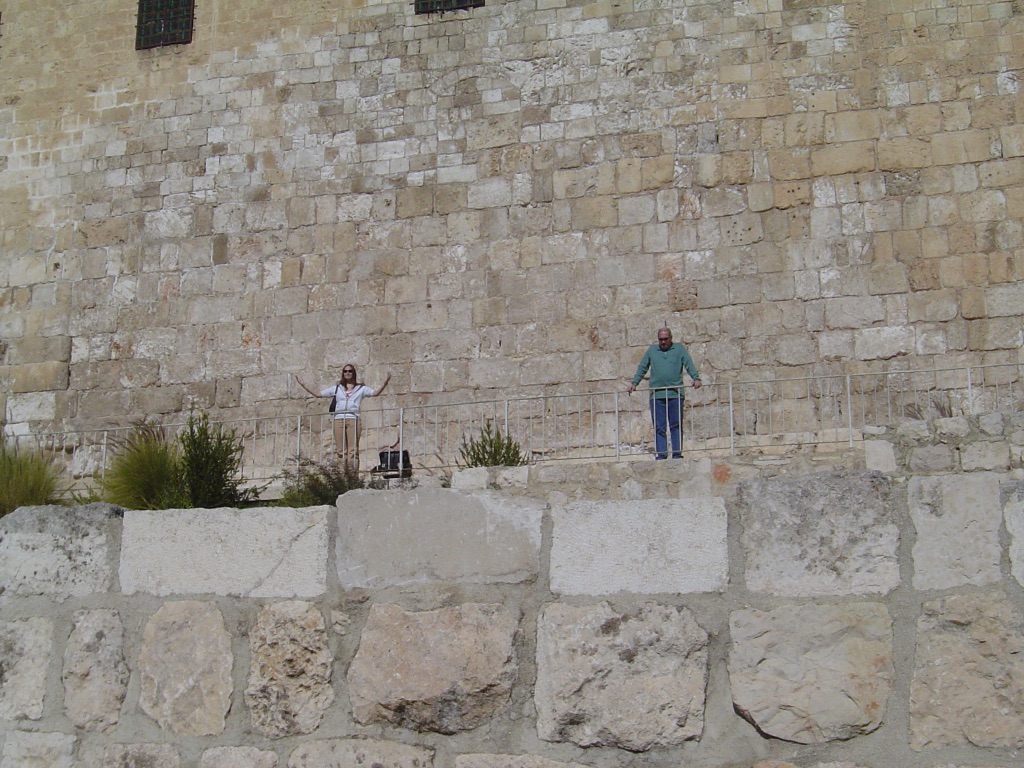
Jerusalem, Israel,  is my top walled city.  I lived there for a year when I was in college and had many wonderful experiences.  That was over 50 years ago and the world has changed dramatically since then.  But Jerusalem with its stone buildings, archeological sites and important historic religious importance, has to be number one. You cannot walk through the Old City, or walk along the walls without thinking about all that happened. In Jerusalem. You walk in the steps of our ancestors, wondering about their lives and the intersections of the continents that made Judea such an important part of the ancient world.  You cannot forget Jerusalem and how the sun reflects unto the buildings at sunset creating a glow to the city. (UNESCO World Heritage)
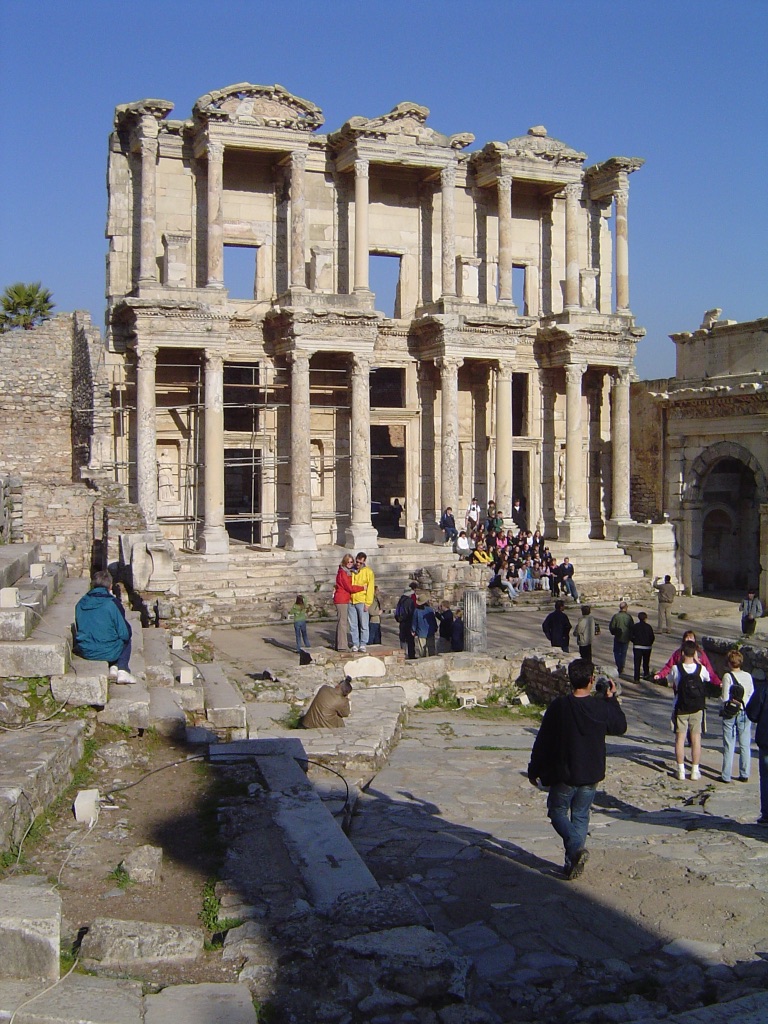
Ephesus, Turkey, is my second amazing walled city. If you have ever been to the ruins of the ancient city of Ephesus it will stay in your mind forever. This once walled city that had three main gates was a port city. But over the centuries the port was filled in and the city disappeared. Now the spectacular remains, included the facade of the library, keeps your attention. If you have the chance, this is a place that needs to be visited.
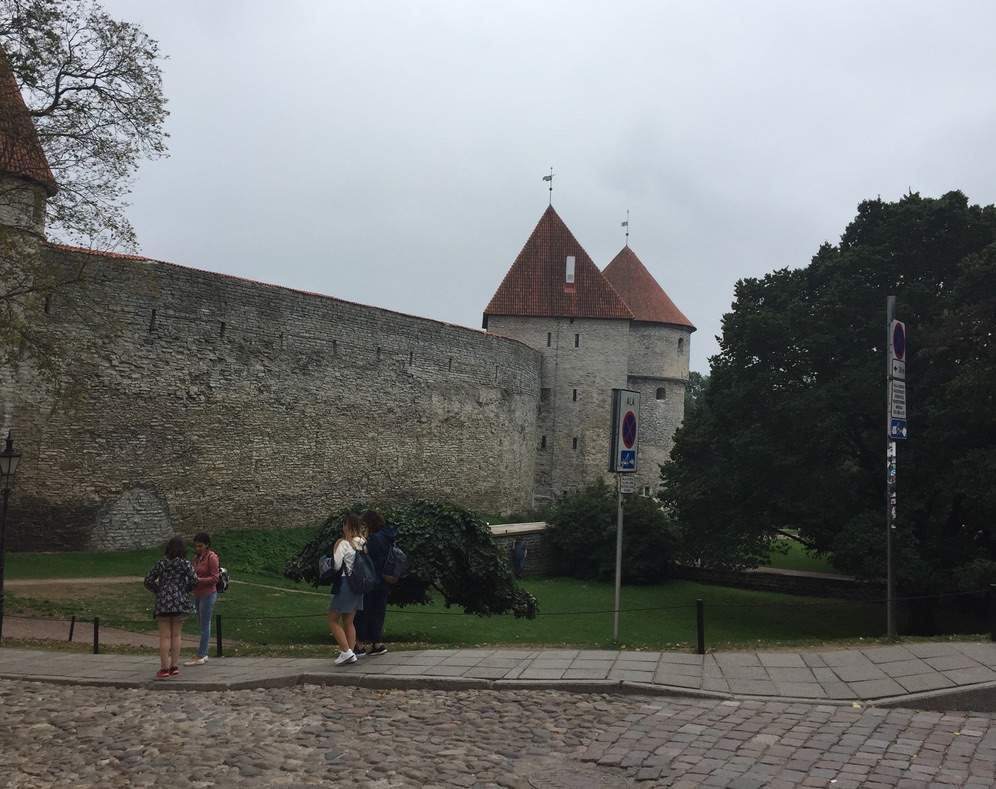
Tallinn, Estonia, really does look like a storybook, fairytale town.  I enjoyed looking out of the walls to the city below and walking through all the shops.  It didn’t have the history or meaning for me as some of the other cities.  But I just thought it was quaint and lovely. (UNESCO World Heritage site)
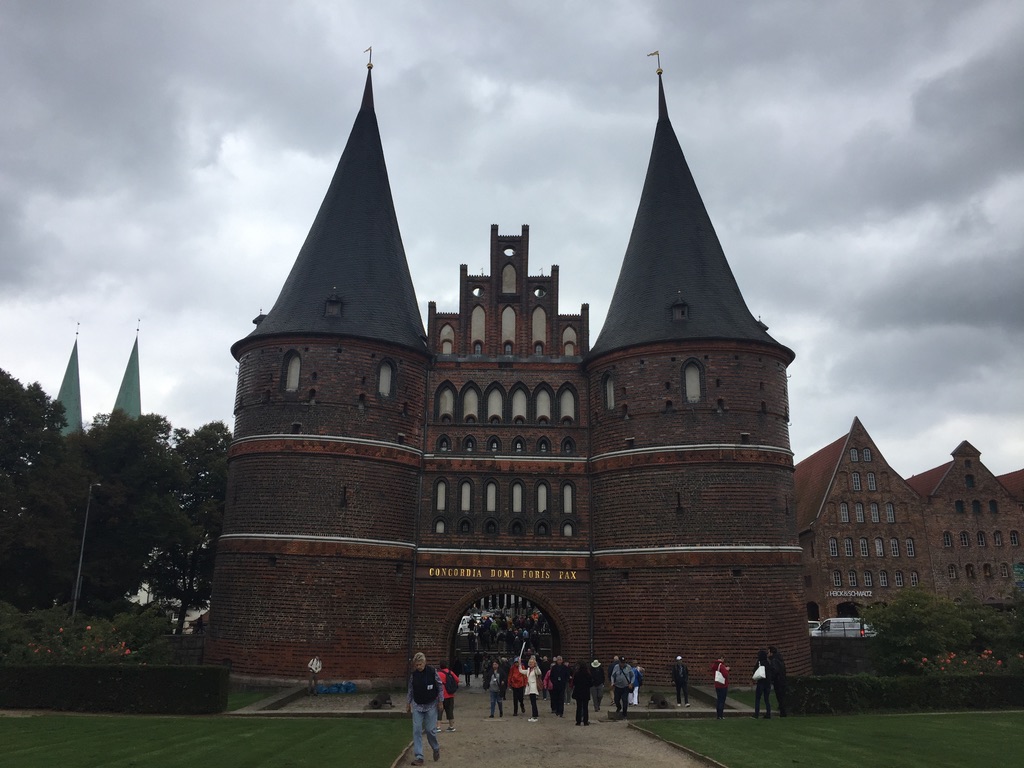
The entrance to Lubeck, Germany, is so impressive. I thought it was amazing.  What was also amazing is that it survived the Second World War in somewhat good shape.  I loved the Braille 3-D map near the gate, where you could see the city in one place as if from above.  I enjoyed eating the Marzipan and strolling throughout the town.  But for me, seeing that a synagogue survived the Nazi era was important.   It survived because it was close to a church.  To me that seemed to have meaning.  If a church building could protect a synagogue, perhaps the people should be able to protect other citizens.  But as we see now, the world is not very kind or understanding. (UNESCO World Heritage site)
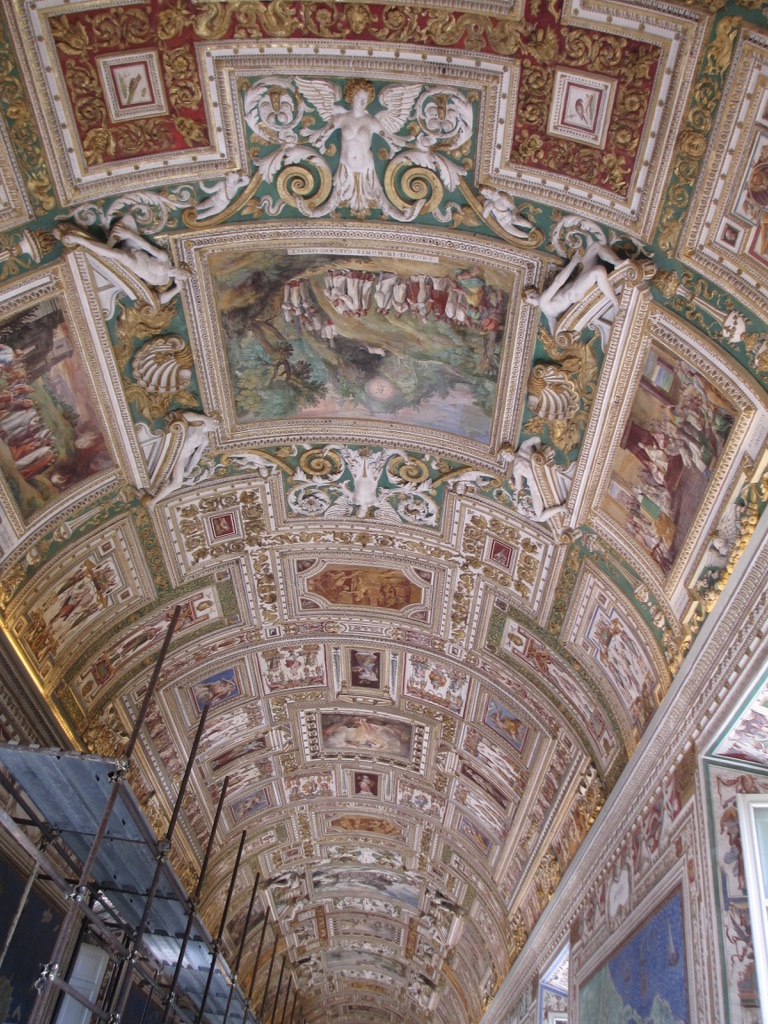
Number three is Vatican City, Rome, Italy. Both a city and a country in the midst of Rome.  I have only spent four days in Rome, but like Jerusalem, this city immerses a visitor in history.  Walking past structures that I studied in school is a bizarre experience. In my mind I could see the past that I studied. As we walked through the endless halls of wonders, I was overwhelmed by all the works of art from throughout the world. It was almost too much to see. Then to see the Sistine Chapel and later the St. Peters Basillica, I was done.  (UNESCO World Heritage)
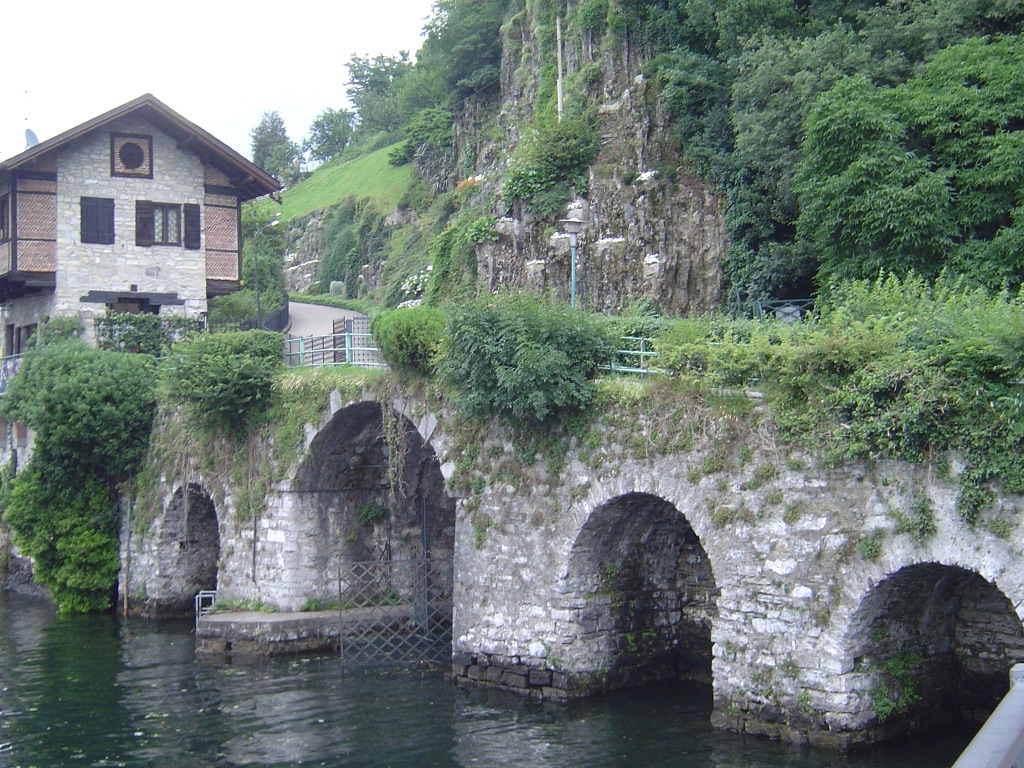
Since I am discussing Italy, I must mention the lovely walled town of Como, Italy. We went to visit this walled city because my father suggested it. He had been involved in the textile industry for his entire career and used to travel to Italy all the time. Since we were in Milan, he told us we had to visit Como as it was once the capital of the Silk Trade. In fact, at one time there was a school to learn about silk there. Now it is a museum. I loved this city. We spent a day there visiting the museum, walking about and shopping. We ate lunch a little outside of town at a restaurant on the beach of Lake Como. I also must say, there is no car traffic in the walled old city. So it was a wonderful place to walk around and shop!
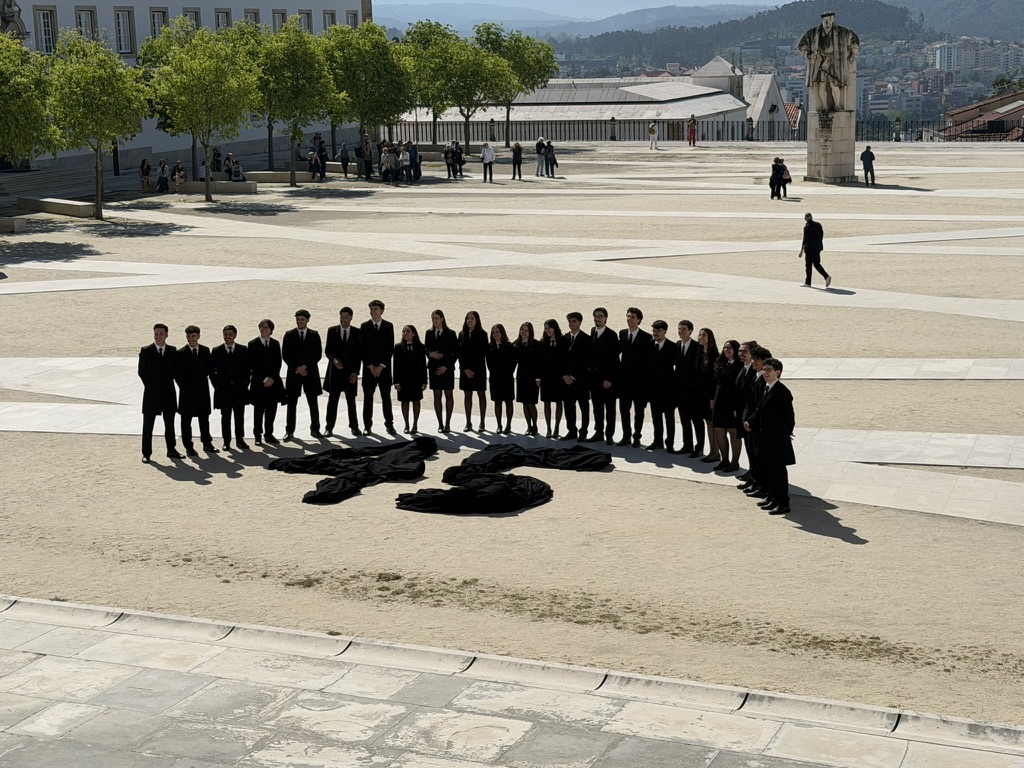
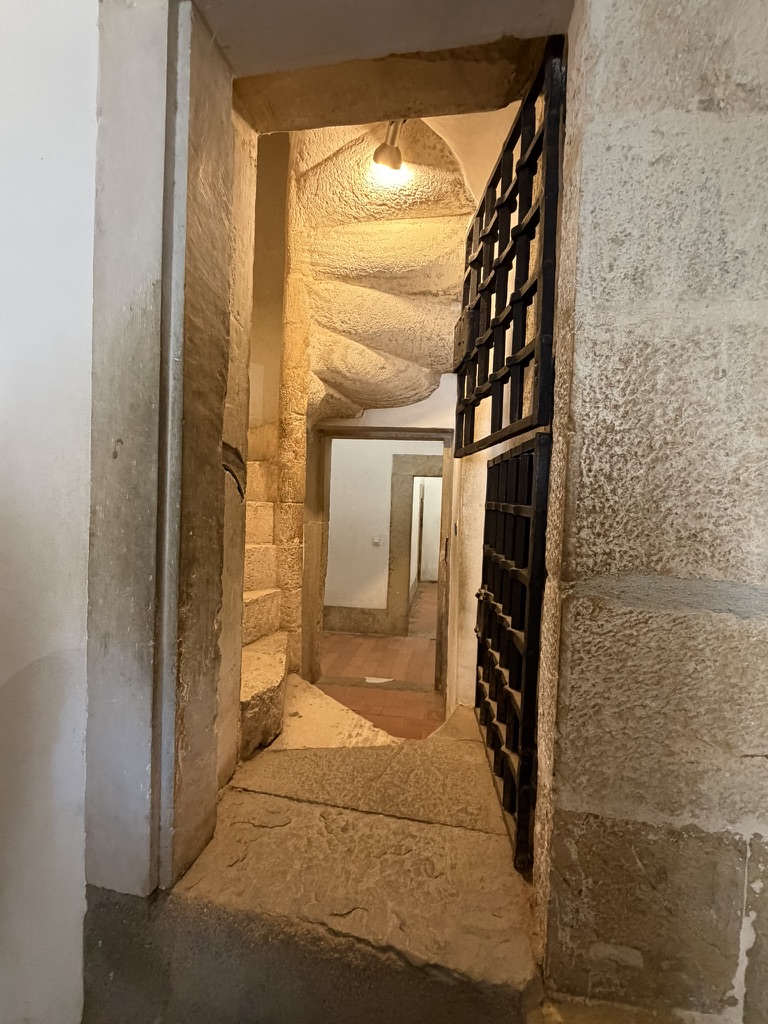
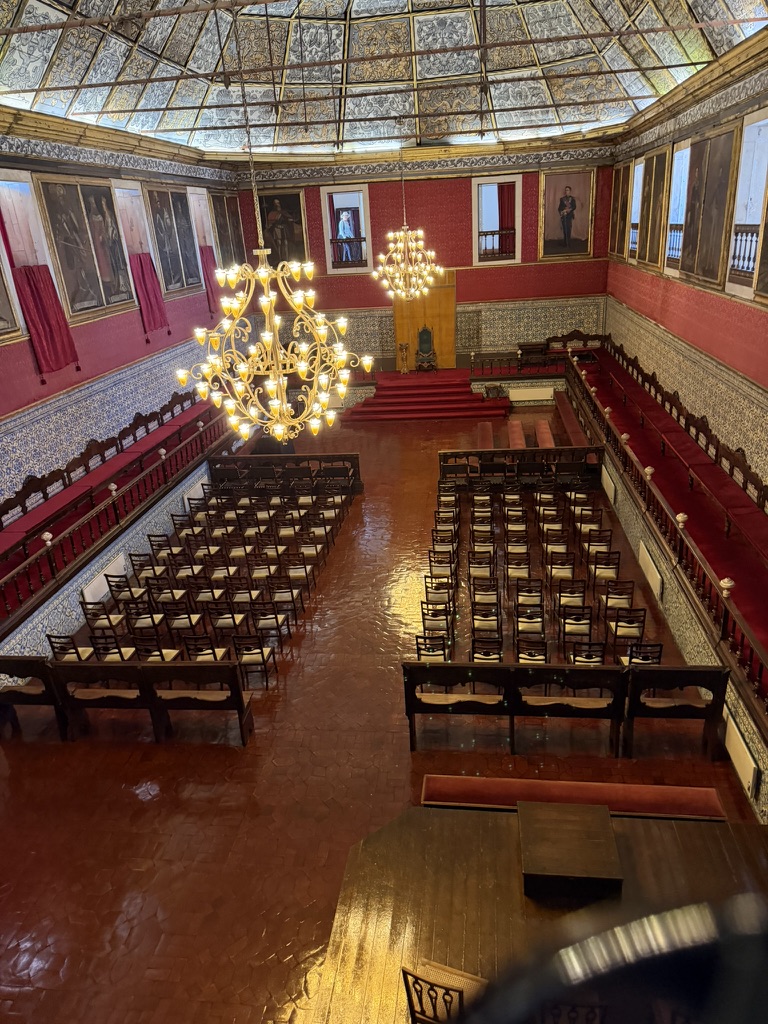
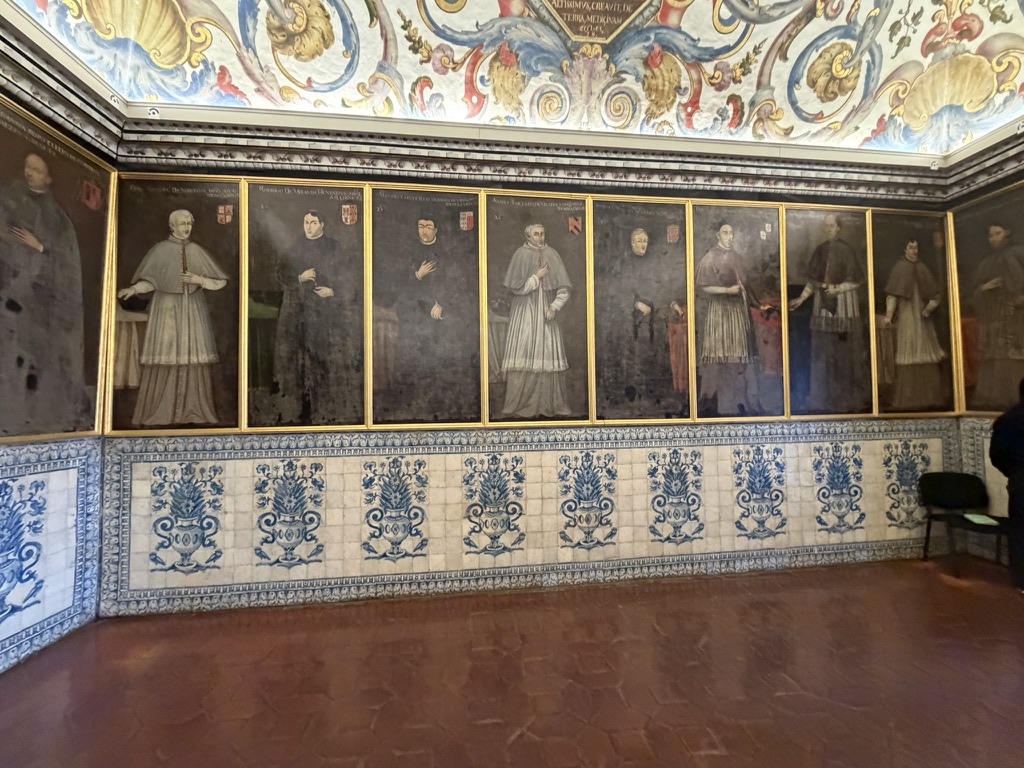
The college town of Guimaraes, Portugal, was also amazing. This UNESCO World Heritage Site has been a town for students since 1315.  We loved walking around the campus seeing the ‘modest’ student chapel, the spectacular library, the special dungeon for students who did wrong, and the room where students presented their work.  We were there near graduation, so we got to see a group of students having their graduation photos taking.  A great day.
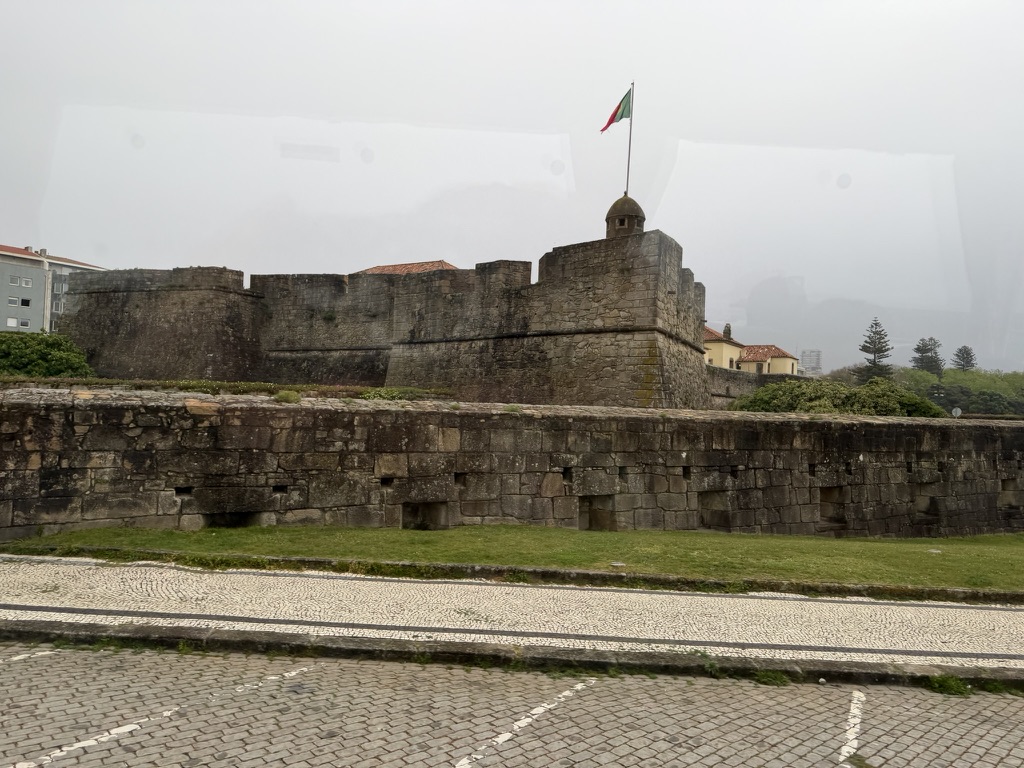
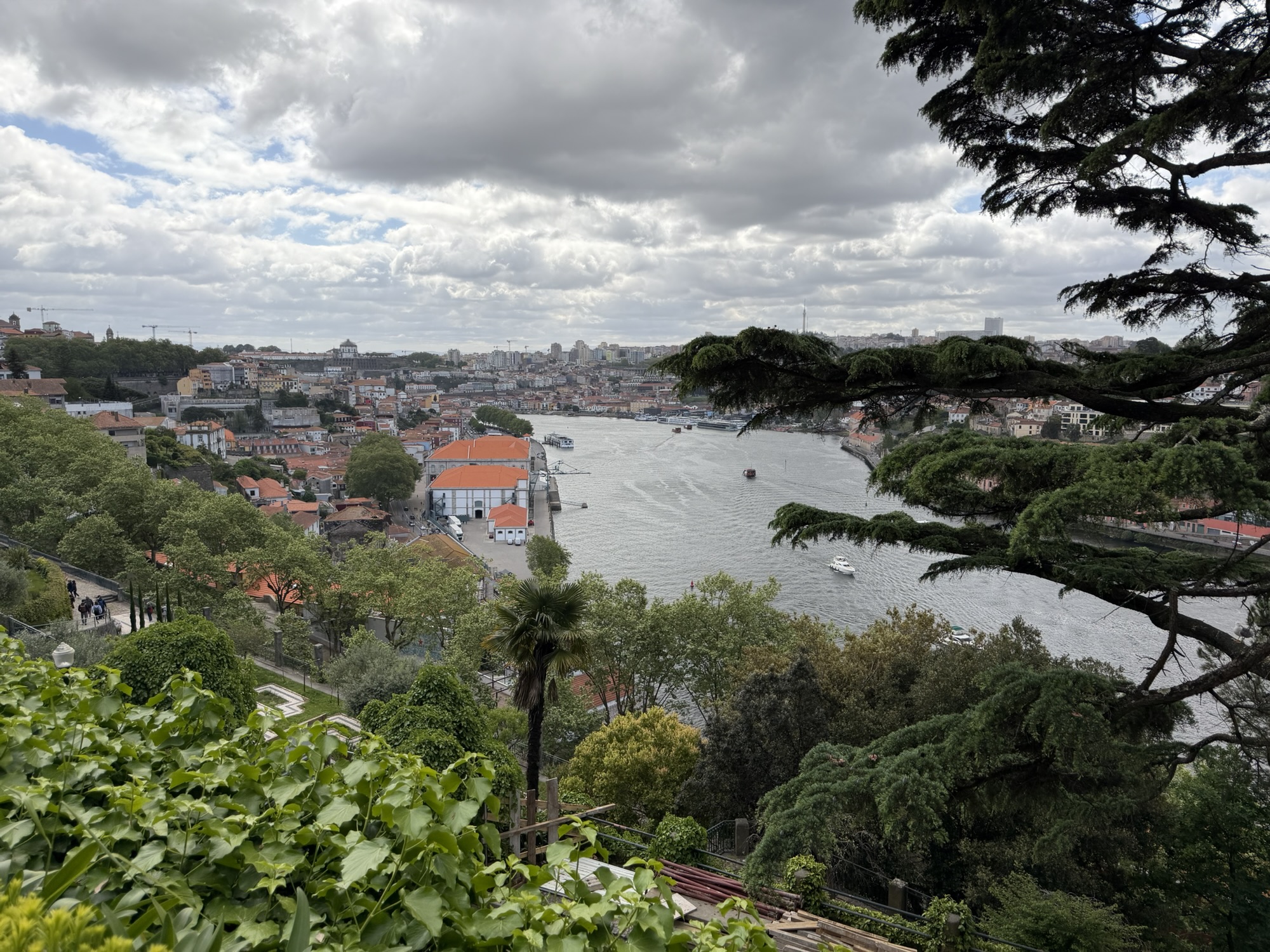
After spending five days in Porto, Portugal, I feel like I really know this city as we walked everywhere.  Probably 30 miles over these days, from the lovely gardens, to the museums, to the port, across the bridge to the Port sellers, up the Funicular, just exploring this lovely UNESCO World Heritage Site. Many of the city’s walls have been demolished. But you can see them along the river and in a few areas. The most important part of Porto are the hills, the views and the gardens!
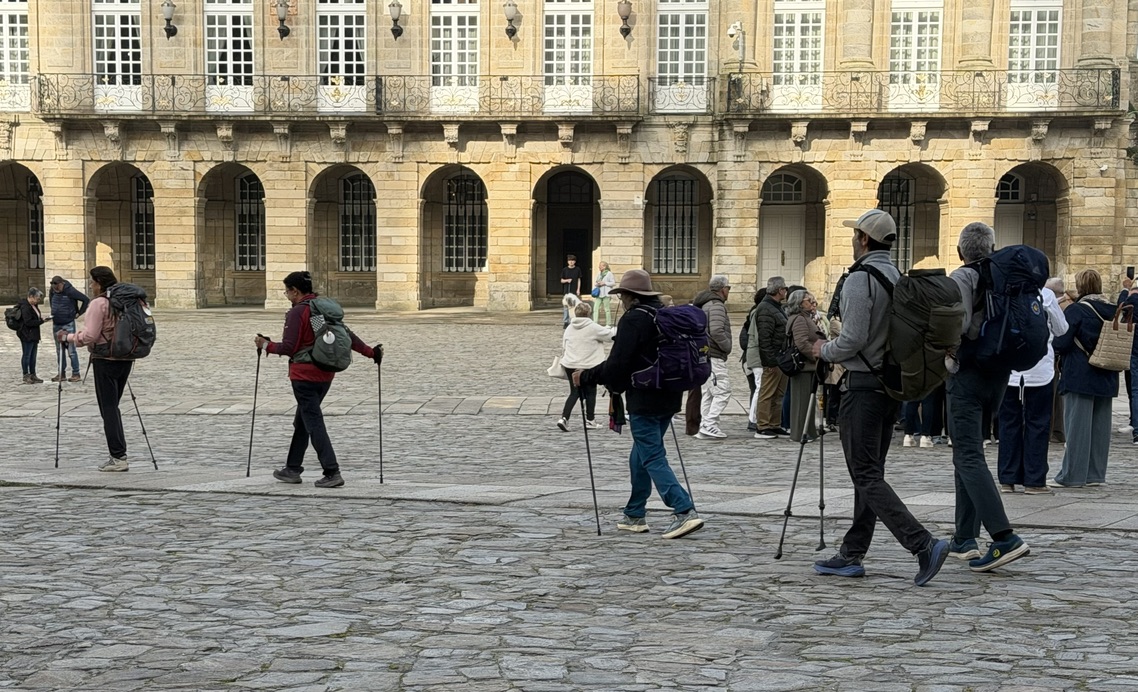
Santiago de Compostela, Spain, is another city with religious history embedded in its being.  The focus of those following “The Way,” the Camino de Santiago, as people focus on arriving at the Church of St. Andrew, or Santiago.  The walled city is easy to walk through, with all roads leading to the Cathedral.  I enjoyed our three days three visiting the museums, listening to the music, exploring the sites, and watching the pilgrims arrive at the spacious square in front of the Cathedral. (UNESCO World Heritage)
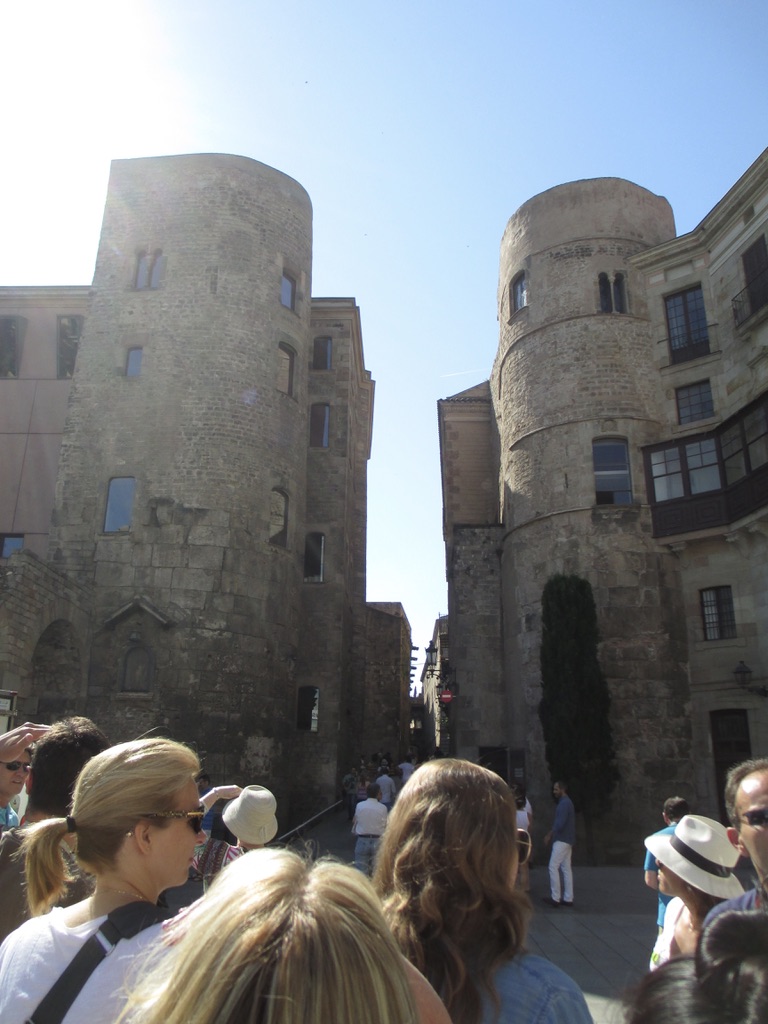
Old City, Barcelona, Spain.  Barcelona is one of my favorite cities in the world mainly because I love the work of Antoni Gaudi.   But I also loved walking through the old city and visiting sites there including the. Old synagogue, that still exists.  My heritage is from the Spanish and Portuguese Jews who fled north to Amsterdam. We have been to Barcelona two times, and each time I have found new places to explore.  Most of the wall is gone, although you can see it in some places.  And although the city itself is not A UNESCO World Heritage site, it has nine sites in the city that are protected by the UNESCO including seven Antoni Gaudi creations.
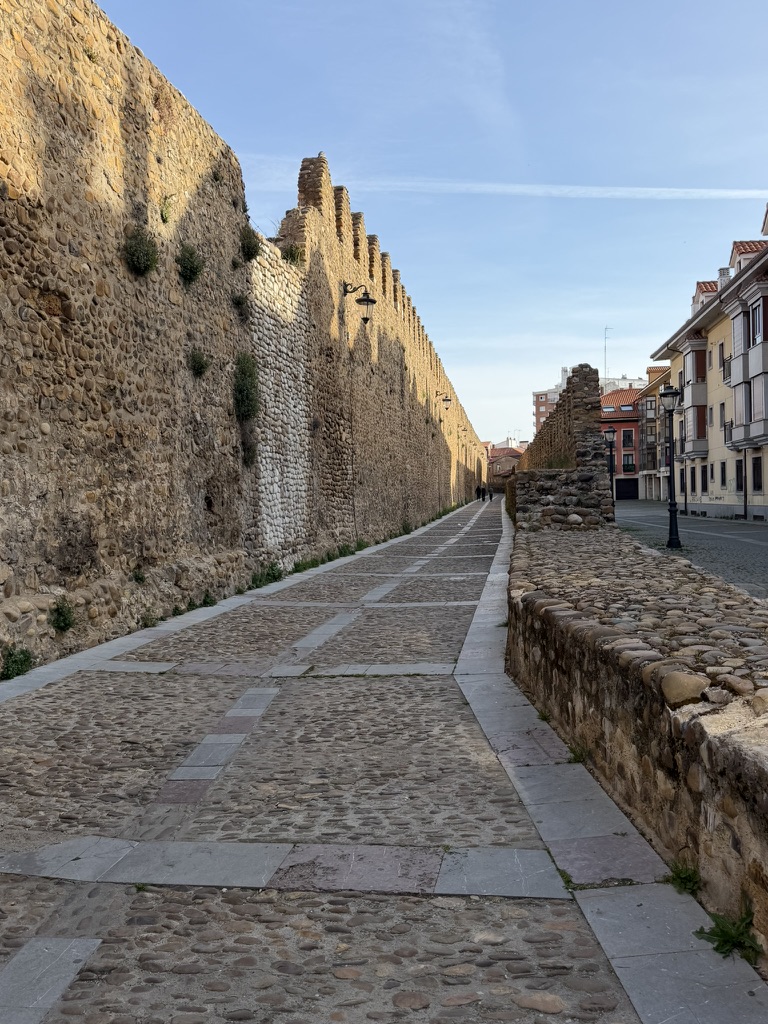
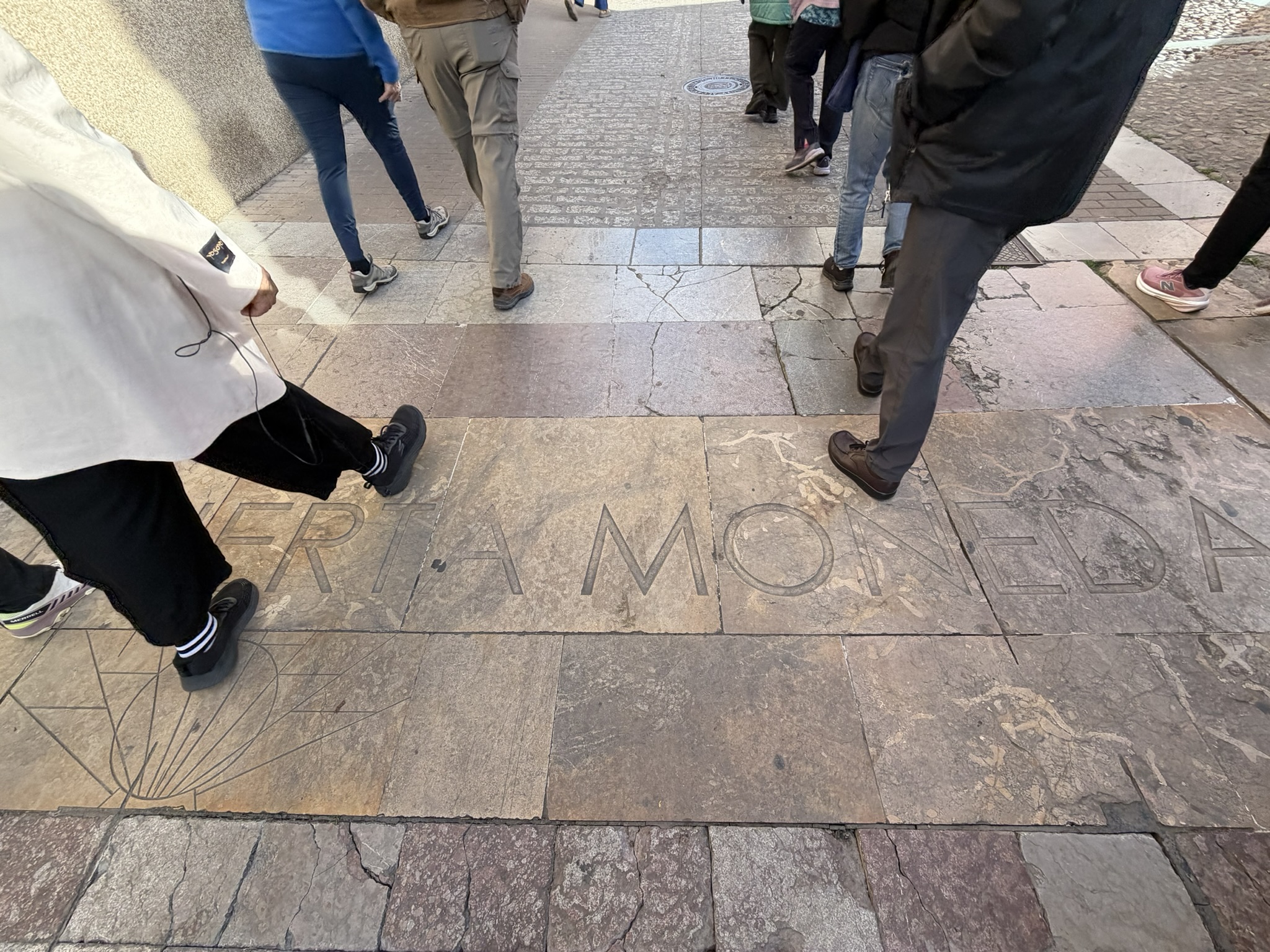
Leon, Spain, intrigues me.  Even though many of the walls are down, we entered through what was once the Money Gate, or Puerta Moneda, the entrance that lead to the Jewish area. This is the only gate of the city that remains.   It was amazing to walk the streets and know that Leon was once the home to a large Jewish community.   In fact, in Leon here were many reminders of the community that was destroyed, including an old synagogue that is now a church, which you can visit.
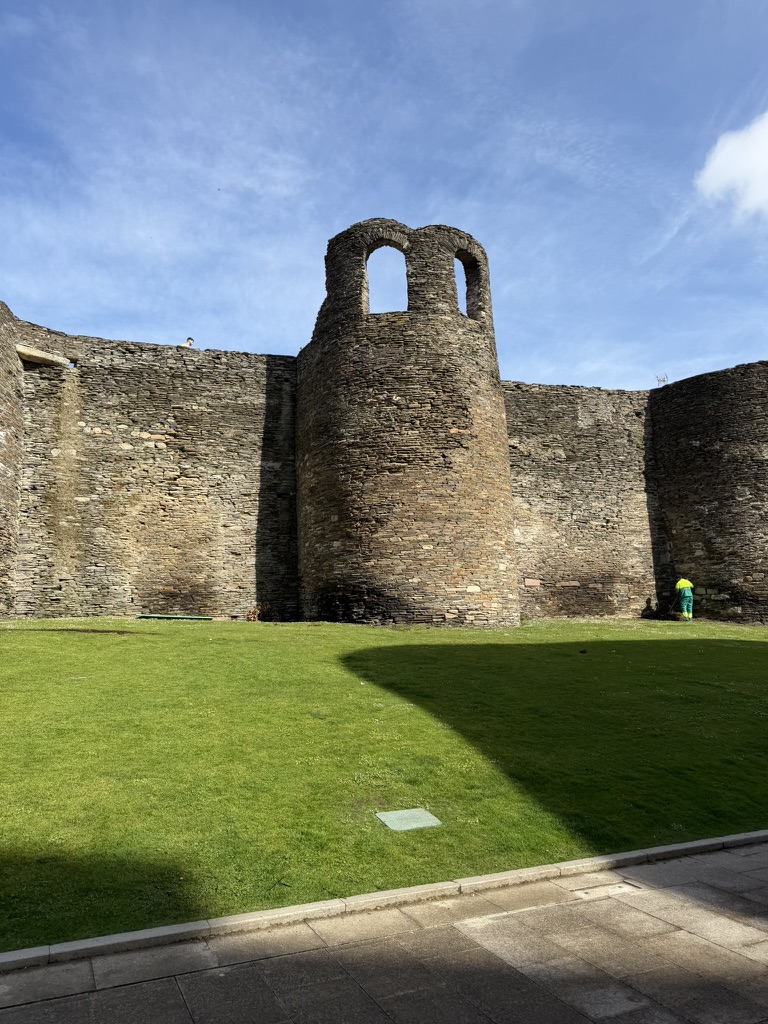
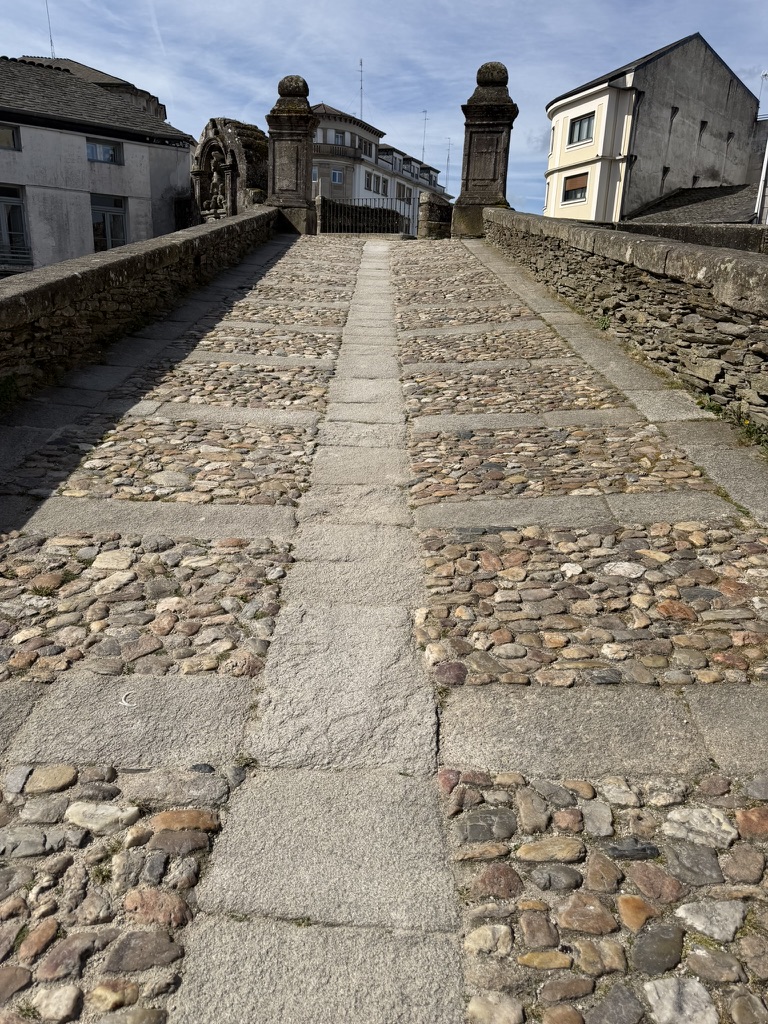
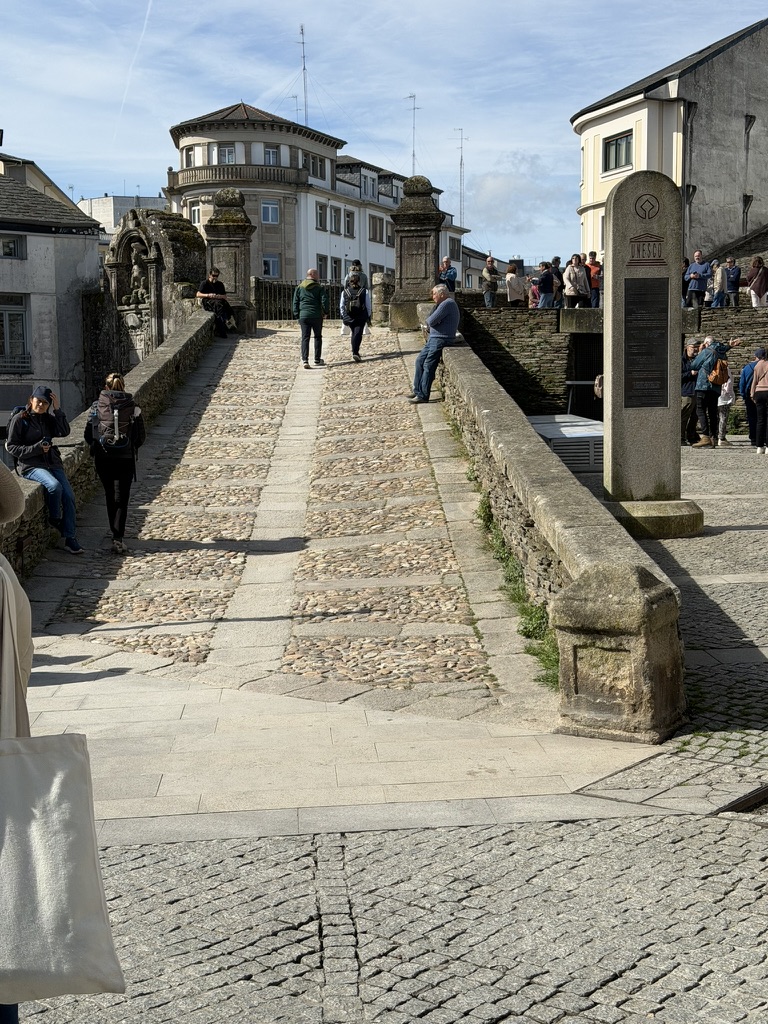
The walls of Loga, Spain, are amazing.  To see them from outside the walls makes you take a breath! But then to walk on the walls later and look out at those same places you saw it for the first time is also amazing.  The walls of Loga were the widest walls I ever walked up.  You could actually have a party there.  And I bet some people do, because there are houses that are built into the wall.  I also enjoyed walking through the old city. But it is the walls themselves that stand out. Although the city of Loga is not a World Heritage Site, these walls have the UNESCO World Heritage designation.
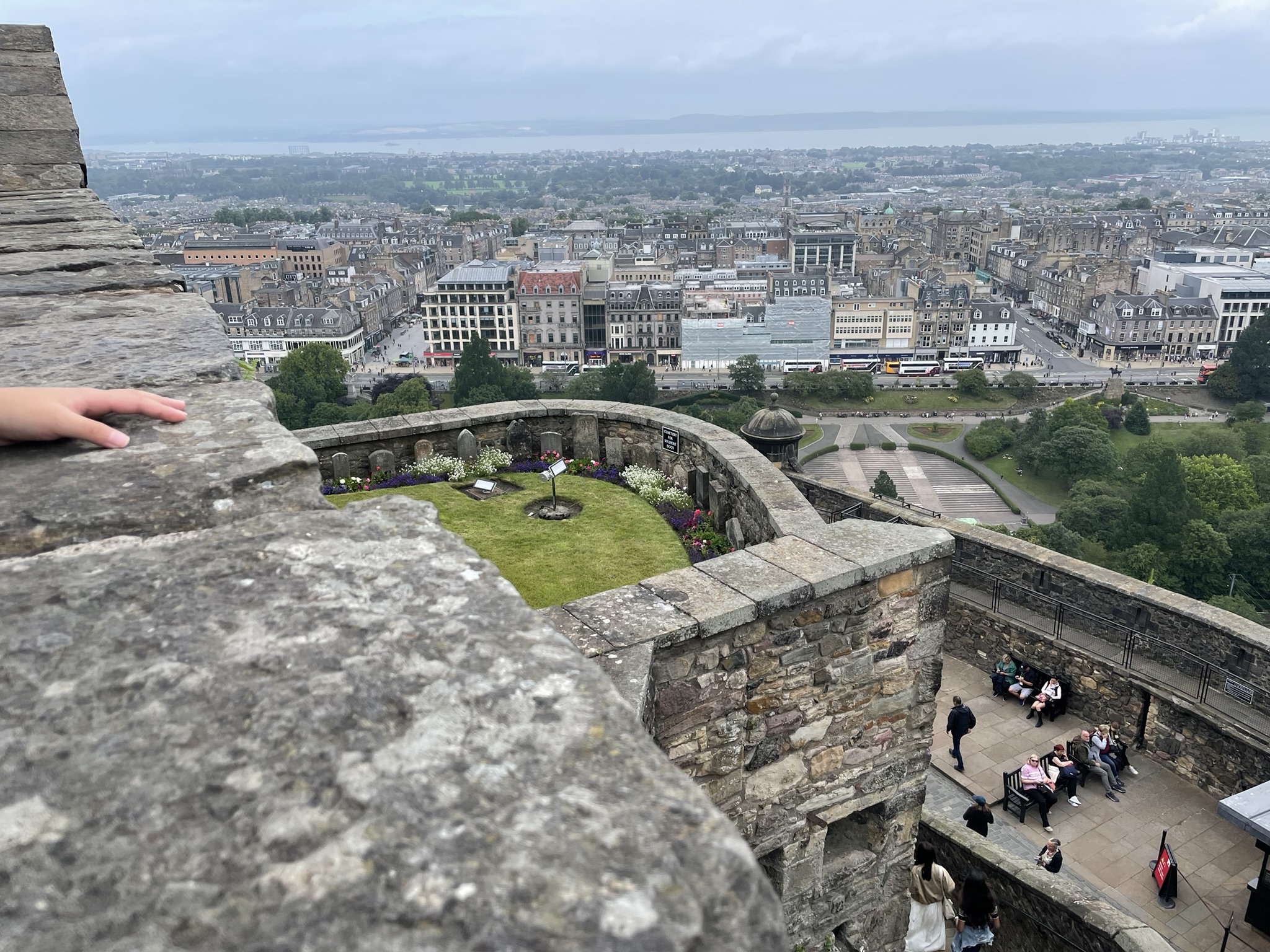
Edinburgh, Scotland, We walked the hill up to the Castle.  Then we walked up the hill in the Castle. Then we looked down upon the city from the top of the Castle. Then we walked down the long hill in the castle, out the doors of the Castle, down the long hill to a street with shops, including ICE CREAM.  What I remember most is the hills.  Most of the city we saw by bus.  Although Edinburgh was traditionally a walled city, much of the walls are now gone. However, the castle makes up for that.  (UNESCO World Heritage site)
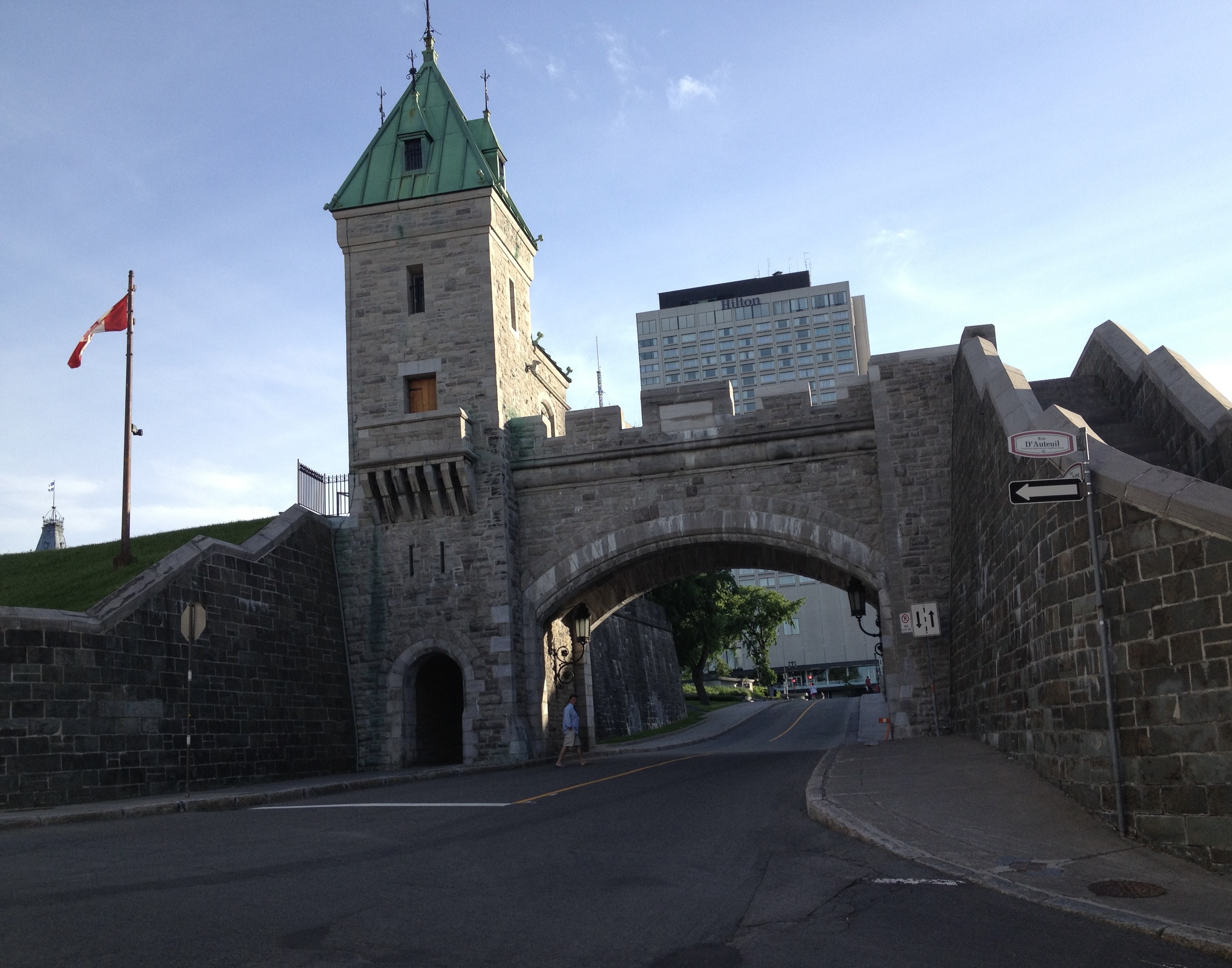
The first time I visited Quebec City, Canada, I was on a cruise.  I wasn’t expecting it to be a highlight, I really wanted to see Prince Edward Island and all the Anne Shirley experiences.  But when we arrived in Quebec City and I saw the Funicular I knew I would like it.  I liked it so much with its French and English old-world charm combined together in one city, that we came back a few years later to spend an entire week staying in the old city.  I loved it. (UNESCO World Heritage site).

Just as an aside, New Orleans, Louisiana, and Charleston, South Carolina, both once had defensive walls surrounding them. These no longer exist. But both cities still have the charm of a walled city!
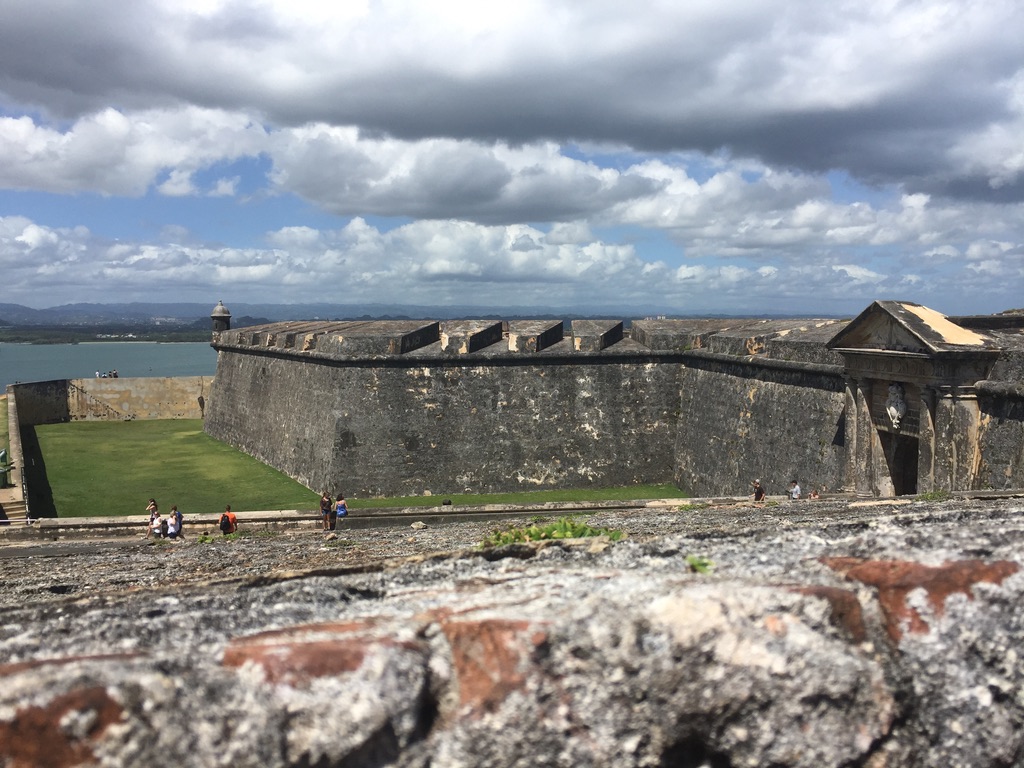
San Juan, Puerto Rico, is a place I have visited many times.  The first time was on my honeymoon.  I have visited it three other times.  Each time we were on a cruise.  The last time was a few months before the big hurricane came and decimated the island. During that trip we took a walking tour through the old walled city, La Ciudad, and even visited the Fort, walking throughout and looking out at the views of the ocean.  I cannot believe that I hadn’t done that before.  I was amazed by the teeny yellow house, La Casa Estrecha.  It was the first time I had seen a house built in an alley.  But since I have seen such a house in another country.    The day we walked around there were artists selling their work, and many people enjoying what was lovely weather. (UNESCO World Heritage site)
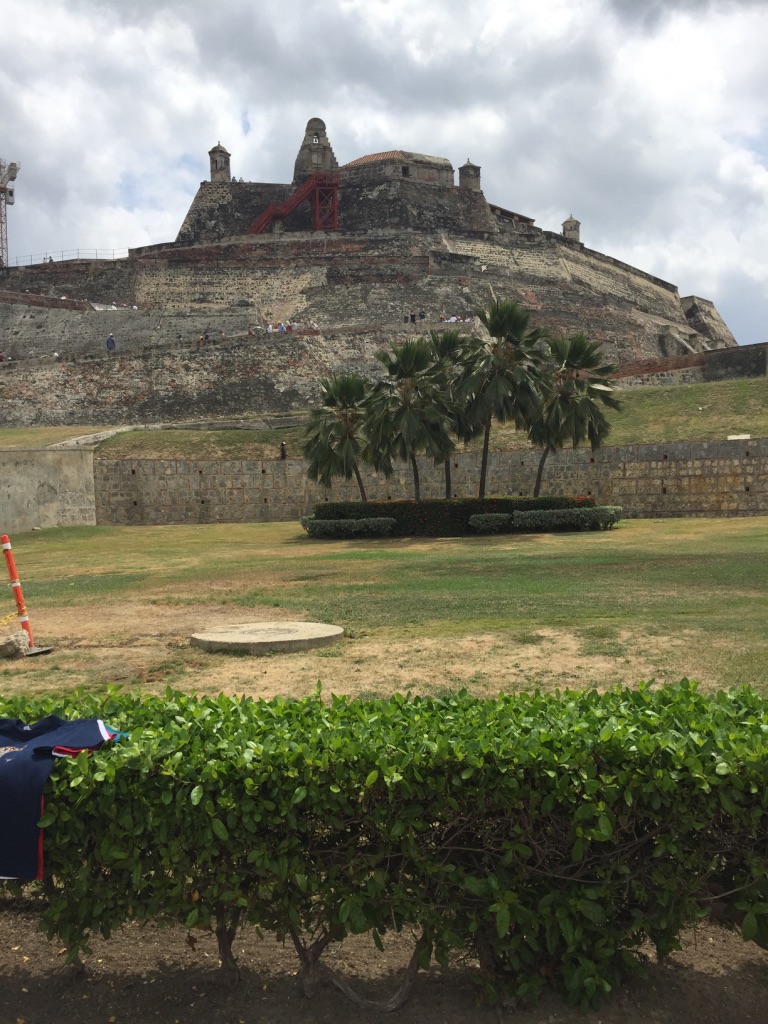
I remember the heat of Cartagena, Columbia, as we walked around the old city, the las Ciudad amurallada.  We visited several museums including the one dedicated to the Inquisition in Columbia, which mainly tortured the indigenous people.   My comment was that you did not have to torture anyone, just make the stand outside for hours without water. Between the heat and humidity, they would give in. Cartagena’s walls were used to keep the Pirates out because Cartagena is the port that the Spanish used to ship the gold and silver back to Europe.  Of course we visited the gold museum there, Museo del Oro Zenu.  It had the best air conditioning, which made us all happy!

I have visited walled cities on four continents, on islands in the Caribbean and Mediterranean. Each walled city has its own charm. When I travel, I always try to visit UNESCO World Heritage Sites because they each have some special aspect that you do not see in other places around the world. Visiting walled cities makes you think about the people who figured out how to build them to protect their cities. The enormity of stability of these walls to last hundreds, even a thousand years, makes you think about how modern construction does not last as long.

Walled Cities are Worth Visiting. Enjoy!
Norway Churches Look Nothing Like European Churches!
24 Jul

Norway, the country of fjords, lovely scenery and peace.  We had a wonderful journey on our Norway cruise, entering three different fjords to visit communities that were established centuries ago.  In Eidfjord, Olden and Alesund, we visited the churches that in some ways define the communities and the calmness of Norway.

Two were small churches in the tiny towns of Eidfjord and Olden.  Both towns were located at the end of beautiful and long fjords.  Although the outside of these buildings is different, the insides were so similar.

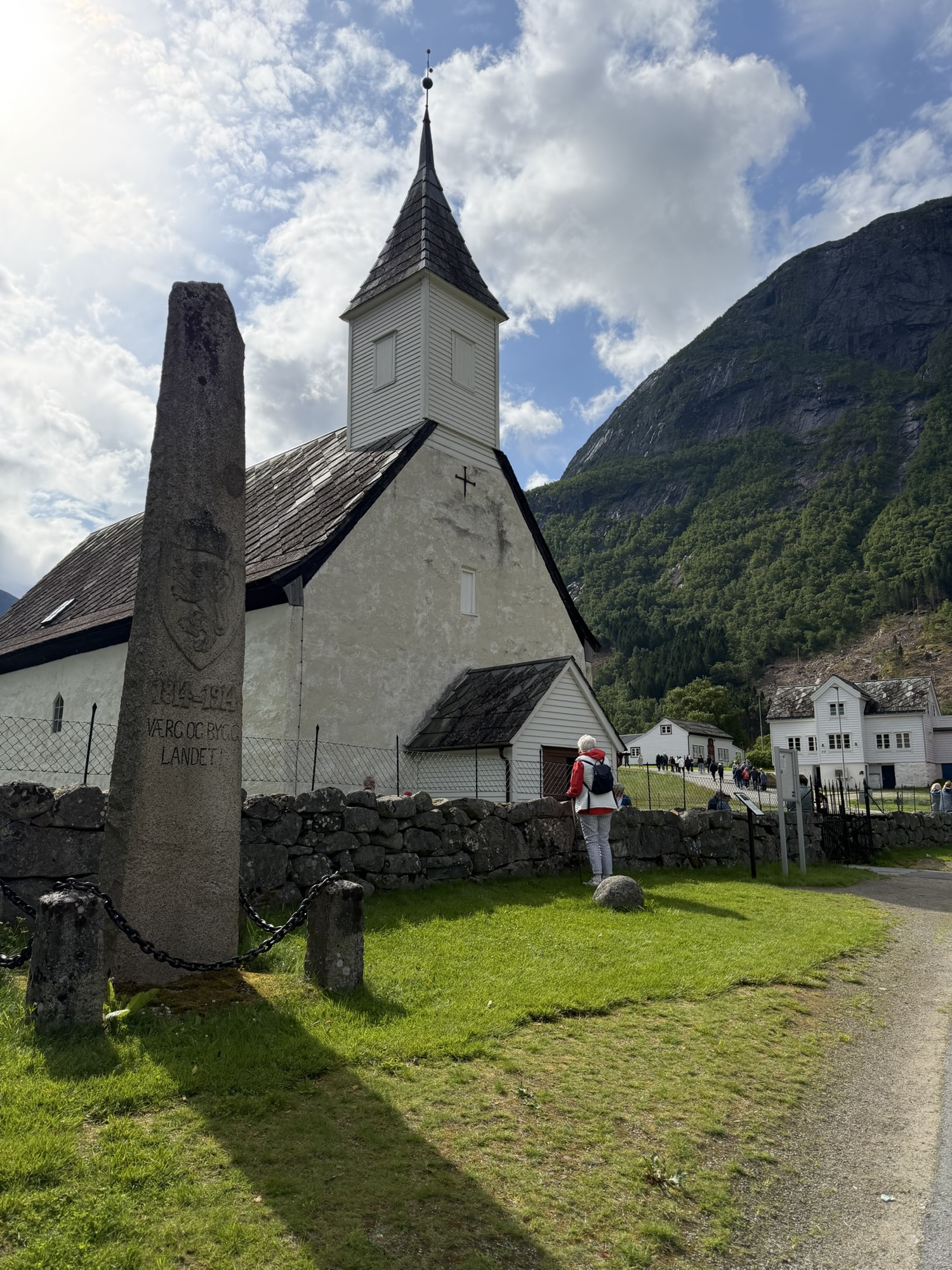
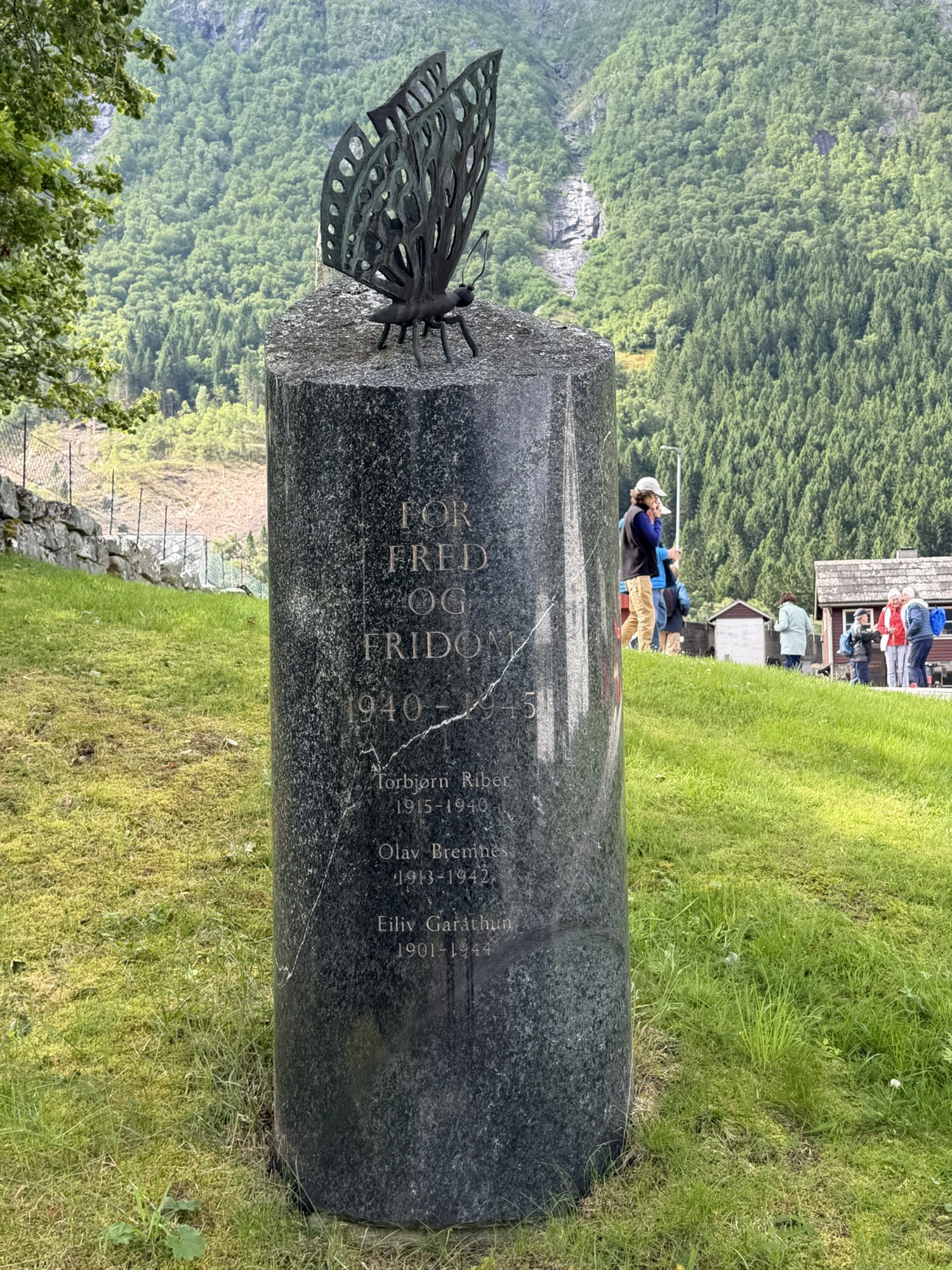
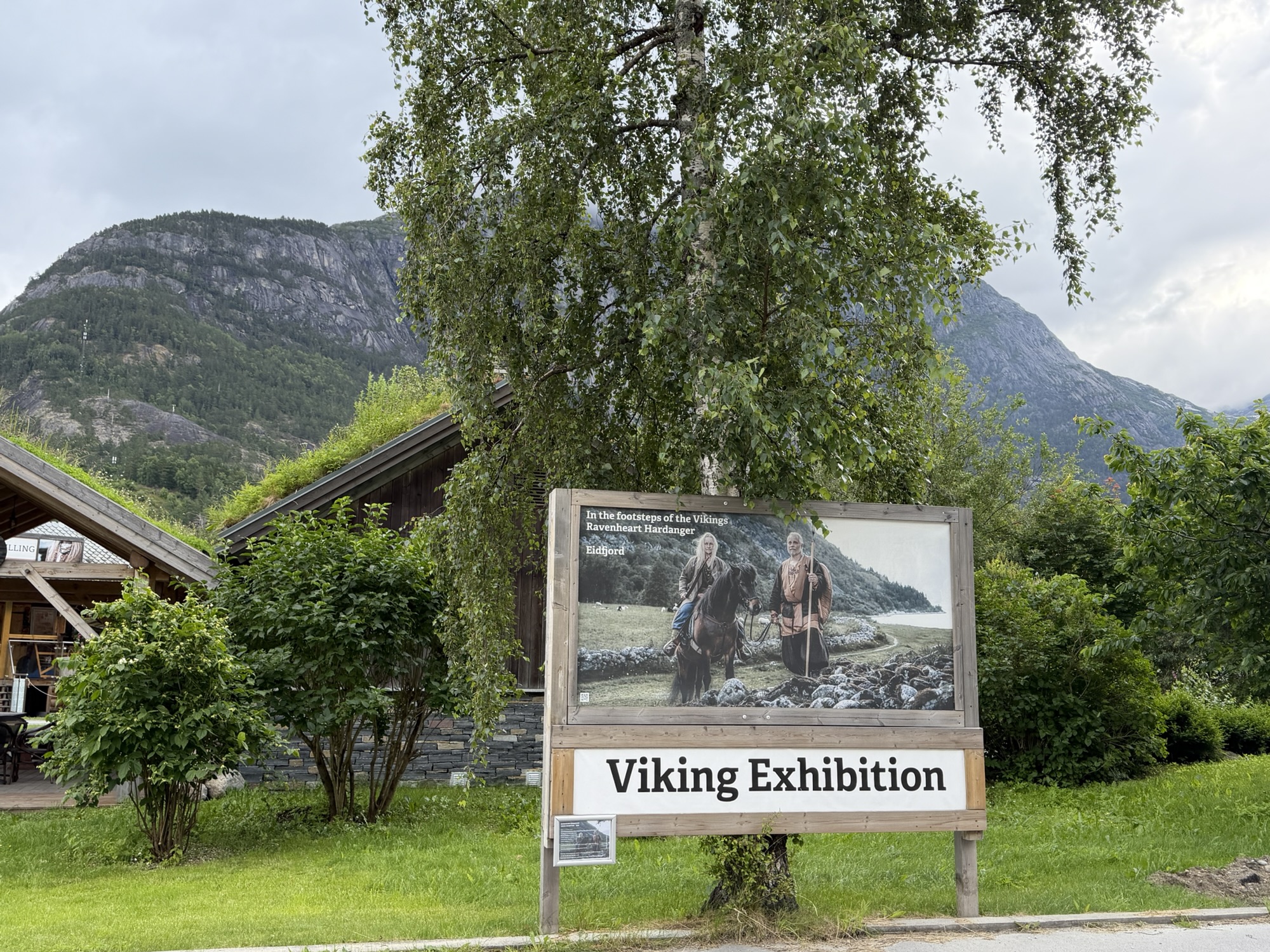
In Eidfjord, we walked up a long hill to reach the Old Church.  Along the way we saw a Viking Exhibition, showing how homes were built with grass roofs.  We had magnificent views of the hills in front of us and the town below.   Just before the Church was a black marble monolith with a butterfly on the top commemorating three who died during WW2 fighting the Germans. In front of the church was another engraved monolith from the early 1900s.

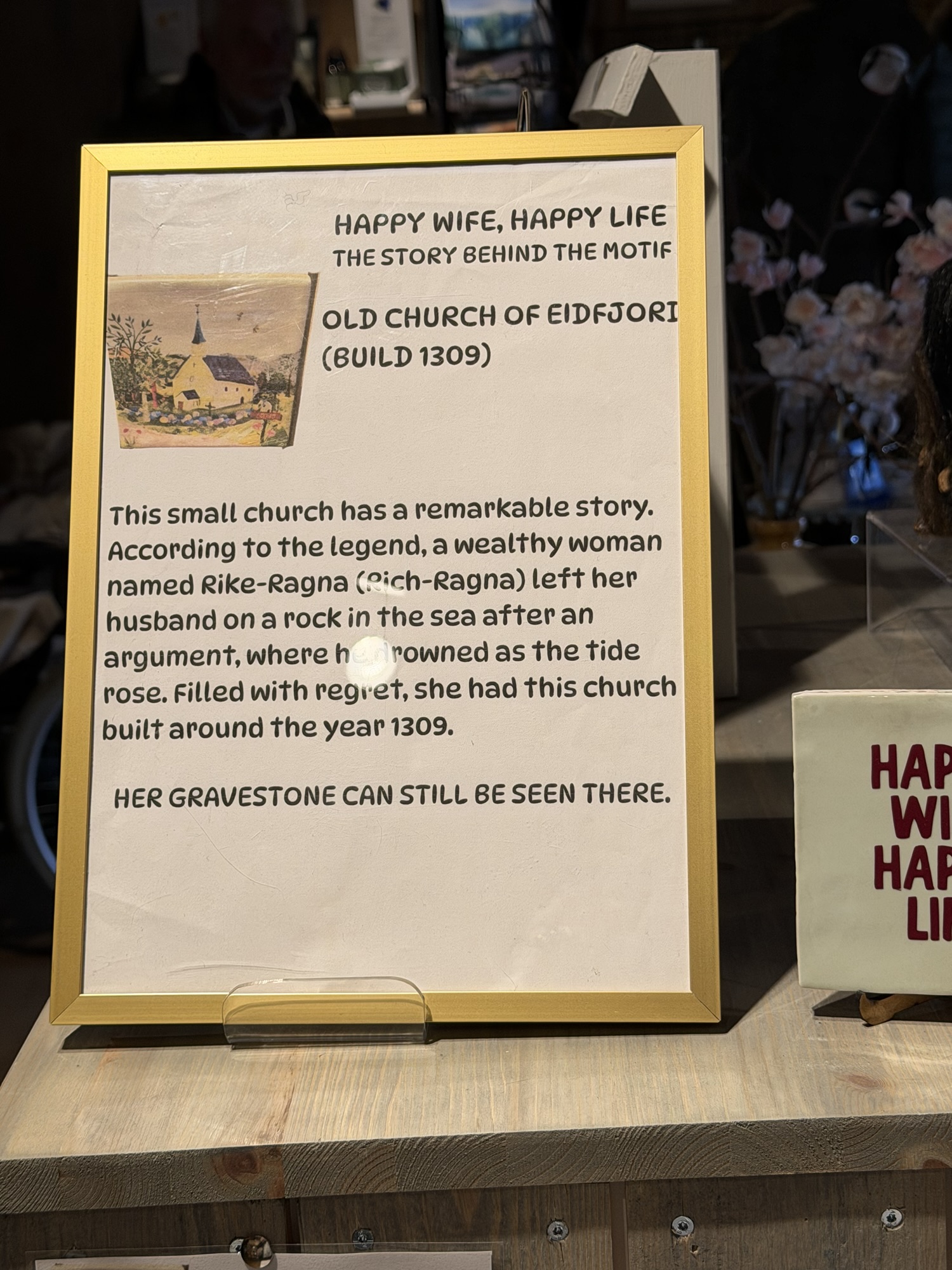
The Church, dedicated to St. James, was built of stone in 1309! But the best part of the church’s story is that it was built by a wealthy woman named Rike-Ragna in penitence for leaving her husband to die on a rock after an argument. Her tombstone is in the church!
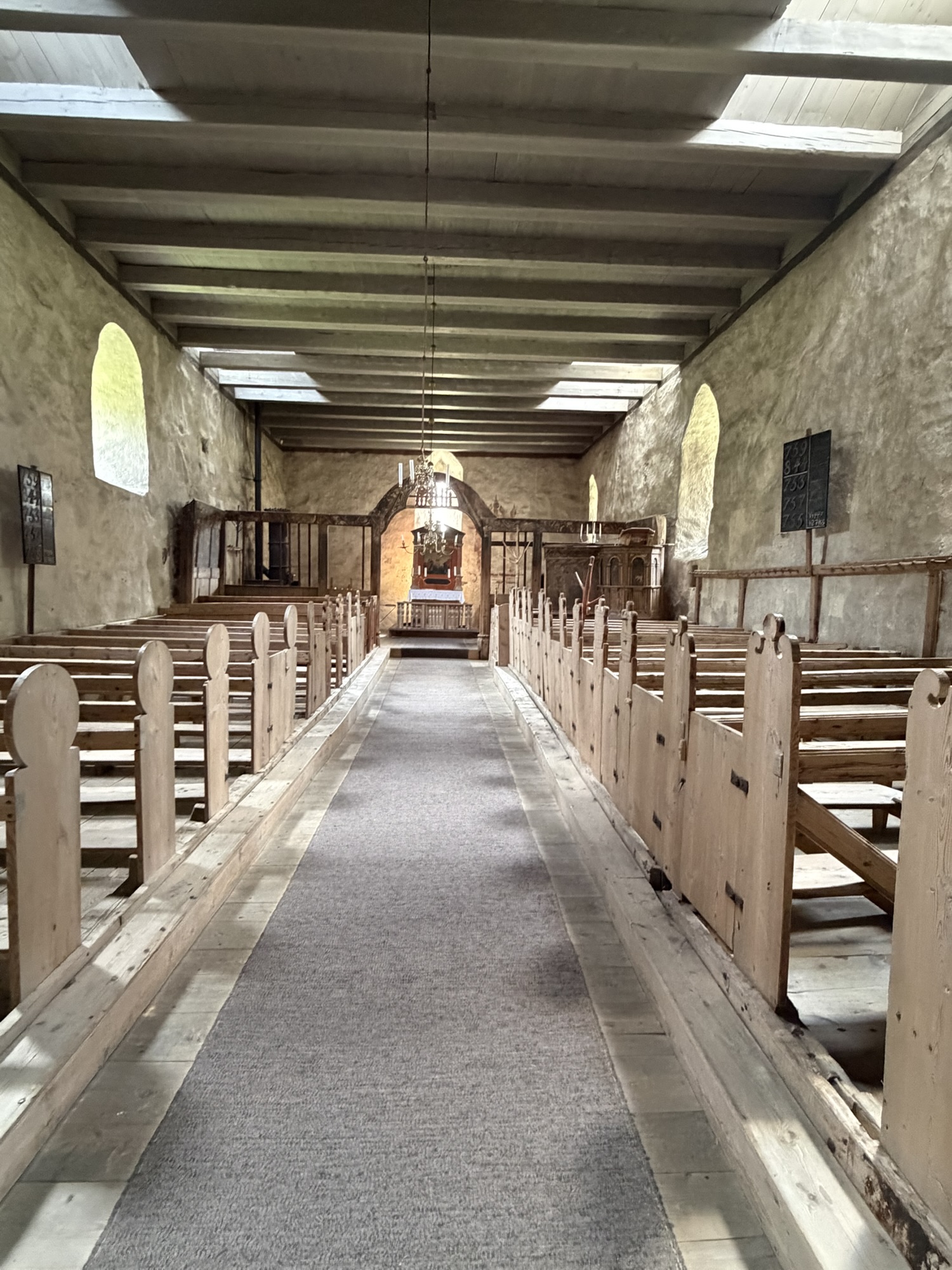
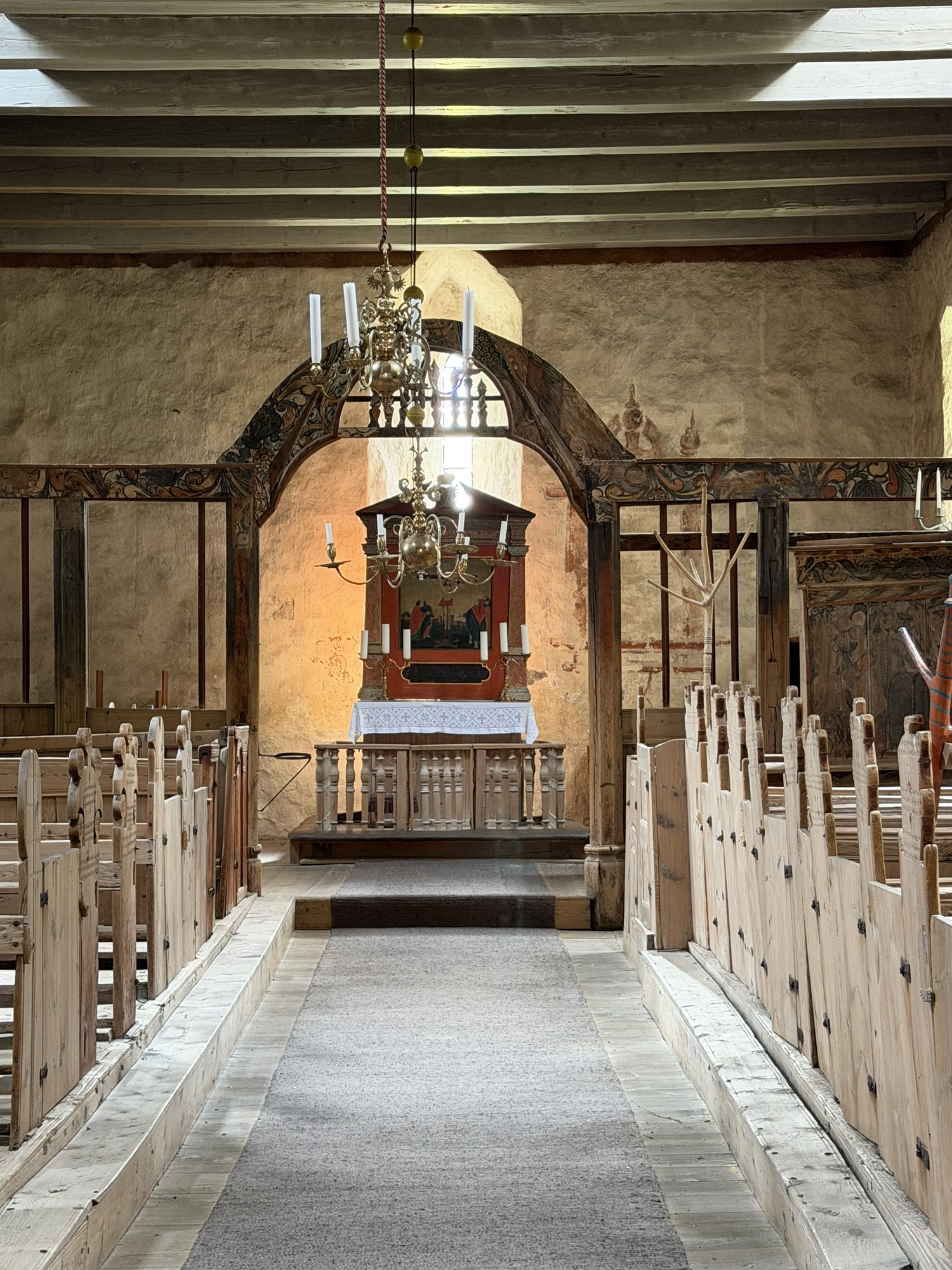
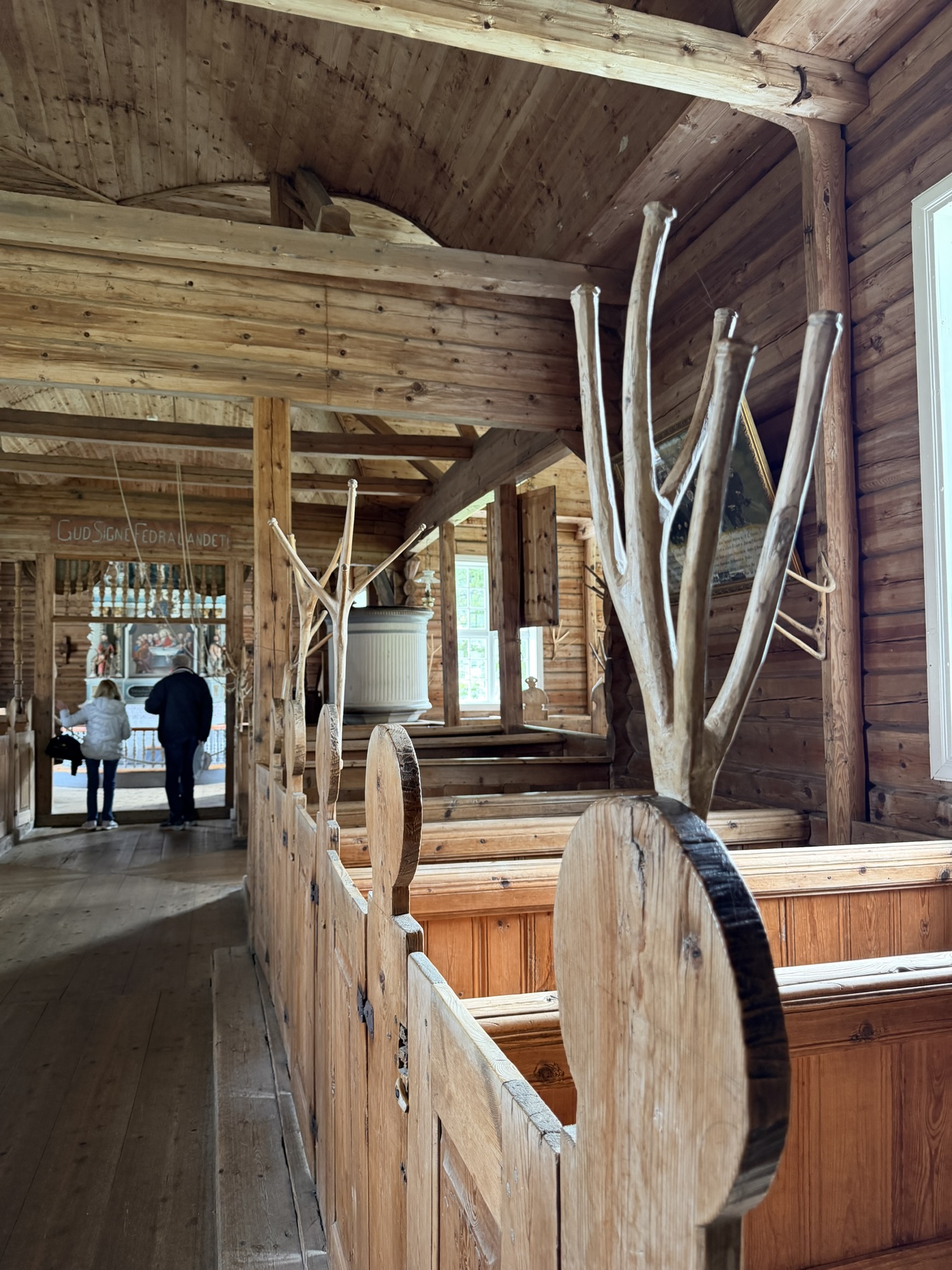
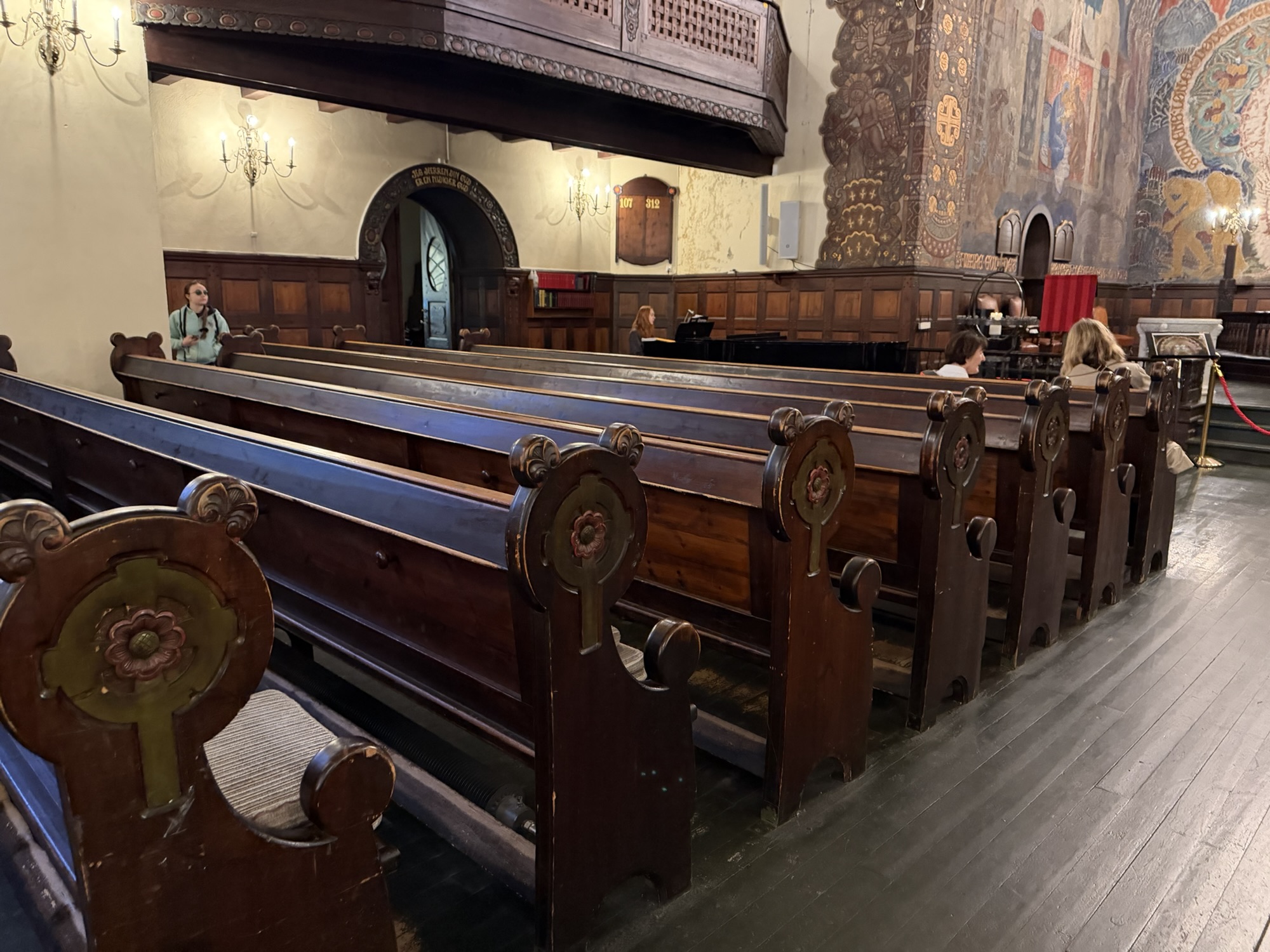
I loved the plain wooden pews and was intrigued by the branches that were attached to the aisle side of the pews.  They made me think of reindeer.  But according to what I read, they were for men to hang their hats!!

It is simple, peaceful and calm inside.  To me the perfect place to speak to God or repent a sin. The altar of the church is simple with a wooden grill in front and then a simple painting.

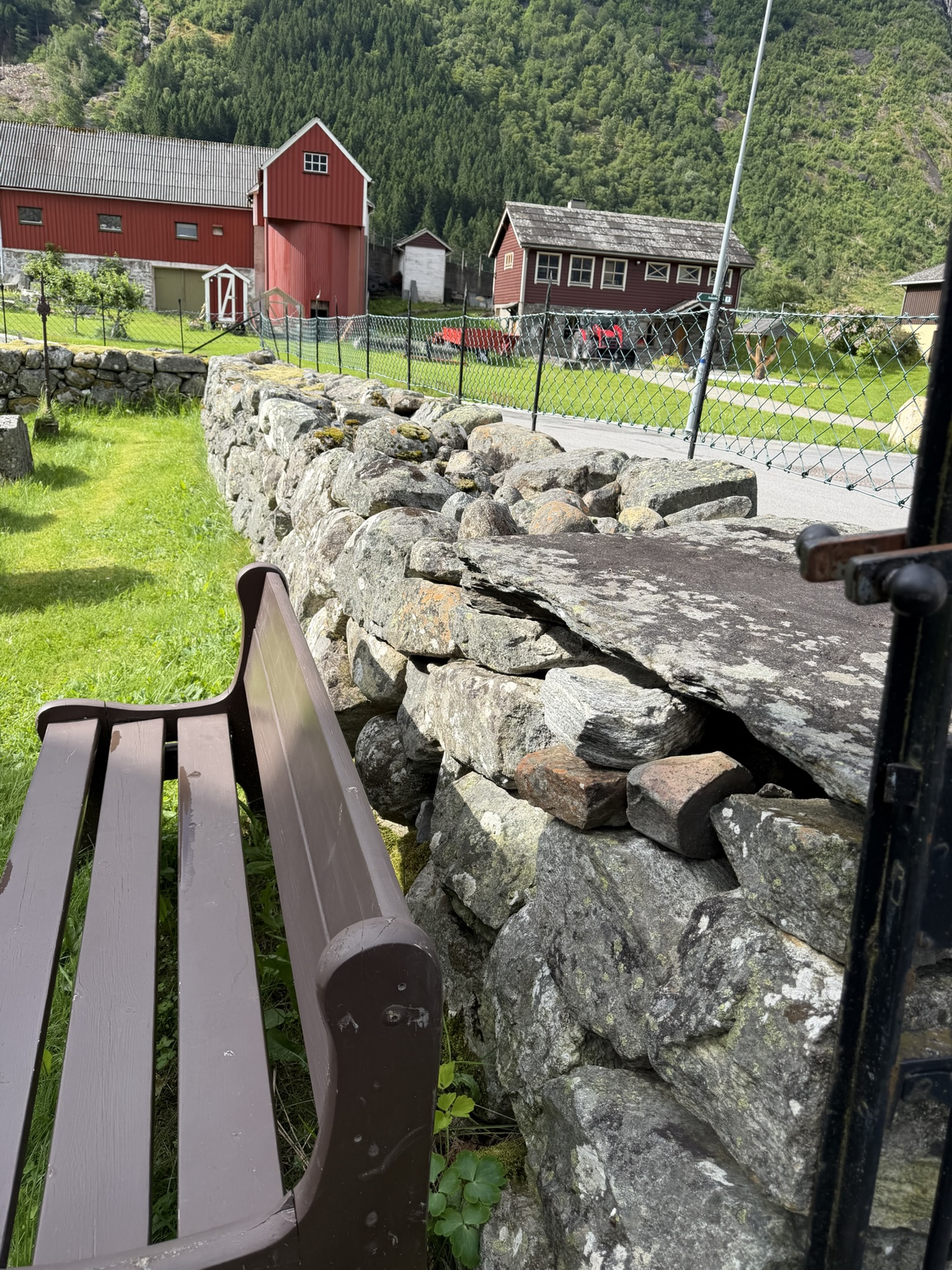
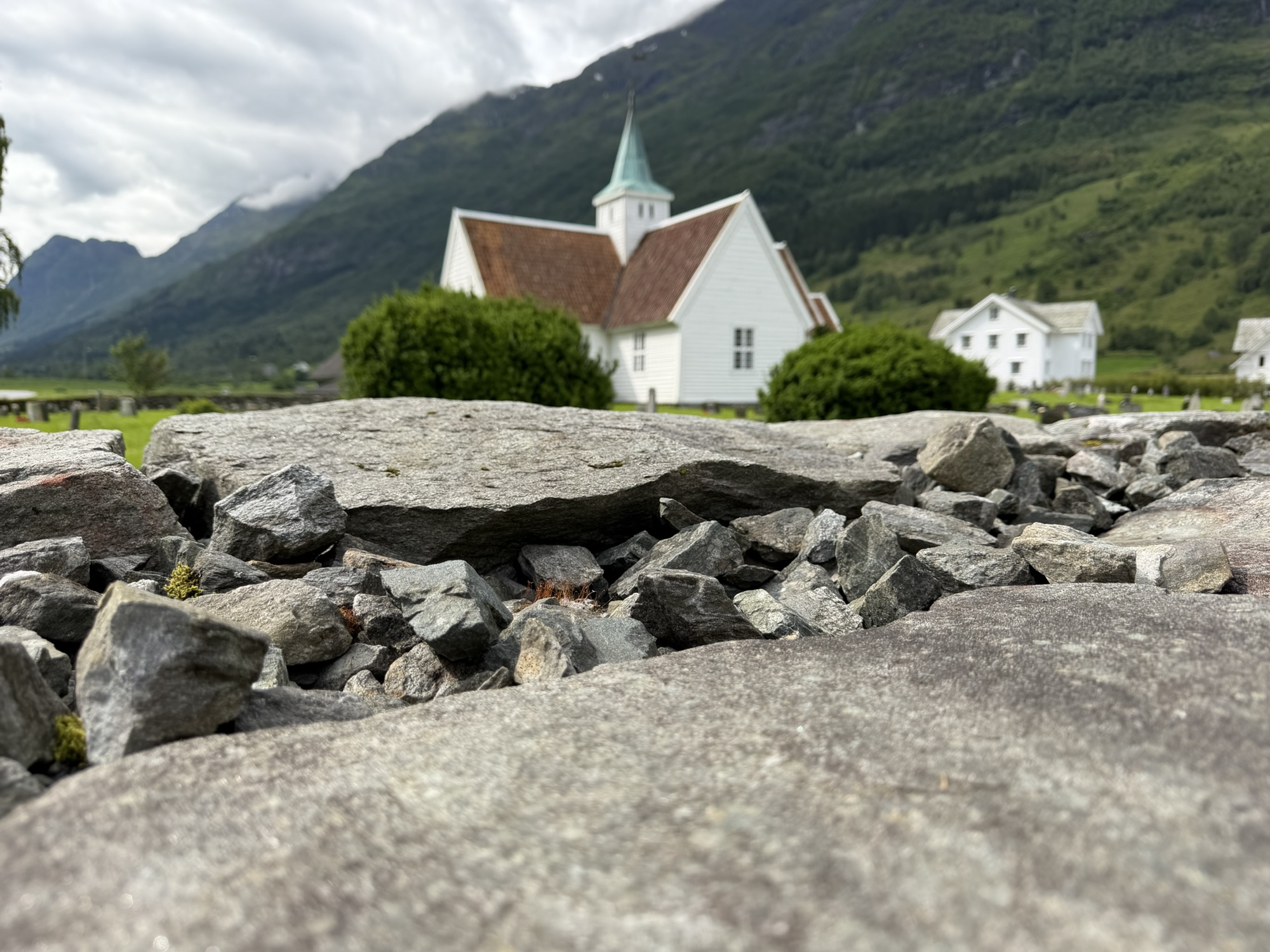
The most amazing stone walls surrounded both the church and the cemetery in Eidfjord and Olden. I have the best photos of the wall in Olden.

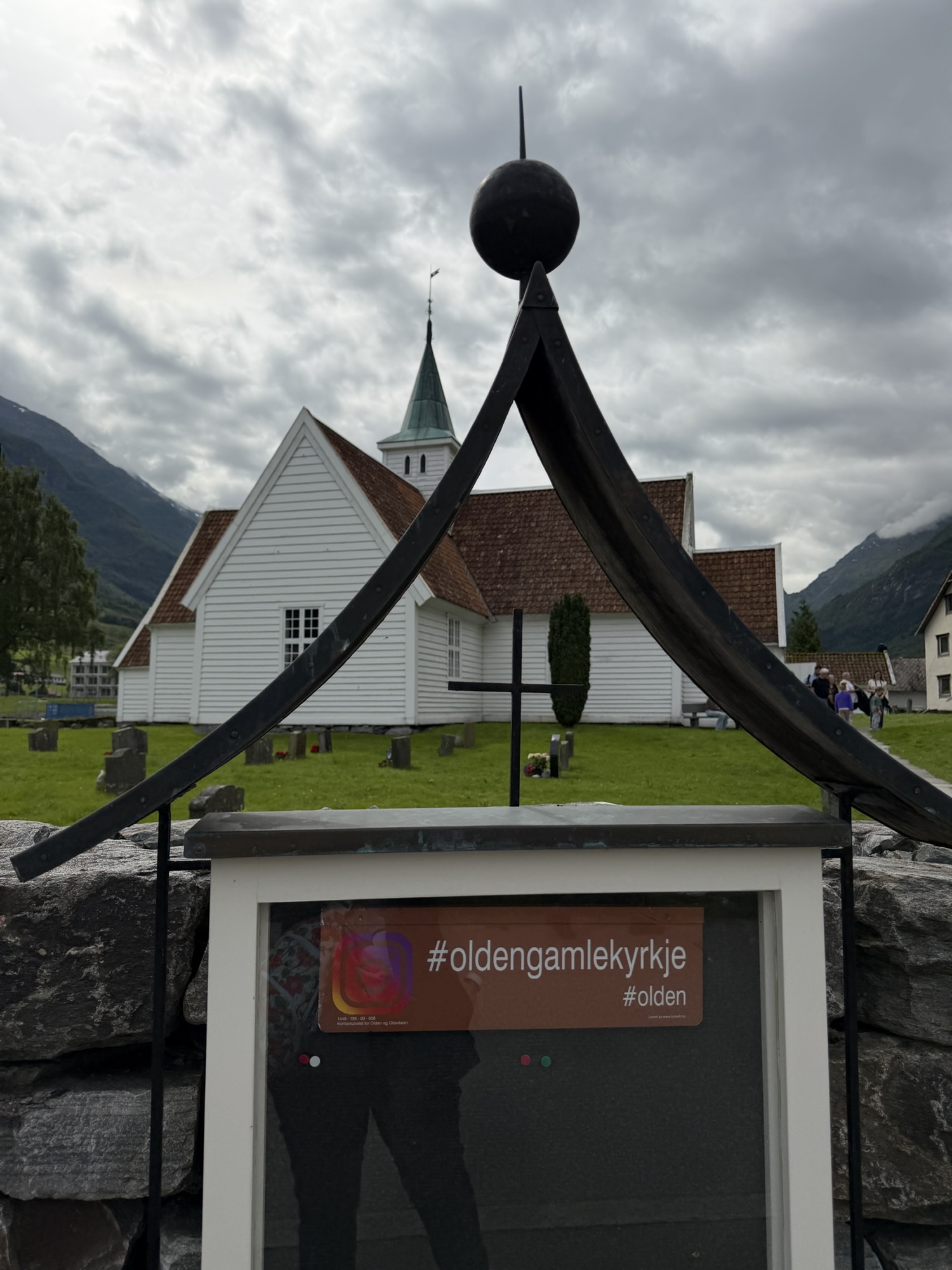
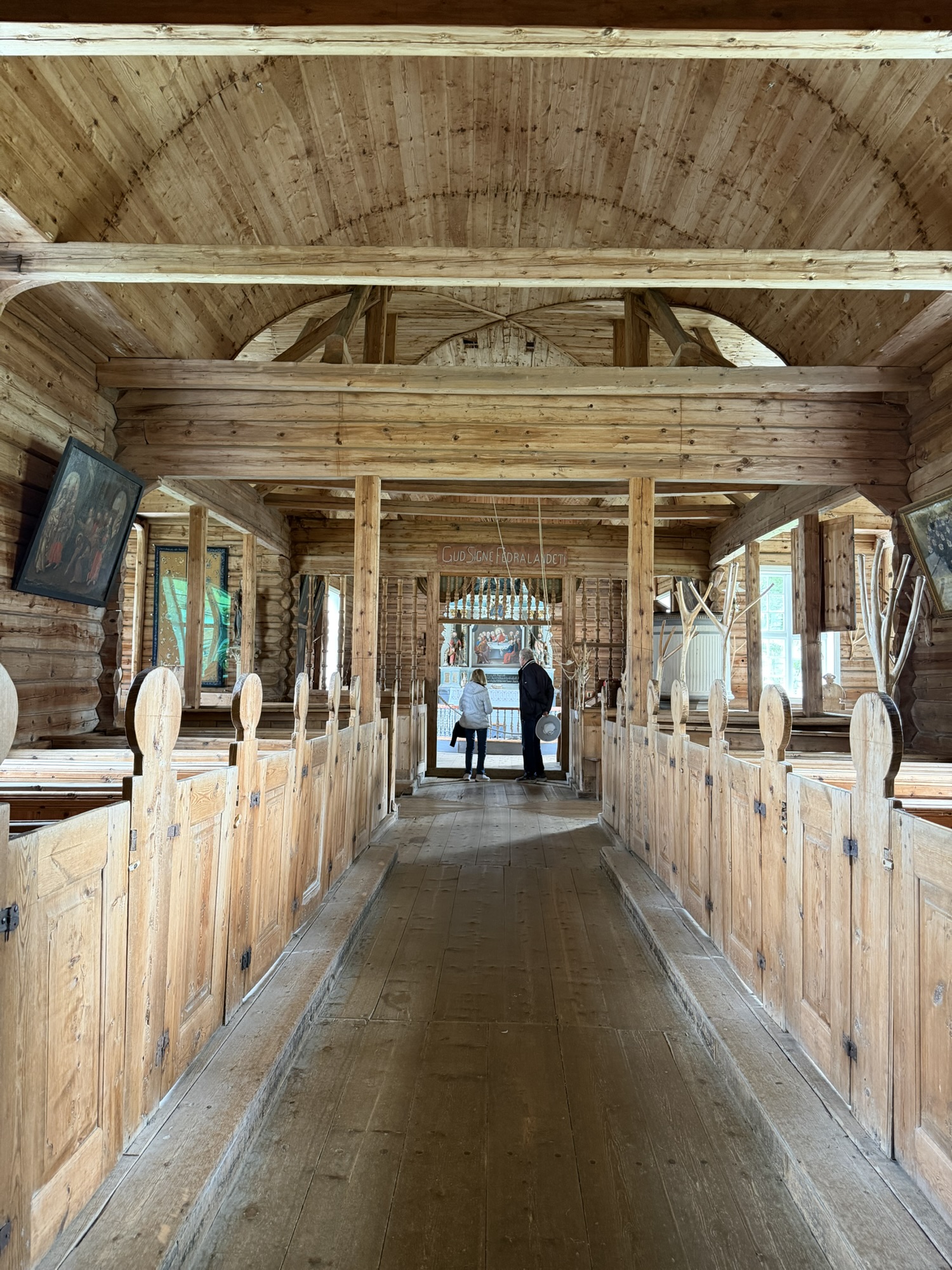
The second church in Olden, Norway is a much bigger and newer building.  The original church was also built in the 14th century, but it was destroyed.  This church was built in 1759. Called, of course, the Old Olden Church, it was replaced as a parish church in the 1930s and became a museum used for special occasions.

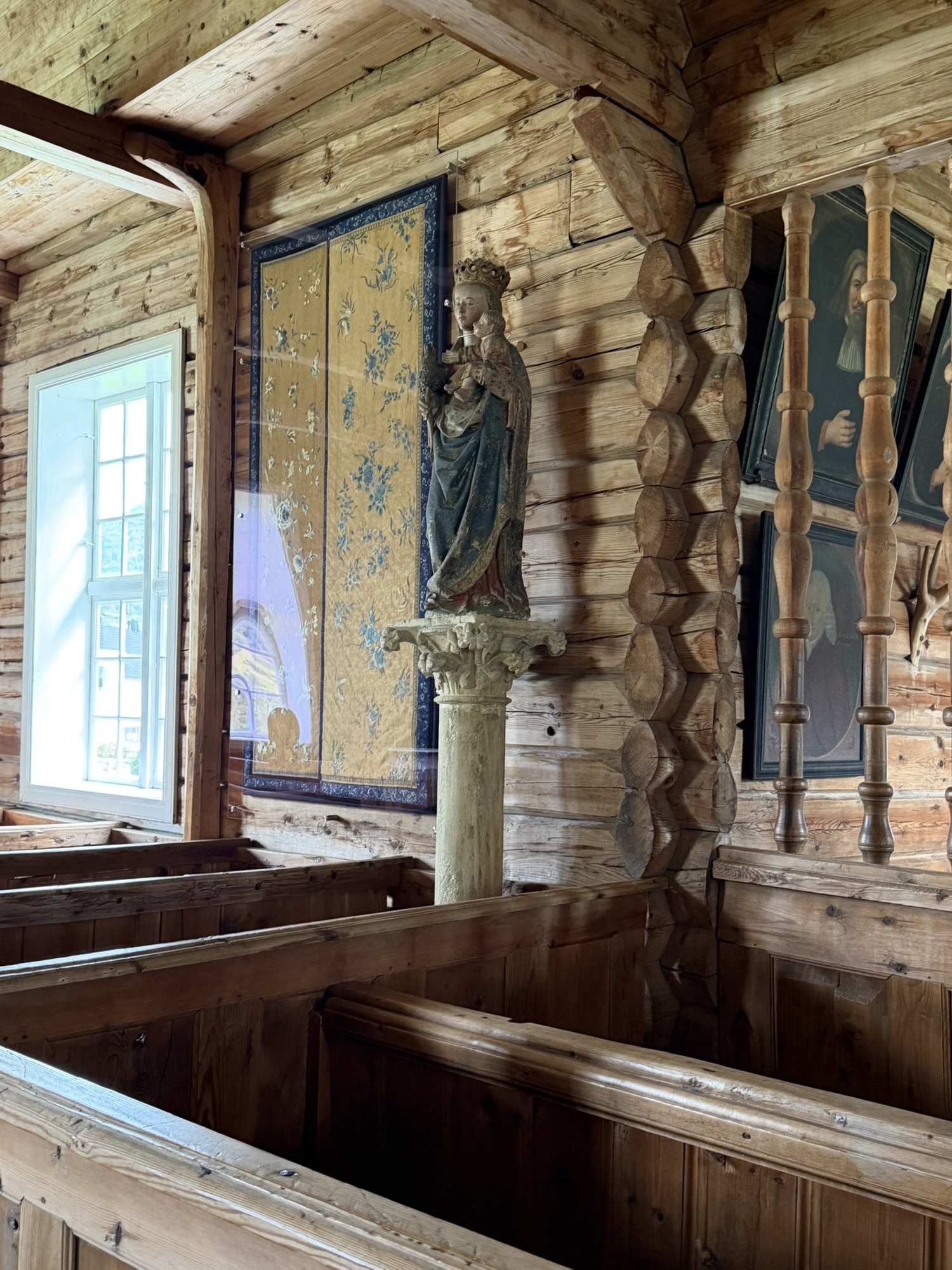
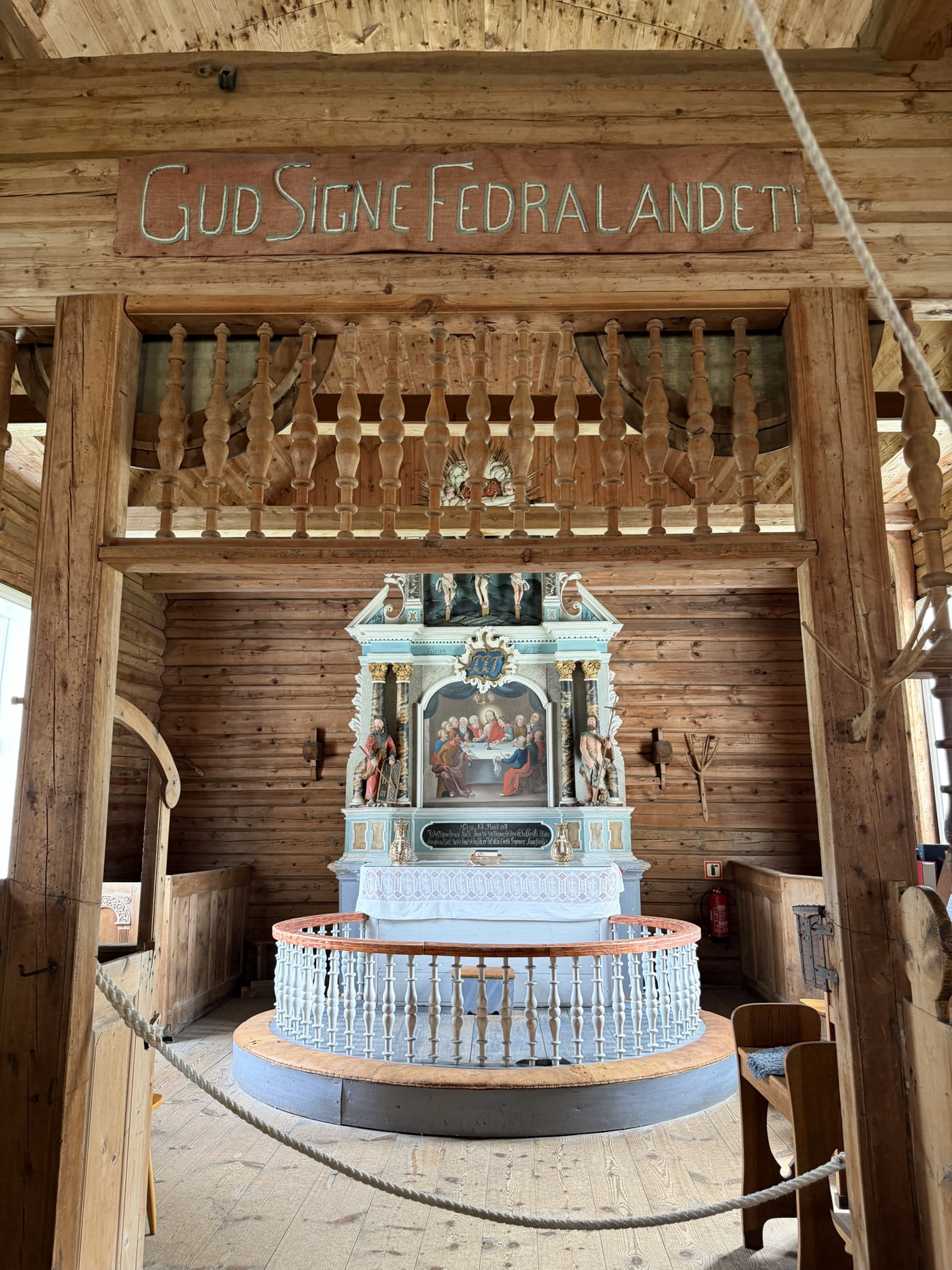
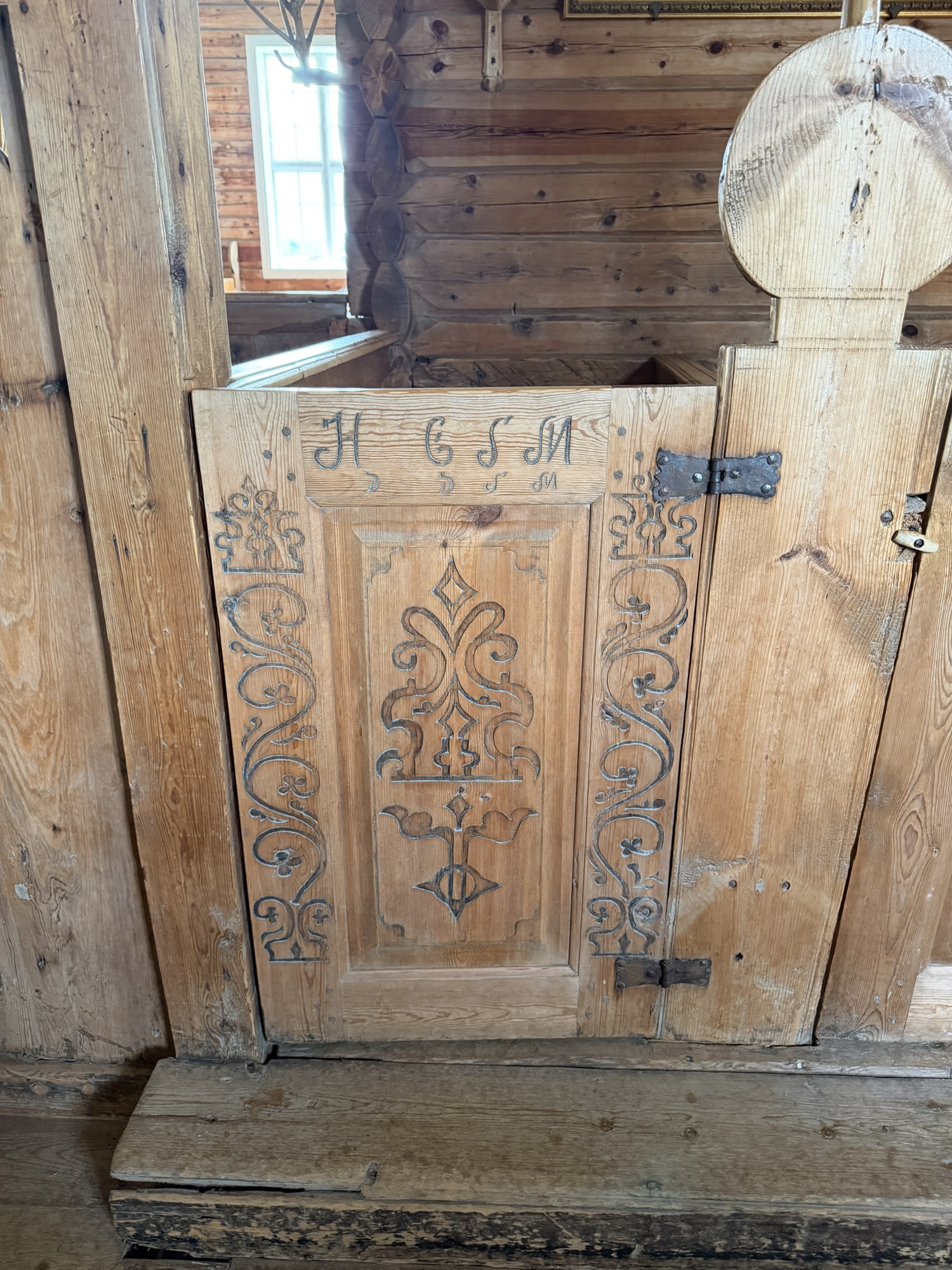
The inside of this church is very similar to the Eidfjord church, although it has a vaulted ceiling.  But the pews are made of similar wood and the alter area is very similar with the grill area in front. For these pews, many of the little doors to enter them were carved by the families who sat there. Some of the pews and the doors are from the original church built in the 1300s. 

I have since learned that this is the only church in this area of Norway that is built in the shape of a crucifix or cruciform. They hoped that building it in this form would protect it from the strong winds.

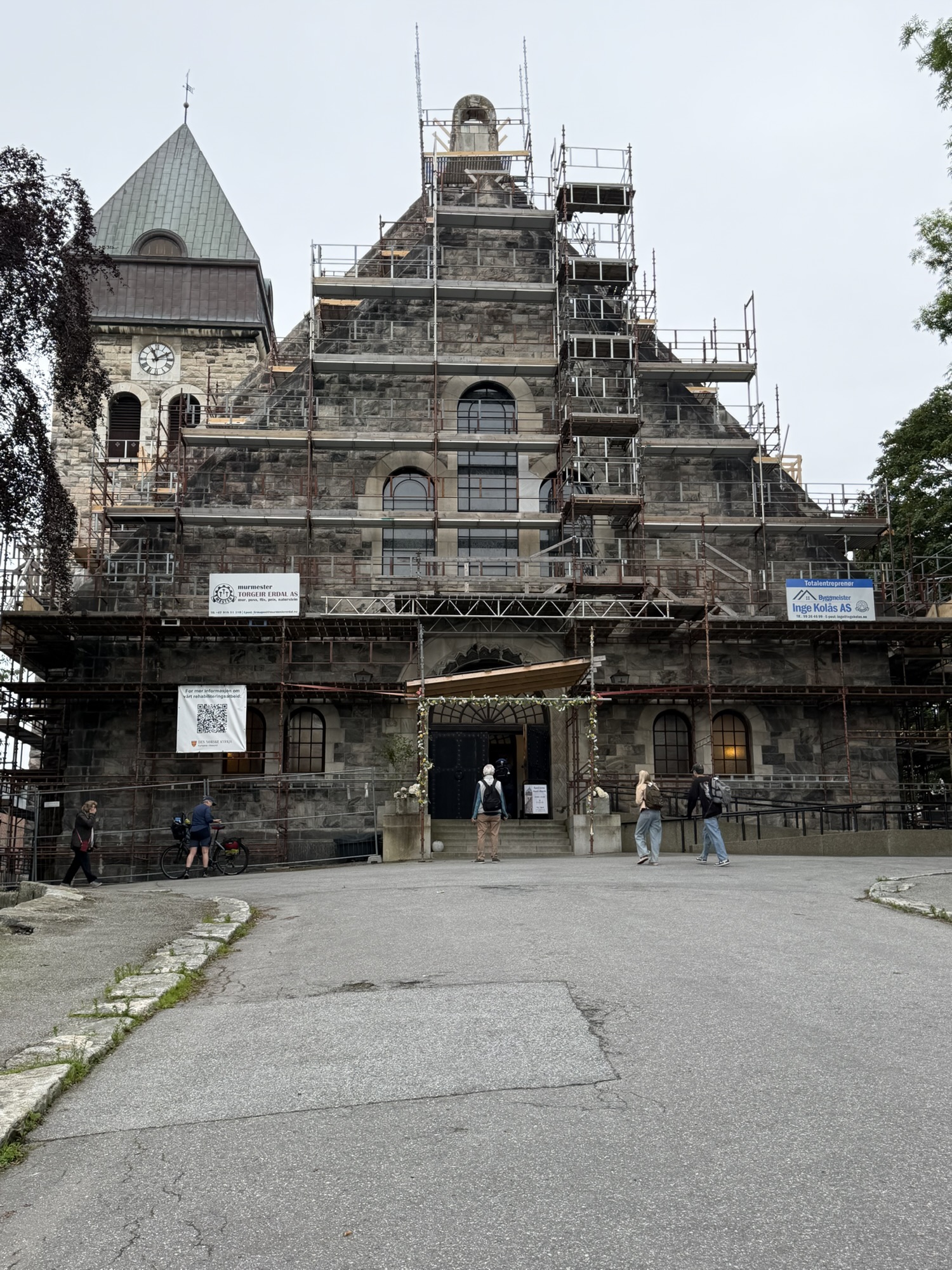
The third church we visited was much more European in flavor.  The church in Alesund is a beautiful marble and stone building.  When we visited it was undergoing some repair work, hence the scaffolding around the building.

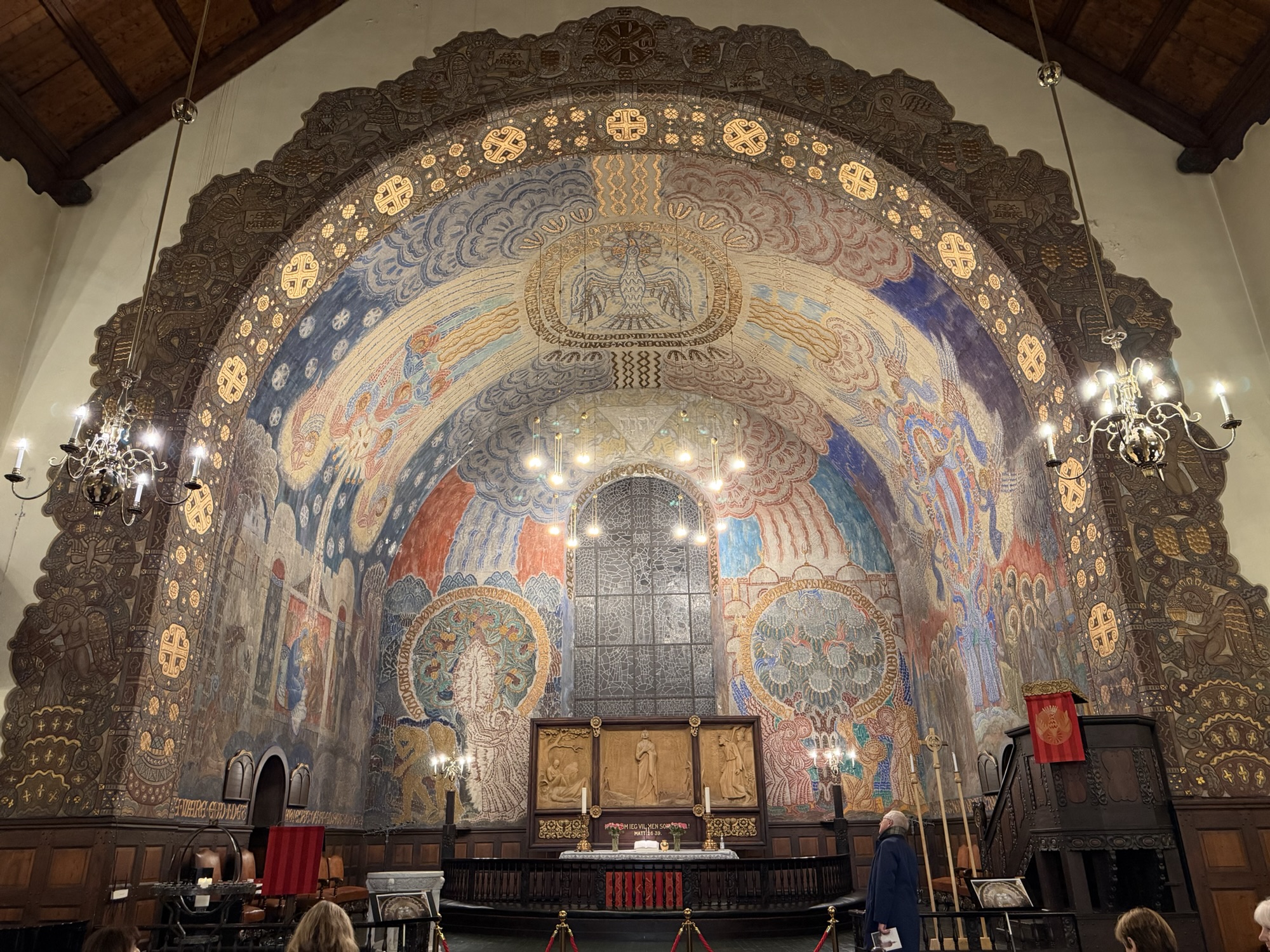
The first church was destroyed in a fire in 1904 which destroyed most of the town. This building was completed in 1909 and is much more ornate than the churches we visited in Olden and Eidfjord.

The other difference is that you do have to pay to enter this church, which is a functioning church and closed during funerals and other times.

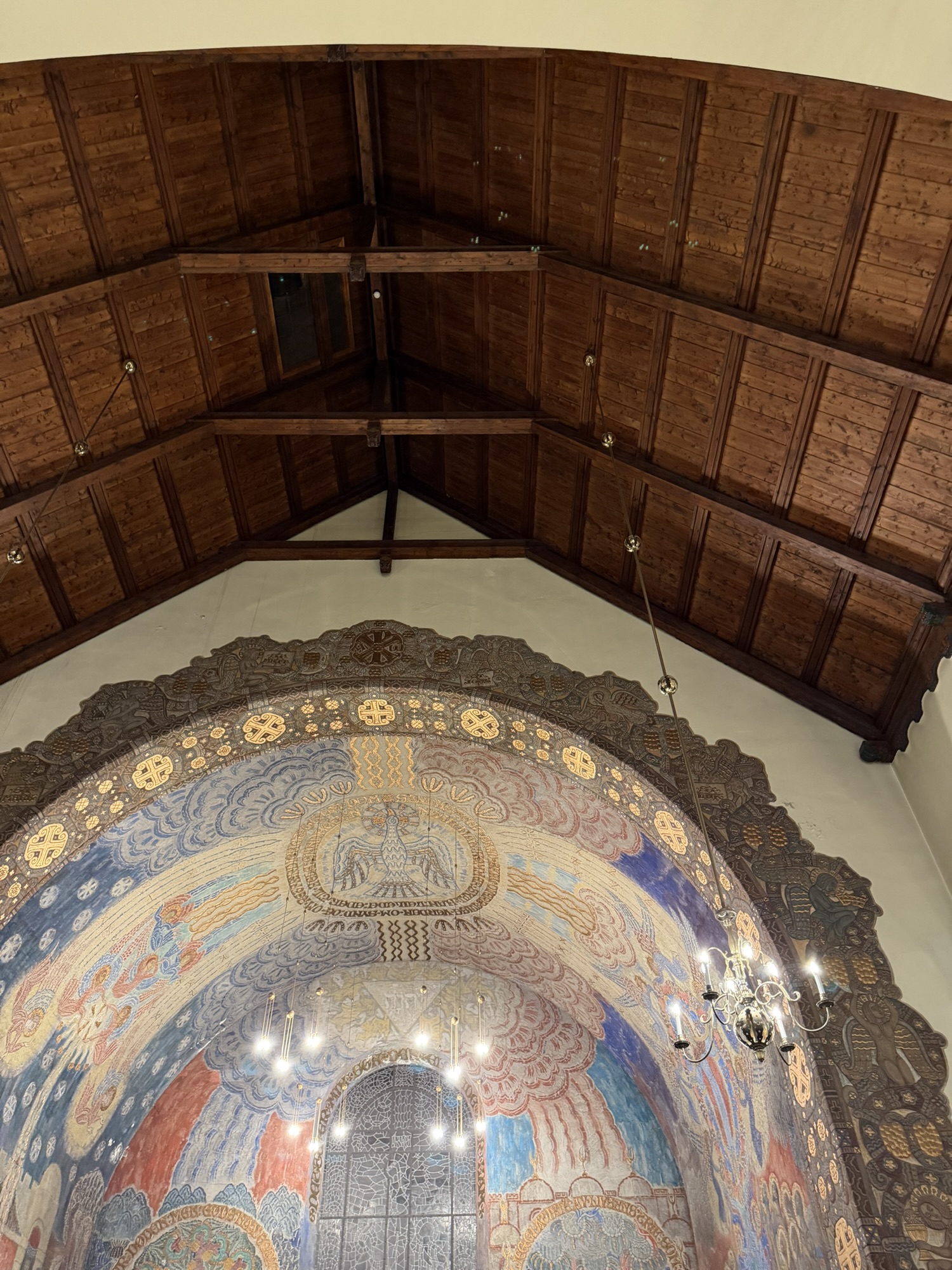
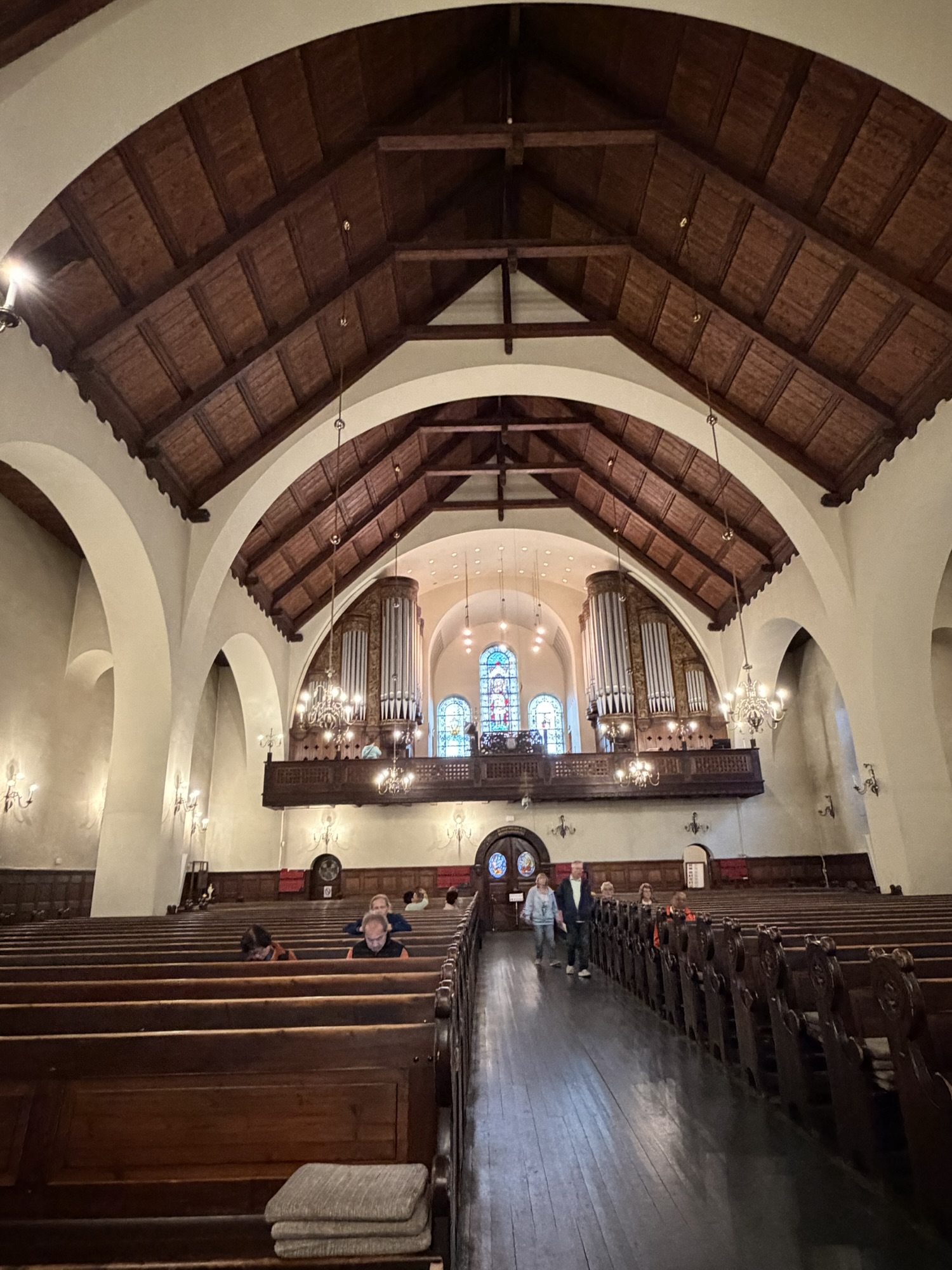
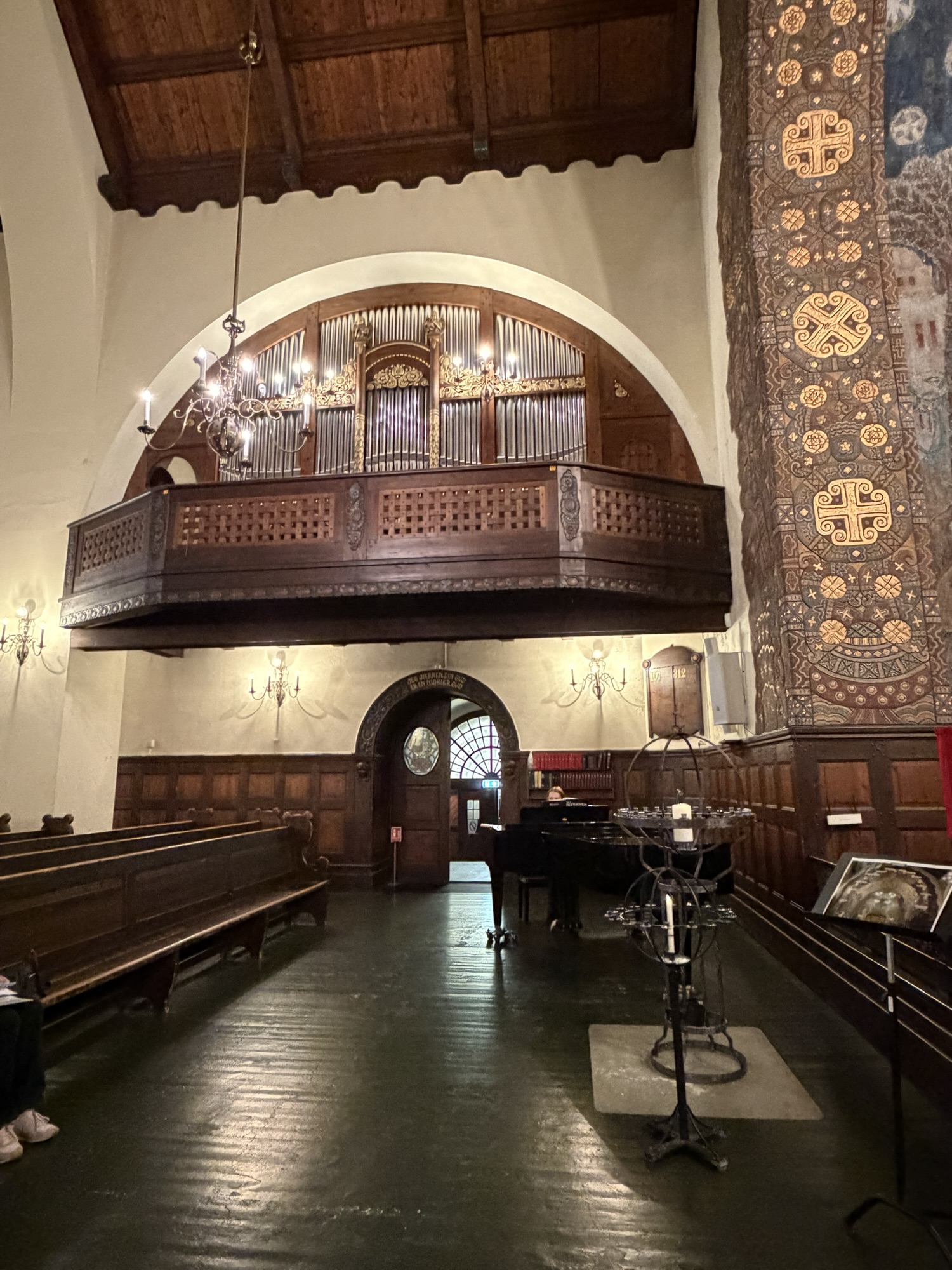
The beautiful altar area of frescos and stained glass is really stunning.  These were made by town Norwegian artist, Martin Enevold Thomt and Oddvar Straume.  The wooden vaulted ceiling and the organ areas were beautifully carved.

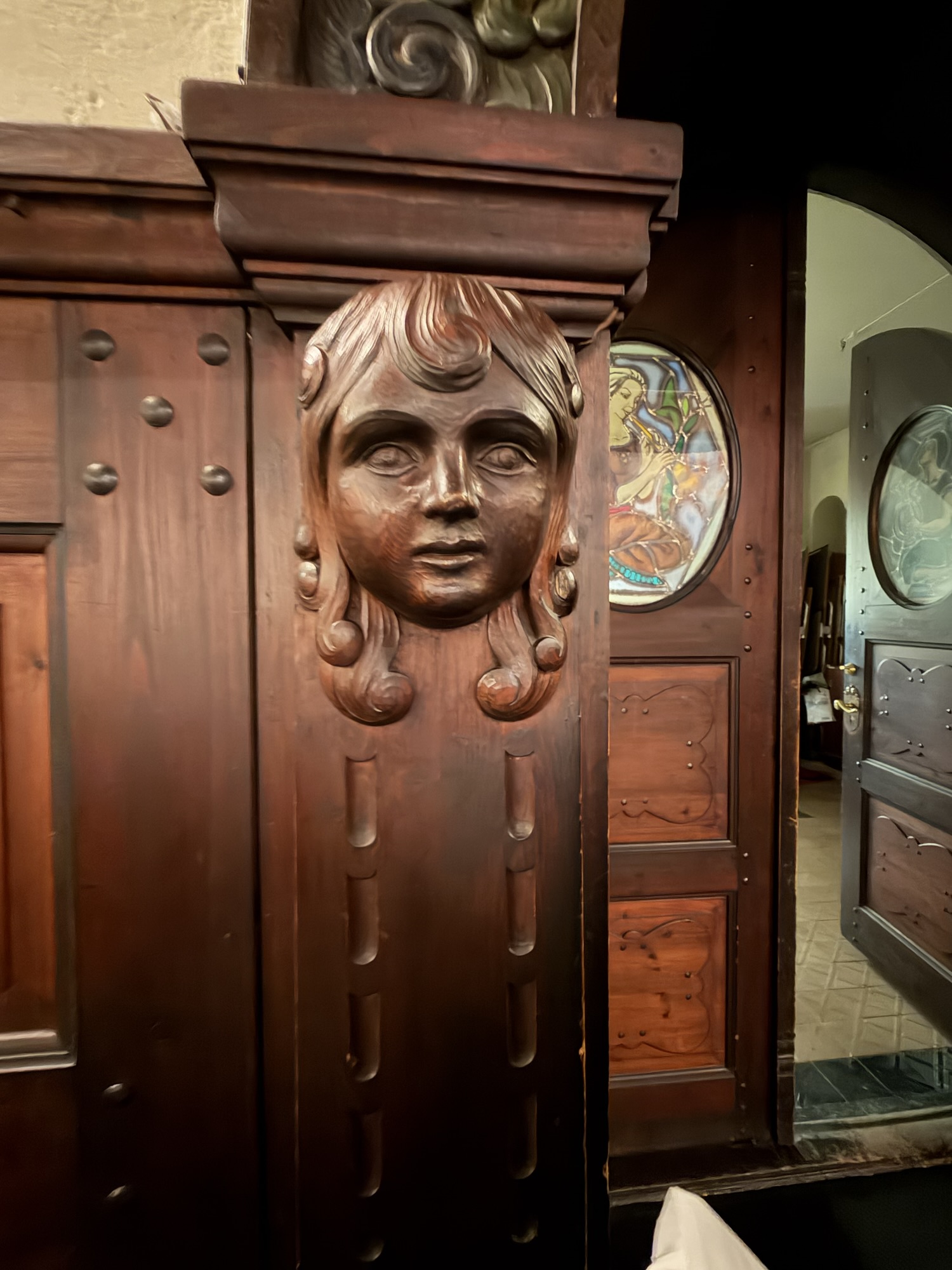
There was also the carved face of a young girl that caught my eye. I have not found any information about it.  So if someone knows who she is, I would love to know!!

Besides the beauty of the building, what made is special for me was the young woman playing the piano while people visited the church.  It was calming and peaceful. Her music added to the experience. 

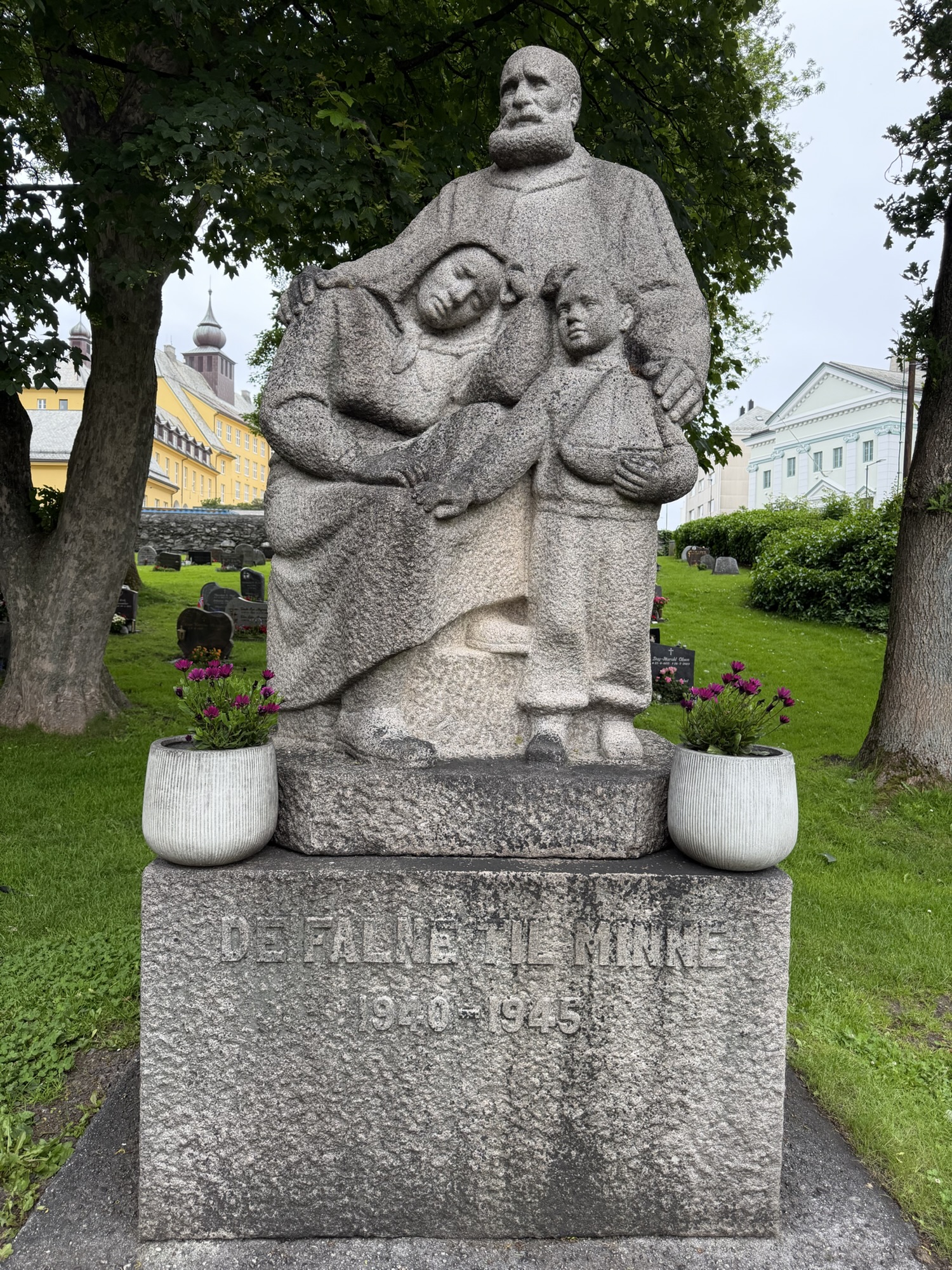
Surrounding the church is a small cemetery as well as a monument to those who died in World War 2. 

I find it interesting how different these churches were from the extremely ornate and lavish cathedrals and churches I have visited throughout Europe. Personally, for me praying in a calmer environment seems more suitable to prayer. Although the European churches are lovely in their way, I find it unsuitable to prayer…too much going on.

Music, Dance, Culture and Unusual Places In Portugal and Spain

28 May

While I covered most of our experiences in Portugal and Spain, there are some special places and experiences that just did not fit into my other blogs.  So here I am doing a potpourri of unique and joyful events and places.

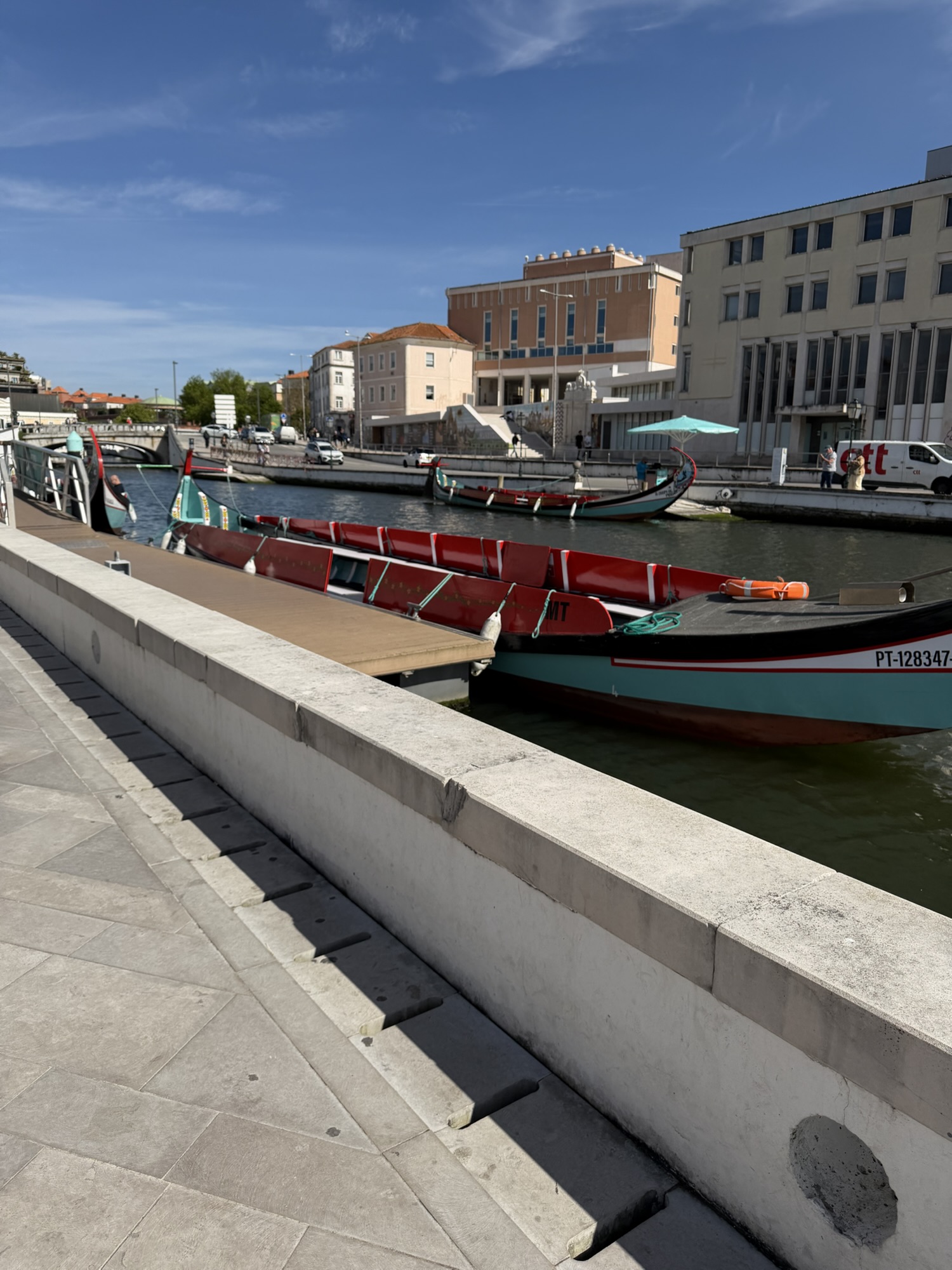
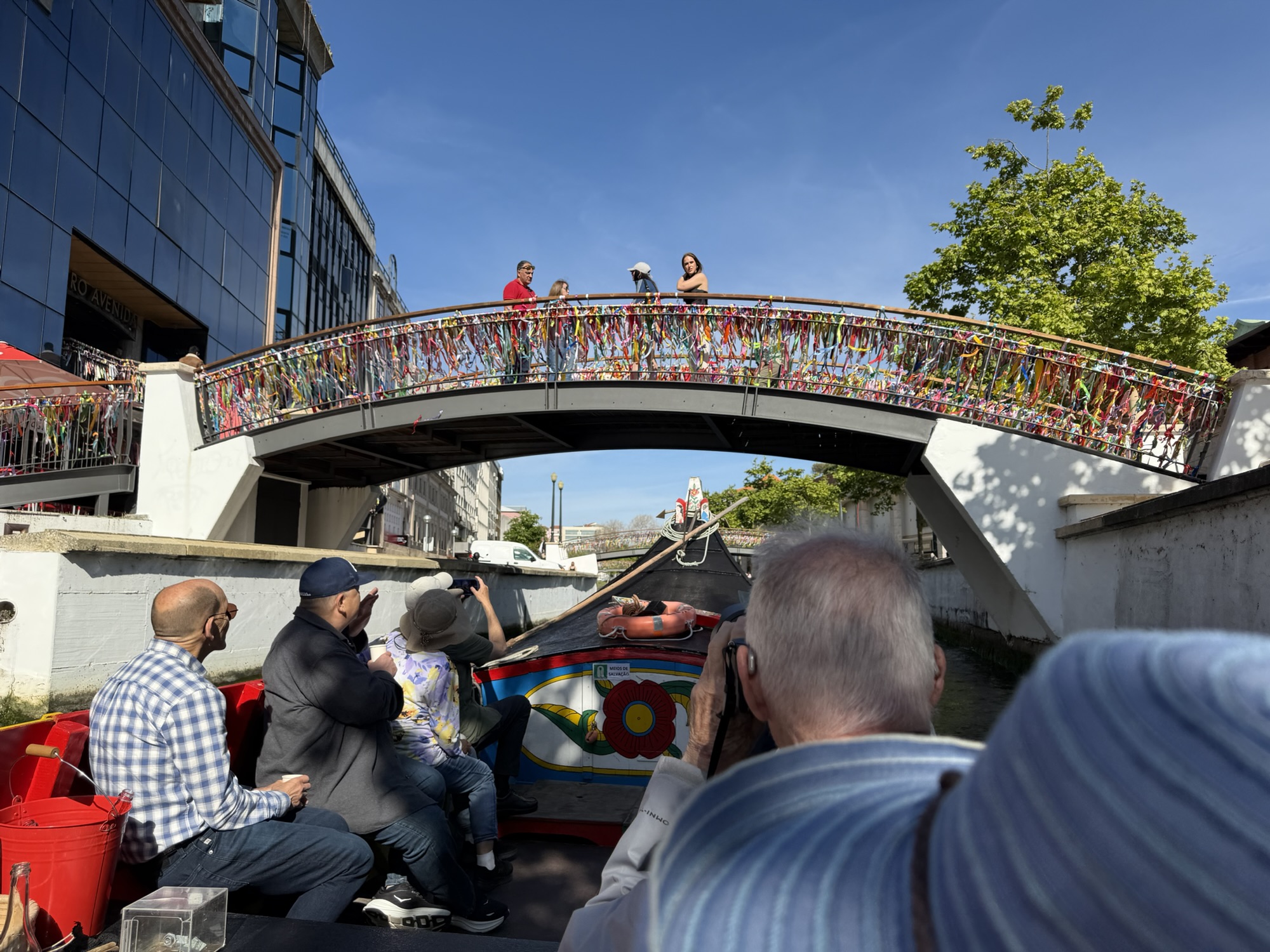
Did you know there is a Venice-like city in Portugal? I didn’t. But near the coast is the city of Aveiro. A large channel was dug in the early 1800s opening the town to the sea and canals were cut to bring the water further in and for transportation as the city became an important part of the salt and seaweed industries.  Although these two industries are no longer important, the canals have become a way for tourists to view the city.  We had a wonderful time on our boat ride through the canals viewing the scenes from the boat.  Later we had a chance to walk the streets that line the canal.

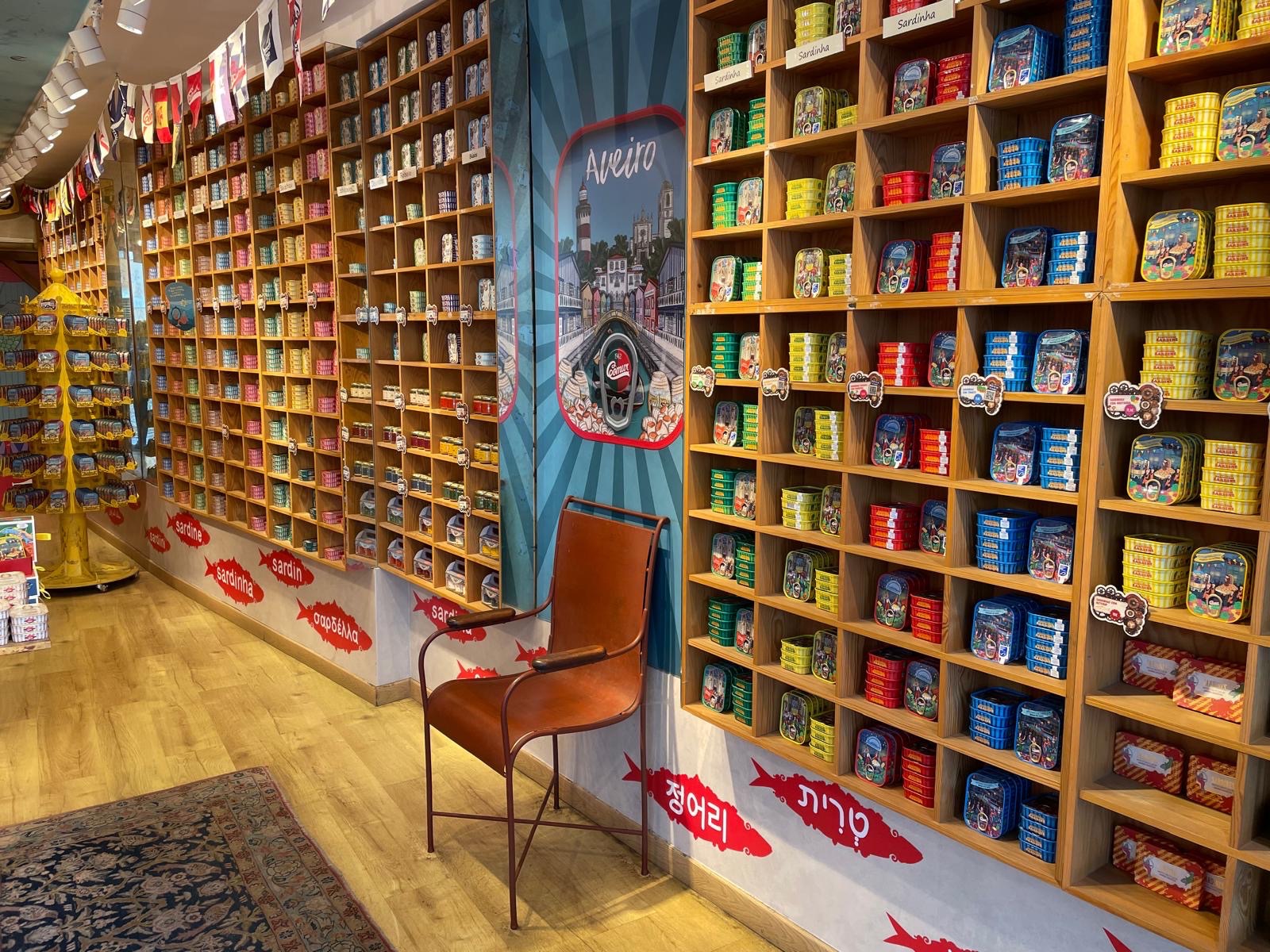
A sardine store.

In Portugal, sardines are an important food source and export industry.  Wherever you go you can see sardines for sale and/or you can eat them.  In Aveiro, the city with the canals, there was a lovely store just filled with different canned sardines for sale!  Since I love sardines, I loved seeing this store. I had joy from this little bit of heaven for me.  Later in our trip I purchased some to take home.  I didn’t take a photo of that sardine store, but later on I found another one!

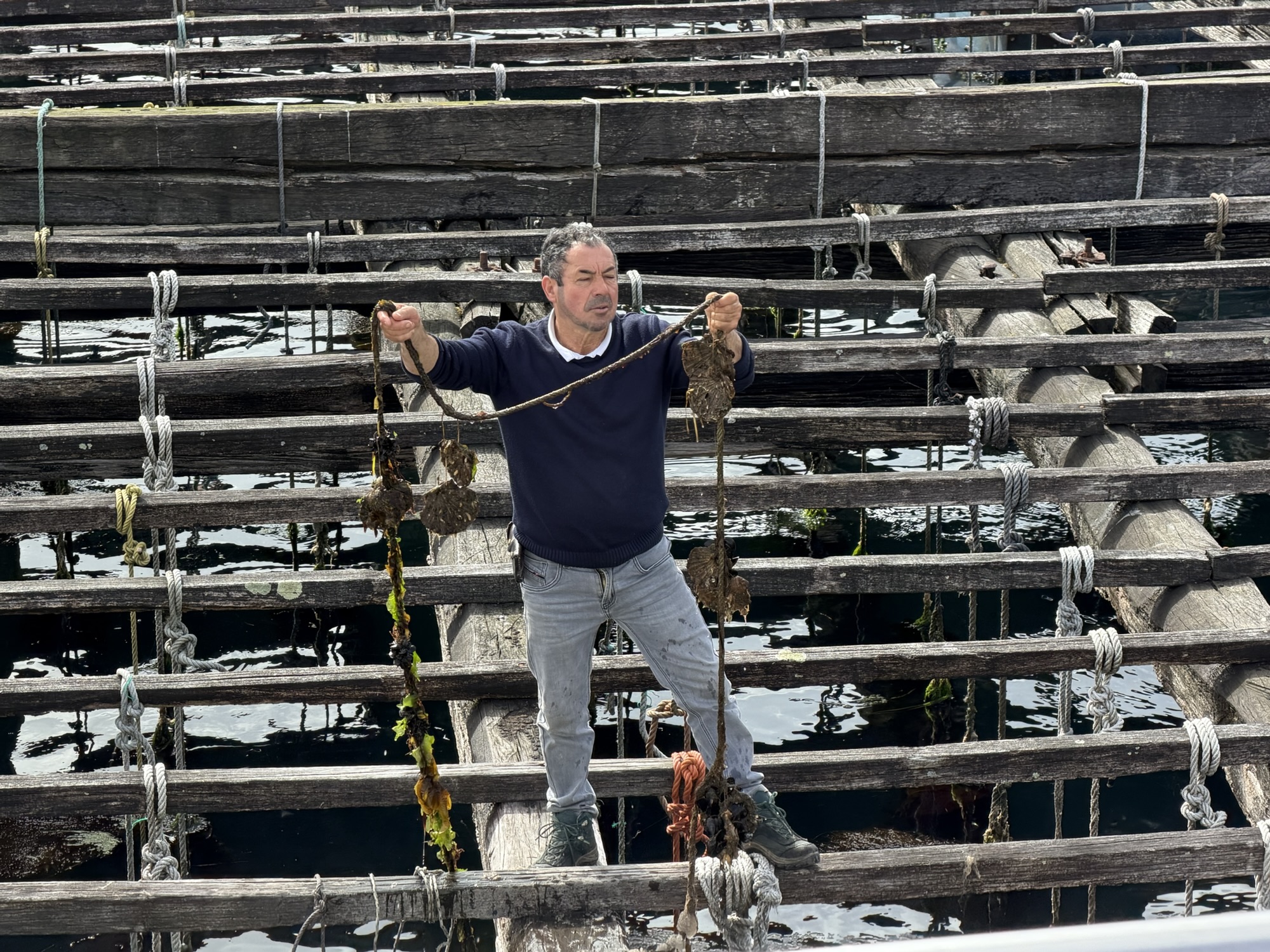
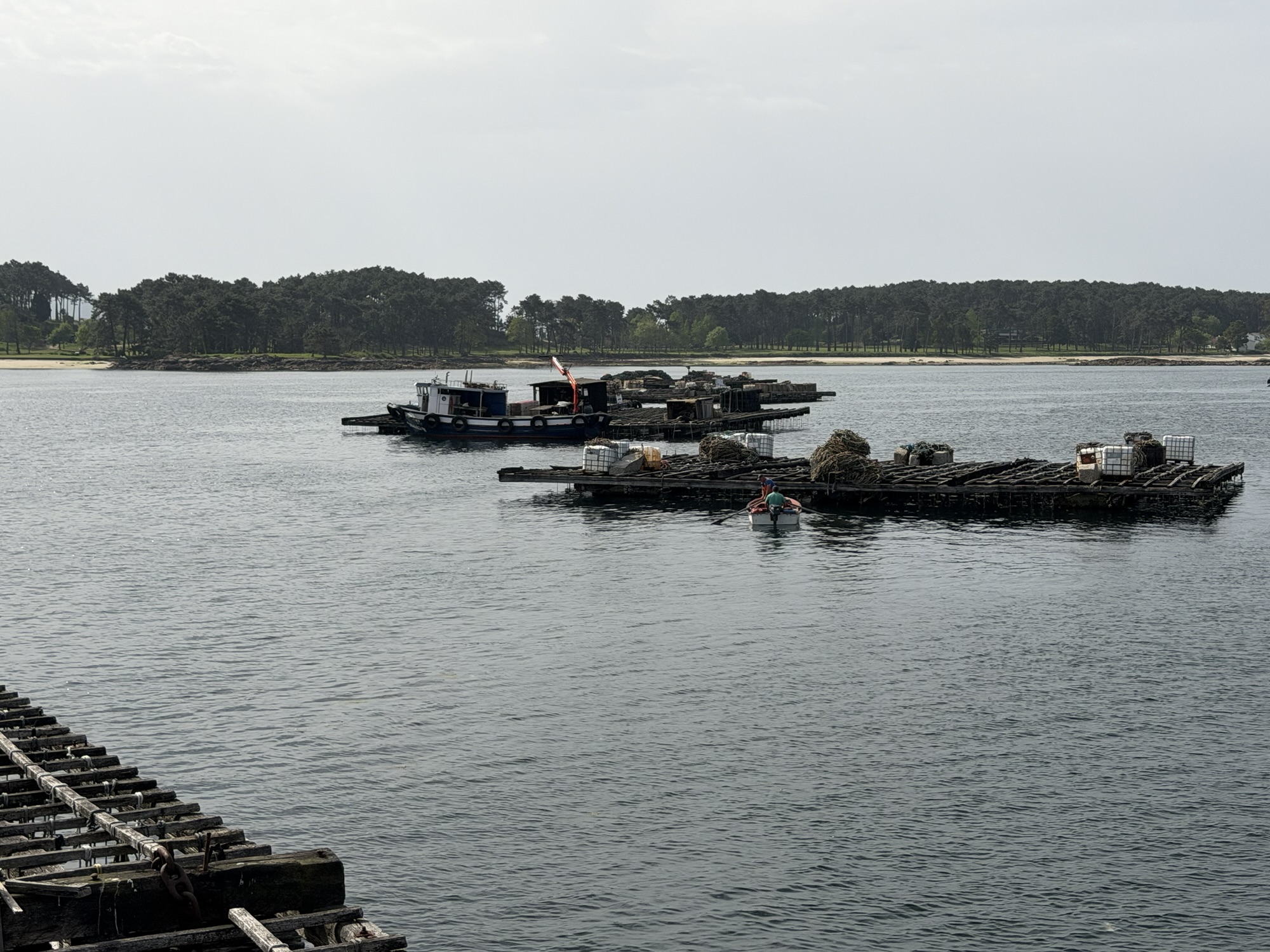
In Spain there is a large area of mussel farms in the Rias Baixus estuary.  We had a lovely boat ride along the mussel farms and learned how the mussels grow and are harvested.  Those who enjoy mussels (NOT me) had a delicious lunch of mussels and shrimp.  I enjoyed watching the birds try to steal the food from the boat and from the others in my group trying to eat!  And YES, of course they served us wine on the boat!!

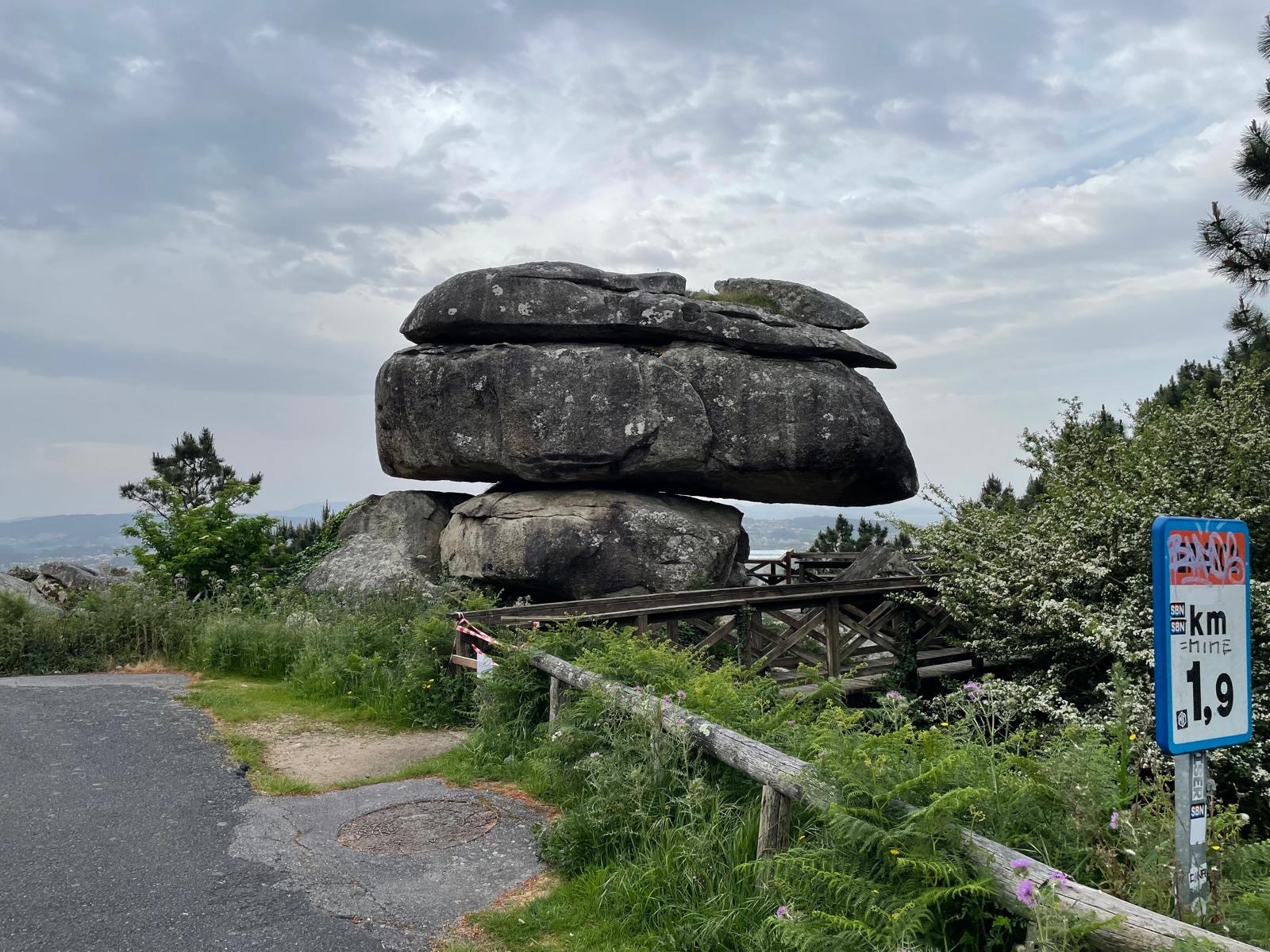
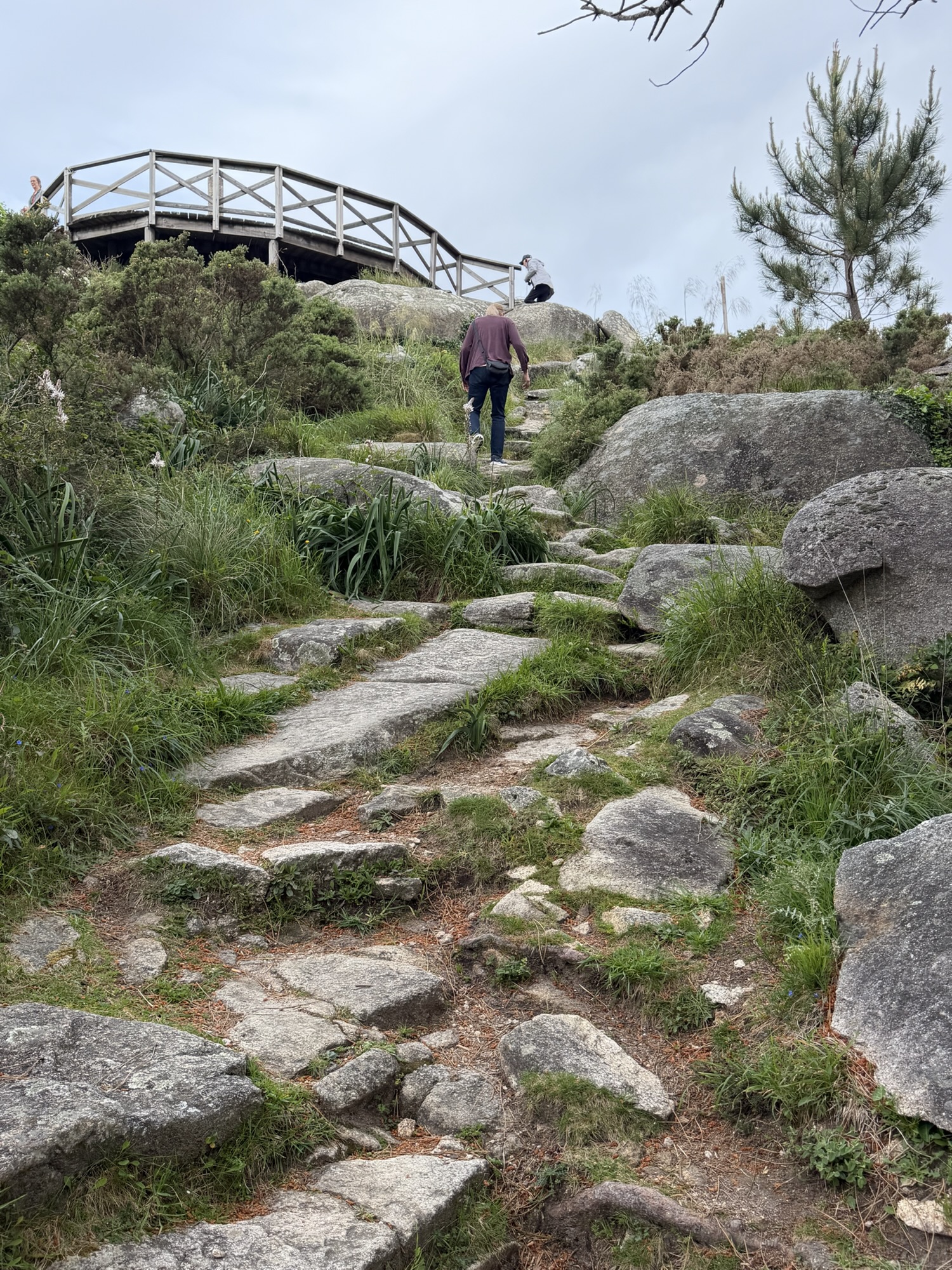
Before we went into the estuary, we looked at it from above at a wonderful little park on a peninsula bordering the estuary.  There we encountered the Tilting Rock and beyond it a wonderful lookout to view the area from above.

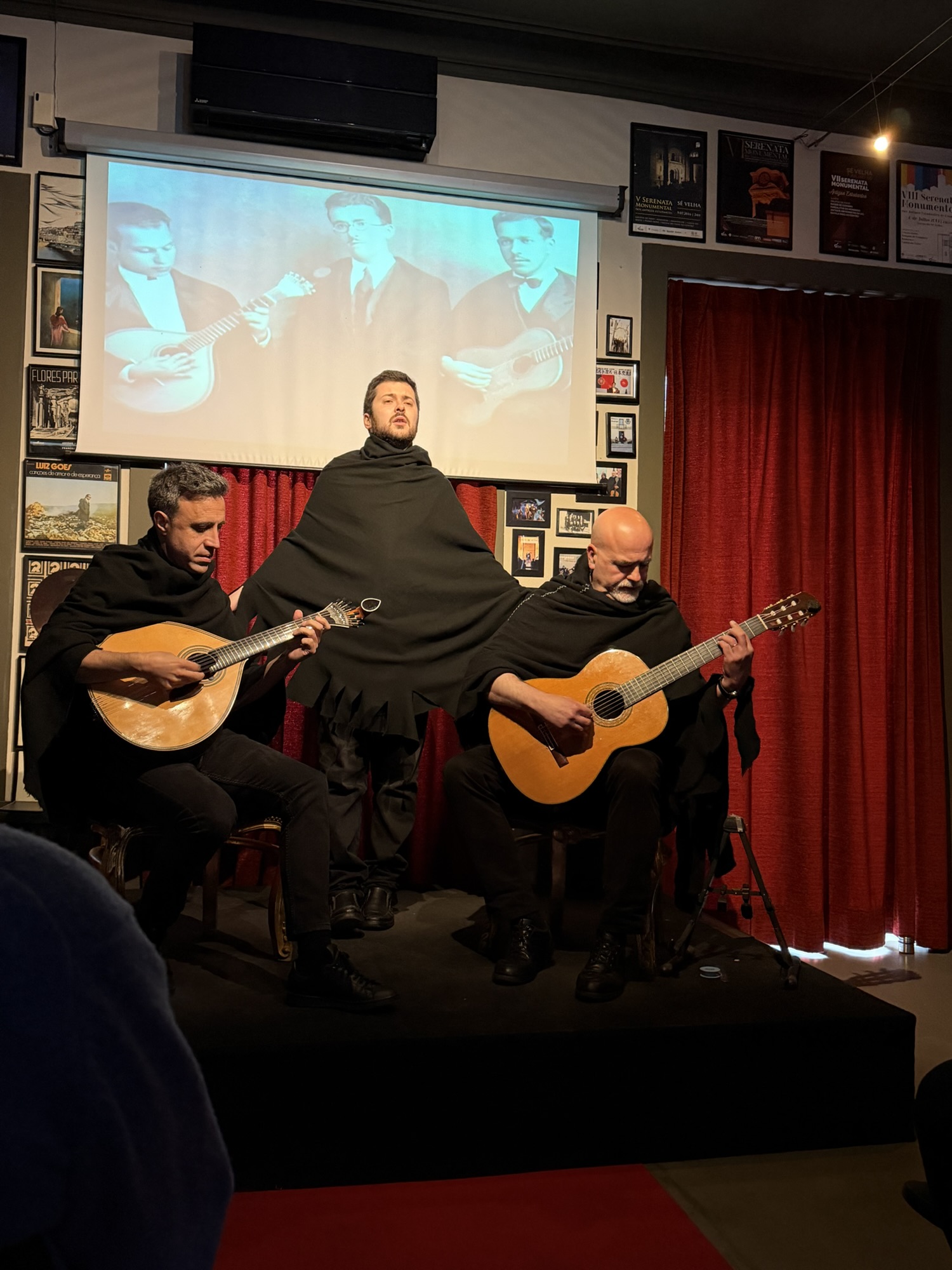
The town of Coimbra and the wonderful grounds of the university had more to offer us as we experienced Fado, the sad and emotional music of the students. Originally sung and performed with guitar by men dressed in black with capes and hats, now occasionally a woman also performs.  We went to a performance by three men that was so interesting.  Lots of longing and drama in the music.

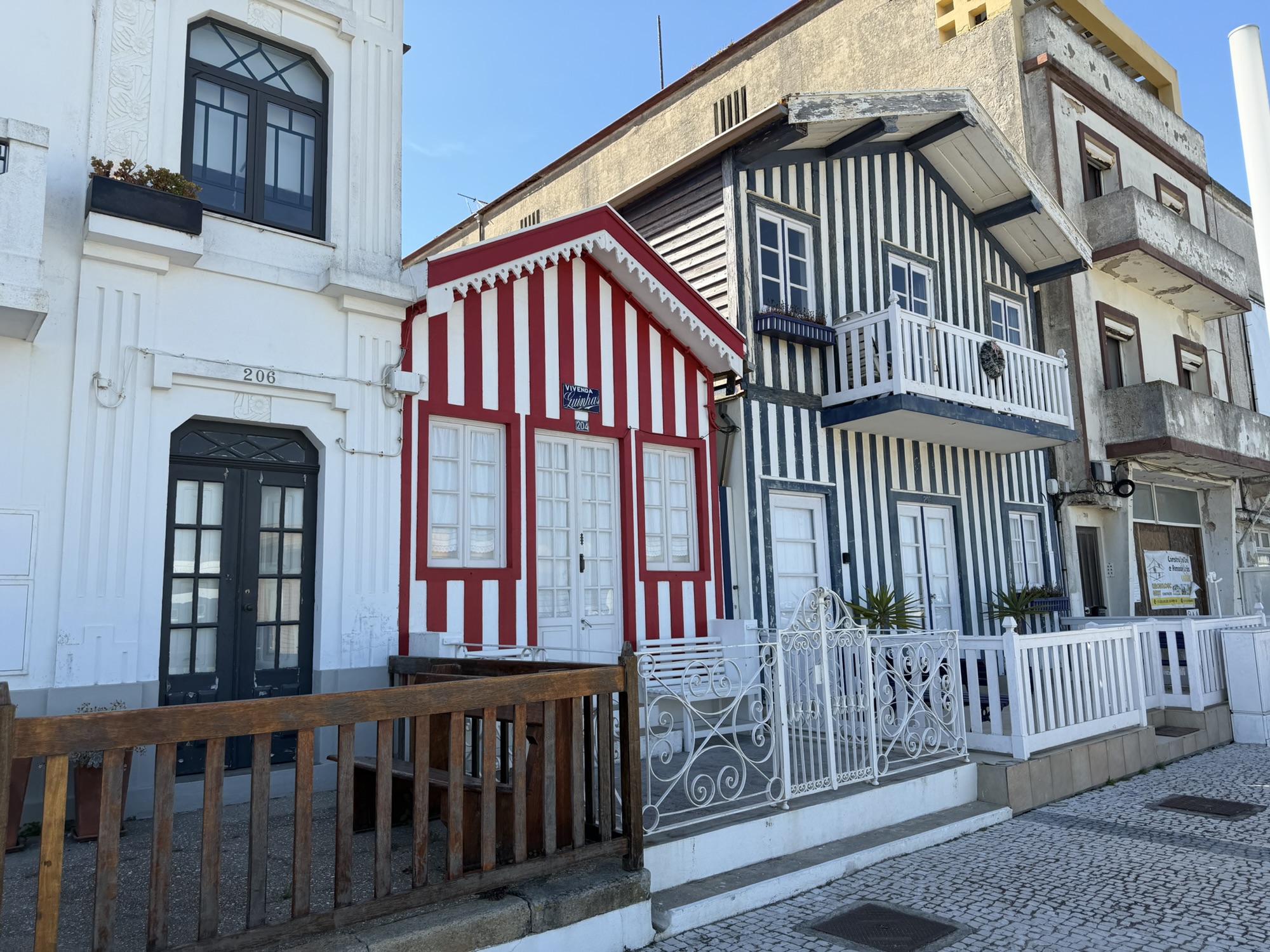
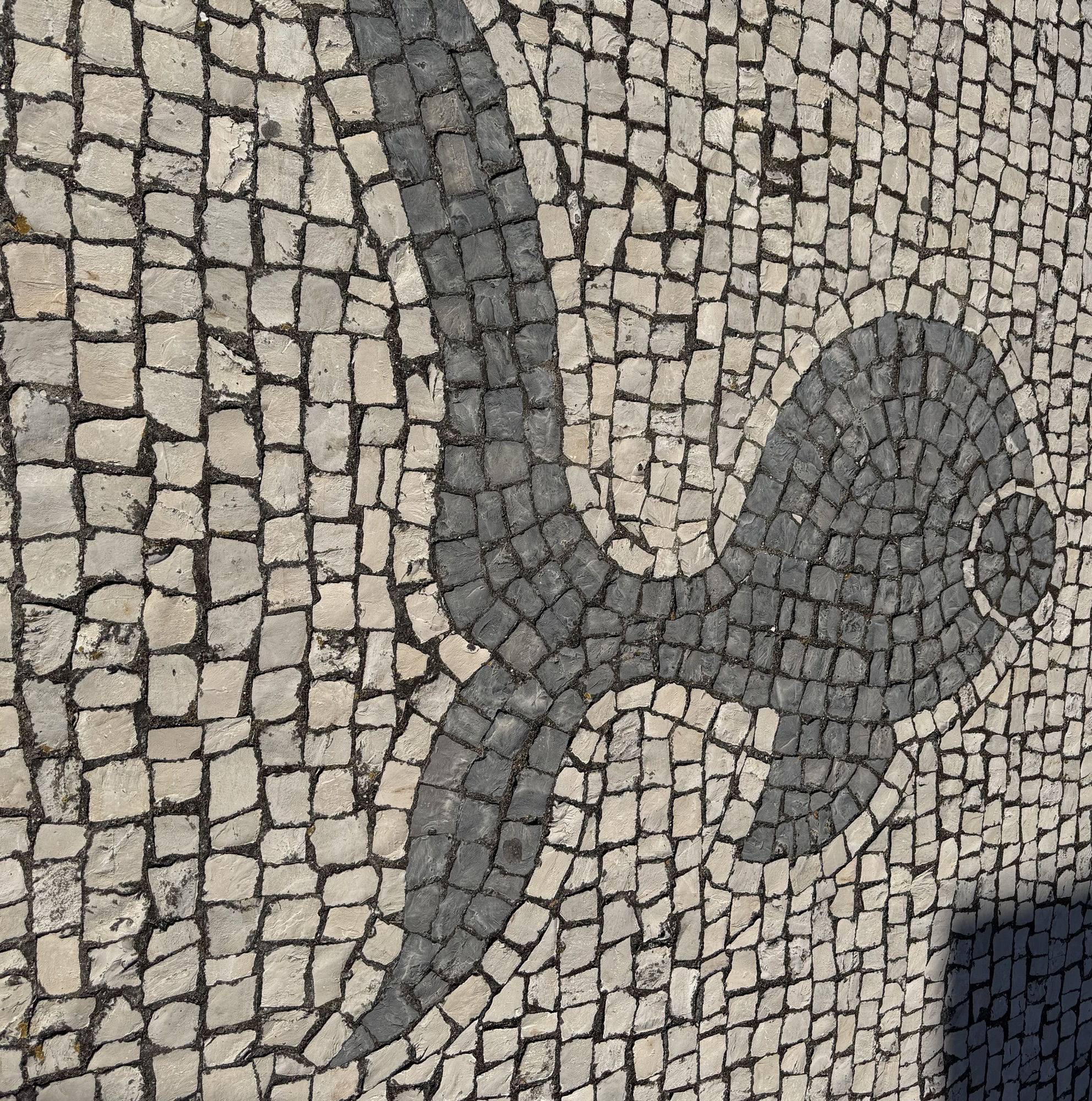
After we left Coimbra we visited the seaside resort of Costa Nova. Wow, I fell in love with this resort. The beach is long and wonderful.  But the fun part are all the brightly colored and striped homes along the beach.  It was great fun to walk up and down the beach to admire them and have a cool drink, which we did. Many cities in Portugal and Spain had designs in the walkways which were made up of little squares of marble and granite. I liked this dophin.

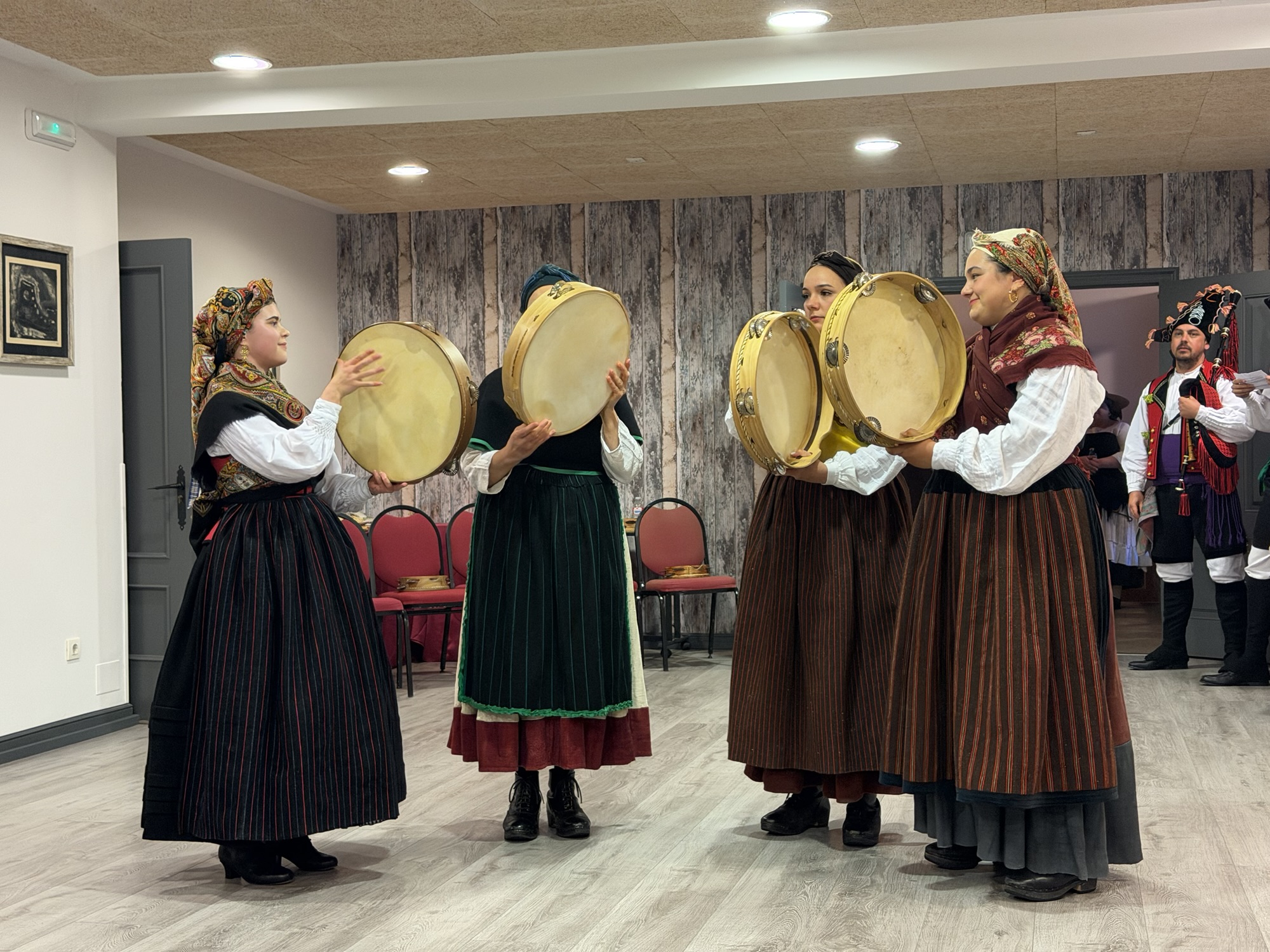
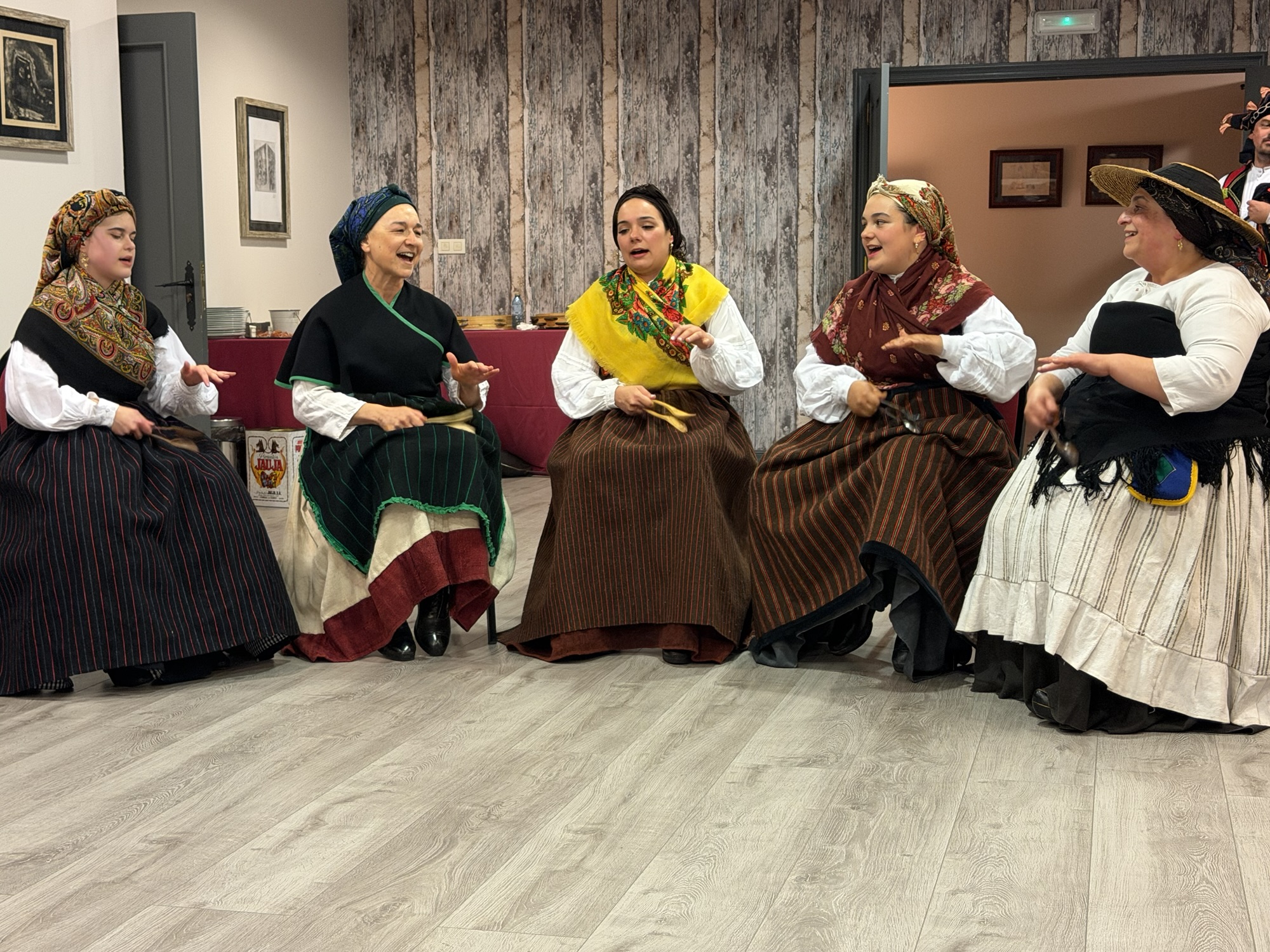
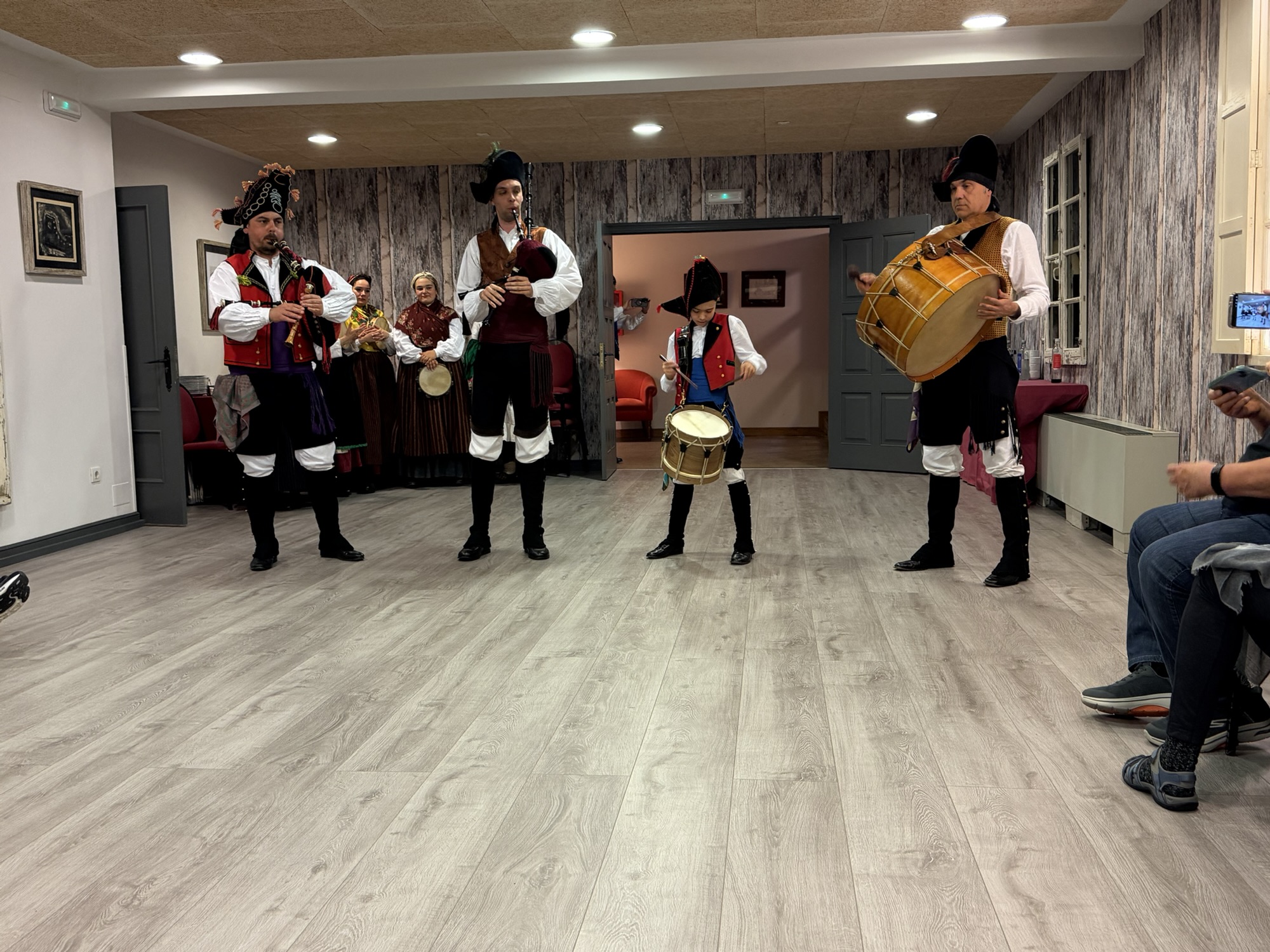
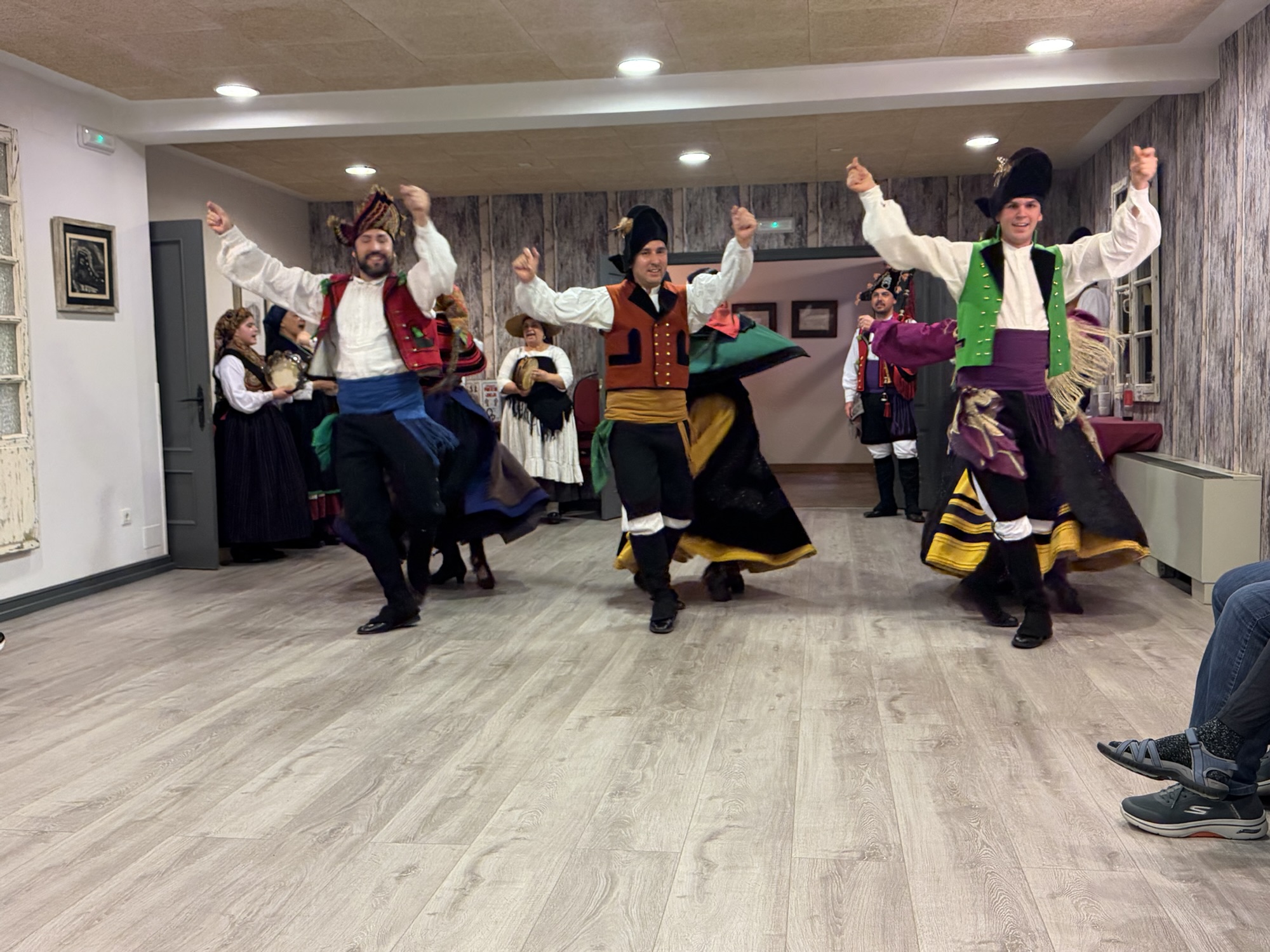
We had other musical events as well.  Did you know that the people of Northern Spain are the origins of Celtic music. In fact, the people fled north to the islands that are now Great Britain and are the original Celtic immigrants.  We had the pleasure to see a show of their music, dance and singing.  YES, they use bag pipes!! But my favorite was the women playing songs using a sort of tamberine/drum and then using spoons for a song.  So much fun!

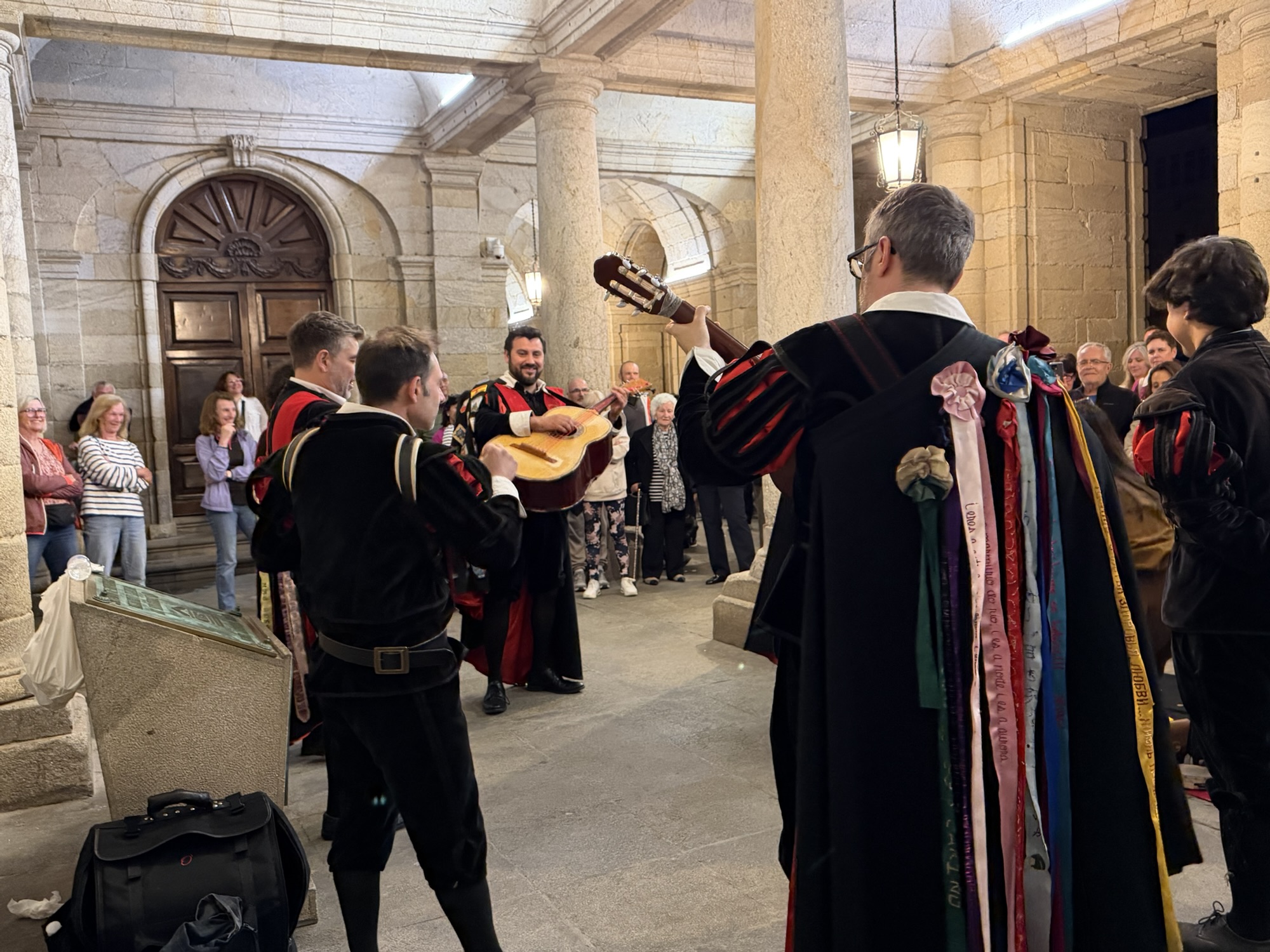
The first night in Santiago, we also got to see a troop of musicians performing across from the Church.  It was entertaining and joyous.  I think the pilgrims really enjoy their evenings after their long journey.  There is music throughout the town.

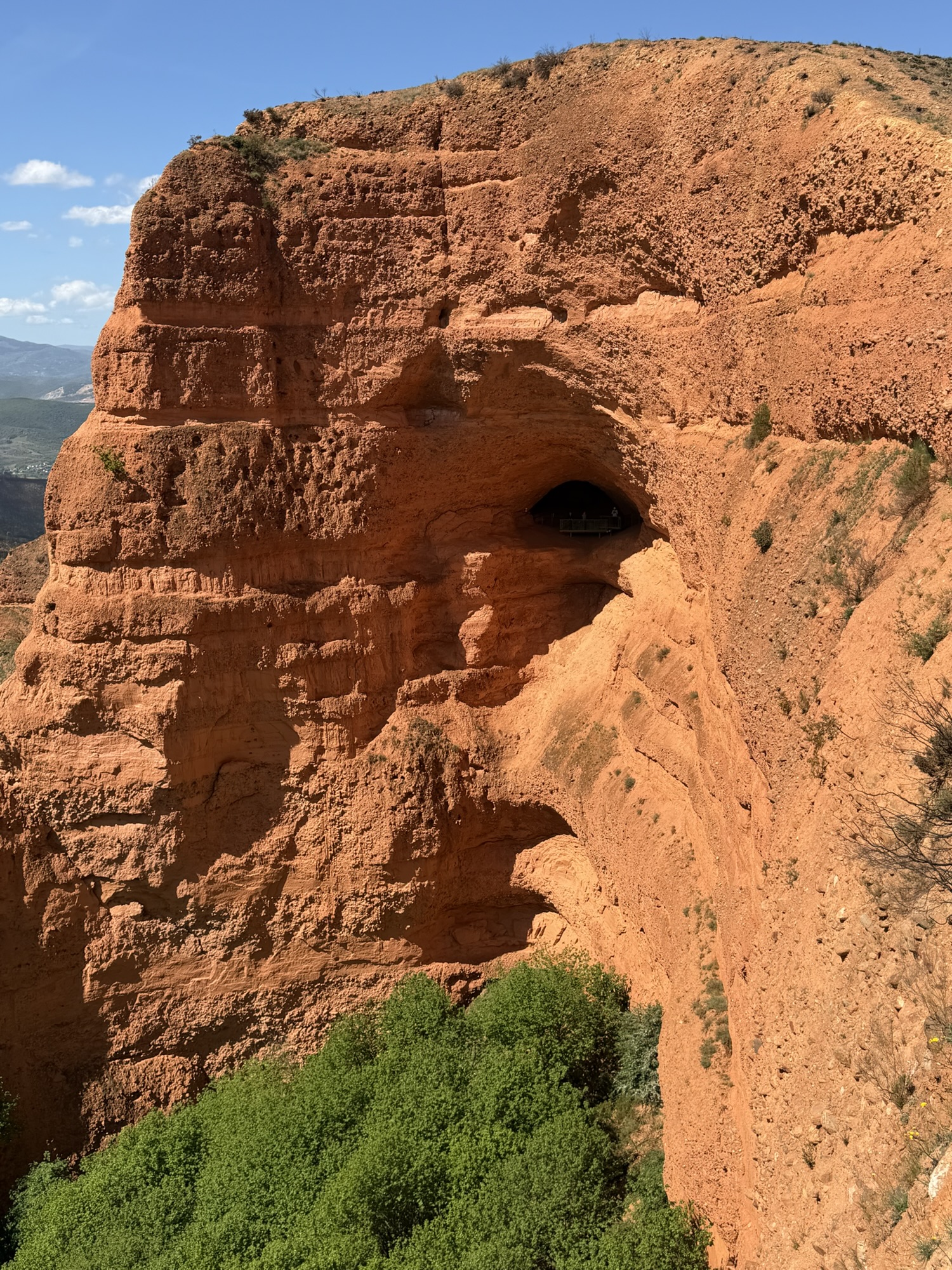
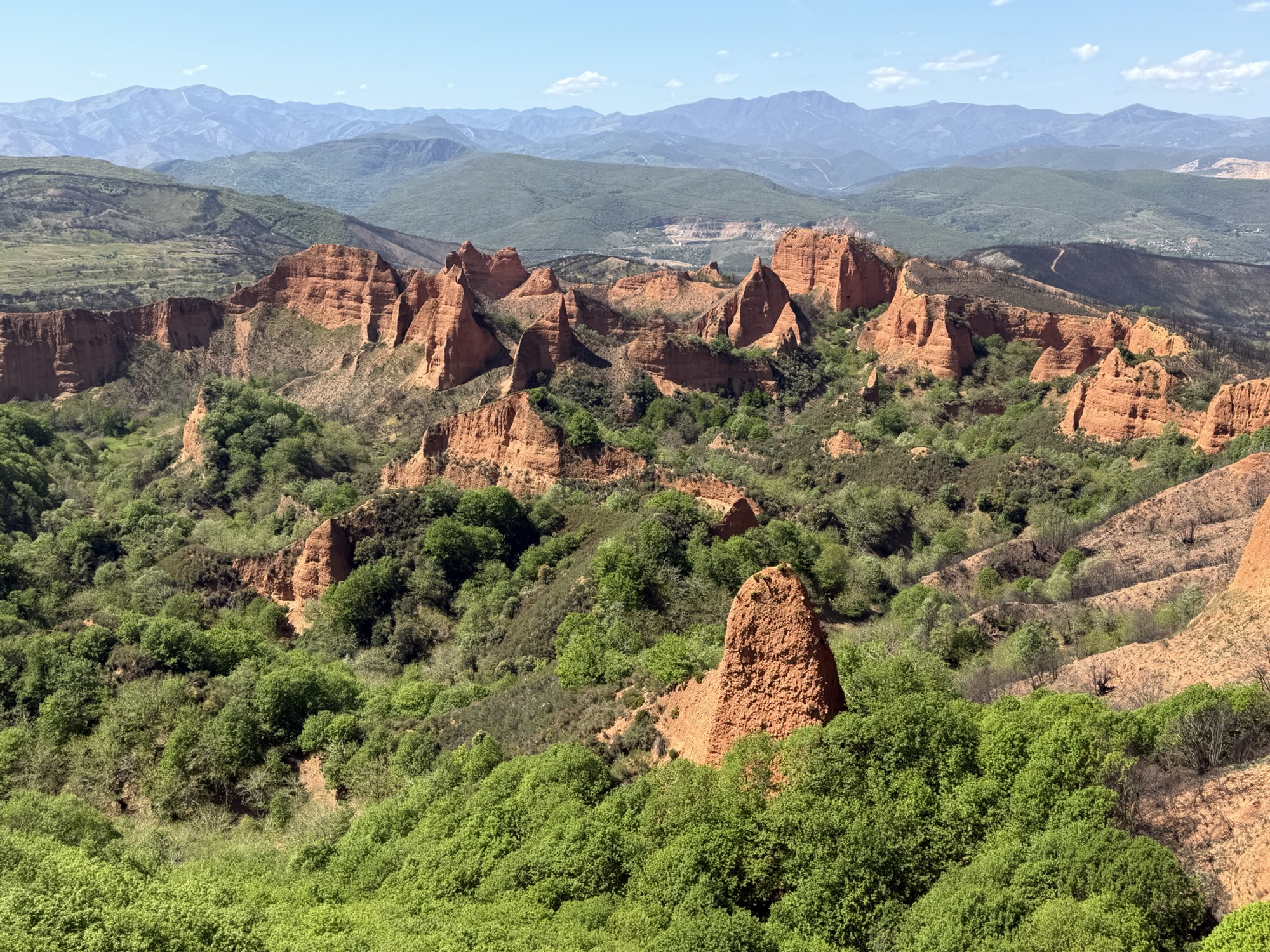
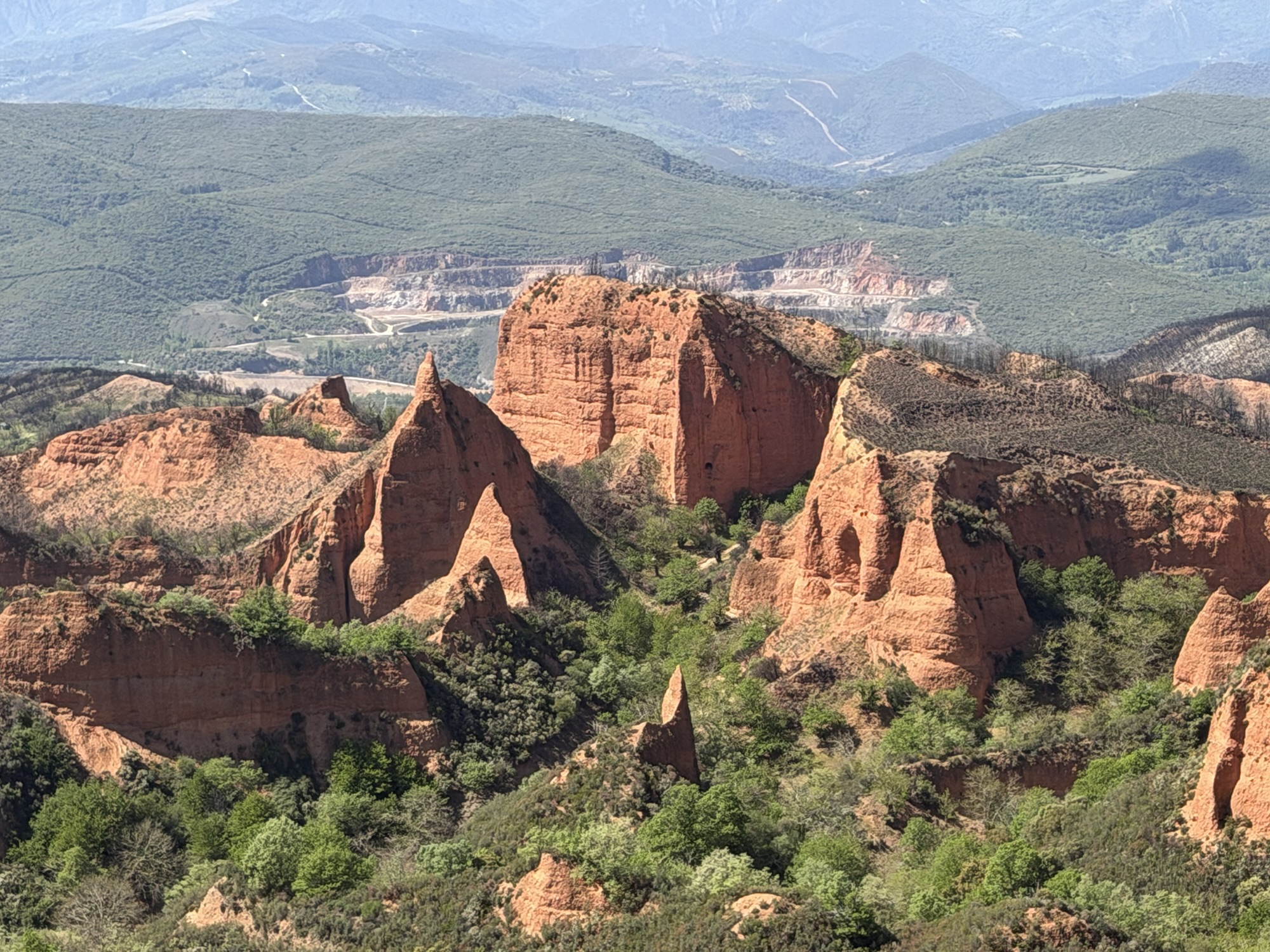
On another day we visited the World Heritage Site of Las Medulas, which shows you how you can destroy mountains with water.  The site of an ancient Roman gold mine, Las Medulas are the remains of mountains that were destroyed by the Romans who injected water into the mountains to mine for gold.  It is the most unusual landscape.  Honestly was totally unexpected and really worth seeing. 

Unfortunately last year there was a major fire near the area, actually right up to it. So all around us were blackened trees and shrubs and the grass was gone. But in a way it was more interesting because we were able to see the ancient Roman paths cut through the area.  And a beautiful new viewing site was built.

There were so many wonderful experiences and places to see and explore. Some times we felt we needed a vacation from our vacation. But in reality the memories these places and the poeple who we traveled with will stay with us. It was a most glorious and enjoyable experience.

Palaces, Walls, and A Castle In Spain!

12 May

When we planned our Road Scholar trip to Portugal and Spain I was excited that we would be going to many World Heritage sites, including castles and palaces.  Let’s be honest, I was born along with DisneyLand in 1955 and I grew up seeing the Disney castle every week on the Wonderful World of Disney.   I remember so well the evil villain of Babes in Toyland singing, “My Castle in Spain.”  For me this was going to be a highlight.

We saw a number of  castles and palaces on our trip.  Some were absolutely extravagant; others were just empty stone shells without much romance.  I always knew that the tapestries were created to keep the rooms warmer.  But until you walk through a large castle and see the size of the rooms, and the small size of fireplaces and heaters, do you realize that these places would be extremely cold in the winter.  In fact, our guide told use that most people had to walk around wrapped in a blanket.  BRRR

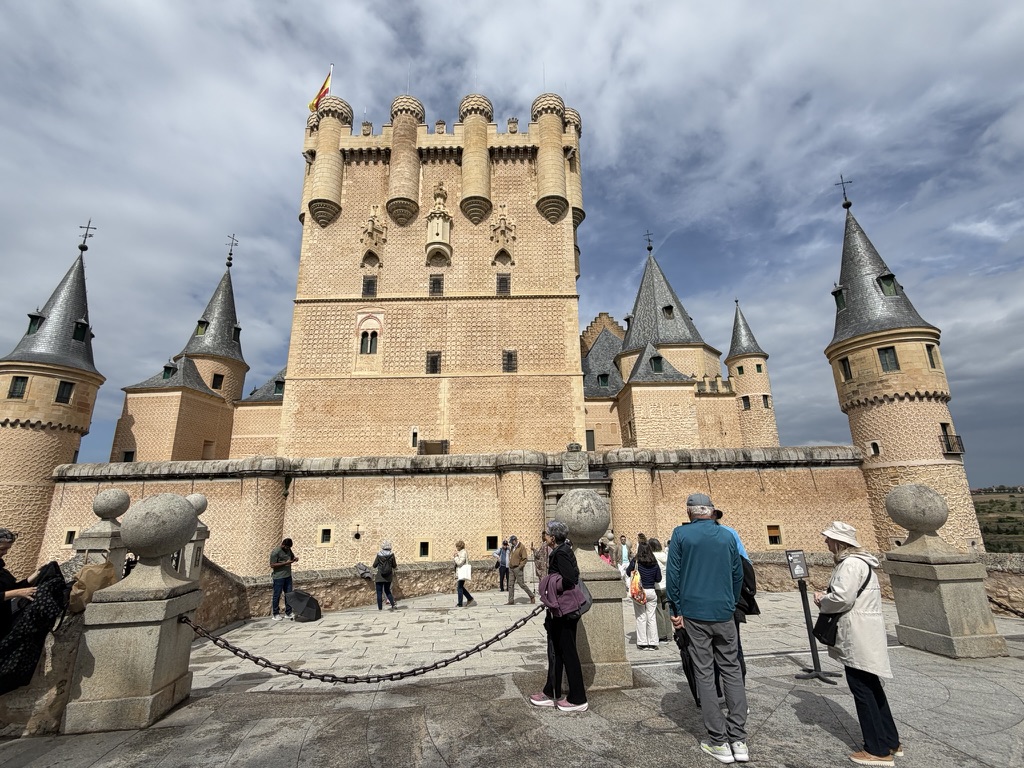
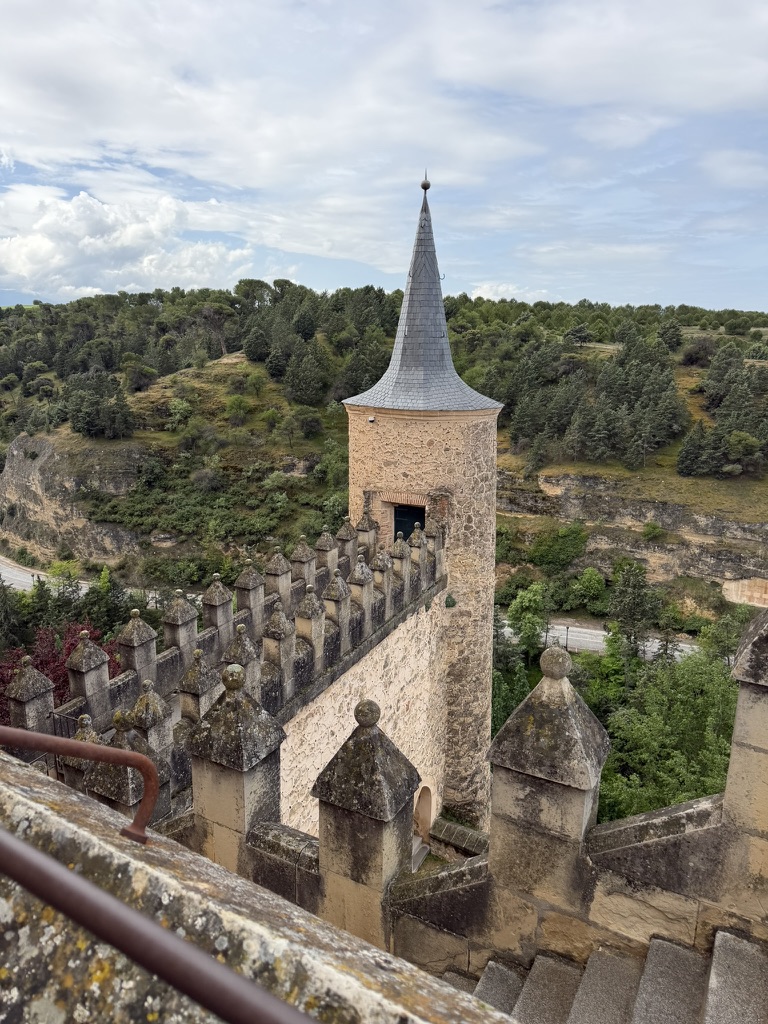
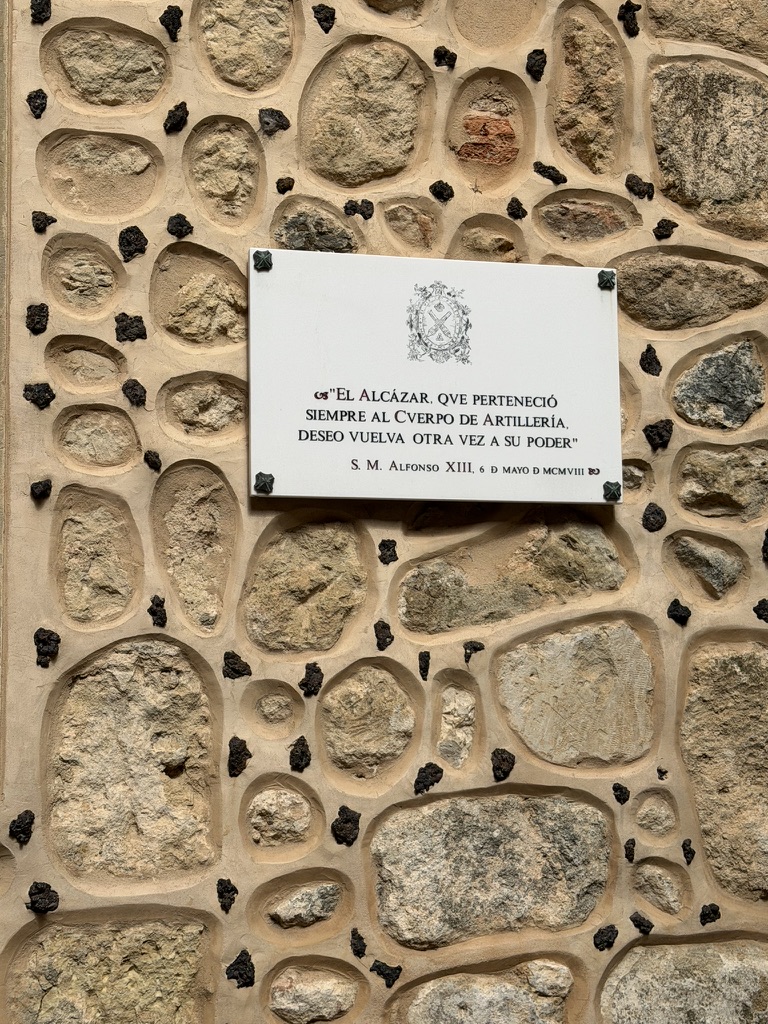
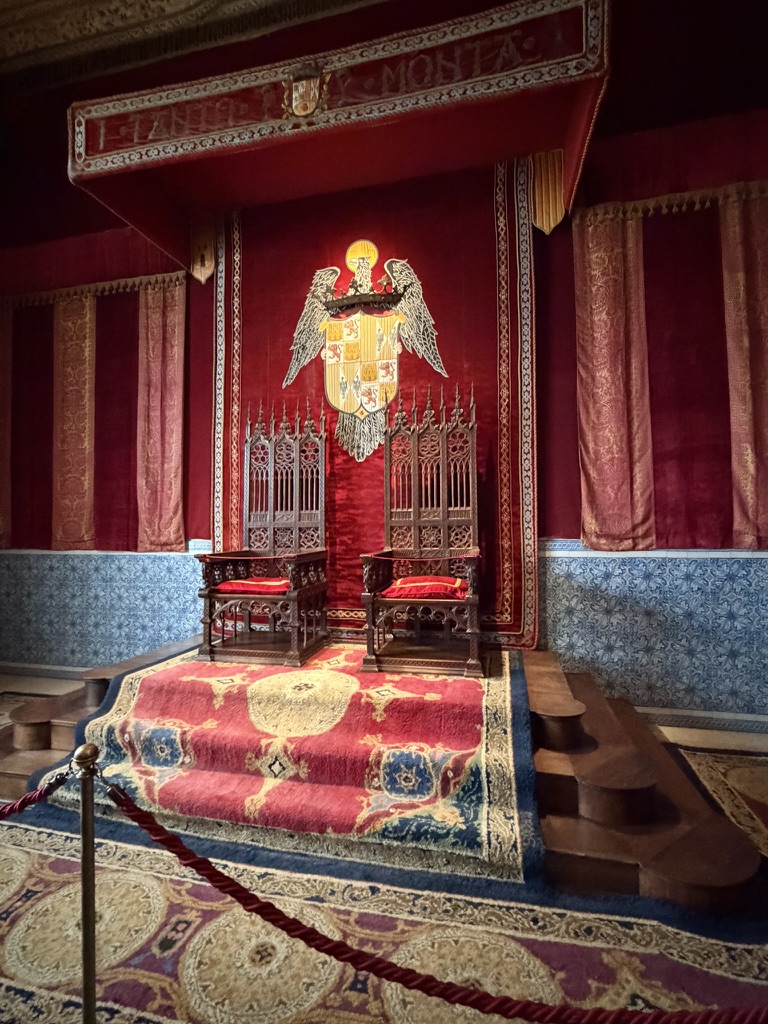
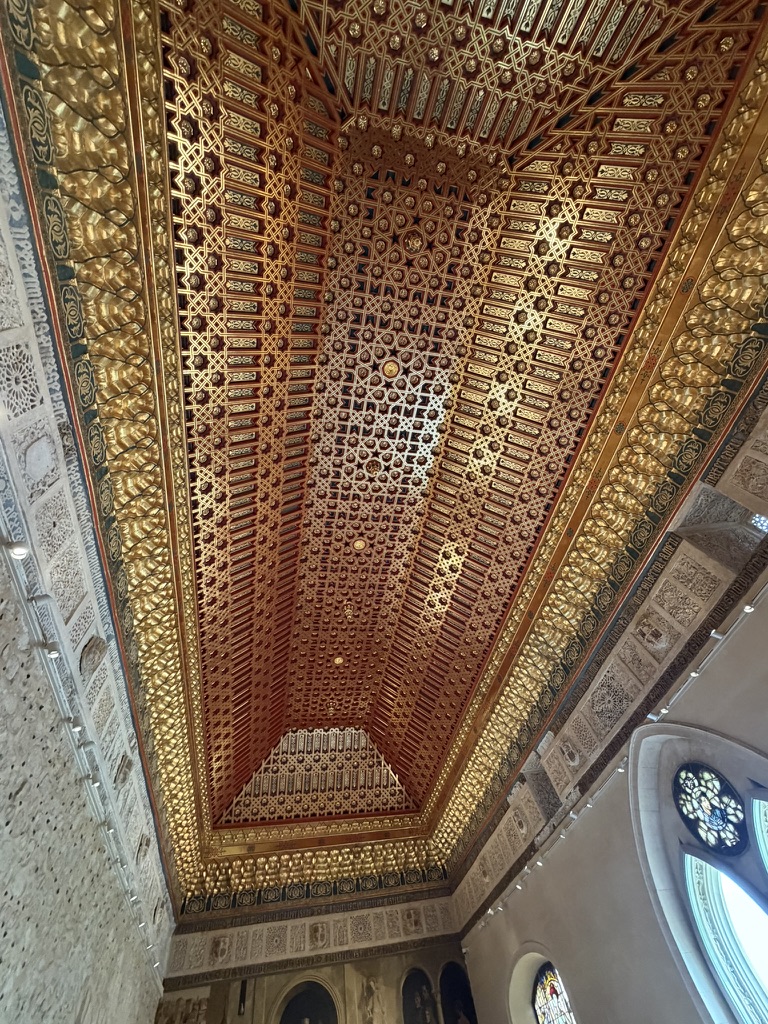
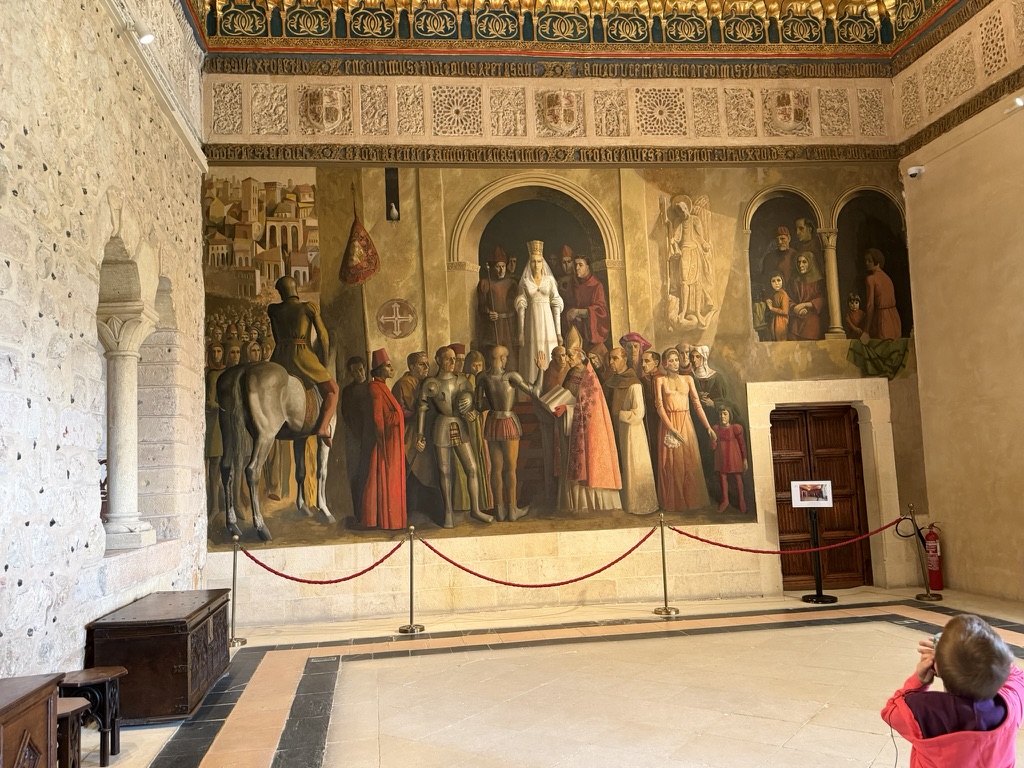
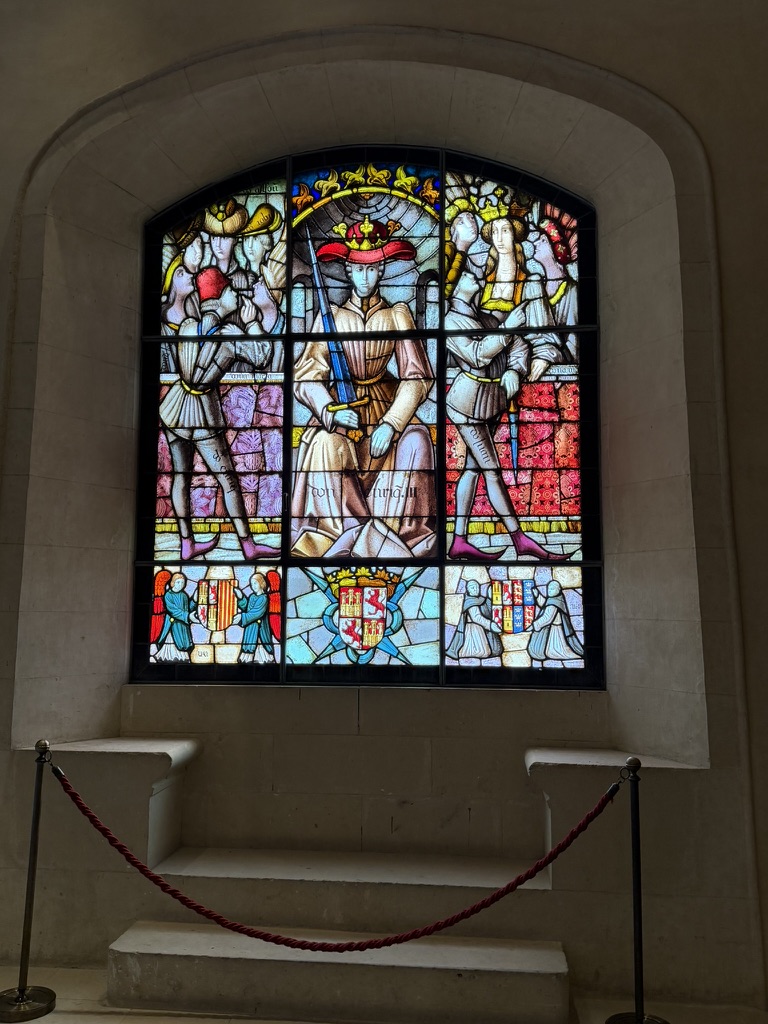
Even still, with this reality check, with knowing when I saw the Castle in Segovia that it had been heavily damaged by a fire and most of it was reconstruction, I could not help but be joyful.  Why? Because was like seeing the real Disney Castle in Segovia, I knew my wish had come true.  So instead of starting at the beginning of our trip and describing our experience in order, I must start with our second to last castle, Alcazar!

The Disneyworld Cinderella Castle’s towers and windows were based on the Alcazar of Segovia, Spain.  Perhaps other elements come from other castles.  But once you see the Alcazar, all you can do is hum, “When I Wish Upon A Star.”  I did that for the entire time we toured the castle.  I might have made my sister and husband crazy.   

After walking uphill through narrow, ancient streets of Segovia we came upon the first sight of Alcazar, which has been a World Heritage Site since 1985. Some castles you cannot enter.  But this one was not only renovated, it had furniture in some rooms to make you realize what it once looked like.  It is also a museum. 

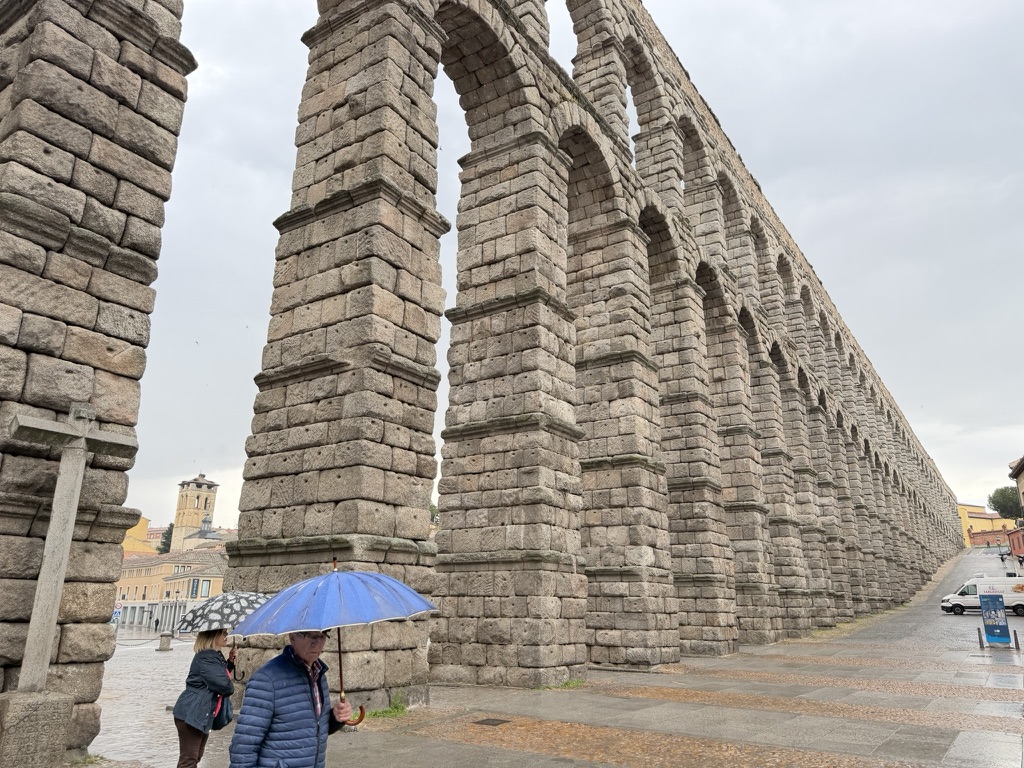
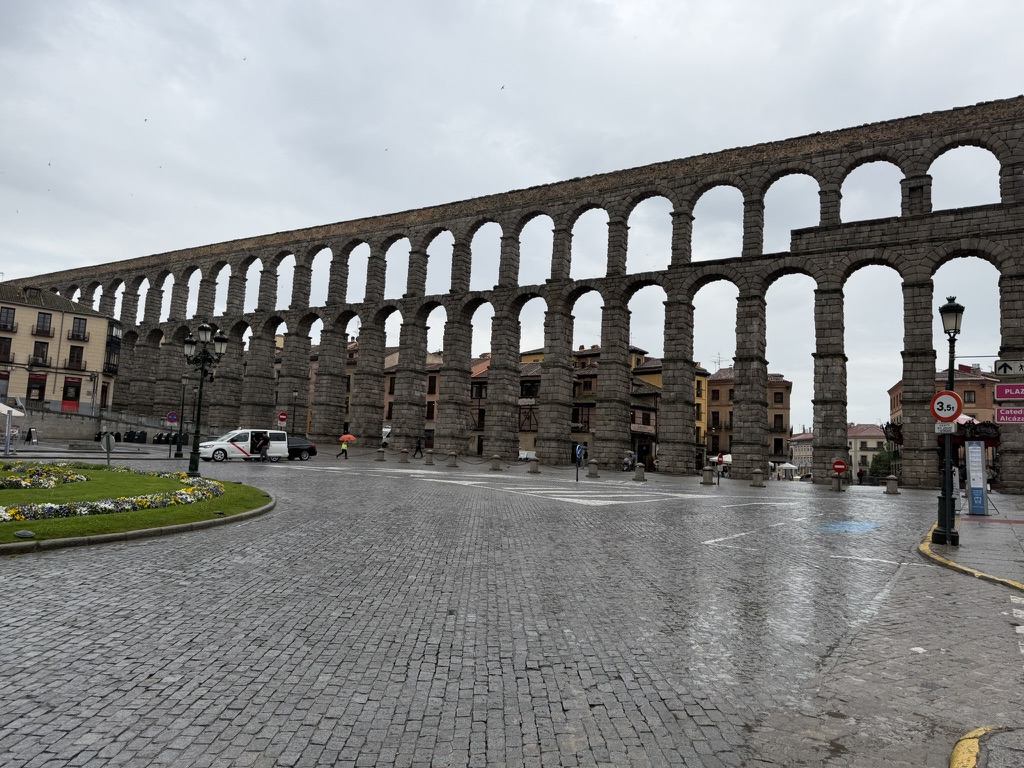
Before I leave Segovia, I must say there is another important site to see there, the Roman Aqueduct that is about six stories high when goes above ground , while its underground route through the town is marked with different stones.  It is an amazing feat of construction!!

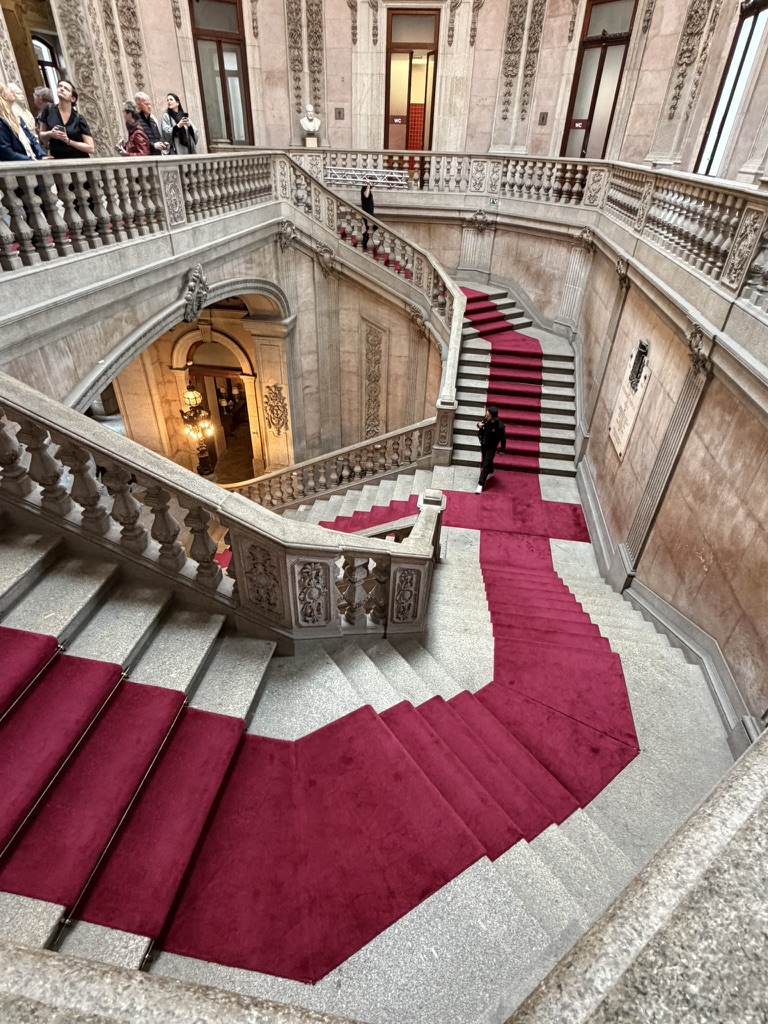
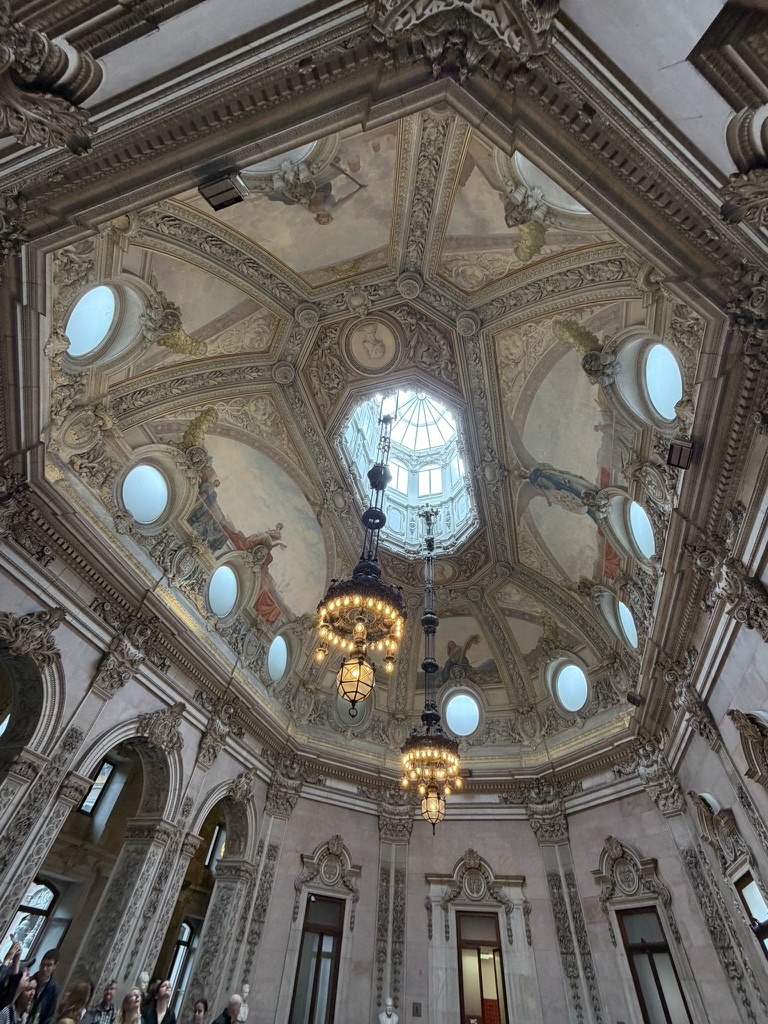
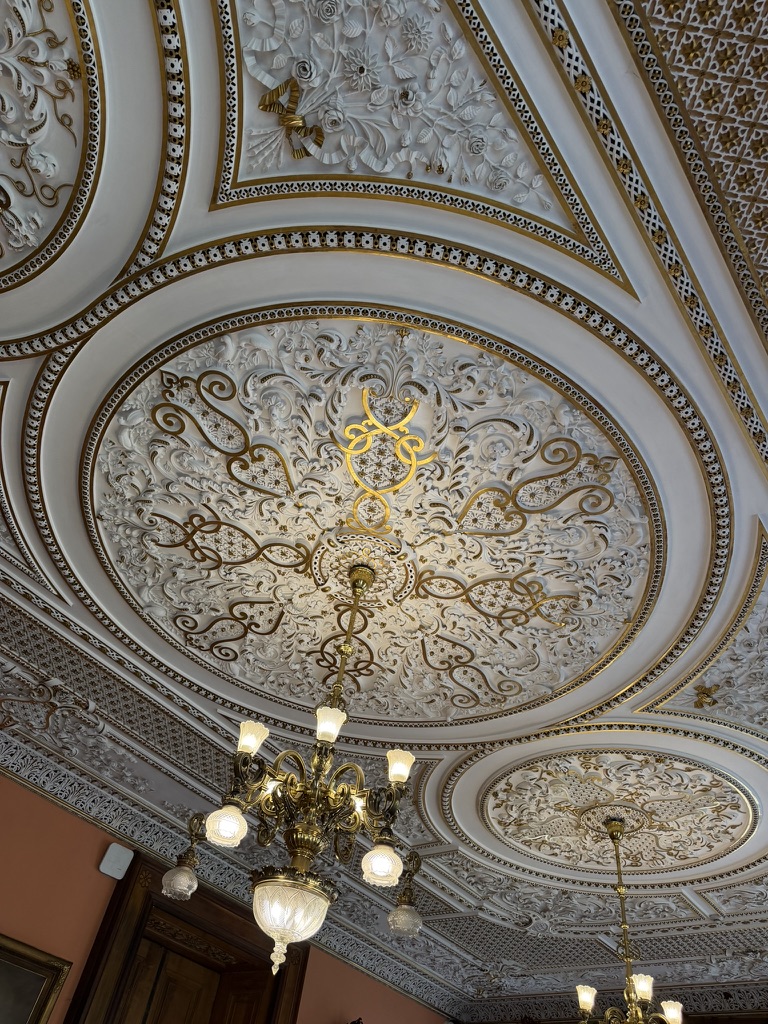
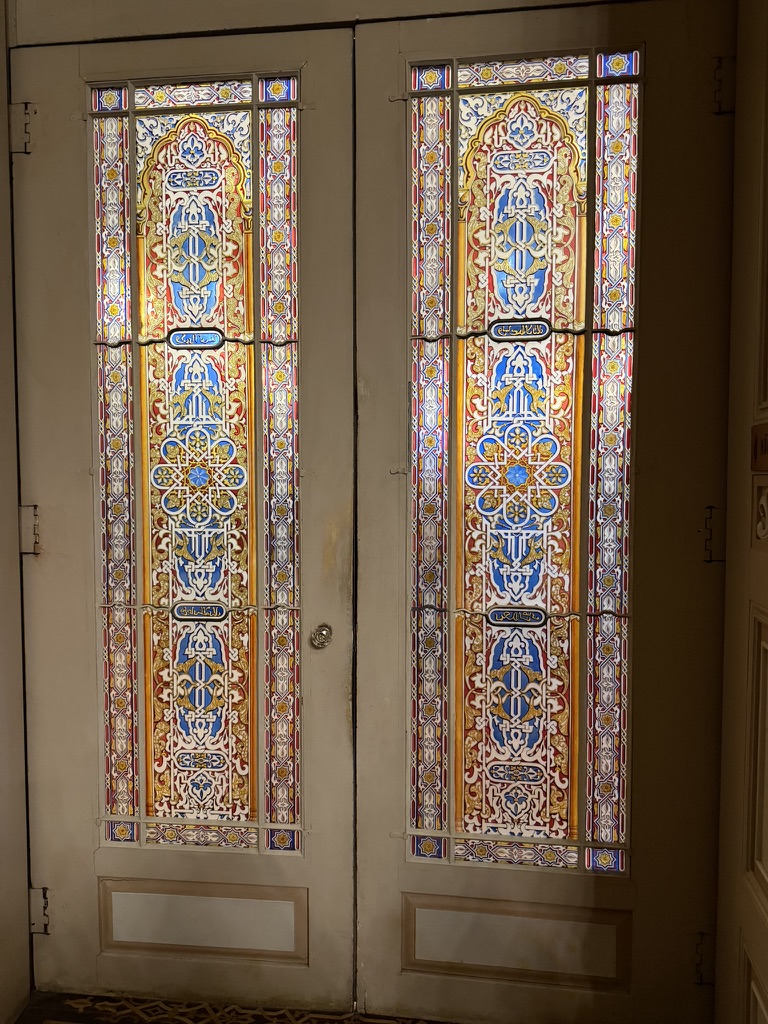
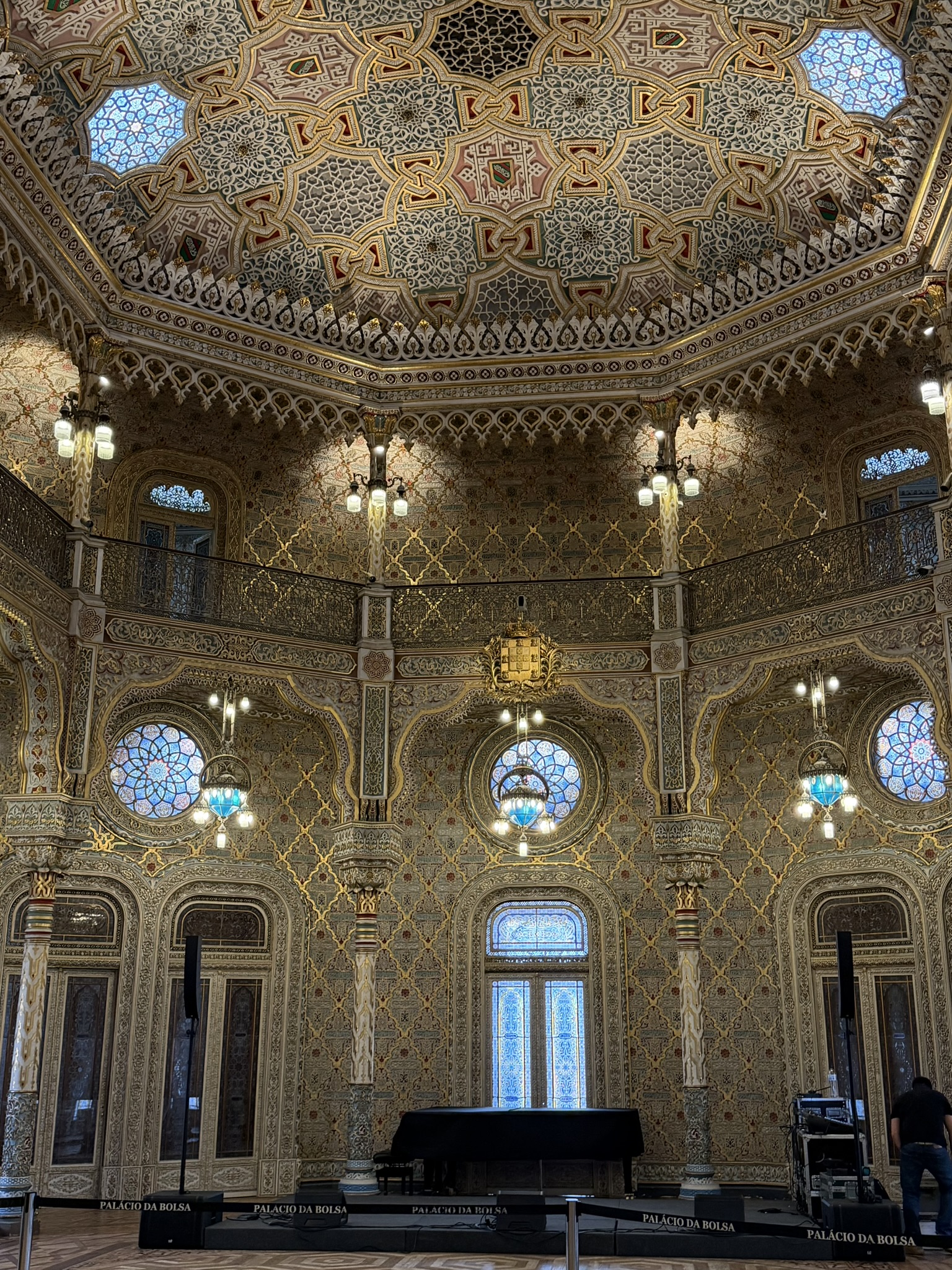
Now that I have finished swooning over Alcazar, I will return to the beginning of our adventure and talk about the Palacio da Borsa, the original Board of Trade.  Although it is not a castle, it is definitely a palace.  Some of its rooms are absolutely stunning. I understand why it is an event space for conferences, conventions and if someone could afford it, what a place for a wedding!!

From the Grand Staircase, to the meeting rooms, –  each one has its own character and special artwork, on the ceilings, the walls, the floors, the furniture- the building is elegant.  The trial room with its ornate carved wooden furniture and beautiful art; the views; the room where Gabinete De Gustave Eifel worked when he was in Porto; The Hall of Countries.

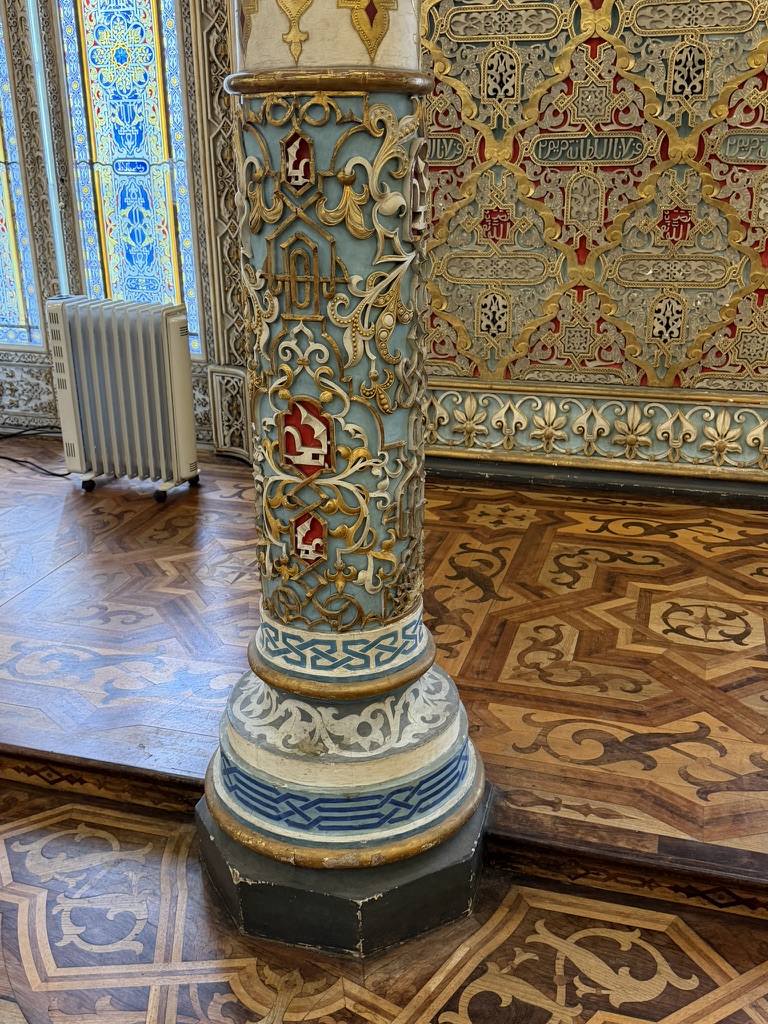
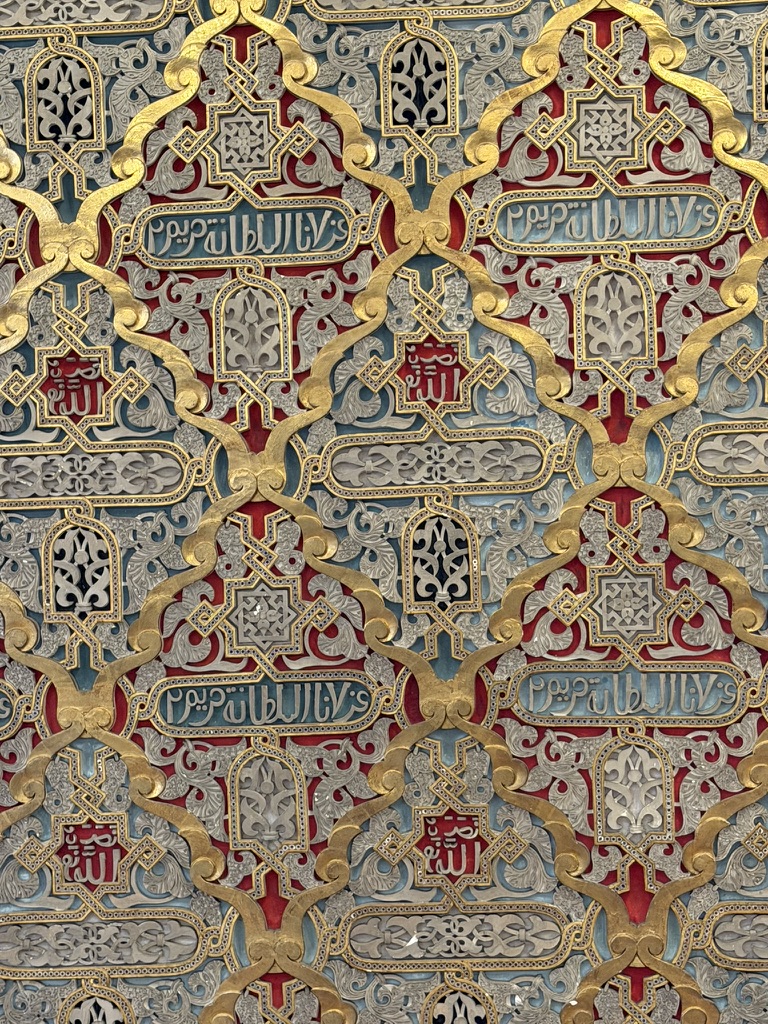
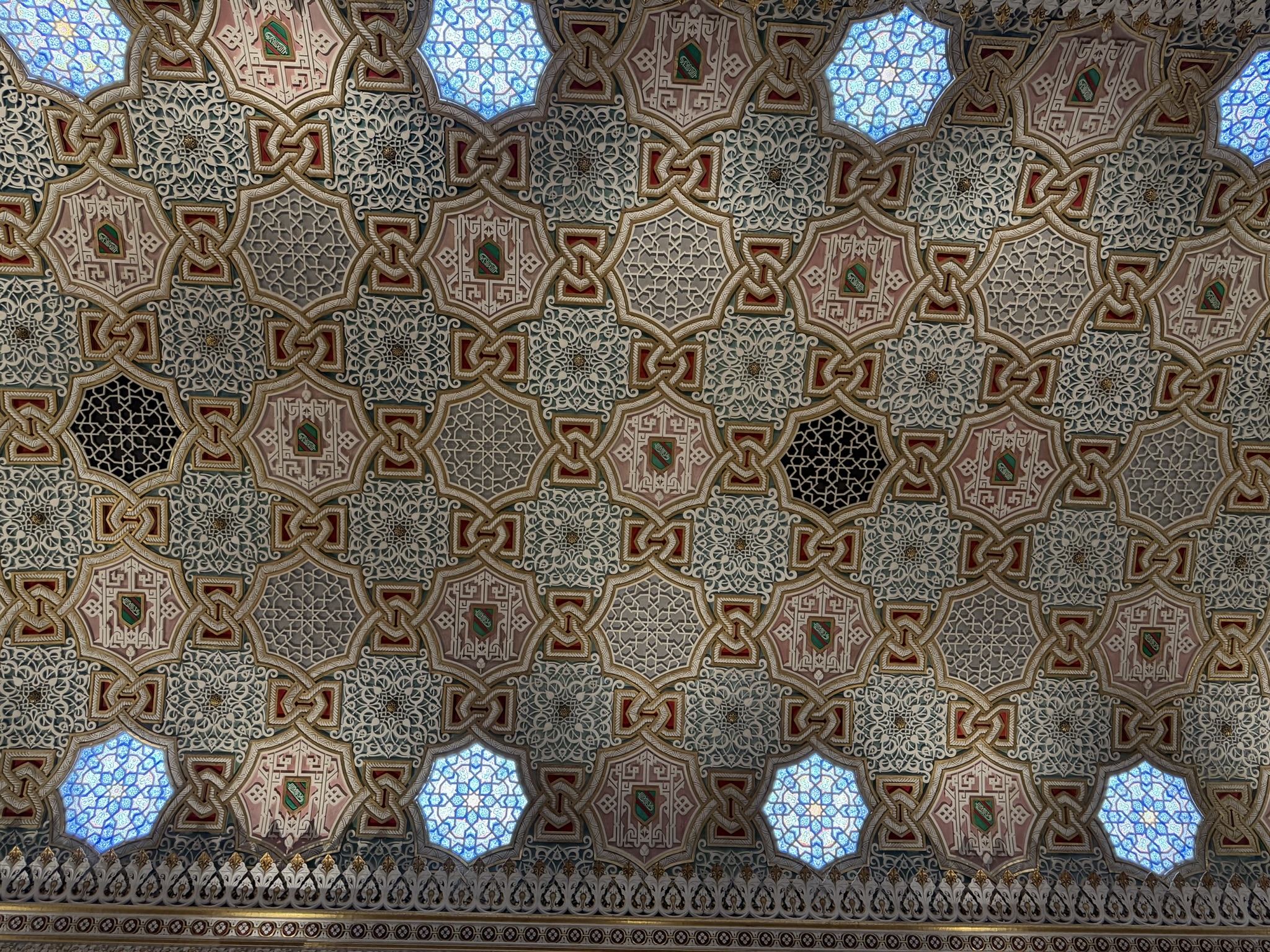
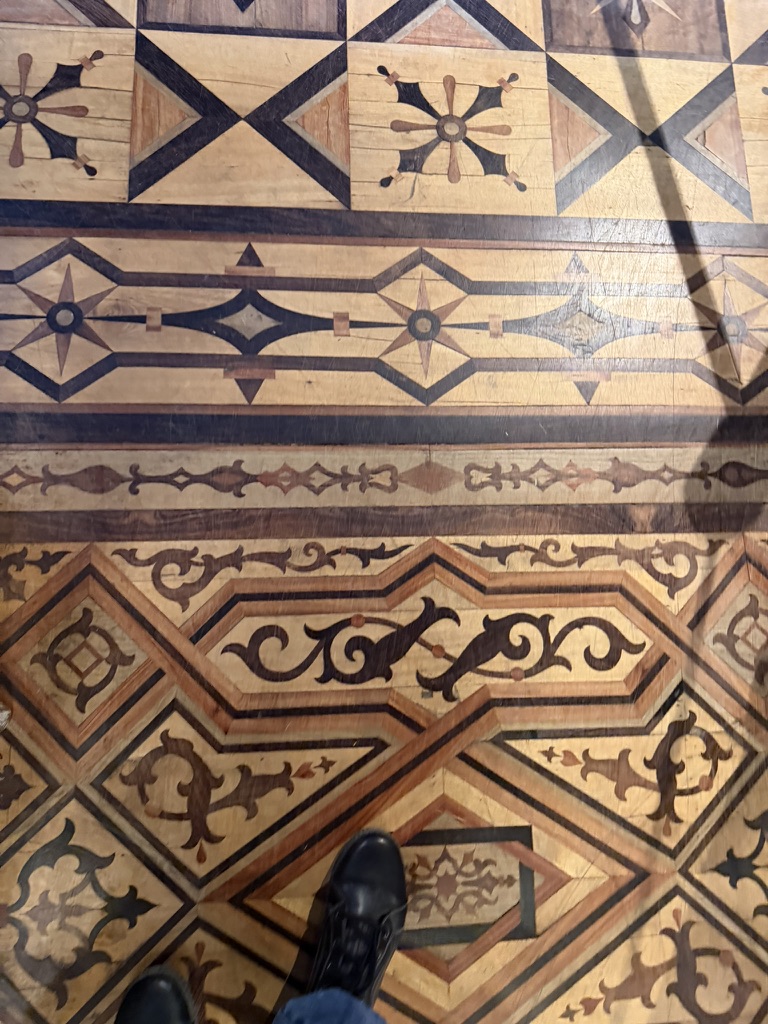
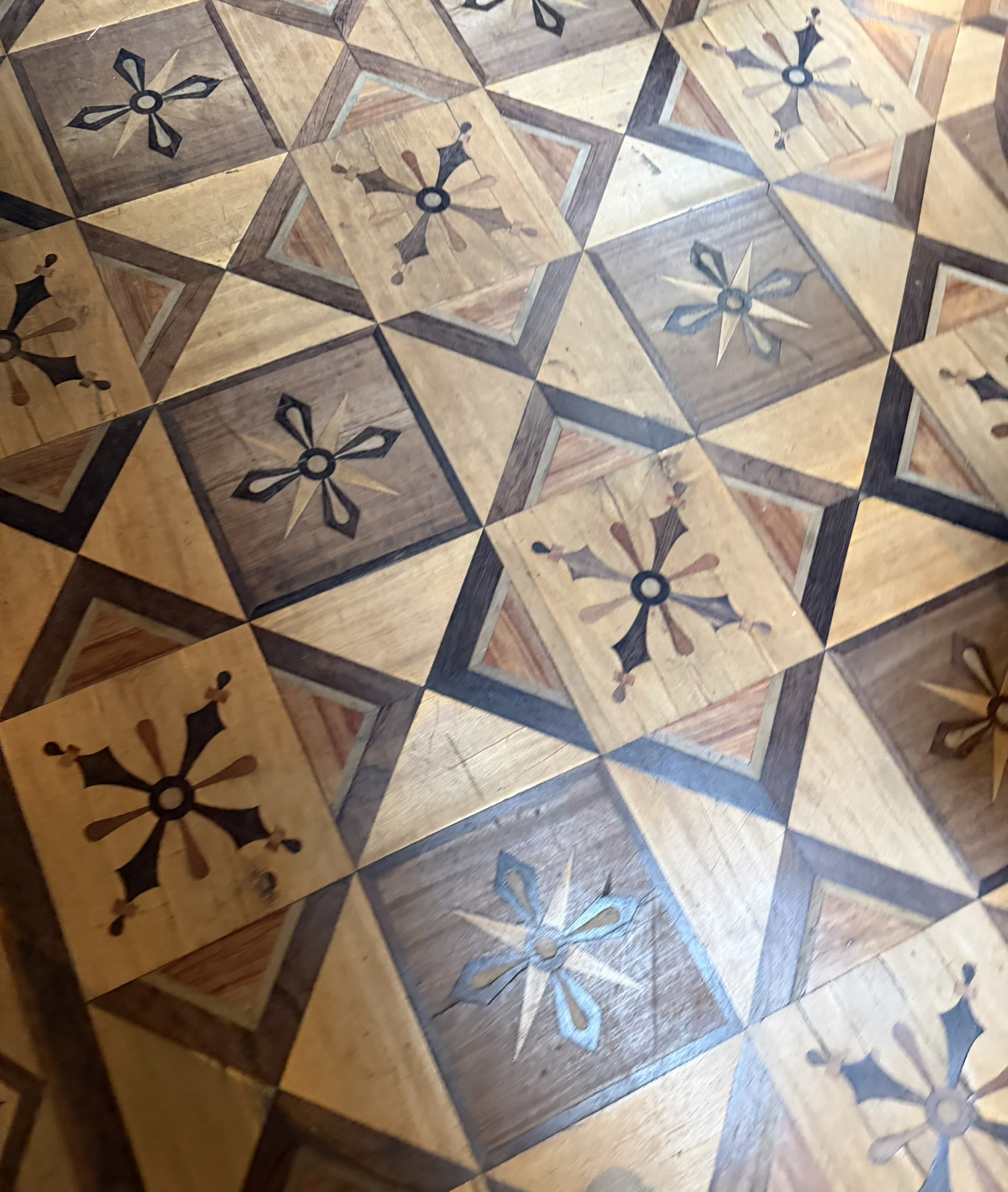
All of it fabulous. But nothing prepares you for the Golden Room.  Many people oooh and Ahhh over the Amber Room in Catherine’s Palace near St. Petersburg.  And that room is stunning, I admit when I saw it in 2018. But to be honest, the Golden Room with all its intricate carving and inlaid is something special.  It made me think of the inlay at the Taj Mahal. The inlaid wooden floors were reminiscent of the ones I saw in the Hermitage in Russia, but actually more intricate. From floor to walls to ceiling to columns, there is not one spot untouched and plain.  My pictures will not do it justice. But if you ever have a chance to go to Porto, you must visit the Golden Room.  My brain was exhausted after seeing it.

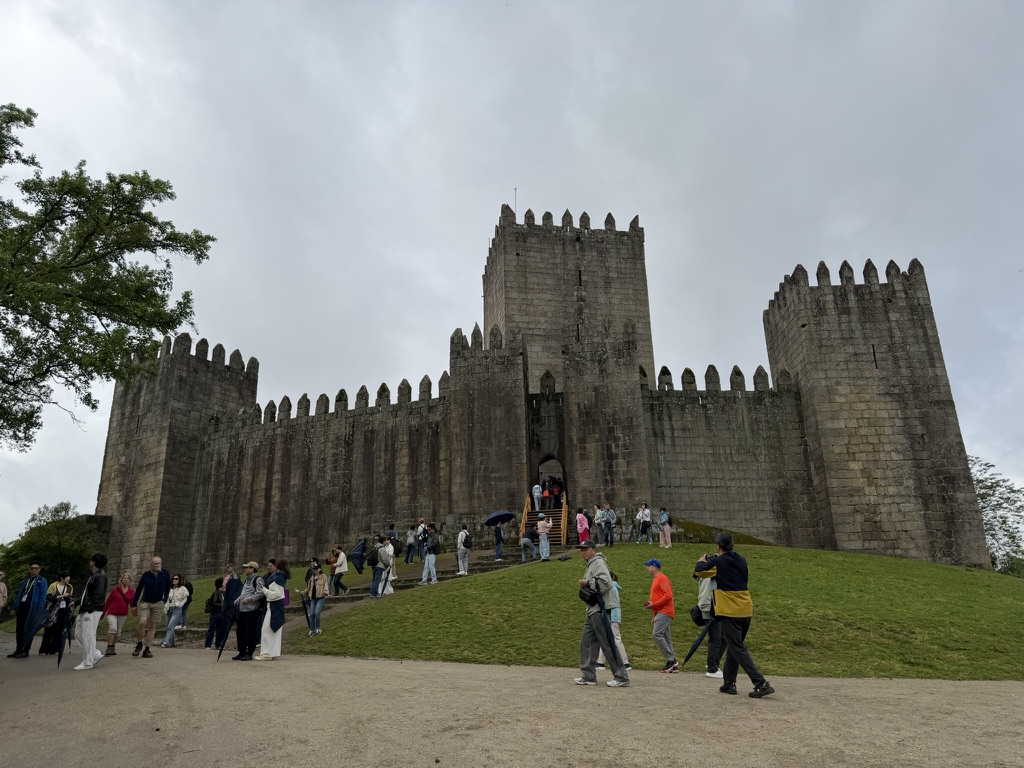
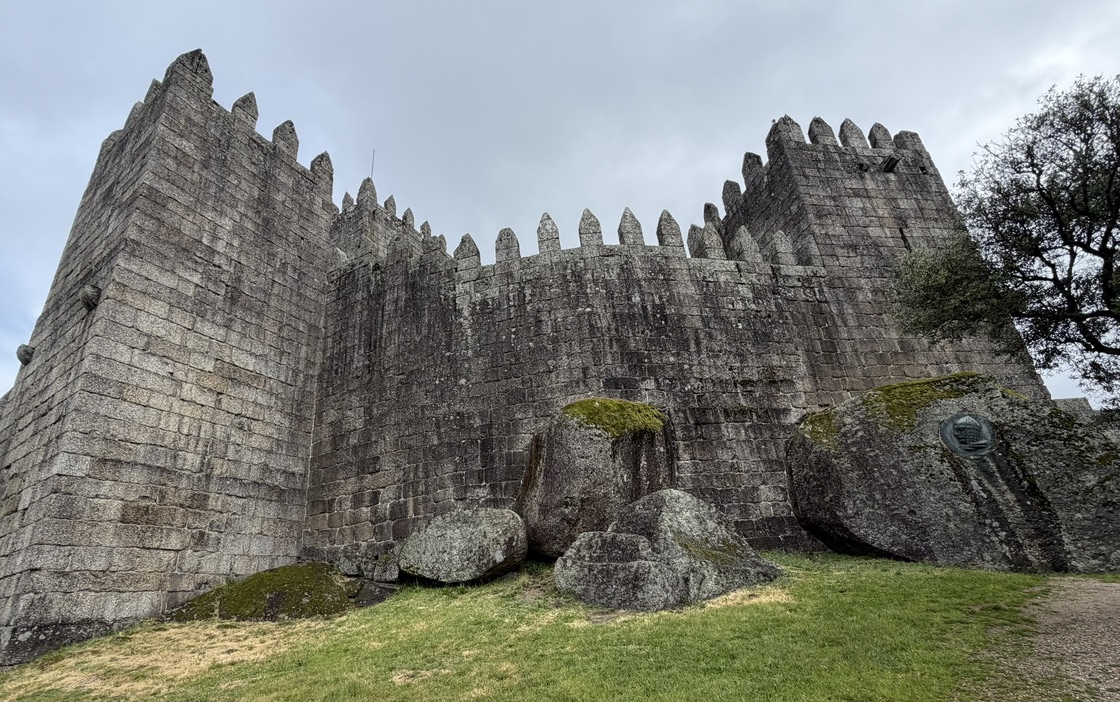
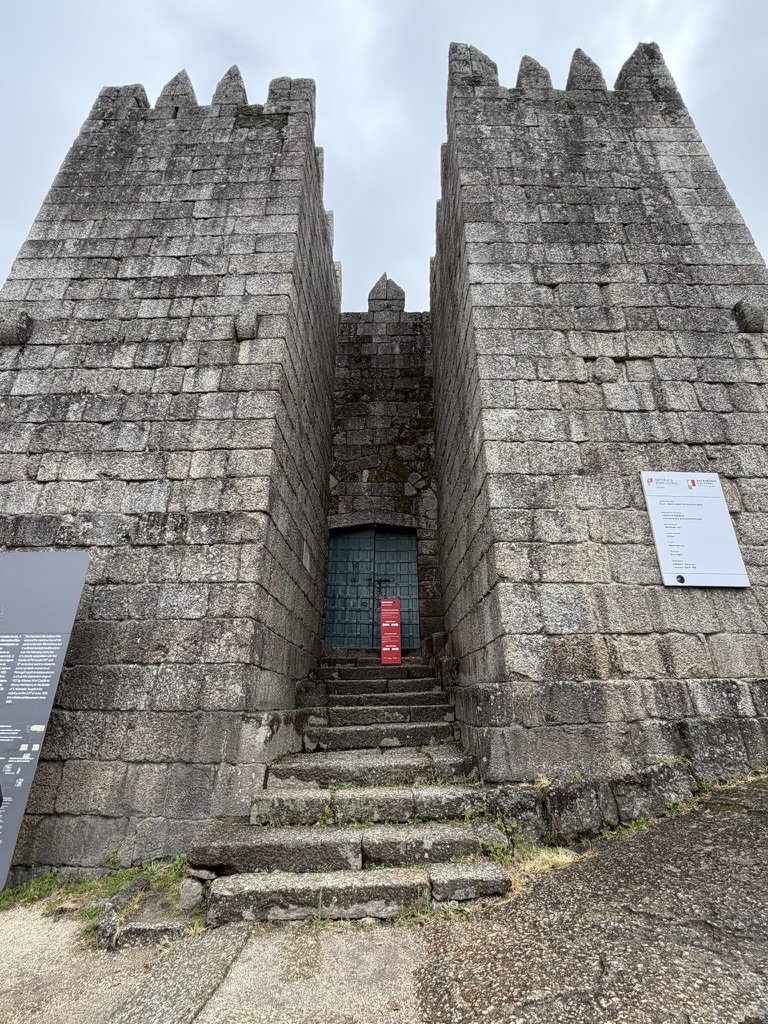
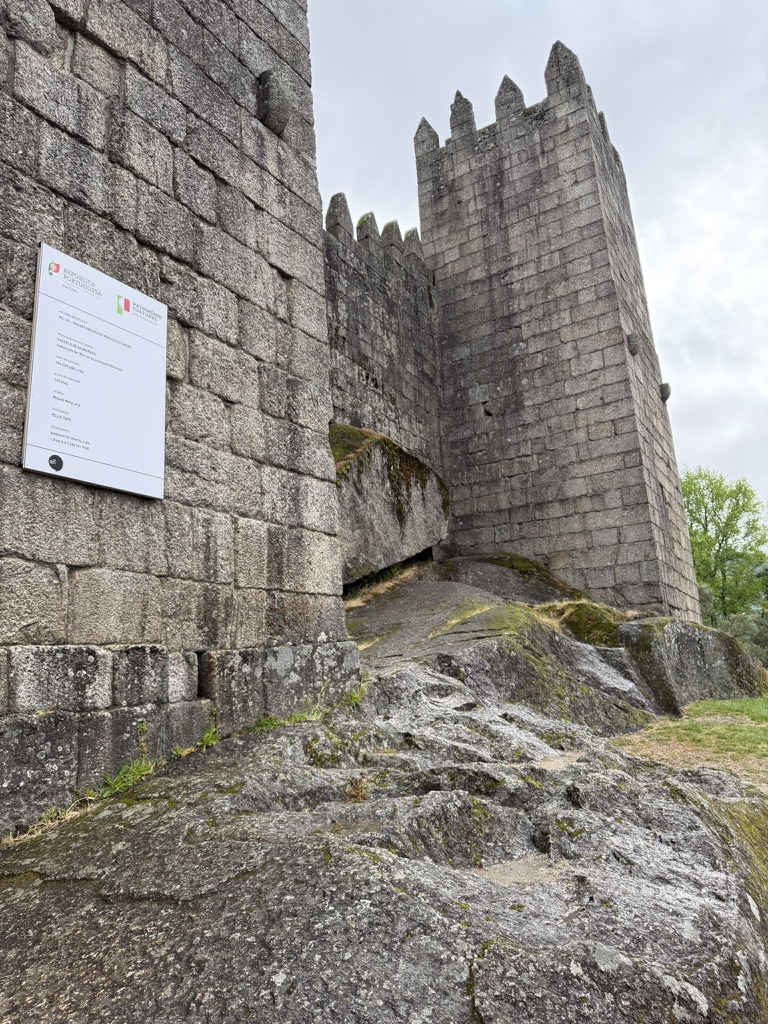
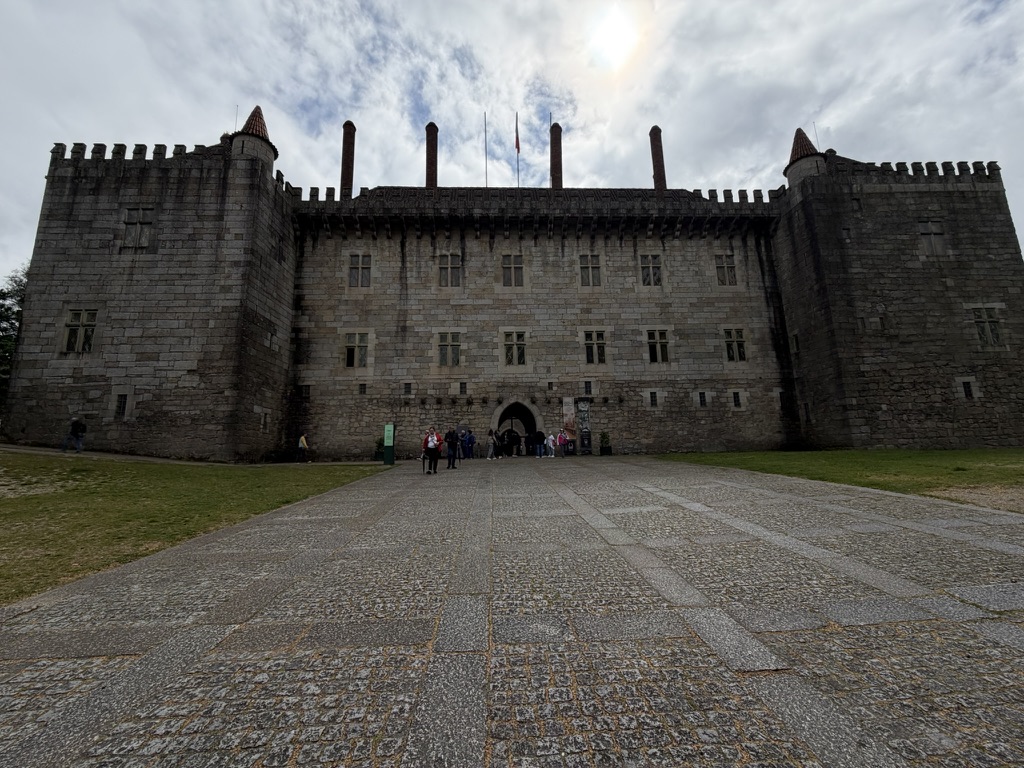
Thank goodness our next stop, the first castle on our tour, was less ornate but also fascinating in its own right: The Castelo de Guimaraes in Guimaraes. We did not actually go into this10th century edifice, we walked around the stone fortifications and massive walls. It is built on top of a granite mountain, and some of its walls are the granite stones.  And they are enormous.  They are everything a castle should look like from the outside.  It was constructed by order of Countess Mumadona Dias to protect a monastery from  Moorish invaders.  Although the castle is not a world heritage site, it is a Portuguese National Monument since the late 1890s.

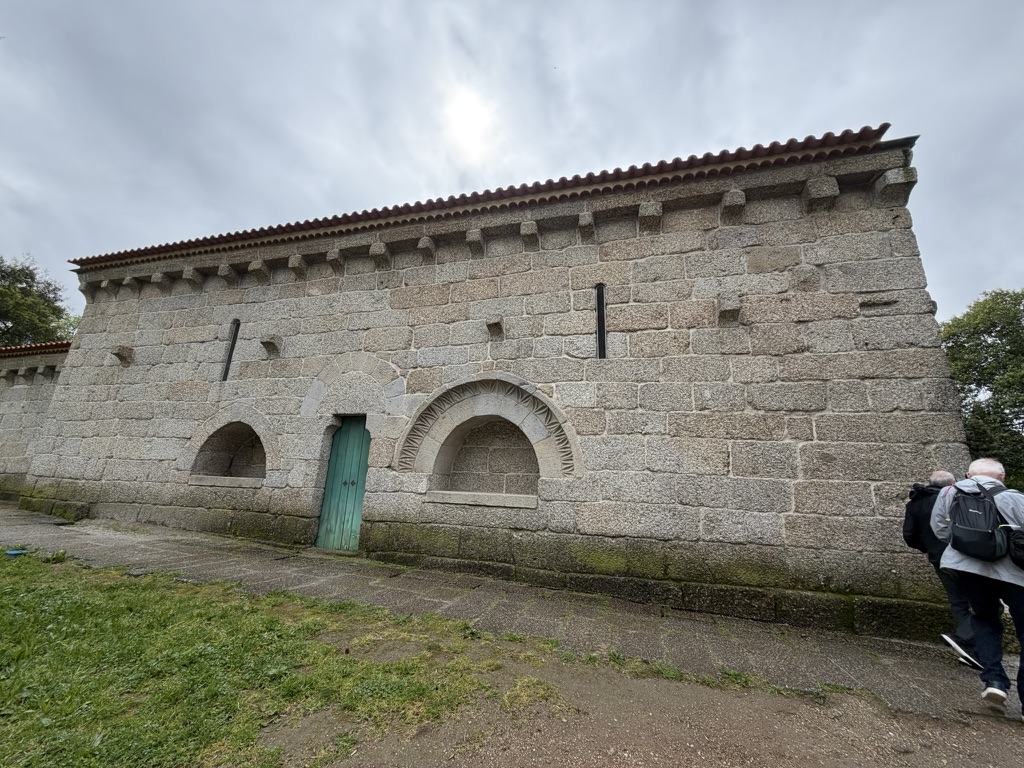
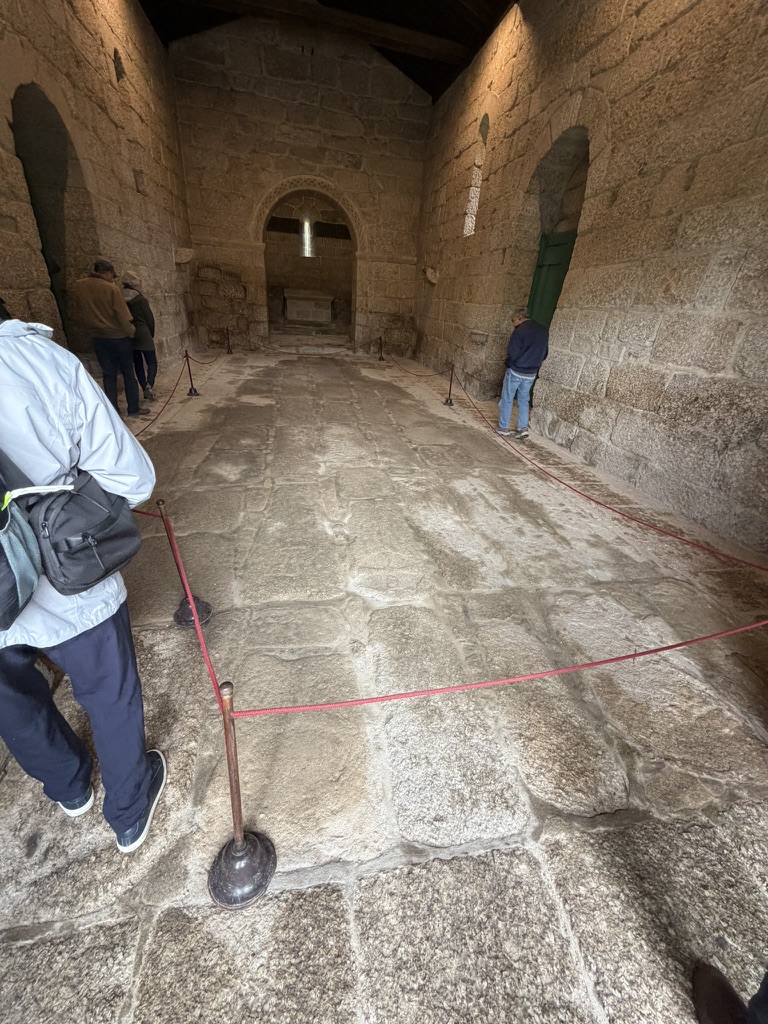
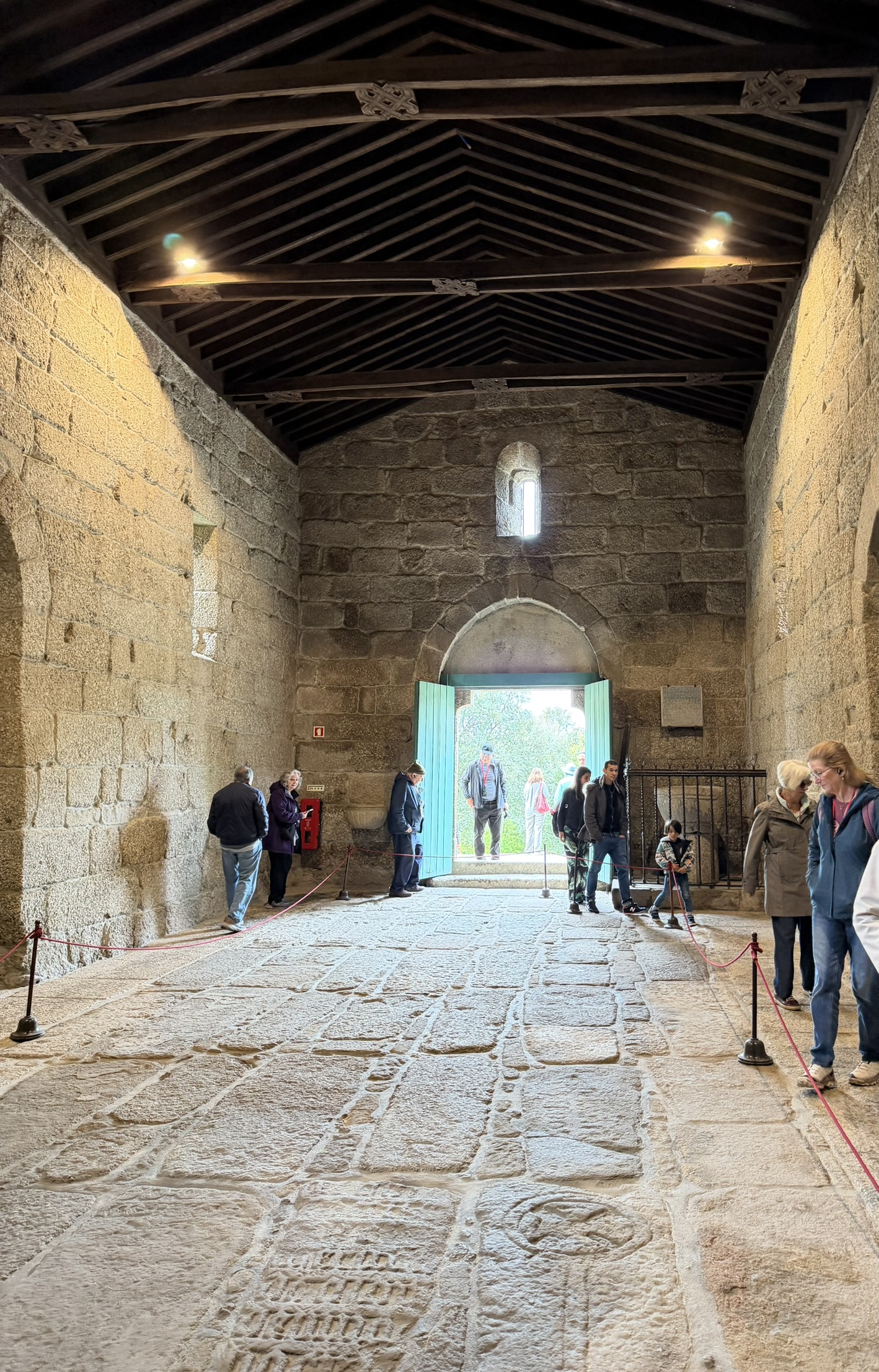
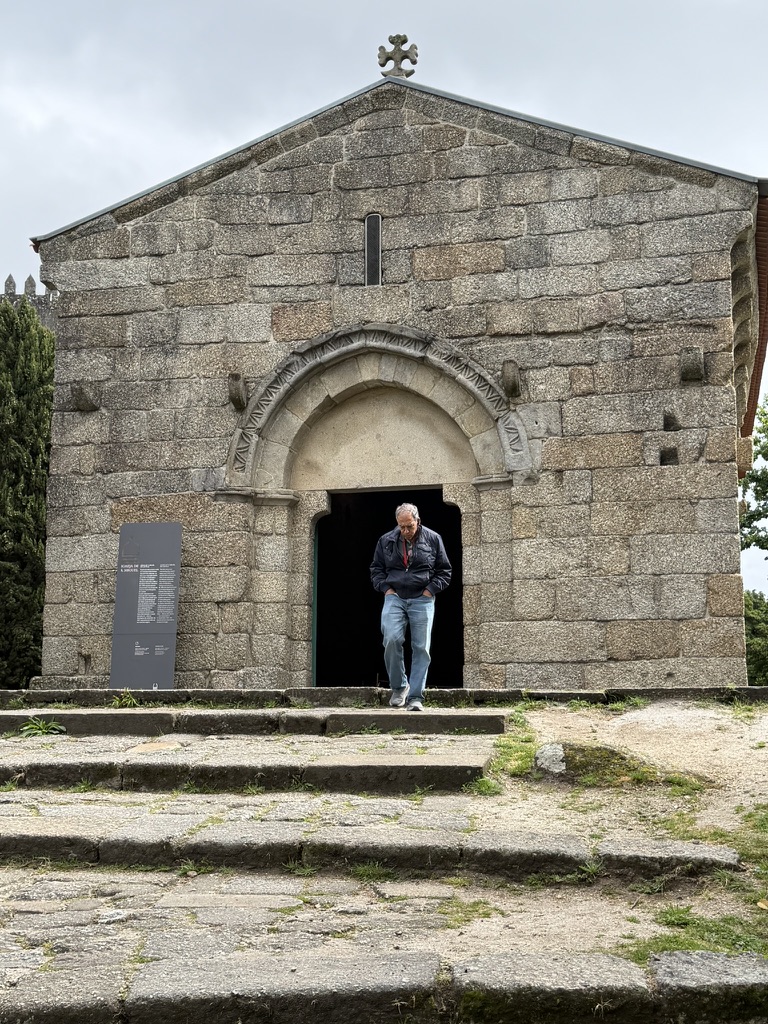
On the grounds of the castle are two more buildings. First the Church of Saint Michael.  This little chapel was the place where Portuguese King Afonso Henriques was baptized in 1927. There is no furniture in the church as the entire floor are the tombstones of important people.  In fact, you can only walk around the inside perimeter, so you do not cause damage to the engravings.

The Palace of the Dukes of Braganza is there as well. We only walked along the outside.  It was renovated in the 1930s and served as the residence for the then President Antonio Salazar. Although part of it is open to the public, we did not go inside.

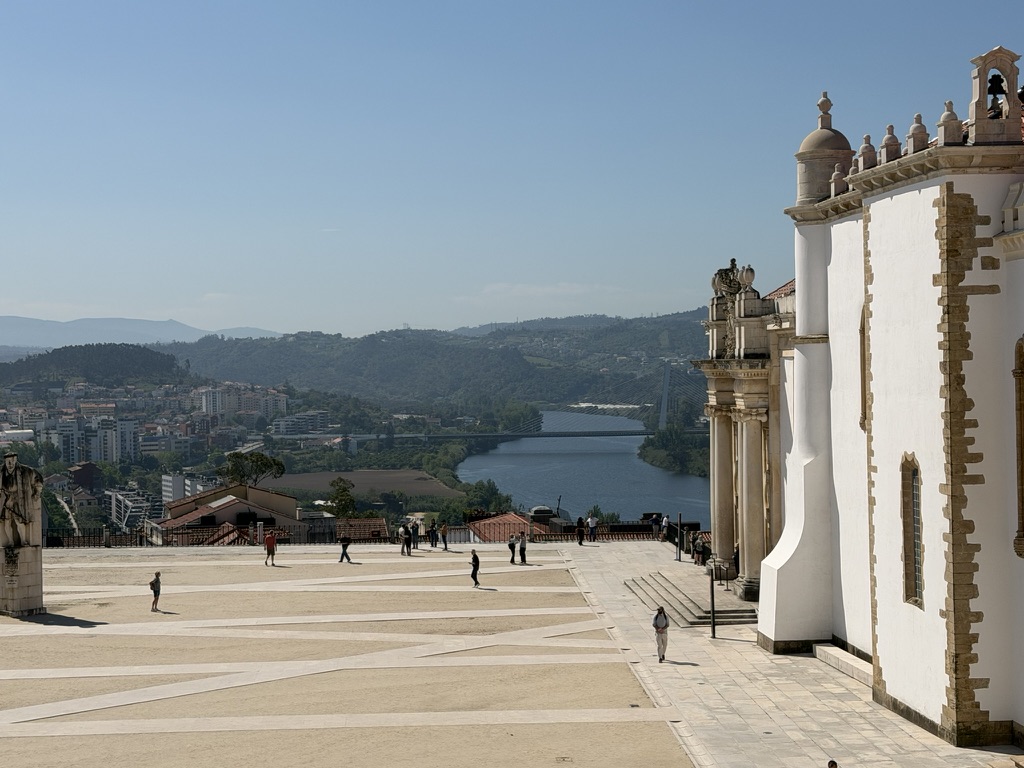
Although not a palace or a castle, the University of Coimbra, founded in 1290, definitely feels like one.  I am not sure I would be able to actually go to classes there, especially in some of the older buildings.  I would be too busy looking around.

 We were not allowed to take photos of the famous library.  It is a stunning work of carved wood and bookcases filled with ancient tomes.  It is still used by students and scholars, but the books must be ordered in advanced and not allowed to leave the campus.

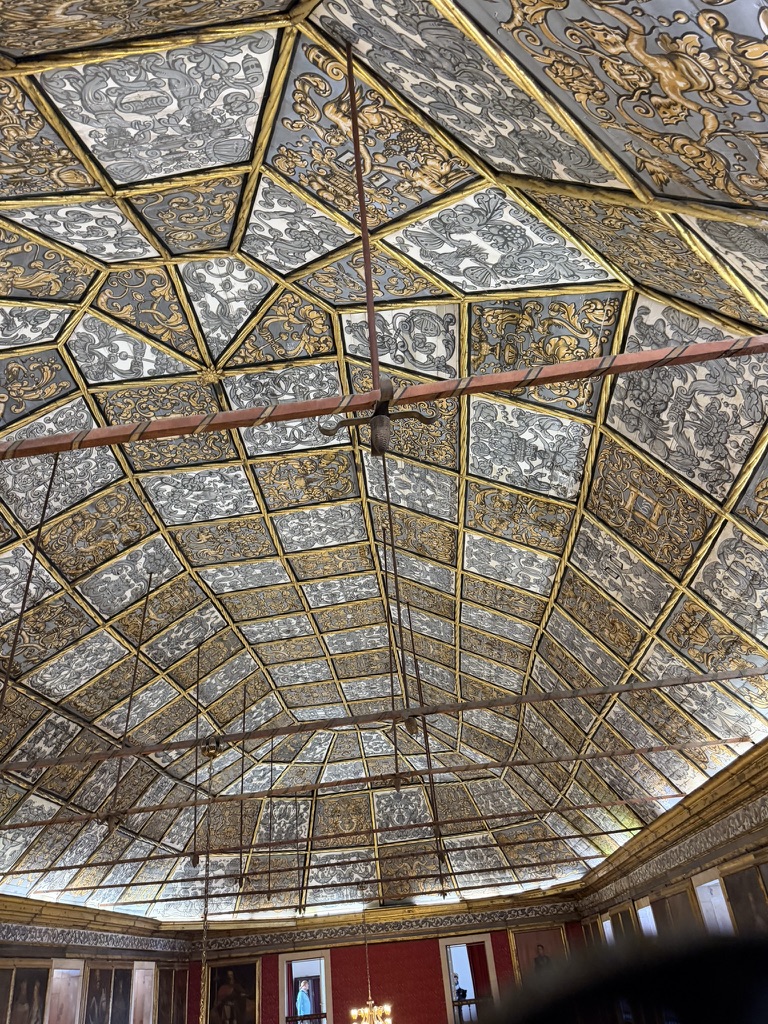
The lecture room, where students present their PhD dissertations also makes you think of a castle great room.  The ceiling is stunning as is the woodwork. 

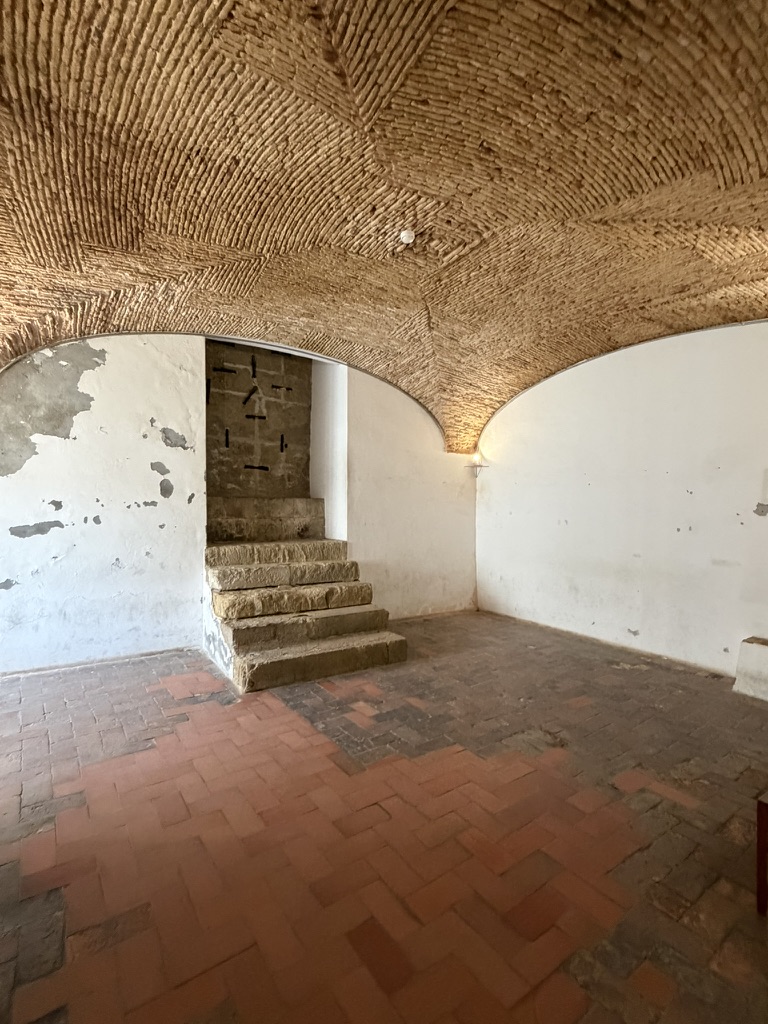
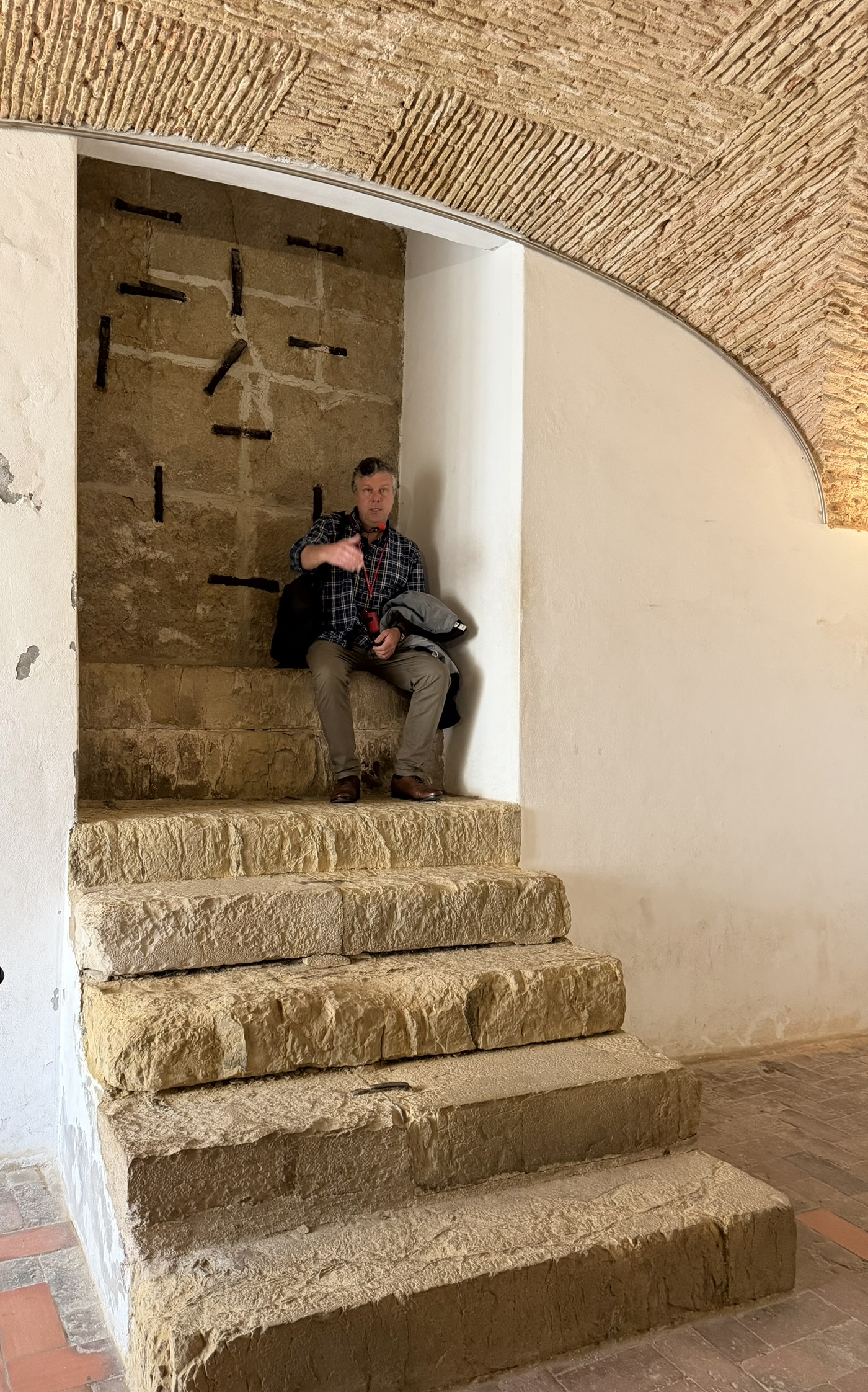
But I have to be honest the part that capture most of our attention was the fantastic view of the city and the river; watching the students take their graduation photos; and finally visiting the underground ‘dungeon’ that was a special prison for students who got into trouble.  This is not your usual dungeon, because since the students were from the upper class, even when they got in trouble they did not suffer like the riff-raff. In fact, we were amazed that they actually had a two-seat stone toilet to use.  They could spend anywhere from a day to several months here depending on their misbehavior.

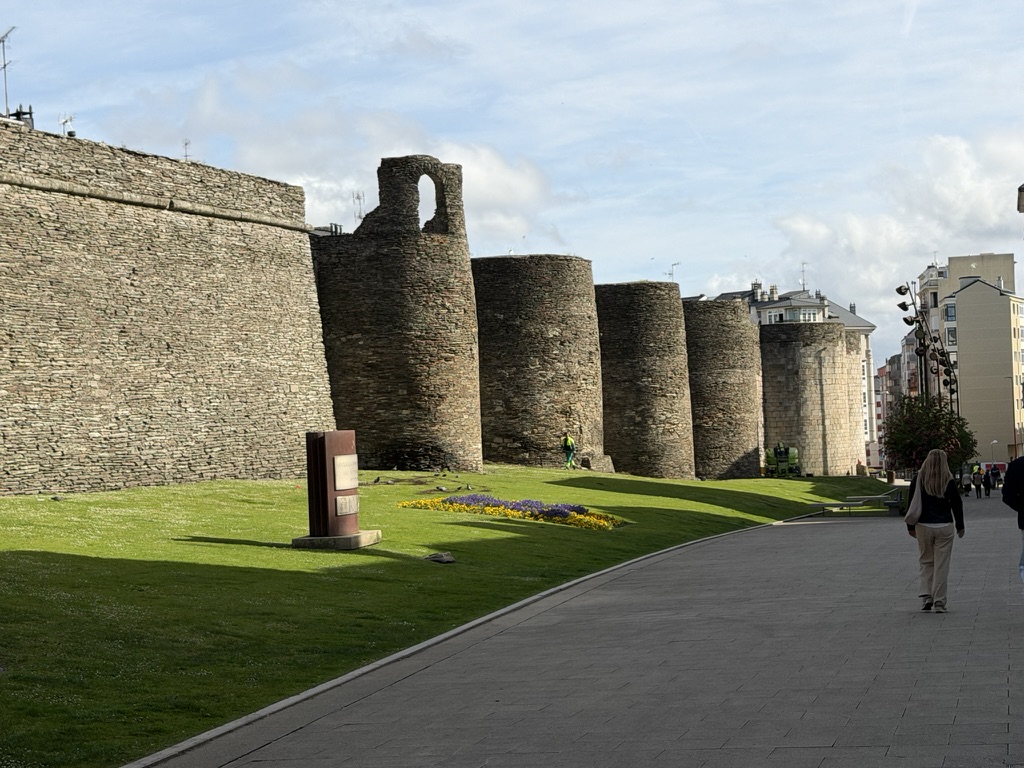
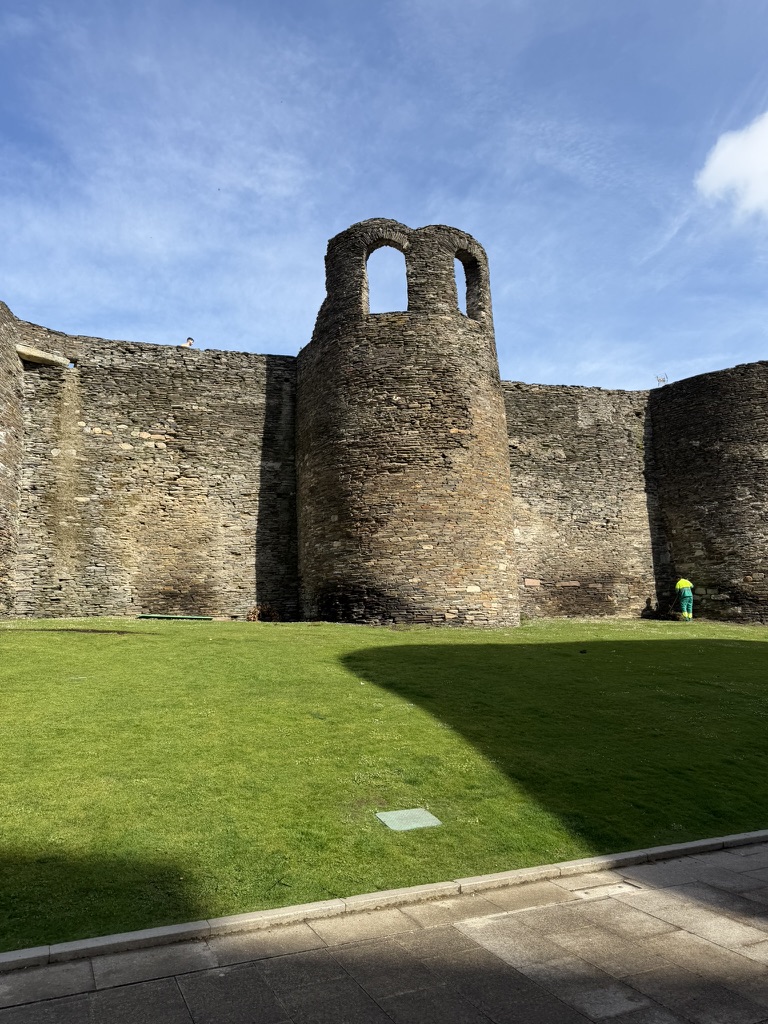
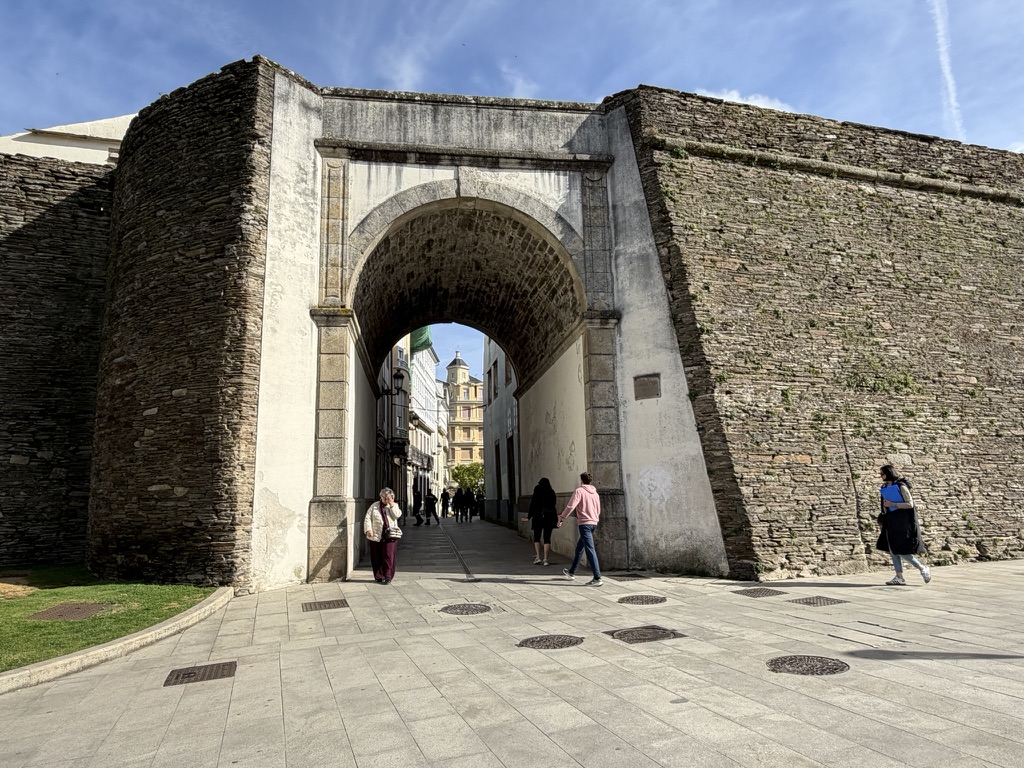
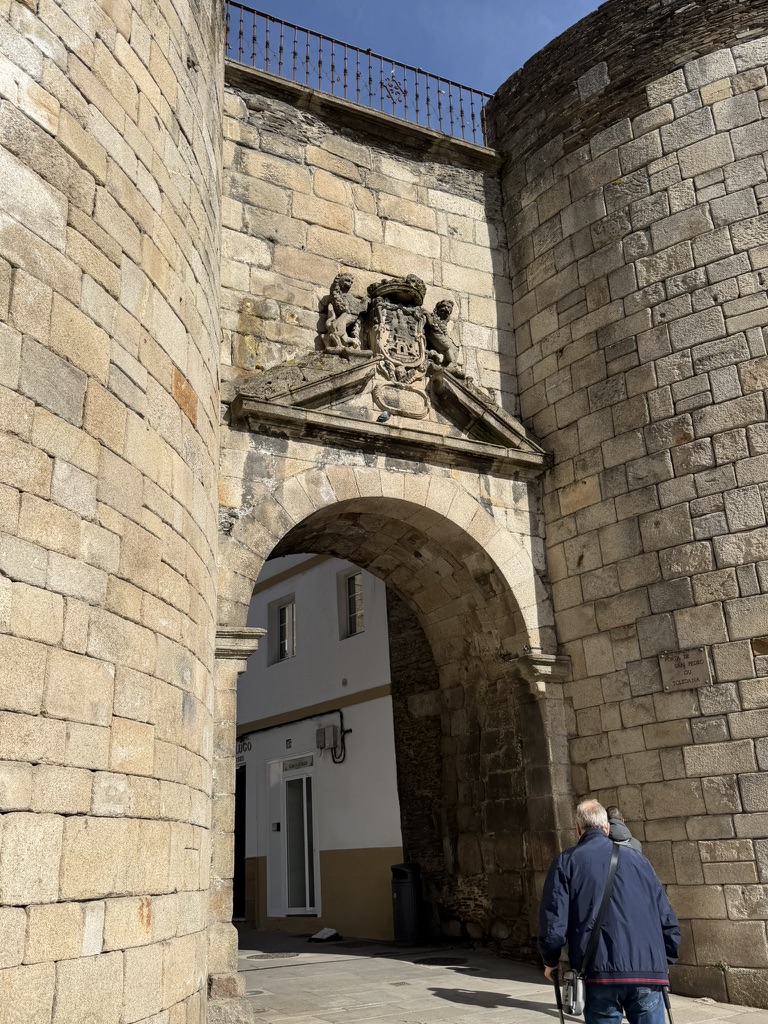
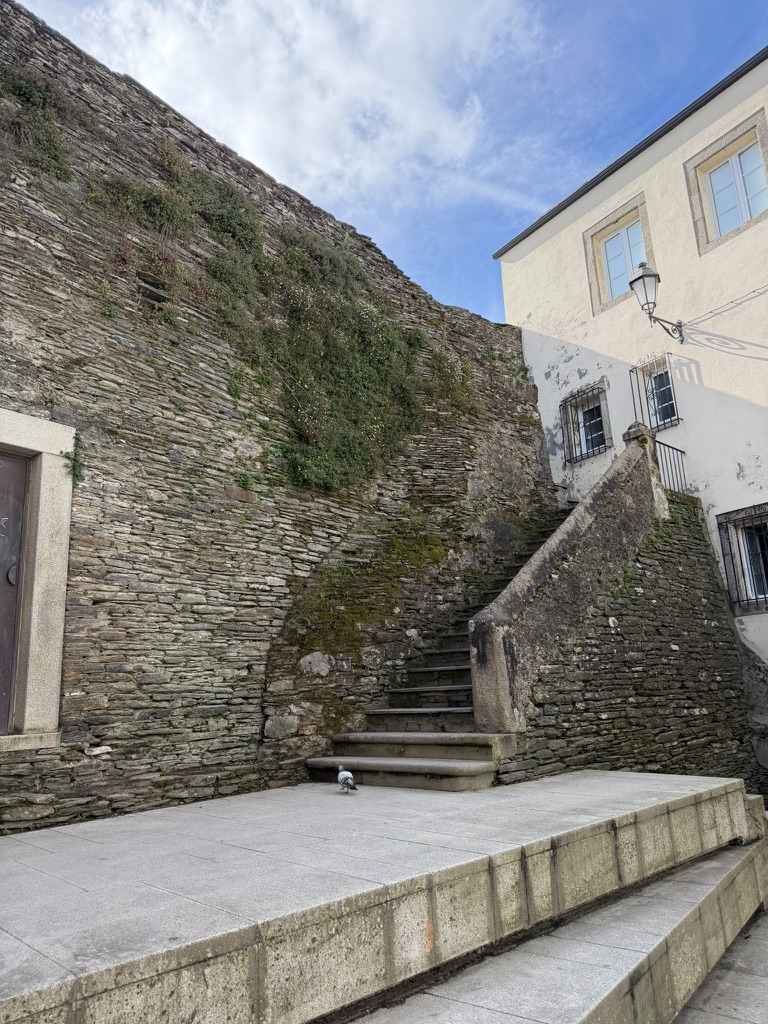
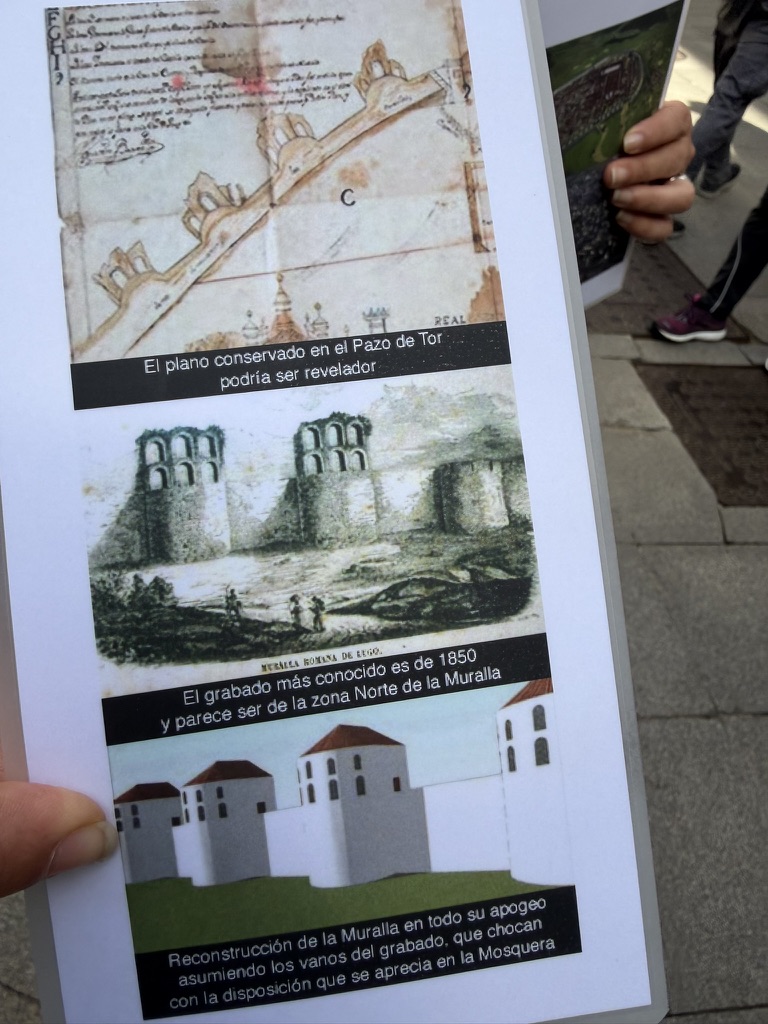
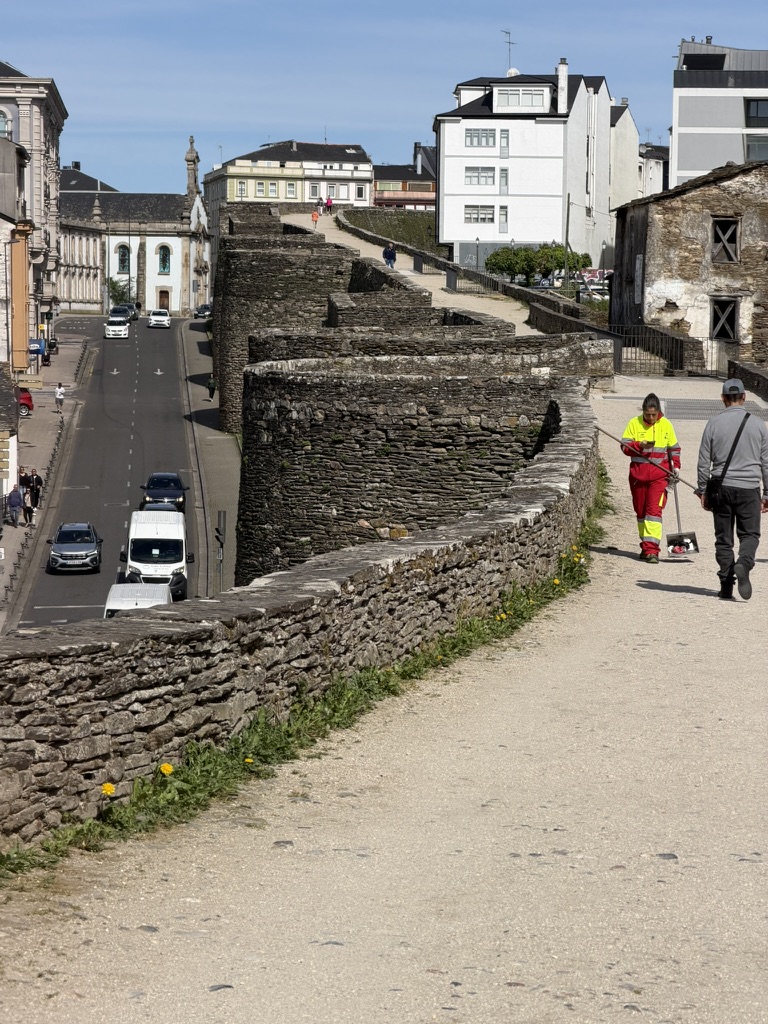
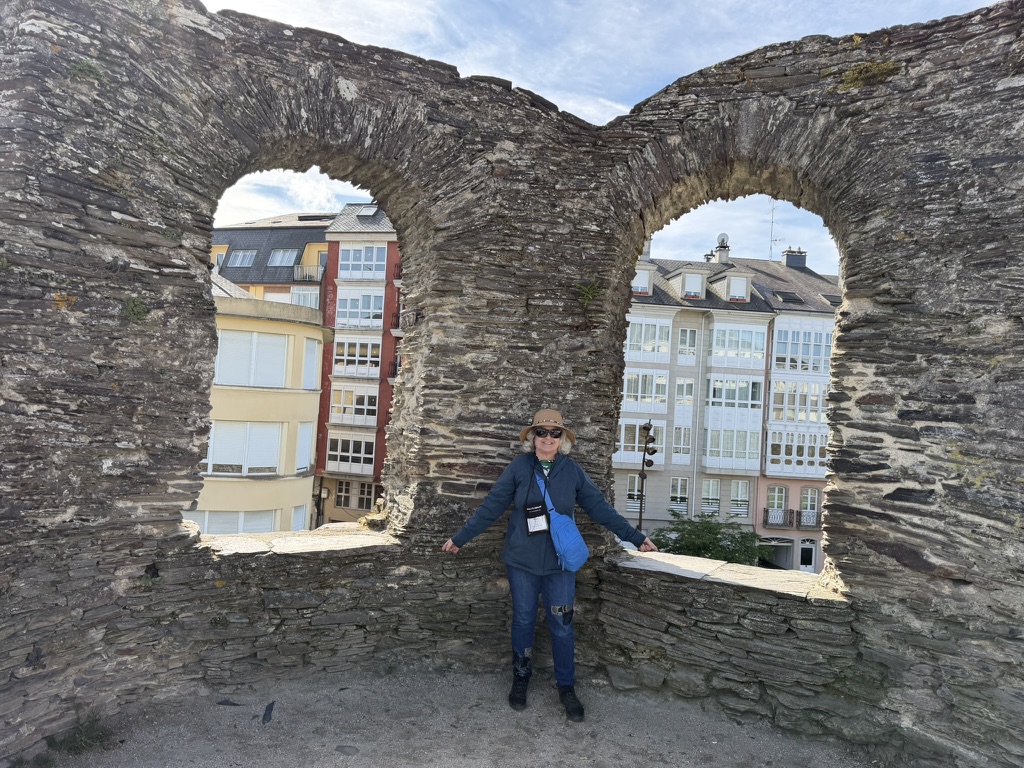
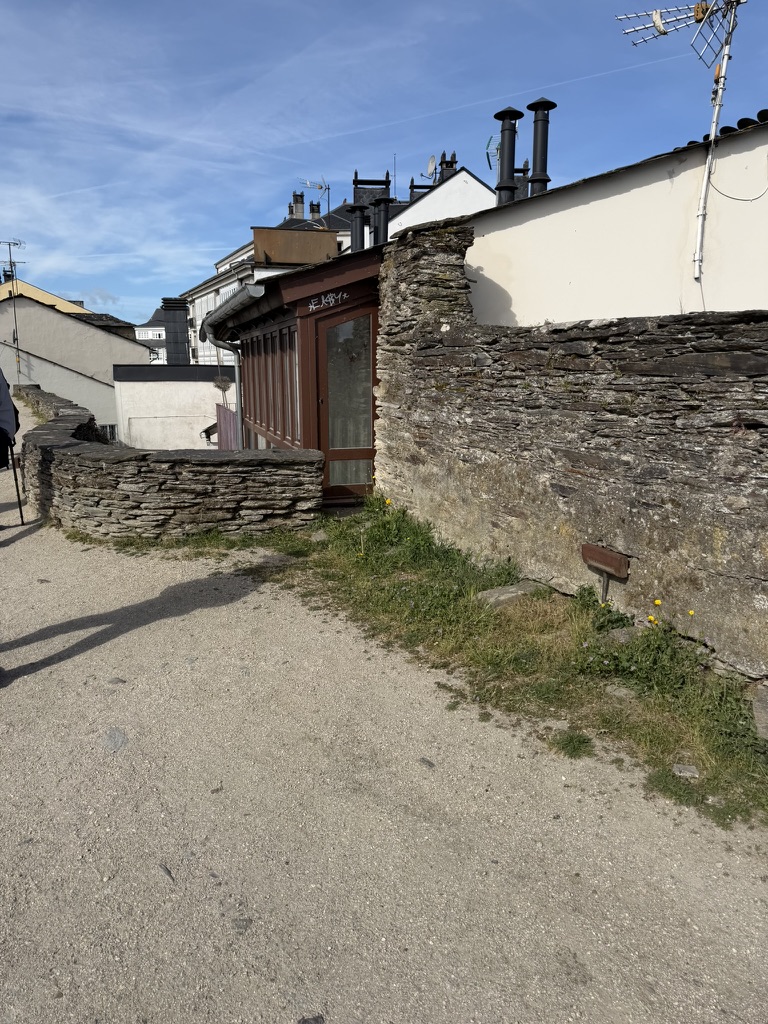
Next stop the monstrous and magnificent Roman Walls of Lugo. We walked around them from the outside.  And then we walked on the walls in two different places.  Once the walls, a UNESCO World Heritage Site, also had multiple towers surrounding the city.  Now just vestiges of the towers remain.

Walking along the walls give you a great view of both the old and new cities, but also make you aware of how technologically advanced the Romans were as these walls have lasted centuries.  Over time, some people had the opportunity to build their homes right into the wall and have the walls paths as their backyard.  People can no longer do this, but those who have this cannot be destroyed.

Our final Palace was La Granja, or Real Sitio de San Ildefonso, was the summer home of the Spanish kings.  It was walking distance to our hotel, the Parador De La Granja. Our hotel was once part of the Palace grounds and was the home of two children and their attendants. 

The Palace is enormous, we only got to see about ¼ of the total rooms, just walking through the open rooms on the bottom floor.  Through the windows we could see some of the fantastic gardens. Unfortunately, they were closed because that evening some of the fountains were going to be opened. But from what I could see these gardens are much like the ones in Russia at the Peterhof Palace.

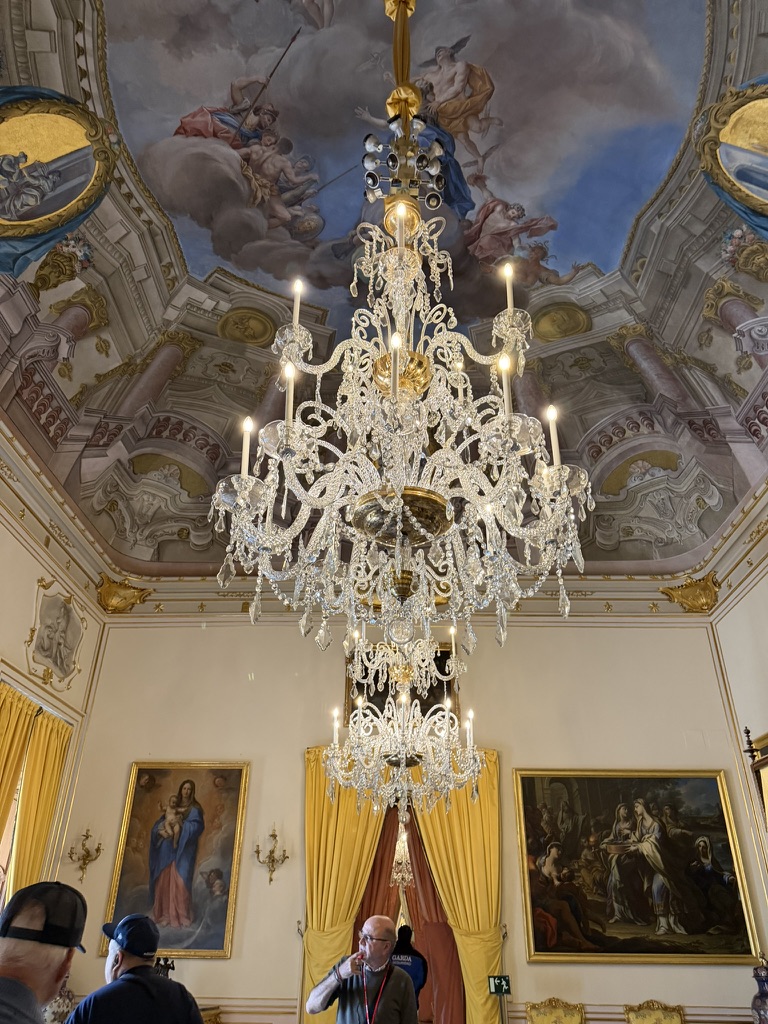
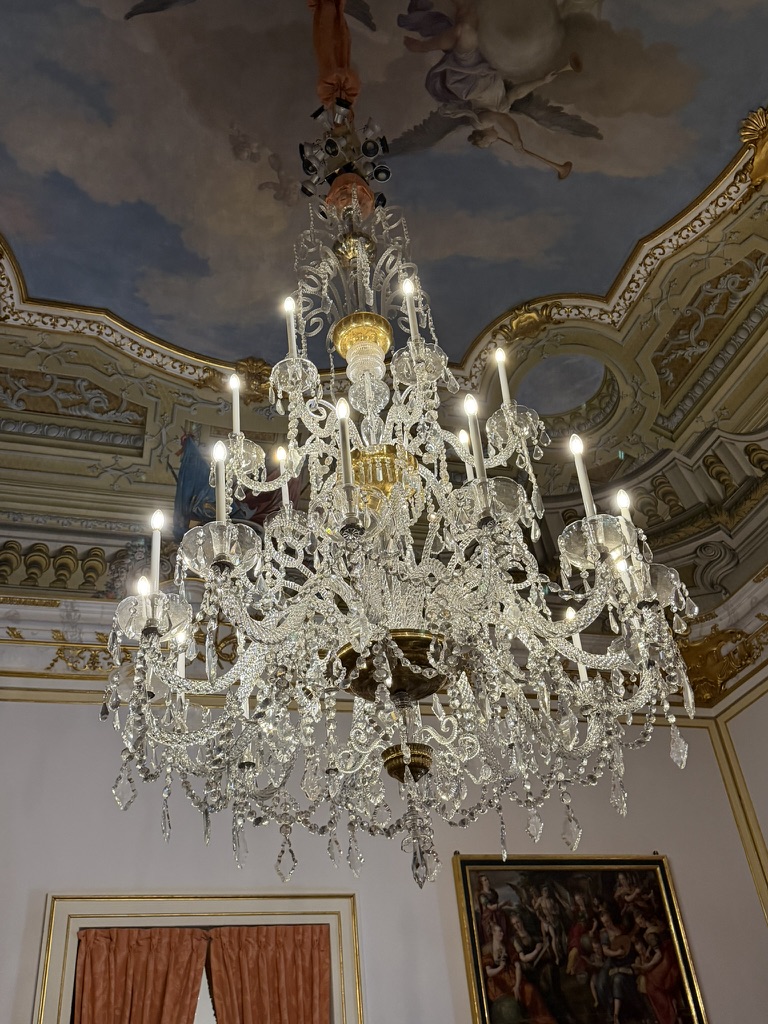
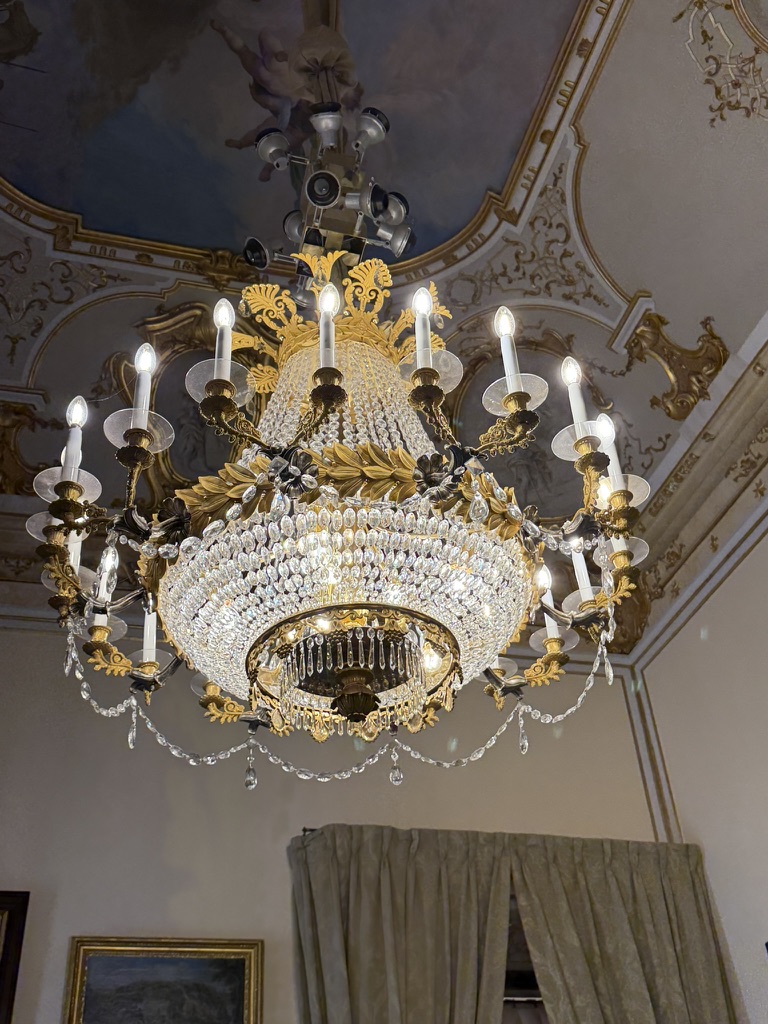
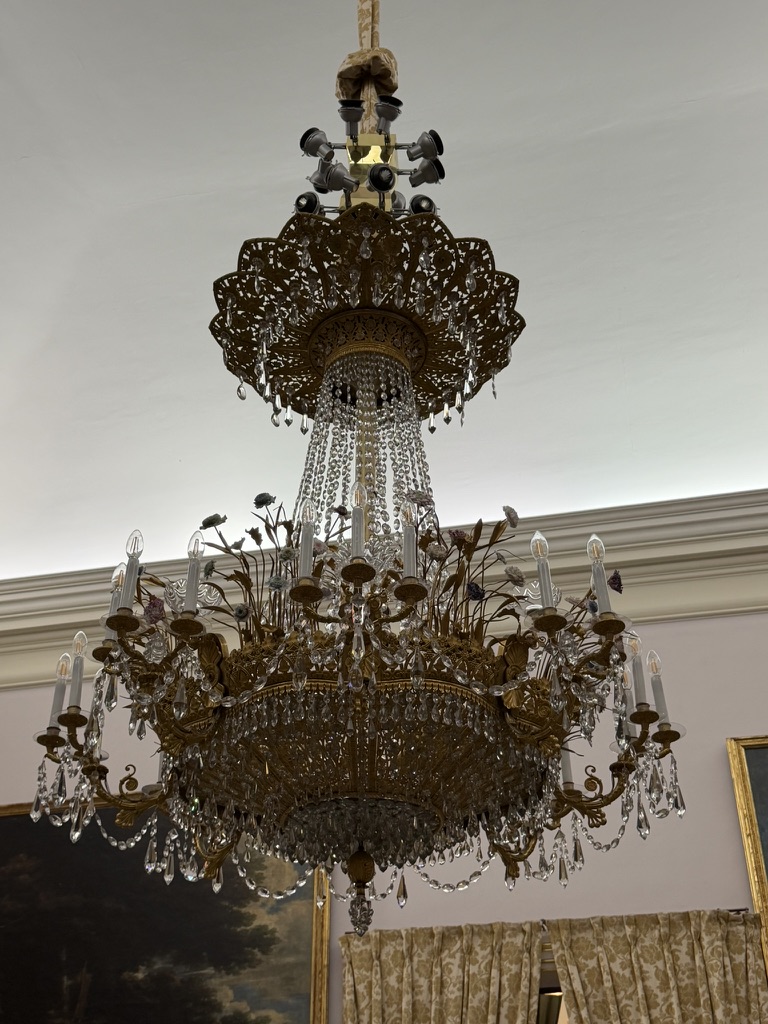
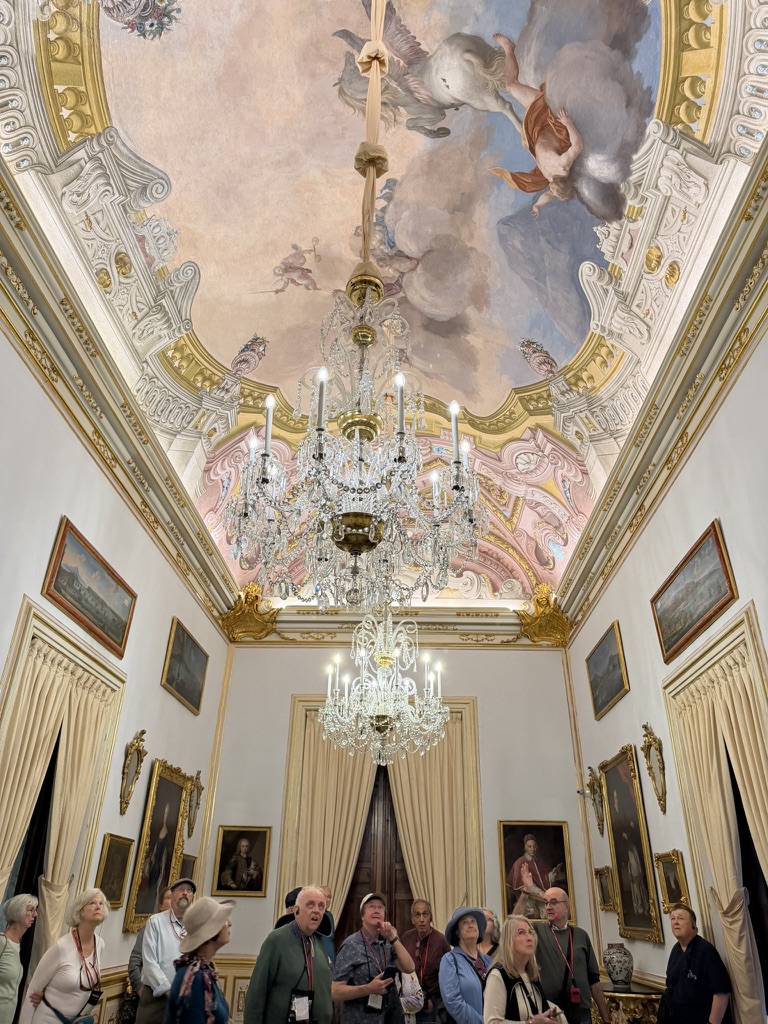
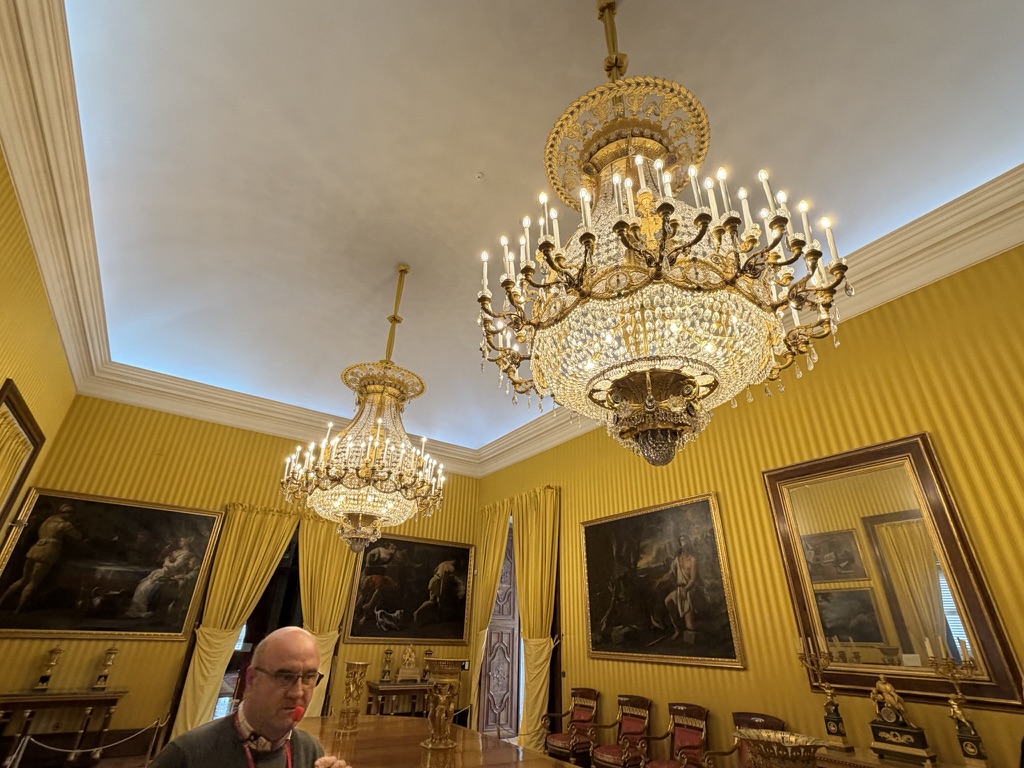
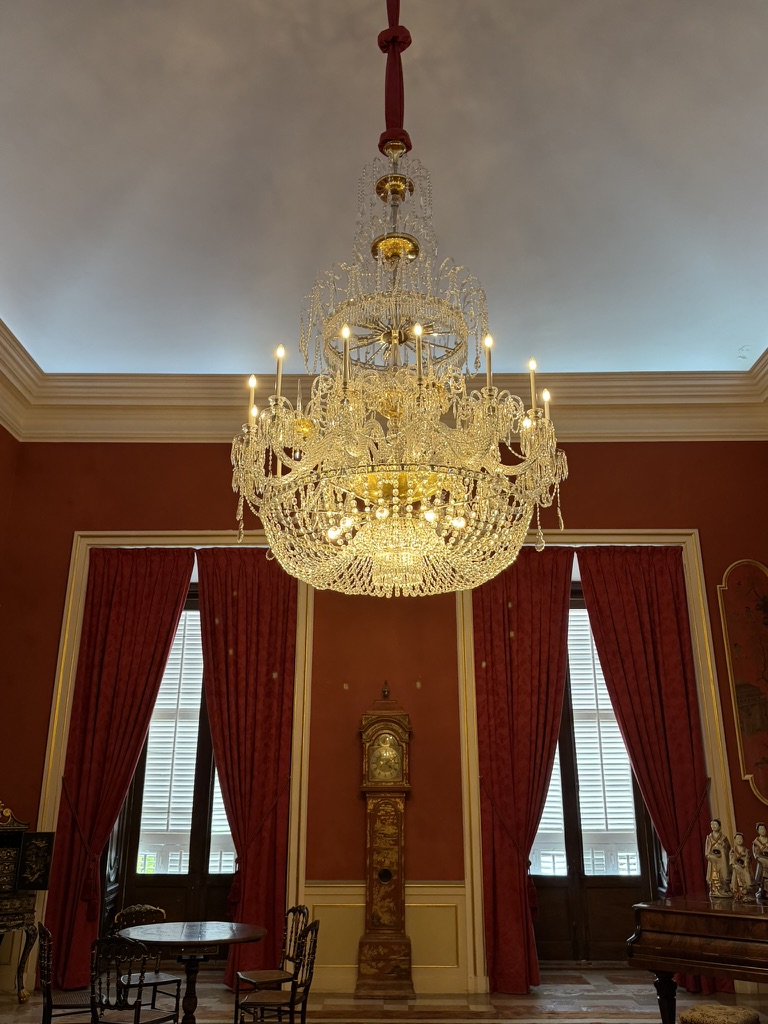
The chandeliers and ceilings in this palace were stunning. The Royal Glass company is in San Ildefonso, so many of them were made in the town for the Palace. For  this palace I will just show you some of these fantastic and some fanciful chandeliers.  To be honest after going through these rooms I became somewhat overwhelmed.  But it was definitely a great final stop on our tour.

https://en.wikipedia.org/wiki/Amber_Room

https://www.uc.pt

https://whc.unesco.org/en/list/987/ https://www.spain.info/en/destination/san-ildefonso-o-la-granja/

Vineyards Adventure In Portugal and Spain: Drinking Our Way…

9 May

Our trip to Spain and Portugal with Road Scholar was entitled, “Beyond the Vineyards, but in reality, it should have been called In the Vineyards, Drinking your way through Portugal and Spain.

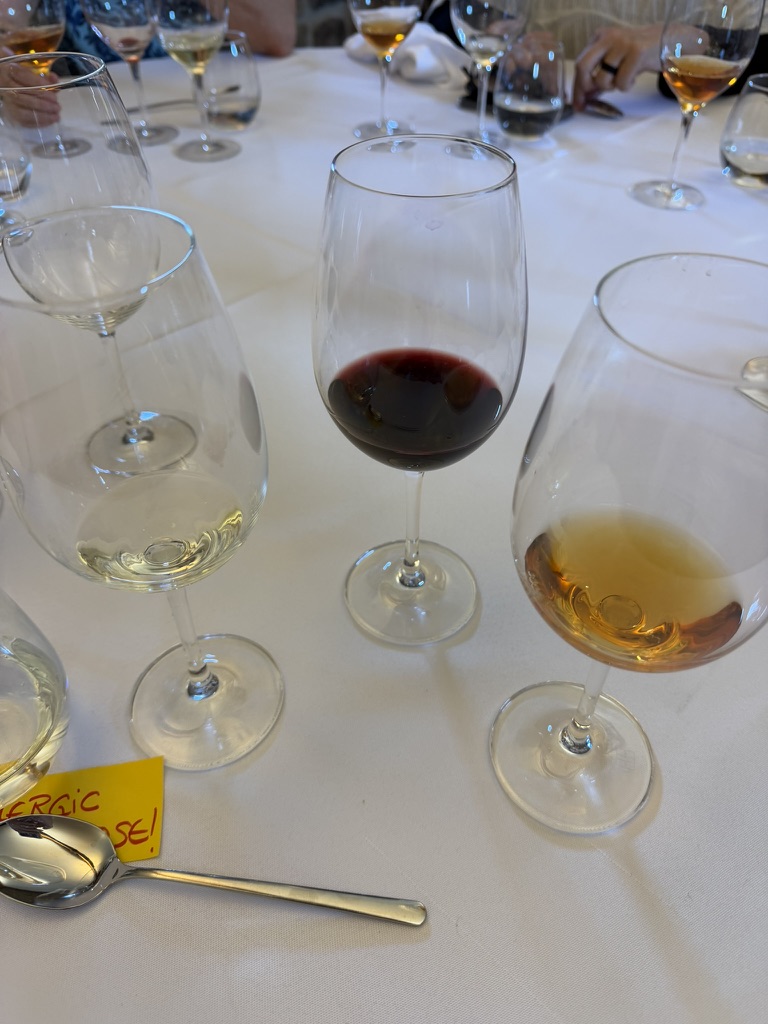
I learn much about white wines, red wines, port, sweet sherry, sweet vermouth.  I drank more wine in two weeks than I usually drink in a year.  I am not exaggerating!  I discovered that my wine pallet was immature.  I like table wines much more than the expensive bold flavored wines.  I am ok with that.  I also learned that every lunch and dinner in the Iberian Peninsula comes with wine and more wine.  I learned to turn my red wine goblet upside down and to put my hand over the top of my white wine glass after the second refill and shake my head saying “por favor, no mas.”

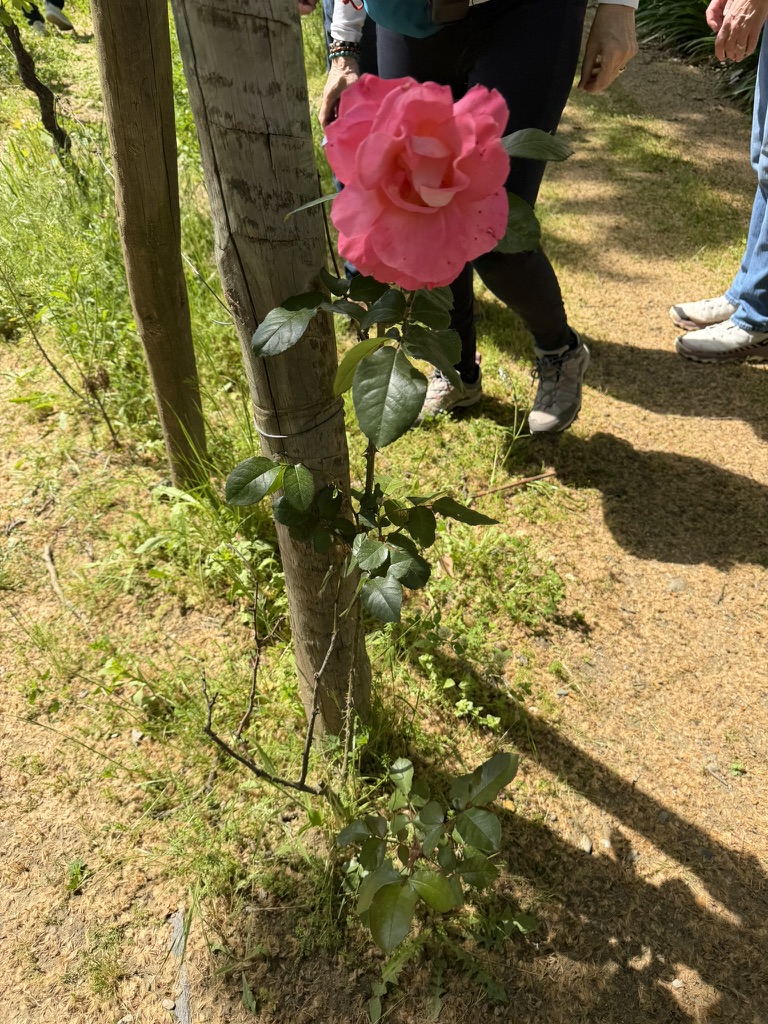
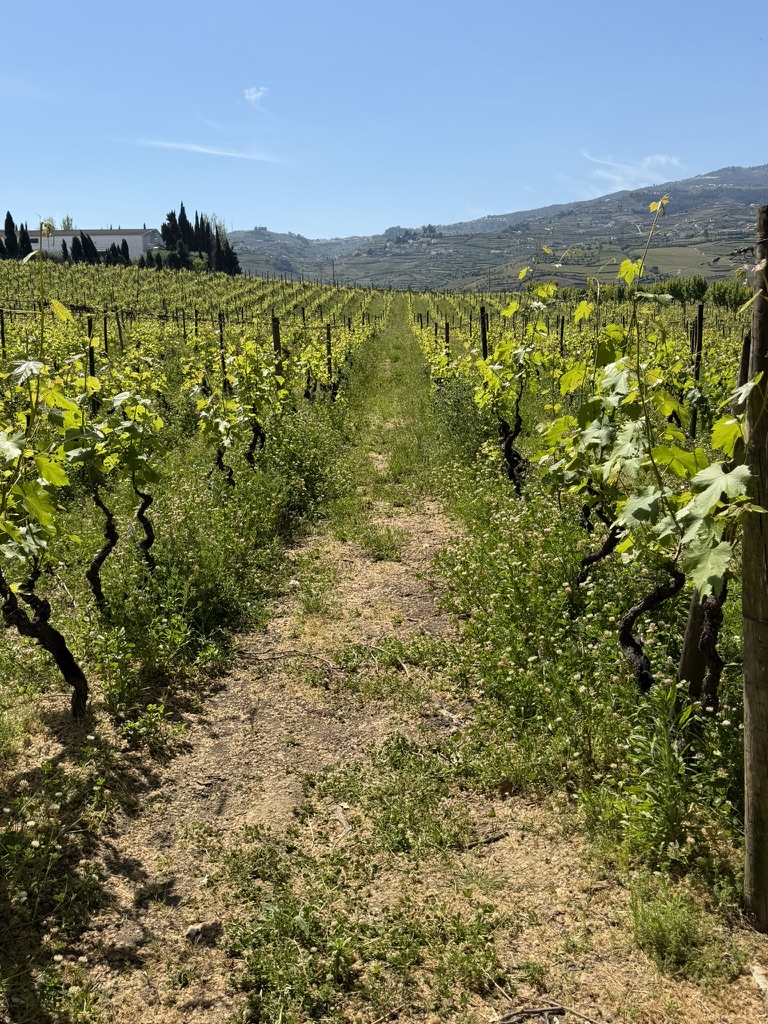
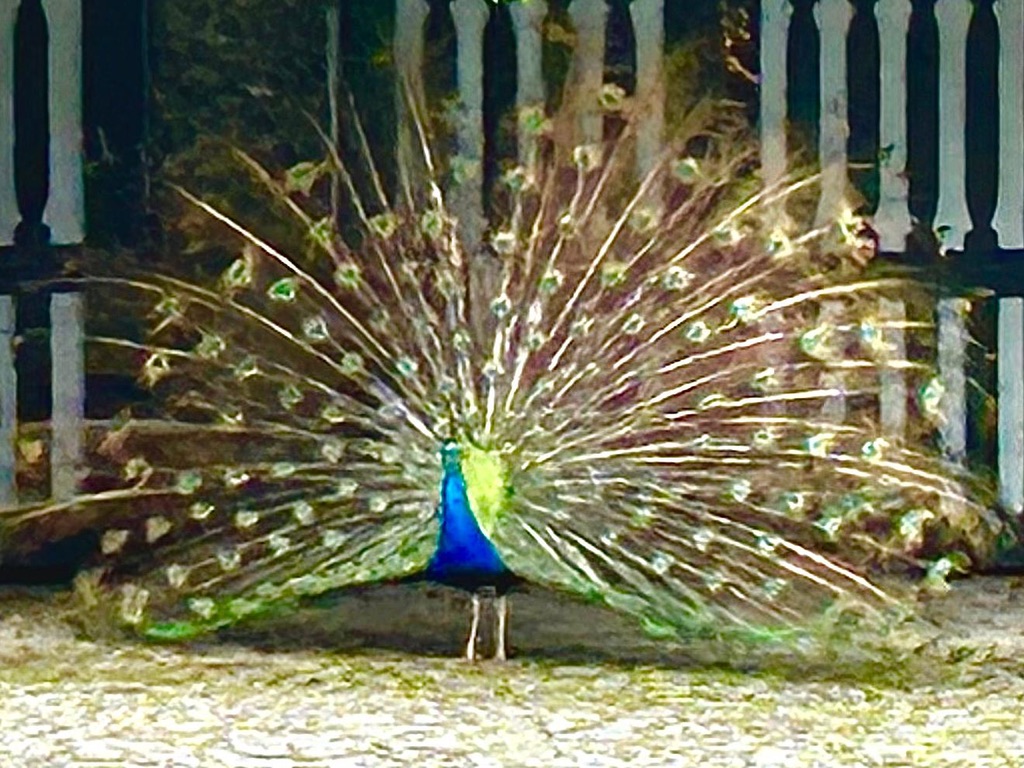
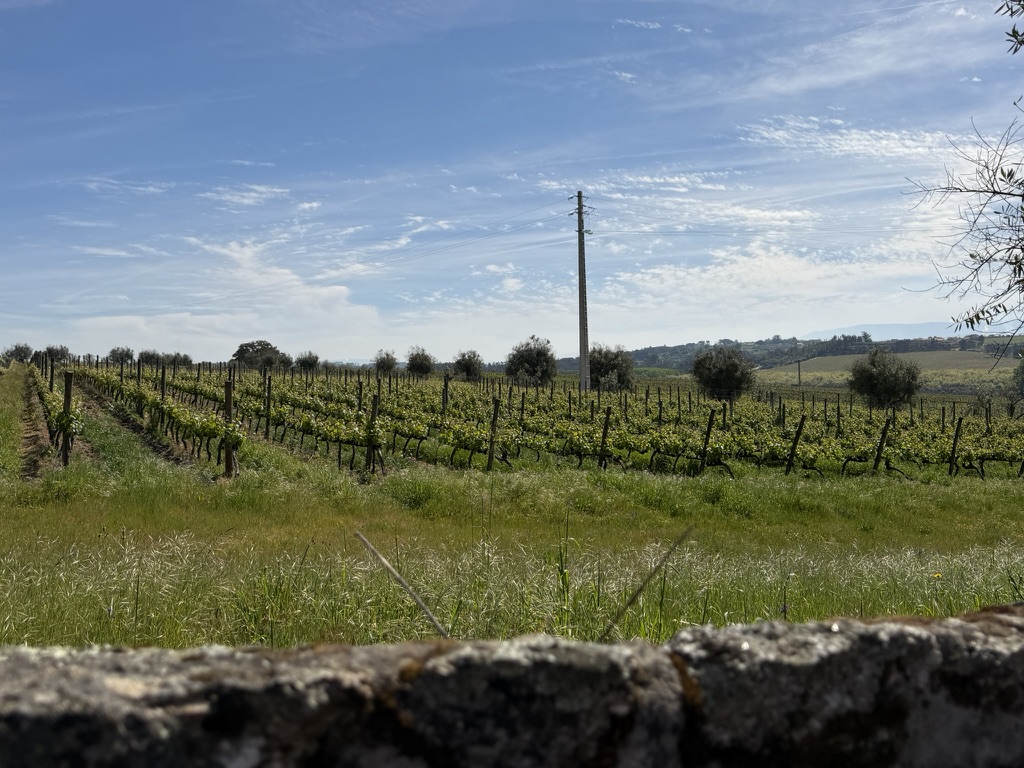
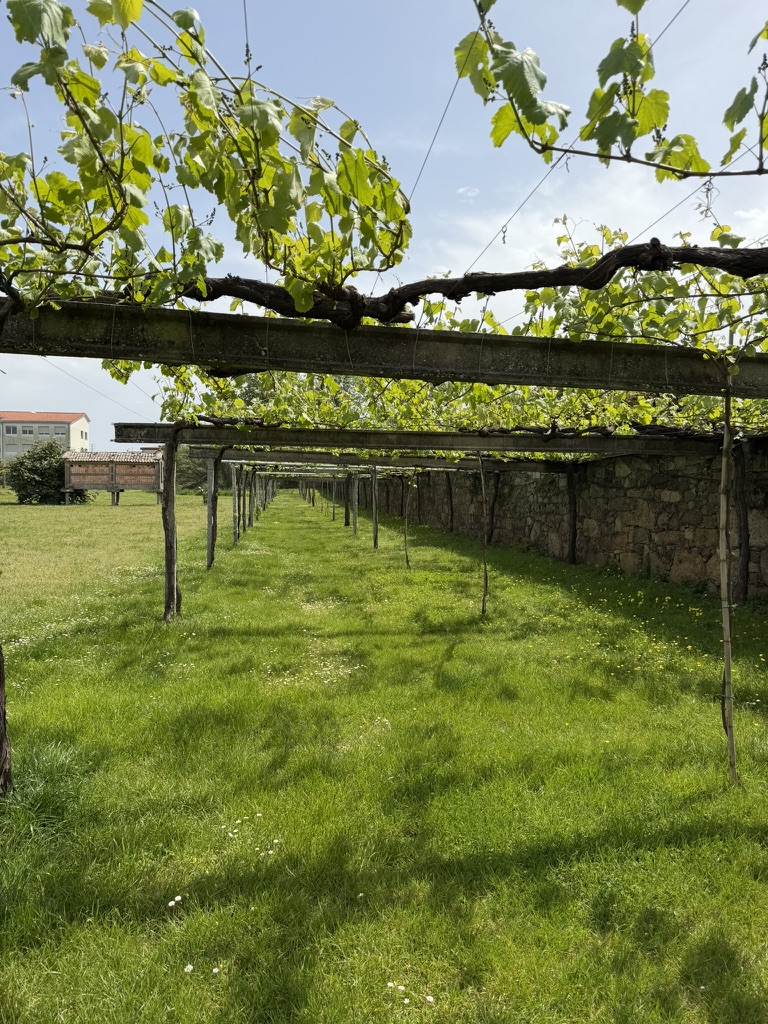
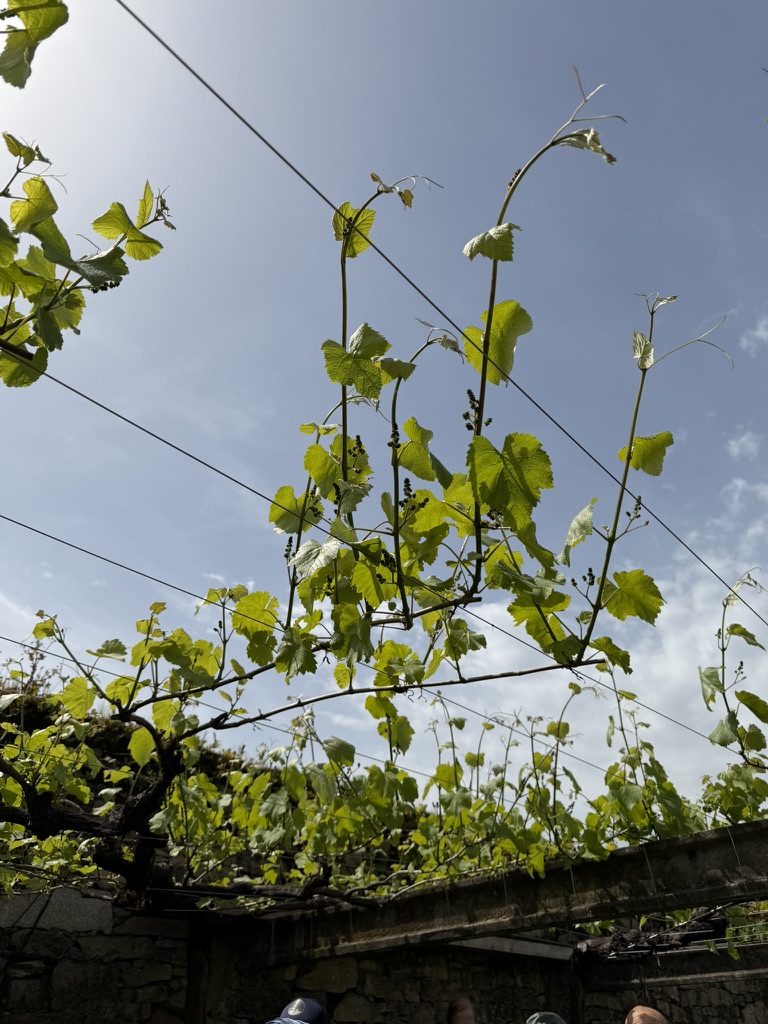
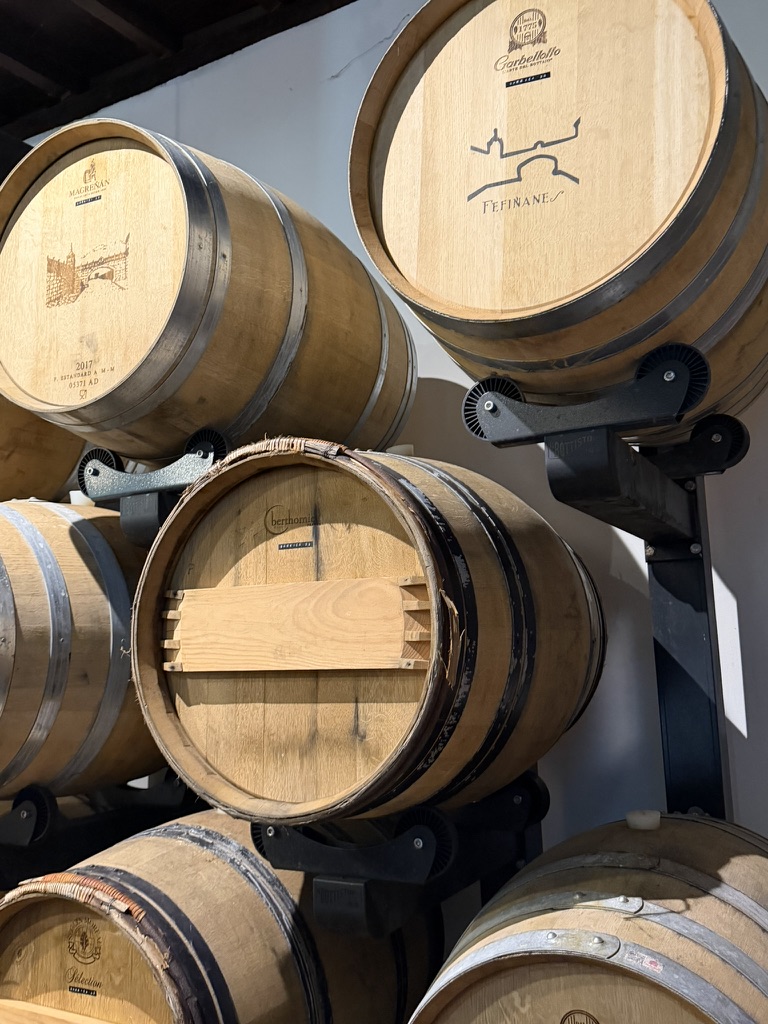
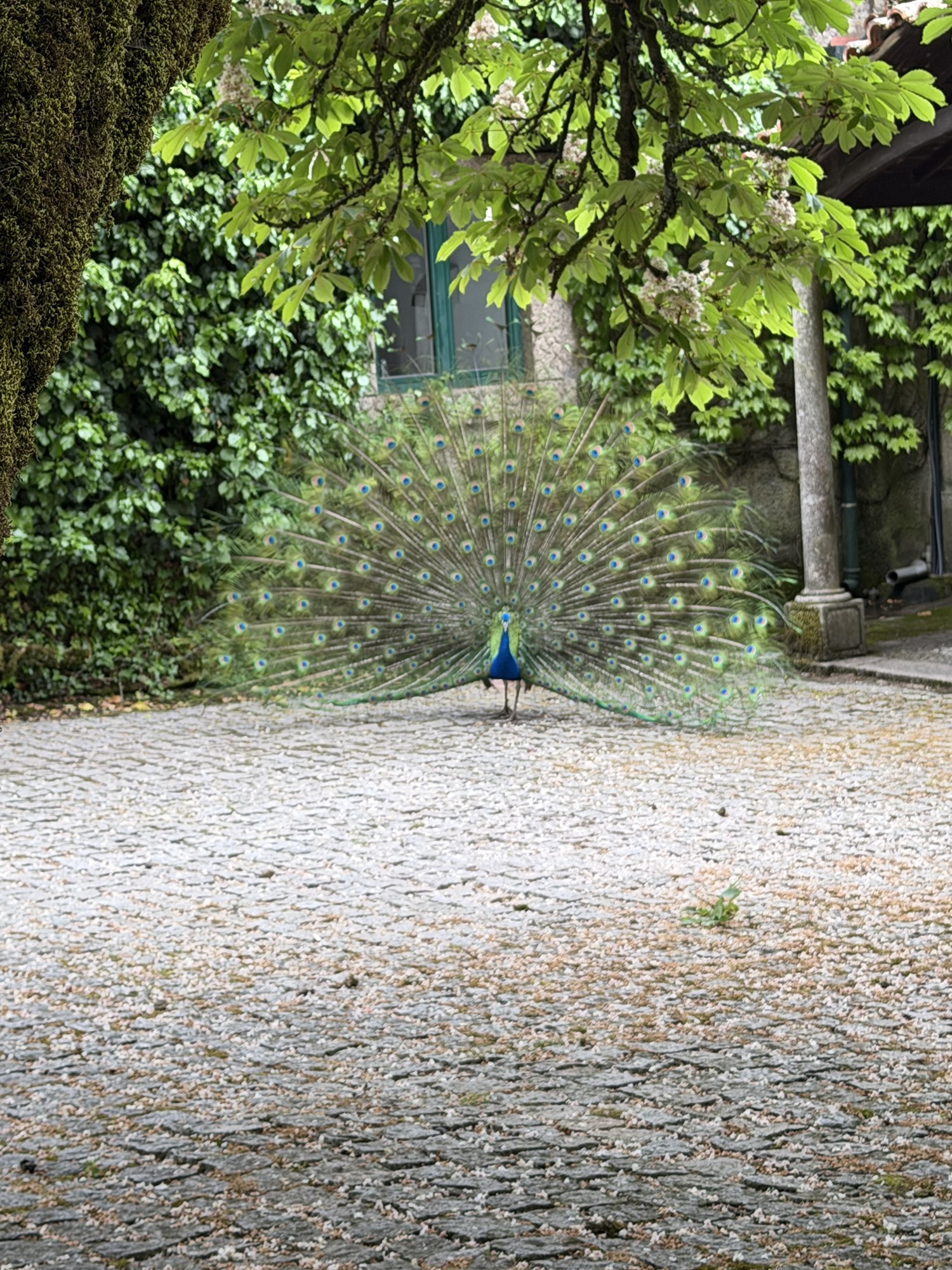
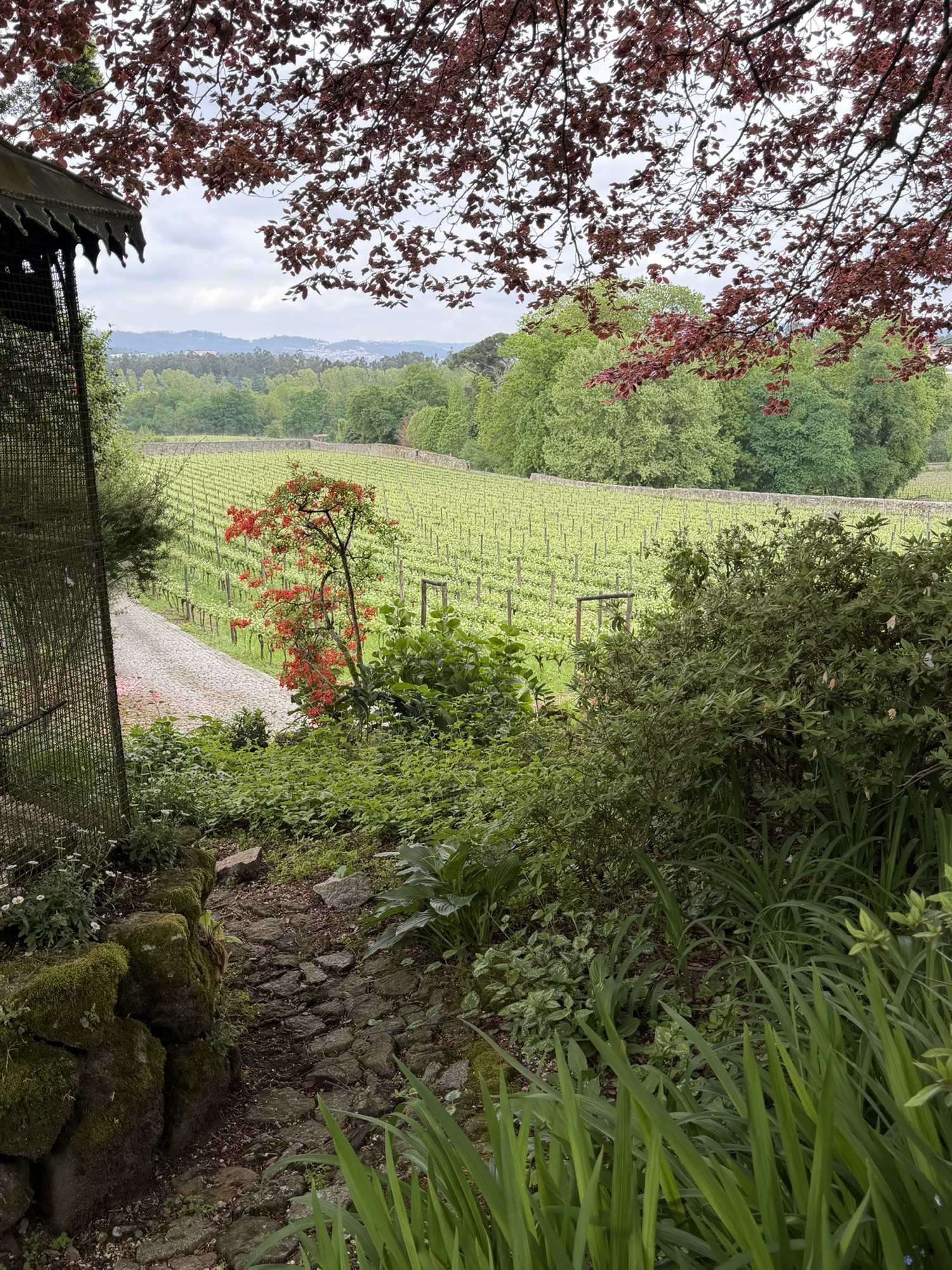
I learn how different barrels and/or stainless-steel containers change the taste of wine and that all vineyards do not grow their grape vines the same way.  I thought all wine vines grew about waist high off the ground.  I am so wrong: some grow overhead, others close to the ground.  I learned that weather and rain impact how wine vines grow.   I learned that roses are planted in vineyards not for beauty, but because if a rose bush gets a disease, it indicates that the vineyard could have a disease as well.  Olive trees are planted for a similar reason. Also, and important, is that there are the most lovely peacocks at almost every winery.  We were told that they indicate great wealth.  So having peacocks on the grounds was popular.

I found out there is much wine tourism in the Iberian Peninsula. Here is a summary of the wine tour aspect of our lovely and exhaustive program. Mayra, our main tour guide told us that before the pleasure of wine tasting was the hard work of learning about the vineyard.  To be honest that was my favorite part, because many of these vineyards were just lovely.

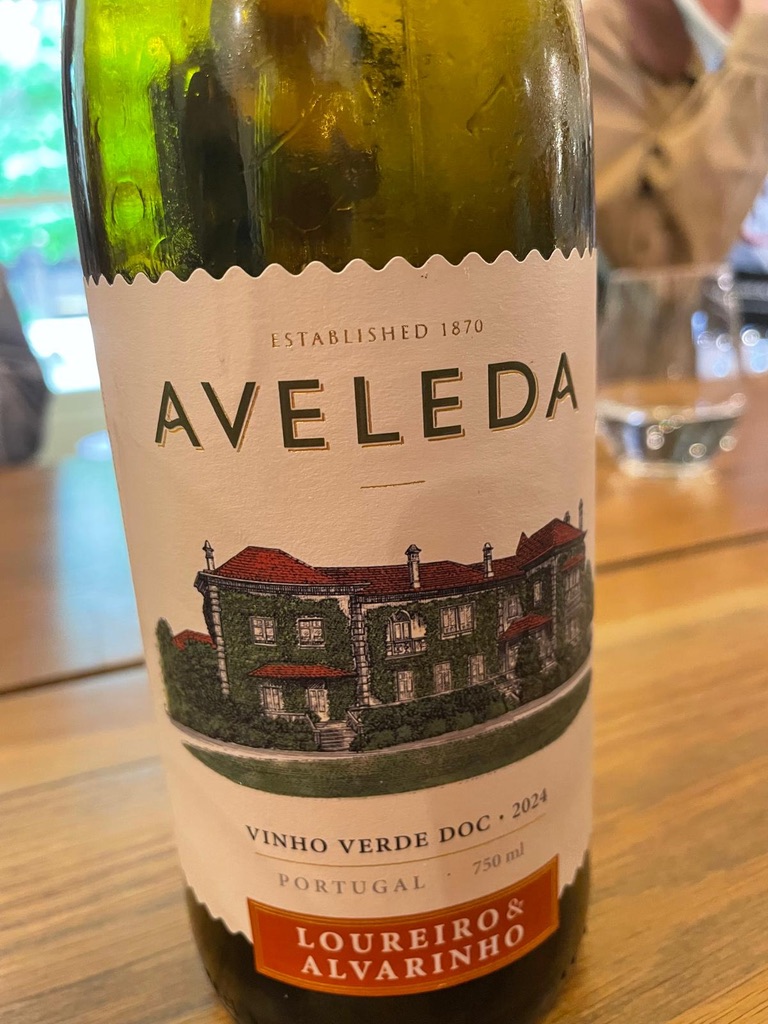
Quinta de Aveleda was our first vineyard on the way to Guimaraes. I have written about Quinta de Aveleda in an earlier post because of its absolutely stunning acres upon acres of gardens.  I will not write about them again, but honestly, they are worth seeing. (See link below.)

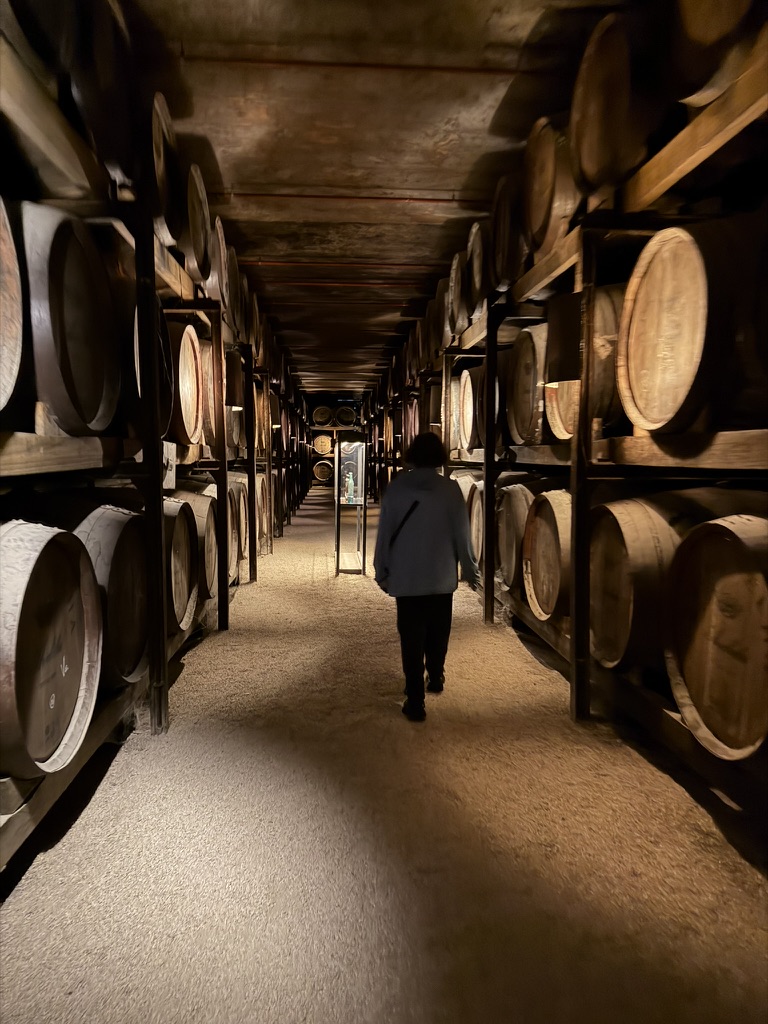
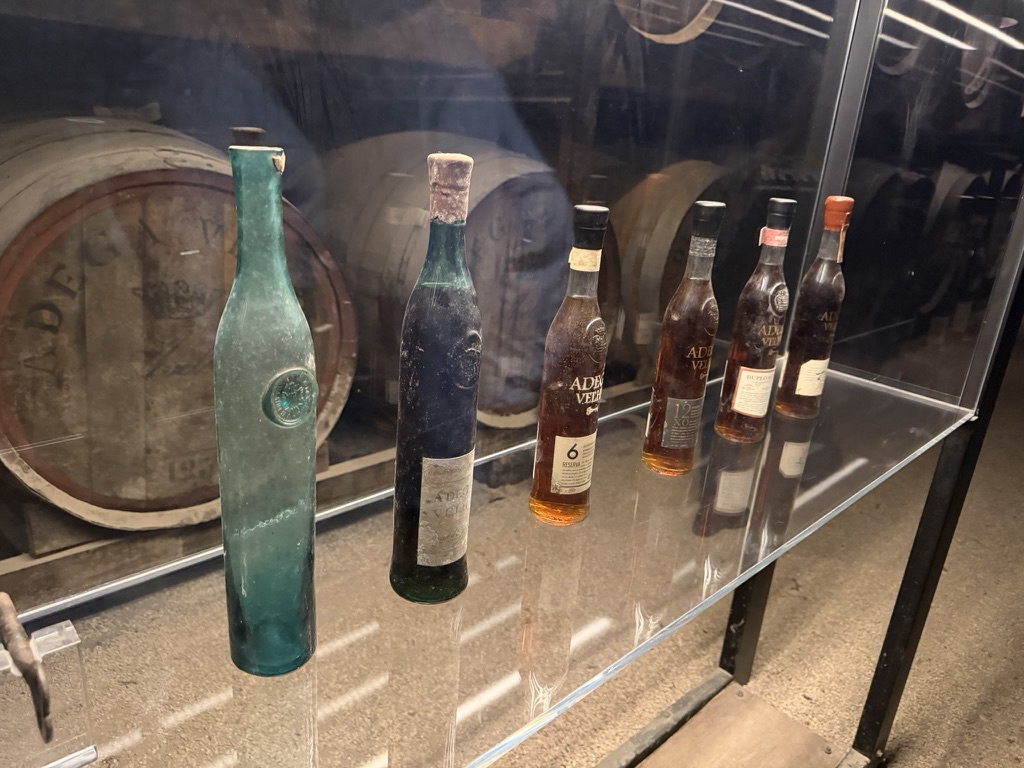
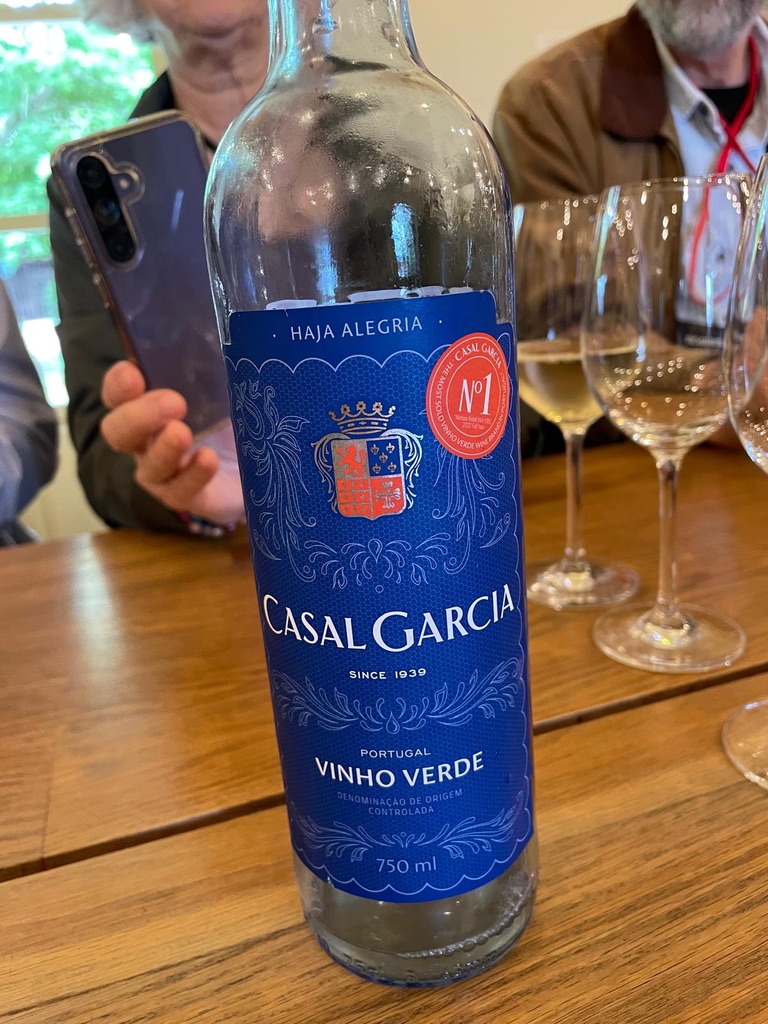
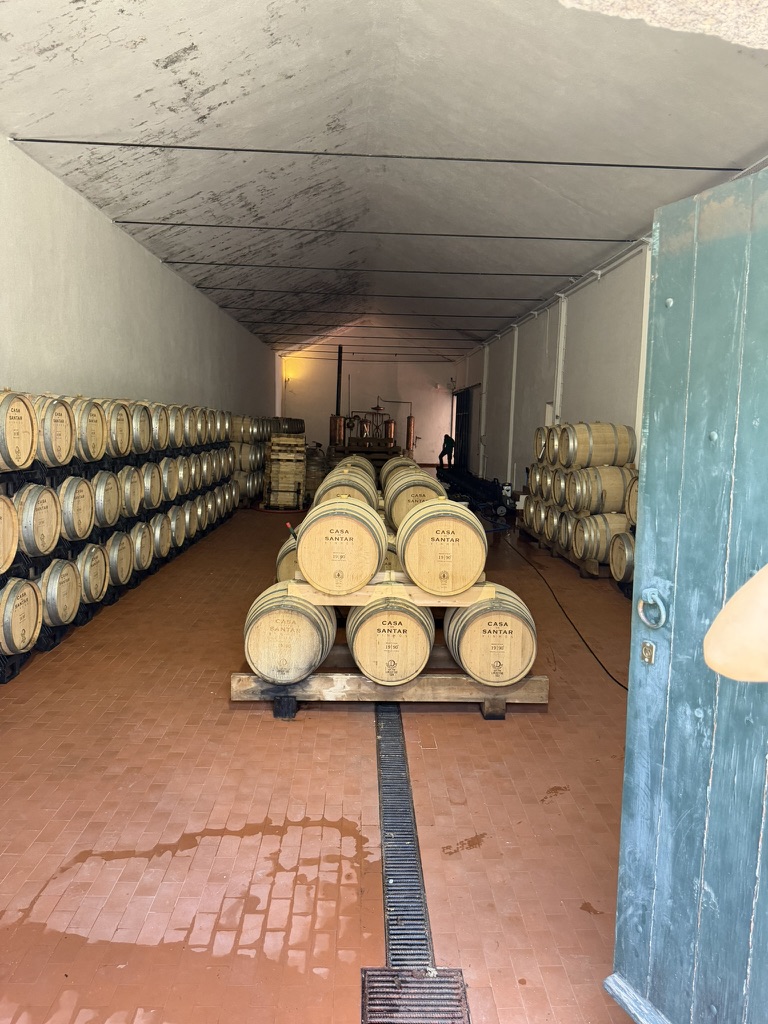
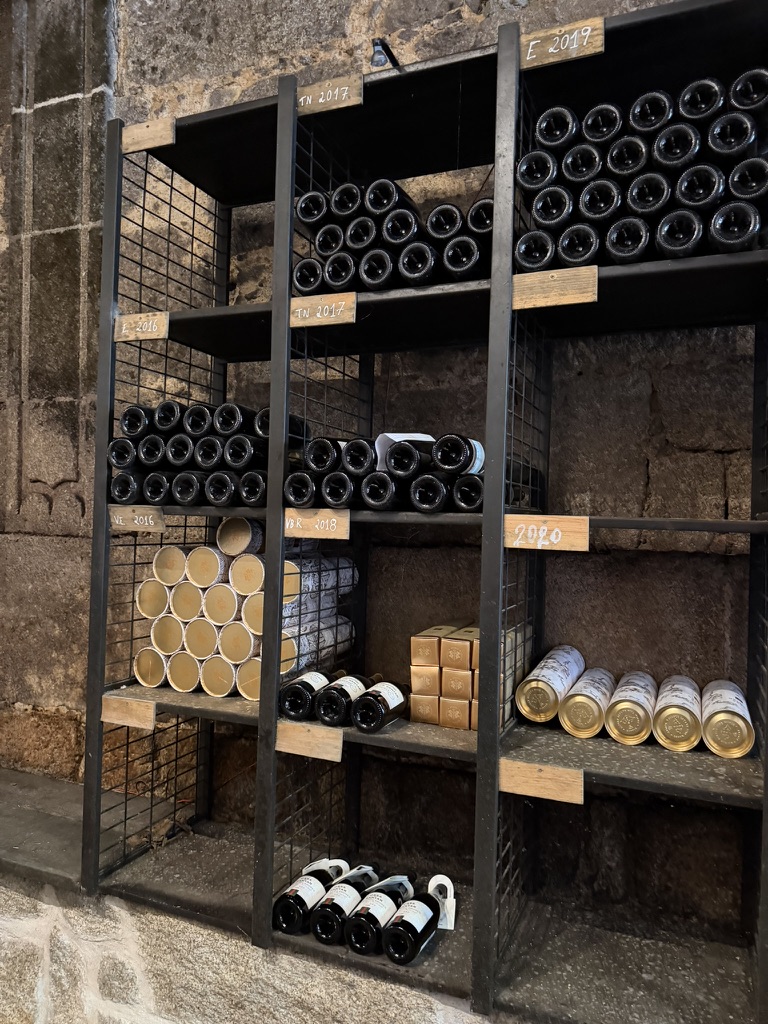
We were allowed into the barrel room (fermentation) to see and smell where the wine ferments and learn about the process.  In this winery, and its centuries old building, we could really smell the fermentation. We saw a display of some of its original bottles.  And had the opportunity to taste both a red and a white wine.  I will say that the Casal Garcia, Vinho Verde, turned out to be my favorite wine of the entire trip.  These wines are not fermented for long, so they are considered ‘green’ or young wines.

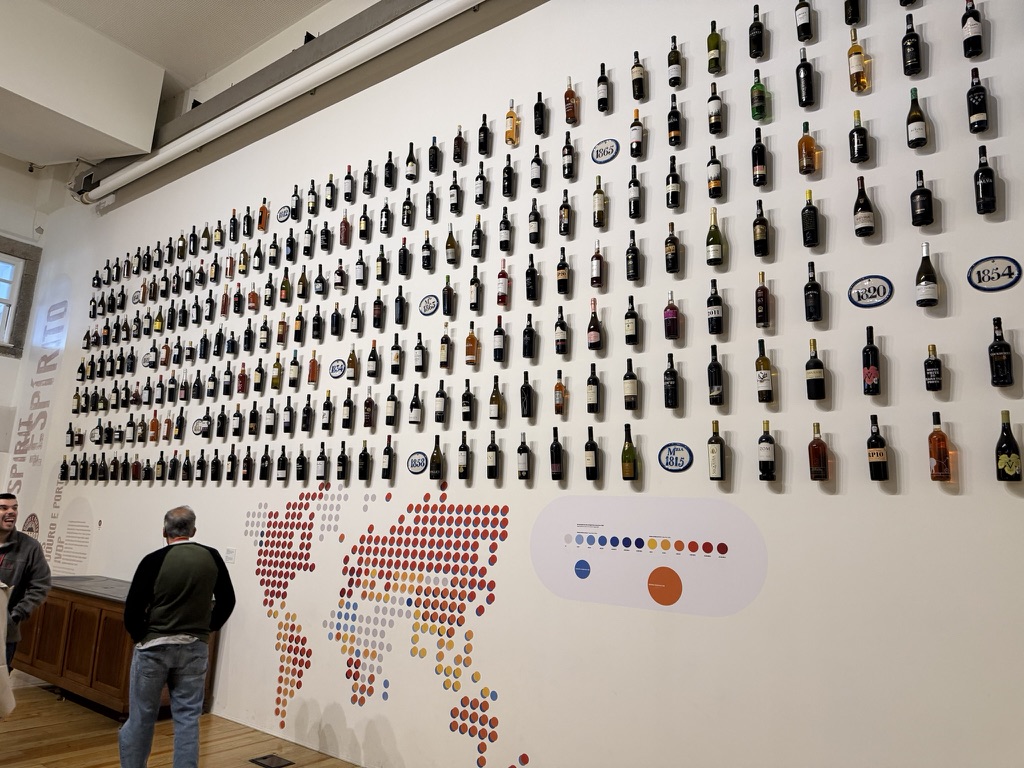
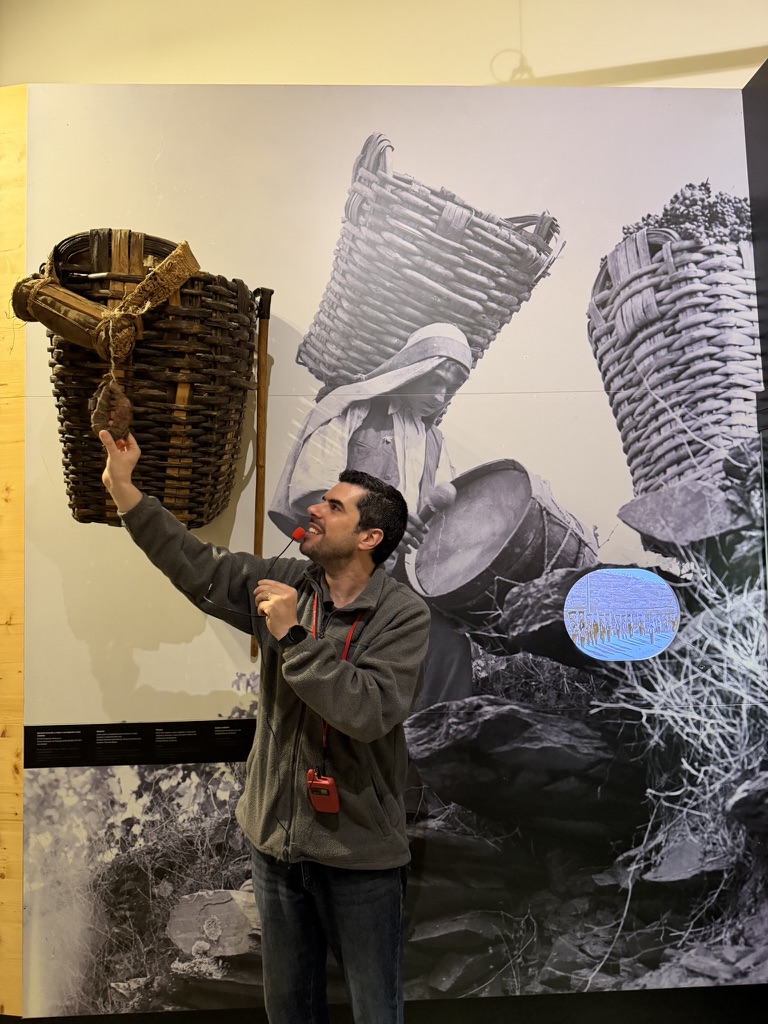
Our next stop was to find out the overall history of wine making in the Douro River area at the Museo del Douro tour in Regua.  Marco was our very enthusiastic and wonderful museum docent.  We had a great, detailed overview of the start to finish of wine making in the Douro area, starting with the Romans and the priests who came later.  Wine making and drinking were very popular.

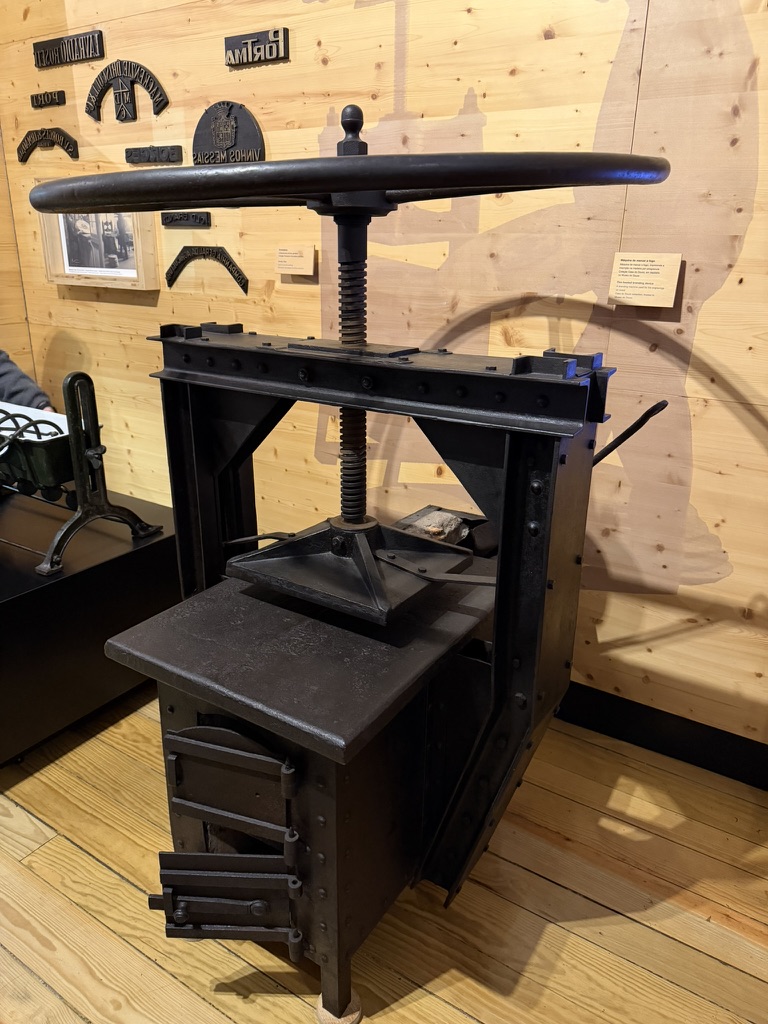
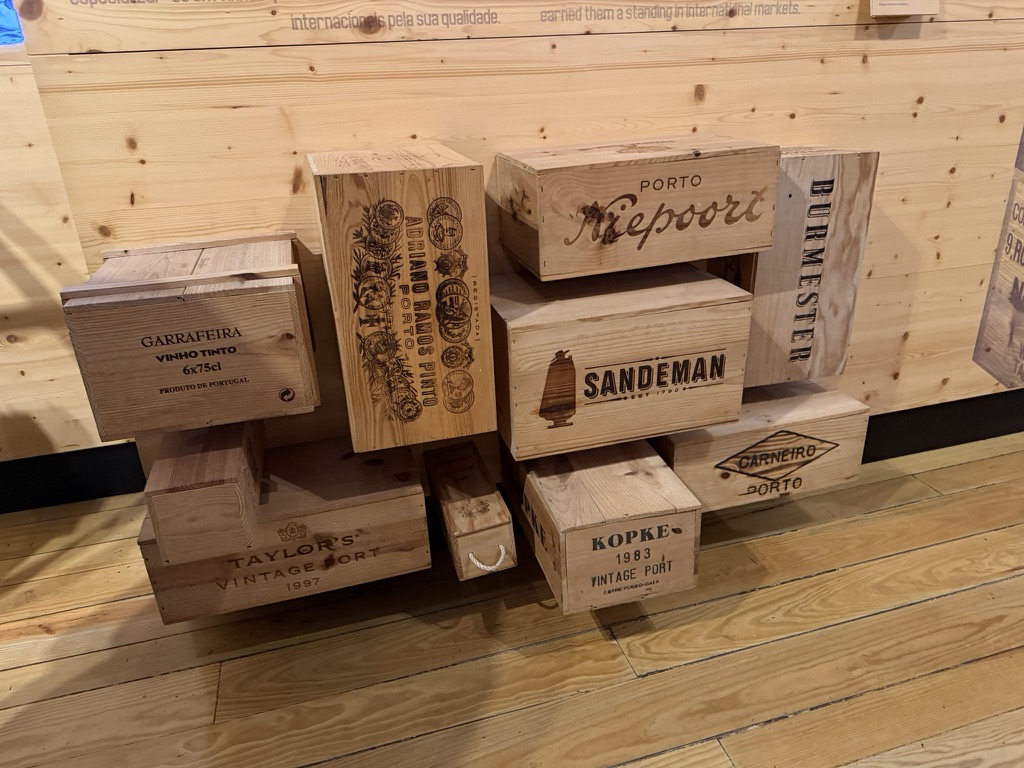
I was amazed that people would carry 80 pounds of grapes on their shoulders in heavy wooden baskets during the picking season.  I learned how they bottled the wine, made the labels and branded the crates.  People do not become vintners overnight. There is training and a hierarchy of influence.  Going to this museum gave us a foundation for each of the rest of the wine related stops we visited. 

After our tour, we were also treated to a glass of wine and/or lemonade.  It was a delicious end to a great museum visit. (Always a glass of wine, but in many stops they had non-alcoholic drinks for those who do not imbibe alcohol.)

After we left the museum, we traveled to another vineyard.  Along the way, we learned that the vineyards themselves are a World Heritage Site.  These terraced vineyards were terraced by hand and then separated by the stones that the farmers dug up.  Today, those that have decayed over time, cannot be torn down because they are protected by the World Heritage designation.  

Some of the vineyards were abandoned when Phylloxera, a tiny insect, destroyed most of the vineyards in Europe.  The only solution was to bring in roots from US vineyards, which were immune to the insect, and graft European grape vines on to them. The phylloxera blight almost destroyed the wine making business in Europe.

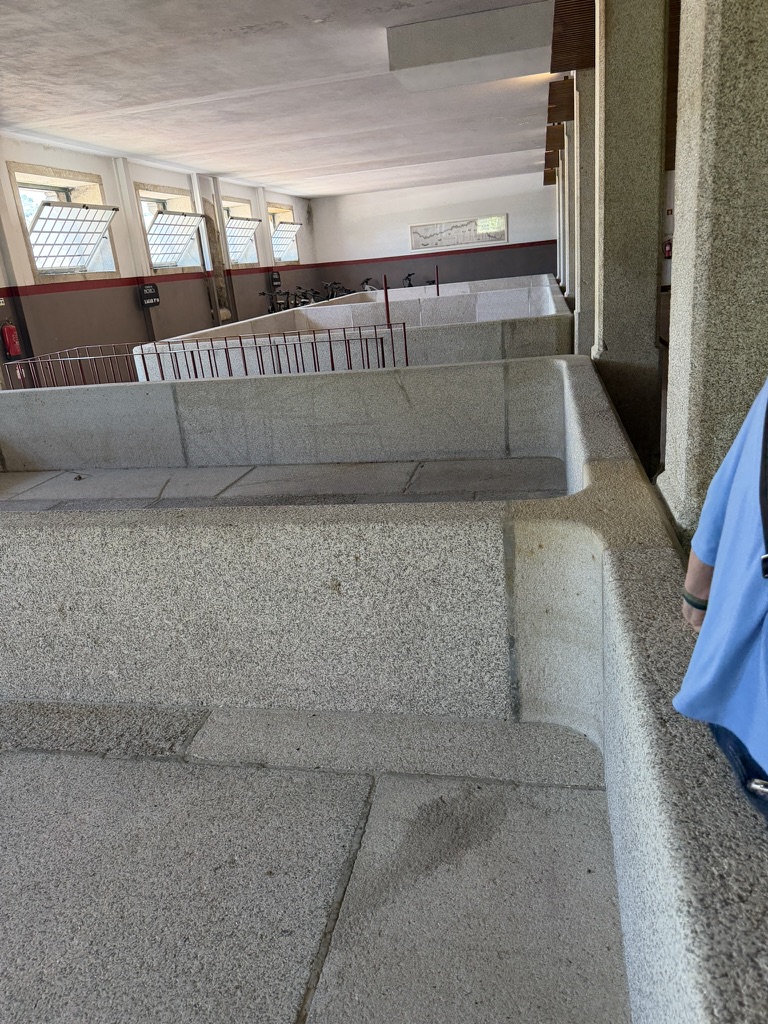
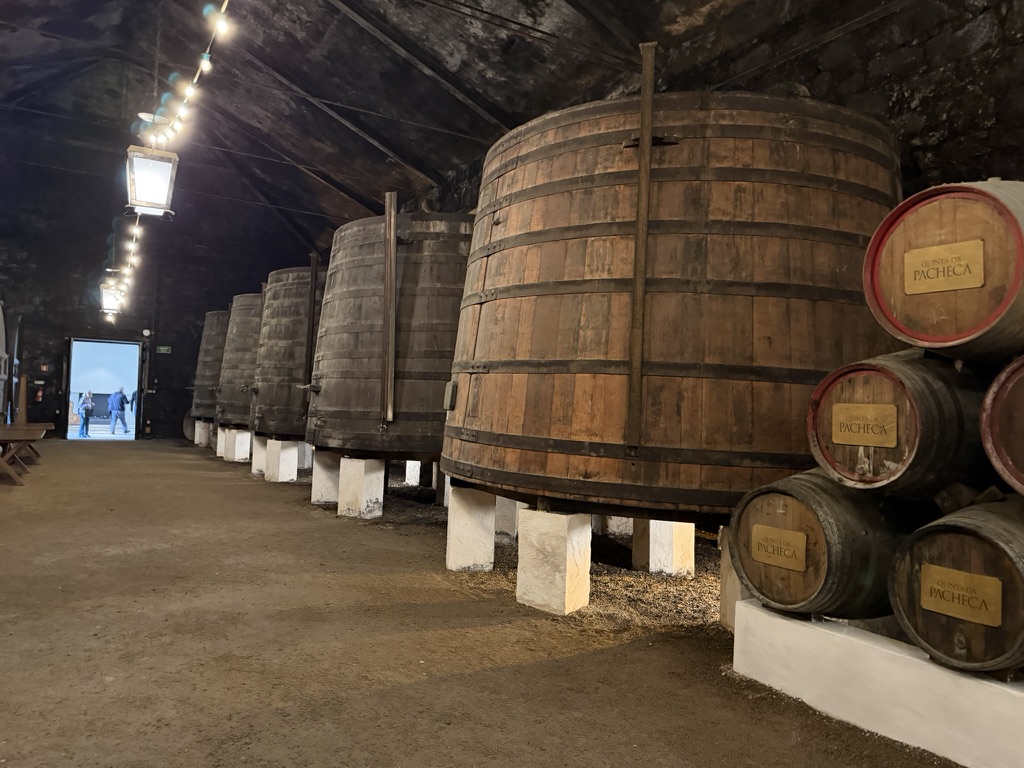
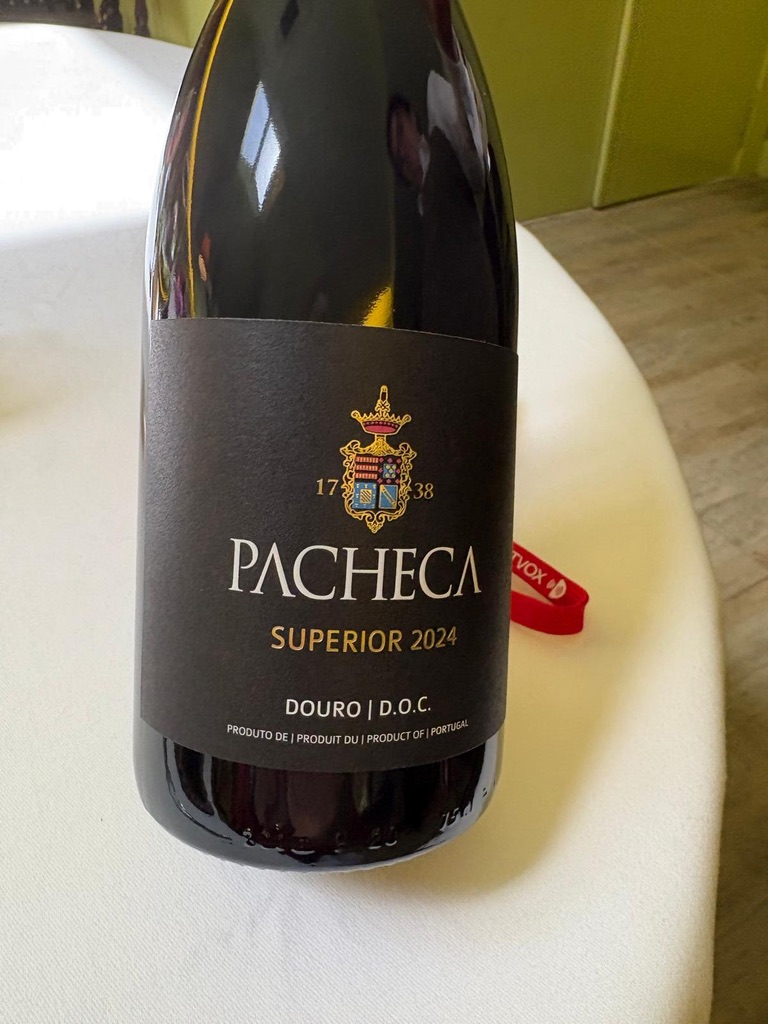
When we arrived at Quinta Da Pacheca we learned more about the wine tourism business.  At this vineyard, they still crush the grapes by stomping on them.  They allow paying tourists to come and participate in the process.  But they told us, the tourists only last for about 30 minutes of stomping, while the people who live there often stomp for hours.  I am exhausted thinking about it after seeing the giant stone basins when the stomping takes place.

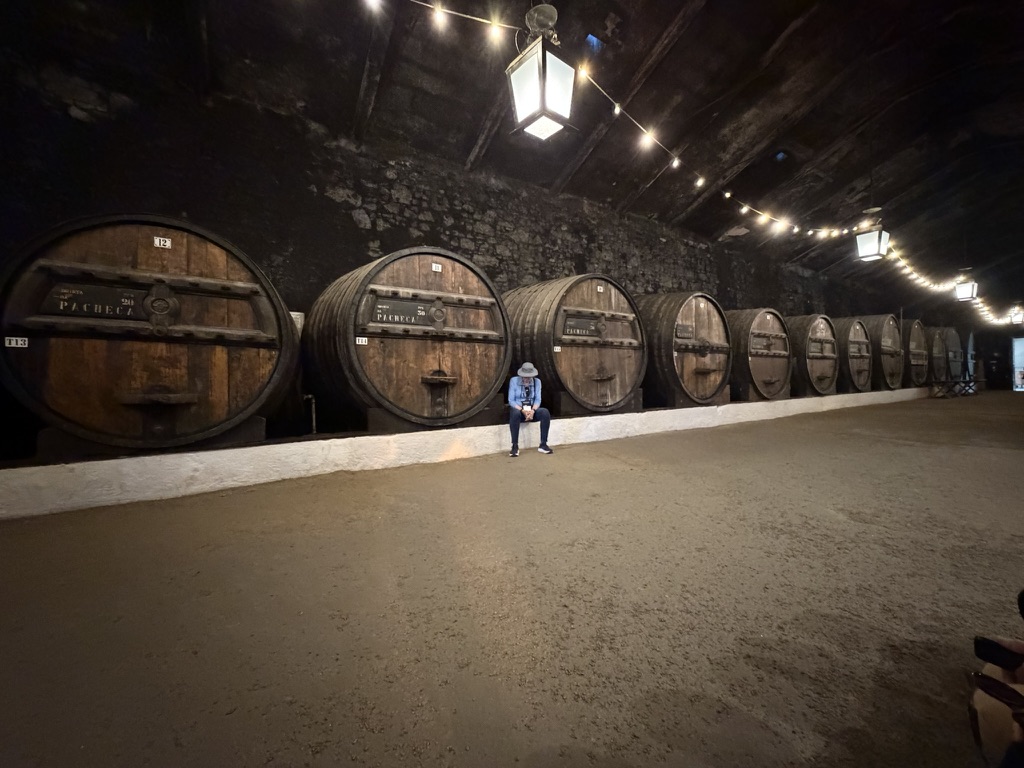
When we toured its fermentation room, I was amazed at the giant barrels that were once used to store the grape juice that turned into wine.  These are no longer used in the wine making, but are there for people to view.  They are enormous. 

Even bigger are the one designed to cater to the wine tourism. Quinta Da Pacheca offers its tourist a chance to stay in a room made from a giant barrel.  But these were made specifically for living.

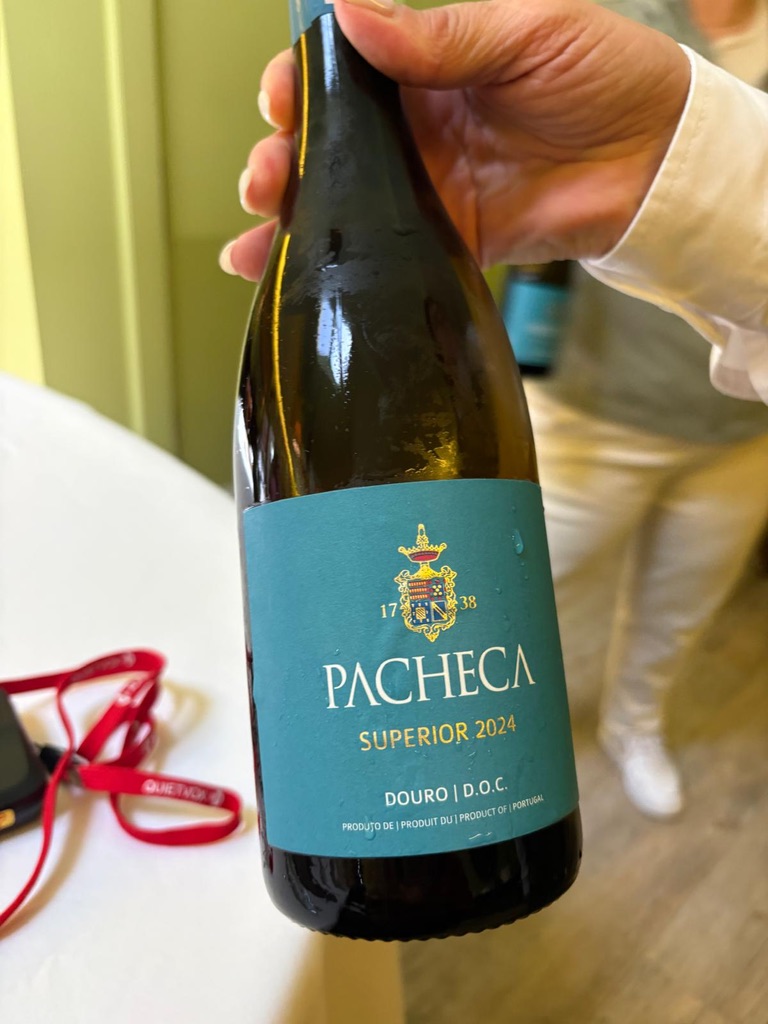
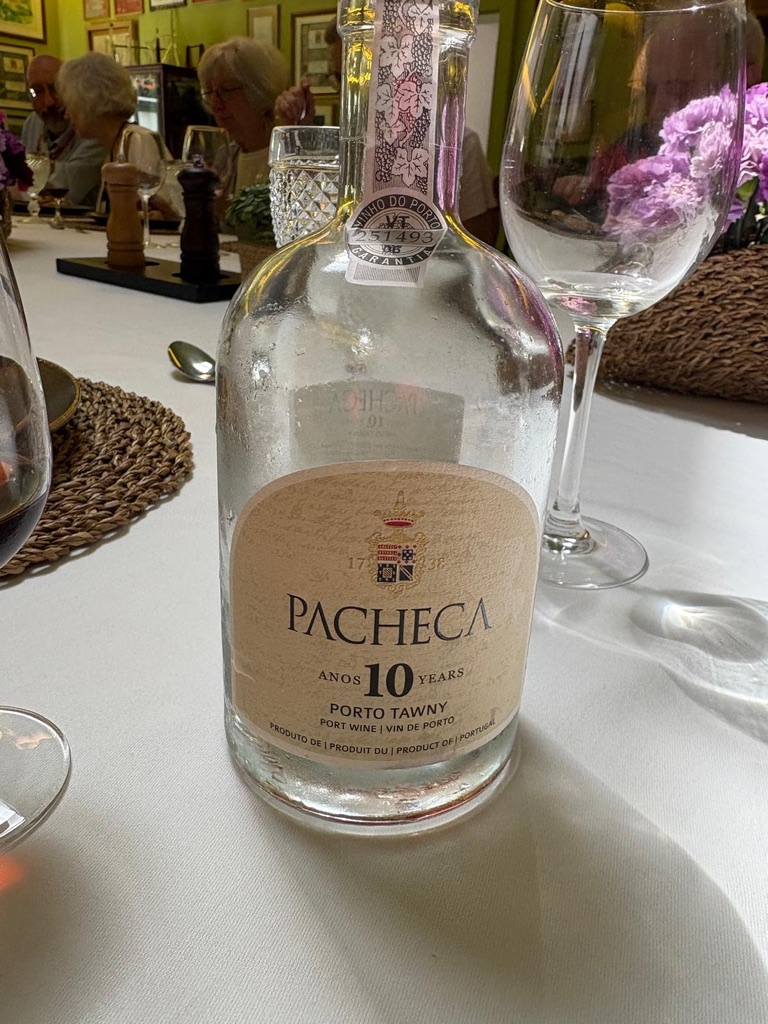
Of course, there was wine to taste and a peacock to admire.

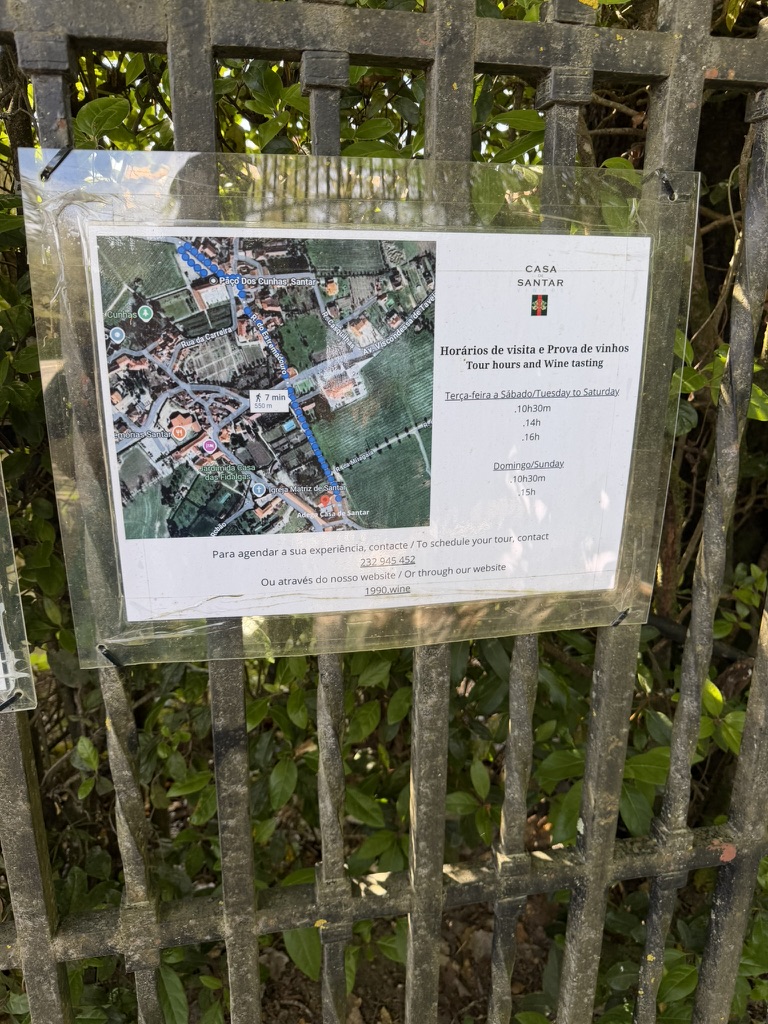
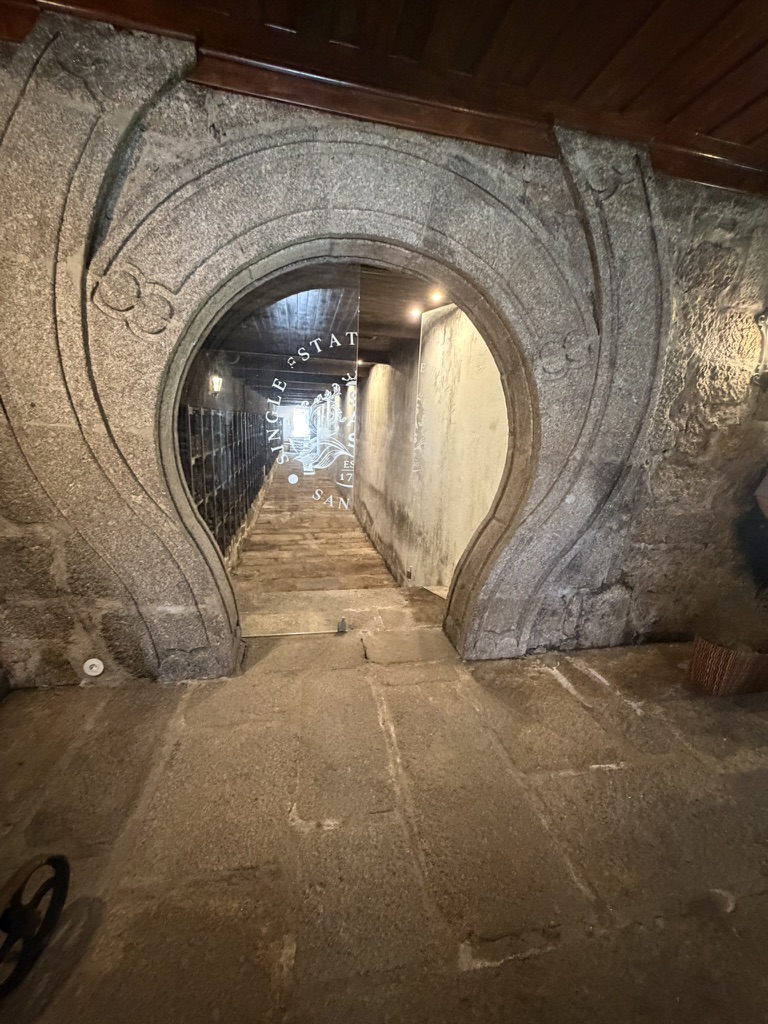
Our next vineyard Adegas de Casa de Santar or Casa Santar  located in the Dao region of Portugal. We had a tour of part the large vineyards, the granite wine cellar with its wonderful entrance, the wine tasting room, a food demonstration and then finally a meal and a wine tasting.

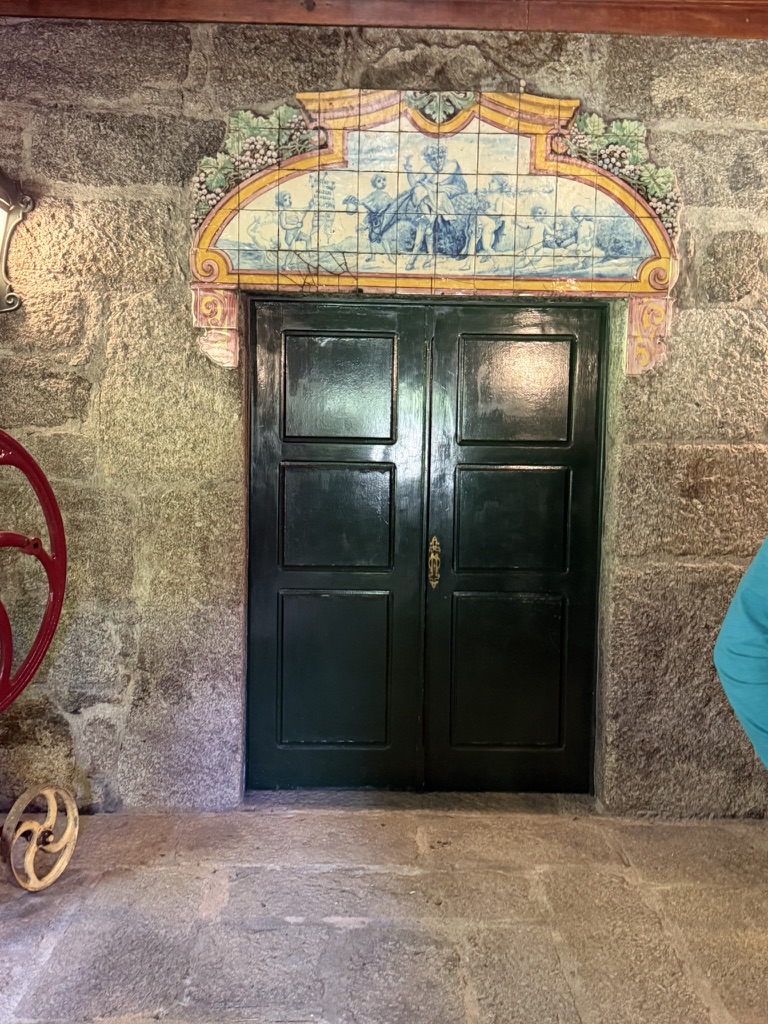
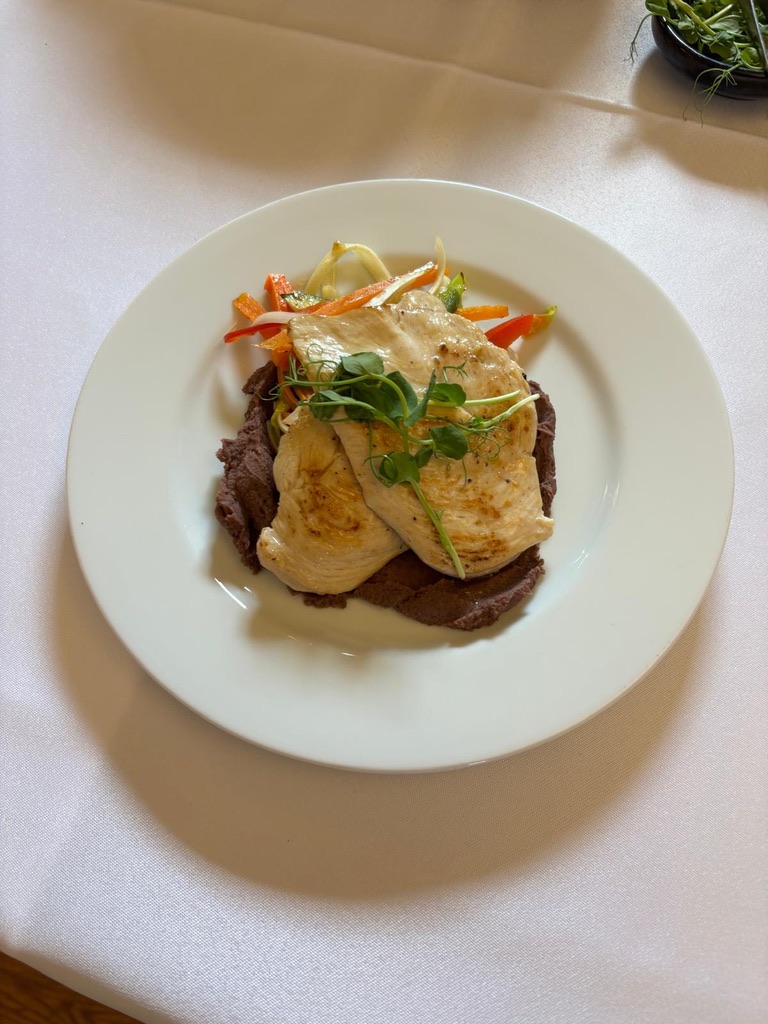
I loved the two-century old building where the winery was located.  The tasting room, where the original owner would taste the wines, was something special, especially the tiled scenes about the windows and doors.  The chef did a demonstration of cooking the food we would be eating for lunch.  We also learned about the three wines we would be tasting: Casa de Santar Reserva Red, Casa De Santar Colheita White and Casa de Santar Reserve Rose.

We spent a few days in Santiago de Compostela, which will be a separate blog.  That doesn’t mean we did not drink wine…we did some tasting on our own.  But we did not go to a winery for two days. When we did, it was time to taste Spanish Galician wine and food.

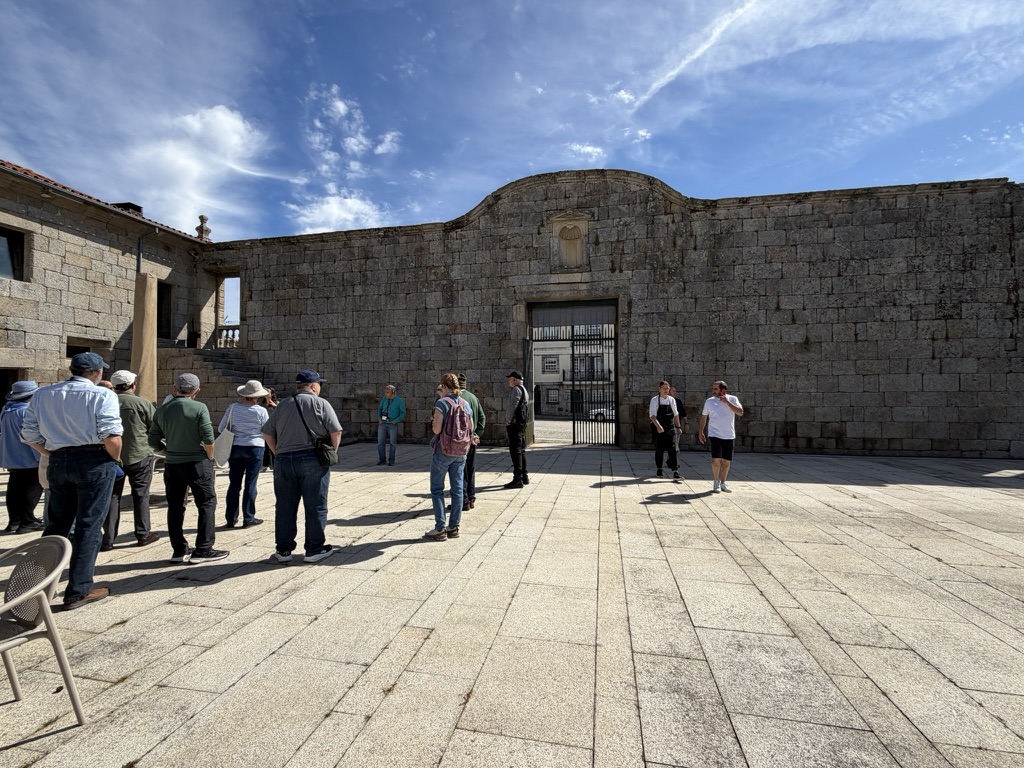
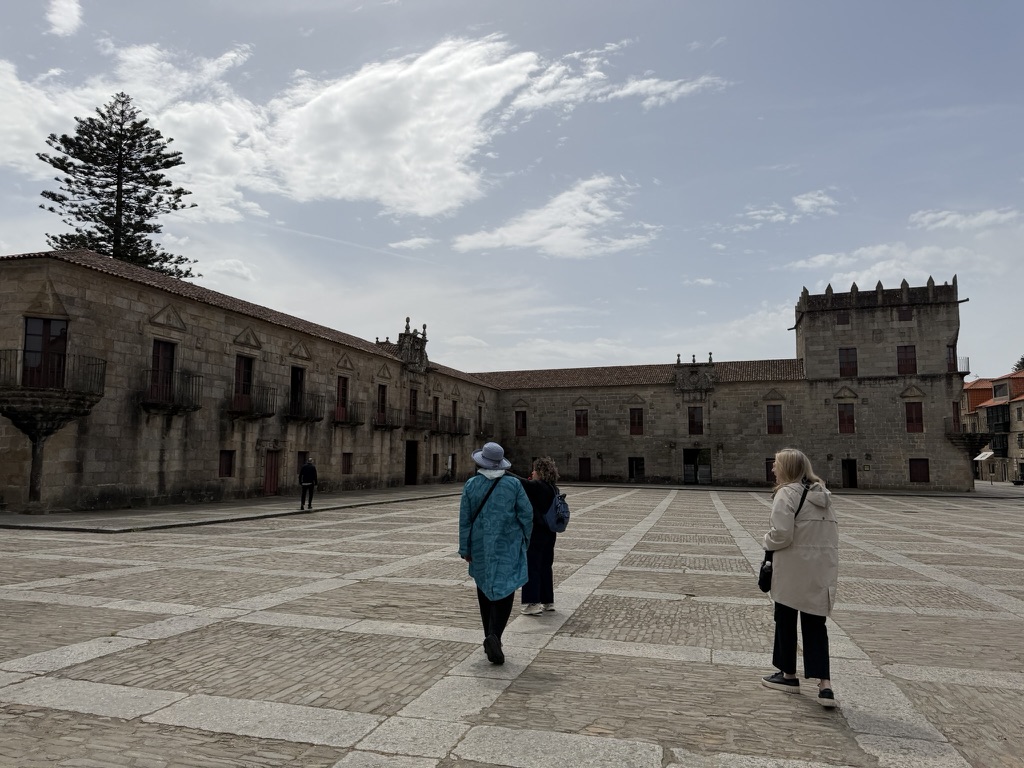
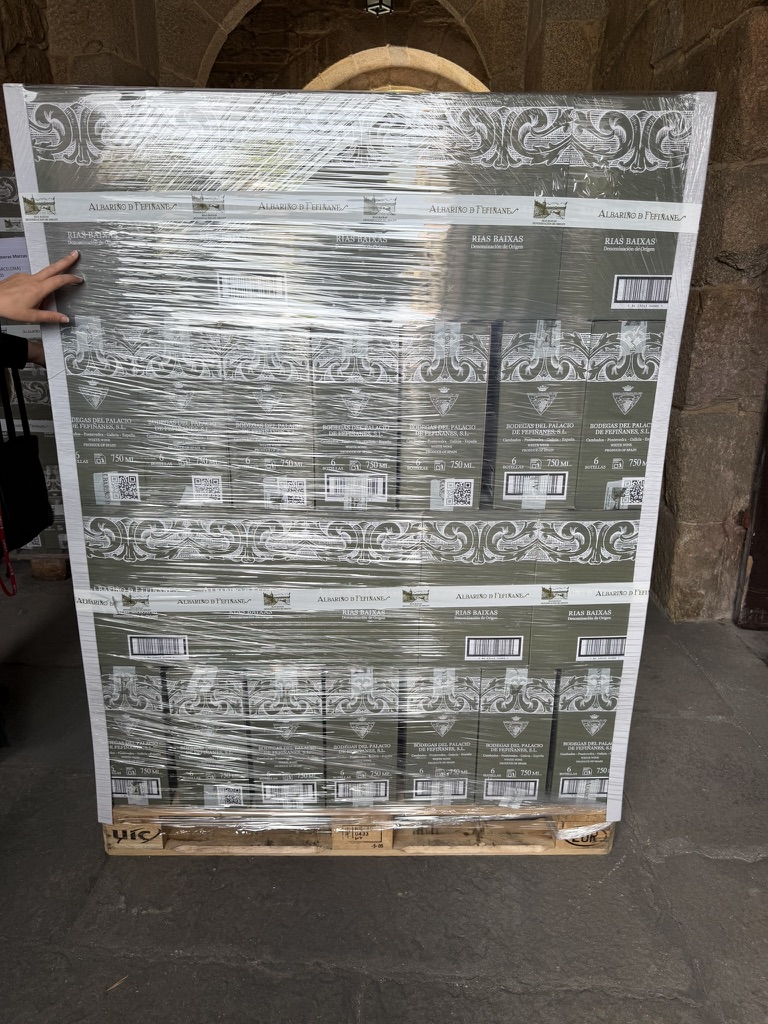
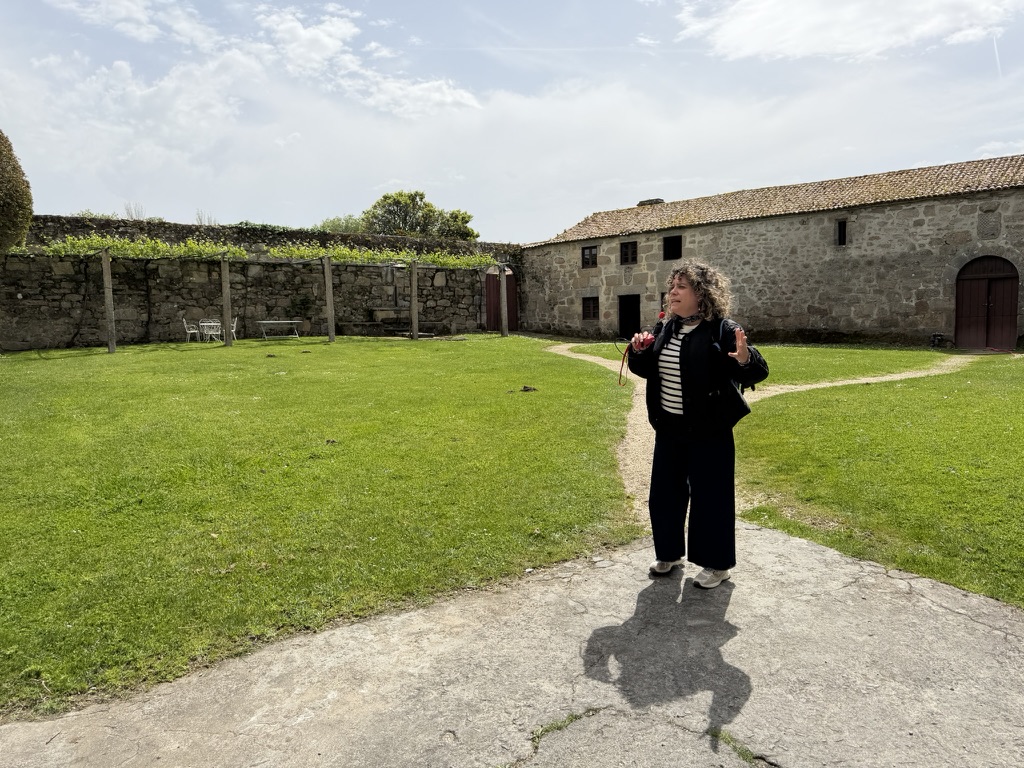
We went to Bodegas Del Palacio de Fefinaneto to see the winery.  I must say I was very confused at this winery.  There is this castle-like structure at the end of road. When you walk into a large courtyard.  Then there is another street with restaurants along the side.  I thought the street was part of the winery. But no, that was a part of the small town that surrounds the winery.

Here we saw a totally different way of growing wine.  Because of the water and the climate, here the vines grow up high on pagodas, with the grapes hanging down.  The juice is first put into stainless steel drums to ferment and then put into the barrels.

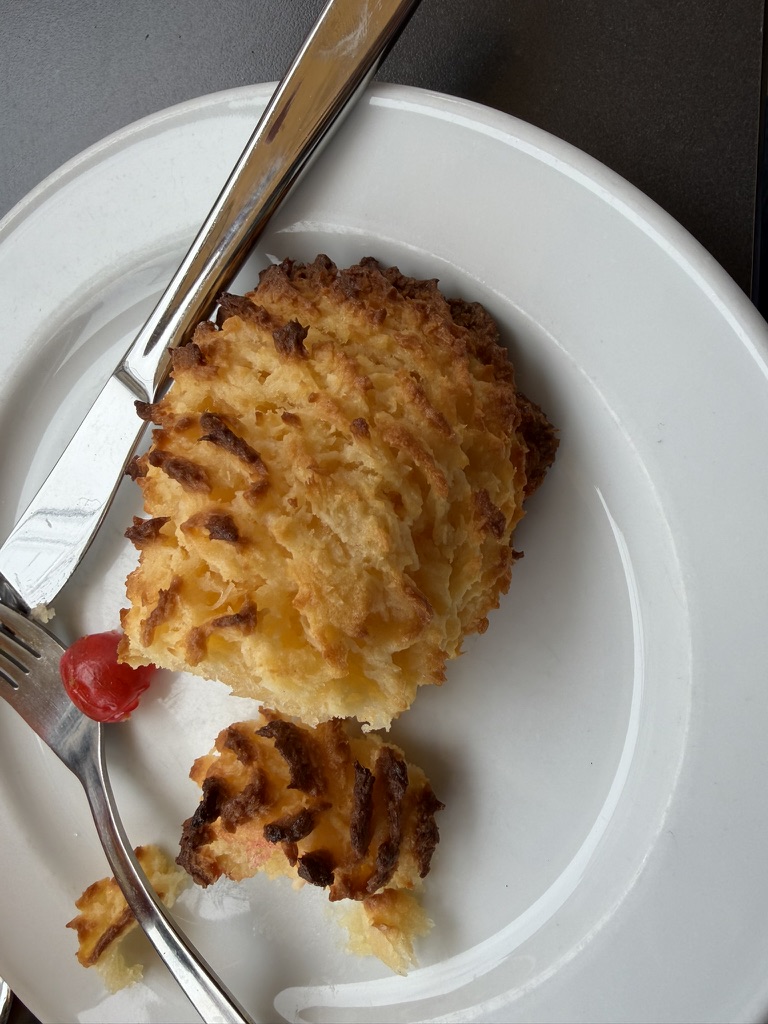
After our wine tasting, we had some time to walk down that little street and get a treat.  For me it was a delicious coconut macaroon and ice tea.  I was quite happy!!

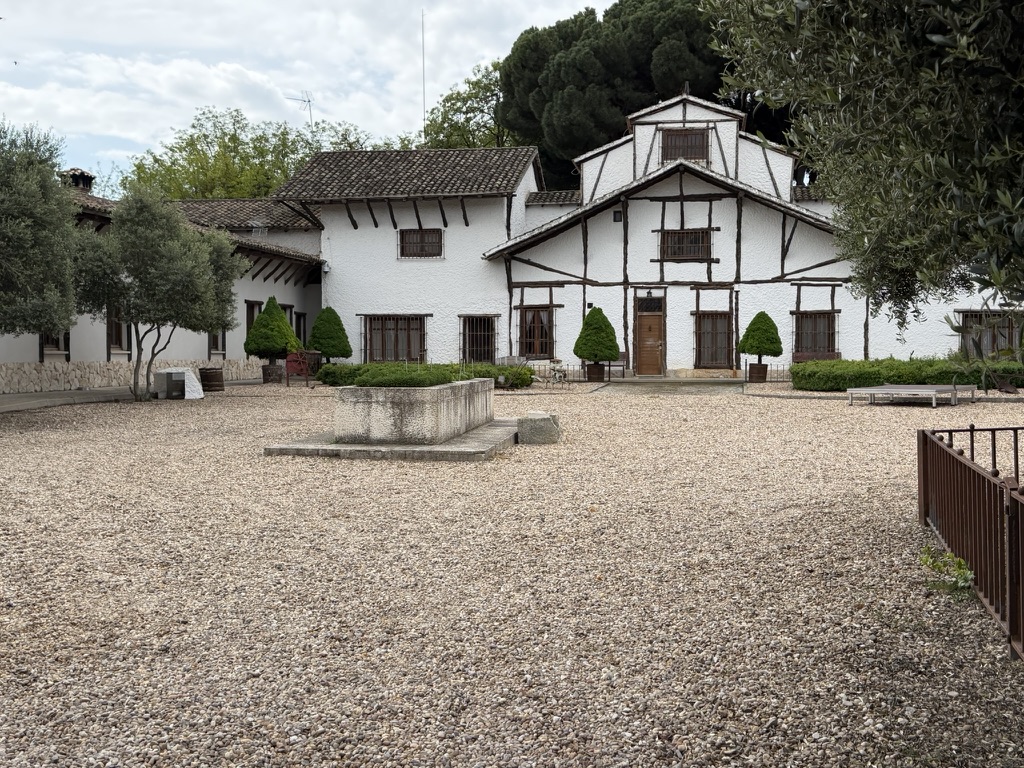
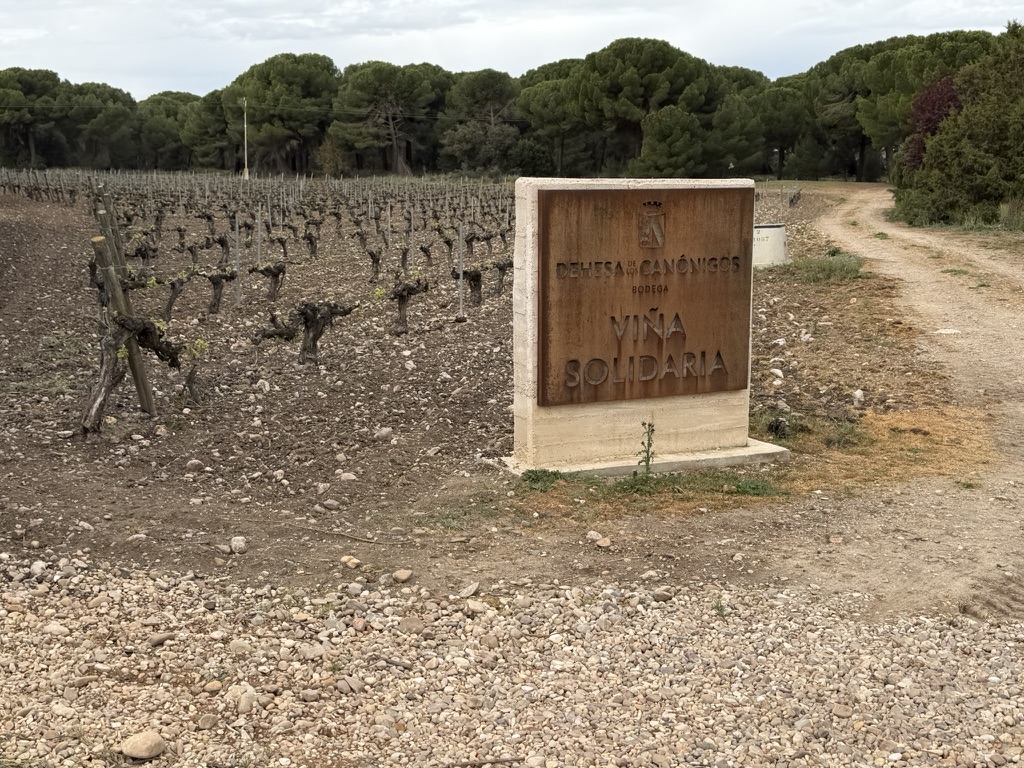
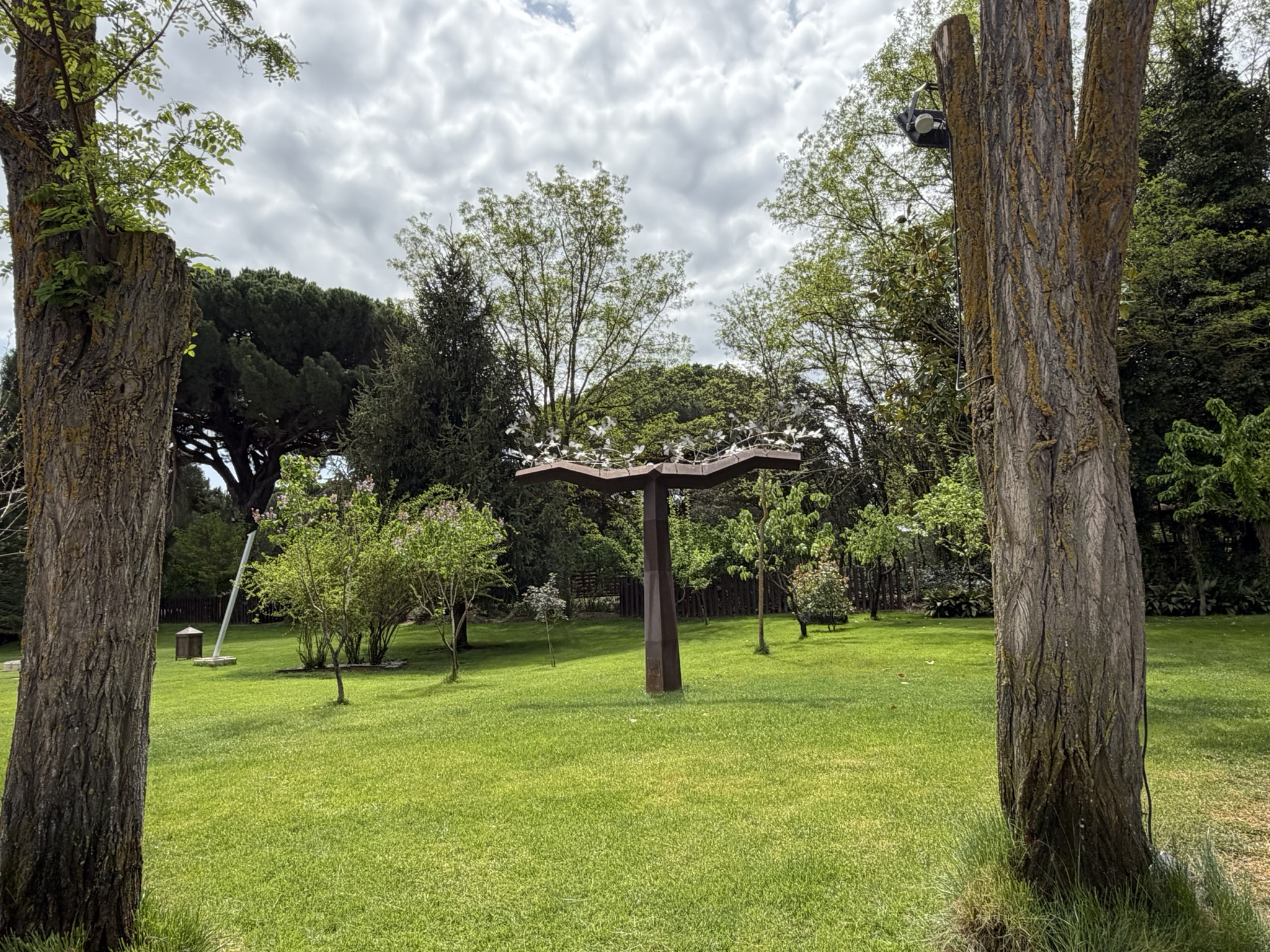
Our final winery was the most intense!! Dehesa de los Canonigos offered us tasting and light lunch in the “Golden Mile,” of the Spanish Riveria Region, the Spanish Duero River.  We got a true education there. The Sommelier was fantastic and gave us so much information. It was so interesting, my husband who uses hearing aids, had his phone save what she was saying.

This was the youngest of the wineries.  It was established in 1989 by Luis and Mariluz Sanz. But the house and the vineyards are much older.  Constructed in the 19th century, the main house was designed by a famous architect and is designed in the Basque country style. For many years they provided the grapes to another well-known winery before they started making their own wine.

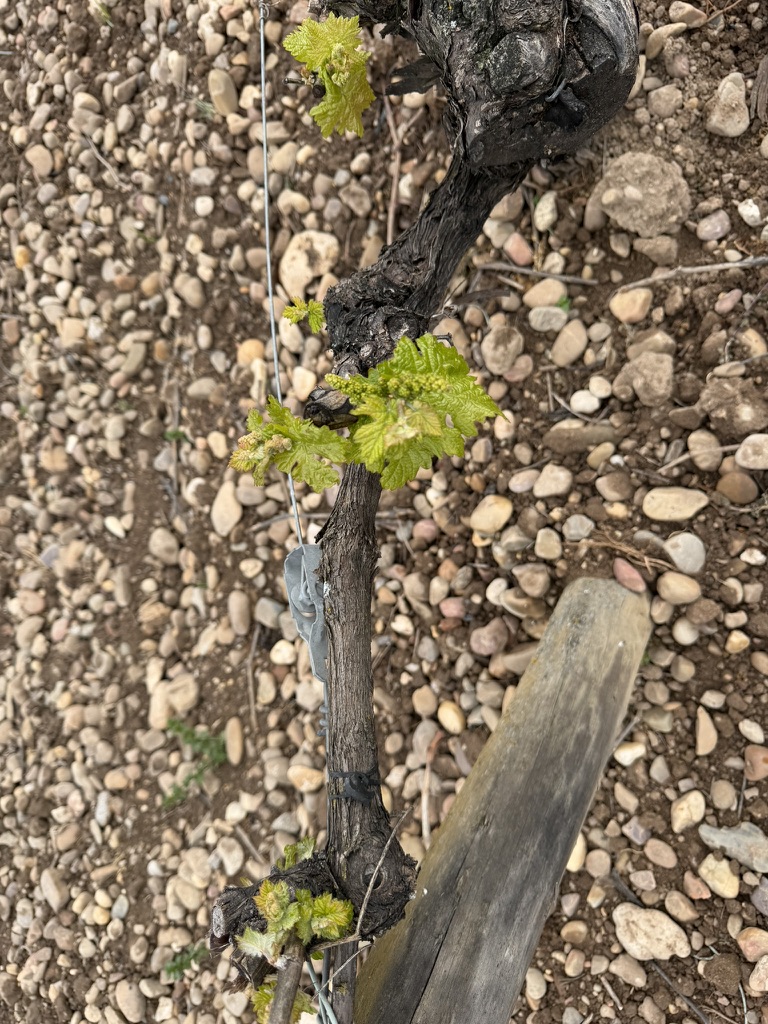
What you notice right away is that the grapes and vines are extremely close to the ground.  Once again, this is because of the weather and altitude.  It is 750 meters above sea level, so the temperature varies from day to night.  It gets very hot here in the summer, so the grapes stay close to the ground to get as much moisture as possible. Our guide spent much time explaining how the vines rest in the winter and wake up when it is 10 degrees Celsius.  I was amazed to learn about weeping vines during the spring pruning.  Vines can weep, or release sap for up to two weeks and up to five liters a week. This just stuck with me.

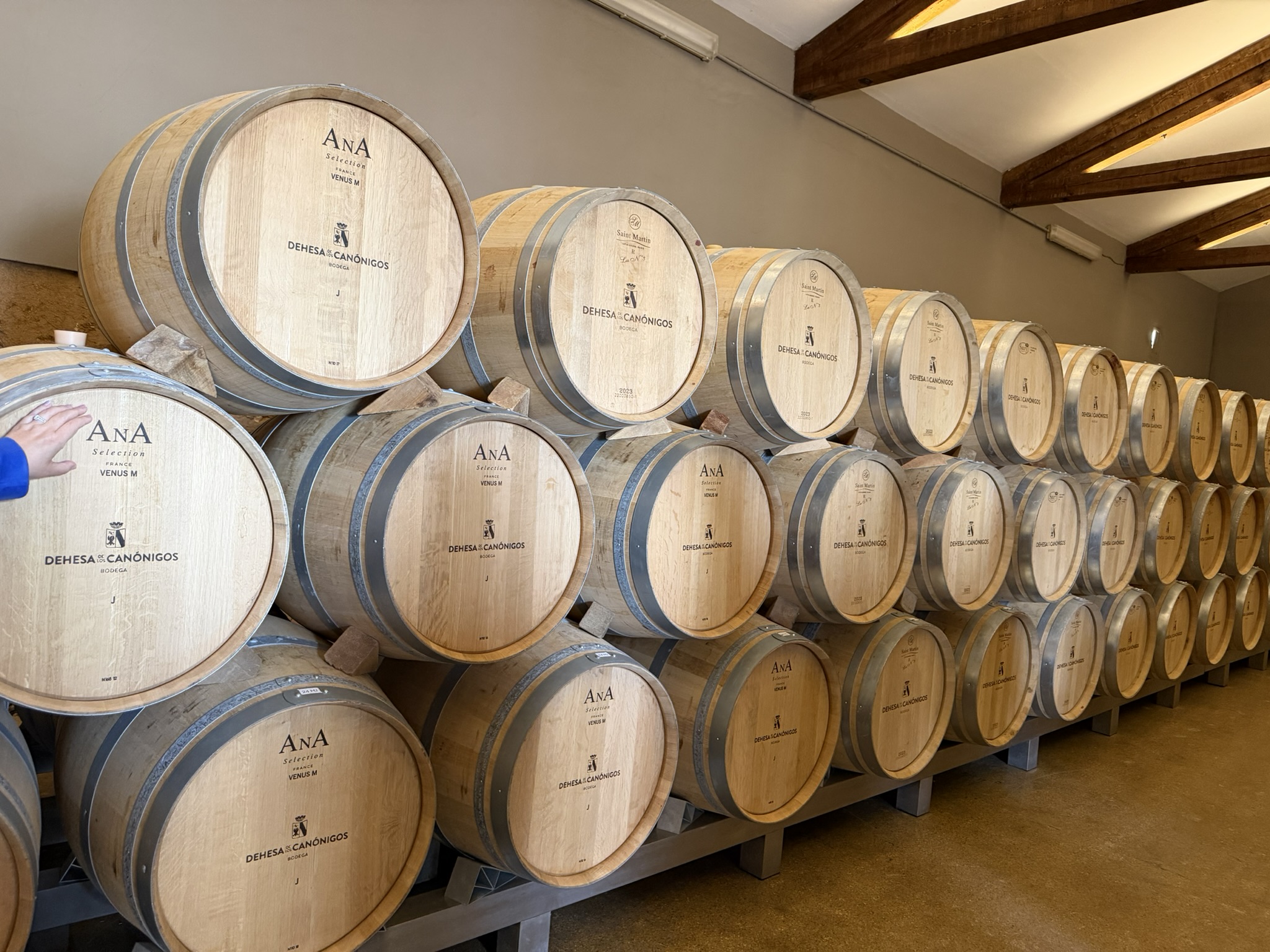
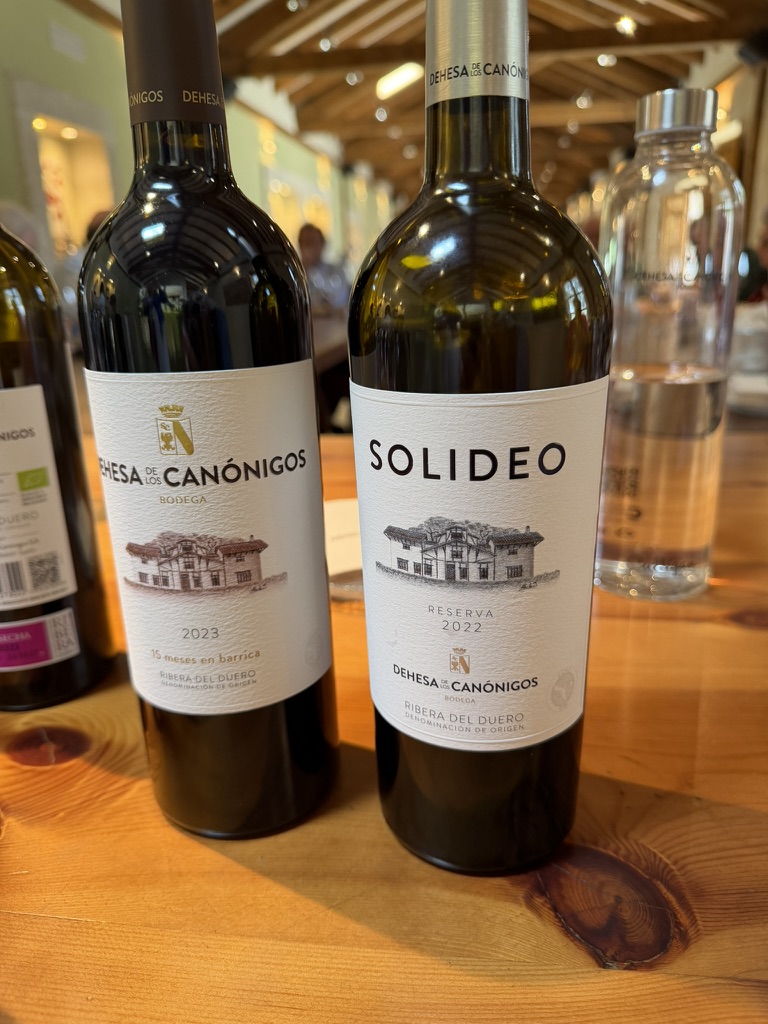
At this vineyard they use two different types of barrels: white oak from France and from the USA. We got to taste two different wines. One that spends 15 months in American oak, Los Banonigos; and one that spends 24 months in French Oak, Soleo Deo.

I wish I could tell you everything she taught us about wine.  But that would be three more blogs!    So I will end this saying that I learned more about wine during this trip then I could imagine.  There were many on our tour who already had a great appreciation and knowledge of wine making. I was not one of them.  But I so much more appreciate the wine I drink and the skill and attention to detail that makes it delicious.

https://aveleda.com/en/wine-tourism/quinta-da-aveleda

https://www.museudodouro.pt

The Jewish Connection We Discovered While in Portugal and Spain

4 May

Whenever I travel to the Iberian Peninsula, I am intrigued and drawn to any information I can gather about where the Jewish communities lived before the forced conversions and the expulsions. I am a direct descendant of these Jews.  I imagine my ancestors walking the streets, attending the synagogues, traveling between towns and living their lives in joy before it was all destroyed.

For over two weeks we visited many cities and towns in Portugal and Spain.  We saw streets that once were the homes of Jewish communities.  We saw the evidence of Judaism left behind in street names and buildings. 

We started our trip in Porto, where once a large Jewish community existed. We took a food tour while there, visiting the Market, the oldest restaurant and several pastry shops.  At the last one, our guide brought us out macaroons, saying that this was a treat the Jews ate during Passover.  A treat we still eat.  She said that we were eating it here because this was the area where the Jewish people once lived. And she pointed us to the street where the synagogue once stood.  When the tour ended, we returned.

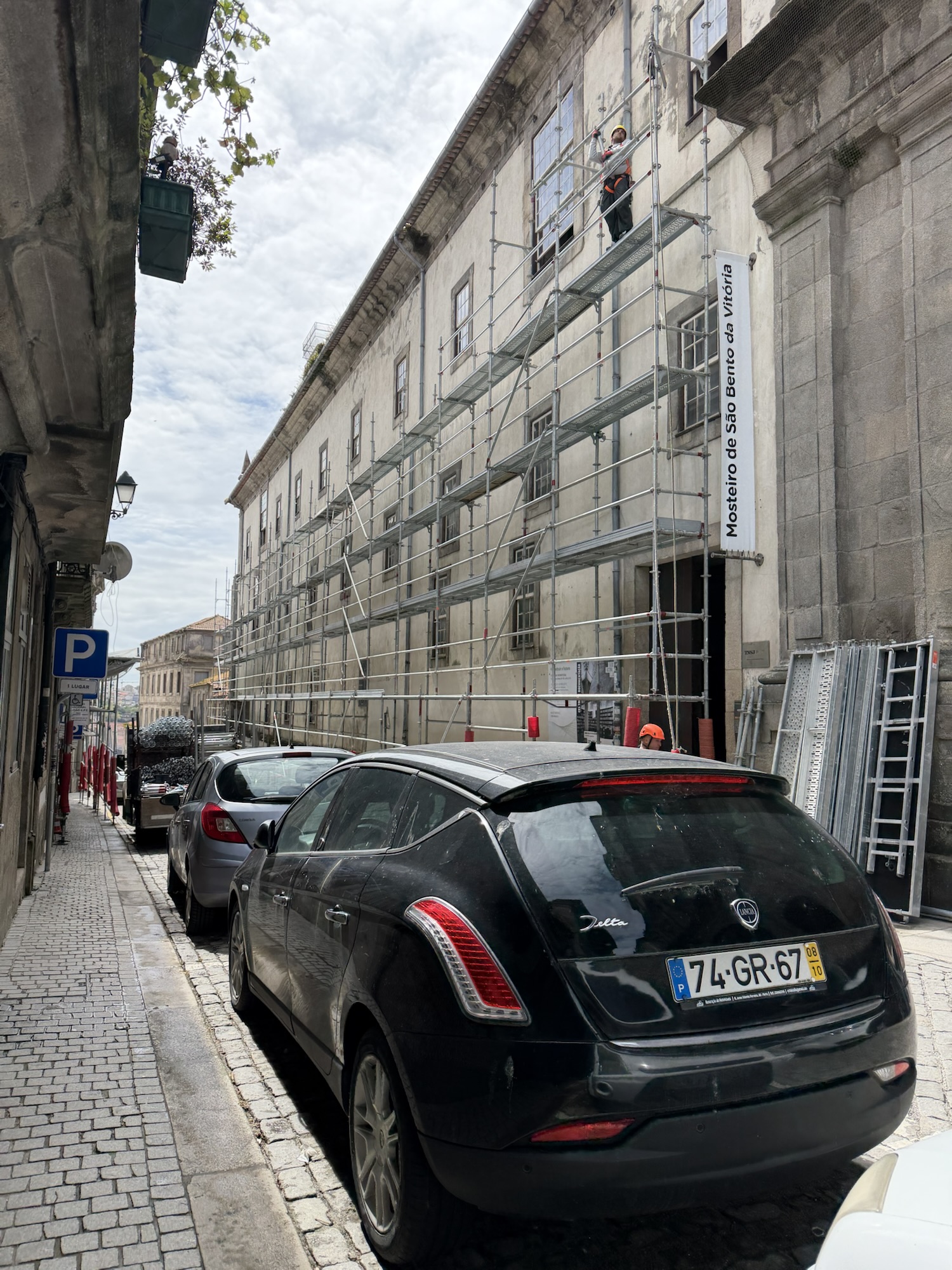
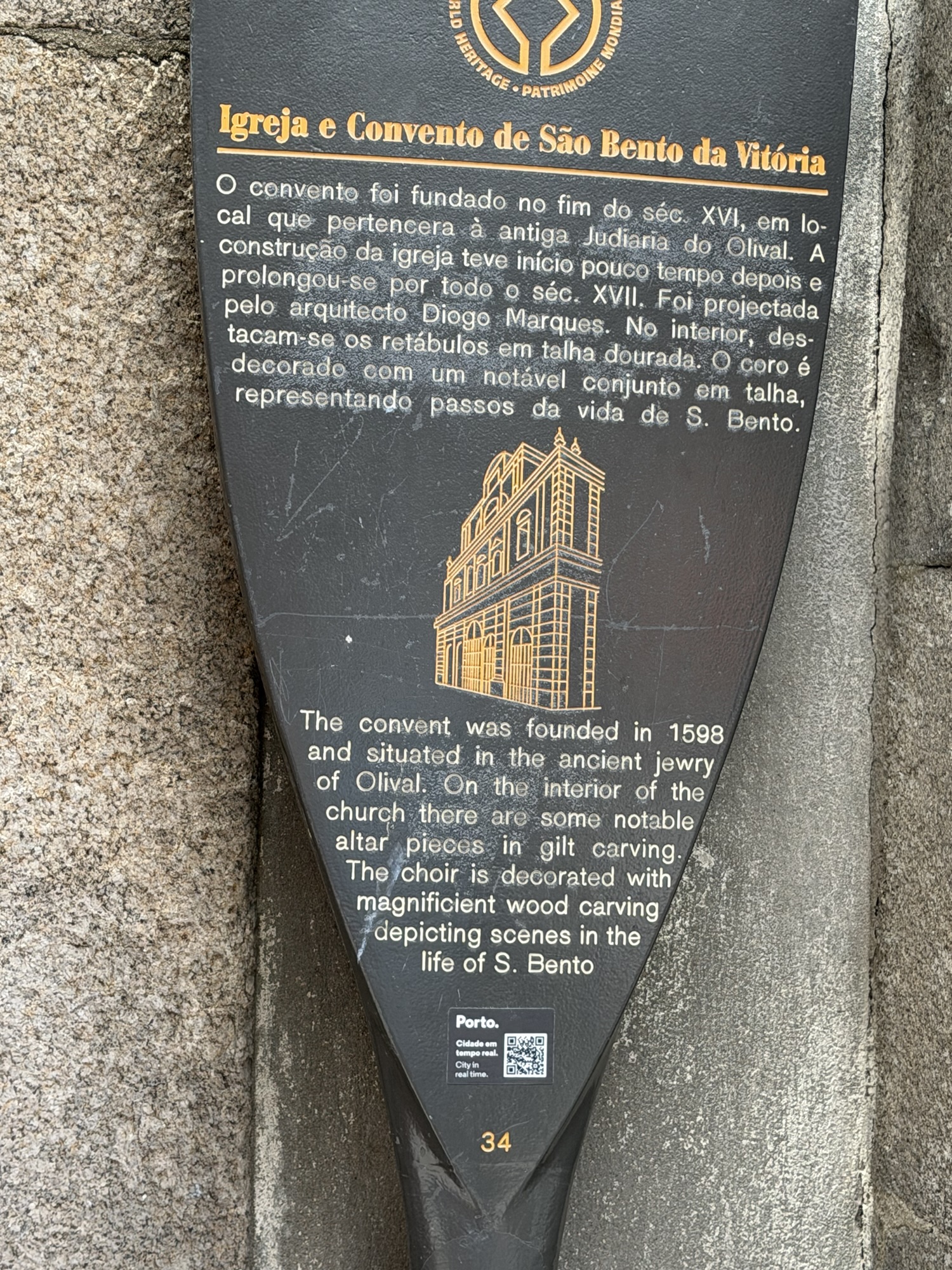
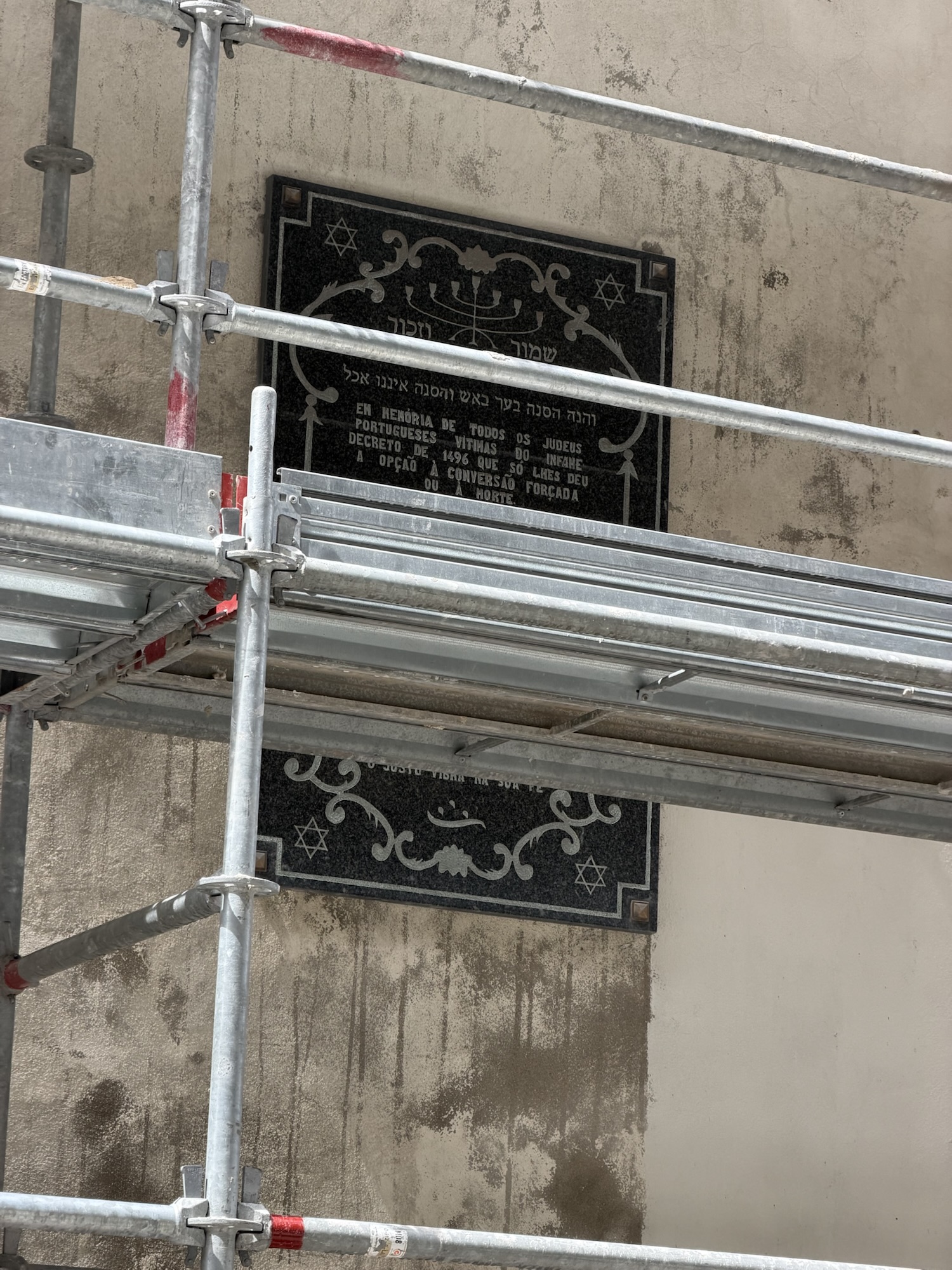
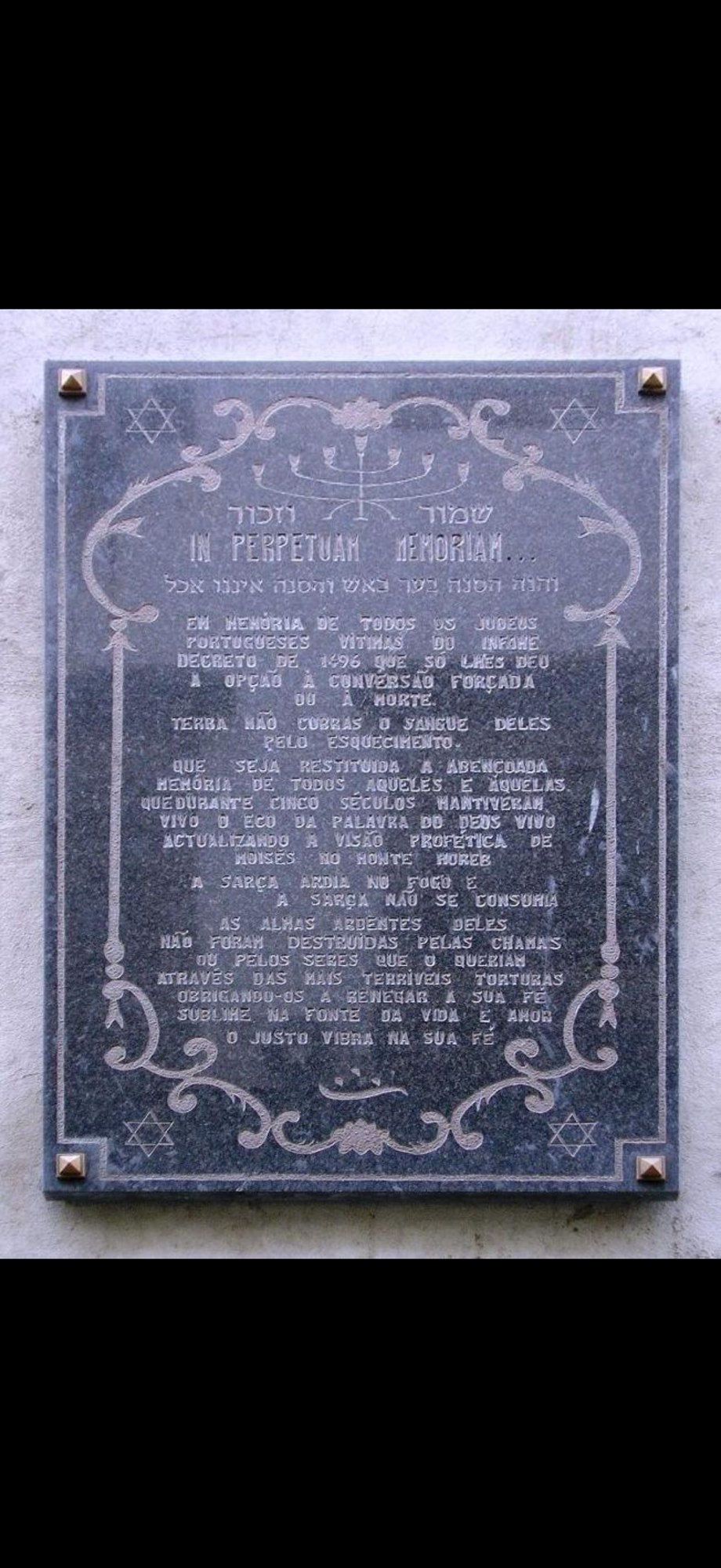
There is not much left of the Jewish presence in what was the Judiaria Nova do Olival.   But we walked Rua De S. Bento Da Vitoria, the street where the community once lived viewing the site of the destroyed synagogue.   Where it once stood is a public building that was originally a monastery. There are two signs, one next to the building and one on the building commenting on the Jewish community that used to live.  It is currently under renovation, thus the plaque on the wall was difficult to read, so the photo I am showing came from the internet.  It says:

“In perpeturam memoriam…In memory of all Portuguese Jews who, by decree of 1496, were given by God the choice between forced conversion or death. May their blood never be forgotten. May the blessed memory be restored to all those – the shepherds and the sheep – who for five centuries kept alive and ever present the word of the prophet Moses on Mount Horeb: the bush burned with fire, yet the bush was not consumed.  Their burning embers were not destroyed by the flames – nor by those who sought to destroy them  through the most terrible tortures – forcing them to renounce their sublime faith at the fount of life: For the Just man lives by his faith.”

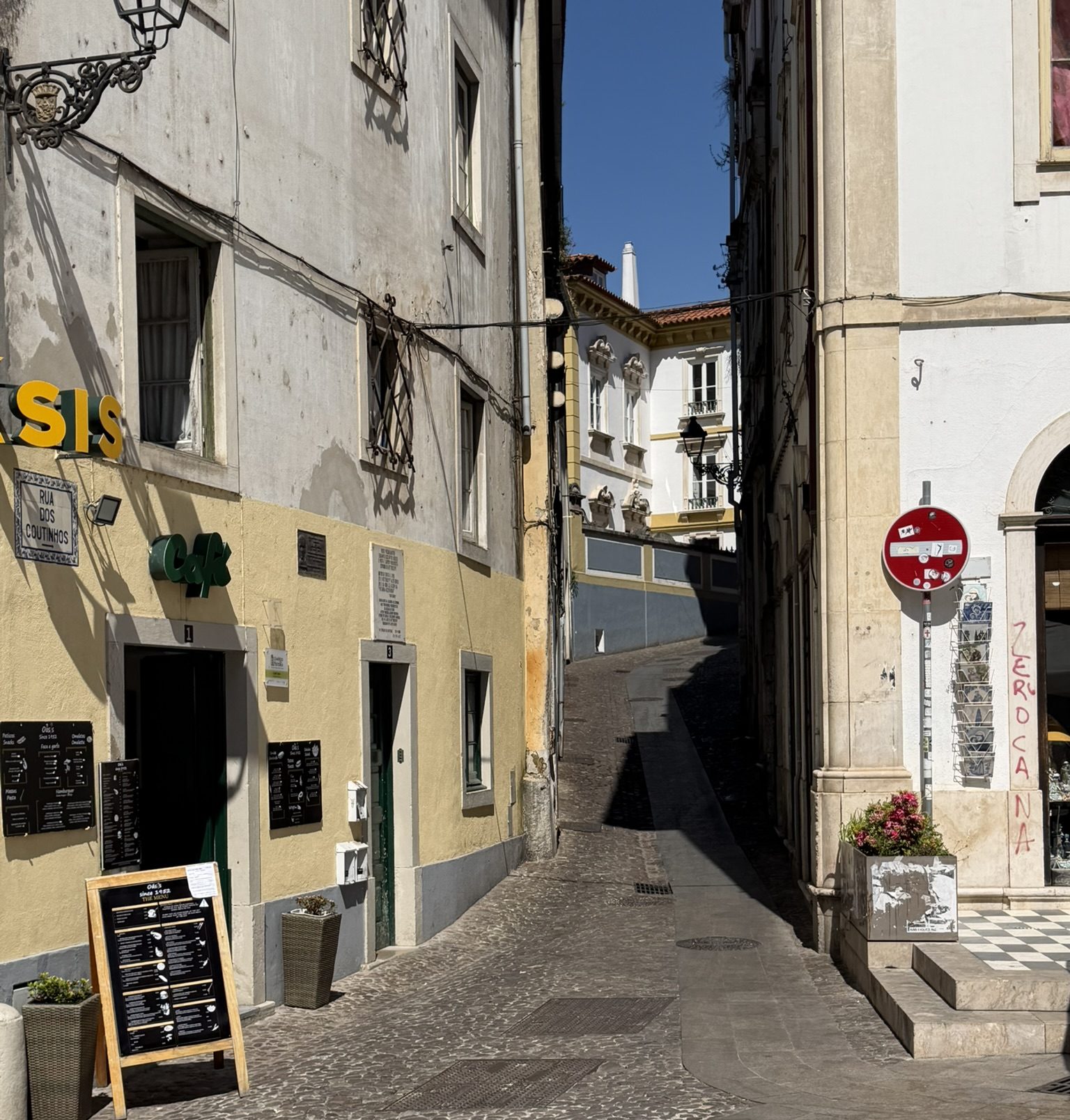
On Day 7 we went to Coimbra, the site of the Coimbra University and Library.  It was a truly lovely site up on a mountain, where you could see the river below.  Of course, a college town would have had a Jewish population.  In fact, the street where the Jews lived was directly across from the main church. Rua Dos Coutinhos, an ancient narrow street. No sign of any Jewish life now.

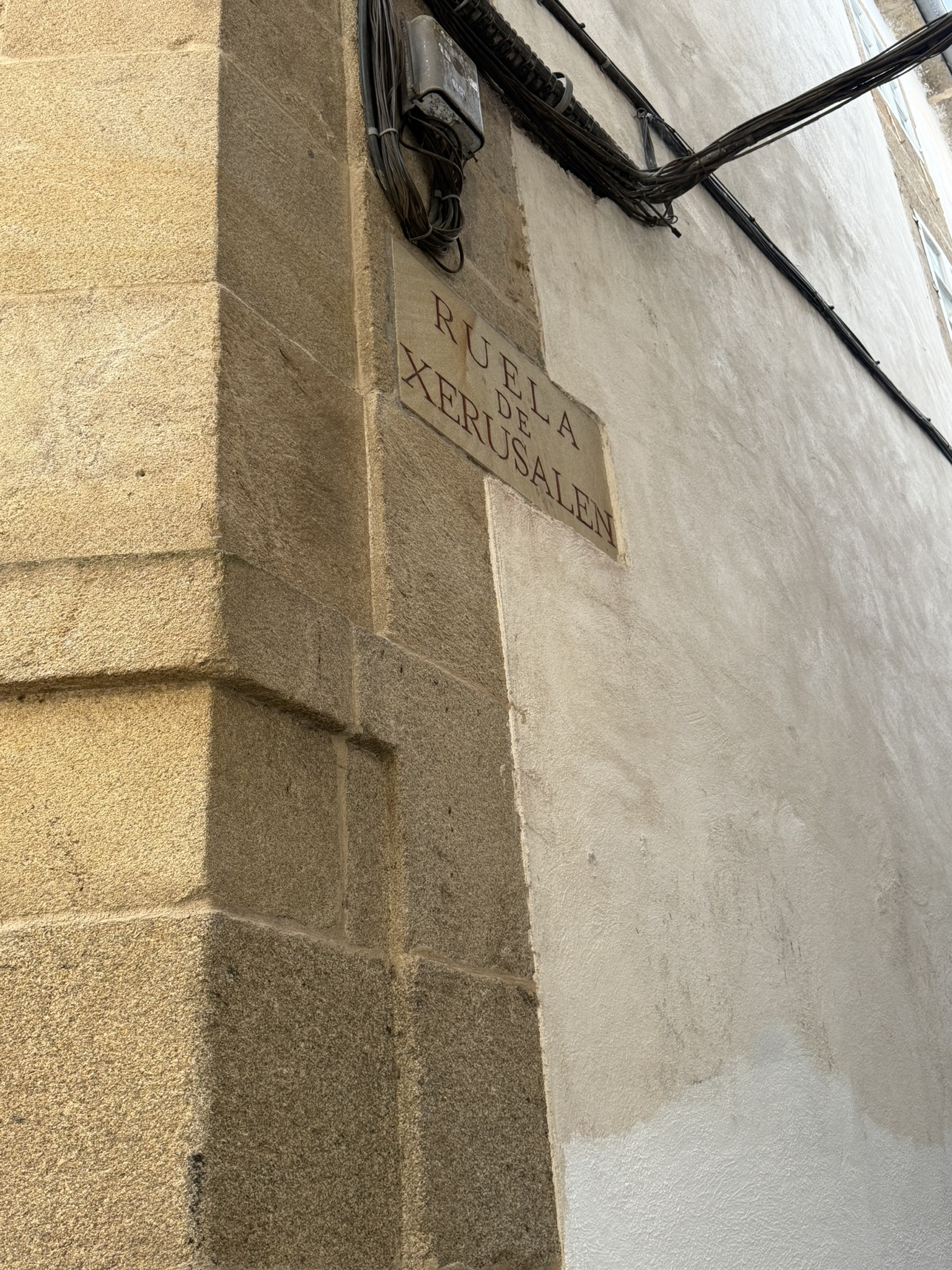
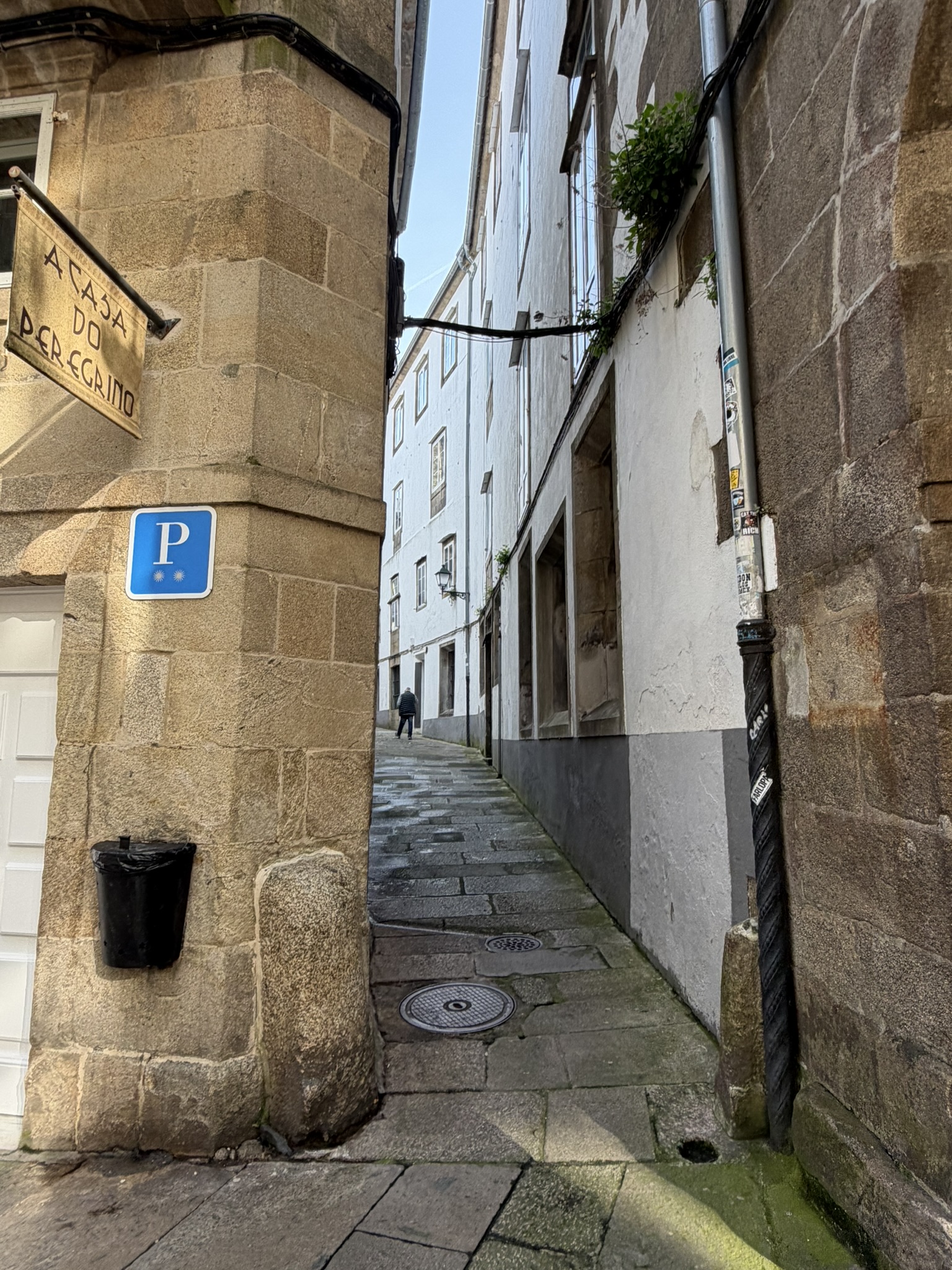
In Santiago de Compostela, the city that is saturated with spirituality as it is the end of the pilgrimage at the Cathedral of the Portical of Glory, we saw Ruela de Xerusalem, Jerusalem Street.  Our guide told us it is believed this was the street for the Jewish population.

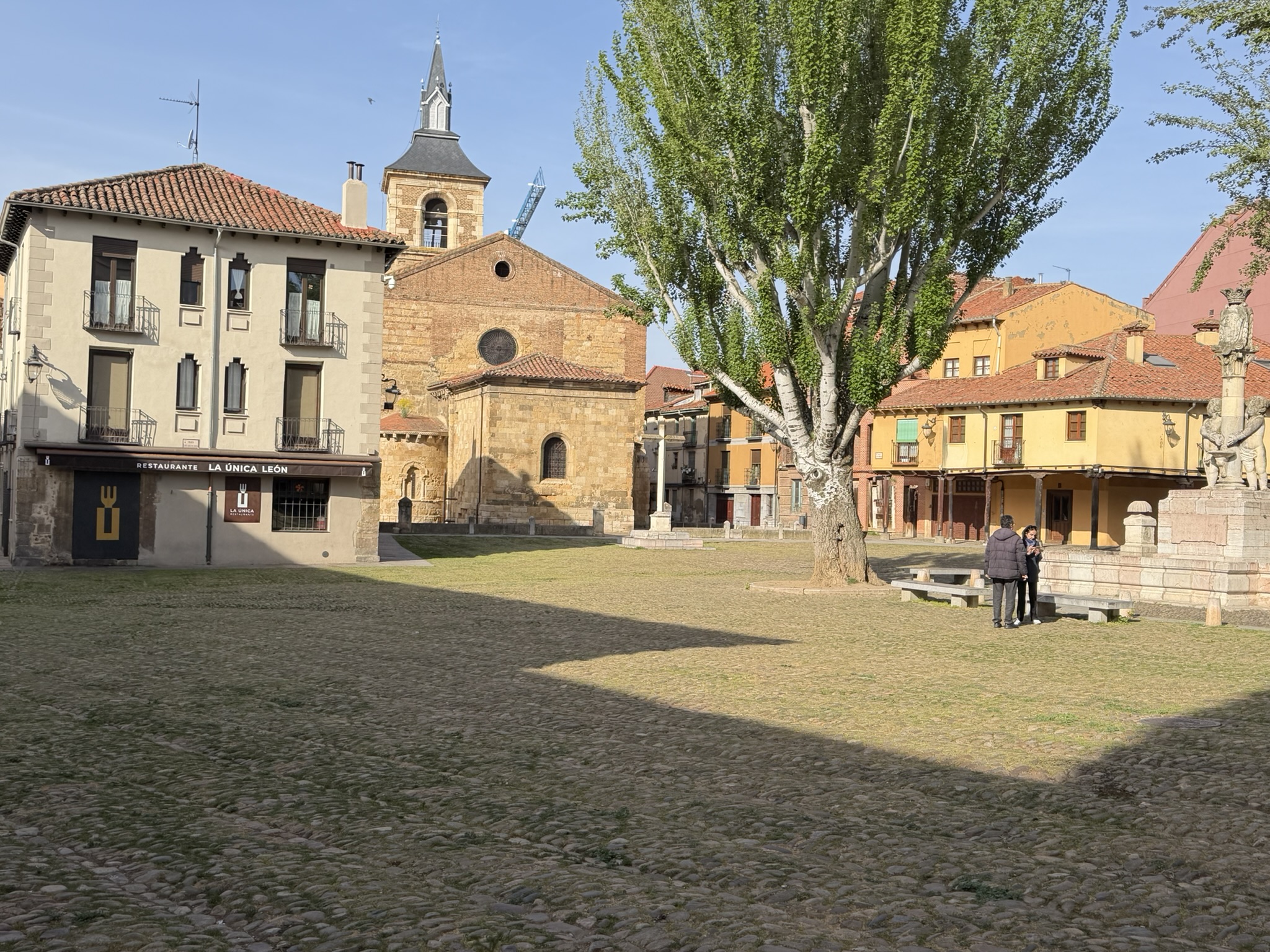
In Leon, we saw much more signs of Jewish life.  We entered what was once a walled city through a street where there was once a gate, the Puerta Moneda, or the Coin Gate.  Immediately we guessed it was the entrance to the Jewish area where the money lenders lived.

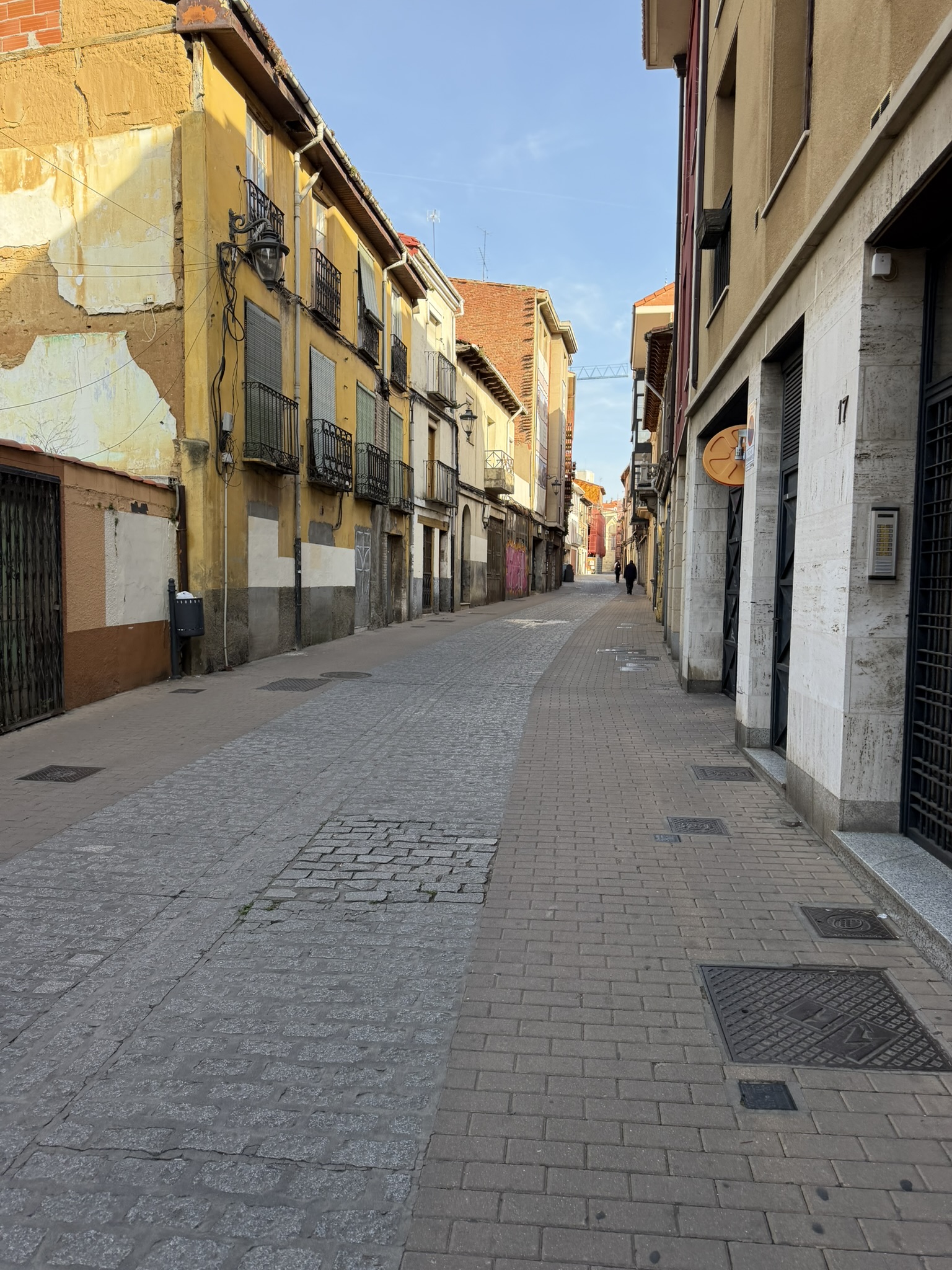
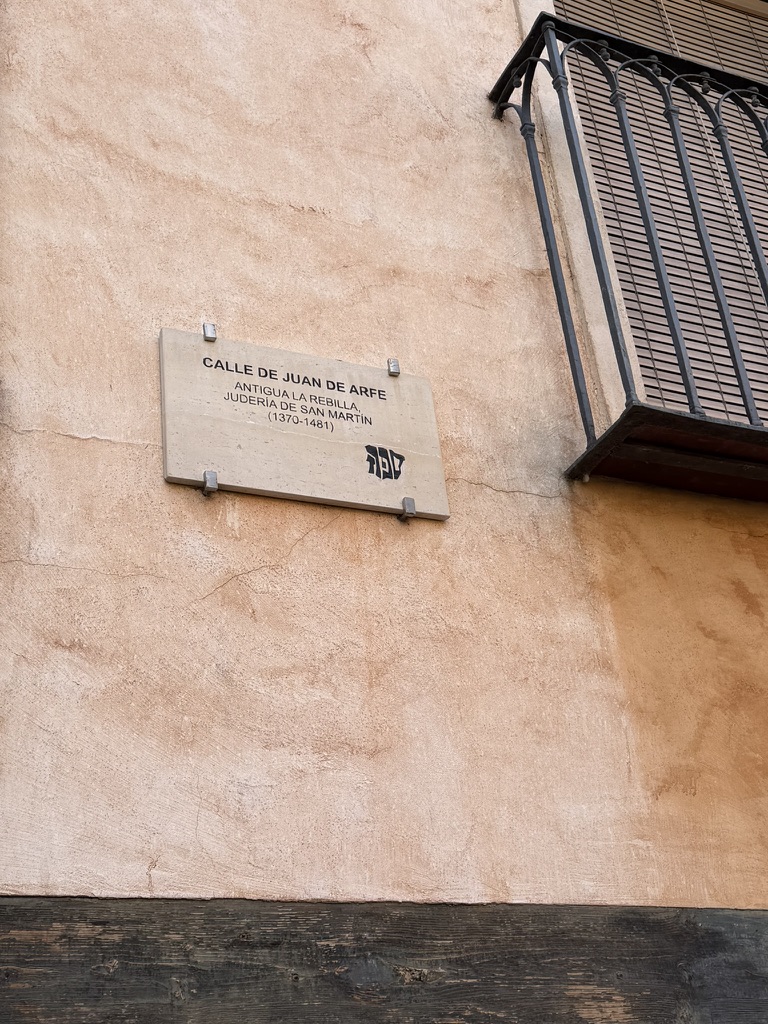
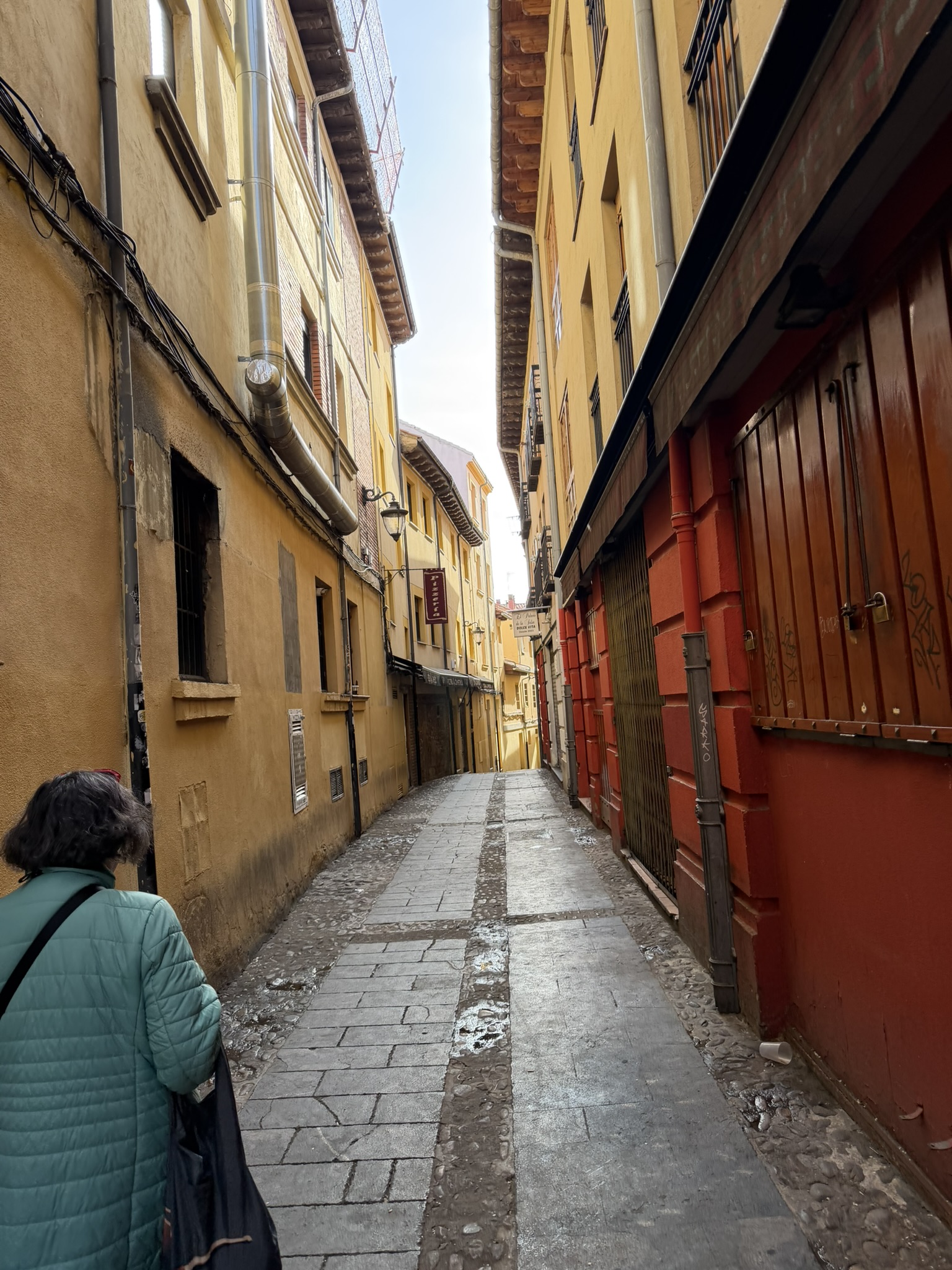
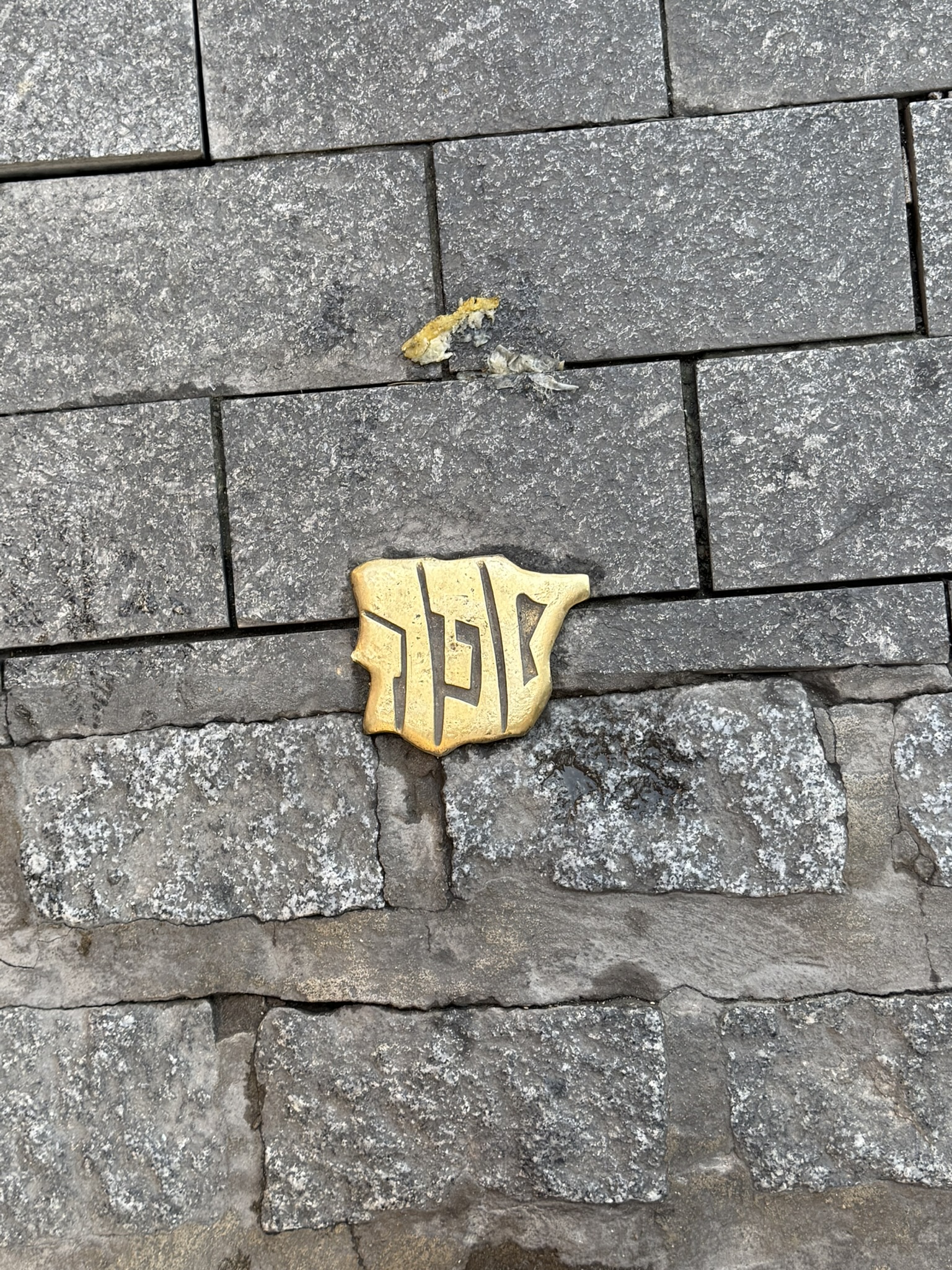
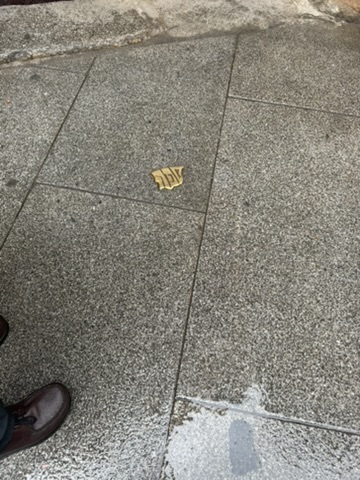
Our guide pointed out a long, narrow street that once was filled with vibrant Jewish life, as well as the square where they held a market.  In was in Leon that we first saw the markers placed by the Red de Judarias de Espana (Network of Jewish Quarters in Spain.)  Their symbol includes the Hebrew letters that spell out Sefarad and mark important Jewish sites.

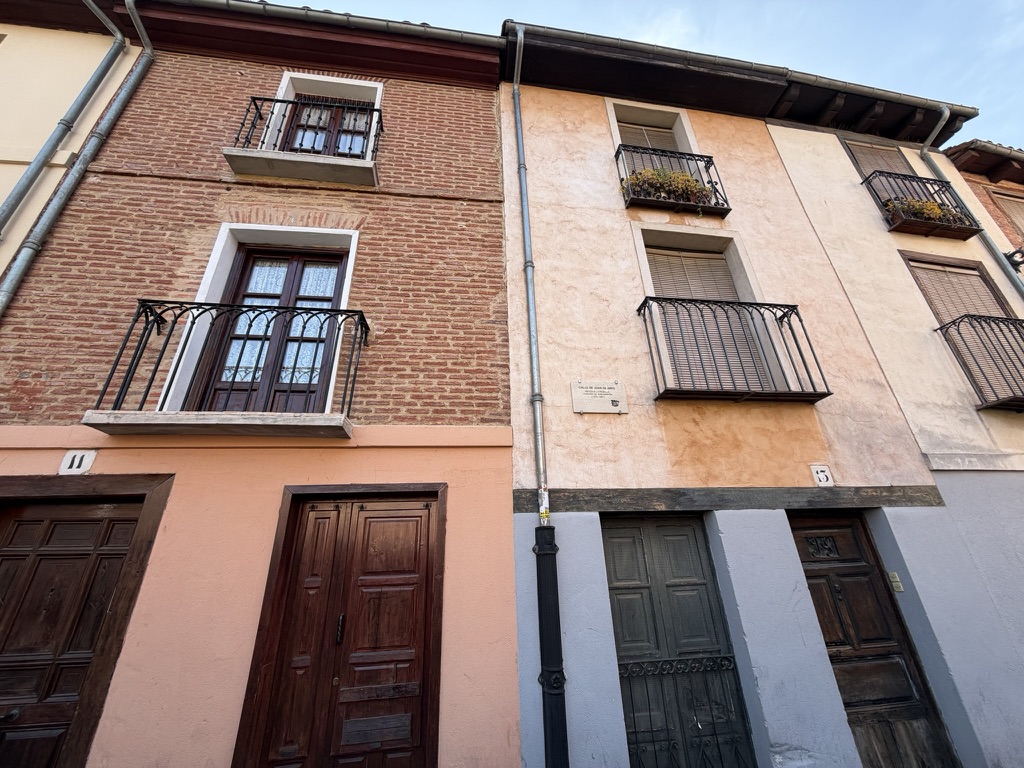
The first one we saw was on a plaque on Calle De Juan De Arge marking the home of a Jewish family that lived there from 1370 until 1481.  We saw another marker later on that was embedded in the ground. 

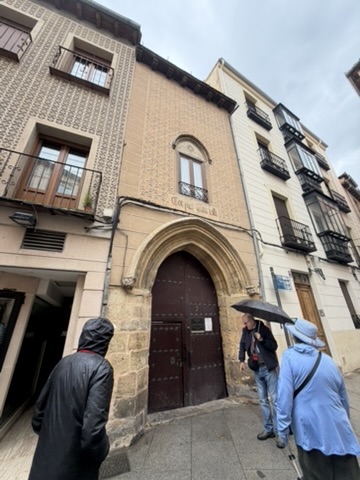
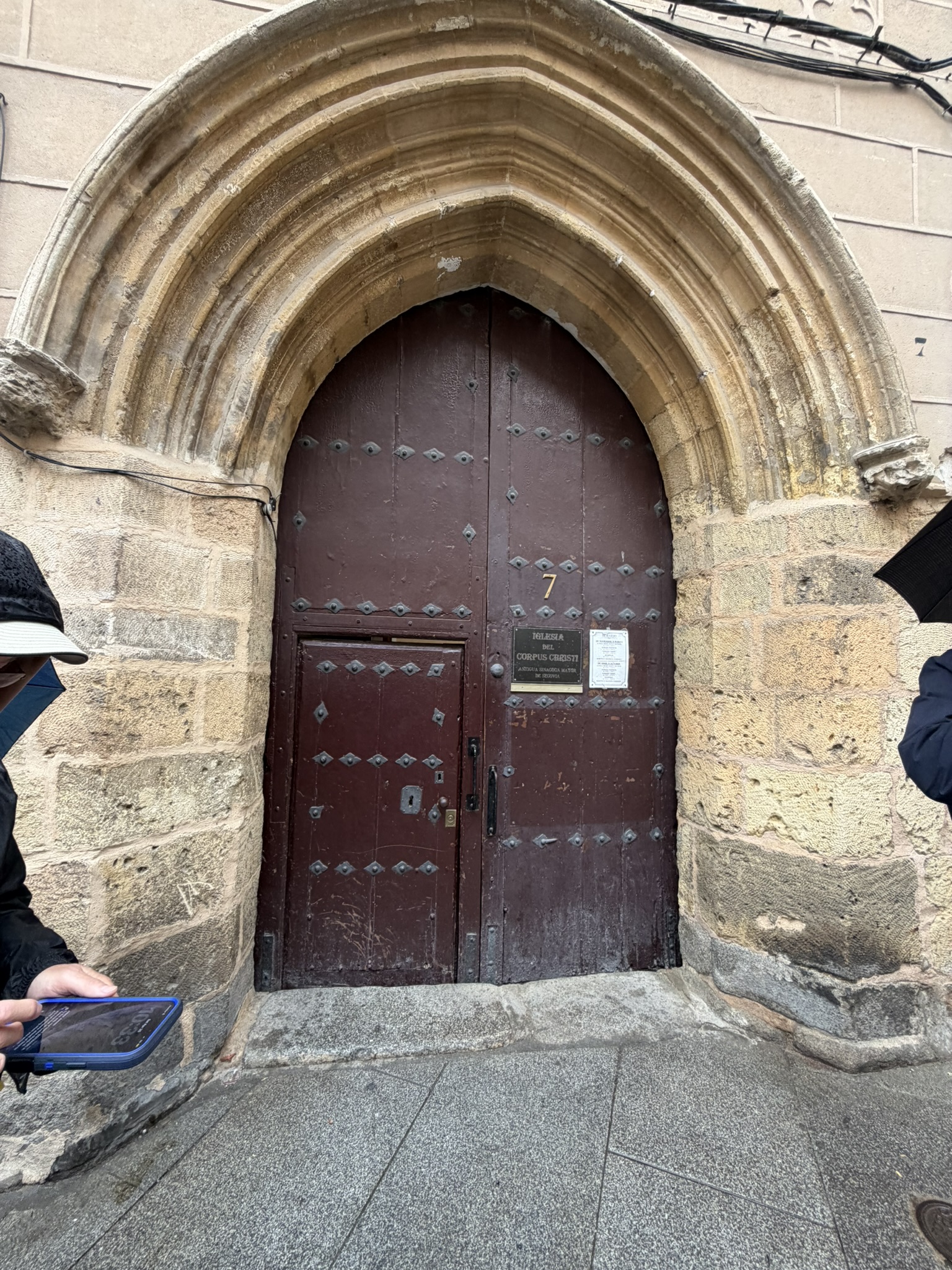
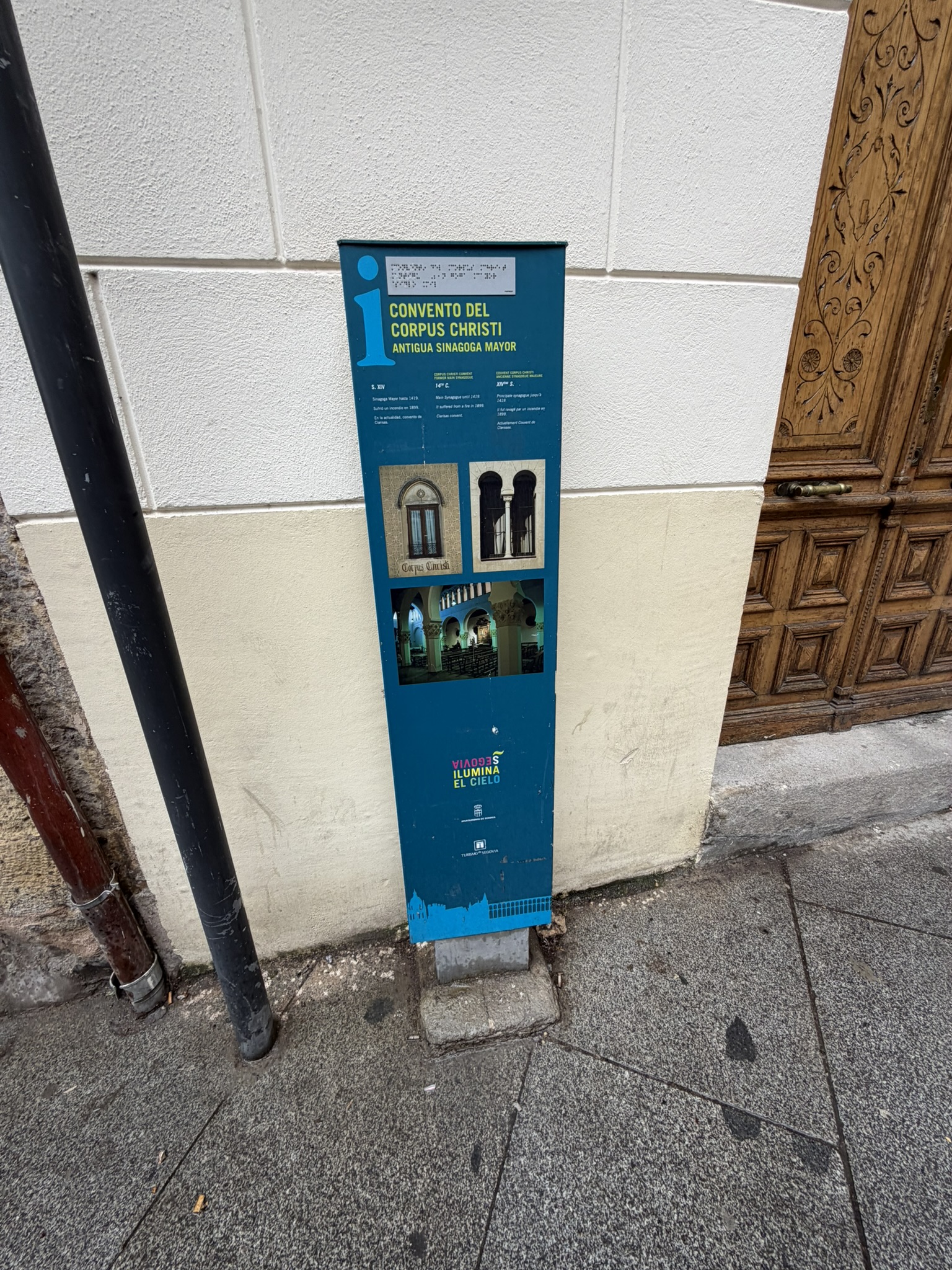
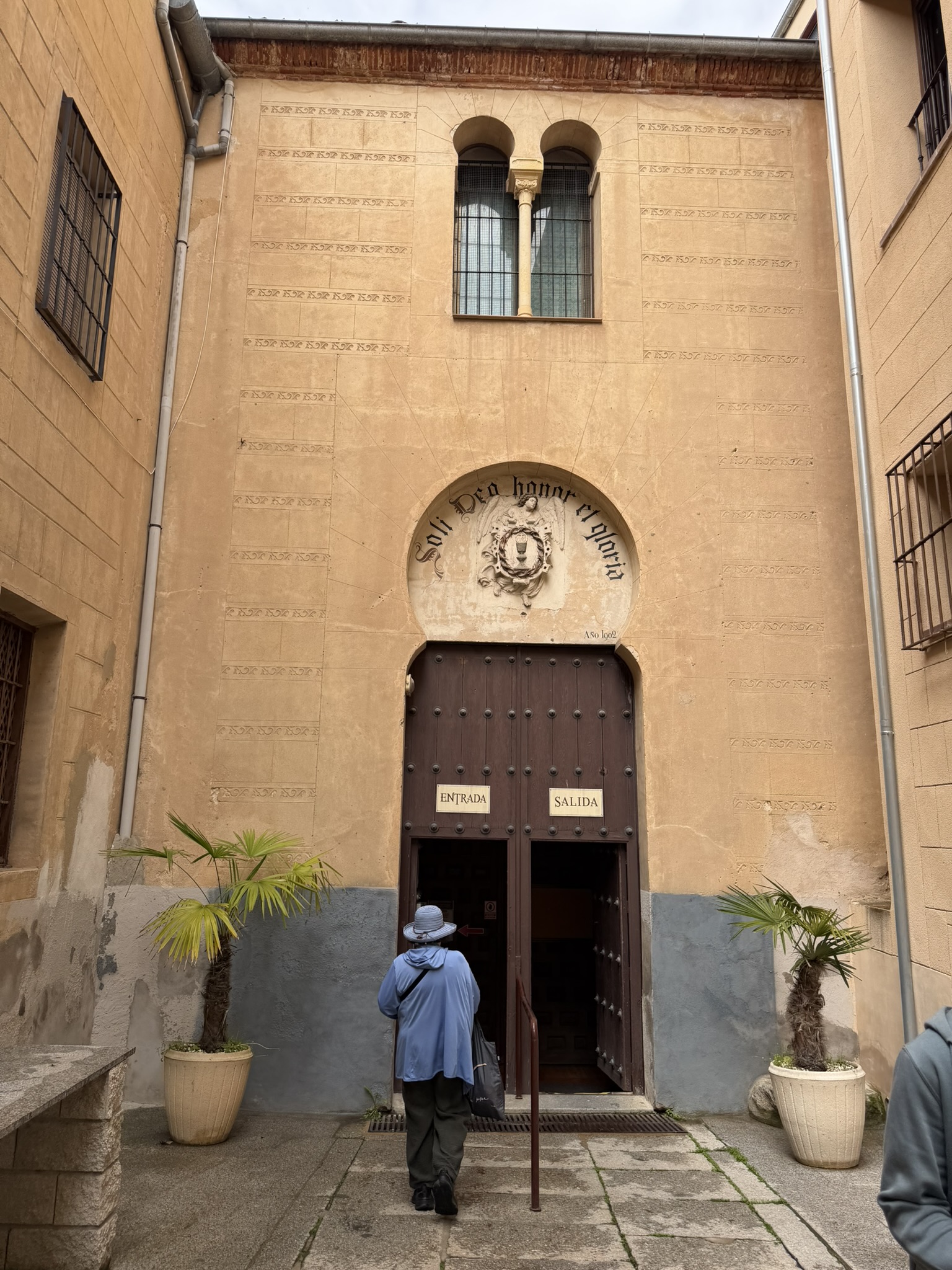
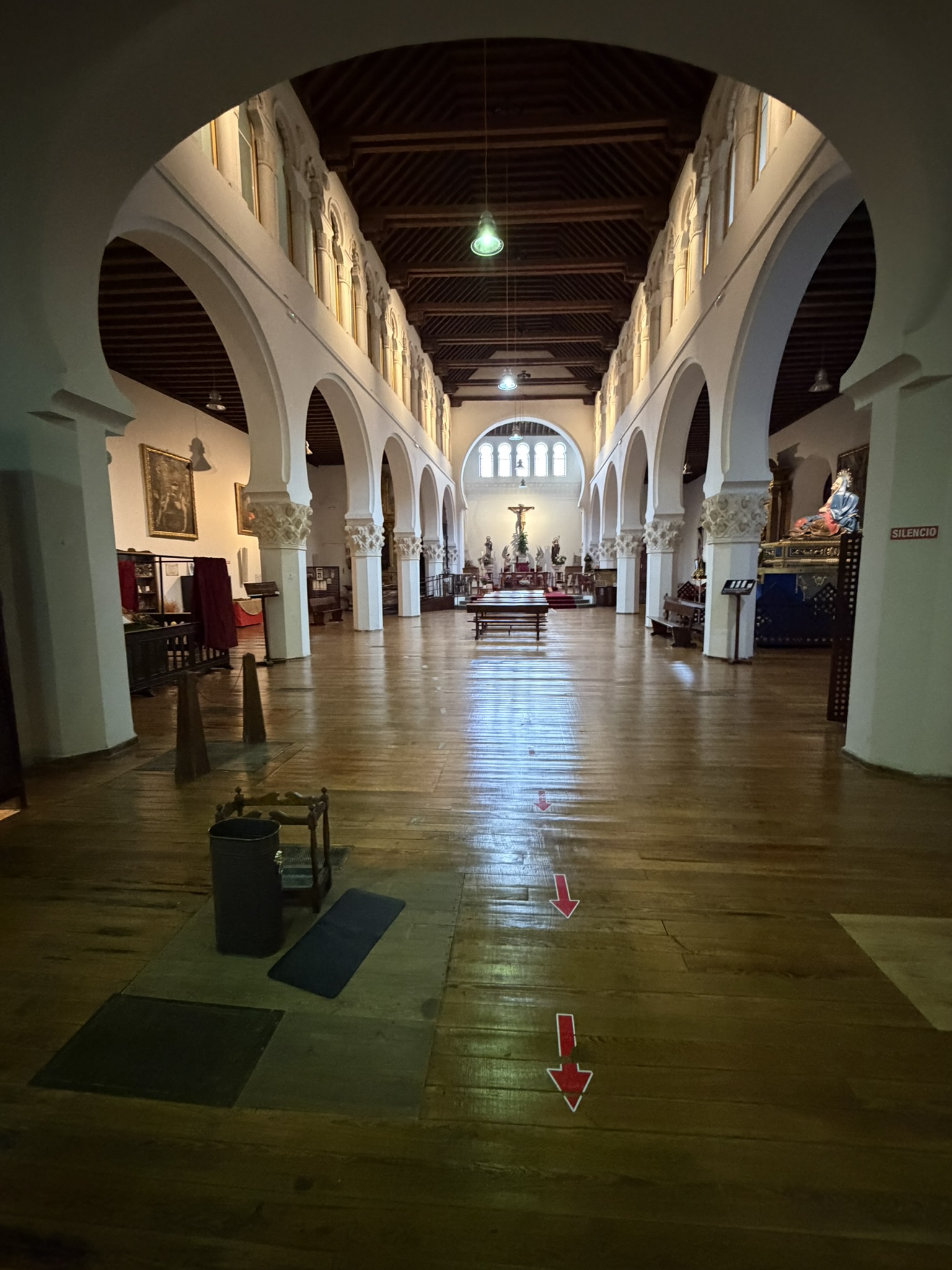
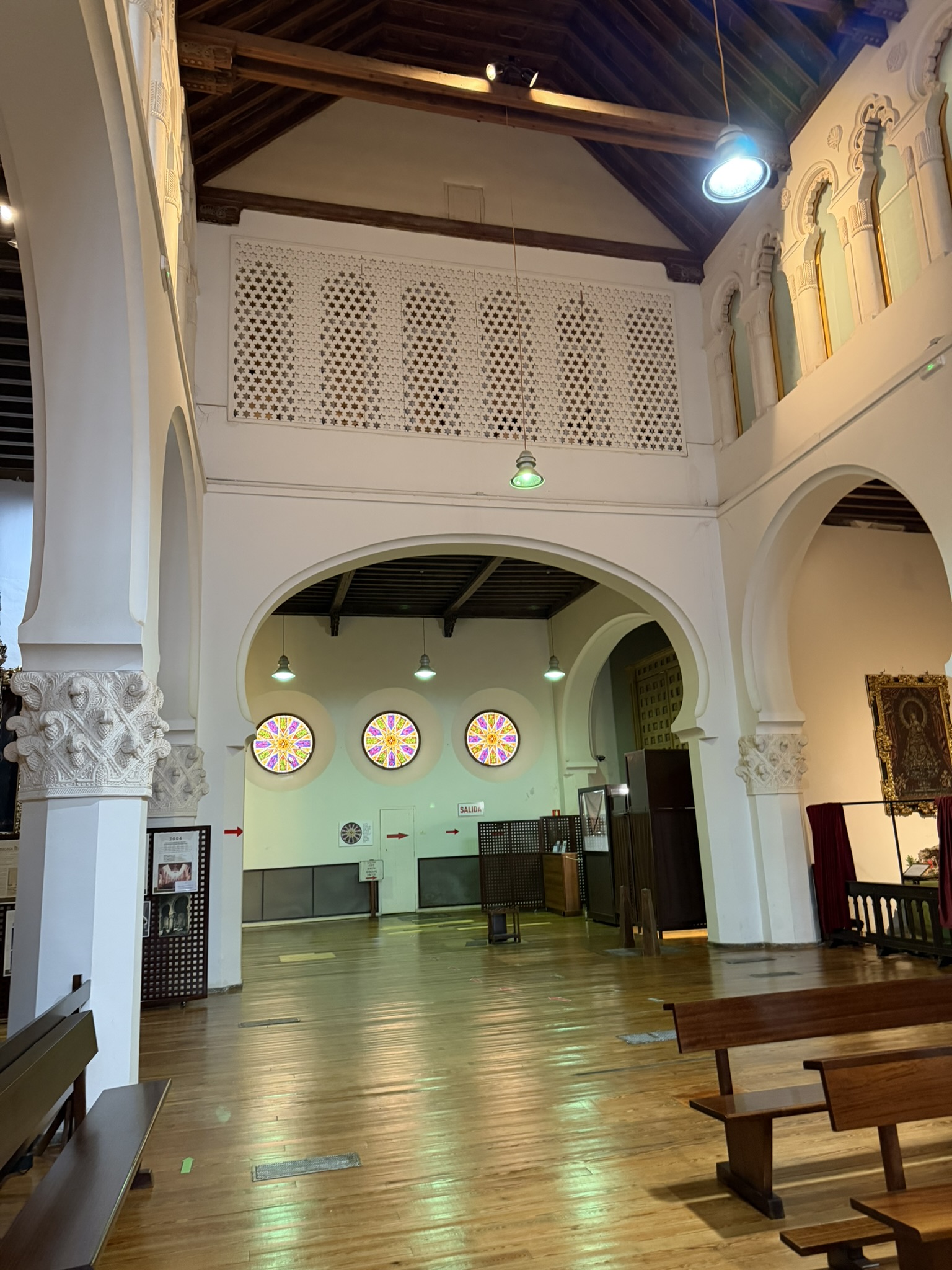
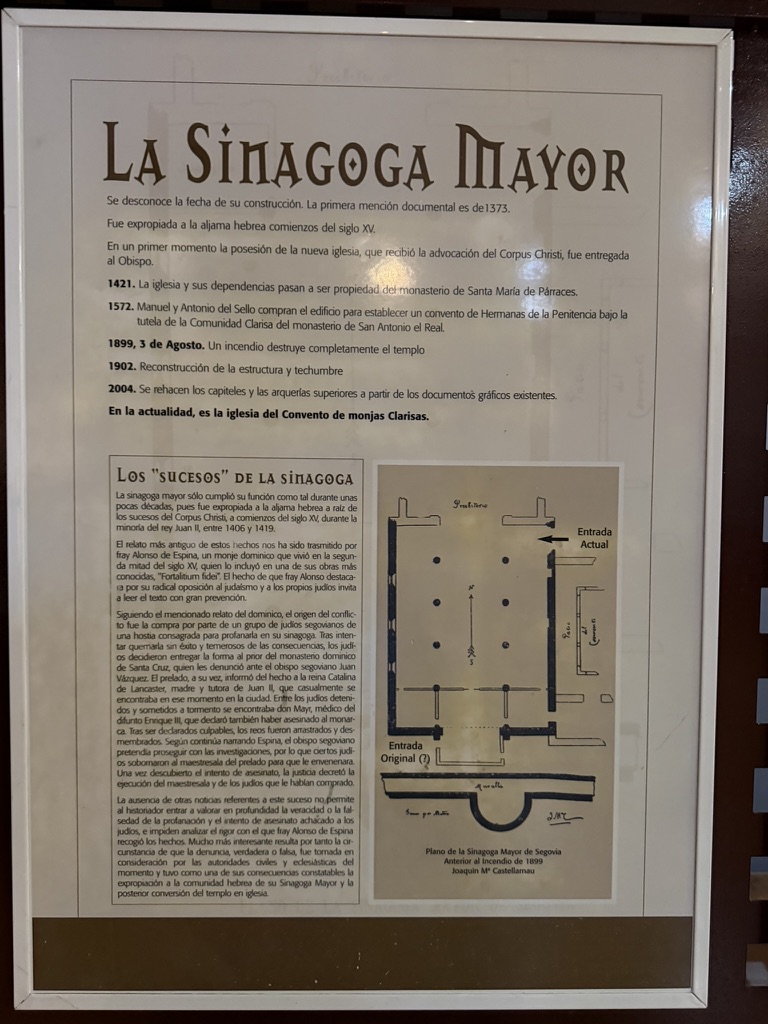
Finally Segovia, where we visited the only surviving synagogue in all the towns we visited. Once a synagogue, now a church, this synagogue used to be one of five that served the large Jewish community of Segovia, where about a third of the town was Jewish. It was the MAIN Synagogue, La Sinagoga Mayor, located in the center of the Jewish area.

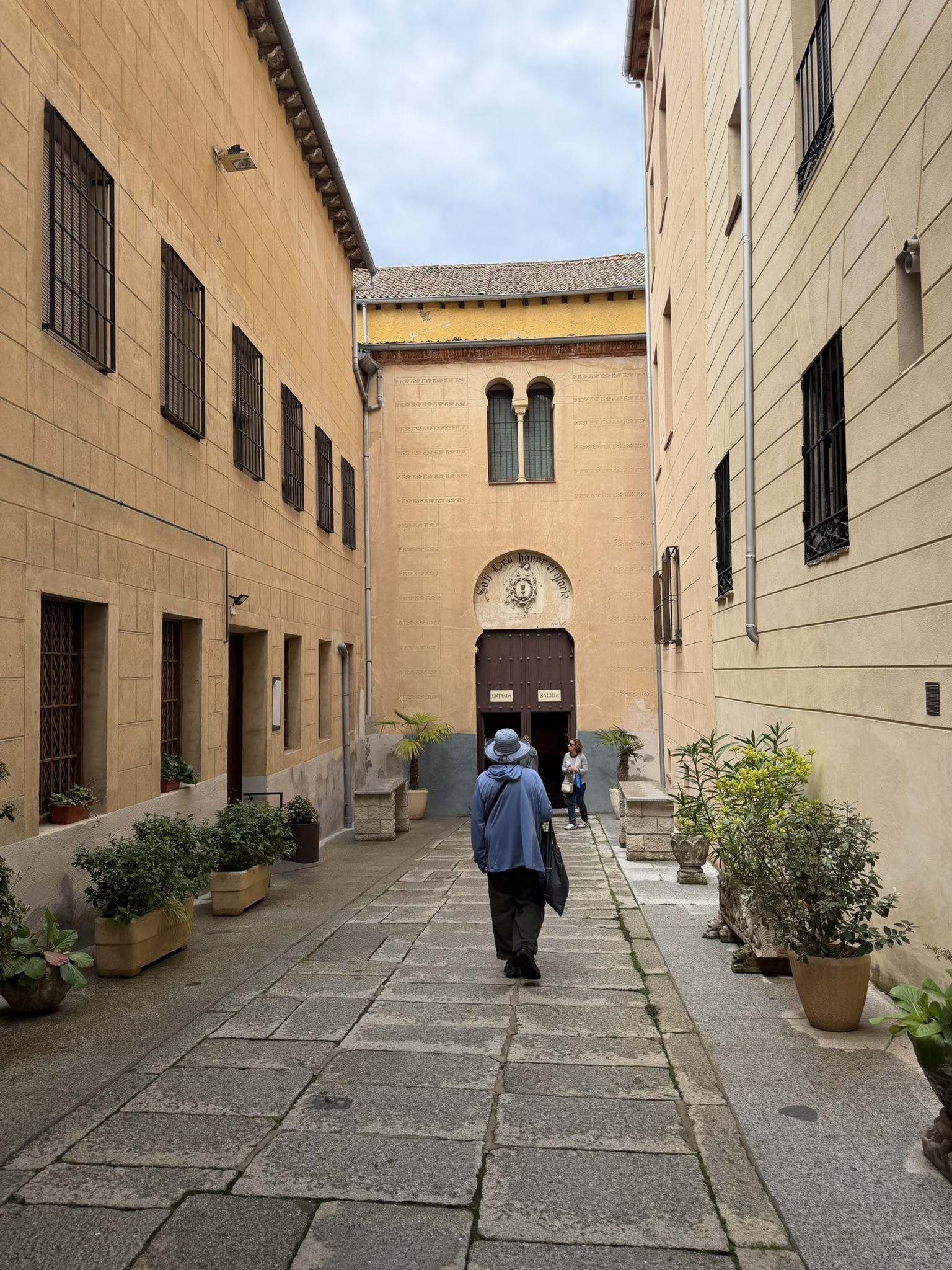
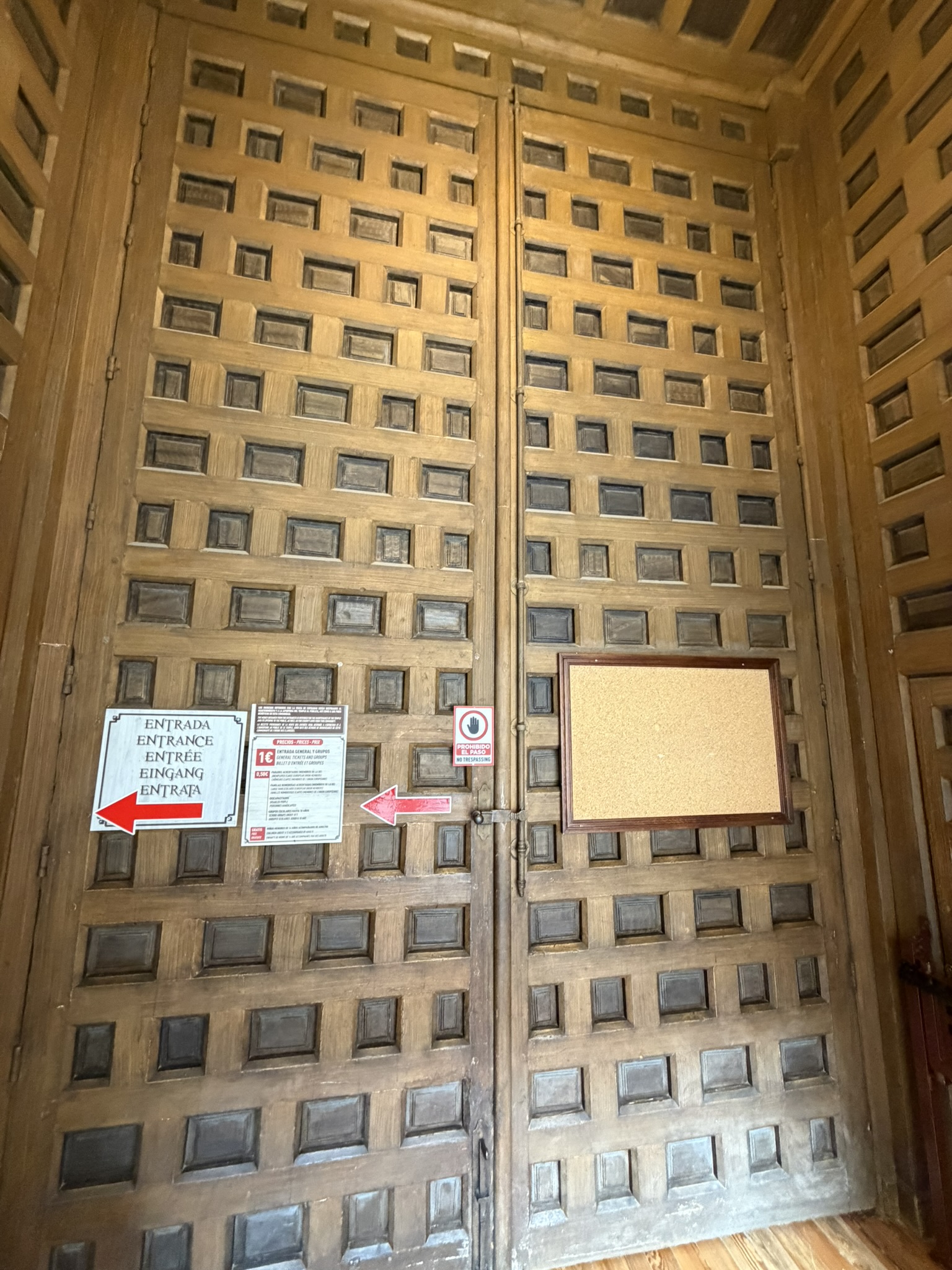
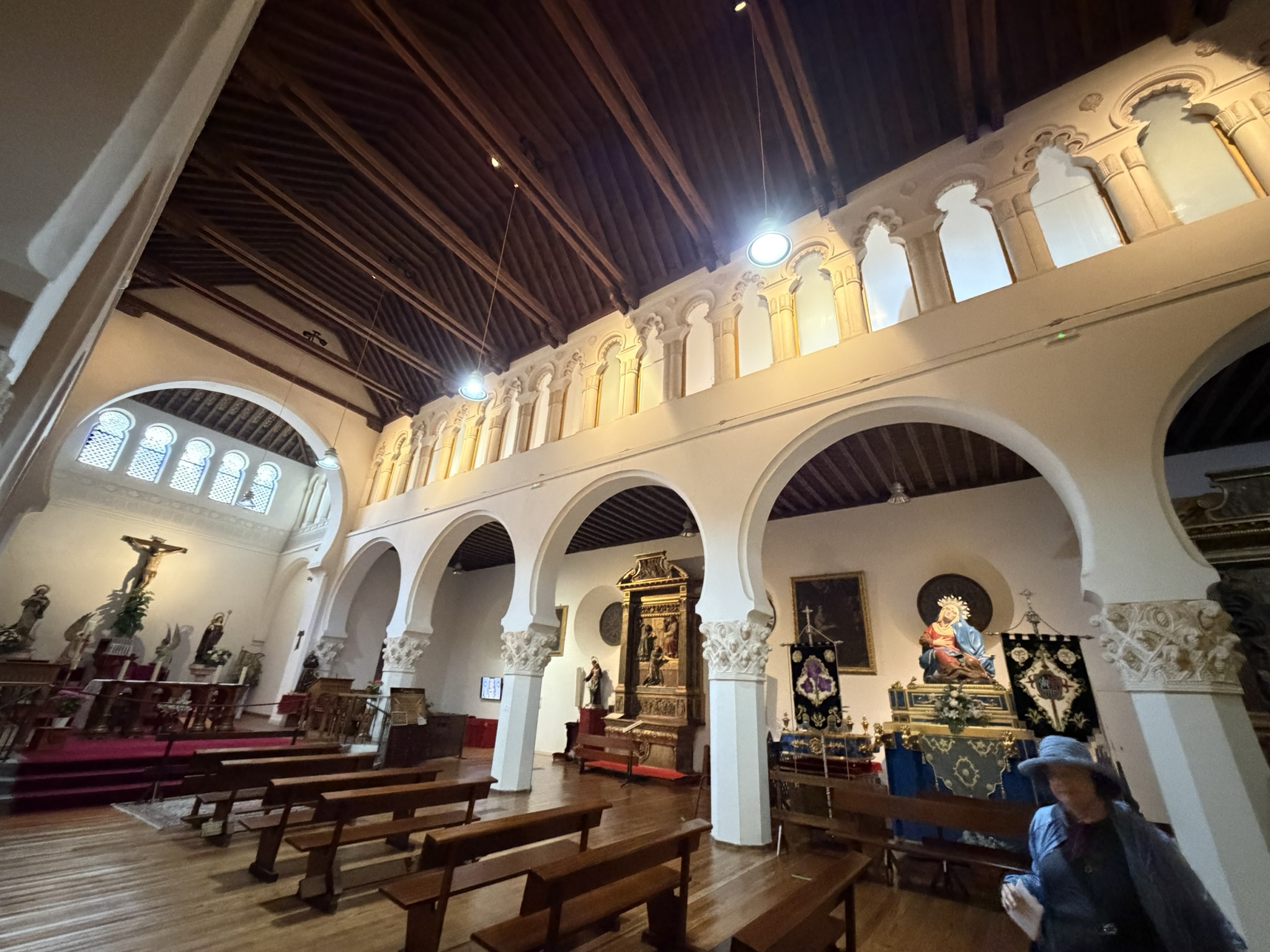
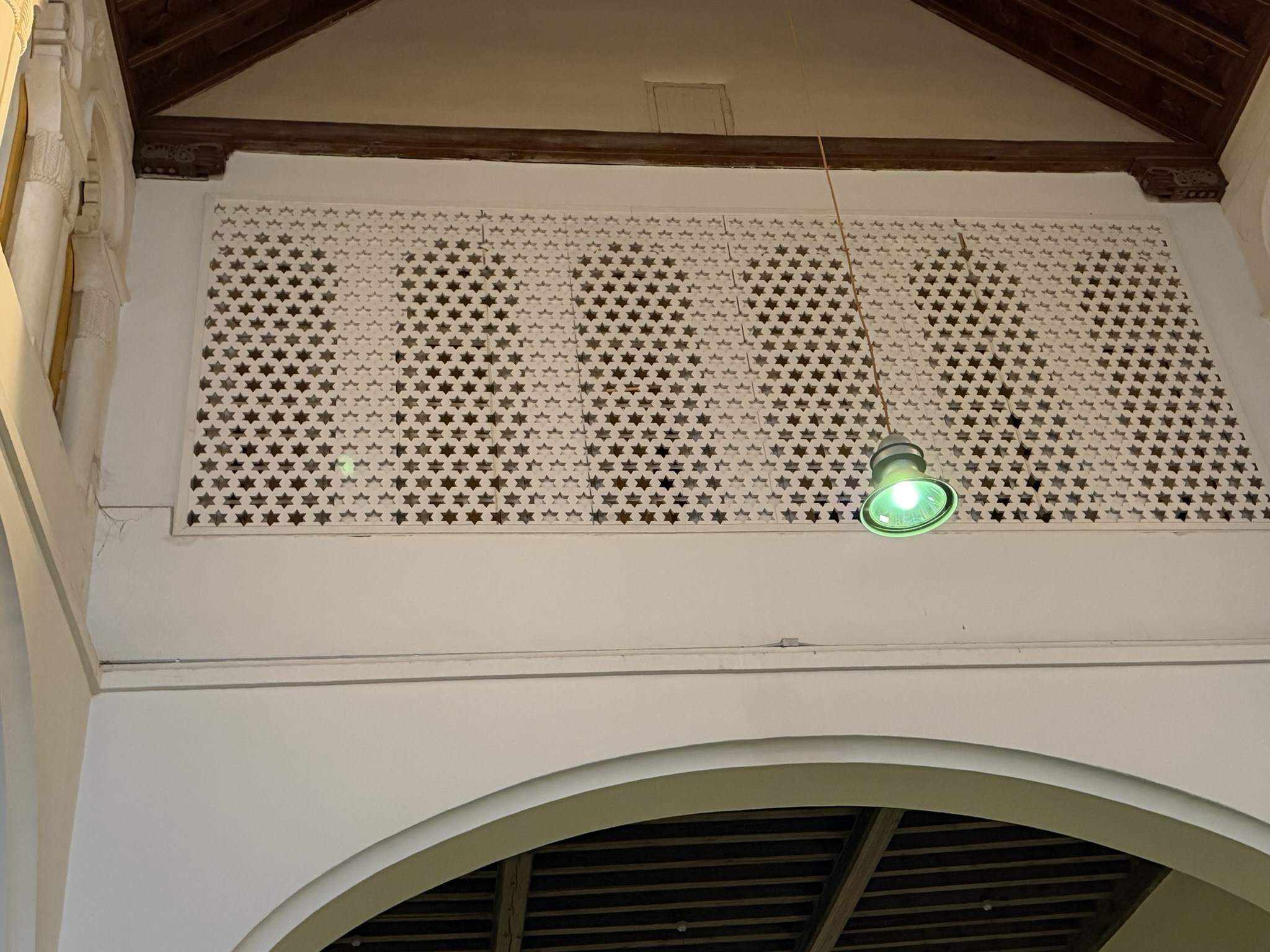
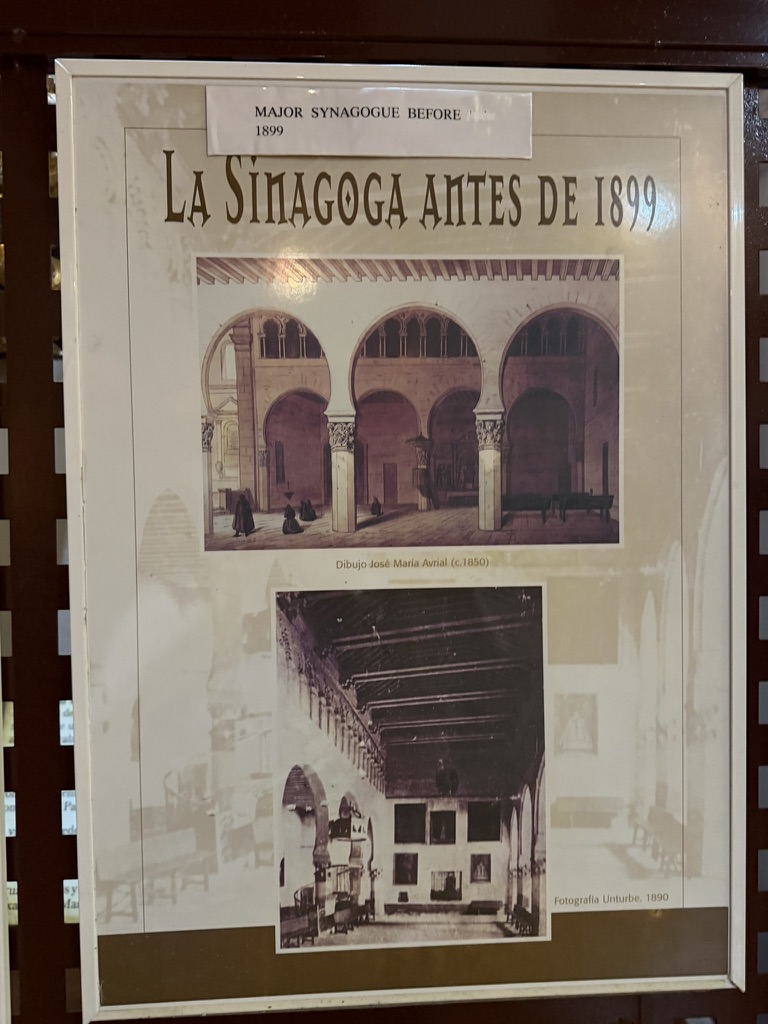
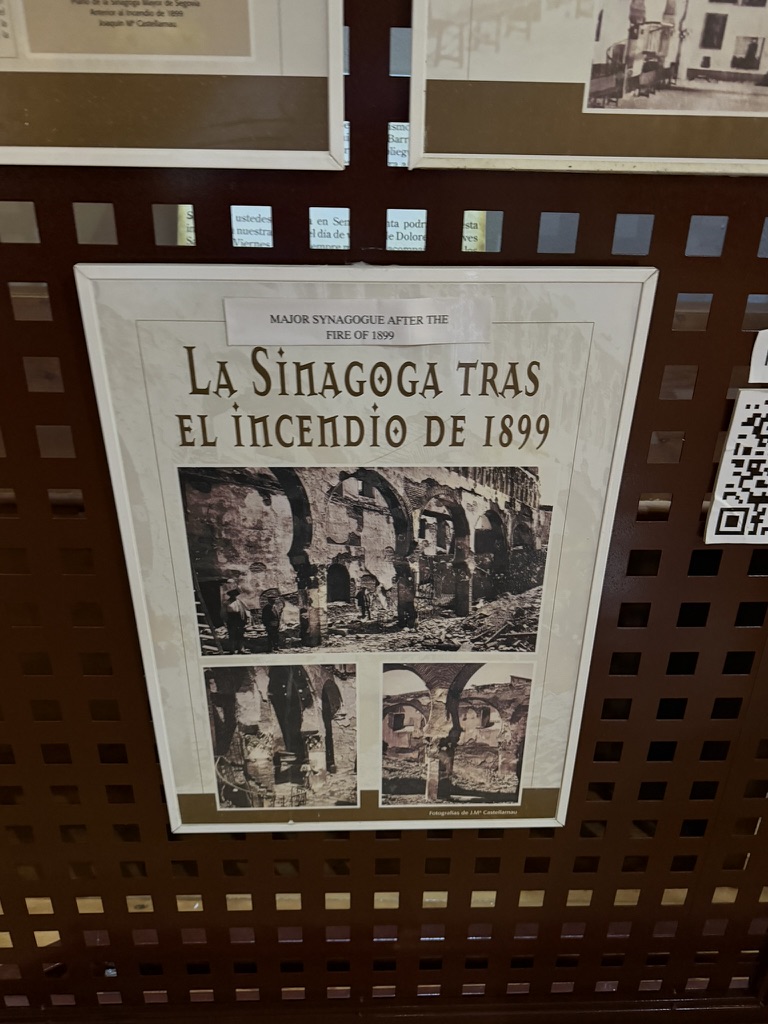
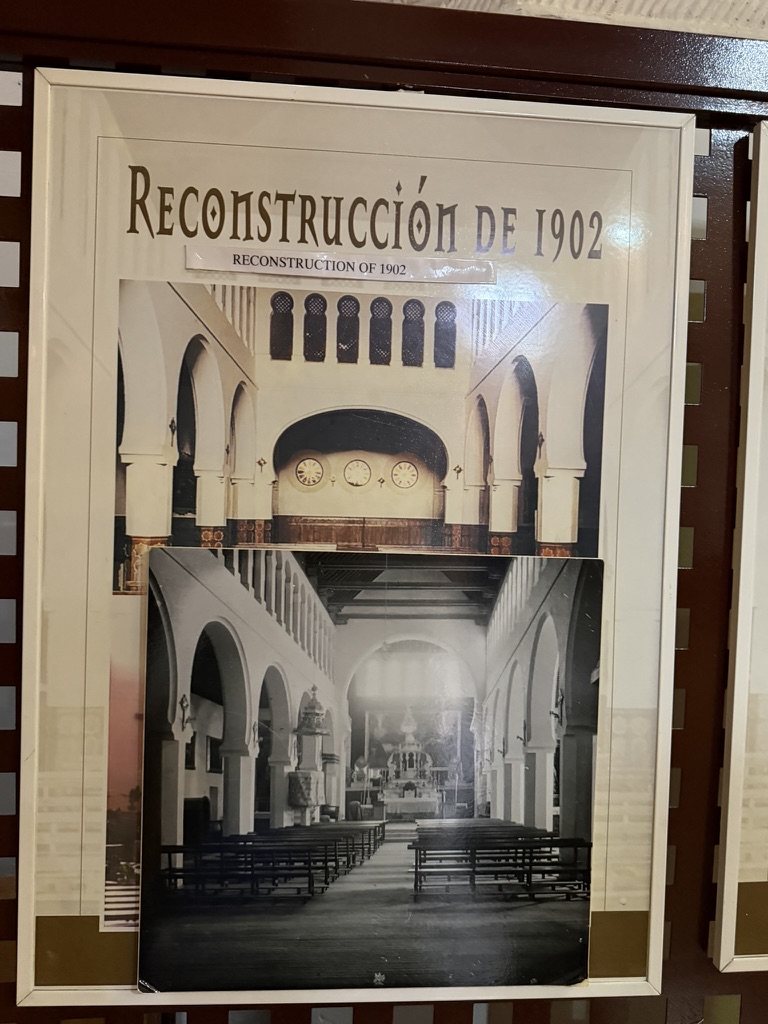
When you first look at it, it seems to be a small building.  I wondered how it could be the MAIN synagogue. But it is a false front.  When it was opened later in the day, my sister and I entered the courtyard and explored the building.  There are still indications of its use as a synagogue.  It is an open room where the bima would have been in the center. And there is a women’s balcony above, with screens so that the men could not see them, but they could see what was happening below. It remained a synagogue until 1419.  In 1899 the Synagogue/Church was damaged by a fire.  It was restored in 1902 and remains open today.

The visit to this synagogue was a highlight for my Jewish journey. We are descendants of Iberian Jews who left Spain for Portugal, then left Portugal for Amsterdam, then made the mistake of leaving Amsterdam for Galicia in Austria.  But then even in Amsterdam the Jews were slaughtered by the Nazis.

The one final sign of Jewish life in Spain startled me.  Although Portugal had a Jewish community before WW2. In fact, Jewish people started returning to Portugal in the 1800s.  But Spain was a different story.  It wasn’t until 1869 that the new Spanish Constitution allowed Jewish people to settle in Spain. But there were not many.  However, it is believed that about 15,000 Jews survived by escaping to Spain.

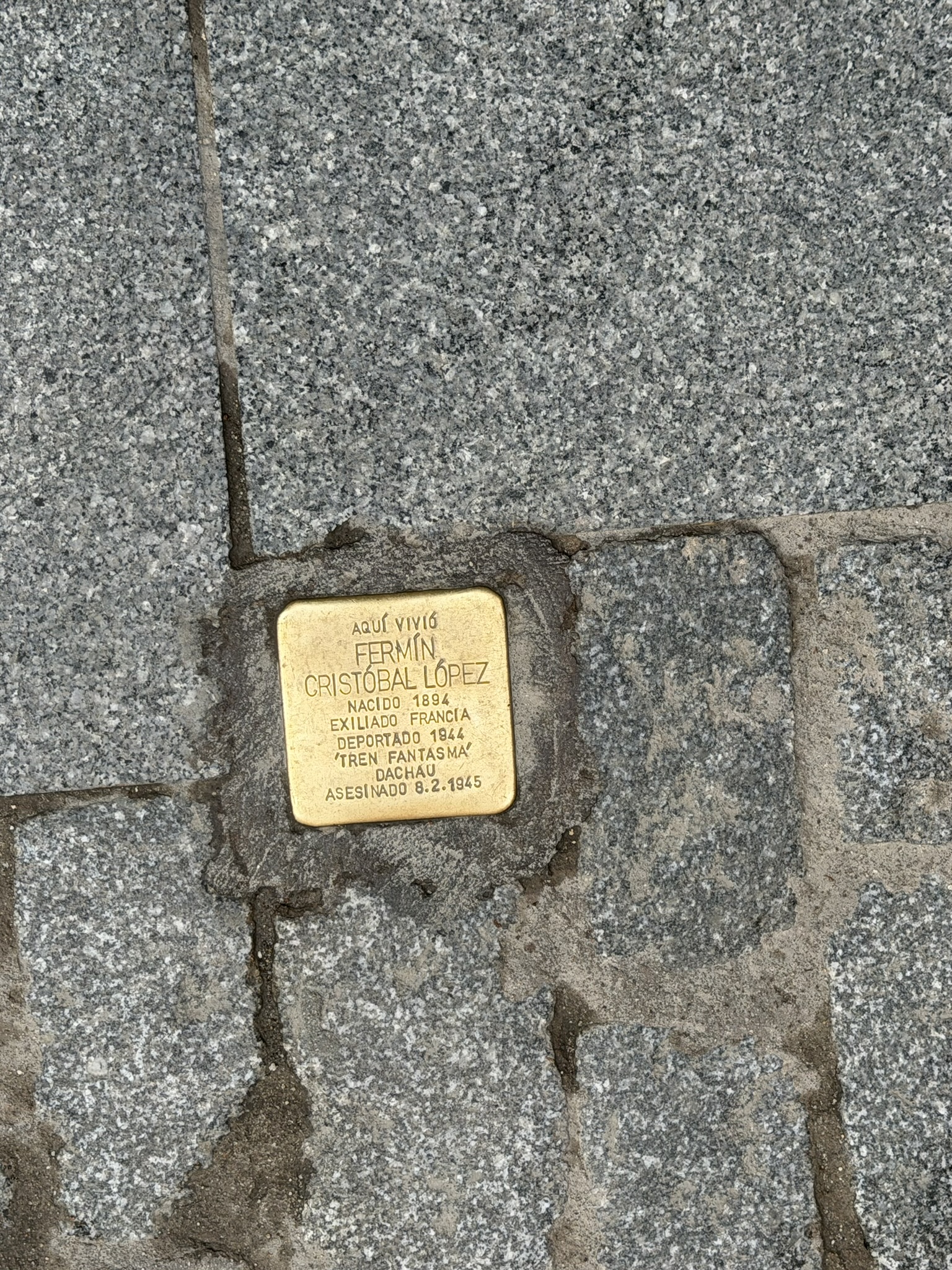
But the “Stolperstein,” stumble stone, I found tells a different story.  Fermin Cristobal Lopez died in Dachau. Born in 1894, he was exiled from France, and Deported from Sergovia on the Ghost Train in 1944.  I do not know if Fermin was a Jew or a political prisoner.  But I do know he died in Dachau.

In these times of Jew hatred, for me it is important to know where we once lived and how we were forced to find new homes and new places for sanctuary.  In Spain it was very obvious that the status of Jews is precarious.  In every city in Spain we visited, except Sergovia, there were giant banners calling supporting the Palestinians.  But nothing to recognize what the Israelis and Jews have suffered.

I asked our tour guide if she felt the Jewish people of Spain were safe.   She differentiated between Israelis and Jews.  Saying the government and people were angry at the Israeli government. But she believed Jewish people in Spain were safe. I guess we shall see.

In Portugal it was different. No Palestinian Flags.  No feelings of queasiness as I walked down the streets.  For me, as a Jewish person,  I will not soon return to visit Spain.

Drinking My Way Through Portugal and Spain: The Beautiful Gardens

30 Apr

When my husband and I booked our latest Road Scholar trip, “Beyond the Vineyards, Sampling Northern Portugal and Spain,” he started telling people that he was going to drink his way through Portugal and Spain.  And he did.

Our tour included visits to six wineries as well as seven or more UNESCO world heritage sites.  We learned more about Port, Sweet Vermouth, red wines and white wines, than I anticipated.  And along the way we had to taste all the differences.

At every winery we had a tour of the vineyards, the fermentation areas, and the tasting rooms.  Some of the wineries were located in estates that had been in families for generations.  One winery’s gardens were magnificent. 

In honor of these beautiful gardens, I plan to start off my blogs about our trip to Portugal and Spain focusing on the beautiful gardens we visited in Portugal.

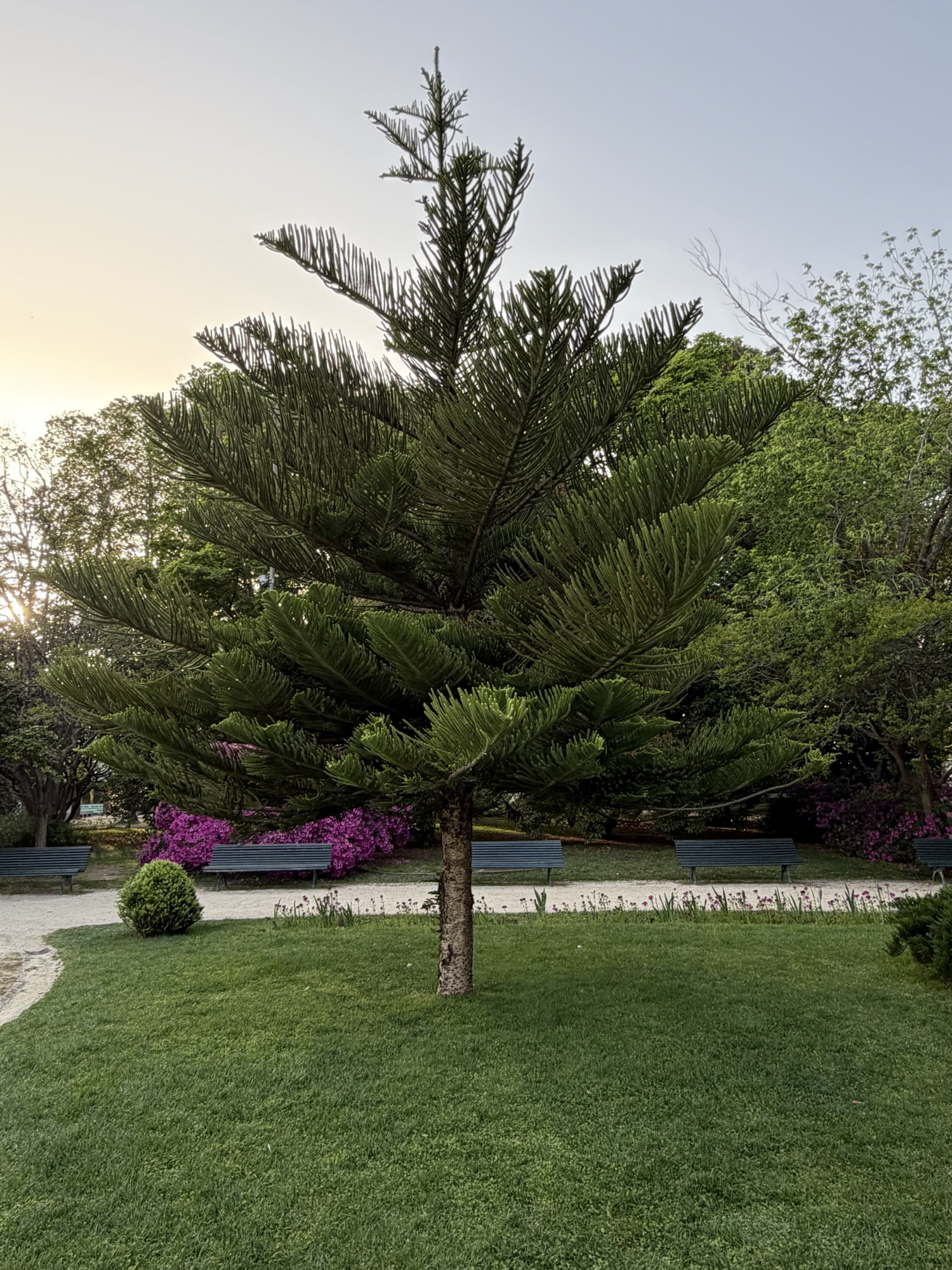
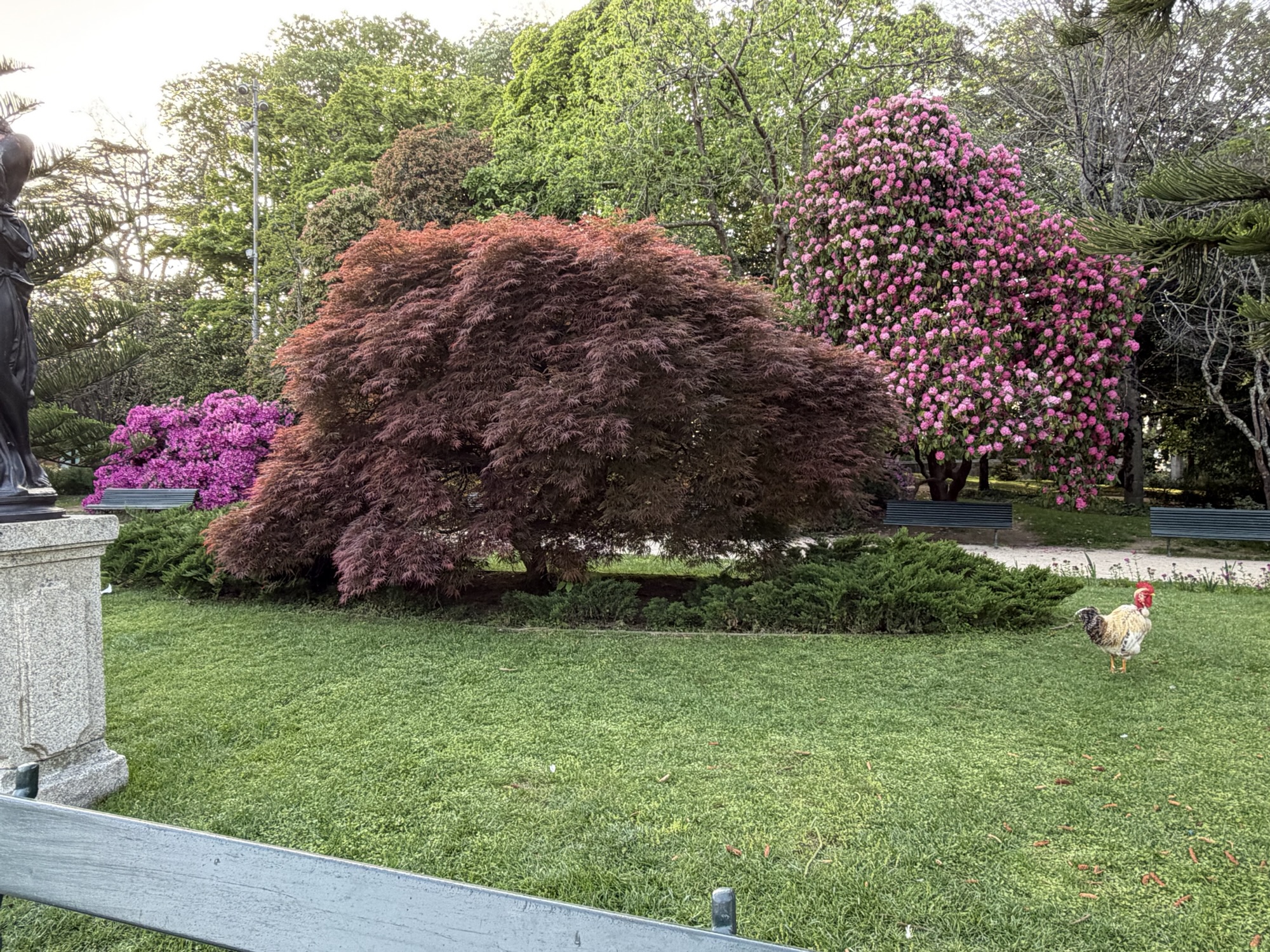
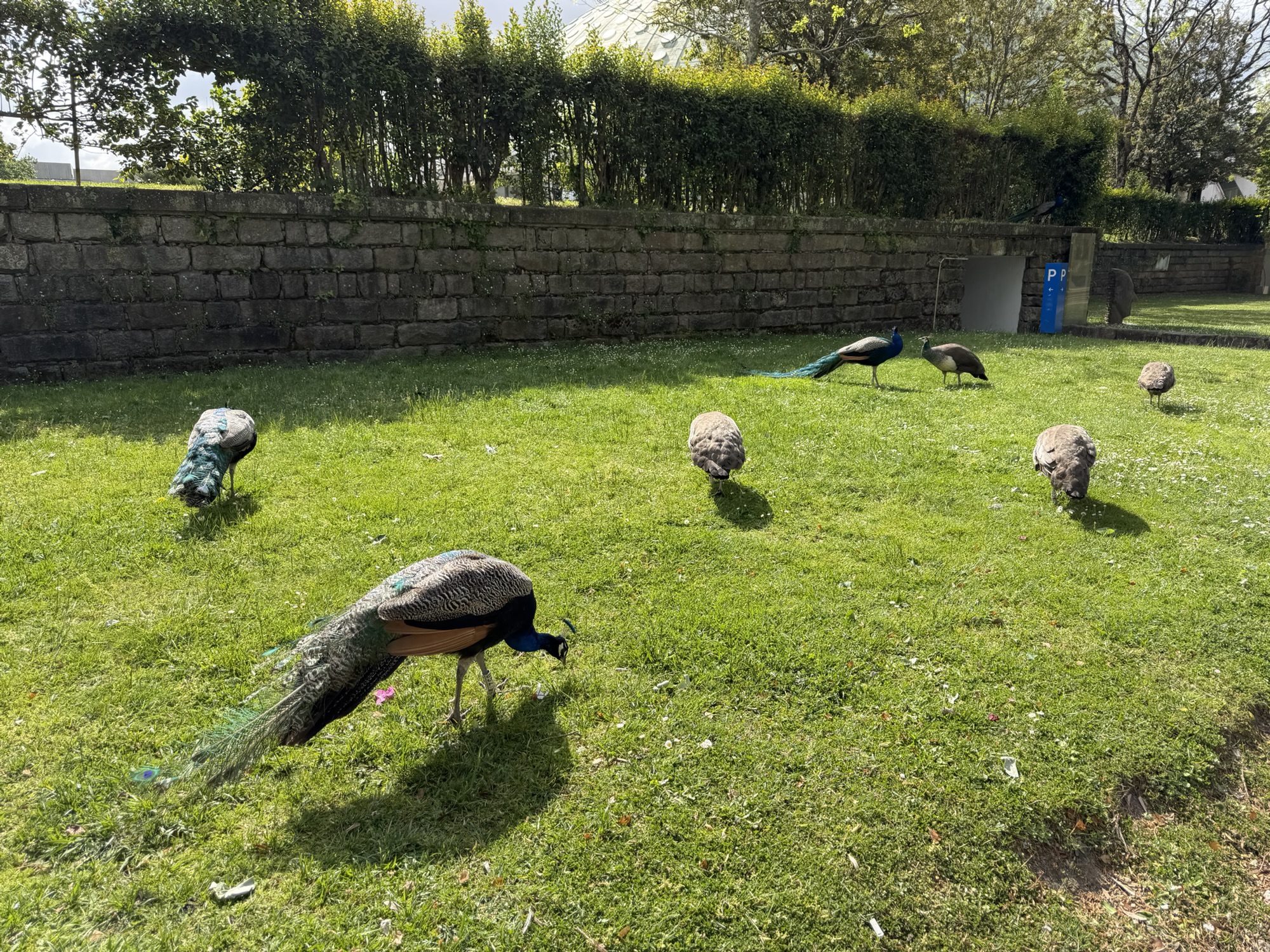
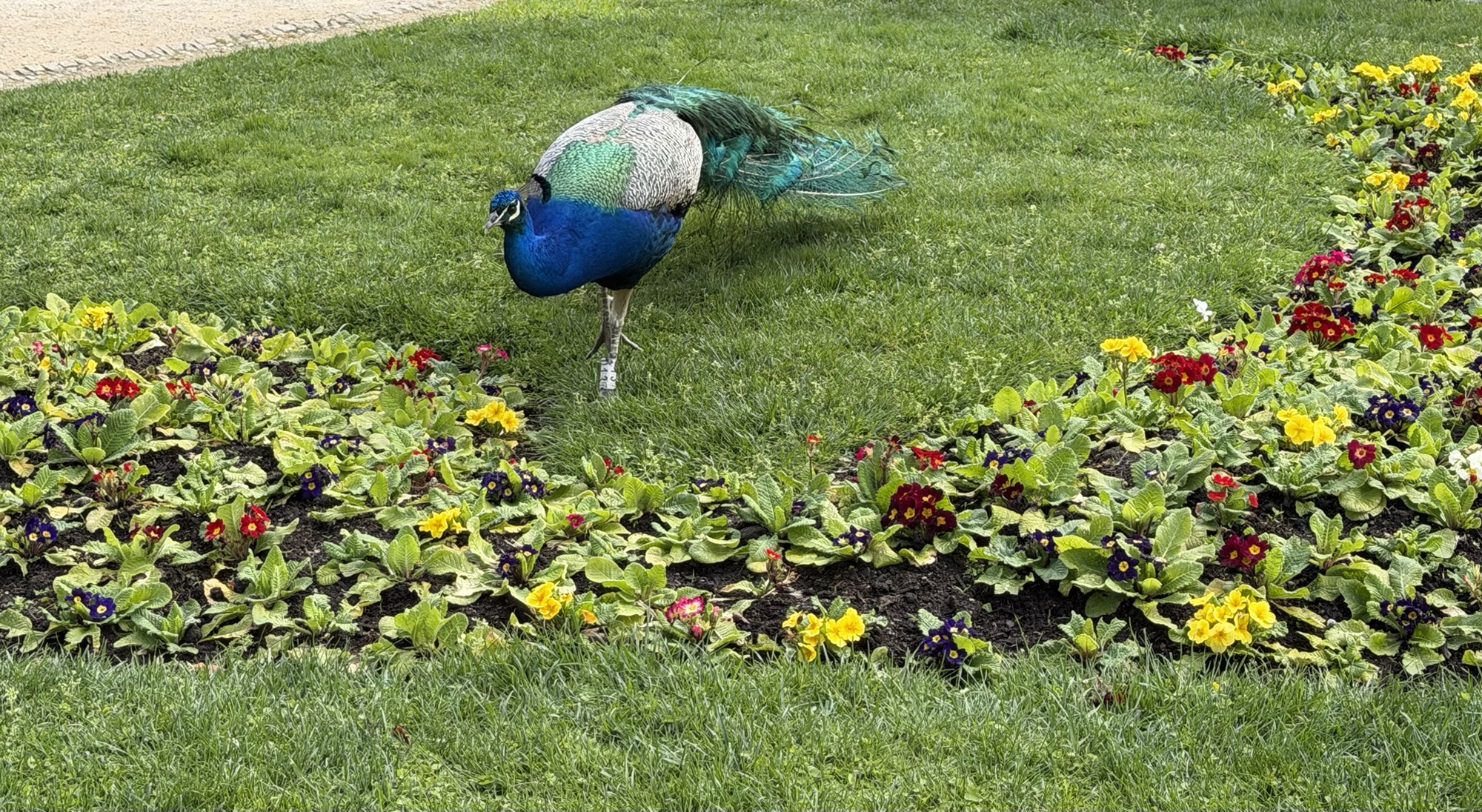
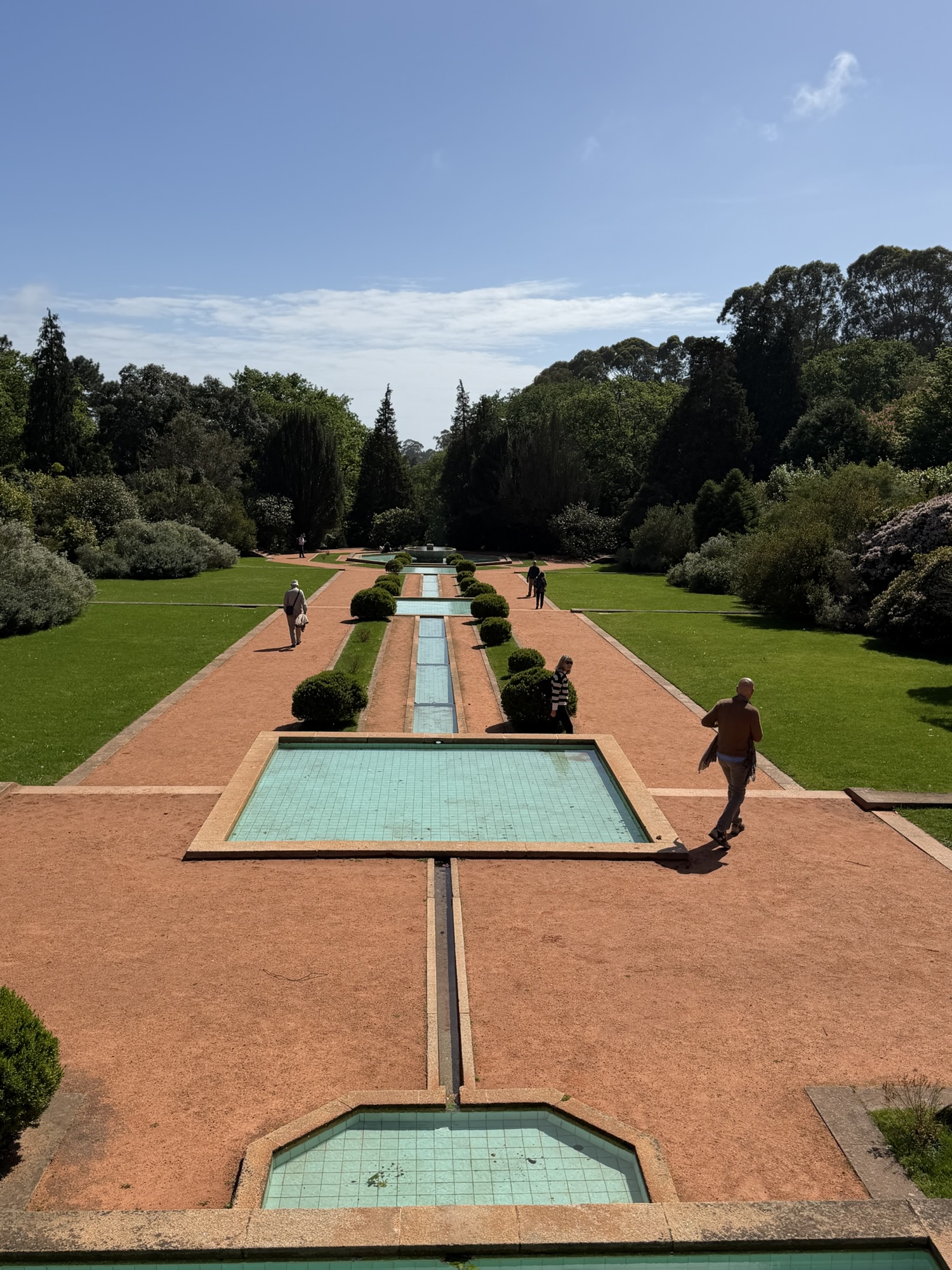
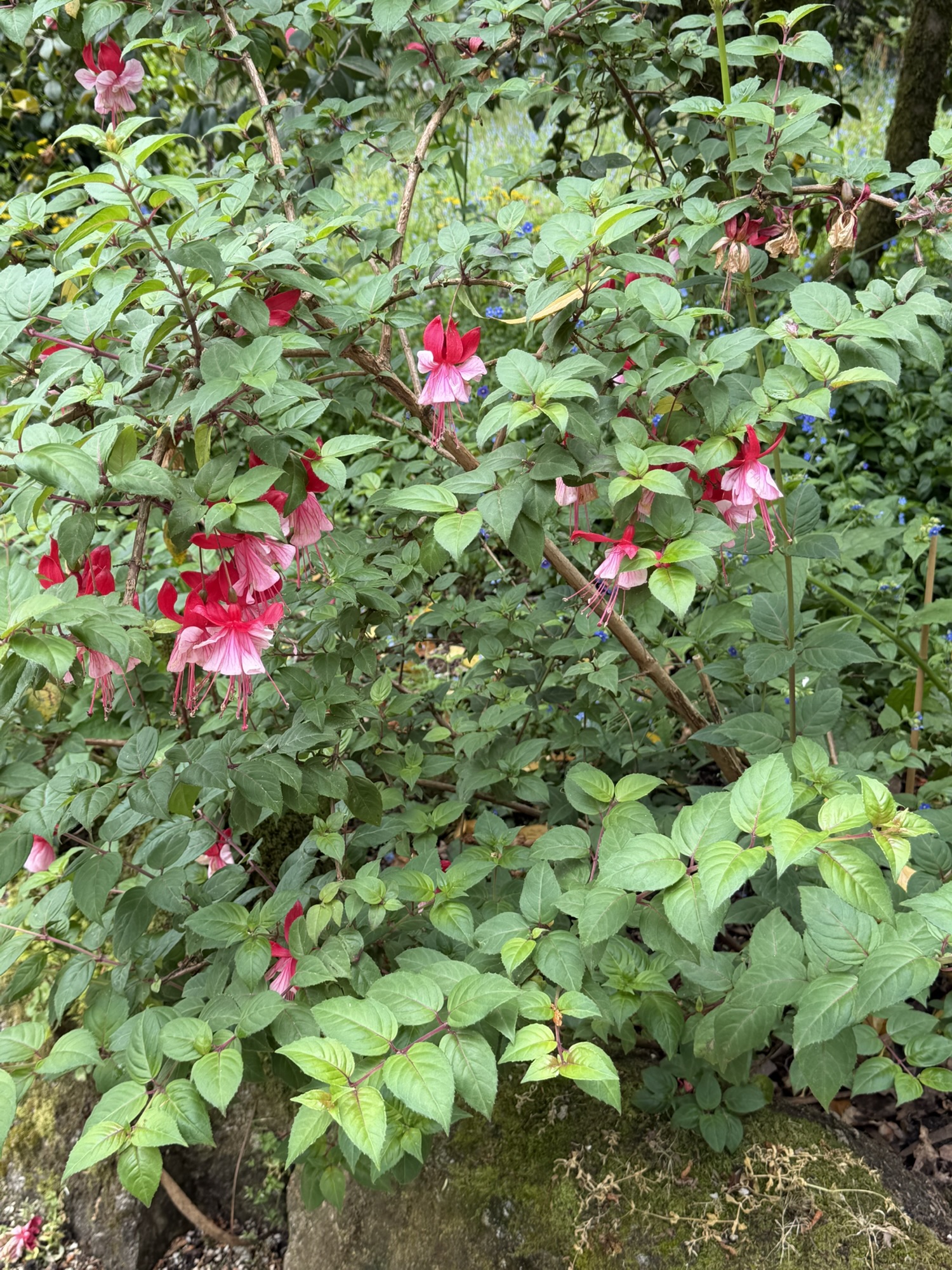
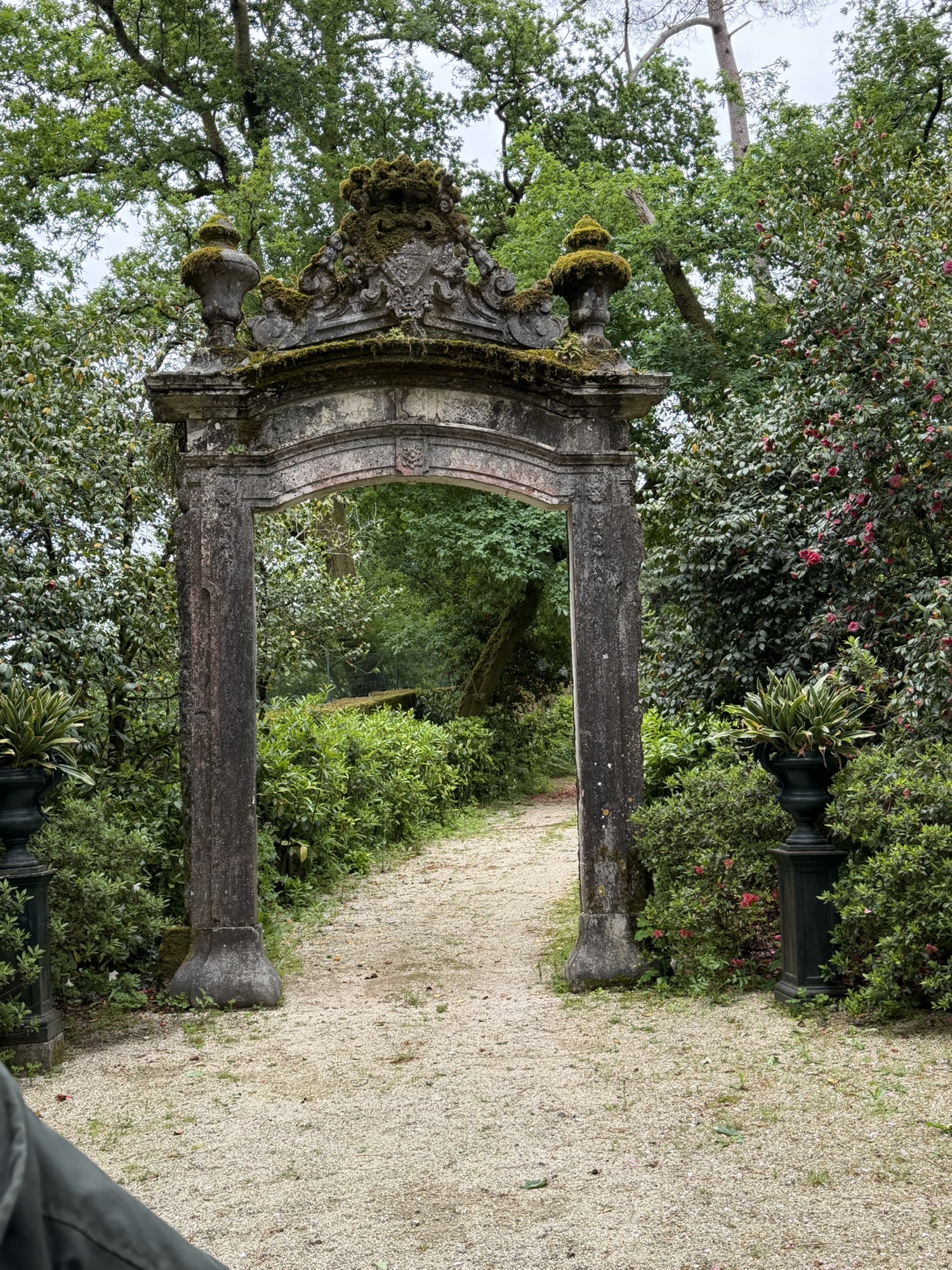
Our first garden was at the site of the original Crystal Palace. Although the Palace no longer exists, the lovely gardens do.  The Galeria Municipal Do Porto Gardens are enchanting not just because of the lovely plants, but also the lovely peacocks and peahens who roam the park.  I have never seen so many in one place before! 

(I have to add here that almost every winery had peacocks.  We asked why, the answer was that peacocks represented wealth.  So having them indicated that the winery and the family were doing well!)

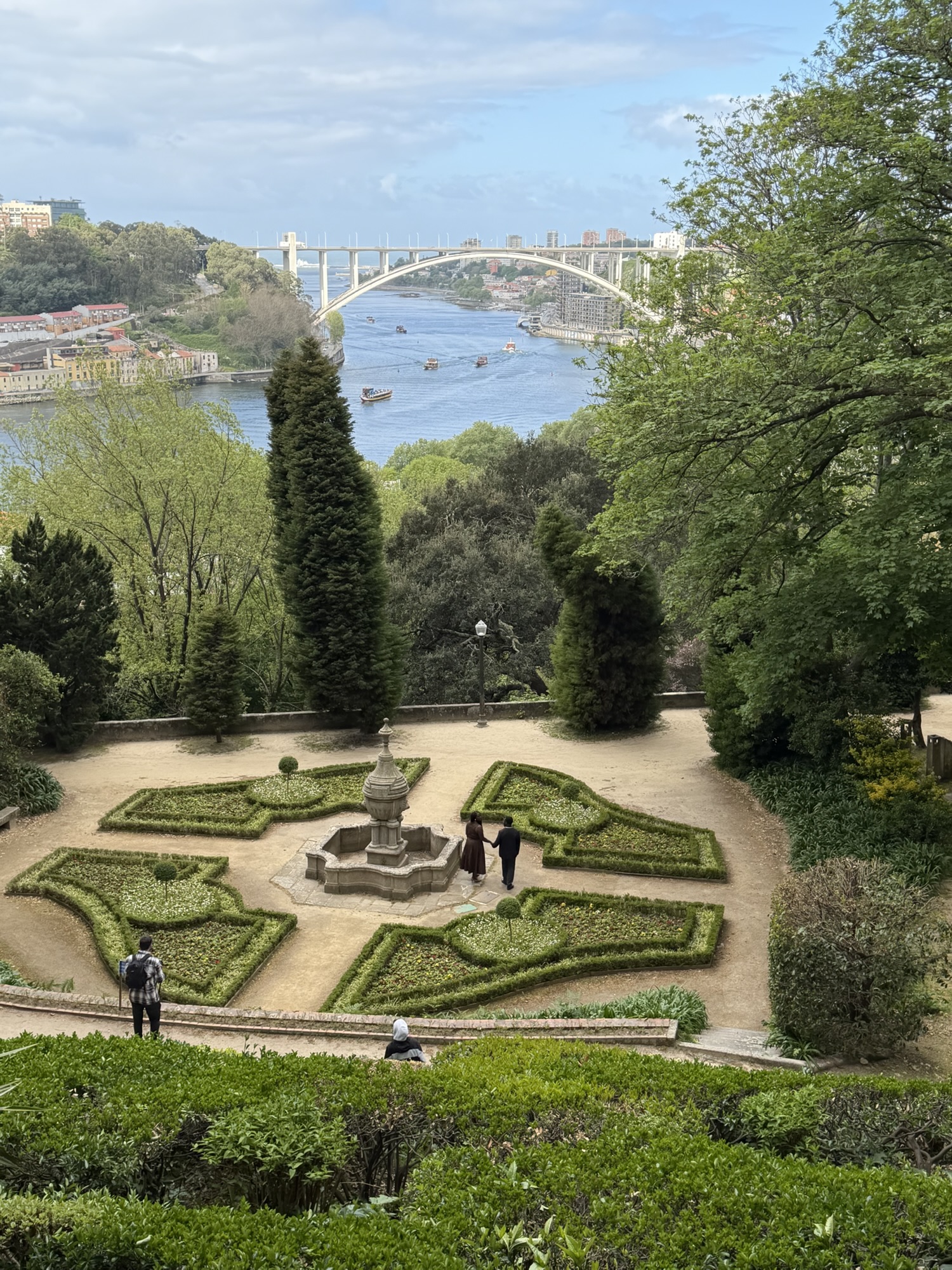
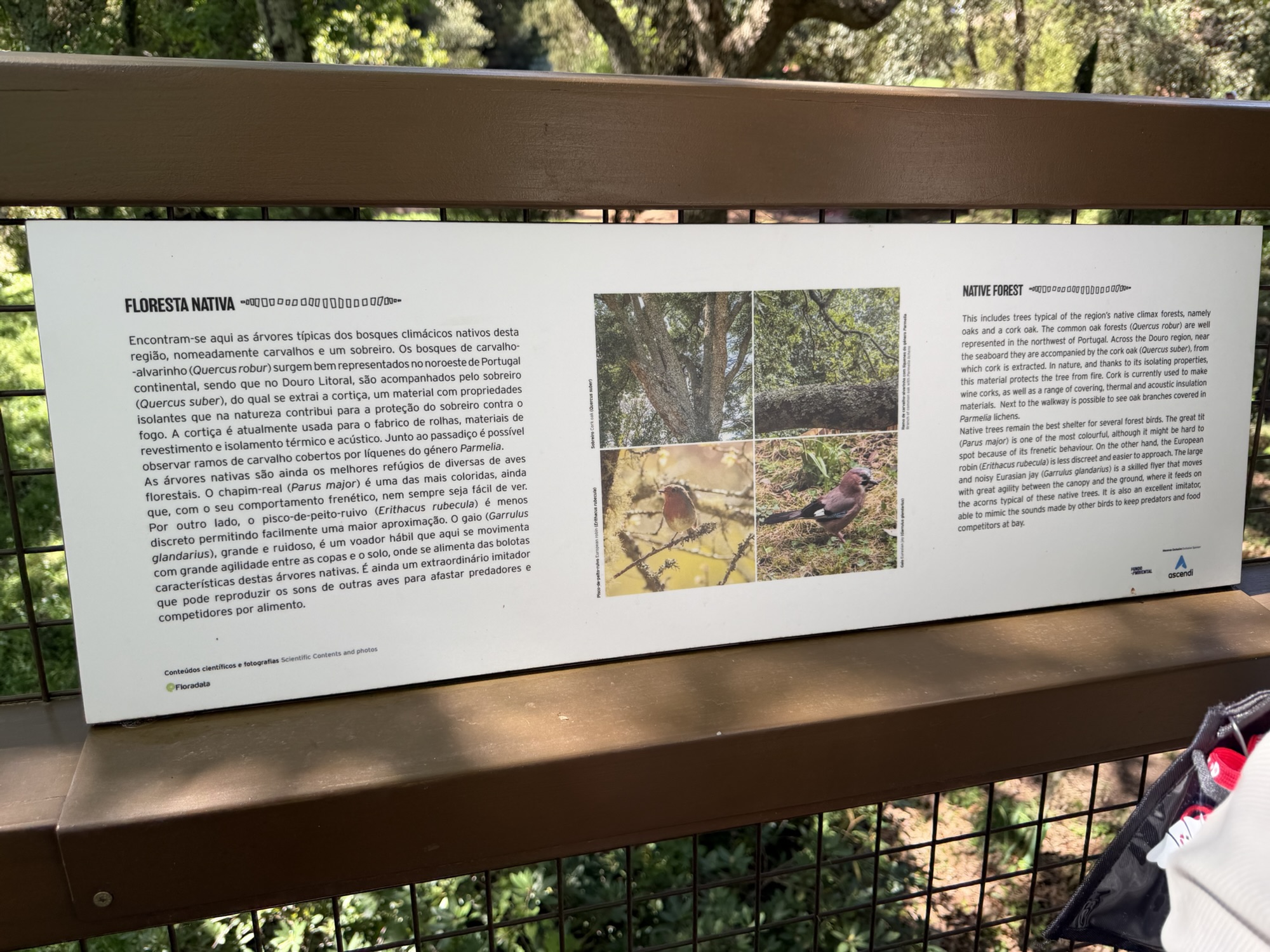
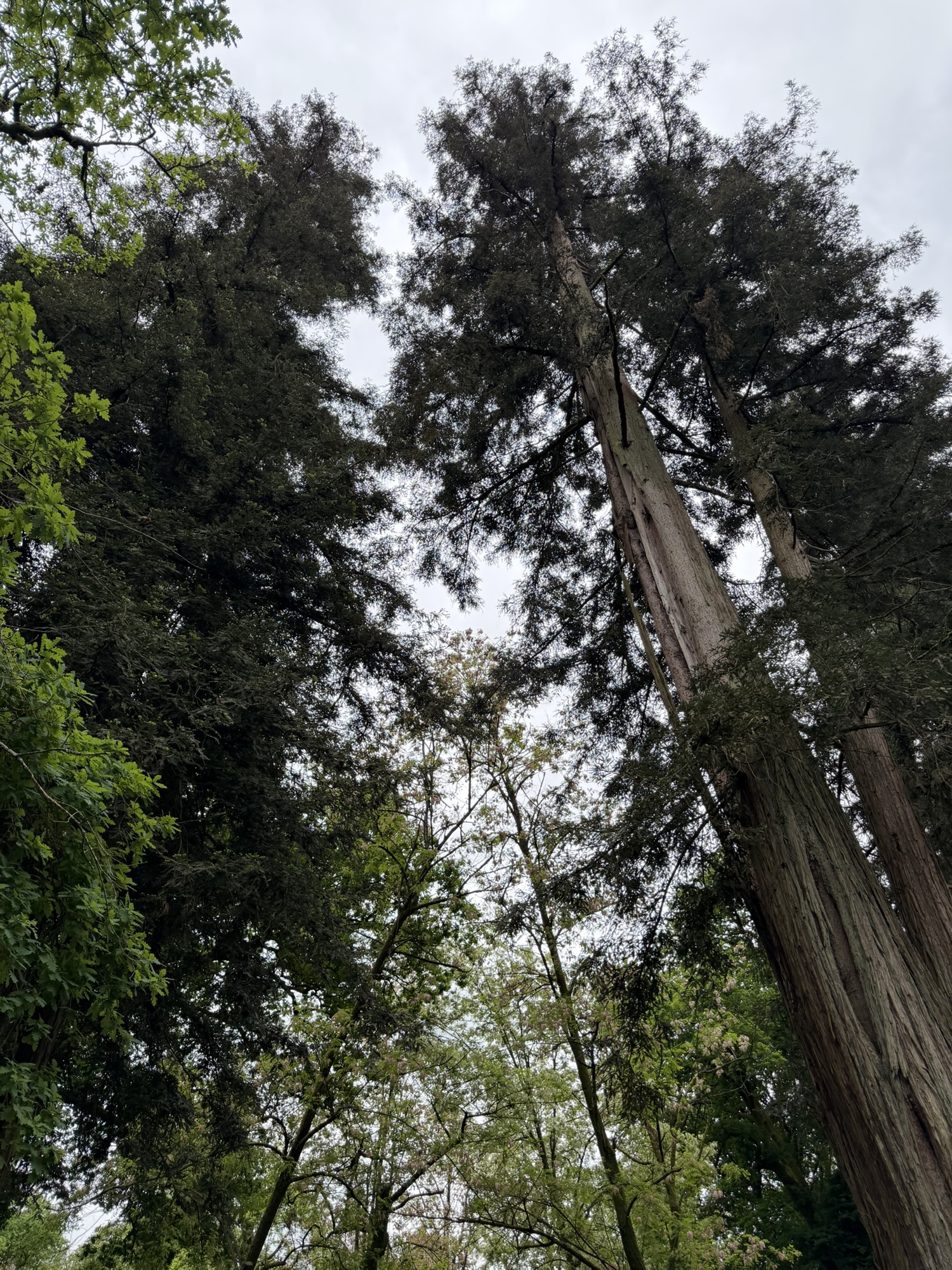
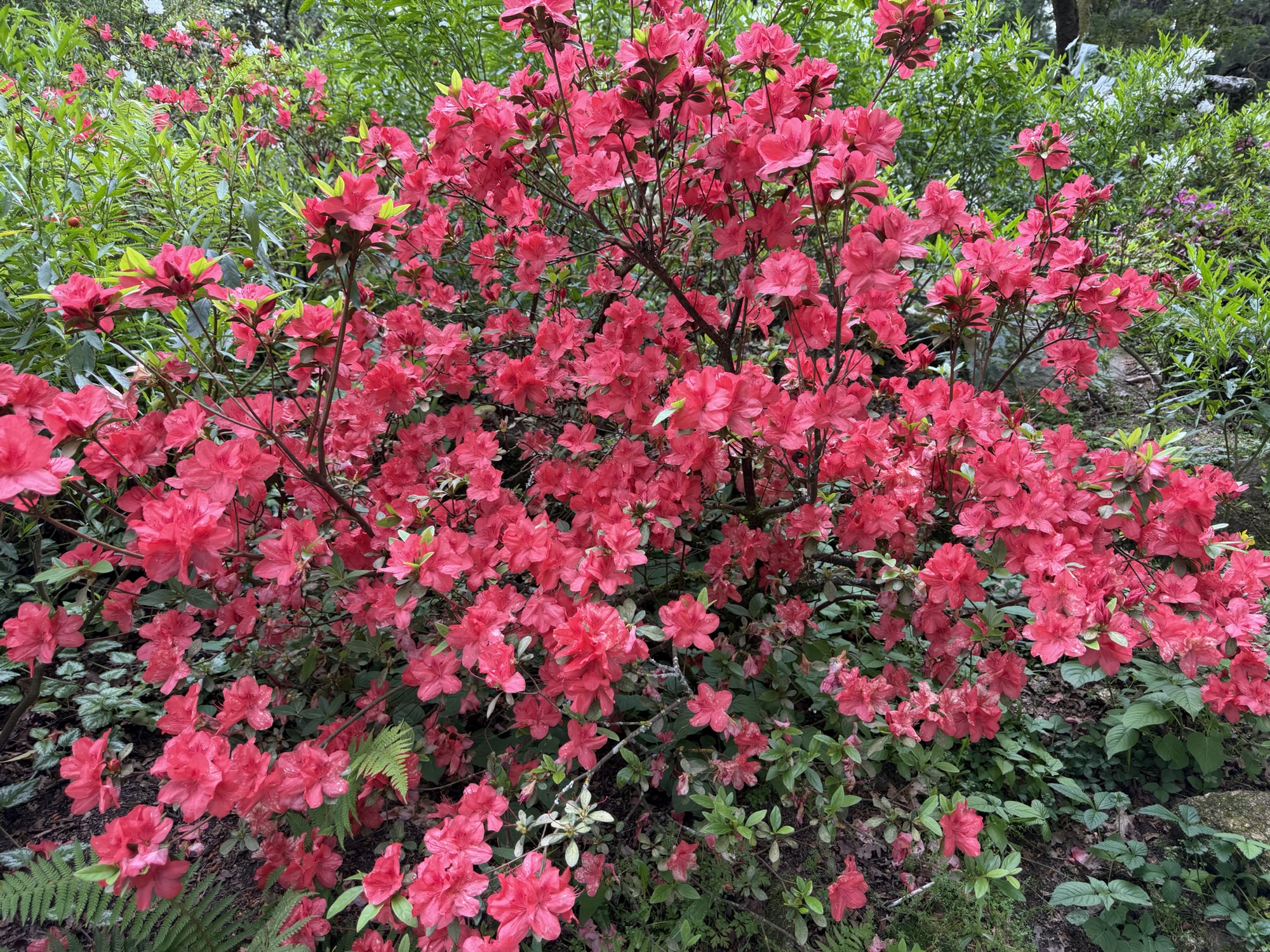
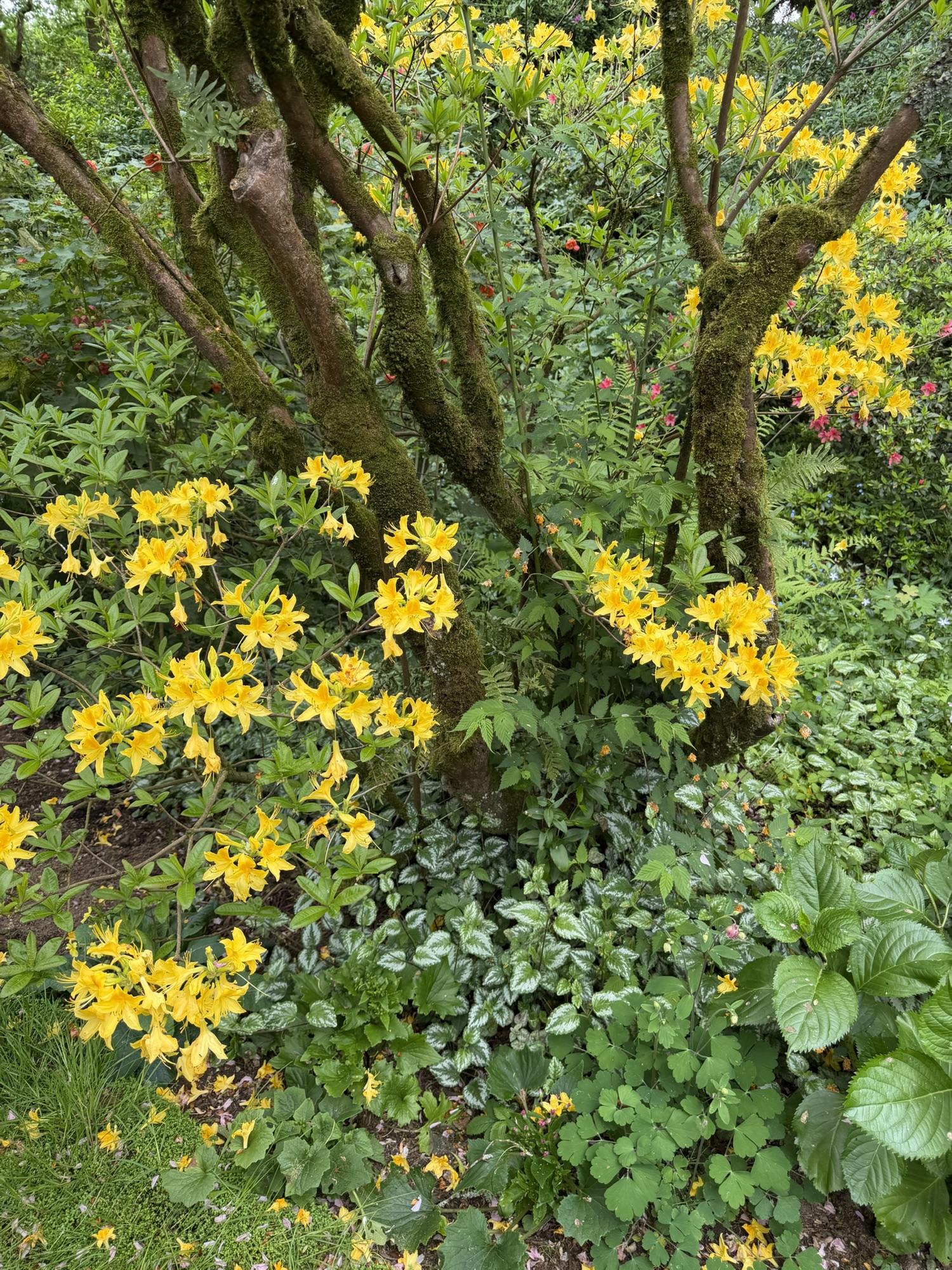
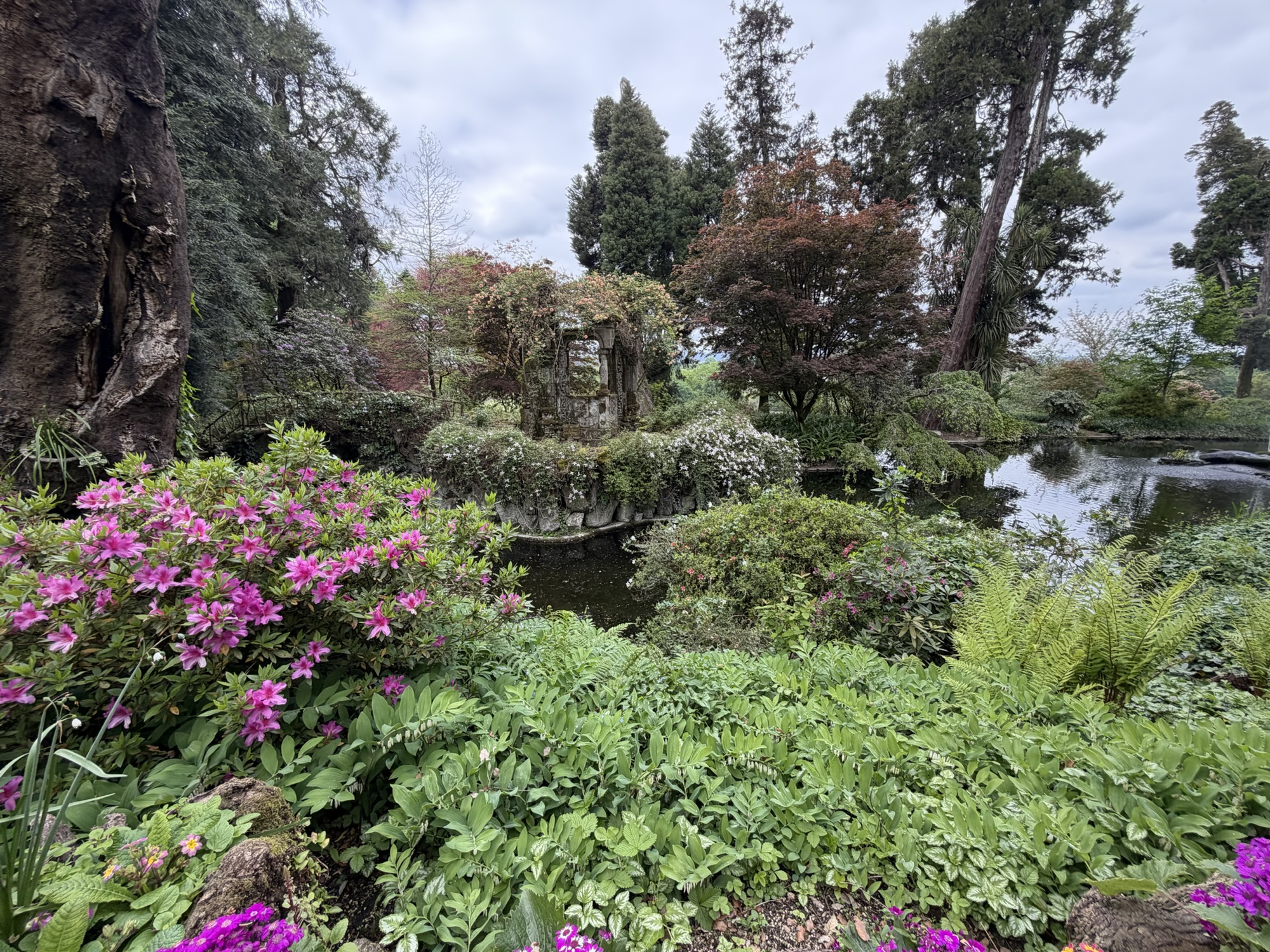
In the Crystal Palace gardens, the  azaleas and camelias were in the best blooms. They were so large and stunning. There were trees from other countries.  Statues along multiple walkways that went to lower levels in the garden. Formal gardens that overlooked the Douro River. The many overlooks gave you a chance to view Porto from a different perspective. 

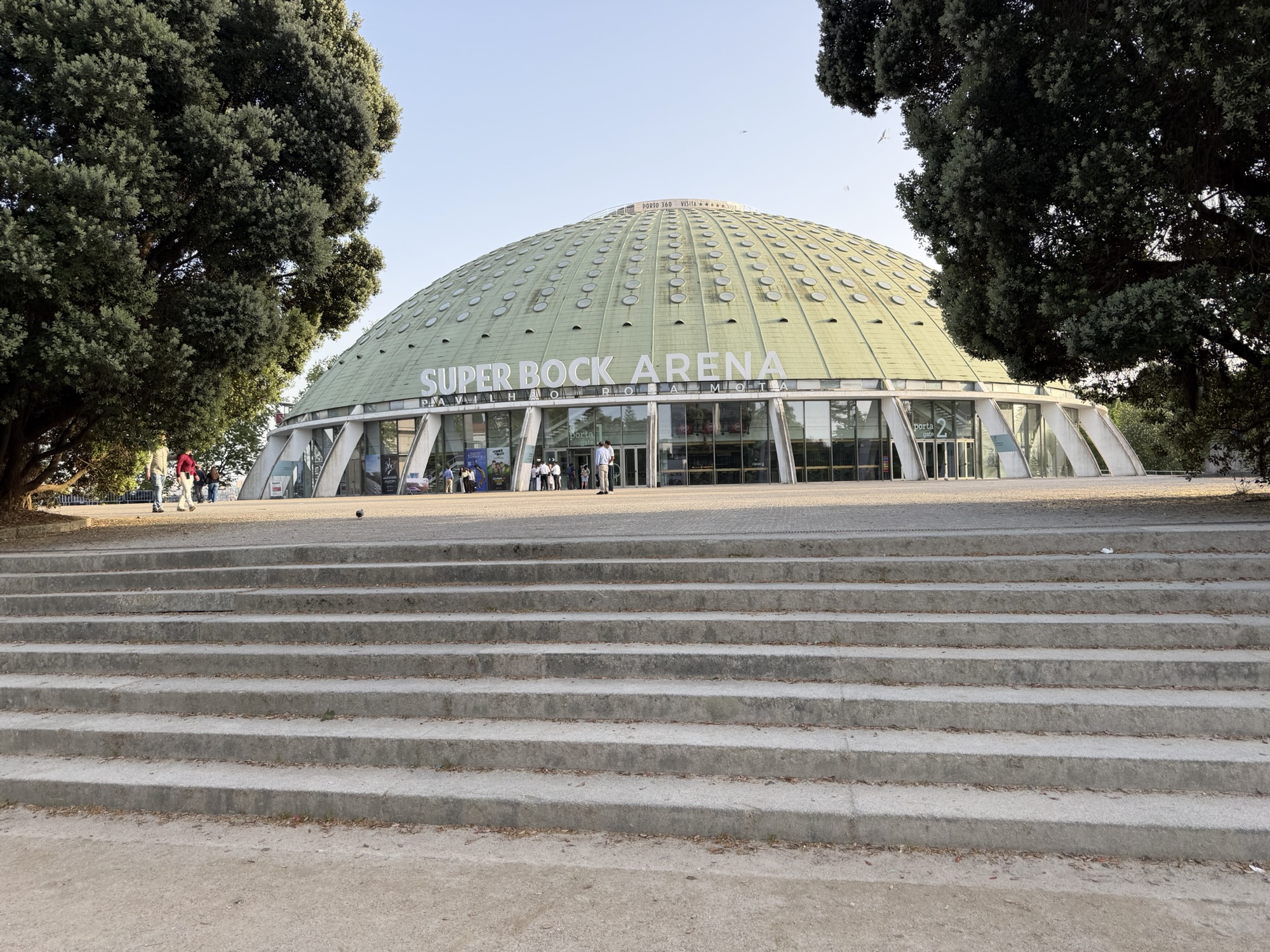
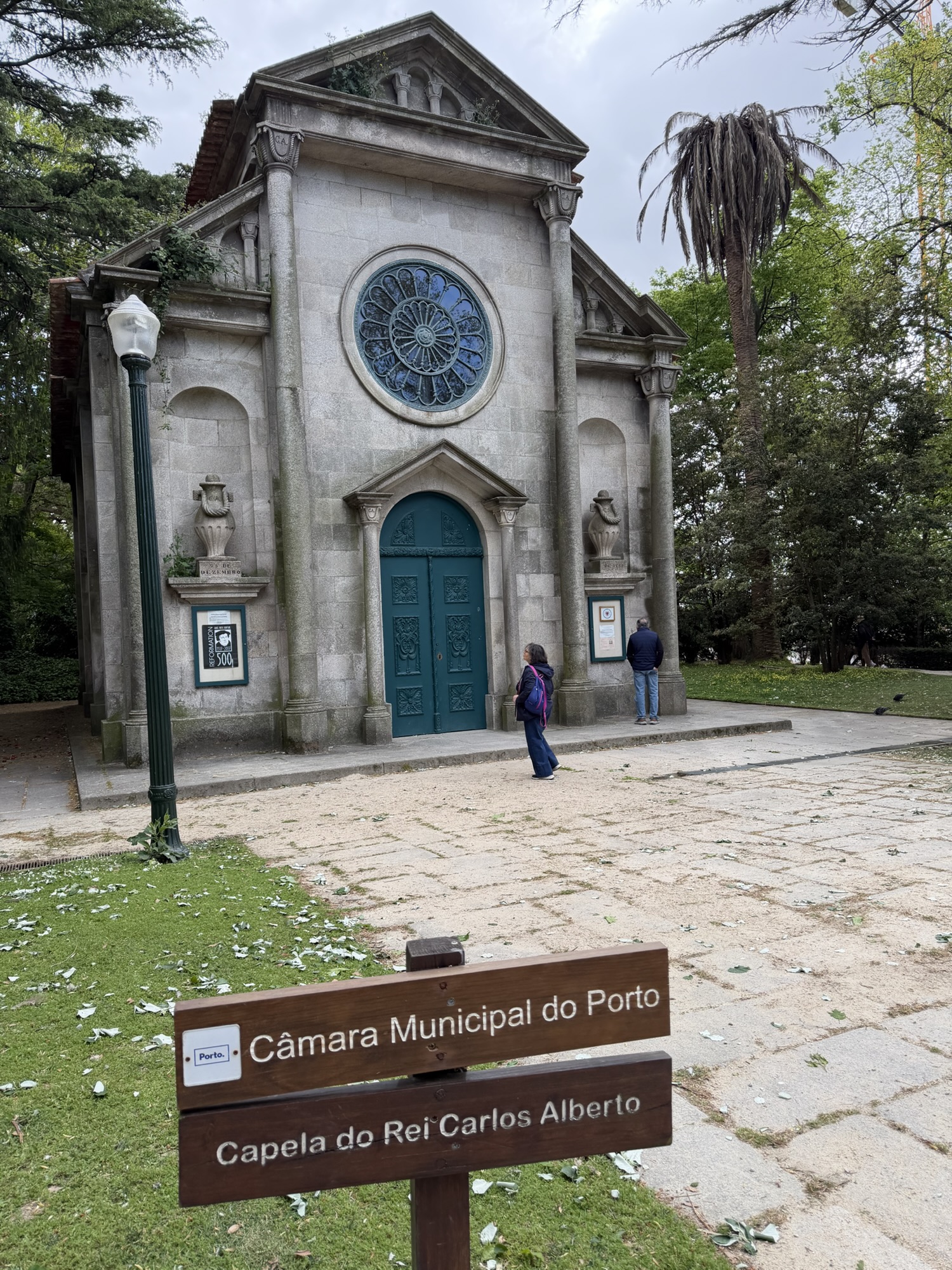
Two buildings are on the site.  The official circular arena for the Porto, which stands where the original Crystal Palace once stood,  as well as the Capela do Rei Carlos Alberto.  A small chapel that is still in use.

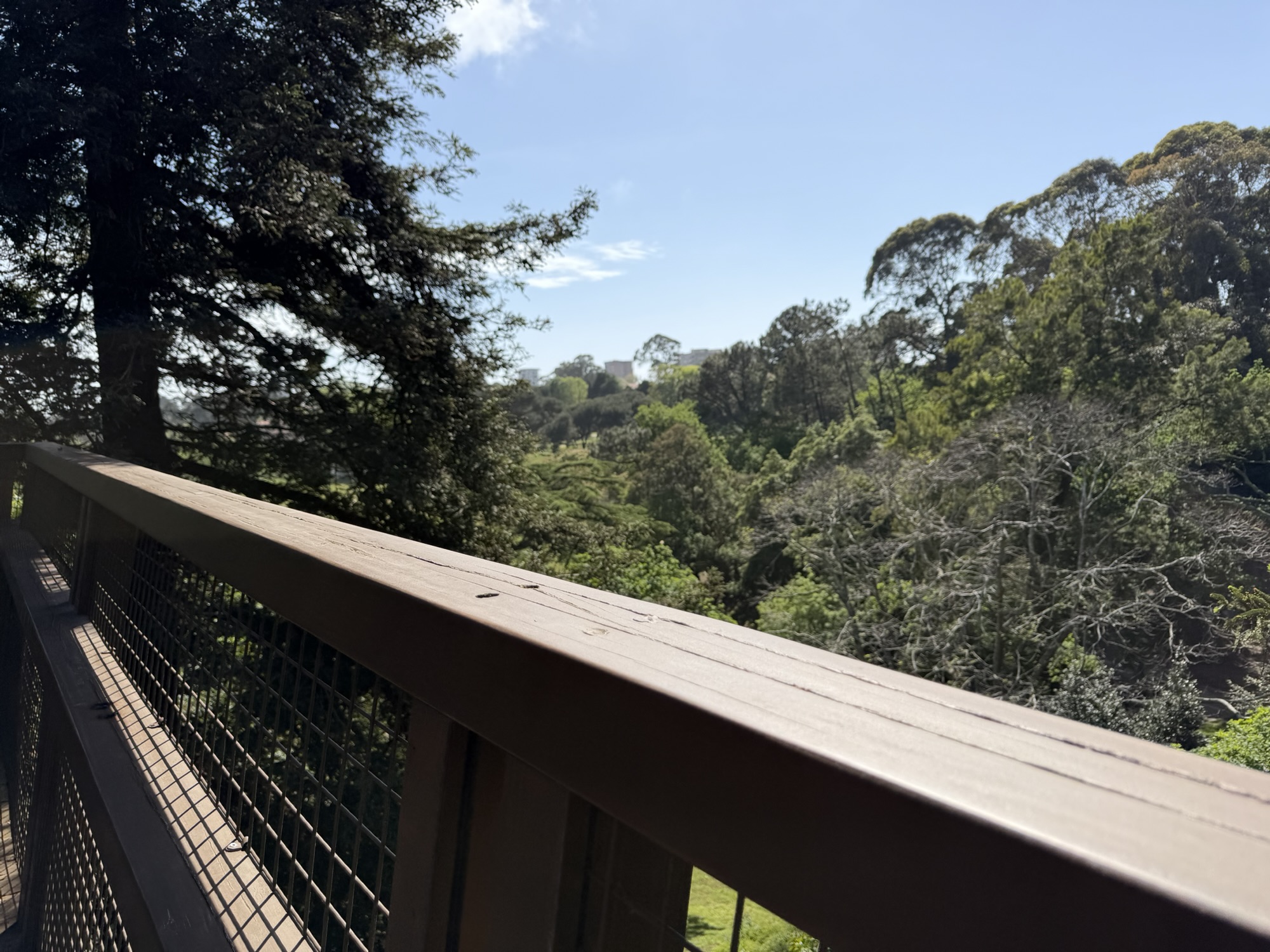
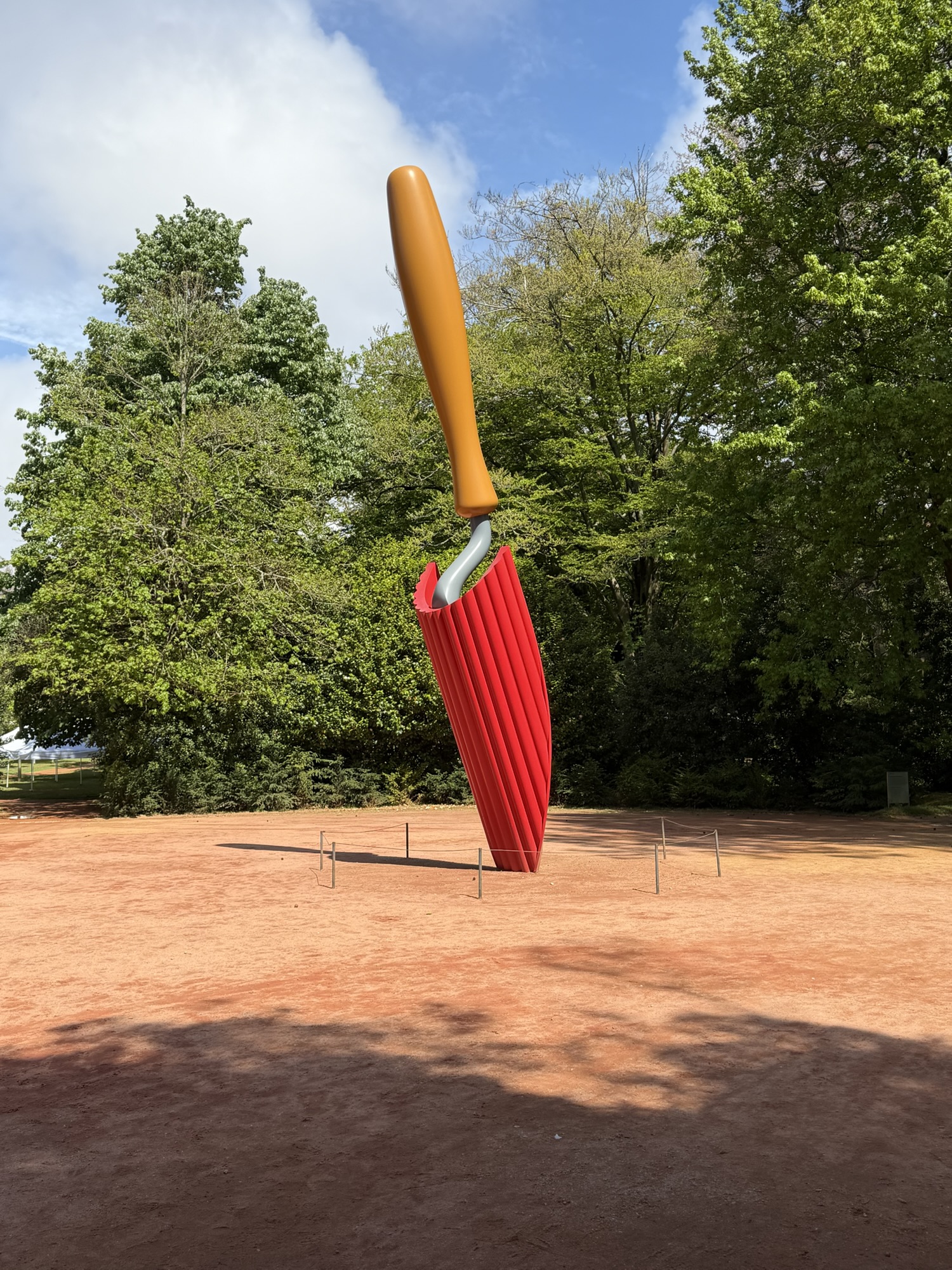
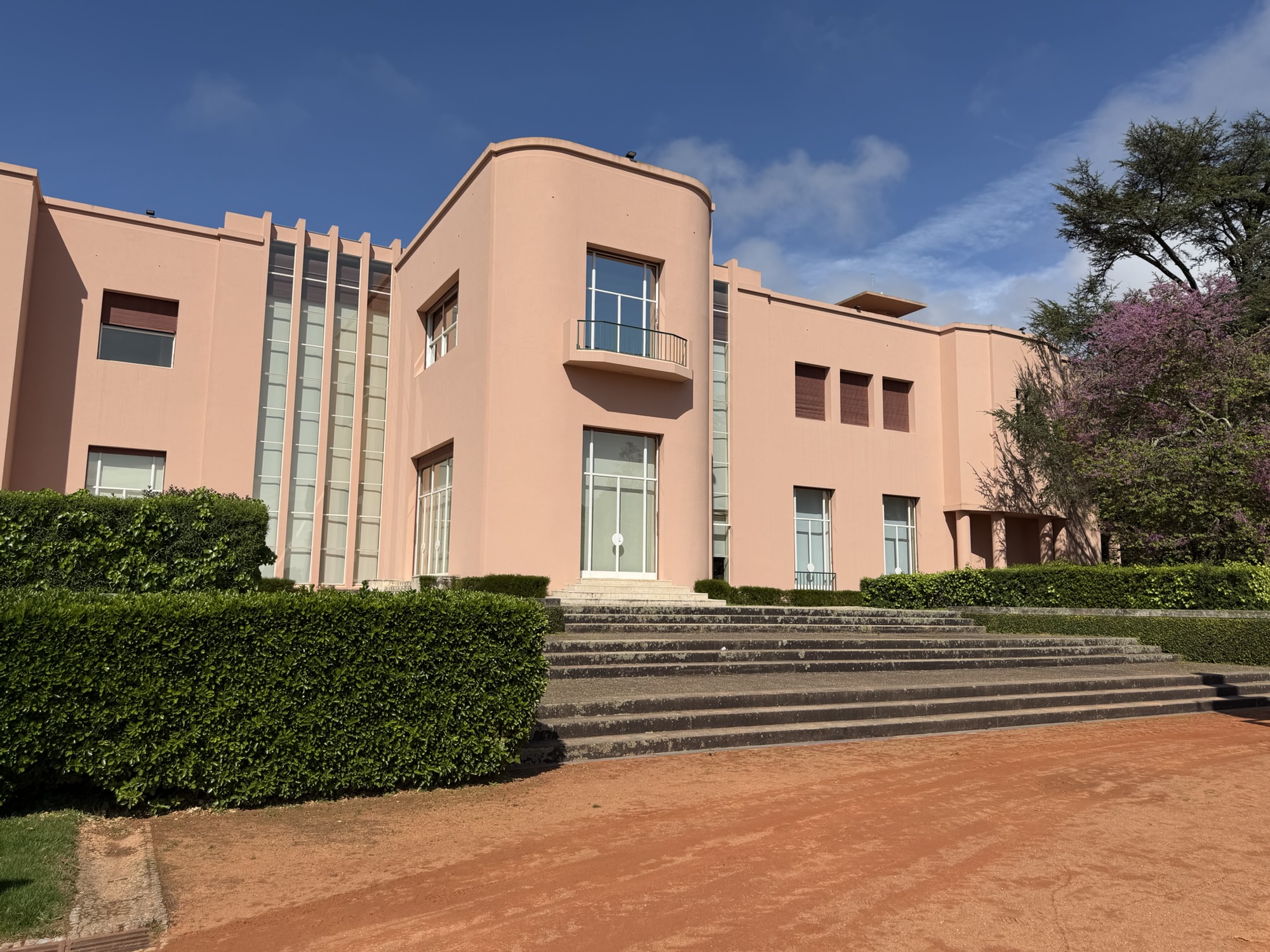
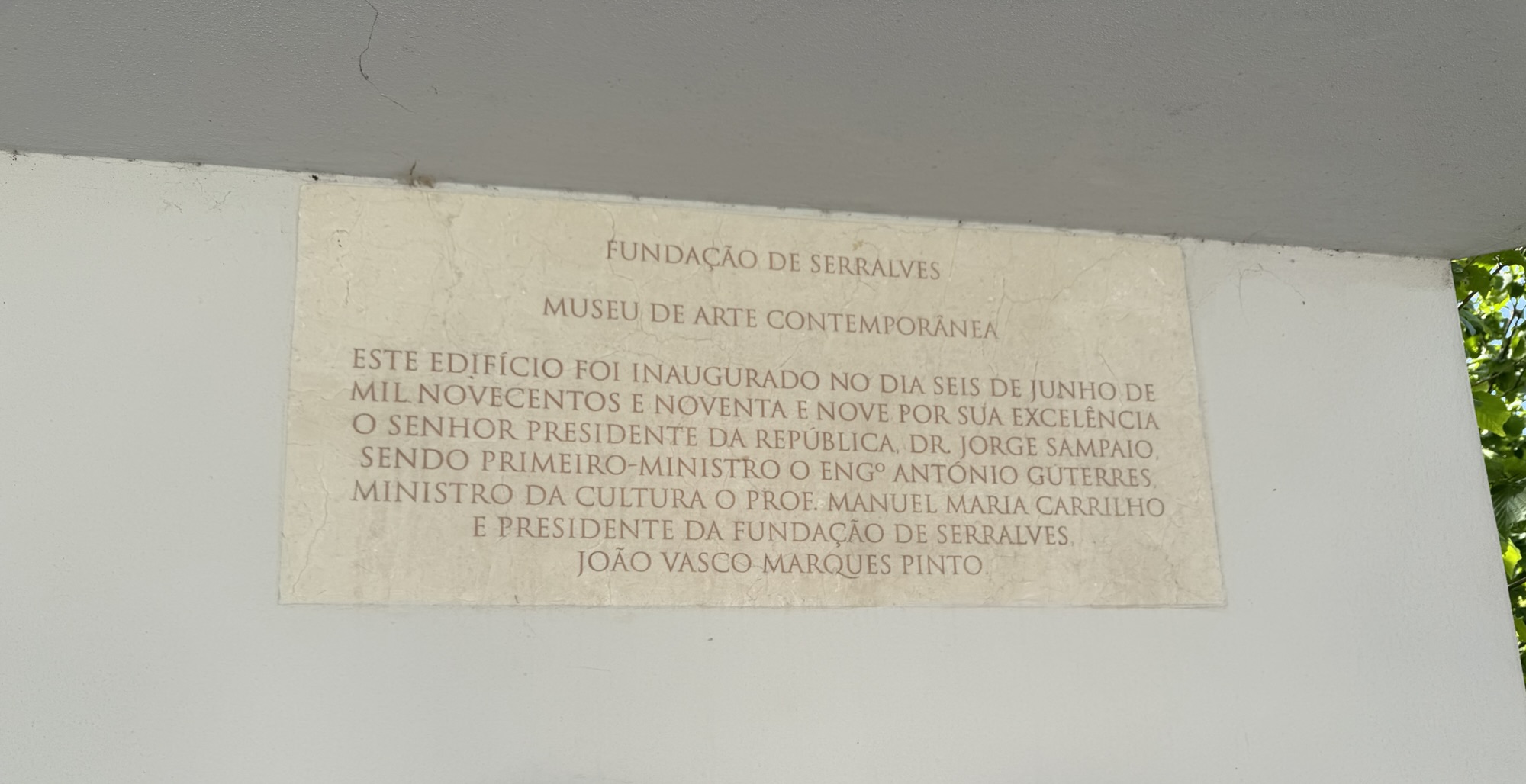
The second garden was on the grounds of the Fundacao De Serralves, the Contemporary Art Museum. The museum grounds includes the Serralves’ art deco villa and the park including many gardens and sculptures.  We saw the outside of the villa and walked only two of the parks. The formal front and then the treetop walk. I wish we had even more time. To be honest I spent all my time in the gardens and never entered the museum!!

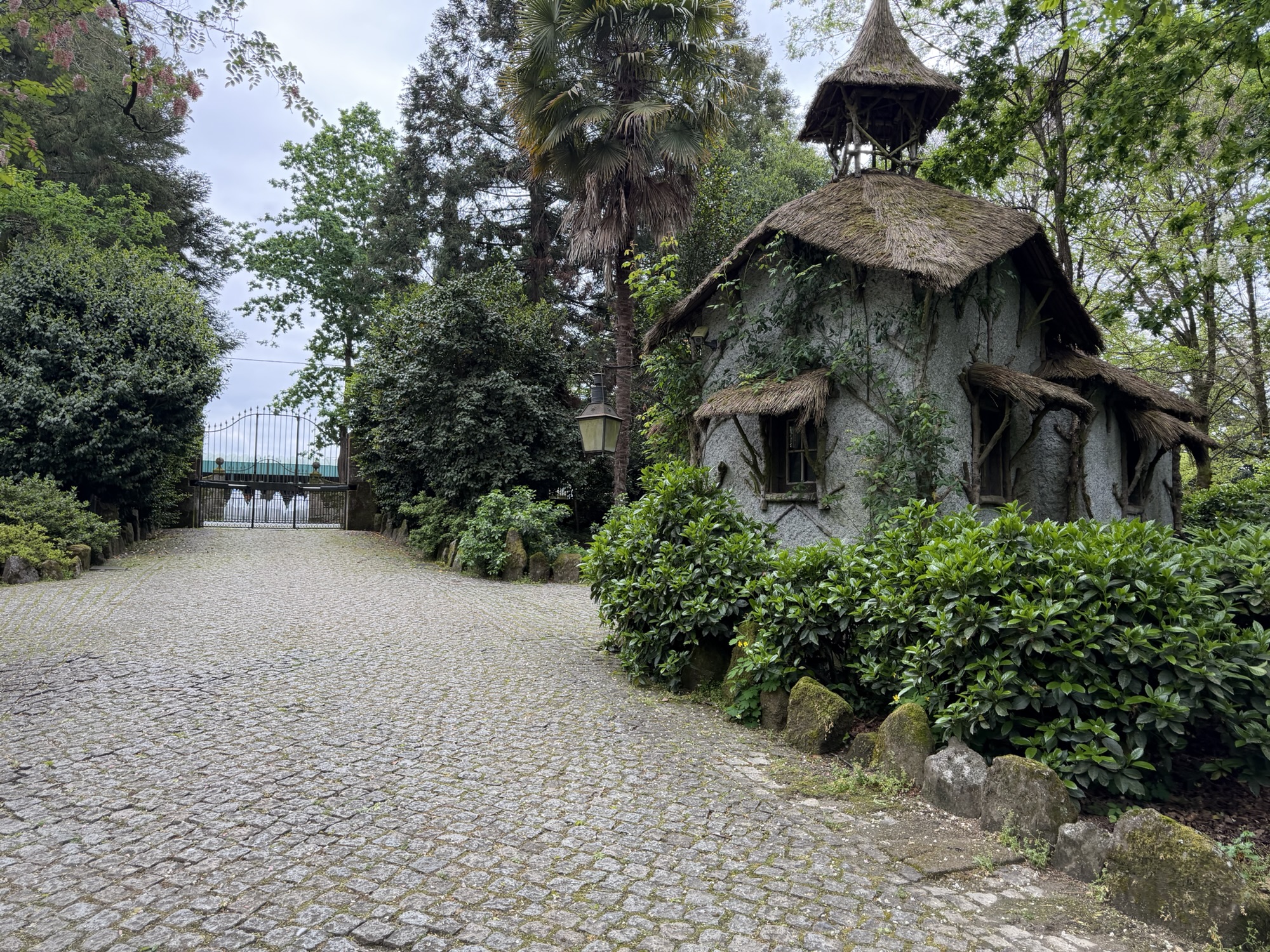
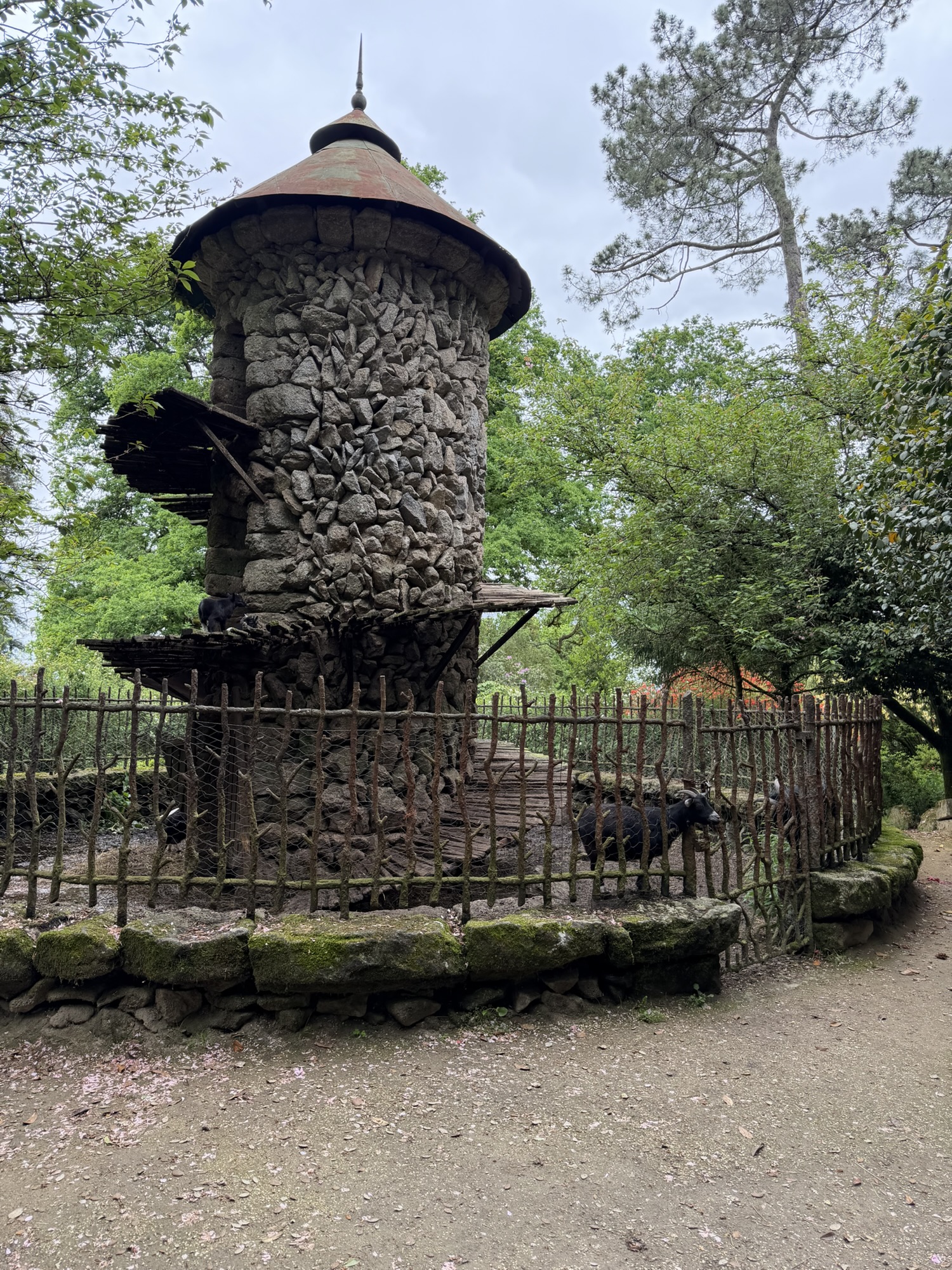
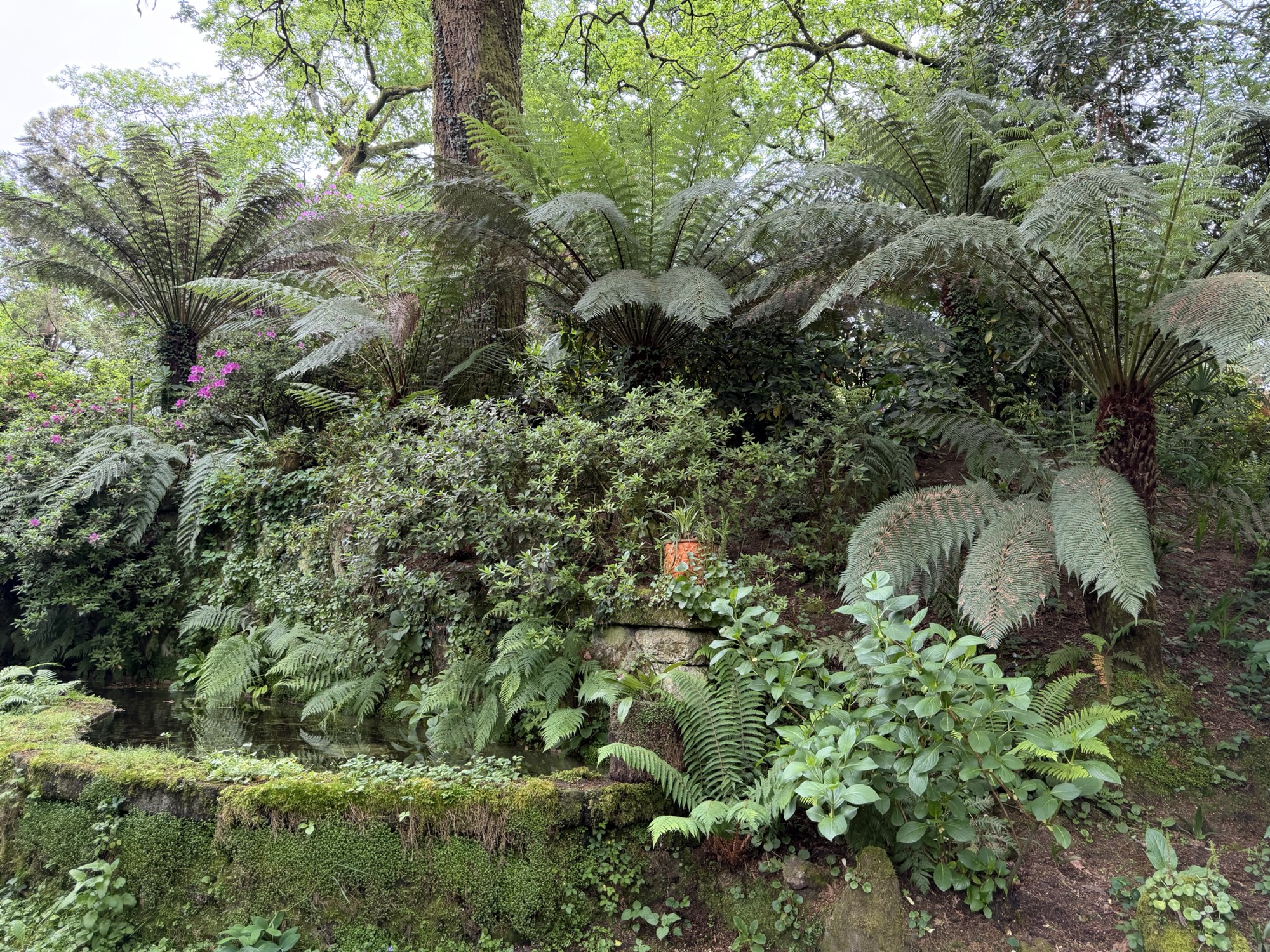
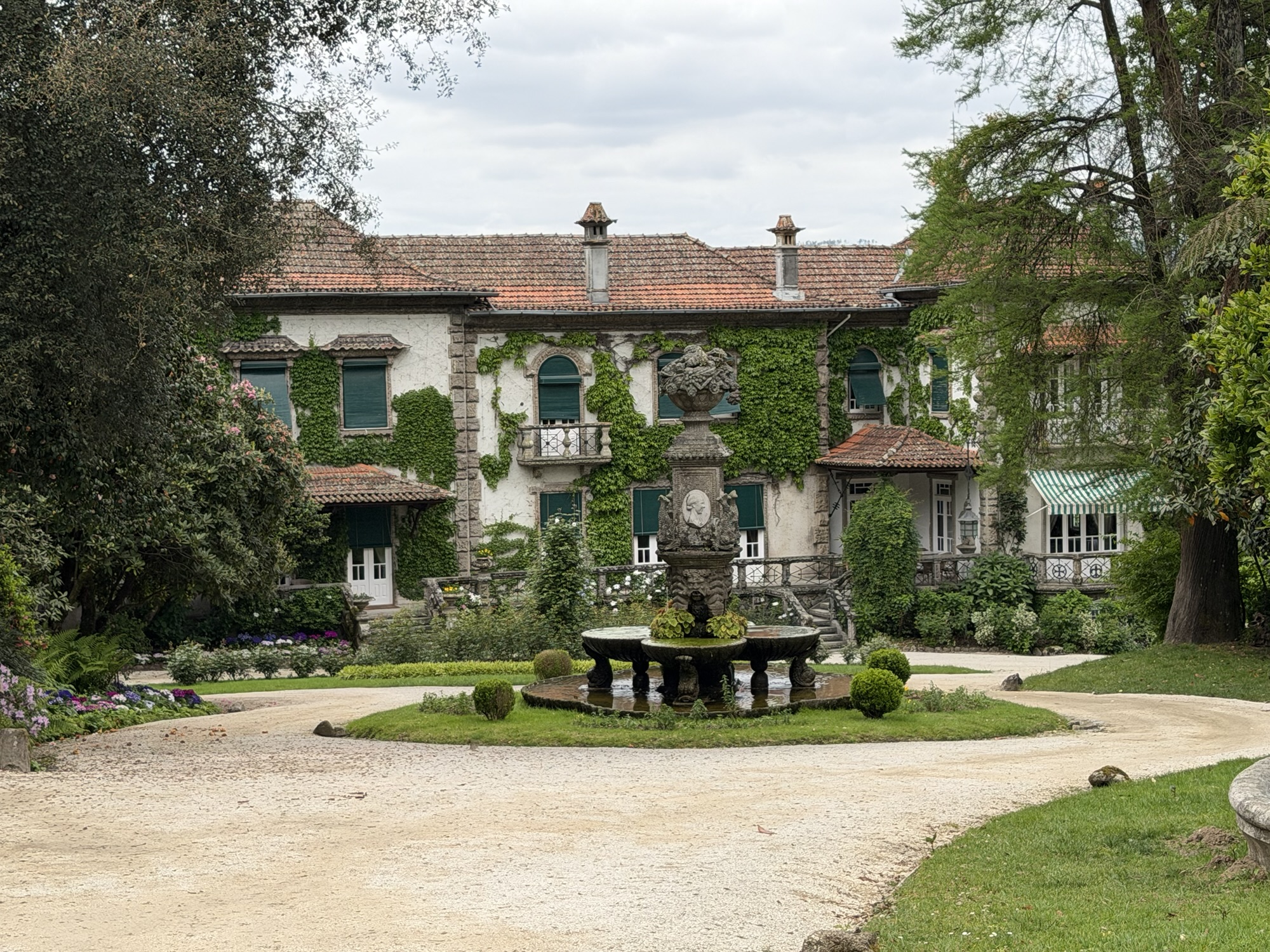
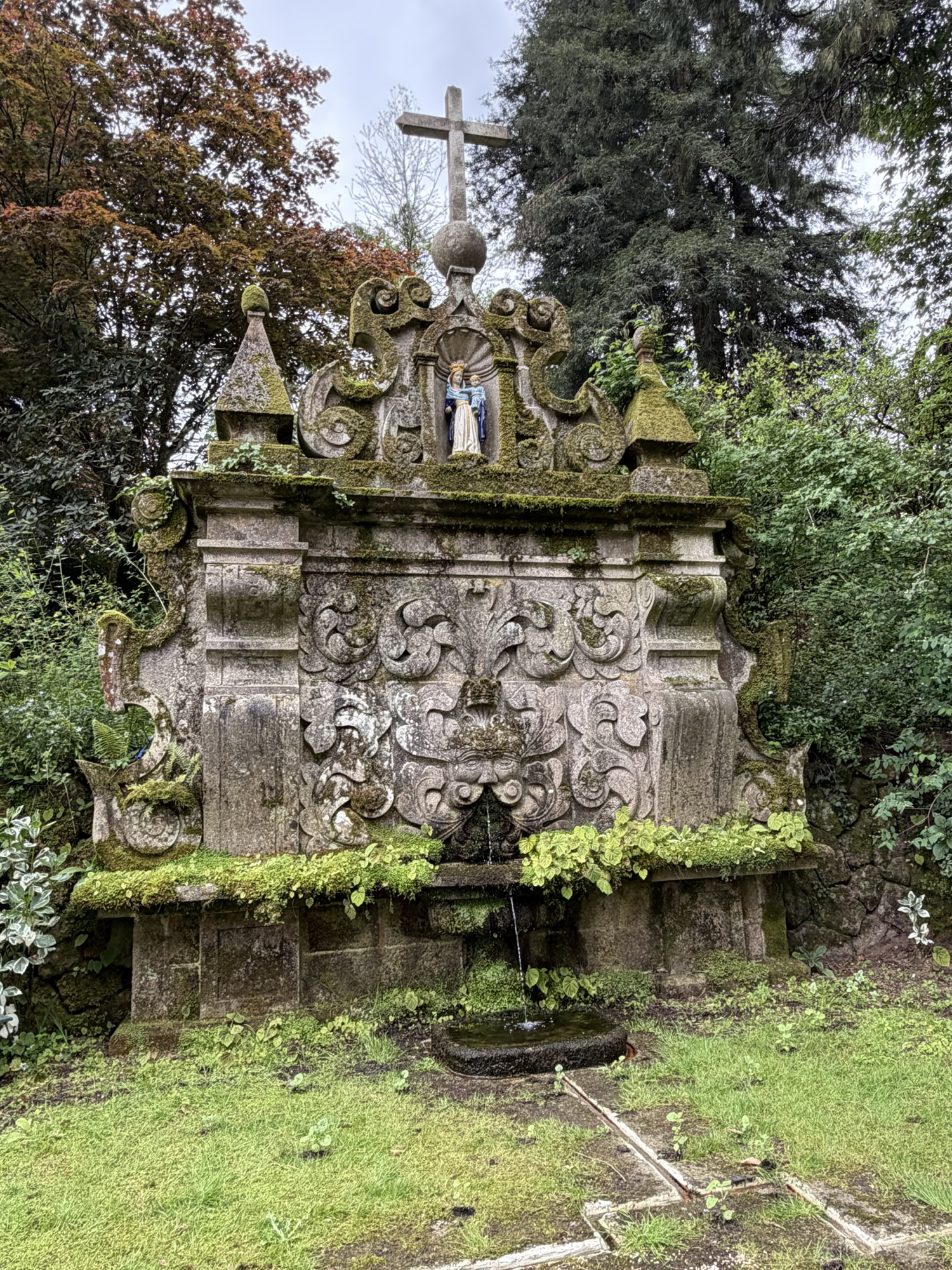
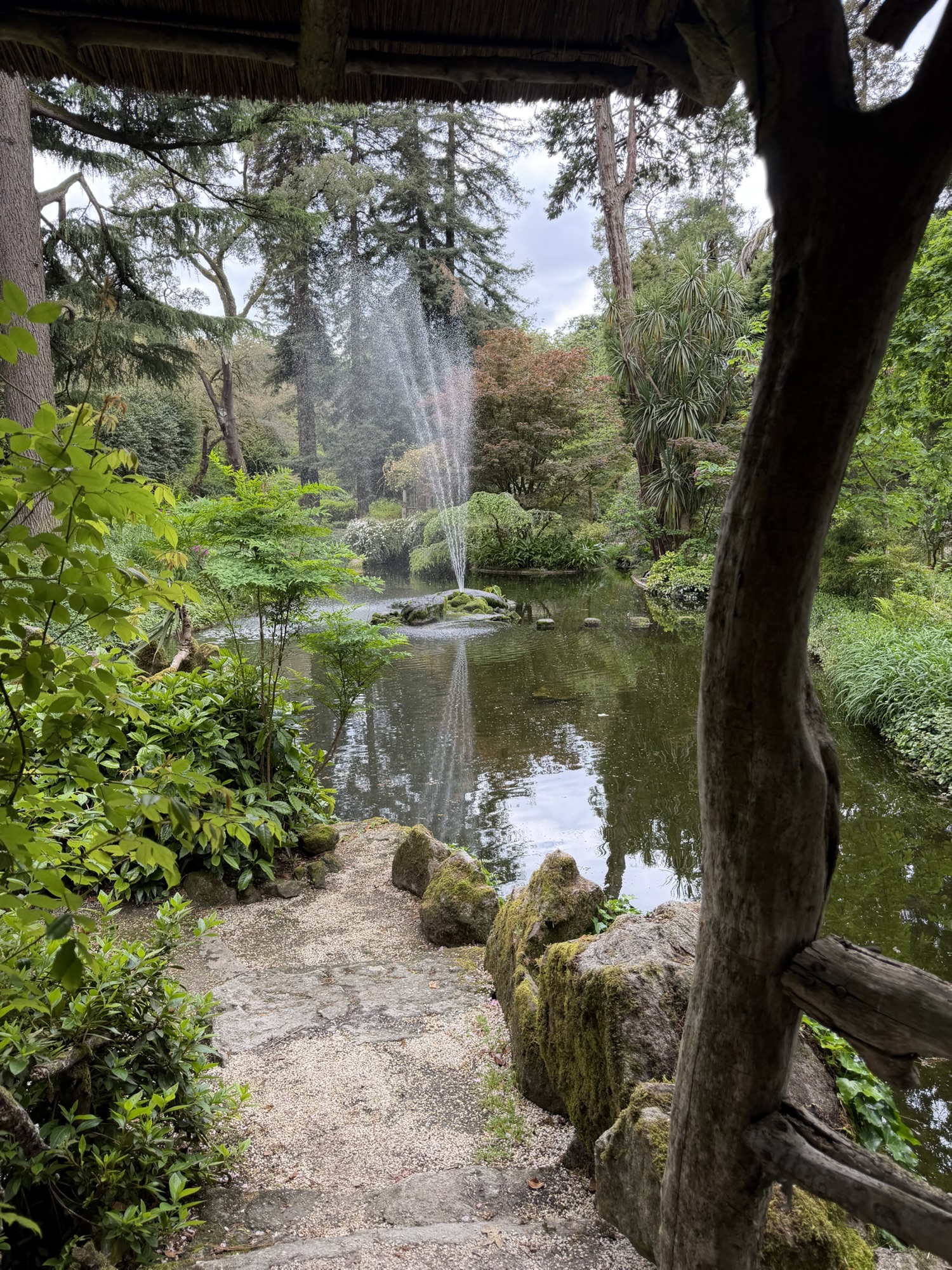
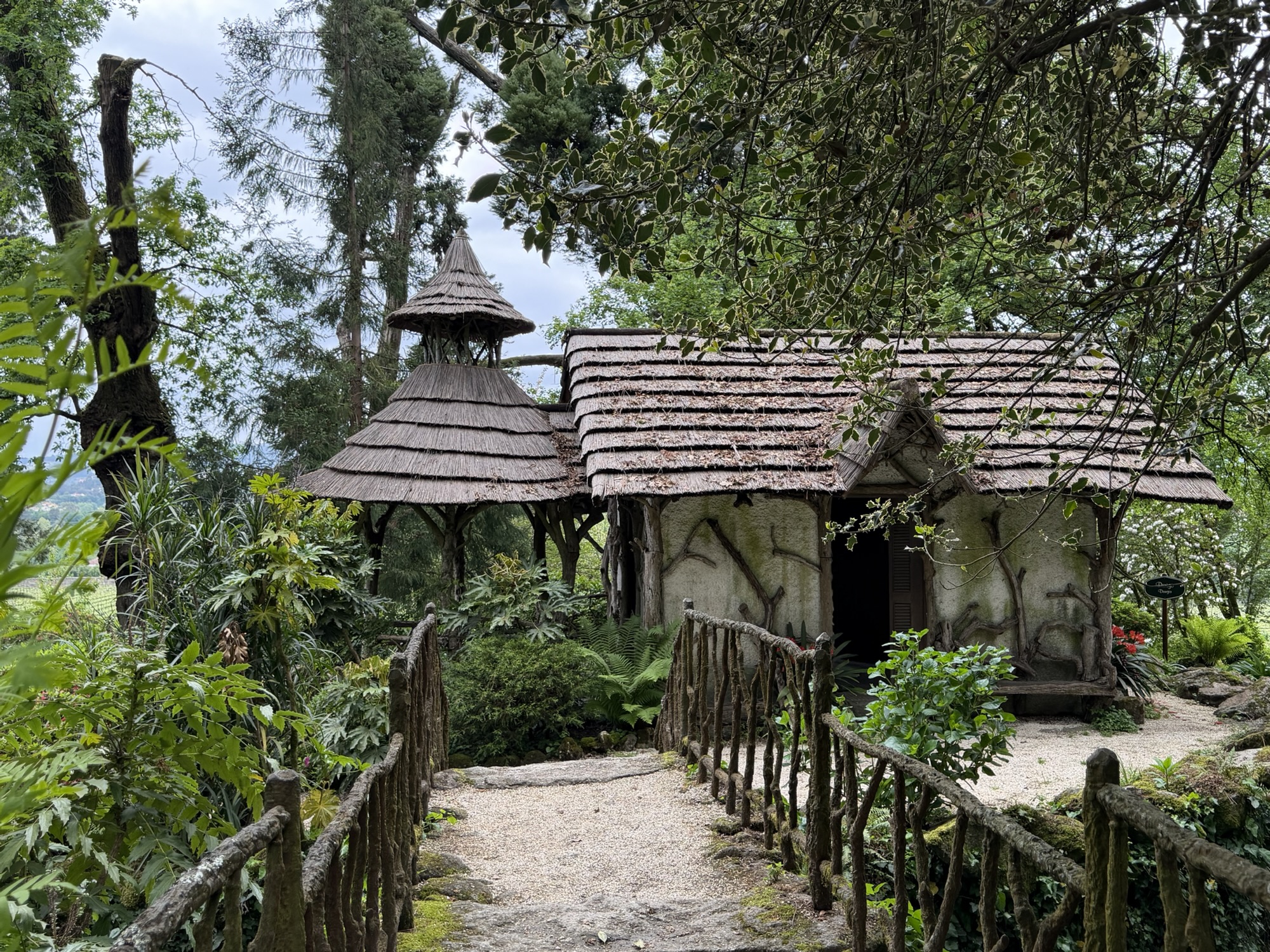
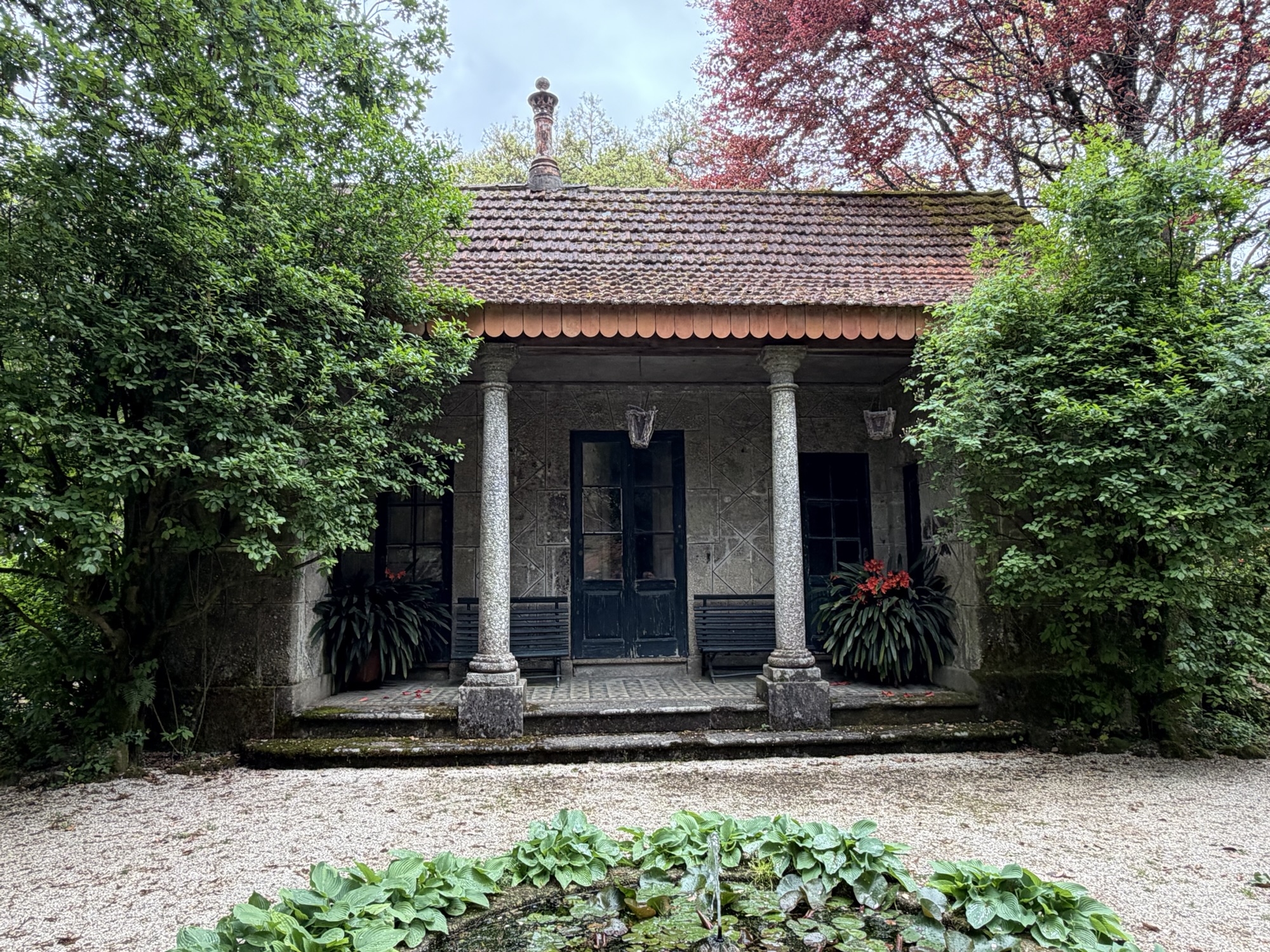
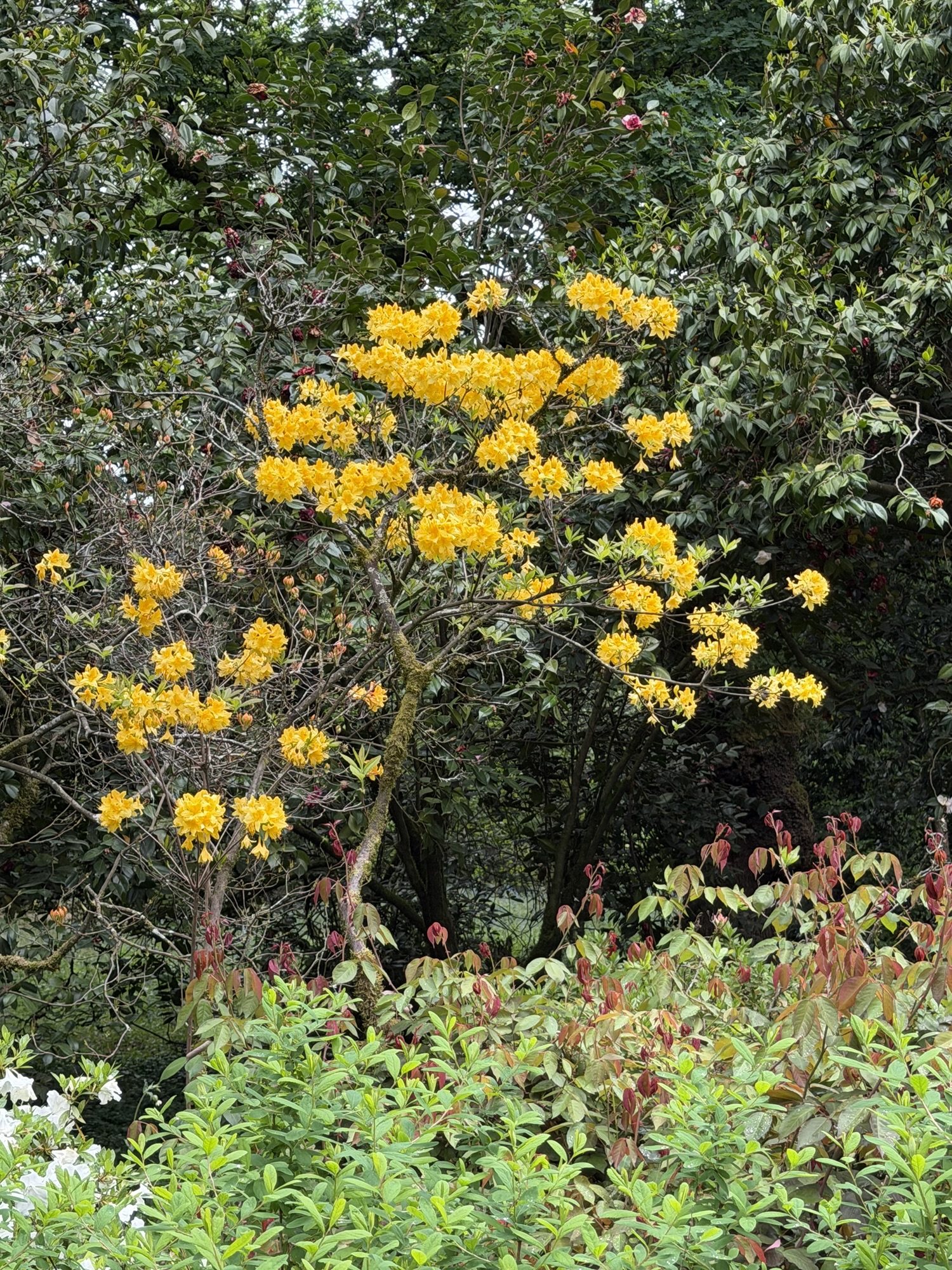
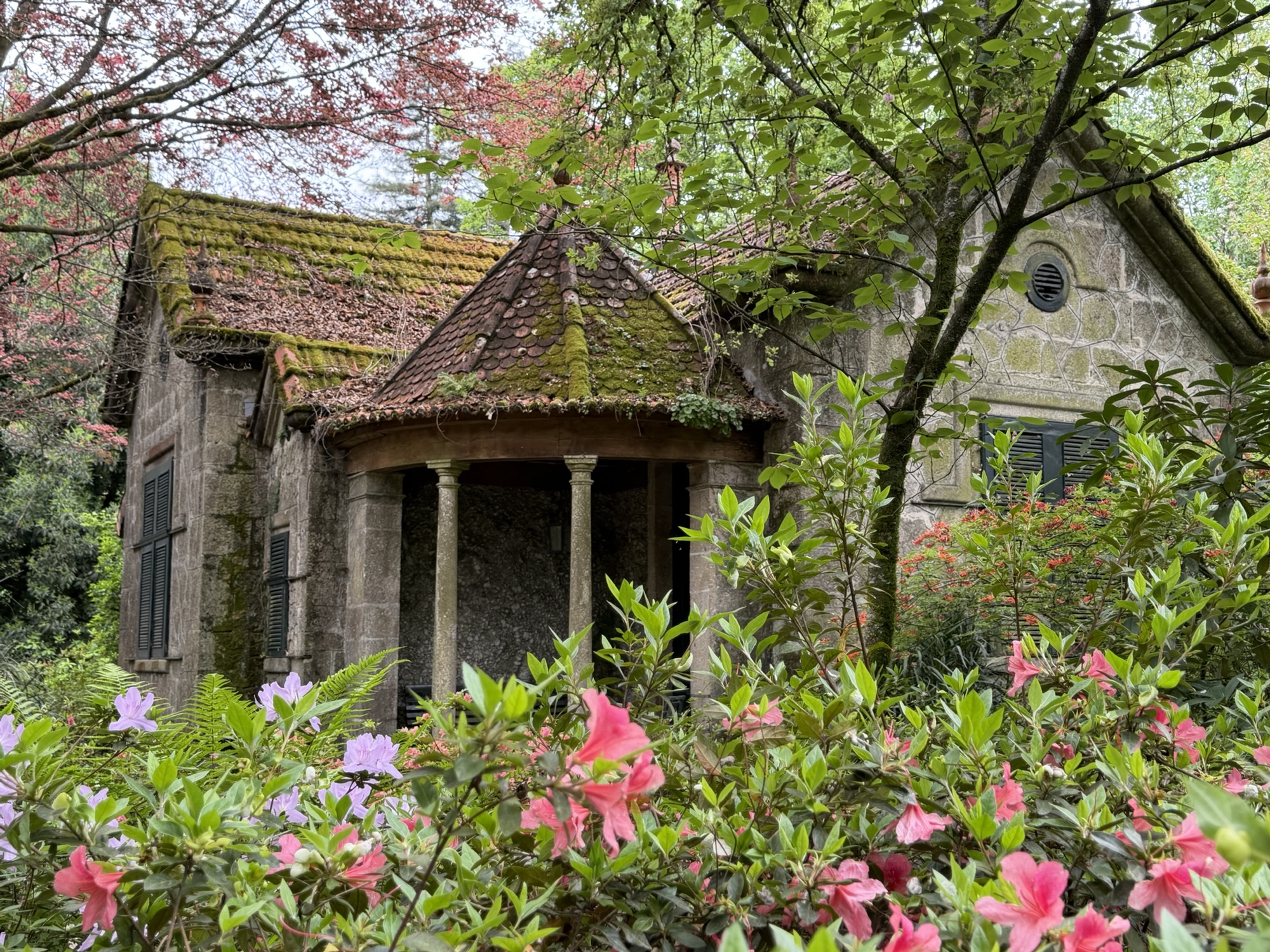
The third and most stunning of the gardens was at the estate and winery the Quinta de Aveleda!  This property has been owned by the same family since the 16th century.  They have had hundreds of years to create the most beautiful gardens.  Included in the gardens are three small houses, including one that was used by family members on their honeymoons.    There is also a small area for a family of goats to live, which were put in the garden for the enjoyment of the children.  You cannot visit the estate’s lovely mansion, except to view it from a distance, as it is still used by the family.

I wish everyone could see these gardens in person, as  photos can only capture some of the essence of these fantastic garden sites.

https://ambiente.cm-porto.pt/parques-e-jardins/jardins-do-palacio-de-cristal

https://www.serralves.pt/institucional-serralves/parque_apresentacao/

https://aveleda.com/en/wine-tourism/quinta-da-aveleda#

A Hidden Gem: Kansas City Automotive Museum

5 Nov

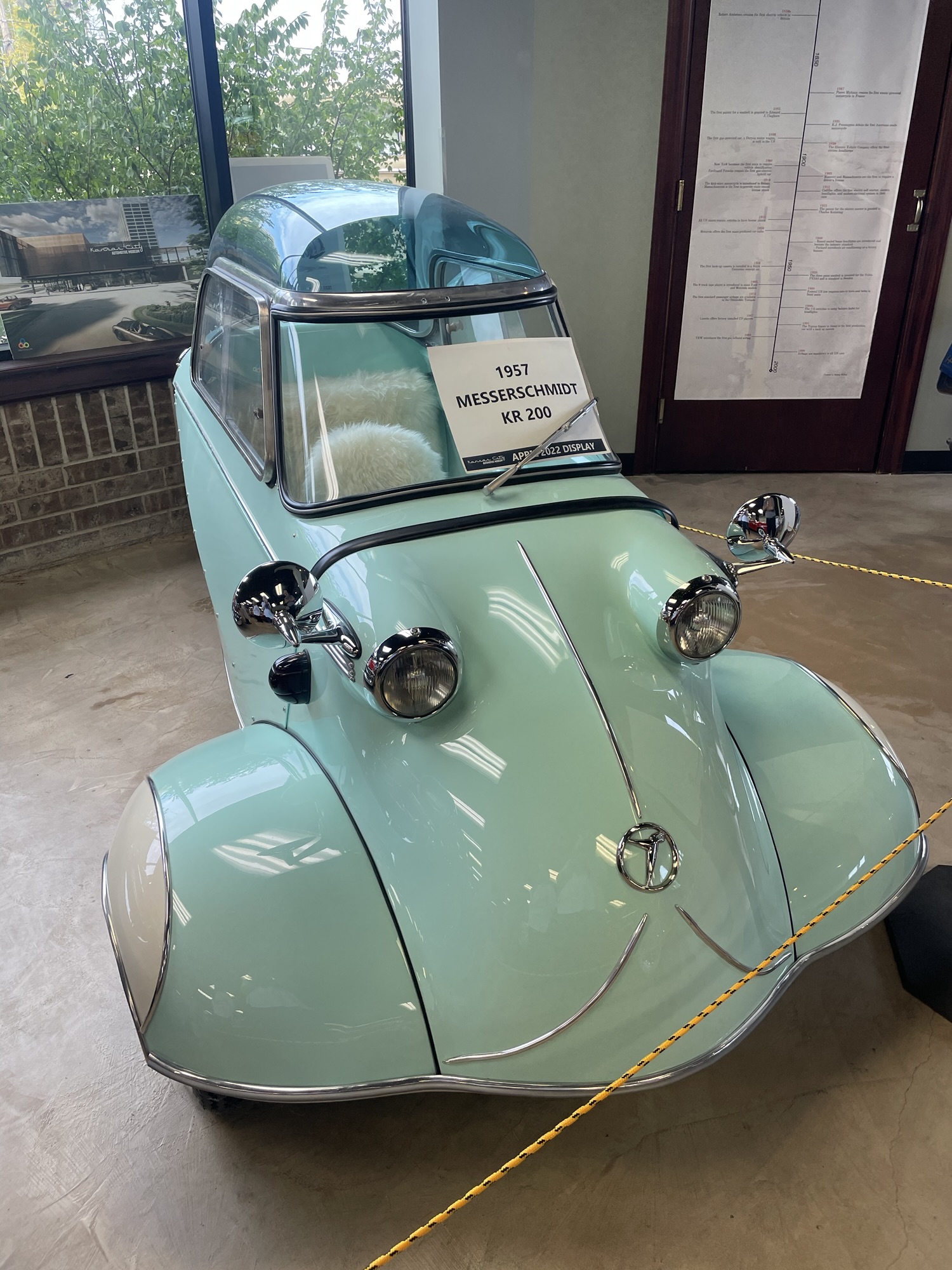
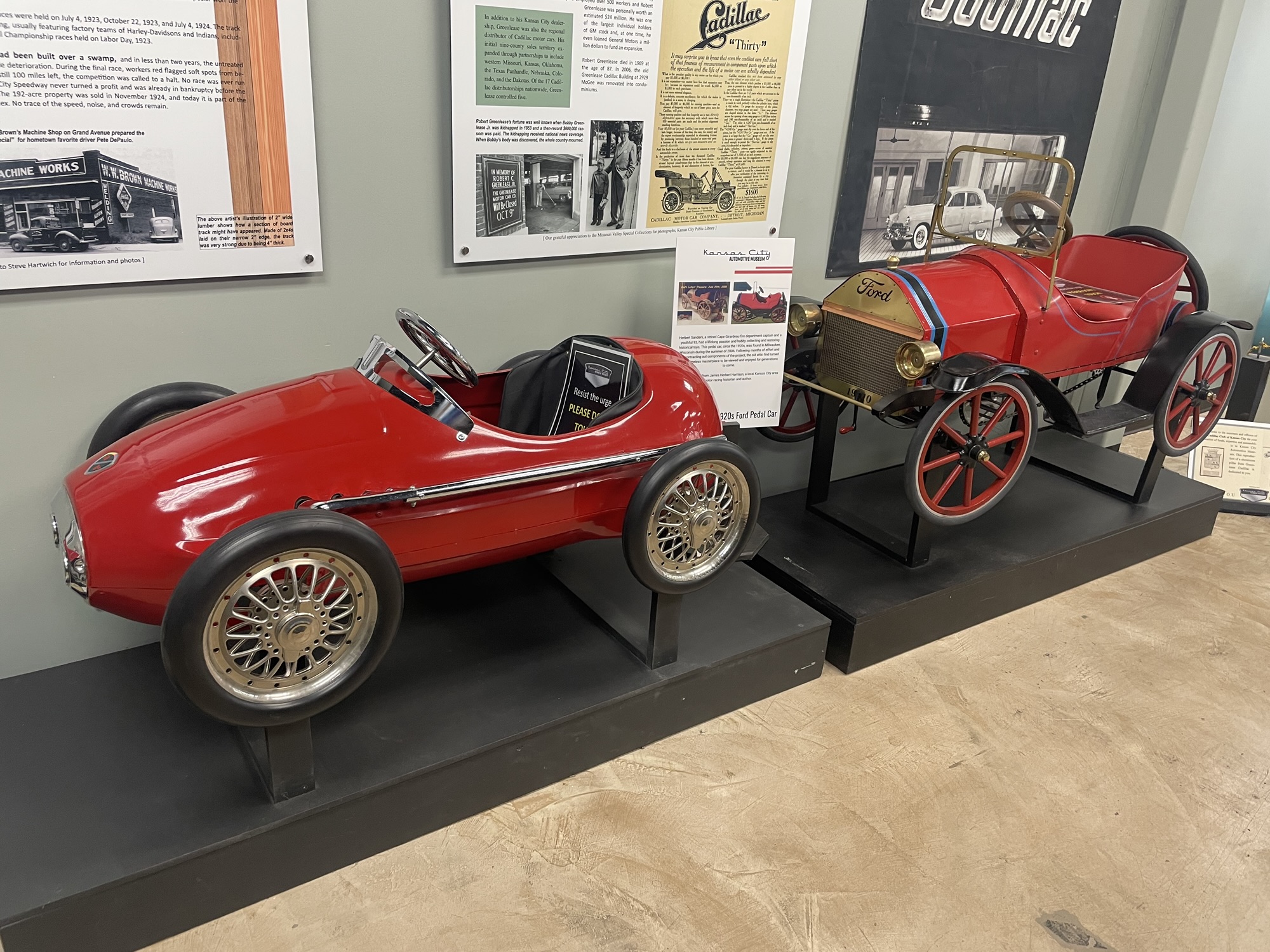
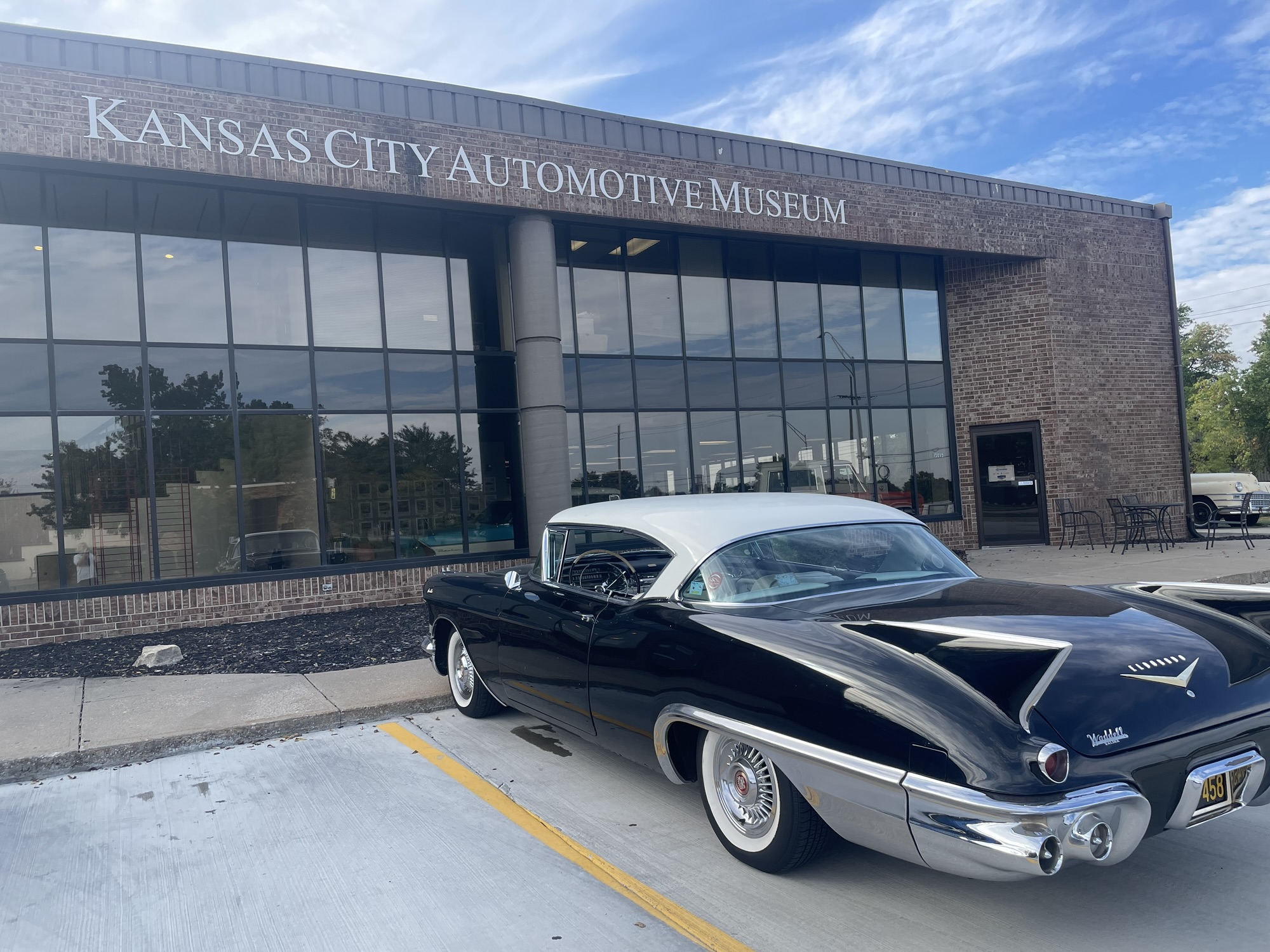
The current home of the Kansas City Automotive Museum is a little bit hidden away in Olathe, Kansas.  This 10,000 square-foot museum is PACKED with all sorts of cars and information. Much more than I anticipated.  Founded and opened in 2014, the Automotive Museum houses many cars and other objects that are on loan from their owners, where they are safe but also provide a place for others to share in the joy of their uniqueness.

There are race cars, turquoise-colored cars from the 1950s, an original Model T, 1912 Ford Model T, Packard Roadster, Studebacker, Bentley, Jaguar, Chevrolet Sport Phaeton, a bubble car, children’s go-carts, and so much more.  I am not a car enthusiast, but I definitely enjoyed this experience.

We went with friends in October and were delighted to have a docent go through the entire museum with us.  He was fantastic in explaining the different cars and what made them special; the special exhibits; the history of cars in Kansas City, and answered all of our questions, even the naïve ones.

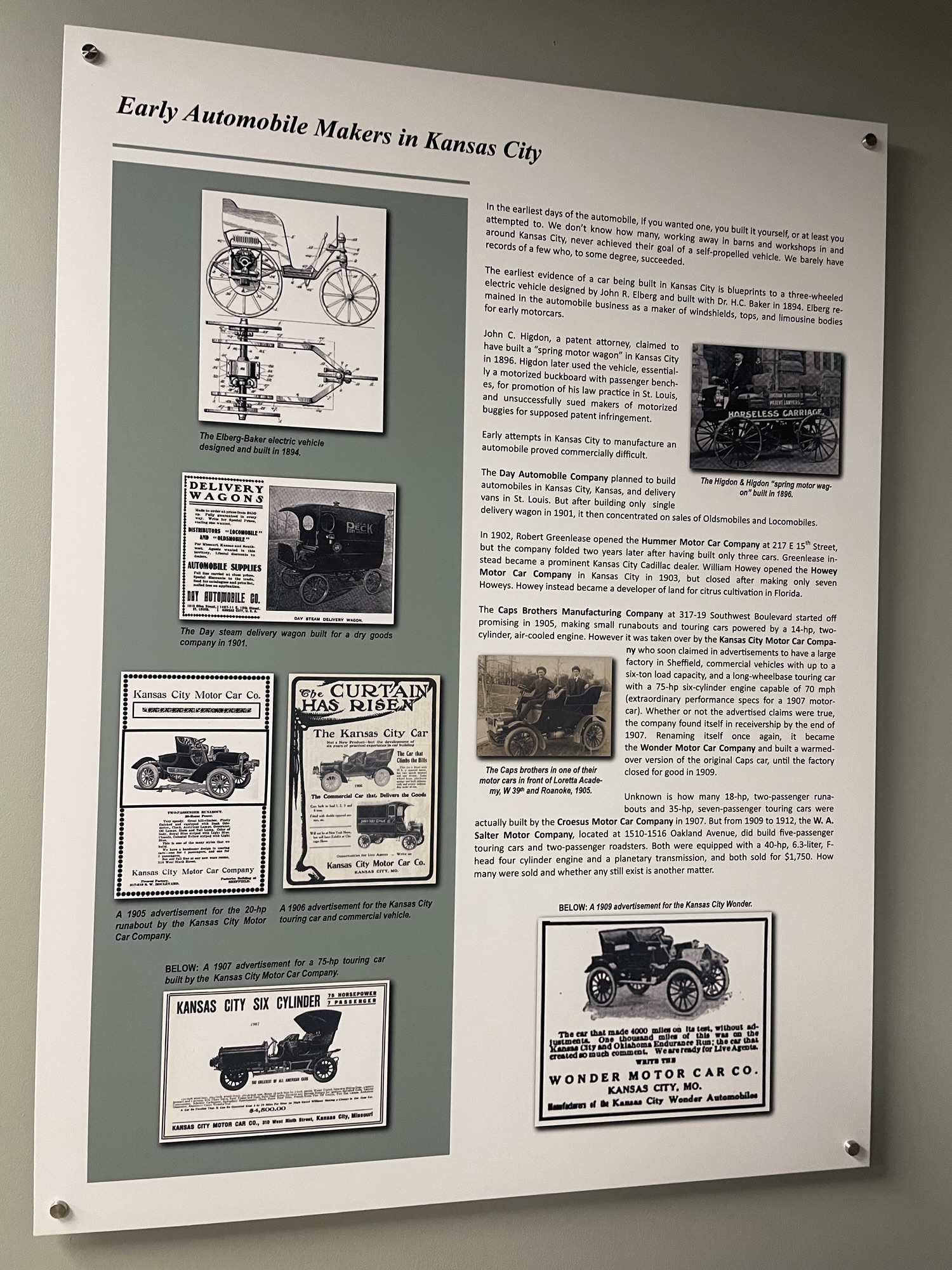
Along the walls was information about the Kansas City automotive industry.  I knew we have factories here, but I had no idea how long cars have been made in the area.  I also did not realize that in the early years there were many small car companies that made perhaps dozens of cars before they closed.  But that makes sense as all cars were originally made by hand.  It wasn’t until Ford came up with the assembly line that car making became quicker and cheaper. 

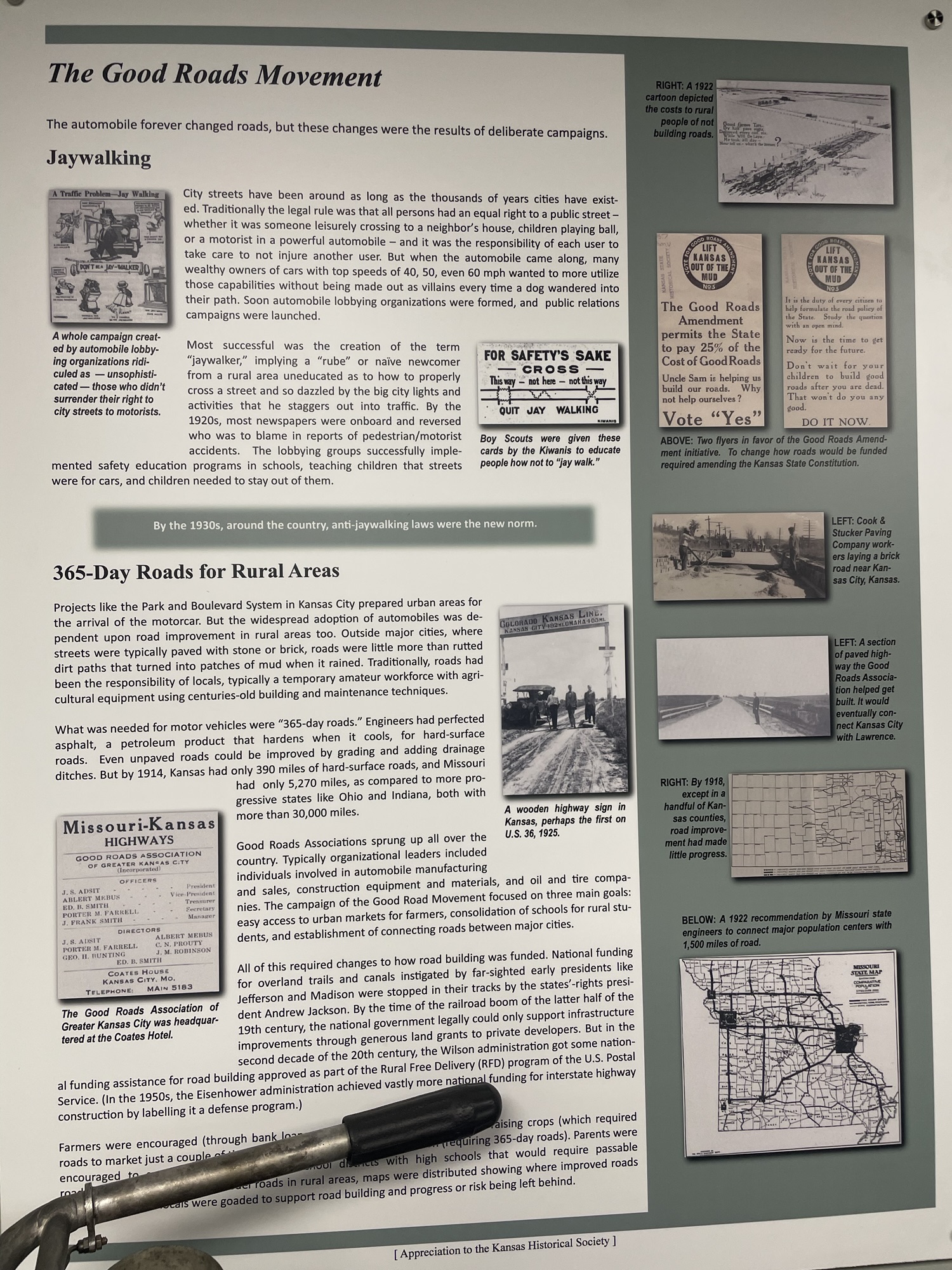
I was also amazed about how streets were developed. There was not always all the pavedc roads everywhere. They had to be built. One fun fact I learned was the origins of  the term Jaywalking. It was a term for people who crossed the street in front of cars, making them seem not very smart..  Unlike now when motorists is blamed if they go too quickly and hurt someone, then they turned it around and blamed the pedestrian if they went in front of a car or were hit by a car!!!!

The Homer B. Roberts Gallery is in honor of the first African American car salesman in the Kansas City area. In the early 1900s he had an office at 14th and Vine where he sold cars to the African American community.  I had not thought of that before, white salespeople did not sell to African Americans, but in order to make more money they needed a salesperson.  Enter Homer B. Roberts and Roberts Motor Mart.

There is so much information in the permanent displays of the museum, a car enthusiast could spend hours looking at cars and listening to the stories.  But there is also an exhibit room for special displays. When we went there were motor homes/campers from the early 1970s.  Some were all in one, others were ones that were pulled by a car.  I enjoyed seeing those as well.

The Kansas City Automotive Museum is building a new home in Kansas City, Missouri, on the north side of 31 street between Broadway Boulevard and Southwest Trafficway.  It will be much bigger, 40,000 square feet, and able to display many more of the community’s antique and special cars.

This is a fun and informative museum, a hidden history gem, in Olathe.  But when it moves to Kansas City, Missouri, set to open in 2027, I believe it will be even more impressive.  I look forward to visiting the new museum then. For more information go to the website, https://kansascityautomuseum.com/

Danger! The Warning Signs of Yellowstone

13 Oct

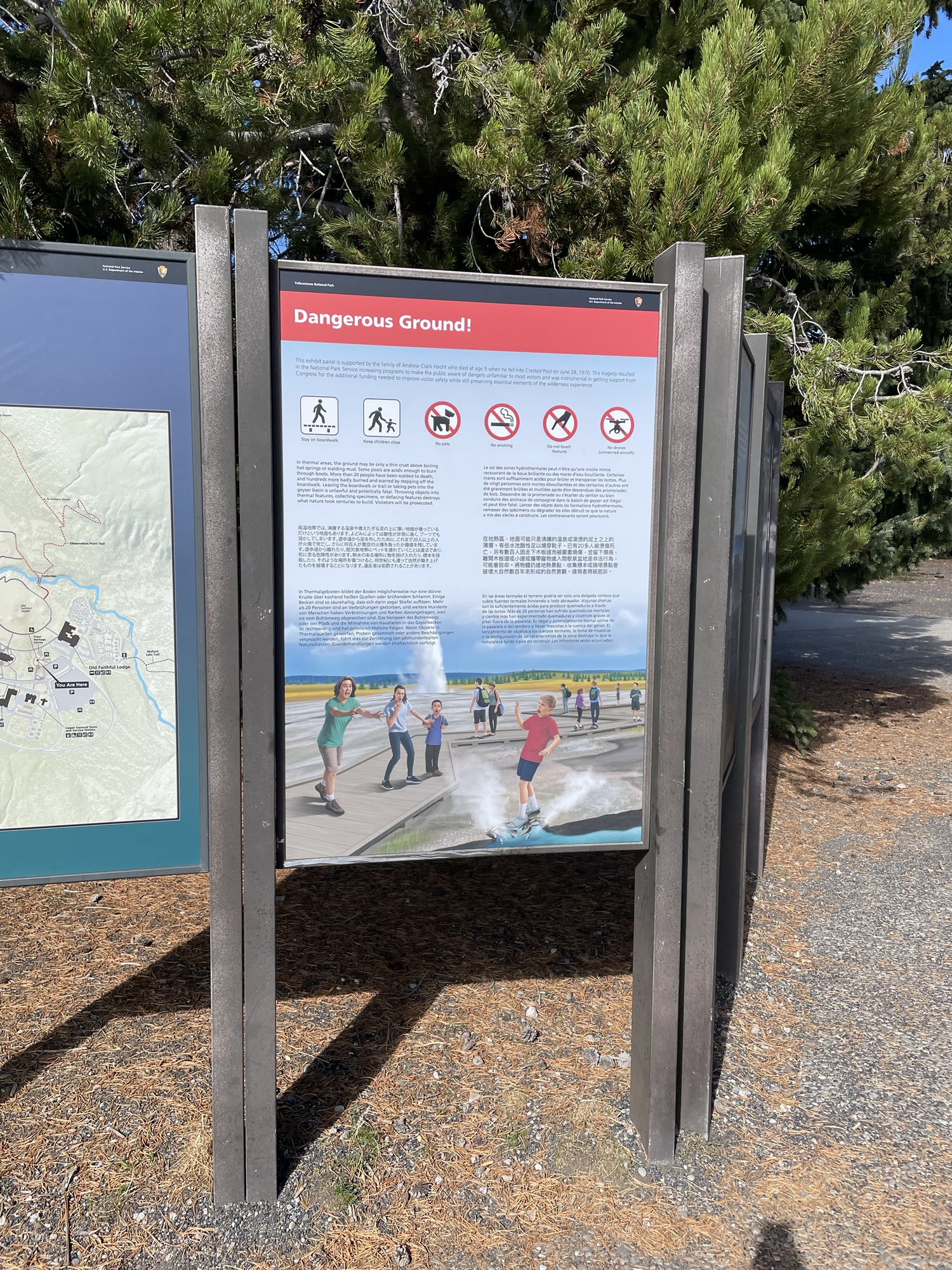
My week in Yellowstone made me aware of the importance of signs.  Especially the cautionary ones along the paths, in front of some of the park’s wonders and when entering certain area of the Park.  People really need to pay attention to what is around them.  (See blog below.)

Every year people get injured, and many times it is because they do not pay attention to the signs.  Bison injuries are usually the fault of the visitor. Close encounters with wild animals is often a bad decision.  Getting a selfie with a bison is not a good idea.  Stay away from the bison. They do not want you wandering in their way.  A head nudge from a bison could send you flying, if not worse.

Often when we saw wild animals close to the road or nearby, there would be a park ranger also there directing traffic or blocking off the area close to the animals. At Mammoth Falls Terraces, a bull elk and his harem were hanging out on the terraces. So the walkway was closed for our safety and the animals. It might have been great to get better photos, which people with better cameras could. But in reality, we need to stay away from them and respect their space.

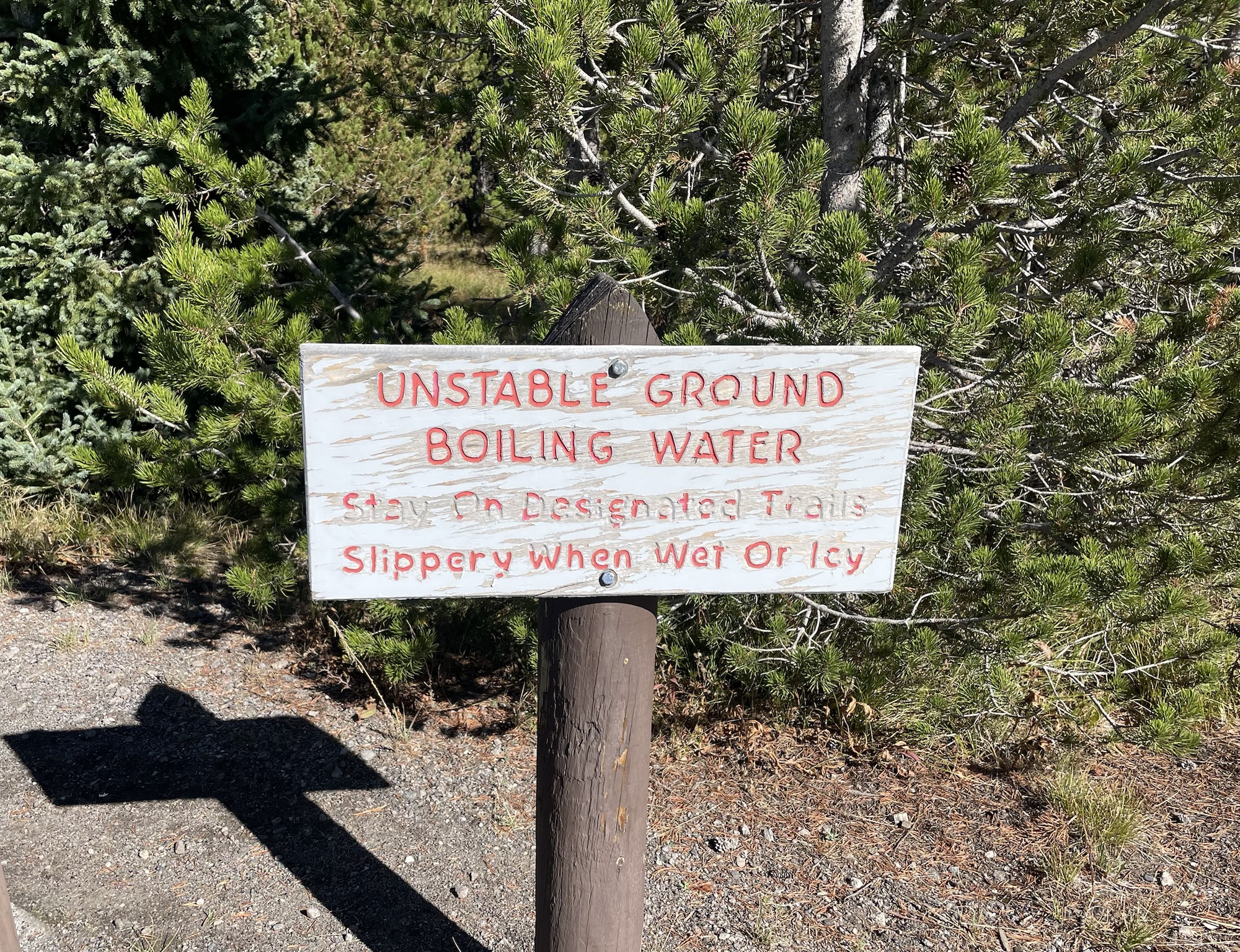
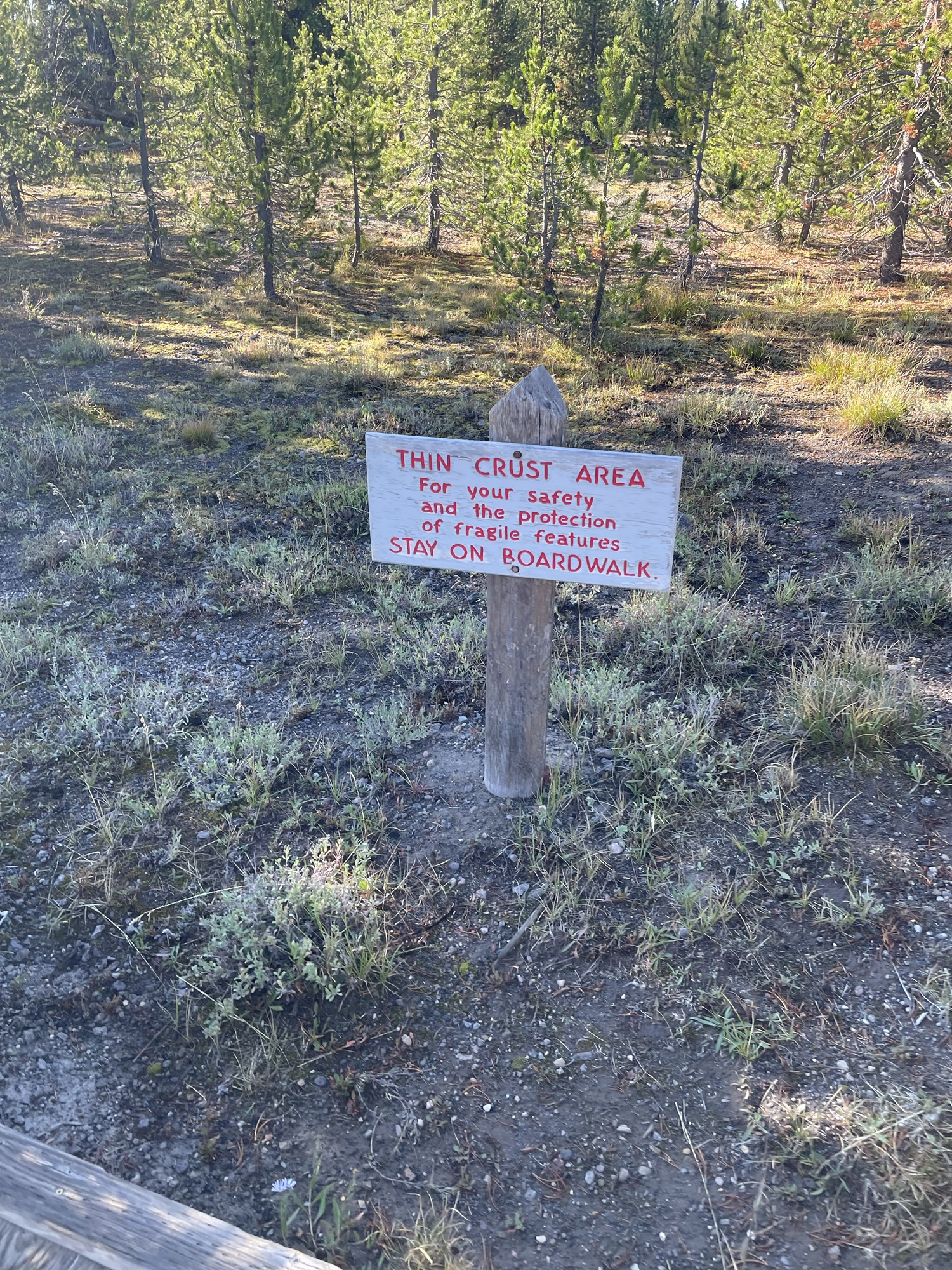
Hot Springs are very hot and the land around them is very fragile. Do not walk on areas that specifically say, “do not walk here.”  But every so often someone does.  And unfortunately, they pay the price. Geysers erupt, which is why they are surrounded by fences or barricades. Don’t climb over.

The warning signs are everywhere, and some are very specific!

Be careful when you bring young children and dogs into the park, especially around Old Faithful.  The sign above tells it all.  In 1970, a 9-year-old boy died after he fell into Crested Pool.  Horrifying.  Now there is a permanent sign warning people of the danger. Another sign warns guests specifically not to bring dogs into the basin.  If they get off their leash and run into the off-limits area, they could be killed. But since the sign is there, I think we can assume that some people just do not believe it. And their pet pays the price.

I am posting some of the many signs that we saw along our travels in Yellowstone so people realize that what they are seeing and enjoying must also be respected. I am happy to say that no one in our group took any risks or defied the signs and warnings.  Yellowstone is a beautiful, exciting and awe-inspiring adventure.  Seeing the sights and the animals and birds is exciting. But like any adventure, you have to pay attention to your surroundings and respect the animals and the warnings.

Yellowstone, Yellowstone, and More Yellowstone.

7 Oct

Eight years ago, my husband and I visited Yellowstone National Park for one day.  We, along with eight others, toured the park for about 12 hours. It was exhausting. But after that experienced I vowed to go back and spend at least two nights in the park. (See blog below.). I exceeded my desires, as we spent four nights and five days exploring Yellowstone National Park on a Road Scholar educational adventure.  Along with 21 others we learned so much more about the Park and its wonderous sights, sounds, smells, wildlife and natural beauty. 

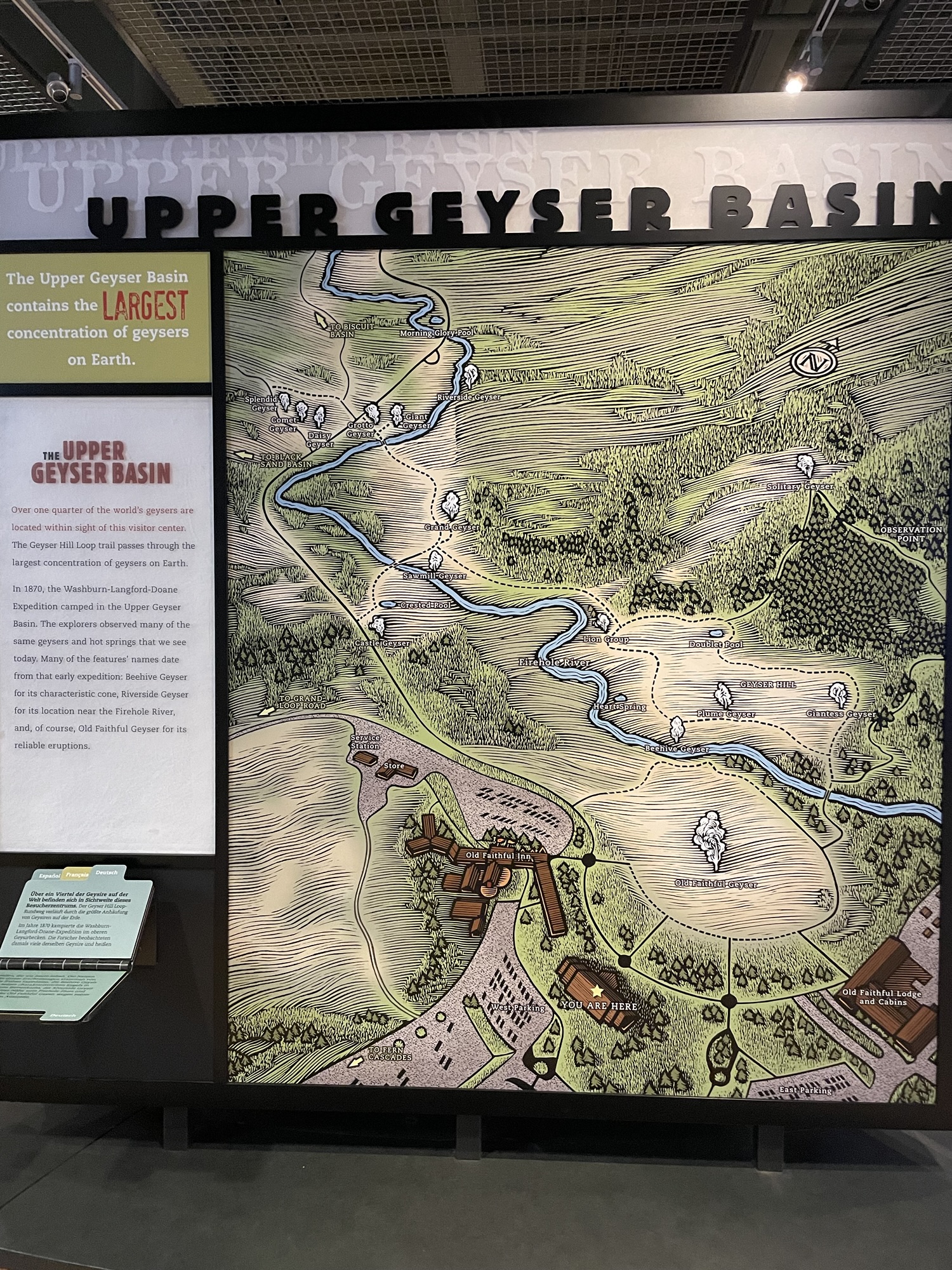
Everyone talks about the geysers of Yellowstone. The one most people see exploding upwards is Old Faithful, one of dozens of geysers that are part of the Geyser Basins, along with fumaroles (steam vents) and very hot springs and other hydrothermal features. The first time I saw this area we only had time to see Old Faithful expel its heated waters and steam and eat lunch at the Old Faithful Inn, an experience in itself. We could see other geysers in the distance erupting water and steam. But we did not have the time to walk around and explore.  This trip we had more than enough time.

We spent two nights at the Old Faithful Snow Lodge, one of three hotels that are in the geyser basin area.  The Snow Lodge is the only one that is open throughout the winter, as it has heat and is built for the cold weather.   The Old Faithful Inn and the Old Faithful Lodge, two historic buildings from the early days of the Park, are only open until late October.  The Visitor’s Center and the Tribal Culture Lodge, as well as the General Store were open when we visited.

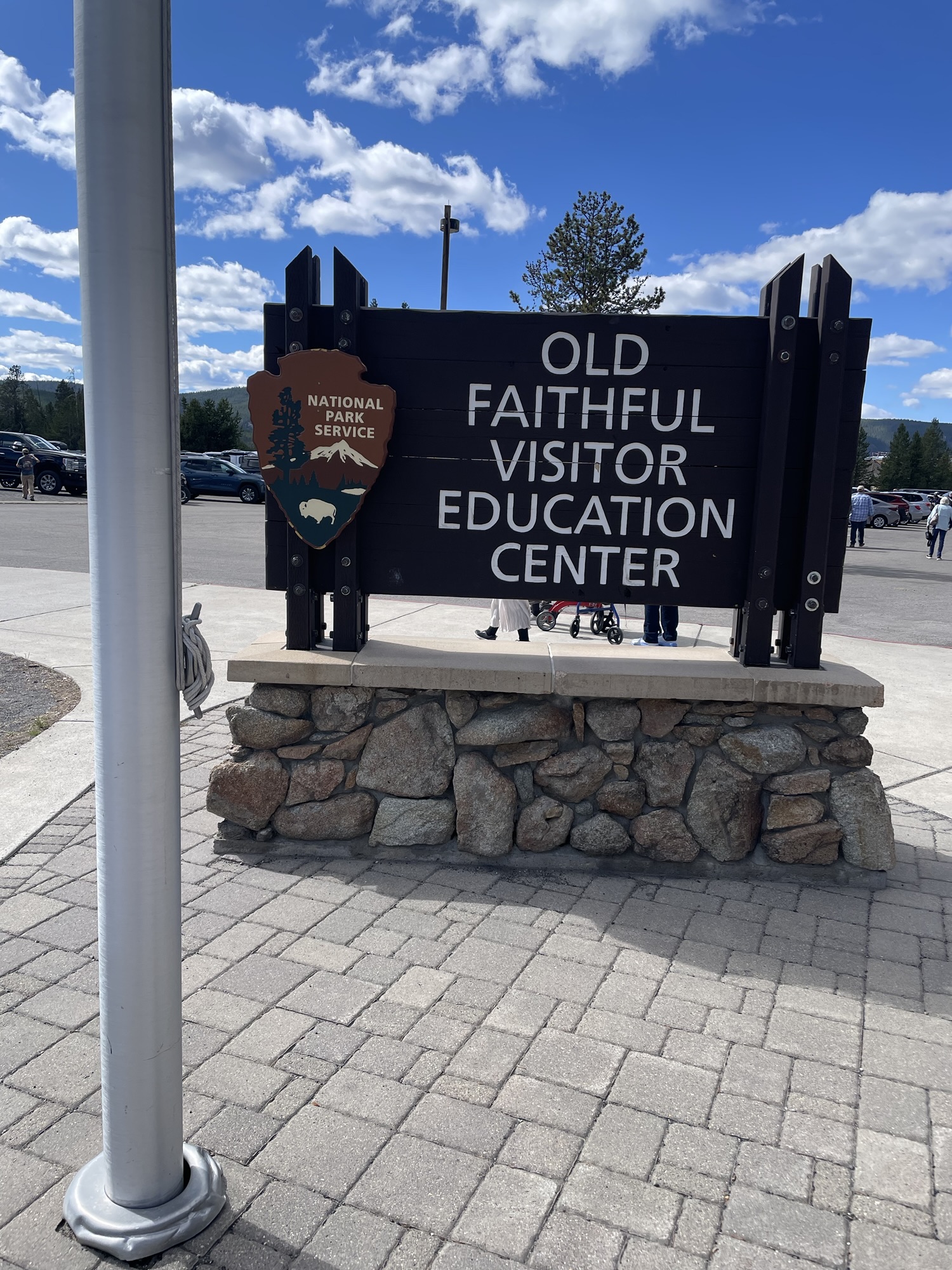
Since we had lots of time to explore while at Old Faithful, I visited the Visitor Center and spent time reading the information and watching the two movies.  I also checked out the beautiful historic hotels, Old Faithful Inn and Old Faithful Lodge.  At the Tribal Culture Center I watched two native American artists work, one carving an arrowhead, while the other worked on beading.  There was lots of opportunity to shop in the general store, the Visitor Center and the Tribal Culture Center. We enjoyed that as well.  It was a wonderful day of sightseeing, learning and relaxing.

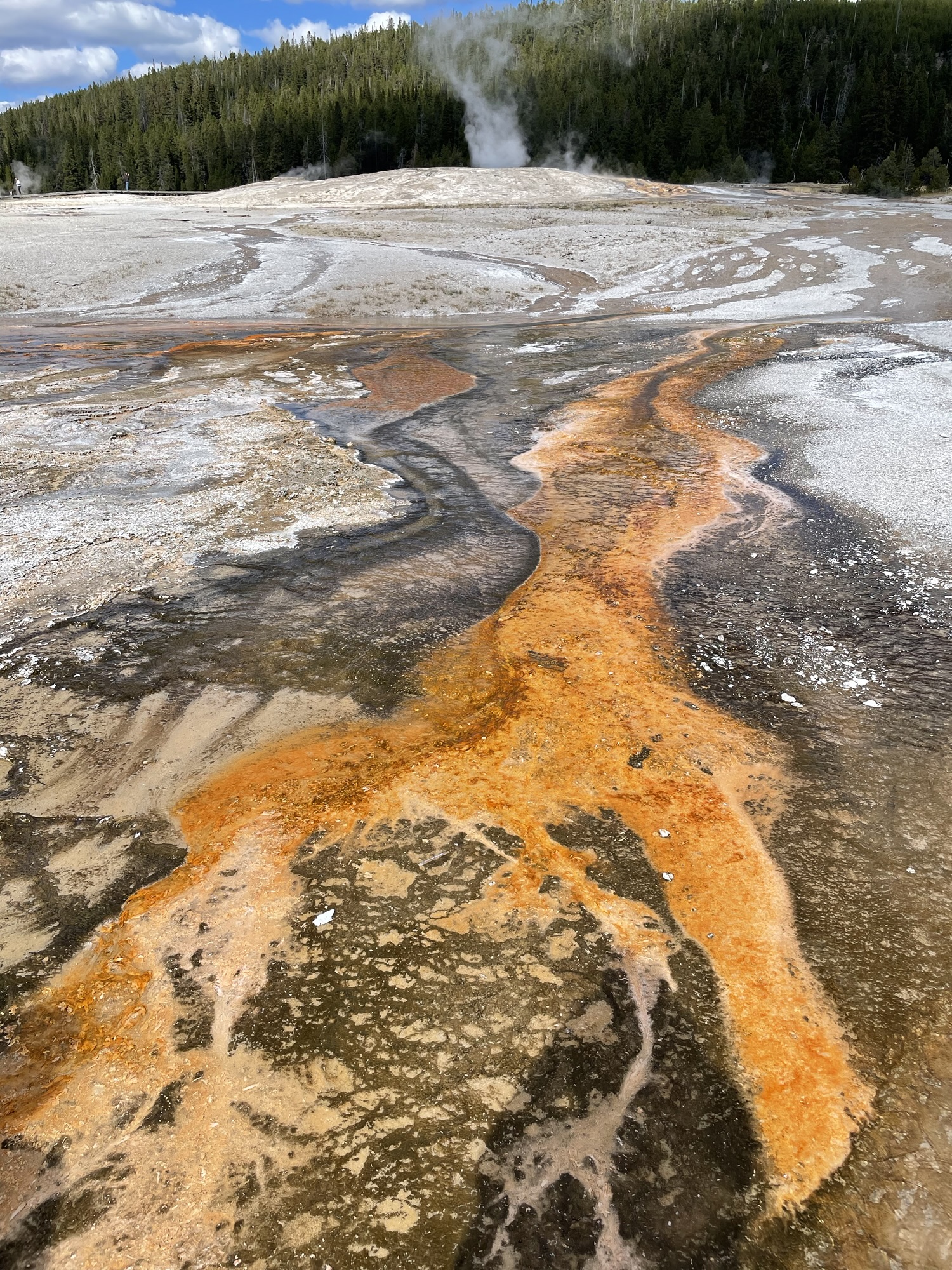
Over our 40 hours in the Old Faithful area, I saw Old Faithful explode about 8 times, from all different directions.  Each time its steam and water shot up in slightly different ways. It really is an amazing sight.  But what is also amazing was our guided walk around the lower basin and seeing all the other geysers and their eruptions.  In some places there are three geysers right next to each other, like the Lionesses.  When one goes off it can either trigger another one to erupt, or actually draw water away from one that is already erupting.  The Anemone Geyser doesn’t really erupt at all, instead it slowly fills a basin with hot steamy water then suddenly all the water flushes downward like a whirlpool or a flushing toilet.

There are lovely hot springs to look at, like the Heart Spring, that looks just like a heart. But the temperature in these springs often rise to over 160 degrees, enough to cook anything that falls in. 

The land around these features is often brittle and baked.  You see the silicon deposits around them and the bacteria growing in the warm moisture.  The geyser basins are just one of the impressive sights of Yellowstone. 

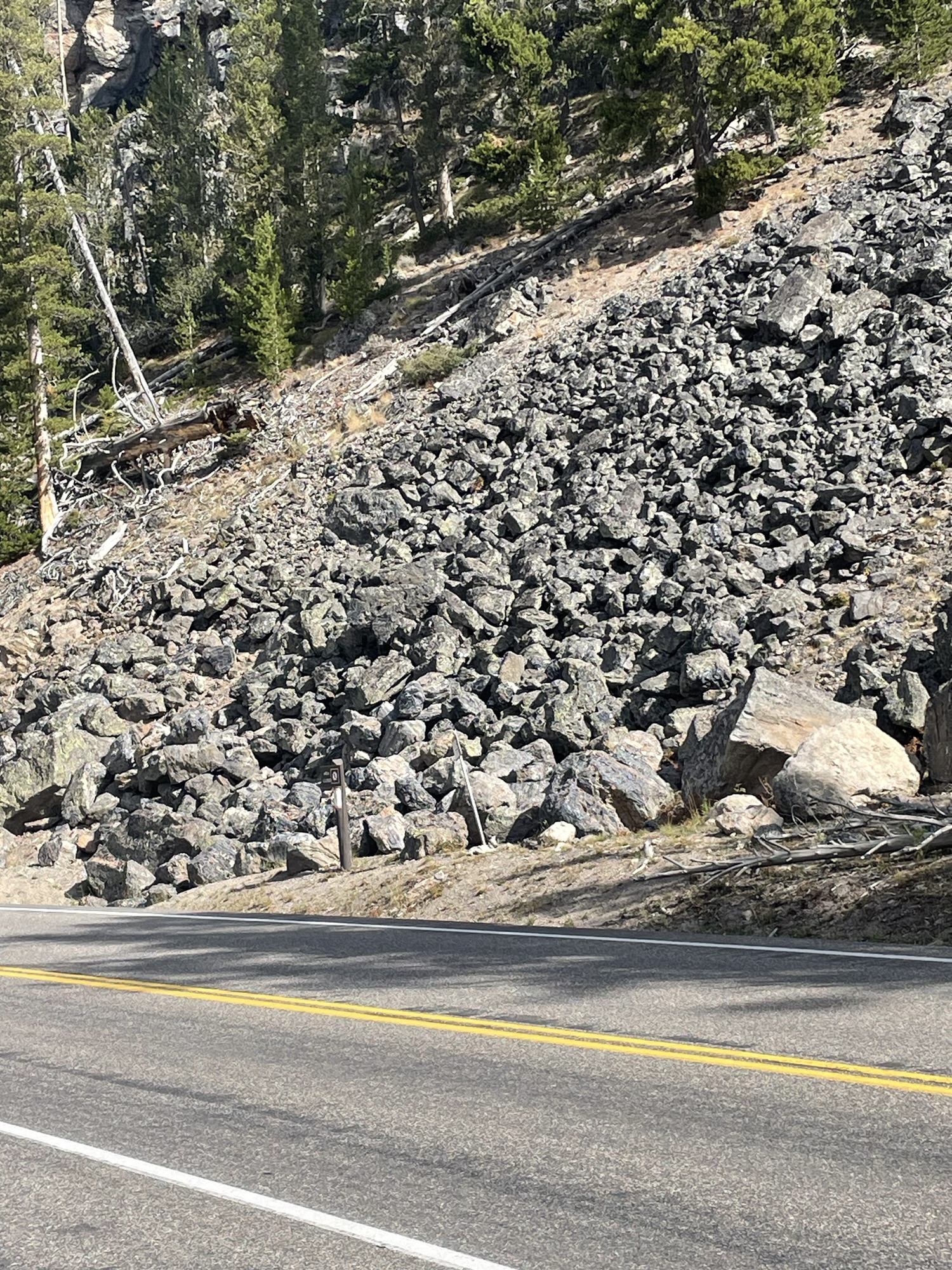
Once we left the geyser basins, there were so much more to see. We visited a mountain entirely composed of obsidian, the black glass made from an ancient volcanic eruption. This mountain is sacred to the native tribes that once inhabited the park.  They used it to make arrowheads and knives. You are not allowed to take any obsidian out of the park. But you can hold this cold, sharp glass.

Every day we ate a sack lunch in the park. The day we went to the hill of obsidian, we ate lunch at this lovely creek and picnic area. I did not want to leave!

Roaring Mountain, is unusual smoking mountain, where fumarole vents have killed off  the trees and caused the mountain to look like something out of a Lord of the Rings movie.

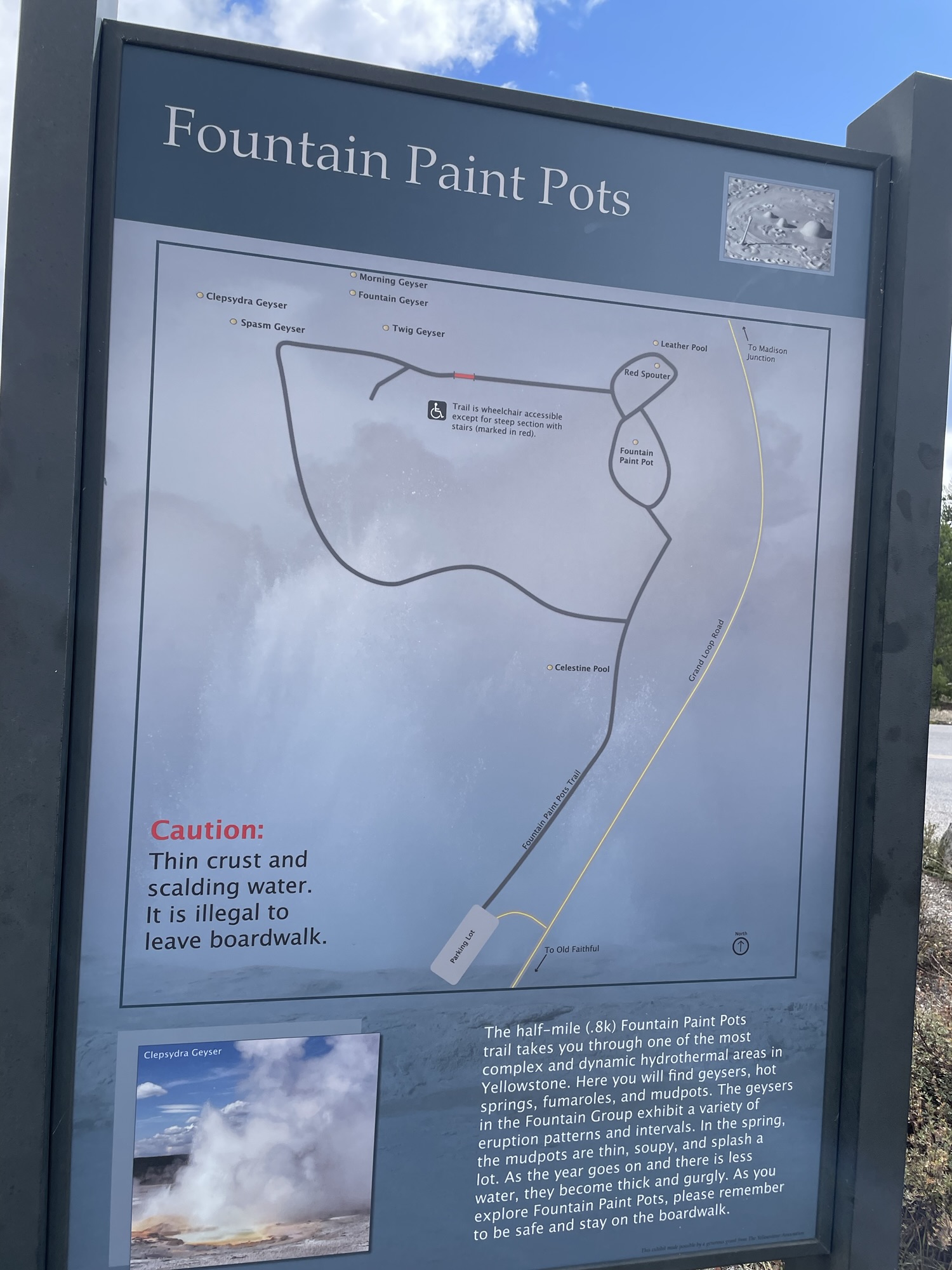
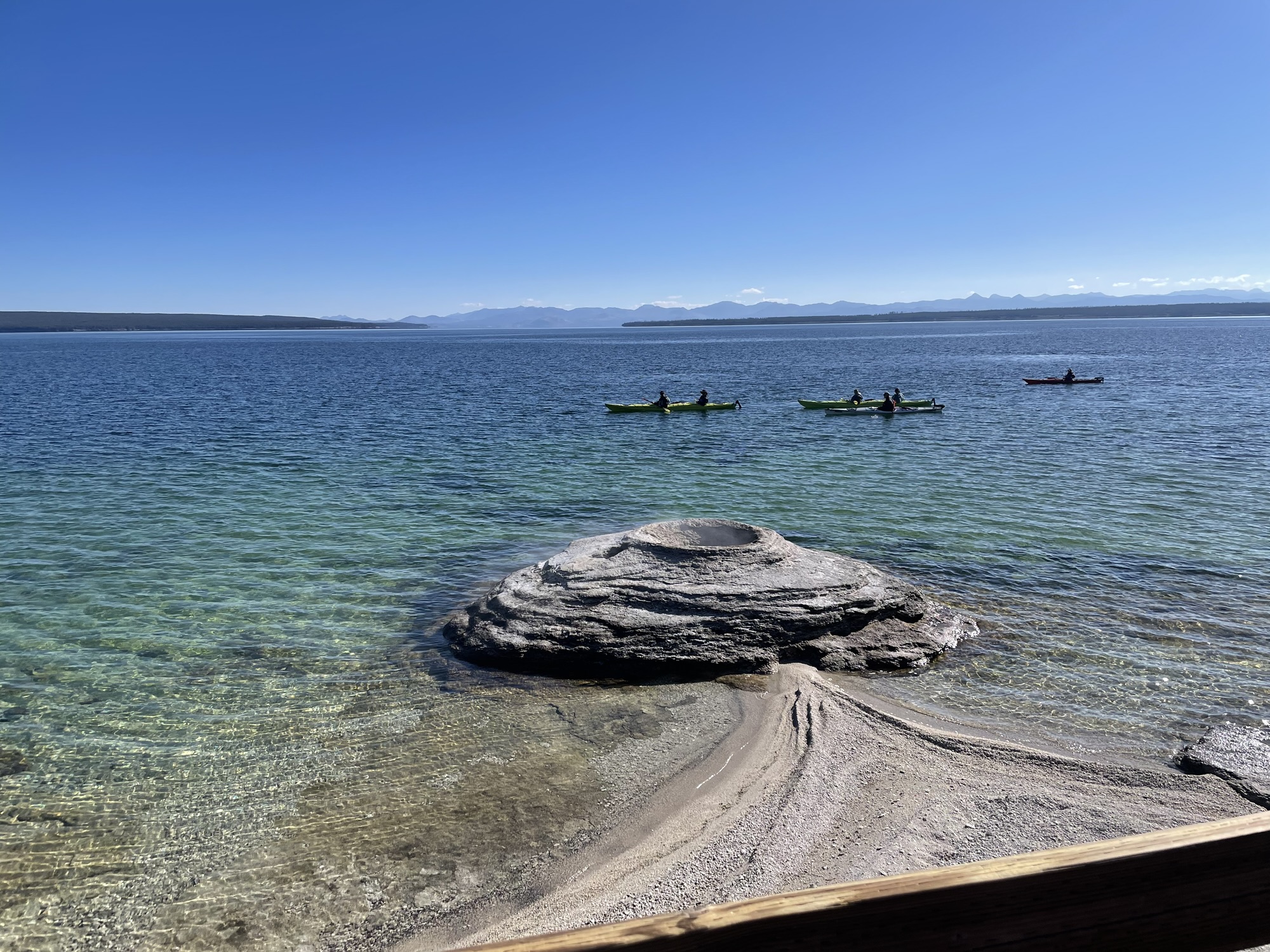
The West Thumb part of Yellowstone Lake, where geysers can be seen right on the edge of the lake and also bubbling up in the lake. And I cannot forget the bubbling mudpots where hots springs and bacteria cause the mud to actually boil.  Talking of mudpots, we also visited Fountain Paint Pots where you can see hot springs, geysers, mudpots and fumaroles all within a short circular walk.  While there we saw many small geysers erupt.  It was a good introduction to our later experience at the two geyser basins near Old Faithful.

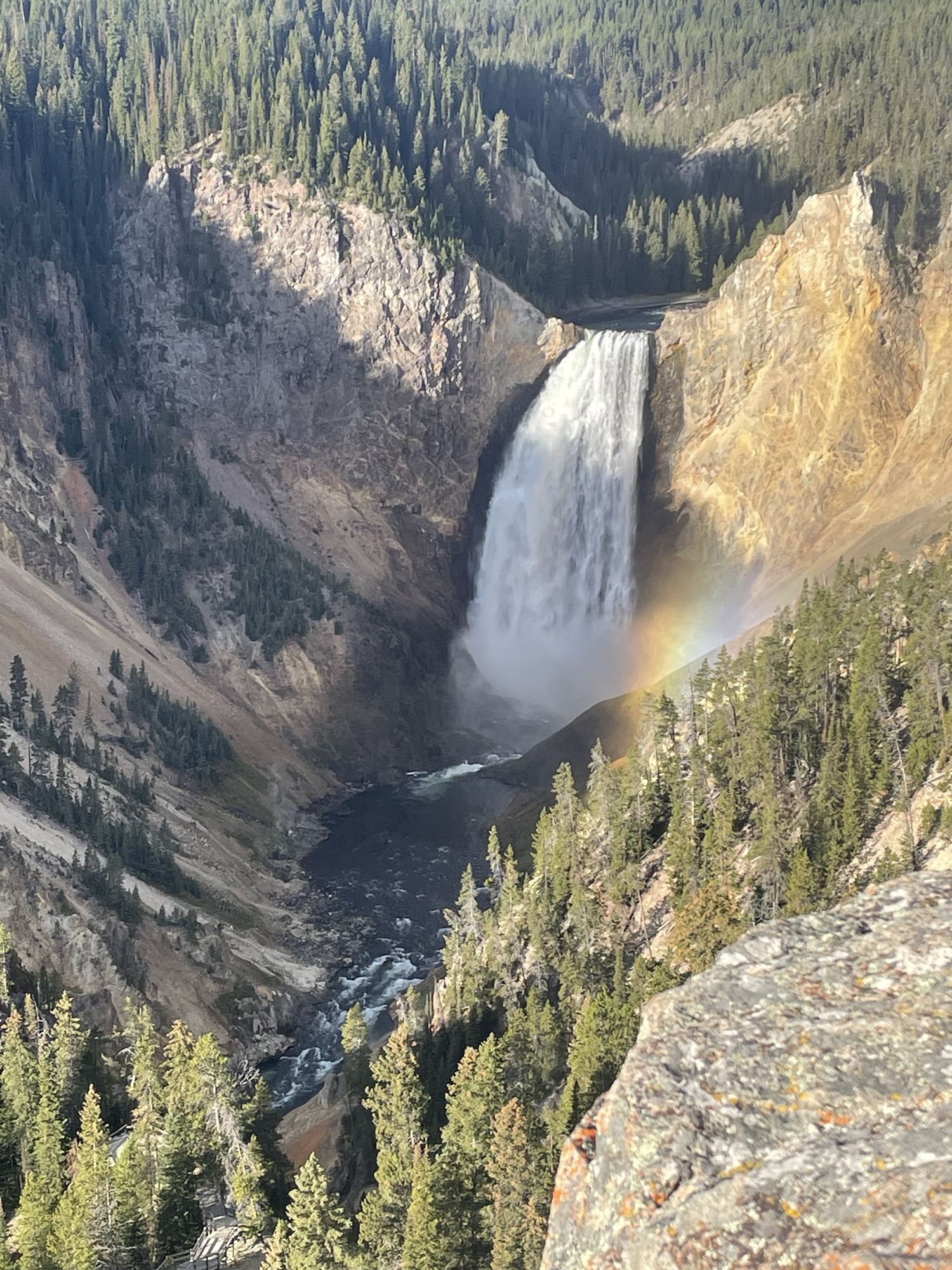
The Grand Canyon of the Yellowstone River with its canyon walls of many colors and its tremendous waterfalls, the Upper Falls and the Lower Falls, are thunderous and stunning. But also along the walls of the canyon you can see the steam from the vents rising as the heat bakes the canyon walls and helps to destroy them.

What surprised me is that the bison, elk and other animals will walk along the heated ground, and sometimes even lie down on it for warmth.  We saw this at Mammoth Falls where a bull elk and his harem decided to hang out on the day we were there.

Just mentioning Mammoth Falls Hot Springs brings back the vision of the water cascading down these travertine terraces that look manmade, but they are not. Photos cannot capture the sparkling essence of these terraces.

Of course I have not mentioned the wildlife.  Black bears, grizzly bears, Wolf packs, Trumpeter swans, Clark nutcrackers, elk, moose, mountain goats, pronghorn (which are not deer!), bison – lots of bison, and so much more to see and experience from a distance. In fact the bison are not buffalo, but people still refer to them that way.  And pronghorns are not antelope, but people still refer to them that way.  As our guide, Shauna, commented, it is impossible to change the song from “Where the buffalos roam, and the deer and the antelope play; to where the bison roam, and the deer and the pronghorn play.”

 Every spot we visited in Yellowstone is amazing. When you think that you are walking in the middle of a giant volcanic caldera, it really changes your view of the world.. These objects that nature has created here is inspiring. You realize that we, humans, are just tiny specks in the world, because in reality, nature is in control. I understand how the First Peoples of the Northern Hemisphere and the early explorers who walked these lands were stunned.  This was sacred land to the First People and should be sacred lands to us. 

I am so glad that in 1872 President Ulysess S. Grant declared it the first National Park.  Yellowstone is not only a national treasure. It is a world treasure.

I think everyone should come here to visit and learn. Having a guide lead us on this journey made it so much more meaningful. I have to thank Shauna, our guide; Bryan, our fearless bus driver; and Louis, our director of all (food, keys, directions, etc.); and Road Scholar. We will never forget this experience.