When we planned our Road Scholar trip to Portugal and Spain I was excited that we would be going to many World Heritage sites, including castles and palaces. Let’s be honest, I was born along with DisneyLand in 1955 and I grew up seeing the Disney castle every week on the Wonderful World of Disney. I remember so well the evil villain of Babes in Toyland singing, “My Castle in Spain.” For me this was going to be a highlight.
We saw a number of castles and palaces on our trip. Some were absolutely extravagant; others were just empty stone shells without much romance. I always knew that the tapestries were created to keep the rooms warmer. But until you walk through a large castle and see the size of the rooms, and the small size of fireplaces and heaters, do you realize that these places would be extremely cold in the winter. In fact, our guide told use that most people had to walk around wrapped in a blanket. BRRR
Even still, with this reality check, with knowing when I saw the Castle in Segovia that it had been heavily damaged by a fire and most of it was reconstruction, I could not help but be joyful. Why? Because was like seeing the real Disney Castle in Segovia, I knew my wish had come true. So instead of starting at the beginning of our trip and describing our experience in order, I must start with our second to last castle, Alcazar!
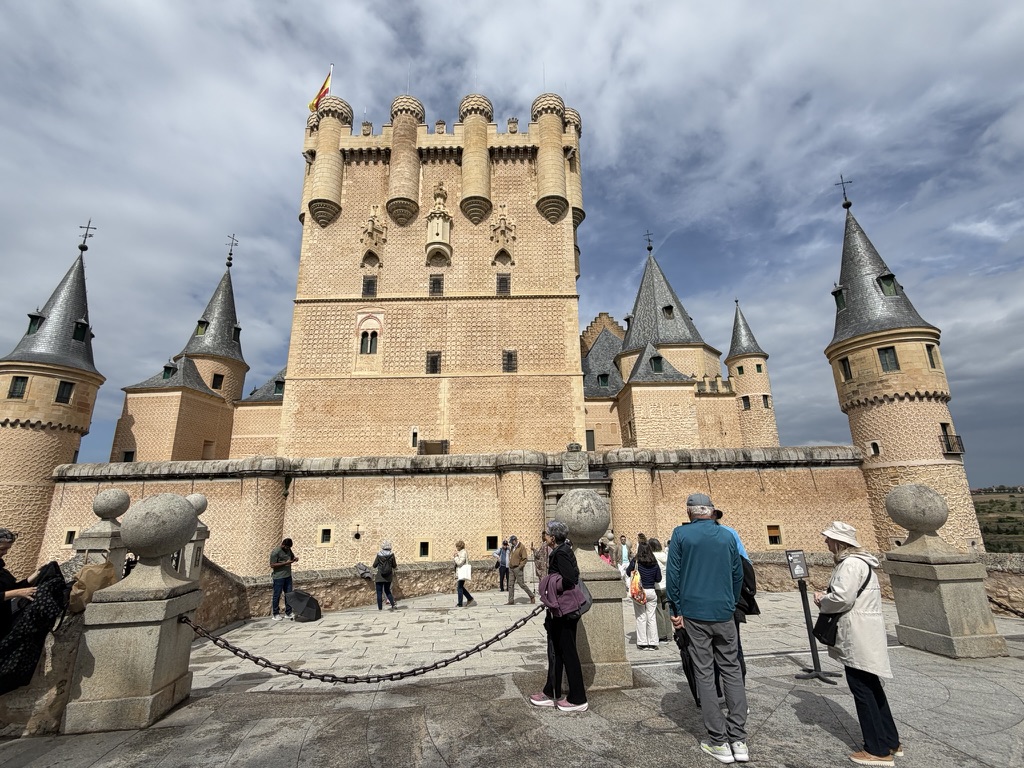
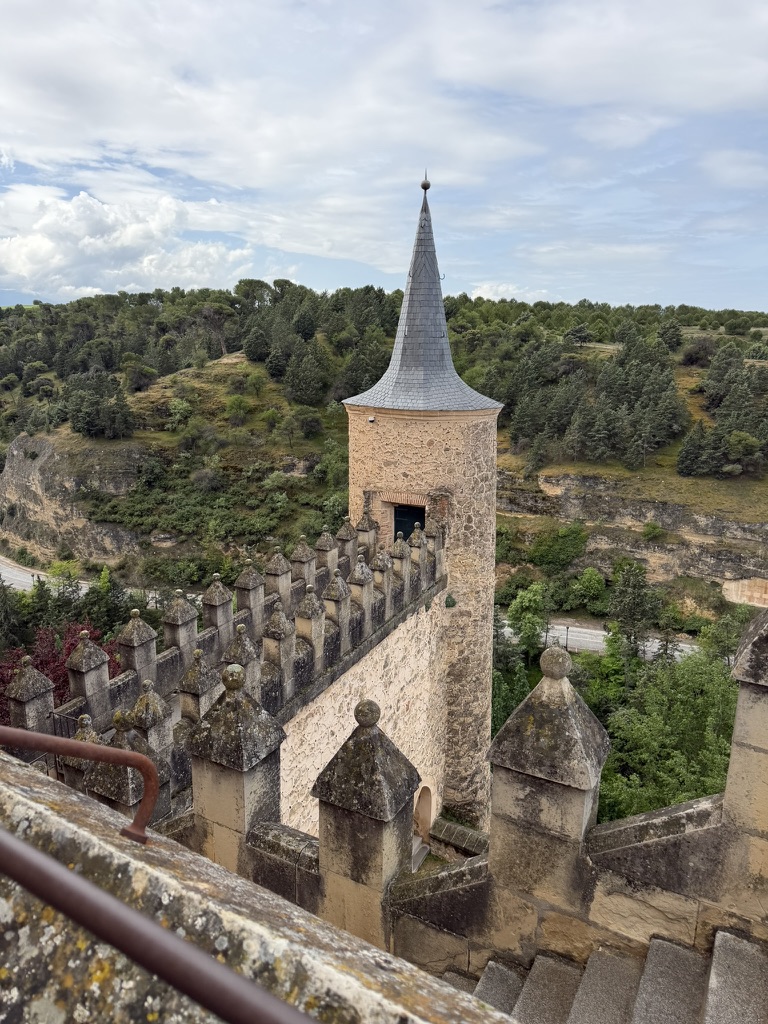
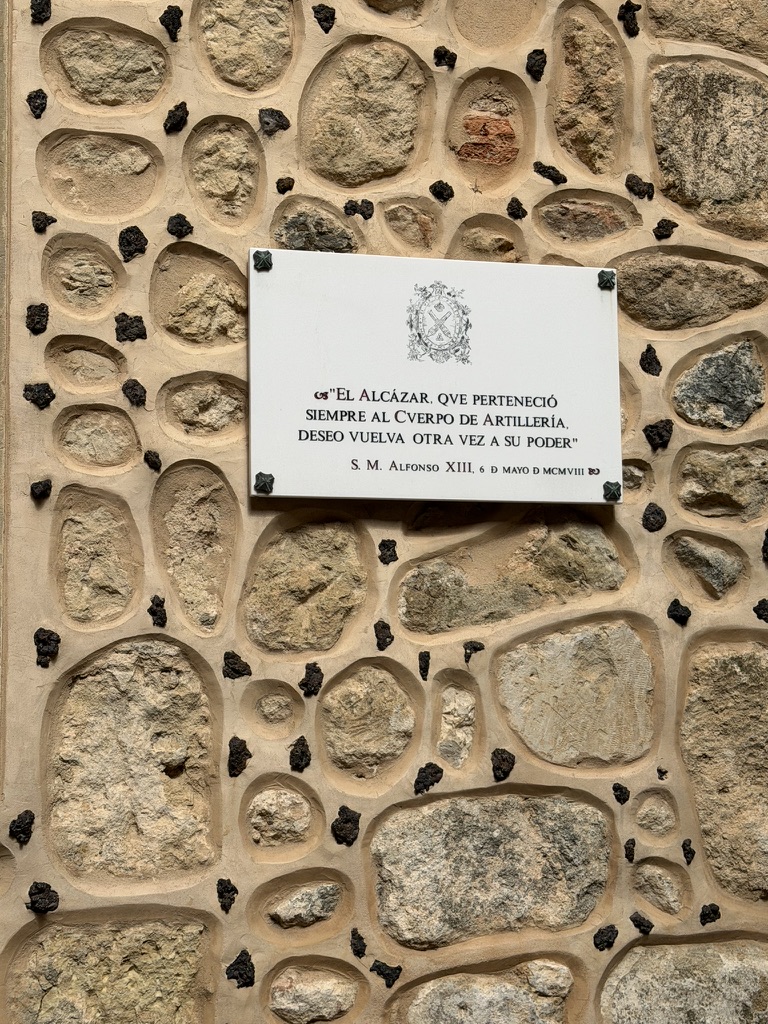
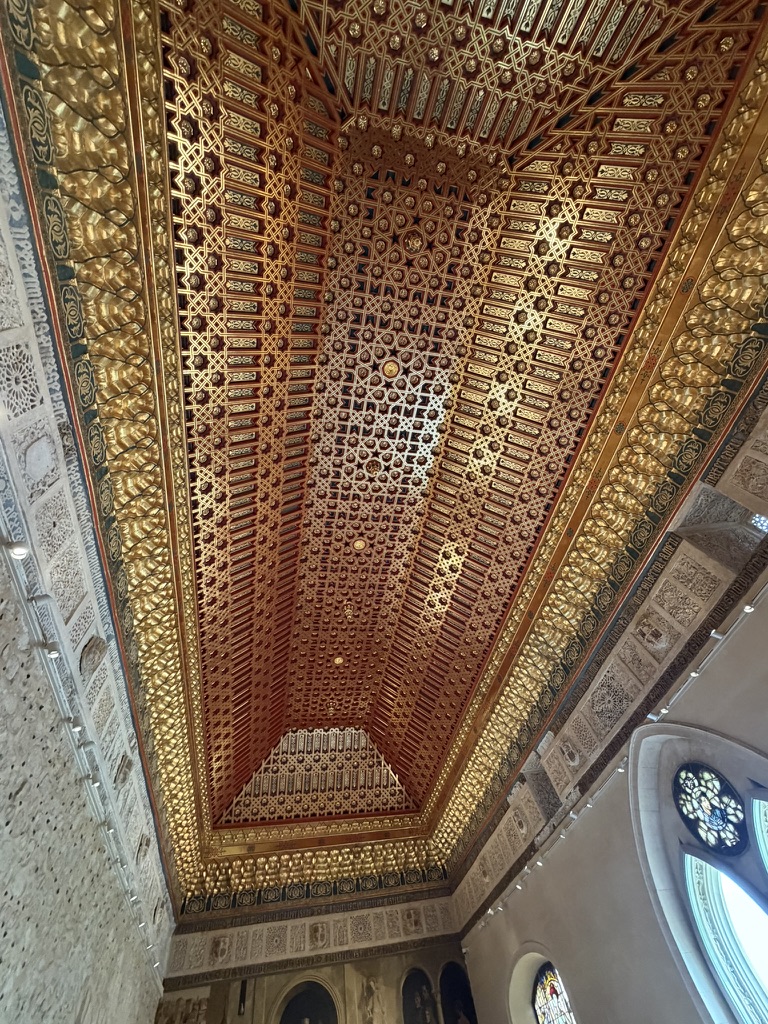
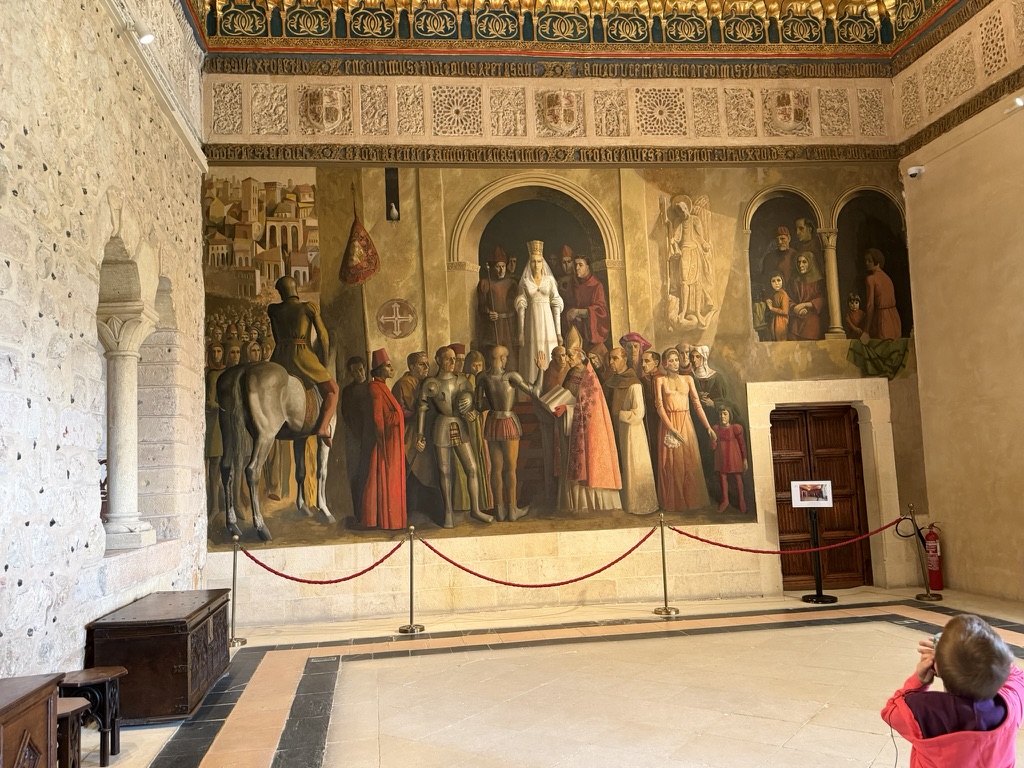
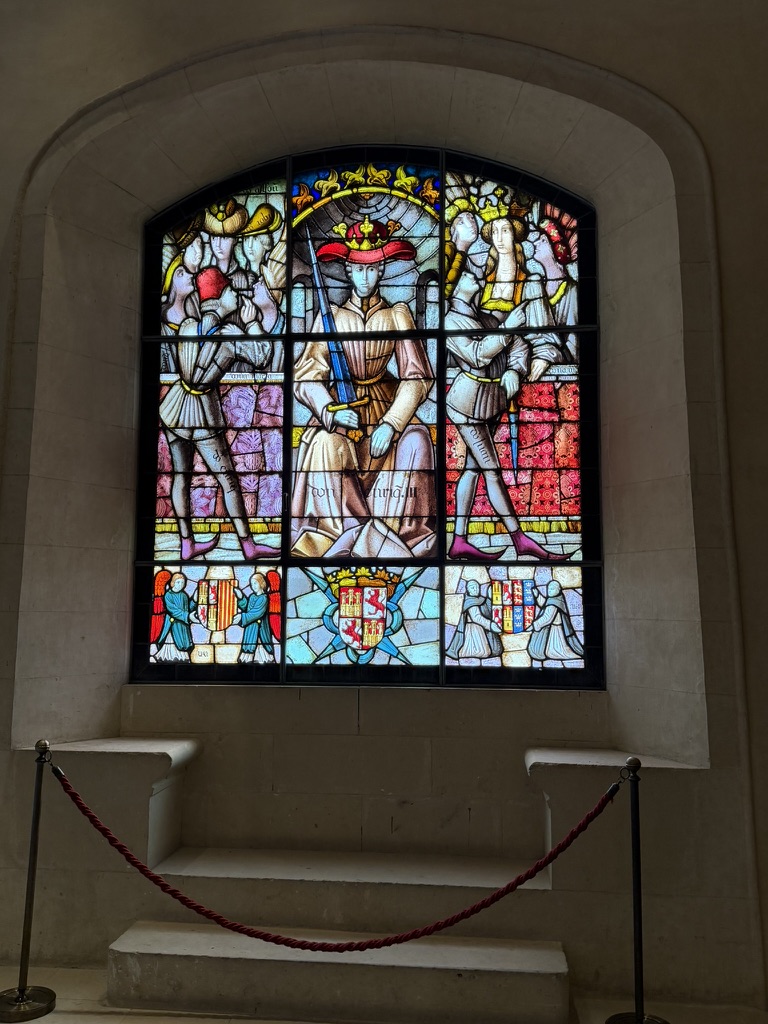
The Disneyworld Cinderella Castle’s towers and windows were based on the Alcazar of Segovia, Spain. Perhaps other elements come from other castles. But once you see the Alcazar, all you can do is hum, “When I Wish Upon A Star.” I did that for the entire time we toured the castle. I might have made my sister and husband crazy.
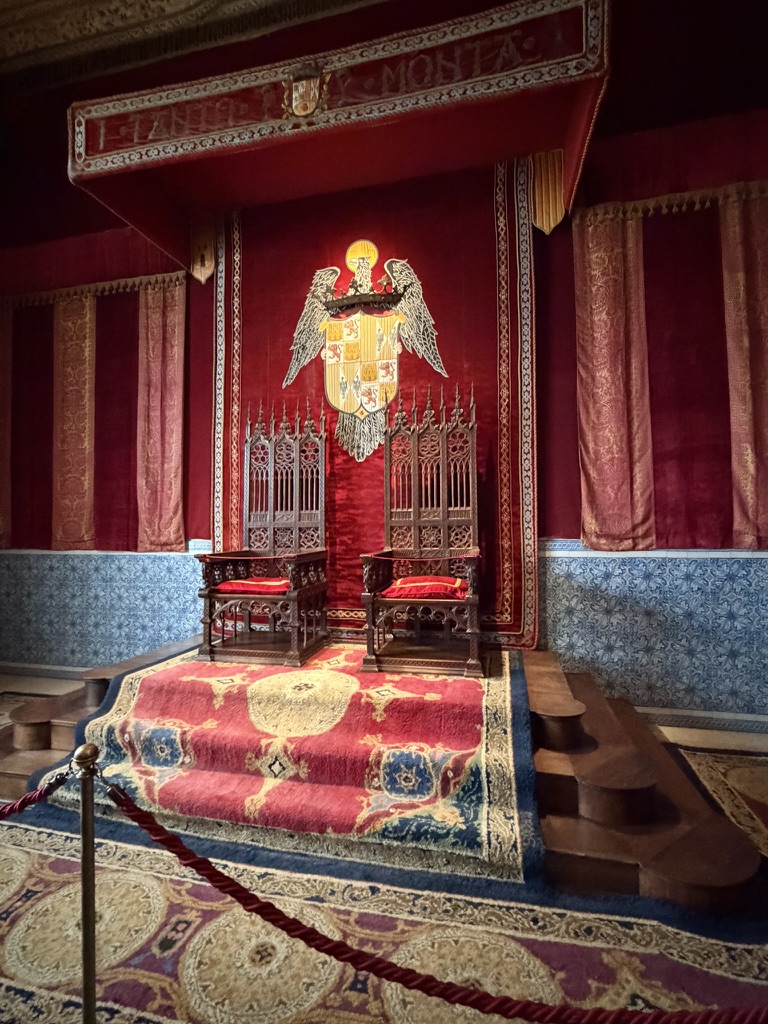
After walking uphill through narrow, ancient streets of Segovia we came upon the first sight of Alcazar, which has been a World Heritage Site since 1985. Some castles you cannot enter. But this one was not only renovated, it had furniture in some rooms to make you realize what it once looked like. It is also a museum.
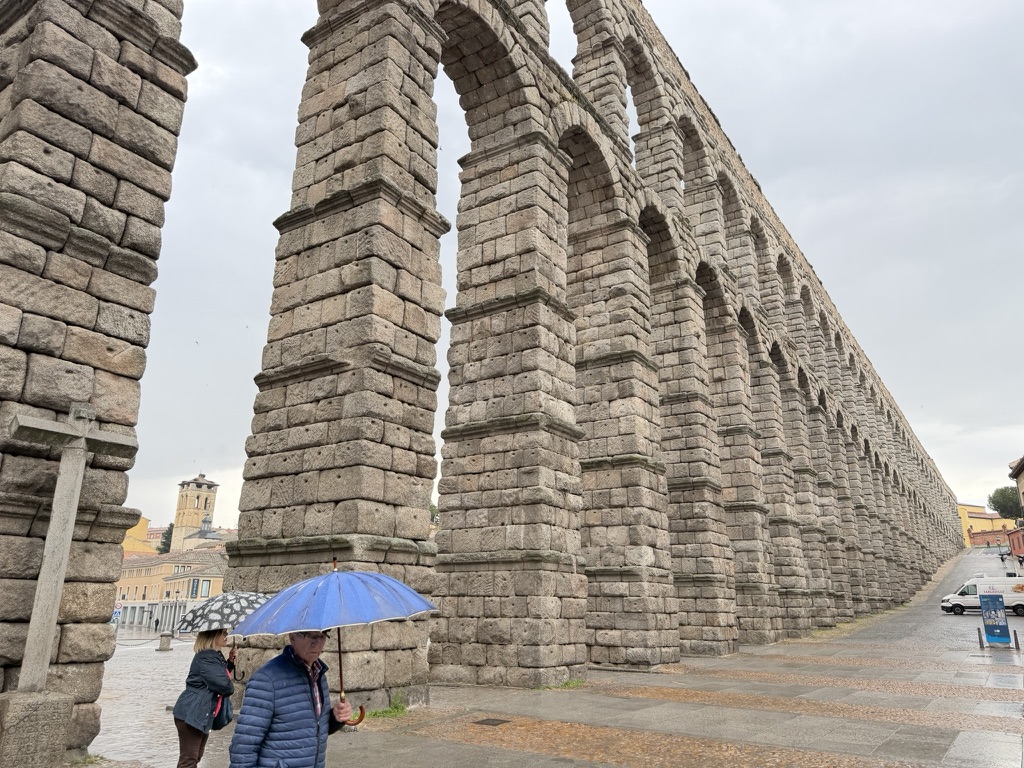
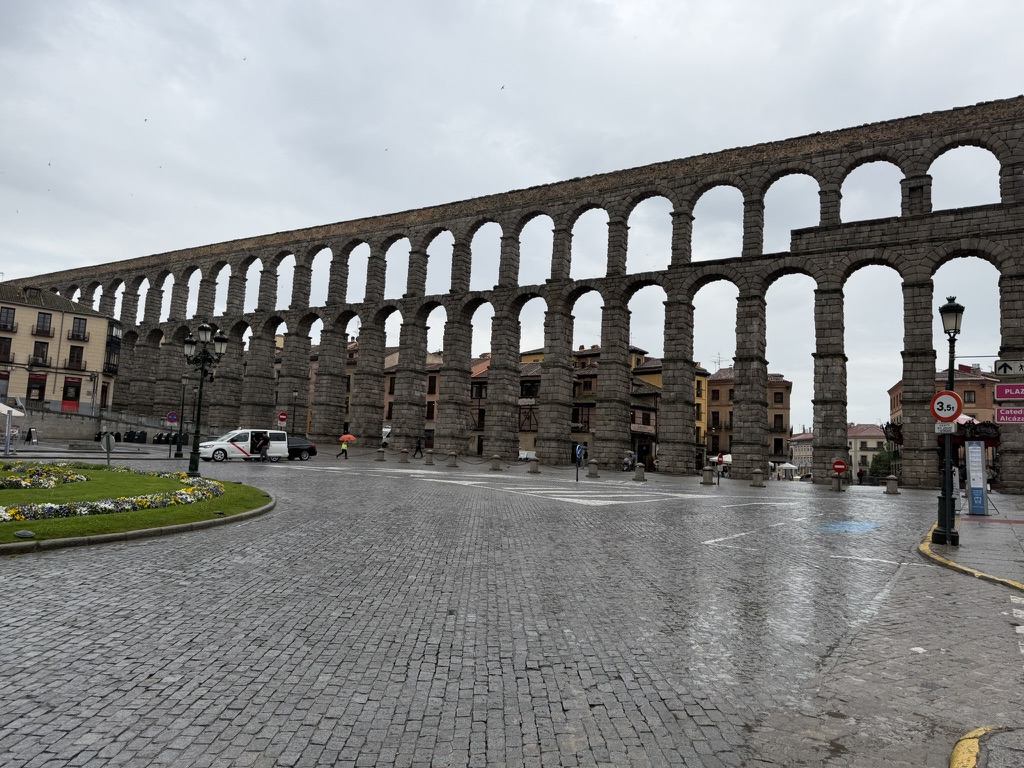
Before I leave Segovia, I must say there is another important site to see there, the Roman Aqueduct that is about six stories high when goes above ground , while its underground route through the town is marked with different stones. It is an amazing feat of construction!!
Now that I have finished swooning over Alcazar, I will return to the beginning of our adventure and talk about the Palacio da Borsa, the original Board of Trade. Although it is not a castle, it is definitely a palace. Some of its rooms are absolutely stunning. I understand why it is an event space for conferences, conventions and if someone could afford it, what a place for a wedding!!
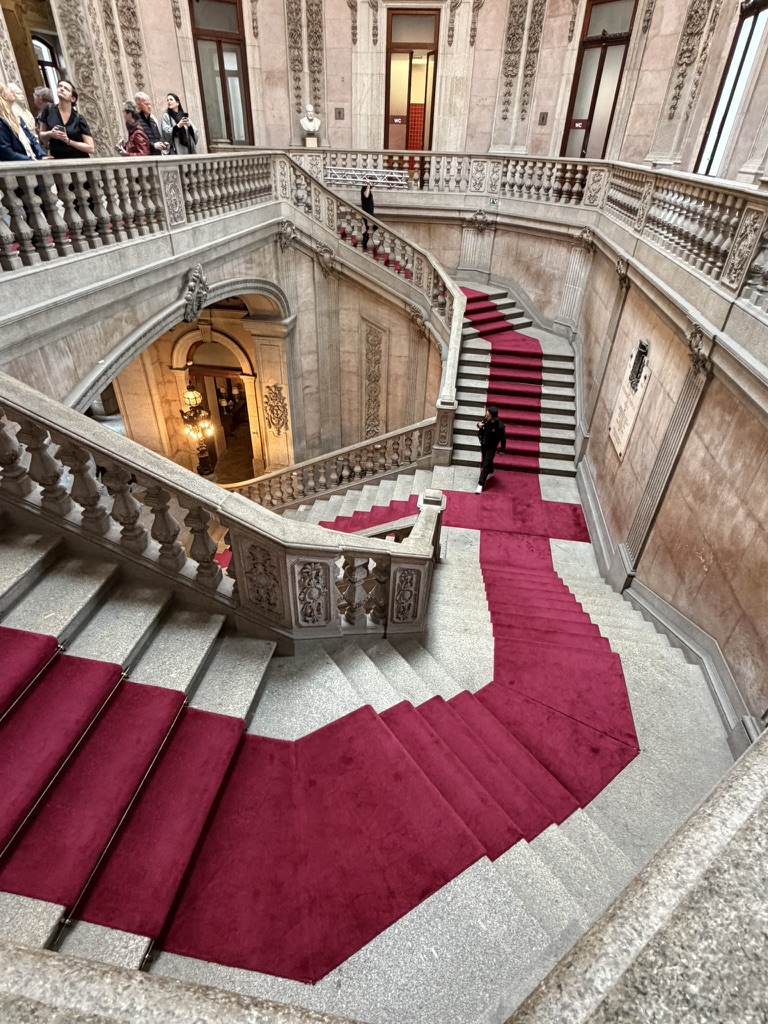
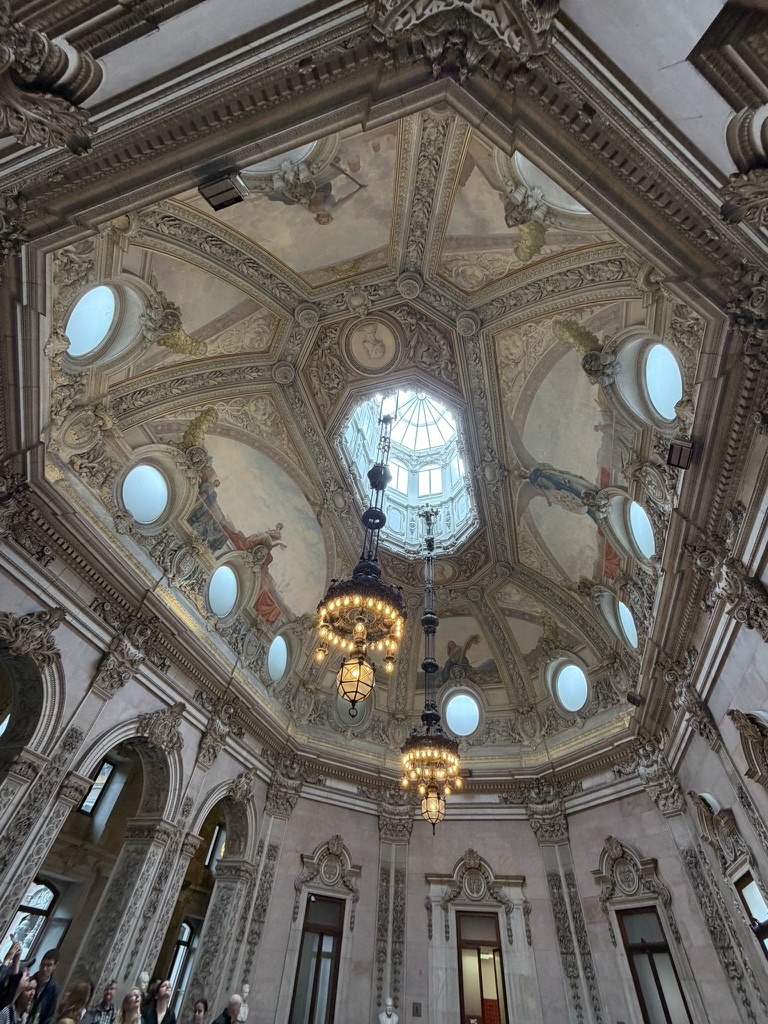
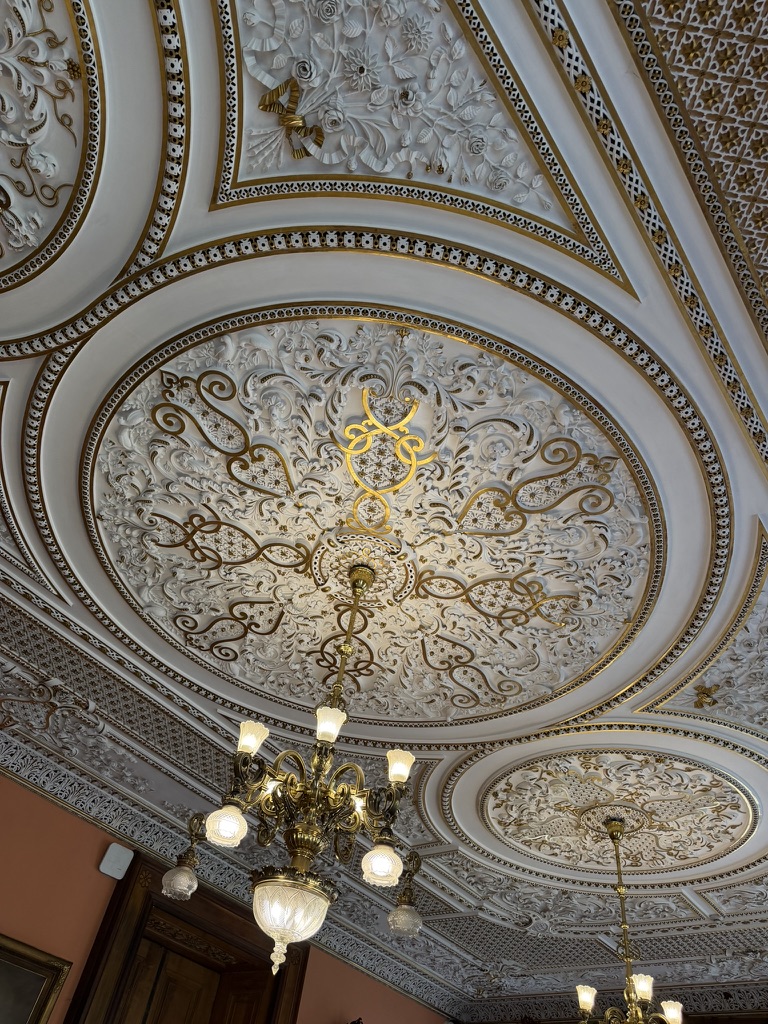
From the Grand Staircase, to the meeting rooms, – each one has its own character and special artwork, on the ceilings, the walls, the floors, the furniture- the building is elegant. The trial room with its ornate carved wooden furniture and beautiful art; the views; the room where Gabinete De Gustave Eifel worked when he was in Porto; The Hall of Countries.
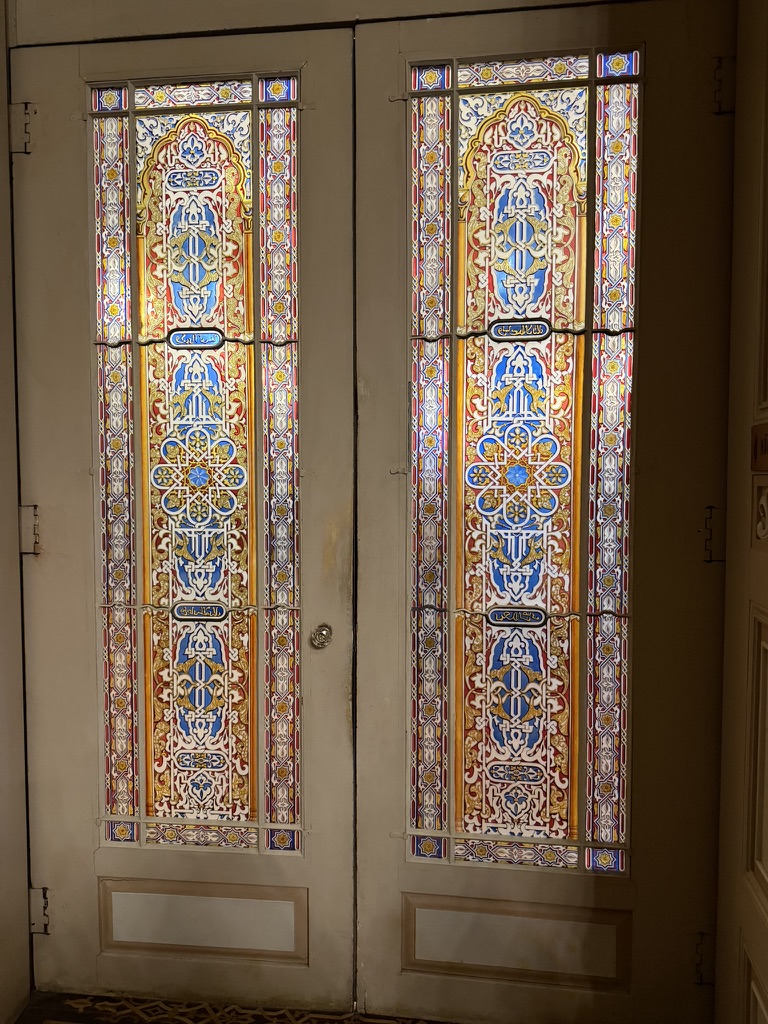
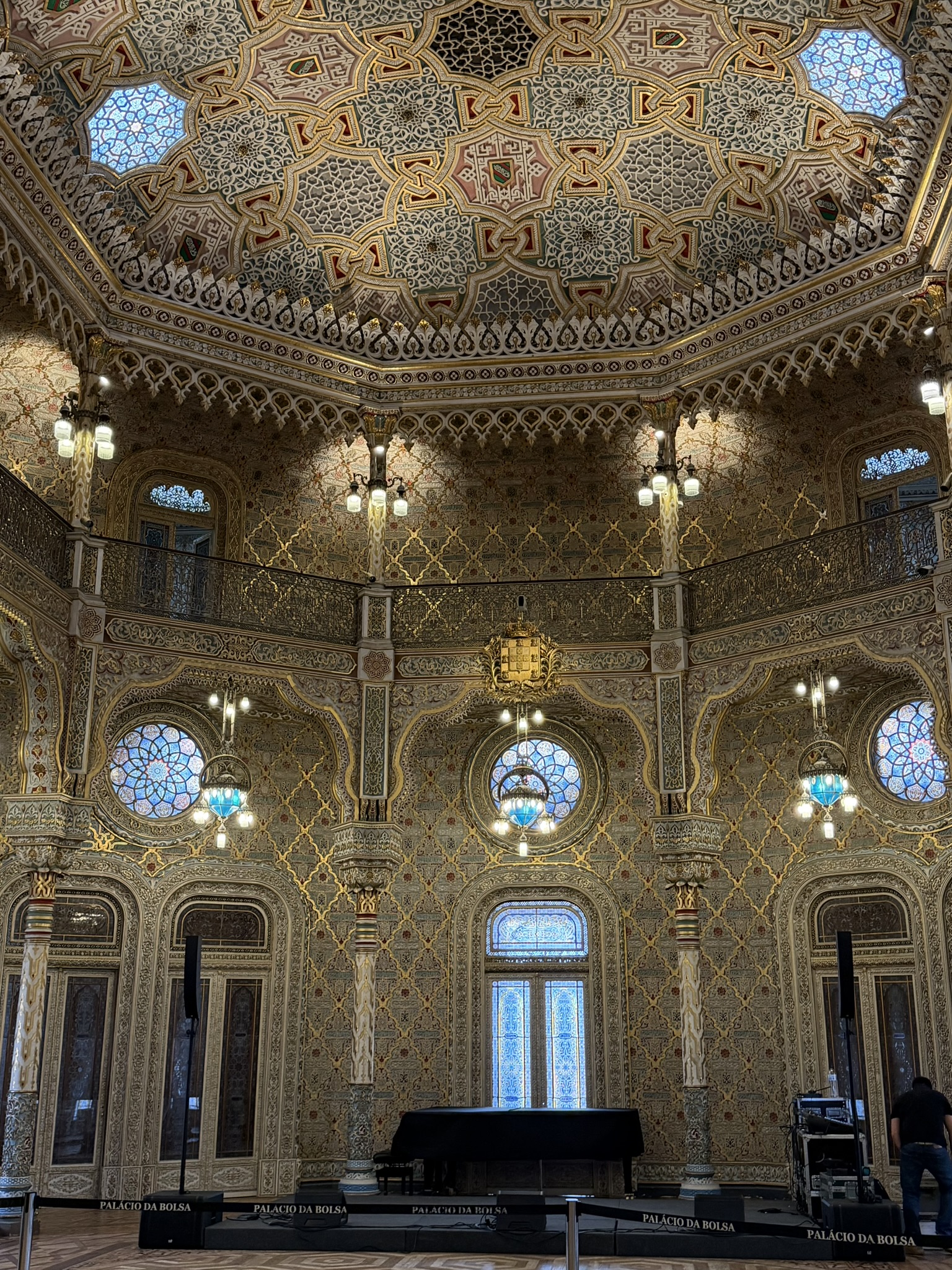
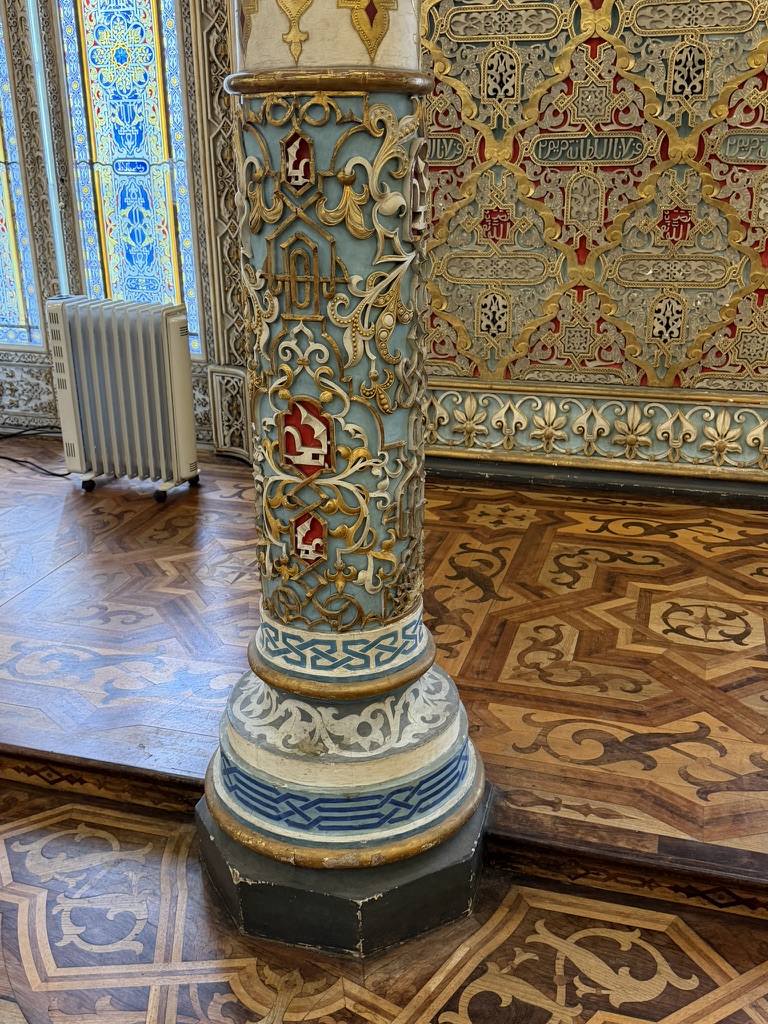
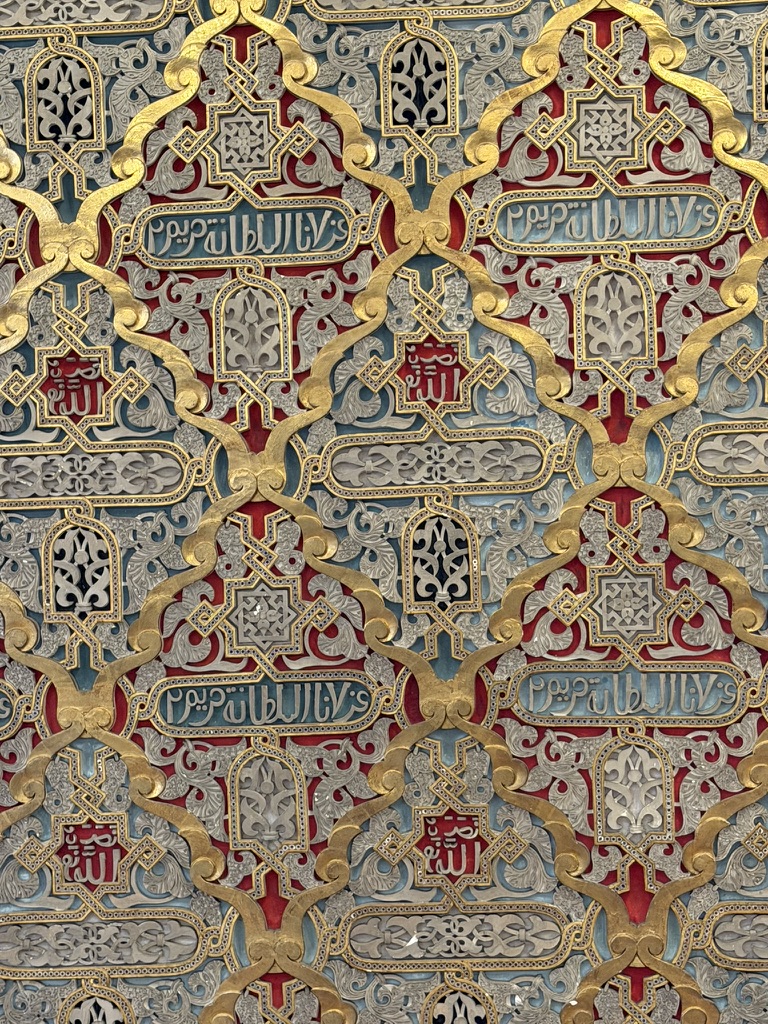
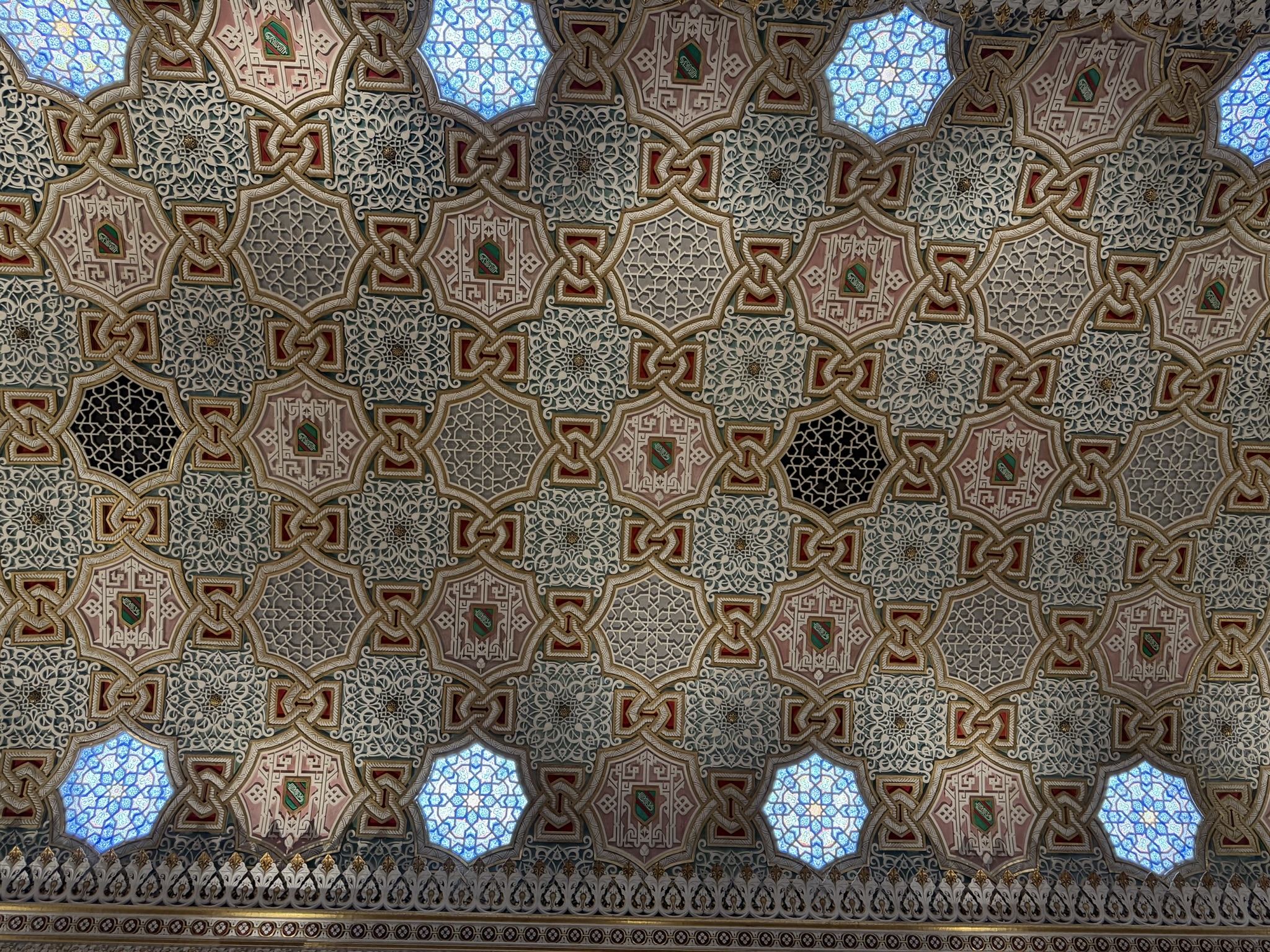
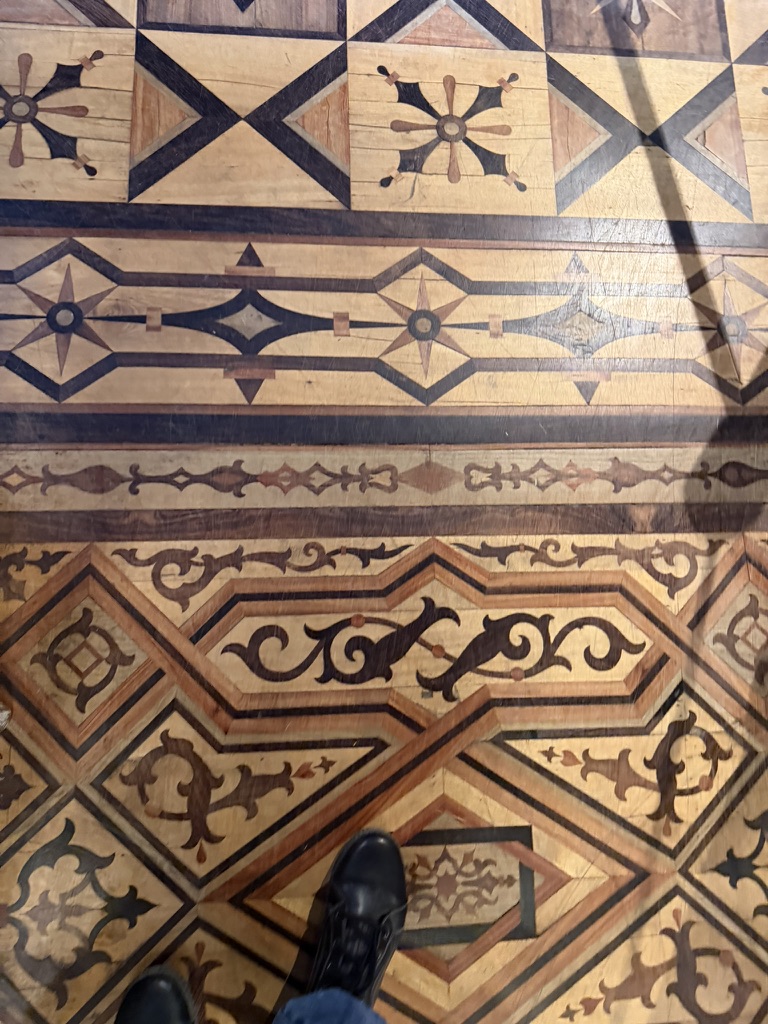
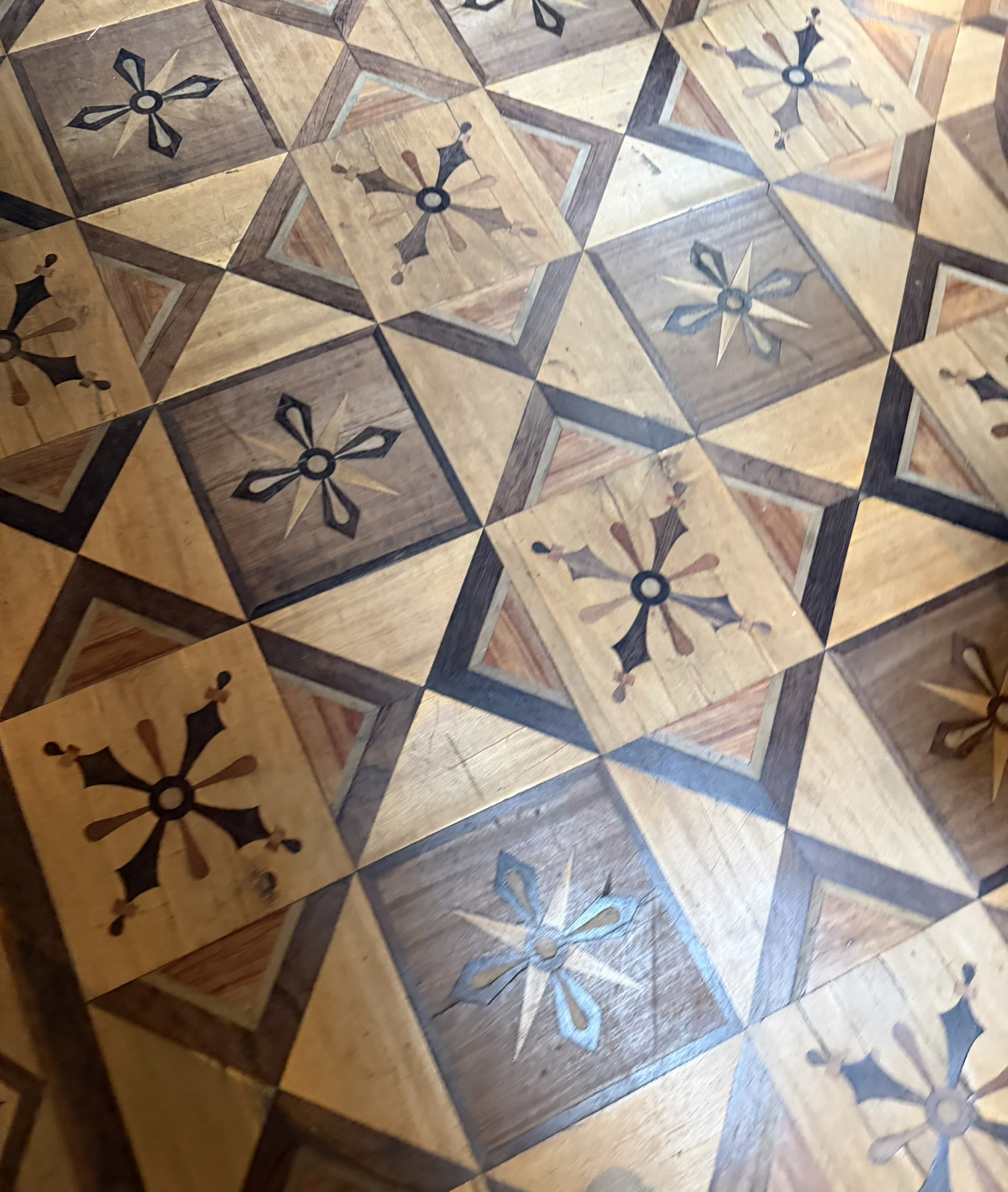
All of it fabulous. But nothing prepares you for the Golden Room. Many people oooh and Ahhh over the Amber Room in Catherine’s Palace near St. Petersburg. And that room is stunning, I admit when I saw it in 2018. But to be honest, the Golden Room with all its intricate carving and inlaid is something special. It made me think of the inlay at the Taj Mahal. The inlaid wooden floors were reminiscent of the ones I saw in the Hermitage in Russia, but actually more intricate. From floor to walls to ceiling to columns, there is not one spot untouched and plain. My pictures will not do it justice. But if you ever have a chance to go to Porto, you must visit the Golden Room. My brain was exhausted after seeing it.
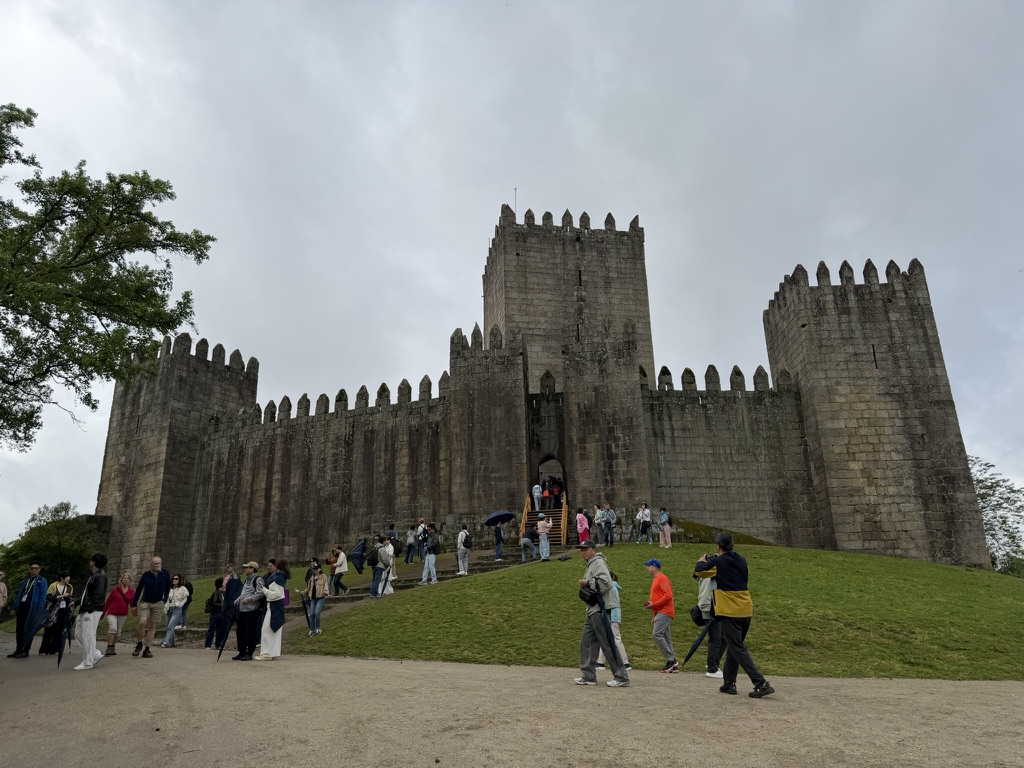
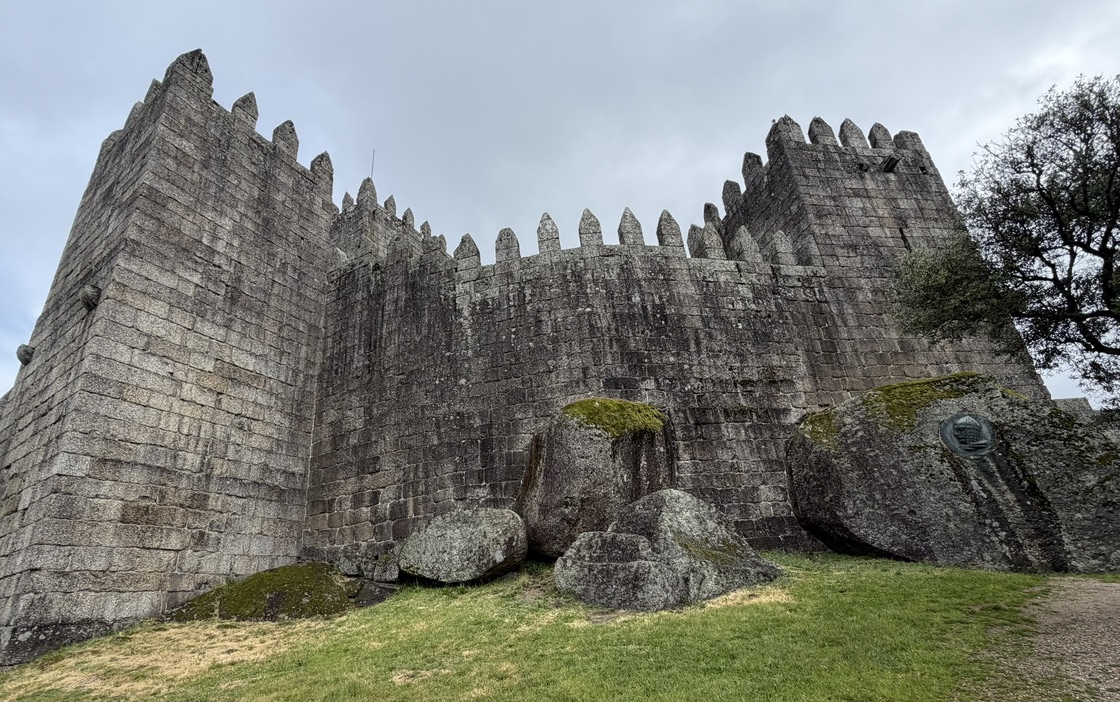
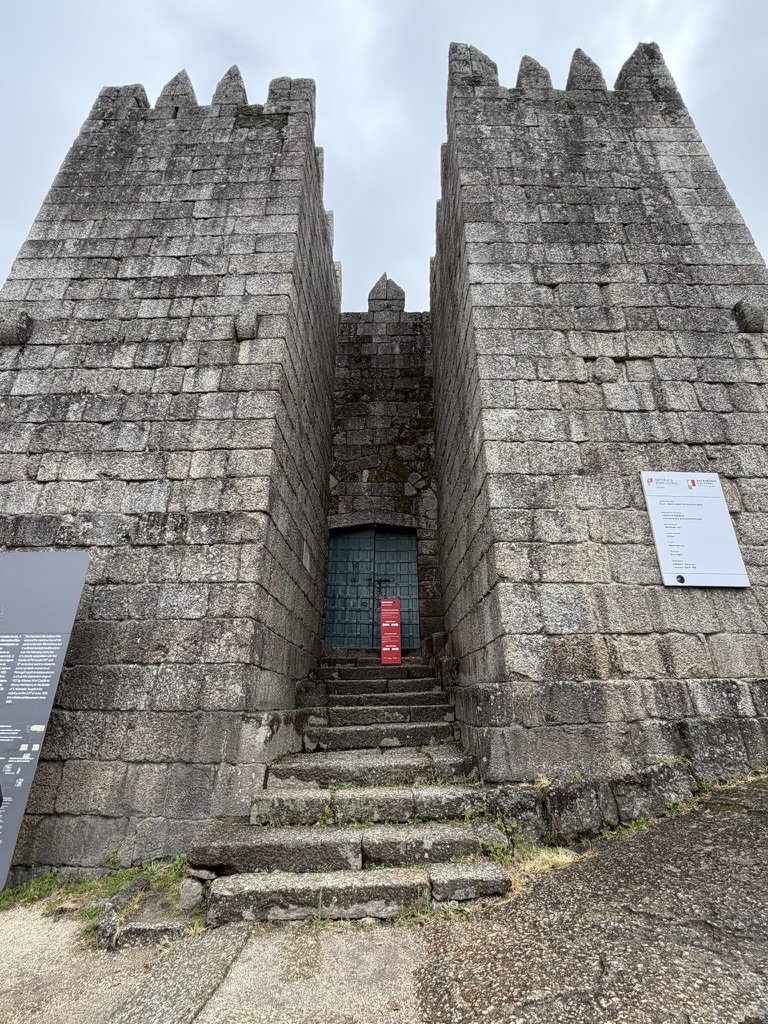
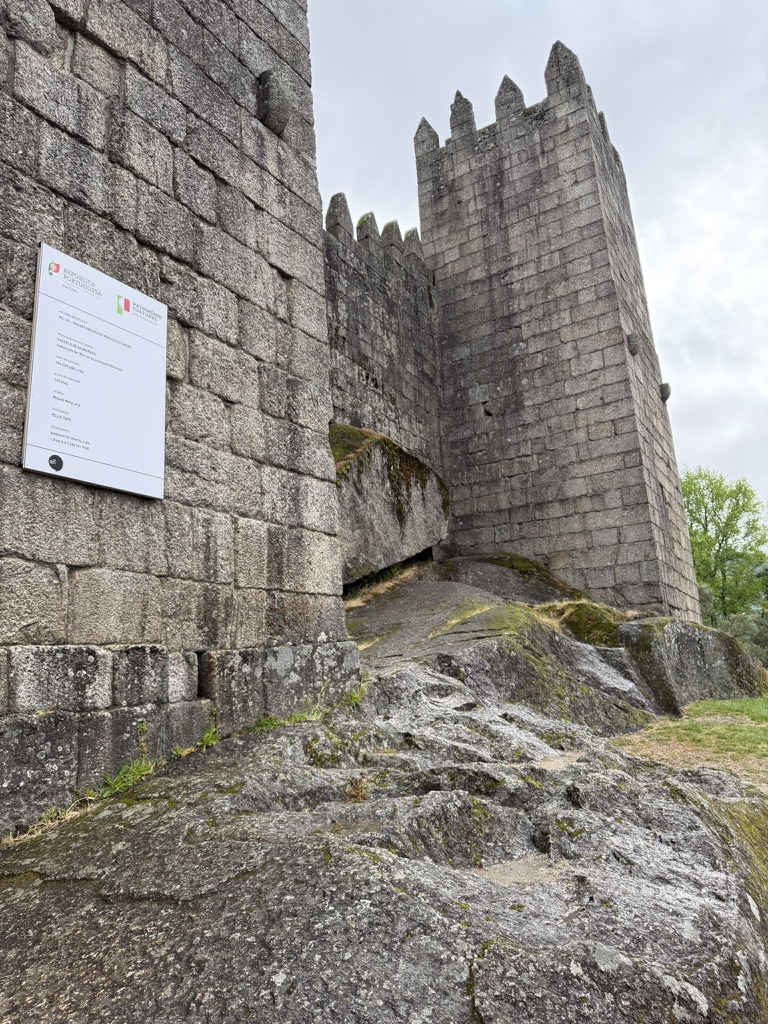
Thank goodness our next stop, the first castle on our tour, was less ornate but also fascinating in its own right: The Castelo de Guimaraes in Guimaraes. We did not actually go into this10th century edifice, we walked around the stone fortifications and massive walls. It is built on top of a granite mountain, and some of its walls are the granite stones. And they are enormous. They are everything a castle should look like from the outside. It was constructed by order of Countess Mumadona Dias to protect a monastery from Moorish invaders. Although the castle is not a world heritage site, it is a Portuguese National Monument since the late 1890s.
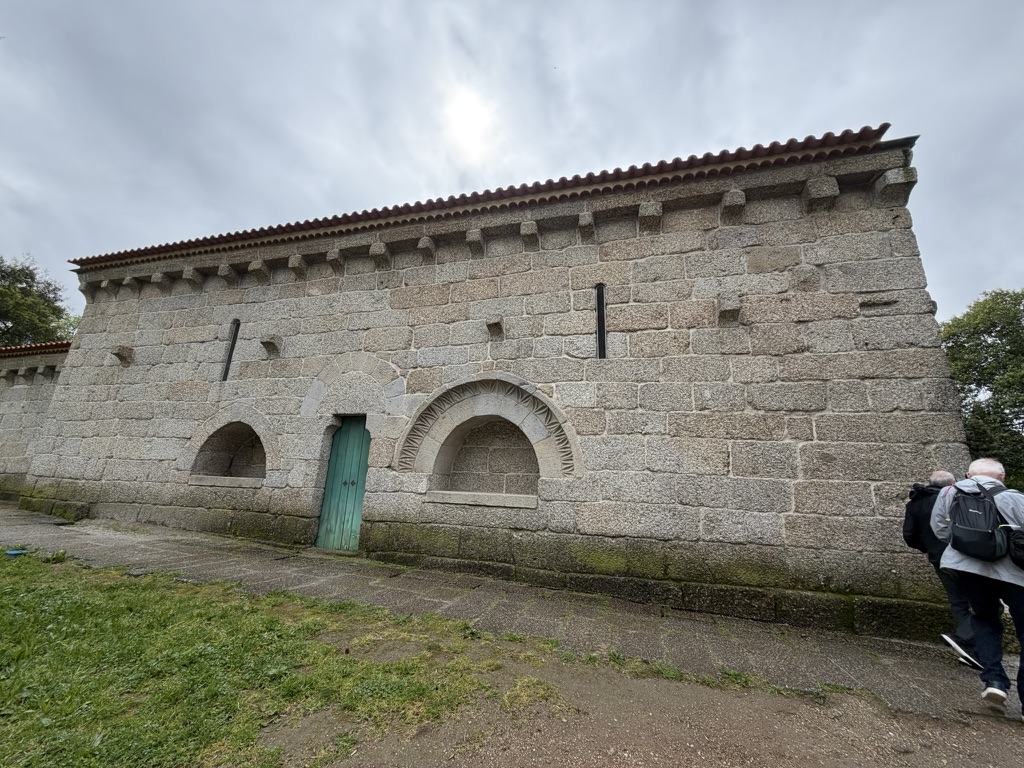
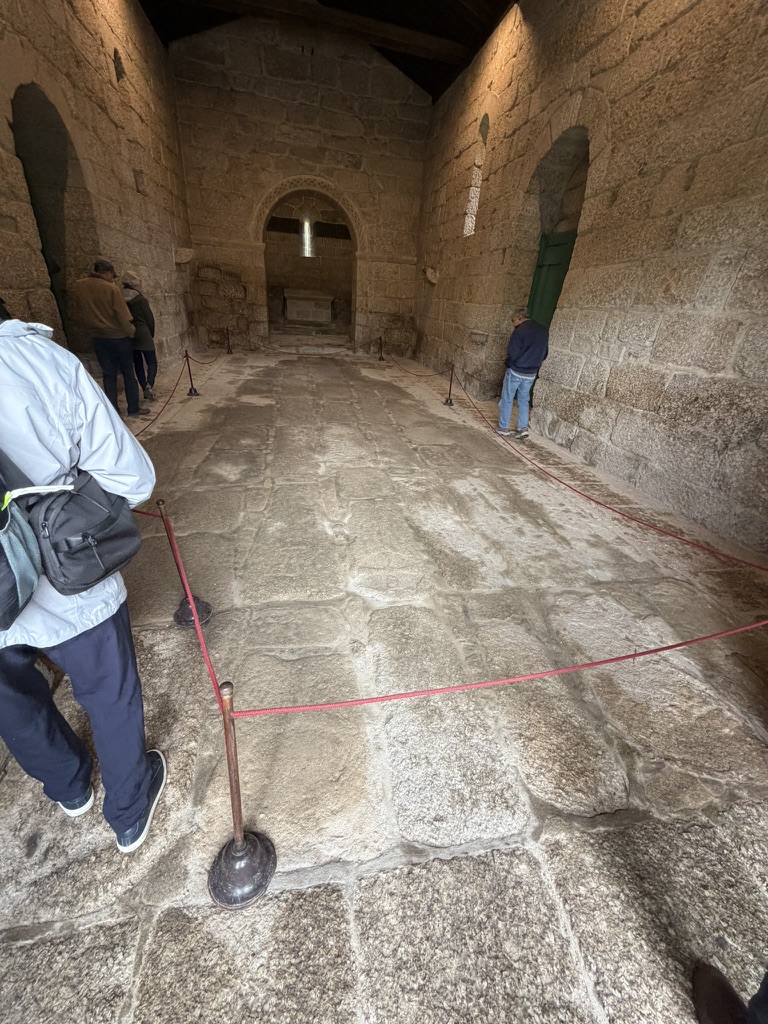
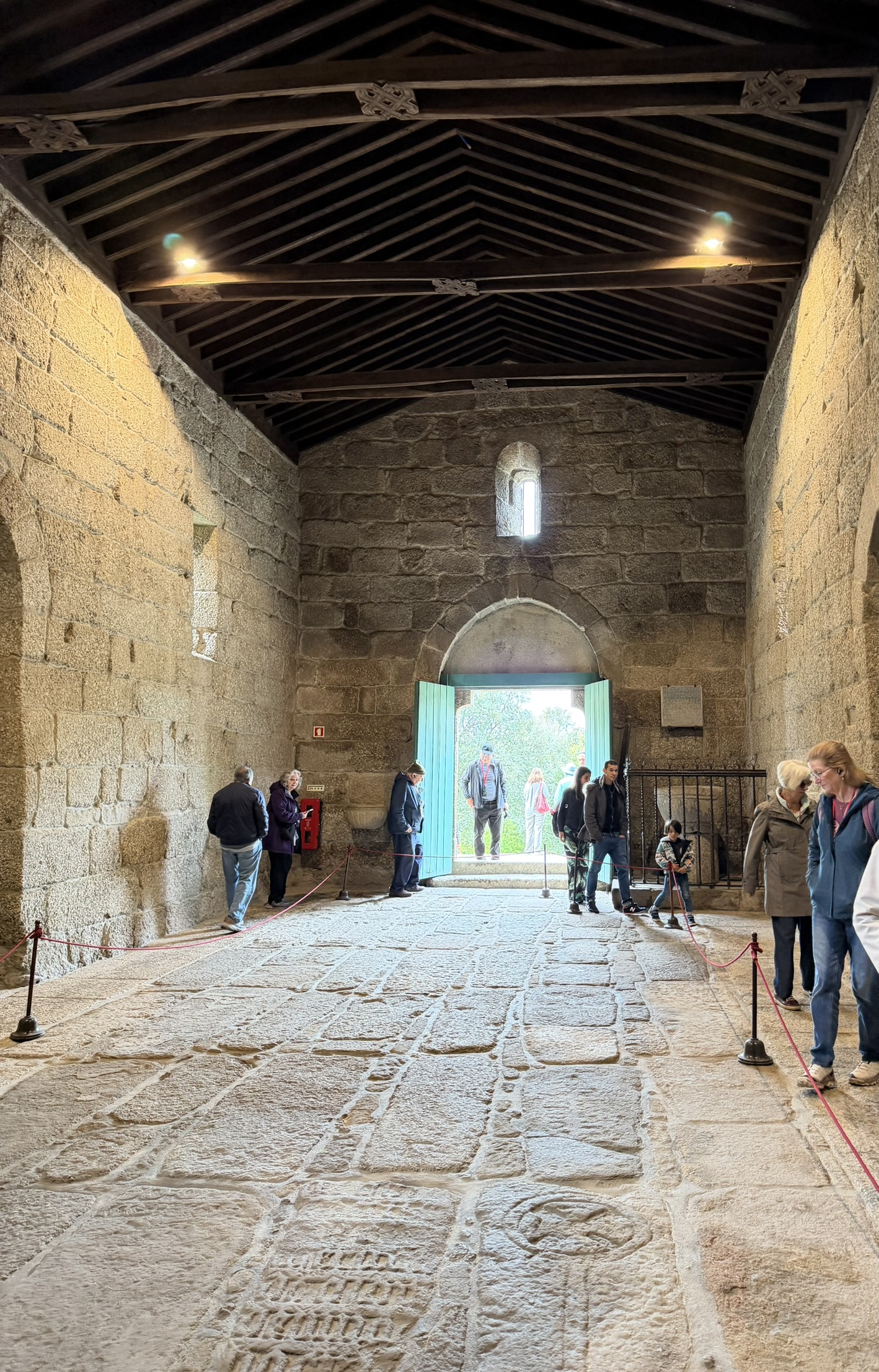
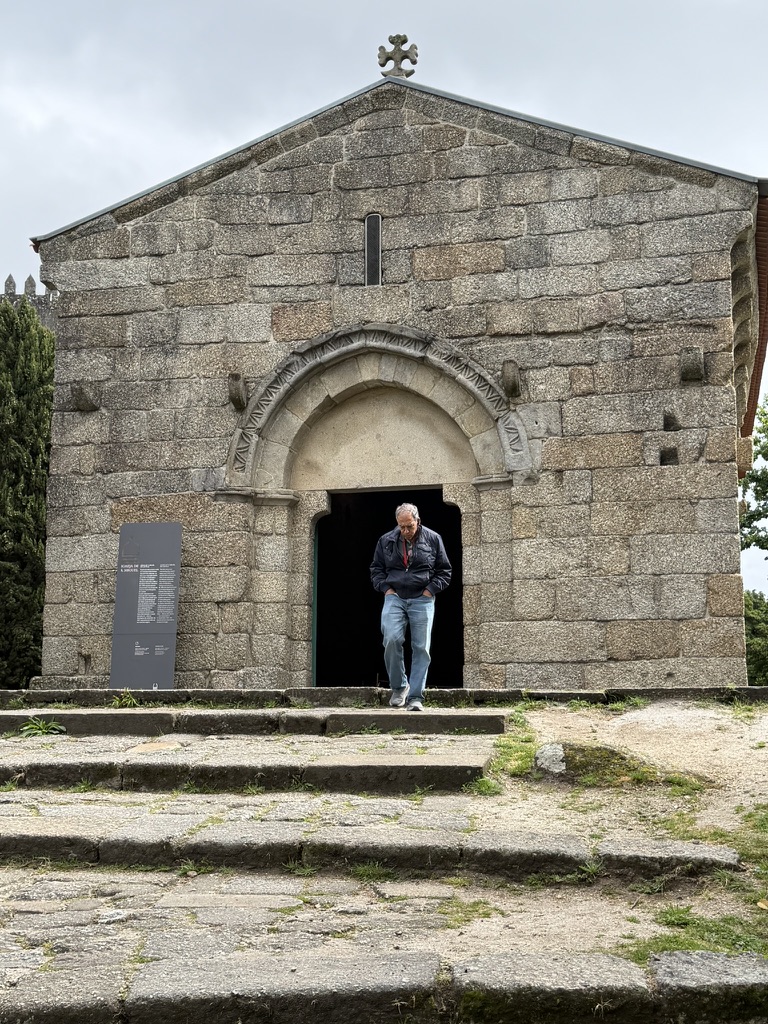
On the grounds of the castle are two more buildings. First the Church of Saint Michael. This little chapel was the place where Portuguese King Afonso Henriques was baptized in 1927. There is no furniture in the church as the entire floor are the tombstones of important people. In fact, you can only walk around the inside perimeter, so you do not cause damage to the engravings.
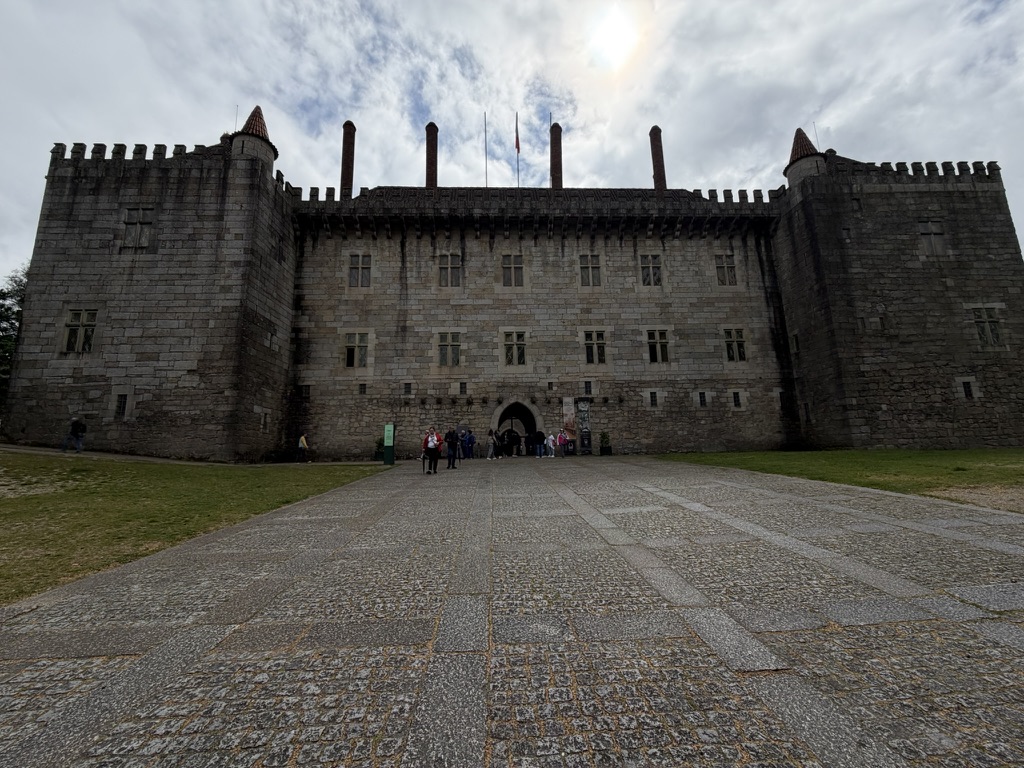
The Palace of the Dukes of Braganza is there as well. We only walked along the outside. It was renovated in the 1930s and served as the residence for the then President Antonio Salazar. Although part of it is open to the public, we did not go inside.
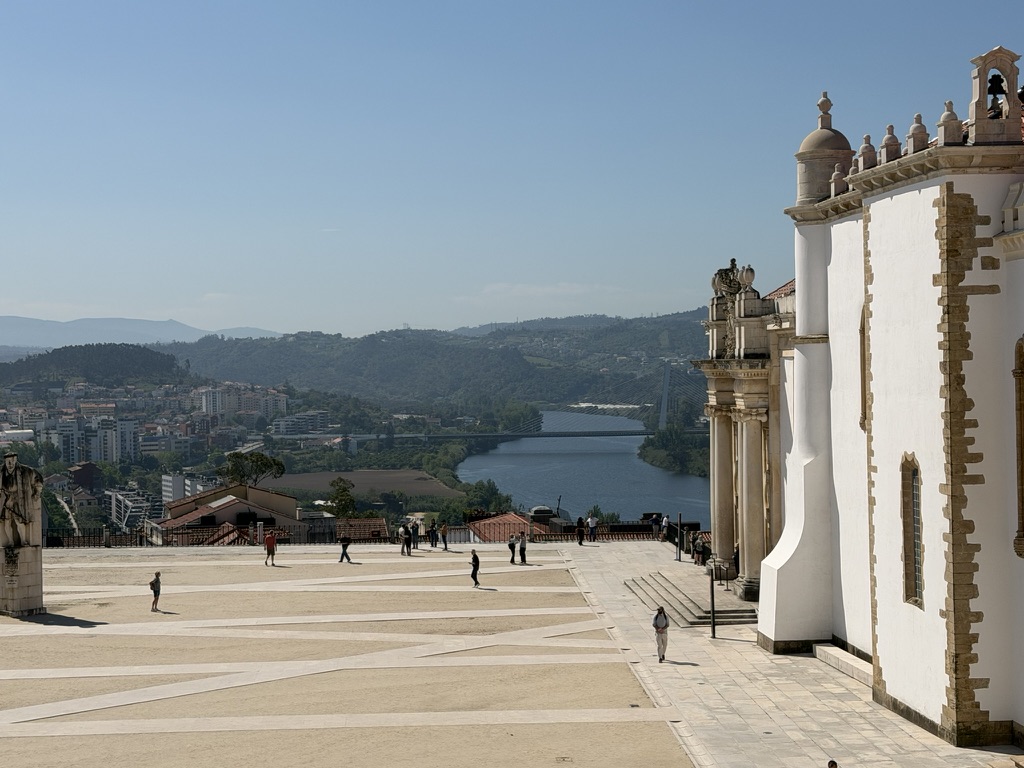
Although not a palace or a castle, the University of Coimbra, founded in 1290, definitely feels like one. I am not sure I would be able to actually go to classes there, especially in some of the older buildings. I would be too busy looking around.
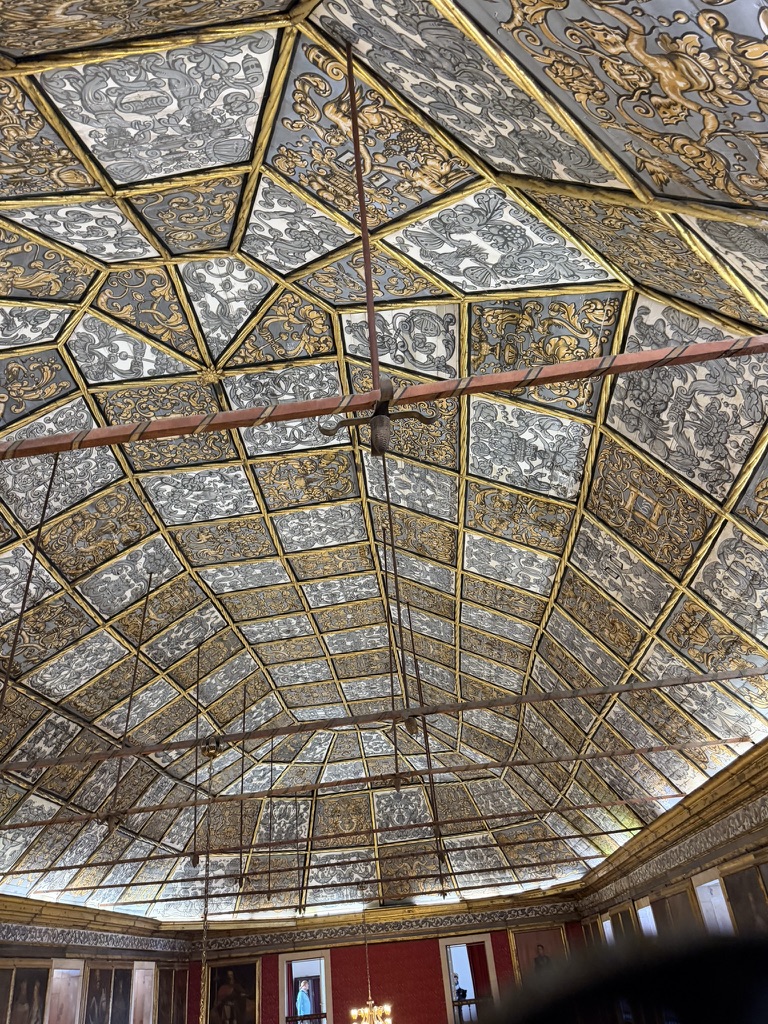
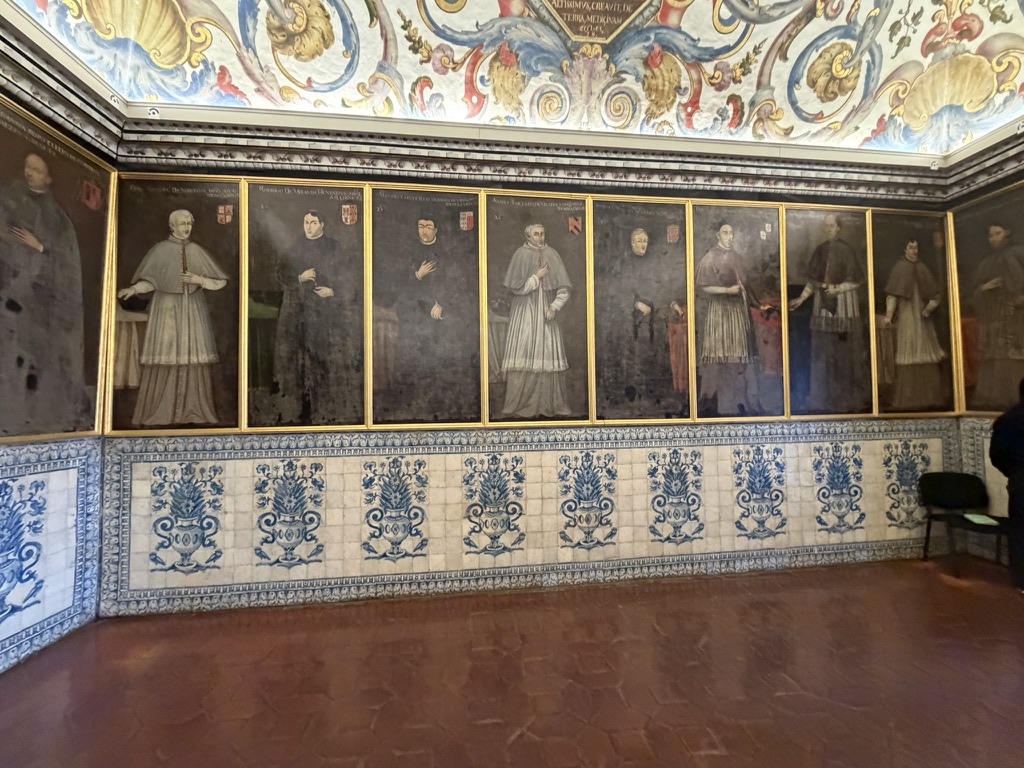
We were not allowed to take photos of the famous library. It is a stunning work of carved wood and bookcases filled with ancient tomes. It is still used by students and scholars, but the books must be ordered in advanced and not allowed to leave the campus.
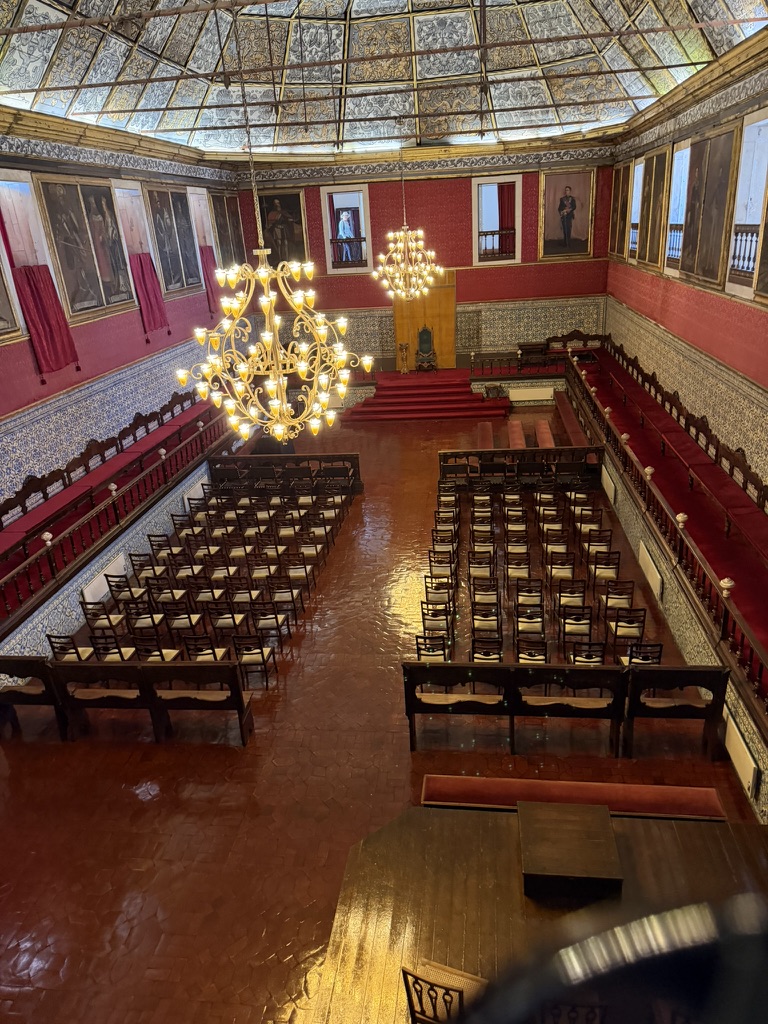
The lecture room, where students present their PhD dissertations also makes you think of a castle great room. The ceiling is stunning as is the woodwork.
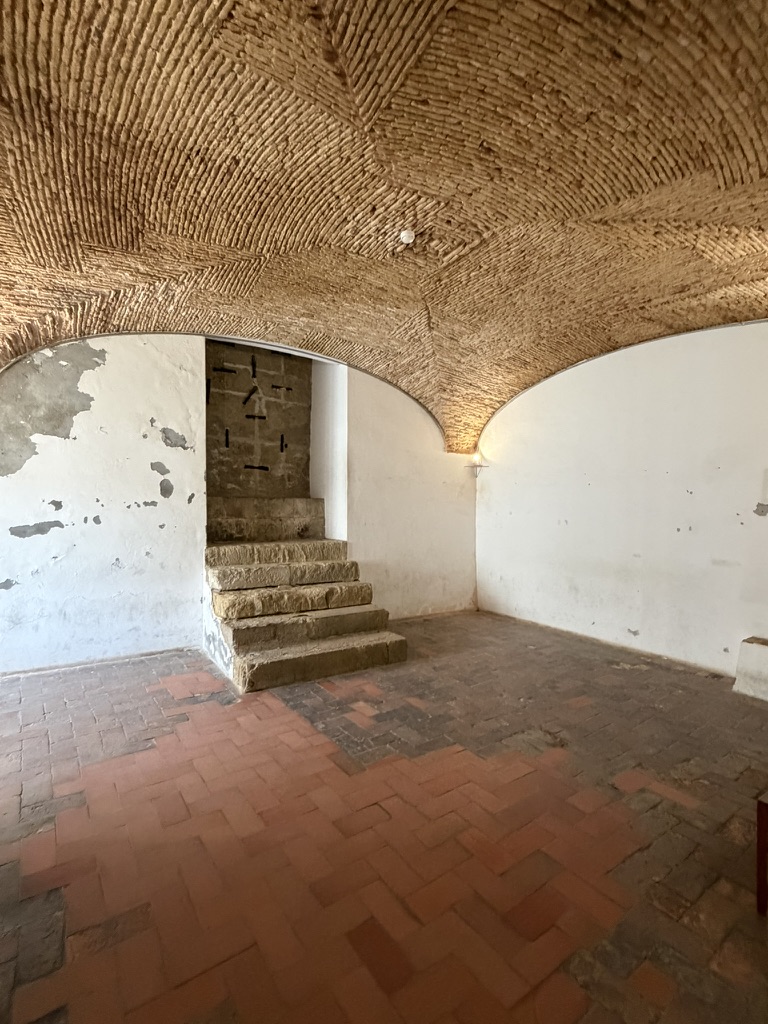
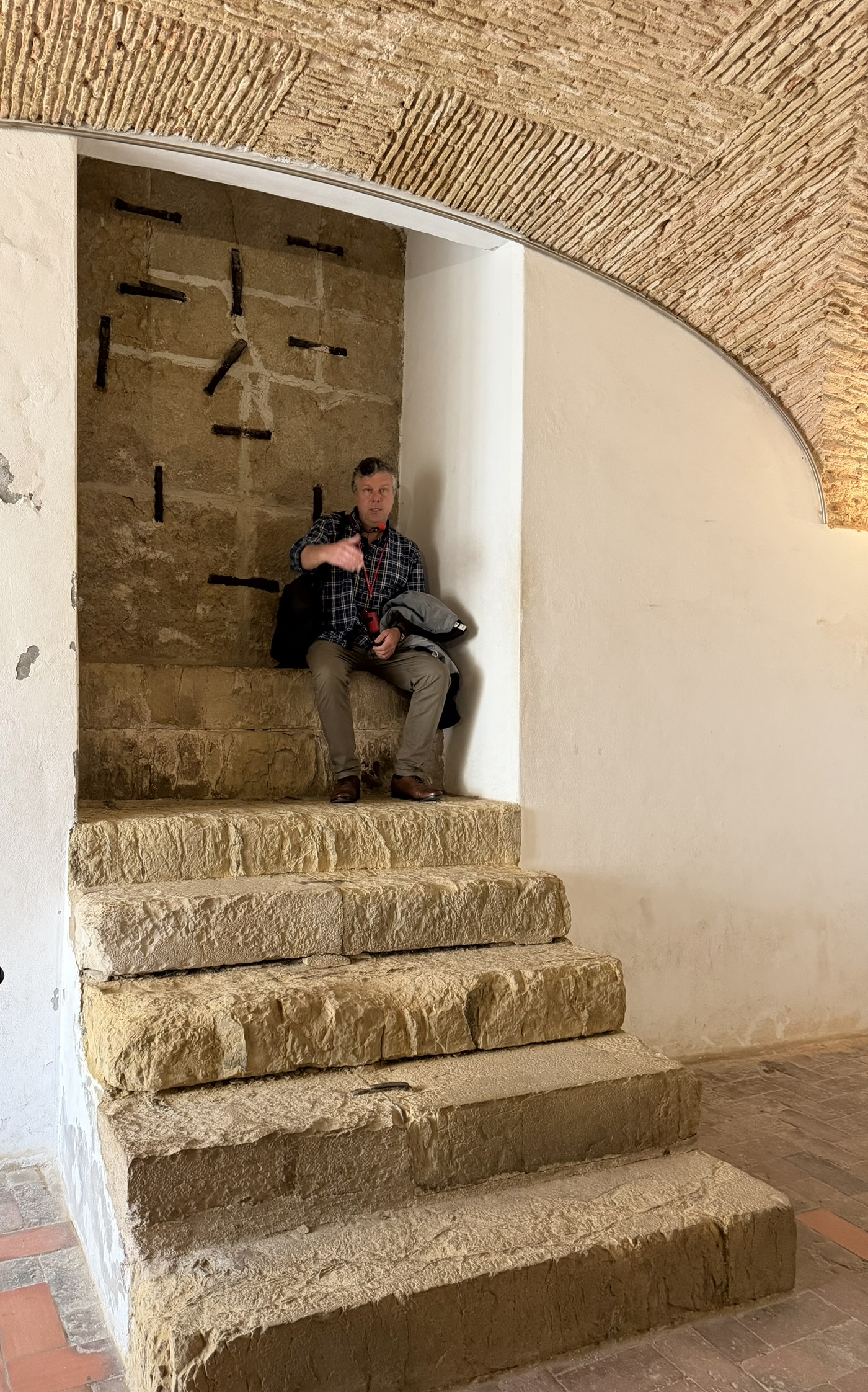
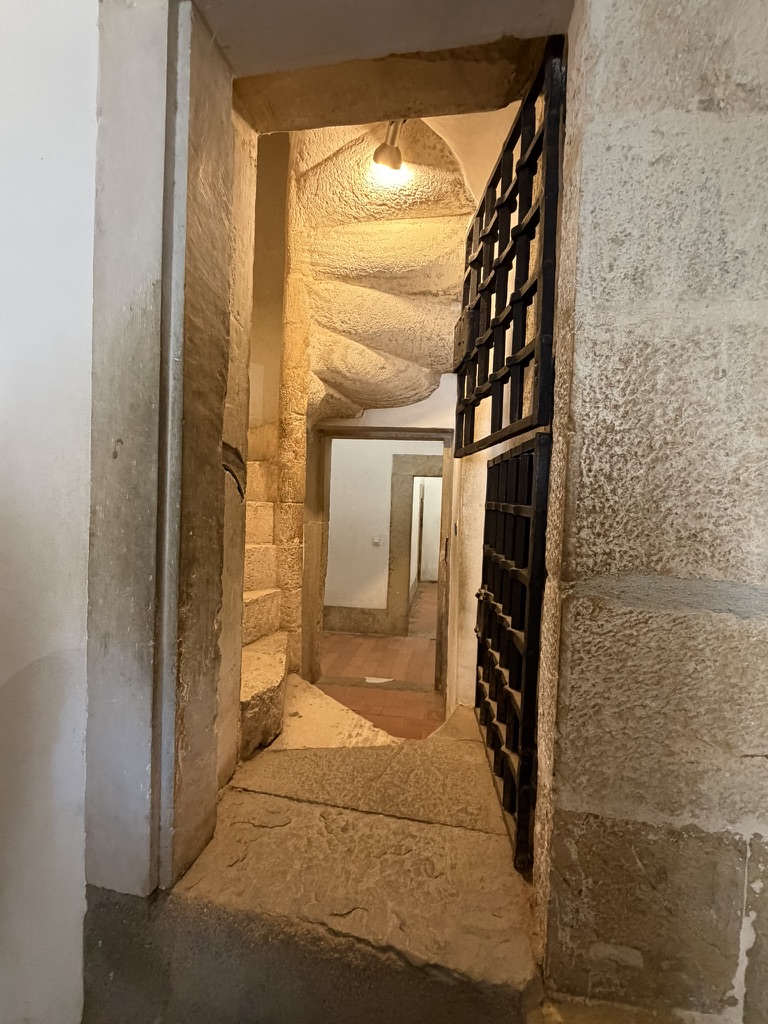
But I have to be honest the part that capture most of our attention was the fantastic view of the city and the river; watching the students take their graduation photos; and finally visiting the underground ‘dungeon’ that was a special prison for students who got into trouble. This is not your usual dungeon, because since the students were from the upper class, even when they got in trouble they did not suffer like the riff-raff. In fact, we were amazed that they actually had a two-seat stone toilet to use. They could spend anywhere from a day to several months here depending on their misbehavior.
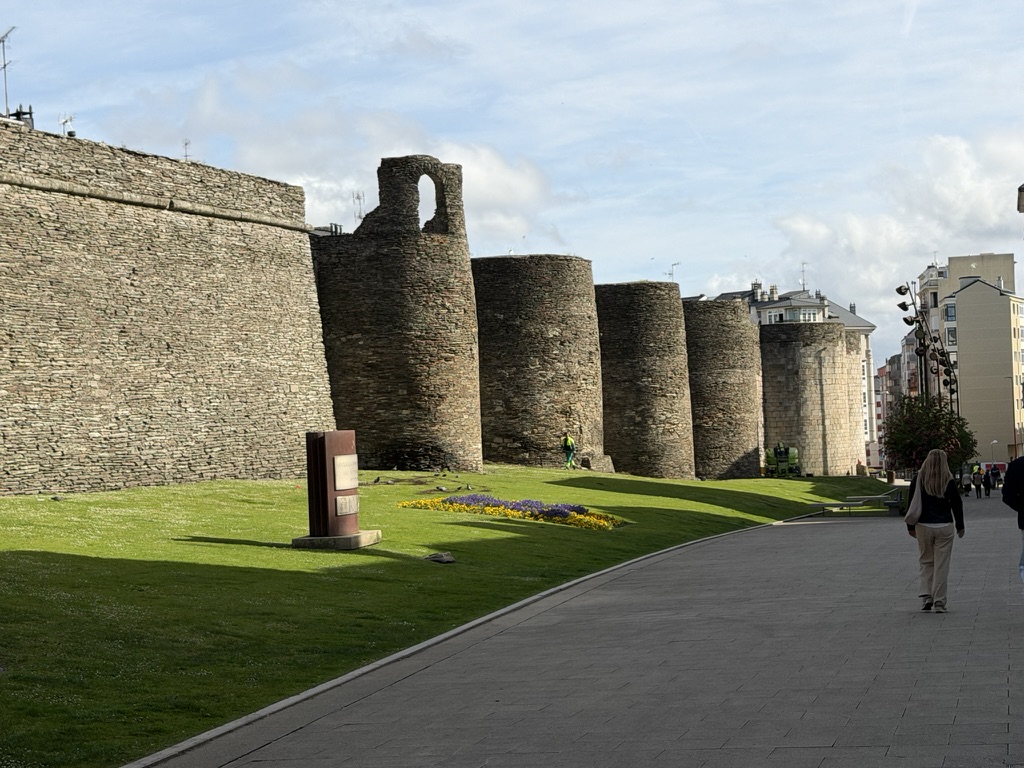
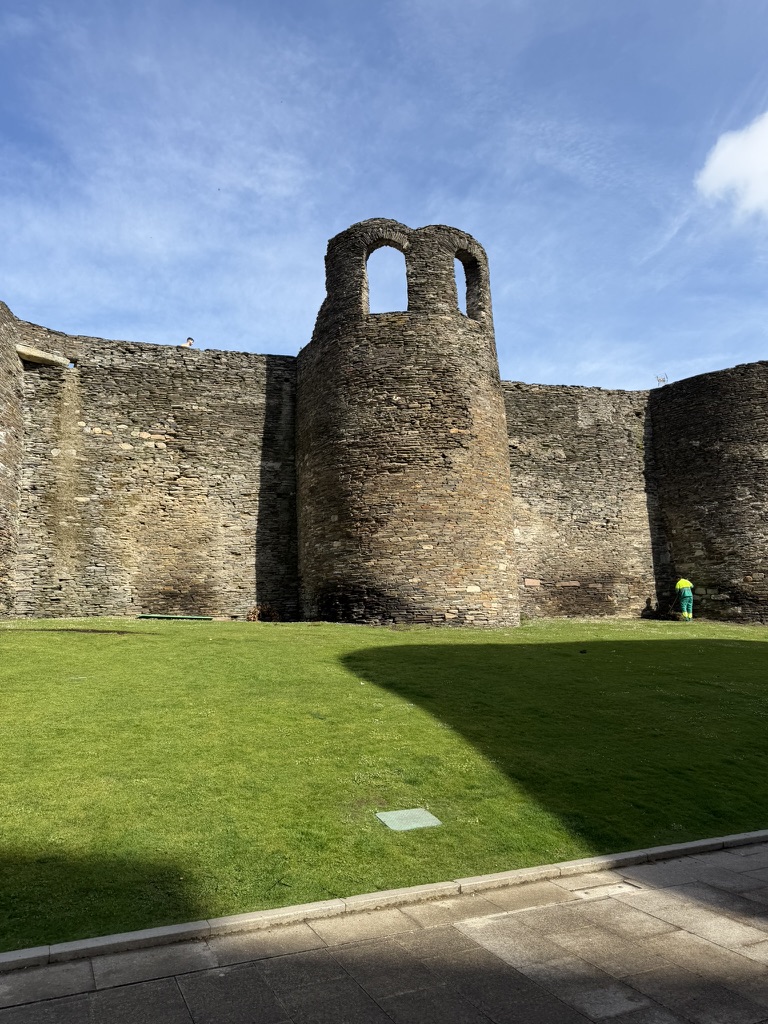
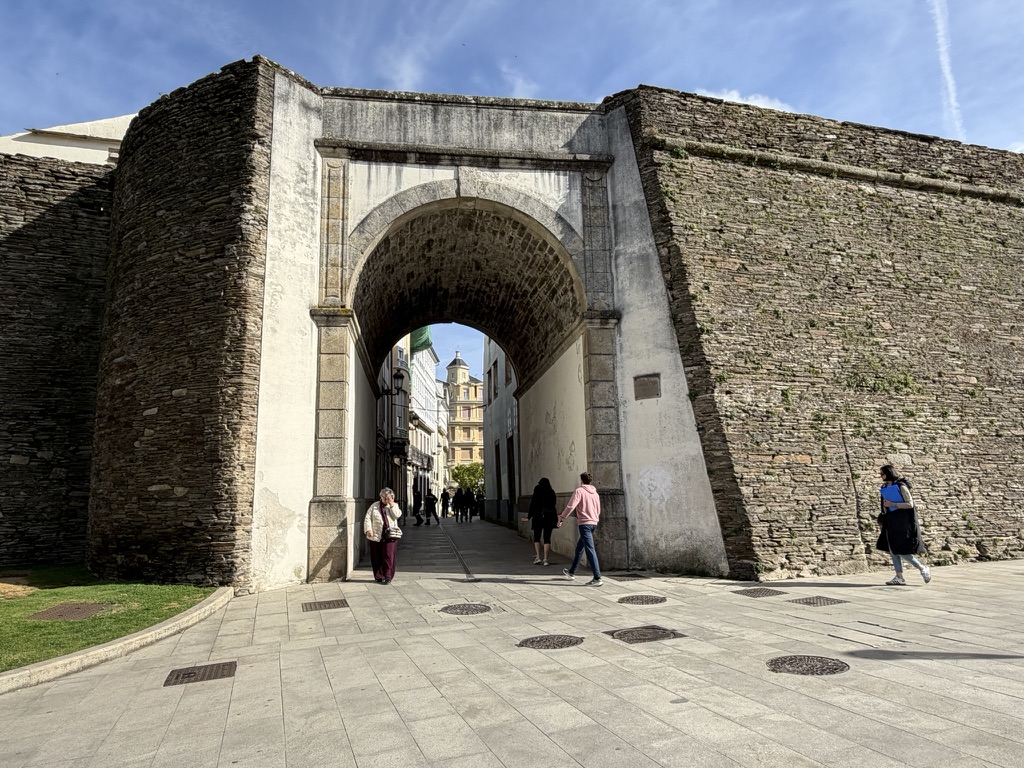
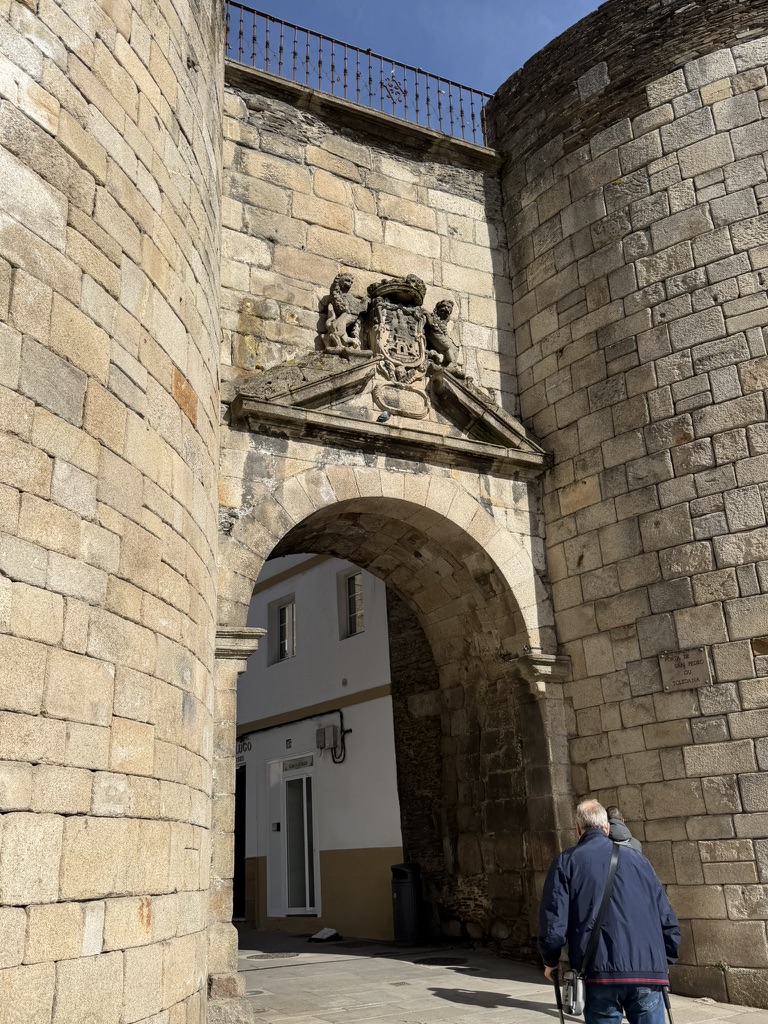
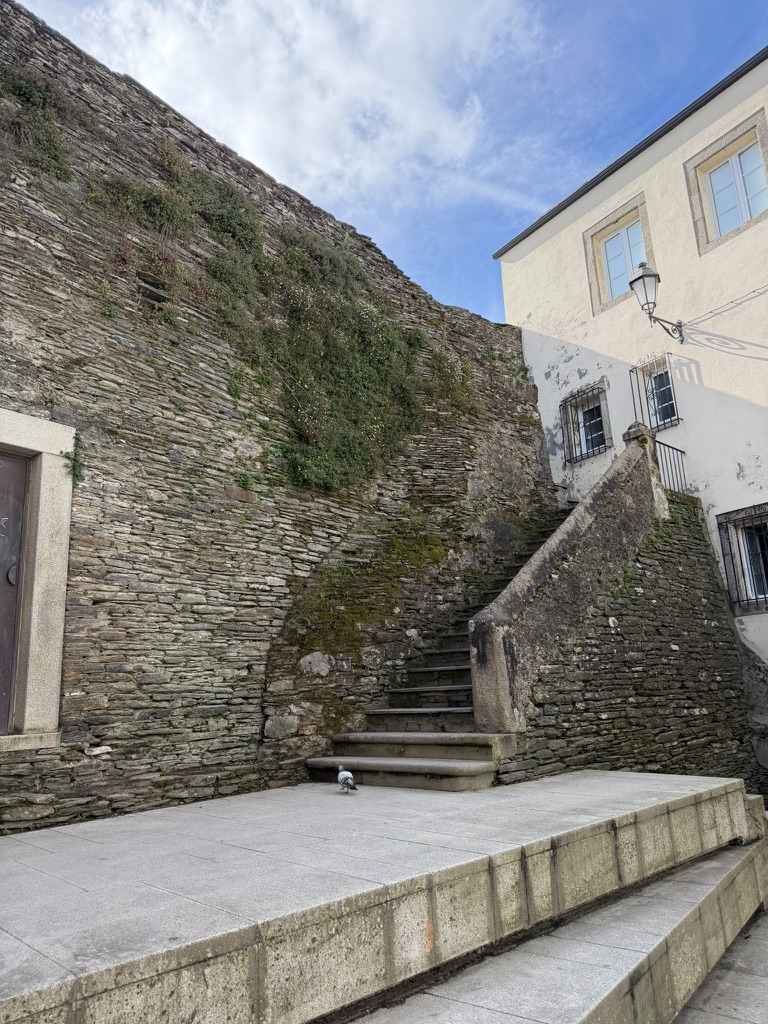
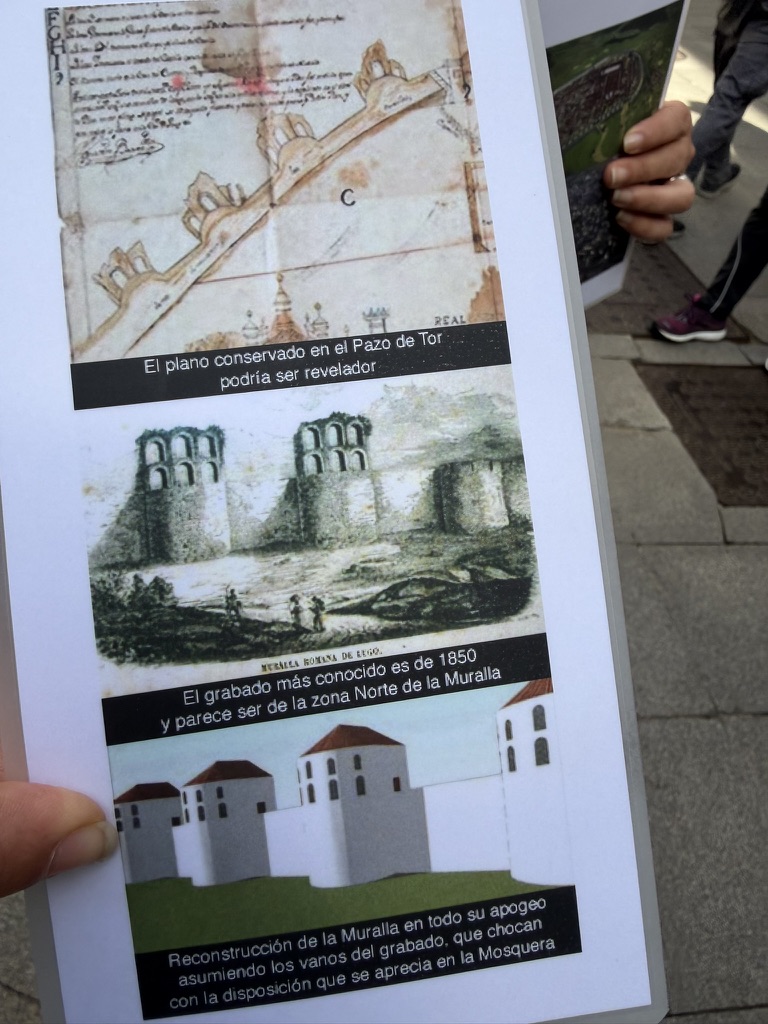
Next stop the monstrous and magnificent Roman Walls of Lugo. We walked around them from the outside. And then we walked on the walls in two different places. Once the walls, a UNESCO World Heritage Site, also had multiple towers surrounding the city. Now just vestiges of the towers remain.
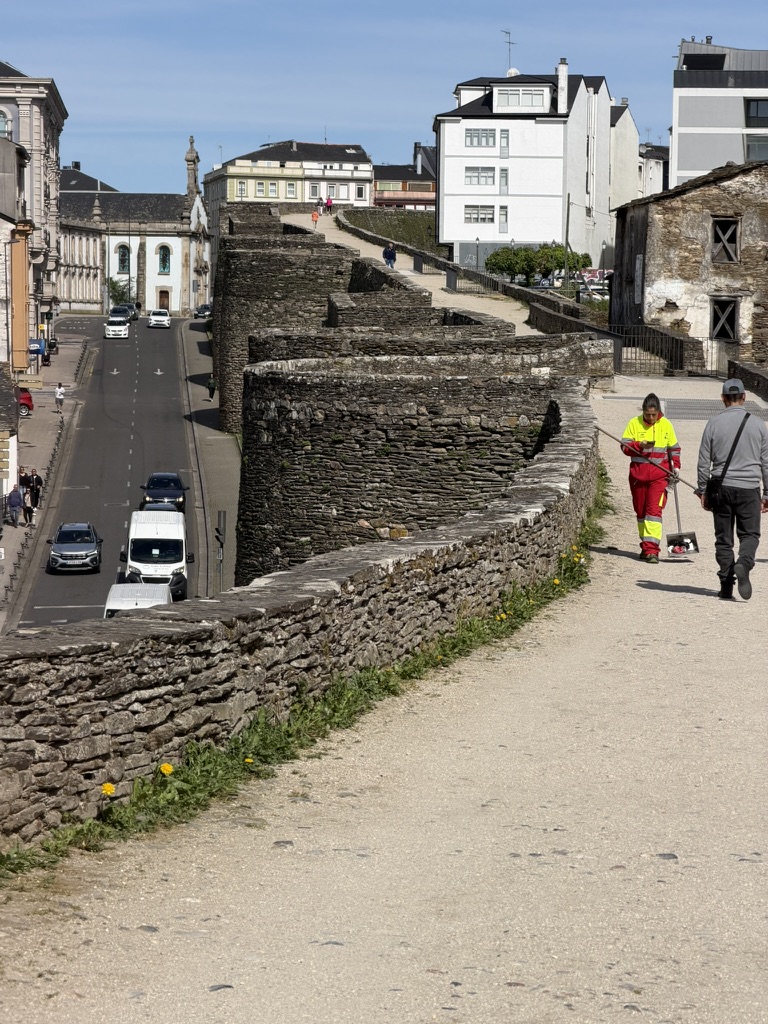
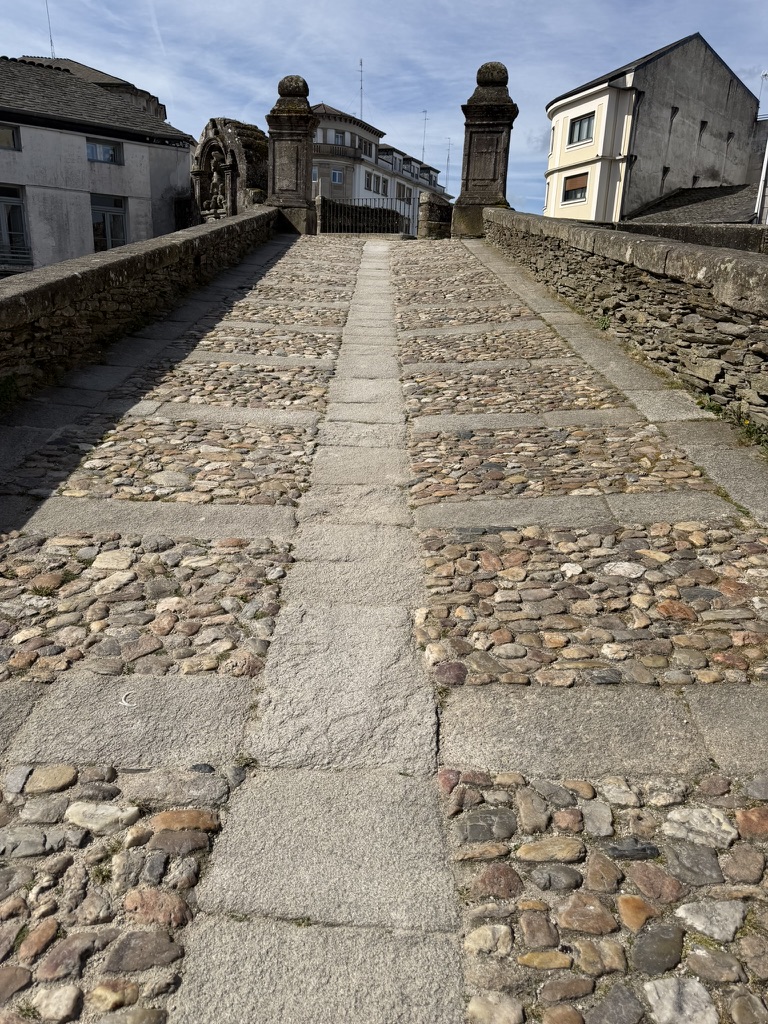
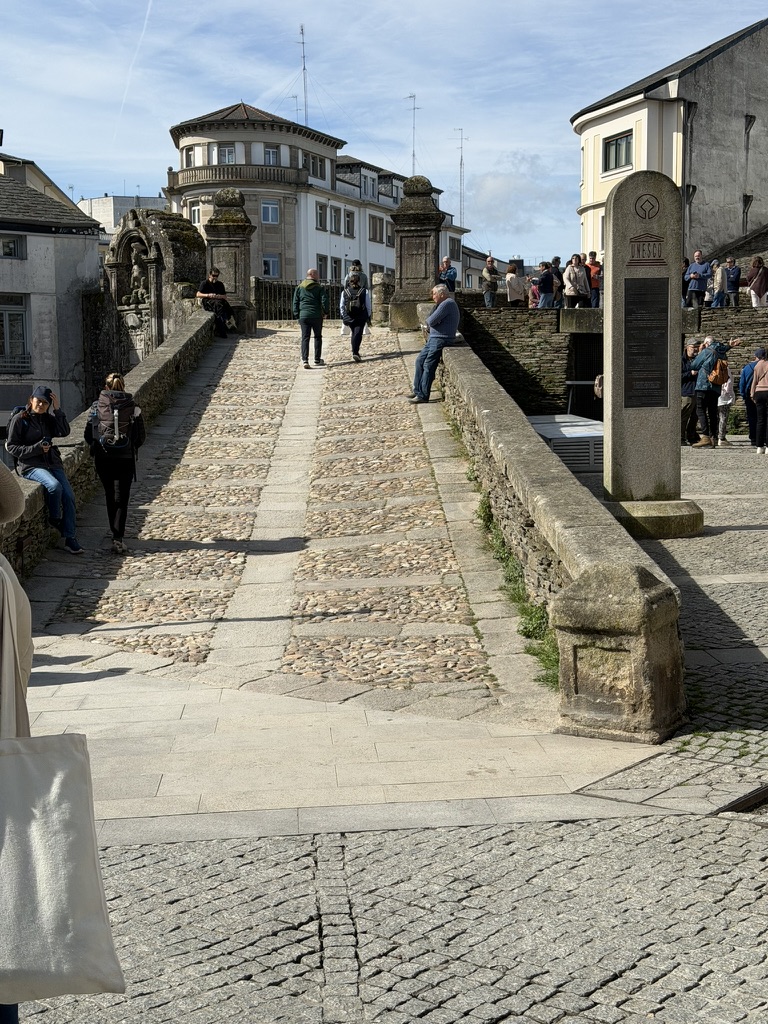
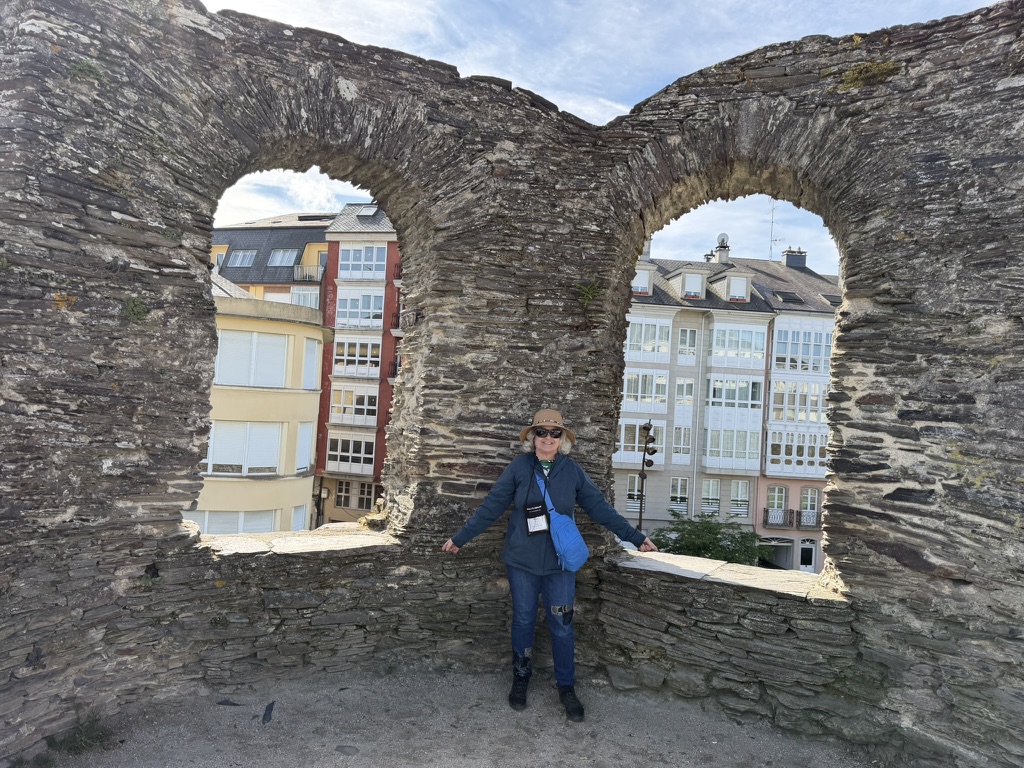
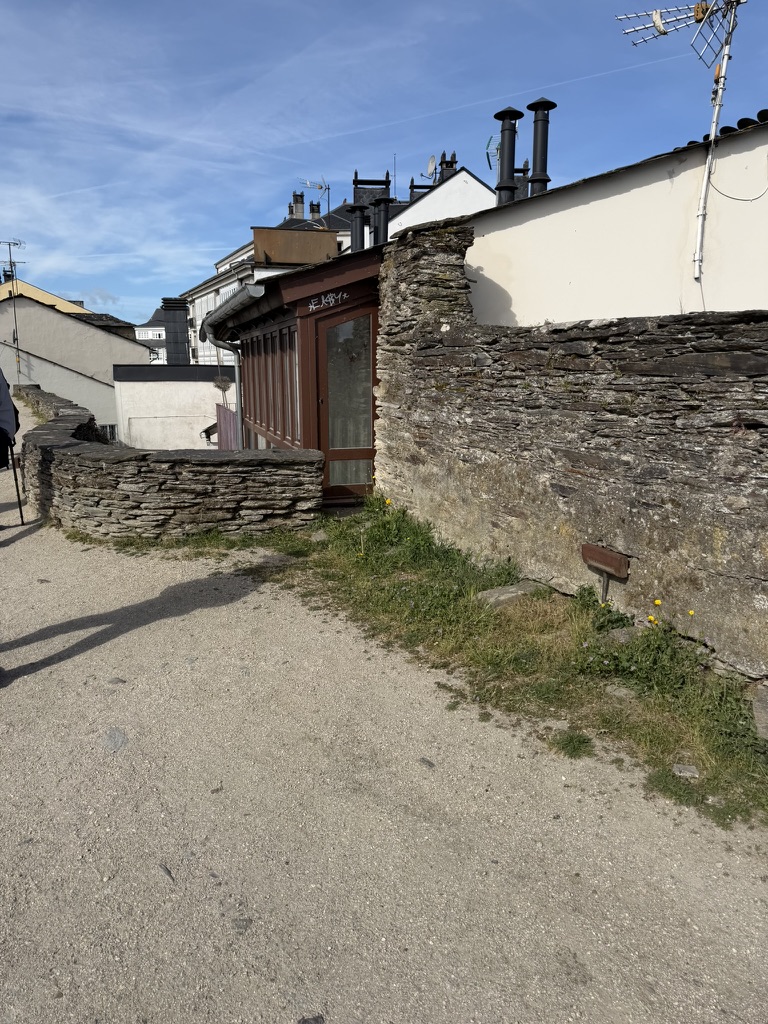
Walking along the walls give you a great view of both the old and new cities, but also make you aware of how technologically advanced the Romans were as these walls have lasted centuries. Over time, some people had the opportunity to build their homes right into the wall and have the walls paths as their backyard. People can no longer do this, but those who have this cannot be destroyed.
Our final Palace was La Granja, or Real Sitio de San Ildefonso, was the summer home of the Spanish kings. It was walking distance to our hotel, the Parador De La Granja. Our hotel was once part of the Palace grounds and was the home of two children and their attendants.
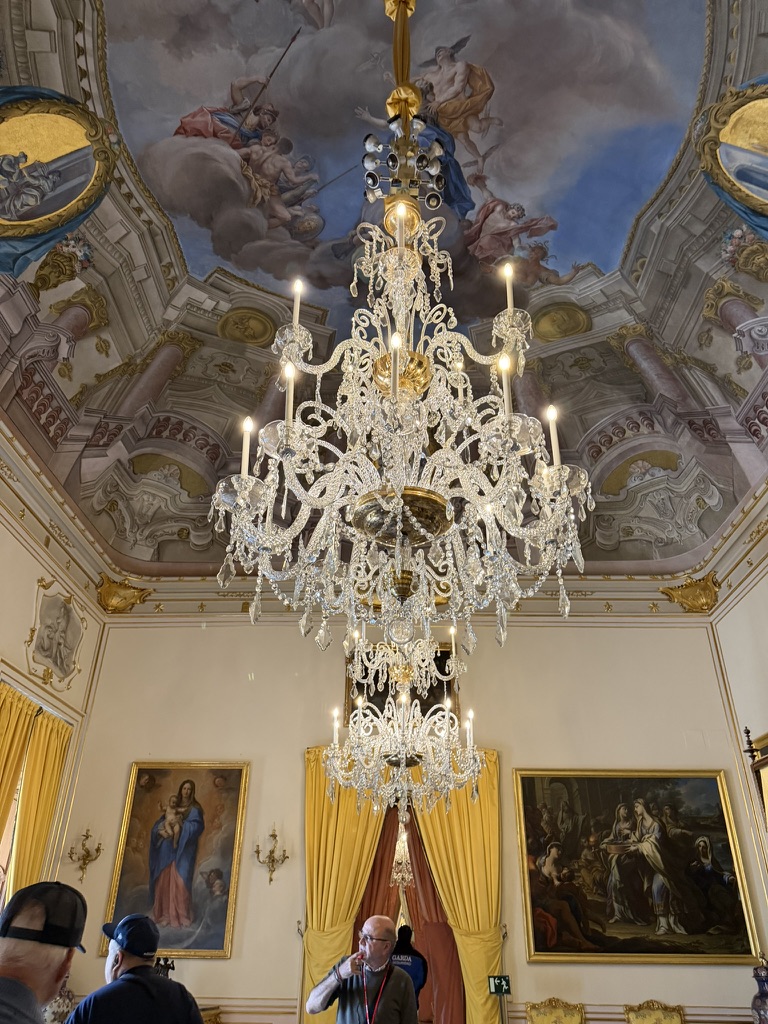
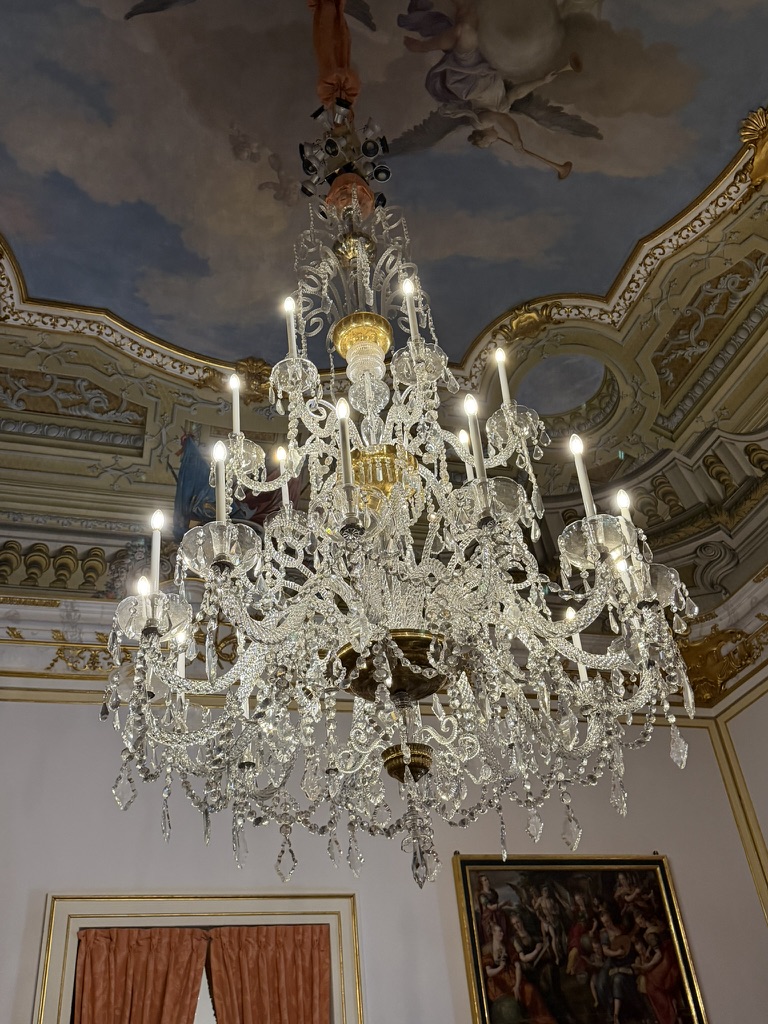
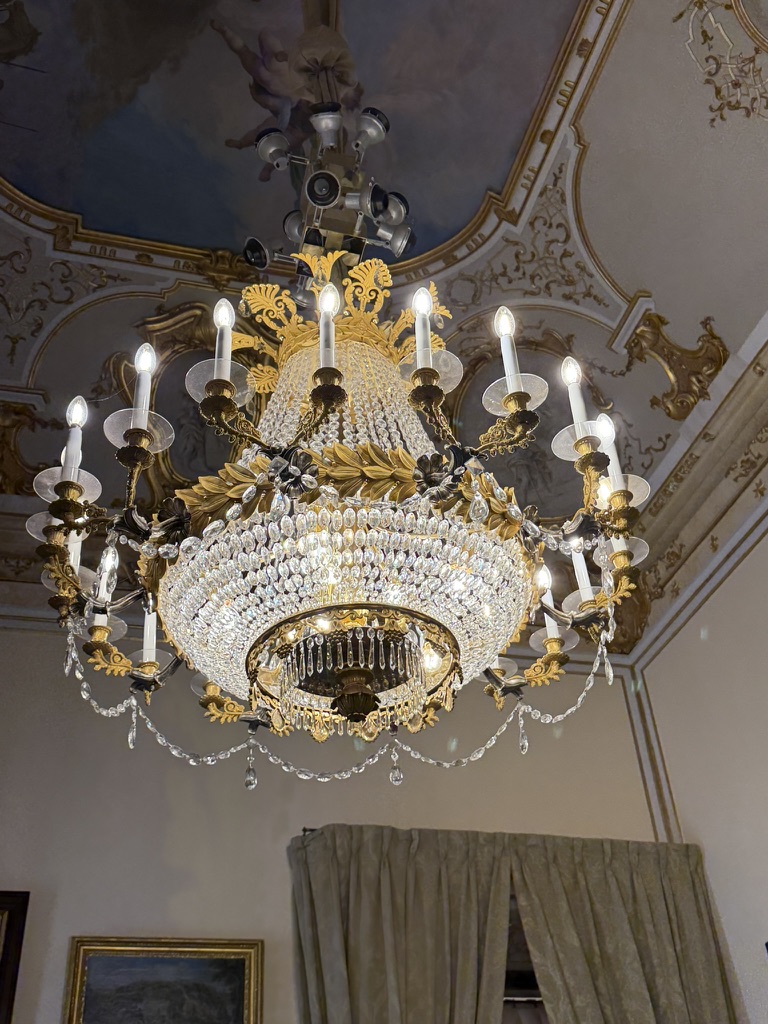
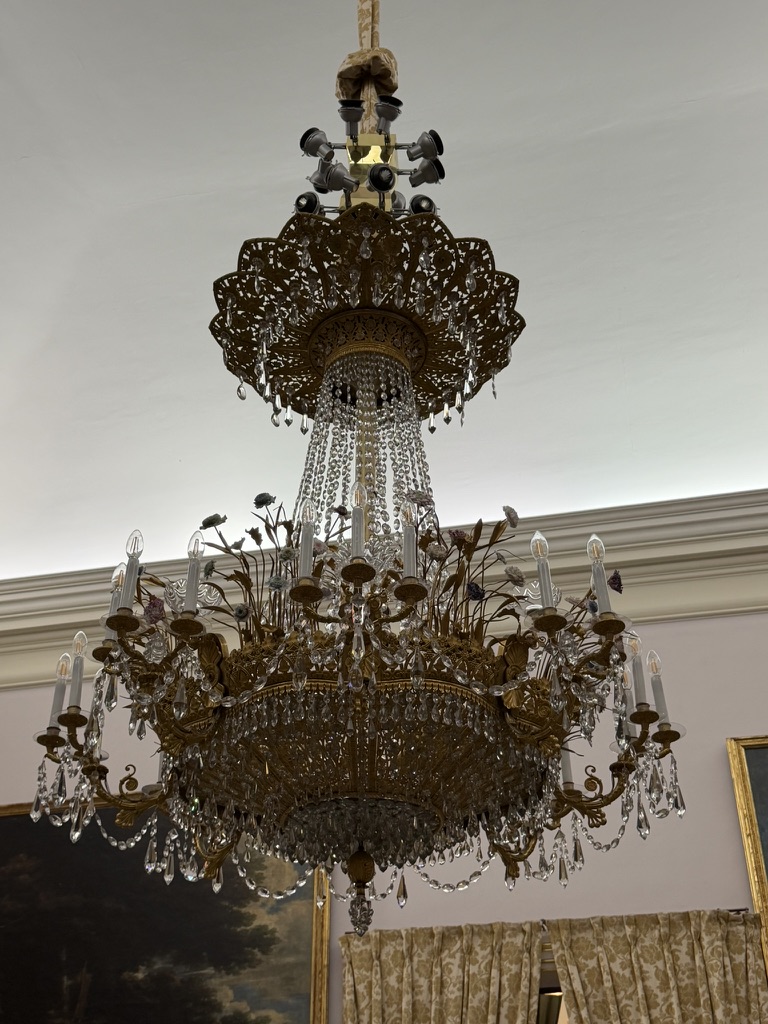
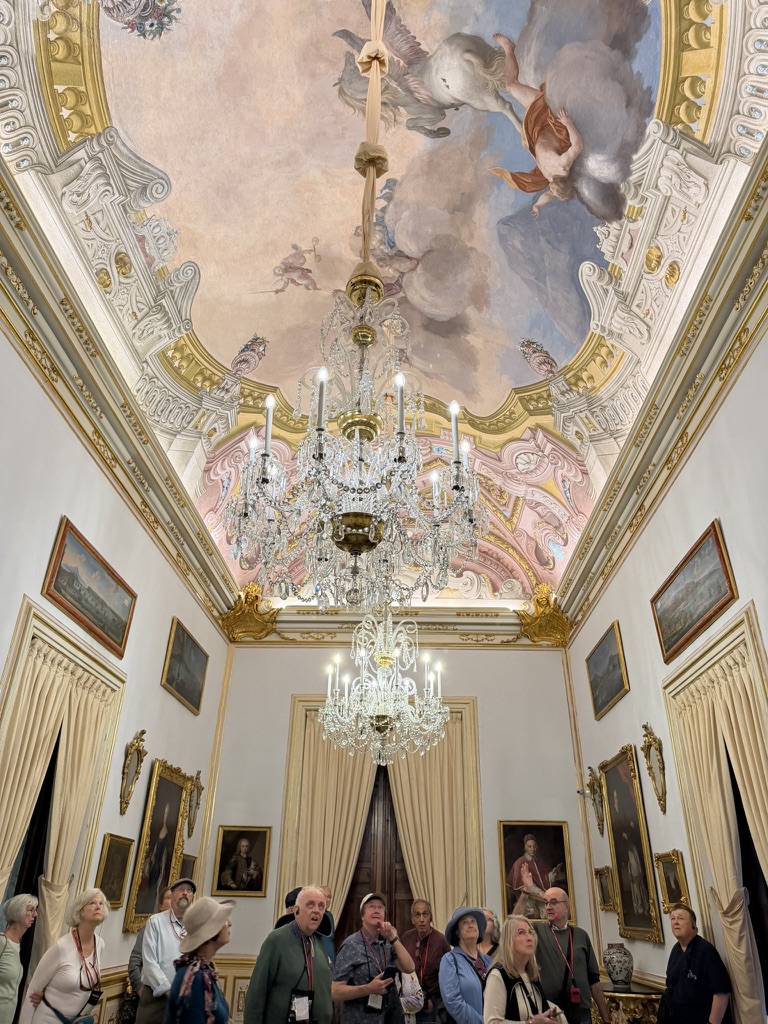
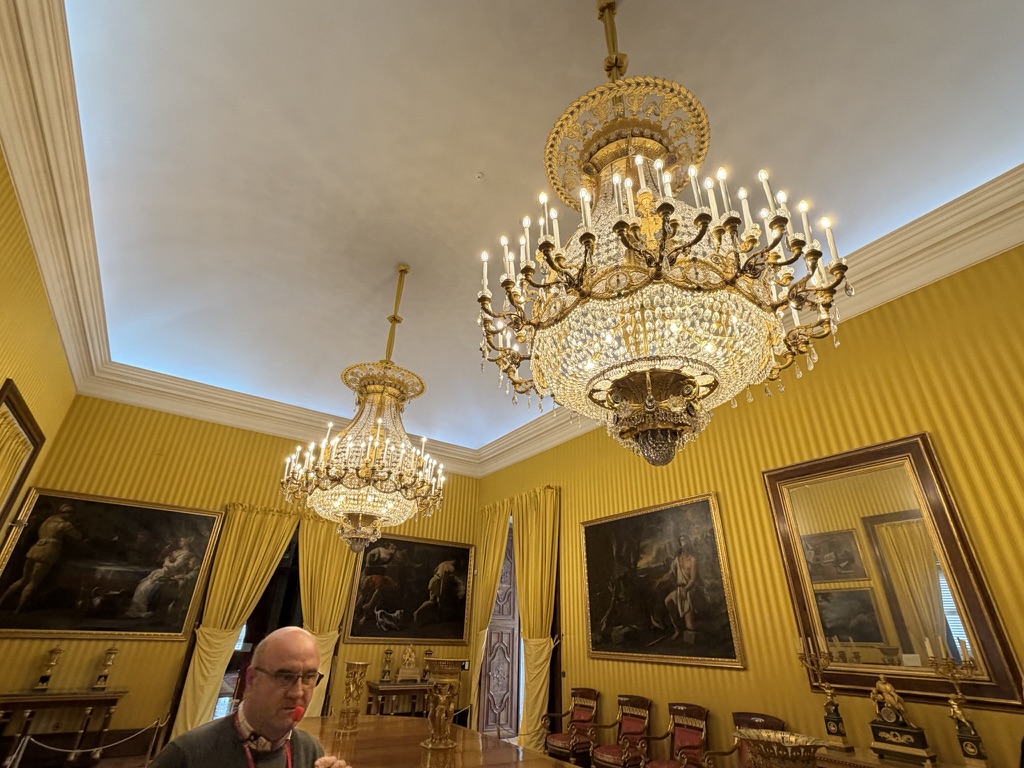
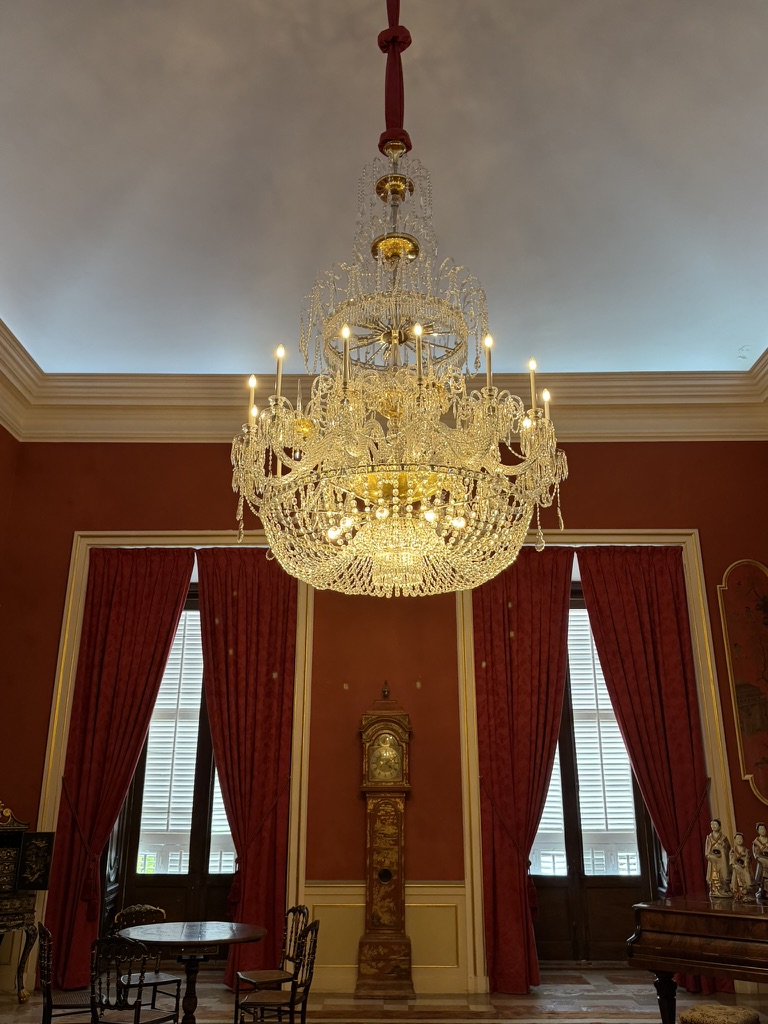
The Palace is enormous, we only got to see about ¼ of the total rooms, just walking through the open rooms on the bottom floor. Through the windows we could see some of the fantastic gardens. Unfortunately, they were closed because that evening some of the fountains were going to be opened. But from what I could see these gardens are much like the ones in Russia at the Peterhof Palace.
The chandeliers and ceilings in this palace were stunning. The Royal Glass company is in San Ildefonso, so many of them were made in the town for the Palace. For this palace I will just show you some of these fantastic and some fanciful chandeliers. To be honest after going through these rooms I became somewhat overwhelmed. But it was definitely a great final stop on our tour.
https://en.wikipedia.org/wiki/Amber_Room
https://whc.unesco.org/en/list/987/ https://www.spain.info/en/destination/san-ildefonso-o-la-granja/

