Tag Archives: Europe

Palaces, Walls, and A Castle In Spain!
12 May

When we planned our Road Scholar trip to Portugal and Spain I was excited that we would be going to many World Heritage sites, including castles and palaces.  Let’s be honest, I was born along with DisneyLand in 1955 and I grew up seeing the Disney castle every week on the Wonderful World of Disney.   I remember so well the evil villain of Babes in Toyland singing, “My Castle in Spain.”  For me this was going to be a highlight.

We saw a number of  castles and palaces on our trip.  Some were absolutely extravagant; others were just empty stone shells without much romance.  I always knew that the tapestries were created to keep the rooms warmer.  But until you walk through a large castle and see the size of the rooms, and the small size of fireplaces and heaters, do you realize that these places would be extremely cold in the winter.  In fact, our guide told use that most people had to walk around wrapped in a blanket.  BRRR

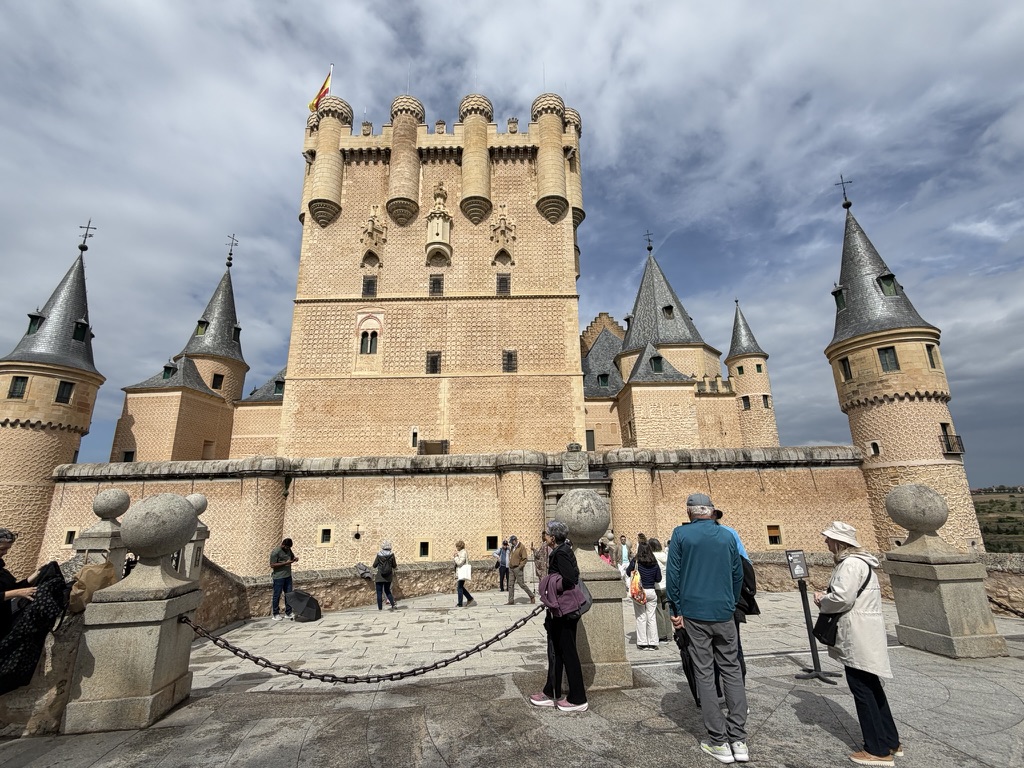
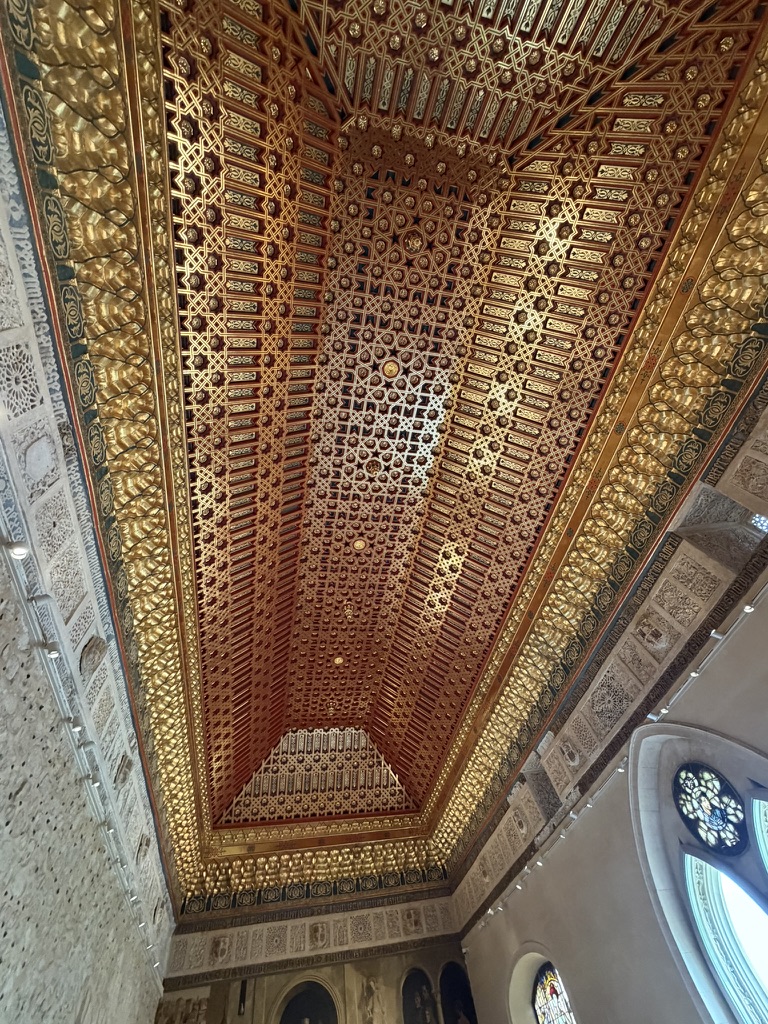
Even still, with this reality check, with knowing when I saw the Castle in Segovia that it had been heavily damaged by a fire and most of it was reconstruction, I could not help but be joyful.  Why? Because was like seeing the real Disney Castle in Segovia, I knew my wish had come true.  So instead of starting at the beginning of our trip and describing our experience in order, I must start with our second to last castle, Alcazar!
The Disneyworld Cinderella Castle’s towers and windows were based on the Alcazar of Segovia, Spain.  Perhaps other elements come from other castles.  But once you see the Alcazar, all you can do is hum, “When I Wish Upon A Star.”  I did that for the entire time we toured the castle.  I might have made my sister and husband crazy.   

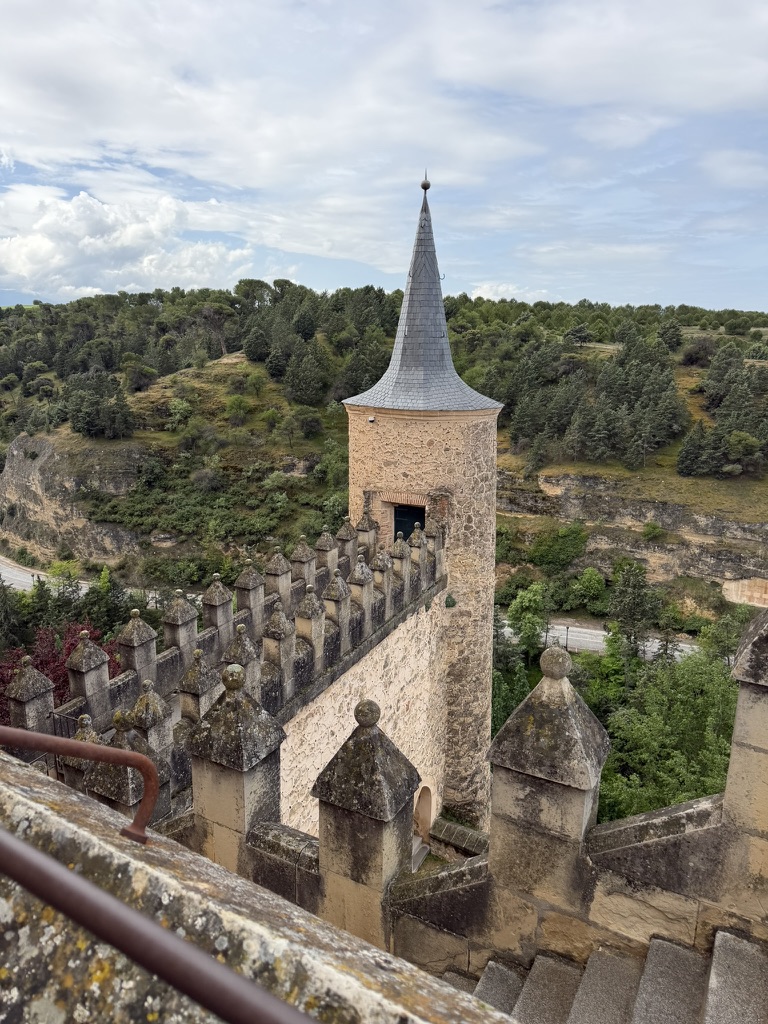
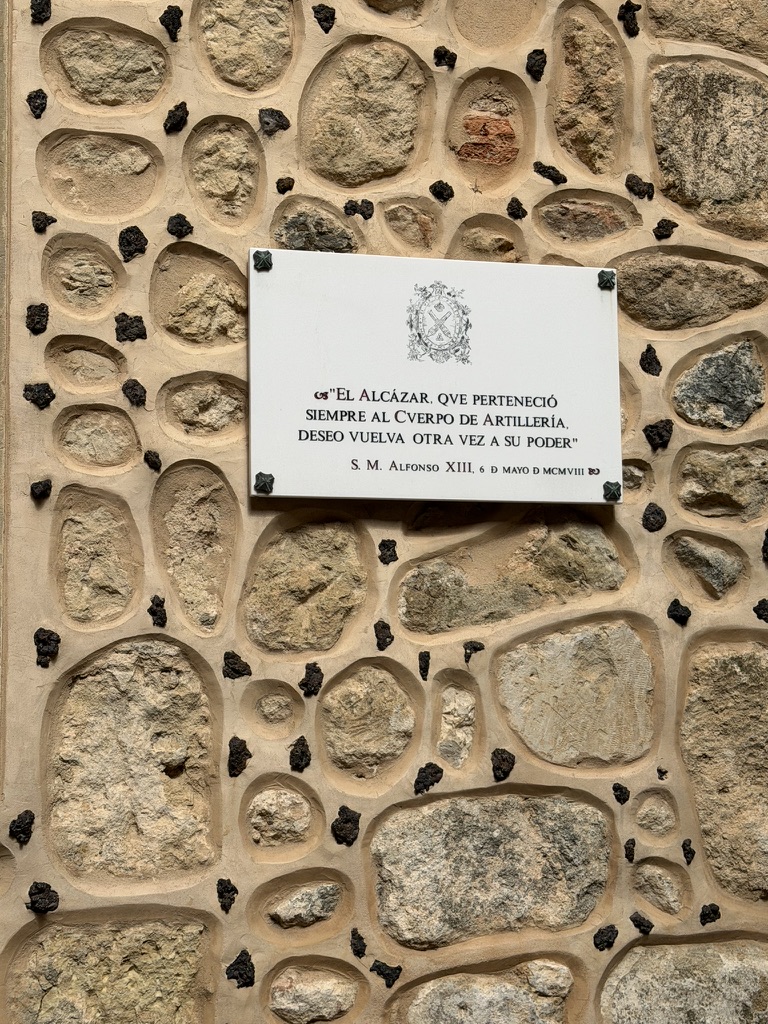
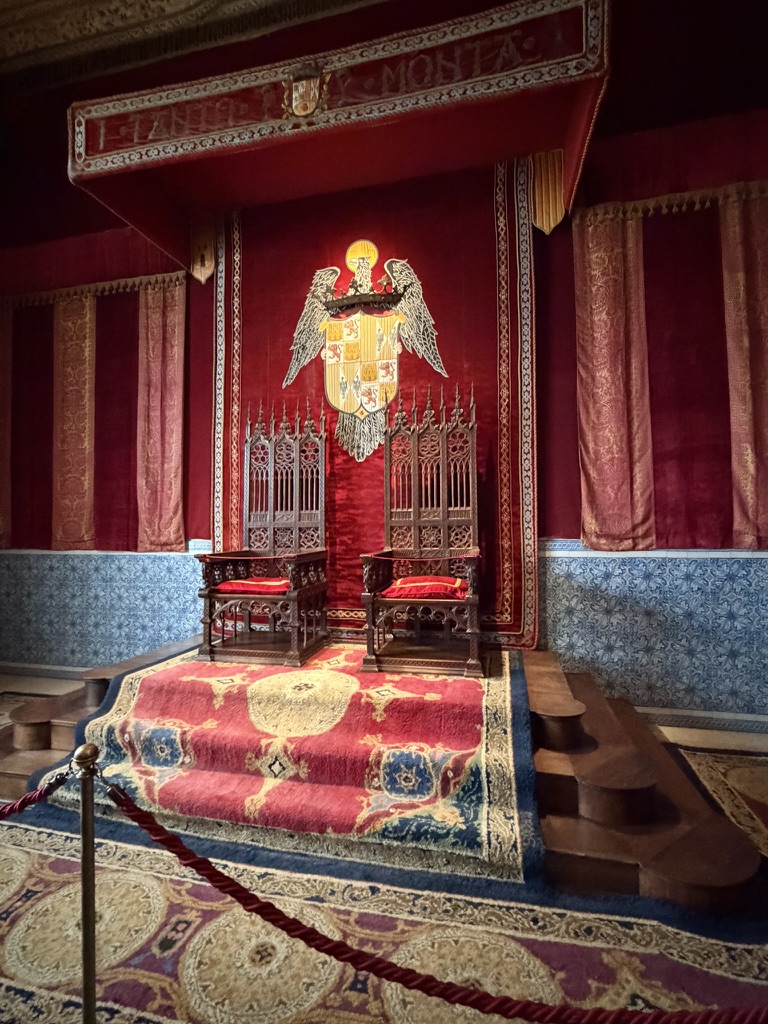
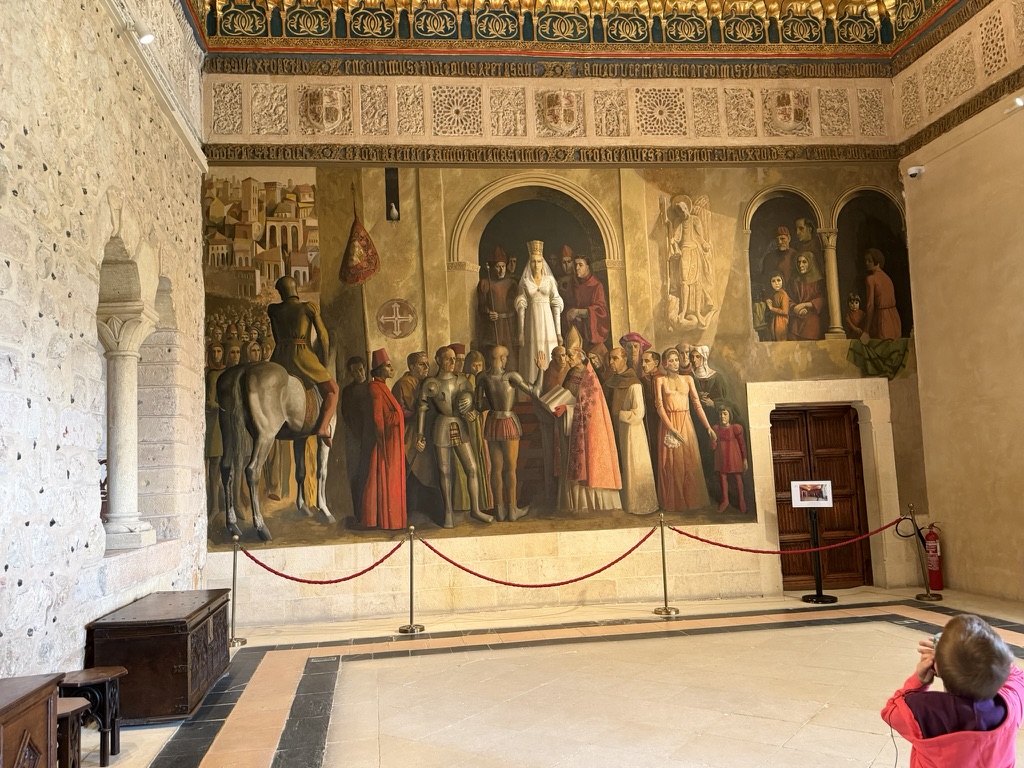
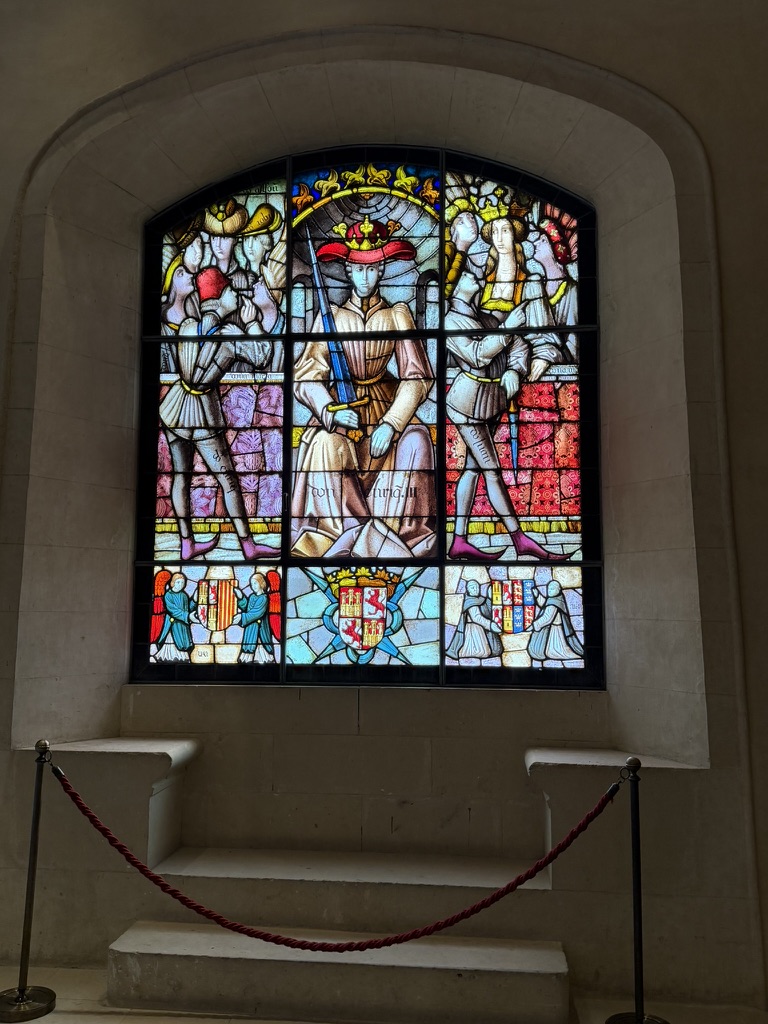
After walking uphill through narrow, ancient streets of Segovia we came upon the first sight of Alcazar, which has been a World Heritage Site since 1985. Some castles you cannot enter.  But this one was not only renovated, it had furniture in some rooms to make you realize what it once looked like.  It is also a museum. 

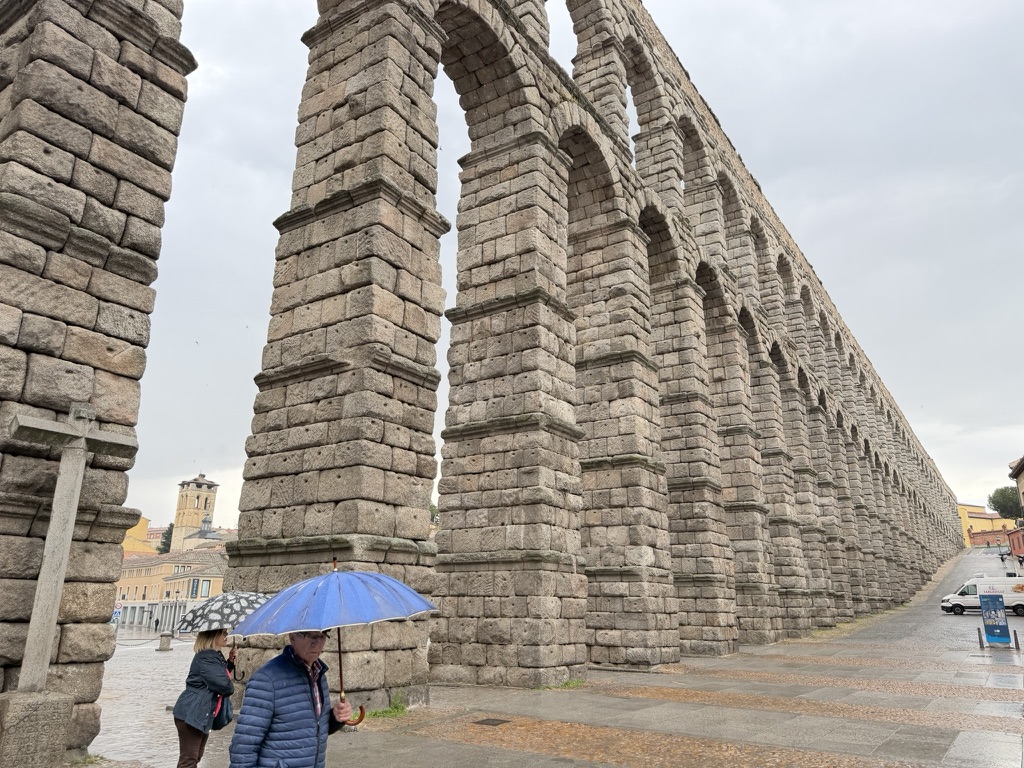
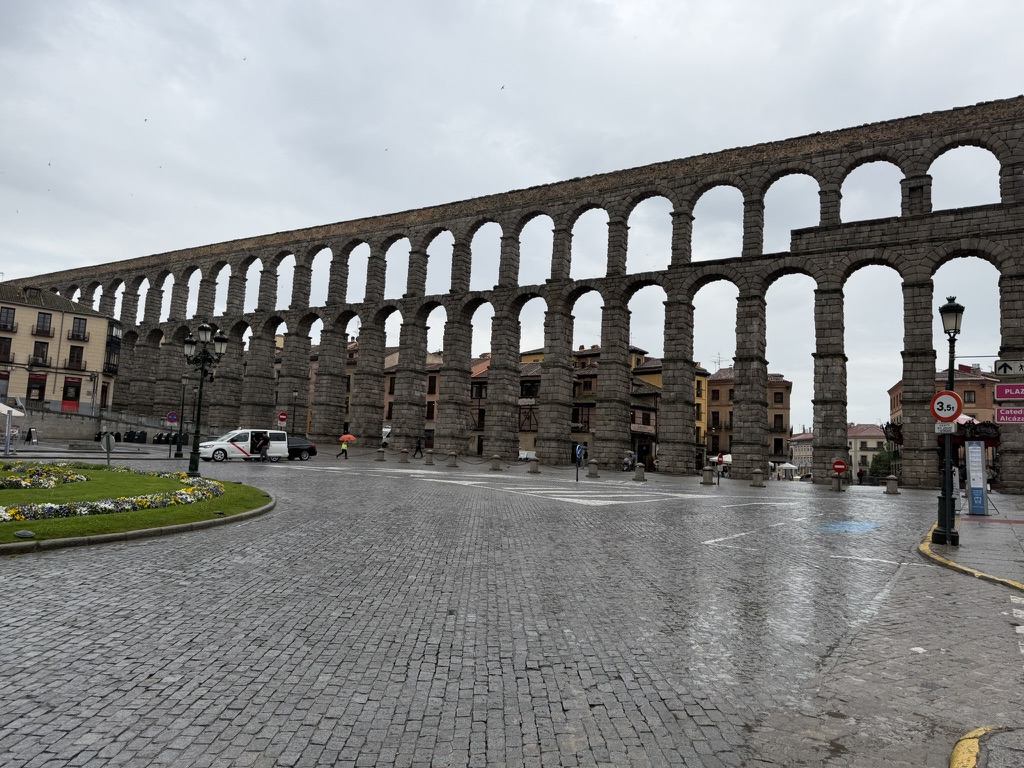
Before I leave Segovia, I must say there is another important site to see there, the Roman Aqueduct that is about six stories high when goes above ground , while its underground route through the town is marked with different stones.  It is an amazing feat of construction!!

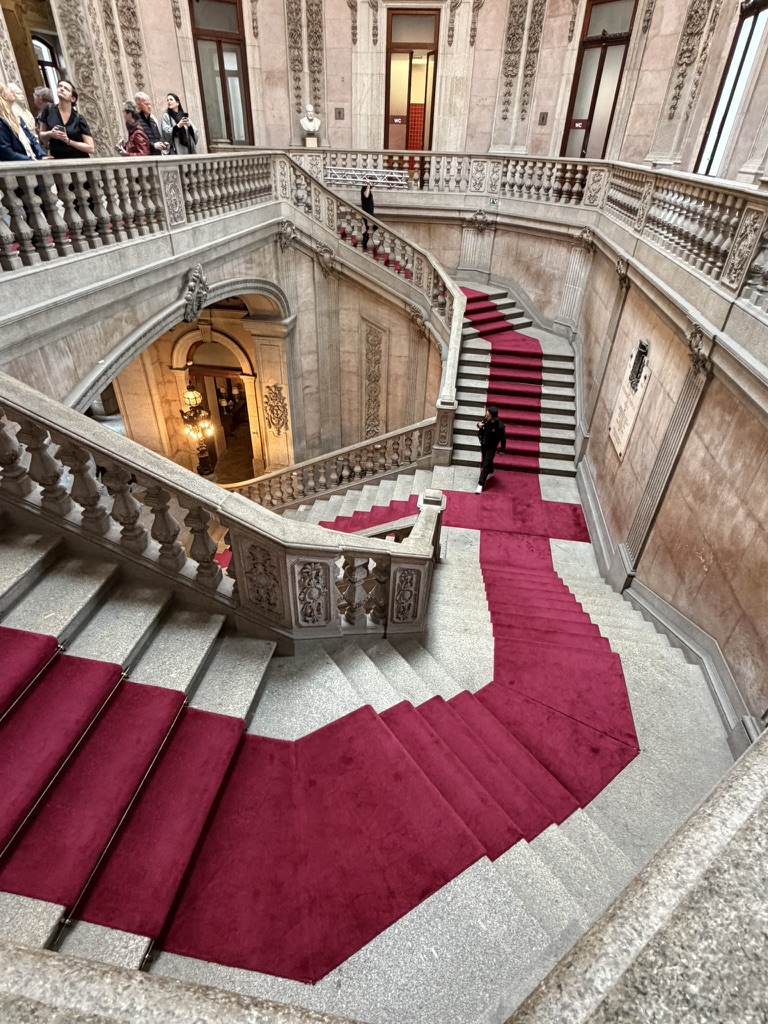
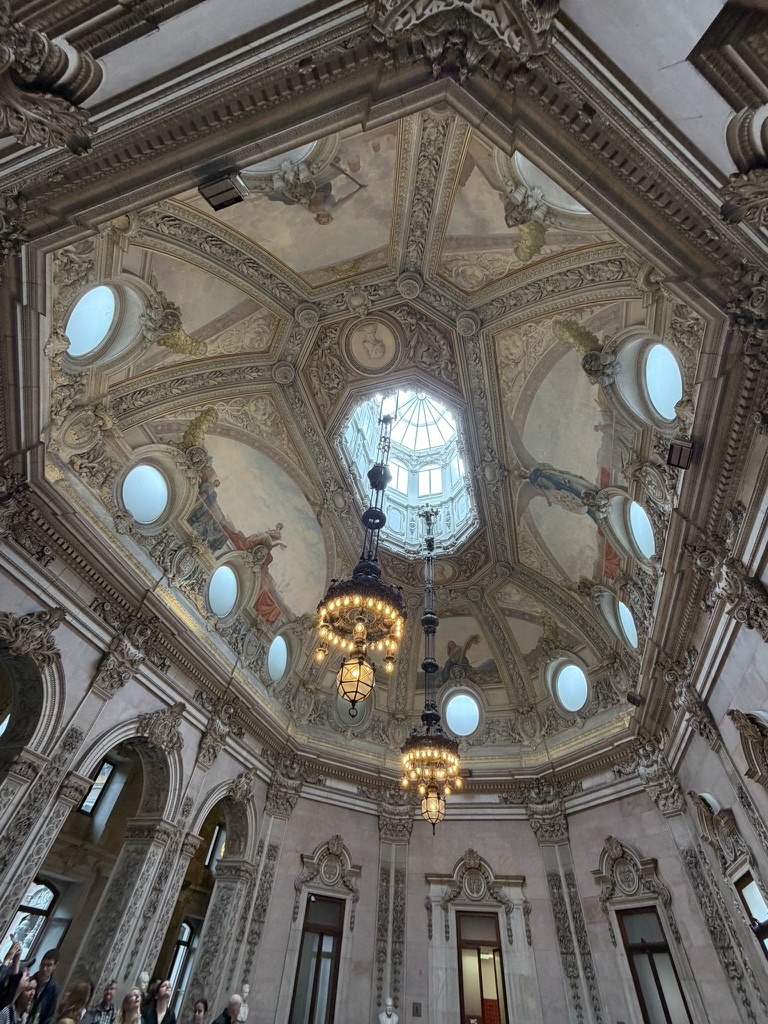
Now that I have finished swooning over Alcazar, I will return to the beginning of our adventure and talk about the Palacio da Borsa, the original Board of Trade.  Although it is not a castle, it is definitely a palace.  Some of its rooms are absolutely stunning. I understand why it is an event space for conferences, conventions and if someone could afford it, what a place for a wedding!!

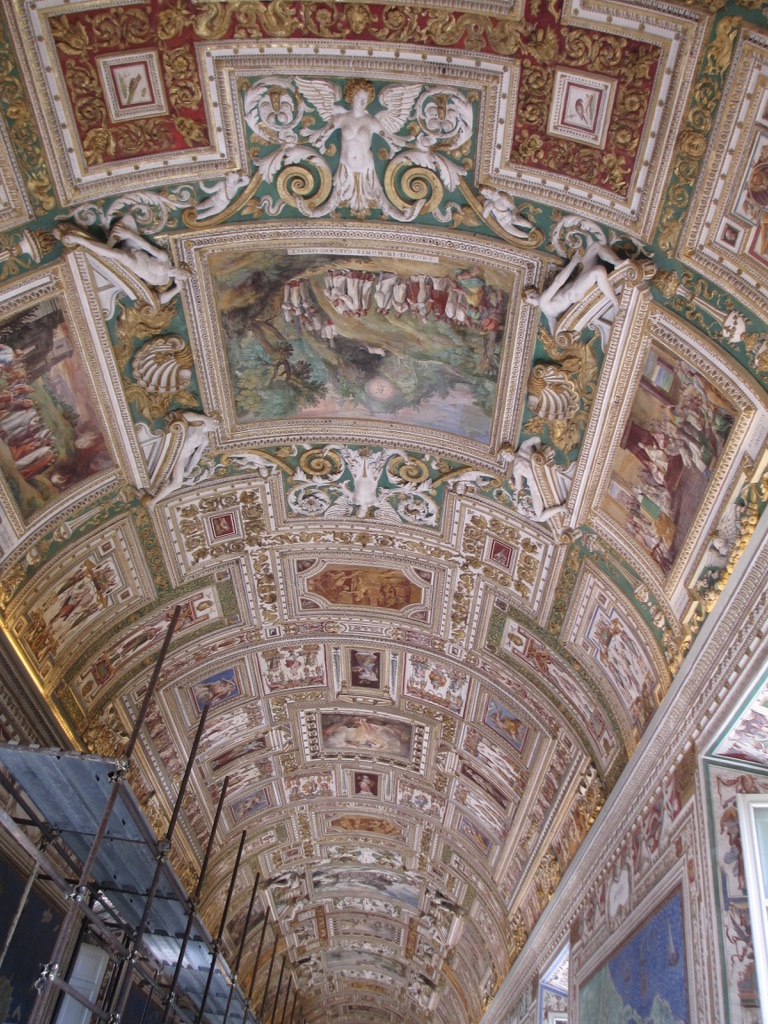
From the Grand Staircase, to the meeting rooms, –  each one has its own character and special artwork, on the ceilings, the walls, the floors, the furniture- the building is elegant.  The trial room with its ornate carved wooden furniture and beautiful art; the views; the room where Gabinete De Gustave Eifel worked when he was in Porto; The Hall of Countries.

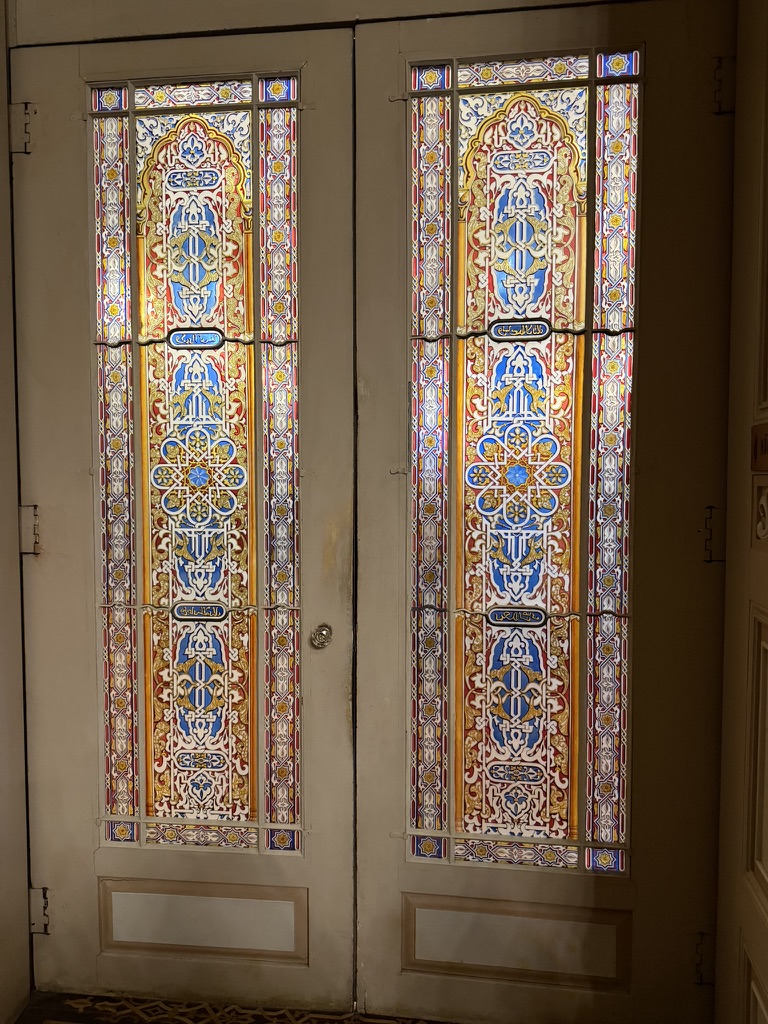
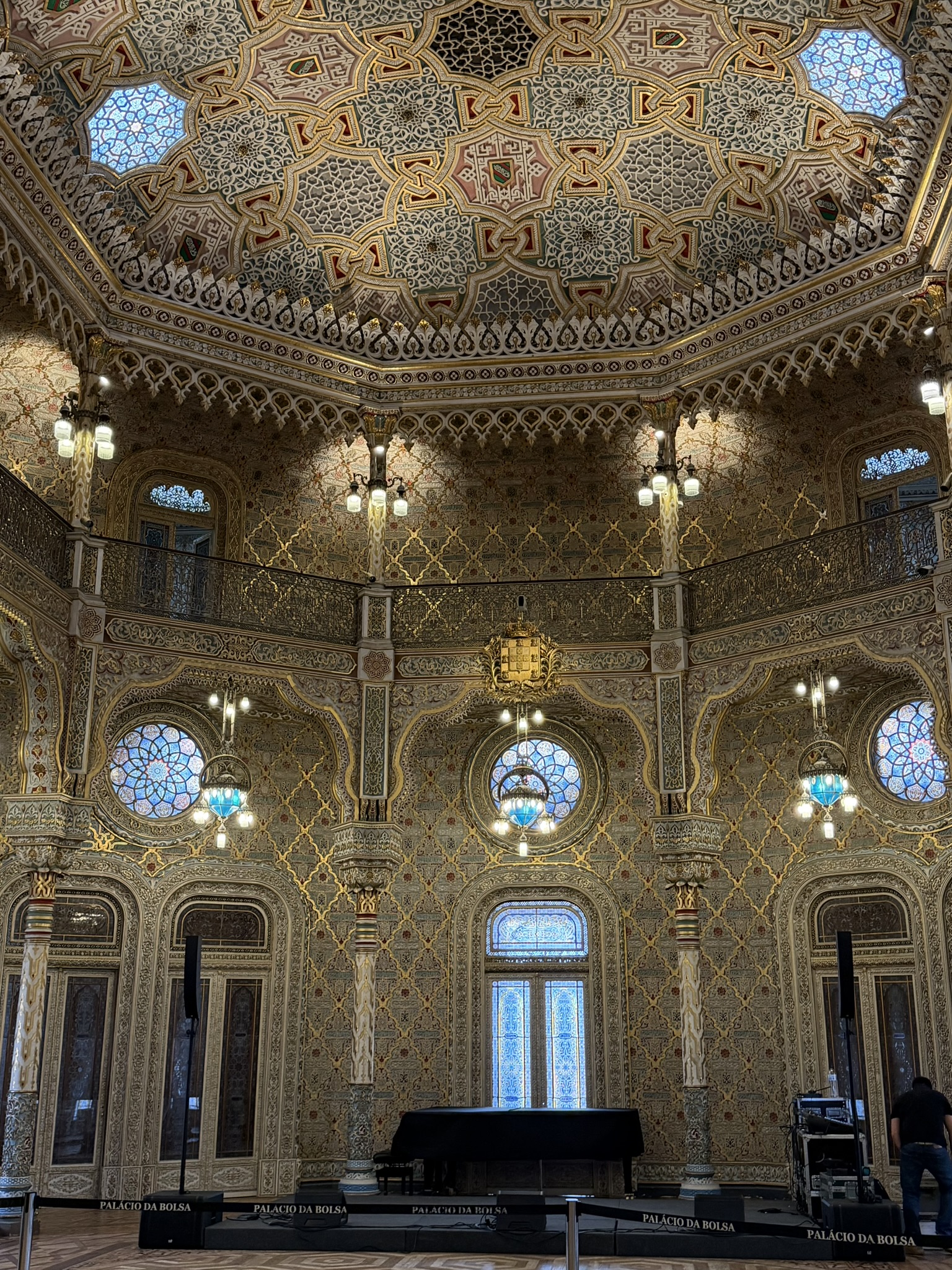
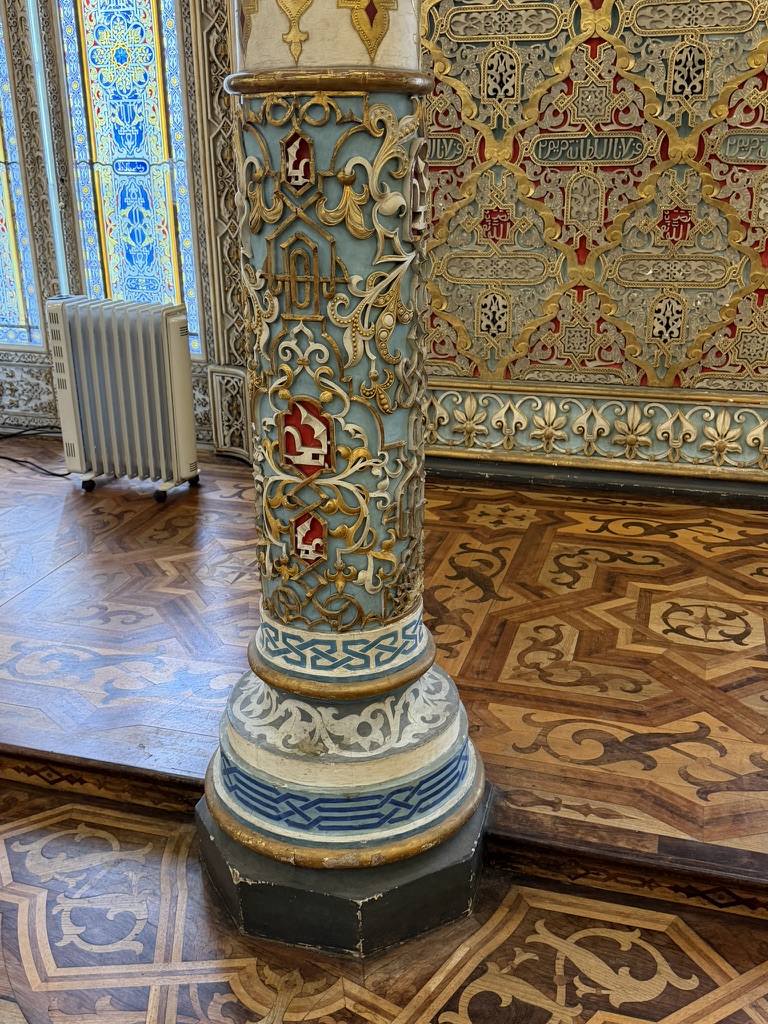
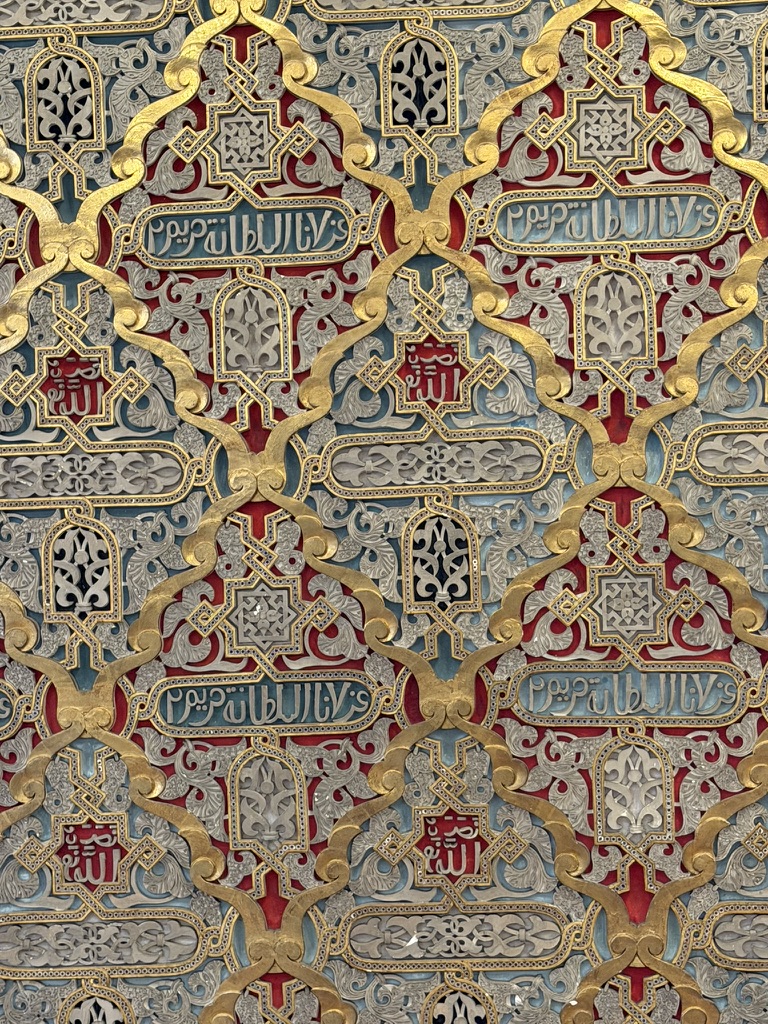
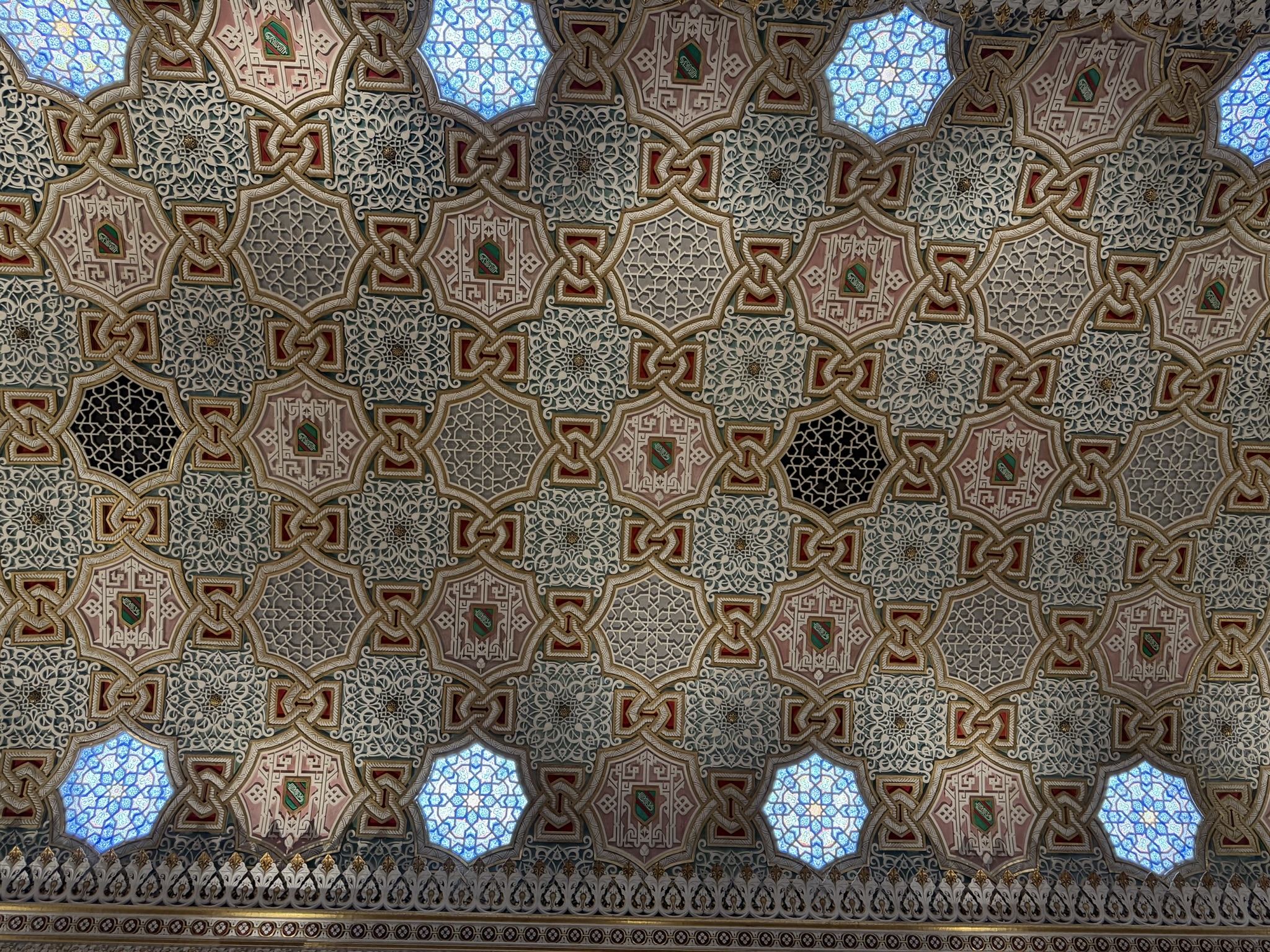
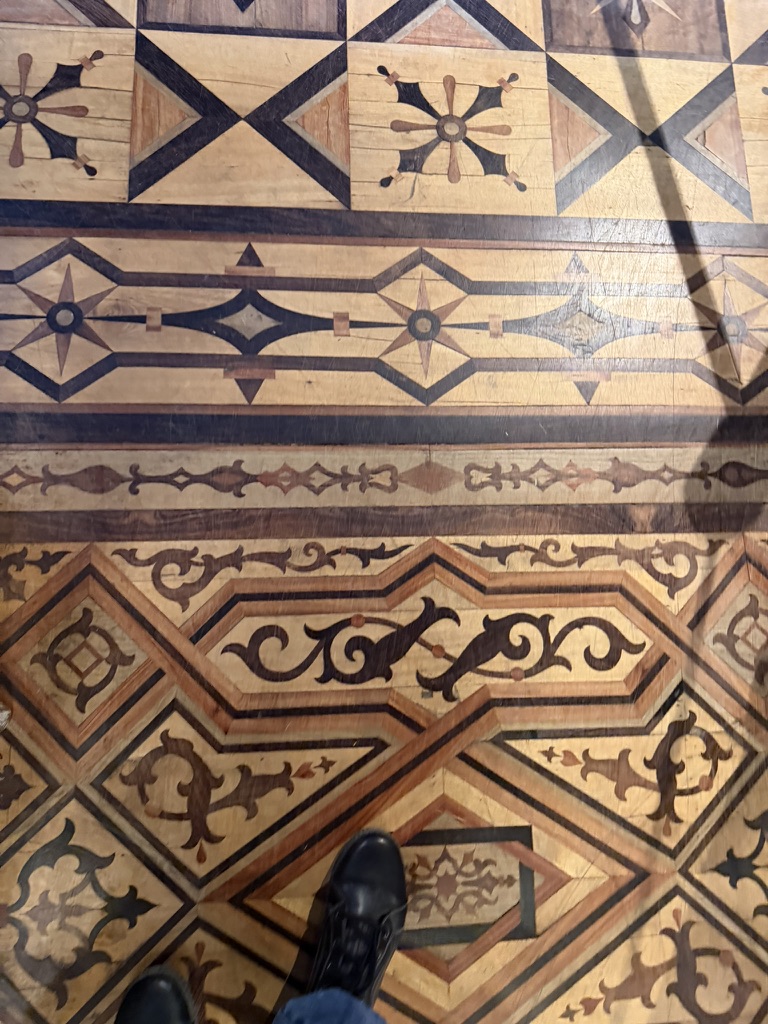
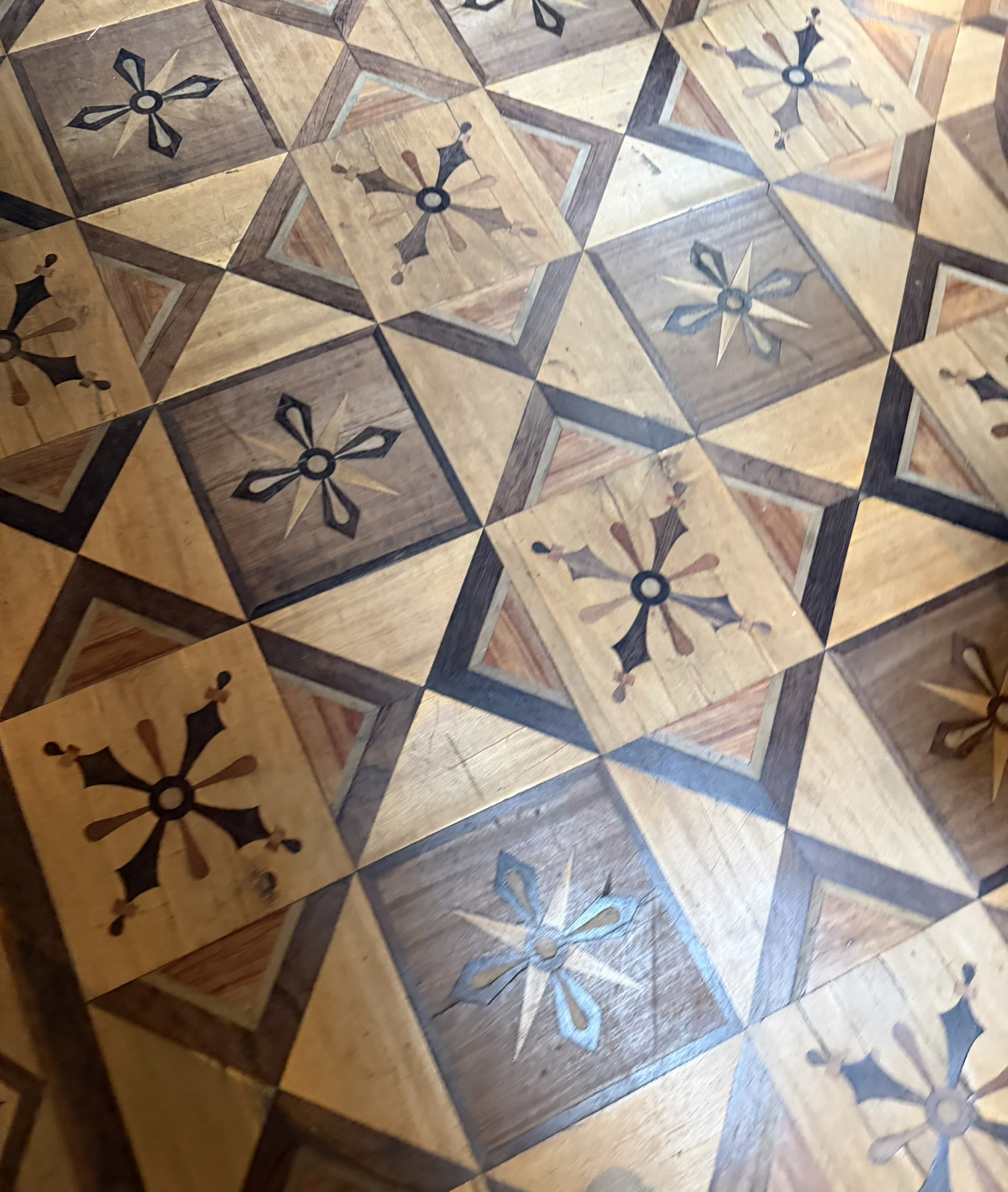
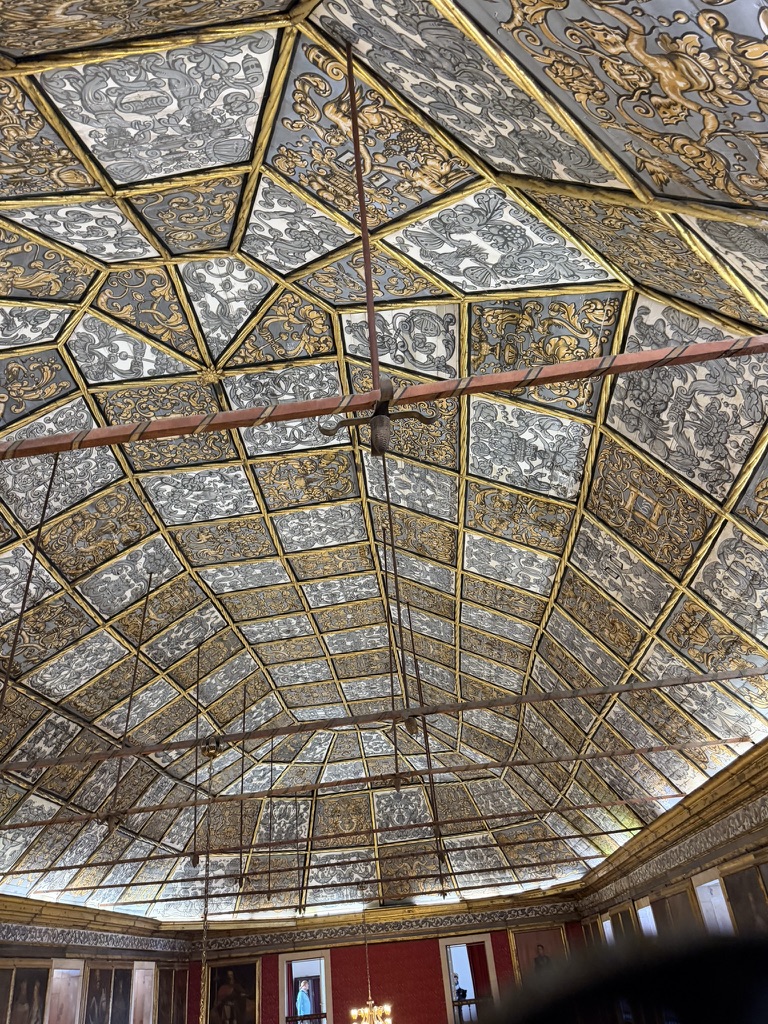
All of it fabulous. But nothing prepares you for the Golden Room.  Many people oooh and Ahhh over the Amber Room in Catherine’s Palace near St. Petersburg.  And that room is stunning, I admit when I saw it in 2018. But to be honest, the Golden Room with all its intricate carving and inlaid is something special.  It made me think of the inlay at the Taj Mahal. The inlaid wooden floors were reminiscent of the ones I saw in the Hermitage in Russia, but actually more intricate. From floor to walls to ceiling to columns, there is not one spot untouched and plain.  My pictures will not do it justice. But if you ever have a chance to go to Porto, you must visit the Golden Room.  My brain was exhausted after seeing it.

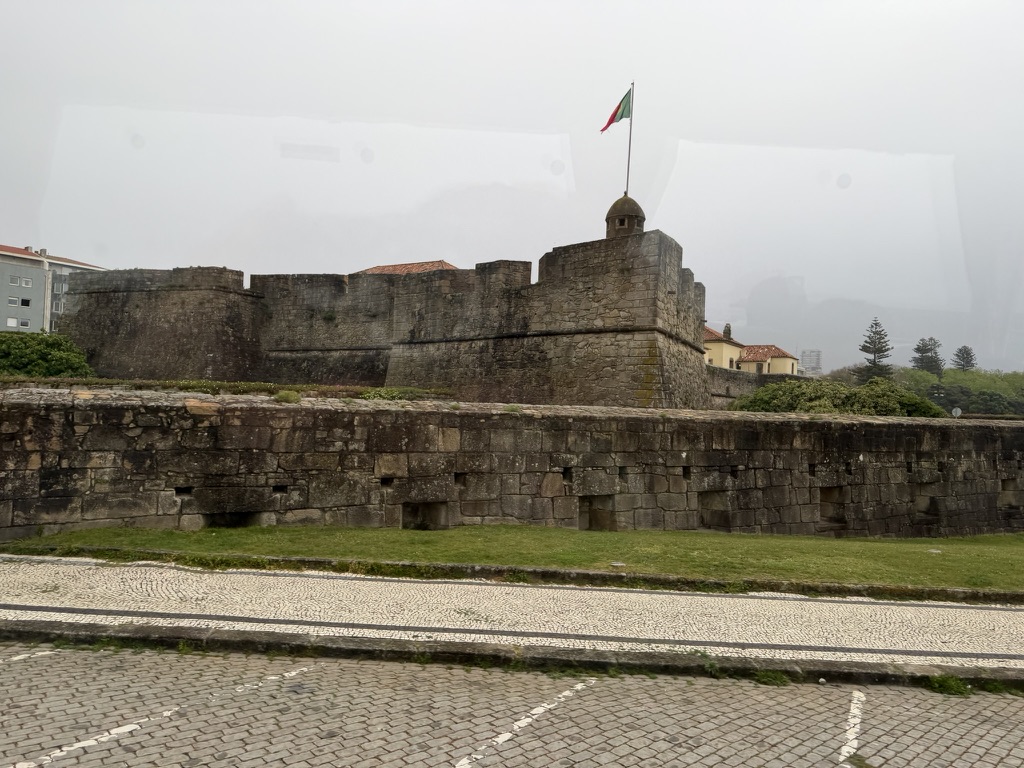
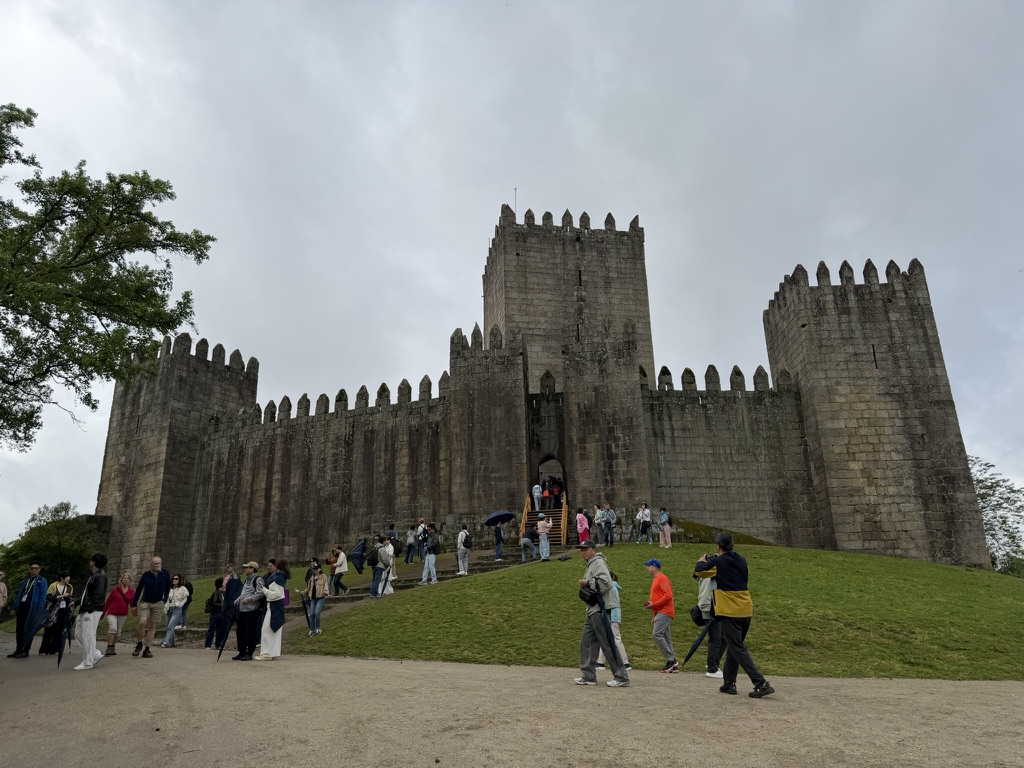
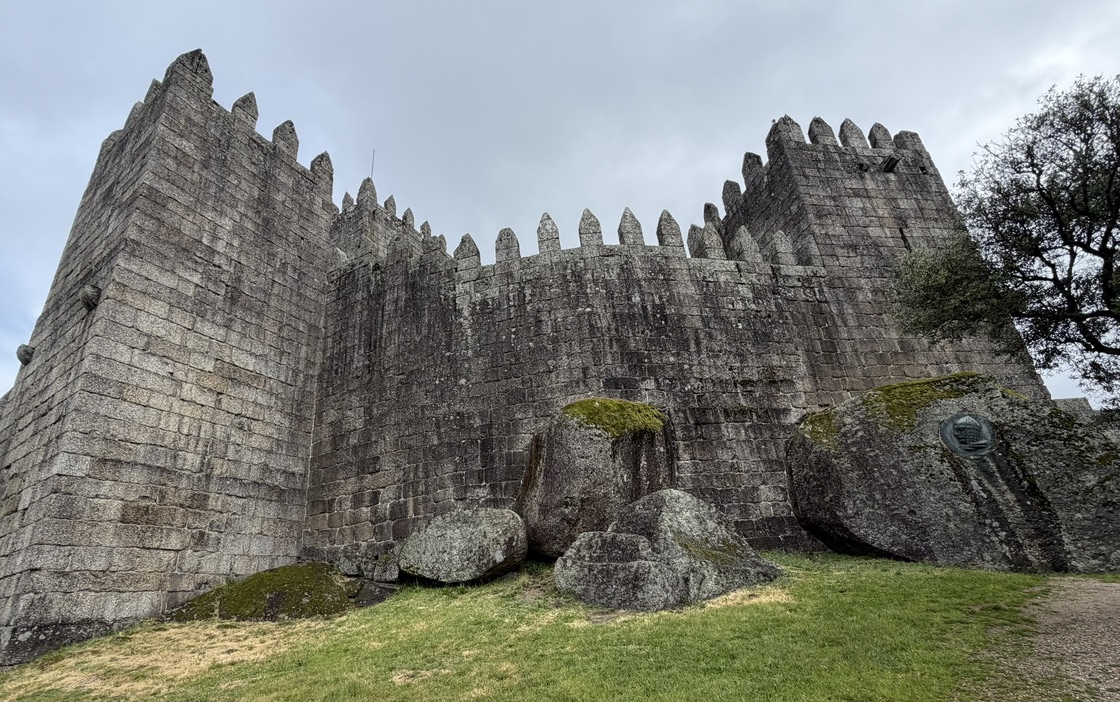
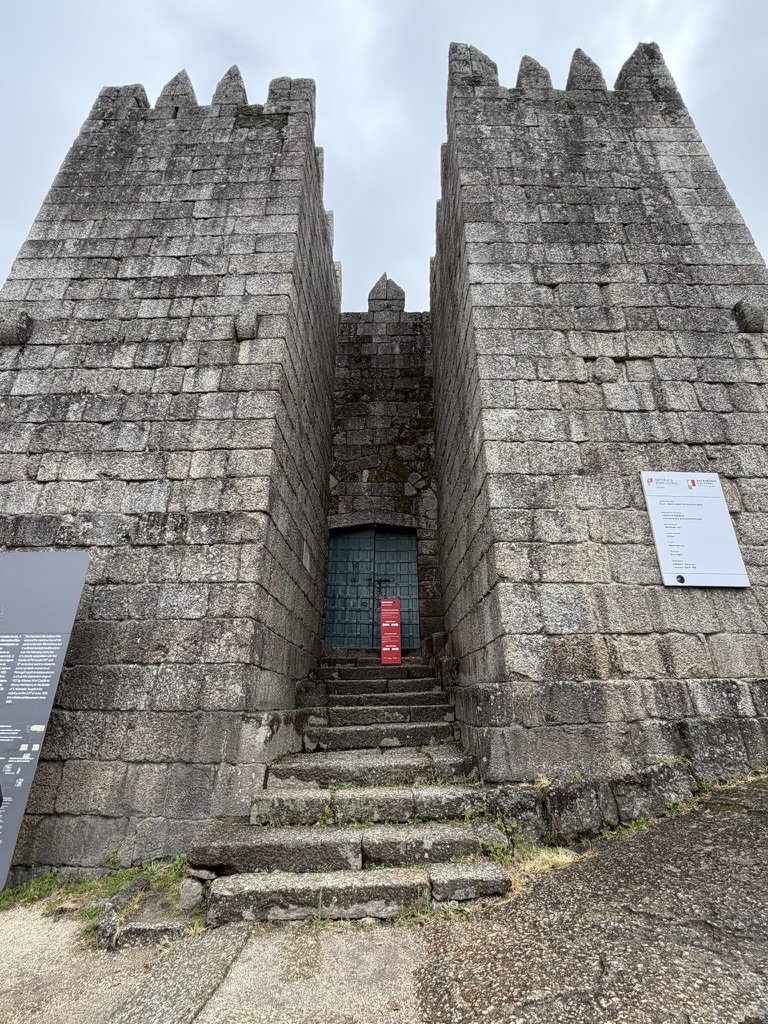
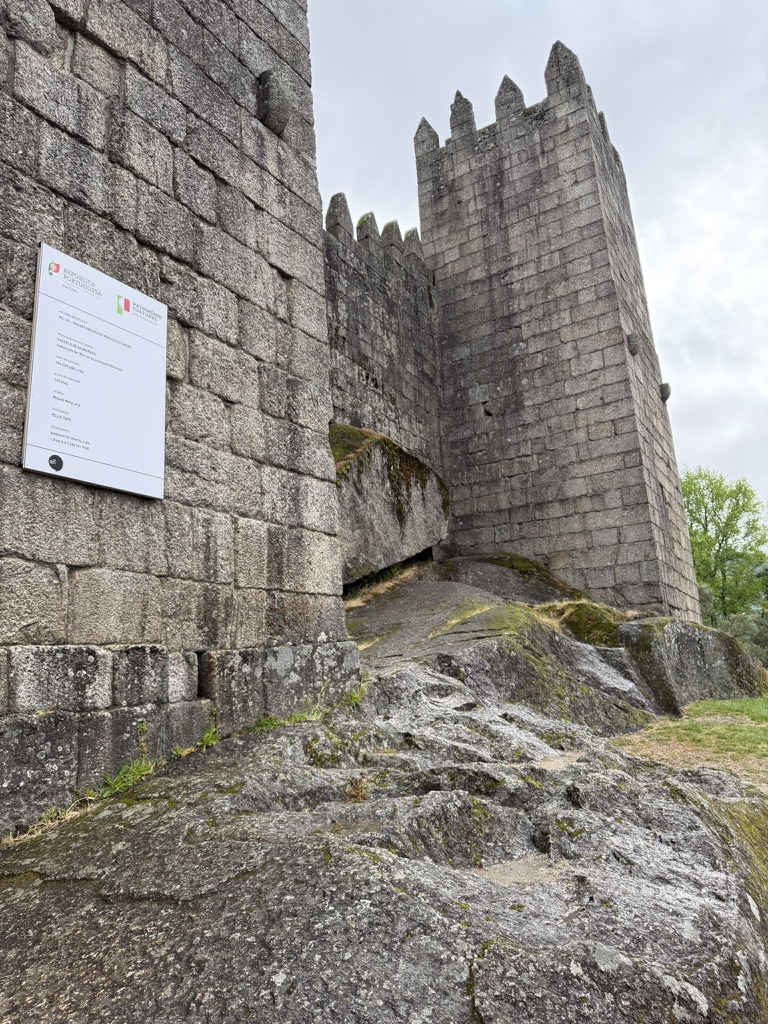
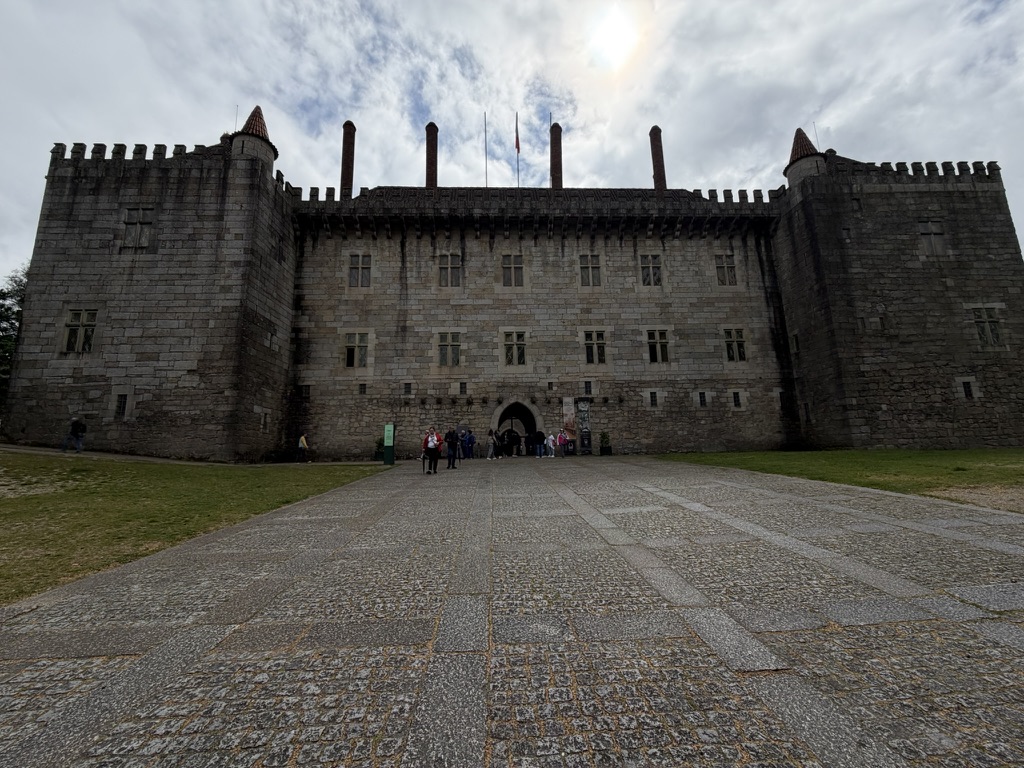
Thank goodness our next stop, the first castle on our tour, was less ornate but also fascinating in its own right: The Castelo de Guimaraes in Guimaraes. We did not actually go into this10th century edifice, we walked around the stone fortifications and massive walls. It is built on top of a granite mountain, and some of its walls are the granite stones.  And they are enormous.  They are everything a castle should look like from the outside.  It was constructed by order of Countess Mumadona Dias to protect a monastery from  Moorish invaders.  Although the castle is not a world heritage site, it is a Portuguese National Monument since the late 1890s.

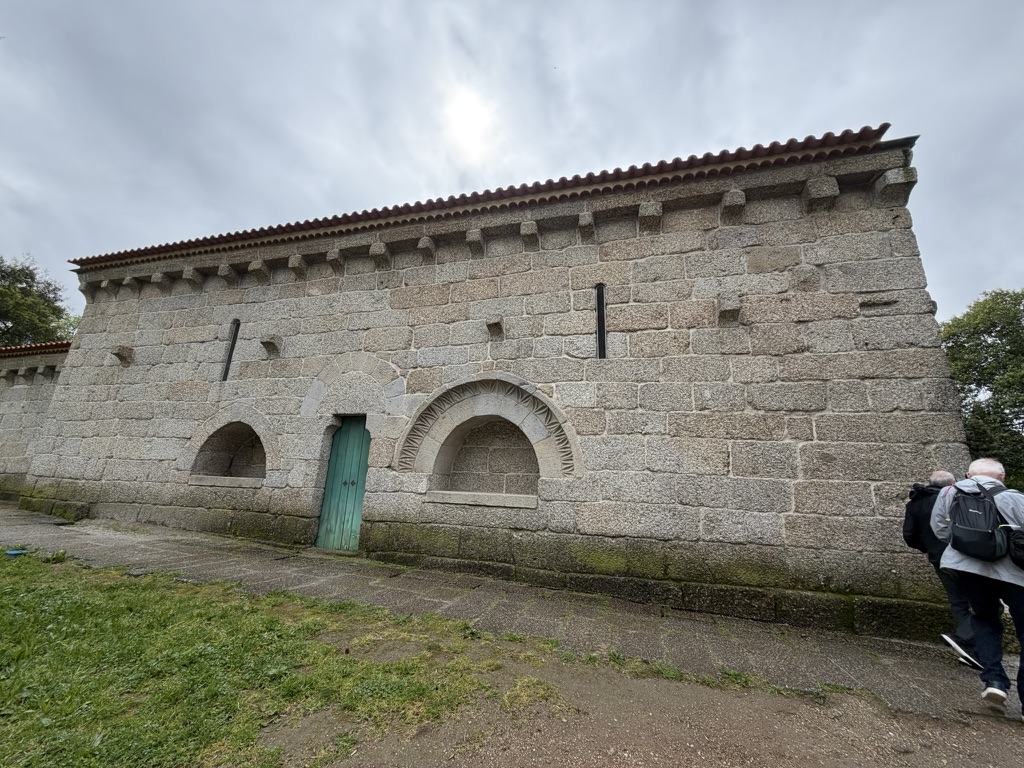
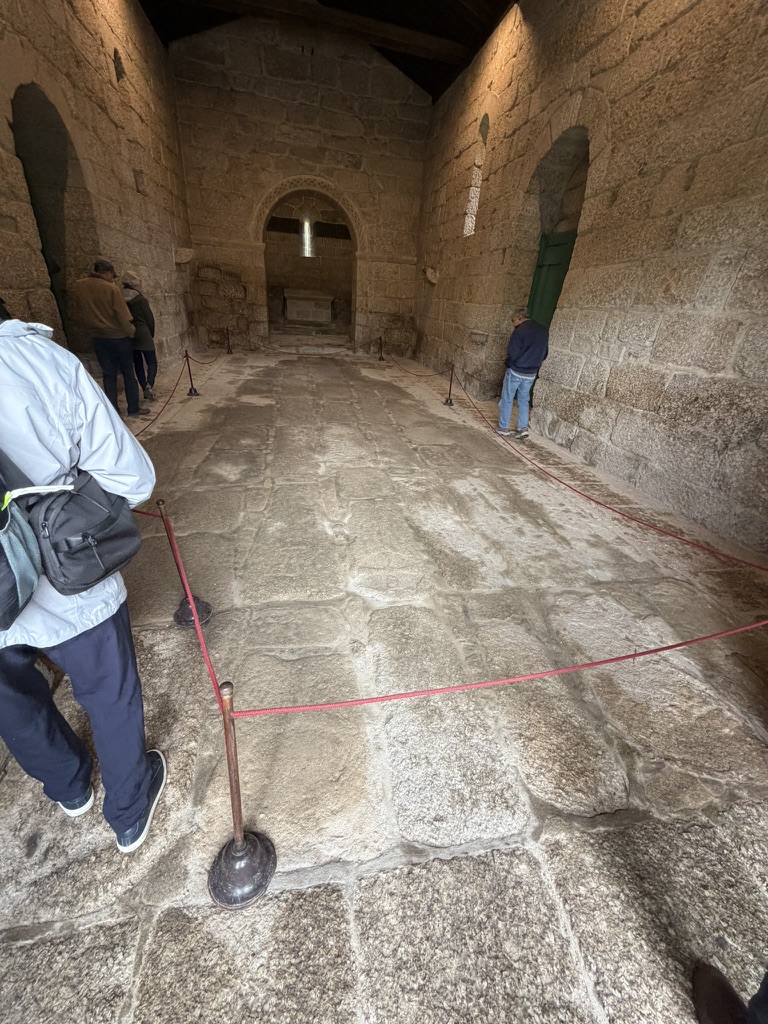
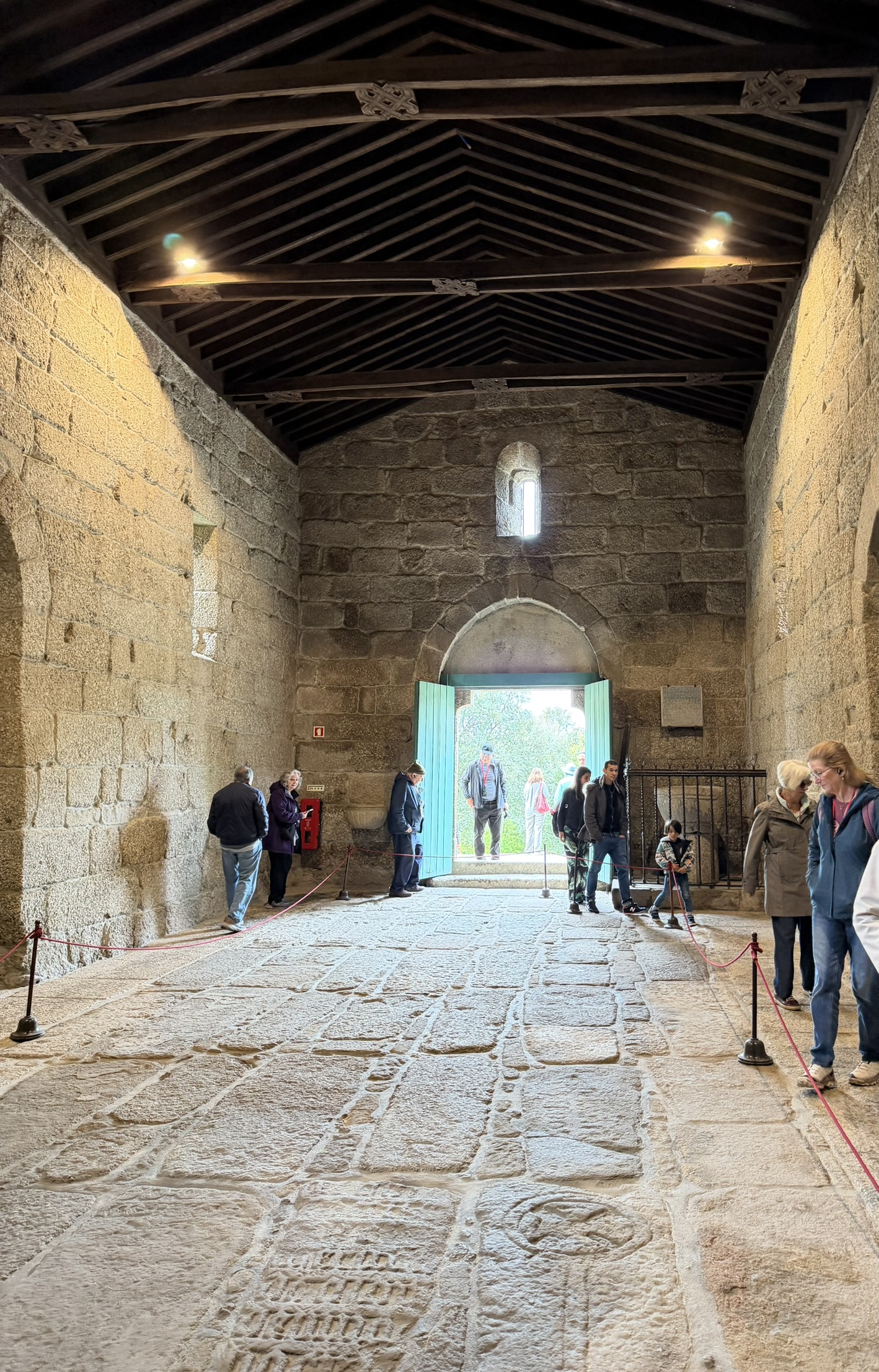
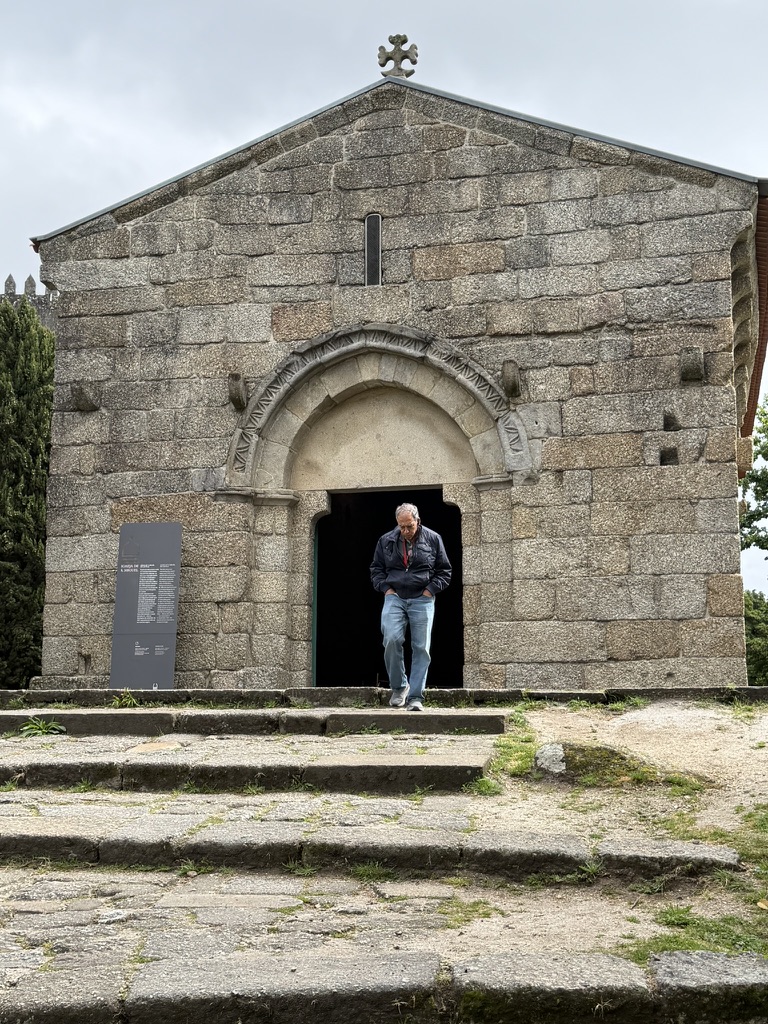
On the grounds of the castle are two more buildings. First the Church of Saint Michael.  This little chapel was the place where Portuguese King Afonso Henriques was baptized in 1927. There is no furniture in the church as the entire floor are the tombstones of important people.  In fact, you can only walk around the inside perimeter, so you do not cause damage to the engravings.

The Palace of the Dukes of Braganza is there as well. We only walked along the outside.  It was renovated in the 1930s and served as the residence for the then President Antonio Salazar. Although part of it is open to the public, we did not go inside.

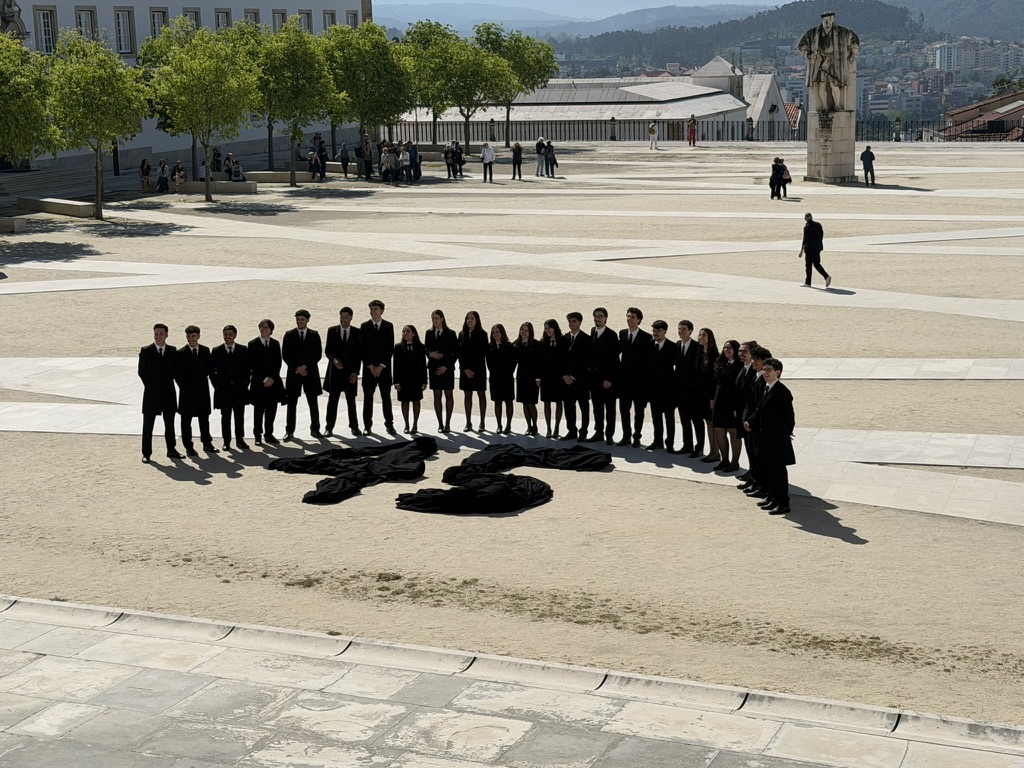
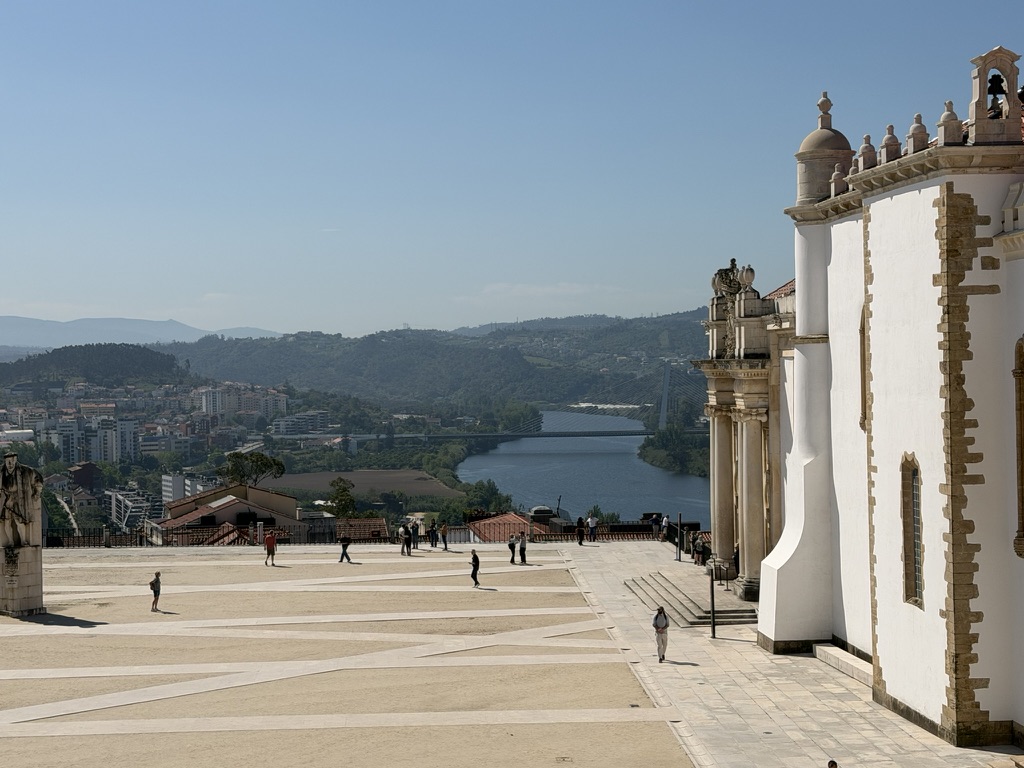
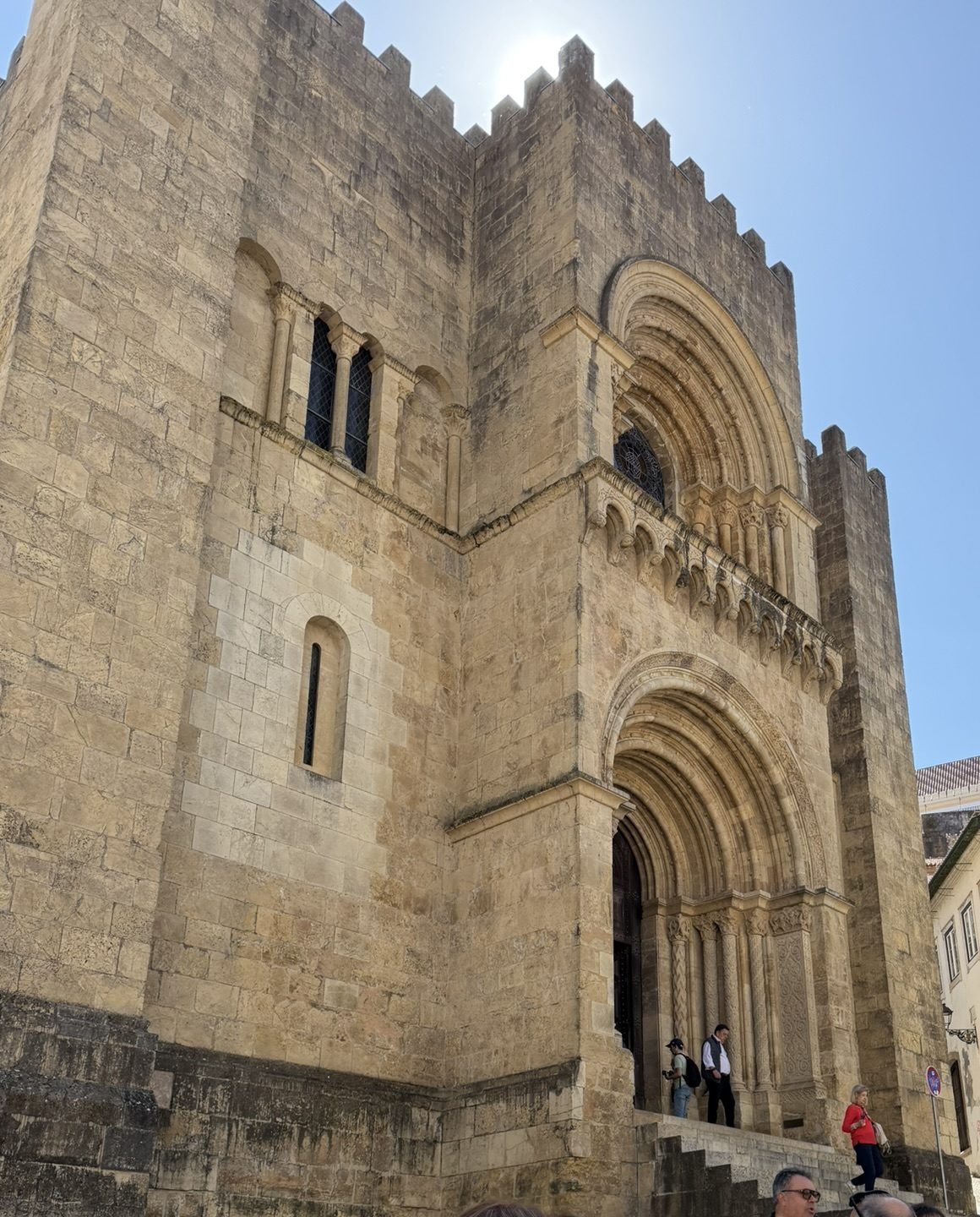
Although not a palace or a castle, the University of Coimbra, founded in 1290, definitely feels like one.  I am not sure I would be able to actually go to classes there, especially in some of the older buildings.  I would be too busy looking around.

 We were not allowed to take photos of the famous library.  It is a stunning work of carved wood and bookcases filled with ancient tomes.  It is still used by students and scholars, but the books must be ordered in advanced and not allowed to leave the campus.

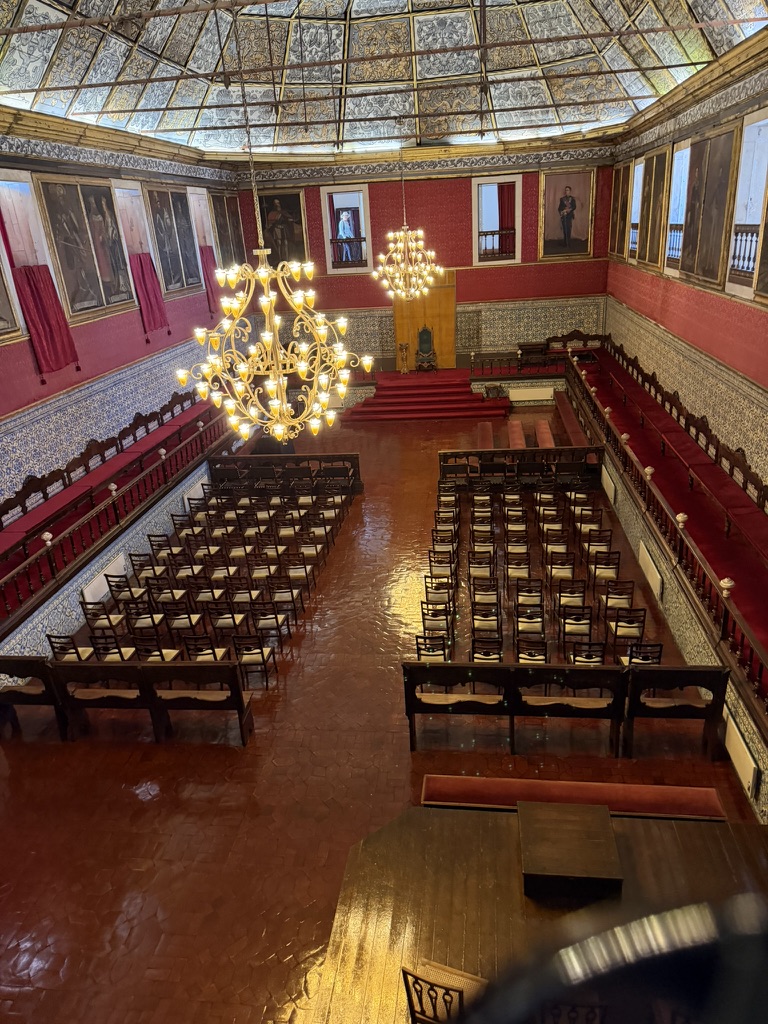
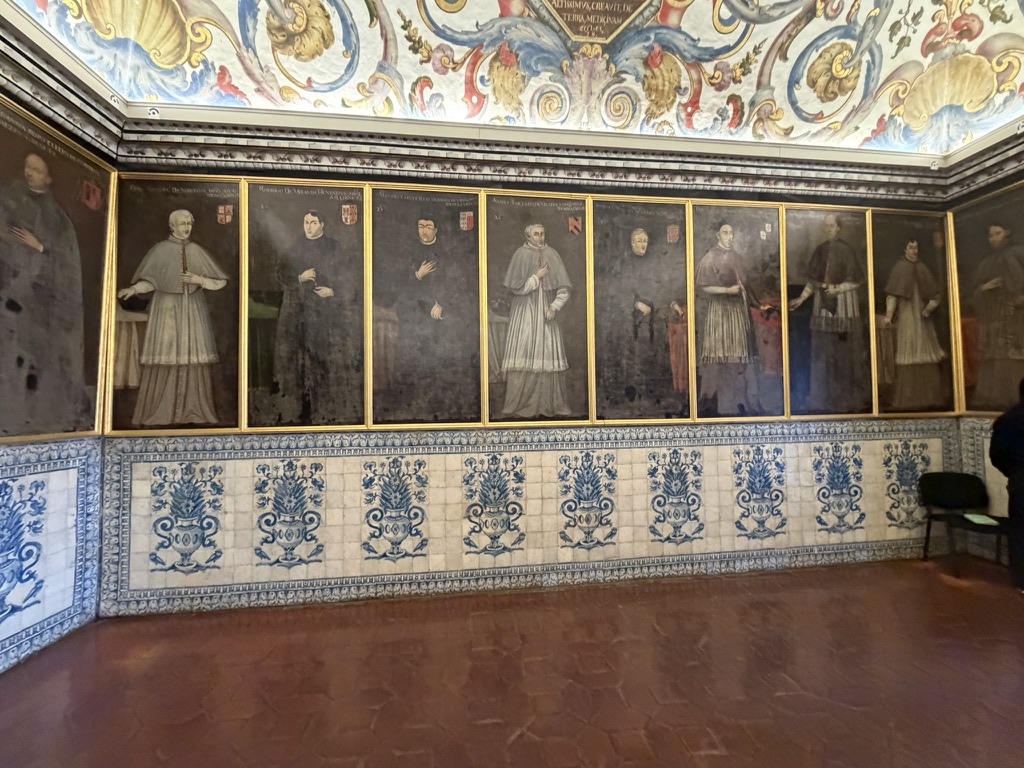
The lecture room, where students present their PhD dissertations also makes you think of a castle great room.  The ceiling is stunning as is the woodwork. 

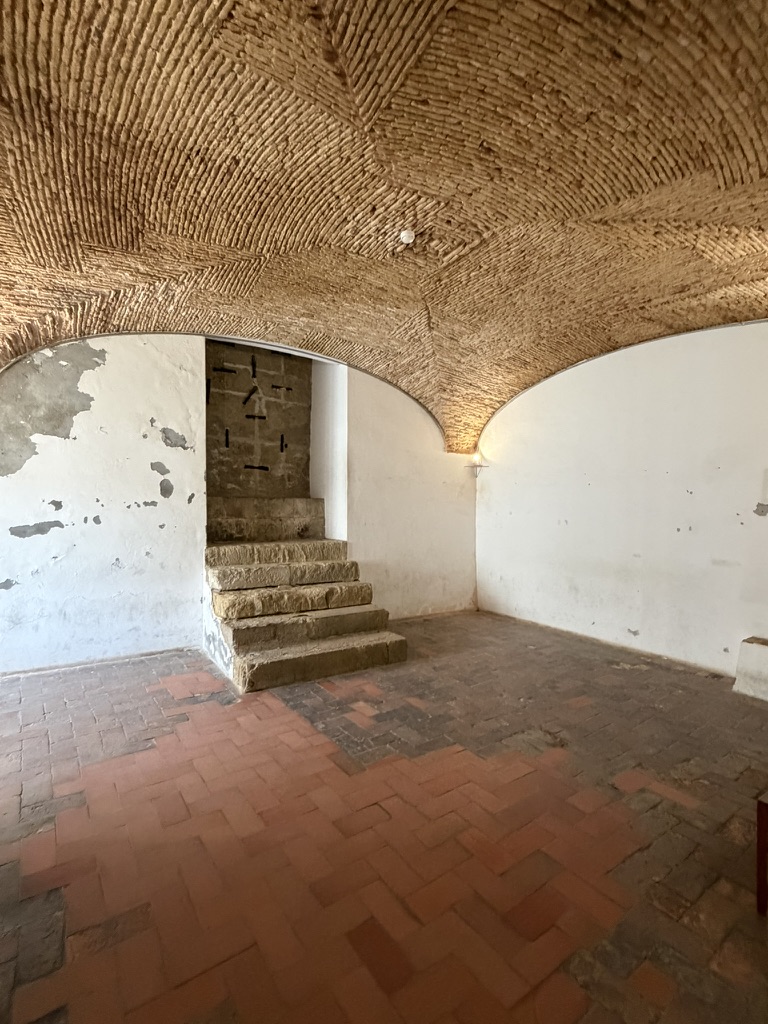
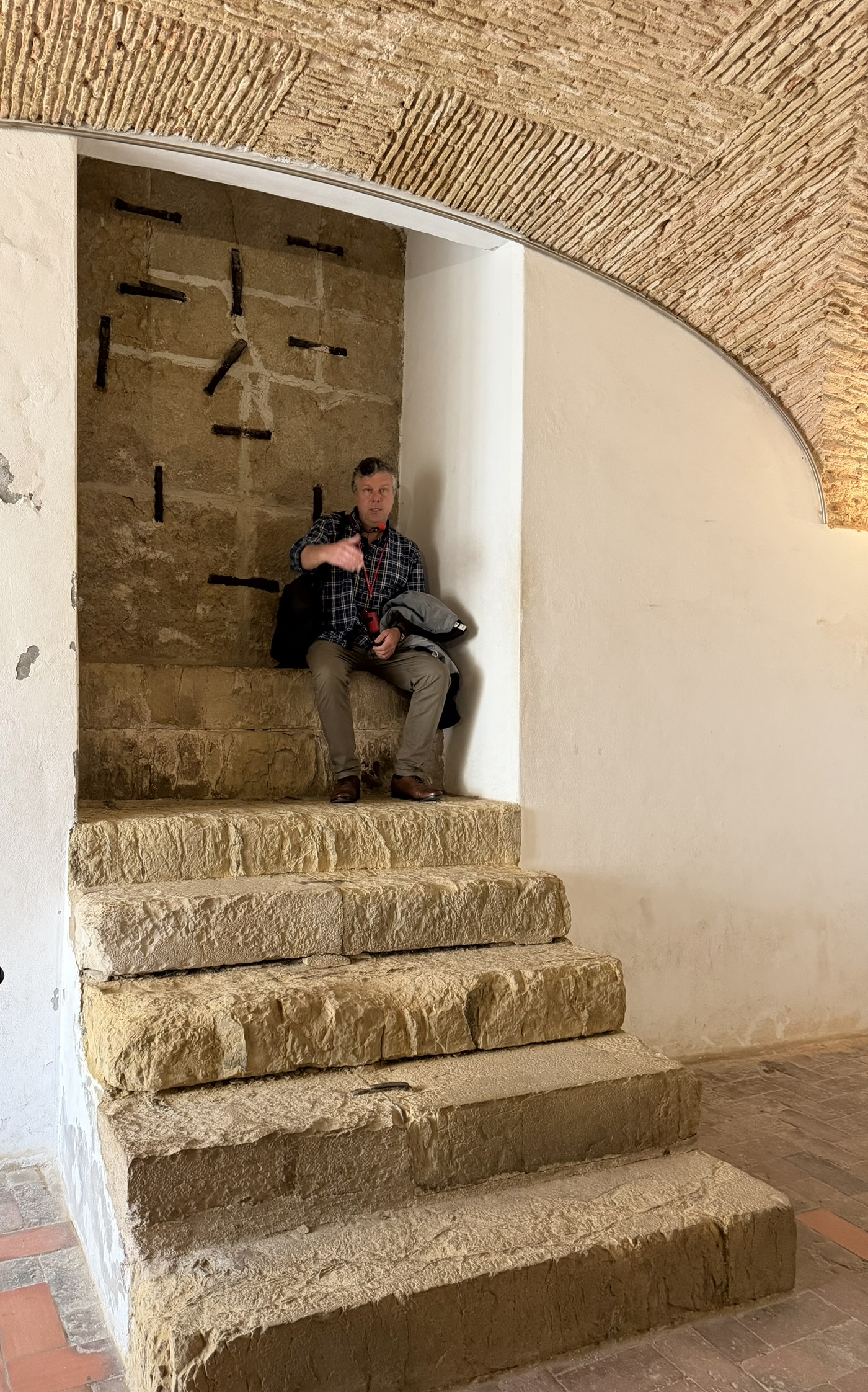
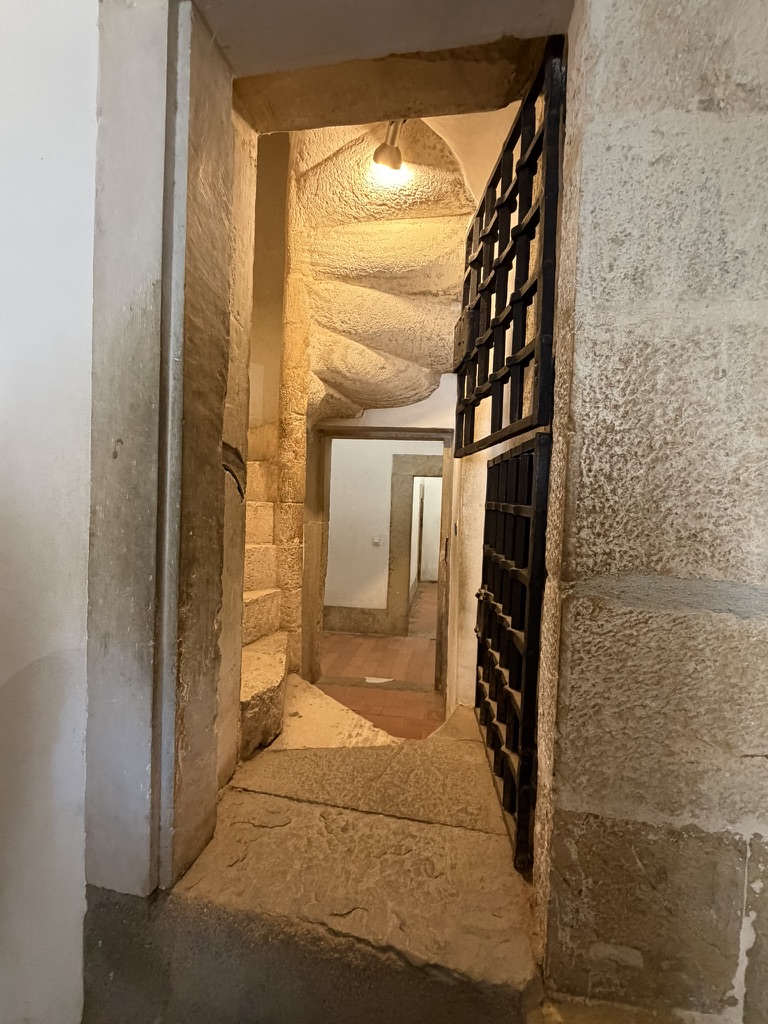
But I have to be honest the part that capture most of our attention was the fantastic view of the city and the river; watching the students take their graduation photos; and finally visiting the underground ‘dungeon’ that was a special prison for students who got into trouble.  This is not your usual dungeon, because since the students were from the upper class, even when they got in trouble they did not suffer like the riff-raff. In fact, we were amazed that they actually had a two-seat stone toilet to use.  They could spend anywhere from a day to several months here depending on their misbehavior.

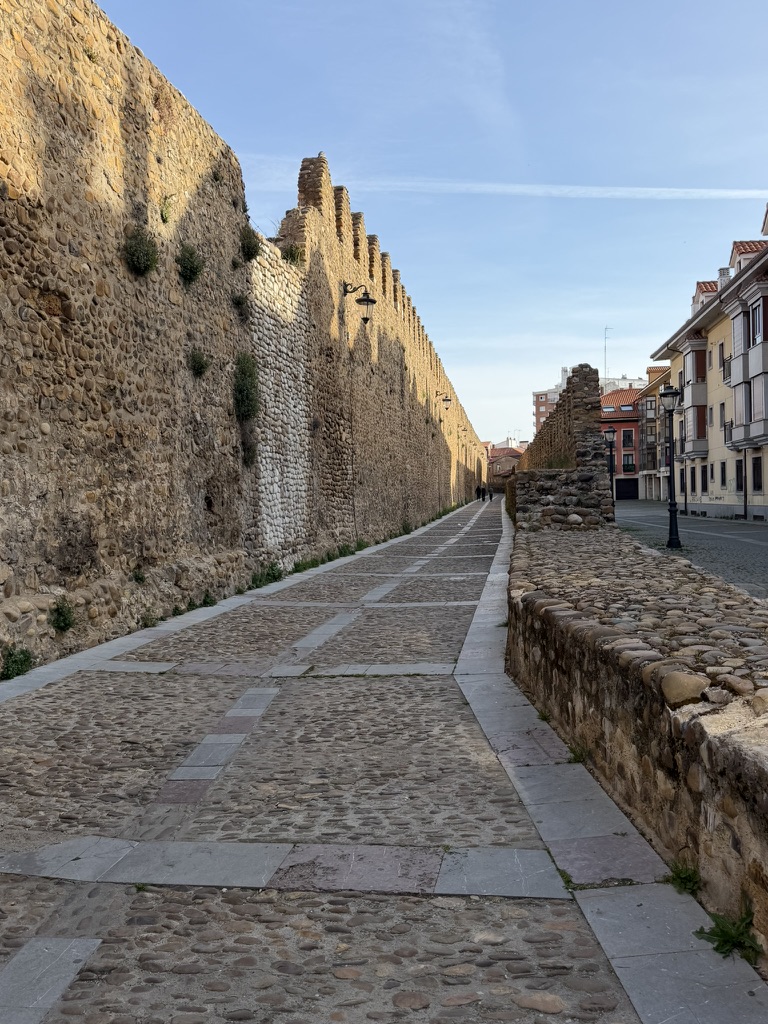
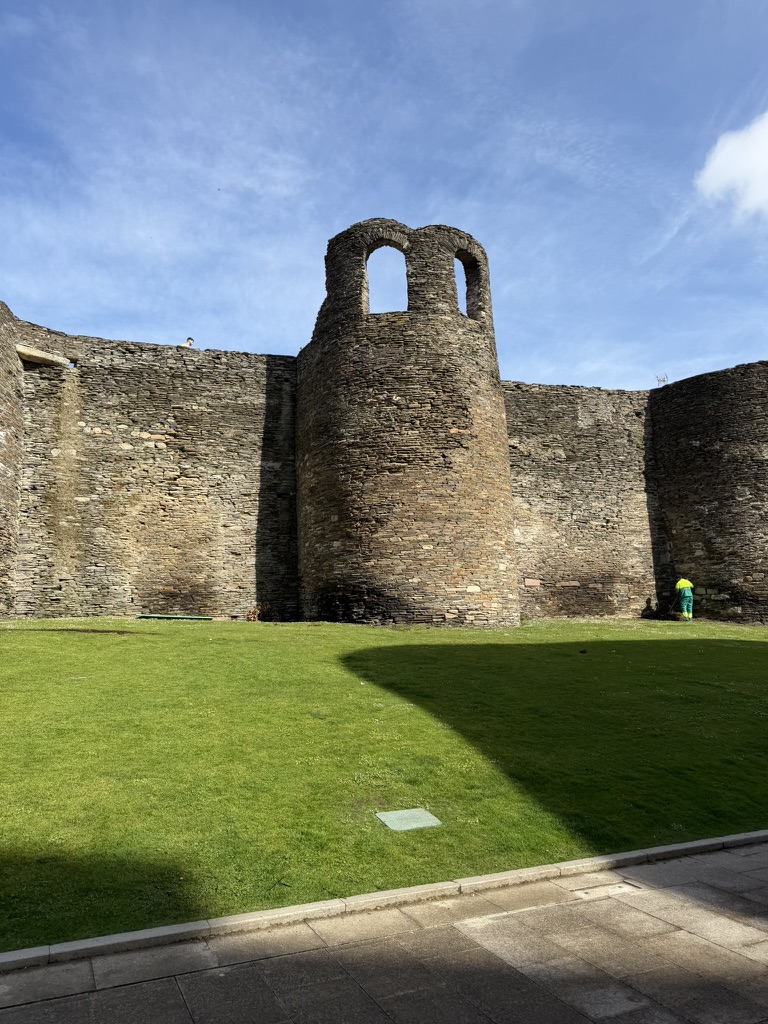
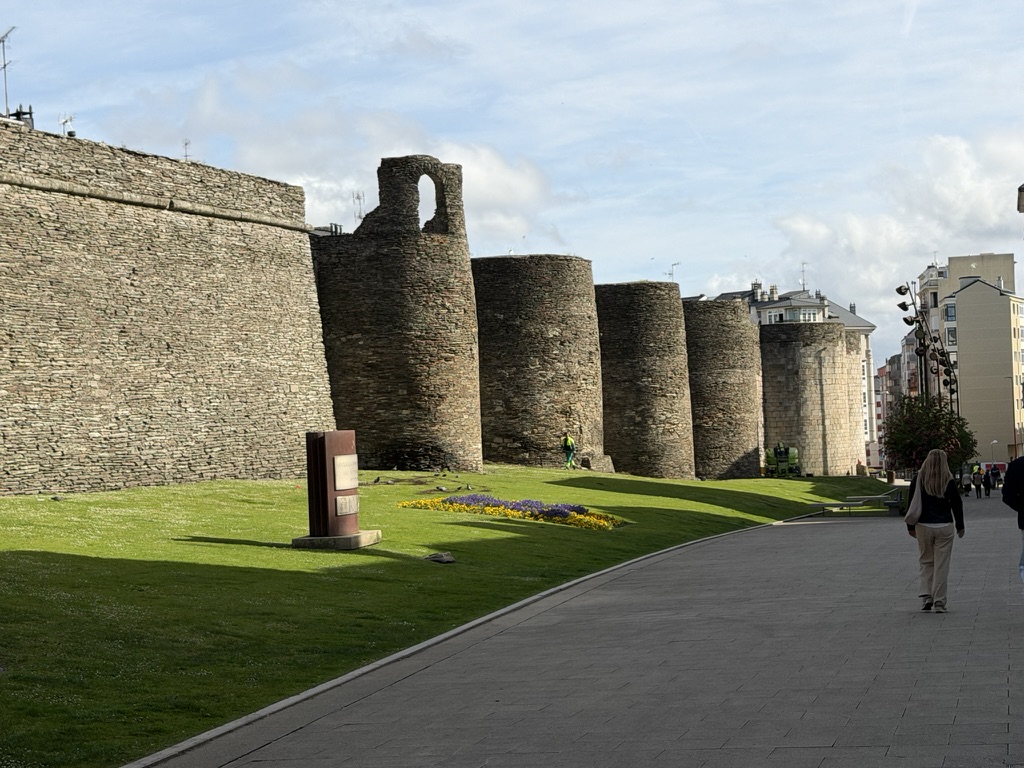
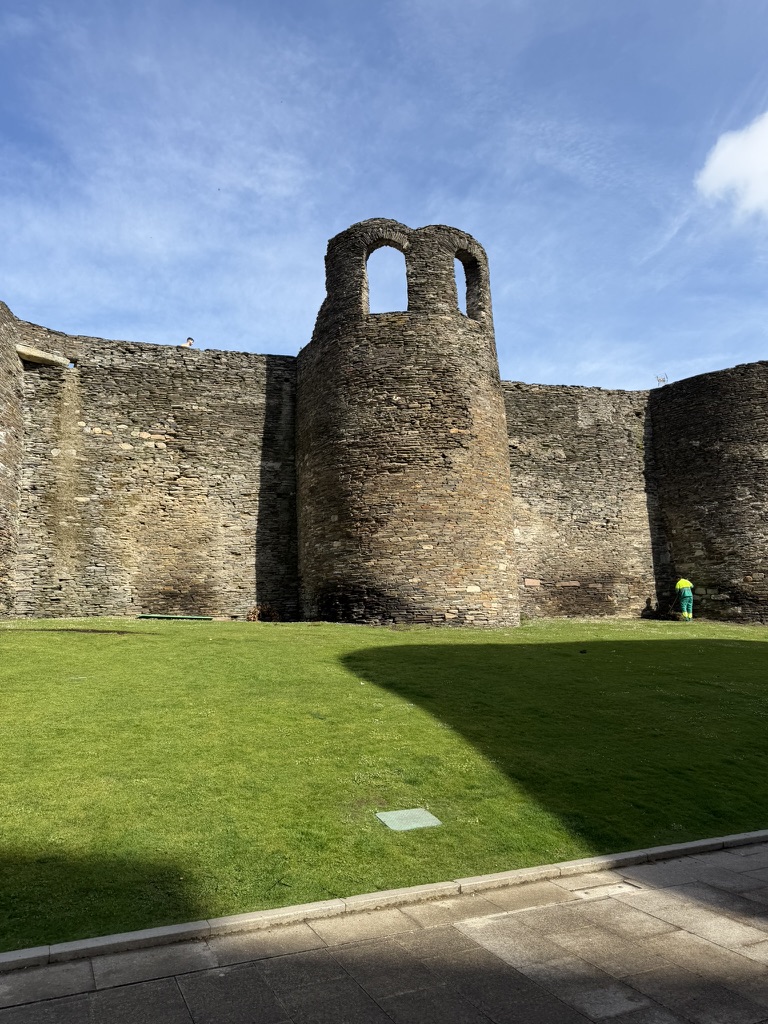
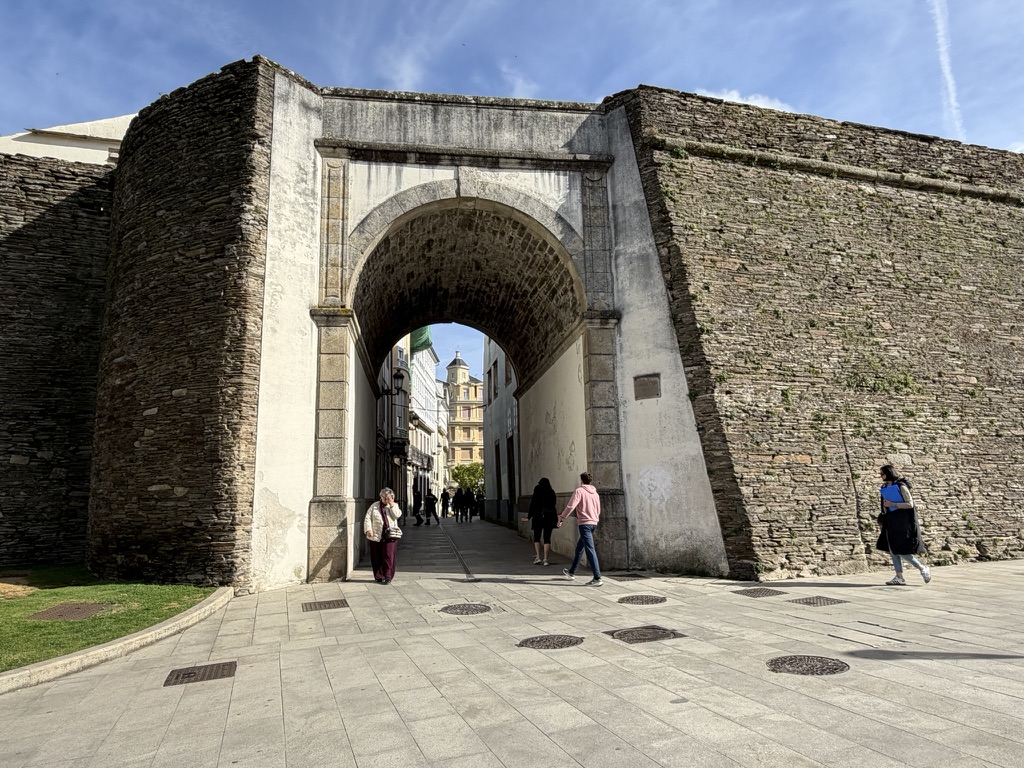
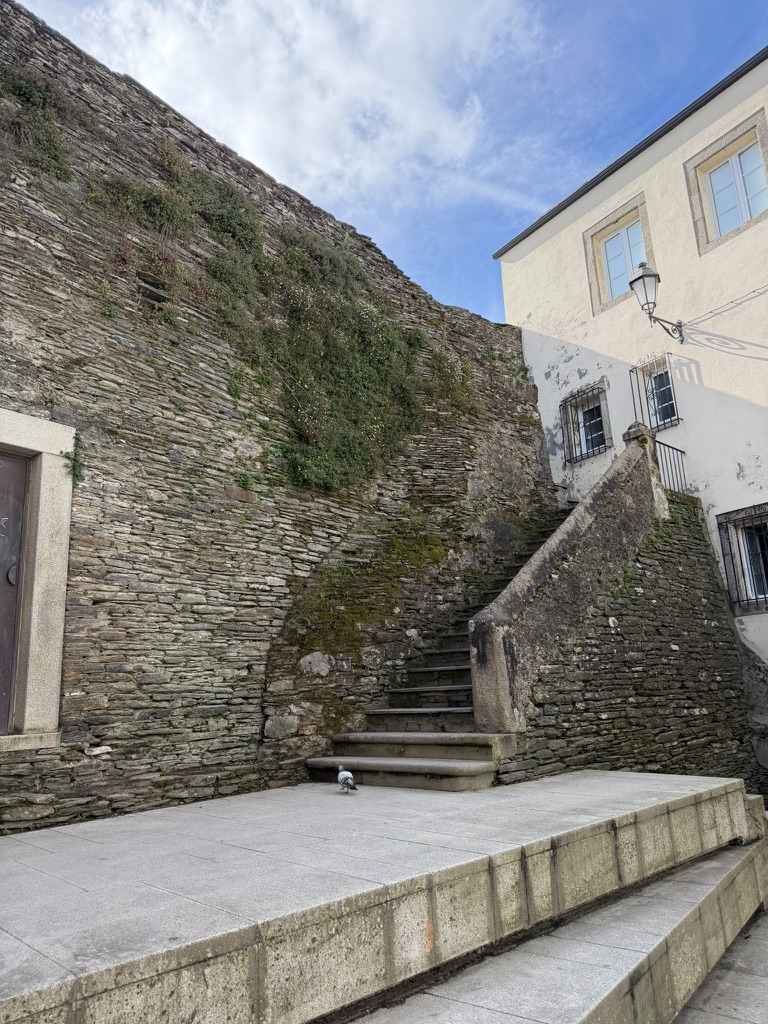
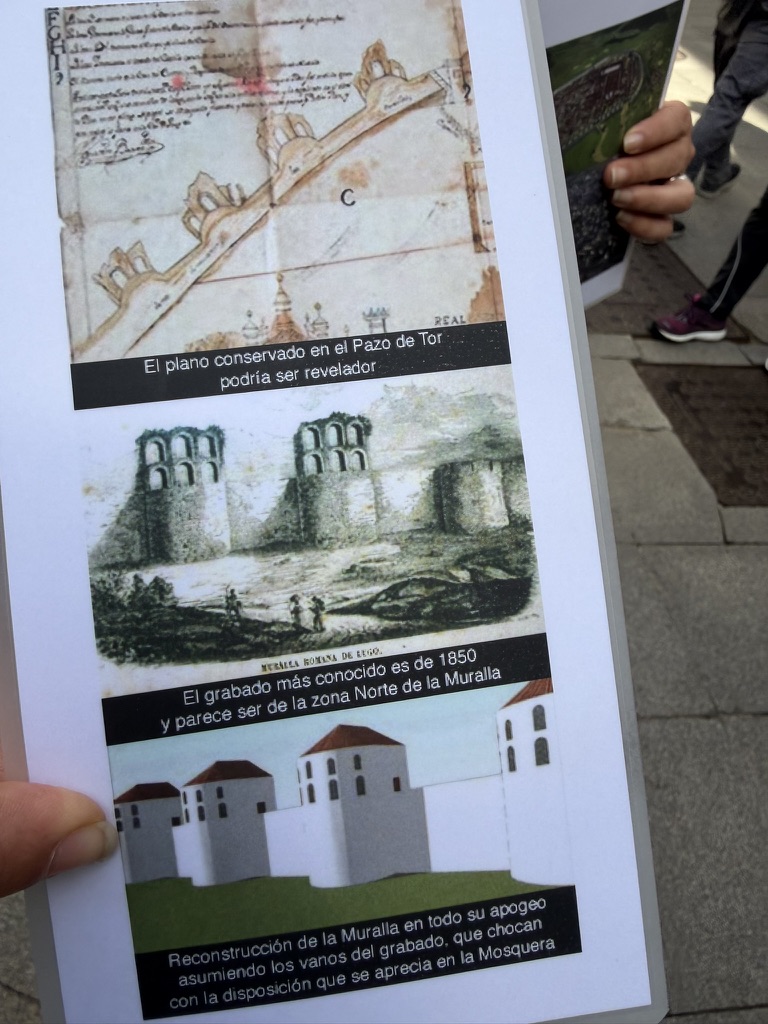
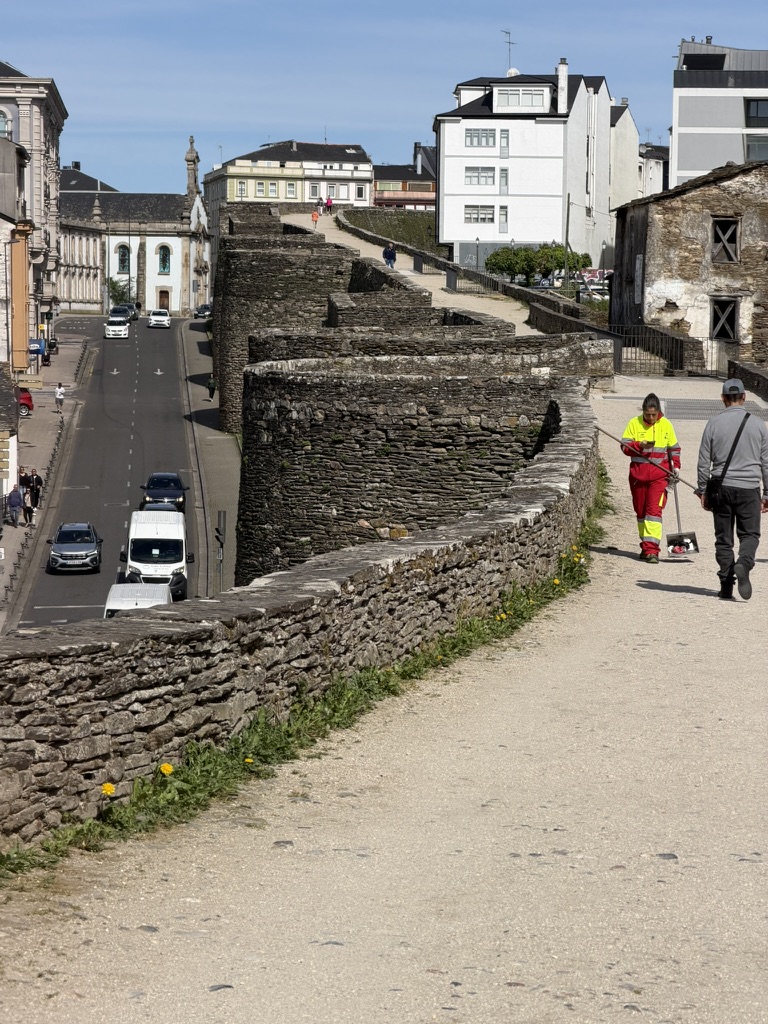
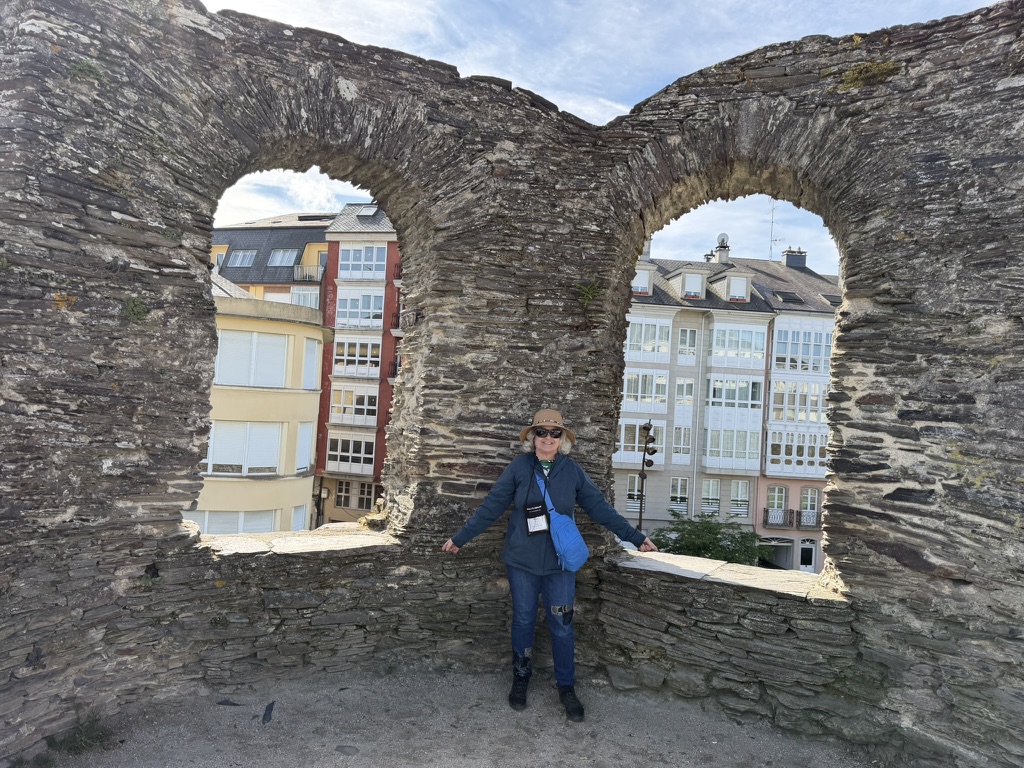
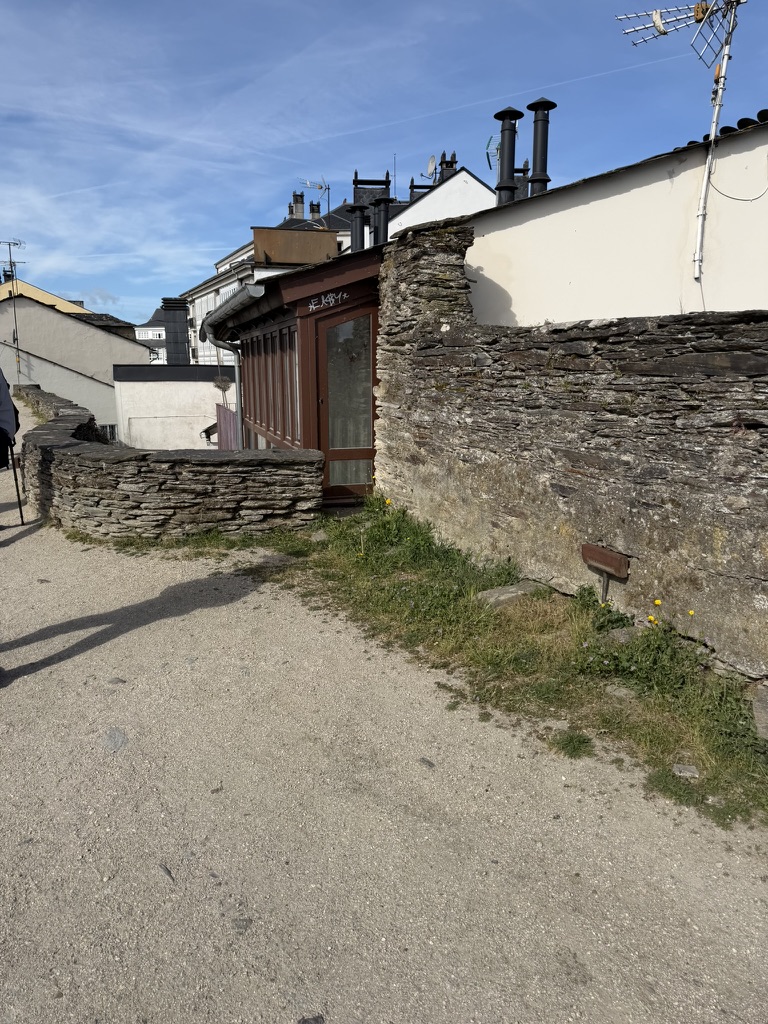
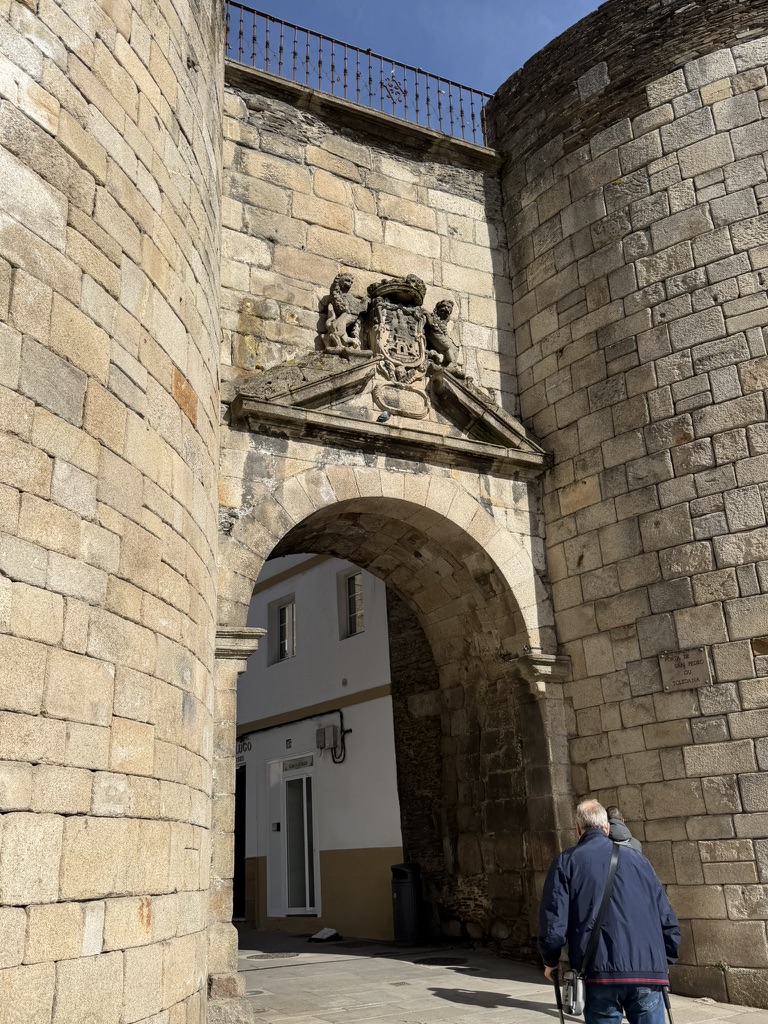
Next stop the monstrous and magnificent Roman Walls of Lugo. We walked around them from the outside.  And then we walked on the walls in two different places.  Once the walls, a UNESCO World Heritage Site, also had multiple towers surrounding the city.  Now just vestiges of the towers remain.

Walking along the walls give you a great view of both the old and new cities, but also make you aware of how technologically advanced the Romans were as these walls have lasted centuries.  Over time, some people had the opportunity to build their homes right into the wall and have the walls paths as their backyard.  People can no longer do this, but those who have this cannot be destroyed.

Our final Palace was La Granja, or Real Sitio de San Ildefonso, was the summer home of the Spanish kings.  It was walking distance to our hotel, the Parador De La Granja. Our hotel was once part of the Palace grounds and was the home of two children and their attendants. 

The Palace is enormous, we only got to see about ¼ of the total rooms, just walking through the open rooms on the bottom floor.  Through the windows we could see some of the fantastic gardens. Unfortunately, they were closed because that evening some of the fountains were going to be opened. But from what I could see these gardens are much like the ones in Russia at the Peterhof Palace.

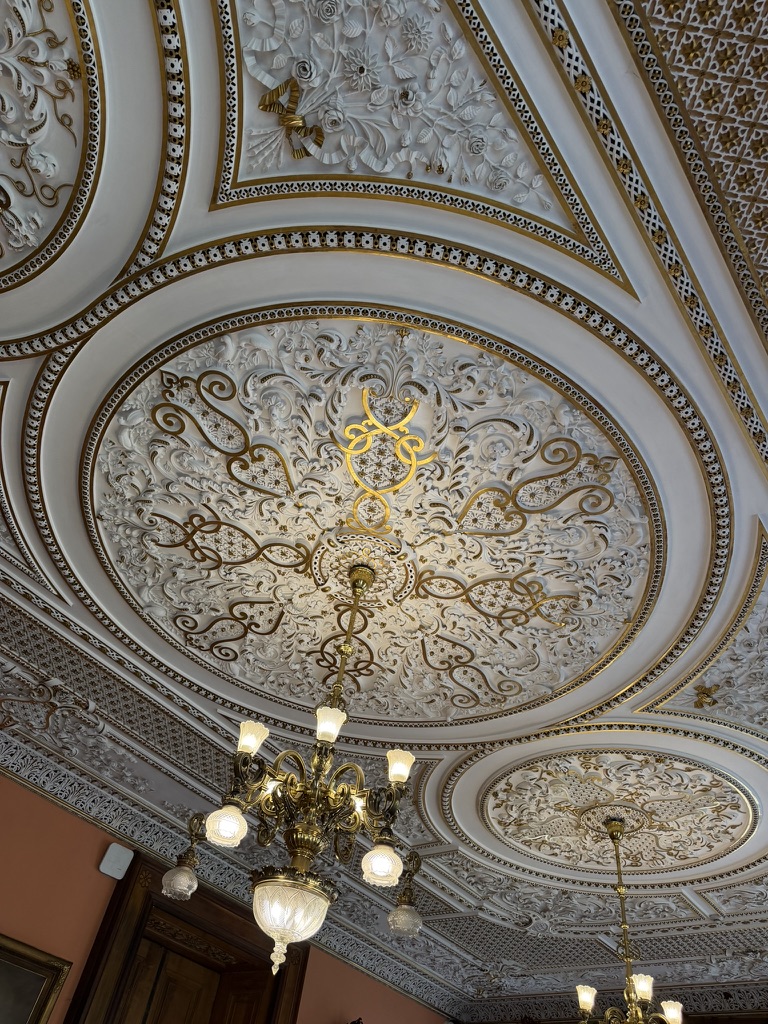
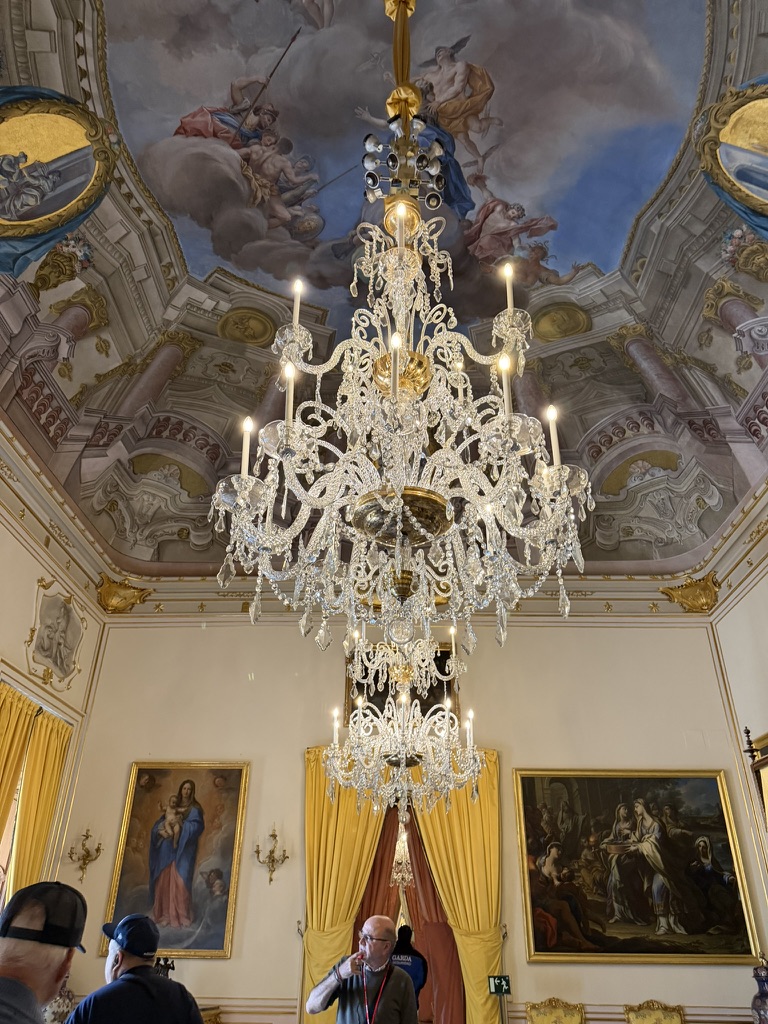
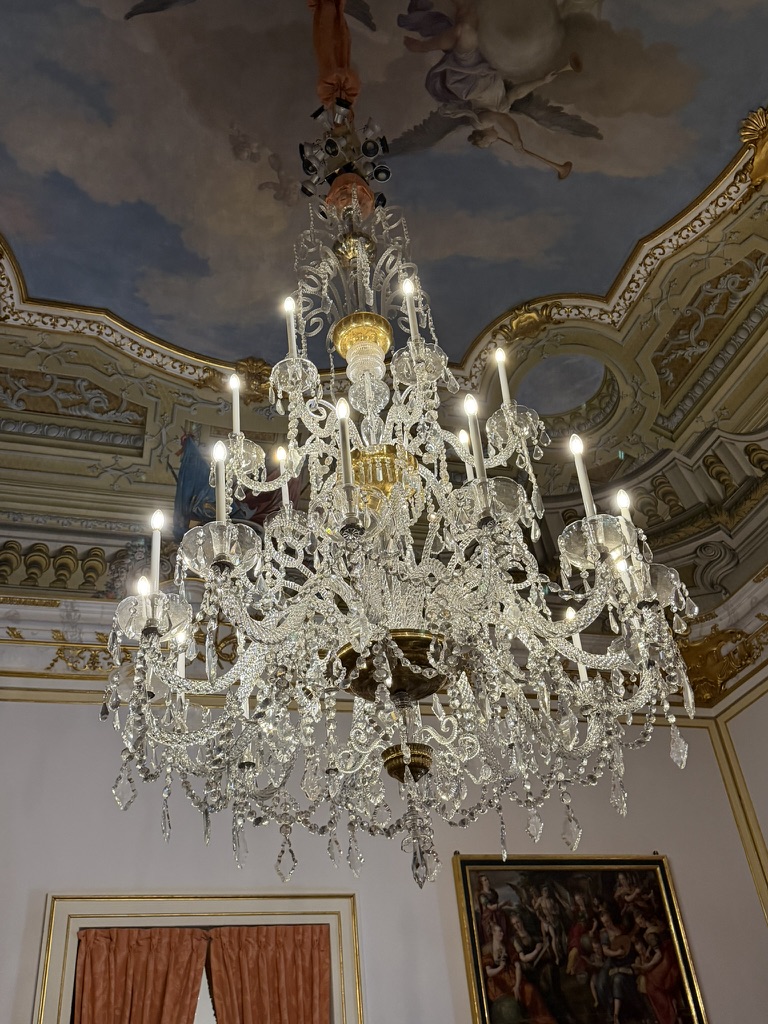
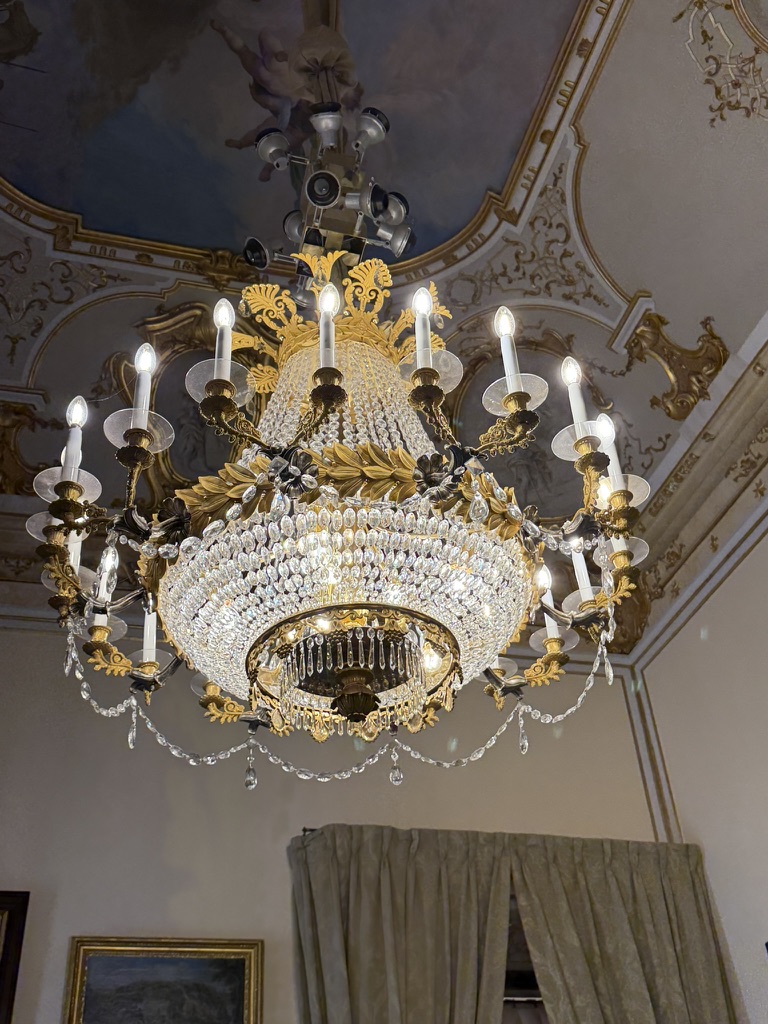
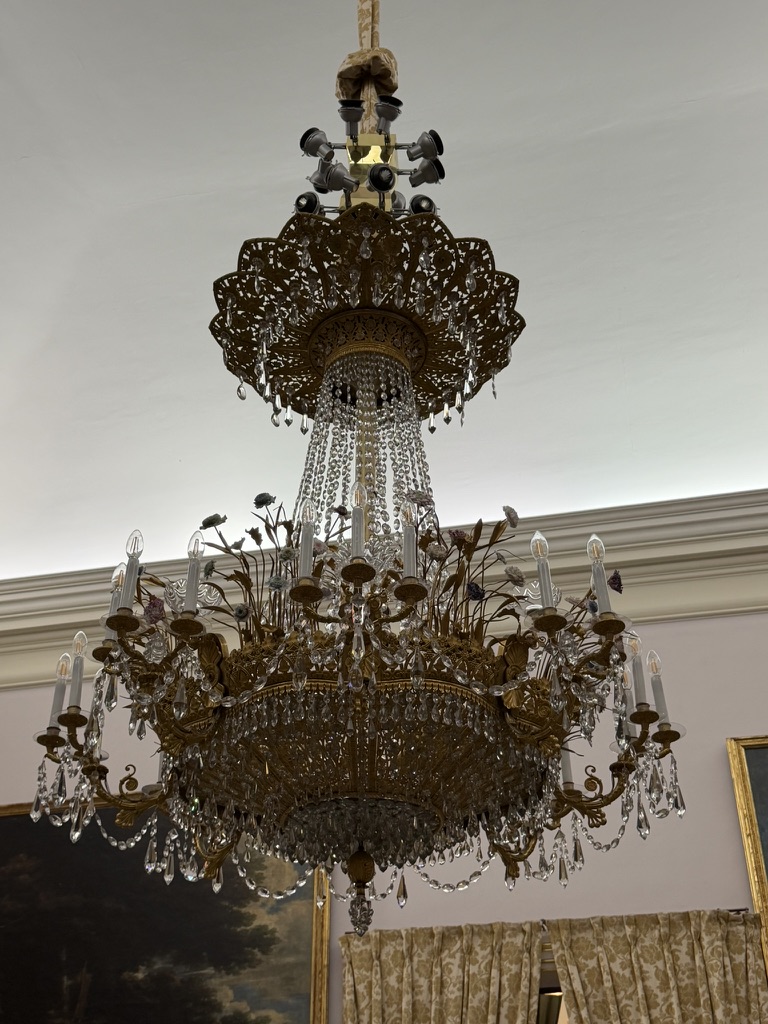
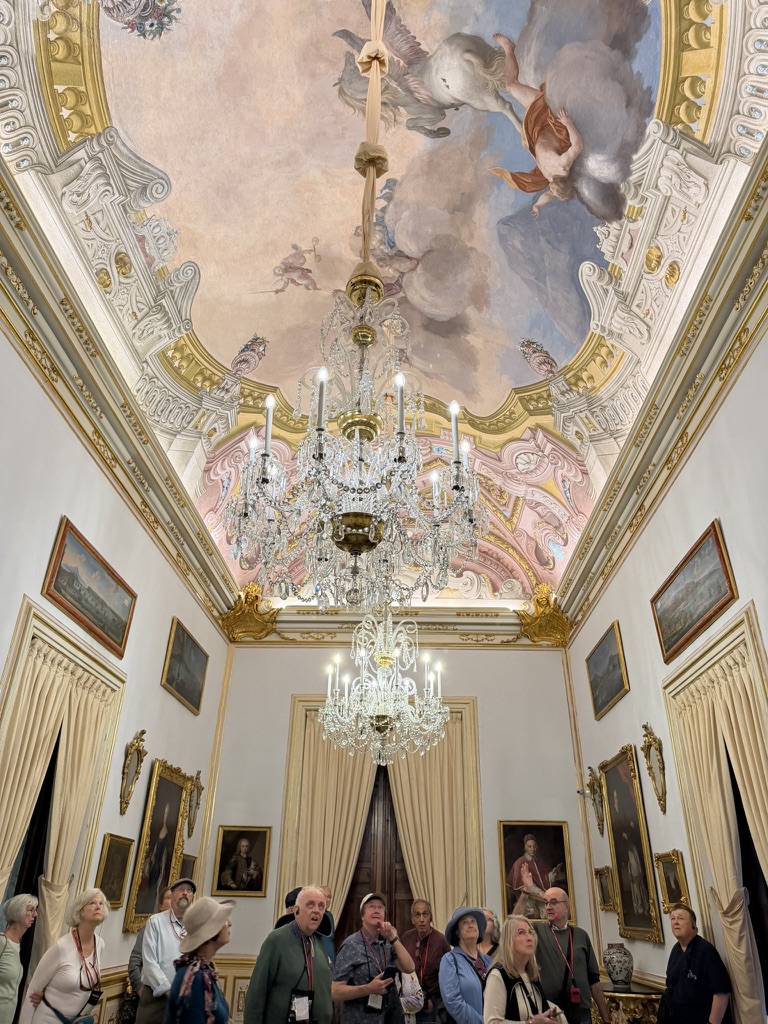
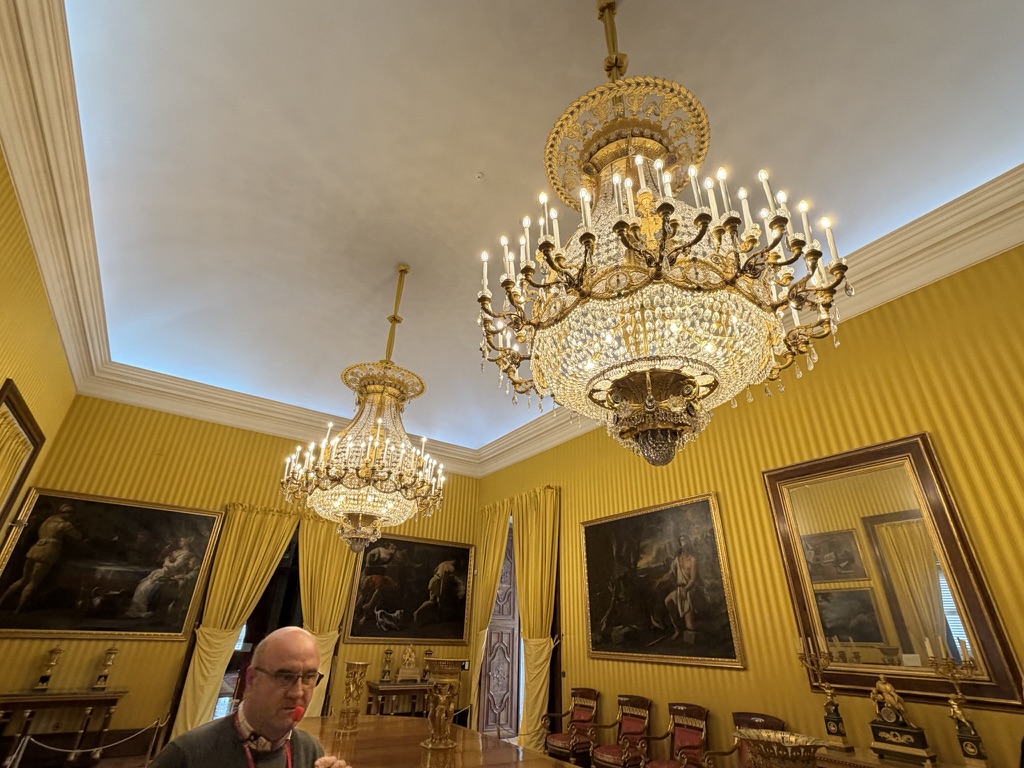
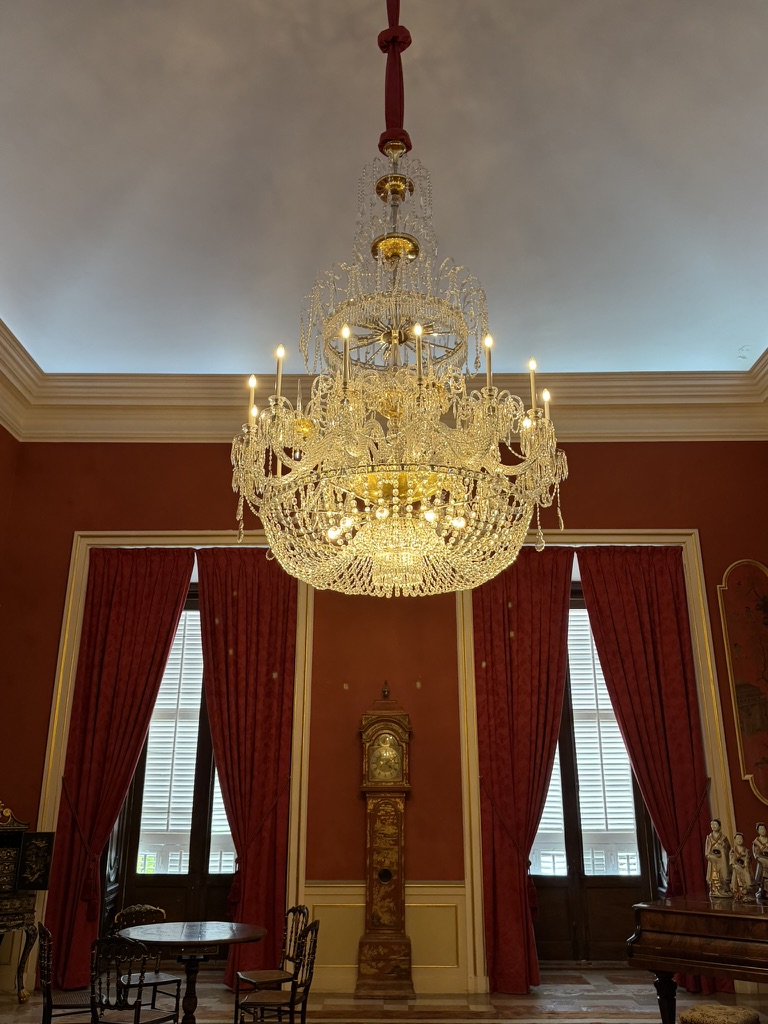
The chandeliers and ceilings in this palace were stunning. The Royal Glass company is in San Ildefonso, so many of them were made in the town for the Palace. For  this palace I will just show you some of these fantastic and some fanciful chandeliers.  To be honest after going through these rooms I became somewhat overwhelmed.  But it was definitely a great final stop on our tour.

https://en.wikipedia.org/wiki/Amber_Room

https://www.uc.pt

https://whc.unesco.org/en/list/987/ https://www.spain.info/en/destination/san-ildefonso-o-la-granja/

The Jewish Connection We Discovered While in Portugal and Spain

4 May

Whenever I travel to the Iberian Peninsula, I am intrigued and drawn to any information I can gather about where the Jewish communities lived before the forced conversions and the expulsions. I am a direct descendant of these Jews.  I imagine my ancestors walking the streets, attending the synagogues, traveling between towns and living their lives in joy before it was all destroyed.

For over two weeks we visited many cities and towns in Portugal and Spain.  We saw streets that once were the homes of Jewish communities.  We saw the evidence of Judaism left behind in street names and buildings. 

We started our trip in Porto, where once a large Jewish community existed. We took a food tour while there, visiting the Market, the oldest restaurant and several pastry shops.  At the last one, our guide brought us out macaroons, saying that this was a treat the Jews ate during Passover.  A treat we still eat.  She said that we were eating it here because this was the area where the Jewish people once lived. And she pointed us to the street where the synagogue once stood.  When the tour ended, we returned.

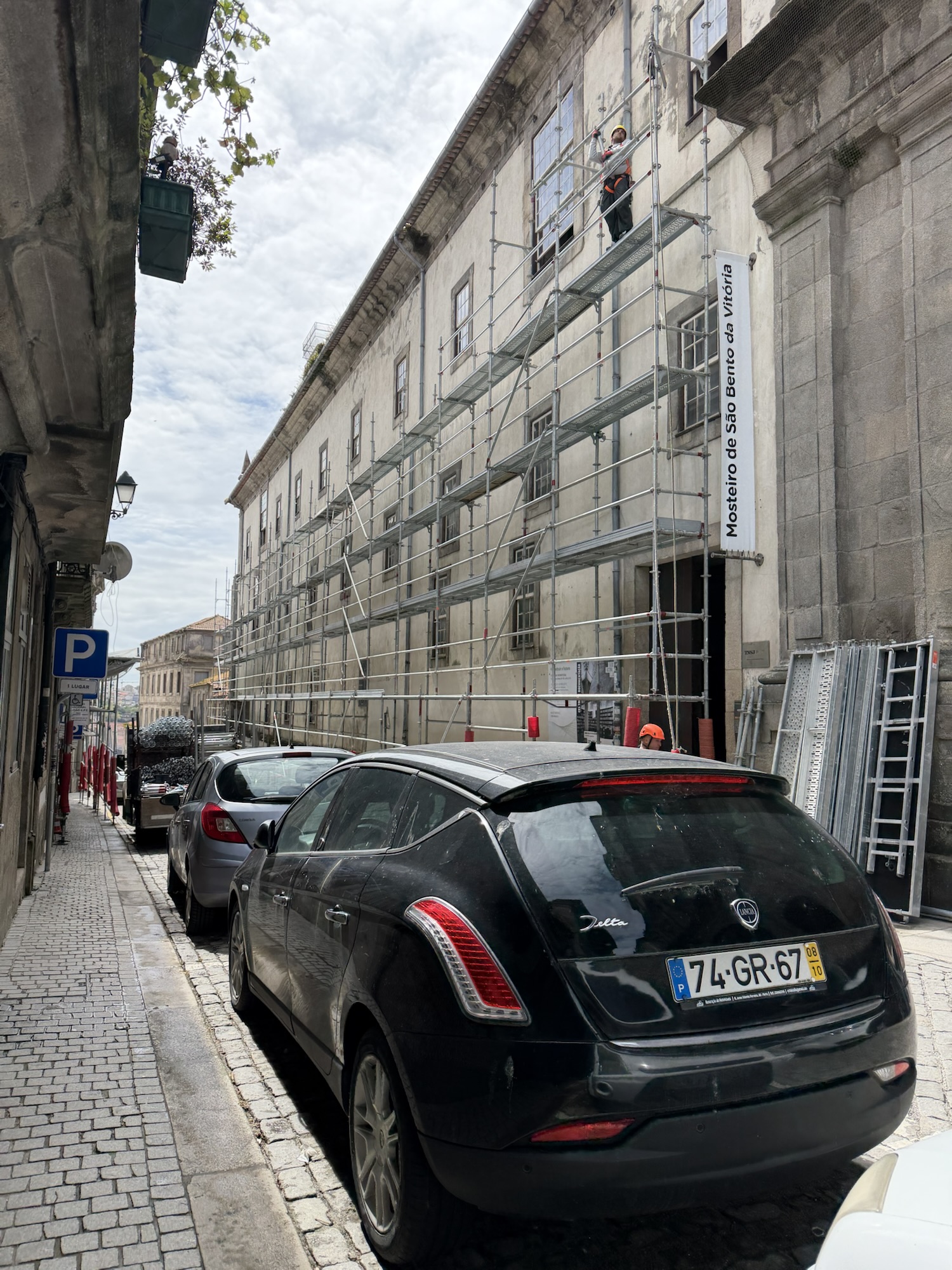
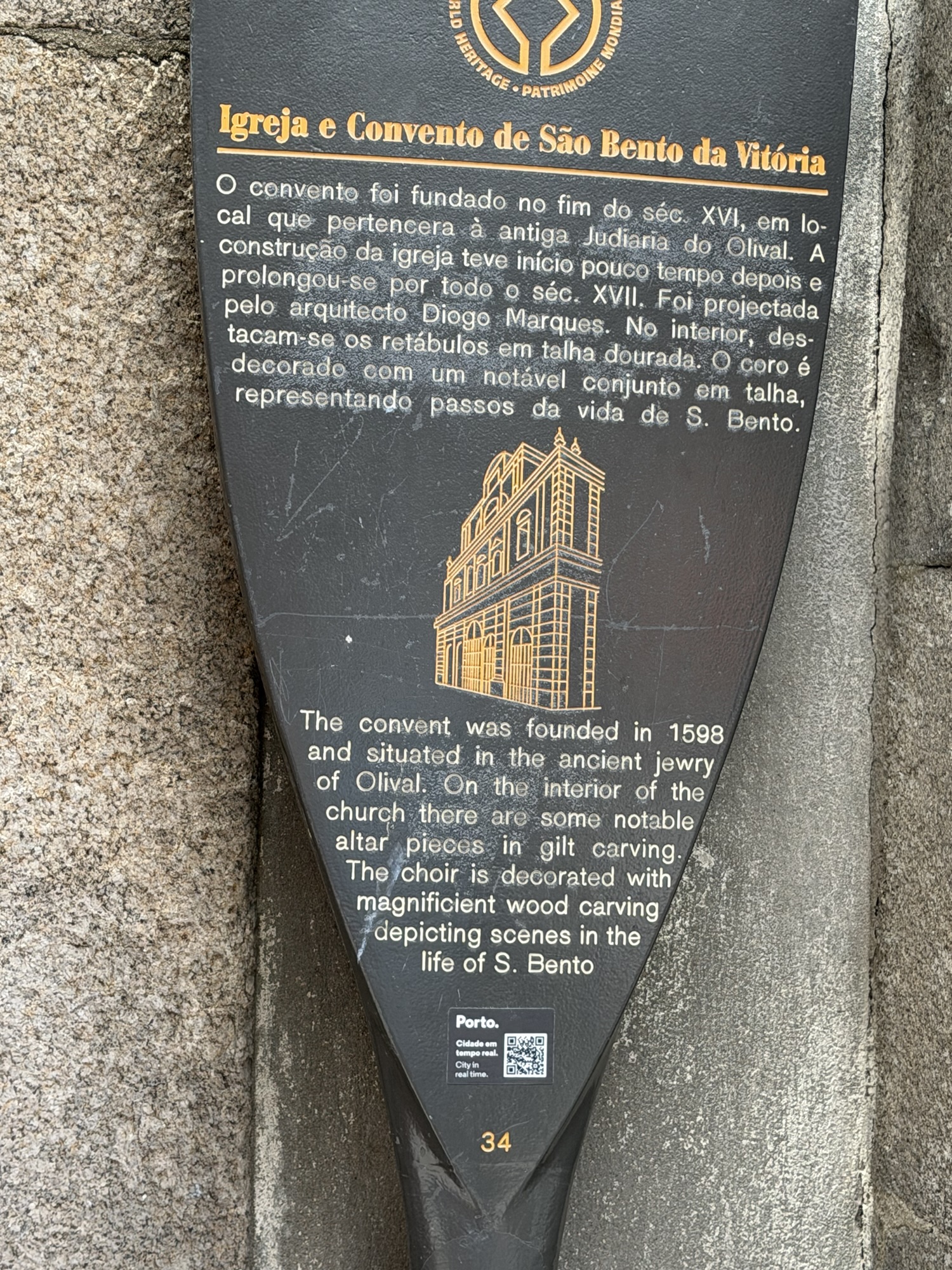
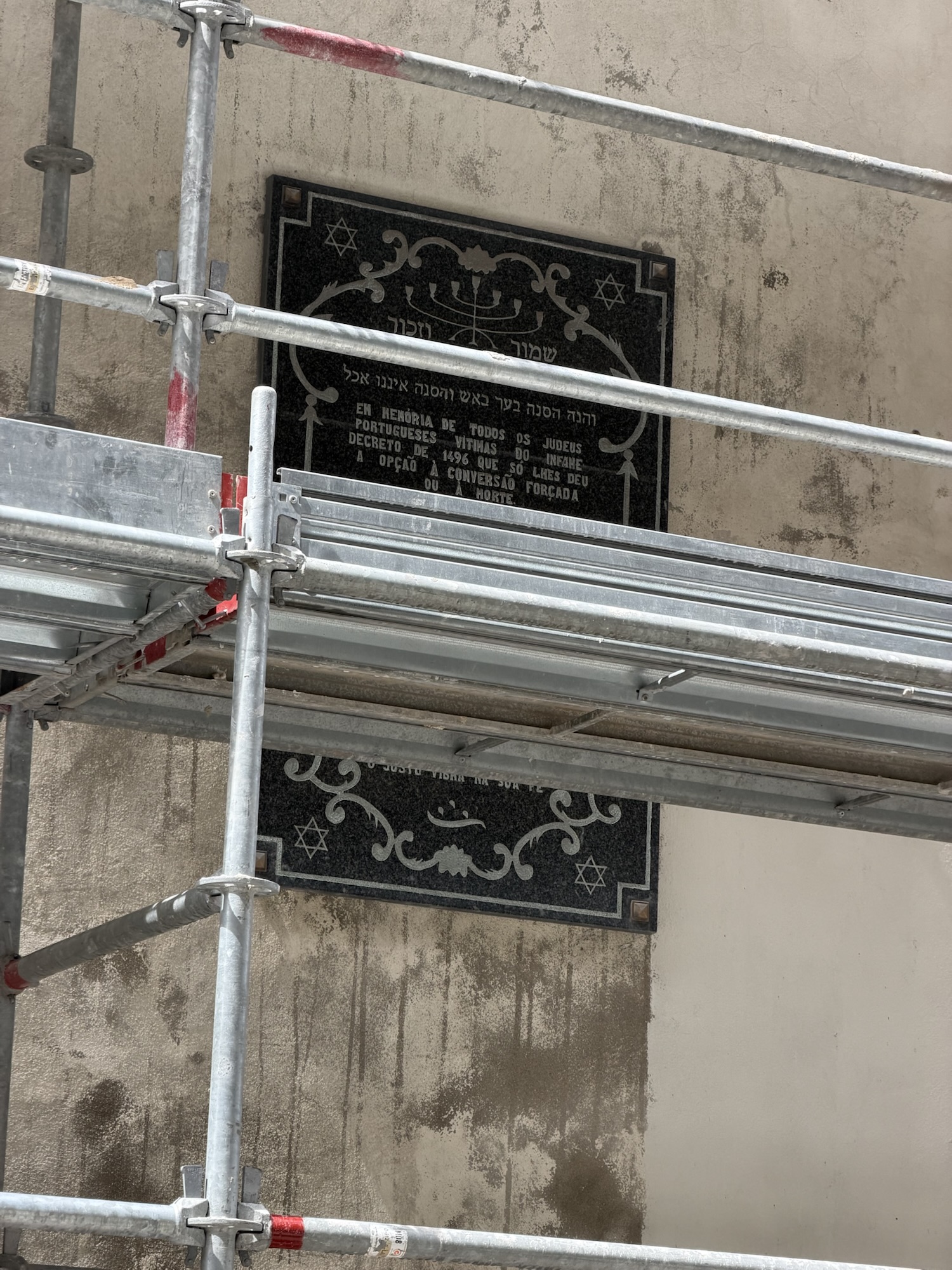
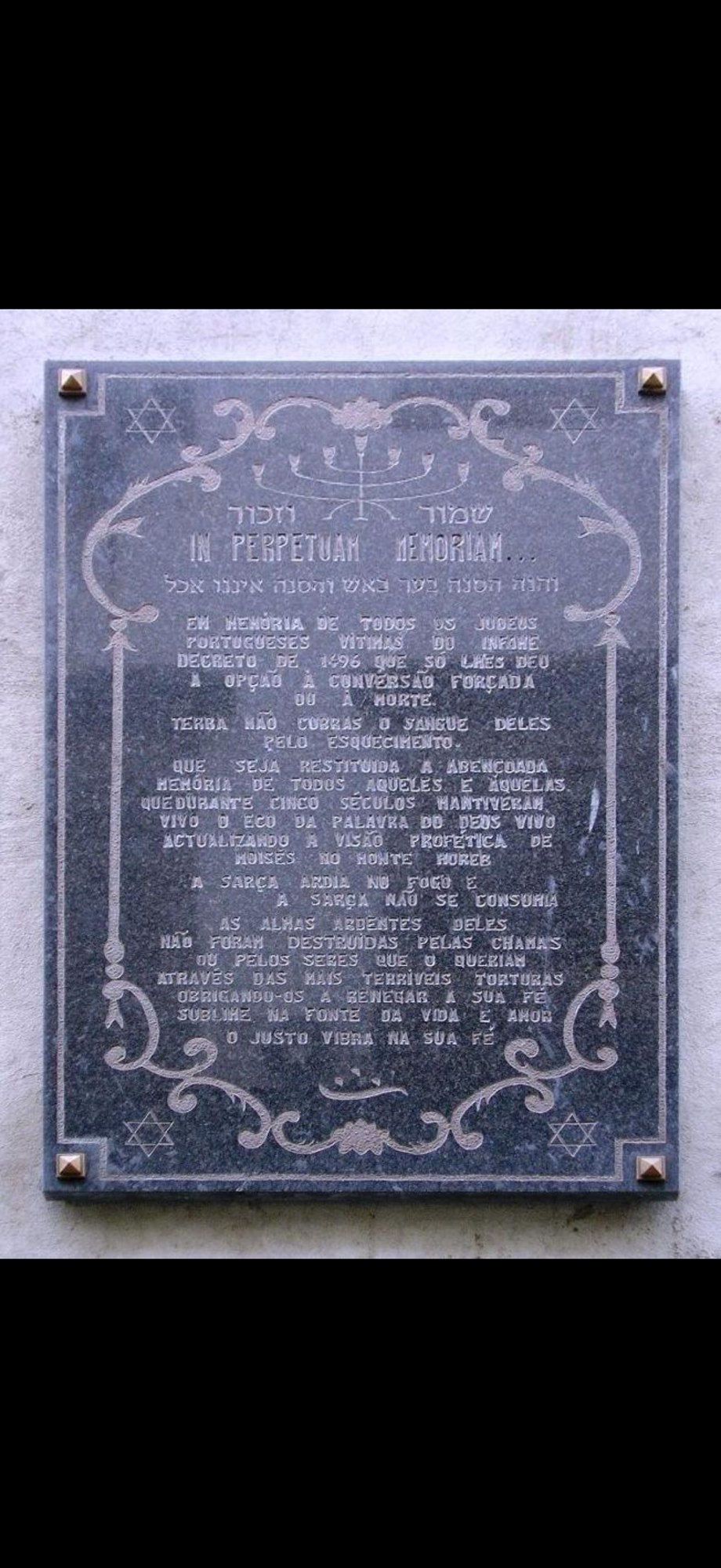
There is not much left of the Jewish presence in what was the Judiaria Nova do Olival.   But we walked Rua De S. Bento Da Vitoria, the street where the community once lived viewing the site of the destroyed synagogue.   Where it once stood is a public building that was originally a monastery. There are two signs, one next to the building and one on the building commenting on the Jewish community that used to live.  It is currently under renovation, thus the plaque on the wall was difficult to read, so the photo I am showing came from the internet.  It says:

“In perpeturam memoriam…In memory of all Portuguese Jews who, by decree of 1496, were given by God the choice between forced conversion or death. May their blood never be forgotten. May the blessed memory be restored to all those – the shepherds and the sheep – who for five centuries kept alive and ever present the word of the prophet Moses on Mount Horeb: the bush burned with fire, yet the bush was not consumed.  Their burning embers were not destroyed by the flames – nor by those who sought to destroy them  through the most terrible tortures – forcing them to renounce their sublime faith at the fount of life: For the Just man lives by his faith.”

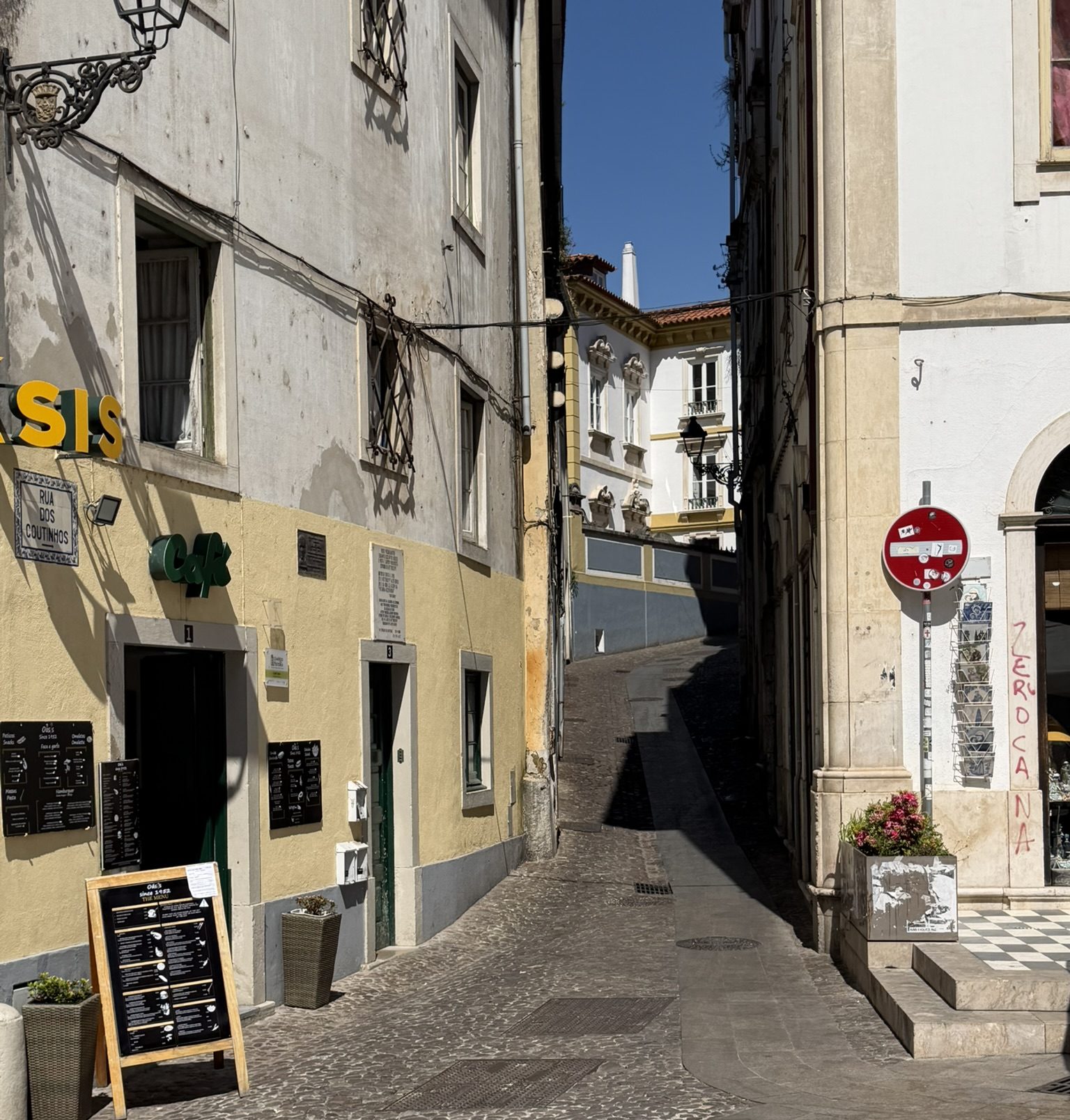
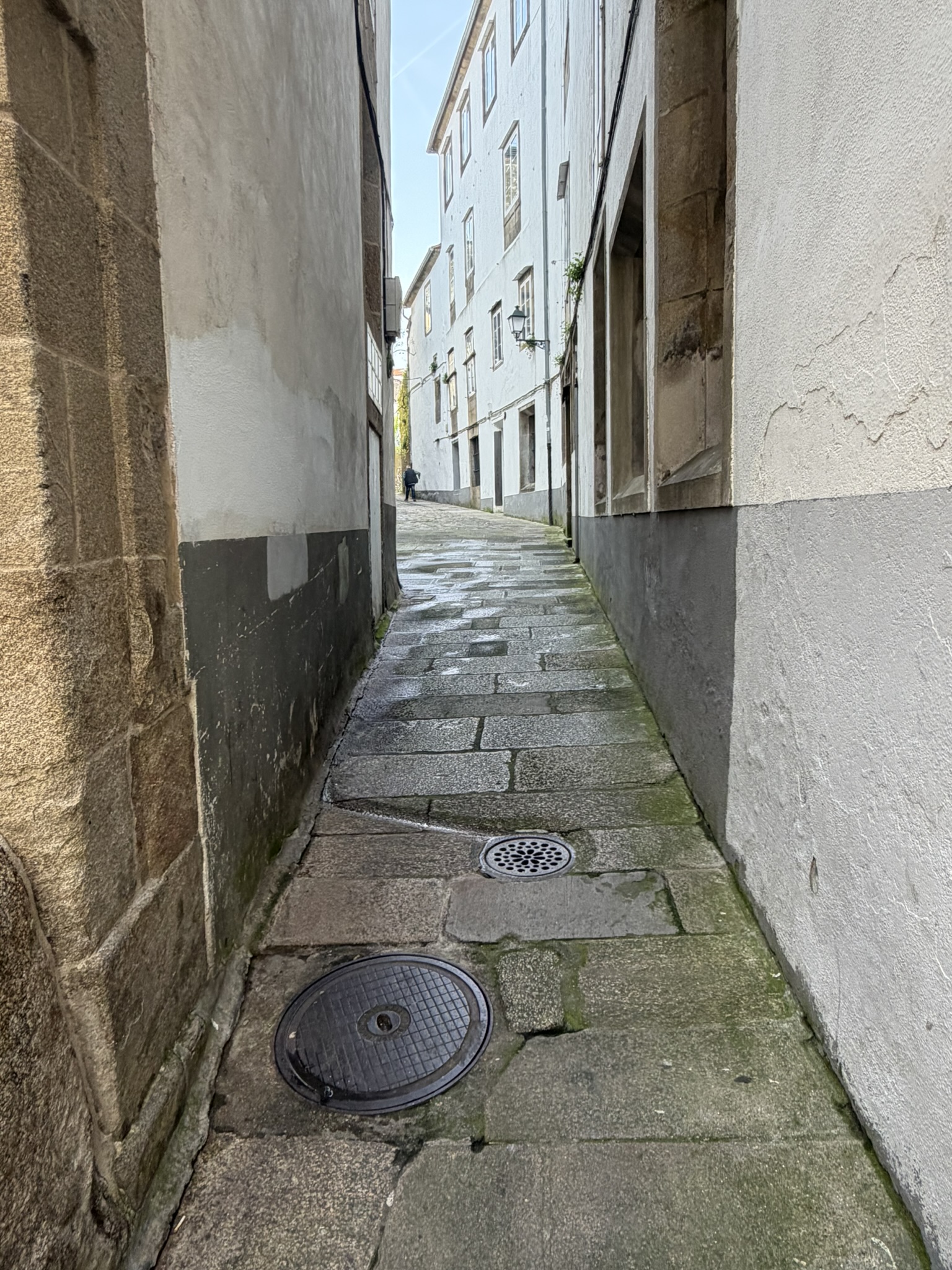
On Day 7 we went to Coimbra, the site of the Coimbra University and Library.  It was a truly lovely site up on a mountain, where you could see the river below.  Of course, a college town would have had a Jewish population.  In fact, the street where the Jews lived was directly across from the main church. Rua Dos Coutinhos, an ancient narrow street. No sign of any Jewish life now.

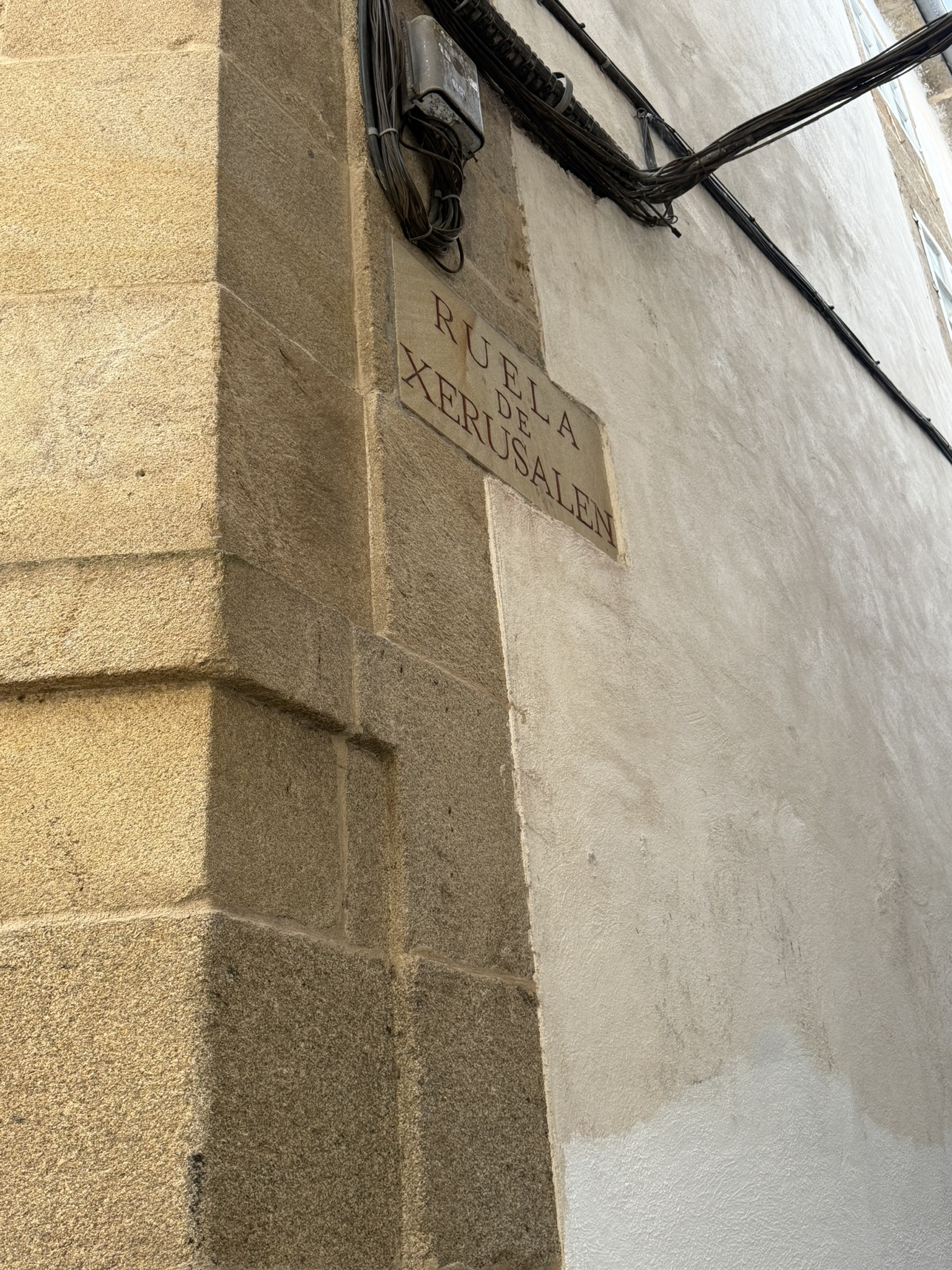
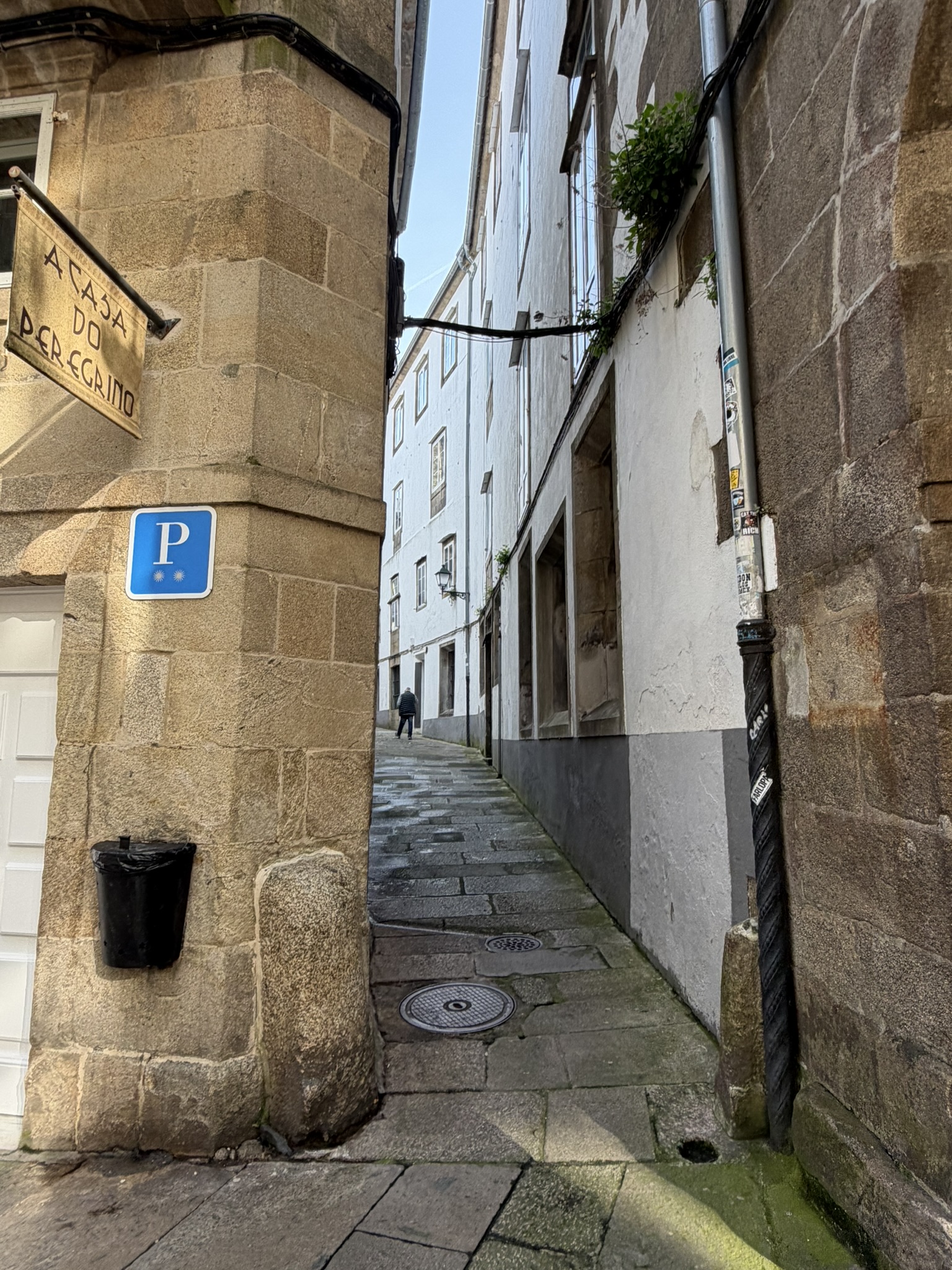
In Santiago de Compostela, the city that is saturated with spirituality as it is the end of the pilgrimage at the Cathedral of the Portical of Glory, we saw Ruela de Xerusalem, Jerusalem Street.  Our guide told us it is believed this was the street for the Jewish population.

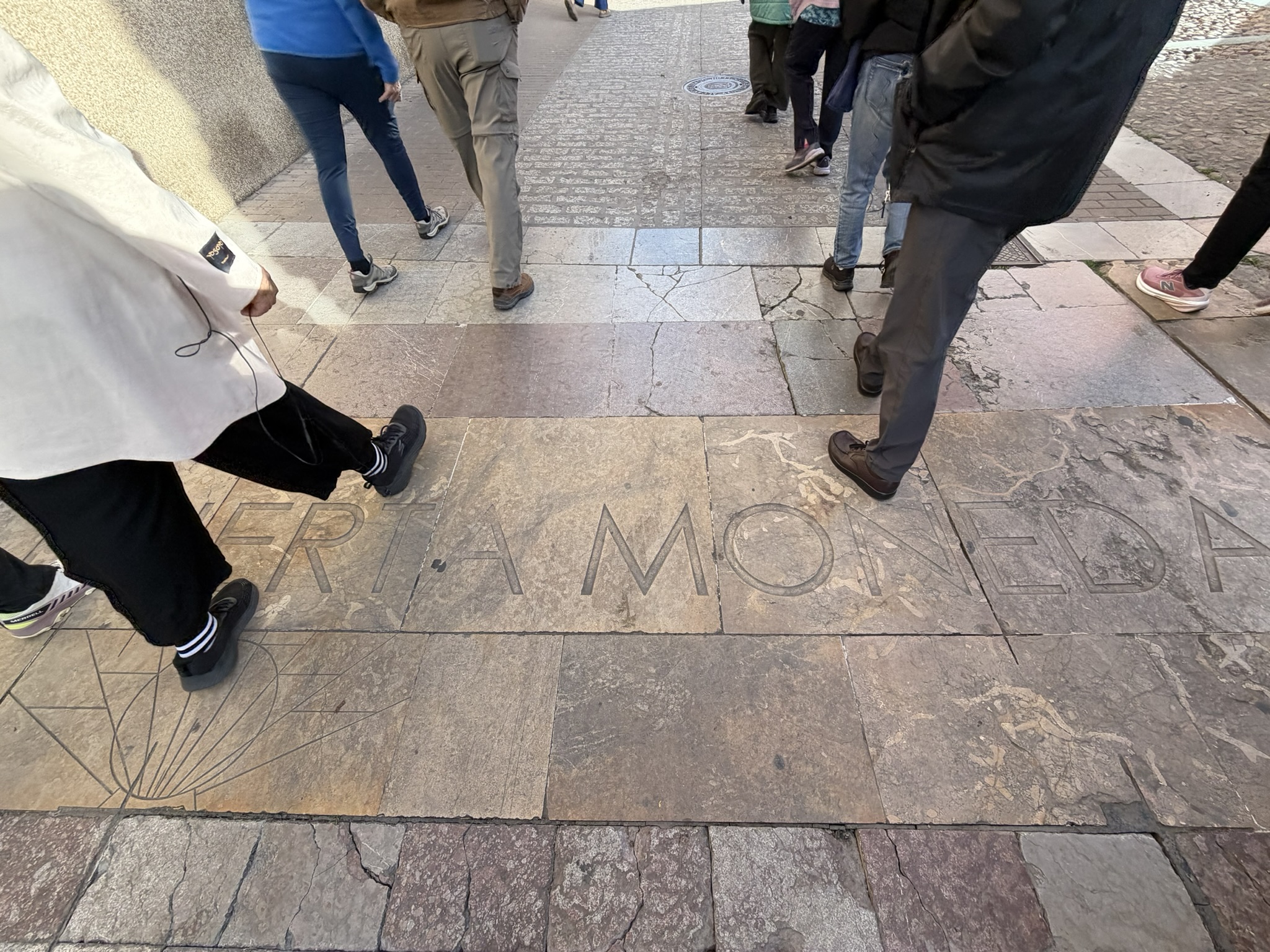
In Leon, we saw much more signs of Jewish life.  We entered what was once a walled city through a street where there was once a gate, the Puerta Moneda, or the Coin Gate.  Immediately we guessed it was the entrance to the Jewish area where the money lenders lived.

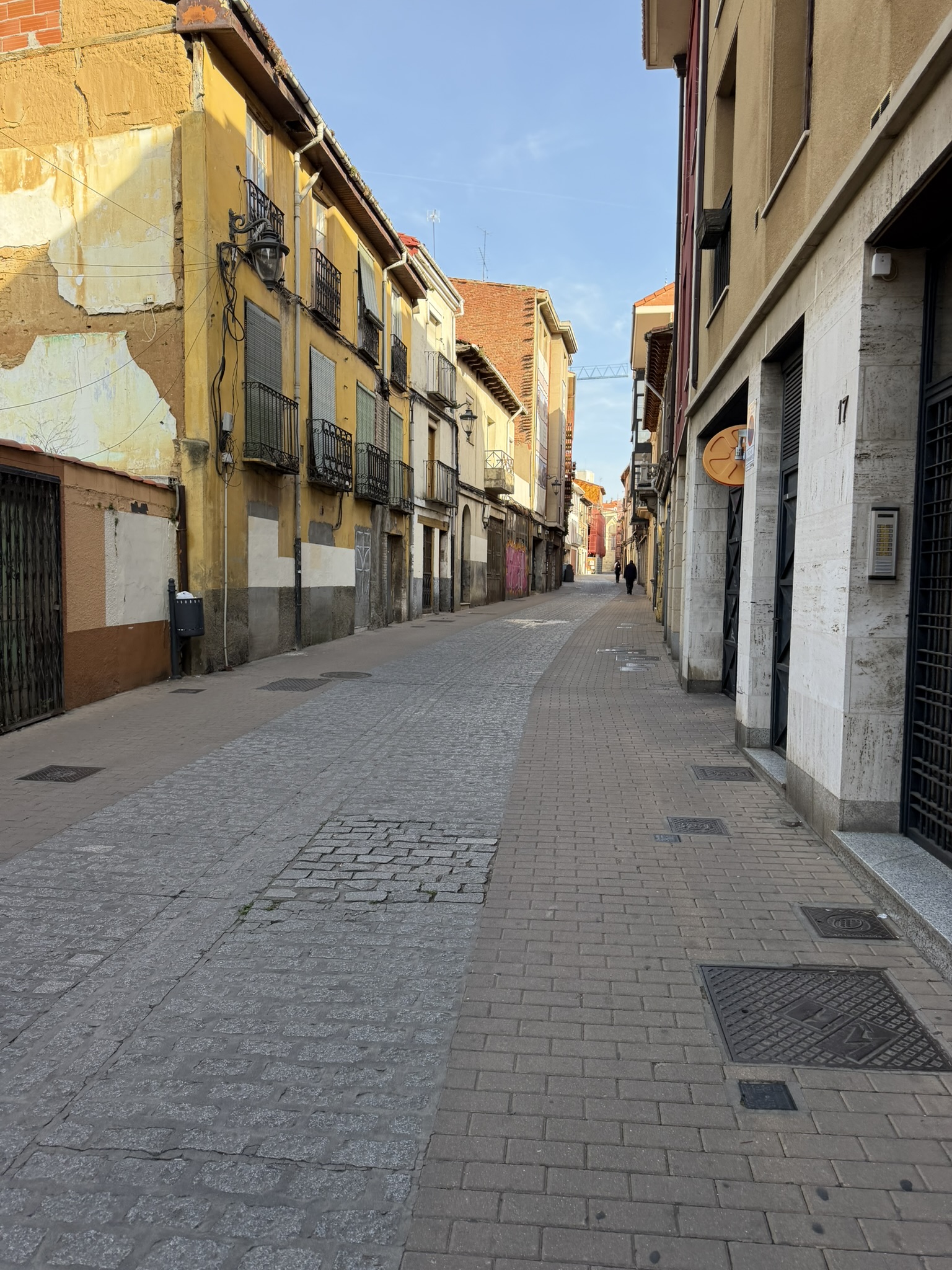
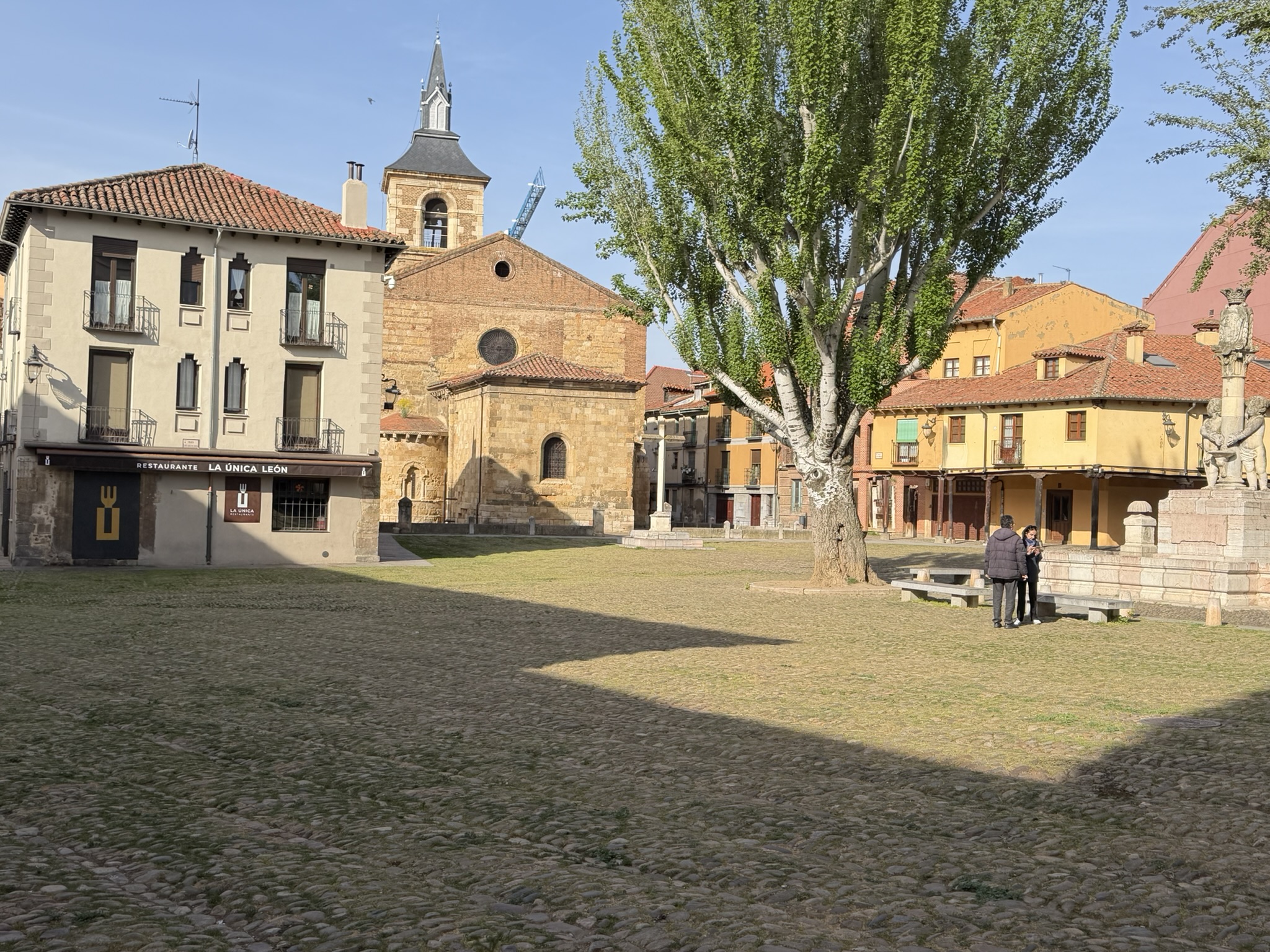
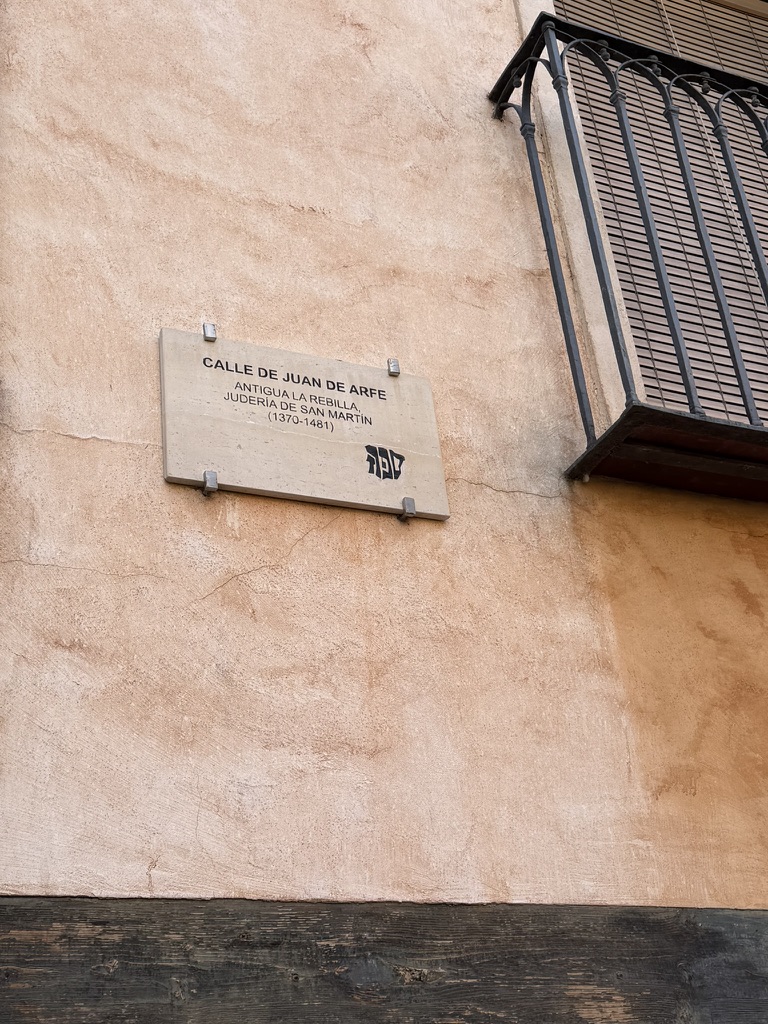
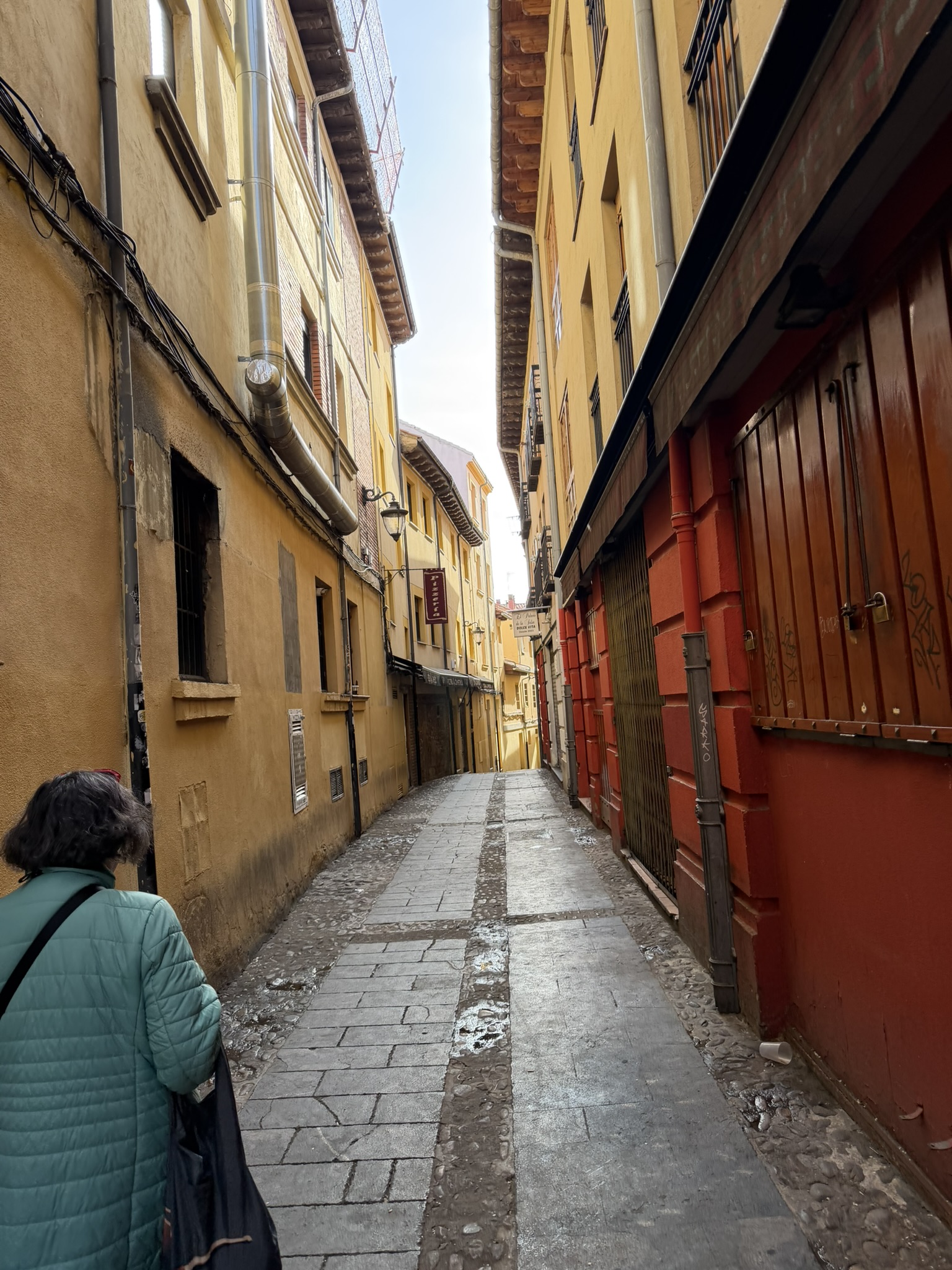
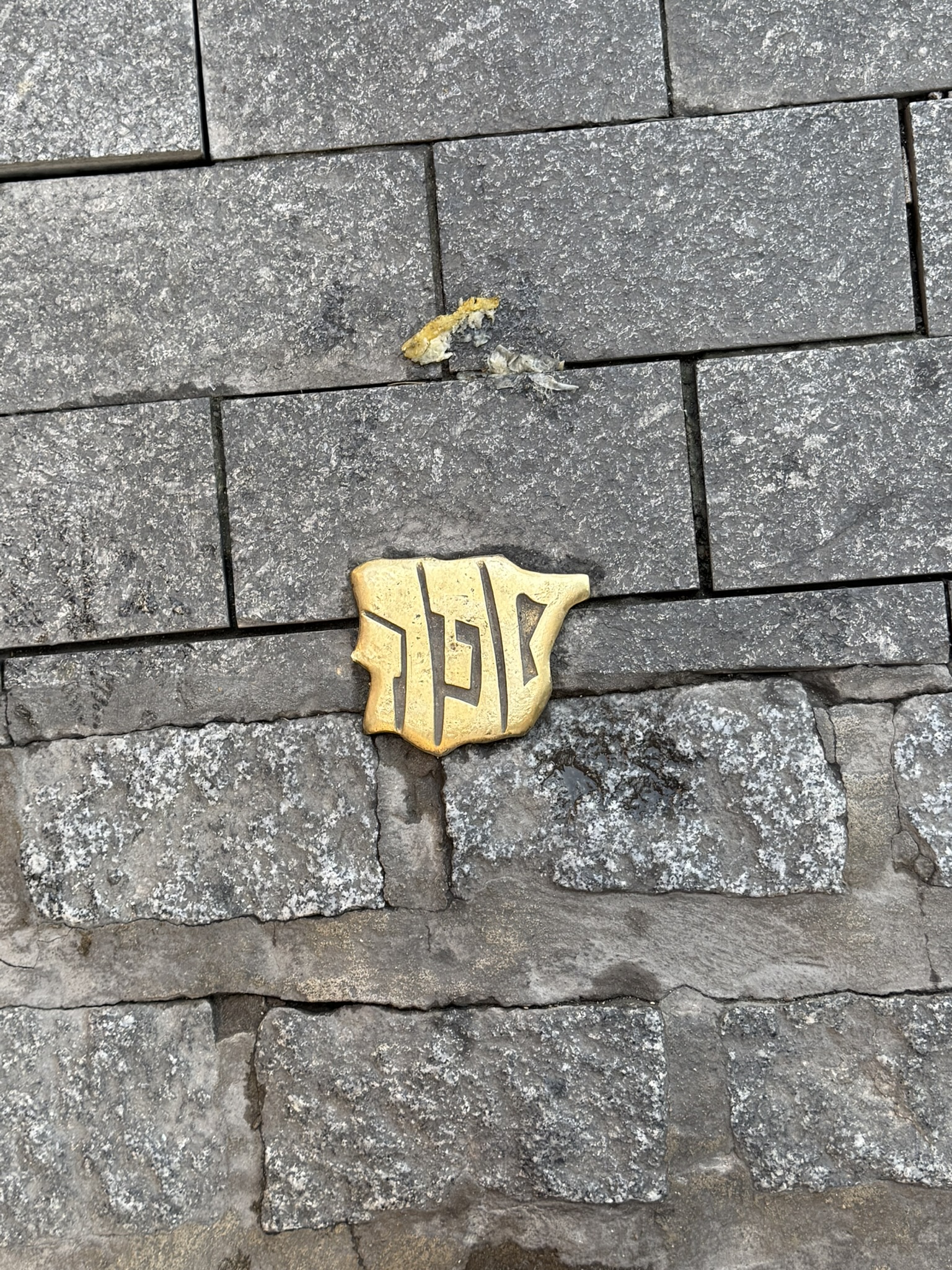
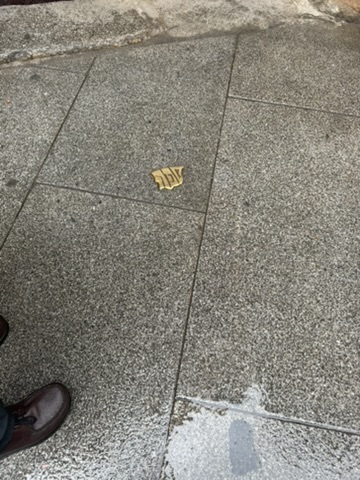
Our guide pointed out a long, narrow street that once was filled with vibrant Jewish life, as well as the square where they held a market.  In was in Leon that we first saw the markers placed by the Red de Judarias de Espana (Network of Jewish Quarters in Spain.)  Their symbol includes the Hebrew letters that spell out Sefarad and mark important Jewish sites.

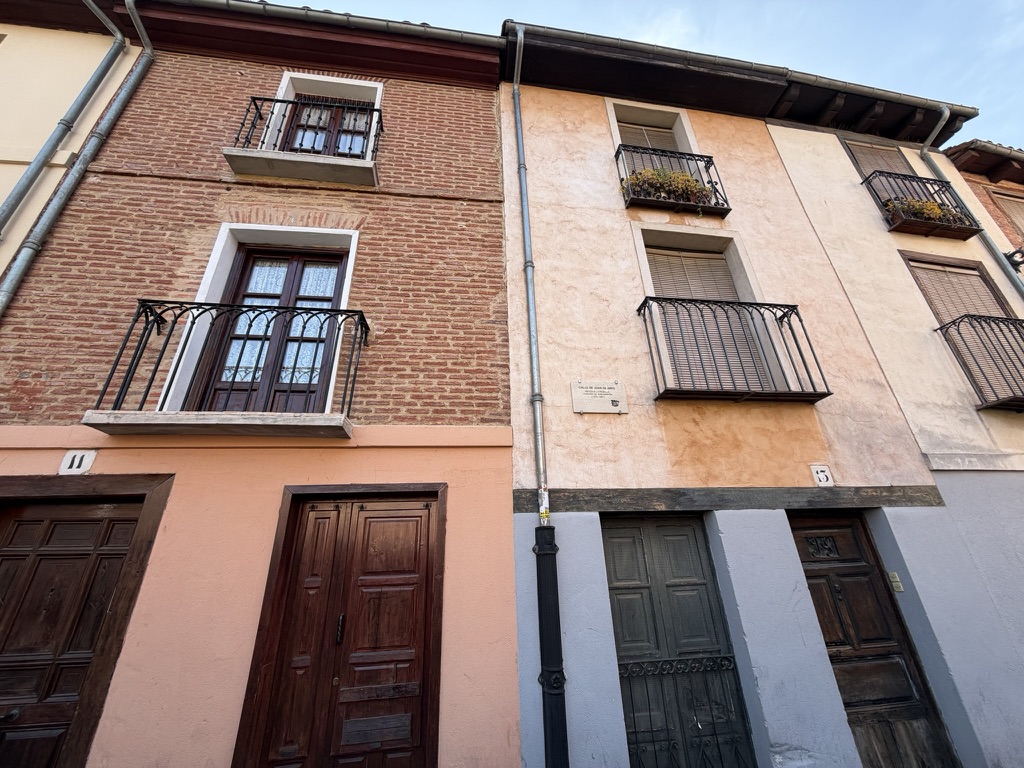
The first one we saw was on a plaque on Calle De Juan De Arge marking the home of a Jewish family that lived there from 1370 until 1481.  We saw another marker later on that was embedded in the ground. 

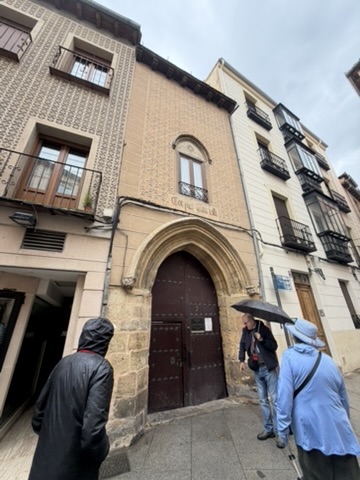
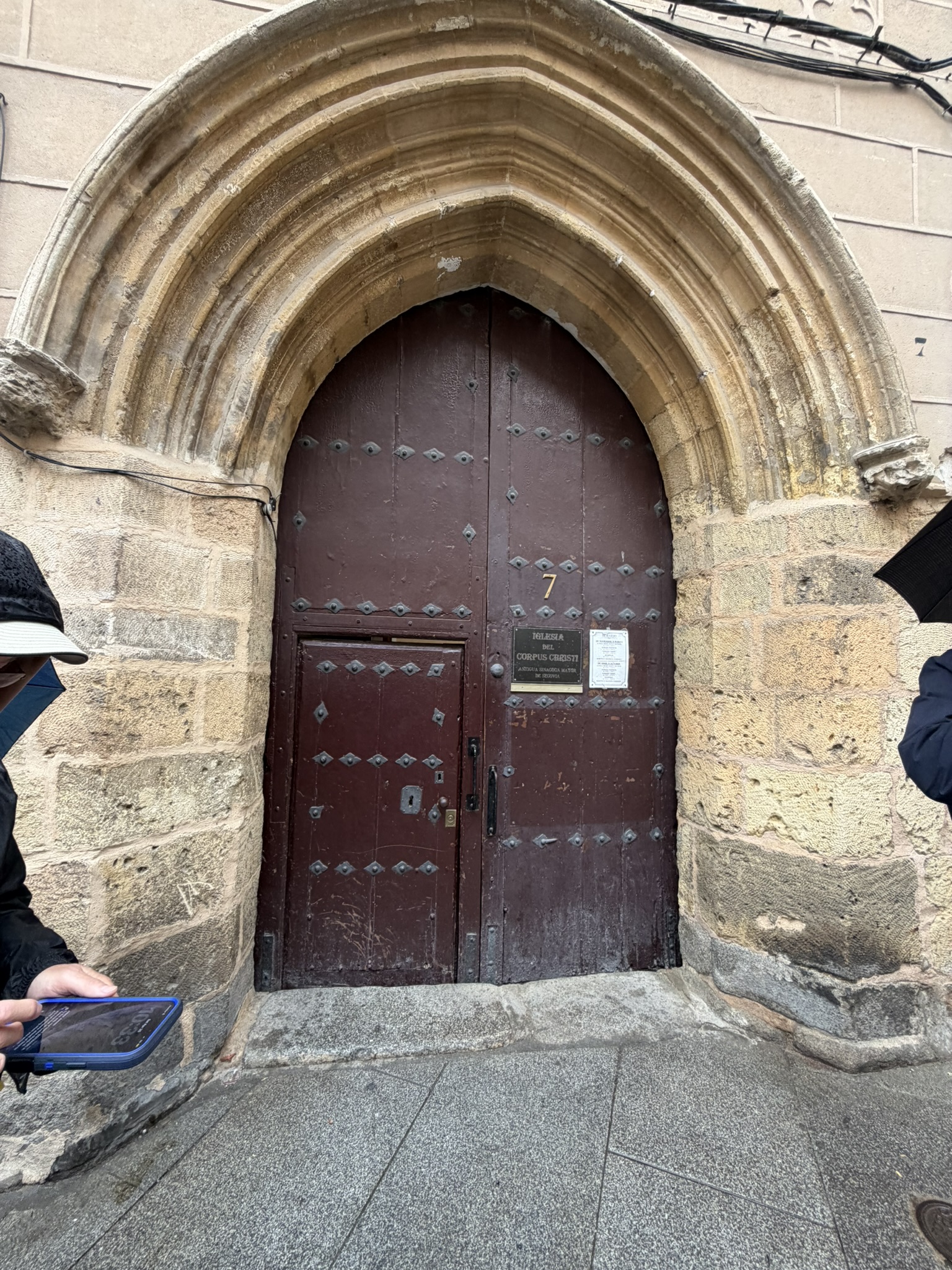
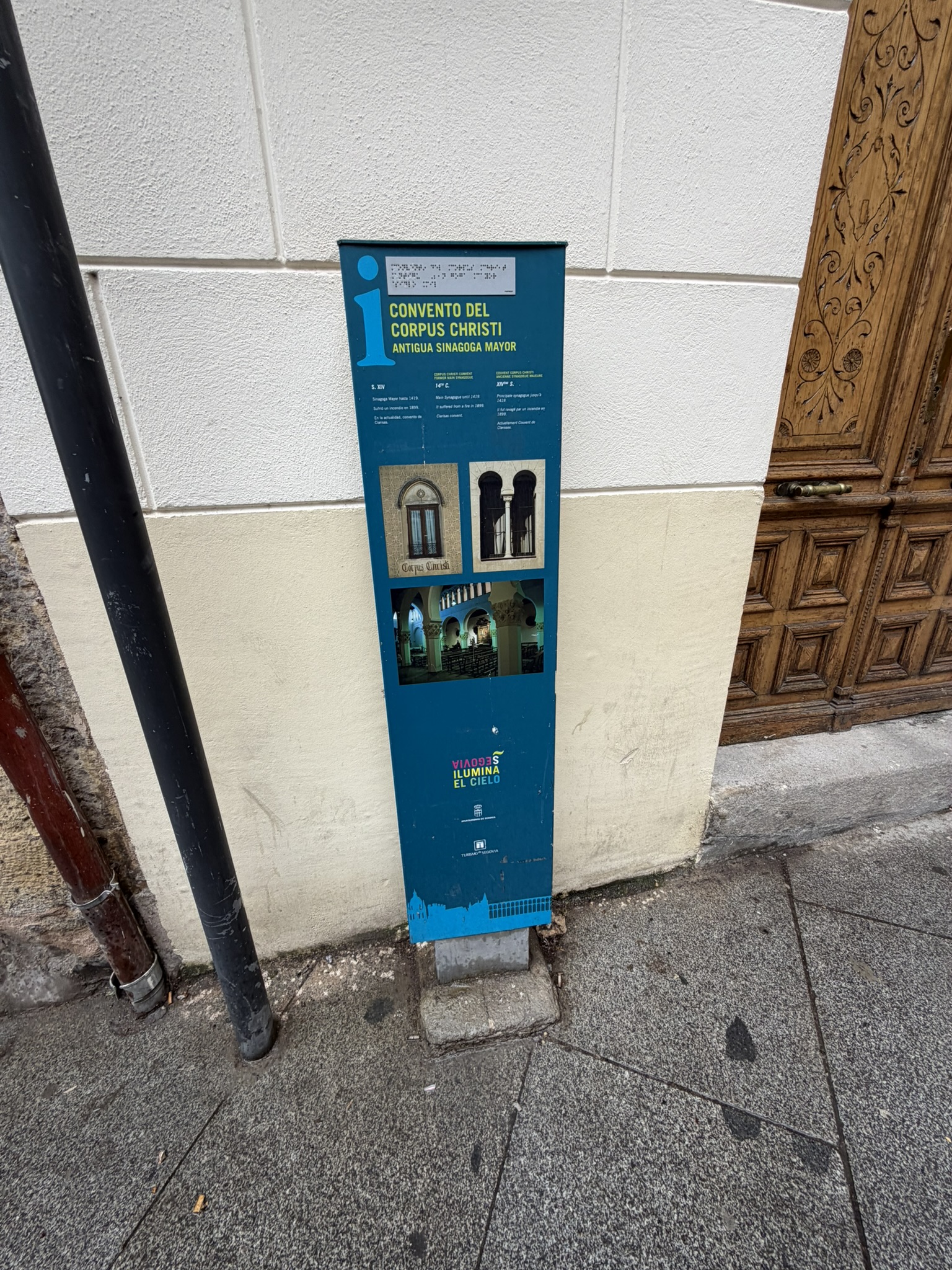
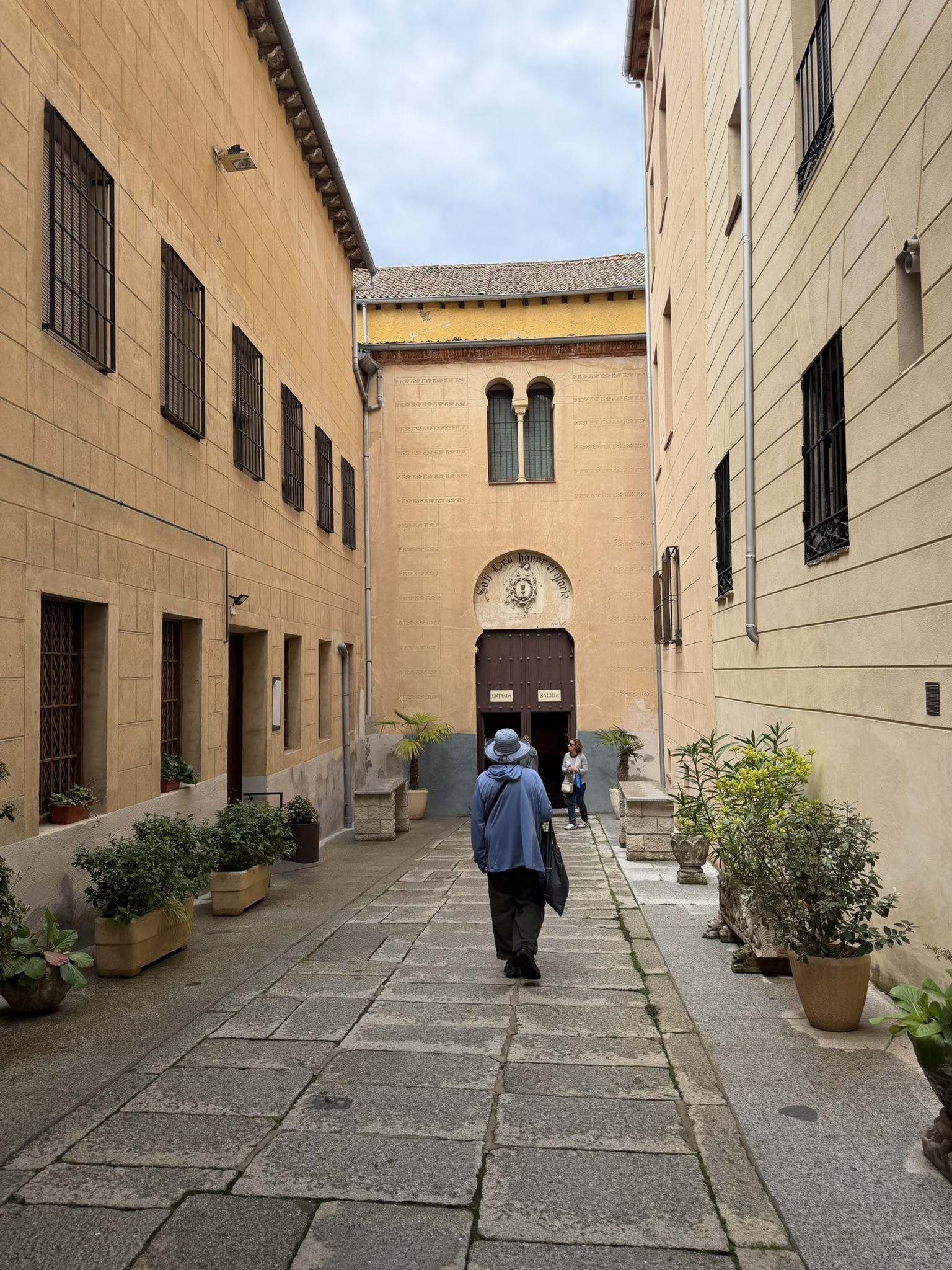
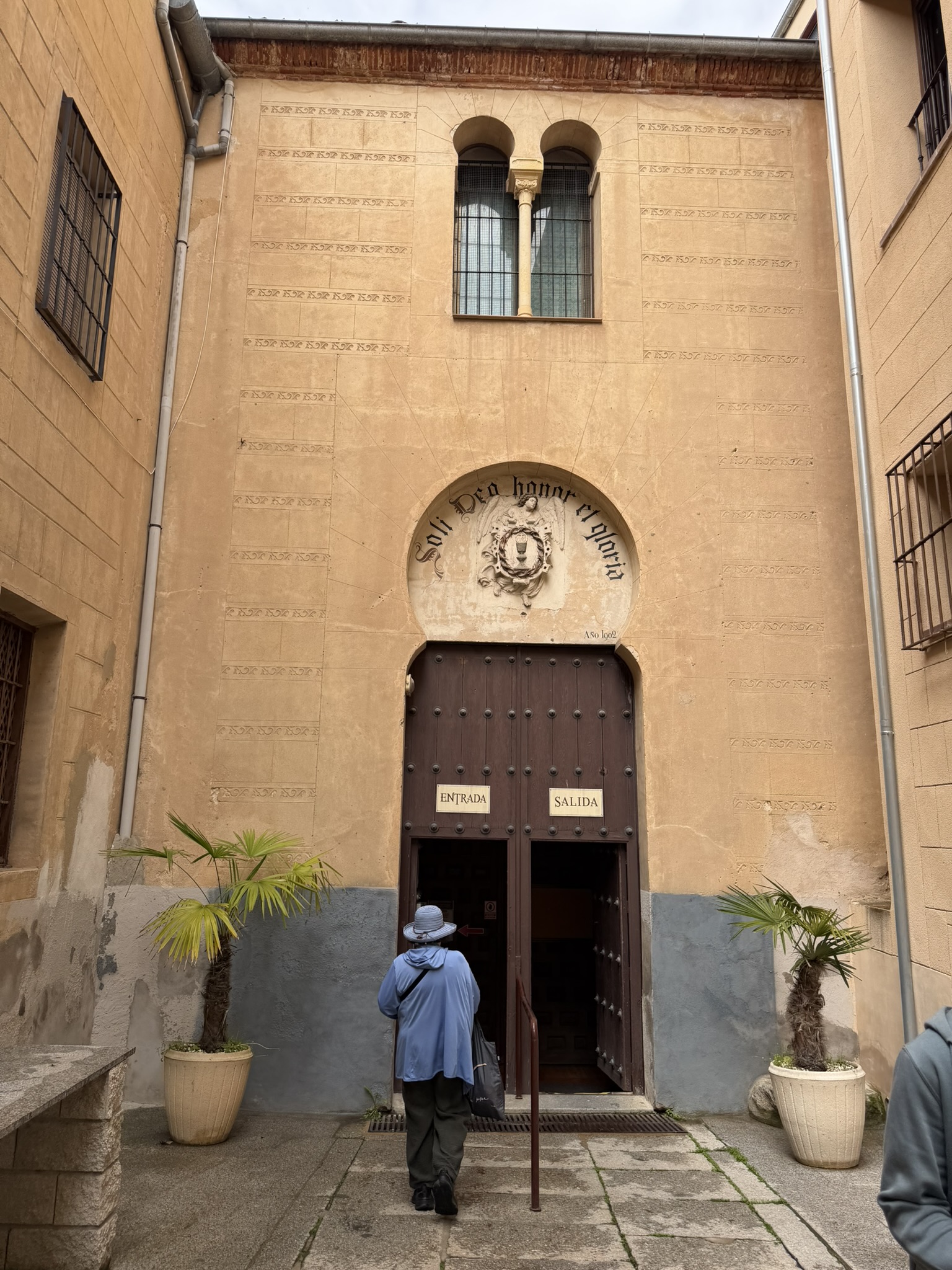
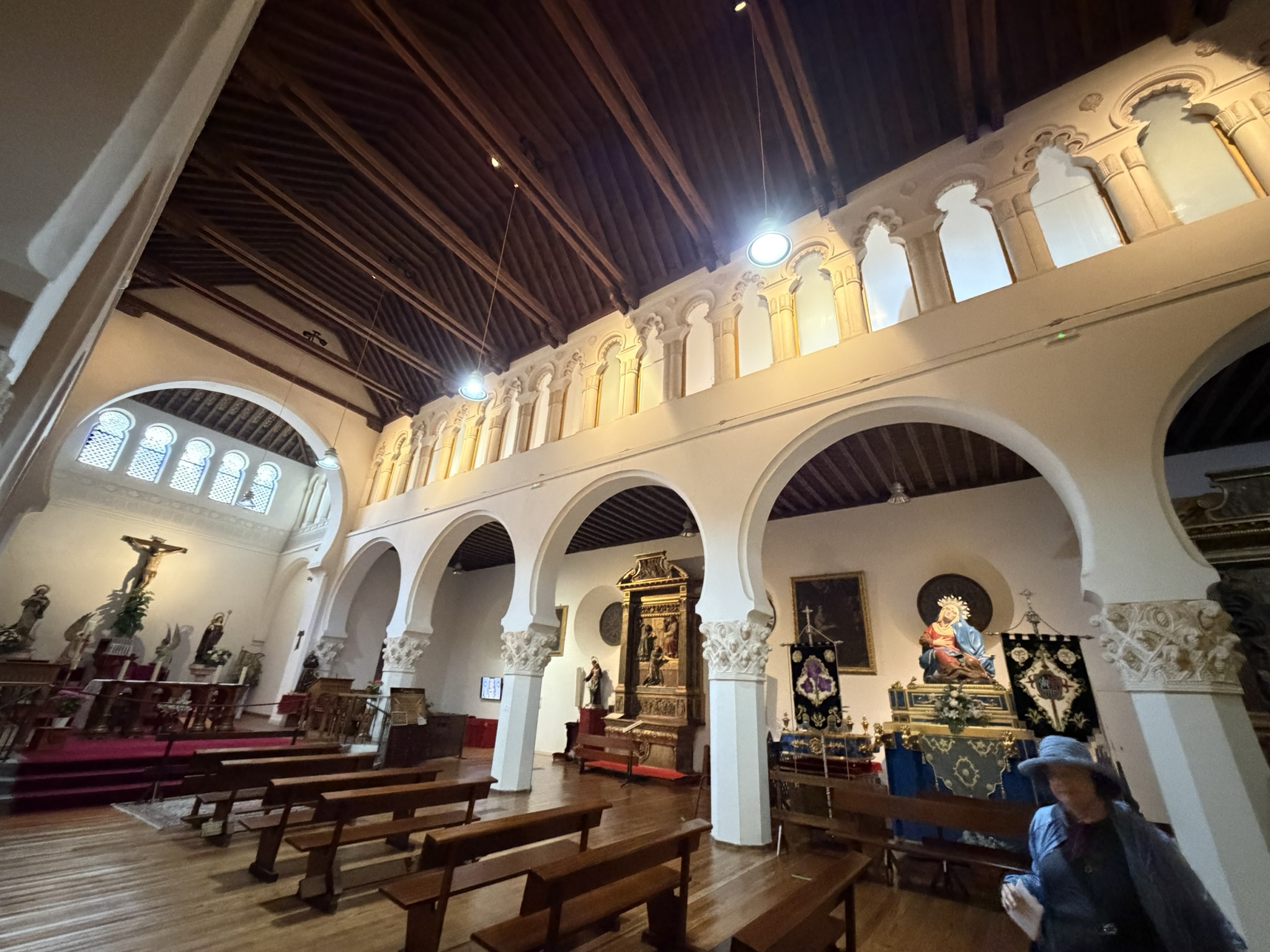
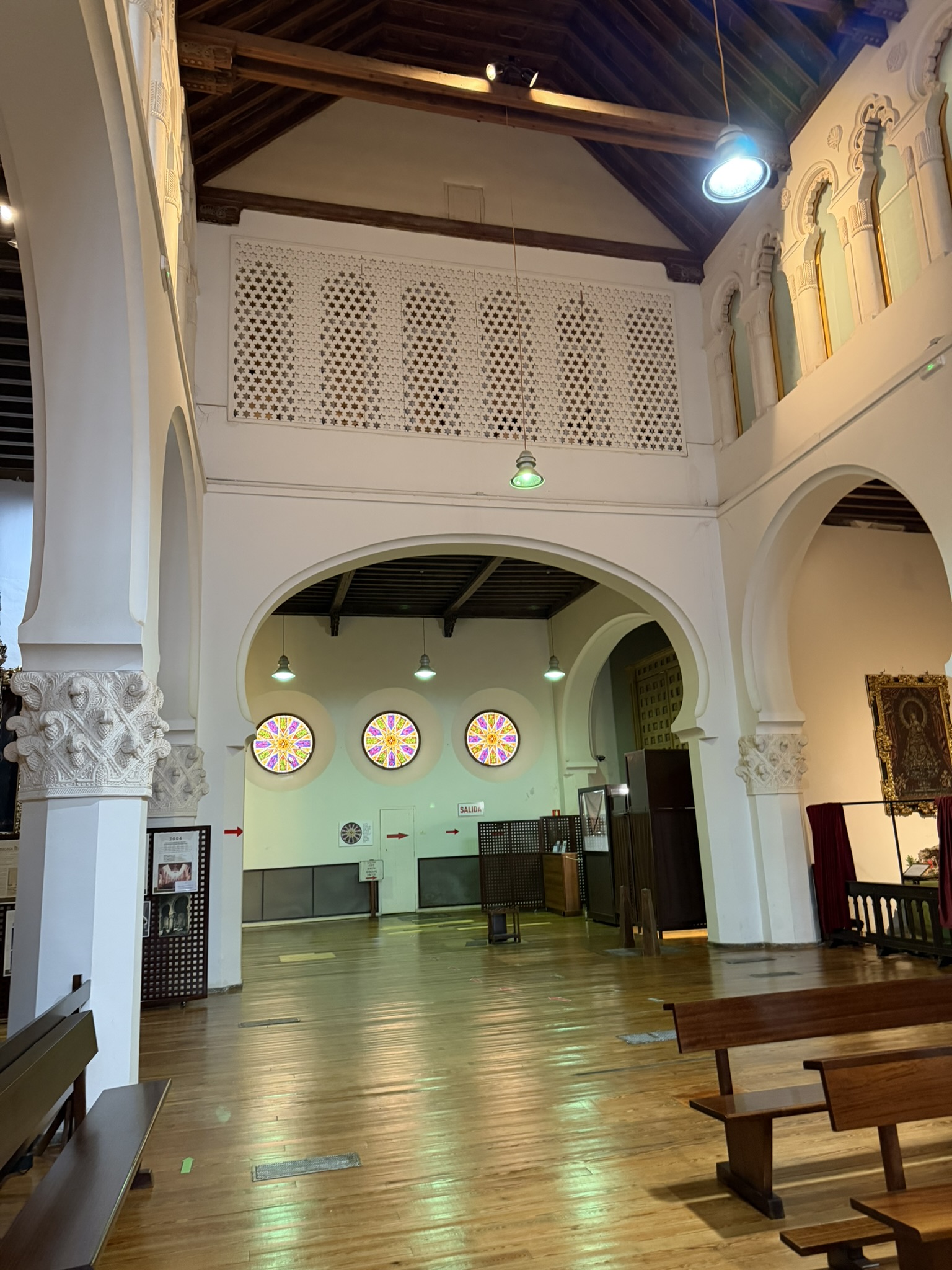
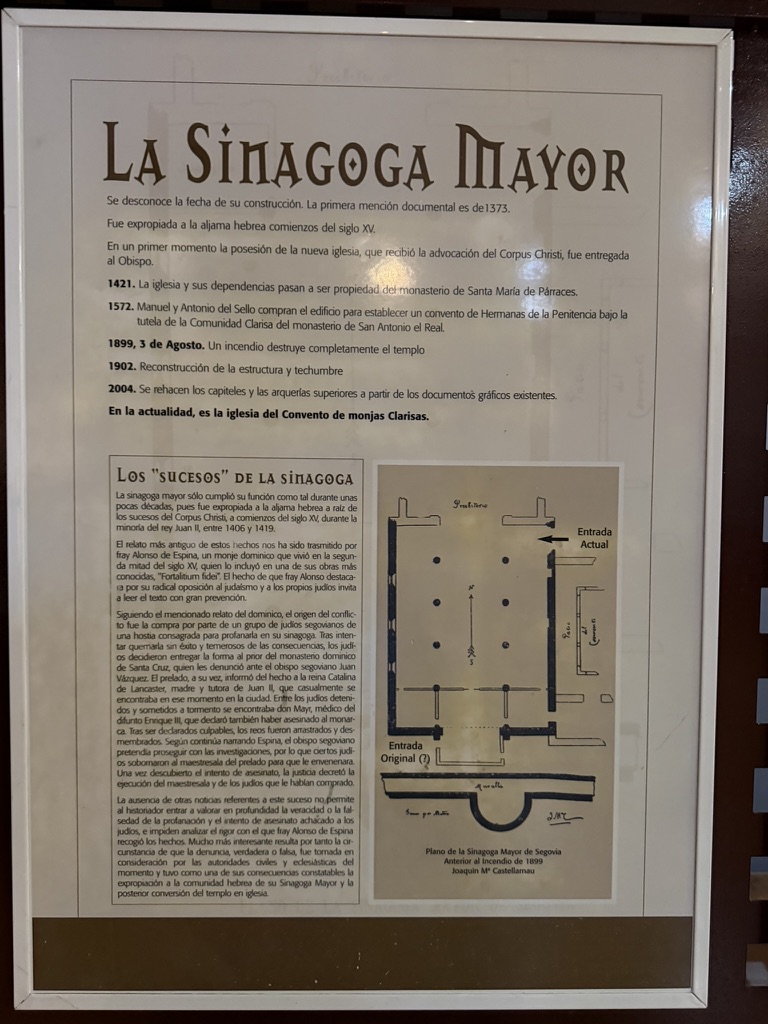
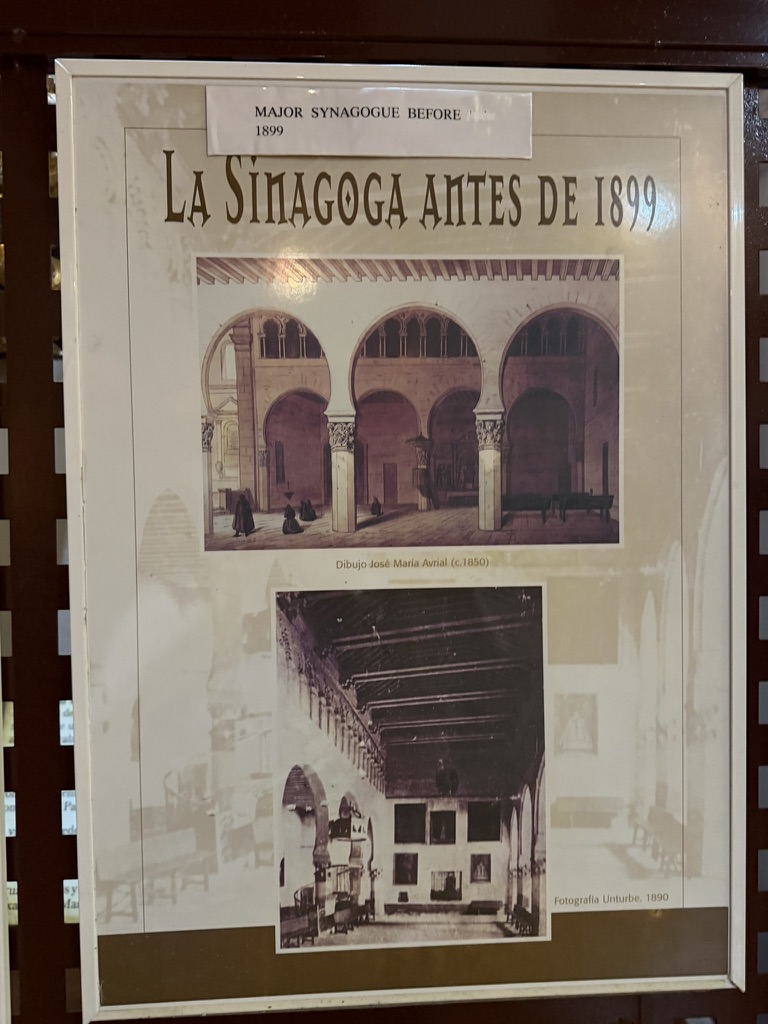
Finally Segovia, where we visited the only surviving synagogue in all the towns we visited. Once a synagogue, now a church, this synagogue used to be one of five that served the large Jewish community of Segovia, where about a third of the town was Jewish. It was the MAIN Synagogue, La Sinagoga Mayor, located in the center of the Jewish area.

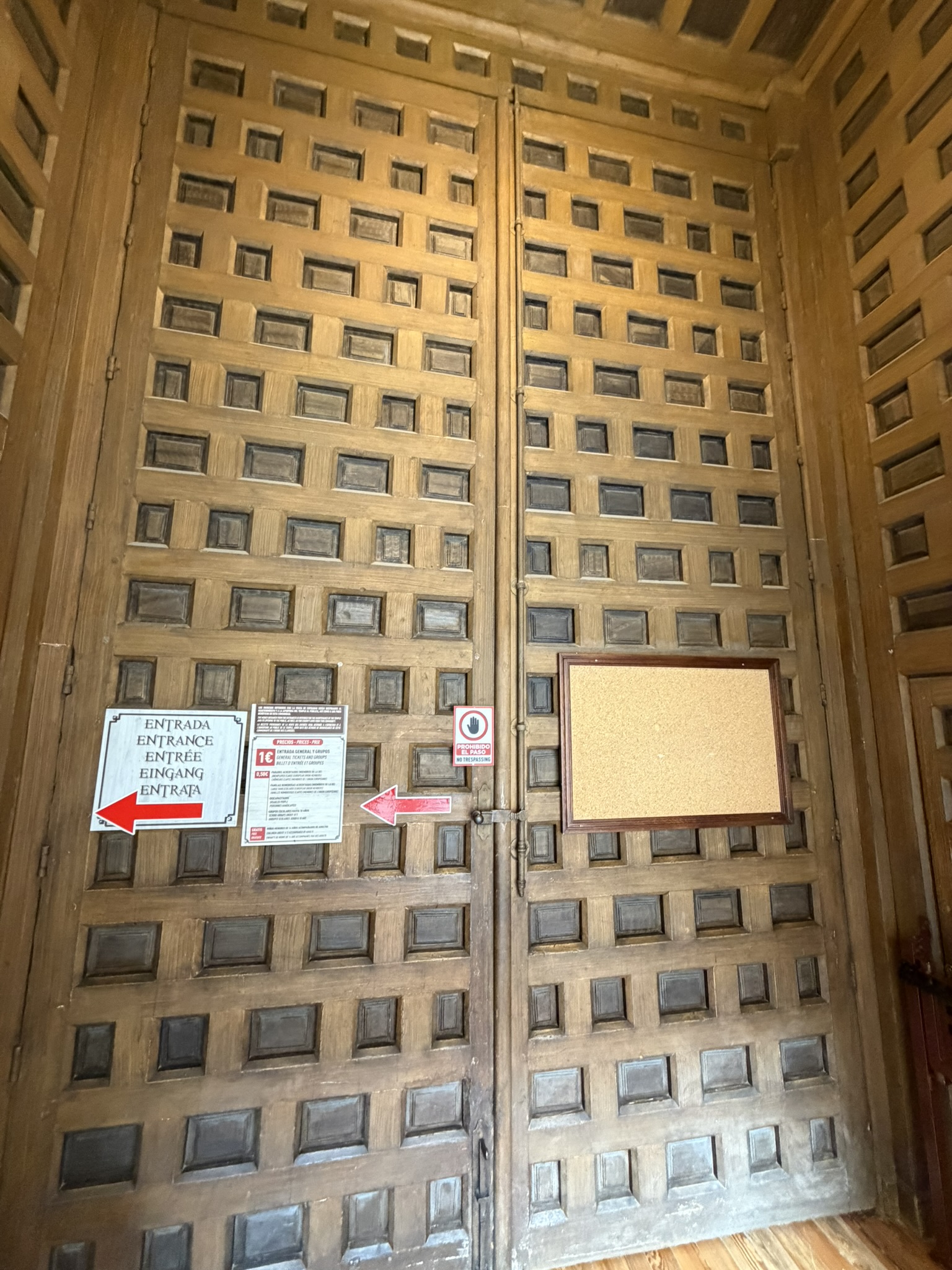
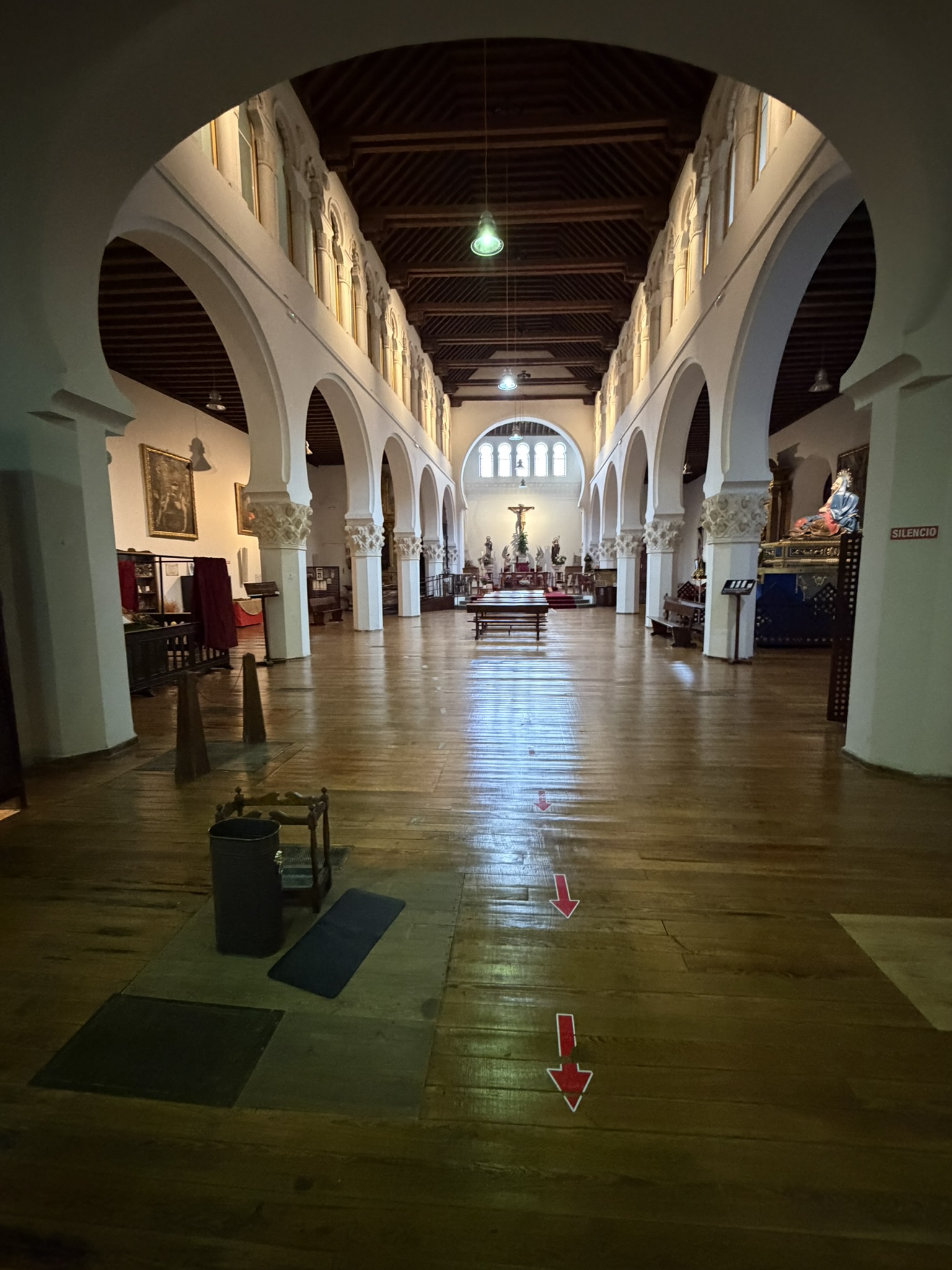
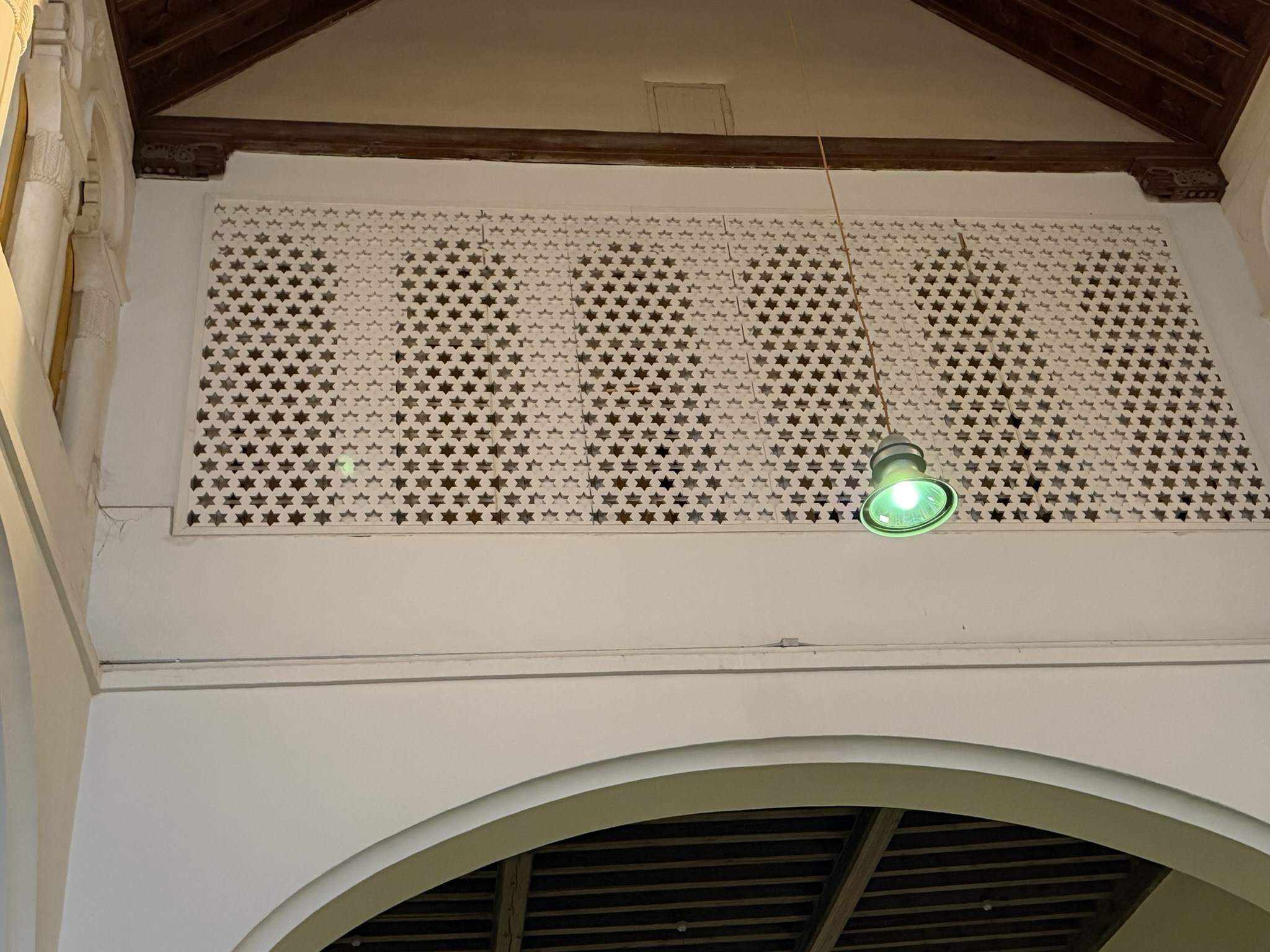
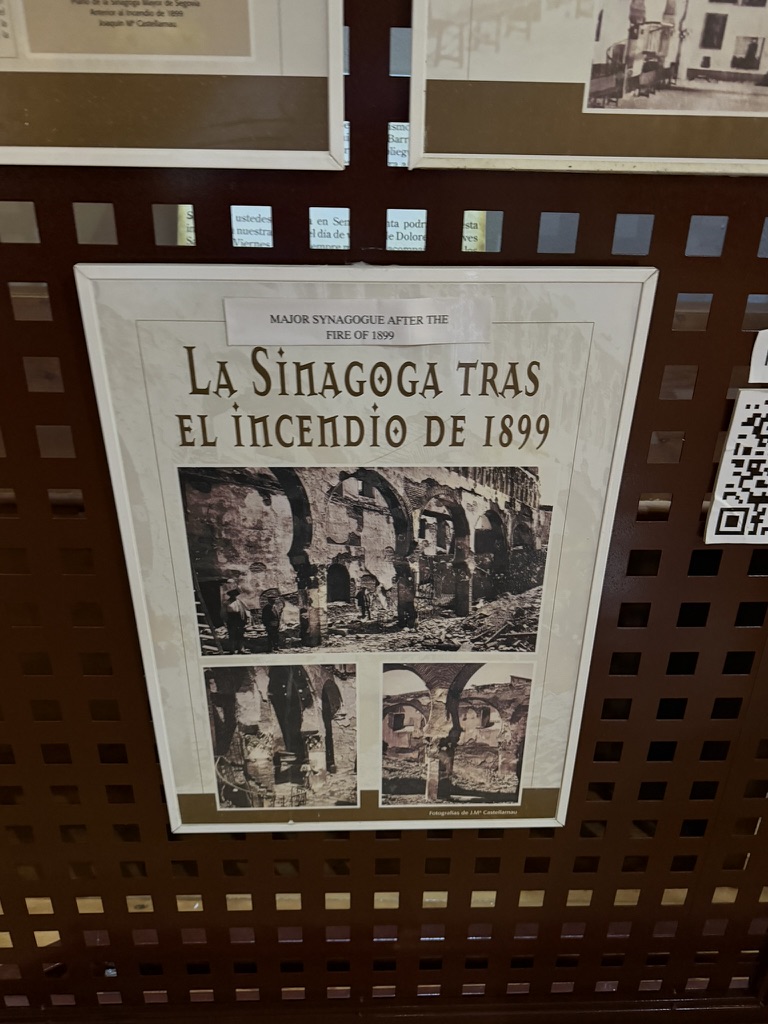
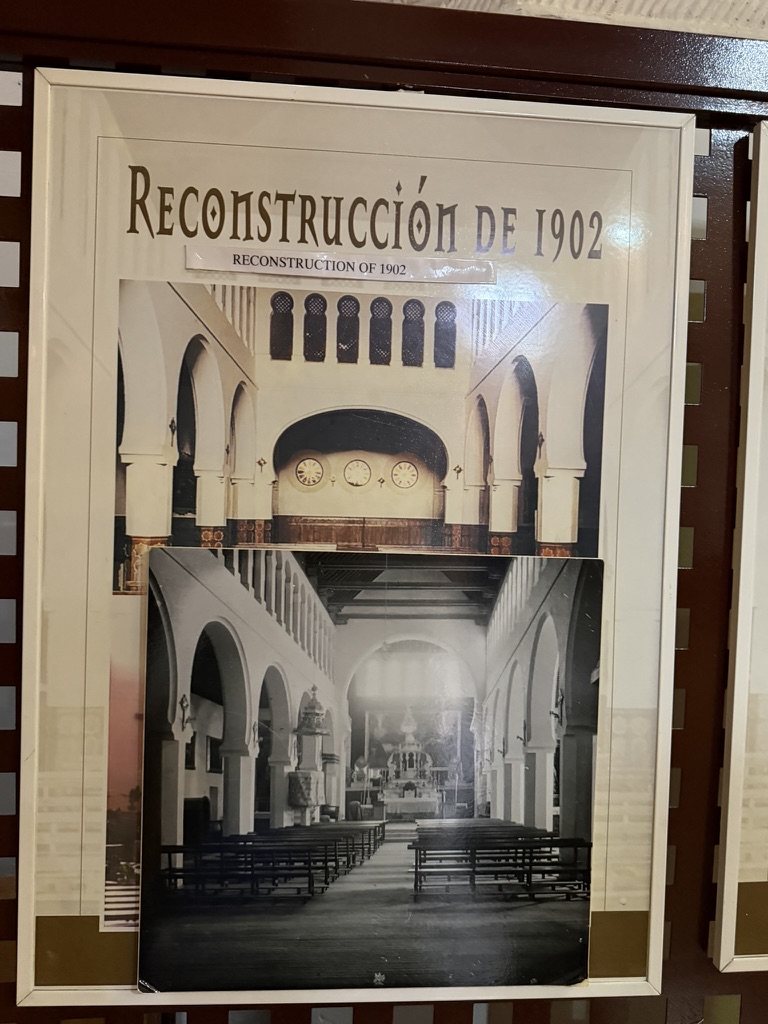
When you first look at it, it seems to be a small building.  I wondered how it could be the MAIN synagogue. But it is a false front.  When it was opened later in the day, my sister and I entered the courtyard and explored the building.  There are still indications of its use as a synagogue.  It is an open room where the bima would have been in the center. And there is a women’s balcony above, with screens so that the men could not see them, but they could see what was happening below. It remained a synagogue until 1419.  In 1899 the Synagogue/Church was damaged by a fire.  It was restored in 1902 and remains open today.

The visit to this synagogue was a highlight for my Jewish journey. We are descendants of Iberian Jews who left Spain for Portugal, then left Portugal for Amsterdam, then made the mistake of leaving Amsterdam for Galicia in Austria.  But then even in Amsterdam the Jews were slaughtered by the Nazis.

The one final sign of Jewish life in Spain startled me.  Although Portugal had a Jewish community before WW2. In fact, Jewish people started returning to Portugal in the 1800s.  But Spain was a different story.  It wasn’t until 1869 that the new Spanish Constitution allowed Jewish people to settle in Spain. But there were not many.  However, it is believed that about 15,000 Jews survived by escaping to Spain.

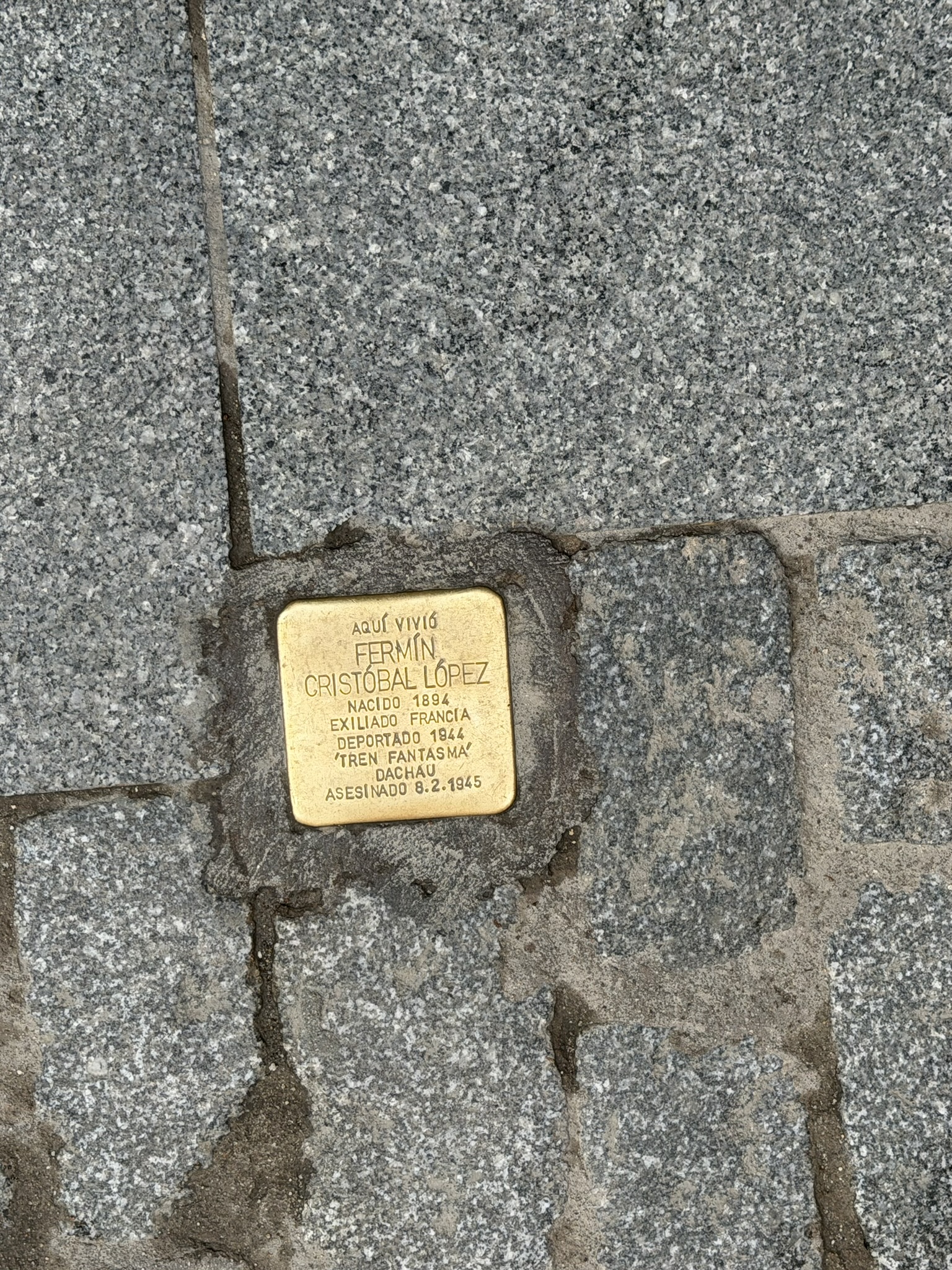
But the “Stolperstein,” stumble stone, I found tells a different story.  Fermin Cristobal Lopez died in Dachau. Born in 1894, he was exiled from France, and Deported from Sergovia on the Ghost Train in 1944.  I do not know if Fermin was a Jew or a political prisoner.  But I do know he died in Dachau.

In these times of Jew hatred, for me it is important to know where we once lived and how we were forced to find new homes and new places for sanctuary.  In Spain it was very obvious that the status of Jews is precarious.  In every city in Spain we visited, except Sergovia, there were giant banners calling supporting the Palestinians.  But nothing to recognize what the Israelis and Jews have suffered.

I asked our tour guide if she felt the Jewish people of Spain were safe.   She differentiated between Israelis and Jews.  Saying the government and people were angry at the Israeli government. But she believed Jewish people in Spain were safe. I guess we shall see.

In Portugal it was different. No Palestinian Flags.  No feelings of queasiness as I walked down the streets.  For me, as a Jewish person,  I will not soon return to visit Spain.

Drinking My Way Through Portugal and Spain: The Beautiful Gardens

30 Apr

When my husband and I booked our latest Road Scholar trip, “Beyond the Vineyards, Sampling Northern Portugal and Spain,” he started telling people that he was going to drink his way through Portugal and Spain.  And he did.

Our tour included visits to six wineries as well as seven or more UNESCO world heritage sites.  We learned more about Port, Sweet Vermouth, red wines and white wines, than I anticipated.  And along the way we had to taste all the differences.

At every winery we had a tour of the vineyards, the fermentation areas, and the tasting rooms.  Some of the wineries were located in estates that had been in families for generations.  One winery’s gardens were magnificent. 

In honor of these beautiful gardens, I plan to start off my blogs about our trip to Portugal and Spain focusing on the beautiful gardens we visited in Portugal.

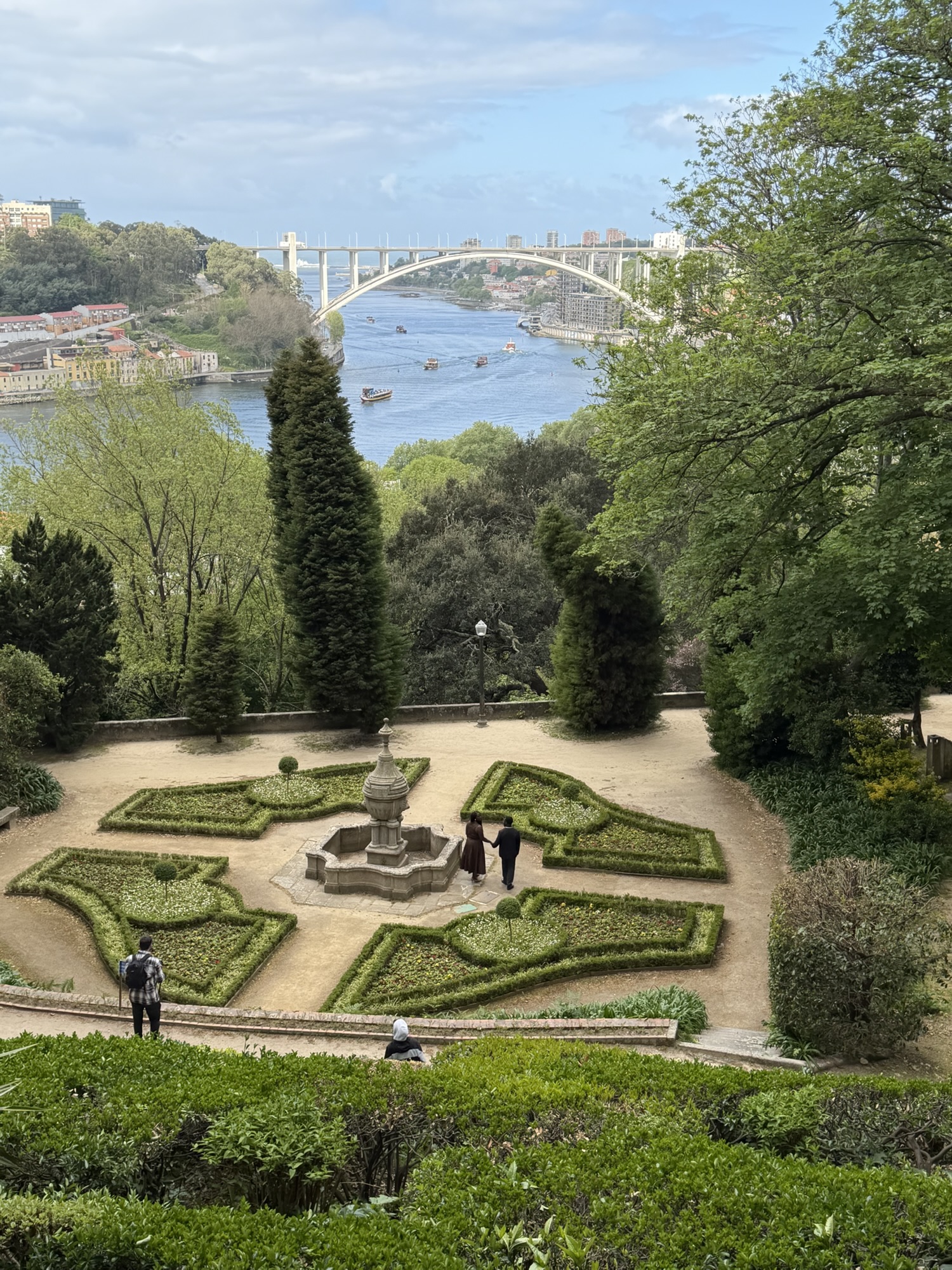
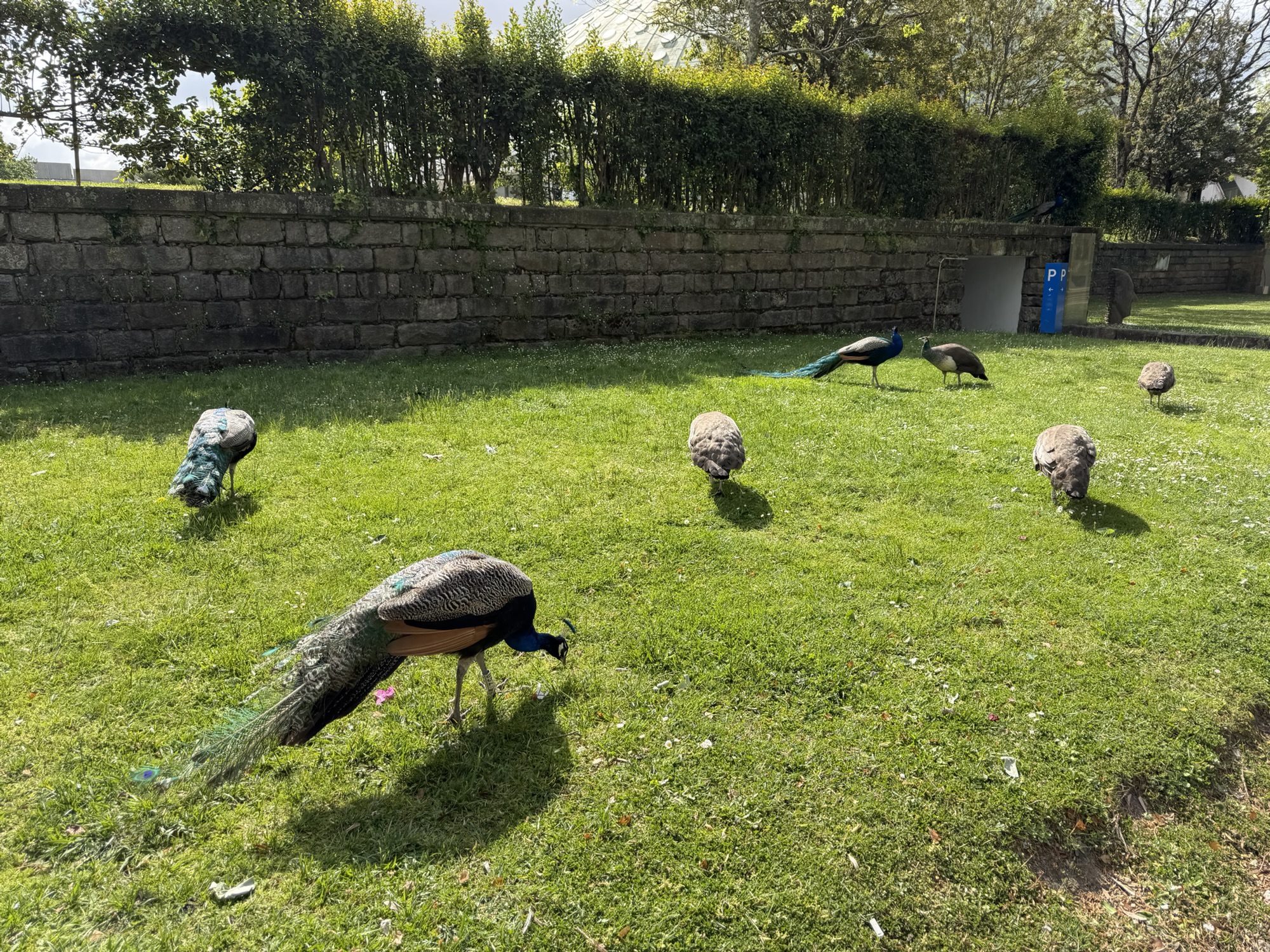
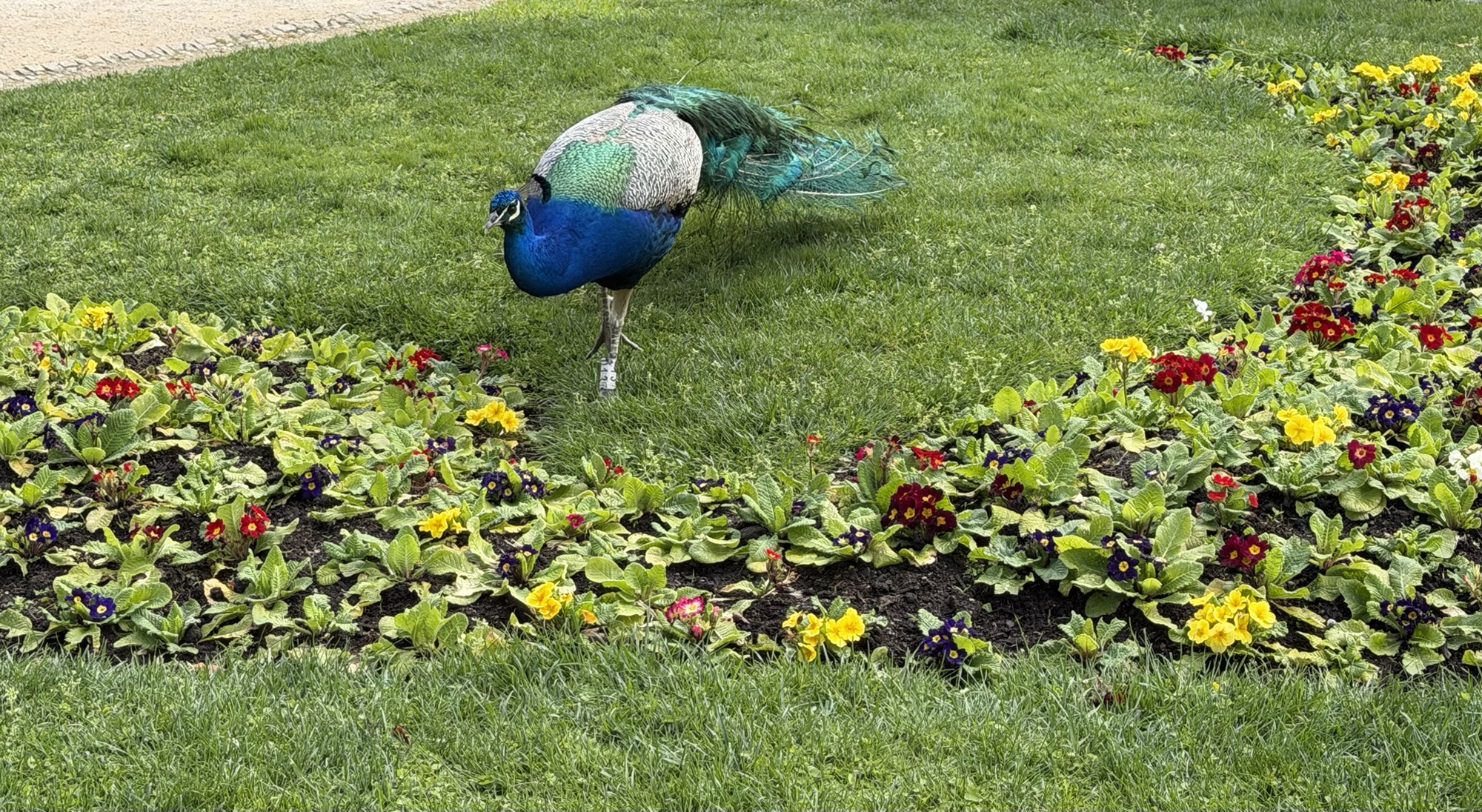
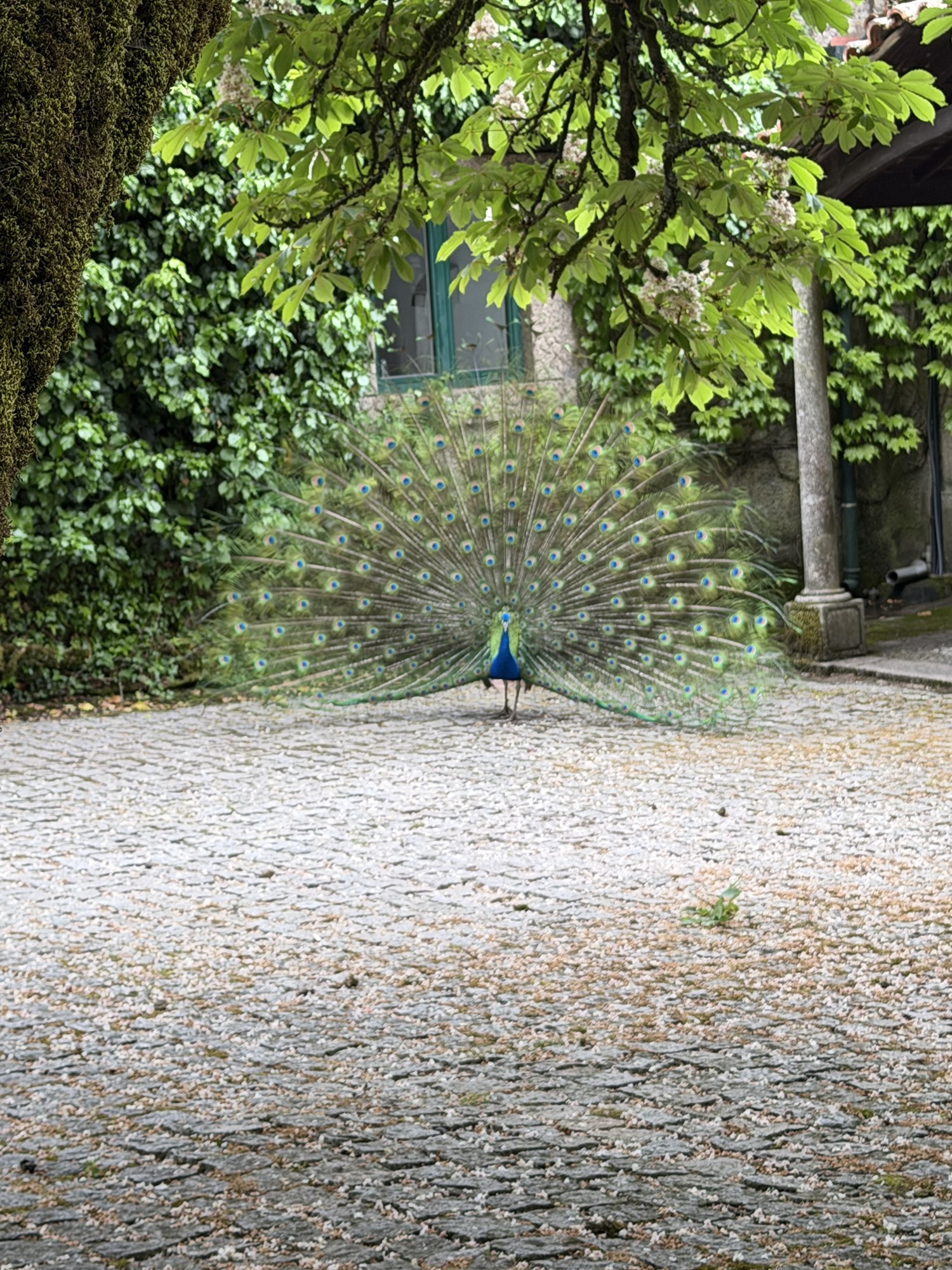
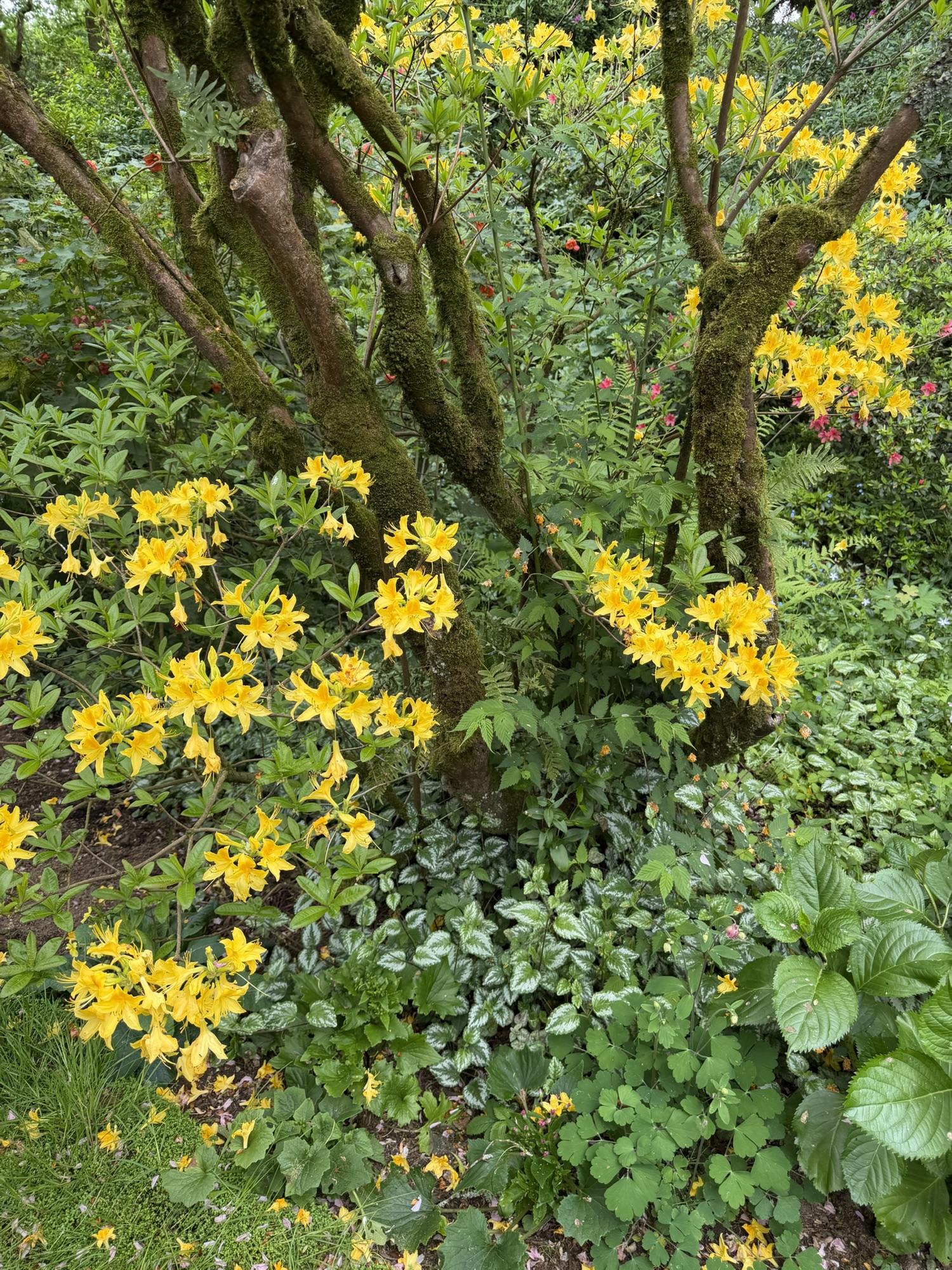
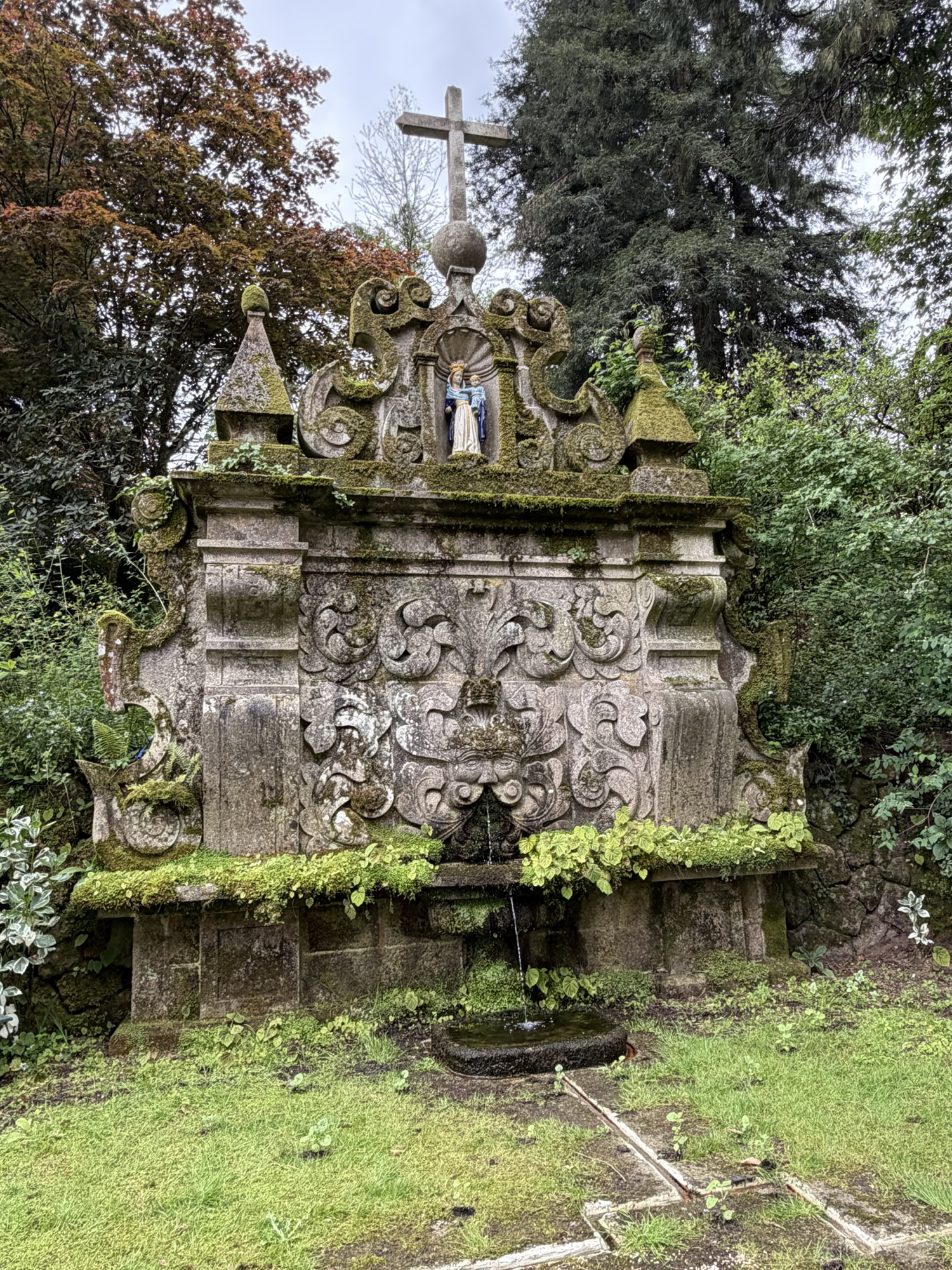
Our first garden was at the site of the original Crystal Palace. Although the Palace no longer exists, the lovely gardens do.  The Galeria Municipal Do Porto Gardens are enchanting not just because of the lovely plants, but also the lovely peacocks and peahens who roam the park.  I have never seen so many in one place before! 

(I have to add here that almost every winery had peacocks.  We asked why, the answer was that peacocks represented wealth.  So having them indicated that the winery and the family were doing well!)

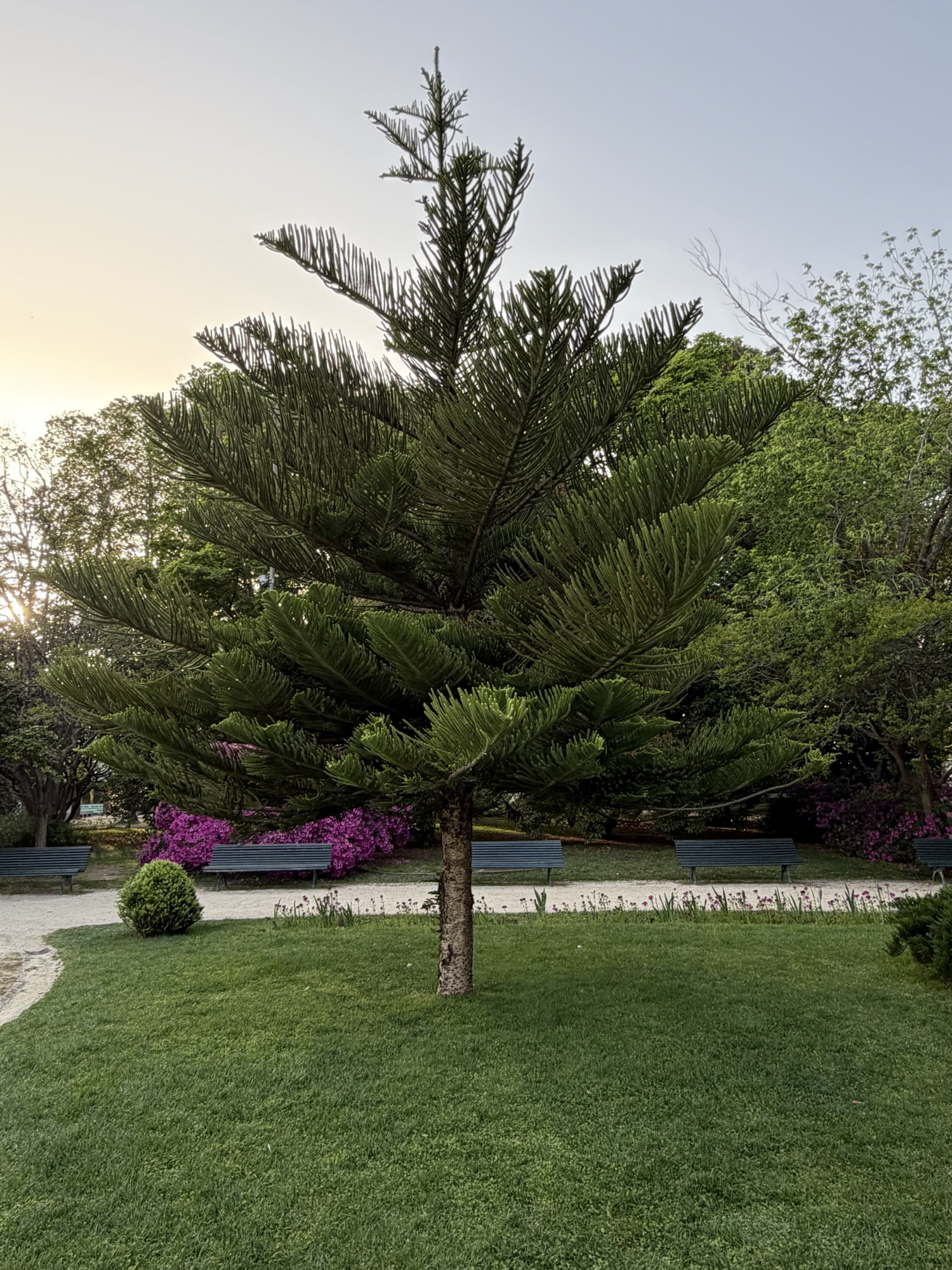
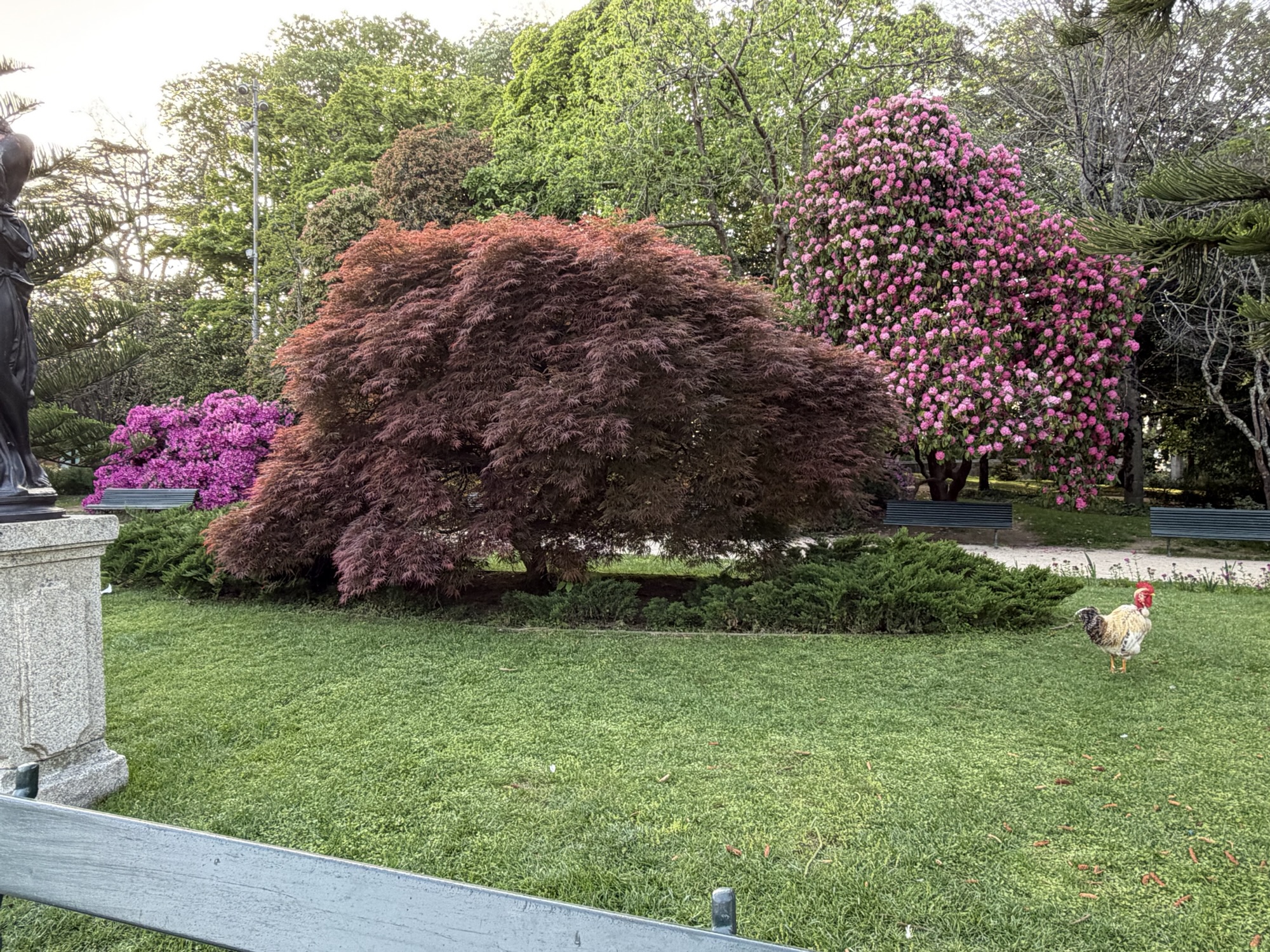
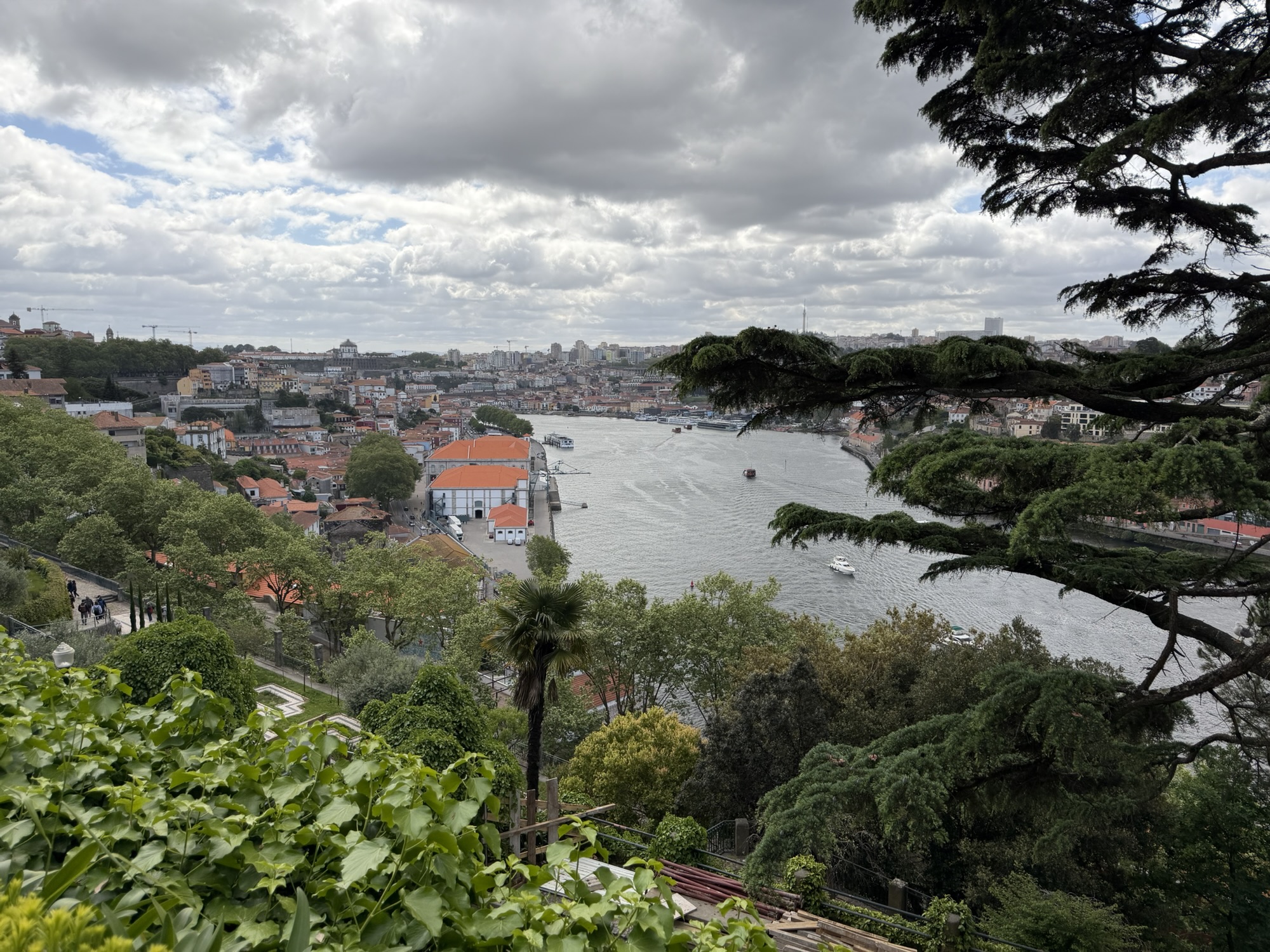
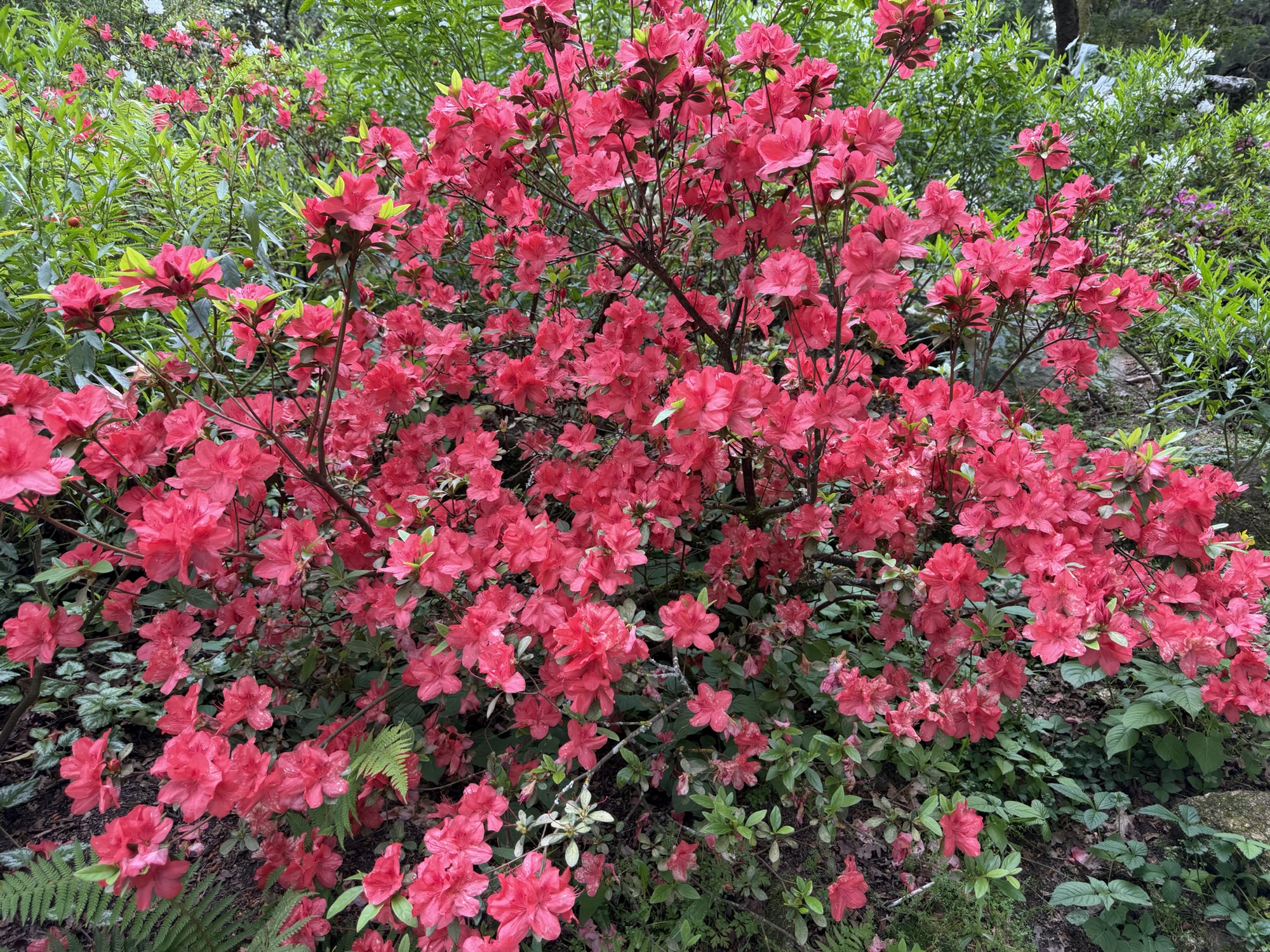
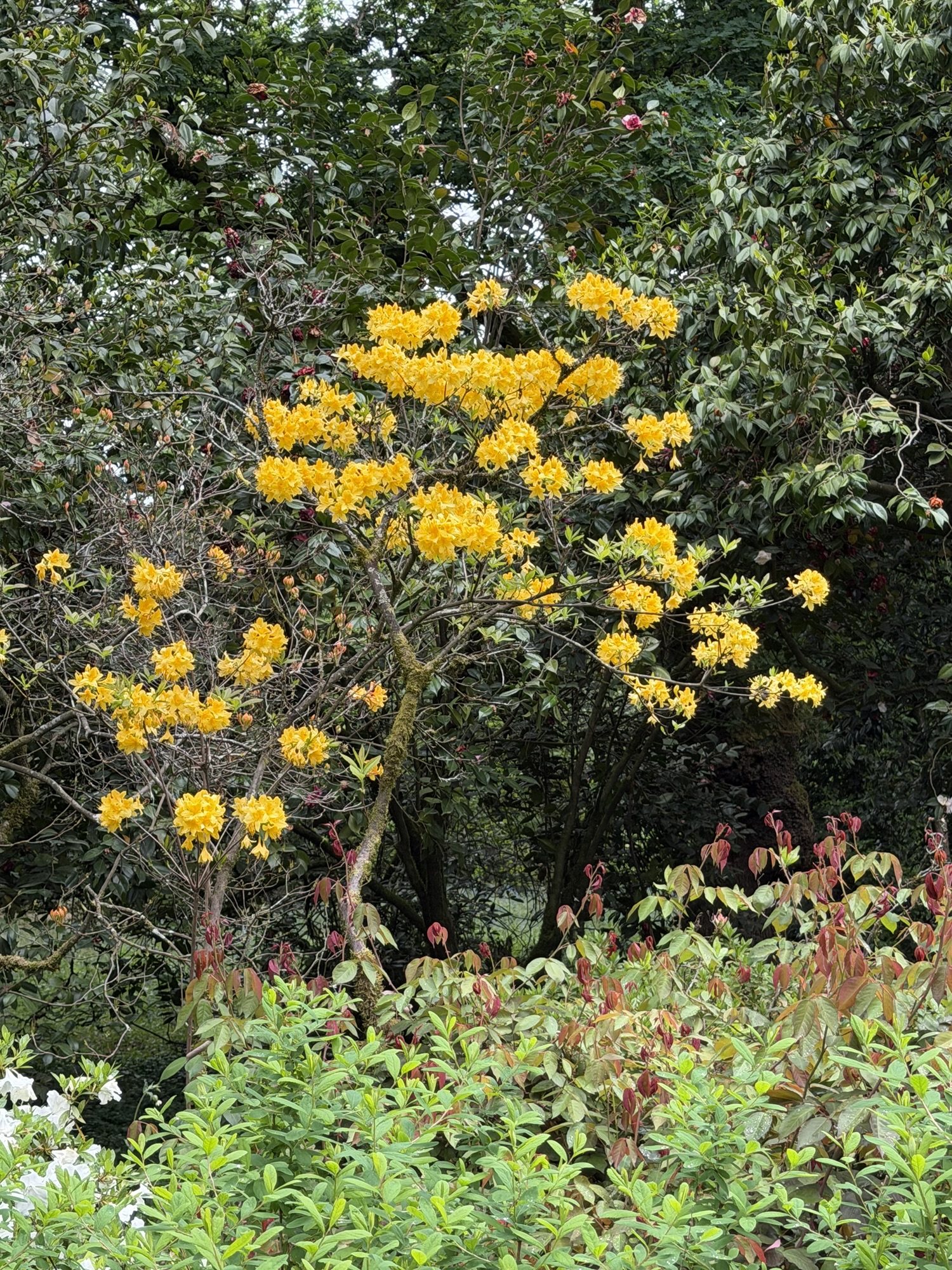
In the Crystal Palace gardens, the  azaleas and camelias were in the best blooms. They were so large and stunning. There were trees from other countries.  Statues along multiple walkways that went to lower levels in the garden. Formal gardens that overlooked the Douro River. The many overlooks gave you a chance to view Porto from a different perspective. 

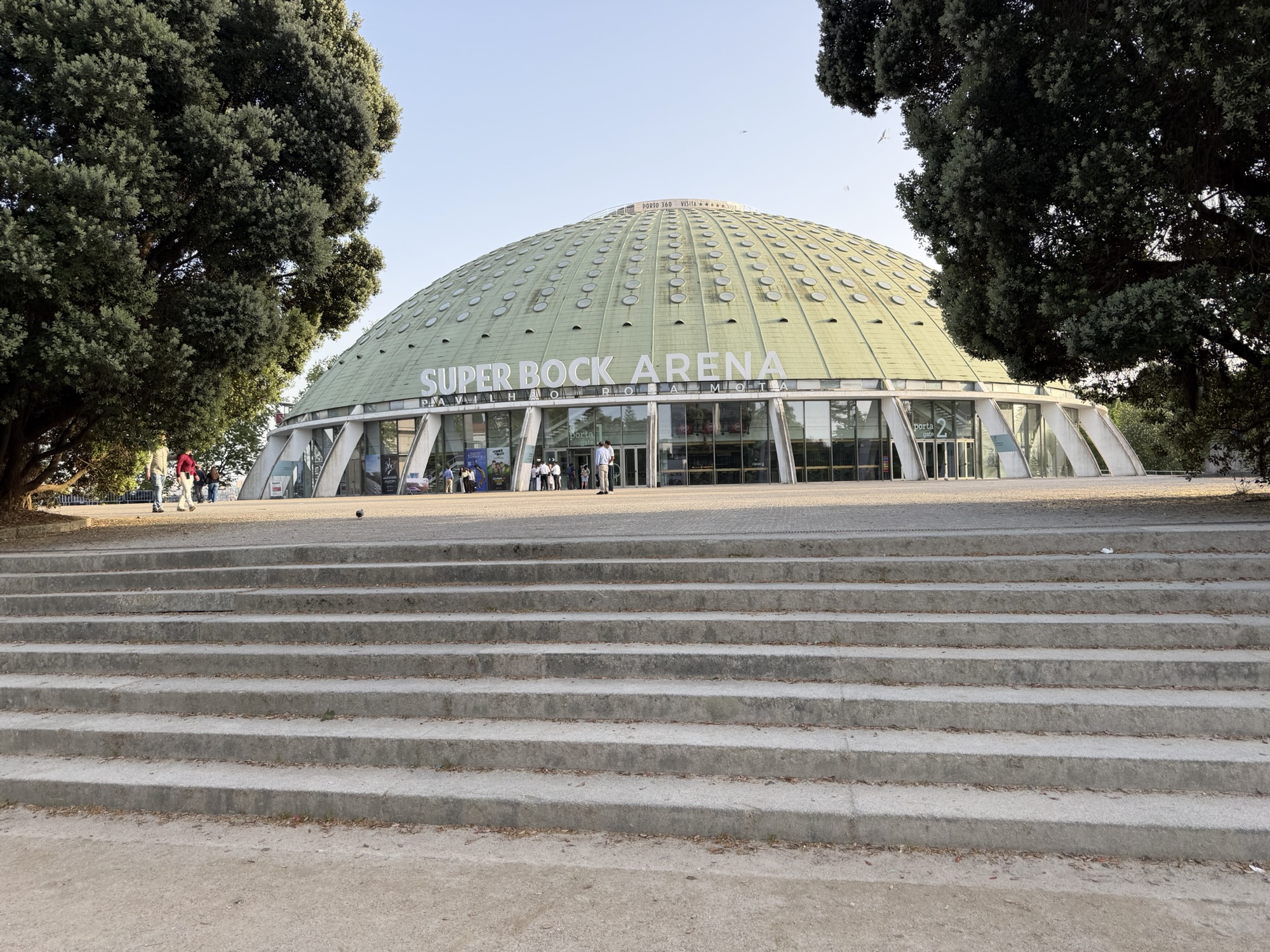
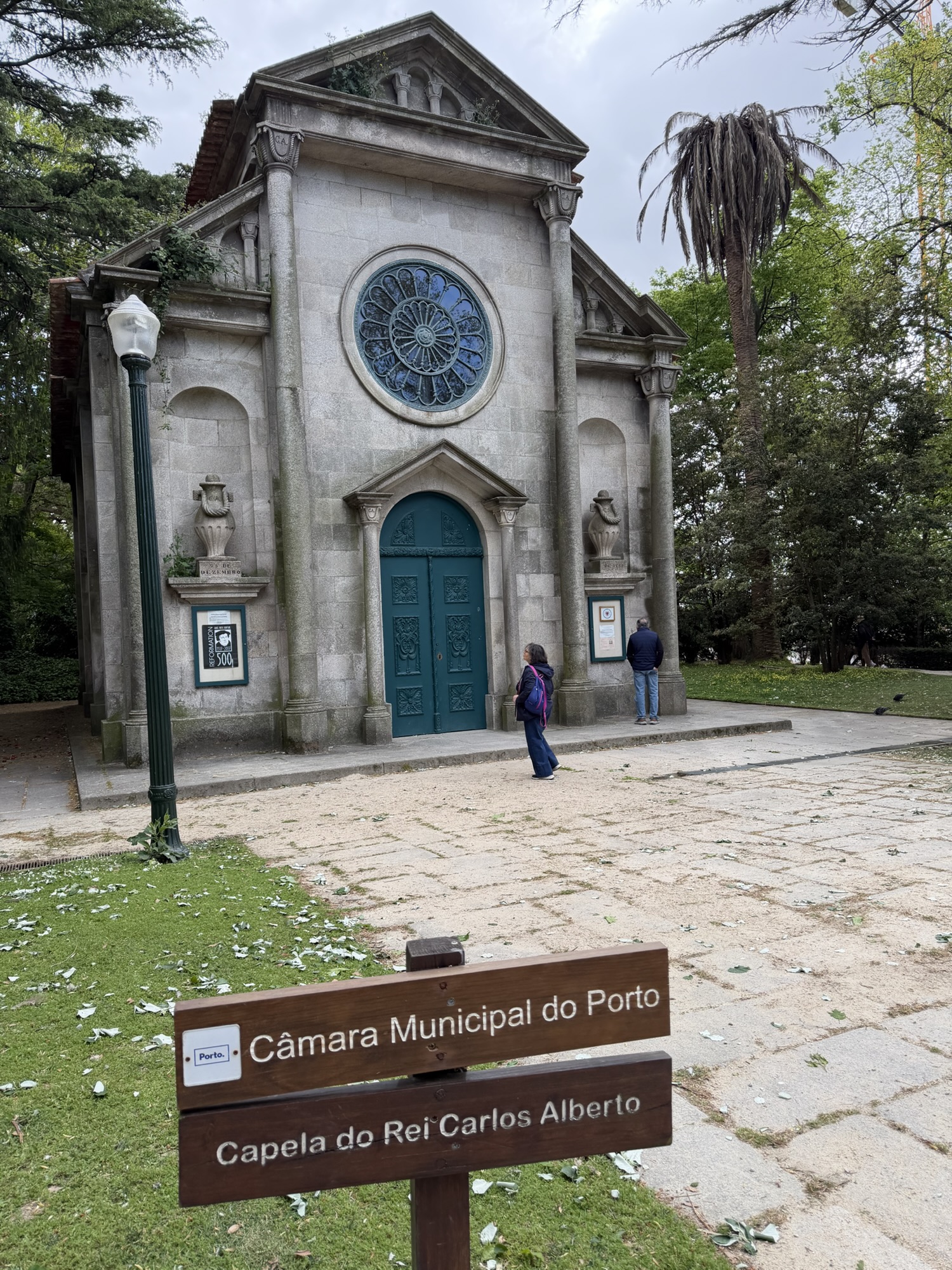
Two buildings are on the site.  The official circular arena for the Porto, which stands where the original Crystal Palace once stood,  as well as the Capela do Rei Carlos Alberto.  A small chapel that is still in use.

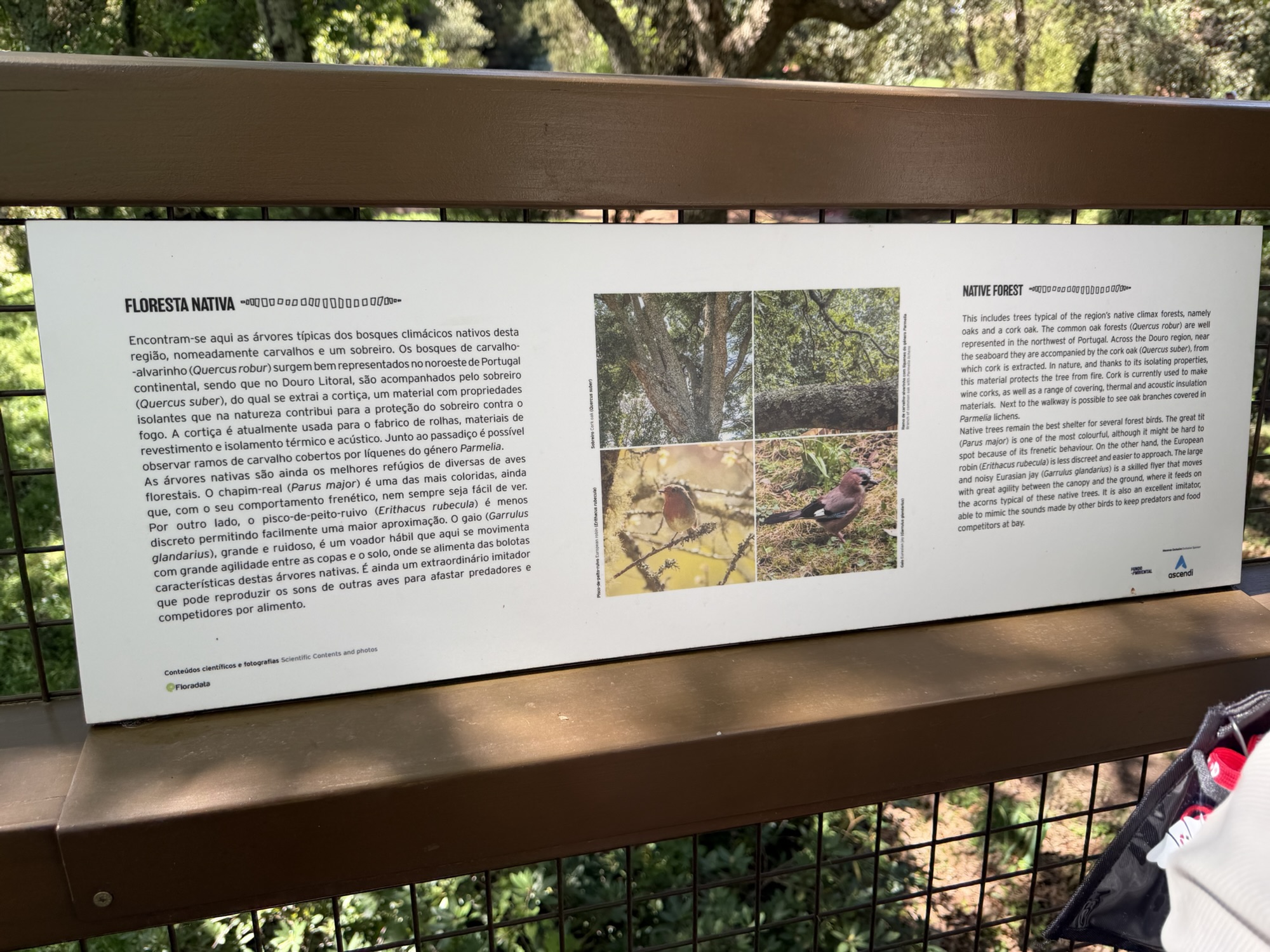
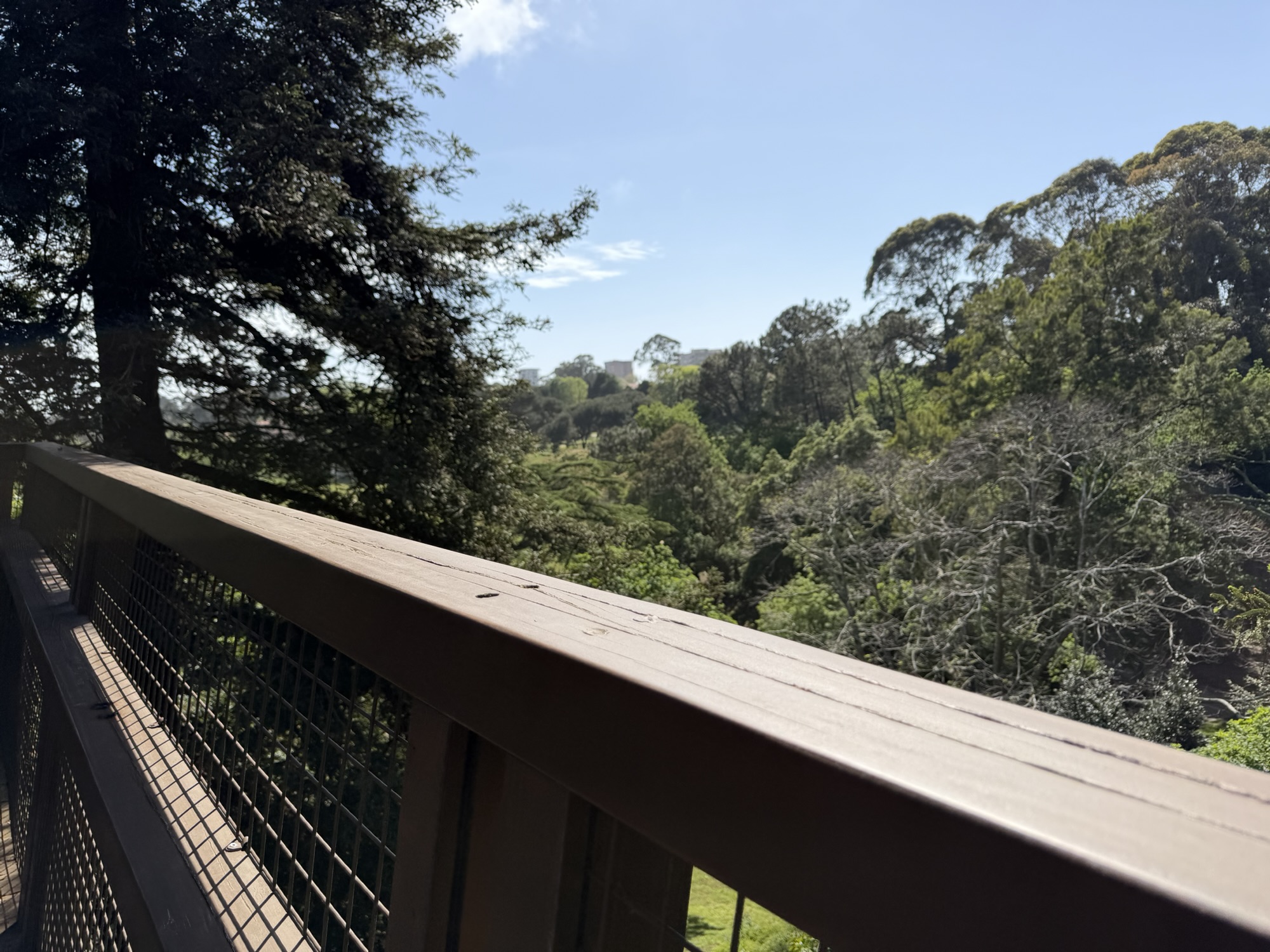
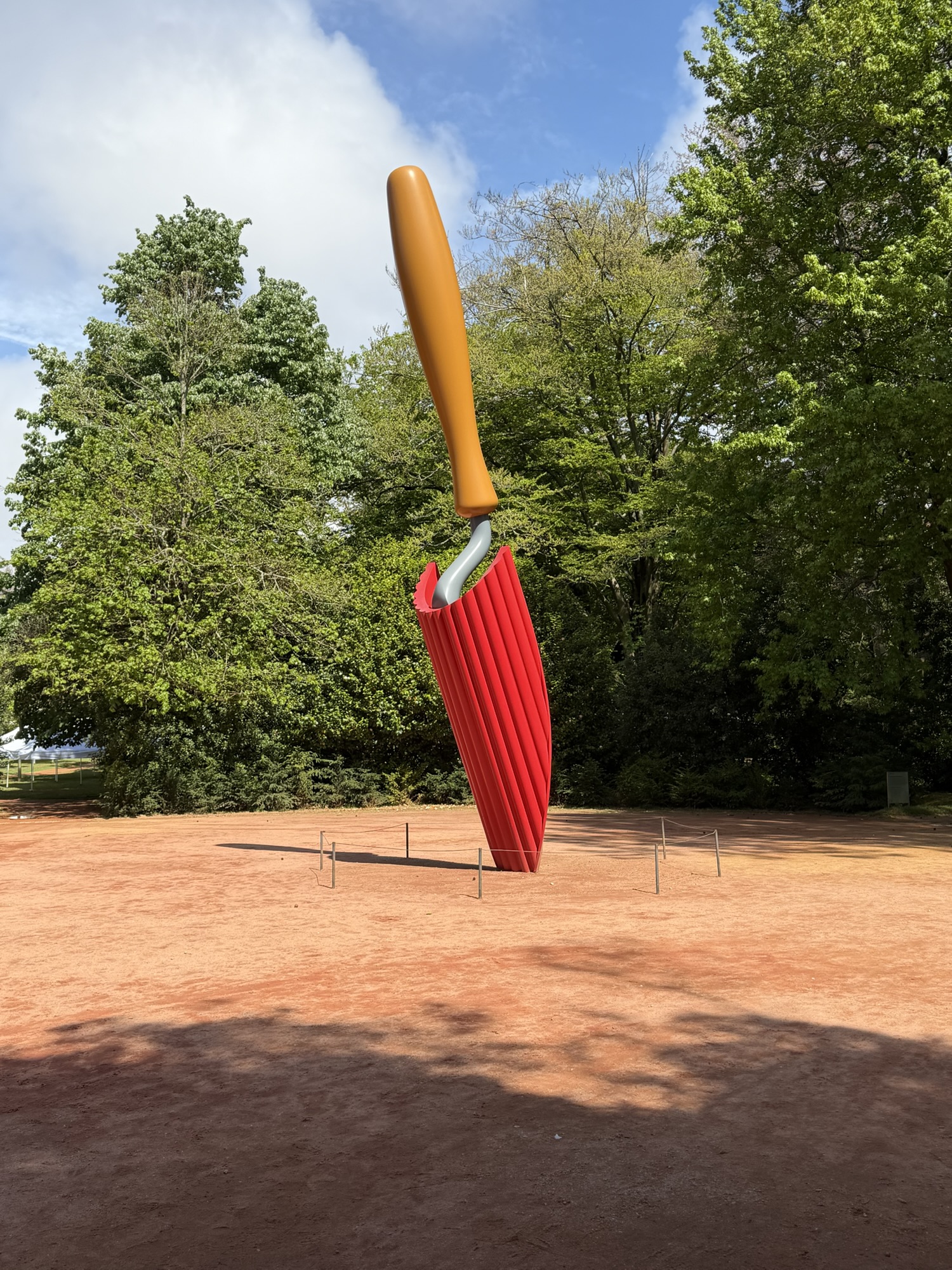
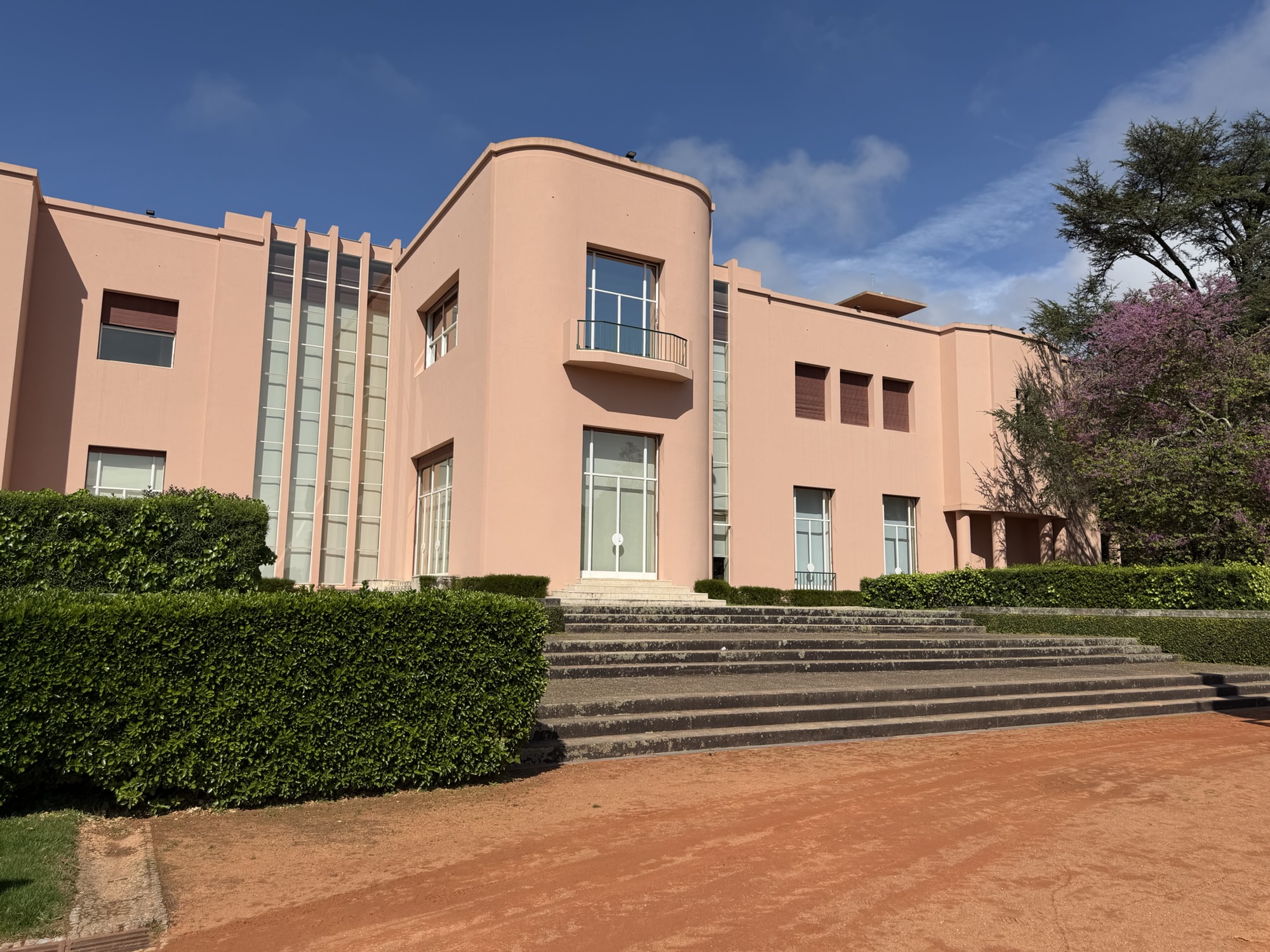
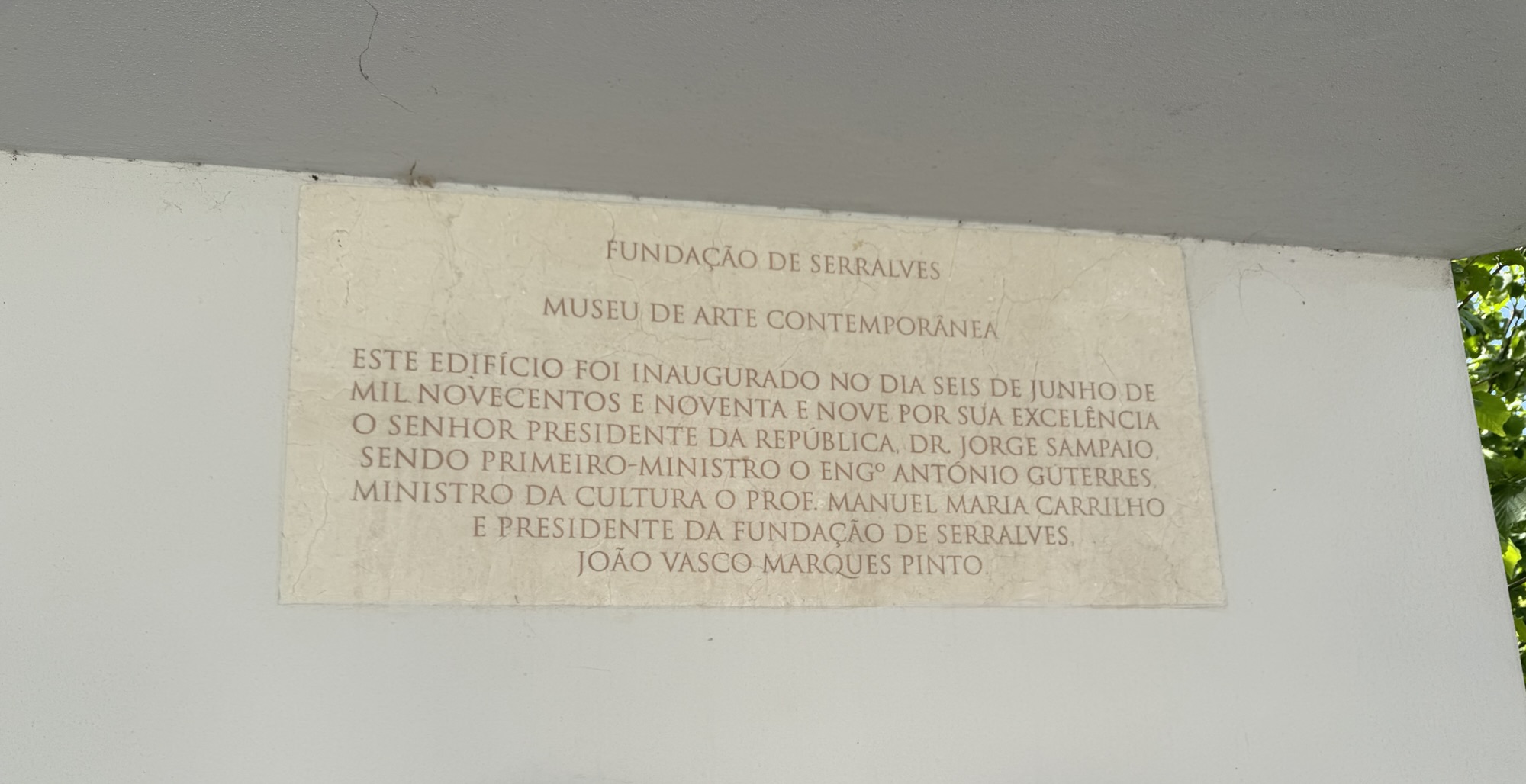
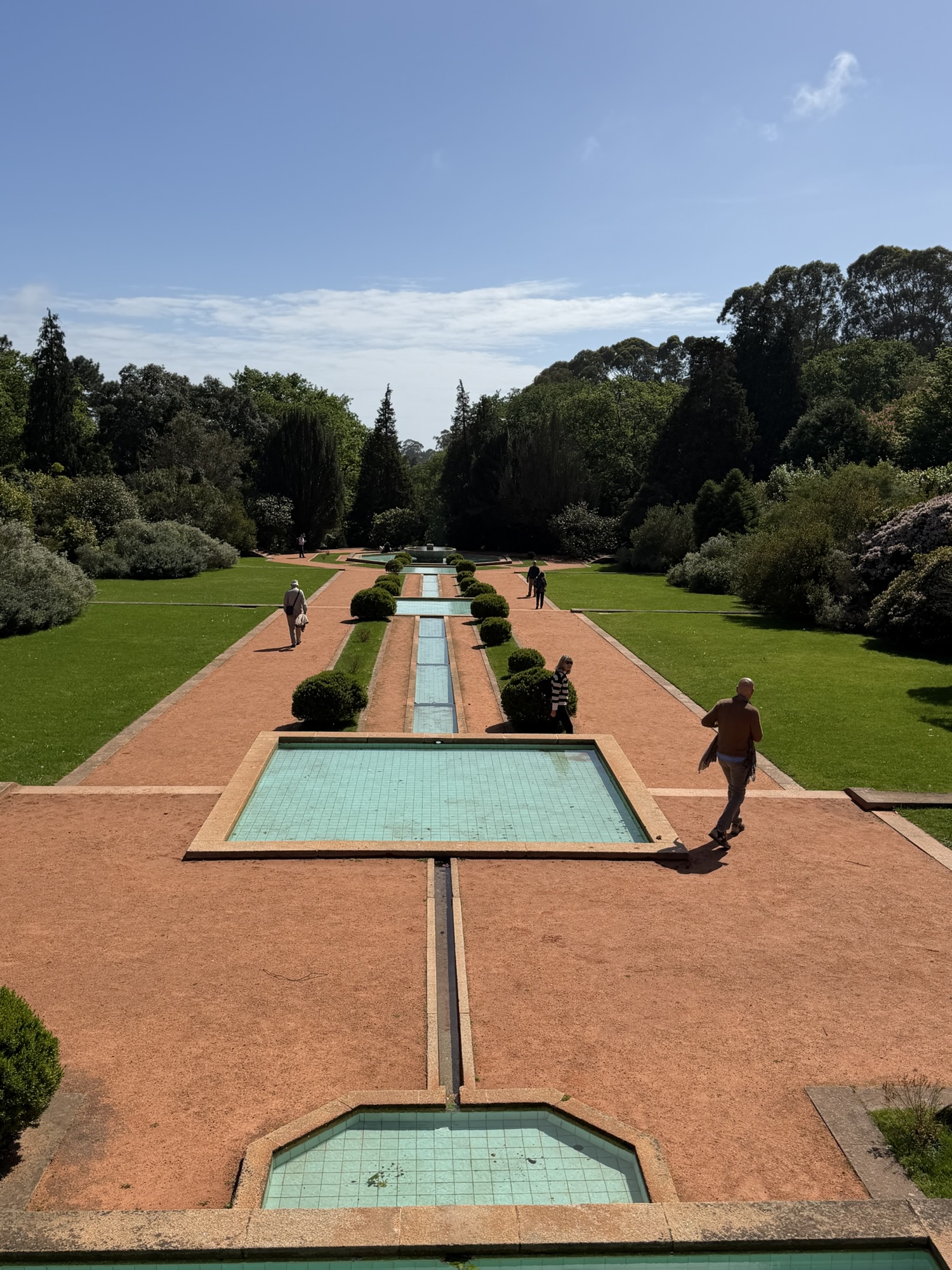
The second garden was on the grounds of the Fundacao De Serralves, the Contemporary Art Museum. The museum grounds includes the Serralves’ art deco villa and the park including many gardens and sculptures.  We saw the outside of the villa and walked only two of the parks. The formal front and then the treetop walk. I wish we had even more time. To be honest I spent all my time in the gardens and never entered the museum!!

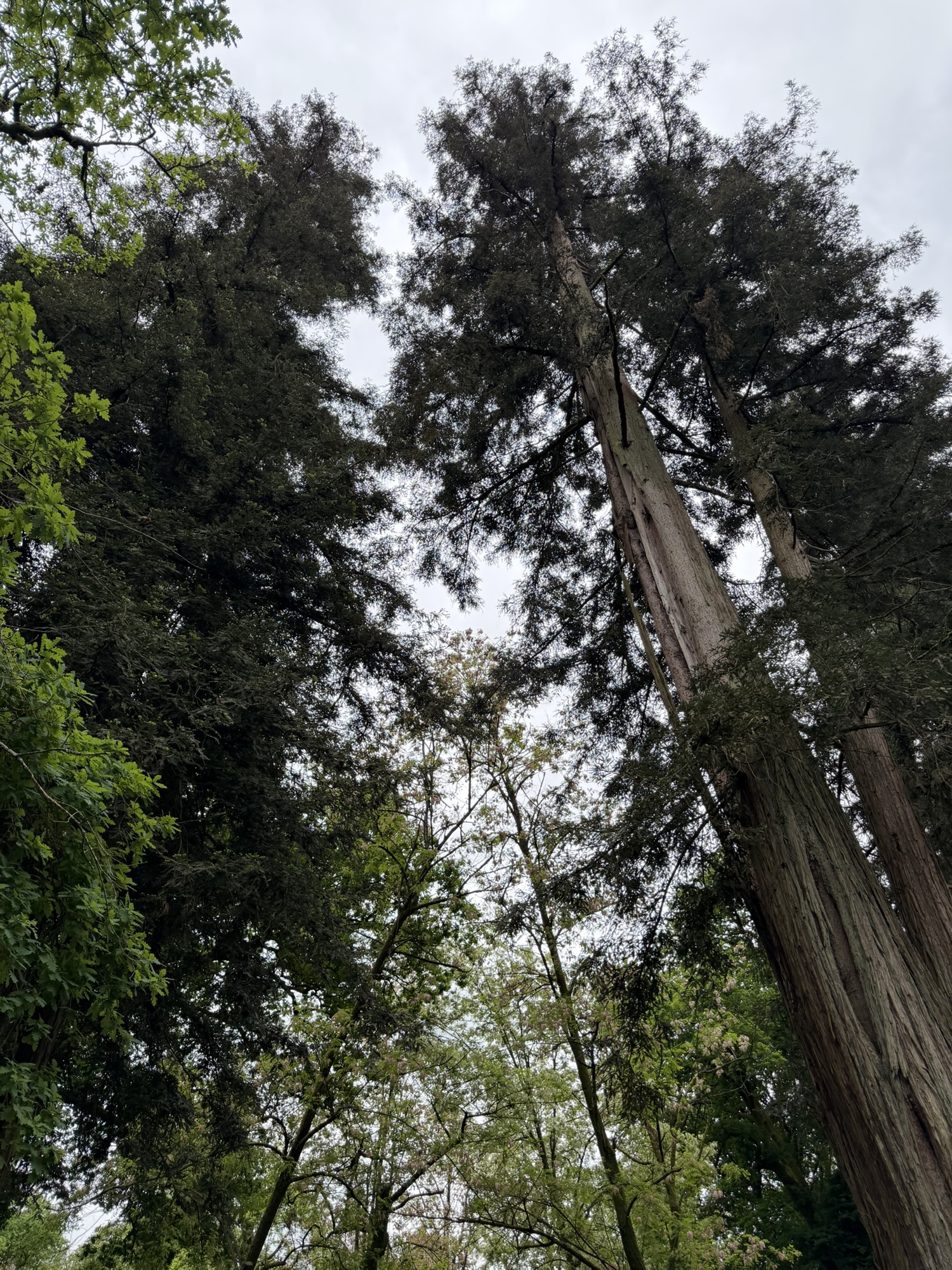
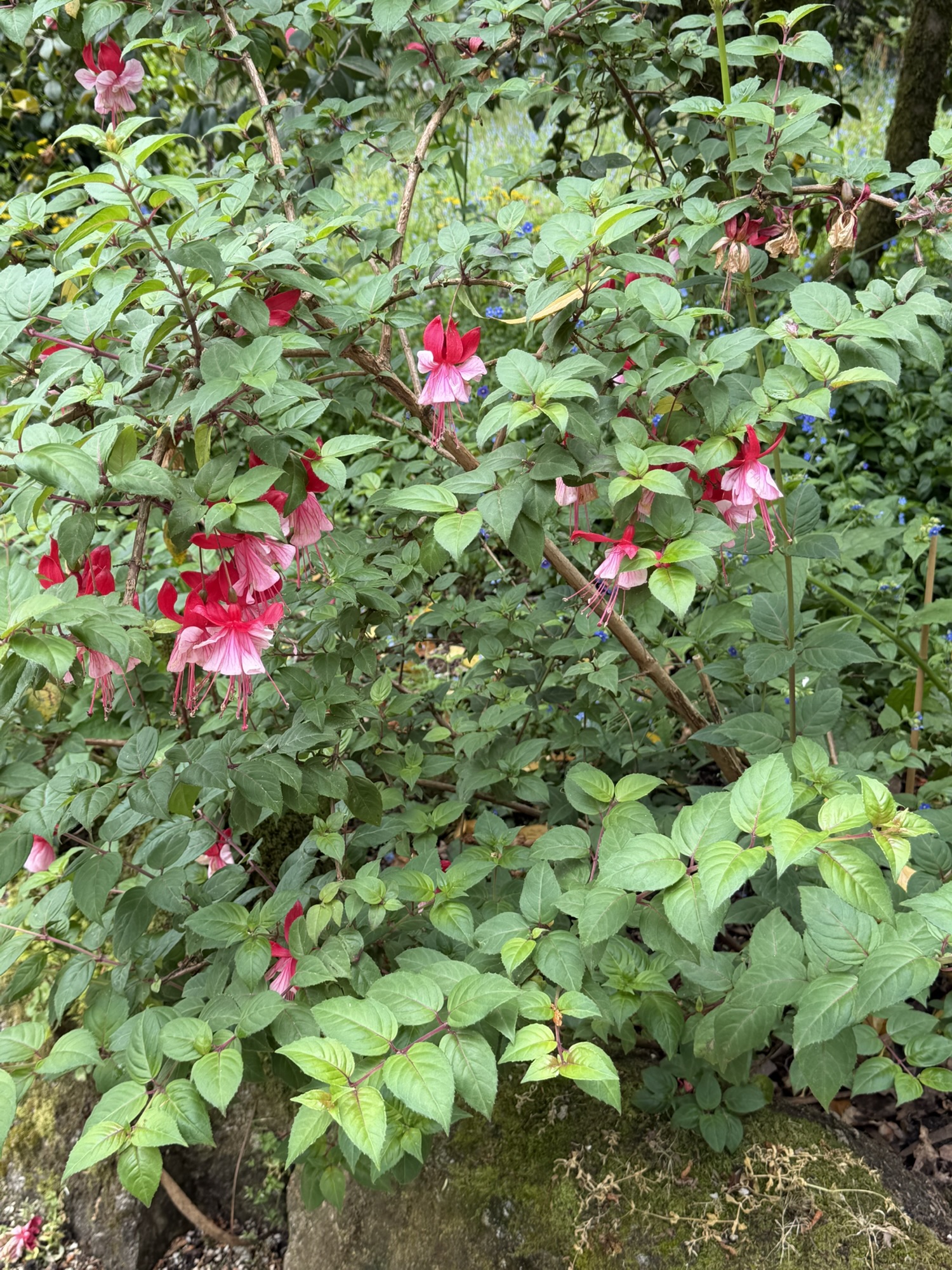
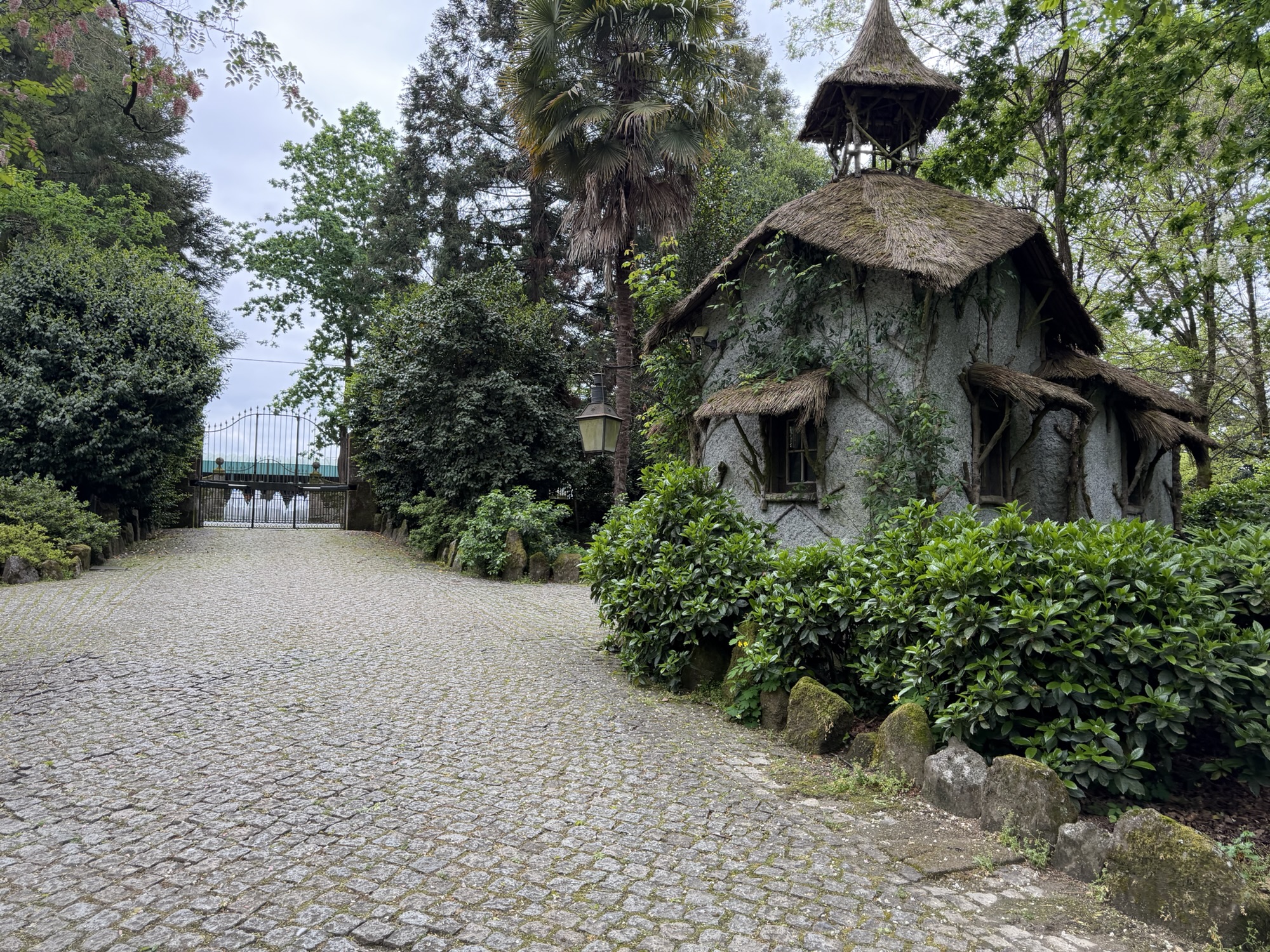
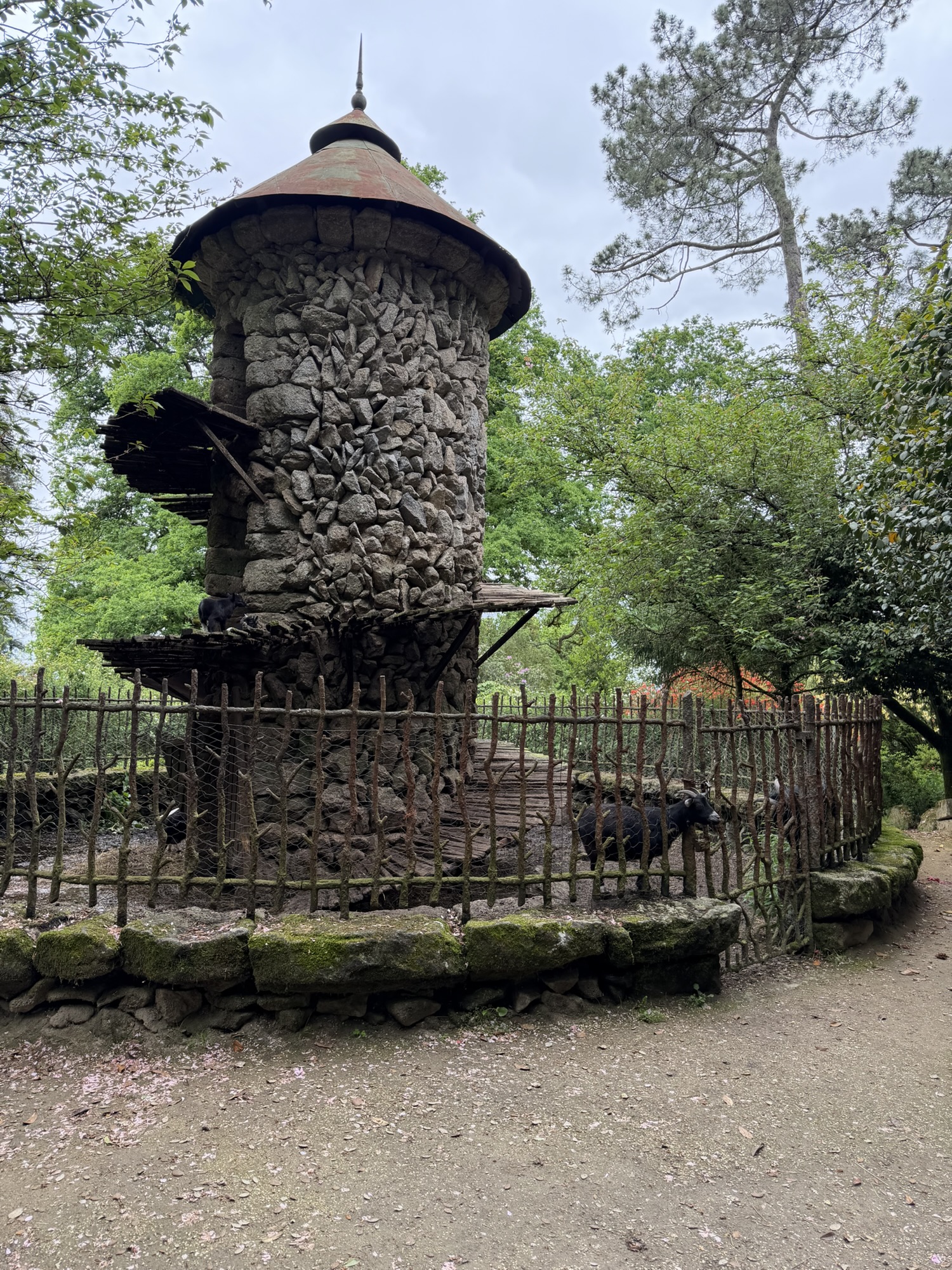
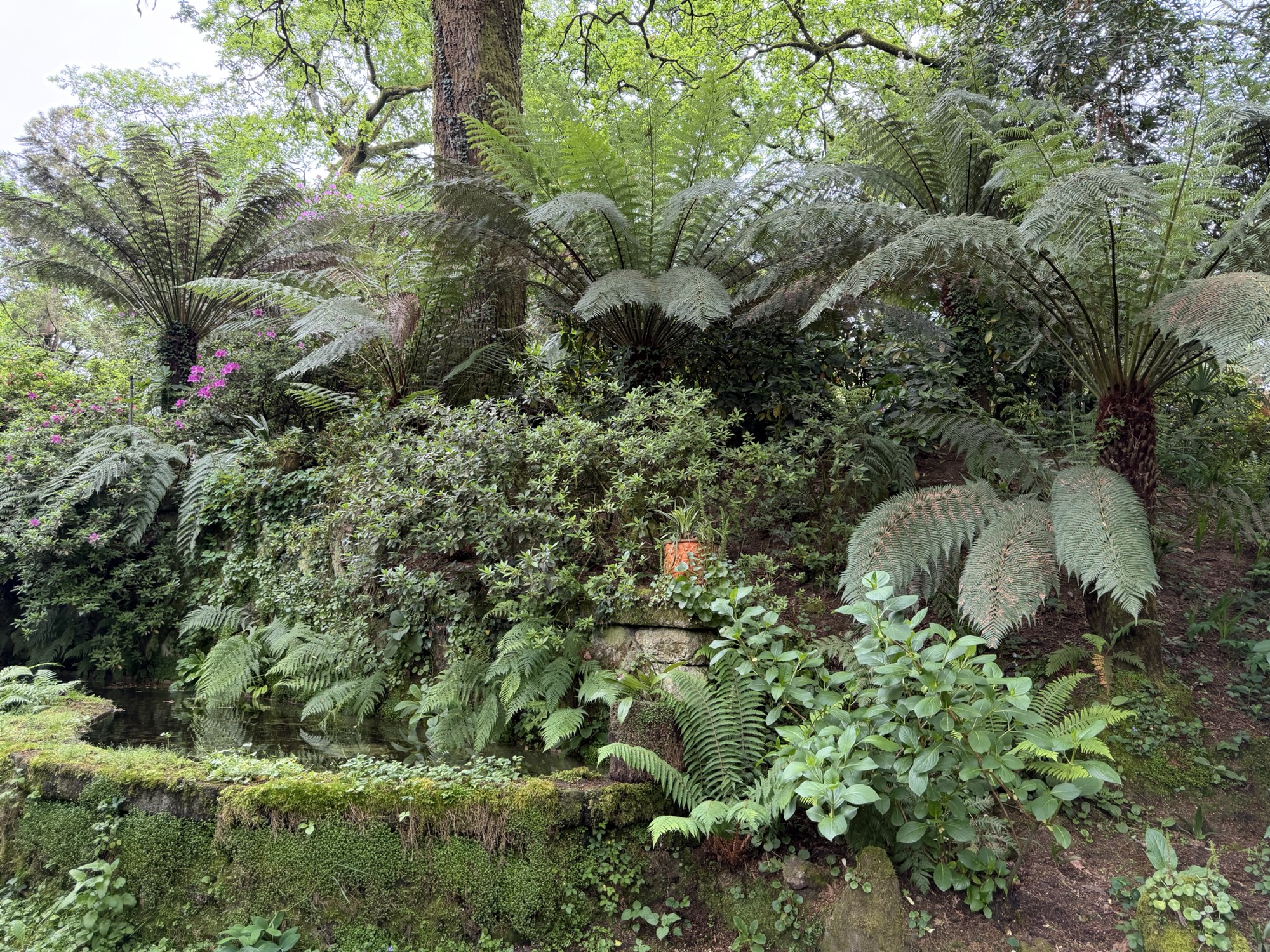
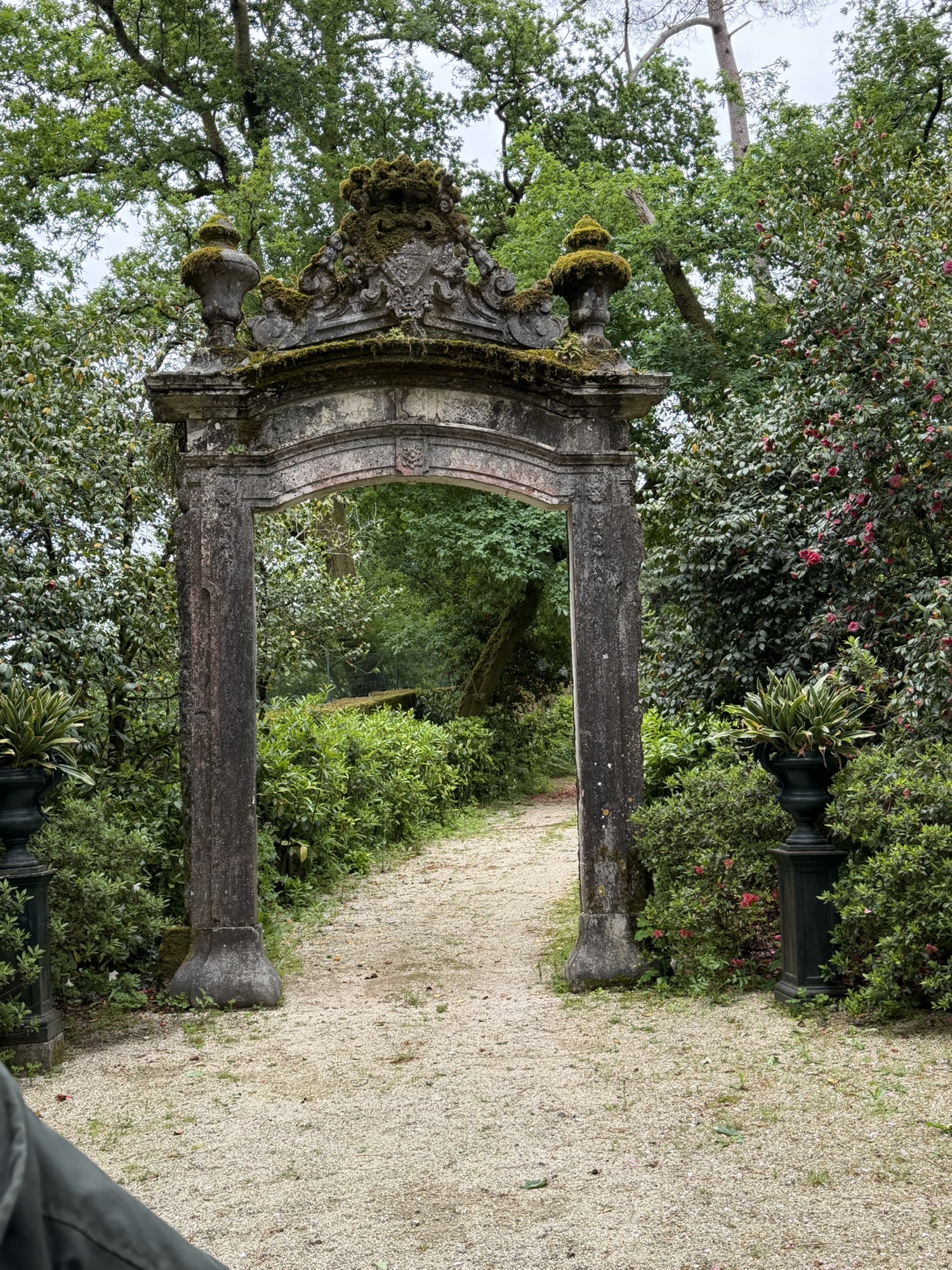
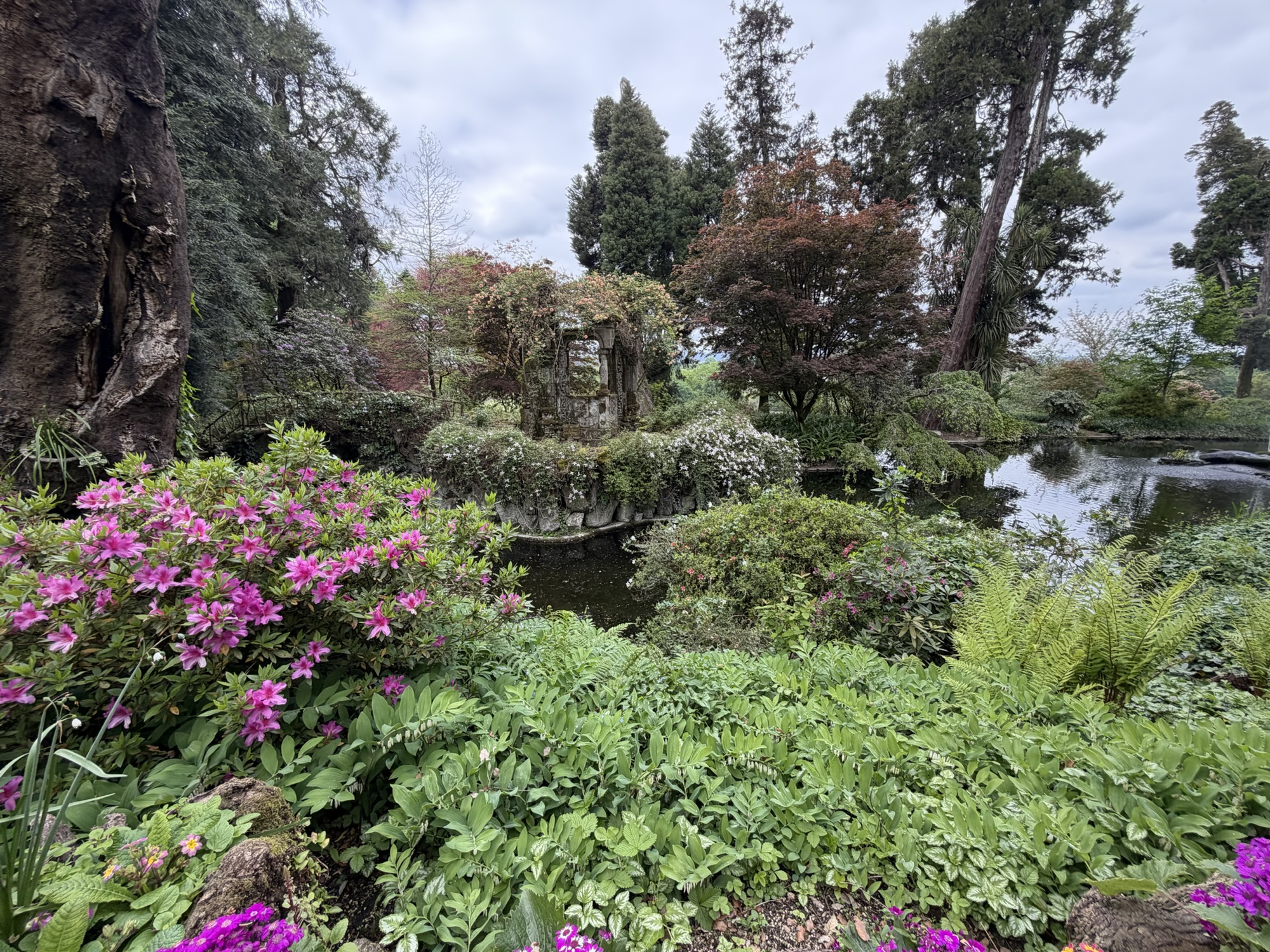
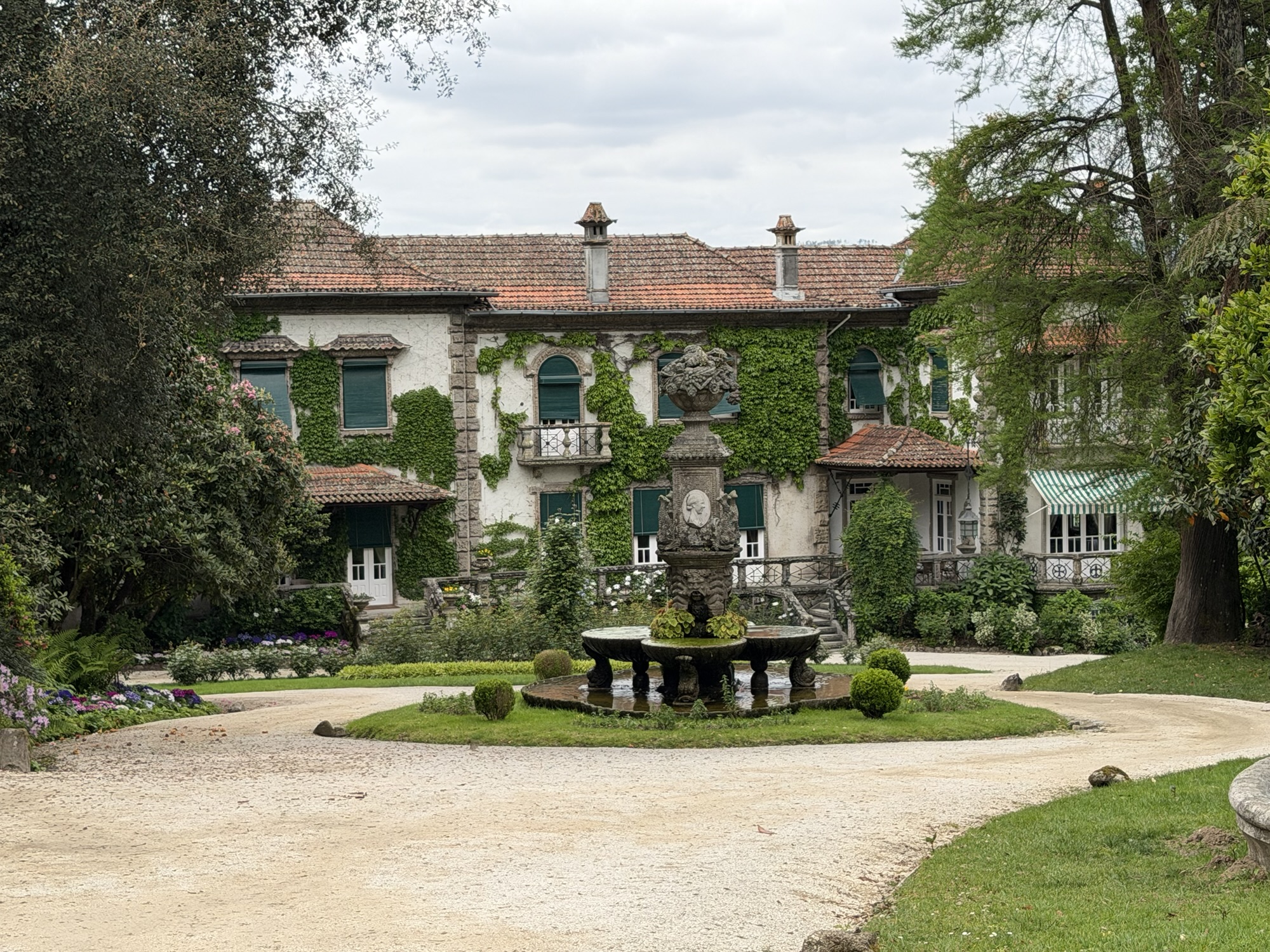
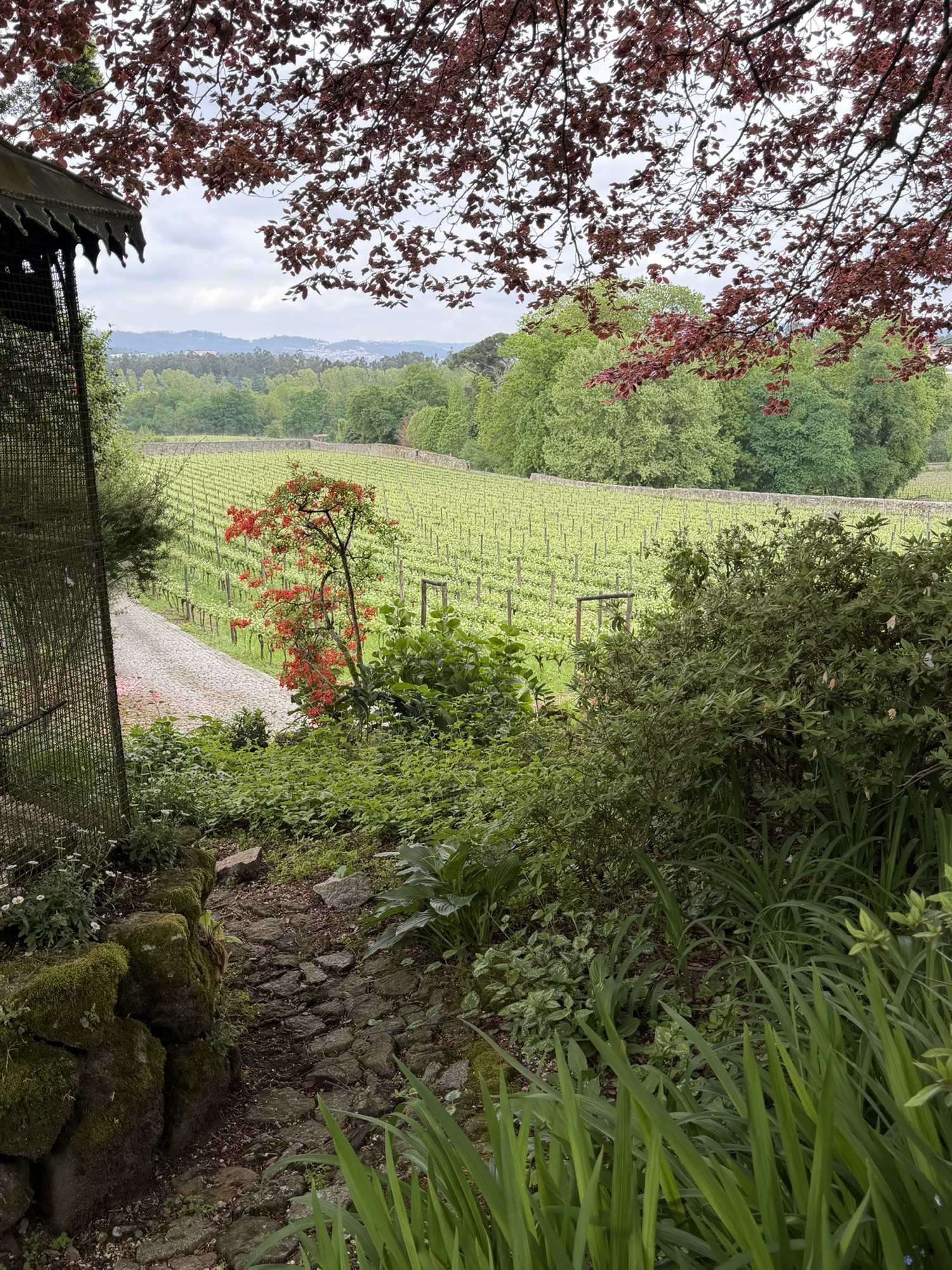
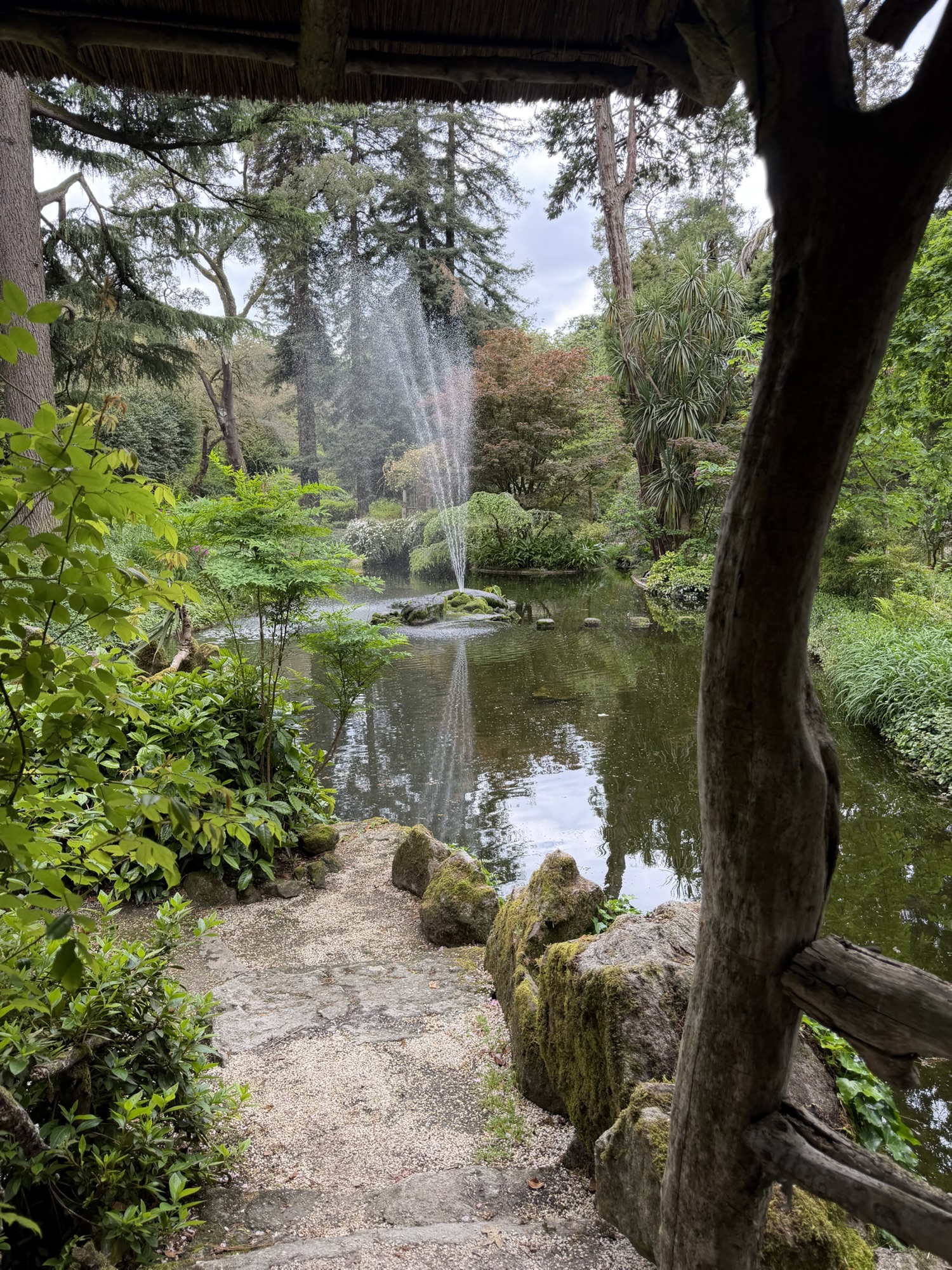
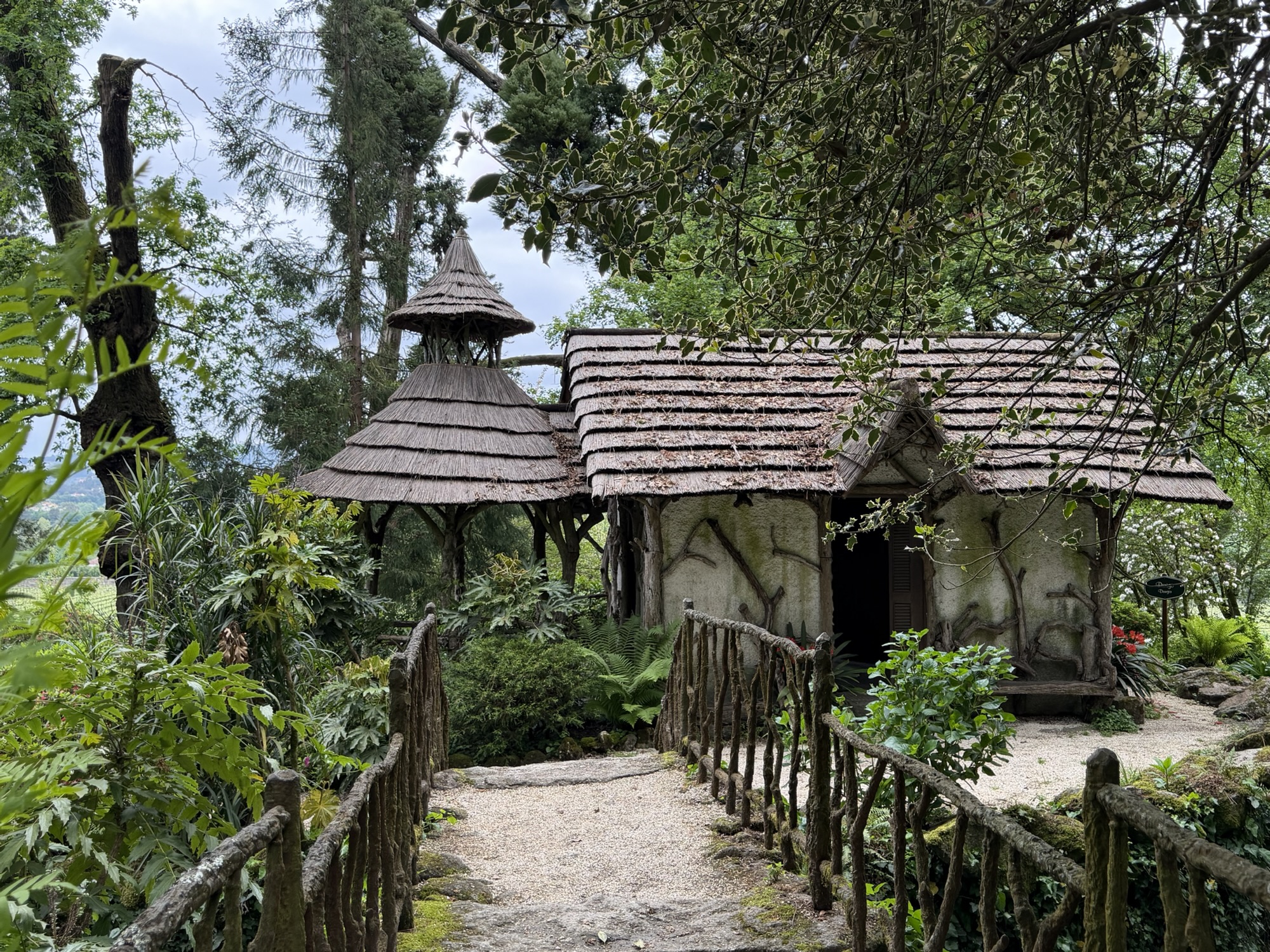
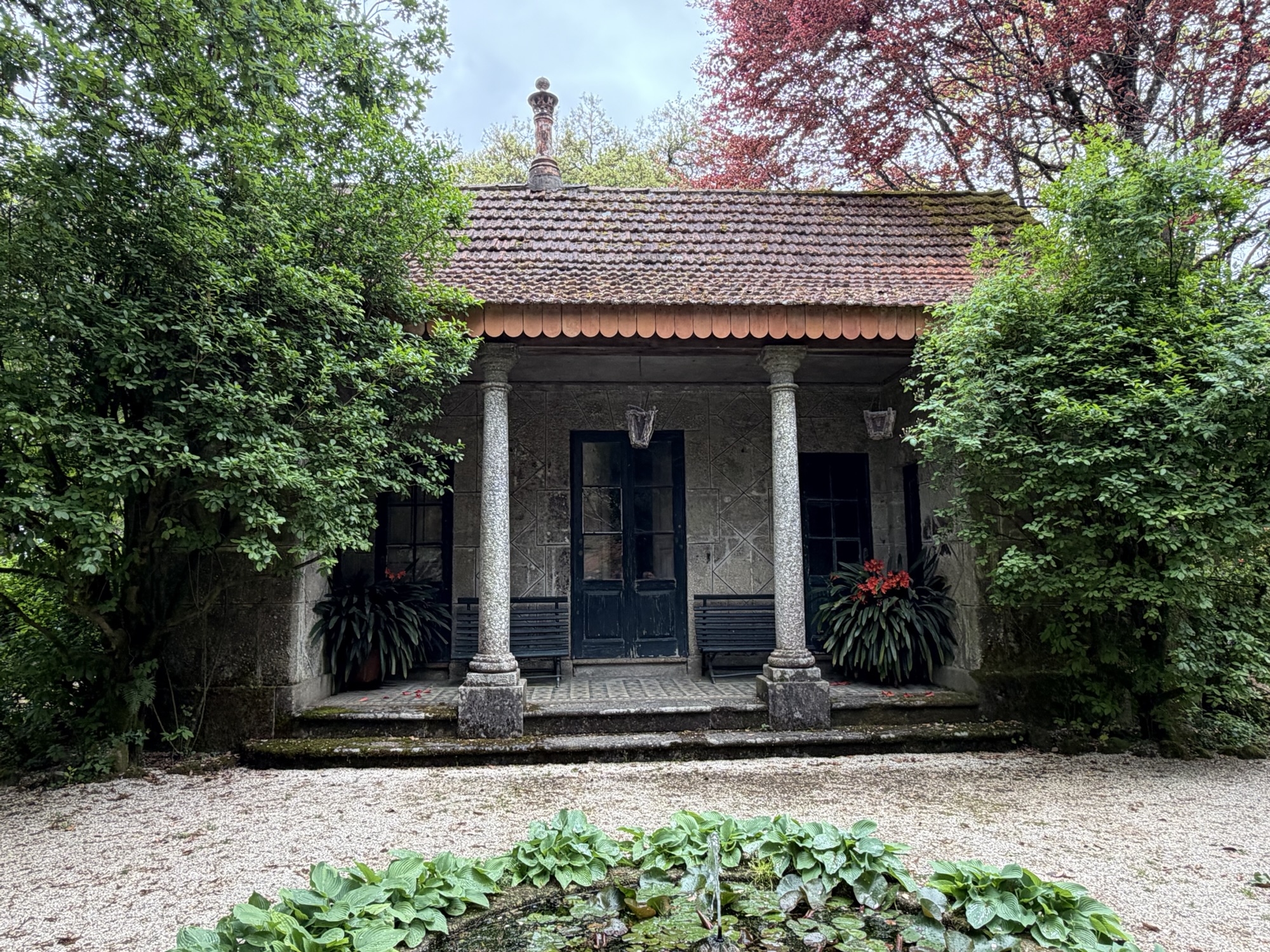
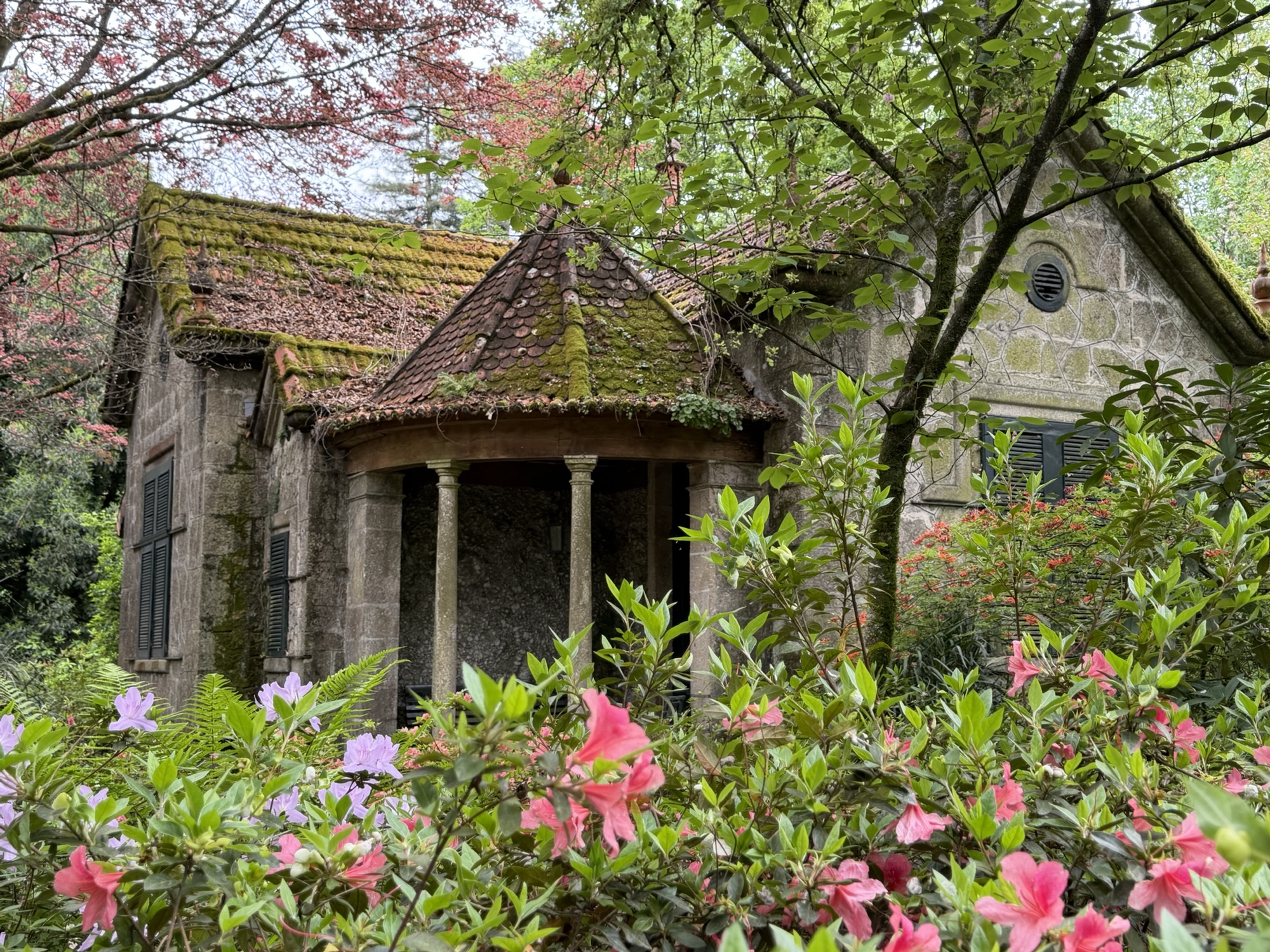
The third and most stunning of the gardens was at the estate and winery the Quinta de Aveleda!  This property has been owned by the same family since the 16th century.  They have had hundreds of years to create the most beautiful gardens.  Included in the gardens are three small houses, including one that was used by family members on their honeymoons.    There is also a small area for a family of goats to live, which were put in the garden for the enjoyment of the children.  You cannot visit the estate’s lovely mansion, except to view it from a distance, as it is still used by the family.

I wish everyone could see these gardens in person, as  photos can only capture some of the essence of these fantastic garden sites.

https://ambiente.cm-porto.pt/parques-e-jardins/jardins-do-palacio-de-cristal

https://www.serralves.pt/institucional-serralves/parque_apresentacao/

https://aveleda.com/en/wine-tourism/quinta-da-aveleda#

The Rosh Hashannah Card Has A Story

1 Oct

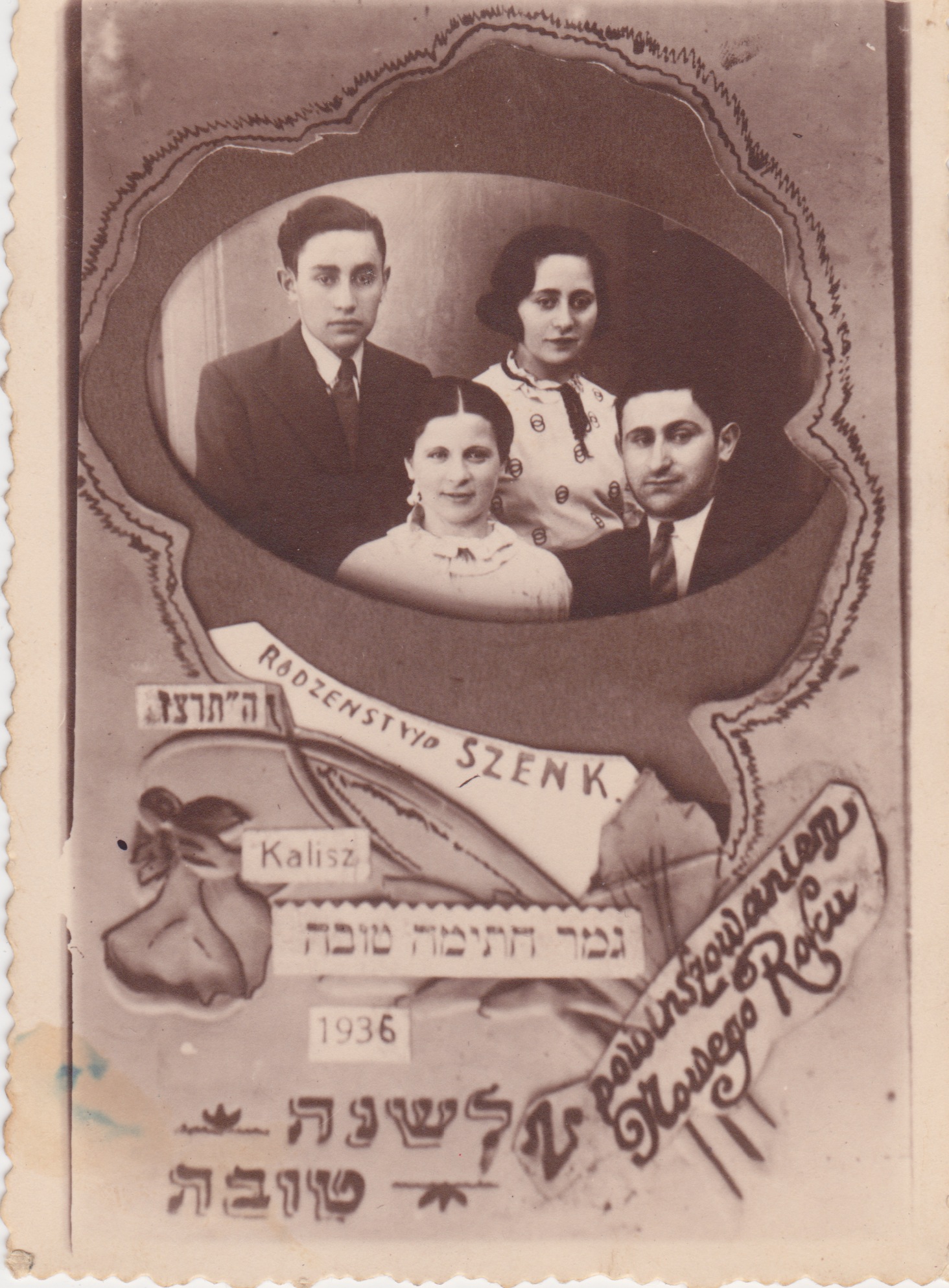
szenk-1936-shana-tova

In 1936 my Grandma Thelma’s siblings sent her a Rosh Hashannah card from Poland. On the front is a photo of her siblings. Seated are her brother Isaac and his wife, Bronia. Standing are her youngest siblings David and Esther. Soon after this photo was taken the world really began to change.

This photo looks so peaceful and calm. But so much was going on behind the scenes. Plans were already being made. Getting out of Poland was their main goal.

My Grandmother worked diligently to get her family out of Europe. She and my grandfather owned a bakery and had two young children. Grandma had taken her children to Europe in 1931 and since her return had been searching for ways to rescue her family and my grandfather’s family. It was very difficult.

Eventually, she got documentation to bring my great grandfather Abraham (her mother had died young) and her younger sister, Esther, to the United States. Esther was older than 21, but she was very tiny. So they made her younger. And thus she was able to come with her father.

The age difference was a bone of contention for years. My Tante always stating her ‘fake’ age, my grandmother always correcting her. It was made worse by the fact that my Grandmother had traveled by herself to the USA in 1922, when she was only 16. To get the papers she needed, she made herself two years older! The war over their ages went on for years.

It was great until Tante wanted to retire. Truly she was 65, but legally she was 62. I remember this as my Grandmother and Tante would argue about this as well.   Like sisters, with love, they found many things to argue about.

Front Great grandpa USA Visa

In any case two were saved. I have my Great Grandfather’s passport and visa. In the passport it states that he has to leave Poland within a certain time or the visa is invalid. Luckily my grandparents also sent money. Saving family was utmost in my grandparents’ mind.

But my Grandmother was unable to rescue her brothers and bring them to the USA.   They decided that they had to leave Poland: Uncle Isaac and his wife, Bronia, along with David and Bronia’s sister, Rosa. The Rabbi said that David and Rosa must marry before they left Poland. So a quick wedding was held.

They escaped Poland to Russia. Not as great, but they were tailors…or they became tailors. And so, my grandmother would say, they were employed to make army uniforms for the Russian army.

Their lives were not easy. They suffered. But they survived. Many were not as fortunate.

After the war they wanted to leave Europe. They were in Italy and the Facists were on the rise. They were afraid. They wrote to their sisters in the United States, and to Bronia and Rosa’s sisters in Australia. They decided whoever sent documents first , they would go to that country. They just wanted out of Europe as quickly as possible.

Once again they were among the fortunate ones with sisters on two continents working to save their siblings. The sisters in Australia got documents first. My great aunts and uncles moved to Australia. There my cousin was born. There my Uncle David passed away when in was in his 30s. He is buried in Melbourne.

When my cousin was a child, they decided to move to Israel. My Great Uncle and his wife; his sister in-law, and niece. My cousin and her family still live in Israel. My grandparents, great aunts and uncles have all passed away. But when I look at this Rosh Hashannah card, I see hope. I wish everyone a blessed, happy, healthy and sweet new year.


To read more about the family:

https://zicharonot.wordpress.com/2014/04/28/speaking-yiddish-always-brings-me-holocaust-memories/

https://zicharonot.wordpress.com/2015/11/03/who-are-you-these-photos-call-out-to-me/


https://zicharonot.wordpress.com/2014/05/29/grandma-thelma-knows-what-she-knows/

Amazed Where I Found Anti-Semitism in Europe

13 Jul

Our European adventure had the added delight that our daughter and her fiancé came with us for the cruise section of the trip. They live in Israel, so we do not see them very often. In fact we were looking forward to getting to know our future son in law a bit better.

It was wonderful, we would tour with them in the morning and sometimes have lunch in whatever port we were in, but when we returned to the ship each couple was on their own till dinner time.

We were so happy to see their joy. And to see what a very nice young man she chose to marry.

On these tours we met many different people. And since we chose to do many walking tours, there was time to talk and visit. It was interesting and at times enlightening.

I have to be honest, I was concerned about going to Europe, especially France, with all the news about anti-Semitism and anti-Israel activities. Our cruise was originally going to Tunisia, but that port was cancelled. We would have been there the day before the attack on the beach that left 38 dead. And the night before we entered St. Tropez, there was a vicious attack that stunned France as a lone terrorist tried to blow up a factory, but first he killed and beheaded his boss.

So there was some stress on my part as to be aware of what was happening around us. But I still was stunned by where the quiet anti-Semitism actually appeared.

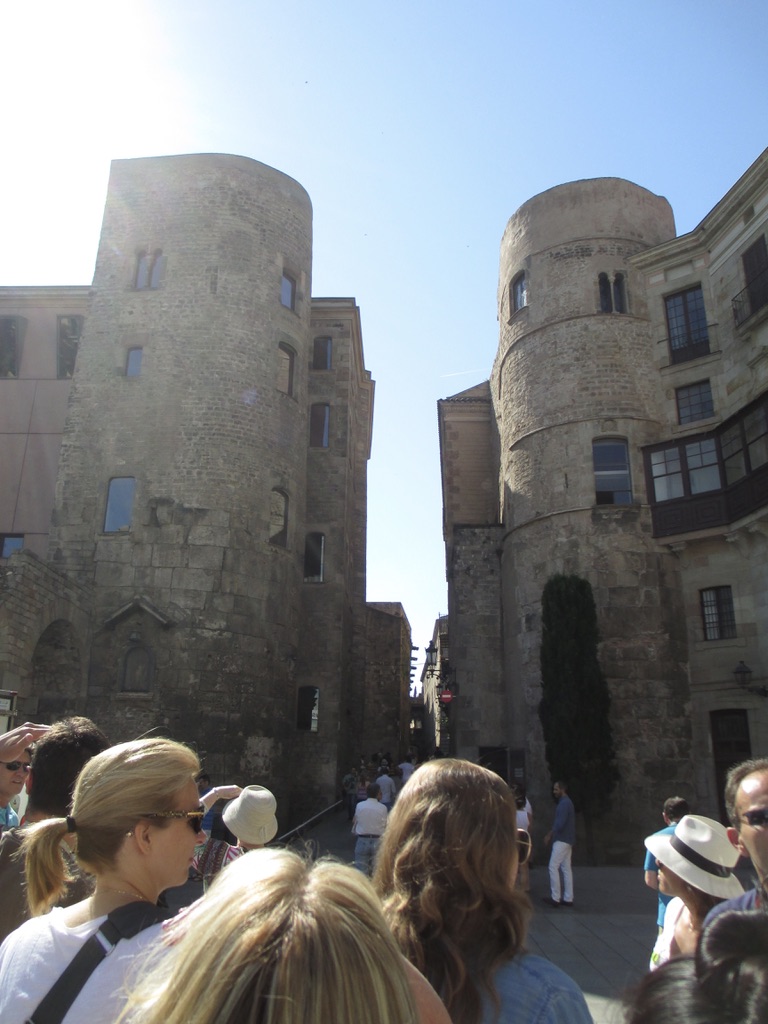
We were touring around Barcelona on a walking tour we booked through our cruise. As we walked through the Gothic town, the old town, a young girl and her mother (from the USA and on our cruise) started a conversation with my daughter and her fiancé. The conversation seemed animated.   So I stepped back to listen.

I was drawn into the conversation, as the teen girl, who had just graduated high school, asked some of her questions.   This girl from a small town in Georgia had never actually spoken to or met Jewish people before. And she had lots of questions, as did her mother.

I tried to be polite. But it got a little difficult after I realized the girl had told my daughter and her fiancé that they were such nice people, and she felt really badly knowing that they were going to Hell since they did not believe in Jesus.

What?!? Her Mom asked me the same question, but about Jewish beliefs. Don’t we think people who don’t believe what we believe will go to Hell?

“NO!” I told her. We believe that as long as people, Jewish or non-Jewish, acted in a good way, did good deeds and followed ethical standards, there was no Hell. Believing in Jesus in our mind had nothing to do with being a good person. And being a good person was the most important.

We told them about the seven Noahide laws that all people have to follow. And as long as a non-Jew followed these laws, they were good. For example you cannot murder or steal.   You cannot eat the flesh of a living creature. You cannot have idolatry.

And then I think we blew her away when we told her that many orthodox Jews believed that Christianity was pagan because they kept graven images of Christ. And seem to worship him. We discussed the Greek influence on Christianity and how this might have made ancient Christians believe that Jesus was the actual son of God. Because in Judaism, this belief is impossible, God has no physical form. We all have the spark of God inside of us, but there is no way we could be the actual child of God. Impossible.

And I pointed out all the “patron saints” we had seen in some of the cathedrals…. actually dead bodies kept in glass coffins. These bodies were dressed and had masks over their faces. And in each place we were told that on their saint day, the coffins were taken down from their alters, carried through town and then placed in the center of the church for all to pay homage to these patron saints.

This is very far from a Jewish version of “have no other God before me.”

The mother stopped trying to tell me about Hell and belief in Jesus. She slowly walked away from me. Perhaps she realized I was not going to change my mind and have an epiphany and believe in Jesus.  Perhaps I had been a bit harsh, but I really do not like to be told I am going to Hell because I don’t believe in Jesus.

So here I was so afraid of anti-Semitism in Europe, when in reality the only anti-Semitism I faced was from other Americans from a small town in Georgia. That was eye opening and somewhat disheartening.

But then I am from Kansas. And just 17 months ago an anti-Semite attacked the Jewish Community in an effort to kill Jews. He instead killed three Christians. If some one is going to Hell it is him and all those who practice hatred.