Whenever I travel to the Iberian Peninsula, I am intrigued and drawn to any information I can gather about where the Jewish communities lived before the forced conversions and the expulsions. I am a direct descendant of these Jews. I imagine my ancestors walking the streets, attending the synagogues, traveling between towns and living their lives in joy before it was all destroyed.
For over two weeks we visited many cities and towns in Portugal and Spain. We saw streets that once were the homes of Jewish communities. We saw the evidence of Judaism left behind in street names and buildings.
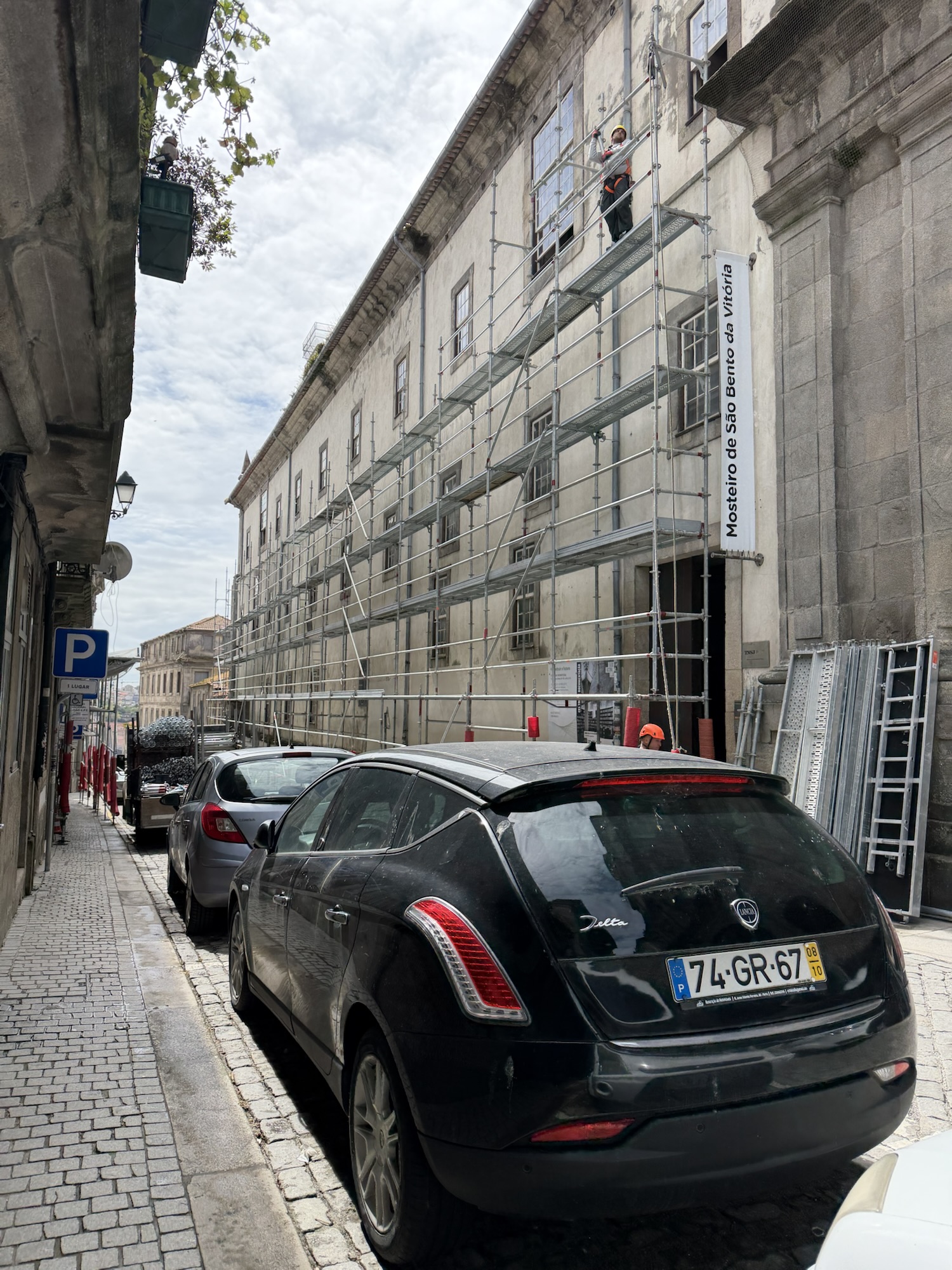
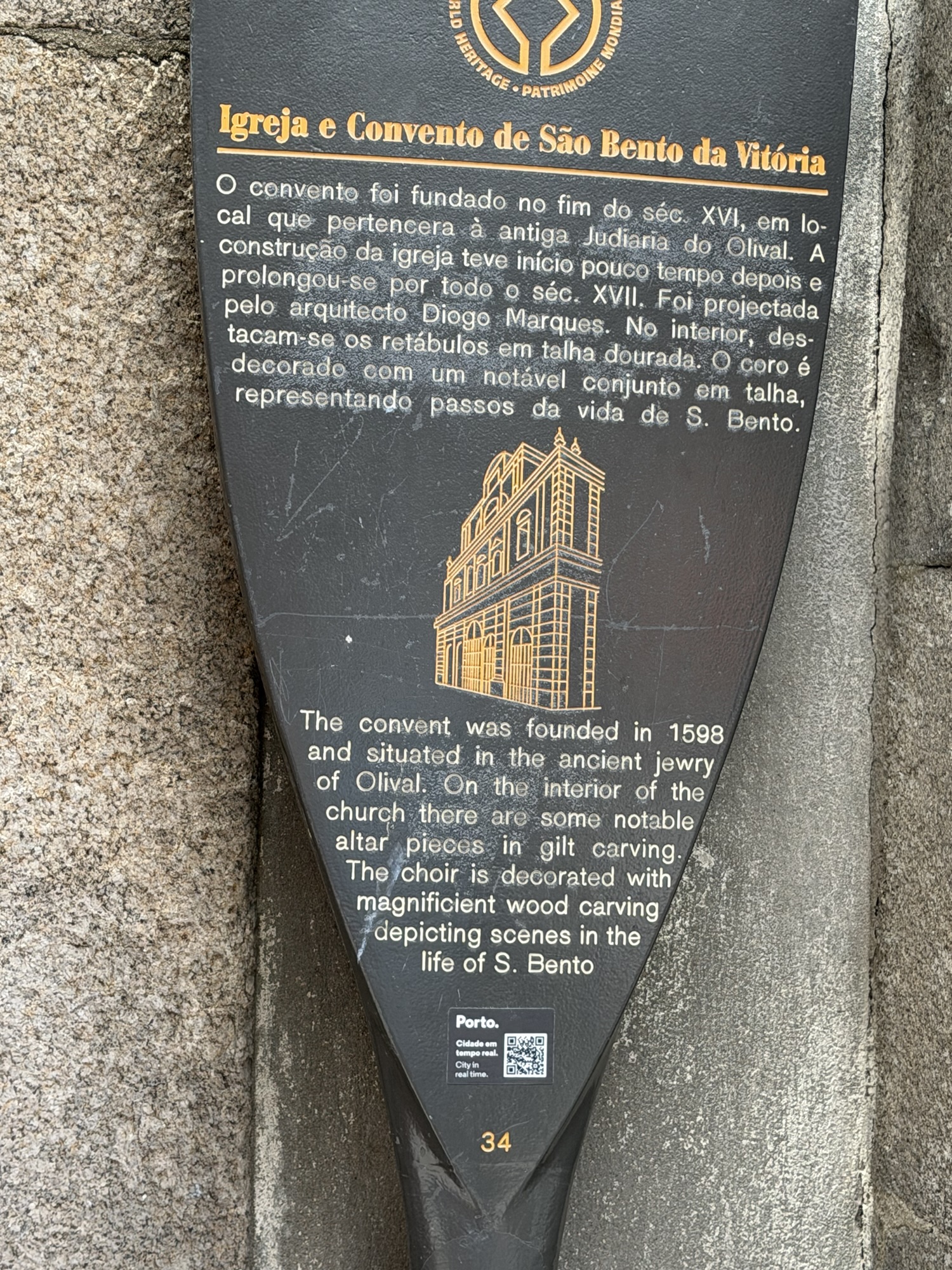
We started our trip in Porto, where once a large Jewish community existed. We took a food tour while there, visiting the Market, the oldest restaurant and several pastry shops. At the last one, our guide brought us out macaroons, saying that this was a treat the Jews ate during Passover. A treat we still eat. She said that we were eating it here because this was the area where the Jewish people once lived. And she pointed us to the street where the synagogue once stood. When the tour ended, we returned.
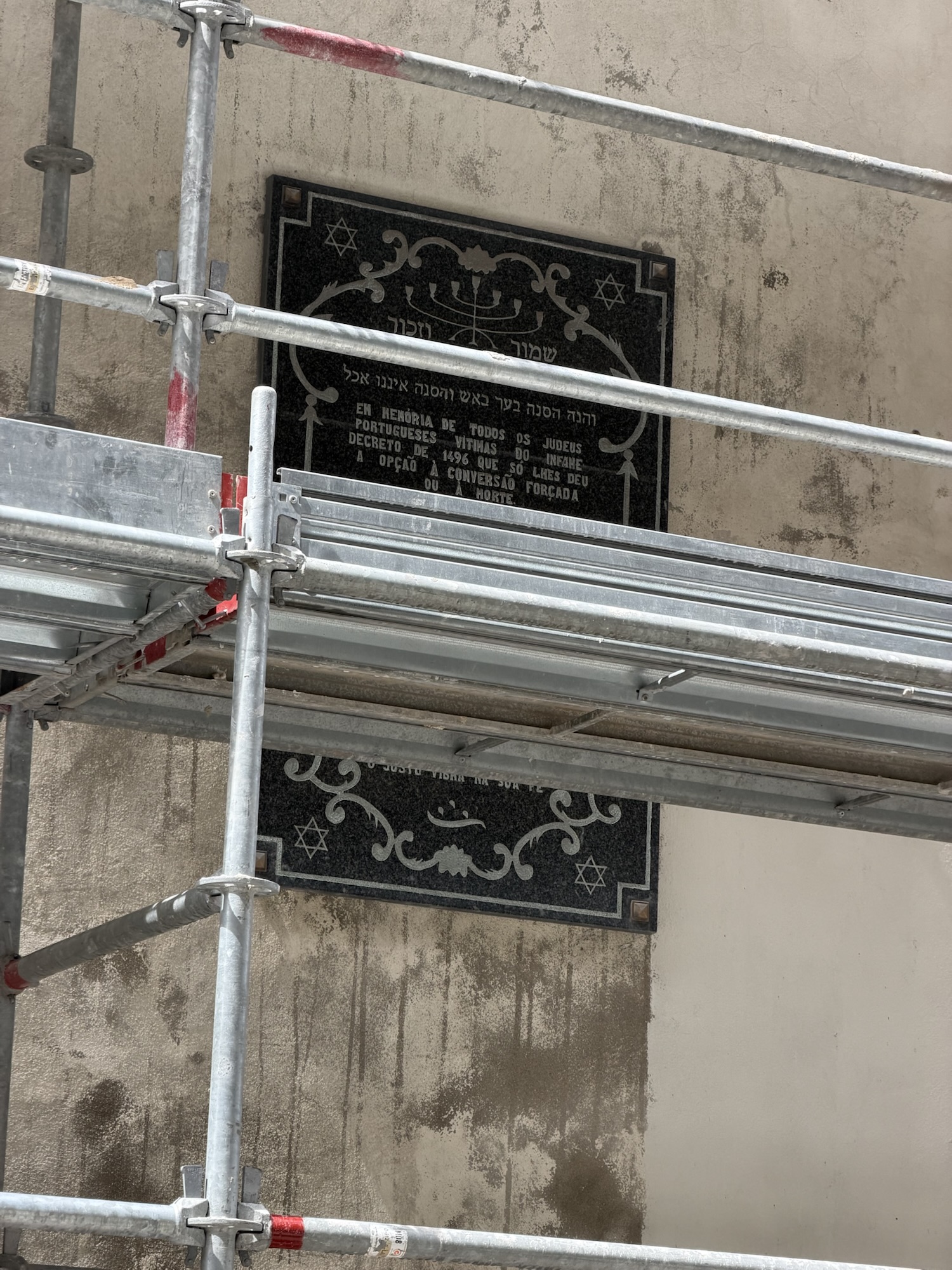
There is not much left of the Jewish presence in what was the Judiaria Nova do Olival. But we walked Rua De S. Bento Da Vitoria, the street where the community once lived viewing the site of the destroyed synagogue. Where it once stood is a public building that was originally a monastery. There are two signs, one next to the building and one on the building commenting on the Jewish community that used to live. It is currently under renovation, thus the plaque on the wall was difficult to read, so the photo I am showing came from the internet. It says:
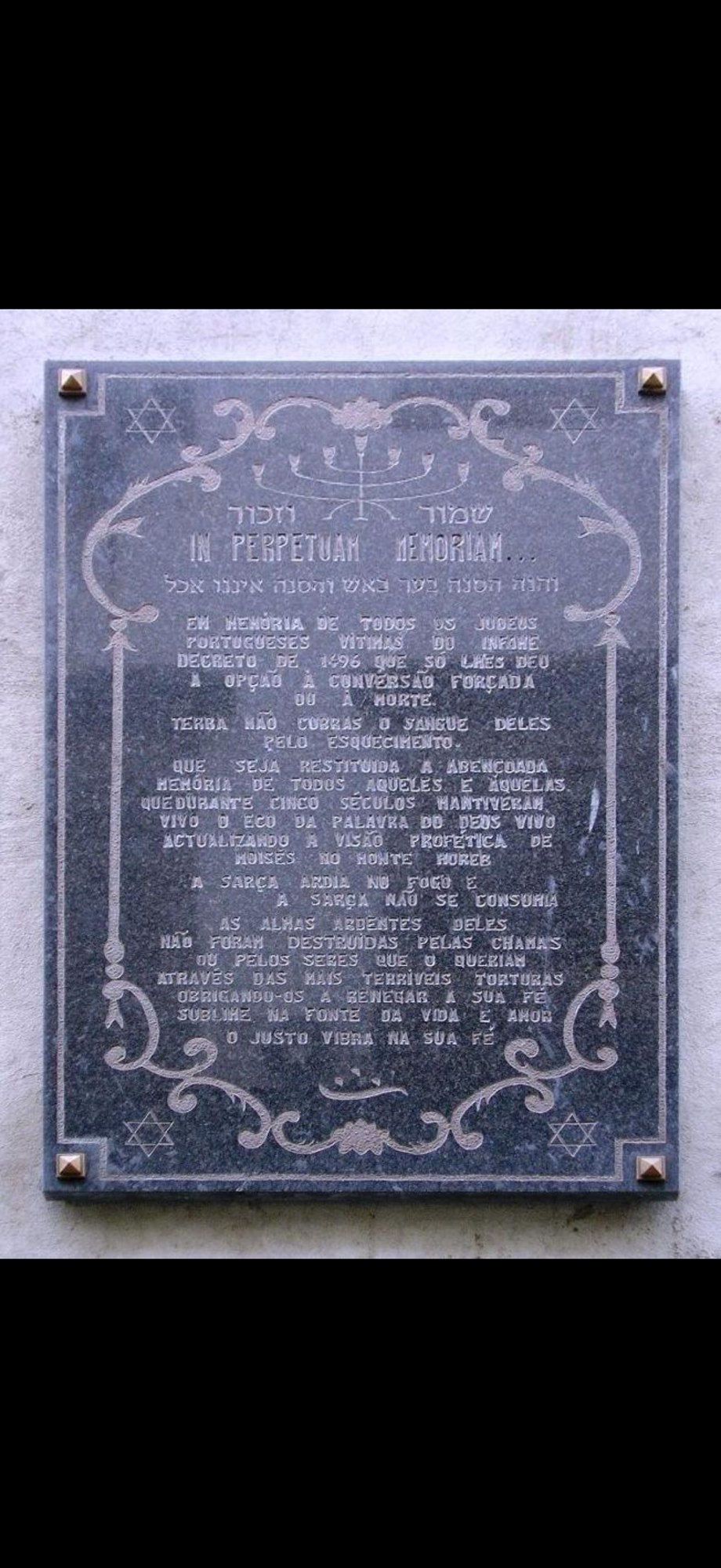
“In perpeturam memoriam…In memory of all Portuguese Jews who, by decree of 1496, were given by God the choice between forced conversion or death. May their blood never be forgotten. May the blessed memory be restored to all those – the shepherds and the sheep – who for five centuries kept alive and ever present the word of the prophet Moses on Mount Horeb: the bush burned with fire, yet the bush was not consumed. Their burning embers were not destroyed by the flames – nor by those who sought to destroy them through the most terrible tortures – forcing them to renounce their sublime faith at the fount of life: For the Just man lives by his faith.”
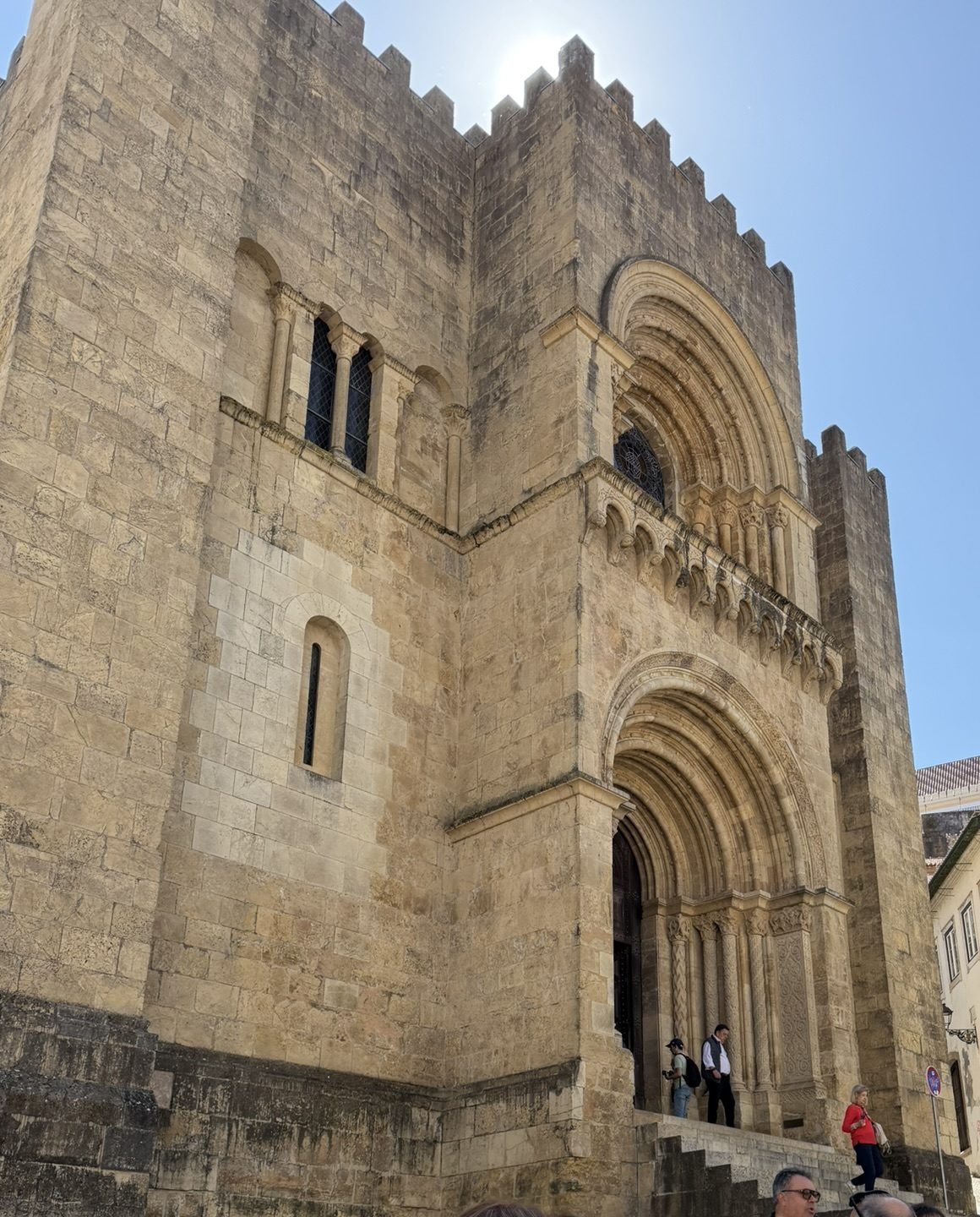
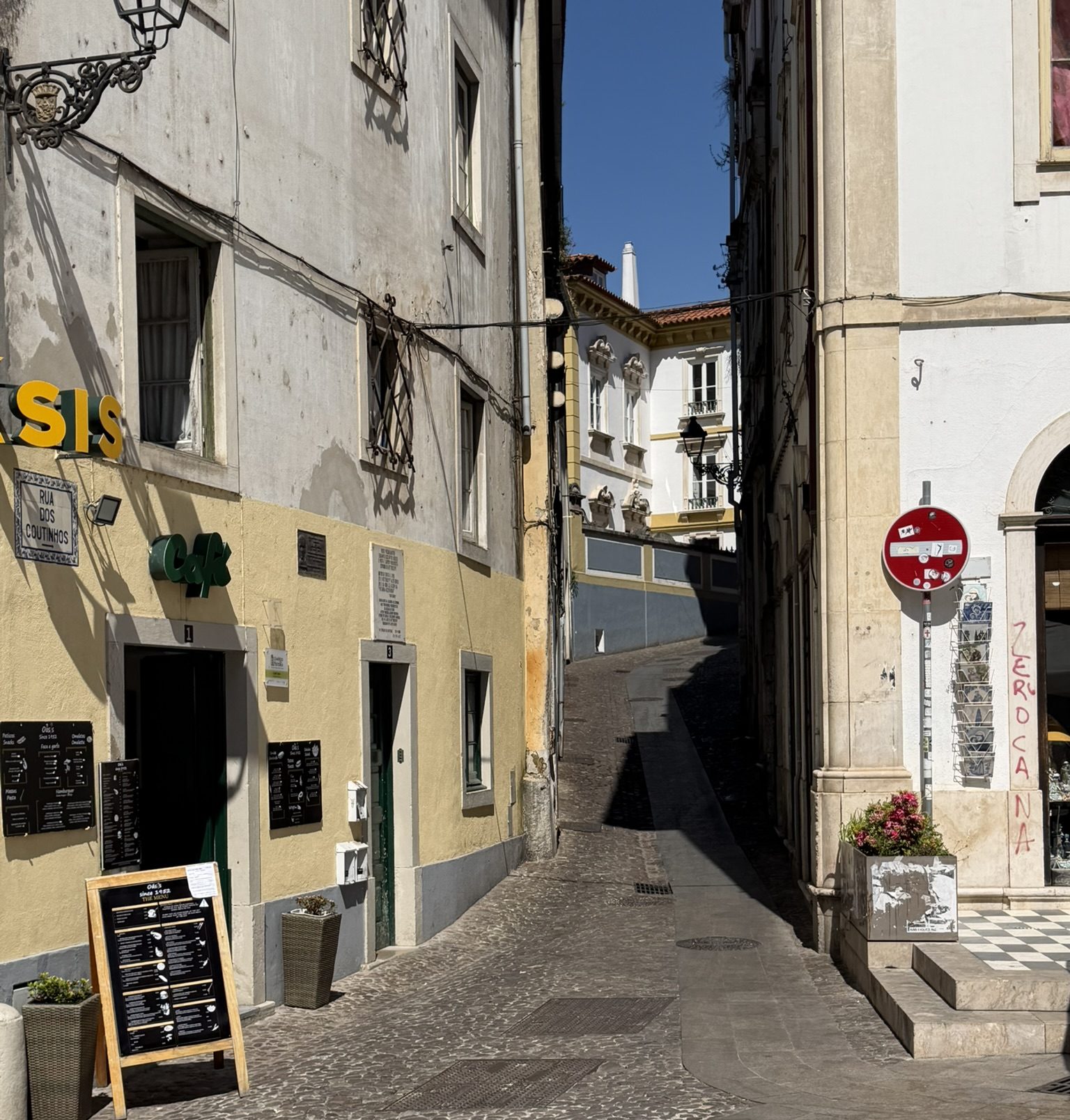
On Day 7 we went to Coimbra, the site of the Coimbra University and Library. It was a truly lovely site up on a mountain, where you could see the river below. Of course, a college town would have had a Jewish population. In fact, the street where the Jews lived was directly across from the main church. Rua Dos Coutinhos, an ancient narrow street. No sign of any Jewish life now.
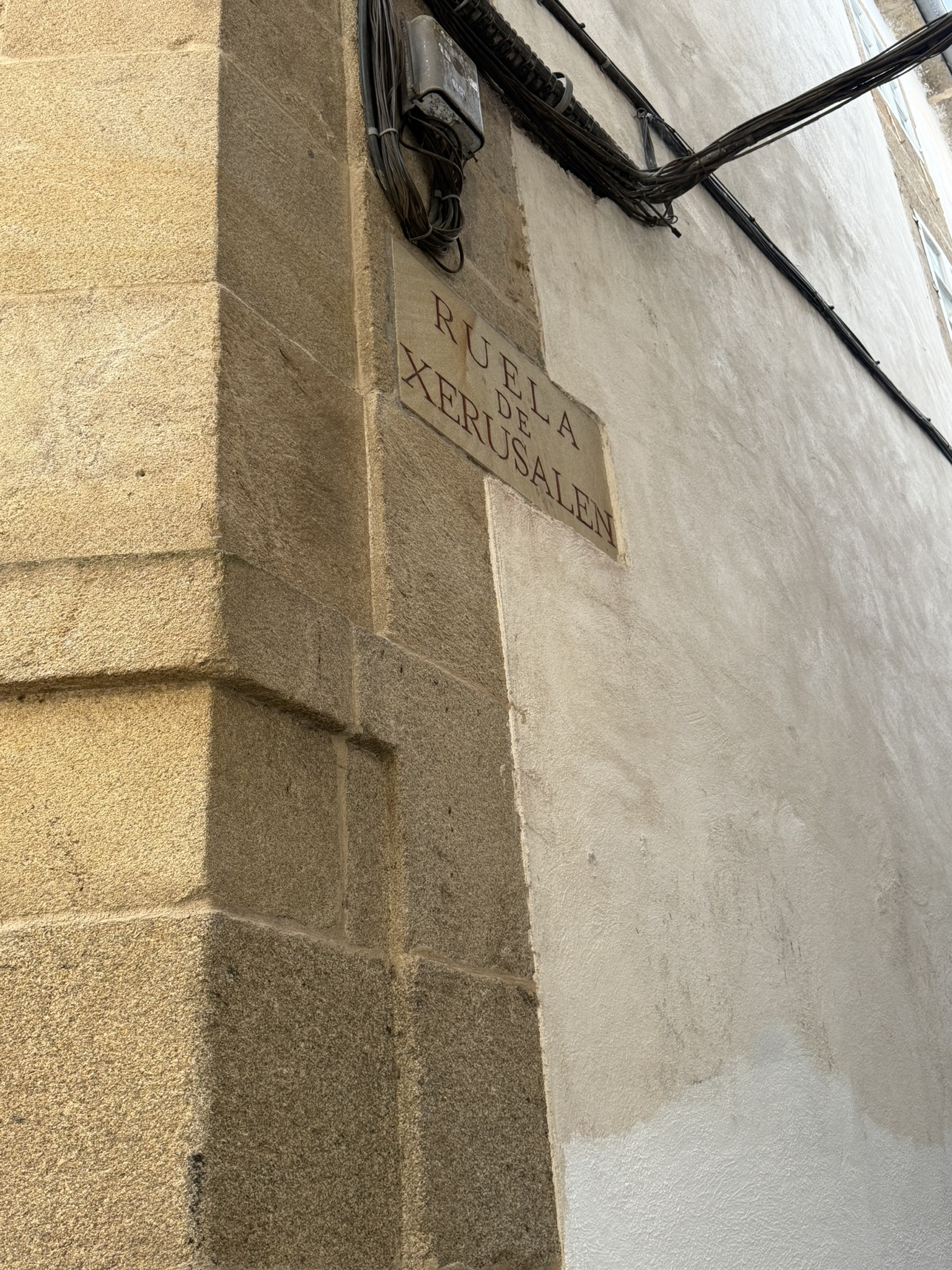
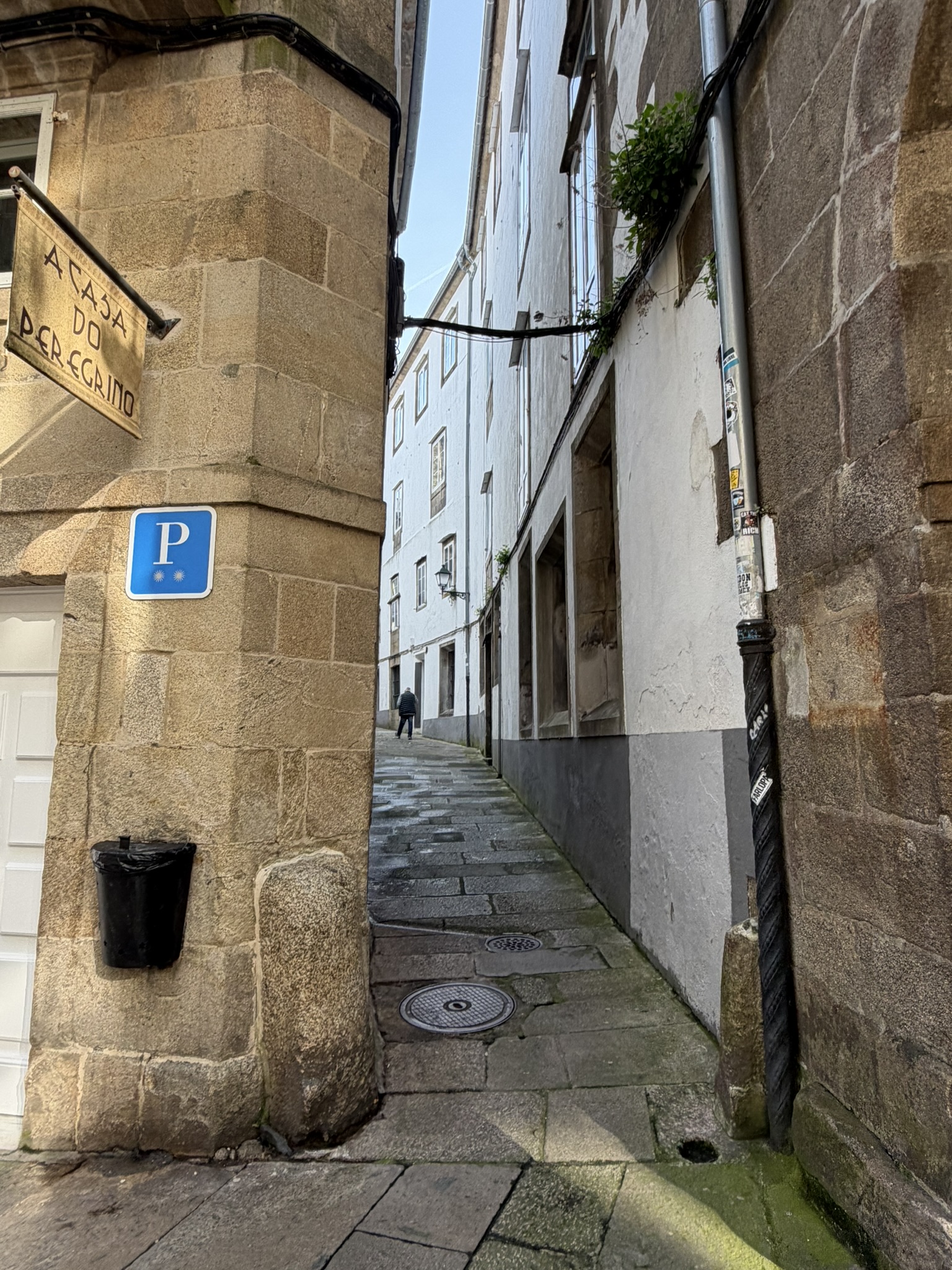
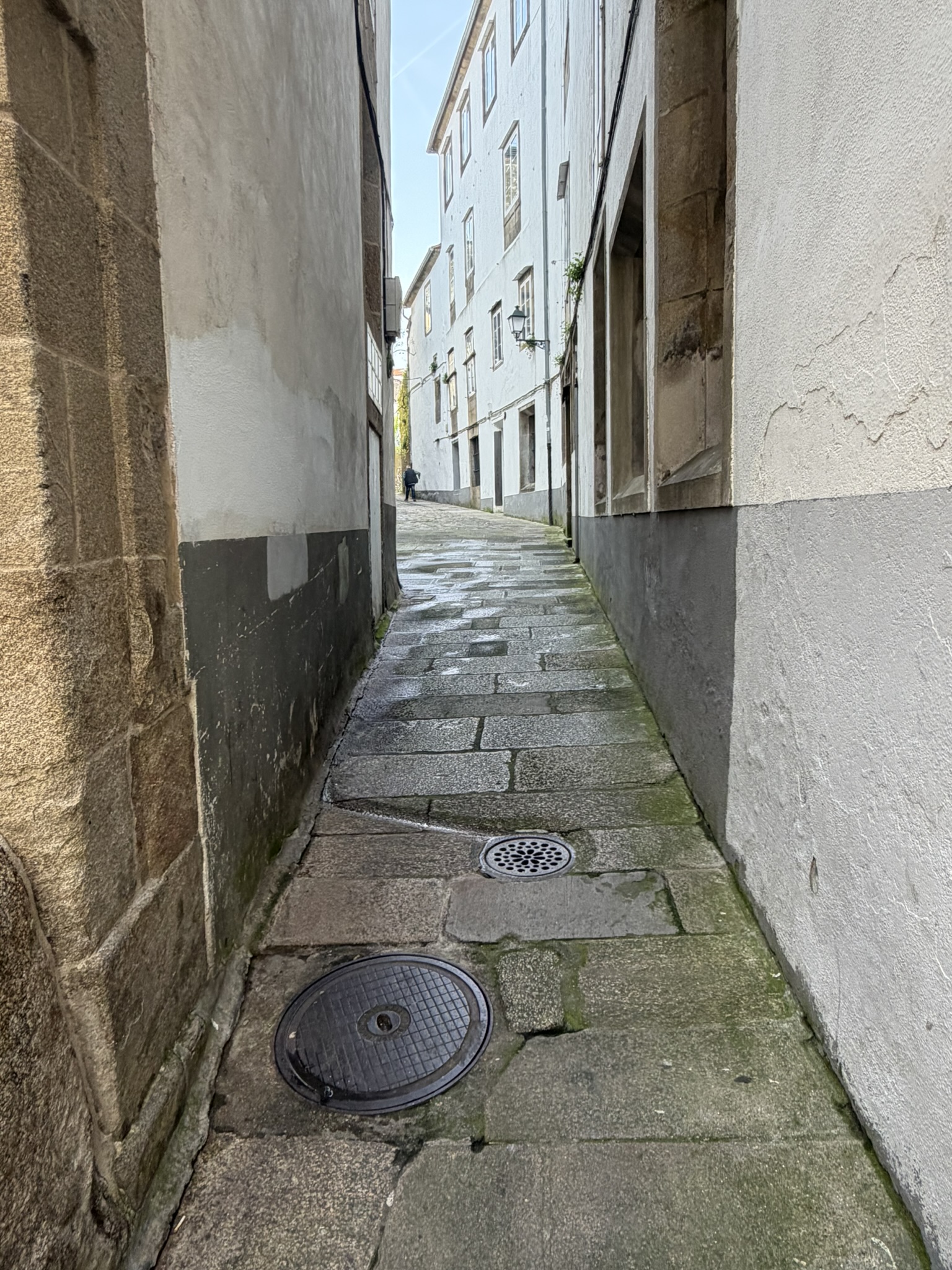
In Santiago de Compostela, the city that is saturated with spirituality as it is the end of the pilgrimage at the Cathedral of the Portical of Glory, we saw Ruela de Xerusalem, Jerusalem Street. Our guide told us it is believed this was the street for the Jewish population.
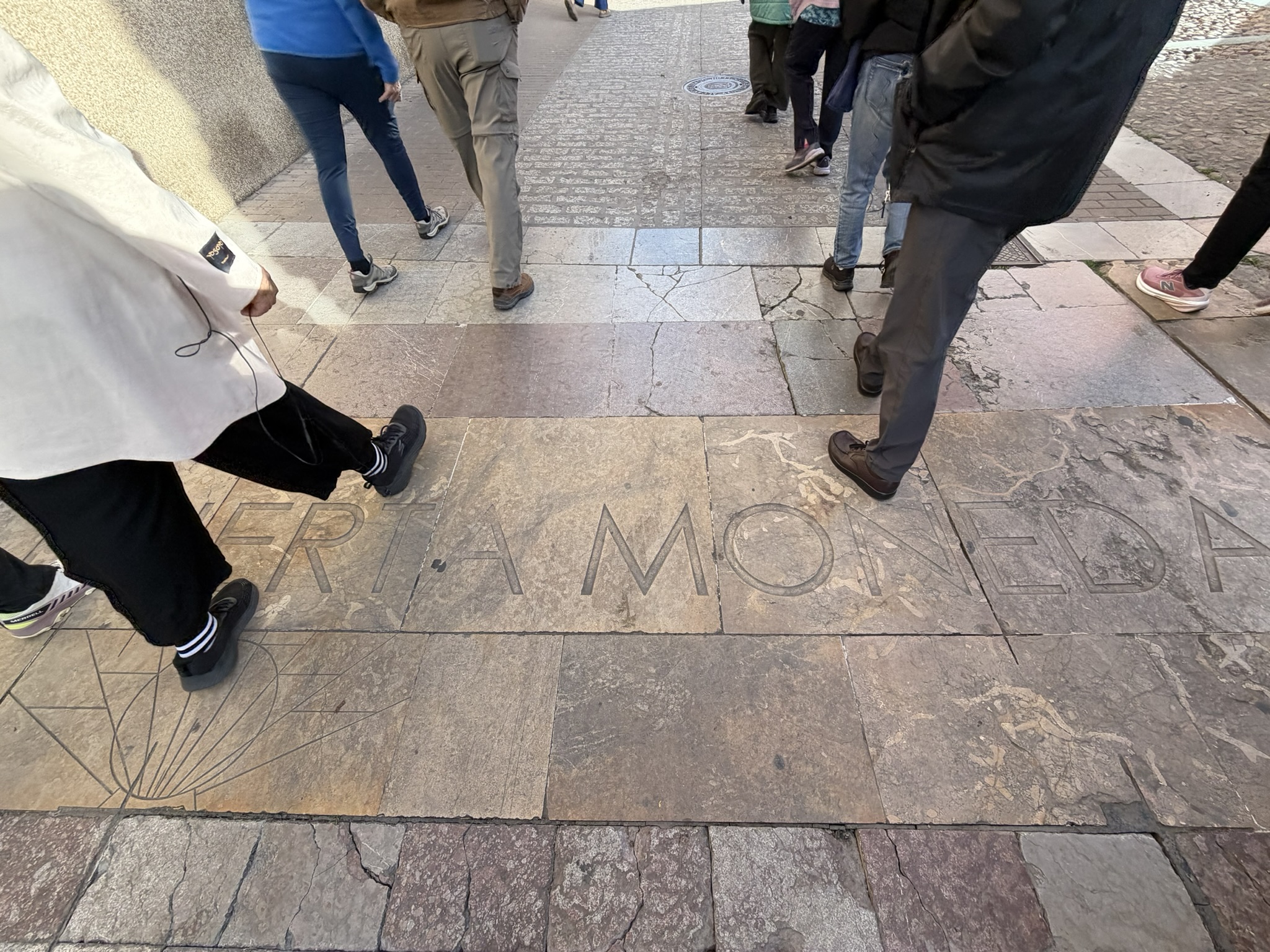
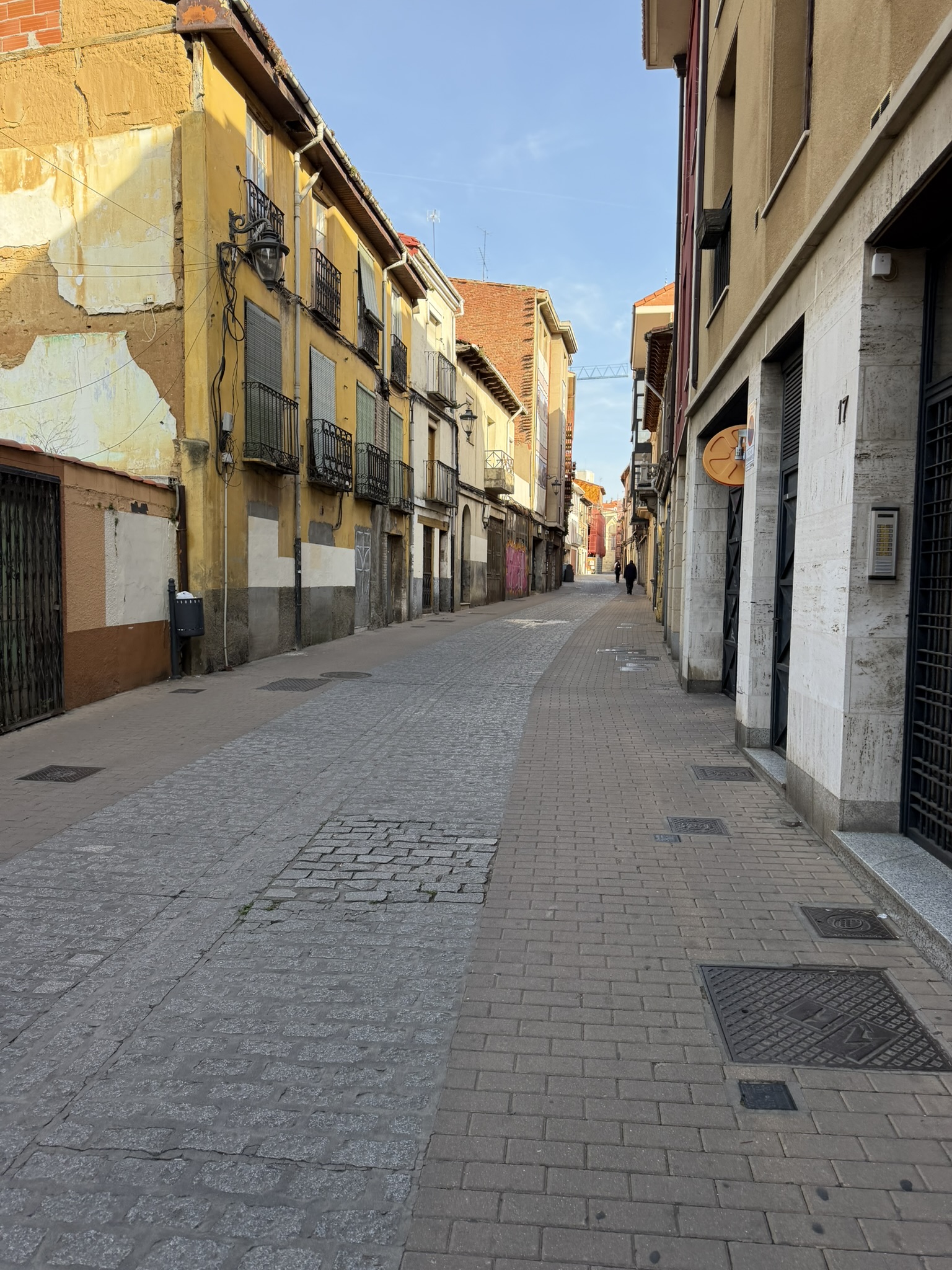
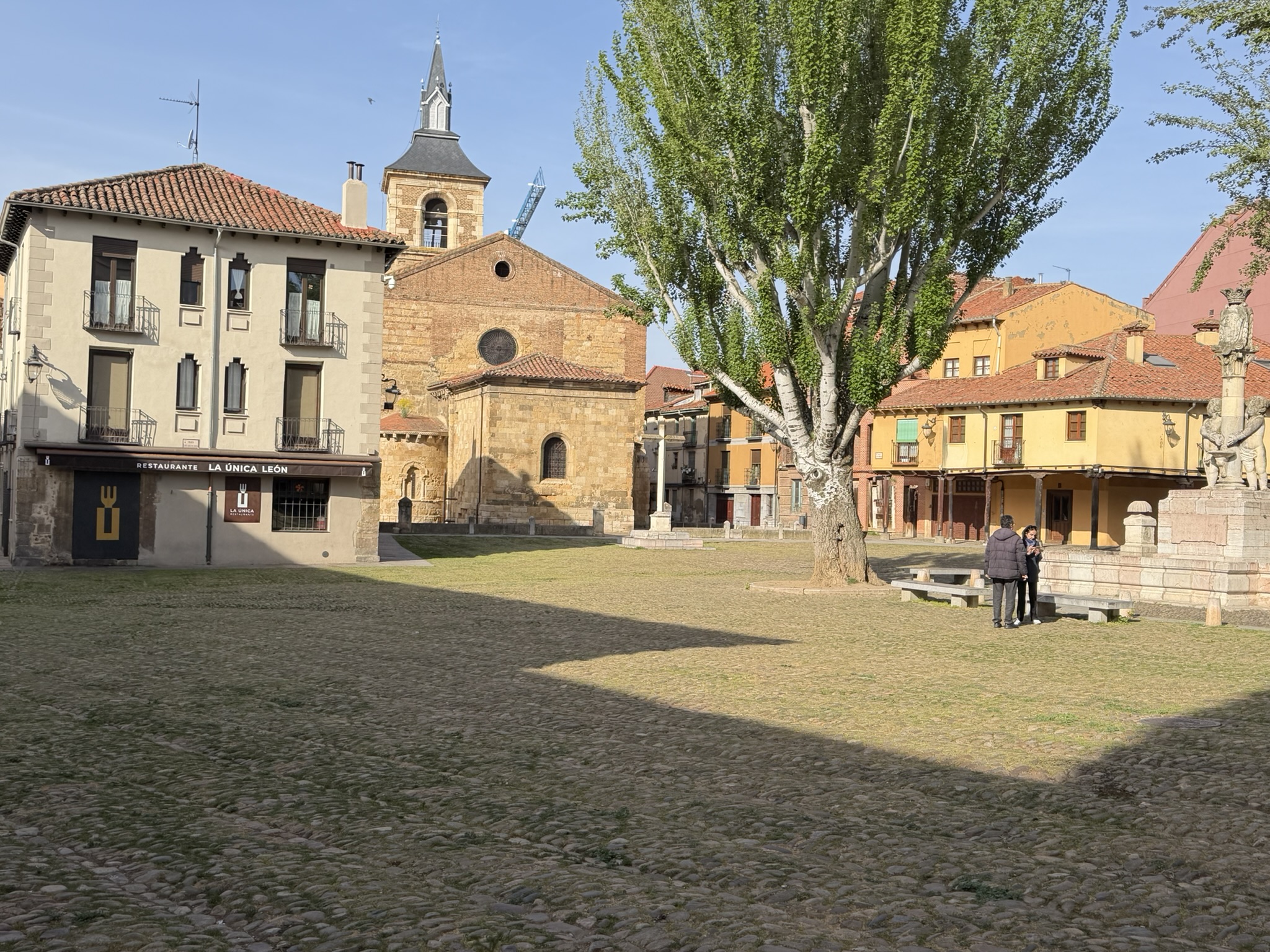
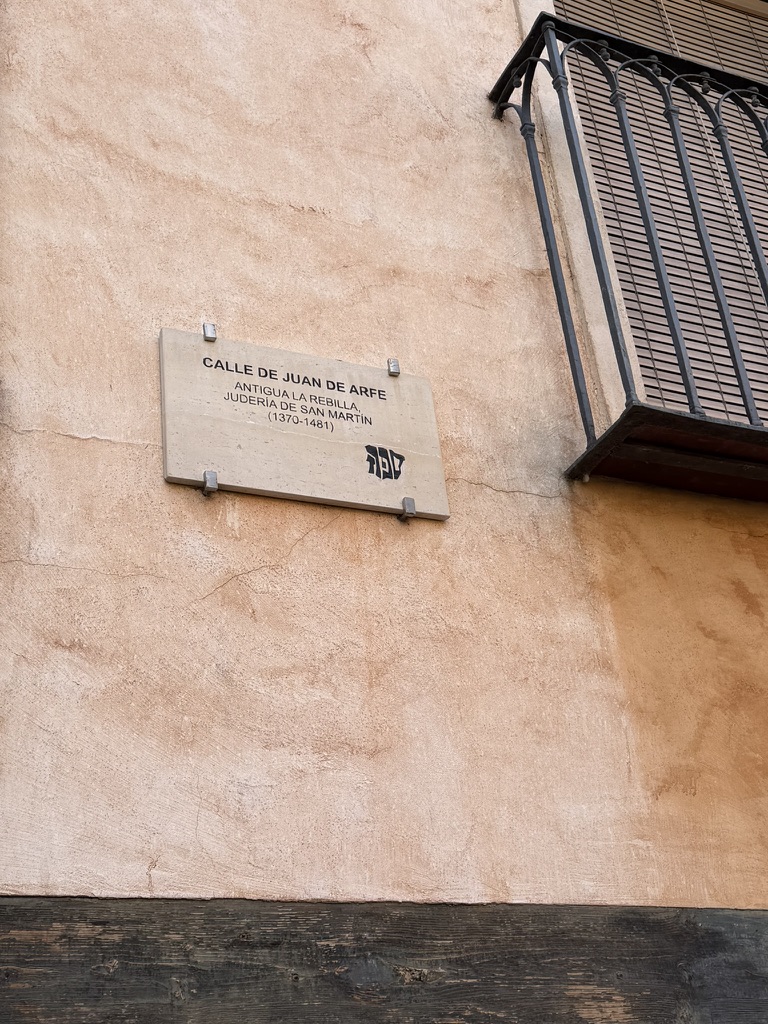
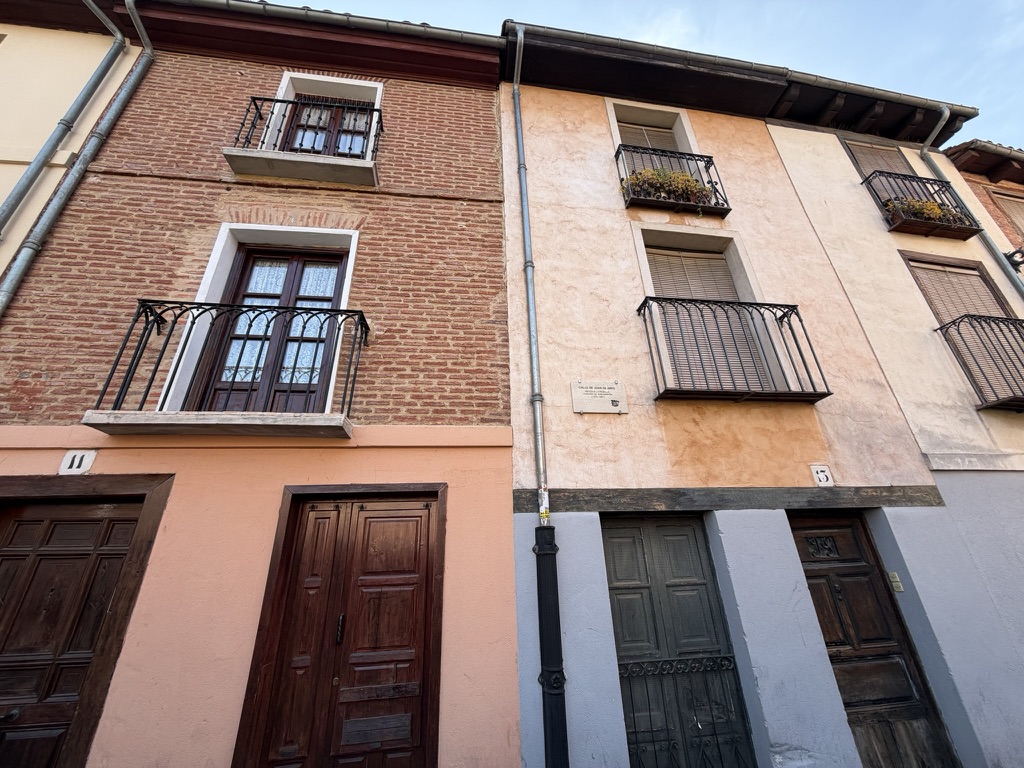
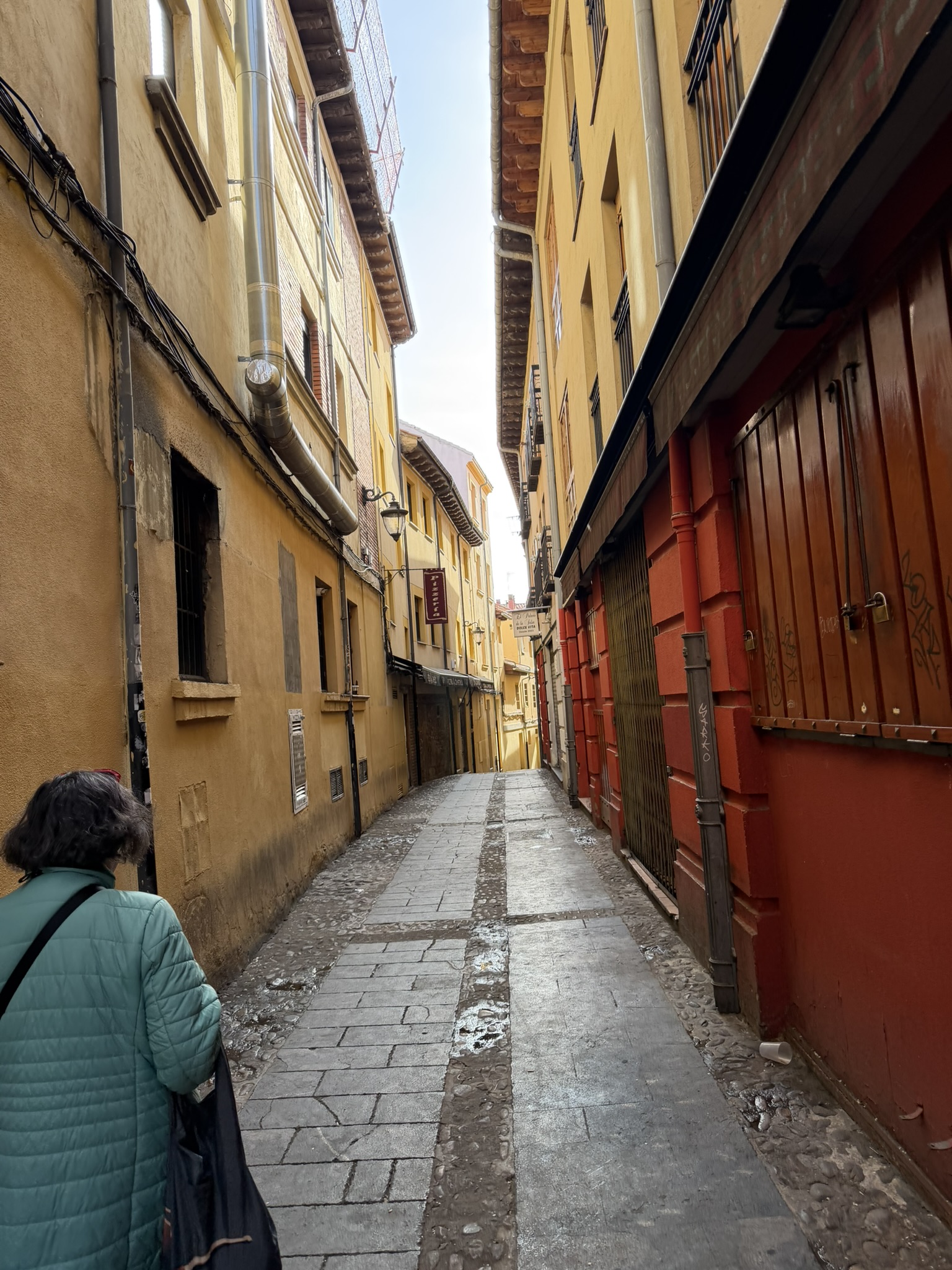
In Leon, we saw much more signs of Jewish life. We entered what was once a walled city through a street where there was once a gate, the Puerta Moneda, or the Coin Gate. Immediately we guessed it was the entrance to the Jewish area where the money lenders lived.
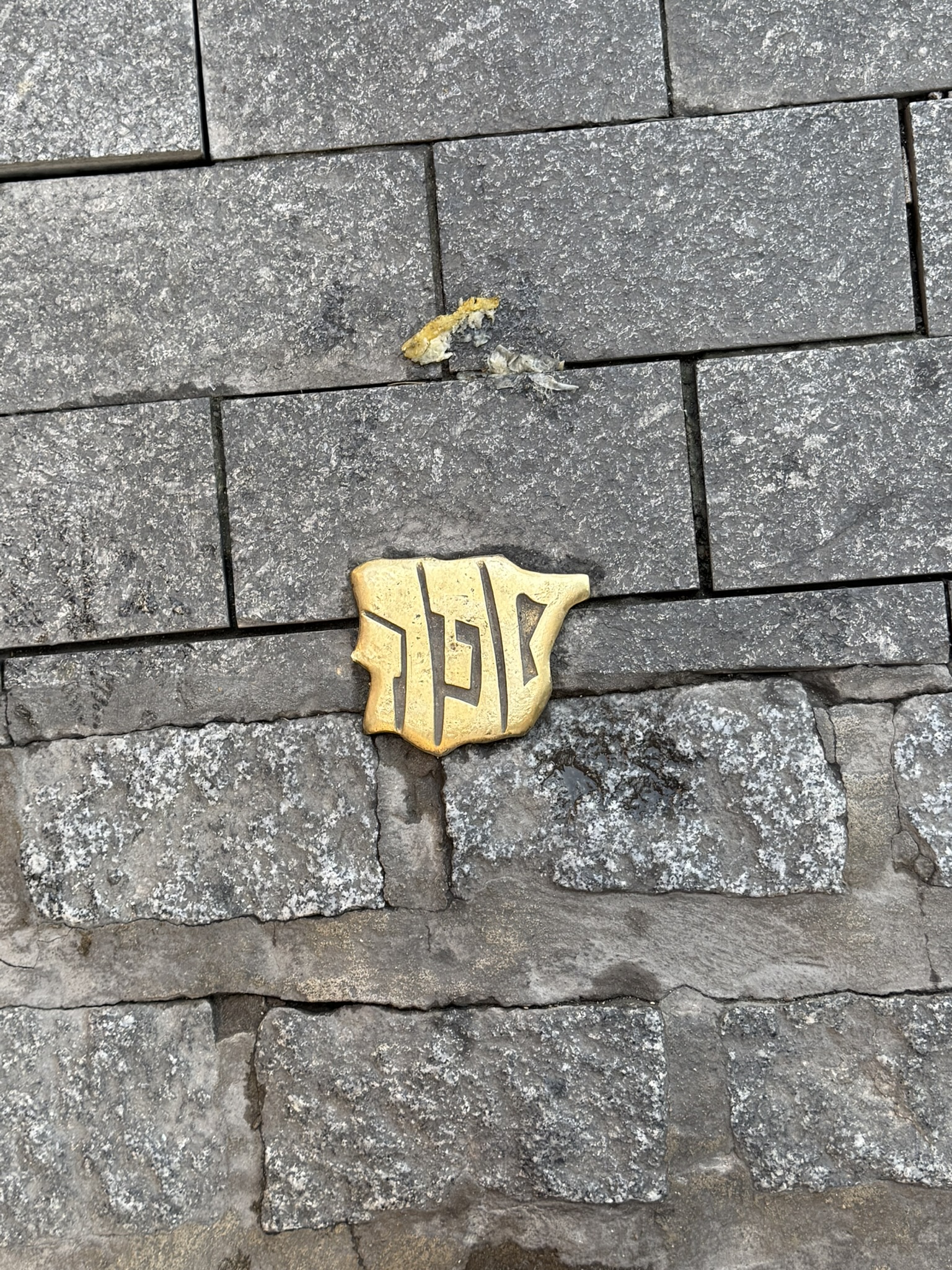
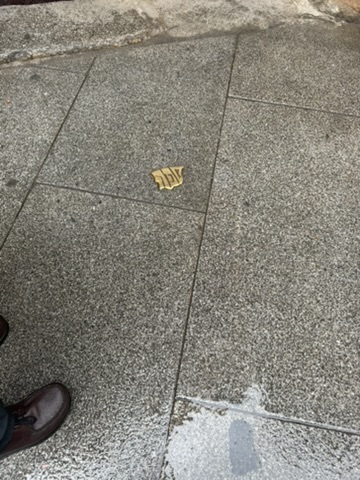
Our guide pointed out a long, narrow street that once was filled with vibrant Jewish life, as well as the square where they held a market. In was in Leon that we first saw the markers placed by the Red de Judarias de Espana (Network of Jewish Quarters in Spain.) Their symbol includes the Hebrew letters that spell out Sefarad and mark important Jewish sites.
The first one we saw was on a plaque on Calle De Juan De Arge marking the home of a Jewish family that lived there from 1370 until 1481. We saw another marker later on that was embedded in the ground.
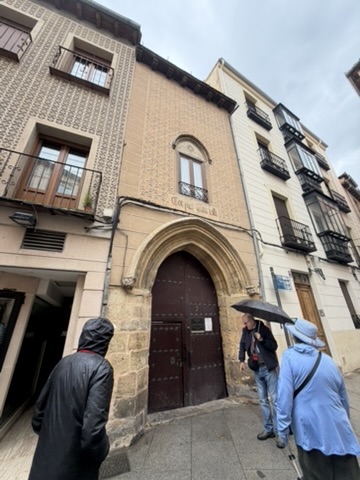
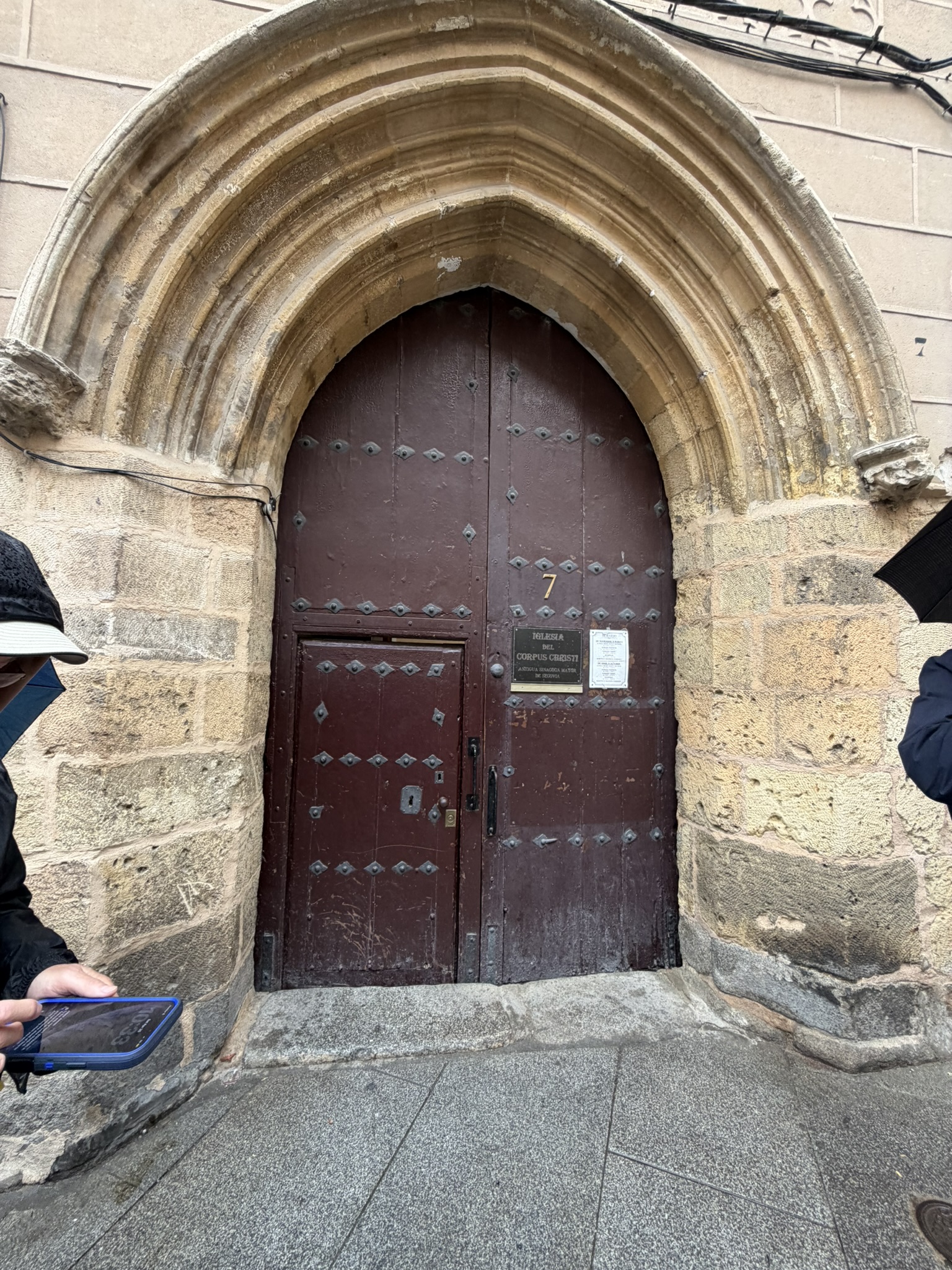
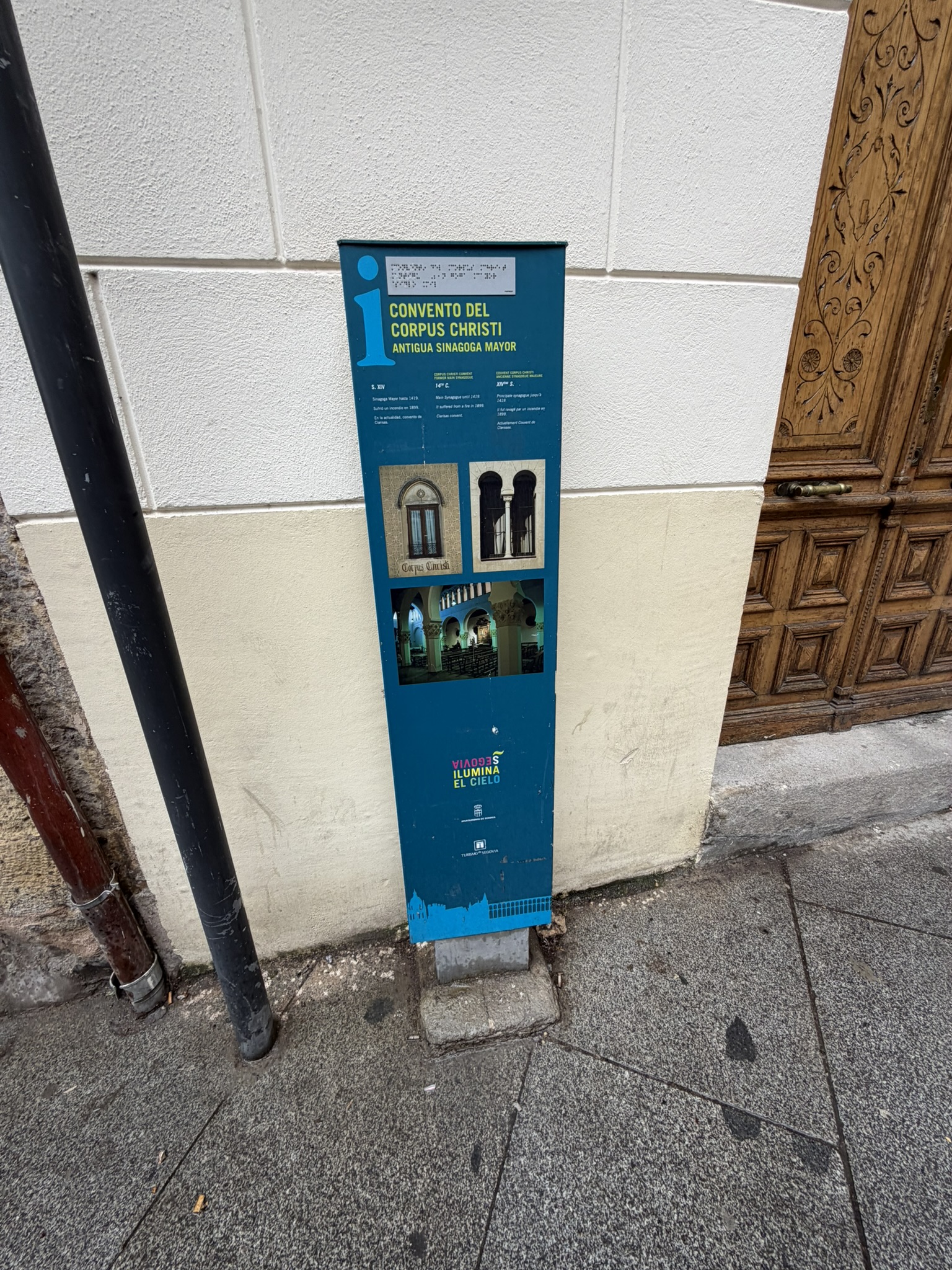
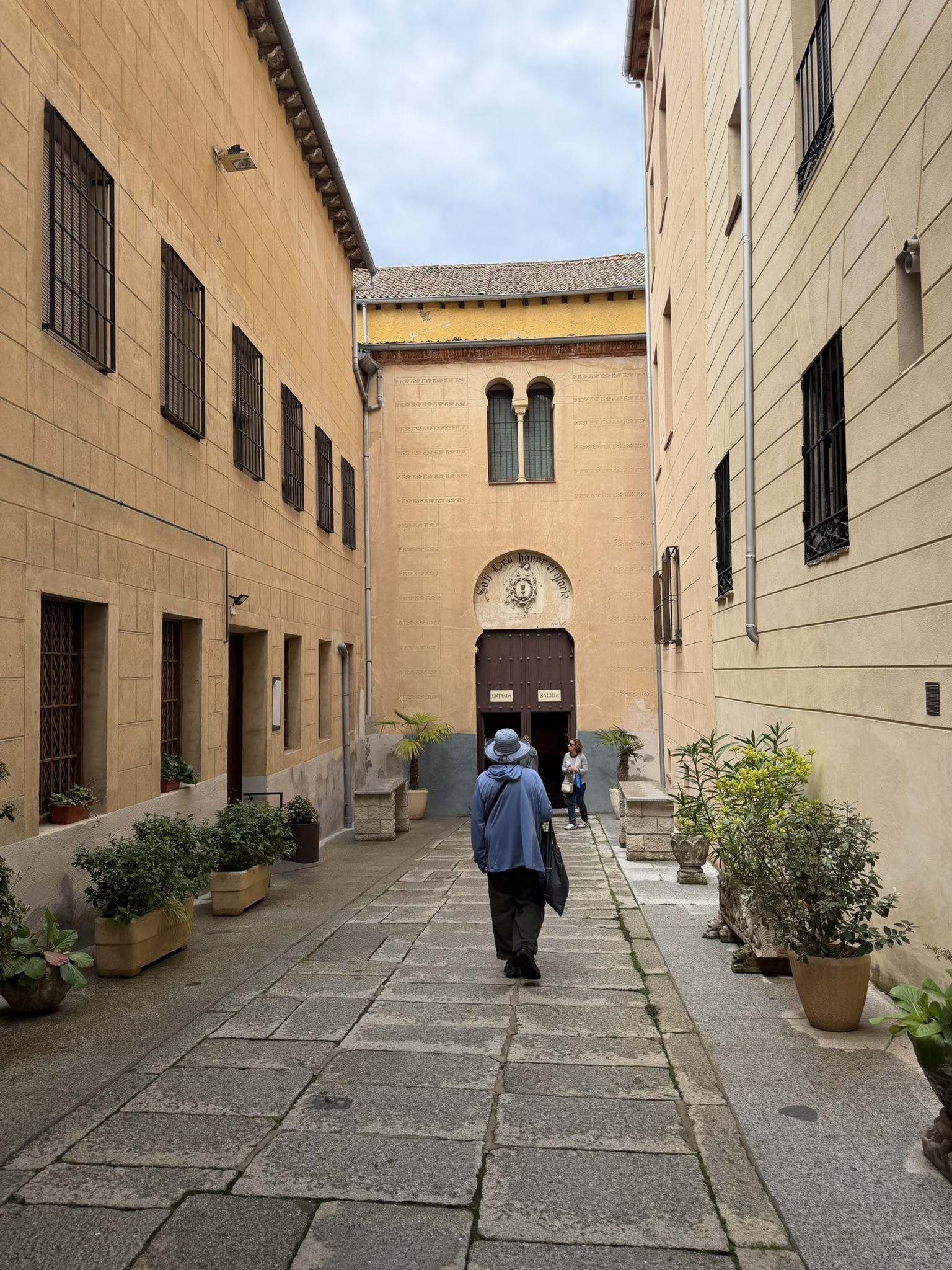
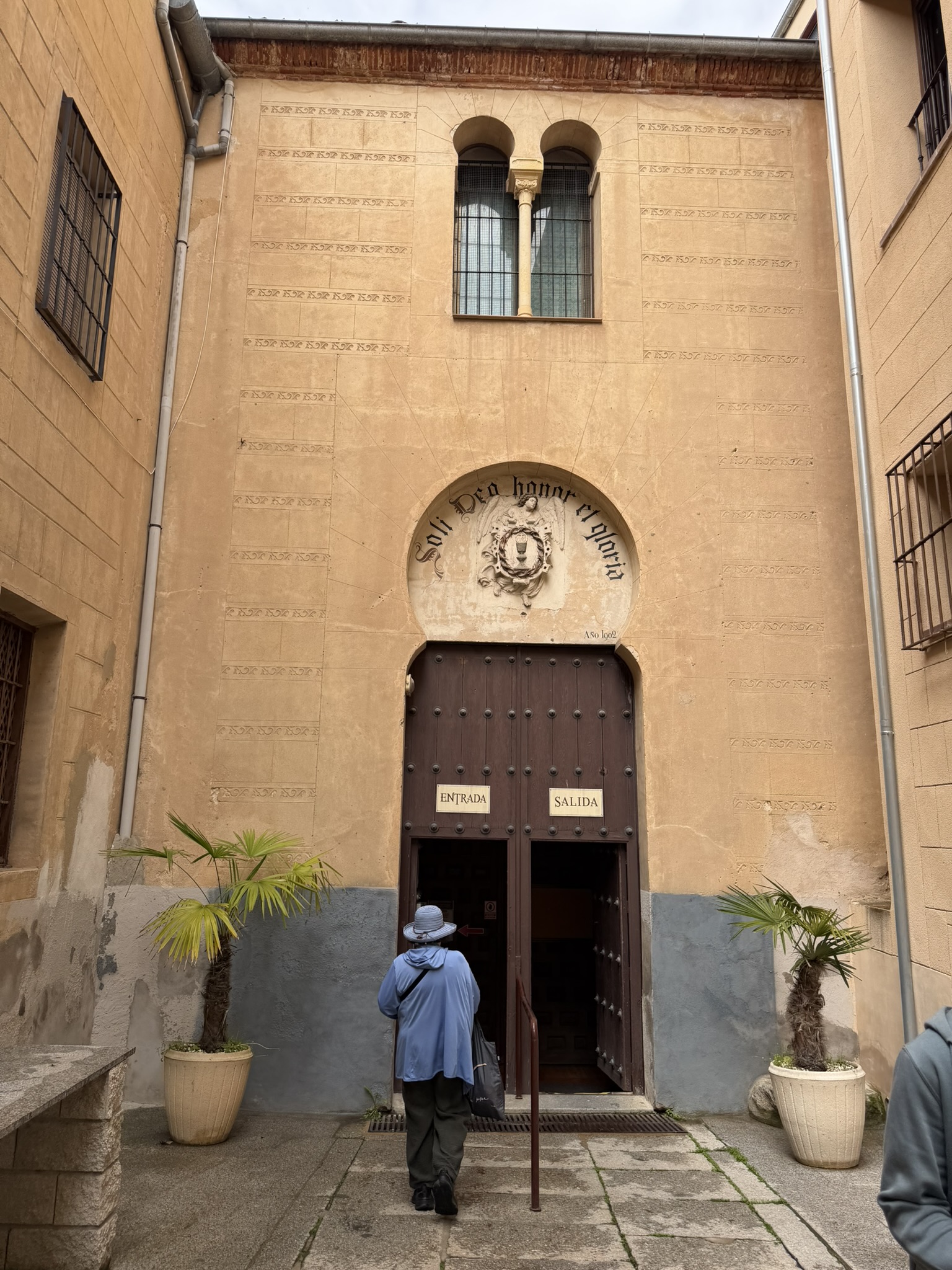
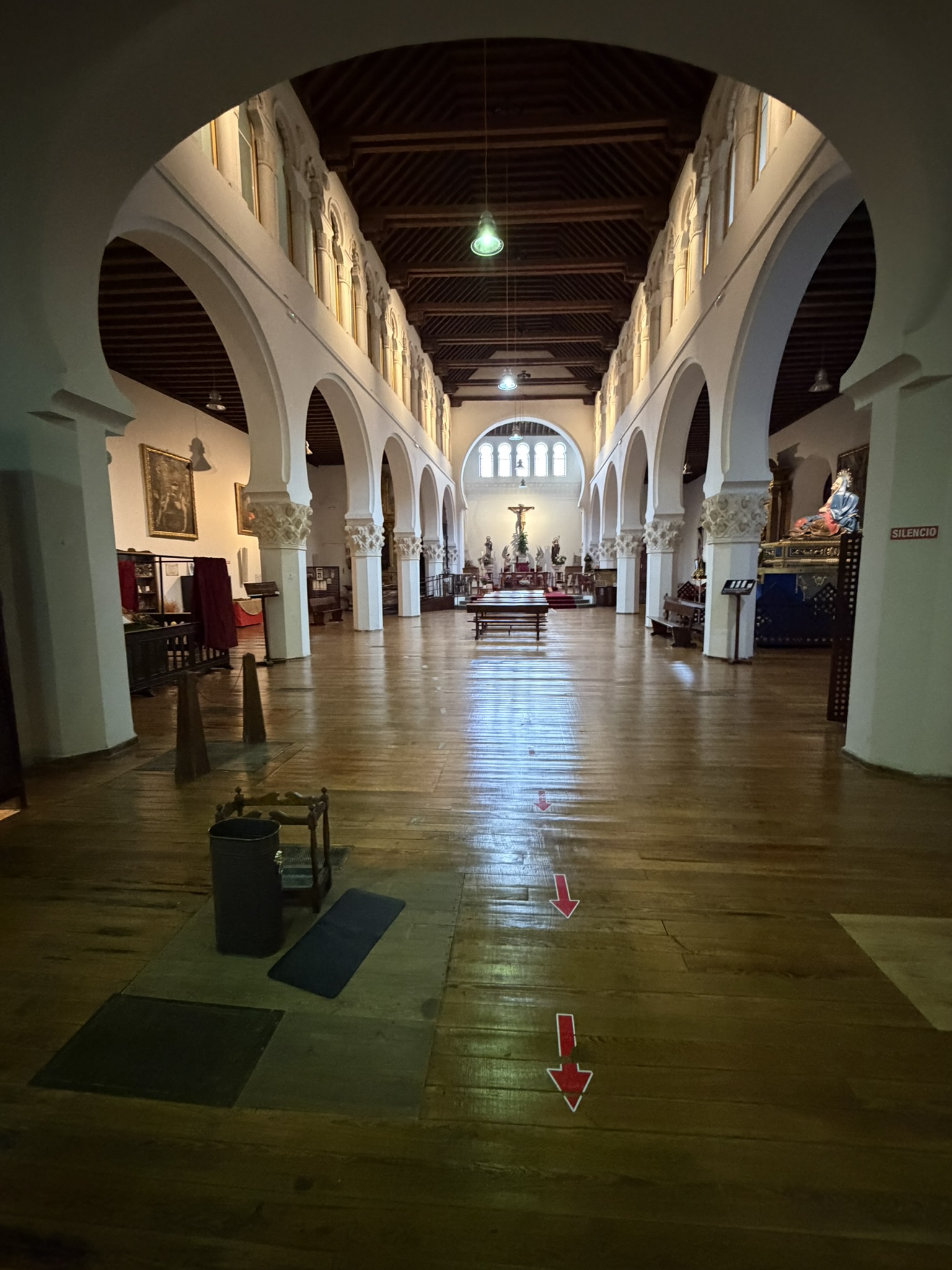
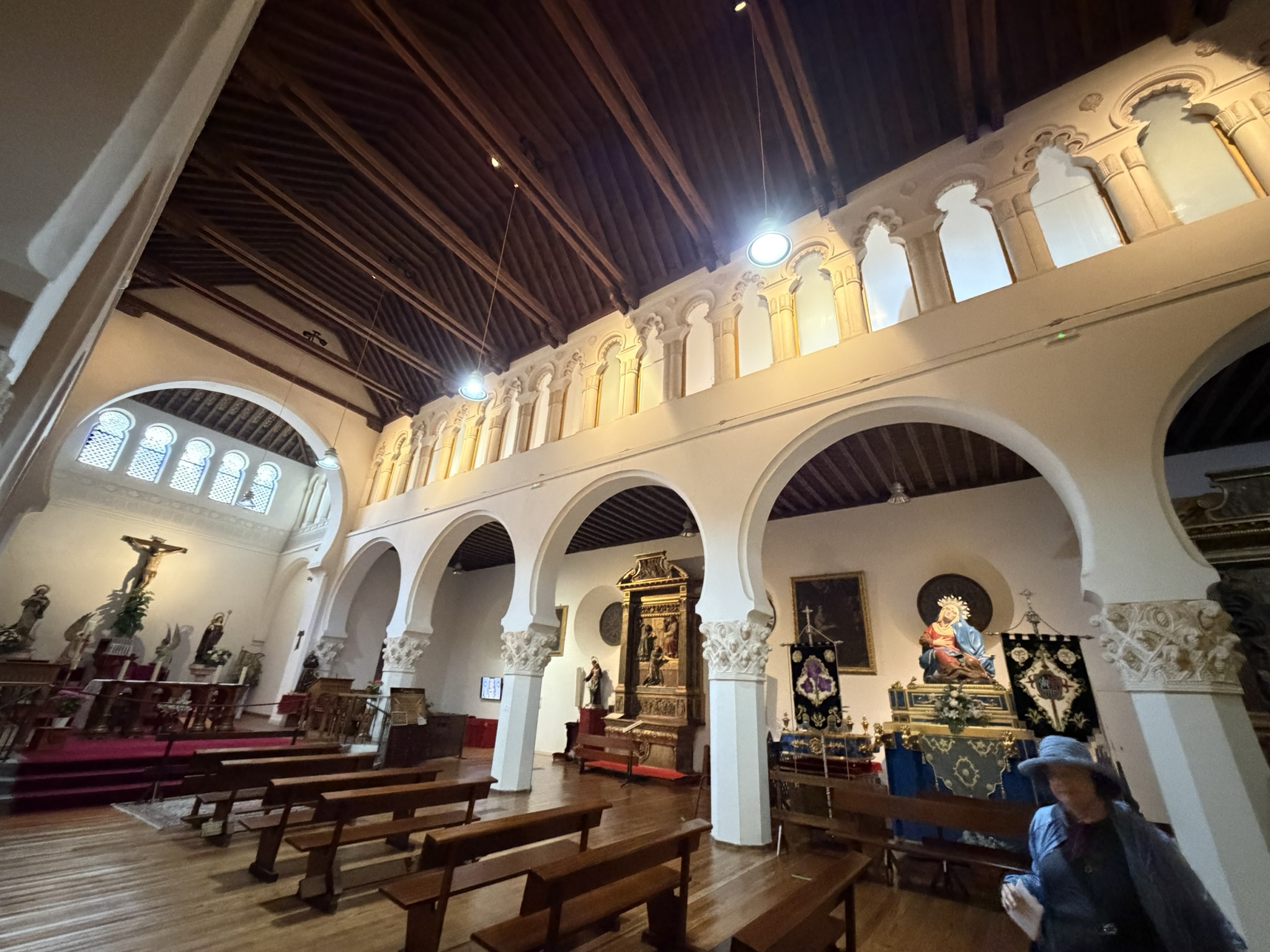
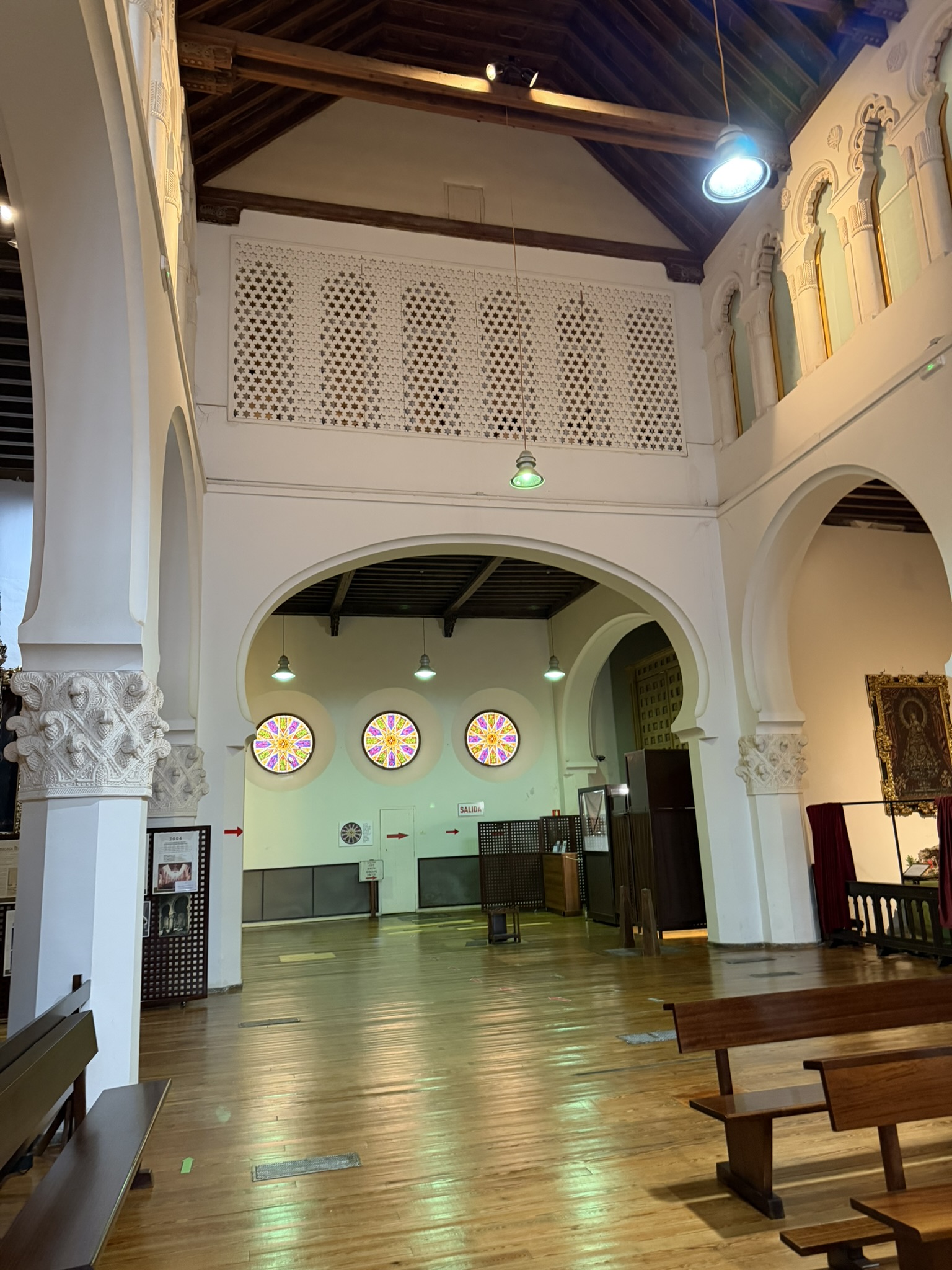
Finally Segovia, where we visited the only surviving synagogue in all the towns we visited. Once a synagogue, now a church, this synagogue used to be one of five that served the large Jewish community of Segovia, where about a third of the town was Jewish. It was the MAIN Synagogue, La Sinagoga Mayor, located in the center of the Jewish area.
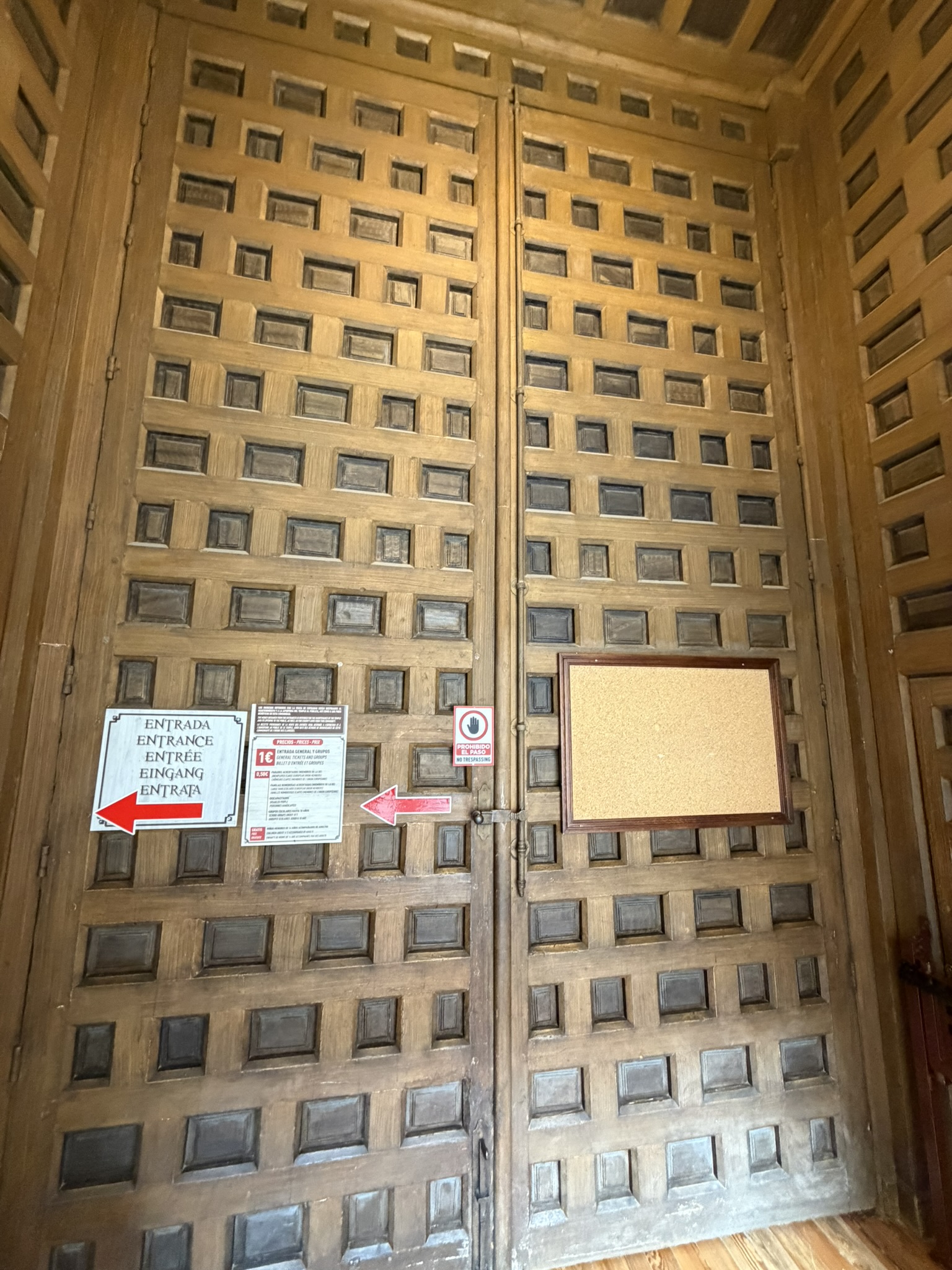
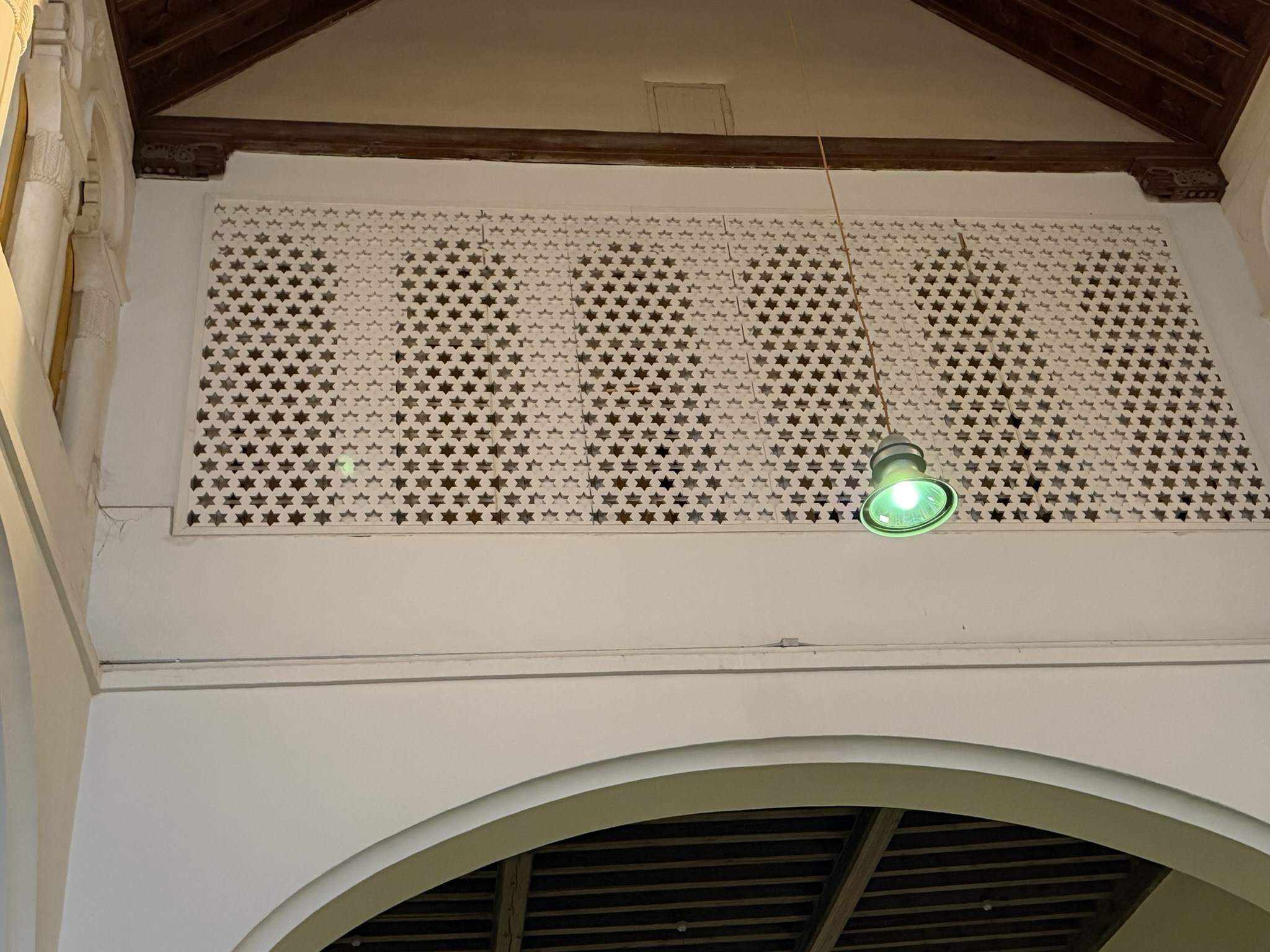
When you first look at it, it seems to be a small building. I wondered how it could be the MAIN synagogue. But it is a false front. When it was opened later in the day, my sister and I entered the courtyard and explored the building. There are still indications of its use as a synagogue. It is an open room where the bima would have been in the center. And there is a women’s balcony above, with screens so that the men could not see them, but they could see what was happening below. It remained a synagogue until 1419. In 1899 the Synagogue/Church was damaged by a fire. It was restored in 1902 and remains open today.
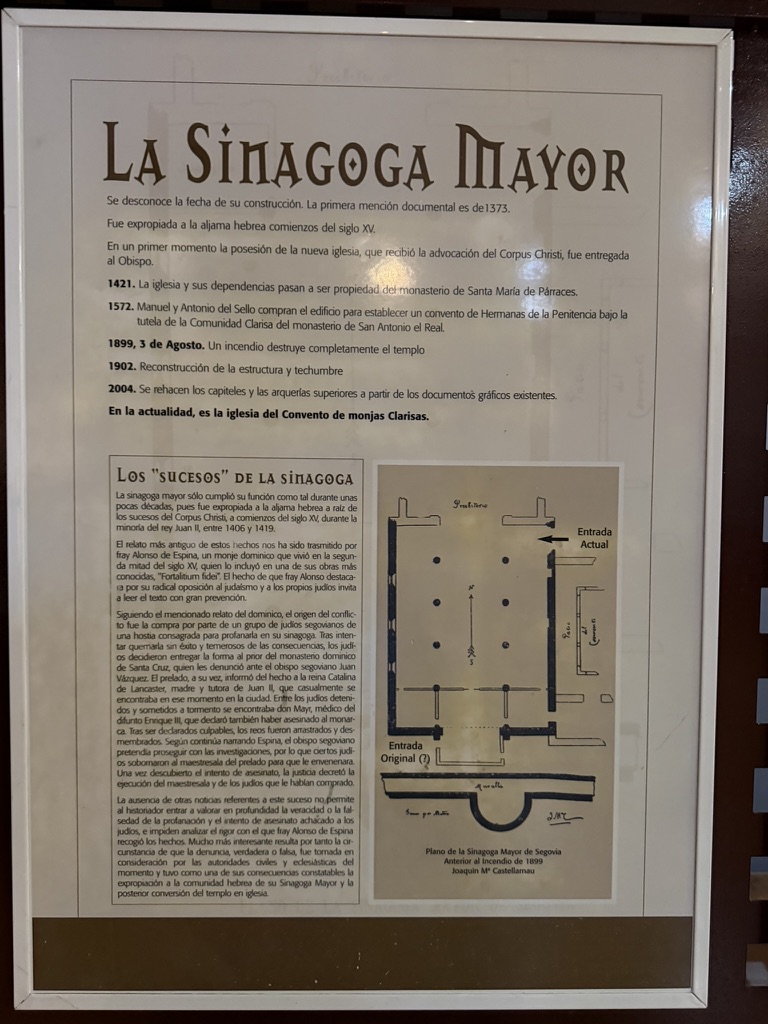
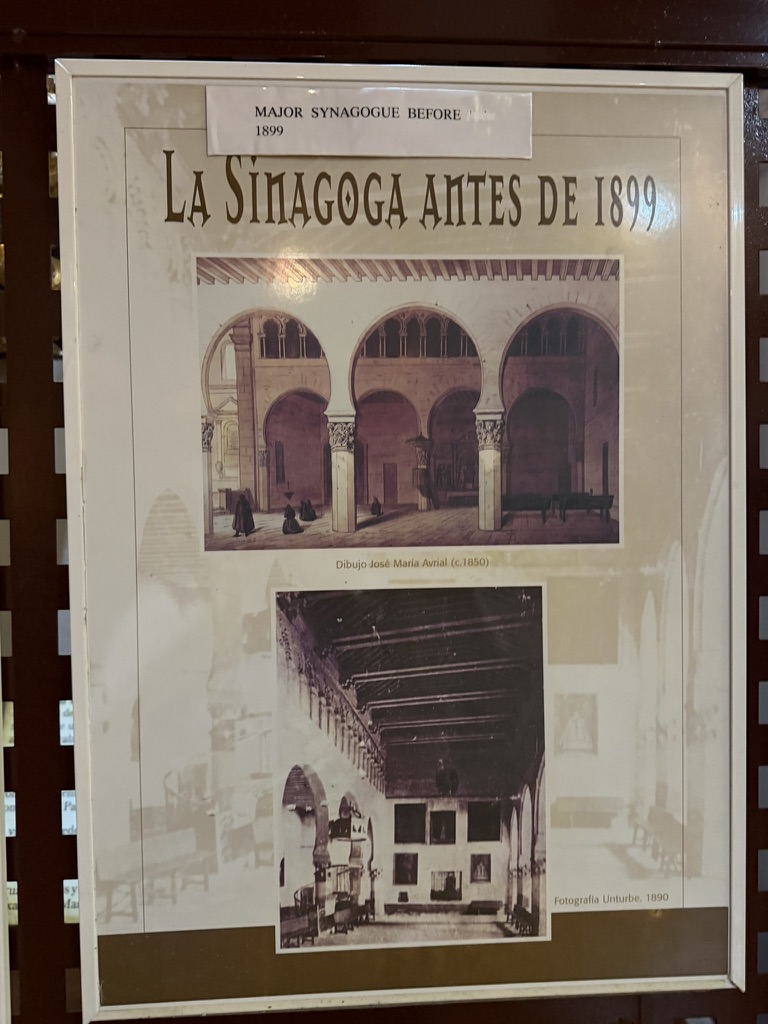
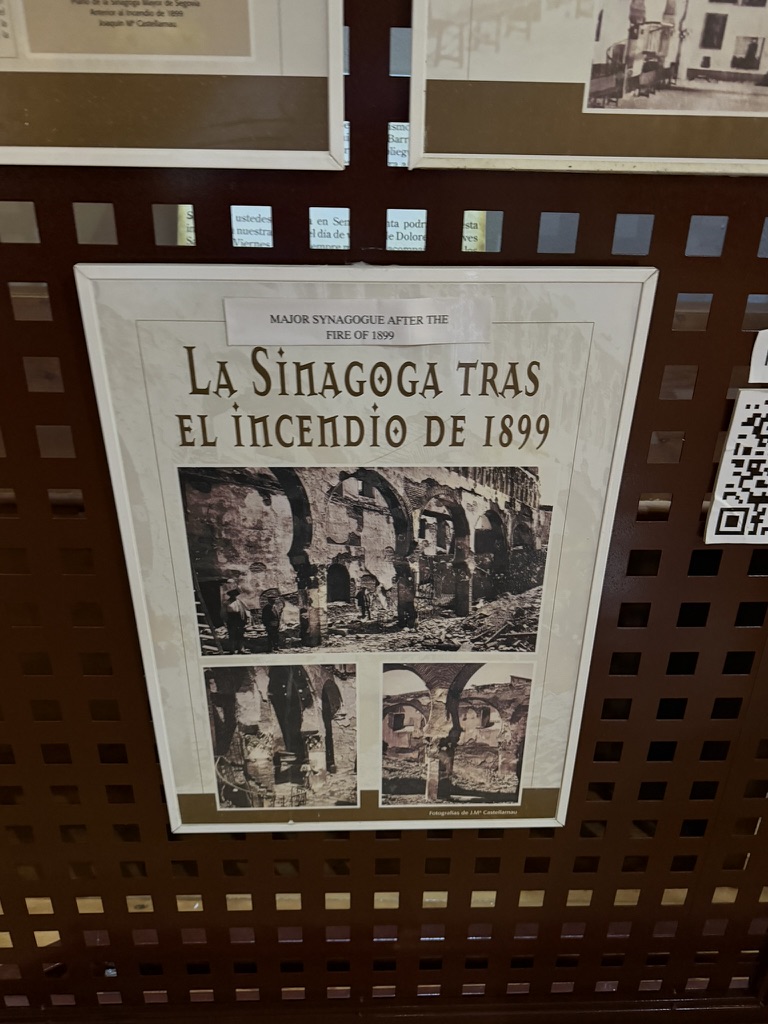
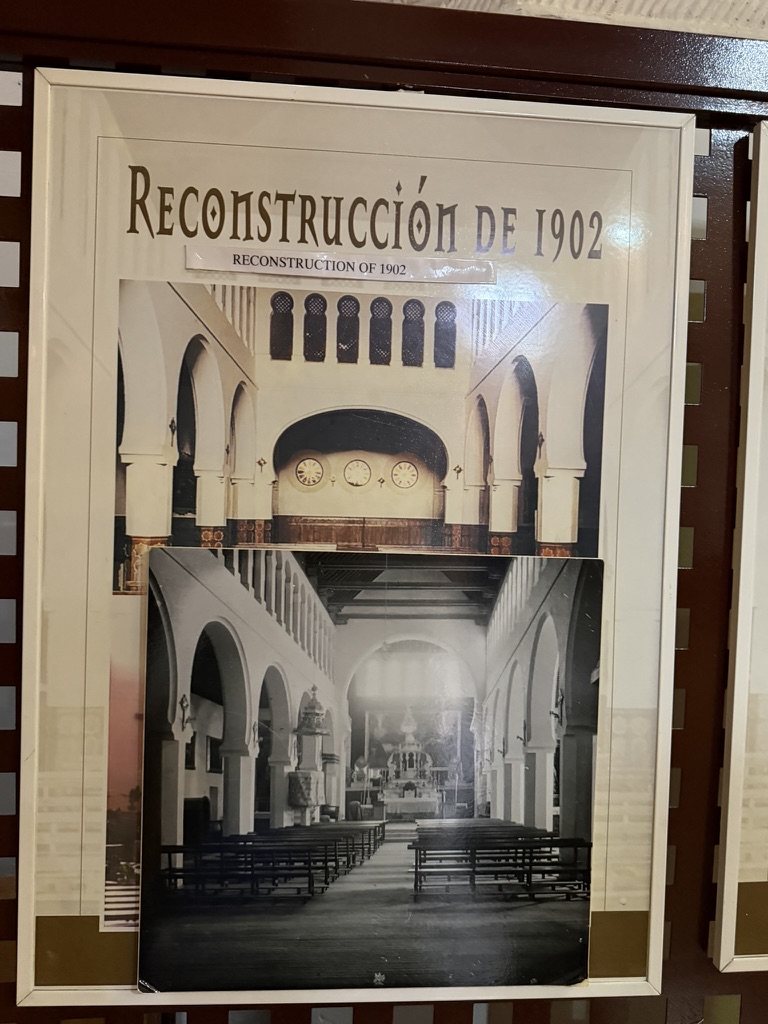
The visit to this synagogue was a highlight for my Jewish journey. We are descendants of Iberian Jews who left Spain for Portugal, then left Portugal for Amsterdam, then made the mistake of leaving Amsterdam for Galicia in Austria. But then even in Amsterdam the Jews were slaughtered by the Nazis.
The one final sign of Jewish life in Spain startled me. Although Portugal had a Jewish community before WW2. In fact, Jewish people started returning to Portugal in the 1800s. But Spain was a different story. It wasn’t until 1869 that the new Spanish Constitution allowed Jewish people to settle in Spain. But there were not many. However, it is believed that about 15,000 Jews survived by escaping to Spain.
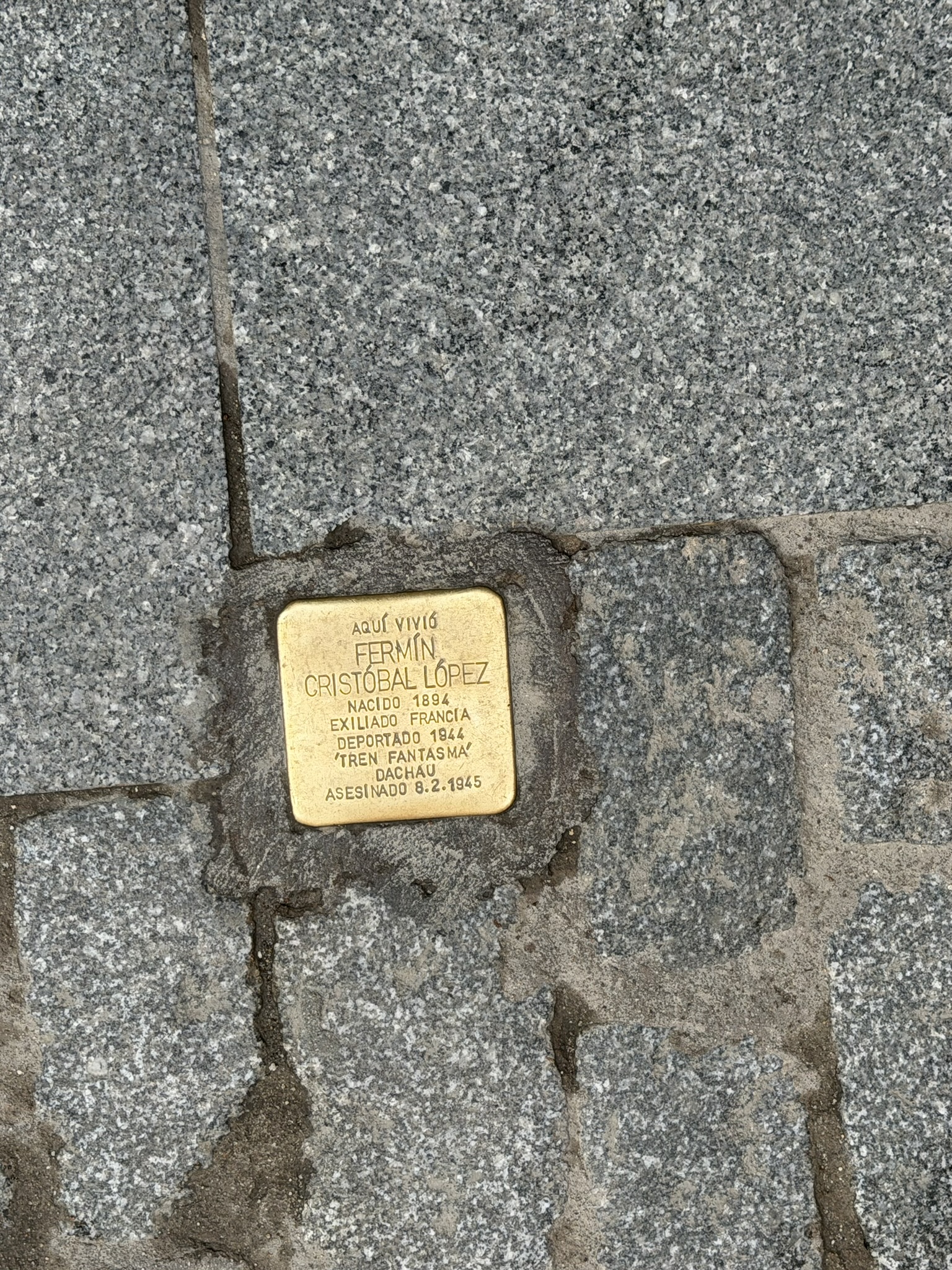
But the “Stolperstein,” stumble stone, I found tells a different story. Fermin Cristobal Lopez died in Dachau. Born in 1894, he was exiled from France, and Deported from Sergovia on the Ghost Train in 1944. I do not know if Fermin was a Jew or a political prisoner. But I do know he died in Dachau.
In these times of Jew hatred, for me it is important to know where we once lived and how we were forced to find new homes and new places for sanctuary. In Spain it was very obvious that the status of Jews is precarious. In every city in Spain we visited, except Sergovia, there were giant banners calling supporting the Palestinians. But nothing to recognize what the Israelis and Jews have suffered.
I asked our tour guide if she felt the Jewish people of Spain were safe. She differentiated between Israelis and Jews. Saying the government and people were angry at the Israeli government. But she believed Jewish people in Spain were safe. I guess we shall see.
In Portugal it was different. No Palestinian Flags. No feelings of queasiness as I walked down the streets. For me, as a Jewish person, I will not soon return to visit Spain.

