While I covered most of our experiences in Portugal and Spain, there are some special places and experiences that just did not fit into my other blogs. So here I am doing a potpourri of unique and joyful events and places.
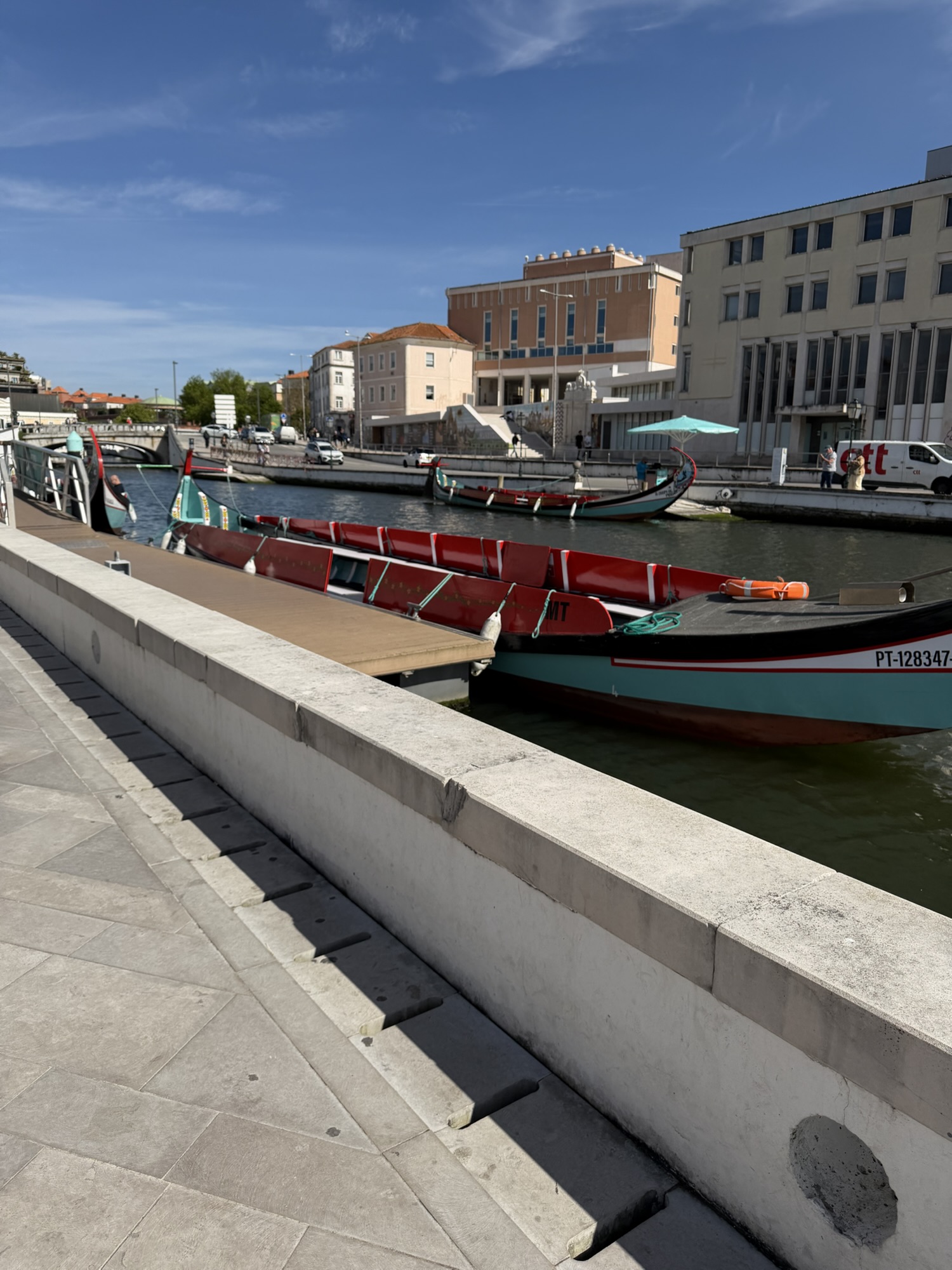
Our boat, used to move salt or seaweed.
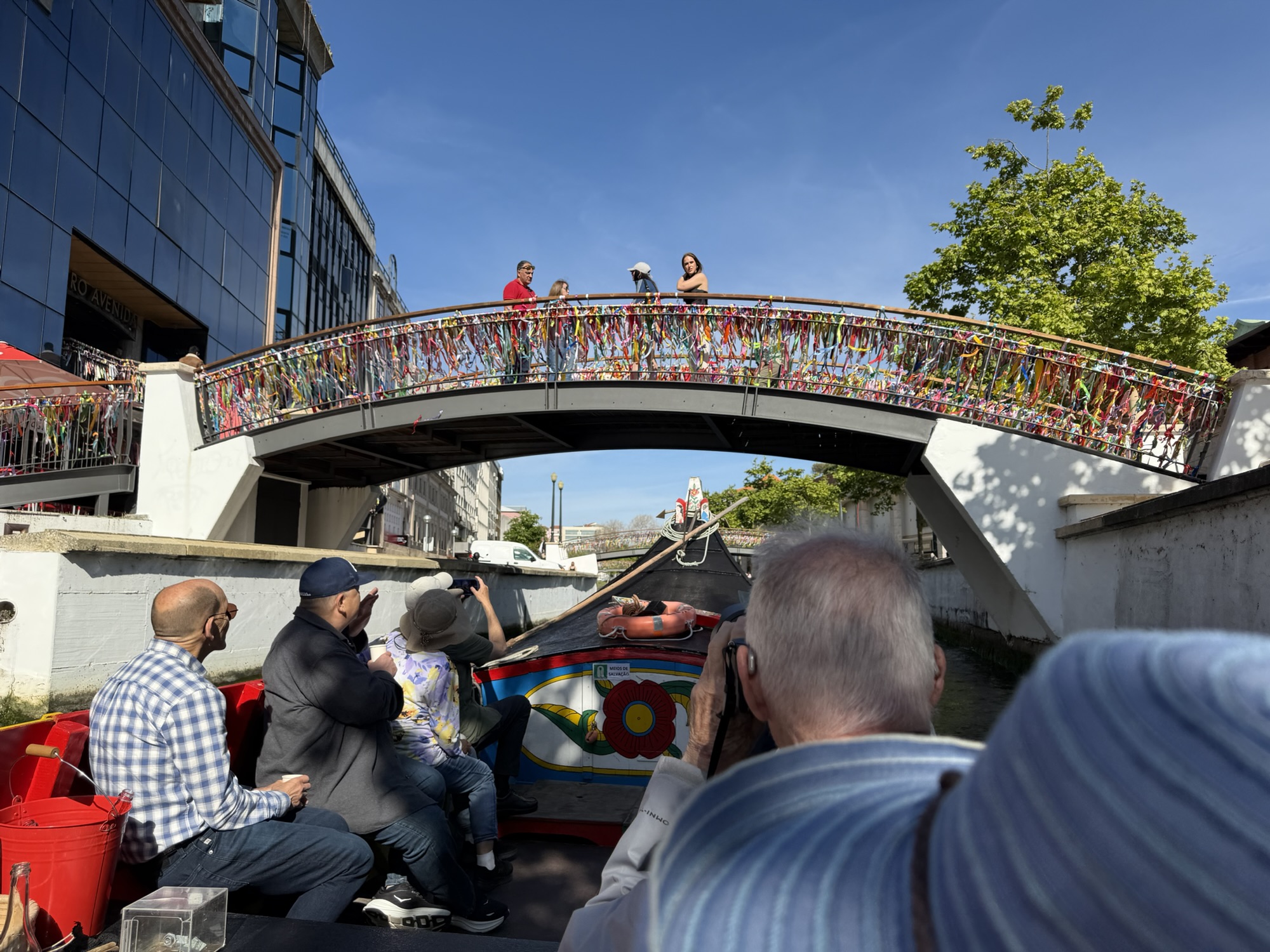
Did you know there is a Venice-like city in Portugal? I didn’t. But near the coast is the city of Aveiro. A large channel was dug in the early 1800s opening the town to the sea and canals were cut to bring the water further in and for transportation as the city became an important part of the salt and seaweed industries. Although these two industries are no longer important, the canals have become a way for tourists to view the city. We had a wonderful time on our boat ride through the canals viewing the scenes from the boat. Later we had a chance to walk the streets that line the canal.
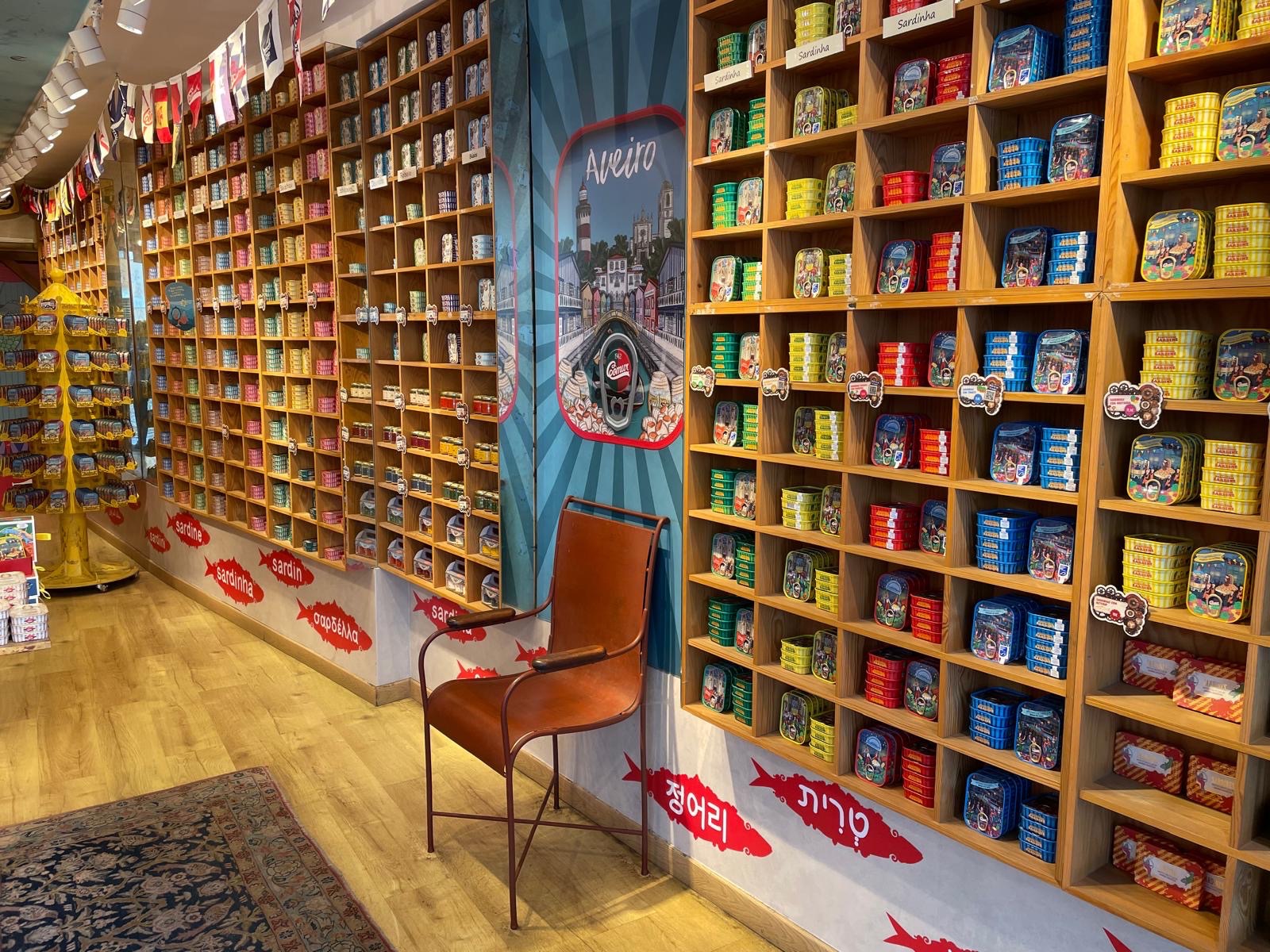
A sardine store.
In Portugal, sardines are an important food source and export industry. Wherever you go you can see sardines for sale and/or you can eat them. In Aveiro, the city with the canals, there was a lovely store just filled with different canned sardines for sale! Since I love sardines, I loved seeing this store. I had joy from this little bit of heaven for me. Later in our trip I purchased some to take home. I didn’t take a photo of that sardine store, but later on I found another one!
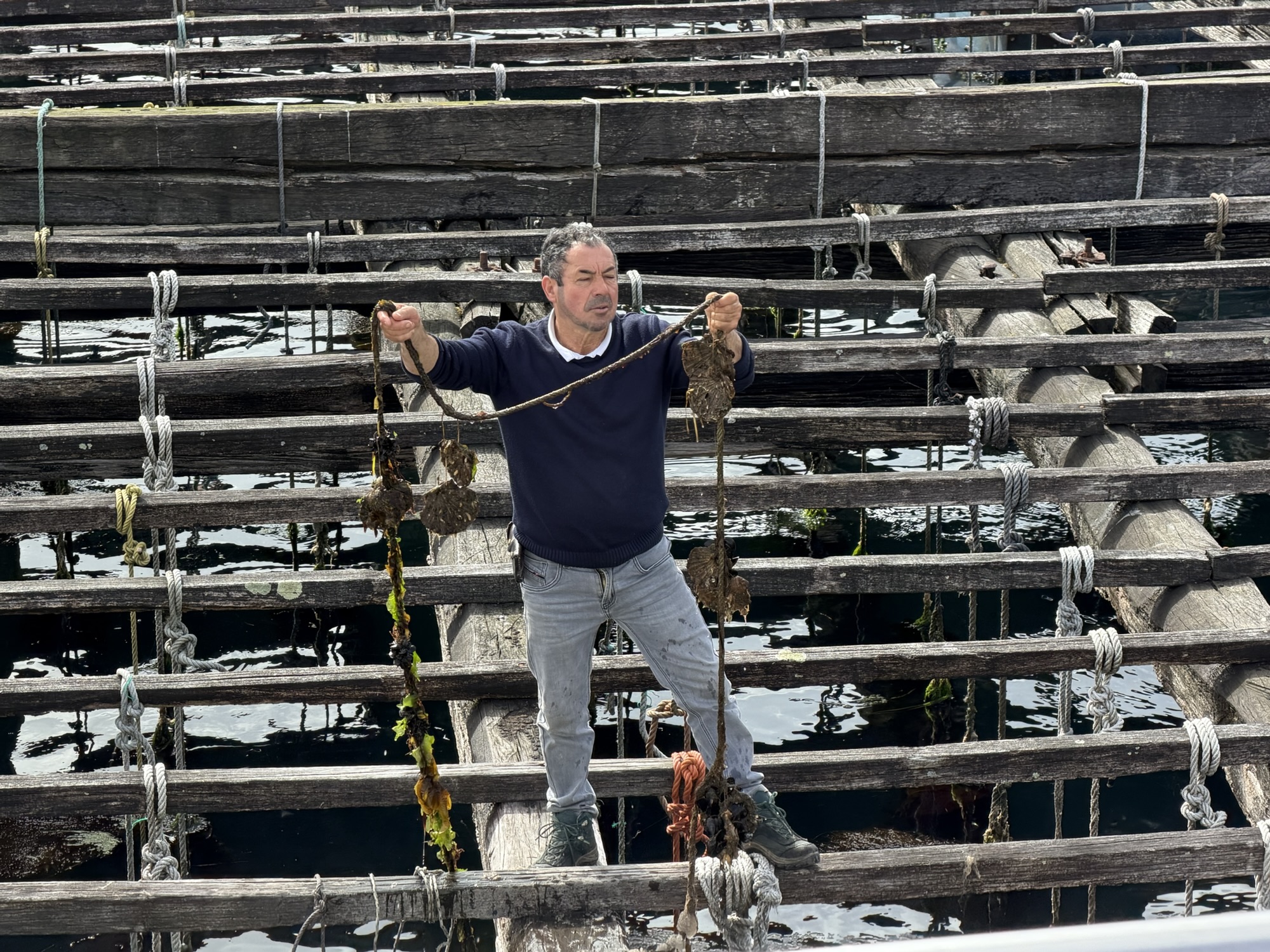
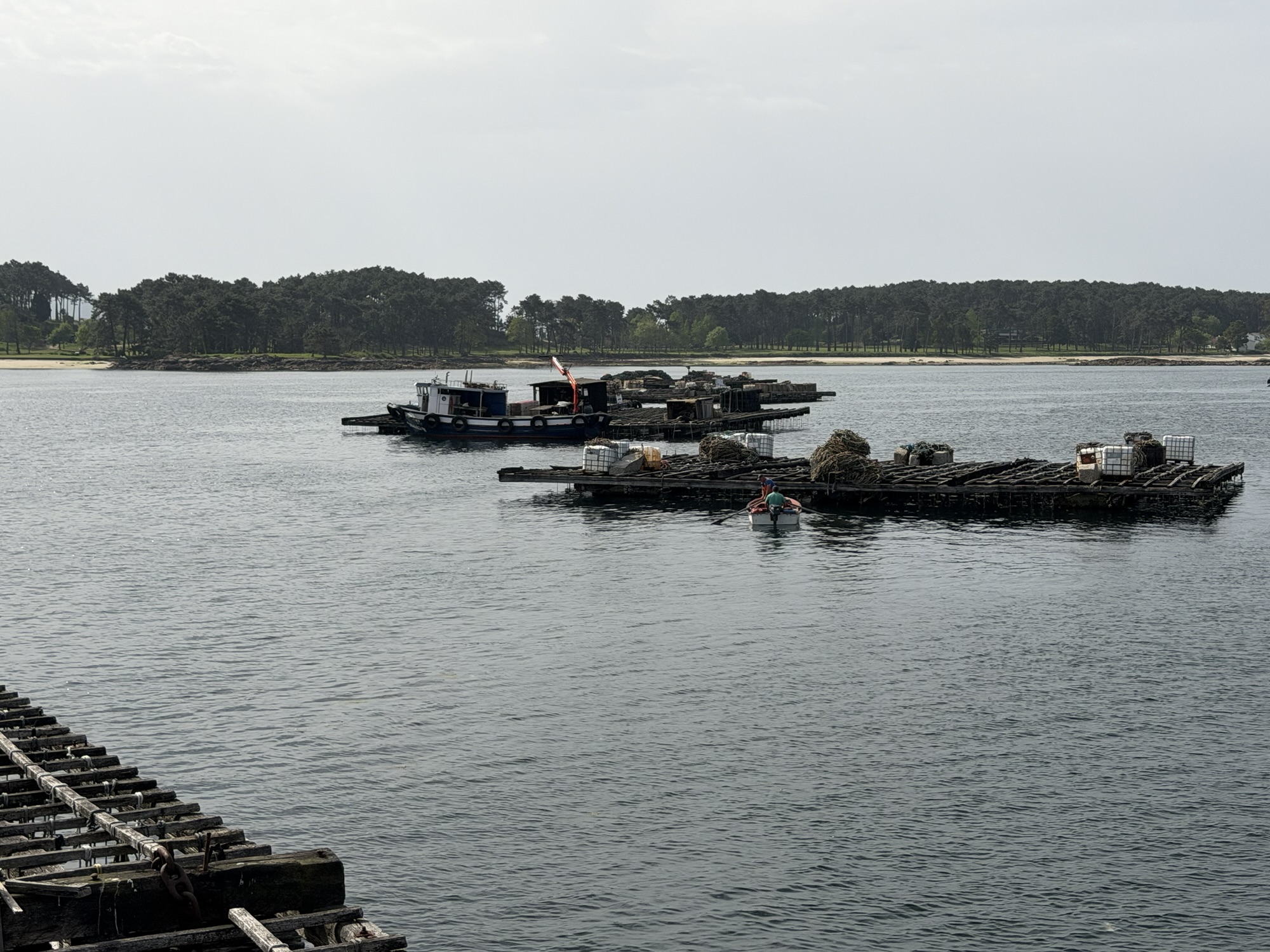
In Spain there is a large area of mussel farms in the Rias Baixus estuary. We had a lovely boat ride along the mussel farms and learned how the mussels grow and are harvested. Those who enjoy mussels (NOT me) had a delicious lunch of mussels and shrimp. I enjoyed watching the birds try to steal the food from the boat and from the others in my group trying to eat! And YES, of course they served us wine on the boat!!
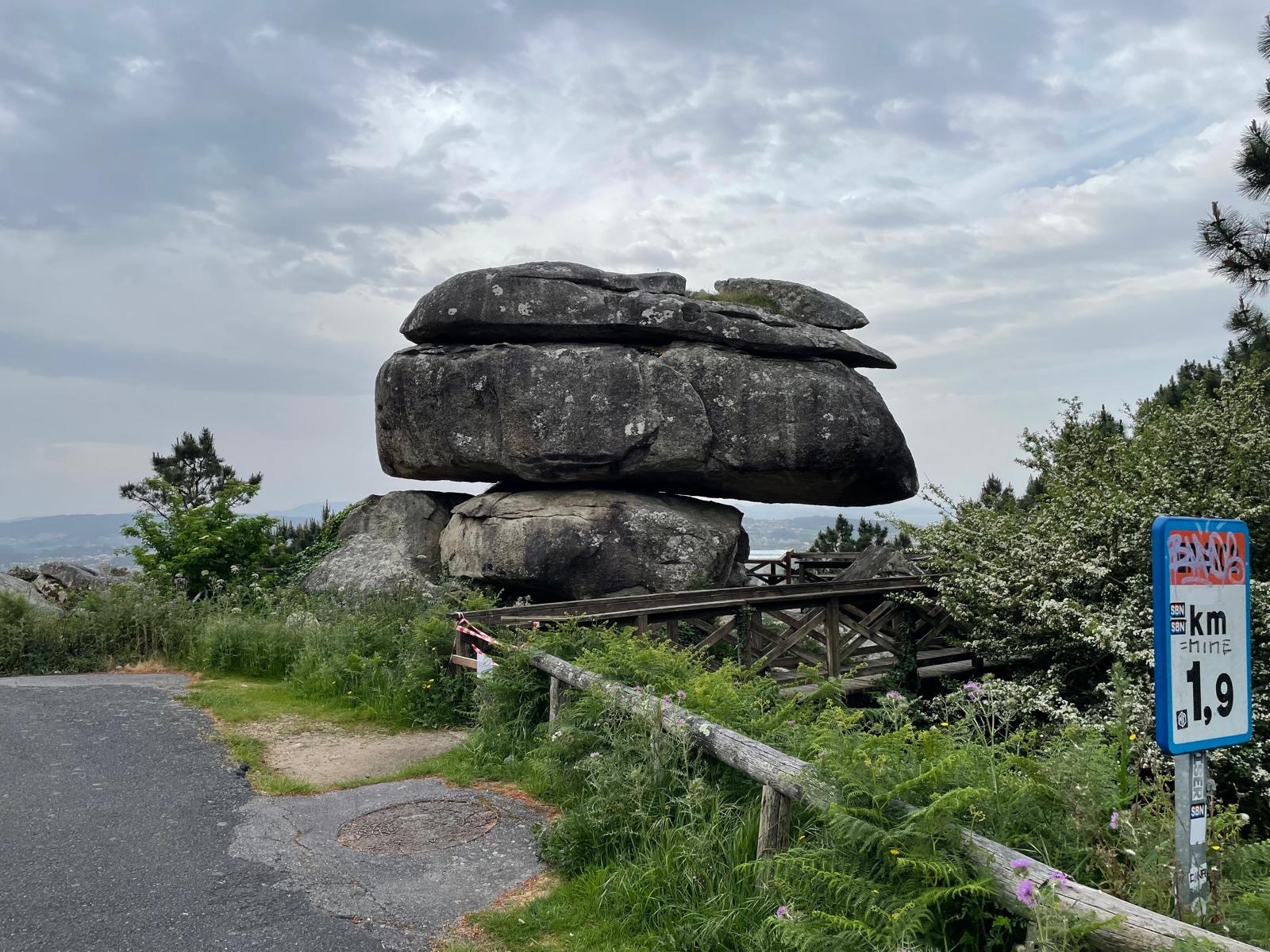
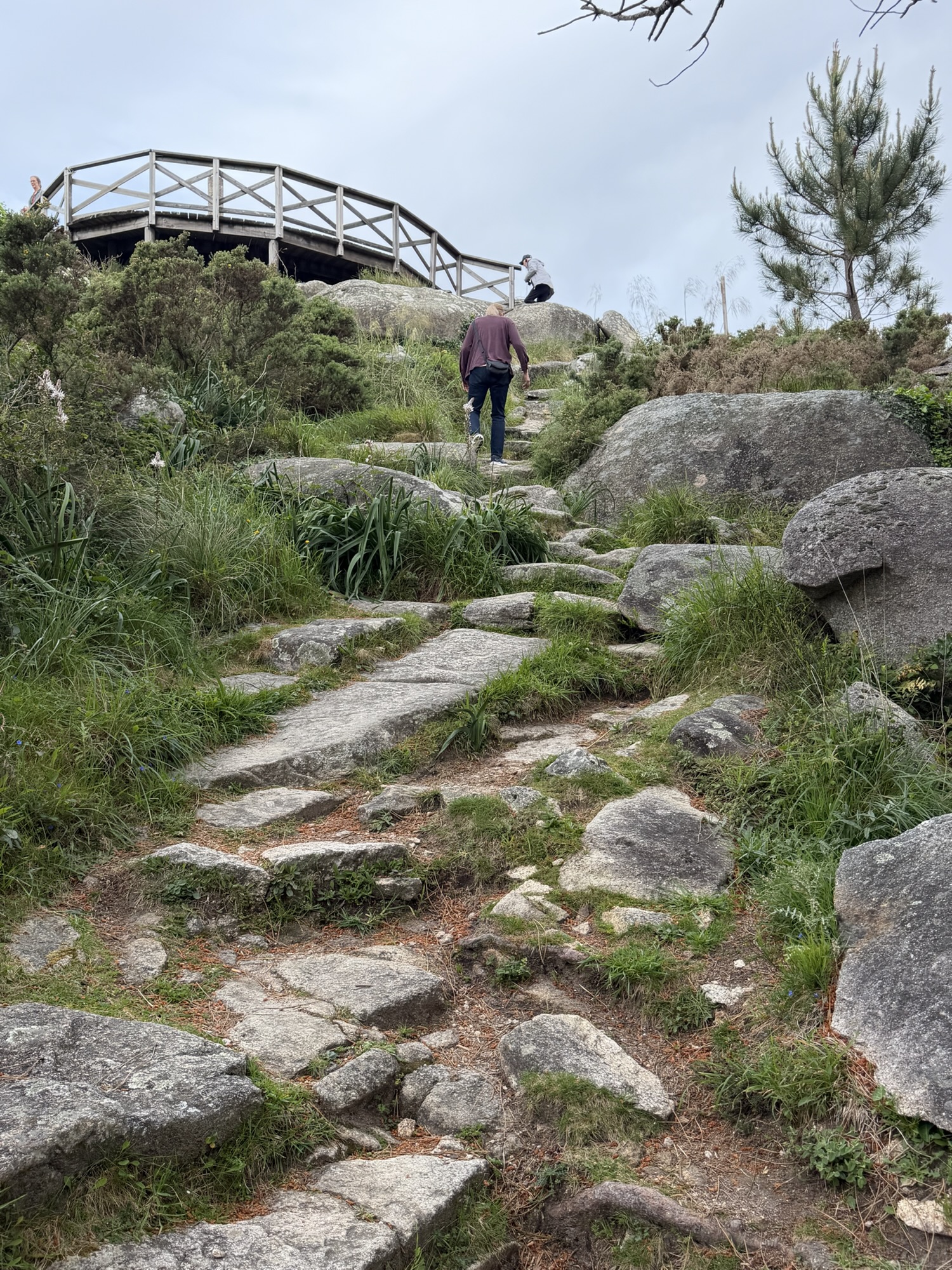
Before we went into the estuary, we looked at it from above at a wonderful little park on a peninsula bordering the estuary. There we encountered the Tilting Rock and beyond it a wonderful lookout to view the area from above.
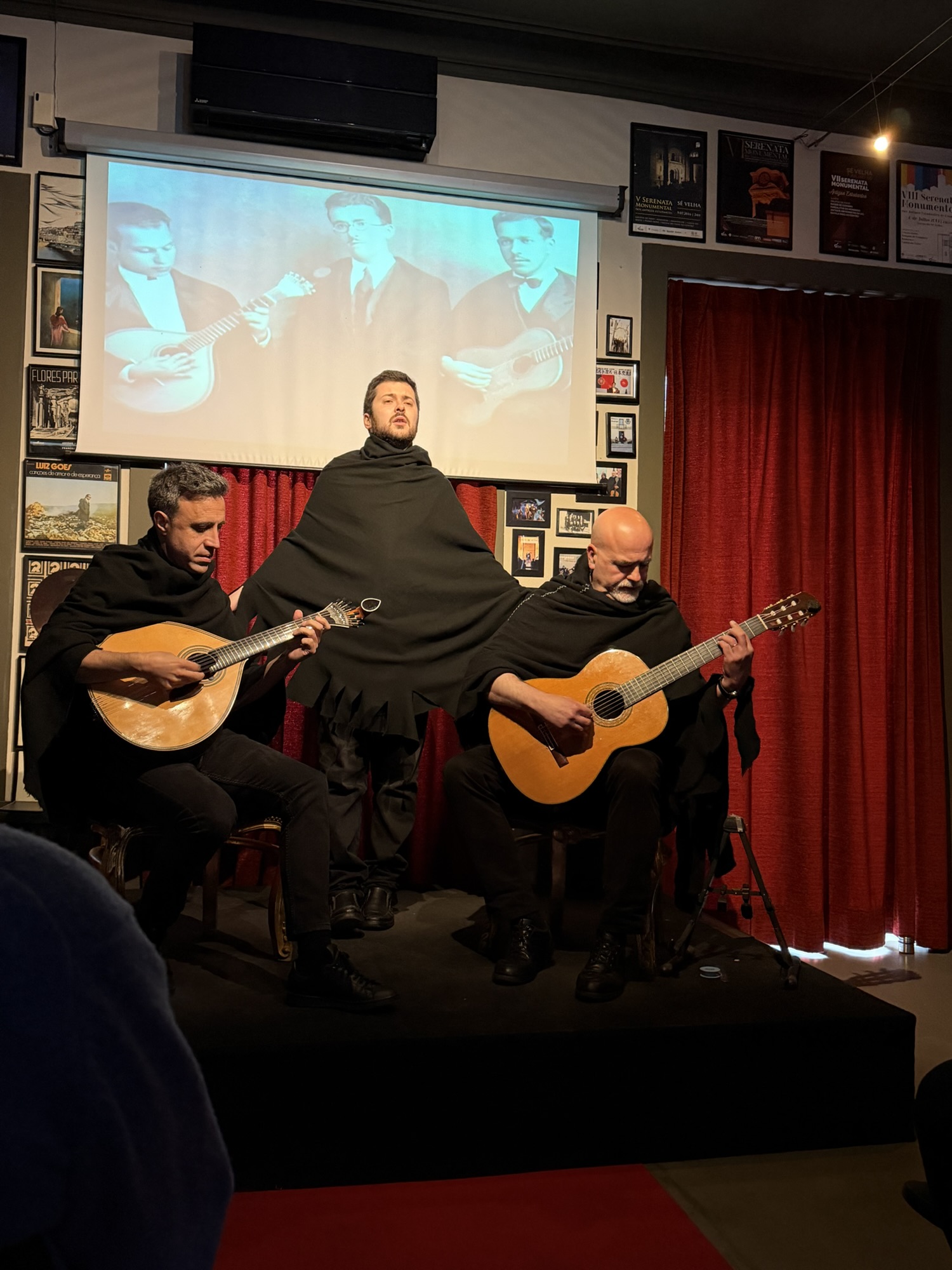
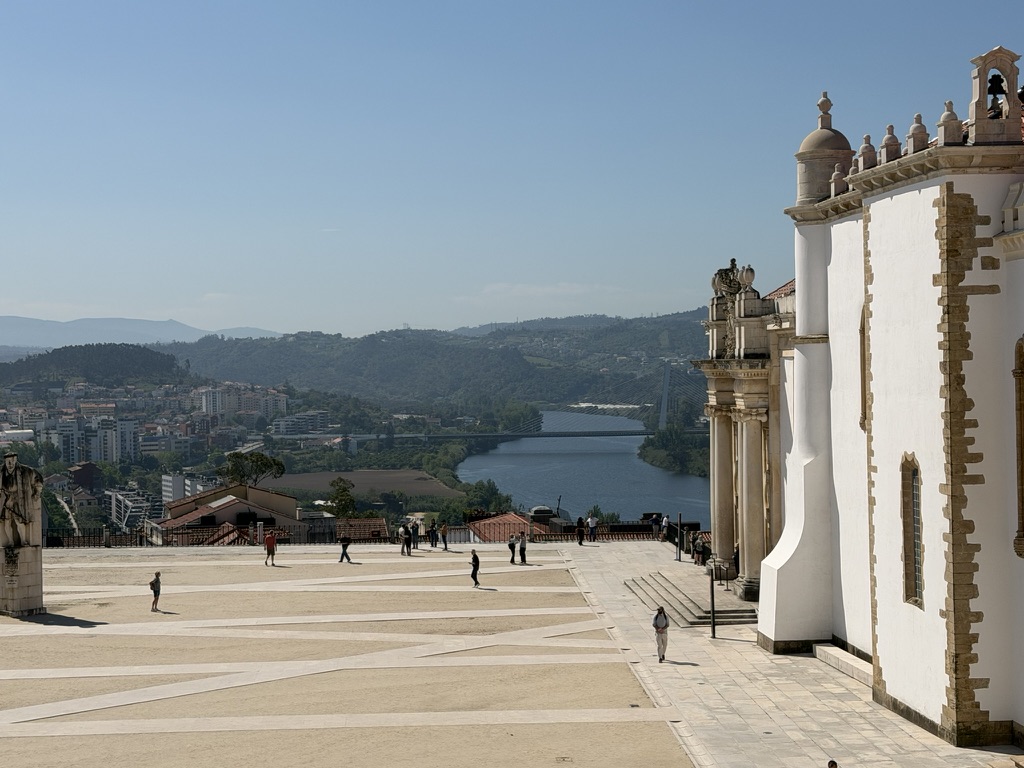
The town of Coimbra and the wonderful grounds of the university had more to offer us as we experienced Fado, the sad and emotional music of the students. Originally sung and performed with guitar by men dressed in black with capes and hats, now occasionally a woman also performs. We went to a performance by three men that was so interesting. Lots of longing and drama in the music.
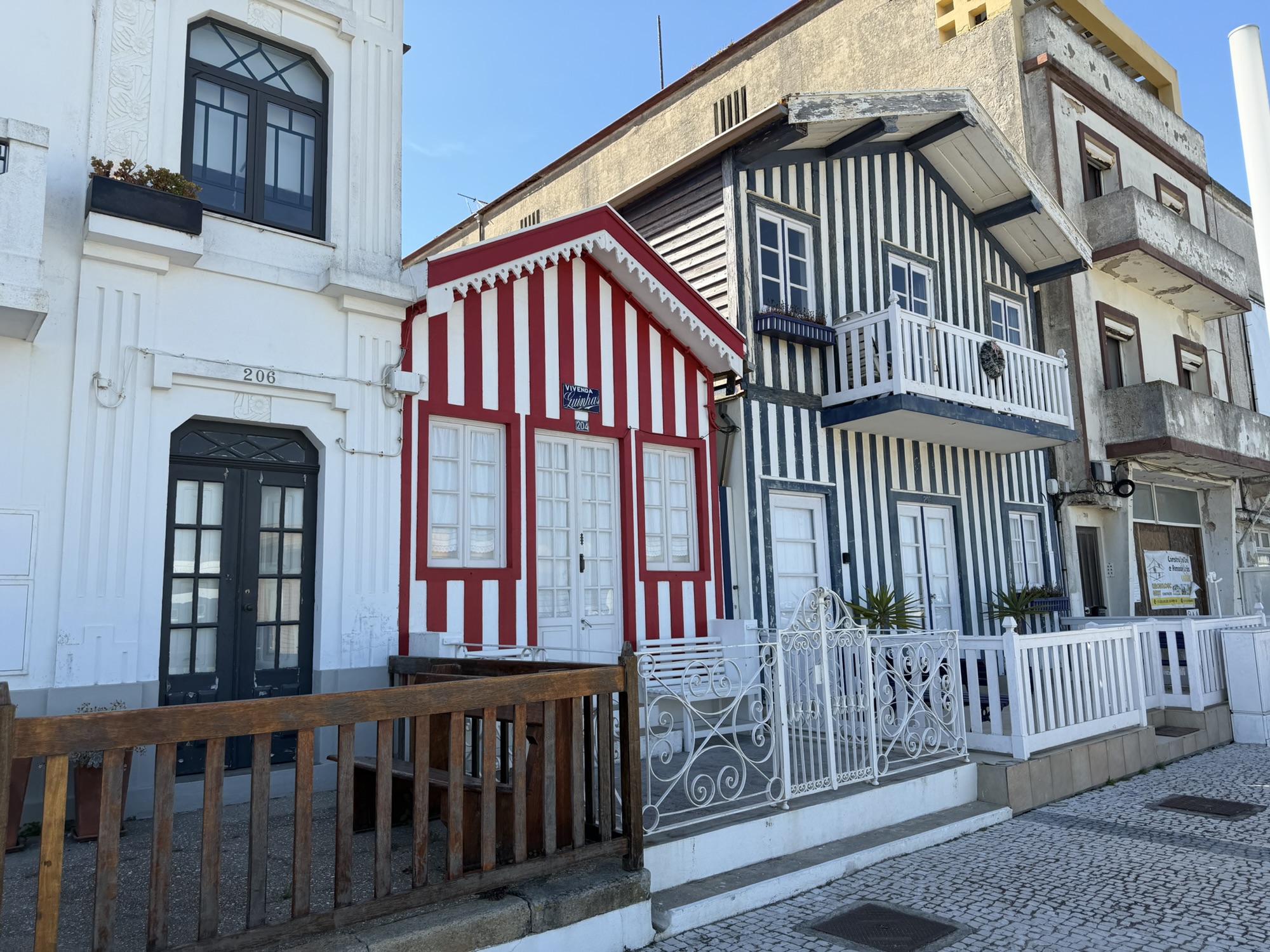
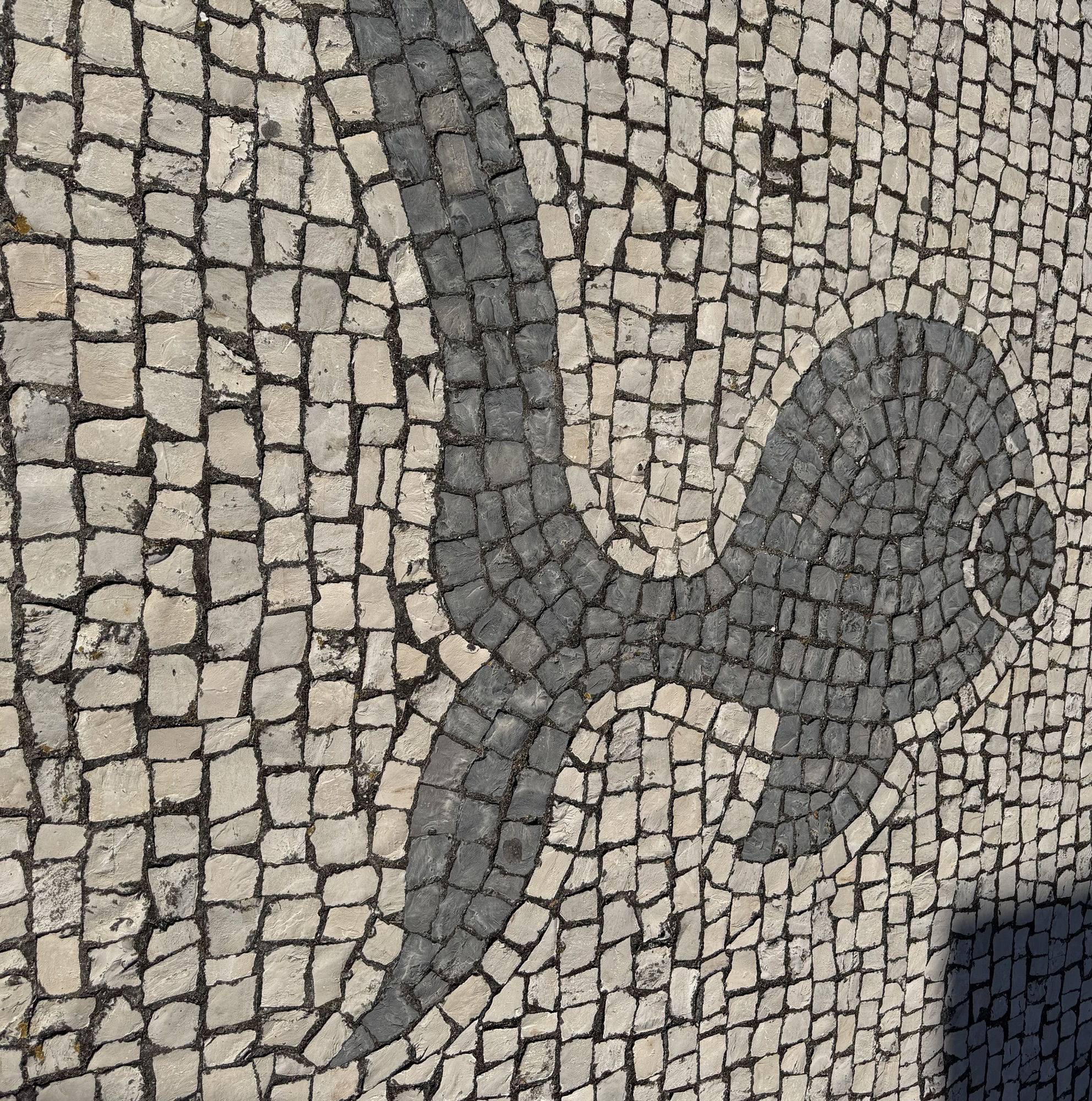
After we left Coimbra we visited the seaside resort of Costa Nova. Wow, I fell in love with this resort. The beach is long and wonderful. But the fun part are all the brightly colored and striped homes along the beach. It was great fun to walk up and down the beach to admire them and have a cool drink, which we did. Many cities in Portugal and Spain had designs in the walkways which were made up of little squares of marble and granite. I liked this dophin.
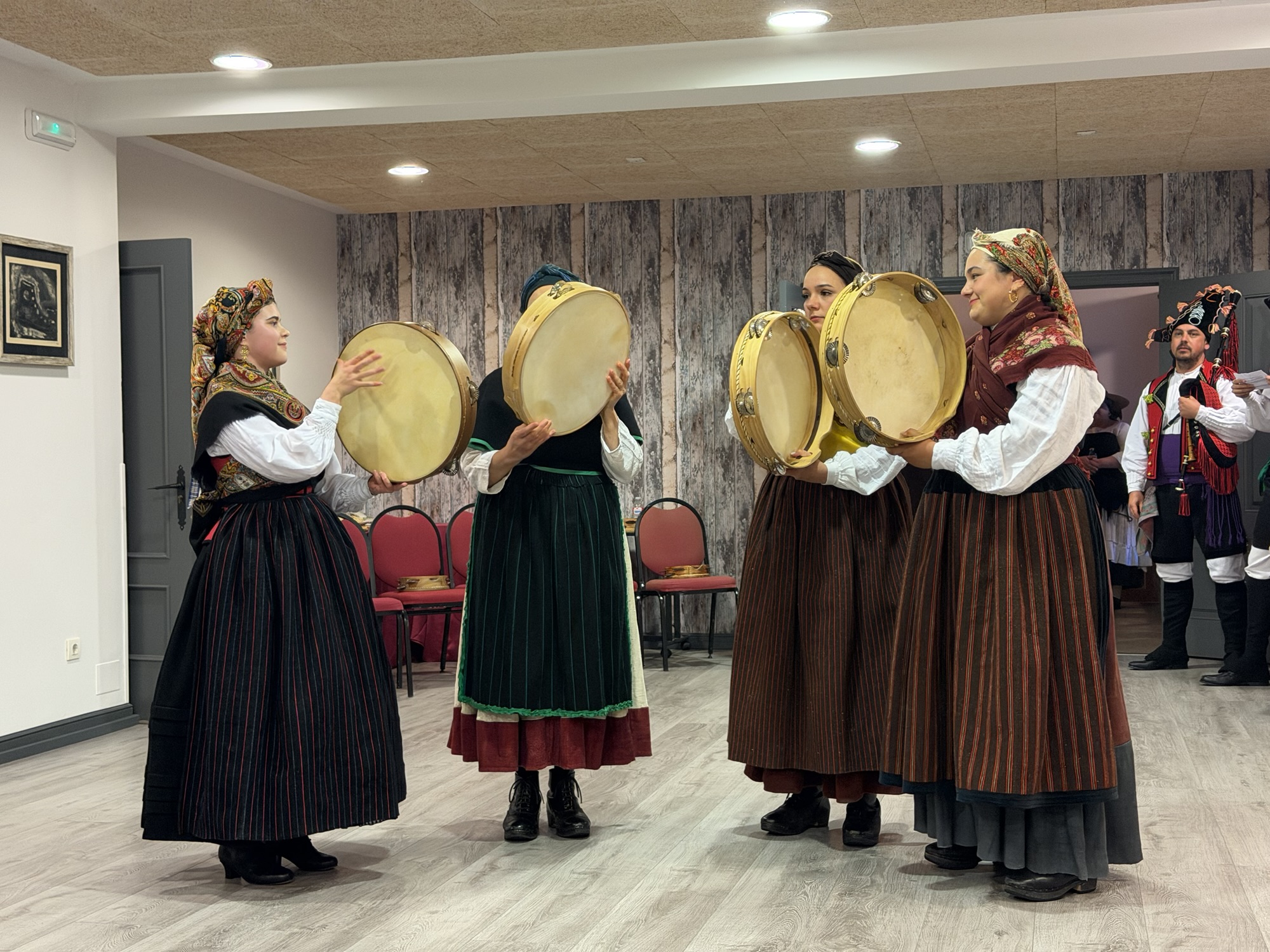
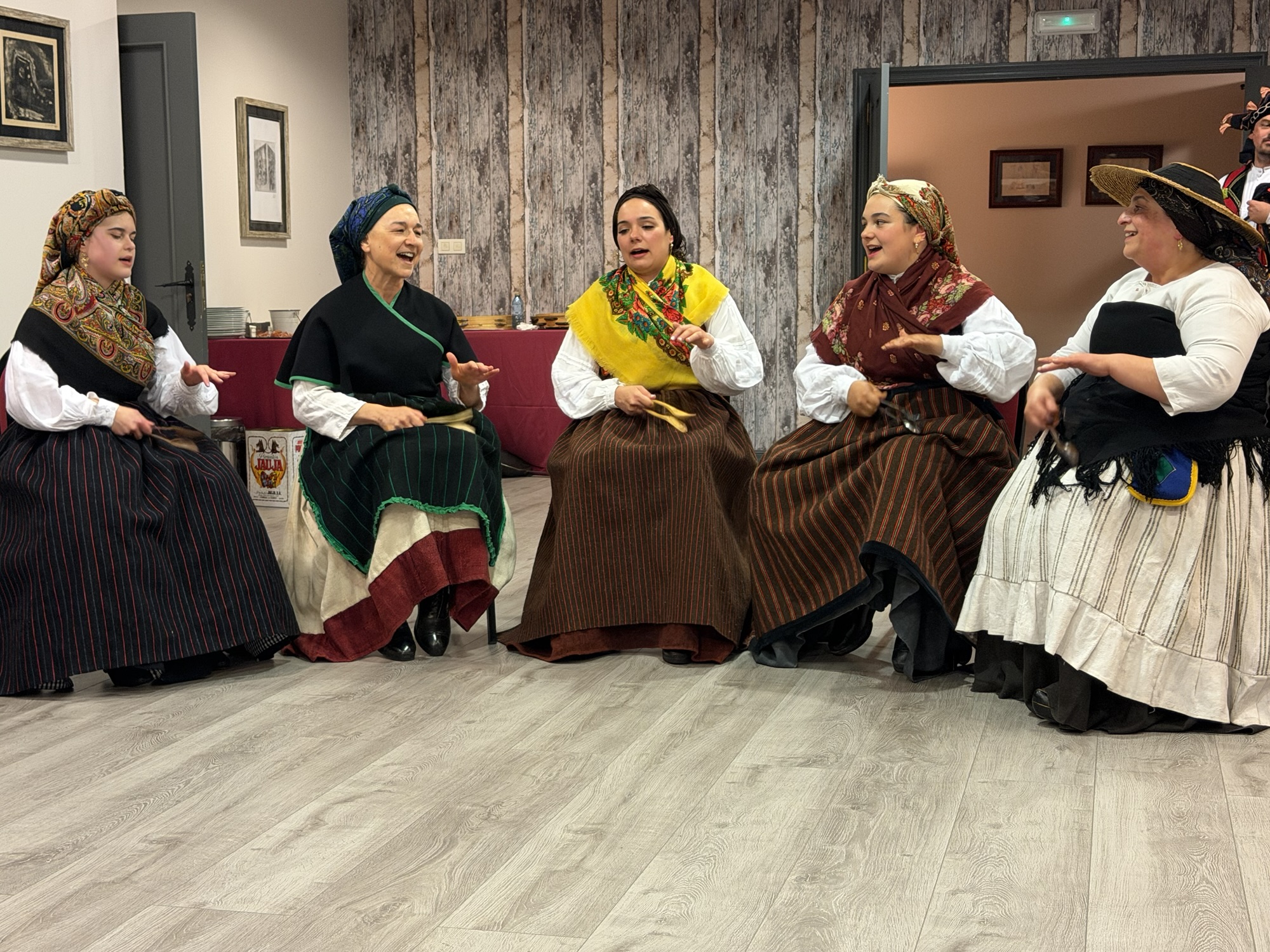
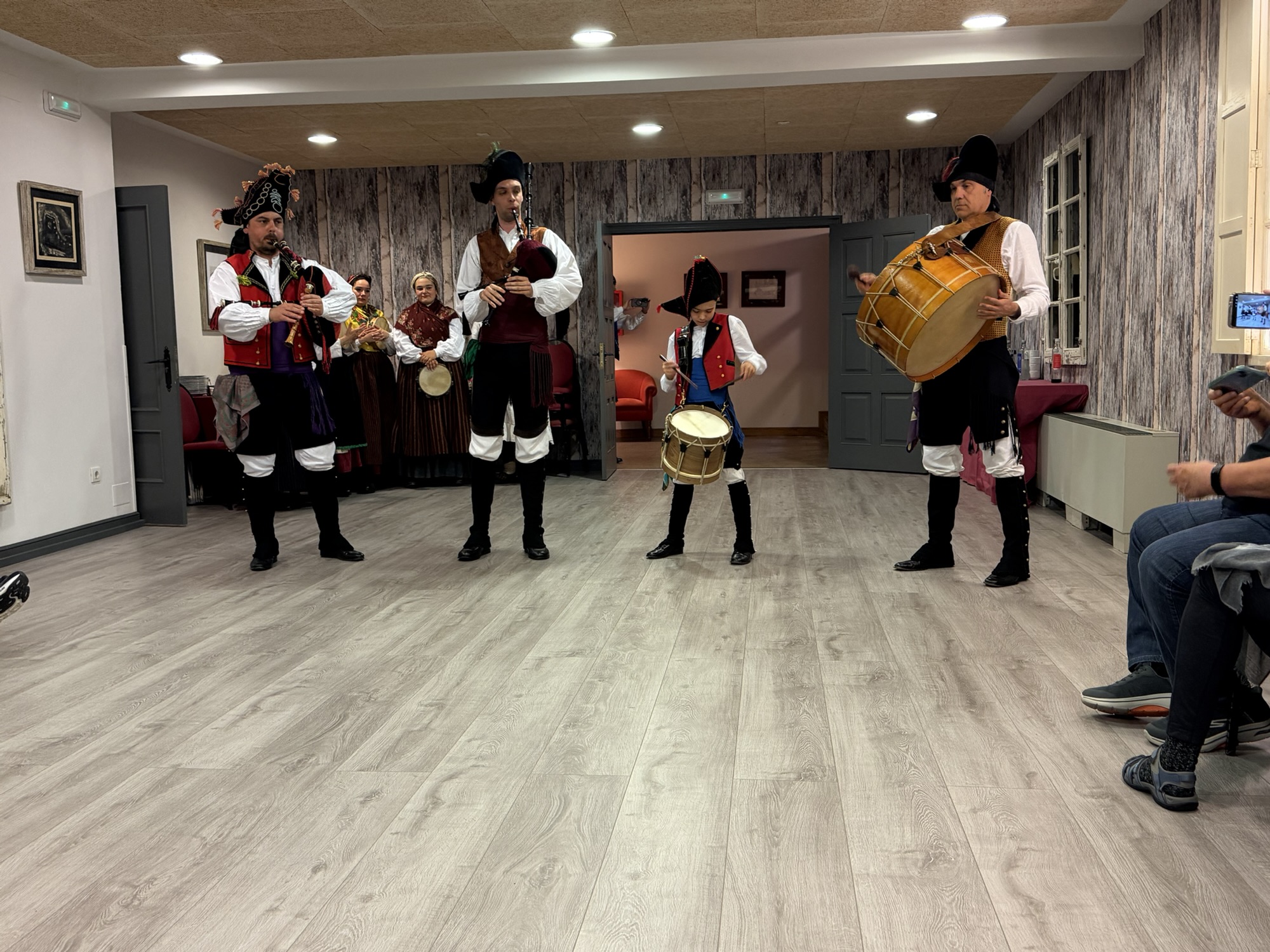
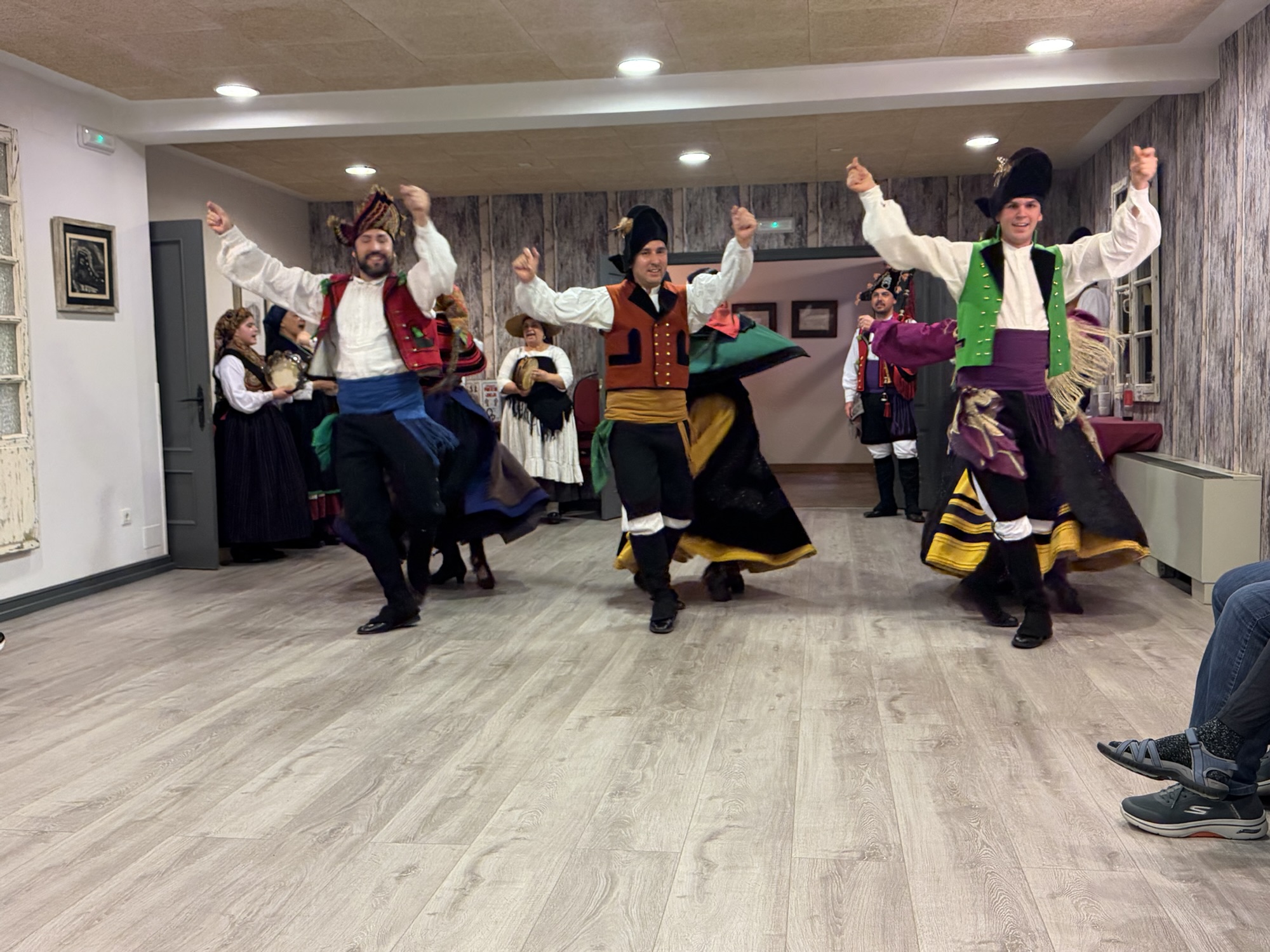
We had other musical events as well. Did you know that the people of Northern Spain are the origins of Celtic music. In fact, the people fled north to the islands that are now Great Britain and are the original Celtic immigrants. We had the pleasure to see a show of their music, dance and singing. YES, they use bag pipes!! But my favorite was the women playing songs using a sort of tamberine/drum and then using spoons for a song. So much fun!
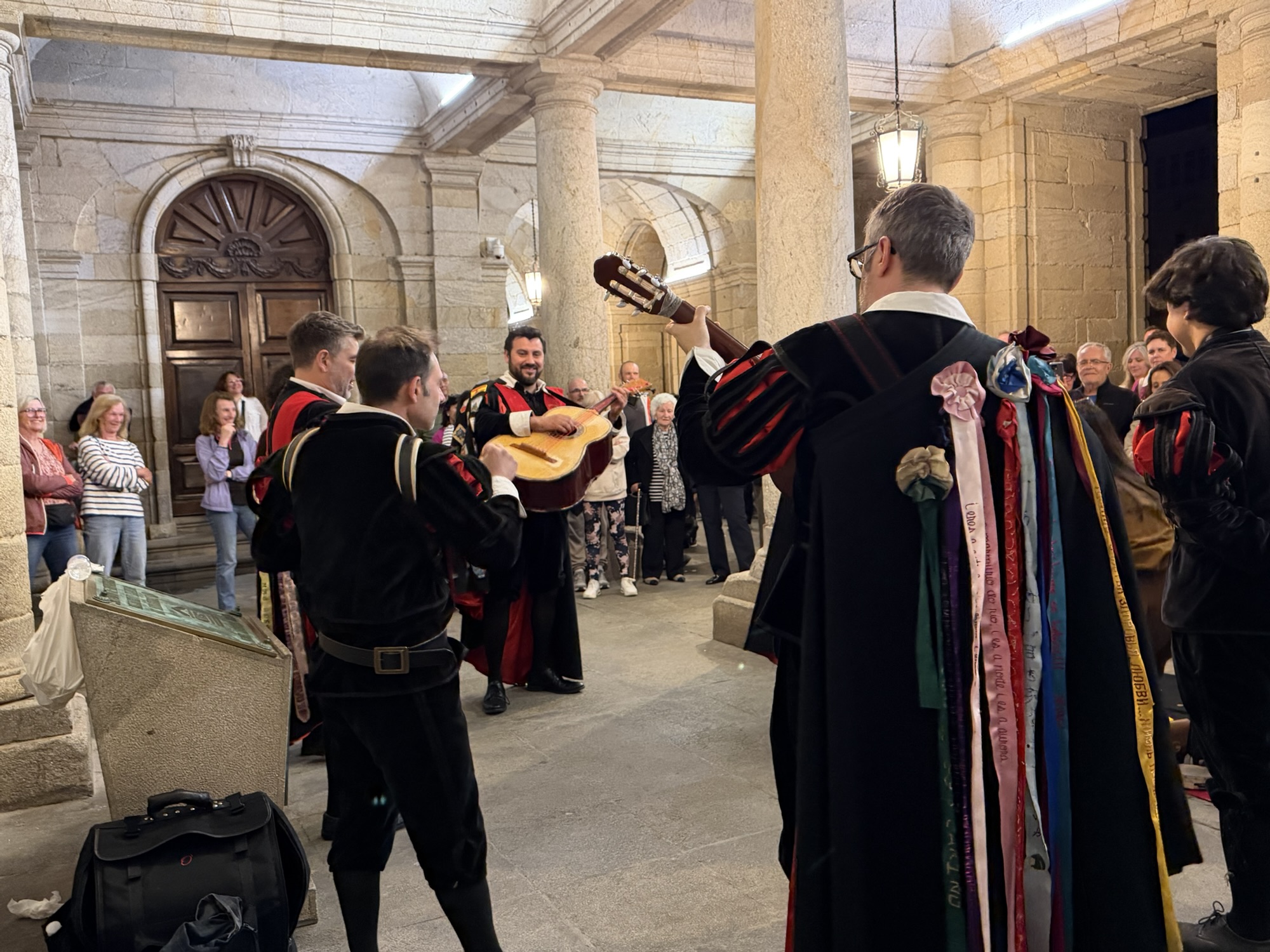
The first night in Santiago, we also got to see a troop of musicians performing across from the Church. It was entertaining and joyous. I think the pilgrims really enjoy their evenings after their long journey. There is music throughout the town.
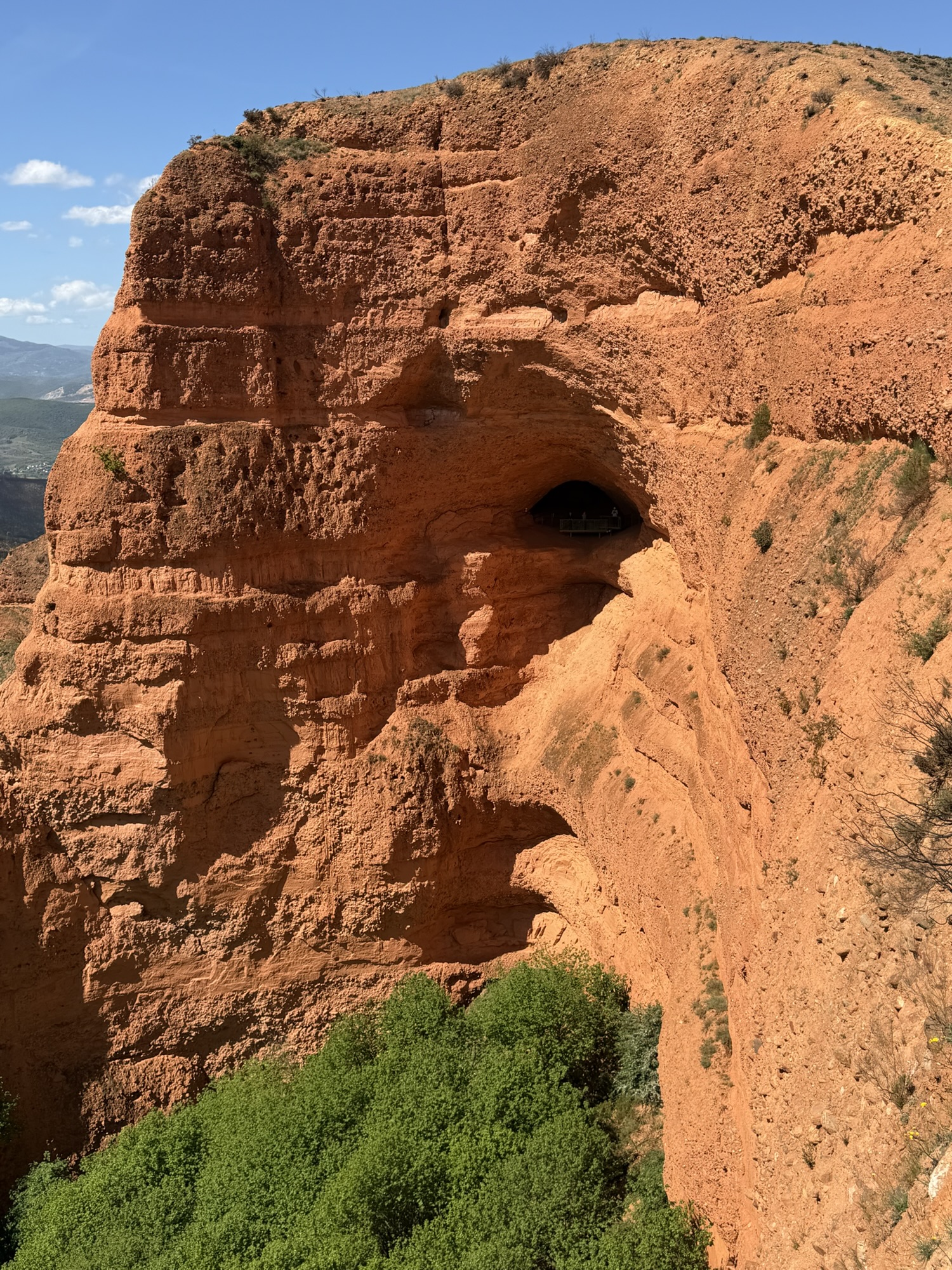
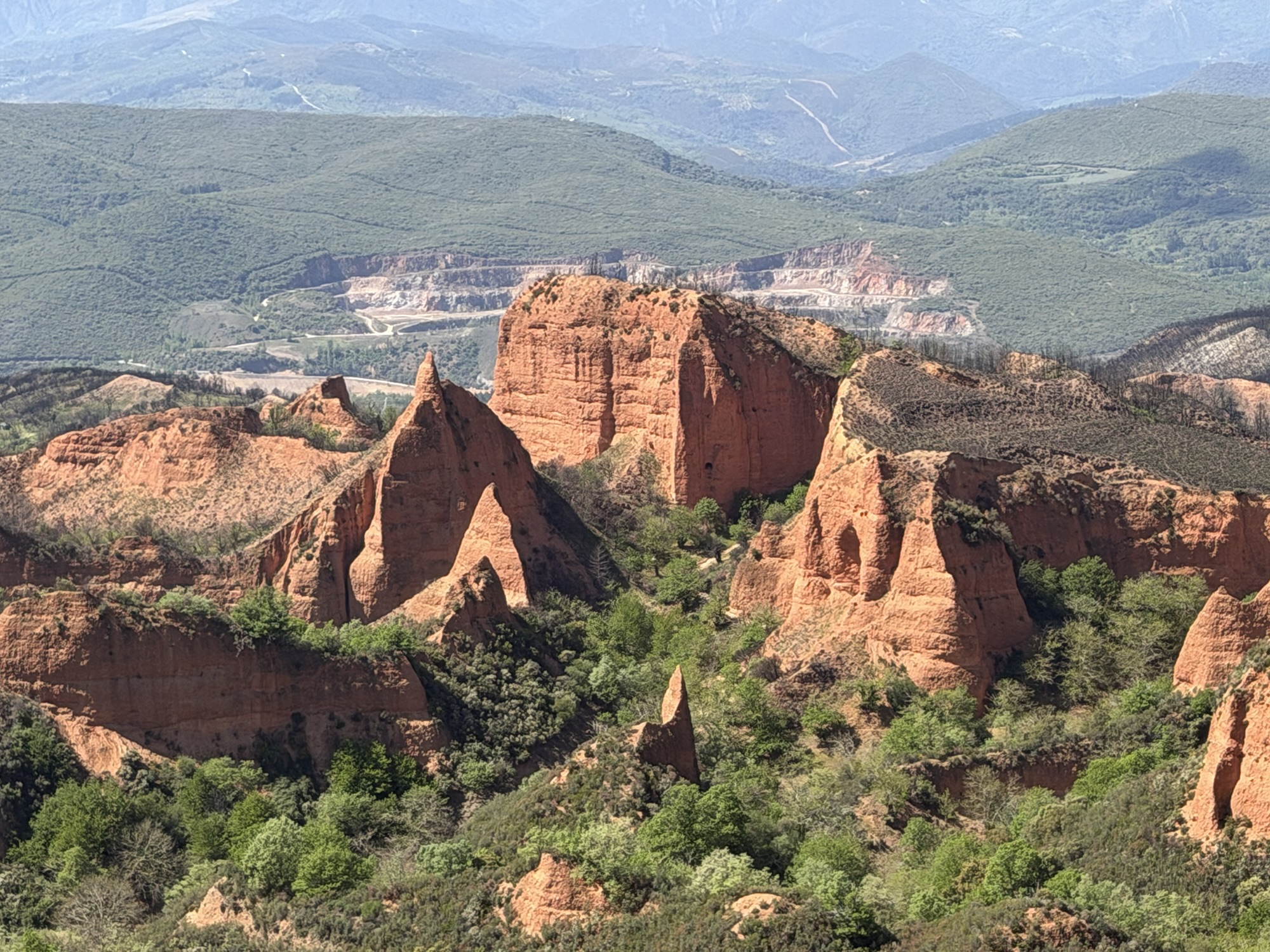
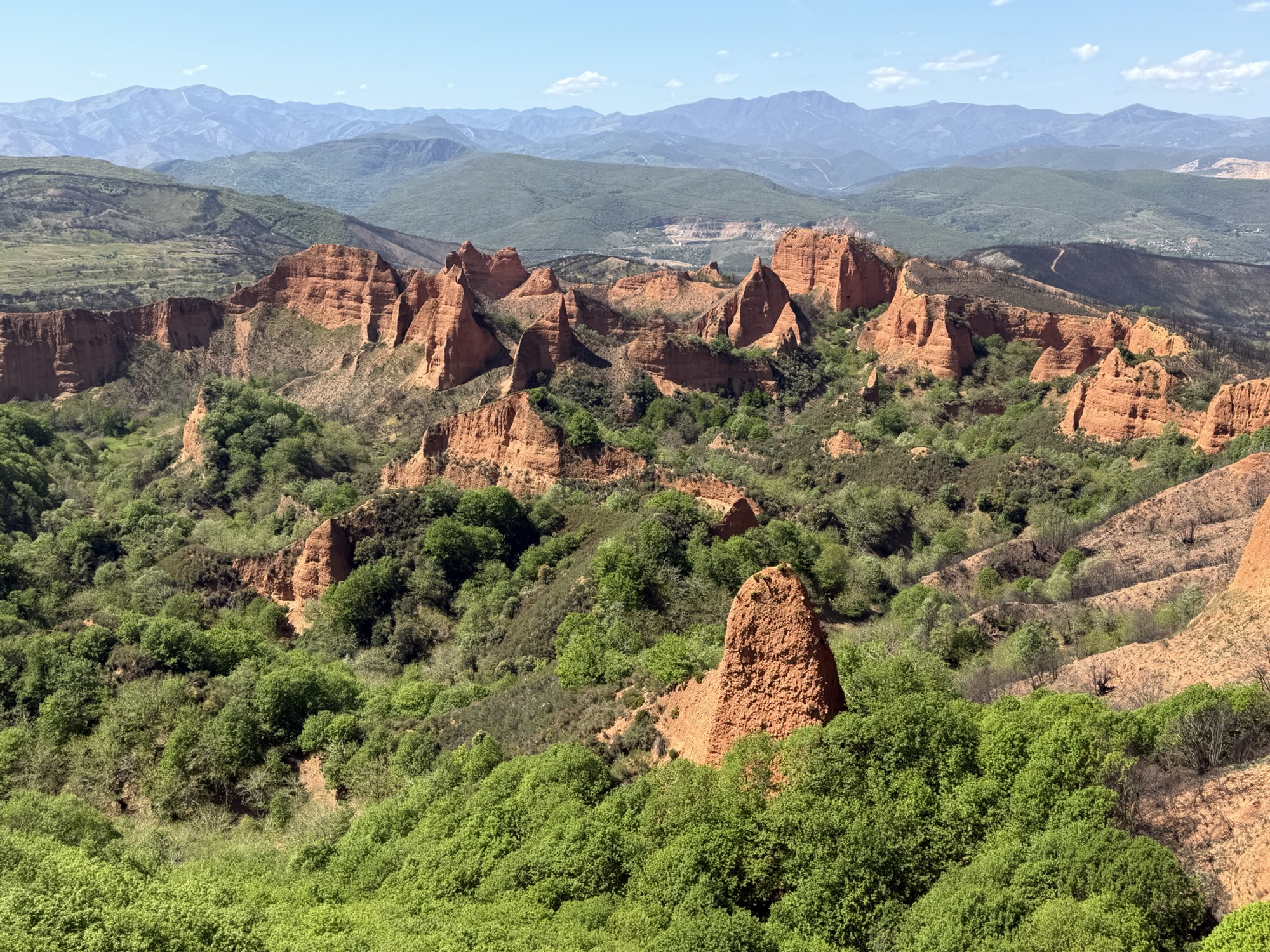
On another day we visited the World Heritage Site of Las Medulas, which shows you how you can destroy mountains with water. The site of an ancient Roman gold mine, Las Medulas are the remains of mountains that were destroyed by the Romans who injected water into the mountains to mine for gold. It is the most unusual landscape. Honestly was totally unexpected and really worth seeing.
Unfortunately last year there was a major fire near the area, actually right up to it. So all around us were blackened trees and shrubs and the grass was gone. But in a way it was more interesting because we were able to see the ancient Roman paths cut through the area. And a beautiful new viewing site was built.
There were so many wonderful experiences and places to see and explore. Some times we felt we needed a vacation from our vacation. But in reality the memories these places and the poeple who we traveled with will stay with us. It was a most glorious and enjoyable experience.
When we planned our Road Scholar trip to Portugal and Spain I was excited that we would be going to many World Heritage sites, including castles and palaces. Let’s be honest, I was born along with DisneyLand in 1955 and I grew up seeing the Disney castle every week on the Wonderful World of Disney. I remember so well the evil villain of Babes in Toyland singing, “My Castle in Spain.” For me this was going to be a highlight.
We saw a number of castles and palaces on our trip. Some were absolutely extravagant; others were just empty stone shells without much romance. I always knew that the tapestries were created to keep the rooms warmer. But until you walk through a large castle and see the size of the rooms, and the small size of fireplaces and heaters, do you realize that these places would be extremely cold in the winter. In fact, our guide told use that most people had to walk around wrapped in a blanket. BRRR
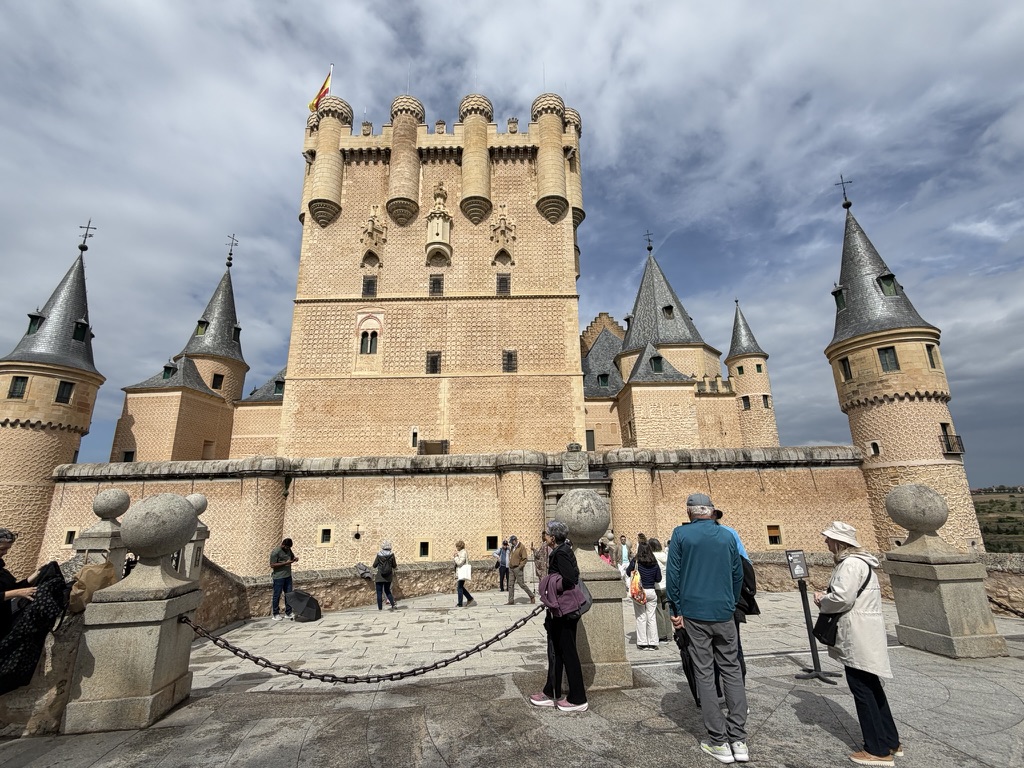
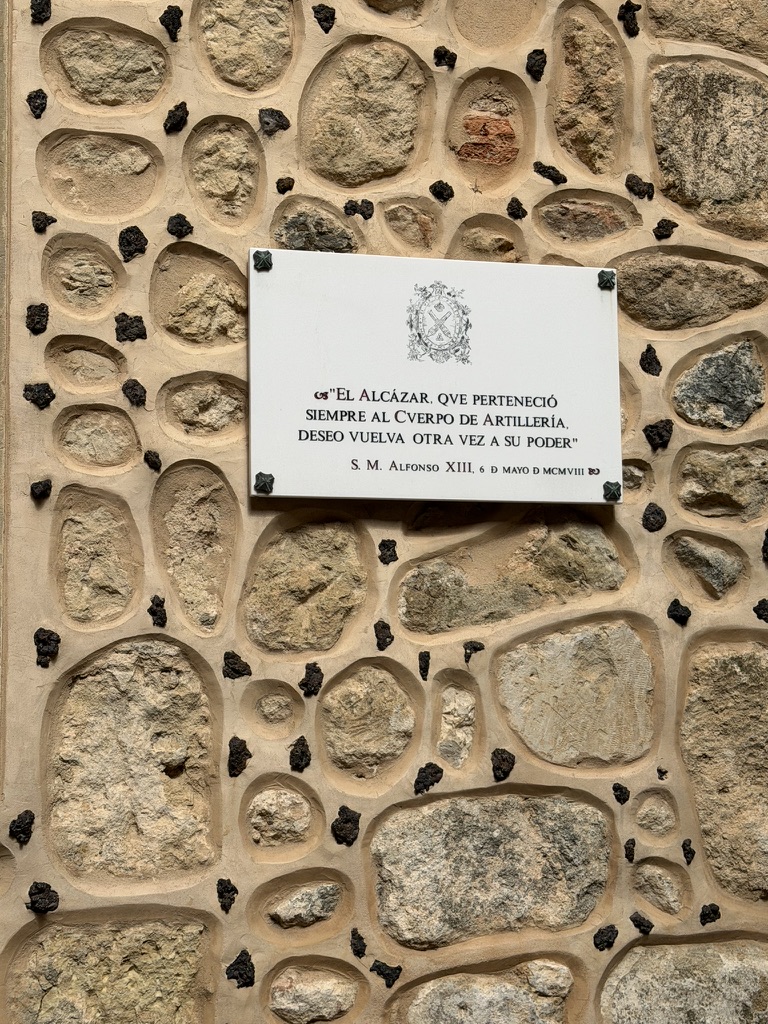
Even still, with this reality check, with knowing when I saw the Castle in Segovia that it had been heavily damaged by a fire and most of it was reconstruction, I could not help but be joyful. Why? Because was like seeing the real Disney Castle in Segovia, I knew my wish had come true. So instead of starting at the beginning of our trip and describing our experience in order, I must start with our second to last castle, Alcazar!
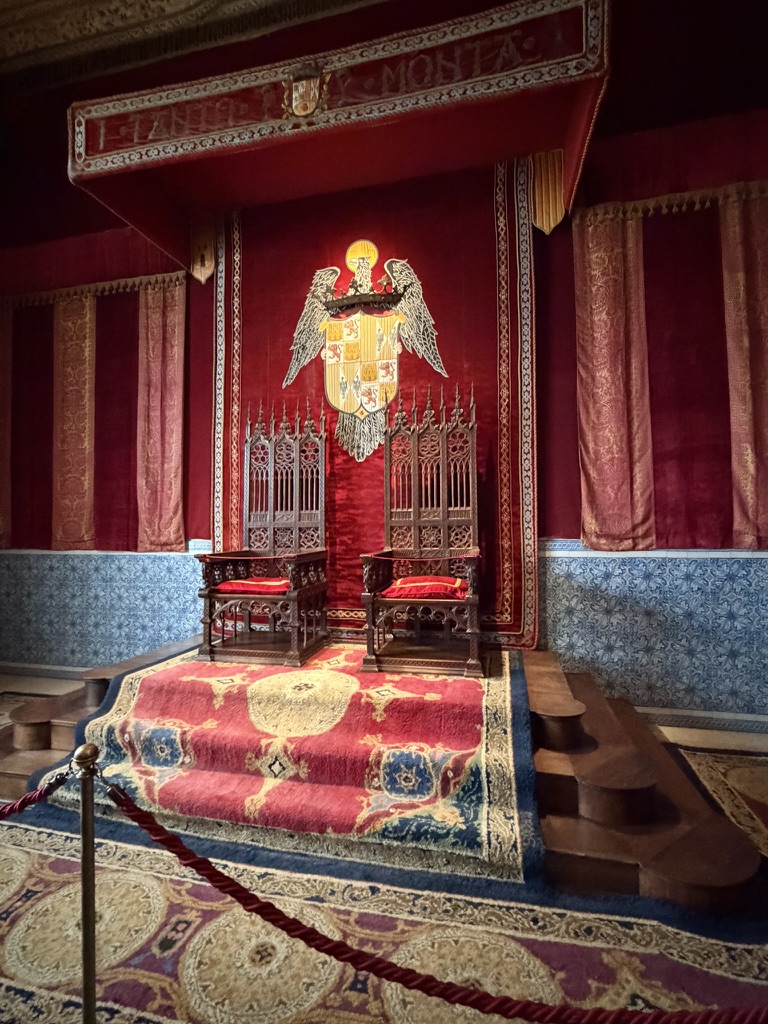
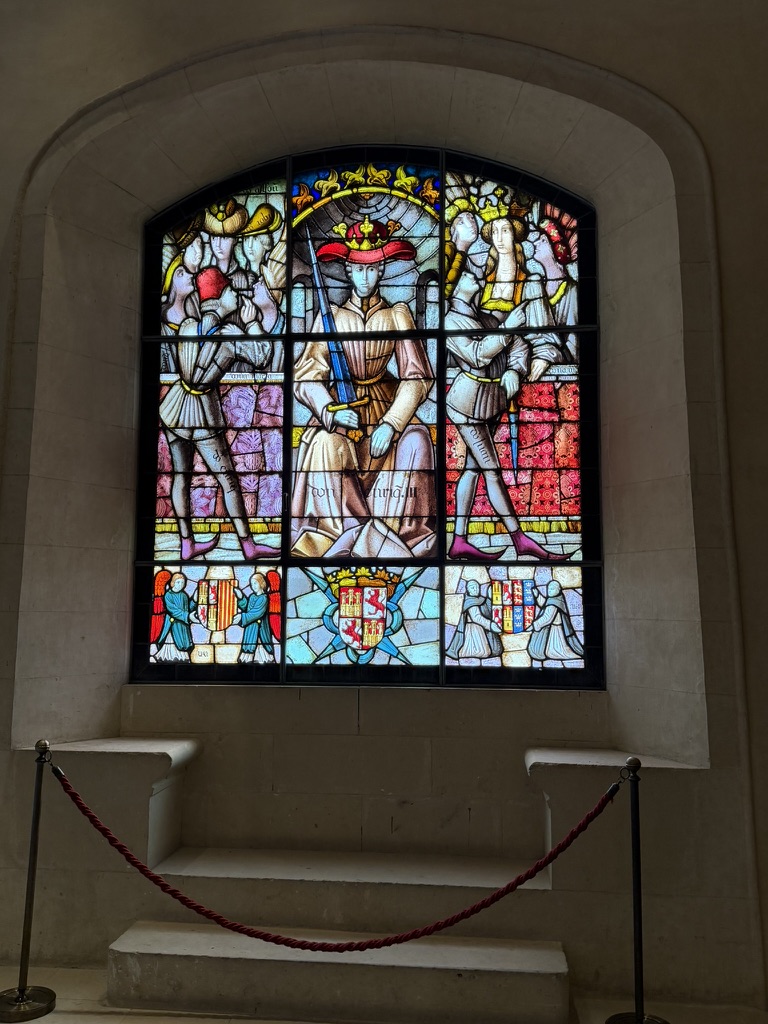
Throne Room
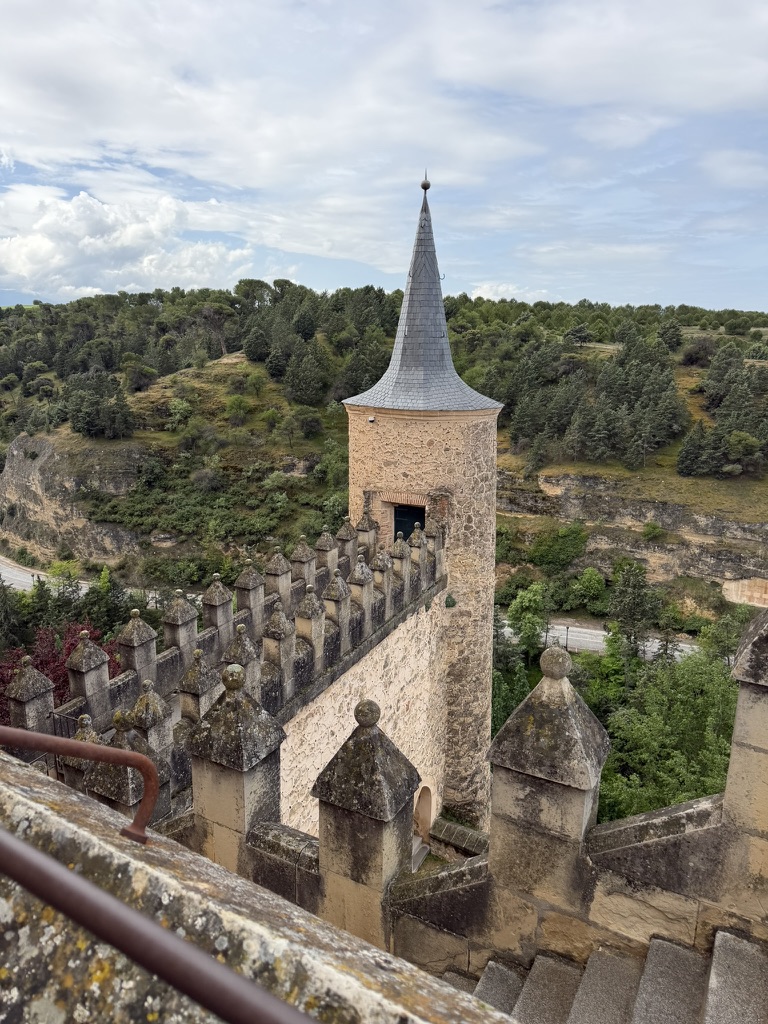
The Disneyworld Cinderella Castle’s towers and windows were based on the Alcazar of Segovia, Spain. Perhaps other elements come from other castles. But once you see the Alcazar, all you can do is hum, “When I Wish Upon A Star.” I did that for the entire time we toured the castle. I might have made my sister and husband crazy.
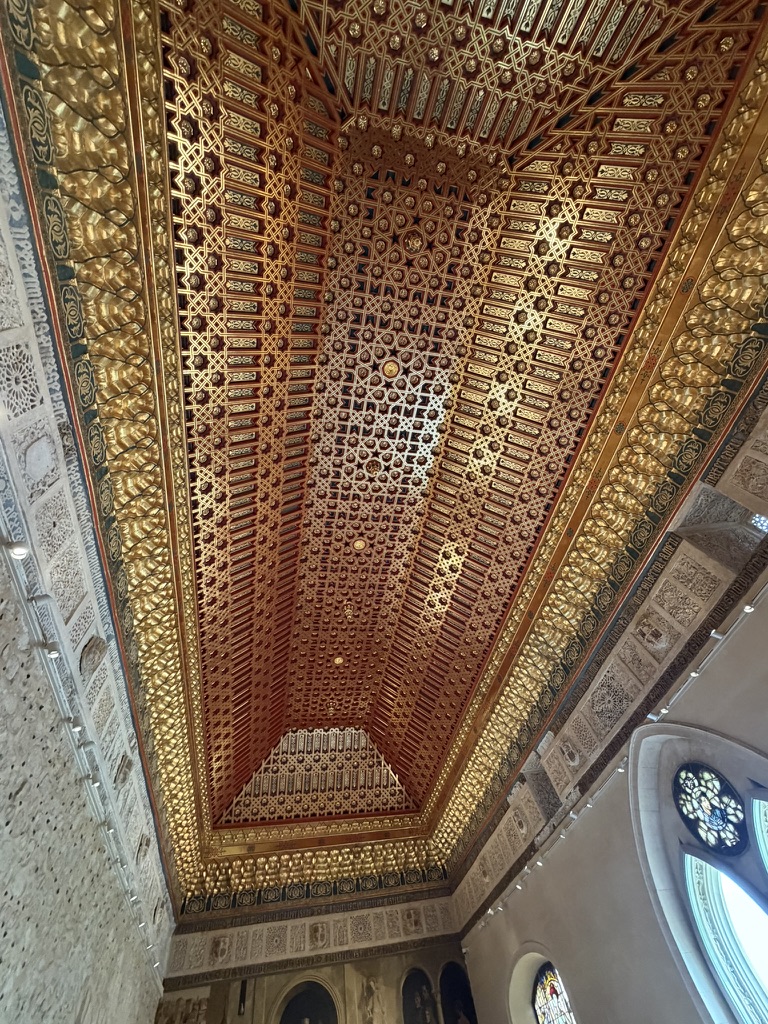
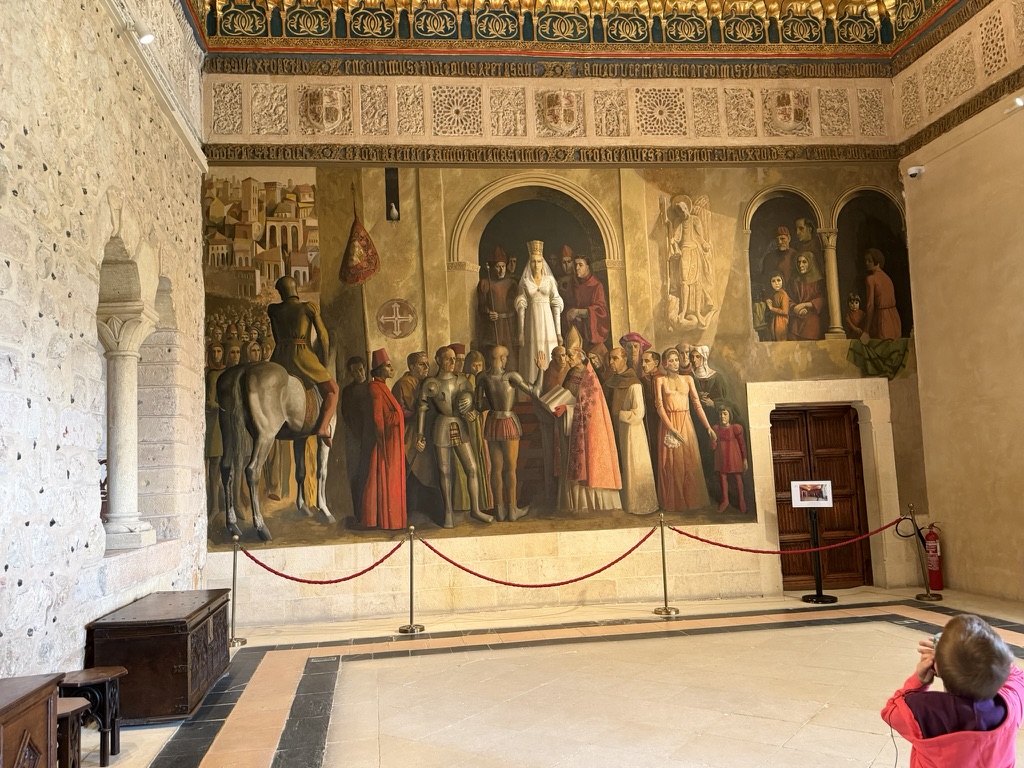
After walking uphill through narrow, ancient streets of Segovia we came upon the first sight of Alcazar, which has been a World Heritage Site since 1985. Some castles you cannot enter. But this one was not only renovated, it had furniture in some rooms to make you realize what it once looked like. It is also a museum.
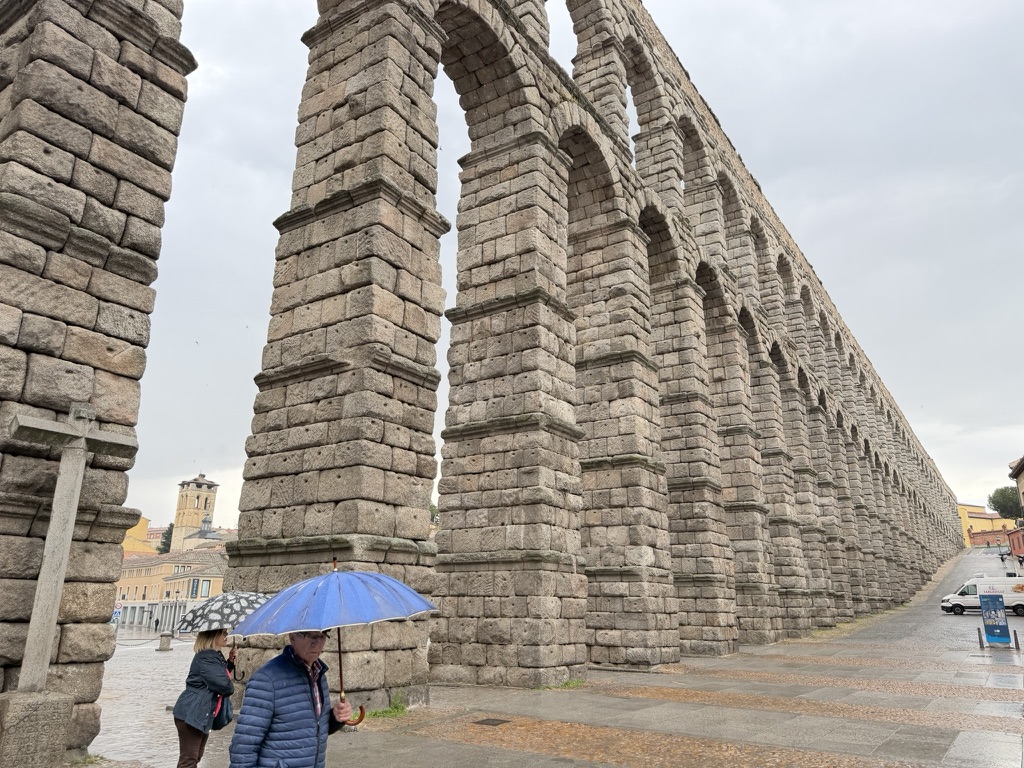
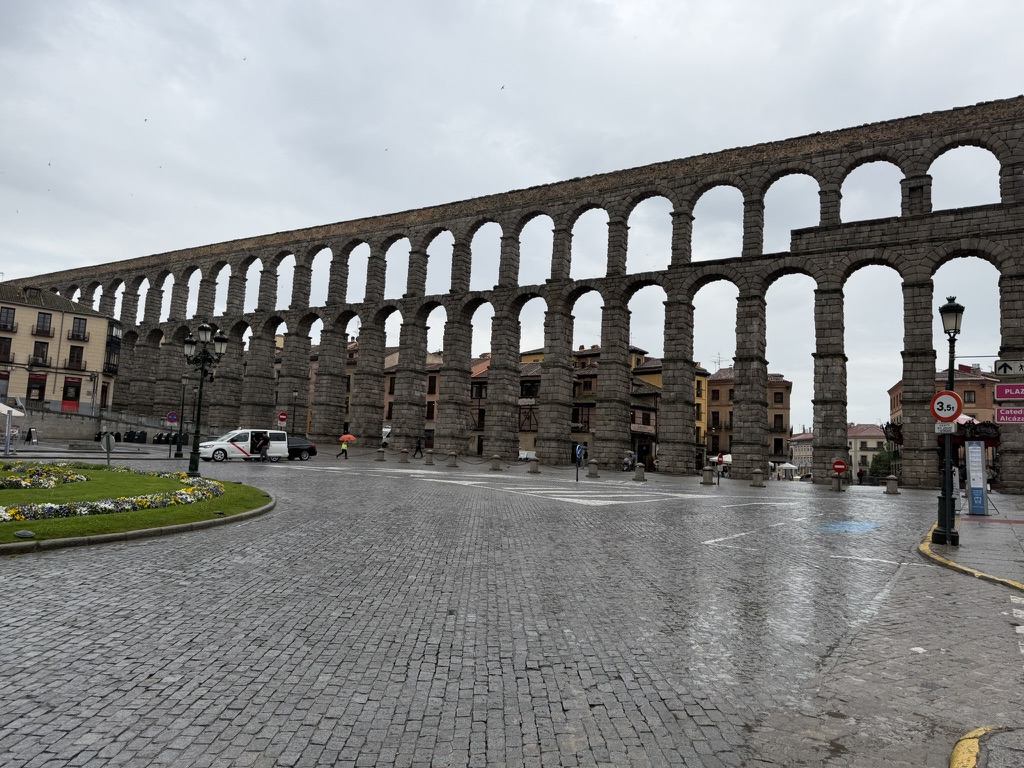
Before I leave Segovia, I must say there is another important site to see there, the Roman Aqueduct that is about six stories high when goes above ground , while its underground route through the town is marked with different stones. It is an amazing feat of construction!!
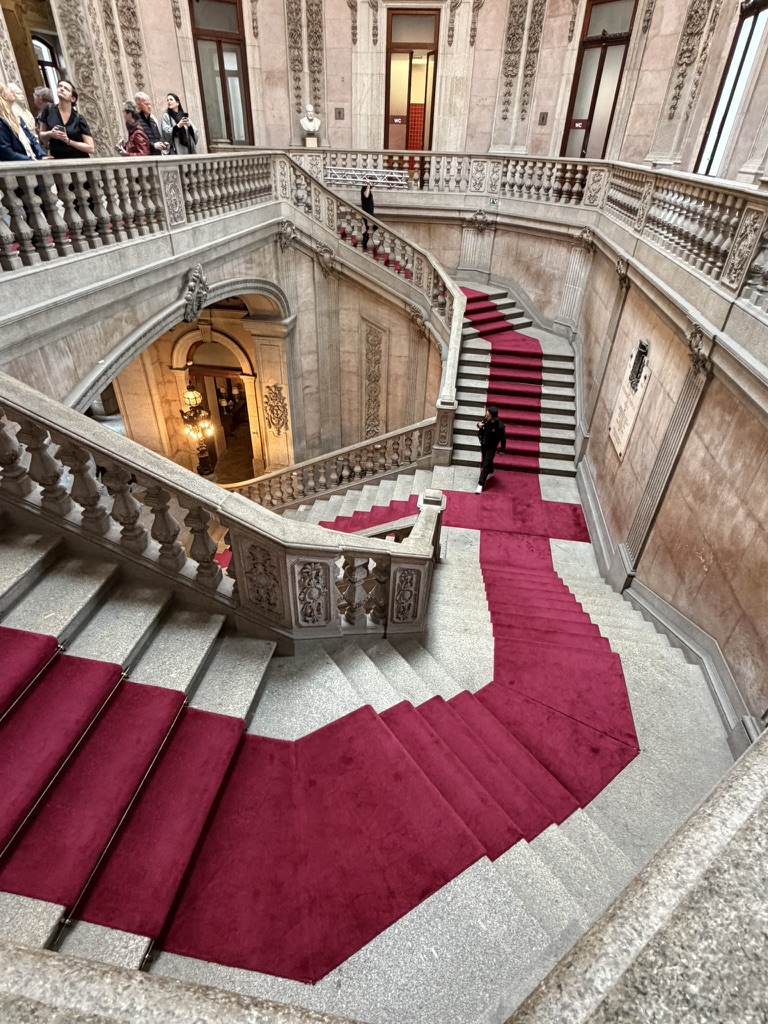
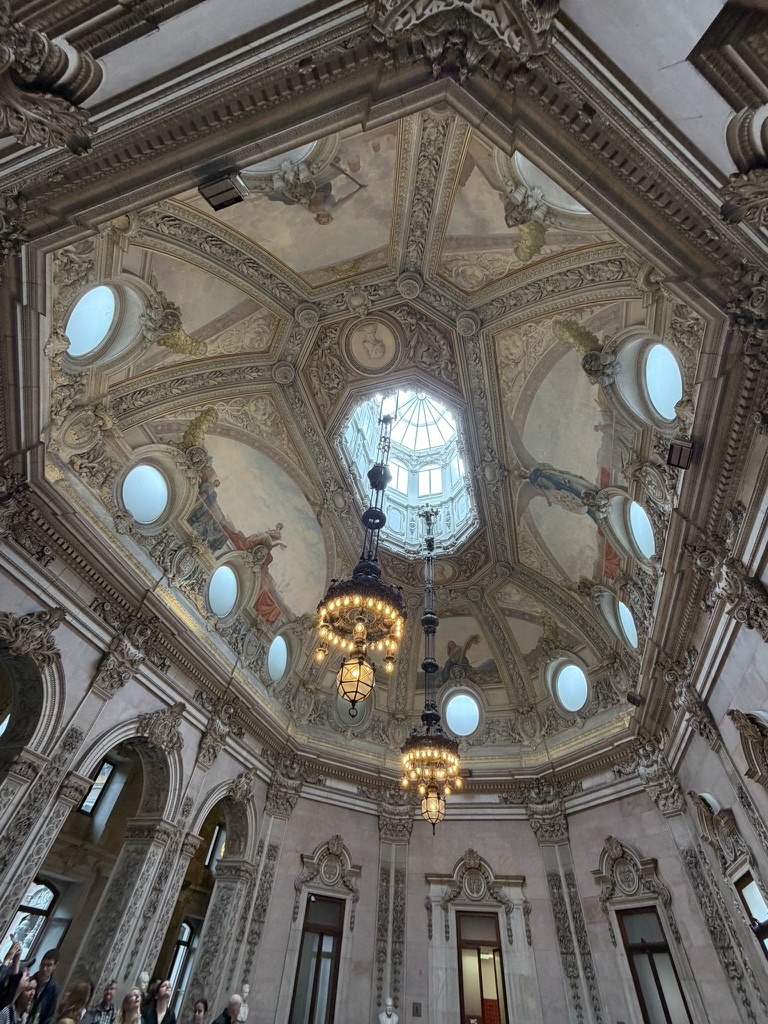
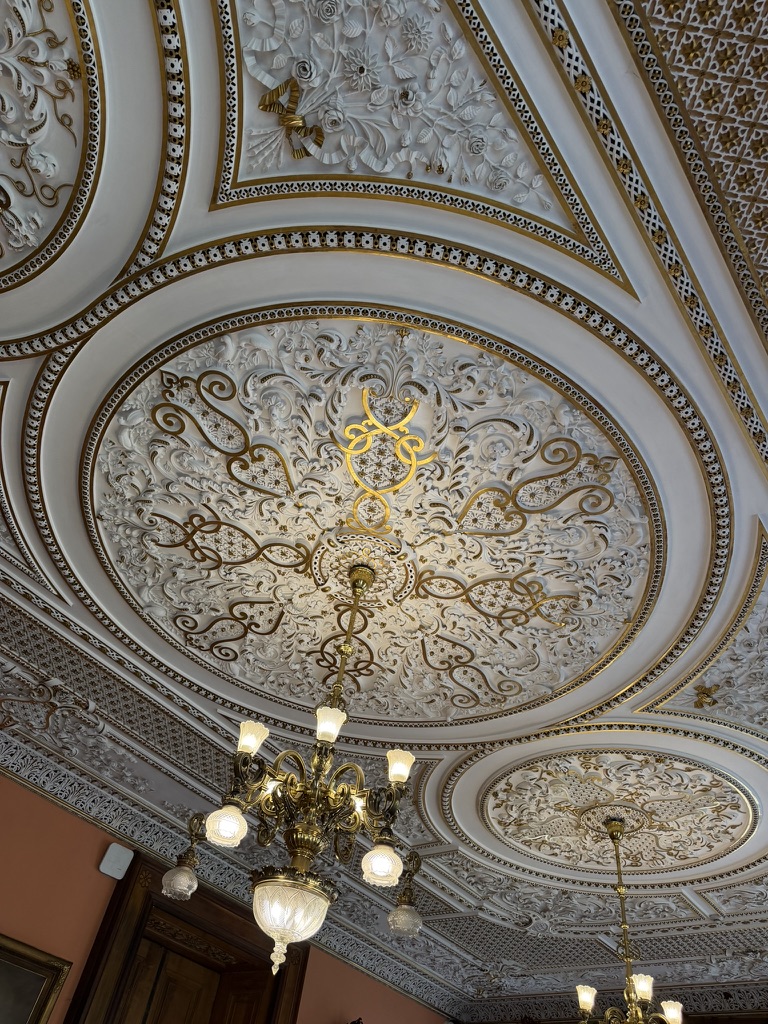
Now that I have finished swooning over Alcazar, I will return to the beginning of our adventure and talk about the Palacio da Borsa, the original Board of Trade. Although it is not a castle, it is definitely a palace. Some of its rooms are absolutely stunning. I understand why it is an event space for conferences, conventions and if someone could afford it, what a place for a wedding!!
From the Grand Staircase, to the meeting rooms, – each one has its own character and special artwork, on the ceilings, the walls, the floors, the furniture- the building is elegant. The trial room with its ornate carved wooden furniture and beautiful art; the views; the room where Gabinete De Gustave Eifel worked when he was in Porto; The Hall of Countries.
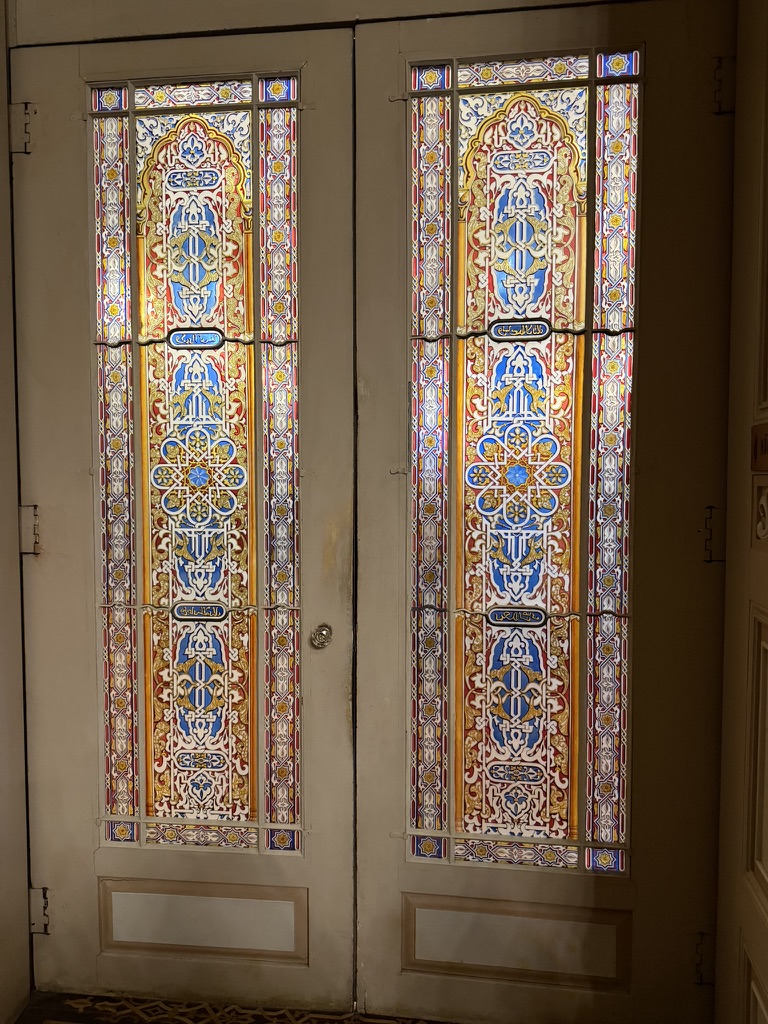
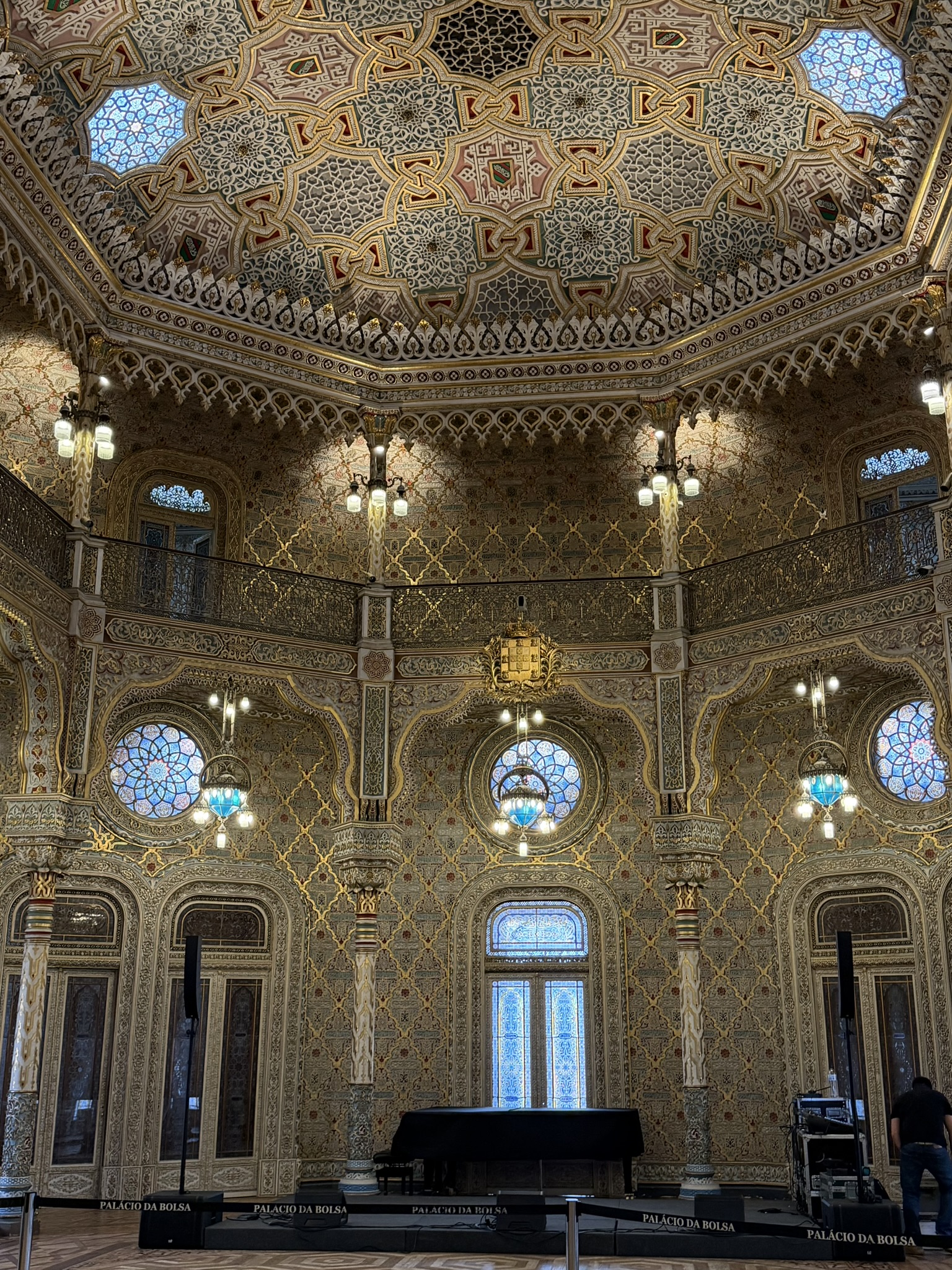
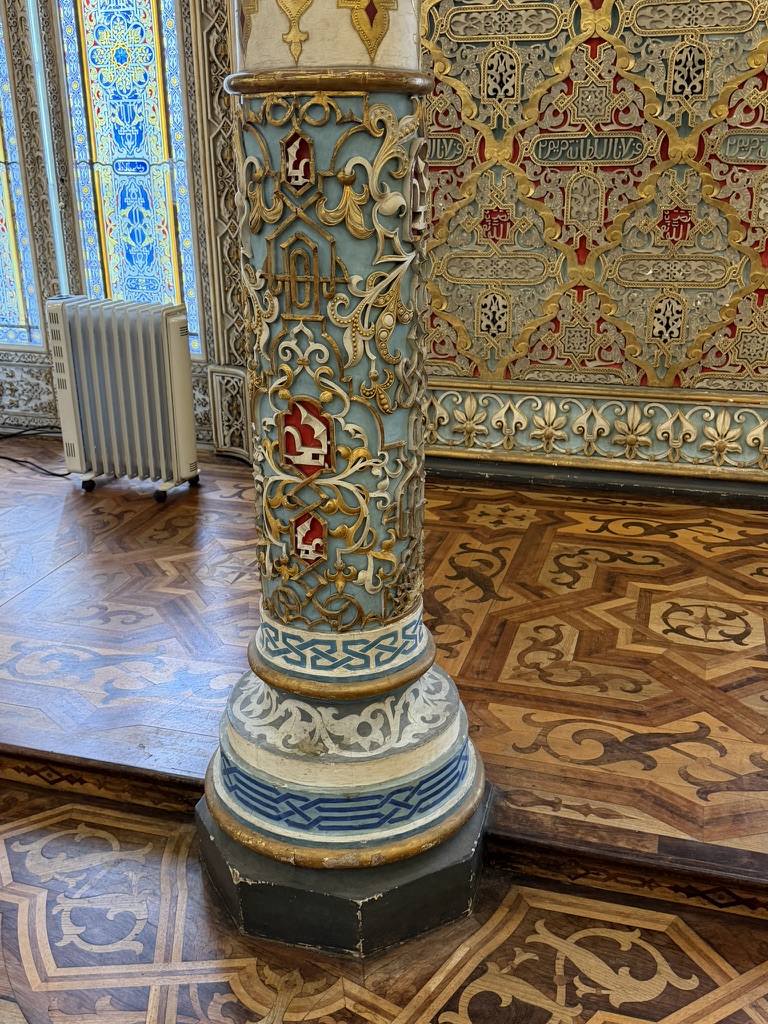
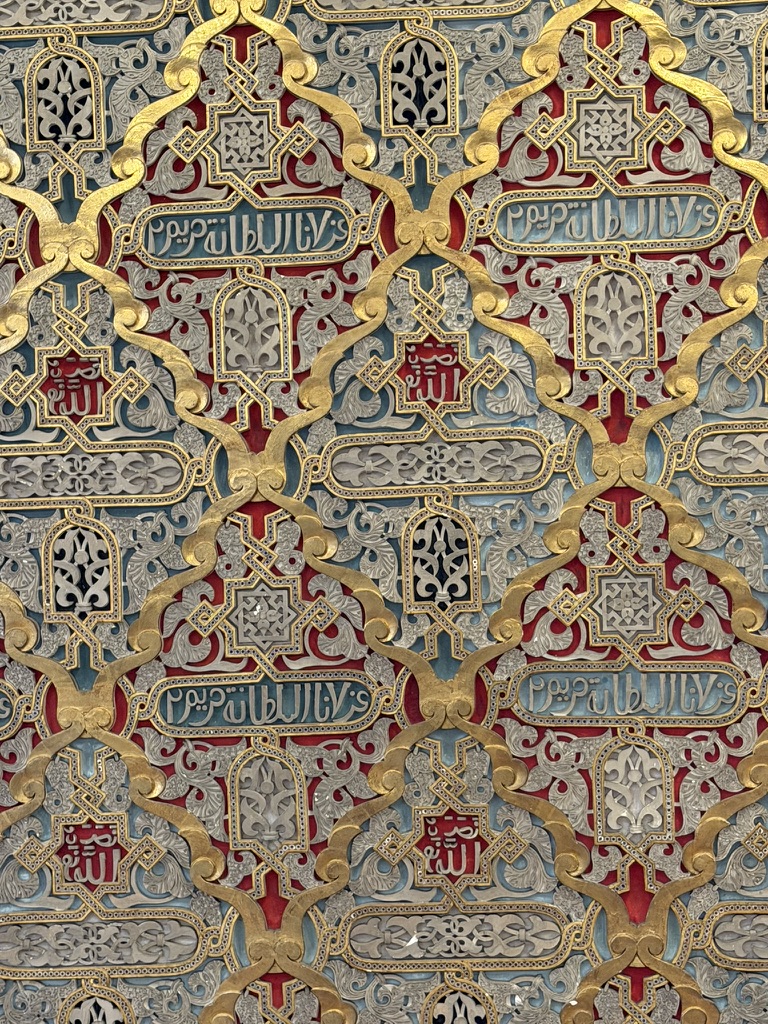
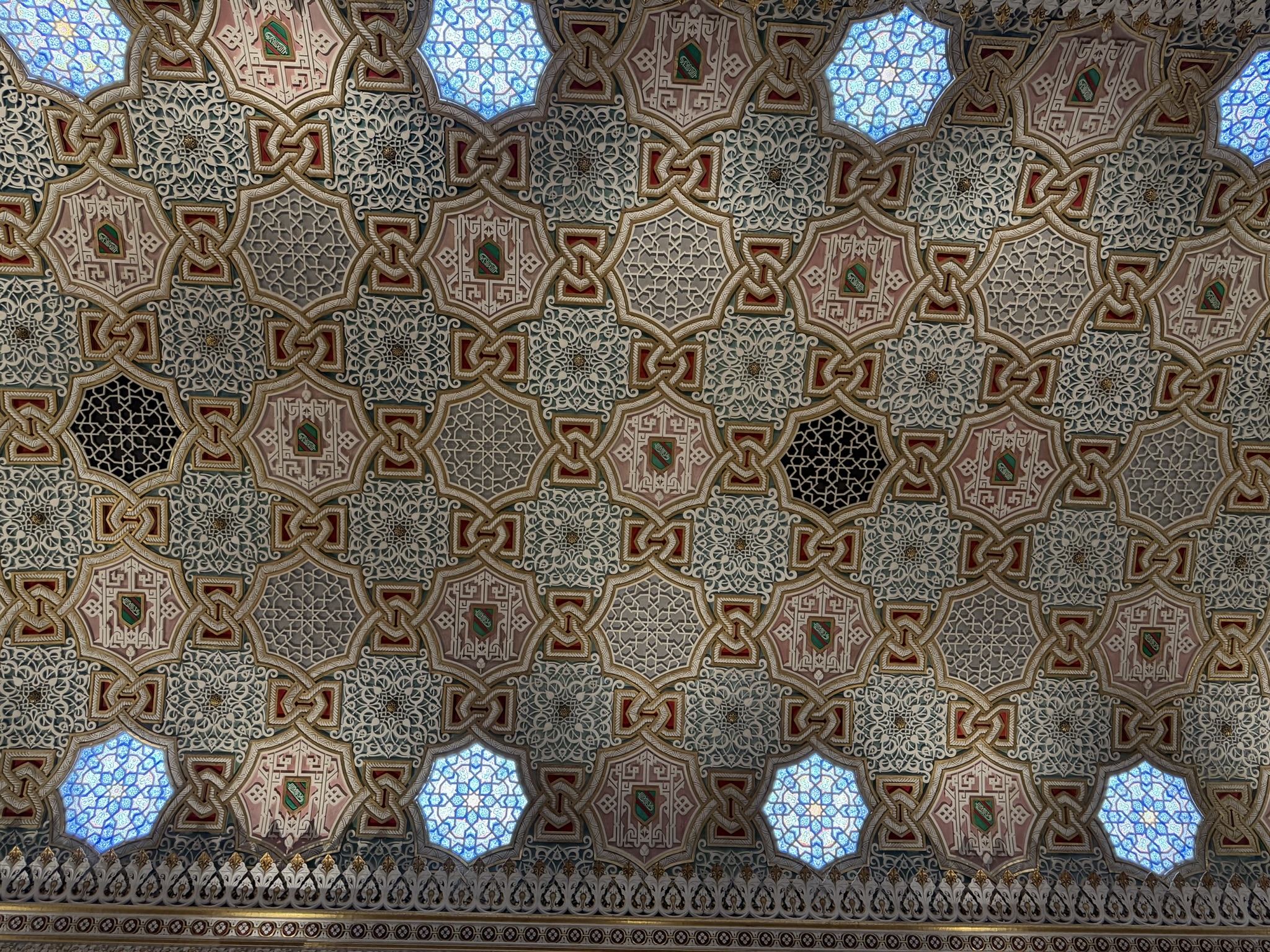
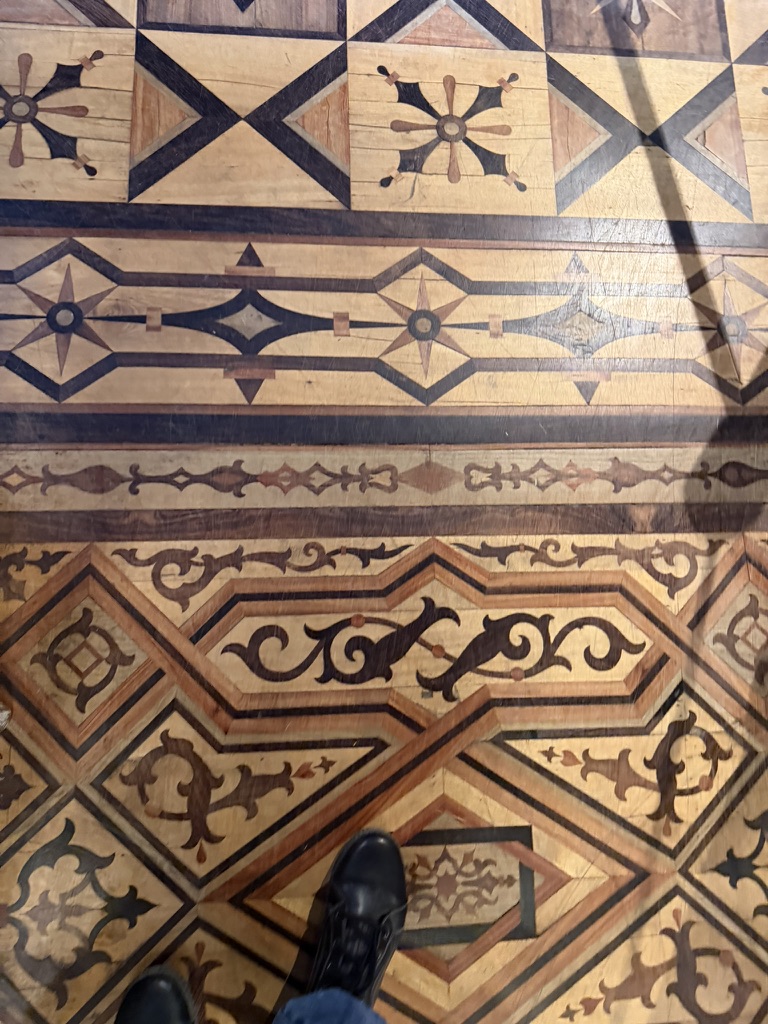
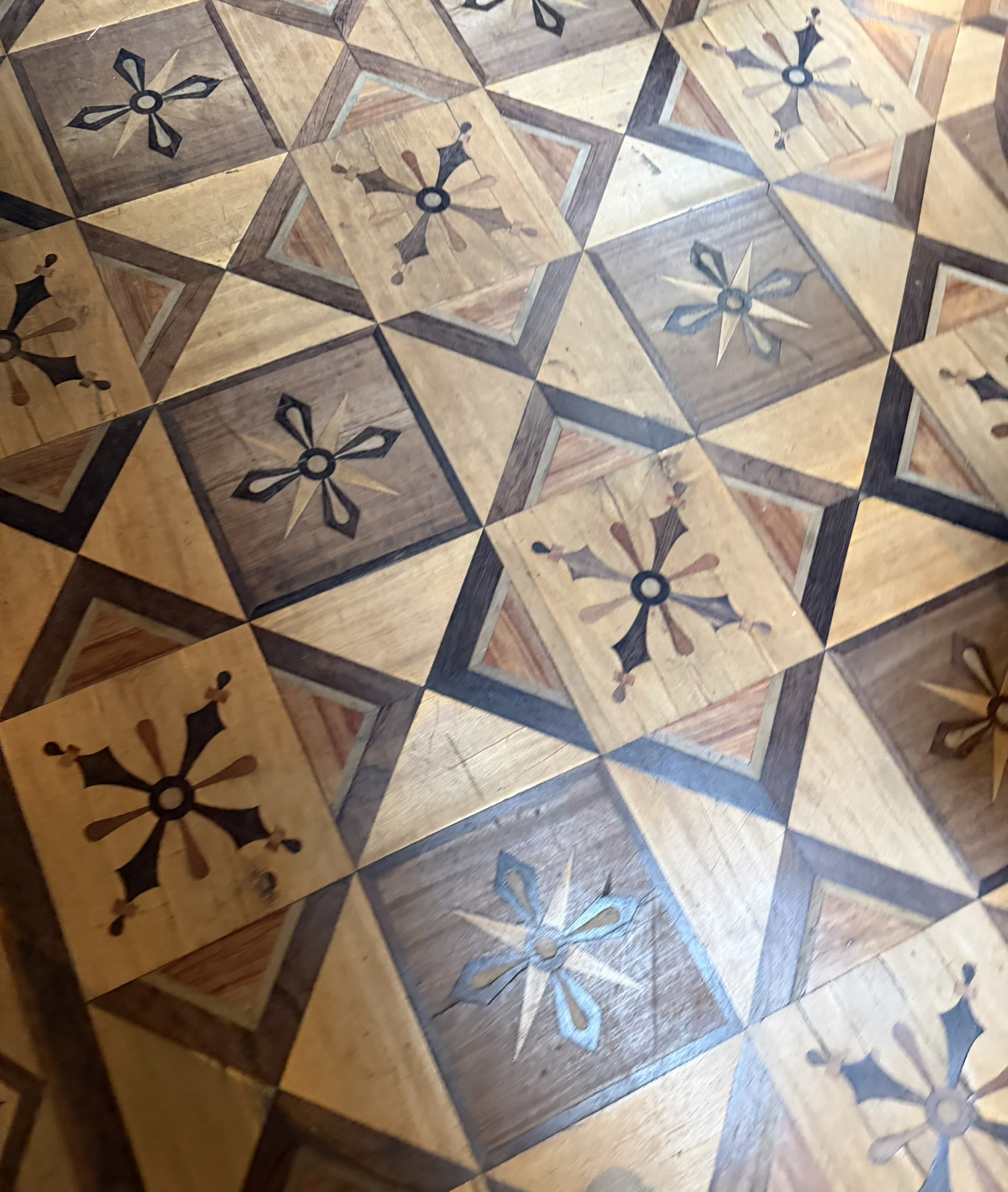
Entrance to Golden room.Some of the detail.The ceilingThe floor
All of it fabulous. But nothing prepares you for the Golden Room. Many people oooh and Ahhh over the Amber Room in Catherine’s Palace near St. Petersburg. And that room is stunning, I admit when I saw it in 2018. But to be honest, the Golden Room with all its intricate carving and inlaid is something special. It made me think of the inlay at the Taj Mahal. The inlaid wooden floors were reminiscent of the ones I saw in the Hermitage in Russia, but actually more intricate. From floor to walls to ceiling to columns, there is not one spot untouched and plain. My pictures will not do it justice. But if you ever have a chance to go to Porto, you must visit the Golden Room. My brain was exhausted after seeing it.
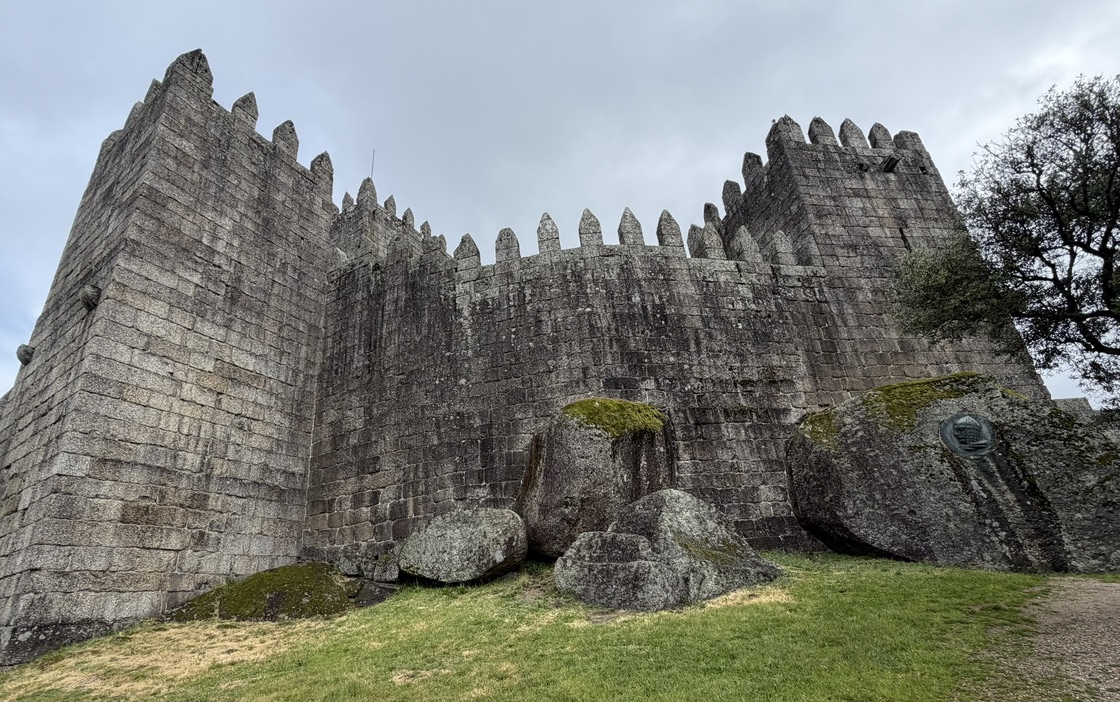
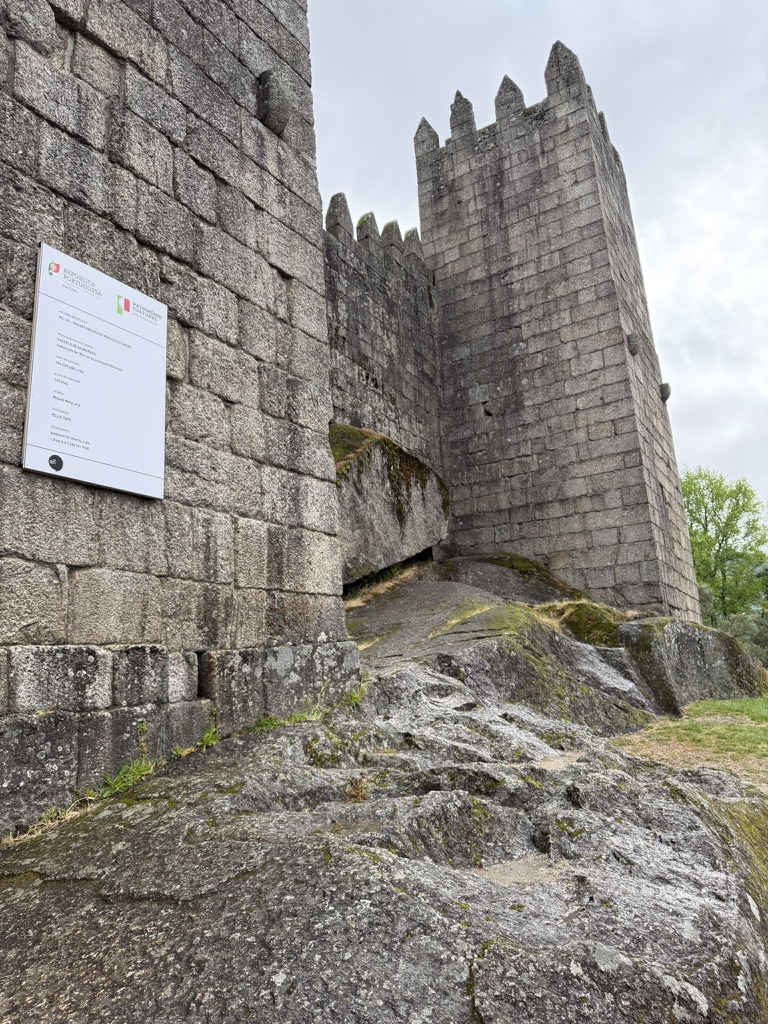
The walls are sitting on granite boulders.
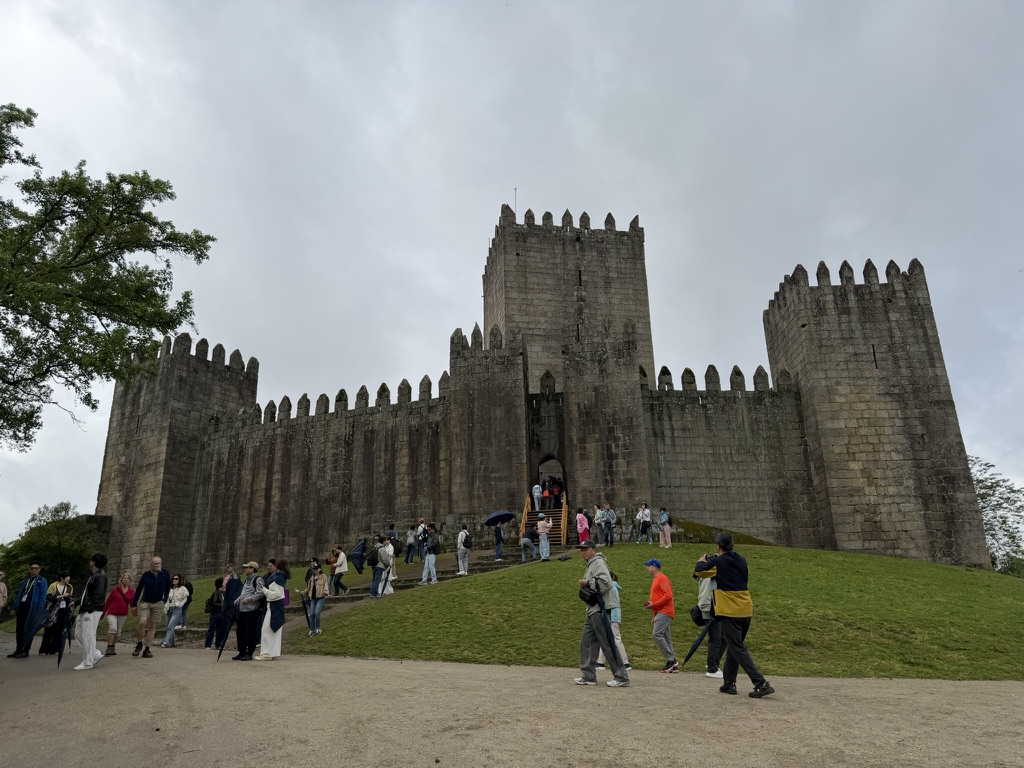
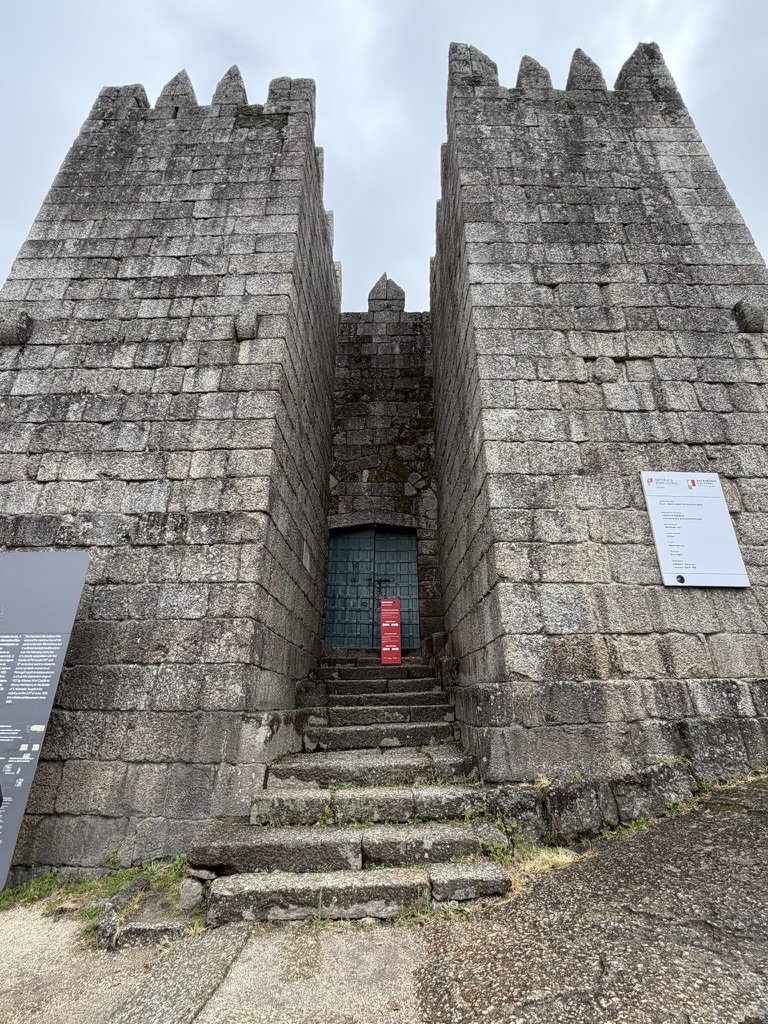
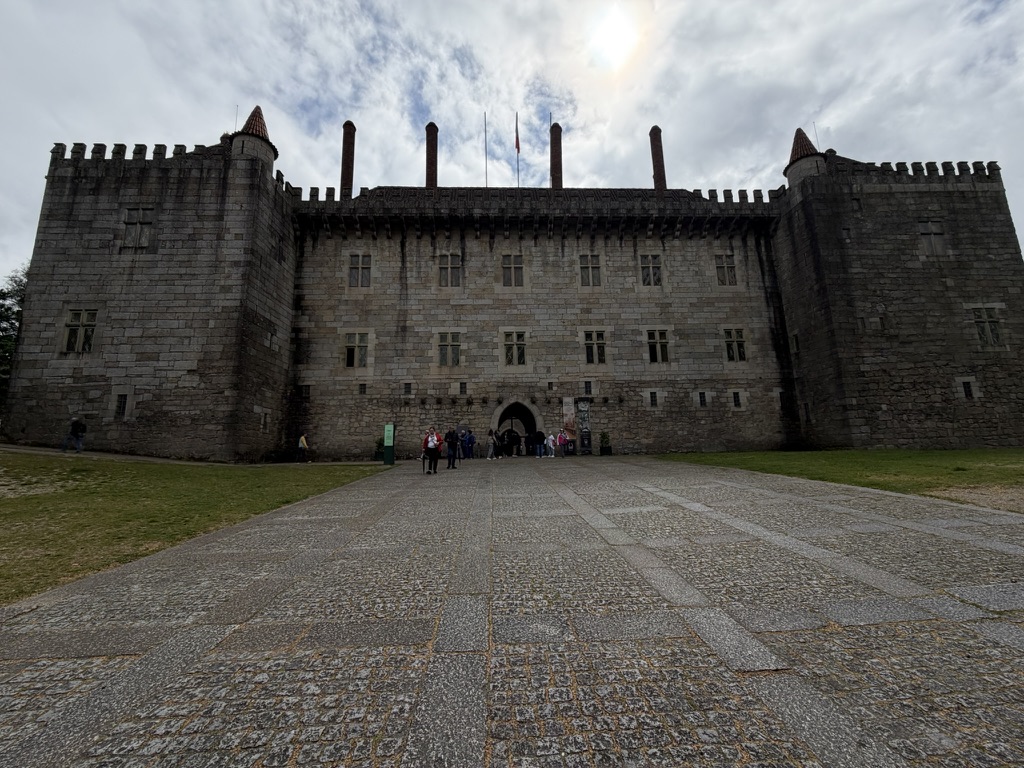
Thank goodness our next stop, the first castle on our tour, was less ornate but also fascinating in its own right: The Castelo de Guimaraes in Guimaraes. We did not actually go into this10th century edifice, we walked around the stone fortifications and massive walls. It is built on top of a granite mountain, and some of its walls are the granite stones. And they are enormous. They are everything a castle should look like from the outside. It was constructed by order of Countess Mumadona Dias to protect a monastery from Moorish invaders. Although the castle is not a world heritage site, it is a Portuguese National Monument since the late 1890s.
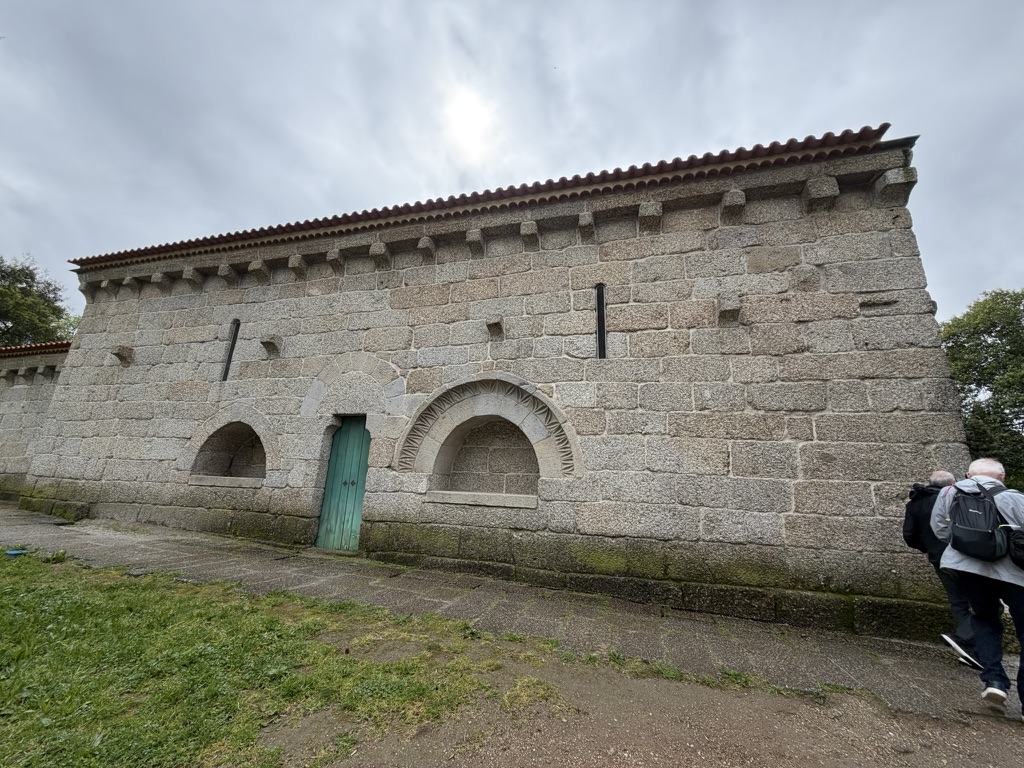
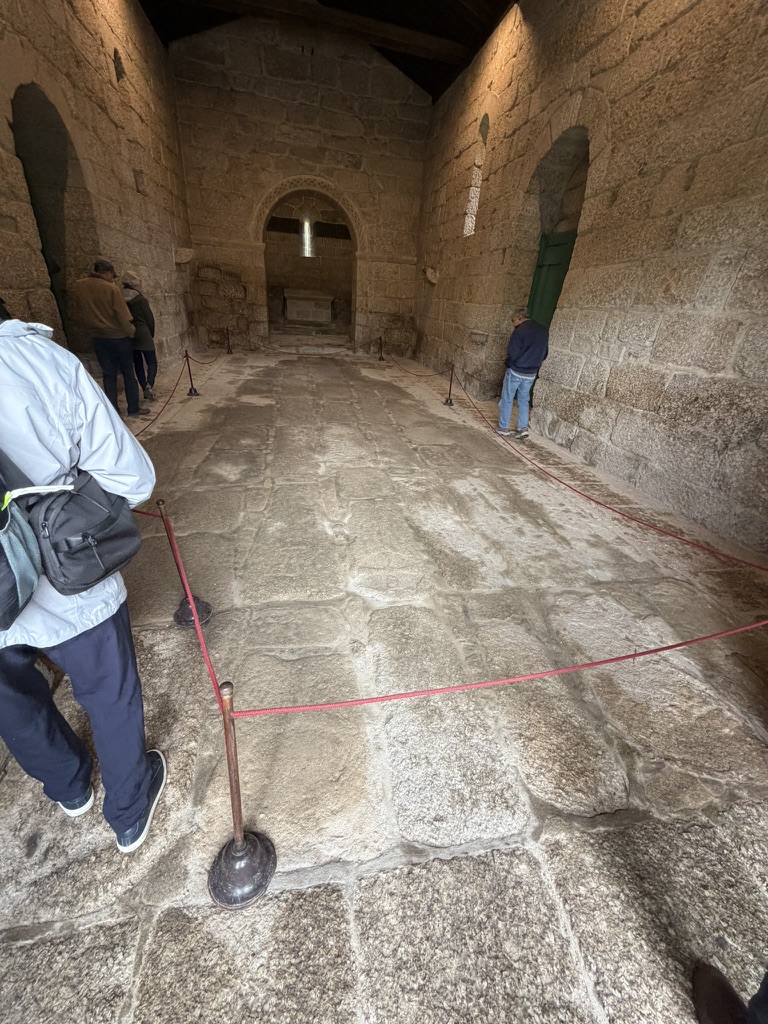
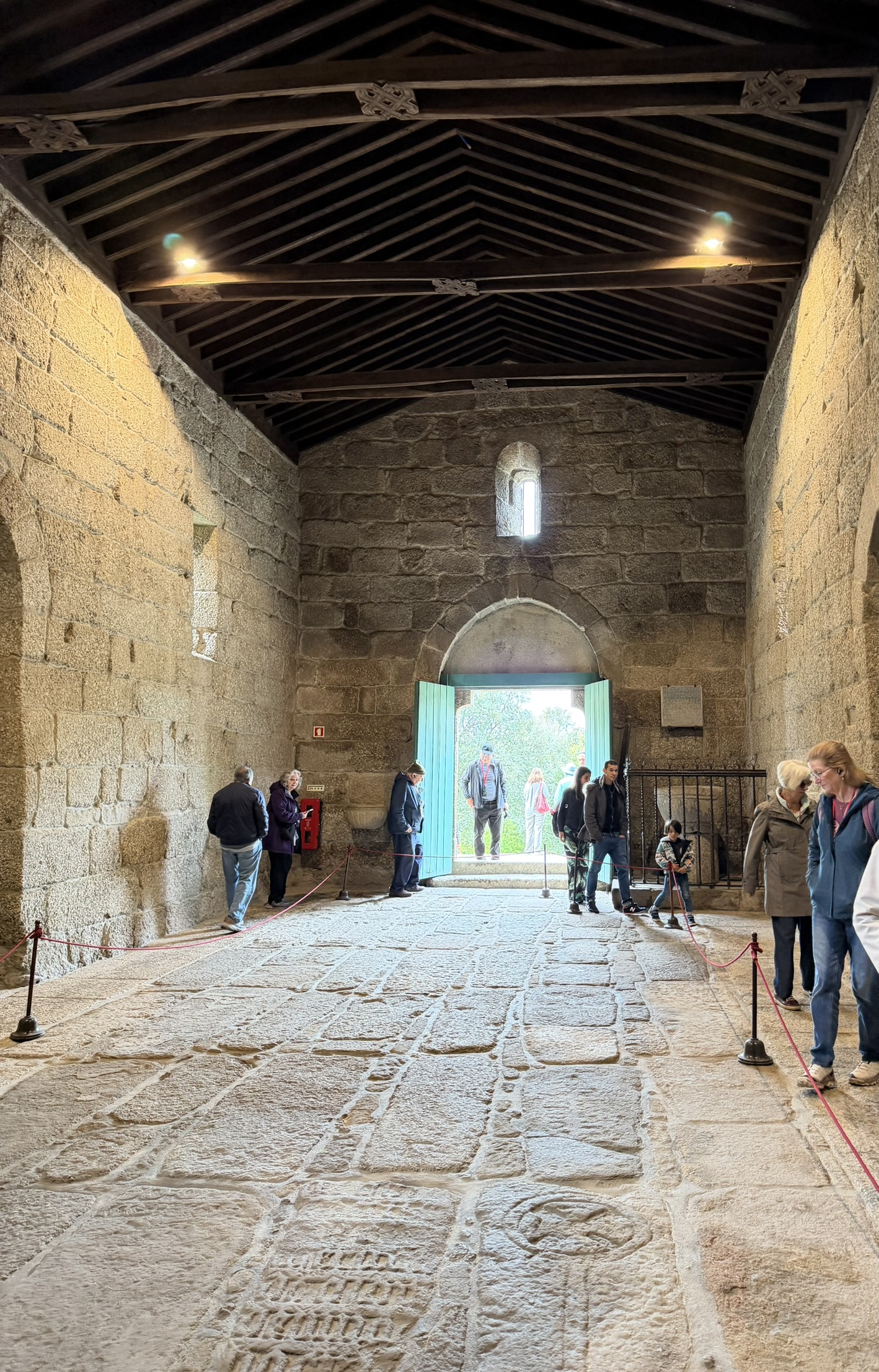
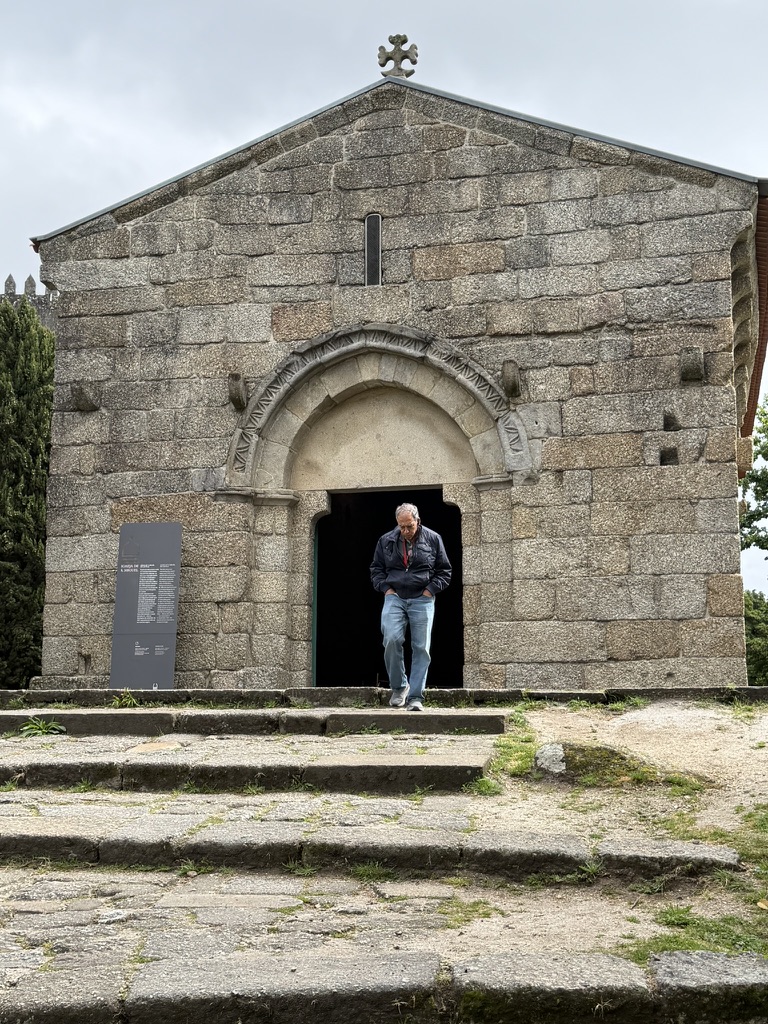
On the grounds of the castle are two more buildings. First the Church of Saint Michael. This little chapel was the place where Portuguese King Afonso Henriques was baptized in 1927. There is no furniture in the church as the entire floor are the tombstones of important people. In fact, you can only walk around the inside perimeter, so you do not cause damage to the engravings.
The Palace of the Dukes of Braganza is there as well. We only walked along the outside. It was renovated in the 1930s and served as the residence for the then President Antonio Salazar. Although part of it is open to the public, we did not go inside.
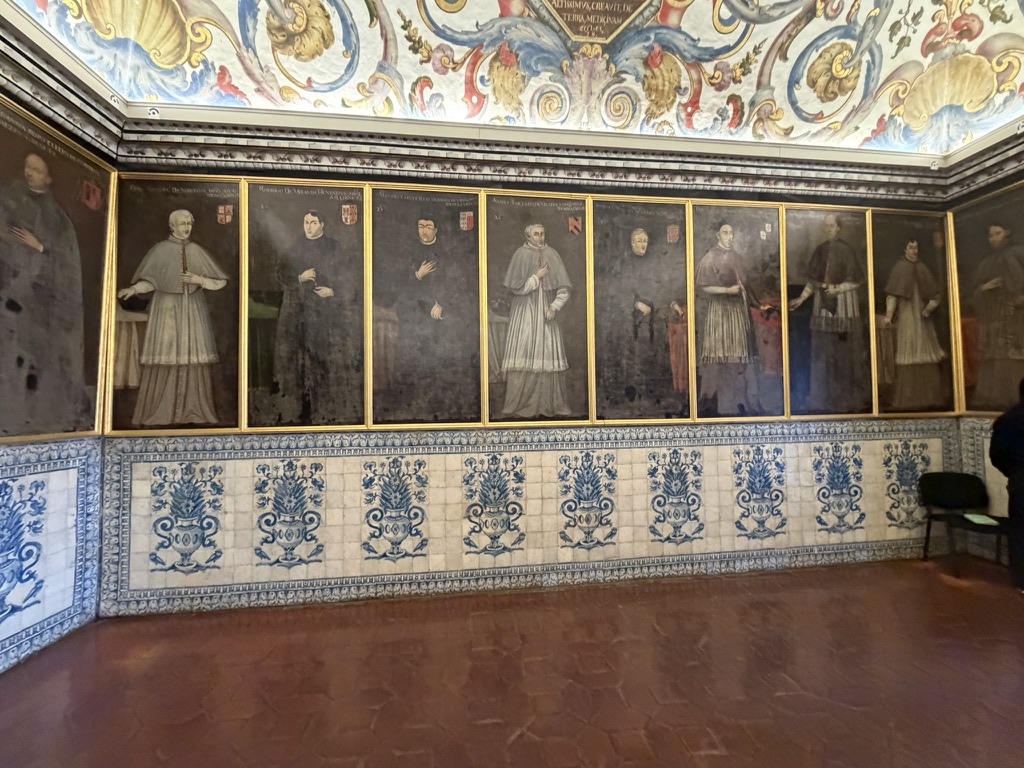
Although not a palace or a castle, the University of Coimbra, founded in 1290, definitely feels like one. I am not sure I would be able to actually go to classes there, especially in some of the older buildings. I would be too busy looking around.
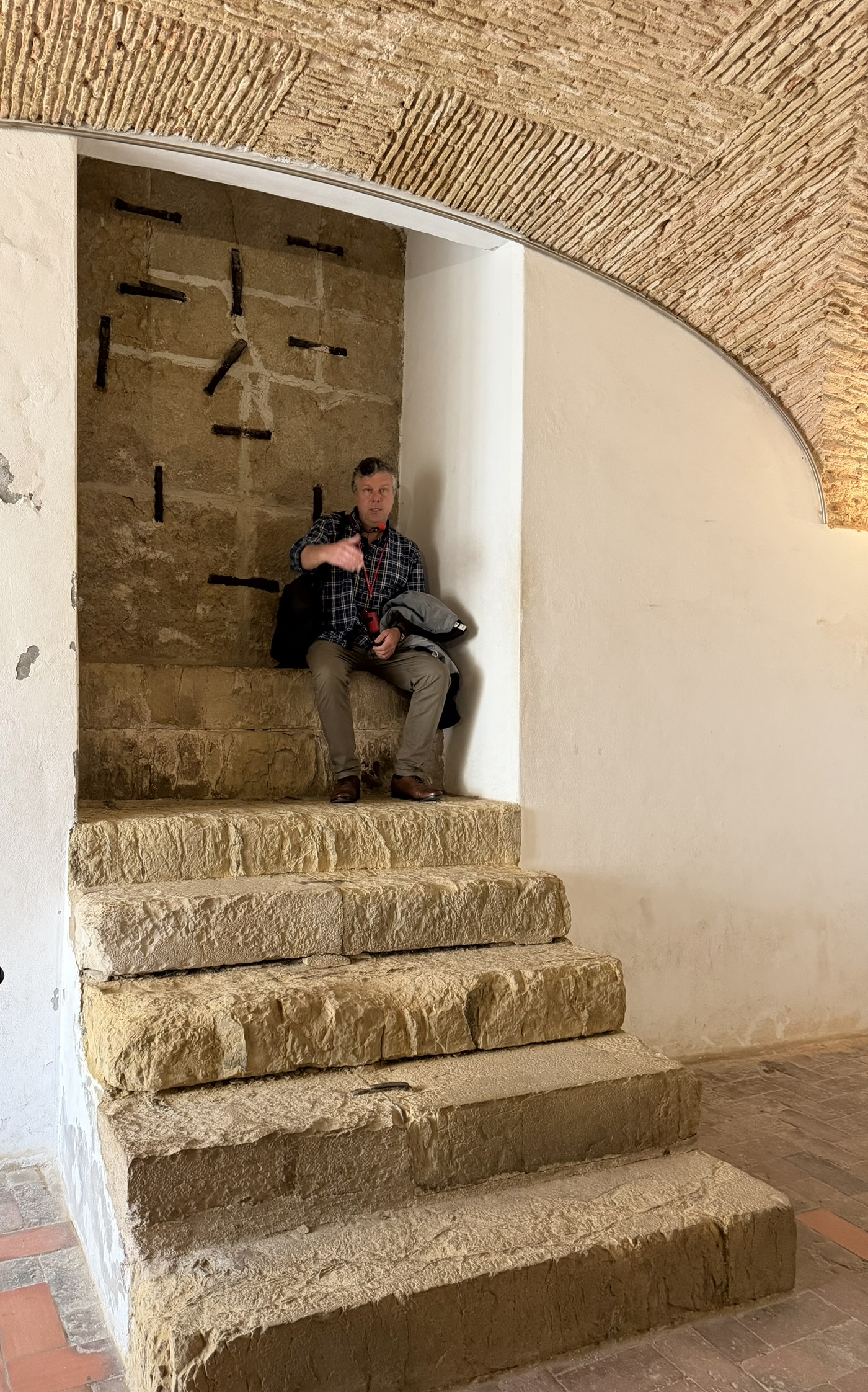
Underground student prison.Our tour guide on the ‘toilet.’Room for presentations.Ceiling of Presentation Room.Part of the Courtyward and the view.
We were not allowed to take photos of the famous library. It is a stunning work of carved wood and bookcases filled with ancient tomes. It is still used by students and scholars, but the books must be ordered in advanced and not allowed to leave the campus.
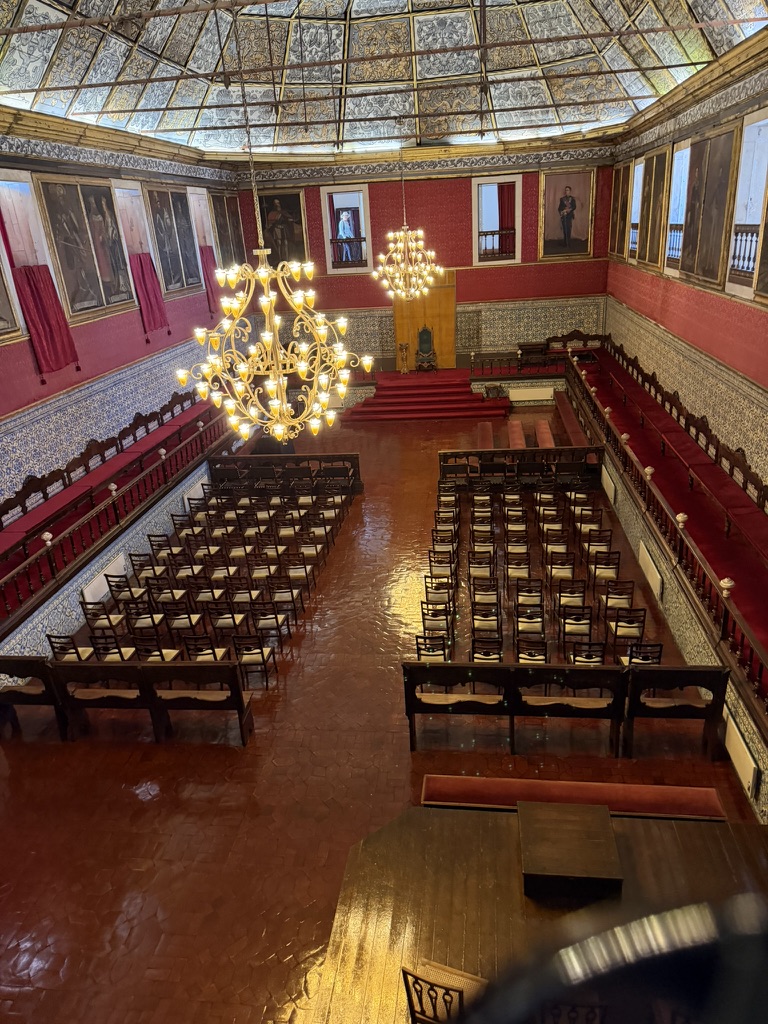
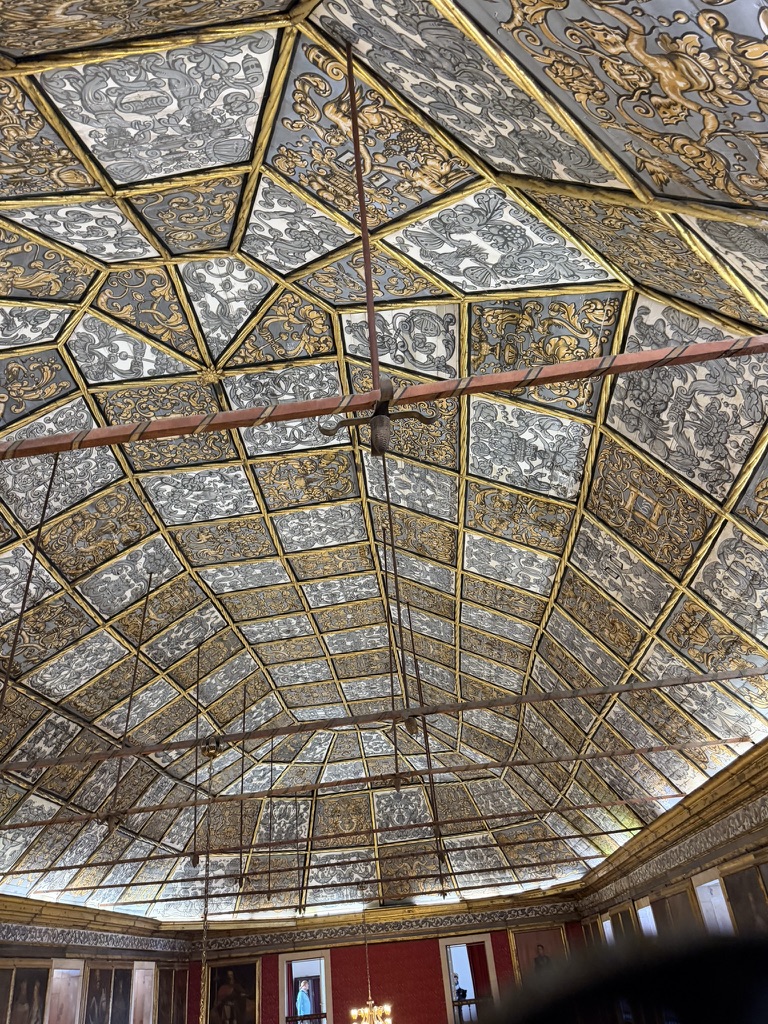
The lecture room, where students present their PhD dissertations also makes you think of a castle great room. The ceiling is stunning as is the woodwork.
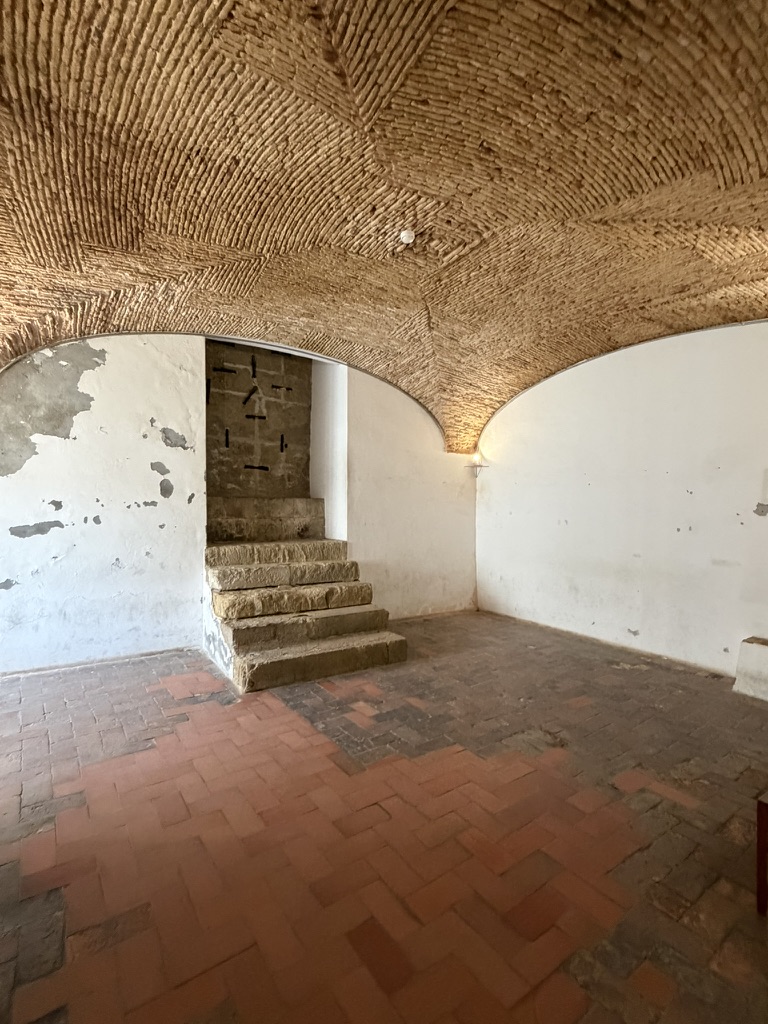
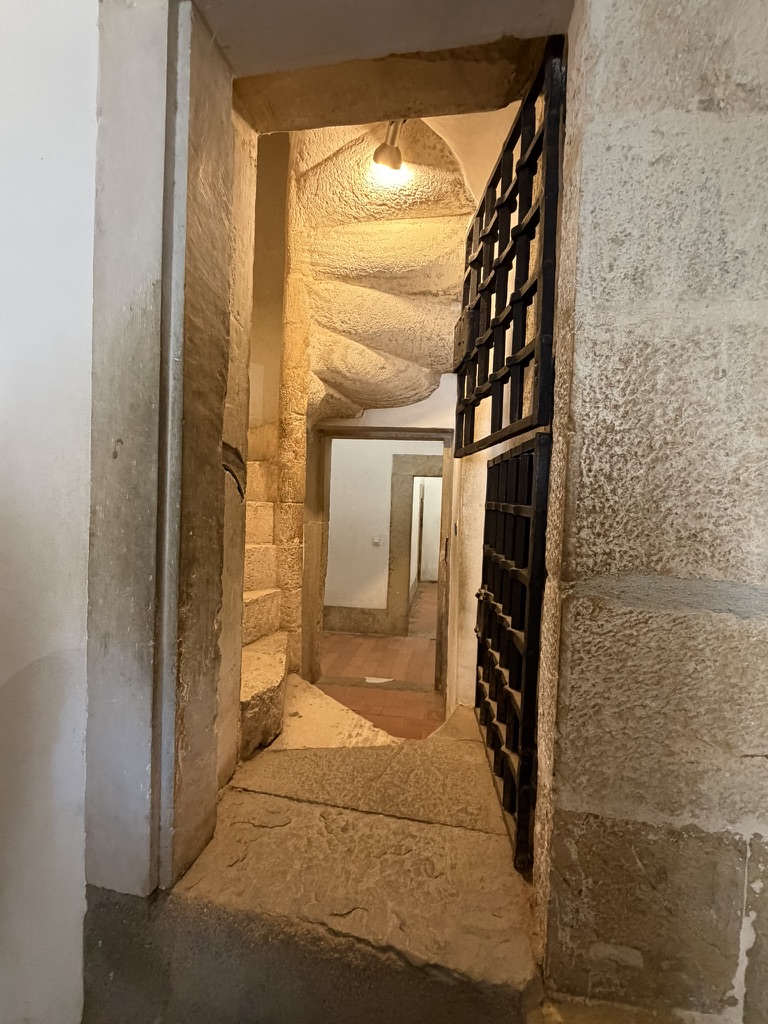
But I have to be honest the part that capture most of our attention was the fantastic view of the city and the river; watching the students take their graduation photos; and finally visiting the underground ‘dungeon’ that was a special prison for students who got into trouble. This is not your usual dungeon, because since the students were from the upper class, even when they got in trouble they did not suffer like the riff-raff. In fact, we were amazed that they actually had a two-seat stone toilet to use. They could spend anywhere from a day to several months here depending on their misbehavior.
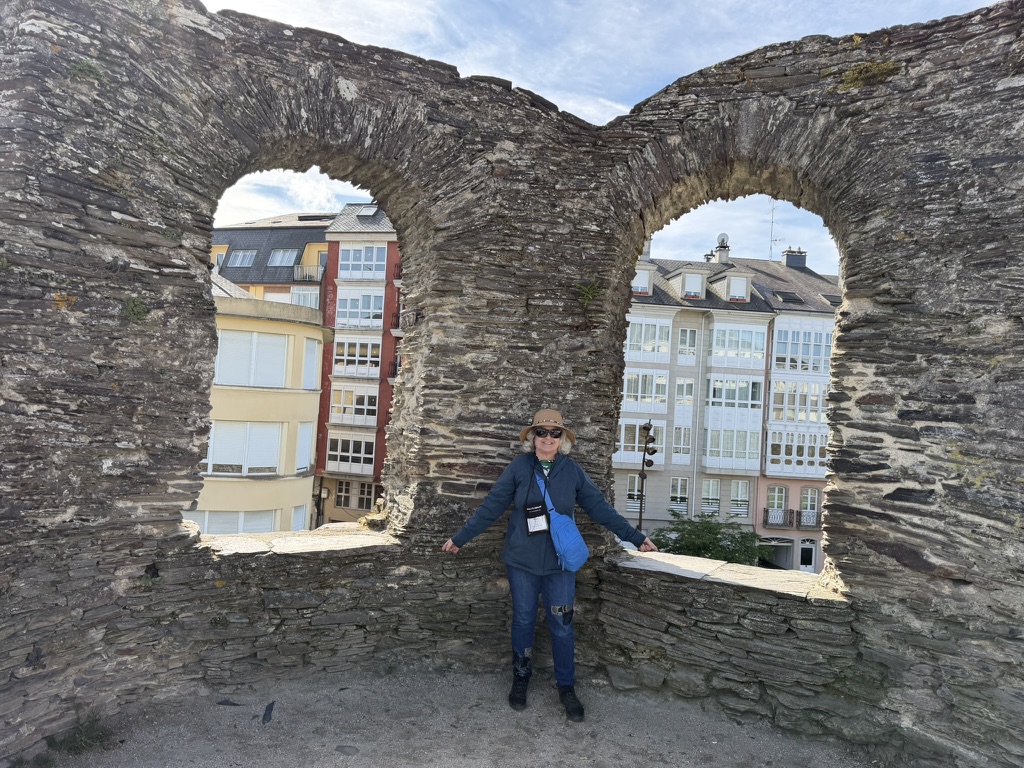
Later photo shows me between the window openings.
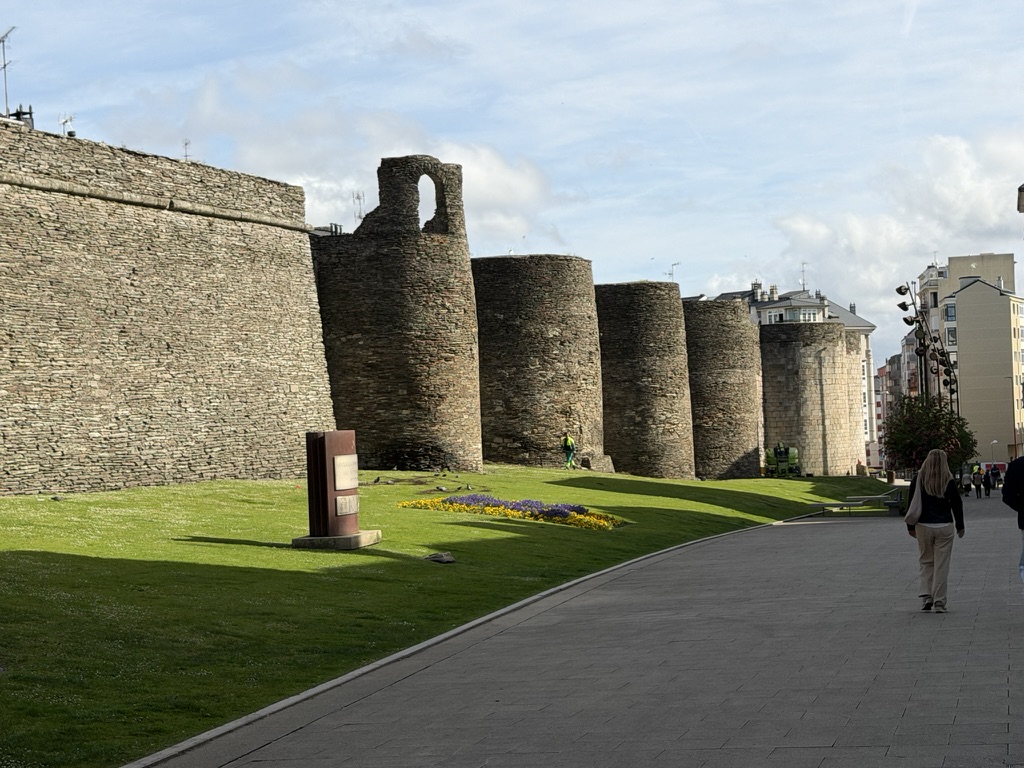
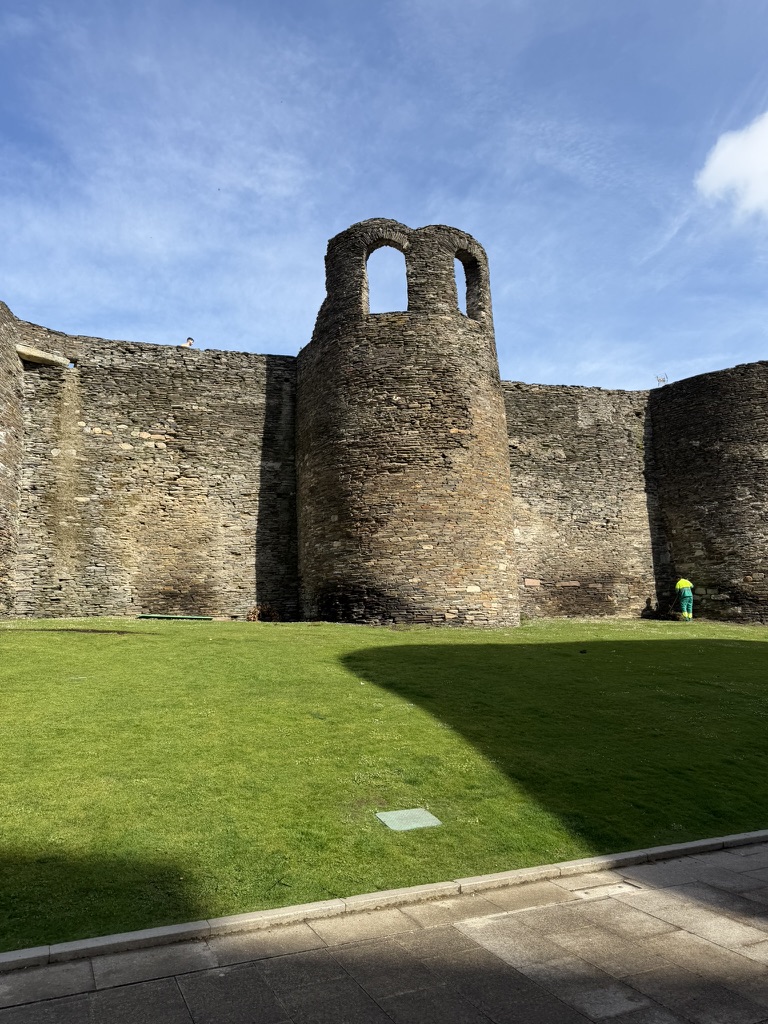
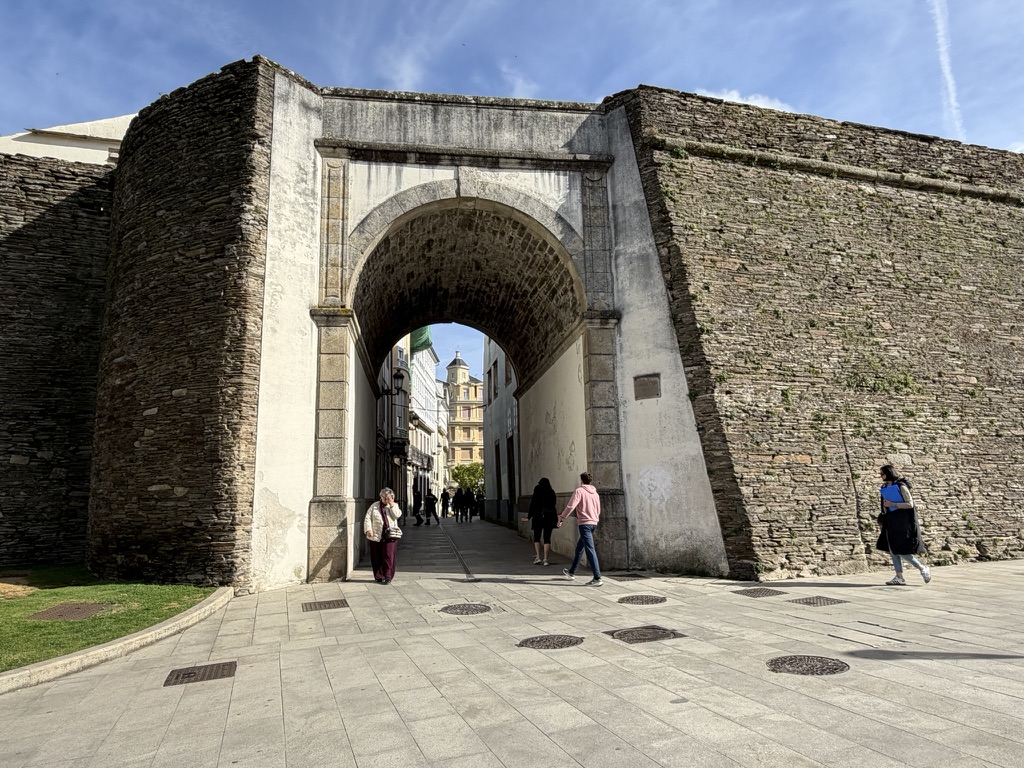
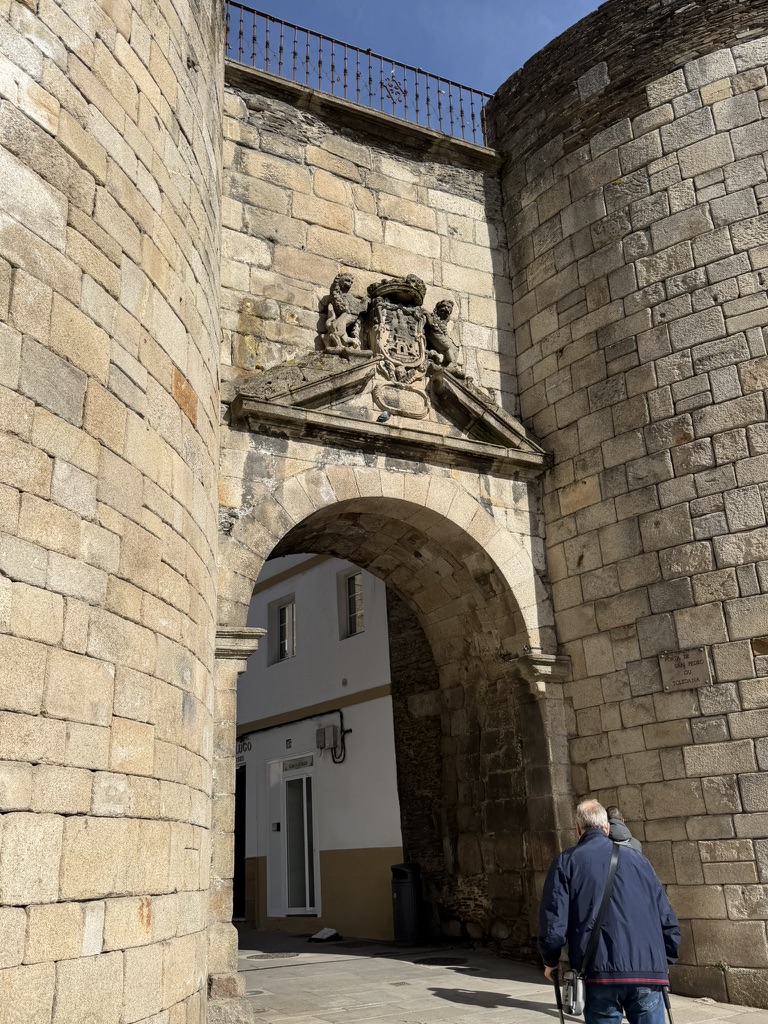
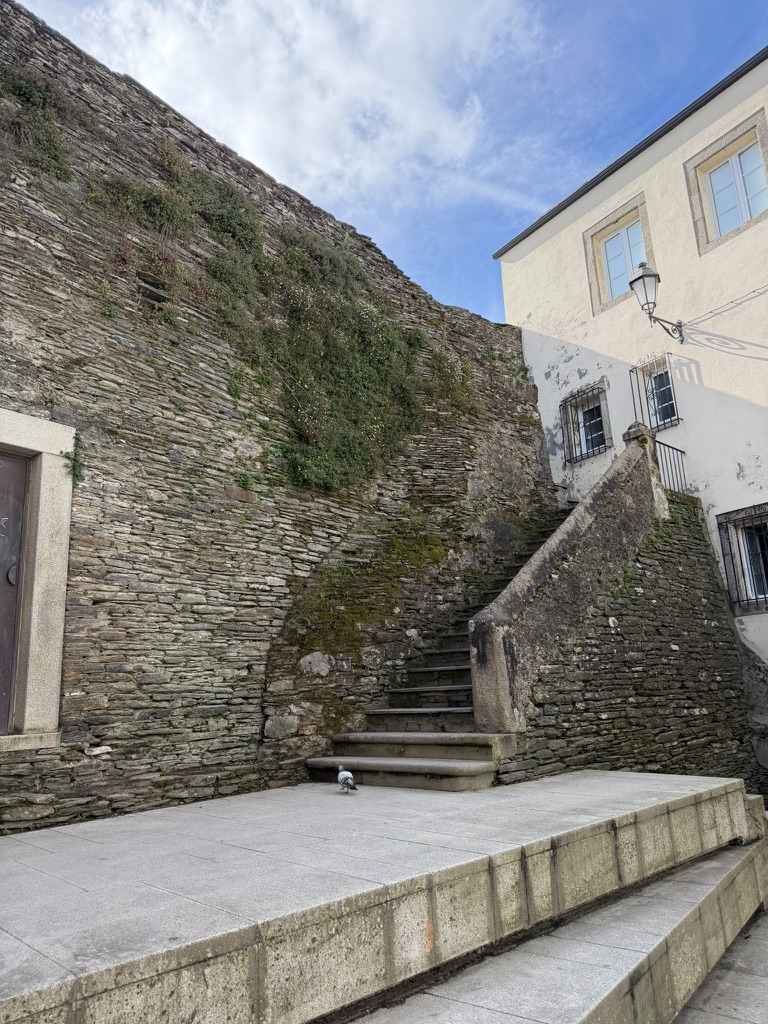
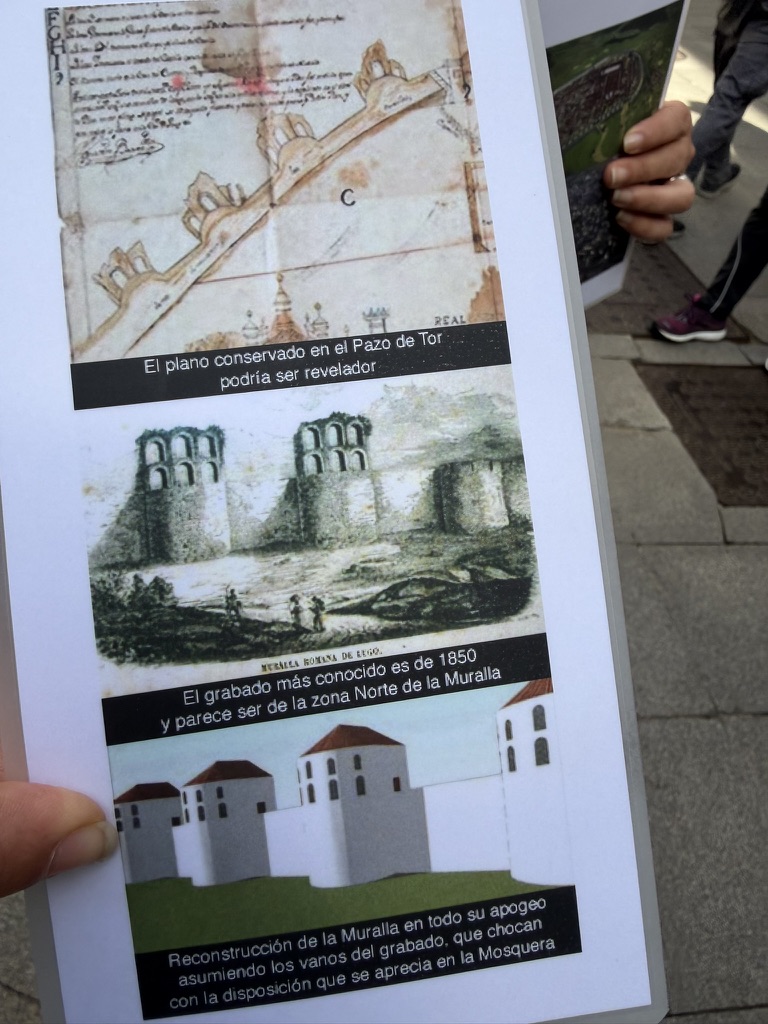
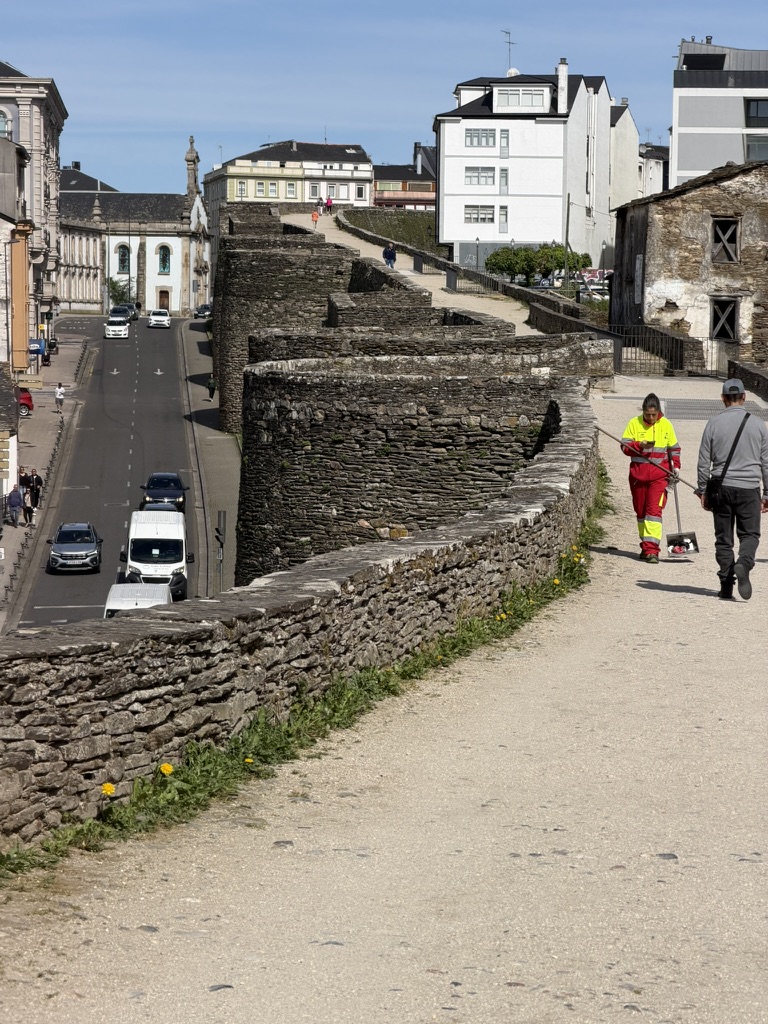
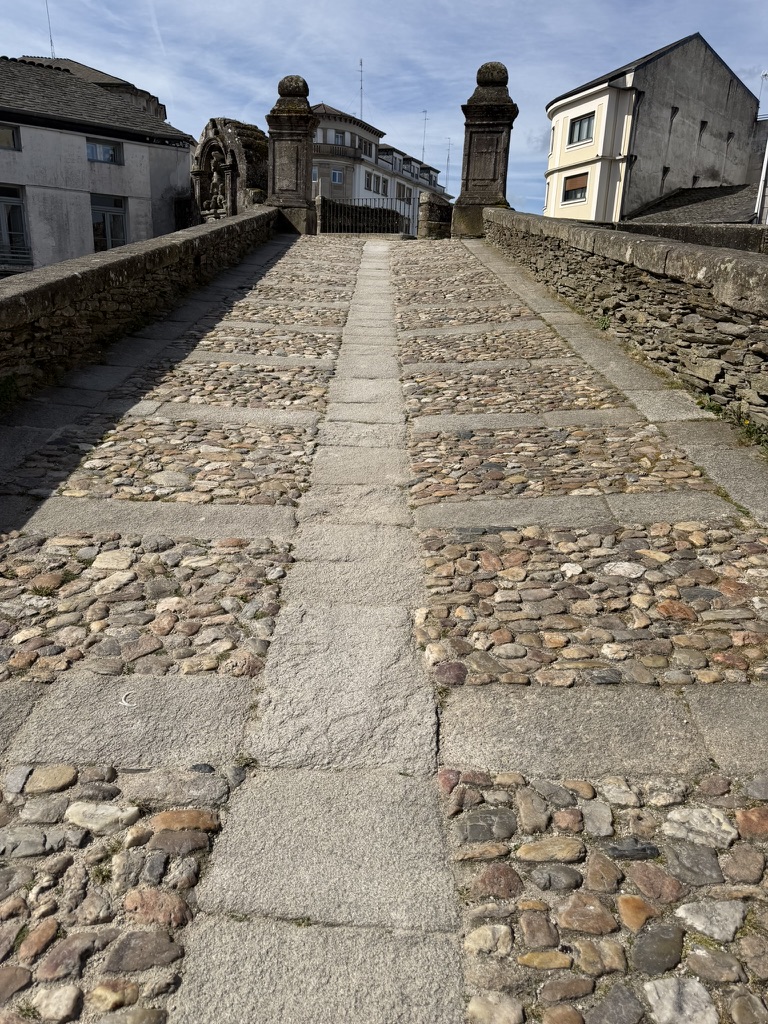
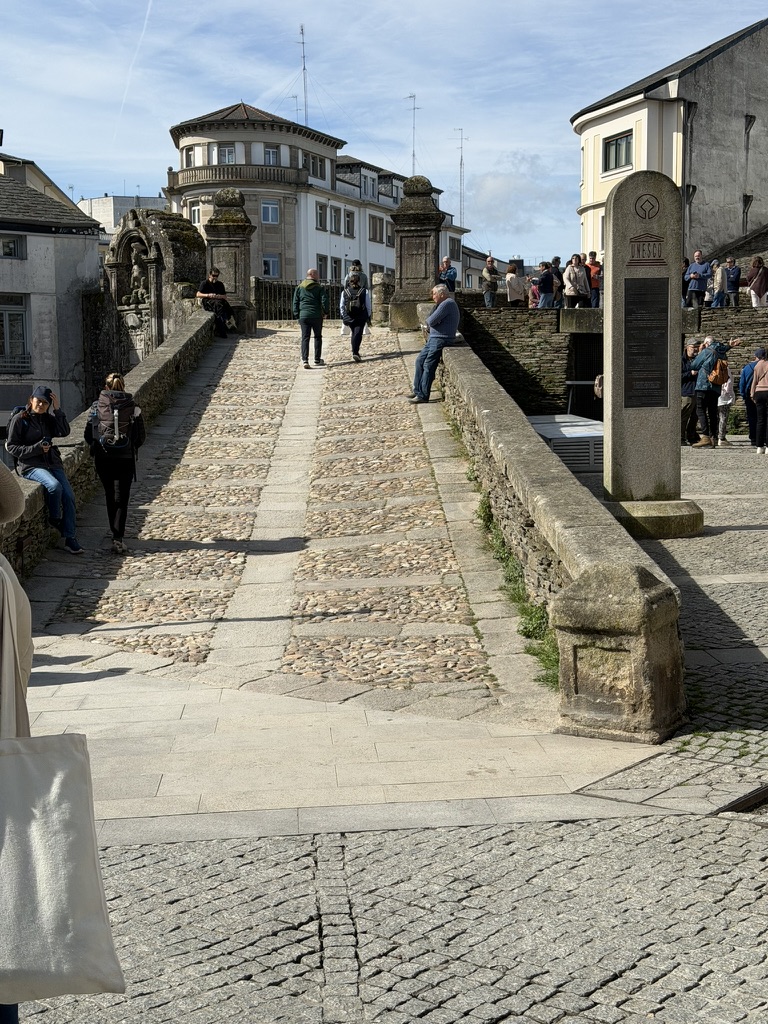
Next stop the monstrous and magnificent Roman Walls of Lugo. We walked around them from the outside. And then we walked on the walls in two different places. Once the walls, a UNESCO World Heritage Site, also had multiple towers surrounding the city. Now just vestiges of the towers remain.
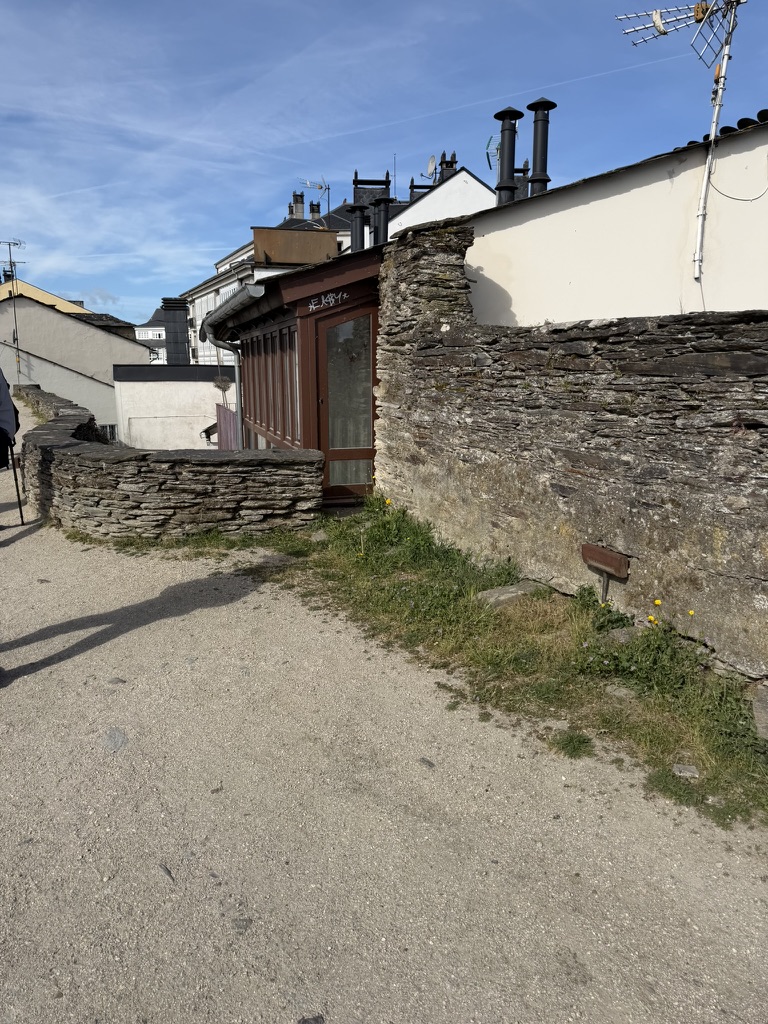
Along the wall, people stroll.Part of the tower that still exists.House built into the wall with an entrance.
Walking along the walls give you a great view of both the old and new cities, but also make you aware of how technologically advanced the Romans were as these walls have lasted centuries. Over time, some people had the opportunity to build their homes right into the wall and have the walls paths as their backyard. People can no longer do this, but those who have this cannot be destroyed.
Our final Palace was La Granja, or Real Sitio de San Ildefonso, was the summer home of the Spanish kings. It was walking distance to our hotel, the Parador De La Granja. Our hotel was once part of the Palace grounds and was the home of two children and their attendants.
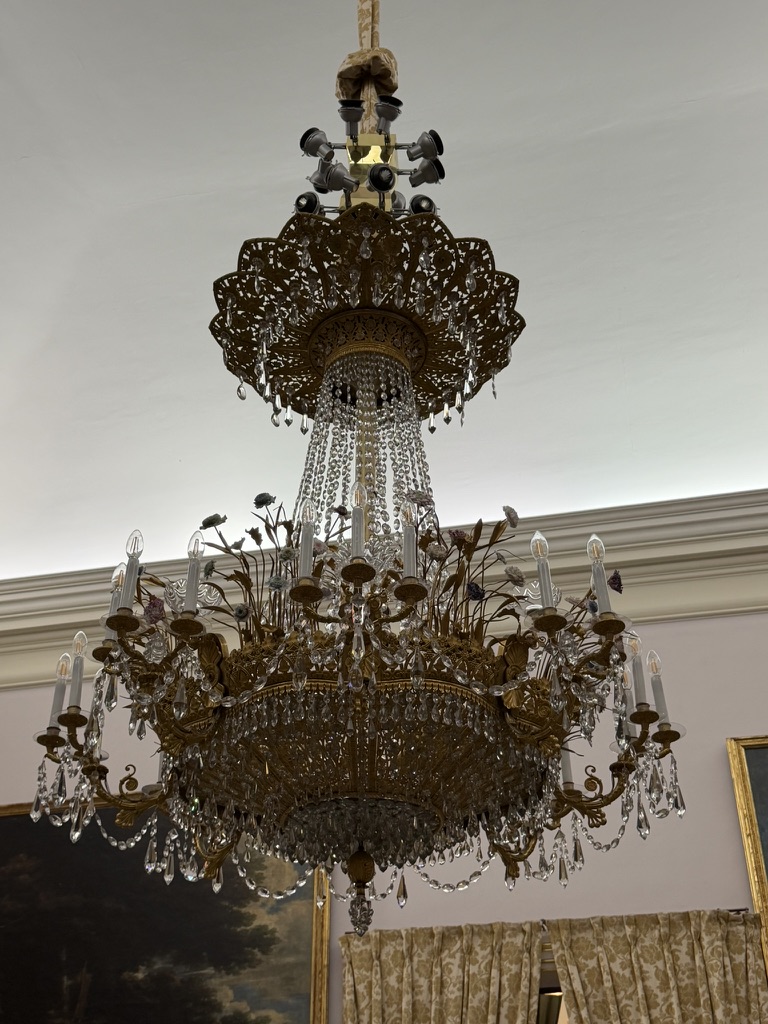
This is made in France with porcelain flowers.These weigh almost 200 pounds each
The Palace is enormous, we only got to see about ¼ of the total rooms, just walking through the open rooms on the bottom floor. Through the windows we could see some of the fantastic gardens. Unfortunately, they were closed because that evening some of the fountains were going to be opened. But from what I could see these gardens are much like the ones in Russia at the Peterhof Palace.
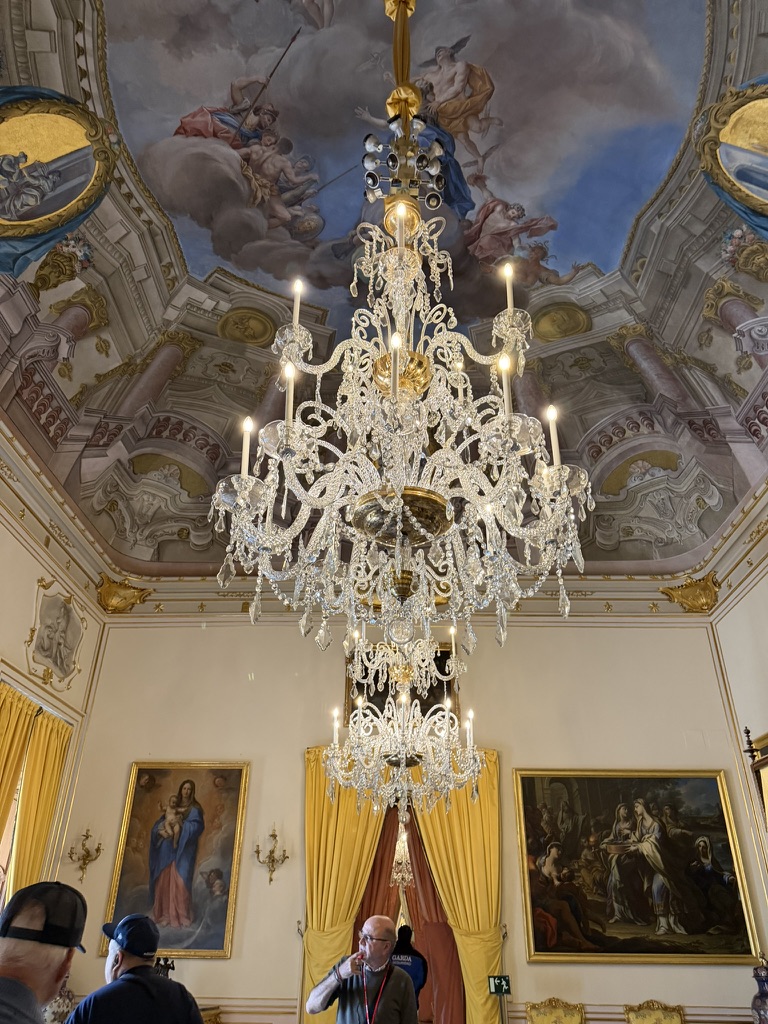
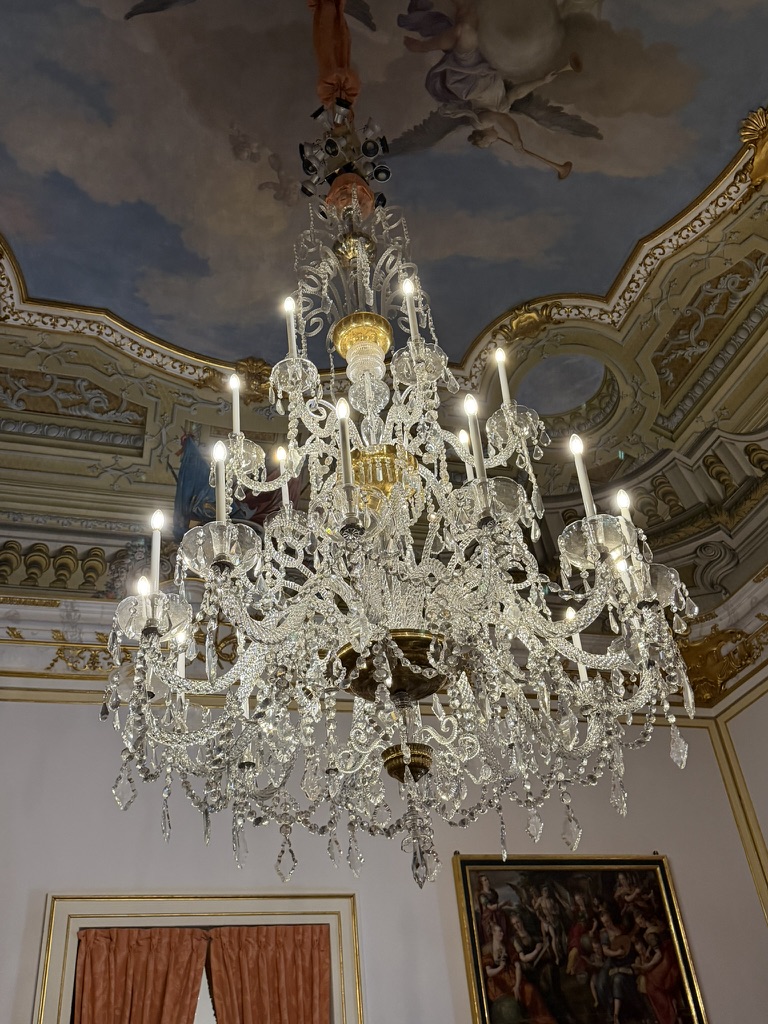
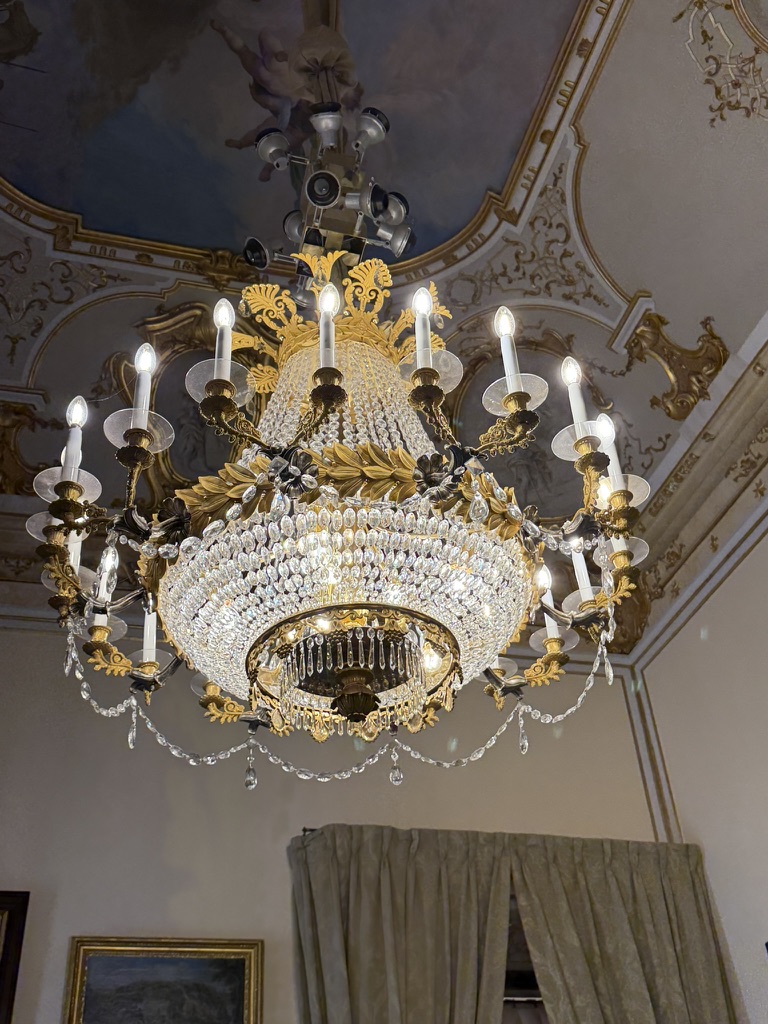
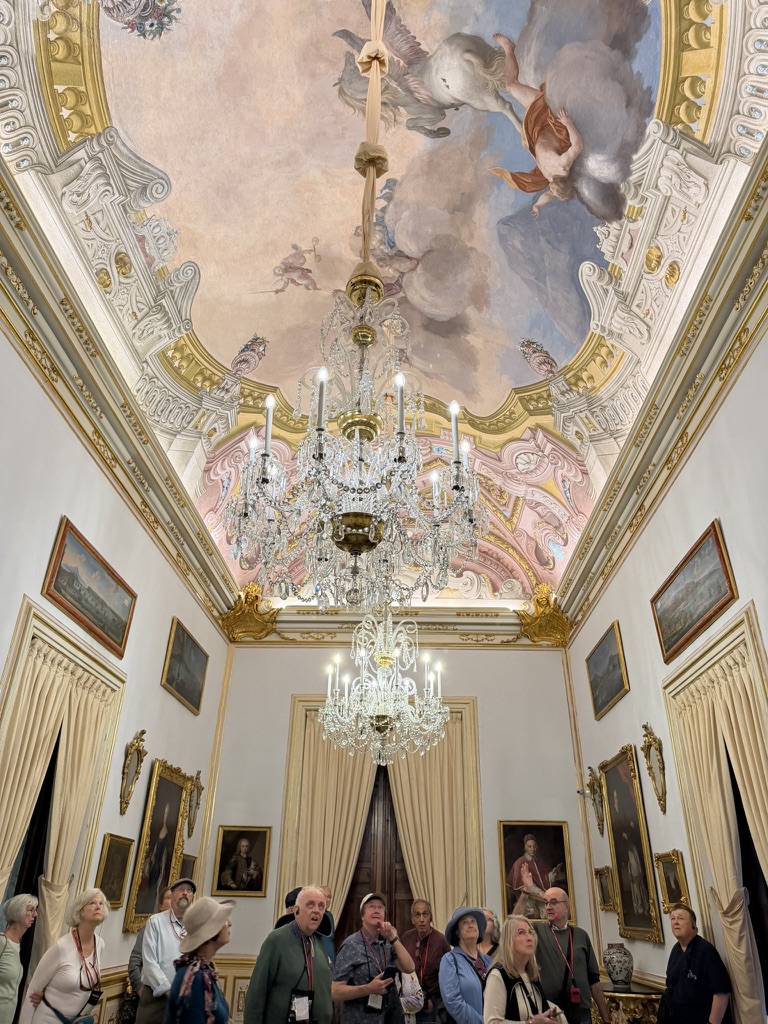
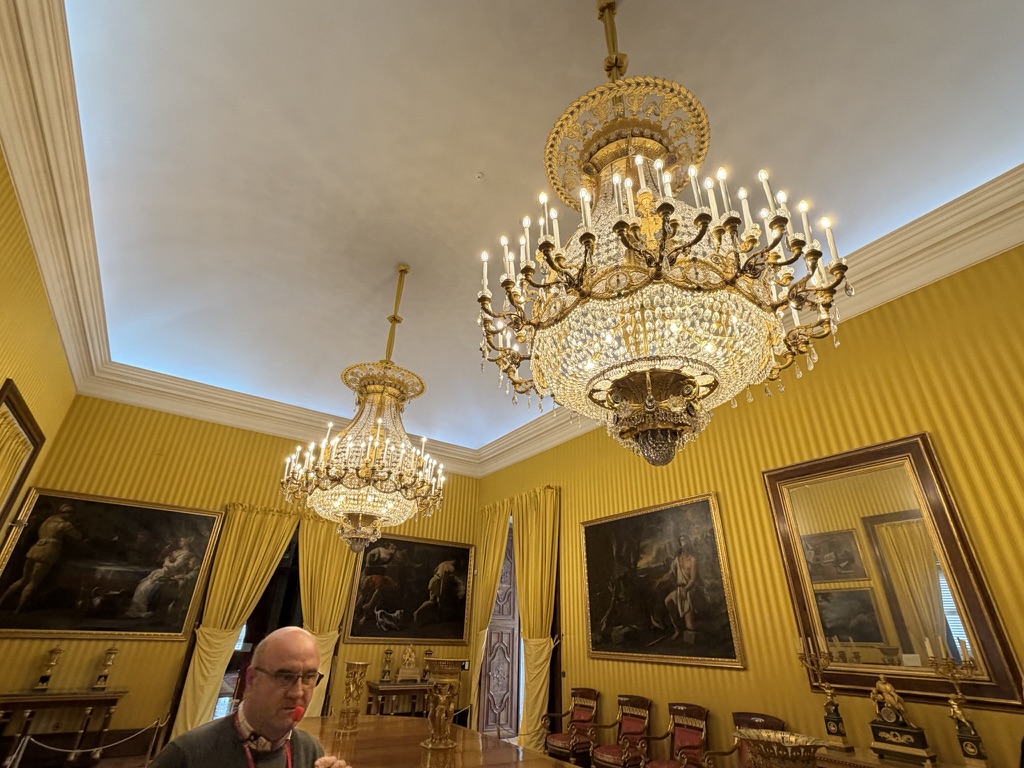
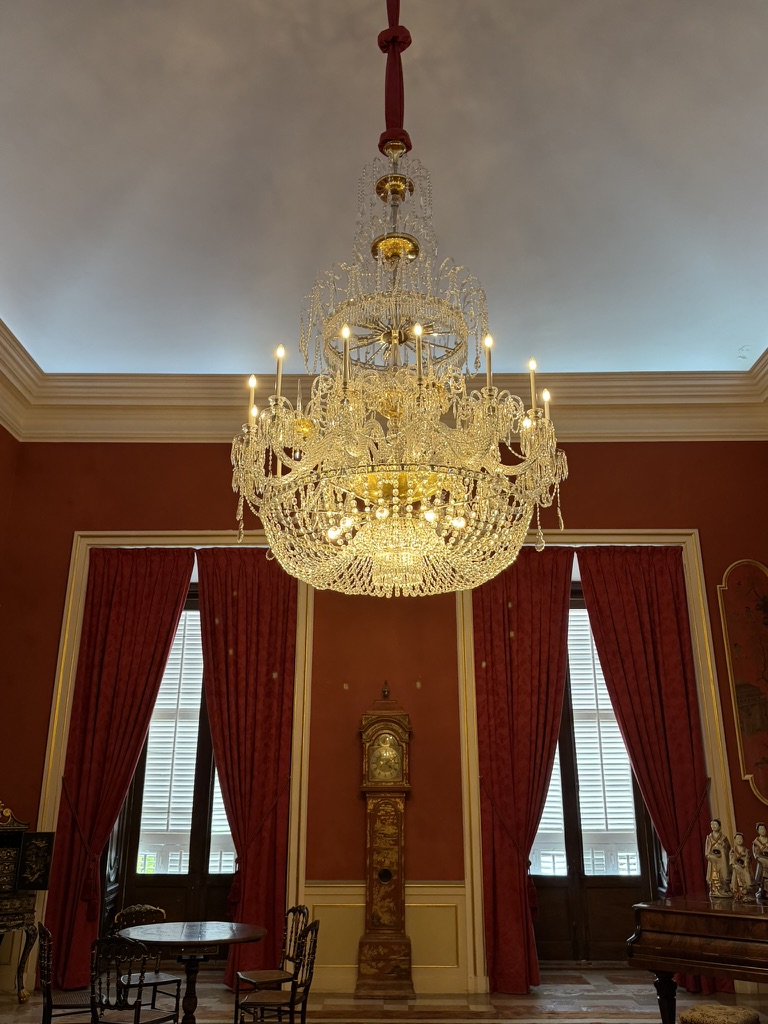
The chandeliers and ceilings in this palace were stunning. The Royal Glass company is in San Ildefonso, so many of them were made in the town for the Palace. For this palace I will just show you some of these fantastic and some fanciful chandeliers. To be honest after going through these rooms I became somewhat overwhelmed. But it was definitely a great final stop on our tour.
When my husband and I booked our latest Road Scholar trip, “Beyond the Vineyards, Sampling Northern Portugal and Spain,” he started telling people that he was going to drink his way through Portugal and Spain. And he did.
Our tour included visits to six wineries as well as seven or more UNESCO world heritage sites. We learned more about Port, Sweet Vermouth, red wines and white wines, than I anticipated. And along the way we had to taste all the differences.
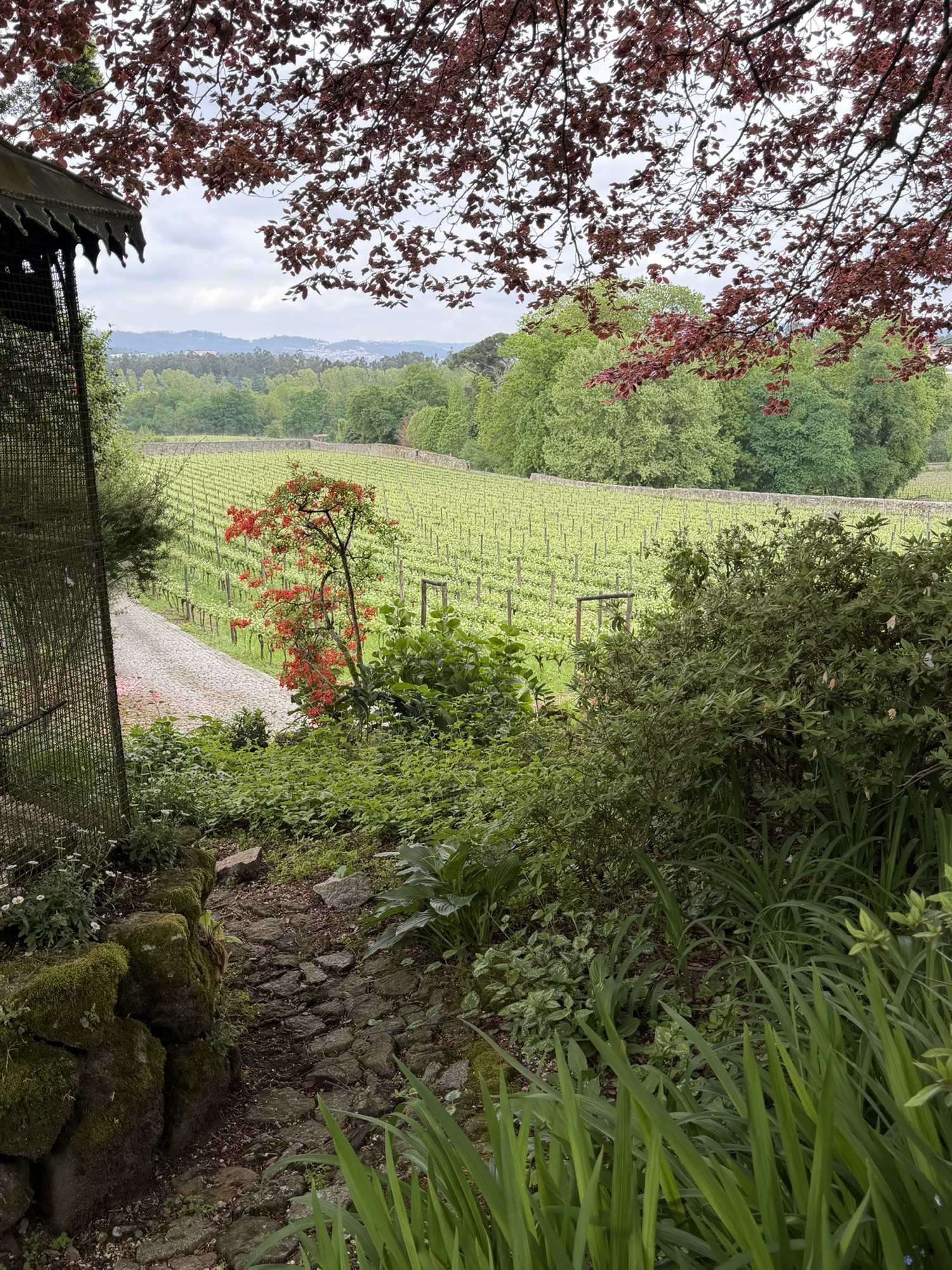
At every winery we had a tour of the vineyards, the fermentation areas, and the tasting rooms. Some of the wineries were located in estates that had been in families for generations. One winery’s gardens were magnificent.
In honor of these beautiful gardens, I plan to start off my blogs about our trip to Portugal and Spain focusing on the beautiful gardens we visited in Portugal.
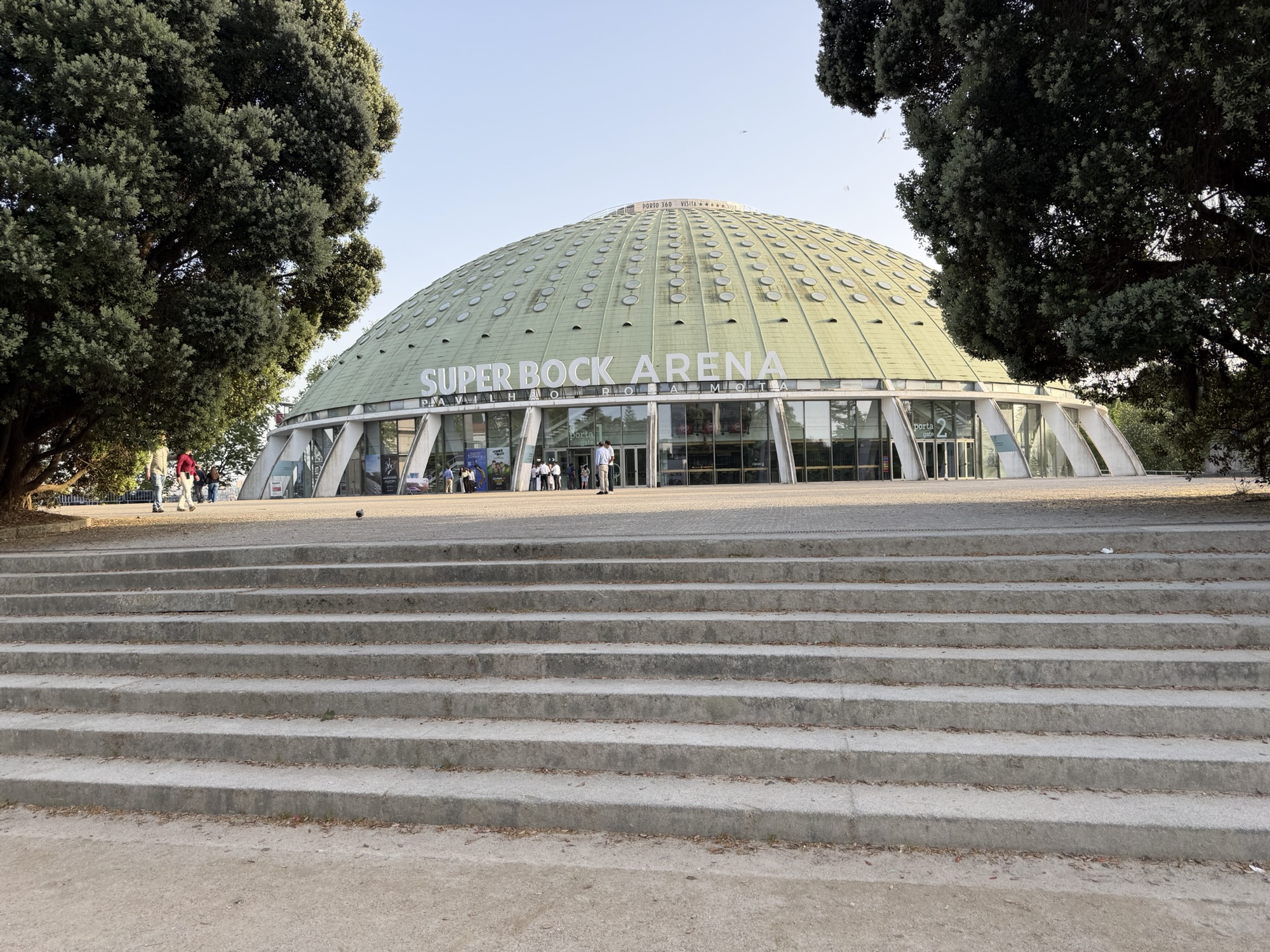
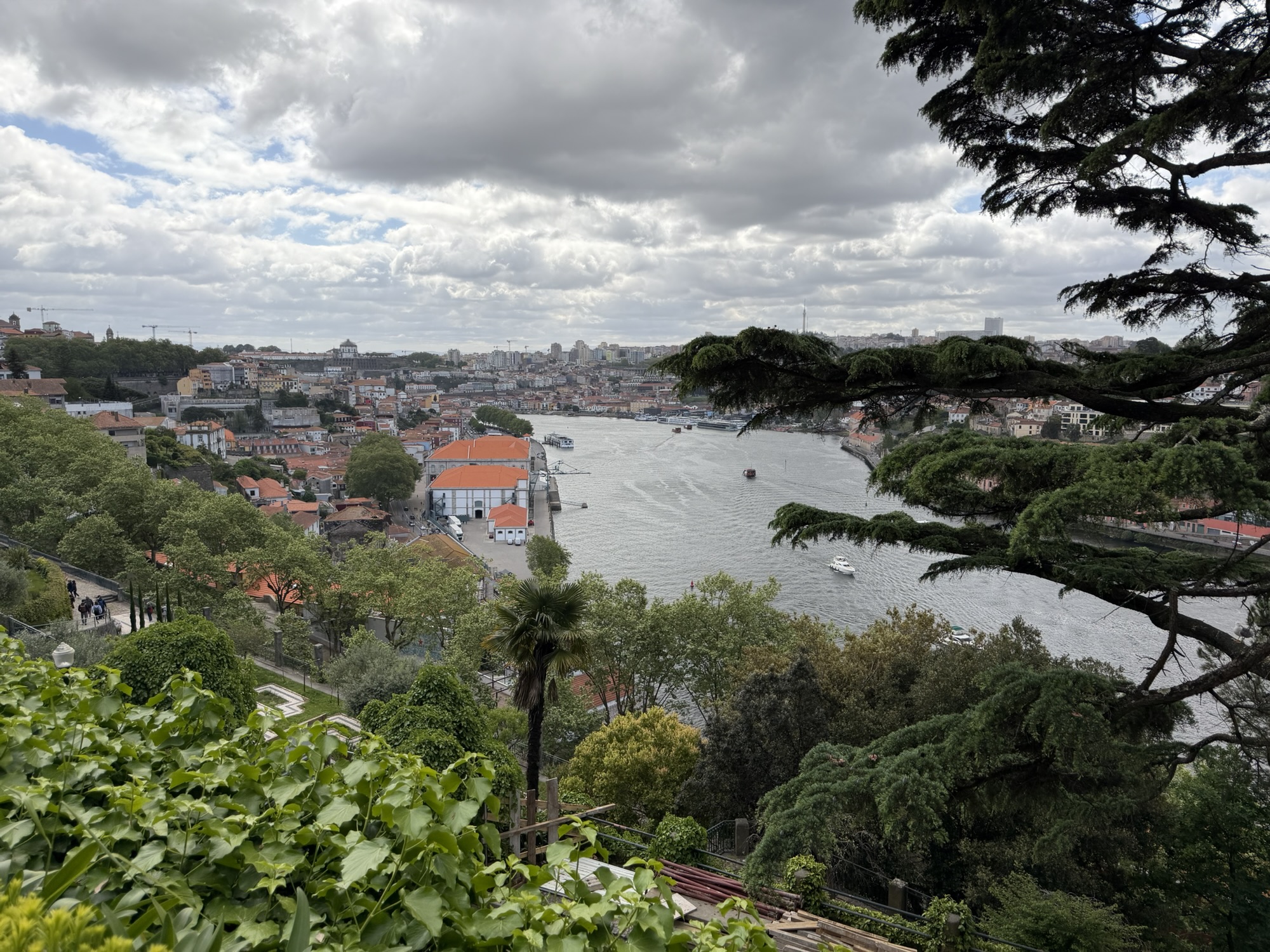
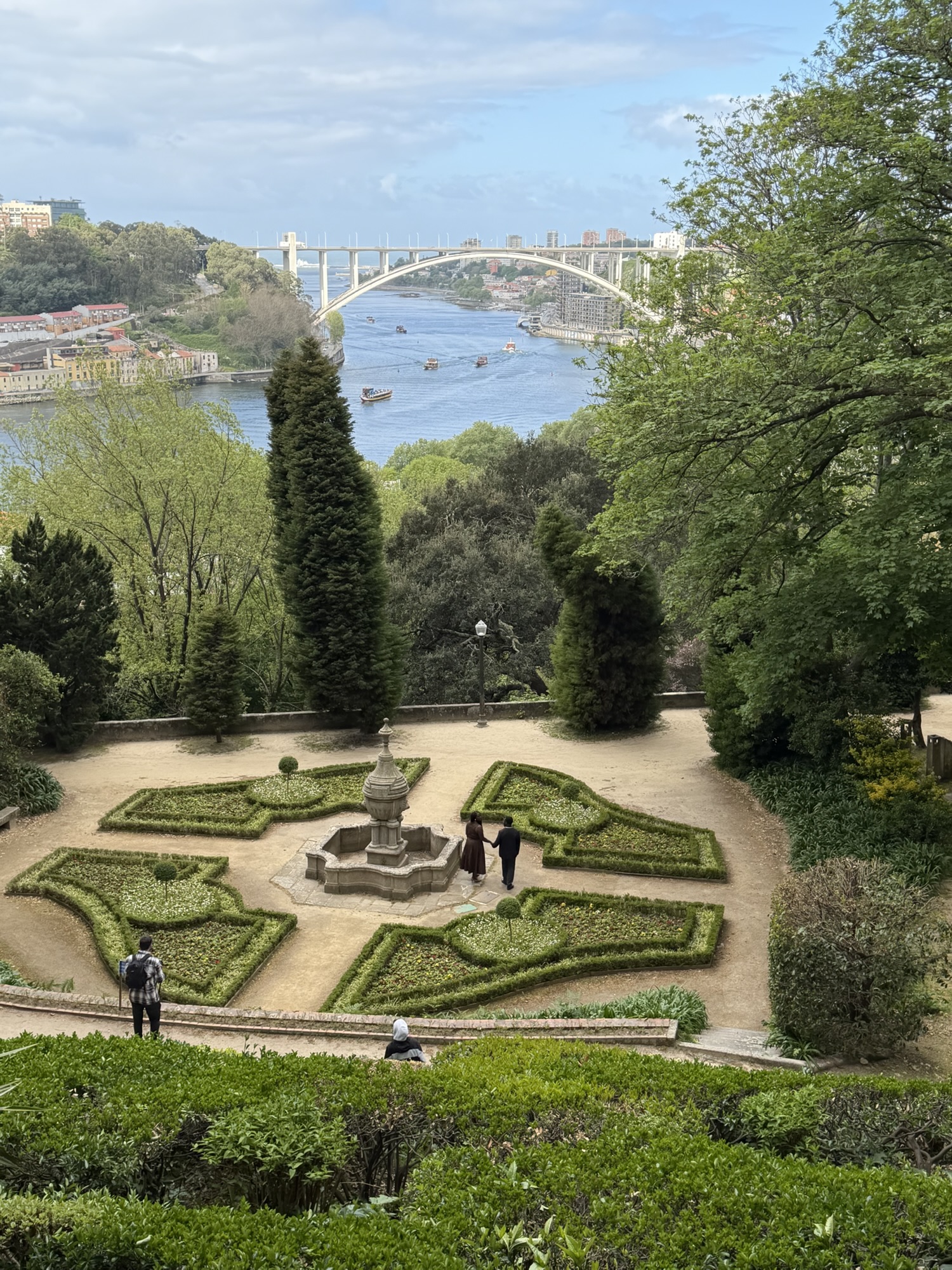
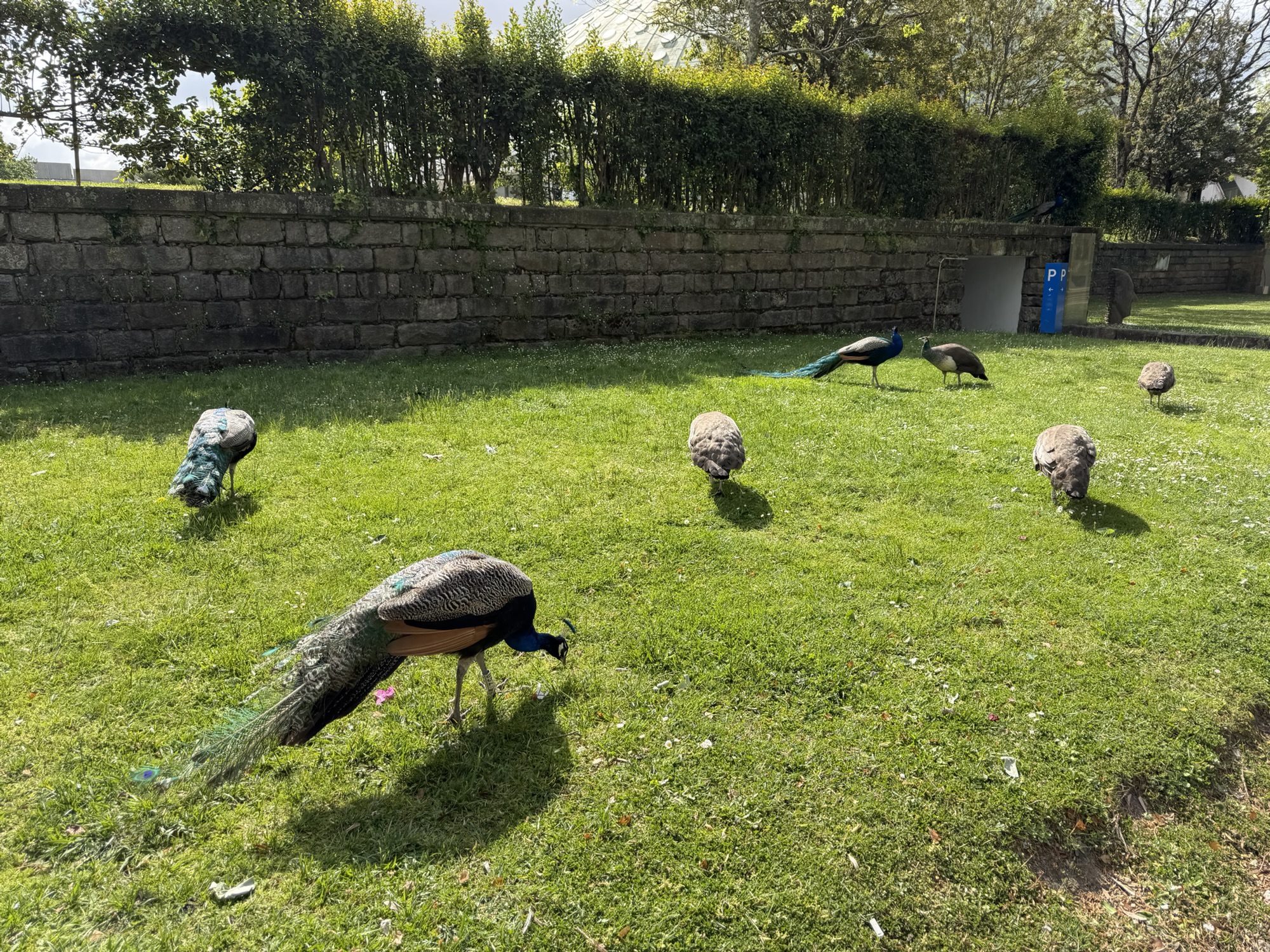
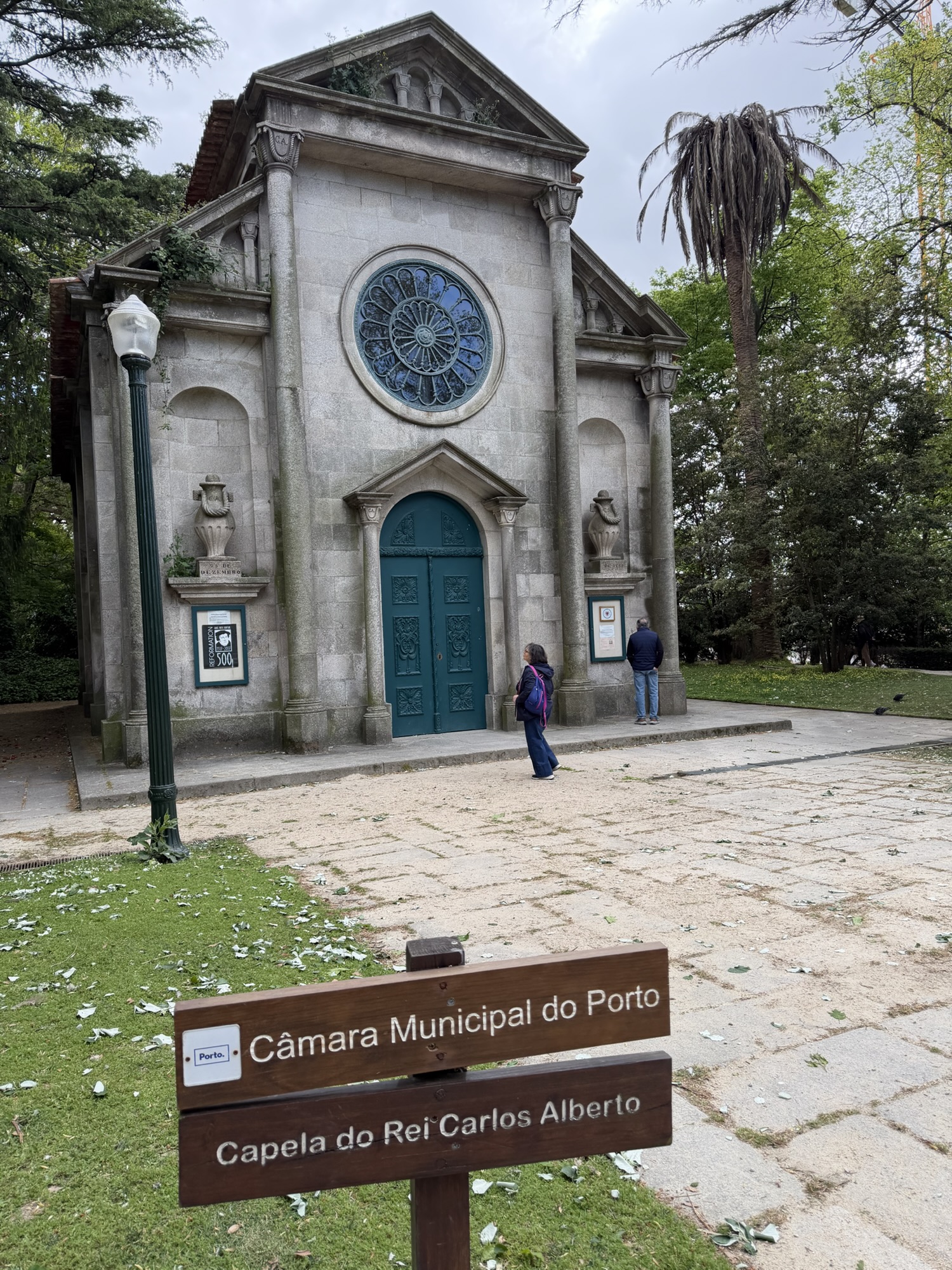
The ArenaView of the Douro River from an overlook.My favorite photo. Gradens, Douro River and Porto.All the peacocks and peahens.The small chapel.
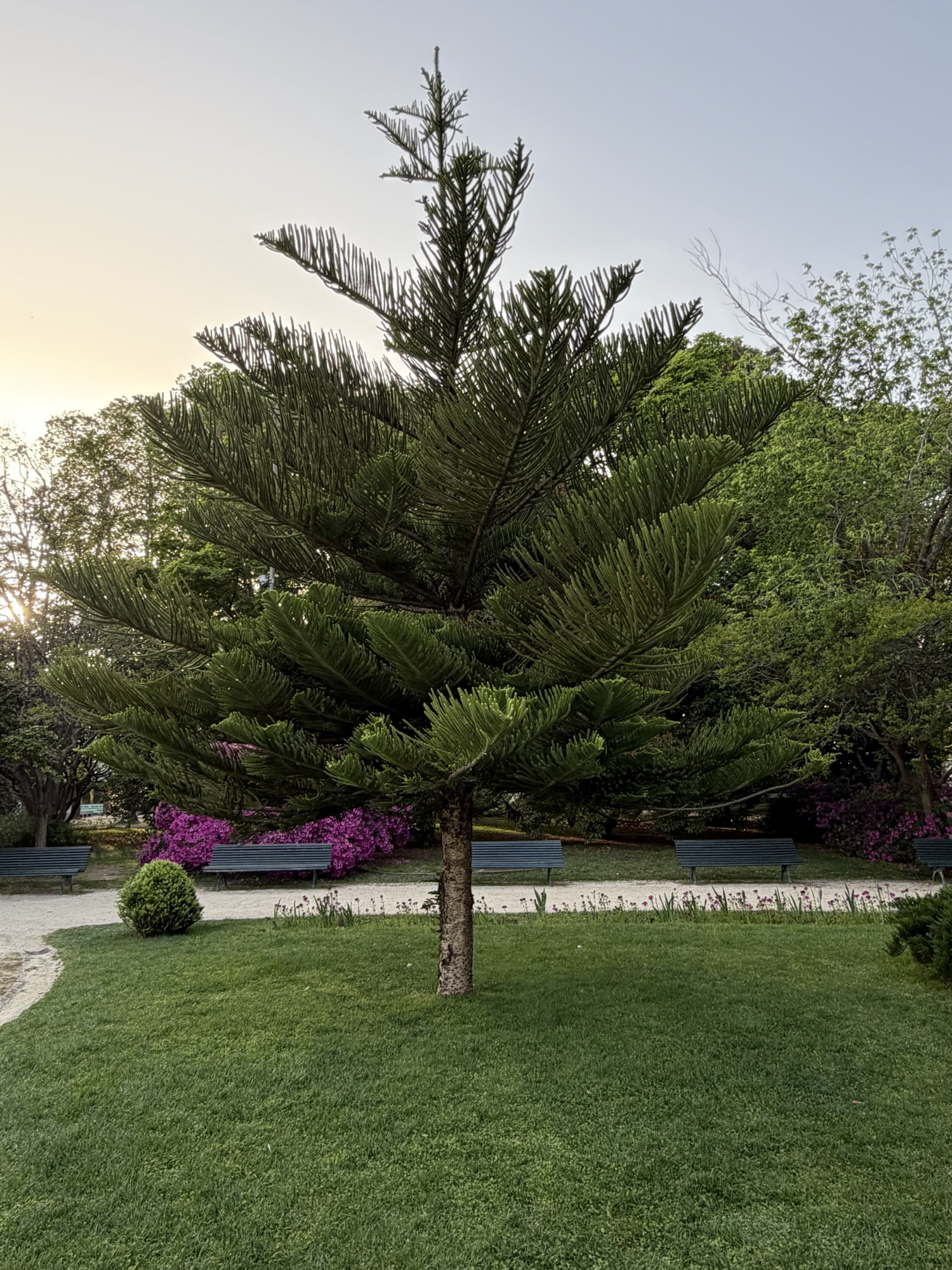
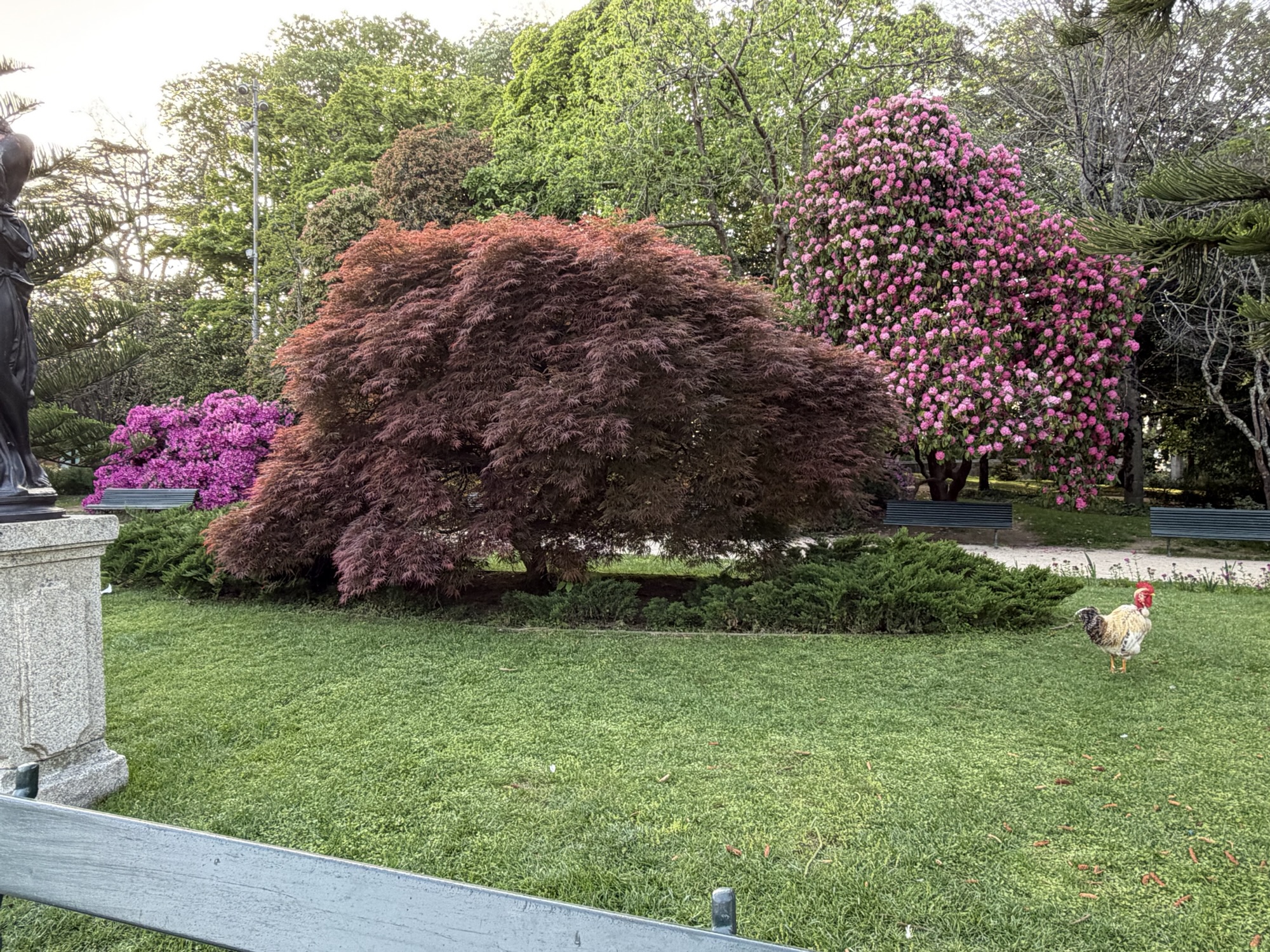
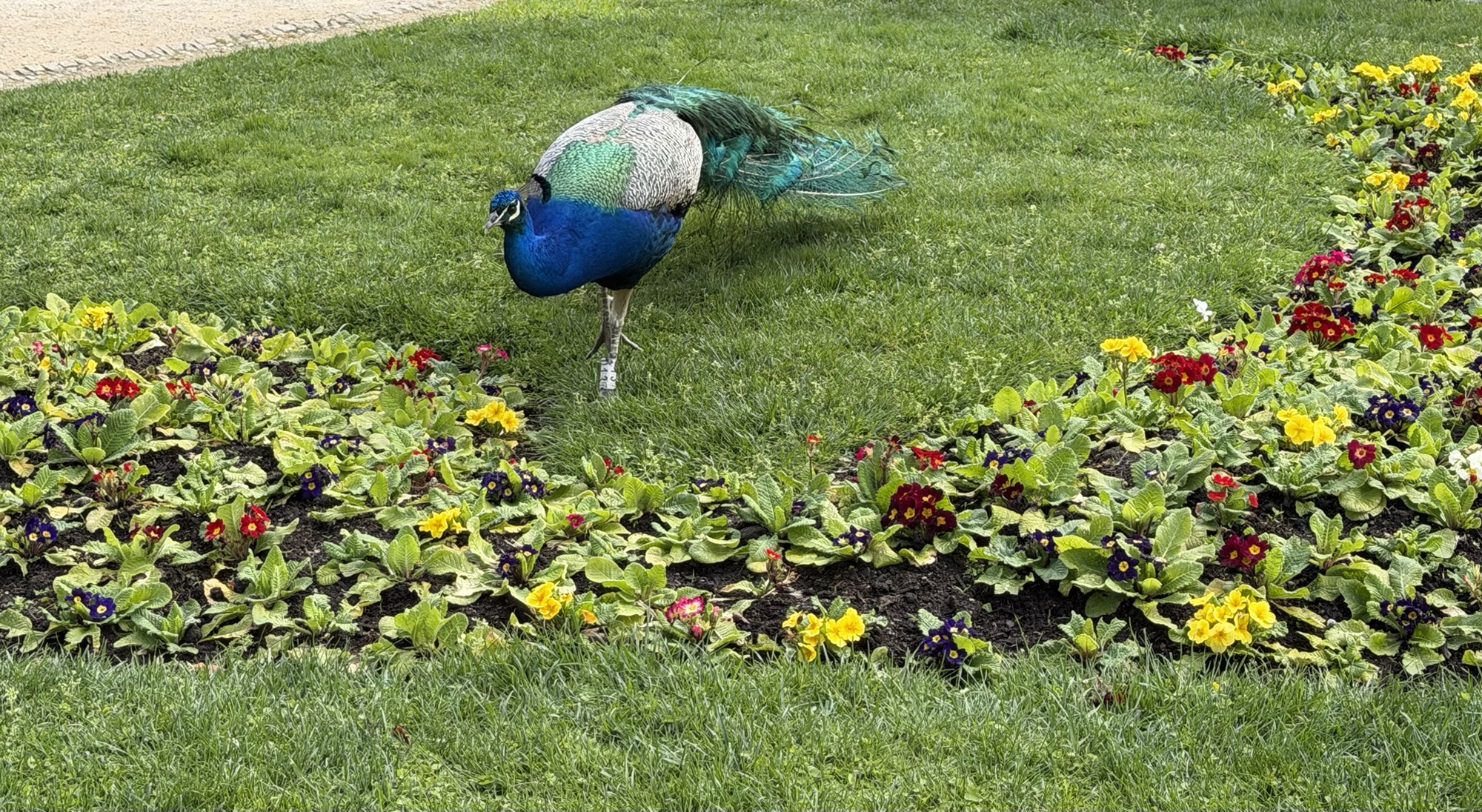
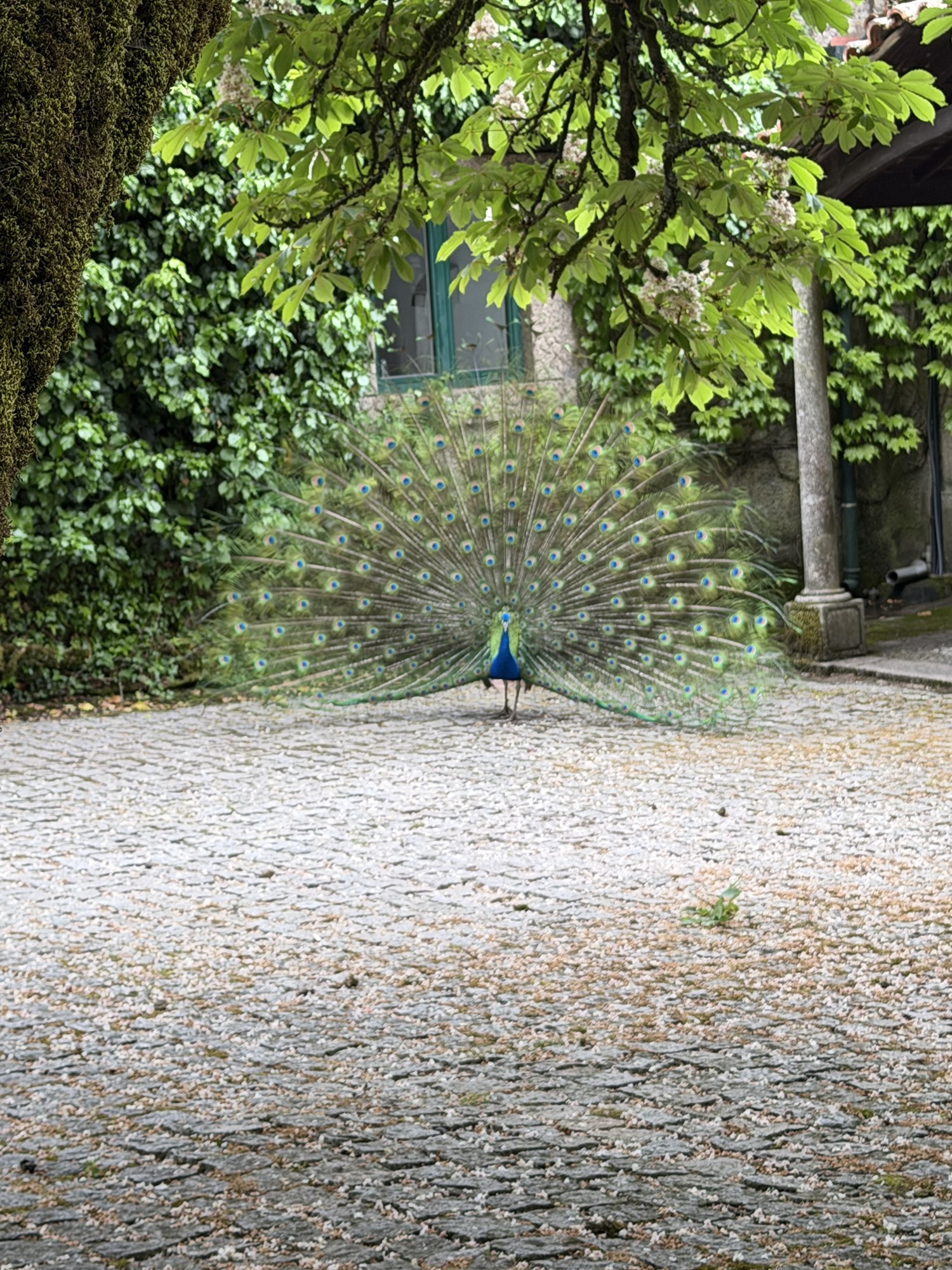
Our first garden was at the site of the original Crystal Palace. Although the Palace no longer exists, the lovely gardens do. The Galeria Municipal Do Porto Gardens are enchanting not just because of the lovely plants, but also the lovely peacocks and peahens who roam the park. I have never seen so many in one place before!
(I have to add here that almost every winery had peacocks. We asked why, the answer was that peacocks represented wealth. So having them indicated that the winery and the family were doing well!)
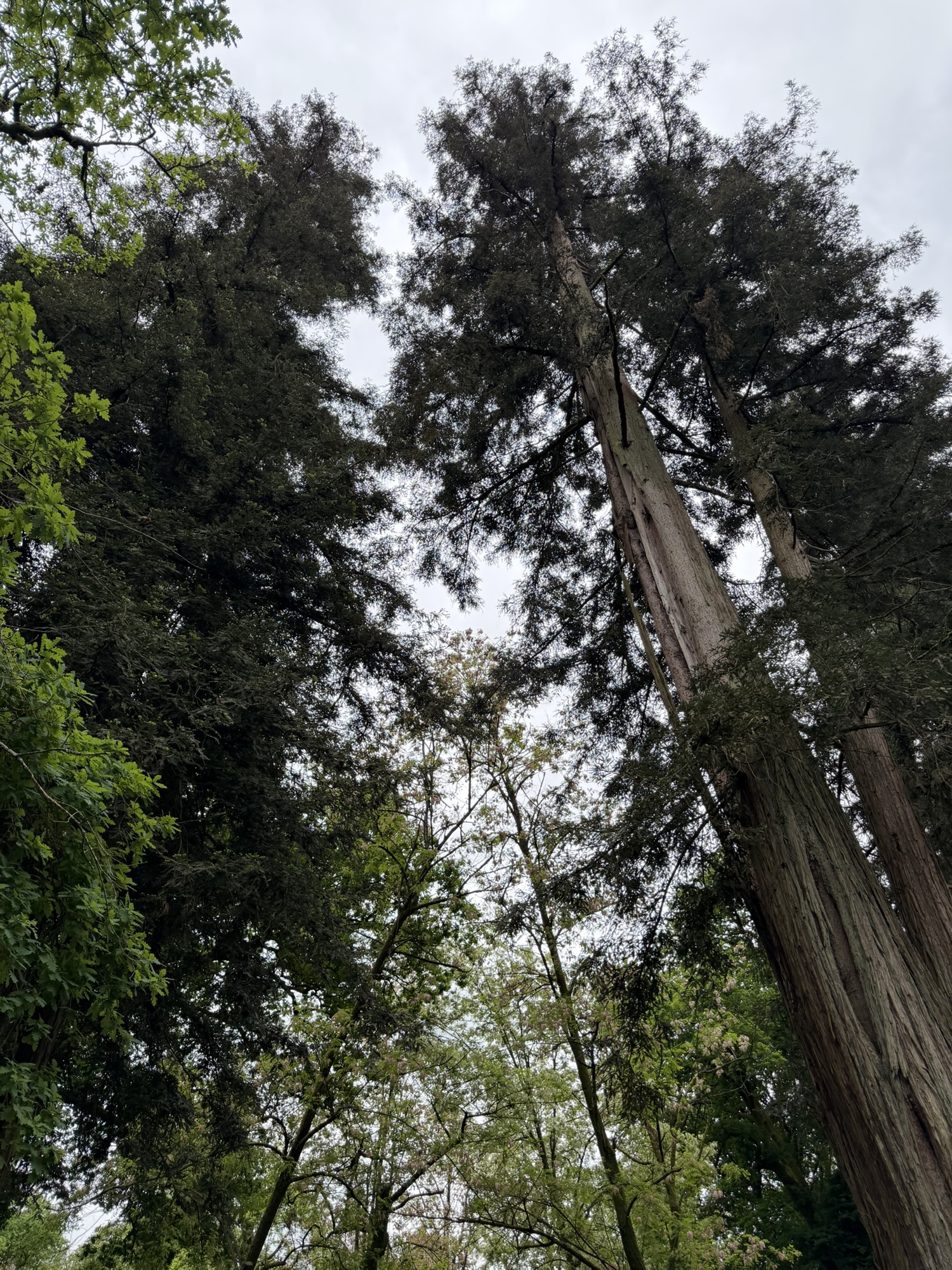
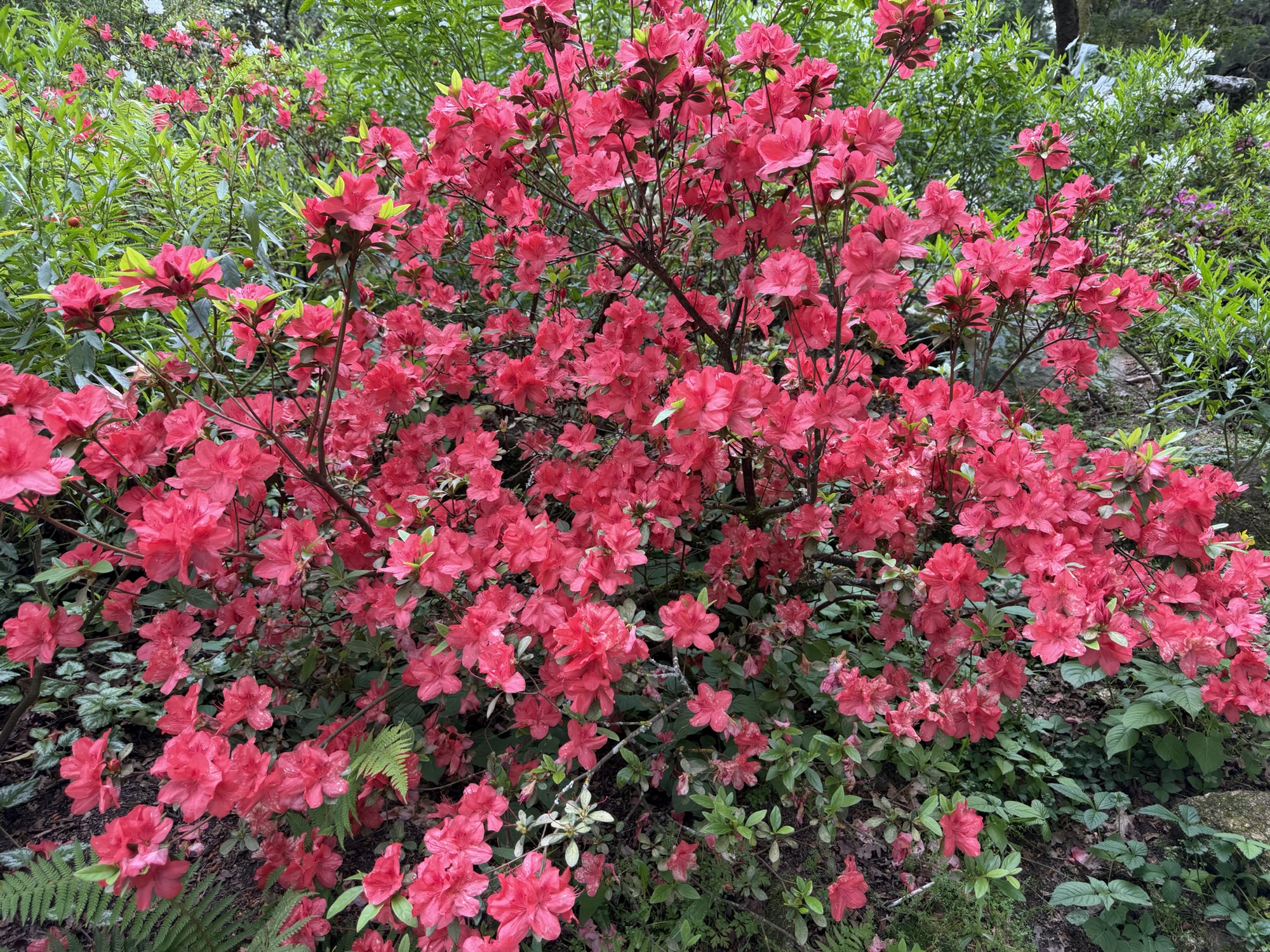
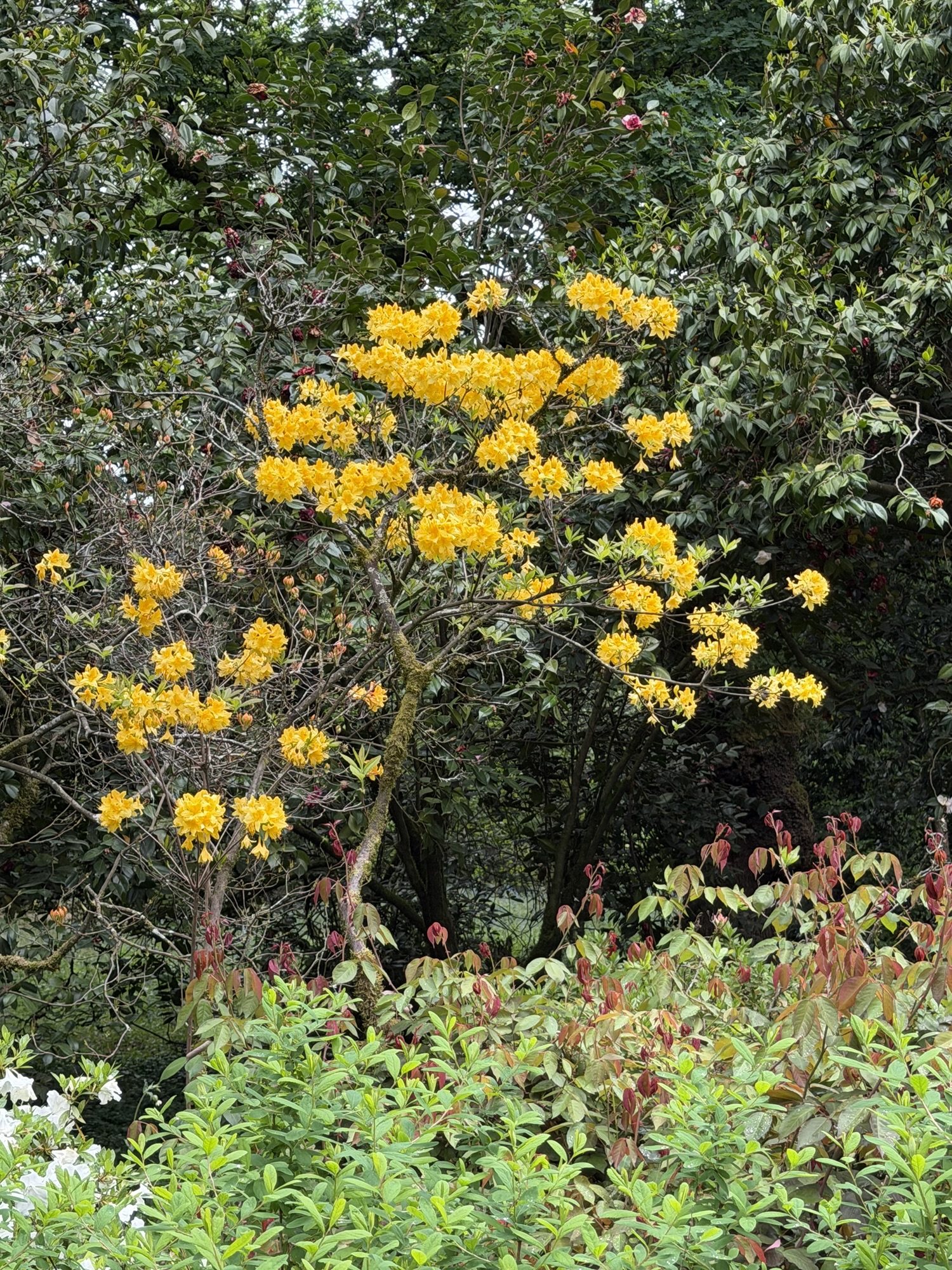
In the Crystal Palace gardens, the azaleas and camelias were in the best blooms. They were so large and stunning. There were trees from other countries. Statues along multiple walkways that went to lower levels in the garden. Formal gardens that overlooked the Douro River. The many overlooks gave you a chance to view Porto from a different perspective.
Two buildings are on the site. The official circular arena for the Porto, which stands where the original Crystal Palace once stood, as well as the Capela do Rei Carlos Alberto. A small chapel that is still in use.
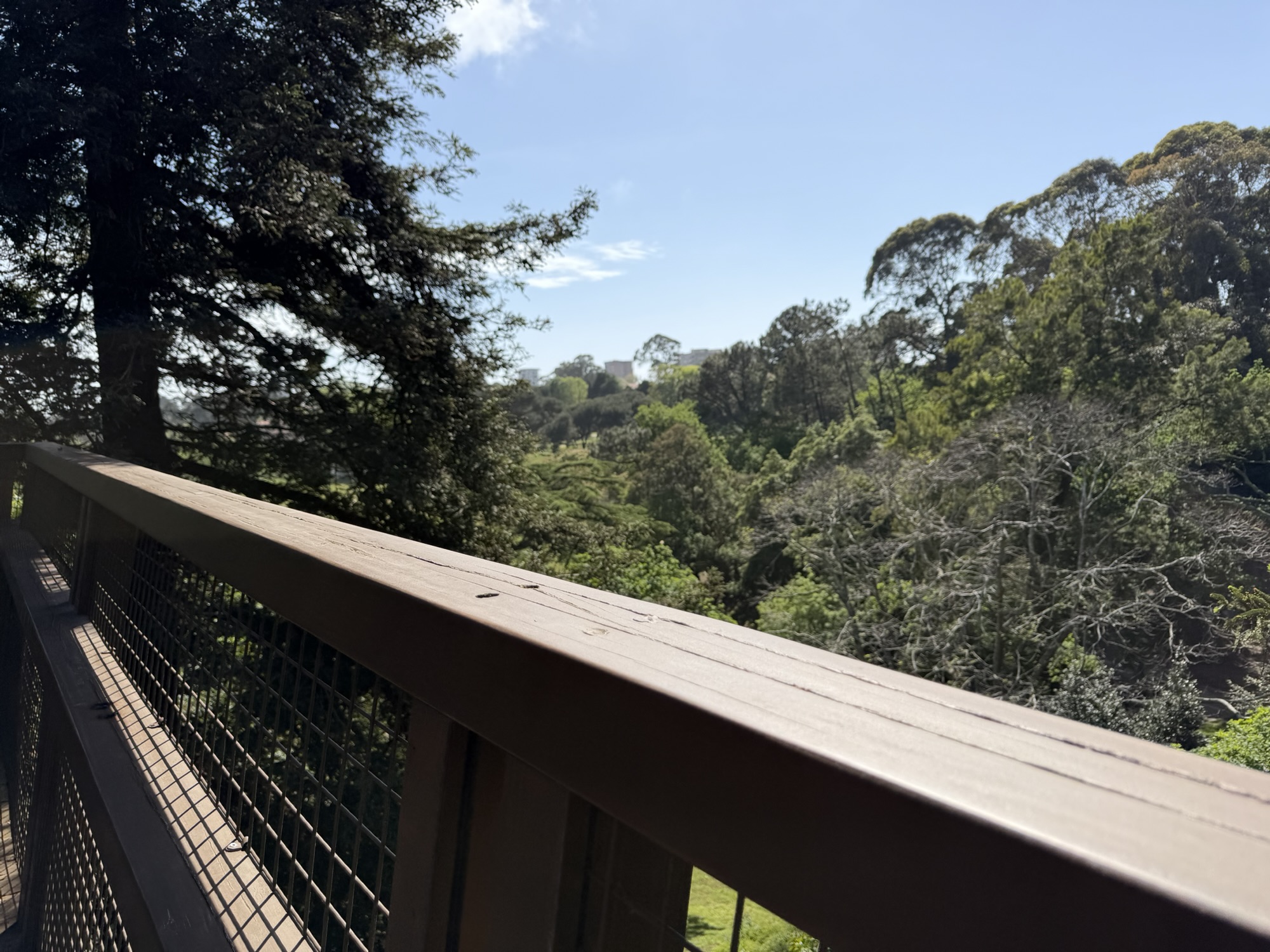
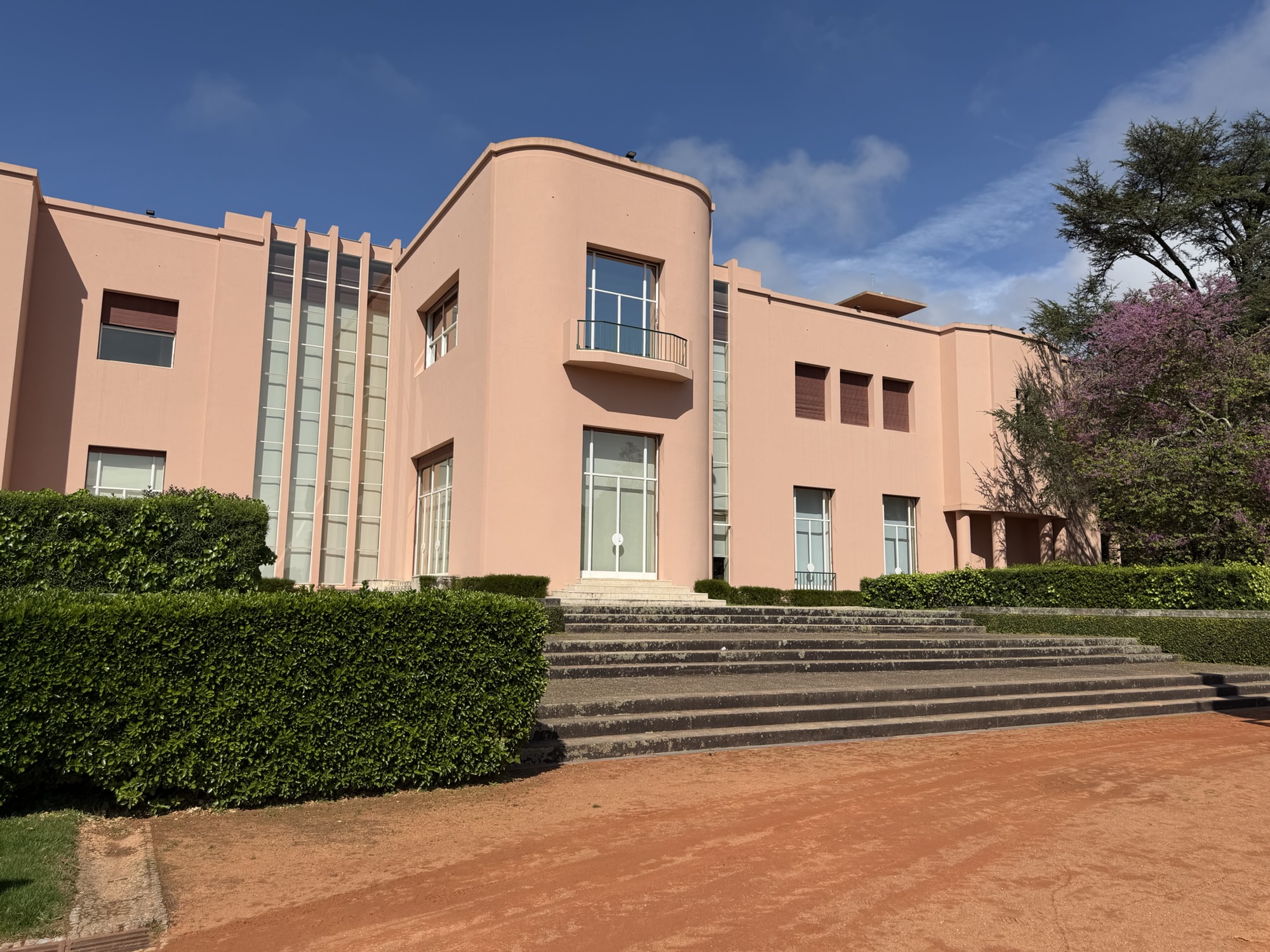
Along the treetop walk.The art deco villa that was Serralves’ home.The formal gardens in front of the villa.
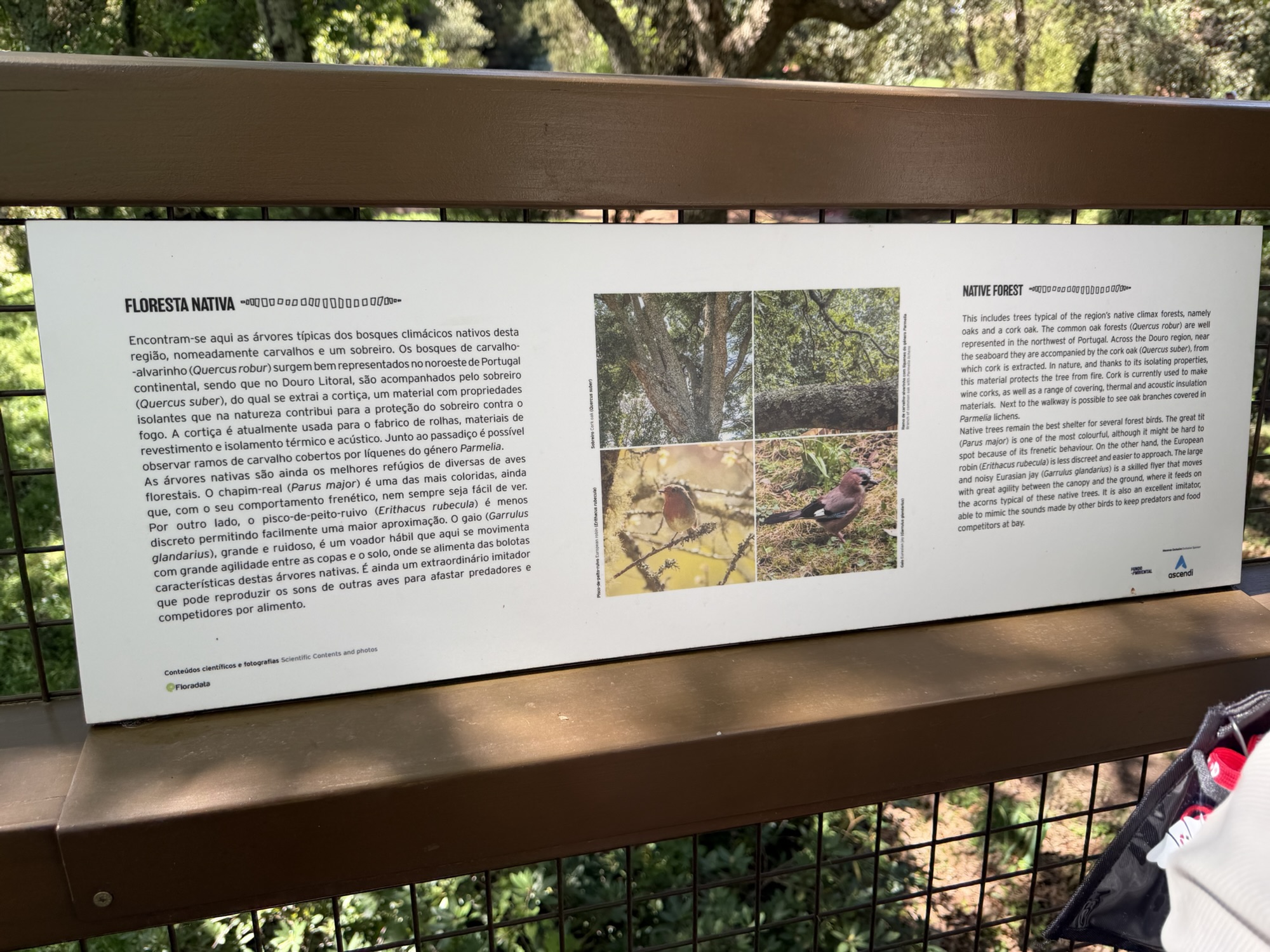
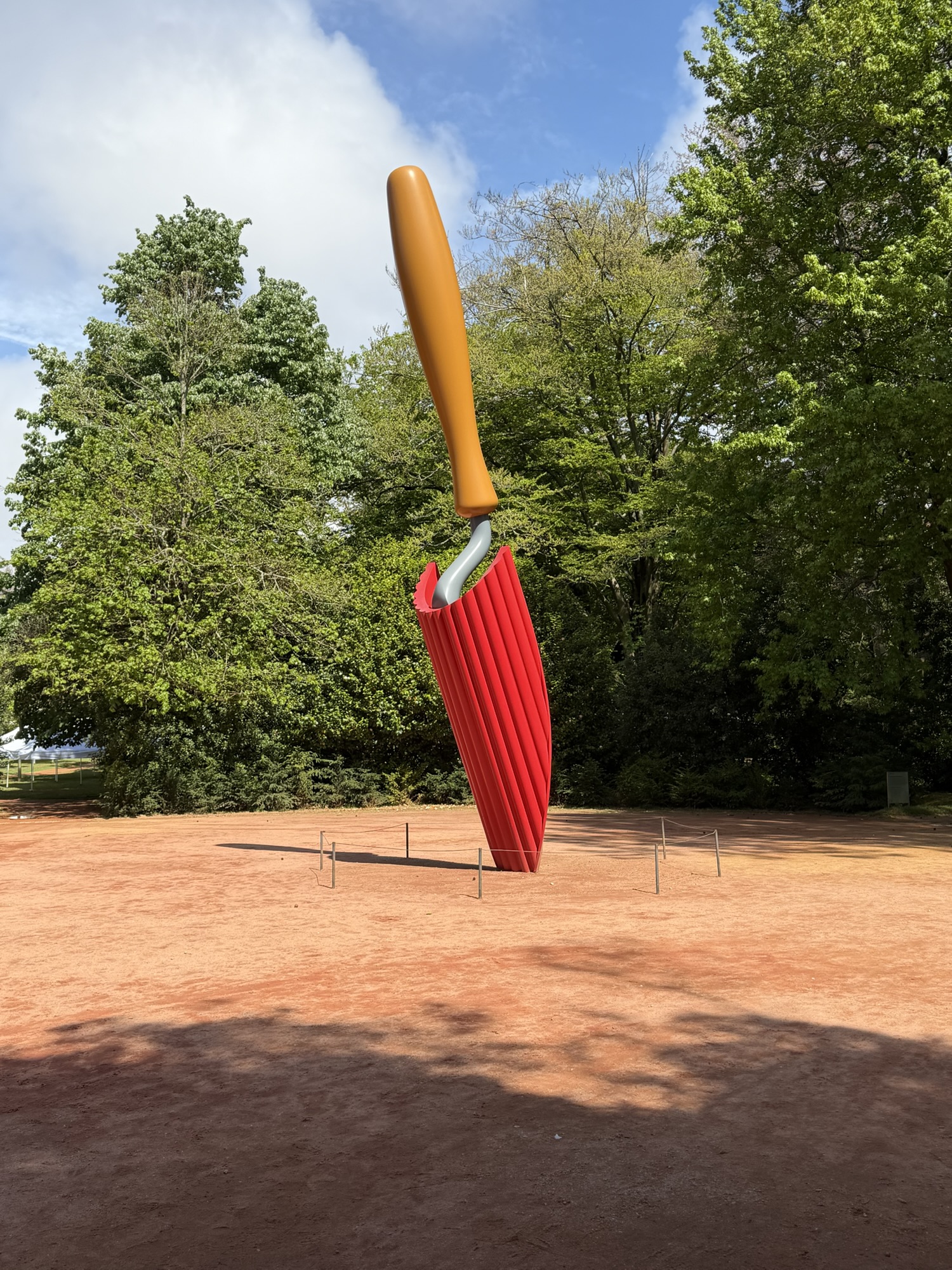
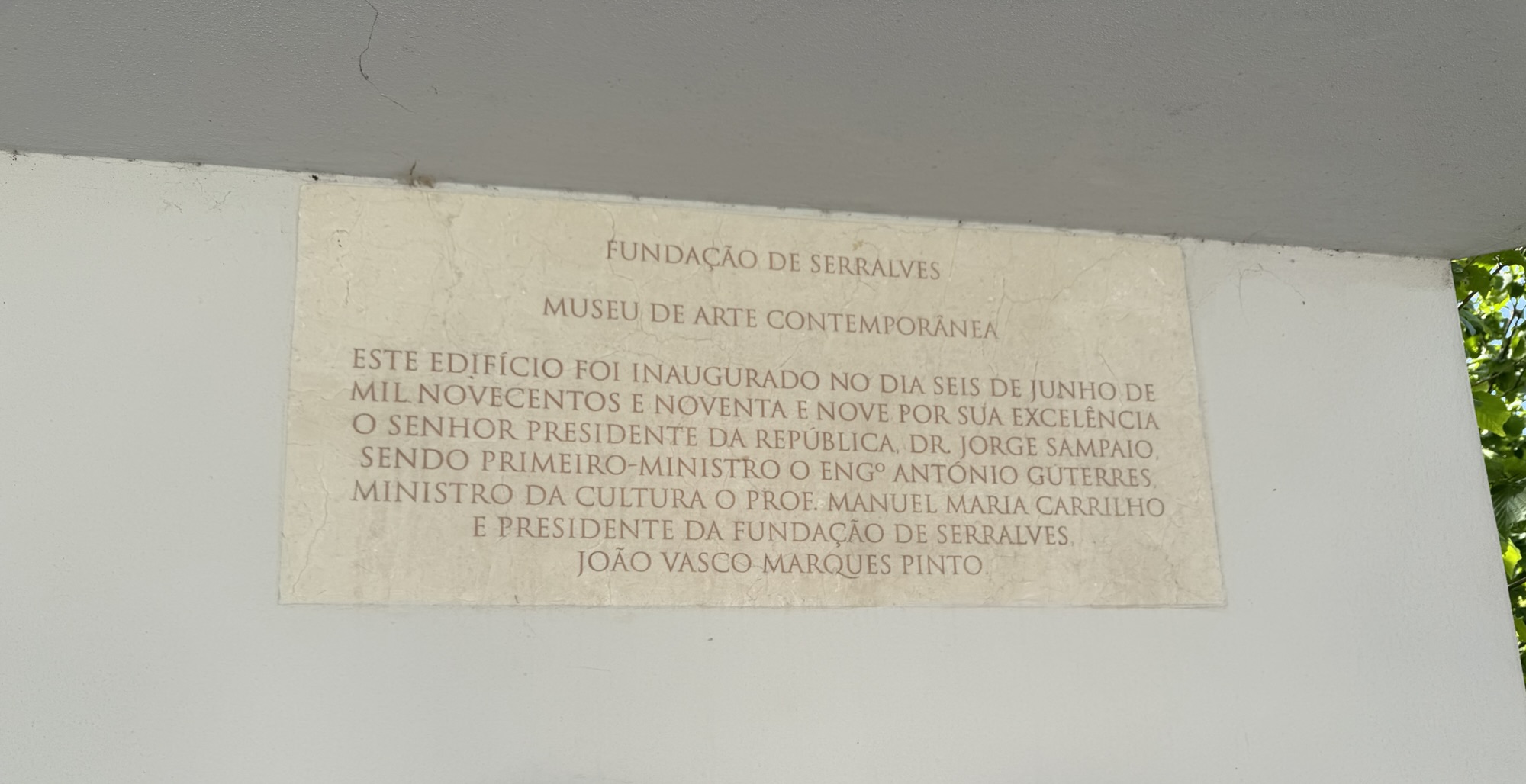
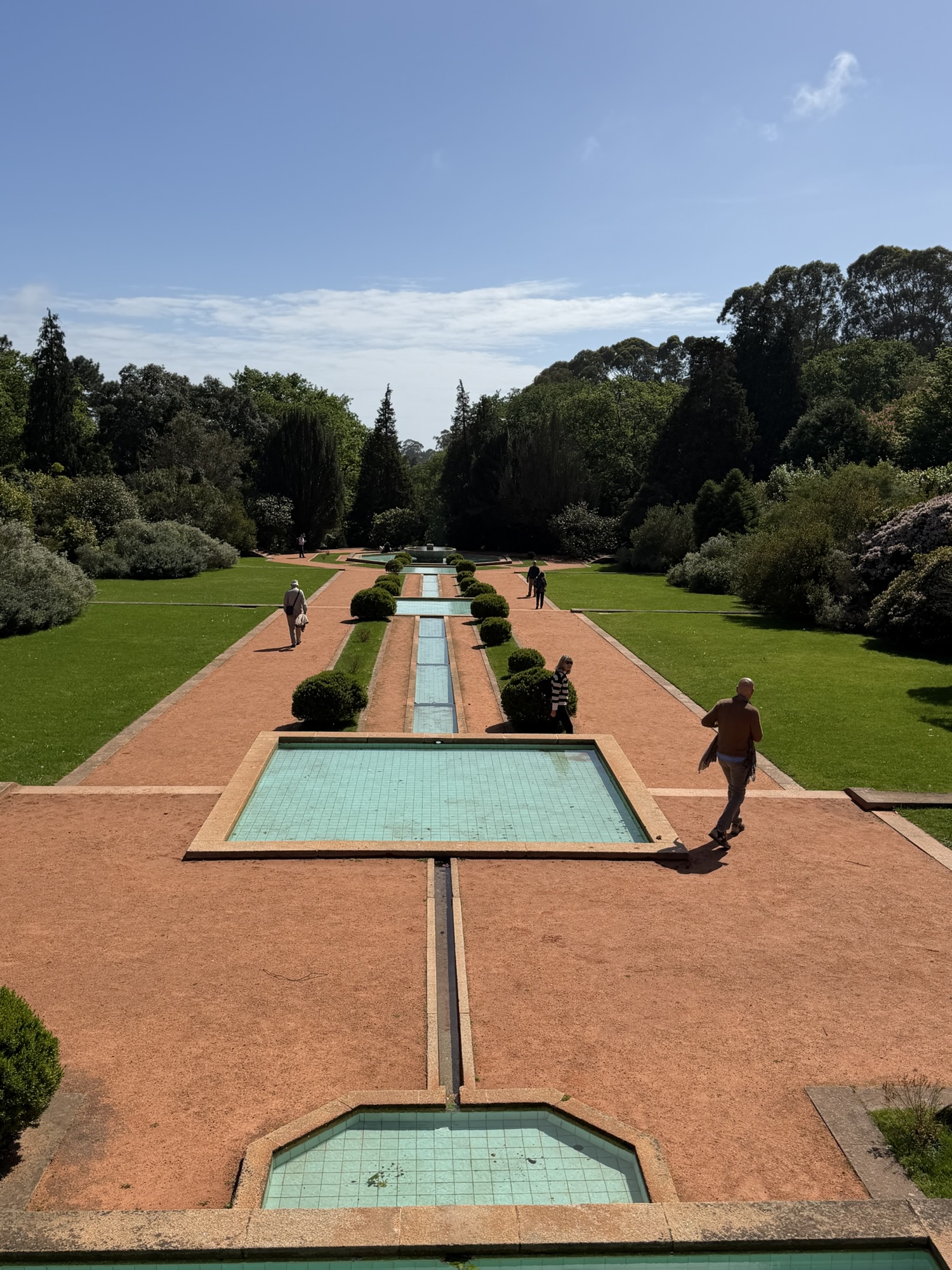
The second garden was on the grounds of the Fundacao De Serralves, the Contemporary Art Museum. The museum grounds includes the Serralves’ art deco villa and the park including many gardens and sculptures. We saw the outside of the villa and walked only two of the parks. The formal front and then the treetop walk. I wish we had even more time. To be honest I spent all my time in the gardens and never entered the museum!!
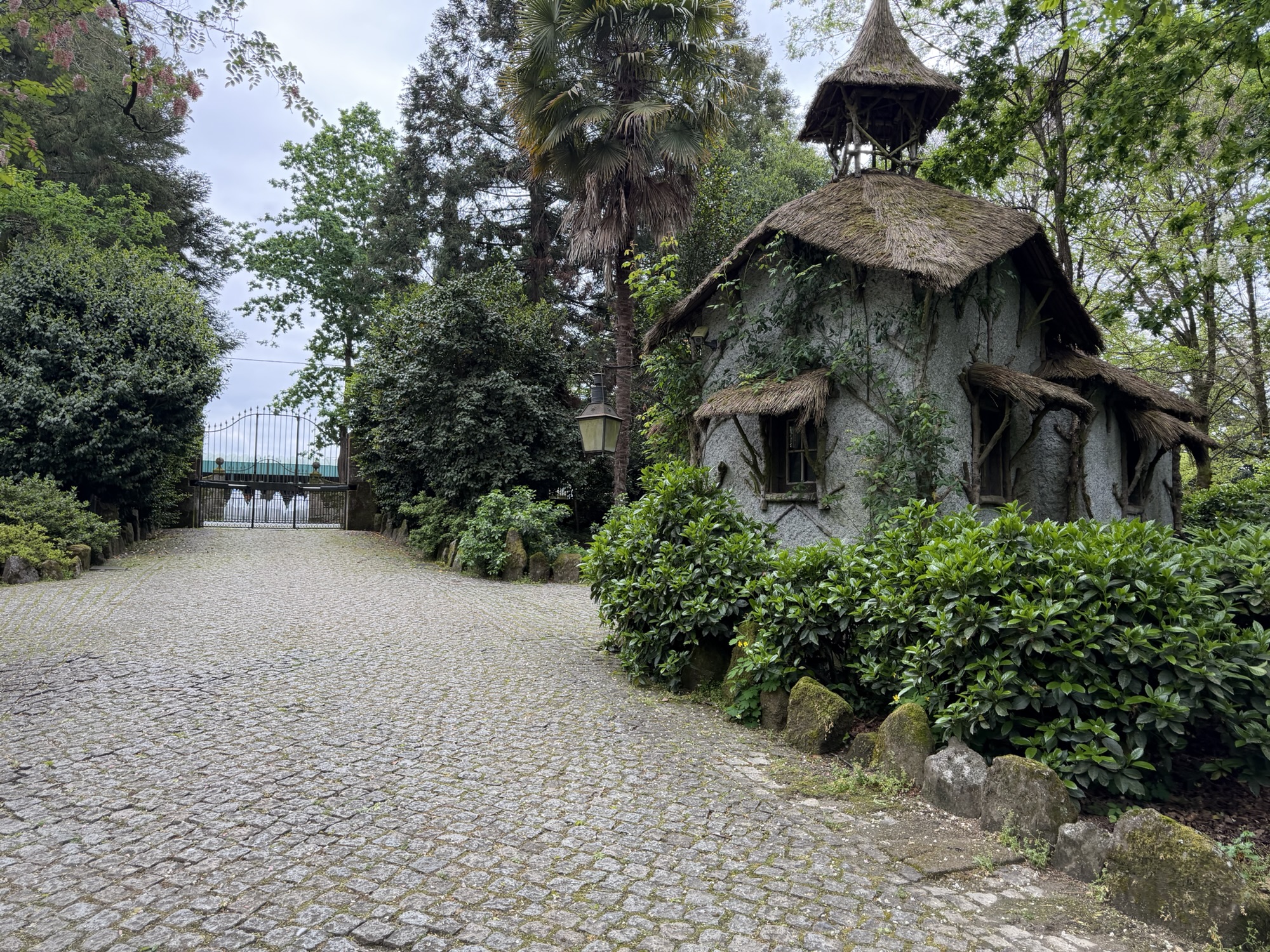
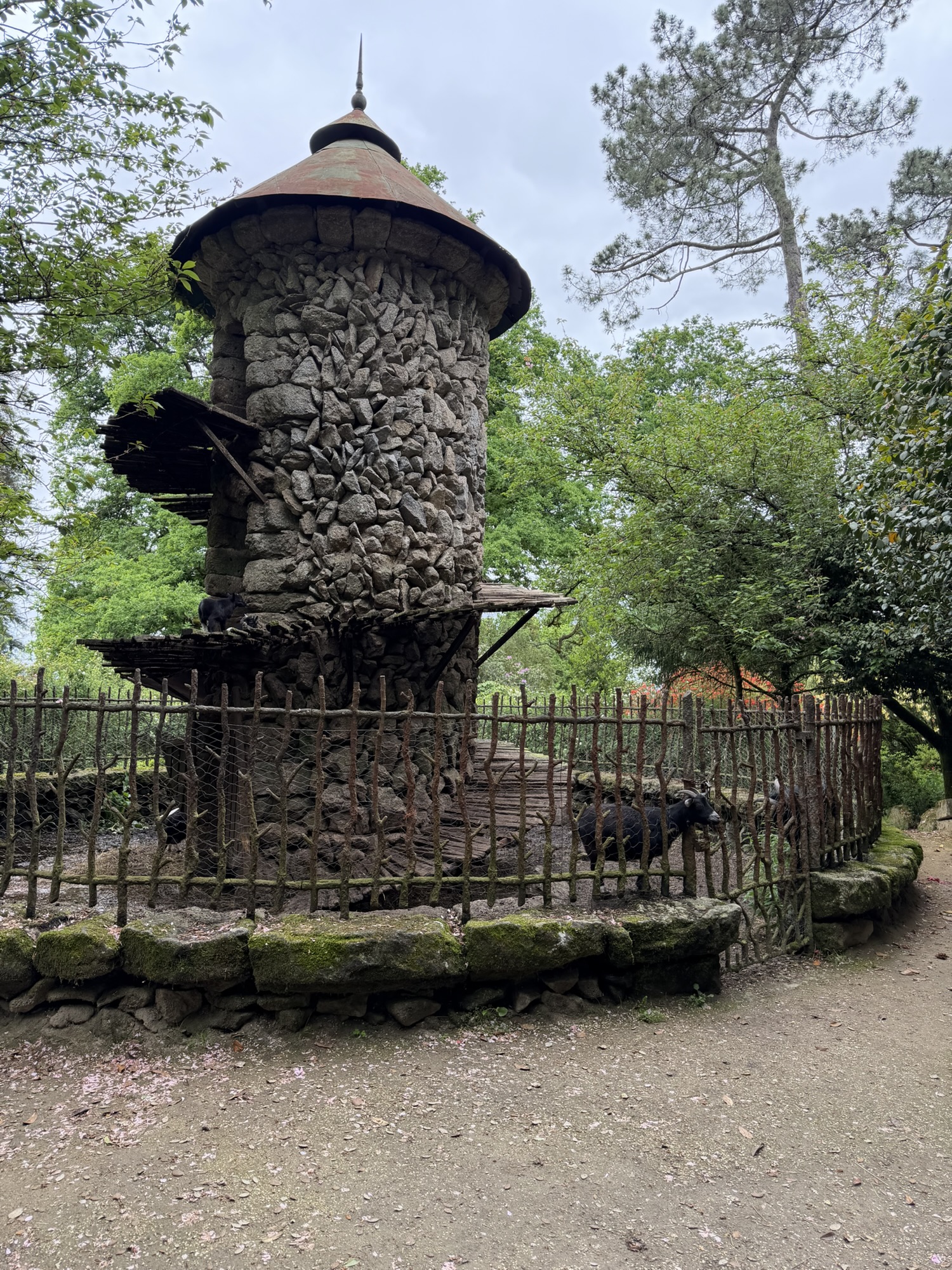
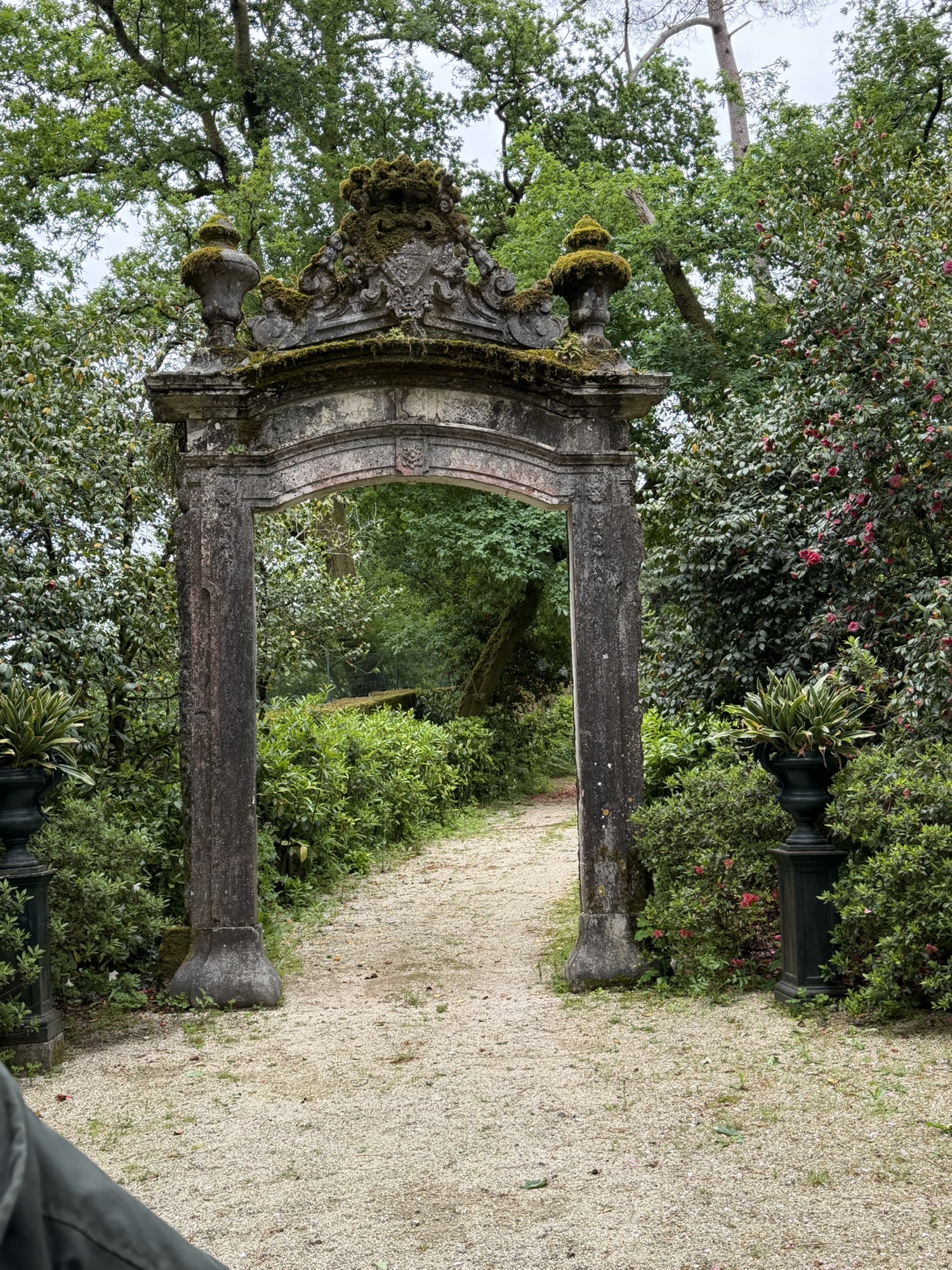
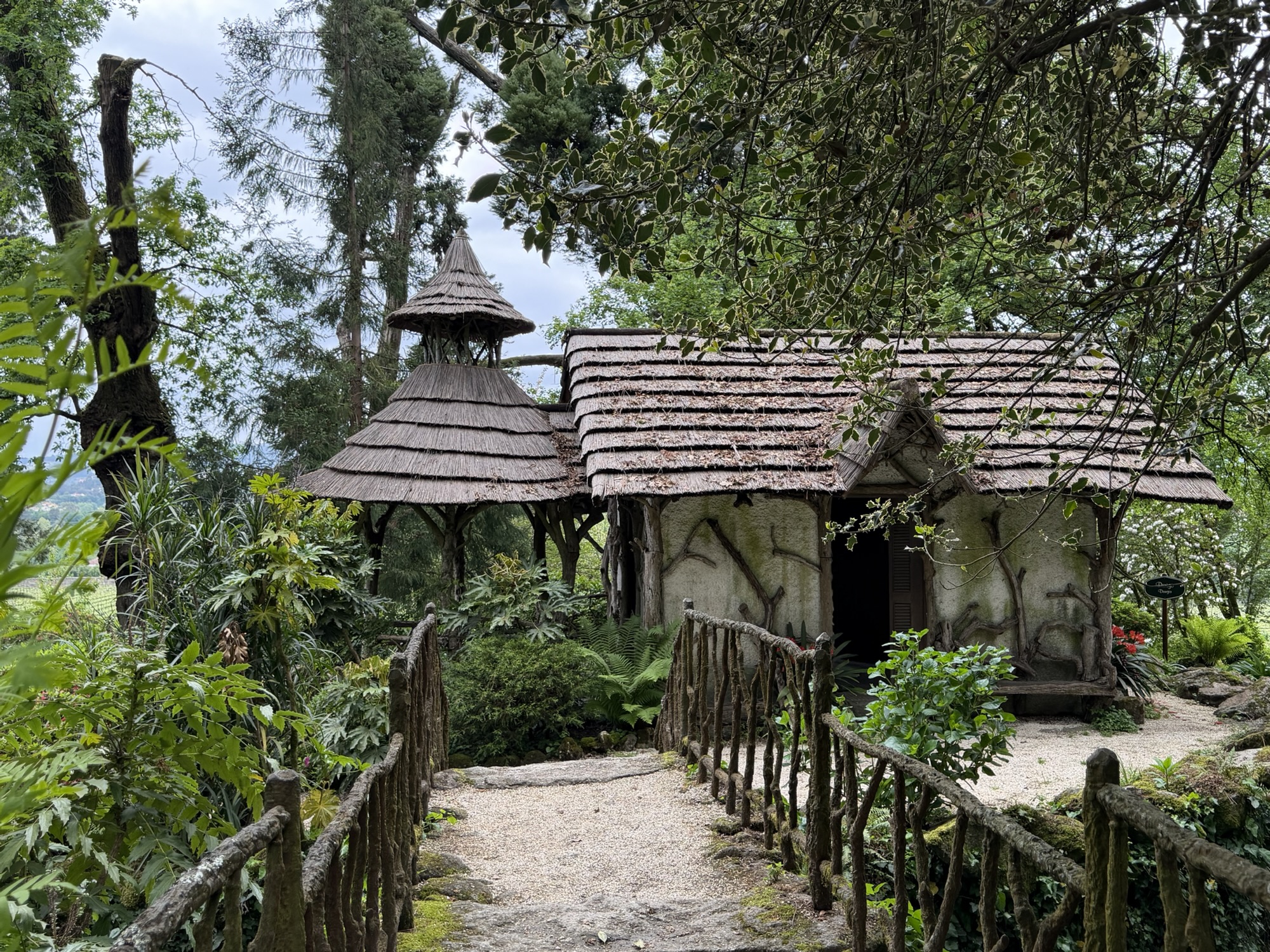
Where the goats live.A gate to the gardens.The mansion from the 16th century.One of the fountains. This one was by a large open area for parties.The honeymoon house.
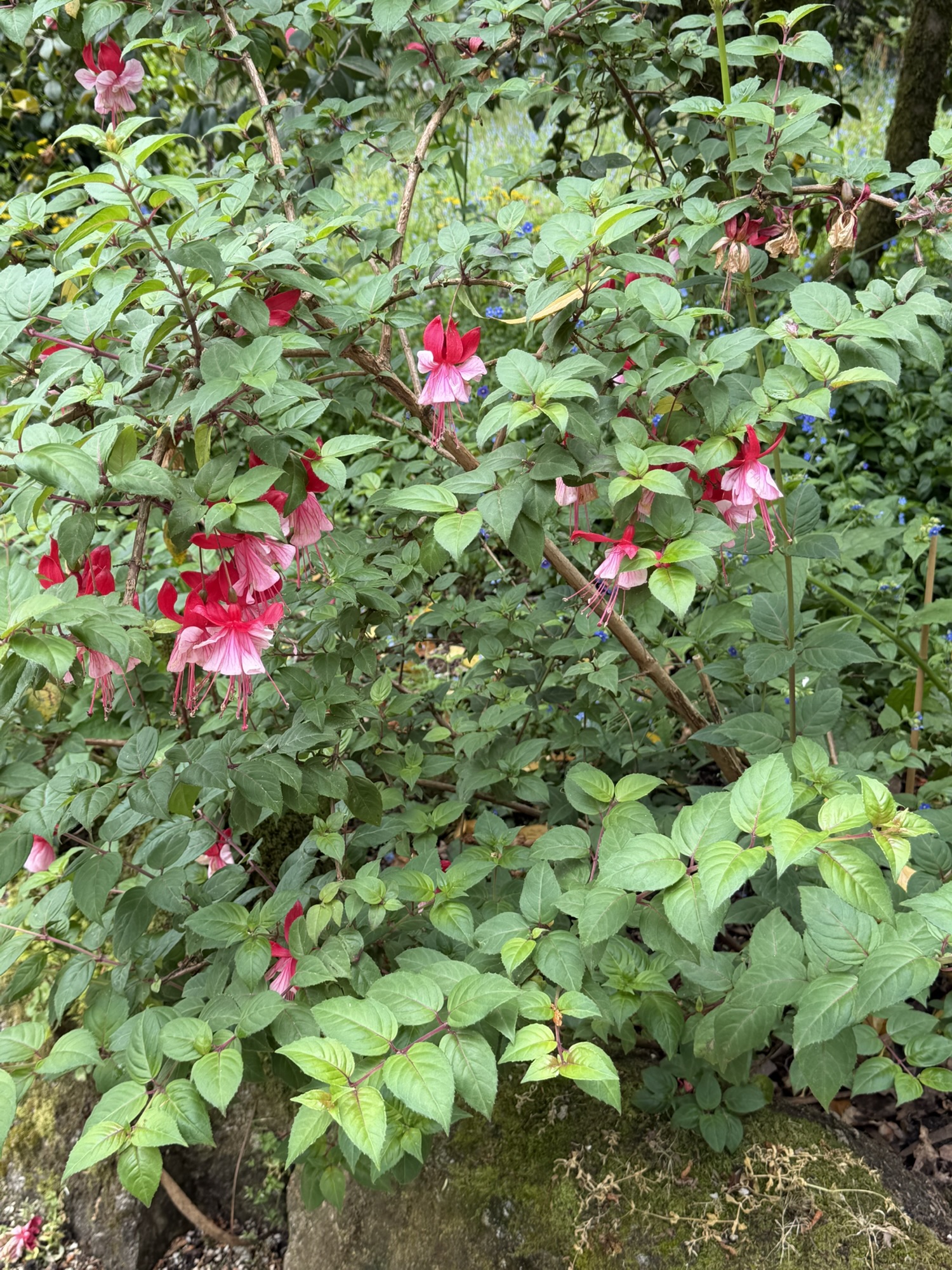
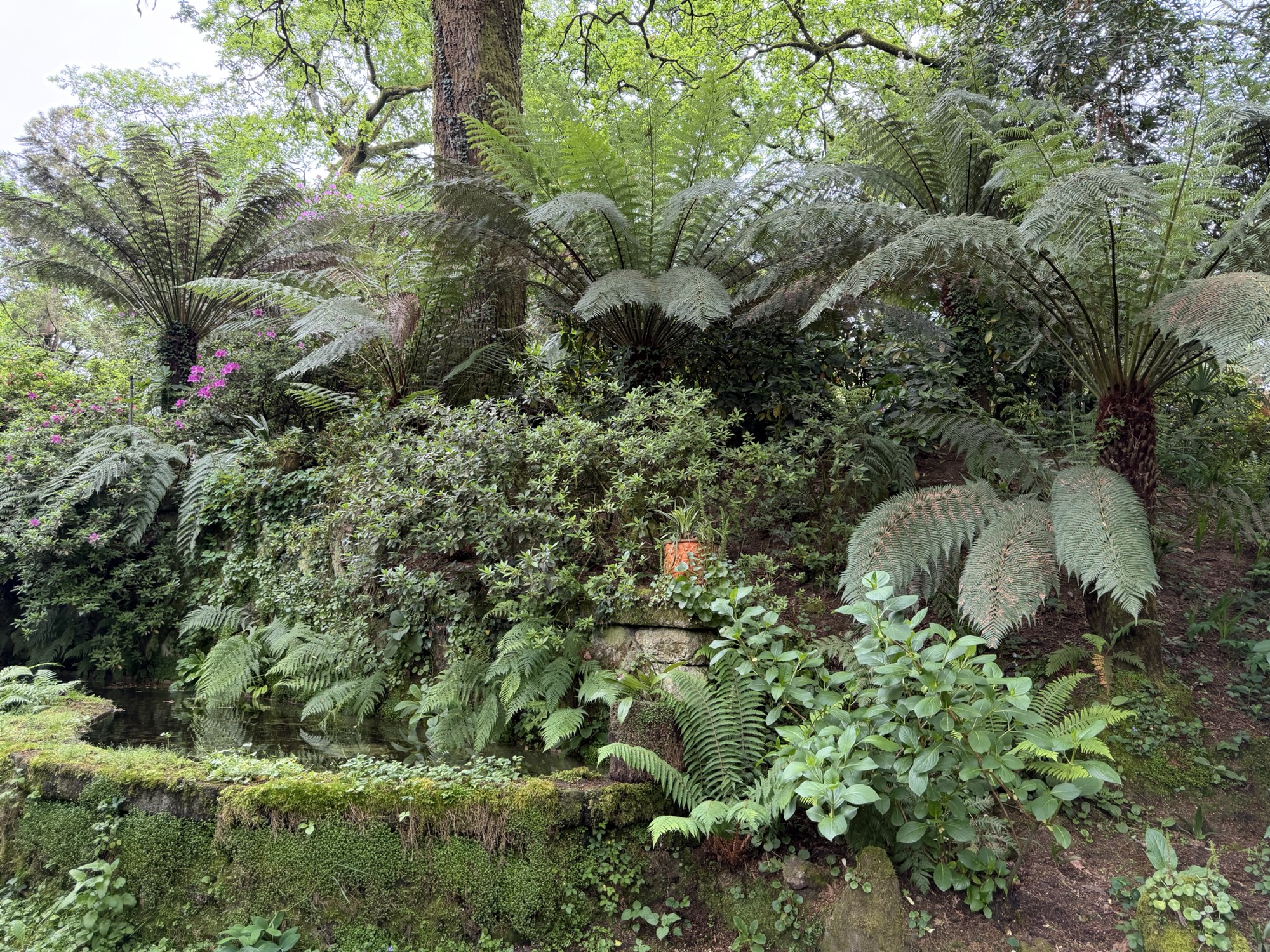
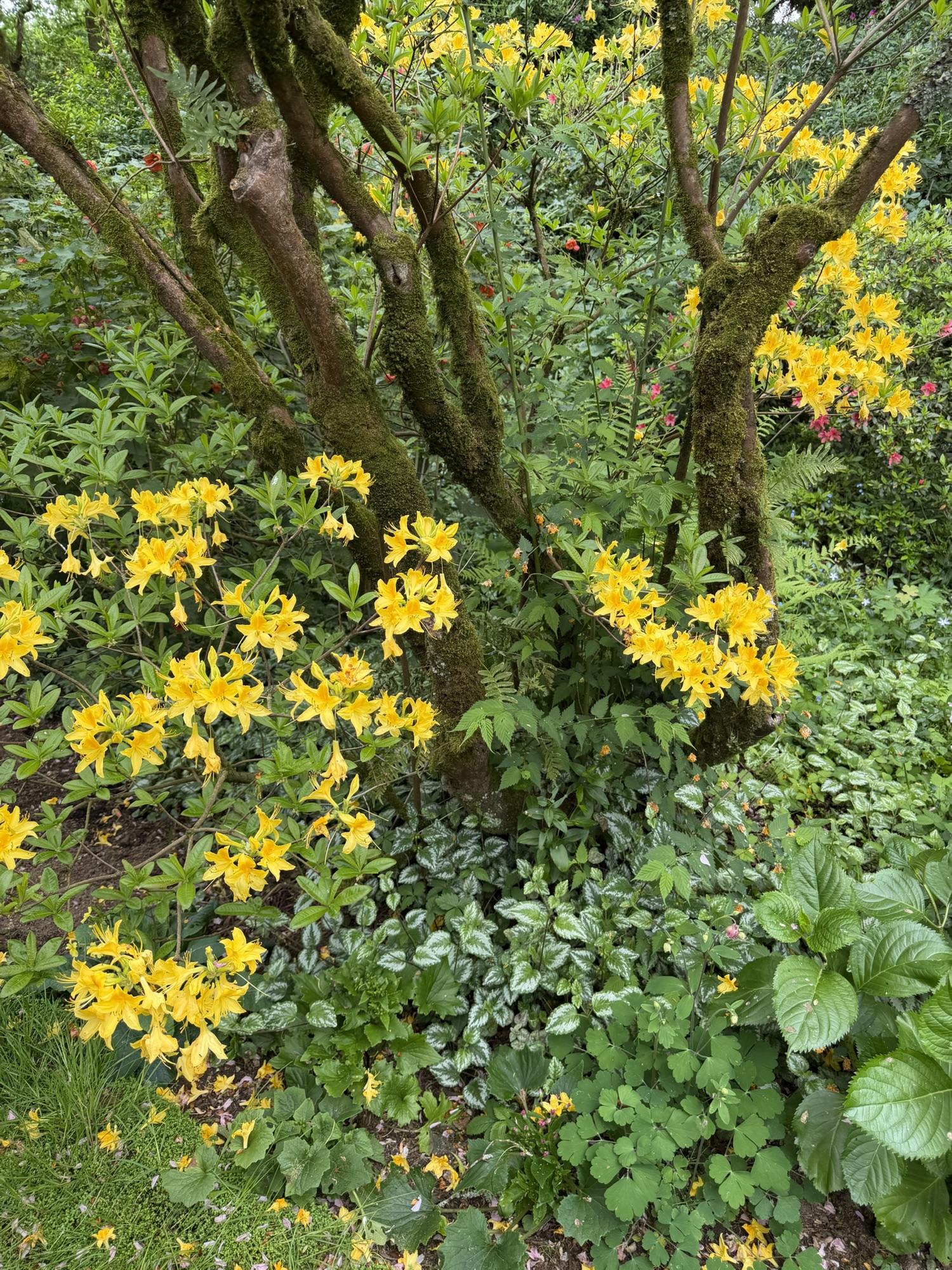
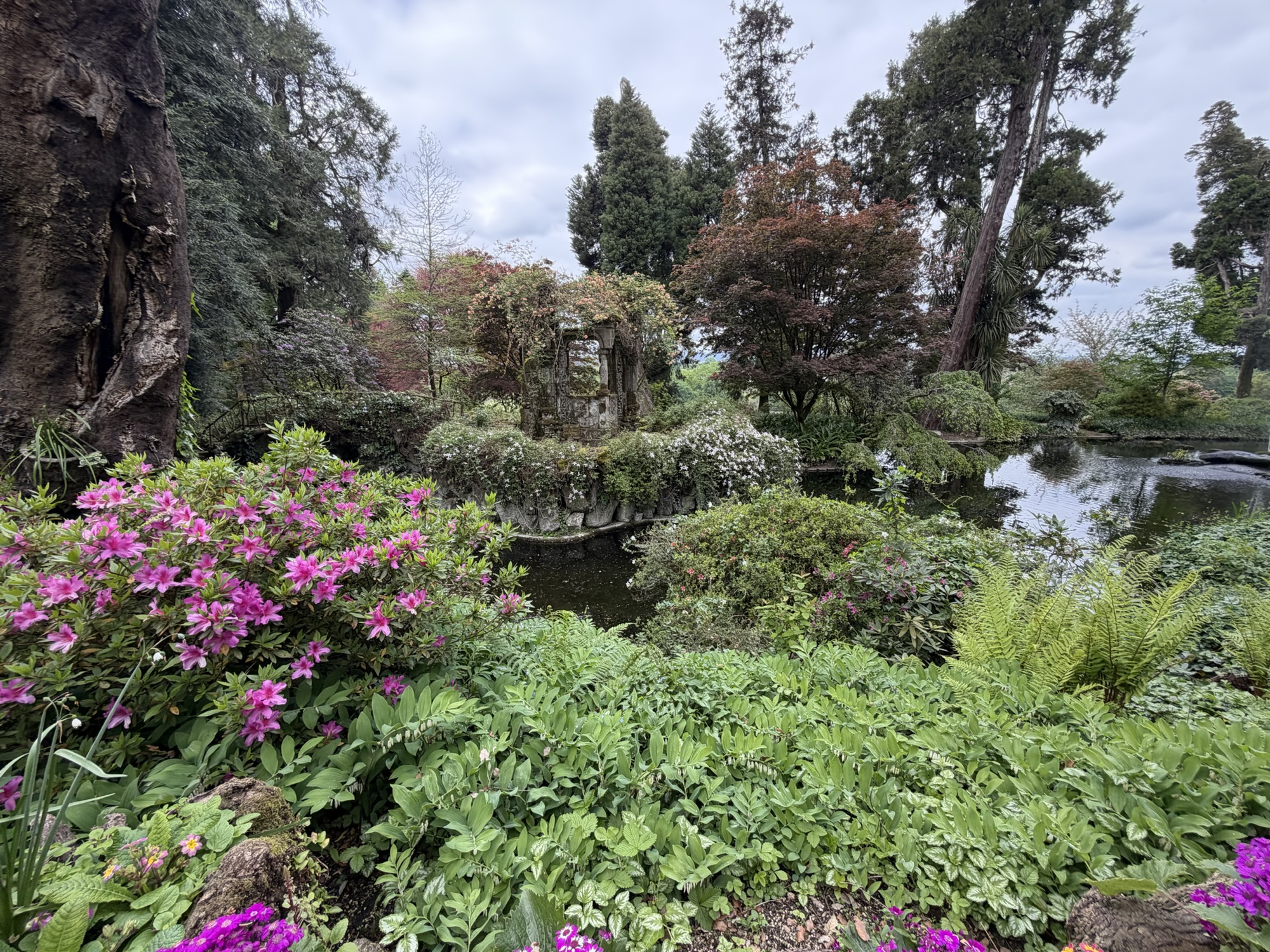
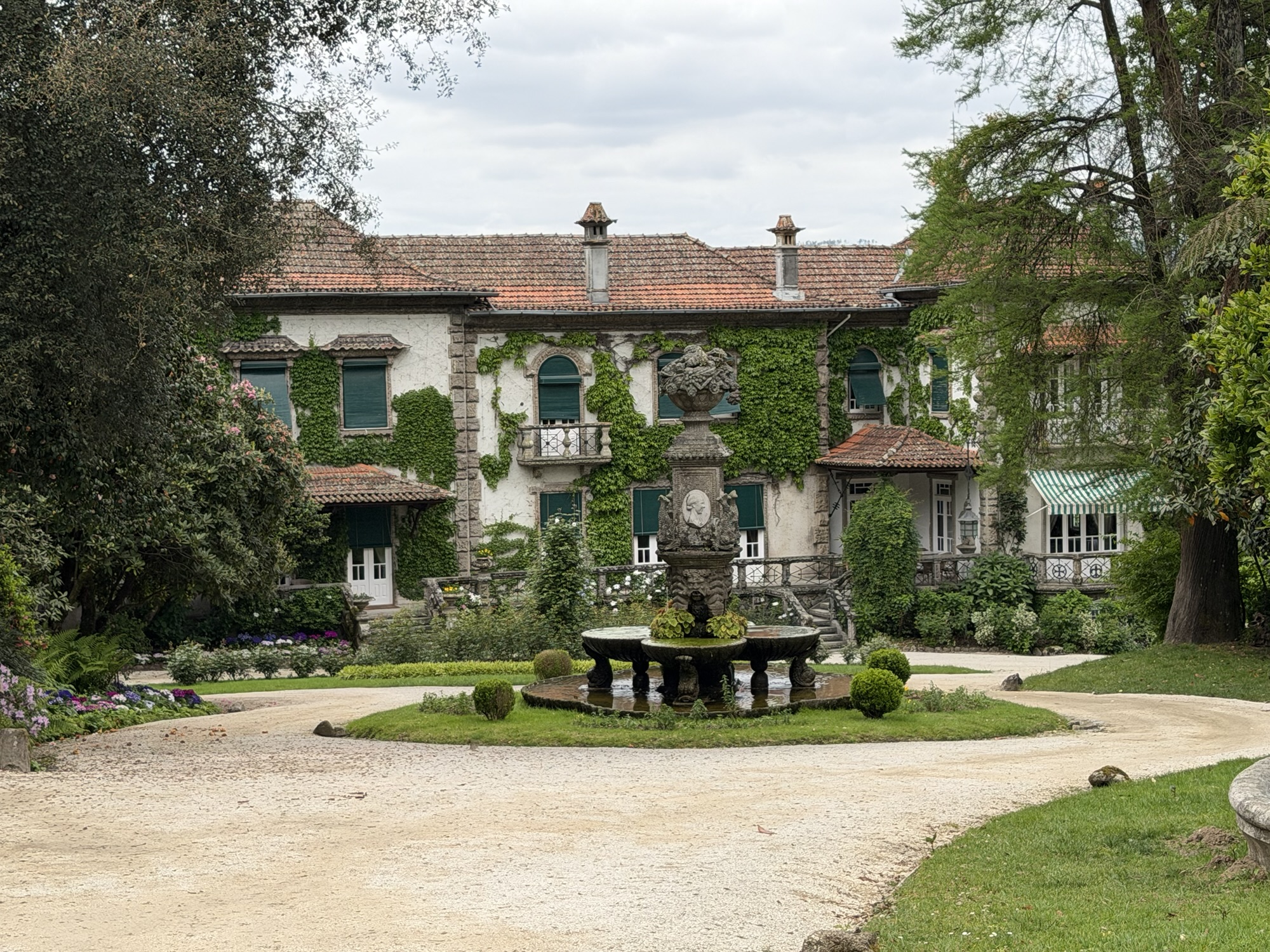
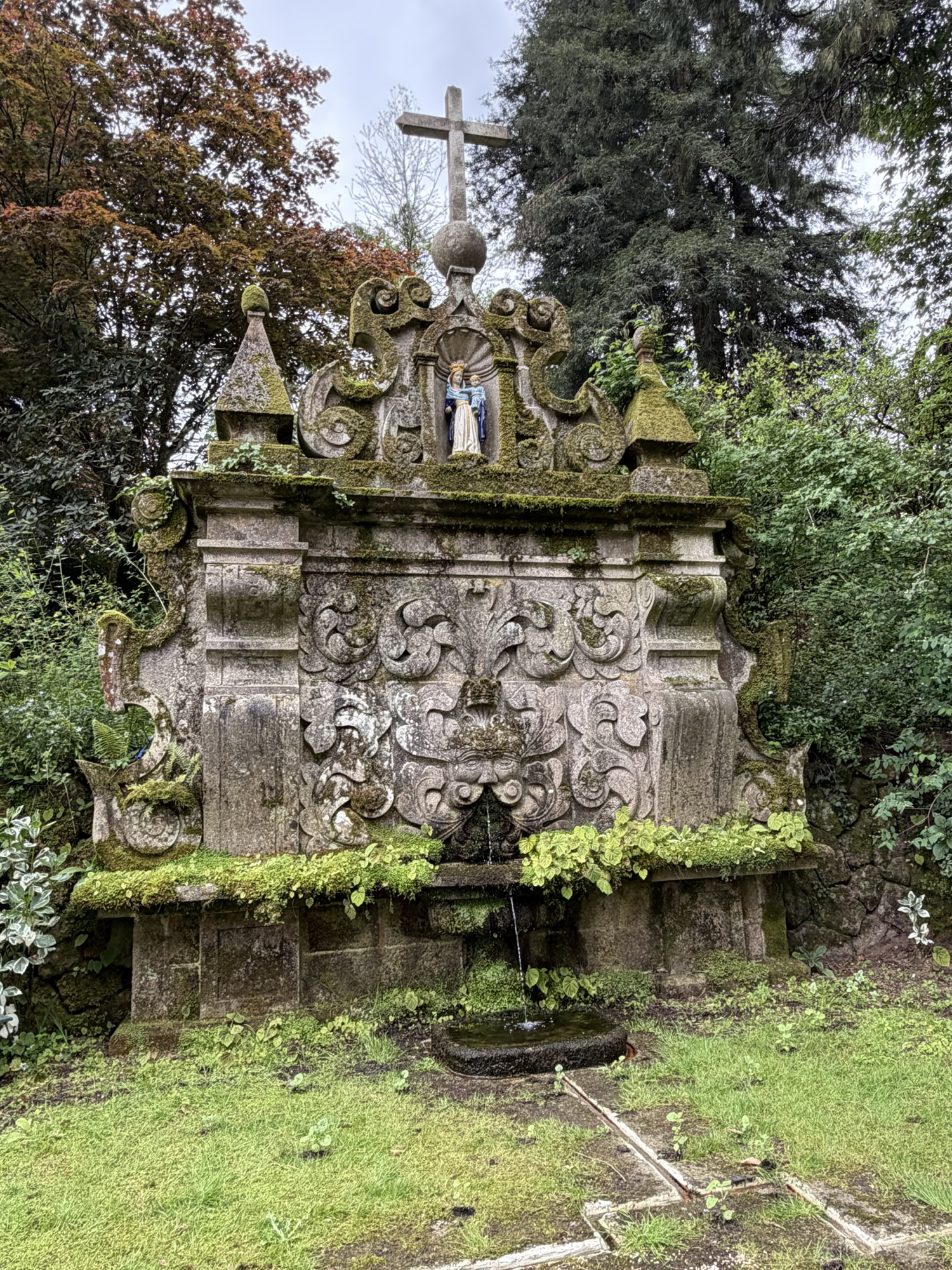
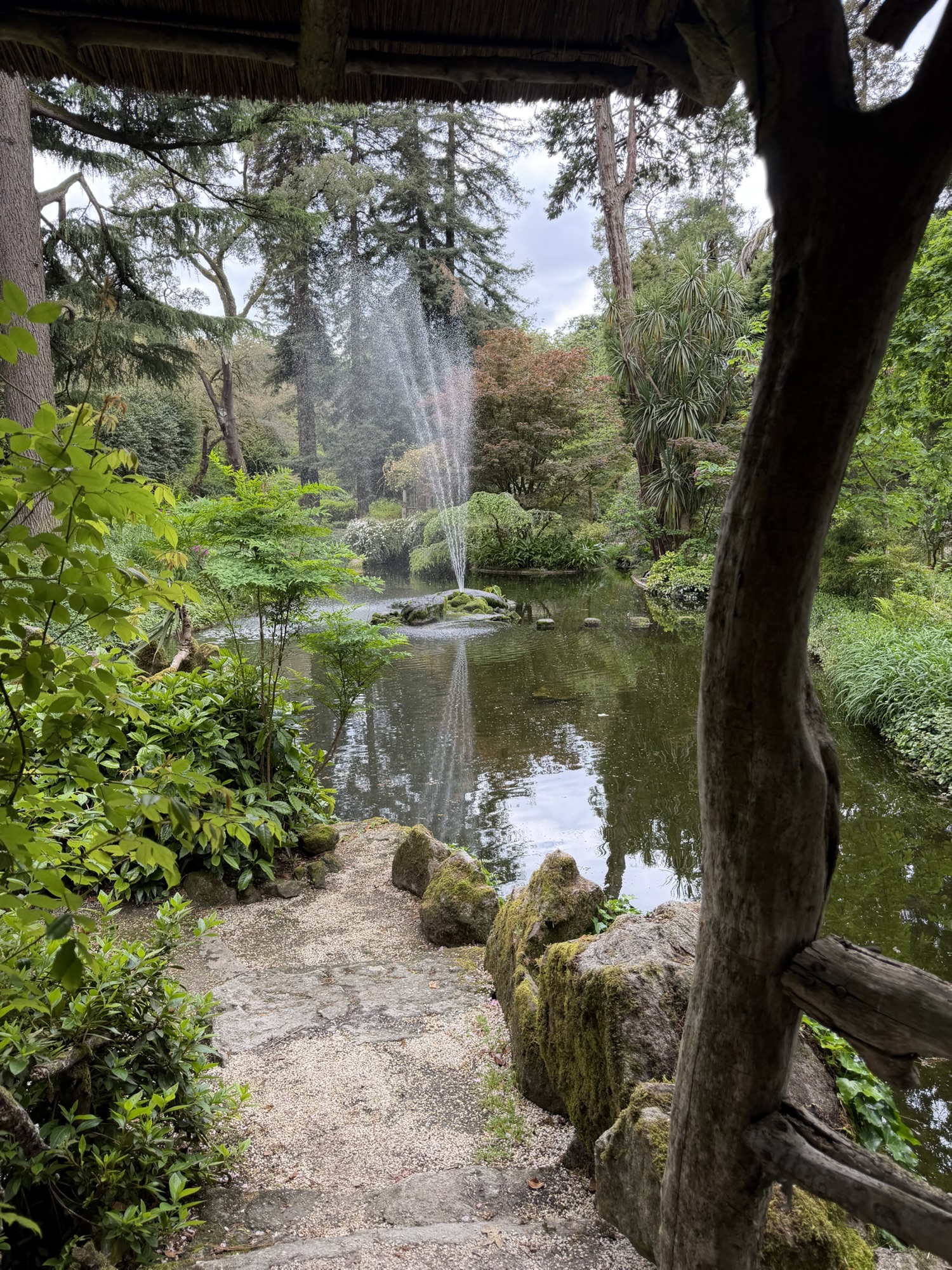
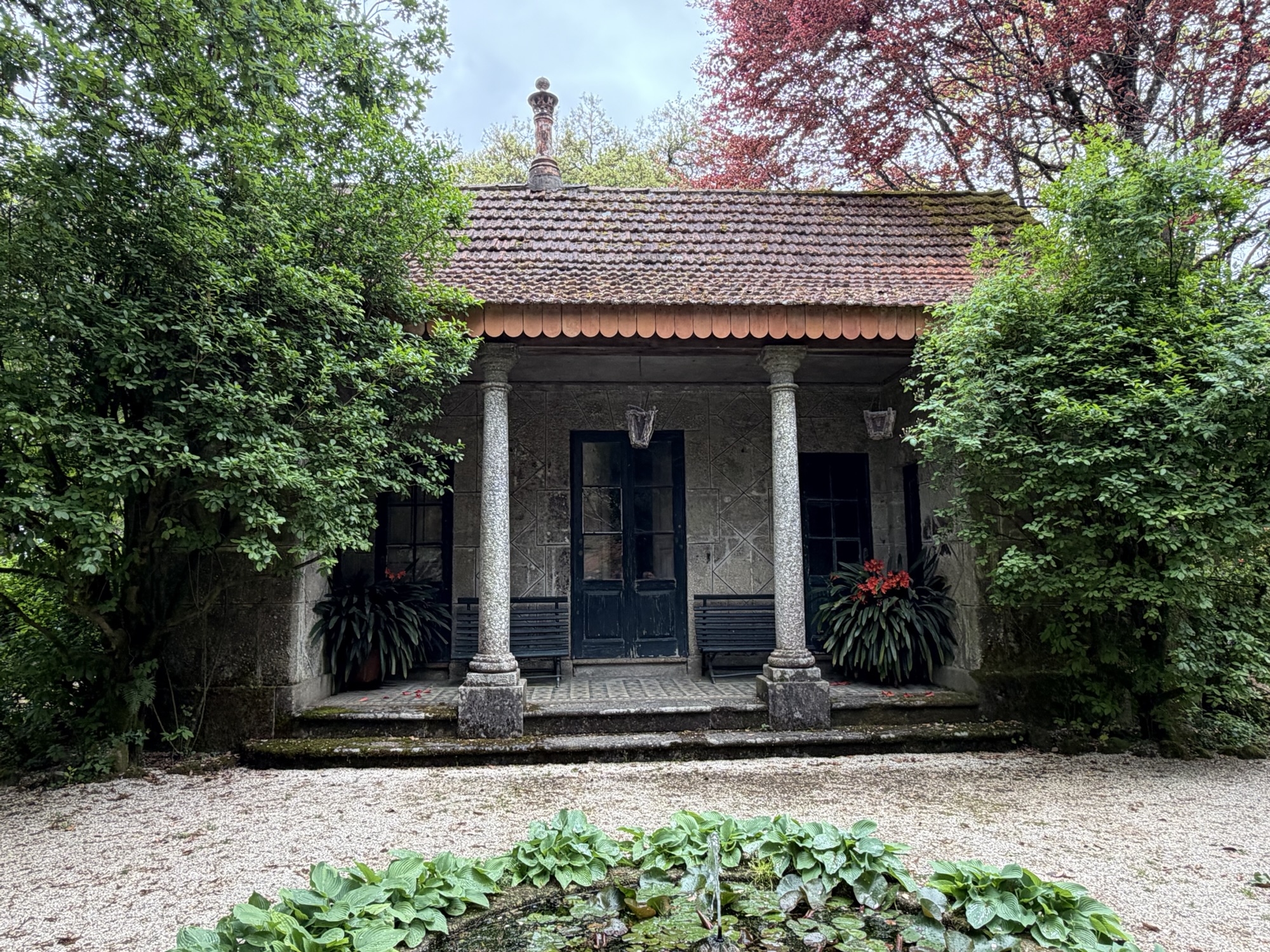
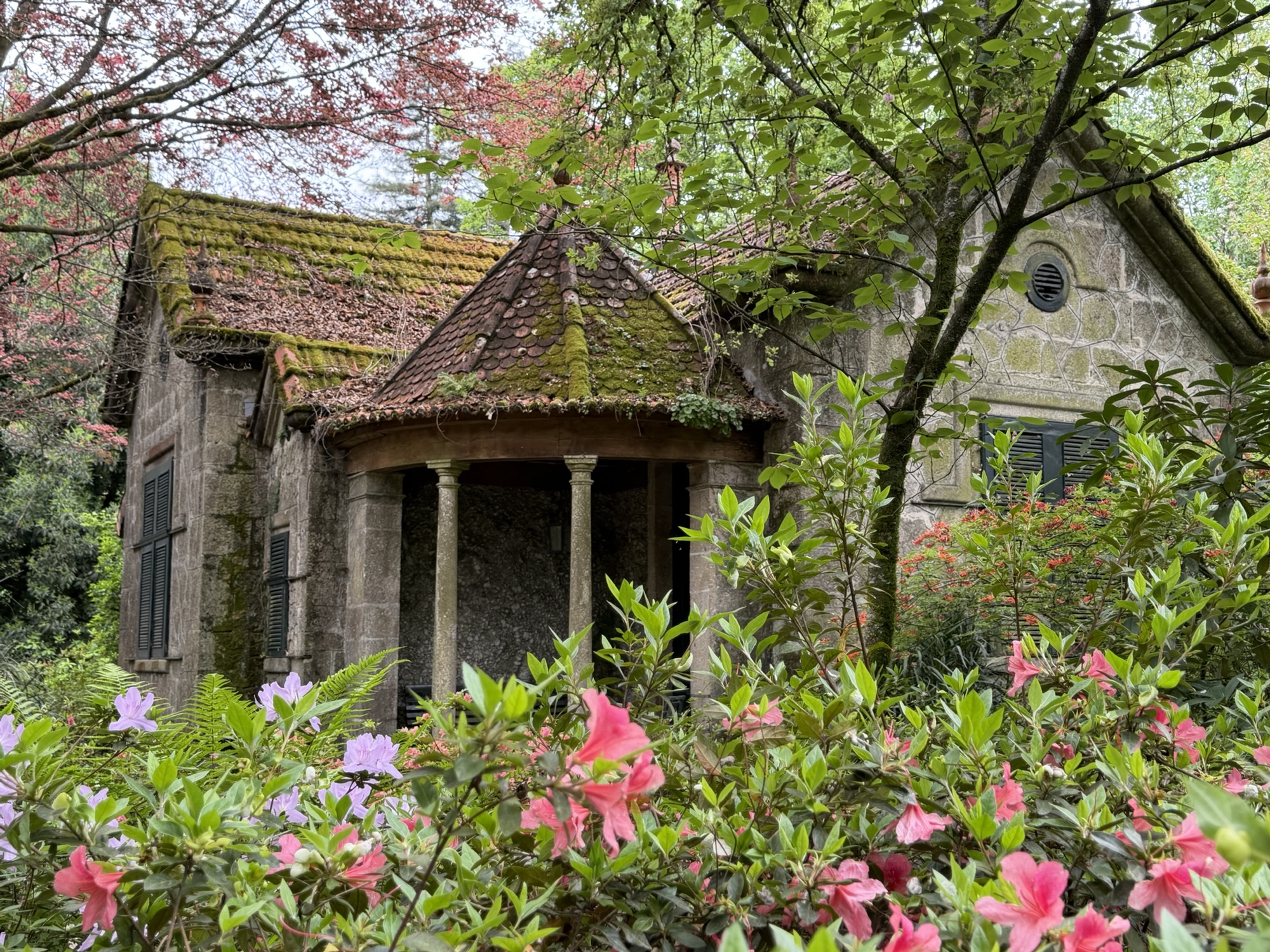
The third and most stunning of the gardens was at the estate and winery the Quinta de Aveleda! This property has been owned by the same family since the 16th century. They have had hundreds of years to create the most beautiful gardens. Included in the gardens are three small houses, including one that was used by family members on their honeymoons. There is also a small area for a family of goats to live, which were put in the garden for the enjoyment of the children. You cannot visit the estate’s lovely mansion, except to view it from a distance, as it is still used by the family.
I wish everyone could see these gardens in person, as photos can only capture some of the essence of these fantastic garden sites.
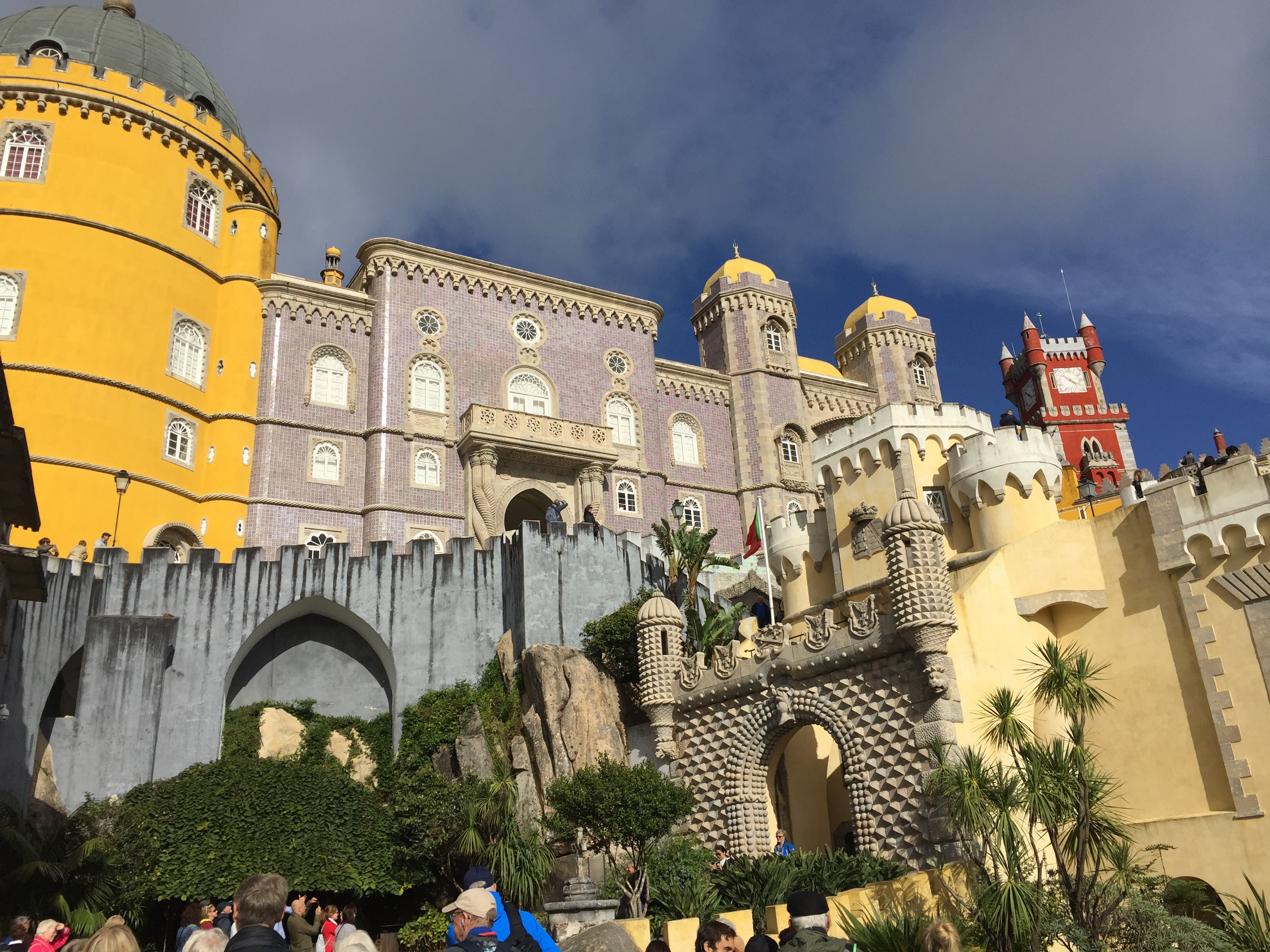
High on a hill above Sintra, amidst gardens and above steep paths, sits the Palace of Pena. Conceived by the King of Portugal, Don Fernando II, who lived from 1819-1895, The Palace of Pena was his dream home. But he did not only plan the palace, he also planned for lovely gardens to surround it, bringing in plants and trees from around the world. Creating a little world that has been named a World Heritage site.
He started building this, his summer home over the ruins of a 16th Century convent, the Convent of Our Lady of Pena, which he purchased in 1838. It took about 15 years to complete his fairy tale home that combines German, Indian, Moorish and Portuguese styles. A bit of the convent remains in the chapel. The tile work and the Manueline style of decoration are definitely Portuguese.
Walking up to the walkway and chapel.
You could spend days investigating this hillside extravaganza. There are acres upon acres of gardens and kilometers of paths. Besides the Pena Palace, there are the ruins of a Moorish castle.
As a lover of Disneyland and unusual architecture, I could not help but love the Palace of Pena. The four modes of architecture come together in a romantic version of a palace. Part of me wanted to ooh and aah over the building, and part of me wanted to giggle a bit and just enjoy Don Fernando’s view of the world through his enjoyable home. But above all, I wanted to enjoy the sites and the joy of the gardens he and his second wife created on this hill.
A walk through this arch takes you to the windy side.
The Atlantic Ocean side was windy!
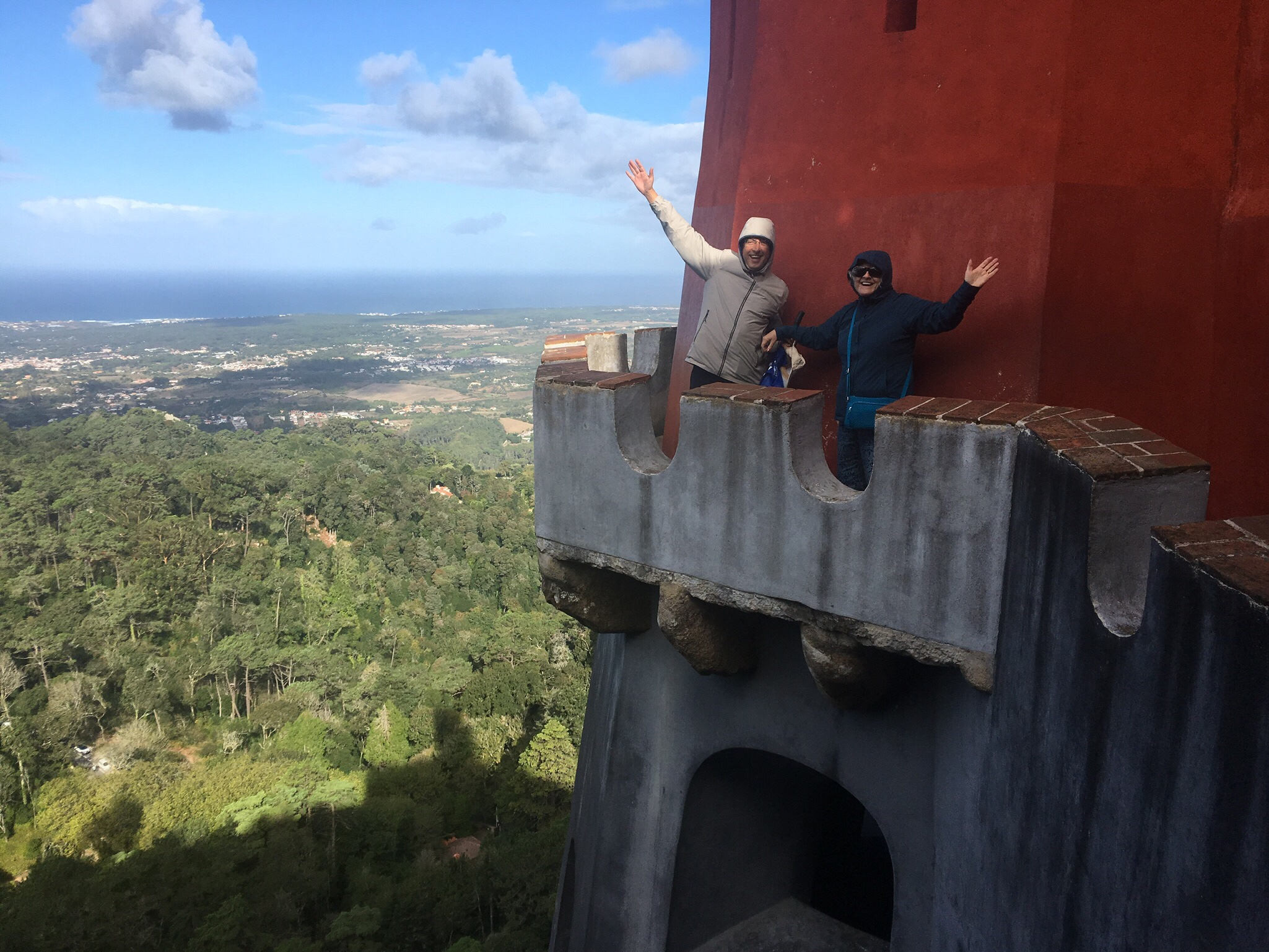
When you enter the Palace area, you go over an area that was once a small draw bridge, through a tunnel that opens into a courtyard. This side of the building is sunny and bright. No winds come through. But when you walk through the arch in the Moorish style segment, you enter another world. Our guide told us to zip our coats. And he was right. With wonderful views of the Atlantic Ocean, the other courtyard also had harsh winds!
The guide held my hand as we walked along the narrow ledge on the windy Atlantic side of the Palace.
We walked along the wall of the palace in a narrow pathway. I do not like heights, so our guide held my hand along the way. The view were worth it.
To be honest, it was not always easy walking up hill to the palace or around the palace grounds. There are many steep area and steps. Honestly, coming back down the hill was almost more difficult. It had rained a bit and so the stones were slippery. I will say my leg muscles got a good workout. Our guide helped by letting me hold on to him. So be careful when you go to visit. And you must go to visit!
After our time at the gardens and palace, we drove back down the hill to the picturesque town of Sintra. We parked along a promenade and walked to the old part of town, past the official royal castle with its twin chimneys: the Sintra National Palace. Now a museum, it once was the royal residence from the 15th to 19th centuries.
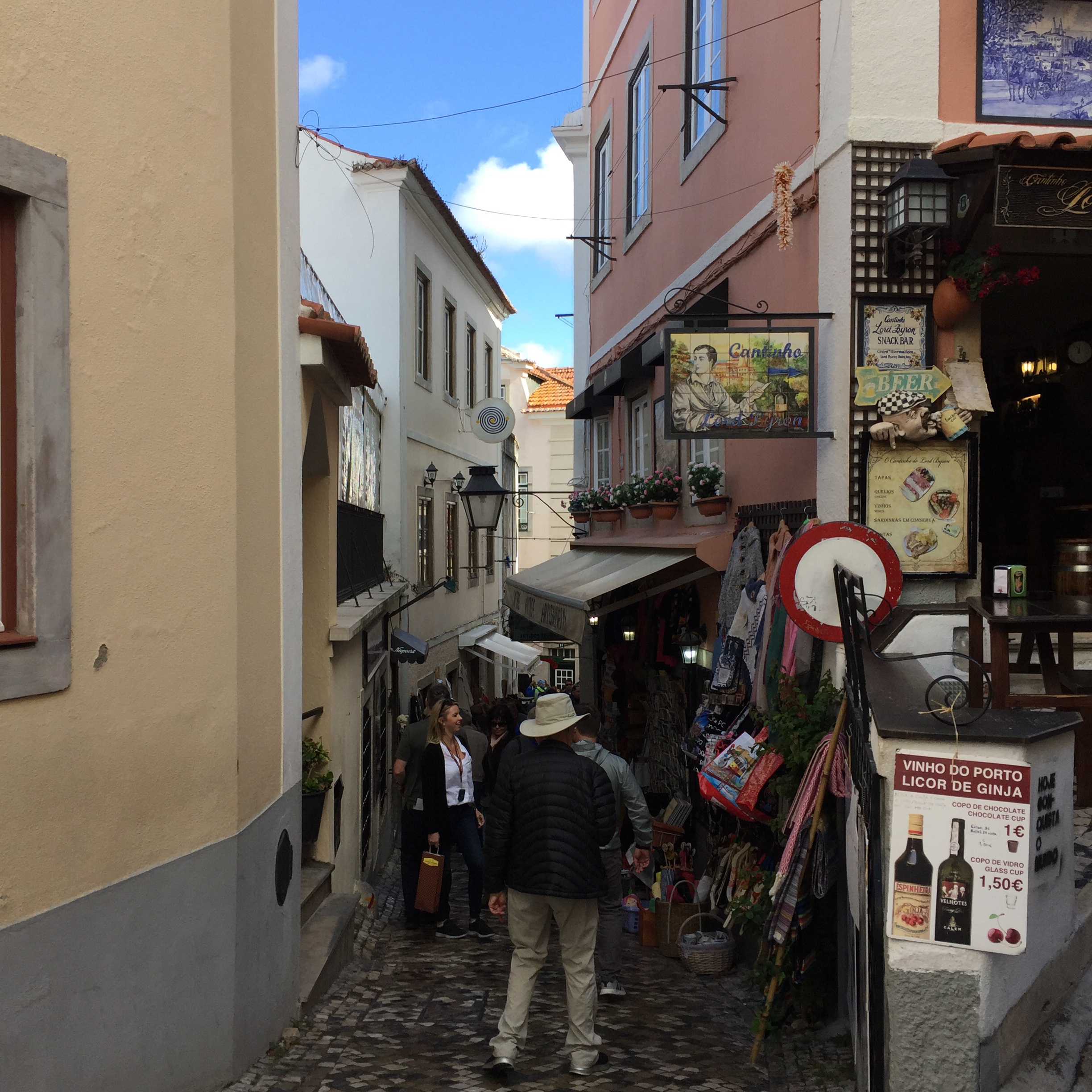
The shopping area of old Sintra
We walked through town and its several narrow streets filled with shops. It was the first time I actually got to shop during my vacation. I purchased only items made in Portugal, mainly made of cork and/or tile. I watched a woman hand painting tile in a small shop, where I found some gifts. Then we meandered uphill to more shops and a pastry restaurant, where we purchased a treat.
There were many little restaurants and shops for the many tourists that were visiting the town. At times, the narrow streets were almost too crowded. But the cruise ships have discovered this town, about 25 kilometers from Lisbon, so it is a popular destination. Our guide brought us to the Palace of Pena first thing to try to miss some of the crowding. He was right, but the time we left more and more people were filing into the park.
After Sintra, we left town to travel to the beach and eat lunch at a restaurant, Mar do Guincho, located right on the beach. The fresh seafood was delicious. The waiter brings the whole fish to the table to tell you what is available. I had a local fish caught that very morning. While my husband and guide shared a two-person traditional seafood and rice stew.
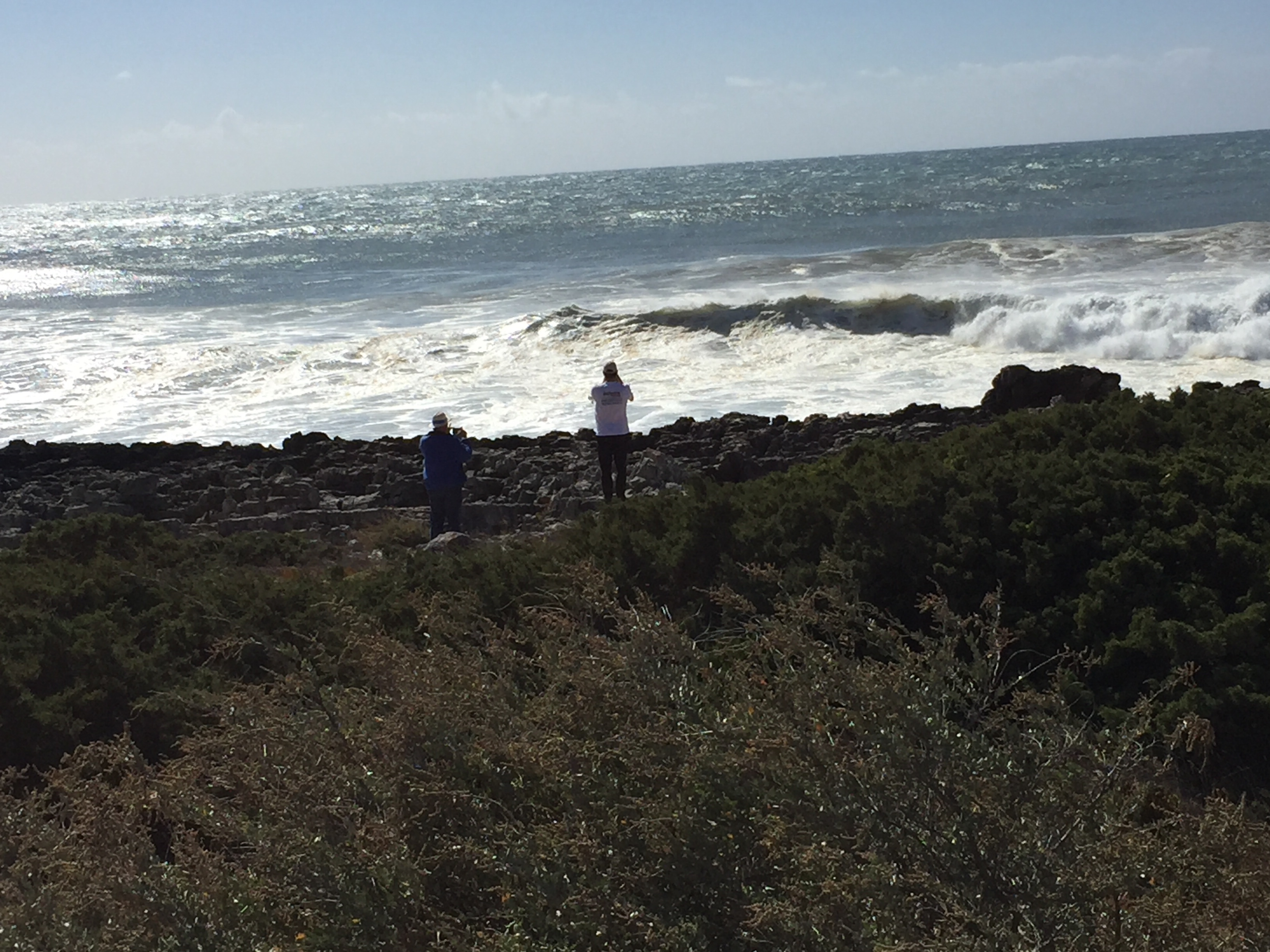
The ocean was very rough.
While we ate, we watched the very wild ocean hitting against the shore. All the beaches were closed the few days we were in Lisbon due to the errant hurricane and tropical storm that arrived with us.
We were there along with Hurricane Leslie. We actually did not experience any issues, except for some rain. But the country was not prepared for a category one hurricane. There was storm damage along the coastal towns and in Lisbon. Tiles were blown off roofs, causing leaks; trees and branches were down; the ocean waves were very high and strong; and there were some people injured. I am glad no one was badly injured.
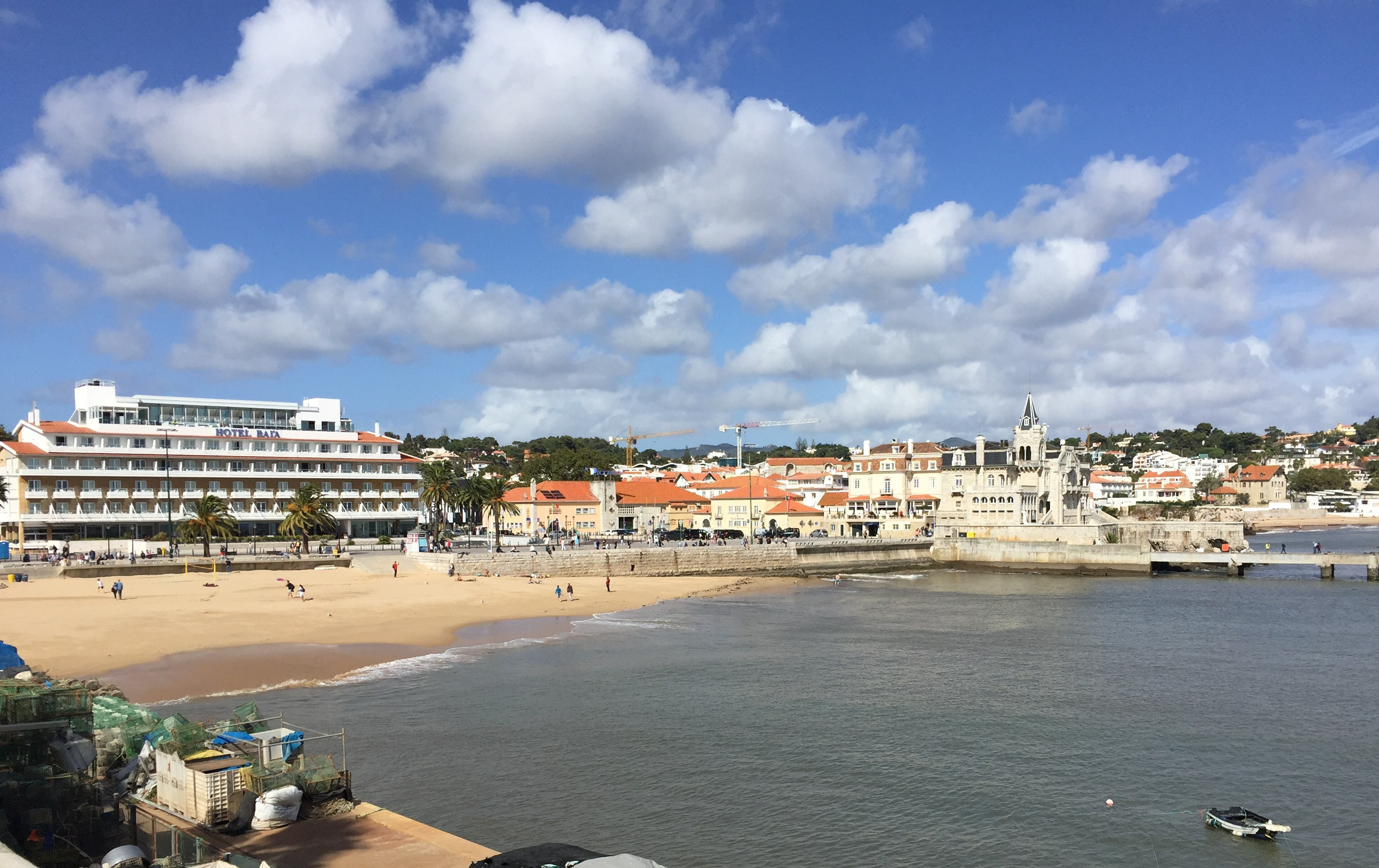
Cascais
After lunch we drove along the coast stopping once in a while to watch the waves. The we went to the city of Cascais where we walked along the beach promenade in town. We had a good time looking at all the expensive homes along the way and seeing the lovely marina area. I imagine that this town of the wealthy would be a good place for a holiday. But for us it was a quick visit and then back to Lisbon to rest for our next day’s adventure.