On a recent trip to Florida to visit family, my cousin insisted that we couldn’t just sit at her home and visit. We had to go somewhere and see something new. That was great because leading up to the trip, I had read about the Morikami Japanese Gardens. It was a place I wanted to see. It turned out to be an excellent adventure.
The lakeone of the bonsai treesa peaceful waterfallWatching a photo shoot
We walked the loop around the lake that had once been owned by a Japanese farmer. George Sukeji Morikami, who had come to Florida in the early 1900s with a group of other Japanese immigrants to start a farming community. When he passed away, he donated 200 acres of his land to the community. On this lovely piece of land, a Japanese Garden was built. The Roji-en Garden of the Drops of Dew.
We walked the loop around the lake visiting all of the 25 marked attractions. We were lucky to have wonderful weather to walk in and out of the shade trees, the quaking bamboo that wavered and clicked together in the wind. We saw the statures, visited the bonsai collection on Yamato Island, sat quietly at the two rock gardens, the Contemplation Pavilions and the Nelson Family Memorial Garden. The peaceful areas also included waterfalls. Watching the water make its way down a small hillside through the rocks was relaxing after walking for a while.
We were not the only ones enjoying the lovely weather and the beauty of the park. There was a teen girl gettin her quinceanera photos. I could see the park as a wonderful site for weddings!
After our walk we had a delicious lunch at the café sitting outside and enjoying the view of the gardens. Unfortunately, on the day we went, the museum was closed as they were getting new displays ready. But we did visit the tea room and of course donated to the garden and museum by our purchases at the gift shop. I honestly cannot believe that I have been to Florida dozens of times, and never went to these gardens.
The next day my cousin had another place to visit not far from her home. The Wakodahatchee Wetlands and Bird Sanctuary. This was another looped walk but instead of in a garden around a lake, we were walking on a high wooden path through marshland and trees see the roosting Storks, Cranes, Purple Marlins, Egrets, Herons in the trees, as well as a few iguanas; and the alligators down in the water.
The wetlands were opened o the public in 1996 and is a 50-acre site of previous wastewater utility property. Now free and open to the public, the wetlands is the nesting place of many different birds. What a great way to use this land for the community and for the wildlife. It is just wonderful place to spend an hour or so.
It was amazing how close we could get to the birds. I do not think I have the words to describe the scene, so you will have to see my photos. But I will say this was not a quiet and peaceful walk, as the squealing of the young birds calling out to their parents for food was quite loud.
I was walking around taking photos with my phone. But there were many people with professional size cameras and massive telescope lenses to get much better photos. In fact, throughout our walk, I kept thinking about a former student of mine who takes the most amazing bird and wildlife photos. I wished he was there to enjoy the sights. Below is the website for the Wetlands which includes a live web stream!! Enjoy!
My recommendation to everyone who goes to Palm Beach County is to see both of these wonderful outdoor adventures. I am so glad my cousin insisted that we visit them.
My husband loves to assign movies to holidays that impact us. For Fourth of July, we watched 1776; for Ground Hogs Day, we watch Ground Hogs Day; for Israel Independence, we watch Exodus; and for Yom HaShoah, we watch Schindler’s List.
I have known for several years now that one of my grandfather’s cousins, one of the very few who survived the Shoah, was on Schindler’s List and survived as a member of his work force. It made me think of this movie in a different light, because now one of those working and surviving was someone I once knew.
But this year, my view of the movie will change even more. For the first time, I now know that my grandfather’s cousin, Shalom, was one of the people who served as a pallbearer for Oscar Schindler at his funeral. And for the first time, I have found out that my distant cousin was one of at least 10 people from his community who were saved by Schindler.
(Many thanks to Izabela Sekulska and Mayn Shtetele Mielec for discovering this information.)
I had to wonder, did they know each other? There were about 5,000 Jewish souls who lived in the area of Mielec. Only 100-200 survived. Once they became part of the Schindler work force, of course they new each other. But did they work together to survive? Did they become part of this unusual group together?
I know of one other story like Schindler’s list. My good friend’s mother and grandmother survived the Shoah with about 100 other women who worked making clothes and shoes for the German army. The man who ran this factory saved them several times. Once keeping them at the factory even over night when there was typhus disease raging through the camp. A second time he actually went to the camp and getting his workers out from a transport to a death camp, saying he did not want to train new workers.
Did he do this because he was emotionally attached to his workers? Did he really work to save them? We will never know. But my friend’s mother and grandmother survived. I knew them as well. Their story can be found at the San Antonio’s Holocaust Memorial Museum.
So on this Yom HaShoah, I will have a small beacon of light thinking about my grandfather’s cousin, Shalom; my girlfriend’s mother, Anna, who were saved by their work in a factory. And I will have hope because people like Izabela in today’s Poland work to keep the Jewish cemeteries in good order and to find out what happened to the Jewish people who disappeared over 80 years ago.
At 70 years old, I envisioned that I would be sailing through my retirement years comfortable with my world. Enjoying my family, watching my country continue to flourish, seeing the United States and its reputation be strong in the world, as my husband and I continued to travel and enjoy visiting new places.
This is a far distant vison than the one my great grandmother faced 82 years ago, when in April 1943, she was murdered by the Germans at age 70 in Poland. It was the Thursday before Easter, and after her husband and four children had been murdered and her farm and property had been confiscated by the Germans.
My great grandmother is a bit different than the many unknown who were murdered during the Shoah, as there is a record of her last day taken during the trial held after the war for her murder. I know what she did, what she said, and who killed her. (See blog below.)
For fifty years I had been on a quest to find out what happened to my grandfather’s family. A quest that started after I spent my sophomore of college in Jerusalem. A year when I met many members of my family who survived the Shoah and ended up living in Eretz Israel, the land of Israel.
When I returned home, I was the child who said, I need to know. I sat with all of my grandparents to hear their stories. I wrote everything down. In the 1970s there was no internet, no easy way to discovered what happened. But I kept my papers and over the years when I met other members of my family I wrote down what they said. And slowly, slowly the stories came out.
In some instances, I found out history that perhaps I did not want to know. I learned about my father’s family who came to the USA in the 1870s. I learned of both tragedies and joys.
I learned about a great uncle who ended up in a mental institution, a great aunt who died from the Spanish flu, multiple children who died in their infancies; family menbers who did not speak to each other and a child who was raised by an aunt and did not know till she got engaged.
For my mother’s family, both of her parents came to the USA in the early 1920s, I learned about the hundreds of cousins, siblings, parents, all many of relatives that were murdered in the Shoah, as well as ones who had been saved.
I learned about relatives who were on Schindler’s List. Those who were saved by the Kinder Transport and ended up in England. A cousin who survived the Kelce Pogrom. Others who hid in the forests near their home town and formed a group like the one in the movie, “Defiance,” but these were my family.
I learned about a relative who converted to Catholicism before the war, but during the war she tried to save her sibling and her children. She was not successful. Their bodies were found buried in a field when construction was being done about three years ago. The driver of the vehicle was the grandson of the relative who converted, so Catholic himself. He had dug up the bodies of his own dead Jewish great aunt and her family. Can you imagine the irony of this?
I learned that owning property or having money does not save you. What might save you is luck, fortitude, or relatives who might have a chance to get your out. But you also had to make your own luck. You had to want to survive.
My great grandmother finally gave up. Everyone was dead, she had been hiding in the forest with others for a while. But then she was done. It was too much sorrow. Too much loss.
In this world with the chaos and uncertainty surrounding the economy; the round up of immigrants, even those with legal residences; the job losses; the attacks on education; the attacks on the rights of LGBTQ communities; the rise in anti-Semitism and hatred toward Israels and Jews, I have had to re-evaluate.
Could our property be confiscated? Could our savings be stolen? Could people in the USA be forced to hide in the woods to stay safe? Will people just give up?
Am I really so different from my great grandmother whom I am named after? Should I consider my own exit strategy? Believe me my mind often mulls over the options.
But it is the Tuesday before Pesach and Easter. It is two days before the 82nd anniversary of my great grandmother’s murder by the German mayor of Czermin, Jukub Hesler.
So I am pondering and considering and hoping that our Constitution is strong enough. That our courts are strong enough. That our elected politicians remember who they vow allegiance to: The CONSTITUTION of the United States of America. And who they serve, the people of their states and districts.
I wish everyone a Zissel Pesach, a happy Pesach. And I wish all who celebrate Easter a happy Easter. And I wish to everyone throughout the countries of the Earth a peaceful and joyful 2025.
On March 9, it will be the 83rd anniversary of the deportation and mass murder of the Jews of Mielec. The end of the 5000 Jews who lived in the city of Mielec and its surrounding villages, 50 percent of the total population of the area. The home to my grandfather and his family. His father, mother, brothers and sisters were among the Jews were marched out of the town. Some were killed along the way and buried in a mass grave, some sent to death camps where they were murdered. My great grandmother somehow escaped this but died months later, murdered by a German, turned in by her old neighbors. (See blogs below.)
My Great GrandfatherMurdered, but not forgotten. Both photos by Izabela Sekulska.
Thanks to the amazing Izabela Sekulska, my family members are now remembered. Since March 9, 2020, a group of Polish people from Mielec remember the deportation of the Jews of Mielec. They will gather once again at the mass grave, read out the names of 105 more people who they now know. So far they have made stones for 1000 Jewish residents who were murdered in the Shoah. Included in this list are eight of my relatives. Gimple Feuer, Chava Amsterdam Feuer, Taube Amsterdam Feuer, Nachum Amsterdam Feuer, Shimon Amsterdam Feuer, Ceia/Tzilia Amsterdam Feuer, as well as Natan Amsterdam and Tauba and Marcus Amsterdam. For each a stone has been painted and will be left on the mass grave. You can learn more about their work on the Facebook Group, Mayn Shtelele Mielec.
I thank those who work to keep their memories alive in Poland. Who do not forget the mass graves of Jews still buried and unknown. In my heart I will be there on March 9 and I remember those who died due to hatred in the past. Now I have a date to say Kaddish for my family.
I will think about those still hostages in Gaza, also murdered and tortured and held against their will while the world is mainly silent. And I will think how once again the Red Cross and the humanitarian agencies did nothing to save them. Just as they did basically nothing during the Shoah.
I will think about the UN, whose voice was silent during the brutal rape and murders of Israelis and others who were caught in in the Hamas murder spree. Who voice was silent for 18 months toward Jewish hostages and Israel, but not silent in still supporting Hamas. I will think about the UN who recently cut off all aid to Yemen after the Houthis took over 20 UN workers hostage. But who did not cut off aid to Hamas after their violent attacks. Double standards for sure.
I will think about college students and professors who turned in support for Hamas and tormented and attacked Jewish students, faculty and administrators. And we now know that Hamas was infiltrating these groups and had a hand in the protests. And I will think about the university administrators who said the words “kill all Jews” had to be taken into context before they could say this was wrong. I am glad that now those who are violent and threatening are beginning to realize this is not free speech and are expelled from their universities. I have nothing against a civil exchange of ideas, but the violence and threats are not that.
I will think about the current administration and its two-sided ideology. On one hand saying it is working to end anti-Semitism, but on the other hand getting rid of DEI initiatives that hurt minorities and the attacks on Hispanic members of our communities using the threats of ICE to scare and threaten them. As well as their attacks and efforts to silence the LGBTQ+ community, just as the Nazis also tortured and murdered those who were homosexual.
I will think about the last two years, the present and the future. I will think about the fact that my husband told me next time I visited our daughter in Israel I should look into getting Israeli citizenship. Is America ever going to be great again for the Jewish citizens? I am not sure. I know many think that the current president supports the Jews. But I see something totally different. A support for Israel because it fits his needs now, while at the same time supporting those who would make the USA a nation with against those of different religions and ideologies.
But I will also think about the helpers. Those in Poland who remember what happened and are trying to make a change. Those in the USA who speak out against baseless hatred. And I will try to have hope that this insidious evil that seems to have arisen will soon slither back in to the underworld where it belongs.
Last week the plumber came to my house to fix an outdoor faucet that was leaking. He told me that if things went well, he would be able to do it from the outside. It did not go well. The faucet was over 30 years old and had seized up.
We thought he would have to cut a hole in the drywall of my finished basement. But first he started looking around. Could he go through the closet? That would not work.
Was there another way. Also, he wondered how they could put both water and gas pipes on the without some sort of an access. He continued to searched around.
Finally he pointed to what I thought was an air conditioner exchange during our five years in this house. “What’s that?” he questioned. He started moving some furniture away from the wall. Then said, “I might have to unscrew it to see what’s behind it.”
But he did not have to unscrew anything. That air conditioner vent was hinged and held closed by a spring. When he opened this ‘door’, there was a crawl space with access to all the pipes. There was even a light switch and a working light.
First View of Secret SpaceLights, Insulation and carpets
As he opened it, I was excited! My first words were, “Wow, I have a secret room!” I always wanted a secret room. Friends of mine had a hidden door that looked like a bookcase. When you opened it, you were in the room with a dome and telescope. I always wanted a secret hideaway. Now I had one.
In the meantime, the plumber was able to quickly fix my faucet issue, including replacing the old water turn off valve in this crawl space.
After he left, I started thinking about my secret space. It is a great spot for hiding. No one knows it is there. It looks just like a vent for the air conditioner. With furniture in front of the lower part of it, no one would never think it was larger than a normal air vent. It is in a very good place for a secret space. There is a closet in front of it. Anyone who opens it would think went to the end of the house. Staircases enclose it. There is a solid wall on one side, and the outside walls on two sides, with just this tiny door to get in.
It even had lighting. It was insulated. And although you cannot stand up in it. Three or four people could comfortably sit inside. It made me think of the secret annex that Anne Frank and her family lived it. Wait, why did my mind go there?
Then it hit me, that I was actually thinking that this is a place where I can hide my family if needed. I have never ever felt that way before. But in the past 18 months as the Jew Hatred seems to grow, and the craziness builds, it was a thought that has stayed in my mind. What would we do if people really went crazy? I believe I am safe. I know I have great neighbors and friends. But then my family in Poland felt the same way before their property was confiscated and they were murdered.
I know it is not March 3, 1942, when all the remaining Jews of the area my great grandparents lived in were rounded up. Less than 100 Jews survived from over 5,000 who lived there. My family included two of these survivors. I knew them. I also know of many who died.
Honestly, would I ever have to use this secret room to hide out from those who want to do evil? I think not. But there is just this teeny bit of doubt that makes me feel sad for the world.
I would rather hold on to the feeling of excitement for a secret crawl space. I would rather focus on a discovery saved much time and money in fixing a pipe and gave me the joy of discovery something new about my home.
I am praying for our country and the world that sanity will prevail, fear will dissipate, and hate will disappear.
I have six letters written from March 1931 to !932 to my grandmother from her cousin, Abram. I don’t have her letters, only what he wrote to her. We found them in a cedar cigar box with some other items that she obviously thought were important treasures.
I have had the first three letters translated by members of Tracing the Tribe and the Jewish Genealogy Portal pages on Facebook. Now I am trying to decide if I should continue in my quest to see what the letters say, because I am realizing that my grandmother had another ‘love’ besides my grandfather.
The letters were written just before and during the six months that my grandmother was in Europe with my mother and uncle while she underwent treatments at the spa/spring waters of Kalsbad. They were written in the town of Boleslawiec, where my grandmother grew up.
The first letter
In my mind the first letter is a bit obnoxious. Her male cousin, Abram, is amazed that my grandmother can still write so well in Polish. He writes, “I am completely fascinated by your intelligence, I would never have thought you would still be writing in Polish so proficiently.”
My first thought was UGH. But then I remember that my grandmother left Poland when she was 16 in 1922. So perhaps it could happen that nine years later her language skills would fade. But still!
He asks how her husband and children are doing. Whether she is getting letters from them. Hoping she was doing well. Also telling her how happy they are that she is going to visit.
“I miss you. Please tell me everything that is happening with you and let me know when you’re planning to visit because I am waiting impatiently for this happy moment to see you well and with your dear children.
“You have no idea how your beloved father waits for the mailman with unlimited patience every day two hours before his shift starts. And when he receives a letter from you he is so overwhelmed with joy he occasionally loses his ability to read!”
Can you imagine not seeing your daughter for nine years, perhaps thinking when she left that he would never see her again. To a degree, I understand. For over two and a half years, during Covid, I did not see my daughter who lives in Israel. At least we could Facetime. When she finally did come to the USA, she and I hugged and cried for a long time at the airport.
He ends this first letter:
“I am finishing this letter by wishing you all the best, whatever you may desire!
Best regards from your kind-hearted cousin, Abram and the entire family.”
The second letter was written from Boleslawiec pm June 23, 1931. This letter was written after she arrived in Europe, perhaps at the spa. She had had a difficult journey from the USA and in fact almost died. She was ill with kidney disease as a result of eclampsia.
He writes: “That you did not have a pleasant journey did not bring me joy. However, the following bright days should give you the opportunity to enjoy the good and clear air as well as admission for immediate treatment. I wish you a speedy recovery so that you can return to us completely healthy.”
Once again, he mentions how eagerly they are all awaiting her arrival in Boleslawiec. He tells her that he visited with his beloved fiancée and told her how impressed he was with my grandmother because she was so intelligent. That she also wished my grandmother a speedy recovery. (I just have to say that my grandmother was brilliant. Her brain was like a trap.). He ends this letter wishing her warm regards and good luck. Abram.
It is in the third letter, dated July 28, 1931, from Boleslawiec, that the tone begins to change. And I began to wonder if I should have the other letters translated.
He starts by thanking her for this letter, but admonishes her because the last correspondence was just a note card without too much information.
“I expected a more detailed description of your events, and I felt quite offended by your silence and short note. I still admire your intelligence and wisdom, humor and quick
wit which always digs me out of the hole that I entered by writing such a letter to you… Otherwise, I expect a terrible end for myself, but I trust that in the future you will grant me with your words, so precious to me, more generously.”
He is a bit pompous and impressed with himself. But I guess I have to think about the times, 1930s, and the male dominance of the time period, especially among the orthodox. But my grandmother was a bit different. Her Dad was a scholar/cheder teacher. And he had all his children learn to read and write in Hebrew, Yiddish and Polish. My grandmother also knew how to read and write in German before she came to the USA where she learned English. Amazing for someone whose formal education ended when she was still a teen.
He then writes: “I received your funny and humorous letter, and I thank you so much for all the giggles and fun that it provided and for setting a clear timeline for sending a more serious letter to you… I will grant that having received your letter I should have changed the subject of my writing, but you must forgive me because my mom is unwell and under these circumstances I did not have the mood for jokes nor time to write a different letter and I do not want to stall and stop you from sending an answer to my writing.”
But now comes the part that really got my attention and changed the total impression about what might have really be going on. You see she had two cousins named Abram. I am not sure which one this is. Buy I have written about one in earlier blogs. (See below.)
“My dear cousin, I am letting you know that Abram visited us yesterday, we took a long walk in the evening, and he was telling us all about your visit to him and your previous relationship. He was pouring his heart out which, as you know, is quite unlike him, because typically he is reserved and introverted. Still he was confessing to me like a broken record to put some ease to his own suffering. He also knew what was said about him… He really wanted me to share with him what your true opinion about him is. I deflected his questions about you immediately.”
“I am sending this letter with best regards, your sincere cousin, Abram.
Best regards from my parents and sister as well.”
WOW!. I think the Abram who is in love with her is the cousin in Germany. She probably got to see him when she went to take mineral water treatments. I have other items with his name in them. And I assume that they had an unrequited young love before she went to the United States.
This really touched my heart, but also made me think that perhaps future letters spoke more about the second Abram. And did I really want to know more?
But it also made me think that perhaps one reason that she went to the USA when she was 16 was the end of the relationship with the second Abram. Did he break off with her, did she break off with him. Did the family decide that this was not a good match? I know in those days first cousins did marry. So many questions that I might never know the answers to.
I did put the fourth letter up on Tracing the Tribe to see if someone would translate it. But even though it has been up for a month, there has been no translation. In my mind, I have thought pehaps it is for the best. But another part of me wants to know what the other three letters reveal. I am having an internal debate whether to repost the fourth letter.
In any case thank you to Aleksandra Leonczyk and Roman Matz, who did the translations.
October was a bittersweet month for my siblings and me. We sold our family home in Kauneonga Lake. It has been in our family since 1962. Since the late 1920s, my family has had a summer home in the Catskills of New York. It was not an easy decision.
My grandparents first started visiting the Catskills before my mother was born in 1929. They wanted a place away from the city, a place that would remind them of the home they left. Grandpa from Trzciana, Mielic, Austria (now Poland); and Grandma from her home in Bolesslawiec and Viroshov in Poalnd. Grandpa told me once, that when he was in the Catskills he could think of his family, who perished in the Shoah, and remember happy times.
I don’t know the exact year that they purchase their first place in Kauneonga Lake. But by the 1930s they had a summer home and owned several acres of land directly across from Kauneonga Lake. Soon they started building a small bungalow colony where they would rent bungalows out up into the late 1970s. Eventually they sold off the bungalows individually along a road that is named after them.
Among the people who purchased the property were my two first cousins from the other side of my family. Thus, although, my siblings and I no longer own any of the property. We have family members who still remember the bungalows and are living on the property. Our cousins spent every summer in the Catskills with us, our parents, our grandparents, our aunts and uncles and many people who became more like family than just summer friends.
My grandparents had friends among the other colony owner and locals. We knew the plumber, the egg farmer, the trash man, the electrician and many of the business owners. In the 1960s my grandparents decided that they wanted an all-year house in the Catskills. They purchase a house on four acres that also had a bungalow. The house had been divided into four little apartments. My grandparents began the process of making it one home again. Enlarging the kitchen. Added on a one-bedroom apartment. Fixing the attic apartment and turning it into two bedrooms and a bathroom. They built a garage since they planned to stay there in the winters as well.
The stone roomThe fireplaceScreened in porch
The best thing they did, in my mind, was creating the room that eventually became known as the stone room. It was originally an outdoor patio that connected the house and the garage. But in winter it was so cold, that they closed in the two walls and put on a roof. But kept the stone patio floor. The only thing they did that I hated, was removing the little eating nook that had a table and two benches. I loved sitting there. But it disappeared in the renovations and became part of a real dining room. Among the best permanent parts of the house is the wonderful stone fireplace and stone steps.
The most important thing they fixed was the furnace. When they first purchase the house, it had a coal burning stove and an open fire furnace. You could see the fire from the furnace through a grill in the floor. Soon that was replaced with a regulation furnace. The coal burning stove was lovely. They did not get rid of it. It was put in the basement where my grandfather used it to bake.
Everyone at the bungalow colony and in our family called it the Big House. My grandparents moved in and started renting their bungalow at the colony, and eventually we moved up to the bungalow behind the Big House. Leaving the comfort of the bungalow colony, but enjoying more space.
It was in this house that I learned to braid challah from my grandfather. He had moved some of his bakery supplies from his New Jersey bakery there. He baked for us and for the shul. I loved watching his technique. He never measured anything with a measuring cup. He would just put it up in his hand, shake it a bit and put it in the mixer. He taught he how to braid challah with one braid or with two. He showed me how to make a round challah for the holidays. But I never learned his recipes. Mom and I tried to write them down, but they weren’t the same when baked.
It was in this house that we watched the walk on the moon in July 1969. It was in this house that we watched the endless line of people walking up West Shore Road to Woodstock. From our house it was an additional two miles up and down hills to get to the site of the concert. We could feel the ground vibrate and hear the music and the announcements from our home.
Here we would lie on a blanket in the grass and watch the meteorite showers and sometimes see a flash of the aurora borealis, we would find the constellations. On rainy days it is where my friend and I would read Nancy Drew books. Our parents arranged to buy different ones in the series so we could switch when we finished. It was here that my grandfather and dad had a giant vegetable garden, and we all learned how to grow and harvest vegetables.
We would see deer, bears, woodchucks, rabbits, skunks and other forest creatures.
We played cards and mah jong, ate meals and made memories with my grandparents, parents, relatives and friends. The house was our summer world. And all year long we waited impatiently to return.
It was in our house that we sat shiva for my grandmother. She died in August, when all the summer people and the locals were there. I won’t forget it. The plumber, Ab, and my grandfather, Nathan, were best buddies. So great that when my grandmother passed away, it was Ab who took me to the hospital to sign papers and identify my grandma in death. My grandpa and my mom stayed at our house. I will never forget the ride there and the ride back.
It was members of the Catskills congregation of Beth El that prepared the house for the shiva after the funeral. And that the locals and summer people came to tell stories and remember her, along with our family and the summer renters. My grandparents, and my parents and us, belonged to the Congregation Beth-El, where my grandfather was a Cohen, so went to services often. As a retired baker he often made goodies for after service kiddushim. And I know there is a window that they sponsored. I think it is in the balcony area. We always went to the shul in Kauneonga/White Lake for the high holidays.
My grandfather died eight years later. It was November, so we sat shiva in New Jersey. It was 1989. He had over 60 years enjoying the Catskills.
After my grandparents died, my parents became the owners of the house. They remodeled the kitchen, and they added a screened-in porch. They enlarged the master bathroom and added an on-suite bathroom. Every wall they opened they had to update the electric from knob and tube and replace the plumbing.
It was this house that eventually we would bring our children for summer visits. And down at the lake we had a dock where my dad had a ponton boat. My children loved their yearly two-week visit to New York and New Jersey. They got to see so many cousins and go out in the boat and run around outside in the rain.
But since my parents died nine months apart in 2010 and 2011, we have not used the house the way it should be used. One of my nephews did live there for two years during Covid. Then it did have some love and attention. But for most of the time, it was used once or twice a summer for a long weekend. It was not getting the attention or love it needed.
Our Dock spot.
Two years ago, we made the decision. The house needed to go to a family who would actually use it. With our lake frontage, it was the perfect home for someone who liked boating. This year we put it on the market. In August we had one last family weekend in the house as we sorted through everything and packed it up.
Then in the evening, my niece asked us to tell her stories about the house and the summers. My brother, sister and I shared our memories. We laughed, we teared up, we remembered our parents and grandparents. It was a great way to say goodbye to our house.
Even though the house has been sold, and another family now owns it, we have 60 years of memories that will never go away. And with our cousins still at Kauneonga Lake each summer, we have a place to sit on the beach if we like and talk about the past and plan for the future with our cousins whenever we want to visit.
With our children spread out across the country and overseas, our time as the owners of the Big House has ended along with our family’s long saga in the Catskills at Kauneonga Lake.
I am almost 70 years old. My Hebrew name is Chava. As I say this to myself, I shiver sometimes. I am the only Chava in my family. It should not be that way. My grandfather’s mother was Chava. She had five children and should have had many grandchildren. At least one girl in each family would have been named Chava.
In the family there were multiple people named Nissan, Moshe, Mordechai, Gital, Cerla, Gimple, Chava. As the next generation goes on, there should be multiples of these names as well. But there are not. There is one Nissan, my son, who is actually named Nissan Mordechai. There is one Gimple, my cousin, who passed away and now his grandson has that name. There are no Cerla or Gital. There are no Shimon or Nuta.
Why aren’t there multitude of cousins with these names? Because they were ALL murdered in the Shoah. There is no one to carry on these names. But we still must remember them.
My great grandmother Chava was 70 when she was murdered by the Nazis. As the world is so crazy with Jew Hatred. As I am turning 70. As my name is also Chava. Should I be afraid? As I read in detail from witnesses about what happened to my great grandmother on the day she died. Should I worry about the hate in the world around me? Could it happen again?
A few years ago, I wrote about the murder of my great grandmother, Chava. I have a book called “The Holocaust and European Societies” that talks about her murder. (See blog below.). The death of my great grandmother is discussed in this book. When I found it, I was astonished. I agonized. What was she thinking as they took her to be killed? Now I know. Is it good that I know? I am really not sure.
When I first started meeting with Izabela S. online, I had no idea how much she would be able to find out. Now, through the work of history profession named, Tomek, who has investigated the death of my great grandmother, I have the testimony of first hand witnesses. I can see in my mind what happened. I can feel her suffering. I thought, should I share this? Should it end with me? Isn’t it enough that I know?
But then I again think about what is happening in the world today, and I think not. I think everyone needs to know what happened to my great grandmother. No one should be able to say, this could never happen. Because it has and it did.
The next question I have to ask myself is, “When Do I Give Up.” That is a question I know my great grandmother faced. Her husband was dead, her children were gone, probably dead. So many of her relatives murdered all around her. The one child she knew was alive, my grandfather and his family, was so far away. Safe, but she would never see him again. And if she lived, would that reunion ever happen.
Before I start, Izabela asked that I not name the Polish people who are mentioned in the testimonies. So I will not name them except for the one I have named before.
This is what happened on the day my great grandmother Chava was murdered from testimony from a trial held in Poland after the war.
The first witness is my relative Zissel Feuer, who has played a part in my families Shoah story for years, because he did survive. Zissel was hiding in the forest of Trzciana.
“I would like to mention that a few days before Goldklang was shot, while I was in the barn of a farmer in Trzciana near the forest, I saw through a crack how Josef S. from Trzciana, together with two other people, were leading Chava Feuer, my aunt; then I heard from someone that Jozef S. was supposed to take Chava Feuer to the village head in Trzciana. The village leader in Trzciana was supposed to give a signal. Then Chava Feuer wsa taken to the German colony of Czermin and handed over to the Germans, who shot Chava.
(Just so his testimony makes sense, A few days later, Zissel heard shots and the sounds of pain, he went to look and saw a man named Jakub Goldklang. He told him that he had given all his property to a Polish man who was supposed to give him food, but instead another man, Josef Sypek, came and shot him. (He is mentioned in the book as well.)
Zissel realized he could not help Jakub so we went back into hiding. )
There is testimony that another man who saw the arrival of my great grandmother to the village head, who knew her and called her by the honorific, Gimplowa (Gimple’s wife).
“Gimplowa,” he said. “Why are you wandering around? Why can’t you hide somewhere in the forest?”
They knew there were Jews hiding in the forests around Trzciana. Some of the Polish people were providing them food, even though it could lead to their deaths. Others were turning them in. This man seems be upset that she is not hiding.
But in reality, it is her answer that breaks my heart. My grandparents always said that she was a very strong-willed person. That I reminded them of her because I don’t back down and I say what I think needs to be said. For me, Chava/Gimplowa’s answer is devastating.
“I don’t care anymore,” she said. “I have already decided on everything and I can’t stand it any longer.”
Where is the line that keeps a person going; that says keep living against that line that is defeated? When do you reach it? It was already April 1943 close to Easter and Passover. She had been hiding for almost two years. I don’t fault her, I feel her pain, but my heart says, ‘If only you had waited a bit longer.’
Another witness, a woman who recognized Gimplowa, saw her being taking away by some men she did not recognize. My great grandmother called out to her by name. and told her: “Stay with G-d.” Can you imagine that you are being taking to your death and you see someone you know, perhaps a friend, and you tell them “Stay with God”. The woman does not answer. She is probably afraid also of the men she does not recognize.
Another witness states “it happened on Maundy Thursday, at 3 pm in 1944. (This is the story that was in the book I mentioned earlier.) Josef S.’s wife called a group of neighbors together and said there was a Jewish woman, Gimplowa, in her house and she did not want to leave. She said, ‘Do whatever you want with me.’ “
Josef’s wife told the villages to do whatever we wanted, to kill her or to take her somewhere, because if the Germans found out and burned the village, she did not want anyone to blame her for supporting the Jews. “So we decided to take her by foot to the village head.”
The witness continued: The village head also did not want any responsibility for her. So he told them to take her to the German colony in Czermin. She did not want to go there, so she said she was old. So they got wagons to take her to the colony and hand her over to the German’s mayor Jukub Hesler. What he did with her, I don’t know, because I didn’t see it with my own eyes.”
He did not know for sure, but he knew. The witness was asked:
Q: Were you aware that you were leading this Jewish woman to her death?
A: Yes, we were aware of it, but we didn’t want to answer to it. So we brought it to the Germans so they could do whatever they wanted.
I know that fear overcomes kindness. But this is just too much for my heart and soul. It’s not our problem, let the Germans handle it. Even though we know they will kill her.
And one last witness to the last years of my great grandmother’s life.
During the German occupation, the Jewish woman Gimplowa was hiding with other neighbors. (So at first they did help her.) But on Good Friday, they were all talking because the Germans had set fire to the town of Bodborz because they believed that the people were hiding Jews there. So a neighbor who was drunk, made the first move to say we must take the woman who was hiding in my house to the village elder. We all supported this motion. And she was taken to the village elder.
How do you decide what is evil. My great grandmother was being hidden and helped through Easter of 1943. But now the Germans were burning villages where they found Jews hiding. So was it wrong of them to turn Chava over to the Germans? I, of course, think so. Why couldn’t they just send her out with some food to the forests?
But my great grandmother said she did not want to leave. I don’t think she wanted to hide in the forest any longer. She was done. She was tired. In my work as a spiritual care volunteer, I have seen what it means when a person tells me that they are very tired. When they are tired of living. When they want it to end.
My great grandmother wanted it to end. She was not in physical pain, but I am sure she was in emotional pain. The only thing I can think and hope is that the Germans shot her in the head and she died quickly.
I have to consider what she was thinking on the way to her death. Was she thinking about all who died in the past three years? Was she thinking about her son and grandchildren in America who she knew would survive. Did that give her a glimmer of joy. She had cared for my mom and my uncle for six months in 1931-32. Perhaps that memory of happy grandchildren helped her on her way to die.
It would be nice to know where she is buried. But I am sure she is in a mass grave somewhere near the town of Mielec or Trzciana. Or perhaps not. I will never know.
Baruch dayan HaEmet. May her name and memory be forever a blessing. May her murder by the hands of those who feared and the Nazis bring some goodness into the world. I carry her memory and name with me for all my life. I hope that as I turn 70, the world veers away from its direction of Jew hatred, or any hatred, and realize we are all one.
(The dates are sometimes a bit off as to when events occurred. There are several different dates for when Chava died. But now we know it was 1943 because it happened after the burning of a certain village.)
I have found out so much about what happened to my family in Trzciana and Mielec. The revelations are sometimes difficult to understand. But at least we now know.
But within all that we do know, there is a mystery of a grave containing two women, sisters and the son of one of them. (See blog below, An Unexpected Grave Mystery.). In my talks with Izabela, a Polish woman who has helped in my search, I found out that she is also aware of this grave and the unsolved mystery of exactly who are related to these two women and boy. We have discussed it several times. We think that I have the answer to the mystery. But I want to be sure.
Morris’ rocking chair. Now owned by my brother.
When I was a child, I knew my grandfather’s cousin Morris Brenner. He and his wife owned a newsstand/candy store in Jersey City. He was a diabetic and had both of his legs amputated. So he always sat in a rocking chair and was the cashier, while his wife, (we think her name was Anna), would walk around the store and help people.
My brother and I remember going to visit several times with our parents, or with our Mom and grandparents, or perhaps with just our grandparents. My sister doesn’t remember because she is so much younger. I am the last one alive to have seen him in my family. My Mom and I visited him in a nursing home near Bayonne, New Jersey. I detail that visit in a blog. (Childhood Events Definitely Influence My Adult Choices.)
His wife died before him, and since he had no legs, he had to move to skilled nursing. He and his wife did not have children. I believe I remember that they were first cousins so decided not to have children.
Why is this important? Because there is belief that the women buried in the grave had a brother who moved to the United States before the war, named Morris Brenner. Is this the right Morris Brenner? I wish I knew because it would bring closure to this mystery.
I have been searching the Ancestry files for days. I have found a number of Morris Brenners. But not a single one is listed as running a candy store. I have searched in Jersey City and Linden, New Jersey. My grandfather owned a bakery in Linden for a while, so I thought maybe there. And there is a Morris Feuer there, but he was married with children and did not own a candy store.
My frustration is strong. I thought it was an easy find compared to finding what happened in Europe. I thought how many men with the name Morris Feuer could there be? I thought the amputation and the knowledge of the nursing home would help. I also figured he died in the late 1960s. But I am not skilled enough with Ancestry to find him.
My Morris Brenner was probably born in the late 1890s in the Mielec/Trzciana area of what was then Austria, now Poland. He was married. His wife’s name might have been Anna. They had a candy store/news stand in New Jersey. They might have lived in the same building as the store, because I remember going into the back of the store through a door to a kitchen. Perhaps Jersey City, perhaps Linden, Perhaps Newark? At the end of his life, he lived in a skilled nursing facility/nursing home near Bayonne. Perhaps it was one for Jewish people? He did have nieces and nephews. I do not know if they were from his family or his wife’s. I know my grandparents began to visit him after my one visit. I know that my family inherited the rocking chair, my brother owns it. I know he died in the late 1960s perhaps early 1970s.
I even looked for people named Nissan Brenner, because by grandfather had a cousin in the USA by that name as well.
I do admit that my brother and I could have distorted memories. We were young when we knew him. I think I was about 10-12 years old the last time I saw him. That would be 1965-67. I believe he died within a year or so of that visit. But I do not know for sure. I remember when he died, but I don’t remember exact dates that far back.
I am asking for help from those of you who are excellent at research. Members of Tracing the Tribe have helped me in the past. Could you please help me find my Morris Brenner! Thank you!
So much information has come my way since Izabela S. contacted me. But the first in-depth story I must tell is about Zissel Feuer, my grandfather’s second cousin, who married my grandfather’s first cousin. I have learned so many details about how he survived and what he did immediately after the war, before he made aliyah to Israel.
Before the war Zissel was married to my grandfather’s first cousin, Dvorah/Deborah. Zissel then used the name Sussel or Zygmunt, the Polish version of his name. His life was intertwined with Schulim/Shalom Hollander because they were married to sisters. Shalom’s wife, Cerla, and Devorah were the daughters of Zacharias, my great grandfather, Gimple’s brother. My grandfather told me that Shalom and Zissel were his second cousins from opposite sides of his family. But since his grandparents/or great grandparents were first cousins, there was much intermingling.
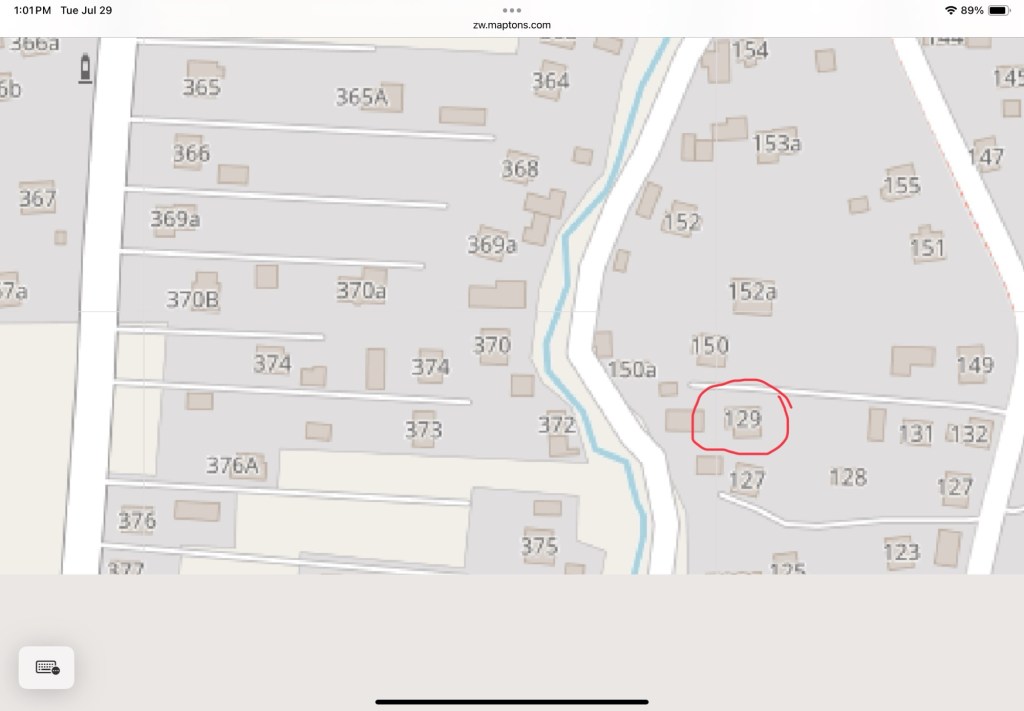
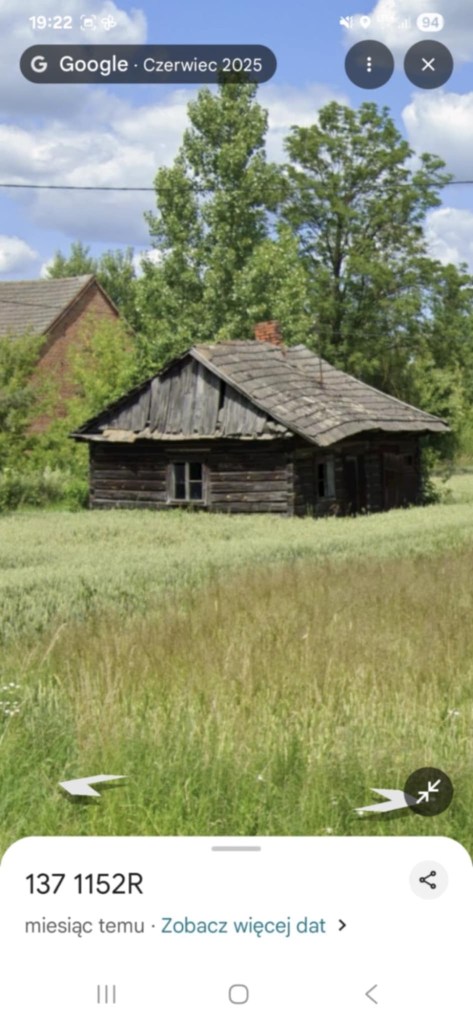
Both Zissel and Shalom and their wives lived on a farms in Trzciana close to where my great grandfather had his farm and both Zacharias, the father of their wives and Shalom’s parents had their farms.
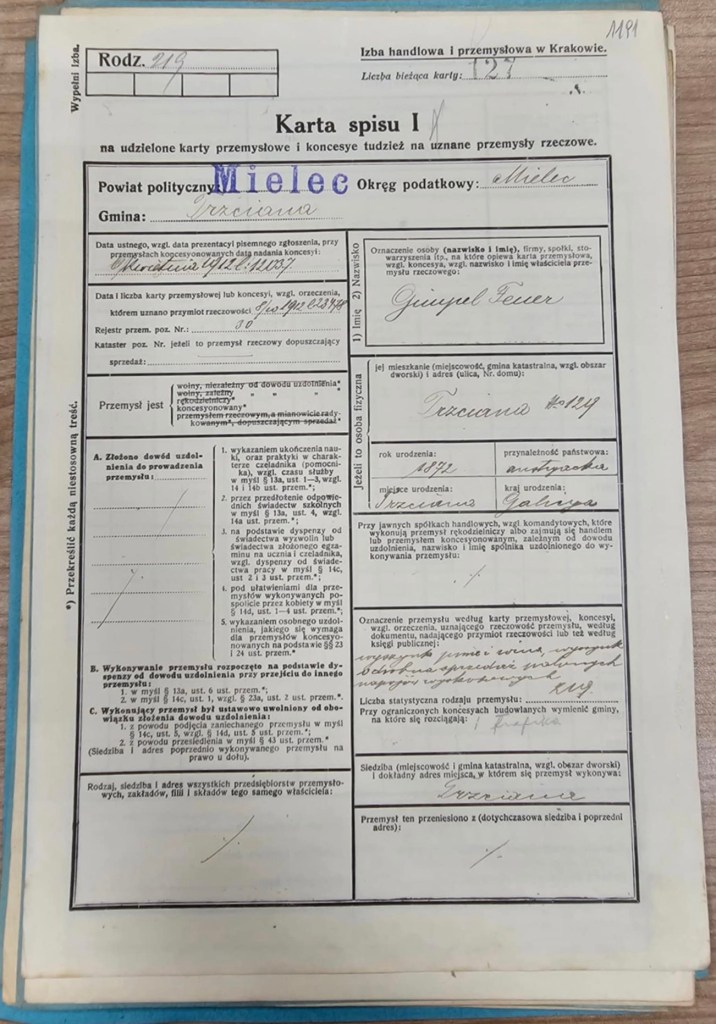
In fact in the document I have, is a list of farms taken from Jewish citizens. The Germans documented everything. Her you can see that seven of my relatives in listed from 32 to 39: Mendel Amsterdam, Hirsch Feuer, Zacharias Feuer (Dvorah and Cerla’s father), Gimple Feuer (my great grandfather), Markus Amsterdam (Shalom’s father), Schulim (Shalom) Hollander, Sussel Feuer. They were all inter-related. My grandfather once told me that this entire plot of land was once owned by his great great grandfather, or even further back. But with each generation the land was split among the sons. There was so much intermarriage as they kept the land within the family.
Zissel was a farmer and a corn merchant. I know that they also had potatoes and other crops on their farms. But it doesn’t matter, they were all forced to turn over their lands to the Germans in 1941.
After they were all forced off their land, Zissel and his wife; Gimple and Chava, my great grandparents; Zacharais, along with other Jewish farmers, were resettled in Wola Mielecka, a nearby village. Shalom and Cerla and his parents were sent to Mielec where they had a home. And then began their efforts to survive. I will let you know in advance, only Shalom, Zissel and one other cousins, the son of Zacharias lived. The rest did not survive.
Much of this information about Zissel comes from the book “Sztetl Mielec. Z Historii mieleckich Zydow” written by Andrzej Krempa that Izabela S. translated for me. (In English, Shtetl Mielec. From The History of the Jews of Mielec.”) Other information came from documents that Izabela has uncovered and translated for me. Part is what Izabela and I have determined through our many email conversations and the research I did and memories I took from my grandfather. I will mix her information with the information I know from my family.
So where was Zissel/Sussel and Dvorah during the war after he was removed from his farm? At first they hid with a man named Stanislaw Wojtusiak in Gliny Male and then with Jozef Padykula in Platkowiec. At some point Zissel’s wife was exposed by a resident of Trzciana, then murdered by the Germans. At this point Zissel had to run. He hid in the Piatkowiec forest near Mielec, near the village of Piatkowiec.
In the meantime, On March 9, 1942 Shalom was sent to a Labor Camp in Mielec. He was then sent to Wieliczka, then to Płaszów. He then became one of the people on Schindler’s List and ended up in Brunnlitz.
My one issue about this, is that Zissel told me he had two children. I do not know where they were or their names. But Izabela told me there is a mass grave near Tarnow where 800 children were murdered and buried. These children came from the Tarnow orphanage and ghetto. Shalom and Cerla’s children, as well as any child Zissel and Dvorah might have had, if they were not taken to a camp with their parents, may be buried here. Or they could have been shot at the Tranow Jewish Cemetery. Or deported. In any case we do not know exactly where the children are buried.
Zissel spent the time from March 9, 1942, the date that the Jews were rounded up for deportation and many murdered, until April 19, 1944, wandering and hiding around the villages near Mielec. For part of this time, he hid in Polaniec (July 25 until October 25, 1942). He left that area after the Jews of Polaniec were deported and returned back to Mielec.
He was able to stay hidden for a while. But starting in April 1943, the Gestapo was looking for him. They knew there was Jewish man hiding in the woods. Honestly, I cannot imagine how he survived for so long, having watched so many of his family die and disappear. But he survived! I know he had to have help, because his freedom was always in doubt. Finally in 1944 he was caught by the Polish Forest Administration and turned over to the Germans. But the slippery and I think smart Zissel, escaped. On his way back from Polaniec he was attacked in the village of Otalezh, which he was stripped and robbed. But he survived.
We know this because he filled out a questionnaire at the Central Committee of Polish Jews after the war. (Izabela says this document is now in the Jewish Historical Institute.)
Some of the Jews who survived. Zissel and Shalom are on this list.
After the war, he returned to Mielec, where he became the President of the Jewish Religions Congregation in Mielec. He was among the 55-70 Jews who survived. Zissel, Shalom and a woman named Chava Amsterdam are listed. Zissel was now using the name Lieb Sussel Feuer. His post war address was Maly Rynek 1. Shalom also lived at this address for a while after the war.
I think they still had battles for survival after the war. Padykula, who helped Sussel was accused after the war for helping in the capture of Zissel. But Shalom Hollander wrote a letter saying this was not true. That he actually helped not only Zissel, but also Shalom’s son Nissan. (This is interesting because in his Yad V’Shem list, he details the names of his five children who died. There was no Nissan. There is also no Nissan mentioned on the list of survivors who returned to Mielec. So perhaps it was someone he took care of during the war.)
Zissel did leave Mielec for six months. He visited his brother, Arthur, in the United States. I never him. But I did know that Zissel visited my grandparents. He is the one who told my grandfather that everyone died during this visit. I know from Izabela, that Zissel is one of the witnesses for my great grandfather, Gimple’s death. I know how difficult this was for my grandfather. My mother once told me that after baking all night my grandfather would come upstairs to their apartment and sit and cry with his head on his arms on the table. Can you imagine, not only finding out that his parents died, but his siblings, his entire family. Of those that stayed in Austria/Poland, I only know of four close cousins who survived. Shalom, Zissel and one of Zacharias’ sons. ( will write about one of the son’s in my next blog.) Shalom moved to Israel and remarried.
Zissel also went to see another brother in Berlin and then on to Israel. He did not stay in Israel, instead he returned to Poland. I really cannot understand why he would return, unless he had unfinished business. Which, from what Izabela told me next, I think I know what he needed to accomplish.
In 1947 he owned an apartment building at 41 Sandomierska Street, where he lived. As President of the Jewish Congregation, he began the work of fencing in the Jewish Cemetery on Jadernych Street. But the Provincial Office stopped the work. This is the Cemetery that Izabela now cares for with a group of volunteers. A few kilometers from the cemetery, at Swierkowa Street, there is another mass grave, where the Holocaust victims from Mielec are burried. In the area of this mass grave, Shalom put a tombstone in memory of his parents Tovah and Marcus/Markus Amsterdam. (Tovah’s maiden name was Hollander). It is possible that my great grandparents are also buried in this mass grave.
Zissel also gave testimony for the Polish people who helped him, by writing letters to document what they had done. I have photos of two of these letters, where he mentions Polish people who defended and saved other Jewish people. Two of them are Loen Wanatowicz and Stanislaw Rebis.
Zissel also testified against those who did evil, included a war criminal named Jek. He testified that Jek beat Jews and humiliated Jewish women by ordering them to strip naked. In the Tarnow ghetto he also killed at least three Jewish men.
Besides these testimonies, Izabela told me that there are still rumors about Zissel stating that he cheated some of the people of Mielec. How so? There were many homes that were now vacant because almost all of the 5000 Jews of Mielec and the surrounding area were murdered in the Shoah. They basically were available for people to move in to without having to pay anyone. Zissel, as the President of the Jewish Congregation, said that those who survived and returned were descendants of people who owned some of the property. Therefore, the Polish people now living on the property and in the homes had to pay the survivors for the homes and or property.
I told Izabela, since the families were so interrelated it could very well be that they were distant relatives. But even more important. They had NOTHING left. Everyone was dead. Their homes were gone. They had suffered. In my mind Zissel had done honorable work. He found a way for these people to get some money to begin their lives anew. Perhaps some of them were not really related to the property owners. But they did not belong to the people now living in them either.
(On a side note, I once asked my grandfather if he had tried to get compensation from Germany after the war for the death of his parents or his property. He became very angry and asked the following questions. “Would getting the money bring my parents back? Would getting the money bring my brothers back, my sisters? Would it bring any of my family back? I don’t want their blood money?” We never discussed it again.)
When Zissel was done with this work, he left Poland for Israel. He started using the name that I knew for him, Zissel: no longer Lieb or Sussul or Zygmunt. I met him in 1974. He was living in an apartment near the center of Tel Aviv with another Holocaust survivor. He worked in a bakery not far from the Shuk HaCarmel, the Carmel Market.
The last time I saw him was in 1976 with my grandmother. Zissel was not a perfect man. He stole from my grandmother. He was a bit of a goniff. But perhaps that is what kept him alive and allowed him to help others after the war.
May his name be for a blessing. May his memory live on from the blogs I have written.