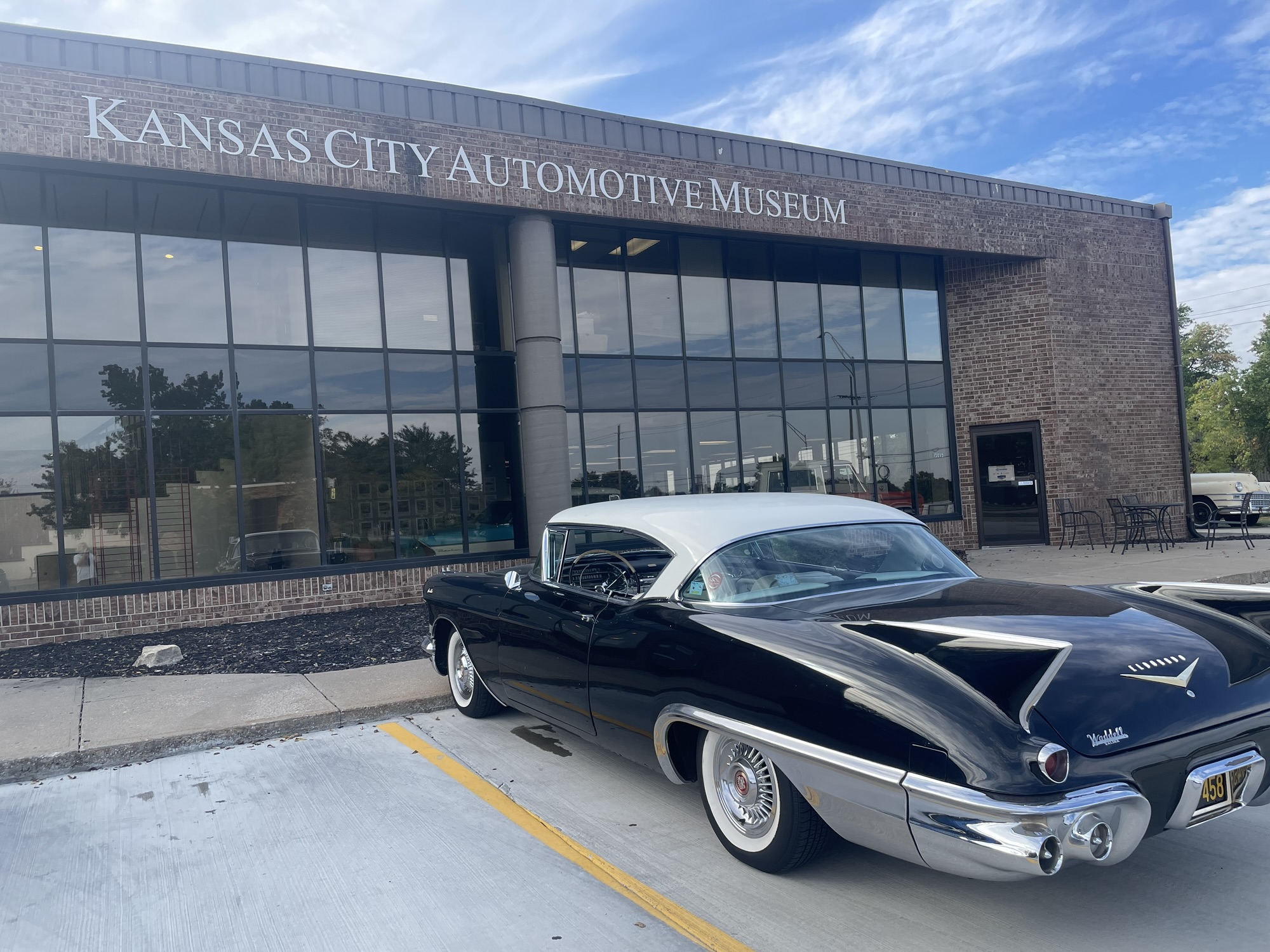
The current home of the Kansas City Automotive Museum is a little bit hidden away in Olathe, Kansas. This 10,000 square-foot museum is PACKED with all sorts of cars and information. Much more than I anticipated. Founded and opened in 2014, the Automotive Museum houses many cars and other objects that are on loan from their owners, where they are safe but also provide a place for others to share in the joy of their uniqueness.
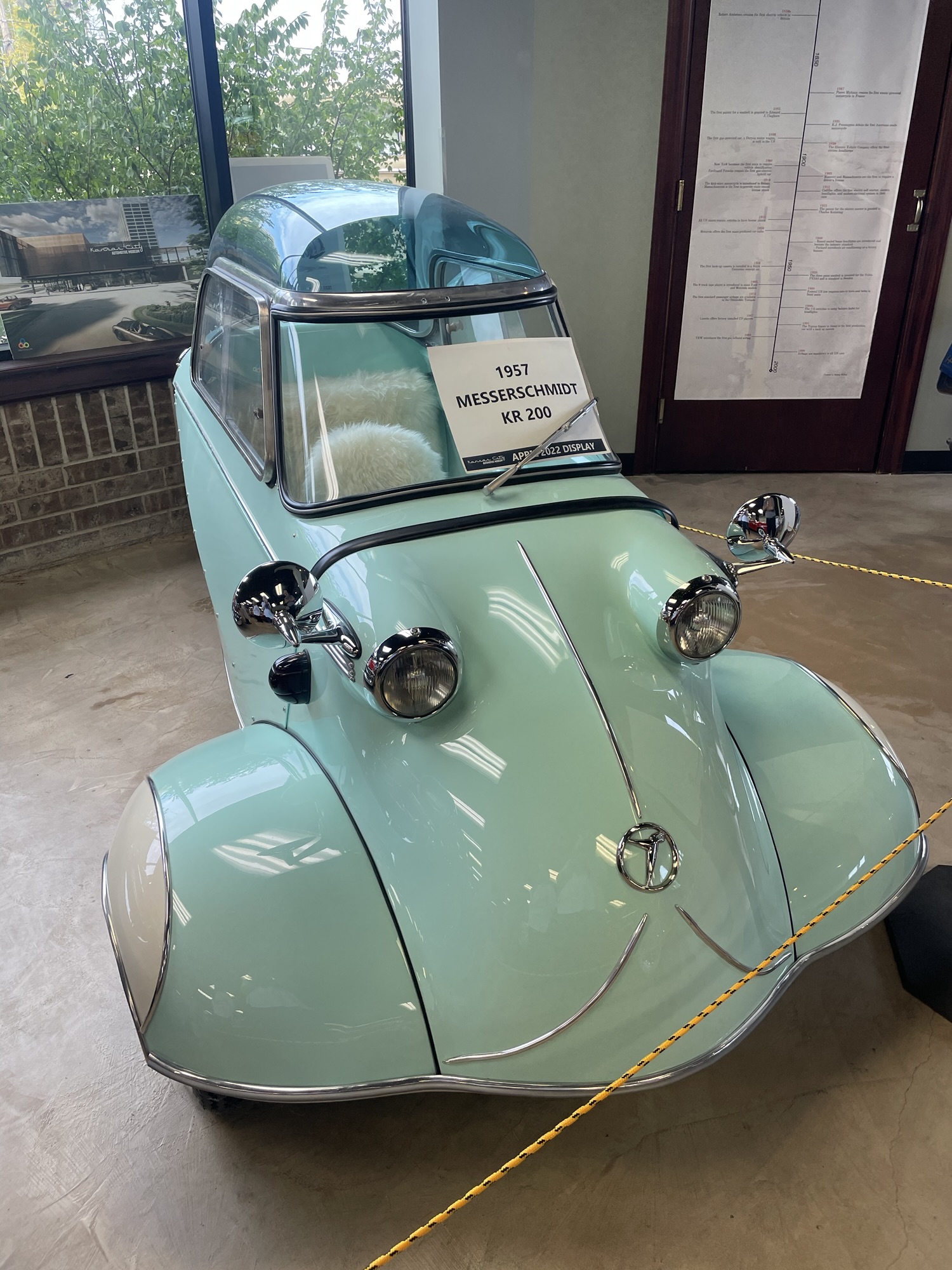
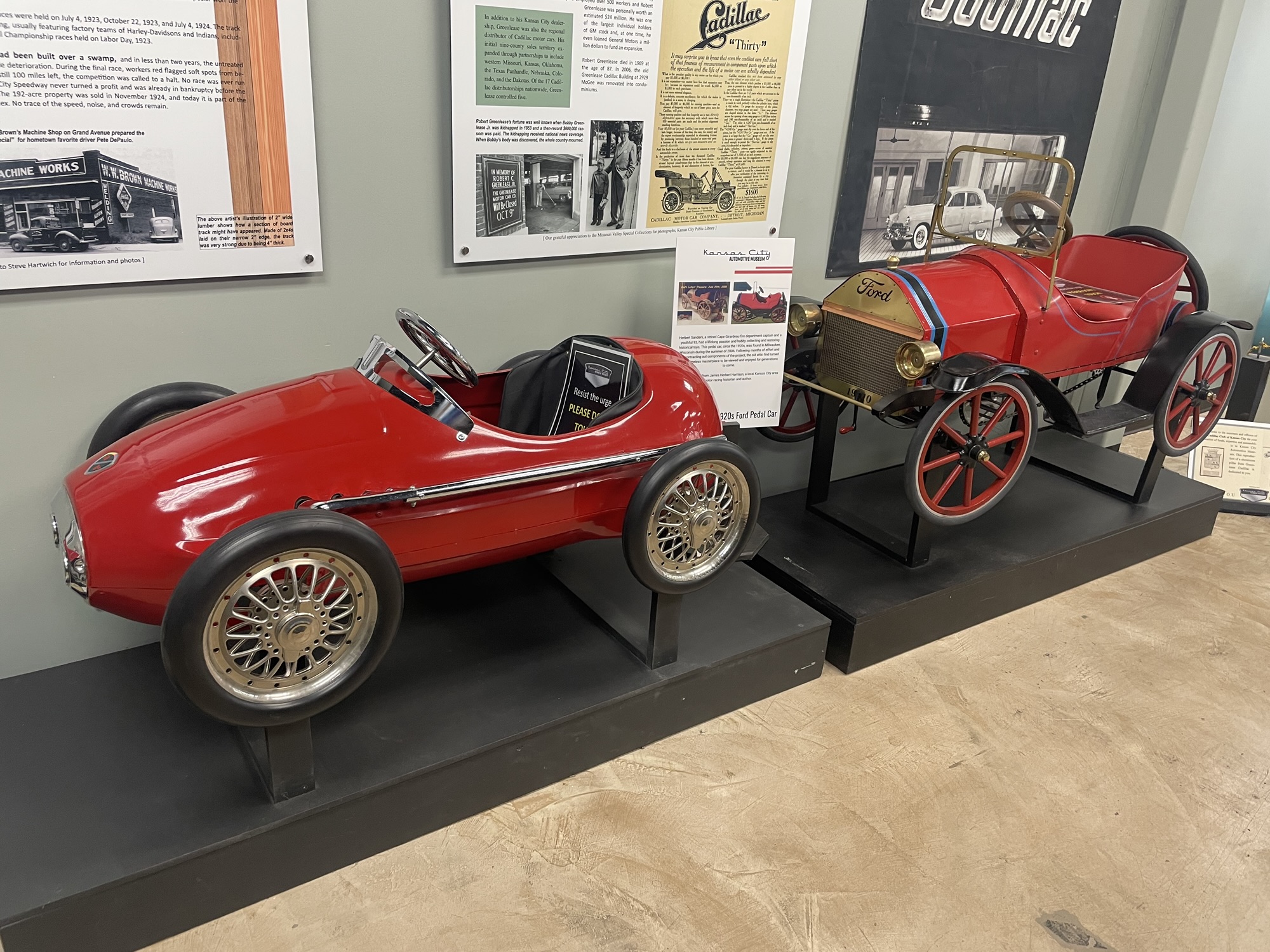
There are race cars, turquoise-colored cars from the 1950s, an original Model T, 1912 Ford Model T, Packard Roadster, Studebacker, Bentley, Jaguar, Chevrolet Sport Phaeton, a bubble car, children’s go-carts, and so much more. I am not a car enthusiast, but I definitely enjoyed this experience.
We went with friends in October and were delighted to have a docent go through the entire museum with us. He was fantastic in explaining the different cars and what made them special; the special exhibits; the history of cars in Kansas City, and answered all of our questions, even the naïve ones.
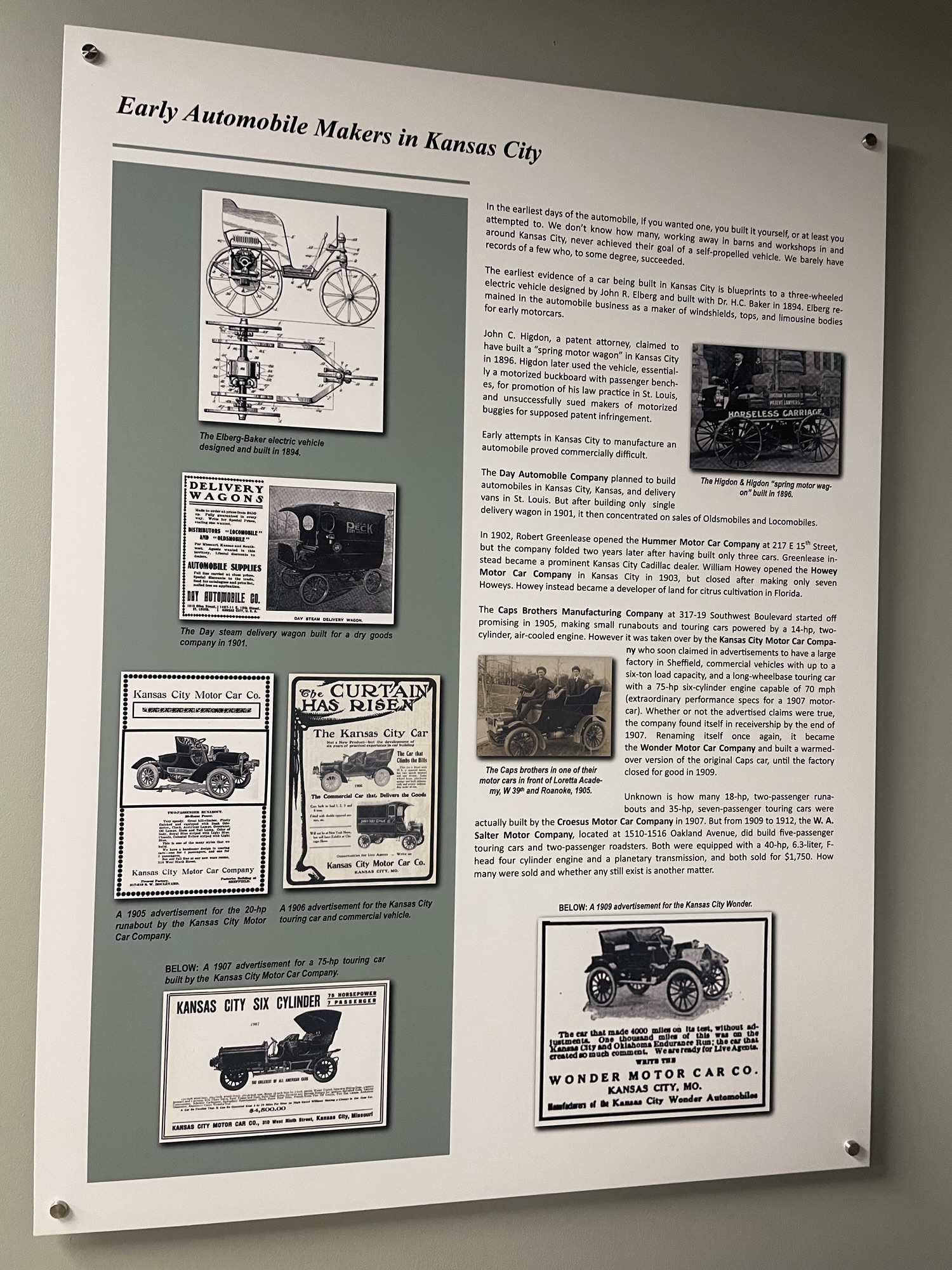
Along the walls was information about the Kansas City automotive industry. I knew we have factories here, but I had no idea how long cars have been made in the area. I also did not realize that in the early years there were many small car companies that made perhaps dozens of cars before they closed. But that makes sense as all cars were originally made by hand. It wasn’t until Ford came up with the assembly line that car making became quicker and cheaper.
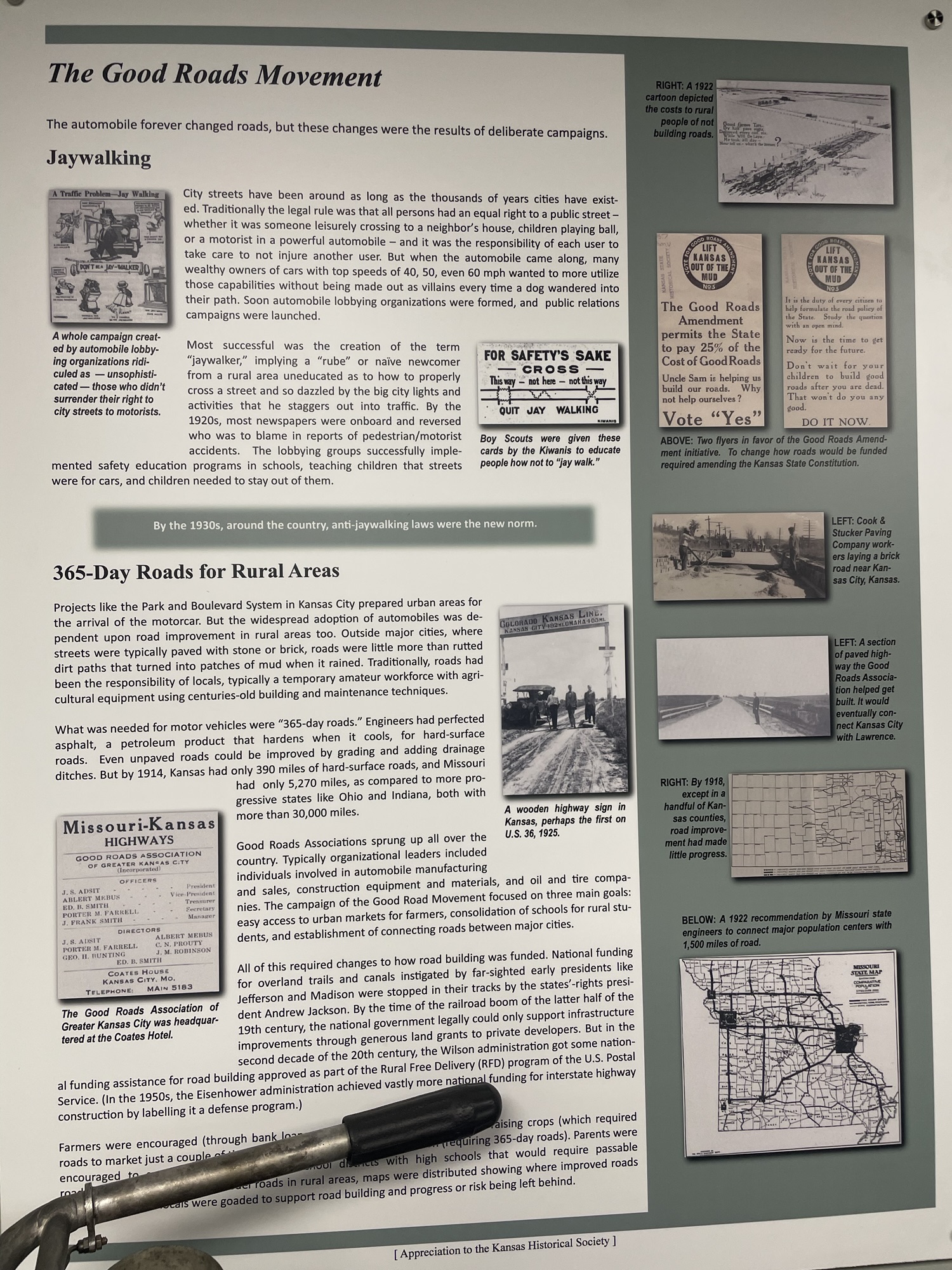
I was also amazed about how streets were developed. There was not always all the pavedc roads everywhere. They had to be built. One fun fact I learned was the origins of the term Jaywalking. It was a term for people who crossed the street in front of cars, making them seem not very smart.. Unlike now when motorists is blamed if they go too quickly and hurt someone, then they turned it around and blamed the pedestrian if they went in front of a car or were hit by a car!!!!
The Homer B. Roberts Gallery is in honor of the first African American car salesman in the Kansas City area. In the early 1900s he had an office at 14th and Vine where he sold cars to the African American community. I had not thought of that before, white salespeople did not sell to African Americans, but in order to make more money they needed a salesperson. Enter Homer B. Roberts and Roberts Motor Mart.
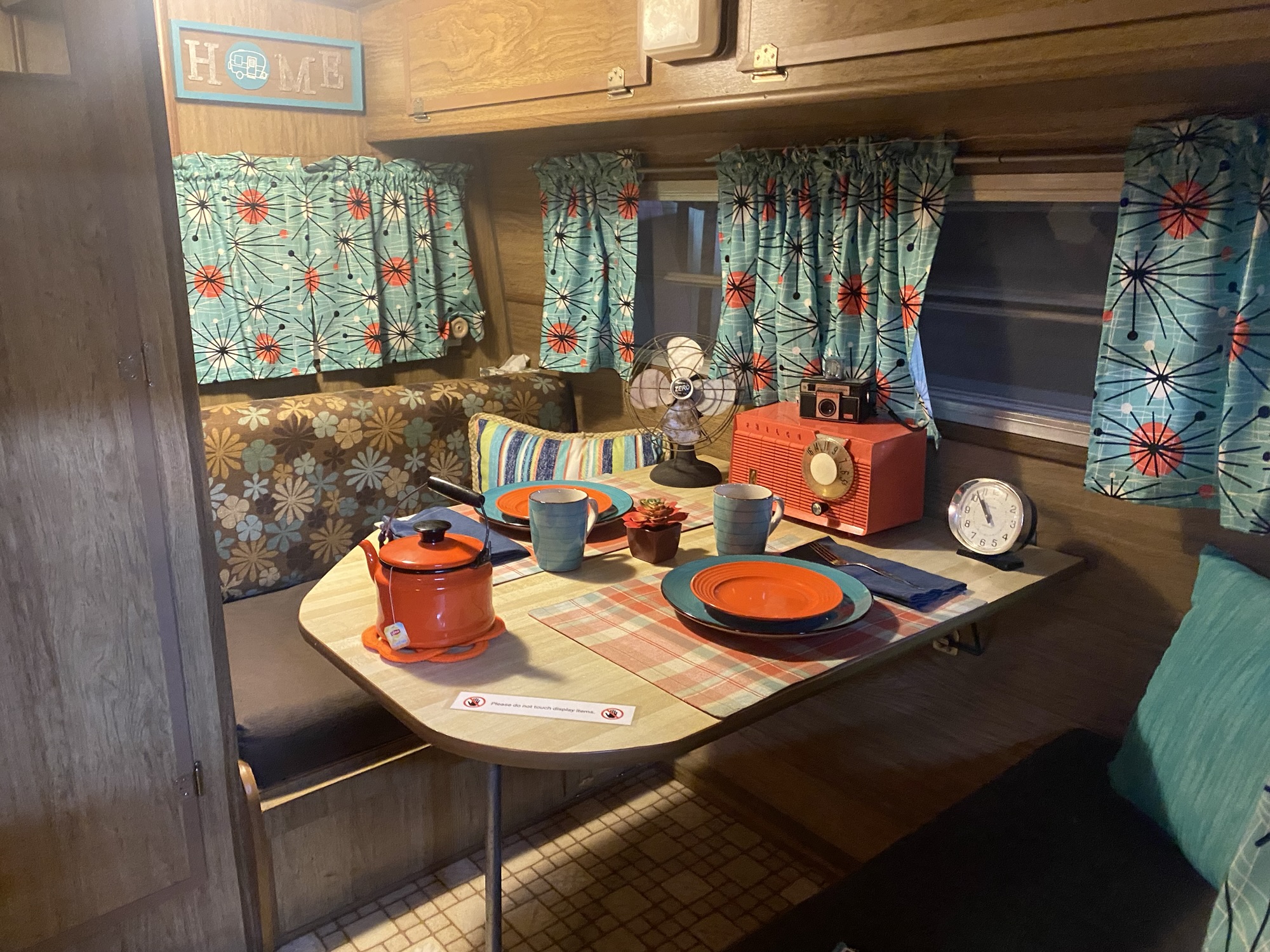
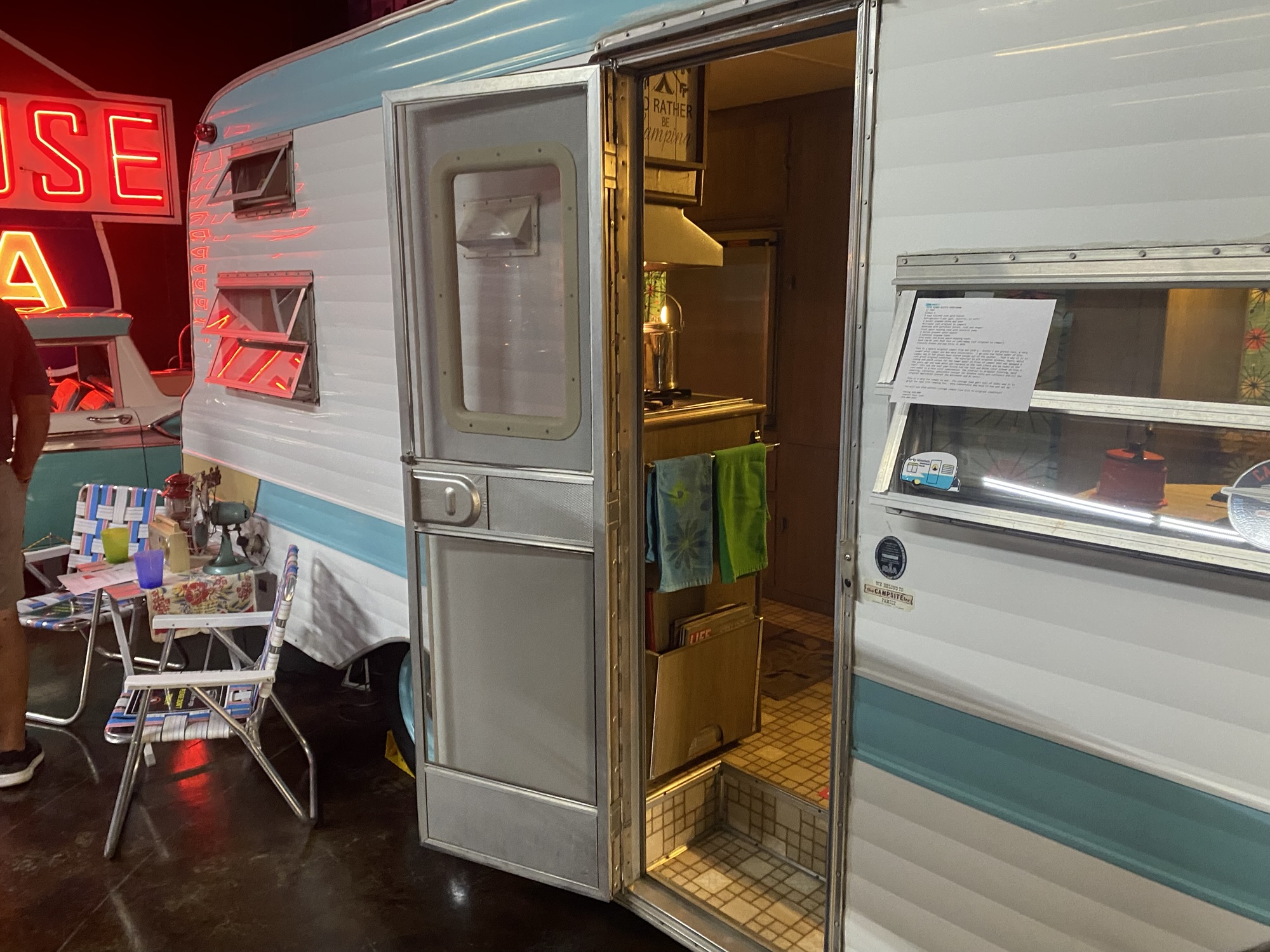
There is so much information in the permanent displays of the museum, a car enthusiast could spend hours looking at cars and listening to the stories. But there is also an exhibit room for special displays. When we went there were motor homes/campers from the early 1970s. Some were all in one, others were ones that were pulled by a car. I enjoyed seeing those as well.
The Kansas City Automotive Museum is building a new home in Kansas City, Missouri, on the north side of 31 street between Broadway Boulevard and Southwest Trafficway. It will be much bigger, 40,000 square feet, and able to display many more of the community’s antique and special cars.
This is a fun and informative museum, a hidden history gem, in Olathe. But when it moves to Kansas City, Missouri, set to open in 2027, I believe it will be even more impressive. I look forward to visiting the new museum then. For more information go to the website, https://kansascityautomuseum.com/
My week in Yellowstone made me aware of the importance of signs. Especially the cautionary ones along the paths, in front of some of the park’s wonders and when entering certain area of the Park. People really need to pay attention to what is around them. (See blog below.)
Every year people get injured, and many times it is because they do not pay attention to the signs. Bison injuries are usually the fault of the visitor. Close encounters with wild animals is often a bad decision. Getting a selfie with a bison is not a good idea. Stay away from the bison. They do not want you wandering in their way. A head nudge from a bison could send you flying, if not worse.
Often when we saw wild animals close to the road or nearby, there would be a park ranger also there directing traffic or blocking off the area close to the animals. At Mammoth Falls Terraces, a bull elk and his harem were hanging out on the terraces. So the walkway was closed for our safety and the animals. It might have been great to get better photos, which people with better cameras could. But in reality, we need to stay away from them and respect their space.
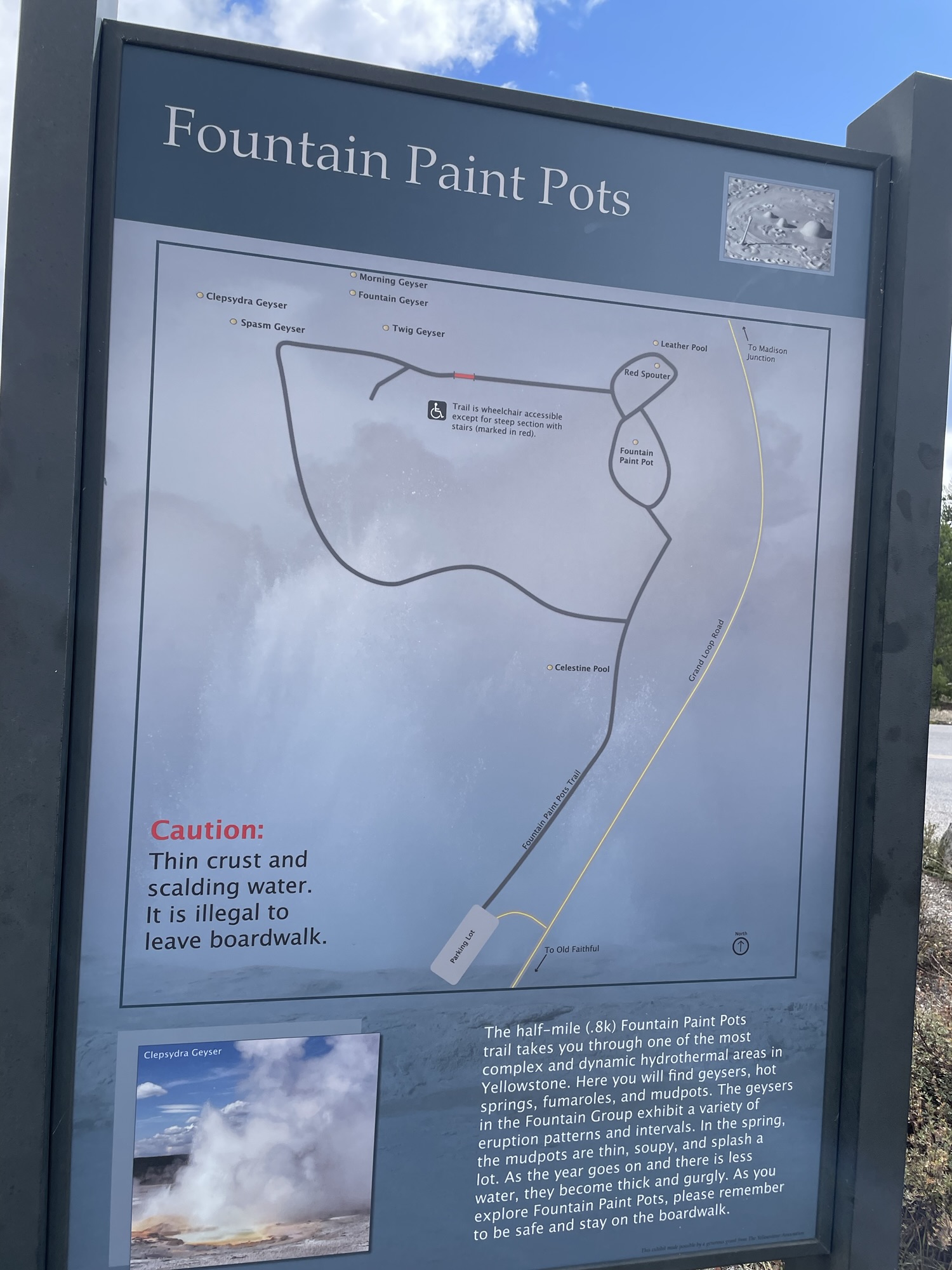
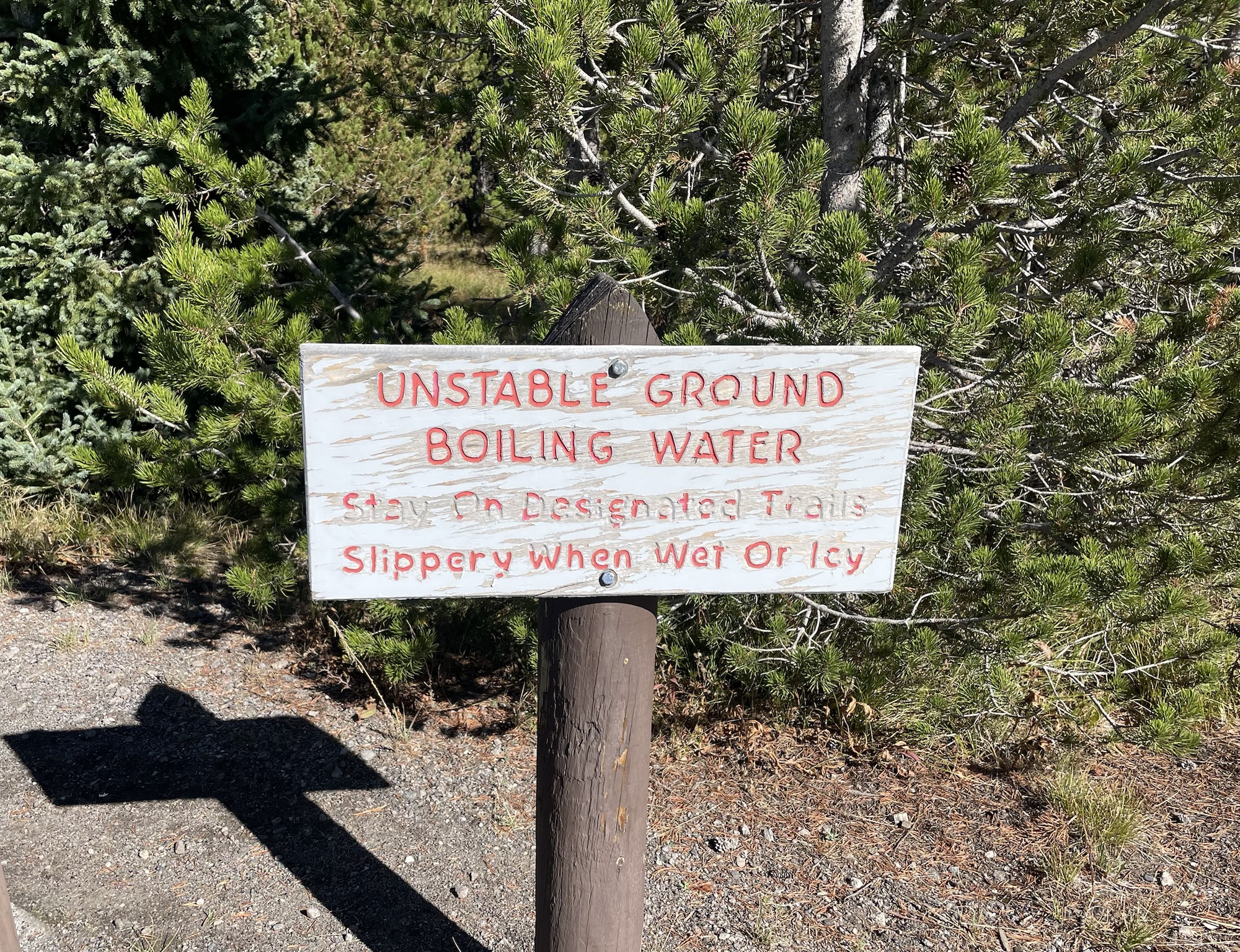
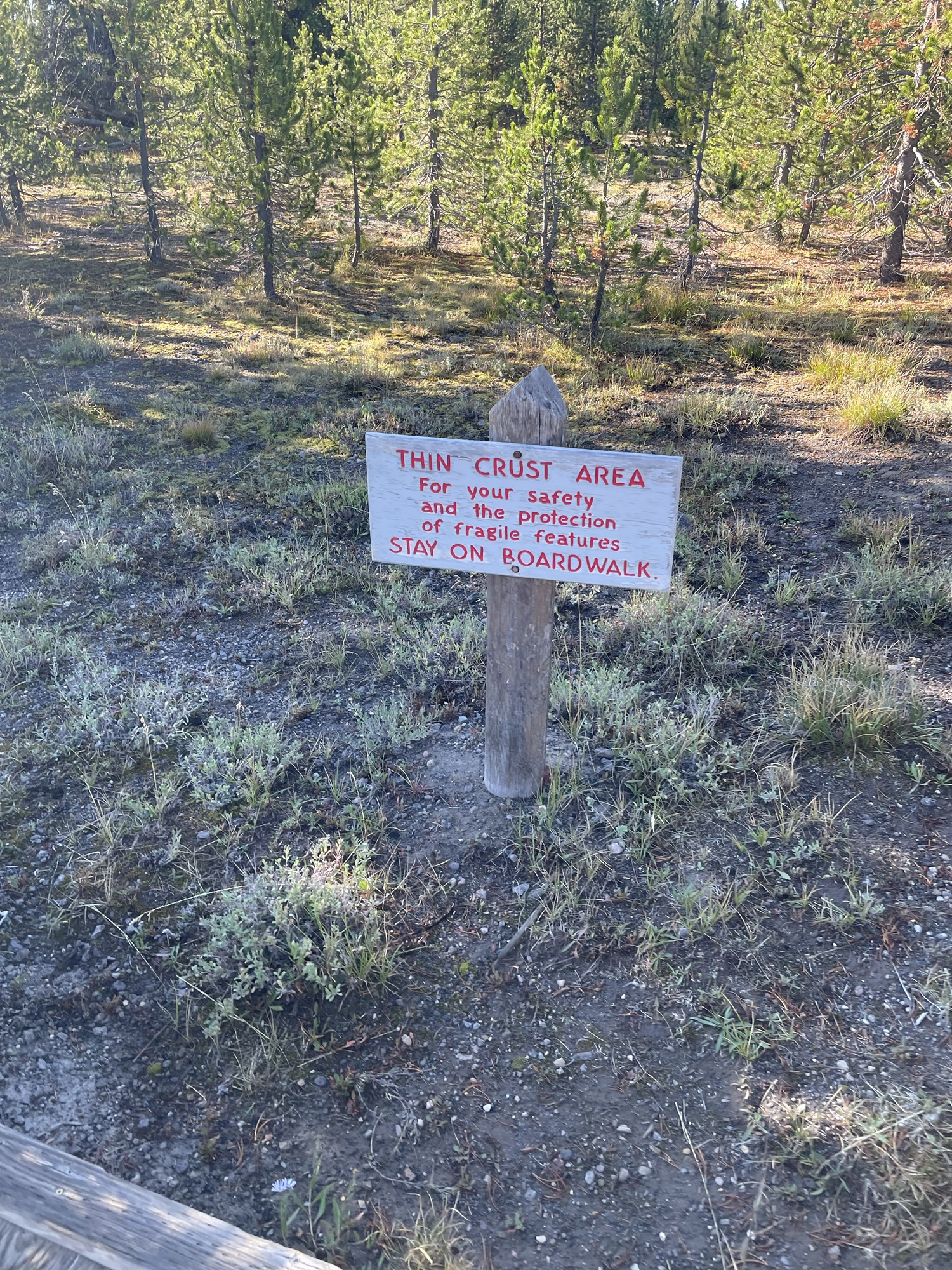
Hot Springs are very hot and the land around them is very fragile. Do not walk on areas that specifically say, “do not walk here.” But every so often someone does. And unfortunately, they pay the price. Geysers erupt, which is why they are surrounded by fences or barricades. Don’t climb over.
The warning signs are everywhere, and some are very specific!
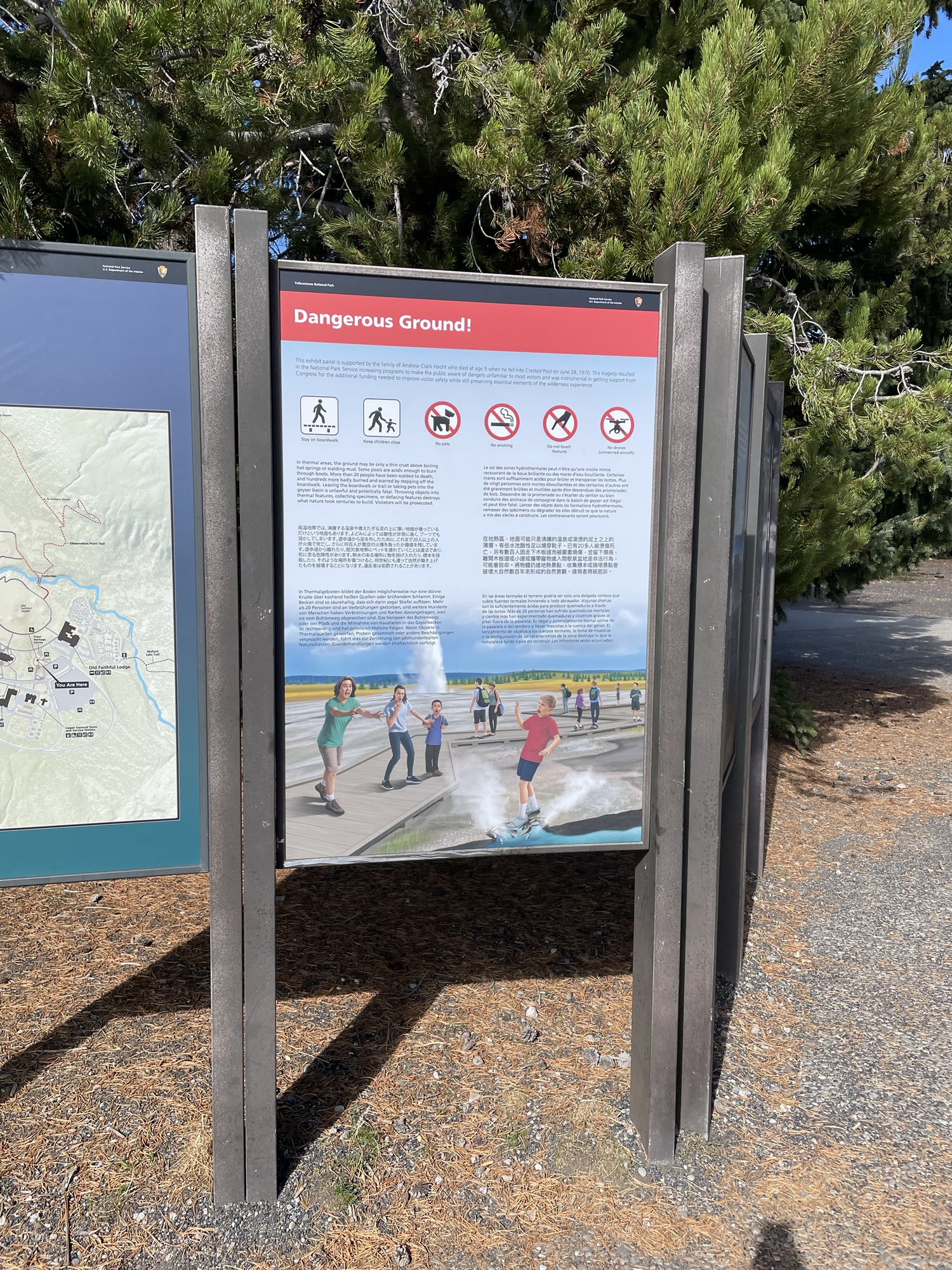
Be careful when you bring young children and dogs into the park, especially around Old Faithful. The sign above tells it all. In 1970, a 9-year-old boy died after he fell into Crested Pool. Horrifying. Now there is a permanent sign warning people of the danger. Another sign warns guests specifically not to bring dogs into the basin. If they get off their leash and run into the off-limits area, they could be killed. But since the sign is there, I think we can assume that some people just do not believe it. And their pet pays the price.
I am posting some of the many signs that we saw along our travels in Yellowstone so people realize that what they are seeing and enjoying must also be respected. I am happy to say that no one in our group took any risks or defied the signs and warnings. Yellowstone is a beautiful, exciting and awe-inspiring adventure. Seeing the sights and the animals and birds is exciting. But like any adventure, you have to pay attention to your surroundings and respect the animals and the warnings.
The windmills of Holland were always a site I wanted to see since I was a child and read the book Hans Brinker or the Silver Skates. I was mesmerized by the idea of the dykes and the water issues that impacted the Netherlands. But even though I read the book, I never realized how important the windmills were to keep the water at bay. Now I know.
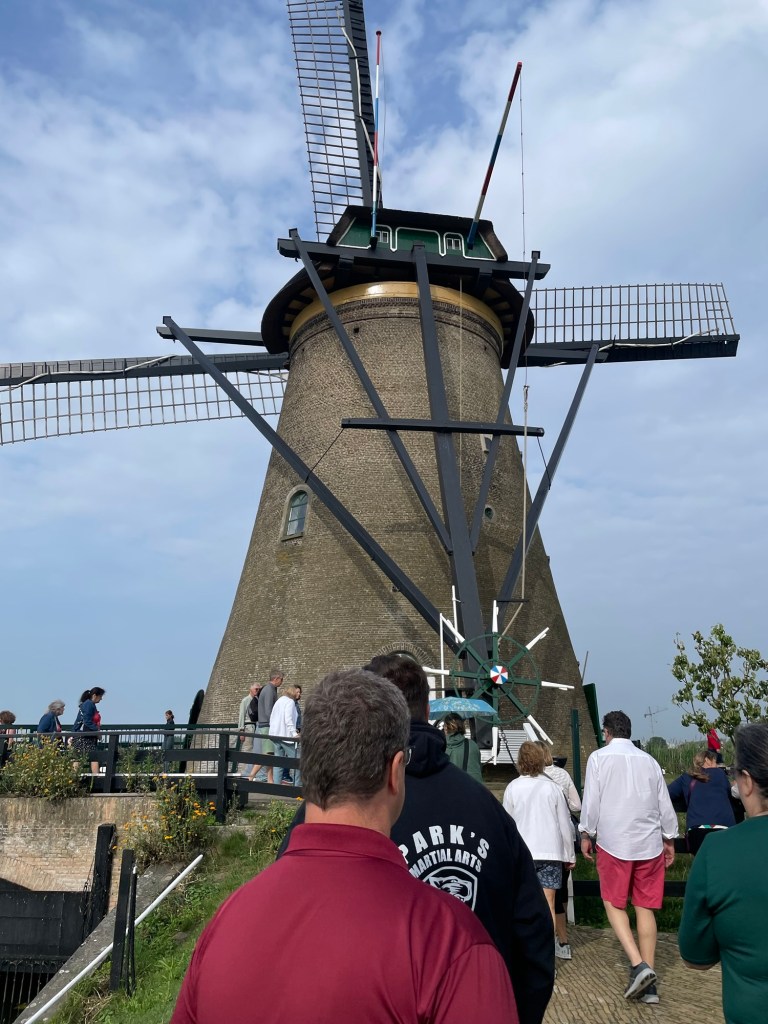
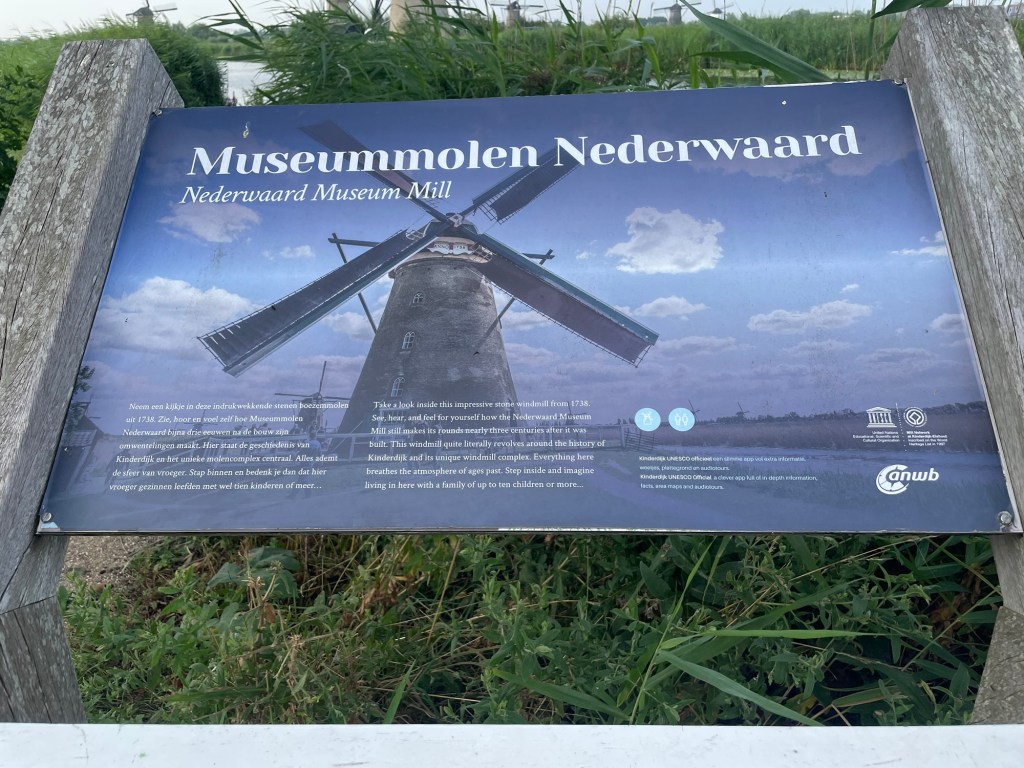
I actually learned several important facts about windmills during our visit to the Kinderdijk Windmills, a UNESCO Site. The most important is the actual reason the windmills were there, and that is to pump the water out of the ground and put it into canals that then are pumped out into rivers that run to the ocean. Without these windmills doing this work for centuries, the Netherlands would be under water. Now, of course, the windmills have been replaced with upscaled motors and water engineering that works much more efficiently.
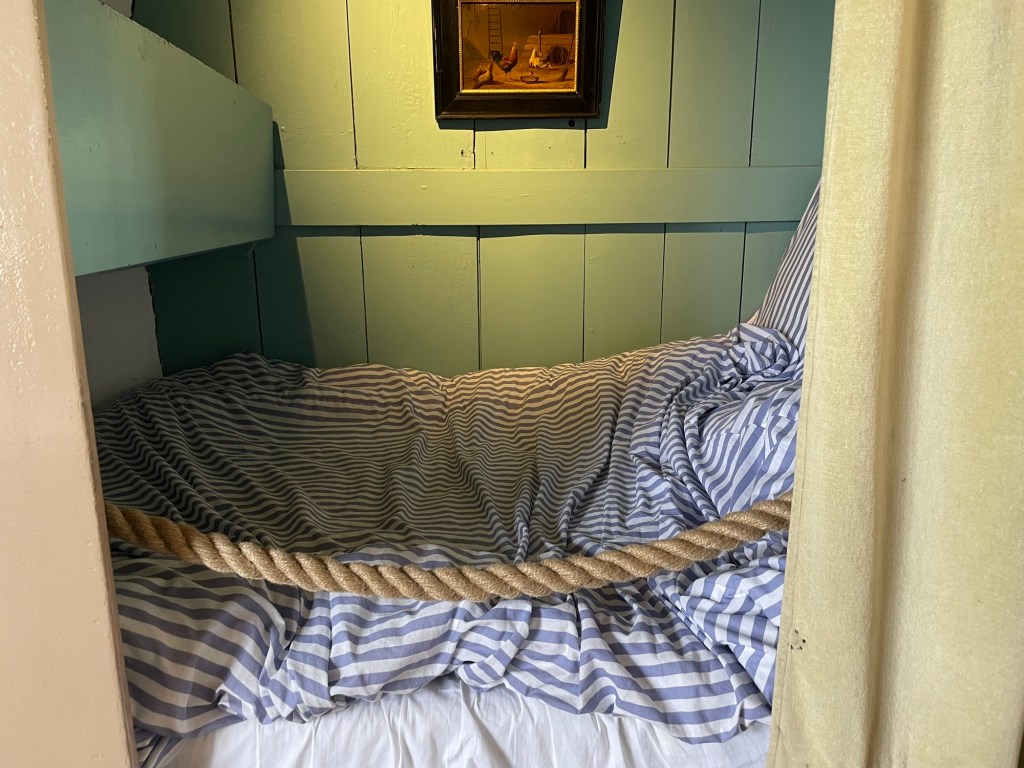
I also learned that people actually lived in the windmills! It never occurred to me that the ‘miller’ who cared for the windmills and made sure that they were facing the right direction lived in them with their families. But now I know. We were able to enter one of the windmills and see how families lived. It was tight quarters, with low ceilings, but they made it work. All windmills have two entrances so that they can always get in and out as the blades of the windmill do get reoriented. That made sense to me! I always want an exit.
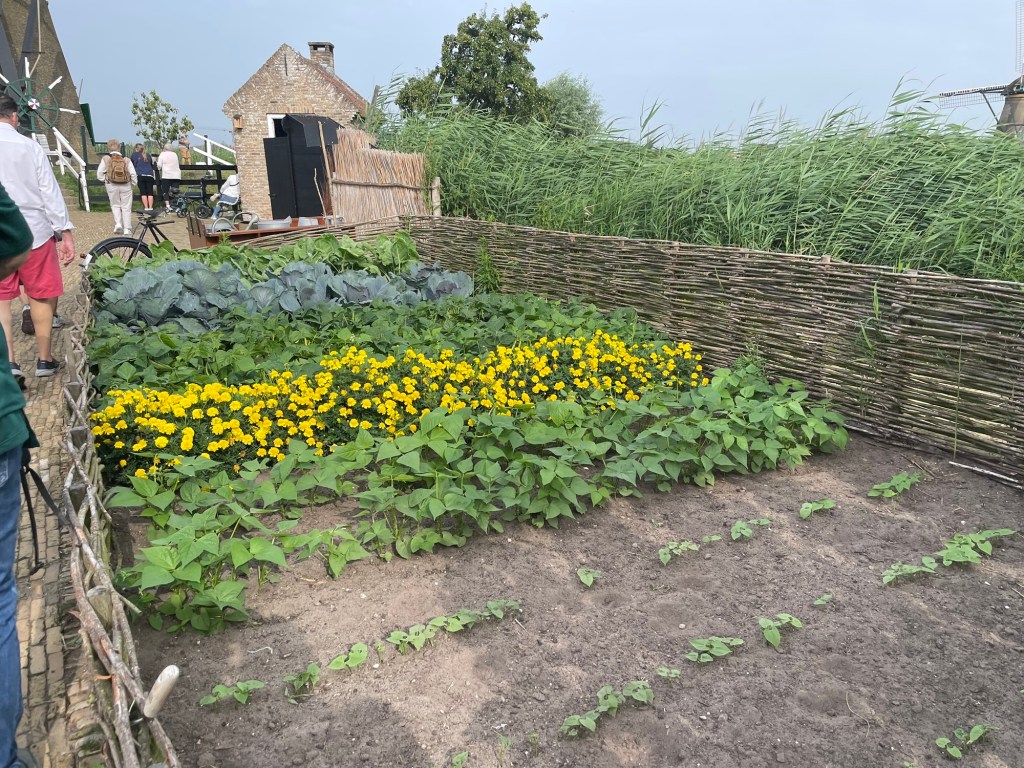
The guide told us that the people who lived in the windmills were the poor of the poor. So they also had vegetable gardens and some animals for food. We were able to see the recreation of one of the gardens at the windmill.
So a windmill was both the work and home of the millers who kept the area from being flooded, as much as possible. As a side note, the people really did wear wooden shoes. Since the ground was so swampy. Wooden shoes were the best way to keep their feet dry.
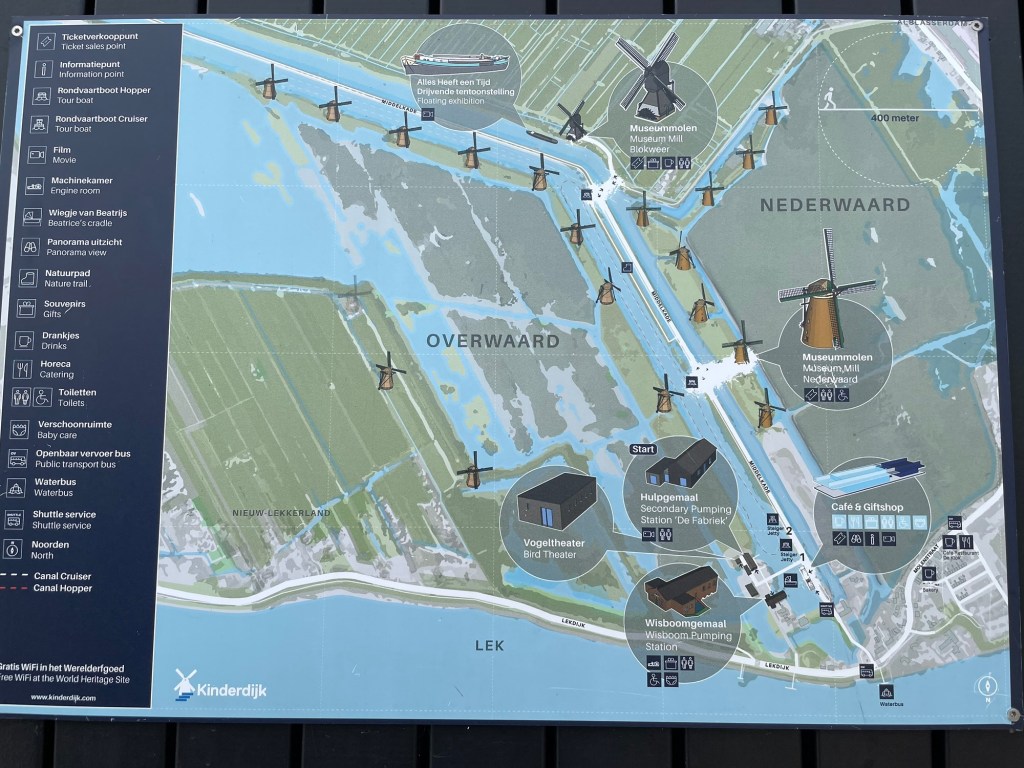
The Windmills at Kinderdijk encompasses 18 windmills, a pumping station, a visitors’ center, canals, and a statute of a cat, cradle and baby. As well as a lovely pathway to visit the site.
We really enjoyed the walk around to the windmills. It was so peaceful and serene. The canals looked lovely with the lillypads bobbing in the water , and the wildflowers growing on the banks along side the canals. Besides the tourist visiting the windmills, locals were riding their bicycles along the path.
Touring the WindmillThe Windmill we entered. The garden and the interior.
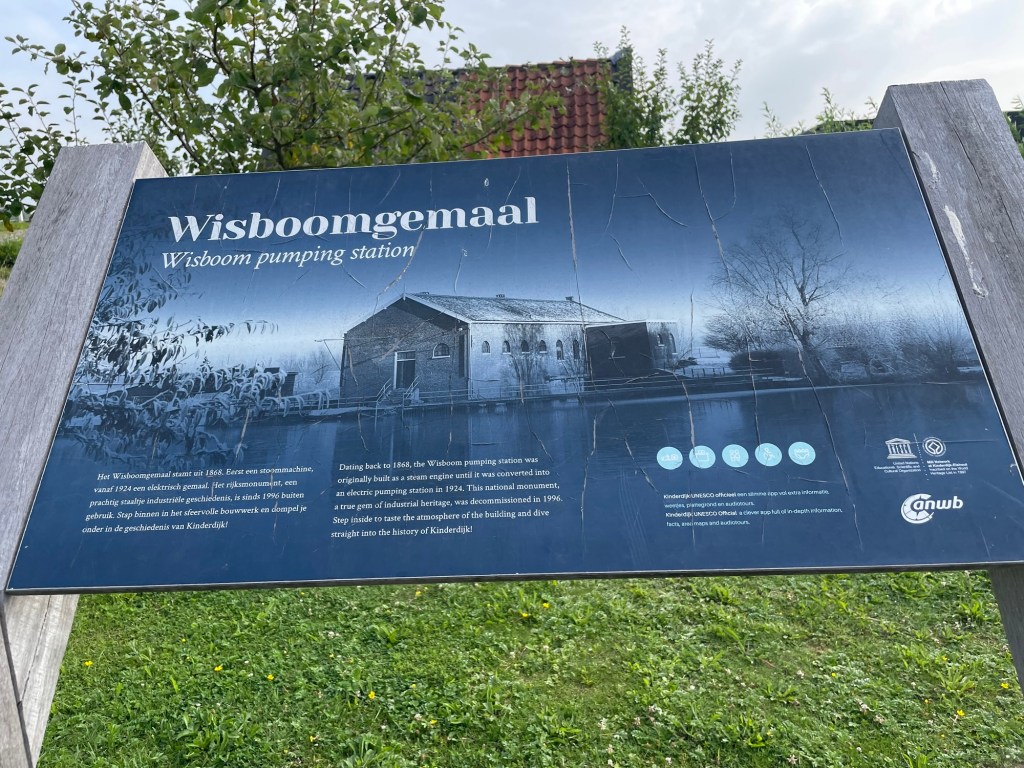
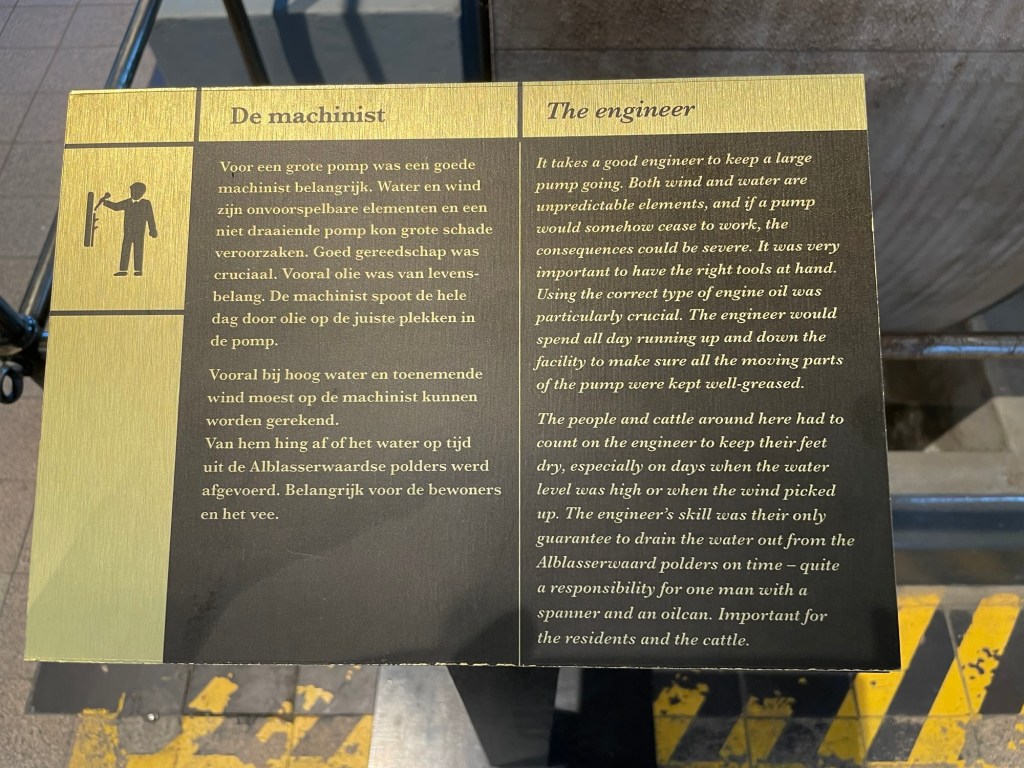
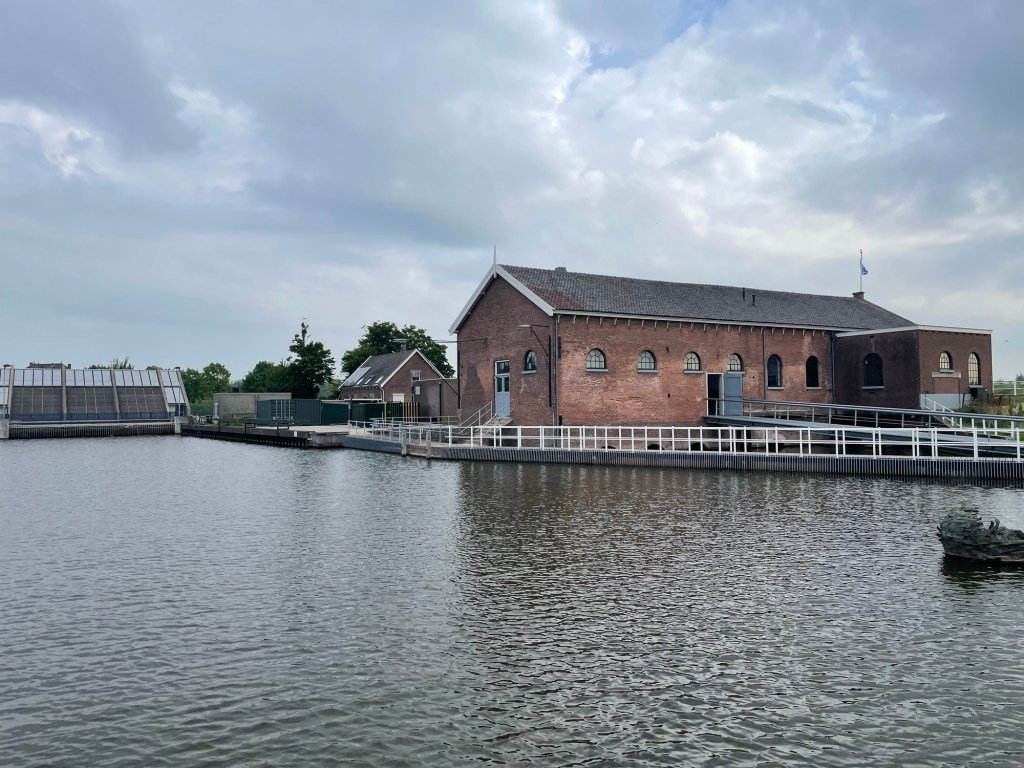
I like history, and I love learning how things work. So seeing the demonstration on how they moved the blades of the windmill and then watching it catch the wind and twirl was great. Later we walked into the Wisboom pumping station and spoke to the docent about the different engines and how the pumping system changed over time. I really enjoyed that.
Wisboom Pumping Station.
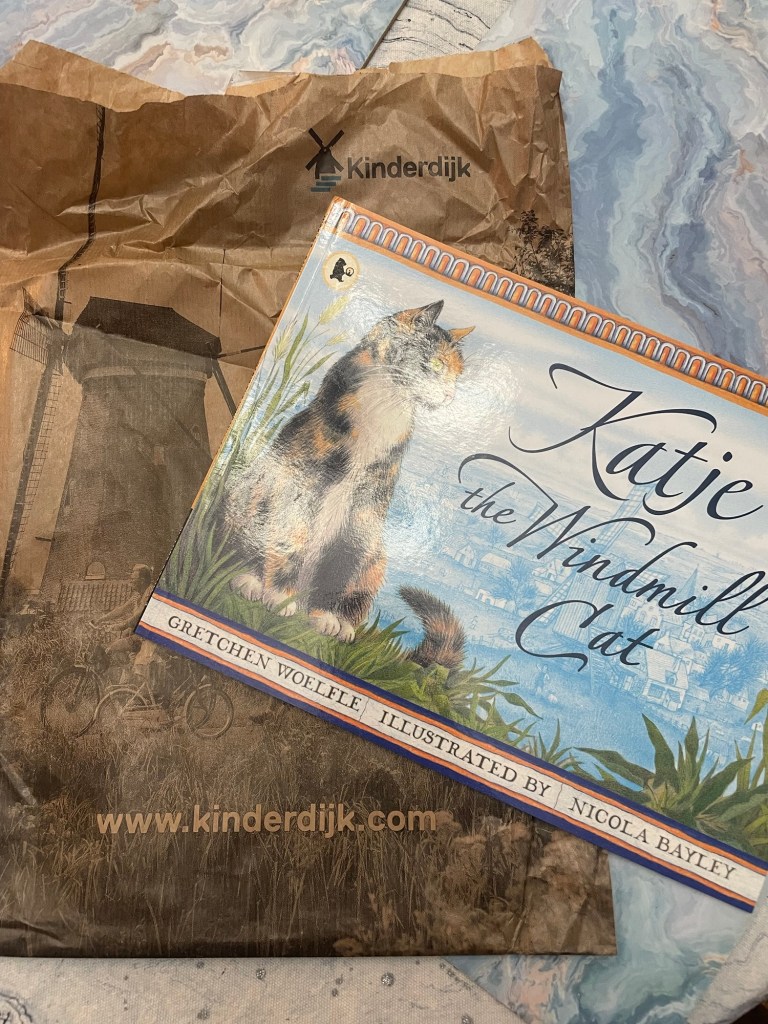
We also took some time to enter the Visitors’ Center and have a snack, visit the gift store. And learn more about the story of the cat that saved the baby by rocking the cradle in the water during a flood in 1421. This story is the basis of the statute that sits in the pond at the site. So of course I had to buy the book, Katie, the Windmill Cat, to take home for my granddaughters. This story is also why the city and the site is called Kinderdijk, or Child’s Dyke, to memorialize this story.
I vividly remember when the movie version of “Fiddler on The Roof” was released. It was the first Broadway show I had seen in person as a child. So seeing it again in the movie theater reminded me of the special trip into New York City with my parents and the delight I felt while listening to the songs and learning about Anatevka. One of my favorite scenes occurs in a tavern where the Polish and the Jewish citizens end up in riotous dance!
The tavern scene has so much more meaning to me now. I was with my maternal grandfather the first time he saw the movie. Grandpa was from a small town in Austria/Poland called Trzciana. When he watched the tavern scene, he turned to me and said, “My family had a tavern just like that. It looked just like that.” Anatevka/Tzrciana taverns were interchangeable in my grandfather’s eyes. He said the movie brought back memories of his childhood.
Grandpa did not often speak freely about his family. Stories came in bits and pieces of memories. But it was not something you asked about. It was something that he had to offer because Grandpa’s family all perished in the Shoah. His parents, his siblings, his aunts and uncles, his cousins, everyone who was in Europe died, except for three. (See blogs below.)
But that tavern memory has so much more meaning because now I know more about it thanks to the research of Izabela Sekulska who started the Mayn Shtetele Mielec Facebook group. Izabela has been helping me find out information about my family for about a year now. The documents she finds make the stories I was told by Grandpa come to life.
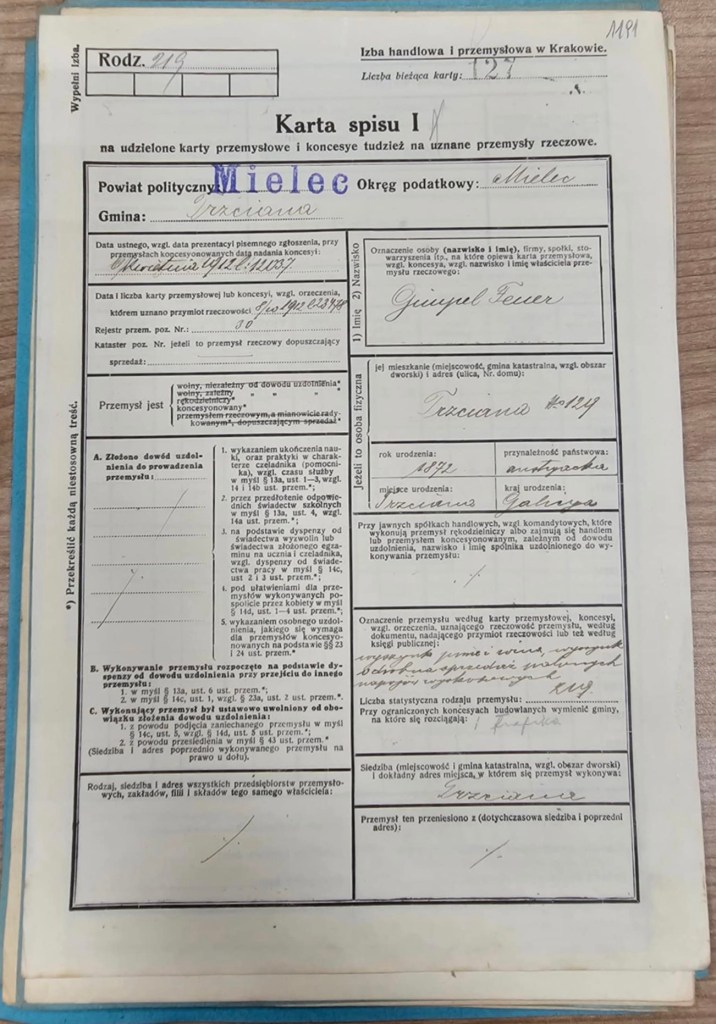
Izabela recently found a document from the Chamber of Commerce and Industry that brings the family tavern to life.
Chamber of Commerce and Industry document
My great grandfather Gimple Feuer applied to open a tavern on April 10, 1912, when my grandfather was just over 12 years old. My Grandpa did grow up with a tavern in his life. This document from the Chamber of Commerce and Industry states that the location was in Trzciana, Galicia, which was then part of Austria as Poland. Throughout his life Grandpa said he was Austrian as that part of Galicia became part of Poland after the war.
At my family’s tavern they sold beer, wine, other alcoholic beverages and tobacco according to this document. I knew my great grandfather had a farm that included a crop of grains and grain silos to store the grain. So having a tavern makes sense, he had the grain to brew the beer.
Grandpa told us stories about cleaning out grain silos and how one time he and his cousin became intoxicated on the fumes from the silo. They actually became sick and ran to a nearby stream/creek to drink the water and wash the fumes away. He said they almost drowned, they were so drunk.
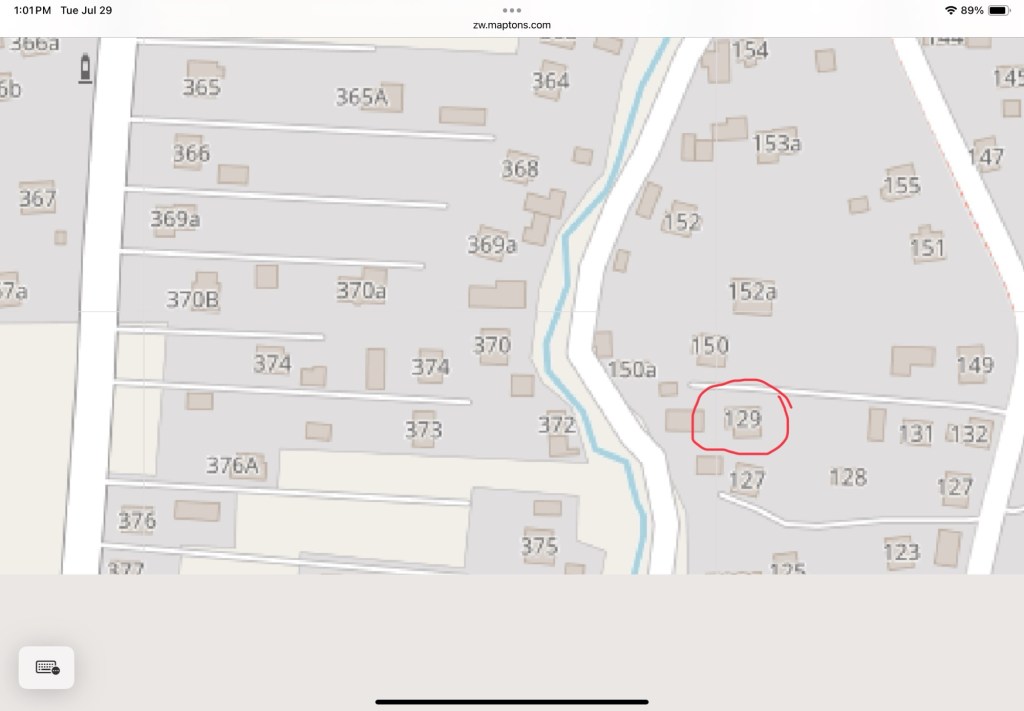
As I remembered this story, I looked for a map of current day Trzciana online and saw where the Cichawka stream goes through the town.
Thanks to Izabela, I know that there were no street names in Tzrciana, the homes and buildings were just numbered during the time my grandfather lived there.. And the number of the tavern was 129.
On the map that I found online all the buildings are numbered. There is one numbered 129 close to the creek. Could this be when my great grandfather had his tavern? I am not sure, but it perhaps the numbers remain the same.
Now there are addresses and streets. So perhaps with this information we can one day find out exactly where the tavern was located in the town. Perhaps this address is where the family lived, and the tavern was located on their farmland?
Izabela has asked for help in finding out where this location is now in Trzciana in the Facebook group. That would make this amazing find so much more amazing. And it might be that the number 129 is in the same place. And the numbers around it are the places where the other members of my family lived before the war.
Knowing my great grandparents had a tavern, perhaps explains to me why there was actually a trial after the war concerning the murder of my great grandmother during the Shoah. Perhaps their standing in the community created lasting friendships that existed after the war and lead to people actually testifying about her death. (See blog below.)
No matter what I find about where the tavern actually stood in Trzciana, I do know that from now on whenever I see the story of Anatevka and see the tavern scene, I will think of my grandfather and his family that perished, but I will also remember how they lived.
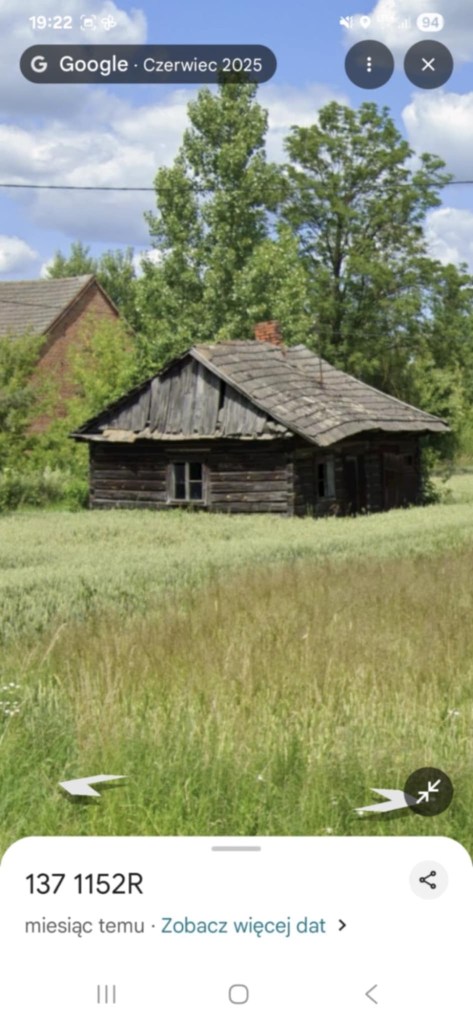
These two pictures are from Google. The show the new house at 129.If you look closely at the other picture you see this building right next to it. It could be the home of my great grandparents or other relatives!!
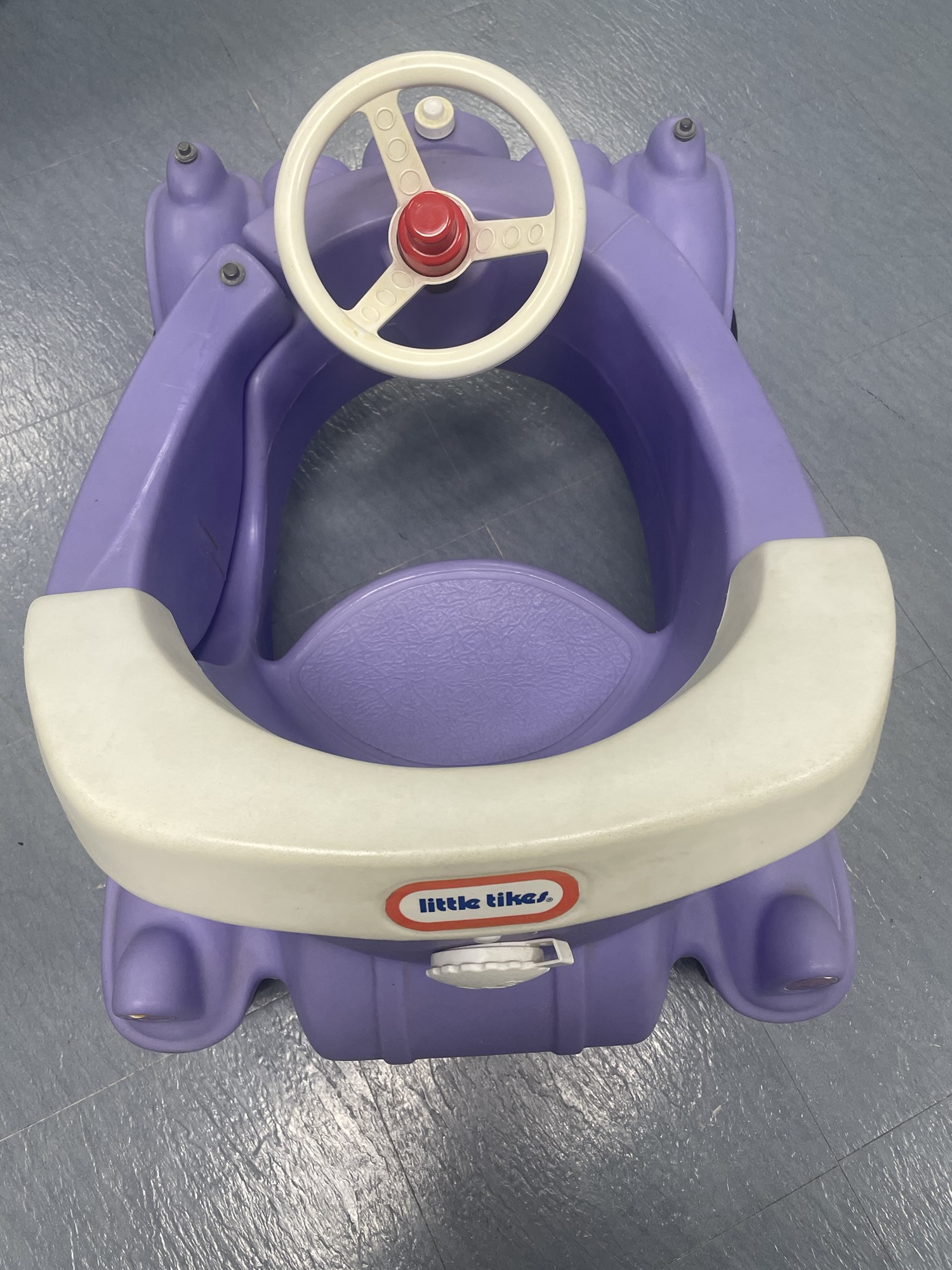
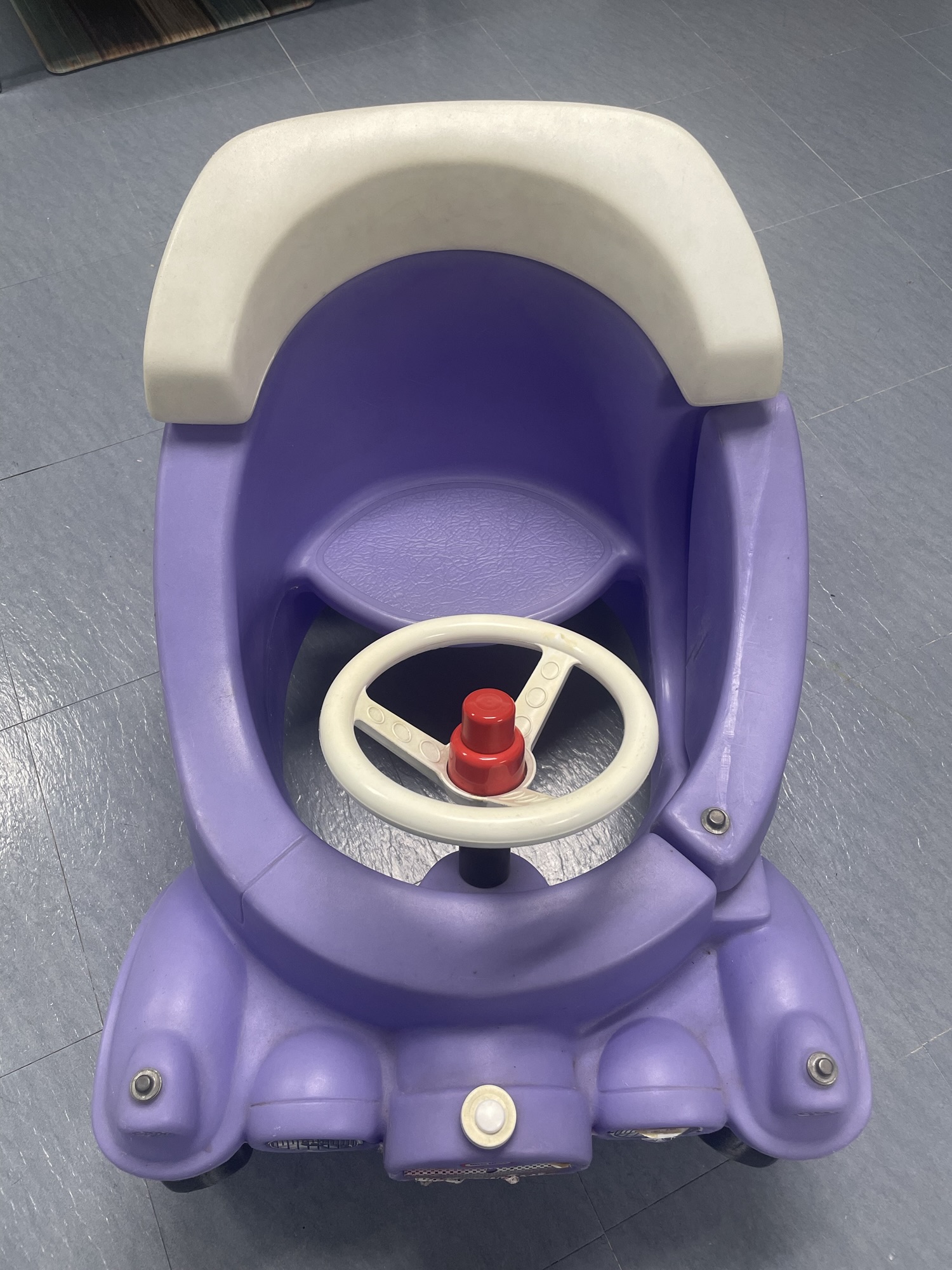
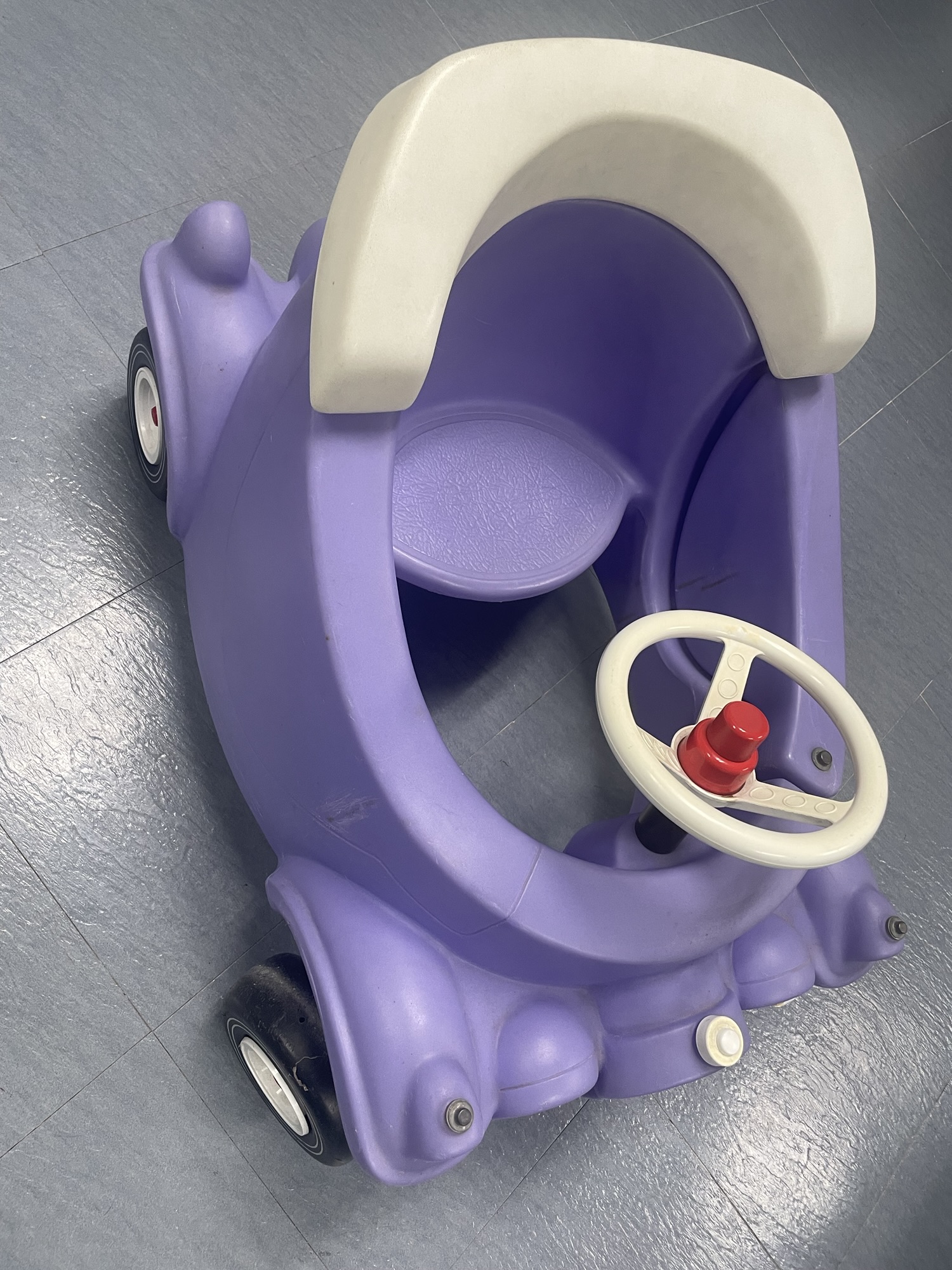
Years ago, I wrote a blog about my daughter’s purple princess Little Tikes car and how much it meant to her to have it returned to our family after 17 years being loved by another family. (See blog below.)
I thought that was the end of my need to comment about this car. I was wrong.
Recently I received a message from a man in the United Kingdom who was looking for that very same Little Tike’s purple princess car as his daughter had loved hers as well, and he now had a granddaughter he wanted to have the same experience. He asked if he could buy my car.
I told him I felt his pain, but since I had a family member who was loving it, and I had promised my daughter to never give that car away again, I could not help him.
He was happy I had someone enjoying it, and that he would continue his search!
When I told the story to my daughter, she had a different point of view. “Mom,” she said, “Maybe you can start a campaign to connect people with purple cars.”
Maybe I can!!! What a great idea!!! I like doing things to make peopel happy. This could be one of those callings.
I have two thoughts.
First:
If you have a little Tikes purple princess car, or a pink one, please comment on this blog. If you are looking for one of these cars, please check this blog and comment!
I am hoping I can help all people who love these cars find new homes for them with loving children.
Second:
Little Tikes are you listening? People want to have this lovely Purple Princess car. Perhaps you can start making it again!!!
In our home the Purple Princess Car will always be loved. So Little Tikes, I am sure it will be loved by families everywhere.
PS: I did contact Little Tikes and had a nice conversation with a representative. She sadi: Wewill certainly pass your request on to our Marketing Team for consideraton. Thank you for shairing and loving our product.”
In response to my saying that the purple princess car has such personality. She responded. “It does. Itwas called the Model T.” And added that her son loved it as well!!!
While in Isarel, I finally renewed a family connection which started 50 years ago. When I was 20, I met two survivors of the Shoah. They were married to sisters before the war. The sisters perished in the Shoah, but the two men remained connected for the rest of their lives.
I have written about both of these men before, (Lieb) Zissel Feuer and Shalom Hollander. Both were distant cousins of my grandfather. But their wives were his first cousins. I wrote about meeting Zissel and Shalom and what happened to them during and after the war, and a bit about my contact with them in Israel between 1974-76. (See blogs below.). Over the years my perception of the two changed, as I learned more about their lives.
Now I have a different story to share, because I have met Shalom’s oldest son Chaim, as well as the great nephew of his first wife, who is also my third cousin, Jeff, and his daughter.
For me it was a meeting that completed a story. For them, I hope I was able to fill in stories about the family and answer question about the family before the war. As we shared our stories, I could see where my knowledge and theirs combined and differed. I spoke about meeting Zissel at the bakery in Tel Aviv across from the Shuk HaCarmel. Chaim smiled while I told my stories about meeting Zissel there each time I came to Tel Aviv. Chaim, of course, knew the bakery and even Zissel’s address. Although I had been at his apartment several times, I did not remember the address. But we had other shared memories.
I think when I talked about the bakery, Chaim knew then that I was really a relative. I really had met Zissel. I don’t think he thought I was lying , but he had never heard of me, yet there I was a family member from the USA, unknown to him. Also when I told him about meeting his father, how elegant he seemed. And Chaim agreed, his dad had that old world charm.
Chaim actually made me feel better about Zissel. I knew he did not have a family. Shalom was not related to him at all, once their wives died. Shalom. remarried. Zissel never did. But Chaim told me that Zissel was always part of Shalom’s family. He came to be with them for all the haggim, the holidays. That eased my heart. Really, I am tearing up even now. For me Zissel was such a sad soul. So to know he was not alone, helped.
We talked about the importance of what Ziseel and Shalom did after the war to help others from Mielec who survived and to keep the memory of those who were murdered. Shalom purchased the land where a mass burial of 800 Jews were buried and put up a fence and a marker. Both men also testified against those who were the murderers, as Zissel had done for the murderer of my great grandmother, his aunt by marriage. Our discussion filled in so many blanks for me.
Chaim and his wife gave me memoirs written by both Shaom and his second wife, Ita, about what happened during the war.
I in turn could tell them about those who made it to the United States before the war.
How Julius/Judah/Yidel Amsterdam, my grandfather’s uncle, came first. As other relatives came to the New York/New Jersey area, he gave them a choice. You can be a butcher or a baker. There was a cousin who was a butcher, and Uncle Yidel was a baker. My grandfather chose to be a baker. Chiam laughed as I told the story, because his uncle who went to the states became a butcher. I said he was probably helped by my great uncle Yidel as well.
With Jeff, I could talk about his great uncle Morris, who lived in Helena, Montana. My grandfather always stayed in touch with his first cousin. I knew one of this sons because when I moved to Kansas, they gave me Jack’s phone number. He lived in Denver. To my grandfather and his cousin Morris, this was close enough. We never actually met, but we spoke several times.
For me I have a feeling of completion. When I found out about these relatives, through the research of Izabela S. I knew I had to see them when I was in Israel visiting my daughter. They lived quite a distance. But my daughter said that this was my Mother’s Day gift. It was the one thing I really wanted to do. So we took the long drive from Holon to a small Kfar near Netanya.
Over the years of my research I have found out how the members of my family were murdered during the Shoah. I know how a small numbered survived. I know that they are not forgotten. I am not the only who keeps their memory alive within the family. And there are people like Izabela in Poland, who also work to keep the memory of the Jewish population alive.
I never thought I would ever want to go to Trzciana or Mielec. My grandfather never wanted to go back there after his family was murdered. But now I do want to go. I what to see where they lived. Where Shalom and Zissel created a Jewish community after the war. Where the Amsterdam group hid in the nearby forest. The town where my great grandmother was murdered. The mass grave where my great aunts are probably buried.
But most of all I am so glad that I found out what that Zissel and Shalom did after the war. I, as a young woman, saw both Zissel and Shalom as such sad people talking about Death. I did not hear the stories about what they did to give people a reason to LIVE after the war. And to create a place of memory for those murdered.
I now know that Shalom and his wife, who was also a survivor from Mielec, had four children, a girl who survived whom they adopted and three sons. Chaim and his wife have seven children, 40 grandchildren and 19 great grandchildren so far.
I know that Zissel was not alone. That Zissel and Shalom stayed connected throughout their lives. I also know that Zissel died in Holon. I think he might be buried there. So next time I am in Israel, I hope to find his grave and put place a rock of remembrance on his matzevot.
Since my experience with the air raid sirens going off my second day in Israel, I have a new Israeli obsession: Bomb Shelters.
It really is an easy obsession for me to have because living in the Midwest has lead me to a minor obsession with tornado shelters. Each time we have purchased a house, I have looked carefully through the basement looking for the ideal storm shelter. Lowest level, center of house or totally underground, no windows, close to a staircase (staircases are built extra strong) and nothing heavy overhead. For example, you do not want to be sitting in a tornado shelter under a baby grand piano or a refrigerator.
I can almost hear my favorite weather man, Gary, go through his tornado ‘rant’: children who are home alone, do not worry, just go to the lowest level, small, center most room in the house, no windows. This might not be his exact words, but they echo in my mind.
So it is easy for me to transfer my intense concern about tornado shelters to the essential concern for a bomb shelter.
In Israel most people live in apartment buildings. The old ones were not built with bomb shelters. Instead when the sirens go off, the people sit in their staircases…center most area of the house, no windows, reinforced concrete. A relative safe place to sit through a barrage of rockets or bombs, I guess. As I wrote in an earlier blog, my daughter’s apartment has a Momad, a room in her apartment built of extra thick walls, reinforced concrete, special window which has a thick metal plate that sides out and a thick metal door. It is easy to get to and somewhat safer than the rest of the rooms.
But what do you do when you are outside and you need to take shelter. Well there is a system. My daughter took me on a walk to explain sheltering when out side. First she suggested that I hide under an apartment building. In Israel most apartment buildings have car parking underneath and the first apartments are on the ‘second floor.’
She said, “Go to the North or West side of the house and take cover there. Those sides are safer.” She also told me to try the door. If it was unlocked just go in. “What! to a building where I don’t know anyone?” “Of course,” she responded. “During a siren of course they want you to come in.” Or if I am near a store, just go in.
I have to admit that for a tornado siren, we go to the north and east side of the basement. The storms usually come from the southwest, so I do have to change that orientation. And although I would not run into a stranger’s house during a tornado, I definitely have been known to enter a store I was near by when the tornado sirens went off.
But the best is to be near a bomb shelter and go into it. In Israel, the government takes bomb shelters seriously! And there are many community bomb shelters throughout the country. This is definitely why, even thought tens of thousands of rockets, drones, bombs, and missiles, have been launched towards Israel, tens of thousands of people have not been killed. Instead they had the ability to take shelter from the attacks and be somewhat safe.
Just as we in the Midwest know that in many public buildings there are signs to lead us to the tornado shelter, and so even though we have many horrendous tornados, the death toll has gone down over the years.
After my daughter pointed out where to hide under a building, we walked the two blocks to the little strip shopping area near her apartment. In the back was the entrance to the shelter. It is near a staircase, in the center of the building. Gary the weatherman would be so happy. Bomb shelters are like tornado shelters in many ways!!
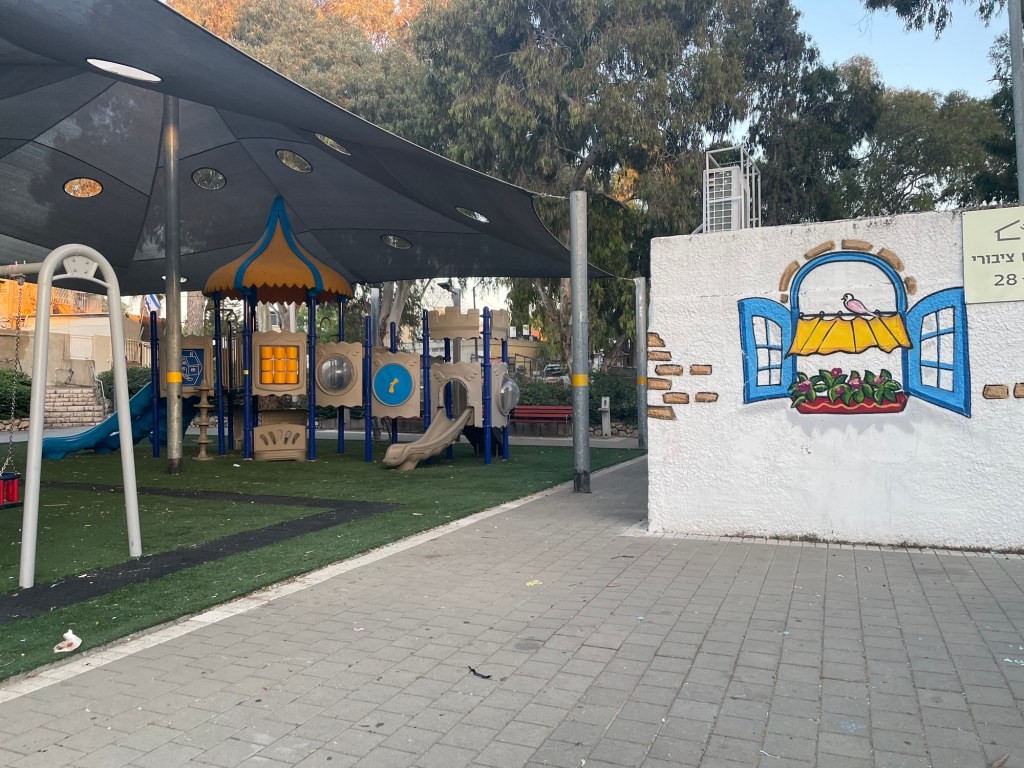
Tesla Playground and shelter.
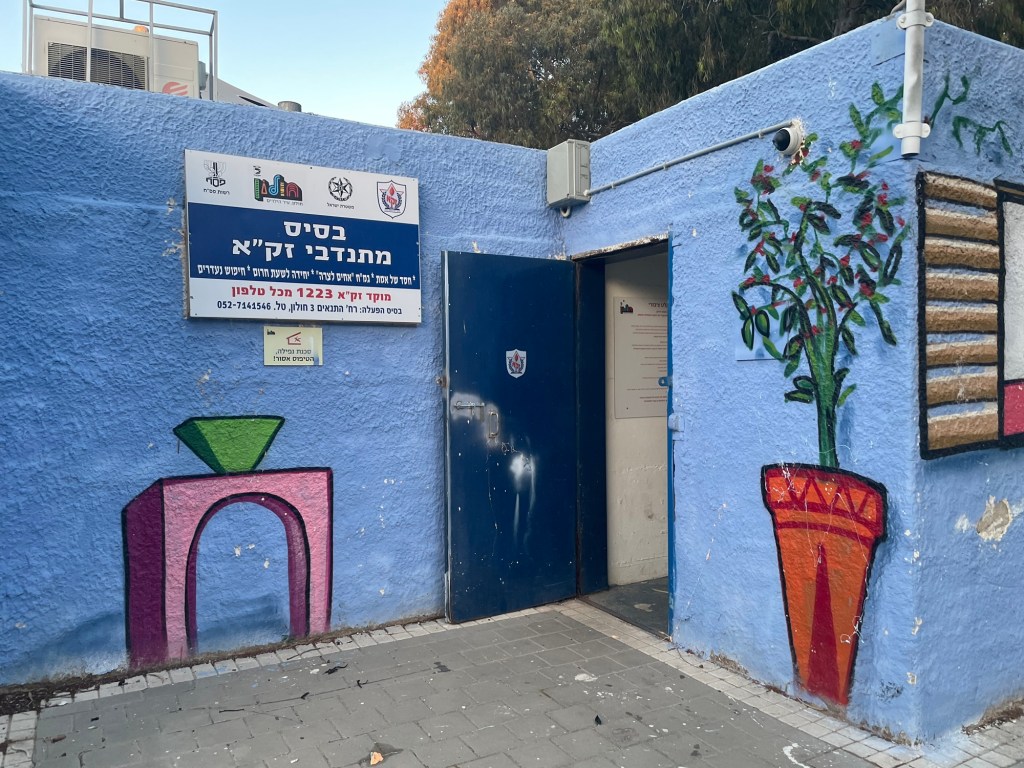
As we continued on our walk along the streets and alleys of Holon, we walked through many small parks. Within a one mile radius of my daughter’s apartment building are dozens of small parks, day care centers and schools. Located in the center of many of them are bomb shelters. Which makes sense, because children cannot run as quickly as adults. So best to have the shelter close at hand. What I really liked about the shelters is that the outsides are colorfully decorated to make them look cheerful and part of the fun of the park. In Holon, I think the same artist decorated most of them.
Another playground and shelter
I thought about how difficult it would be for children to stop playing to run into the shelter, hide for ten minutes or so before coming out. And then I thought back to when my children were young. They NEVER argued when there was a tornado warning. When the sirens sounded, we all immediately went downstairs to the shelter. Sometimes they grabbed a cat if they could. But there was NEVER an argument. Never a discussion. Never rebellion. Taking shelter was the immediate goal. And then when the danger was over, we left the shelter. Sometimes it was 15 to 20 minutes. And sometimes we were down there for an hour or more. But when it was over, life just resumed. So I have to assume that children in Israel have the same response to a siren for a bomb attack as my children had for a tornado warning. Don’t argue, take shelter.
I do have to admit one caveat to taking shelter: Dads and husbands.. When my husband was home during a storm and tornado warning, sometimes he would stand outside for a while and watch the weather. This to me was not the brightest thing to do. But as many know, you a watch lots of videos of tornados heading towards someone’s home, and then finally someone yells, “We need to go inside now.” In Israel the same type of poeple stand outside and take videos of the Iron Dome rockets intercepting the missiles or bombs sent into Israel. I don’t quite understand this desire to watch in real time. But I do admit watching these videos myself.
But there is a major difference between a tornado siren and an air raid sirens. The intent. For a tornado you have to watch out for the debris. For a rocket/missile you have to watch out for the shrapnel. Similar but not exactly the same. Nature doesn’t take aim at your home because it hates you, it just is. While bombs falling around you are sent purposefully to kill you. That does change the dynamic of sheltering.
Although tornado shelters are here to stay, people should not have to have bomb shelters in their homes or their play grounds. Humans cannot stop tornados, but they can stop bombing each other with intent to kill. It is time for it to end.
I noticed a difference the first evening in my daughter’s apartment in Holon, just south of Tel Aviv. We were unpacking my suitcases and going through the items I had brought for her, when I noticed the sounds of airplanes or jets in the sky.
I said, “I don’t remember so many planes flying overhead to the airport.
My daughter: “Mom, those are not commercial airlines.”
Me: “oh”
Then she added, “It is Shabbat, commercial airlines don’t fly. But military is exempt.”
In the morning I learned that the IDF had bombed part of Syria to protect the Druze population.
The peaceful view in Holon one hour after the siren.
I was not unaware of what it was like to live in Israel. I had studied in Israel for a year attending Hebrew University from July 1974 to July 1975. I had some experience with war time in Israel. The Yom Kippur War had been the previous October 1973. Most of the students I met had survived that war. Even the ones who did not have physical scars, had mental ones. And we all knew to report any backpack or bag that looked suspicious or was unattended. When on a bus, the driver always checked to make sure every backpack or bag had an owner on the bus. I had heard explosions and been to areas perhaps I should not have been to with my friends who had been called up for reserve duty so many years ago.
I had been in Israel with my children and parents in December 2004/January 2005 for a two-week trip. Israel was on high alert. It was in the process of leaving Gaza and turning it over to the Egyptian/Palestinians who were living there. The settlers who had to be removed were protesting. We had to avoid some places. And at times we saw the movement of tanks heading toward the Gaza envelop. I wonder what would have happened if Israel had not left Gaza. Would it had been better if Hamas had never been elected as the government there? If Israel had just kept its oversight? I know that the government thought/hoped this would bring peace. Unfortunately it brought 20 years of bombing, hate and then pogrom.
My husband and I were in Israel in November 2008 for a medical meeting where my husband was a presenter. We stayed after the meeting to visit our daughter in Beer Sheva where she was a graduate student at Ben Gurion University. One day the three of us went to an Air Force Museum. The young soldier who was our tour guide was a little tense. I noticed that lots of jets were taking off and landing. I asked the guide a question about it. Her response was they were doing drills. When we left the museum, I turned to my daughter and said something is going to happen. Before we left Israel, a few days later, I told my daughter to be careful. To pay attention to what was happening, I was extremely worried. Six weeks later was Cast Lead, Israel’s response to the continued bombings from Gaza/Hamas.
In the summer of 2016, a few months before my daughter and son-in-law got married, the couple purchased an apartment in Holon. “Mom,” she said, “you will be happy to know that our apartment has a ‘mamad’, a bomb shelter.” “I am happy your apartment has one,” I responded. “But I am sad you have to have one.”
In November 2022 I was in Israel with my daughter when the government tested the siren alarm system. It was the first time I had been in Israel that I heard the sirens go off. Although it was just a test, it made me aware that my daughter actually used her mamad. Something I still feel very sad about.
I have been on the phone with my daughter several times when she has had to take shelter. When the sirens were going off. Once when she was at the University, when I was on the phone with her, I actually heard the bomb hit, it was so close. And just last week, before I came here, we were talking when the sirens went off and she and her husband ran to their shelter. There have been ballistic missiles from Yemen and the Houthis for two years now. These were so large, that even when they were shot down, the shrapnel could cause damage.
I arrived at Ben Gurion Airport on May 2. This morning, 40 hours after my arrival, on May 4, 2025, I had my own mamad experience. This morning after they went to work, I planned to take a walk. But at 9:22 am, just as I was preparing to leave, the sirens went off. It was not a drill or a test. It was the real thing. Everything outside stopped. I went into the mamad. Here is what ensued as per our text conversation:
“The sirens are going off. how do I close the window?” Me
“Go to your room. There’s a metal slide on the right side. Pull it hard.” my daughter
“I cannot get the slide. The sirens stopped.” Me
“Or just stay away from the window. Stay in the room 5 minutes.” My daughter
“Ok” me
“Looks like the Houthis, so there’s probably nothing near us.” My daughter
“Ok I don’t think I will go for a walk right now.” Me
“Ok. Usually it’s just one.” My Daughter
“Well I was just going to go when the sirens went off. And I don’t know where the shelters are. Cars are starting to move. But it is still silent.” Me
“Yeah, the sirens only go off for a bit and turn off. But they say to stay inside 10 minutes. But for Houthis really 5 is fine.“ My daughter
“Everyone is still in shelters. All the construction stopped.” Me
“Everyone is leaving my shelter now. in Tel Aviv Everyone is outside.” My daughter
“We can walk tonight. You can show me where the shelters are.” Me
“Ok we’ll go on a walk tonight.”My daughter
“Sounds good. I hadn’t thought of that before. It would have freaked me out walking by myself… when the sirens went off.” Me
A bit later I found out that the missiles hit Ben Gurion Airport, 16 miles from Holon. Several people were injured. Many flights have been cancelled for 24 hours. A friend of mine, who lives in Tel Aviv, texted me. “Luckily you arrived before today’s mess at the airport. “Oy yes,” I responded.
Back in Holon, the construction is continuing. I hear the voices of children outside from the neighboring schools. I hear jets overhead. And I see commercial airplanes. The sky is a beautiful blue color. It is a lovely day, only 70 degrees. Life goes on. Just an hour later, and no one even thinks of the short time in the bomb shelters.
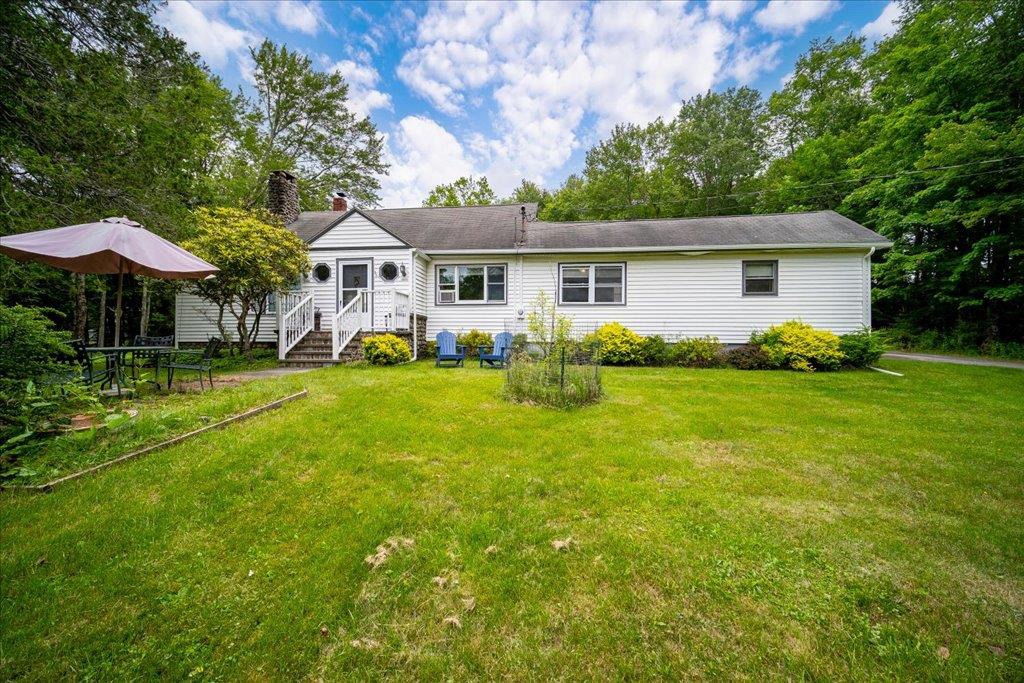
October was a bittersweet month for my siblings and me. We sold our family home in Kauneonga Lake. It has been in our family since 1962. Since the late 1920s, my family has had a summer home in the Catskills of New York. It was not an easy decision.
My grandparents first started visiting the Catskills before my mother was born in 1929. They wanted a place away from the city, a place that would remind them of the home they left. Grandpa from Trzciana, Mielic, Austria (now Poland); and Grandma from her home in Bolesslawiec and Viroshov in Poalnd. Grandpa told me once, that when he was in the Catskills he could think of his family, who perished in the Shoah, and remember happy times.
I don’t know the exact year that they purchase their first place in Kauneonga Lake. But by the 1930s they had a summer home and owned several acres of land directly across from Kauneonga Lake. Soon they started building a small bungalow colony where they would rent bungalows out up into the late 1970s. Eventually they sold off the bungalows individually along a road that is named after them.
Among the people who purchased the property were my two first cousins from the other side of my family. Thus, although, my siblings and I no longer own any of the property. We have family members who still remember the bungalows and are living on the property. Our cousins spent every summer in the Catskills with us, our parents, our grandparents, our aunts and uncles and many people who became more like family than just summer friends.
My grandparents had friends among the other colony owner and locals. We knew the plumber, the egg farmer, the trash man, the electrician and many of the business owners. In the 1960s my grandparents decided that they wanted an all-year house in the Catskills. They purchase a house on four acres that also had a bungalow. The house had been divided into four little apartments. My grandparents began the process of making it one home again. Enlarging the kitchen. Added on a one-bedroom apartment. Fixing the attic apartment and turning it into two bedrooms and a bathroom. They built a garage since they planned to stay there in the winters as well.
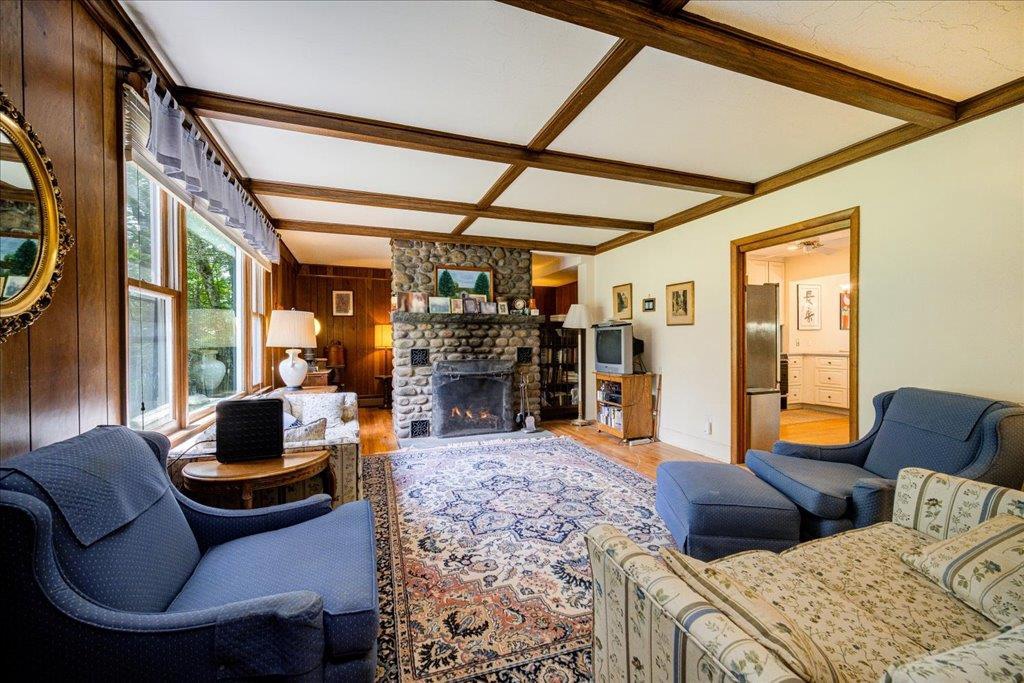
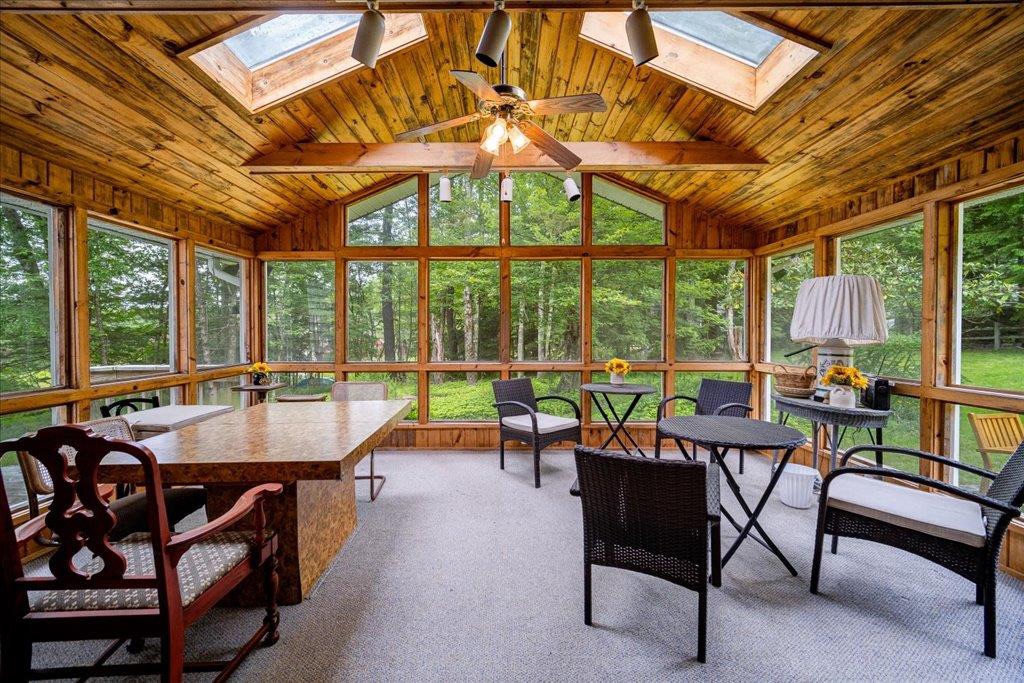
The stone roomThe fireplaceScreened in porch
The best thing they did, in my mind, was creating the room that eventually became known as the stone room. It was originally an outdoor patio that connected the house and the garage. But in winter it was so cold, that they closed in the two walls and put on a roof. But kept the stone patio floor. The only thing they did that I hated, was removing the little eating nook that had a table and two benches. I loved sitting there. But it disappeared in the renovations and became part of a real dining room. Among the best permanent parts of the house is the wonderful stone fireplace and stone steps.
The most important thing they fixed was the furnace. When they first purchase the house, it had a coal burning stove and an open fire furnace. You could see the fire from the furnace through a grill in the floor. Soon that was replaced with a regulation furnace. The coal burning stove was lovely. They did not get rid of it. It was put in the basement where my grandfather used it to bake.
Everyone at the bungalow colony and in our family called it the Big House. My grandparents moved in and started renting their bungalow at the colony, and eventually we moved up to the bungalow behind the Big House. Leaving the comfort of the bungalow colony, but enjoying more space.
It was in this house that I learned to braid challah from my grandfather. He had moved some of his bakery supplies from his New Jersey bakery there. He baked for us and for the shul. I loved watching his technique. He never measured anything with a measuring cup. He would just put it up in his hand, shake it a bit and put it in the mixer. He taught he how to braid challah with one braid or with two. He showed me how to make a round challah for the holidays. But I never learned his recipes. Mom and I tried to write them down, but they weren’t the same when baked.
It was in this house that we watched the walk on the moon in July 1969. It was in this house that we watched the endless line of people walking up West Shore Road to Woodstock. From our house it was an additional two miles up and down hills to get to the site of the concert. We could feel the ground vibrate and hear the music and the announcements from our home.
Here we would lie on a blanket in the grass and watch the meteorite showers and sometimes see a flash of the aurora borealis, we would find the constellations. On rainy days it is where my friend and I would read Nancy Drew books. Our parents arranged to buy different ones in the series so we could switch when we finished. It was here that my grandfather and dad had a giant vegetable garden, and we all learned how to grow and harvest vegetables.
We would see deer, bears, woodchucks, rabbits, skunks and other forest creatures.
We played cards and mah jong, ate meals and made memories with my grandparents, parents, relatives and friends. The house was our summer world. And all year long we waited impatiently to return.
It was in our house that we sat shiva for my grandmother. She died in August, when all the summer people and the locals were there. I won’t forget it. The plumber, Ab, and my grandfather, Nathan, were best buddies. So great that when my grandmother passed away, it was Ab who took me to the hospital to sign papers and identify my grandma in death. My grandpa and my mom stayed at our house. I will never forget the ride there and the ride back.
It was members of the Catskills congregation of Beth El that prepared the house for the shiva after the funeral. And that the locals and summer people came to tell stories and remember her, along with our family and the summer renters. My grandparents, and my parents and us, belonged to the Congregation Beth-El, where my grandfather was a Cohen, so went to services often. As a retired baker he often made goodies for after service kiddushim. And I know there is a window that they sponsored. I think it is in the balcony area. We always went to the shul in Kauneonga/White Lake for the high holidays.
My grandfather died eight years later. It was November, so we sat shiva in New Jersey. It was 1989. He had over 60 years enjoying the Catskills.
After my grandparents died, my parents became the owners of the house. They remodeled the kitchen, and they added a screened-in porch. They enlarged the master bathroom and added an on-suite bathroom. Every wall they opened they had to update the electric from knob and tube and replace the plumbing.
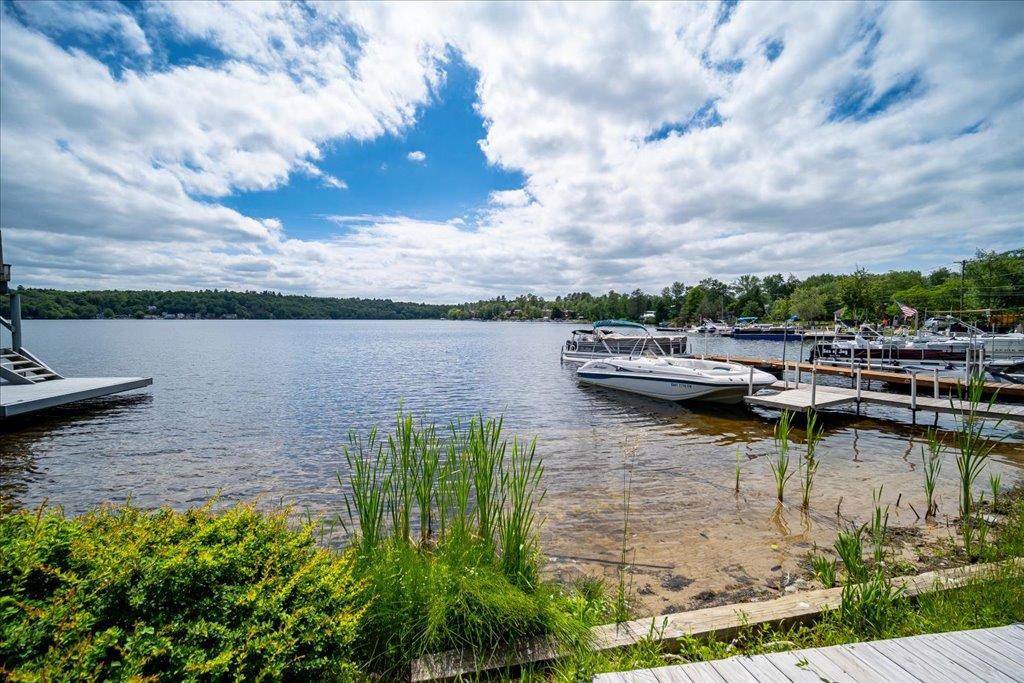
It was this house that eventually we would bring our children for summer visits. And down at the lake we had a dock where my dad had a ponton boat. My children loved their yearly two-week visit to New York and New Jersey. They got to see so many cousins and go out in the boat and run around outside in the rain.
But since my parents died nine months apart in 2010 and 2011, we have not used the house the way it should be used. One of my nephews did live there for two years during Covid. Then it did have some love and attention. But for most of the time, it was used once or twice a summer for a long weekend. It was not getting the attention or love it needed.
Our Dock spot.
Two years ago, we made the decision. The house needed to go to a family who would actually use it. With our lake frontage, it was the perfect home for someone who liked boating. This year we put it on the market. In August we had one last family weekend in the house as we sorted through everything and packed it up.
Then in the evening, my niece asked us to tell her stories about the house and the summers. My brother, sister and I shared our memories. We laughed, we teared up, we remembered our parents and grandparents. It was a great way to say goodbye to our house.
Even though the house has been sold, and another family now owns it, we have 60 years of memories that will never go away. And with our cousins still at Kauneonga Lake each summer, we have a place to sit on the beach if we like and talk about the past and plan for the future with our cousins whenever we want to visit.
With our children spread out across the country and overseas, our time as the owners of the Big House has ended along with our family’s long saga in the Catskills at Kauneonga Lake.
The Anne Frank Center and Kahal Kadosh Beth Elohim
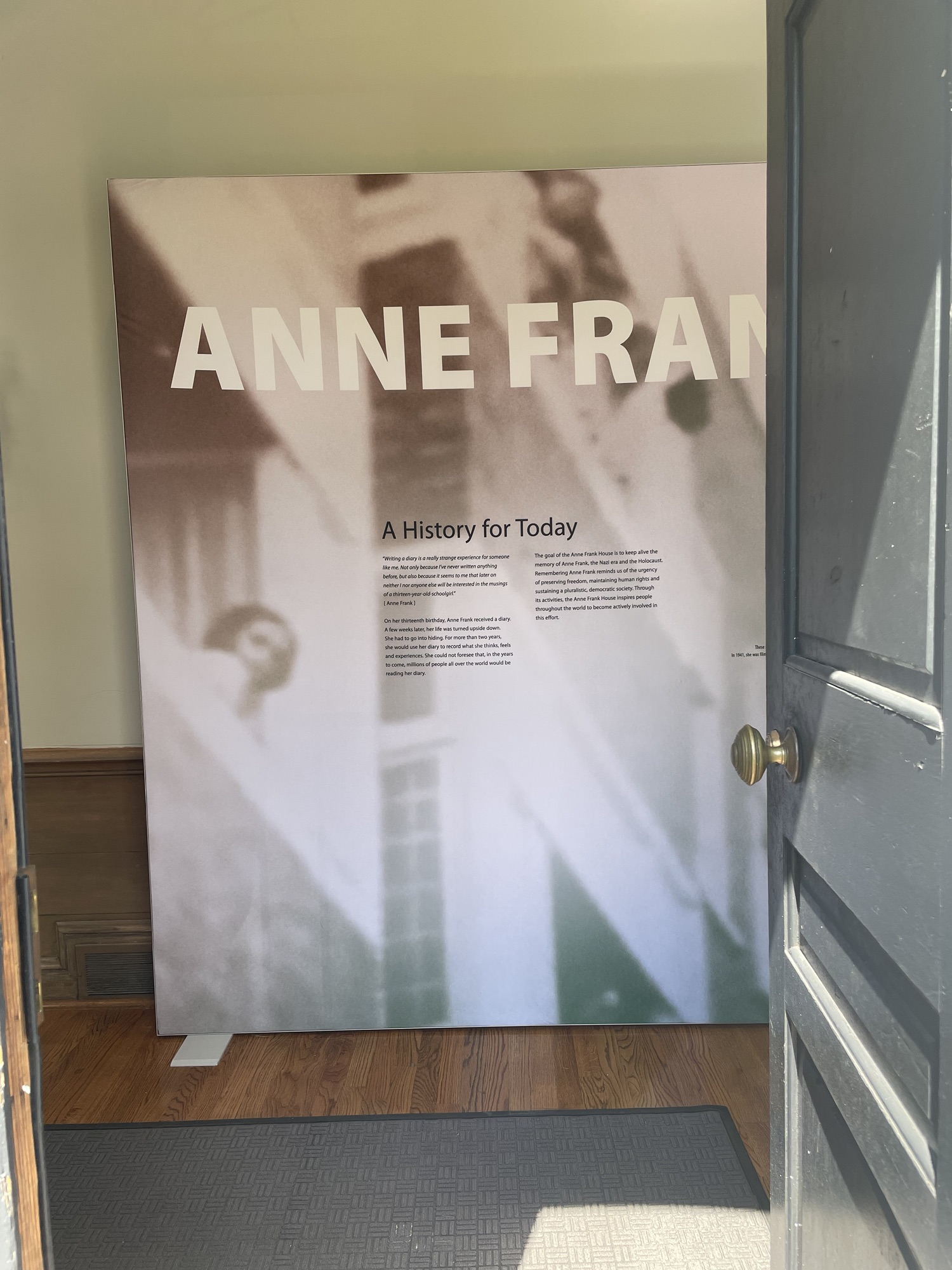
When we drove from Asheville to Charleston, before the hurricane, friends of ours who live in Charleston suggested we stop at the Anne Frank Center located on the campus of the University of South Carolina.
I never expected South Carolina would be the home of one of four Anne Frank Centers in the world, and the only one in the United States, in partnership with the Anne Frank House in Amsterdam. I contacted the Center before our trip and was able to make an appointment to tour the exhibits.
So today, on October 7, 2024, I feel that I must remember the distant past of Jew hatred as we mourn the one year anniversary of the vicious attack on Israel.
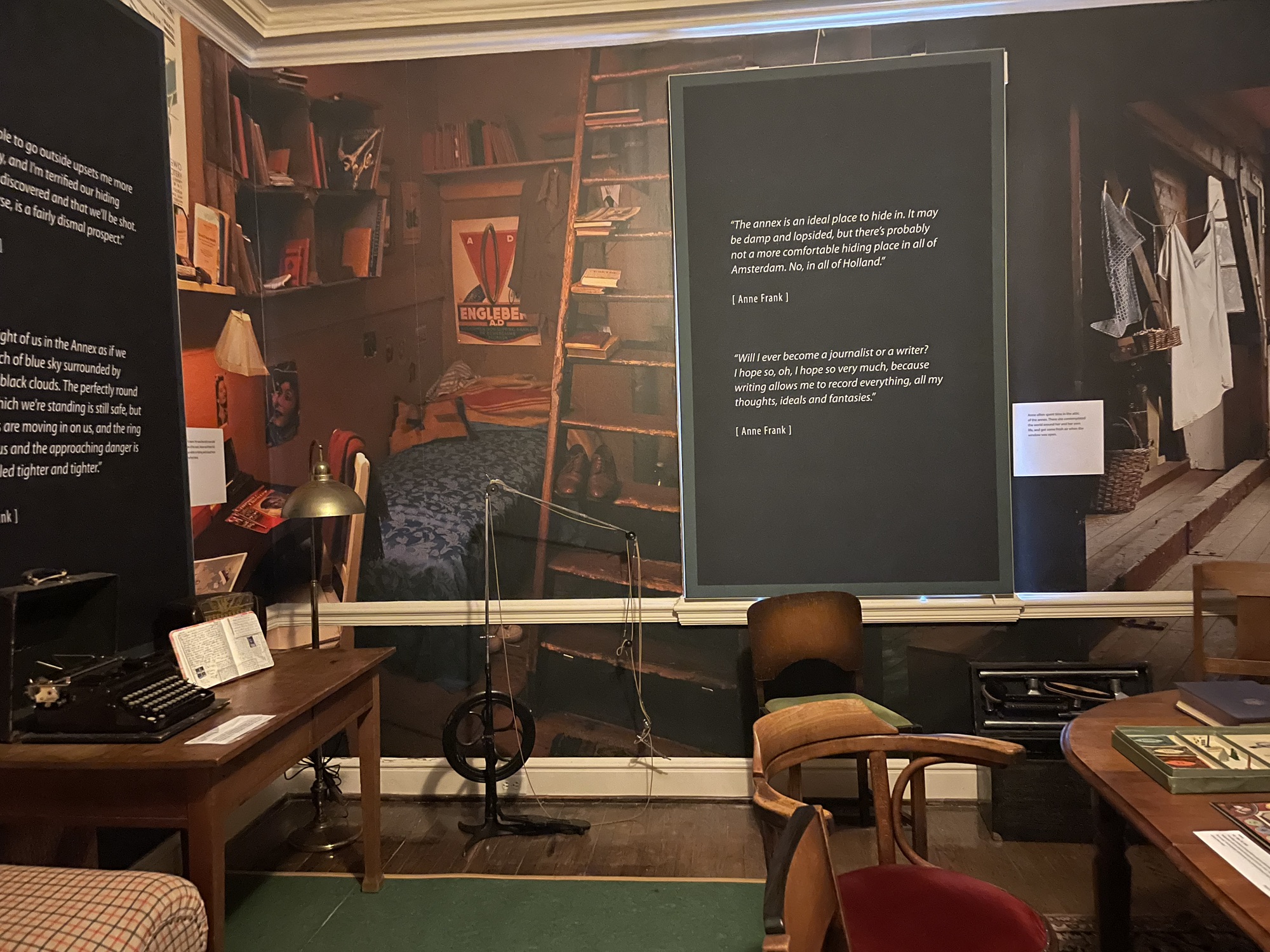
The Anne Frank House does an excellent job recreating the feeling of the hidden annex. While touring the exhibit, visitors will enter a display of Anne Frank’s diary written in many languages on a wall of bookcases. Not surprisingly one bookcase opens allowing visitors to enter a darkened room that helps tell the story of the Annex. Having visited the Anne Frank House in Amsterdam, I was amazed about how this small display harkens to the feelings I had in Amsterdam.
Besides the onsite programs, the Anne Frank House also offers traveling exhibits that can be sent across the USA. They teach local high school or college students to serve as the guides to the 32-panel exhibit. I would love to see this exhibit in my home community! Our tour at the Anne Frank Center was led by a college sophomore who was doing her first tour for us and her dad! Emma did a great job. I could see that she related to the world of Anne.
Going to the Anne Frank Center and remembering her words of hope help me see hope in the situation that we have in the Middle East today. There are good people who want this violence to stop. Who want terrorists to end their campaign of hatred. No one wants innocents, like Anne Frank, to suffer or die. So I have to believe there will be peace.
My feelings of hope continued in Charleston where we visited the 275-year-old Kahal Kadosh Beth Elohim synagogue, founded in 1749. It is the oldest synagogue in continuous use in the United States. The current building dates from 1841, after a fire in 1838 destroyed the second building.
Originally a Sephardic synagogue with the bima in the center and balconies above for the women, it changed in 1879, when the bima moved to the front and women joined men in siting for services. Later, after the earthquake of 1886, the balconies were destroyed and were not replaced.
Standing in a building that has housed a congregation since 1840, almost 190 years, and knowing that the congregation itself is 275 years old gives me hope. This congregation has survived the Revolutionary War, Civil War, WW1, WW2, antisemitism, the creation of the State of Israel, the rise of the alt right in the south, and more. The fact that it continuous to be an active congregation gives me hope.
Today, I remember my feelings on October 7, 2023, when my daughter called me from Israel to say she and her husband were okay, but that the situation was very bad. The entire country was in shock. Everyone knows someone who died. For me, although I knew no one, I do know people who lost family members and friends. The past cannot be forgotten. However with education, like that of the Anne Frank Center, and endurance like that of Kahal Kadosh Beth Elohim, I believe we can look forward with hope to the future.





























 zicharonot