Archive | Missouri RSS feed for this section

A KC BBQ Adventure

3 Sep

An adventure to Crown Center in Kansas City brought my friends and me to the Museum of BBQ, which opened just this April. I learned more about barbecue then I realized I needed to know!  First, I learned about the history of BBQ, or should I say ‘barbacoa” and how this style of cooking was brought to Europe from explorers who went to Africa and the Americas.

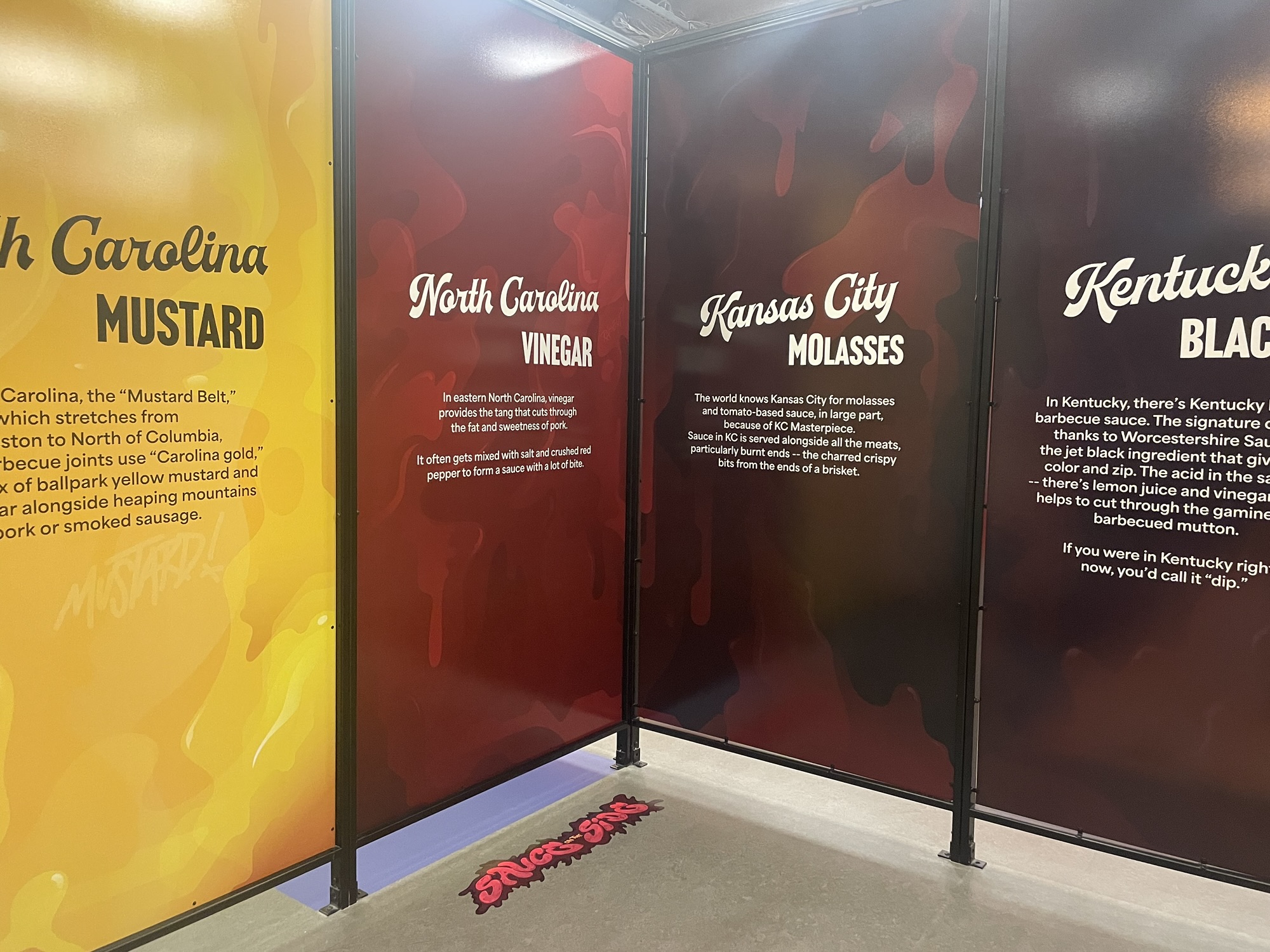
Barbecue: You can make it spicy, or sweet, or very tart.  It can be made with dry rubs or wet rubs.  People in different states like it in different ways.  And if you live in North Carolina, the state is divided about how you should eat it.  The east side wants it heavy on the vinegar; the west side wants mustard. (Personally, I do not want either!! Sorry) There is also debates which is better, BBQ pork or BBQ beef.  They don’t even mention chicken!!

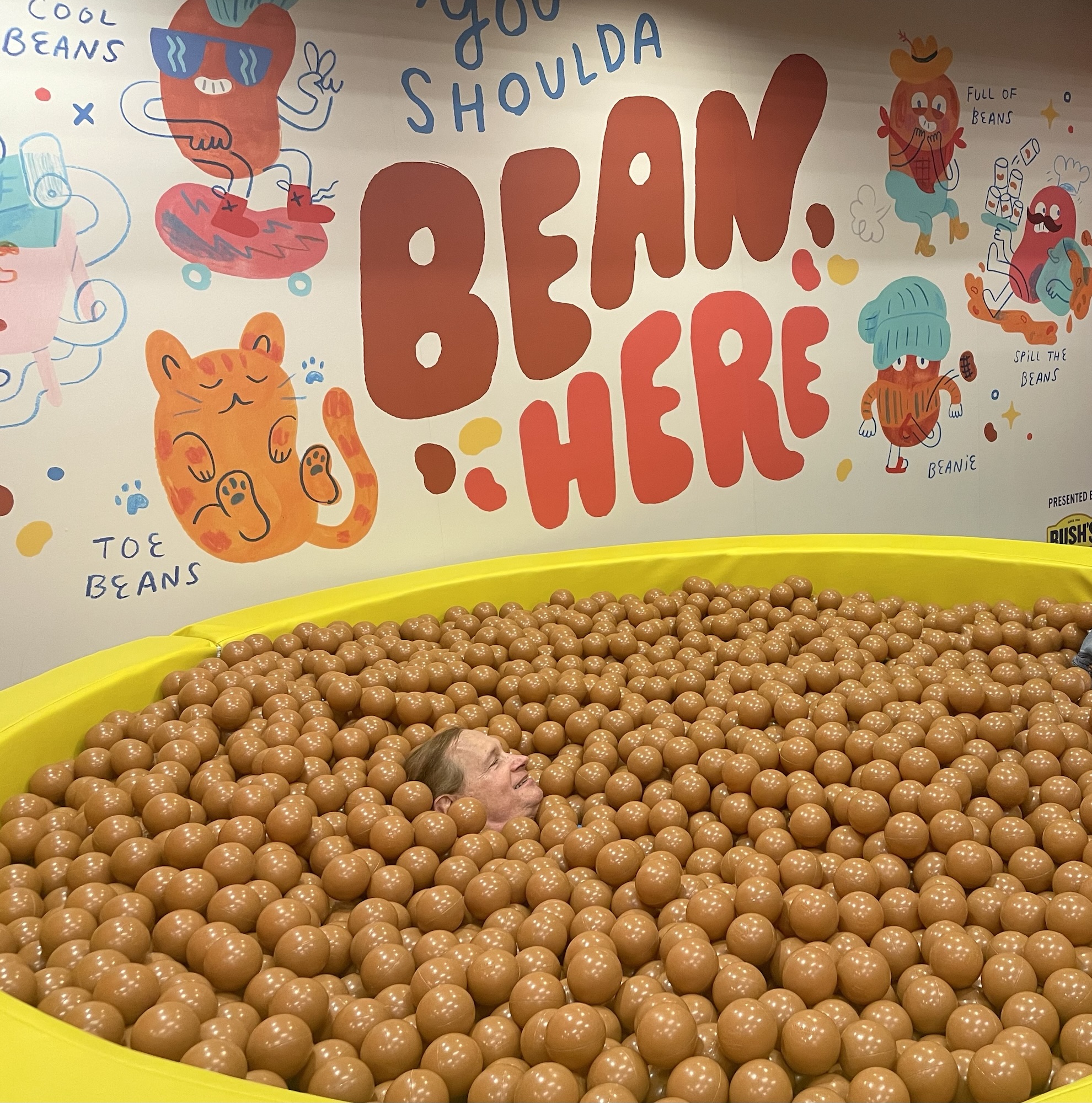
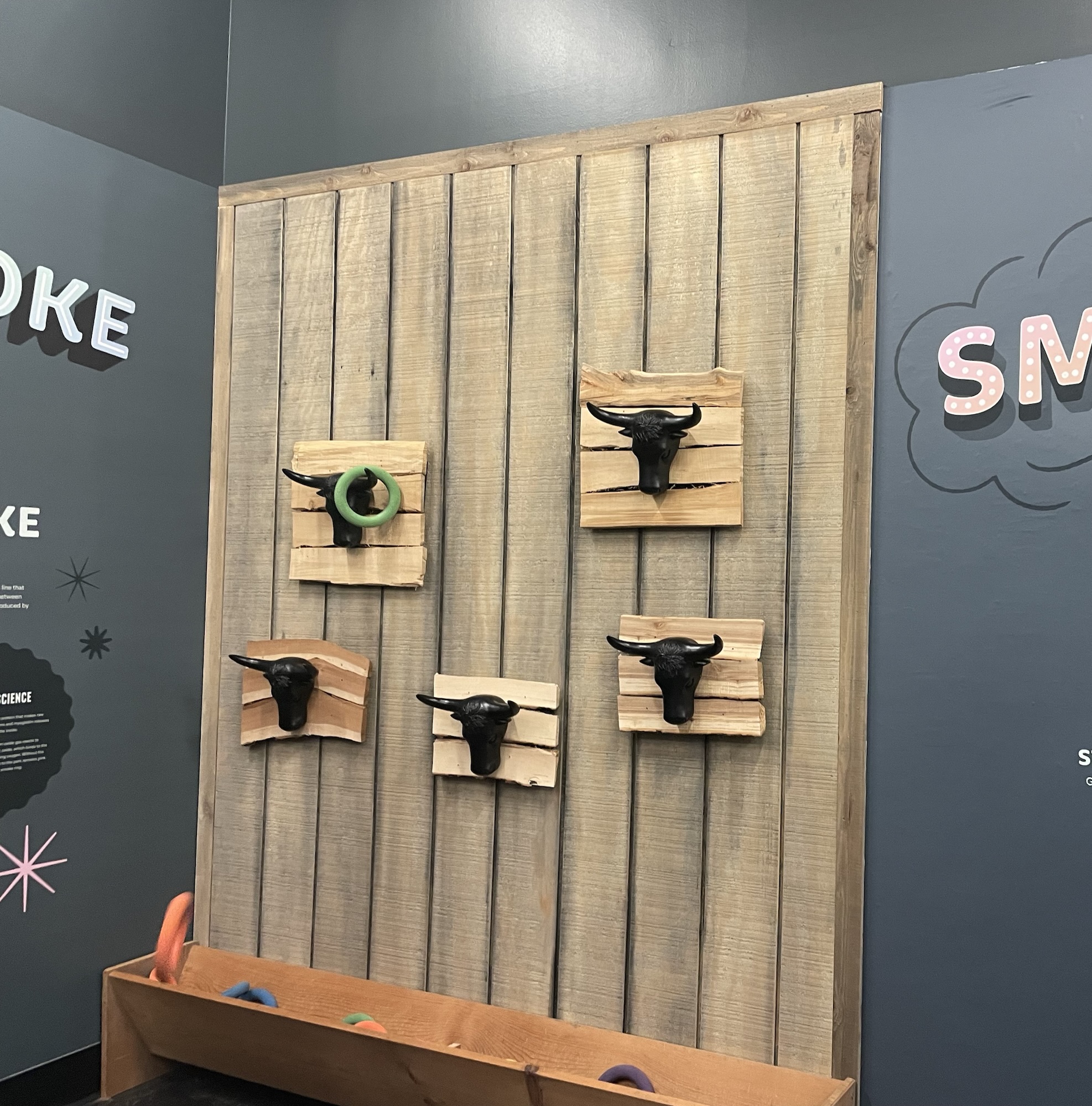
At the museum there are activities like playing in a pool of baked bean-colored balls.  Or wearing a belt that indicates you are a BBQ master.  You can try to hang a ring from the horns of a steer! My friend’s husband actually succeeded in this challenge. The rest of us failed!!

You can find out all about BBQ and baked beans, because what is BBQ without beans!  And you need to learn about the history of Bush’s Baked Beans. The last set of displays focuses on Kansas City and the American Royal BBQ competition.  Also, how KC BBQ went global when KC Masterpiece’s sauce was purchased and distributed nationwide.

For me the best part was learning about the different types of BBQ sauces and realizing why I love Kansas City Barbecue.  I now know why.  I love the sweet molasses or brown sugar concoctions that Kansas City Barbeque offers the palate.  For me KC BBQ brisket or chicken is the best.  To taste some of these other sauces, just check out the gift shop, which has BBQ sauces from all the country!

I also learned that fat, or marbling makes BBQ more delicious.  And for some the most delicious of all are the fatty burnt ends of a brisket.  My husband loves burnt ends, a delicacy. 

To make our day complete, we had lunch at the Burnt Ends BBQ restaurant in Crown Center.  The husbands had burnt ends. My friend and I had BBQ brisket. It was deliciously cooked in the KC BBQ manner. 

Kansas City has many wonderful BBQ restaurants.  And everyone in the Kansas City metro has their favorite.  My favorites are Jack Stack and Brobecks.  I never argue with those who like other restaurants because it is a no lose situation. Every restaurant is great including, Joe’s KC BBQ, Gates Bar-B-Q, Q39, Burnt Ends, Taste of KC, and Arthur Bryants.

If you visit Kansas City be ready to try BBQ, it is a must.  If you want to learn more about BBQ, check out the Museum of BBQ. 

A Disney Experience in Marceline

22 Jun

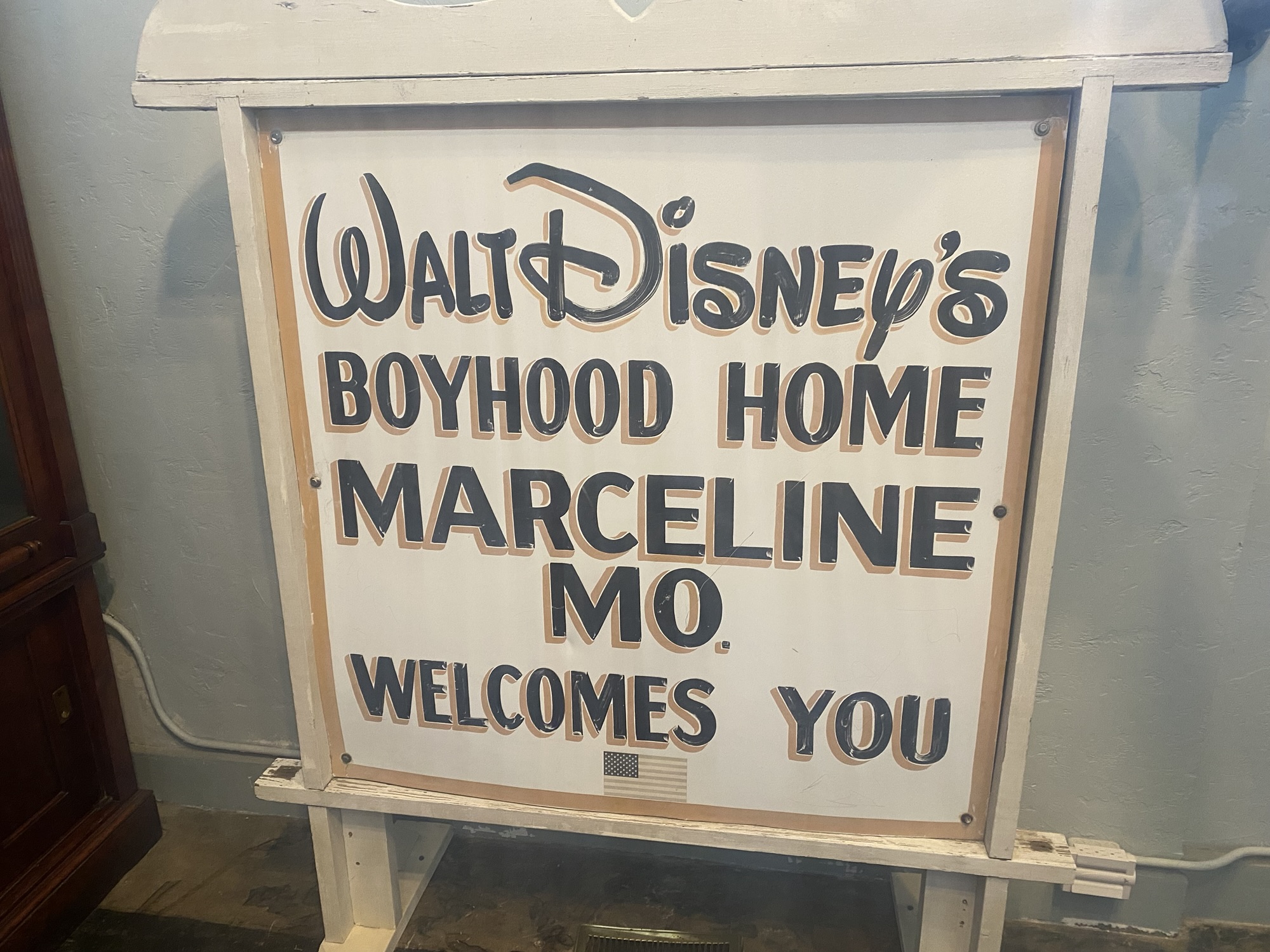
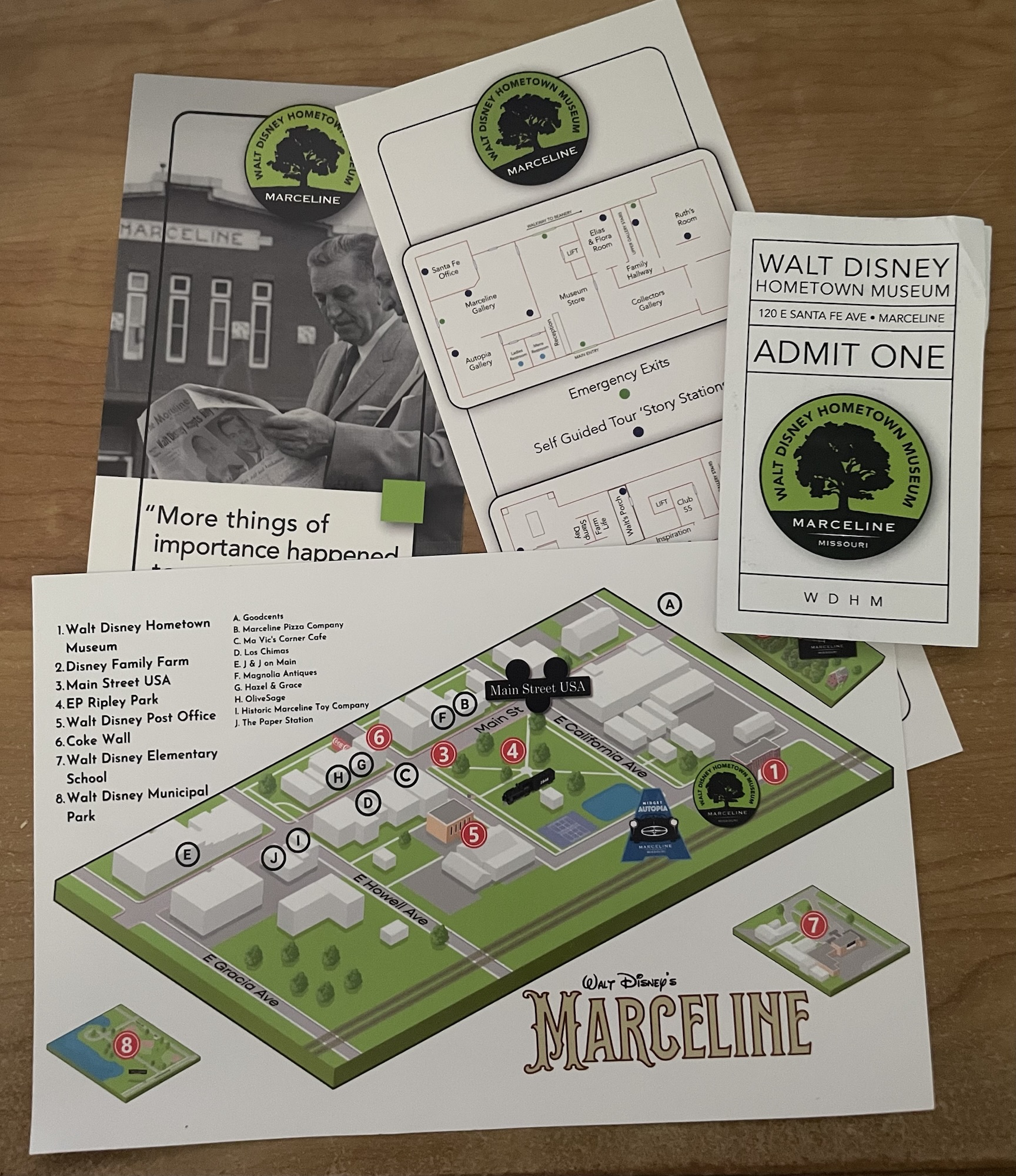
I am a dedicated Disney enthusiast.  I have been to both Disneyland and Disney World multiple times. When the Disney 100 Anniversary Exhibition visited Kansas City, I made sure that my husband and I had tickets to go through the exhibit.  I loved it! 

I have passed by the Laugh O Gram building in Kansas City many times. I am still hoping that one day KC will have its own little piece of Disney.  Now I can add a new Disney experience.  I finally got to visit the Disney hometown of Marceline, Missouri.

It was worth the over two-hour drive from our home.  Was it everything I thought it would be, not exactly.  But despite that, even my husband said that the museum was very interesting.  And it was.

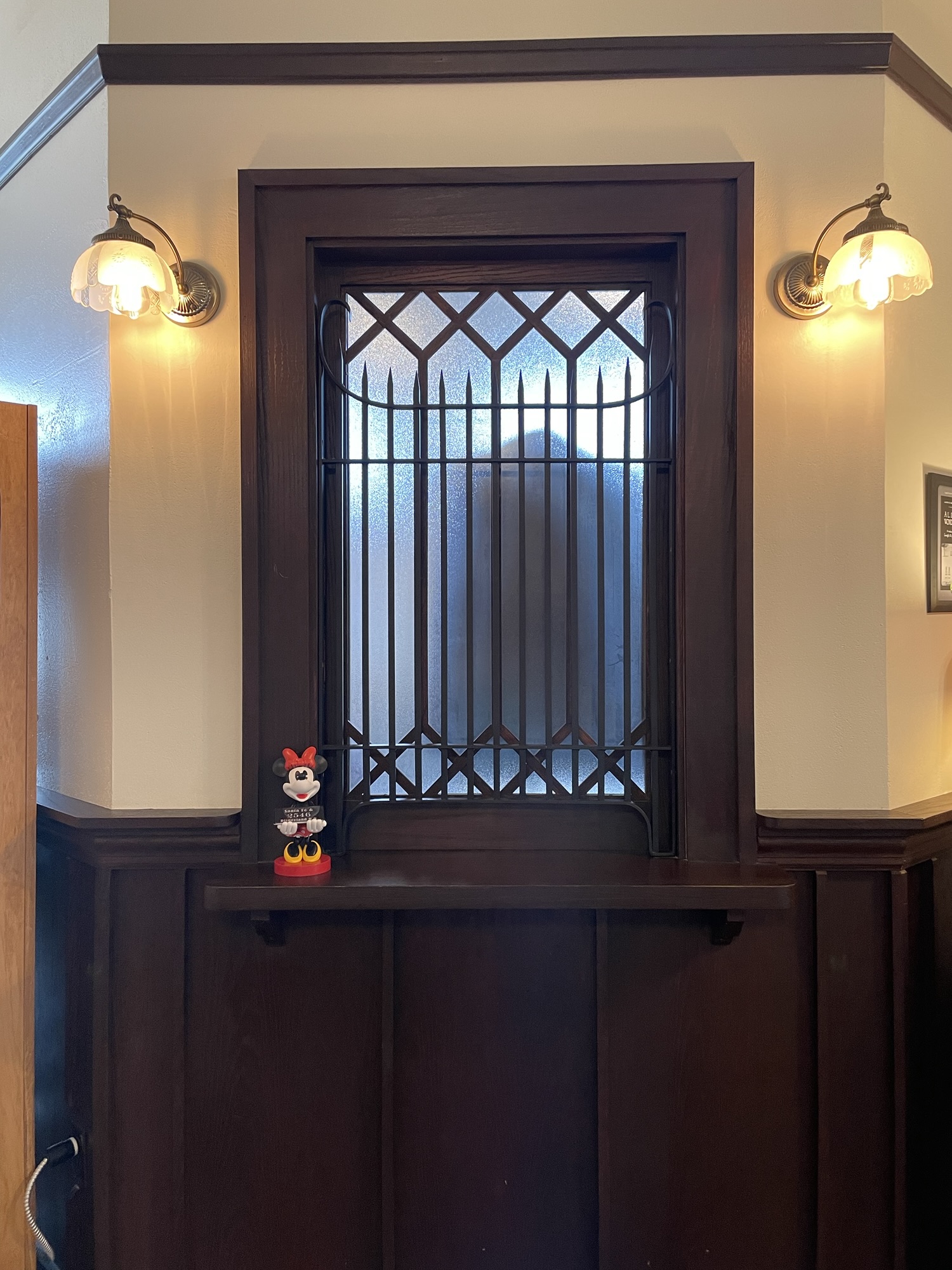
The Disney Hometown Museum is housed in the original Marceline Sante Fe train depot.  A perfect spot for a Disney museum because Walt Disney loved trains. Parts of the train station are still obvious.  The original ticket office still exists with some train memorabilia.  Also the train comes by every so often, so you get to hear the sounds and whistle. 

Most of the collection was from the estate of Walt and Roy’s sister, Ruth.  Even though she was not employed by the Disney company, she received many Disney artifacts and letters throughout her lifetime.  Many of the items on display were hers.

Also included are many Disney family items. Photographs and letters line display boxes.  Information about the Disney parents and siblings is an important part of the museum.  I loved learning about how Walt and Roy took care of their family throughout their lives, giving them Disney stock and other items.  In fact, the one Disney sibling who never married, left millions of dollars the Shriners’ Children Hospital. What a great place for the profits of the Disney company to end up!

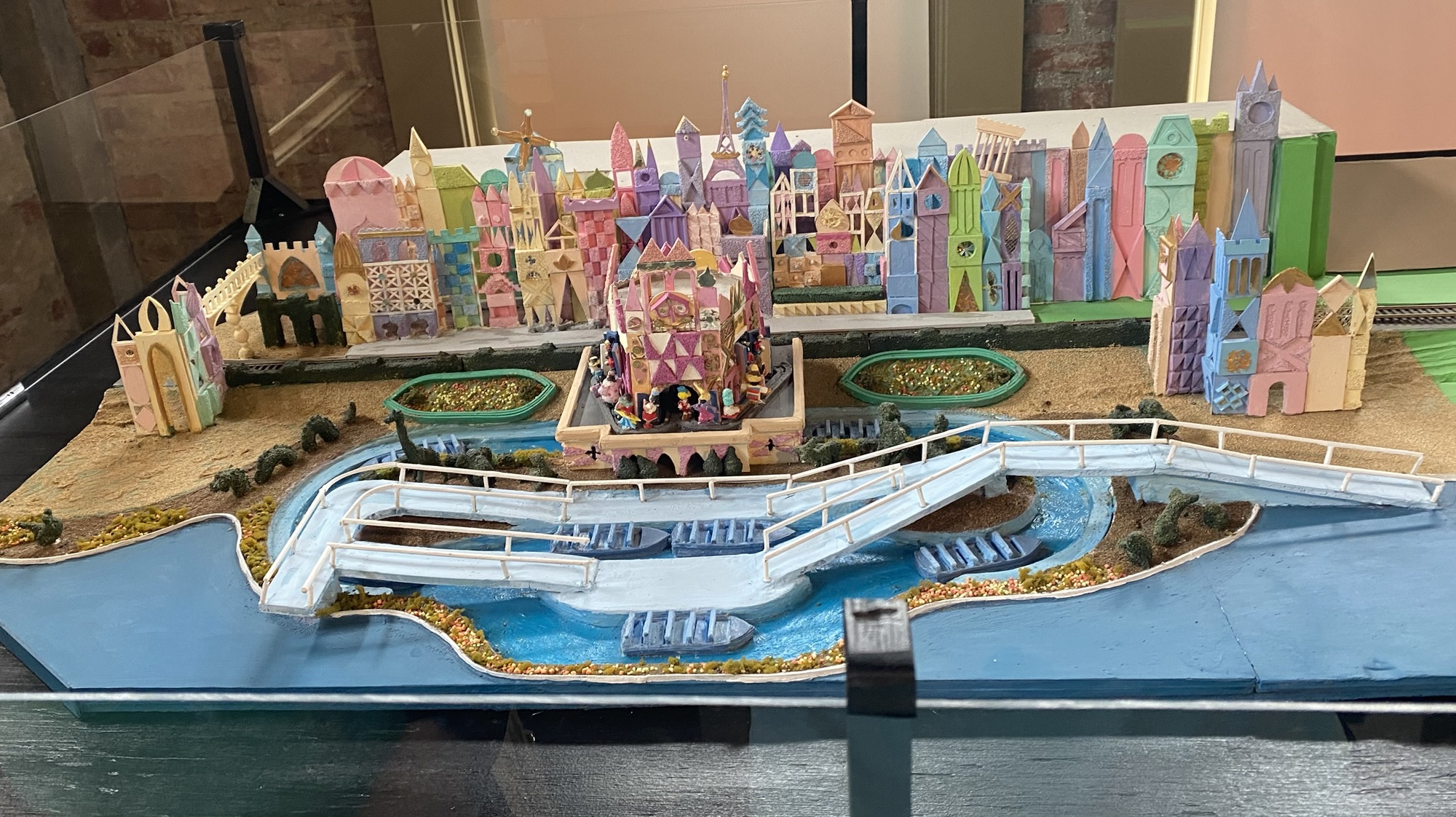
I really enjoyed the displays on the second floor of the original Disneyland models.  Seeing the view of the It’s a Small World Ride and the teacups in miniature, as well as the castle and other rides was really a thrill.  This is what they were trying to create in full size, and they succeeded!

As an aside, the Teacups were my favorite ride when I was younger. But as I aged I realized I did not like to be spinning around. For my sister and daughter “It’s a Small World” was the best ride ever.

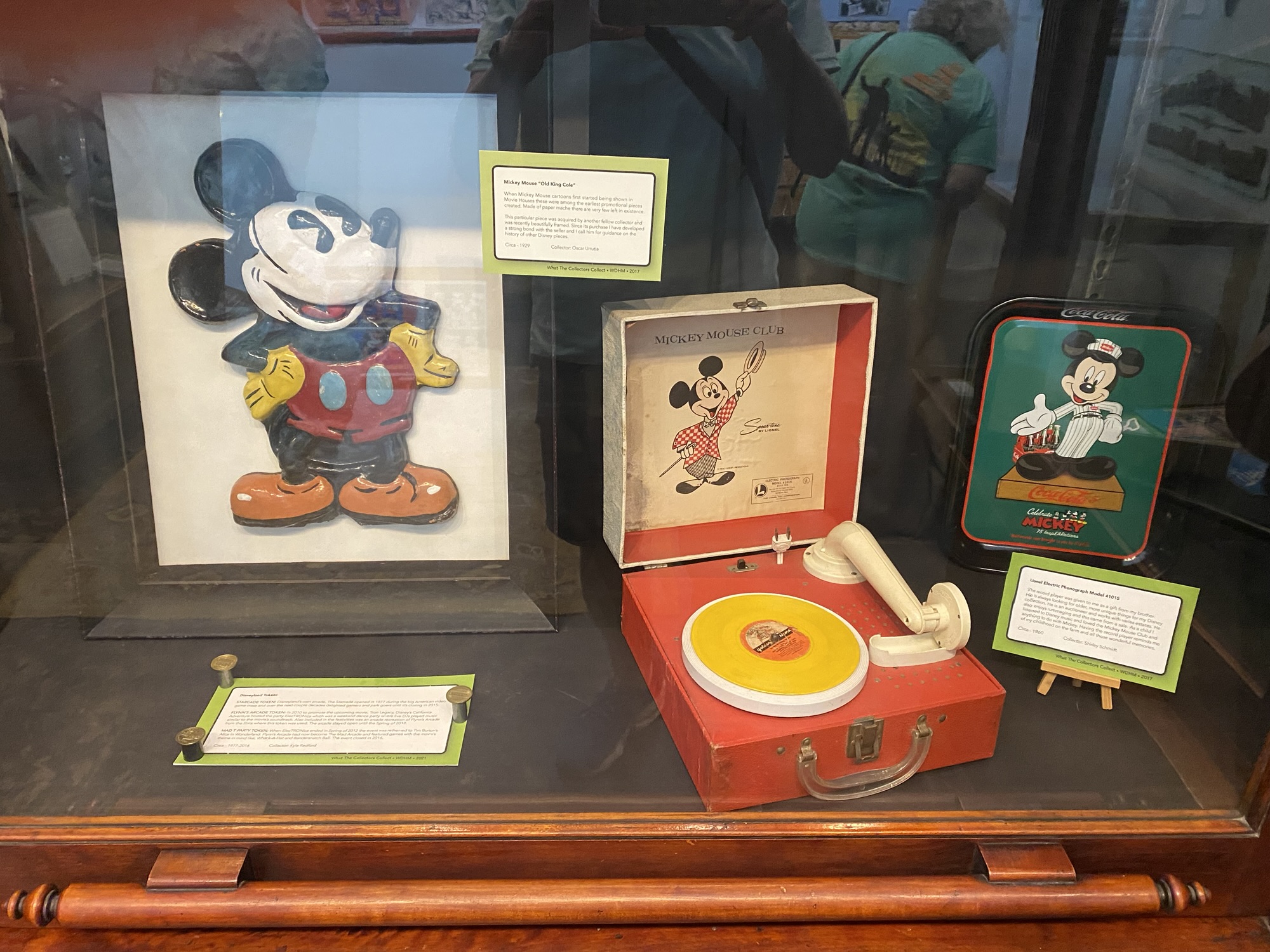
I loved seeing the items like the model dressed in the Davy Crockett regalia and the giant Mickey Mouse.  There were dozens of items to enjoy. Some of which I remember from my children hood. My brother was a big Davy Crockett fan!

I have to also comment on the kindness of the people who worked there.  They made the experience so warm and friendly.  But then they knew we were true enthusiasts as I was wearing one of my Disney shirts.  In fact ,you could tell in each family who was there who the Disney fan was…that was the person who people wearing Disney clothes!

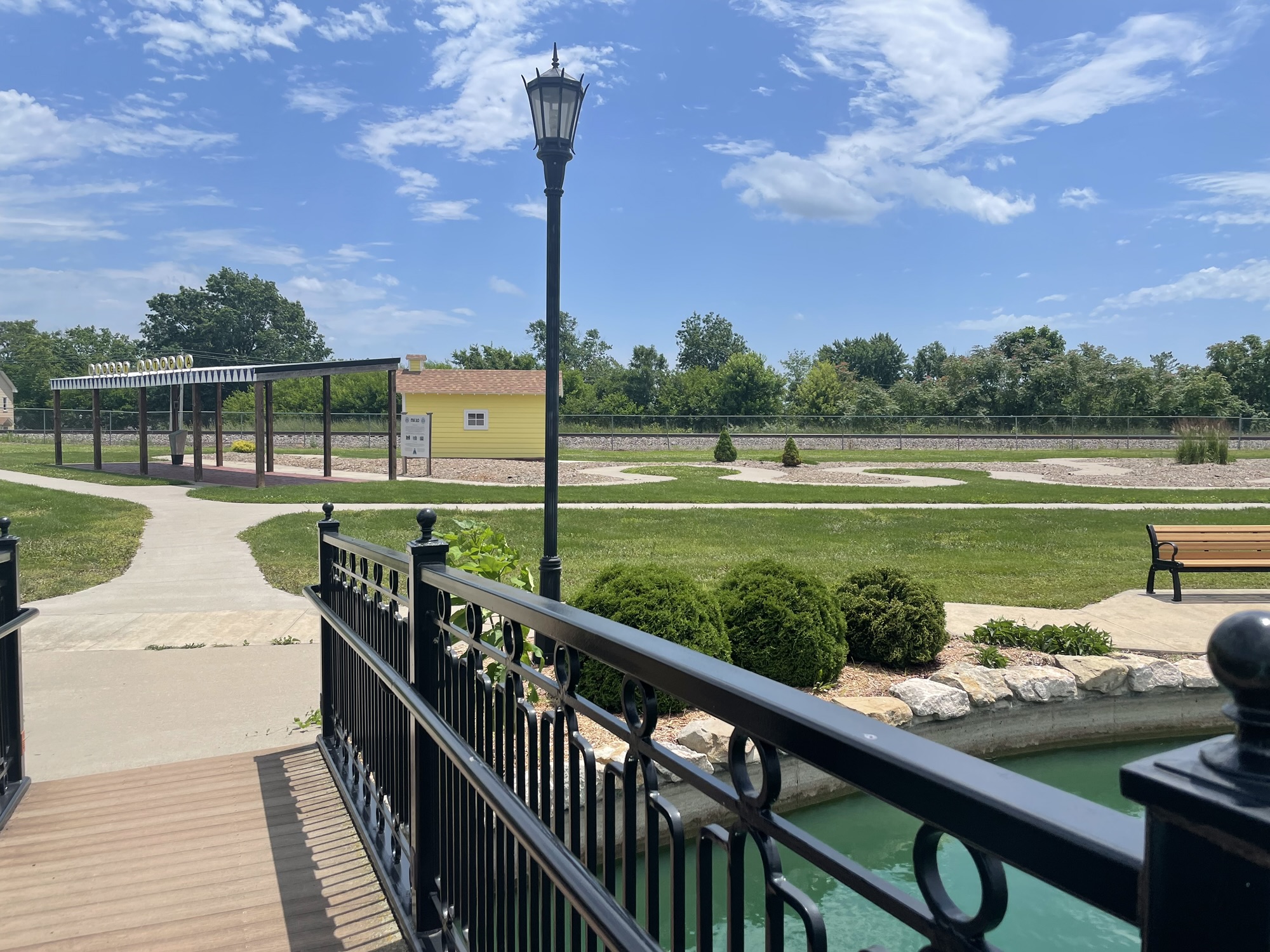
After the Museum we walked over to Ripley Park, where the Midget Autopia ride was installed after it was taken out of service at Disneyland.  The only ride ever to be given away after it left the park!! I am sure it is a shorter car trail than what was used on Disneyland. You can still see where it was, as it is still set up to be used. But currently the cars are no longer there.  Although there is one car on display in the museum.

In the park you can also see both a diesel locomotive and a steam locomotive. They are quite huge.

For lunch we ate at Ma Vic’s Corner Café. It was crowded with locals and  with the people who had been to the museum. I saw  two other restaurants in town, but I am not sure they are open for lunch.  

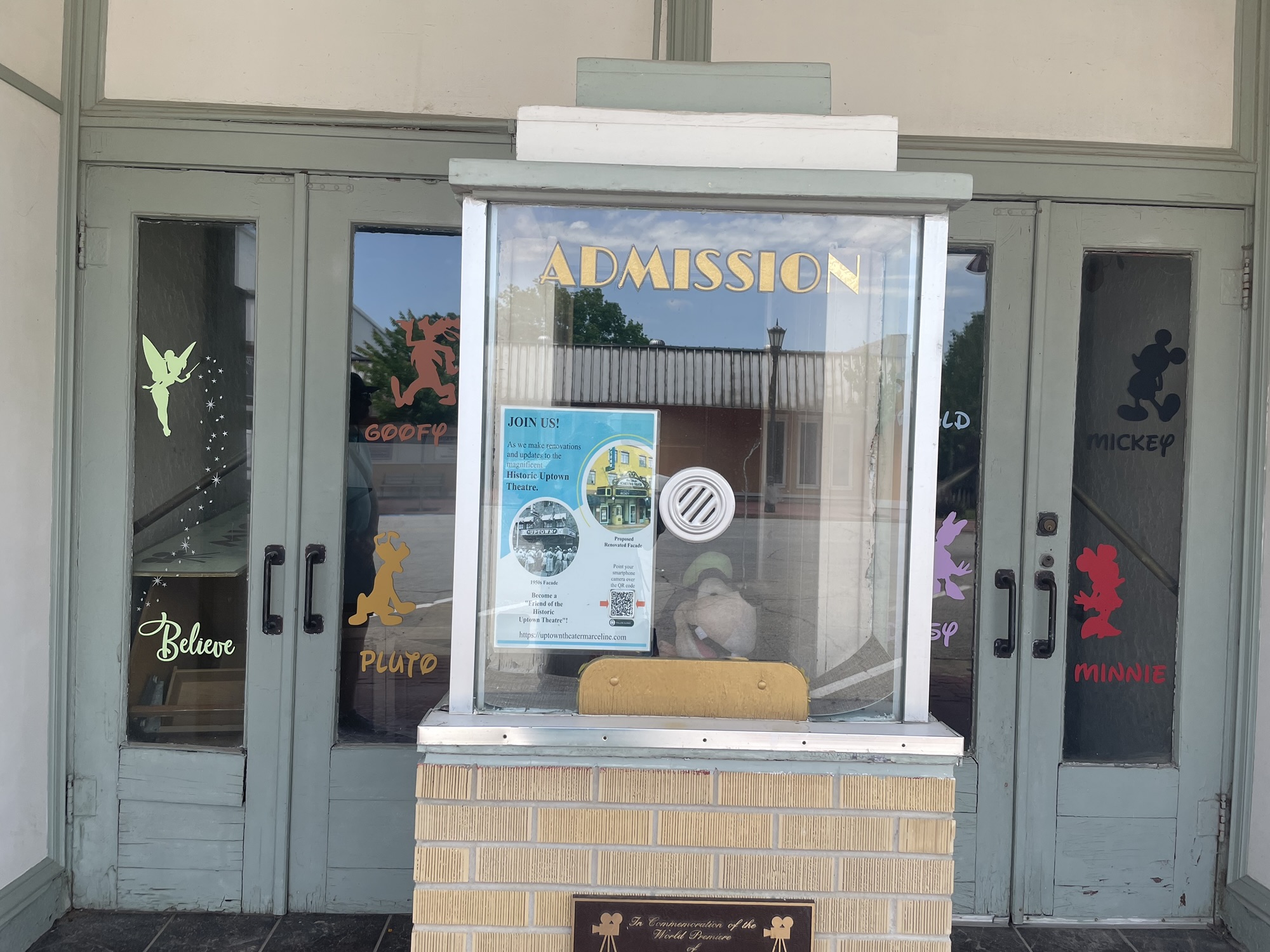
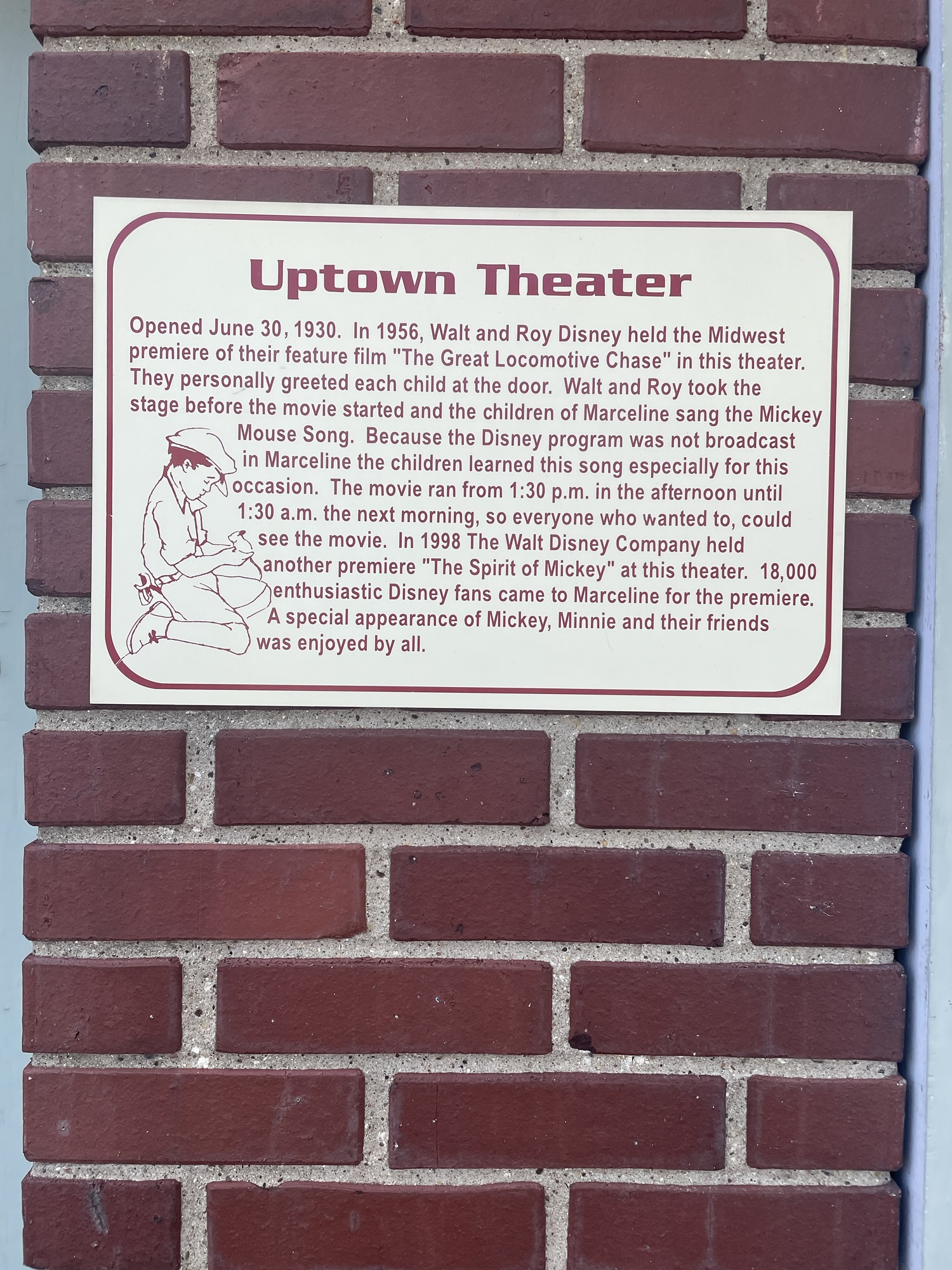
We also walked past the Uptown Theater where Disney premiered two of his movies and where he saw movies as a child.  It is closed now. But it does resemble the movie theatre on Main Street USA at the Disney parks.

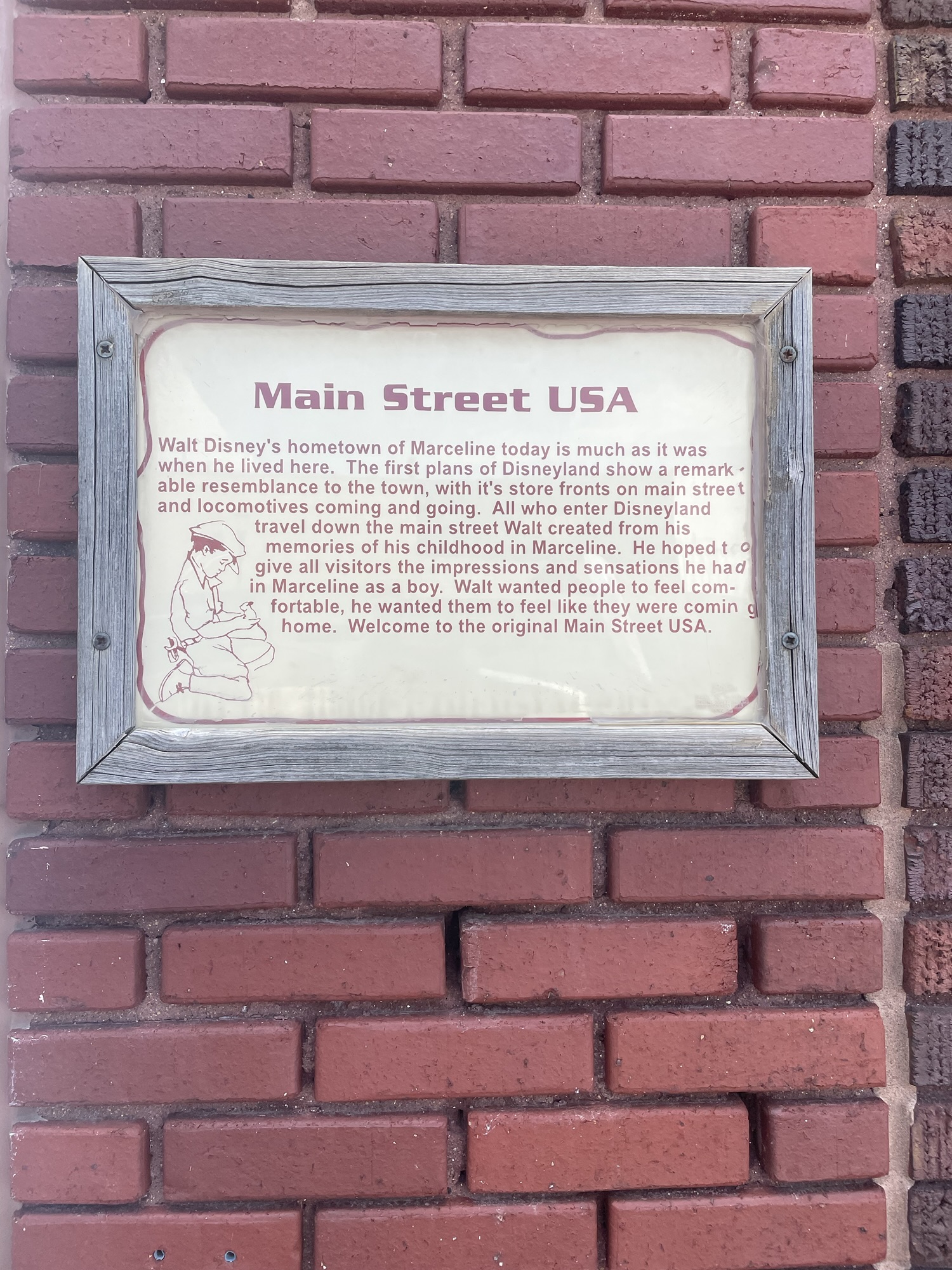
Main Street USA was a disappointment. We walked up and down Main Street USA, which Walt Disney used as the guiding force of the Main Street in Disneyland/Magic Kingdom. But it was somewhat sad.  Most of the store fronts were empty. There were a few things in the windows, but many had no businesses.  A few shops were open, when we were there,  while some that opened only in the afternoon. I guess I was hoping for more Disney spirit in downtown.

When we went back to the museum, before we left, I asked about the Main Street stores.  We were told that someone had purchased the buildings to keep the look of the town intact, but really there was not a lot of business. 

Honestly, although there is a small shop in the museum, I think that they should use one or two of the store fronts to open a Disney store in Marceline.  I think it would be busy with those of us who would love to purchase more in Disney’s hometown.  Look at Hamilton. It was a dying town, but with all the fabric stores, it is now a quilting mecca.  I think something more can be done with Marceline.   But don’t worry, I did help the economy by buying myself a t-shirt, two magnets and presents at the museum.

We did not visit the Disney farm or school.  I am not sure the school would be open to visitors, but at the museum we saw that Disney artists had painted murals throughout the school.  However, with our two-hour drive home and the heat of the day, we ended our visit to Marceline.

The Disney Hometown Museum is definitely worth the drive for Disney enthusiasts.  My husband and I truly enjoyed our time there viewing all the artifacts, reading the letters and materials and talking with some other Disney fans and the museum staff.

https://www.waltdisneymuseum.org/

Money Museum, A Numismatic Joy

3 May

With all the talk about the Federal Reserve Bank, money and finance lately, we just had to see the Money Museum at the Federal Reserve Bank of Kansas City.  Both of our children visited it when they were in school.  I remember them bringing home a small bag filled with shredded money, which gave them pure joy, even though they could not use it.

I don’t know why we never went. My husband was once a big coin collector. His search for numismatic oddities was a fun pursuit.  We found almost 900 silver coins hidden in my grandparent’s home after they died.  They owned a bakery, and my grandmother would squirrel away all the silver coins that people paid with, replacing them in the till with regular coins. The coins were split between my mother and her brother.  But my parents let my husband search through all their coins to get the largest variety of dates and coins before dividing my mother’s share with my siblings and me. We got to take the coins he needed for his collection as part of  share. 

In fact, in our tzedakah (charity) box, where we collected coins each week for years, we always had the children search through the coins to find ones we did not have before donating all the money saved each year to charity.

Even though this obsession with coins faded, I still cannot understand why we never went to see the Money Museum. My husband often passed the Federal Reserve building on the way to work and would consider going in. But it never happened.  Until this March for our annual anniversary museum event.

It is not a very large museum.  It takes about an hour to go through the displays, watch the movie and try some activities.  They really made it family friendly, with activities for children and adults. The museum is free and during the summer there are free 30 minute tours at 10 am and 1 pm that you can join when you are there.

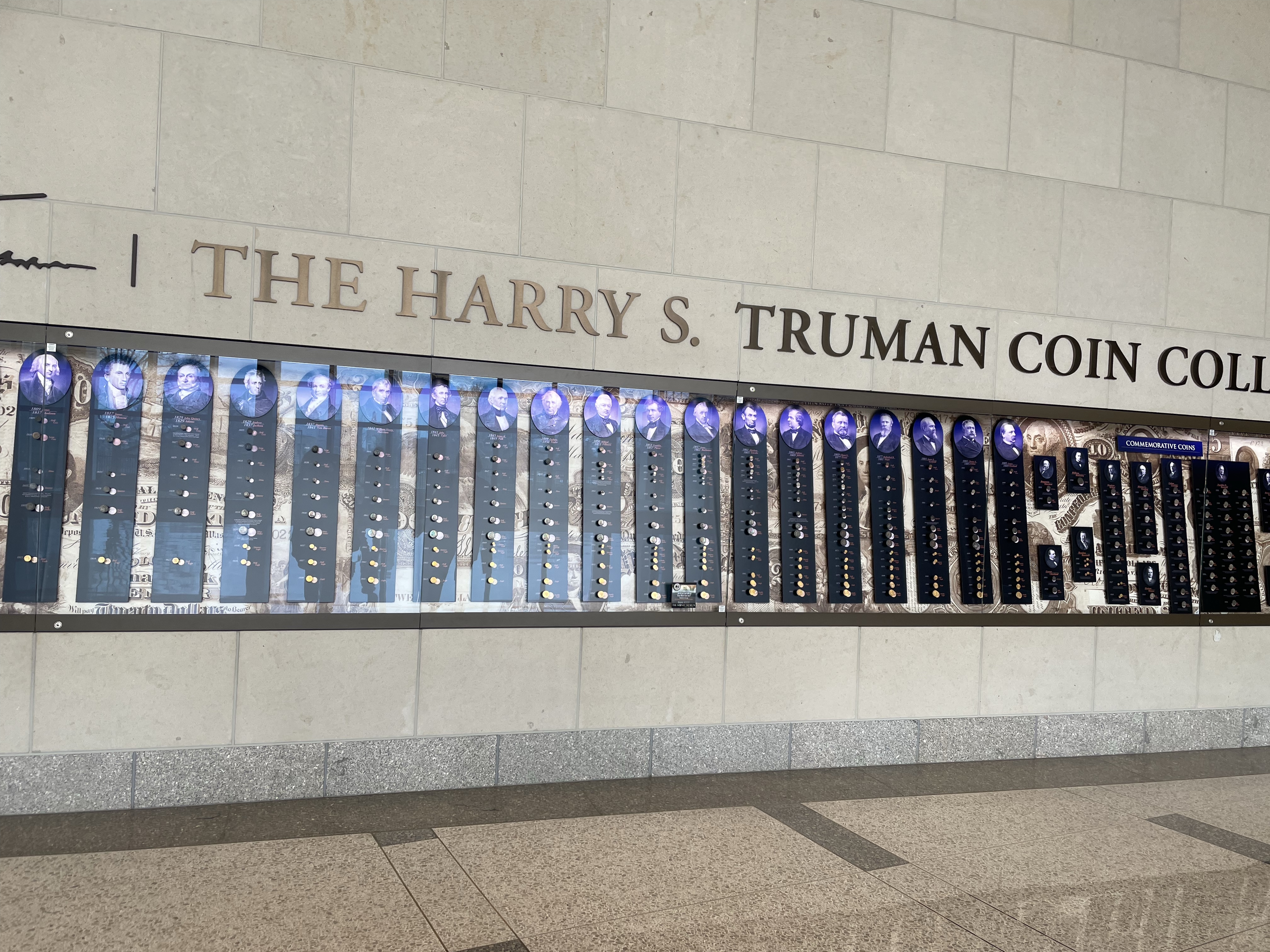
The first exhibit is the giant wall of coins that used to be at the Harry S Truman Presidential Library.   The Truman Coin collection has over 450 coins all lined up by year and denomination from the beginning of the United States.  This is a replacement collection that was donated by over 170 coin collectors after the original coins were stolen from the Truman Library in March 1962.

 In fact, the day we went to the museum was the 61st anniversary of this infamous heist.   The replacement coins were donated on May 6, 1967.  Hence why I decided to write this blog now! It seemed apropos to visited on March 24 and then write the blog for May 6. But I digress. Back to the coins.

The coins were on display at the Truman Library for over 35 years. But now they make their home at the Money Museum.  A perfect location for them. It is fun to see how coins we use every day have changed over the years.

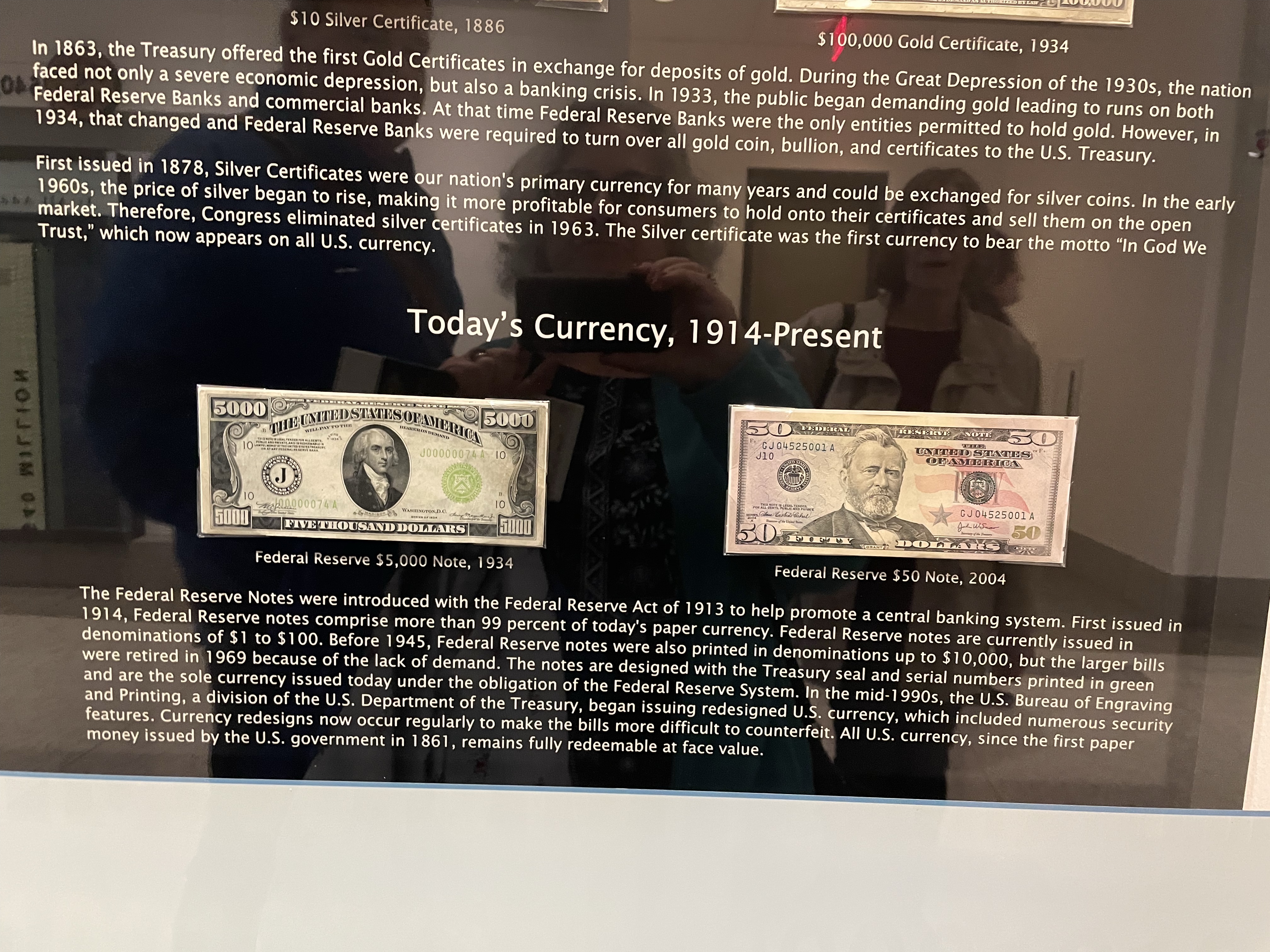
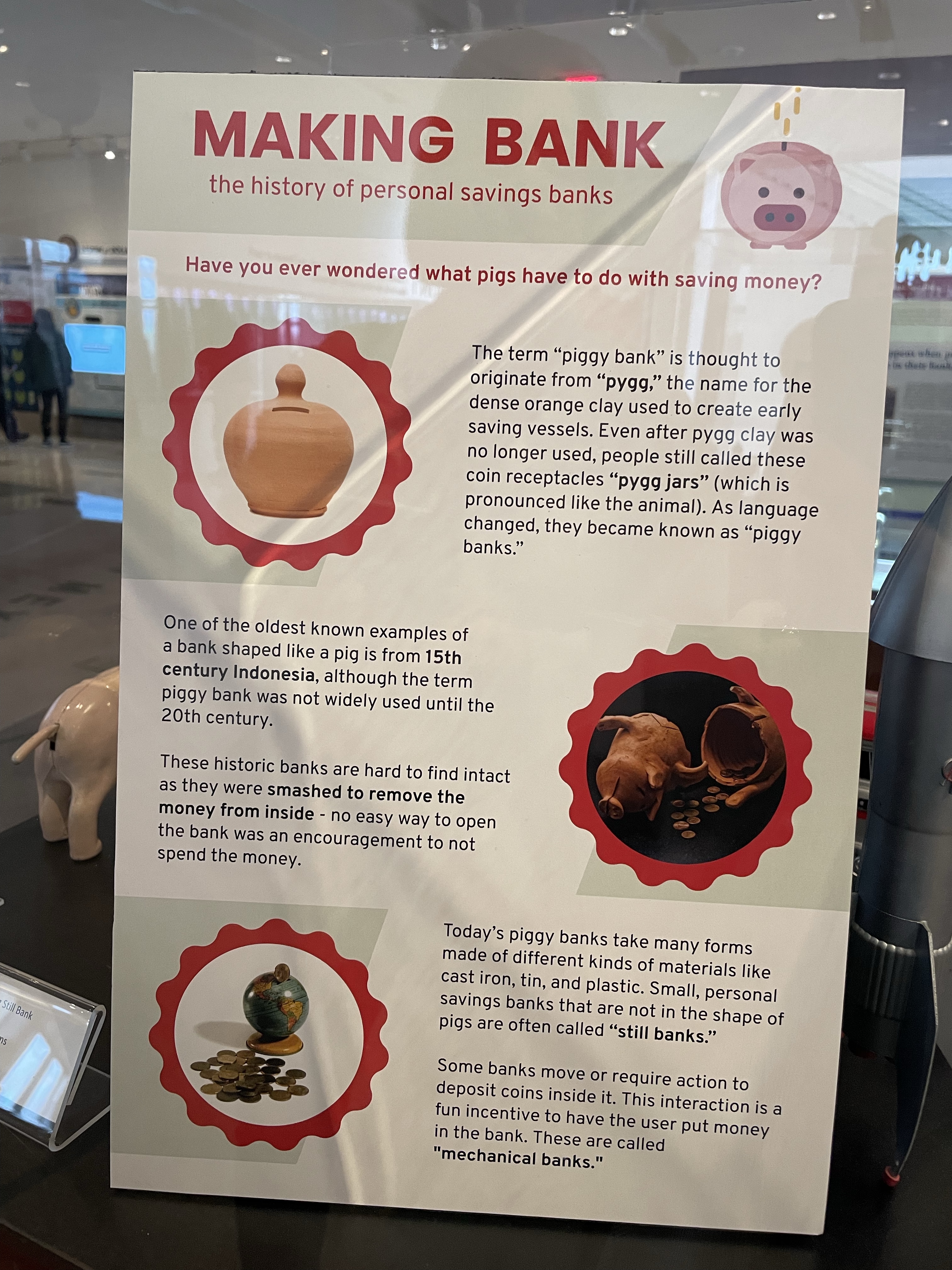
Walking along the coin wall leads you straight to the museum.  There were little stations set up for the guests to learn fun facts about money, finance and how the federal reserve system works.  One display had counterfeit money and explained the safety mechanisms to check to see if bills are real.  Another explains the history of piggy banks.  There are fun facts on boards called “Jay’s Journal” directed toward children.

A favorite display for everyone when we went was the gold bar that you could try to lift.  The only one we saw who could actually lift it was a young woman.  She was STRONG.  I could not get it to budge.

You should watch the movie, although some smaller children will not enjoy it. It is in the back of the museum, so you see almost all the displays first. We also enjoyed all the interactive displays along the wall in the hallway that leads to the vault.  There were even two displays where you could take photos to send to your email.

When we finally reached the entrance to the area with the vault, I realized that the vault was enormous, much bigger than I imagined.  NO photos are allowed in this area.  We also got to see them shredding old paper money.  When exiting the museum at the end, everyone can take home a small bag of the shredded money. 

The Money Museum is not far from the restaurants at Crown Center.  So we made a day of our museum adventure and ate lunch at Crown Center and walked around the shops as well.

It was another great Kansas City staycation trip.

https://www.kansascityfed.org/moneymuseum/

Wonderful Changes at Truman Presidential Library

26 Oct

Living on the Kansas side of the Kansas City metropolitan area, my husband and I do not often venture to the Missouri side.  But recently we made the trip to Independence, Missouri, home of the Truman Presidential Library.

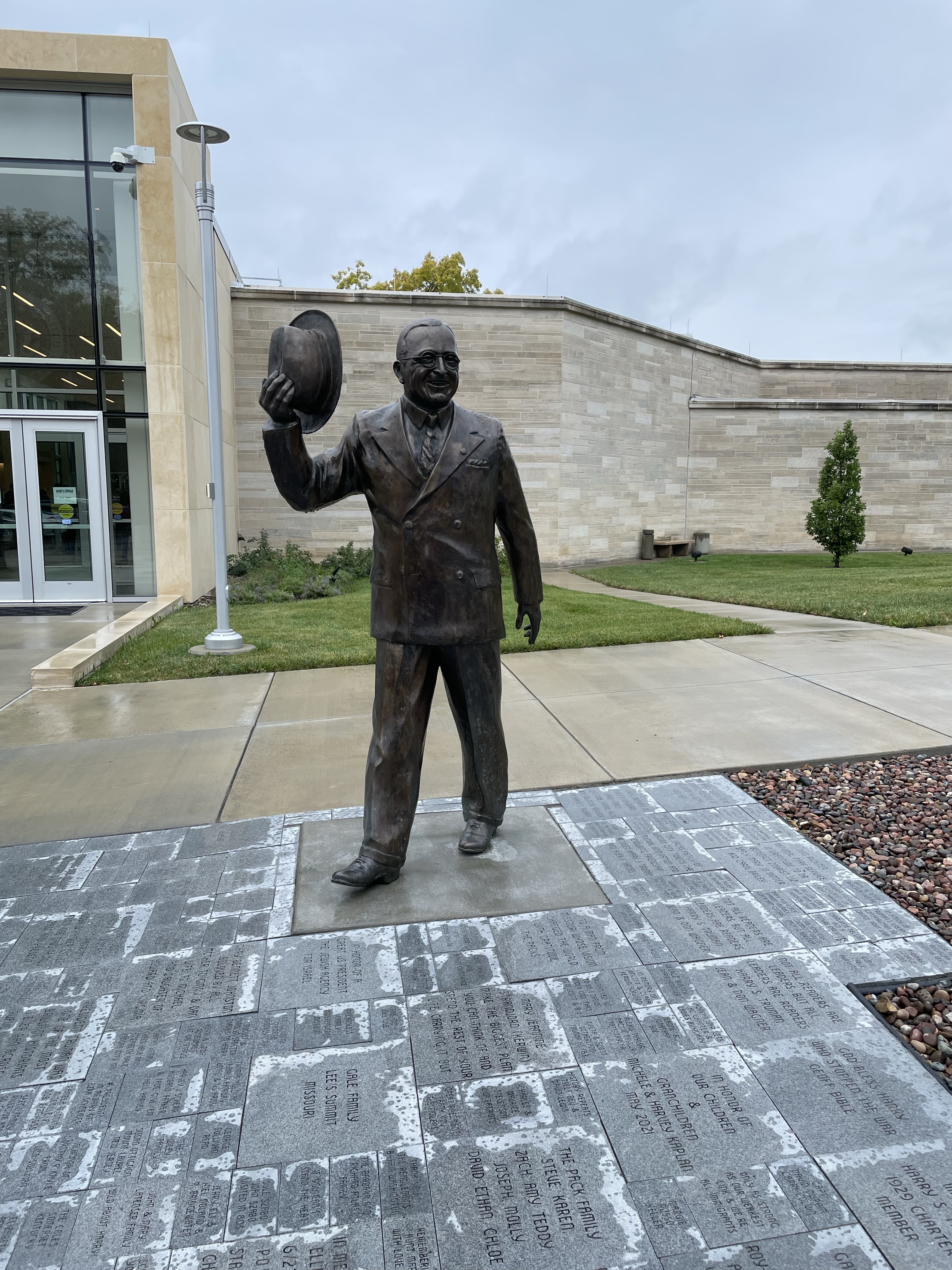
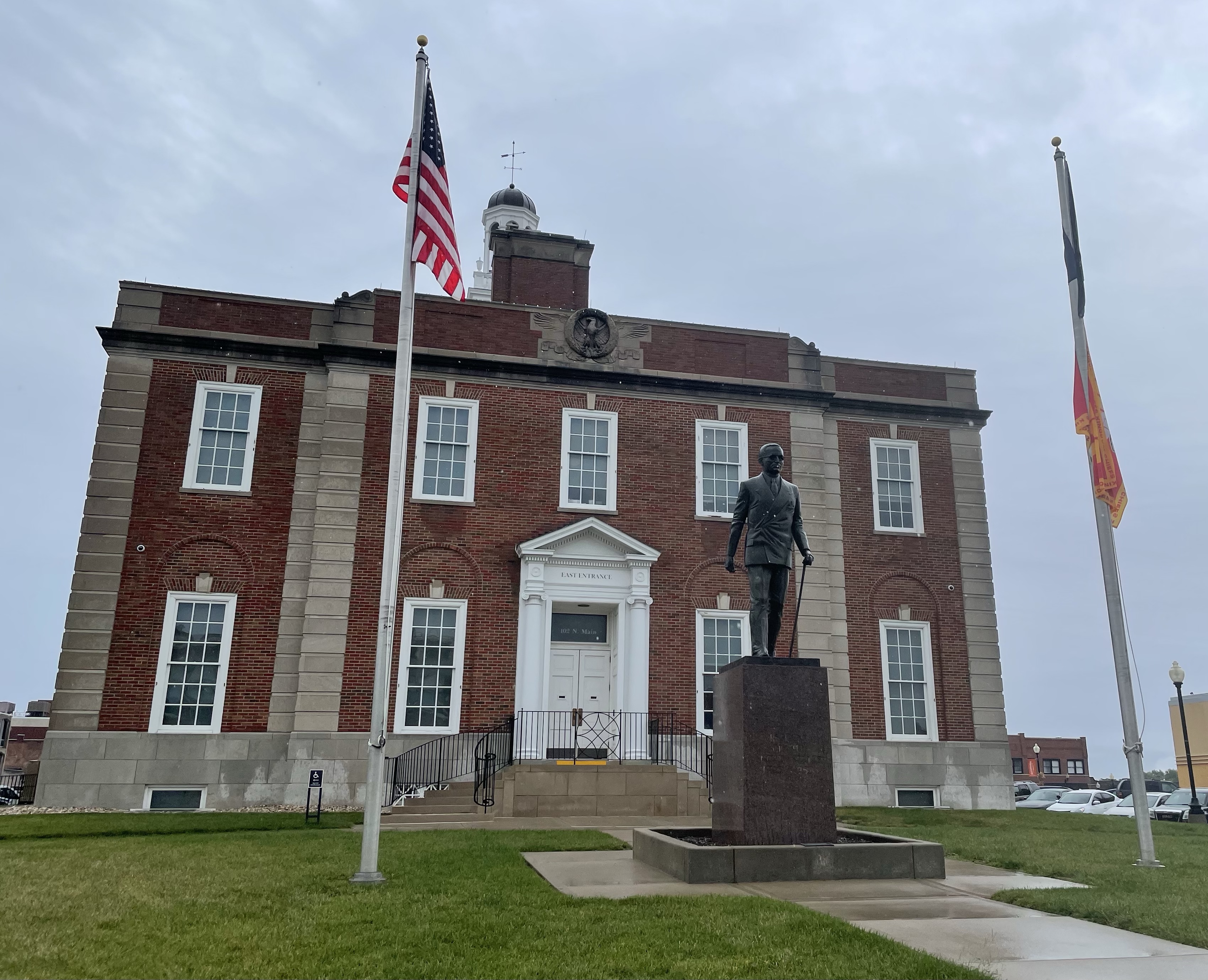
Truman statute outside the Courthouse in Independence.

Before heading to the Library, we met a friend on the ‘Square’ in Independence for lunch.  But first we walked around the outside of the Court House where Harry S. Truman had served as a judge for many years.  We admired his statute which stands in front of the Courthouse.

After lunch we went to the Truman Library.  Since it reopened in June 2021, we have been wanting to see the changes. But as COVID ebbed and waned, the museum closed, then reopened, then required timed tickets.  Now It is back to normal scheduling.

The changes are wonderful!  First you arrive at a new entrance, which is located on the side of the parking lots, making it much easier to enter.  It is so much better than walking up all those stairs and entering right into the room where the wonderful Thomas Hart Benton mural is on display.  The new area has room for groups to meet up, bathroom facilities, a lovely gift store and the entrance to a room with a short movie about Truman.

Each exhibit room in the museum has been repurposed and reinvented.  There are movies and interactive activities throughout.  Some of the movies are in little alcoves, others are in bigger areas.  All have a bit of seating and standing room.  But you have the choice of how much time you want to take in each area, depending on how many activities you want to do.

I loved the exhibit about the atomic bomb and Japan. The important documents are highlighted and much easier to read and see. I still cannot believe that Vice President Truman knew nothing about the atomic bomb.  The letter to President Truman requesting a meeting to discuss a “highly secret matter” to me is chilling.  Another chilling moment in this exhibit is the two videos about the actual bombing.  Seeing the movie about the aftermath is emotional.

Recognized Israel

For me the exhibit and movie about Truman’s recognition of Israel as a state also was moving. Once again, the relevant letter was highlighted better than in the old version of the library.  I also enjoyed watching the movie about this important moment. Although Truman lived in a time when antiSemitism and the Holocaust had decimated the Jewish people, he felt that they deserved a homeland, a safe haven. But the antiSemitism of the world colored his staff as well. Finally, Truman made the decision to recognize Israel despite what some of his staff wanted and due to the intervention of his close Jewish friend. An antiSemitism that is once again rising, I hope we can find leaders like Truman who will push away the words of those who hate, to work for a peaceful world for all.

You can still see the re-creation of Truman’s oval office setting, as well as the office he used when he was retired in Independence.  It was intriguing to me that Truman never had a college education. But he was a lover of books and reading. His library is still filled with his books.

A sign outside the office says, “Readers of good books, particularly books of biography and history, are preparing themselves for leadership. Not all readers become leaders, but all leaders much be readers.” A statement that is extremely important as we look to elect good leaders now! Reading and the ability to understand complex issues made Truman a great president.

When you walk over to this office, you also can pay your respects to the graves of Bess and Harry Truman, along with the daughter and son in law, Clifton and Margaret Daniel.

There is much more to see at the Truman Library and special exhibits.  When we were there the new exhibit, “Portraits of Courage” with paintings by President George W. Bush, was not yet open.  It will be there through December 31, 2022.

I do need to say that Truman was my Dad’s favorite president. When he would come to visit we would do Truman trips: Lamar, Missouri, for Truman’s birthplace and to the Truman home in Independence. I brought my parents to the Truman Library at least two times! Dad would have loved the changes.

https://www.trumanlibrary.gov/

Rediscovering My Master’s Thesis On The Jewish Press

22 Jun

As journalists and media outlets are facing some of their most difficult times with the loss of large newspapers and 24 hour entertainment/news, and the attack on the journalists in the USA, I found my latest move-related discovery: a box filled with papers included a red folder containing the survey responses from a 78 Jewish publications in the late 1970s, who responded to my master’s thesis request.

I worked on and wrote, “The Jewish Press: Journalism Versus Religion,” in 1979. Starting in the fall semester of 1978, I f finished with my defense and publication in December 1979.   I remember my advisor being happily surprised that so many responded to my survey.  I took the information and diligently typed this information on to computer punch cards.  Then reserved my time on the University of Missouri’s mainframe computer where, my cards zapped through the machine and presented me with the results. 

I have to laugh.  It took three tries. The first I dropped the cards, and I did not have them all numbered. This was a disaster in those days, because certain cards told the computer what to do.  You do that once, and never again!  The second time, a one card had a typo.  Finally, on the third try, it went perfectly.  Of course, four responses came after the computer work, so I had to mentally add them to the statistics.  The computer took up an entire room. You do have to laugh when you think about computers today and then 41 years ago. Sigh.

Back to my surveys. I sent my survey to magazines, newspapers, English and Yiddish publications. Any publications that identified as part of the Jewish press. Some of the editors/publishers just answered the questions with as few words as possible, others sent me paragraph upon paragraph of information about their publications and their thoughts. 

One person’s help stood out.  He wrote me a letter along with returning the survey.  In his letter, Bernard Postal offered as much help as possible in my project. My most vivid memory of working on my thesis was his wonderful help and advice! 

Mr. Postal had been an associate editor of The Jewish Week from 1971 until his death in 1981.  In the 1920s and 30s he worked at many publications including the New York Globe, the New York Times, the Jewish Telegraphic Agency and the Jersey City Jewish Standard.  He was the editor of the monthly magazine, The Jewish Digest from 1955 till he passed away. He wrote books and he was honored by the JWB’s Jewish Book Council for his contributions to American Jewish History.

For me he was a godsend.  He had written an unpublished article in 1976 entitled, The American Jewish Press after 150 Years. He was interested in my master’s thesis and wanted to help. He wrote to me about my research. He spoke to me on the phone.  Finally, when I was in New Jersey during a break, I took the train to Long Island, where he met me at the train station and took me back to his home. We spent hours going through his personal archives.  He sent me away with a load of articles, information and a wonderful interview which took place on March 29, 1979. This interview is footnoted in my thesis.

We kept in touch.  I even invited him to my wedding, which took place a year after our day together.  He did not come.  And then, less than two years after my thesis was published by the university, he died.  I was devastated.   He was my mentor.  I was 26 and he was 75. I felt terrible that I had not gone to see him with the bound copy of my thesis.  However, his name and  memory has stayed with me throughout the years. 

Finding these papers, brought me back to the memory of my day in his home. Because of my thesis and my time with Bernard Postal, I always had a positive imagine of the Jewish press. I have had articles published in three different national Jewish publications, of which only one is still published today.

For many years, I have freelanced for the local Kansas City Jewish newspaper.  I will admit, that one of the people who responded to my thesis survey was the then editor of the Kansas City Jewish Chronicle, Milton Firestone.   He was one that answered with just a few words. I never worked for Milton.   I started freelancing for the Chronicle in 1985, when I was pregnant with my daughter, 35 years ago.  He had died suddenly two years before, when he was quite young, 55.  I never had the chance to discuss my thesis with him.  However, I still write an occasional article or commentary for the paper. 

When Milton Firestoen responded to my survey, he mentioned concern to the question about “the possible demise of your publication.”  His answer: there is “little new talent interested in producing a publication. Also, young people may not want to read it.”  I think he would be happy to know that it just celebrated its 100th anniversary.  Although, I am sure there is still concern about the future of the publication, just as there is for all newspapers throughout the world.

Rereading some of the survey questionnaires has brought me back to a different time. So many of these publications are no longer published, or if they are, in a much smaller format.  I think everyone who responded is no longer alive.  I am actually feeling so glad that I held on to this tiny bit of Jewish history.

I am still looking to see if I saved the letters and the notes from my interview with Mr. Postal.  So far, I have not found them.  But what I did find has given me a bit of joy.

Rediscovering My Husband’s Parent’s Wedding Album

15 Jun

As we have been unpacking since our recent move, we found items we did not even know we had.   Among them was my husband’s parent’s wedding album.  It makes sense we had them.  At the time his mother died and their father moved, one brother was living in Europe and the other brother was busy with four little children.   That meant that my husband and I did a lot of the sorting and cleaning.   Especially since his father was moving to live with his new wife.  A wedding album with his deceased wife would not have been a good idea.

I should also say my husband’s mother died when she was just 59 years old from lung cancer.  It was a painful time for her and for her family.  She was way too young. Smoking three packs of cigarettes a day was not the best for her health.   (See blog below.)

I digress.  We found the wedding album as we were packing boxes in the old house. The album was in an old box of items important to my husband.  We were sorting through the box to see what we needed to move with us.  Of course, the photo album made the move! We did not have time to really look through it when we were getting ready for the move. But now that we are here and unpacking, we took a break to look through a bundle of old photos.

Lee, his mother, was one of ten children in the Matassarin family. I knew eight of them. One died before she was born. And one passed before I joined the family. In this photo, most of her siblings and their spouses are in the picture. I am assuming the one that is not in were still serving in the military. It was soon after WW2.

Her parents died long before she married.  Her mother died when she was only five or six years old; her father died when she was a senior in high school.  (See blogs belos.)

Her oldest brother walked her down the aisle.  Her youngest sister was her maid of honor.  In some of the photos, she looks pensive.  I wonder if she is missing her father?  Her mother?  Even though she had so many siblings with her, I have to think she missed not having either parent.

My husband’s first cousins planned to have a family reunion next week. They planned a trip to Leavenworth, Kansas, to see the family home and to visit the Jewish cemetery where their grandparents were buried. It has all been cancelled due to the virus. I had planned to share the wedding album then. Instead, I share it here. Not all the photos, but at least this one that shows all the family together on a very happy day.

Remembering My Mother In Law With a Manicure and Pedicure

https://zicharonot.com/2019/04/06/more-family-legends-confirmed/https://zicharonot.com/2019/01/11/cemetery-records-impacts-family-stories/

The Gift of a Photo Becomes a Gift of Genealogy

23 Nov

When my paternal grandmother died, my dad and his siblings divvied up the photos in her albums.   It made sense at the time, as it was before the internet and the scanning of photos.  But it left each of the families with an incomplete overall picture of whose photos exist.

I have been going through family photos for a number of years.  One of my paternal first cousins has been going through the photos her father had from my grandparents over the two years or so, and when she finds something interesting, she emails the photos to me.  Last week was special.  She found a photo of our paternal grandfather’s mother.  I have written several blogs based on these photos.  (See list below.)

But I had NO photos of my grandfather’s parents.  ZIP.  It was a hole in my genealogy puzzle.  In July, I wrote a blog about my grandfather’s family and its many mysteries.  And last week,  my cousin sent a photo of our great grandmother with my uncle that she discovered.  WOW.  I was struck my how much my grandfather looked like his mother! I immediately put the photo into the blog. (See below.).

But I think the acquisition of this photo needs its own blog, as now I have photos of seven of my great grandparents and four of my great great grandparents.  That is amazing!  I think of my children and my cousins’ children and grandchildren, and I realize that to have these photos labeled is an important gift I can give them all.  For my future grandchildren as well, they can now look back and see some of their four times great grandparents.  That to me is quite wonderful!

I did know one great grandmother, Rae/Ray.  I have vague memories of how she looked. But I remember seeing her when we went to my paternal grandparents’ home.  She lived with them always.   We have the most photos of her as she lived until 1957.  I have photos at different stages of her life and her husband, my great grandfather who passed away in the late 1930s. (See blog about him below.)

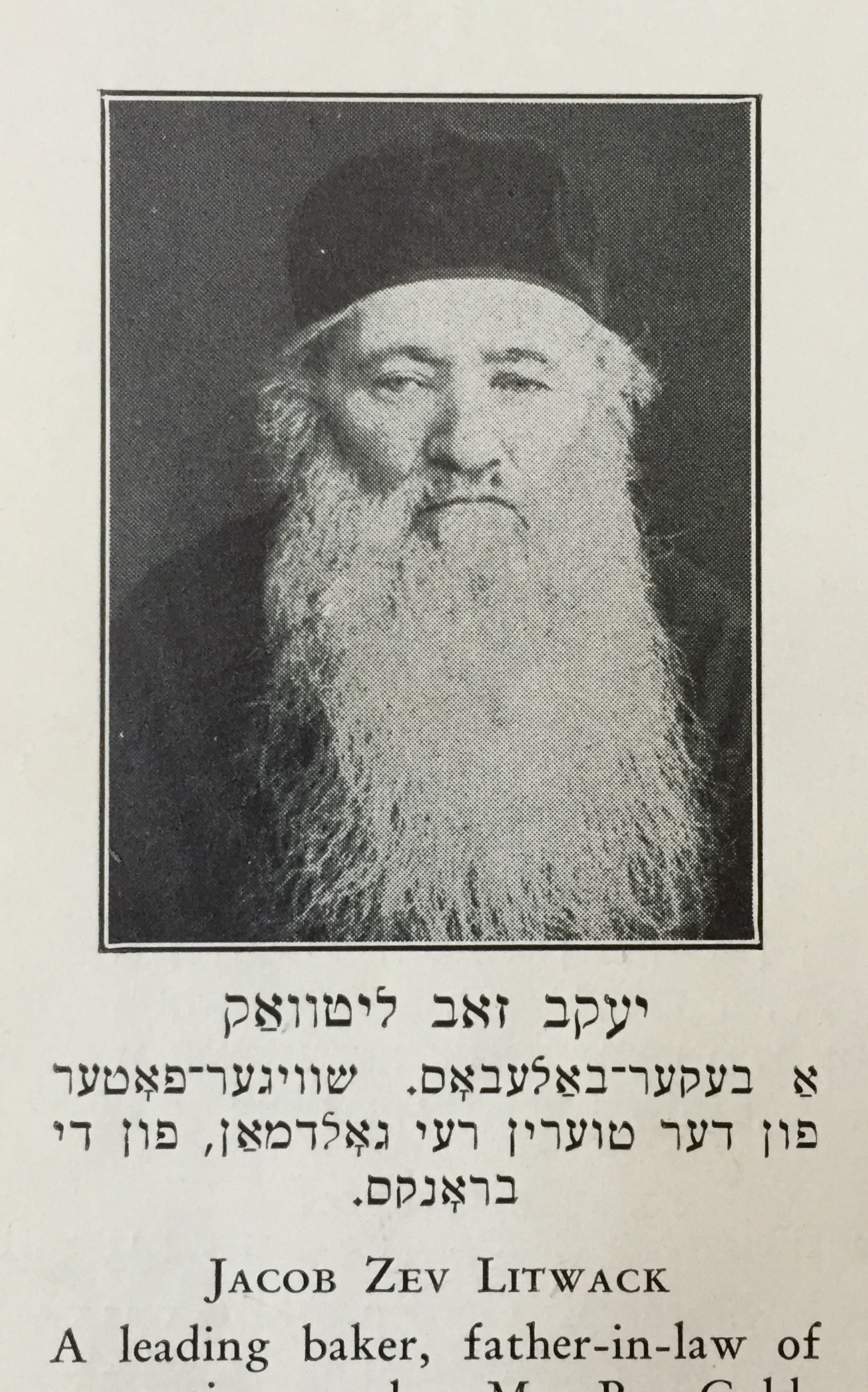
Because of this great new photo, I thought it would be great for my family to see all of these photos in one place: my grandparents, my great grandparents and the two sets of great great grandparents.  I also used both their Yiddish/Hebrew names and their English names when they were different, so that everyone knows these names as well.  Also you will notice my great great grandfather Jacob Zev Litwack.  This is not the last name that my great grandfather used when he moved to the United States.

This is my Thanksgiving gift.  The gift of identified photos!  Happy Holidays to all.


MATERNAL Family

Maternal great grandma Sara, she died very young.

Great grandma Chava when younger.

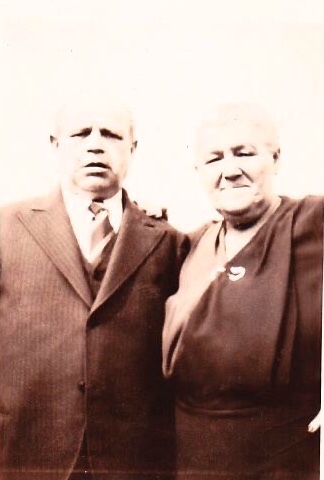
Maternal great grandparents/Chava and Gimple

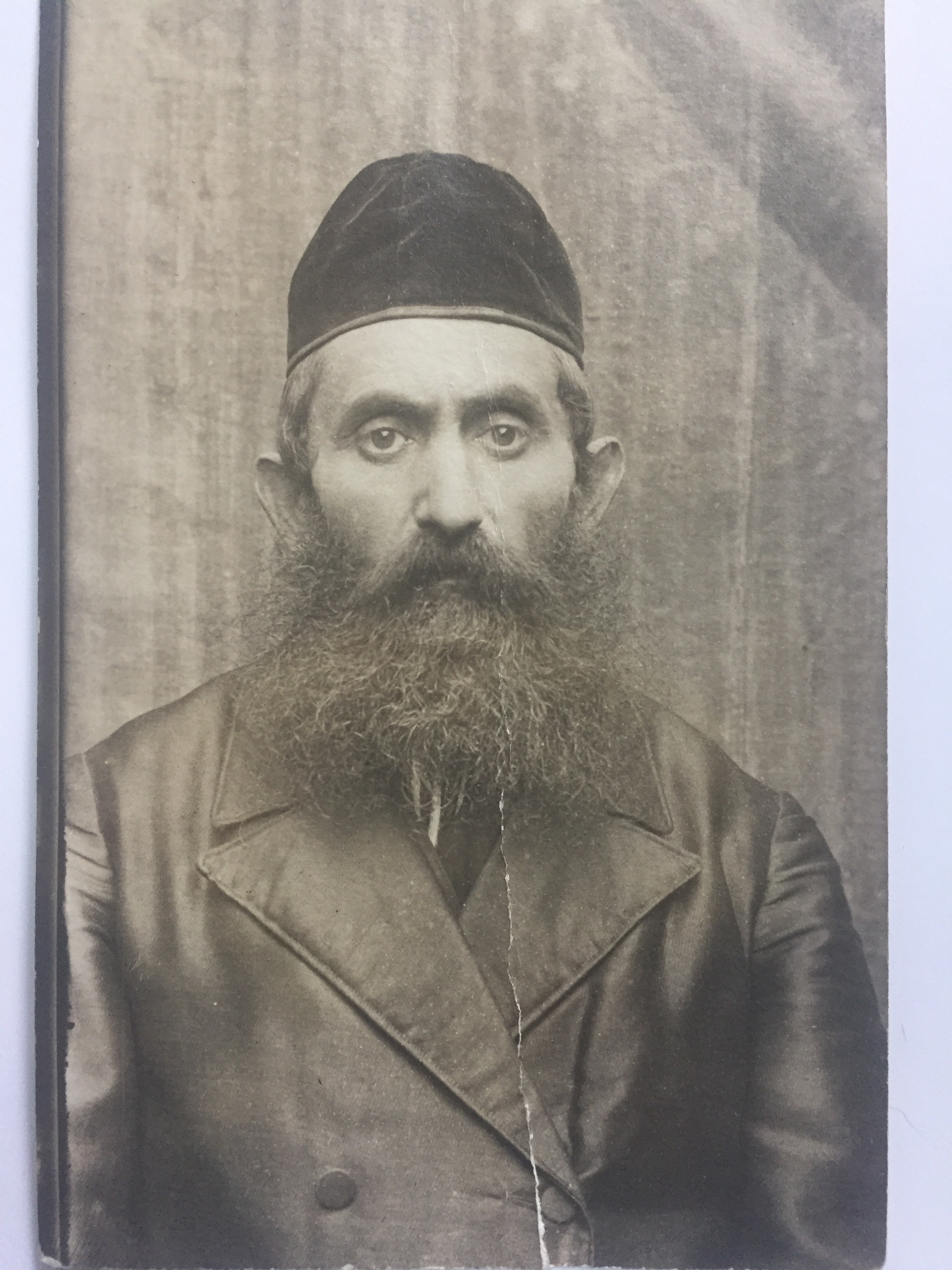
Maternal great grandfather/Shlomo/ Solomon Avraham .

Maternal grandparents. Taube/Tova/Thelma and Nissan/Nathan

PATERNAL Family

Paternal great grandma Sarah (The new photo!)

Baruch Lev/Louis and Rasha/Ray when they married


Paternal great grandparents Baruch Lev/Louis and Rasha/Rachel/Rae/Ray when older

Paternal great great grandparents Elka/Esther and Avigdor/Victor


Paternal great great grandmother Rasha/Rachel


Paternal great great grandfather Yaacov/Jacob Zev. (My great grandfather did Not use this last name in the USA )

Paternal grandparents Harry/Hirsh Zvi and Esther

Blog about my great grandmother and family mysteries: https://zicharonot.com/2019/07/18/some-of-my-paternal-family-mysteries-solved-but-not-all/

Other photos from my cousin:

https://zicharonot.com/2017/12/19/my-familiar-ancestor-who-we-cannot-identify/

https://zicharonot.com/2018/01/26/your-heart-just-gets-larger/


About my great grandfather, Baruch Lev:

https://zicharonot.com/2016/03/08/louis-of-the-blessed-heart/

Murdered In Belzec

5 Jun

I have not gone to the Yad Veshem website in years.  I already had all the information about my great grandparents.  But in writing about a mystery cousin, several people suggested I go see if he was listed at Yad VeShem.  He is not.  So I will assume he survived, (optimistic I know) and look elsewhere. (See blog below.)

However, the website looked so different, I decided to look at my great grandparents again. I knew that there was an entry for both of them. But when I first saw it, I could not read much of it.  Now it is all translated into English. More important, it was put up by a survivor, a cousin, someone I met in Israel in 1976 with my grandmother: Shalom Hollander.

I had not seen his name in 42 years.  When we met, in Haifa or Tel Aviv, Grandma and Shalom only spoke in Yiddish.  And at the time, although I did understand some of what they said, I did not really pay attention.  I heard so many holocaust stories when I was with grandma that month, and I was just 20.  (See link blog below.)

It has been many years since I last looked at the listing in Yad VeShem.   Besides their updated website, I have been on a mission to record what has happened to my family.

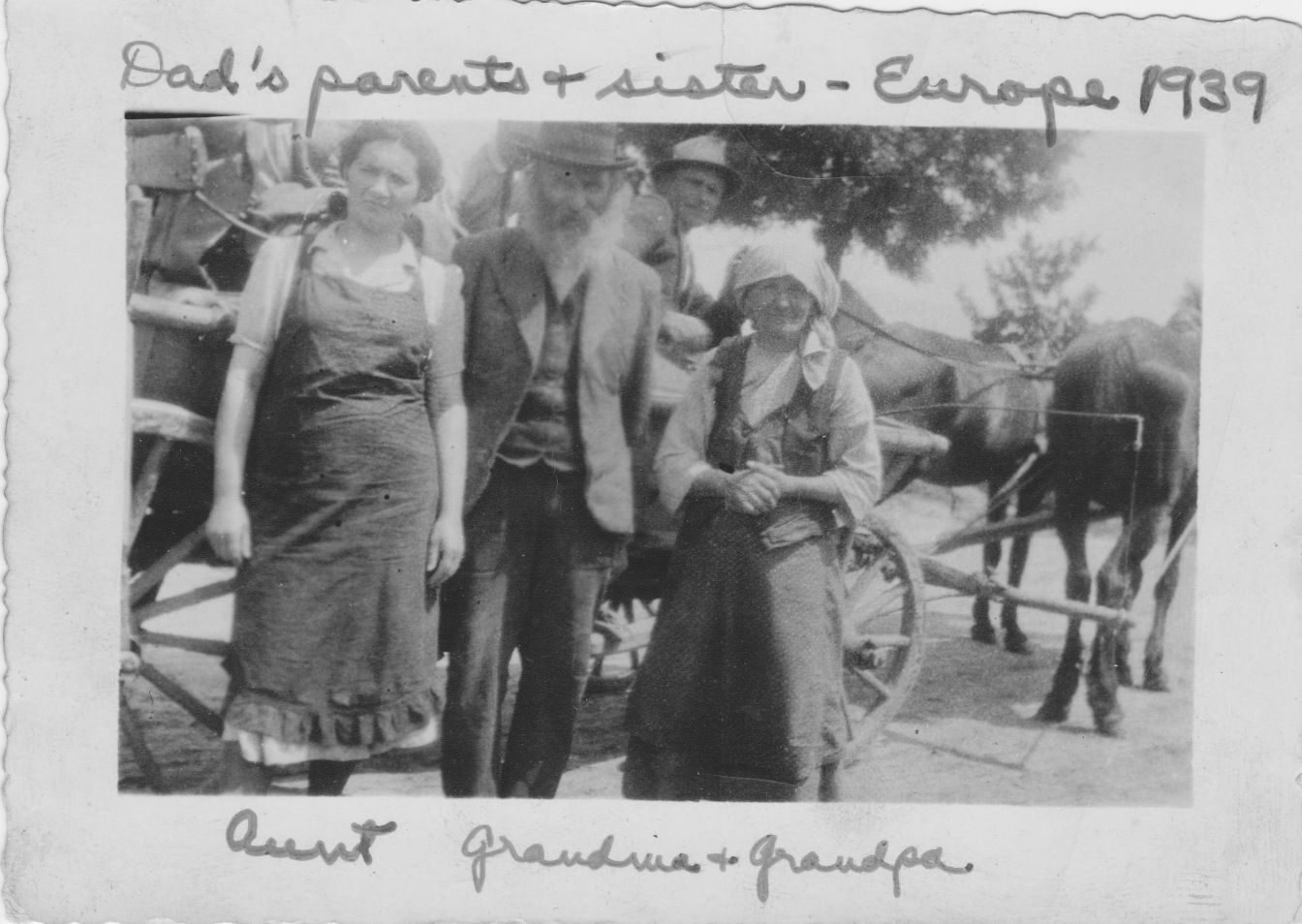
Recently I listened to an audio tape made by my grandfather in 1981.  I had it made into a cd earlier this year. (See link below.) In it he talks about the village where he grew up.  We always thought it was in Mielec.  Which it was to a degree, but it was actually in a small village near Mielec called Trzciana.

We knew that my great grandmother, Chava, was killed near her home. That she had been hidden and did not go to the concentration camps.  The Yad VeShem records confirm that she was murdered in Mielec/Trzciana.

I did not know which concentration camp my family had perished. I only knew that they had all died.   However the testimony provided by Shalom Hollander is clear.  They were murdered in Belzec.  I am not so sure I am happy about that. But I now know that is where Gimple Feuer, my great grandfather died.

In Belzec approximately 500,000 Jews were murdered. Nazis were killing people at Belzec for nine and a half months.  Thus, I now also know that my family was murdered between March 17 to December 1942.  But at Belzec the Nazis not only murdered and buried my family, when the war was near the end, the Nazis secretly dug up their bodies and burned them.   Most depressing is that of all the Jews who were sent to Belzec only seven survived according to Wikipedia.

In the past I have also tried to find any reference to my grandfather’s siblings.  My biggest problem is that I do not know his sisters’ married names.  However, the most amazing aspect of going to the Yad Veshem datebase this time is that I found one of my Grandpa’s siblings: Shimon. Born in 1910.  Single.  A merchant.  Murdered in Belzec.  I knew all my grandfather’s siblings died. But I never saw it in writing before: Murdered in Belzec.

Shalom also did the records for his own parents.  Mordechai Amsterdam, a cousin of my great grandma; and Tova (Tauba) Holander Amsterdam.  His parents were probably cousins as well, as we were all related: Amsterdam, Feuer, Hollander, Brenner.

But there it is.  Murdered in Belzec.  No one is named for Shimon.   I do not think Shalom Hollander had a family.  Or at least I did not meet them in Israel.  I guess my next job is to search for any of Shalom’s descendants.

I am still stuck on those three words.  Murdered in Belzec.

Thanks to Tracing the Tribe members for their suggestions, especially Amy.

https://en.wikipedia.org/wiki/Be%C5%82%C5%BCec_extermination_camp

https://zicharonot.com/2018/06/04/the-mystery-of-abraham-prantki/

https://zicharonot.com/2018/05/15/my-grandpas-voice-can-still-be-heard/

https://zicharonot.com/2018/05/01/zysel-ziesel-feuer-survivor/

https://zicharonot.com/2014/04/28/speaking-yiddish-always-brings-me-holocaust-memories/

End of the School Year Has Me Bringing Out My Old Yearbooks

11 May

img_7382

With the end of the school year coming, I have an urge to look at old yearbooks.  I have every yearbook from high school through college, as well as ones I mentored as a teacher, and now ones from the school where I work in a non-teaching role.

It is strange to see me as I age from 14 to now.  But one thing stays consistent, I was on the newspaper and yearbook staffs of high school, college and my year studying overseas.

It is strange when I look back and see where I began my interest in journalism and writing, to where I am now.   When I first started working on my high school newspaper, “Paw Prints,” and yearbook, Prelude,” at North Bergen High School, I never intended to go into journalism.  I wanted to be a psychologist.   I just enjoyed being on the school newspaper and yearbook, moving up to become one of the editors, but never vying to be editor in chief.  Just happy in the role I had.  It was fun, but not my main interest.

In college, at Drew University, I had the same view.   College was a bit disjointed and strange for me.   I spent my sophomore year in Israel doing a year abroad.  Most people go during their junior year, after they have made an impression on their friends and professors.

I went a year early, because a friend of my parents was on the board of the Hebrew University’s Overseas Program.  As a college professor, he thought being gone junior year was a mistake, and pressed my parents to send me a year earlier.  In 1974, it was unusual for students to go overseas to study at all.  For my parents to even let me go, and to go a year earlier, I think they were brave.

In any case, I lost a year of making a name for myself at the school and connecting with friends.  When I got back, it was a bit awkward, as I had to reacquaint myself with everyone and sort of start again in the school atmosphere.  Also, I was changed by my year in Israel, arriving there less than a year after the Yom Kippur War.  The me who left Drew in 1974 was extremely different than the me who returned in 1975.  I was resolute, braver and knew myself!

While I was in Israel, I actually worked on the Hebrew University’s Overseas Program yearbook. I am listed as one of the eight students on the editorial board. I have vague memories of working on it.  Being in Israel at that time was so amazing, I honestly feel as if a different person was there, each memory more of a dream then a reality.

When I came back, I had to decide what to do next.  I had to declare a major.   I now knew that psychology was not for me.  I had taken a neuropsychology class at Hebrew University where we went to look at brains and studied brain damage and its impact on a person’s personality.  The professor and I clashed. He believed left handed people were left handed because of underlying brain damage.  I am left handed.  I still remember him stating: “Ten percent of the population has brain damage, ten percent are left handed.”  I told him his logic was totally off!  No matter, it left a bad taste in my mind for psychologists.

I came back to Drew and decided to become an English major, with a minor in political science.  Now I was really busy.  I had to take many of the sophomore English classes, as well as upper level courses, so I could graduate in time.  I was taking 18 credits a semester.  I guess I should say, in time, for me meant early.  I wanted out of college.  I set a plan of action to graduate in 3.5 years.  I had spent three semesters learning in Israel.  The entire summer I had studied at the Ulpan learning Hebrew. That provided me with 12 credits.  I decided that by graduating early, I could save my parents some money…which I did.

Upon my return, I joined the newspaper staff, “The Acorn,” and the yearbook staff, “Oak Leaves.”  I wrote stories, worked on layout, and made new friends.  I was busy with all my course work…lots of reading and writing… and I also became a research assistant for Professor Chapman. (See link to earlier blog below.)

I was on a roll.  Although I still did not have journalism on my mind.

In my senior year I became one of the layout editors for the yearbook.  I let them know in advance that I would be gone second semester. But all went well…for a while.  I still remember my first indignant protest as a woman.   I was out of town for the weekend when the editor in chief wanted my layout pages.  Why he needed them, I don’t know. But he got my RA to let him into my dorm room and search it till he found them.

I was incensed.  The invasion of privacy was outrageous.  I when to the Dean of Student Life, Elynor Erickson.  I had an earlier issue with her my junior year, so we knew each other.  I told her what had happened and how furious I was about someone going through my things when I was not there.  She agreed. The RA got in trouble.  As did the editor in chief at the time. It was so wrong!  It still bothers me. But I had to stand up for my rights!

In any case, I do not have an official photo in the yearbook. I think he got his revenge.  Although I am in a photo of the yearbook staff and I am still listed among the editors.  Of course, it could be that I just was not there during the time the official photos were taken.  I have to be honest.

During that fall semester I was trying to decide what to do next.  My Dad would joke that he had paid for an expensive finishing school with my degree in English literature.  Also,  I really did not have a career in mind.  But I thought about journalism, and when I applied to graduate school, I included a master’s in journalism on my list.  I still was not officially going into journalism as a career.

However, at Drew, there was a January-term program.  You could take a one-month class over winter break. That year there was a class in journalism, and I decided to take it. I loved it. I excelled at it.  This class marked the start of my career path.

I had applied to three graduate schools: Columbia University and University of Missouri-Columbia for journalism, and Hebrew University for a degree in Jewish American Literature.  I got accepted to all three. So now I had a great decision to make.

Professor Joan Steiner, my advisor, as well as Professor Jacqueline Berke, who was my independent study advisor, seemed to think journalism was the best for me.   It also kept me in the country. They were routing for Columbia University. (Especially Professor Berke, as she was a Columbia graduate.) On another aside, I still have my independent study paper I wrote for my personal class with Professor Berke, “Alienation In th Novels of Saul Bellow.”  Originally I wanted to do Bernard Malamud as well, but that would have been a master’s thesis.
But I had another source of advice, Cecelia Whitehouse, my high school English and journalism teacher. (see link below.) She and I had kept in touch all through college. She was the one who had told me about the University of Missouri in the first place.  She thought getting out of the NYC area would be an eye-opening experience for me.  She was right!

The University of Missouri won out. I accepted their acceptance.

Eventually I taught high school journalism for a few years.  During those years, it was me who was the newspaper and yearbook teacher.  I often thought of Cecelia Whitehouse during those years.  I would think about how she handled issues with students. And I modeled my teaching on her.

I kept in touch with her and my college professor, Joan Steiner, for many years.  They both were positive and important role models!

My life was forever changed.  It started with school yearbooks and newspapers.


https://zicharonot.com/2014/01/19/my-days-in-the-english-department-office-at-nbhs/


https://zicharonot.com/2014/05/12/remembering-my-college-during-graduation-season/


Learning About The Civil War While in Arkansas

5 Sep

When I woke up Sunday morning, I did not expect my day to end up focused on the Civil War. It was not even a topic that was remotely on my mind. I was in Arkansas visiting friends and we planned a trip over to Bentonville to see another friend who was busy with pet adoptions as they prepared their shelter to take in animals from Houston. 

But politics and the Civil War were waiting for us in Bentonville. 

We arrived in Bentonville exactly on time to walk to the town square and meet up for lunch at a local restaurant.  For those who have not been there, Bentonville is the site of the very first Walmart store.  There,  along the town square, is the Walmart Museum. A peaceful little park with a statue fills the town square.  I was surprised to see an abundance of American flags in the center of the square surrounding the statue. 

American flags surround the the statue in the town square.


My Eureka Springs friend said to my Bentonville friend upon greeting, “Well you have had some excitement here.”  My Bentonville friend, “Don’t even go there!” So of course I needed to know.  That lovely little statute I had seen several times was actually a monument to the Confederate soldiers who lost their lives in two battles near Bentonville, the most important was the Battle of Pea Ridge. 

I  never realized what the statue was before.  We had seen it and walked past it and never really looked at it. But over the last few weeeks, quiet Bentonville had been the scene of protests over this statute.  

We left town square for lunch and all conversation turned to the rescuing of dogs from Houston.  My Bentonville friend was involved with a shelter that was receiving dogs that afternoon that were being transported up from Texas.  The day before a truckload of pet supplies had headed south. My contribution had been cat litter. Our discussion of the Civil War ended as we discussed Houston.   

After lunch we left Bentonville and headed back to Eureka Springs on a different road. As we traveled, we planned the rest of the day. My husband was checking his phone to see what was around when he came upon the Pea Ridge National Park.  We had recently purchased our life time National Park passes and were excited to use them.  We were not sure what we would see.  But were delighted.  It is a gem!

Pea Ridge Battlefield.


Who know that one of the most important and vicious battles of the Civil War took place in Arkansas?  Not me!  The battle that changed the direction of the war was here!  16,000 Confederate soldiers  met 10,000 Union soldiers on Pea Ridge in March 1862.  At the end of the two-day battle almost 3500 soldiers were dead.  Many more were wounded. This battle changed the balance of power of the Civil War in Missouri.  It was here that the Union defeated the largest Confederate army ever brought together and due to that defeat were able to keep the Confederate soldiers out of Missouri and head south to split the Confederacy in half. This battle basically set the course for a Union win. 

Elk Horn Inn was a privately own home used as a field hospital.


Here at the battle site stands the recreated Elk Horn Inn, which served as a field hospital, where soldiers from both sides were treated and many died during the two day battle. (Right in front of this building runs the Mikitary Trail road. This road was also the path of Cherokee Nation on the Trail of Tears. Over 11,000 Cherokee passed this inn between 1837-39.)

  Although many soldiers were originally buried at this site, the graves of the soldiers were disinterred in the late 1880s and moved to two cemeteries: one for Union soldiers and one for Confederate soldiers, both in Fayetteville.  But in a field near the Inn are two monuments that were placed in a plea for unification. 

The large open field where the soldiers met is reminiscent of Gettysburg.  In watching the movie at the museum and walking through the museum displays, one can feel the sorrow that this battle caused. One sign commented that local farmers could not plant crops that year due to the destruction and the blood soaked lands. Agriculture was destroyed. 

We drove the circuit around the battlefield, stopping at several key sites. This was a battle for our nation’s soul. This was a battle that changed the course of the war. And so many lives were lost. We spoke to park rangers at the Inn who explained in more detail what had happened there.  

When we drive from my friend’s home in Eureka Springs to Bentonville, we pass a house where the owner flies the Confederate flag. That always angers us. Why fly this sign of hate?  Why not honor those who died by joining together to work in unity, and as is honored at the Pea Ridge site unification. 


In the car on the way back we discussed the Pea Ridge site. The impact of what we had seen. The next day, the local newspaper, “The Northwest Arkansas Democratic Register, had an article about discussions the Bentonville  community will have in a public forum. 

My personal opinion: The statue of the Confederate soldier should be moved. If it was a statue honoring both sides, I would feel differently. But it is not. I believe it could be moved to the Confederate Cemetary in Fayetteville. A plaque explaining its history should be placed by it. 

I am not for destroying monuments, I am for placing them in sites where their value as a lesson could be used. We should not be honoring those who battled to destroy the United States through treason and sedition.  But we also can never forget what happened here in the Civil War. Losing that memory will also remove our collective history. And we should never forget that in slavary human beings were once treated as cattle.  And that is wrong.