Archive | Memories RSS feed for this section

Autumn Memories of the Great Fire

26 Sep

This is a memory of a Catskills event that could have been a disaster. It is about the day my brother and I almost set the entire forest on fire. I still get a cringe in my stomach when I think about it. But to be absolutely truthful, I also have to tell the not so happy stories as well.

My grandparents had purchased the ‘big house,’ about 1/3 of a mile up the road from their bungalow colony in Kauneonga Lake. When the purchase was made, the house and the bungalow behind it were a bit neglected. They were still livable, but there was much maintenance that had to be done to bring the property back to life.

Among the issues was that the brush and trees had grown up around the bungalow. This had to be cleared out … eventually.

It was September, probably around 1963, the year after they had bought the property. We had spent our first summer there, living in the bungalow, instead of at the colony.

My brother believes it happened in the spring. All I remember was the grey. 

That summer one of the boys, who lived in the house next to the ‘big house,’ shown my brother and I how he made fire circles in the forest behind our homes and set fires. He was a few years older than us and seemed very sure of what he was doing.  We were intrigued. It was fascinating and scary at the same time. We never made the fires, we just watched him.
That fall, when we went back up to the Catskills for my Dad to help my Grandfather close up the bungalows, my brother and I went into the woods behind the bungalow at the big house and made a fire circle.

I hate to even say what happened next. But compulsion for the truth is making me.

We were young. I was 8 and my brother was 9. ( My brother thinks we were a bit older.) We did not make a very good fire circle. The rocks did not completely form a circle. The leaves were all around. It was now autumn and the leaves and brush were dry. Even though we had water with us, we did not have enough. And, yes, the fire escaped from the circle.

My brother said the problem was the wind. When Billy taught him to make the fires there was no wind. He had started two or three that were no problem. He had me come out to see the last one, which escaped. 

My brother and I were frantic. We tried to put it out. We threw water on it. We stomped on it. But it would not go out and it was getting bigger.  We got our sister out of the bungalow. 

We ran to the house and told Grandma and Mom that there was a FIRE. We had no phone and no car there. They told us to run to the bungalows and tell Dad and Grandpa. I don’t think we ever ran as fast in our lives. My brother was ahead of me.   We screamed when we got to the bungalows, “There’s a fire at the house! A fire!”

Grandpa and Dad came running!

I honestly do not remember how they called the fire department. Except there was a phone in the laundry house, perhaps it was still connected. Or perhaps one of them drove into town. It is a blur in my mind.

My brother said that Grandma ran to Finks and they called to report the fire. 

They drove back to the house. I think my brother and I walked back. As we walked, we could hear the loud noise as the volunteer fire department sirens went off. When we arrived at the house , Grandpa and Dad were already at the bungalow. It seemed as if dozens of cars were their with all the volunteer firemen. Then the fire engine arrived and drove up the long driveway to the bungalow.

We were lucky. The firemen put out the flames before they reached the bungalow or any other buildings. The fire never made it to the woods. The forest was safe as was the bungalow colony (Top Hill) that backed up to the side of our woods.

The brush and small trees to the sides and behind the bungalow were brunt and now filled with water.

The fire chief and my Dad and Grandpa talked for a while. My brother and I were scared. We knew we were in BIG trouble.

They came to talk to us. “We think it was spontaneous combustion,” they told us. “There were lots of bottles and rags hidden in the brush. We think that is what caused the fire.”

“What is spontaneous combustion?” I wanted to know but I kept quiet. They think that is what started the fire? I felt a sense of immense relief. We were not going to go to jail!!!

My brother and I nodded our heads. Of course they all knew the truth. But that is what the volunteer fire chief was going to put in his report. He knew us and our parents and our grandparents.

The firemen cleaned up, packed up their gear and left our property. They told my Dad to keep a hose near the scene of the fire, and keep checking it to make sure there were no flare ups. I think he watched it through out the night.  But there were no problems. The fire was OUT!

My brother and I walked back with our parents and grandparents to see what had happened. Grandpa and Dad sort of smiled at each other. “Well at least you cleared out the brush,” we were told. “But do not ever light a fire again. You could have set the entire woods on fire!!!’

We were told not to ever touch fire again. This was said to us multiple times for the rest of the weekend.  I think because we were so scared, they decided our fear was punishment enough.  Our only punishment: my brother and I had to help clean out the brunt brush, grass, small trees and junk that was left behind the bungalow under the watchful eye of my grandfather.

My brother says he had to dig out all the burnt blueberry bushes and clean out all the brush and plant the new grass. I did not have to do as much. 

We never, ever set another fire!

I have been scared of fire ever since. I always worry that it will get out of control. I don’t own a fire pit. I never light my fireplaces. I keep fire away from me. The memories of the Great Fire have stayed with me forever.
 

What I Learned in My High School Typing Class Has Helped Throughout My Life

24 Sep

When I attended North Bergen High School in the 1970s, I took both a typing class and a short hand class. I did not want to. Typing and short hand classes were for the students who were not going on to college. And I knew that I would go to college. But my Mom made me take them.

“You never know when you might take a job that requires typing,” she said, and added: “These are good skills to learn.” I argued back, but obviously I lost.

My MOM insisted. So I took those two classes when I was a freshman in high school. I think one of the teachers was Miss Wirt. It was not the most exciting class for me, but by the end of the semester, I could touch type to the required words per minute without too many errors.  Being in class with good typists was a bit intimidating (As my friend Shashi reminded me). I will remind everyone that typing on a typewriter was much different than typing on a computer keyboard.  First there was the click clack of the keyboard.  You could tell how fast someone was typing by how quickly the clicks and clacks came together.

I did use these typing skills when I was on the staff of Paw Prints, the school’s newspaper. We had to type all of the stories into columns for them to be put into the layout and then copied and printed. I learned out to measure the space and fit the letters/words into the space correctly. A skill that came in handy much later in my life.

I have to say that my Mom was right. I will tell you that the skills I learned in the typing class have stayed with me forever. It is almost as if my Mom had telepathy and knew that eventually typing would be a much appreciated and required skill for college students.

Thanks to my typing classes, I excelled in my college and graduate school classes in the sense that my typed papers had very few typos and/or needed corrections. While I had friends who often had to hire someone to type their papers, I was set with my little typewriter.

In fact, only once in all of my undergraduate college career did someone type a paper for me. But there was a reason. My very last college paper at Drew University was due when I had an accident involving one of my eyes. After a long visit in an emergency room, I realized I could not type this paper since I had a large patch over my eye. Luckily for me, I had a great friend, Shari, who lived in the same dorm and was my savior. She typed the entire paper that evening in time for my morning class.

Later when I went on to graduate school, for journalism at the University of Missouri-Columbia, my parents bought me the most wonderful gift, a self-correcting typewriter. This was the best typewriter available with a second ribbon of white out, so you could just back up, lower the white-out ribbon, and then cover the error and then retype. Amazing what was wonderful in the days before word processors and computers.

My typing class made it possible for me to complete my master’s degree exam in plenty of time. We had to answer four questions and had one hour to write the answer essays. They had to be typed. So as we thought out our answer, we had to actually type instead of write. I came to the exam with my typewriter and ribbons and succeeded.

This typewriter was also an important part of my Master’s Thesis, as I could easily correct mistakes.     Writing a thesis before computers was a nightmare. You had to estimate how much space to leave for footnotes. Getting everything perfect took experience and spatial coordination. As I said earlier, many people had to hire someone to type their thesis. But not me, as I knew how to type and I knew how to make words fit. Thank you Miss Wirt! Thank you Mrs. Whitehouse and my Paw Prints work!

The short hand class taught me the basics of taking quick notes using some symbols. Knowing a few of these symbols came in handy when I did an interview. I could write quickly by not writing all the words and using short hand instead.   Thanks to my Mom insisting that I take this class, my interviews as a grad student in journalism were always accurate. Yes I had a tape recorder as well. But some people did not like to be recorded. So accurate note taking was important.

I will admit that I have forgotten most of these symbols. And when I look at short hand symbols today they look like hieroglyphics. But when I was in graduate school I was so happy that I had an advantage.

Although I do not use the short hand, my touch typing skills are something I use every day for work and for pleasure. I am using those skills as I type and write this blog!

With the advent of computers, everyone needs to know how to use a keyboard.   Today touch typing, or as it is now known – keyboarding — is a skill that children are taught in elementary school. If you cannot type, you cannot use a computer successfully. Although probably in a few years, people will just talk to their computers and to have their thoughts put down, just as we talk to our smart phones to type a short message to someone.

It is amazing what a good teacher can help a student learn. I went into my typing class with a chip on my shoulder, not wanting to take it. I came out with a skill that has been with me for over 40 years. What I learned in typing class has helped me throughout my life.

The Legacy of Woodstock

17 Aug
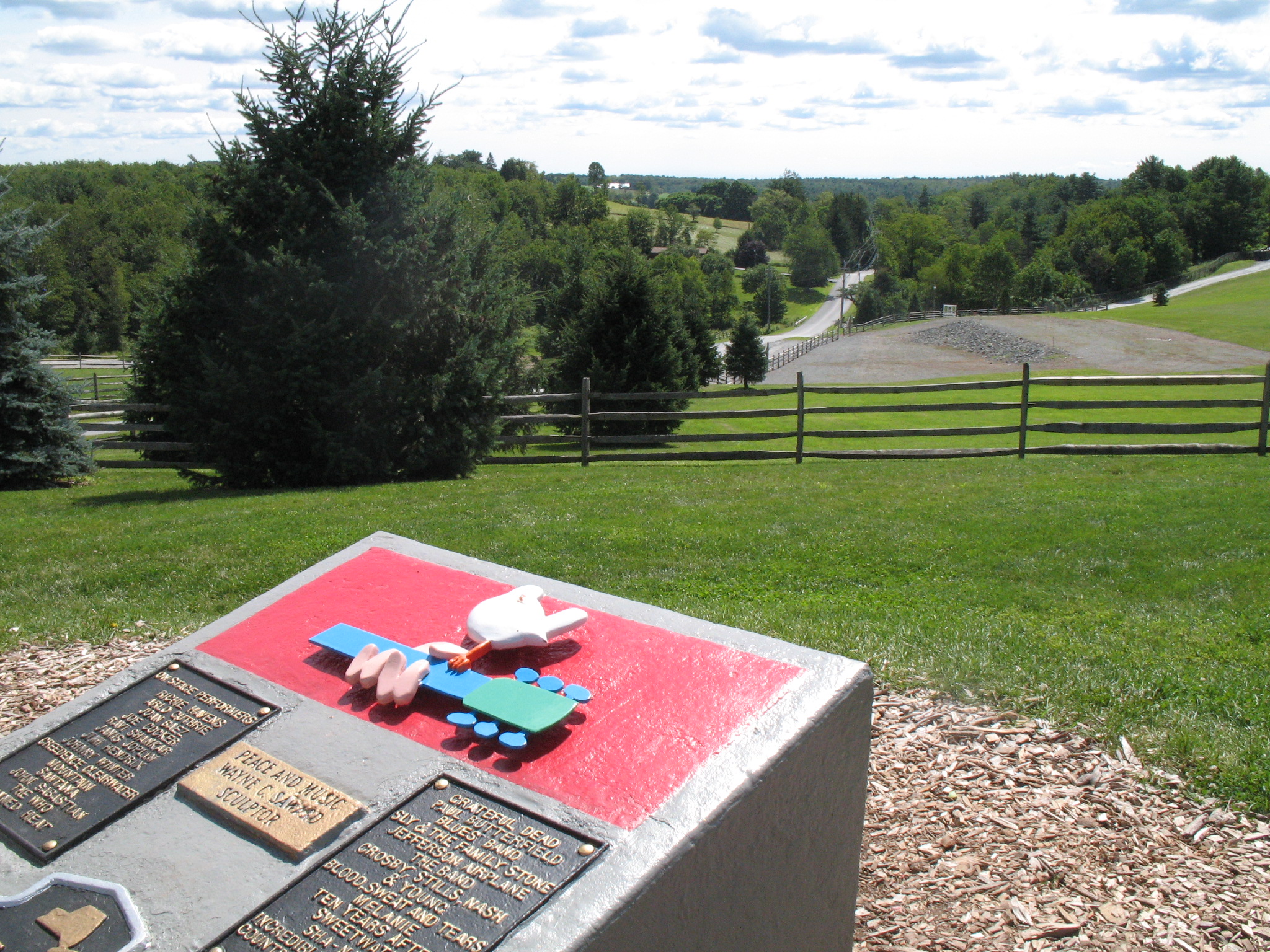
The view toward the stage and West Shore Road.

The view toward the stage and West Shore Road.

It is amazing to me that an event that divided a community; created havoc and orderly chaos; memories that lasted a life time, both bitter and joyful, is now the reason why the Town of BethEl, White Lake and Kauneonga Lake in Sullivan County, NY, might actually survive.

It was the Woodstock Festival that put these small towns in the eyes of the nation. I remember that weekend and the weeks that follow so well. My grandparents owned a small bungalow colony in Kauneonga Lake and we spent each summer there for my life. My grandparents had made Kauneonga Lake their year-round residence. They knew everyone. They were active in the community and the synagogue.

And I remember the hostilities and disruption that came after the festival was over and most of the people had left.   I say most because a small group stayed behind and never left the area.

I see my Dad trying to direct traffic in front our home. And letting a few vehicles park on our long driveway and front lawn.   I remember the people who came to ask if my grandfather would let helicopters land on our lawn. (That would be a NO.)

I remember the police on horseback trying to ride up the hill to the Woodstock site.

And I remember the mess afterwards. The days upon days to clean up the debris left behind.

The symbol used throughout the town of Kauneonga Lake.

The symbol used throughout the town of Kauneonga Lake.

But now that same event that caused pain for many, especial the Yasgurs, is now the reason for renewal.  It so amazes me now that the sign of a bird on a guitar that was so hated by some of the townspeople, is now redone as a bird on a leaf and is  symbol used in the town. And even a horse stable uses a take off of the iconic sign as its symbol. Wow! How the attitudes have changed.

Even a stable uses a sign to remember Woodstock.

Even a stable uses a sign to remember Woodstock.

At first the site of the Woodstock Festival became a legend and people would come up each summer on a pilgrimage to see it and talk about it. There was no monument. A group of people, the remains of the Hog Farmers who had helped at the concert, who hung out there to tell the story. Over time a monument was built, and the field was left empty.

Those who love the area owe thanks to one family’s vision, Alan Gerry and the Gerry Foundation. I believe it is thanks to him that the area is surviving the loss of income from the bungalow colonies. As the colonies closed or came under the ownership of orthodox Jewish communities, the area became desolate. But then in 1997 the Gerry family began it’s interest in the Woodstock site.

With the development of the Bethel Woods Center for the Arts, Bethel and White Lake and Kauneonga Lake have had a small rebirth. Each summer I come up and I see new restaurants, new stores, new houses even. On the weekends I hear the sounds of cars whizzing by our home before and after concerts.

People come to hear the music and to visit the Bethel Woods Museum. Every summer I take a journey the almost two miles to visit the Woodstock site and take a photo. I remember the blocked roads, the multitudes of people. I remember my grandfather’s reactions to all the young adults walking by our home. “Where are their mothers?” He kept asking as he shook his head.

But along with the memories of 46 years ago, I also see the new site. I have to tell you, it is wonderful!


Treasures in the Bookcase

16 Aug
Bound Copies of the Bialystoker Stimme from 1922-1941. Several were personalized.

Bound Copies of the Bialystoker Stimme from 1922-1941. Several were personalized.

I honestly thought that we had discovered all the treasures in our Catskills house. Last summer my siblings and I had torn the house apart, filling a 20-cubic yard dumpster with unused and unusable items.   We had discovered a mother lode of photos and a photo album from the 1920s that I am still slowly scanning and finding more information about our maternal grandmother and her family.

But I had forgotten about the old bookcase in the corner of the living room. I actually did not think about it until the very last day we were in the Catskills this summer, when I got a ‘jubba’ as my grandfather would say — a feeling that I had to open the glass door.

My Grandma Esther's bookcase in the corner.

My Grandma Esther’s bookcase in the corner.

We now call it my brother’s bookcase. But in reality it was my paternal grandmother’s and before her it belonged to her parents. Since they lived in the same apartment, there was no real distinction. The bookcase came with the books in it after my Grandma Esther passed away. Over the years, new books were put in and the older books migrated to the bottom shelf.

We have placed it along side the fireplace behind the television. It acts as part of a wall, so that the area behind the fireplace can be used as a bedroom when needed. This semi-room holds an old upright piano, a trundle bed that opens up to two twins, and a computer desk. So we usually do not even think of this piece of furniture as a bookcase, but more of a wall divider.

In any case, my ‘jubba’ called me over to the bookcase about an hour before we were planning to drive home. And inside of it, I found treasures! Nine books containing bound copies of the Bialystoker Stimme from 1922 through 1941, as well as a 45th anniversary book.   My great grandparents, Louis and Rae (Rachel) Goldman, were very active in the Bialyskoker group in New York City that founded the Bialystoker Home for the Aged.   In fact, he was on several important committees and boards.

My great grandfather top right.

My great grandfather top right.

My great grandfather was elected to the board, or re-elected in 1936. Louis Goldman.

My great grandfather was elected to the board, or re-elected in 1936. Louis Goldman.

While just skimming through the bound copies, I found announcements of both my Dad’s and Uncle’s bar mitzvah. These were in English. The Bialystoker Stimmer was printed mainly in Yiddish. But there were also a few English pages or a few English paragraphs in almost every copy. I also found photos of my great grandfather on several pages that announced committee and board members.

His 70th birthday

His 70th birthday

But the best was a photo of him and a paragraph in Yiddish celebrating his 70th birthday. I can read enough Yiddish to recognize his name and a few other words. To be honest, I do not know what it says yet. But I will find out.

That was with just a quick skim. I needed these books.

I told my sister that I had to ship them home and search them. Since we found the books in what is my brother’s bookcase, my sister sent him a text asking if I could ship them to Kansas.

They both agreed that the books should come home with me, as I am acting as the family historian.   I was so excited. It was well worth the $40 I spent at Staples to ship them home.

Today the books arrived!

An article about my great grandfather. I also need to get this translated.

An article about my great grandfather. I also need to get this translated.

As I continued to go through the books, I found what appears an article about him. It, too, is all in Yiddish. I know I will need it translated. I am excited to know what it says about him. I know he was a tailor.

My Dad's first cousin, David, 1938. I think he graduated high school at age 16, but I need a translation.

My Dad’s first cousin, David, 1938. I think he graduated high school at age 16, but I need a translation.

I cannot read all the Yiddish, except really for the names and a few words. But in skimming the books I sometimes see a photo that jumps out at me. Like the one of my Dad’s first cousins, David. Well, it looked like a very young David. I was right, it was him at age 16, when he graduated high school. This article is also in Yiddish. I need a translator!!!

I realize that I will never know if my great grandparents were mentioned in other places. But I am taking photos of every page that has a photo or a mention of my family that I can find.

But besides the book, I posted the photo of my great grandfather Louis Goldman and the small article on the “Tracing the Tribe” Facebook group. I was hoping someone would be able to translate it for me. Although that has not yet happened, I remain hopeful. But someone posted a link to the Bialystoker Center Yahrzeit Cards website. There I found the yahrzeits for my great grandparents, my grandparents and my great aunt. I will say that the Hebrew name for my grandfather is wrong on the site. But it is definitely him. That was also interesting to see.

I started with the books from the 1940s, I am now in the 1920s.  There is much more Yiddish and much less English in these earlier books.  I am hoping to still find more treasures in them.  But to see members of my family mentioned in these early archives makes me so happy.  I knew my great grandfather was an active volunteer.  These books confirm what I had heard.  My heart is happy.

I hope to find a good home for these books after I am done investigating them. There are many other families mentioned in the books.   I do not know how many people saved them.   In our case it was benign neglect. We did not know they were there, so they were just ignored.   And allowed to survive. A happy, lucky find for me and my family.

PS: Thanks to Sabena and her Yiddish teacher who translated the paragraph about my great grandfather:  “Mr. Luis Goldman, has just become a septigenerian (70), and if he himself hadn’t told us, we would certainly not believed it. Mr. Goldman is among the most active people in Sumkh Nuflim (I think that’s a place) in the Center and in the old age home where his work is greatly admired. We wish him a lot of further birthdays with joy in his family.”

PPS:  The Yiddish Book Center in Amherst, MA, would love to have the Bialystoker Stimme books!

http://kehilalinks.jewishgen.org/bialygen/Yahrzeit.htm

My Grandma Always Won At Solitaire

11 Aug

Grandma Thelma was not a good loser. In fact, I would have to say that she hated to lose, especially at cards. It did not matter who she played with, a solitary game or against one of her grandchildren. Losing was not an option for grandma.

She loved to play solitaire. And her endless days in the Catskills during the winter months gave her plenty of time to play. But she played even in the summer when there were many people up for the summer.

Grandma would eagerly deal out her seven piles of cards and start a game. But if it wasn’t going well, she might add an eighth pile. Or perhaps count out her three cards in a slightly different manner. Or maybe check the cards that were turned over to see where the card was that she needed.  She would then work to get that card uncovered.

We would protest! “Grandma, That is cheating!”  She always denied it. To her it was winning. Why play a game by yourself if you were going to lose?  She said she was not cheating, she was just changing the rules.  But rules are meant to be followed.  Not to Grandma, if she had followed the rules, she once told me, she would not be here. She would have died in the Shoah.  So you make the rules so that you win. To some degree I could not argue with that.

However, there were times she would never make up her own rules. During the summertime daily canasta games with three longtime friends (including my other grandma), she played honestly.  Doing anything else would have been a disaster. And when you play with a partner, it is much more difficult to make your own rules, since you both have to play as a team.  But to be honest team work was not my Grandma’s strong point.

She also never cheated during the weekly gin rummy game that the women of the colony played when the husbands were in the City. It was for money! A penny or two per point depending on the win. When she played for money, she always followed the official rules.

But with her grandchildren, the three of us who spent the summers in the Catskills, she would often follow her own rules.   Sometimes is was as simple as taking a peek at our hands.  I admit we were a little lax on holding our cards close to our chest.  But when playing gin rummy with Grandma, we learned quickly to keep our cards hidden. She would warn us once if we held our cards where she could see them. But if we made that mistake again, forget about it, she looked.

On rainy days, when we were stuck inside for the entire day, my Mom would often ‘kick’ us out of the bungalow and send us across the lawn to our Grandparent’s house.  They lived there throughout the year and had a television.  But that was not our true reason for going.  With our Grandparents we played cards or baked or just visited.  The card games, however, were epic battles.  They could go on for hours as we played gin rummy for points.  Or perhaps a canasta game, the three grandchildren and Grandma.  Or perhaps a canasta game for two.  Hours of entertainment,  And my Mom would get a break.

My brother believes (and it is true) that she would rearrange the deck, stacking it in her favor, if you had to leave the room for a minute. I remember often calling for someone to watch Grandma while I ran to the bathroom.I would bring my cards with me,  I knew that if I left my hand unattended, I would not win.  Sometimes, if my brother or sister were around,  I just asked one of them to play out the hand.

You might think that she not a good role model by all this ‘cheating.’  But she really was so obvious about it, and never sneaky, that I am a little adverse to calling it cheating.  We knew exactly what was happening.  We knew she just did not like to lose, but at the same time she knew that she was not really winning.

It became a running joke.  I remember once telling a friend that my Grandma always won at cards.  She was amazed. “How did she do that?” My friend asked.  “She must have been really lucky.”

“Well, luck had nothing to do with it,” I admitted.  “She created her own rules.  And in her rulebook, my Grandma always won.”

At The Cemetery Visiting Those We Will Always Love

4 Aug

It has been over two years since we finally held the unveiling for my parents and brother in law. They died over a difficult 15 months. One funeral was more difficult than the next. In between my aunt passed away as well. Four new graves in a family plot.

The unveiling was emotional and miserable. Not just because we uncovered all three stones on the same day, but because it was held during a deluge of rain. The heavens were crying for us, as well as the over 80 people who showed up to remember our parents and my sister’s husband.

I have not been back to the cemetery since then. I live in Kansas. The cemetery, Beth El, is in New Jersey. I have not wanted to bug my sister about It when I was in town. But when I was in New Jersey this past March, I mentioned it. And she seems oaky.

Now I am back in New Jersey with my son to spend 12 days with my sister, niece, brother and other family members. We already spent a weekend at our Catskills home. It is filled with memories of our grandparents, parents and others. Over the weekend, I once again mentioned my desire to go to the cemetery.

My sister was fine. “Let’s not take the kids,” she suggested. I agreed.   They are in their early 20s. But I know that going to the cemetery is not something they want to do. It is still painful for them.

I meant to take stones from the Catskills back to New Jersey with us. But I forgot. In the last minutes as we were getting ready to leave, our children were impatient. I should have picked up some stones earlier, but we were busy visiting and just relaxing.

So this morning I went outside with a ziplock bag and searched for small stones around my sister’s home. Although my niece did not think I would be successful, I found enough stones. It is a Jewish custom to leave stones as remembrance on a grave, not flowers. And I needed at least 12 stones.

Our family plot includes all four of my grandparents, my parents, two sets of aunts and uncles, and another uncle. We are fortunate that my aunt is still alive. In fact we have plans to see her and some cousins in the City this week.

My brother in law is buried directly opposite my parents. My sister put the biggest stone on his grave. I had selected it for him, since it came from his house.

Then we turned and went to our grandparents. We went by couples, my sister putting a stone on one grave, while I put a stone on the other grave.  We read each name in English and Hebrew. We spoke about each of them, just a little remembrance: our grandparents, our parents, our aunts and uncles.

For the first time I really focused on their Hebrew names, I have begun to realize how important graves are for those studying their family’s genealogy.  Especially since I had joined the group, Tracing the Tribe.  I realized that some had left off the Levy designation.  And one did not have the Hebrew name.  Would that lead to problems for future generations? Perhaps not, since they were all together.

I had a stone left. I had picked up 13. We knew just a short way down from this family plot was our cousins’ grandparents. So we walked to visit them as well. We stopped and put a stone on Grandma Rose’ grave, we read her name and remembered her. And although we did not have a stone for him, we read the name of Grandpa Asher. My sister did not remember him as she was only three when he passed away. So I told her something about him.

In the same plot are the graves of one of their son’s in laws. So we read their names as well, and I remembered them.

My sister does not remember Grandpa Asher and the other couple as well as I do. Three and half years in age makes a difference. But I felt it was important that all of their names be remembered.

After we were done, I took photos of all the graves. Do other people do that? Or is it a Jewish custom? I am not sure. But since I am so far away, I wanted this memory.   I am not sure when I will be at their resting place again.

As we pulled out of the parking lot, I started to cry, a little.  My sister admonished me.  “NO crying when we are driving.  If you cry I will cry.”  I stopped.  Driving and crying are not allowed.

So on our drive home we spoke about our great grandparents. Two perished in the Shoah. We have no idea where they are buried, or even if they were buried or burned. One died in Europe in the 1920s. Not sure if her grave still exists, so many were destroyed by the Nazis and the townspeople. Four are buried in the NYC area. We need to visit them at some time. We know were two are, thanks to our cousins. But the third and fourth we are not sure. And one we think is in Seattle, Washington.

I remember one of my great grandmothers. She passed away when I was not quite three. My sister is named for her.

We say in our tradition, “My His or Her Name Be a Blessing.” We name our children for those who passed before us. My brother, sister, cousins and I are all named for our great grandparents. Our children are named for the grandparents who are buried in the plot in New Jersey.

These are the graves of people who were blessings in my life, in my family’s life. I am glad we went to the cemetery this morning and remembered those we loved and still love. Those whom we will always love.

Watermelon Helps Make Summers Wonderful

28 Jul

image

I love watermelon.

In the summer, on a hot day, it is the MOST refreshing of all fruits.

I love eating it cut up in chunks. I love eating it in wedges.

I love it for breakfast, lunch and dinner. I eat watermelon for snacks.

Buying me a watermelon is buying me joy.

This week, with the temperatures and heat index going above 100, I knew I had to get one.   So I went to Costco, walked to the giant bins of bright green watermelons and searched for the best. I picked a few up and thumped. And finally I heard the noise I liked the best. I had found my perfect watermelon. Total Joy!

When I was little my brother and sister taunted me by singing, “Ellen, Ellen Watermelon.” I actually remember all the cousins and other children at the bungalows singing it as well. It was my Catskills nickname as a child. In fact, there are a couple of adult friends of mine who still call me Ellen Ellen Watermelon. It might have bothered me a little bit when I was younger. But truth be told, I love watermelon. So now I do not care at all.

I always got a thrill when I saw my Dad bring a watermelon into the bungalow. He would be the one to cut it up, not my Mom. He would usually cut it into quarters and then make triangular strips. That meant it was really just for us.

If he cut it out of the rind and made chunks, that usually meant he was making it for lots of people and it might be part of a fruit salad. My Dad would make one side of the watermelon into a giant bowl and put the fruit salad back into it. I never do that. But I always helped him by making the cantaloupe and honeydew balls with a special scoop.

I learned to make fruit salad from my Dad. Now, I love to make fruit salad. I like chopping up fruit to make the best combination of fruit flavors. It brings me memories of Dad, and for some reason chopping fruit relaxes me. Whenever I go to a pot-luck dinner, I bring the fruit salad.

Personally, for me just watermelon would be fine.   I like it best cut up into inch to two-inch chunks. Then I fill up a bowl and just snack away. I usually like it on its own, not mixed into a salad. Why mess up the best fruit ever, well except for blueberries, by mixing it with other melons. Yes some like cantaloupe and honeydew. But for me, only the watermelon is enough to make me happy. Although I have been known to mix blueberries and watermelon together for a special treat.

Watermelon has other uses as well.   There have been many a watermelon seed spitting contests at our home in the Catskills. And it is not just for children. I have seen many a grown man and woman spit out their seeds to see whose goes the furthest.

What other fruit gives you the joy of eating and the ability to play with it without anyone yelling, “Stop playing with your food.” Even my Dad would spit watermelon seeds. I remember one contest in particular that included my husband, brother, brother-in-law, Dad and a first cousin.   We were all adults. And we cheer them on.

Best fruit ever, watermelon always helps to make summers wonderful.

Getting Ready for The Catskills

23 Jul

Next week my son and I are going to New Jersey/New York for 11 days. It is the first time in five years that I am going back east without a purpose. I have no ailing parents anymore, as, sadly, they passed away. I do not have to clean out an apartment or a house. This is not the unveiling. I do not have any meetings plan. We are just going for fun. I have not gone back home just for fun for a long time.

We are staying with my sister for a night and then my son and I and my sister and my niece are driving up to the Catskills to stay in our family home. My brother, and perhaps his wife and/or daughter will meet us up there.   We do not have to clean the attic, basement or house out. We do not have to fill up a dumpster. We do not have to do anything but enjoy the house, the grounds and relax.

Wow. We will see our cousins. We can walk into town. We can eat at a restaurant. Perhaps we will go to Bethel Woods? Who knows? We have no plans. It will be like old times…. Sort of.

My parents will not be there. The annuals my grandparents and then parents planted so lovingly will not be planted. There is no food awaiting our arrival. No special treats hidden away in the special cookie tin. We have to buy all the food ourselves.

There will be no one to welcome us when we drive up the long driveway to the house and no one to stand outside and wave as we drive away.  We will miss their smiles and their welcome.  But I know that they will be so happy to know that we are there, and that the house is alive again.

IMG_4872

Our home in Kauneonga Lake is our happy place. There are so many wonderful memories. SO many stories embedded in the essence of the house. So much laughter, and some tears. So much of my being was formed by events that occurred in that house. I would not be who I am if I had not spent my summers there.

I close my eyes and see the many outside activities that reside in my mind’s eye: croquet, bocce, baseball, running in the rain, watching the stars.   Each memory is a delight. My grandfather was colorblind, each year we never knew what color the furniture would be: a crazy quilt of chairs and tables. Sitting around on brightly painted wooden lawn furniture discussing whatever topic we decided.

My grandparents’ laughter; my parents’ commands; my brother’s and sister’s voices; the house resonates in sounds of love.

And then we walk down West Shore Road to where my grandparents’ bungalow colony once stood, we do not miss out on memories. We pass what used to be Kauneonga Park, the Fink’s bungalow colony, home to our grandparent’s good friends, Sidney and Bertha. The colony has changed now, but in my mind I see them and the way it was when I was a child or a teen. We also pass the White Lake Homes. If we walk through the streets there we can pass the home of Nan, a friend of my grandmother’s who was always embroidering tablecloths.

IMG_0253

Further along was the house of a friend of mine. His house abutted the Lake. Now there are giant homes there. But in my mind I still see the little homes.

We pass Cooper Drive…so many memories there as well, with friends who stayed there over the years. Then we walk on to the area where our bungalow colony once stood.   Now two of our cousins have homes there. Although some of the original bungalows no longer exist, houses stand in their places.

Our cousins are part of our childhood. We had so many adventures together. We grew up in the heyday of the Catskills: the 50s, 60s and 70s.   No one can take that joy away from us. We are more than just cousins. Our summers in the Catskills made us so close. We were more like siblings. And sometimes we bicker like siblings. But we share the joy of being in the Catskills.

We will share meals and memories with our cousins. We will sit by the beach and perhaps go out on a boat. The children, not us, but our adult children, will go boating and jet skiing and waterskiing. And now there are grandchildren to watch as they learn to love the Lake and the Catskills.

I CAN NOT Wait!

This time next week I will be getting ready to drive up to the Catskills. My heart is already singing with joy.

The Sad Scandal That Forever Scarred My Grandpa Harry

14 Jun

My paternal grandfather, Harry, was a difficult man to love. He never hugged us or played with us. He kept his distance, except to sometimes reprimand us from eating too much cake. “The Trolley Car Stops, Too,” he would intone if we spent too much time at the dessert table. Or to tell us to “Quiet Down.”

In the summers he would take long walks and sit by himself. Grandpa Harry, “Hersh Zvi,” was not one to dole out love.

When I entered high school, he actually began talking to me. I took some sewing classes and was making my own clothes and clothing for my sister and Mom. Grandpa was a retired tailor. And suddenly we had a language to share. He taught me how to match plaids and make my slacks more tailored. He could explain about French seams and other ways of making the clothes I made stand out. We formed the tiniest bit of a bond. I know he was so proud of everything I made, which made me feel good as well.

I knew he had had a difficult life. I remember my paternal Grandma Esther saying to me, “When you get married, make sure you check out the family. You do not only marry the man, you marry the entire family. And they can be crazy.”

And that was my Grandpa Harry’s family according to my Grandma. His family could have been a column in the “Bintel Brief” columns of the old Yiddish Jewish Forward. Except I am not sure my Great Grandma Sarah could write.

We think this is Grandpa Harry on his bar mitzvah day.

We think this is Grandpa Harry on his bar mitzvah day.

My grandfather was the oldest of six children: Harry, Harriet (Hady), Muriel, Jacob and two ‘maiden’ sisters. When he was either 13 or 14, his father abandoned the family and took off for the west coast. Disaster.

Grandma Esther once told me that my great grandmother was a ‘schrier,’ someone who screamed a lot. And although my great grandfather Abraham was probably unhappy, he should not have left my grandfather with the mess. And that is true.

Abraham was one of three to five brothers who all came to America at different times, or so we think. Their original last name was Grau, but in the USA Abraham Grau became Abraham Rosenberg. I believe he was from Russia, perhaps Bialystok.

So we know this is a posed photo, but it is when Grandpa crossed the USA looking for his father.

So we know this is a posed photo, but it is when Grandpa crossed the USA looking for his father.

In any case he was not a mensch at all.

My grandfather at age 15 took off across America by himself to find his father.   He traveled through the plains, up the mountains, to Seattle, Washington, in the early 1900s. Grandpa was born in 1888 or 1889. So this was in 1903 or 1904. Can you imagine! He might have wanted to get away as well. But I think he really wanted to find his father.

Well he did find him, in Seattle, living with another woman as if she was his wife. Or as my grandma called her, the ‘churva,’ which I believe means prostitute in Yiddish.

Grandpa Harry was not happy. I do not think the meeting went well. So Grandpa turned around and traveled all the way back to the New York, where he became the bread winner and head of the family.

He worked as a tailor and never finished school. But his five siblings, four girls and his brother, ALL went to college. He paid for it. His brother even became an attorney and lived Up Town.   Grandpa sacrificed his life for his siblings. He was a mensch! He gave them food, clothes and a college education in a time when women did not go to college. And he did not get much in return. I think this is why he so unable to show affection to his own children and grandchildren.  He held back.

Eventually, on February 26, 1922, he married my Grandma, after he finished supporting his siblings and mother. He was in his mid 30s when he married. Since, my grandmother’s father, Louis, was also a tailor, I believe grandpa married his partner’s daughter. In fact my grandparents and my great grandparents continued to live together.

As for my great grandmother, Sarah Rosenberg, we know nothing. Not her maiden name. Not when she was born or died. I do not think she was a very loving person either.  In fact, my brother reminded me that years later Grandpa found out his father was sending money, but his mother never told him!

My Dad on his Bar Mitzvah day on the roof of a building in the Bronx.

My Dad on his Bar Mitzvah day on the roof of a building in the Bronx.

I do know that in 1941 my great grandfather and his second ‘wife’ showed up in New York City, in the Bronx on the day of my Dad’s bar mitzvah. I do not know if one of the other siblings had kept in touch with him. I do not know why he chose that day. All I know is that my grandfather would not let him into the house. I believe my Dad met his grandfather in the hallway.

As for my grandfather’s siblings, we never met any of them except for Aunt Hady and her husband, Lenny. The others were not part of our lives. However, I do know that my Aunt Leona, my Dad’s sister, took piano lessons with her cousin at the apartment uptown. So she had some weekly contact with my great Uncle Jacob and his family when she was a child.

But I would one day like to know, where did my great grandfather end up and was buried? What was my Great grandma Sarah’s maiden name? Who was she?

And where are the children of Muriel, who had two sons; and Jacob, who had two children: Delilah and Betram.

I wish my Grandpa Harry had not been so scarred by his own father.He was a good man.  He provided for his family.  And he cared about us. I know in the moments that he discussed sewing with me that he wanted a connection with his family, he just did not know how. He was forever scarred by the scandal of his childhood.

Finding Katie!

13 Jun

When my maternal grandmother immigrated to the United States in 1922, she was sponsored by her father’s sister: her Aunt Gussie. I wrote about this in another blog, which I will reference at the end.

Grandma became very good friends with her first cousin, Katie L. They remained friends throughout their lives, even though they did not live near to each other. But the letters and phone calls seemed to keep their love for each other in tact.

Katie’s married name was Katie Alexander. That is the name we always heard, and this was the name we thought of when we spoke of Katie. It was so ingrained in our lives.   Grandma loved her cousin, Katie; she spoke of her often!

I think my sister was the most in love with the name.   She named her son, Alexander. And four years later, she named her daughter Katherine, or Katie. My Mom at first said, “How can you name her Katherine?” My sister was naming her daughter after my grandmother, whose name was Thelma in English/ Tova in Hebrew.

My sister reminded my Mom that Katie was Grandma’s friend and cousin. And since she did not want to name her daughter Thelma, she thought she would use Tova as the Hebrew name and Katie, Grandma’s cousin’s name for the English.

I laughed. I often tell my sister that she named her children for Katie Alexander. And so the name stays alive in my family.

Album

Last summer, while we were cleaning out the attic of the Catskill’s home that had been both our grandparents and parents, we found an old brown leather photo album. It was filled with photos from the 1920s. Many had no names. Some had Yiddish or Hebrew writing on the back. Some had just an address or a place.

Grandma:Katie

But within the photos was a photo from 1924 of Grandma and Katie. That was it. I decided I had to find out what happened to Katie Alexander’s family. Thanks to the Tracing the Tribe Facebook group, I now have that information. The wonderful members of the group found members of Katie’s family for me. And then I contacted them.

I have been in touch with one of her sons, a niece and a granddaughter. I have found out that another name we often heard in our home was Katie’s brother. We never knew Katie’s maiden name. She was always referred to by her married. But I realized after I send them some photos, that the Sam L. that my grandmother spoke was Katie’s brother. WOW!

I am hoping that they will be able to identify more of the photos in the album so we can put names to those nameless young men and women who were so important to my grandmother. I am so happy we were able to find Katie.

https://zicharonot.wordpress.com/2014/05/29/grandma-thelma-knows-what-she-knows/

https://zicharonot.wordpress.com/2014/08/19/old-photographs-bring-memories-to-life/