Archive | Gold Rosen Blogs RSS feed for this section

12 Delancey Street and My Family

10 Oct

My Grandma Esther often talked about Delancey Street. Born in New York City in 1898, she would often regale me with stories about growing up in NYC before there were cars. I knew she had a strong connection to this one street in the Bowery, but I was not sure why.

I always loved the movie, “Crossing Delancey,” because I felt like I knew Delancey Street from my paternal grandmother’s stories. It shows a more modern Delancey Street, but the feel and atmosphere of this ethnic area remains strong in the movie.

Ad about my grandfather's tailor shop. Ad about my grandfather’s tailor shop.

Then this summer I found a wonderful ad in an old Bialystoker Stimme, I found in my parent’s Catskills home. The ad is for my Grandfather’s tailor shop at 12 Delancey Street.  It says in the top right, formally of G & R. The G was for my great grandfather, Louis Goldman.   My Grandpa Harry worked with my great grandfather as a tailor, and eventually married Louis Goldman’s daughter, my Grandma Esther.

I love how the ad is in English and Yiddish.   My great grandparents were from the Bialystoker area of Poland/Russia.  They spoke only Yiddish at home.  In fact my Dad spoke Yiddish as his first language.  So it makes sense that my Grandfather would advertise his business in both languages, especially in this bi-lingual publication.

My Great Grandfather Louis and Great Grandmother Rae in 1894 around the time of their wedding. My Great Grandfather Louis and Great Grandmother Rae in 1894 around the time of their wedding.
Grandpa Harry and Grandma Esther on their engagement in 1921. Grandpa Harry and Grandma Esther on their engagement in 1921.

They not only worked together, my great grandparents, my grandparents and eventually my Dad and his siblings all lived together. With her Dad and her future husband working on Delancey Street, no wonder that my Grandmother had so many stories about being there and what it was like.

She would tell me about the horses, the peddlers and the crowds of people. She told me how you had to be so careful when you crossed the street.   She could even tell me about the first cars that went up and down Delancey and how it would frighten the horses.

Delancey Street was one of the main ‘drags’ in the Lower East Side; an area with shops, restaurants and so many people. To have a store on Delancey Street was wonderful. And the tailor shop was so close to Bowery Street! The street the Bowery Section was named after! I never knew that is where his tailor shop was located. By the time I arrived my Grandfather was long retired, and did most of his sewing in the spare room of their apartment.

I like how the ad mentions all the nearby sites. It is close to a subway stop. Still is. I checked on Google Maps. It was close to Christie Street, a misspelling as on Google Maps it is written as Chrystie Street, with a ‘y’ not an ‘I’. But who knows, back in the 1930s it was spelled with an ‘I.’

Google Maps also let me see that there is now a bar in the building where the tailor shop was located. The bar covers both 10 and 12 Delancey Street. I am not sure how my grandparents would feel about that. But I am sure it is still the same building!

Just a few doors from my Grandfather’s tailor shop was the Bowery Ballroom. This building was completed in 1929 and stood empty for some time, but eventually became a high quality store…so close to my grandfather’s tailor shop.

Further down Delancey Street was Ratner’s kosher dairy restaurant. I remember going to Ratner’s with my parents and grandparents. But perhaps we went to the one on Second Avenue, and not the one on Delancey Street. I cannot imagine we would have gone there and my Grandmother not pointing out where the tailor shop had been located.

The wonderful Tenement Museum at 97 Orchard Street is just off Delancey Street as well. It is just a few blocks from the tailor shop. I wonder if the people who lived there visited my great grandfather or grandfather and their shop? It is possible. My great grandfather was born probably in the early 1870s and married my great grandmother Rae in 1894. My grandfather was born in 1889. I am not sure when the store opened on Delancey Street, but it was there in the early part of the 20th Century.

My Grandpa Harry was a great tailor! When I studied sewing in high school, it was my Grandpa who taught me how to match plaids and how to make pockets perfectly. He taught me about French seams and other important sewing techniques.

When my grandparents moved from their three-bedroom apartment into a much smaller place in Co-op City, I was distressed to learn they had given away his old treadle sewing machine. But since I had no space for it, I guess it had to go. It should have gone to a museum. This was the last connection to the tailor shop.

In the end it does not matter. The most important information for me is the fact that the tailor shop was on Delancey Street! Now I can let my imagination run wild. I can watch “Crossing Delancey” with different eyes. Looking for the location of my family’s tailor shop. And thinking about Delancey Street and my family.

A blog about finding the Bialystoker Stimme magazines: https://zicharonot.wordpress.com/2015/08/16/treasures-in-the-bookcase/

Treasures in the Bookcase

16 Aug
Bound Copies of the Bialystoker Stimme from 1922-1941. Several were personalized.

Bound Copies of the Bialystoker Stimme from 1922-1941. Several were personalized.

I honestly thought that we had discovered all the treasures in our Catskills house. Last summer my siblings and I had torn the house apart, filling a 20-cubic yard dumpster with unused and unusable items.   We had discovered a mother lode of photos and a photo album from the 1920s that I am still slowly scanning and finding more information about our maternal grandmother and her family.

But I had forgotten about the old bookcase in the corner of the living room. I actually did not think about it until the very last day we were in the Catskills this summer, when I got a ‘jubba’ as my grandfather would say — a feeling that I had to open the glass door.

My Grandma Esther's bookcase in the corner.

My Grandma Esther’s bookcase in the corner.

We now call it my brother’s bookcase. But in reality it was my paternal grandmother’s and before her it belonged to her parents. Since they lived in the same apartment, there was no real distinction. The bookcase came with the books in it after my Grandma Esther passed away. Over the years, new books were put in and the older books migrated to the bottom shelf.

We have placed it along side the fireplace behind the television. It acts as part of a wall, so that the area behind the fireplace can be used as a bedroom when needed. This semi-room holds an old upright piano, a trundle bed that opens up to two twins, and a computer desk. So we usually do not even think of this piece of furniture as a bookcase, but more of a wall divider.

In any case, my ‘jubba’ called me over to the bookcase about an hour before we were planning to drive home. And inside of it, I found treasures! Nine books containing bound copies of the Bialystoker Stimme from 1922 through 1941, as well as a 45th anniversary book.   My great grandparents, Louis and Rae (Rachel) Goldman, were very active in the Bialyskoker group in New York City that founded the Bialystoker Home for the Aged.   In fact, he was on several important committees and boards.

My great grandfather top right.

My great grandfather top right.

My great grandfather was elected to the board, or re-elected in 1936. Louis Goldman.

My great grandfather was elected to the board, or re-elected in 1936. Louis Goldman.

While just skimming through the bound copies, I found announcements of both my Dad’s and Uncle’s bar mitzvah. These were in English. The Bialystoker Stimmer was printed mainly in Yiddish. But there were also a few English pages or a few English paragraphs in almost every copy. I also found photos of my great grandfather on several pages that announced committee and board members.

His 70th birthday

His 70th birthday

But the best was a photo of him and a paragraph in Yiddish celebrating his 70th birthday. I can read enough Yiddish to recognize his name and a few other words. To be honest, I do not know what it says yet. But I will find out.

That was with just a quick skim. I needed these books.

I told my sister that I had to ship them home and search them. Since we found the books in what is my brother’s bookcase, my sister sent him a text asking if I could ship them to Kansas.

They both agreed that the books should come home with me, as I am acting as the family historian.   I was so excited. It was well worth the $40 I spent at Staples to ship them home.

Today the books arrived!

An article about my great grandfather. I also need to get this translated.

An article about my great grandfather. I also need to get this translated.

As I continued to go through the books, I found what appears an article about him. It, too, is all in Yiddish. I know I will need it translated. I am excited to know what it says about him. I know he was a tailor.

My Dad's first cousin, David, 1938. I think he graduated high school at age 16, but I need a translation.

My Dad’s first cousin, David, 1938. I think he graduated high school at age 16, but I need a translation.

I cannot read all the Yiddish, except really for the names and a few words. But in skimming the books I sometimes see a photo that jumps out at me. Like the one of my Dad’s first cousins, David. Well, it looked like a very young David. I was right, it was him at age 16, when he graduated high school. This article is also in Yiddish. I need a translator!!!

I realize that I will never know if my great grandparents were mentioned in other places. But I am taking photos of every page that has a photo or a mention of my family that I can find.

But besides the book, I posted the photo of my great grandfather Louis Goldman and the small article on the “Tracing the Tribe” Facebook group. I was hoping someone would be able to translate it for me. Although that has not yet happened, I remain hopeful. But someone posted a link to the Bialystoker Center Yahrzeit Cards website. There I found the yahrzeits for my great grandparents, my grandparents and my great aunt. I will say that the Hebrew name for my grandfather is wrong on the site. But it is definitely him. That was also interesting to see.

I started with the books from the 1940s, I am now in the 1920s.  There is much more Yiddish and much less English in these earlier books.  I am hoping to still find more treasures in them.  But to see members of my family mentioned in these early archives makes me so happy.  I knew my great grandfather was an active volunteer.  These books confirm what I had heard.  My heart is happy.

I hope to find a good home for these books after I am done investigating them. There are many other families mentioned in the books.   I do not know how many people saved them.   In our case it was benign neglect. We did not know they were there, so they were just ignored.   And allowed to survive. A happy, lucky find for me and my family.

PS: Thanks to Sabena and her Yiddish teacher who translated the paragraph about my great grandfather:  “Mr. Luis Goldman, has just become a septigenerian (70), and if he himself hadn’t told us, we would certainly not believed it. Mr. Goldman is among the most active people in Sumkh Nuflim (I think that’s a place) in the Center and in the old age home where his work is greatly admired. We wish him a lot of further birthdays with joy in his family.”

PPS:  The Yiddish Book Center in Amherst, MA, would love to have the Bialystoker Stimme books!

http://kehilalinks.jewishgen.org/bialygen/Yahrzeit.htm

The Sad Scandal That Forever Scarred My Grandpa Harry

14 Jun

My paternal grandfather, Harry, was a difficult man to love. He never hugged us or played with us. He kept his distance, except to sometimes reprimand us from eating too much cake. “The Trolley Car Stops, Too,” he would intone if we spent too much time at the dessert table. Or to tell us to “Quiet Down.”

In the summers he would take long walks and sit by himself. Grandpa Harry, “Hersh Zvi,” was not one to dole out love.

When I entered high school, he actually began talking to me. I took some sewing classes and was making my own clothes and clothing for my sister and Mom. Grandpa was a retired tailor. And suddenly we had a language to share. He taught me how to match plaids and make my slacks more tailored. He could explain about French seams and other ways of making the clothes I made stand out. We formed the tiniest bit of a bond. I know he was so proud of everything I made, which made me feel good as well.

I knew he had had a difficult life. I remember my paternal Grandma Esther saying to me, “When you get married, make sure you check out the family. You do not only marry the man, you marry the entire family. And they can be crazy.”

And that was my Grandpa Harry’s family according to my Grandma. His family could have been a column in the “Bintel Brief” columns of the old Yiddish Jewish Forward. Except I am not sure my Great Grandma Sarah could write.

We think this is Grandpa Harry on his bar mitzvah day.

We think this is Grandpa Harry on his bar mitzvah day.

My grandfather was the oldest of six children: Harry, Harriet (Hady), Muriel, Jacob and two ‘maiden’ sisters. When he was either 13 or 14, his father abandoned the family and took off for the west coast. Disaster.

Grandma Esther once told me that my great grandmother was a ‘schrier,’ someone who screamed a lot. And although my great grandfather Abraham was probably unhappy, he should not have left my grandfather with the mess. And that is true.

Abraham was one of three to five brothers who all came to America at different times, or so we think. Their original last name was Grau, but in the USA Abraham Grau became Abraham Rosenberg. I believe he was from Russia, perhaps Bialystok.

So we know this is a posed photo, but it is when Grandpa crossed the USA looking for his father.

So we know this is a posed photo, but it is when Grandpa crossed the USA looking for his father.

In any case he was not a mensch at all.

My grandfather at age 15 took off across America by himself to find his father.   He traveled through the plains, up the mountains, to Seattle, Washington, in the early 1900s. Grandpa was born in 1888 or 1889. So this was in 1903 or 1904. Can you imagine! He might have wanted to get away as well. But I think he really wanted to find his father.

Well he did find him, in Seattle, living with another woman as if she was his wife. Or as my grandma called her, the ‘churva,’ which I believe means prostitute in Yiddish.

Grandpa Harry was not happy. I do not think the meeting went well. So Grandpa turned around and traveled all the way back to the New York, where he became the bread winner and head of the family.

He worked as a tailor and never finished school. But his five siblings, four girls and his brother, ALL went to college. He paid for it. His brother even became an attorney and lived Up Town.   Grandpa sacrificed his life for his siblings. He was a mensch! He gave them food, clothes and a college education in a time when women did not go to college. And he did not get much in return. I think this is why he so unable to show affection to his own children and grandchildren.  He held back.

Eventually, on February 26, 1922, he married my Grandma, after he finished supporting his siblings and mother. He was in his mid 30s when he married. Since, my grandmother’s father, Louis, was also a tailor, I believe grandpa married his partner’s daughter. In fact my grandparents and my great grandparents continued to live together.

As for my great grandmother, Sarah Rosenberg, we know nothing. Not her maiden name. Not when she was born or died. I do not think she was a very loving person either.  In fact, my brother reminded me that years later Grandpa found out his father was sending money, but his mother never told him!

My Dad on his Bar Mitzvah day on the roof of a building in the Bronx.

My Dad on his Bar Mitzvah day on the roof of a building in the Bronx.

I do know that in 1941 my great grandfather and his second ‘wife’ showed up in New York City, in the Bronx on the day of my Dad’s bar mitzvah. I do not know if one of the other siblings had kept in touch with him. I do not know why he chose that day. All I know is that my grandfather would not let him into the house. I believe my Dad met his grandfather in the hallway.

As for my grandfather’s siblings, we never met any of them except for Aunt Hady and her husband, Lenny. The others were not part of our lives. However, I do know that my Aunt Leona, my Dad’s sister, took piano lessons with her cousin at the apartment uptown. So she had some weekly contact with my great Uncle Jacob and his family when she was a child.

But I would one day like to know, where did my great grandfather end up and was buried? What was my Great grandma Sarah’s maiden name? Who was she?

And where are the children of Muriel, who had two sons; and Jacob, who had two children: Delilah and Betram.

I wish my Grandpa Harry had not been so scarred by his own father.He was a good man.  He provided for his family.  And he cared about us. I know in the moments that he discussed sewing with me that he wanted a connection with his family, he just did not know how. He was forever scarred by the scandal of his childhood.

Serendipity Wins In Finding a Family Connection!

27 Jan

Serendipity is when events happen by chance and cause success or benefit the person who the events occur around. Today, a few days after my birthday, my life was ruled by serendipity!

For about a year now I have belonged to a Facebook group entitled “Tracing the Tribe.” I joined it mainly to see if I could find anybody related to my maternal grandparents. And last summer I did make contact with a family member through this group.

Recently I began thinking about my paternal grandparents, and wondered if I could find anything out about them. A few days ago someone started a comment asking people to put up the names of the families they were searching for on to the site. I did not do this. But I was watching. They then put all the names into a spreadsheet.

GG Grandparents

So this morning, I checked. And there was a name I knew, Wolf or Wolff, or Wolfe. That was my great great grandparents last name. So I put up a post on the page addressed to the woman who had posted about the name Wolf. I just wrote, “ My gg grandparents were Victor and Esther Wolff. Does that match your search?” She was not related to me.

However, soon another man posted, EW. He had some interesting facts and names. Names that were familiar. We soon realized there was a connection. It was a distant one. But it seemed possible that his three times great grandfather was the brother of my two times great grandmother. If so, I would have much more information for my family tree.

And so we sent emails back and forth throughout the day. I sent him a photo of my great great grandparents. He sent me a photo of his great grandfather. And there were some similarities.

And through these emails and looking into my family information that I had gathered from my Grandma Esther in the 1970s, it was definite. We were related.

His three times great grandfather Israel Lew was the brother of my great great grandmother Esther Wolf.   And I now had the names of her parents, Jankiel and Mindel Lew/Lewin/Levin (who were cousins) from Ciechanowiec. I also now had the names of more of her siblings, including Israel Lew, there was Azriel Aharon Lew, Fedjda Perlowicz, Betzalel Lew, Abram Boruch Lew and three more!

WOW! I always knew that my Grandma Esther was named after her grandmother, but I now learned that my Great Aunt Minnie was named after her great grandmother Mindel. That was exciting.

Not only all this. But I found out that Victor’s Hebrew/Yiddish name was Awigdor/Avigdor, which I had not known before now. Although I knew he had to have a Hebrew name. And that Esther was also known as Etka, which was probably the European name.

EW also found the date that my great grandparents, Louis and Ray, married: January 28, 1894, almost exactly 121 years ago! What serendipity that I was finding this all out now. Right near their anniversary! I was a bit stunned. All by chance. By one little message on a Facebook group’s page!

There was so much information in the multiple emails my new relative sent me, I think I had an information melt down. As I read each email it made more and more sense, and I could see the lines making the connections.   It was like a mini revelation!

I cannot explain the glow and the excitement that went through me! One little posting and I learned so much!

I was so glad that I had sat with my grandmother 40 years ago to get this information so that I could now say with certainty, I can go back one more generation in my family’s lineage.

And perhaps more! My sister and I have been trying to find out where our great grandparents were buried. There in all the emails was information on Beth David Cemetary in Elmont, NY. If other relatives were buried there, I believe there is a good chance our great grandparents are also there.

Serendipity, Chance and little guts to put a post up on Facebook.   What a win!


Update.  Found out my great aunt and uncle are in Beth David Cemetery, but my great grandparents are in Washington Cemetary in Brooklyn.

Update 2:  Thanks to another distant ‘Lew’ relative, AB,  I have now seem my family tree of my great great grandmother Esther Lew Wolf and have seen my ancestor back to my seven times great grandparents…back to an ancestor born in 1720!  For a Jewish family that is quite amazing.  And I can do that in my maternal side as well!

The Beautiful, Yet Horrible Blue Flowered Dress

1 Jun

I close my eyes and I can still see the four dresses next to each other on the bed in my Grandma Esther’s spare bedroom at the apartment in the Bronx. Four identical blue dresses, with Peter Pan collars, bright yellow and red rickrack and springs of tiny flowers printed all over the gingham dress. The dress had a built-in sash and dirndl skirt. Each dress was a slightly different size: one each for my two first cousins, also sisters, as well as one each for my sister and I. I must have been about seven, my sister three, my cousins were about eight and ten.

My grandmother had an urge to buy us matching dresses. I don’t know if it was a special occasion, or she just saw them while coming home from working and decided to get them. I think there is a photograph somewhere of us all wearing the dress at the same time. But I do not know where it is, or if it was really taken. I have searched in my albums looking for some photo of these dresses. But they do not exist. (If a photo did exist, my sister probably destroyed it.)

All I know is that this was a wonderful gift. And we all said, “Thank you!” to Grandma Esther, who was very excited about getting these dresses for us.

The dresses came home.   I wore mine for school, occasionally, after the initial ‘for special occasion only’ wearing. In the early 1960s, girls always wore dresses to school. I had both school clothes and play clothes that I changed into as soon as I got home. So it was fine to have another dress to wear. But really this was to be my dressy dress, for special occasions.

I loved the dress. Blue is my favorite color, and my Mom often dressed me in red or pink because of my black hair. I do not like those colors. So I was happy to finally have a blue dress. I liked the rows of rickrack running along the bottom and bodice. I liked that it had some three-dimensional treatments. I loved the pretty flowers.   I wore it happily. And when I was handed down my oldest cousin’s dress, I was happy to wear that one as well. To me it was just the best blue dress ever!

Notice the generous amounts of rickrack not only on her costume, but also braided to make the headpiece.

Notice the generous amounts of rickrack not only on her costume, but also braided to make the headpiece.

Because of this dress I developed a love of rickrack. I do not remember having it on a dress before this special dress. I fell in love with the feel and texture of rickrack. I also loved to say the word! When I had a daughter, I often made her dresses and costumes with rickrack on them, using all different colors.

As for my cousins, they do not have the same memories of this dress. In fact, they do not remember this dress at all. My sister and I were telling one of our cousins about the dress once, and there was a blank look in her eye.   I think because they only wore the dresses for a short time, and did not have the extra dresses to wear, they did not have as strong an impression.

However, my sister will tell you a different story about the dress. She learned to hate it, even though I think was a pretty dress. But she does have a relatively good reason.

You see, as stated earlier, there were four dresses. She was the youngest. My cousins only wore the dress one year or two. But as each cousin outgrew the dress, it was passed down to the next child. Because one cousin was only nine months older than I was, I did not really get that dress to wear. But my sister did. She wore the same dress for years, as each one was passed down to her.

I should add, that my sister wore the last of the same dress for an extra long time. My Mom saved that dress. She even said to my sister, “That dress still fits you. It has a nice big hem.”

My Mom realized she could buy matching rickrack and lower the hem, then sew the rickrack along the crease where the hem had been.

Because they were dresses for a special occasion, they were not worn out. I think my sister wore some version of that blue dress till she was about 11 or 12…so at least eight long years.

When we talk about the blue dress, my sister gets a sort of pained look on her face and tightens up her body.   It is almost as if she is trying to get the memory of even wearing it out of her mind.

Her daughter did have a similar navy blue dress made by her paternal grandmother. But instead of flowers, it had the alphabet printed on it and apple appliqués. My sister had a difficult time even putting the dress on her daughter. She had a visual and visceral pain seeing her daughter in the dress. After that, her mother-in-law always let my sister help pick the fabric for dresses.

Because of the blue dress, my sister was against matching clothes for our daughters. Whereas some families get matching clothes for family photos, we never did this. We might mention a color theme, but NO matching clothes.

And when I think about it, I cannot remember seeing my sister wear navy blue dresses even today. The impact and memory of the beautiful, yet horrible blue dress lives with her forever.

The Great Triangle Shirtwaist Fire Anniversary Brings Memories of Grandma

30 Mar

March 25, 1911. A horrible fire breaks out at the Triangle Shirtwaist Factory.  The exit doors are chained shut.  There is no escape.  Young Jewish and Italian girls jump from the windows: many to their death. But jumping is much better than burning to death in the inferno inside the building. In the end 146 young women and men died.

Across the street a 13 year-old-girl is watching.    She knew many of the young women who worked at the factory.  She knew many who died.  She knew many who jumped.  She never, ever forgot.

I would call it a defining moment in her life. I say this because throughout my life, she always talked about it to my sister and me.  I became obsessed with this fire. I have purchased books about it, watched documentaries, and tried to understand what happened that day.

When my daughter was 13, 88 years later, she had a school history project where she had to interview a family member.  She interviewed my Dad.  And this is one of the stories he told her.

His words, my daughter’s writing:

“A story my mother told that took place in New York City. It is called the Triangle Fire. I will also remember this story to my grave.

There was a blouse factory that burned to the ground. It caused many young Jewish and Italian women who worked there to die.  The reason is, all the doors were nailed shut. The only escape was to jump out the windows, most of the women who tried, died.  Just a handful survived. The incident caused America to change their labor laws. The thing is, my mother lived opposite this building.  She watched the whole scene from her window.”

Two 13 year-old girls, decades apart, great grandmother and great granddaughter, now united with a story, remembering a horrible fire.  My grandmother never mentioned this fire to my daughter.  She was only 6 ½ when my grandmother died.  But to my sister and I, it was a common memory. We often listened to my grandmother relive this day.

It was the heat of the fire; the smell of the fire; the screams of the girls and the people in the street.   They were on the eighth floor.  The ladders did not reach them.  They jumped. They fell.  They died.   (90 years later I thought of this fire as others perished as they jumped from towers to avoid a deadly inferno…choosing to fly into the sky then burn to death.)

It was because of this fire that the women of New York City, and The International Ladies Garment Workers Union became a powerful force in the United States labor scene. The fire and its deadly toll helped this Union, formed years before, into the forefront.

As my sister said, I wish we could talk about my grandmother’s story in the past, because incidents like this fire no longer happen.  But when we hear about incidents in third world countries, like Bangladesh, where women and children perish in factories making the clothing that is imported to the United States, I know we have to continue to remember and to speak out.

I hope that these young women’s lives are never forgotten. It is because of this event, I think I have always volunteered to help women and children throughout the world and  am so active in National Council of Jewish Women.   And I carry my grandmother’s story in my heart and as a strident memory in my soul.


(There were not a residential area across the street.  So we think my grandmother watched from the across the street, not in her apartment as my Dad states.  No matter, it was still an important moment in her life. )

For those who want more information:  The Triangle Shirtwaist Factory Fire, 1911: List of Victims
http://www.authentichistory.com

http://en.wikipedia.org/wiki/Triangle_Shirtwaist_Factory_fire


Grandma Esther’s Afghans Wrap Me in Love

28 Mar

Throughout my home are reminders of my Grandma Esther.   She spent much of her time knitting and crocheting for her three children, nine grandchildren and later 18 great grandchildren.

During the summers she stayed with my Aunt and Uncle in a bungalow in Kauneonga Lake, where my other grandparent’s bungalow colony once stood. Most days, rain or sunshine, Grandma crocheted.

Image

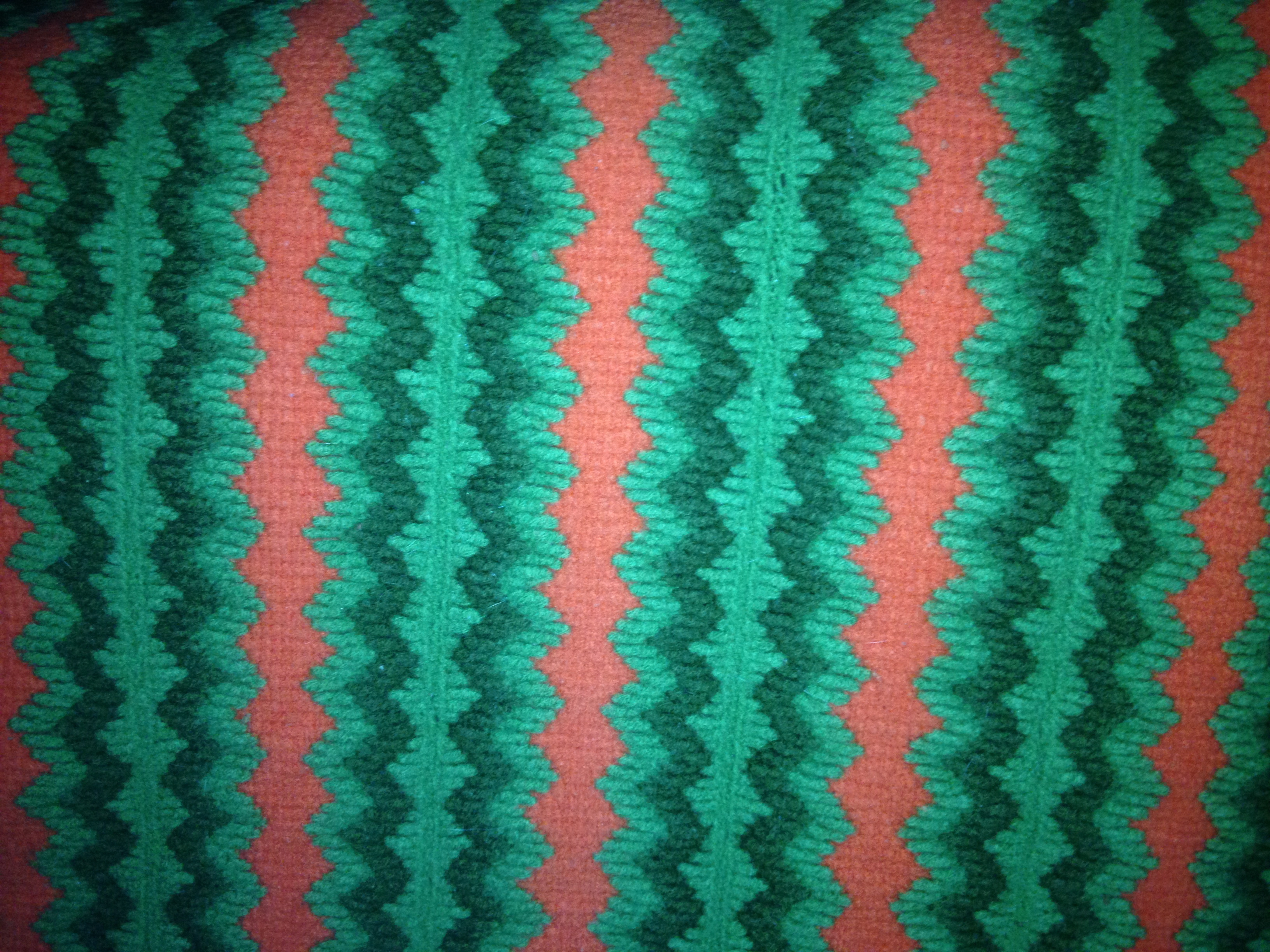
I still have the first afghan that she helped me to make, when she first taught me to crochet. It was the first thing I made after a scarf.  This afghan began life as a poncho. But when I got tired of wearing it, Grandma helped me find matching yarn, and we made it into my first afghan with my Mom’s help when Grandma was not around.  This green, orange, yellow, brown and beige afghan stays in my sewing room/guest room.  It is starting to fray, and the stitches do not look so wonderful. But since it has to be about 47 years old, I would say it is in pretty good shape.

Image,

In my bedroom is the afghan she made as one of nine for her grandchildren.  My brother, sister and I each got one when we got married.  Mine is orange and green, because those were once my favorite colors (though not anymore). I keep it in my bedroom on a comfortable reclining chair.  When I am having a bad day or feeling sick, I wrap myself in my Grandmother’s afghan and feel only love and warmth.

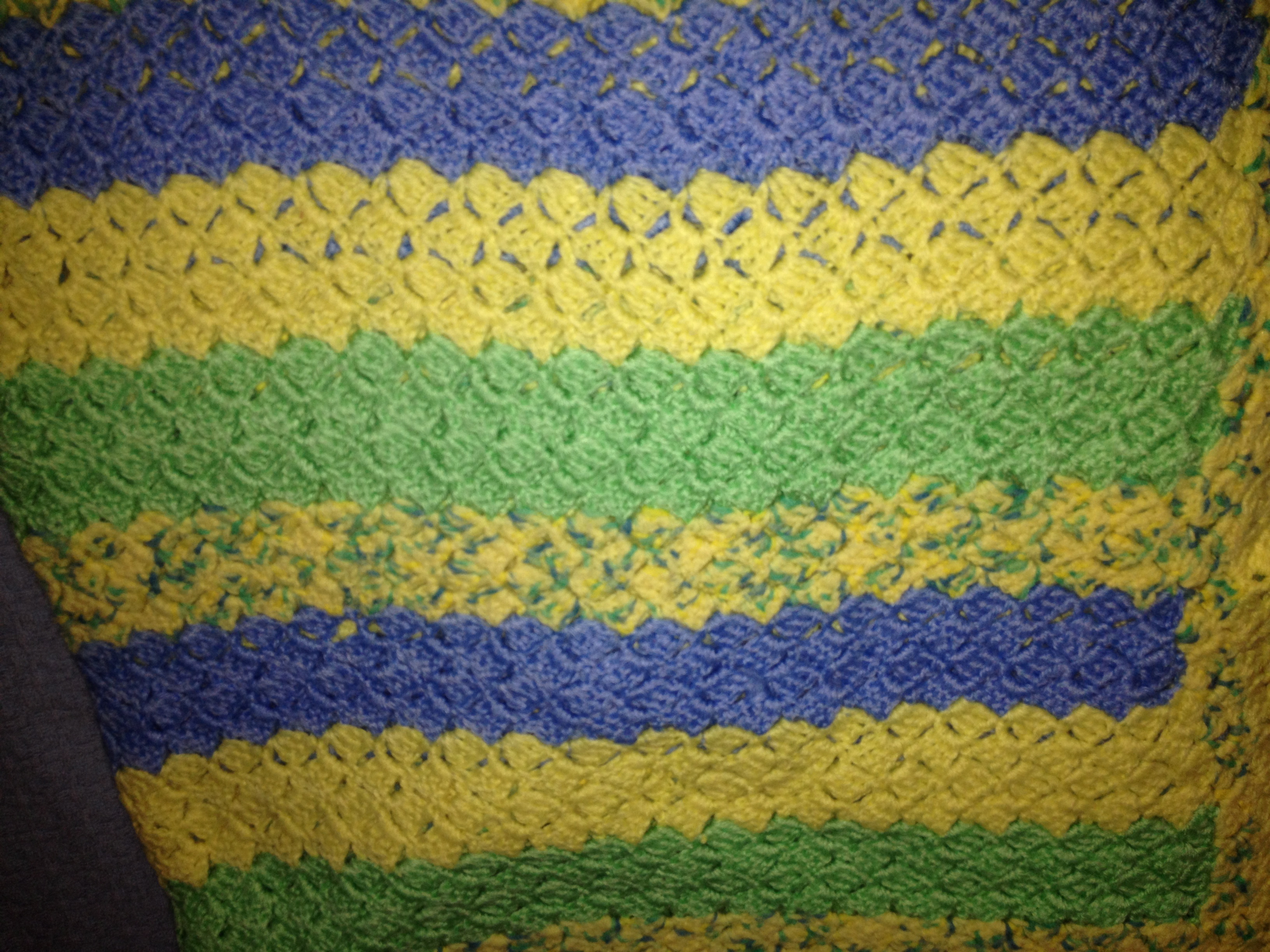
My daughter has two afghans made by Grandma.  By this time Grandma only remembered one stitch.  So all the great grandchildren have the same pattern, just different colors.

Image

She made one afghan when I was pregnant and presented to me as a baby gift.  The other afghan she made at my daughter’s request, using the colors she wanted…pinks and purple. (My daughter was almost seven when my grandmother passed away.)  But the green, yellow and blue one was made in anticipation of my daughter’s arrival.

Grandma was 88 years young when she flew from New York to Kansas to be here the week after my daughter was born. My sister and her husband flew here with Grandma. Nothing was going to stop her from seeing my daughter. She stayed for a long weekend.  It was a special time.  And these memories are there in the afghan.

Image

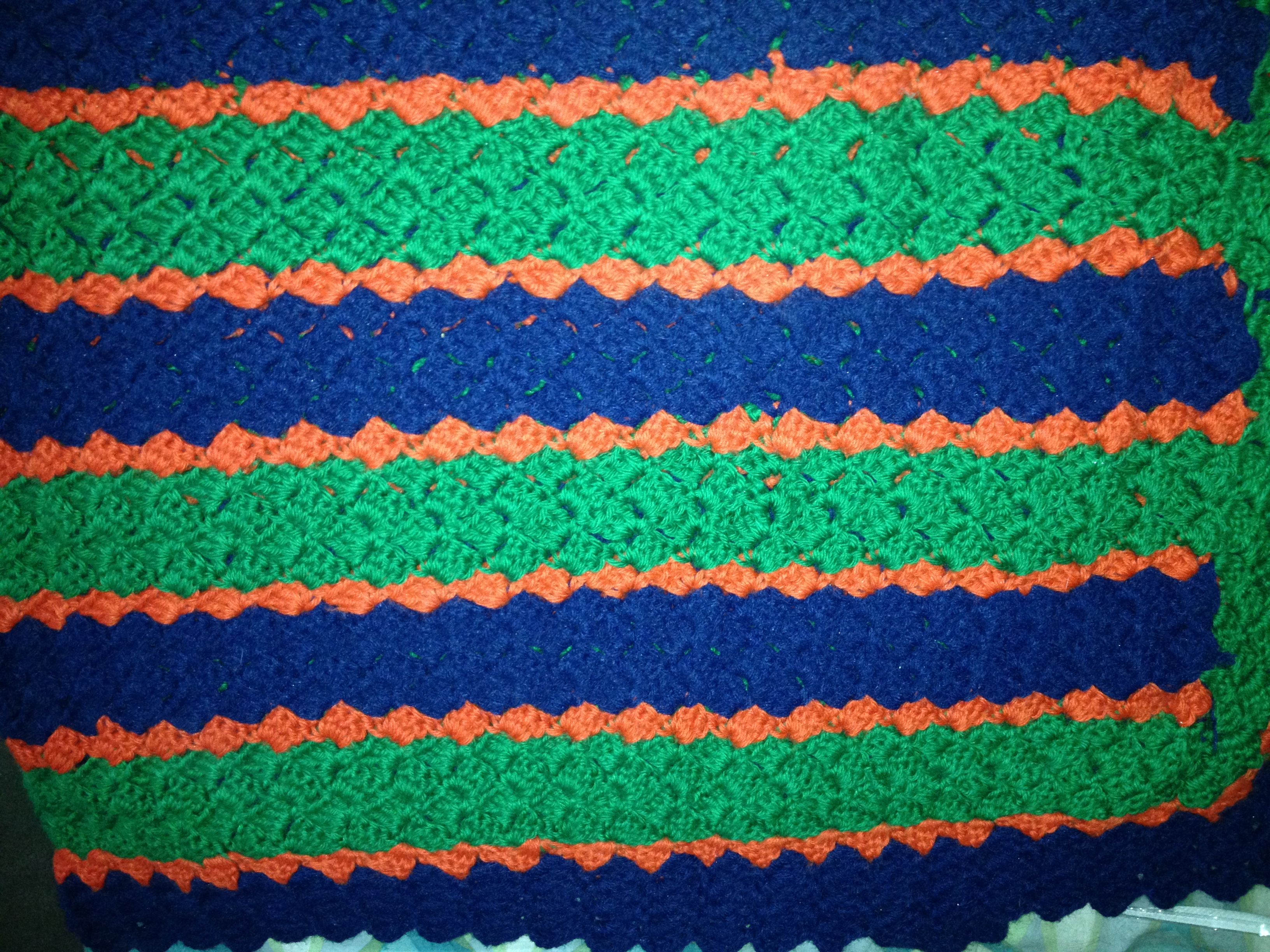
A dark blue, kelly green and orange afghan was made for my son.  By this time Grandma has having trouble.  My son was born when Grandma was 92. Grandma had three great grandchildren born close together that year.  If I remember correctly, my Aunt helped Grandma complete these afghans.   She had several more to make after my son was born.  I think his is one of the last full-size afghan.  She made a matching pillow to go with it as well.

I keep his in a plastic bag in his closet.  When he was little he liked to sleep on the floor of his bedroom in a teepee wrapped in this afghan.  Now it waits for him to once again use it.  There is no room in his little college apartment.

Image

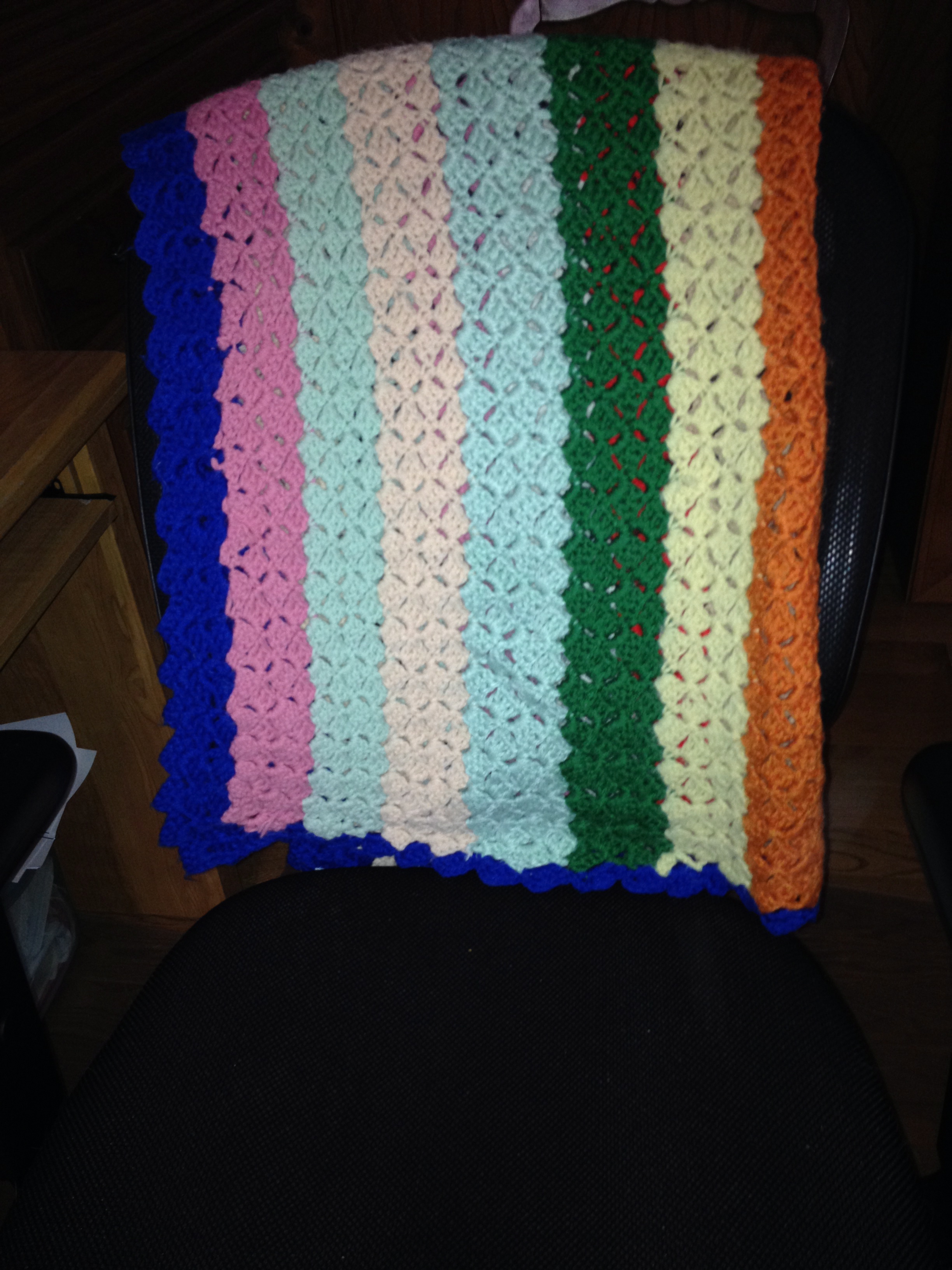
On the back of the chair I work in, is a small lap afghan. This my Grandma made from scraps of yarn leftover from other projects.  She gave it to my parents, who used it for almost 20 years  after she passed away, until they also died. When we cleaned out their home, I took it home with me.

Besides my Grandmother’s afghans, I also have ones that I have made.  A purple one for my daughter when she was born is one of my favorites.

Image

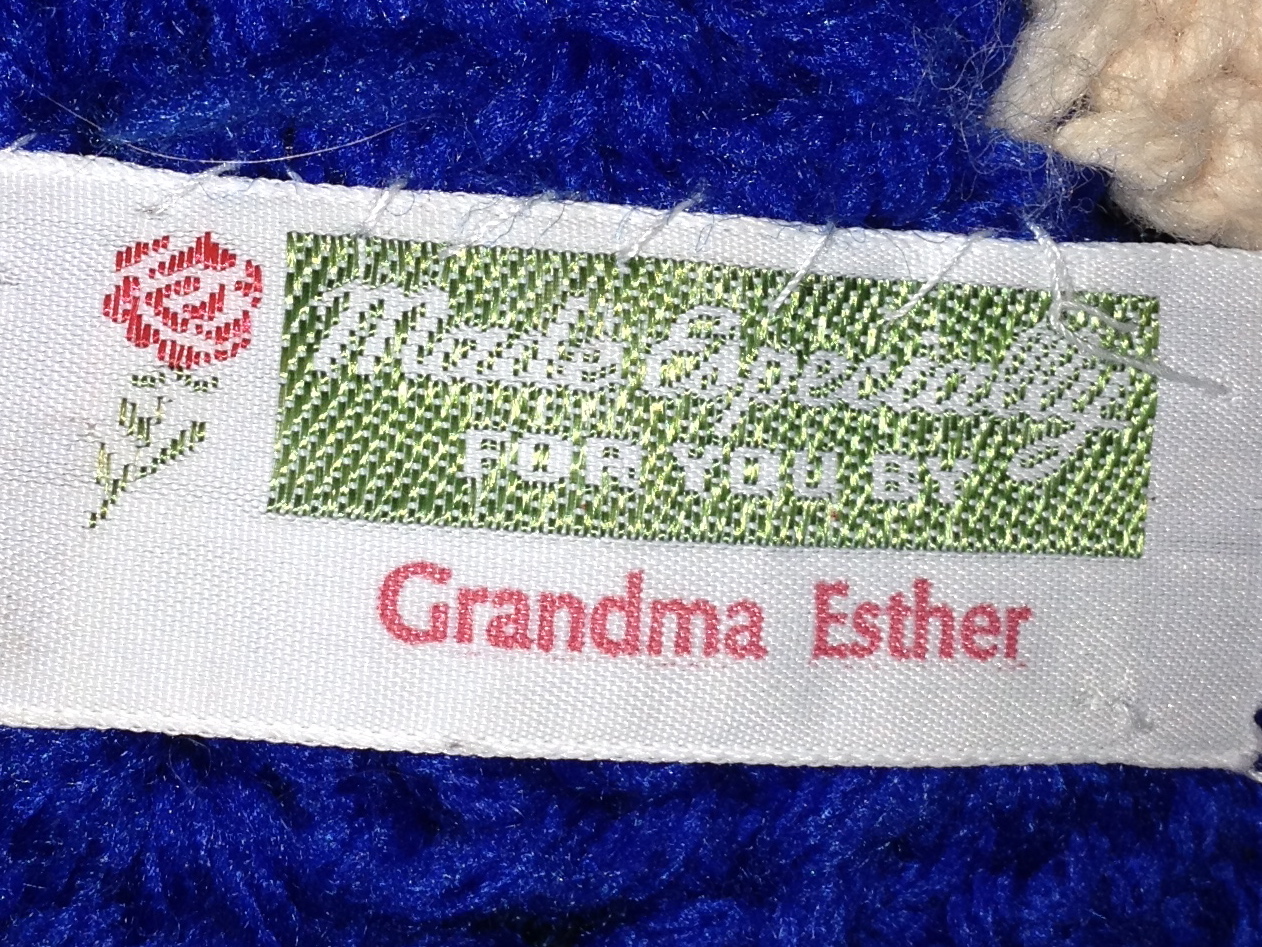
Each afghan holds love in each stitch.  The love I remember when Grandma taught me to crochet and knit.  The love my Grandma put into each afghan she made. And the memories she wanted us to hold with the little label sewn in each one that says “Made especially for you by Grandma Esther.”

A short update/ January 2022:  For the past seven years I have been making baby blankets for all babies born into my family, as well as for all babies whose parent’s invited me to their weddings.  Well over 60 blankets so far.  For my extended family, I make them in honor and memory of Grandma Esther.