People have been walking the Comino for over 1000 years. Most started for religious reasons. But now people walk for many reasons. Many still for religion, but for others it is a personal journey that relates to their own needs. They are searchers and pilgrims.
The are four main paths to the pilgrimage to the pilgrimage of the Camino de Santiago to visit the cathedral where the relics of St. Anthony are interred in a silver casket. Camino Fraces, the French Way, is the most famous way and is 790 KM. The Original Way, from Oviedo and is 320 KM. Or one of the two Comino Portugues. One starts in Lisbon, 600 Km. Or you can go the Camino Portugues that starts in Porto and is only 240 KM.
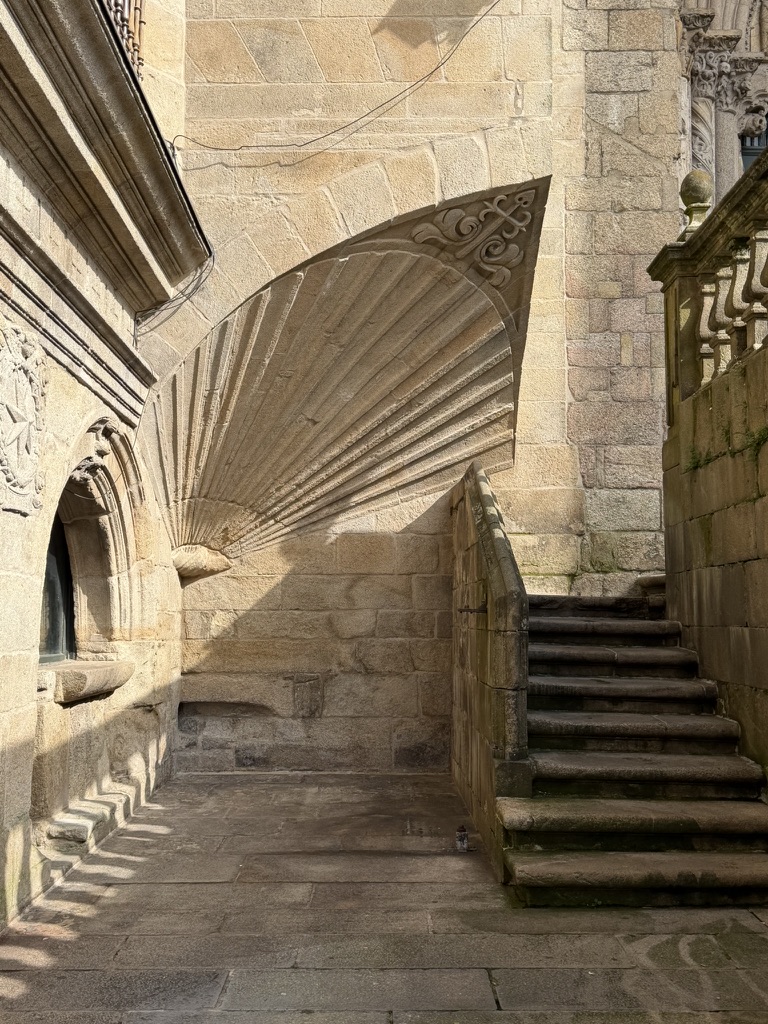
Although we did not walk the 240 kilometers on our journey through Portugal and Spain, we did walk part of the Comino in many of the places we visited. Throughout our trip we would see the shell symbol of the Comino etched or painted on the ground; carved or placed on the side of a building; posted on signposts along the way. We cannot get credit for walking the 100 km minimum. To be recognized, but along the way, I am sure we walked about 20 kilometers of The Way.
The Comino is a World Heritage Site since 1993, and many walkers start their journey in April. We saw many pilgrims with the staff and shell adorned backpack along our way. They were intent on reaching their goal…the Cathedral of Santiago de Compostela.
To talk about the Comino, I feel that you must talk about churches. But for me, I need to start at the Catedral de Santiago de Compostela, the supposed burial site of the apostle St. James.
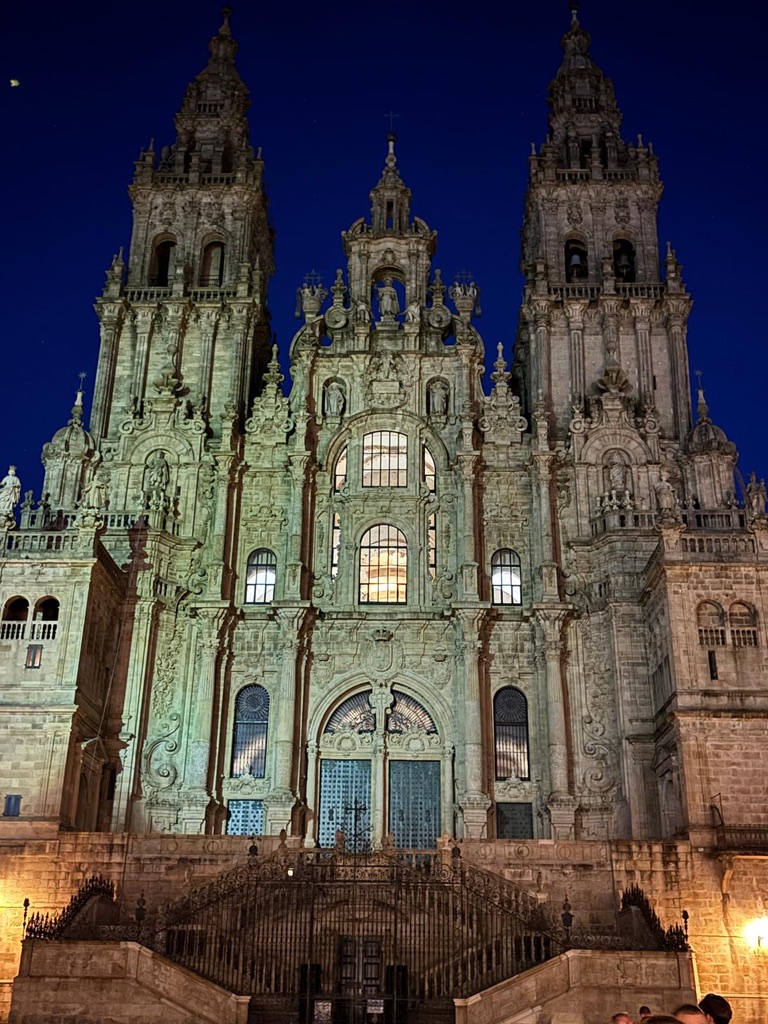
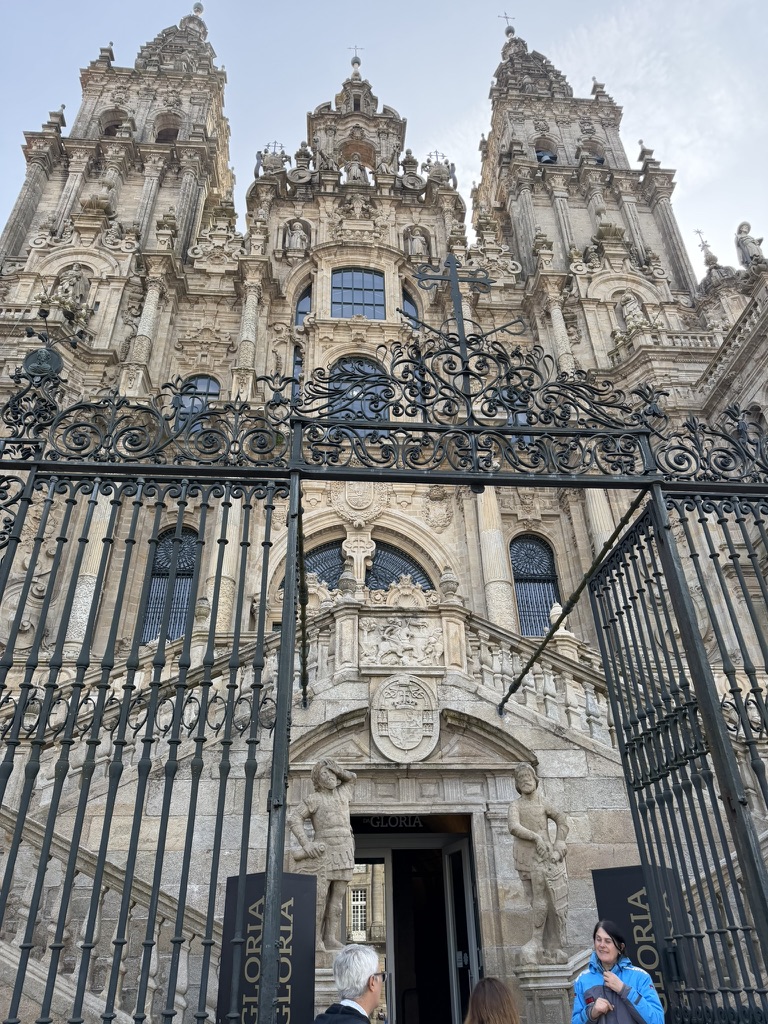
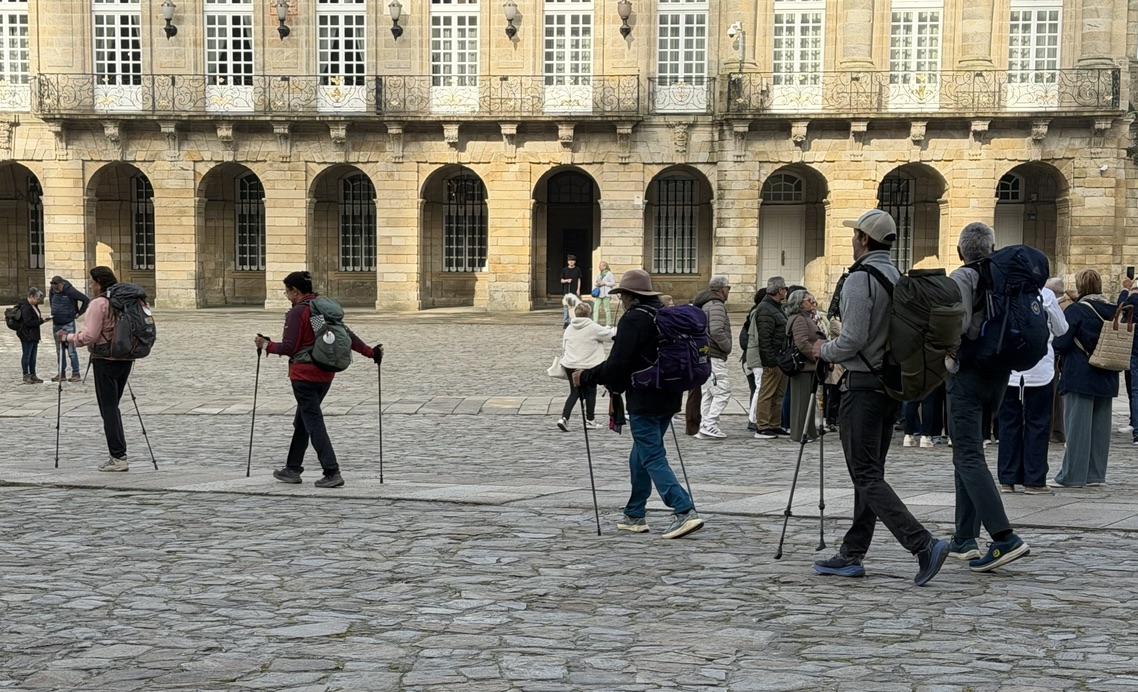
We were told that when we reached the Praza do Obradoiro, the main square in front of the Cathedral, we needed to look around. If we were lucky, we would see a group of pilgrims arriving at this their final destination. I was lucky. I was looking in the right direction when a group four pilgrims arrived. The face of one woman in particular glowed. She started hugging her companions and crying with emotion. Yes, I took a photo. It was intense and lovely. They stopped in front of the cathedral and stared. I imagine were thinking about the effort and the journey to get there, not about walking in, seeing the church, the relic and getting their certificate.
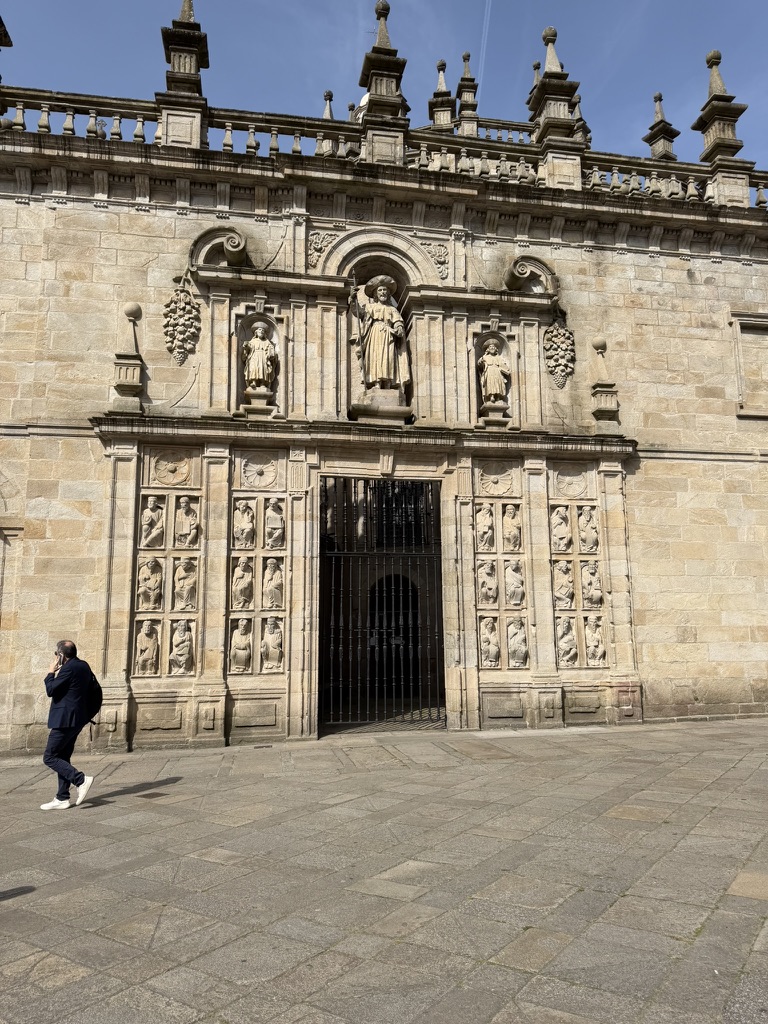
But they would not be entering through the large green main doors. Those doors are closed now. You have to enter from a side door, because you cannot enter the Portico of Glory. Since its renovation 10 years ago, you must have special passes to see it. We were fortunate that Road Scholar obtained passes for our group. And it is magnificent.
In the movie, “The Way,” Martin Sheen’s character enters the cathedral and places his hand on the statue in an area that over time was worn away to resemble a hand. The area is still visible, but the 200 statues in the Portico have been renovated, cleaned, and stand to show their beauty. You cannot take photos, but it was so lovely I had to buy a little guide book about the Portico.
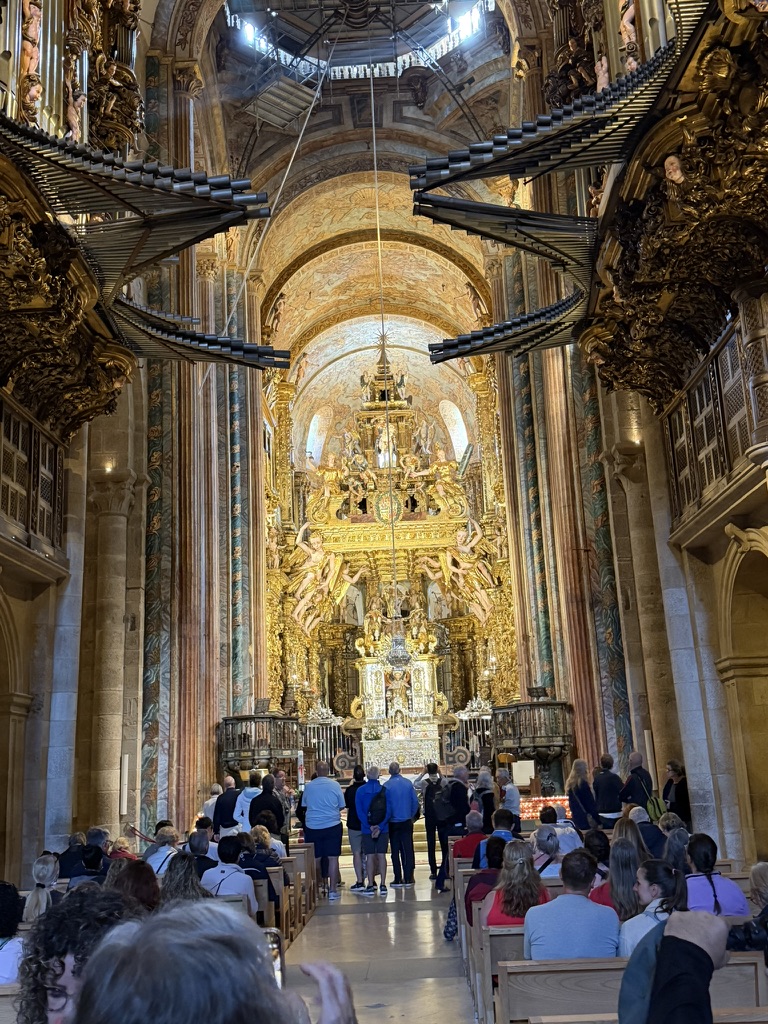
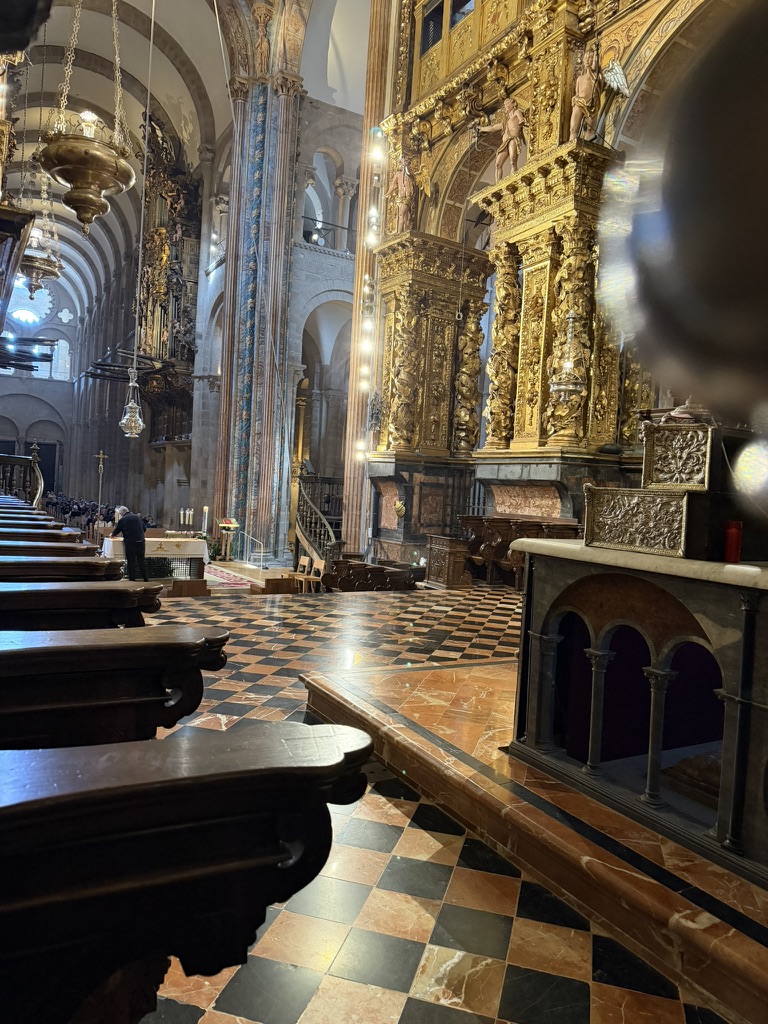
We then had to leave the Portico and go out of the cathedral to reenter another door to see the massive cathedral itself. To be honest it is a little sad for me. They removed all the classic statues and art from the original 11th and 12th century building to remake it in the ornate and gold gilded way of the usual European Baroque Cathedral. It was lovely. The ceiling was magnificent. But after seeing the Portico, I would have loved to see more of these amazing sculptures.
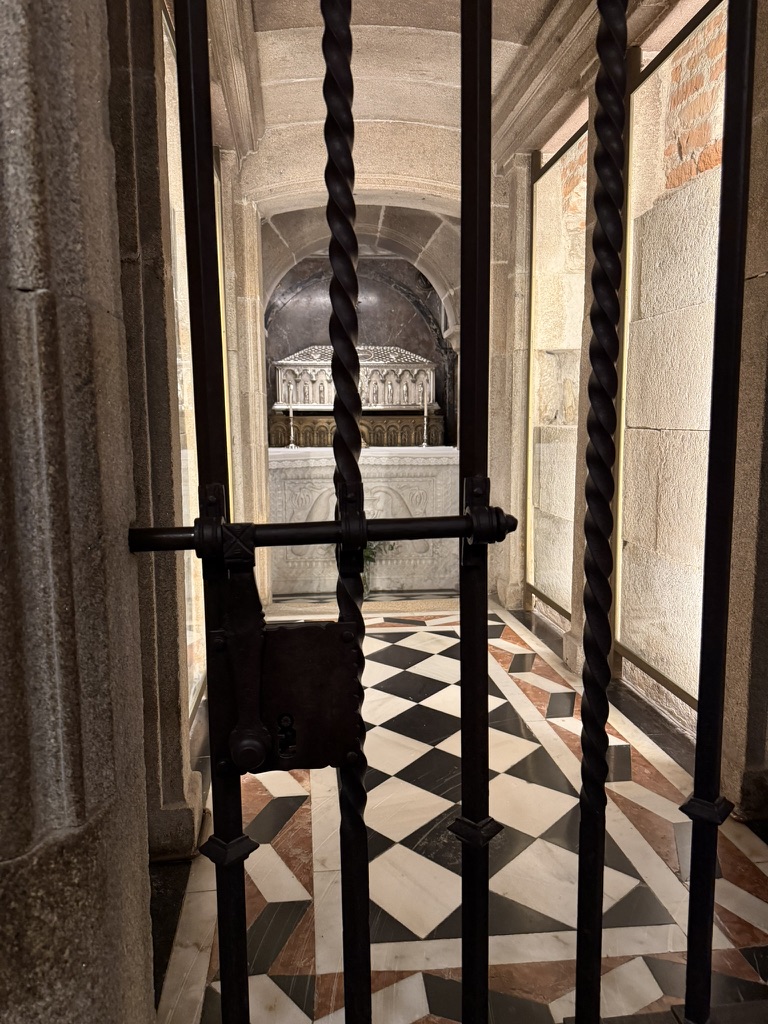
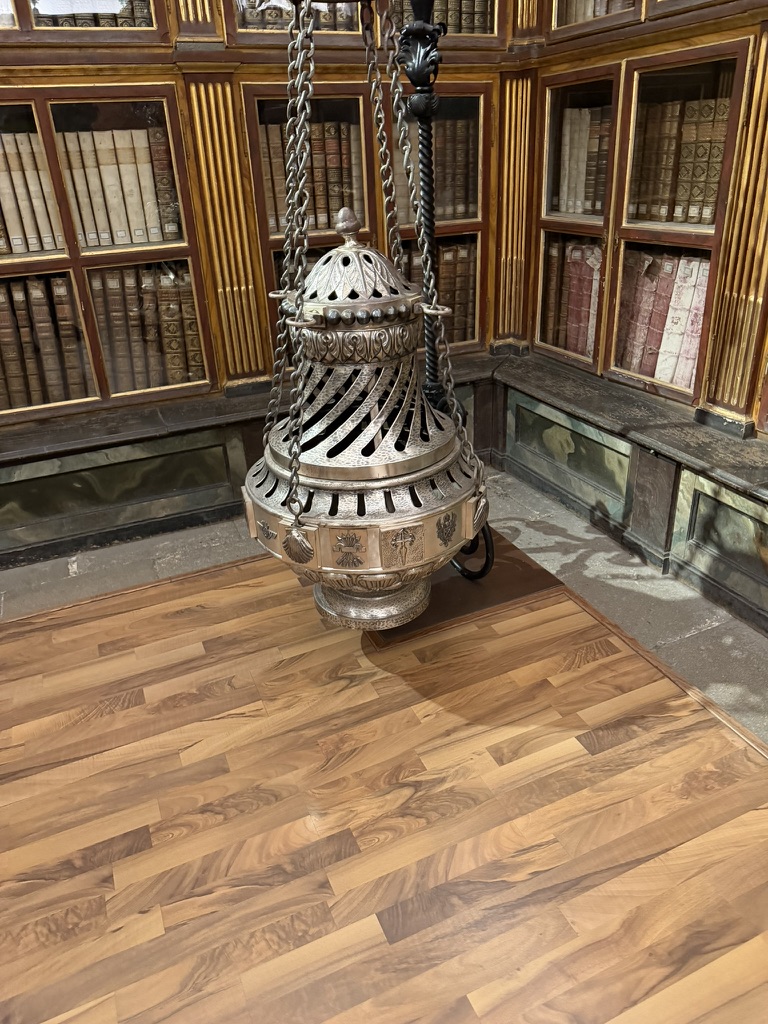
We went down into the area where St. Antony’s relic is kept and then walked up the other side, which leads you behind the alter and behind the statue of St. Anthony. On his back is the shell symbol of the pilgrimage. Many people hug the statue, not me. However, I did touch the shell. I also took two photos. Which I found out I was not supposed to do, but no one told us and the guard was very kind to this ‘little old lady’ and just said no more photos. But I did get a great photo looking out to the cathedral. And the giant incense burner.
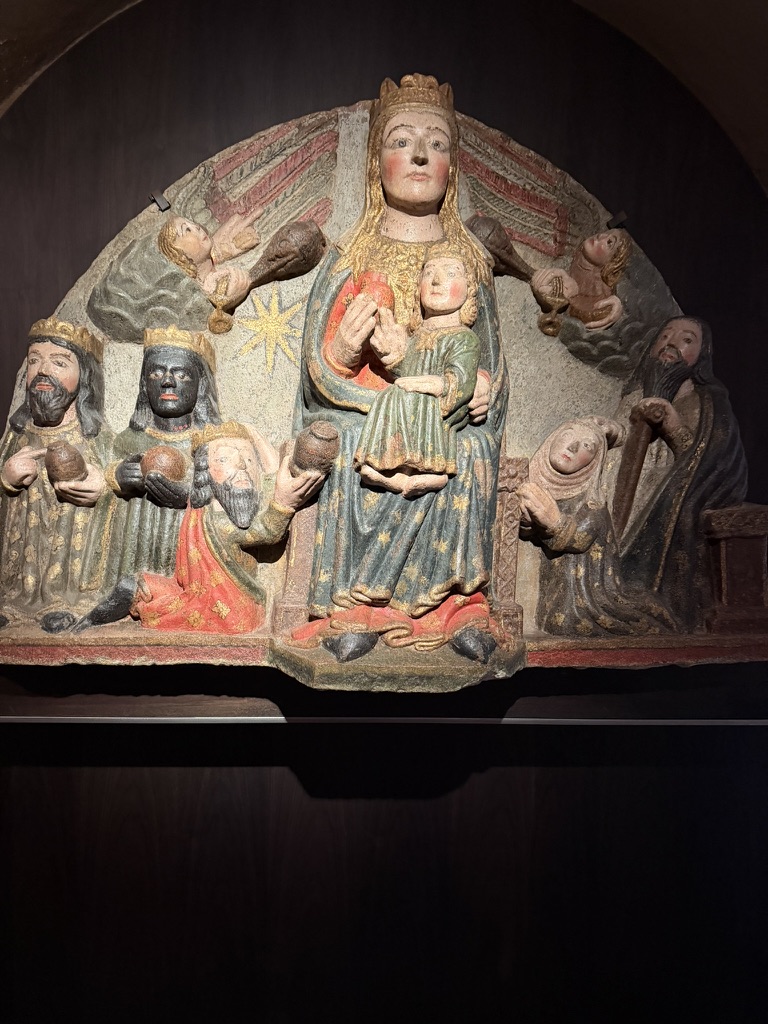
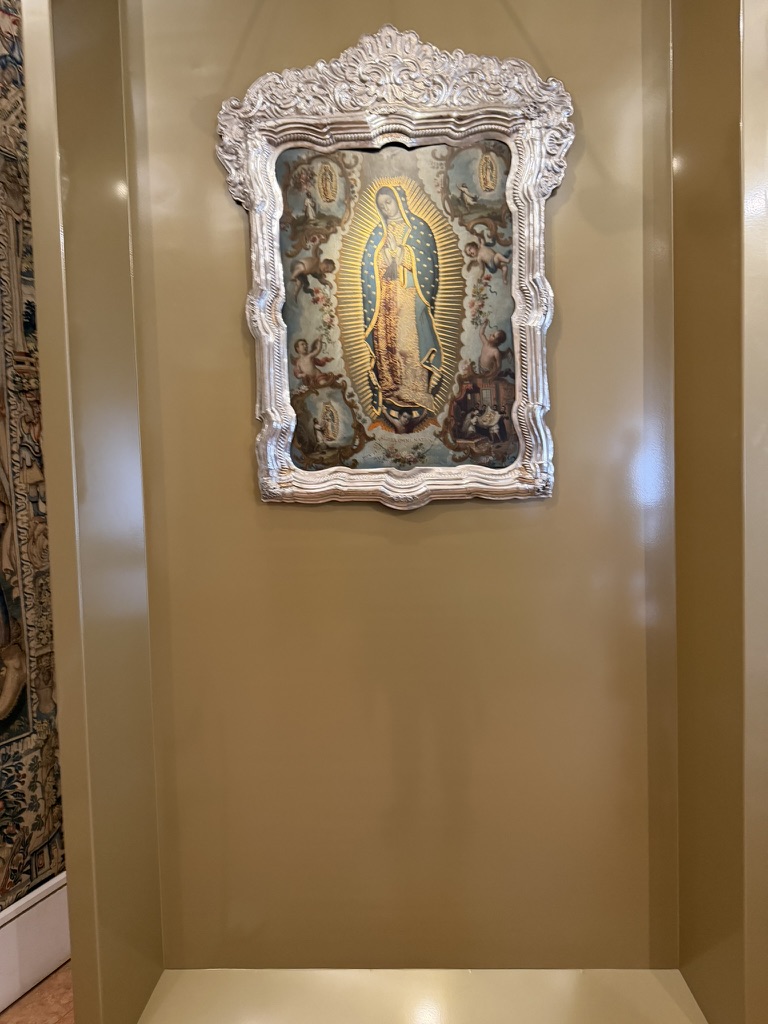
Later in the day we went to the Cathedral’s Museum where we saw a replica of the incense burner and other objects. I was suprised to see a replica painting of the Lady of Guadalupe. We had seen the original at the Basilica in Mexico City. But I guess people go on pilgrimage to see her as well.
We had a lovely three nights in Santiago staying in the lovely Virze de Cerca hotel. Opened in 1999, it was once an old home and is now a hotel with some rooms in the ancient building, and others in a newer building on the other side of a lovely garden courtyard. One day we went to the Mercado de Abastos and purchased wine, bread, sardines, fruit, cheese and meat to have our very own picnic at the hotels garden. Wonderful.
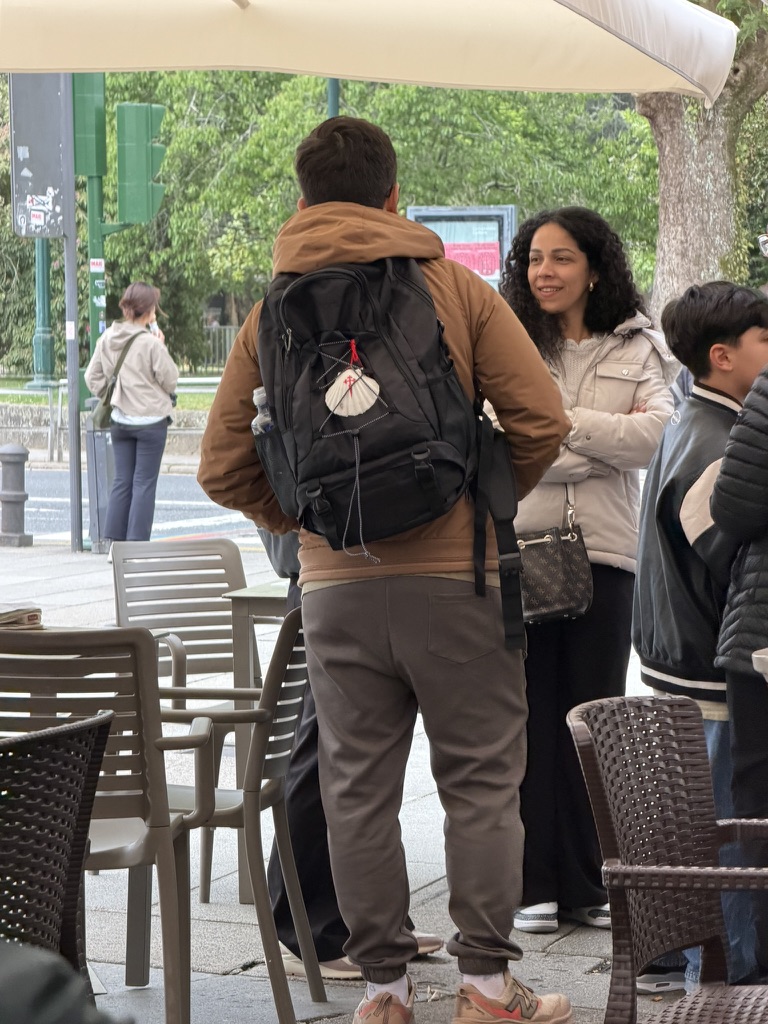
The entire city of Santiago has a spiritual feeling. You see the pilgrims everywhere. You can tell those who are just finishing and are exhausted from the ones who have been in the city for a day or two and are just enjoying the city’s joyful ambience. There are street performers singing, dancing, and entertaining everywhere. It was the highlight of the trip for me. But we had to get here, first visiting other churches and sites along the way, and then we had to continue on, seeing wonderful places and had great experiences as we journeyed to our final destination.
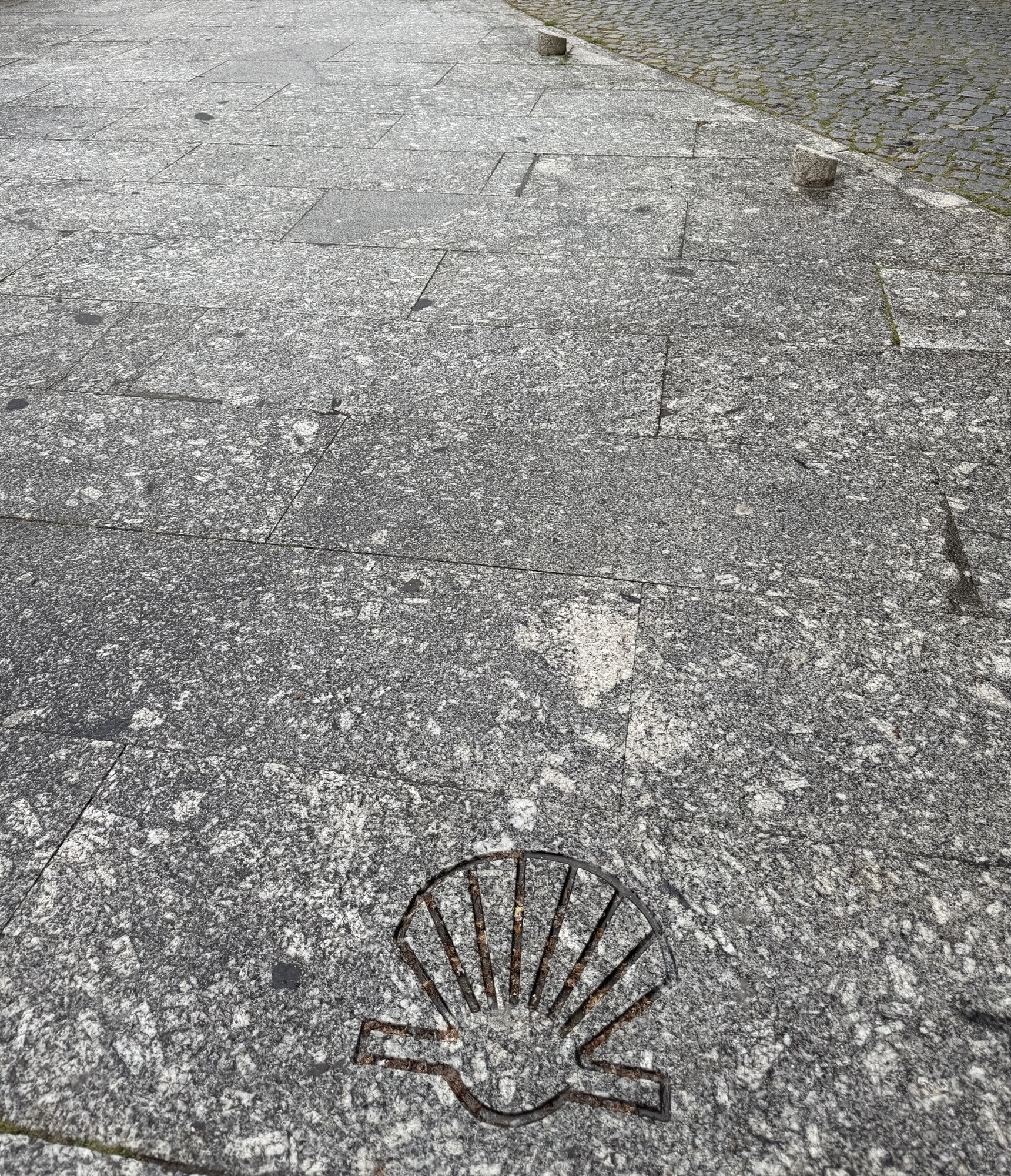
Starting from the beginning of our trip. We had our first encounter with The Way, with the sighting of our first shell symbol in Guimaraes. It was the first of many signs we saw along the way to Santiago.
In our journey we visited many churches besides the Cathedral de Santiago. I will only discuss the ones we actually entered.
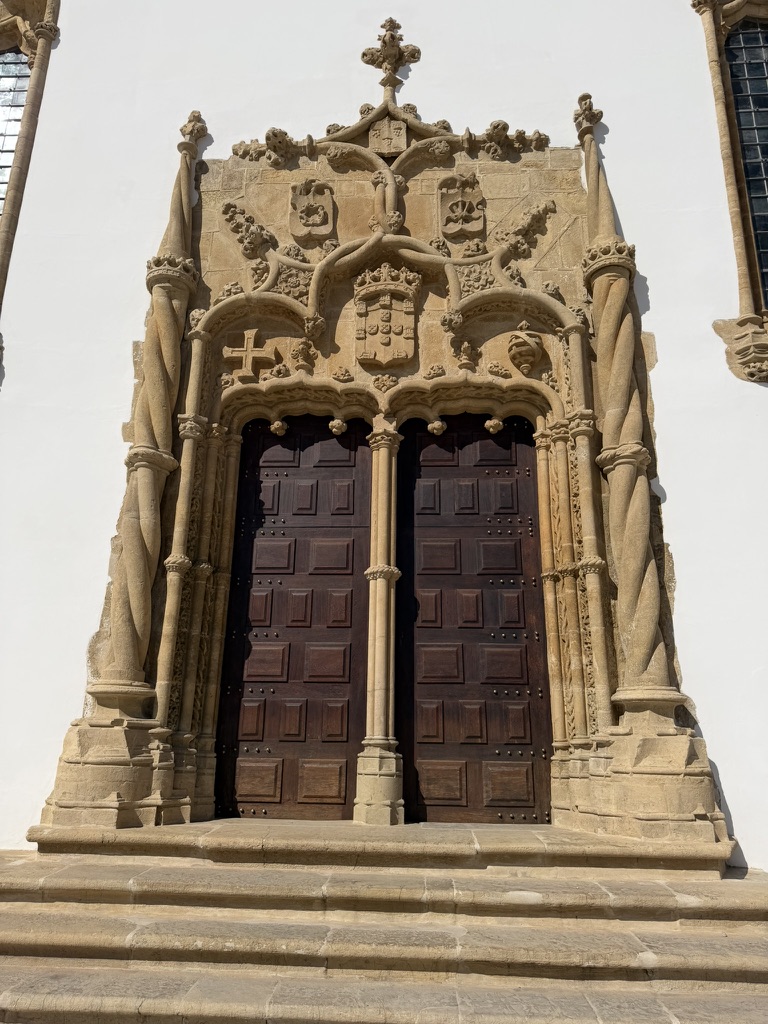
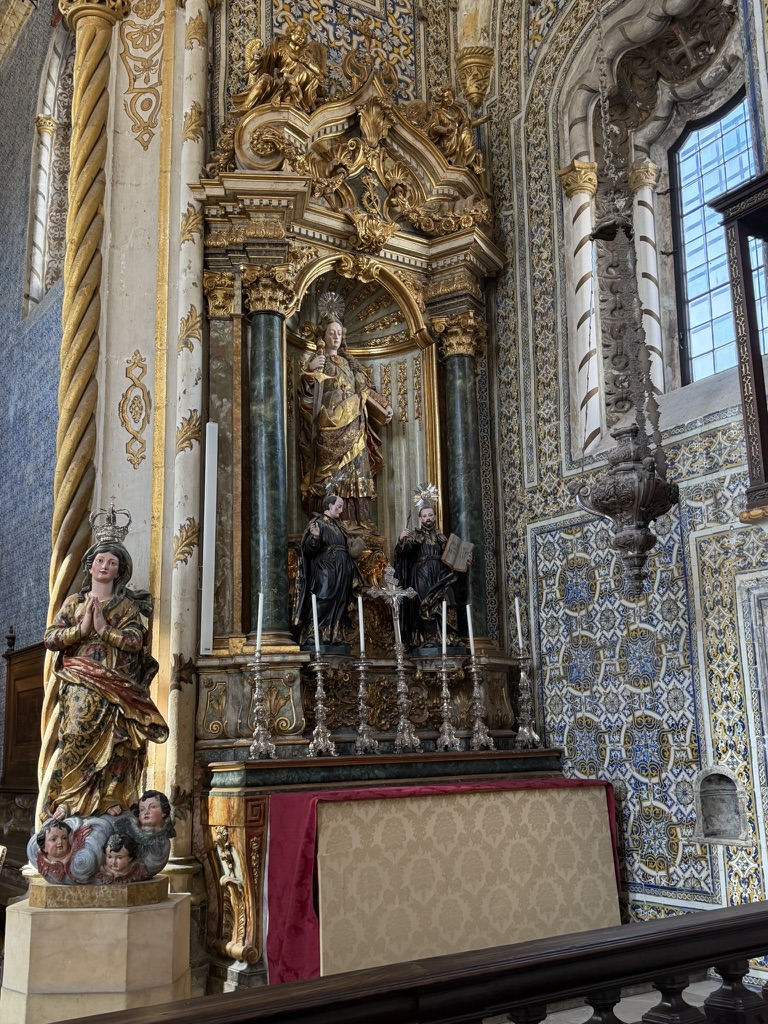
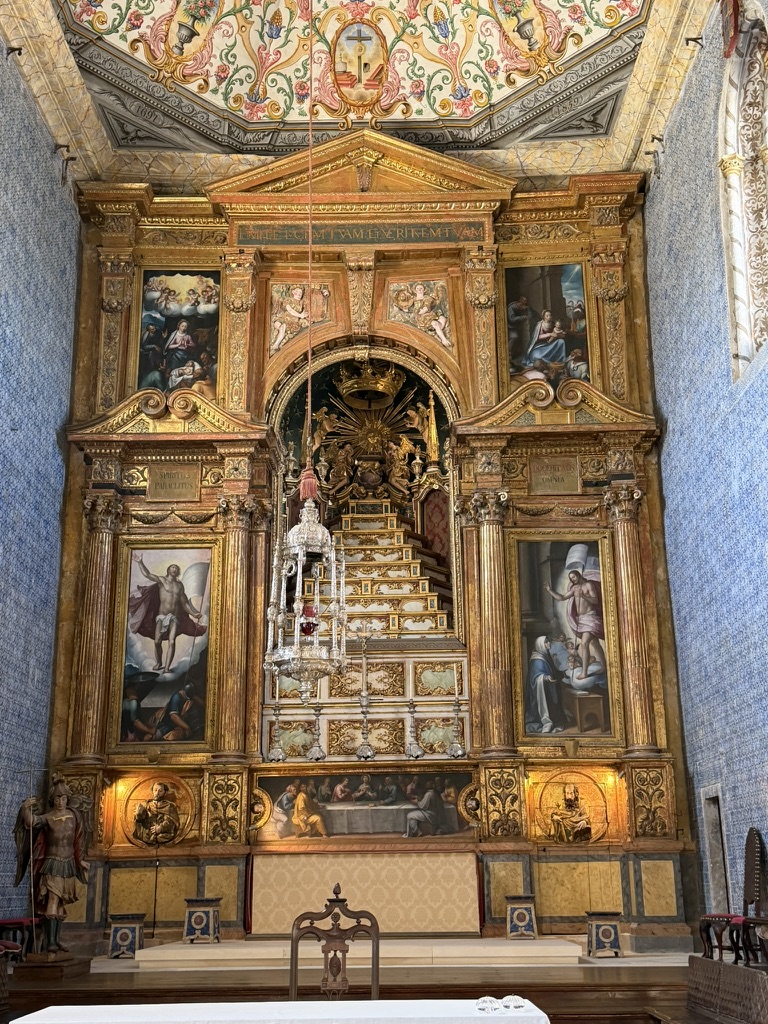
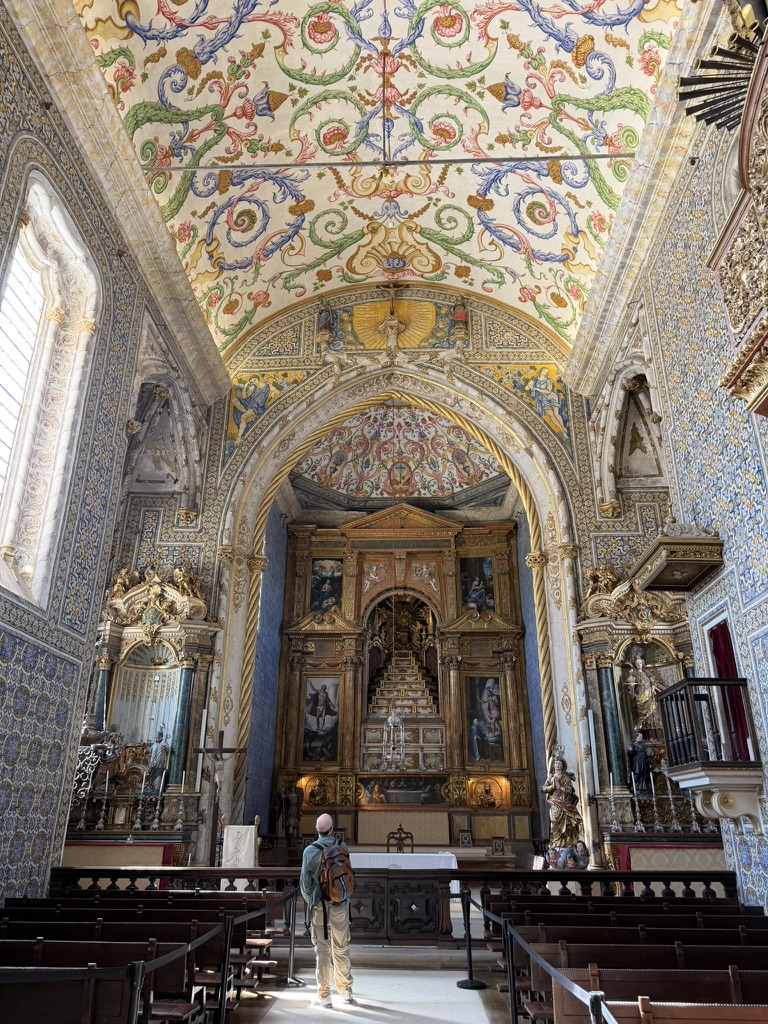
The first was St. Michael’s Chapel of Coimbra University, which dates to the early 1600s. This chapel is devoted to education and light. “St. Michael was also the headquarters of the Brotherhood of Professors and Students under the invocation of Our Lady of Light,” according to the website about it. (See below.)
There is a stature to honor students and one to honor professors. Its main statute is to honor the Lady of Light. The statute to students was being restored, so we did not get to see it. But we got the sense of it. I could see students there the night before a big exam praying for the light of knowledge and the ability to remember all they memorized!!
Some of the walls were tiled with Portuguese tiles and the ceiling decoration was stunning. Like so many others, it was ‘elevated’ at some time to the baroque view of beauty. The best was the altar piece that included a depiction of the ‘stairway to heaven.’ If you made it all the way up you were blessed to go to heaven, but along the way you could lose your step and there was a demon waiting for you. Probably a good message for college students!!
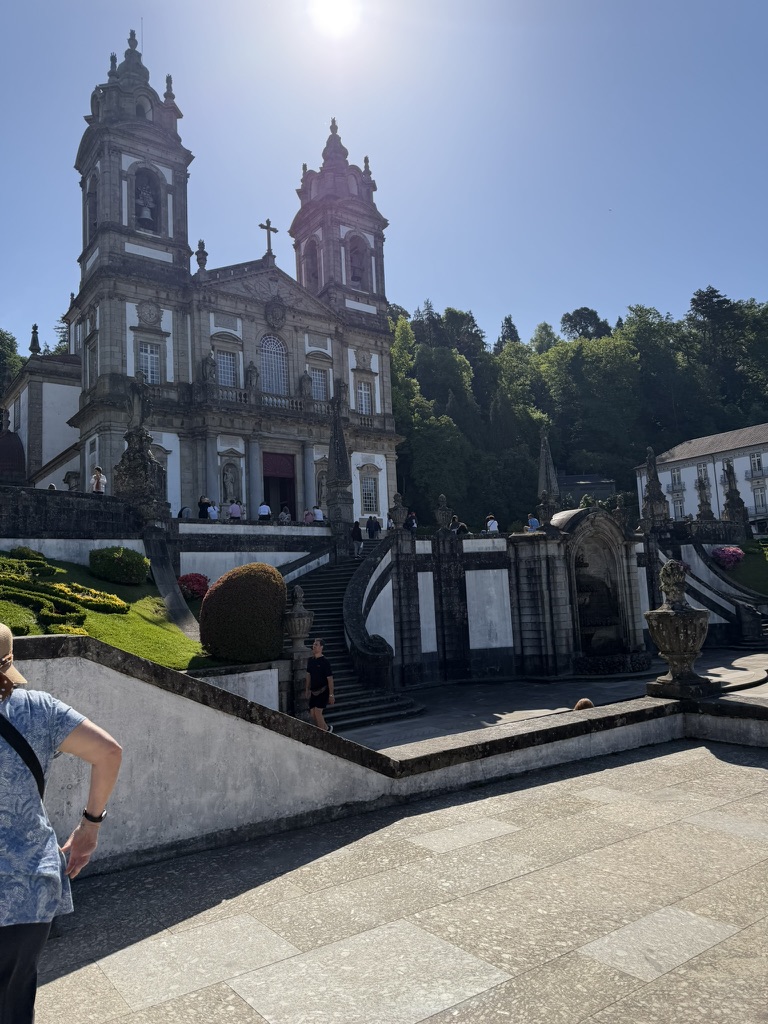
The next day we visited a church site, but did not time to visit the inside. We made the pilgrimage to Bon Jesus de Monte. Claudia, our guide told us that most pilgrims to Bon Jesus now are those who love to exercise. They walk up and down the over 600 steps to the top of the hill and then back down.
The grounds and the views from the top of the hill are magnificent. And the outside of the Church is impressive. But we only had 20 minutes on the top, our visit there was mainly for the view.
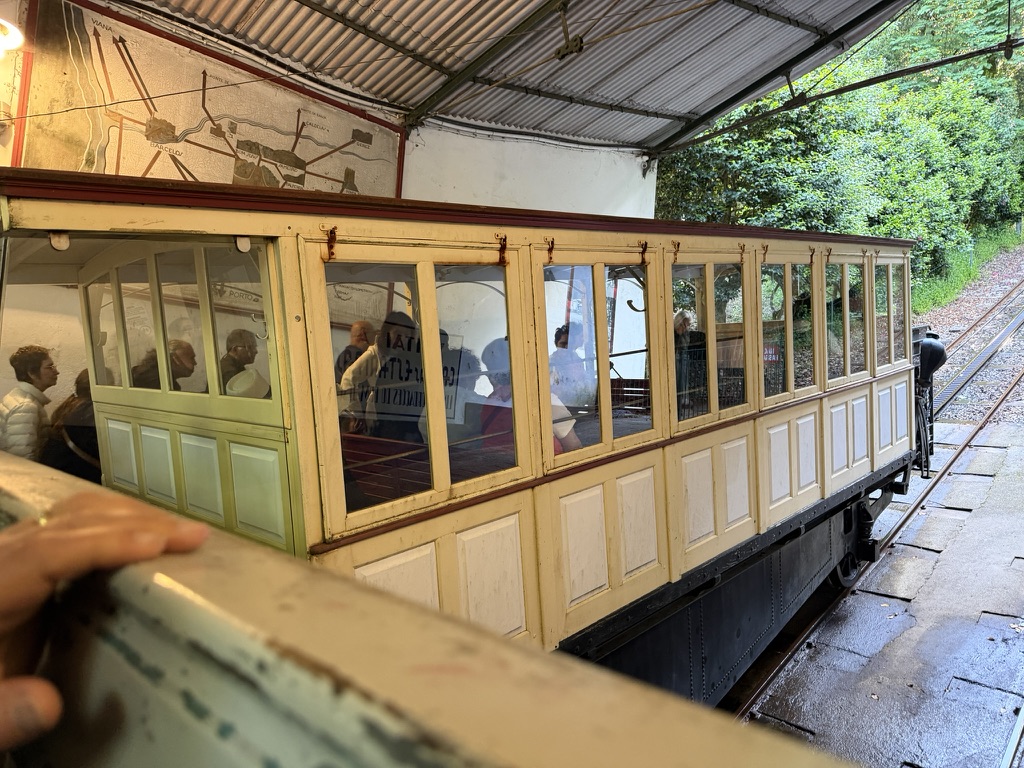
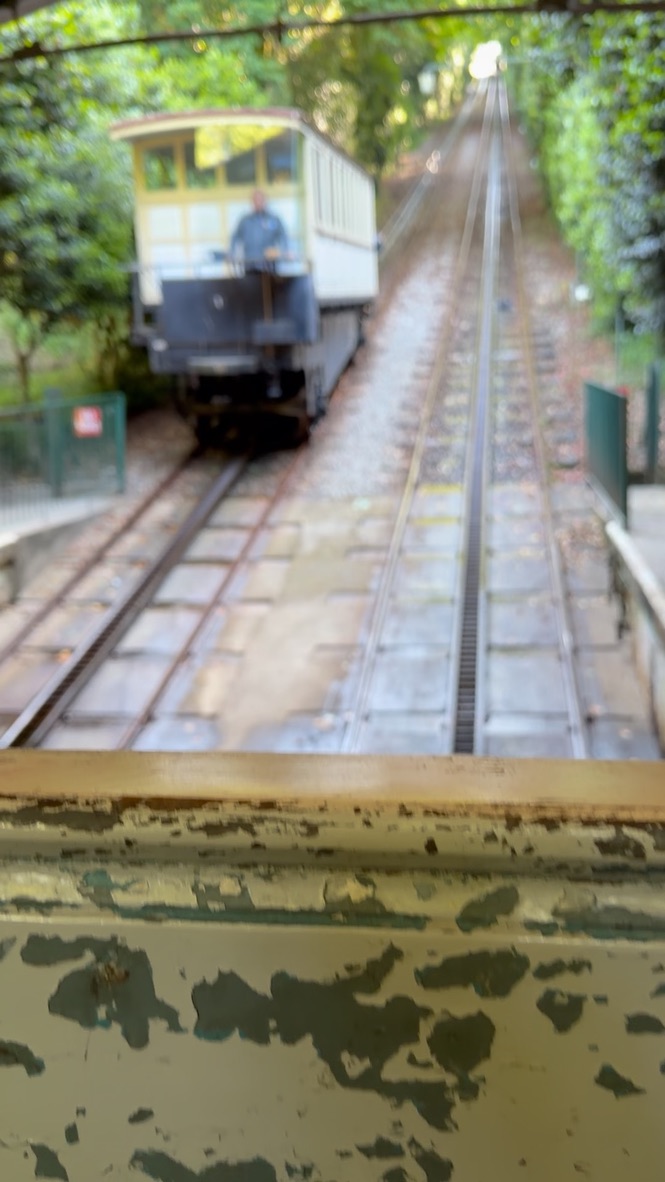
We took the funicular, which is one of my favorite means of transportation. This was a very old, 100 years or so, well used funicular. Very unlike the one we took in Porto. But I enjoyed going both ways. Only nine of our group decided to walk down the many, many stairs. The rest of us waiting and took photos making believe we had walked!
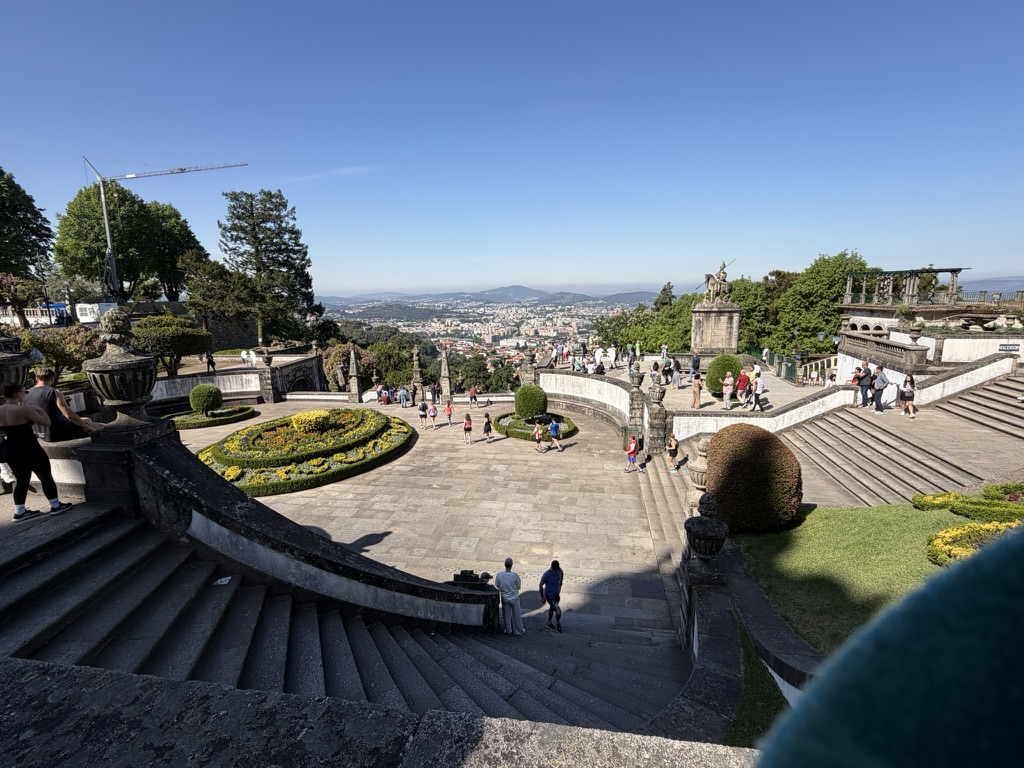
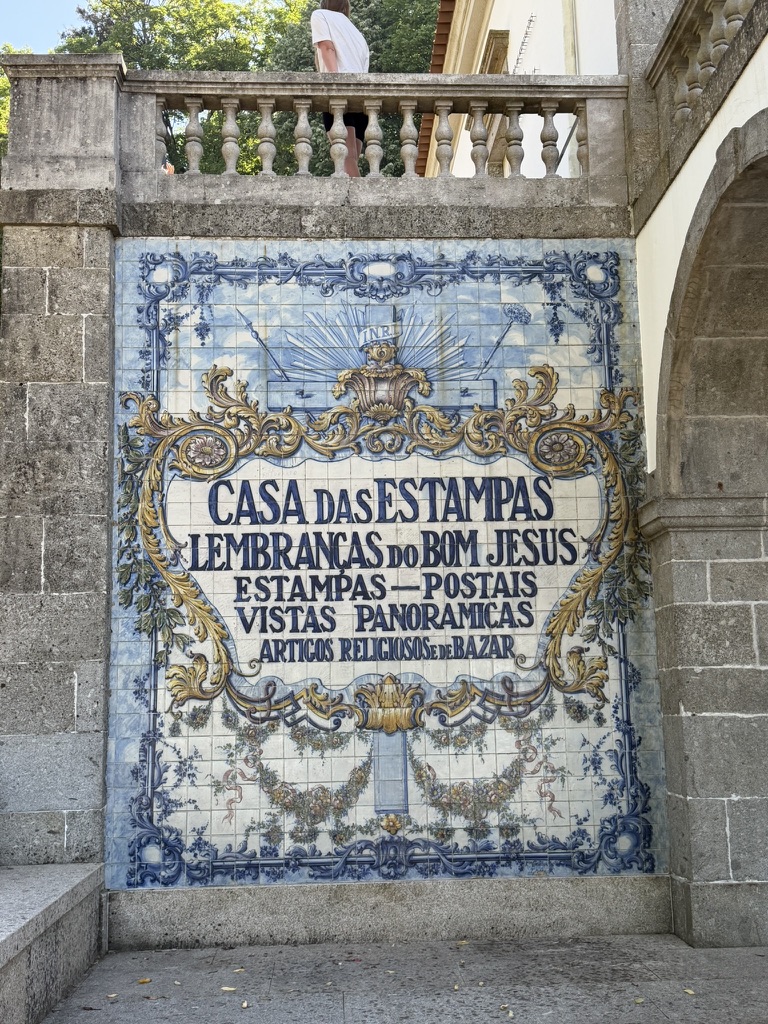
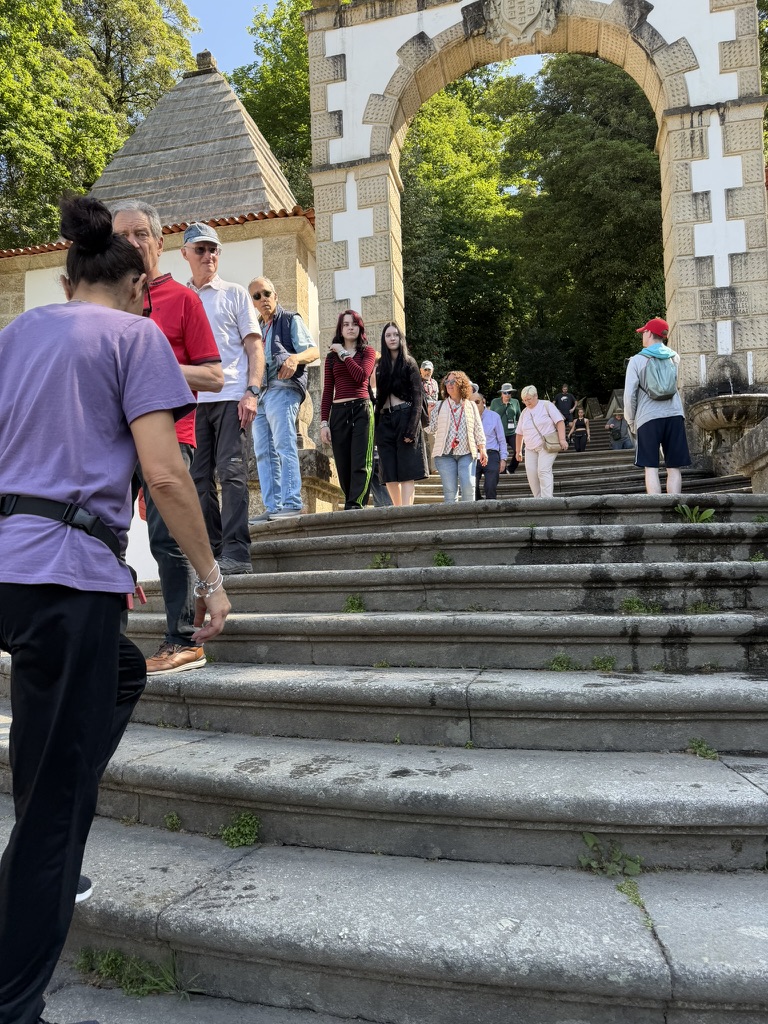
Our next stop was Santiago, which was a highlight of the trip. Afterwards there was still more to see and symbols of the Comino that came from Spain and from France. So our path to The Way was heading away. However, as we now know, all roads lead to Santiago de Compostela.
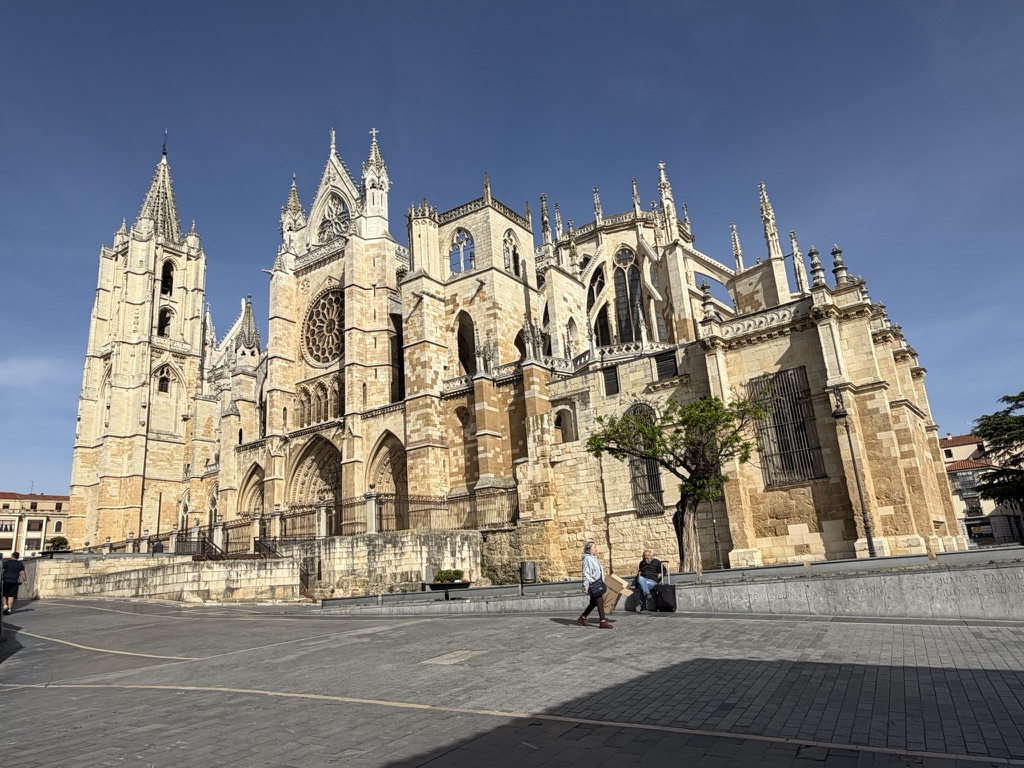
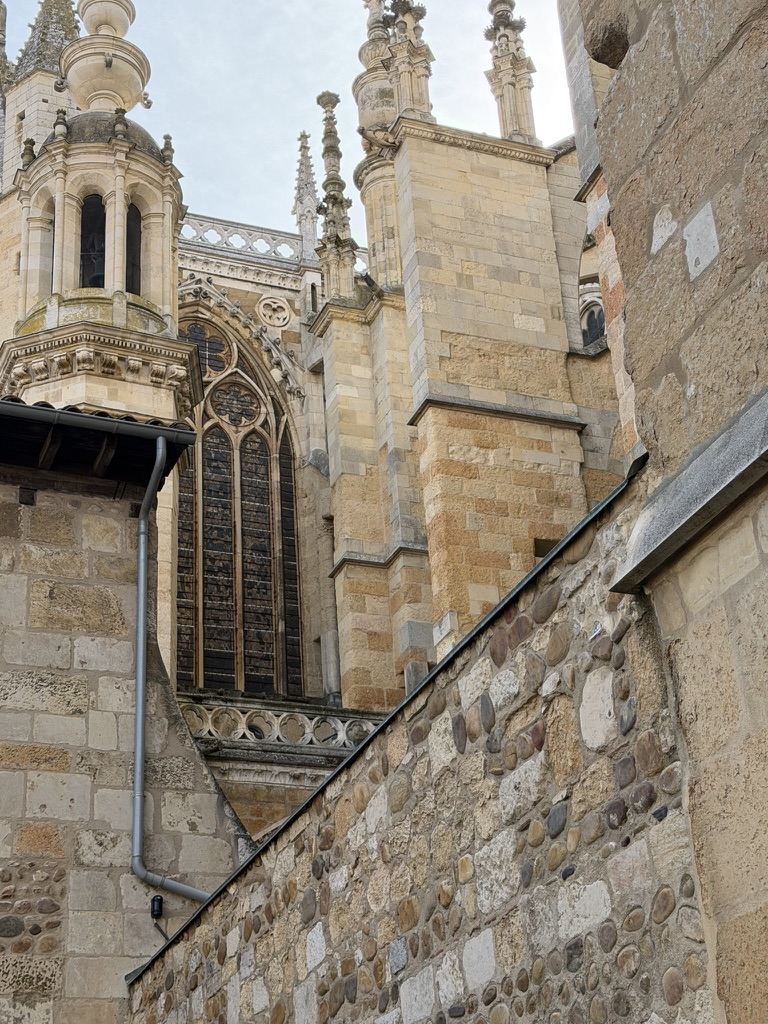
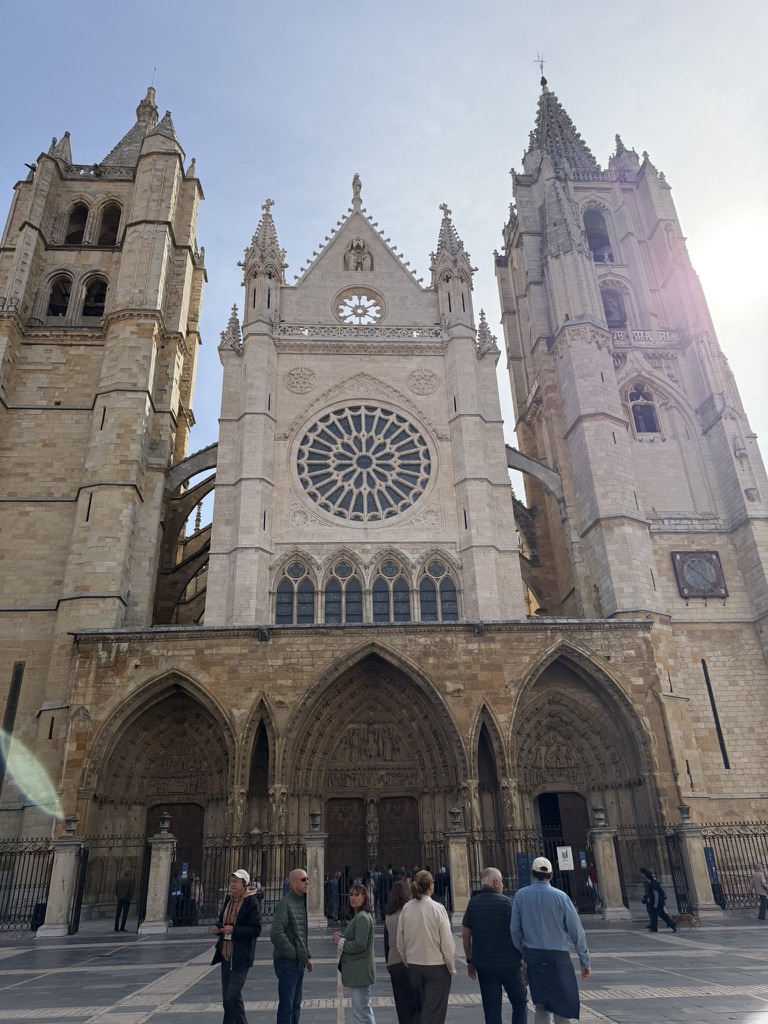
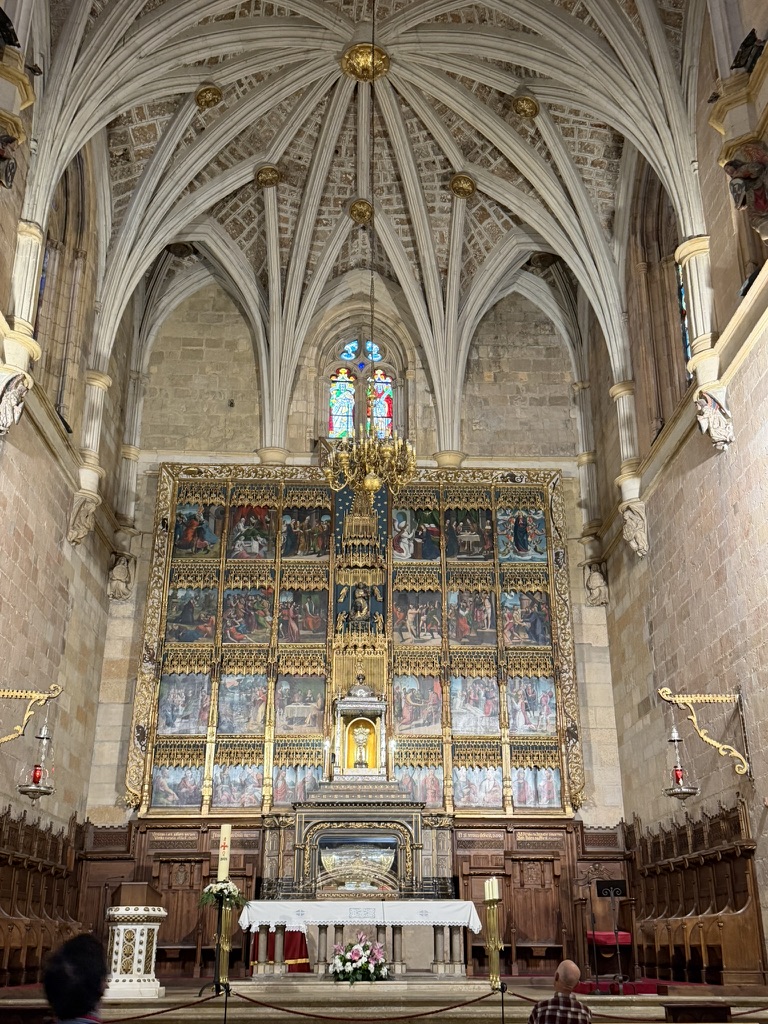
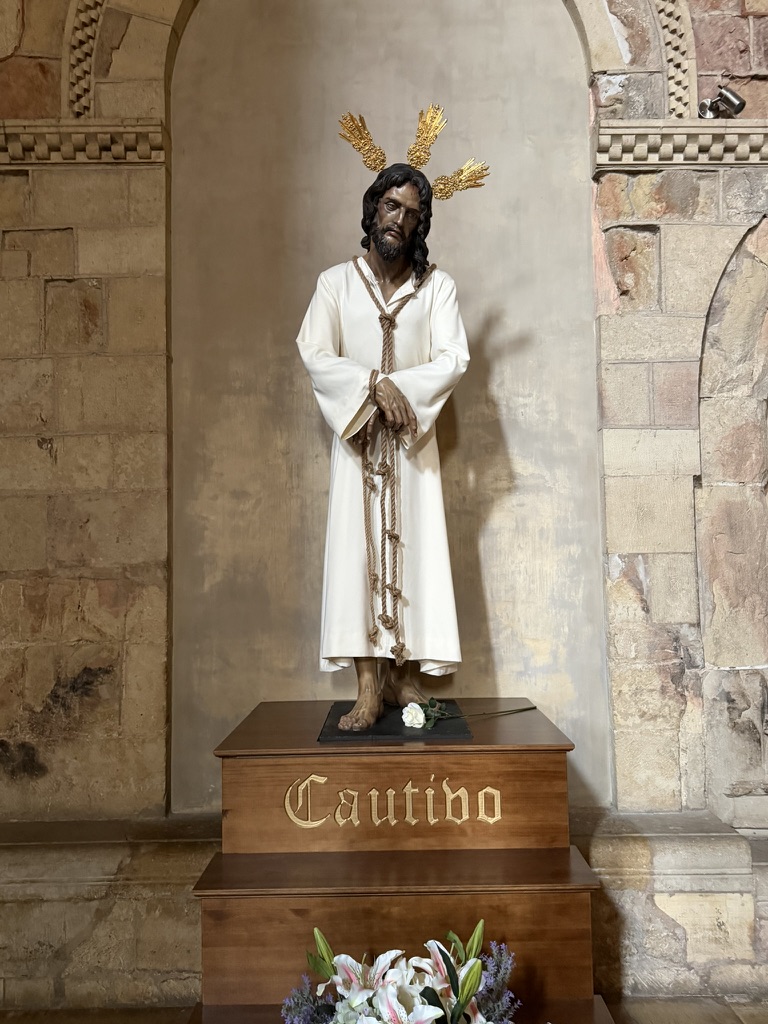
The next church was in Leon. And it was a two-part visit. First was to the Catedral Santa Maria de Leon, or the Leon Cathedral. Our guide told me that Gaudi got the inspiration from this church and its high ceilings and multi-colors that come in from the 1800 square meters of stained glass window when he design the Basilica de la Sagrada Familia. I am not sure I see it. But he did live in Leon for a while, and you never know what went through his mind.
In any case, this cathedral is filled with wonderful stained glass, which is in the process of being renovated. It has taken years and will take many more as they take each window down and restore it and then put a panel on the outside to keep the windows safe from the elements.
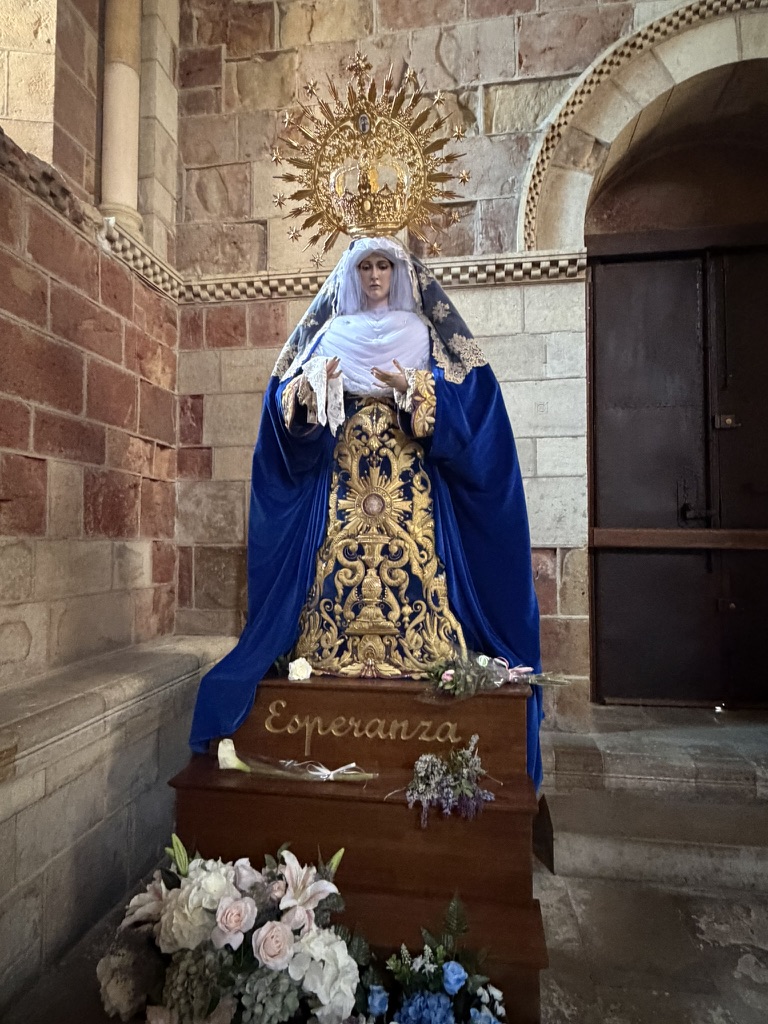
There were several statues of religious figures in the church that I found especially appealing because they looked like real people.
While there were also visited the cathedral’s museum, specifical to see the Basilica de San Isidoro and the frescoes that adorn the Royal Pantheon. It is considered to be the “Sistine Chapel” of Spanish Romanesque style” according to information our guide gave us. It was amazing and surreal as we walked among the graves of Spanish royalty to view the ceilings.
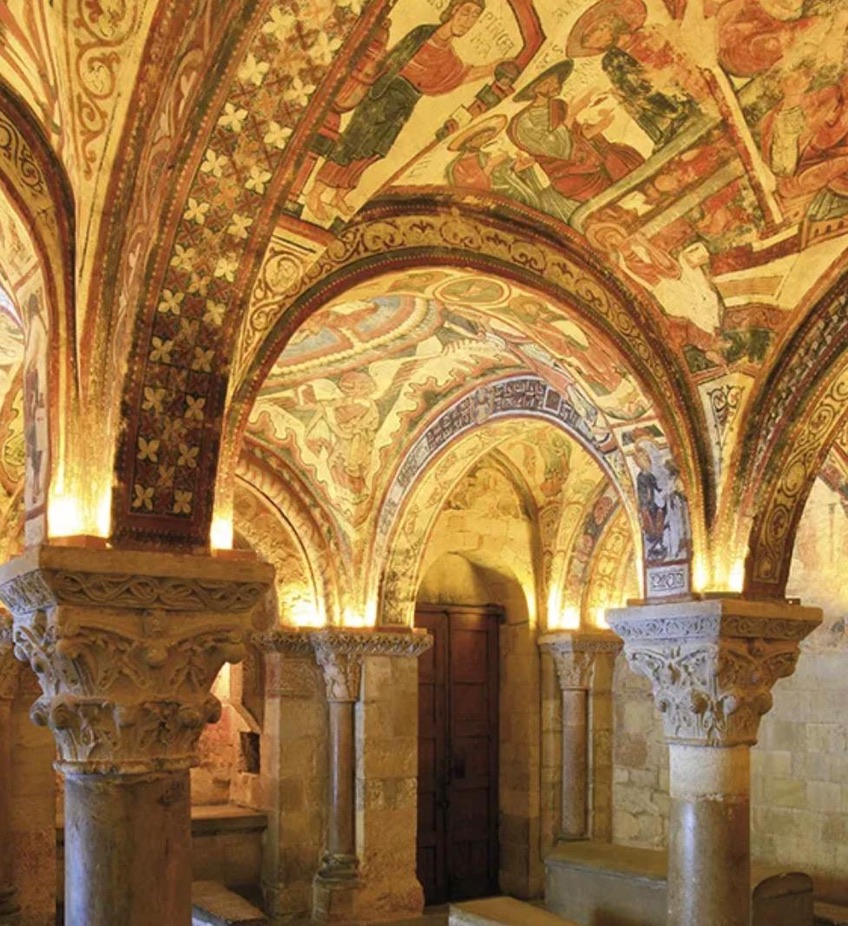
I am glad we had the opportunity to visit the Pantheon. I have been to the Sistine Chapel and stood in the middle of the large room to stare up at the masterpiece depiction of God creating the world. The artwork here was not as ornate, but was well worth the time staring upwards.
I truly enjoyed my experience learning about The Way and the people who make the pilgrimage and the places they might visit on their journey of self discovery.
https://catedraldesantiago.es/visitaportico/en/welcome-portico-glory
https://whc.unesco.org/en/list/347
https://www.centerofportugal.com/poi/st-michaels-chapel-of-the-university-of-coimbra

