Yellowstone, Yellowstone, and More Yellowstone.

7 Oct

Eight years ago, my husband and I visited Yellowstone National Park for one day.  We, along with eight others, toured the park for about 12 hours. It was exhausting. But after that experienced I vowed to go back and spend at least two nights in the park. (See blog below.). I exceeded my desires, as we spent four nights and five days exploring Yellowstone National Park on a Road Scholar educational adventure.  Along with 21 others we learned so much more about the Park and its wonderous sights, sounds, smells, wildlife and natural beauty. 

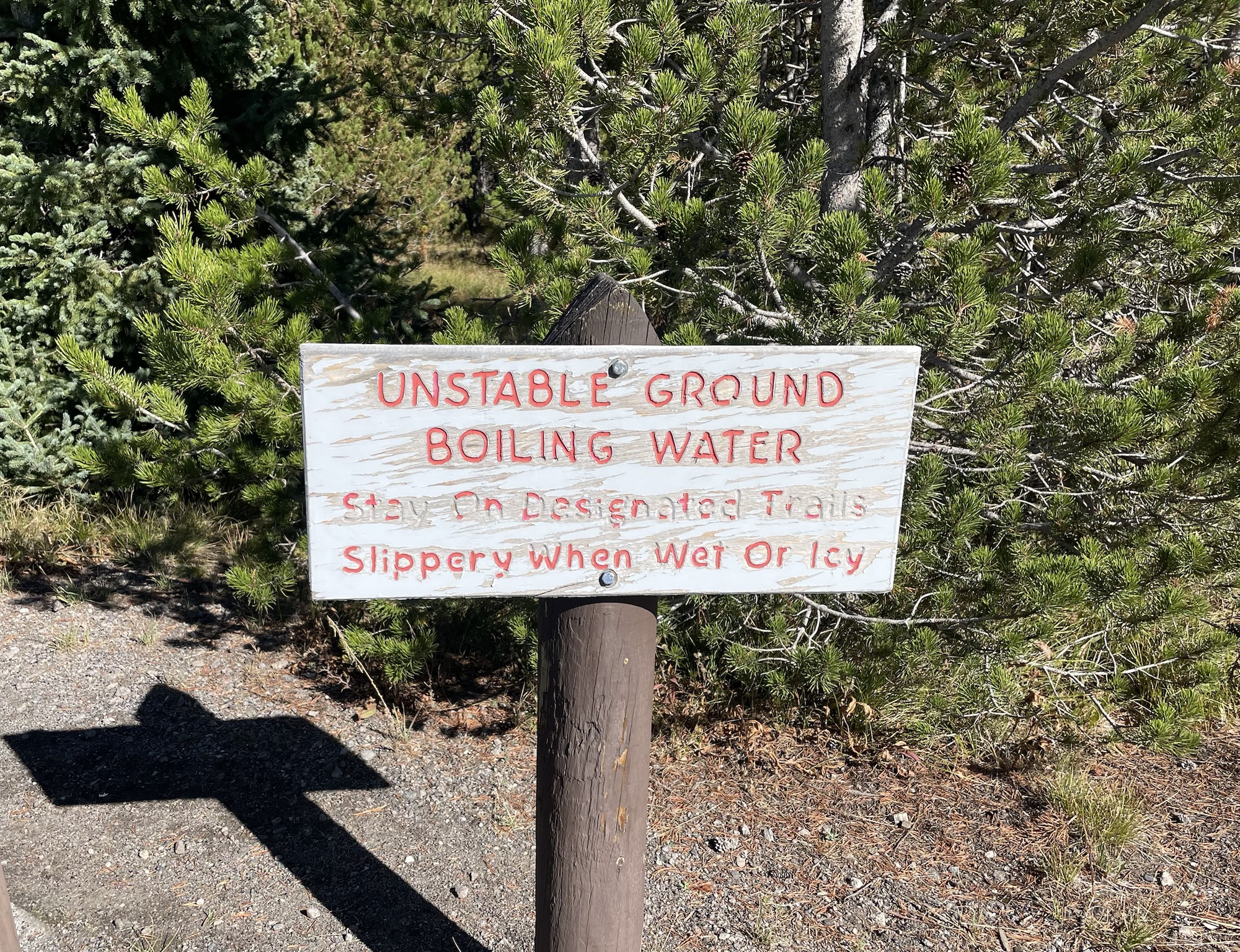
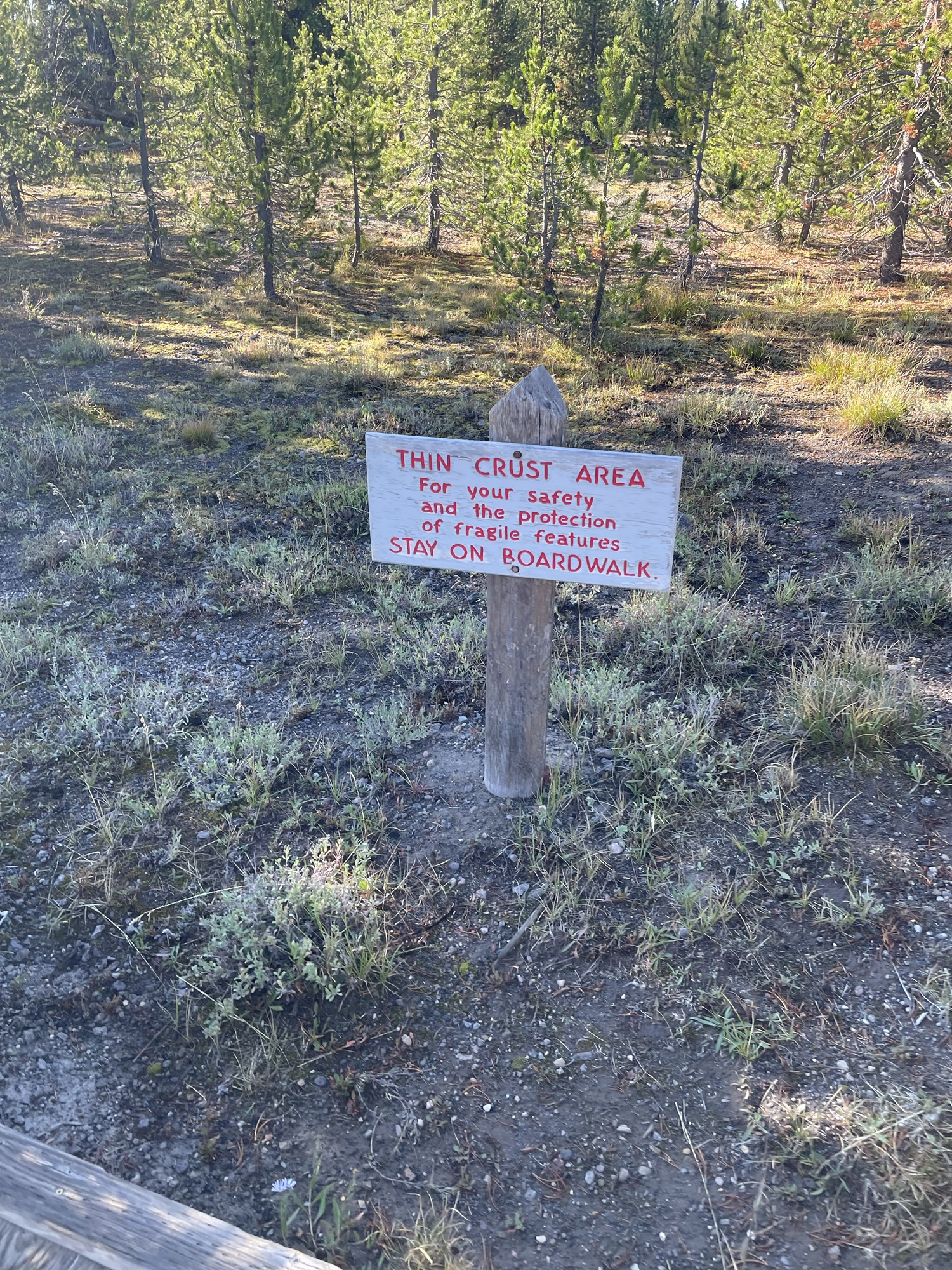
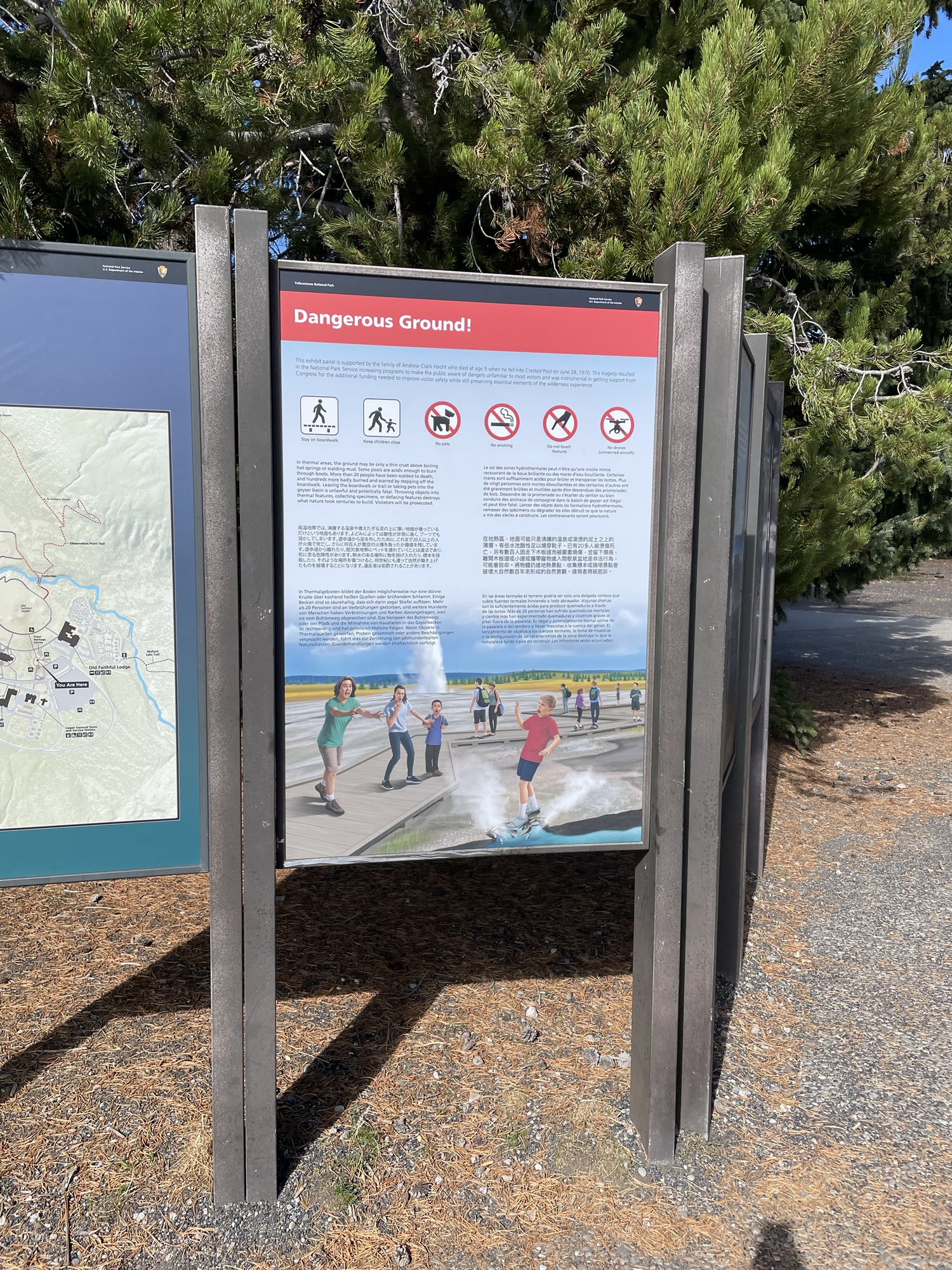
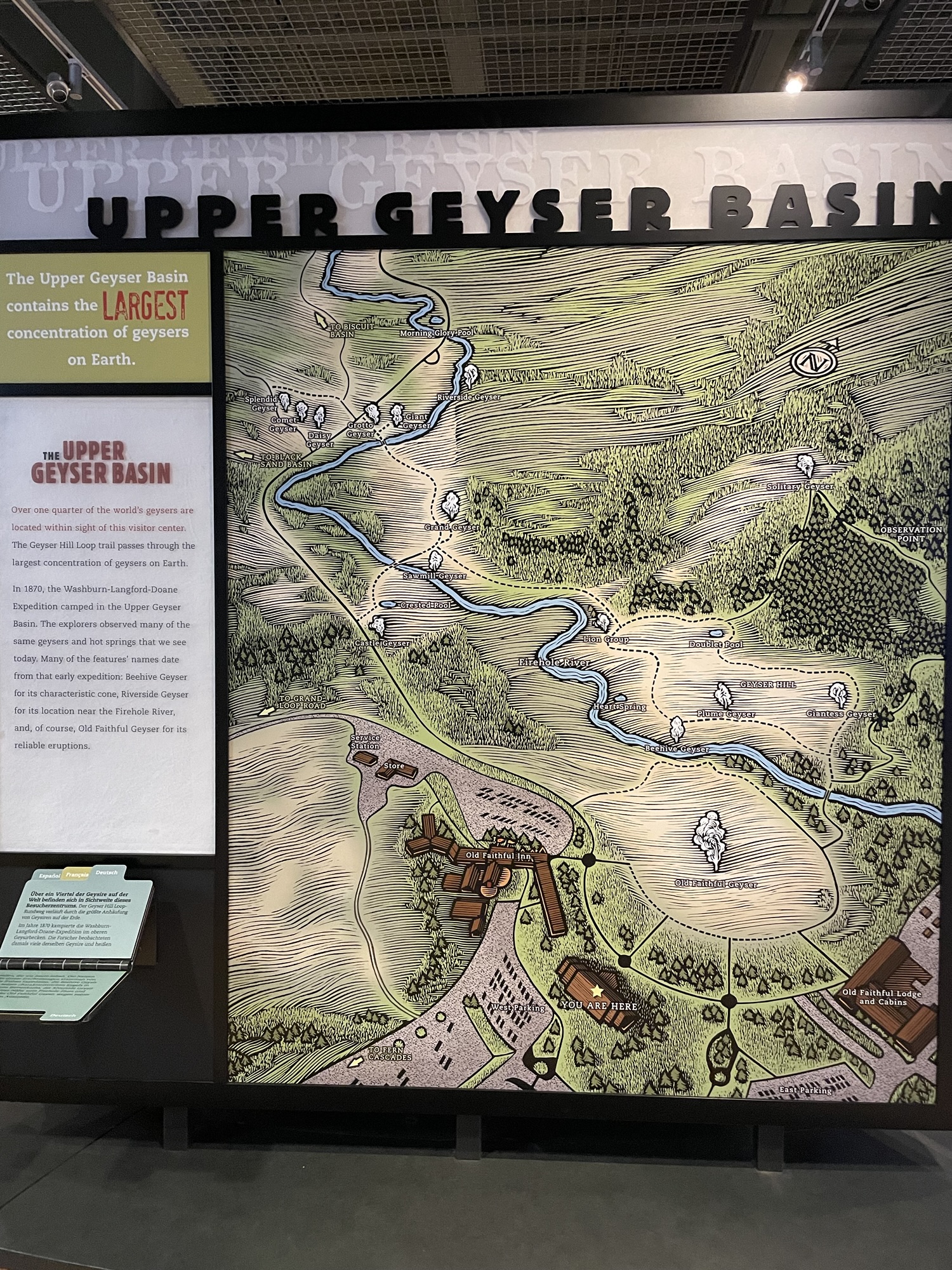
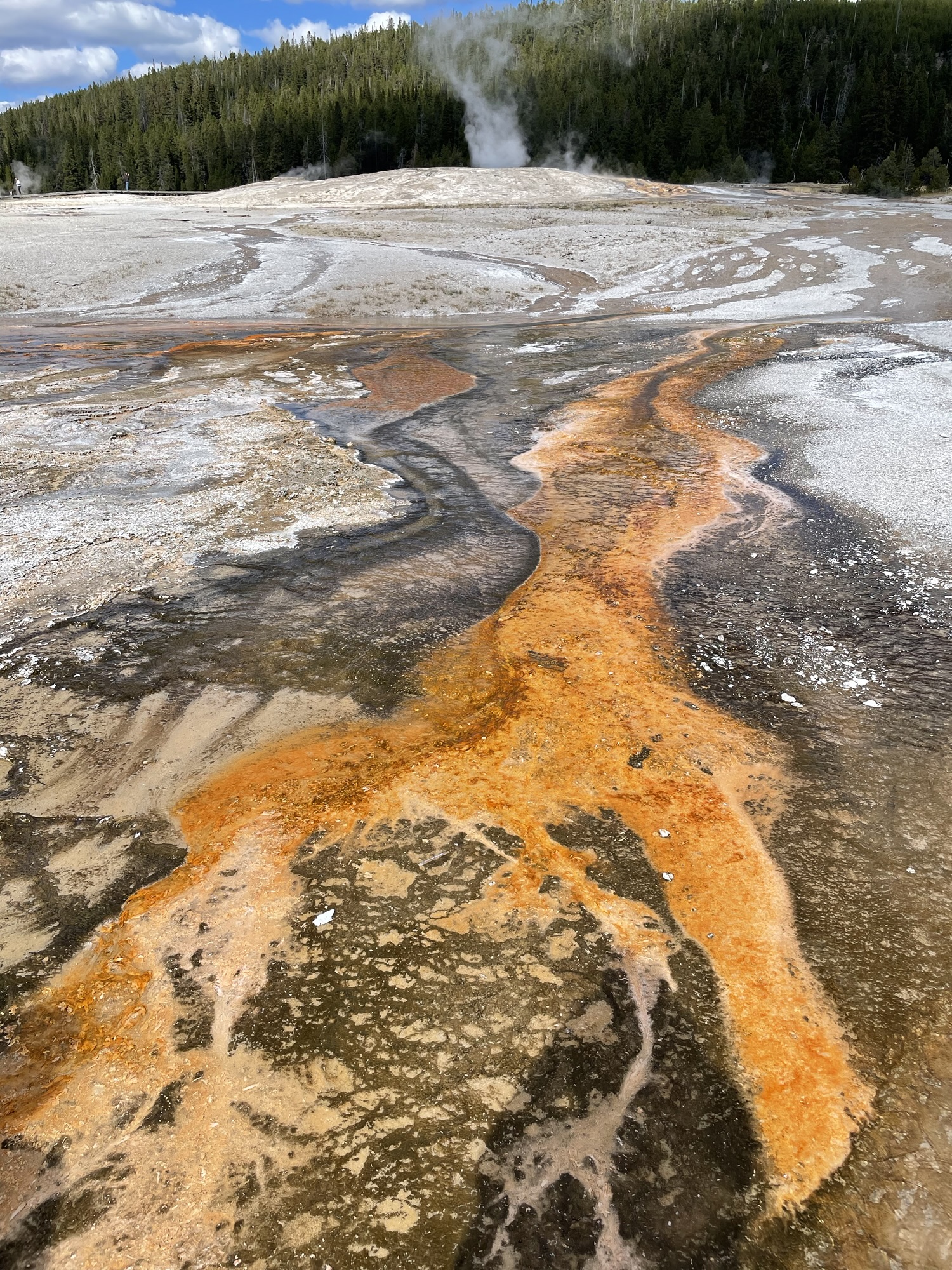
Everyone talks about the geysers of Yellowstone. The one most people see exploding upwards is Old Faithful, one of dozens of geysers that are part of the Geyser Basins, along with fumaroles (steam vents) and very hot springs and other hydrothermal features. The first time I saw this area we only had time to see Old Faithful expel its heated waters and steam and eat lunch at the Old Faithful Inn, an experience in itself. We could see other geysers in the distance erupting water and steam. But we did not have the time to walk around and explore.  This trip we had more than enough time.

We spent two nights at the Old Faithful Snow Lodge, one of three hotels that are in the geyser basin area.  The Snow Lodge is the only one that is open throughout the winter, as it has heat and is built for the cold weather.   The Old Faithful Inn and the Old Faithful Lodge, two historic buildings from the early days of the Park, are only open until late October.  The Visitor’s Center and the Tribal Culture Lodge, as well as the General Store were open when we visited.

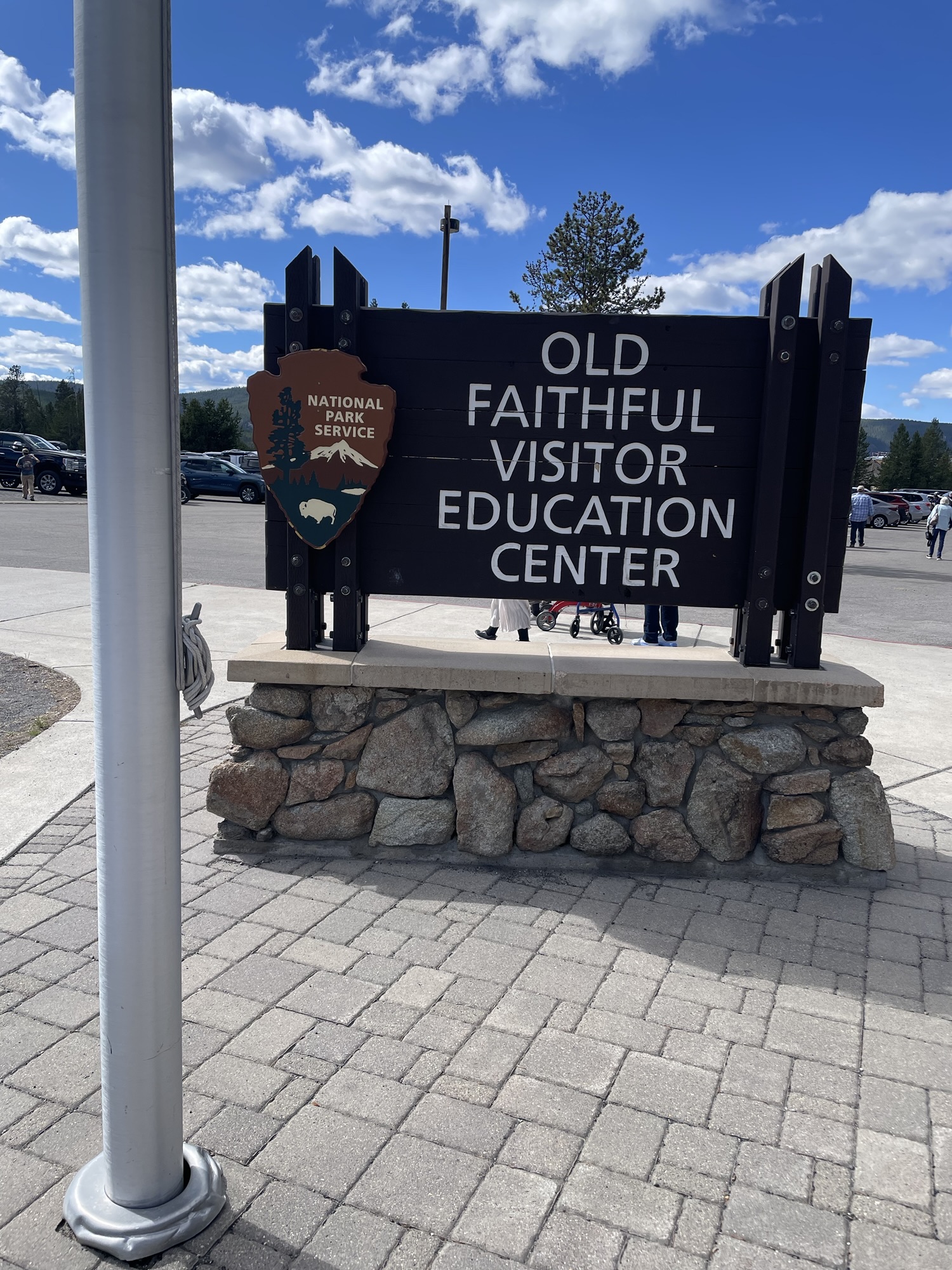
Since we had lots of time to explore while at Old Faithful, I visited the Visitor Center and spent time reading the information and watching the two movies.  I also checked out the beautiful historic hotels, Old Faithful Inn and Old Faithful Lodge.  At the Tribal Culture Center I watched two native American artists work, one carving an arrowhead, while the other worked on beading.  There was lots of opportunity to shop in the general store, the Visitor Center and the Tribal Culture Center. We enjoyed that as well.  It was a wonderful day of sightseeing, learning and relaxing.

Over our 40 hours in the Old Faithful area, I saw Old Faithful explode about 8 times, from all different directions.  Each time its steam and water shot up in slightly different ways. It really is an amazing sight.  But what is also amazing was our guided walk around the lower basin and seeing all the other geysers and their eruptions.  In some places there are three geysers right next to each other, like the Lionesses.  When one goes off it can either trigger another one to erupt, or actually draw water away from one that is already erupting.  The Anemone Geyser doesn’t really erupt at all, instead it slowly fills a basin with hot steamy water then suddenly all the water flushes downward like a whirlpool or a flushing toilet.

There are lovely hot springs to look at, like the Heart Spring, that looks just like a heart. But the temperature in these springs often rise to over 160 degrees, enough to cook anything that falls in. 

The land around these features is often brittle and baked.  You see the silicon deposits around them and the bacteria growing in the warm moisture.  The geyser basins are just one of the impressive sights of Yellowstone. 

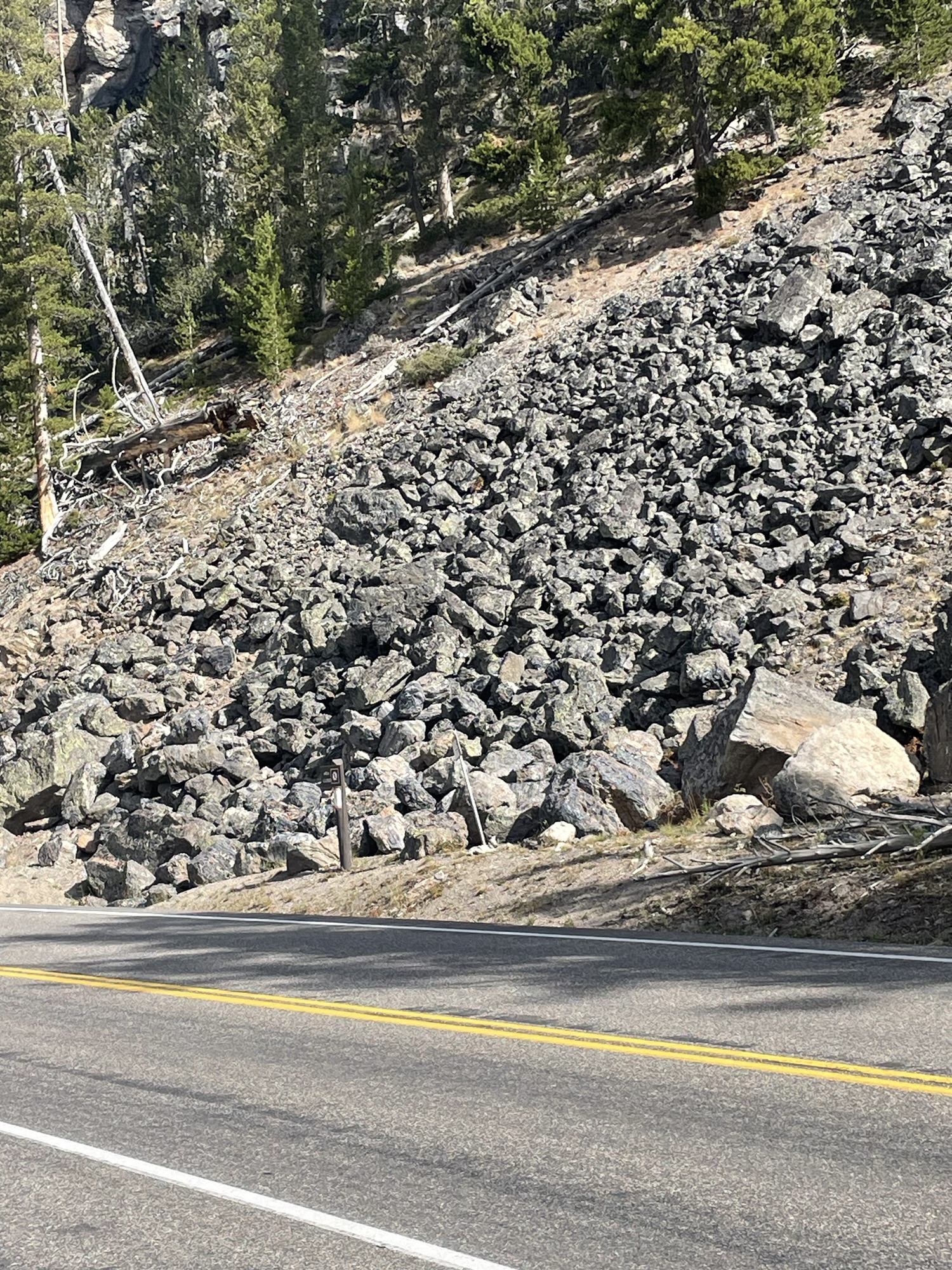
Once we left the geyser basins, there were so much more to see. We visited a mountain entirely composed of obsidian, the black glass made from an ancient volcanic eruption. This mountain is sacred to the native tribes that once inhabited the park.  They used it to make arrowheads and knives. You are not allowed to take any obsidian out of the park. But you can hold this cold, sharp glass.

Every day we ate a sack lunch in the park. The day we went to the hill of obsidian, we ate lunch at this lovely creek and picnic area. I did not want to leave!

Roaring Mountain, is unusual smoking mountain, where fumarole vents have killed off  the trees and caused the mountain to look like something out of a Lord of the Rings movie.

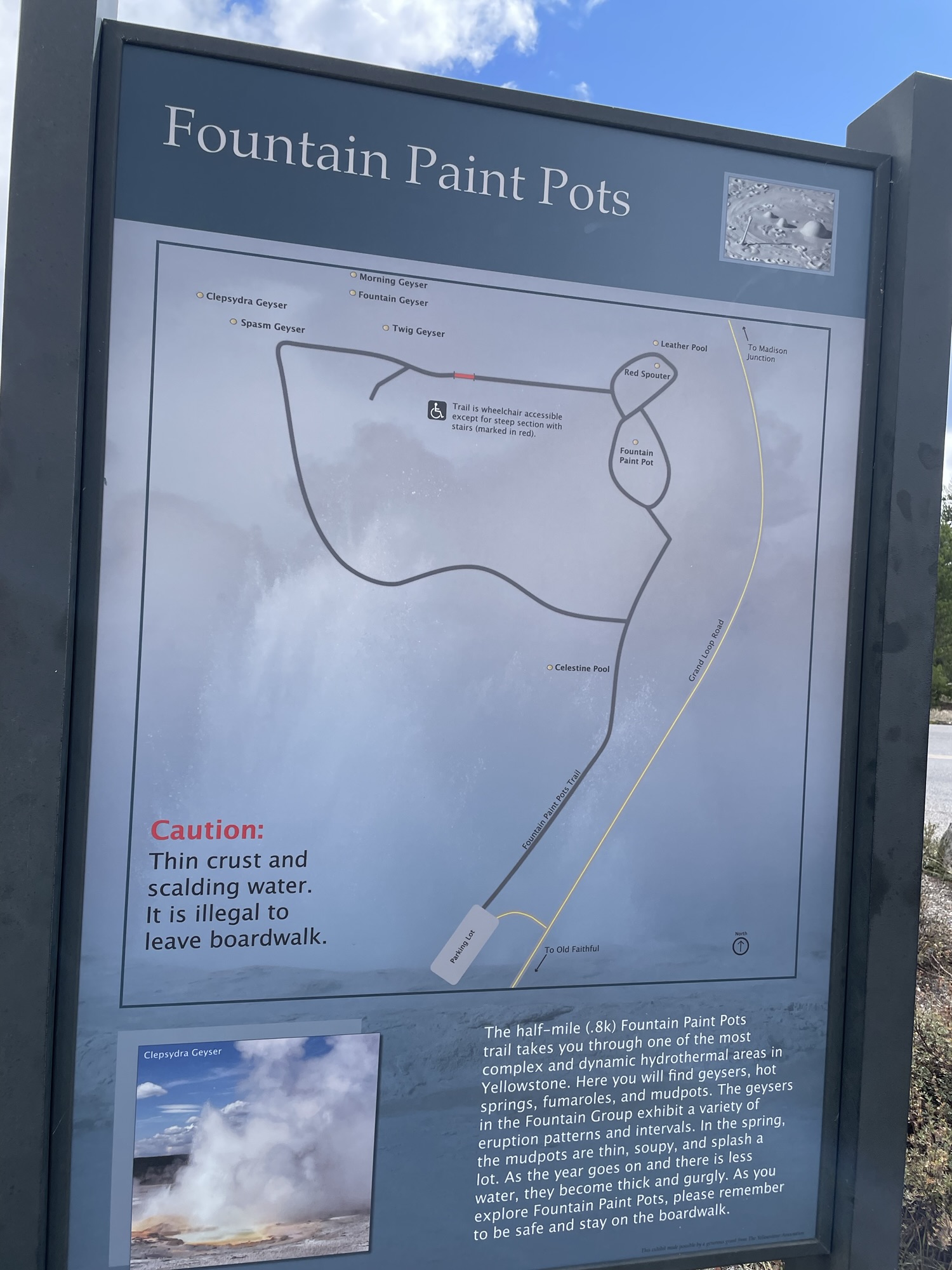
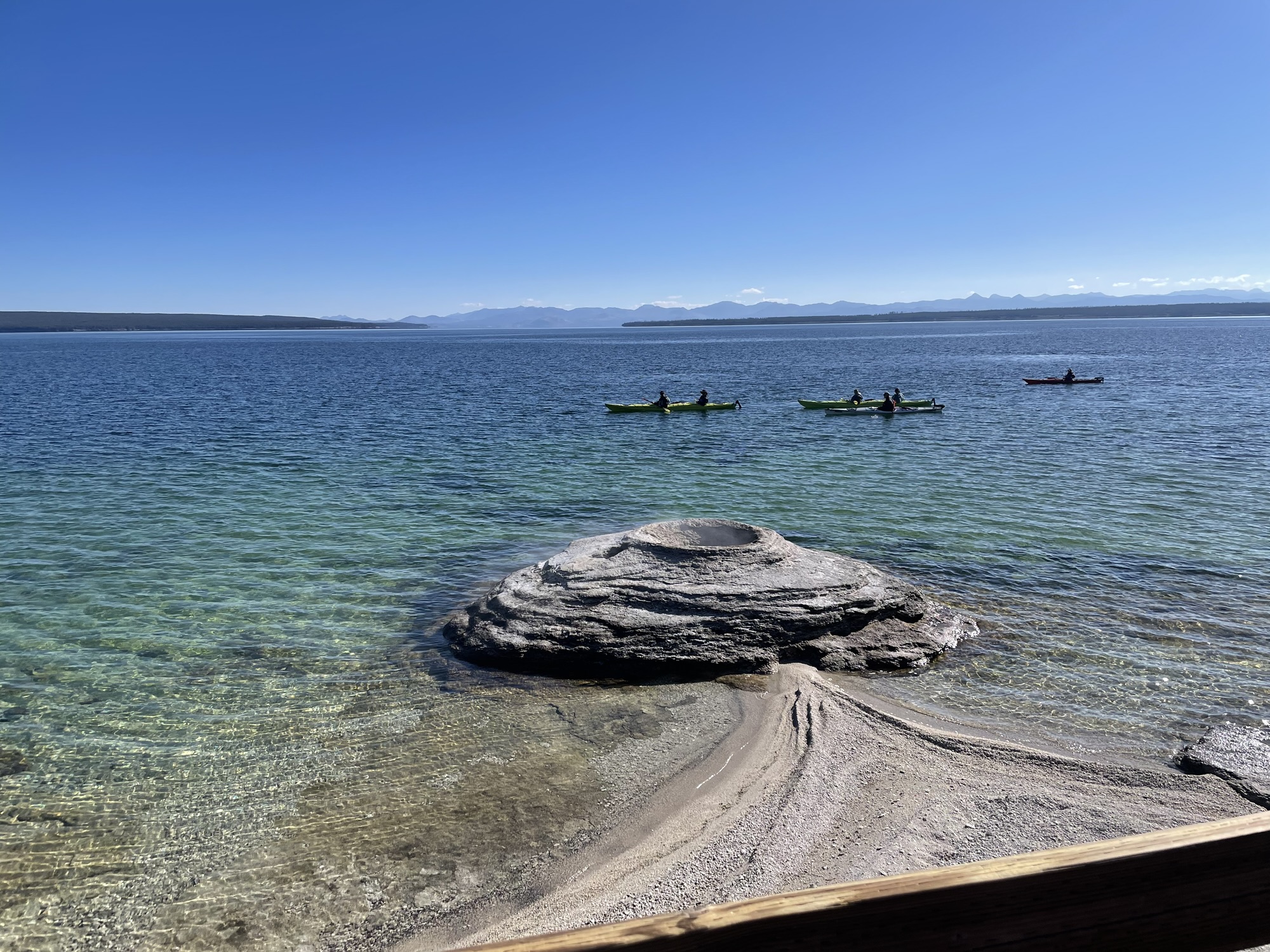
The West Thumb part of Yellowstone Lake, where geysers can be seen right on the edge of the lake and also bubbling up in the lake. And I cannot forget the bubbling mudpots where hots springs and bacteria cause the mud to actually boil.  Talking of mudpots, we also visited Fountain Paint Pots where you can see hot springs, geysers, mudpots and fumaroles all within a short circular walk.  While there we saw many small geysers erupt.  It was a good introduction to our later experience at the two geyser basins near Old Faithful.

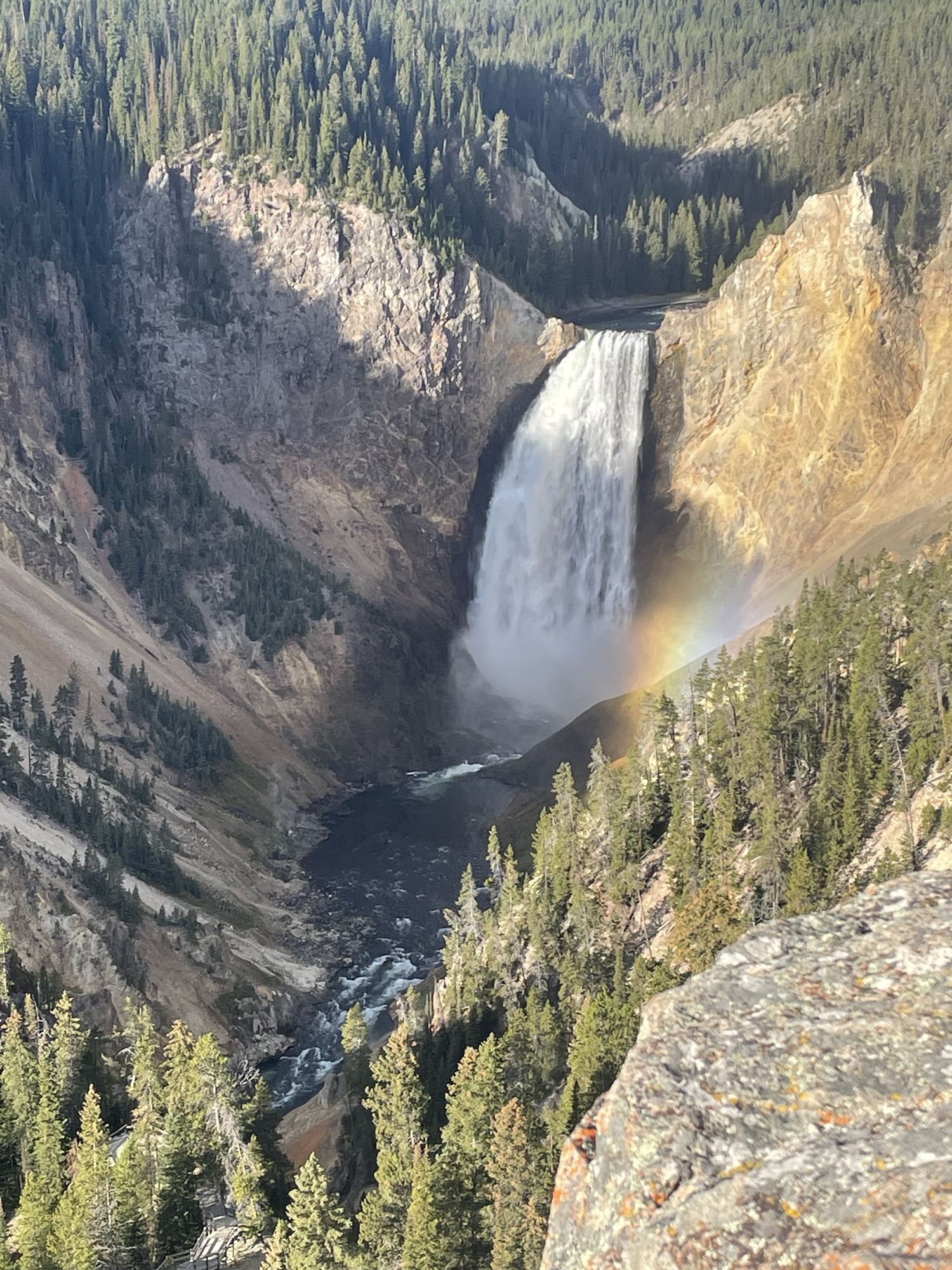
The Grand Canyon of the Yellowstone River with its canyon walls of many colors and its tremendous waterfalls, the Upper Falls and the Lower Falls, are thunderous and stunning. But also along the walls of the canyon you can see the steam from the vents rising as the heat bakes the canyon walls and helps to destroy them.

What surprised me is that the bison, elk and other animals will walk along the heated ground, and sometimes even lie down on it for warmth.  We saw this at Mammoth Falls where a bull elk and his harem decided to hang out on the day we were there.

Just mentioning Mammoth Falls Hot Springs brings back the vision of the water cascading down these travertine terraces that look manmade, but they are not. Photos cannot capture the sparkling essence of these terraces.

Of course I have not mentioned the wildlife.  Black bears, grizzly bears, Wolf packs, Trumpeter swans, Clark nutcrackers, elk, moose, mountain goats, pronghorn (which are not deer!), bison – lots of bison, and so much more to see and experience from a distance. In fact the bison are not buffalo, but people still refer to them that way.  And pronghorns are not antelope, but people still refer to them that way.  As our guide, Shauna, commented, it is impossible to change the song from “Where the buffalos roam, and the deer and the antelope play; to where the bison roam, and the deer and the pronghorn play.”

 Every spot we visited in Yellowstone is amazing. When you think that you are walking in the middle of a giant volcanic caldera, it really changes your view of the world.. These objects that nature has created here is inspiring. You realize that we, humans, are just tiny specks in the world, because in reality, nature is in control. I understand how the First Peoples of the Northern Hemisphere and the early explorers who walked these lands were stunned.  This was sacred land to the First People and should be sacred lands to us. 

I am so glad that in 1872 President Ulysess S. Grant declared it the first National Park.  Yellowstone is not only a national treasure. It is a world treasure.

I think everyone should come here to visit and learn. Having a guide lead us on this journey made it so much more meaningful. I have to thank Shauna, our guide; Bryan, our fearless bus driver; and Louis, our director of all (food, keys, directions, etc.); and Road Scholar. We will never forget this experience.

Amazing Dinosaur Displays In Bozeman, Montana

26 Sep

On our way to Yellowstone, we spent two nights in Bozeman, Montana, home to the Montana State University and the wonderful Museum of the Rockies. We never got to visit the campus of the University, but we did spend a couple of hours examining the exhibits at the museum. 

The Museum basically has three parts: Dinosaurs, Yellowstone Park, and an outdoor farmstead.  We did not tour the outside area because it was closed for the season, and it was cold and raining. But we definitely enjoyed our visit to the inside exhibits, even though two were closed as they were preparing new exhibits for the fall.

The Dinosaur Exhibit hall is spectacular.  The museum has a relationship with the paleontology department of Montana State University.  I believe that many of their dinosaur skeletons and the research and work on them are done by faculty and students from the university.   And you can tell as you walk through the exhibits that they are meant to be interactive and educational. You do not just look at the dinosaur bones, you participate in activities that explain what you are seeing.

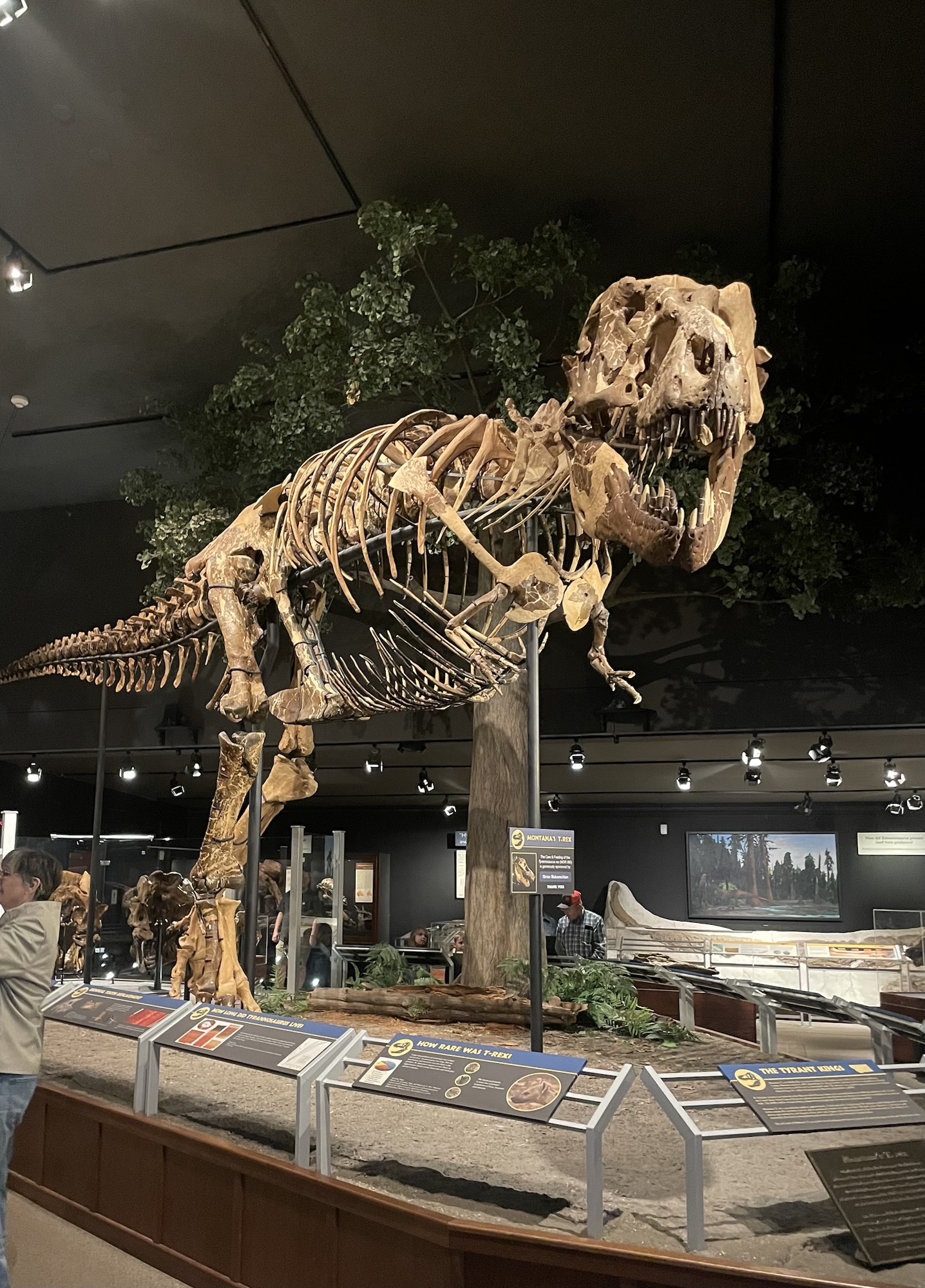
However, what you are seeing is so wonderful that sometimes you just have to look up in awe, especially at the Montana T-Rex that stares at you as you enter one of the rooms. The entire time I was there, I was thinking that I wished I had come here with my son when he was a child. He loved dinosaurs. The only books he wanted to read were about reptiles and dinosaurs.  He would have just loved this museum. 

Two of my favorite displays were the clutches of unopened dinosaur eggs and the sad display of a group of young diplodocus that got stuck in mud eons ago and died.  A section of their tomb is now on display at the museum. 

I loved how they displayed the underwater dinosaurs.  The carpet color changed to blue as did the walls. It made me feel that I was underwater.  My new bit of knowledge there, was that one water dinosaur, Plioplatecarpus peckensis had teeth on the roof of its mouth to clamp down on prey.  Ouch.  The outer teeth were scary enough, without the inner line of teeth ready to dig in.

Unfortunately, we got there just a week after the giant T-Rex, Sue, left. It had been on loan from the Field Museum in Chicago.  But not to worry.  I had visited several times with my family.  However, I did feel sad that we just missed seeing it again.

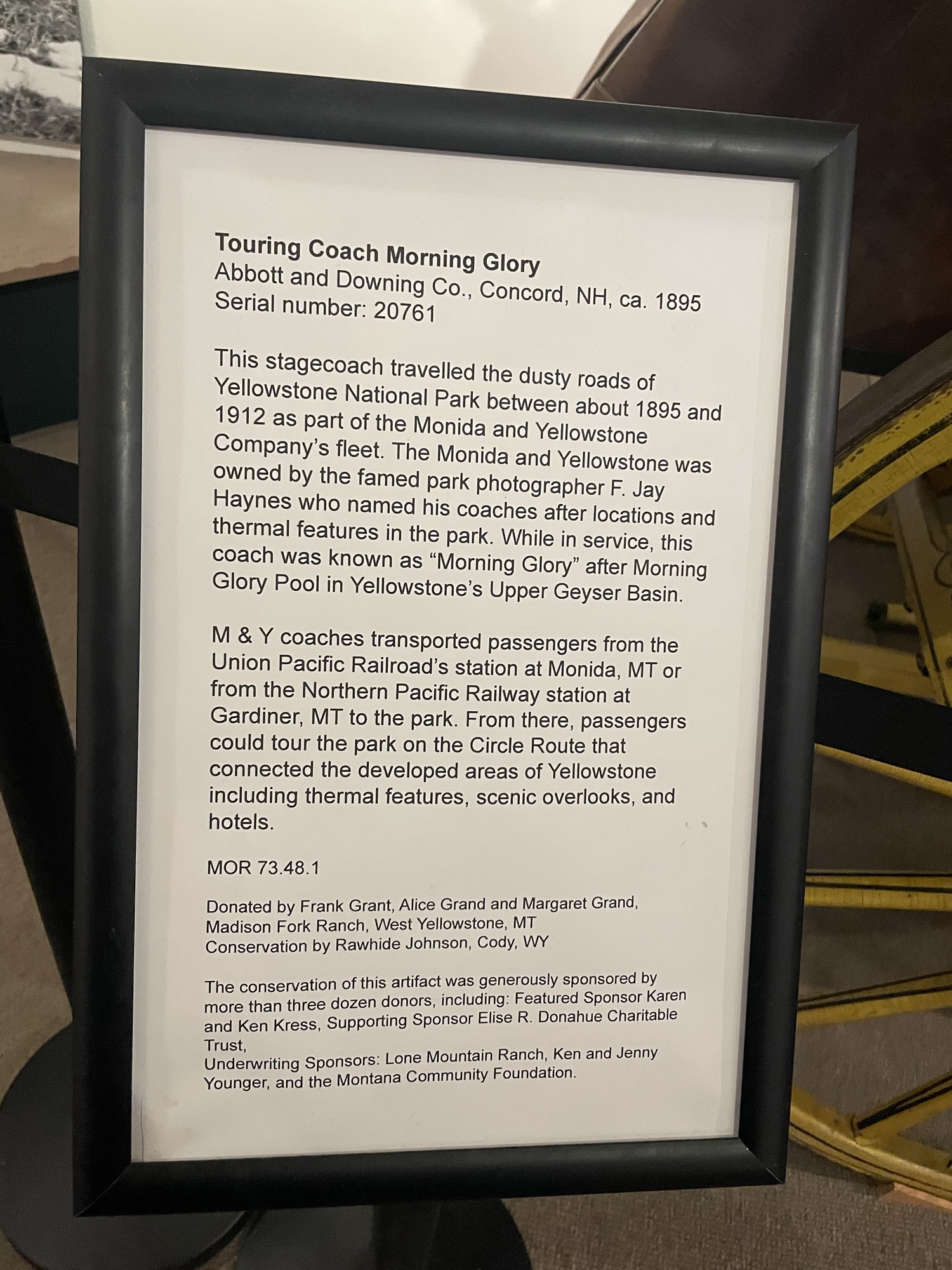
The next section of the museum also interested us because we were on our way to spend six days in Yellowstone National Park. Reading the displays in the museum and seeing the items from the Park’s early days was a wonderful introduction to what we would be experiencing. I enjoyed seeing an original park ranger uniform and the touring coach that transported people throughout the park during the early 1900s, before there were paved roads and cars.

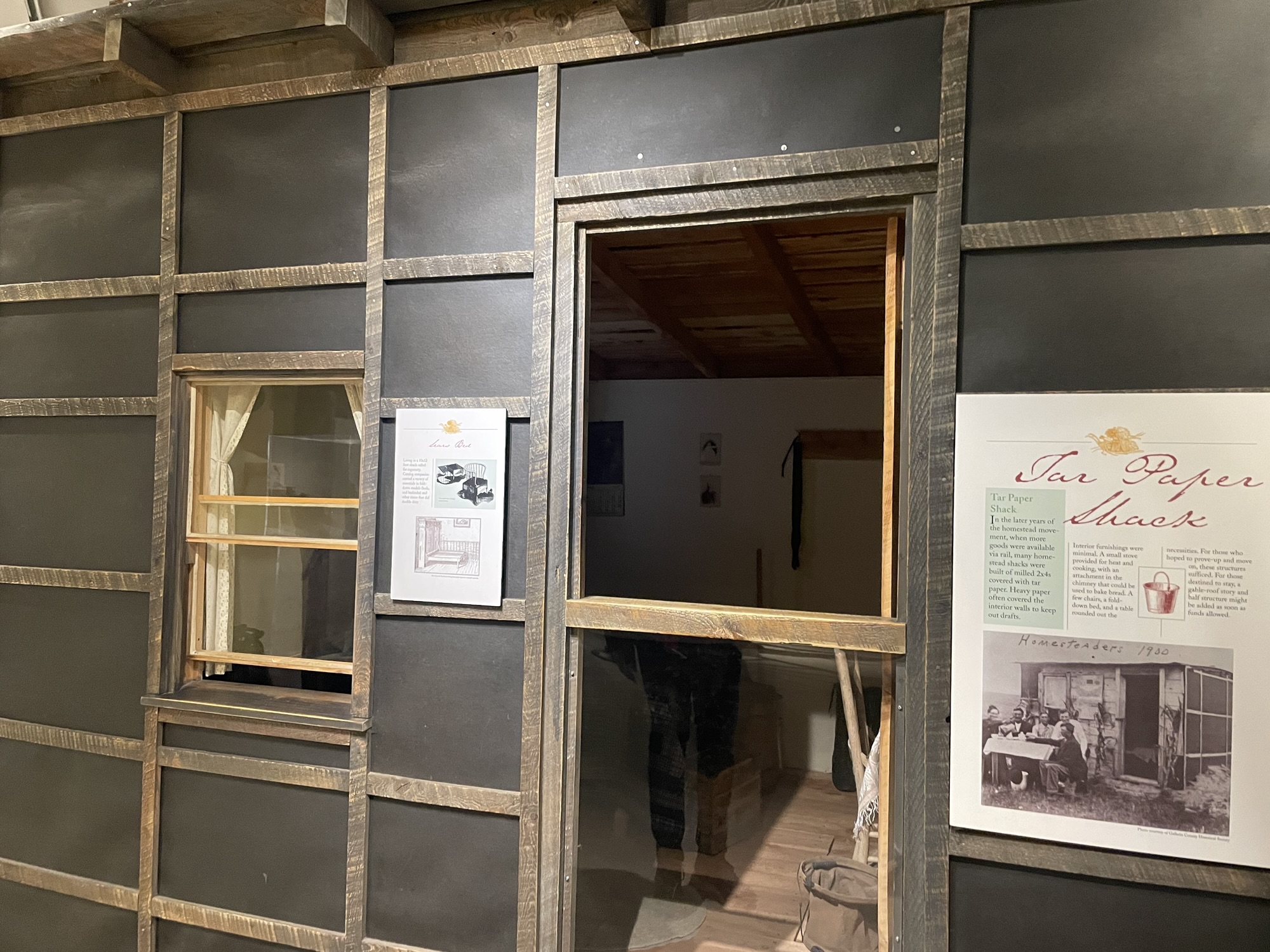
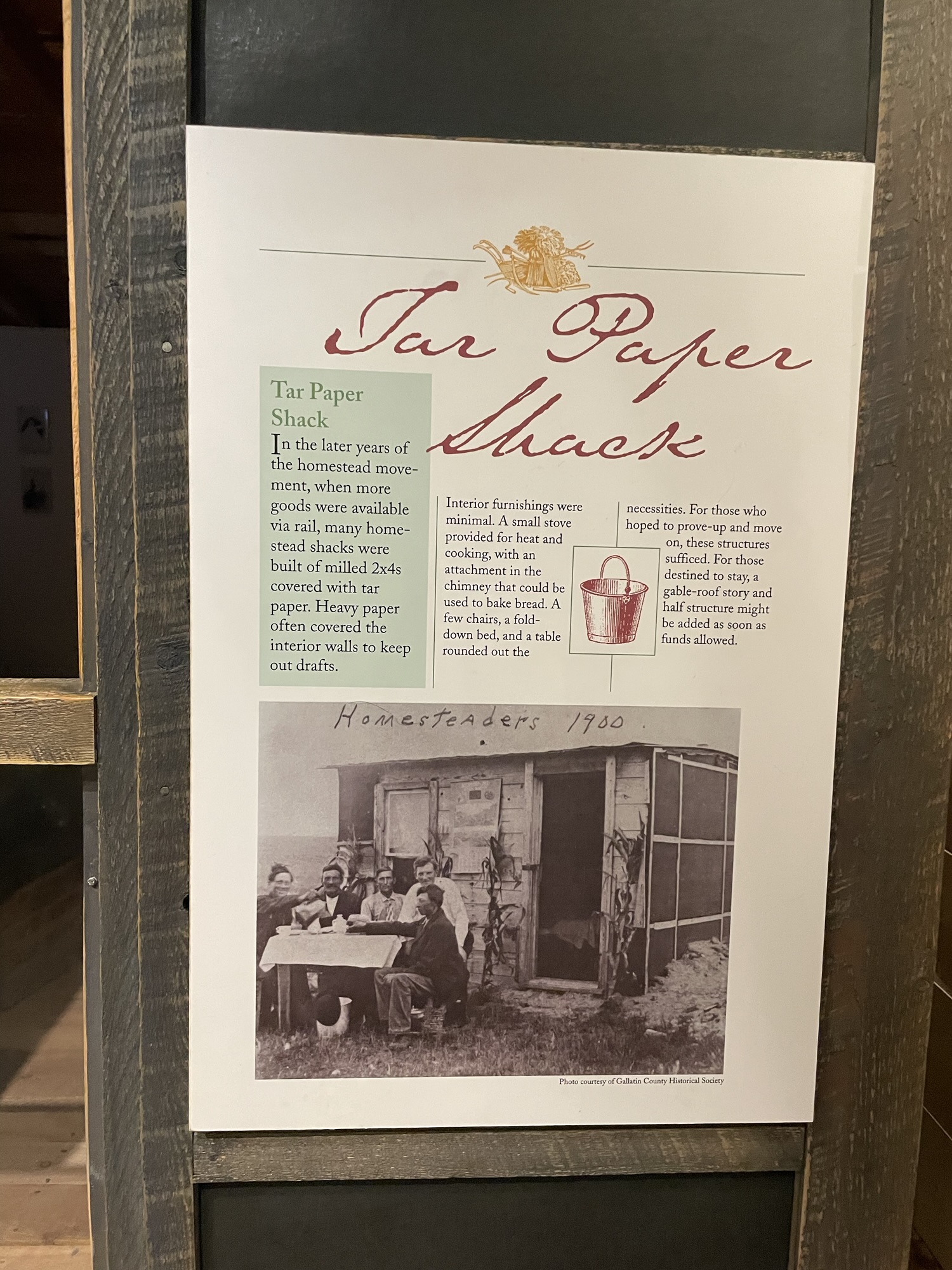
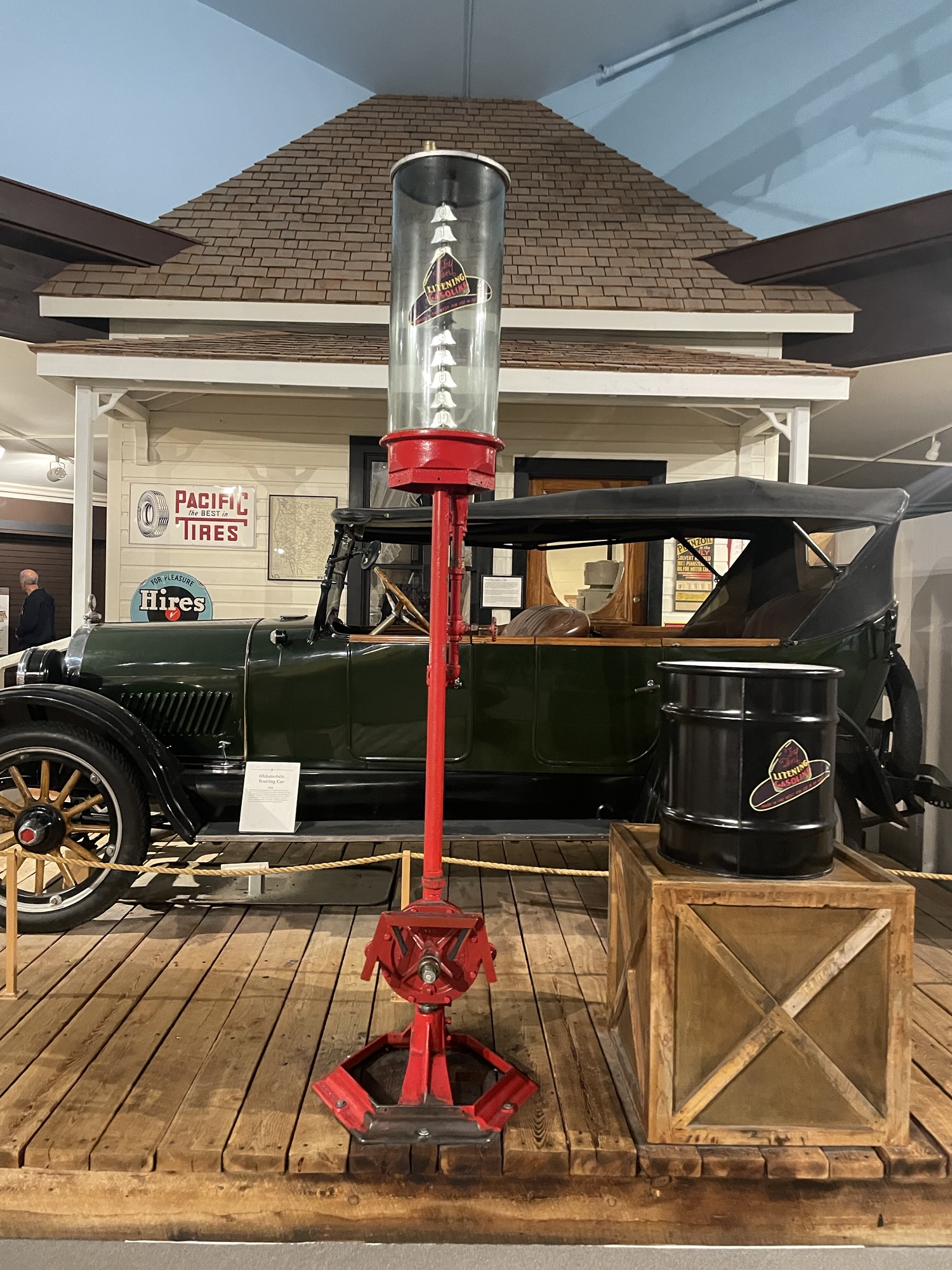
And because I love seeing old houses, seeing both a tar paper house and a small wooden house inside the museum, made me more aware of how difficult life was for early settlers in Montana. It is cold there.  I cannot imagine living in these houses without insulation and the modern conveniences. But the other interesting point was that gasoline stations were also the homes of the settlers. It was important for the new automobiles to be able to refuel. It would have been quite a lonely life, but instead they met people traveling to Yellowstone!

This was a great way to start our week-long trip to Montana and Wyoming and the wonderfully weird Yellowstone National Park!

https://museumoftherockies.org/

A KC BBQ Adventure

3 Sep

An adventure to Crown Center in Kansas City brought my friends and me to the Museum of BBQ, which opened just this April. I learned more about barbecue then I realized I needed to know!  First, I learned about the history of BBQ, or should I say ‘barbacoa” and how this style of cooking was brought to Europe from explorers who went to Africa and the Americas.

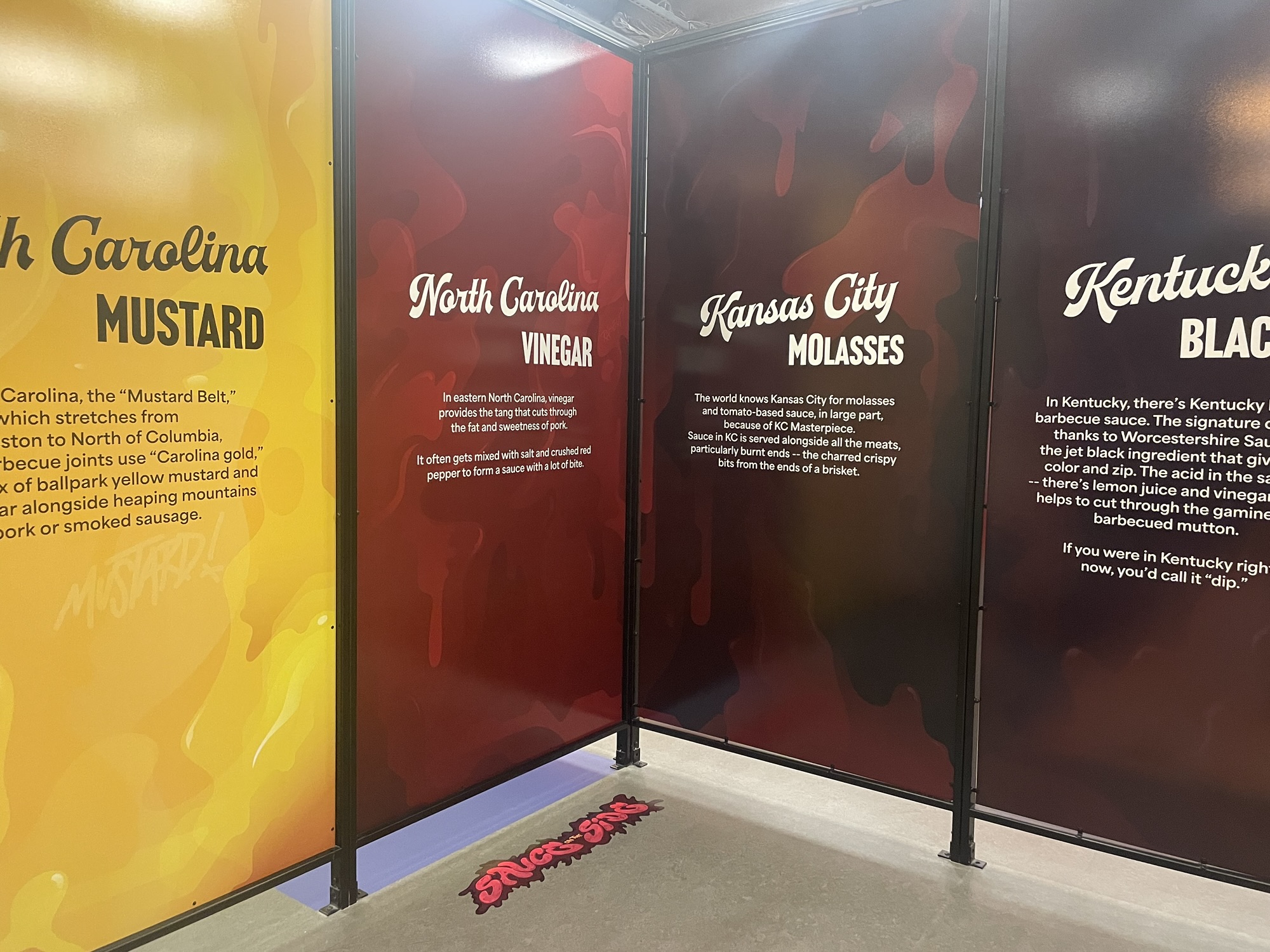
Barbecue: You can make it spicy, or sweet, or very tart.  It can be made with dry rubs or wet rubs.  People in different states like it in different ways.  And if you live in North Carolina, the state is divided about how you should eat it.  The east side wants it heavy on the vinegar; the west side wants mustard. (Personally, I do not want either!! Sorry) There is also debates which is better, BBQ pork or BBQ beef.  They don’t even mention chicken!!

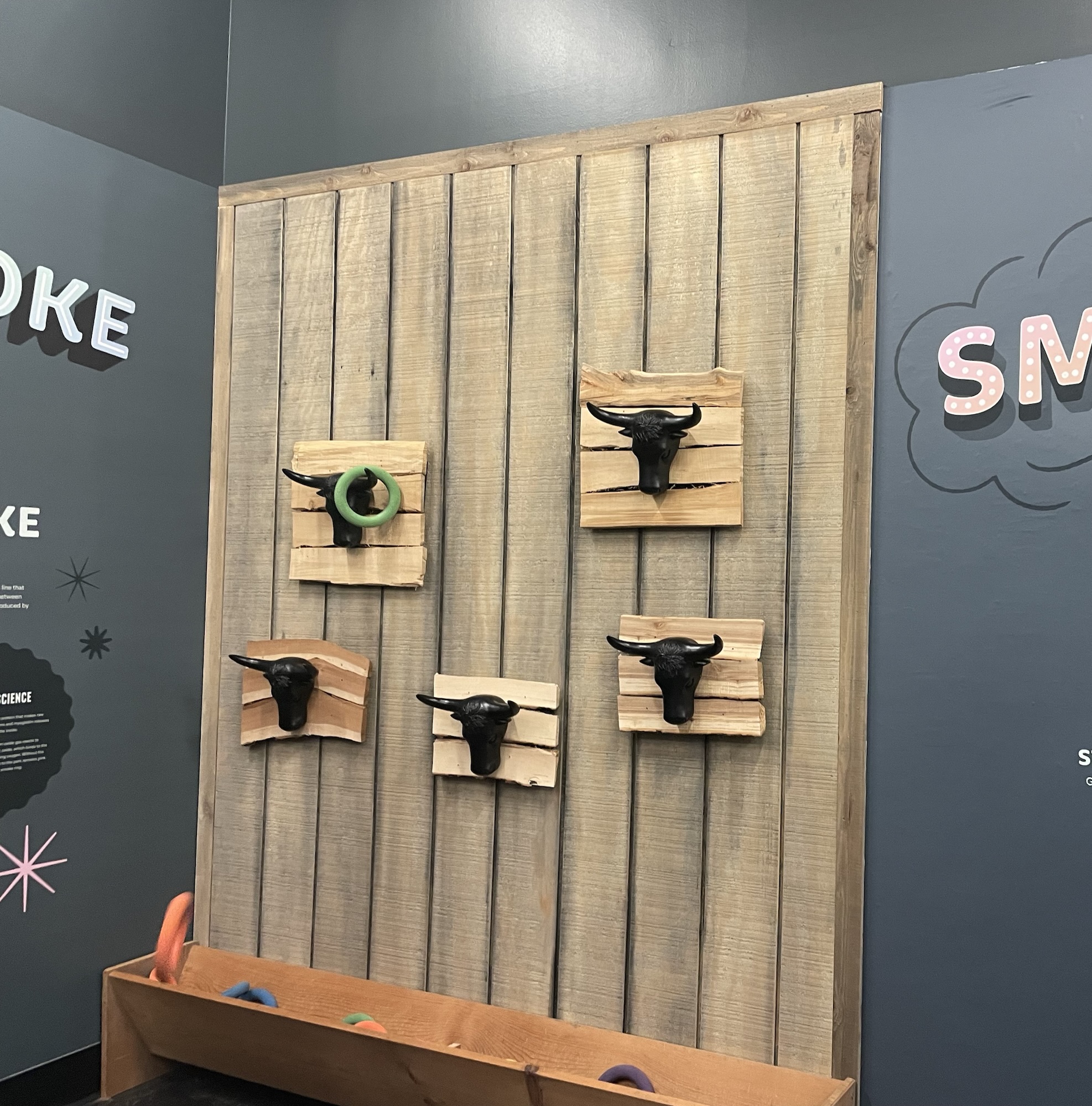
At the museum there are activities like playing in a pool of baked bean-colored balls.  Or wearing a belt that indicates you are a BBQ master.  You can try to hang a ring from the horns of a steer! My friend’s husband actually succeeded in this challenge. The rest of us failed!!

You can find out all about BBQ and baked beans, because what is BBQ without beans!  And you need to learn about the history of Bush’s Baked Beans. The last set of displays focuses on Kansas City and the American Royal BBQ competition.  Also, how KC BBQ went global when KC Masterpiece’s sauce was purchased and distributed nationwide.

For me the best part was learning about the different types of BBQ sauces and realizing why I love Kansas City Barbecue.  I now know why.  I love the sweet molasses or brown sugar concoctions that Kansas City Barbeque offers the palate.  For me KC BBQ brisket or chicken is the best.  To taste some of these other sauces, just check out the gift shop, which has BBQ sauces from all the country!

I also learned that fat, or marbling makes BBQ more delicious.  And for some the most delicious of all are the fatty burnt ends of a brisket.  My husband loves burnt ends, a delicacy. 

To make our day complete, we had lunch at the Burnt Ends BBQ restaurant in Crown Center.  The husbands had burnt ends. My friend and I had BBQ brisket. It was deliciously cooked in the KC BBQ manner. 

Kansas City has many wonderful BBQ restaurants.  And everyone in the Kansas City metro has their favorite.  My favorites are Jack Stack and Brobecks.  I never argue with those who like other restaurants because it is a no lose situation. Every restaurant is great including, Joe’s KC BBQ, Gates Bar-B-Q, Q39, Burnt Ends, Taste of KC, and Arthur Bryants.

If you visit Kansas City be ready to try BBQ, it is a must.  If you want to learn more about BBQ, check out the Museum of BBQ. 

My favorite Places in Iceland

22 Aug

Our cruise in July started in Iceland.  We arrived while the volcano was erupting.  We could see it from the road as we traveled from the airport to Reykjavik.   It was exciting for us because years earlier we were in Hawaii when the volcano was erupting, but the day that our cruise ship was going to be able to see the lava flow, it stopped.  A great disappointment.  Seeing the eruption in Iceland fulfilled a desire to see an erupting volcano.

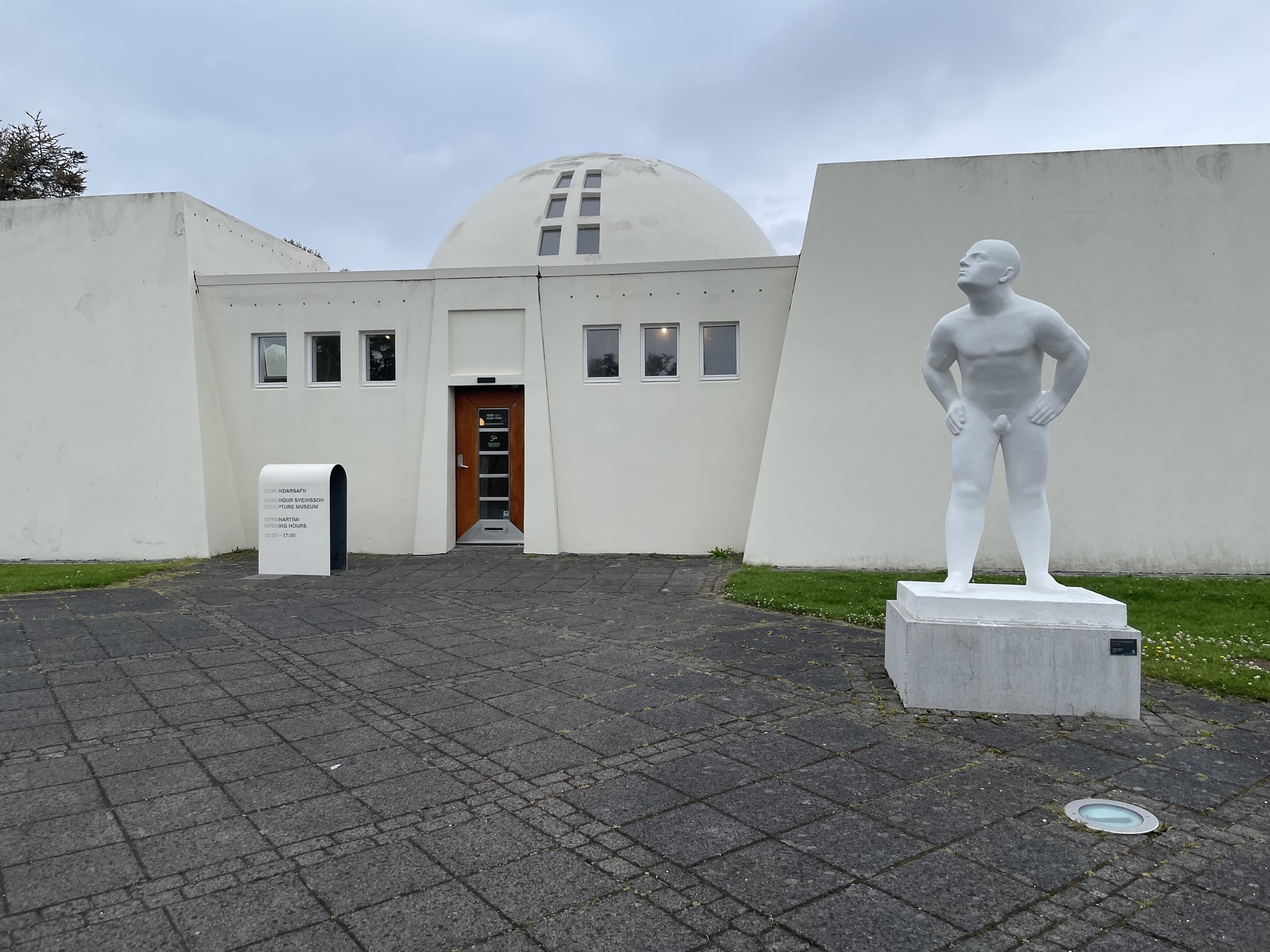
We visited two off the beaten path places in Reykjavik that were in walking distance to our hotel.   The first was the Asmundur Sveinsson home and sculpture garden/museum at the Reykjavik Art Museum.. Honestly, I had never heard of him before, however one of his statures I had seen, “The Woman with A Churn”.  Some of his large sculptures did not appeal to me.  I think I like figures that I understand a bit more.  Before we read the description in the guide we used, my husband and I tried to figure out what some of the sculptures represented.  I think we needed to understand more about Iceland mythology culture to really appreciate the figures.  But I am glad we went.

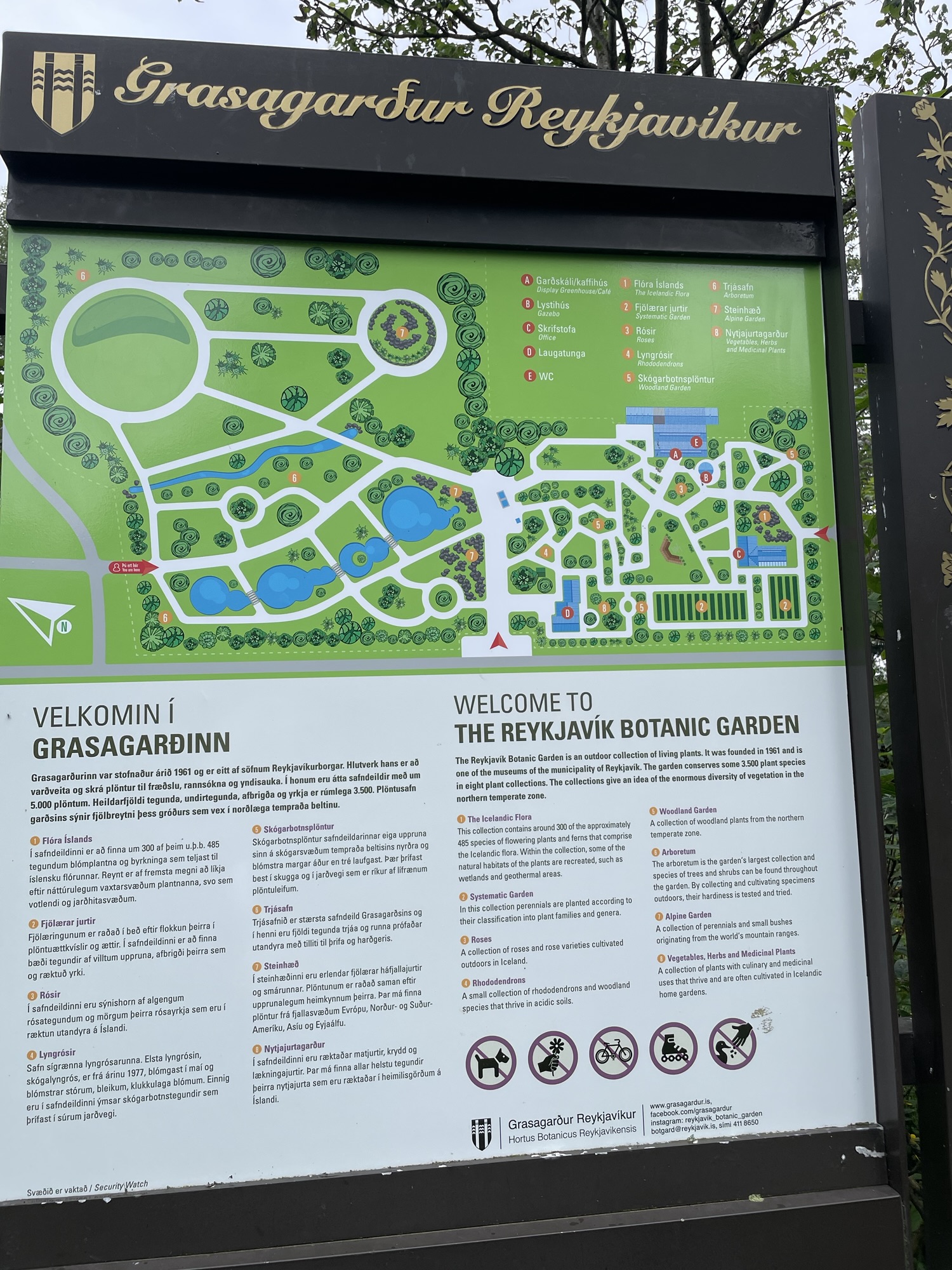
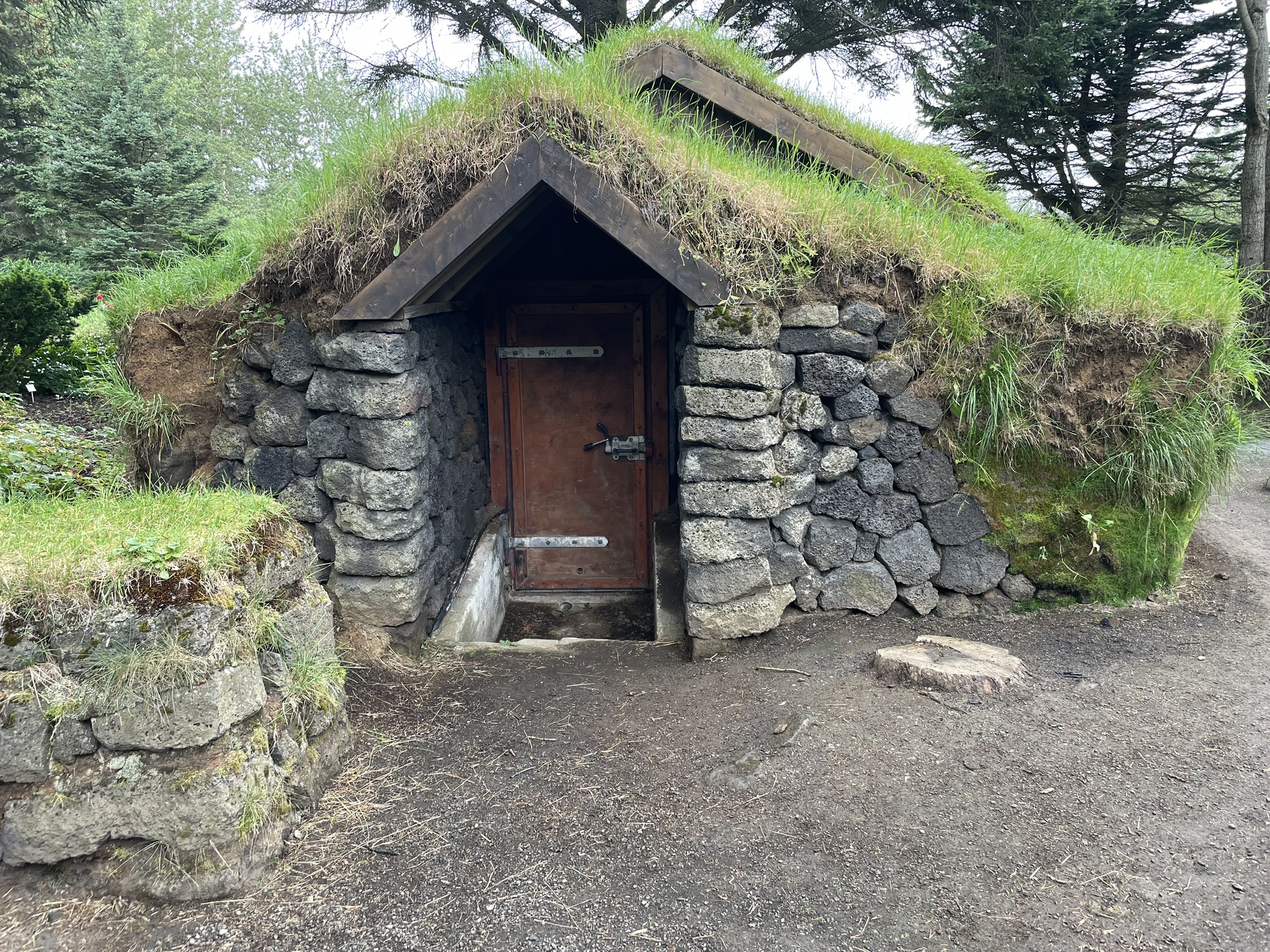
From the museum we walked to the Reykjavik Botanic Garden, “Grasagardur Reykjavikur.” I love botanical gardens, and this one was lovely, especially since the flora of Iceland is much different than those I had visited before! Much of it is low to the ground and nestled into rocks and crevices.  I liked how there were paths through the rock gardens so we could get up close to these plants.  It was a quiet place to walk and enjoy, as well as to see all the families there enjoying the paths as well.  I am sure it is a great place for families because it is also free and open to the public.

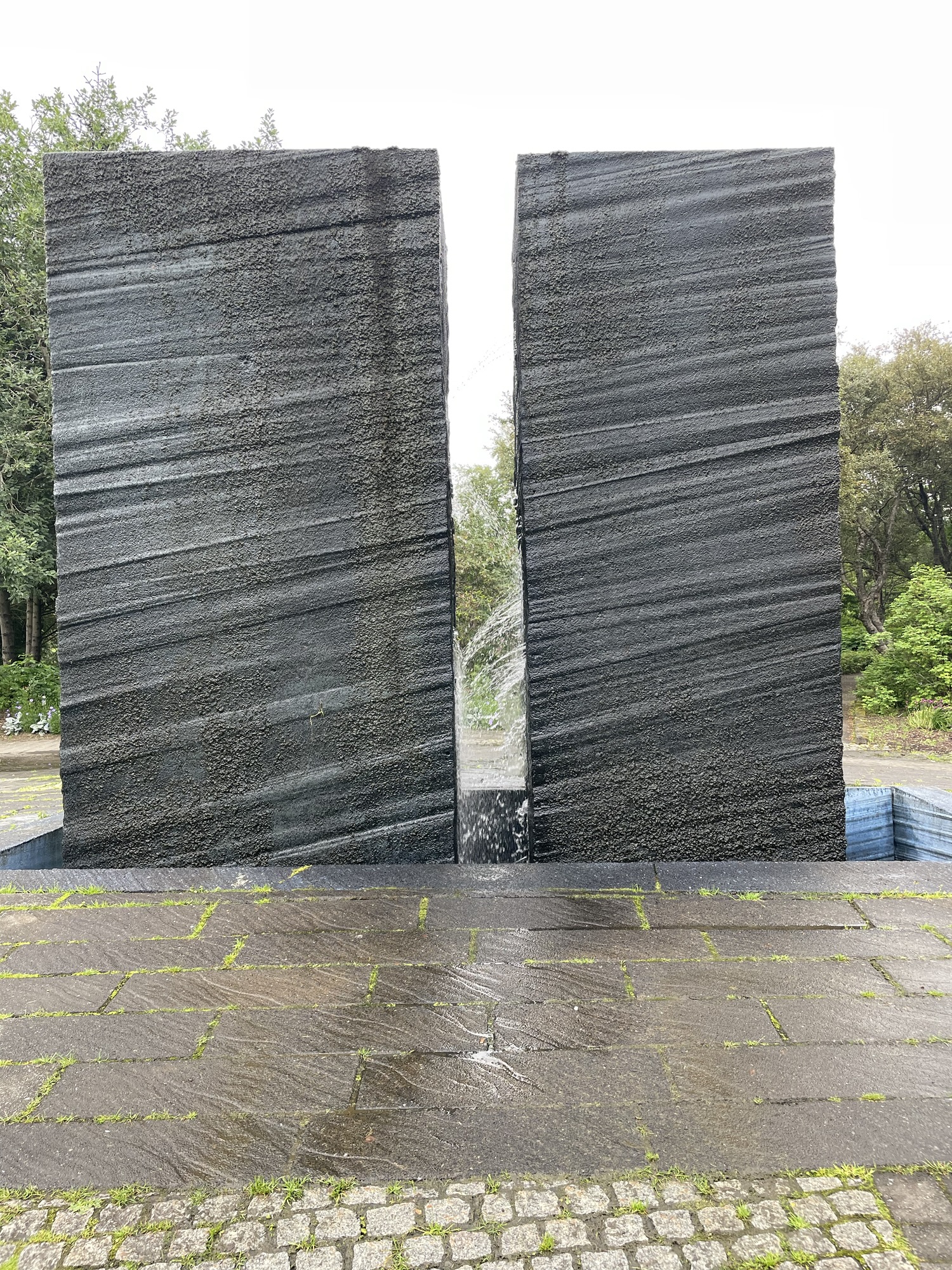
There is a wonderful sculpture in the park of two towers and between them is a water feature that ebbs and flows.  It stands right in front of one of the rock gardens.  I enjoyed seeing its water display with the plants below.  The botanical garden does have a café, where many of the families were eating.  We chose to leave the park to walk a bit through the town and ate at a lovely little restaurant called, Ginger.  It was excellent.

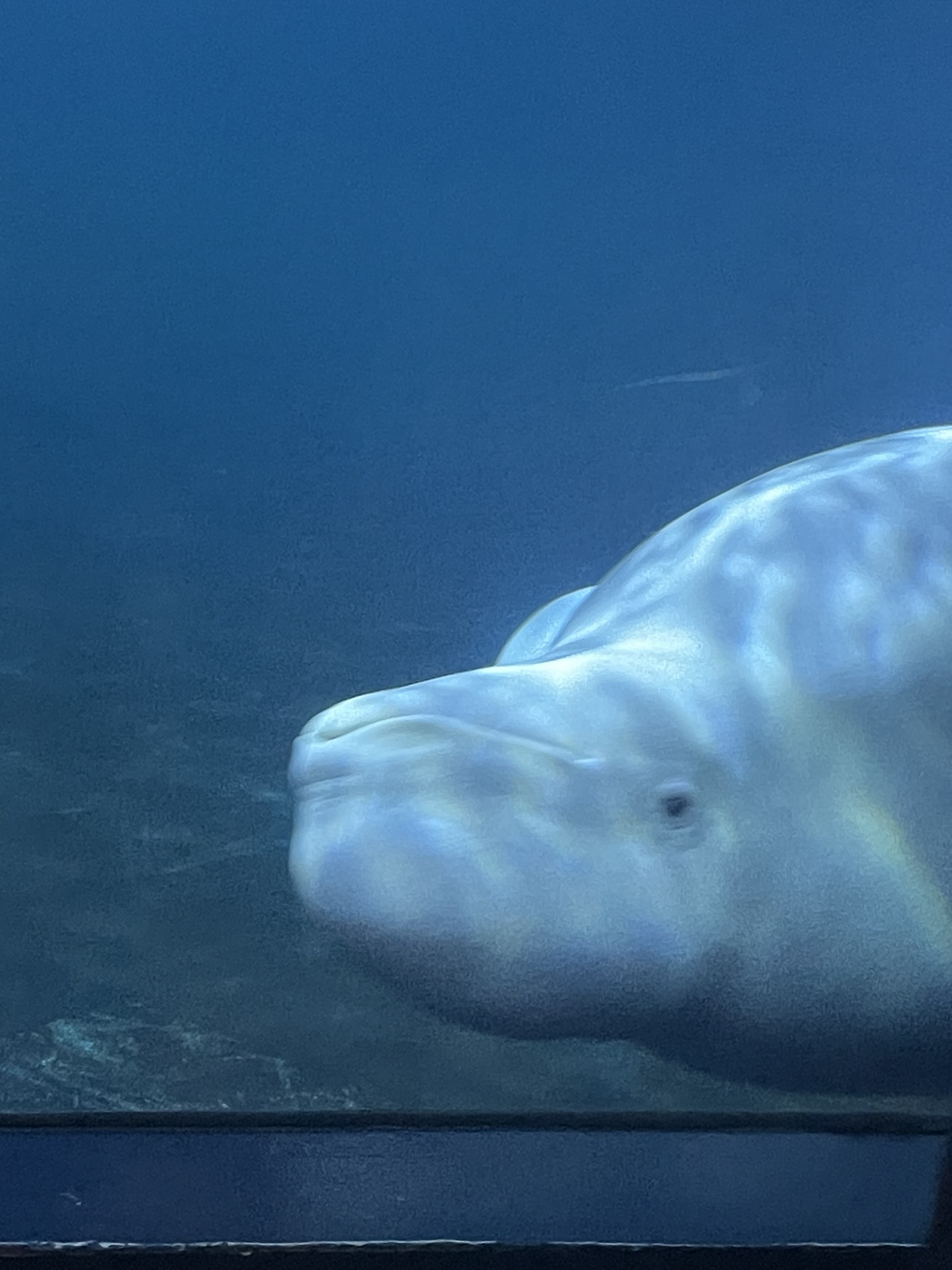
My other favorite spot in Iceland was our at first stop on the cruise at Vestmannaeyjar on Heimaey Island.  Before our tour, we took a quick walk around town and decided to visit the Beluga Whale Sanctuary at Sealife Trust.   I have been singing the Beluga Whale song, “Baba Beluga.”  by Raffi for years. First to my children and now to my granddaughters.  So I absolutely had to visit this sanctuary and donate to support the whales.  Their two whales were rescued from show and now live peacefully.  They Sealife Trust is preparing a bay at Heimaey Island to eventually releases the beluga whales to live in.  I am glad we made this stop before meeting up with our tour.

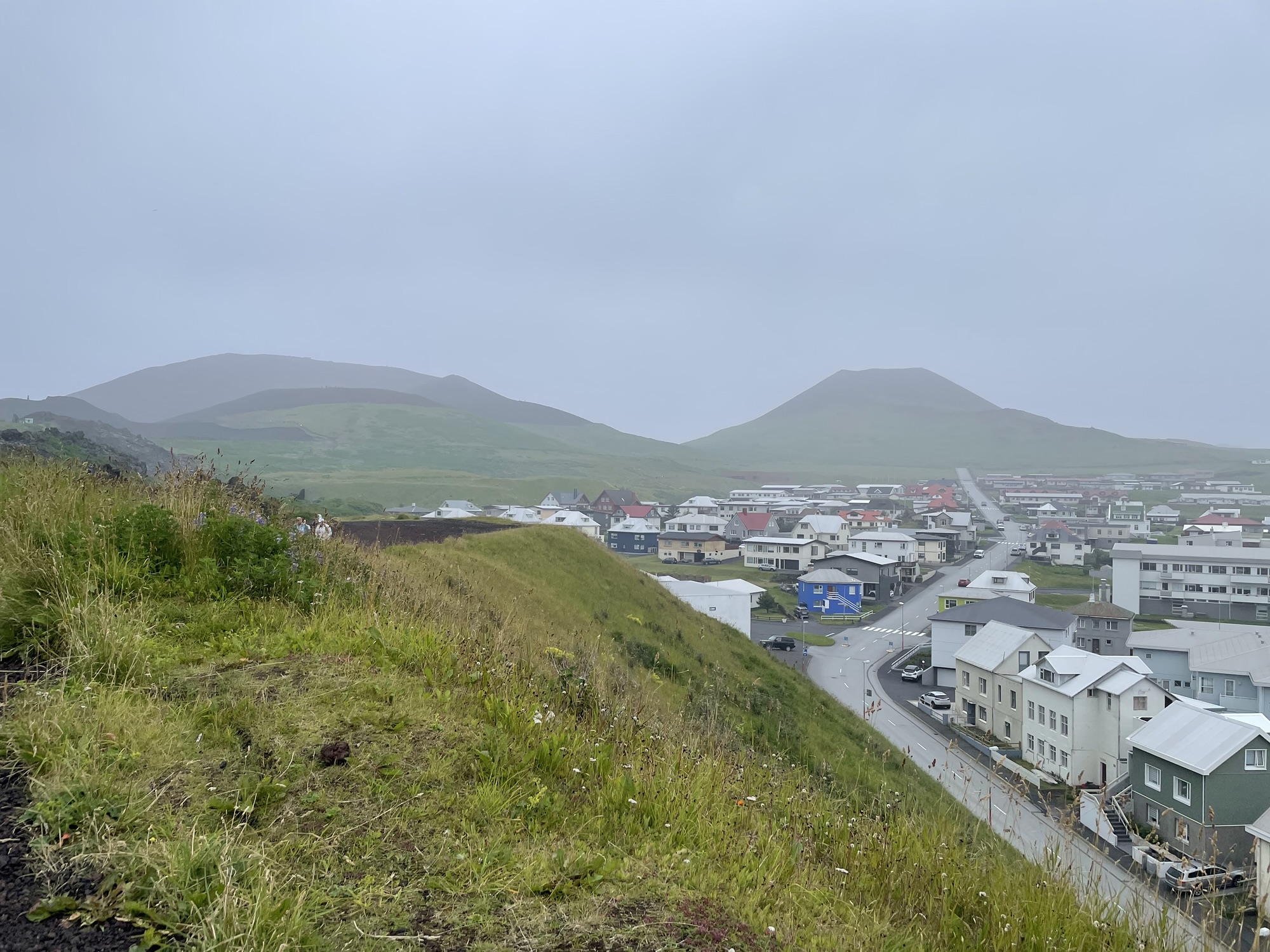
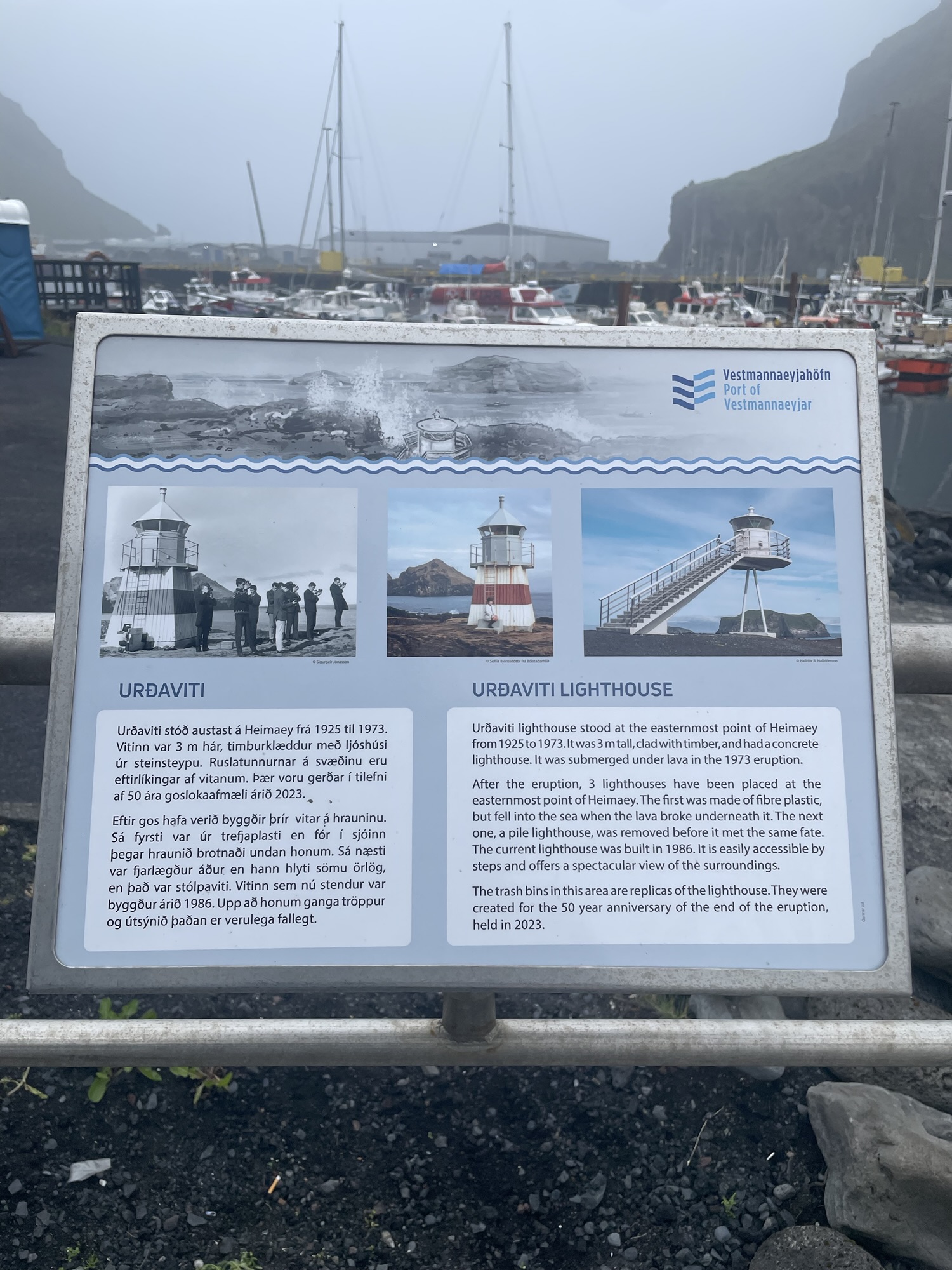
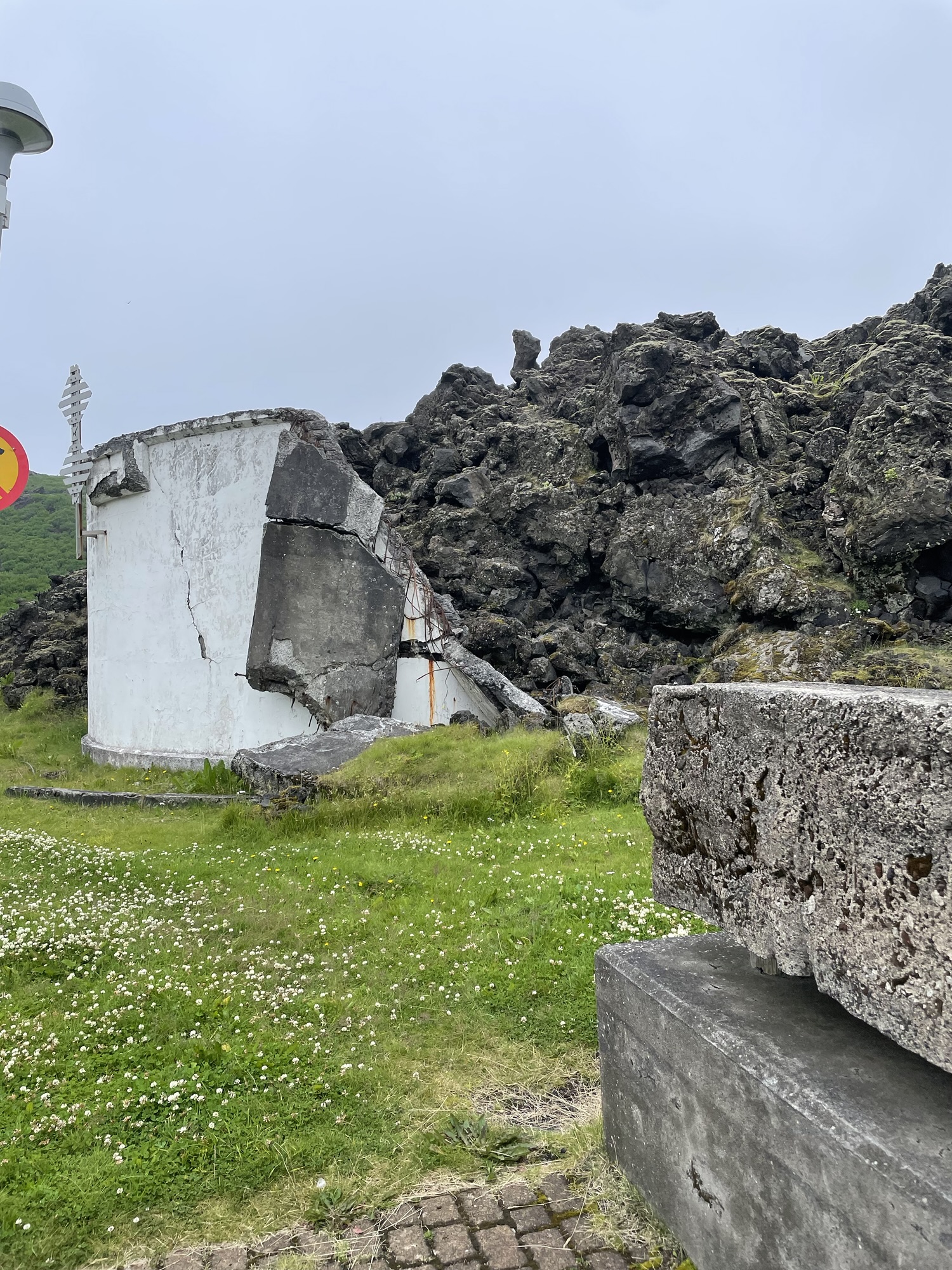
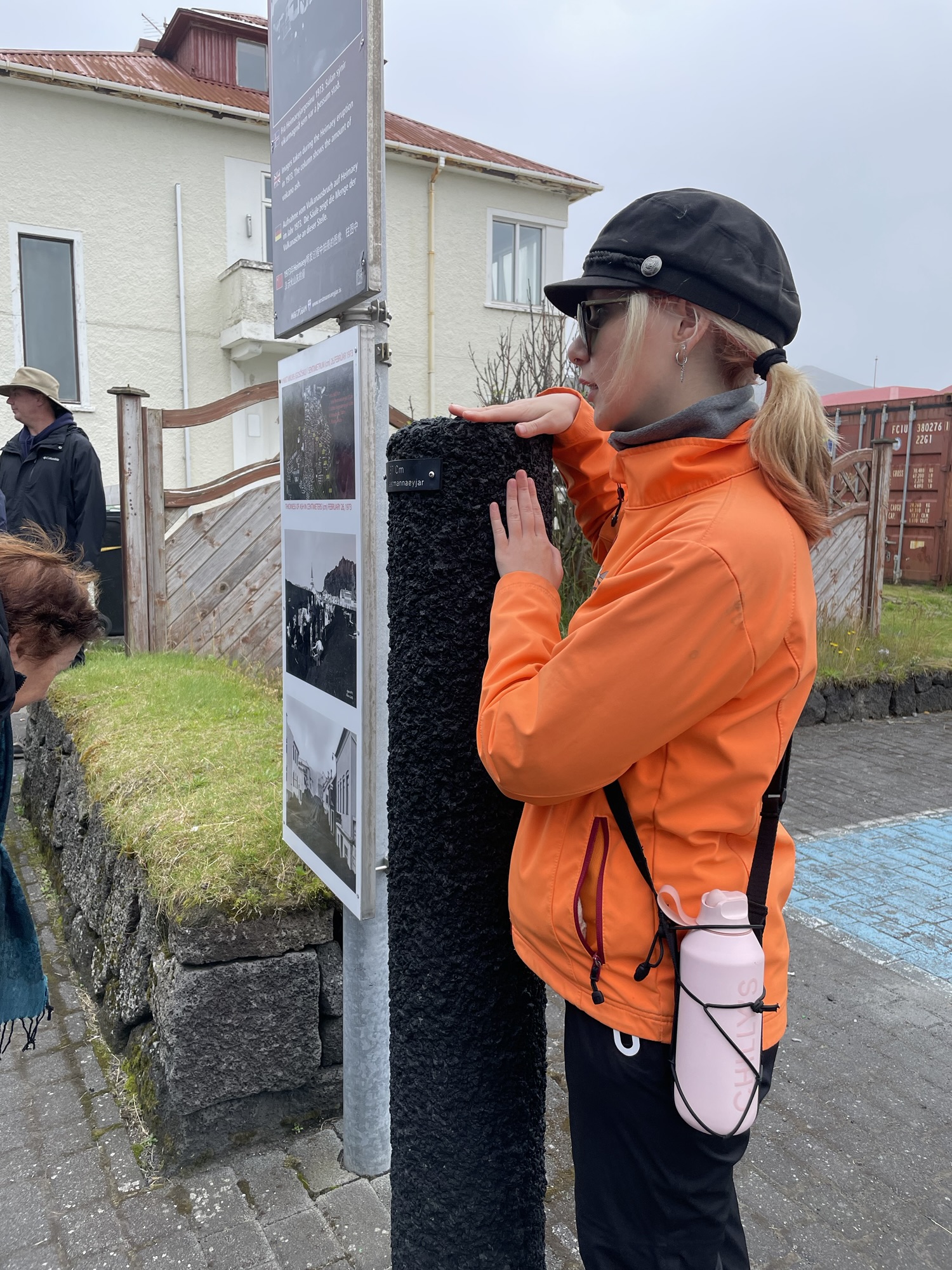
I chose our tour because of my fascination with volcanos.  Years ago my husband and I visited Pompeii, the most famous of the once lava and ash covered ancient cities.  Well Vestmannaeyjar, has a similar history.  In 1973, the Eldfell volcano erupted for six months.  It covered most of the city in ash and lava.  Over the years, the people have dug out some of the town. But a large area is still covered by the lava.  We joined a group that took a lava walk along the top of this lava flow above the now covered town. Luckily even though this eruption happened in the early morning, almost all the residents were able to escape to mainland Iceland. Just one person perished.

Our tour guide for the trip was a local resident, whose grandparents and mother lived through the eruption.  They were fortunate as their home was on the far side of town, and so not destroyed. But like all the other residents, they had to evacuate.  She also told us how the town saved their bay from the lava flow thus making it possible to the town to survive after the eruption.   They took salt water from the ocean and continuously sprayed it on the lava, which helped stop it just a short distance from the bay,

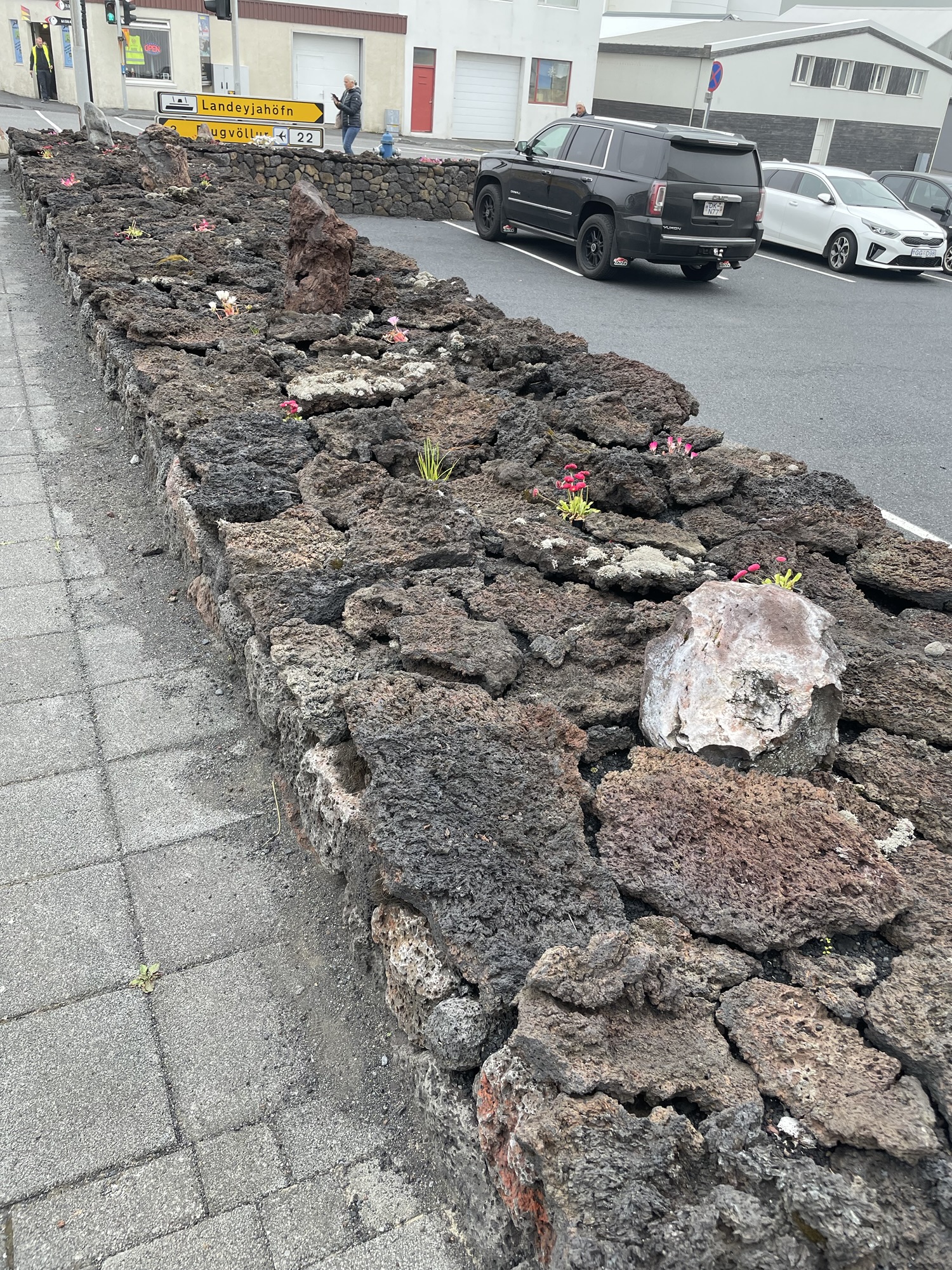
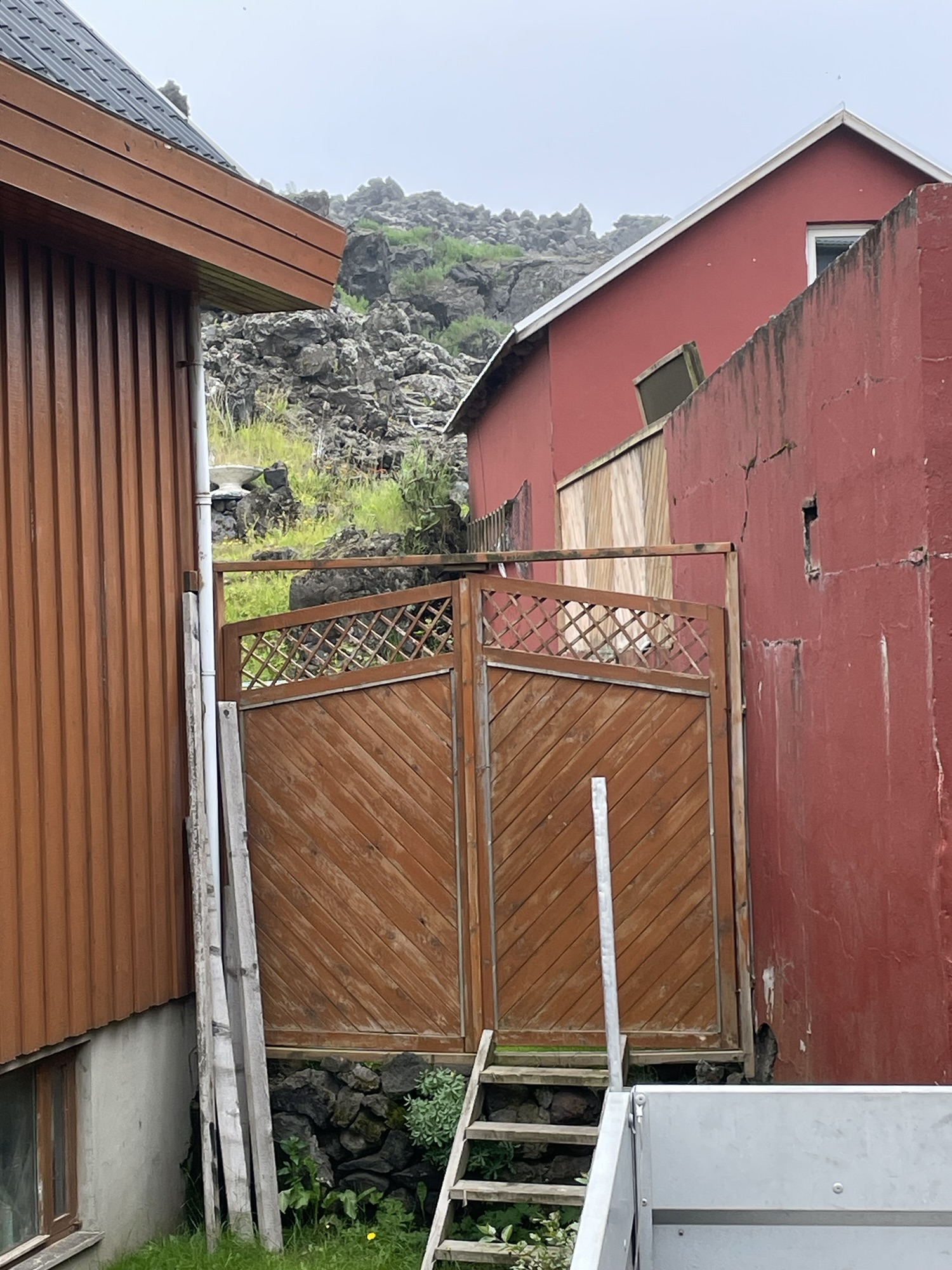
The lava increased the size of the island by two miles, also the town was able to use the heat generated by the still warm lava for decades to heat the homes and businesses!  I also noticed that a lot of fences and walls are made from lava in the city.

We could see what was left of Eldfell now, but noticed there is another older volcano, Helgafell, nearby that still has the typical volcano shape.

I really did enjoy our lava walk and tour. But honestly, I also wish part of it was to visit the Eldheimar Volcano Museum. It was a great disappointment. But by the time I realized we would not be visiting it, we had to head back to the ship.  I guess I will have to go back one day.

belugasanctuary.sealifetrust.org

Peaceful Kinderdijk Windmills

17 Aug

The windmills of Holland were always a site I wanted to see since I was a child and read the book Hans Brinker or the Silver Skates. I was mesmerized by the idea of the dykes and the water issues that impacted the Netherlands.   But even though I read the book, I never realized how important the windmills were to keep the water at bay.  Now I know.

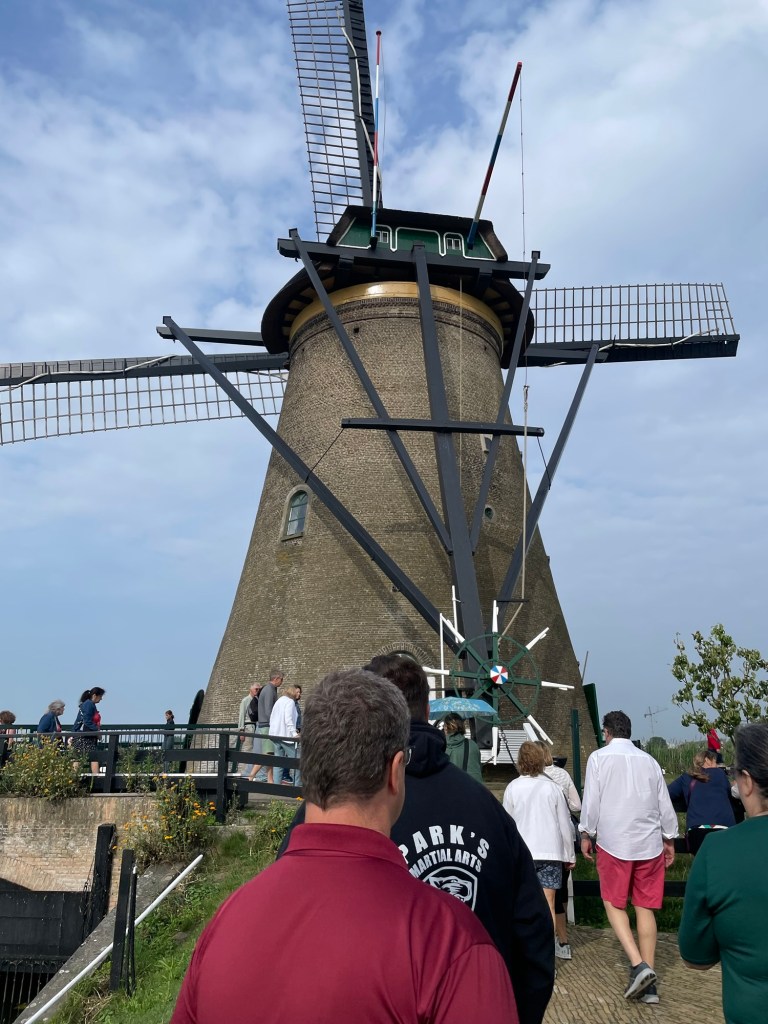
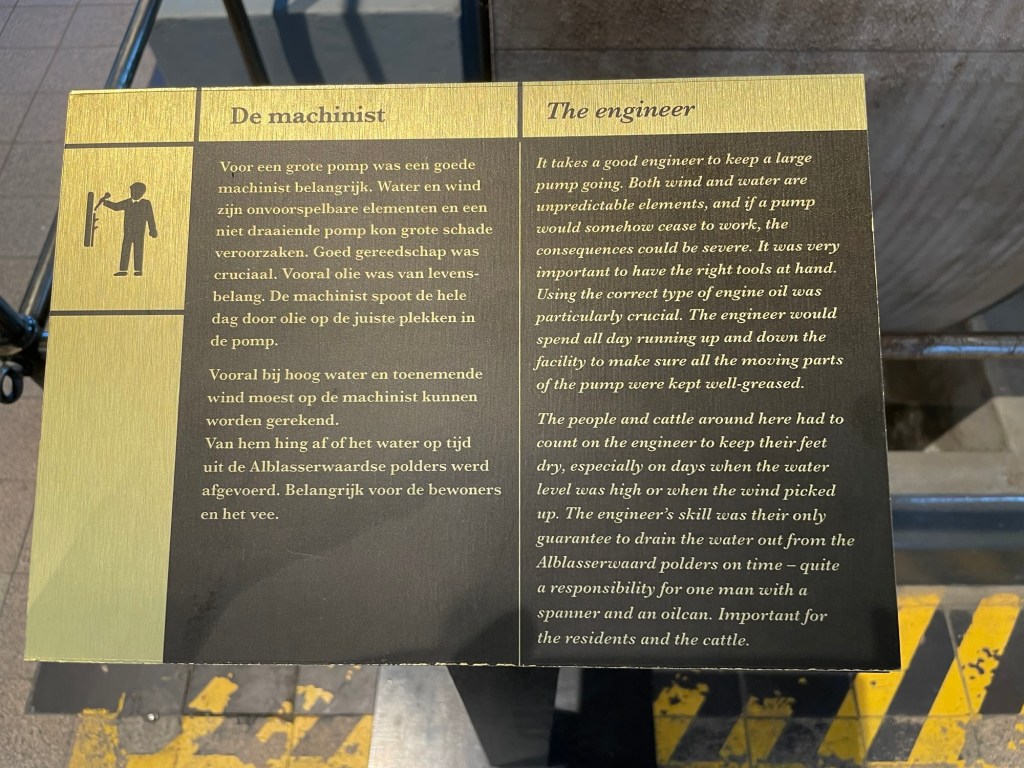
I actually learned several important facts about windmills during our visit to the Kinderdijk Windmills, a UNESCO Site.  The most important is the actual reason the windmills were there, and that is to pump the water out of the ground and put it into canals that then are pumped out into rivers that run to the ocean.  Without these windmills doing this work for centuries, the Netherlands would be under water.  Now, of course, the windmills have been replaced with upscaled motors and water engineering that works much more efficiently.

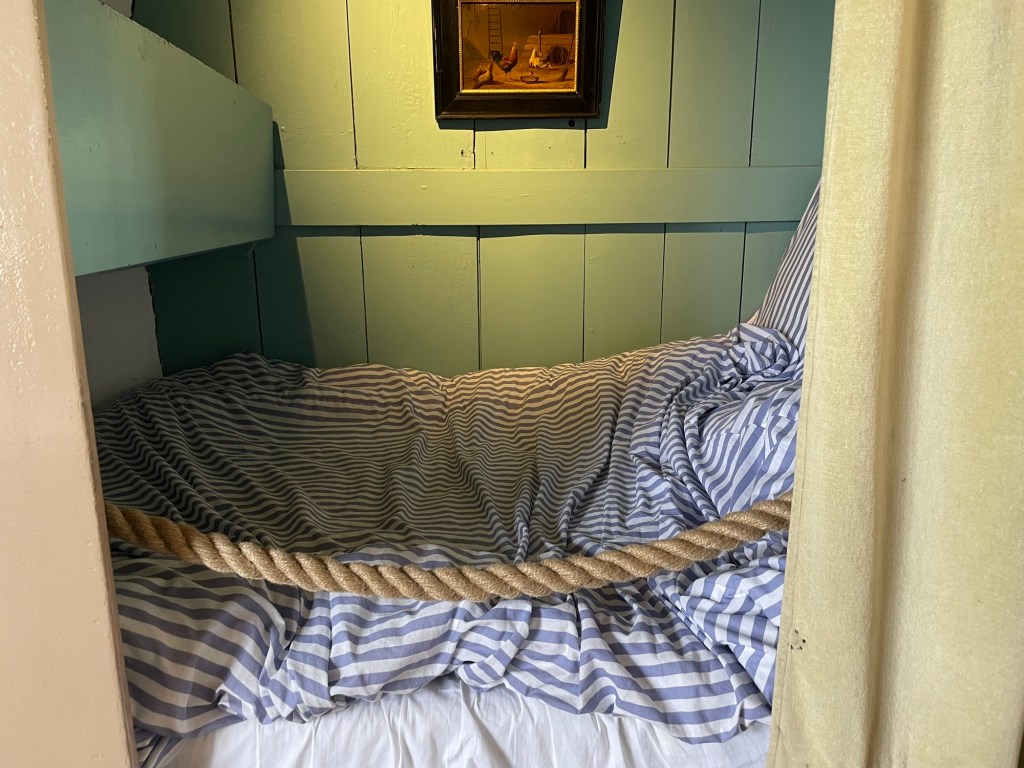
I also learned that people actually lived in the windmills!  It never occurred to me that the ‘miller’ who cared for the windmills and made sure that they were facing the right direction lived in them with their families.  But now I know.  We were able to enter one of the windmills and see how families lived.  It was tight quarters, with low ceilings, but they made it work.  All windmills have two entrances so that they can always get in and out as the blades of the windmill do get reoriented. That made sense to me!  I always want an exit.

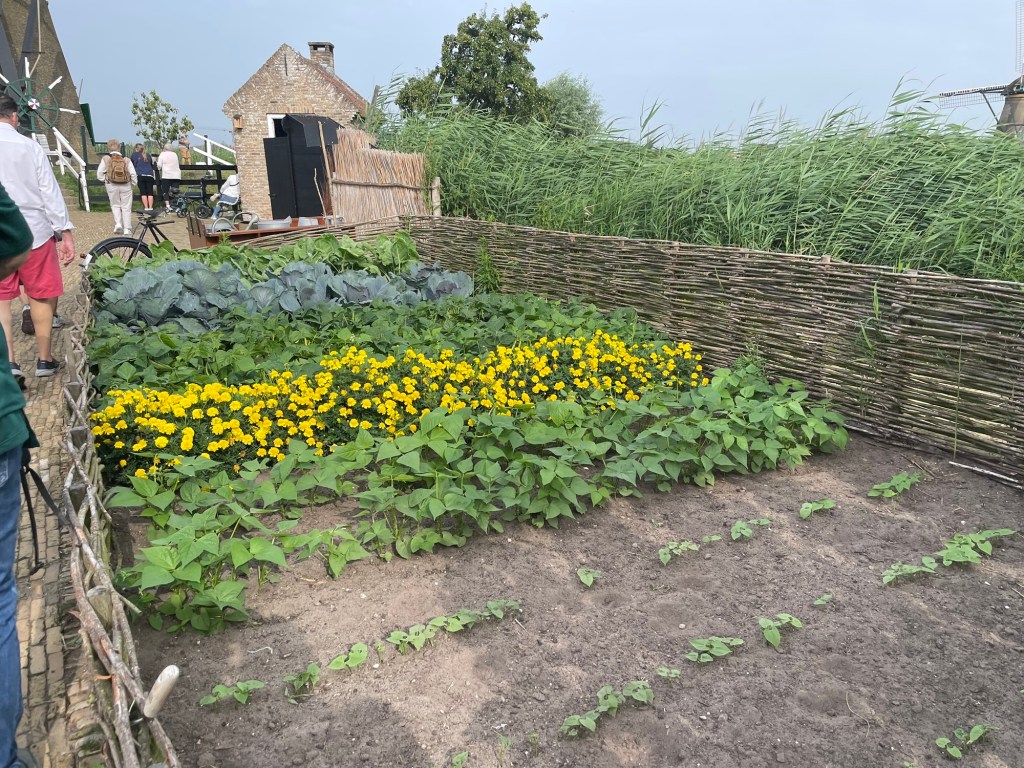
The guide told us that the people who lived in the windmills were the poor of the poor.  So they also had vegetable gardens and some animals for food.  We were able to see the recreation of one of the gardens at the windmill.

So a windmill was both the work and home of the millers who kept the area from being flooded, as much as possible.  As a side note, the people really did wear wooden shoes.  Since the ground was so swampy. Wooden shoes were the best way to keep their feet dry.

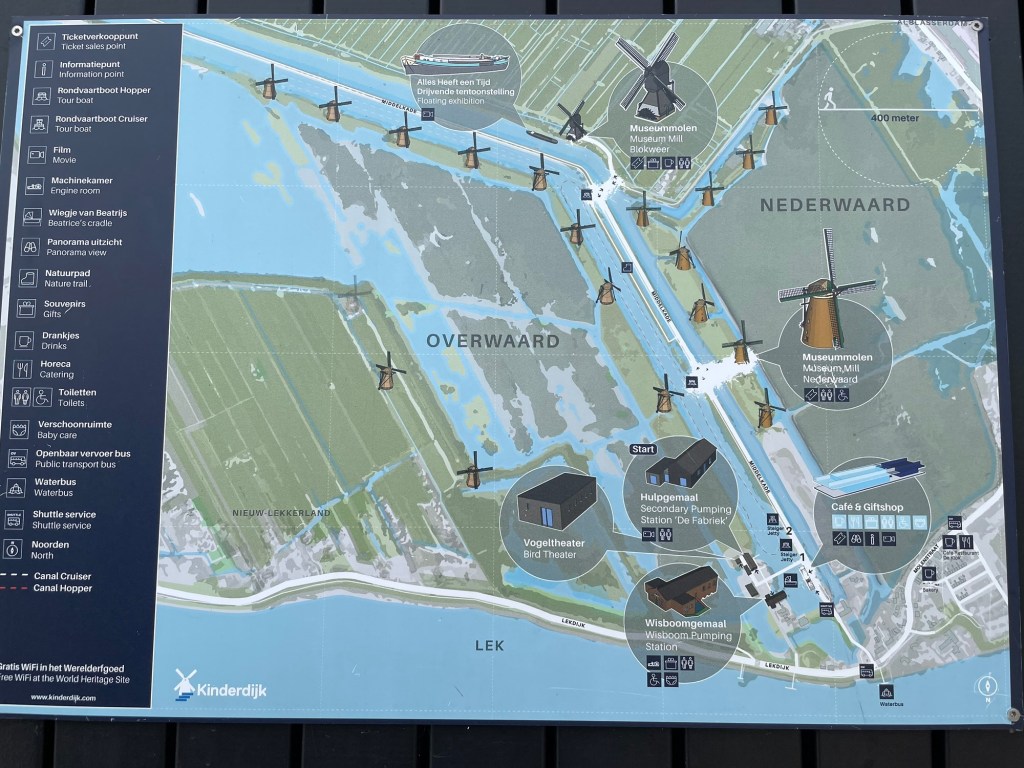
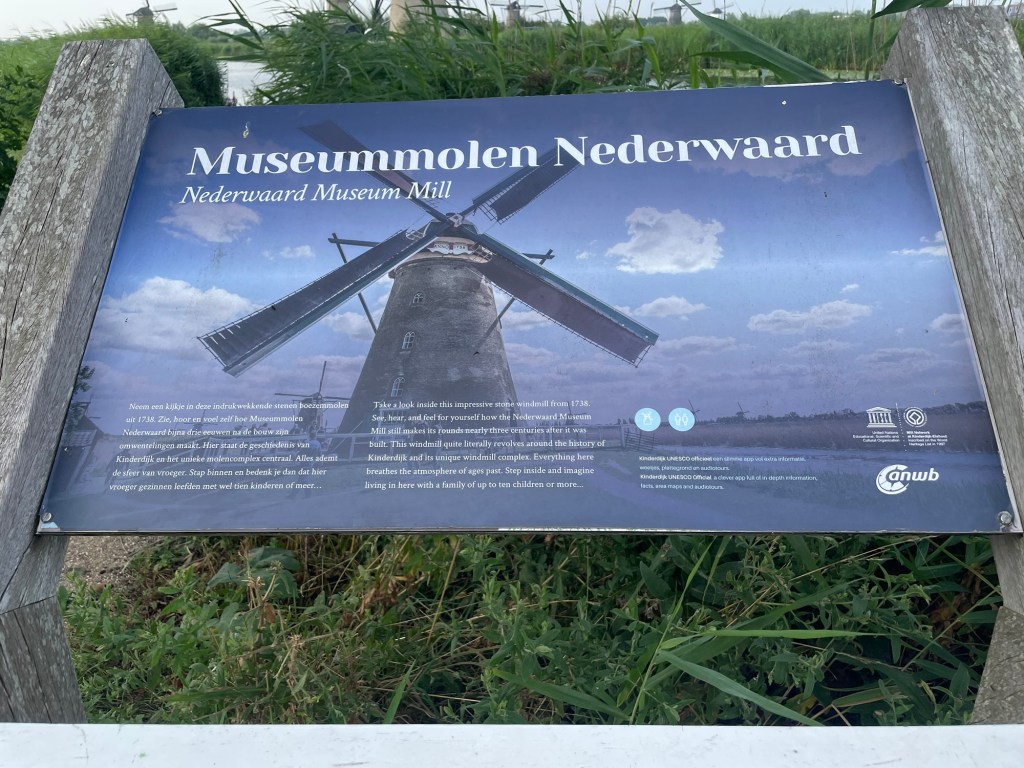
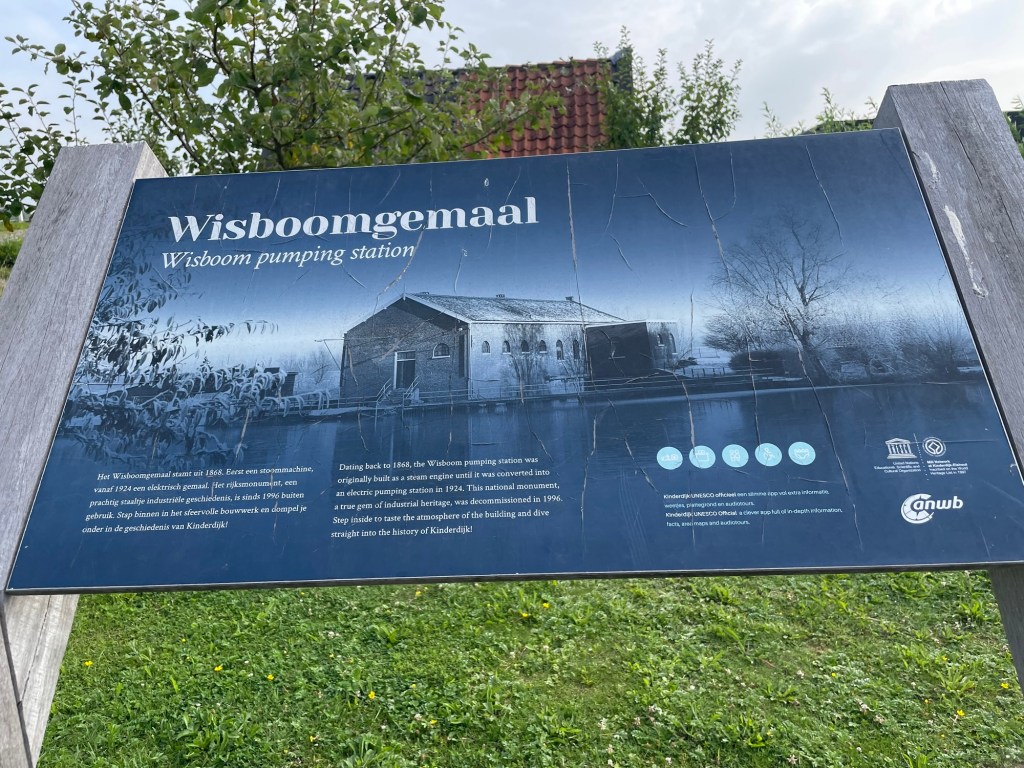
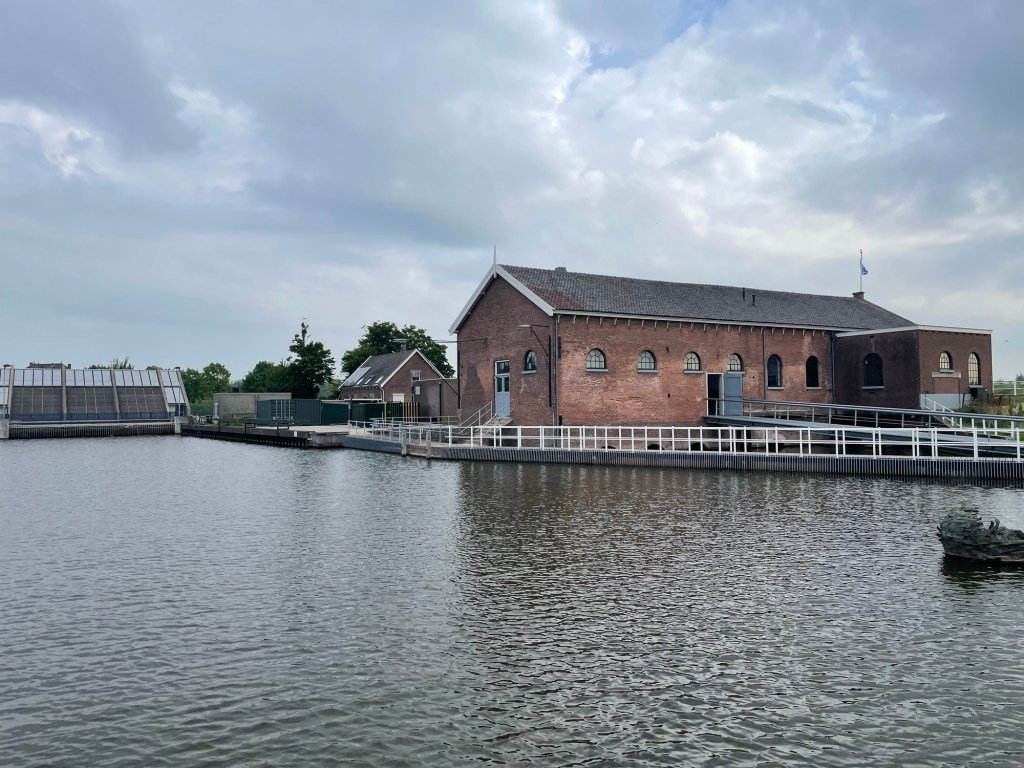
The Windmills at Kinderdijk encompasses 18 windmills, a pumping station, a visitors’ center, canals, and a statute of a cat, cradle and baby. As well as a lovely pathway to visit the site.

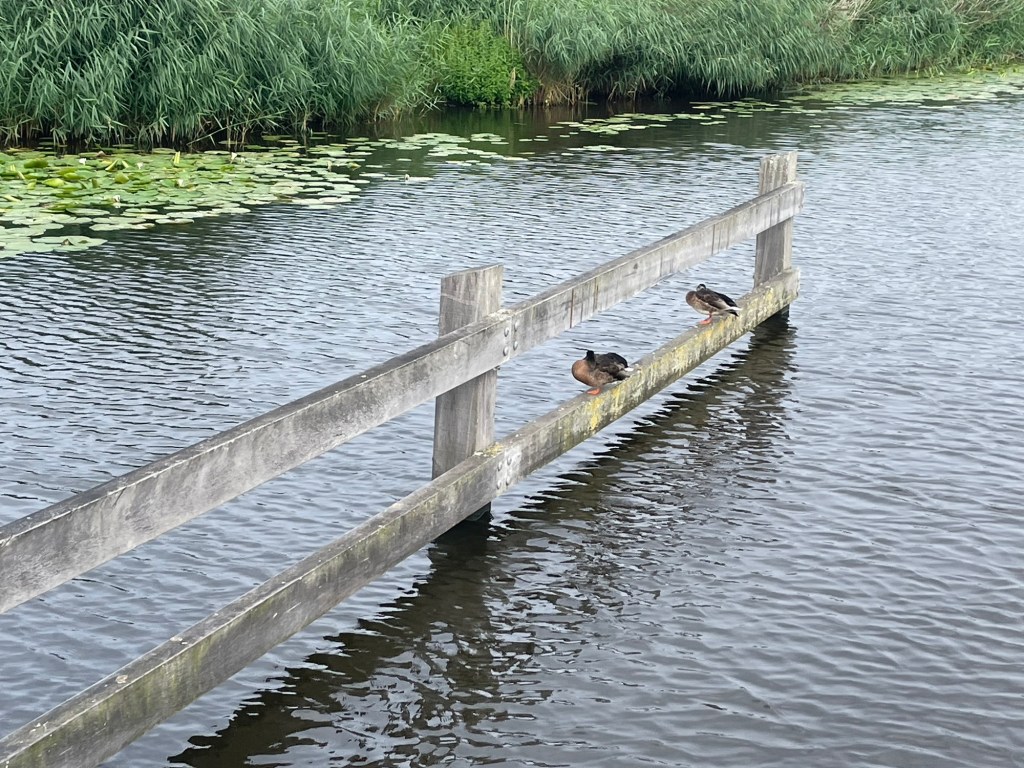
We really enjoyed the walk around to the windmills.  It was so peaceful and serene. The canals looked lovely with the lillypads bobbing in the water , and the wildflowers growing on the banks along side the canals.  Besides the tourist visiting the windmills, locals were riding their bicycles along the path.

I like history, and I love learning how things work. So seeing the demonstration on how they moved the blades of the windmill and then watching it catch the wind and twirl was great.  Later we walked into the Wisboom pumping station and spoke to the docent about the different engines and how the pumping system changed over time.  I really enjoyed that.

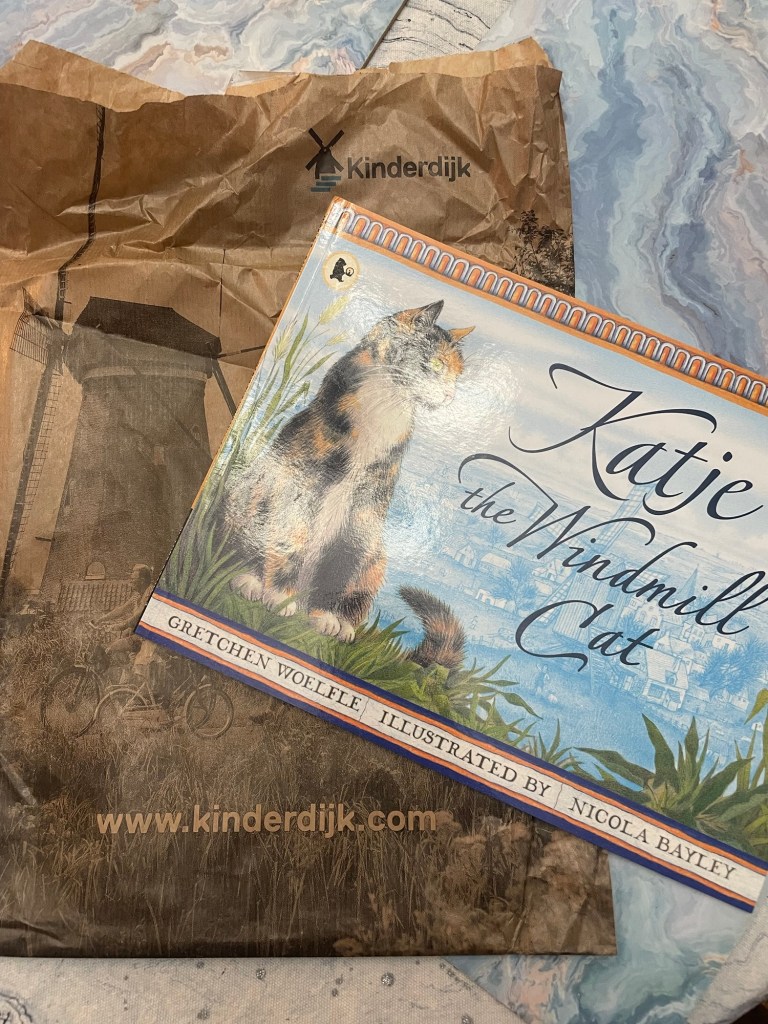
We also took some time to enter  the Visitors’ Center and have a snack, visit the gift store. And learn more about the story of the cat that saved the baby by rocking the cradle in the water during a flood in 1421. This story is the basis of the statute that sits in the pond at the site.  So of course I had to buy the book, Katie, the Windmill Cat, to take home for my granddaughters. This story is also why the city and the site is called Kinderdijk, or Child’s Dyke, to memorialize this story.


Home

Magical Castles of Scotland

8 Aug

When I discovered that the Unicorn was the official animal of Scotland, everything I ever knew about Scotland made sense. The murder mysteries that included fairies and scared trees. The love stories that included love that spanned centuries and traveled between times. The stories of the highlands and the low roads leading to a romantic castle on the shore of a Loch where magic lights appear and spirits bring lovers together.  It all had to be true if Unicorns were the official animal of Scotland.

Just to be clear, the people I met in Scotland assured me that they knew unicorns were mythical creatures, and that I would not see any unicorns roaming the streets or fields of Scotland. But they said that in the same breath that they told me about the many sightings of the Loch Ness Monster, known affectionately as Nessie.

However they might deny it, I must admit that during my visits to both the Castle in Edinburgh and the ruins of the Urquhart Castle on the shore of Loch Ness in Inverness, I was waiting for the fairies to peek out and smile at me. And there were times I thought they just might be around, hiding in a darkened alley or behind a piece of furniture. Such is the magic of Scotland, with a unicorn as its official animal, one believes that anything could happen!

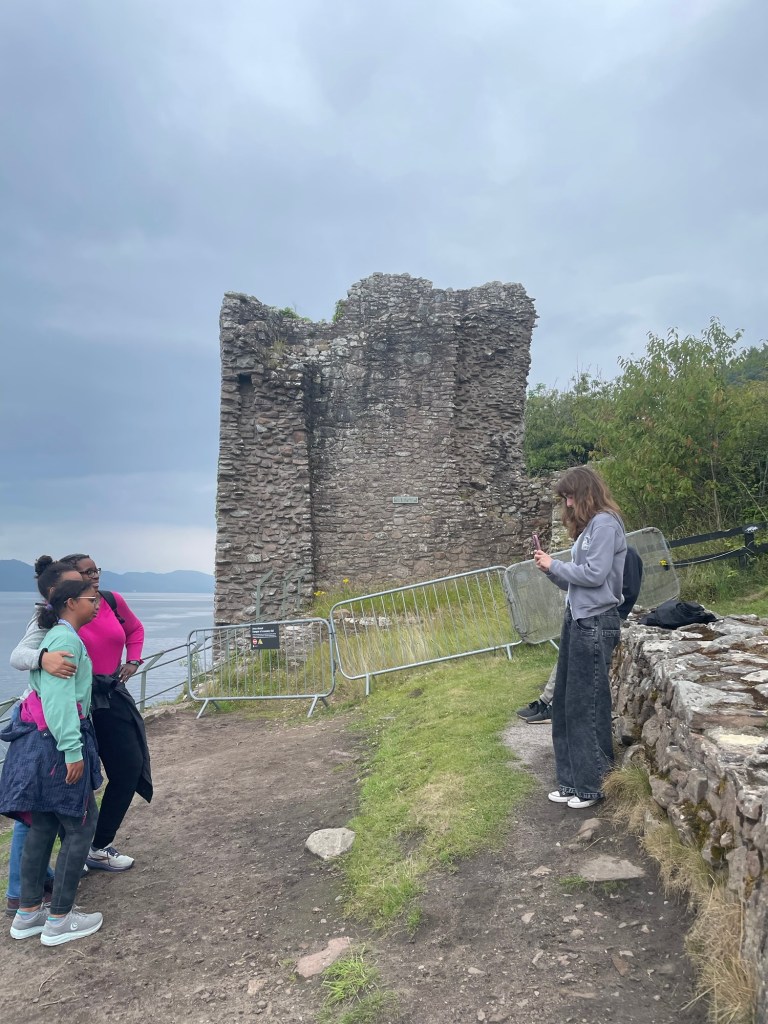
Urquhart Castle was destroyed by the clan that lived there to keep the fortification from being used by the Jacobites. Since they felt they could no longer keep it secure, they determined blowing it up would be the wise choice. Then the ruins were left to rot on the side of Loch Ness for centuries. It was only in modern times that the Scots determined that this would be a great spot for tourists to visit the romance of a castle and at the same time sit near the coast of Loch Ness and search the waters for Nessie. I know that my husband and I enjoyed doing both.

Ruined castles have now unhidden staircases, towers standing solo reaching towards the sun. The buildings around them slumped in ruin but still given the site a romantic air, because that is what castle are all about in our day.  A romantic place for people to fall in love. But really this castle was the scene of many bloody battles. After reading its history I understand why they blew it up.

But still, for many a tourist it was a place of wonder to explore and take many photos, while imagining the place when it was intact. I loved our visit to Inverness and Urquhart Castle.  In fact, my husband and I want to go back to spend a week there one day.

The Urquhart castle was taken over by the government in 1913 and developed over the years to the attraction seen today. There is a lovely visitor center on the hill above the castle. I must warn people with mobility issues, that this visit includes much walking from the parking lot to the visitor center and then more walking down to the castle. Also within the castle there are many steps and uneven walkways. It is the ruins of a castle from the 1600s. Just be aware.

The next Castle was Edinburgh Castle, the home of the kings and queens of Scotland as well as the current home of the Royal Jewels. Edinburgh Castle is differently not a ruin. 

Staring up at from the Royal Mile, you start to realize the size and majesty as you get closer and closer. But then when you are about to enter the Portcullis Gate of Edinburgh Castle, it looks small again, until you past through the gate.

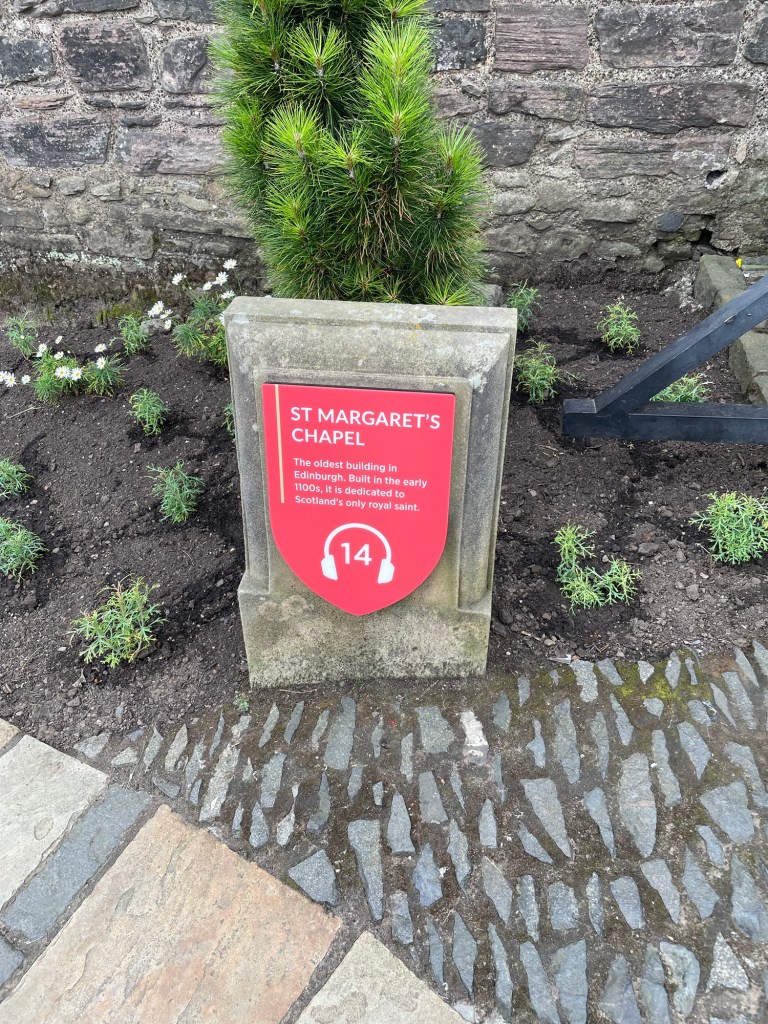
It took a while get through the gate, as we were not the only tourists there who wanted to enter this magical world. You must book your time and date in advance in order to get in to experience the many wonderful places to see. I personally loved just walking around and around the cobblestone road upward to the top. We enter the Great Hall, the Memorial for Fallen Soldiers and paid our respects to those that died for Scotland. We went through a small museum about the Scottish Military. We looked at the long line to see the Crown Jewels and decided we did not want to stand in a line,  so we continued our walk.  I enjoyed seeing St. Margaret’s Chapel, the oldest building at the castle.  Then at one o’clock, our attention changed as we heard the explosion and resounding blast of the one o’clock cannon. Everything stopped for a moment in silence before we all continued our visit.

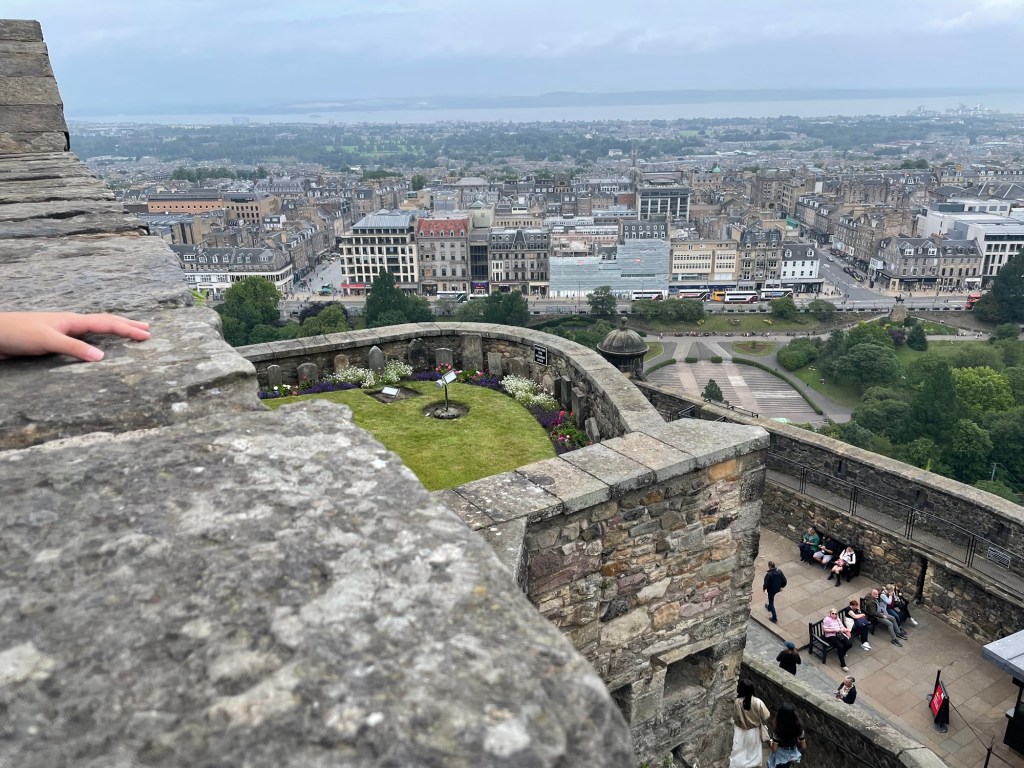
While I was waiting for the cannon bast,  I believe I found the place where the fairies hang out at Edinburgh Castle. While looking over the stone walls I saw a little garden area.  Supposedly this is the cemetery for the soldiers’ dogs. And yes, I did see tombstones. But I did not see any way to enter this garden. And to me it looked like the perfect spot for a fairy tea party. Okay, I might just be imagining it, but since my time at the Castle, I have had several dreams about this garden and there are always fairies in it.

The Edinburgh Castle is well worth the wait to go through and the crowds that enter.  As you walk closer to the top, the numbers of people thin out, and you get that feeling that you could go back in time and see the medieval residents of the castle. But seeing from the outside and imagining is the best, because, in reality, I would probably would have been a serf and not welcome there. 

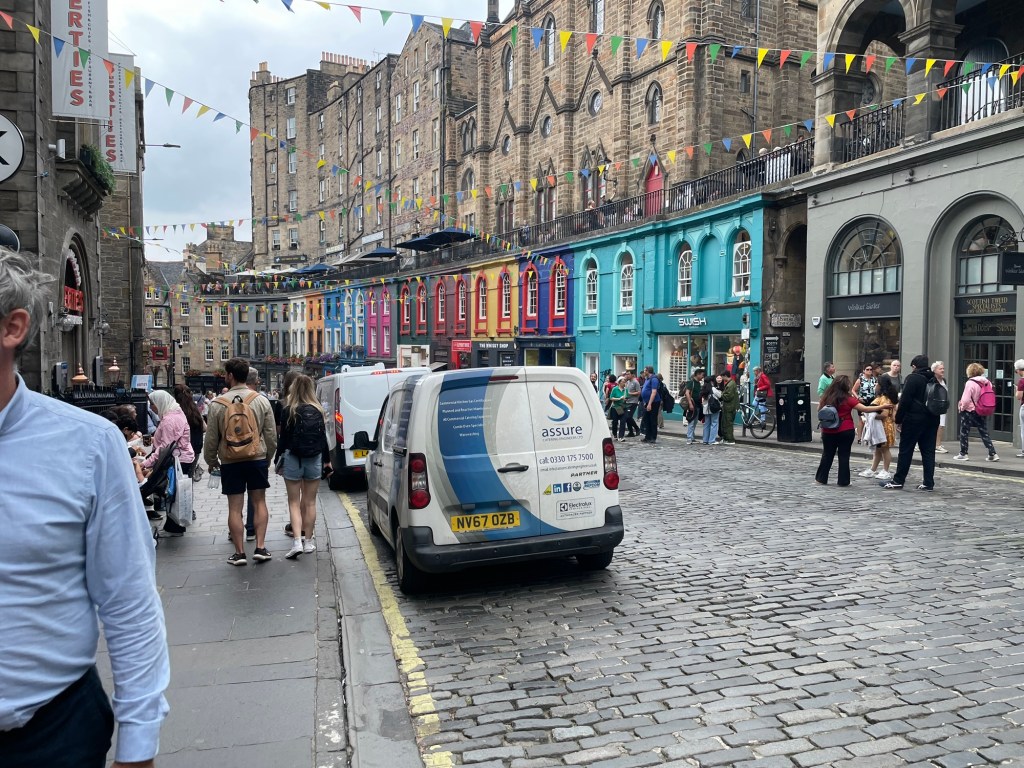
After we left the castle, we returned to the Royal Mile and found the most important place for my husband, an Ice Cream Store.  With ice creas in hand, we walked along the Royal Mile happily eating ice cream, seeing the sites, including Victory Street, which is supposedly the inspiration for Diagon Alley in the Harry Potter stories. Fairies, wizards, muggles, dementors: of course, Harry Potter was from Scotland. There is no where else to create these characters then a bit of magic from Scotland and castle.


https://www.visitinvernesslochness.com/listings/urquhart-castle-visitor-centre

https://www.edinburghcastle.scot/the-castle/history/


Air Raid Sirens Are Not the Music to Labor Through!

2 Aug

This week, I had an out of body experience.  My body was in Holon with my husband, as my daughter and son-in-law were at a hospital where my daughter was in active labor. But my heart was with them. We had been awaiting the arrival of our newest granddaughter with excited anticipation. 

As we waited for news, a different sound interrupted our reverie.  It was not the buzzing of a cell phone with information or pictures.  Instead, it was the sounds of sirens as the Houthis sent another ballistic missile towards Israel.

As we ran to the mamad, I panicked. I have lived through sirens in Israel before. But now my thoughts were on my daughter delivering a new life into the world.  Was the birthing room in a safe place? My son-in-law reassured me.  At the same time my cousins also starting texting to make sure we were okay.  They also let me know that the birthing rooms were safe from rockets.

My granddaughter was born later the night, in the early morning hours of the next day.

But her arrival being heralded by air raid sirens led my mind to wander.  What will it be like for her to grow up in a country where there are air raid sirens weekly?  Where you never know who will attack next. I honestly believe that all residents of Israel have a little PTSD.  And I m sad that my granddaughter will have to live with the sounds of sirens in her life.

But at the same time, I have to think pregnant mothers in other areas of the world that are not safe.  I cannot imagine how a pregnant mother feels who lives in Yemen, Gaza, Ukraine, Sudan, the Druze community of Syria, and Iran.

How do those women cope?

Here in Israel, there is the security that the sirens will alert us of a missile. That the mamad or bomb shelter will keep us safe. In these other places there are no shelters to protect them. There are not birthing rooms built to keep missiles out.  What goes through their minds when bombs fall?

The world is not a pretty place right now.  Jew Hatred has an intensity that has not been so bad since the Nazis. There is gun violence in the US. Hundreds of mass murders each year. There is conflict throughout the world. There are storms of unusual intensity. There are major earthquakes all around the Pacific rim. Today there are tsunami warnings in countries that border the Pacific. There is political unrest and uncertainty and regional and international tensions.

As a grandmother, I want that new generation to know a little of the peace that my children and I had. But with social media and the biased narratives of the news and bots that twist reality and challenge what is the truth, I am not sure the world will return to an equilibrium for decades.

What I believe is that women should not have to give birth in a bomb shelter. Sirens should not disturb the concentration and focus of labor. No woman should have to give birth in fear of war. You would think by now people would realize that we really are one world. And that major events that happen anywhere in the world impacts everyone. Just like the earthquake in Russia is impacting the world right now as countries sound their tsunami warnings and volcanoes erupt throughout the world.

I believe we are getting a message from nature.  We are one. We need to work together to give the next generation a safe place to live.

The Tavern in Trzciana Comes To Life

29 Jul

I vividly remember when the movie version of “Fiddler on The Roof” was released.  It was the first Broadway show I had seen in person as a child.  So seeing it again in the movie theater reminded me of the special trip into New York City with my parents and the delight I felt while listening to the songs and learning about Anatevka.  One of my favorite scenes occurs in a tavern where the Polish and the Jewish citizens end up in riotous dance!

The tavern scene has so much more meaning to me now.  I was with my maternal grandfather the first time he saw the movie.  Grandpa was from a small town in Austria/Poland called Trzciana.  When he watched the tavern scene, he turned to me and said, “My family had a tavern just like that.  It looked just like that.”  Anatevka/Tzrciana taverns were interchangeable in my grandfather’s eyes. He said the movie brought back memories of his childhood.

Grandpa did not often speak freely about his family.  Stories came in bits and pieces of memories.  But it was not something you asked about.  It was something that he had to offer because Grandpa’s family all perished in the Shoah.  His parents, his siblings, his aunts and uncles, his cousins, everyone who was in Europe died, except for three.  (See blogs below.)

But that tavern memory has so much more meaning because now I know more about it thanks to the research of Izabela Sekulska who started the Mayn Shtetele Mielec Facebook group.   Izabela has been helping me find out information about my family for about a year now. The documents she finds make the stories I was told by Grandpa come to life.

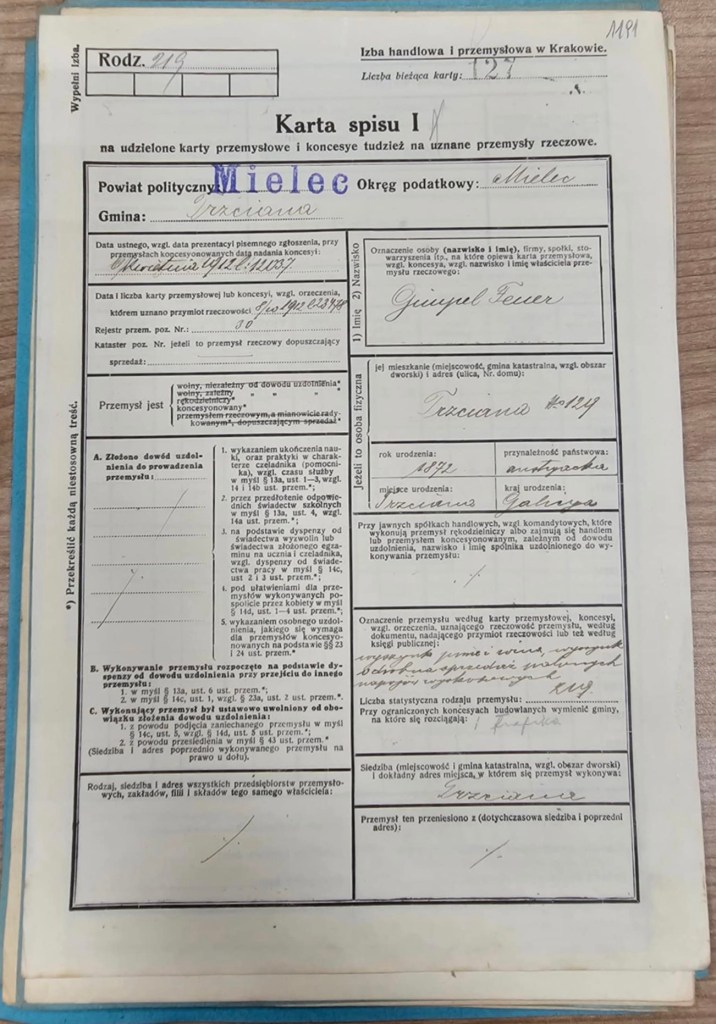
Izabela recently found a document from the Chamber of Commerce and Industry that  brings the family tavern to life.

My great grandfather Gimple Feuer applied to open a tavern on April 10, 1912, when my grandfather was just over 12 years old.  My Grandpa did grow up with a tavern in his life.  This document from the Chamber of Commerce and Industry states that the location was in Trzciana, Galicia, which was then part of Austria as Poland.  Throughout his life Grandpa said he was Austrian as that part of Galicia became part of Poland after the war. 

At my family’s tavern they sold beer, wine, other alcoholic beverages and tobacco according to this document.  I knew my great grandfather had a farm that included a crop of  grains and grain silos to store the grain.  So having a tavern makes sense, he had the grain to brew the beer.

Grandpa told us stories about cleaning out grain silos and how one time he and his cousin became intoxicated on the fumes from the silo.  They actually became sick and ran to a nearby stream/creek to drink the water and wash the fumes away. He said they almost drowned, they were so drunk.  

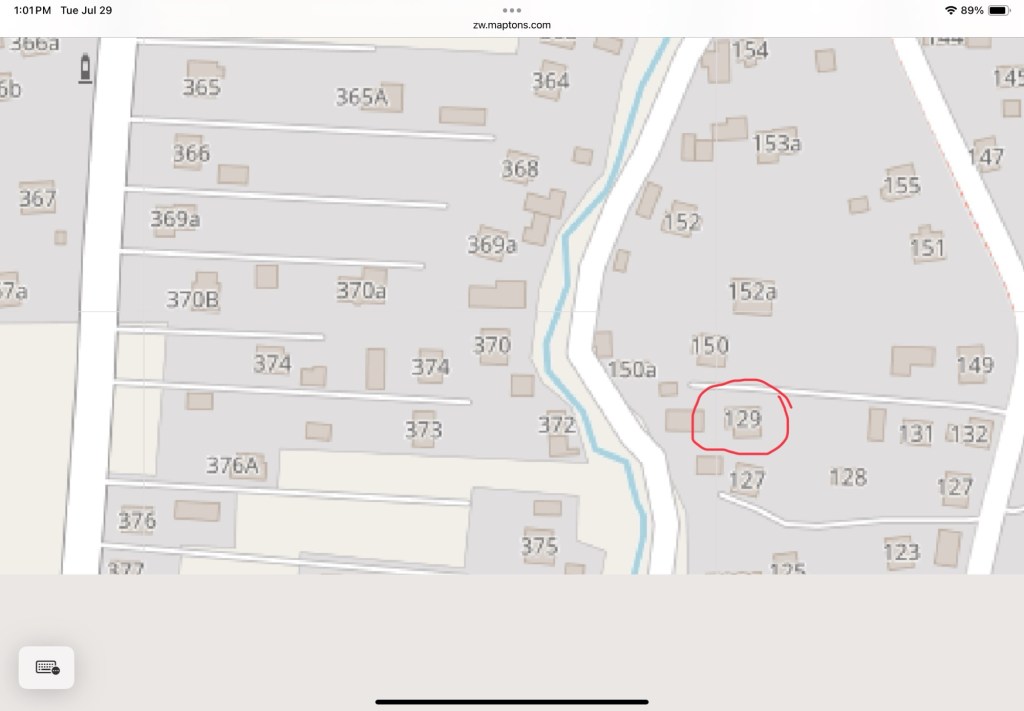
As I remembered this story, I  looked for  a map of current day Trzciana online and saw where the Cichawka stream goes through the town.

Thanks to Izabela, I know that there were no street names in Tzrciana, the homes and buildings  were just numbered during the time my grandfather lived there..  And the number of the tavern was 129.   

On the map that  I found online all the buildings are numbered.  There is one numbered 129 close to the creek. Could this be when my great grandfather had his tavern?  I am not sure, but it perhaps the numbers remain the same. 

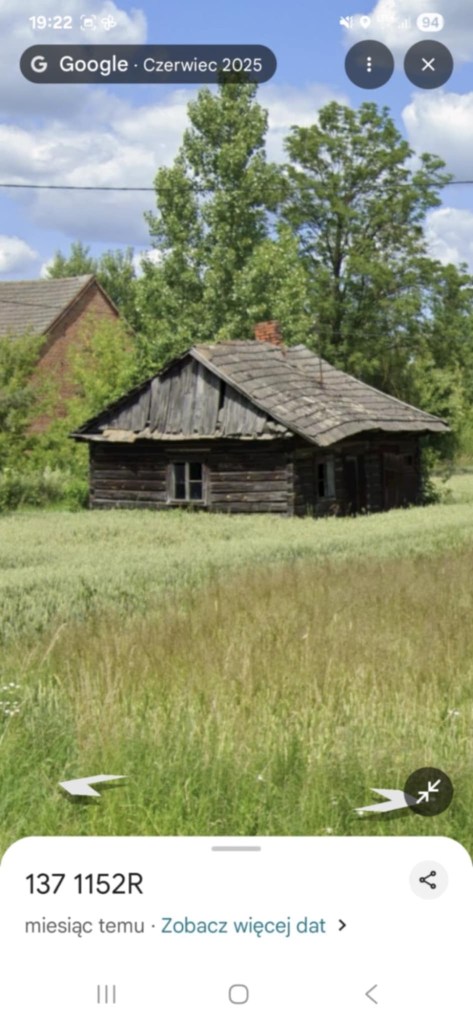
Now there are addresses and streets. So perhaps with this information we can one day find out exactly where the tavern was located in the town. Perhaps this address is where the family lived, and the tavern was located on their farmland?   

Izabela has asked for help in finding out where this location is now in Trzciana in the Facebook group.  That would make this amazing find so much more amazing.  And it might be that the number 129 is in the same place. And the numbers around it are the places where the other members of my family lived before the war.

Knowing my great grandparents had a tavern, perhaps explains to me why there was actually a trial after the war concerning the murder of my great grandmother during the Shoah.  Perhaps their standing in the community created lasting friendships that existed after the war and lead to people actually testifying about her death. (See blog below.)

No matter what I find about where the tavern actually stood in Trzciana, I do know that from now on whenever I see the story of Anatevka and see the tavern scene, I will think of my grandfather and his family that perished, but I will also remember how they lived.


Renewing A Family Connection: My Mother’s Day Gift

Keep Reporting Online Hate Speech!

8 Jul

At times I think I have reached my limit dealing with online hatred, especially Jew Hatred.  I have viewed so many nasty comments under posts about Israel, especially posts about IDF soldiers who died, or under articles published in national news services, or articles about Jewish people in general, not even Israeli.

While the article itself might be positive, or perhaps sad about someone who died, the comments are often horrendous.  AI graphics showing Jews looking similar to propaganda from the Nazi era. Spewing hatred for the death of a Jew and wishing all Jews would die.  Spreading false information.  Calling for the mass murder of Jews throughout the world.

I report them all.  I take screen shots of those comments, and as I get messages from META, I checked to see what evilness they are still allowing to stay on Facebook or Instagram.  I honestly cannot believe the ones that they say do not go against their community standards!

They ALMOST ALWAYS DENY any post I tag goes against the community standards the first time I report it, except for one that was so violent and horrific, it came down immediately. I was even thanked for helping them get it off social media, and if I ever saw anything like it again, I should immediately contact them.

Over my three years of reporting only eight posts I reported actually have been taken down, the one I mentioned and seven others, but those came after I sent it back for review.  Honestly, I send every single one I report back for review.  You can see in the above image that I actually got another horrible Jew Hating comment taken down in June. I put it here so you can see that it does happen!!! Sometimes the hate is so bad that they cannot leave it up.

An additional nine times I was told I can go to the oversight board.  I have attempted to do that several times.  In fact, I received one of these invitations last week.  I was trying to decide whether to take the time to do it, as sometimes I think it just goes into an abyss, since nothing seems to change.

The invitation to explain my belief to the Oversight Board.

Since the Jew Hatred is so filled of vitriol these days, I decided I had to send a report to the oversight board. I let them know exactly what I believed about their continuing to let Jew Hatred be present on META social media platforms. I wrote that Facebook was created for people to keep in touch with friends, not to be overwhelmed by hatred. That this was morally and ethically wrong, and that it needed to end. That hate speech was not free speech when it led to violence. And that the many, many instances of online Jew Hatred was leading to violence.

I tell everyone I know to keep reporting.  I was recently at an event for older retired Jewish women, where a speaker spoke about online Jew Hatred and how she works to get these horrible posts offline. I then reminded them that we as Jews are small in number, just 16 million worldwide.  If we want to make an impact, we all must work together.  I told them how to report a comment or image, by clinking on the three little dots on the right of a comment.  That they must use them to report!  Click on the 3 dots; then click the part that says report this comment, this photo, etc.; then go ahead and report it as spreading violence or hate!!!

There are several groups on social media working to stop online Jew hatred.  Some are asking us to report the Jew Hatred.  There are two that I know of: CyberWell and Digital Dome. Also Combat Anti-Semitism works to stop this hatred. It doesn’t hurt to report what you are seeing. And it might help.  This is a job that every Jewish person who is online should be doing.

If we do not speak up and work against Jew Hatred we are part of the problem. In the 1930s many were afraid to say anything, while others did stand up to hate. We have learned our lessons.  Never stay silent when hate is around.

At the same time, META must realize that leaving these expressions of Jew Hatred online opens the door to all others hate speech directed at other racial groups and, as we have seen, the LGBTQ and immigrant communities.  No hate speech should be tolerated online. These are private companies, they have the right to eliminate anything they don’t think is right. And they promise to provide a safe place for users!

I have read that some consider the Jew Hatred like the canary in the mine.  When the bird dies, you know that is bad air.  When online Jew Hatred gets this bad, perhaps it is the end of social media and a wake up call to all other groups to stop it.

Dante wrote in The Inferno: “The darkest place in Hell is reserved for those who maintain their neutrality in times of moral crisis”

Don’t stay silent.  Speak out against online hate speech of any kind.

Honoring Those Who Do Good In Times Of Crisis

28 Jun

The Lowell Milken Center For Unsung Heroes has exhibits that all children and adults 12 and older should experience. A friend and I went there specifically to see the Anne Frank Exhibit, “Anne Frank: A History for Today,” which is now completed. But that was just a minor part of this learning experience. Since that special exhibit is over, this blog will focus on the usual museum sights.

First Panel of Anne Frank Exhibit

Located just two short blocks from the Ft. Scott National Historic Site, the Lowell Milken Center, is a wonderful place to learn about people who stand up and do good in times of crisis.  The centerpiece of the museum is “Irena Sendler: Life In A Jar,” the story of Irena Sendler, a Polish social worker, who saved over 2500 children from the Warsaw Ghetto during World War Two. She had a group of about 20 people who helped her. But it was Sendler who organized the group and saved the names of the children who were rescued.

Irena herself was rescued from obscurity by a group of high school children from a small town in Kansas. Their discovery led them to find out Irena was alive. They had the chance to meet her and wrote a play about her that has been shown hundreds of times, which led to Irena being nominated for the Nobel Peace Prize. Unfortunately, she passed away before she could be recognized as the prize cannot be awarded to someone who is deceased.  Her story and the story of the girls who brought her story to life is the centerpiece of the Center.

However, it is not just about Irena’s story.  There are many unsung heroes whose stories are on display at the Center. Each story was discovered by students and then written about for display at the Center. Student can enter their research into the Discovery Award competition which recognizes outstanding Unsung Heroes projects by students in grades 4-12.

In these times of increased online hatred and the rise of anti-immigration, ICE raids, and Jew Hatred, the Lowell Milken Center is an oasis of goodness.  Each panel tells the story of someone who stood up to be counted in times of peril, helping those in need. These people, of all religions, follow the Jewish value of doing good, repairing the world , “or “Tikun Olam.”

While we were there, we met briefly with a group of international teachers who had come to the Center to learn about the programs and how to bring it to their schools. The two people leading the discussions were part of the original Irena Sendler discovery: the high school history teacher and one of the students.  That student, Meagan, now works at the Lowell Milken Center. 

This brought me joy, as I saw the original play when the girls were in high school and they presented in Kansas City.  Then a few years later, I saw the expanded play as well.  My friend had seen it with me. We were pleasantly surprised to meet her.  She told the international teachers that we had seen the play!  Smiles all around. It was so wonderful to see that she continues to dedicate her life to teaching others to do good!

I have written about Ft Scott before. (See blog below.). So I will tell you that an excellent summer field trip day with your middle school and older children would be to visit Ft. Scott in the morning. There is a Park Ranger to help as you walk around the site, clean bathrooms and a store. Have lunch at one of Ft. Scott’s restaurants. 

Then during the heat of the day, go to the Lowell Milken Center to  immerse yourself and your children in goodness and kindness.  Your heart will be filled with the knowledge that there are truly good people in the world.