Archive | Uncategorized RSS feed for this section

Panama and The Canal 

31 Mar

Finally, we reached the Panama Canal.  The entire focus of this trip was to pass through the Canal locks and to see the workings of this major engineering endeavor. Of course the ports of call were interesting. But this was the impetus of our trip. 

We reached the entrance of the Canal early in the morning and entered the first lock of Mariflores at about 9 am. It was a Party atmosphere as everyone was on deck to view the lock process.

The electric mule at work


It is intriguing. First lines have to be attached to the electric, ‘mules,’ a small train engine, which helps guide the boats through the Canal. 

Entering the first lock.


The water used in the Canal is all fresh water from Gatun Lake and the locks are filled by gravity. There are no pumps that are needed. It helps that Panama has nine months of Rain each year with well over 200 inches of precipitation.  

Since we started by going up, 85 feet over three locks, it was fun to watch the water bubble up and slowly lift our cruise ship! We went through the first two licks, then traveled a short distance to the Pedro Miguel lock, then into the pass where we passed the mountains that has to be cut away to form the Canal. 

Gatun Lack was larger than I anticipated and filled with lovely islands and birds. A beautiful, peaceful sanctuary. 

Finally to the Gatun Locks, where the process repeated, but which slowly lowered us through the three locks to the Atlantic Ocean. 

Two boats in the locks going in opposite directions. The big beige walk is actually a giant freighter

Then on to Colon, Panama. The next morning we returned to the Gatun Locks by land and were able to see the lock process from a different view. Still intriguing and amazing to watch the boats side by side, one going up and the other going down in the two separate lanes of the Gatun Locks. 

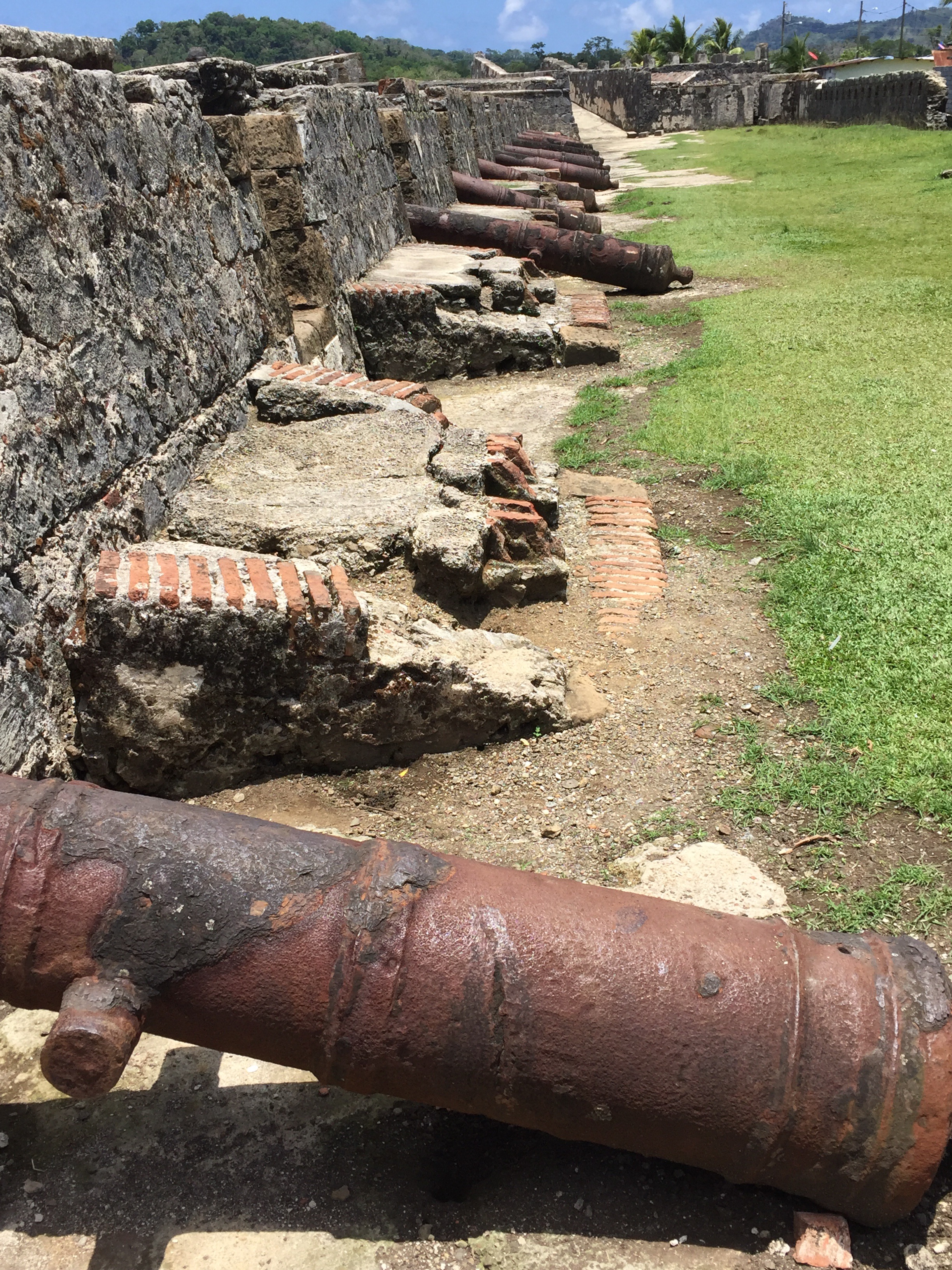
One of the two Spanish fortifications in Portobello


But our trip to Panama was not complete till we traveled to the small town of Portobello.  It is here that the Spanish originally brought the gold that they stole from Peru and other South American countries and took overland for the trip back to Spain. 

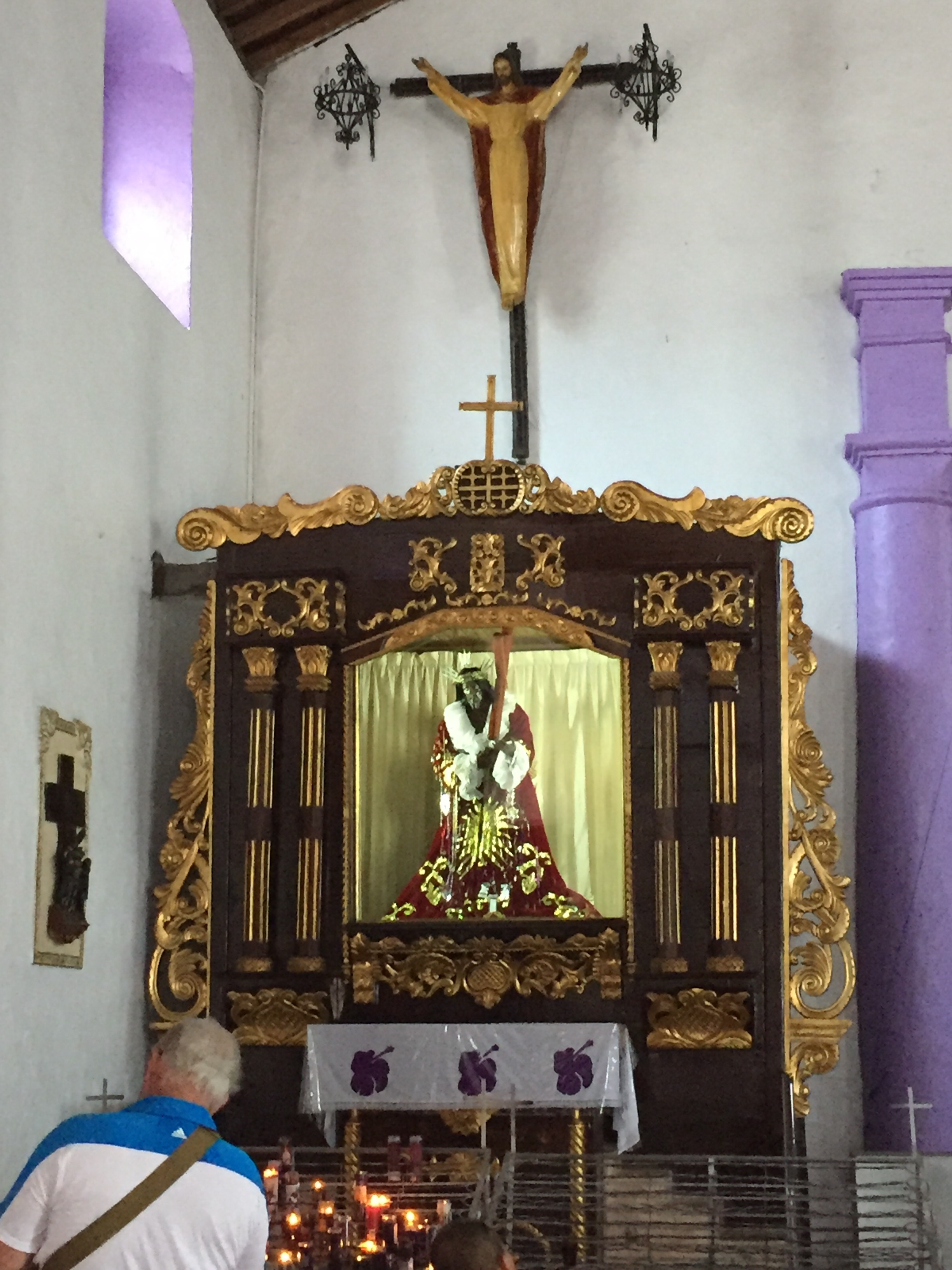
The black Jesus is in the cabinet adorned with his golden embroidered robe.


It is also here that the Pirates, among them Sir Francis Drake (who died there) and Henry Morgan, attacked the Spanish empire and stole the gold. We visited the Custons House, the destroyed fortifications and the Church that houses the famous Black Jesus that accidentally was delivered to Portobella. Once there it was destined to stay as each time the town attempted to send it back a big storm occurred. 

It was wonderful to see the technology of the Canal used to connect the Pacific with the Atlantic. But also wonderful to see a bit of the history of this region of Panama.  

A Little Visit to Lima, Peru

25 Mar

Our cruise only stopped for a short time in Lima, so we had an abbreviated, but informative tour of Colonial Lima. 

First I must say that due to the flooding and extensive rain in the Andes, Lima has no portable water. The Rimac River is filled with the mud and filth a flood brings, and so the city is working to get the water treatment plants back on line.

The Rimac River March 24, 2017

When you arrive by cruise ship, you actually arrive in the port area of Callao. Very industrial and looking a bit derelict. Our guide told us that people do not finish their homes all the way, as long as it is not finished they do not have to pay full taxes. Hence many homes have no stucco or an uncompleted top floor. 

Not quite completed buildings in Callao


Then there is the traffic of this large South American city. It does not matter, seeing the Colonia area was worth the ride. 

Our first stop was the original campus of the University of San Marcos. The first university in the Americas, this school was ‘public,’ a student only had to be from a royal family, a good Catholic, be the result of a legal, church approved marriage, and past a grammar test in Spanish and Latin. Oh one student ever got in who was illegitimate, and he was very important to the history of Peru. 

The University was first the school for Jesuit priests. When they were banished from the country, the government took it over. Although the outside is unimpressive, the beautiful courtyards and rooms inside are lovely! 

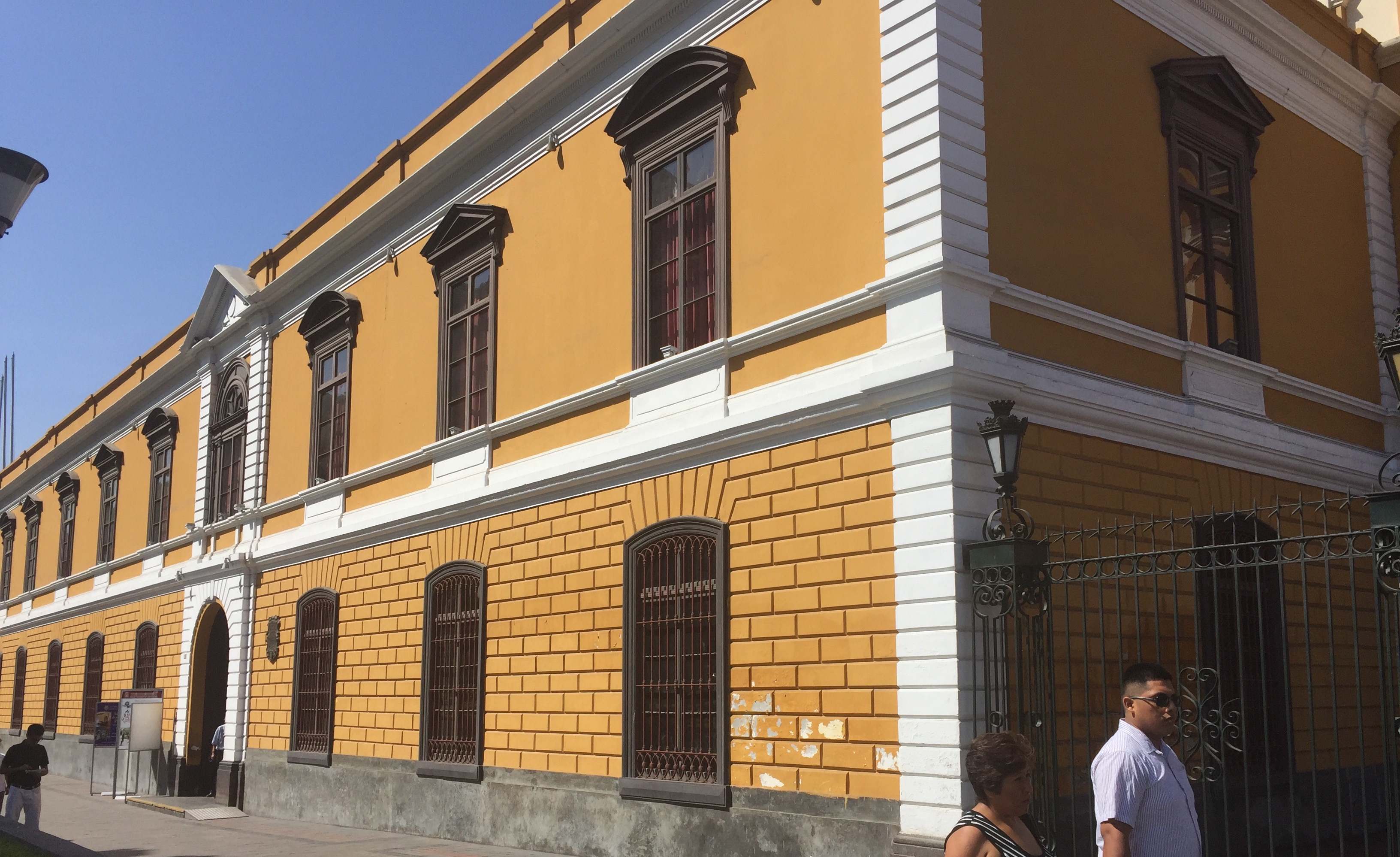
The exterior of the San Marcos University

The Law School courtyard

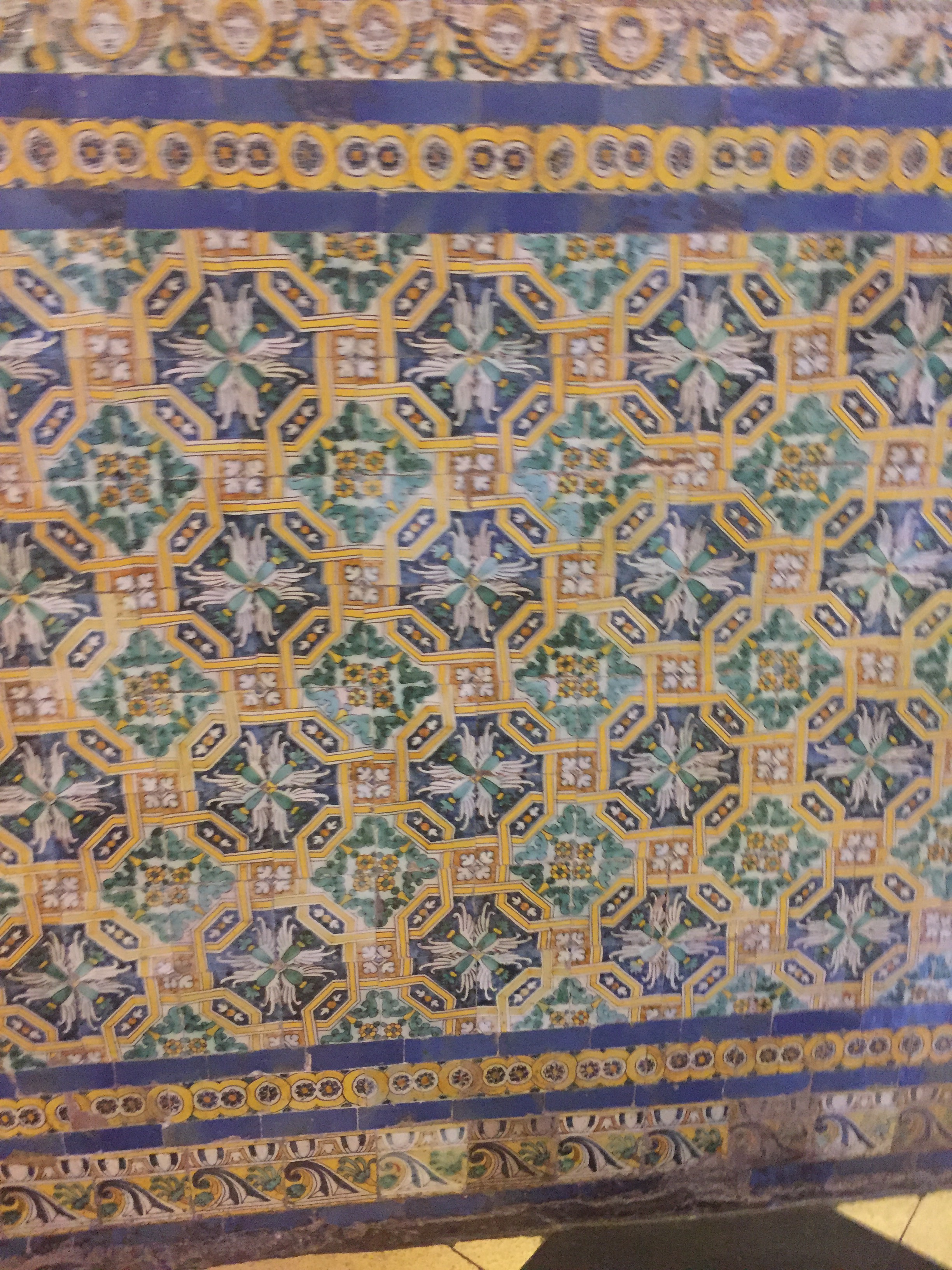
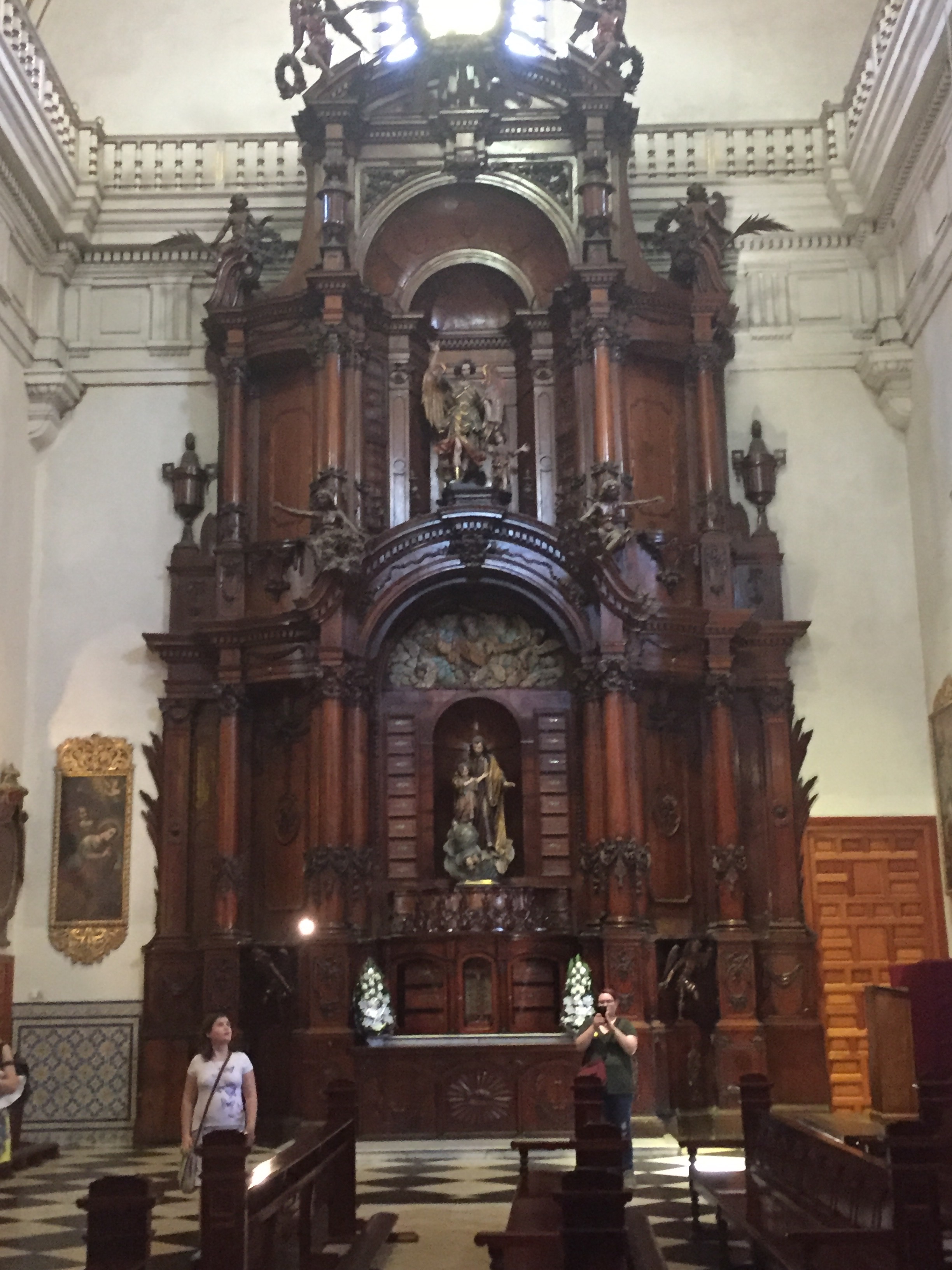
Next stop, San Pedro Church, which is not a museum, rather an active congregation. We saw people giving confession and praying. So a quiet exploration is important. We learned that this is the church the upper crust of Lima still uses for its weddings and baptisms.  Inside is lovely with its gold painted arches, ceramic tiled walls and majestic wooden alters. 

A ceramic wall in the church.

My favorite niche altar.


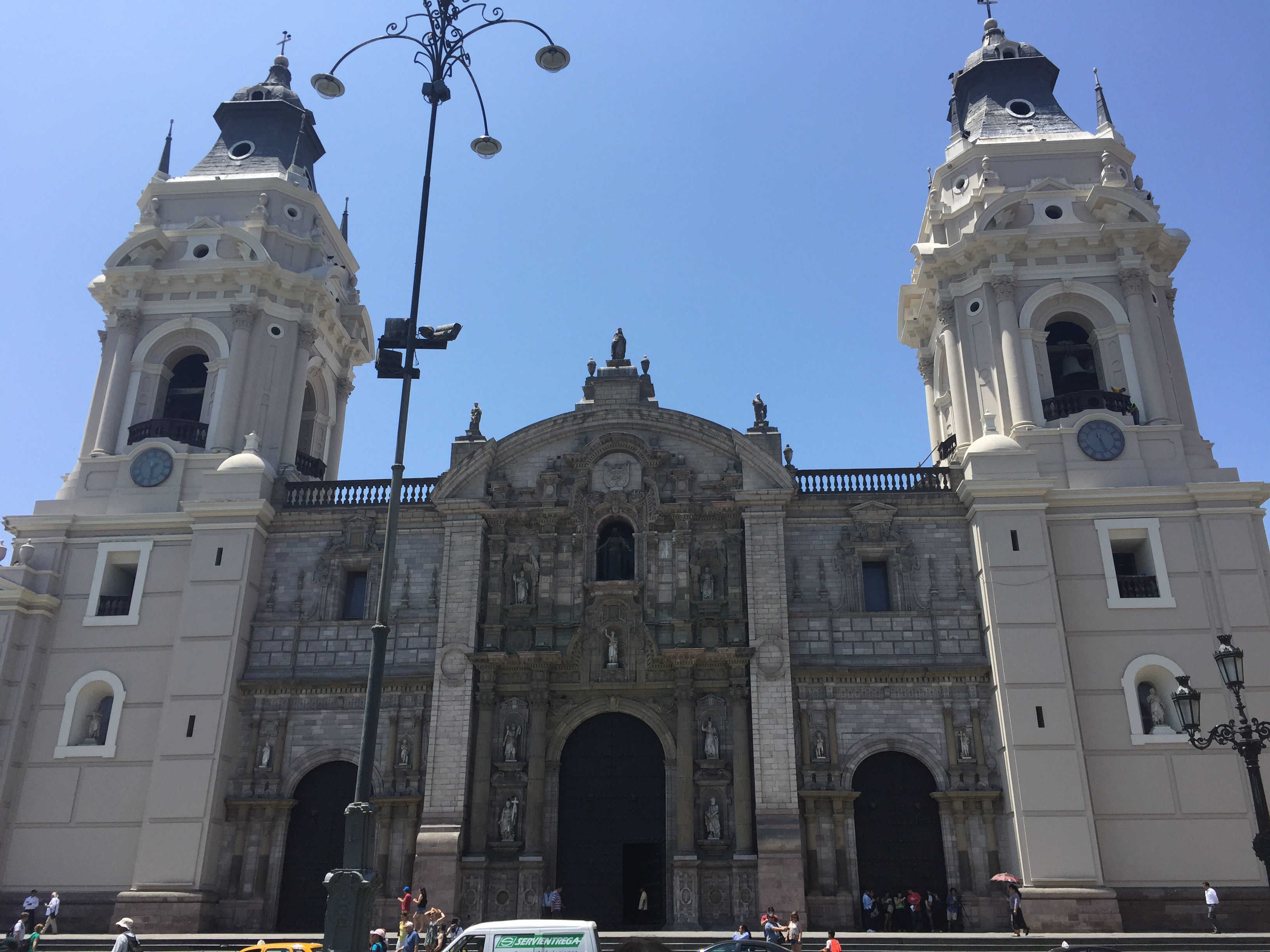
From the church we walked to the main plaza, Plaza Mayor.  We learned that this was the original site of the native Inca outpost.  Where the temple had been, the Spanish destroyed it and built a church. When the leader lived, his home was destroyed and the conquering Spanish built the home of Pissarro. 

Due to earthquakes the two towers were replaced on this church in the Plaza Mayor.


We also saw a home with the lovely wooden balconies. And another building that served as the listening post for agents of the inquisition. They would stand inside screened, wooden balconies, unseen, and listen. If they disliked someone they would haul them off to another building where they would torture them into confessing. I do not like the inquisition. A distant ancestor of mine was burned in Portugal as a heretic in 1618. And it is a shame that the Spanish brought the Inquisition with them to the Americas. 

The final item I found unusual or exceptional was how the local people are just building on the foothills of the Andes with no concern of earthquakes. A hill called St Christopher’s hill truly was intriguing.  

Houses just built into the hill helter skelter

There is much more to see, I just showed our highlights. But definitely was a wonderful experience. 

Why I like Chile 

19 Mar

The flower clock in Vina Del Mar


We have just begun our fourth trip to South America, with our first stop of Chile. I must say I love going to Chile. There are several reasons. 

First Chile is a lovely country. Although long and narrow, with both coastal mountains on one side and the Andes forming the border with Argentina, the long lovely coastline is amazing. 

The first time we came to Chile we spent several days in Santiago then cruised south along the coast stopping at several ports along the way. Journeying through the Straits of Megellan and the north to Argentina and Uruguay. We loved it. 

This time when we came, we traveled directly from the airport to the lovely resort city of Vina Del Mar, staying in The Enjoy hotel that connects to the original Casino. Walking around has be a delight. Soon we will travel to our cruise ship and sail north to Arica, Chile, and on to Peru, Ecuador, Panama, the Canal, and Columbia. I cannot wait for these new experiences. 

Second reason why I love Chile:  although it is a 9.5 hour flight from Atlanta, we only change two time zones from our home. So NO jet lag. I love that. I admit that I do hate being on an airplane for that long. But for this trip we end in Miami, so a much shorter flight home. 

The final and best reason for me, my best Chilean buddy. It is really wonderful to travel a country with a friend who is a native. First having friends to experience the adventure makes it more enjoyable. Then there are no issues with translating. She makes wonderful food selections. We want to eat foods we do not find at home and eat traditional South American fare. 

We are off on another adventure. 

Missing Mom’s Passover Recipes

13 Mar

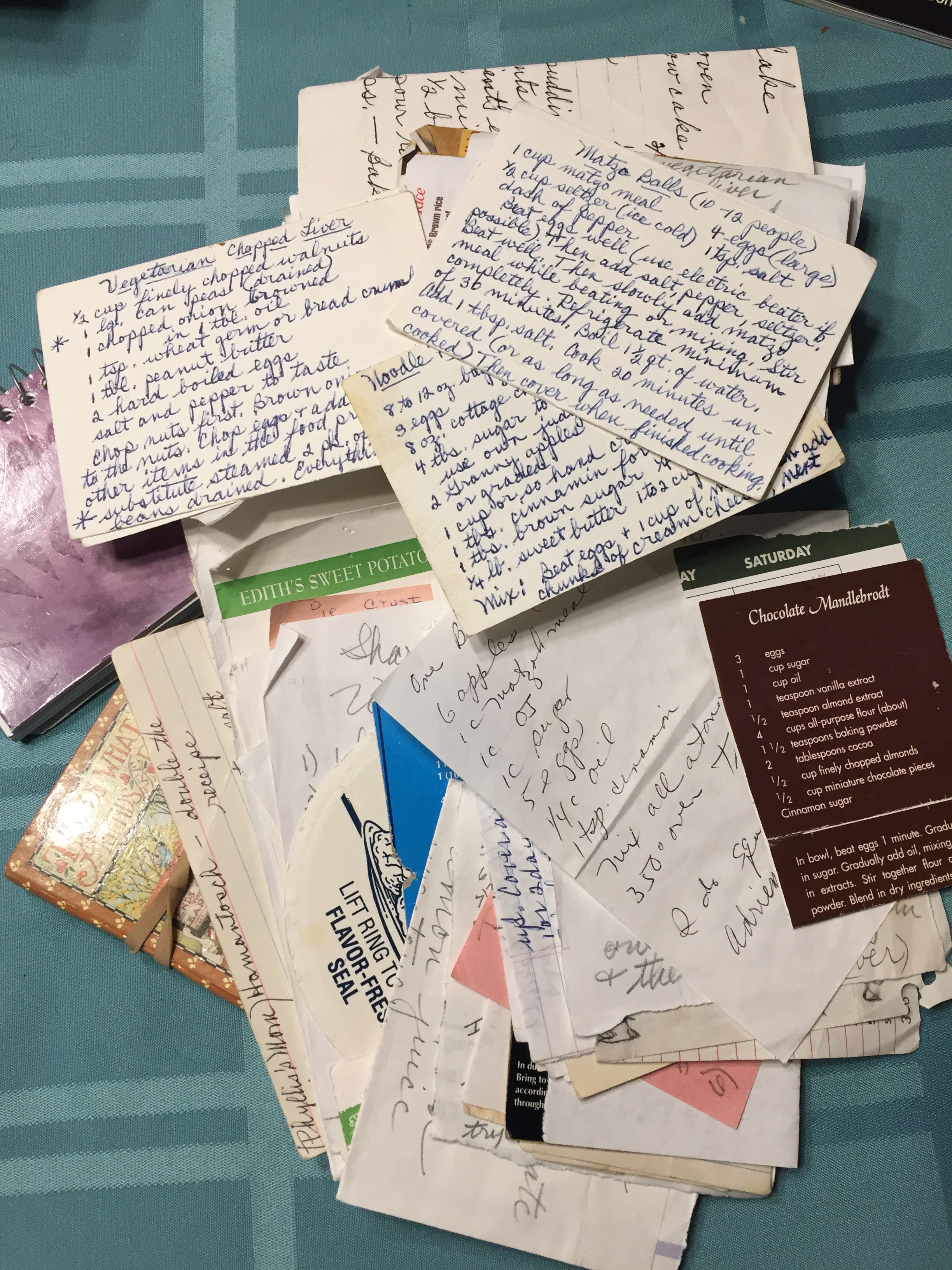
The recipes filled a bag.

There were many little issues that appeared during the year that my parents died. Little things that you do not realize will cause distress. But for my sister and me, one of these issues was my Mom’s recipes. They were gone. We searched the house and could not find them. Most recipes we knew because we continued to make them.

But a few seemed lost forever, these included her Passover recipes. Since we used them only once a year, they were not etched into our memories. And so we had to use recipes from books or from others, or just not make that item. Without her recipes, we felt a bit lost.

My parents would come to me each year for the second night of Pesach.   They did the first Seder in New Jersey with my siblings and their families. Mom would cook her share of the meal, and leave all the leftovers for my brother and sister’s families. Because the next morning, bright and early, my parents would fly out to stay with me for second Seder and the rest of the holiday.

My children went to the Jewish Day School, so they were off that week. It was a perfect time for my parents to have grandparent adventures with the children.

Mom would arrive and join me in cooking. We always spent the first seder with other families at friends. But I alternated second night seder with another friend, and so often it would be at my house. Eventually, second night became my domain.

Whatever the case, there were certain foods I did not make until Mom got here. She knew exactly what to do, even though she might have had the recipes written down. After making seders for so many years, she knew her recipes. Whereas, my sister and I depended on her memory to help us.

So I should have known what happened to the recipes. But it never occurred to me.

About a year or so after both my parents passed away, they did so quickly and within nine months of each other, I finally cleaned out the bedroom in my house where they always stayed. We had already cleaned out their condo apartment in New Jersey; had told the managers of the apartment they rented in Florida to take what they wanted and donate the rest, and we had mostly cleaned out the house in the Catskill. So now it was time for me to do the final cleaning and pack up and donate what they had left behind in my house.

They had their own space, and I had avoided going into it, but my son wanted to move into this larger room, with its own separated entrance.

I finally opened the closet and packed my dad’s jeans and shirts and jackets. I started cleaning out the drawers. Putting tops and items into bags to donate.

There in the bottom drawer, covered by tops, was a small, stuffed plastic bag filled with papers. Recipes. Lots and lots of recipes. She was in the process of rewriting in her beautiful teacher’s handwriting. Passover was back: Vegetarian Chopped Liver, Matzah balls for 10-12 people, Farfel pudding from Sylvia, Baked Gifilte Fish from Lola, Potato Kugel, Stuffed cabbage.

Mixed in were many other recipes, including Hamantasch from Phyllis and my Uncle Stanley’s cookie recipe, which she called Cookies by Stanley. (He was baker and passed away in January 2017, a week before his 90th birthday, on my Mother’s sixth Yahrzeit.)

I would like to say I used these recipes. But I did not.  I put them in my room, in a box, waiting to be used.  I did not share them.  I did not look at them.  I just could not.  Now, I know I need to scan the recipes and send them to my brother and sister. I know that. But for four years they have sat in their bag while I have looked at it as a locked time chest, unable to really sort through the notes left by my Mom.

I decided this year was the time. I was ready.   We are done missing my Mom’s recipes.

What Happened To Karola?

27 Feb

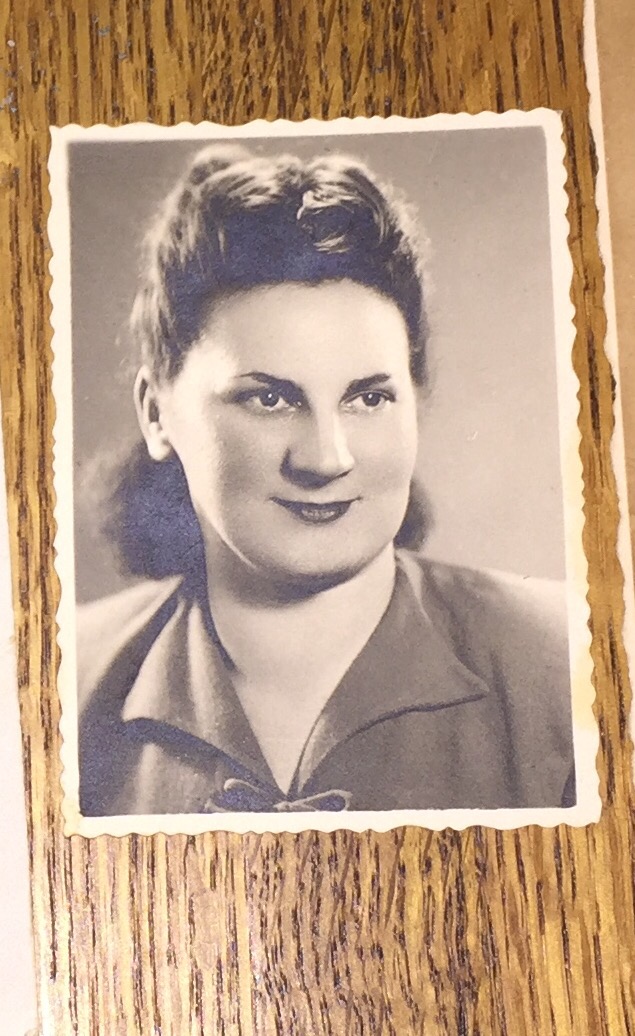
I am still finding clues about my grandmother’s family in the old photo album we found hidden in the attic. Many of the photos might remain mysteries. As they have no caption or notations. But as I slowly go through them, I sometimes find a photo with a message on the back.

In February,  I was showing the album to a visiting cousin, when I flipped over the photo of a young woman. I was surprised to see it had a note on the back in Polish. I could understand a bit. It was to her cousin Thelma (my grandma). It had a date, June 6, 1946. And it had a place, Kielce.  I was glad that I had finally found a photo from after the war. I thought that finally I had found someone who survived. I had thought the book was hidden because it was filled with those who perished.

The back of the photo.

Karola in June 1946.

I posted the photo on the “Tracing the Tribe,” Facebook group to get a translation of the back. It was dedicated to my grandmother. “To my sincere/honest and devoted cousin Thelma from Karola. I knew they were related because Karola looks so much like my grandmother. I assume they are first cousins.

My Grandma Thelma summer 1942.

The rest of the inscription reads, “Kielce, June 6, 1946. “.  And that opened up a new issue. Someone wrote, “Do you realize that this is dated from Kielce less than ONE MONTH before the pogrom in which 42 Jews — pretty much all Holocaust survivors — were massacred in the local community center? Did your relative survive that horrible event.”

I Don’t know if she survived!

I started investigating Kielce.  On July 4, 1946, there was a pogrom against the approximately 200 Jewish survivors of the camps who had moved back to Kielce. They were a tiny percentage of what once was a thriving Jewish community.

Of those 200, 42 were killed and 40 were injured.  This event started when a young boy told his father he was late because Jews locked him in a basement. It was a lie. But started a blood libel event. Polish police and soldiers participated. On July 14 nine Poles were executed for their role in this horrible massacre. Because of this event,  Polish Jews who survived knew they had to leave Poland. It would never be a safe haven. And a mass exodus began.

But what about my cousin?  I tried finding her name on any lists. But I do not know her surname.  I do not remember ever meeting her in the US, although I met most of my grandparents’ relatives. There were so few.  I had not met her in Israel when I took my grandma there in 1976.  I met many relatives then. (See previous blog: Speaking Yiddish Always Brings Holocaust Memories).  I sent the photo to a cousin in Israel. Although we are just a month apart in age, she is a generation above me. My mothers first cousin. And her parents survived the war by fleeing to a Russia. She knew the family who survived and moved to Israel. She also has a picture of Karola, but knows nothing about her.

So I am beginning to think she perished. Which breaks my heart. Did she send the photos to relatives in an effort to get out of Europe?  What was happening? Was she alone?  I need answers.

I could not let my search end there. I have contacted a distant cousin who I met through Tracing the Tribe. He is a much more experienced researcher than I. I hope he will be able to bring me closure about cousin Karola.

In the meantime I also continue to search for her. But I also continue to learn about the political and social anti-Semitism that led to this horrendous event and its aftermath.

UPDATE:  Karola lived: From another cousin who read the blog I found out this information:  “Karola lived in Paris with her husband and beautiful daughter. They visited us for a few days when I was a teen. My mother kept in touch for many years, the daughter also came to NYC and stayed and then they seemed to lose contact.” Wrote my cousin.

https://en.m.wikipedia.org/wiki/Kielce_pogrom

https://zicharonot.wordpress.com/2014/04/28/speaking-yiddish-always-brings-me-holocaust-memories/

Defacing a Cemetery and Bomb Threats Make Me Angry

20 Feb

I was not sad today when I found out more Jewish Community Centers had received bomb threats that forced evacuations.  I was not sad today when I found out Chessed Shel Emeth Cemetery was vandalized and over 100 stones were toppled.  I was not sad.

I was ANGRY! I am still angry. I am frustrated that people believe hatred wins. It does not win.

This wave of anti-Semitism has touched me on several occasions. My sister and nephew were exercising at the Tenafly, NJ, JCC when it had to be evacuated in bitter cold weather. Children and elderly had to walk or be taken to a safe place.

The Jewish Community Center in Kansas has been on high security for over two years now since a horrible instance of anti-Semitic violence led to three deaths. And twice bomb threats have been received this year. I am used to seeing armed guards at the JCC and at our synagogues.

But today was the final straw. Today the cemetery where my husband’s parents and grandparents, as well as his great aunt and uncle,  are buried was vandalized. Chessed shel Emeth in University City, Missouri, in St Louis.  I am so angry that someone thinks toppling graves is acceptable. I think my anger is intensified because so many of my family have no graves. Their remains are included in the ashes of the concentration camps and destroyed Jewish communities in Europe.

I think I am angry because by destroying graves, they– the haters– try to wipe out out memory. I am always searching in my family’s genealogy, always wondering about who came before and how are we related. So I say to the haters, “It will not happen. We carry each person’s name and memory as a blessing. ”

I contacted the cemetery as soon as I found out to discover the status of our family graves. I was surprised at how quickly I had a response. I was contacted within an hour that Our stones were not toppled.

I want to thank all those who reached out to us. I am glad that the community is coming together to help repair the damage.  Donations can be made to help pay for the damage,. (See link below.)

And I say to those making threats and trying to destroy cemeteries, You will be found. You will be punished. This is not Europe of 1939. This is the United States of America. And you are in the wrong. We stand united.

I am angry, but I believe in goodness.  And I will continue to work with and focus on those who want a better world. I think we need to spread kindness, but we also need to find those who are perpetuating these acts and hold them responsible for their actions. It is just wrong.
If you want to help the cemetery please go to this site: https://www.chesedshelemeth.org/how-to-donate.html

http://kplr11.com/2017/02/20/vandals-target-historic-jewish-cemetery-in-university-city/

Why The Same Old, Same Old Feels Good Now

14 Feb

When I was young, I never understood why my grandmother ate almost the exact same breakfast every morning: Cottage cheese, a piece of toast, fruit, water for her pills and coffee. “Isn’t that boring?” I asked. For me breakfast needed to be an exciting start to the day, especially in the summers.

But now I understand. Each morning I start the day with basically the same breakfast … everyday.  I like it.  Why change?  Occasionally I switch it up, usually when I am traveling.  But when home it is the same old, same old. It feels comfortable. Why change? I have become my grandma.

But I find my need for consistency goes beyond breakfast.  I like to shop in the same stores. I know which clothes lines and which shoes fit me well. Why should I venture to another store when I know I can always find clothes and shoes that fit at Chicos and Clarks?   Yes I sometimes go into another store and find something, but usually it takes more time to figure out where the items I might like are located. But I do go to discount stores that I enjoy like DSW, where I can find my favorite shoes at a less expensive price. 

I am even happy with my usual grocery shopping selection. Friends have tried to get me to go to two newer, more hip, places to do my grocery shopping. But I have my big three depending on what I need. I used to start with Costco for some items, but with no children at home I do not often need bulk food. Instead I buy smaller quantities at a local grocer/supermarket.  Occasionally, I do venture to the newer stores, but I feel a bit out of alignment when I shop there. I have to search the aisles for what I need. 

I often dash over to a nearby Target for sundries. Two years ago they totally remodeled the one I shop at.  The changes were nice, but the disruption made me realize I was getting set in my ways. I like the same old, same old. Although I now love the changes, I feel a sense of loss.  Now I have to readjust my habits to find the items I need. However, I will admit when my favorite brunch place renovated, it became much improved! 

But lately I find that I just like being at home. Especially when I am home.

My husband and I travel … a lot.  We are fortunate that our son lives close. He  moves back to our house to care for our cats when we travel.  But with being on so many trips, the joy of just being at home sometimes is the best.on one hand I know I am getting set in my ways. However,  it just makes the same old, same old feel good. 

Speak Out In Times of Great Moral Crisis

29 Jan

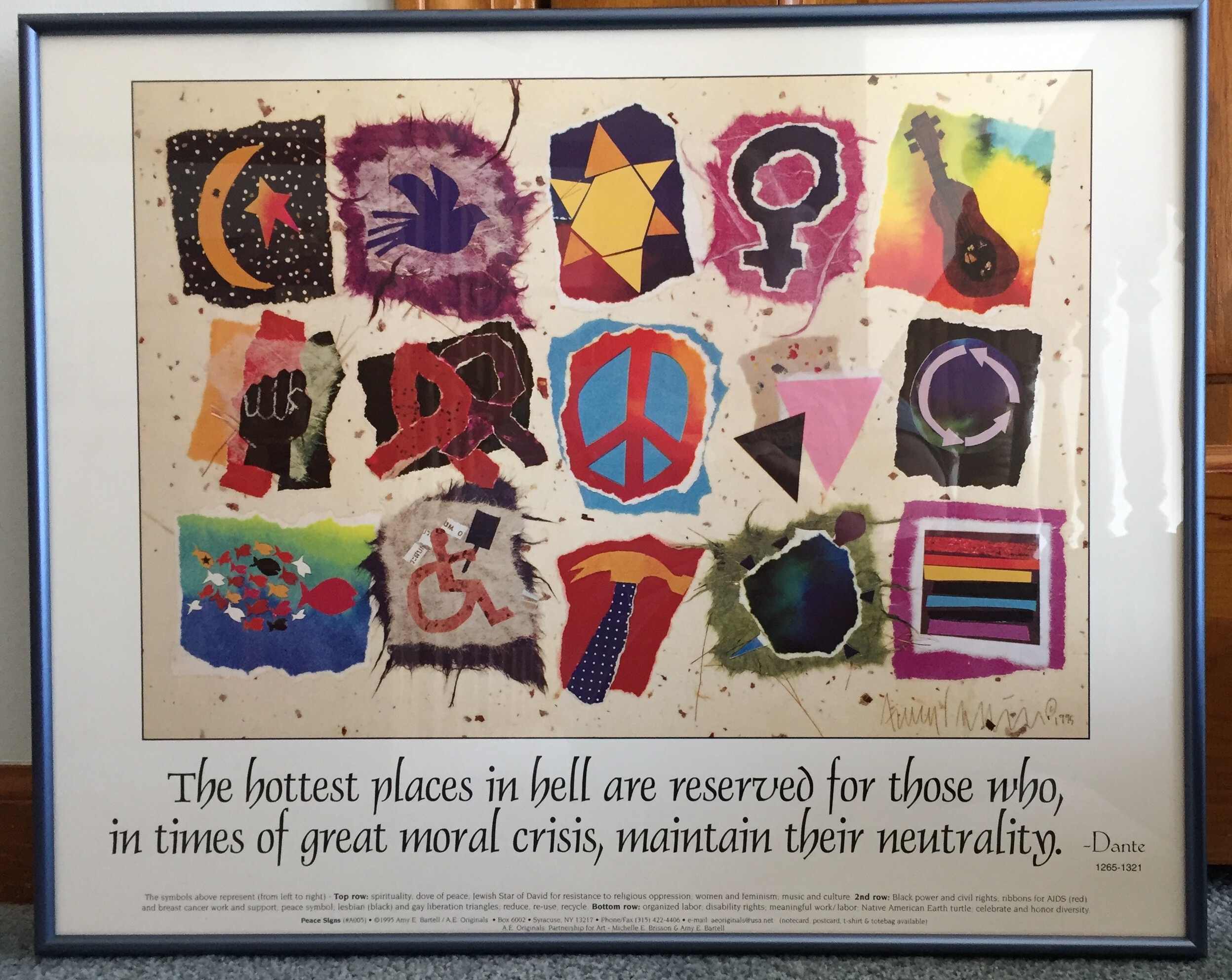
“The hottest places in hell are reserved for those who, in times of great moral crisis, maintain their neutrality.” Dante


In March 2002, my husband and I took our two children to Washington, DC, for spring break. We decided that in order to show no fear in face of terrorism we would go to our nation’s capitol and visit all of the museums and sites.

The White House was still closed to the public. There were snipers on the roof. And new obstacles to block terrorist attacks were being put into place.

But we went to museums, to the Library of Congress, to the Ford Theater, to George Washington’s Home at Mount Vernon. We showed our children that these places will stand. And no matter what happens, we as citizens of the United States had freedoms.

My son was 11 and my daughter was 15. My husband had already been to the Holocaust Museum. We decided that I would take our daughter there, while my husband took our son back to the hotel. A good decision at the time, as it is a difficult museum to see.

My daughter and I walked the halls of the museum. We watched movies and videos. We listened to testimony. We looked at memorabilia. Then we went to the Hall of Remembrance. I wanted to light a candle in memory of my family who perished in the Shoah. For my great grandmother, Chava, for whom I am named; her husband, Gimple, and their children, in laws, grandchildren, sisters, brothers, nieces and nephews who had all perished in the fires of hatred.

But there were no candles left. And I cried. My daughter searched throughout the room for one last candle for me to light.   And then she sat with me as I cried.   I cried for all those who perished without a name. I cried for all those families who had no one left to cry for them.

When I left I purchased a poster, this poster that I show on this blog. This poster, which I framed and hung in my home office; its words call out to me even louder now.   We cannot remain silent in times of great moral crisis.   We cannot be silent like those who said they were only following orders.

We in the United States are now in a great moral crisis. There is no legality in singling out one religion over others. Timothy McVeigh was not a Moslem, he killed 168 people in Oklahoma City. He was a white Christian.   Should we ban all white Christians?

I am so shocked by what is occurring. Those in Congress who say they have values and care about family and country. You are living in a lie. Your alternative truths are lies.

For those of us of faith, we know what the Torah, the Bible says.  It says: “When a foreigner resides among you in your land, do not mistreat them.  The foreigner residing among you must be treated as your native born.  Love them as yourself, for you were foreigners in Egypt.  (Leviticus 19:33-34).  We were strangers in a strange land.  And most of those who live in the United States now were also strangers in a strange land, the descendants of immigrants and refugees.

Anyone who really cares about our country and our people, you must not be silent. We must speak out in times of great moral crisis!  Call your Legislators and Senators; speak out.  Vote!  Support the ACLU! Do not remain silent.  If we do,  then we are condoning those who are the enemy of what the United States stands for: liberty and justice for all.

Brothers and Sisters Must Stick Together

19 Jan

“Brothers and sisters must stick together,” my parents would continually make this statement to my brother, sister and me throughout our childhood.  If we had a disagreement, they would intone this mantra. It was used in many ways.

If a friend of my brother’s bugged me, he would stop it. But then he would bug me.  Brothers protect sisters from others, but that does not mean he could not tease me. His interpretation of this saying.

Over the years my sibling and I have come together many times to help each other.  And this sentiment fills my mind and my soul. We will always stick together.  We repeated it many times when our parents passed away within nine months of each other.

As we cleaned and divided their homes, my brother would say, “Nothing is worth fighting over.”  And we knew that “Brothers and Sisters must stick together.”  It helped to hear these words from my parents. It was an emotional time, and sometimes we needed this reminder.

But I have to say my parents and their siblings took this to the zenith degree.  My Dad and his sister passed away within days of each other. It shocked us, as we sat shiva for both.   My Dad called my Aunt almost every day after my Mom passed, but even before they spoke often. And each winter spent months together in Florida. At the time I remember thinking that they could not survive without each other as they were so close. So although I was shocked when it happened,  I was not really surprised.  Brothers and sisters must stick together.

But this week it really amazed me.  To be honest my Mom and her brother had a separation.  They did not speak to each other the last years of my mother’s life. This broke her heart. Although she often spoke of her brother, Mom passed away before the rift was ended. Her mantra of “Brothers and Sisters must stick together,” did not help in this instance.  But my cousin, who I always kept close with, came to see her. And that help to ease her.

In the past six years the family has healed.  My siblings and I have visited with my Uncle. We see our cousins.  We help in times of need.  Brothers and sisters sticking together. The family has reunited.

Yesterday my Uncle passed away.  He had been ill for a while, but this week he went into hospice. I spoke to my cousins multiple times during the week.  And texted in between.  I love her and I knew this was so difficult.  And then he slowly slipped away, just days before his 90th birthday. When I got the call I was not surprised. But a few minutes later it hit me, this day was my Mom’s yahrzeit, the religious anniversary of her death.

I texted my cousin: her response was perfect, “Maybe now they will make peace.”

But to me it was a sign. To my siblings I texted, “Brothers and sisters must stick together.”

Memories of the Multi-Colored, Rainbow Fence

19 Jan

My son and I recently completed a project in my home. We stripped wallpaper off the walls of a bathroom and covered the vacant walls with a lovely sea foam-colored paint. I loved working on this project with my son over his winter break!

While we were painting, I kept flashing back to my Grandpa Nat, for whom my son is named. Grandpa would have loved that my son was taking on a painting project and successfully meeting my expectations.   It was my grandfather who taught me the skill of scrapping and painting and keeping a home in shape.

As the owner of a small Catskill’s bungalow colony in Kauneonga Lake, Grandpa did much of the maintenance on his own, with help from my Dad and us, his grandchildren.   The difficult plumbing and electrical work was done by professionals, the painting was a chore we could all do. And we did.

“IF you don’t Work, you don’t Eat,” Grandpa would intone. Of course we always ate, but he wanted us to know that it was important to have a good work ethic. In the real world, not working meant no money.

In the spring, that work ethic was obvious. We would go up to the Catskills before the season began for my Dad to help Grandpa get the bungalows ready. My brother and I were scrappers and painters. They would put us along the bottom of the bungalows that needed to be painted, where we scrapped off the peeling paint.

When that chore was completed to Grandpa’s satisfaction, my brother and I would be allowed to paint the bottom.   I actually loved it! It was my favorite chore, even though all the buildings were painted white. (I think my sister was too young to be part of the paint squad!)

img_4330

We still have the furniture.  It is well over 65 years old, and needs painting!

When the bungalows were done, we had to paint the wooden lawn furniture.  Grandpa went for the greens, blues and gray tones.  Scrapping those chairs and painting the wooden slats and metal legs was backbreaking work.  We got to do it because we were lower to the ground!  But I still remember how tired I would be when we completed this chore.

Now I have to tell you that my Grandpa was colorblind. ALL colors looked the same for him. Whereas, my Grandma loved colors. So in a way what happened one spring is partly my grandmother’s fault.

Every other spring, my grandfather would paint the wooden fence that surrounded the colony. Our colony was located across from the lake along the side of West Shore Road.   During the week, the road was quiet with virtually no cars. But on the weekend, the road was zipping with cars.   The fence kept all the children safe.

I do not know why, but one spring Grandpa painted the fence when we were not there.   And instead of getting new paint cans, he decided to use all the old paint that was in storage: exterior and interior paint. Why waste it? He did not mix the cans together. That might have been better, as everything would have been grey.   However, that is not what he did!

Instead as he finished one can of paint, he opened another and continued painting where he left off, over and over again. It was rainbow like in its many colors, but not in any rainbow order. When we drove up to the Catskills and arrived at the colony, we were amazed to see, what I thought was lovely, a multi-colored fence surrounding the property. I cannot remember all the colors that covered the wood. But it was noticeable. My parents were stunned. And then they laughed.

My grandfather had no idea what the fuss was about. When they told him, he just roared in laughter.

I think it stayed that way for two years, even though some of the tenants complained. Although my mother and grandmother were not fans of the multicolored fence, I was. It made me happy. We were the only bungalow colony with such a joyful fence. When he repainted it, he used just one color, grey.   After that he often mixed all the paints together when we worked in the spring creating different tones of grey!

So as my son painted the walls in my bathroom, a joyful sea foam blue, I continually flashed back to the joyful multicolored, rainbow fence that surrounded our bungalows.