Archive | Uncategorized RSS feed for this section

My Military Mystery (In honor of Memorial Day)

27 May

hvqaNsxdRrKK3wDdtnekyQ_thumb_e530

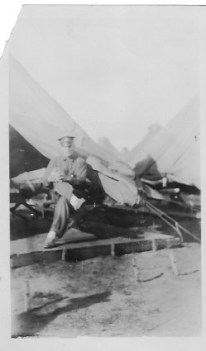
Pine Camp, Jefferson County, NY, July 1924, presents me with a major mystery.  I have two photos that were taken there and are clearly marked:  Pine Camp, Jefferson C. N.Y. July 1924.  They are part of the many unknown photos in my Grandmother’s album that we found hidden in the attic of her home, 35 years after she passed away.  (See blog link below.)

The handwriting is not my grandmother’s handwriting.  But I think it was her cousin’s Katie’s handwriting, because in many of the photos Grandma and her first cousin are together.  Additionally my Grandmother lived with her Aunt’s Family from 1922 until 1925 when she married my grandfather.  Grandma and Katie became life-long friends, besides cousins..

I have to think that maybe they were visiting one of Katie’s brothers, she had three.  Or perhaps one of four brothers who Katie’s mother helped raise, and later Katie married into that family.  But I also have to assume that they knew someone who was there, and who sent them this photo.   I cannot imagine that they were allowed to visit them while they were on maneuvers.

Pine Camp was a military site.  The New York National Guard trained there in the summer time during the early 1900s.   Eventually, during the Second World War, Pine Camp was enlarged and became the training grounds for three divisions of General George S. Patton’s 4th Armored Division.  But that happened much latter.  It served as a prisoner of war camp and eventually was renamed Camp Drum in 1951.

UNADJUSTEDNONRAW_thumb_e531.jpg

So who is the person they knew in this picture of six young men? And who is that commanding officer?  I have no idea.  But perhaps someone can help me solve my military mystery?

Great news! A distant cousin who I connected with several years ago, thanks to help from Tracing the Tribe members, said that one of the men is her great uncle who was Katie’s first husband!!! Thank you!!


Old Photographs Bring Memories to Life

New York State Military Museum:  https://dmna.ny.gov/forts/fortsM_P/pineCamp.htm

This Jacket is a Survivor!

20 May

img_3411

I am cleaning out my cedar chest.  I had no idea what was piled up inside.  But surprises keep coming! My biggest surprise find was a jacket belonging to my mother.  I honestly forgot it was there.  I thought I had lost it in my many moves years ago.  But here it is:  A grayish brown wool jacket.  It is definitely from the late 1940s/early 1950s in both style and by history.

This is not just any jacket.  It was made by my mother’s uncles.  I am not sure which one, either David or Isaac.  They survived the Shoah because they were tailors.  When they escaped Poland they headed into Russia, where I am told they worked making soldiers’ uniforms.  I have no proof of this. But that is the story I was told.

After the war, they ended up in Italy first, where they waited for papers.  My uncles had my grandmother and another sister in the United States.  My aunts had relatives, sisters I think, in Australia.  They decided they would go to live in whatever country and near whoever sent visas first.  They just wanted out of Europe and away from fear.

The visas came from Australia.  So they went to Melbourne.  This jacket was made by my uncles in Melbourne after they settled there and sent to my mother in the United States.  Can you image? I can’t.

I know they were in contact throughout their journey of survival.   I know that my grandmother and aunt tried to get them visas to the USA and sent them money to survive after the war.

I know that they helped to support them throughout their lives.  My Uncle David died when he was in his late 30s in Australia.  He is buried in a Jewish cemetery in Melbourne.  Eventually the survivors, my Uncle Isaac, his wife Bronia and, David’s widow, Rosa moved to Israel with my cousin, where she still lives with her family.

When they moved to Israel, we sent care packages to them.  It was 1965 or 1966.  I still remember when I was 11 learning about my cousin. We became pen pals, writing back and forth for many years.  We still keep in contact, but now through What’s Ap and Facebook.

The year (1974-75) I studied at Hebrew University in Israel, I would spend time with my family, my uncle, aunts and cousin in Kiriat Haim, which is just north of Haifa.   During one visit, Uncle Isaac surprised me with a bag to carry my school supplies when I traveled from Jerusalem to visit family.  He also made me a pillow to decorate my room.  I was a great bag for that as it was the perfect size with a zipper.  And no one else had anything like.  I actually used it to go to class.  I still have both of these items.

After my return from Israel, my mother gave the jacket to me.  It longer fit her and she thought I would wear it.   Since I spent so much time with my family in Israel, the jacket carried so many emotions with it.  When I was younger, I would wear the jacket and think of all my great uncles and aunts went through during the war.  How they survived the war and got out of Europe.  It is a jacket of survival and strength in my mind.

So I guess I will continue to keep this jacket.  It has a few moth-eaten areas.  The color has faded.  But to me, its symbol of survival and new lives makes it so valuable.  It tells me to never give up.  To survive and be a survivor.


The Rosh Hashannah Card Has A Story


Speaking Yiddish Always Brings Me Holocaust Memories


My Grandmother’s Mysterious Black Notebook

13 May
img_3335-1

The black notebook.

I have a book.  It is small.  About eight inches by nine inches.  It has a black cover.  Inside are 33 lined pages, so total of 66 pages that can be written on.

It seems to be a diary.  Most of the pages, about 40, have entries that are dated in 1921.  So my book is almost 100 years old.  Two of the names I recognize.  My grandmother and her first cousin, Abraham, who perished in the Shoah.  The other names I am not sure about.  But these entries, even though they have different names, seem to be written by the same person.  My grandmother perhaps?  Or are they really two separate handwriting.  Now that I look at this page below, it seems as if two different people wrote. But many of the pages have the same writing and not changes like this one.

img_3332

Entries from March 1921 with my grandmother Tala Szenk and her cousin Abram Prentki’s names.

Some of the entries look like they could be poems.   Did they write these poems, or did they just copy them from some book?  It does show how my grandmother was educated in Poland.  Her father was a teacher. Grandma could read, write and speak in Polish, Hebrew and Yiddish.  After she came to America, she went to night school to learn English.

img_3337

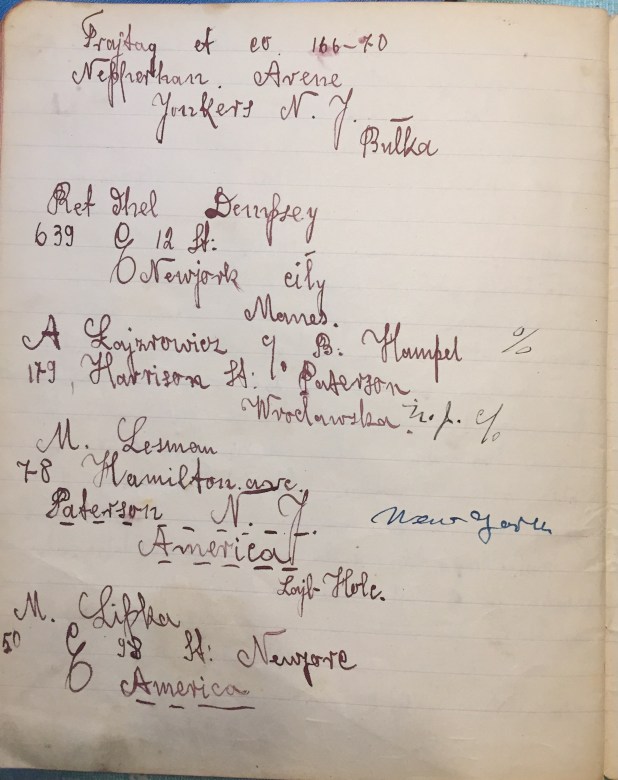
See Lipka, her relatives she stayed with when she arrived in America.

In the middle of the book are names and addresses in English.  Names of people living in New York and New Jersey.  Hidden, I think, in the middle of the book.  Her escape plan?   My grandmother came to the United States when she was 16 in 1922.  I see the last name of the aunt and uncle who allowed her to live with them in the United States.  They must have sponsored her as well.  The name is Lipka.

It is all written in Polish.  But I can understand the names, because I recognize them.  And the name of my grandmother and her cousin jump out at me.  Especially since I have written about this cousin and not knowing who he was at first.  And then here he is embedded with her in this book.

img_3338

Who wrote these pages?

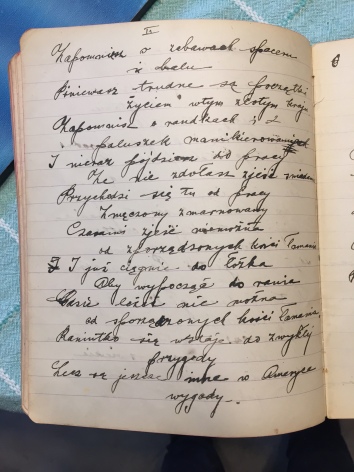
After the journal entries, if that is what they are, comes some blank pages, and then six pages written in a different handwriting.  It looks like a poem.  But I am not sure.  I am not sure what any of it is.

The last four pages are in Yiddish. Those I have had translated.  We think it is a story, perhaps not true, perhaps yes.   About a girl who meets non-Jewish man and how it ends in sadness.  The beginning reminds of the story of Tveye and his daughter Chava.  But this story does not end happily.  Did she read a book and decided to write that story?  I don’t know. I don’t know if she is writing about someone she knew or making up a story.   Perhaps the other entries would give me information. Perhaps.

img_3336

Why did she save this receipt as well?

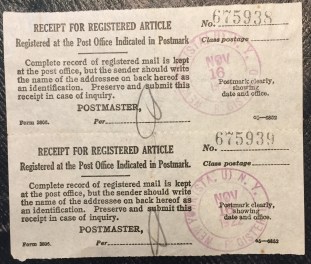
Inside the book is a receipt for registered mail sent on November 16, 1922.  Did she send something back to her father and her siblings after she arrived in America?  I wish I knew.

My grandmother passed away 38 years ago.  I wish I had seen this book when she was alive so I could ask her what all this is!  We found it long after she died and my parents died.  It was hidden in the bottom of a box in the attic of their Catskills home.  Not thrown away, but saved for me to one day find.

This book is a mystery to me.  I need someone who reads Polish and can translate this book for me.  I love a mystery, but even more, I love the solution to a mystery!


Two blogs about Abraham Prentki:

https://zicharonot.com/2018/06/04/the-mystery-of-abraham-prantki/


https://zicharonot.com/2018/06/26/amazing-what-information-two-photos-can-provide/

The Keeper of the Records

6 May

In my family, I have become the keeper of the records.  I believe it is because I actually do something with them.  I scan them in to the computer; I research these records; I write about them; and then I share the information with my family through my blogs.  I hope that my doing this will keep these memories alive for future generations.

So recently, when I was in New Jersey, I asked my sister where she had put our parents’ wedding album, as my sister wanted it when we cleaned out our parents’ home.  It was easily accessible, so I looked through it, searching for a particular photo.  I had seen it the album many times, so knew it was included.

The biggest problem with this album is that the photos are encased in plastic. That must have been the style as I have seen other albums from this era also with plastic.  So those photos are difficult to photograph or scan, as you see here.

img_3065

My parents listening to the reading of their ketubah.

I found what I was looking for: a photo with my parents’ ketubah, Jewish marriage license.  It was important for me because I have both their marriage license and the engagement agreement that was signed at the same time.

The engagement contract is in disrepair.  I hate even taking it out of its’ envelop, but I did for a photo.  It is signed by both of my grandfathers. It was kept in an envelop addressed to my Dad at my grandparents’ bakery.

img_3219

The ketubah is in much better shape.  Written in both English and Hebrew, it is pretty simple.  Not an artist drawing, but rather a form Ketubah filled in by the Rabbi.  The most important part for me is that it lists my mother’s Hebrew/Yiddish name.  We sometimes had a debate on that as my grandparents, and sometimes my dad, would call her ‘Fegilah,” little bird.  But we were pretty sure her name in Yiddish was Freida, which is confirmed with the ketubah.

The photo with the ketubah almost makes me laugh.  Their wedding was arranged quickly.  Dad was in the army and going to Korea.  Yet there he is in tails and a top hat!  My Mom is standing by the huppah in a veil that almost hides her face. It is much denser than the veil my sister, sister-in-law, and I wore, and our daughters.

They both look so serious.  It is difficult to believe that they were just 22 years old. My uncle, my Mother’s brother, is there as well.  Thanks to him we actually have a movie of my parents’ wedding!  No voices, but all the action is shown.

To me having this photo together with the ketubah is important.  It is a link that ties the document to the people in it.  Now forever together in this blog.

I think that is why I am the designated keeper of the records.

Visiting the Van Vleck House and Gardens

3 May

Another delightful site to visit in Montclair is the Van Vleck House and Gardens.  Once a private estate, the house and its gardens were donated to The Montclair Foundation in 1993 by the heirs of Howard Van Vleck, who owned this Italianate villa.  The house was built in 1916.  While other homes once were on the estate as well, this is the only house that still remains.

img_3092

img_3108

The original main entrance to the house on Van Vleck Street.

The gardens are open to the public for free every day!  No holiday closures!  The lovely house is used as a center for nonprofit groups for meetings, events, and fundraisers.  I actually saw people having a yoga class in one of the rooms! What a spectacular yoga studio!  The windows overlook the gardens!

The house and gardens were a short walk from the Montclair Art Museum, just along Upper Mountain Avenue.  Our visit came after several days of rain, so all the grass was lush.  But the blooming season, except for the daffodils was not yet in progress.  I think by the end of May these gardens will be stunning.  When we saw them, everything was greening up, but not much was flowering.

img_3101

The formal garden in the back of the house.

There are several walkways and levels of gardens.  The formal gardens behind the main house are lovely. Staff members were setting up for an event when we were there, so we tried to stay out of the way. Although not much was blooming yet, it was a great place to get a good walk in a lovely setting.

img_3097

One of my favorite spots.

The Upper Lawn had several stations to check out.  You can download the Van Vleck house’ app and learn about the different areas using codes on the signs.  I liked an area on the upper lawn that had many daffodils and a bird house.  When you walk across the upper lawn, you come to the Mother’s Garden and then to a percola that was renovated.

At first, I was not sure if you were allowed to walk on the lawn, as there were no paths. But seeing the information signs across the way gave me some confidence that this was acceptable.  Also the Garden Etiquette flyer we picked up at the Visitor Center, says, “Walk only on the pathways and grassy areas.”  So we did!

img_3094

The Visitor Center with an Ap sign.

The children’s butterfly garden should be lovely as well. It is located behind the Visitor Center. (Where there are good restrooms.  Always important when walking.)  I also liked the colorful signs with details about insects and disease impacting trees and what to look for that lined the path from the butterfly garden to the front of the Visitor Center.  I was glad to see on the website that there are many children and family activities planned throughout the spring and summer.

img_3095

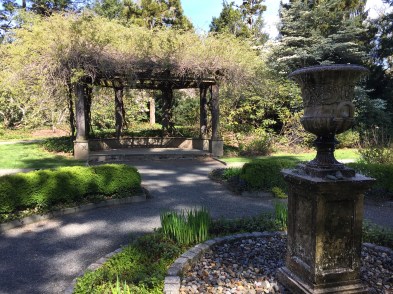
The pavilion by the Tennis Garden.

We did not go on the Rhododendron Walk.  It was somewhat muddy and damp, and I was not in the right shoes for that.  However, I did enjoy the Tennis Court Garden, planted where the estate’s tennis court once stood.  To the side is little pavilion.  I could, in my mind, see people resting there between sets of tennis, or watching those playing while enjoying the shade.

I hope to go back to Montclair and visit the Van Vleck gardens when everything is in bloom!


To learn more about the gardens and home, go to: www.vanvleck.org


A Little Gem, the Montclair Art Museum

1 May

img_3053

I just spent five days in Montclair, New Jersey, visiting my sister who recently moved there.  When we drove to her apartment, we passed the Montclair Art Museum.  Outside many of its trees were covered with crochet and fiber art works, my attention was immediately captivated.

She knew what I was thinking.

“Yes, we are going.  I knew you would want to go.” And I did.  I crochet; I knit; I sew; I have embroidered; I do candlewick embroidery; I needlepoint.  In simple terms, I love fiber arts.  And this display was calling my name.  I wanted to take photos of the trees from her moving car.  But she told me to calm down.  We could actually easily walk over to the museum

img_3056

On exhibit at the museum is the 2019 new Jersey Arts Annual – Crafts, “New Directions In Fiber Arts.”  It will be at the museum until June 16, 2019.

There was felt art, and crochet art, and quilt art.  Each of the 32 artists have their own specialty.  Each is special.  But I must admit, I have my favorites.

One artist, Jeanne Brasile, does water color and embroidery over braille newspapers.  I loved the geometric shapes and the colors of her work. They are delightful. Another, Robert Forman, makes yarn paintings.  I liked how the yarn formed another painting over the existing work.  You sort of see two different works of art at one time.  Geri Hahn sees art in musical sounds.  Her work on fabric looked like butterflies dancing to me. So Yoon Lym’s lovely felt painting looked like a water color.  I also enjoyed the story quilt by Faith Ringgold.

But every artist’s work had something to intrigue.  I enjoyed that each one wrote a statement about their work.  I, of course, read every one.  But I also purchased the booklet that went along with the exhibit to help me remember.  Actually, I should be honest, my sister purchased it for me, as she is a member.  Thanks!

img_3047

I also liked that scattered among the art works were little signs called Family Threads for family activities and questions.  This made the the exhibit much more interactive and family/child friendly.

The fiber exhibit was not the only gallery that I enjoyed.  Currently, the “Undaunted Spirit: Art of Native North America” is also on display until mid-July.  Part of the display, the baskets, I believe, are always on display.  The gallery that housed this exhibit, The Rand Gallery, is named for Annie Valentine Rand, and some of the many Indian art baskets and art works that were collected by her and her daughter, Florence Rand Lang, are on display there.

In March, my husband and I  spent a week on the Navajo and Hopi Indian Reservations in Arizona, so I was fascinated by the many baskets which reminded me of what I saw in Arizona.  But seeing the art work of the Plains Indians also called out to me as I live in Kansas and enjoy seeing Indian Art locally as well.

My sister and I loved walking through the room filled with George Inness paintings. Many showed scenes from Montclair in the late 1890s.   My favorite was the Niagara Falls and Winter Moonlight.

Outside of the walled museum, there are art sculptures on display.  But for me the fun was walking to each tree and seeing the fiber art that encompassed the trunks and some of the branches of the trees.  I love seeing yarn bombing examples.  I felt a bit badly as it rained several of the days we were there which was dampening to the art and to the spirit.  Luckily, a break in the rain helped our visit to the outside grounds more enjoyable.

The museum is closed on Mondays and Tuesdays, and open from 12 – 5 pm on the other days. To find out more about the museum and its programs and events go to  www.monthclairartmuseum.org


Adventures in Mathematics at the National Mathematics Museum

29 Apr

After a losing hope about the state of mathematics in the world, I was delighted to learn about and visit the National Mathematics Museum (MoMath)in New York City. Located at 11 East 26 Street, it opened to the community in December 2015. It is worth the trip!

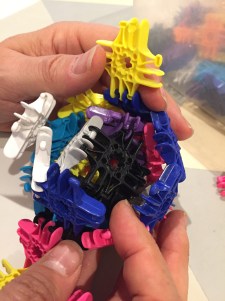
From the Pi symbol door handles to the hologram engraved art work, each inch of this museum is filled with interesting sites and many interactive activities! I loved riding a bicycle with square wheels. It was a little hard on the rear! But fun.

We three adults were having as much fun as the children. There are two floors of activities that parents and children can work on together. Some are math and logic problems to solve. Others are just fun activities like watching your arms branch out into fractals in a living tree exhibit.

I wish I can tell you my favorite activity, but I cannot since so much of it was great fun.

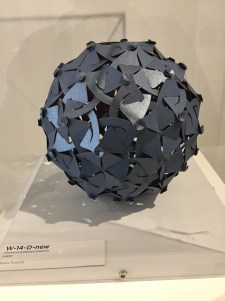
There is also a room where temporary exhibits are housed. When we were there it was unbelievable math art that has to be made through 3-D printers. And fantastic origami art.

The gift shop is packed with educational games and activities to buy. More important this museum is open every day except for Thanksgiving! Need something to do with your children school age and older, go here! There are events and activities listed on its website which I put below.

It is an easy walk to Madison Garden Park where you can sit for a bit and people watch, take great photos of the flatiron building and buy lunch or a snack.

Being there gave me hope. There are parents and children and grandparents interested math and learning. I did not see one frown while there, I just saw adults and children intrigued by what they were seeing and learning while having an adventure at the MoMath!

Www.momath.org

Ring Jells Addiction Started in The Catskills

21 Apr

Sometimes I read a note on Facebook that just touches my soul.  It happened now.  Someone posted about meeting a woman shopping for Passover food in a grocery store.  She was crying while holding a box of Joyva Ring Jells in her hands.   It seemed her mother passed away, and this would be the first seder without her.  Her mother loved Ring Jells, and the sight of this box made her cry.

img_2882

This box is now empty.  But I enjoyed every one.

That should be my children one day.  I love Ring Jells.  While I cook my seder meals and prepare for the long hours ahead, I eat these throughout the day, to me, they are the most delicious chocolate covered sweets.   I am basically addicted to them. The taste of raspberry and chocolate together delights me. Thank goodness I only find them during the holidays.

My addiction started when I was 16 years old working behind the deli and cheese counter at the Daitch Shopwell in Monticello, Sullivan County New York.   It is here that I served the women and men who spent their summers relaxing, cutting their cheese selections and their deli orders.   I worked at this supermarket for three summers, earning spending money and preparing for the costs of college.

But it is also where I learned to love Joyva Ring Jells.  We sold them in the dairy section of the deli, along with all the cheese.  We had a large display of them. Hundreds of ring jells for sale by the pound.  I loved them.  I have to admit it, I would snack on them.  Not eating tons.  But at least two or three each shift I worked.   Eventually the manager told me to stop.  And buy some.  So I did.  I would weigh out 3-5, pay for them, and keep them behind the counter with me.  Snacking as needed.  When the weekends were busy with crazy customers, I really did need them to get me through the day.

img_2885

Marshmallow twists live in my freezer.

I did not realize they were a special Passover treat.  In our house, my Mom was a Joyva Marshmallow twist fancier.  She would buy them at Pesach and keep them in the freezer all year to snack on.  Did you ever eat frozen marshmallow twists?  At first you have to be careful not to hurt your teeth, but after a bit they melt just a little and are delicious.  I admit I still have some in my freezer from last year.   Usually you had to get just plain white ones.  However, sometimes we could find the ones with pink insides!

After I learned about jell rings, I had to have those as well.  My sister and I favored them over the Marshmallow twists, which I think made Mom happy.  She would share them with everyone, but now had more for herself.

The ring jells, on the other hand, were the perfect snack.  I would take two  or three at a time, stick them on my fingers,  and get ready to eat.  We do crazy things when we were younger.

When I left the east coast for the middle of the country, I had an issue.  I could not find them in Kansas. But when my parents were alive and visiting, they would bring boxes of Ring Jells and Marshmallow twists with them. So we never suffered during the Pesach holiday.   They also brought Bartons candies, another treat that was nowhere to be found in Kansas City. Eventually these treats came out west, and  I could get them on my own.

Ring Jells are comfort food for my sister and me.  I am going to visit her the end of the week.  I sent her the following text message on the Thursday before Pesach: “So I purchased one box of raspberry jelly rings to bring to you. And one for my home. Cause I have to have some.  But I had three today and I feel better.”

She wrote back: “I bought two boxes for when you are here! LOL”

My response: “LOL I will leave mine at home.  We do not need three.  Great minds think alike.”

A number of years ago we went through a difficult time. We lost our parents and aunt in less than a year.  Five months later, erev Pesach, my sister’s husband also passed. It was a horrible time.   I did not know how we would survive that holiday.  But I have to say, our friends knew of our need and ring jell addiction.  Friends filled the house.

I don’t know how many of them went shopping. But in days we had boxes upon boxes of ring jells.  In the evenings, when most everyone had left, my sister and I ate ring jells and talked.   It was a Pesach that tried our souls.  And I hate to be trite, but the ring jells gave us a small amount of comfort in our first Pesach without these beloved family members.  (And a mighty thank you to all who purchased them for us.  I don’t know if I ever told you how important they were in this horrible time.)

Special foods bring memories and joy.  For me Joyva jell rings helped me through preparing seders and difficult times. They bind me with my sister.   I could see my children crying over them when I leave this world.  But I don’t think they will buy or eat them.  This addiction will probably end with me.

A zissel Pesach to all.


My Jobs Behind a Deli Counter: Daitch Shopwell and Butensky’s


My Experience on the OC — Orientation Committee 1976

13 Apr
img_2785

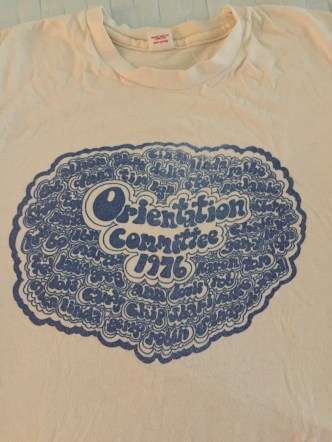
My OC t-shirt. My name is on the lower left.

There is one article of Drew clothing that I kept for 43 years and will probably continue to keep.  It is my orientation committee t-shirt from 1976.  I think that fact that it was the bicentennial of American Revolutionary War, besides marking one of my favorite Drew activities, gives it a special place in my heart.

I started my Drew career like all the other freshmen, a little excited, a little frightened, and really having never lived away from home.    But my sophomore year was much different.  I left the Drew campus to study in Israel at the Hebrew University in Jerusalem.

This was unusual at the time for two reasons: because most people studied abroad in their junior year and because I went eight months after the Yom Kippur War.  Life in Israel was still disrupted. I won’t go through all my experiences, but I will say I came back to the USA afraid of nothing.

When I came back, I wanted to become part of the Drew community.  Many of my friends have formed new bonds while I was gone.  My dorm room was chosen by my freshman roommate, we were going to live in a suite in Foster.  But we would not be sharing a room. She had a new friend who would be her official roommate.  And I would be living with someone I really did not know.  But it was fine.  We had a great year in that suite!

I decided I wanted to change my major and study English literature and writing.  This meant I had to take some lower level classes.  I decided also that I would graduate in 3 ½ years since I had received 12 credits of language for the intensive Hebrew Ulpan I had attended in the summer when I first arrived in Israel.  For me that meant taking 18 credits a semester, six classes, for the next three semesters, and attend at least one class in a January term, a new idea at Drew.

I also wanted to get involved. And I did.  I joined a number of clubs; started working on the school newspaper, The Acorn; did a bit in student government; and learned about the yearbook, which I would help edit in the next year.  With my Israel experience still on my mind, I joined and became a leader of the Jewish Students Group.   Because I wanted to do something to help others, I also got involved in the Orientation Committee, which helped new students in the fall to learn about the campus and settle in before everyone else arrived.

I must admit, besides working on the Acorn, my favorite activity was the Orientation Committee.  I loved the preplanning, but I especially loved being on campus early.  It was so beautiful.  The Drew campus is one of the most beautiful campuses.   And being there in the quiet was extraordinary.  We helped freshmen move into their dorms.  We watched as parents tried to direct and arrange for the last time.  We saw tears and hugs, while helping the freshmen as their parents drove off.  Most important, we made their first few days enjoyable and welcoming.

I loved Drew so much, I wanted my daughter to think about it for her college career. I took my daughter to visit Drew the summer before her junior year of high school.  We took an official tour of the campus.  But as we walked the grounds and looked at the newer buildings along with the old, I filled her in with my stories.  Stories that our tour guide, a Drew student, also seemed to enjoy.  I think the beauty of the campus drew her in to the Drew family.  As she also went to Drew and became an alumna.

I now have several Drew hoodies and shirts.  In the winter, I always wear my Drew sweatshirt proudly.  These are great additions to my wardrobe.  However, the almost 43-year-old t-shirt in my dresser is my fondest Drew article.   It reminds me of my last semester of college, as I did finish that January.   It reminds me of the friends I made then and still have today.   It reminds me of the beautiful campus, which I was able to share with my daughter.

Most of all it reminds me of an obligation to welcome the stranger to campus.  To make all new students feel comfortable as they adjusted to their new life as a college student.  Much as today I try to make all feel welcome in my life.  While I learned much at Drew, serving on the Orientation Committee gave me some of my favorite life lessons.


Some other blogs about Drew:

Remembering My College During Graduation Season

End of the School Year Has Me Bringing Out My Old Yearbooks


More on Esther and Leon’s London Wedding

9 Apr

There are times I truly love Facebook.   When I posted my last article about my husband’s grandparents, I tagged all his many cousins to see if someone knew something I could not find.  And yes, they did.  I am especially thankful to the two Esther/Ester who are namesakes of their grandmother.

One Esther let me know why Leon came to the United States. Leon came to the USA through Canada to be the town doctor in Lone Star, Kansas, near Leavenworth.

Why there, I do not know. But that is where my husband’s Kansas roots began.  I have researched the town and now know that it was located south of Lawrence.   Which is really not close to Leavenworth, about 47 miles.     It looks like it was quite a small community, which had a post office from 1875 until 1953.

20190408_072033

Thank you to my husband’s cousin for sending me this!

But then the second Ester commented that she had their English or civil marriage license!  It states that they were actually married in the Register Office on July 17, 1903.  Esther’s father Abraham and a man named, Is. Zaidner, were the witnesses. They had a civil marriage several weeks before their Jewish wedding ceremony, which was held in August.

While Leon is listed the correct age and as a medical student on the document; Esther is listed as an 18-year-old spinster.  WAIT! 18!  The misinformation she provided is even larger.  That is even older than the family legend states.  We were told she said she was 16 when she got married. But we know in fact she was not quite 14.

I am beginning to wonder if Leon knew exactly how old the girl he fell in love with was when he first met her.  They met when she hurt her arm, and Leon stitched it. The healing touch won her heart!  And the stories I have heard is that he was immediately smitten.

From the marriage license we also learn that Leon’s father, Aron, was a solicitor.  That makes sense, the family legend says that Leon had both a law degree and a medical degree!  Quite an educated man for the beginning of the 20 Century.  (Cousin update: Leon’s father, Benjamin Aharon Matassaru was a lawyer and a mayor in Romania. In fact, he was the first Jewish mayor of the city of Dorohoi). Esther’s father, Abraham, was a greengrocer.

I now also know the address of their first home in Whitechapel, London.

As for Aunt Jean and her birthday, it seems she continued to make herself three years younger throughout her life.  Although born in 1907, she told everyone that she was born in 1910.  When she passed away, her birth year was noted at 1908, making her 100 years old when she passed.  But we now know in reality she was 101!  Several cousins commented on this, included one of her grandchildren. (Another update, Jean’s daughter is happily still alive. She said that her mom wanted her dad to think she was younger perhaps because they were the same age. Thanks to Jean’s granddaughter for finding out!)

Thank you all for your help in making this history as complete as possible.  If there is anything else out there about Esther and Leon’s marriage, I am glad to continue to update so that we have a full and factual history.


https://zicharonot.com/2019/04/06/more-family-legends-confirmed/

https://zicharonot.com/2019/04/04/the-great-alie-street-synagogue-my-husbands-family-london-ties/

https://zicharonot.com/2019/01/11/cemetery-records-impacts-family-stories/