Archive | Travel RSS feed for this section

Panama Hats and Fibre Sacks Made in Manta, Ecuador 

27 Mar

Our visit to Manta, Ecuador, focused on the country’s rich craft tradition. Like many, I did not know that the famous Panama hat is actually from Ecuador!  The traditional weaving of the hat started here in a town like Monticristi 


Made from the inner leaves of a type of palm, the hat is woven by hand as women and men lean forward over a stone and cushion while focusing on the intricate weaving patterns. 

Weaving a hat. Dyed palm leaves are behind him.


We had the opportunity to see the process from start to finish: watching a young woman slit off the outer skin of the Palm using the thorn from a green guava plant; then the boiling of the Palm; the drying; the dyeing; the weaving; the pounding; the ironing; clipping the extra leaves; and then selling them. 

Almost completed hats


It was amazing to watch this labor intensive craft. In fact, we were told that this traditional craft is yucky losing the experienced weavers. It is usually a family tradition, and many younger people no longer wish to do it. Basically most people who do it now have other sources of income and so it as a way to earn extra cash

Why are hats that are made in Ecuador called Panama hats?  They were used in the early 1900s by people working on the Panama Canal.  We were told that when President Teddy Roosevelt came to see the Canal, he was given a hat to protect him from the sun. He then told anyone who asked that he got the hat in Panama. So it became known as a Panama hat. 

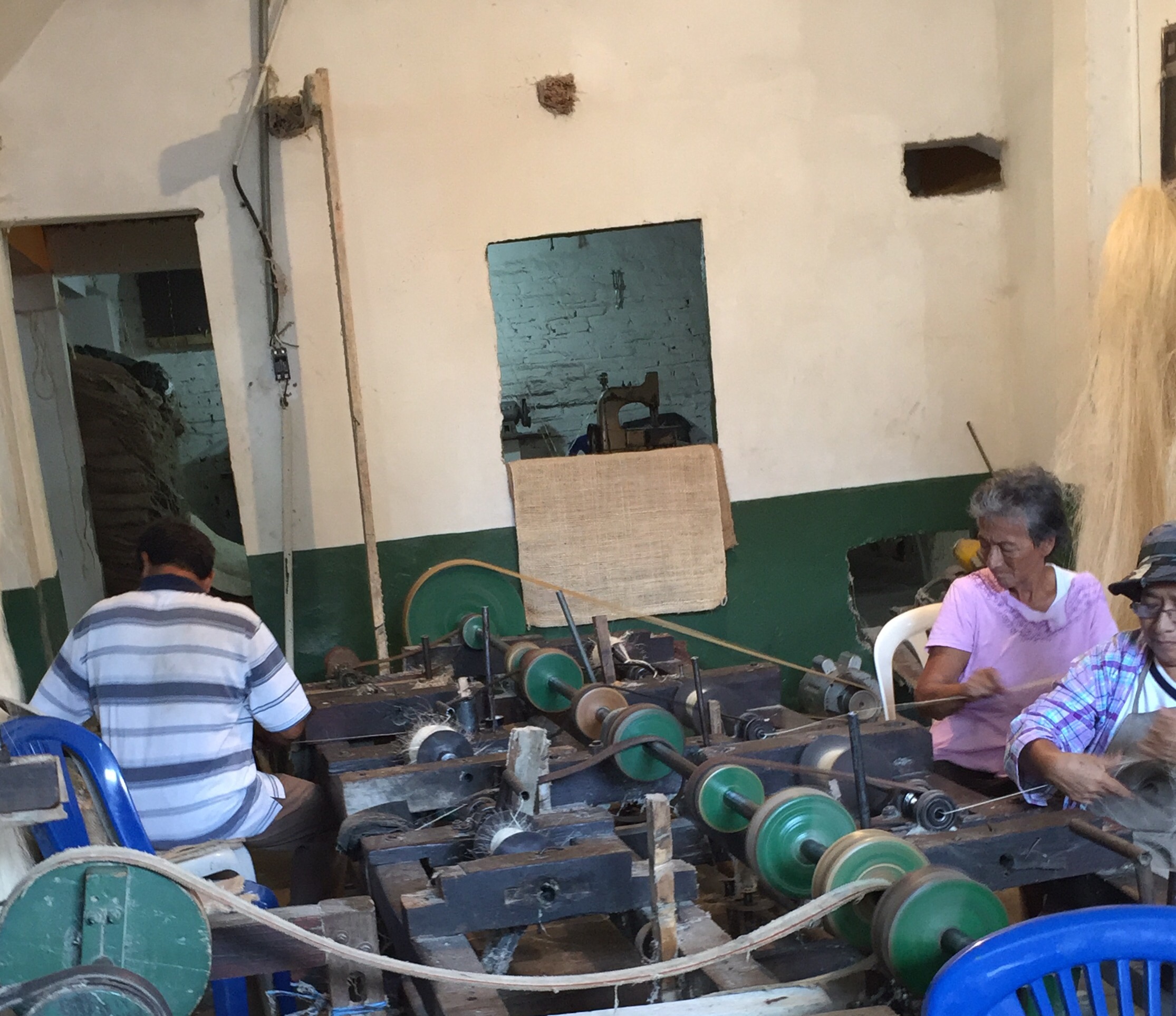
We also saw a traditional family owned company that creates and weaves the bags used for coffee beans from fibers found in green guava plants. Also fascinating!

Revealing the fibers by scraping the leaf.


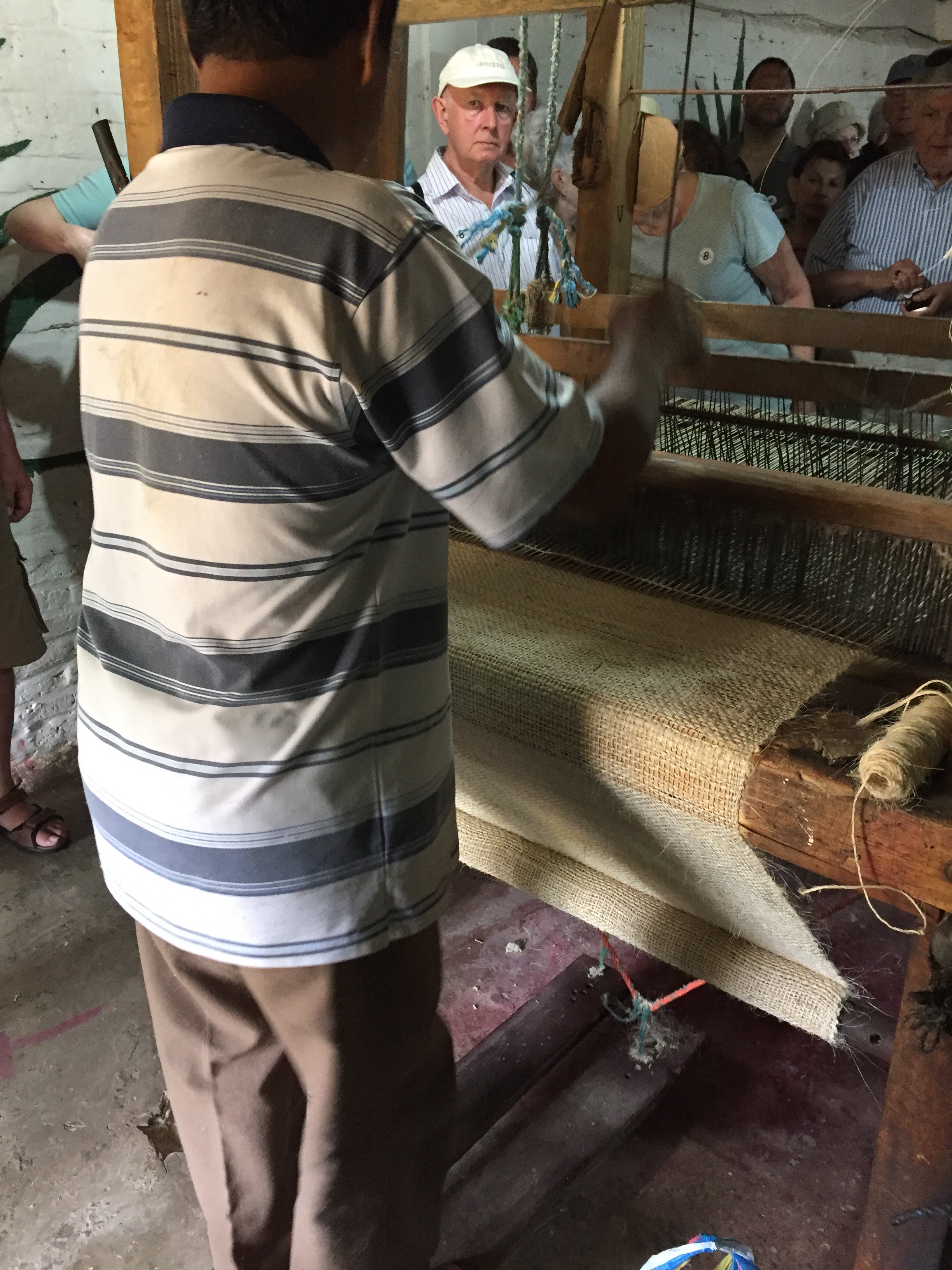
The fibers are scraped out of a leaf, dried and then carded to soften them. After they are spun into large spindles, set on a loom and woven. 

Spinning the fibre into yarn.


The loom is powered by foot pedals as the shuttle quickly shoots back and forth and the fabric for the sacks is created. 

This man worked the loom with both his feet and hands.


Besides seeing the crafts of Manta, named by the Spanish for the giant manta rays that surrounded the port, we saw the beautiful beaches and lush green scenery. A fun day for those who love crafts. 

A Little Visit to Lima, Peru

25 Mar

Our cruise only stopped for a short time in Lima, so we had an abbreviated, but informative tour of Colonial Lima. 

First I must say that due to the flooding and extensive rain in the Andes, Lima has no portable water. The Rimac River is filled with the mud and filth a flood brings, and so the city is working to get the water treatment plants back on line.

The Rimac River March 24, 2017

When you arrive by cruise ship, you actually arrive in the port area of Callao. Very industrial and looking a bit derelict. Our guide told us that people do not finish their homes all the way, as long as it is not finished they do not have to pay full taxes. Hence many homes have no stucco or an uncompleted top floor. 

Not quite completed buildings in Callao


Then there is the traffic of this large South American city. It does not matter, seeing the Colonia area was worth the ride. 

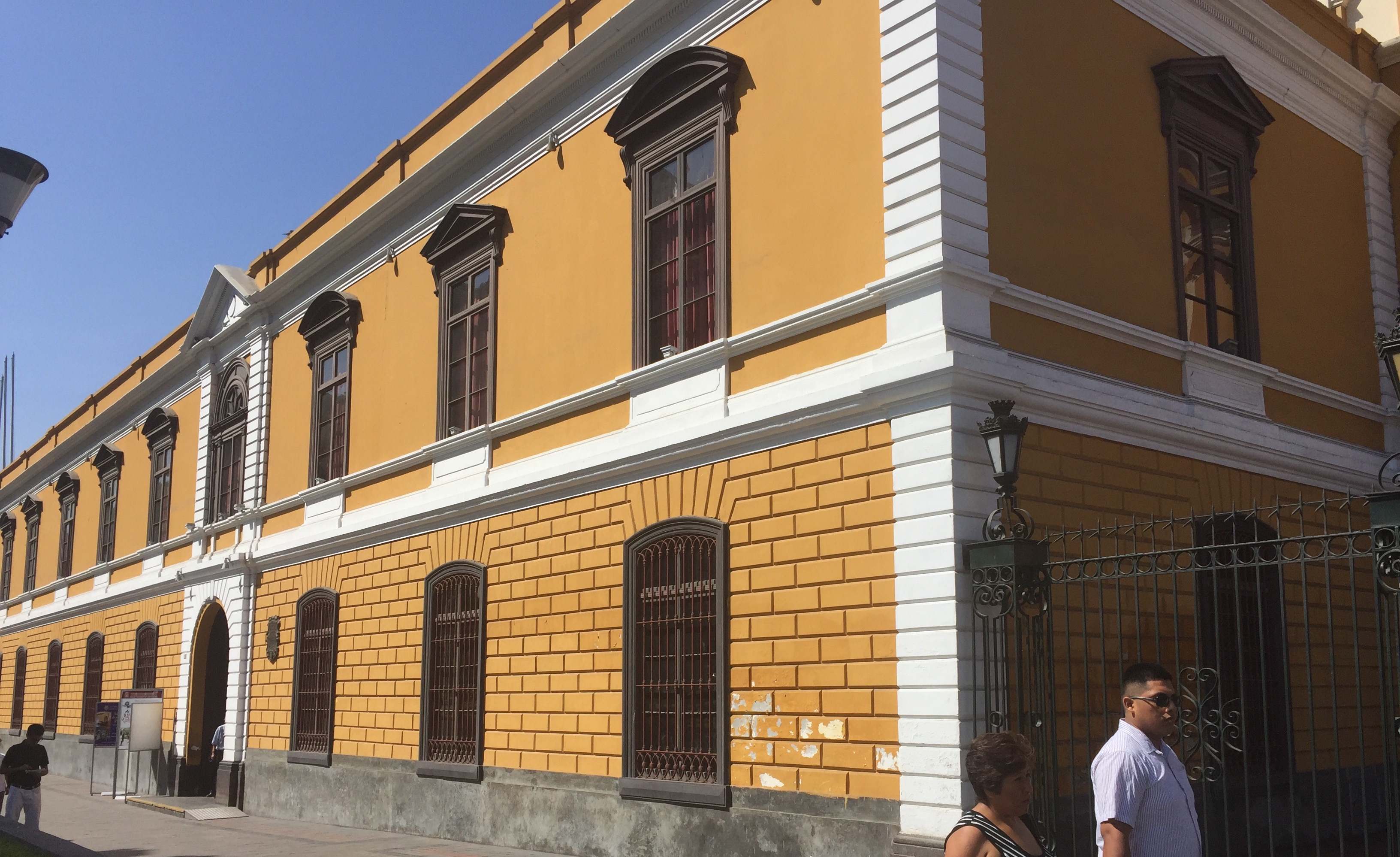
Our first stop was the original campus of the University of San Marcos. The first university in the Americas, this school was ‘public,’ a student only had to be from a royal family, a good Catholic, be the result of a legal, church approved marriage, and past a grammar test in Spanish and Latin. Oh one student ever got in who was illegitimate, and he was very important to the history of Peru. 

The University was first the school for Jesuit priests. When they were banished from the country, the government took it over. Although the outside is unimpressive, the beautiful courtyards and rooms inside are lovely! 

The exterior of the San Marcos University

The Law School courtyard

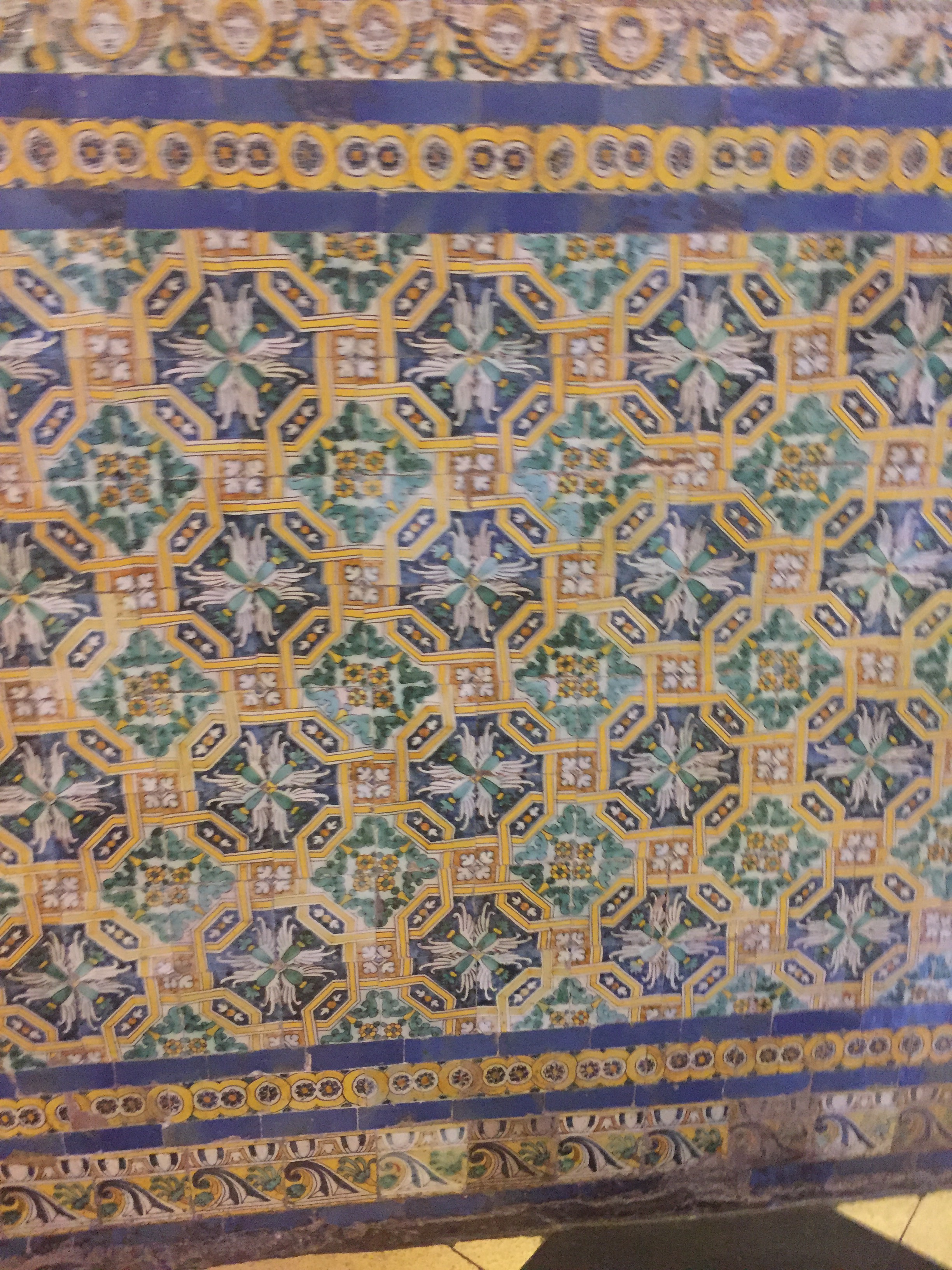
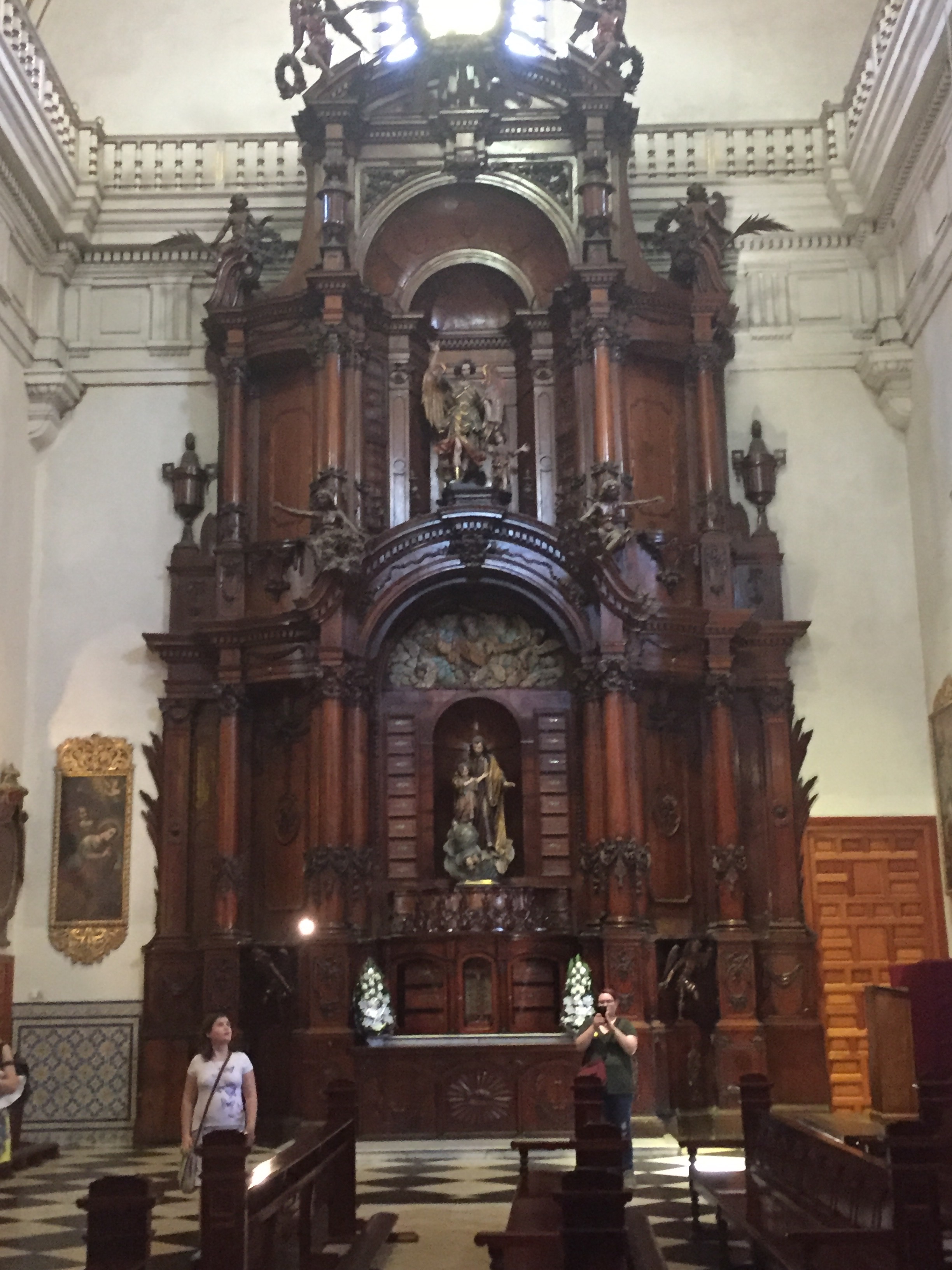
Next stop, San Pedro Church, which is not a museum, rather an active congregation. We saw people giving confession and praying. So a quiet exploration is important. We learned that this is the church the upper crust of Lima still uses for its weddings and baptisms.  Inside is lovely with its gold painted arches, ceramic tiled walls and majestic wooden alters. 

A ceramic wall in the church.

My favorite niche altar.


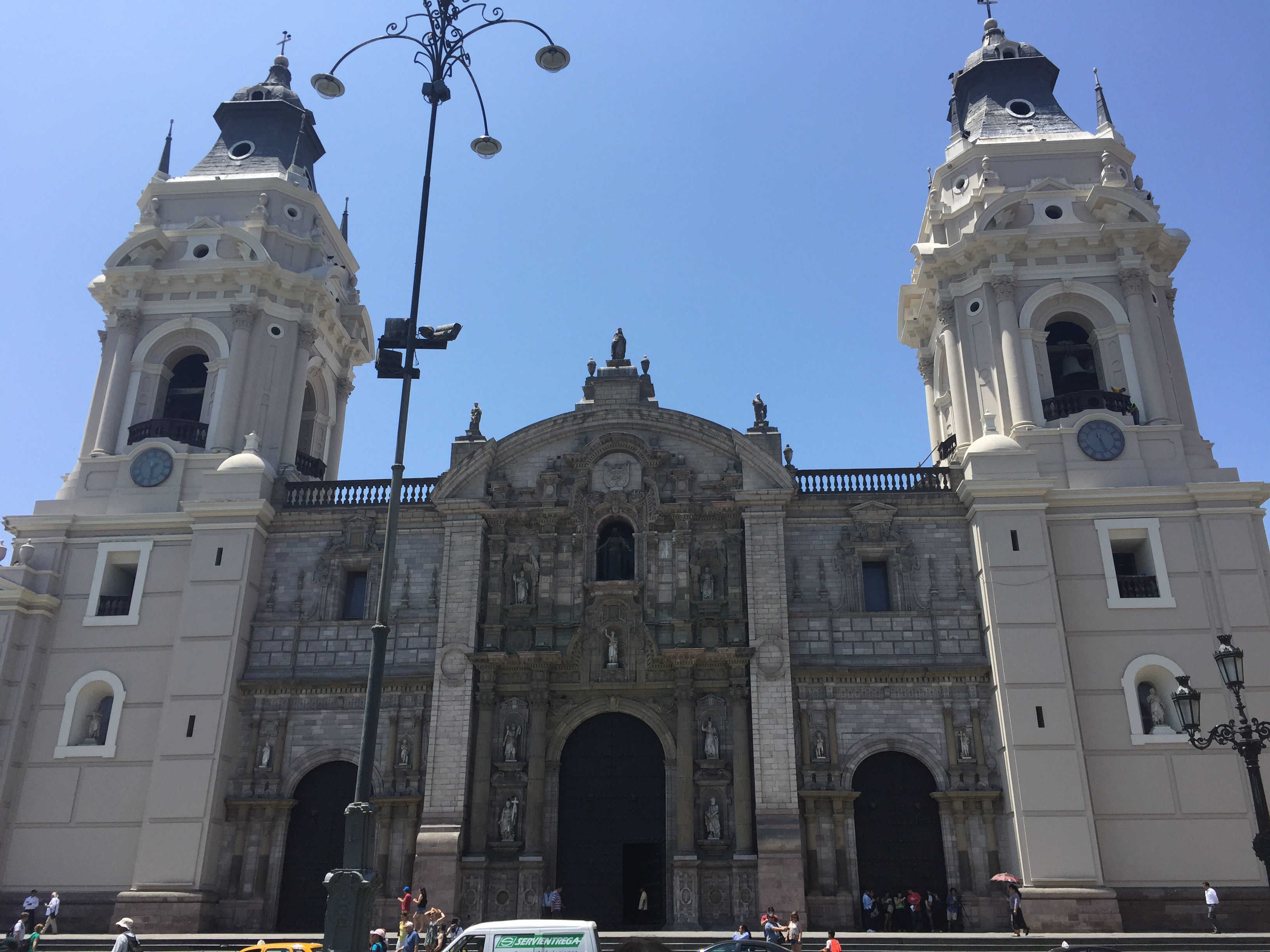
From the church we walked to the main plaza, Plaza Mayor.  We learned that this was the original site of the native Inca outpost.  Where the temple had been, the Spanish destroyed it and built a church. When the leader lived, his home was destroyed and the conquering Spanish built the home of Pissarro. 

Due to earthquakes the two towers were replaced on this church in the Plaza Mayor.


We also saw a home with the lovely wooden balconies. And another building that served as the listening post for agents of the inquisition. They would stand inside screened, wooden balconies, unseen, and listen. If they disliked someone they would haul them off to another building where they would torture them into confessing. I do not like the inquisition. A distant ancestor of mine was burned in Portugal as a heretic in 1618. And it is a shame that the Spanish brought the Inquisition with them to the Americas. 

The final item I found unusual or exceptional was how the local people are just building on the foothills of the Andes with no concern of earthquakes. A hill called St Christopher’s hill truly was intriguing.  

Houses just built into the hill helter skelter

There is much more to see, I just showed our highlights. But definitely was a wonderful experience. 

Arica, Chile, and Its’ Magical Desolate Moonscape

23 Mar
The smaller valley.
The Loa River

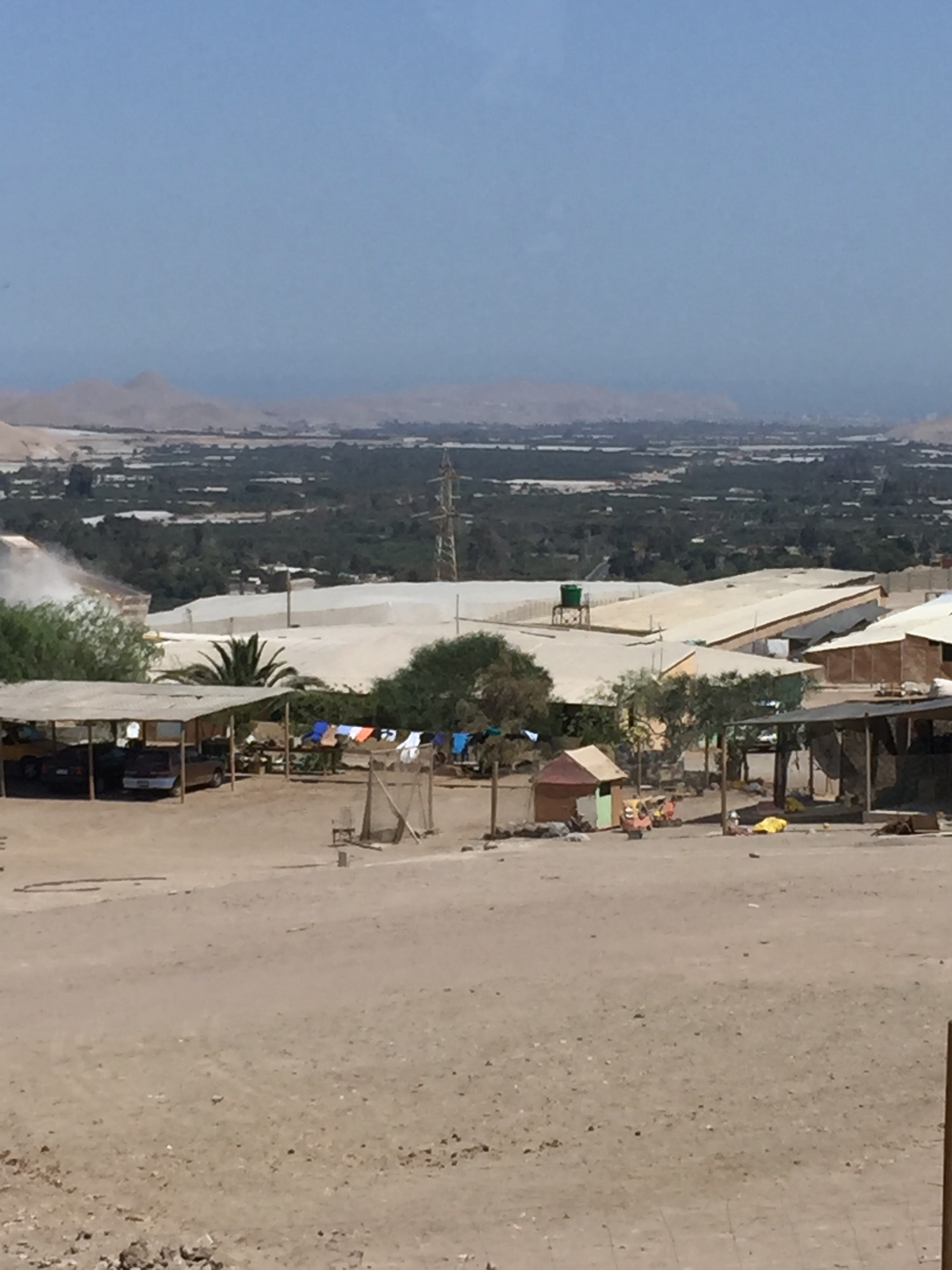
Two fertile valleys point inland from the port of Arica, Chile. One contains a river, the Loa River, that flows throughout the year; another larger and greener valley has no continuous river but a better more humid climate.

The larger valley looking all the way to the port.

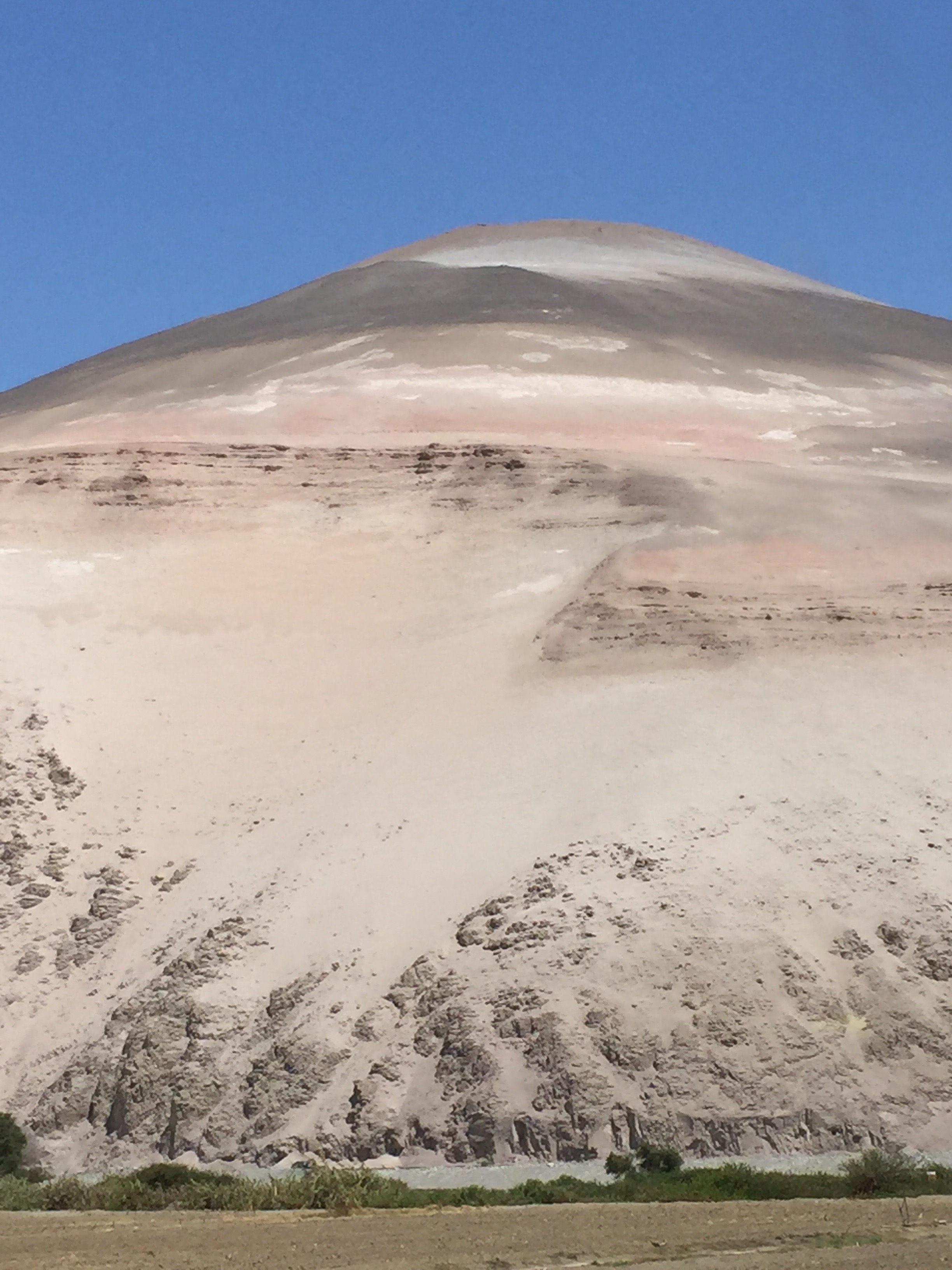
 I found traveling through these two valleys breathtaking. But not because of the greenery I saw, rather because of the giant mountains of rock and sand and dust that rose on either side of the valleys. The Atacama Desert rises high above.  And looks like nothing I had ever seen before. 


I was not surprised to learn that movies set in space are filmed here. I was not surprised to learn that NASA has practiced using its equipment here. I was surprised that people lived in this harsh dry climate. Nothing seems to grow on these mountains except for one dusty looking plant that gets its nutrients from the air. 

The ancient, native peoples left there mark on this land. On these mountains, ancient people left pictographs of llamas, animals and men.  These stunning designs, as well as the Chinchorro mummies that have survived centuries, bring us to another world. 

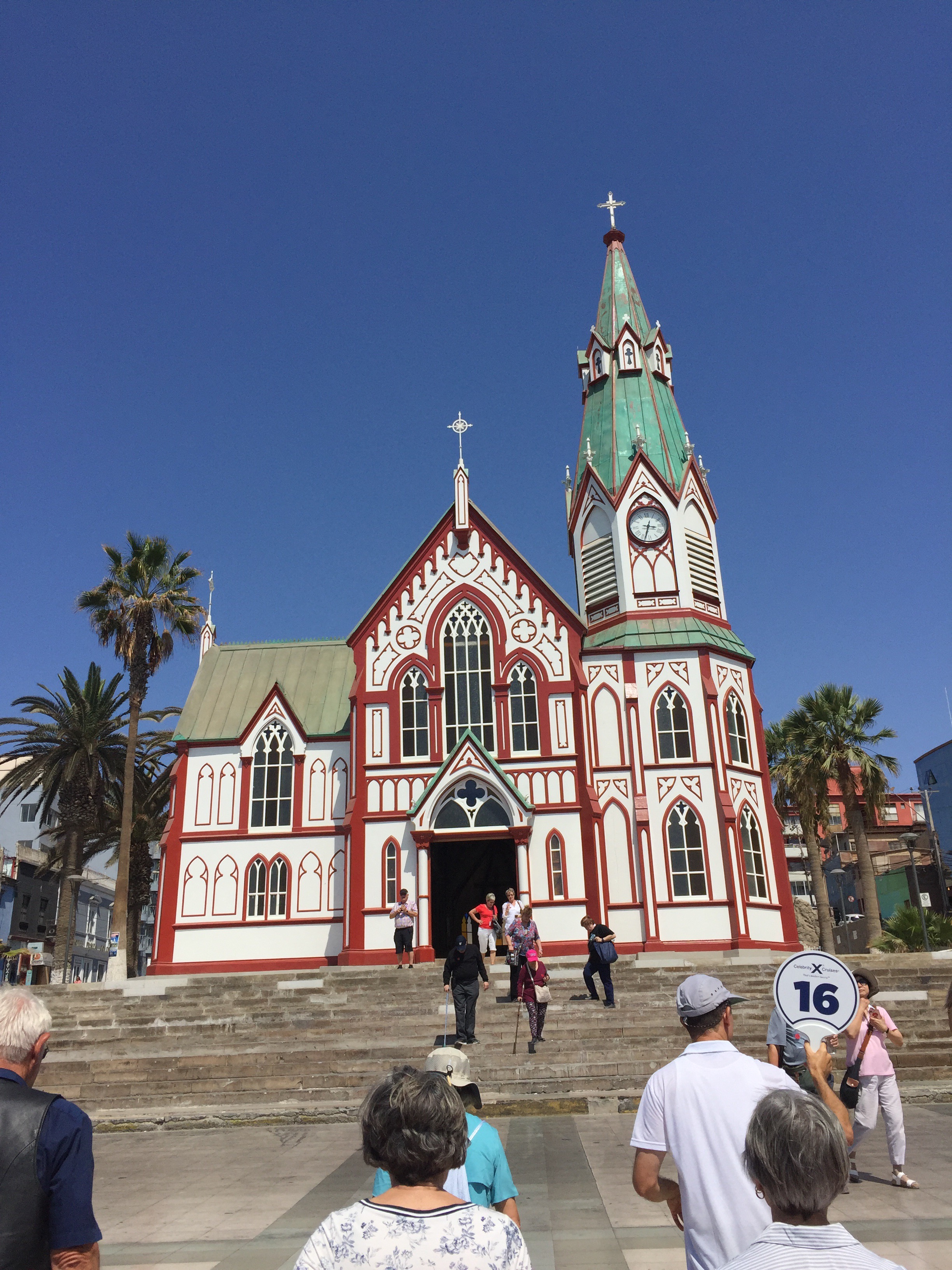
The ‘Eiffel’ church in Arica.

Back in the main valley,  we see the more modern world of Arica and the buildings design by Gustav Eiffel and brought to Arica from France. The three buildings I saw stand within easy walking distance from each other.  The most magnificent was the church. 

Arica is an amazing place of dichotomy. A bird sanctuary and wetlands just a few miles from a desolate, high desert. A valley filled with trees and farms beneath giant lumbering beige expanses of rock and sand. I cannot imagine waking up each morning to this world.  But you need to see it and feel it to understand the immensity of nothingness that is this desert.  You must see this beautiful, magical, and desolate moonscape. 

Why I like Chile 

19 Mar

The flower clock in Vina Del Mar


We have just begun our fourth trip to South America, with our first stop of Chile. I must say I love going to Chile. There are several reasons. 

First Chile is a lovely country. Although long and narrow, with both coastal mountains on one side and the Andes forming the border with Argentina, the long lovely coastline is amazing. 

The first time we came to Chile we spent several days in Santiago then cruised south along the coast stopping at several ports along the way. Journeying through the Straits of Megellan and the north to Argentina and Uruguay. We loved it. 

This time when we came, we traveled directly from the airport to the lovely resort city of Vina Del Mar, staying in The Enjoy hotel that connects to the original Casino. Walking around has be a delight. Soon we will travel to our cruise ship and sail north to Arica, Chile, and on to Peru, Ecuador, Panama, the Canal, and Columbia. I cannot wait for these new experiences. 

Second reason why I love Chile:  although it is a 9.5 hour flight from Atlanta, we only change two time zones from our home. So NO jet lag. I love that. I admit that I do hate being on an airplane for that long. But for this trip we end in Miami, so a much shorter flight home. 

The final and best reason for me, my best Chilean buddy. It is really wonderful to travel a country with a friend who is a native. First having friends to experience the adventure makes it more enjoyable. Then there are no issues with translating. She makes wonderful food selections. We want to eat foods we do not find at home and eat traditional South American fare. 

We are off on another adventure. 

Stunning Majesty of Glaciers

14 Jun

Each time I am in the presence of the stunning majesty of a glacier, I am aware that nature’s beauties outshine many man-made structures. 

The first waterfall as we traveled the fjord.


As we sailed into a fjord in Alaska early this morning I was watching for the signs that a massive glacier was near. First were the signs in the water:  the change in the color and texture. Once smooth, now choppier with thin ice. Then came the first, now tiny, ice floe making its way down the channel. 

Soon I heard the first sounds. The Wild Rush of water as the summertime waterfalls of gushing water streamed from the ice fields high in the mountains. I watched as the pounding water made its way into the fjord leaving swirls of water as it entered.  Later you can hear the moaning of the glacier as it moves forward down the mountain. Sometimes you can see and hear the crash as giant sections of glacier calve into the water. 

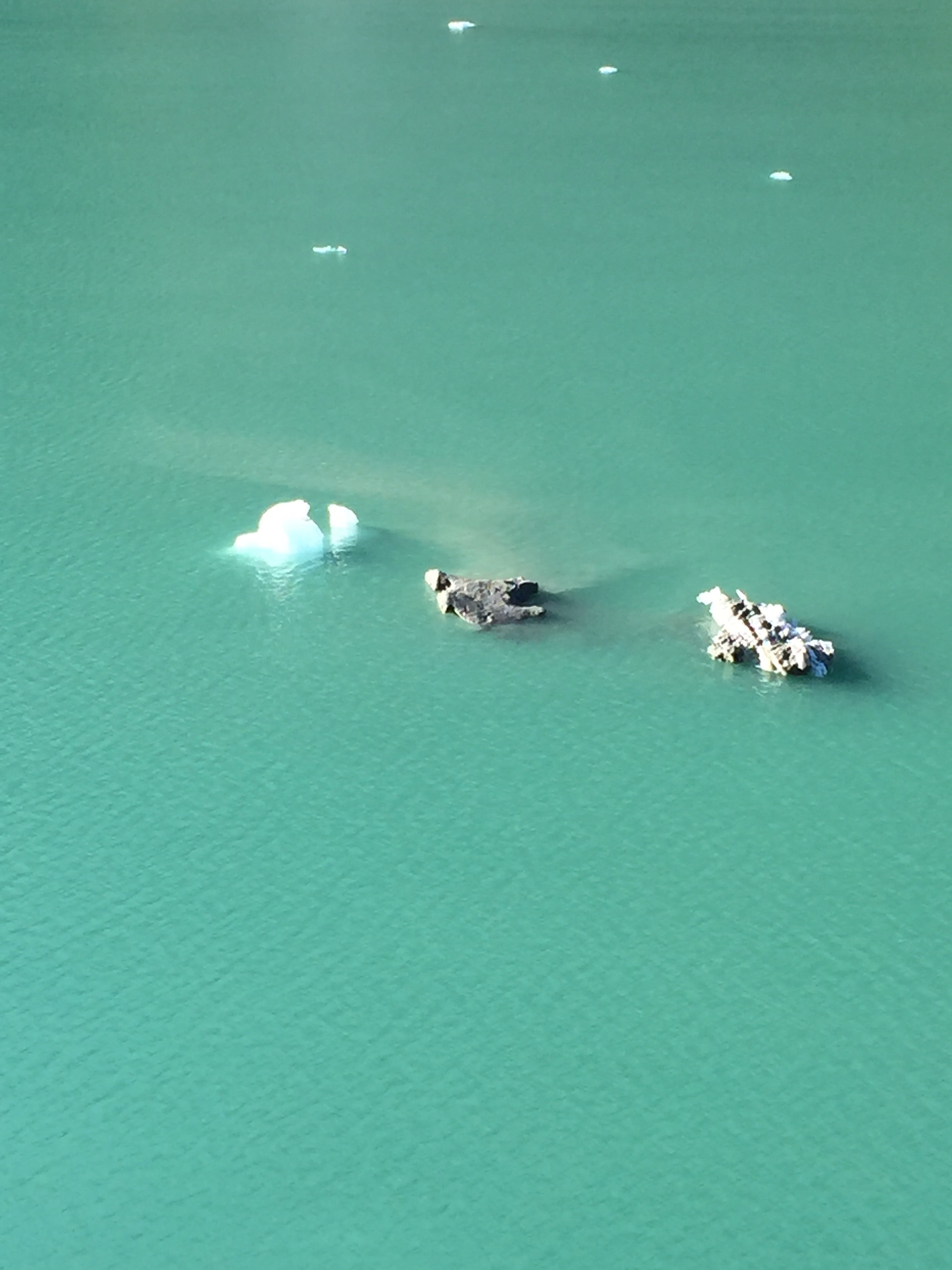
Ice floes traveled down the channel to greet us.


Soon larger and larger ice floes floated along side the ship. Not the size of an ice berg, but still sharp white and Aqua blue structures shimmering in the sunlight.  They can be dangerous and the ship shows respect by moving ever so slowly down the channel. 

I have been blessed to have seen glaciers in Alaska in 2002 and now today. Four years ago I traveled through the Straits of Magellan and experienced the cold of the glaciers there as well as we winded our way from Chile to Argentina. 

But now, in Alaska, I began to feel the cold wind that comes off the glacier. Even with a coat and gloves, even with the sun shining, I felt deeply chilled. 

My first view of Daws Glacier.


Then the ship made a small turn. Up ahead I saw the glacier filling my view. Its face jagged and tall as it met the water. White and blue with streaks of broken rock within that looked like stripes of dirt. But are really the crushed stone and silt pounded by the relentless force of the glacier. 

The glacier fills the end of the fjord.


Seeing a glacier in a bay is different then seeing it more inland ending in a lake like the Mendenhall Glacier in Juneau. I saw that glacier first in 2002 and then again two days ago. I was shocked by how much it had retreated!  There was even a time-lapse movie of how it has changed from 2007 until now. Imagine six years more of melting! Hundreds of feet of glacier has disappeared. Diminishing it!


The park ranger told us how global warming and the use of fossil fuels is changing the glacier and Ice fields in Alaska. There is hope as we move to renewable energy. But if you saw the glaciers, you would know the change is real. 

As the glaciers recede in Alaska another increase occurs. As the weight of the glacier diminished the land actually rises in rebound. 

When we first came to Alaska 14 years ago we took our children. My then 11 year-old son was impressed at first with the Mendenhall Glacier. But later in the trip when I woke him early in the morning to see the majestic glacier in Glacier Bay, he was a snarky pre-teen, who commented: “Seen one glacier, seen them all.” This became a major joke in our family, but it is not true. 

Each glacier has its own beauty. If you ever have the opportunity, come to see a glacier. The ones within the continental USA at Glacier National Park are almost gone. Only in Alaska can you still see them. 

Do not miss the stunning beauty of a glacier. 

Serenity In Alaska Fractured

13 Jun


Alaska. Serene. Snow topped mountains. Glaciers.  Abundance of trees. Clouds. Drizzle. The perfect spot for a serene, peaceful and relaxing cruise. 

The bad side of cruising now is unlimited wifi. The worse part of wifi is being connected to the world. When I first cruised, 36 years ago, there was no phone service; no television. My husband and I still do not watch television when cruising. 

But the Internet, emails, Facebook, and the world can now reach out and fracture the serenity. 

I am an advocate for gun control. I say all automatic and semi automatic weapons must be banned. I say the NRA and its lobby are killing us by allowing the mentally ill and terrorists get guns. 

The NRA members are not acting like patriots, as they support a way for terrorists to get guns. Especially loopholes for Internet and gun show sales. 

I say vote out all legislators who receive money from the NRA. There are many more of us then them. Support legislators who take a stand against gun violence!

I am tired of my vacations being destroyed by reports  of mass murders, this time senseless killings in Orlando. And week after week after week. Do not tell me guns don’t kill. 

You would think after Sandy Hook people would understand. But no. Instead across the country schools have become little fortresses.  Children learn by drills what to do if a killer enters their building. A sad reflection on our world. 

I am, like many others, praying for a return to serenity of a peaceful world. A world where a vacation cannot be destroyed by reports of mass murders. 
Petitions.whitehouse.gov.    Go to Ban the AR-15 From Civilian Ownership. 

Chihuly, Stunning

10 Jun

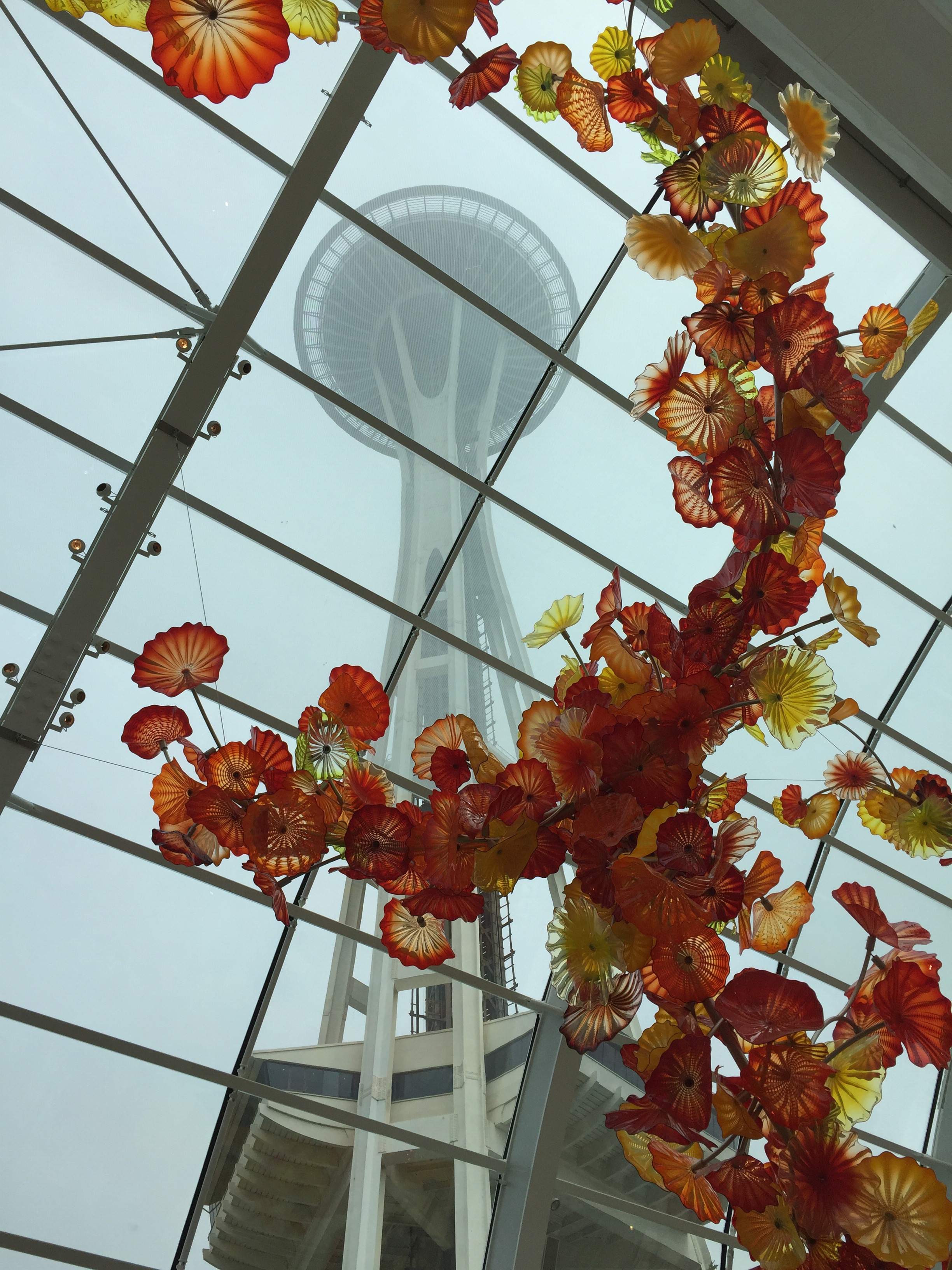
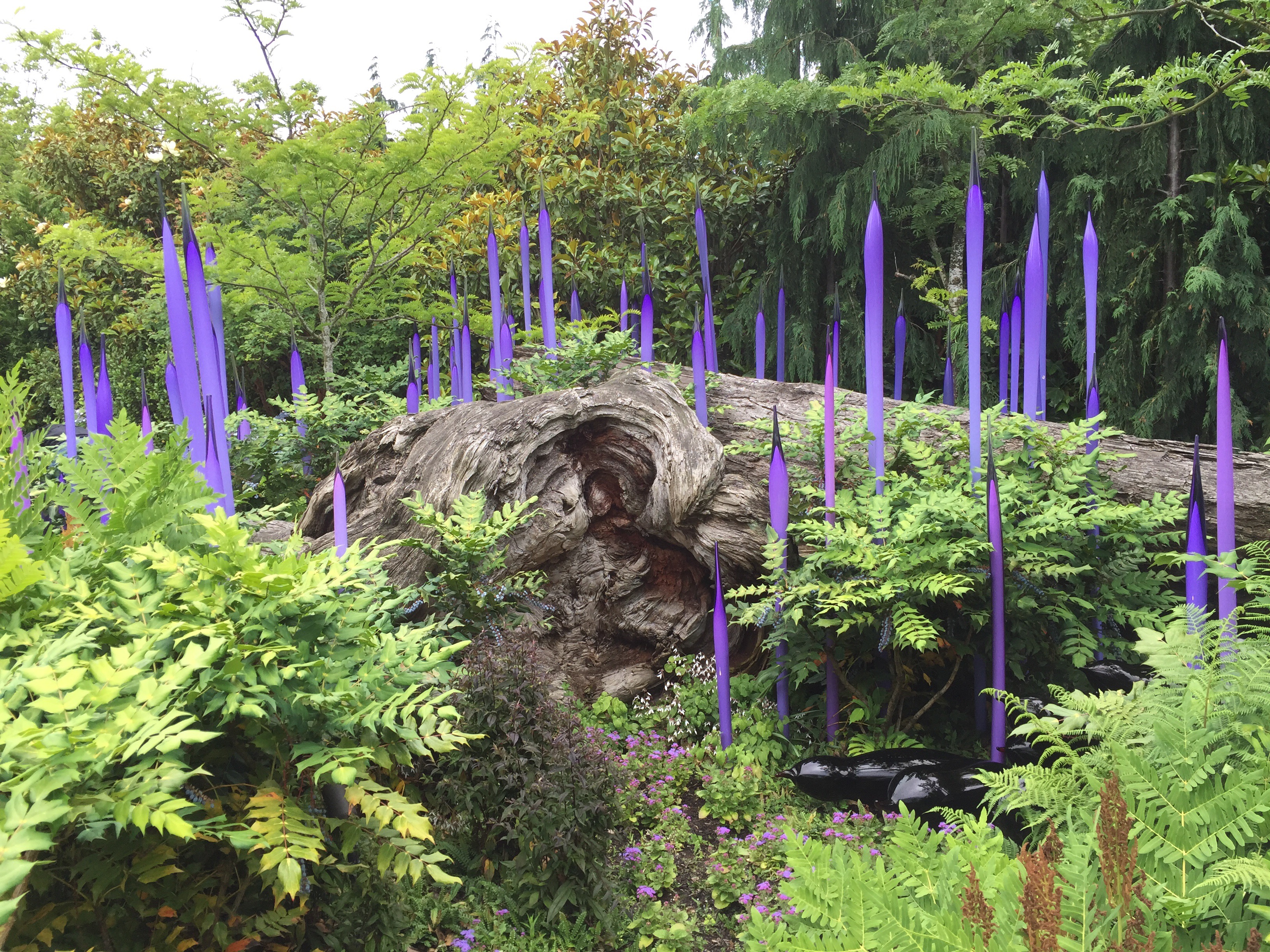
I love the glass art developed by Dale Chihuly. I have seen his art work throughout the United States in Florida, Nevada, Arizona, Arkansas   And finally in his home state of Washington when I visited the Chihuly Garden and Glass museum that shares his name next to the SpacecNeedle in Seattle, Washington. There is something about the vibrant colors and twisted shapes that cheers me. Each of his designs provide me a moment of childhood delights. 


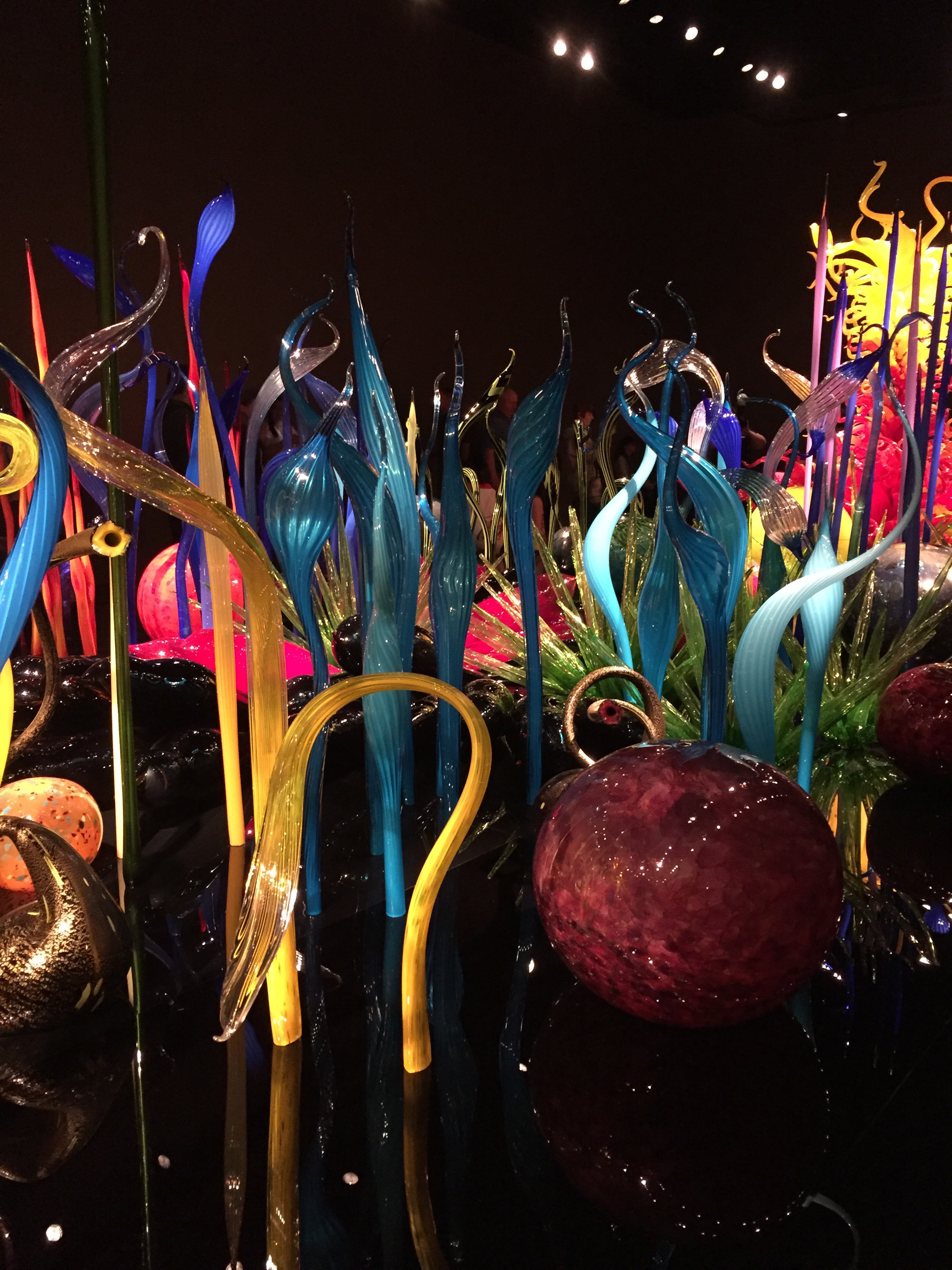
Blues, teals, reds, lilac, violet, orange, gold, black, green, yellow; solids, stripes, mottled; tall, short, rotund, pointed, rounded, spiral, straight, curved.  Is there a descriptive word that cannot be used to describe his work?  I think not. 
For me the glass art of Chihuly is magical! Beautiful, fanciful.


Whether his displays be indoors, within the confines of an exhibition hall, or outside nestled alongside plants or sitting within a pond or creek, each installation is unique and intriguing.  

For those who have not seen his glass sculptures, I entreat you to make the effort. The sparkle of delight will bubble in your soul. At least I hope it will, as it does in mine. 

Memories of My Grandparents Or Why I Always Read Street Signs

8 May

I can be annoying when driving or sitting in the passenger seat of a car. Why? Because I read all the road signs…out loud…always: street signs, billboards, ads. If it is on the street or the highway, I read it.   And I read quickly. When you learn to read by reading street signs, you learn to recognize letters and words and read before the car passes the sign.

I did, in fact, learn to read, or at least enhance my reading through verbalizing what was written on signs.  Although we had plenty of books in our house, it was street signs that were important. My maternal grandmother started this habit. She read every street sign as my grandfather drove. When I was a child I did not know why, I just knew we had to read all the signs. As a teen, I realized the importance of reading signs when Grandpa was driving.

My maternal grandparents came to the US from Europe in the early 1920s. Although my grandmother went to night school and learned to read and write English, my grandfather never did. He was great in Yiddish, Hebrew and Polish. But English, he never really learned. So it was Grandma who read the papers, kept the books and read the street signs for him.

Grandpa did drive the car. I guess driver’s licenses were easier to get back then. No written tests I assume, because Grandpa could not read or write English well. He could read slowly and write his name. But overall not well enough to read the street signs. To make finding their destination easier, in the times of no GPS telling you what to do, my grandmother would always read the street signs to let him know exactly where we were: Stop, Yield, Merge were easy. I know he learned to recognize those signs over time.

But my Grandma did not stop there, she read all those street signs as to where you were and special billboards as we drove along. If there was a sign, she read it. Eventually, we just read along starting at a unusually early age. I think at times there was a race to see who could read the signs first, as my sister and my brother and my Mother also read the street signs.

My Grandpa needed it. My Dad never said anything about it. Perhaps he thought it was cute when we were children. In reality, it is a habit I cannot stop. I still do it. I read when I am driving, or when someone else is driving.   Lately the ones that really get my reading mind in gear are in Missouri. They have all these electronic billboards that say things like, “Buckle up, MODOT cares.” I read all of them out loud. I cannot read them silently. Part of reading a street sign is to read for everyone to hear. At one point while we were driving to St. Louis, my husband piped up and said, “Don’t get into an accident reading all those MODOT signs.”

My husband probably had no idea why I always read the signs. But he puts up with it and has not said anything about it in years. At one point early in our relationship, he did say something about being able to read for himself. But that stopped when our children were little. I think he thought I was reading for them. But I was not.   I was just continuing a childhood habit.

To be honest, I usually do not read the signs around our home and neighborhood. Those are not necessary to read. However, as soon as I get on a highway and, especially, if I am in a new place, I start reading those signs.  Last year we had a road trip to Minneapolis. It was a road sign Bonanza, especially after my GPS stopped working. (We accidentally popped out the little disk.)

I have a few friends who I know find it annoying when they are driving with me. I think they think I do it when I have nothing else to say, just to hear my own voice. But that is not the reason. Reading signs is second nature. I remember long car rides to the Catskills with my grandparents. I hear my Grandma’s voice as we drive along. And I know we will be safe. We know where we are going.

Oh Canada: My love of Canada Was Nurtured in High School

23 Jan

I have been fascinated with Canada ever since I read my first “Anne of Green Gables” book. The books made me want to see Prince Edward Island and the people of the island, and I loved the character of Anne Shirley. But it wasn’t till I was in my junior or senior year at North Bergen High School that I was able to really learn something about modern Canada.

At school, the administration decided to have these little one-quarter classes. You had a choice to take one or two each semester. Among the classes offered was one about Canada by Ann-Ruth Enowitz, a history/social studies teacher. For me she brought Canada to life. And my desire to see Canada and learn more about it intensified.

I loved her class. I liked her as well. We learned about the provinces, the history with England, France and the United States. We even learned to sing the Canadian national anthem, “O Canada!”. There were just a few of us in the class. I think we met in a conference room in the library.

Although I had not been to Canada, I knew that many Canadians came down to New York. It was so close to travel and visit. Many had families in both countries. But for me, the closest I came to Canada was the Canadian exhibit at Disney World’s Epcot Center. But I wanted the real thing!

The class only piqued my interest!

My first trip was to Montreal for a family wedding. My plane was late, of course, and I could not remember the name of the hotel. But luckily I had the address of the party I was supposed to go to that night. By the time the taxi got me there, the party was over. But my mom and dad were sitting on the stoop waiting for me. In the time before cell phones, they were worried and could only hope and wait for me.

Once that emergency passed, I had a great time. We went on tours around Montreal. I loved the old town by the river and visiting all the French sites. We enjoyed the wedding, and my love of Canada continued.

My next trip to a Canadian city occurred when my husband and I were living in Ann Arbor, Michigan. It was a hop and a skip to get to Windsor, Canada. Many people went shopping there because the dollar bought more. My friend Ginny and took a trip there to shop. I will admit I almost caused a big problem at the border, but we finally got through.

My husband and I went back for a week’s vacation, driving through Canada; negotiating the weird signs. The signs don’t say, ‘merge’; they say ‘squeeze.’ Or they did. We went to Stafford and saw a Shakespearean play.   We drove to Toronto…just missing the traffic for the Pope. We got there the day after he left, but all the barricades were still around. It was September 1984.

We made our way all the way to Niagara Falls and spent a day and night there: taking the boat ride to the falls, walking along the Canadian side. We drove back along a southern route, but stayed in Canada. We stopped at Alexander Graham Bell’s’ home and the Royal Botanical Gardens. I loved that trip.

Ms. Enowitz’ class so many years before helped me on all these trips. She had spent much time on Toronto, Montreal and Niagara Falls, discussing border issues, and the wars between the French and English, as well as the US and Canada. Who knew that we once went to war with Canada!!! But her history lessons came to life as we visited forts and cities along the way.

Houseboats Vancouver

Some of the houseboats we saw as we walked to Stanley Park.

Many years later I went to Vancouver.  My husband was there for a meeting, and I was there to see the sites. But he had some time off and we took long walks and visited Stanley Park together and looked at all the houseboats along the way. I went to museums and Granville Island with a friend.

It was just two years after 9/11 and security was very tight. There were talks of terrorist trying to get over the border from Canada to the USA. So perhaps it was not the smartest move on our part to fly home on September 11. But it was my Dad’s birthday. And my parents were staying with our children. I promised my Dad he would be off duty for his birthday.

For some reason, security focused on my husband. They checked him at least three times. And even when I went down the walkway to the plane, I noticed he was gone. I walked back and there at the entrance they made take off his shoes and were checking him again.

But we still loved Vancouver. I always thought we would take our children there, but never did; just a pass through on the way to Alaska.

Another trip to Canada with my husband took us to Montreal as we started a cruise up the St. Lawrence Seaway. We spent several days first just walking around Montreal. The first stop on the cruise was a day in Quebec City. I loved it there so much, a few years later we travel to Quebec City and spent a week there. This French and English town is so interesting. Like being in Europe, but staying in North America.

We also went to Halifax, where several important battles were fought, and the survivors and victims of the Titanic were taken to after their recovery.

However, most important part of the cruise was finally making my way to Prince Edward Island and visiting all the sites made famous by Lucy Maud Montgomery (LMM) and her Ann of Green Gables books. I told my husband in advance that we had to do the Ultimate Green Gables tour. He agreed. And my favorite part of the cruise occurred on this tour.

Green Gables

Green Gables, the Anne Shirley home!

My husband was not an Anne Shirley fan. He knew nothing about her, nor about Lucy Maud Montgomery. Needless to say he was not as excited as the other 50 or so mainly women on the bus. So when we got to Green Gables, the house owned by LMM’s aunt and uncle that the house in the stories was based on, my husband was not that impressed.
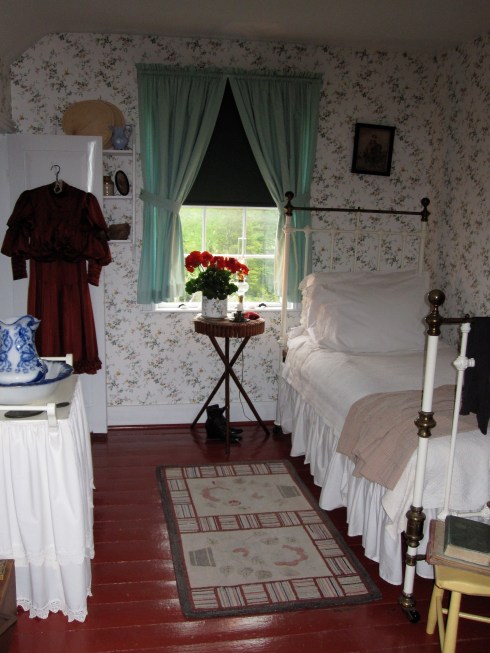
Anne Shirley's room

Anne Shirley’s “room,” at the top of the stairs.

And when we went up the tiny staircase to the second floor, the tour guide said as you get up the stairs look to you left and you will see Anne Shirley’s room. I was so excited; I exited the staircase, with my camera ready and started taking photos. My husband said, “You know, Anne Shirley was just a fictional character and that is not her room.”

I turned to say something back to him so he would understand my joy and not undercut it! But I did not need to say anything; the woman behind him said, “You know you could just go back to the bus.”

From that point on my husband was silent. He just enjoyed the rest of the tour realizing he was with a bunch of Anne Shirley fanatics. And I had pure joy.

I thought that was it. I had satisfied my Canadian obsession. But then my daughter became engaged to a Canadian. I now learned that you can put maple syrup on everything you eat and there are such things as maple syrup lollipops.

To this day I think of Ms. Enowitz whenever I travel to Canada. It was a very brief class, but one I always remember.


Saving the Monarch Butterflies

24 Aug

Excitement rules our home.   Our milkweed plantings were successful. We have monarch butterfly caterpillars munching on the leaves. And thousands of eggs deposited among our milkweeds. We are doing our part to save the Monarch butterflies.

We live in the path of the great Monarch migration. Each year millions of butterflies come through Kansas. When we see them, we celebrate. Our children, when they were young, would have such joy pointing to them and running to see the butterflies on our flowers.

Our concern started because we noticed fewer and fewer butterflies making their way through our property.   And then we watched a documentary on NOVA, “Journey of the Butterflies,” about the migration of the butterflies and how their natural habitat is diminishing. What could we do?

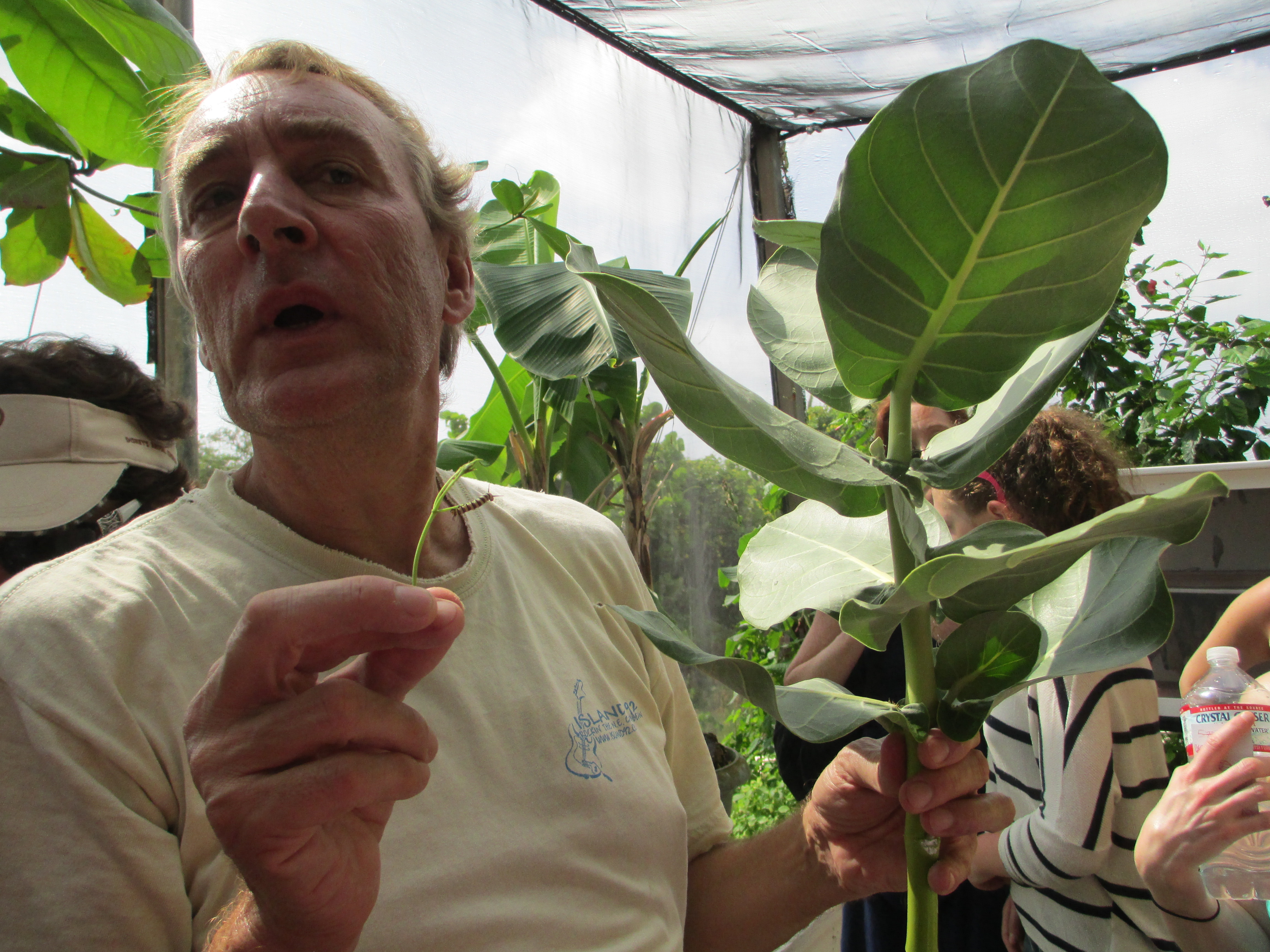
The docent at the Butterfly Farm in St. Maarten showing us a giant milkweed and a Monarch butterfly caterpillar. This got us started!

The docent at the Butterfly Farm in St. Maarten showing us a giant milkweed and a Monarch butterfly caterpillar. This got us started!

Then we went to a butterfly farm and conservation center on St. Maarten in the Caribbean. The tour guide/docent was very clear in his message. “PLANT Milkweed. This could save the butterflies.”

That spring when we returned home, we had a mission. Years ago we had milkweed growing. And we pulled it all out. Now we knew that was a wrong decision. We needed milkweed.

It was too late to start from seed. But we learned that the University of Kansas was selling milkweed in Lawrence. So I messaged my nephew, who was in school there, to please buy us some milkweed plants.

He arrived the next day with five plants, one of each variety being sold at the event to save the butterflies.

Planting the milkweed we got from the University of Kansas sale in 2014.

Planting the milkweed we got from the University of Kansas sale in 2014.

My husband cheerfully and carefully planted them.   But we made one error. We forgot to tell the gardener who weeded our gardens for us. A few days later we came home, and I said, “Oh, Donny must have been here.” My husband went running to the front. And then he started yelling, “He pulled out my milkweed. It is all gone!!!”

But it wasn’t all gone. There was still one plant. But it was not enough. We never had any caterpillars last year.

This year was different. My husband ordered 2,500 seeds on line. Yes, I said 2,500 milkweed seeds of five different varieties. I agree, a little over kill. I bought him seedling planters with 100 individual biodegradable cups. He planted over 200 seeds. And he waited. Soon they were sprouting.

100s of milkweed seedlings watched over by our kitten.

100s of milkweed seedlings watched over by our kitten.

First we kept them on our kitchen table in the sunlight. But our kitten was a bit too interested in them. So we moved them to a bright spot where the kitten could not get to them.

Over 100 seedlings survived. My husband pulled some out so that there was only one plant in each cup.   And eventually he had 50 good plants to put into the ground. It was not easy to keep them alive. The animals loved to eat them, especially the bunnies. And the squirrels kept digging them up. He put the plants in our flower boxes with wire screens above them.   Slowly he planted the surviving milkweed in the ground. He put up wire screens around his milkweed plantsto keep them safe.

He also gave seeds away to our neighbors so they also could plant milkweed. His aim was sincere. Everyone should plant milkweed!

Slowly the plants grew all summer. They did not flower, something was eating the flowers. And now the mature plants started to look badly. Something was eating his milkweed.

He went out to investigate. And came back with a big smile on his face.

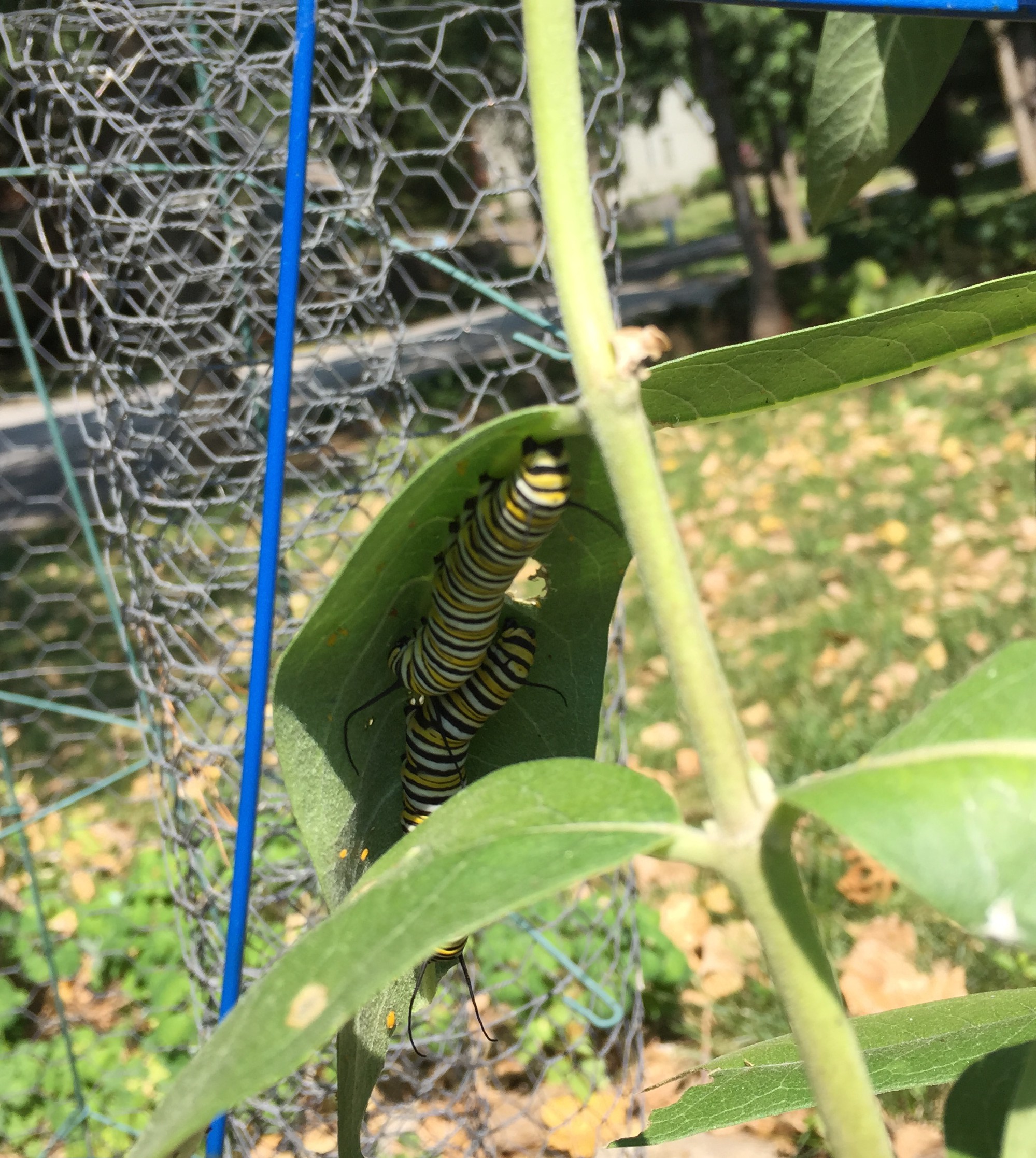
Two of the four Monarch butterfly caterpillars eating our milkweed. Seen the wire screening we used to protect them in the background.

Two of the four Monarch butterfly caterpillars eating our milkweed. Seen the wire screening we used to protect them in the background.

Four caterpillars were eating the largest of our milkweed. We had done it! We had done a wonderful good deed! We had provided a home for the Monarch butterflies. Excitement and joy!

I expect next year we will have many more surviving milkweed plants and many more caterpillars because now we are experienced in the ways of saving the Monarch butterfly!

http://www.pbs.org/wgbh/nova/nature/journey-butterflies

http://www.journeynorth.org/