Archive | Egon Travel RSS feed for this section

Entering Another World: The Gardens of Portland

25 Oct

Portland, Oregon, is home to three of the most beautiful gardens I have visited!

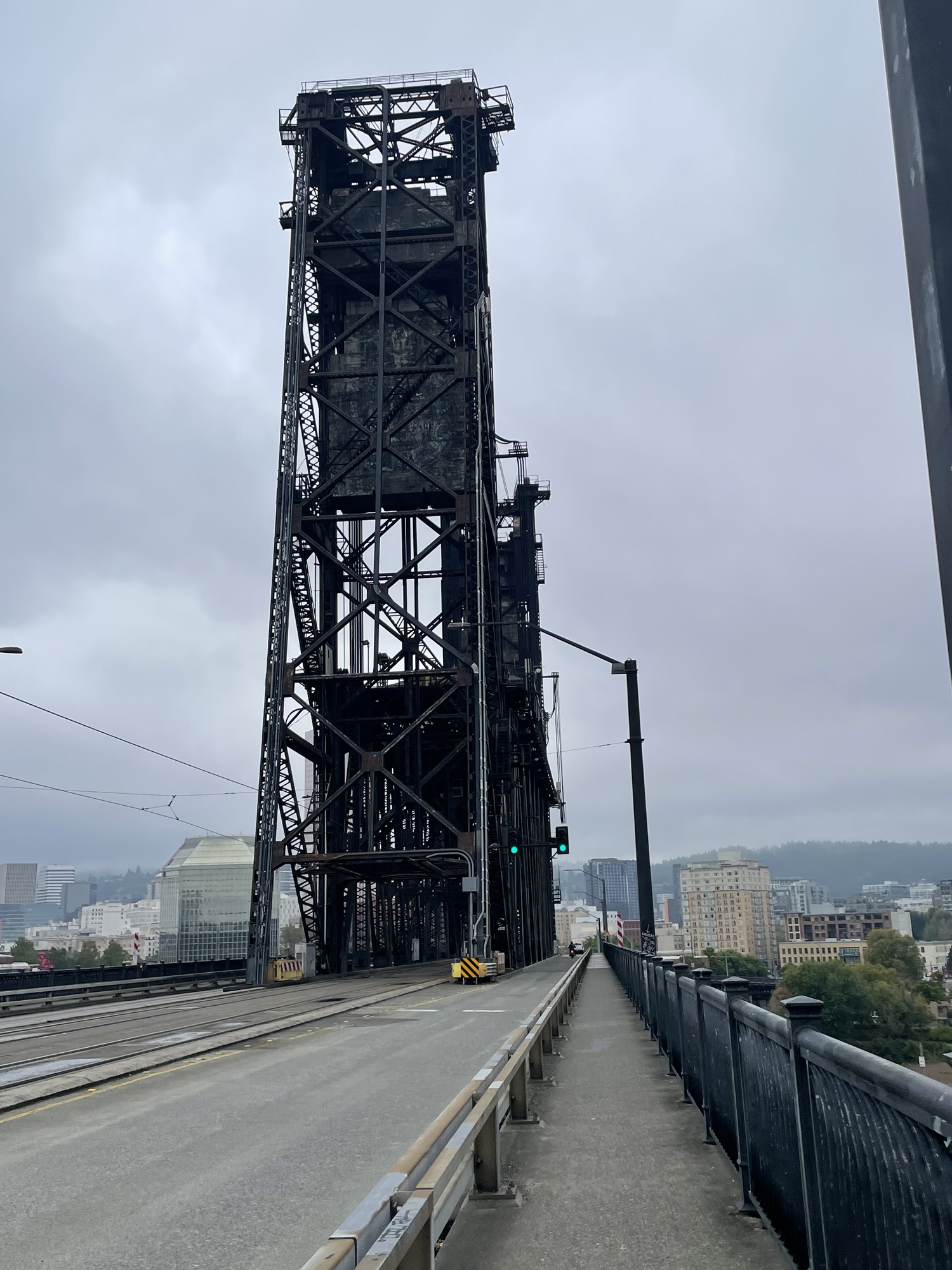
China Town and the Lan Su Chinese Garden is located just off the Willamette River near the Steel Bridge. It was a mile walk from our hotel.  So we decided to walk over the Steel Bridge in order to see it up close.

Opened for use in 1912, the Steel Bridge (yes, it is made of steel) has a central area that is a vertical lift, which moves the two-deck surface upwards so that high ships can sail under it. It is an amazing contraption to see.  Since the bridge has a Kansas City connection – Waddel & Harrington, who designed it were a Kansas City firm – I felt it was something we had to experience. Although the lower deck is built for pedestrians, we did not know that when we walked across, so we took the top deck.   At times, I noted that the railings along the deck were quite low, so I recommend the lower deck for walking.
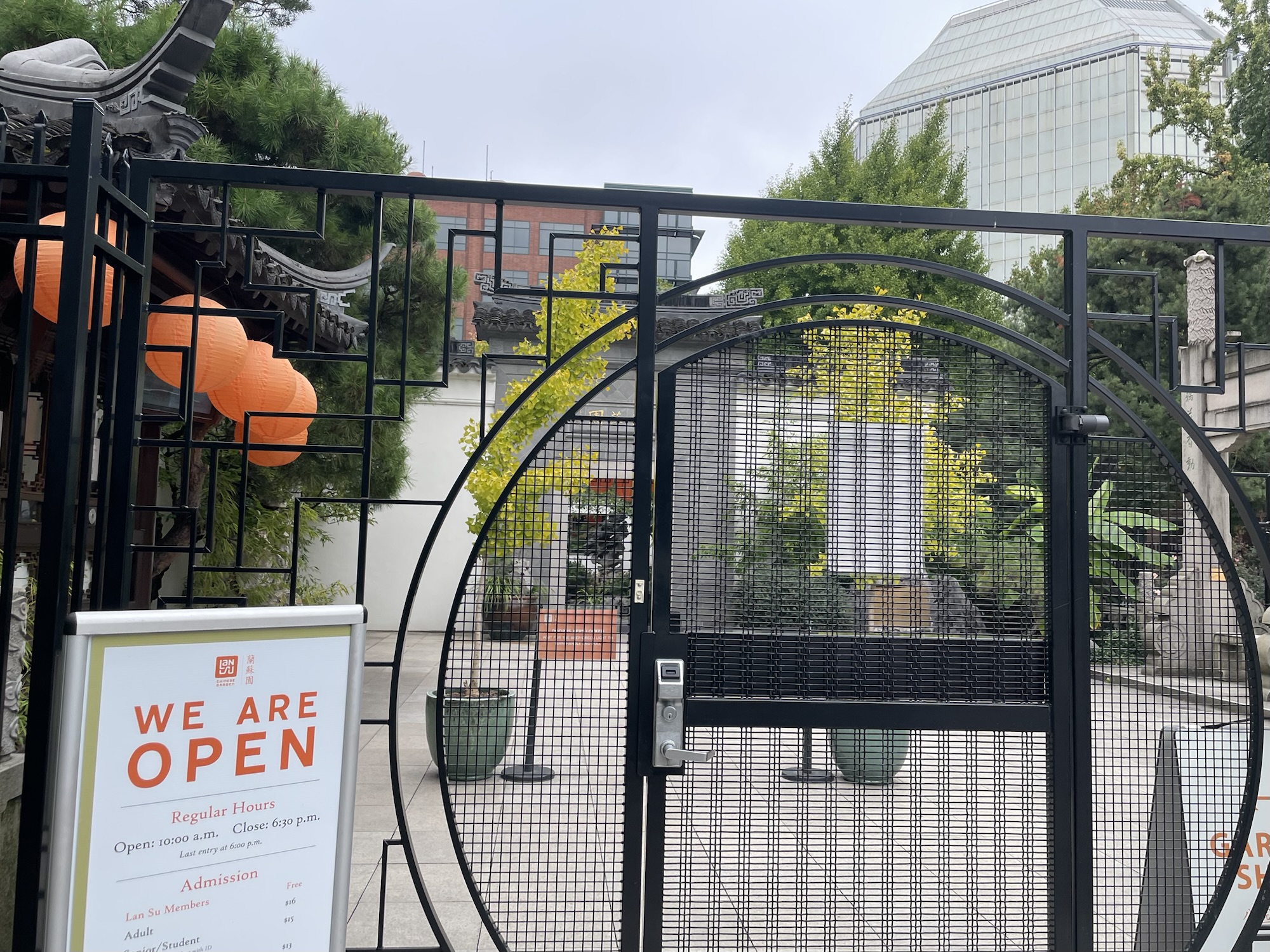
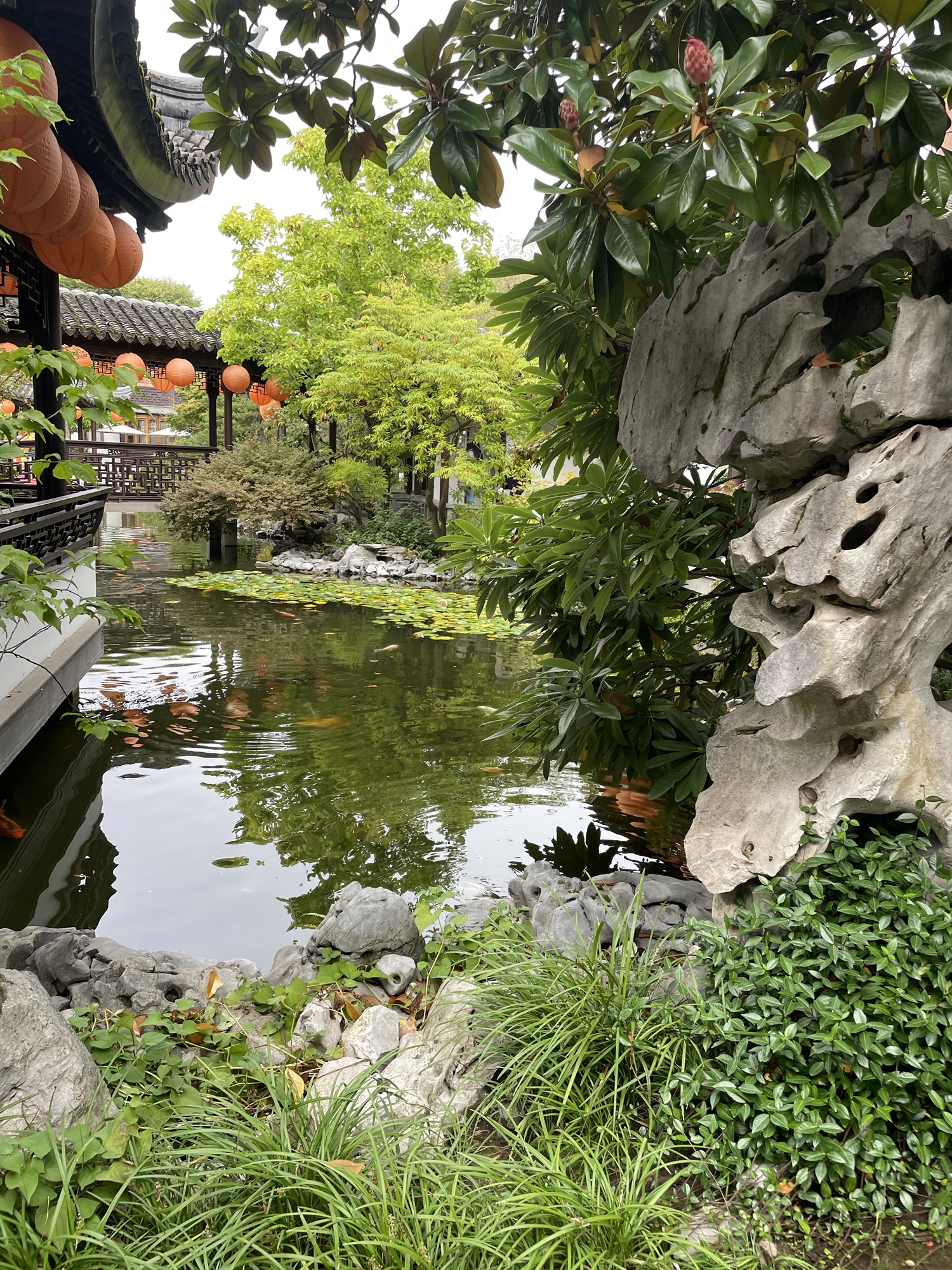
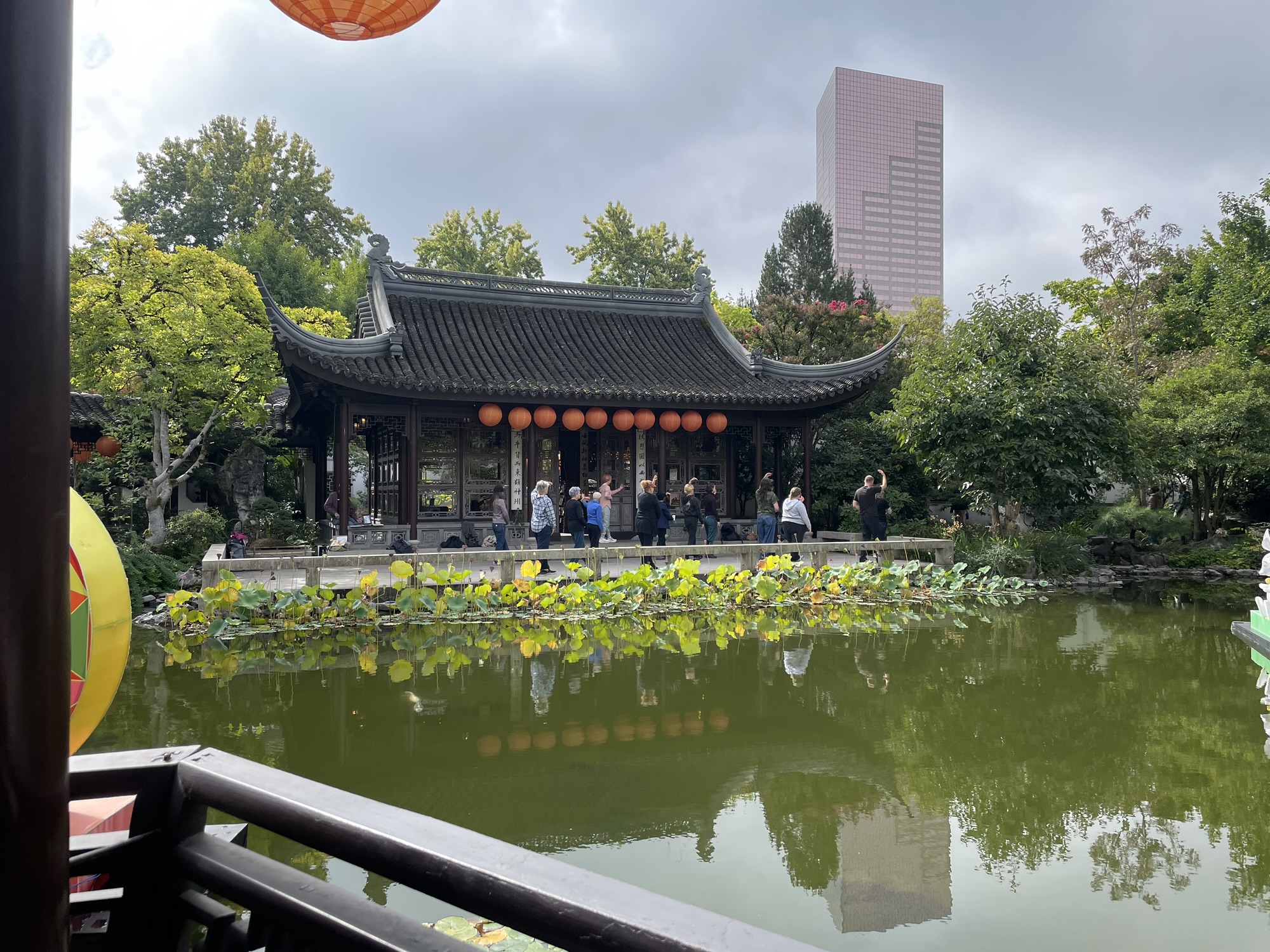
At the end of the bridge, it was a short walk to the Lan Su Chinese Garden. This delightful oasis was built in 1999 by 65 artisans who came from China and opened to the public in 2000.  There is a short movie that explains how it was built.  I was fascinated by the inlaid rock areas.  I even asked the guide if we were allowed to walk on it, it was so beautiful

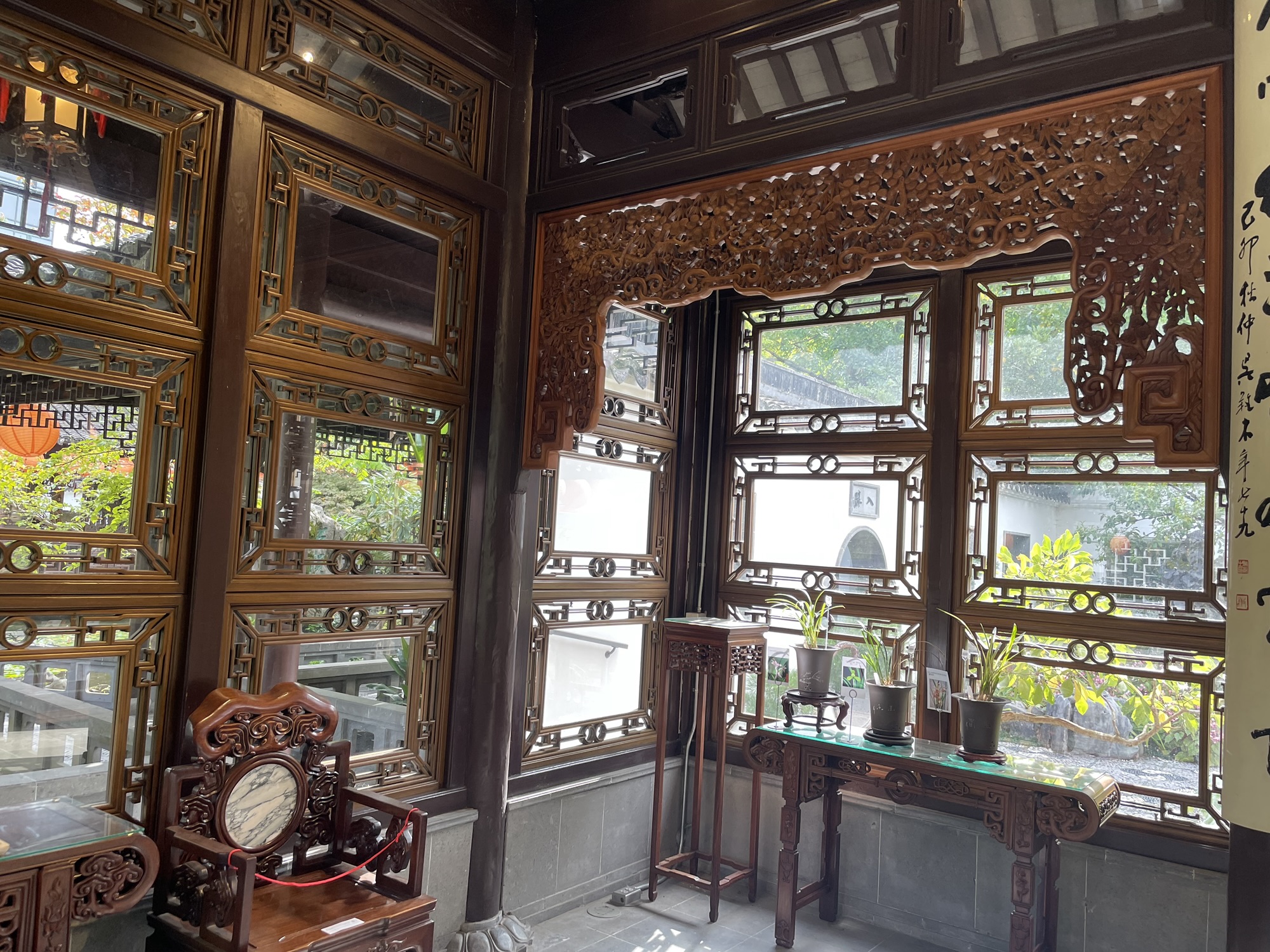
The gardens and the lake create lovely view, but so is the wonderful craftmanship of the buildings and the woodwork.  You are able to walk into all the buildings and admire them.  The tea house serves a variety of teas and pastry. We had to stop in there for a snack and enjoyed to views of the gardens. 

When walking through the gardens, I did not think of the city around us, instead I felt like I was encapsulated in a hidden jewel.
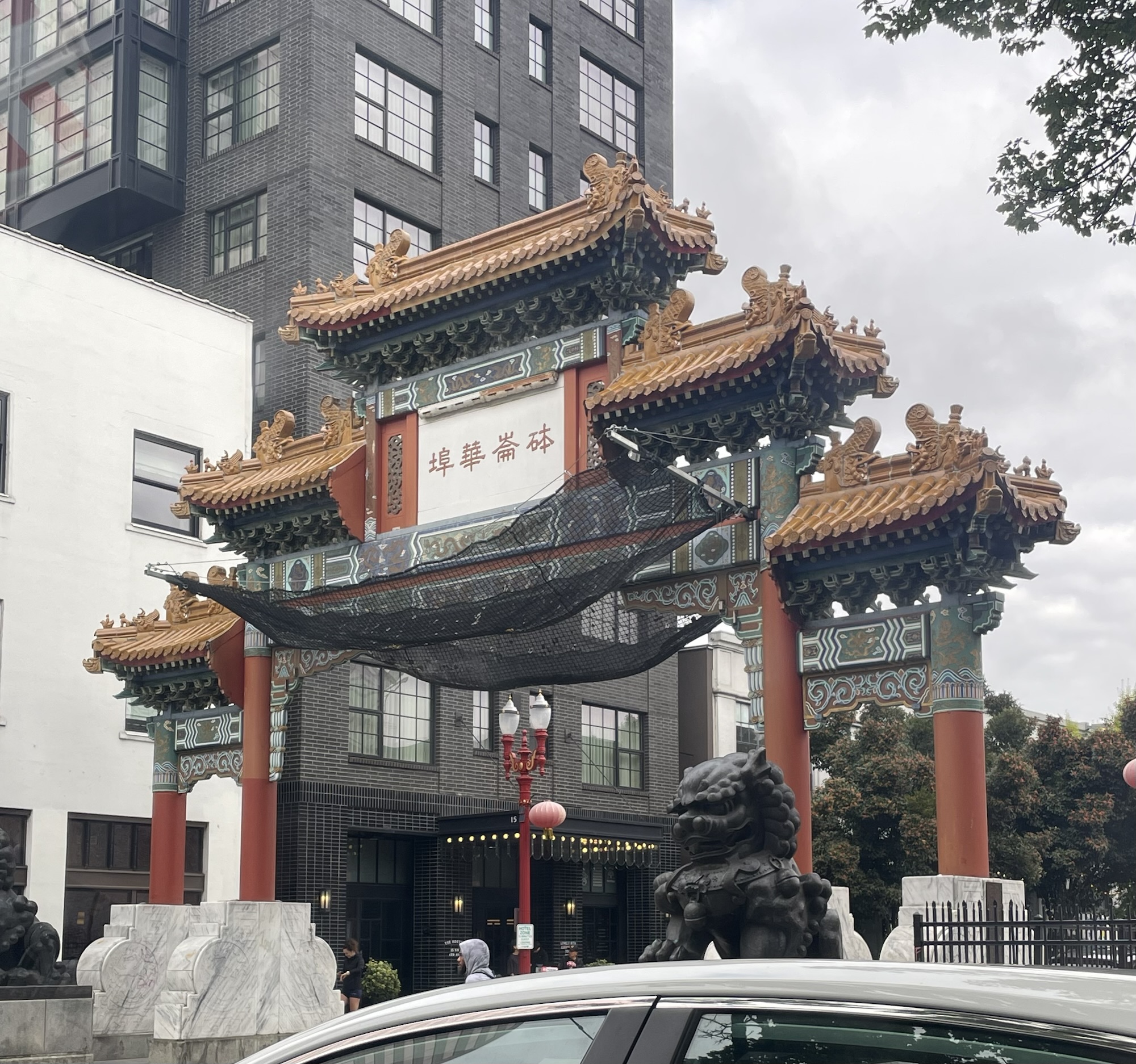
China Town Gate.

Afterwards we walked to the Golden Horse restaurant for a lunch.  It seemed right that we have Chinese food after visiting the garden. 
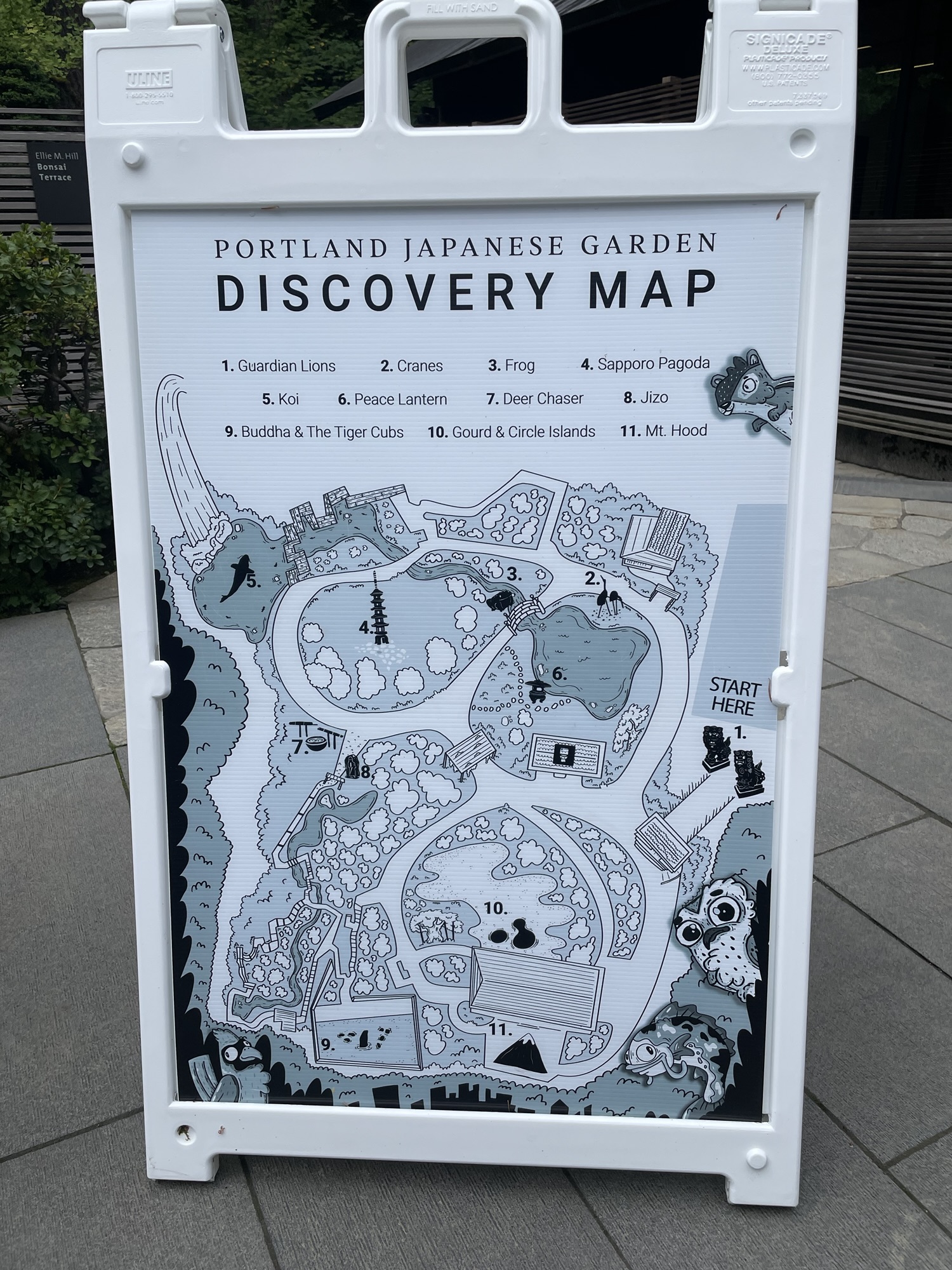
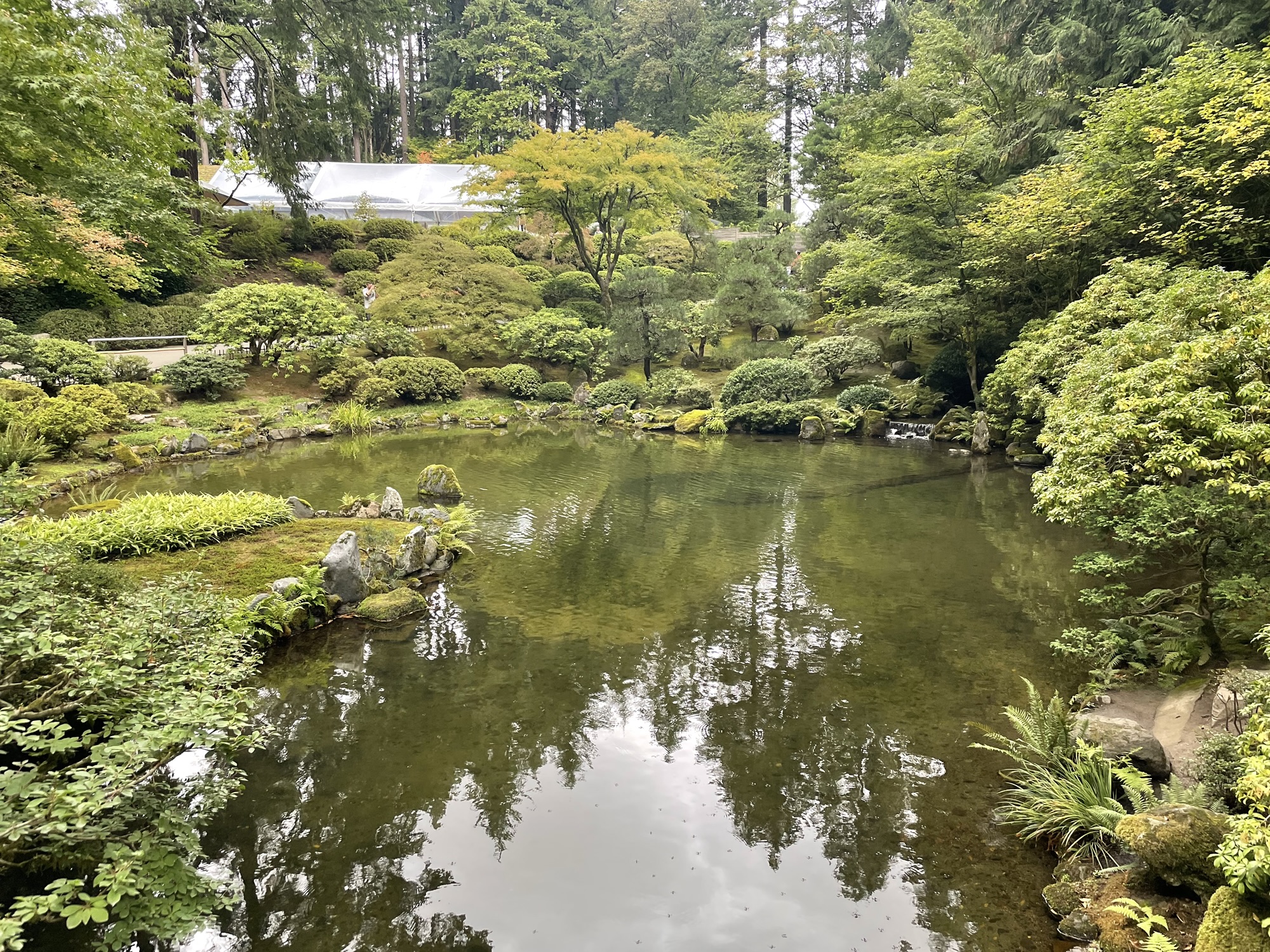
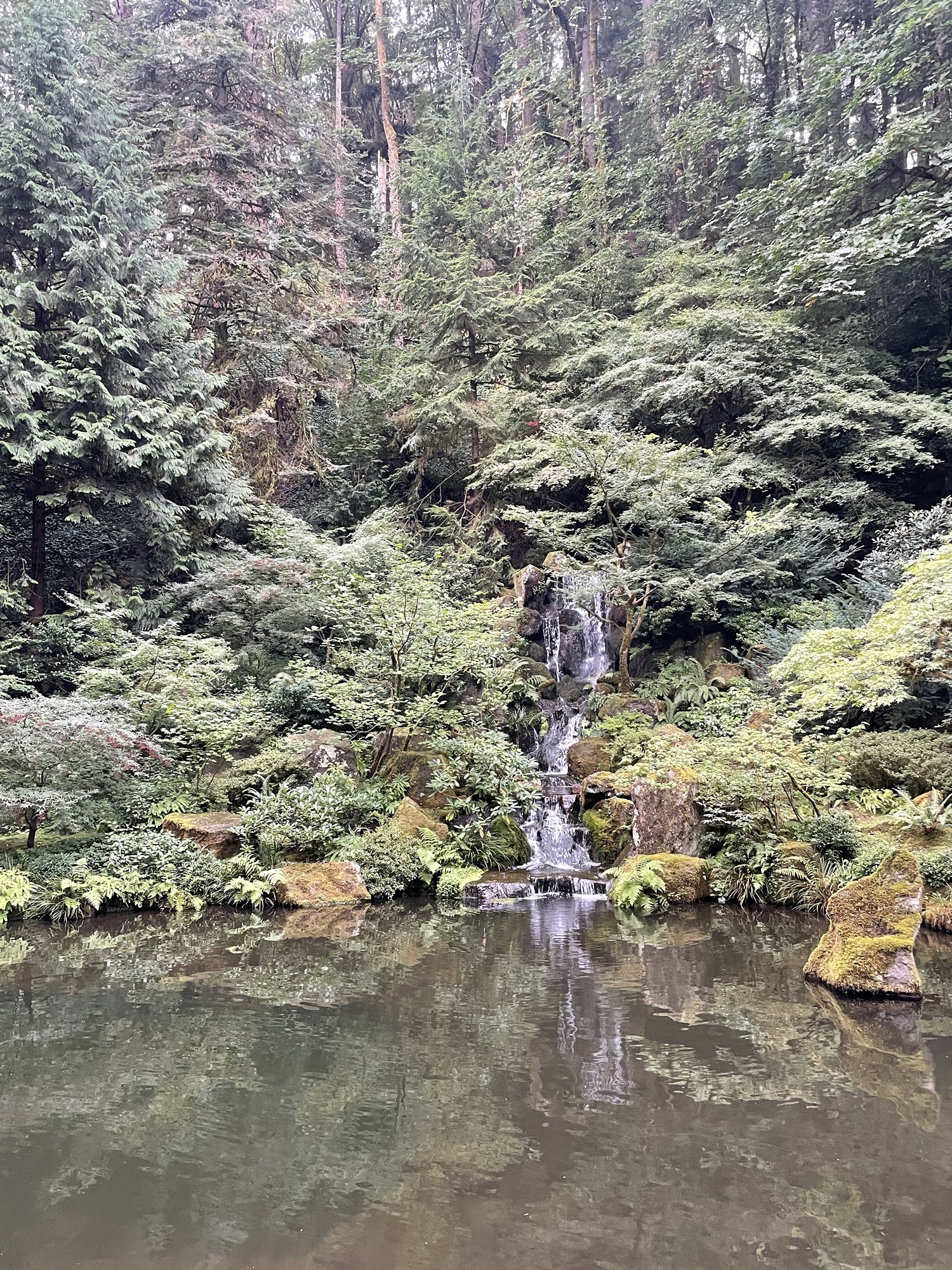
The next day we continued our Asian garden experiences with a visit to the Portland Japanese Gardens in Washington Park.  WOW! If Lan Su is an encapsulated oasis within the city, the 12-acre Japanese Gardens is a paradise!

A part of Washington Park since 1962, this peaceful setting was built to bring healing to the city after World War 2. I believe it did.  You cannot walk through these gardens and not appreciate the culture that produce it.

Like Lan Su, there are buildings on the grounds including a Japanese Tea House.  Since it is a much larger garden, there is a learning Center, a Café, a more.    But for me it was the gardens that drew my admiration. 

You start at the bottom of a hill after paying at the Welcome Center, meandering upwards to antique gate and continuing up. Looking back at the views of the city as you climb the foliage is really breathtaking.  At the top you enter the Nezu Gate by the Japanese Arts Learning Center, where you can visit the Bonsai Garden. From there, you take the paths around the garden settings with koi ponds, waterfalls, raked sands and more. Every garden has resting spots where you can sit quietly and enjoy the views and the peace and serenity.

I think if I lived in Portland I would go to the Japanese Gardens weekly to ease my anxieties.

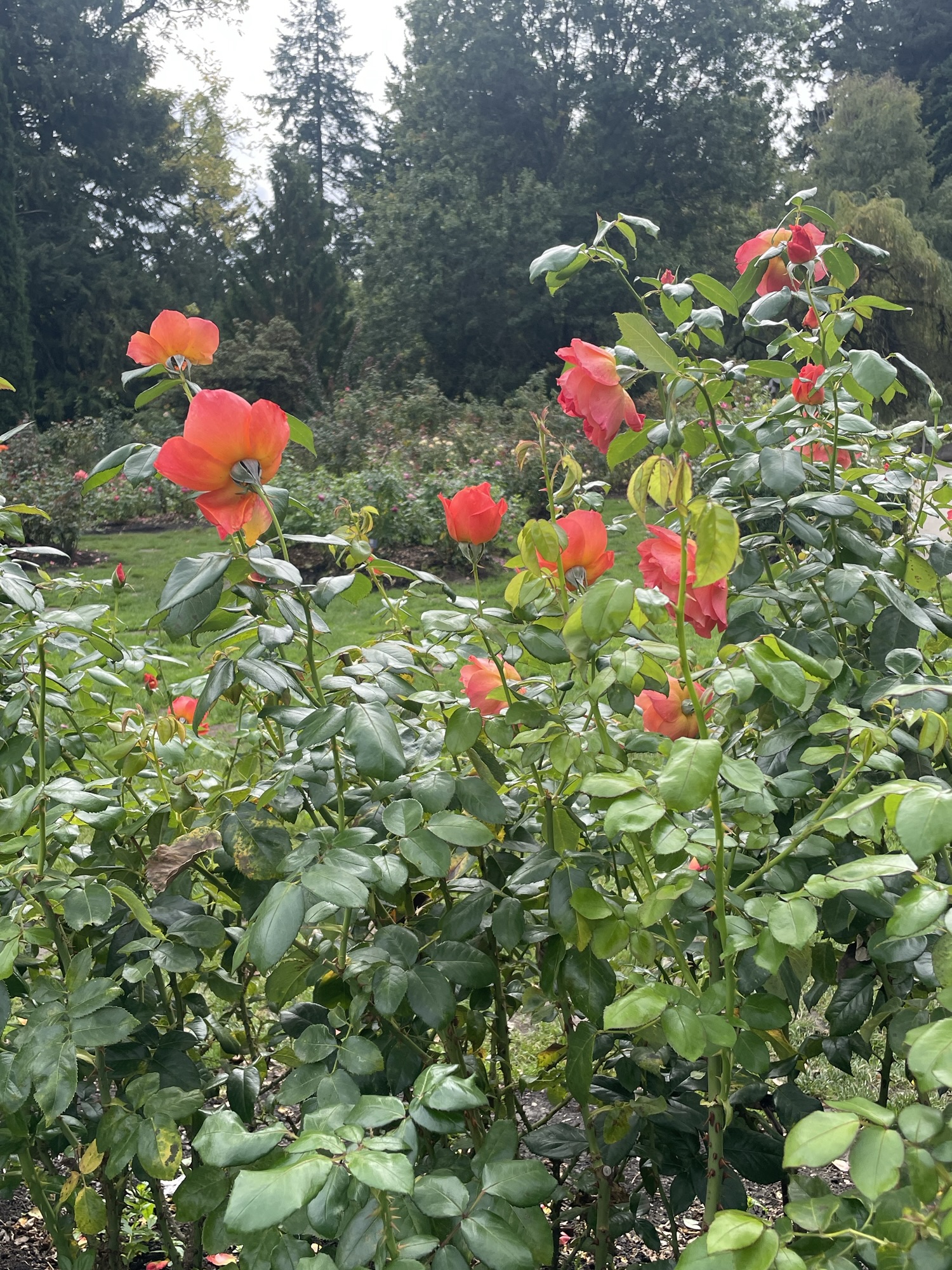
Because we were in Washington Park, after we finished our time at the Japanese Garden, we did walk over to the International Rose Test Garden.  Established in 1917, this garden has over 4 acres of magnificent roses.  I was here several years ago when I first visited Portland. But we had to stop in to see the beauty of this garden as well.  There are always amazing roses during the blooming season. One peach-colored rose caught my eye, its petals resembled crepe paper.

And a wonderous mansion too!

Since we were in Washington Park, we visited one more spot close to Washington Park, the exquisite Pittock Mansion. The home of the owner of the Portland Oregonian, the mansion took two years to build, with a move in date of 1914.  Overlooking the city and the river, it has magnificent views and lovely gardens as well. But it is the house that is the main attraction.
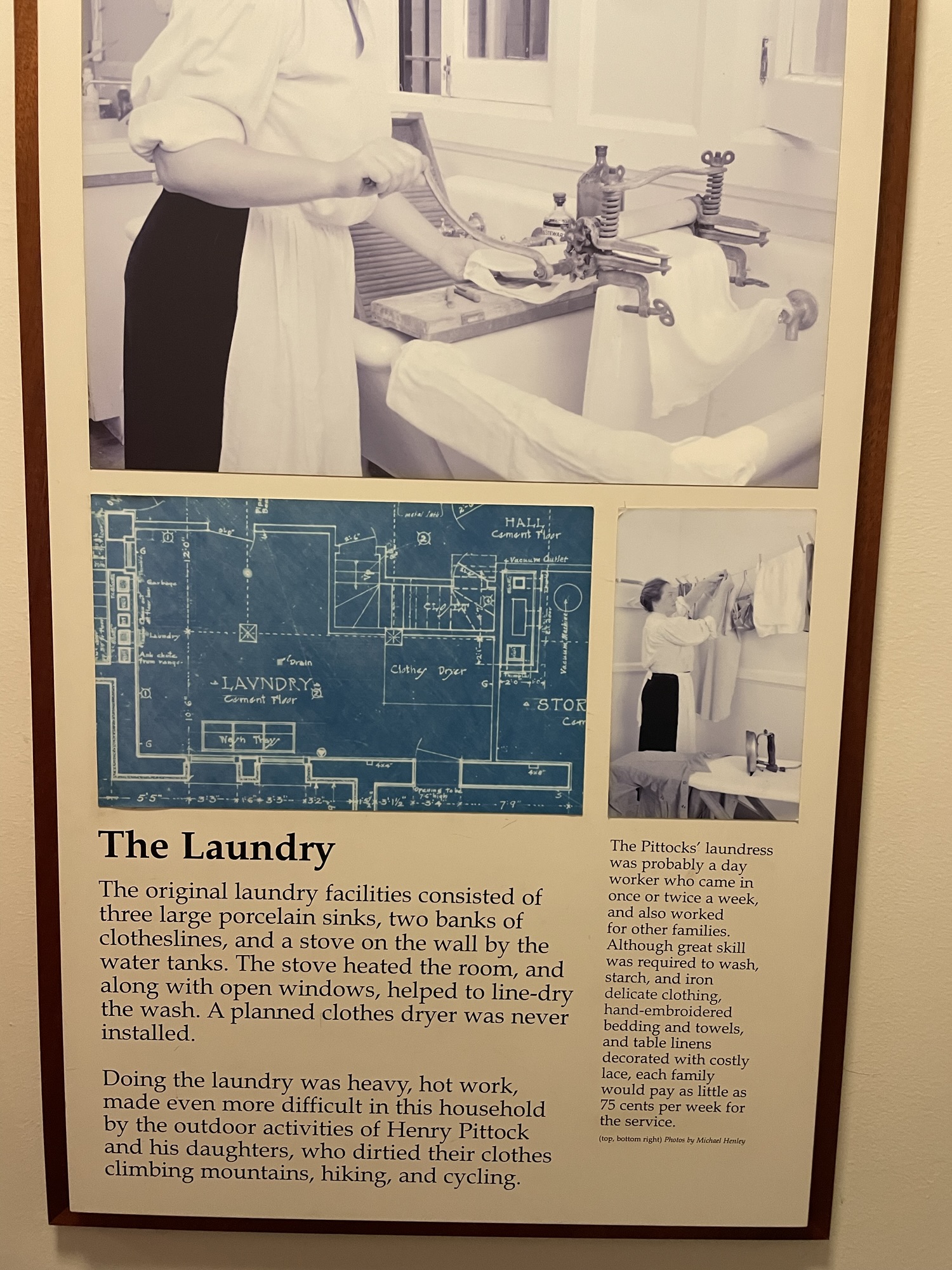
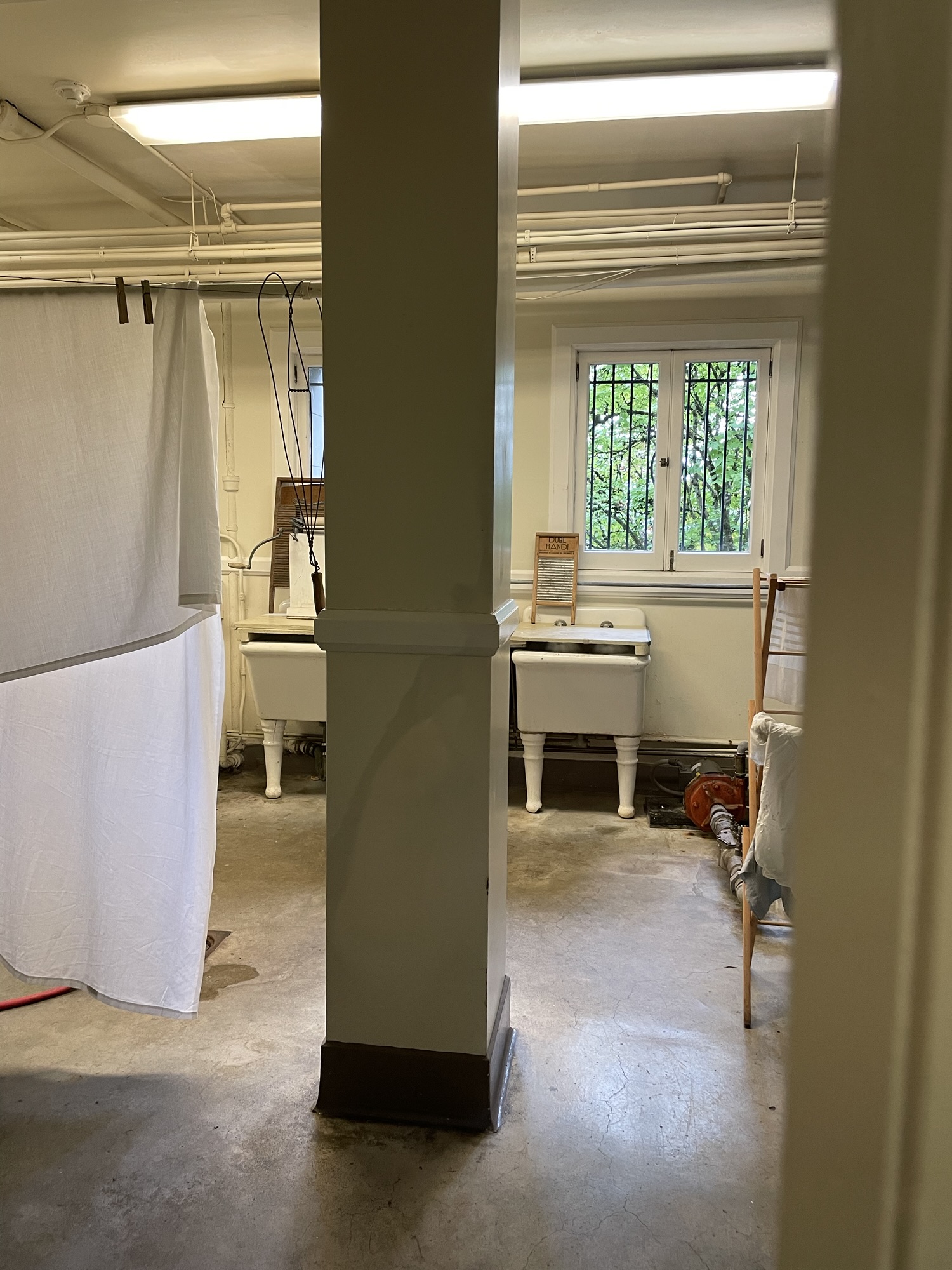
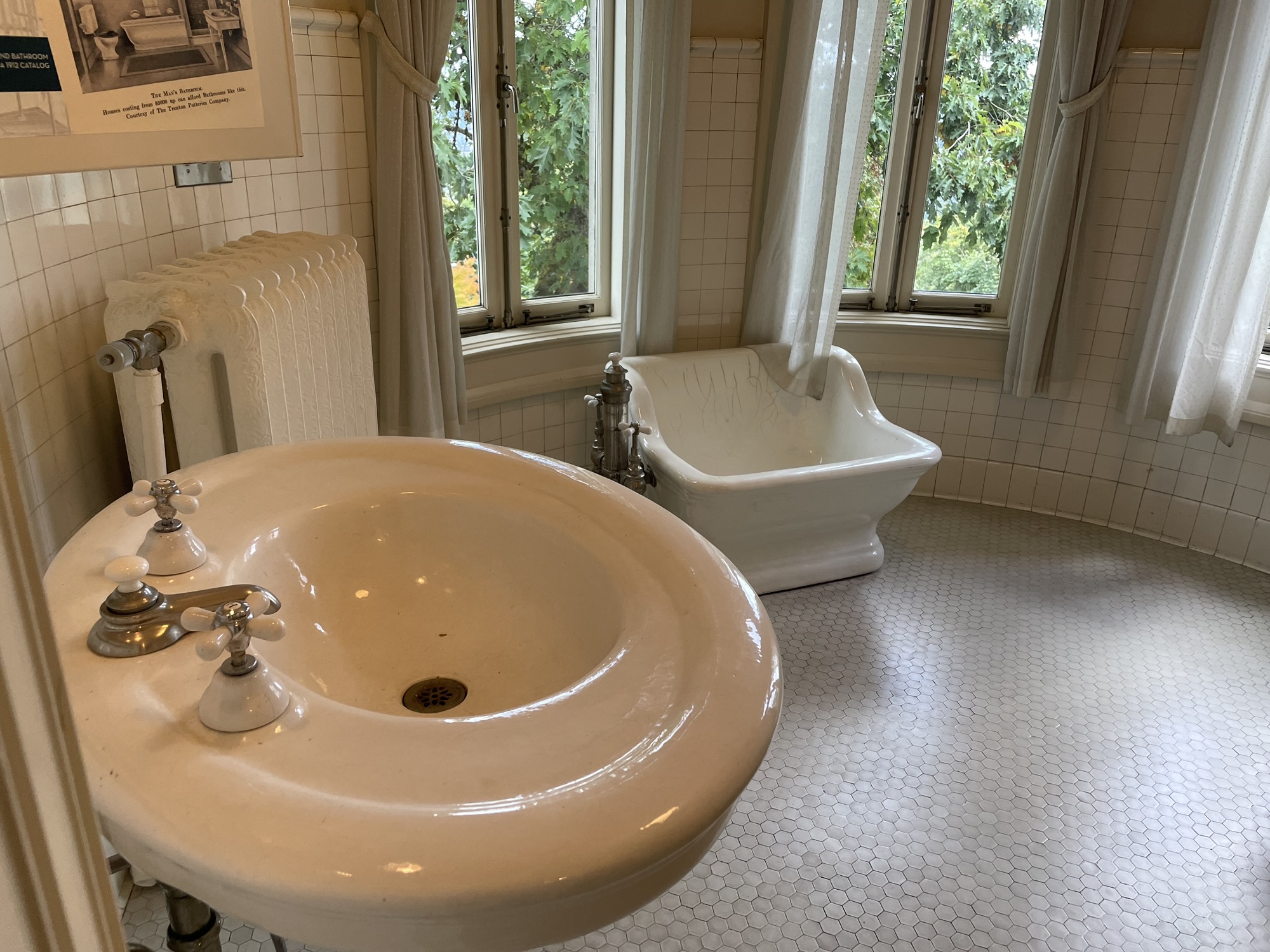
The Pittock Mansion has many innovations for a house of its time.  The abundant bathrooms had all the ‘modern conveniences” with both tubs and showers; an intercom system: extensive laundry room and an amazing cold room. The door was extra insulated and the room contained cold storage. Mr. Pittock wanted the best and the most up-to-date home.

After the family moved out in 1958, the house was abandoned. Eventually the city purchased it and  restored it and opened it to the public in 1965. I am sure the upkeep is still tremendous!

Today it is a great venue for weddings and other events. I had to pose on the grand staircase. It was a moment for me to imagine living there. Which I never could, but really some spots just call out for a photo.  The Pittock Mansion is another must see site in Portland.

https://japanesegarden.org/

https://www.portlandpf.org/rose-test-garden
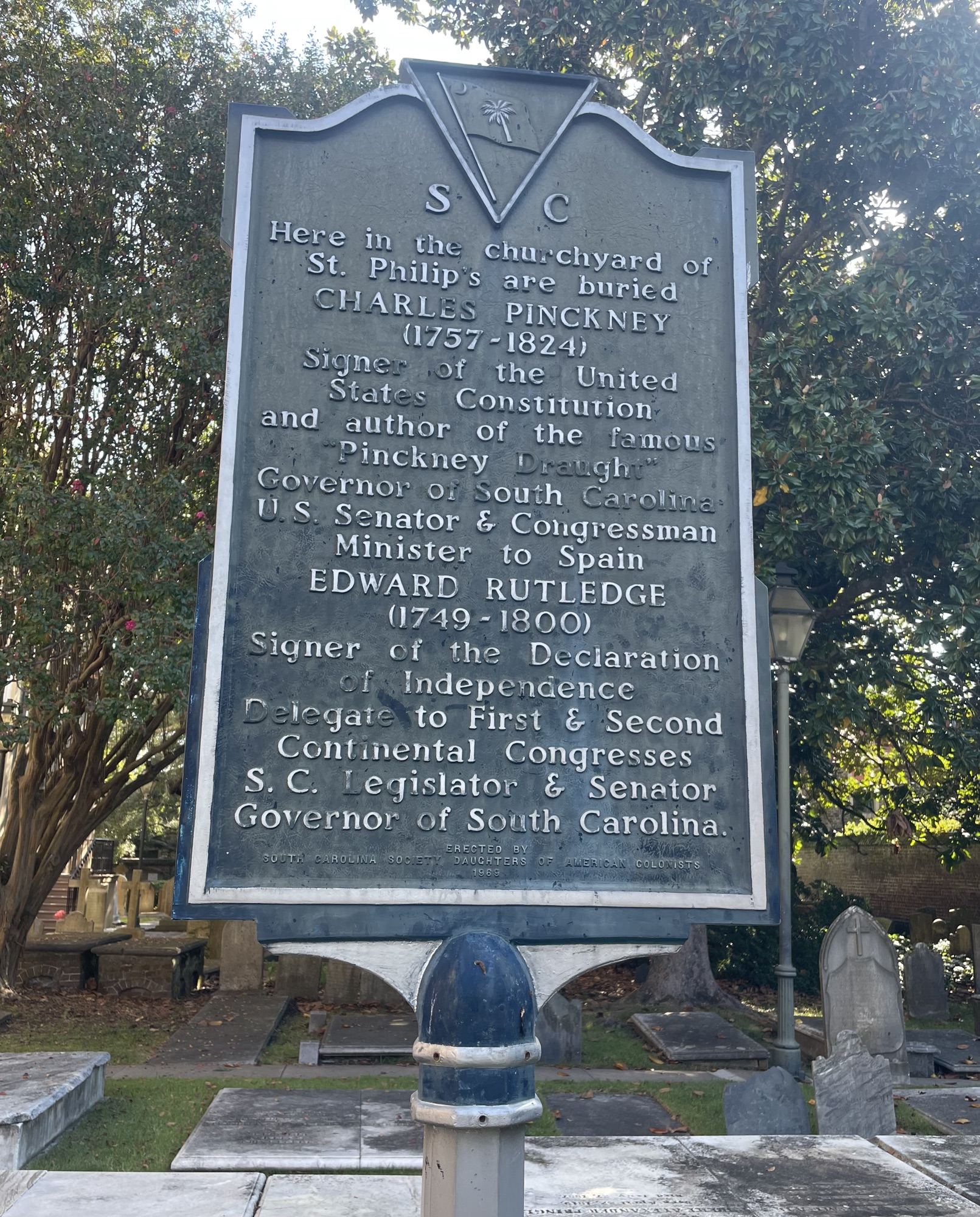
Charleston, A Lovely City, But the History of Slavery Cannot Be Ignored

14 Oct

Every Year on the Fourth of July, we watch the movie version of the play 1776.  We love the music; we love the acting; we love the retelling of the founding of our country.  But for me the scene that always hurts my soul is when Edward Rutledge sings “Molasses to Rum to Slaves.’  That moment in the movie is so strong and so emotional.  When John Adams says, “For God’s Sake Mr. Rutledge,” I can feel the pain.

When we were in Charleston, South Carolina, we knew that part of our visit there was to learn more about the slave trade: to see where it happened.  We visited St. Philip’s Church and walked through the historic cemetery where some of those involved in the American Revolution are buried, including the infamous Edward Rutledge.  We saw the area where the slave market was held and walked down the cobblestone streets.  The historic district of Charleston is unique and extremely interesting.

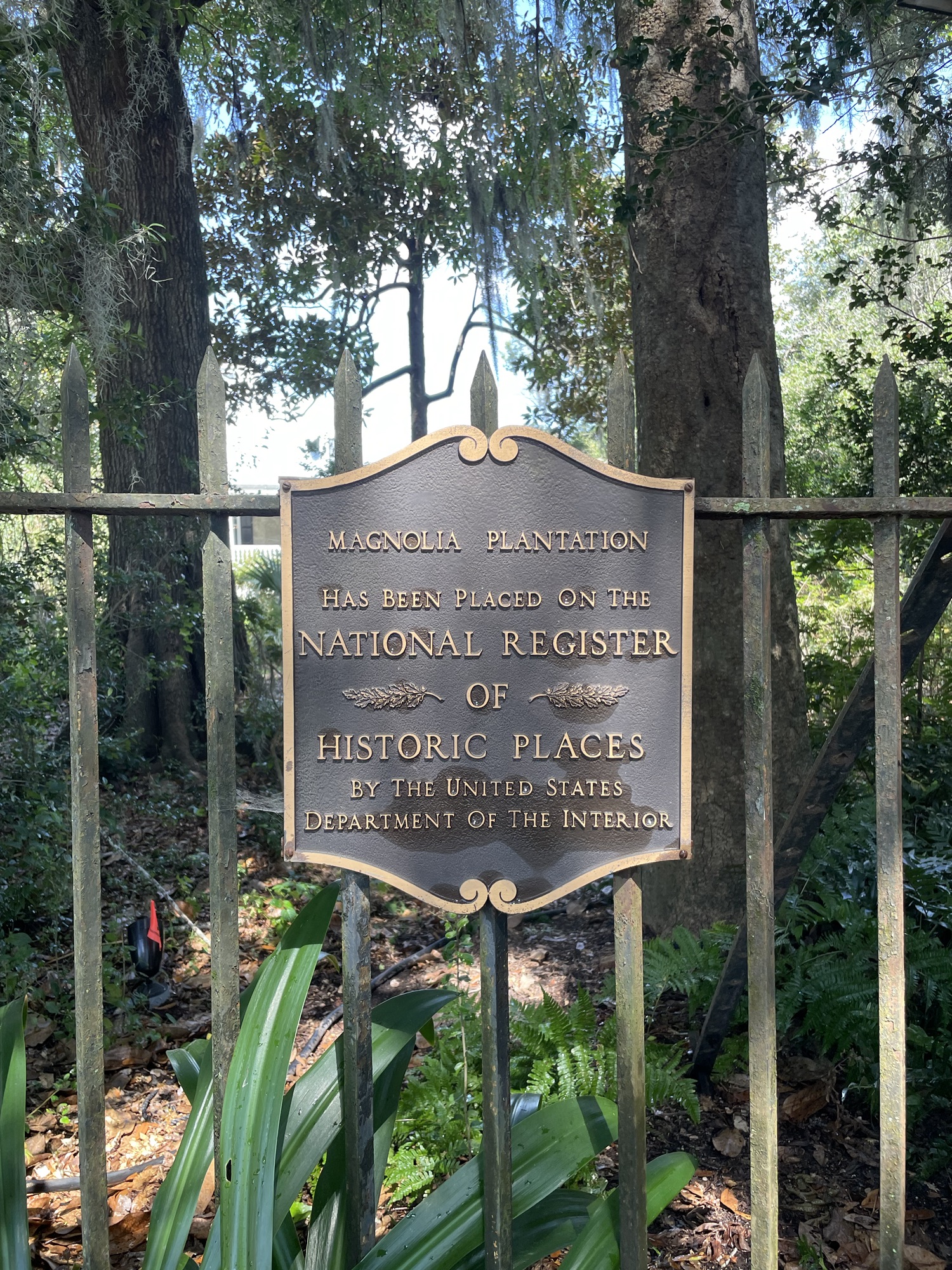
I learned interesting information about the history of slavery while in Charleston.  This new- found information started with our visit to the Magnolia Plantation, which is just outside Charleston.  I never knew that Carolina Gold referred to golden rice.  Actually, I never knew that rice was grown in the south.  I always just think of tobacco and cotton.  My eyes have been opened.  What I learned created a burn in my heart.
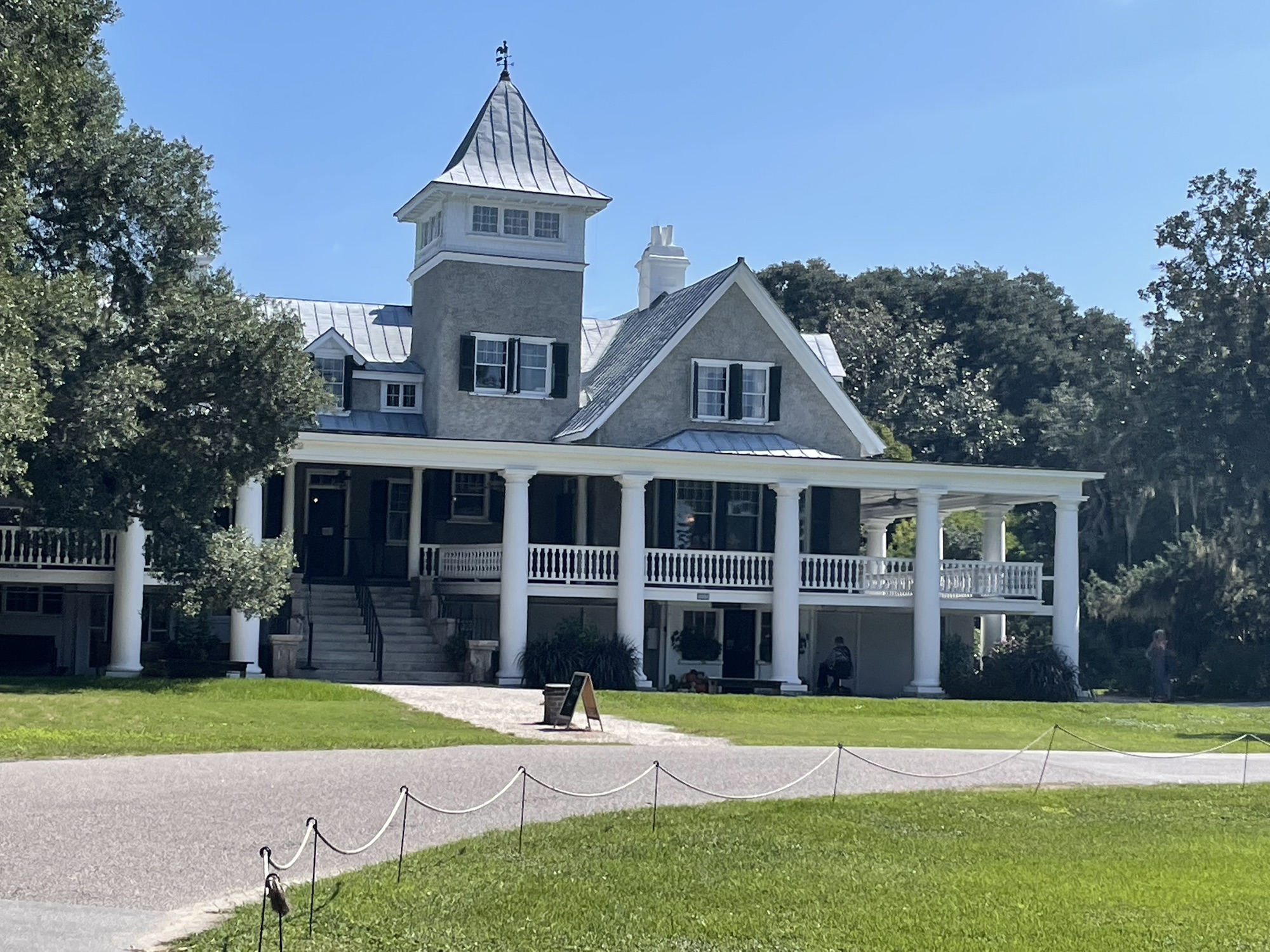
While at the Magnolia Plantation where saw the area where the slaves lived. Four families to a building. There are only a few rebuilt slave buildings now.  Most were destroyed in previous hurricanes. At one time there were 11 or more ‘homes’.  Almost 250 slaves lived on the Magnolia Plantation.  Their main job was growing and harvesting rice.

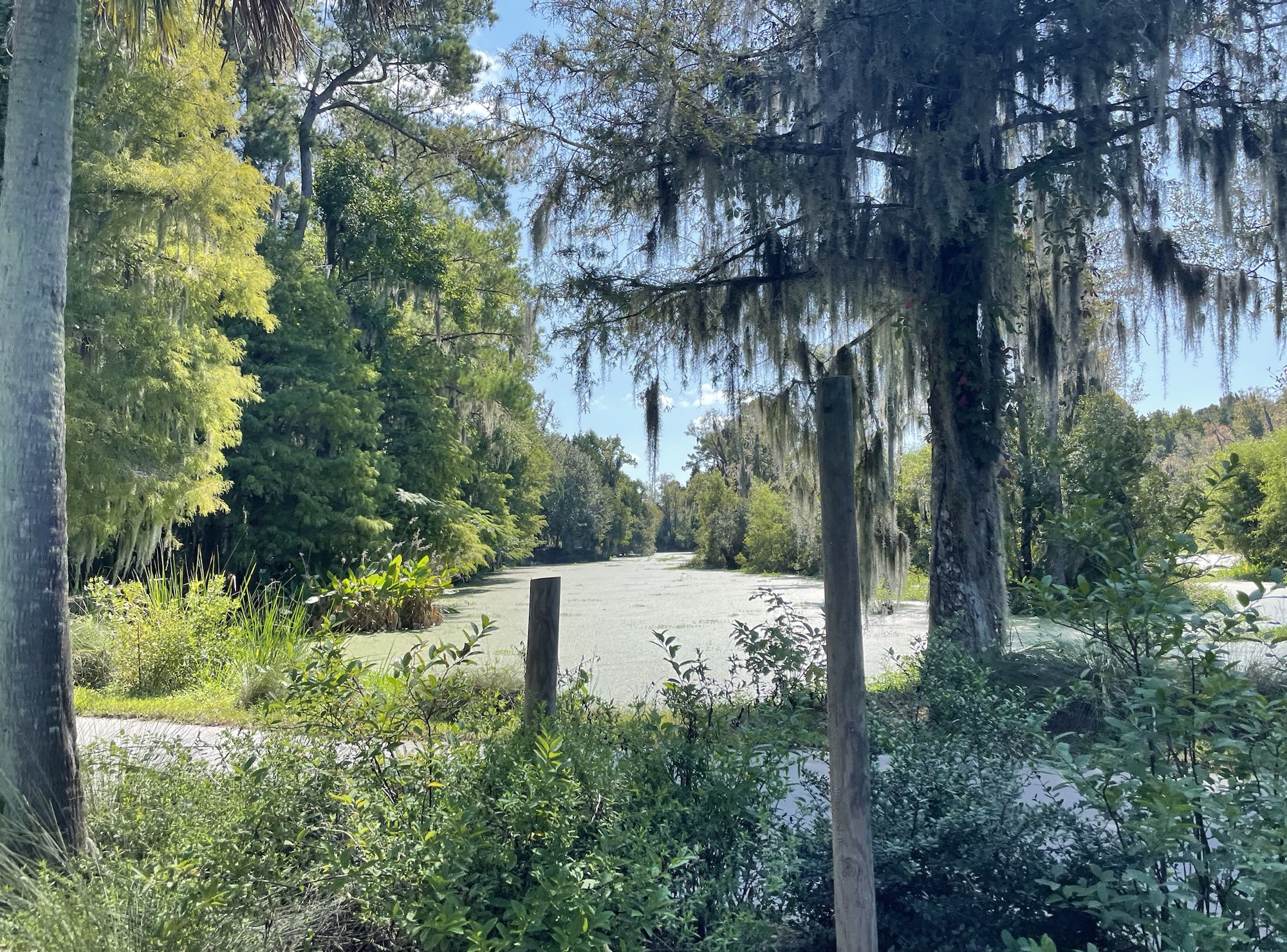
We saw where the rice paddies once were located. Some of them still have water. It is from the tides that wash over the banks of the Ashley River and fill up areas that have been dug out down three feet and contained by low levees, so the water doesn’t all recede. A perfect spot for growing rice and also good homes for alligators and water moccasins. Two creatures that are adept at killing humans.

We found out that once a child was tall enough, he or she went into the rice paddies to work.  The average length of time that someone survived the rice paddies was six to eight years!!!  Someone who was 20 years old and still alive after being exposed to deadly snakes, alligators and disease, was considered old.  That was something I did not know. And that makes me a bit sick to my stomach.  How could they use children this way? Really disgusting!  No one there are people who are adamant to keeping the real story out of our schools.

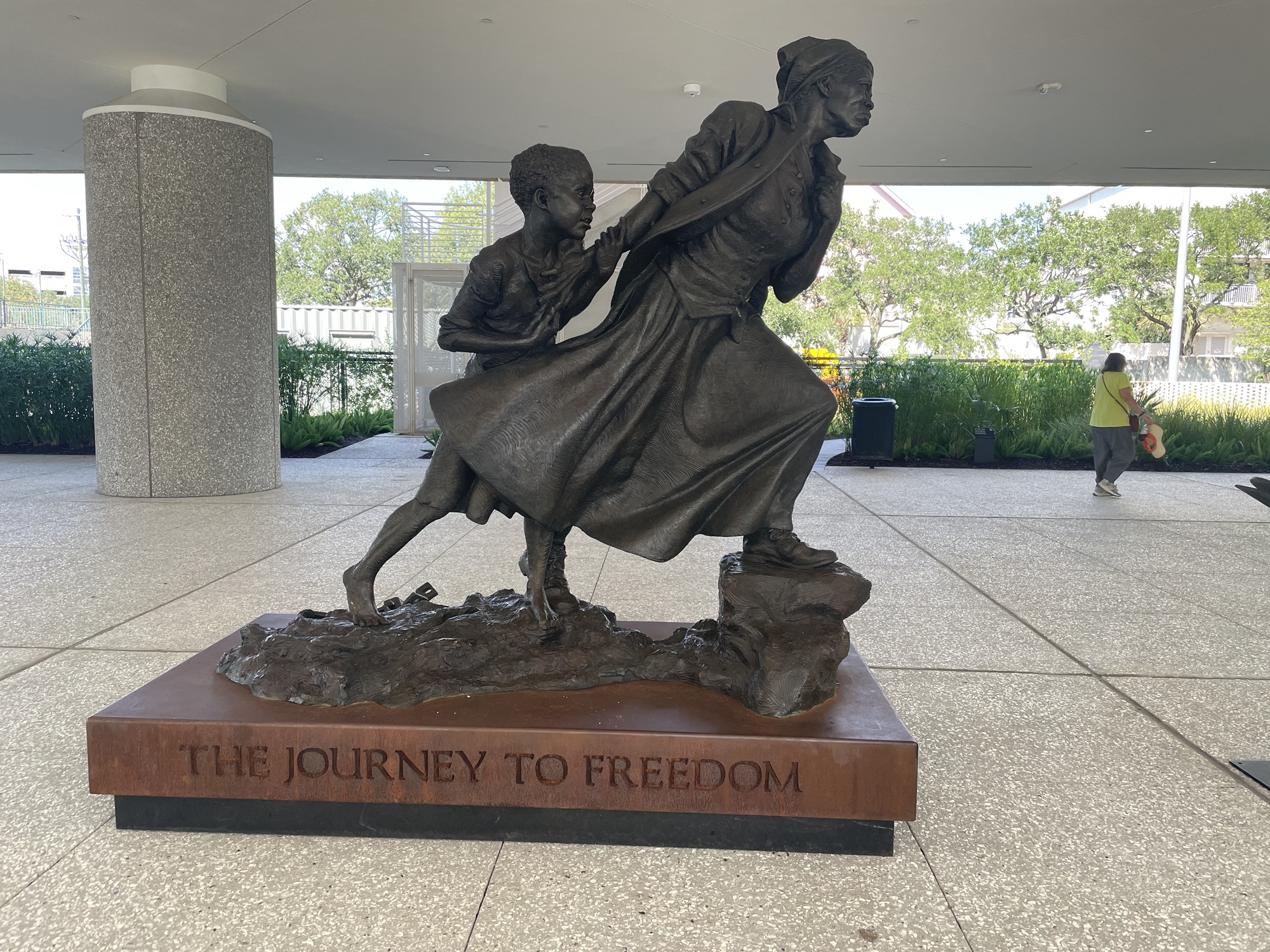
Going the next day to the International African American Museum cleared up a puzzle for me.  How did these slaves know how to grow rice?  It seems when the white men came to Africa to purchase captured slaves, they were going with a list of who they wanted. And what they wanted were farmers who knew how to grow rice and indigo.  They were enslaving people who had the knowledge that would make the plantation owners rich, while the slaves would not only be enslaved but most likely die young.  It seems so unreal.  But it is true. I always knew the slave owners became rich due to slavery, but I never knew the stave traders went to Africa with a shopping list of which Africans they wanted to enslave.  A definite eye-opening experience.

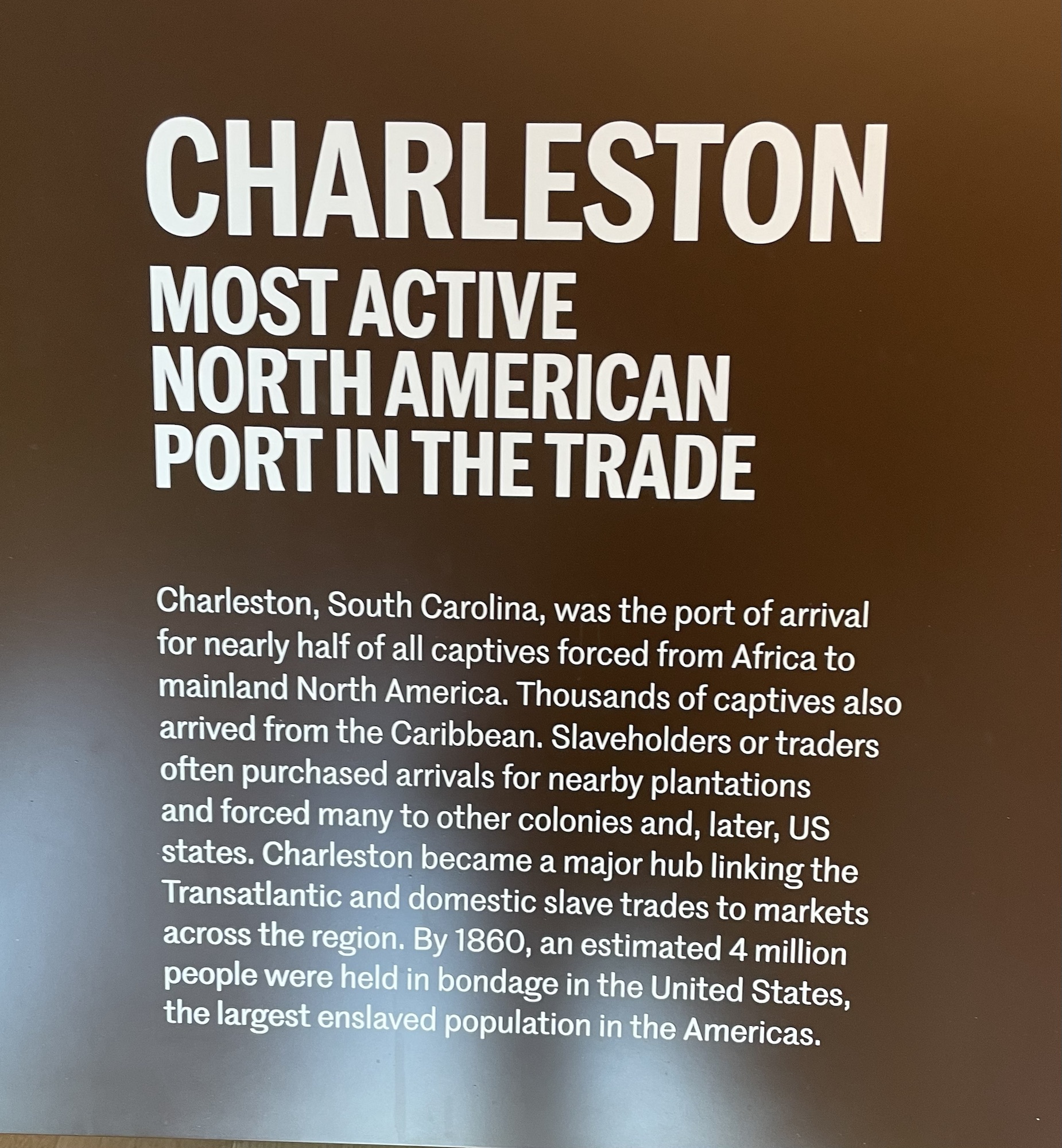
We enjoyed learning at the museum.  The first section discusses the African American community in South Carolina and how the Middle Passage from African often ended up in Charleston, which was the most active port in the slave trade. Many people died on the way over and those who survived that horrible journey had more horrors ahead.

I also learned more about the Low Country Gullah Geechee population and their unique culture, which is so interesting.   The descendants of slaves, the Gullah Geechee people were able to hold on to their African heritage because they were isolated on island and costal plantations.

The second section of the museum was filled with facts and information decade by decade of the African American experience.  To be honest, this is not a museum to take young children, there is just too much reading and too much standing.  I wish they had some benches along the winding hallways to take a break both physically and mentally. There is so much to absorb.  It was difficult for me.  And after a bit I was exhausted from the stories, the reading and the standing.

A few years ago, we visited the Charles H. Wright Museum of African American History in Detroit, Michigan. The permanent exhibit, “And Still We Rise,” was so immersive and left a permanent mark in my memory about how horrible the Middle Passage was for the enslaved and captured Africans.  It does a much better job, visually, explaining the slave trade and having the visitors feel the impact, while its special exhibits focus on more cultural experiences. 

The museum in South Carolina, however, does a much better job about explaining and detailing the history of the African American community over the centuries by highlighting important events, dates and people.  But trying to see it all in one day is too much. 

There were two little exhibits that stuck out to me as I walked through this museum.  They had a display of the Green Book that told African Americans where they could stay as they traveled around the USA.  I turned to pages to Kansas, where I currently live, to see where people could spend the night.  There are not many places, which is disturbing. But in a way, being Jewish, I understand this pain, as Jewish people were also discriminated against and not allowed to stay in many places.

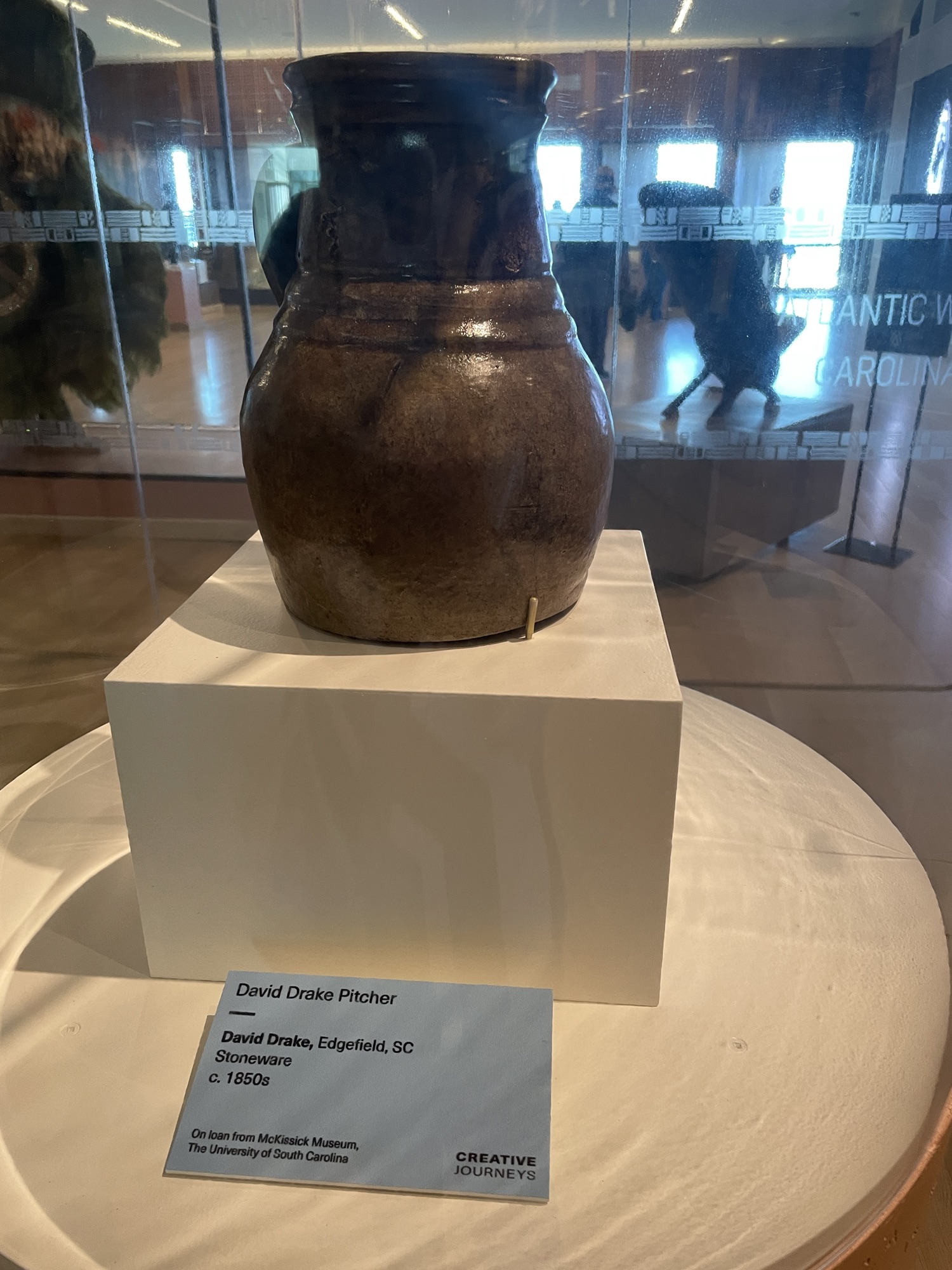
I did enjoyed seeing two of David Drake’s pottery pieces.  I had seen his work several times on the Antique Roadshow, so was excited to see them in person.  We saw another one at the Gibbes Museum in downtown Charleston.  It was interesting to note the fact that he could write and sign his name was a quiet protest against slavery since slaves were not allowed to learn to read or write. This knowledge could have cost him his life.

Charleston was a lovely city to visit.  There is so many places to immerse yourself into the history of our country.  But while learning about things we can be proud of, we cannot forget the darkest, bitter moments of our country’s past due to its support of slavery.

https://en.wikipedia.org/wiki/St._Philip%27s_Church_(Charleston,_South_Carolina)

https://www.thewright.org/

https://en.wikipedia.org/wiki/David_Drake_(potter)

https://www.magnoliaplantation.com/

https://www.gibbesmuseum.org/

Remembering and Looking Forward 

7 Oct

The Anne Frank Center and Kahal Kadosh Beth Elohim

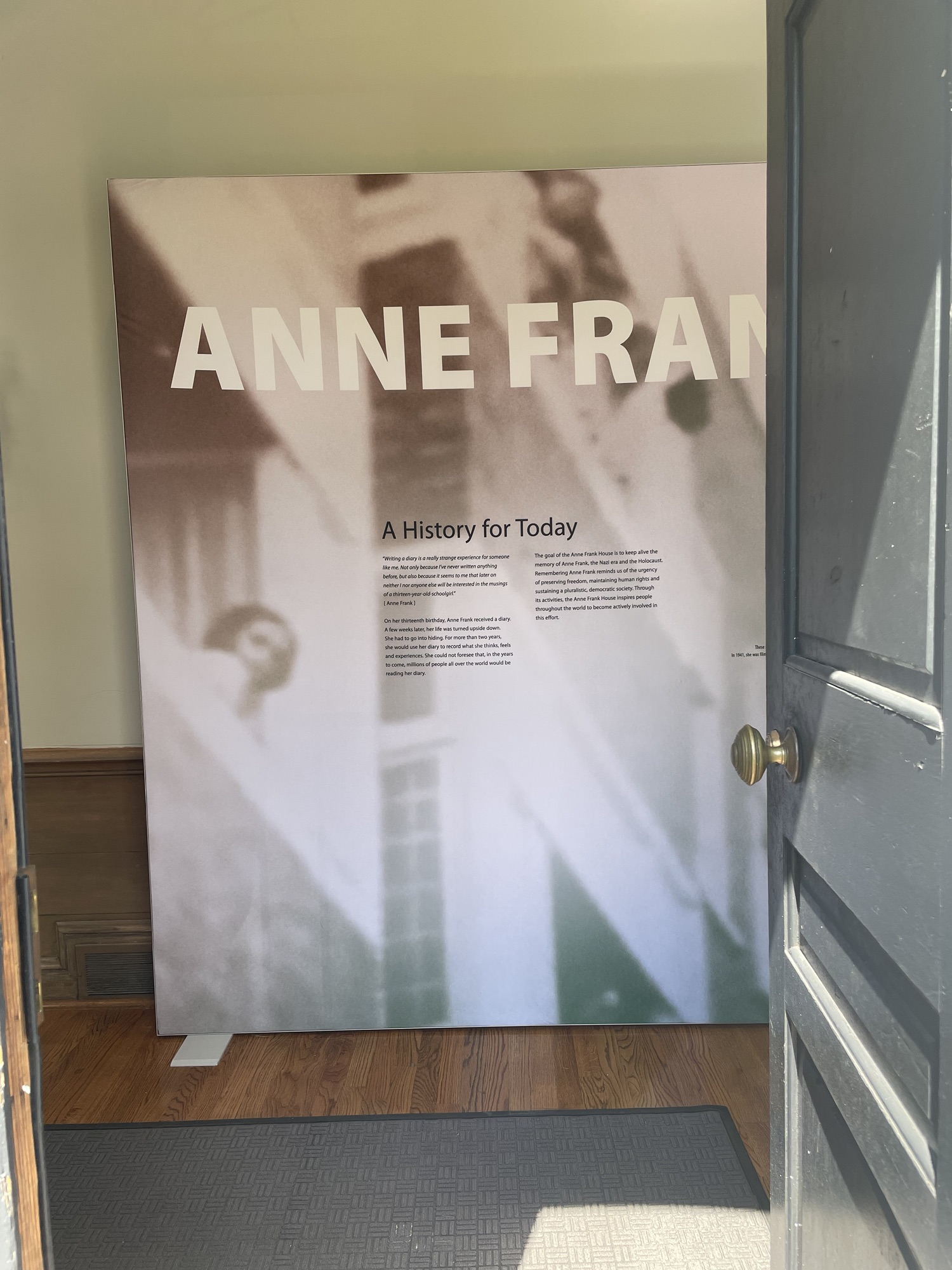
When we drove from Asheville to Charleston, before the hurricane, friends of ours who live in Charleston suggested we stop at the Anne Frank Center located on the campus of the University of South Carolina. 

I never expected South Carolina would be the home of one of four Anne Frank Centers in the world, and the only one in the United States, in partnership with the Anne Frank House in Amsterdam.  I contacted the Center before our trip and was able to make an appointment to tour the exhibits.

So today, on October 7, 2024, I feel that I must remember the distant past of Jew hatred as we mourn the one year anniversary of the vicious attack on Israel.

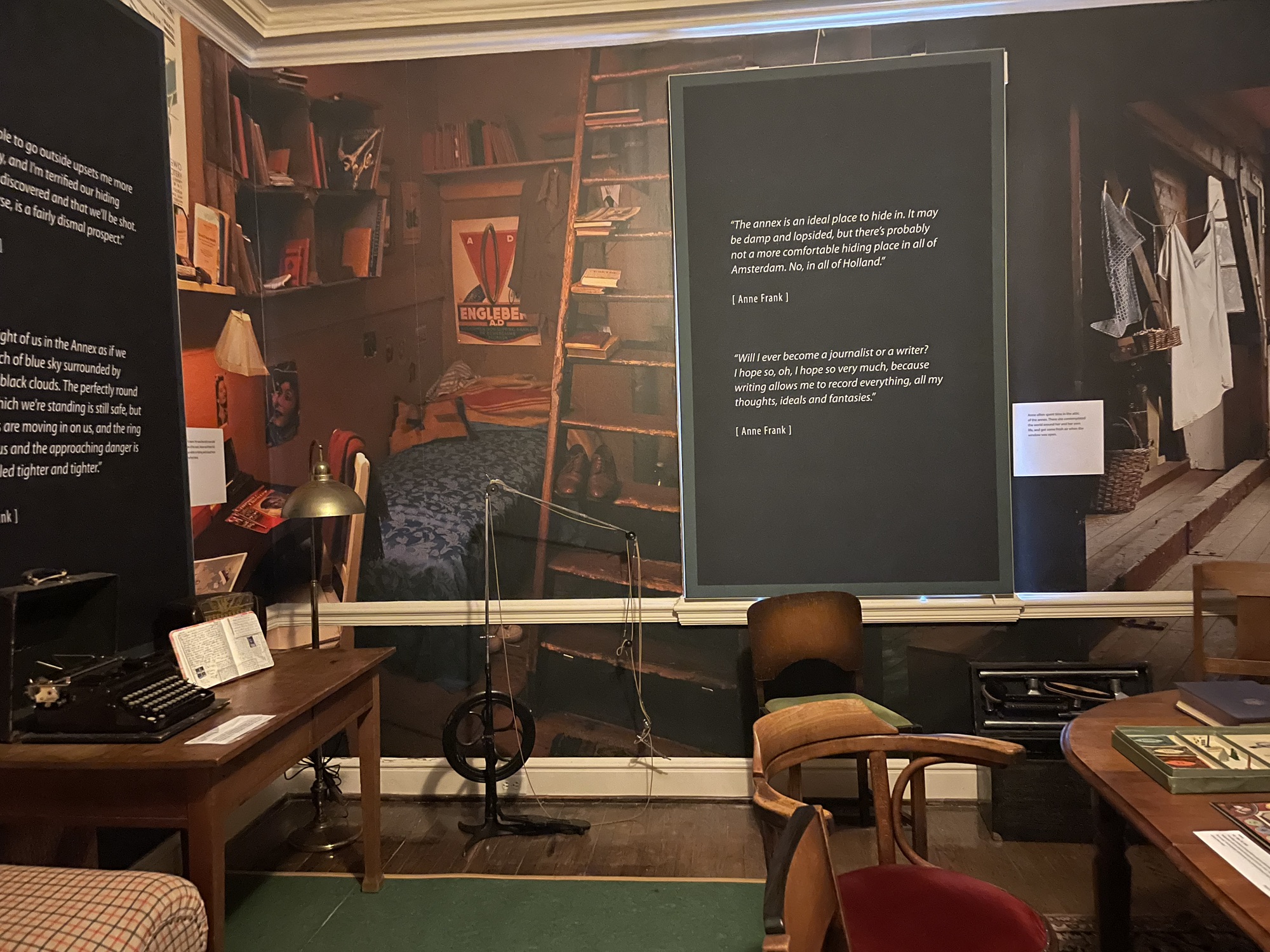
The Anne Frank House does an excellent job recreating the feeling of the hidden annex.  While touring the exhibit, visitors will enter a display of Anne Frank’s diary written in many languages on a wall of bookcases.  Not surprisingly one bookcase opens allowing visitors to enter a darkened room that helps tell the story of the Annex.  Having visited the Anne Frank House in Amsterdam, I was amazed about how this small display harkens to the feelings I had in Amsterdam.

Besides the onsite programs, the Anne Frank House also offers traveling exhibits that can be sent across the USA.  They teach local high school or college students to serve as the guides to the 32-panel exhibit. I would love to see this exhibit in my home community!  Our tour at the Anne Frank Center was led by a college sophomore who was doing her first tour for us and her dad!  Emma did a great job. I could see that she related to the world of Anne.

Going to the Anne Frank Center and remembering her words of hope help me see hope in the situation that we have in the Middle East today.  There are good people who want this violence to stop.  Who want terrorists to end their campaign of hatred.  No one wants innocents, like Anne Frank, to suffer or die.  So I have to believe there will be peace.

My feelings of hope continued in Charleston where we visited the 275-year-old Kahal Kadosh Beth Elohim synagogue, founded in 1749. It is the oldest synagogue in continuous use in the United States. The current building dates from 1841, after a fire in 1838 destroyed the second building.

 Originally a Sephardic synagogue with the bima in the center and balconies above for the women, it changed in 1879, when the bima moved to the front and women joined men in siting for services. Later, after the earthquake of 1886, the balconies were destroyed and were not replaced.

Standing in a building that has housed a congregation since 1840, almost 190 years, and knowing that the congregation itself is 275 years old gives me hope. This congregation has survived the Revolutionary War, Civil War, WW1, WW2, antisemitism, the creation of the State of Israel, the rise of the alt right in the south, and more.  The fact that it continuous to be an active congregation gives me hope.

Today, I remember my feelings on October 7, 2023, when my daughter called me from Israel to say she and her husband were okay, but that the situation was very bad. The entire country was in shock.  Everyone knows someone who died.  For me, although I knew no one, I do know people who lost family members and friends.  The past cannot be forgotten. However with education, like that of the Anne Frank Center, and endurance like that of Kahal Kadosh Beth Elohim, I believe we can look forward with hope to the future.

https://sc.edu/study/colleges_schools/education/partnerships_outreach/anne_frank/index.php

https://www.kkbe.org

We Couldn’t Go To Israel: Road Trip To Madison, Wisconsin

20 Nov

Since my husband had over two weeks off for our trip to Israel that got cancelled due to terrorism and war, we had to keep moving or the anxiety would get to us.  Our first Road Trip lasted only three nights.  The second trip took six nights.

We have driven to Madison, Wisconsin, several times.  Always doing it in just one day.  But this time, I decided we needed to stop every now and then and just relax; so we did.

Day one:  On the road to Altoona, Iowa.  Why Altoona?  It is on the eastern outskirts of Des Moines.  And there was something to do.   On our wat to Altoona, we stopped at the Amish Store that is just across the border from Missouri to Iowa.  I love this store.  Jams, spices, seasonings, candy and cookies. All home-made and delicious.  We stopped for lunch and stocked up on gifts for our Madison hosts and for us. 

Next stop the hotel in Altoona.  My planning was excellent because across the street was a wonderful discount mall.  If it hadn’t been so cold and windy, we would have walked there.  Instead, we drove over and walked around this outdoor mall for a while helping the economy of Altoona.  We also found an Italian restaurant halfway between our hotel and the mall and ate dinner there. Yum.

Day two: On the road to Madison with a planned stop in Dubuque, the last stop in Iowa before Wisconsin.  We have driven through this Mississippi River town several times and always said we wanted to stop.  This time we did.  Our aim was to visit the National Mississippi River Museum and Aquarium.  Even though it was cold, and we had to walk outside between the two buildings, it was a great experience.  But I am sure it is even more wonderful if you have children. There is just so many activities for them.

We did not go to the main movie, but we did see all the aquariums and visited the displays.  One building holds the aquariums for the part of the Mississippi, the Gulf of Mexico, that enters the ocean. There were jelly fish, seahorses, an octopus, stingrays and other ocean animals.  The other building held the aquariums for river life: sea otters, turtles, snakes, fish.  I had never seen real paddlefish before.  They really do have a paddle on their snouts!

Our favorite exhibits were the Riverways History Gallery and the Innovation Currents Gallery. We also ate lunch there in a restaurant that overlooks the Mississippi and the outdoor displays.  If it was warmer, we might have spent more time outside because there was a lot to see there as well.

Two hours later we were on our way to Madison.

Days Three-Five: Being in Madison with our friends was great. We had a good time visiting and seeing some of the sites.  Our highlights was a tour of the State Capitol and the Chazen Museum of Art.

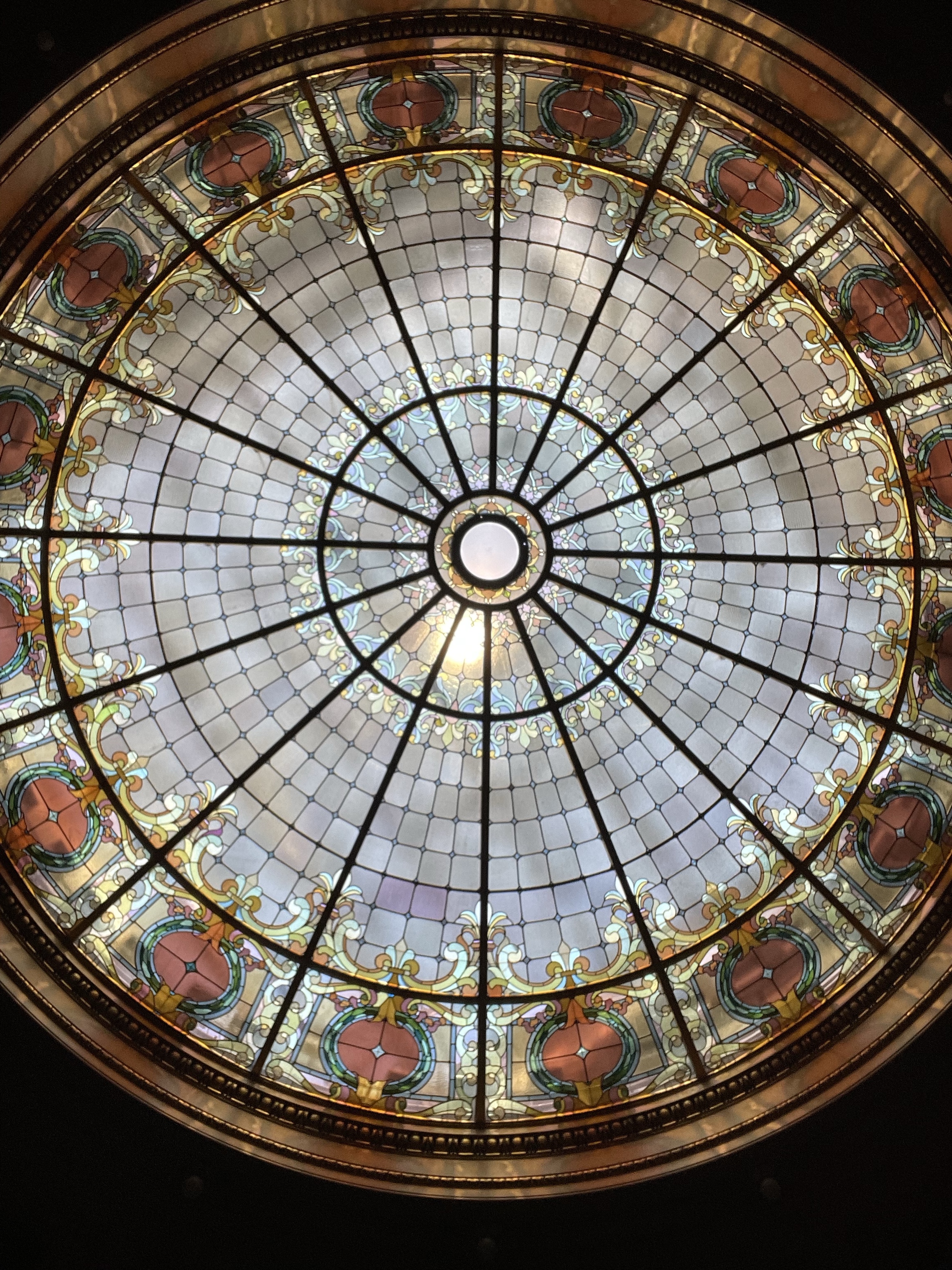
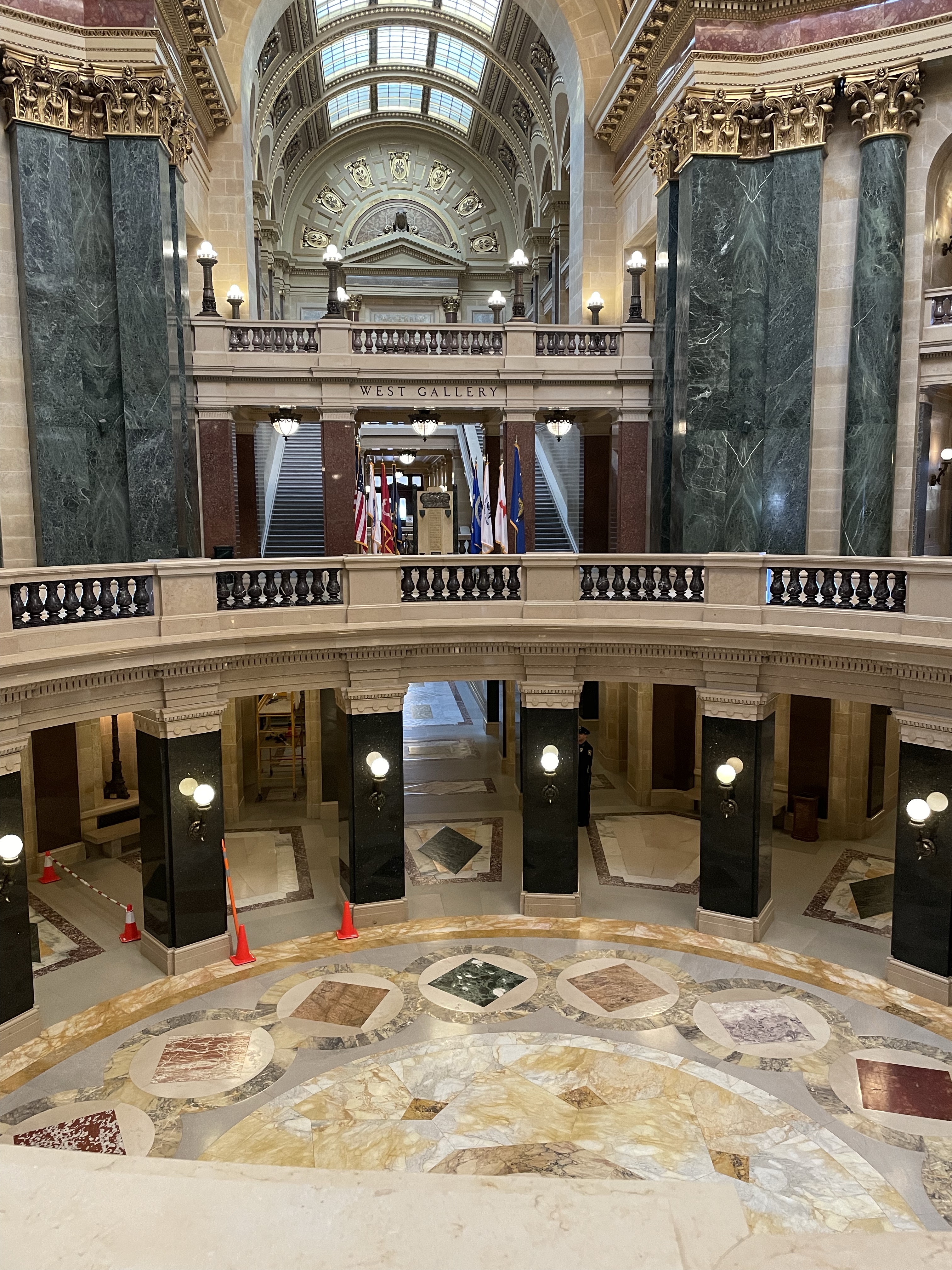
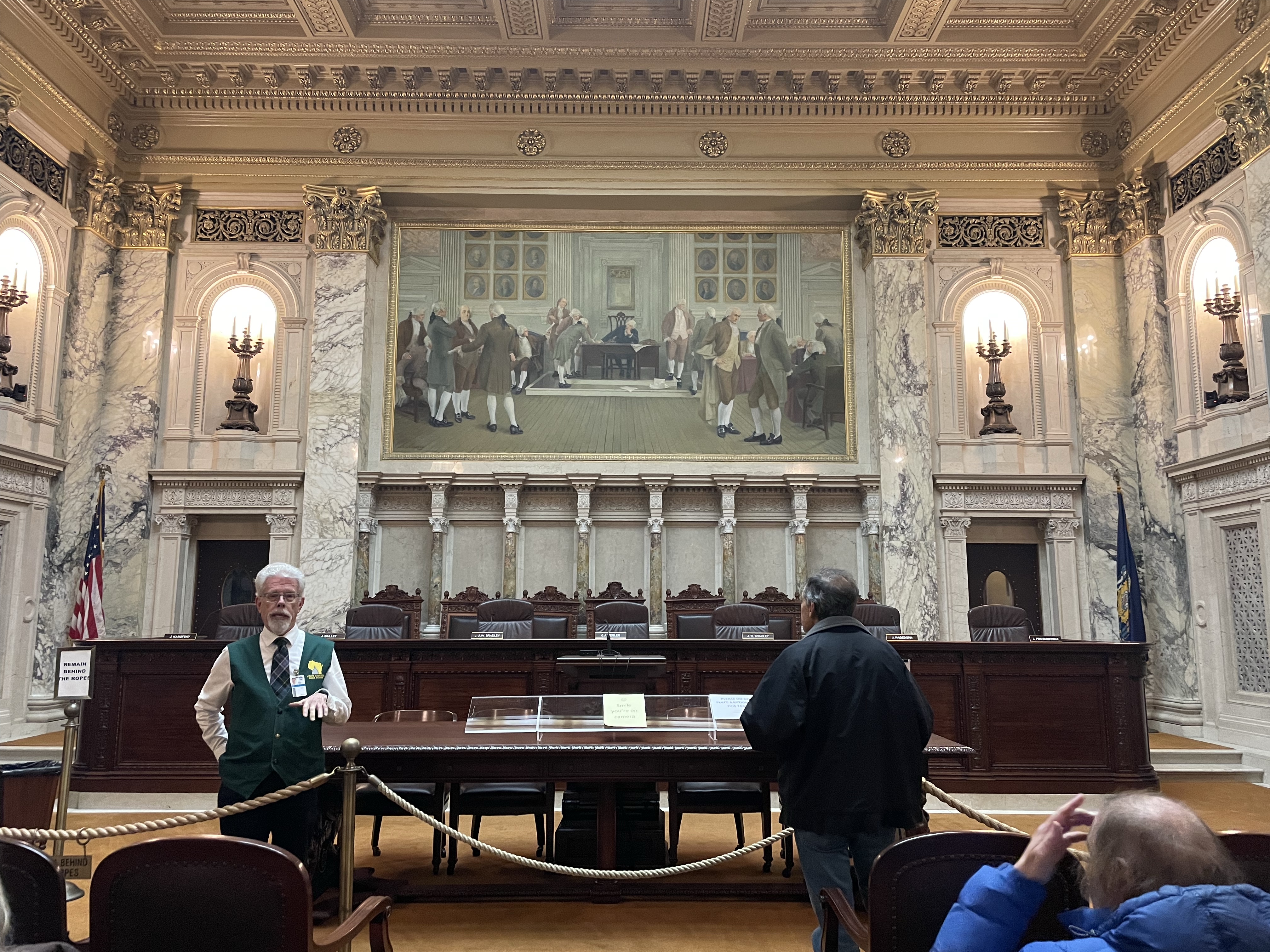
The Wisconsin state capitol building is really lovely. The building itself is over 100 years old. What makes it so amazing is that all branches of the state government still meet in the building. There are four magnificent rooms. One for the House of Representatives, one for the senate, one for the Supreme Court and one for hearings and meetings. Each room has a beautiful and large stain glass sky light that illuminates the room. Another lovely room is the senate’s private parlor.

There are free tours of the capitol each day. We were lucky in that we arrived at the capitol rotunda just a few minutes before the tour and we four were there only ones there allowing us to have the best private tour of the capitol that you would want.  Our tour guide, Mike, was excellent.  You could tell that he loved the building.  And there is so much to love.  Which you can see by the photos of the rooms.

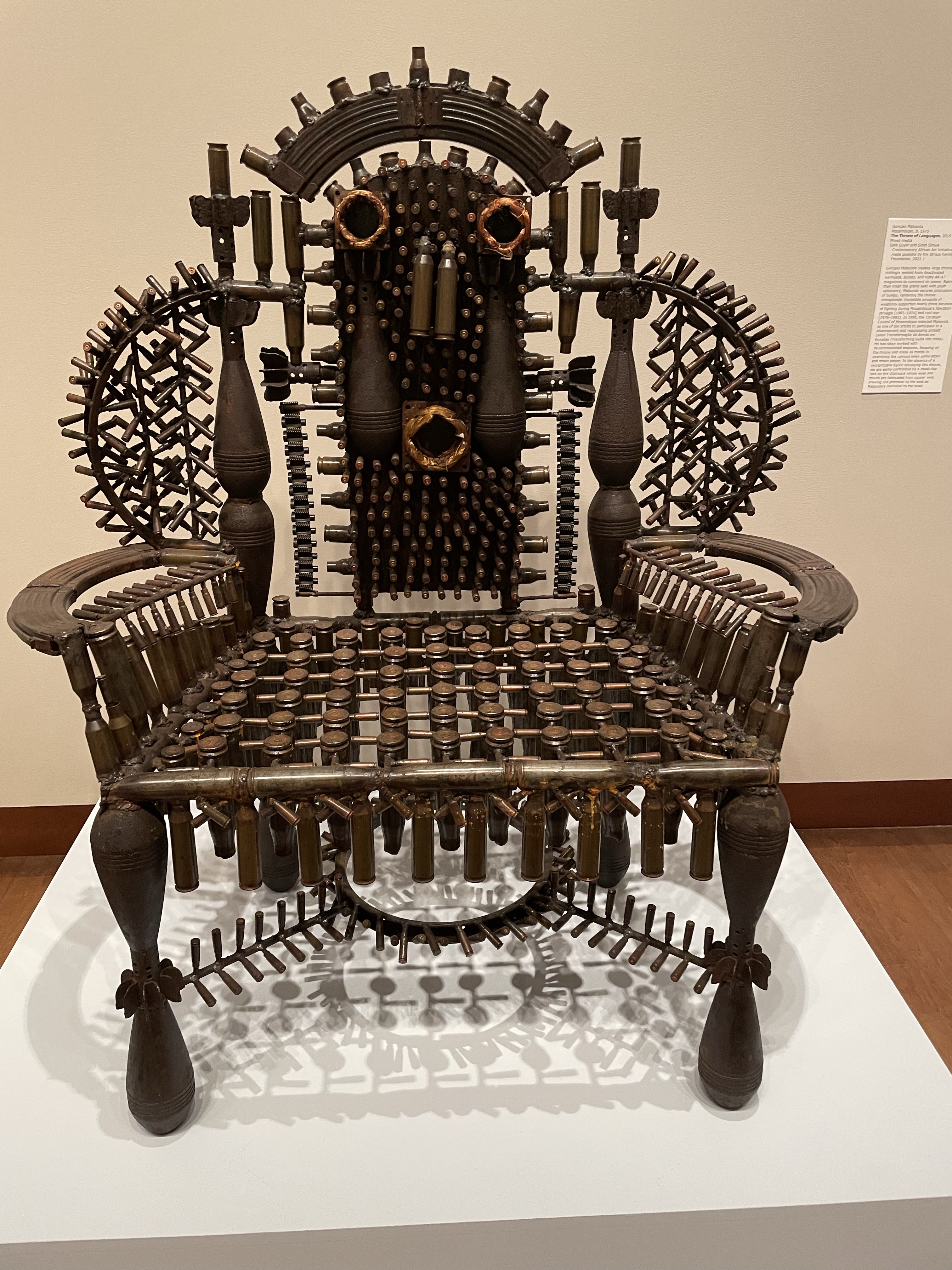
Another day we went to the Chazen Museum of Art, which is on the University of Wisconsin’s campus. Although not a large museum, it was filled with amazing art. We were fortunate to see a special exhibit: Insistent Presence: Contemporary African Art, had several pieces that caught our attention. Petro Beads, with was a giant set of prayer beads made from old metal petro containers. The Throne of Languages made from old military devices was an eye opener.

In other blogs I have written about my love of the glass art of Dale Chihuly.  I really enjoyed seeing some of his early art work. He studied at the University of Wisconsin earned his MFA from the School of Education’s Art Department under Harvey Littleton, who was a well-known glass artist.  We saw a few pieces of his work as well.  I am sad to say I did not get to see The Mendota Wall at the Kohl’s Center. That will have to wait for another trip.

Day 6 and home:

It was going to be a long drive on highway 39 and 90 to the State Capitol of Illinois, Springfield. We had no plans to visit the capitol building there. Instead, our destination was the Abraham Lincoln Presidential Library and Museum. Before I discuss our visit to the Library, I must tell you that I wish had more time in Springfield. We were only there for a few hours and were totally focused on the library. But it has many other sites to visit. We will go back.

I love how this library is set up. There is a central Plaza area that all the different exhibits lead off from. It was so fun to explore. After walking through a front yard, you enter a replica of the Lincoln log cabin. As you exit the cabin from the other side, you enter a wonderful exhibit all about slavery and the Emancipation Proclamation. As you leave that exhibit, you are right in front of the entrance to the White House replica. There you walk through a room and enter an exhibit about politics in the time of Lincoln. I could not believe the horrible nasty political cartoons that made a mockery of Lincoln. It made me realize that ugliness in politics has been around for a long time.

We watched one of the two shows and walked through the Treasures Gallery where you can see some items own by the Lincolns as well as some important documents. 

We love our visit there, but as I said earlier, wished we had more time to visit some of the other Lincoln sites and to see the capitol.

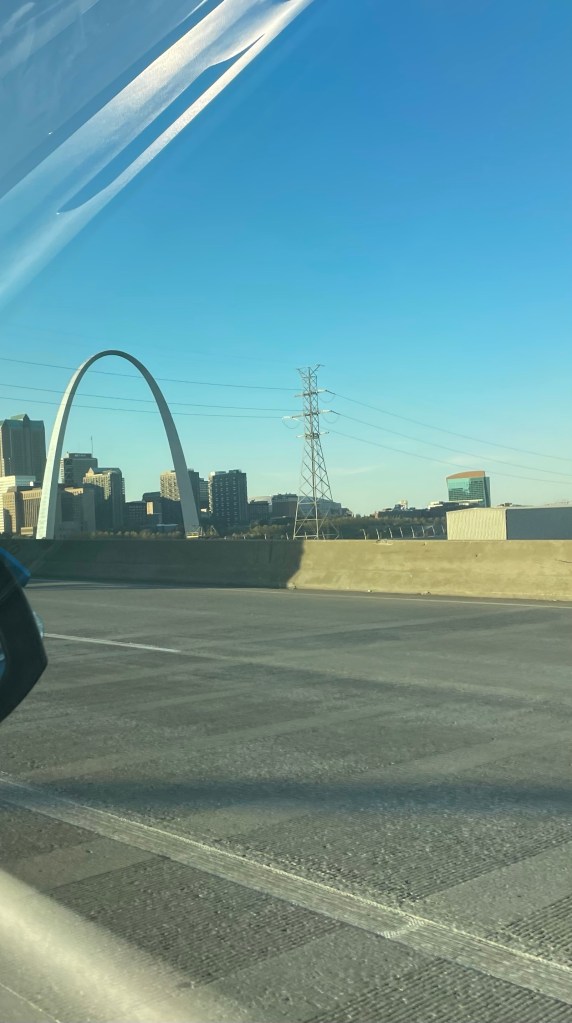
When we left Springfield, we knew that our trip was almost over. We spent the night in St. Louis, my husband’s hometown and visited with family. Then the next morning we headed home. We went through five state: Kansas, Missouri, Iowa, Wisconsin and Illinois.

My husband’s vacation is officially over. We have completed our road trips for the fall.  We look forward to the future when we can visit Israel in peace.

A Day’s Escape to Ft. Scott

20 May
The hospital, now Visitors’ Center.

In 1988 I went on a road trip with my parents, husband, and then two -year-old daughter.  My Dad was a big Civil War and also Harry Truman fan.  Since we lived on the border of Missouri and Kansas, he had sites he wanted to see.

We drove down Hwy 69 to Ft. Scott first to see the old historic site. It was in the beginning of its renovations and restorations. I just remember one building. From there we went to Silver Dollar City, Mansfield where we visited Laura Ingalls Wilder’s house (for my Mom and me) and finally on our way home, we stopped in Lamar, Missouri, to see Truman’s birthplace. This four-day trip was a highlight for my parents.

For me, there was just one place I wanted to return to, Ft. Scott.  For the last 33 years, I have been commenting that I need to go back and see what they did with the fort.  It is not that I haven’t been to the city of Fort Scott.  I have driven through it at least once a year on my way to Arkansas or other spots in Kansas. 

I have even stopped in Ft. Scott to visit the Lowell Milken Center, Unsung Hero Museum. This museum focuses on taking action to improve the lives of others. I was interested in it through my volunteer work with the Kansas City Section of the National Council of Jewish Women. We were involved in the development of the play about Irena Sendler: Life In A Jar, which is highlighted at the museum.

But I never got over to the Fort!  Each time I went it was raining, not a gentle rain, but a good Kansas downpour.

When I went the first time, in 1988, the renovations and restorations had only been going on for a decade. The Fort Scott Historic Site became part of the National Park System only in 1978. For a long time, From the late 1800s to 1978, it was part of the town of Ft. Scott.  Some of the buildings, that were not torn down, were used by town’s people as homes or community buildings, like a home for girls.  

In the 1950s community members started working to restoring the fort.  Most buildings are not original, rather recreations. Since 1978, recreations of buildings have been built around the common area.

The Fort was important during the time of “bleeding Kansas,” as Kansas and Missouri fought over free and slave states. In fact, during that time, two of the buildings were used as hotels. Across the square common area from each other, one was for those who supported a free state, the other was for those who wanted a slave state. Sometimes, violence broke out!!

During the Civil War, the Fort was used as a supply depot and hospital for Union soldiers. In the Visitors’ Center they have a room set up as the hospital would have been like in the 1860s.

For the past 33 years, I have been wondering, did it get completed? What happened? I have been wanting to see the Fort! I tried to arrange field trips with friends to take our children there. It never happened. I tried to get my husband to go with me. He did not have time to take the drive.

Finally, I completed my quest.   In the time of Covid, my husband had 25 vacation days that have to be used before July 1. He is taking every Thursday and Friday off for three months.  Good friends of ours drove down from Wisconsin.  Our first overnight company in 15 months.  We are all vaccinated.  I suggested a field trip to Ft. Scott. Most of the time we would be outside.  They agreed.

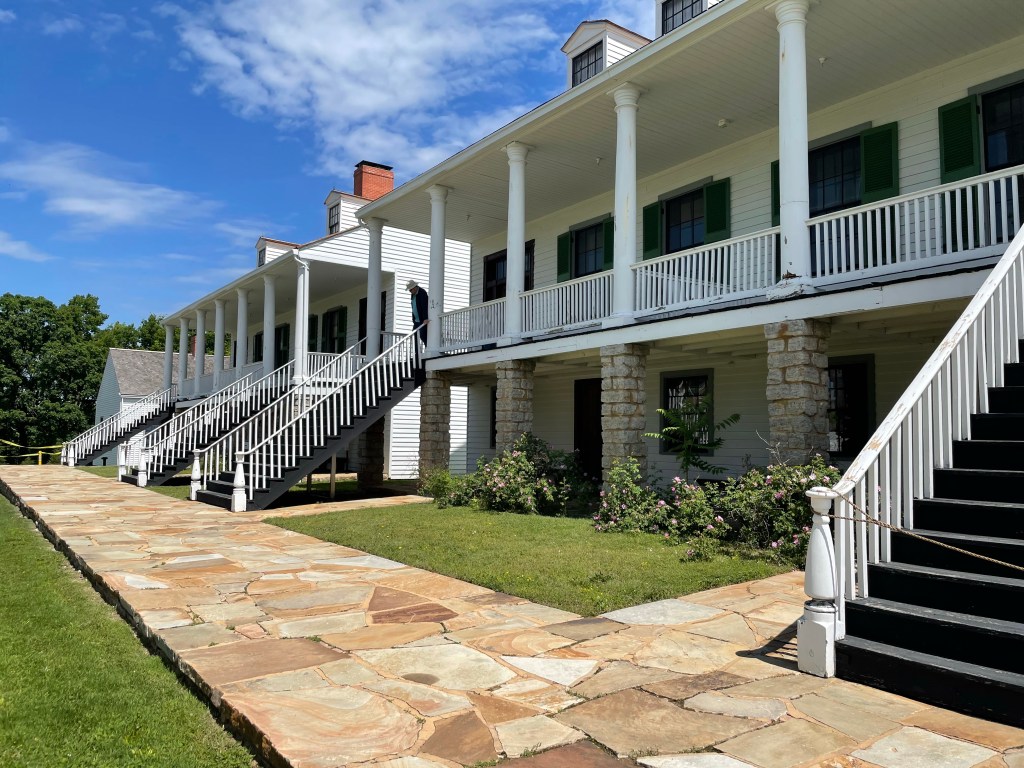
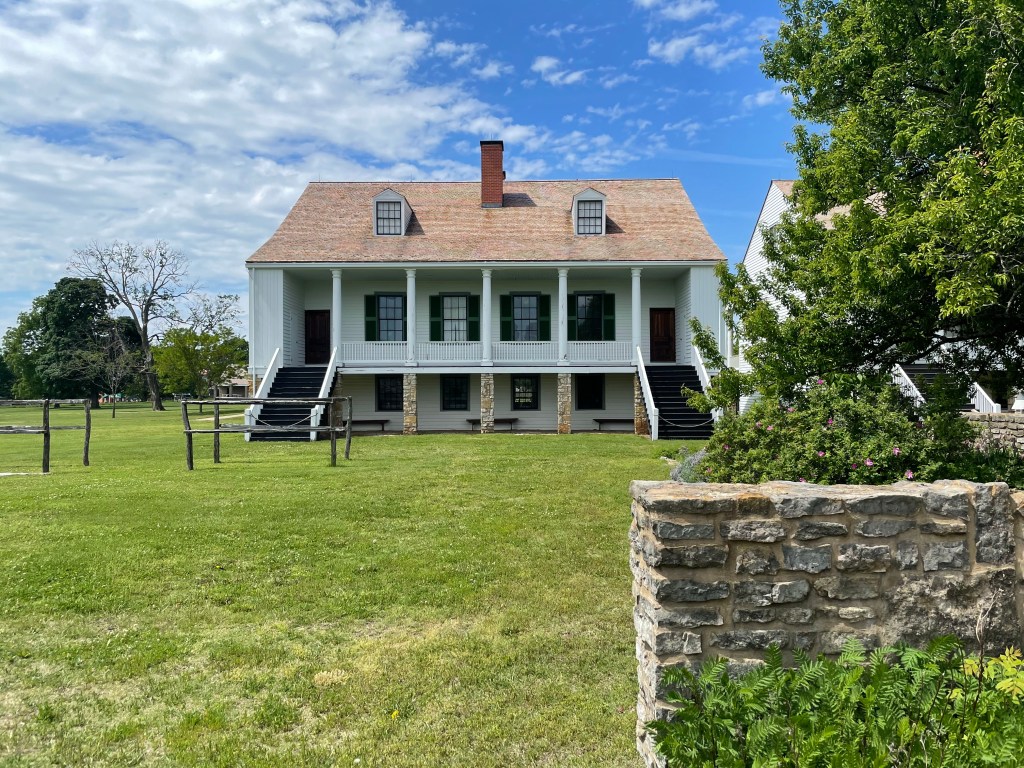
I have to admit, it was better than I imagined.  When we were there 33 years ago, the place was ragtag and a mess of construction.  Now it is a lovely well-organized group of 20 buildings that you can enter and see cannons and carriages; the places where supplies were kept and bread was made.  The best was the officers’ quarters. The building we entered was an original 1845 building.  It is the same building we went into in 1988.  This building had been a private home and then a school for girls.

There is even a Tallgrass Prairie planted with a trail, so that you can imagine yourself walking the prairies of Kansas in the 1840s.

We spent about 90 minutes walking around the grounds and into the open buildings.  Several of the buildings were closed for various reasons.  The Visitors’ Center, which once was the hospital, has a small gift shop, and clean restroom. There is no entrance fee to visit the historic site. It is opened almost every day until 5 pm. But even when the buildings are closed, you are still allowed to walk around the park.

After we toured the site, we walked across the street to a nice little Mexican restaurant and then walked through the quaint town, entering a few stores. 

There is one other museum I want to see in Ft. Scott, the Gordon Parks Museum.  Located on the grounds of the Ft. Scout Community College, the museum highlights the work and life of well-known photographer Gordon Parks.  I will get there one day!

To be honest, I enjoyed my day in Ft. Scott so much, I have decided that this one-hour drive will be added to my activities whenever we have out of town company.  It is a great way to spend a day.

Center of the common area. Across the way are the soldiers quarters and the stable.
The officers’ quarters. The building on the right, known as the Wilson/Goodlander Home.This is the building I saw in 1988.
The back of the officers’ quarters. They had private gardens.
Inside the hospital.
The bakery.
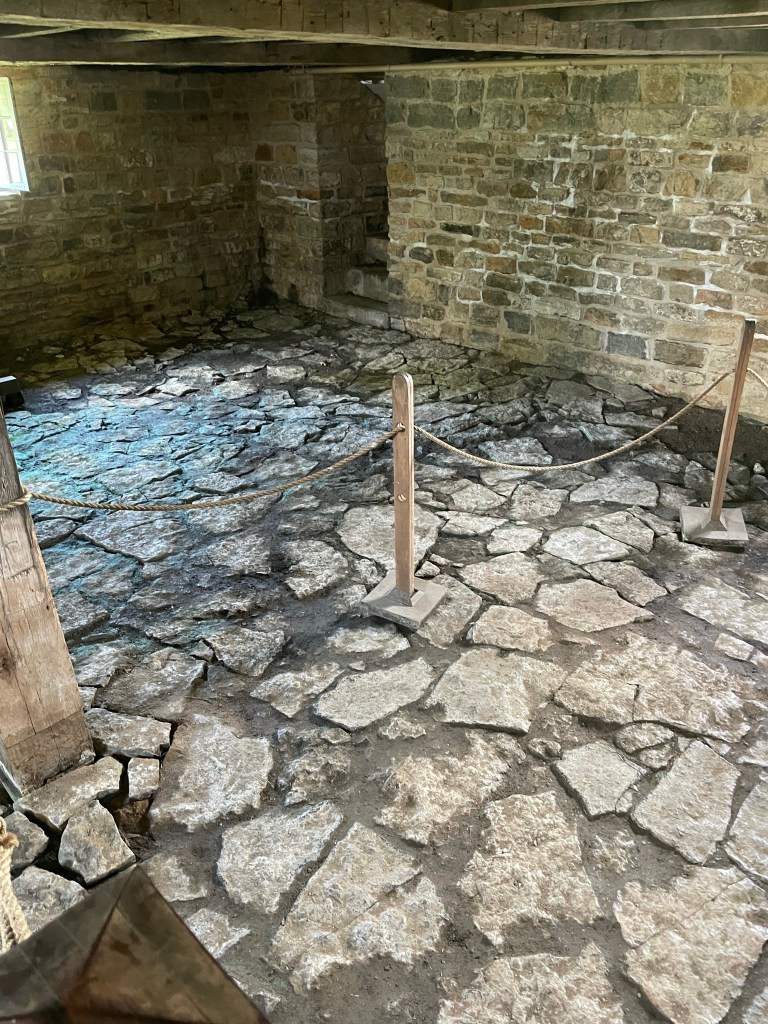
The basement of the storehouse. The stone floor is the original floor.
The prison.
The Tallgrass Prairie

https://www.lowellmilkencenter.org/
https://www.nps.gov/fosc/index.htm

http://www.gordonparkscenter.org

Watching Tango, Flamenco and Arabic Dance Performances is Like Watching Ballet

6 Oct

After years of ballroom dance lessons, by husband and I still dance whenever we have the opportunity.  But besides dancing ourselves, we enjoy watching other, who are much better, dance as well.

My favorite dance is the tango.   We never danced a true Argentine tango, we danced more of American ballroom tango.  We did learn a few basic and important tango steps like the ochos (figure eight swivels), corte (a sort of forward lunge for the woman), and the gancho (hook a leg around your partner’s leg).

Although we never became proficient in our tango, we have enjoyed watching others dance it professionally.    I loved the tango scenes in the movies Zorro and True Lies.  But to be honest Antonio Bandaras dancing a tango is quite nice whether it is in Evita, Take the Lead or Zorro.

A favorite for me is the tango between Richard Gere and Jennifer Lopez in Shall We Dance.  MY husband and I both loved that movie.  It was so fun to watch an awkward man, uncomfortable with dance, become better throughout the movie. This tango is the start of his ability to actually dance.  The movie reflects my husband’s improvement.  He started out not knowing anything about dance. But now he loves to dance.

UNADJUSTEDNONRAW_thumb_3e69.jpg

Tango in Buenos Aires. You can see the band above the dancers.

We have been to Montevideo, Uruguay, and Buenos Aires, Argentina, the two cities where researchers believe tango was created in the 19th century.  Of course, we had to go see a true tango, which we did while we were in Buenos Aires.  It was excellent.  The dance is so quick in Argentina, unlike the slow dance we do in American ballroom tango.

The group dances were invigorating, but I loved the performances best when it was just one couple on the stage dancing together. This is the moment that I thought I saw true tango.  This is the tango I wish I could dance!

I also love the music in tango!  At the tangos I have seen, musicians play the guitar and the bandoneon, which is a small accordion-like instrument.  But I have also seen when even more instruments are played, including violins, flutes and piano in addition to the guitar and bandoneon.

img_9757

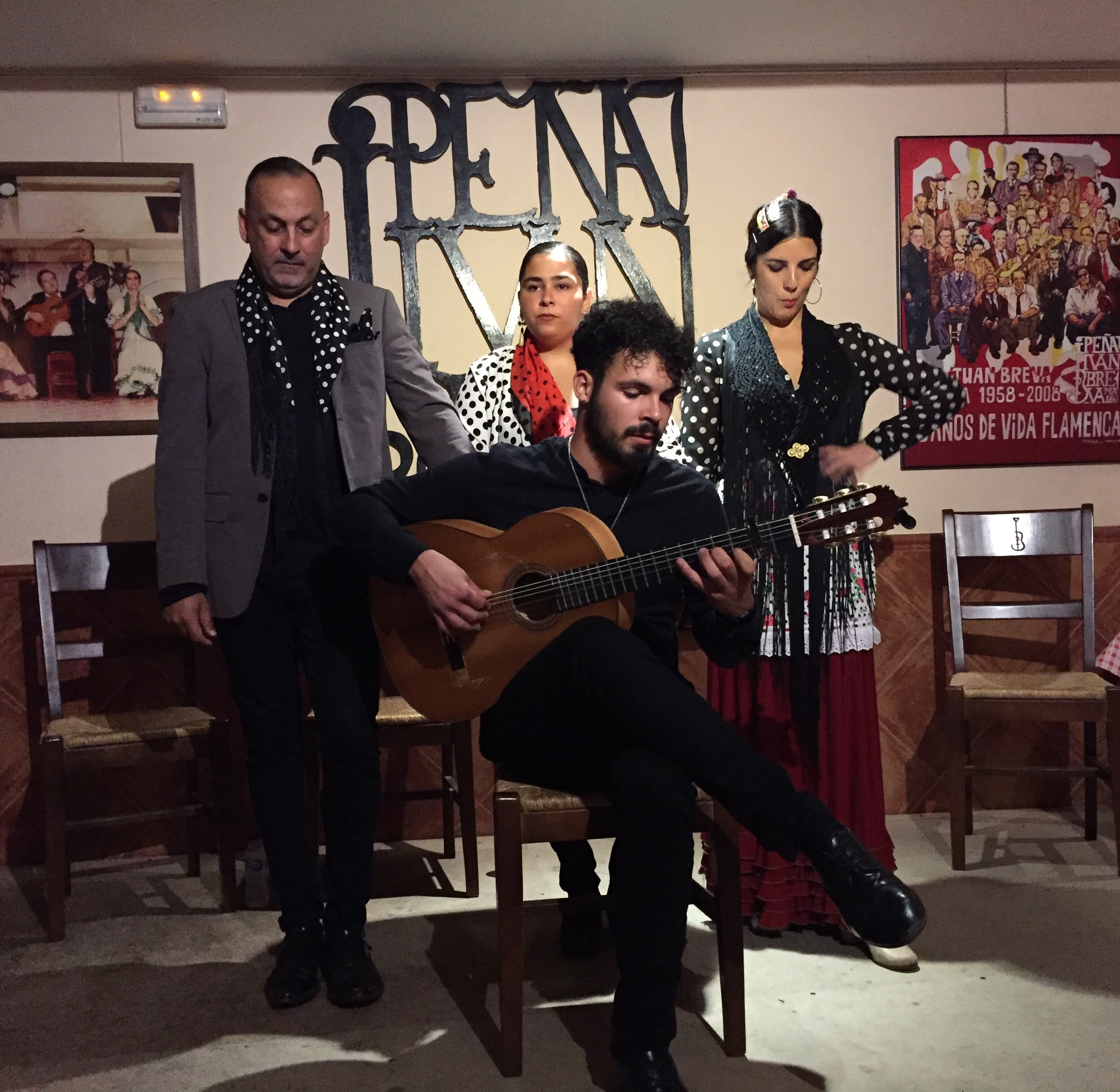
The group we saw in Malaga, Spain.

Instruments also play a part in Flamenco.  The guitar and a drum to sound the beat are usually played. Flamenco, which is a much older dance from at least the 18th century, is another dance we enjoy watching.  No one knows exactly how it started, except that it was different groups of people who came together in Andalusia, southern Spain, and the Flamenco was born.  For me in was interesting that there might even be a Sephardi Jewish influence in the dance.

img_9762

The woman in the red scarf sang with such emotion.

But Flamenco, unlike tango, has other important part besides the dancing.  There is the singer, who sings a story with unleashed pathos. Also, unlike Tango, one person can dance Flamenco, without a partner.

We have seen Flamenco danced in Barcelona, Spain; Malaga, Spain; and at a performance in Kansas!  That surprised me as well. But the group who came to a local college was wonderful and the performance was packed.

I admit that some of the Flamenco shows I have seen were touristy.  But even in these some of the performances were extraordinary. Flamenco is not a dance you can just learn for social dancing. This takes intense emotion, training and experience. However, you can still watch and appreciate the performance.

I will admit that to me the Flamenco reminds me of a belly dance or Arabic dance performance.  This is something I do know, as in my younger days I took years of Arabic dance lessons.  Like Flamenco, the older Arabic dance is a form of folk dancing, this one originating in Egypt.  I see in this dance and the Flamenco the movements of the torso and the hips and the intense emotion of the dancing and the artist.  It is also another dance, unlike ballroom dancing, where one person dances alone intent in his or her own emotions.

As I was doing research for my blog, I saw that there is a theory that this type of Arabic dance is one of the elements that combined together to create the Flamenco.

I love dancing.  But just like when I go to a ballet, and realize I cannot do what the wonderful dancers can do.  I realize I can enjoy the performance, which is exactly what I do when I see tango, Flamenco and Arabic dance programs.


https://en.wikipedia.org/wiki/Argentine_tango

https://www.tejastango.com/terminology.html


https://www.youtube.com/watch?v=b24a_2NPleg


https://en.wikipedia.org/wiki/Flamenco

https://www.britannica.com/art/flamenco

https://www.youtube.com/watch?v=ibaPTk0D5Xg


https://en.wikipedia.org/wiki/Belly_dance


Lovely Gardens and Amazing Fountains: Peterhof Palace

29 Sep


An afternoon at the Peterhof Palace is not quite enough.  When we visited this summer palace of the tzars, which is another UNESCO World Heritage Site, we only walked the gardens. But that is fine, we had already been at the Hermitage and the Summer Palace in Puskin.  I cannot imagine that the inside of the Peterhof Palace was any less grand than those. However, I do know that it seems a bit smaller.   What makes Peterhof unique are the unbelievable fountains and gardens.  Spending an afternoon walking the grounds was amazing.

I am quite used to seeing lovely fountains.  Living in the Kansas City area, we are used to seeing fountains along the boulevards, in historic areas and near and in the Country Club Plaza. In fact, Kansas City is referred to as the City of Fountains.  We so do love our fountains here.

Perhaps it is this affinity to fountains that made Peterhof so mesmerizing. But then I think anyone would be impressed.

Peterhof is like fountains on steroids!  The overwhelming size and number and variety of fountains is fantastic.  I use words like fantastic, amazing, overwhelming and awesome with a whole heart.

No one can come away without being amazed by the engineering that makes these fountains possible to run for hours every day without electricity.  Just water and gravity!  There are no pumps, just water from natural springs and one aqueduct fueling the incredible number of fountains. The gardens were designed by Alexandre Le Blond. I am not sure if he also did the engineering for the fountains.

Our tour guide promised us that we would see close to 200 fountains on our amble through the lower gardens.  I think we did.  Although I will admit that she counted all the water sprouts in each fountain separately. So what! They were still amazing.


There is the Grand Cascade and Samson fountain right behind the palace.  There is a children’s fountain with dancing waters. There is a secret fountain through a path of trees that sets a spray of water over anyone walking by. Personally, I especially loved the giant slide of a fountain, called the Dragon Hill Cascade. The statues of this fountain were buried before the Nazis got there and so survived the occupation.  You can see a display of photos explaining what happened.

Much of the Peterhof gardens, fountains and buildings were destroy by the Nazis in the Second World War. But almost immediately after the war, like with the other palaces, the country started work on renovating and repairing the grounds and buildings.  There are large photos that show what Peterhof looked like right after the war.  It is amazing what was accomplished!

img_5418

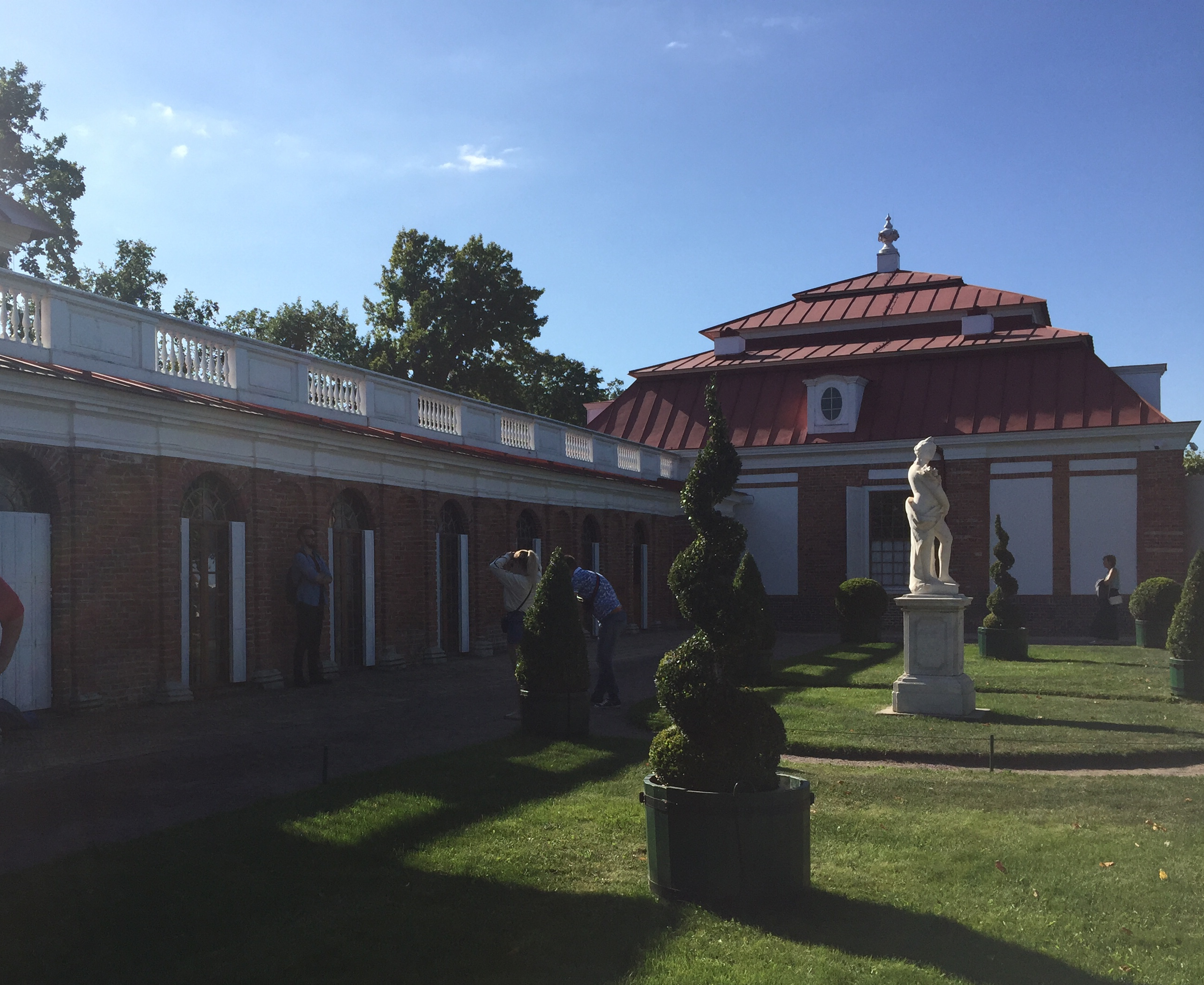
Peter’s private home.

Included on the grounds are other lovely buildings, including  a much smaller ‘palace’ that Peter the Great actually designed and stayed in.  It is lovely and quaint from the outside. We could peek into the open windows to see inside.  But it is the view from the rear of the building that catches the attention and you understand why the tzar wanted to stay in this quiet home.  The view of the Gulf of Finland, which leads to the Baltic Sea, is lovely.  It is so peaceful there, I can imagine him sitting by himself and just relaxing! Can a Tzar relax?  If yes, this is just the place.

img_5411

A lovely greenhouse. One of my favorite buildings.

If you enjoy walking outside admiring gardens and fountains, then Peterhof should be on your list to see.   To be honest, I went serendipitously as it was part of my tour.  It was a day well spent.


https://www.britannica.com/place/Peterhof


https://en.wikipedia.org/wiki/Peterhof_Palace


Braille City Maps of Germany Delight Me

22 Sep

Our first stop in Germany was in an area that once was East Germany and part of the Soviet Union.  While many people from our cruise ship chose to take a train to Berlin, we decided to visit another Baltic City and UNESCO World Heritage Site, Wismar.

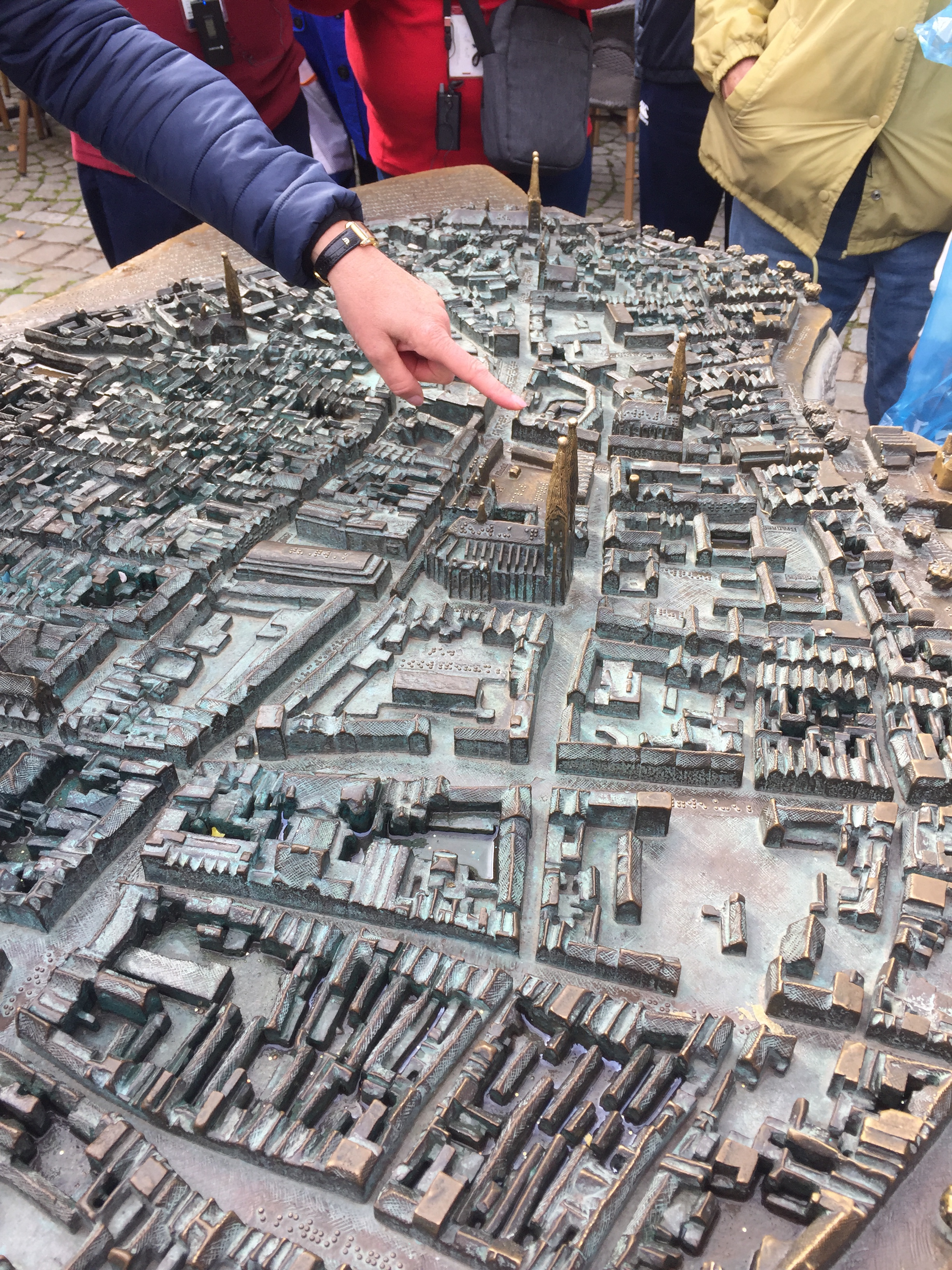
The first place we went to in Wismar was the center town square, or Market Place.  Our tour guide, a college student, first told us about the square and its important architectural structures, then walked us to a wonderful metal 3-dimensional, braille map of the city. When we arrived, a blind man and his care giver were at the map.  The man was examining the map with his fingers, as the woman explained what each place was, naming streets and buildings.

img_4873

Map of Wismar

Our guide waited a bit, then asked politely if he could talk to us about the map. (I was glad to know I still understand German, even though I have not used it in 20 years.)  Most important, I was impressed with the map.   I asked the guide if Wismar had a school for the blind, and so the map was there for this purpose.  He asked the care giver, who replied that was not the case. The map was just there for anyone to use.

That was that, or so I thought.

img_4878

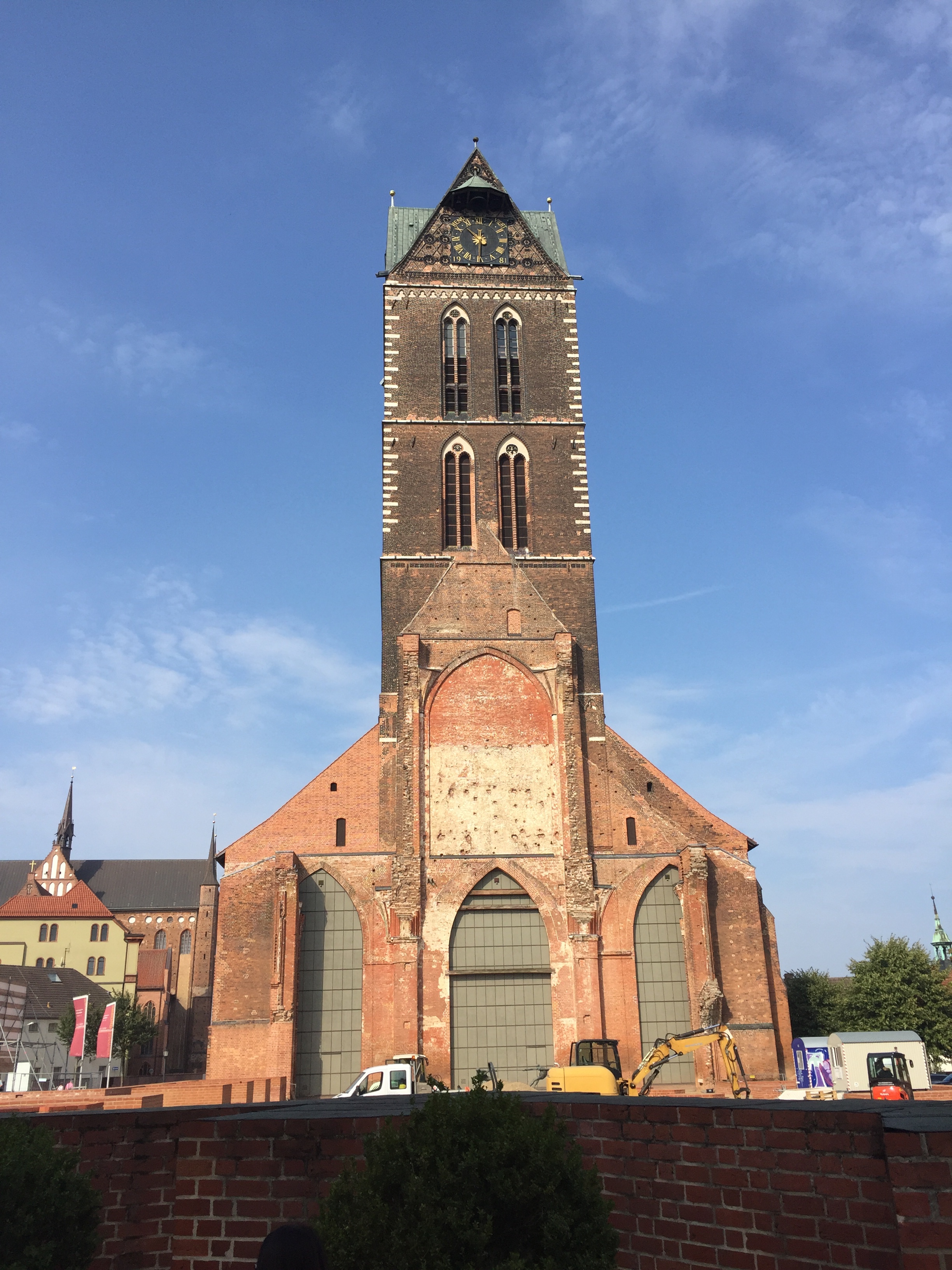
St. Mary’s Church tower.

As we walked our guide told us about Wismar and the bombing damage during World War 2.  Two churches close to the town center, St. Mary’s Church and St. George’s Church, were heavily damaged.  Although St. George’s Church was rebuilt, St. Mary’s has only its main tower remaining and the start of a park that will be in the shape of the outline of the original church.

img_4886

When we got to St. Mary’s Church. I was surprised to see another braille map this one detailing the destroyed church and its environs.  It was being examined by the blind gentleman we had seen earlier.  We waited until he was finished, then we walked over to examine the map ourselves.  It was interesting to see the details of the church from before the war.

After viewing this map, we visited both churches.  The St. George’s Church has been rebuilt, but nothing remains inside. It is now used for concerts because the acoustics are excellent.  Inside the remaining tower of St. Mary’s Church are some displays about the churches in the city.

We signed up for this tour for another important visit, to the one brewery in Wismar.  Centuries ago, there were almost 200 breweries in the town.  During the Soviet occupation, all breweries were closed and the beer came from other cities.  In 1995 Herbert Wenzel purchased a building that had been a brewery in the 15th century.  It is now the only brewery in Wismar.  We visited the now named, Brauhaus am Lohberg zu Wismar, and tasted three of its beers.

Although the brewery, the port and the town center were all delightful and gave good reason for this to be a UNESCO heritage site, it was the braille maps that gave me the most joy.  What a great idea!  And to see someone actually using it made it so much more meaningful.  I loved these two maps.

I thought when leaving Wismar, I would not see them again.  But I was wrong.  The UNESCO World Heritage Site of Lubeck also had a braille map that was used by our tour guide to explain the old city to us.  I really enjoy seeing the city from an overview.

img_5763

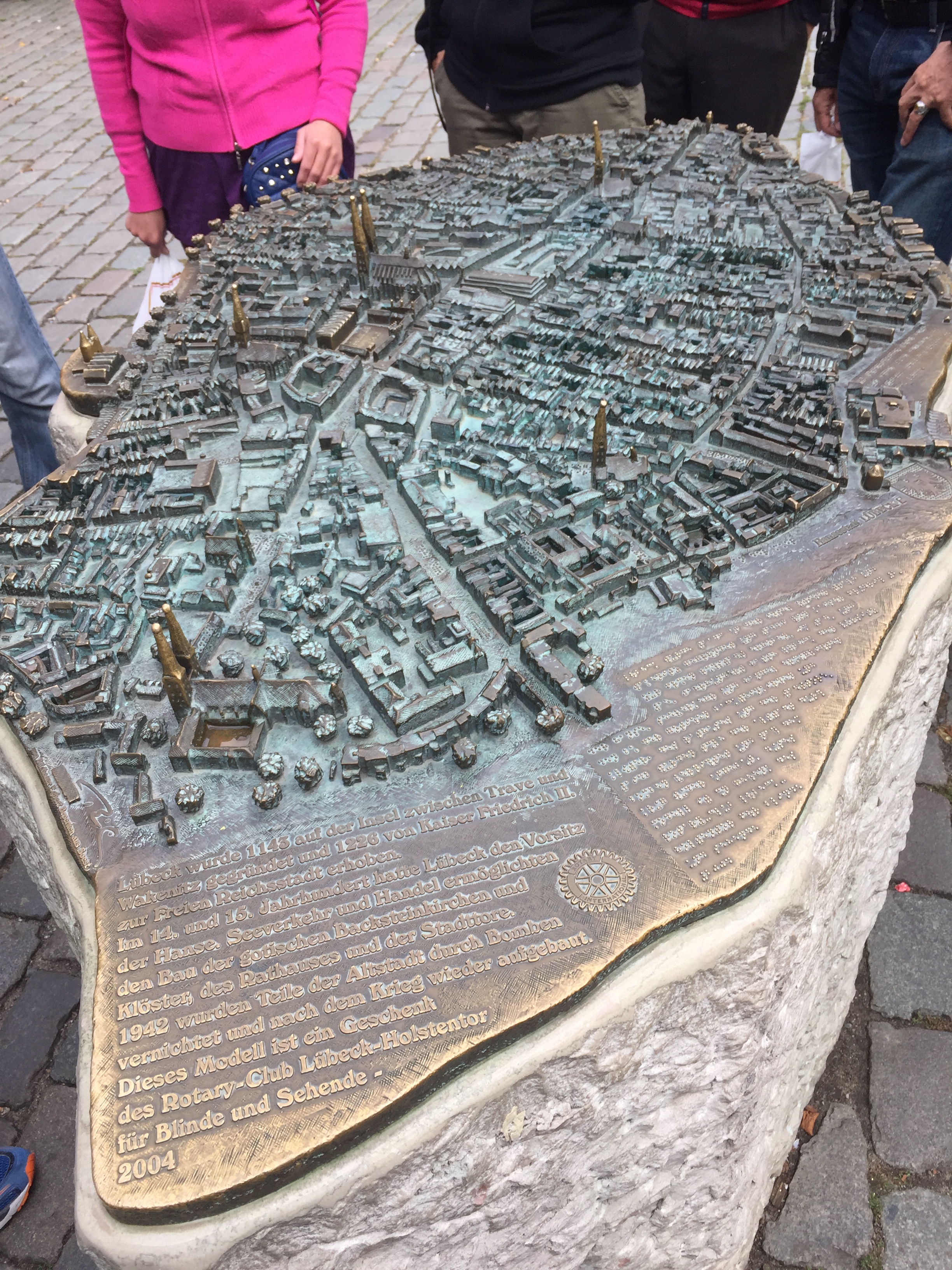
Map of Lubeck

I was very curious about these maps.  Were they a German government idea? I thought maybe a UNESCO plan? I did not see these maps at any other UNESCO World Heritage Site.  When I looked back at my photos, I realized he map in Lubeck had a big clue.  On the map was a note in German that mentioned that the map was a gift from the Rotary Club Lubeck-Holstentor and said the maps were for the blind and sighted people.

img_5761

Map of Lubeck with information about donors

That helped.  I knew that Rotary Clubs do community service and specifically have activities for the blind.  In 2017 Rotary International joined with the International Agency for the Prevention of Blindness (IAPB) to combat blindness.  I am assumed the map in Wismar was also donated by a Rotary Club, but I was wrong. When I looked back at my Wismar photos more closely, I saw that this map was donated by a large number of organizations, starting with the Lions Club of Wismar.  I am aware of what Lions Clubs do as well.  I often donate my old eyeglasses to the Lions Club!

I personally would like to thank the Rotary Club of Lubeck-Holstentor and the Lions Club of Wismar along with all the other organizations for these great maps!! I have an affinity for anything that helps the blind and vision impaired.  My mother was blind in one eye due to childhood accident.  Throughout my life, she constantly dealt with issues concerning her eye and was vigilant in making sure we had good eye health.  These maps delighted me and touched my heart.


https://www.rotary.org/en/rotary-partners-international-agency-prevention-blindness


A Fairy Tale Country, Estonia

21 Sep

img_5012

Spending a day in Tallinn, Estonia, was like being inside a fairy tale country.  I loved the old city with its quaint streets, towers and churches.  Tallinn is a UNESCO World Heritage site, and it deserves that status.  But more than then the look of the country was the feel of the country.

img_4983

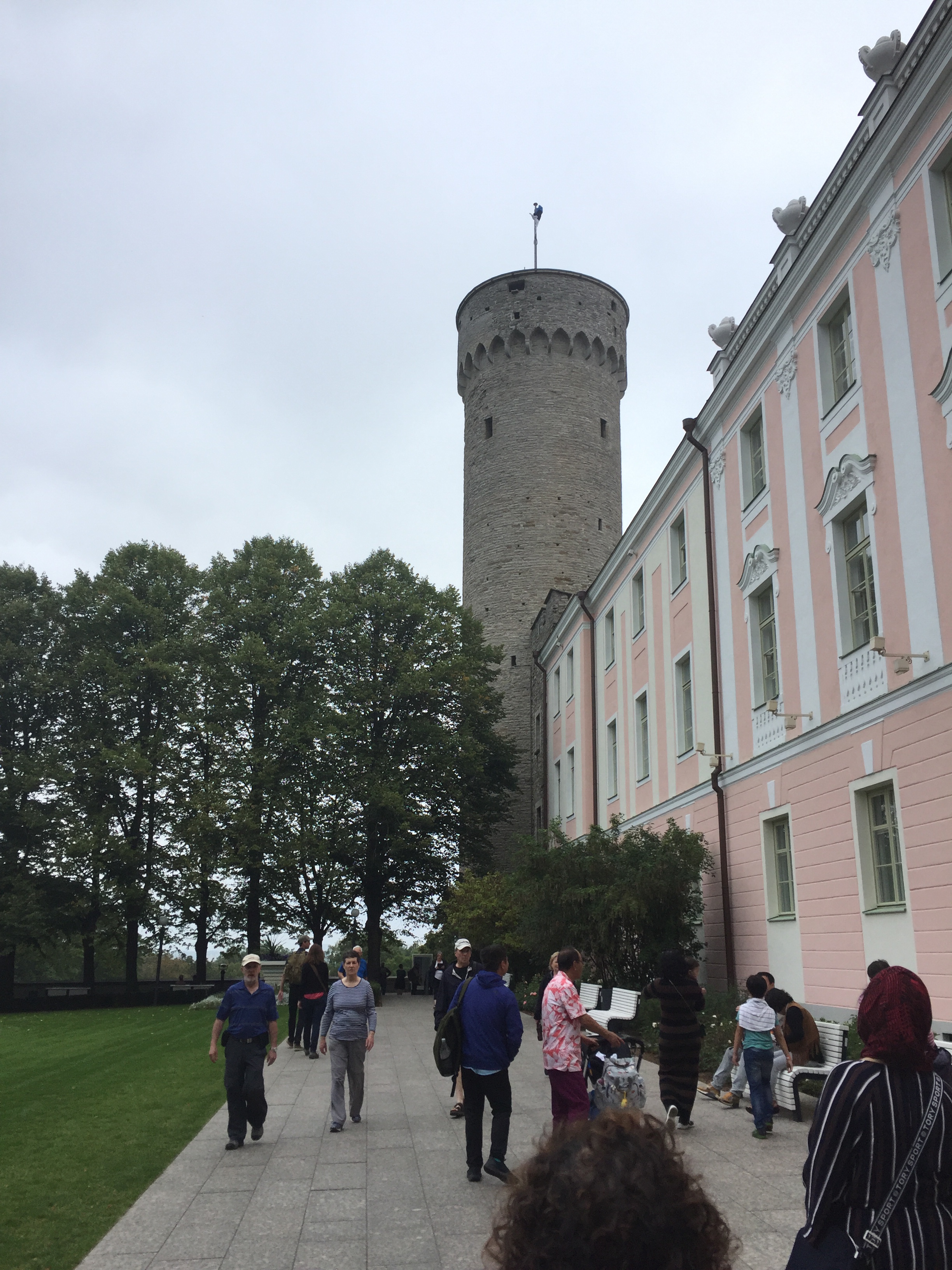
The tower is called Tall Hermann

I love that they name their towers and weather vanes.  I love the magical feel of the old city and its cobblestone walkways.

Behind the beauty, Estonia has had its hardships.  Torn between two powers who wanted their ports on the Baltic Sea and its resources, both Germany and Russia/Soviet Union invaded Estonia many times over the years.  But in 1939 the worst happened when Hitler and Stalin signed a treaty dividing Estonia between the two and the two powers invaded Estonia from different sides of the country.

Our tour guide in Tallinn, a lovely young woman, told us that this was the worst.  People were torn between choosing between two evils.  And the Soviet Union proved to be a great evil, taking over the country and killing or deporting all the political and business leaders.

The only positive I see from this however, is this occupation saved the majority of Estonia’s Jewish population, which was about 4000 before the start of World War Two. By then end of the war, about 1000 of Estonia’s Jewish residents were murdered in the Shoah. The others had escaped into the Soviet Union and so survived. After the war, 1500 Jewish residents returned.

After World War 2, Estonia entered a 50-year occupation by the Soviet Union. Estonia was terrorized.  Our guide explained how all access to the Baltic Sea were closed by the Soviets, who put military bases there. People could not get out.  Help could not get in. She explained life as lived by her parents and grandparents.  It was not a happy time.

img_4966

A statue of Ernesaks overlooks the Song Festival Grounds.


But in Estonia, they came up with their own way of revolution that did not included guns or violence. The Singing Revolution started with the singing of the national song, “Land of My Fathers, Land That I Love.”  For years they sang this song in rebellion against Soviet rule.  Gustav Ernesaks, the “Father of Song” for the country who helped start the song festival movement, helped in this non-violent rebellion. The singing events were held on the Tallinn Song Festival Grounds.

The Singing Revolution lasted four years. Multiple songs and citizens singing saved Estonia!  Tallinn is also known for the large chain of people, over two million, that spanned from Tallinn to Vilinius in August 1989.  Singing songs and then slowly moving forward with small steps of rebellion and independence worked. By 1991, Estonia gained its independence.

Along with the freedom for all Estonians, came renewed freedom for its Jewish residents after 1991.  In 2007 a synagogue opened.  Today about 2000 Jewish residents live in Estonia. It is a small but secure population.  According to our tour guide and to what I have read, the Jewish population lives in comfort and without any issues thanks to a law that protects all minorities in Estonia.  There is a synagogue, a Jewish Day School, a Jewish Museum and a Jewish Community Center. I wish I could say that I visited all these Jewish sites, but I did not.  I wish I had researched Tallinn before I went. So I put links below to the Jewish sites of Tallinn.

img_5030

I loved my day in Tallinn.  Visiting this UNESCO World Heritage Site was a lovely experience.  Somehow, it seemed appropriate and joyful, to see a bride.


https://www.ejc.ee/templates/articlecco_cdo/aid/304672/jewish/History.htm

https://muuseum.jewish.ee/

Lessons I Learned While Traveling Through Countries Along Baltic Sea

16 Sep

During our two-week cruise of the Baltics, we visited Holland, Denmark, Germany, Russia, Finland and Sweden.   I never realized how close these countries are to each other, just hours away across the Baltic.  And I never realized how intertwined their histories made their peoples and languages and flags!  The architecture repeats itself in every city as influences of Sweden, Denmark, Holland, German and Finland structures can be found in all the cities, and a combination of these styles.

I met many tour guides.  Some were better than others.  But several gave sound advice that I want to remember forever.  In fact, I need to share them.

img_5660

Typical steps of unexpected heights!

We spent two days in St. Petersburg and had an excellent guide on our first day.  A retired engineer, she was now guiding tourists through the maze of royal palaces.  Her excellent advice: “Be aware of steps/stairs of unexpected height.”   I think it was her engineering background speaking. But it was so true.  With the cobblestone streets and the old buildings, many times we faced stairs and steps of unexpected height.

Often as we crossed the street or entered a building she would intone, “Be aware of steps of unexpected heights!” Her words resonated through my mind many times during the nine-hour day of touring.  I think, thanks to this lesson, we never fell, we were always aware, no matter what country we were in.

Another day in St. Petersburg, another tour guide with a different message. (She was a retired college professor.) “Don’t demonstrate your water bottle.”   I think what she was really saying is don’t make a big deal out of things.  It was very hot when we were there. Unexpectedly warm.  And many people had water bottles with them.  I kept mine on the bus. But others, especially older adults, needed their water.

However, at certain places, you are not supposed bring a water bottle in.  However, with the heat, they were making exceptions.  So, our guide said.  “Water bottles are not allowed, but don’t demonstrate your bottle. Put it in your back pocket and go through security.”  I guess if the guards wanted to take it away, they could. But not hiding, while at the same time, not making an issue of it, was the best policy. Thus several of our comrades on the tour kept their water bottles with them throughout.

In Denmark, I learned two important lessons.  The guide we had on a day when it was pouring rain, told us that in Denmark the saying is, “There is no bad weather, only bad clothes.”  I concur.  I had packed our Land’s End raincoats and good walking shoes.  We stood in the rain, without getting really wet, as the water skimmed over our coats, while others were drenched.  Meanwhile,  all around us, the Danes walked freely without umbrellas, ignoring the weather and  just strolling through town in the rain.

img_6038

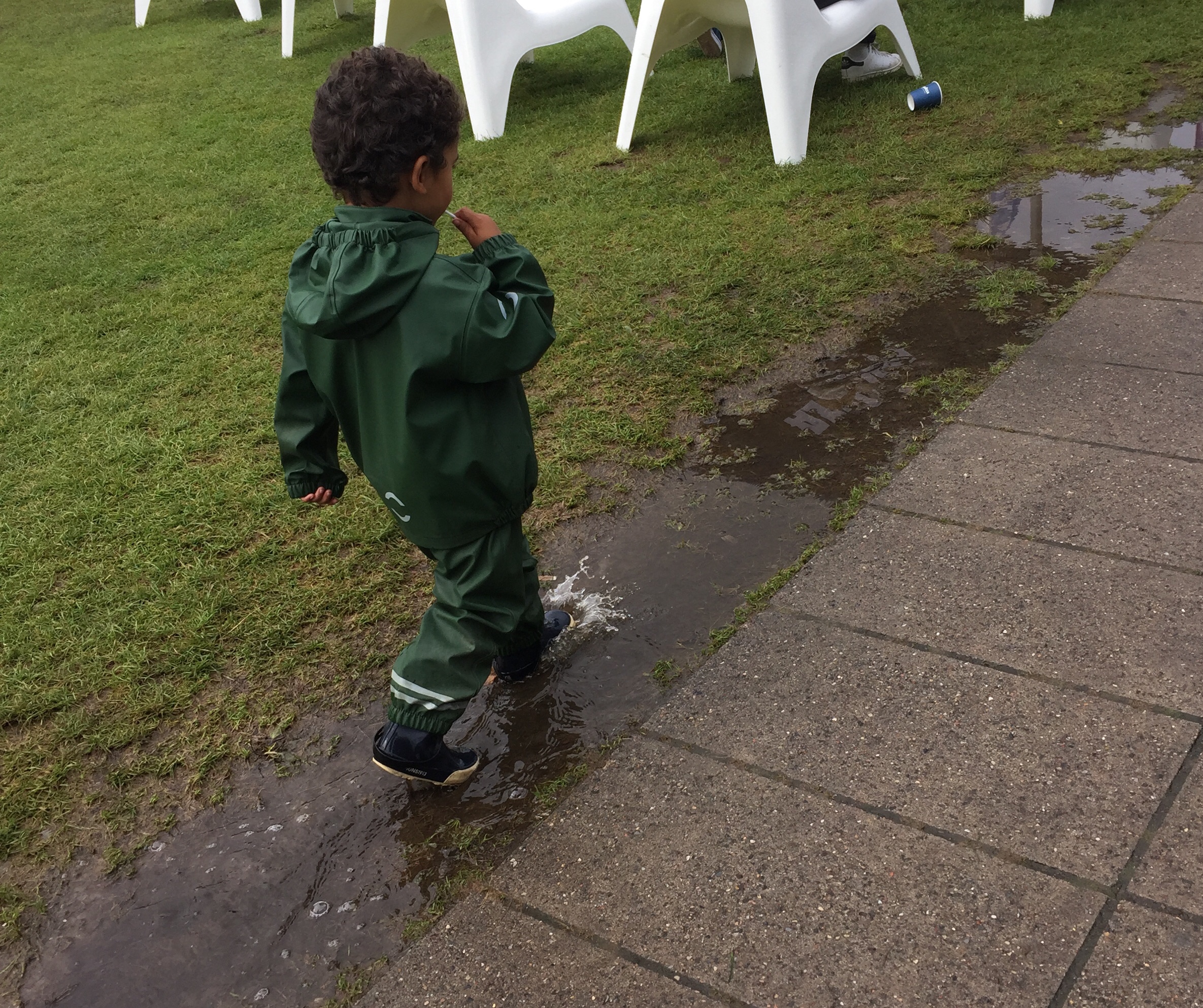
He was wearing good clothes as he splashed in the puddles.

I especially enjoyed seeing a young boy dressed in his very good rain clothes and boots splashing through all the puddles in a park as his Mom pushed his stroller as she ambled along next to him.  Good clothes do make a difference!

I will admit, the first tour guides words resonated with me during the rain in Denmark. As we walked the cobblestones and the steps of unexpected heights, I looked down and carefully placed my feet on the wet and slippery walkways.

The Danish tour guide’s other lesson was that umbrellas are not needed because they don’t work. Also true.  I had an umbrella at the beginning of the day. While we walked the streets of the city, it seemed fine.  But by the time I returned to the ship, the only place for that twisted and ragged umbrella was the trash.  You do not need an umbrella in Copenhagen or Arhus.  You just need good clothes!

I loved our tour guide in Stockholm.  She had an attitude that I appreciated.  The problem with most tours is that some people are always late, taking up time from everyone else.   She kept a steady pace wherever we went, shouting back to the slower walkers, “You can’t get lost, there is only one way to go …straight.”

She told us outright, when we left for a short period of time on our own, after she showed us the main square, that if we did not make it back to our bus at the assigned time, she would assume that we were staying in town.   We were adults and we could find our own way back.

And I appreciated that she said that, but then her soft side showed.  We had one woman on our tour who walked slowly using a cane.   When she and her husband were not back at the bus on time, our guide said, “I am just going to check the corner to see if they are coming.”  We all agreed that was a great idea.  And it was, as the couple were slowly moving up the hill and being careful on the steps of unexpected heights.