Archive | Catskills RSS feed for this section

The End Of Our Kauneonga Lake, Catskills Era

25 Nov

October was a bittersweet month for my siblings and me.  We sold our family home in Kauneonga Lake.  It has been in our family since 1962.  Since the late 1920s, my family has had a summer home in the Catskills of New York.  It was not an easy decision.

My grandparents first started visiting the Catskills before my mother was born in 1929.  They wanted a place away from the city, a place that would remind them of the home they left.  Grandpa from Trzciana, Mielic, Austria (now Poland); and Grandma from her home in Bolesslawiec and Viroshov in Poalnd.  Grandpa told me once, that when he was in the Catskills he could think of his family, who perished in the Shoah, and remember happy times.

I don’t know the exact year that they purchase their first place in Kauneonga Lake.  But by the 1930s they had a summer home and owned several acres of land directly across from Kauneonga Lake.  Soon they started building a small bungalow colony where they would rent bungalows out up into the late 1970s.  Eventually they sold off the bungalows individually along a road that is named after them.

Among the people who purchased the property were my two first cousins from the other side of my family.  Thus, although, my siblings and I no longer own any of the property.  We have family members who still remember the bungalows and are living on the property. Our cousins spent every summer in the Catskills with us, our parents, our grandparents, our aunts and uncles and many people who became more like family than just summer friends.
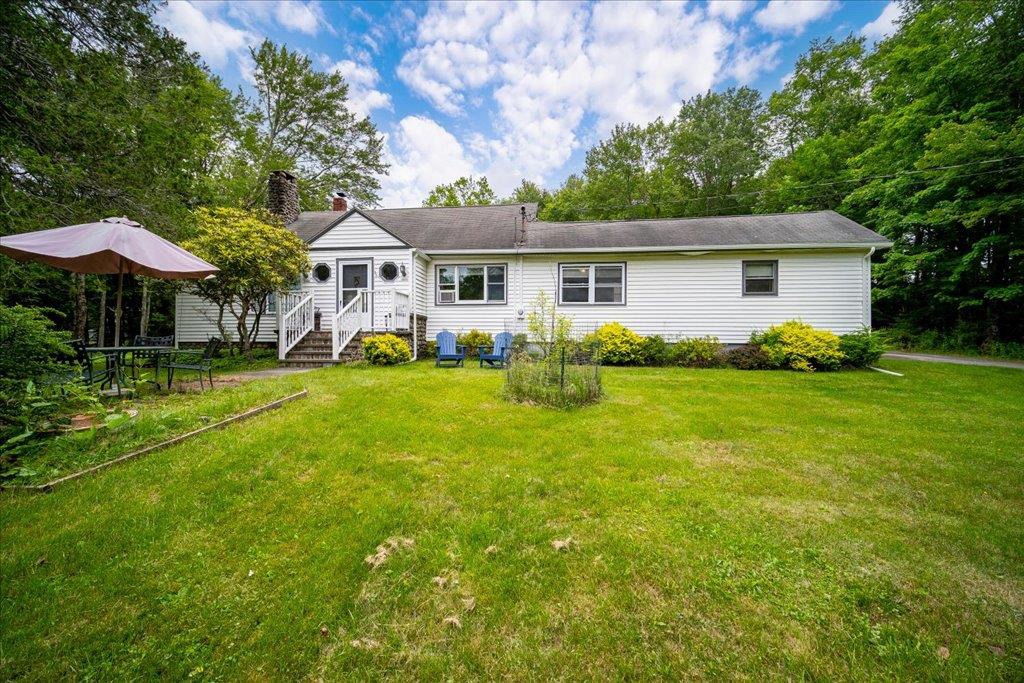
My grandparents had friends among the other colony owner and locals. We knew the plumber, the egg farmer, the trash man, the electrician and many of the business owners.  In the 1960s my grandparents decided that they wanted an all-year house in the Catskills.  They purchase a house on four acres that also had a bungalow.   The house had been divided into four little apartments. My grandparents began the process of making it one home again.  Enlarging the kitchen.  Added on a one-bedroom apartment.  Fixing the attic apartment and turning it into two bedrooms and a bathroom. They built a garage since they planned to stay there in the winters as well.

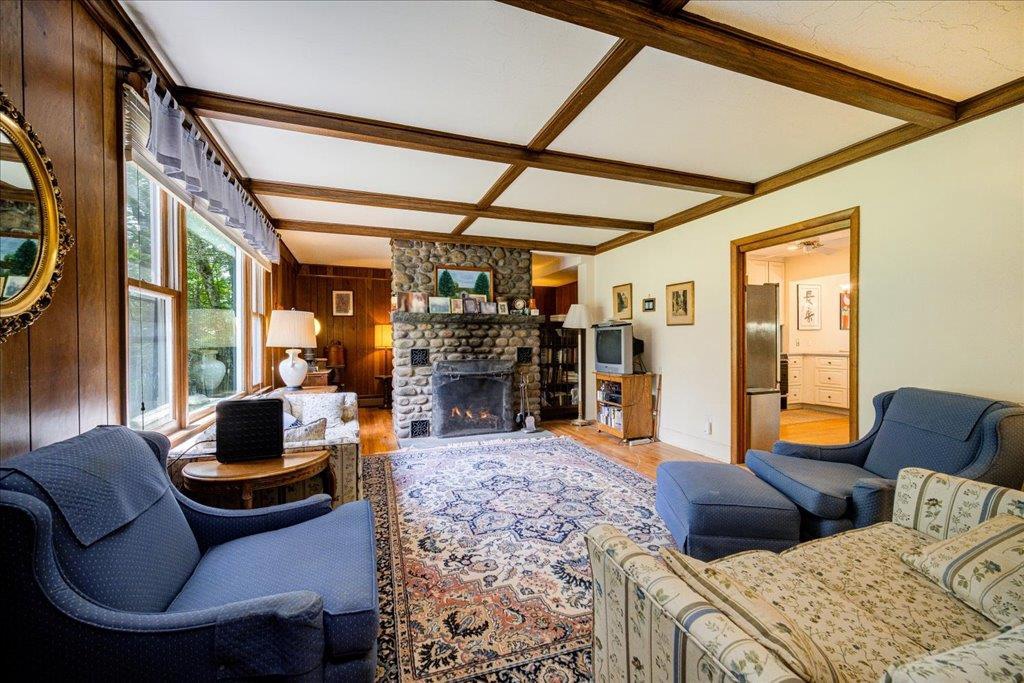
The best thing they did, in my mind, was creating the room that eventually became known as the stone room.  It was originally an outdoor patio that connected the house and the garage. But in winter it was so cold, that they closed in the two walls and put on a roof.  But kept the stone patio floor. The only thing they did that I hated, was removing the little eating nook that had a table and two benches. I loved sitting there. But it disappeared in the renovations and became part of a real dining room. Among the best permanent parts of the house is the wonderful stone fireplace and stone steps.

The most important thing they fixed was the furnace. When they first purchase the house, it had a coal burning stove and an open fire furnace.    You could see the fire from the furnace through a grill in the floor.  Soon that was replaced with a regulation furnace.  The coal burning stove was lovely. They did not get rid of it.  It was put in the basement where my grandfather used it to bake.

Everyone at the bungalow colony and in our family called it the Big House.  My grandparents moved in and started renting their bungalow at the colony, and eventually we moved up to the bungalow behind the Big House.  Leaving the comfort of the bungalow colony, but enjoying more space.

It was in this house that I learned to braid challah from my grandfather.  He had moved some of his bakery supplies from his New Jersey bakery there.  He baked for us and for the shul.  I loved watching his technique. He never measured anything with a measuring cup.  He would just put it up in his hand, shake it a bit and put it in the mixer. He taught he how to braid challah with one braid or with two. He showed me how to make a round challah for the holidays.  But I never learned his recipes. Mom and I tried to write them down, but they weren’t the same when baked.

It was in this house that we watched the walk on the moon in July 1969.  It was in this house that we watched the endless line of people walking up West Shore Road to Woodstock.  From our house it was an additional two miles up and down hills to get to the site of the concert.  We could feel the ground vibrate and hear the music and the announcements from our home.

Here we would lie on a blanket in the grass and watch the meteorite showers and sometimes see a flash of the aurora borealis, we would find the constellations. On rainy days it is where my friend and I would read Nancy Drew books. Our parents arranged to buy different ones in the series so we could switch when we finished. It was here that my grandfather and dad had a giant vegetable garden, and we all learned how to grow and harvest vegetables.

We would see deer, bears, woodchucks, rabbits, skunks and other forest creatures. 

We played cards and mah jong, ate meals and made memories with my grandparents, parents, relatives and friends.  The house was our summer world. And all year long we waited impatiently to return.

It was in our house that we sat shiva for my grandmother. She died in August, when all the summer people and the locals were there.  I won’t forget it. The plumber, Ab, and my grandfather, Nathan, were best buddies.  So great that when my grandmother passed away, it was Ab who took me to the hospital to sign papers and identify my grandma in death. My grandpa and my mom stayed at our house.  I will never forget the ride there and the ride back.

 It was members of the Catskills congregation of Beth El that prepared the house for the shiva after the funeral.  And that the locals and summer people came to tell stories and remember her, along with our family and the summer renters.  My grandparents, and my parents and us, belonged to the Congregation Beth-El, where my grandfather was a Cohen, so went to services often.  As a retired baker he often made goodies for after service kiddushim.  And I know there is a window that they sponsored. I think it is in the balcony area. We always went to the shul in Kauneonga/White Lake for the high holidays.

My grandfather died eight years later. It was November, so we sat shiva in New Jersey.  It was 1989.  He had over 60 years enjoying the Catskills.

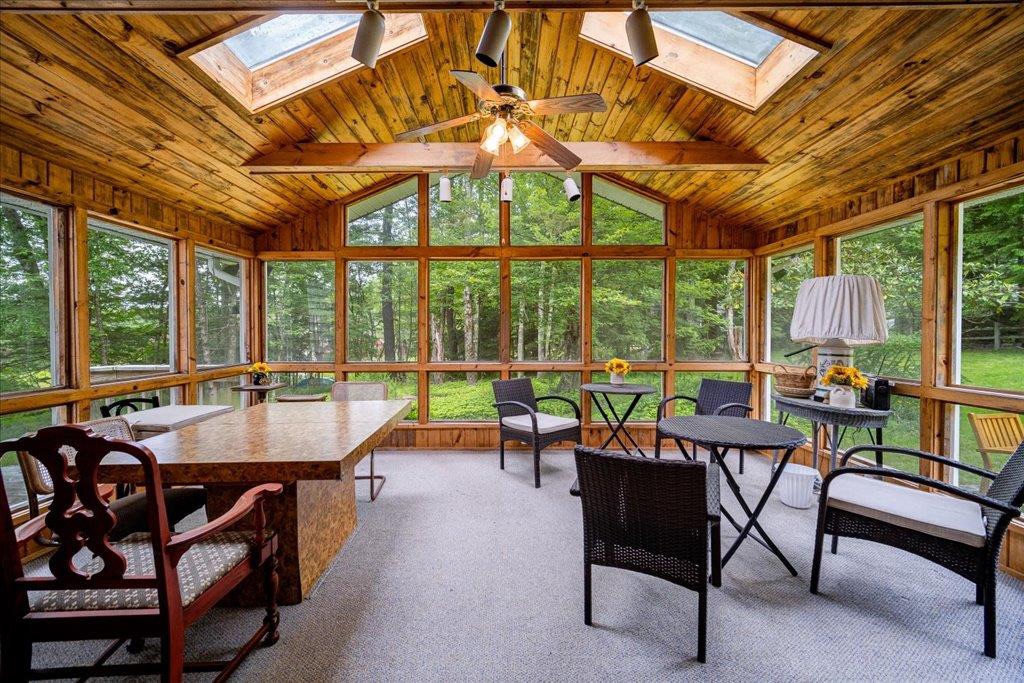
After my grandparents died, my parents became the owners of the house. They remodeled the kitchen, and they added a screened-in porch.  They enlarged the master bathroom and added an on-suite bathroom.  Every wall they opened they had to update the electric from knob and tube and replace the plumbing.

It was this house that eventually we would bring our children for summer visits.  And down at the lake we had a dock where my dad had a ponton boat. My children loved their yearly two-week visit to New York and New Jersey. They got to see so many cousins and go out in the boat and run around outside in the rain.

But since my parents died nine months apart in 2010 and 2011, we have not used the house the way it should be used.  One of my nephews did live there for two years during Covid. Then it did have some love and attention. But for most of the time, it was used once or twice a summer for a long weekend.  It was not getting the attention or love it needed.
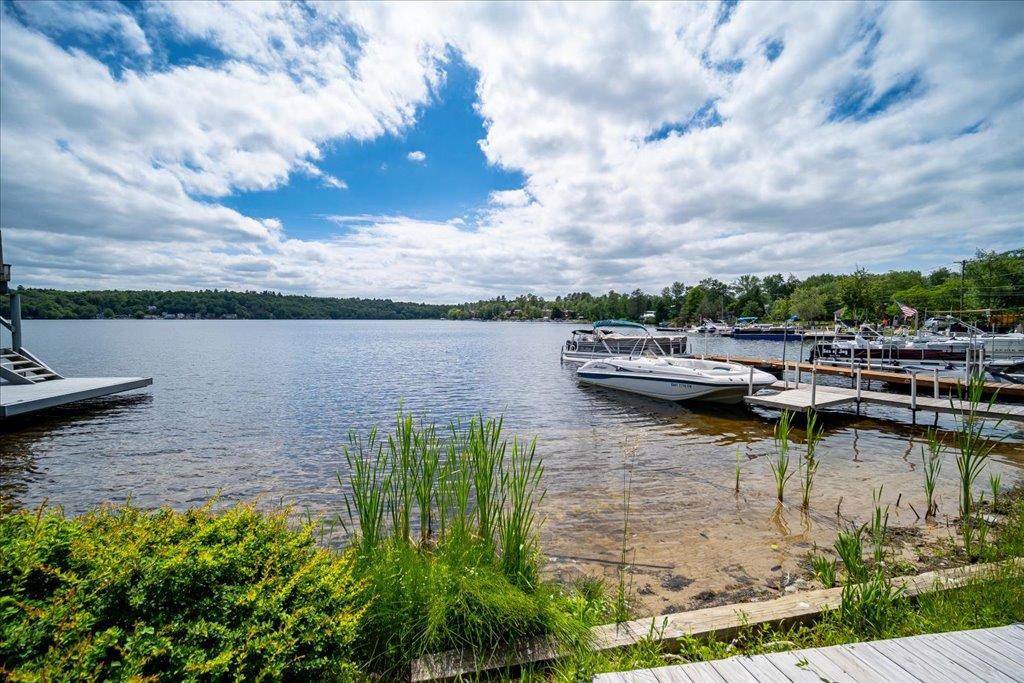
Our Dock spot.

Two years ago, we made the decision. The house needed to go to a family who would actually use it.  With our lake frontage, it was the perfect home for someone who liked boating.  This year we put it on the market.  In August we had one last family weekend in the house as we sorted through everything and packed it up.

Then in the evening, my niece asked us to tell her stories about the house and the summers.  My brother, sister and I shared our memories. We laughed, we teared up, we remembered our parents and grandparents.  It was a great way to say goodbye to our house. 

Even though the house has been sold, and another family now owns it, we have 60 years of memories that will never go away.  And with our cousins still at Kauneonga Lake each summer, we have a place to sit on the beach if we like and talk about the past and plan for the future with our cousins whenever we want to visit.

With our children spread out across the country and overseas, our time as the owners of the Big House has ended along with our family’s long saga in the Catskills at Kauneonga Lake.
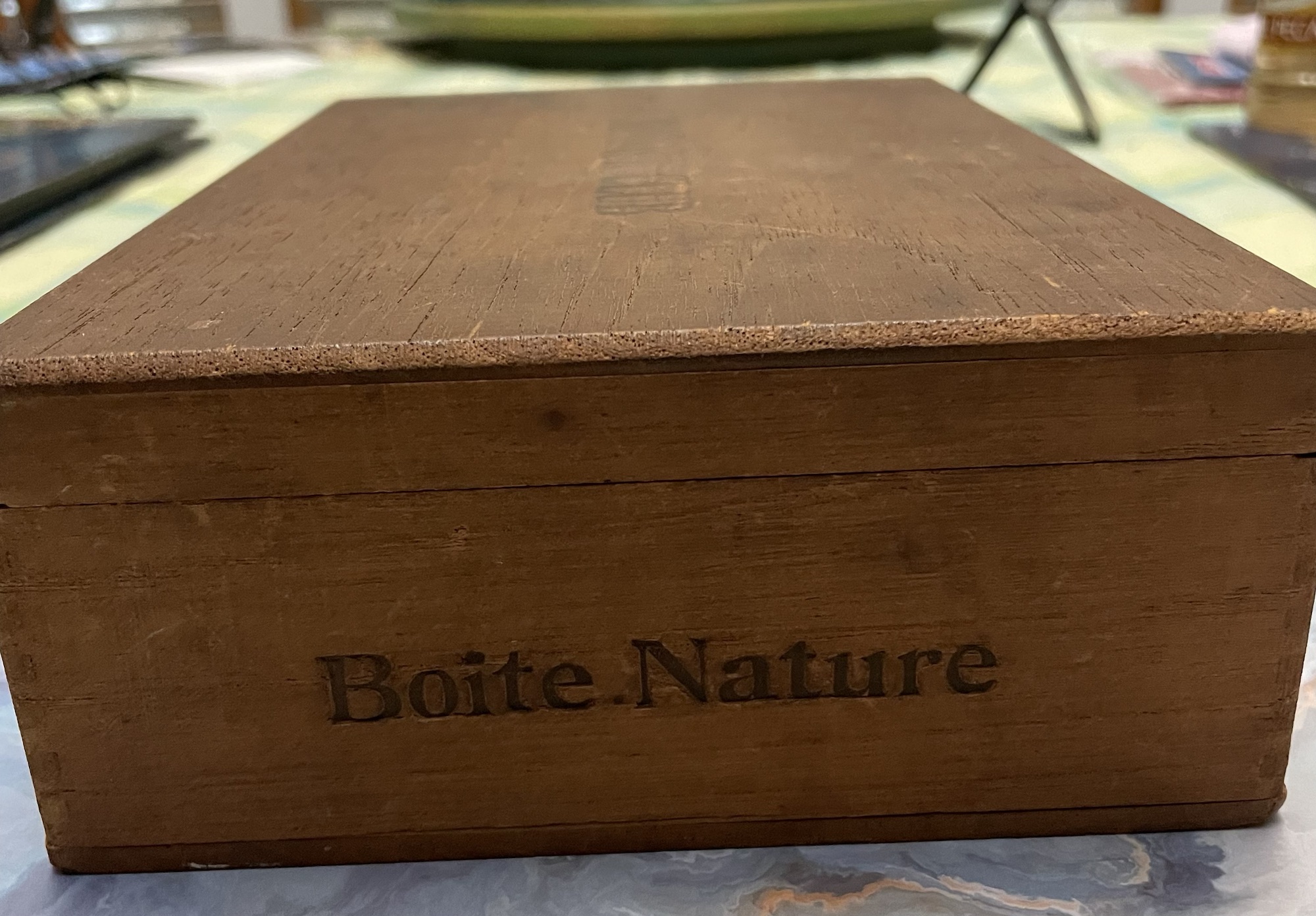
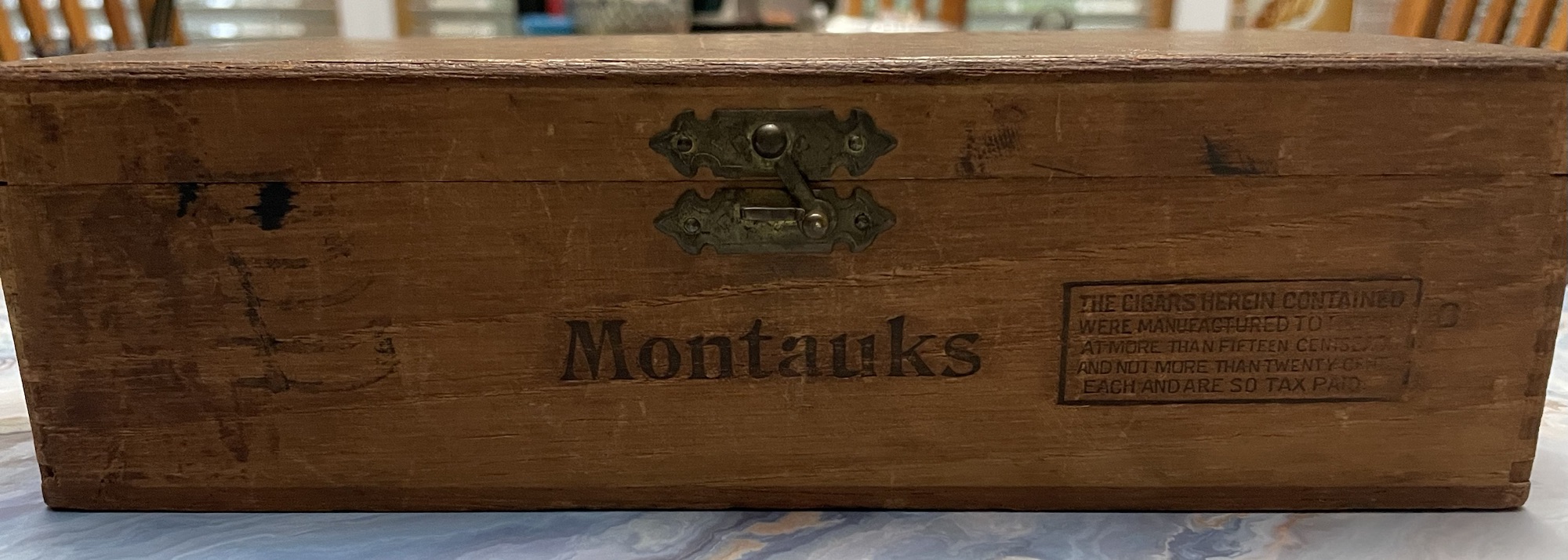
The Cigar Box: A New Family History Adventure Begins

14 Aug

This might be the last treasure box found in our Catskill home.  After being in our family for 63 years and after a 90-year presence in Kauneonga Lake, we are selling our home.  None of our children, who are widely dispersed, can care for it.  Our fortune is that we have cousins who still have homes near the lake, so we can visit.

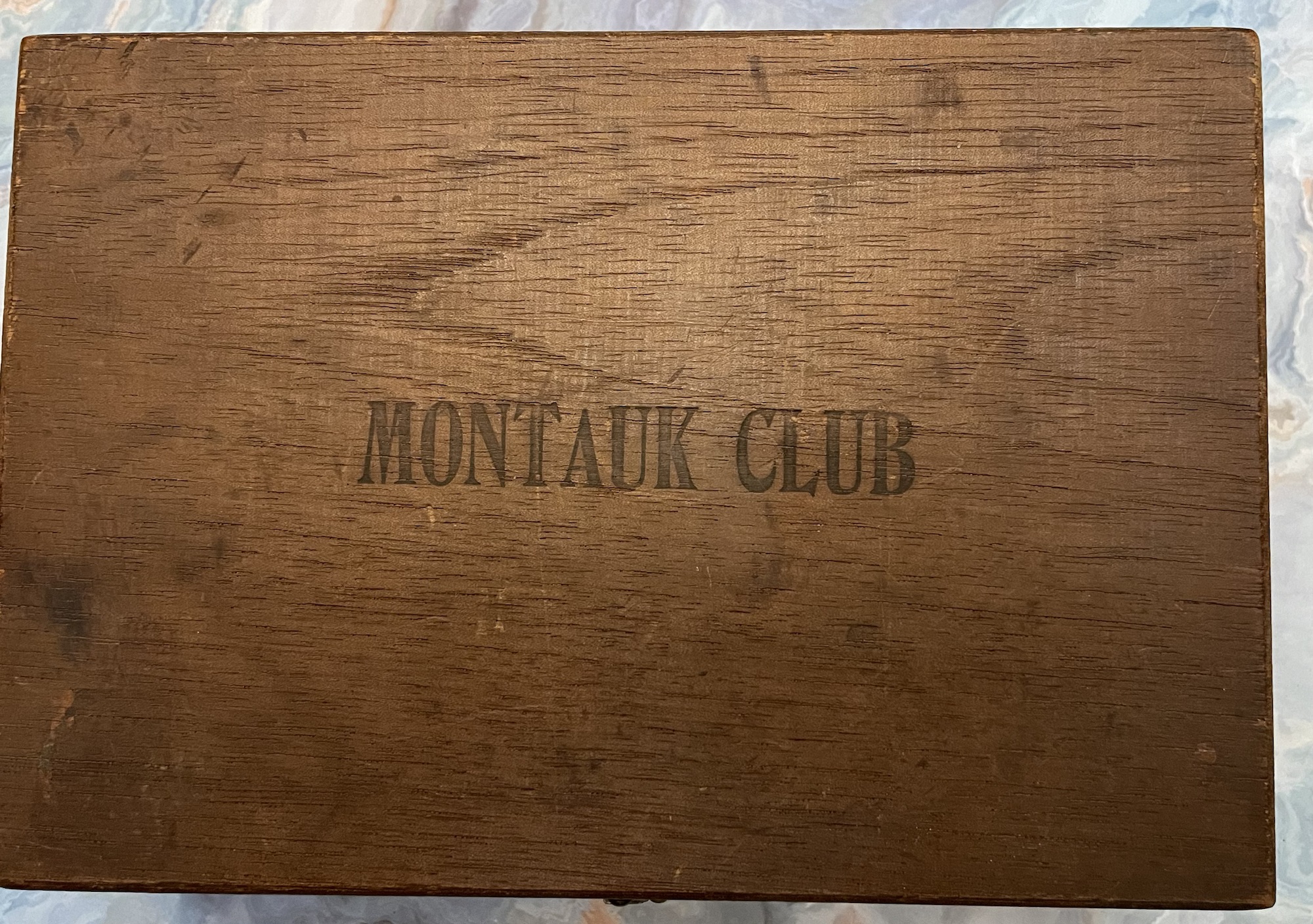
But in cleaning out the house and the drawers and the closets, my niece came upon this last treasure buried in a drawer under linens: a beautiful cedar box from Montauks Cigars.  In it were postcards written from my grandmother when she was in Europe with my mother and her brother in 1931-32. Postcards written to my grandfather in Yiddish and English, The Yiddish will have to be translated. I am hoping the generous members of Tracing the Tribe will translate these, as they are just short paragraphs.

 I had to laugh because all the stamps had either been peeled off or torn.  They were given to one of the grandchildren who were collecting stamps. It might have been me.  I collected postcards as well. But these were probably too important to my grandparents to give to a child who might lose them.

There are letters written in German and Polish to my grandmother during the time she was in Europe. I know one is from her cousin Dora, who survived the Shoah and moved to Israel. Others I think were written by my great aunt Esther to my grandmother, her sister.  The German I can understand a bit. But the Polish is impossible for me.  I will need to find a translator for these letters.

There are photographs in the box.  Almost every one of them is identified in English, Yiddish or German.  The ones that are not identified, I actually recognize the people in the pictures.

I have already sent scans of two of the photos to my third cousin.  One shows her grandmother at her elementary school graduation. Her grandmother and my grandmother were first cousins.  When my grandma came to the USA she stayed with her aunt’s family.  The two girls became best friends.  The other photo shows five brothers who lived in the same building. My grandmother’s cousin married two of them. One when she was young with whom she had her children.  And later when her husband died, she married one of his brothers who also lost his wife.  My cousin was glad to see the photos.  I am going to send her the original of one.  The other my niece wants because she shares the same first name.

I have written about these people in other blogs. So below are links to their stories. 

I think this box will be giving me much more to write about.  Every time I think I have finished the story of my European family, another piece of information turns up.  I hope to start with the notes my grandmother wrote to my grandfather from Europe. I always wondered if they were able to communicate.  As well as what she was thinking when she was there, as we know she went to Europe so sick, she thought she would die.  Her plan was to leave my mother and uncle in Europe. Thank goodness she got well!

The Catskills House Delivers A Father’s Day Surprise

21 Jun

I really thought we had found all the treasures there were to be found in our grandparent’s home.  But I guess not.  Our home in the Catskills keeps pushing out surprises.  This time it was my Dad’s high school diploma and his sixth-grade graduation photo. My brother found it on Saturday, June 18. What a great surprise for Father’s Day!

My brother, sister and I share this house which has been in our family since 1962. First belonging to our grandparents, then our parents and now the three of us.  Every once in a while, my brother, who is lead ‘administrator,’ decides we have to clean out some more of the decades of stuff squirreled away in the house.  Several years ago, we all went up and worked on the attic and the garage for several days.  We filled a dumpster and were physically and emotionally exhausted.  (See blogs below.)

Due to the pandemic, my nephew, my brother’s son, has been living in our house.  I guess my brother decided to take advantage of his son’s presence.  It was time, in his mind, to finally tackle the basement.  I was glad I did not have to be part of that cleaning as it is a dusty, damp mess down there. He ordered a ten-cubic-foot dumpster to be delivered to the house.  This past week, the two of them focused on filling it up. And they did!

I must say, my brother is not sentimental and is quite decisive in his cleaning and tossing of what he considers useless items.  I know because the two of us cleaned out our parent’s apartment over eight years ago.  While I had a hard time letting things go, my brother would say, “Do you really need that.  Just put it in the to go pile.”  We had piles for each of us, for trash and for donating.  I will admit that perhaps sometimes when he left the room, I moved things from trash to donate, and perhaps from donate to one of the to keep piles.

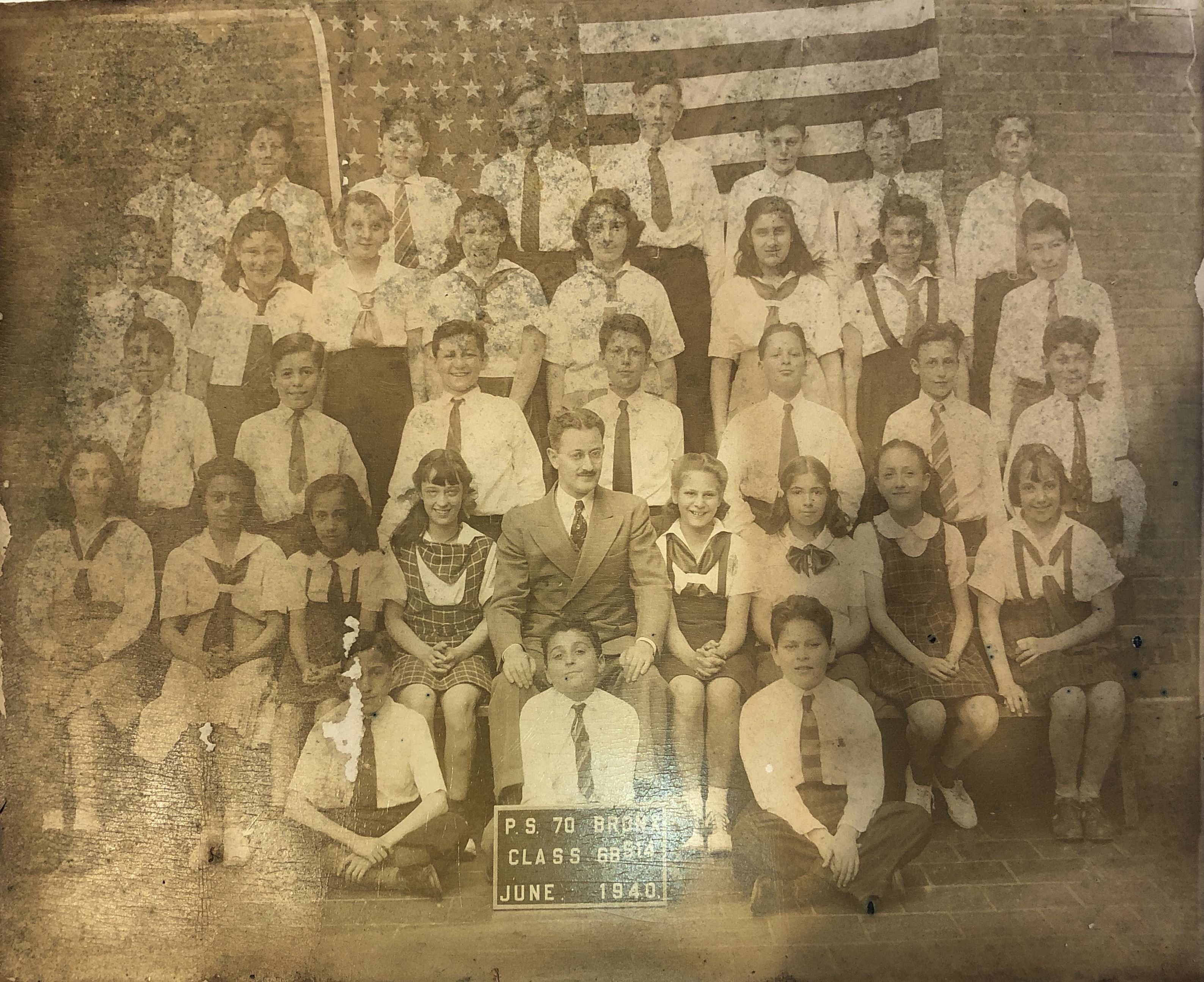
So I was really happy that when my brother and nephew did clean the basement, they did a little searching before just throwing.  As it was in a box of old broken picture frames that they found these two treasures.  The high school diploma is not that much of a surprise, as we knew when Dad graduated from DeWitt Clinton high. (See blog below.). But the class photo was the treasure!

The class photo is from PS 70 in the Bronx, June 1940, just over 81 years ago!  Behind the students is an American flag with only 48 stars. Hawaii and Alaska did not become states until 1959. The photo is not in great shape.  It looks like it has moisture damage.  But the part with my Dad is a bit better.

The boys are wearing white shirts and ties. The girls are in dresses with many of them wearing scarf like a tie.  The teacher is a man in a full suit.  Our Dad is the boy in the second row, standing behind a sitting girl at the far right of the photo.  His abundant hair is obvious.

This photo makes me happy.  I love seeing my Dad with his classmates.  I sent it to my Dad’s best friend to see if he was also in the picture. But he was not.  However, it gave me a chance to be updated on what was happening in his life.  My Dad’s friend said: “I think of him almost every day. He was my best friend.”  To be honest I cannot imagine one of the them without the other. They met when they were 12 years old. And were best buddies till my Dad died in 2011.

Since the basement is not yet totally cleaned out, I have hope that a few more treasures might come to light.  In a way I will be sad when all the alcoves and crannies are clean because I know I will not have any more happy surprises. But in the meantime, I am happy for this Father’s Day surprise.

Bittersweet Return After A Pandemic Year

12 Mar

One year and five days have passed between my visits to the elder care facility where I am a Spiritual Care Volunteer.   I last went on March 4, 2020.  I returned on March 10, 2021.  In between there was a pandemic.  Most of the year, I was not allowed to visit.  For a short period I could see people outside, and I did met with one of my people.  But I could not meet with my group.

On March 9, I was two weeks past my second Pfizer vaccine.  This means life changed for me.  As soon as I could I returned.

It has been a most stressful year for so many.   But I think the elderly took the brunt of the stress.  Many were kept isolated, away from their family and friends.  This isolation took its toll.  So many died, so many advanced in dementia, so many suffered from loneliness.  I cannot comment on my people. But I will just say that they faced the same challenges as others.

For me, personally, it was difficult not to visit.  I had been seeing them once a week for over a year.  We had formed connections and friendships.   They even surprised me with a birthday party when I turned 65.  At which time, these friends of mine, in their 80s and 90s, told me how young I was.  They told me I was Just a kid.   Which made me feel better about turning 65, if only I could be as independent as so many of my people.

Six weeks later I was no longer young: in the pandemic announcements it stated that elderly people over the age of 65 should stay inside, be careful because their lives were at higher risk.  In a short time I went from being a young 65 to an elderly person. 

I thought back to my aunt over 50 years ago.   It was summer in the Catskills.  I had run into her bungalow to see my grandma.  My aunt was reading the newspaper.  She turned to me and said, “I went to bed last night, a young woman, I woke this morning, elderly.“ 


What was she talking about?  She showed the newspaper, The New York Daily News.  An article stated that an elderly man, aged 59, had died on a tragic accident.   I looked at her and laughed.  I knew her age.  But I also knew the age she said she was.  “Aunt Leona, don’t worry.  To me you are always 39!”

But I now really knew what she meant.  I went to bed on March 11, 2020, a young 65.  I woke on March 12, 2020, an old, elderly 65.  It was a shock.

My life changed as did everyone.  But I had an added concern.  How would I keep in touch with my people who were so important to me.   I was not allowed to see them.  But I could write.  I started writing letters and notes.  I started sending goodie bags about every six weeks.  Two of my people emailed me.  One sent me everyone’s phone numbers.  I tried calling about once a month.  Some months I reached everyone. Others I only reached a few.  But I kept in touch.

The organization I volunteered for originally told the Spiritual Care Volunteers to not give out our phone number. That was now obsolete.  I gave my number to whoever wanted it.  I put them in my phone list and answered them whenever they called. They needed me. And I needed to know I was helping them in any way I could.

Over the year, some of my people did pass away.  Others moved into more skilled nursing.  At least one had Covid  and survived. I kept in touch the best I could.

Then came the vaccine. My people were among the first vaccinated in Kansas. It was so exciting. I was so glad to know they were safe and their quarantine was beginning to ease up.  I could go see them once I was vaccinated.

But for me it was difficult at first to get a vaccine.  I also have an autoimmune disease, so I was being oh so careful.   I found a spot that was providing vaccine to those who volunteer and worked with the elderly.  That was me.  I signed up on their list and soon was accepted.  I got my first vaccine in early February.  My second on February 21.  As soon as my two weeks was up I knew where I wanted to be…with my people.

I emailed the elder care facility and got permission to visit.  We set the date at my usual time, Wednesday at 2 pm, two weeks and one day past my second vaccine.   Because of my volunteer work I got my vaccine early.  So I intended to make sure I would be with my people.

I now needed permission from my volunteer agency.  I sent my Covid vaccine record.  But I did not hear back.   It was getting close.  To be honest I planned to go no matter what.  The elder care facility said yes, my people were expecting me.  I had to go!

Early in the morning on March 10, I got my approval from the agency.  I was told that I was the first Spiritual Care Volunteer returning to their facility. I was eager to go! Two in the afternoon I was with my people.  Six were there.  I was so happy to see them.

I knew what we had to do. We had to bench Gomel.  I read them an essay written by Rabbi Neal Gold that I got from a website. I read it to them.  In his essay, Rabbi Gold said, “In our time, the spirit of this prayer has expanded to all sorts of other life-and-death situations, such as surviving a car accident, recovering from major surgery, or enduring childbirth…..It is not designed for people ‘who merely with headaches or stomachaches who are not confined to bed.’ Rather, it is only for those brushes with mortality that leave us shaken — and profoundly grateful for our survival.”

 I think surviving the COVID pandemic counts!

So we benched Gomel, even without a Torah, thanking God for the goodness he sent to use to allow us to survive.

“Blessed are You, Lord our God, ruler of the world, who rewards the undeserving with goodness, and who has rewarded me with goodness.” We did the response as well.

We then talked about what happened to each of my people during this time.  The one who spent two months in the hospital with Covid. The one that was lucky because she lived on the first floor with her own entrance and could see her daughter.  We remembered the three that died. We thought of those who have moved into more skilled nursing.  We delighted in being together.

It was definitely a wonderful and joyful event for me, and I believe for my people as well. 

A pandemic year is a year I will never forget.  But the joy of reuniting with others, although bittersweet, is definitely a gift!

Getting My COVID Vaccine Takes Me to 1960s

5 Feb

This week I received my first COVID vaccine. I traveled through a snow blast to get to my 10:30 am appointment. My walking buddy took me. I don’t like to drive, so she volunteered to get me there. While we went, I thought of my Mom. I called her the snow witch because she attracted snowstorms. She died during the December 27, 2010, snowstorm that blanketed the New York City area over two feet of snow. For me, the snow seemed apropos. Mom was telling me she was looking out for me. Getting the vaccine was important.

When we arrived at the vaccination site, we lucked out finding a parking space in the crowded area.  The parking lot was full, but we were able to find a street parking space not too far away.  In fact, when we left, I told another woman who arrived that we were leaving and had a great spot.  She followed us and parked there as we drove away.

But the main point is that I got my first dose of the Pfizer vaccine.  Yes, I stood in a line for a while.  Actually, there were four parallel lines waiting to be checked in after our temperatures were taken and our paperwork reviewed.  Then it was to the computer check in, and finally the shot line, then I sat in a chair while a nursing student gave me that wonderful little jab.  I honestly felt the edges of my lips curl into a smile as the needle went in.  I never wanted a vaccine more than I wanted this one.

I then joined my friend and sat there for the required 15 minutes.  It was well worth it.  My friend, a dentist, already had both her doses. But she was happy to go back with me to make sure I got my vaccine.

While I was waiting in line, and then waiting for my 15 minutes to pass, my memory went back to my first pandemic vaccine.  Yes, I did have another one.  Just like many of my peers born in the 1950s and 1960s. I was one of the millions of children vaccinated for the polio vaccine.  Then for children, it was the taste of a sugar cube that saved our mobility and lives.

Every summer we went to the Catskills, to the mountains, to get away from the New York City area where parents were afraid that we would get polio in the summers.  People forget that polio was one reason why families wanted to escape the metropolitan area.  But I remember.

I also remember the long line that we stood in to get our vaccine. It was 1962 or 1963. I don’t remember the exact date. But I know I was 7 or 8 years old. My parents, my brother, my sister and I, stood outside in a slowly moving line that snaked into the North Bergen High School building. We never actually stood still. We just kept moving, and others kept joining the long line. Just like I did for the Covid vaccine: in one door and out another.

When we finally reached our goal, there was hundreds of little paper cups. In each one was a sugar cube. But not any sugar, these were doused in the live polio virus. To add to my enjoyment, each sugar cube that had the vaccine was a lovely shade of pink! We joyfully ate our sugar as we walked away. To be honest, I wanted a second sugar cube.

There was a worry that a few of the children might actually get polio from the live virus. But because it was the BEST way to keep the virus at bay, parents were willing to take a risk.  Due to these sugar cubes and the other vaccine developed by Dr. Jonas Salk and Dr. Albert Sabin, in the 1950s and 60s, polio basically disappeared.

So now when I stood in another line to receive another vaccine to help stop the spread of a different pandemic, a little part of me stood in that other line, remembering another vaccine in a time when lies and anti-vaxxers were not trying to destroy faith in vaccines.  When we did not have people protesting and trying to stop people from getting their vaccines, as some protestors did at Dodger Stadium in California. When people understood the need for all to come together to stop a pandemic.  When kindness to others and true altruistic love for your neighbor took precedence over the lies found on social media that seem to be corrupting kindness.

I was so thankful to get my vaccine this week. I look forward to getting my second dose in three weeks, which also reminds me of my polio vaccine sugar cube. We had to have three in all for the vaccine to work.

I am still smiling, even though my arm is a bit sore. As each of my friends and relatives get their vaccine, I feel relief. Life will get back to some semblance of normal. And this vaccine will help us get there. I just wish that kindness to others really meant something. That this kindness included keeping everyone safe and the COVID pandemic at bay.

https://www.cdc.gov/polio/what-is-polio/polio-us.html

https://www.latimes.com/california/story/2021-02-04/anti-vaccine-activists-dodger-stadium-have-more-plans

Kindness Will Heal the World

21 Dec

In April, after I had moved into my new home, I needed something to do other than unpack and feel panicked about the pandemic. I decided to take online classes, I chose the website Coursera. I started with the most popular course of all, Dr. Laurie Santos’ the “Pyschology of Wellbeing.” Dr. Santos teaches at Harvard University.

It was fantastic.  Her theories and work in positive psychology just touched my soul.  Because of the class, I started keeping in a nightly journal where I recorded each night one thing I savored, one good deed I did and three things that I was grateful for that day.  Her class focusing on learning to appreciate what we have and the importance of friends, family and memories only emphasized something I already knew and what she taught:  travel and seeing the world, making good memories,  was much more important than buying things.

But the most important point was the emphasis of kindness.  I always believed in doing a good deed every day, but according to the class the research has shown, that people who do good things for other people feel much better than those who do not. And they feel better for a longer time than just getting a good job and a pay raise.  Doing good, being kind, is the most important for happiness.

I started listening to her podcast, the Happiness Lab.  I also joined the Facebook page devoted to Dr. Santos’ lessons, The Happiness Lab Classroom.  In this time of stress and uncertainty and physical distancing, it helps to focus on the good.

I followed up that class with one called “Resilience Skills in a Time of Uncertainty.”  This course also focused on the theories of positive psychology. The instructor this time was Dr. Karen Reivich, who is the Director of Resilience Training at University of Pennsylvania.   Her lessons built on what I learned in Dr. Santos’ course.  Some of it was rehashing the same information.  But it reinforced and emphasized how to help yourself feel better.  For me,  what I learned, is that you do that by doing good.

After taking this class, I changed my journal entries.  I now write five things I am grateful for each evening.   What has this done for me?  Instead of going to bed worried about the world, the pandemic, the election, the craziness going on, I think about what I am thankful for and the good that I see.  It really makes all the difference.

What else has it done for me?  I was always a charitable person, but my husband and I have upped our donations especially to food pantries and organizations that do direct aid.  I have written letters to and called people who I think need a boost.   I have tried to let my friends know how much I appreciate them. I am focusing on doing at least two good deeds of kindness each day.  Kindness with conviction.  I would rather focus on that then being upset or annoyed.

I am also trying to watch more uplifting programs.  Forget all the gloom and doom movies and documentaries.   This led me to watch the most magnificent documentary about doing good I have ever seen.   I suggest everyone watch The Antidote.  I cried tears of joy throughout the movie as it tells the stories of nine people and organizations that help others in the most sensible and good ways. 

Every one of these programs should be followed throughout the country.  There were three that truly touched my heart. At Bridge Meadows in Portland, Oregon, foster care children and their ‘adoptive’ families live in a community with seniors.  Watching them interact brought joy and tears to my heart and eyes.

In Sullivan County, New York, the Center for Discovery, was amazing.  Since I spent every summer for over 25 years in Sullivan County, I was stunned to find out about this wonderful educational program and home for children and adults with complex disabilities.  And wonder of wonder, a friend of mine’s uncle spent most of his life here.  I am so impressed.

A nurse and doctor in Boston treat the homeless.  The doctor goes out into the streets to find people and care for them.  The nurse encourages into her clinic, where they soak the feet of the homeless who learn to trust them to get the care they need.  Wow.  Just watch.

The other six programs were wonderful as well.  Watch this movie.  Currently it is on Amazon Prime. If you want to bring some joy into your life and learn about more ways to help others.  Watch it.

Kindness is what will heal our world. Listening to others.  Being a friend. Appreciating what we can and helping others, in my mind, can make such a difference to the divide that is now hurting our country.  

Every human being deserves to live a life to the fullest of their abilities.  This documentary shows us how.

A Pay Phone, Then a Party Line: Using the Phone in The Catskills

17 Dec

Recently I wrote a blog about doing the laundry in the Catskills. (See blog below.) Several of my friends who spent their summers with me in Kauneonga Lake, and my brother, felt I left out one important aspect of the laundry shed: the pay telephone.

In our small colony, owned by my maternal grandparents, the pay phone was also located in the laundry shed. The only way of communication for almost all the residents of the colony to the outside world.  If they needed to call their husbands, doctors, restaurants, anything, this was the only place to make a call or to get a call. Our colony was small, so when someone did get a call, the person standing closest to the phone would answer it and send a child to go get the call recipient!  Of course all the children loved to answer the phone. At larger colonies there was an loudspeaker system to call people to the phones. (See blog below.)

I think, but since I was a child, I am not sure, that the Moms had set times and days when they spoke to their husbands during the week. 

The phone my friend has from the bungalow colony.

The telephone has long disappeared.  However, when reading my blog, one of my friends told me that she had the phone, and sent a picture.  I do not know how she got the wall phone she had.  But though I thought the number was correct, the phone was wrong.  There was no place for the money.  And our pay phone definitely was a commercial one with coin slots.

Now I did say that the pay phone was the only way to communicate. But that is not totally true. My grandparents had their own separate line because they owned the colony and would need to call local people like the plumber or electrician. So if my Dad wanted to call my Mom, they had this private line to speak. Also if there was a true emergency, my grandparents would call for help.  You did not need to use the pay phone.  Hmmmmm. I wonder if the phone my friend has is the one from my grandparent’s bungalow?  Could be.

In 1963 our phone life and summer life changed. My grandparents purchased a winter/all year house about 1/3 mile up Lake Shore Road from the bungalows.  Behind the house was a bungalow that became our summer home.  This was both fun and sad.  We had a bigger bungalow, we had our grandparents, and my parents had some peace and quiet, but we were no longer at the colony at night for fun activities or on rainy days with the other children.  However, there was an apartment at the house, where one of my friends stayed.  (See blog below.). But we were no longer part of the rhythm of the colony on a daily basis. 

Communications changed as well.  People started getting phone lines. They were not completely private. People would get Party Lines.  That is what we had at the bungalow up the hill. My grandparents and my parents shared a party line.  We were so excited to have our own phone.  But it had its now side as well.

The phone lines had slightly different rings, so you knew when you were being called. And we had a special way to call down to my grandparents so they knew we wanted to speak to them.  If you picked up the line when the other people were using it, you would hear them speaking.  In fact, if you were quiet then you could listen to the entire conversation.

That was a bit crazy, cause my grandmother sometimes would listen in!!! My MOM would get furious.  And they would have a big argument!

Here is my brother’s memory:

“Yes. She (Grandma)never said anything just listened. She was really good at it,
and I think many times we did not even know she was listening. Mom
would know when Grandma knew things that she had not been told! It was
one of the things that I remember Mom arguing with Grandma about!”

Since my grandparents lived in the Catskills throughout the year after 1969 when my Grandfather retired, their phone line would be on all year long, while our phone line would be turned off after Labor Day.

But eventually, everyone got their own private phone lines.  It was amazing.  I could call my aunt at the bungalows and find out what was going on with my cousins.  Were they going to the movies? What were the plans for the rainy day or the evening? That was what we were missing when we first moved to the bungalow by the house.  

When we were teenagers, those phones were even more important for when we made plans with our friends and cousins.

The days of the payphone and party lines ended in our colony, but the memory of the times when two people needed to make a call.  Or watching when a teenager was on the phone trying to find a private spot….there was an extremely long cord. Or wondering if my Grandma was listening on the line….I have to admit, every once in a while I listened in on my Grandma’s call. Mainly because I needed to make a call and she was already on the line.

The Summer the Laundry Never Dried

Sometimes Rainy Days Were the Best Days In the Catskills

Loudspeakers Often Interrupted Life And the Quiet of the Catskills

The Summer the Laundry Never Dried

12 Dec

The rain started slowly this time.  Giving my Mom enough time to call for us.  But she really did not have to, all the children in our little colony were running to the same place: the clothes lines.  It had rained for weeks.  Finally, there had been a break in the weather. For days, everyone lined up at the two washing machines to get their clothes and linens done. People were running out of clothes to wear.  Everything was a muddy mess.  No one could afford for the newly cleaned clothes to get wet.

We all hustled and ran for the clothes.  Each group of children around their Moms pulling the clothes off.  The littlest ones were grabbing the clothespins and putting them into the cloth bags.  We were successful.  None of our clothes got really wet.  While Mom went back to our bungalow to hang our clothes up on the porch, I remember helping my Grandma take off some of her clothes off the lines.

At least we did not have to go to a laundromat to clean our clothes! This was important as most of the moms up for the summer did not have car with them in the 1960s.  Having to go to the laundromat was a major ordeal especially with all the little children. I guess sometimes someone did go. There was always one husband/father up there for the week who could run this errand as needed.

For us there was a little shed that held two washing machines.  Our moms would put their laundry basket in a line so everyone knew who went next.  They left their laundry soap and change in the basket as well. The person before them would empty out their laundry from the machine and put the next wash in.  I think it cost 50 cents to do a laundry.  Then they would tell the next person that their wash was up, so they knew when to go get it and start the next load.  How they knew, I don’t know.  Perhaps everyone had different colored baskets or different laundry soap, but they knew.  It is a mystery to me.

Laundry days were usually Wednesday and Thursday. Everyone wanted the laundry done before the weekend when the Dads would be up. But during this time of endless rain, occasionally the Dads would have to take the laundry to the laundry mat. I got to go with my Dad once. It was quite the adventure. Long lines, as everyone needed clean and dry clothes. I remember where the laundromat was, just outside of Kauneonga Lake on the road to White Lake and to ice cream, Candy Cone. Of course, I remember, because once our washes were in the machines, Dad and I went for ice cream while we waiting to go put them into the dryer. Then we stayed close to the laundromat, to get our clothes as soon as they were done.

So many laundry memories came rushing back to me due to a painting. A distant cousin of mine, {her grandmother and my maternal grandmother were first cousins. (See blog below.)} did a series of paintings that she then gave to people who made a donation to her chosen charity, an animal shelter. One painting touched my heart. I made my donation.

In my mind this painting was like a calm and practical Chagall painting, but instead of animals or couples flying above a town, it was a zaftig woman walking across the laundry lines with a laundry basket on her head. The colors, the story of the painting, the atmosphere just yelled Catskills in my mind. Laundry Day! Joy! I had to have it.

When it arrived, the memories started crowding into my mind of the year when the laundry never dried.  How when the sun finally came out and stayed out, all the Moms and grandmas were so filled with joy that they could get their clothes clean. How they rushed to do laundry.  I think they agreed that everyone could do one laundry and then go through again.  Everyone had to get at least some laundry done before it rained again.

 I think they felt like the woman in the painting, just tripping above the clotheslines in happiness.  Finally, finally we all had clean and dry clothes!

Of course, I had to hang the painting in my laundry room. Every time I look at it, I remember how lucky I am to have a washer and dryer of my own. That I do not need to hang my clothes outside to dry depending on the weather. That the joy of laundry should be with me all the time!

Finding Katie!

Oh How I Dream About Ice Cream in the Catskills… In the Summer

T

Reupholstery Keeps the Spirit of My Furniture, I Hope

20 Oct

Over 30 years ago a truck arrived at my home delivering my grandparent’s bedroom furniture to my home.  Made in the early 1930s, the cherry mahogany furniture was hand carved. The two chairs were covered in yellow silk and stuffed with horsehair, I knew that because the fabric was beginning to fray and the stuffing was coming out. 

The mirrors and furniture were beautiful to see and to touch.  I had so many memories of my grandparents entwined in the furniture.  From my early childhood in New Jersey, when the furniture was in their apartment above the bakery.  When I spent the night, as a small child, I slept in bed with Grandma.  Grandpa was usually up and baking throughout the night. His bedtime began about 8 am.  In the early morning grandma would leave to go work in the bakery.  I knew that when I woke up. I was to get dressed and go downstairs, where Grandma would make me breakfast.  I was never afraid. I was in a safe place, near the chair where Grandma sang Yiddish songs to put me to sleep and under the feather quilt in the winter.  So cozy.

Later the furniture moved to their home in the Catskills where they lived after they closed the bakery.    They would spend most of the winter in the Catskills, but would return to their home in West New York for a few weeks when it got too cold.   The bedroom furniture, along with their other lovly 1930s furniture, stayed there after Grandma died in 1981 and until Grandpa died in 1989. The only piece that did not make the move, was the baby grand piano. (See blog below.)

The bedroom furniture was promised to me, the oldest granddaughter.  And when my grandfather passed away, about 9 years after my grandmother, my parents packed up the furniture, found a mover, and sent it to me along with a few other pieces.  (See blog below.)

I made some changes.  My grandparents slept in twin beds. I saved the headboards, but I had the foot boards and the side railings made into a lovely television stand that matches the rest of the suite.  We did not need these as we use a king mattress.  The headboards are in my basement.  Too lovely to get rid of, they sit waiting for some future date when they will be used.

I left the yellow silk on the chairs.  All these years.  It was the original upholstery, and I could not change it.  In my mind when I saw the fabric, I could see my grandparents. I could remember sitting in the vanity chair and hearing my grandmother singing to me.   I could see myself sitting at the vanity brushing my hair and trying out her hair adornments.  I could remember Grandma sitting behind me and brushing my hair 100 strokes, to make it shine.  The fabric stayed.

The chairs with the original fabric.

Over the 30 years I have had the furniture, the fabric faced the many challenges of two small children.  It continued to decay, fray and split.  Finally, after 86 years, I decided this fabric was done. I had to reupholster the furniture.

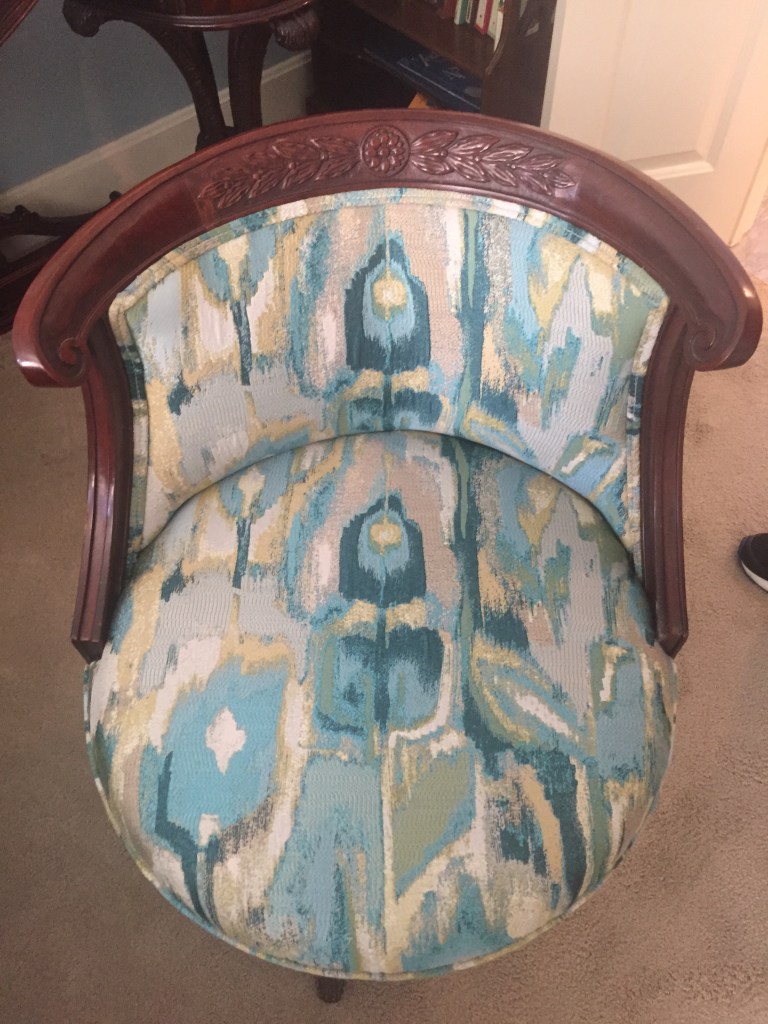
I did it tentatively.  It took me months to find a fabric that I liked. A fabric I thought would go with the furniture, but also recall the fabric that was part of it for almost nine decades.  My Grandmother liked yellow and flowers.  I love teals and blues and geometric shapes.  How could I compromise? 

But then, the perfect fabric appeared. Amazingly it was at Joann’s, the craft and fabric store. And Grandma was watching out for me. It was on sale, 40 percent off!. I also was given the name of a fantastic upholstery, Gearhart Upholstery in Buckner, Missouri.

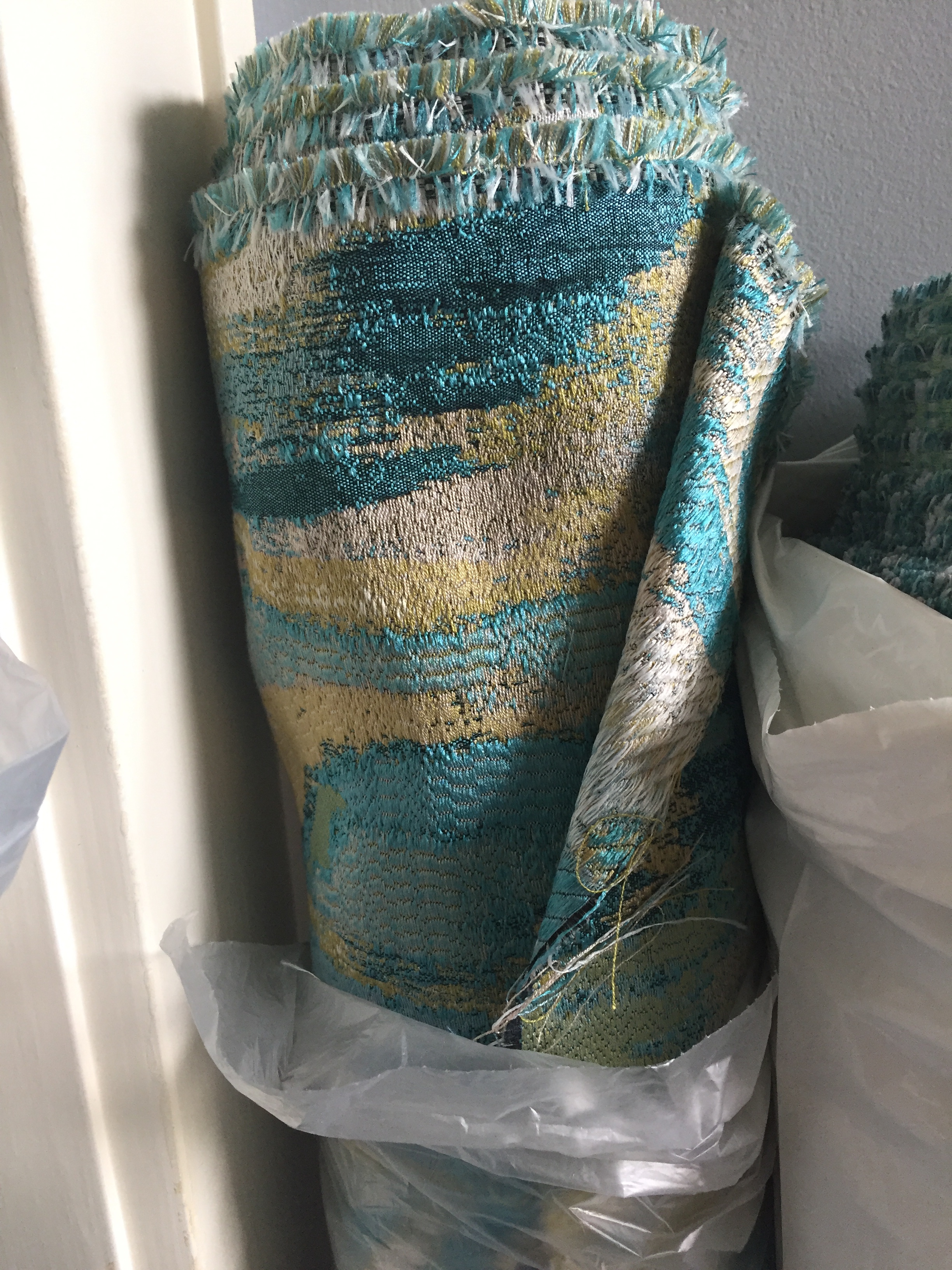
The mainly blue and teal woven upholstery has a bit of yellowish gold swatches.  And the pattern is both geometric, but there are flowers.  Lovely blue and teal flowers. Even though the colors are different, in my mind I kept the spirit of grandparent’s furniture. 

Purchased by my grandparents in 1936.  Sent to me in 1990.  And finally recovered in 2020.  I hope the furniture is loved by my family for many more decades. I hope the memories I cherish will turn into new memories for another generation

Vintage Greeting Cards Stir My Imagination

A Chair, A Baby Grand Piano and Yiddish Songs

The Piano Behind the Fireplace

13 Sep

Our house in the Catskills has been in our family since 1962.  It has gone through many changes.

When my grandparents purchased it, the house had been divided into four apartments.  Slowly, slowly it was returned to a single-family home, with an attached apartment.  Rooms that were divided were opened up or reunited with the house.  Small additions were redone. New additions were created. (See blog below.)

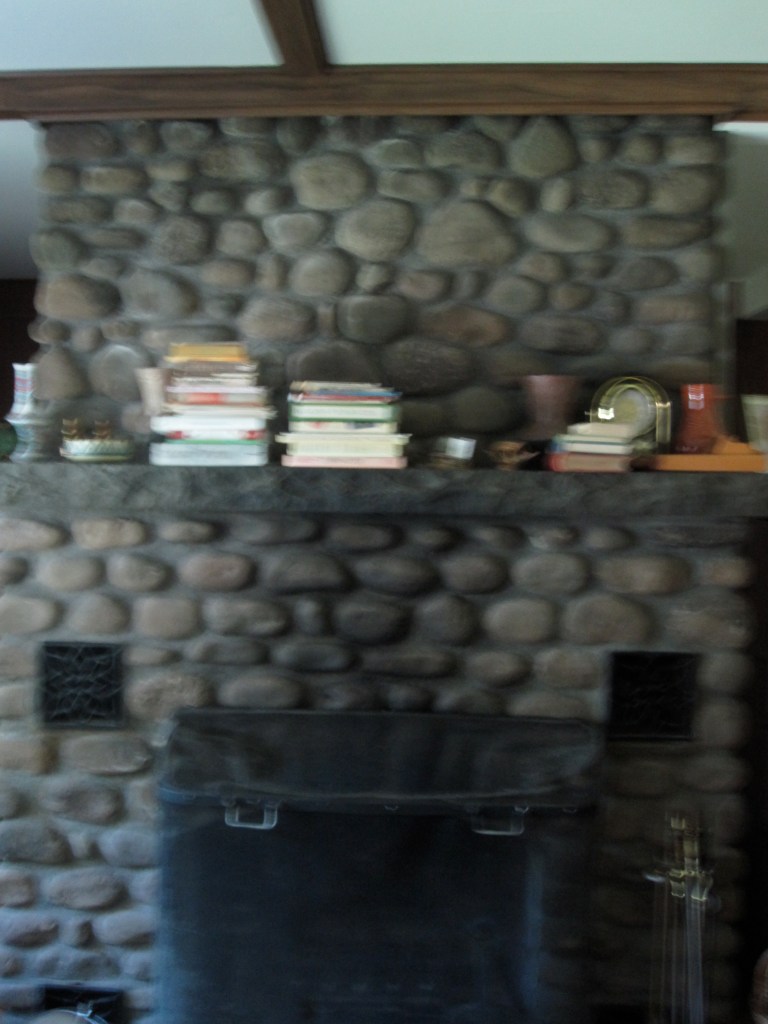
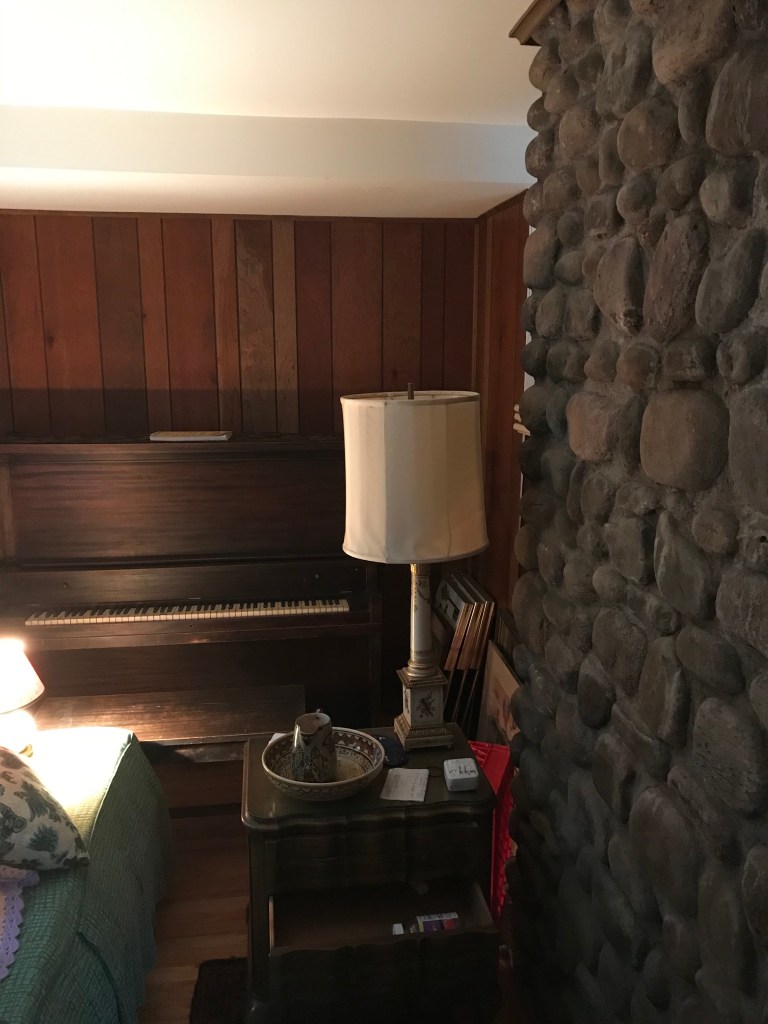
In the living room, a stone fireplace is the focal point.  At one time the back side was covered up and behind it a tiny kitchen and bathroom was put in.  My grandparents restored it to one room.  Behind the fireplace they put a trundle bed for grandchildren and, eventually, their old upright piano.

The fireplace in the center of the living room.

That piano was the bane of my summers.  Over 100 years old now, the piano was purchased second hand for my Mom to use when she was a child.  But Mom’s abilities outpaced this piano, and in the late 1930s, when Mom was about 10 years old, my grandparents purchased a baby grand piano for her use in their New Jersey home. (See blog below.).

Mom eventually became a special student at Julliard.  She studied music there all through high school and had hoped to go there for college. But my grandparents thought a music career was not a good choice.  So Mom went to Douglas University in New Jersey and studied education.

When the baby grand piano arrived, my grandparents had the old upright taken up to the Catskills to their bungalow in the small colony they had created.  Their bungalow was one of the bigger ones, with two bedrooms, a kitchen sitting area, and an enclosed porch.  The piano was put on the porch.

As little children, before my sister was born, my brother and I actually stayed in this bungalow with my parents and grandparents. But once my sister arrived, we started staying in our own bungalow.  The piano stayed with my grandparents.  Whenever Mom wanted to play, she just went over there.  

When I started piano lessons,  I was expected to practice….even during the summer when I had NO lessons. At first it was not a problem, I just showed up to my grandparents and went in and played.  I got treats and lots of positive reinforcement for practicing, even though I would rather be outside playing.

However, my feelings changed after the 1962 summer.  My grandparents moved up to the new “big house.”  We moved up there as well, to live in a bungalow behind the house.  That freed up two bungalows at the colony that now could be rented.  The piano stayed down at the bungalow for at least a year.

Here is where my angst began.   I was expected to go down to the colony, which I wanted to do to see my cousins and my friends. But instead of playing, I was expected to go and practice the piano.  It was no longer my grandparents’ bungalow.  It now was rented by my sort of aunt and uncle.  They were actually the brother and sister in law of my uncle by marriage.  My Grandma Rose and their son, who I considered a cousin, lived there as well.  (See blog about Grandma Rose below.)

The last thing I wanted to do was practice the piano.  Two reasons, first I felt like I was invading their territory.  I now had a set time when I had to be there to practice.  Also, I wanted to play!  Everyone else might be in the lake, but when my set time came, I had to go over to their bungalow.  There were many fights over this with my Mom.  But eventually she let me stop.  It was just not fun.

My angst ended then.  The next summer a space was made for the piano.  That little kitchen and bathroom behind the fireplace were gone, as was all the plumbing and fixtures.  The walls were cleaned and wood paneling was put in.  In the area that was once a bathroom, the upright piano now stood, back in my grandparents’ house.

So now, I could practice anytime of the day.  I left my music in the house.  On a rainy day, I could practice for as long as I liked.  While, on a beautiful day, I could just run in after a day at the lake. A low note chord broke when I was young, and we never replaced it.  I used the note so rarely, that at the times I did, I would be shocked when no noise came out.

Over time, I went to college, got married and moved away.  The piano was rarely touched and soon went out of tune.  When I started going up with my children for two weeks each summer, I wanted to get the piano tuned.  But the person we called said it was impossible, it had sat untuned for so long and it was too old.  That made me so sad.  But we left the piano there, and occasionally I would still play even with the discordant sounds that came out.

But in this time of COVID-19, the piano has been revitalized.  My nephew, who also plays the piano.  Needed a place to stay.  He had planned a long trip to Europe and had not renewed his big city apartment lease.  He asked to stay at the Catskills home.  We all agreed.  It was perfect for all of us, because we have used his time there to get some chores done and things fixed that were benignly neglected as we are usually there only on weekends.

Thanks to my nephew, we now have internet in the home and we have tasked him with meetings with an electrician, plumber and other workers.  He got a dock put in at our lake front section of Kauneonga Lake.. 

However, his greatest success, for me, is the piano.  My nephew plans to spend the winter there as well. As it is a four-season house, he can. It was my grandparents’ full-time home. So he decided to get the piano tuned!!! He found an old-time piano tuner, who has restored the sound!  This gentleman slowly got it back into shape, by doing it correctly. Over several months he came and tuned the piano just a bit until the sound board and strings could accept a full tune.

But besides tuning it, the piano tuner has dusted it and oiled the wonderful old wood.  The piano looks better than it has in 20 years. It brings me joy that the piano behind the fireplace is now a working piano giving my nephew a chance to practice his hobby as he experiences the cold winter months in Sullivan County.

(Exact dates of when of when the piano moved to the house and when I practiced at the bungalow are somewhat unknown, as it was many many years ago.)

Remodeling My Bathroom Reminds Me of Our Catskills House: The House Which Always Changed

A Chair, A Baby Grand Piano and Yiddish Songs

Movie Night in the Catskills Was A Wonderful, Magical Night