Tag Archives: Santa Fe

The Mysterious Loretto Stairs and Other Unusual Sites in Santa Fe

17 Jun

Santa Fe is a city of many diverging elements coming together to create a unique city. The art of the Navajo, Apache, and Pueblo people; and the multitude of art galleries and jewelry stores; the churches and religious sites; the unusual round State Capitol building; and the original adobe buildings; the restaurants; the museums, all combine together to give the visitor and the residents a place that stimulates the senses. 

My husband, who is enamored with AI, asked what would be the best 2.5 hour walking tour of Santa Fe. Its description of four places became our morning walking tour. None of these places take long to visit, unless you want to stay longer.  For this ‘tour’ you will be walking up hill on the Old Santa Fe Trail Road, which is right by the La Fonda Hotel downtown. Finally, you can always take your water bottle in with you.

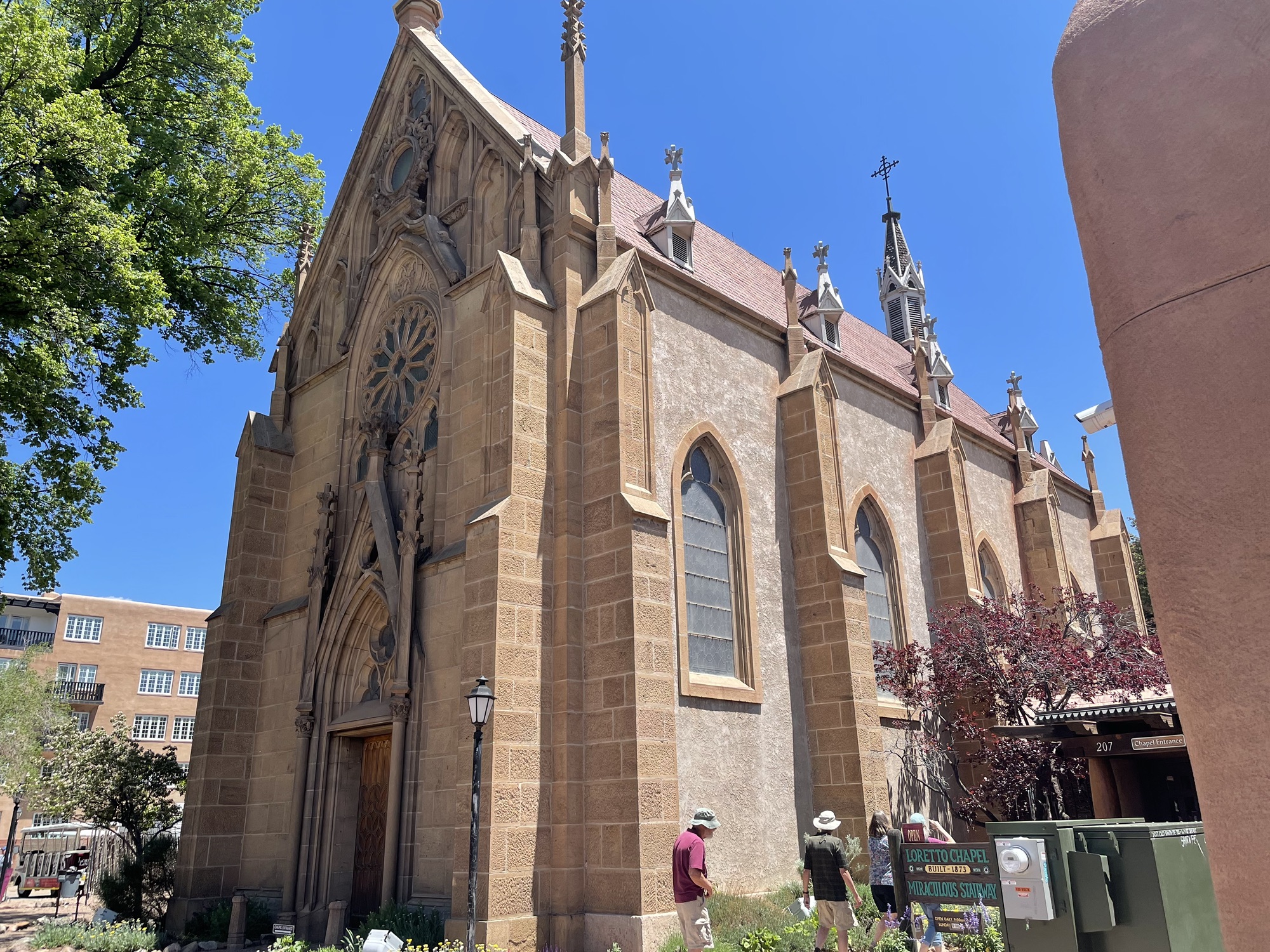
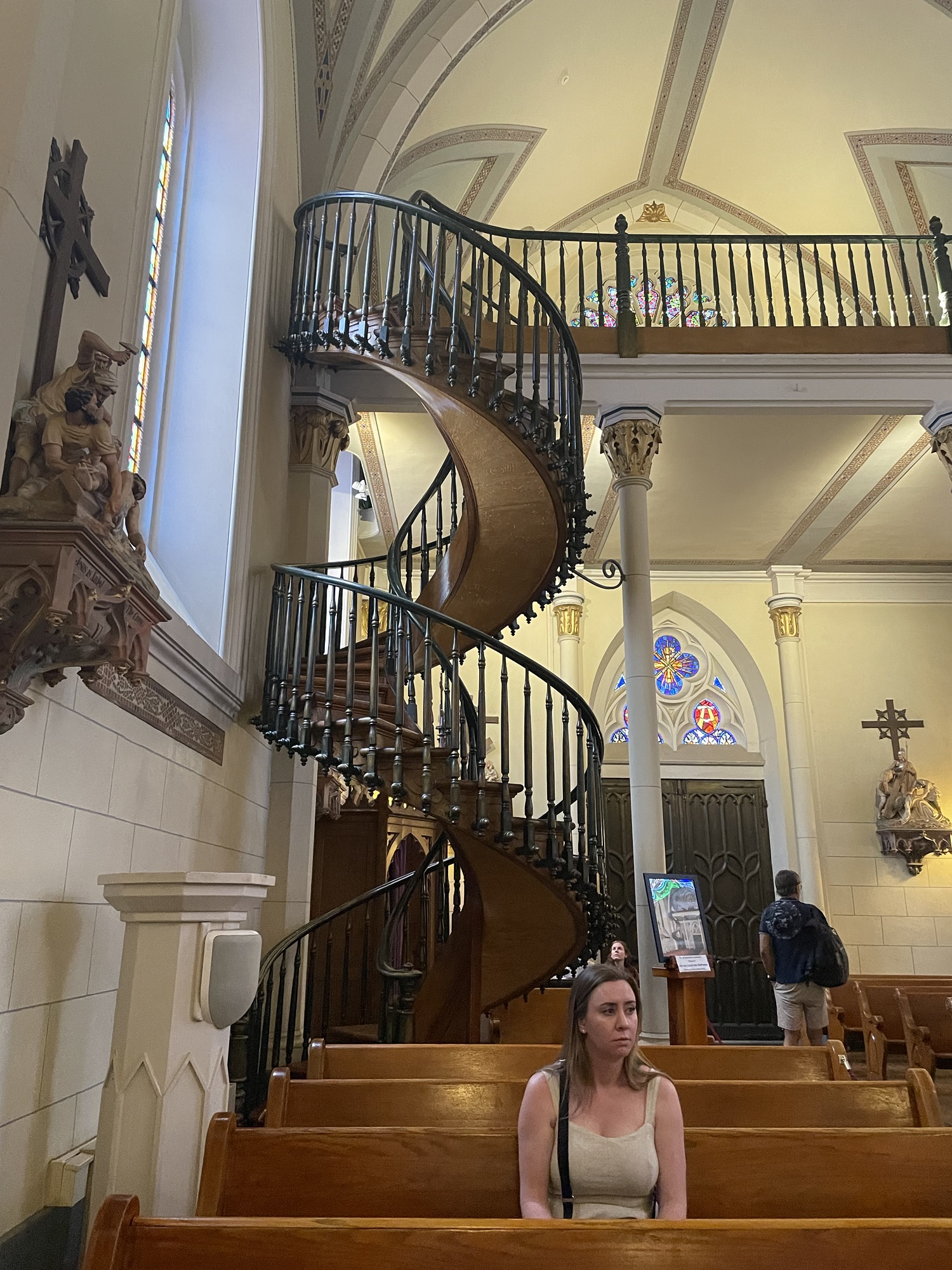
The Loretto Chapel and its mysterious, mystical stairs is worth the visit.  The chapel was once part of a girl’s school and was designed by the same architect as the Santa Fe Cathedral. The mystery of the stairs starts when the architect died before the staircase was built, the nuns were distraught and prayed for help.  An unknown carpenter appeared, built the stairs and disappeared. 

The staircase is a lovely gem to see, whether you believe that it was built by St. Joseph or not.  How it suspends and curves upwards without support is astonishing.  And it is beautifully carved.  But besides the beauty of the stairs, the chapel itself is lovely.  While you sit and visit, you listen to the story of the stairs.  This is no longer a consecrated church, so religious services are not held.

Two blocks further up the hill on Old Santa Fe is East De Vargas Street.  Turn left to walk through a narrow road to the Oldest House in Santa Fe, but I recommended you first go across the street to the San Miguel Mission Church. 
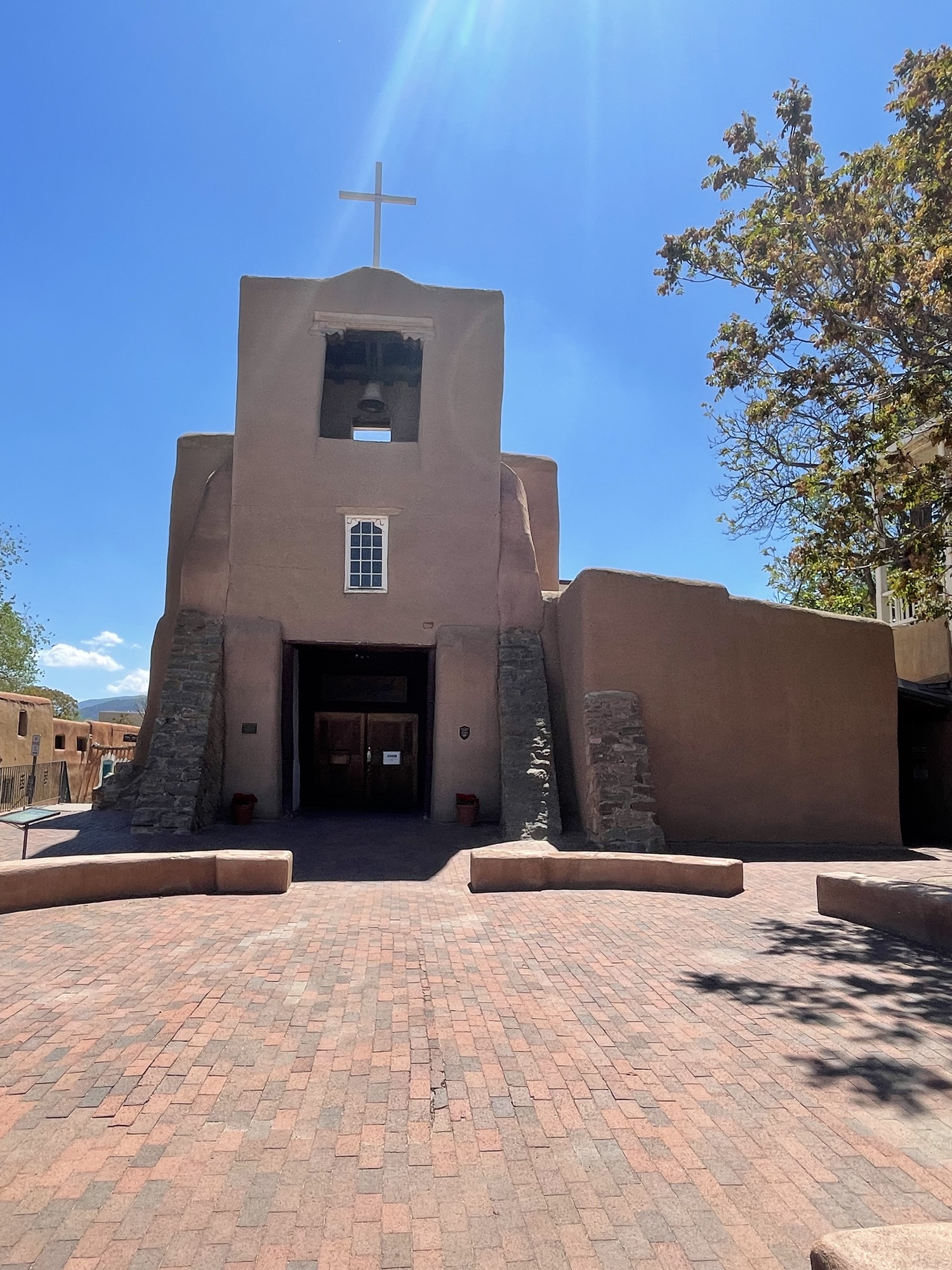
The San Miguel Mission Church sits on a hill on the hill. Probably a good place for watching what is going on around you. It is the oldest Catholic Church in the United States. People can attend mass on the first Sunday of each month.

It is not a big building, but it has a big history.  First built soon after the Spanish came into Santa Fe in 1598, the mission church was used by the Franciscan priests who came to New Mexico with the Spanish to convert the indigenous peoples and serve the Spanish settlers.  It was partially destroyed in 1680 when the pueblo peoples revolted against the Spanish and the church for the cruel treatment.  They burned the roof, destroyed some of the walls, and killed the priests.  The church was rebuilt when the Spanish returned about 30 years later. 

When you walk in there are two artifacts to notice. The first you see on the — the Victory bell that was brought from Spain. The bell had a long history that included helping Spain expel the Moors.  The story is whenever the bell rang, the Spanish had a victory.  The bell came to New Mexico for a Spanish family. But after the Pueblo Revolt, when the Mission was rebuilt the bell was put in the church belfry.  The second item hangs on the wall to the left. It is a 300-year-old replica of the painting of Our Lady of Guadalupe from the Mexico City Basilica.

The church itself is small and simple. The wooden ceiling is wonderful.  After you finish viewing the chapel and listening to the talk by the docent, please go down the stairs to the second room.  There are photographs that show the building from different angles, as well as two photos of the oldest house before it was restored.
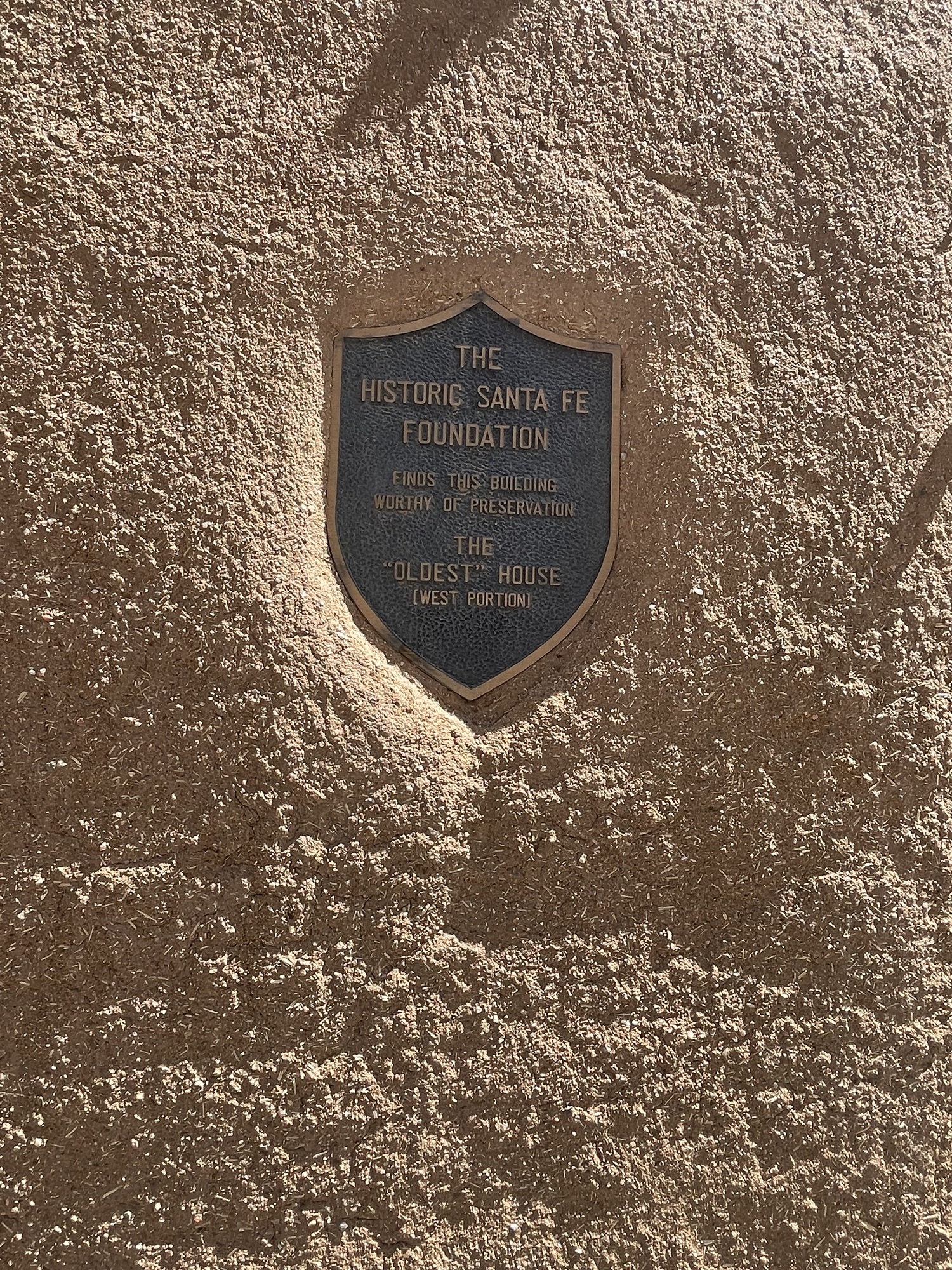
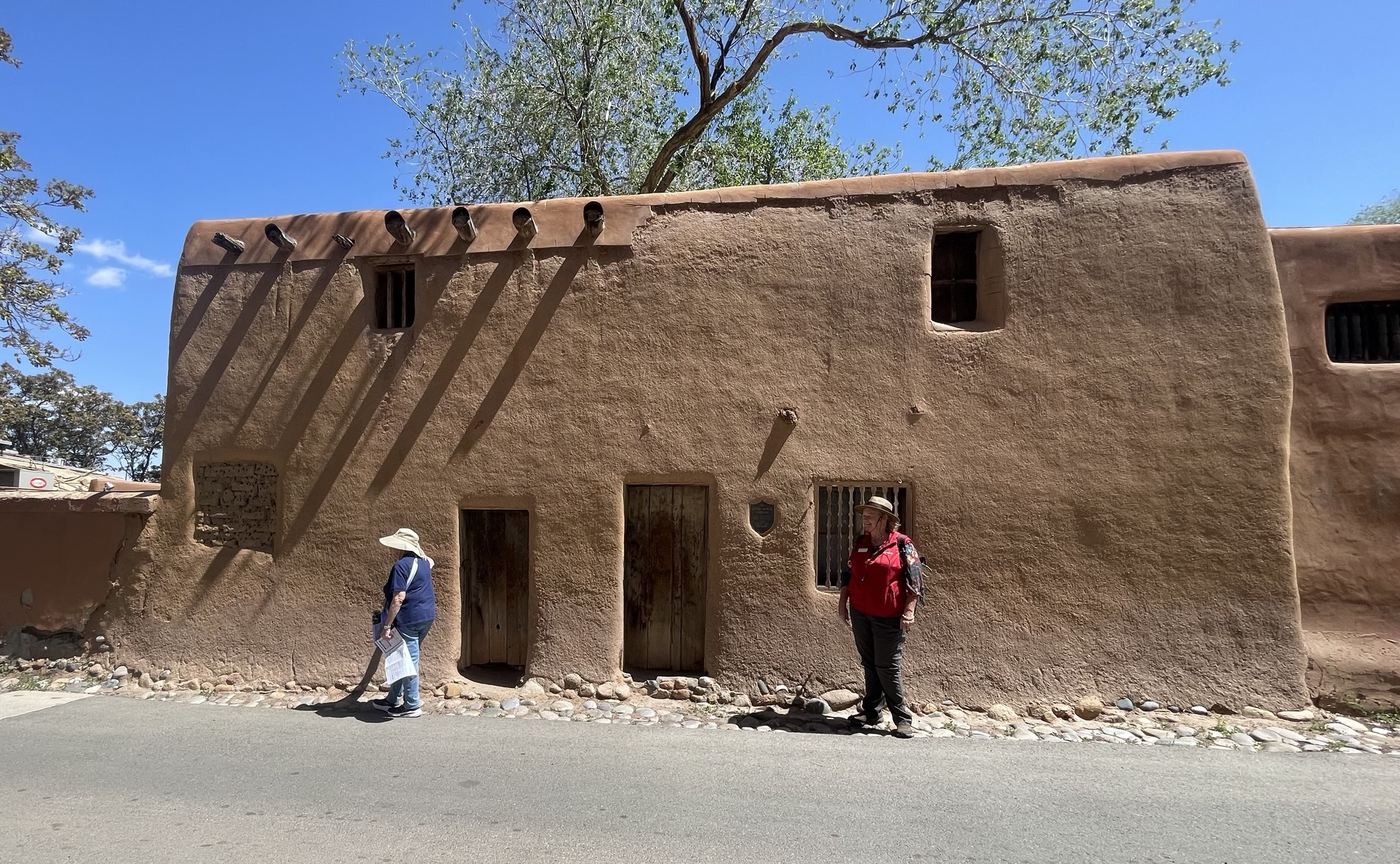
Now you can go out of the chapel and down the steps to the side which lead to De Vargas Street.  Immediately across the street is the oldest house. The house, from the 1600s, is built on the remains of a home in what once was part of a pueblo It is attached to a gift store.

 You go into the store and to your left to enter the house.  There are just two rooms to see and they are tiny. But as all sites, it is worth seeing to understand how people lived.  If you are a bit claustrophobic, try to go when there is a not a group going in.  It gets tight.

When you are done at the oldest house, return to Old Santa Fe Trail Street and continue past the San Miguel Mission. Turn right on Paseo De Peralta.  You will soon come to the State Capitol building.  It is unusual in that it is both round and NOT built in the pueblo style.  (Which is what I thought it would be!). When we went there was an art show on display. But even if it is not there, it is worth going in to see the rotunda and the lovely architecture.  You basically walk in the main door and go out the back door getting you back to E. De Vargas street.

After this part of our tour, we went for lunch!  There are many, many excellent restaurants in the Plaza area.  So go and enjoy.  Also while walking around you will see many galleries and statues/art on the sidewalks.  Take time to enjoy them.  You might want to take a break and rest after lunch or do this next part in the morning.
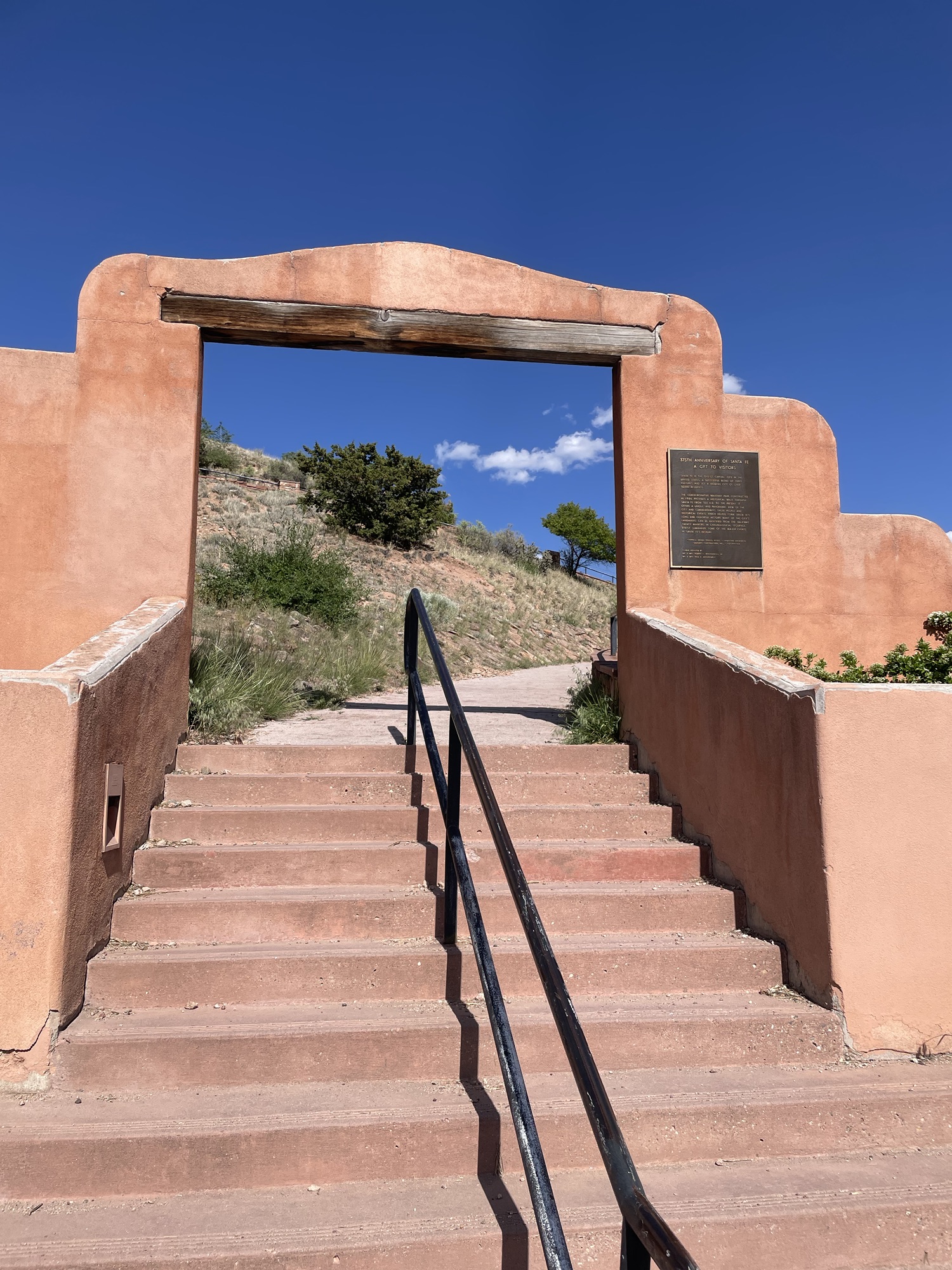
Martyr’s Cross and Marcy Fortress.  There is a way to drive to get closer to this site, but my husband and I did not have a car, so we walked.  It is located on Paseo de Peralta, the same street as the capitol building, but in the other direction. Depending on where you are staying will determine how you go.  But since we stayed near the Cathedral, we took Palace Avenue to Paseo de Peralta and turned left. You can see the cross on the hill and just head in that direction!

The entrance to walk up is marked by an adobe sign and arch.  You are going up hill.  There are rest areas where you can sit at the ends of each switch back.  And take water!! It is dry in Santa Fe.  The walk up was fun. Along the way are plaques that tell the history of Santa Fe, and as you go higher the views get better and better.

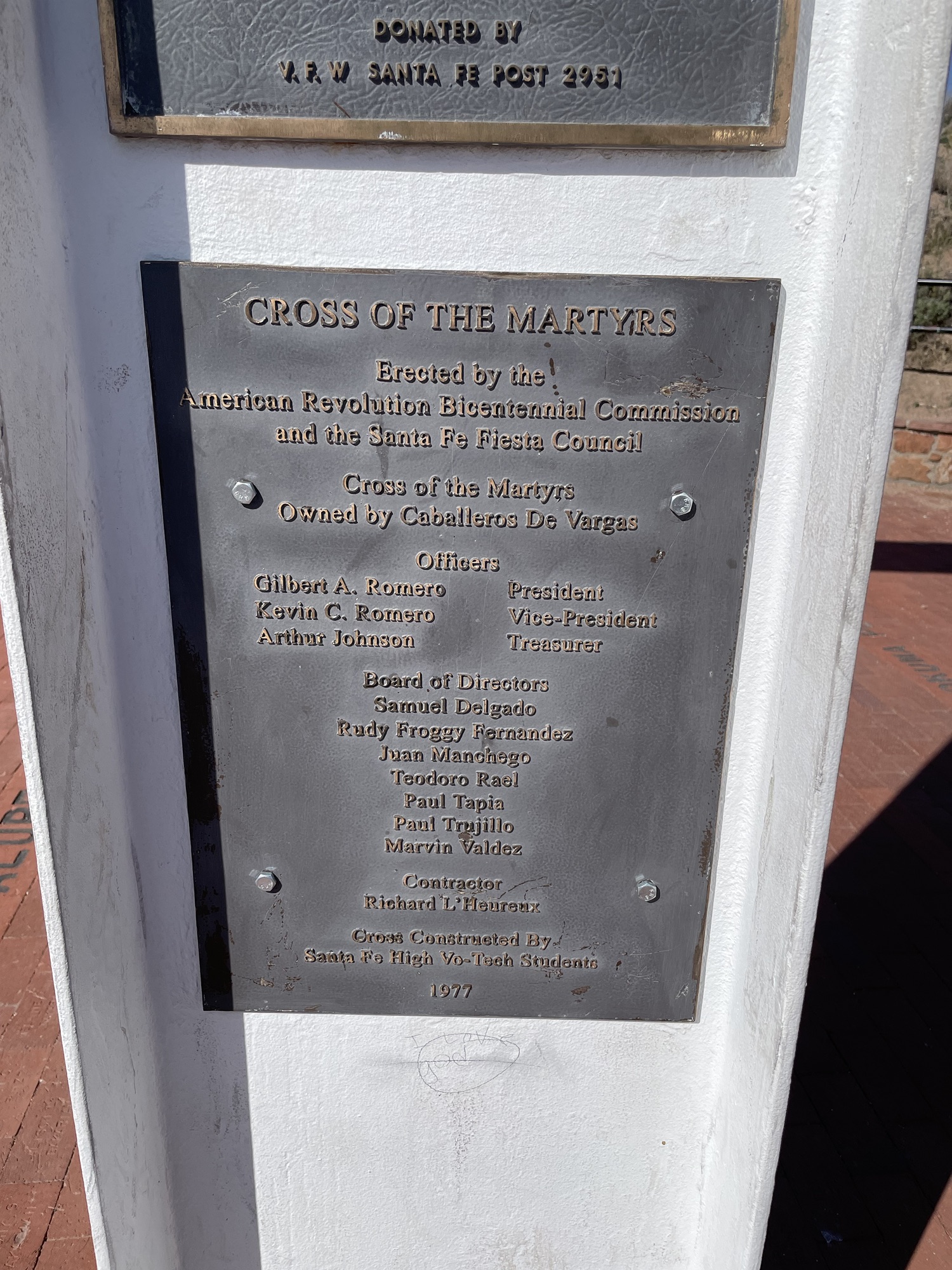
The Cross of the Martyrs honors the 21 priests and 380 Spanish settlers who were killed during the Pueblo Revolt  in 1680. The first cross was erected in 1920s. Over time it was replaced twice, the last time  in 1977 with a metal cross.

To be honest, we did not continue up the path to see the ruins of Fort Marcy.  It had been a long day, and we still had to walk about a mile or so back to our hotel.  But you can easily get to it. But that path is not paved.

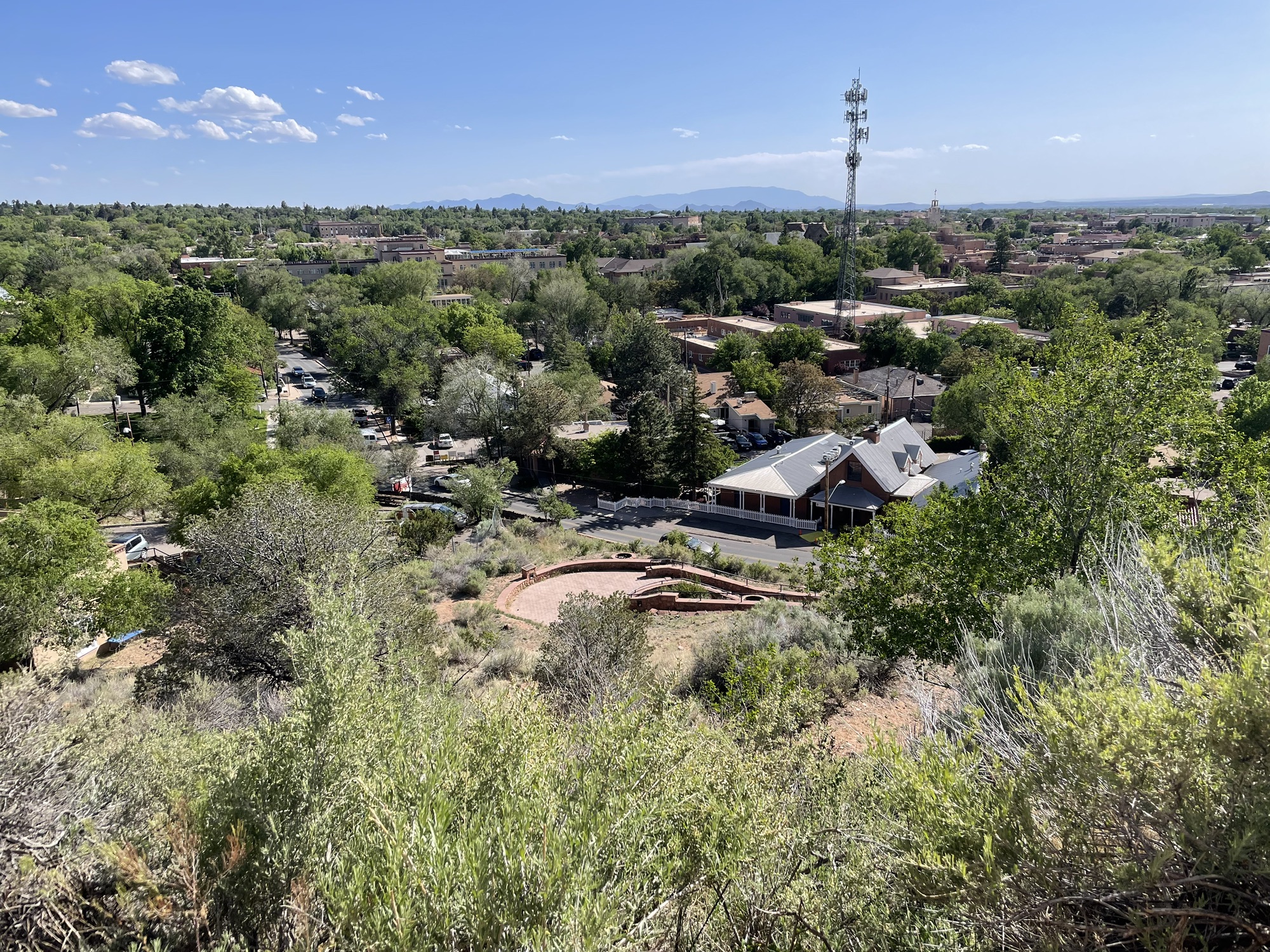
However, we did get some fantastic photos of Santa Fe from the top.
https://www.lorettochapel.com/

https://www.sanmiguelchapelsantafe.org/

Santa Fe’s  Multitude of Museums

9 Jun

Museums, museums, museums.  So many to choose from, so many to see.  We went to six museums over our six days in Santa Fe.  I decided I would list them all in one blog from my favorite to my least favorite.  That is not to say that any of them were bad, just that these are how I enjoyed them. 

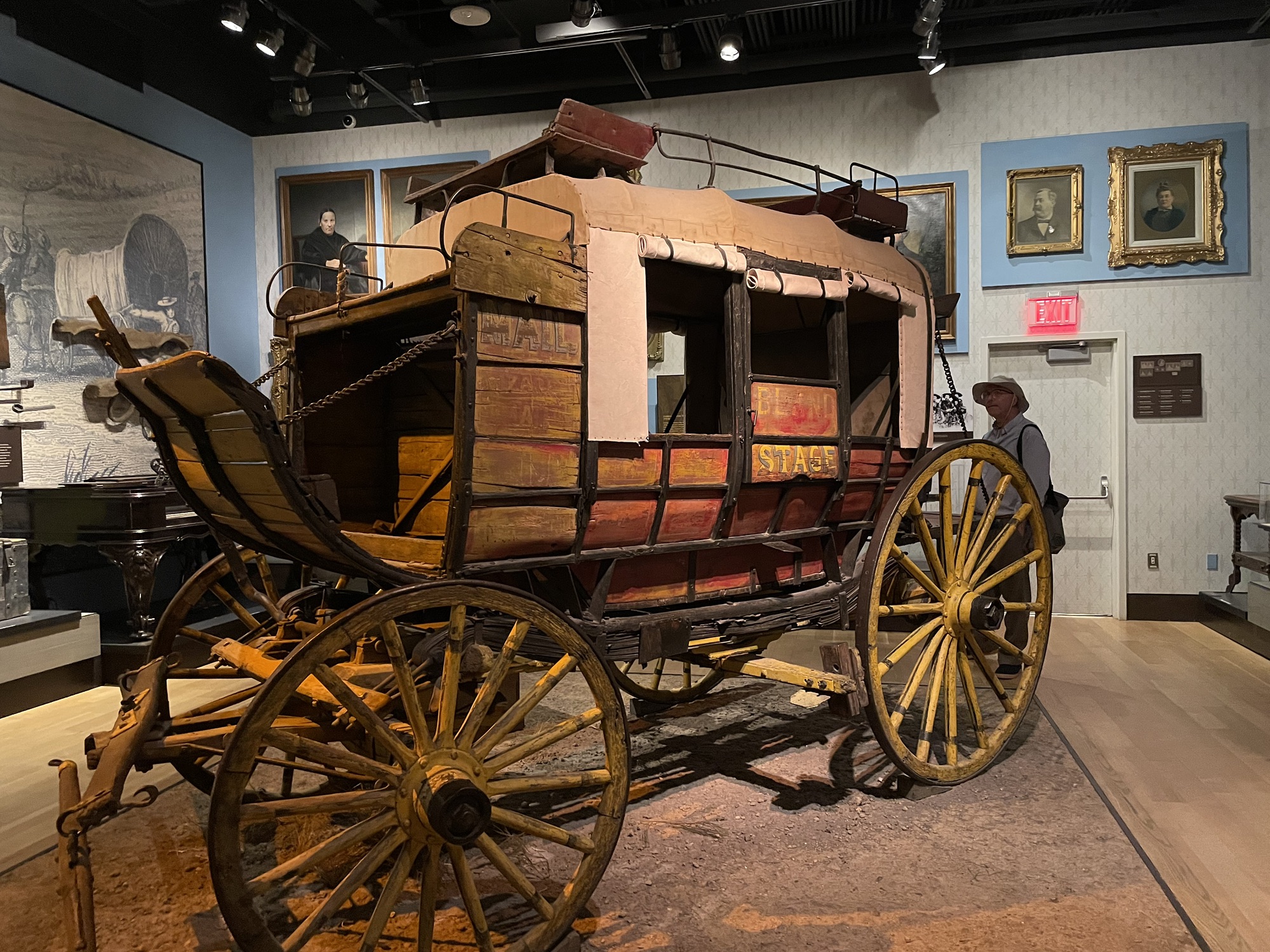
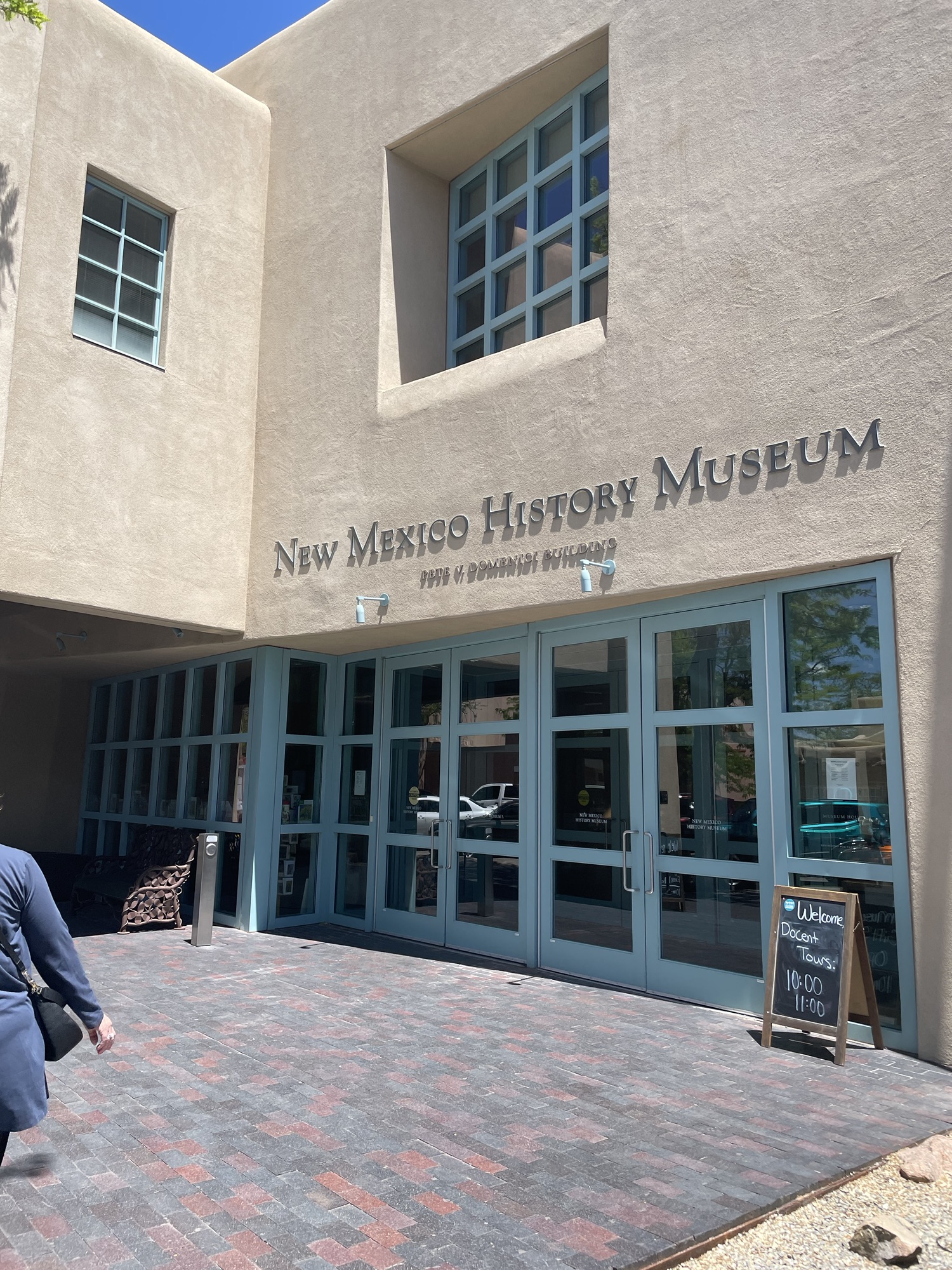
New Mexico History Museum/Palace of the Governors.  Located behind the Palace of the Governors, on Lincoln Avenue right off the Plaza, The New Mexico History Museum is a great place to understand Santa Fe and the relationships among the Native cultures, the Spanish heritage and the American ‘invasion.’  With three floors of exhibits and the additional space located in the Palace of the Governors, there is a lot to see here.  Way more than I anticipated, which is why I ended up not seeing all of it, even though I had good intentions to return on another day to complete seeing the exhibits in the Palace of the Governors. I do love learning history!

The first floor packed in 500 years of history!  It was a lot to take in, but really explained the importance of both the Native and Spanish and Catholic influences on New Mexico.  When the United States took over the New Mexico territory, the relationship between all these groups changed dramatically. 

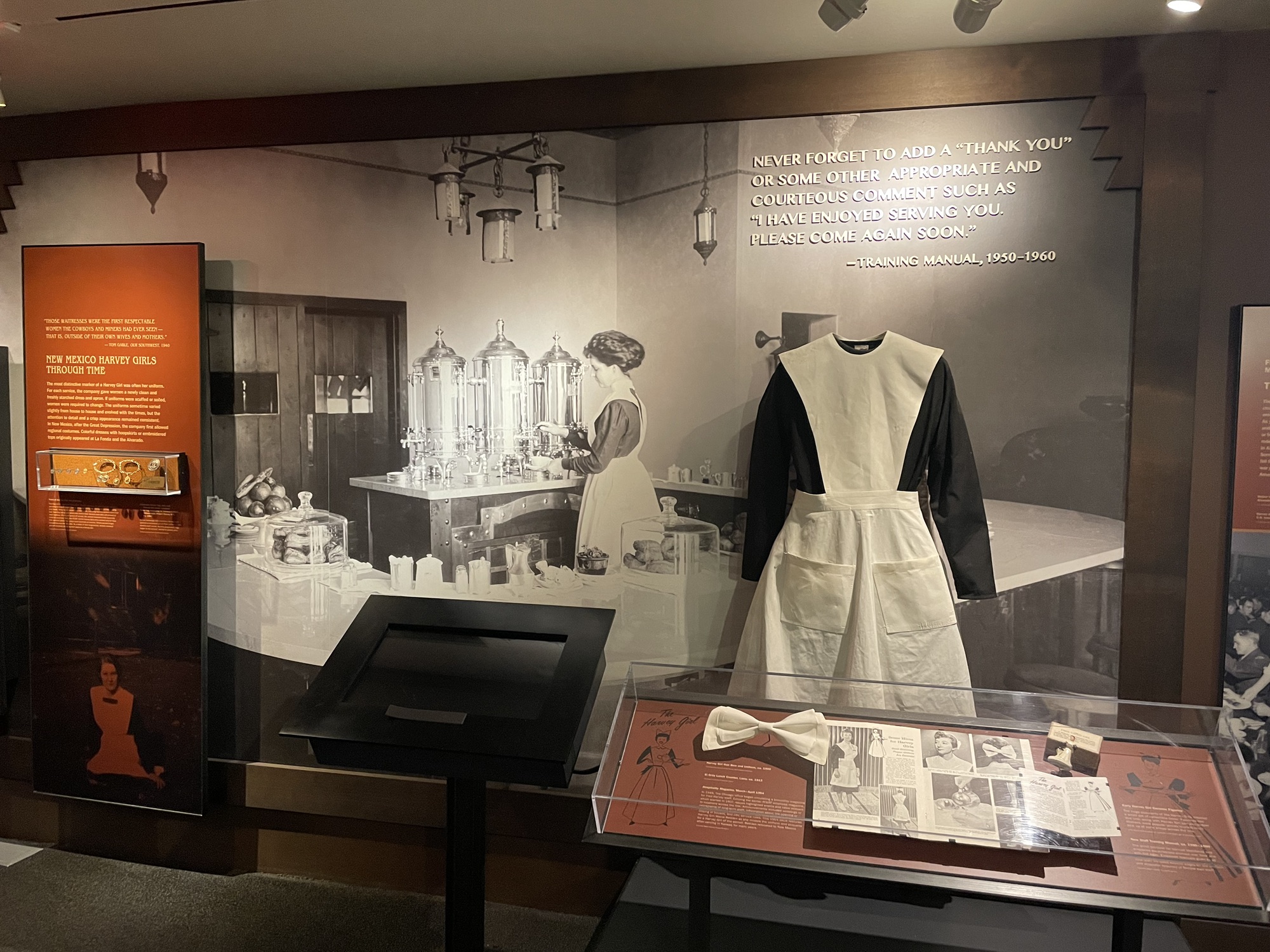
One of my favorite exhibits was in the mezzanine, “Settling the Standard: The Fred Harvey Company and Its Legacy.  Since Fred Harvey started in Kansas City, and I have seen the displays at our History Museum, I was delighted to see the story retold here.  This exhibit was much more in depth than the exhibit I have seen at a Kansas City museum.  It might have to be another blog!

The next two museums were at Museum Hill, just outside downtown: the Museum of Folk Art and the Museum of Indian Arts & Culture.  We decided to go to the Museum of International Folk Art first, turning to the right as we entered the museum plaza.  (I recommend getting a Culture Pass, which includes a number of museums for a $30 fee.)

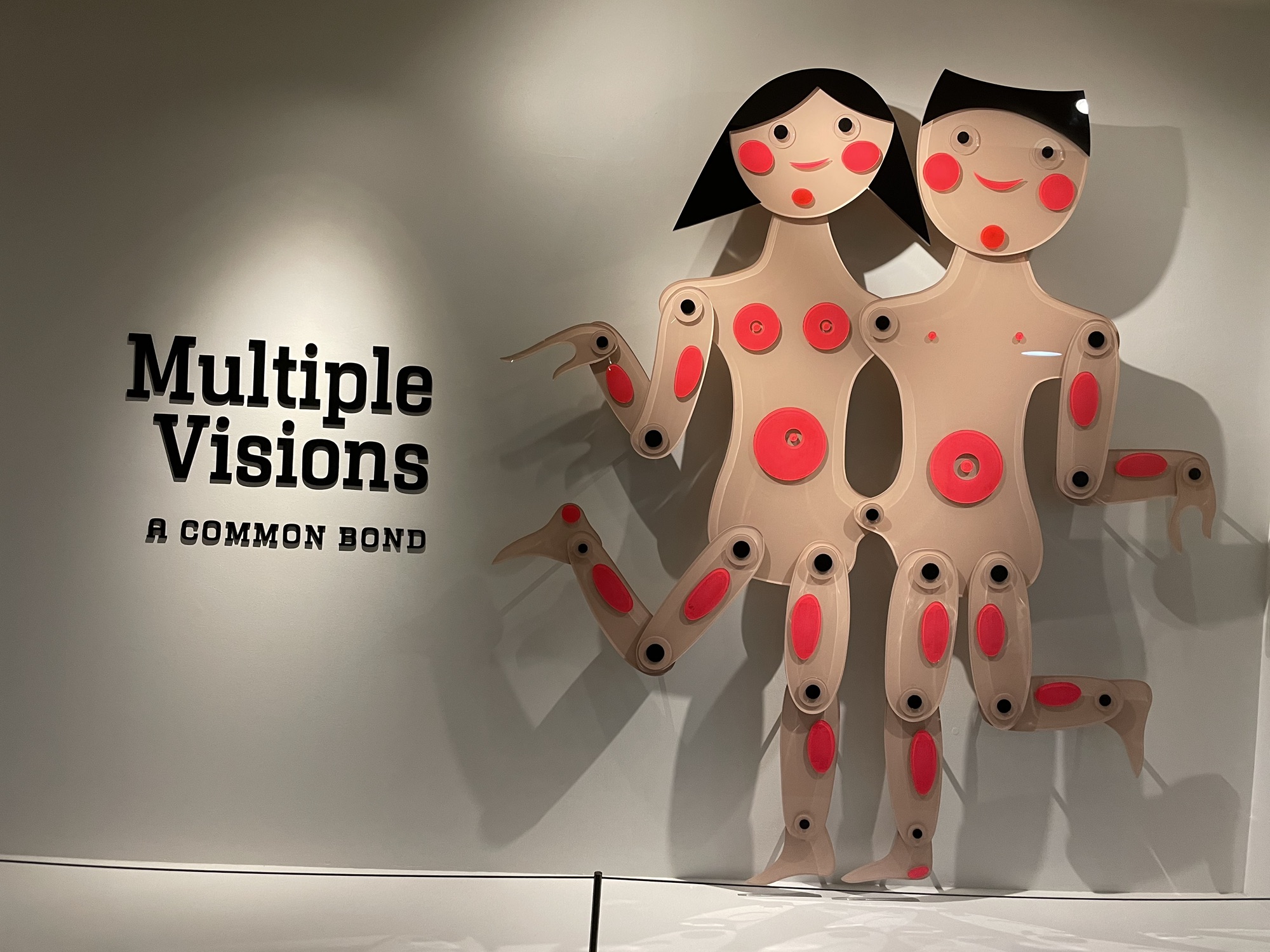
The first exhibit we visited was “Multiple Visions: A common Bond.” Alexander and Susan Girard donated their extensive folk art collection to New Mexico, and it was added to the Folk Art Museum.  When I entered this room, I was first excited and then overwhelmed.  The art seemed endless; it covered walls, hung from the ceiling, filled hundreds of display cases. We walked around the entire room, looked in every case, and were mentally exhausted, visually overstimulated, but filled with the joy of the art.

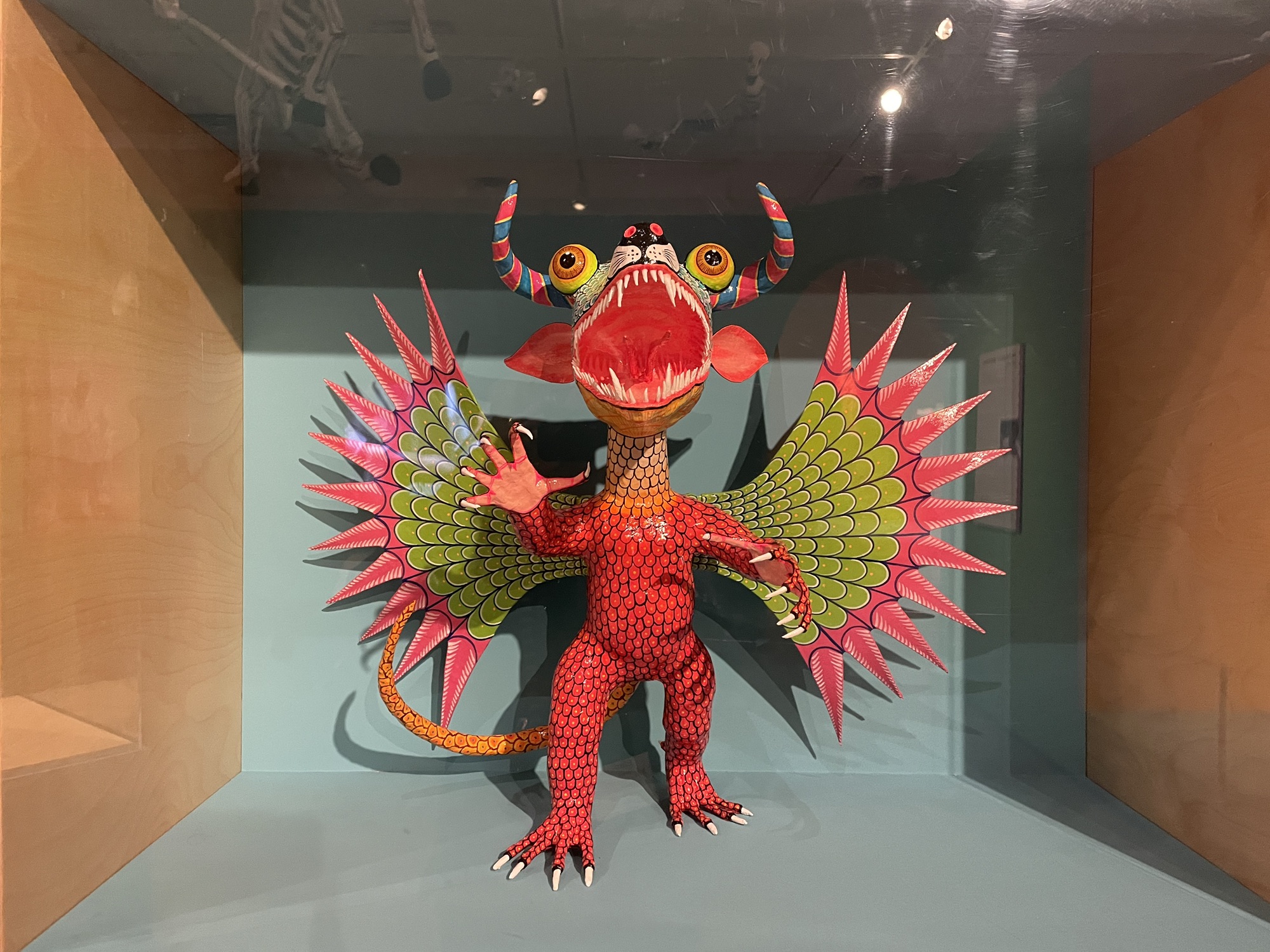
Luckily the next two rooms were much calmer, so we could feel more ease as we left the building.  I really enjoyed “la Cartoneria Mexicana,” which was several rooms of unusual creatures made of paper and paste.  Between the first exhibit and this one, there is a short movie that explains how the exhibit displayed.  I liked it. The creations made of paper and paste were magical.

The final room held the curators’ favorite pieces.  It was a calming room!  A short visit to the gift show then we walked the outside labyrinth to continue the calming process.  You really do need to rest your brain after being at the Folk Art Museum.

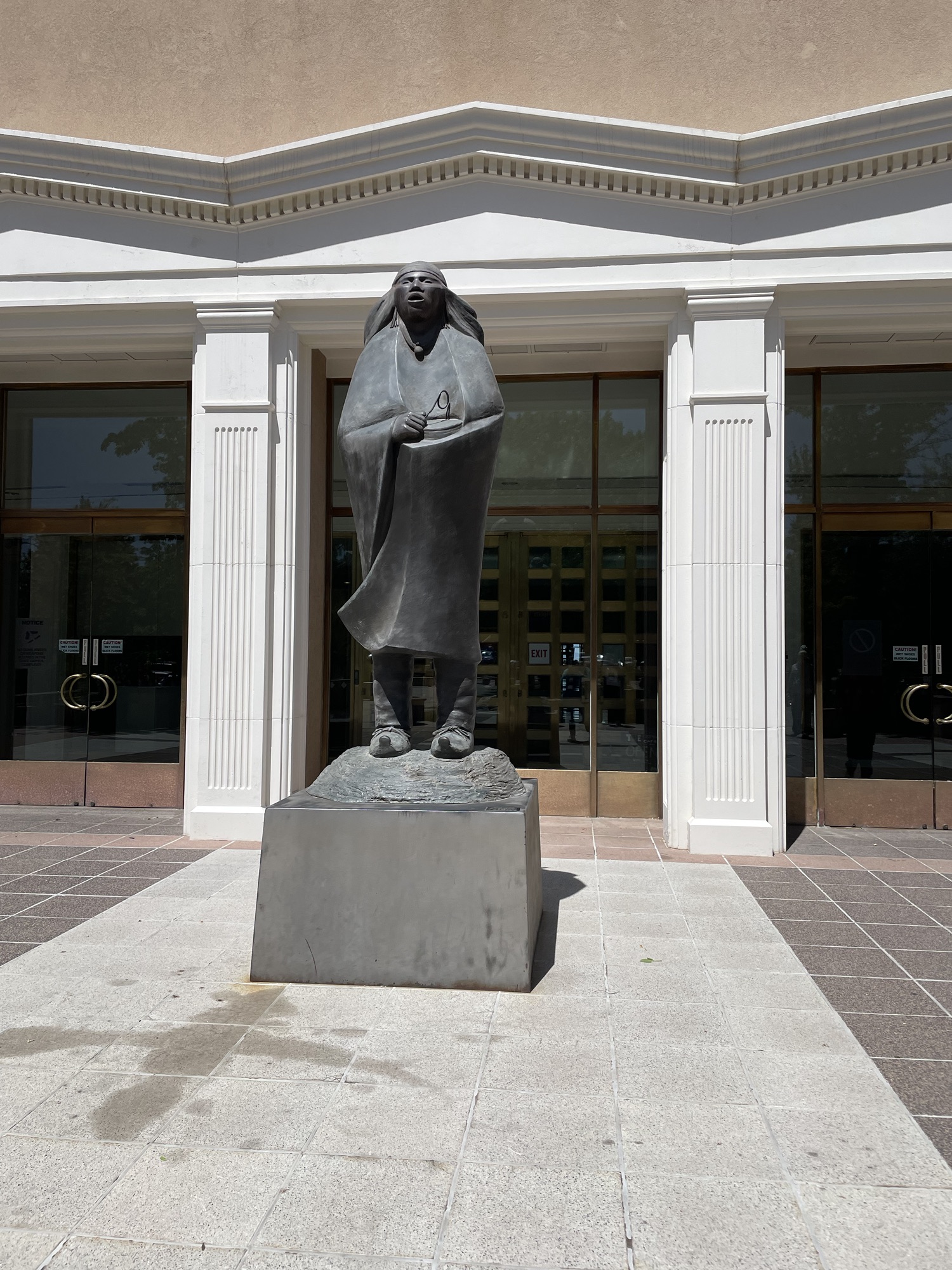
We ate lunch at the lovely restaurant on the hill, and then went over to the Museum of Indian Arts and Culture. Really an excellent place to learn about the indigenous peoples in the “Here, Now and Always” exhibit.  The statues outside the building brought me joy, especially the one of the young hoop dancer, it reminded me of the young girl we had seen doing the hoop dance in the Plaza. 

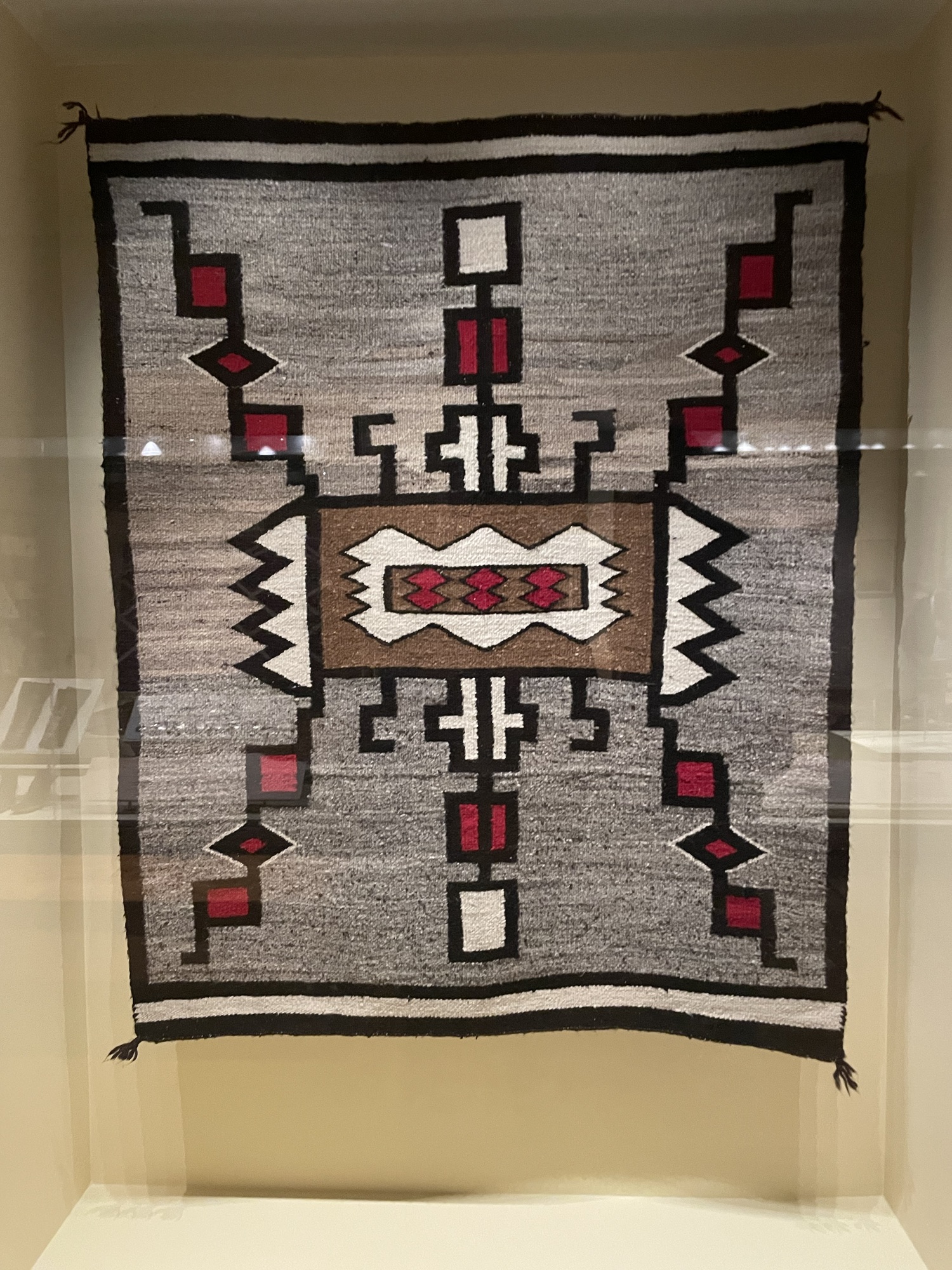
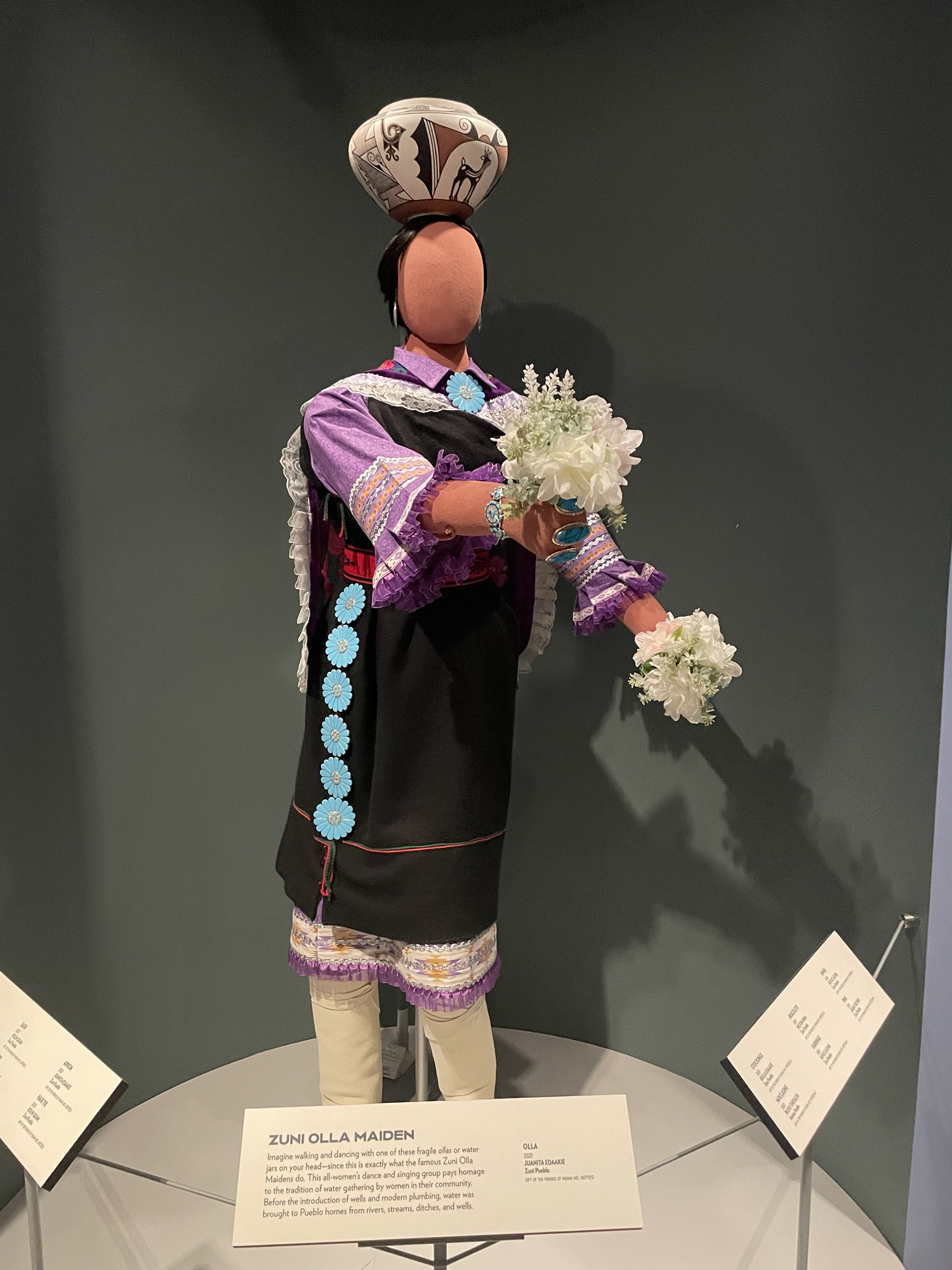
 Inside there was all the information needed to understand the native peoples who lived in the New Mexico area. The pottery, the weavings, the baskets, the jewelry, and the information on how they lived before the Spanish and then the United States took control is important to know.  Another great museum.

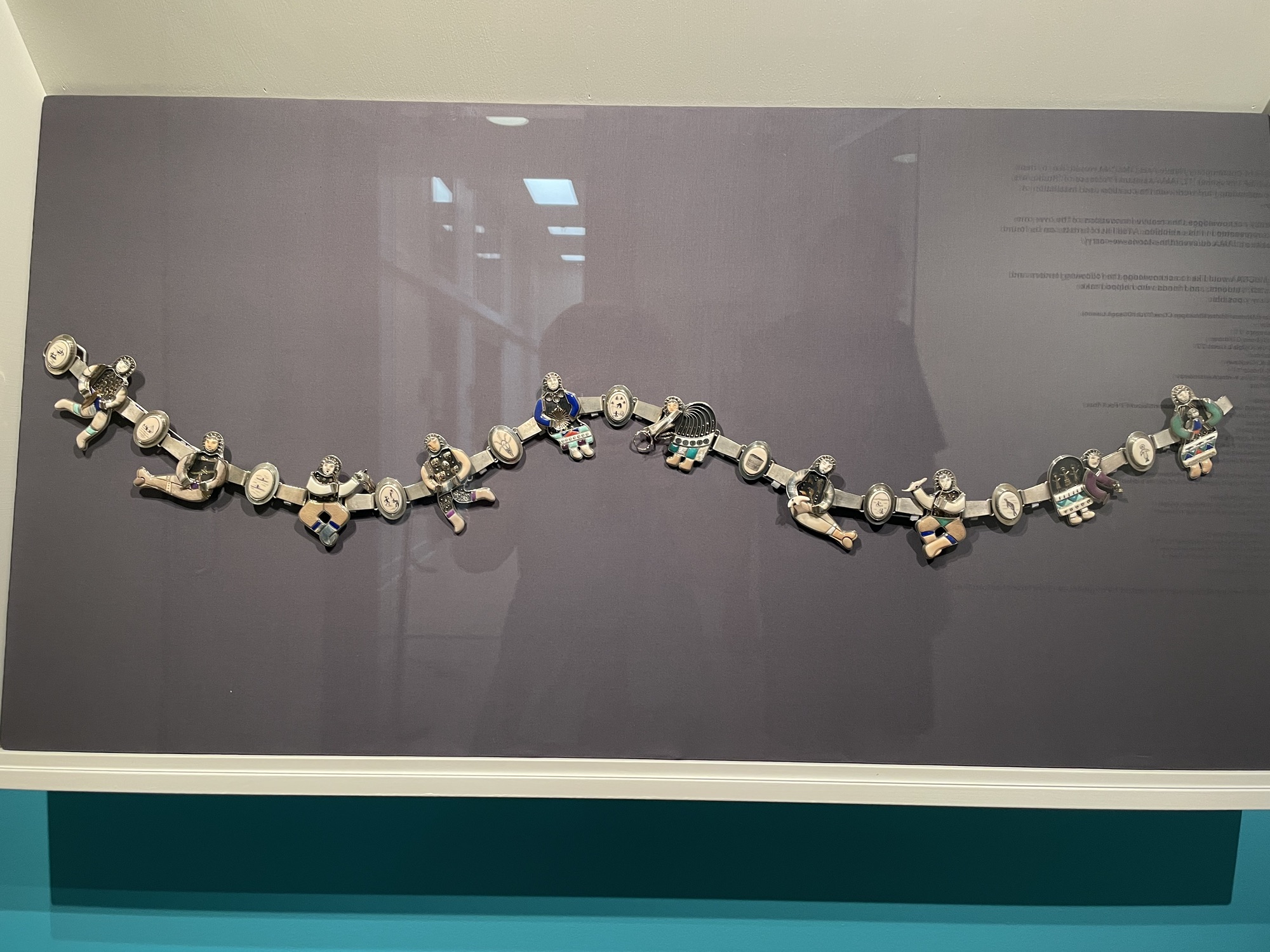
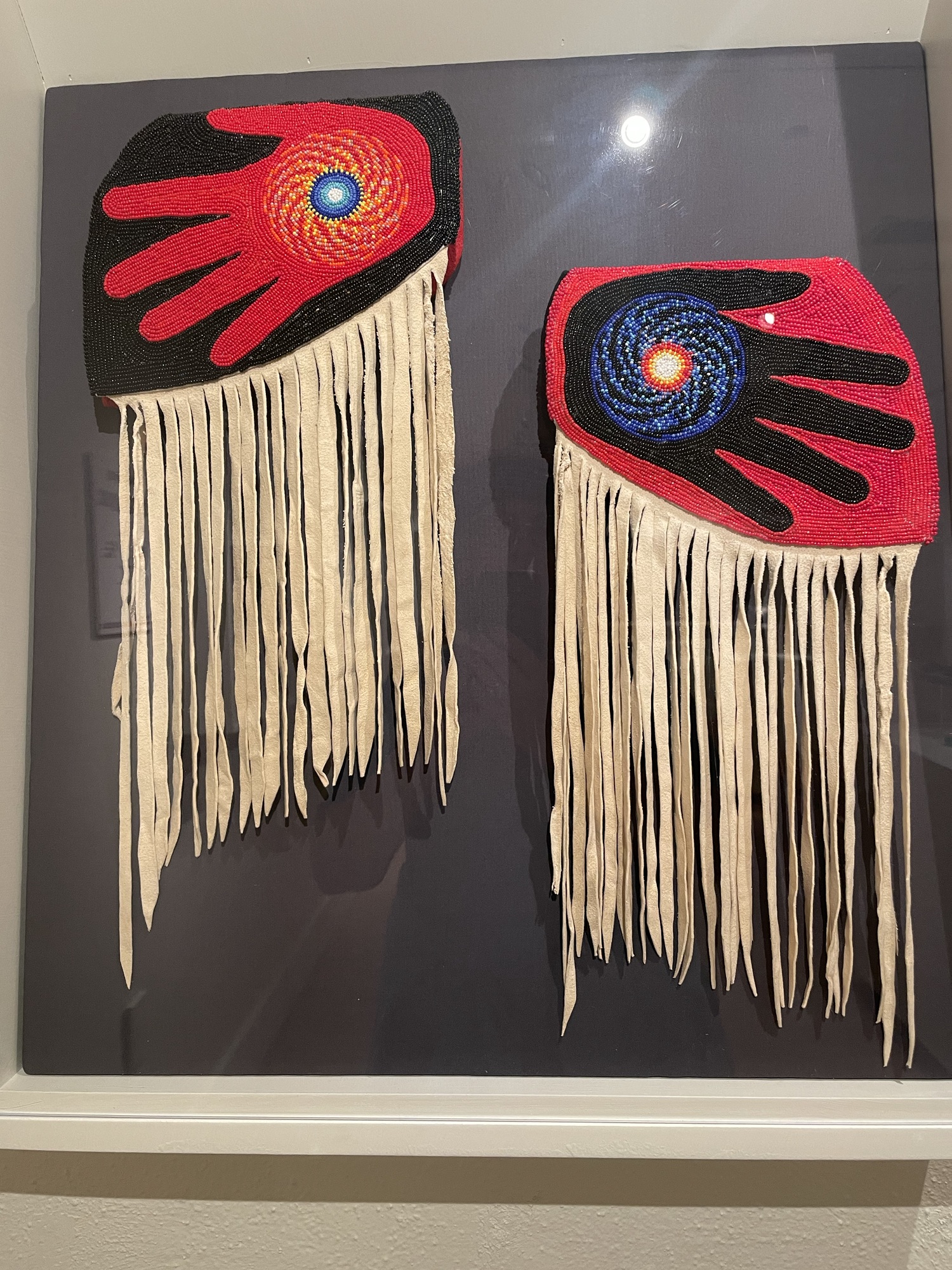
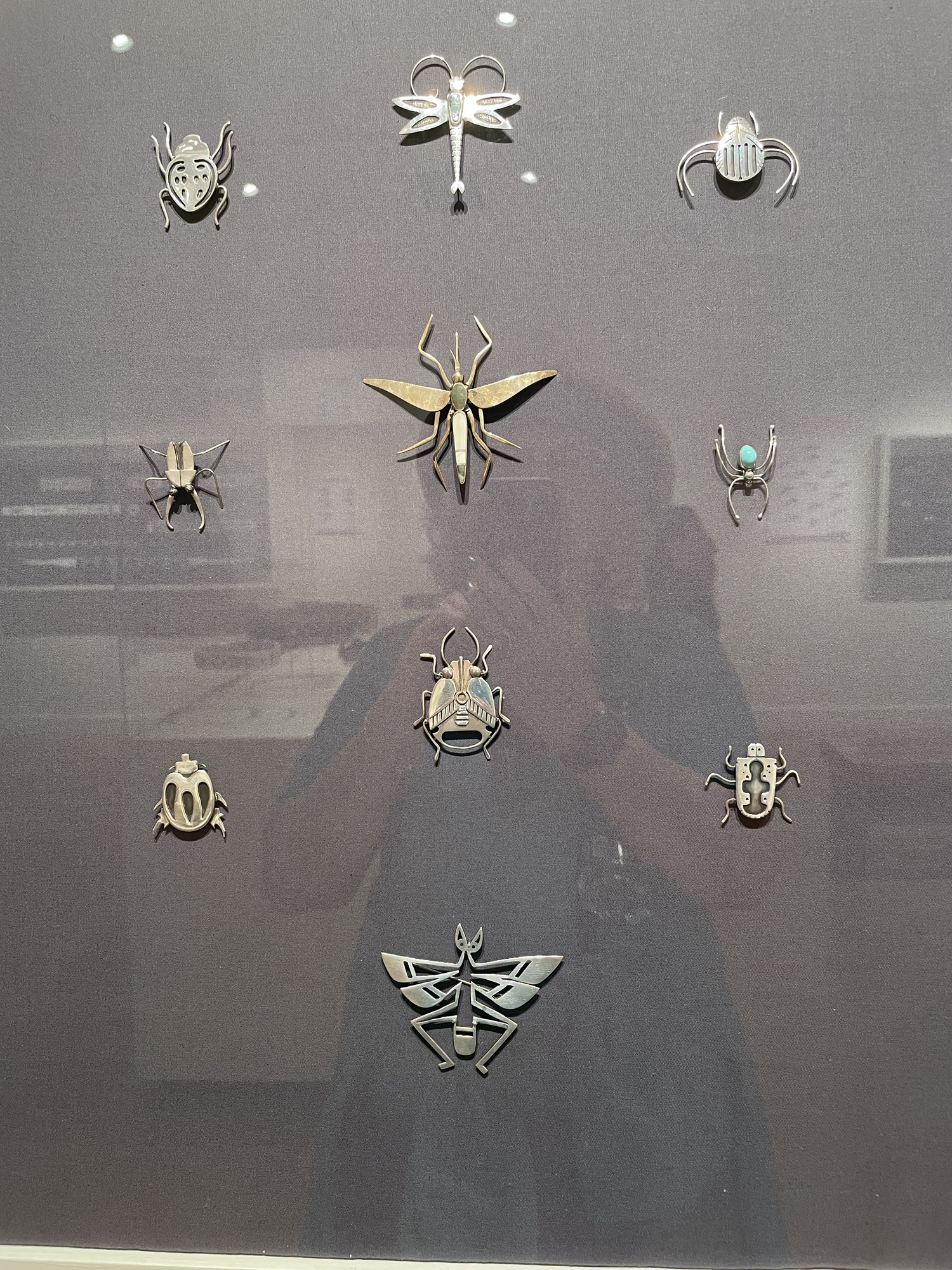
IAIA Museum of Contemporary Native Art: Near to the St. Francis Cathedral, this museum showcases the work presented by the Institute of American Indian Arts (IAIA). It displays the most progressive art.  I loved the interpretations of traditional objects and the jewelry.  There were some pins that looked like bugs that were stunning.  I loved a silver belt made by Denise Wallace and beaded cuffs made by Marcus Amerman. 

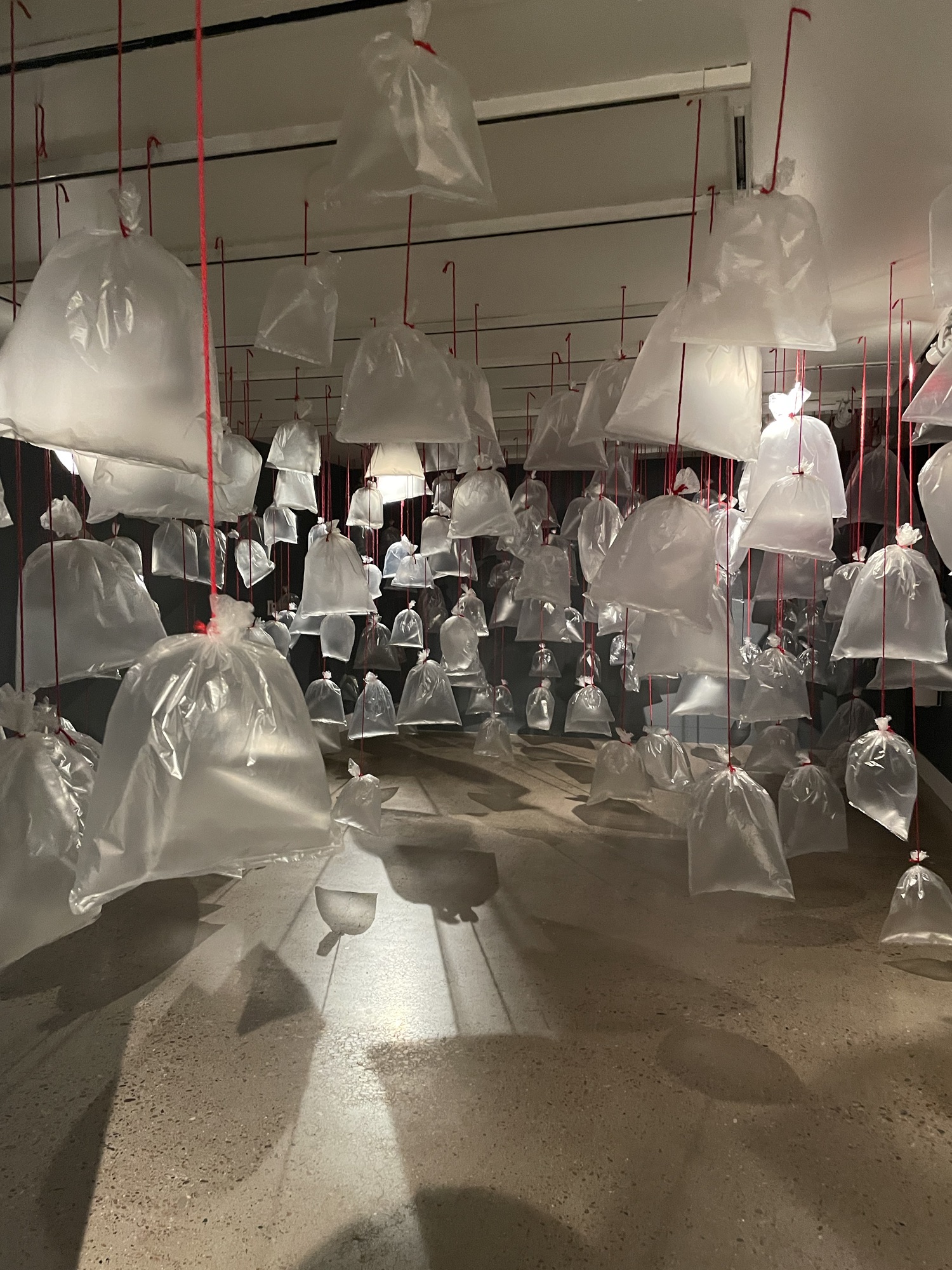
However the room filled with plastic bags, I viewed, I walked through the room and I tried to understand it.  I just did not get that exhibit. But then it was about the artist being frustrated about the inability to communicate, so perhaps I did understand it.  However, like anything else, art is subjective and there were many other exhibits in the museum I did enjoy.

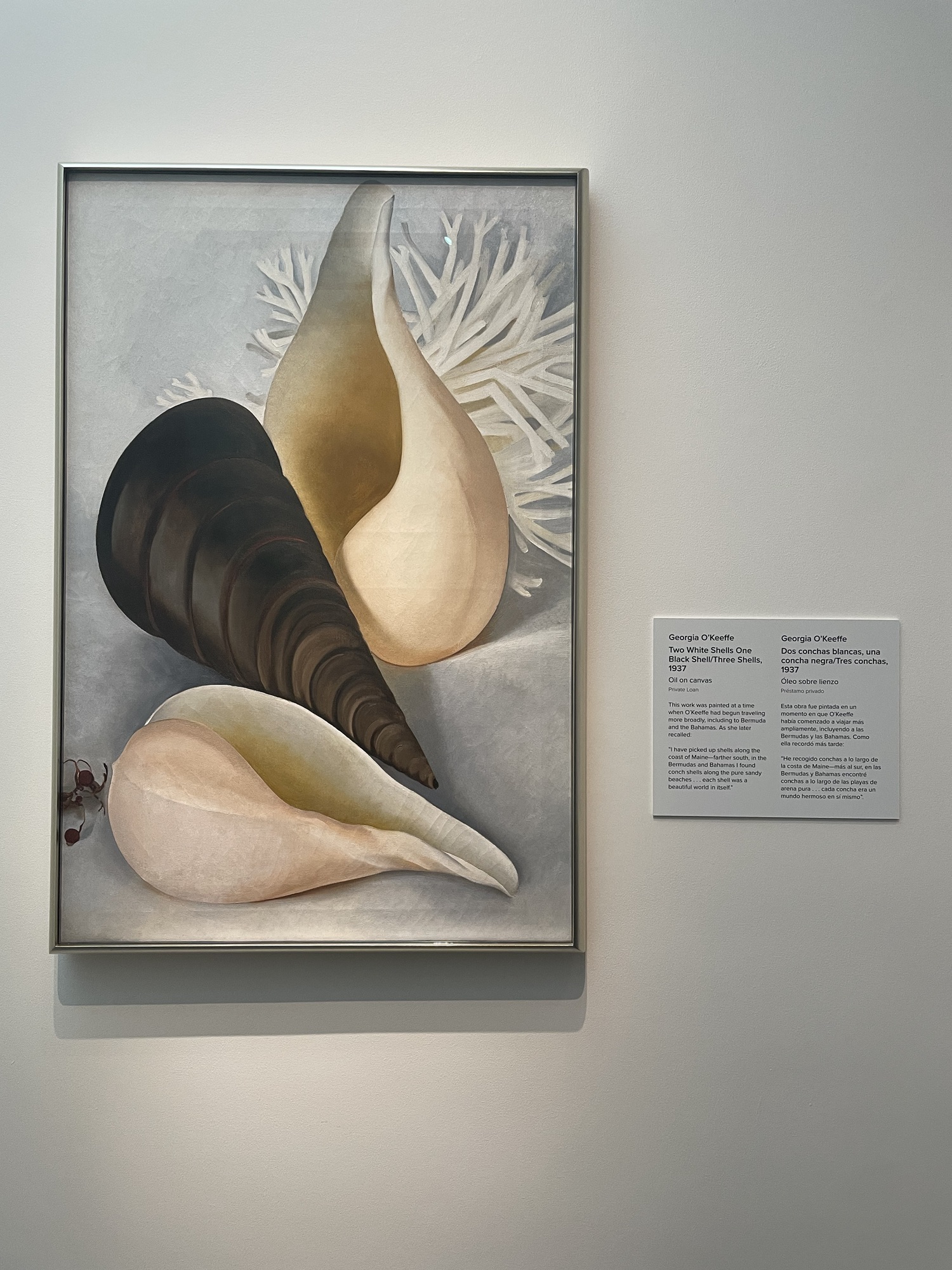
Georgia O’Keefe Museum: Just a few blocks from the Plaza, on Johnson Street, it is an easy walk. My instructions: Get your timed tickets in advance. This is a small museum, and they limit how many can be there at any one time!!!    See the movie first!  No one told us about the movie, so we did not see it until the end. 

The museum goes in one direction, so you have to turn around and walk back through all the rooms when you finish, so you could do one side going and the other side going back. As for the art. If you enjoy Georgia O’Keefe’s work you will enjoy this museum. I actually liked the last room the most, where there was information about her life, “Making a Life” and her art supplies. I have to be honest, much of her later art did not appeal to me. But it is interesting to see.

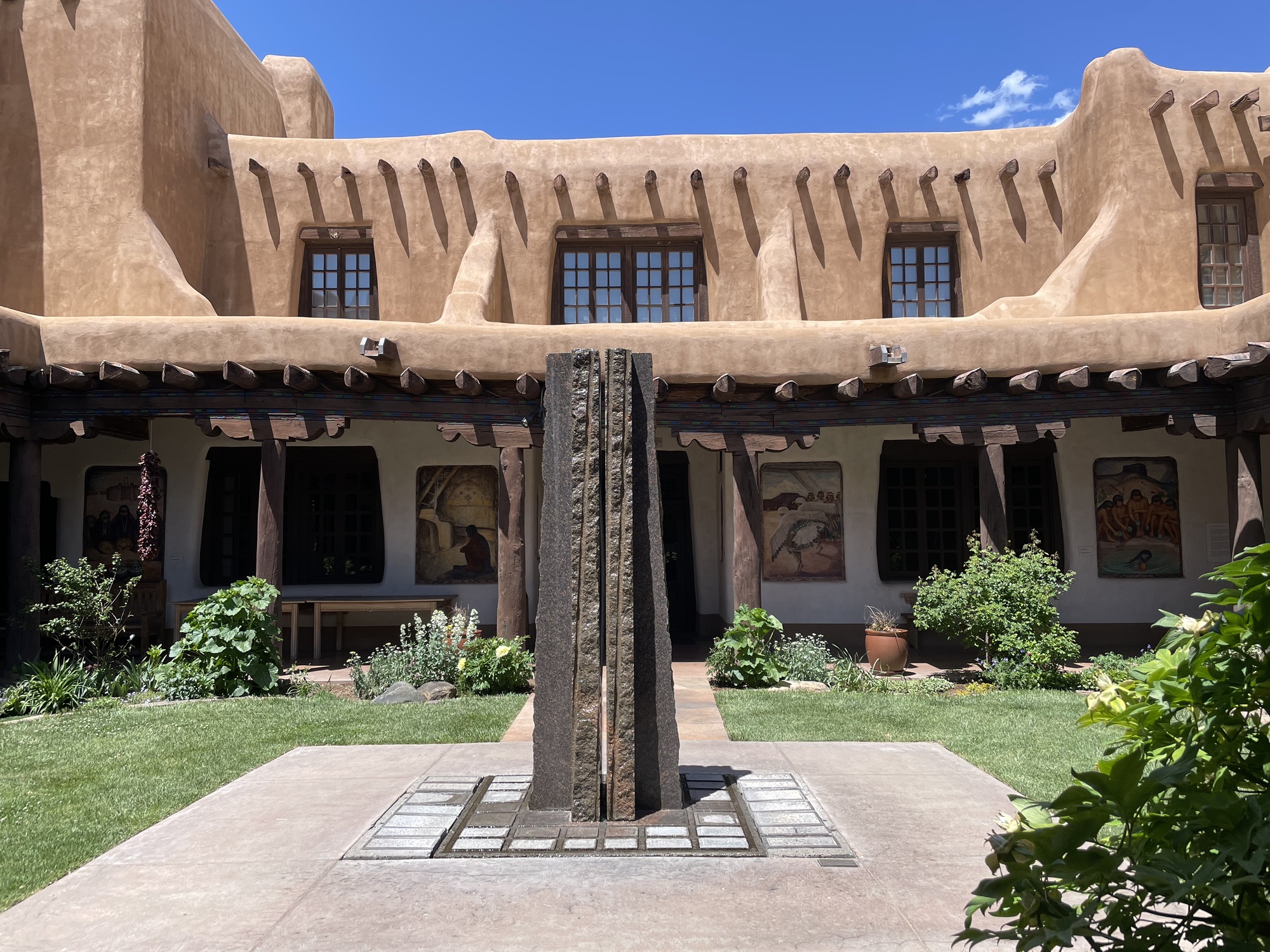
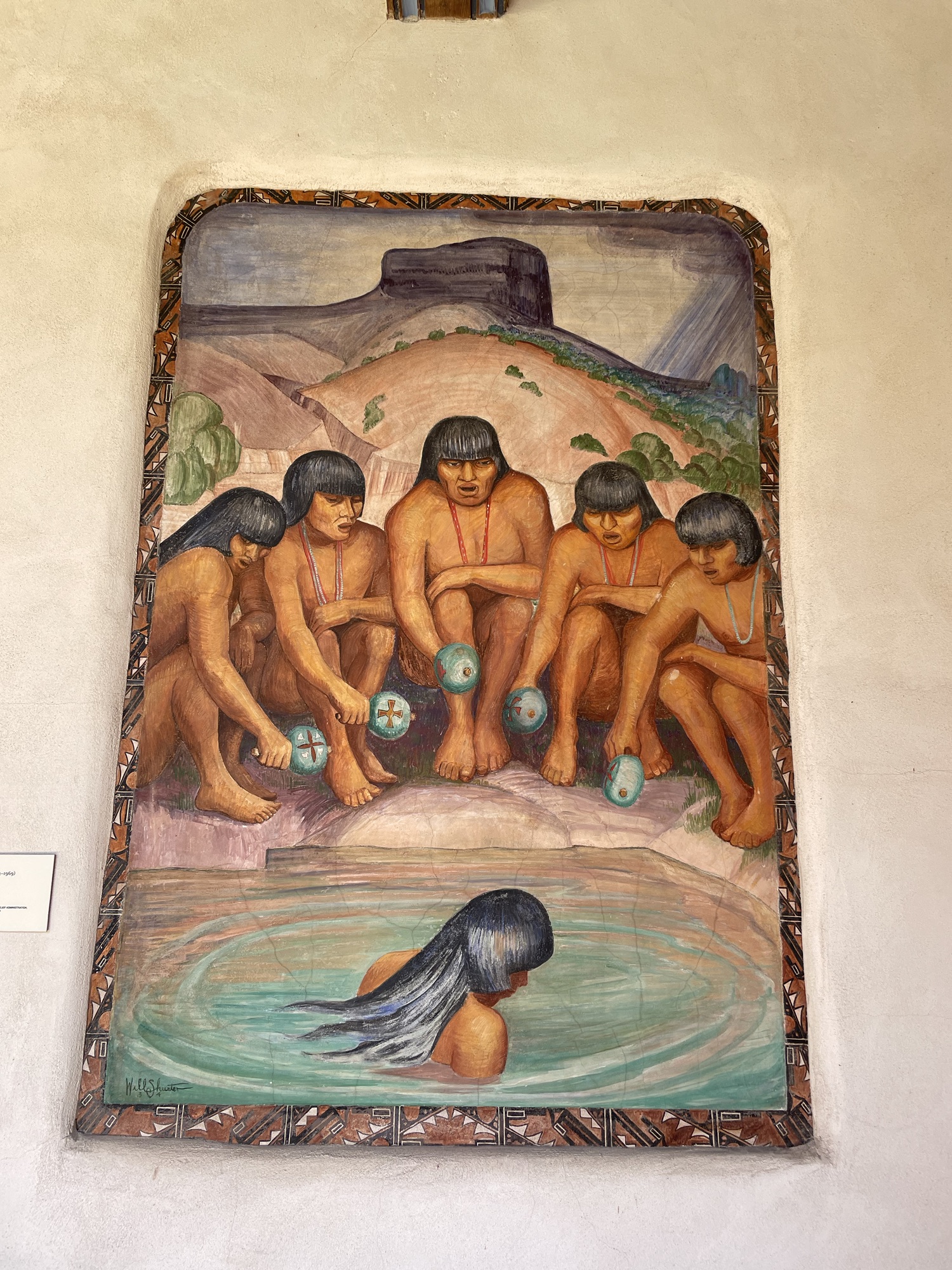
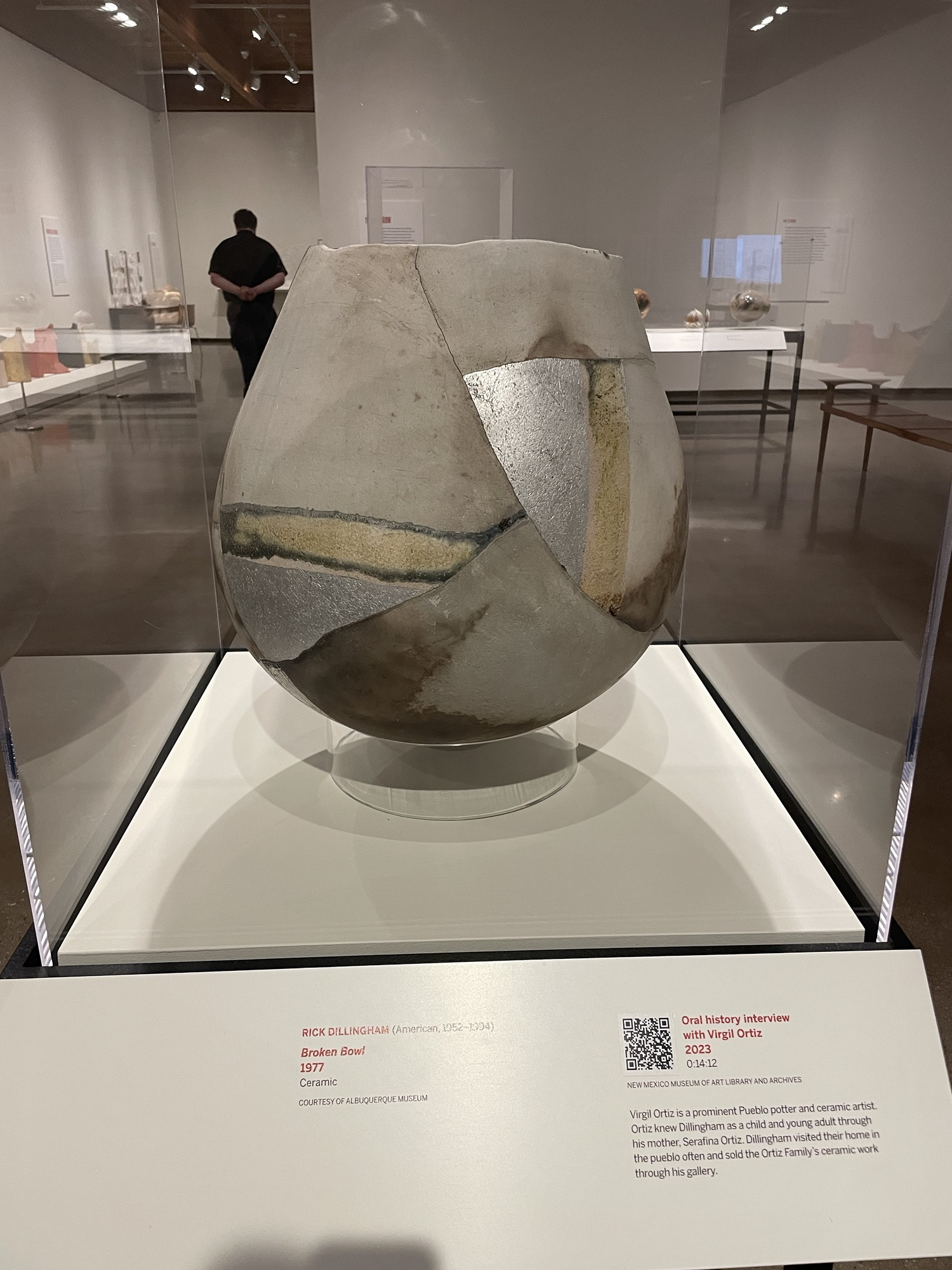
New Mexico Museum of Art: Situated catty corner from the Plaza on Palace Avenue,the museum building is set up like a hacienda.  You can walk around the exhibits in a circuit, or you can cut through the courtyard.  I loved the murals that decorated the courtyard.  I am not a big fan of some modern art, and so these exhibits were not my favorite.  However, I like to see what younger artists are doing, so I enjoyed seeing the interpretations of pottery design.

Other blogs about New Mexico: https://zicharonot.com/2024/06/06/the-great-rio-grande-river-gorge-and-taos-pueblo/.

https://www.nmhistorymuseum.org/

https://www.moifa.org

https://www.indianartsandculture.org

https://okeeffemuseum.org

The Great Rio Grande River Gorge and Taos Pueblo

6 Jun

I wasn’t sure what I would see when we arrived at Taos Pueblo.  Our tour for the morning had been cancelled due to a funeral, but fortunately they were able to reschedule for the afternoon.

Before we even arrived at the Taos Pueblo, we had already visited the city of Taos, where we had time to walk around, see some sites and eat lunch.  We chose to see the Kit Carson home. The most striking bit of information I found there was that Kit Carson’s first wife was Arapaho, as was his oldest daughter, and he had adopted three other native American children who had been orphaned.  These facts made it difficult to reconcile with the same man who was supposedly so cruel to the Navajo people.  However, there is some dispute on what he actually did for and against the Navajo nation. But I digress.

Taos the city, has a nice, small dusty plaza (due to construction), but after being in Santa Fe for five days, it paled in comparison. No matter, I was still glad we had a chance to visit it and see the sites.  After lunch I was ready for our next adventures.  I was not disappointed.

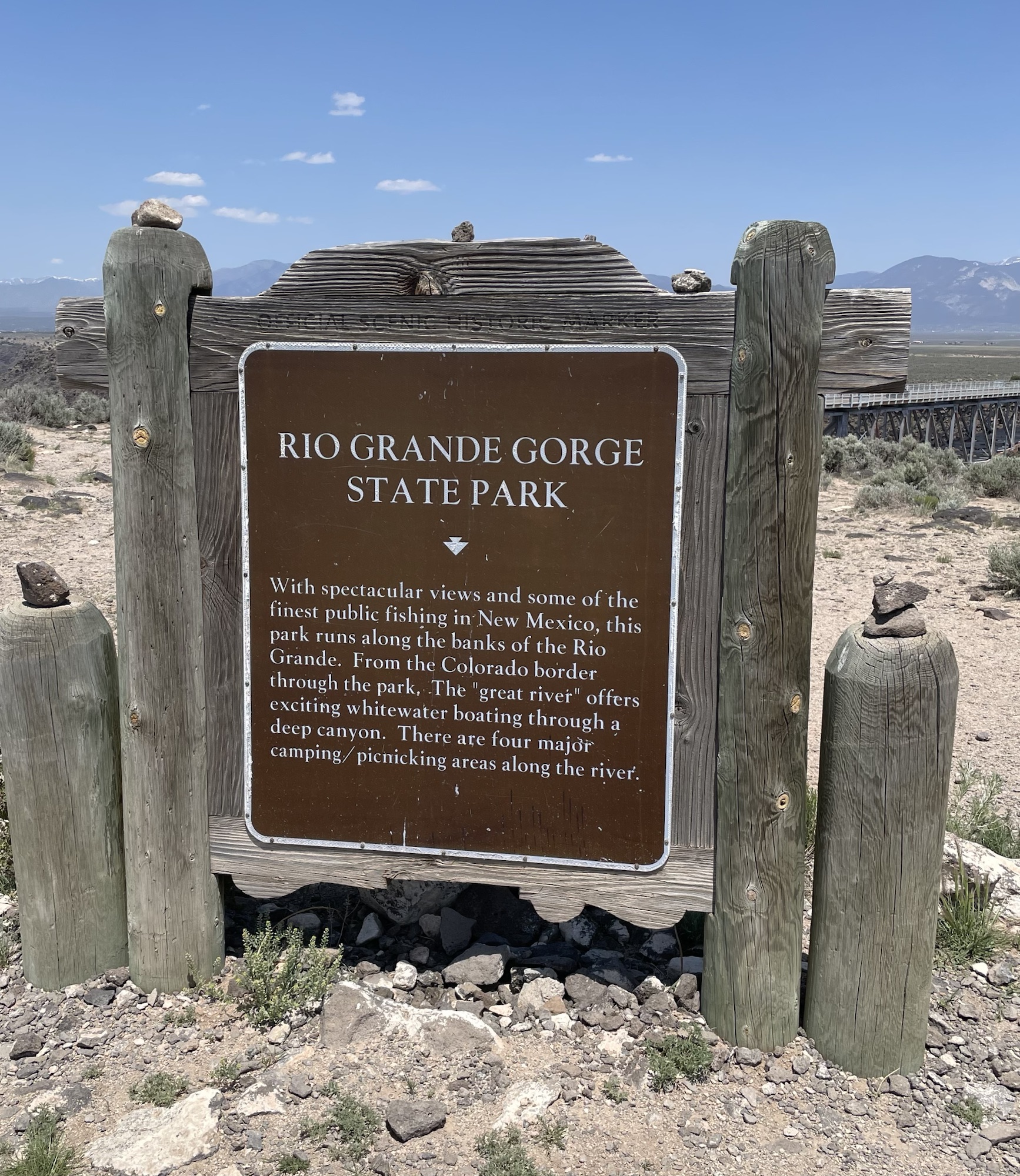
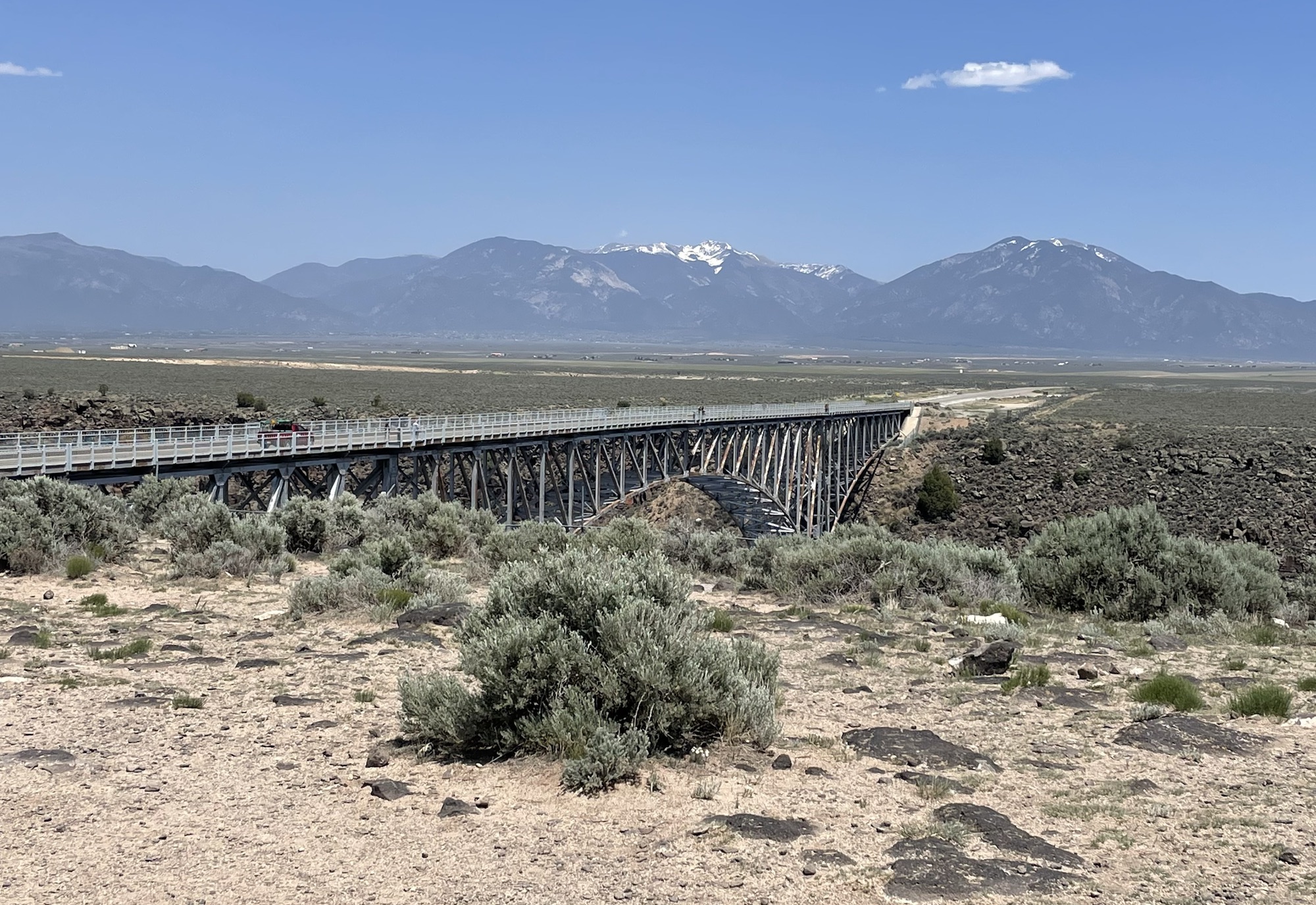
As we drove a bit out of Taos, our tour guide pointed out the flat area we were passing through.  It did look perfectly flat, until it wasn’t!  As I was sitting near the front,  I was among the first to notice a giant rift in the land.  A deep canyon, where at the bottom, ran the Rio Grande River.  Here it did not look so wide, but as we were 600 feet above it, who knows!  As we drove across the bridge, we were amazed that this gorge was here. 

The bus stopped at a overlook area, where others had also come to see the gorge.  Some were students drawing pictures of the bridge and gorge. Some were just looking across in amazement.  Others were shopping for art sold by native artisans.   My husband and I joined the group that traversed over some stones and the barrier to get to the highway and the bridge to view the raging waters from above. Wow! It was well worth going out to see it, even though it was not in our original schedule, making me glad that our trip to Taos Pueblo was changed to the afternoon.

After seeing the depths of the Rio Grande River Gorge, we traveled back towards Taos tothe Taos Pueblo, the home of the Red Willow People.   Since there had been a funeral, there were some places that were off limits. But the main areas of this World Heritage Site were open for us to see. 

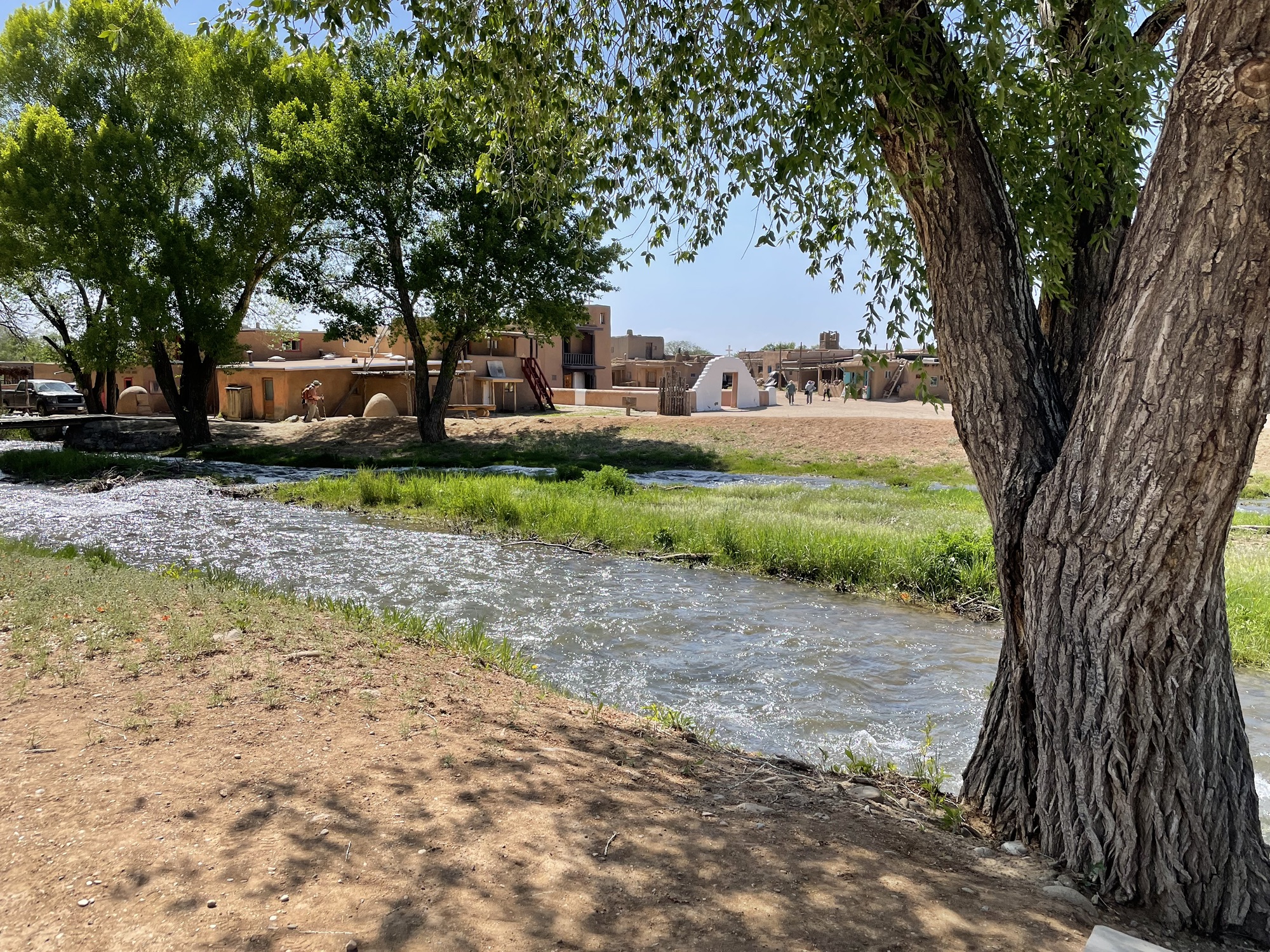
My first thought was ‘perfect setting. What an ideal spot to put a town, where a creek runs through it. With all the snow melt, the water was really running through it.  While most people took photo after photo of the North Pueblo and the South Pueblo, I took photo after photo of the water.  “el agua es vido.”  Water is life.

A young college student provided context for us.  Her family is a member of Taos Pueblo, and they still have a home the Pueblo, even though they do not live at the Pueblo full time.  Only 10-15 families actually live there throughout the year, with no running water, but the creek, and no electricity. These are part of the requirements of a World Heritage Site: no changes.

Our tour started in the Chapel.  We were not allowed to take photos inside.  But there were three things that I was surprised by.  First, it wasn’t a statue of Jesus above the alter, instead it was a statue of Mary.  Second, the decorations surrounding the niche holding her statue was a mural of vegetables, large green leaves. It was very peaceful.  Finally, there was a decorated coffin in the room.  Our guide told us 95 percent of the members of the Taos Pueblo were Catholic, the other five percent practiced the indigenous religions.  The coffin was to remind them that they were forced to convert and that many died.

In my mind this makes no sense, why practice a religion that you were forced into to following, while being such a painful past you keep a coffin in your church.  I even asked.  Her response was noncommittal, but in Taos Pueblo I have the feeling from the décor of the church that their Catholic practice is not exactly what they do in Rome.

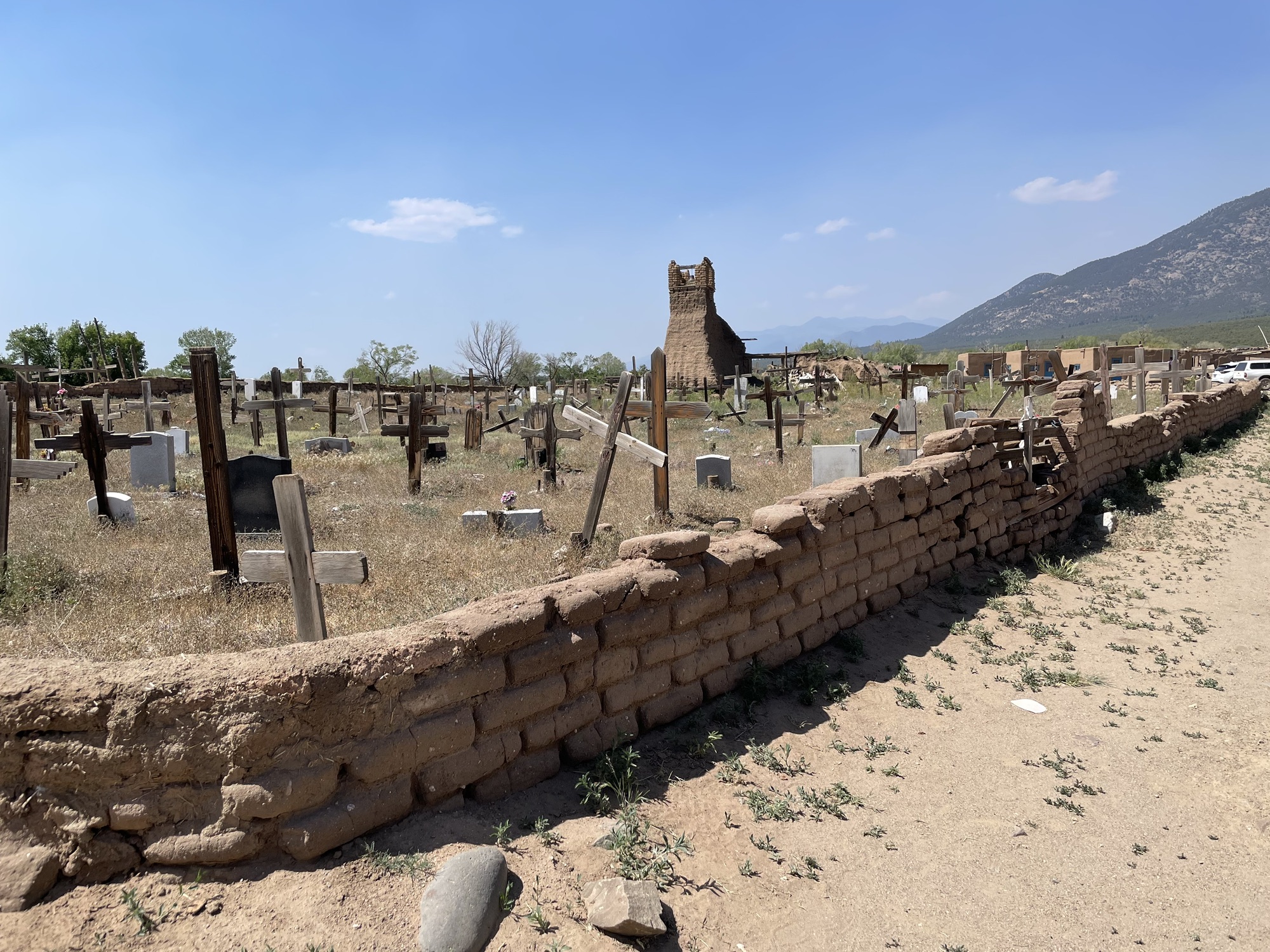
We learned the history about what happened in 1847, when women and children were gathered in the San Geronimo Church for protection from the US Army.  It did not protect them. The Army destroyed the church and killed about 150 people.  Not a good way to start off a relationship between the Taos people and the US government.  But we know that the US government and people were often cruel to the indigenous peoples of the USA.

Taos Pueblo should be seen to understand the relationship of the indigenous people with the Spanish of the early 1600s to the United States in the 1800s to the present.

For those interested in shopping, many of the homes are now storefronts for both food and art. But for me the highlight was just seeing Taos Puebl0 as it would have looked in the 1600 when the Spanish arrived and later in 1800s when the United States took over the New Mexico territory.

Home

Other blogs about New Mexico: https://zicharonot.com/2024/06/09/santa-fes-multitude-of-museums/

Learning about the Crypto-Jews/Conversos in Santa Fe

28 May

As the descendent of a Jewish family that was forced to leave Spain in 1492 or convert, I have always been interested in learning more about the Crypto-Jews/ Conversos of New Mexico.  It was in the 1980’s when the information about this still hidden group first started to be revealed. It started when a Jewish man named Stanley Hordes because New Mexico’s State Historians, and people started coming to him to tell him their stories.  To me it was absolutely amazing that 500 years after the Inquisition in Spain, that descendants were still hiding and still keeping this secret!

I had wanted to attend the Roads Scholar program: “New Mexico’s Conversos and Crypto-Jews in Santa Fe” since 2019.  Covid interrupted my plans. But finally we were able to attend. My family were also once impacted by the Inquisition and Spain’s quest to either convert or eliminate all Jews.  My family chose to move to Portugal and then to Holland.  Our story is written in an earlier blog. (See below.)

We had lectures from the authors of the top two books.

Our first speaker was Professor Ron Duncan Hart, who gave us an overview of the history of the Jews journey to New Mexico. He wrote, “Crypto-Jews, The Long Journey.” Jews were in Spain were given a choice, convert or leave.  Many stayed, they could not afford to go or they thought it would not last long and they would just hide their Jewishness, some decided they really would become Catholic.  But all were doubted because they were not “pure of blood, “meaning they were not just Spanish, they were tainted by either having Jewish or Moslem descent. Those converted in name only and still practiced their religion in secret, known as Crypto-Jews…hidden Jews. Those who were forcibly converted and known as anusim also secretly practiced Judaism.

In fact, so many of the Portuguese who came over to Mexico in the 1600s were of Crypto-Jewish ancestry, that calling someone Portuguese was just another way to say he/she was Jewish. Since my family went from Spain to Portugal, I began to wonder if some of my family made this arduous journey to escape the Inquisition. To be allowed to go to the New World, you had to show that you were purely Spanish, not tainted with Jewish or Muslim blood.  Horrifying!  People actually had their genealogy redone to eliminate their Jewish past to fit the needed requirement.

The Crypto-Jews of today still live in the mountains in northern New Mexico.  They still keep their secret.  In fact, one of our speakers, when asked how many crypto Jews there actually was, basically said, “We do not know. They keep hidden.  They do not talk about it.  They know who the other families in their community are like them. But it is not discussed”

We heard from two women who have reclaimed their Jewish identity.  They were each the child in the home who a parent said “Somos Jodios,” “We are Jews.”  Maria Apodaca told us how difficult it was to come out of hiding and join a congregation and have a ceremony of return.  How family members were not always happy about what they had done.  Many feel, with the way the world is now, it is better to stay hidden!

Isabelle Medina Sandoval wrote a novel based on her family’s history: “Guardians of Hidden Traditions.”  She can trace her ancestry back to Portugal and was able to claim Portuguese citizenship based on her family history.  But she also said that coming out of hiding is a difficult process.  A poet, she has written poems about the Crypt-Jewish experience.

From these two women we learned some of the cultural/religious/cuisine that continues from their Jewish ancestry, like lighting candles on Friday night, covering mirrors when someone dies, making a fried treat at the winter holidays, cleaning the house on Friday.  It is amazing to me that these traditions continue.

Schelly Talalay Dardashti, spoke about: “The New World: Jewish Ehtnicity, DNA& Genetics.“ Schelly is the founder of Tracing the Tribe – Jewish Genealogy on FB. She explained the difference in the different DNA tests and how some do not look for Sephardic DNA, only Ashkanazi.  We were told that between 20-40 percent of people in New Mexico had some Jewish ancestors.  That there are genetic links between those living in northern New Mexico and isolated areas in Central/South America.  People who were also trying to hide away from the Inquisition.  And the final link, a rather sad one, the fact that the BRCA1 mutation that causes brest cancer in Jewish women, is also found in the Hispanic population in Mexico and New Mexico and came from those original converso/crypto Jewish arrivals from Spain in the early 1500s.   Wow.

We attended a performance of “Parted Waters,” a play written by Robert F. Benjamin about the Crypto Jewish community. It tells the story of three generations of a crypto Jewish family.  The grandfather, a crypto Jew; his son, who knows the background, but identifies with his life as a Catholic and does not want to talk about it; and his son, who has never been told about his ancestry.  When the grandson makes a racist comment to a Jewish woman, the truth comes out along with the ramifications.  It pulled together all that we had learned over the week.

Our last lecturer, Chris Herbst spoke about Outliers/Ousiders and Religion.”  He provided us some history about the area of northern New Mexico and more explanations about the genetic composition of the populations today in Spain and in New Mexico.  He said about 1/3 of the population of Spain today has either Jewish or Moorish ancestry.

Throughout all of our talks we were referred back to the book written by Stanley Hordes, who wrote an indepth book about the Crypto Jews called, “To the End of the Earth.”  The Spanish/Portuguese Crypto-Jews traveled to the End of the Earth, the mountains of New Mexico above Santa Fe, to escape the Inquisition.  It is like reading a college dissertation, but it was fantastic in the depth of the research.

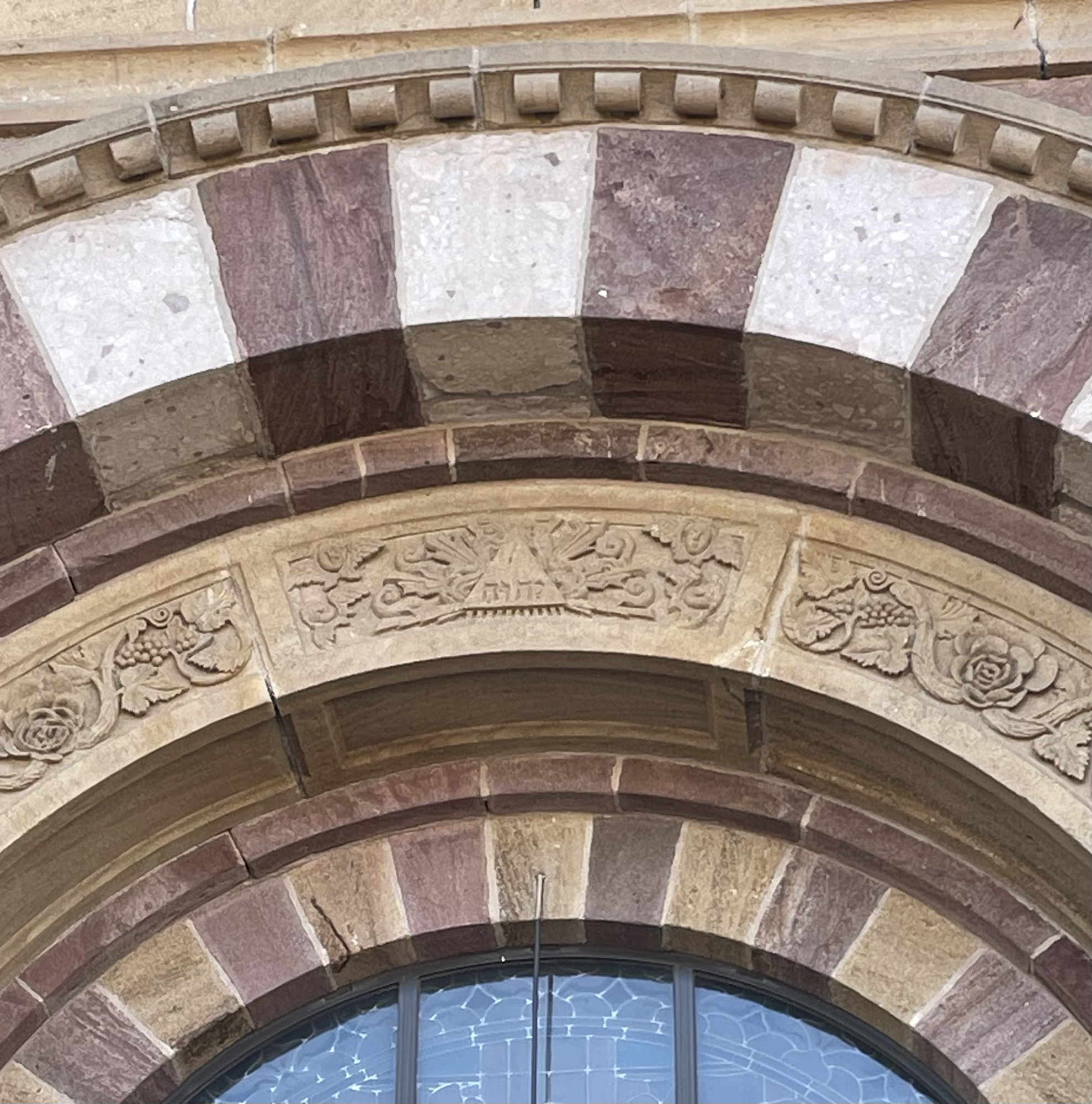
The Hebrew is in the triangle.

We did not spend all of our time learning, we also had time on our own to visit museums and explore Santa Fe.  We went to the  main cathedral of Santa Fe, where over the mantal of the front door, is an inscription in Hebrew and a Jewish Star on an internal wall. 

As part of our Roads Scholar program we also ate at many different restaurants with the most delicious food, toured historic Santa Fe, with our wonderful leader, Vennetta, and went to Taos and the World Heritage Site of the Taos Pueblo.

This was just a wonderful learning experience, where we were able to learn, experience, make new friends and enjoy the true wonders of Santa Fe, New Mexico. If you have any interest in learning more about the Crypto-Jewsof New Mexico, Mexico and Spain, I highly recommend this Roads Scholar program.

I will write about the other places we visited in future blogs.