Tag Archives: Kauneonga Lake

The End Of Our Kauneonga Lake, Catskills Era

25 Nov

October was a bittersweet month for my siblings and me.  We sold our family home in Kauneonga Lake.  It has been in our family since 1962.  Since the late 1920s, my family has had a summer home in the Catskills of New York.  It was not an easy decision.

My grandparents first started visiting the Catskills before my mother was born in 1929.  They wanted a place away from the city, a place that would remind them of the home they left.  Grandpa from Trzciana, Mielic, Austria (now Poland); and Grandma from her home in Bolesslawiec and Viroshov in Poalnd.  Grandpa told me once, that when he was in the Catskills he could think of his family, who perished in the Shoah, and remember happy times.

I don’t know the exact year that they purchase their first place in Kauneonga Lake.  But by the 1930s they had a summer home and owned several acres of land directly across from Kauneonga Lake.  Soon they started building a small bungalow colony where they would rent bungalows out up into the late 1970s.  Eventually they sold off the bungalows individually along a road that is named after them.

Among the people who purchased the property were my two first cousins from the other side of my family.  Thus, although, my siblings and I no longer own any of the property.  We have family members who still remember the bungalows and are living on the property. Our cousins spent every summer in the Catskills with us, our parents, our grandparents, our aunts and uncles and many people who became more like family than just summer friends.
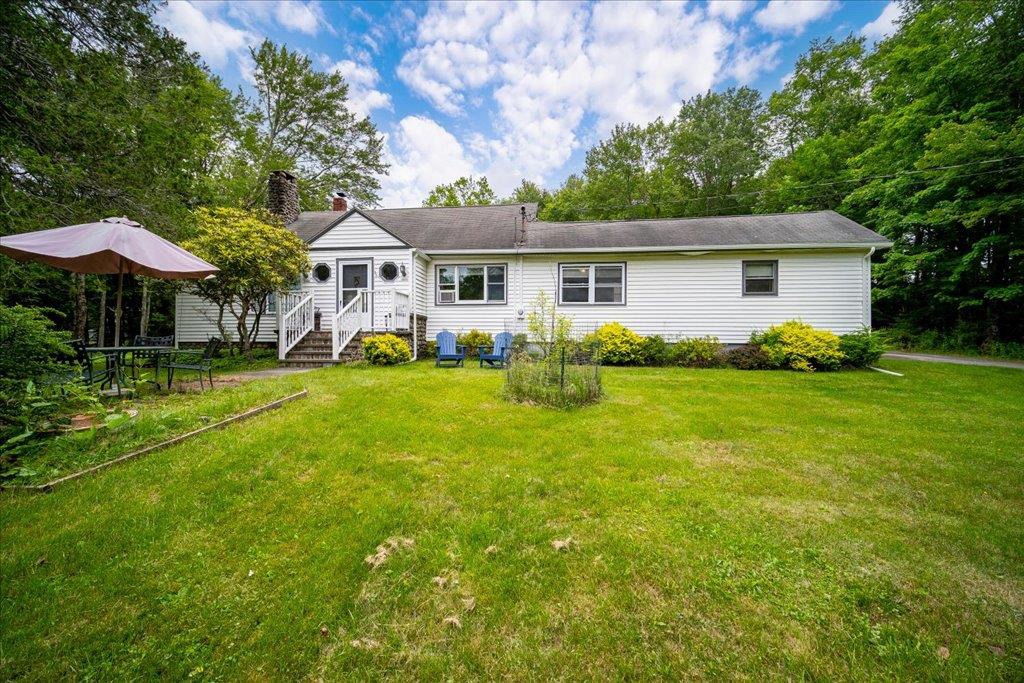
My grandparents had friends among the other colony owner and locals. We knew the plumber, the egg farmer, the trash man, the electrician and many of the business owners.  In the 1960s my grandparents decided that they wanted an all-year house in the Catskills.  They purchase a house on four acres that also had a bungalow.   The house had been divided into four little apartments. My grandparents began the process of making it one home again.  Enlarging the kitchen.  Added on a one-bedroom apartment.  Fixing the attic apartment and turning it into two bedrooms and a bathroom. They built a garage since they planned to stay there in the winters as well.

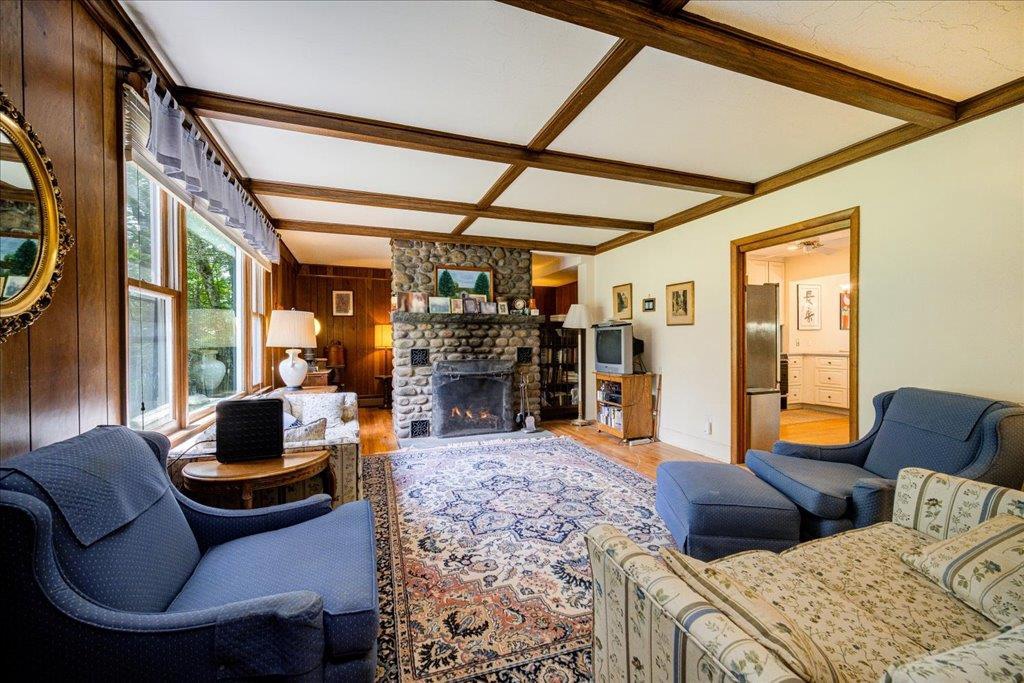
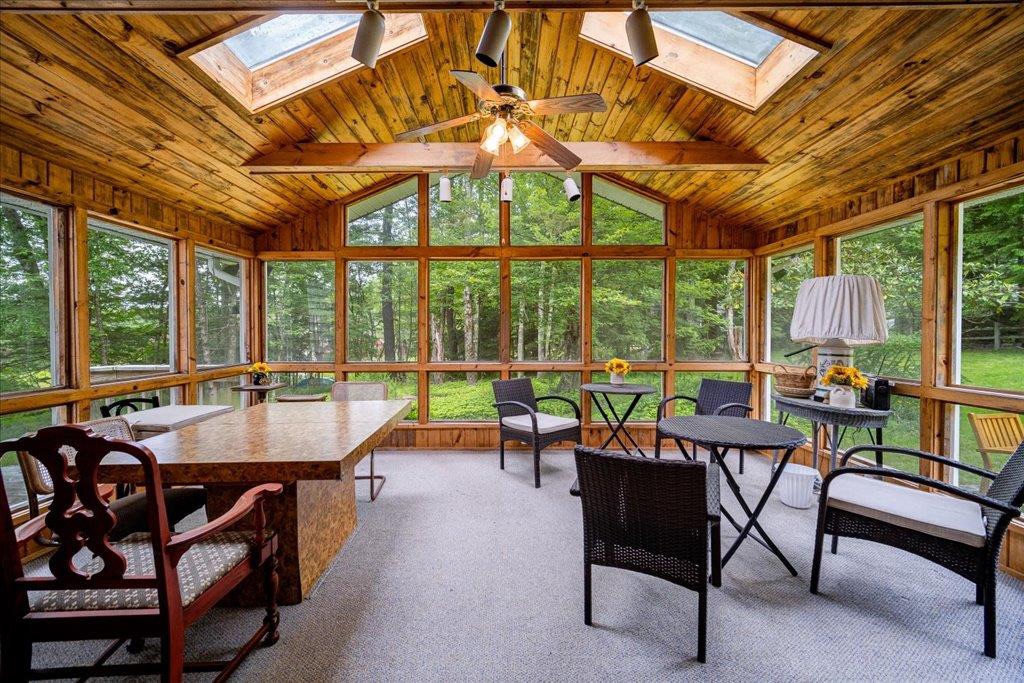
The best thing they did, in my mind, was creating the room that eventually became known as the stone room.  It was originally an outdoor patio that connected the house and the garage. But in winter it was so cold, that they closed in the two walls and put on a roof.  But kept the stone patio floor. The only thing they did that I hated, was removing the little eating nook that had a table and two benches. I loved sitting there. But it disappeared in the renovations and became part of a real dining room. Among the best permanent parts of the house is the wonderful stone fireplace and stone steps.

The most important thing they fixed was the furnace. When they first purchase the house, it had a coal burning stove and an open fire furnace.    You could see the fire from the furnace through a grill in the floor.  Soon that was replaced with a regulation furnace.  The coal burning stove was lovely. They did not get rid of it.  It was put in the basement where my grandfather used it to bake.

Everyone at the bungalow colony and in our family called it the Big House.  My grandparents moved in and started renting their bungalow at the colony, and eventually we moved up to the bungalow behind the Big House.  Leaving the comfort of the bungalow colony, but enjoying more space.

It was in this house that I learned to braid challah from my grandfather.  He had moved some of his bakery supplies from his New Jersey bakery there.  He baked for us and for the shul.  I loved watching his technique. He never measured anything with a measuring cup.  He would just put it up in his hand, shake it a bit and put it in the mixer. He taught he how to braid challah with one braid or with two. He showed me how to make a round challah for the holidays.  But I never learned his recipes. Mom and I tried to write them down, but they weren’t the same when baked.

It was in this house that we watched the walk on the moon in July 1969.  It was in this house that we watched the endless line of people walking up West Shore Road to Woodstock.  From our house it was an additional two miles up and down hills to get to the site of the concert.  We could feel the ground vibrate and hear the music and the announcements from our home.

Here we would lie on a blanket in the grass and watch the meteorite showers and sometimes see a flash of the aurora borealis, we would find the constellations. On rainy days it is where my friend and I would read Nancy Drew books. Our parents arranged to buy different ones in the series so we could switch when we finished. It was here that my grandfather and dad had a giant vegetable garden, and we all learned how to grow and harvest vegetables.

We would see deer, bears, woodchucks, rabbits, skunks and other forest creatures. 

We played cards and mah jong, ate meals and made memories with my grandparents, parents, relatives and friends.  The house was our summer world. And all year long we waited impatiently to return.

It was in our house that we sat shiva for my grandmother. She died in August, when all the summer people and the locals were there.  I won’t forget it. The plumber, Ab, and my grandfather, Nathan, were best buddies.  So great that when my grandmother passed away, it was Ab who took me to the hospital to sign papers and identify my grandma in death. My grandpa and my mom stayed at our house.  I will never forget the ride there and the ride back.

 It was members of the Catskills congregation of Beth El that prepared the house for the shiva after the funeral.  And that the locals and summer people came to tell stories and remember her, along with our family and the summer renters.  My grandparents, and my parents and us, belonged to the Congregation Beth-El, where my grandfather was a Cohen, so went to services often.  As a retired baker he often made goodies for after service kiddushim.  And I know there is a window that they sponsored. I think it is in the balcony area. We always went to the shul in Kauneonga/White Lake for the high holidays.

My grandfather died eight years later. It was November, so we sat shiva in New Jersey.  It was 1989.  He had over 60 years enjoying the Catskills.

After my grandparents died, my parents became the owners of the house. They remodeled the kitchen, and they added a screened-in porch.  They enlarged the master bathroom and added an on-suite bathroom.  Every wall they opened they had to update the electric from knob and tube and replace the plumbing.

It was this house that eventually we would bring our children for summer visits.  And down at the lake we had a dock where my dad had a ponton boat. My children loved their yearly two-week visit to New York and New Jersey. They got to see so many cousins and go out in the boat and run around outside in the rain.

But since my parents died nine months apart in 2010 and 2011, we have not used the house the way it should be used.  One of my nephews did live there for two years during Covid. Then it did have some love and attention. But for most of the time, it was used once or twice a summer for a long weekend.  It was not getting the attention or love it needed.
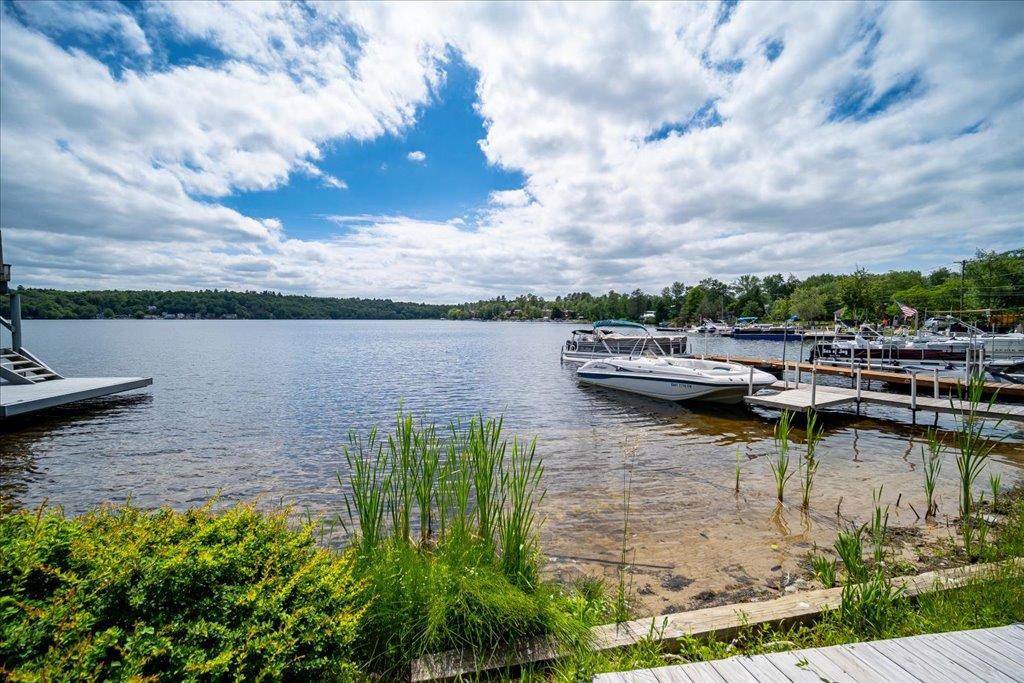
Our Dock spot.

Two years ago, we made the decision. The house needed to go to a family who would actually use it.  With our lake frontage, it was the perfect home for someone who liked boating.  This year we put it on the market.  In August we had one last family weekend in the house as we sorted through everything and packed it up.

Then in the evening, my niece asked us to tell her stories about the house and the summers.  My brother, sister and I shared our memories. We laughed, we teared up, we remembered our parents and grandparents.  It was a great way to say goodbye to our house. 

Even though the house has been sold, and another family now owns it, we have 60 years of memories that will never go away.  And with our cousins still at Kauneonga Lake each summer, we have a place to sit on the beach if we like and talk about the past and plan for the future with our cousins whenever we want to visit.

With our children spread out across the country and overseas, our time as the owners of the Big House has ended along with our family’s long saga in the Catskills at Kauneonga Lake.
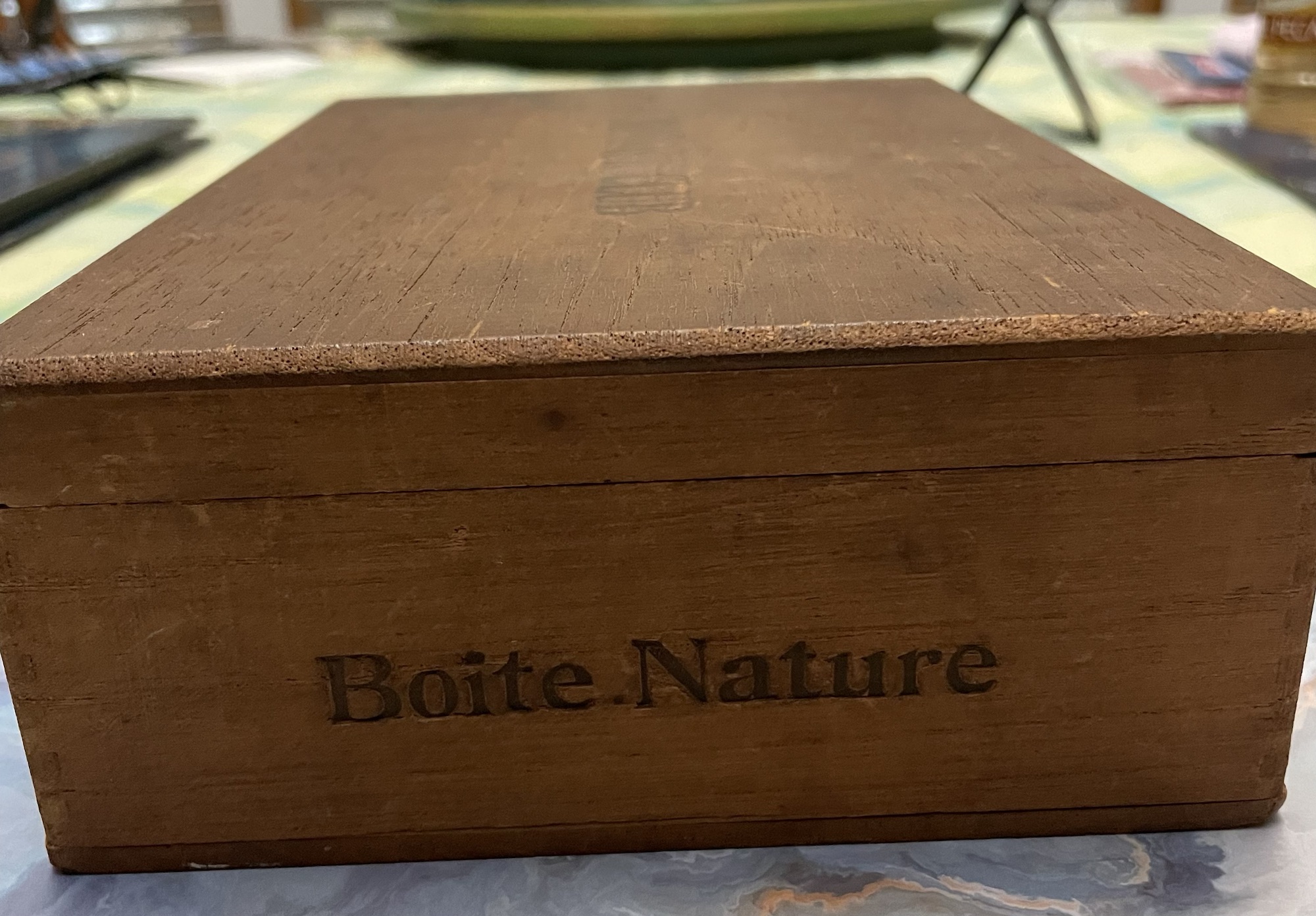
The Cigar Box: A New Family History Adventure Begins

14 Aug

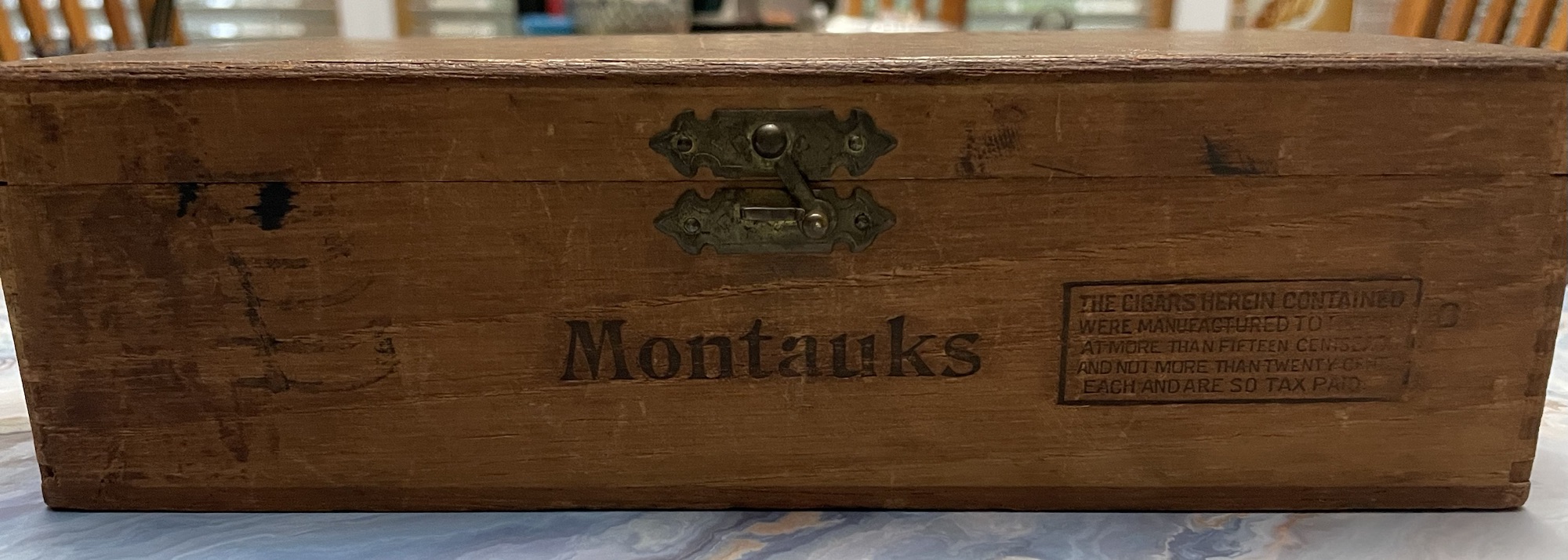
This might be the last treasure box found in our Catskill home.  After being in our family for 63 years and after a 90-year presence in Kauneonga Lake, we are selling our home.  None of our children, who are widely dispersed, can care for it.  Our fortune is that we have cousins who still have homes near the lake, so we can visit.

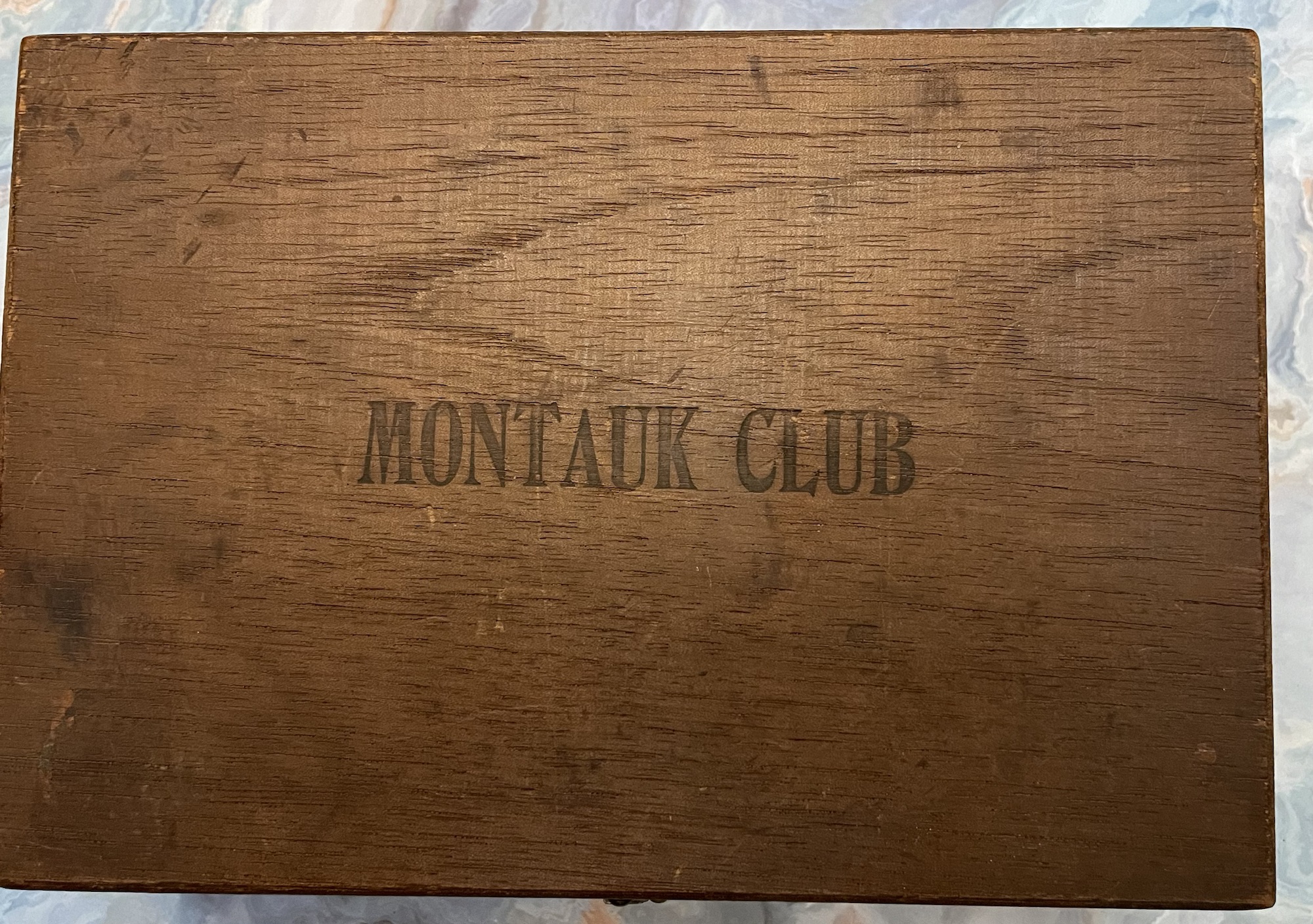
But in cleaning out the house and the drawers and the closets, my niece came upon this last treasure buried in a drawer under linens: a beautiful cedar box from Montauks Cigars.  In it were postcards written from my grandmother when she was in Europe with my mother and her brother in 1931-32. Postcards written to my grandfather in Yiddish and English, The Yiddish will have to be translated. I am hoping the generous members of Tracing the Tribe will translate these, as they are just short paragraphs.

 I had to laugh because all the stamps had either been peeled off or torn.  They were given to one of the grandchildren who were collecting stamps. It might have been me.  I collected postcards as well. But these were probably too important to my grandparents to give to a child who might lose them.

There are letters written in German and Polish to my grandmother during the time she was in Europe. I know one is from her cousin Dora, who survived the Shoah and moved to Israel. Others I think were written by my great aunt Esther to my grandmother, her sister.  The German I can understand a bit. But the Polish is impossible for me.  I will need to find a translator for these letters.

There are photographs in the box.  Almost every one of them is identified in English, Yiddish or German.  The ones that are not identified, I actually recognize the people in the pictures.

I have already sent scans of two of the photos to my third cousin.  One shows her grandmother at her elementary school graduation. Her grandmother and my grandmother were first cousins.  When my grandma came to the USA she stayed with her aunt’s family.  The two girls became best friends.  The other photo shows five brothers who lived in the same building. My grandmother’s cousin married two of them. One when she was young with whom she had her children.  And later when her husband died, she married one of his brothers who also lost his wife.  My cousin was glad to see the photos.  I am going to send her the original of one.  The other my niece wants because she shares the same first name.

I have written about these people in other blogs. So below are links to their stories. 

I think this box will be giving me much more to write about.  Every time I think I have finished the story of my European family, another piece of information turns up.  I hope to start with the notes my grandmother wrote to my grandfather from Europe. I always wondered if they were able to communicate.  As well as what she was thinking when she was there, as we know she went to Europe so sick, she thought she would die.  Her plan was to leave my mother and uncle in Europe. Thank goodness she got well!

A Pay Phone, Then a Party Line: Using the Phone in The Catskills

17 Dec

Recently I wrote a blog about doing the laundry in the Catskills. (See blog below.) Several of my friends who spent their summers with me in Kauneonga Lake, and my brother, felt I left out one important aspect of the laundry shed: the pay telephone.

In our small colony, owned by my maternal grandparents, the pay phone was also located in the laundry shed. The only way of communication for almost all the residents of the colony to the outside world.  If they needed to call their husbands, doctors, restaurants, anything, this was the only place to make a call or to get a call. Our colony was small, so when someone did get a call, the person standing closest to the phone would answer it and send a child to go get the call recipient!  Of course all the children loved to answer the phone. At larger colonies there was an loudspeaker system to call people to the phones. (See blog below.)

I think, but since I was a child, I am not sure, that the Moms had set times and days when they spoke to their husbands during the week. 

The phone my friend has from the bungalow colony.

The telephone has long disappeared.  However, when reading my blog, one of my friends told me that she had the phone, and sent a picture.  I do not know how she got the wall phone she had.  But though I thought the number was correct, the phone was wrong.  There was no place for the money.  And our pay phone definitely was a commercial one with coin slots.

Now I did say that the pay phone was the only way to communicate. But that is not totally true. My grandparents had their own separate line because they owned the colony and would need to call local people like the plumber or electrician. So if my Dad wanted to call my Mom, they had this private line to speak. Also if there was a true emergency, my grandparents would call for help.  You did not need to use the pay phone.  Hmmmmm. I wonder if the phone my friend has is the one from my grandparent’s bungalow?  Could be.

In 1963 our phone life and summer life changed. My grandparents purchased a winter/all year house about 1/3 mile up Lake Shore Road from the bungalows.  Behind the house was a bungalow that became our summer home.  This was both fun and sad.  We had a bigger bungalow, we had our grandparents, and my parents had some peace and quiet, but we were no longer at the colony at night for fun activities or on rainy days with the other children.  However, there was an apartment at the house, where one of my friends stayed.  (See blog below.). But we were no longer part of the rhythm of the colony on a daily basis. 

Communications changed as well.  People started getting phone lines. They were not completely private. People would get Party Lines.  That is what we had at the bungalow up the hill. My grandparents and my parents shared a party line.  We were so excited to have our own phone.  But it had its now side as well.

The phone lines had slightly different rings, so you knew when you were being called. And we had a special way to call down to my grandparents so they knew we wanted to speak to them.  If you picked up the line when the other people were using it, you would hear them speaking.  In fact, if you were quiet then you could listen to the entire conversation.

That was a bit crazy, cause my grandmother sometimes would listen in!!! My MOM would get furious.  And they would have a big argument!

Here is my brother’s memory:

“Yes. She (Grandma)never said anything just listened. She was really good at it,
and I think many times we did not even know she was listening. Mom
would know when Grandma knew things that she had not been told! It was
one of the things that I remember Mom arguing with Grandma about!”

Since my grandparents lived in the Catskills throughout the year after 1969 when my Grandfather retired, their phone line would be on all year long, while our phone line would be turned off after Labor Day.

But eventually, everyone got their own private phone lines.  It was amazing.  I could call my aunt at the bungalows and find out what was going on with my cousins.  Were they going to the movies? What were the plans for the rainy day or the evening? That was what we were missing when we first moved to the bungalow by the house.  

When we were teenagers, those phones were even more important for when we made plans with our friends and cousins.

The days of the payphone and party lines ended in our colony, but the memory of the times when two people needed to make a call.  Or watching when a teenager was on the phone trying to find a private spot….there was an extremely long cord. Or wondering if my Grandma was listening on the line….I have to admit, every once in a while I listened in on my Grandma’s call. Mainly because I needed to make a call and she was already on the line.

The Summer the Laundry Never Dried

Sometimes Rainy Days Were the Best Days In the Catskills

Loudspeakers Often Interrupted Life And the Quiet of the Catskills

The Summer the Laundry Never Dried

12 Dec

The rain started slowly this time.  Giving my Mom enough time to call for us.  But she really did not have to, all the children in our little colony were running to the same place: the clothes lines.  It had rained for weeks.  Finally, there had been a break in the weather. For days, everyone lined up at the two washing machines to get their clothes and linens done. People were running out of clothes to wear.  Everything was a muddy mess.  No one could afford for the newly cleaned clothes to get wet.

We all hustled and ran for the clothes.  Each group of children around their Moms pulling the clothes off.  The littlest ones were grabbing the clothespins and putting them into the cloth bags.  We were successful.  None of our clothes got really wet.  While Mom went back to our bungalow to hang our clothes up on the porch, I remember helping my Grandma take off some of her clothes off the lines.

At least we did not have to go to a laundromat to clean our clothes! This was important as most of the moms up for the summer did not have car with them in the 1960s.  Having to go to the laundromat was a major ordeal especially with all the little children. I guess sometimes someone did go. There was always one husband/father up there for the week who could run this errand as needed.

For us there was a little shed that held two washing machines.  Our moms would put their laundry basket in a line so everyone knew who went next.  They left their laundry soap and change in the basket as well. The person before them would empty out their laundry from the machine and put the next wash in.  I think it cost 50 cents to do a laundry.  Then they would tell the next person that their wash was up, so they knew when to go get it and start the next load.  How they knew, I don’t know.  Perhaps everyone had different colored baskets or different laundry soap, but they knew.  It is a mystery to me.

Laundry days were usually Wednesday and Thursday. Everyone wanted the laundry done before the weekend when the Dads would be up. But during this time of endless rain, occasionally the Dads would have to take the laundry to the laundry mat. I got to go with my Dad once. It was quite the adventure. Long lines, as everyone needed clean and dry clothes. I remember where the laundromat was, just outside of Kauneonga Lake on the road to White Lake and to ice cream, Candy Cone. Of course, I remember, because once our washes were in the machines, Dad and I went for ice cream while we waiting to go put them into the dryer. Then we stayed close to the laundromat, to get our clothes as soon as they were done.

So many laundry memories came rushing back to me due to a painting. A distant cousin of mine, {her grandmother and my maternal grandmother were first cousins. (See blog below.)} did a series of paintings that she then gave to people who made a donation to her chosen charity, an animal shelter. One painting touched my heart. I made my donation.

In my mind this painting was like a calm and practical Chagall painting, but instead of animals or couples flying above a town, it was a zaftig woman walking across the laundry lines with a laundry basket on her head. The colors, the story of the painting, the atmosphere just yelled Catskills in my mind. Laundry Day! Joy! I had to have it.

When it arrived, the memories started crowding into my mind of the year when the laundry never dried.  How when the sun finally came out and stayed out, all the Moms and grandmas were so filled with joy that they could get their clothes clean. How they rushed to do laundry.  I think they agreed that everyone could do one laundry and then go through again.  Everyone had to get at least some laundry done before it rained again.

 I think they felt like the woman in the painting, just tripping above the clotheslines in happiness.  Finally, finally we all had clean and dry clothes!

Of course, I had to hang the painting in my laundry room. Every time I look at it, I remember how lucky I am to have a washer and dryer of my own. That I do not need to hang my clothes outside to dry depending on the weather. That the joy of laundry should be with me all the time!

Finding Katie!

Oh How I Dream About Ice Cream in the Catskills… In the Summer

T

The Piano Behind the Fireplace

13 Sep

Our house in the Catskills has been in our family since 1962.  It has gone through many changes.

When my grandparents purchased it, the house had been divided into four apartments.  Slowly, slowly it was returned to a single-family home, with an attached apartment.  Rooms that were divided were opened up or reunited with the house.  Small additions were redone. New additions were created. (See blog below.)

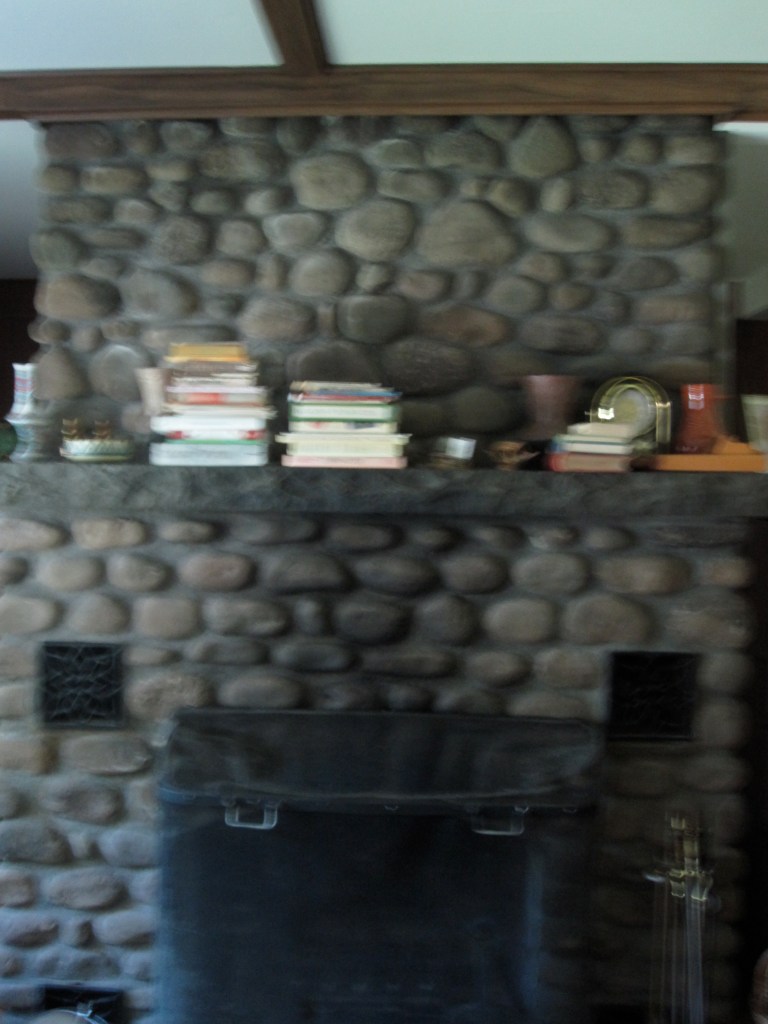
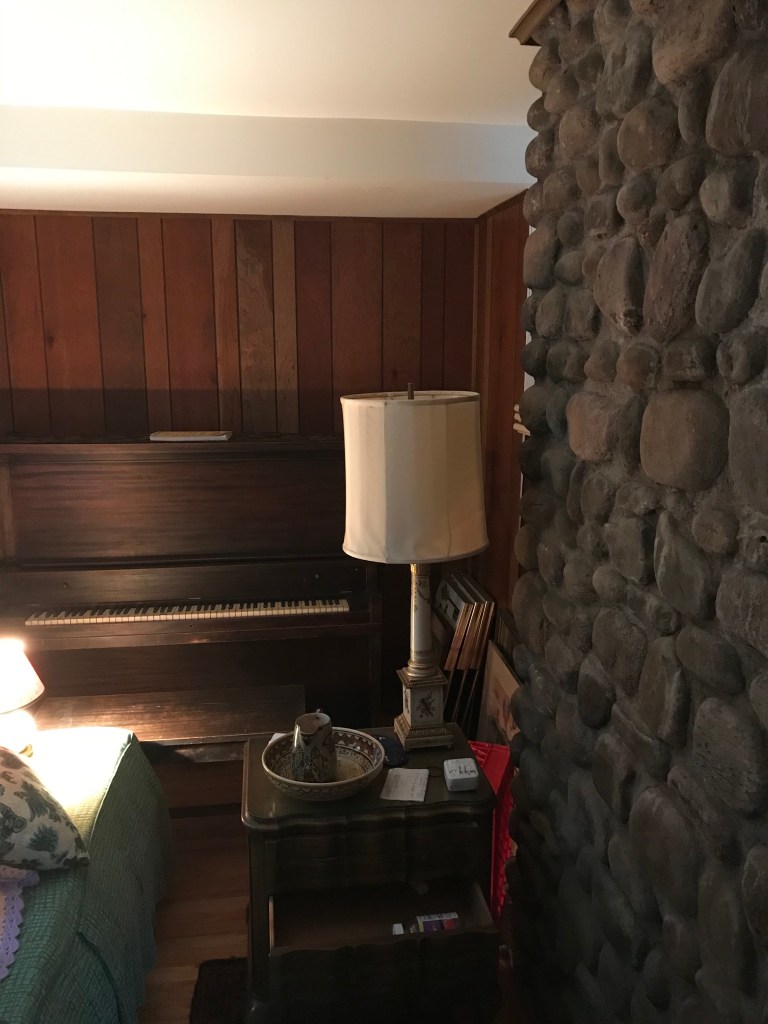
In the living room, a stone fireplace is the focal point.  At one time the back side was covered up and behind it a tiny kitchen and bathroom was put in.  My grandparents restored it to one room.  Behind the fireplace they put a trundle bed for grandchildren and, eventually, their old upright piano.

The fireplace in the center of the living room.

That piano was the bane of my summers.  Over 100 years old now, the piano was purchased second hand for my Mom to use when she was a child.  But Mom’s abilities outpaced this piano, and in the late 1930s, when Mom was about 10 years old, my grandparents purchased a baby grand piano for her use in their New Jersey home. (See blog below.).

Mom eventually became a special student at Julliard.  She studied music there all through high school and had hoped to go there for college. But my grandparents thought a music career was not a good choice.  So Mom went to Douglas University in New Jersey and studied education.

When the baby grand piano arrived, my grandparents had the old upright taken up to the Catskills to their bungalow in the small colony they had created.  Their bungalow was one of the bigger ones, with two bedrooms, a kitchen sitting area, and an enclosed porch.  The piano was put on the porch.

As little children, before my sister was born, my brother and I actually stayed in this bungalow with my parents and grandparents. But once my sister arrived, we started staying in our own bungalow.  The piano stayed with my grandparents.  Whenever Mom wanted to play, she just went over there.  

When I started piano lessons,  I was expected to practice….even during the summer when I had NO lessons. At first it was not a problem, I just showed up to my grandparents and went in and played.  I got treats and lots of positive reinforcement for practicing, even though I would rather be outside playing.

However, my feelings changed after the 1962 summer.  My grandparents moved up to the new “big house.”  We moved up there as well, to live in a bungalow behind the house.  That freed up two bungalows at the colony that now could be rented.  The piano stayed down at the bungalow for at least a year.

Here is where my angst began.   I was expected to go down to the colony, which I wanted to do to see my cousins and my friends. But instead of playing, I was expected to go and practice the piano.  It was no longer my grandparents’ bungalow.  It now was rented by my sort of aunt and uncle.  They were actually the brother and sister in law of my uncle by marriage.  My Grandma Rose and their son, who I considered a cousin, lived there as well.  (See blog about Grandma Rose below.)

The last thing I wanted to do was practice the piano.  Two reasons, first I felt like I was invading their territory.  I now had a set time when I had to be there to practice.  Also, I wanted to play!  Everyone else might be in the lake, but when my set time came, I had to go over to their bungalow.  There were many fights over this with my Mom.  But eventually she let me stop.  It was just not fun.

My angst ended then.  The next summer a space was made for the piano.  That little kitchen and bathroom behind the fireplace were gone, as was all the plumbing and fixtures.  The walls were cleaned and wood paneling was put in.  In the area that was once a bathroom, the upright piano now stood, back in my grandparents’ house.

So now, I could practice anytime of the day.  I left my music in the house.  On a rainy day, I could practice for as long as I liked.  While, on a beautiful day, I could just run in after a day at the lake. A low note chord broke when I was young, and we never replaced it.  I used the note so rarely, that at the times I did, I would be shocked when no noise came out.

Over time, I went to college, got married and moved away.  The piano was rarely touched and soon went out of tune.  When I started going up with my children for two weeks each summer, I wanted to get the piano tuned.  But the person we called said it was impossible, it had sat untuned for so long and it was too old.  That made me so sad.  But we left the piano there, and occasionally I would still play even with the discordant sounds that came out.

But in this time of COVID-19, the piano has been revitalized.  My nephew, who also plays the piano.  Needed a place to stay.  He had planned a long trip to Europe and had not renewed his big city apartment lease.  He asked to stay at the Catskills home.  We all agreed.  It was perfect for all of us, because we have used his time there to get some chores done and things fixed that were benignly neglected as we are usually there only on weekends.

Thanks to my nephew, we now have internet in the home and we have tasked him with meetings with an electrician, plumber and other workers.  He got a dock put in at our lake front section of Kauneonga Lake.. 

However, his greatest success, for me, is the piano.  My nephew plans to spend the winter there as well. As it is a four-season house, he can. It was my grandparents’ full-time home. So he decided to get the piano tuned!!! He found an old-time piano tuner, who has restored the sound!  This gentleman slowly got it back into shape, by doing it correctly. Over several months he came and tuned the piano just a bit until the sound board and strings could accept a full tune.

But besides tuning it, the piano tuner has dusted it and oiled the wonderful old wood.  The piano looks better than it has in 20 years. It brings me joy that the piano behind the fireplace is now a working piano giving my nephew a chance to practice his hobby as he experiences the cold winter months in Sullivan County.

(Exact dates of when of when the piano moved to the house and when I practiced at the bungalow are somewhat unknown, as it was many many years ago.)

Remodeling My Bathroom Reminds Me of Our Catskills House: The House Which Always Changed

A Chair, A Baby Grand Piano and Yiddish Songs

Movie Night in the Catskills Was A Wonderful, Magical Night

Sisters: Grandma Esther and Aunt Minnie

19 Oct

Esther and Minnie 1

Today I found a photo gem.  I love this photo.  I see my Grandma Esther and her sister, Aunt Minnie.  I see the fence around our bungalow colony in Kauneonga Lake.

The photo looks out to what we called the “front lawn,” and in the background I see the lake.  You might not notice it, but if you look through the fence, you can see a bit of blue surrounded by trees.

There are several things that make this photo special.  First, I love how my grandmother is standing.   She had a habit of holding her foot up like that in photos.  I guess she liked to stand that way.

Second, she has her sunglasses off to the side, and I remember those sunglasses!!  Although I usually think of them on her face.  She wore them all the time.  Third, their hair!  Neither of them are totally white yet.  Later Grandma would put a rinse in her hair which gave it a blue tint!

Also, they are dressed up! All I can think of is that they were going to a show that day at one of the big hotels.  Otherwise they would have been in shorts and shirts and sitting in a chair either playing canasta or knitting.

This has to be in the late 1960s.  I might have taken this photo with my Brownie camera.  Once I got a camera I started my life long habit of taking photos of everything.  It might have been someone else, but for now I will claim it.

I have written before that we spent every summer in the Catskills.  I had all four of my grandparents and many other family members together all summer long.

Grandma Esther, Grandpa Harry and Aunt Minnie shared a bungalow!  How that worked, I never asked.  It was just the way it was every summer. I assume their love for each other overwhelmed their annoyances!

In the winter they lived in the same building in Co-op City, NYC,  but in different apartments.  Uncle Al, Aunt Minnie’s husband had passed away years before.  From that point on the three of them were always together.

I cannot imagine them apart. The sisters were always together in my mind, loving and fighting.  Many times, I think back to them when my sister and I squabble.  A vision of the two of them fighting over a canasta game, they were always partners, flashes and sometimes I just want to laugh.

We were so fortunate to have our summers in Kauneonga Lake surrounded by people who loved us.

The Grandmas’ Forever Canasta Game

https://zicharonot.com/2014/02/13/knitting-and-crocheting-brings-love-and-memories/


Remembering the Summer of 1969

11 Aug

The most amazing summer of my life was the summer of 1969. In July we watched a man walk on the moon. We stayed up late staring at our black and white televisions as the first photos from the moon came through and we saw Neil Armstrong step onto the moon.

img_4358

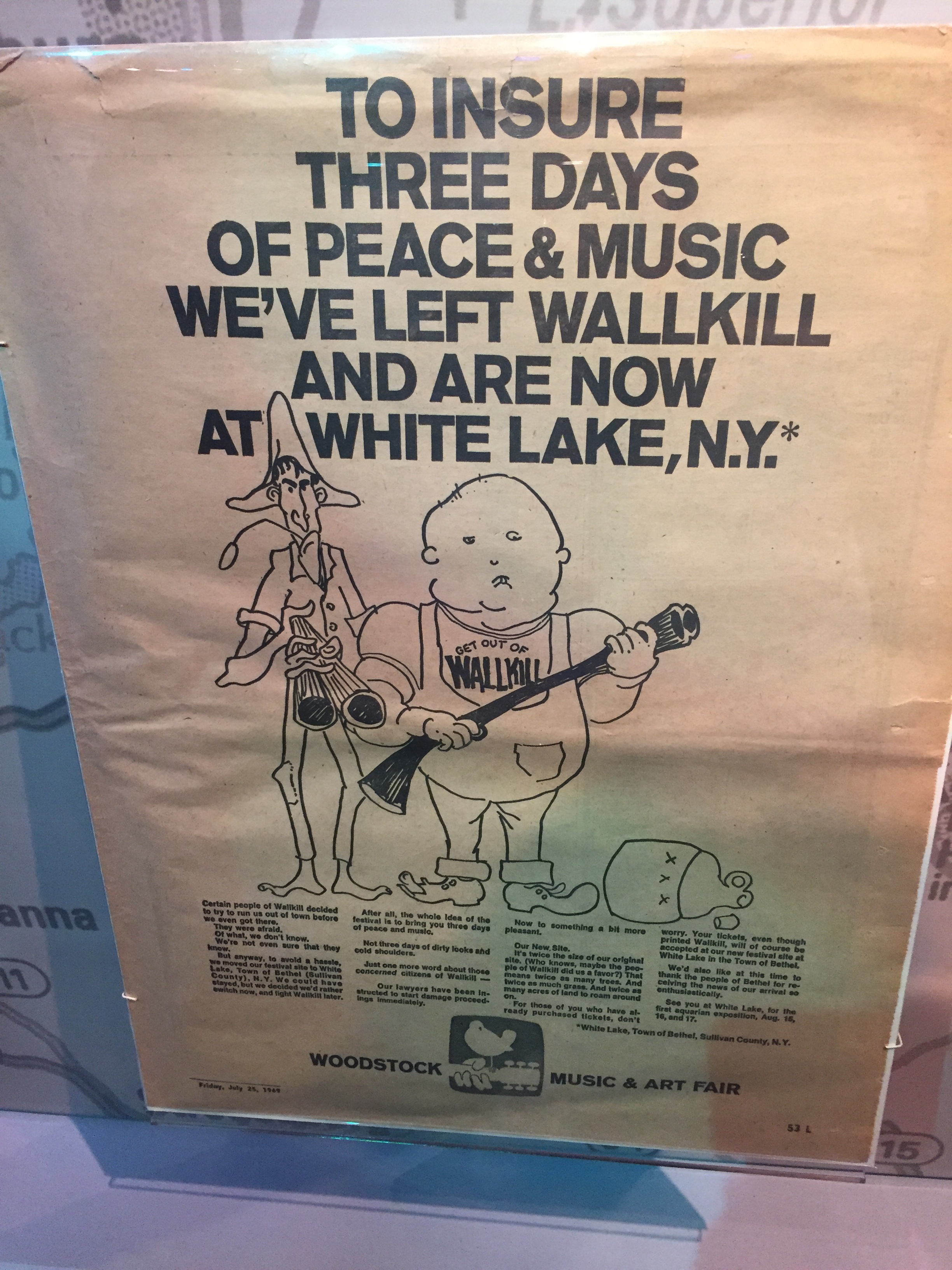
Photo of a poster put up in 1969 to announce the new spot for Woodstock.  Insure is the incorrect word, it should have been ensure!

Later that summer we had a more impressive event close to our summer home. We first heard of it when signs started appearing about a concert being moved from Walkill to White Lake, New York, in the township of Bethel.

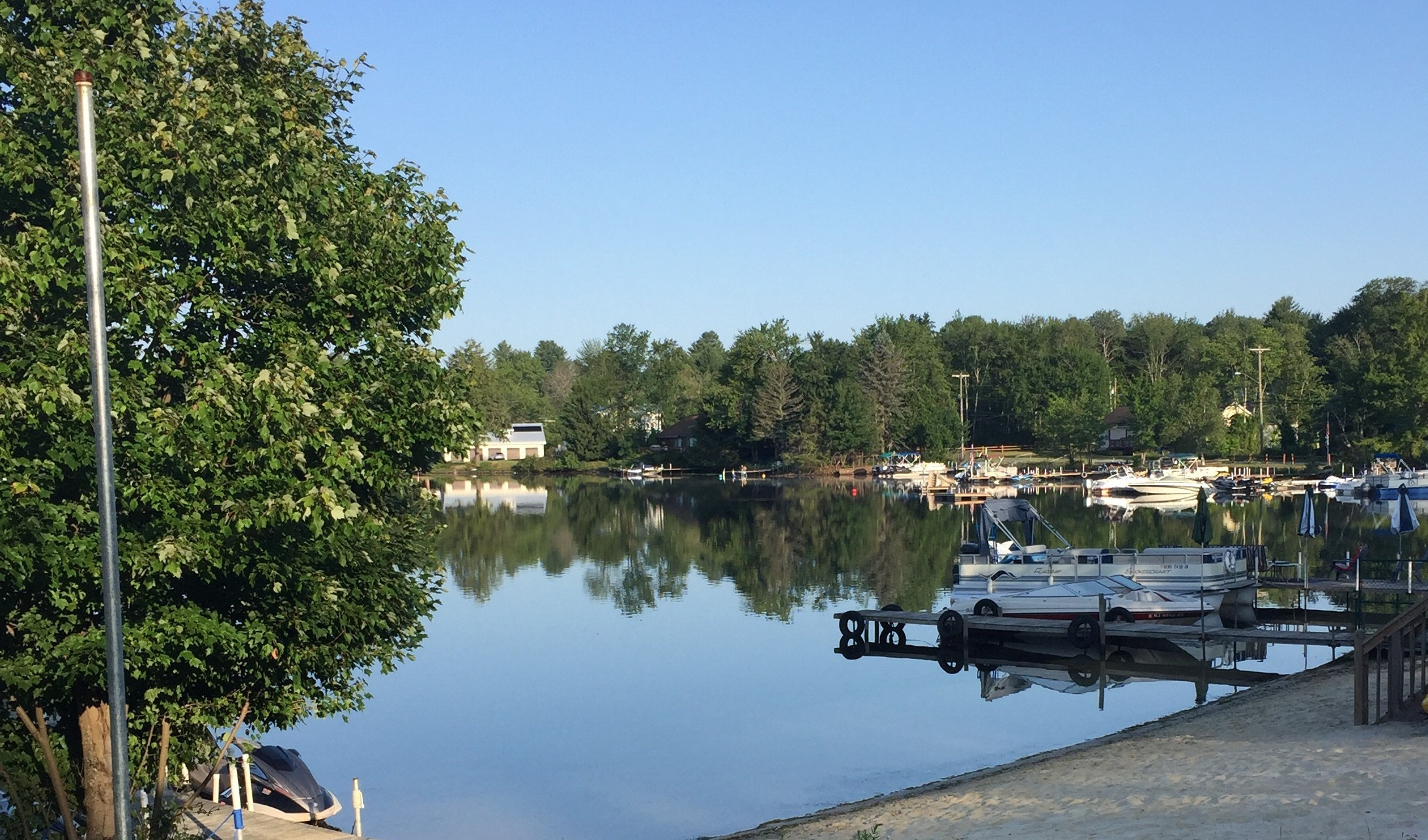
Although we were not in the town of White Lake, we were in its sister town, Kauneonga Lake, which was on the other side of the lake. White Lake and Kauneonga Lake were once basically two separate lakes with a narrow channel connecting the two, but at some time the channel was blasted open and the lakes were combined.

Wikipedia gives more information about the names. It states that Kauneonga is a native American word that means lake with two wings. Originally the lakes were called White Lake and North White Lake, but the northern side, where I stayed, was eventually named Kauneonga Lake.

On the corner of 17 B and 55 where you turn off to go to Kauneonga Lake was an old motel, the El Monaco, we loved going there for pasta and pizza. It was basically the only restaurant in town for the longest time. The El Monaco played an important part on what would become a world known event, Woodstock. The hotel was knocked down years ago. Now there is an empty field and a clock tower on the corner. Honestly, I never thought it would be demolished because of its history.

But then, in Kauneonga Lake and White Lake, the word, Woodstock, did not have positive connotations for a very long time. Max Yasgur became a pariah in town. He sold his farm a short time later and moved to Florida, where he died just a few years after Woodstock at the age of 53.

img_4339

By the Dancing Cat.

Times change. Now, thanks to Woodstock, Bethel Township and these two small towns have a better economy that most Sullivan County towns.

The hotels that used to cater to the many are now closed. Most of the bungalow colonies are closed or taken over by Hasidic groups that create synagogues on the property taking it out of the tax base. For many small communities this meant disaster. But the area of White Lake and Kauneonga Lake has had a revival. All thanks to Woodstock and Alan Gerry.

img_4399

Kauneonga Lake

This summer, while in Kauneonga Lake, my sister and I took a pilgrimage to the Woodstock site, where Max Yasgur had a hay field for his dairy farm 50 years ago. We have been there many times. But this time we went into the museum and took a tour. Since we actually remember the concert, we were glad to answer the questions of our guide, who was not there.


Bethel Woods Center for the Arts and the Bethel Woods Museum are all thanks to Alan Gerry. A native of Liberty, Gerry started the cable television business in the Catskills. It was thanks to him that we were able to watch television the night that Neil Armstrong walked on the moon. Before that we had horrible reception.

He became extremely wealthy, and used some of his wealth to form the Gerry Foundation and to help the economy of Sullivan County, and that included buying the Woodstock site and over 1000 acres surrounding it, then developing the area into a music festival site and a museum. Because of Bethel Woods, other businesses including restaurants and a distillery have opened.

img_4362

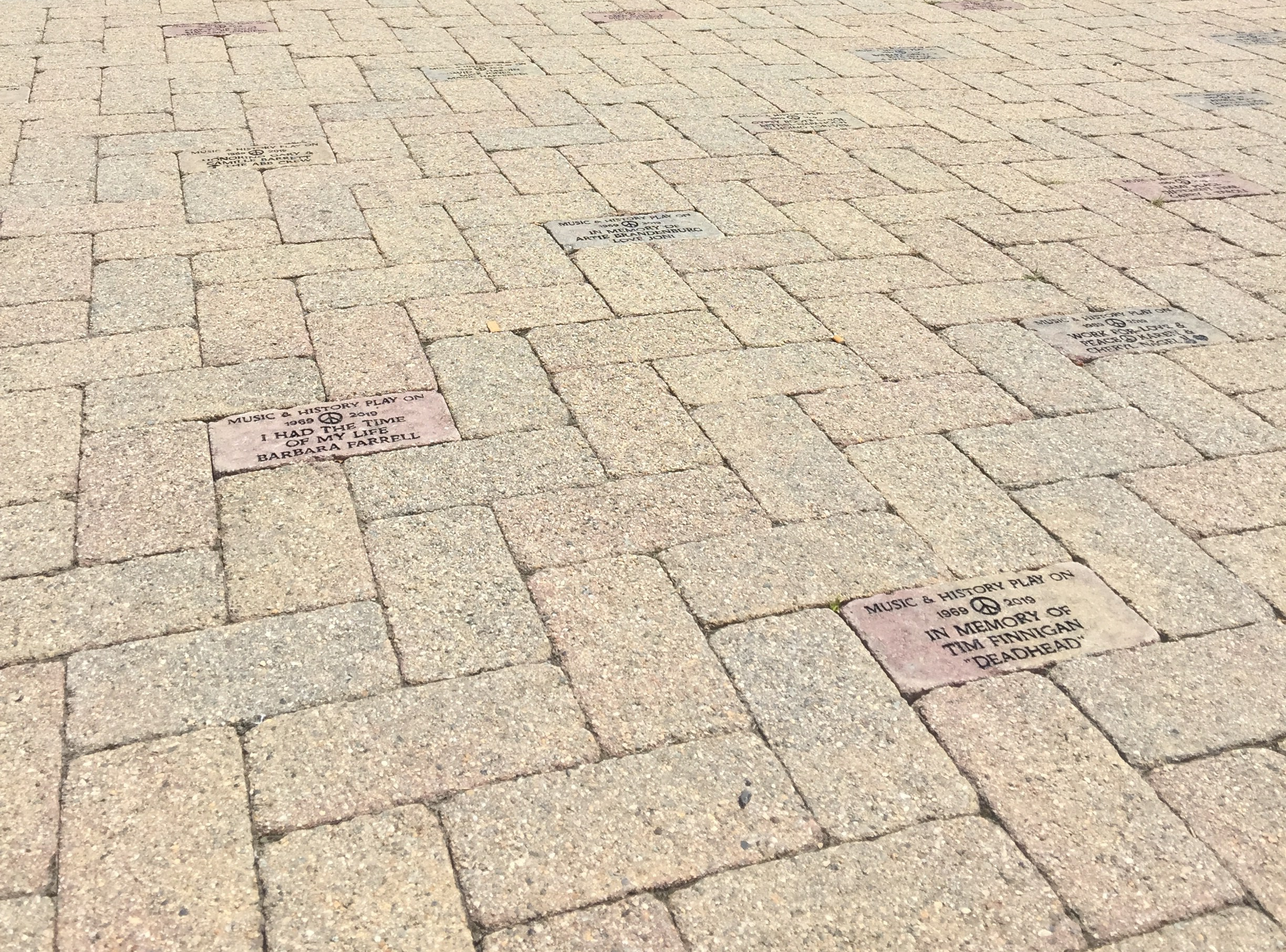
The pavers by the Bethel Woods Museum.

Now each summer weekend night close to 17,000 concert goers drive to Bethel Woods to see a concert. My parents loved going to concerts there. They had a membership and would go early to eat dinner on the grounds. Recently, when the Bethel Woods sold pavers in honor of the 50th anniversary, we purchased one in memory of our parents. My Dad would have loved where it is located, near to the entrance of the museum.

The weekend of the Woodstock anniversary Ringo Starr, Santana and John Fogerty will be putting on concerts at Bethel Woods. I know that the planned celebration that was going to be held elsewhere was cancelled. But at the site itself, celebrations will continue. Meanwhile at Yasgur’s Farm, the actual farmhouse, there will be a Woodstock celebration as well.

I have written about Woodstock several times. Below are the other blogs concerning Woodstock. I hope you all have a peaceful, wonderful weekend remembering a time of peace and music.

Woodstock Memories: A Walk On West Shore Road

Taking a Walk Up To Hurd Road to the Woodstock Site

The Legacy of Woodstock

Woodstock Revisited in August 1998

http://www.bethelwoodscenter.org
https://en.wikipedia.org/wiki/Max_Yasgur
https://en.wikipedia.org/wiki/Alan_Gerry

For My Grandpa, Being a Kohan Was His Joy and Duty

27 Jun

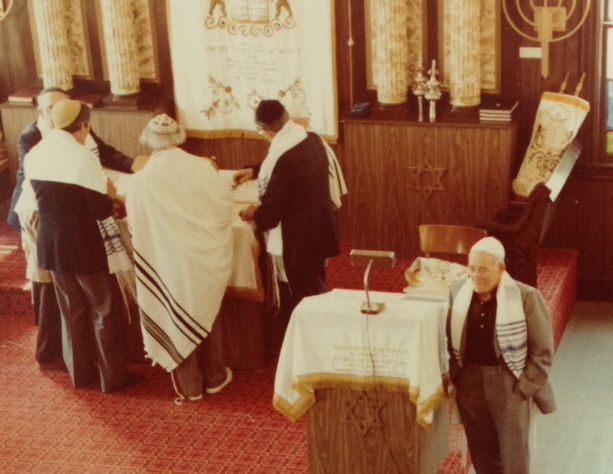
Inside Shul in Kauneonga Lake

My Cousin took this photo from the women’s balcony, at least 30 years ago. My Grandfather is standing on the right, walking away from the bima.

My maternal Grandpa was a Kohan, a descendant of the Priests of Israel.  Even today, Kohanim have roles and duties that are part of their lives.  Grandpa was born in Galicia, an area of Austria/Poland that often changed borders.  He came to the USA in 1920.  And eventually owned his own kosher bakery in New Jersey, as well as a small bungalow colony in the Catskills.  But he always kept the rules of the Kohanim.

Grandpa often served as the Kohan during the Pidyon ha Ben ceremony.  This ceremony is also called the redemption of the first born.  In biblical times the first-born child, if it is a son, of an Israelite family had to be given to the Kohanim.   The family needs to present five silver coins to a representative of the Kohanim.  My grandfather was often asked to serve as this representative.   He would lead the ceremony and take the silver coins, which he kept until the boy was bar mitzvah, when he would return the coins as part of the child’s bar mitzvah gift.

I remember as a child being at a Pidyon ha Ben service.  I was so intrigued by the ceremony.  But I think more by the money.  I asked what Grandpa did with all the silver coins.  My Grandma told me that Grandpa did not use that money.  He saved it in a special place to return to the boy when he was older.

I wonder how they could keep track of that money.  But then my grandparents owned a kosher bakery, and my grandmother saved every silver coin that came into the store.  When she died, we found 900 silver coins, from dimes to silver dollars.  They were divided up so that everyone one of their descendants had some.  I still have mine.

Grandpa rarely went to a cemetery.   In fact, I don’t remember him ever going to a cemetery. He always paid shiva calls, but not the funeral.  Kohanim do not go near the dead. He did not go into a service until my grandmother died.   Kohanim do not go near the dead.  In fact, some Jewish funeral homes are built with two foundations, so that Kohanim can stay in the outer area during a funeral. There but not in the same structure.  I can still see my Grandpa during my Grandma’s funeral, even though it was almost 40 years ago.

Grandpa went to services on Shabbat.  He made so many Kohan aliyot at Shabbat services.  When they moved to the Catskills full time.  He was often the only Kohan at shul.  It became his responsibility to go every week and be the Kohan.  He took this honor seriously.

When he was in his later years, over 80, he would drive partway to shul and then walk the distance that he could walk.  Although he was brought up not driving on Shabbat or working, in the 1980s at his shul in Kauneonga Lake, people drove to services, even parking on the grounds of the shul, Congregation Temple Beth El. But not Grandpa.  He would park by Sylvia’s clothing store, up the hill from the main part of Kauneonga Lake and easier for him to walk.  I once asked him why he didn’t just park at the shul.   His response, “I walk as far as I can, because I can do that for Shabbat.”

On the high holidays he was often the only Kohan at the Kauneonga Lake shul.  On the high holidays he would sit in the men’s section with his tallit wrapped over his head covering his eyes.  When I was little my favorite time was sitting with him in shul with his tallit covering me as well.  He kept his hands over his eyes under the tallit as he davened.  His emotions during the high holidays was overwhelming.  My sister said it was her strongest memory, how upset and emotional he would get them, as Grandpa usually had a great sense of joy.  But then as an adult she realized that the pain of the Shoah came to him then.  He was the only one left of his family.  All perished in Europe, while he was already in the USA.

Sometimes he was the only Kohan at shul to perform the Birkat Kohanim, the Priestly Blessings.  Grandpa had a beautiful singing voice.  He often sang to us in Yiddish. During the Priestly Blessings, he sang for everyone and blessing the entire congregation.  At times there were other Kohanim present, especially if the holidays were early in September.  Then Grandpa would be joined by others on the bima.

At some point, another Kohan moved to the Kauneonga Lake area and also went to services.  Grandpa was thrilled.  Sometimes he would not go to services on Shabbat.  He would say, “Let the other guy have a chance.”

It was this statement that brought this story to my mind last weekend..  My husband is a Levi.  He goes to minyan every Wednesday, but to Shabat services about once a month. He almost always gets Levi.  Our congregation only has three Levis who come weekly.  They, like my grandfather, are happy when another guy comes. This week the Gabbi came and said, “Do you want Levi?” “Sure,” was my husband’s response.  “Good because the others say they don’t want it today, you should take it.”  During this short conversation, in my mind’s eye, I could see my Grandpa’s smiling and laughing.

Grandpa took his role as a Kohan with joy and fulfilled his duty.  I know he would be happy seeing my husband fulfilling his duty as well.


https://www.chabad.org/library/article_cdo/aid/1008437/jewish/Birkat-Kohanim-Melody.htm


The Day A Wooden Swing Almost Killed Me: And Other Catskills Accidents

25 Nov

Grandmas and us

I always had a bandaid on my knee!

I have many lovely memories of summer in Kauneonga Lake, Sullivan County, the Catskill Mountains.  But I also have memories of injuries that came along with summer activities.

My grandparents’ bungalow colony was not large.  We did not have a pool, because we were directly across the street from Kauneonga Lake.  Who needed a pool? The dock and the lake were all we needed to spend hours of entertainment.

We had blueberry patches, where we would spend hours picking and eating blueberries.  We also used the blueberry patches for games of hide and seek, as well as war games that the boys among us organized.

There was also a swing set, which also provided hours of fun.  We would take turns swinging on the swings, seeing who could go higher; who could jump further from a swinging swing; who was the bravest.

At our colony, there were just three girls.  The rest were boys.  And of the boys, one was my brother and three were my cousins.  And they would urge me on to disaster sometimes.

Another fact about swings in the late 1950s and early 1960s is that the seats were made of wood.  Thick wood to hold the bodies of wilding swinging boys and girls.  Today swings are made of thick fabric.  So much smarter than wood.

Why am I so in favor of fabric swings?  Because a wooden one almost killed me when I was about six years old.

It was a beautiful sunny day.  We were all around the swing set, playing and spying on our neighbors, something we often did.  Looking over a small mound of dirt into their yard.

My brother was swinging higher and higher and then jumping off the swing.  I believe my cousins were doing this as well as the other boys.  I decided I wanted to do it as well.

I started to swing.  I remember my brother telling me to go faster and faster and to jump when the swing was as far forward as possible.   I thought I was fine, but I did not quite make it.

I jumped.   I fell to the ground.   The swing passed over my head.  I sat up.  I heard yelling.  And then nothing.

I woke up in my bungalow with my aunt and mom staring at me.  I was sick to my stomach.  My head was pounding.  I now understand that I had a concussion.  The swing had come back and hit me in the back of the head knocking me out.  I had to stay in the bungalow for the rest of the day.  Ice on the bump on the back of my head.  My aunt, Mom and Grandmas checking in on me.

To be honest, I stopped swinging after that. I would get nauseous just looking a swing set.

I would like to say that was my only adverse summer adventure.  But you know that is not true.  I remember the summer my Dad taught me to ride a bicycle.   For some reason every time I made a certain curve in the colony, where there was a little hill, I flew off my bicycle.  I was determined.   I would get passed that hill.  My knees tell the story. There are many photos of me with skinned knees all thanks to the bicycle and the hill.  But I did learn.

One injury was truly not my fault.   The Dads pitched in together to build us all a club house.  I remember sitting in it, when everyone ran out.  I was about three.  My understanding is that someone climbed on the top of the clubhouse…. I tend to think it was my brother as he was extremely active.

As the club house began to fall, everyone ran out, but me.  I was once again hit in the head. But this time, I had a deep, open wound.  Mom took me to the doctor, where I was given a tetanus vaccine and a butterfly on my scalp.   I really wanted to see that butterfly, but never did.  I still have a scar on my scalp and a tenderness.  I hate when any one tries to touch my head without notice.  It caused lots of aggravation as small child.  Especially since my other brother loved to see me scream as he pretending to go to touch my head.  Brothers and sister know how to push all the buttons!

I was not the only one to suffer from injuries during the summer.  I think everyone had at least one emergency visit to the doctor each summer.  But it was part of the fun and the excitement. The injuries became part of the summer stories, part of the memories that bound us together.

Lake Swimming is the Best!

1 Feb

I did not swim in a swimming pool till I was in college.  We always had the lake: Kauneonga Lake.  I learned to swim and spent many summer hours perfecting this skill in our lake.  As I spent many hours relaxing on our dock with my family and friends.

Kauneonga Lake

My family and friends in Kauneonga Lake.

I never swam laps, I just swam as fast as I could to get away from my brother and my boy cousins who tried to push me into the mushy gush…the yucky seaweeds that lined the bottom of the lake in the areas where we did not swim as much.

Sometimes we swam back and forth between our dock and the dock that the people in Cooper Drive used.  But that meant keeping our legs up.  The gush was thick between the two docks.  And it wasn’t just the gush, there were also fish and turtles that would snap and nibble at your toes if you got too close.

I could stay afloat for hours.  We did not have life jackets.  When we were little we had brightly colored tubes. But eventually I out grew those and just swam.  If we stayed within the area designated by the adults, then the water was not over our heads.  It was when we tried to swim too far that danger lurked.  But we knew how to tread water and make it back to the sandy area with no effort.

Lake water swimming was the best.  The water was cool and fresh.  There were very few boats on the water when I was a child, except for canoes and rowboats.  It was not until I was in my teens that speed boats in large numbers showed up on the lake.

The only negative about lake swimming?  We always knew when someone went to the bathroom in the lake!  If you hit a warm spot, you knew that was disgusting.  Warm spots were sure signs of accidental lake peeing.

There was a pool at the bungalow colony up the road from us, where my grandparents’ friends owned, Kauneonga Park.  But I never swam there.  I know my brother swam there when he worked at the colony’s camp during the summer. But I never went into the pool.  It seemed odd to get into a cement box filled with water and chlorine.  I did go and look at it.  But I never got in.

When I got to college, I had to go into a pool for the first time.  We had to pass a swimming test and show that we could swim four laps and jump into the pool.  I was not happy. But to get my college degree from Drew University, in New Jersey, that was a requirement.

Ugh.  I did not own water goggles.  In the lake, I just opened my eyes to look around.  In a pool, this is much more difficult.  Your eyes burn from the chlorine. Ouch.  So, during my test, I had to close my eyes.  Swimming laps with your eyes closed is very difficult.  I could not stay in my lane.  In any case, I never swam in a lane in my life.  Lake swimming is much more haphazard. Not being able to see made it worse.

I did go four laps, but they were not pretty.  The coach called me out several times for crossing into someone’s lane.  She told me to go buy a pair of goggles for my next pool experience.  But I never had one.  I passed the lap test.

I passed the jumping in test: arms across your chest, feet first into the pool.  “Why?” I asked.  In case you are ever in a cruise ship and need to abandon ship was the answer.  I never thought I would need that talent, but I will admit I have been on many a cruise and I have thought about learning to jump!

To this day, I do not love pool swimming.  I do not like the chlorine or the feel of concrete.  However, I have learned to enjoy the beauty of water aerobics in a pool and the ease of floating on noodles.

To be honest, I much rather go to the lake in the Catskills, and slowly walk in.  First testing the water with my toes to feel the temperature and finally sinking to my neck.  I do not do it very often, but when I do I feel great.  Lake swimming will always be the best!