Archive | Trzciana, Mielec RSS feed for this section

ANU: The Story of My People

19 Oct

Visiting the Museum of the Jewish People in Tel Aviv

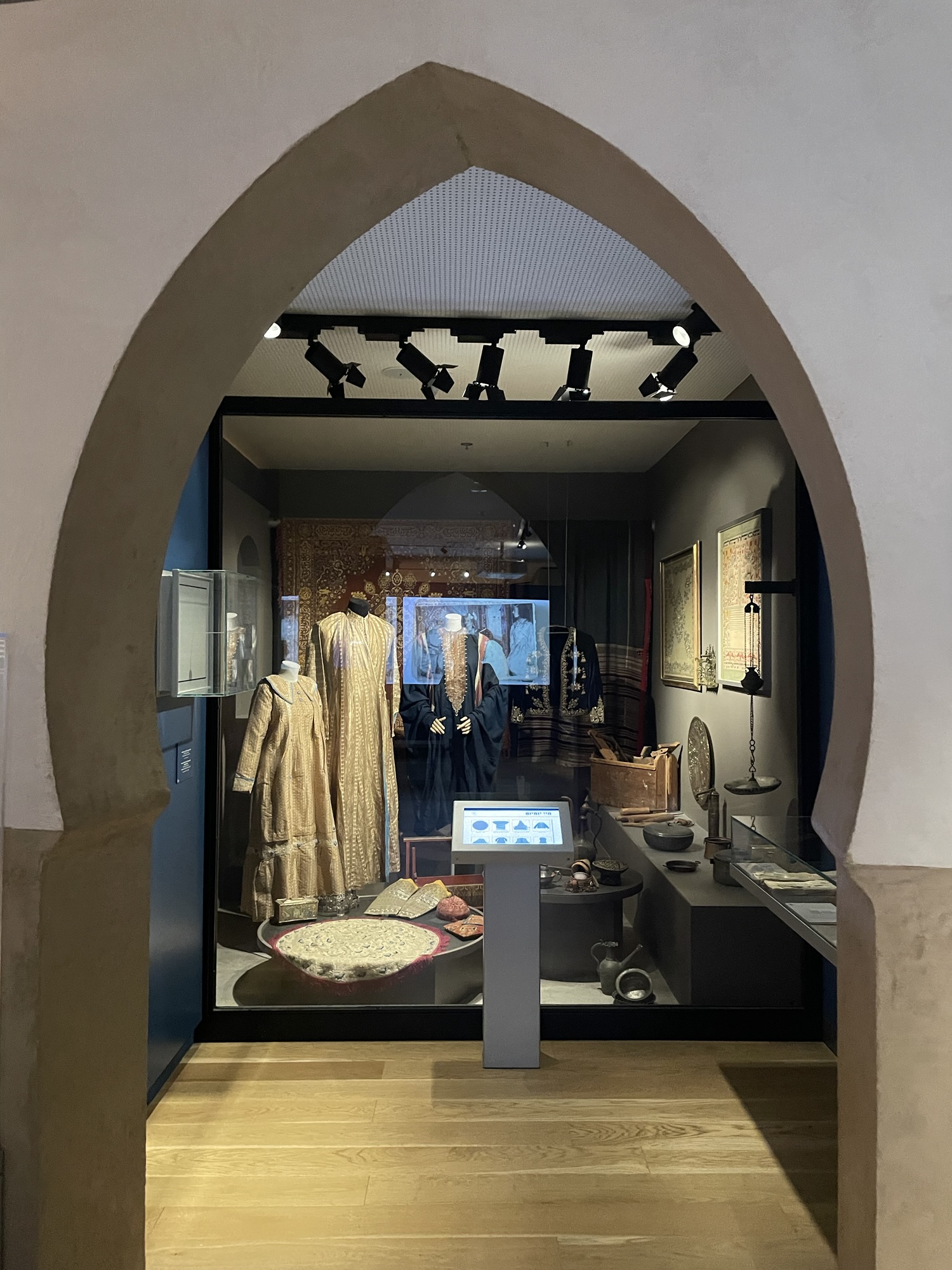
In August I visited ANU – The Museum of the Jewish People on the campus of Tel Aviv University.   There was much I saw at the museum that resonated in my heart. But honestly, I just could not write about my visit.  At that time, I was not in the right mind frame to discuss what we, the Jews, have been through in the past few years, as we were dealing with the worldwide Jew hatred and still praying for the hostages held by Hamas in Gaza.

But this week when the living hostages were finally released, and it felt possible that this seemingly endless war of survival is shifting, I revisited my time at ANU.  I remembered what stood in my mind then and still remains with me now.

I am a descendant of Jews who fled Spain and Portugal and ended up in Amsterdam before moving to Austria.   Although I know of one distant relative who was burned at the stake in Portugal for being a crypto Jew, most of my family kept their Judaism when they moved to the Netherlands.

I found out that the Jews of Spain and Portugal were not the only Jews who had to practice their religion in secret. At ANU I learned of the hidden Jews of Iran. In the 1800s the Jewish people of Mashhad, Iran, were forced to convert to Islam or be killed. For over 100 years the hidden Jew of Mashad were outwardly following Islam, but on Shabbat they celebrated their Judaism.  Forced to live in a ghetto area for these “new Muslims,” called Jadid al-Islam,” they married within their community.  Finally, in the 20th century they reclaimed their Jewish identity. About 10,000 Jews still live in Iran.

My family story mirrors stories retold at ANU.  My family, who had settled in Amsterdam, made a life changing decision in the late 1700/early 1800s.  A branch of my family settled in Galicia, Austria, in a small town called Mielec and my immediate family settled nearby in Trzciana.  For decades they lived peacefully with their neighbors.  But with the rise of the Nazis, everything changed.  Of the 5000 Jews who lived in Mielec area, only a little over 100 survived the extermination of the Jews.  Two of them were my relatives. Everyone else who stayed were murdered.

My grandfather came to the USA in 1920.  He did not suffer as most of his family did in the 1940s.  His suffering was the not knowing what happened to his loved ones. 

My family have lived the American dream which up in till the last decade or so has been wonderful.  Yes there was antisemitism, but it was kept quiet. Most people treated each other with civility.  However, in recent years that quietness faded and people felt empowered to spew Jew Hatred. Social media has been a major source of spreading all types of Hatred.  With October 7, a war that Hamas started not just to kill the Israelis but to cause a fire storm of hatred toward Israel, social media has become a cesspool of hate.   Using social media to life stream the attack on Israel and then to spread its hate has been an outrageous attack on Jewish people. And that fact that the news media does not vet its information makes matters worse.  Social media and some news media have been complicit in the spread of hate.

This web of hatred seems impossible to deal with at times. But the other important information I learned by visiting ANU, is that we survive. We have the will to survive. We are innovative and positive. We as a people make contributions in science, medicine, math, literature, agriculture, film and more. Our identity and culture keep us strong. I believe that inner strength will define us.

At ANU is the Sasson Codex, one of the oldest complete Hebrew Bible.  It is currently in a protected spot due to the missiles that have been launched toward Tel Aviv.  But a replica is on display. It is a treasure of Judaism.  And it is the Jewish Torah that has influenced the Western world, even though at times it seems they have forgotten the words that are at the heart of religious life: Feed the hungry, clothe the naked, welcome the stranger, visit the sick, etc. We are said to be the people of the Book, and that book is Torah.

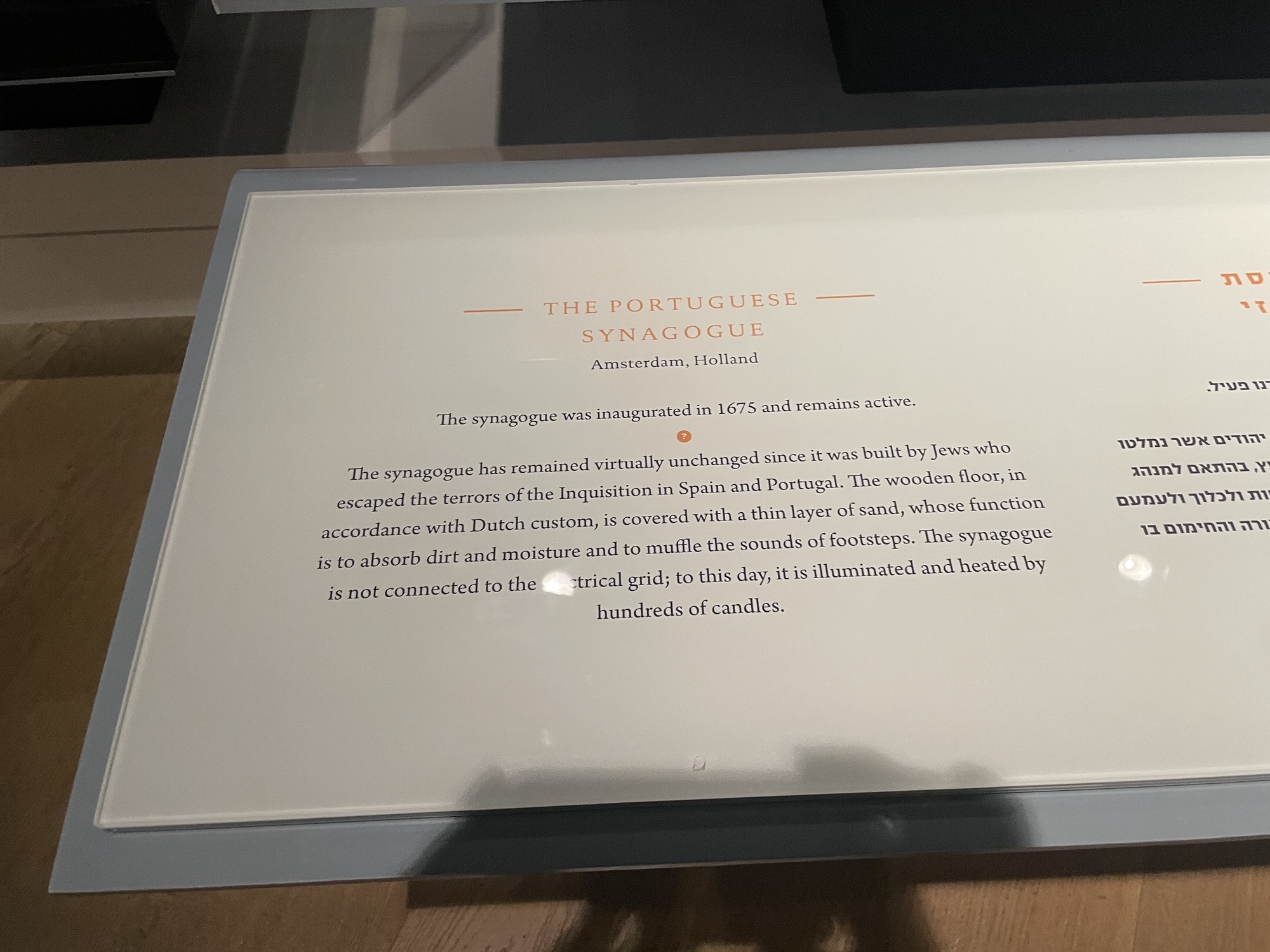
At ANU miniatures of the famous synagogues of the world are on display, including the Portuguese Synagogue in Amsterdam. A synagogue that has been present for 350 years, where my family might once had prayed. Throughout all the wars and waves of Jew Hatred this Synagogue has remained! It continues as a the place of prayer for the Jews of Amsterdam who survived the Shoah, while other synagogues now serve as museums.

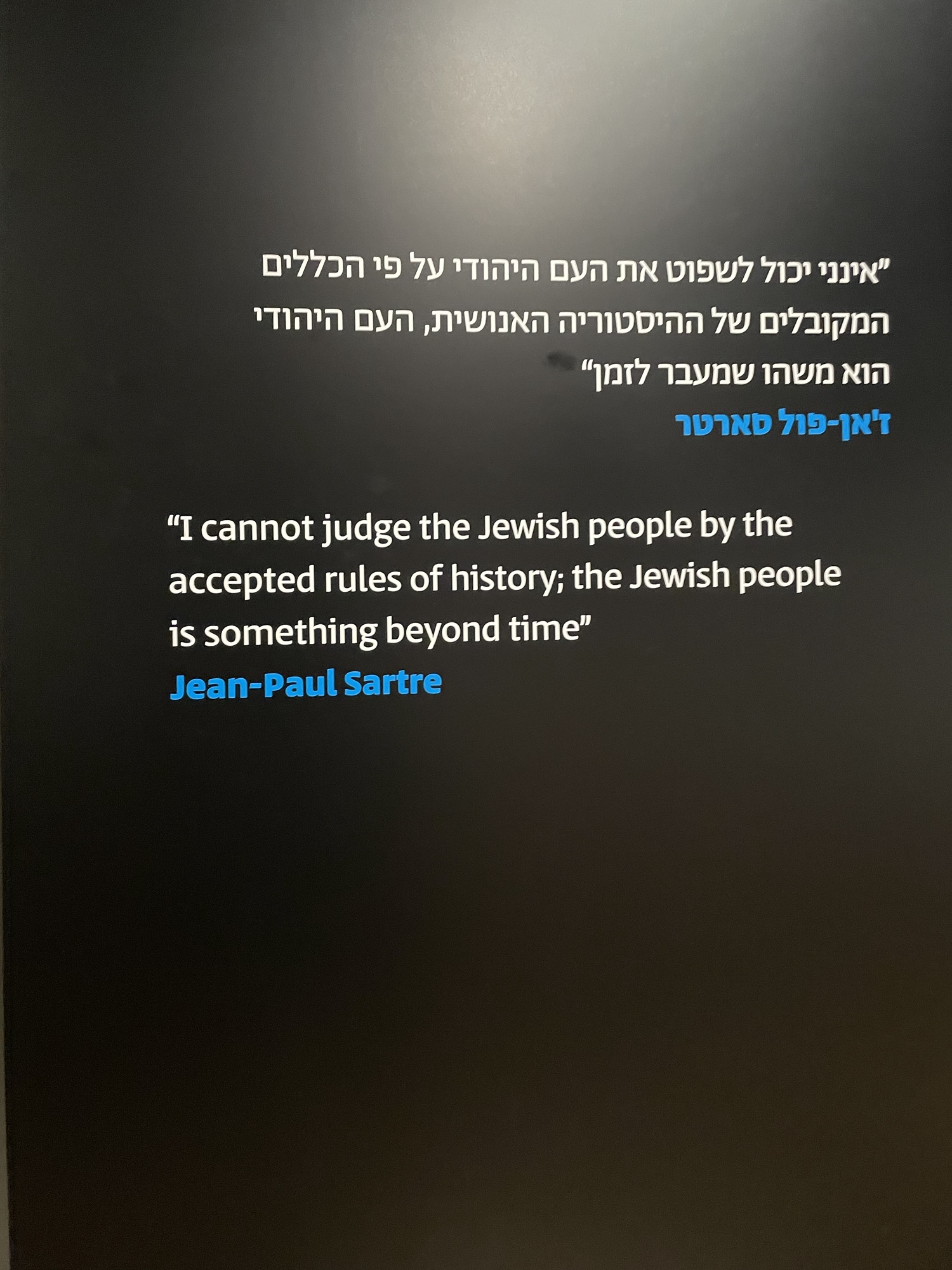
At ANU, I saw highlighted quotes by famous people about the Jewish people.   This one by Jean-Paul Satre, felt right to me: “I cannot judge the Jewish people by the accepted rules of history, the Jewish people is something beyond time.”

Let it be so.  Am Israel Chai.  The people of Israel, the Jewish people. They lived; they live; they will live.  Now and beyond time.  Amen Selah.

The Tavern in Trzciana Comes To Life

29 Jul

I vividly remember when the movie version of “Fiddler on The Roof” was released.  It was the first Broadway show I had seen in person as a child.  So seeing it again in the movie theater reminded me of the special trip into New York City with my parents and the delight I felt while listening to the songs and learning about Anatevka.  One of my favorite scenes occurs in a tavern where the Polish and the Jewish citizens end up in riotous dance!

The tavern scene has so much more meaning to me now.  I was with my maternal grandfather the first time he saw the movie.  Grandpa was from a small town in Austria/Poland called Trzciana.  When he watched the tavern scene, he turned to me and said, “My family had a tavern just like that.  It looked just like that.”  Anatevka/Tzrciana taverns were interchangeable in my grandfather’s eyes. He said the movie brought back memories of his childhood.

Grandpa did not often speak freely about his family.  Stories came in bits and pieces of memories.  But it was not something you asked about.  It was something that he had to offer because Grandpa’s family all perished in the Shoah.  His parents, his siblings, his aunts and uncles, his cousins, everyone who was in Europe died, except for three.  (See blogs below.)

But that tavern memory has so much more meaning because now I know more about it thanks to the research of Izabela Sekulska who started the Mayn Shtetele Mielec Facebook group.   Izabela has been helping me find out information about my family for about a year now. The documents she finds make the stories I was told by Grandpa come to life.

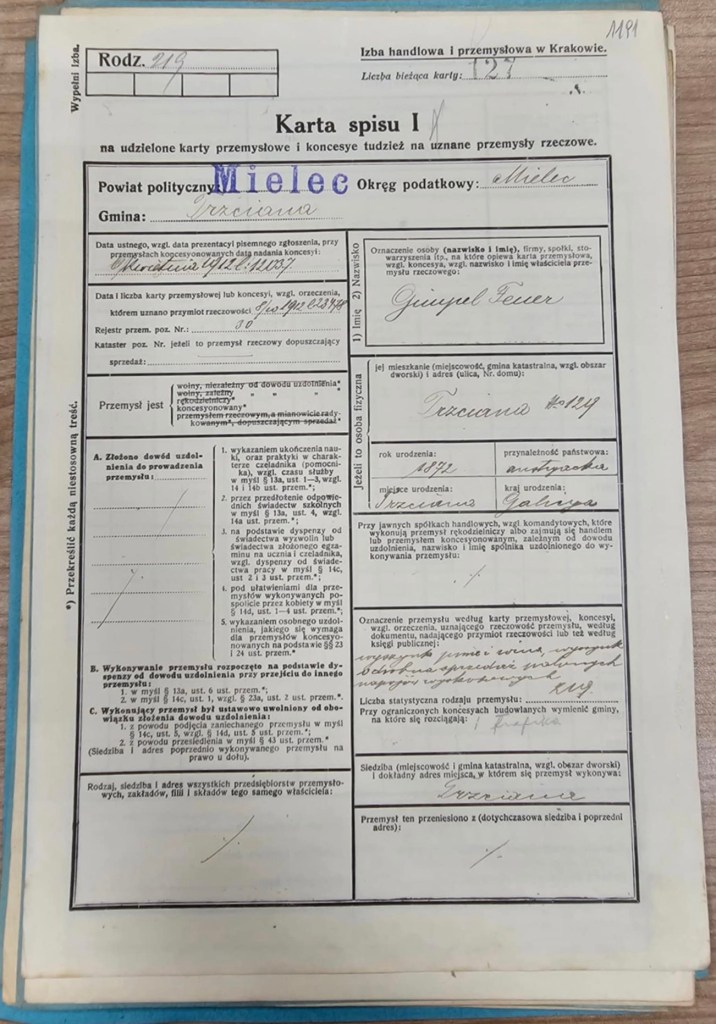
Izabela recently found a document from the Chamber of Commerce and Industry that  brings the family tavern to life.

My great grandfather Gimple Feuer applied to open a tavern on April 10, 1912, when my grandfather was just over 12 years old.  My Grandpa did grow up with a tavern in his life.  This document from the Chamber of Commerce and Industry states that the location was in Trzciana, Galicia, which was then part of Austria as Poland.  Throughout his life Grandpa said he was Austrian as that part of Galicia became part of Poland after the war. 

At my family’s tavern they sold beer, wine, other alcoholic beverages and tobacco according to this document.  I knew my great grandfather had a farm that included a crop of  grains and grain silos to store the grain.  So having a tavern makes sense, he had the grain to brew the beer.

Grandpa told us stories about cleaning out grain silos and how one time he and his cousin became intoxicated on the fumes from the silo.  They actually became sick and ran to a nearby stream/creek to drink the water and wash the fumes away. He said they almost drowned, they were so drunk.  

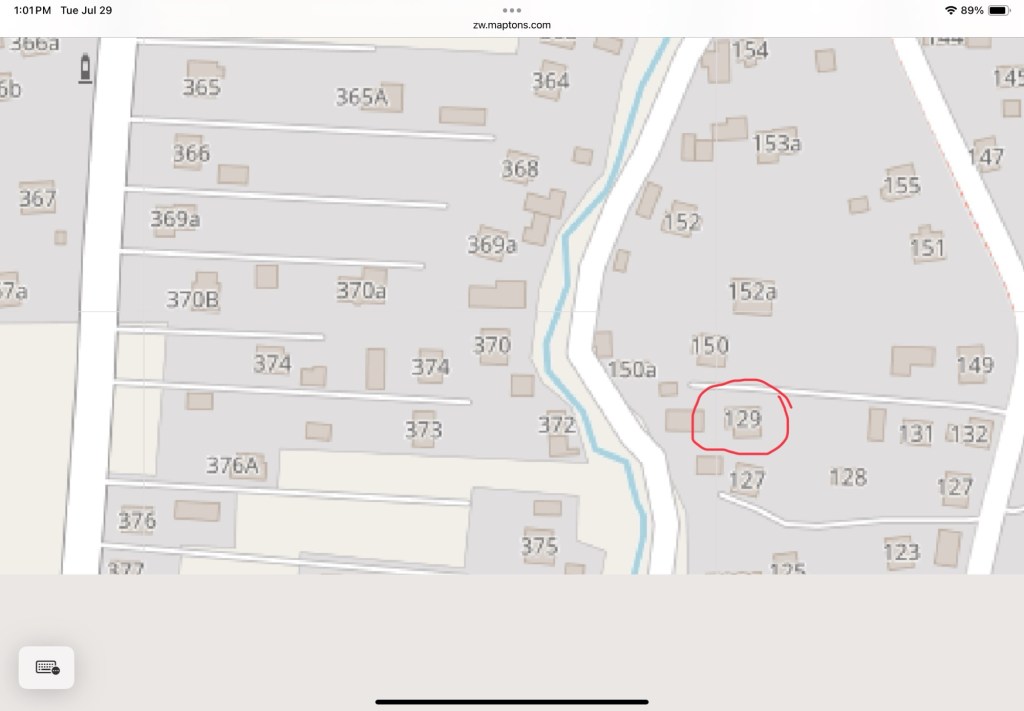
As I remembered this story, I  looked for  a map of current day Trzciana online and saw where the Cichawka stream goes through the town.

Thanks to Izabela, I know that there were no street names in Tzrciana, the homes and buildings  were just numbered during the time my grandfather lived there..  And the number of the tavern was 129.   

On the map that  I found online all the buildings are numbered.  There is one numbered 129 close to the creek. Could this be when my great grandfather had his tavern?  I am not sure, but it perhaps the numbers remain the same. 

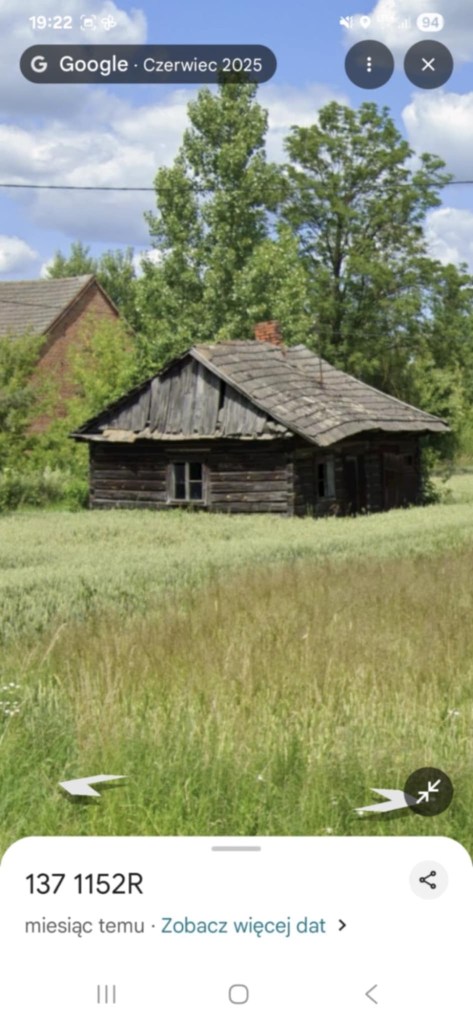
Now there are addresses and streets. So perhaps with this information we can one day find out exactly where the tavern was located in the town. Perhaps this address is where the family lived, and the tavern was located on their farmland?   

Izabela has asked for help in finding out where this location is now in Trzciana in the Facebook group.  That would make this amazing find so much more amazing.  And it might be that the number 129 is in the same place. And the numbers around it are the places where the other members of my family lived before the war.

Knowing my great grandparents had a tavern, perhaps explains to me why there was actually a trial after the war concerning the murder of my great grandmother during the Shoah.  Perhaps their standing in the community created lasting friendships that existed after the war and lead to people actually testifying about her death. (See blog below.)

No matter what I find about where the tavern actually stood in Trzciana, I do know that from now on whenever I see the story of Anatevka and see the tavern scene, I will think of my grandfather and his family that perished, but I will also remember how they lived.


Renewing A Family Connection: My Mother’s Day Gift

Zissel and Shalom: Survivors and Heroes

11 Jun

This is the most important blog I will write about my distant cousins Shalom Hollander and  (Lieb) Zissel Feuer.  They are true Jewish heroes. They did not give up. They lived through the Shoah and they helped those who also survived.  And I feel so honored to know that I am part of their family. I know that I just wrote about my renewed contact with their family, but I believe I need to just put it all in one place!

I have mentioned in other blogs that I met Zissel and Shalom when I was 19//20 years old studying at Hebrew University in 1974-75.  When I met them, I knew about the Shoah, but I also knew it was not something you asked about. If someone told you something you listened, but you did not interrupt.  You kept quiet.  The 1970s they were only just beginning to open up about what happened to them.

To me Zissel was someone my grandparents wanted me to meet.  Grandma had known him in 1931/32 when she took my mother and uncle to Europe.  Zissel stole a pearl necklace from her. And now over 40 years later, he wanted to make amends.  I was sent to collect the money and to listen to his story.  I liked Zissel. He reminded me of my grandfather. He worked in a bakery, my grandfather owned a bakery.  So from that point forward whenever I went to Tel Aviv, I visited Zissel.    I did not ask questions about his past.

Shalom I only met once. When my grandmother and I traveled to Israel in January 1976, we met up with Shalom in Haifa.  He and grandmother spent two hours speaking in Yiddish about what had happened in the war. About everyone who died.  

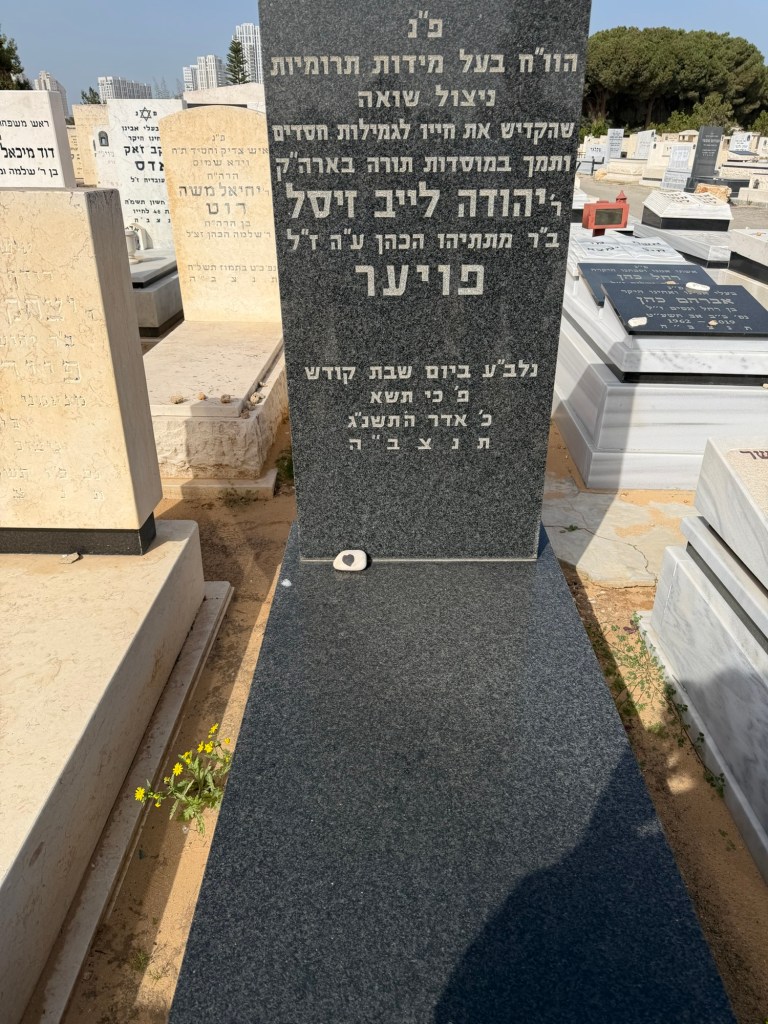
Ziseel and Shalom had been married to sisters, my grandfather’s first cousins. They and all the rest of the family was murdered. (Except one of the sisters’ brothers and those who had already left .) Some were buried in mass graves; some died in concentration camps; some died in a ghetto; some died in the death camp Belzec.  Shalom was saved by Schindler.  Zissel survived hiding in the forest nearby as part of the Amsterdam group, a partisan group all members of my family who hoped to survive in the forest.

After the war they both returned to Mielec to find other survivors.  They lived together in a house in town.  Thanks to Izabela Sekulska of Mayn Shtetele Mielec,  I now know what they did there.  They saved lives.  They testified against evil.  They worked to keep the memory of the dead alive.

First they saved lives.  Izabella told me that people were angry at Zissel. They said he lied and took money.  Well maybe he did. I have a different view.  The land of the Jews was now empty. The Jews were not coming back, or very few. Out of 5000 about 200 returned.  Zissel became the head of the Jewish community of Mielec.  Shalom was his deputy.  They did not just let the Poles take the land that had belong to the Jews. They told them that the survivors who came back, those who had lived through hell, had owned those lands. And they made the Polish people who wanted the lands to pay the Jews.  It makes sense to me.  They had nothing. No Home. No clothes. No family. NOTHING.  At least they could get some money to start a new life.  And they did.

Second thing they did. They testified.  They testified FOR the people who had helped the Jews. But they also Testified AGAINST many who had murdered the Jews. Including my great grandmother, who was also their aunt by marriage.  They wrote out testimonies and they signed their names to them.

Third thing they did. They protected the site of a mass burial. The spot where the Germans killed 800 Jews on March 9, 1942, Shalom purchased the land and put up a monument to his parents who are among those who are buried there, probably along with my great aunts and uncle.  They also built a wall around the Jewish cemetery.

Fourth, they helped an orphan Jewish girl who had been hidden and kept by a Polish woman during the war.  Shalom remarried after the war to another survivor of the Shoah. They adopted the girl and brought her to Israel with them when they left Poland. They went on to have three more children.

Fifth.  Shalom wrote testimonies for almost 40 people to be kept at Yad vShem, including for my great grandparents and my great uncle.  As well as his wife, children, parents, in laws, and Zissel’s wife.

Sixth.  Zissel came to America to see his brother in the early 1950s.  He visited my grandparents and told my grandfather how his family died.  My grandmother called him the Angel of Death, because he brought this horrific news into our family.

Seventh.  They survived.  They helped to settle the new Israel.  They worked. They remained close.  Shalom had a new family, new wife, children and grandchildren.  Zissel never remarried, but he also had a life and a relationship with Shalom’s children.

I am honored that I knew them.  I wish I had been braver and asked questions.  I wish had written down what they did tell me.  I wish I was not so timid then. But I am glad that I can close my eyes and still see them. Especially Zissel, who I spent so much time with 50 years ago.

I hope to keep their names and memories a blessing for my family.

There are many blogs about both Zissel and Shalom. You can find them on my blog site.

A Small Beacon of Hope On Yom HaShoah

27 Apr

My husband loves to assign movies to holidays that impact us.  For Fourth of July, we watched 1776; for Ground Hogs Day, we watch Ground Hogs Day; for Israel Independence, we watch Exodus; and for Yom HaShoah, we watch Schindler’s List.

I have known for several years now that one of my grandfather’s cousins, one of the very few who survived the Shoah, was on Schindler’s List and survived as a member of his work force.  It made me think of this movie in a different light, because now one of those working and surviving was someone I once knew. 

But this year, my view of the movie will change even more.  For the first time, I now know that my grandfather’s cousin, Shalom, was one of the people who served as a pallbearer for Oscar Schindler at his funeral.  And for the first time, I have found out that my distant cousin was one of at least 10 people from his community who were saved by Schindler.

(Many thanks to Izabela Sekulska and Mayn Shtetele Mielec for discovering this information.)

I had to wonder, did they know each other?  There were about 5,000 Jewish souls who lived in the area of Mielec.  Only 100-200 survived.  Once they became part of the Schindler work force, of course they new each other. But did they work together to survive?  Did they become part of this unusual group together?

I know of one other story like Schindler’s list. My good friend’s mother and grandmother survived the Shoah with about 100 other women who worked making clothes and shoes for the German army.  The man who ran this factory saved them several times.  Once keeping them at the factory even over night when there was typhus disease raging through the camp.  A second time he actually went to the camp and getting his workers out from a transport to a death camp, saying he did not want to train new workers.  

Did he do this because he was emotionally attached to his workers?  Did he really work to save them?  We will never know. But my friend’s mother and grandmother survived. I knew them as well.  Their story can be found at the San Antonio’s Holocaust Memorial Museum. 

So on this Yom HaShoah, I will have a small beacon of light thinking about my grandfather’s cousin, Shalom; my girlfriend’s mother, Anna, who were saved by their work in a factory.  And I will have hope because people like Izabela in today’s Poland work to keep the Jewish cemeteries in good order and to find out what happened to the Jewish people who disappeared over 80 years ago.

March 9, 1942: The Destruction Of Mielec’s Jewish Population

4 Mar

On March 9, it will be the 83rd anniversary of the deportation and mass murder of the Jews of Mielec.  The end of the 5000 Jews who lived in the city of Mielec and its surrounding villages, 50 percent of the total population of the area.  The home to my grandfather and his family.  His father, mother, brothers and sisters were among the Jews were marched out of the town.  Some were killed along the way and buried in a mass grave, some sent to death camps where they were murdered.  My great grandmother somehow escaped this but died months later, murdered by a German, turned in by her old neighbors.  (See blogs below.)

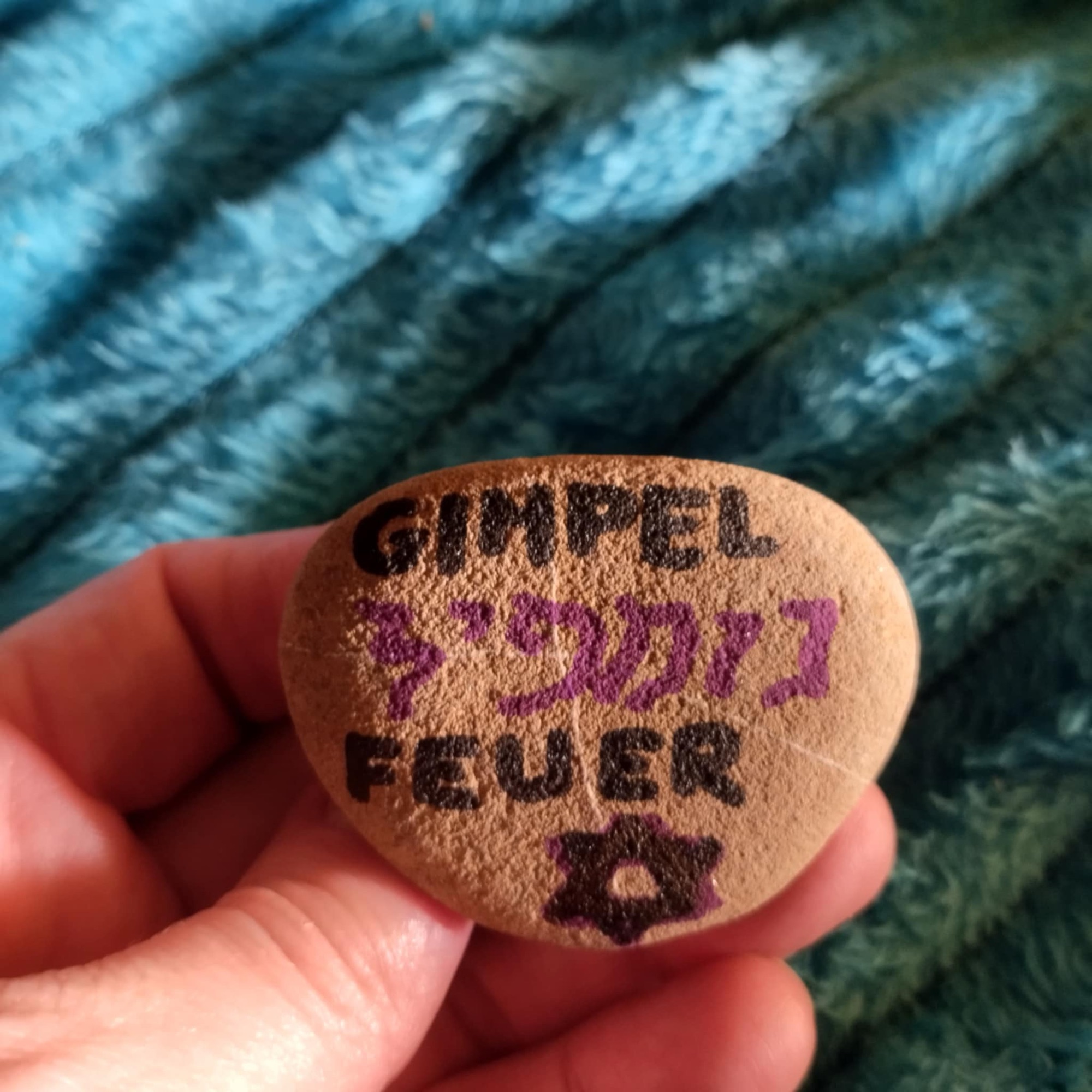
Thanks to the amazing Izabela Sekulska, my family members are now remembered.  Since March 9, 2020, a group of Polish people from Mielec remember the deportation of the Jews of Mielec.  They will gather once again at the mass grave, read out the names of 105 more people who they now know.  So far they have made stones for 1000 Jewish residents who were murdered in the Shoah. Included in this list are eight of my relatives. Gimple Feuer, Chava Amsterdam Feuer, Taube Amsterdam Feuer, Nachum Amsterdam Feuer, Shimon Amsterdam Feuer, Ceia/Tzilia Amsterdam Feuer, as well as Natan Amsterdam and Tauba and Marcus Amsterdam.  For each a stone has been painted and will be left on the mass grave. You can learn more about their work on the Facebook Group, Mayn Shtelele Mielec.

I thank those who work to keep their memories alive in Poland.  Who do not forget the mass graves of Jews still buried and unknown.  In my heart I will be there on March 9 and I remember those who died due to hatred in the past. Now I have a date to say Kaddish for my family.

I will think about those still hostages in Gaza, also murdered and tortured and held against their will while the world is mainly silent.  And I will think how once again the Red Cross and the humanitarian agencies did nothing to save them.  Just as they did basically nothing during the Shoah.

I will think about the UN, whose voice was silent during the brutal rape and murders of Israelis and others who were caught in in the Hamas murder spree.  Who voice was silent for 18 months toward Jewish hostages and Israel, but not silent in still supporting Hamas.  I will think about the UN who recently cut off all aid to Yemen after the Houthis took over 20 UN workers hostage. But who did not cut off aid to Hamas after their violent attacks.  Double standards for sure.

I will think about college students and professors who turned in support for Hamas and tormented and attacked Jewish students, faculty and administrators.  And we now know that Hamas was infiltrating these groups and had a hand in the protests.  And I will think about the university administrators who said the words “kill all Jews” had to be taken into context before they could say this was wrong.  I am glad that now those who are violent and threatening are beginning to realize this is not free speech and are expelled from their universities.  I have nothing against a civil exchange of ideas, but the violence and threats are not that.

I will think about the current administration and its two-sided ideology.  On one hand saying it is working to end anti-Semitism, but on the other hand getting rid of DEI initiatives that hurt minorities and the attacks on Hispanic members of our communities using the threats of ICE to scare and threaten them. As well as their attacks and efforts to silence the LGBTQ+ community, just as the Nazis also tortured and murdered those who were homosexual.

I will think about the last two years, the present and the future.  I will think about the fact that my husband told me next time I visited our daughter in Israel I should look into getting Israeli citizenship. Is America ever going to be great again for the Jewish citizens?  I am not sure.  I know many think that the current president supports the Jews. But I see something totally different.  A support for Israel because it fits his needs now, while at the same time supporting those who would make the USA a  nation with against those of different religions and ideologies.

But I will also think about the helpers.  Those in Poland who remember what happened and are trying to make a change.  Those in the USA who speak out against baseless hatred. And I will try to have hope that this insidious evil that seems to have arisen will soon slither back in to the underworld where it belongs.

I Need Help Finding My Morris Brenner!

17 Nov

I am feeling so frustrated right now. 

I have found out so much about what happened to my family in Trzciana and Mielec.  The revelations are sometimes difficult to understand. But at least we now know. 

But within all that we do know, there is a mystery of a grave containing two women, sisters and the son of one of them.  (See blog below, An Unexpected Grave Mystery.). In my talks with Izabela, a Polish woman who has helped in my search, I found out that she is also aware of this grave and the unsolved mystery of exactly who are related to these two women and boy.    We have discussed it several times.  We think that I have the answer to the mystery.  But I want to be sure.

Morris’ rocking chair. Now owned by my brother.

When I was a child, I knew my grandfather’s cousin Morris Brenner.  He and his wife owned a newsstand/candy store in Jersey City.  He was a diabetic and had both of his legs amputated.  So he always sat in a rocking chair and was the cashier, while his wife, (we think her name was Anna), would walk around the store and help people.

My brother and I remember going to visit several times with our parents, or with our Mom and grandparents, or perhaps with just our grandparents.   My sister doesn’t remember because she is so much younger. I am the last one alive to have seen him in my family.  My Mom and I visited him in a nursing home near Bayonne, New Jersey.  I detail that visit in a blog. (Childhood Events Definitely Influence My Adult Choices.)

His wife died before him, and since he had no legs, he had to move to skilled nursing.  He and his wife did not have children.  I believe I remember that they were first cousins so decided not to have children.

Why is this important?  Because there is belief that the women buried in the grave had a brother who moved to the United States before the war, named Morris Brenner.  Is this the right Morris Brenner?  I wish I knew because it would bring closure to this mystery.

I have been searching the Ancestry files for days.  I have found a number of Morris Brenners. But not a single one is listed as running a candy store.  I have searched in Jersey City and Linden, New Jersey.   My grandfather owned a bakery in Linden for a while, so I thought maybe there.  And there is a Morris Feuer there, but he was married with children and did not own a candy store.

My frustration is strong.  I thought it was an easy find compared to finding what happened in Europe.  I thought how many men with the name Morris Feuer could there be?  I thought the amputation and the knowledge of the nursing home would help.  I also figured he died in the late 1960s. But I am not skilled enough with Ancestry to find him.

My Morris Brenner was probably born in the late 1890s in the Mielec/Trzciana area of what was then Austria, now Poland. He was married. His wife’s name might have been Anna.  They had a candy store/news stand in New Jersey. They might have lived in the same building as the store, because I remember going into the back of the store through a door to a kitchen.  Perhaps Jersey City, perhaps Linden, Perhaps Newark?  At the end of his life, he lived in a skilled nursing facility/nursing home near Bayonne.  Perhaps it was one for Jewish people?   He did have nieces and nephews.  I do not know if they were from his family or his wife’s.  I know my grandparents began to visit him after my one visit.  I know that my family inherited the rocking chair, my brother owns it.  I know he died in the late 1960s perhaps early 1970s.

I even looked for people named Nissan Brenner, because by grandfather had a cousin in the USA by that name as well. 

I do admit that my brother and I could have distorted memories. We were young when we knew him.  I think I was about 10-12 years old the last time I saw him. That would be 1965-67.  I believe he died within a year or so of that visit. But I do not know for sure. I remember when he died, but I don’t remember exact dates that far back.

I am asking for help from those of you who are excellent at research. Members of Tracing the Tribe have helped me in the past.  Could you please help me find my Morris Brenner! Thank you!