Archive | Travel blog Book RSS feed for this section

Illinois Holocaust Museum: A Response to Jew Hatred

12 Dec

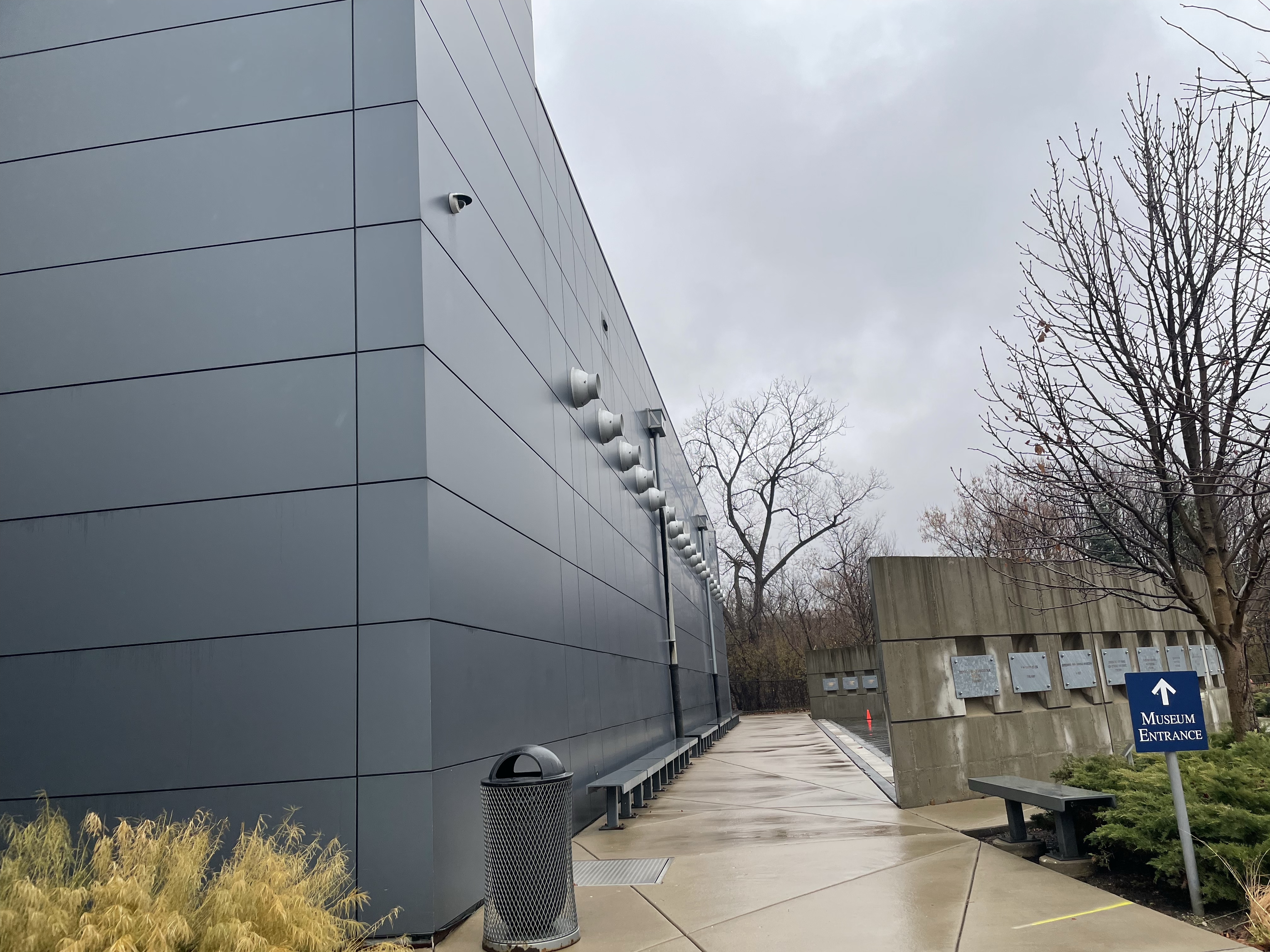
During Covid, I tried to do as many activities that I could from the confines of my home.  I took online classes, I attended family life events, I even toured museums and their special exhibits.  One of the best ones I toured was the Ruth Bader Ginsburg exhibit at the Illinois Holocaust Museum located in Skokie, Illinois.  So when I knew my husband and I were going to Evanston, Illinois, for a wedding, I put visiting this museum in person at the top of my list.  It did not disappoint.

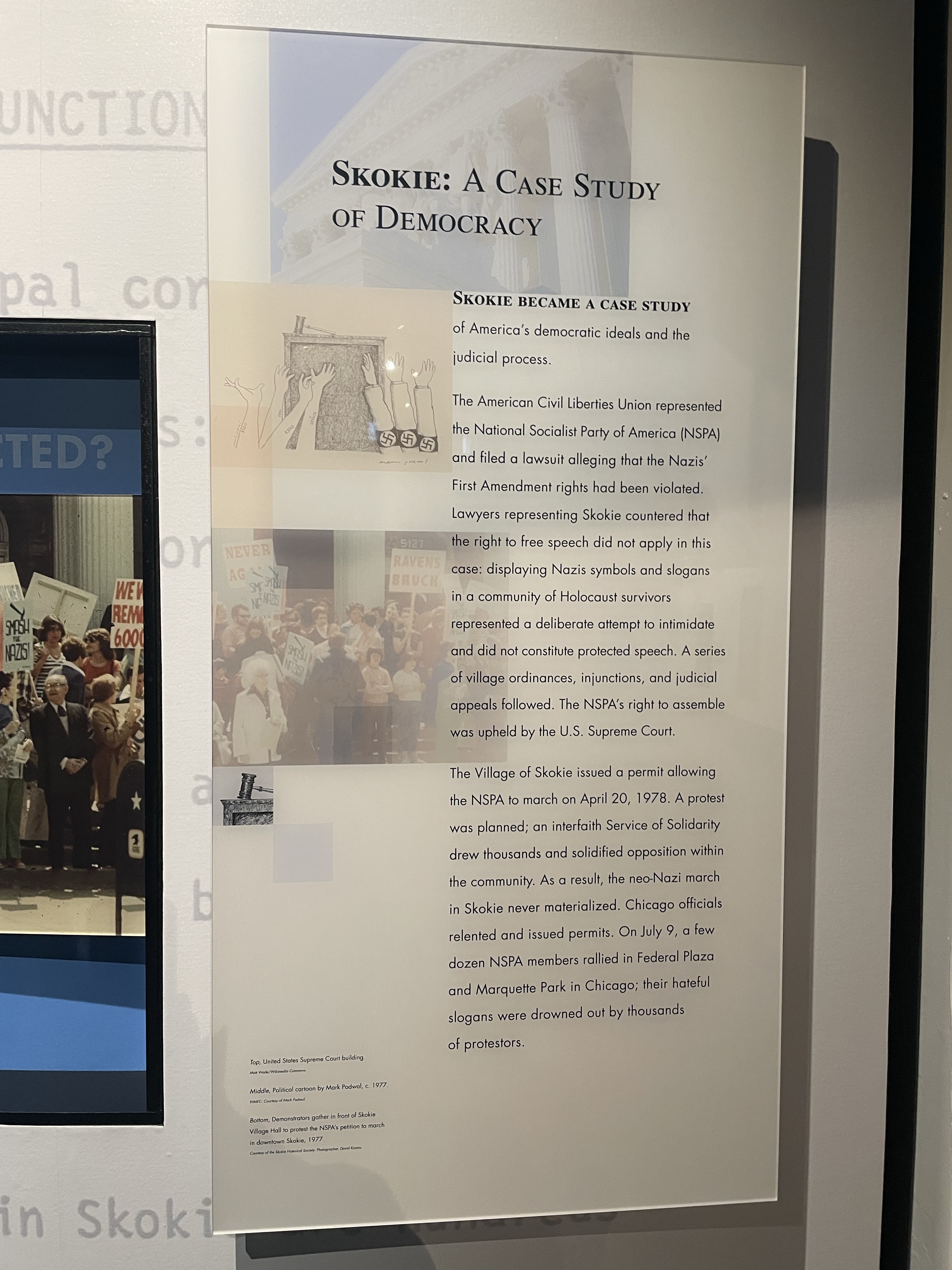
The museum opened in 2009.  It was a work in process for 40 years after the Skokie Jewish community was the object of a neo-Nazi group who decided to march through Skokie, a suburb of Chicago that is home to many Jewish residents.  The Jewish community started with a small space.  But their aim was to fight against anti-Semitism and hatred through education.  It looks like they are succeeding in their mission. 

The Illinois Holocaust Museum is worth the visit. It was designed by architect Stanley Tigerman. The building is made is to bring the visitor through the darkness of the Shoah and then back out to the light. As we went through the exhibit we could see this change. The entrance to the exhibit is dark and moody with narrow halls lined with photos, videos and memorabilia. But by the end, when we learned about the resistance and the survivors, the light increased.

While we were there on a Friday morning, there were four different school groups also going through the museum with docents.  Every so often the group would fill the space available, so we would stop to hear the discussion.  In this time of great turmoil and rise of Jew Hatred, seeing these students and their teachers learning about and basically experiencing what happened was important. 

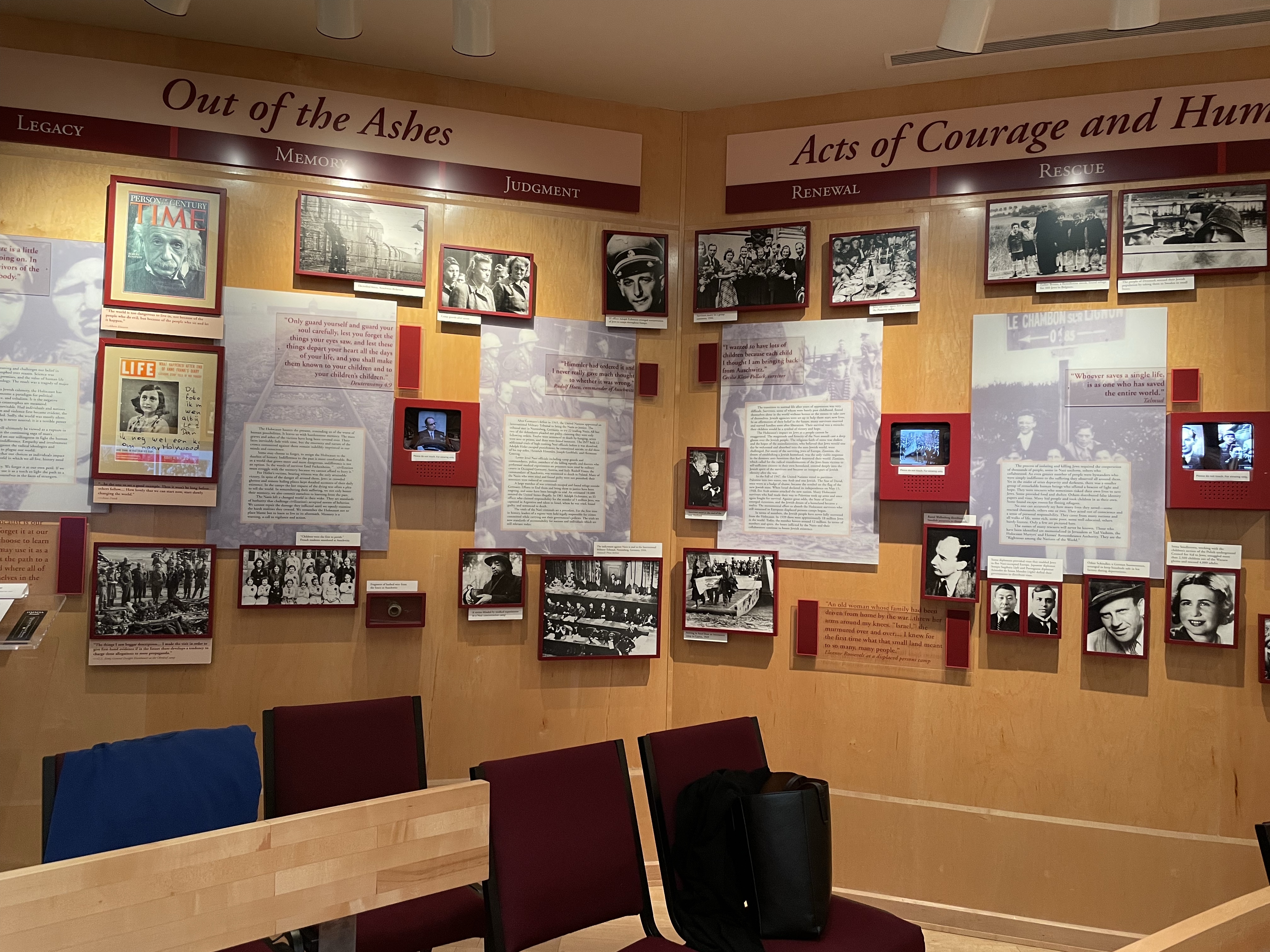
There are many short films/videos and photographs throughout the museum that were taken by the Nazis during their killing spree as well as films taken after the war by survivors and rescuers. 

The films are difficult to watch.   I saw several students holding their hands and sweaters over their faces as they tried to block the view. I did not want to see it either, even though I have seen these images or ones like them many times.

But this time, I imagined the children on October 7 trying to block the view as they saw the terrorist of Hamas reenacting the hatred of the Nazis and they saw their loved ones murdered and waited for their own deaths.  It created harrowing moments for me.  I envisioned being held hostage by Hamas underground as if in a camp barracks waiting without food and little hope.

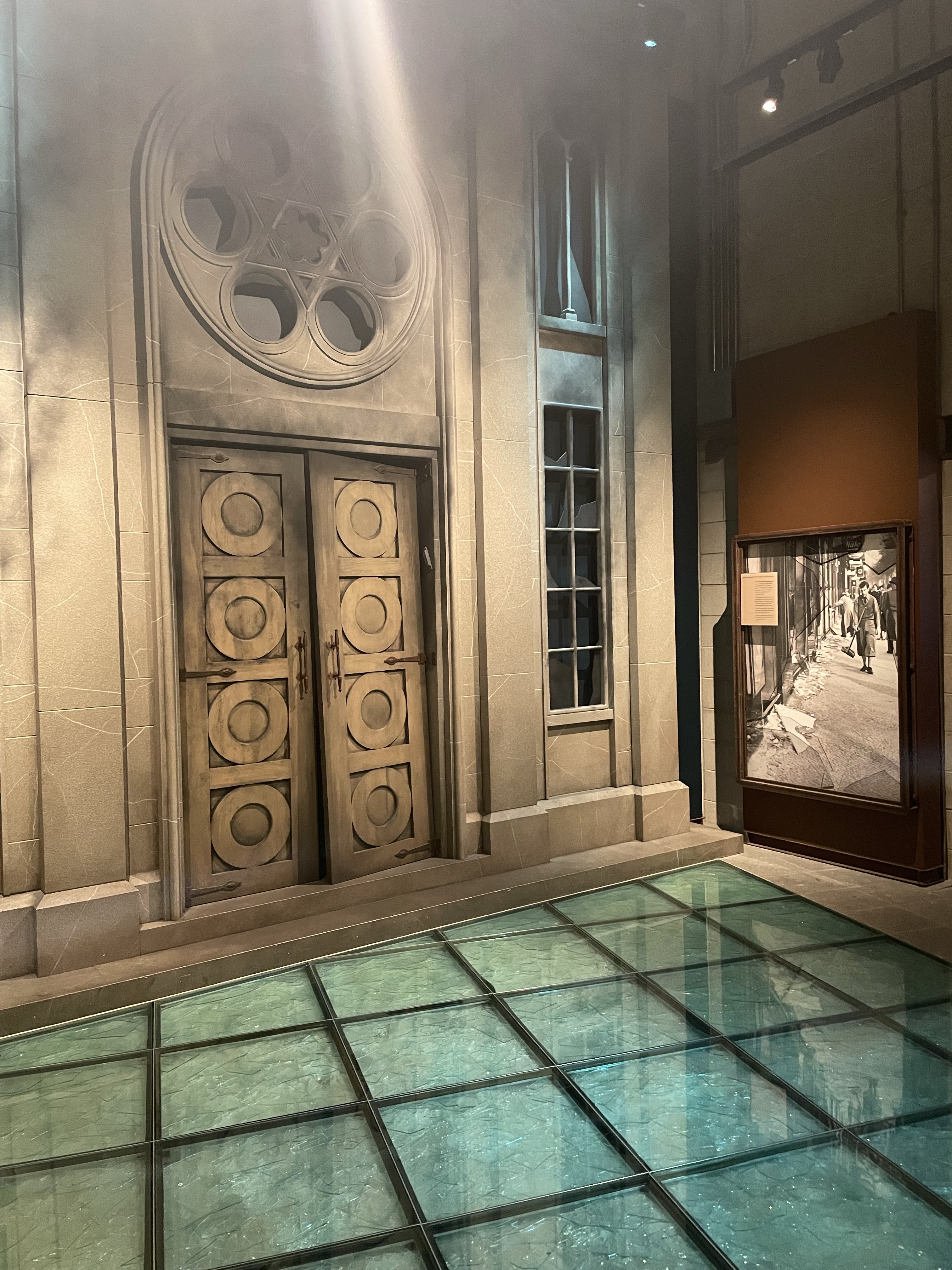
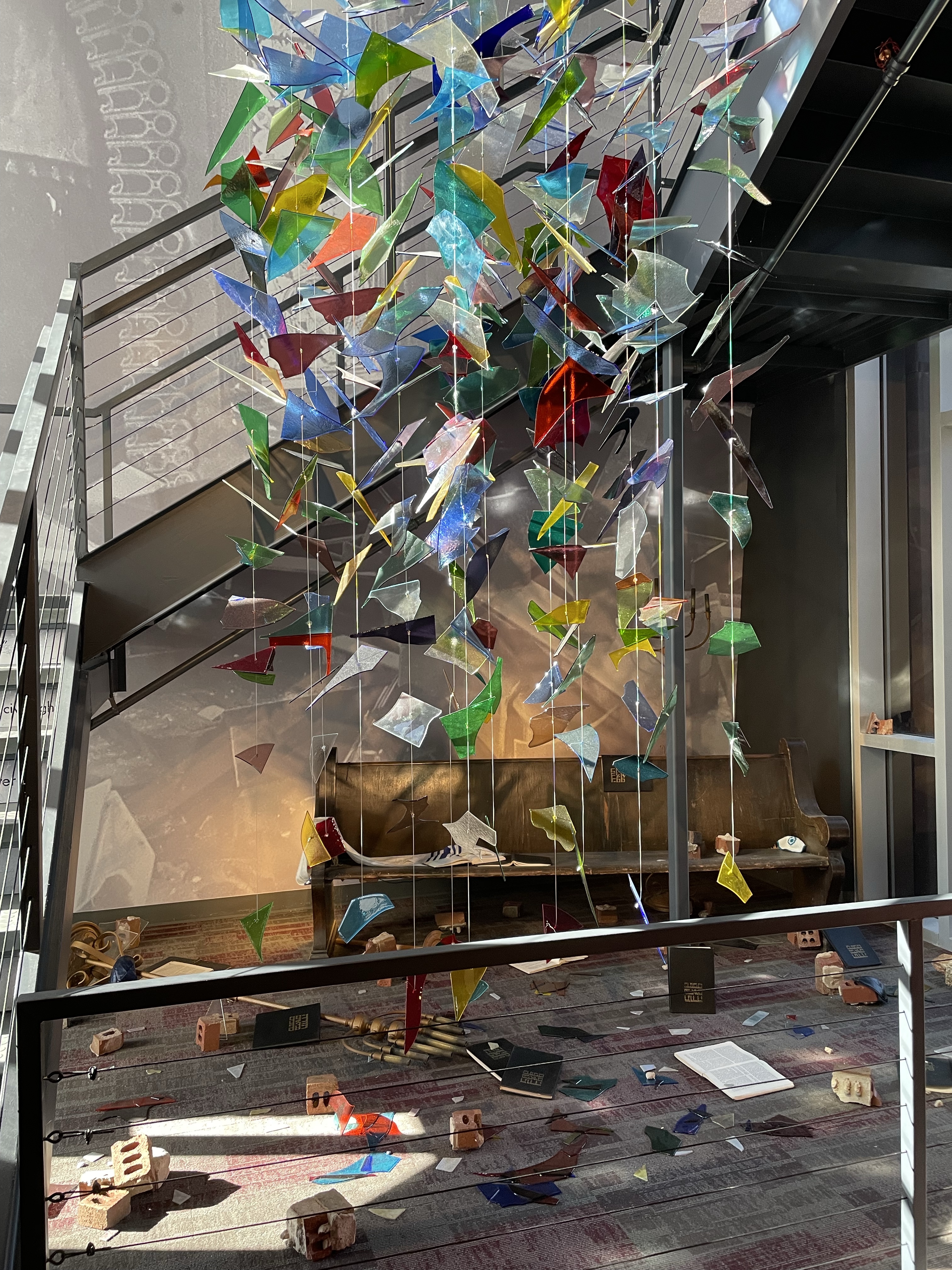
The Holocaust exhibit itself Is well thought out and takes you through all the stages of the Shoah.  The moment I saw the Krystal Nacht exhibit, which has a clear floor you walk over with shards of glass underneath, in front is the edifice of a synagogue with broken windows, I knew exactly what you will see next.  You can walk into a real cattle car from 1930s Europe.  It is an eerie feeling to be standing in that darkened wooden container and think about what it was like for those who were stuffed in and perished.  This is not a museum for someone who wants to avoid the past.  It puts it right into your vision.

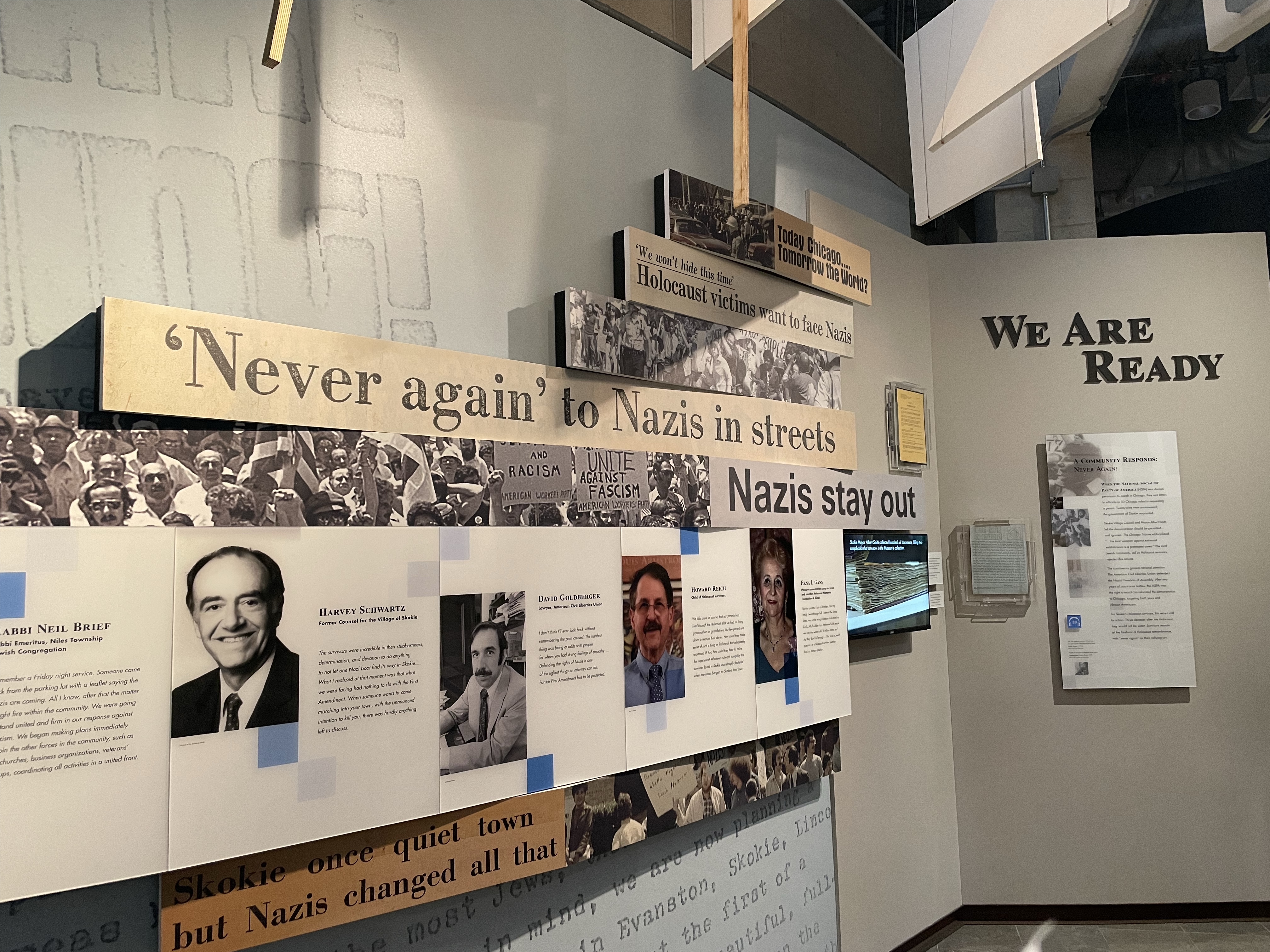
After you weave your way through the seemingly endless horrors of the Shoah, you see a small exhibit about what happened when the Nazis came to Skokie.  It puts into ‘context’ what is happening now throughout the USA on college campuses and in some cities.  And I will say that calling for the annihilation and extermination of any people is always wrong. No matter what a college president says.

This is emphasized with the movie at the end that discusses both the genocide of the Jews and the continued times others have been targeted like the Tutsi people in Rwanda. We sat with two student groups as we watched the film.  It was not easy to watch as people testified about what happened to them during this more recent horror. Many of the students lowered their heads.  I think I spent as much time watching the students as I did watching the film.

After we finished the exhibit, we went to the Hologram theater where we spoke with the Hologram of Pinchas Gutter.  This is an excellent way to learn about the Shoah.  Those brave survivors who spent a week being interviewed and videoed while they told their story have created a way to keep the memory alive. 

The museum is not all gloom and depression.  There is the good of those who survived.  But also when we were there the special exhibit was about delis, “I’ll Have What She’s Having” The Jewish Deli.  It was a great way to wash away some of the somber emotions we were having after going through the Shoah. 

As a teenager and college student, I worked in a Jewish deli.  So for me this was especially joyful as I remember my time behind the counter making sandwiches, cutting lox, deboning white fish and making catering trays.  I would almost smell the corned beef, feel the texture of sable fish as I prepared some for a customer, and felt the smooth taste of a potato knish in my mouth.

It was good to end the visit on an upbeat note. But throughout it all I remembered that this museum was founded in response to Jew Hatred. Once again, we are experiencing a major rise Jew Hatred throughout the United States and the rest of the world. There are many who support us. However, when I look at college campuses, I know the work to end anti-semitism and Jew Hatred is far from done. What will be our response globally? In Skokie a museum was created. I am not sure it is enough.

After A Trip Was Cancelled, We Went to Tulsa

7 Nov

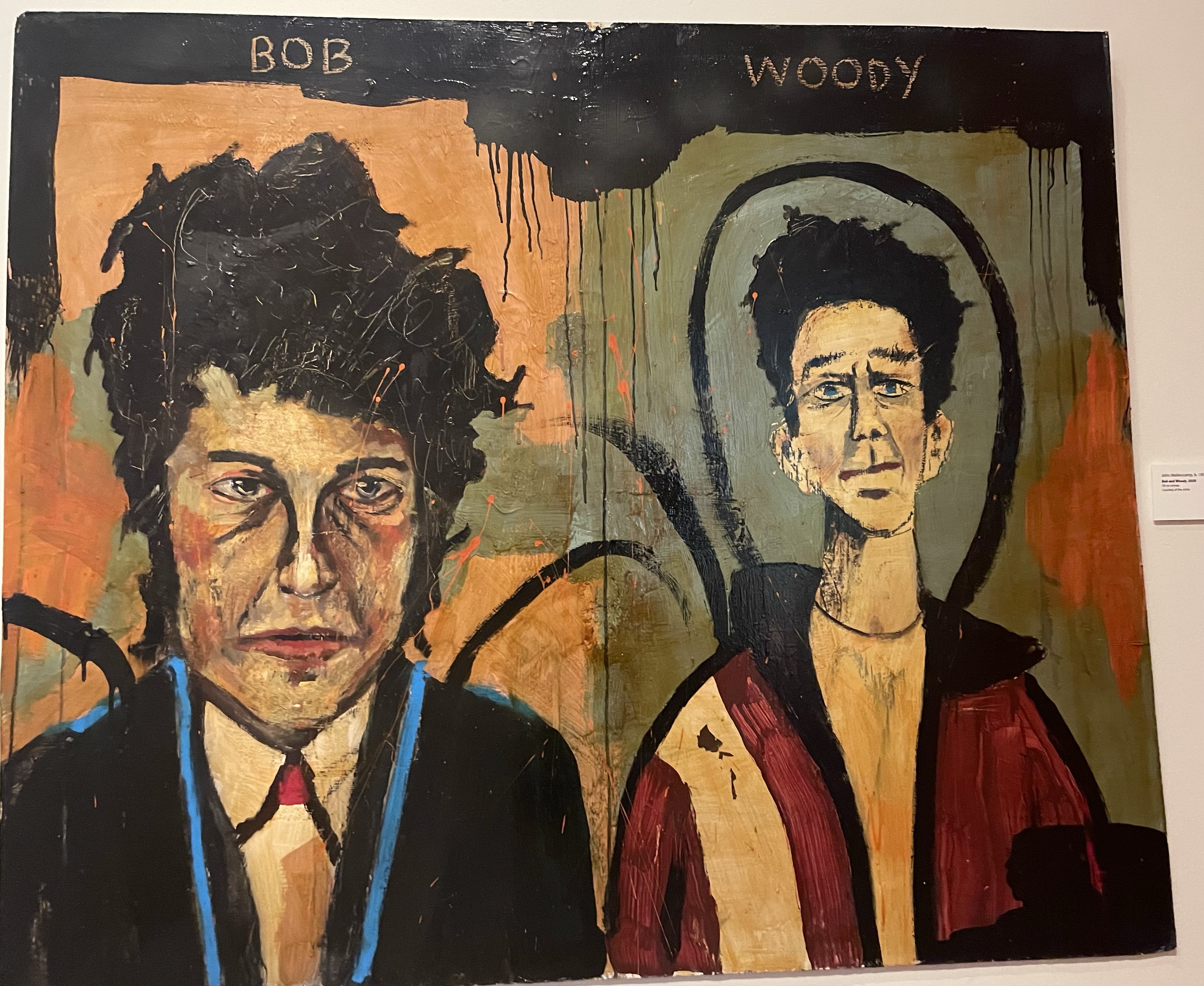
Since April, I have been telling my husband that I wanted to go to Tulsa, Oklahoma, and visit the Bob Dylan and Woody Guthrie museums.  I had the trip planned for the longest time.  Our first stop would be these two museums, then we would visit with friends of his and perhaps one of his cousins in Oklahoma.  On the way back I wanted to stop in Wichita, see more cousins, spend the night, then on the way home visit the Cosmosphere in Hutchinson, Kansas.

Though I kept talking about it, we never got around to do it this summer.  But this fall, our plans changed quickly and radically.  We were supposed to go to Israel where our daughter and her husband live.  The war changed our plans, but my husband still had two weeks of vacation.  I had to do something.  Just sitting home and moping and worrying was not an option. I am the type of person who can usually find the good in any situation.  And I was determined to find some small element of good.

Road Trip Number 1!

We reached out to our people; I made hotel reservations; and off we went.

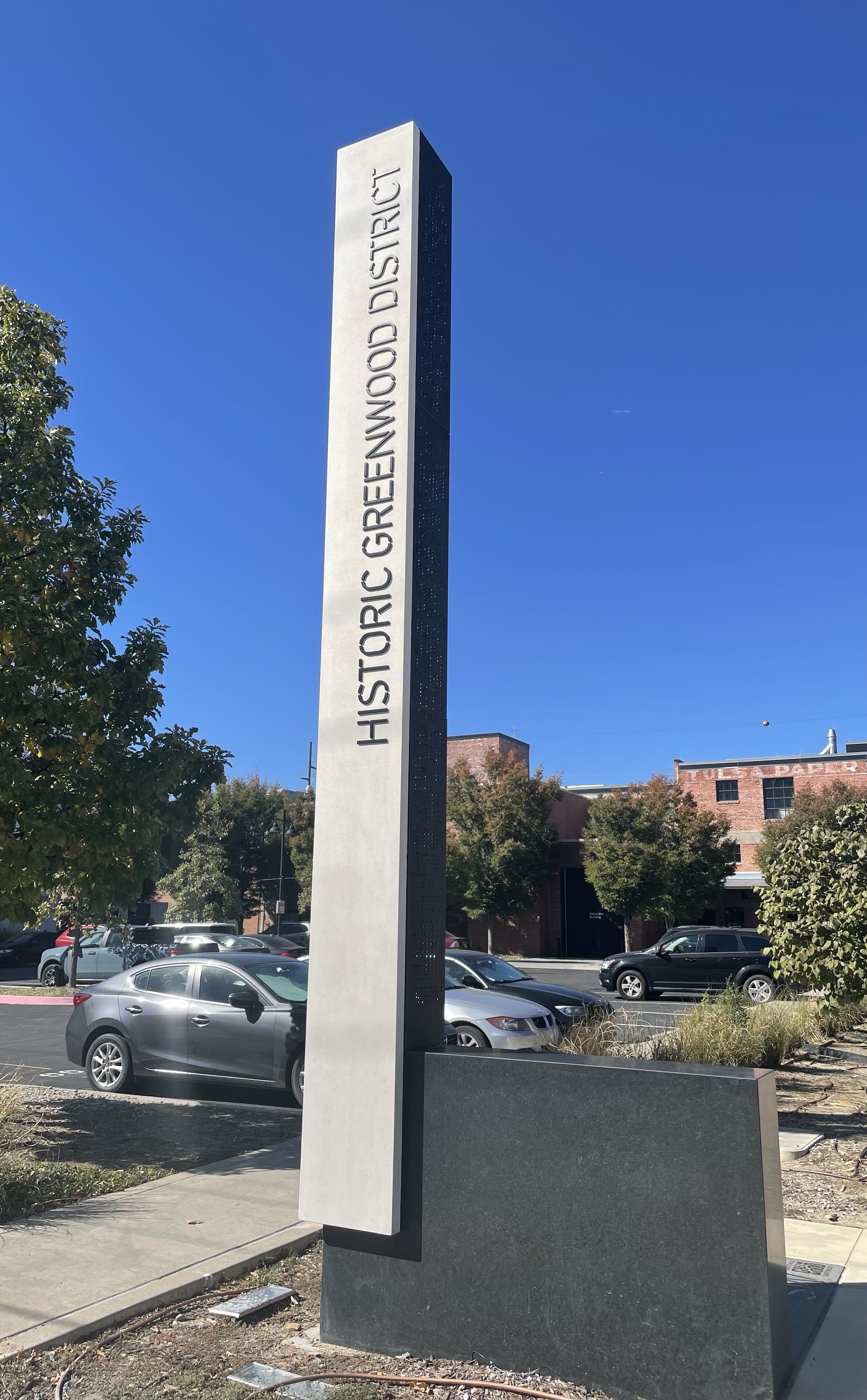
The hotel we stayed at in downtown Tulsa was in easy walking to the two archive/museums.  They are next door to each other.  On our walk towards the museums, we saw a large post indicating that we were entering the Historic Greenwood District. This is the area where once a thriving Black community settled before the 1921 Tulsa Race Massacre took place.  We thought it was extremely apropos that the museums dedicated to these two musical activists were in this area.  It just fit.

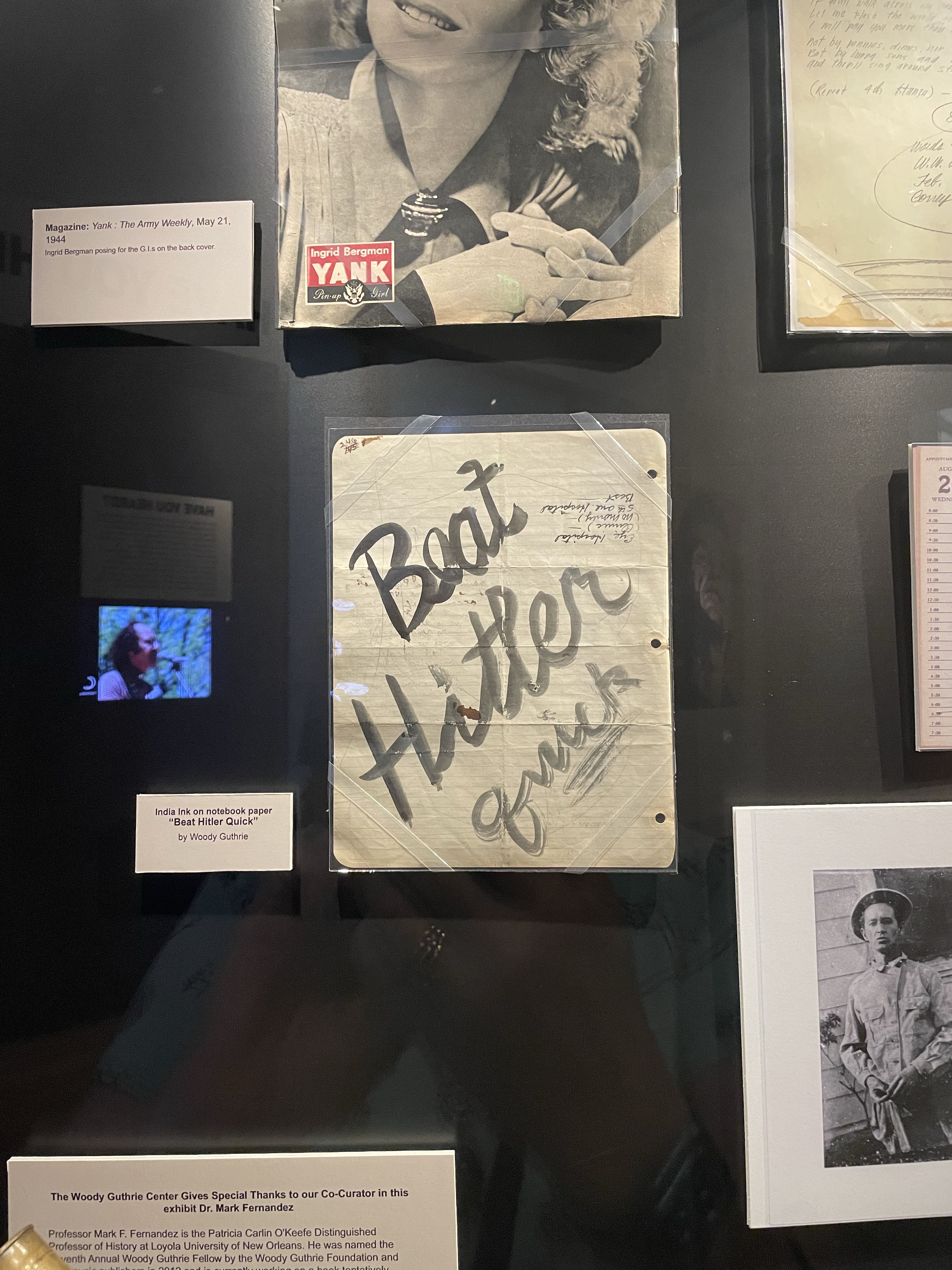
I loved both museums.  They each traced the lives of two of my musical heroes.  Even though their music was written decades apart, they actually knew each other.  One was born Jewish, the other was married to a Jewish woman and fought in WW2. Among Guthrie’s papers is one that reads, “Beat Hitler quick.” That resonated with me with all the Jew Hatred going on right now. The museums are both well worth the visit.  You can spend time watching the videos or just walk through.  I loved reading about them, listening to their music, and looking at their artifacts.  At the Guthrie Museum, you must try the virtual reality of the dust storms that devastated Oklahoma. WOW.

That evening we ate dinner with our friends. I asked about the two museums I wanted to see. The husband actually serves on the board of the Sherwin Miller Museum of Jewish Art.  At dinner he told us a bit about the museum, I realized it was much bigger than I anticipated.  For a community of about 1800 Jewish residents, it was really special. 

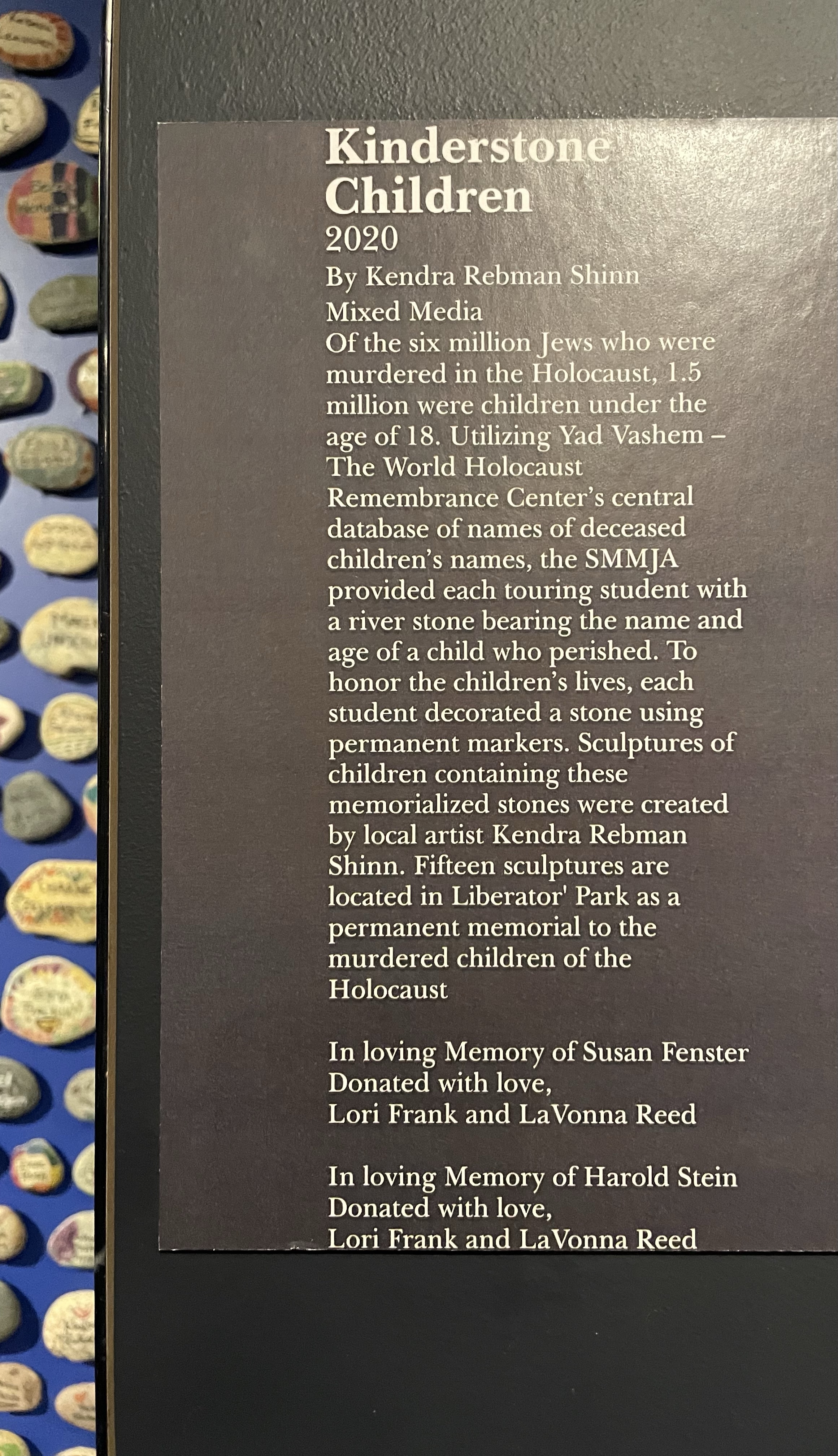
The section about the Holocaust was difficult as such museums always have to be.  But I loved how they imagined KrystalNacht.  I was so touched by the stone display that is a memorial to the 1.5 million Jewish children killed. I had tears in my eyes thinking about the children who were recently murdered by Hamas.  How could I not compare the two? The death of every child takes a toll on society.

Upstairs was dedicated to modern Jewish Life.  They had a sanctuary set up that must be wonderful to teach about Judaism to those who come to visit.  For me, personally, I loved the special exhibit of mezuzahs, the scrolls we put on our doorposts.

From there we went to the Philbrook Museum of Art. The house was built by Waite Phillips, who started a ‘little’ oil company. Phillips and his family lived there for only 11 years, and then they gifted the house and 23 acres of land to Tulsa for an art museum. Okay, I will be honest with you, the art in the house is great.  But the house itself is amazing.  I love old houses.  And this one does not disappoint.  The grounds are also stunning.  Well worth a couple of hours to walk through and visit.  It just cheered me up. I could see myself sitting outside for hours.  We especially loved all the wonderful milkweed and butterfly gardens. 

After we got back to our hotel, my husband’s cousin drove in from Oklahoma City to visit us.  She surprised me with a gift, her grandmother’s mah jong set.  She told me that no one in her family plays and she knew that I did, so she gave it to me.  Her grandmother and my husband’s mother were sisters.  I have to say having both of their mah jong sets gives me joy.  It was great catching up with her and seeing pictures of her family and sharing photos of our family.

The next morning it was on to Wichita.  One note about the drive from Texas to Kansas.  It is VERY flat and dusty.  There were no crops really, just fields and fields of red dirt.  However, and I am really sorry I could not get a photo of this, besides the oil well arms pumping away there were also giant windmills.  And at one spot there was a windmill farm circulating air and making e;ectricity above the same field where the oil well arms were pumping oil.  It would have been a great photo representing the changes coming to society as we switch to rely on renewable energy.

Of course I contacted our Wichita cousins as soon as we arrived and then spent the next seven hours with them.  It was great.  We had two meals with everyone. But also had time for us older adults to just visit.  We have not seen them for about six years, which is ridiculous.  Wichita is just three hours from home. I vowed that we would come back more often.  We need to see his first cousins and also visit some museums.  (My husband hates museums, but he loves me.)

Next morning on to Hutchinson and the Cosmosphere, one of my favorite museums in Kansas.  Honestly, we went several times when our children were younger.  In fact, our daughter attended two summers of Space Camp there and loved them.  Even though we have been members for about 28 years, we have not been there for about 20 years.  It was definitely time to go back and see the changes!

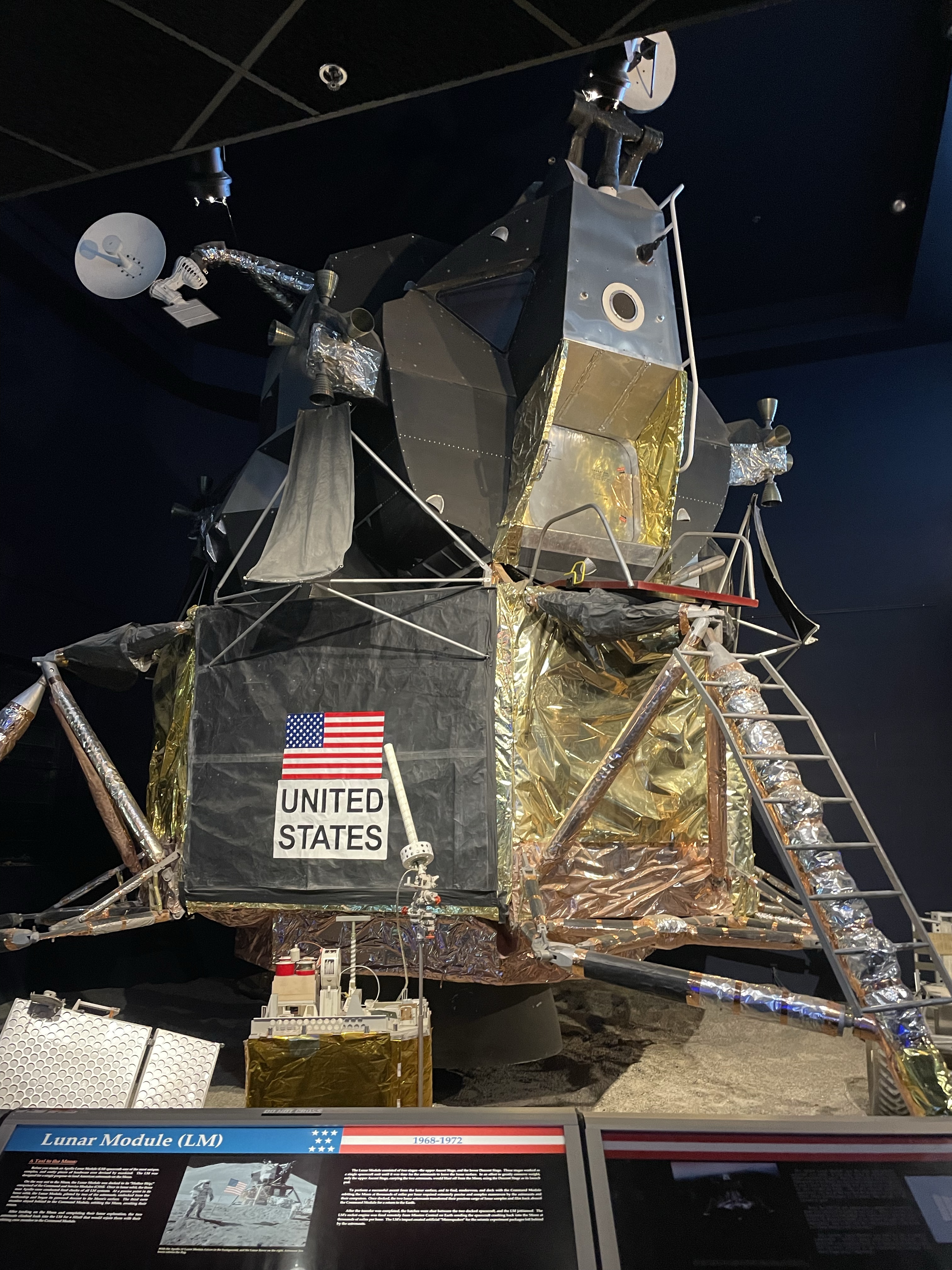
The museum exhibits are wonderful.  If you love space and NASA, you will love this museum. The real Apollo 13 space craft is there. All the exhibits have been redesigned since our last trip. Definitely for the better.  We watched one of the two movies, about the Blue Whales.  That cheered us up. We were pretty sure that this documentary would end on a sad note, but NO, the Blue whales are coming back and increasing in numbers.  Honestly, I think Star Trek’s movie has something to do with that. It was a good start to the visit. 

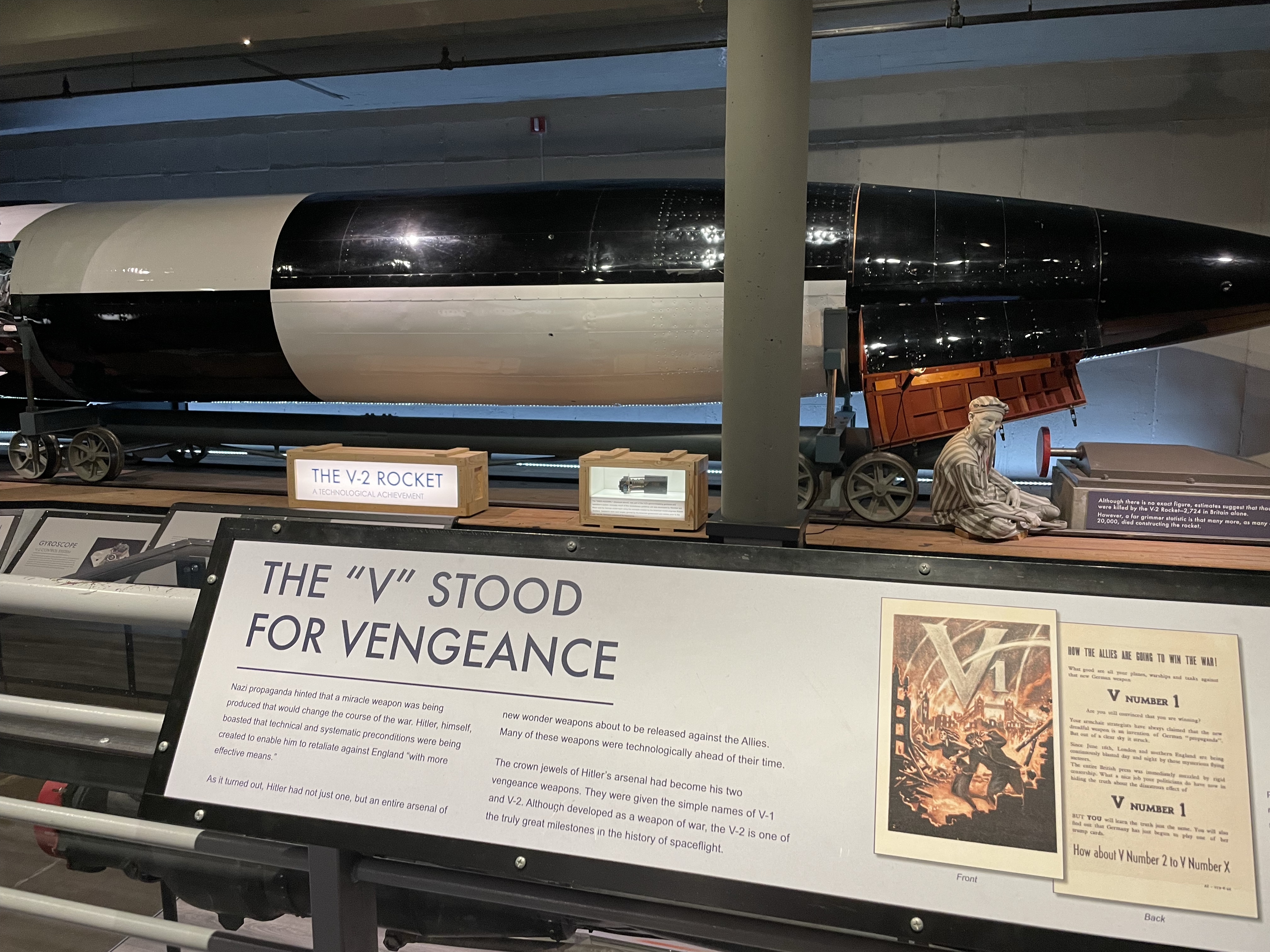
While we were walking around, I noticed a little exhibit off to the side, The V-2 Gallery, which was all about the V-1 and V-2 rockets that the Nazis used to bomb and terrorize London.  In the past the history of these rockets was sort of not mentioned.  Just as it was not always advertised that Wernher von Braun, who helped start the United States aerospace industry, was a member of the SS and helped Nazis build their death rockets.  This exhibit made it very clear.  It also made clear that the rockets were built by slave laborers in concentration camps.  And over 500 prisoners were killed when the Allies bombed the factory, as the prisoners were locked in and could not escape.  These rockets decimated London causing the deaths of over 20,000 people.  A sad start to the aerospace history. But one I think should not be forgotten.

Our first Fall Road Trip was a great adventure.  We loved seeing friends and family.  We loved visiting new museums and revisiting the Cosmosphere.  Personally, in this time of great stress for the Jewish community of the world and the horrors of war, I was glad to get away.  But at the same time, I am glad that we were able to visit places that show good in the world and how society can survive war and hatred. 

http://www.jewishmuseumtulsa.org

http://www.cosmo.org

http://www.Philbrook.org

http://www.bobdylancenter.com

http://www.woodyguthriecenter.org

A Bit of Maine: Acadia National Park

26 Sep

My cousins recently purchased a home in Maine close to Acadia Park overlooking the Atlantic Ocean.  Since they moved there for part of the year, I have been bombarded with demands that I visit.  That I would love it.  That I had to come to see their new home.  So this summer my sister and I went to see them.   I am so glad we did.

I will not tell you the exact little town that they live in, but it was easy driving to the Schoodic Institute at the Acadia National Park, which is located at Schoodic Point. The Institute studies environmental changes taking place in Acadia and provide educational programs for learners of all ages.   They help manage research projects throughout the park. 

The land at Schoodic Point, 2000 acres, was donated to National Park Service in 1929 by the John Moore family.  Also starting in 1935 until the 1990s, there was a US Naval Security Group Activity Base located there, which included the most lovely building in the middle of the site. When the base closed, the National Park Service worked to develop a research learning center using the buildings that were going to be left unoccupied after the base was closed.

Now everyone can visit The Rockefeller Hall Visitor Center at the Schoodic Institute in Acadia National Park.  It houses a nice little museum and wonderful Park Rangers who can answer your questions!

After we visited the Center, we drove around to look at some of the stunning scenery.  The black volcanic rock intermingled with the pink granite creates a wonderful vista when you look out to the ocean.  You can walk along these scenic, rocky beaches. When we went to my cousins’ favorite spot, there was an older couple sitting on the stones, who insisted that we skip some small rocks into the ocean.  It brought back memories of skipping rocks into the lake I grew up at in upstate New York.  We soon learned that the pink stones crumble as they skipped, while the black volcanic stones made wonderful skips!

Another great place to visit is the Tidal Pools, where you can see the starfish caught in the tide pools, pick them up and touch them for a few moments before returning them to their safe havens.  (Just be careful as the rocks are slippery and can move beneath your feet.  I found out the hard way!)

We ate in a wonderful seafood restaurant near their home.  I had haddock. Yum!  Saw lots of lobster boats and other little boats that made for brightly colored photos in each little cove.

Since we had one very rainy day while there, we stayed in an watched several documentaries created by local residents about the area and about the Penobsoct Indian Nation. They were extremely interesting and gave us information about the history of the area. Later we visited some of the areas mentioned in the documentaries.

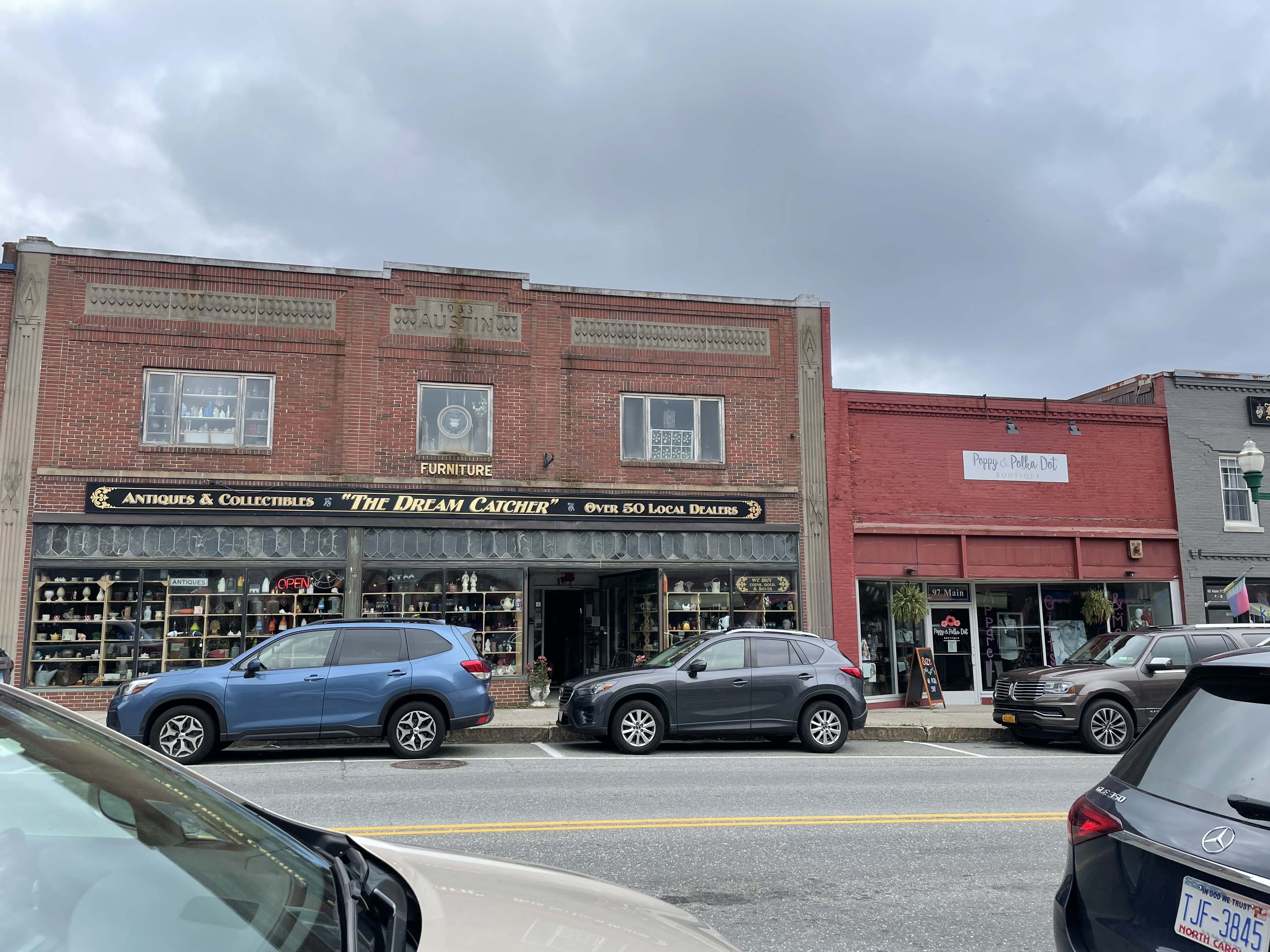
When the weather cleared, we took a trip to Ellsworth.  This lovely town has a quaint downtown and refers to itself as “The Museum in the Streets.”   We had a great time visiting the shops and eating lunch. We still talk about the twin sisters who work in stores next to each other and were extremely helpful. We did our best to help the economy of this lovely shopping district.

While there we also saw one of the many granite sculptures that are scattered throughout the area.  Some are on the side of The Schoodic National Scenic Byway, others are in town centers. I think we saw five. But there are many more.

Our final scenic vista came during a visit to Jones Pond.  To this community it was a pond, but to me it looked much like the lake I spent my summers visiting.   Except there were no boats docked on the Jones Pond, only a sea plane!!  I loved seeing all the water lilies.  We walked on a path along the coast of the pond for a bit.  We were the only people there: a most peaceful and meditative experience.

A visit to the Acadia Park area in Maine is well worth the trip! I hope to go back again with my husband and visit many of the places we could not see in just four days.

http://www.schoodicinsititue.org

Money Museum, A Numismatic Joy

3 May

With all the talk about the Federal Reserve Bank, money and finance lately, we just had to see the Money Museum at the Federal Reserve Bank of Kansas City.  Both of our children visited it when they were in school.  I remember them bringing home a small bag filled with shredded money, which gave them pure joy, even though they could not use it.

I don’t know why we never went. My husband was once a big coin collector. His search for numismatic oddities was a fun pursuit.  We found almost 900 silver coins hidden in my grandparent’s home after they died.  They owned a bakery, and my grandmother would squirrel away all the silver coins that people paid with, replacing them in the till with regular coins. The coins were split between my mother and her brother.  But my parents let my husband search through all their coins to get the largest variety of dates and coins before dividing my mother’s share with my siblings and me. We got to take the coins he needed for his collection as part of  share. 

In fact, in our tzedakah (charity) box, where we collected coins each week for years, we always had the children search through the coins to find ones we did not have before donating all the money saved each year to charity.

Even though this obsession with coins faded, I still cannot understand why we never went to see the Money Museum. My husband often passed the Federal Reserve building on the way to work and would consider going in. But it never happened.  Until this March for our annual anniversary museum event.

It is not a very large museum.  It takes about an hour to go through the displays, watch the movie and try some activities.  They really made it family friendly, with activities for children and adults. The museum is free and during the summer there are free 30 minute tours at 10 am and 1 pm that you can join when you are there.

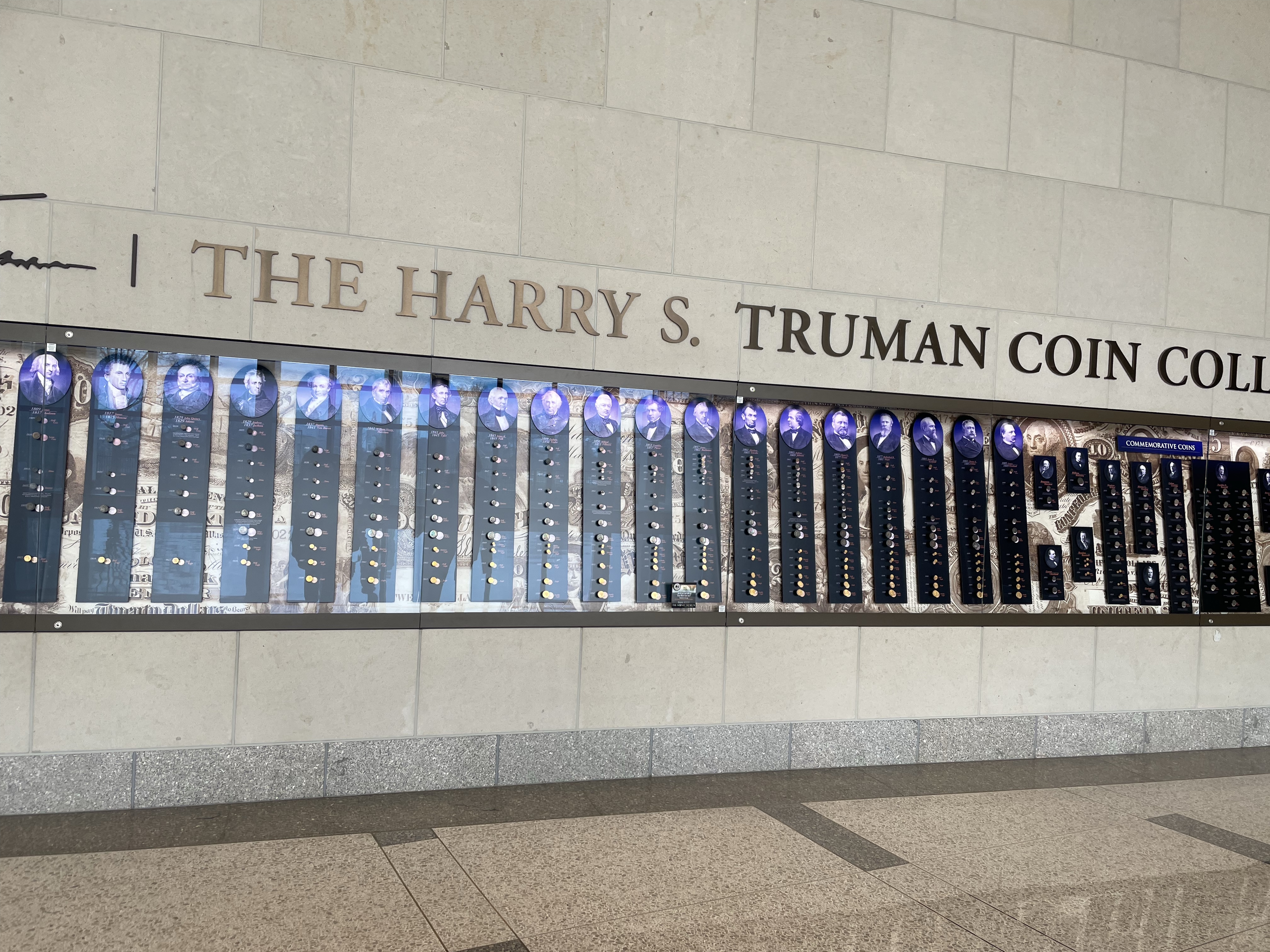
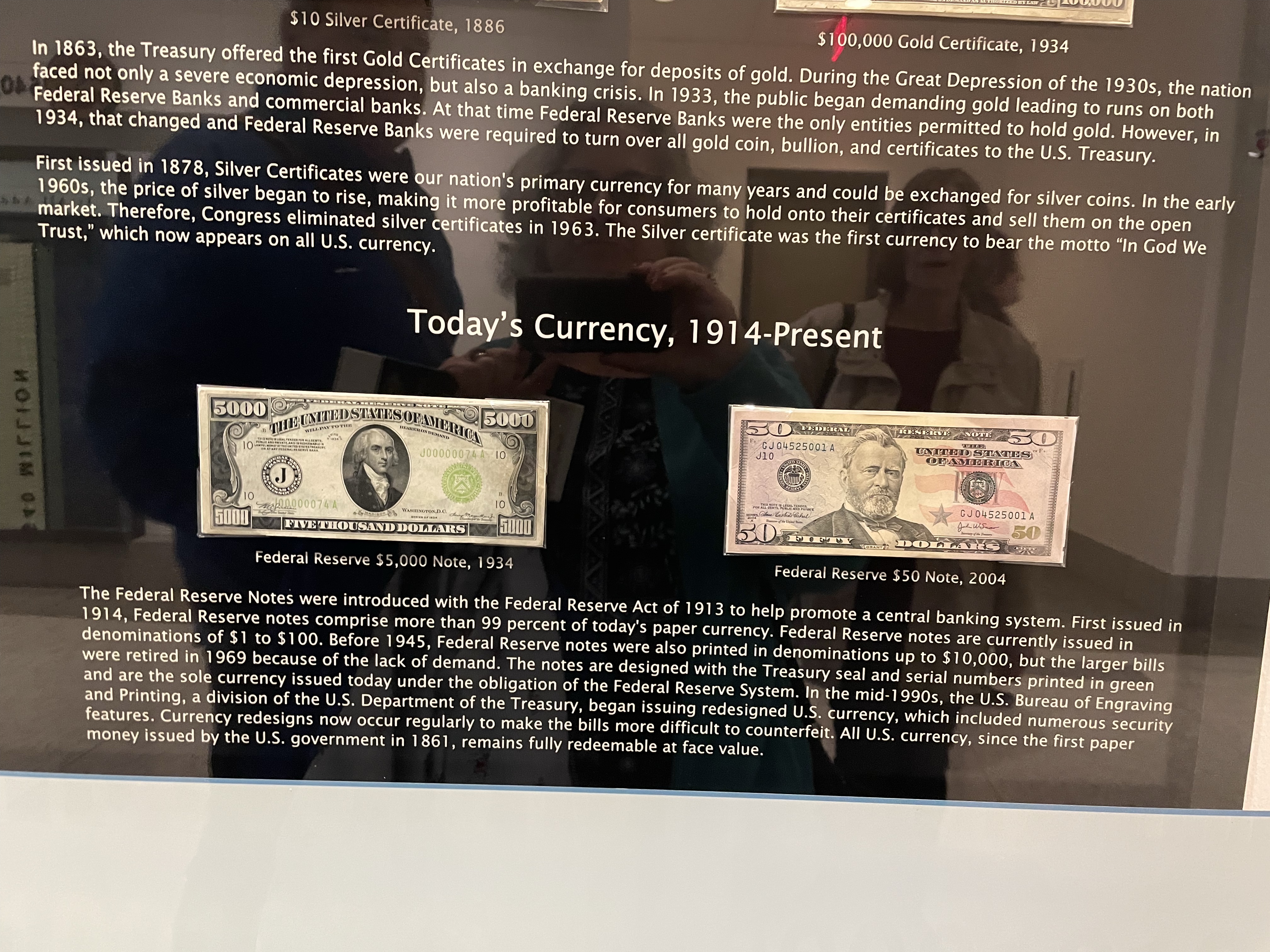
The first exhibit is the giant wall of coins that used to be at the Harry S Truman Presidential Library.   The Truman Coin collection has over 450 coins all lined up by year and denomination from the beginning of the United States.  This is a replacement collection that was donated by over 170 coin collectors after the original coins were stolen from the Truman Library in March 1962.

 In fact, the day we went to the museum was the 61st anniversary of this infamous heist.   The replacement coins were donated on May 6, 1967.  Hence why I decided to write this blog now! It seemed apropos to visited on March 24 and then write the blog for May 6. But I digress. Back to the coins.

The coins were on display at the Truman Library for over 35 years. But now they make their home at the Money Museum.  A perfect location for them. It is fun to see how coins we use every day have changed over the years.

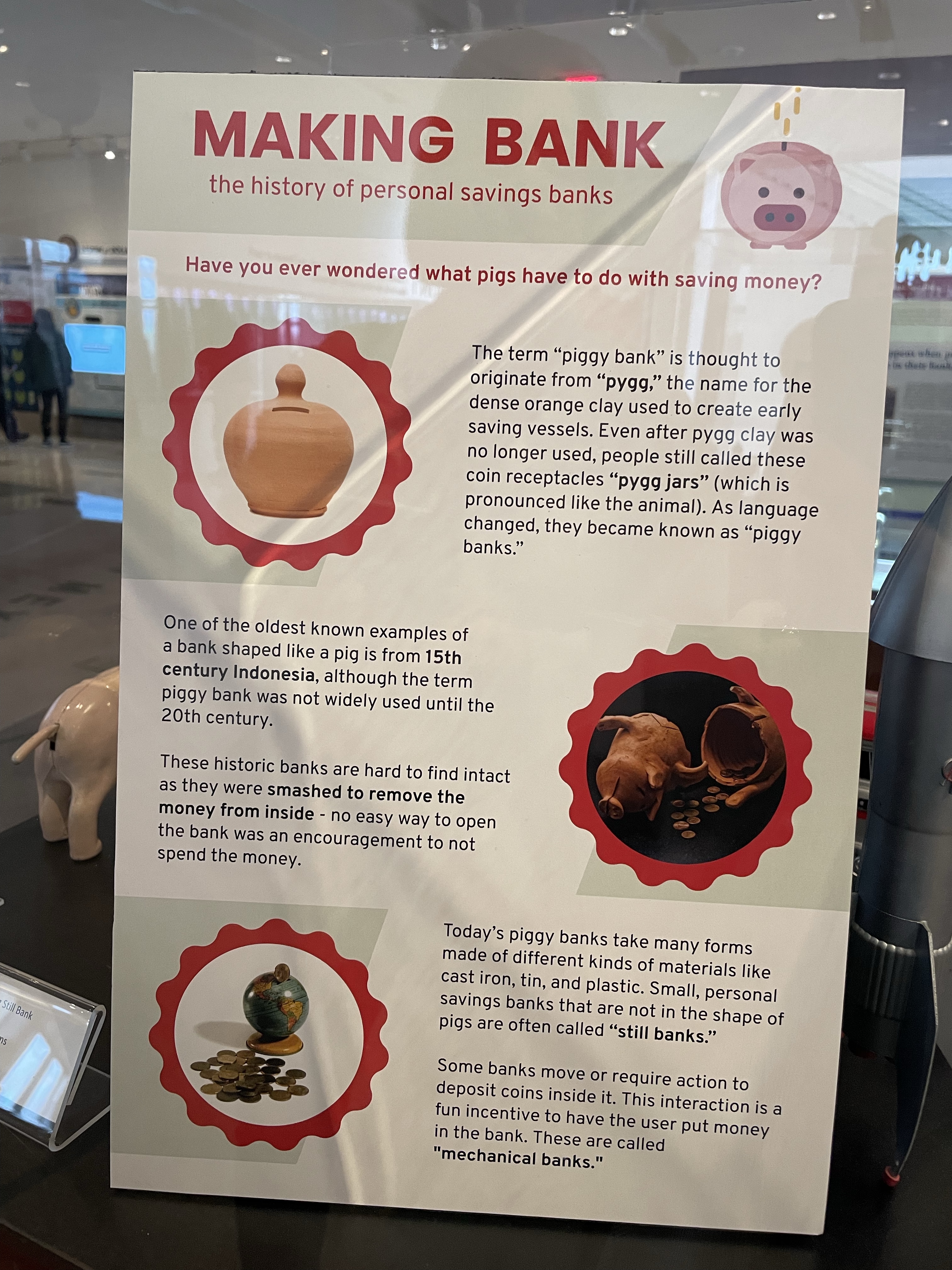
Walking along the coin wall leads you straight to the museum.  There were little stations set up for the guests to learn fun facts about money, finance and how the federal reserve system works.  One display had counterfeit money and explained the safety mechanisms to check to see if bills are real.  Another explains the history of piggy banks.  There are fun facts on boards called “Jay’s Journal” directed toward children.

A favorite display for everyone when we went was the gold bar that you could try to lift.  The only one we saw who could actually lift it was a young woman.  She was STRONG.  I could not get it to budge.

You should watch the movie, although some smaller children will not enjoy it. It is in the back of the museum, so you see almost all the displays first. We also enjoyed all the interactive displays along the wall in the hallway that leads to the vault.  There were even two displays where you could take photos to send to your email.

When we finally reached the entrance to the area with the vault, I realized that the vault was enormous, much bigger than I imagined.  NO photos are allowed in this area.  We also got to see them shredding old paper money.  When exiting the museum at the end, everyone can take home a small bag of the shredded money. 

The Money Museum is not far from the restaurants at Crown Center.  So we made a day of our museum adventure and ate lunch at Crown Center and walked around the shops as well.

It was another great Kansas City staycation trip.

https://www.kansascityfed.org/moneymuseum/

Two San Antonio Places to See Besides The Alamo

13 Apr

I love going to museums, especially museums I have not yet been to visit.  I have been to San Antonio many times, so did not need to see the Alamo again. Therefore, during my recent trip to San Antonio at the end of February, I was excited to visit two museums that were new to me thanks to two different friends who live there. 

First, I went to the Holocaust Memorial Museum of San Antonio that is housed in the Jewish Community Center.  A dear friend of mine, whose mother was a survivor, volunteers at the museum to share her mother’s story.  Before she knew I would be in town, she agreed to speak to a group of middle school students from a local Catholic school.  She invited me to hear her talk.

I was interested in going.  I knew my friend’s mother and I knew a little bit about her story because it is unusual.  Both she and her mother were together throughout the war, and both survived their concentration camp experience. My friend was also one of four women in Texas who worked to make Holocaust education a part of the Texas official school curriculum.

The Museum, which opened in 2000, is small but well thought out.  The main permanent exhibit tells the story of the Shoah through photos and films, maps, and personal items. Another part shows the USA response to the Shoah.  Finally, there is a room with photos of San Antonio residents who were survivors, including my friends mother.

Watching my friend speak and learning so much more about what happened to her mother and grandmother, really touched my heart.  You wonder how someone who spent her teen years as a slave laborer, who almost lost her life several times, who saw such evil, could ever become normal and raise children in the USA. But she did.

I recommend going to the museum.  It is worth the short time it would take to walk around and read the exhibits.  If you can, plan in advance to schedule a docent led tour, that would be even better. The museum is free and open to the public. Hours are Monday to Friday, 9 am – 3 pm. And Sunday’s 1 -4 pm.

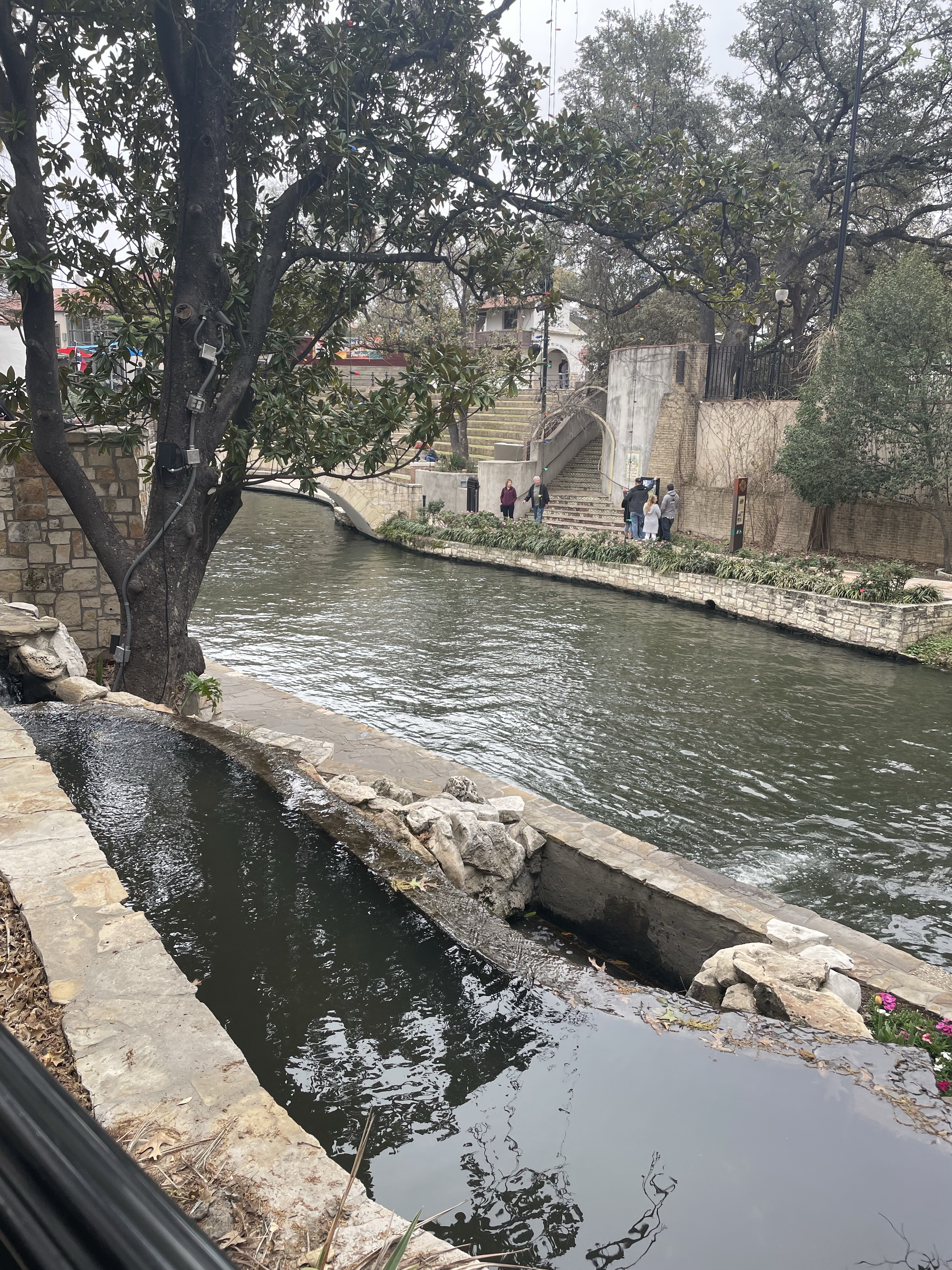
My second San Antonio Museum was much more Texas oriented.  Other friends of mine picked me up at my hotel and took me to the Briscoe Western Art Museum, which is located right along the River Walk.  It is named for former Texas Governor Dolph Briscoe, Jr. You can actually see his office furniture in the museum.

The museum brochure points out that Western art is a unique American art form.  It Is!  I loved the spurs and saddles.  Some were absolutely beautiful.  I was excited to see all the different spurs, which were made in different states.  Seeing the one from Kansas was fun!

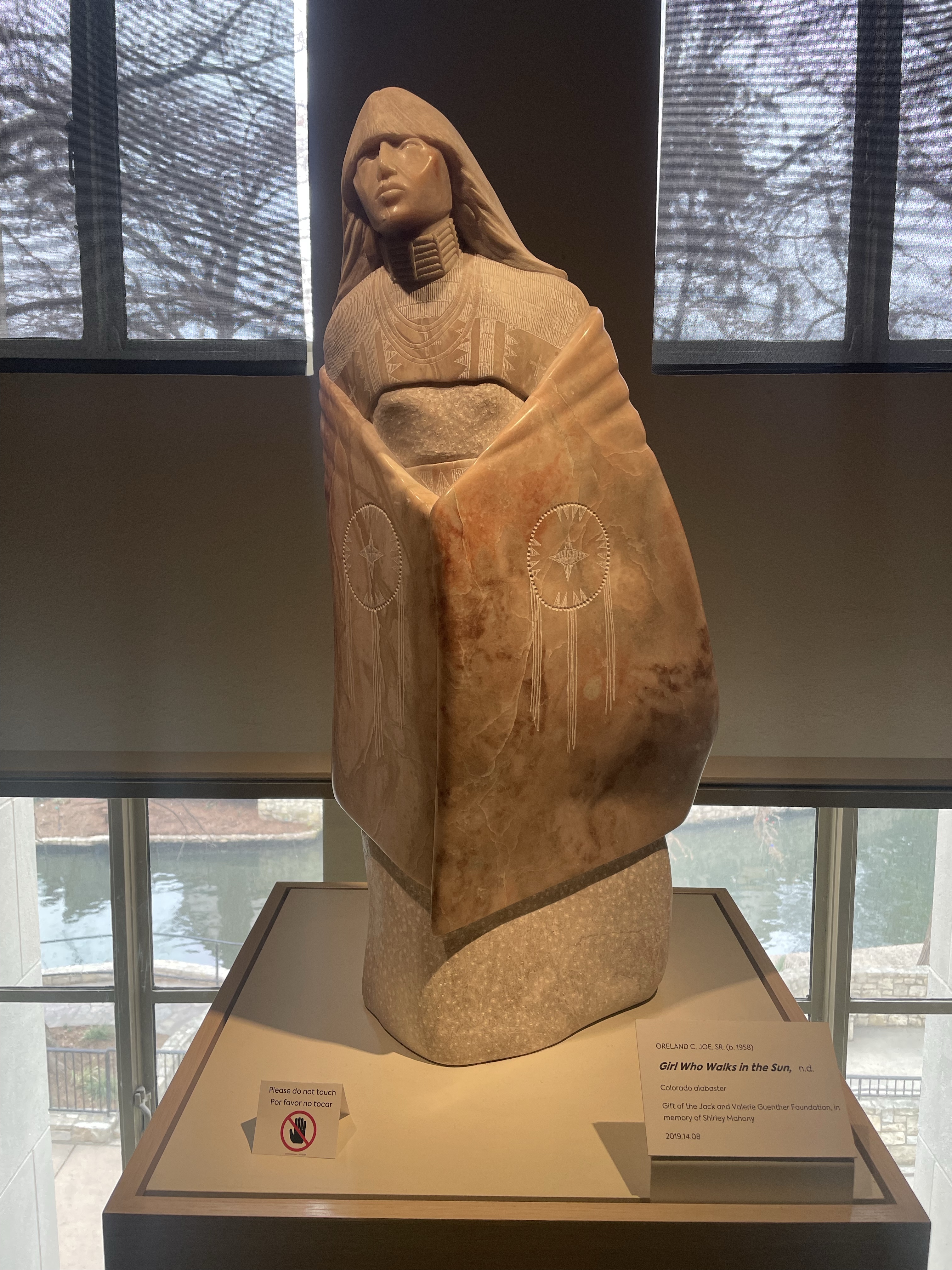
The paintings and sculptures were also interesting.  The western scenes and Native America art is both inside the museum and part of an outdoor sculpture garden that you should not miss. There are also sculptures along the River Walk just outside that entrance to the Musuem. I also enjoyed the gallery that was devoted to the art of women in the Ruth Bowers Women of the West Gallery.

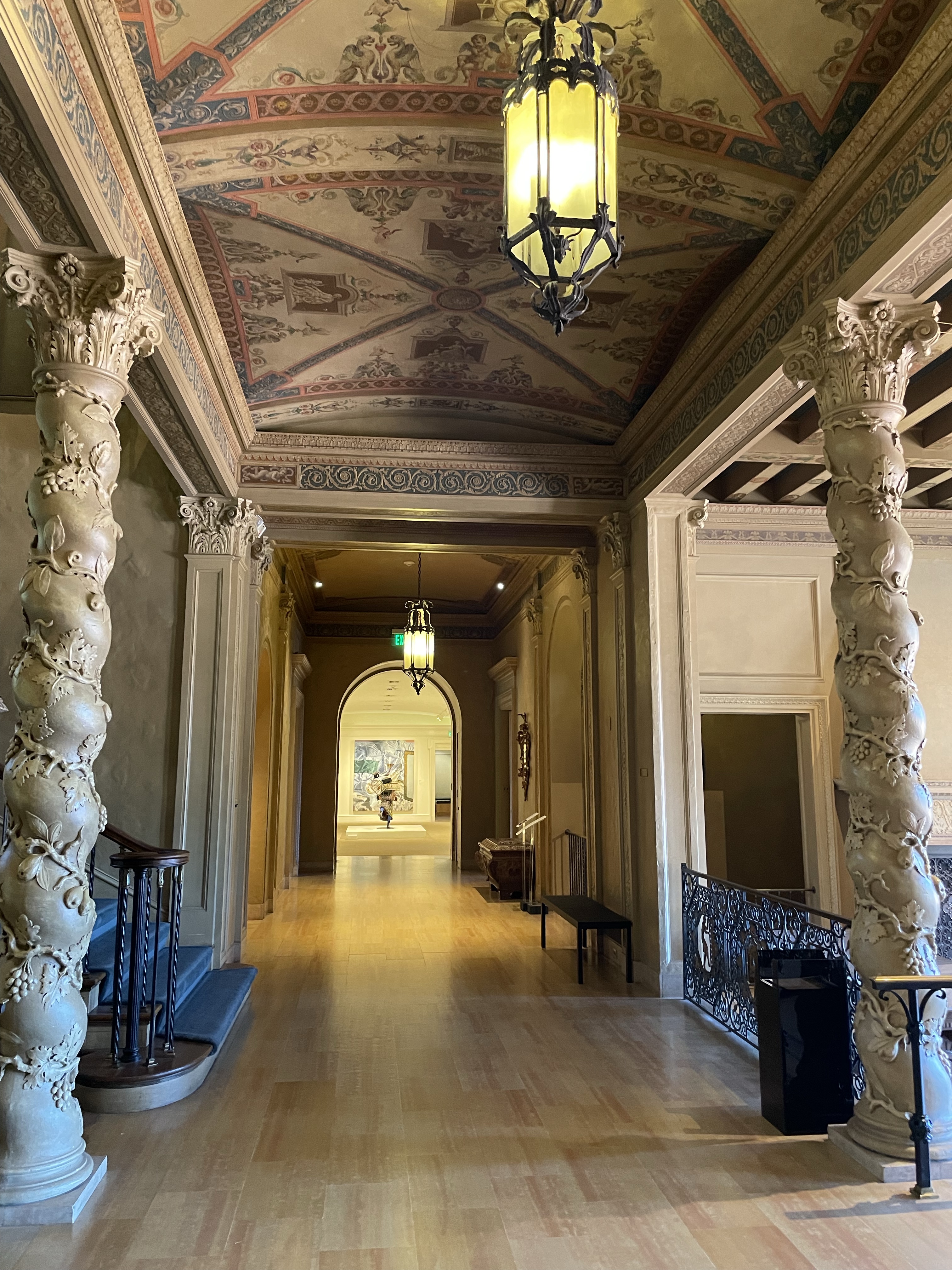
The building itself is wonderful, once the home of San Antonio’s first public library. I loved the ornate ceiling and actually took several photos just of it!

This is also a small museum that you can visit and see all within a few hours.  It is open Thursday through Monday, 10 am – 5 pm. Children under 12 are free.  Adults are #14 and seniors $12.

http://www.hmmsa.org

http://www.briscoemuseum.org

Our Mayan Adventures Continue

14 Feb

After my husband and I visited the Pyramids of the Sun and the Moon about an hour from Mexico City, I became enamored about learning more about Mayan culture and its ruins. (See blog below.)

So in late 2022, when the “MAYA: The Exhibition” came to Union Station in Kansas City, I knew I had to go and learn more!  I was absolutely intrigued by the civilization and even more astounded that many people of Mayan descent still live in Central America and Mexico. The exhibit did a great job of expanding on what I learned in Mexico in the fall of 2021. 

It piqued my interest to learn more. Thus, it was not surprising to my husband that when we went on a cruise that went to Belize and Cozumel that I wanted us to go on excursions which continued the focus on this new found interest.

Our first excursion was to Altun Ha, a Mayan site that was probably established in the year 900 BCE. I found this site interesting for several reasons.  First many of the ruins are still covered by dirt and grass.  It has not been totally excavated.  It made it more obvious as to why people did not realize what these sites were at first.  Altun Ha has a large plaza area surrounded with pyramids and residential areas.  It is much smaller and not as interesting as the pyramid of the Sun and Moon in Mexico, but still worth visiting to see the changes that occurred over the centuries.

Our tour guide spent considerable time explaining why some of it was not excavated.  It seems that they only had a certain about of funds, so they decided not to excavate what would have been the residential area and focus on the temples.  Also interesting about this site is that it has no official name.  Usually the archeologists find some sort of glyph with the name.  Altun Ha does not have one, so it was named for the town that is nearby.  In fact, it was the towns people who discovered the site and reported it.

They found a large number of jade pieces at this site, including one of the largest jade heads ever found.  There is a reproduction of it in the small museum at the site.

The other interesting fact is that they let you walk/climb up on the pyramids here.  My husband and I did climb up one. But did not attempt the other one.  Going up was relatively fine, but going down was truly difficult.  There are no handrails and the steps are rather steep and uneven.  When we were in Mexico there were times that we sat to go down the steep steps between sections.  But this was rougher and more difficult.  It was an experience I am glad we did. But would not do it again.

I enjoyed our time there, even though the heat was almost oppressive.  And this was in mid-January.  Take lots of water and a hat if you go!

The next stop was in Cozumel and the San Gervasio Mayan Ruins.  This was a much more spectacular site than the one in Belize.  The property had been in private ownership for years, and the owners did not let people know about the ruins.  They actually destroyed some of the site’s buildings over the years.  Eventually the Mexican government took over the property.

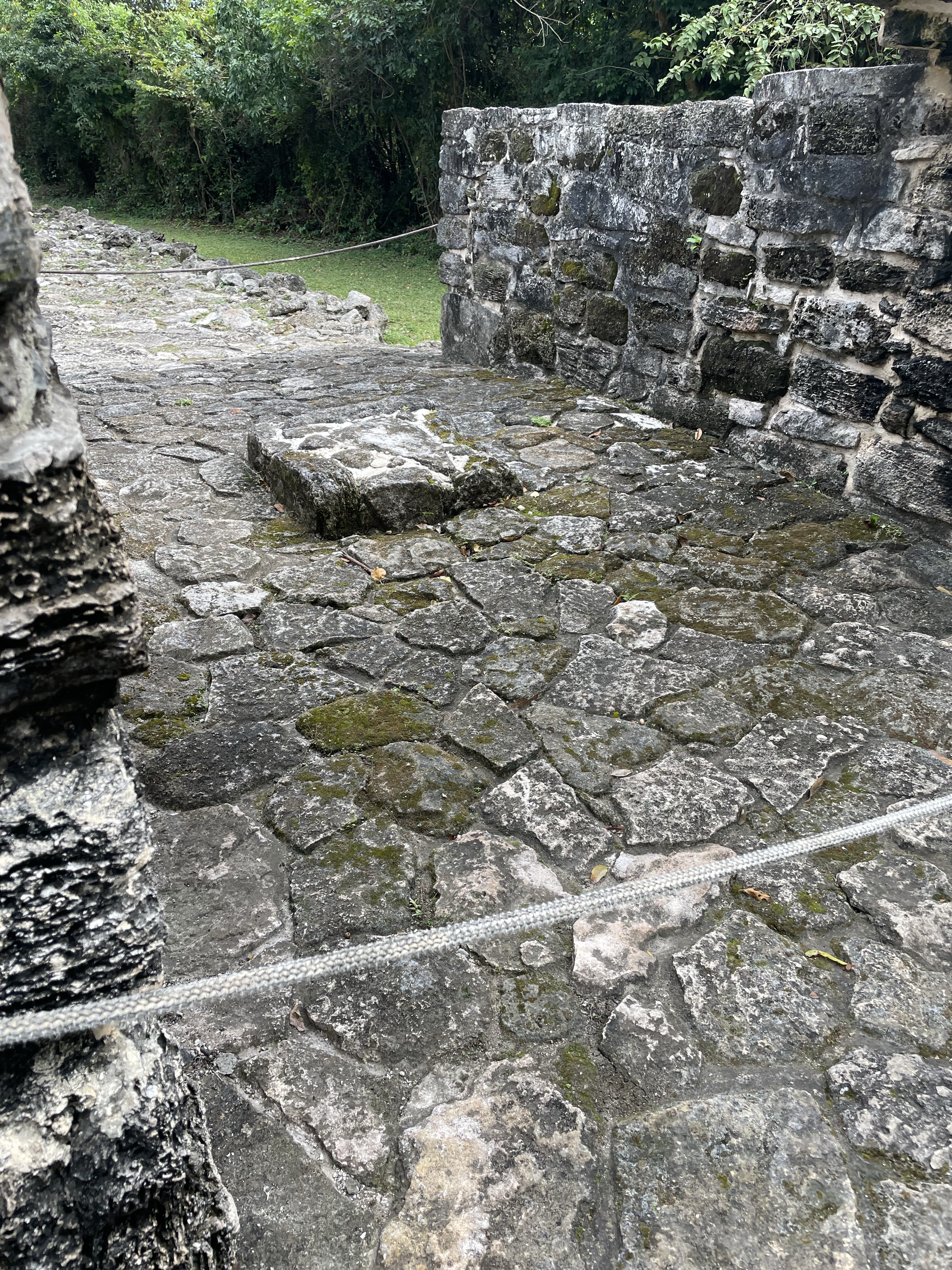
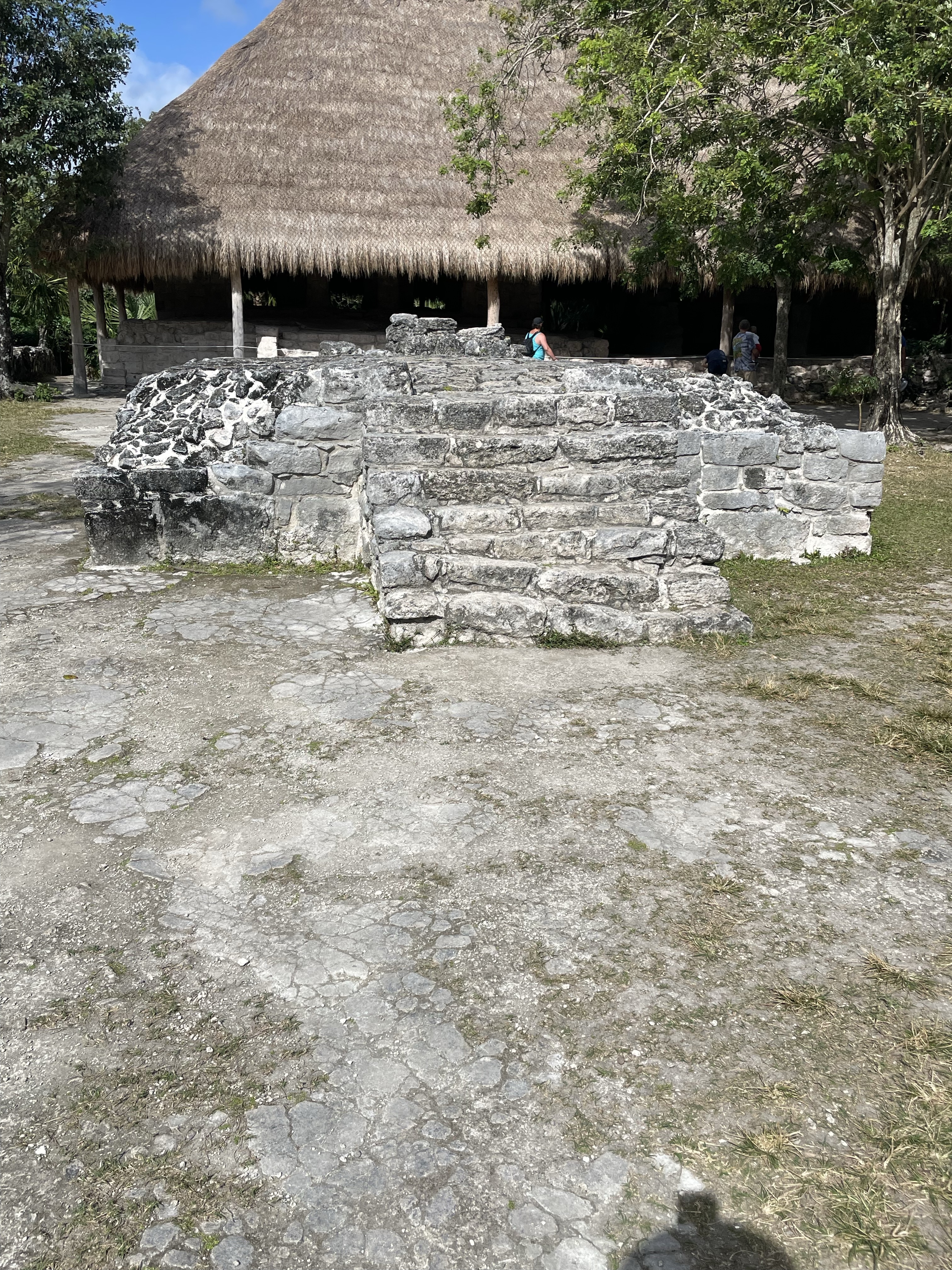
It is one of the most popular and important Mayan ruins because of its relationship to fertility. It is the Sanctuary to the Goddess Ixchel, who was a fertility goddess.  In fact, young couples would come there to be married at the full moon, which was the best time for fertility.   You can walk on an ancient road to the site of the alter to Ixchel and see where the weddings took place.

Our guide told us that at one time there were four statues of pregnant women on the four corners of the alter, that have been stolen. 

There are only two known sites known to honor Ixchel, both are on islands.  Our guide told us that the island represented a womb surrounded by water.  Just as a fetus in the womb is surround by amniotic fluid.  I found that fascinating.

There was also another building that was used for astronomy and following the sun and the moon.  But mainly the moon as this was a site to the Ixchel, and the moon cycles were related to fertility.   This was my favorite site of my trip!

If you go to Cozumel, I would recommend seeing this over going shopping!

Take My Mother To Work Day: CyberWell

29 Nov

A recent trip to Israel gave me an opportunity to visit my daughter’s jobsite.  The last time I visited her on the job, she worked at the Peres Center for Peace and Innovation in Jaffa.  She was using her education and experience to help create peace in the Middle East, definitely a difficult aspiration.  Her new job focus has switched to stopping the rise of antisemitism and Jew-hate speech on social media platforms.  My daughter has always wanted to make the world a better place.

CyberWell is a start-up NGO founded by Tal-Or Cohen, an attorney and American-Israeli who saw that Jew-hatred was growing on social media.  She thought her expertise in law and her experience researching extremist movements In the US on social media would work together as astart to combating this growing problem.   She founded CyberWell as an ethical high tech non-profit with the aim to make social media less hateful.

A colleague of my daughter’s from the Peres Center is a close friend of Tal-Or’s, and recommended that my daughter could help in this quest.

In October of 2021, my daughter joined the team.  In May 2022, the site came online, first as Global ARC, now recently renamed CyberWell. The work of CyberWell is to document social media hate speech directed mainly at Jews and Israel, to report this hate speech to the social media platforms and to get it removed in all instances.  Recently when the artist, Ye, formally Kanye, started posting antisemitic tropes on social media, CyberWell could track the major increase in hate speech.  Their documentation of the data is being used by others working to stop this rise of hatred and have social media adopt the IHRA definition of antisemitism. 

Tal-Or Cohen has been cited in several articles about this effort. In ‘the algemeiner,” she is quoted: “’Data must be the cornerstone of our fight against online antisemitism,’ said Tal-Or Cohen, the CEO of CyberWell, the company that provided the data for the antisemitic tweets recorded in the letter. ‘In the face of skyrocketing digital Jew-hatred, social media platforms should take meaningful actions and integrate the IHRA definition into their community standards.’”

My daughter’s job is behind the scenes. As Program and Ops Manager, she organizesand searches for ways to connect with others who would support the mission of CyberWell and work with the organization on this important endeavor. You can learn more about the team and CyberWell by going to the website: https://cyberwell.org/our-team/

My visit to CyberWell and its offices near the Sarona area of Tel Aviv was enlightening.  The offices are housed in a shared office space, Panthera, that was started by a woman who wanted to give other women entrepreneurs a chance.  The space is perfect.  CyberWell has two small offices side by side for the four people who currently work on site. But there are lots of shared spaces for conferences and meetings.  There is also a wonderful event space that can be rented for events or can be used by people who work there to have meals.  My favorite area was the outdoor patio that can be accessed from the shared space. They have found a wonderful place to work while trying to clean up social media.

Tal-Or, Vered, Lara and I shared a lunch in the Sarona Market, where they told me more about what they were doing, what type of hatred they were seeing on line, and their plans to tackle and try to end antisemitism and other hate speech on social media.

Vered, Tal-Or, Lara. The CyberWell team.

It is a lofty plan, one that I think is well worth the effort.

In my role as one of their greatest fans, I gave them as much positive reinforcement as any mother could and I treated them to lunch.  Honestly it made me kvell to be with these three young women who are trying to do good in the world.  

I have many friends who fear that the hatred against Jews right now is similar to what happened in 1930s in Nazi Germany and Europe. But I see a major difference. Jews are not keeping quiet. We have many who are pushing back. CyberWell is one such company. If you wish to help them in their work, you can join their mission or support them by emailing hello@cyberwell.org or donating through their 501(c)3 fiscal sponsors here.

Island Adventures on Lake Huron

4 Aug

We did it.  We left the confines of our home and took our first cruise in almost three years.  I was a bit hesitant and anxious.  But we chose a cruise that stayed close to home, sailing the Great Lakes between the USA and Canada.  It was a cruise I had been thinking about for years.  This seemed like the perfect time to take it.

Two of my favorite stops on the cruise were islands that are adjacent or within Lake Huron.  Both were the home of the Ojibwe nation, but one is in the United States and one is in Canada.

Mackinac Island

Years ago my husband and I lived in Michigan.  We heard over and over again that we had to go to Mackinac Island.  We never made it there during our two-year time. But it has been on our list of places to see ever since.  We had a most delightful day!!!

I will start by telling you that the original native Ojibwe name was Michilimackinac.  When you say it, you realize that the name Michigan was also a native name. It means Big Turtle, because the island is somewhat shaped like a turtle. The entire island is just about eight miles around.  So it is easy to walk from one place to another.

In July we found out why people love it so much.

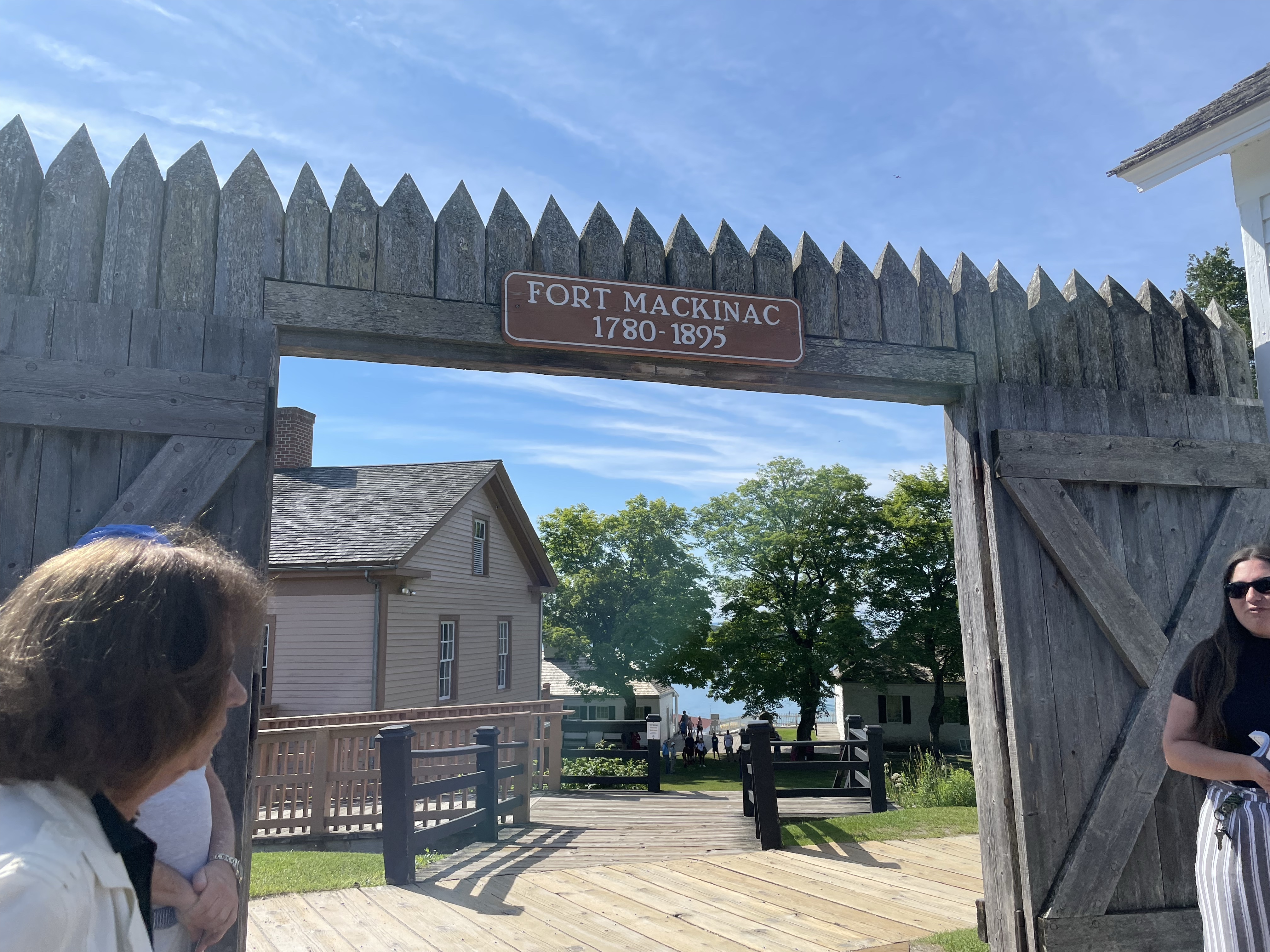
First, there are NO CARS on the island!  The only transportation is foot, bicycle or horse drawn carriage.   WOW.  (Fire engines and ambulances are an exception.) It is interesting to go around an island on an open carriage. When we got off the ship, very close to downtown, we were loaded up into a carriage that had about 20 people.  This took us on the first part of the ride, through the downtown, past the Grand Hotel, and to a place where we were transferred to a larger carriage drawn by three horses for our tour through the park to the historic Fort Mackinac.

Second, there is the GRAND Hotel.   It is pretty darn Grand.  With its stunning Victorian décor; the large veranda with excellent rocking chairs (yes I checked them out); ice cream parlor; excellent views; the Grand Hotel lived up to expectations.  I especially loved the sign that said after 6 pm all men must wear jackets and women must wear dresses.  To be honest, I would never stay there because my husband would not want to dress up each evening.

However, we did go the Gate House Restaurant that is part of the hotel and had a delicious lunch sitting outside and enjoying people watching and horse watching.  There is a little stone church across the street from the restaurant that we also visited.  It is actually called the Little STONE Church.

Third, there is lots of history surrounding the Revolutionary War, the War of 1812, and the lives of the Native Americans and how the changes from French to British to American impacted the First Nations Peoples, especially the Ojibwe nation, which is also based in Canada.  We spent an hour or so walking around the Fort and we even got to see a cannon fire.

After we at lunch at the Grand Hotel, we walked into town to visit some of the sites, including  the Biddle house which is now a small museum about the impact on the Native Americans.

We had an excellent time walking around the downtown, doing a bit of shopping, and finding an ice cream store for my husband.  Mackinac Island is known for its many fudge shops.  And we did enjoy the free samples. But we stayed strong and did not purchase any.  I could only that that with eight days left on the cruise, it would be too tempting.

Manitoulin Island

The other Island we visited was quite different. First, it is in Canada. Manitoulin Island is also known as Ontario’s Island Retreat. Its original Ojibwe name is Manidoowaaling, meaning the Spirit Cave, which we did get to see. It is a big island, over 100 miles long. In fact, it is the largest island in a fresh water lake, Lake Huron. In the island of Manitoulin is the largest lake in the largest island in a fresh water lake. That would be Lake Manitou in Manitoulin Island in Lake Huron. But there is also Treasure Island, which is the largest island in a lake in the largest island in a Great Lake. But it was not in Lake Manitou. I LOVE these descriptions. They should be part of a children’s song!!!

The island was also first inhabited by the Ojibwe people, who still inhabit much of the island.  But it was also the site of the first European settlement in Canada.

We docked in Little Current, which is the largest city on the Island. It has been a resort town for a while and has many bed and breakfast accommodations, much like Mackinac Island.

We visited the Ojibwe Cultural Foundation, which was a great experience.  My husband was concerned that it would be ‘hokey’.  But it definitely was not.  The young man who met us at the Center gave us a great presentation about the First Nations and the Island.  He explained what we were seeing in the museum section, which really was fascinating.  We then went to a work area where people can come to work on their crafts like beading and porcupine quill art.  We also met with a young woman who explained the sacred herbs such as sage and how they are used.

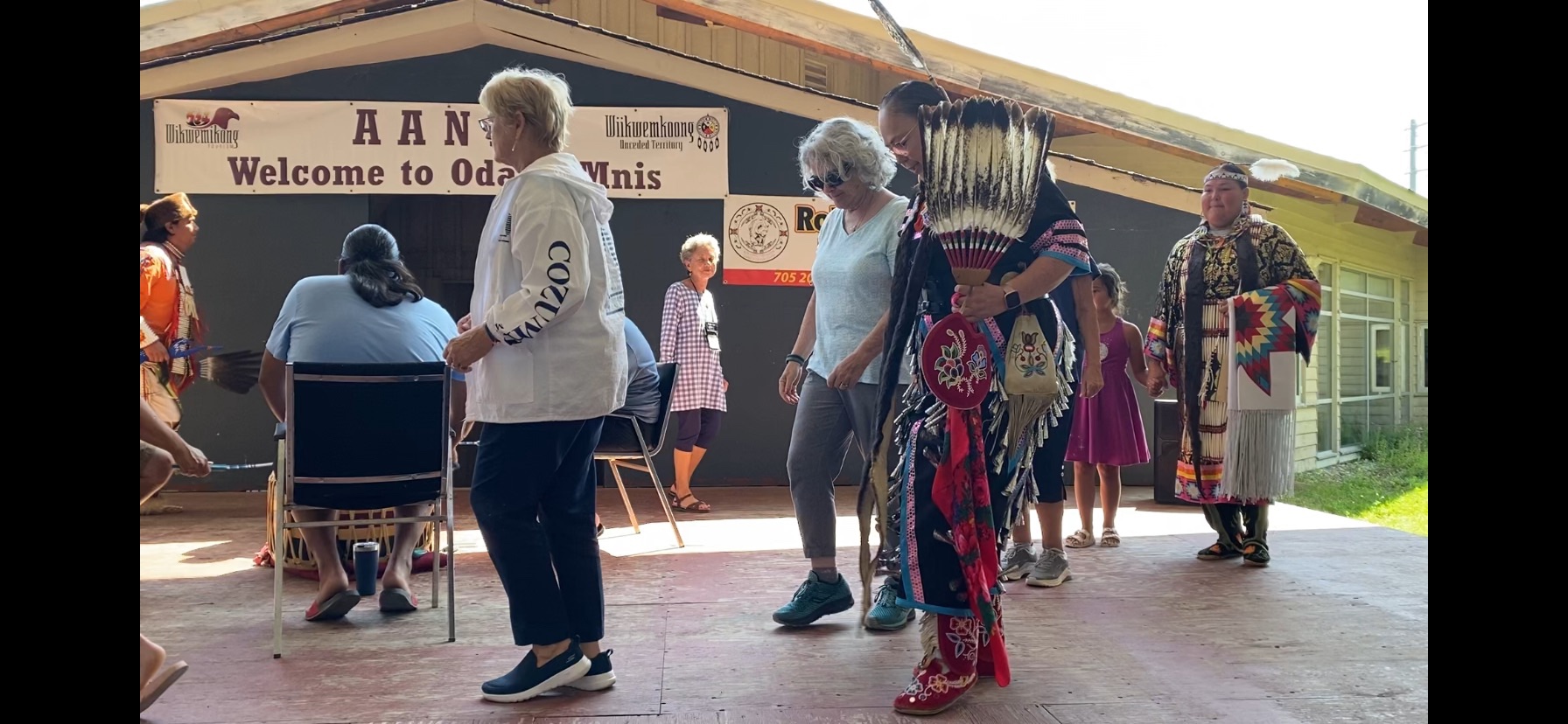
Finally we were welcomed to an outside theater where we got to see authentic First Nation dances and the drummers.  I so enjoyed this experience.  My favorite were the jiggle dress dancers.  Finally we were invited up to dance with them and learn a bit.  I had to get up there.  One of the dancers stepped with me and showed me how to do it correctly! 

We did notice along the way that the cities in the USA were much smaller than the cities in Canada.  But then I had an enlighten moment. For the Canadians, these cities were among their furthest southern border, while for the US these were at the northern border.  Makes a difference when you take in this factor.

We loved our island experiences in Lake Huron. 

Our Anniversary Museum Adventure

5 Apr

I just love museums!   In fact for our wedding anniversary, my husband agreed to a museum crawl. He took the day off from work for this adventure.  I did think of him when I planned our visits.  First, none of these museum took more than 60-90 minutes to visit.  Second, two of the three were a quick drive from our home. Third, they all were either new, newly renovated, and he had not visited. Finally, they had exhibits that I knew would interest, inform and entertain.

First was the new “Medicine’s Hall of Fame and Museum” in Shawnee, Kansas.  This museum was founded by Bruce Hodges, MD, with items he has collected over the years both medical and from his trips to Africa where he provided medical care.

Asthma and allergy remedies.

I knew this building well because for many years it housed the Johnson County Museum. It was exciting to see that it had been repurposed into a new museum.  I was sure my husband would enjoy it, as he is a physician.  And I was right.  My first choice was a pleasant surprise for both of us.  Included in the displays were many old remedies for allergies and asthma.  Perfect for my husband as he is a pediatric allergist, who treats asthma as well.

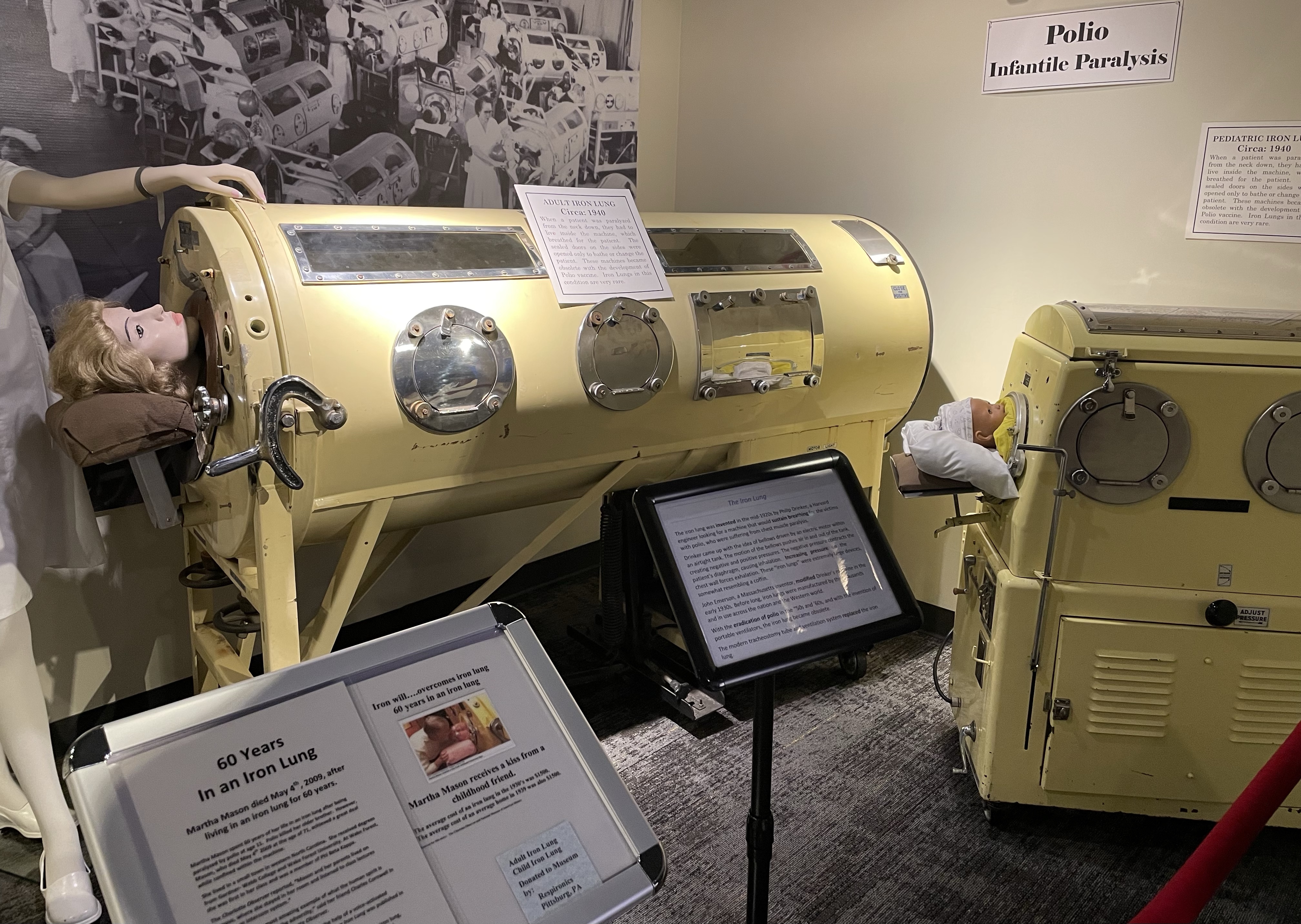
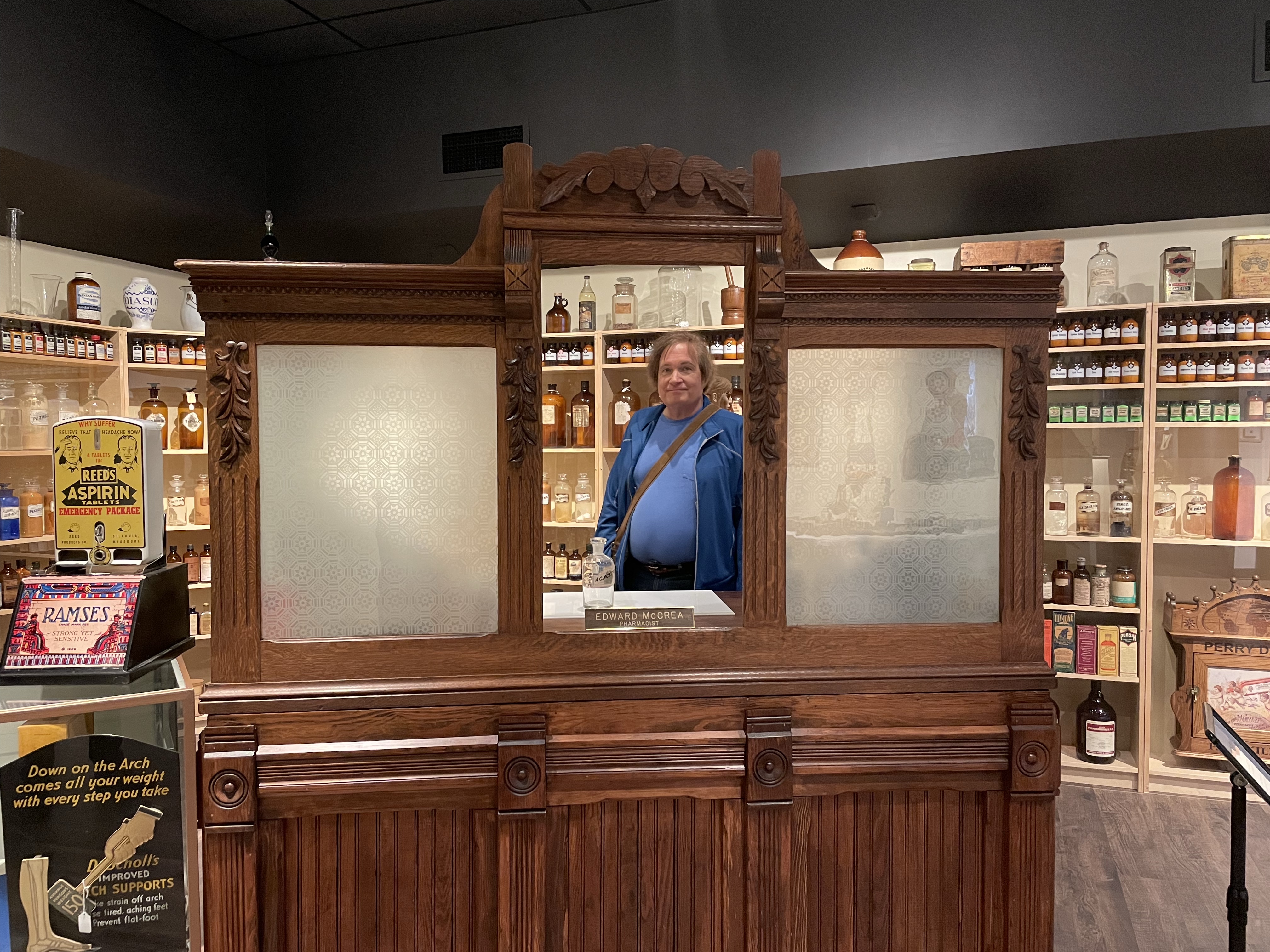
Other items we enjoyed were the two Iron Lung machines that treated patients with polio.  I had seen one for an adult before, but the one for a child surprised me.  But of course, children needed them as well.  We enjoyed the room set up as an early pharmacy with the original desk and many bottles and boxes displaying old medicines.  Military filed kits, Native American medicine bags and lots of items that were used by quack doctors over the years. 

It provided us with a fun hour of information. 

From there we drove to Overland Park, Kansas, where the Johnson County Musuem moved in 2016.  I still remember when they moved the first ‘electric house’ in Kansas to the museum, closing down roads and moving power lines.  The house is actually enclosed in the museum.  Although I had been to this museum many times since its move, my husband has not been to it since the move.  As, I said, I planned this day with him in my mind.

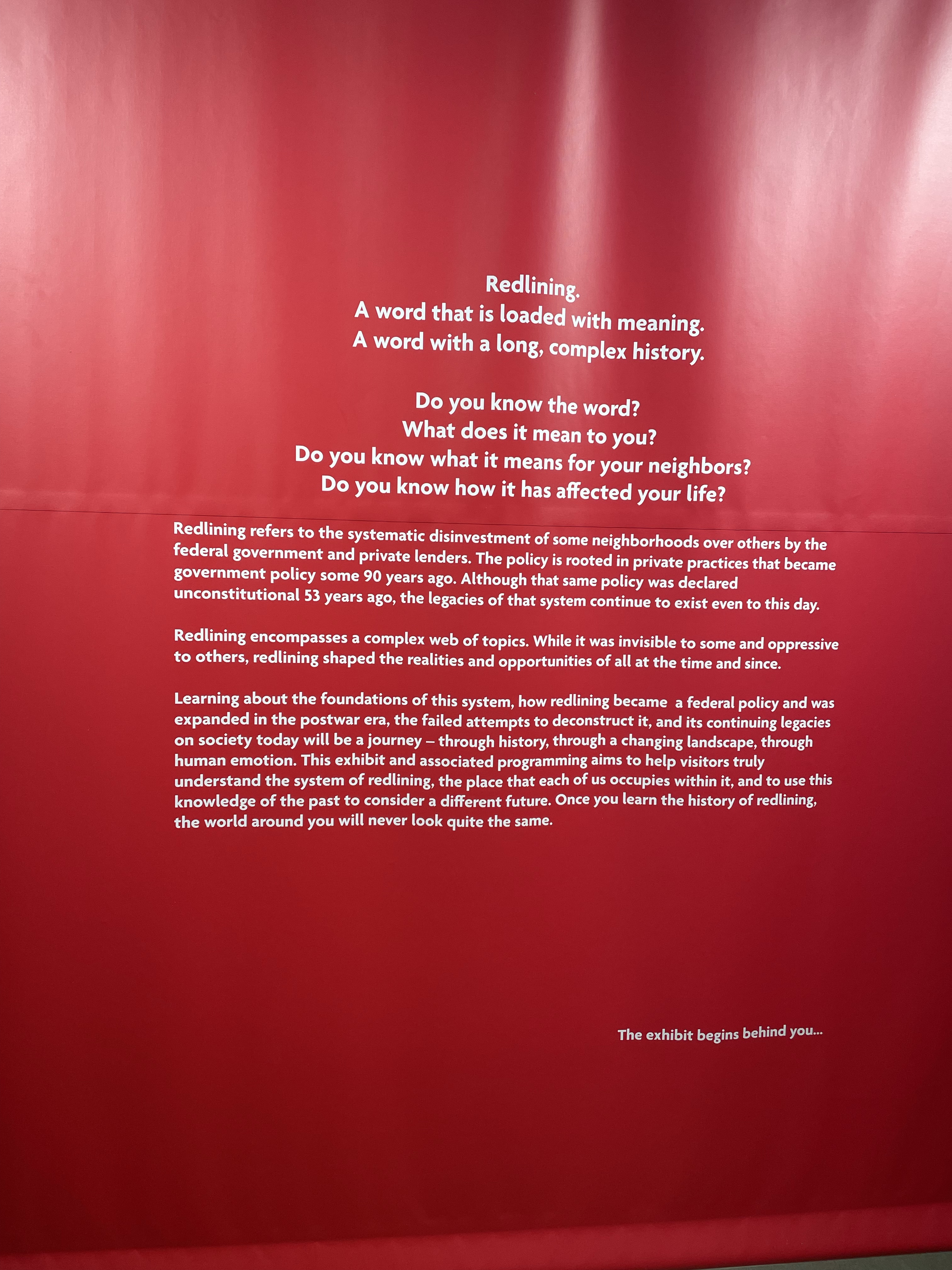
I also wanted to go because there was an exhibit on redlining, which was the way realtors kept people to separate areas enforcing segregation in a way that people did not realize. I was shocked.  The realtors not only redlined, they earmarked some areas blue and green for white Christians.  Yellow areas were for Jews, Italians, people of middle eastern descent and others.  While Redlined areas were for Blacks and Hispanics.  If you went to a realtor, they would only show you a house in an area that you FIT.  Horrible.  And worse is that it basically became federal policy as well during the Great Depression. 

The realtors also would add to fear and distress in a neighborhood if a black couple or someone different moved in, leading to white people fleeing neighborhoods.  My husband experienced this in St. Louis when he was a child.  He grew up in University City area, which was mainly Jewish.  Then as black families moved in, he remembers a realtor telling his parents that they should sell and move out.

“Redlined: Cities, Suburbs, Segregation” will be at the museum until January 2023.

Corinthian Hall!

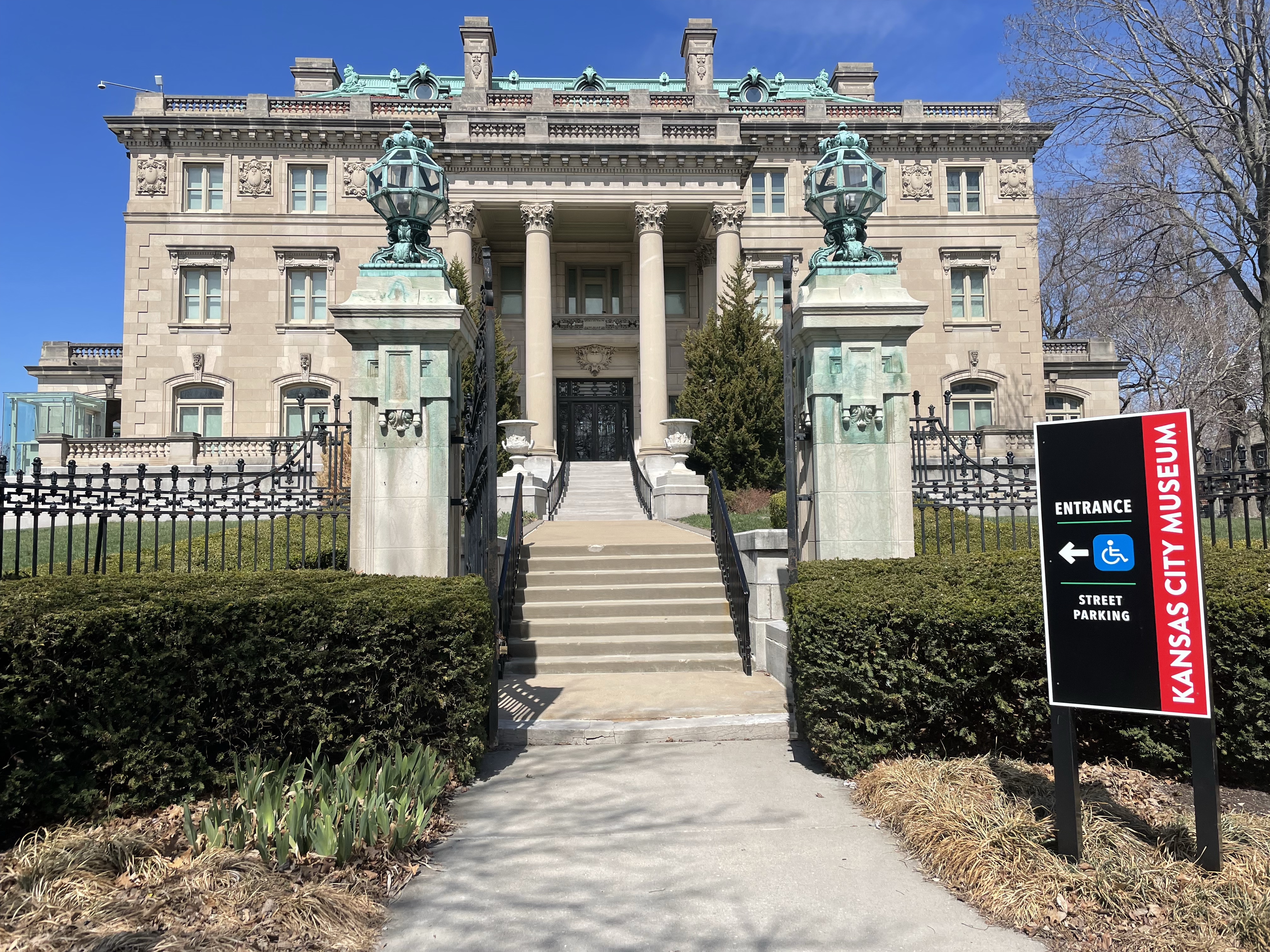
Our final museum visit occurred a few days later.   We traveled to Kansas City, Missouri to visit the newly renovated Kansas City Museum in Corinthian Hall.  When our children were young, it was the Science and Natural History Museum.  I remember the dioramas in the back building as my children loved them. The museum is totally different now, although the lovely stained glass windows are still visible.

The ice cream parlor!

The museum now displays exhibits about the history of Kansas City on the top floor, also talking about Redlining!  While on the main floor several rooms of this 112-year-old mansion have been renovated to look back into the past when it was a home. I am glad that when they did the renovations, one important room remained, my children’s favorite from years ago, the ice cream parlor, which will be open this summer.  YUM!

It was great to see this building coming back to life.   I also understand that they plan to renovate the other buildings on the property as well.  It has a magnificent view of the city. 

While there we saw our first of the 100 hearts that were designed by artists and placed throughout the metro.  I have now seen two of the hearts, and I hope to see many more!

https://www.medicineshalloffame.com/

https://jcprd.com/330/Museum

https://theparadeofhearts.com/hearts/

A Pleasant Evening At Phoenix’s First Synagogue

25 Mar

I try to find something related to my love of Judaism wherever I travel.  This time, I did not have to look, as a group we meet with held its annual dinner at the Cutler Plotkin Jewish Heritage Center in Phoenix.   The Center is housed in what was the first synagogue in Phoenix, which gave me joy.  It mixed my love of history with my search for Jewish sites.

The two buildings have Spanish vibe.  They made me think of the Alamo!  In fact, the buildings were designed in a Spanish mission style when they were built in 1922 for the new Congregation Beth Israel, the first synagogue in Phoenix.  At its start it catered to all Jewish families in the area and did not have a permanent rabbi until the 1930s.

The original synagogue buildings.

The buildings hosted several congregations over the years.  By 1949, the Jewish community had moved out of the Phoenix downtown, and the synagogue was eventually sold to the First Chinese Baptist Church.  They held services there from 1951 until 1981. From 1981to 2002 it was the home of the Iglesia Bautista Central Baptist Church.

But in 2002, the Jewish community purchased the buildings to become the Arizona Jewish Historical Society’s headquarters.  Restoration of the buildings started in 2008.In the smaller building is a museum dedicated to the history of the Jewish community and the building.   Among the interesting artifacts in the museum is a violin that survived the Shoah. It was buried during the war, and recovered afterwards.  It is on loan thanks to the daughter of the survivor.

The larger building, which once was where services were held, now is a social hall with a stage. When they renovated the building, they found the area on the back wall of the stage where the Torahs were kept in the Aron Kodesh.   The area was covered again, and now the stage is set for community events.  I found it fascinating to find out that when the synagogue was built there were only 120 Jewish people in Phoenix.  There are now over 80,000 and 30 Jewish congregations in the great Phoenix area!

The event venue is open to the community.  Besides the indoor space, there is a lovely garden area where we had our dinner and music.  I had a great time both exploring the history of Phoenix’s Jewish community and enjoying the lovely outdoor space.

This is a quick museum visit, but the Historical Society does have an archive of materials about the Jewish community and holds programs at the site.  They are planning to build a Center for Hope, Humanity and Holocaust Education building on the grounds. If you live in Phoenix, I would advise you to join to get information on upcoming programs! Also the exhibits change and there are online exhibits!

https://www.azjhs.org/