Archive | Catskills Blog RSS feed for this section

Misty Lakes and Cold Mornings Were Wonderful In The Summertime

1 Oct

Those who think climate change is not a reality did not spend their summers in the Catskills during the late 1950s and 1960s! Those brisk summer mornings made waking up and getting out of bed a little difficult at times. The summer mornings do not seem as cold now!

We slept under feather beds and quilts, and always put our clothing under our pillows to warm them up during the night. Sometimes your nose would be so cold that you would put the covers over your head as well. And everyone wore ‘footsie’ pajamas!

In the mornings we would all get dressed while still lying under our blankets. First came layer one, underwear; then layer two, shorts and t-shirt; then layer three, jeans and a long sleeve shirt. Socks went on as well. And with no heat, those bungalows were cold! . You could sometimes see your breath in the mornings, so dressing while still in bed made sense!

My sister and I would wait to see who could hold their bladder the longest. No one wanted to be the first to sit on the cold toilet seat. My brother was lucky; he could stand up!!! But finally one would have to jump out of bed and start the day.

Mom would be making breakfast for us. And soon she would shoo us out of the bungalow. But first we had to put on sweaters or lightweight jackets.

When we looked across the street form our bungalow, we could see Kauneonga Lake. In the early morning the mist would rise from the warm water into the cool air of the July or August day. It was the most beautiful view.

The lake water was much warmer than the outside air. Some early mornings, my grandmother would take me to the lake. I would have my bathing suit on and a large towel wrapped around me. We would slip into the lake from our dock and settle into the warm water. She would wash my hair and her hair with ivory soap. She had very long hair that she usually kept braided on the top of her head. But these mornings, she would have it hanging down.

Grandma grew up in Poland. She told that lake water was the best to wash your hair. She would tell me stories about washing her hair in the water near her house when she was a little girl.

Sometimes through the mist we could see rowboats and fishermen. That was before everyone had motorboats and the lake water had gasoline and oil in it.

The water felt so warm and wonderful, until it was time to get out. Grandma would make me sit on the steps while she got out and dried off. Then, as I – shivering – exited the water, she would wrap me in the towels. We would return to the bungalows as quickly as possible to get into warm, dry clothes. This was a special treat.

Usually, after breakfast my sibling and I would go outside to play with all the other children.   There was a fence around the colony that was to keep us inside. We knew better than to go beyond the perimeter without a mother’s permission.

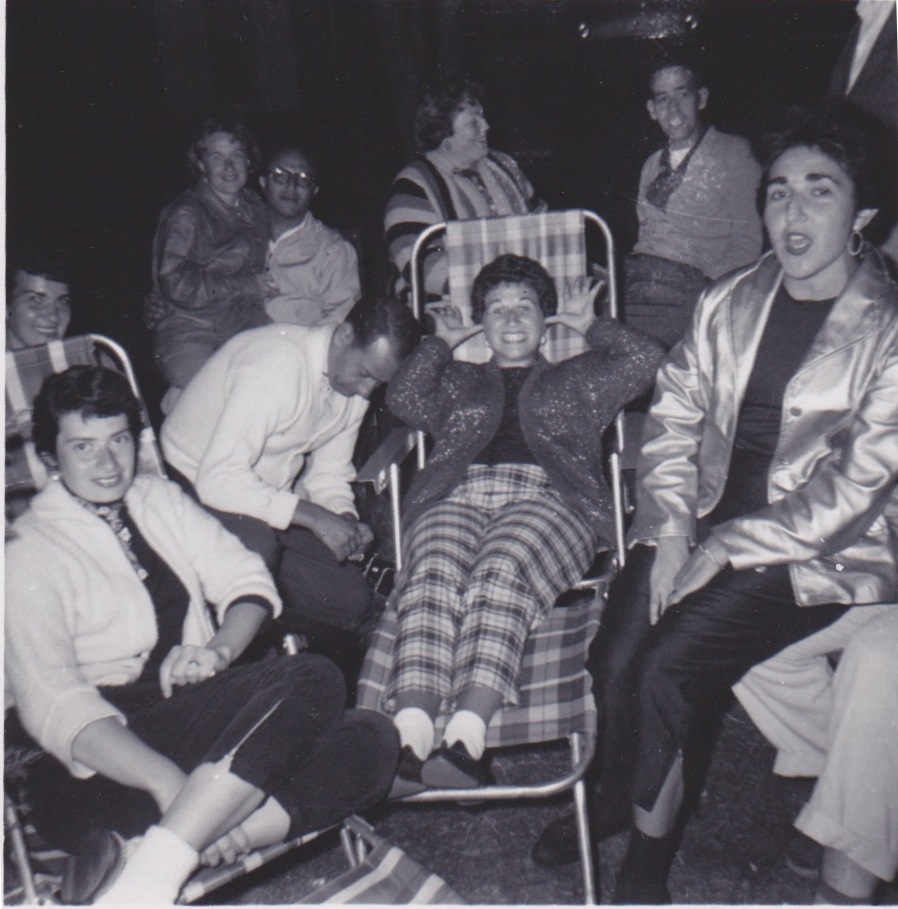
My family and friends in Kauneonga Lake.

My family and friends in Kauneonga Lake.

As the day went on and it warmed up, we would slowly shed clothes. First off the sweater, then the long –sleeved shirt, and finally the jeans.   At lunch time we would start begging, “Can we swim today? Can we? Is this a good day?” I think the Moms decided as a group. We had to wait at least an hour till the food digested. (What I now know was a bubbameister, we really did not need to wait.) Then around 3 or 4 in the afternoon, if the weather was nice, we changed into our bathing suits and went swimming in the lake: all the moms, grandmas and children. On the weekends the dads were there as well!

We would all go to the dock with our towels, carefully crossing the street under our Moms’ observant eyes. The older children holding the hands of the younger, we would run to the dock.

The lake water was wonderful in the afternoon. I liked to stay where the bottom was sandy, where most people usually went. To either side was mush, or as we called it the gush, …seaweeds. And hidden in the mush were fish that nibbled your feet and snapping turtles. Sometimes, like always, the older boys tried to push the younger children into the mush. The screaming would begin. But nothing really bad ever happened because all the Moms and Grandmas were watching. We would spend a wonderful hour or two swimming and playing, until the Moms said, “Done. Get out of the water, Now.”   We hated that. But eventually we would all return to the dock and dry off.

We would clean up after swimming and before dinner. It was too cold after dinner to shower and clean up. And to be honest, if we went swimming we were considered clean enough. There was no need to take a bath!!!

As the day ended, the reverse would occur. Soon the jeans went back on, then the long-sleeved shirt and finally a sweater. Sometimes after dinner we would just put our pajamas on and stay in the bungalow. Other times we would all sit outside and just visit. It was quiet time, and it was the Moms time. Several nights each week, a different mom would host the gin rummy or mah jong game in her bungalow.

There were three ‘grandpas’ at the colony (two were mine), as well as at least one dad. Each week a different dad would take his vacation and spend time with all the families. And while the Moms played their games at night, the grandpas were always on bungalow control. They would walk from bungalow to bungalow to make sure all the children were asleep and everyone was safe.

One year one my sister started sleepwalking. The first time it happened my grandpa was so upset when he saw her running around the front lawn. After that they put a clothespin in the door to make it more difficult to get out. But we still could get out in an emergency.

Those cool summer nights and morning were so delightful. It was a time before air conditioning, and the City was hot and dirty. Misty lakes and cold mornings were wonderful summertime gifts from our parents.

“We Have a Bingo!” The Happiest Words at Bingo Night!

26 Sep

Although my grandparent’s bungalow colony was quite small, we were able to take advantage of many of the amenities provided by other Kauneonga Lake institutions.   One of my favorites was Bingo Night at the White Lake Estate homes.

Deep in the middle of the homes, between Hilltop Road and West Shore Drive, was the large round clubhouse, sitting next to a pool. The only time I usually walked by it was when we had to walk past it to get to Amber Lake.   We loved walking around Amber Lake. Before Donnefeld Drive was built up, it was a great place to find salamanders. But after houses were built there, Amber Lake was the place to go to discover all sorts of amphibians.

However, once a week was Bingo Night!!!   Anyone could go to the clubhouse to play. Or I assume so. But it might also have been the fact that my grandparents had many friends who lived in White Lake Estates homes. And now that I think of it, we usually sat near them when we went to play.

We walked along West Shore Road to Donnefeld Drive to West Shore Drive on our way to pay bingo. It was daylight when we walked there, but on the way home it was a very dark journey. At the time there were barely any homes on Donnefeld Drive, so we walked carrying flashlights to help on the way home. That was part of the adventure!

My brother often told us scary stories, as we walked, ones he had heard at Boy Scout camp. The scariest was about Cropsey. Oh my! He set my sister and I up for fear. He told us one day that Cropsey always came to get you after you saw a can swinging in a tree branch. Then, one day before we left for the bingo game, he hung a can on a tree on our path to bingo! As we passed the swinging can on our way, he pointed it out to us, to tell us it was a sign that Cropsey would come! That night when we got home and went to bed, he jumped up at our window with a mask and ax, screaming. I still cannot look outside into a dark night. I do not think I slept for a week!

But that was just an added and usual Catskills sibling event. The main attraction was Bingo Night.   My Grandma and Mom usually went with us for Bingo Night. Sometimes, just my Grandma. I think it was a time for my Mom to have a bit of peace and quiet. We were three very active children. And Grandma liked to go because she sat with her friend Nan. Sometimes one or more of our friends went with us as well. The more the merrier for bingo!

We carried our money carefully in our pockets. It was so exciting to enter the filled hall and stand on line to buy our cards. I cannot remember the price. But it was not expensive. We would buy a drink and a snack before we found seats. Now came the best part: the bingo games.

I remember the angst and excitement when we would be one away from bingo. Would we win? Or would someone else get the last number first? And what if two people won? We all knew not to move the see-through red buttons off our card until the caller yelled, “We have a Bingo!” That was the best call, especially if one of us was the winner. I will be honest that did not happen very often. But when it did! Wow!

The worst thing to happen was to accidentally move your card and have the red markers move. That was a disaster because it was really hard to recreate exactly what numbers had been called. Everyone would help, but it made for a sad game.

I always loved the last game of the evening, the all over board. You had to fill every single number on your card to win this one. And it usually had a bigger prize, perhaps $5.00 instead of the usual $1.00 or $2.00 prize. As I would get closer and closer to filling my card, my heart would begin to pound. I so wanted to win that prize! When a friend or a sibling won, I would be happy. But not the same type of happy I would feel if I actually won.

The joy of bingo stayed with me even as an adult. My mother-in-law, Lee, loved bingo. I remember going to St. Louis and going to her bingo game with her. It was always held in the same church, and was a fundraiser. Lee had a special bingo bag with colored markers and other paraphernalia.   By this time you would buy throw-away, thin paper cards that you marked with a colored marker. You no longer had to worry about the little round buttons moving. When Lee died, way too early at 59, I remember finding that bag and wondering what we should do with it. She loved bingo so much. I kept that bag for a while. But eventually the markers dried out, and I threw it all away.

In Kansas I never found a bingo game. But I have found that on cruises, there are often big bingo events. I actually won bingo on a cruise ship. The pay off is much bigger. I received $150 for winning! That was exciting!!

My daughter and I with our Minnesota bingo winnings.  My friend and her son also won that night!

My daughter and I with our Minnesota bingo winnings. My friend and her son also won that night!

But it was not as exciting as taking my children to play bingo at a resort in Minnesota. We spent a week at the resort with friends and their children. There was a Bingo Night. It brought back so many happy memories. Between the two families we won four hands of bingo. I could not believe it. We even took a photo of the event holding up our winning bingo cards. This was the closest I have come as an adult to the excitement and joy of the Bingo Nights in the Catskills.

We always had something to do in the Catskills. It did not matter that there was not television and no transportation most of the week. Walking to Bingo Night, being with friends and family was enough to bring enjoyment in the Catskills.


http://cropseylegend.com/urban-legends

Sweet Remembrances of Rosh HaShanah in Kauneonga Lake

20 Sep

From the time I was seven or eight we spent every Rosh HaShanah in Kauneonga Lake, Sullivan County, NY. Unlike most people who left their summer bungalows to return to the ‘City’ on Labor Day weekend and did not return until the next summer, we always came back to celebrate the holiday.

My grandparents owned a small bungalow colony in Kauneonga Lake. This meant that after the season ended, the bungalows had to be closed for the winter. Water drained; windows covered; everything locked up. My Mom and Dad would help my grandparents perform many of these chores. And when we got older, my siblings and I would also help out.

Since my grandparents owned a ‘real’ house in Kauneonga Lake, we always had a place to stay. The house was sub-divided into four apartments by the woman who owned it before my grandparents. After they purchased it in 1962, my grandparents returned it into one home, with four bedrooms, and lots of spaces to sleep. There was also an attached apartment that they remodeled.

Over the years the house has seen many additions and upgrades. But the most important part was that it had heat and was livable all year. So for Rosh HaShanah, the five of us always went to stay with my grandparents to celebrate the holiday and the start of a sweet and wonderful year.

Our home was located about a mile and a half from the synagogue, Congregation Temple Beth El. This meant no heels for my Mom or Grandma. It was a long walk in a dress and nice shoes. We had to make our new finery stay in good shape as we walked. Along the way we often met up with others who were going to shul.

When the holidays were close to Labor Day, there were many more who stayed to celebrate. Some even kept their boats on the Lake for the extra weekend. It could be very warm when it was early in September, but sometimes, later in the month, it could be extremely cold on Rosh HaShanah.

Going to shul was a treat and fun. Everyone knew my grandparents and, of course, us. The shul was full. Men sat downstairs; women sat upstairs in the balcony, except for the few elderly women who sat in the two rows of seats behind the mehitzah on the first floor.  (See blog below for more about Beth El.)

I liked it when I was very young and could sit with my grandfather in the main floor, and he would cover me with his tallit. But eventually, that ended. My Mom, sister and I would climb the narrow staircase, and sit with the other women.

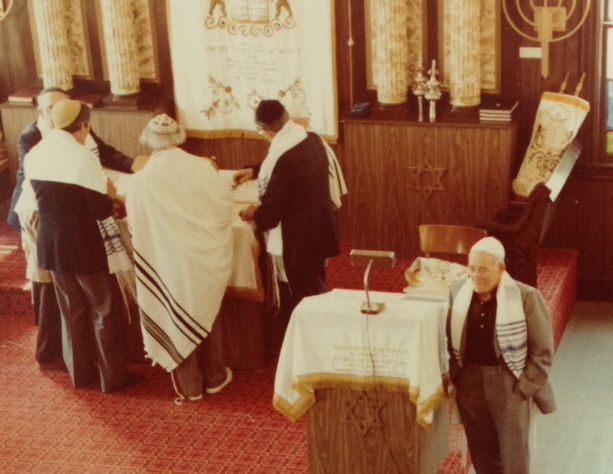
My Cousin took this photo from the women's balcony, at least 26 years ago. My Grandfather is standing on the right, walking away from the bima. My Cousin took this photo from the women’s balcony, at least 26 years ago. My Grandfather is standing on the right, walking away from the bima.

It was different in the balcony. We could see everything that was going on down below. We watched the men with the torah and listened to the chanting. I loved to watch when the Cohanim went forward to do the dukhanen, my grandfather among them. While upstairs, we did pray, but we could also chat and visit. As I got older, I began to resent being upstairs. But it was I tradition I was so used to that I never argued.

We went both days of the holiday and stayed till about 1 pm. Then would come the long walk back to the house after the Kiddish. I could not wait to get home. There was always fresh raisin challah baked by my grandfather. I loved eating the raisin challah for breakfast schmeared with cream cheese. YUM!

For lunch there always was warm soup made by my grandmother. Grandma was not a great cook, but her soup was wonderful: chicken soup, with delicious chicken feet filled with fat immersed in the brew. And if it was mushroom barley soup there were always knee bones to thicken the broth.

Grandma and I were the ones who loved to nibble around these items!

My Grandma made the best homemade egg noodles as well. She would put towels on all the chairs and hang the cooked noodles on them to dry. These were usually for Pesach, but I begged her to make them for Rosh Hashanah as well. I loved making them with her.

When I became a teen, and my friends were up for the holidays, the routine changed.   We often walked to shul together. One stayed at the Indian Lake House for Rosh HaShanah. Her family rented a bungalow from my grandparents, but by the holiday the bungalows were all closed for the season. So her family rented rooms at this bed and breakfast on West Shore Road. The other’s grandmother lived on West Shore Road, and his parents had a home in the White Lake Estates. We would visit on the terrace of the synagogue before services.

After services and after lunch with our families, we would meet. If it was early in September, the one friend always had his family’s boat for us to go out on. We would bring our homework, and take a boat ride to Camp Hi Li’s raft. We would sit on the platform raft doing our homework on the lake. What a great place to study!

As my grandparents aged, they could no longer walk all the way to the synagogue, so my Grandpa would drive most of the way. He would park his car across from Sylvia’s S & G, ‘shlock’ store. I remember saying, “Grandpa, why don’t you just park at the shul? It is just over the hill!”

He looked at my like I was crazy. “You walk to shul on the holidays!” He said. He was from Europe. And traditions were very important. Grandpa was a Cohan. He had rules that he had to follow and obligations that he had to keep.

When I was very young, there was a deli, Elfenbaum’s, almost directly across from the synagogue. We would stock up on special treats there. It closed when I was about 10. I still miss that deli. I remember going there on Sunday mornings with my Dad during the summer and then right before Rosh HaShanah to have delicacies for the holiday.

We usually spent Yom Kippur at our synagogue in New Jersey, unless the holiday was very early in September and on a weekend.   Then we would go back to the Catskills. But Yom Kippur was much more strict. Although, we, the children, were allowed to eat, I always felt the sadness of this holiday more when I was with my grandparents. Of course, when we were older and fasting, that walk back home seem to take forever!

But still I loved going to the shul on the hill. We loved sitting outside on the terrace before services began, or coming outside to take a break when it got too hot upstairs.

I see myself standing in the balcony. And as I am leaving the synagogue, as it empties, I call down to a friend. It is only the two us left. Every one else is out.   Rosh HaShanah is over.   “See you next summer. Next year in Kauneonga Lake.”

Our Shul in the Catskills


My Family’s Holocaust History Impacts My Observance of Rosh Hashannah

13 Sep

As Rosh Hashannah approaches, I have a new view of my family’s heritage, a new reality that will impact my observance and prayers this year and in all future years.

It started with a Facebook Group called, “Tracing the Tribe.” I actually was able to find a family member due to a blog I posted about my grandfather’s family history and his town in Austia/Galecia called Mielec. I met Susan when I was in New Jersey this summer. It is actually her husband who was related to me.

We spoke about the family and how we might be related. I actually found the connection. My great grandfather and her husband’s great grandmother are probably brother and sister.

She emailed me a testimonial written by her husband’s first cousin, “E”, about her Holocaust experience. “E” survived the Holocaust and settled in the USA. In this memoir, “E” recounts a story about the Jews of Mielec and how they died. She wrote that 600 were rounded up and burned alive in their synagogue. She received this information from relatives in Mielec.

What! I was somewhat stunned. No one had ever mentioned this to me before. Whenever there was discussion about our family who died, we were told that they were burned alive in the fires of the Holocaust; or that some had died in Auschwitz; or that my great grandmother had been hidden and then murdered by the people who had stolen the family farm. But this story was never mentioned. Never.

But I remember thinking, when my Mom would tell me that our family was burned alive, that in the crematorium, the people were dead before they were burned. Weren’t they? So why would I be told that they were burned alive? Could this be what happened?

My Grandfather never talked about his family. He lost almost everyone who still lived in Europe: his parents, siblings, nieces and nephews, aunts and uncles, cousins. Everyone! Only a few cousins survived. When I finally got him to talk to me and tell me about his family, he was vague when talking about the Holocaust. He would tell me a little about life when he was a boy. But he did not like to mention the names of the dead.

When I found out that Germany was giving money to those who could prove they had owned property, I suggested that he apply to get money for the family’s farm.

He was furious. “Will this money bring back my mother and my father?” He yelled at me. “Will this money bring back my brothers and my sisters and their families? NO! NO! I don’t want their blood money! Let them keep their blood money!”

I can still hear him yelling at me. So I stopped. I never asked again.

My mother told me that a relative, Zissle Feuer, came from Europe and told my grandfather what had happened. And then my Grandfather contacted the Red Cross. Everyone was confirmed dead. My mother was about 16 when they found out that everyone died. She said that every morning when my Grandpa came upstairs from the bakery she would hear him cry while sitting at the kitchen table; sobbing over the loss of his family.

Now I read this testimonial. What is the truth? How did they die? “E” was not there. She only heard about it. So I looked through all the papers I had gathered through the years. And I found one document that I guess I never read entirely. I just read the part about the city of Mielec before the war. I never read the section that was call Holocaust Years. Because there it states, halfway down the page, that on September 13, 1939, on the eve of Rosh Hashannah, 20 Jewish were pushed into a burning synagogue. If they tried to escape they were shot. Then the German soldiers put Jews into a slaughterhouse and set it on fire. Then they went to the Mikveh and killed Jews there. On the second day of Rosh Hashannah a second synagogue was set on fire.

So many burned alive on Rosh Hashannah. I do not know if it was 600, but even one is too many. What a horrible death!

How can I ever see Rosh Hashannah in the same way again? How can I understand that on this holiday my family might have been murdered, burned alive. Up until September of 1939 there were 4,000 Jews living in Mielec. When they were deported in March 1942 only 2,000 were still alive.

Did 600 get burned alive in the four buildings set ablaze during Rosh Hashannah of 1939? Did my great aunts, great uncles and cousins suffer in those flames? Did my great grandfather die there? Is this why my Grandfather could never talk about it? Did he know that is how most of his family perished? When my mother said they were burned alive, did she know as well?

Was it just too horrible to tell us?

Mielec, the home of my family, was one of the first to be totally depleted of its Jews. This report said only 200 Jewish people survived the war: 200 out of 4000. I know that four of them were cousins of my grandfather. I met them all: one settled in Montana; one in England; two in Israel. They have all since passed away.

On Rosh Hashannah we chant the Unetanah Tokef.   It is a prayer that has always made an impact on me. But this time when I read “who by water and who by fire,” I will be wondering: “Who died this way? Who?”

And I will chant Kaddish.

Remember The Corner Candy Store; It Was Not Just for Candy

30 Aug

Children of today are missing out on so much fun due to parental fears and lack of neighborhood stores. But one of the most important things they are missing is the corner candy store!

From the time I was 3 until fourth grade, I lived in a three-family home on Third Avenue in North Bergen. It was great living there, but most important the owners of the house also owned the candy store on 85th Street that I passed every day one the way to and from school.

I lived on the second floor.  The owners also owned the corner candy store on 85th Street.

I lived on the second floor. The owners also owned the corner candy store on 85th Street.

Every afternoon I stopped into the store with my treat money. You could get many different penny candies: candy buttons on a paper strip, licorice, sugar water in waxed bottles, candy necklaces and so much more.

These candies bring back so many good and gooey memories. The candy necklaces would get wet and slimy around your neck as you ate off pieces of candy. The button candy on the paper was difficult to eat without eating some of the paper. One of my childhood friends remembers being yelled at by her mom for eating too much paper.   Pixie Stix were a favorite. They were straws filled with flavored sugar. I delighted in eating those!! The little mini bottles of wax with the sugar water came in many colors. I liked to mush the wax into balls after drinking the water. My sister remembers eating the wax and getting into trouble for that action. She also squashed the used bottles into shapes. We had hours of fun with penny candy!

An extra special part of going to that candy store was that the owners knew us so well that often they would give us some extra candy to eat on the way home. Some times they had candy behind the counter for us: items that came in with a broken wrapper or some little flaw. My sister would stand on the step stool, an old wooden milk carton, sometimes to look over the counter to see if anything was there! We would chose our candy and the store owner would put the prices on a brown paper bag and add them up to tell us what we owed.  Then we would put the candy in little brown bags and snack on the rest of the walk home. We usually had enough to eat that we had some left even when we got home.

When I was in third grade, I started going to religious school in the afternoons after finishing Horace Mann. Before going to the synagogue, Temple Beth Abraham, for religious school, we found the candy store a very popular spot. I always would first go to the candy store for a snack and would meet many of my friends in there also getting something to eat. We always needed a snack between school and religious school!

Besides the candy, the most important part of the candy store for me was the comic books. I think every candy store had a comic book section. Each week new comic books would come out, the cost five or ten cents each. And sometimes there was a special one that cost a quarter. I loved getting the comic books. I loved browsing through them. Some of the boys loved to buy the baseball cards as well.

When we moved away from Third Avenue to 78th Street, I was desolate, partly because of the lost of the candy store. But I found out I really had no worries. Even though I did not know the owner at first, I did find another corner candy store to walk pass on my way home from school. It was on either on 77 or 76 and Broadway, if I remember correctly. It also had all the penny candy and the comic books. The only thing missing was the free candy I used to get.

But I did not totally miss out on free candy. My grandparents owned a bakery on Palisades Avenue in West New York. A few doors down from them was a corner candy store. Sometimes when I spent the weekend, my grandma would give me a dime and send me to the candy store….not for food. We had lots of candy and bakery goods at the bakery. But I could go buy a comic book. Yay Grandma! She knew I loved to read them.

There was no candy store within easy walking to our summer home in the Catskills. Oh, wait, I take that back, when I was really little there was a small store that sold candy and ice cream across from the lake on the way to town on the corner of West Shore Road and 55. It closed when I was very young. Now there is a private home where the store used to be.

But we had substitutes. We could walk into the town of Kauneonga Lake, to a small grocery store, Vassmer’s; or to the pharmacy, Newman’s. In one of those stores we could either get candy and comics, or go to the fountain at Newman’s and get ice cream or a soda. It was fun! I remember when I was a teen, I walked into Newman’s one day and there was my brother with his girlfriend having a milk shake…if I remember correctly there was one shake and two straws.

Next to the Ritz Movie Theater in White Lake was a candy store as well. Before we would go into the movie, we would go to the candy store to pick out our treats. How wonderful was that? Very wonderful!

Children today do not have the joy of going into a little corner store by themselves and choosing any little candy or comic. Now you have to drive to the supermarket or a convenience store. The neighborhood candy store seems to be gone forever. And I miss it! Going to a corner candy store every day was a part of the daily routine. And forget penny candy! I do not believe it exists anymore!

I thnk going to the corner candy store also taught us about money. There was only so much you could spend. Would it be a comic book or candy? How much did you need to save from your allowance to get exactly what you wanted? You could plan. The candy store owners knew you! They would hold back your favorite comic, knowing what you wanted to read each week. And if you did not have enough money, they would wait till you came back.

The corner candy store was a gathering place for children and adults. It was a community space, a place for neighbors to visit.  Penny candy and comics gave us so much joy.  I think that is why the corner candy store was so important in my life.

There actually is still a store there: https://www.google.com/maps/place/North+Bergen,+NJ/@40.806574,-74.007579,3a,75y,199.76h,96.03t/data=!3m4!1e1!3m2!1s0C9V1gOMRYvBYne8nYQNwg!2e0!4m2!3m1!1s0x89c25804d4293b57:0x5efe2629bb9f9381

Small Maple Table Reminds Me of When My Sister Was Born

28 Aug
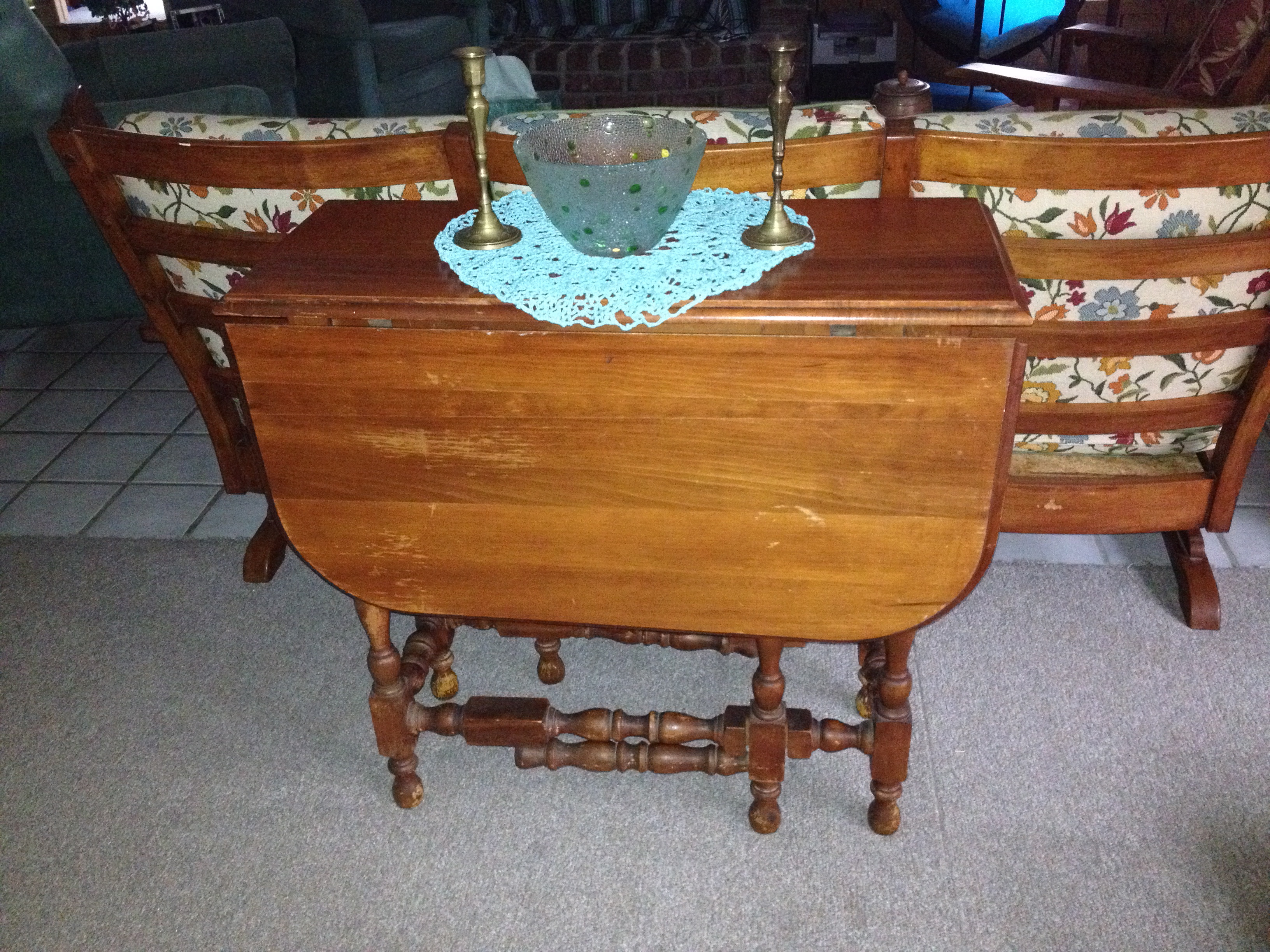
The table in my basement family room in fall 2013.

The table in my basement family room in fall 2013.

When my siblings and I divided up the furniture and personal items we wanted to each keep from our parents and grandparents, I chose a small maple table from the kitchen in our house in the Catskills. It is not in great shape. But it expands to sit 6 people if you need extra seating. The legs are a little wobbly. The top is a little scratched. But for some reason, I love this table. So it became mine.

It arrived safely last fall. I immediately cleaned it and put furniture cream on it, as it had been really uncared for in the few years since our parents had passed away. We had not spent a lot of time in the Catskills after they passed, and all the furniture up there had been unattended. But now that is changing.

I knew this table once belonged to my grandparents, then it became my parents, all that time it had stayed in the Catskills. But now it is mine and away from the Catskills at my home in Kansas. I had no idea how long it was in the family. However, this table called out to me. It was something comfortable. It seemed to always be around.

A few weeks after the furniture arrived, I was looking at photos that my brother also had shipped out to me. And I found a special photo. Wow! There is part of the table next to my brother and me. We are about 4 and 3 standing in our grandparent’s bungalow before a birthday party in 1958.

With the maple table in the Catskills, summer of 1958.

With the maple table in the Catskills, summer of 1958.

My brother and I are very dressed up for the Catskills. I know it is a party because I have found other photos with my cousins and grandfather. I think it was my oldest cousin’s fifth or sixth birthday. And it could have been a double party because I have two cousins whose birthdays are just a few weeks apart, and they are the same age.

My Mom was very pregnant that summer. (I actually have a photo of her as well!) Soon after this picture was taken, my cousin’s birthday was in July, my parents left for the City. They needed to be near the doctors and hospital. So we, my brother and I stayed with my grandparents.

Finding that photo of my brother and I was wonderful! I have always loved this table, but this photo makes me even more aware of its family history.

I have become a bit obsessive about my parents and grandparents furniture. My sister might say, crazed. My brother would call me loony. And I accept these type comments. How can I not? I am. Part of me wants everything to go back the way it was when our parents and grandparents were alive. I realize I cannot do that. But in a little way, I try.

An example?   I have my grandmother/mother’s baby grand piano.   I have had it for 29 years. I love it. I played the piano as a child and adult. My daughter took piano lesson on this piano. Friends have enjoyed its lovely tone.

My Mom played as well. She studied at Julliard all through high school, but my grandfather would not let her go there for college. She went to what became “Douglass” instead to be a teacher. As a teacher she would always have a job, but not as a musician.

After my parents passed away I wanted two items that my grandparents kept on the piano. We have photos of that as well. And my siblings did not argue, they let me have them. The metronome made sense. It should be by the piano. But my grandmother always kept a vase from Japan on the piano. I believe my Dad brought it back when he returned from his service in the Korean War. Now I have both items on the piano as well.

For some reason, when I see these two items on my piano, mixed in with my items, I have a sense that all is right in the world.   I remember these two items from my childhood and it brings a sense of security. Finding the old photos reinforces memories I had, and brings back memories I had forgotten.

The photo of my brother and I with the little maple table comes from a time of my earliest memories. All my first memories come from that summer, the summer before my sister was born.   I remember my Mom pregnant and leaving to stay in the city till the baby was born. I remember staying with my grandparents in the Catskills and all my cousins. I remember my Dad coming to get us after my sister was born in early September, and my mom was back home.

I remember seeing my sister for the very first time. I remember thinking that she was really small and was not going to be able to play with us.

From that moment forward I have so many memories. So to see my brother and I with the table from that summer is an amazing find. The table brings back so many happy memories. I hope it provides my children with happy memories as well.

Taking a Walk Up To Hurd Road to the Woodstock Site

11 Aug

My sister and I decided to take a walk up to Hurd Road this past weekend, as my brother told us that they had carved a giant peace sign into the hillside where everyone had been to watch the Woodstock concerts 45 years ago. We started the two mile walk at 7 o’clock in the morning. It was cool and brisk: a perfect summer morning at 56 degrees. We passed what was once Sheppy’s Bungalows on the left. Going up that hill brought back memories of many walks along West Shore Road. Right passed Sheppy’s is a little road called Lollipop Lane. I don’t remember that street at all. And it really is not a street at all, just a little impression in the grass. I am trying to remember what was once there. I actually think there was once another colony on that side of the road. Lollipop Lane Just past Lollipop Lane, walking in the other direction, came my brother. He had left for his walk much earlier. It was a great walking day. We spoke for a few minutes, and he continued back to our house. As we walked down and then up the bigger hill to Happy Avenue, we remembered when they filled the bottom in to make the hill and road less steep. The hill was once horrible on cars, but great fun for children. We used to go horseback riding once a week at Pine Creek Stables, it no longer exists, except in our memories. But our favorite part of the drive to the stables, which we took sitting on hay bales in the back of a pick up truck, was hitting the bottom of the hill and bouncing in the flatbed of the truck. We would all yell, “Go faster!” Now, of course, that is illegal. But then it was part of the fun of going up to the stables. We would spend about two hours at the stables each week. It was so much fun. We got to go horseback riding and visit with the horses, while our mothers had a couple of hours of peace. I now wonder what they did then? Visited with each other in quiet, or cleaned. I hope it was just relaxing. One of my cousins loved the stables and riding so much, he actually worked there for many summers. Mucking out the stables, riding whenever he wanted. Another friend also spent many hours there. I went whenever I could. Since the owner knew us all so well, as we got older we were allowed to take horses out without a guide. Great fun!

I love their sign. I love their sign.

As we continued our walk up to Happy Avenue, we passed a new riding stable. Rolling Stone Ranch. Its’ sign is definitely a play on the original Woodstock logo, but different. I loved the sign. This stable is not where Pine Creek was located. It is right before you reach Happy Avenue, Pine Creek Stables was a bit after the intersection. When we reached Happy Avenue, our brother drove up behind us. Okay, I admit it, my sister and I did not walk all the way to Hurd Road. We road the second mile with our brother.

These is where Pine Creek Stables once existed. These is where Pine Creek Stables once existed.

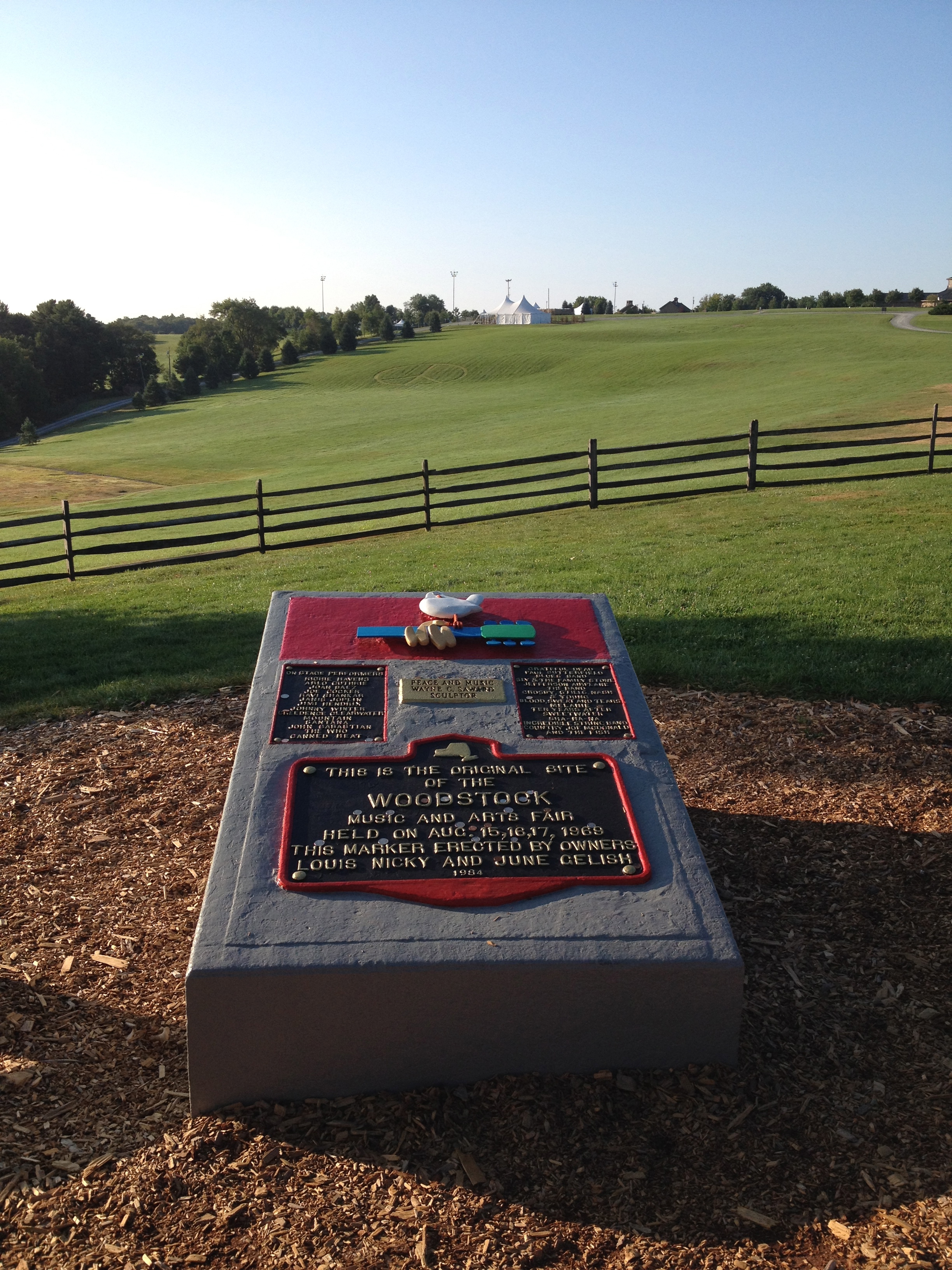
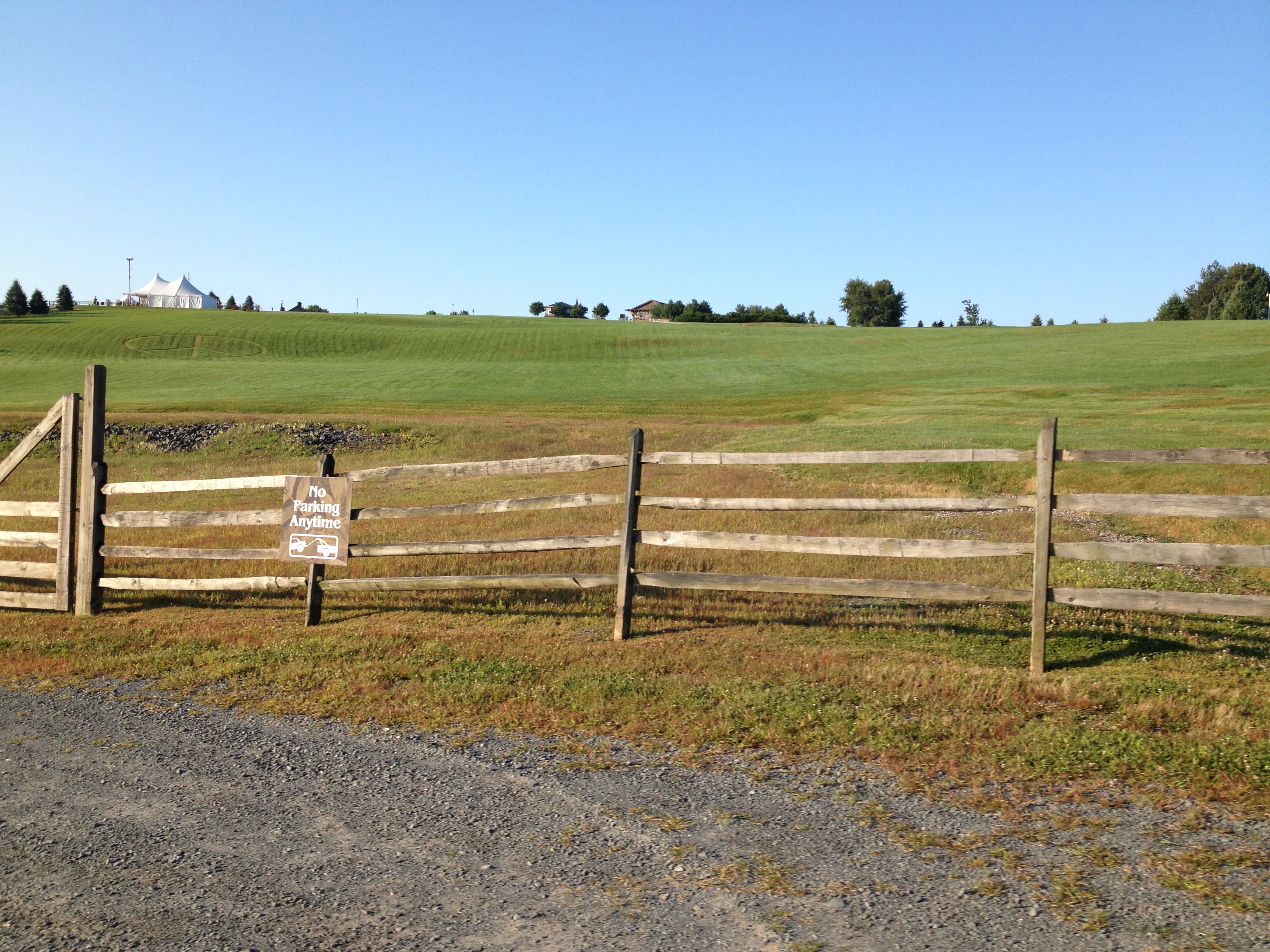
We passed the Pine Creek site on the right. Then we passed the farm with the famous “Woodstock” pond on the left. He no longer has the chicken coops there. Now there are fields of corn on both sides of the road. Then up one more hill and there we were at the site of part of Max Yasgur’s farm. The part everyone knows: the natural amphitheater where the Woodstock concerts were held. Woodstock monument We walked to the monument and looked over at the giant peace sign carved into the grass. Over the top of the hill we could see the tents of the Bethel Woods concert site. In fact tents were set up just on the other side of Hurd Road on a piece of land bordering both West Shore Road and Hurd Road. We are sure it is for the events celebrating the anniversary of Woodstock.

Peace Sign carved into the side of the hill. Peace Sign carved into the side of the hill.

The walk is so peaceful now. Nothing like the chaos of 45 years ago. And perhaps calling the area Bethel Woods has more meaning. Yes, it is in the Township of Beth El. But how many realize that Beth El means the House of God? And here we are in this peaceful place of West Shore Road, with so much beauty around us. While we were in Kauneonga Lake this past weekend, my siblings and I were cleaning out the many items stored by our grandparents and parents over the more than 50 years our family has owned our house.   We found some photos from the Woodstock weekend taken from our driveway. Our dad then is almost 20 years younger than my brother and I are now! While walking the path to Woodstock, I could not help remembering all the cars and the people who were there 45 years ago. I think of all those hills along the way. The only way to get anywhere that weekend was by foot or by horse. I remember the mounted police officers riding past our house to get up to the concert.

Looking up the hill from where the stage once stood. You can see the peace sign and the tent and a building belonging to BethEl Woods. Looking up the hill from where the stage once stood. You can see the peace sign and the tent and a building belonging to BethEl Woods.

As a friend reminded me, the concert organizers asked my grandfather for permission to land a helicopter on our lawn to get the musicians to the concert. He, emphatically, said, “No Helicopters!” We were not happy, as we told him then, we would get to meet everyone! But to my now adult mind, he was right. It would have caused mass hysteria from the crowds of people on the road. And even though we had a cleared acre of land, there were many trees nearby. The Woodstock weekend is one I will never forget. But for me, I love the quiet and joy and peace of West Shore Road that we usually relish. I love to walk and see the sights. I wanted you all to know that peace is in the Kauneonga Lake, Bethel Township. The giant peace sign on the grass is for the concert, but for me it was also for the inner peace in my heart whenever I return to Kauneonga Lake.   (My memories of the Woodstock weekend are in my blog,  “Woodstock Memories: A Walk on West Shore Road.”

Woodstock Memories: A Walk On West Shore Road

30 Jul
The hoards of people walking towards Woodstock toward Hurd Road on West Shore Road. The hoards of people walking towards Woodstock toward Hurd Road on West Shore Road.

How does one write about the Woodstock Festival of 1969? Forty-five years have passed, but when I close my eyes I can see the chaos of thousands, hundreds of thousands of people on roads not made to carry them. I can hear the music and the constant noise. I can feel the vibration of the ground of the bass drums. I hear the loudspeakers telling people what is happening. I smell the rain and the pot.

I was 14 when Woodstock came to me.  It was a weekend that I am unable to ever forget.

I worked at the bakery in Kauneonga Lake. Located next to the Post Office, it was only opened on the weekends usually in the mornings. But sometimes I worked till 3 pm. This weekend was to be like all others. My Dad drove me to work, as the store was about a mile and a half from our bungalow, and I was running late that morning as cousins had come to visit the night before, and I had to be at work by 8 am.

However, the day did not progress as normal. More and more people were coming into town. And then the woman I worked with said, “Someone has paid for all the food in the store, so we can give it away for free to all these hippies.”

And there were lots of young people, who looked like hippies. I always thought it was strange that the food was paid for, and then a crew with a camera came into the store to film as hundreds of people tried to come in and get free food. It was chaotic. We were working like crazy to give the food away. Put it in bags. I turned away from the camera.   It was hectic and somewhat scary for me. It was not a big room, and people were squashed inside against the display cabinets. And I was very shy.

When the food was all gone, and the people emptied out. And the camera crew left. We put a closed sign on the door and locked it. I called my Dad. “I can’t come and get you. The roads are a mess. You will have to walk home. Be Careful,” my Dad said. “Stop at the colony if you need to.”

The bungalow colony my grandparents owned was about two-thirds of the way to our bungalow, which was further up West Shore Road, one of the two main roads that led to the Woodstock concert held on Max Yasgur’s farm on the corner of West Shore Road and Hurd Road. I had relatives staying at the bungalow colony. I knew I would be safe there, if needed.

After I got off the phone, I looked outside. Cars were just stopped in the middle of the street. The center of town was overrun. People were abandoning their cars and walking, walking up to Woodstock, to Yasgur’s farm.

A few moments later there was a knock at the door. A black man from town, whom we all knew, said,  “I am going to walk you home. You cannot go walking alone in this mess.” I think my Grandpa must have called him, because how else would he know that I needed to walk home? So off we went. He was holding my hand and guiding me through the throngs of people.

“Don’t worry,” he said. “I will get you home.”

I know everyone talks about how wonderful Woodstock was and how it was the peaceful event that brought together music, love and drugs. How everyone lived in harmony for three days. But on that walk, I saw an ugly side to Woodstock. Sorry, but this is my memory.

As we walked down the road people were yelling at each other. The town people who wanted the cars to move. The people in the cars who wanted to move their cars. Then there were also the hordes of people who were just walking and laughing. They seemed to be having a somewhat good time.

I was calming down, until we came upon a little Volkswagon ‘beetle’ car. Inside a white man was punching a white woman in the face. They were probably in their 20s. Blood was running down her face. The man with me, pulled open the car door and grabbed the man’s hand. And he yelled at the girl, “Get out of the car!”

“But it’s my car!” She cried.

“It is not going anyway,” my now hero yelled. “Get out of the car.”

We were right in front of my grandparent’s bungalow colony. I saw my other grandmother and aunt among the women standing there. They opened the gate, and grabbed the young women, towel in hand to wipe the blood off her face and stop the bleeding. “Come with us.” I remember them saying. “We will call your parents.”

My grandmother called over to me. “Are you okay? Can you make it back to the house?”

I nodded yes and pointed. “He is going to walk me home.” She nodded in return. “Okay, I will call and tell them you are on the way.” I think she was a little shocked about who was walking with me.

We continued walking toward Woodstock and home: up the hill past the White Lake Estates, Finks and Top Hill. To my grandparent’s private home, where our bungalow was located.   My Dad and Grandpa were waiting for us at the end of the driveway. They shook my companion’s hand.

“Thank you,” my Grandpa said. “Come up to the house for something to eat and a schnapps.”

]Our property looked different. Grandpa and Dad had let four cars or campers park along the driveway. They had run a hose down from the house to the end of the long driveway. It ended in a large aluminum basin. A sign said, “Free Water.” Cups floated in the water, when they were not being used by the people walking by.

“Where are their mothers?” My Grandpa said while holding his head and staring at the endless line of young adults walking by. Some of the girls looked very young.  It was these girls that brought on my Grandpa’s lament, “Where are their mothers?”

Then he walked back to the house for lunch and schnapps with my Dad and my walking companion. My Grandpa really needed a libation that day!

I remember much more of Woodstock. I remember sitting on our front lawn and just watching the people go by. Woodstock itself was another mile or so up the road.   I remember listening to the music. We could hear it from our home.  I remember that the noise went on all night long.  We heard either the sound of music or sounds of people in the usually still Catskill’s nights.

My brother and his friend; my cousins and many others I knew walked up the hill to the concert. I did not. My parents said no!  My brother, who was a year older was allowed to go, but not me.  It did not really matter, in a way we were in the middle of the concert anyway.

And then you know, the rain started. My brother talked about sliding down the hillside. My cousin took all the food my mom packed, not realizing my brother and cousin would never be able to meet up at the concert. We always teased my cousin about ending up with the food! The blankets disappeared into the mud of the hill. The humans did not disappeared, but when they came home Sunday night/ Monday morning, they were all muddy messes.

For weeks after,  the cleanup continued. Poor Max Yasgur, he became a pariah – a scapegoat in town. There were lots of very angry people.

The view from the Hurd Road Woodstock Monument. Looking toward West Shore Road.

598.jpg”> The view from the Hurd Road Woodstock Monument. Looking toward West Shore Road.

Woodstock. It was something special for many people. I changed after that weekend. I saw the world in a different light. I saw the worst in people, as the man beating a woman; yelling and anger.  I saw the best in people, as in my companion on the journey home. I learned the color of skin meant nothing. The person inside is the most important. A lesson I have carried with me my entire life.


The big metal container is what we filled with water. This is our driveway. My Dad let some people park along the sides of it.
People walking from Kauneonga Lake. My Dad is with the camera.

https://zicharonot.wordpress.com/2014/08/11/taking-a-walk-up-to-hurd-road-to-the-woodstock-site/

http://www.mapquest.com/maps?city=Kauneonga%20Lake&state=NY

http://en.wikipedia.org/wiki/Woodstock

http://www.bethelwoodscenter.org/the-museum

http://www.britannica.com/EBchecked/topic/647675/The-Woodstock-Music-and-Art-Fair

http://en.wikipedia.org/wiki/Max_Yasgur

Movie Night in the Catskills Was A Wonderful, Magical Night

24 Jul

It was our Saturday night tradition at the Ritz Theatre in White Lake, NY. In the late afternoon, early evening, we children would go to the early movie with our grandmas: Grandma Esther, Grandma Rose, Grandma Thelma, Mrs. Anoff. They chaperoned about nine or ten children and kept us safe.

Our dads would drop us off at the front of the theater with money for the movie and snacks. We were supposed to be very careful there as it was at the intersection of 17B and 55. So there actually was a bit of traffic.

I think our grandmas would collect all the money and pay. However, when we got a little older, we were allowed to buy our own tickets. If you were under 12 it was one price, over 12 you paid the adult fare. It was always sad when someone had a summer birthday and turned 12. They now had to pay much more!

Our parents, in the early 1960s.  Kauneonga Lake, NY.

Some of the parents, in the early 1960s. Kauneonga Lake, NY.

Our fathers, in the meantime, would then go home to get ready for Date Night with our moms. It was their special time together.

We would watch whatever movie was showing that week. The movie I remember the most was “To Cast A Giant Shadow” about the Israeli War of Independence and Colonel David “Mickey” Marcus, the American officer who helped with ending the siege of Jerusalem. It actually had a major impact on my life choices.

For this movie, I sat next to my Grandma Rose.   Grandma Rose, was really my cousins’ grandma, but that did not matter. We shared grandmas in the Catskills. In any case, Grandma Rose lived through the siege of Jerusalem with her husband, Grandpa Asher, and my Uncle Jack.

While we watched the movie, Grandma Rose spoke to me throughout, telling me what happened to her in 1948. She told me what really happened during the siege. What in the movie was true, what was just fiction. She told me about the lack of water and food. She told me about the day they finally left Jerusalem and how difficult that day was for her and Grandpa Asher. How she looked back knowing she might never live in Jerusalem, her Jerusalem again. She never did. They moved to the USA.

I was eleven years old when “To Cast A Giant Shadow” came out in 1966. But this movie and the story of Jerusalem stayed with me my entire life. It was because of this movie and Grandma Rose’ commentary, that I went to Israel eight years later to spend my sophomore year of college at the Hebrew University in Jerusalem. I lived in both the Givat Ram and the HaHasofim campuses.

I was able to go freely between both the old city of Jerusalem and the new city. I saw the places Grandma Rose had told me about, as well as, the places I saw in the movie.

While I was gone, Grandma Rose passed away. My parents did not tell me. They did not want it to be in a letter. In those days we had no cell phones, no computer, no Skype. I found out when I got home. I was heartbroken.  I wanted to tell her all about the Jerusalem, where I lived and how it had returned to one city.   But I never got the chance.

But I always remembered that one movie and Grandma Rose.

Movie night was always an exciting night. Without television, cable, VCRs, DVDs, Netflex, we looked forward to going to the movies one day a week. Even when we got older and did not need our grandmas to go with us, we would still go in a group to the movies. Then we would go to Poppy’s for ice cream after the movie ended. It was always a good time. Even on dates we went as couples with someone else. It seemed odd to go out with just one other person. Sometimes we even ran into our parents at the ice cream parlor. So strange, so different from when we were children.

Because when we were young, our dads would come to pick us up after the movies. When we were settled in back at our bungalows, the parents would go out. They were dressed up, looking fine. Many times they were just going to the movies as well. Sometimes, they went to a show at one of the many hotels or bungalow colonies to see a comedian or musical. It was a wild time in the Catskills.

We always knew when they went to a show because they came home with one of those keychain photo viewers. We loved them. I found some when we cleaned out my parent’s apartment and I brought one back to Kansas with me.

My parents always went out extra special on Fathers’ Day weekend because their wedding anniversary was June 17. They had spent part of their honeymoon at Grossinger’s before heading up to the Finger Lakes and exploring on their own. So a special evening out at Grossinger’s was often their anniversary celebration destination.

Movie nights changed after the Ritz in White Lake closed. We then traveled to Liberty or Monticello to go to the movies. But the magic still remained. Movie night in the Catskills was a wonderful, magical night.

Finding Salamanders and Relaxing in the Black Forest

13 Jul

One of my favorite activities during my summers in the Catskills was finding salamanders. I loved those little orange lizards that lived in the moss hidden in the forest of the Catskills. I have not seen any for years, but they were plentiful when I was a child.

My parents encouraged my interest in nature, so much so that my Dad built a terrarium outside of our bungalow. It was about three feet by four feet, built with wood and chicken wire, right underneath our kitchen window. My brother and I spent a lot of time catching toads, frogs and salamanders to put into our terrarium, but the rule was that they had to be return to the woods when the summer came to an end.

My sister, me, and my brother facing our bungalow. Behind us you can see Kauneonga Lake. About 1962.

My sister, me, and my brother facing our bungalow. Behind us you can see Kauneonga Lake. About 1962.

While my brother went for the frogs and toads, my favorite creature to find was the salamander. I would search in the moss along trails in the woods. They were difficult to find because they could change colors like a chameleon and match the plants that surrounded them. But usually they were a dull orange color.

Then I would take the moss and the salamander back to our terrarium to become part of our nature center. At night, when the windows were open, we could hear the sounds of the frogs coming from the terrarium. It drove my Mom crazy, but she did not complain too much. She knew that I loved to spend hours watching the lizards residing there.

When I was not searching for my lizards, my friend, Vicki, and I would often go on walks to what we called, the “Black Forest.” This was an area of the woods behind my Grandparent’s bungalow colony that was all pine trees. Vicki and I loved to go there and play imagination games.

Because of the denseness of the trees, there was not a lot of sunshine filtering through the woods, and the ground was covered with pine needles, so not many plants grew. It was a mystical place. So silent, with the shadows of the trees dancing on the pine needles, it was the perfect place for a picnic and imagining. It was so quiet, we were able to hear people coming down the trail and hide before they arrived. It was our private place and we did not want to share it when we were there.

To get to the forest we had to walk past the blueberry patch, past the last bungalow in the row, to a place far away from the parents and the swings. We entered the forest near a large growth of ferns and moss. It was here that I could often find salamanders. But that I could do on the way home, not when we were going into the woods.

After we entered the treed area, we would walk along a path that had been created by years of children walking to the “black forest.” I do not know who was the first one to go there. But there were many boys who were much older than Vicki and I. So I assume one of them taught us the way. I just know that traveling along that path and walking back to the pine forest was an important part of our summer adventures.

Most of the walk was through regular woods, but then we would come upon it — the area where only pine trees grow. In that one special place we would lie upon the bed of pine needles and dream. The mounds of pine needles were so comfortable. We share our inner thoughts and secrets. When we were there, we were away from all the boys: our brothers and all my boy cousins. It was a wonderful escape.

Sometimes some of the boys would go with us. But the atmosphere changed when the boys came. Honestly, I liked it best when Vicki and I went by ourselves.

When I look at maps now and satellite images, and I see how far we wandered into the woods, I wonder what our parents would have thought if they knew how far we actually went? It was a different time, but we did get in trouble sometimes. And there was no way to reach our parents, we just figured it out ourselves.

One time we walked out of the pine forest area into some fields. A man came running after us and told us to stay off his property. That was scary. Usually we did not see anyone there. The woods were large. But in reality we knew that if we kept walking, on the other side were those fields and other private property and then Horseshoe Lake Road. We could not get lost. I think I actually walked that way once. But after the man scared us away, we almost always went back through the woods to the bungalow colony.

We had wonderful times wandering on our own. Having picnics that we packed ourselves. Filling our minds with memories that can never be erased. I close my eyes and I can smell the pine needles, their sharp fresh scent. I can feel the crush of my body on the mounds of needles as I looked up to the sky shimmering through the branches. I am back in the ‘black forest’ planning my next acquisition of a salamander and just having a wonderful day with my best friend.