Archive | architecture RSS feed for this section

Entering Another World: The Gardens of Portland

25 Oct

Portland, Oregon, is home to three of the most beautiful gardens I have visited!

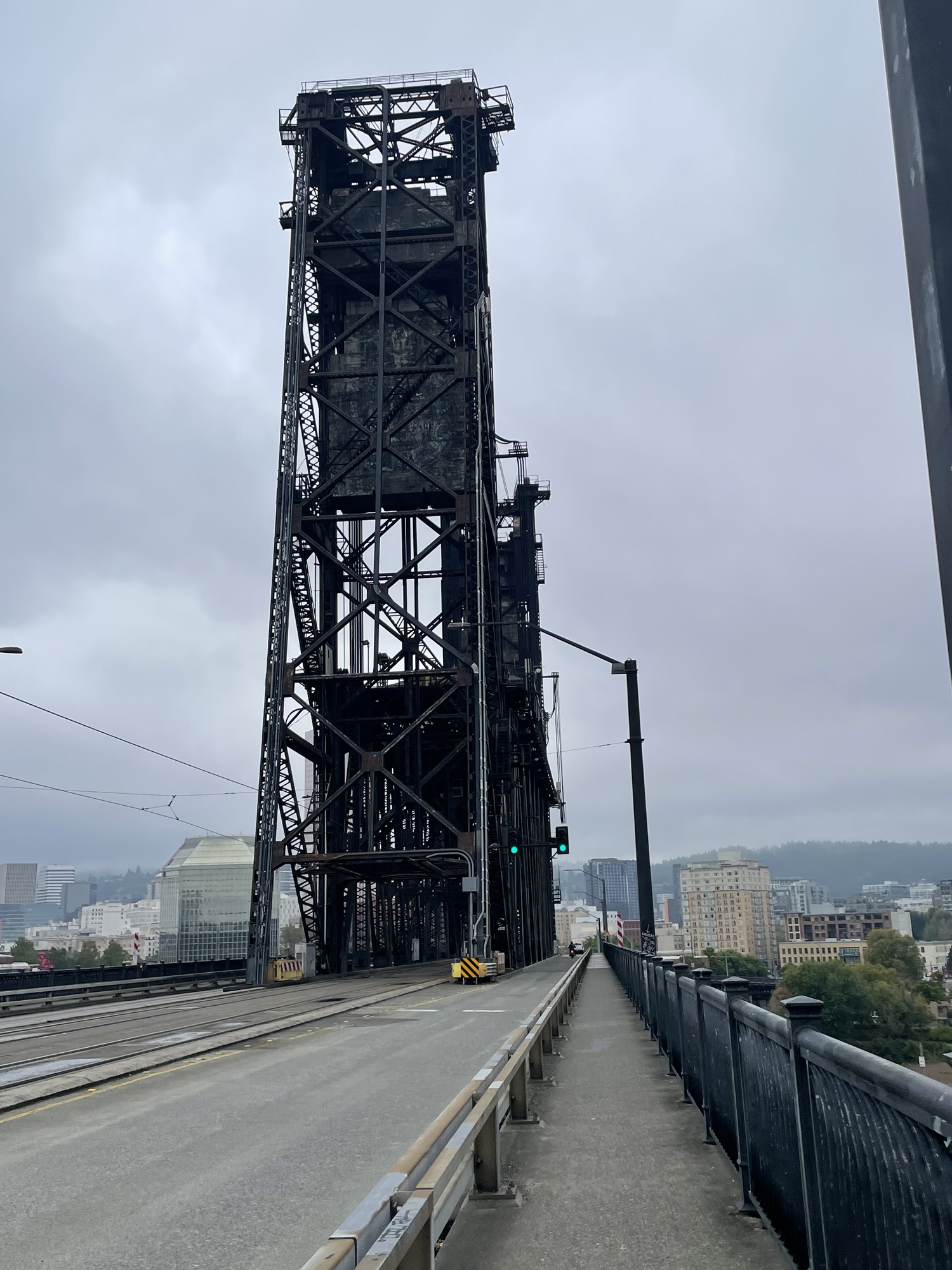
China Town and the Lan Su Chinese Garden is located just off the Willamette River near the Steel Bridge. It was a mile walk from our hotel.  So we decided to walk over the Steel Bridge in order to see it up close.

Opened for use in 1912, the Steel Bridge (yes, it is made of steel) has a central area that is a vertical lift, which moves the two-deck surface upwards so that high ships can sail under it. It is an amazing contraption to see.  Since the bridge has a Kansas City connection – Waddel & Harrington, who designed it were a Kansas City firm – I felt it was something we had to experience. Although the lower deck is built for pedestrians, we did not know that when we walked across, so we took the top deck.   At times, I noted that the railings along the deck were quite low, so I recommend the lower deck for walking.
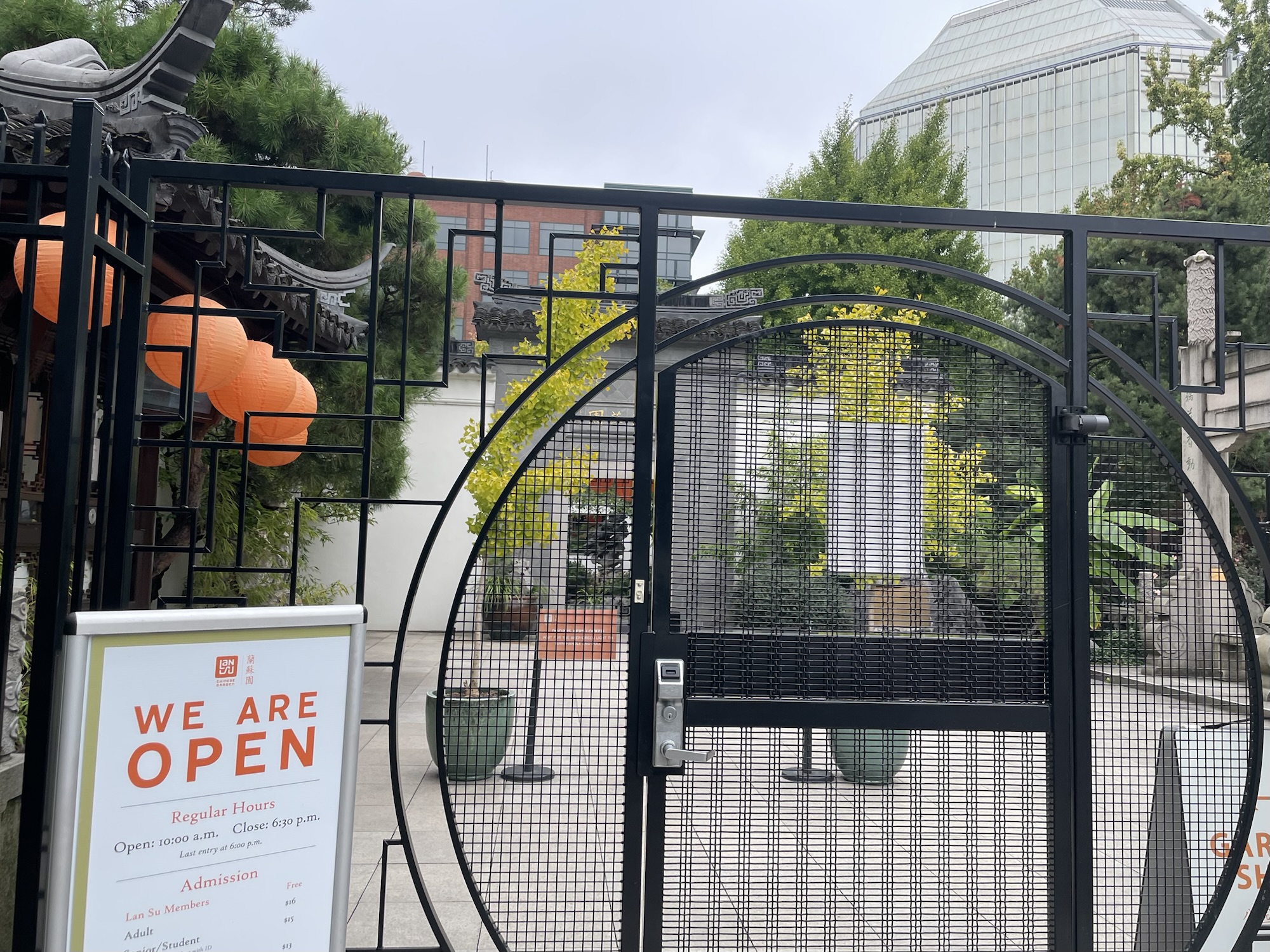
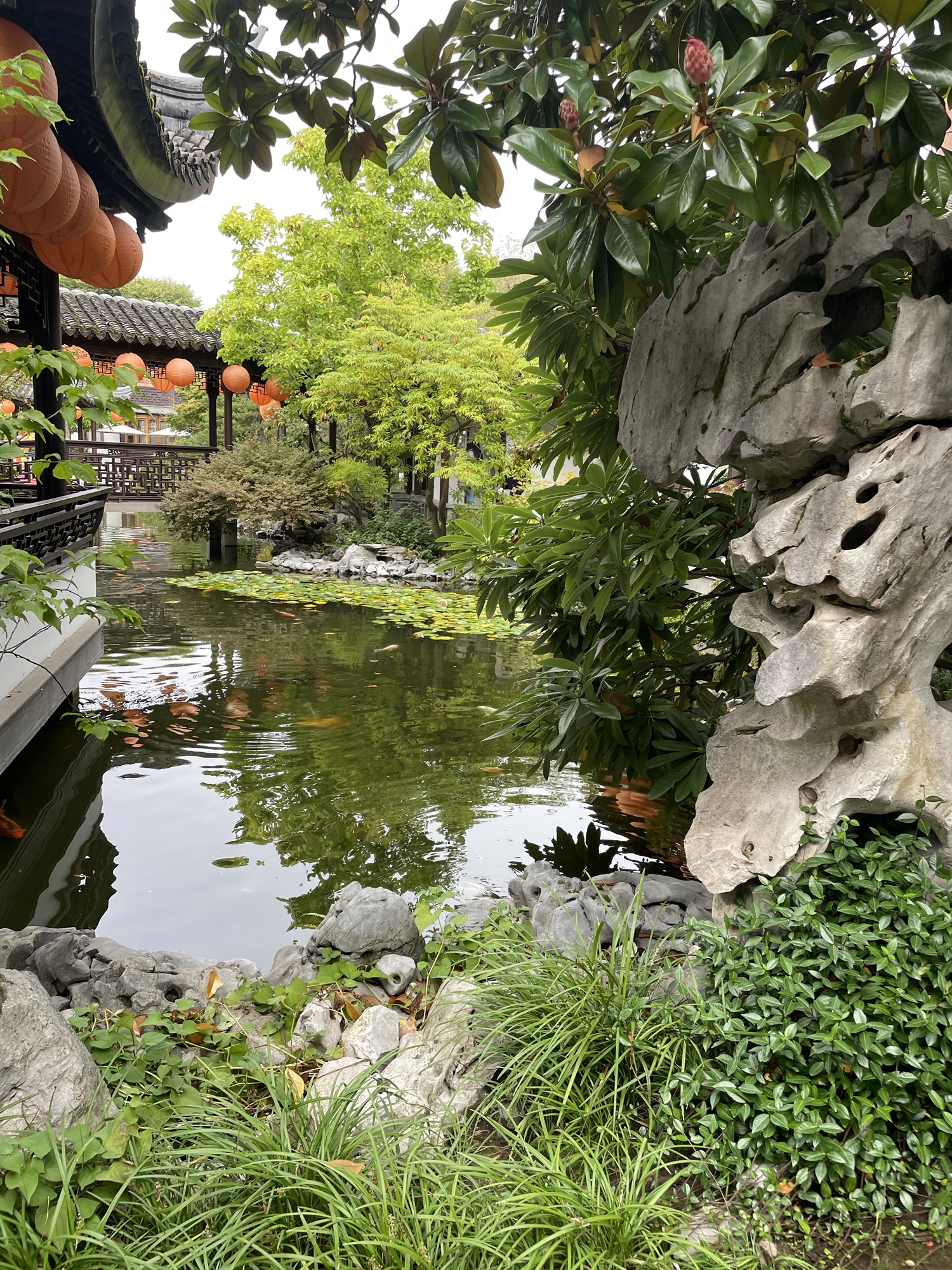
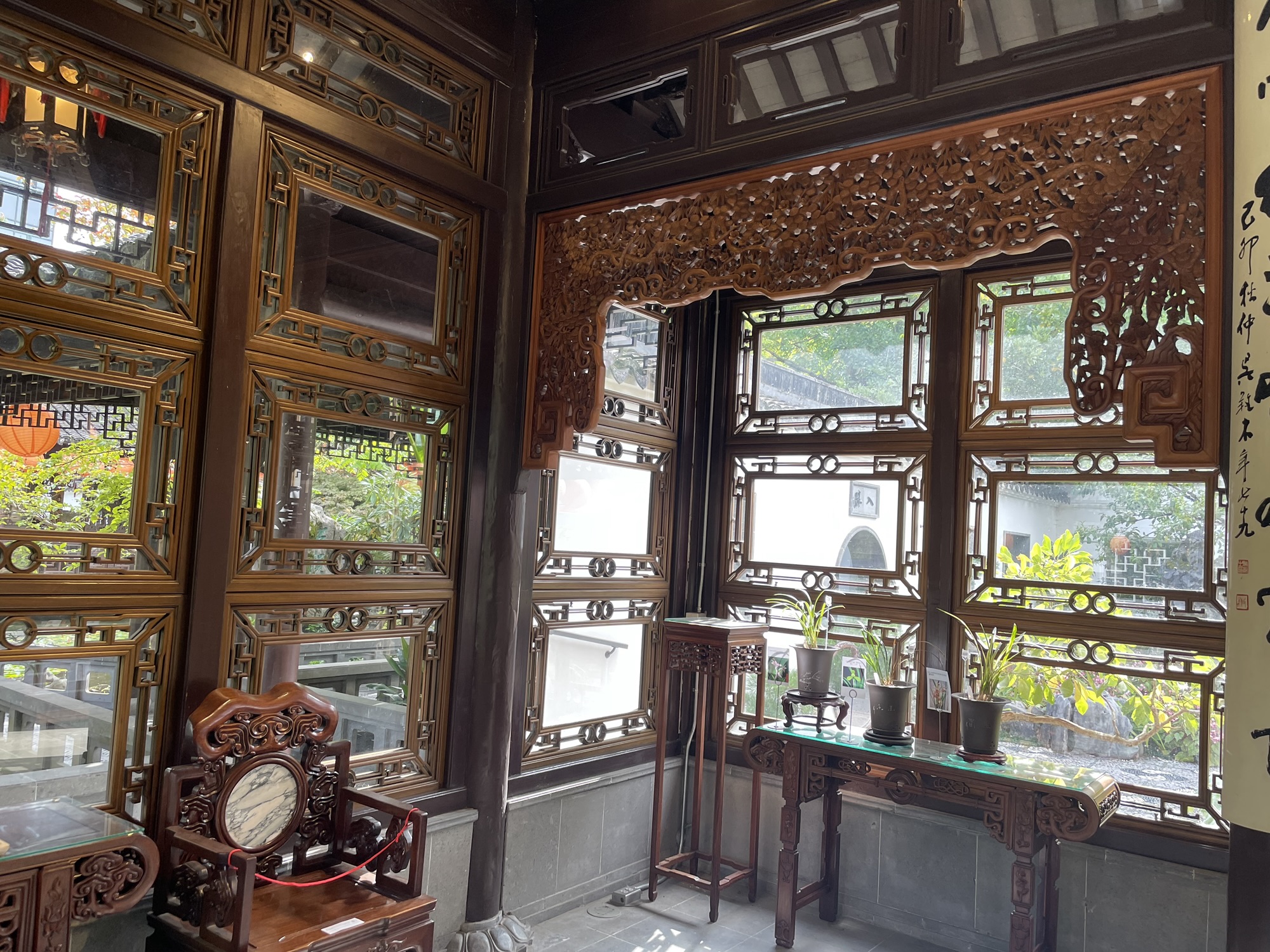
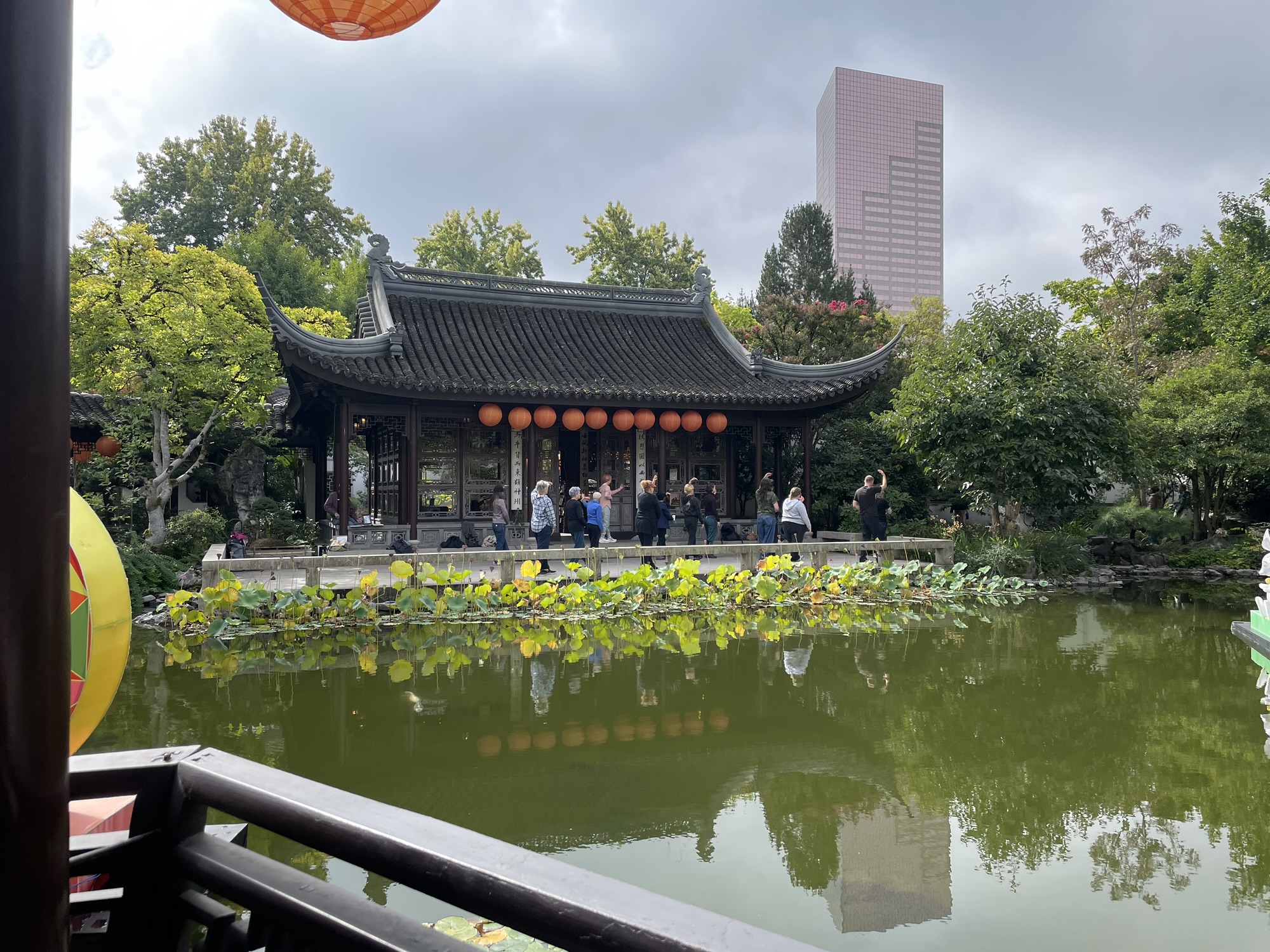
At the end of the bridge, it was a short walk to the Lan Su Chinese Garden. This delightful oasis was built in 1999 by 65 artisans who came from China and opened to the public in 2000.  There is a short movie that explains how it was built.  I was fascinated by the inlaid rock areas.  I even asked the guide if we were allowed to walk on it, it was so beautiful

The gardens and the lake create lovely view, but so is the wonderful craftmanship of the buildings and the woodwork.  You are able to walk into all the buildings and admire them.  The tea house serves a variety of teas and pastry. We had to stop in there for a snack and enjoyed to views of the gardens. 

When walking through the gardens, I did not think of the city around us, instead I felt like I was encapsulated in a hidden jewel.
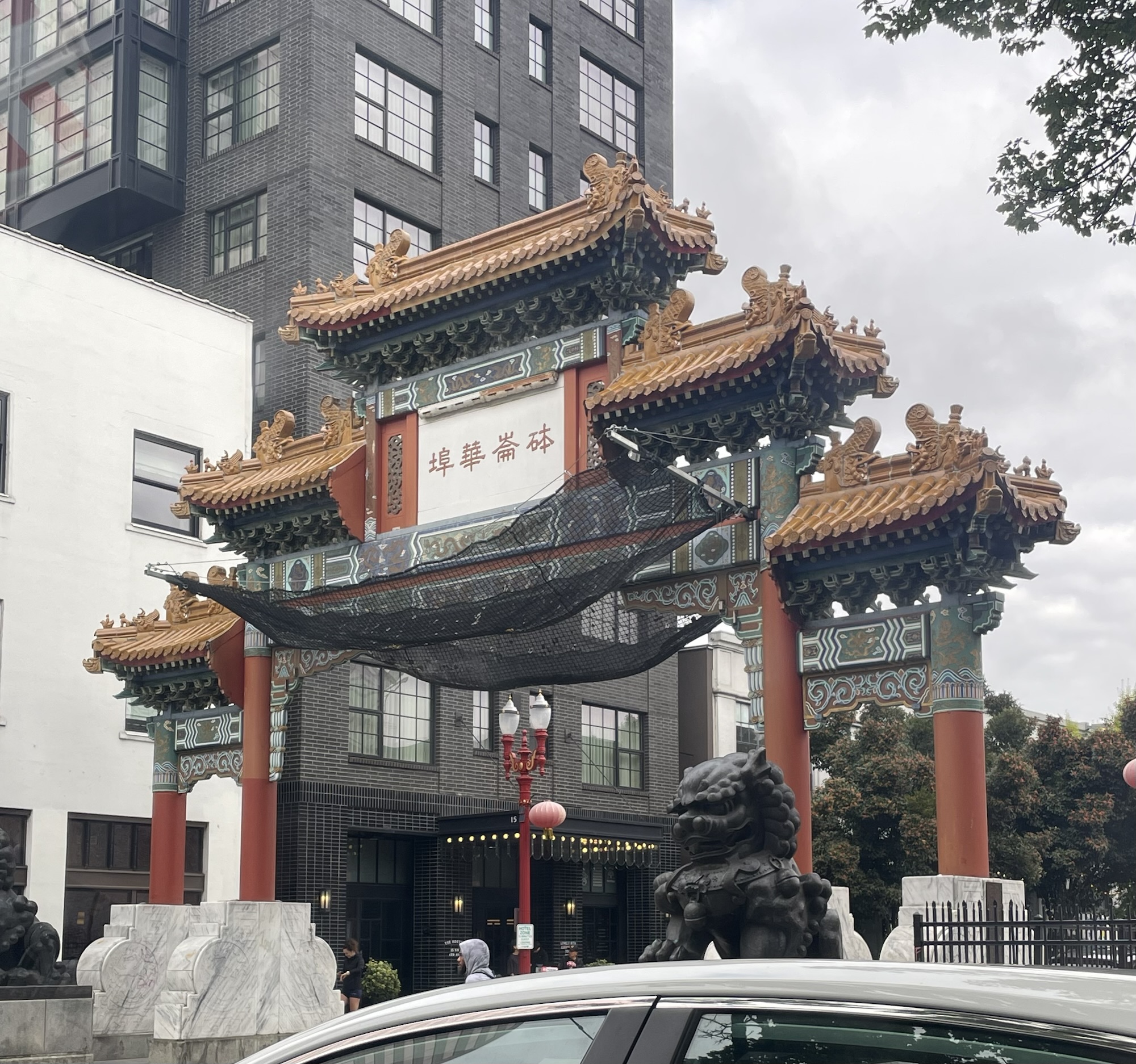
China Town Gate.

Afterwards we walked to the Golden Horse restaurant for a lunch.  It seemed right that we have Chinese food after visiting the garden. 
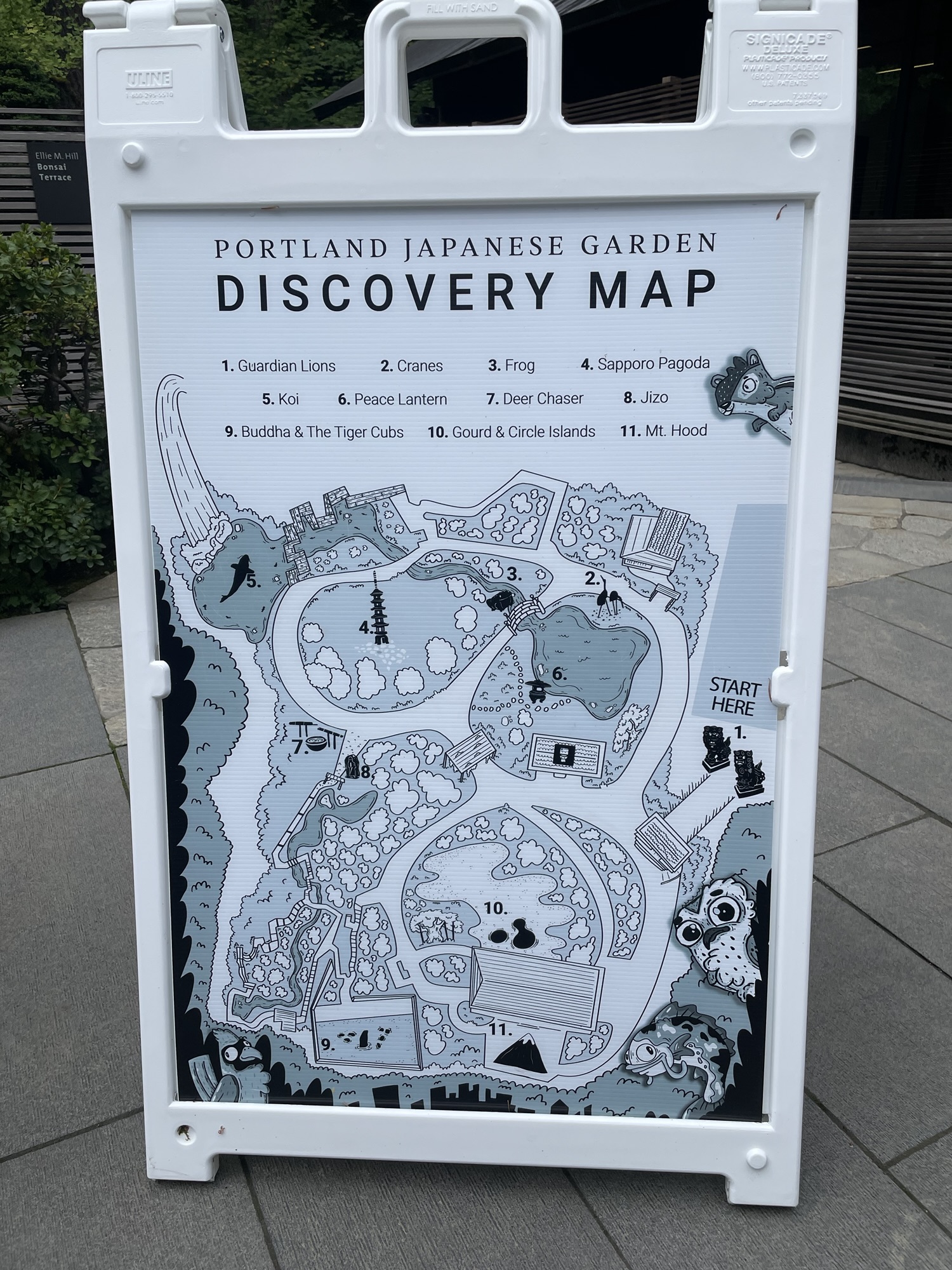
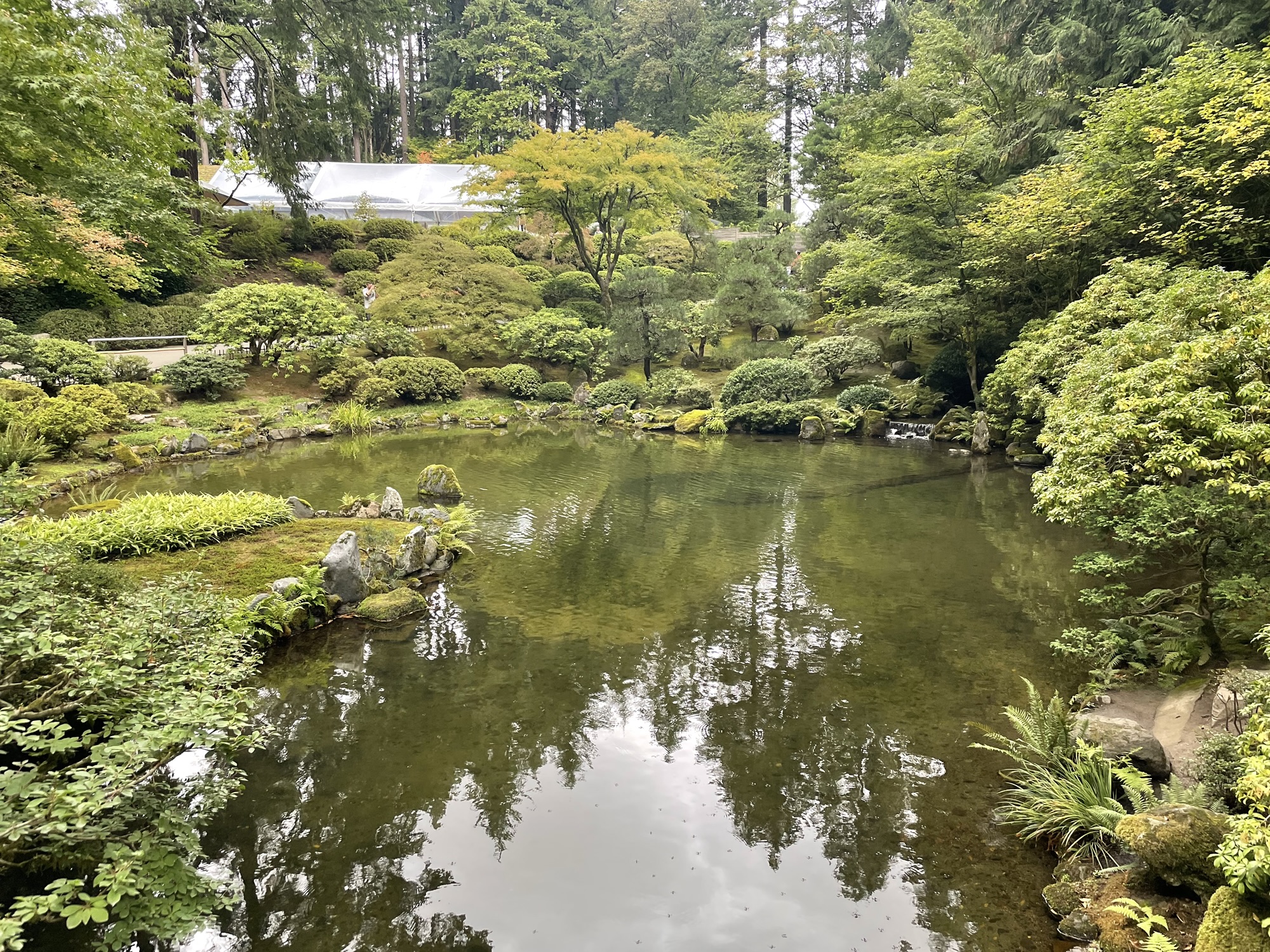
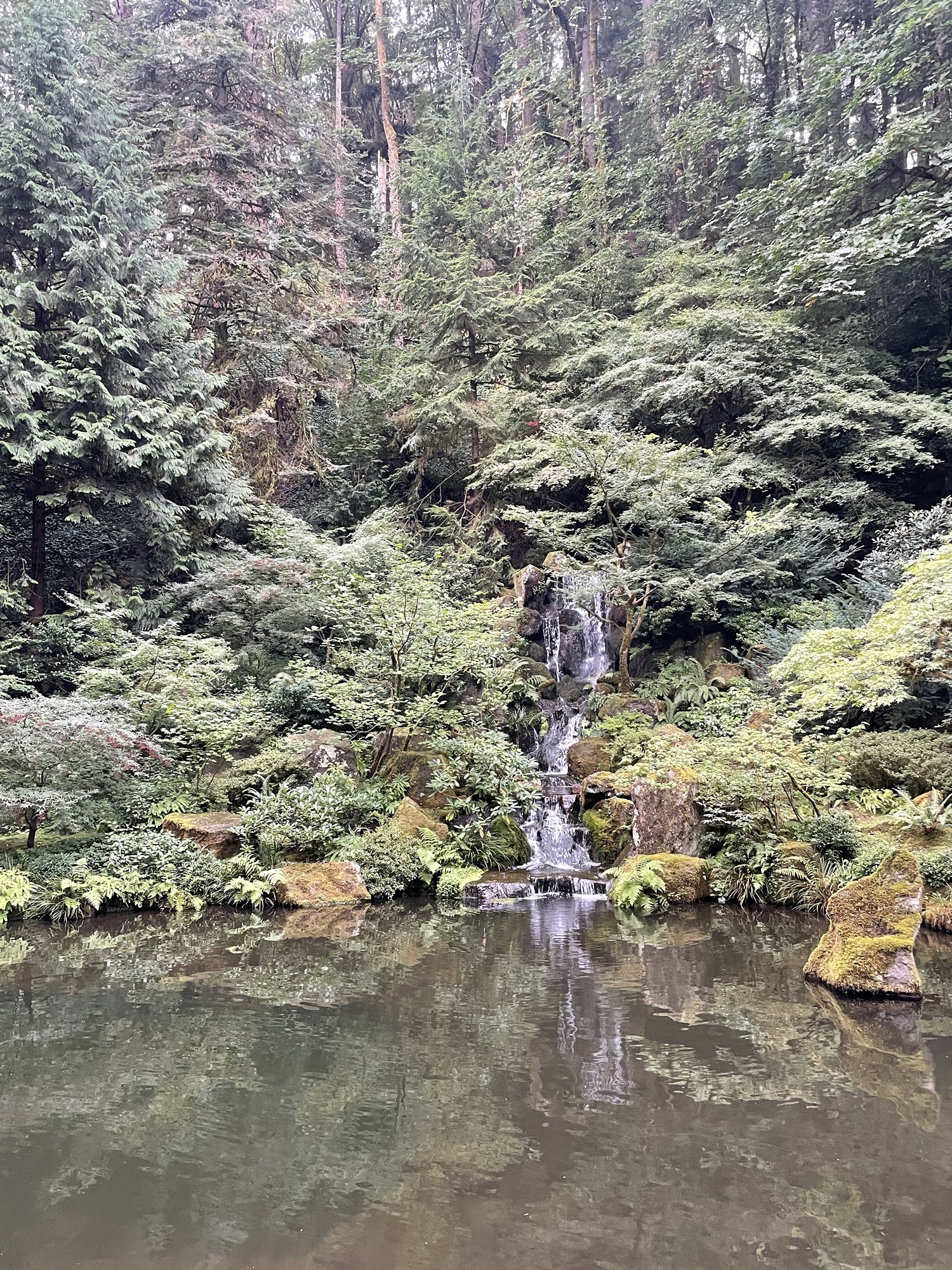
The next day we continued our Asian garden experiences with a visit to the Portland Japanese Gardens in Washington Park.  WOW! If Lan Su is an encapsulated oasis within the city, the 12-acre Japanese Gardens is a paradise!

A part of Washington Park since 1962, this peaceful setting was built to bring healing to the city after World War 2. I believe it did.  You cannot walk through these gardens and not appreciate the culture that produce it.

Like Lan Su, there are buildings on the grounds including a Japanese Tea House.  Since it is a much larger garden, there is a learning Center, a Café, a more.    But for me it was the gardens that drew my admiration. 

You start at the bottom of a hill after paying at the Welcome Center, meandering upwards to antique gate and continuing up. Looking back at the views of the city as you climb the foliage is really breathtaking.  At the top you enter the Nezu Gate by the Japanese Arts Learning Center, where you can visit the Bonsai Garden. From there, you take the paths around the garden settings with koi ponds, waterfalls, raked sands and more. Every garden has resting spots where you can sit quietly and enjoy the views and the peace and serenity.

I think if I lived in Portland I would go to the Japanese Gardens weekly to ease my anxieties.

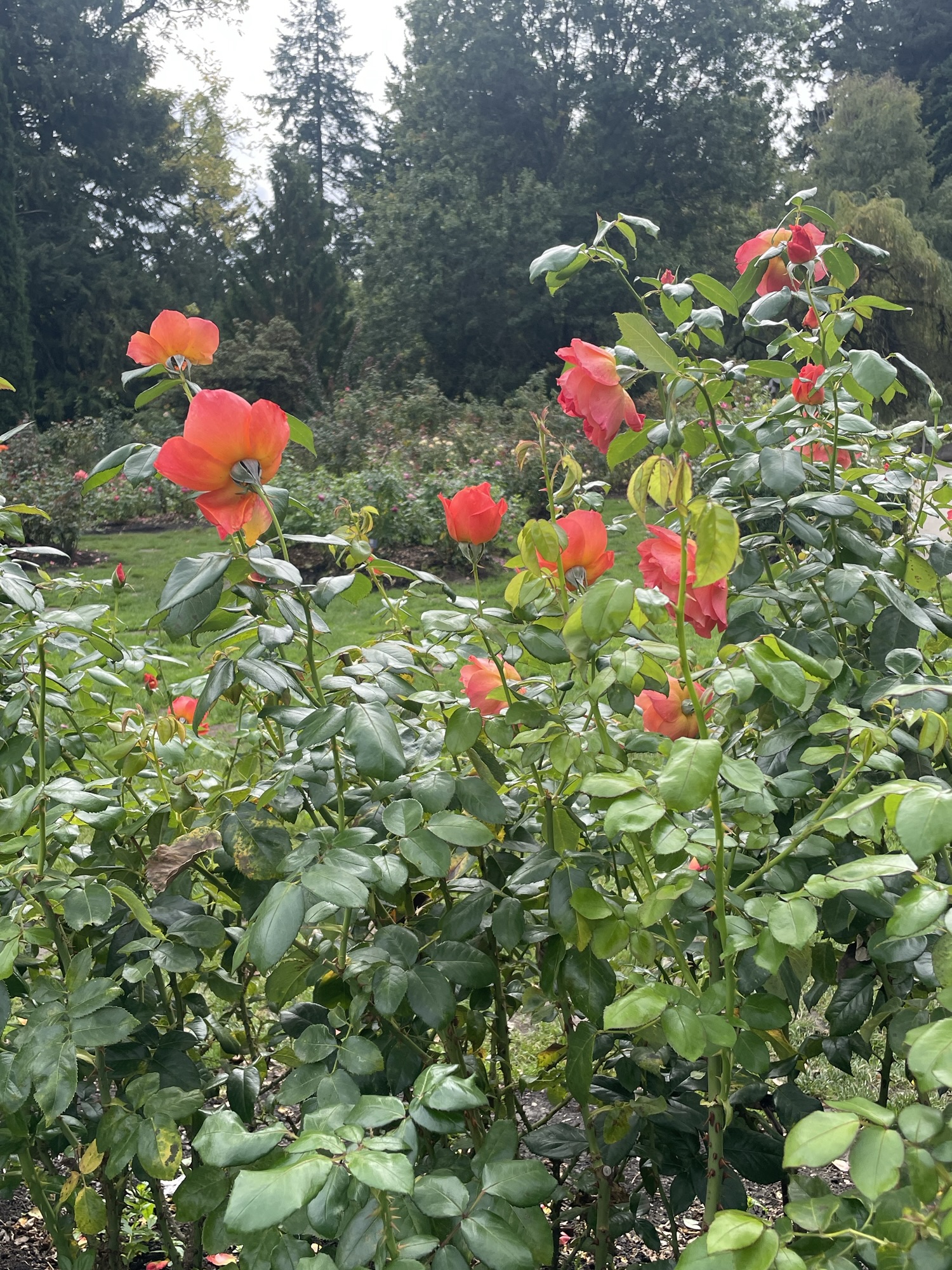
Because we were in Washington Park, after we finished our time at the Japanese Garden, we did walk over to the International Rose Test Garden.  Established in 1917, this garden has over 4 acres of magnificent roses.  I was here several years ago when I first visited Portland. But we had to stop in to see the beauty of this garden as well.  There are always amazing roses during the blooming season. One peach-colored rose caught my eye, its petals resembled crepe paper.

And a wonderous mansion too!

Since we were in Washington Park, we visited one more spot close to Washington Park, the exquisite Pittock Mansion. The home of the owner of the Portland Oregonian, the mansion took two years to build, with a move in date of 1914.  Overlooking the city and the river, it has magnificent views and lovely gardens as well. But it is the house that is the main attraction.
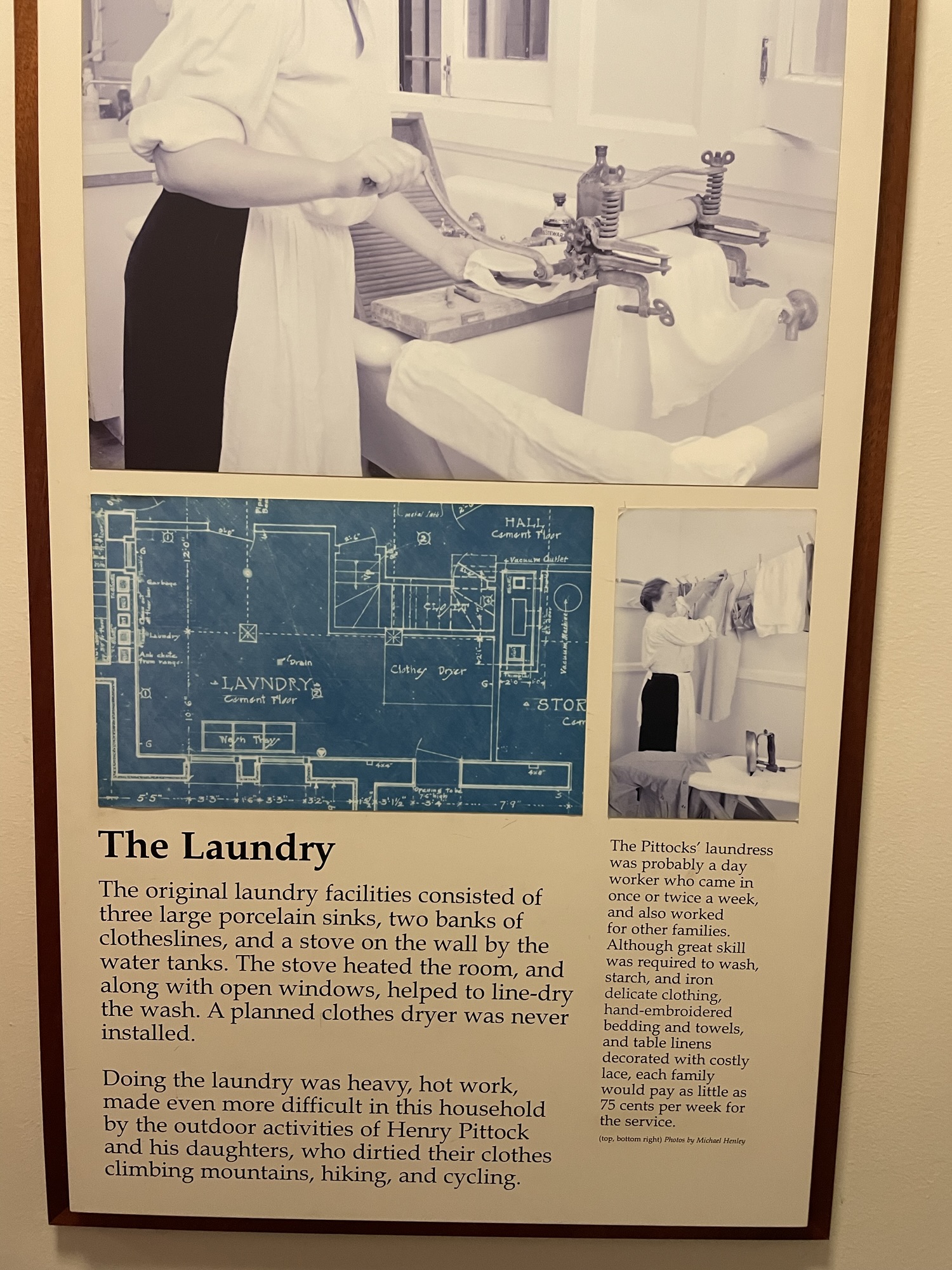
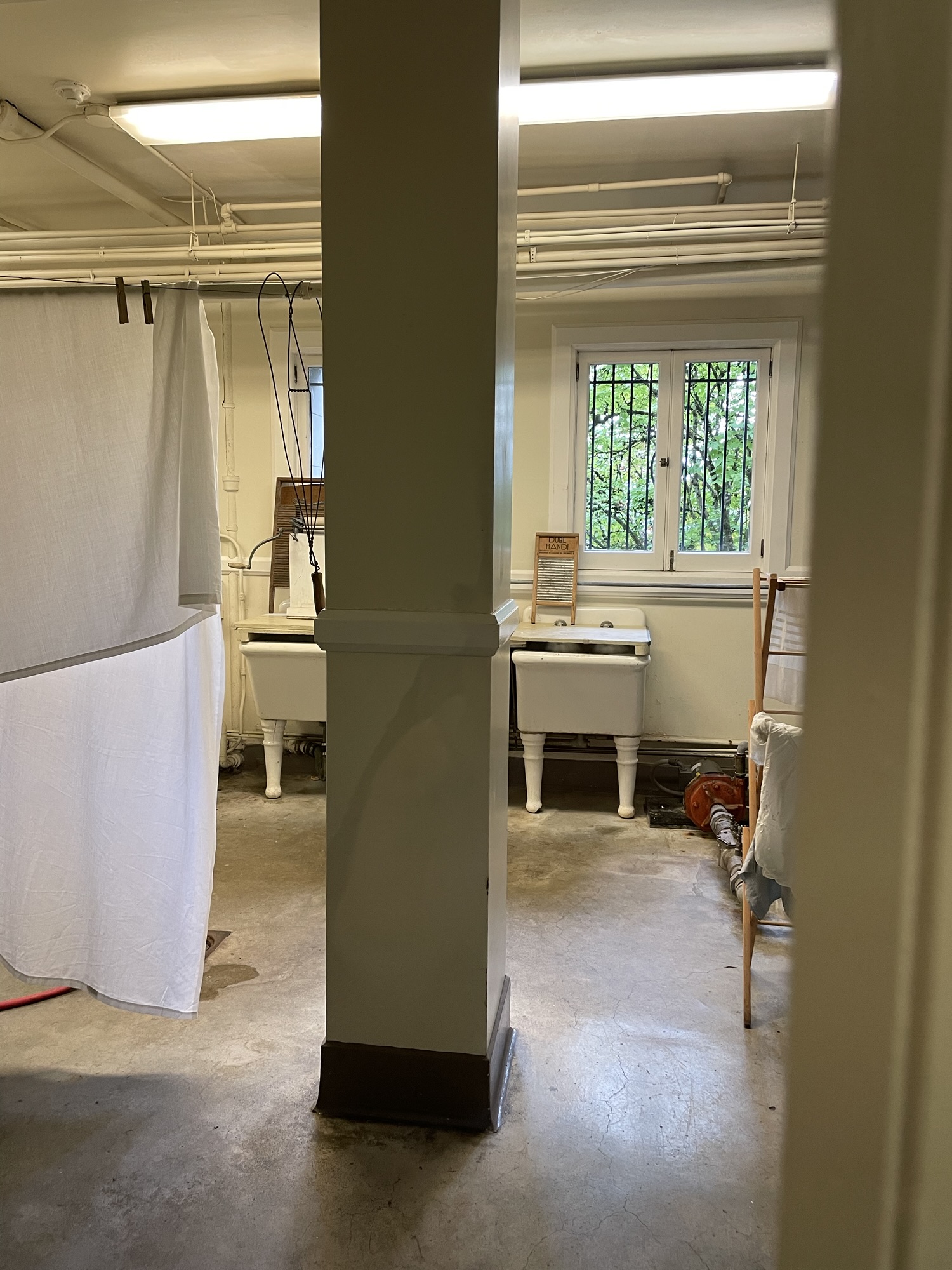
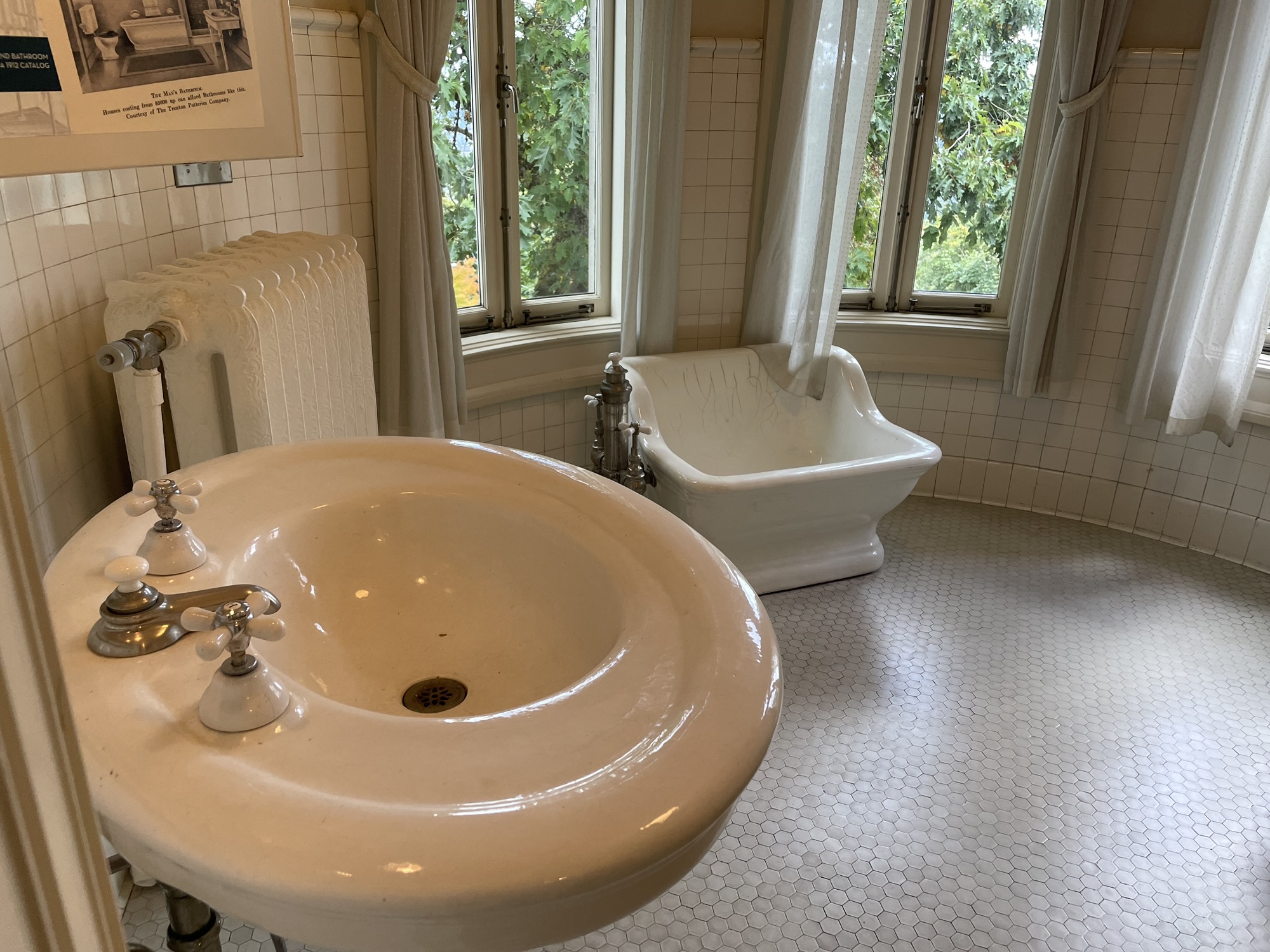
The Pittock Mansion has many innovations for a house of its time.  The abundant bathrooms had all the ‘modern conveniences” with both tubs and showers; an intercom system: extensive laundry room and an amazing cold room. The door was extra insulated and the room contained cold storage. Mr. Pittock wanted the best and the most up-to-date home.

After the family moved out in 1958, the house was abandoned. Eventually the city purchased it and  restored it and opened it to the public in 1965. I am sure the upkeep is still tremendous!

Today it is a great venue for weddings and other events. I had to pose on the grand staircase. It was a moment for me to imagine living there. Which I never could, but really some spots just call out for a photo.  The Pittock Mansion is another must see site in Portland.

https://japanesegarden.org/

https://www.portlandpf.org/rose-test-garden

My Own Secret Annex

5 Feb

Last week the plumber came to my house to fix an outdoor faucet that was leaking. He told me that if things went well, he would be able to do it from the outside.  It did not go well.  The faucet was over 30 years old and had seized up. 

We thought he would have to cut a hole in the drywall of my finished basement.  But first he started looking around.  Could he go through the closet? That would not work.

Was there another way. Also, he wondered how they could put both water and gas pipes on the  without some sort of an access.  He continued to searched around.

Finally he pointed to what I thought was an air conditioner exchange during our five years in this house.  “What’s that?” he questioned.  He started moving some furniture away from the wall.  Then said, “I might have to unscrew it to see what’s behind it.”

But he did not have to unscrew anything.  That air conditioner vent was hinged and held closed by a spring.  When he opened this ‘door’, there was a crawl space with access to all the pipes. There was even a light switch and a working light.

As he opened it, I was excited!  My first words were, “Wow, I have a secret room!” I always wanted a secret room.  Friends of mine had a hidden door that looked like a bookcase.  When you opened it, you were in the room with a dome and telescope.  I always wanted a secret hideaway.  Now I had one. 

In the meantime, the plumber was able to quickly fix my faucet issue, including replacing the old water turn off valve in this crawl space. 

After he left, I started thinking about my secret space.  It is a great spot for hiding.  No one knows it is there.  It looks just like a vent for the air conditioner.  With furniture in front of the lower part of it, no one would never think it was larger than a normal air vent. It is in a very good place for a secret space.  There is a closet in front of it.  Anyone who opens it would think went to the end of the house.  Staircases enclose it.  There is a solid wall on one side, and the outside walls on two sides, with just this tiny door to get in.

It even had lighting.  It was insulated. And although you cannot stand up in it. Three or four people could comfortably sit inside. It made me think of the secret annex that Anne Frank and her family lived it. Wait, why did my mind go there?   

Then it hit me, that I was actually thinking that this is a place where I can hide my family if needed.  I have never ever felt that way before.   But in the past 18 months as the Jew Hatred seems to grow, and the craziness builds, it was a thought that has stayed in my mind.  What would we do if people really went crazy?  I believe I am safe.  I know I have great neighbors and friends.  But then my family in Poland felt the same way before their property was confiscated and they were murdered.

I know it is not March 3, 1942, when all the remaining Jews of the area my great grandparents lived in were rounded up.  Less than 100 Jews survived from over 5,000  who lived there.  My family included two of these survivors.  I knew them.  I also know of many who died.

Honestly, would I ever have to use this secret room to hide out from those who want to do evil?  I think not.  But there is just this teeny bit of doubt that makes me feel sad for the world. 

I would rather hold on to the feeling of excitement for a secret crawl space. I would rather focus on a  discovery saved much time and money in fixing a pipe and gave me the joy of discovery something new about my home.

I am praying for our country and the world that sanity will prevail, fear will dissipate, and hate will disappear.

Remembering and Looking Forward 

7 Oct

The Anne Frank Center and Kahal Kadosh Beth Elohim

When we drove from Asheville to Charleston, before the hurricane, friends of ours who live in Charleston suggested we stop at the Anne Frank Center located on the campus of the University of South Carolina. 

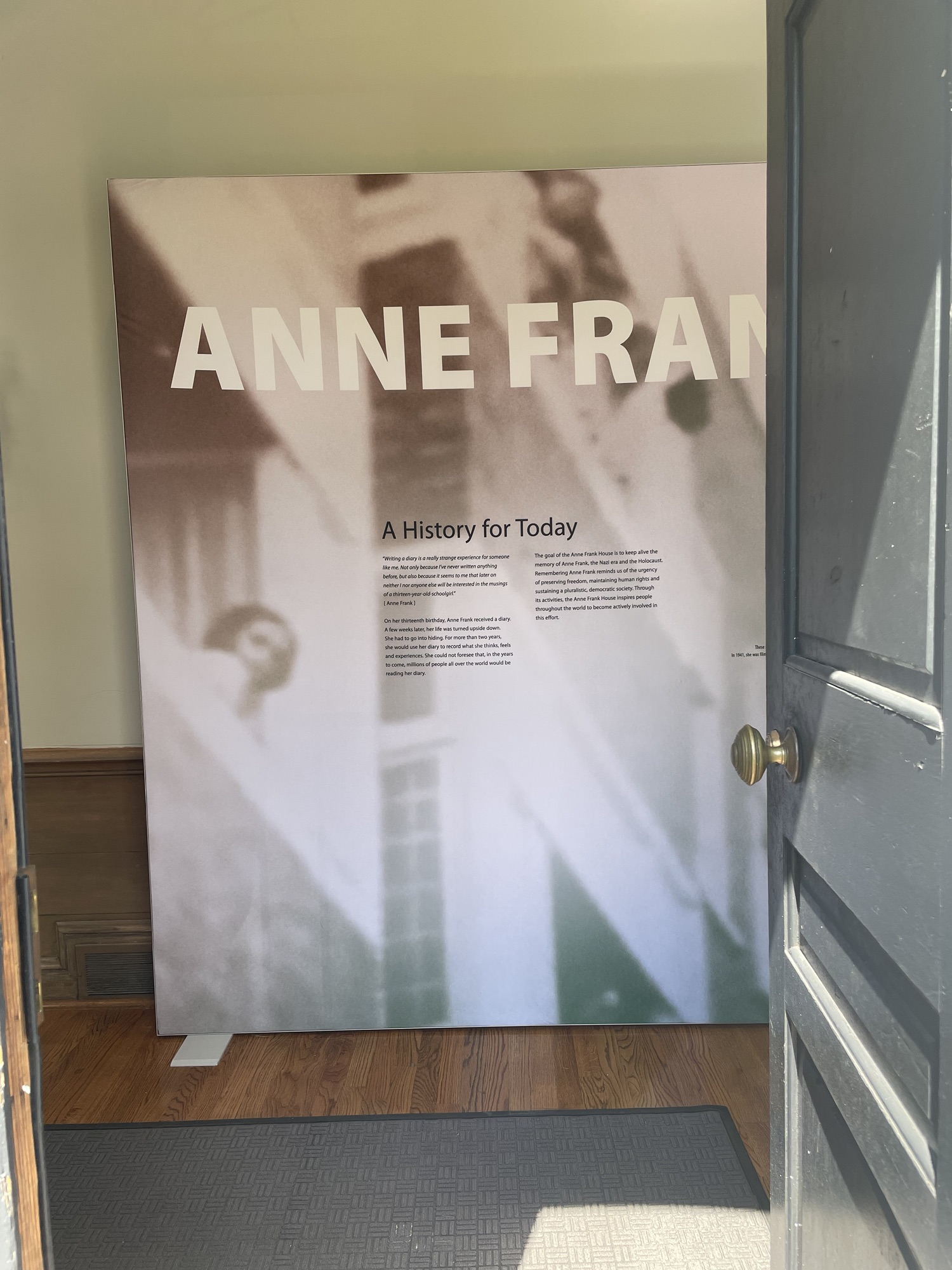
I never expected South Carolina would be the home of one of four Anne Frank Centers in the world, and the only one in the United States, in partnership with the Anne Frank House in Amsterdam.  I contacted the Center before our trip and was able to make an appointment to tour the exhibits.

So today, on October 7, 2024, I feel that I must remember the distant past of Jew hatred as we mourn the one year anniversary of the vicious attack on Israel.

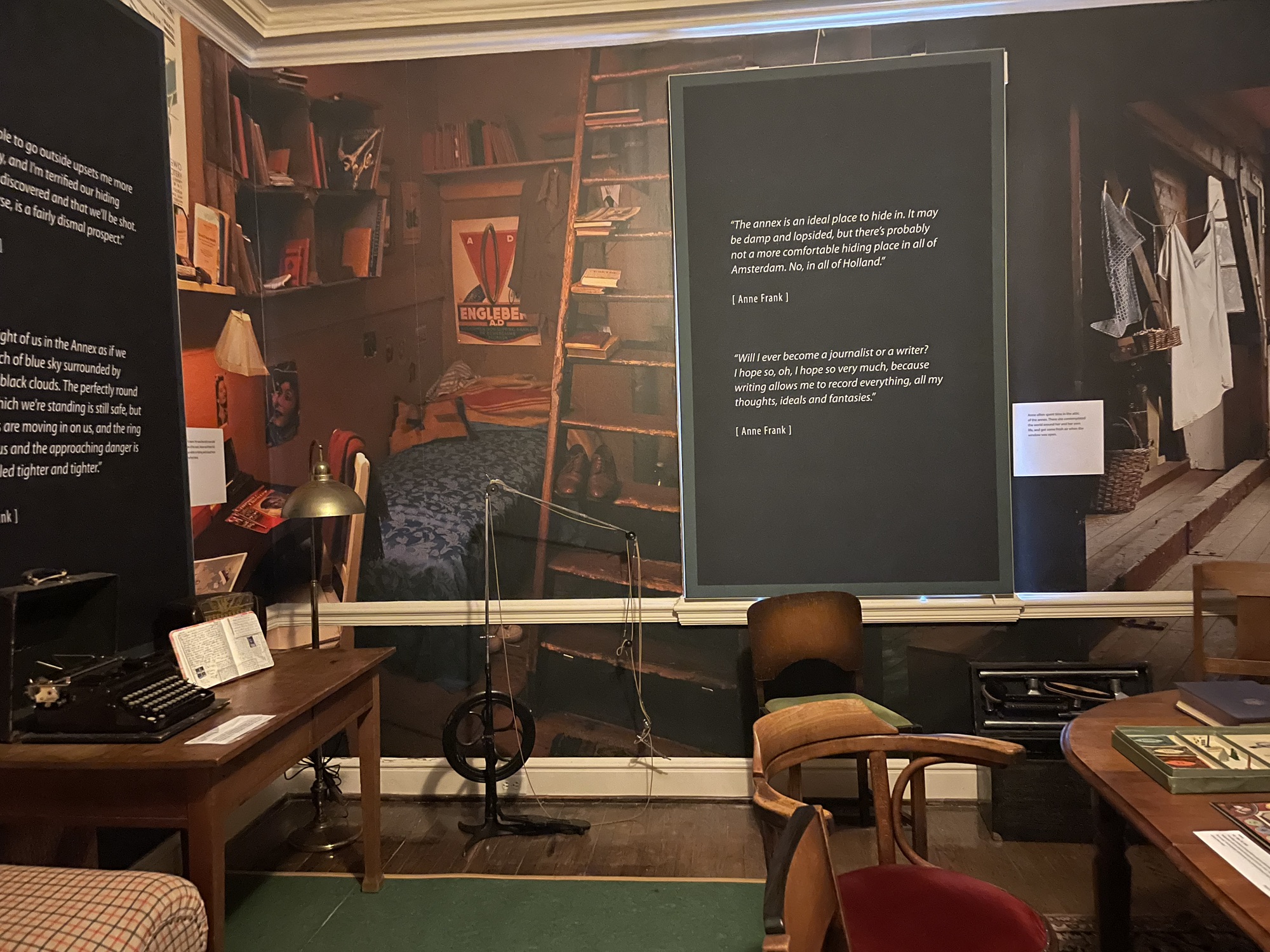
The Anne Frank House does an excellent job recreating the feeling of the hidden annex.  While touring the exhibit, visitors will enter a display of Anne Frank’s diary written in many languages on a wall of bookcases.  Not surprisingly one bookcase opens allowing visitors to enter a darkened room that helps tell the story of the Annex.  Having visited the Anne Frank House in Amsterdam, I was amazed about how this small display harkens to the feelings I had in Amsterdam.

Besides the onsite programs, the Anne Frank House also offers traveling exhibits that can be sent across the USA.  They teach local high school or college students to serve as the guides to the 32-panel exhibit. I would love to see this exhibit in my home community!  Our tour at the Anne Frank Center was led by a college sophomore who was doing her first tour for us and her dad!  Emma did a great job. I could see that she related to the world of Anne.

Going to the Anne Frank Center and remembering her words of hope help me see hope in the situation that we have in the Middle East today.  There are good people who want this violence to stop.  Who want terrorists to end their campaign of hatred.  No one wants innocents, like Anne Frank, to suffer or die.  So I have to believe there will be peace.

My feelings of hope continued in Charleston where we visited the 275-year-old Kahal Kadosh Beth Elohim synagogue, founded in 1749. It is the oldest synagogue in continuous use in the United States. The current building dates from 1841, after a fire in 1838 destroyed the second building.

 Originally a Sephardic synagogue with the bima in the center and balconies above for the women, it changed in 1879, when the bima moved to the front and women joined men in siting for services. Later, after the earthquake of 1886, the balconies were destroyed and were not replaced.

Standing in a building that has housed a congregation since 1840, almost 190 years, and knowing that the congregation itself is 275 years old gives me hope. This congregation has survived the Revolutionary War, Civil War, WW1, WW2, antisemitism, the creation of the State of Israel, the rise of the alt right in the south, and more.  The fact that it continuous to be an active congregation gives me hope.

Today, I remember my feelings on October 7, 2023, when my daughter called me from Israel to say she and her husband were okay, but that the situation was very bad. The entire country was in shock.  Everyone knows someone who died.  For me, although I knew no one, I do know people who lost family members and friends.  The past cannot be forgotten. However with education, like that of the Anne Frank Center, and endurance like that of Kahal Kadosh Beth Elohim, I believe we can look forward with hope to the future.

https://sc.edu/study/colleges_schools/education/partnerships_outreach/anne_frank/index.php

https://www.kkbe.org

The Mysterious Loretto Stairs and Other Unusual Sites in Santa Fe

17 Jun

Santa Fe is a city of many diverging elements coming together to create a unique city. The art of the Navajo, Apache, and Pueblo people; and the multitude of art galleries and jewelry stores; the churches and religious sites; the unusual round State Capitol building; and the original adobe buildings; the restaurants; the museums, all combine together to give the visitor and the residents a place that stimulates the senses. 

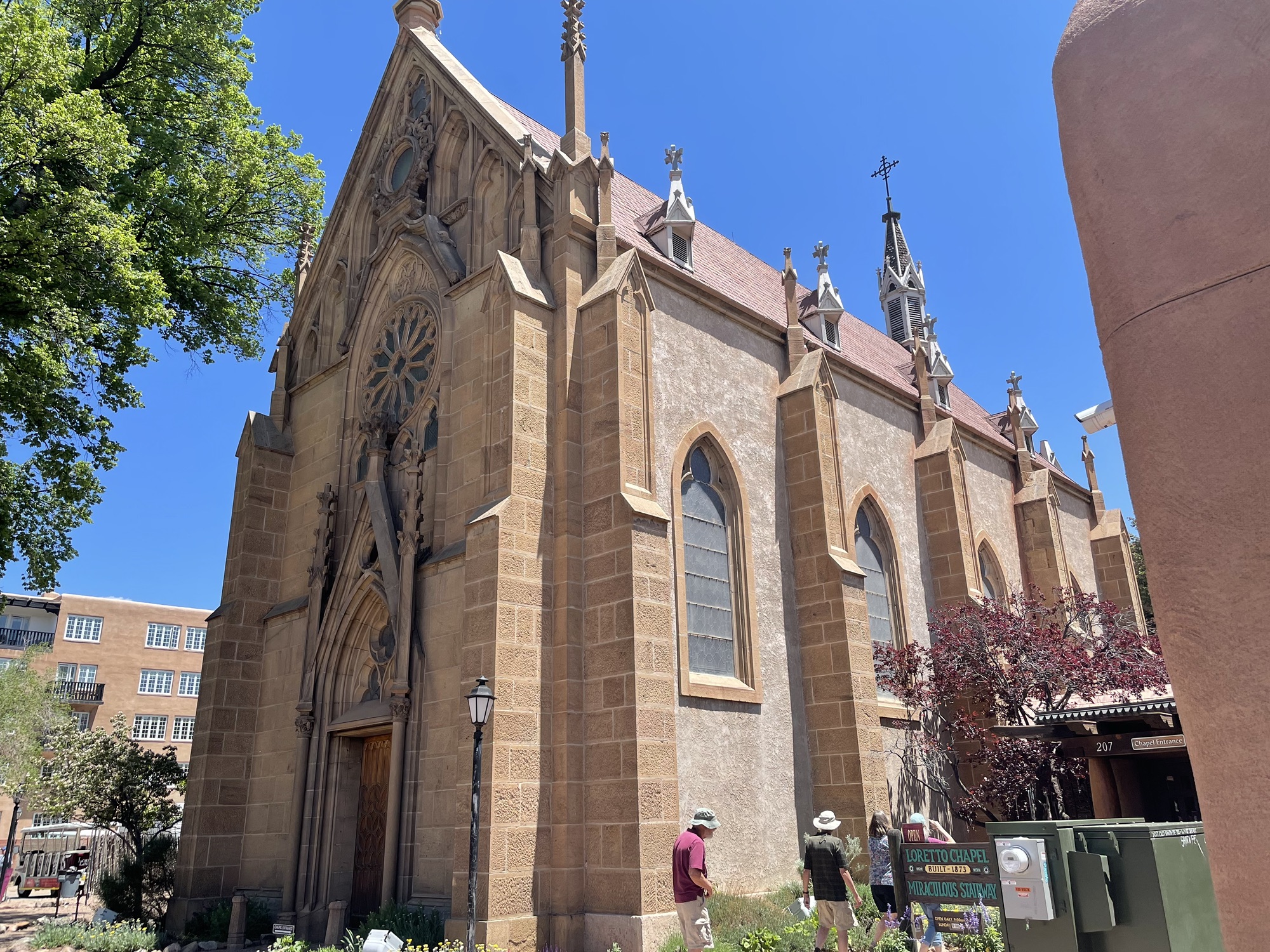
My husband, who is enamored with AI, asked what would be the best 2.5 hour walking tour of Santa Fe. Its description of four places became our morning walking tour. None of these places take long to visit, unless you want to stay longer.  For this ‘tour’ you will be walking up hill on the Old Santa Fe Trail Road, which is right by the La Fonda Hotel downtown. Finally, you can always take your water bottle in with you.

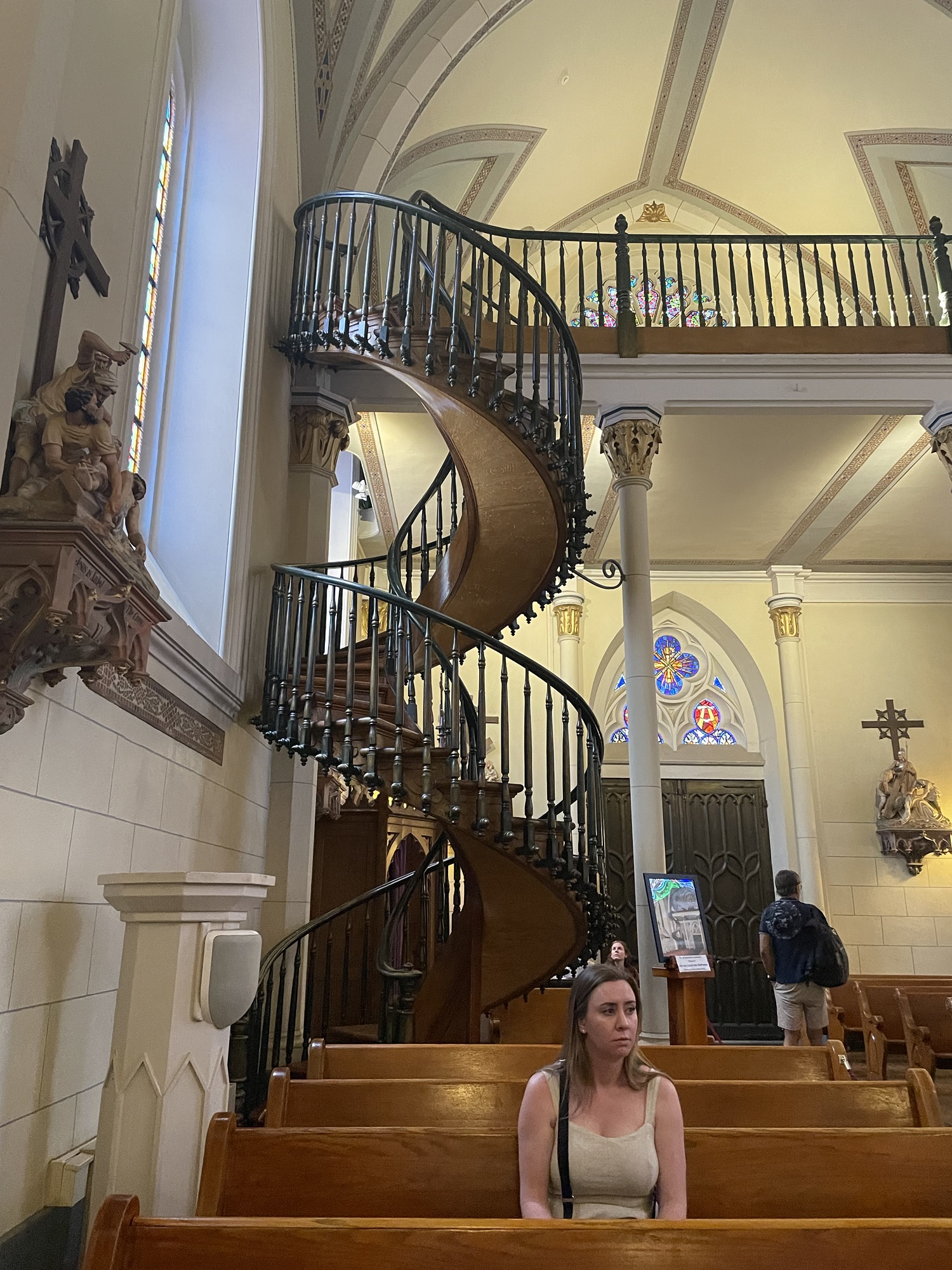
The Loretto Chapel and its mysterious, mystical stairs is worth the visit.  The chapel was once part of a girl’s school and was designed by the same architect as the Santa Fe Cathedral. The mystery of the stairs starts when the architect died before the staircase was built, the nuns were distraught and prayed for help.  An unknown carpenter appeared, built the stairs and disappeared. 

The staircase is a lovely gem to see, whether you believe that it was built by St. Joseph or not.  How it suspends and curves upwards without support is astonishing.  And it is beautifully carved.  But besides the beauty of the stairs, the chapel itself is lovely.  While you sit and visit, you listen to the story of the stairs.  This is no longer a consecrated church, so religious services are not held.

Two blocks further up the hill on Old Santa Fe is East De Vargas Street.  Turn left to walk through a narrow road to the Oldest House in Santa Fe, but I recommended you first go across the street to the San Miguel Mission Church. 

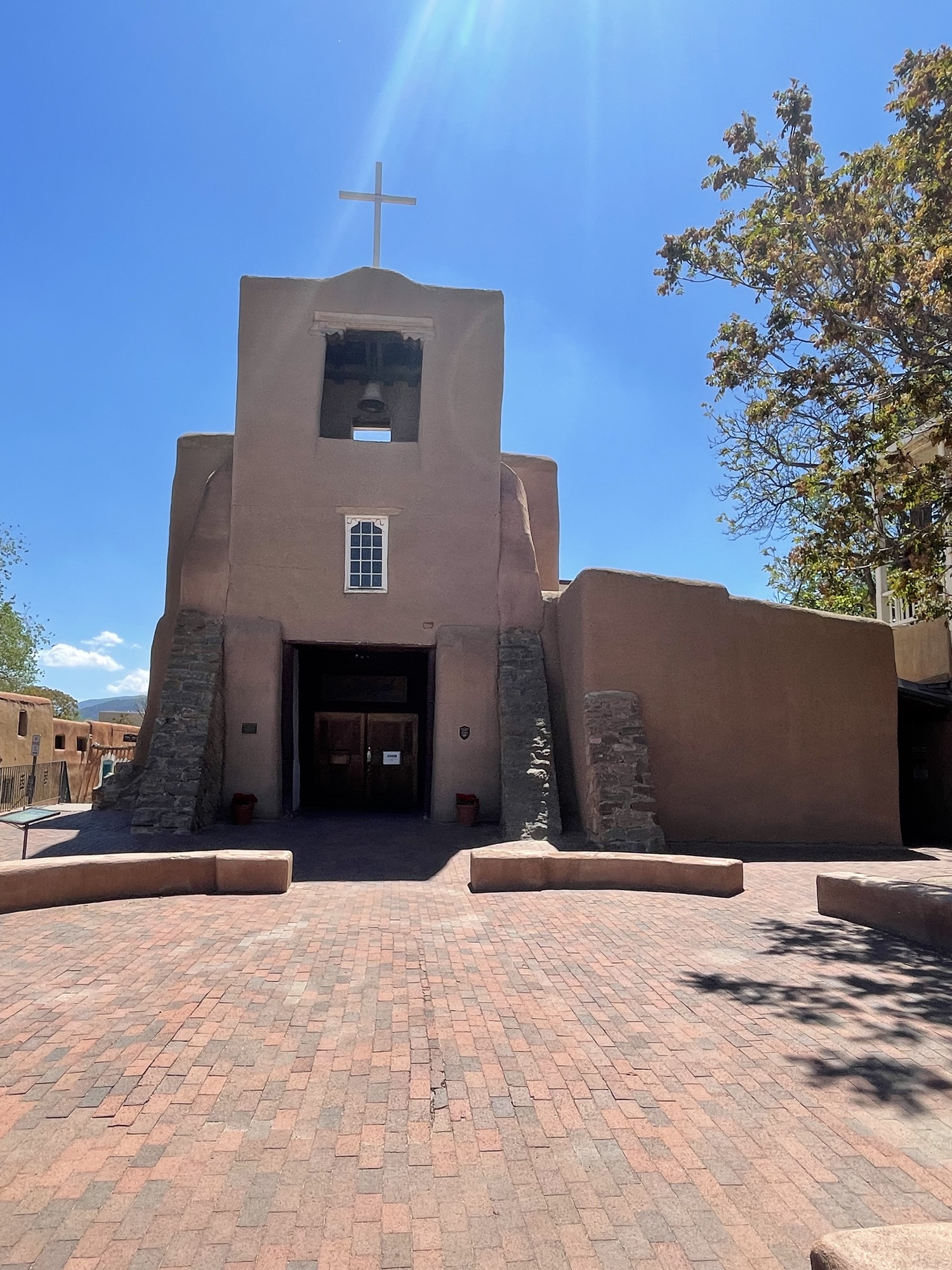
The San Miguel Mission Church sits on a hill on the hill. Probably a good place for watching what is going on around you. It is the oldest Catholic Church in the United States. People can attend mass on the first Sunday of each month.

It is not a big building, but it has a big history.  First built soon after the Spanish came into Santa Fe in 1598, the mission church was used by the Franciscan priests who came to New Mexico with the Spanish to convert the indigenous peoples and serve the Spanish settlers.  It was partially destroyed in 1680 when the pueblo peoples revolted against the Spanish and the church for the cruel treatment.  They burned the roof, destroyed some of the walls, and killed the priests.  The church was rebuilt when the Spanish returned about 30 years later. 

When you walk in there are two artifacts to notice. The first you see on the — the Victory bell that was brought from Spain. The bell had a long history that included helping Spain expel the Moors.  The story is whenever the bell rang, the Spanish had a victory.  The bell came to New Mexico for a Spanish family. But after the Pueblo Revolt, when the Mission was rebuilt the bell was put in the church belfry.  The second item hangs on the wall to the left. It is a 300-year-old replica of the painting of Our Lady of Guadalupe from the Mexico City Basilica.

The church itself is small and simple. The wooden ceiling is wonderful.  After you finish viewing the chapel and listening to the talk by the docent, please go down the stairs to the second room.  There are photographs that show the building from different angles, as well as two photos of the oldest house before it was restored.

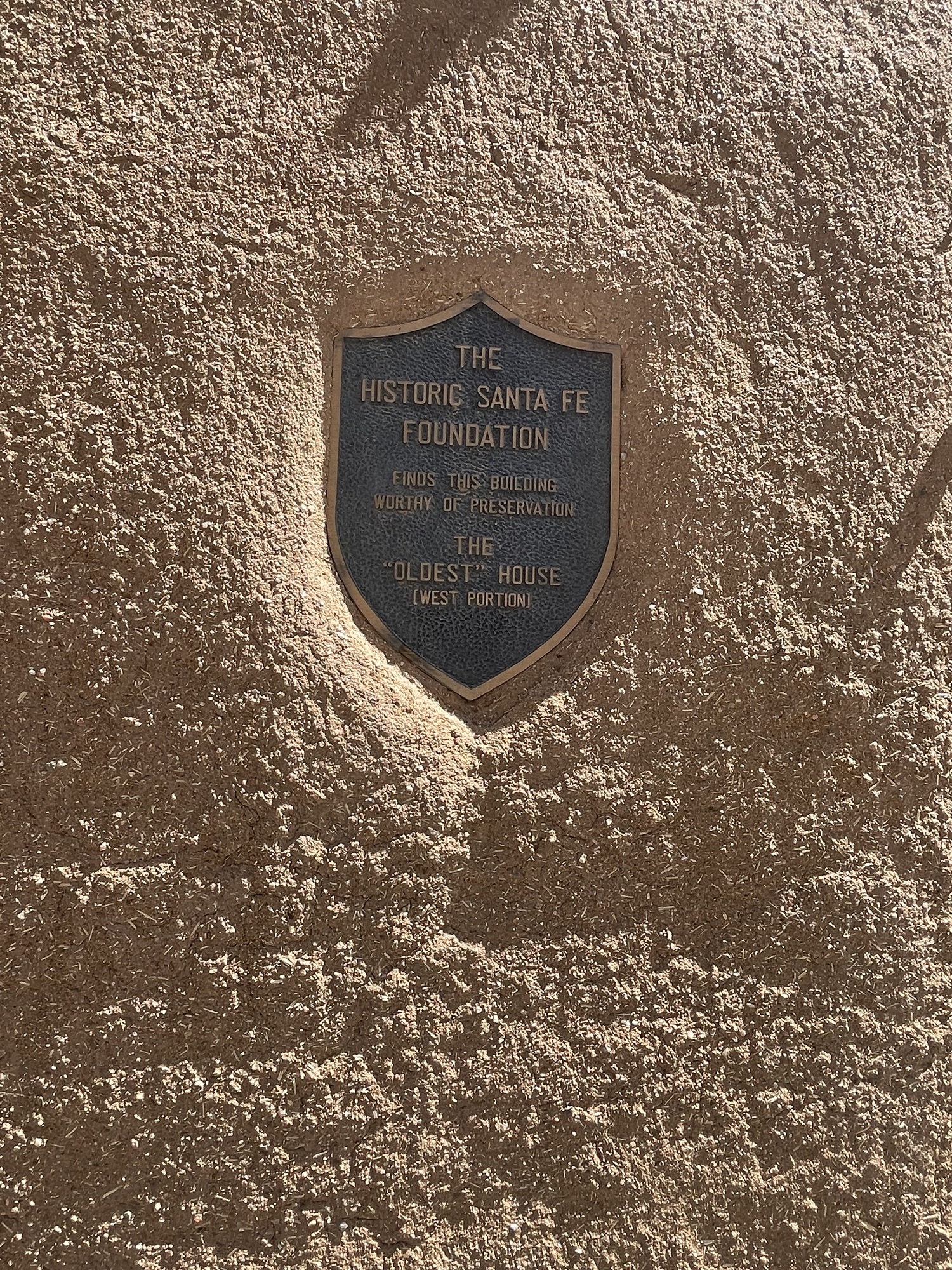
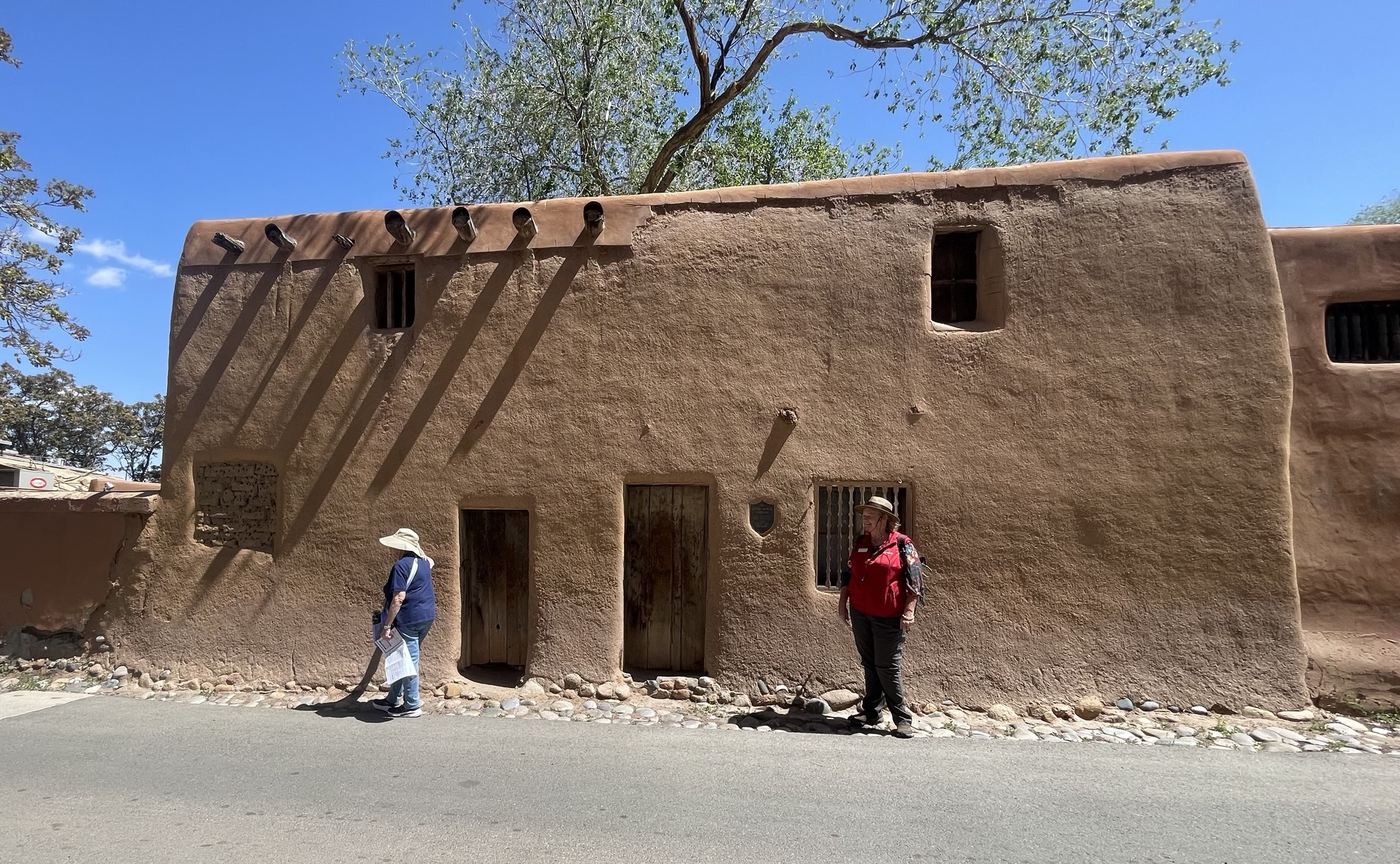
Now you can go out of the chapel and down the steps to the side which lead to De Vargas Street.  Immediately across the street is the oldest house. The house, from the 1600s, is built on the remains of a home in what once was part of a pueblo It is attached to a gift store.

 You go into the store and to your left to enter the house.  There are just two rooms to see and they are tiny. But as all sites, it is worth seeing to understand how people lived.  If you are a bit claustrophobic, try to go when there is a not a group going in.  It gets tight.

When you are done at the oldest house, return to Old Santa Fe Trail Street and continue past the San Miguel Mission. Turn right on Paseo De Peralta.  You will soon come to the State Capitol building.  It is unusual in that it is both round and NOT built in the pueblo style.  (Which is what I thought it would be!). When we went there was an art show on display. But even if it is not there, it is worth going in to see the rotunda and the lovely architecture.  You basically walk in the main door and go out the back door getting you back to E. De Vargas street.

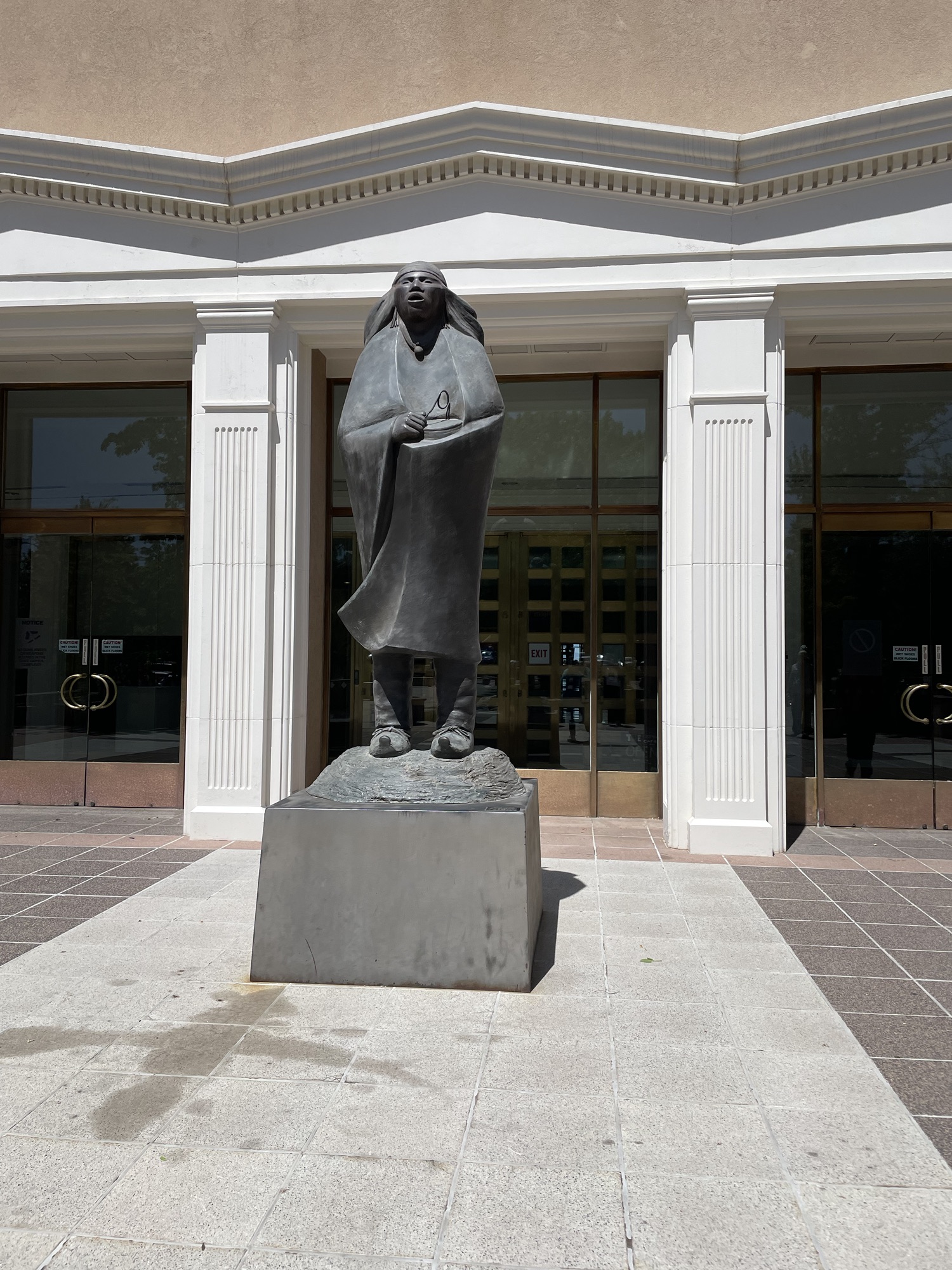
After this part of our tour, we went for lunch!  There are many, many excellent restaurants in the Plaza area.  So go and enjoy.  Also while walking around you will see many galleries and statues/art on the sidewalks.  Take time to enjoy them.  You might want to take a break and rest after lunch or do this next part in the morning.

Martyr’s Cross and Marcy Fortress.  There is a way to drive to get closer to this site, but my husband and I did not have a car, so we walked.  It is located on Paseo de Peralta, the same street as the capitol building, but in the other direction. Depending on where you are staying will determine how you go.  But since we stayed near the Cathedral, we took Palace Avenue to Paseo de Peralta and turned left. You can see the cross on the hill and just head in that direction!

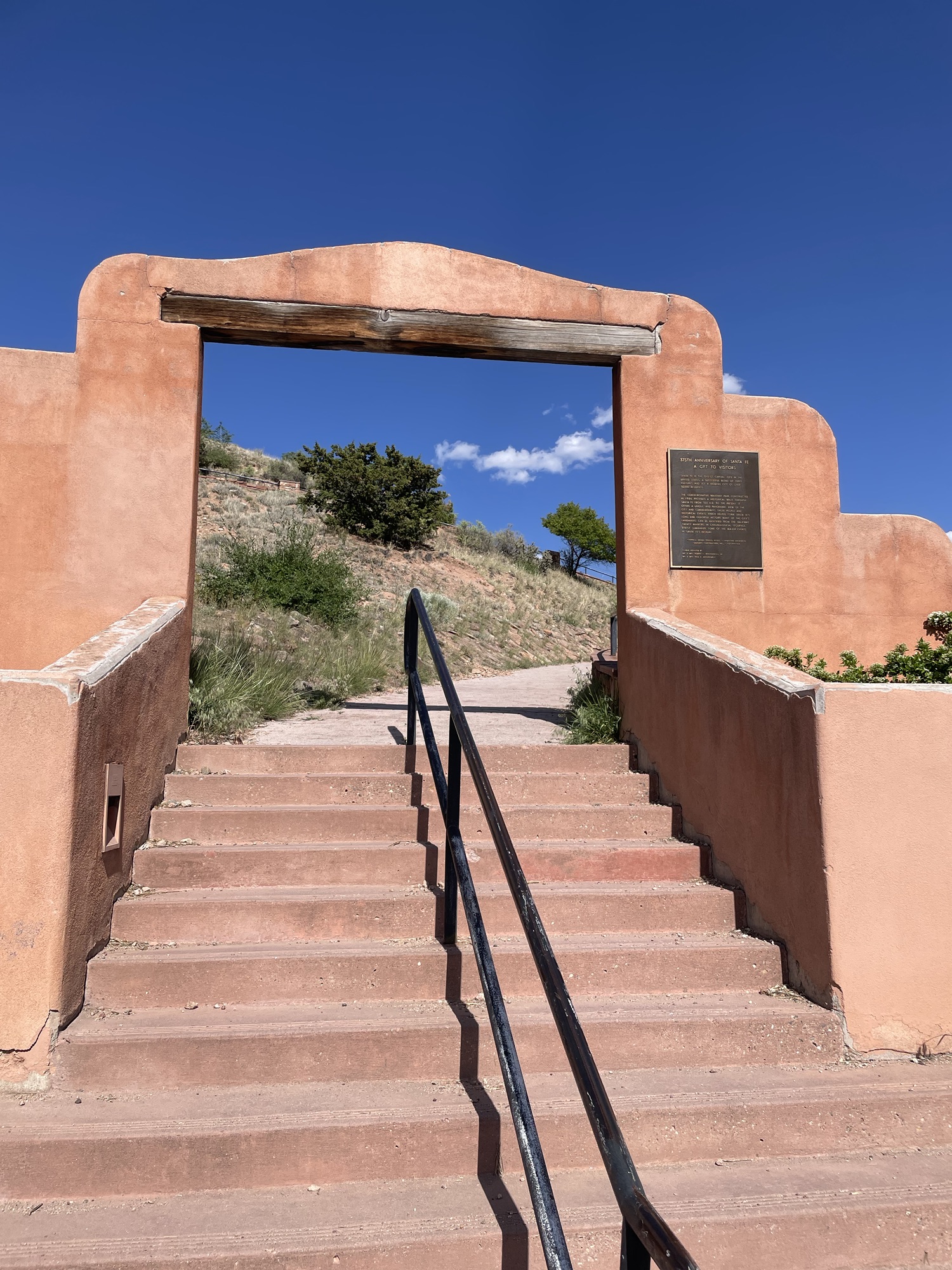
The entrance to walk up is marked by an adobe sign and arch.  You are going up hill.  There are rest areas where you can sit at the ends of each switch back.  And take water!! It is dry in Santa Fe.  The walk up was fun. Along the way are plaques that tell the history of Santa Fe, and as you go higher the views get better and better.

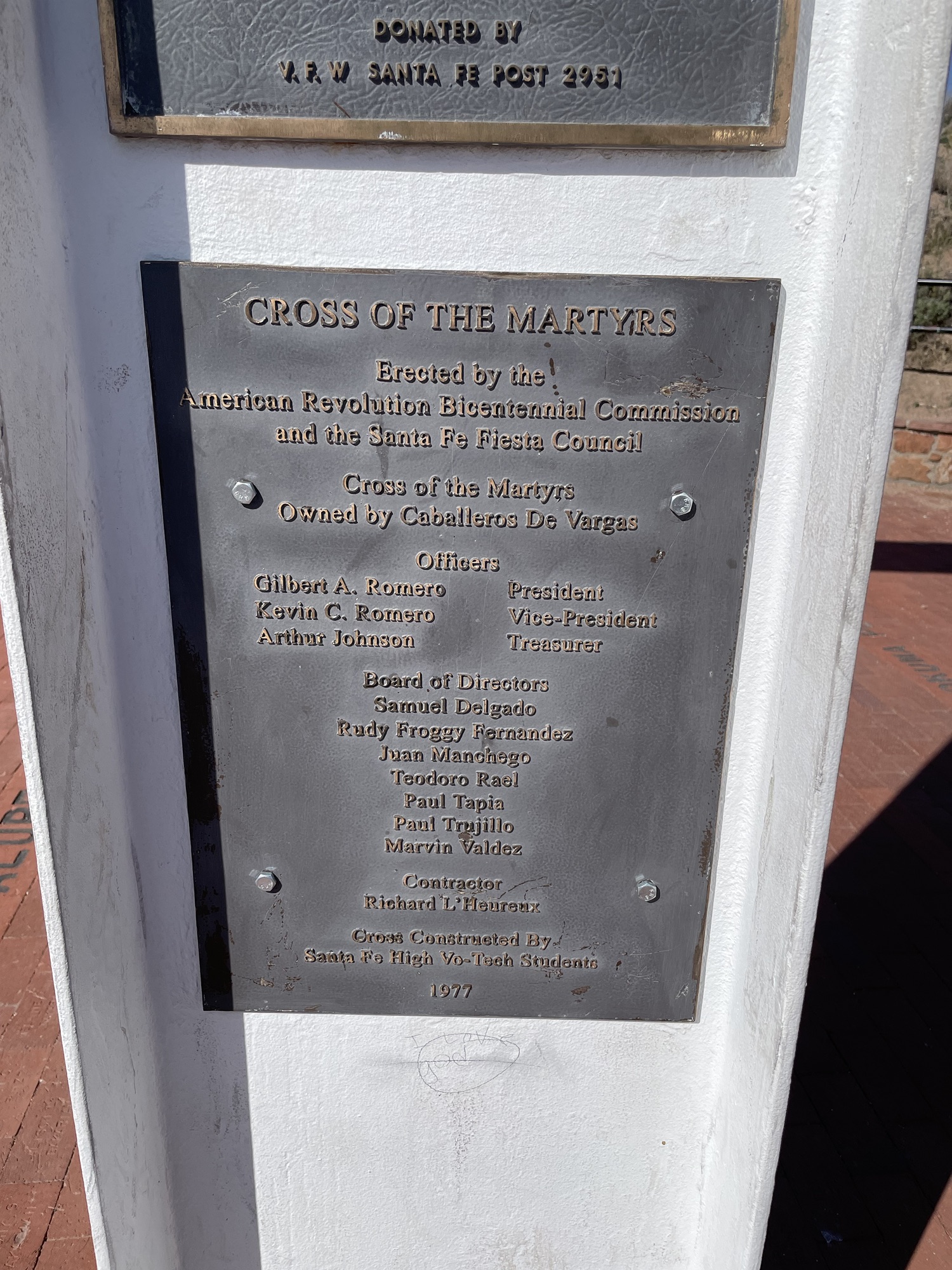
The Cross of the Martyrs honors the 21 priests and 380 Spanish settlers who were killed during the Pueblo Revolt  in 1680. The first cross was erected in 1920s. Over time it was replaced twice, the last time  in 1977 with a metal cross.

To be honest, we did not continue up the path to see the ruins of Fort Marcy.  It had been a long day, and we still had to walk about a mile or so back to our hotel.  But you can easily get to it. But that path is not paved.

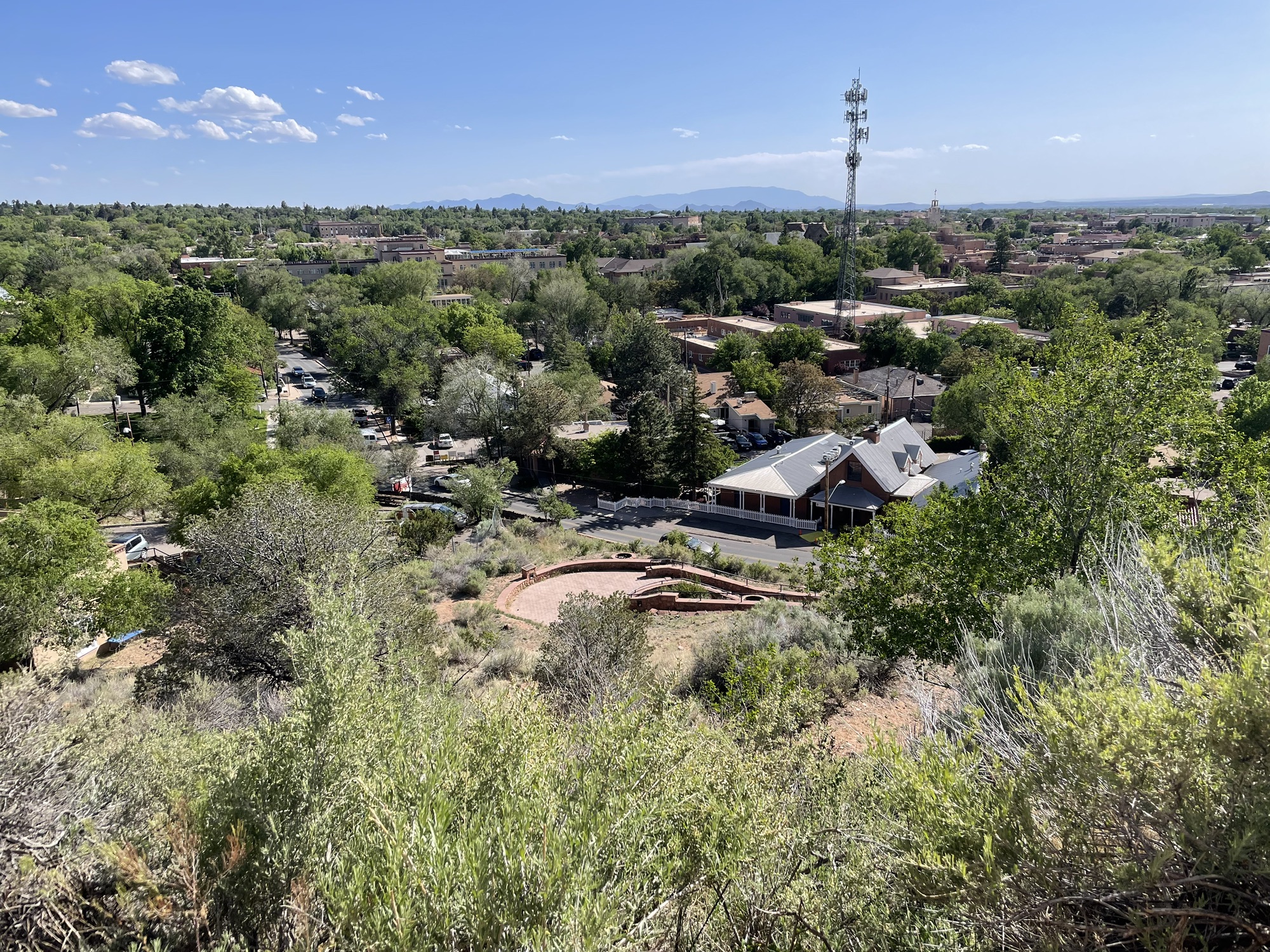
However, we did get some fantastic photos of Santa Fe from the top.

https://www.lorettochapel.com/

https://www.sanmiguelchapelsantafe.org/

The Great Rio Grande River Gorge and Taos Pueblo

6 Jun

I wasn’t sure what I would see when we arrived at Taos Pueblo.  Our tour for the morning had been cancelled due to a funeral, but fortunately they were able to reschedule for the afternoon.

Before we even arrived at the Taos Pueblo, we had already visited the city of Taos, where we had time to walk around, see some sites and eat lunch.  We chose to see the Kit Carson home. The most striking bit of information I found there was that Kit Carson’s first wife was Arapaho, as was his oldest daughter, and he had adopted three other native American children who had been orphaned.  These facts made it difficult to reconcile with the same man who was supposedly so cruel to the Navajo people.  However, there is some dispute on what he actually did for and against the Navajo nation. But I digress.

Taos the city, has a nice, small dusty plaza (due to construction), but after being in Santa Fe for five days, it paled in comparison. No matter, I was still glad we had a chance to visit it and see the sites.  After lunch I was ready for our next adventures.  I was not disappointed.

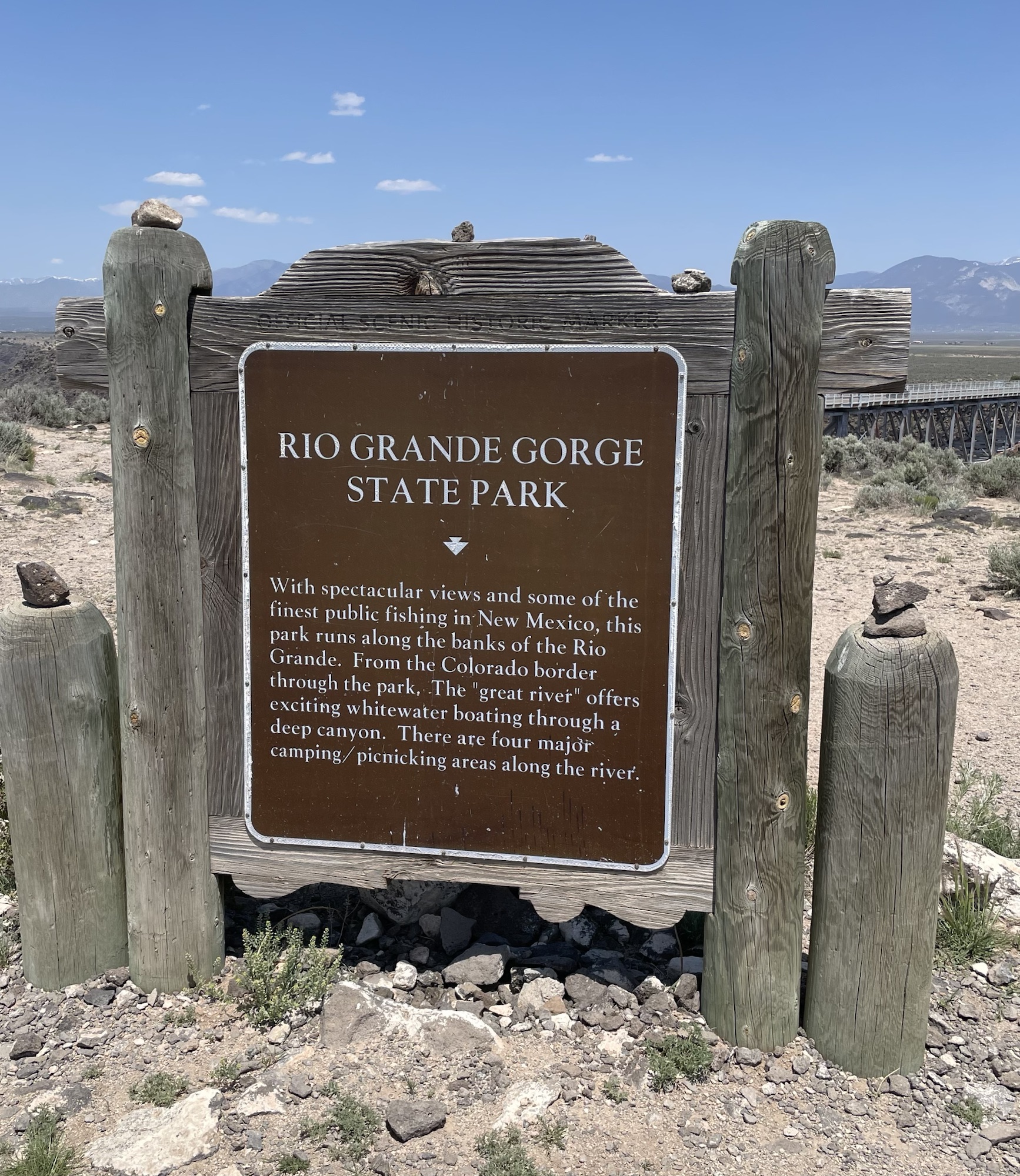
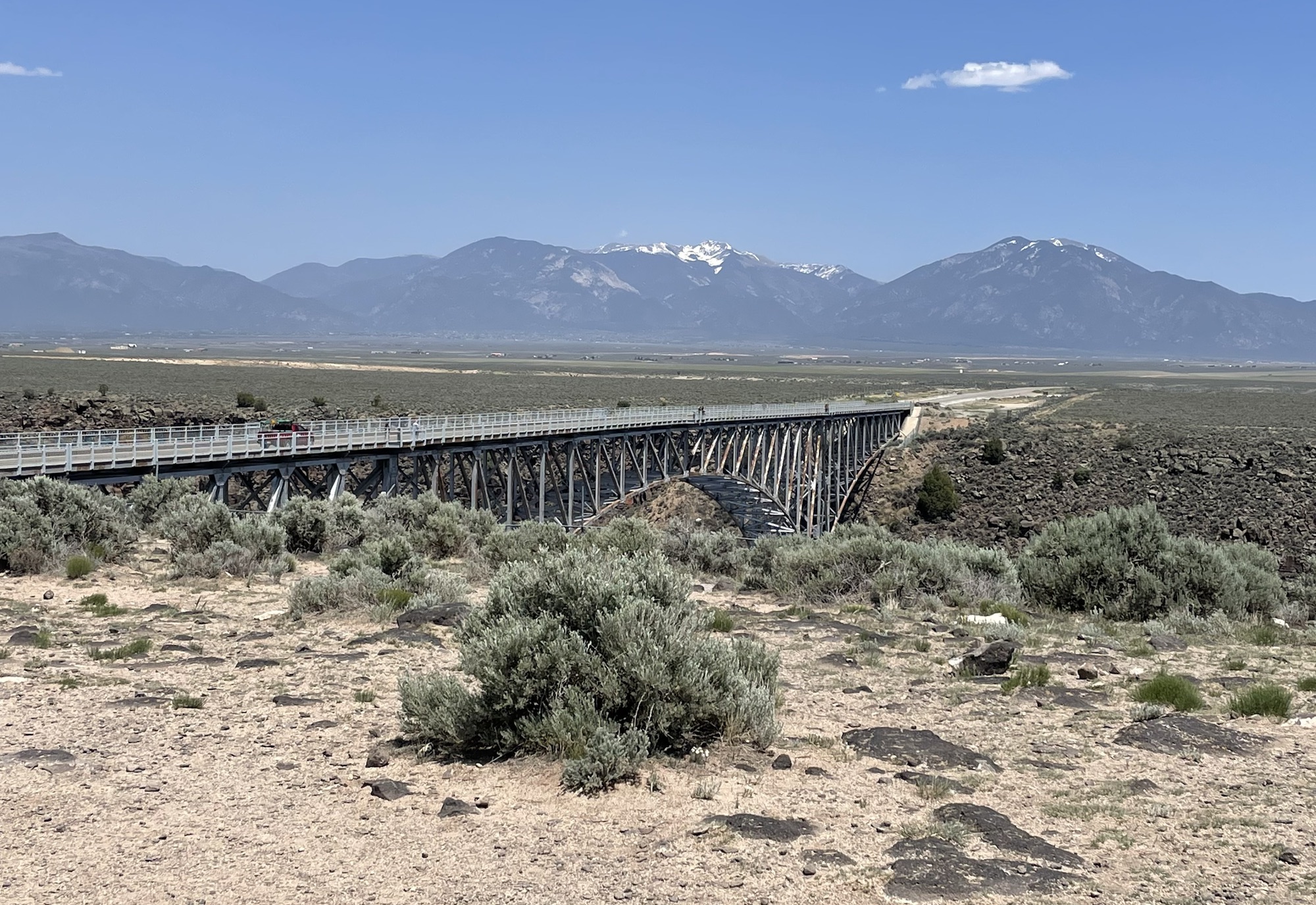
As we drove a bit out of Taos, our tour guide pointed out the flat area we were passing through.  It did look perfectly flat, until it wasn’t!  As I was sitting near the front,  I was among the first to notice a giant rift in the land.  A deep canyon, where at the bottom, ran the Rio Grande River.  Here it did not look so wide, but as we were 600 feet above it, who knows!  As we drove across the bridge, we were amazed that this gorge was here. 

The bus stopped at a overlook area, where others had also come to see the gorge.  Some were students drawing pictures of the bridge and gorge. Some were just looking across in amazement.  Others were shopping for art sold by native artisans.   My husband and I joined the group that traversed over some stones and the barrier to get to the highway and the bridge to view the raging waters from above. Wow! It was well worth going out to see it, even though it was not in our original schedule, making me glad that our trip to Taos Pueblo was changed to the afternoon.

After seeing the depths of the Rio Grande River Gorge, we traveled back towards Taos tothe Taos Pueblo, the home of the Red Willow People.   Since there had been a funeral, there were some places that were off limits. But the main areas of this World Heritage Site were open for us to see. 

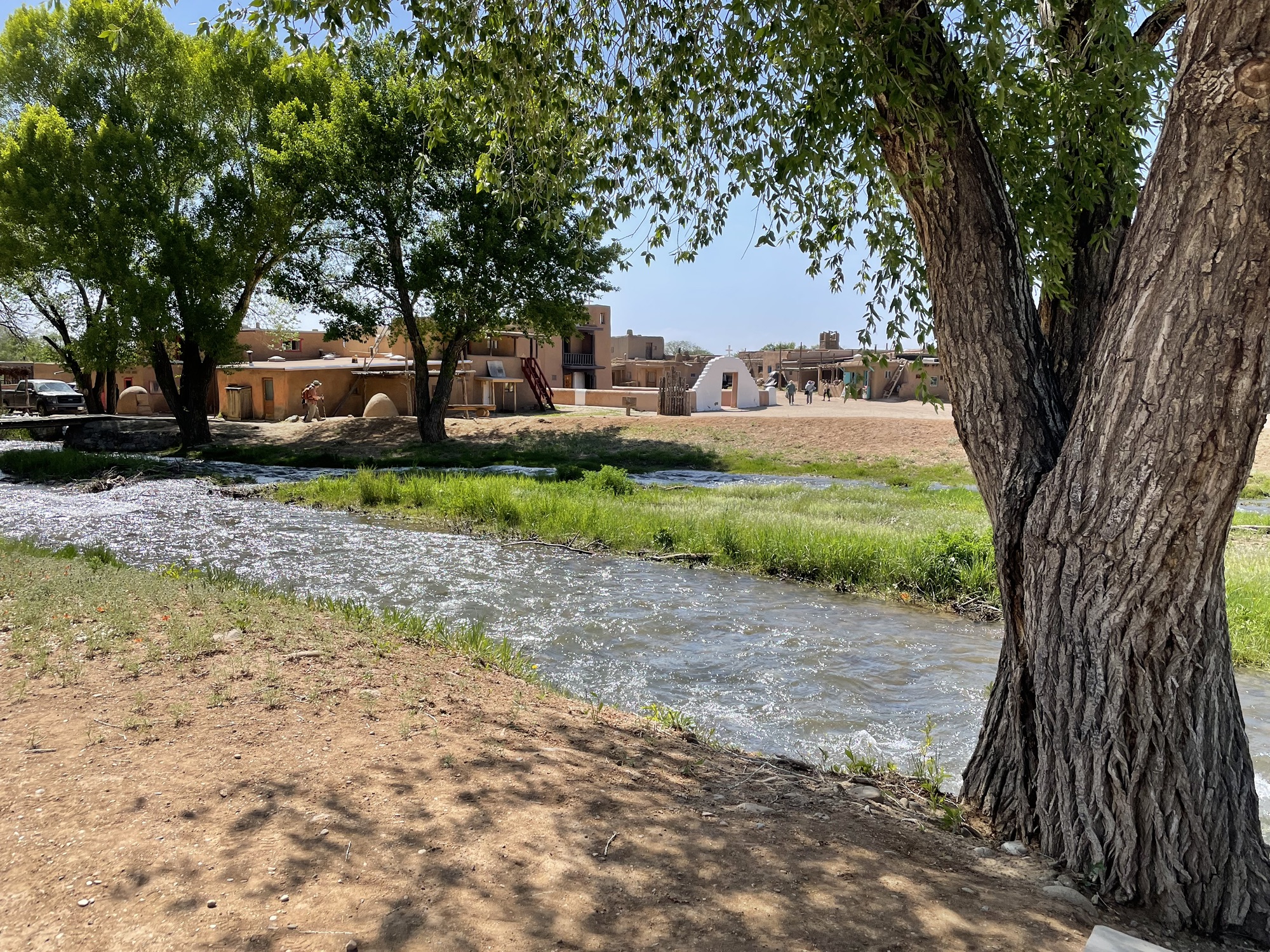
My first thought was ‘perfect setting. What an ideal spot to put a town, where a creek runs through it. With all the snow melt, the water was really running through it.  While most people took photo after photo of the North Pueblo and the South Pueblo, I took photo after photo of the water.  “el agua es vido.”  Water is life.

A young college student provided context for us.  Her family is a member of Taos Pueblo, and they still have a home the Pueblo, even though they do not live at the Pueblo full time.  Only 10-15 families actually live there throughout the year, with no running water, but the creek, and no electricity. These are part of the requirements of a World Heritage Site: no changes.

Our tour started in the Chapel.  We were not allowed to take photos inside.  But there were three things that I was surprised by.  First, it wasn’t a statue of Jesus above the alter, instead it was a statue of Mary.  Second, the decorations surrounding the niche holding her statue was a mural of vegetables, large green leaves. It was very peaceful.  Finally, there was a decorated coffin in the room.  Our guide told us 95 percent of the members of the Taos Pueblo were Catholic, the other five percent practiced the indigenous religions.  The coffin was to remind them that they were forced to convert and that many died.

In my mind this makes no sense, why practice a religion that you were forced into to following, while being such a painful past you keep a coffin in your church.  I even asked.  Her response was noncommittal, but in Taos Pueblo I have the feeling from the décor of the church that their Catholic practice is not exactly what they do in Rome.

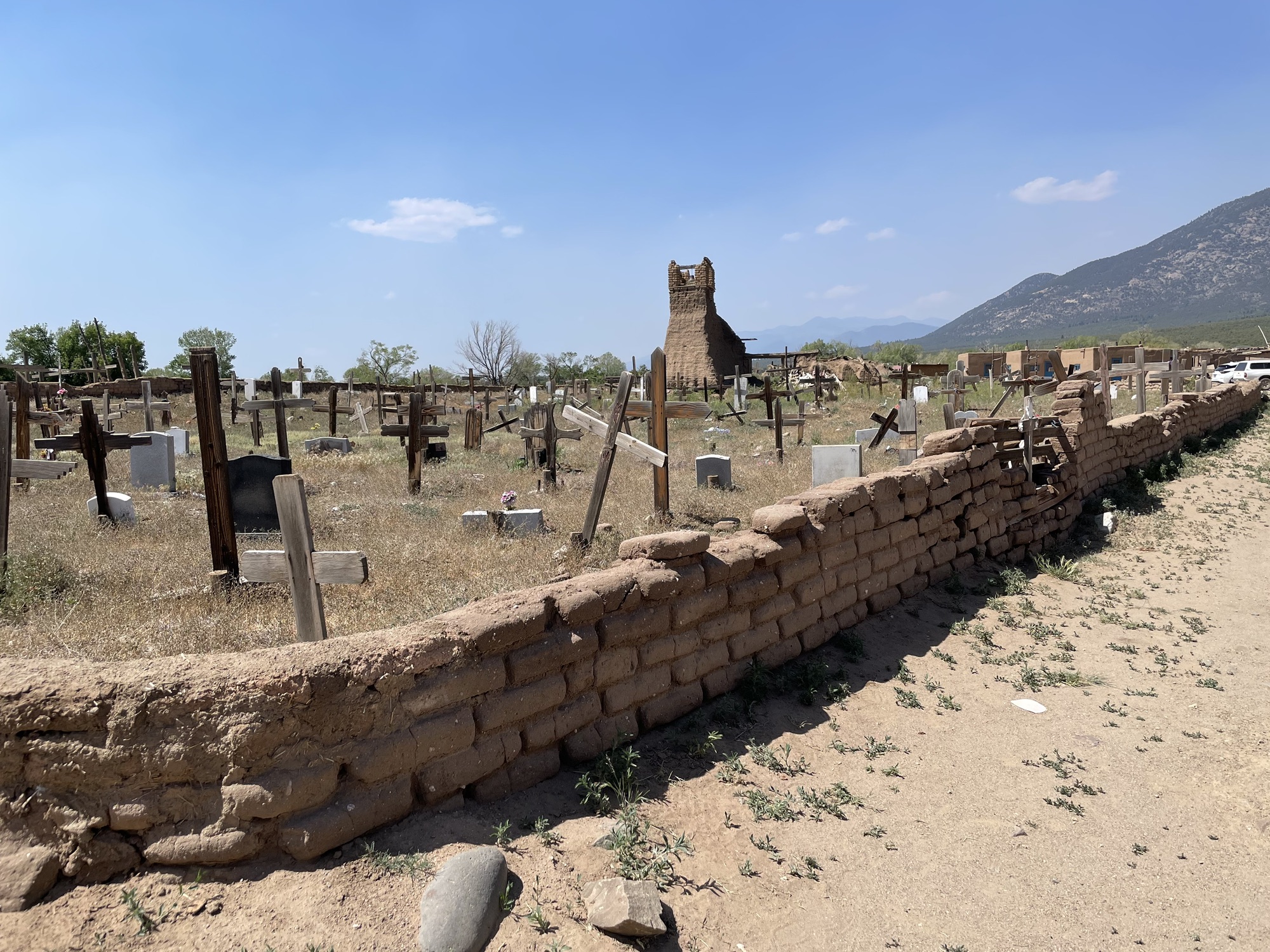
We learned the history about what happened in 1847, when women and children were gathered in the San Geronimo Church for protection from the US Army.  It did not protect them. The Army destroyed the church and killed about 150 people.  Not a good way to start off a relationship between the Taos people and the US government.  But we know that the US government and people were often cruel to the indigenous peoples of the USA.

Taos Pueblo should be seen to understand the relationship of the indigenous people with the Spanish of the early 1600s to the United States in the 1800s to the present.

For those interested in shopping, many of the homes are now storefronts for both food and art. But for me the highlight was just seeing Taos Puebl0 as it would have looked in the 1600 when the Spanish arrived and later in 1800s when the United States took over the New Mexico territory.

Home

Other blogs about New Mexico: https://zicharonot.com/2024/06/09/santa-fes-multitude-of-museums/

Illinois Holocaust Museum: A Response to Jew Hatred

12 Dec

During Covid, I tried to do as many activities that I could from the confines of my home.  I took online classes, I attended family life events, I even toured museums and their special exhibits.  One of the best ones I toured was the Ruth Bader Ginsburg exhibit at the Illinois Holocaust Museum located in Skokie, Illinois.  So when I knew my husband and I were going to Evanston, Illinois, for a wedding, I put visiting this museum in person at the top of my list.  It did not disappoint.

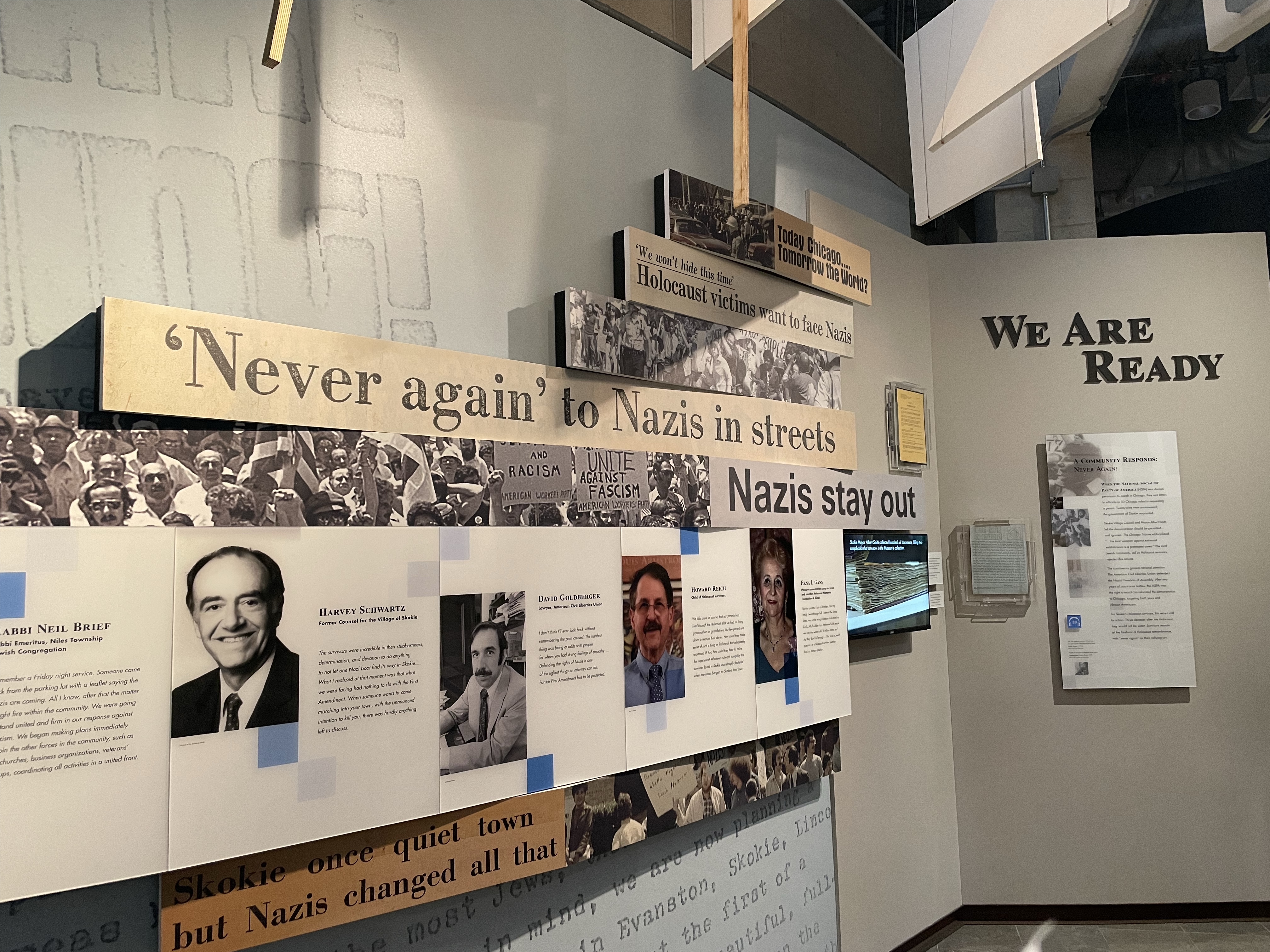
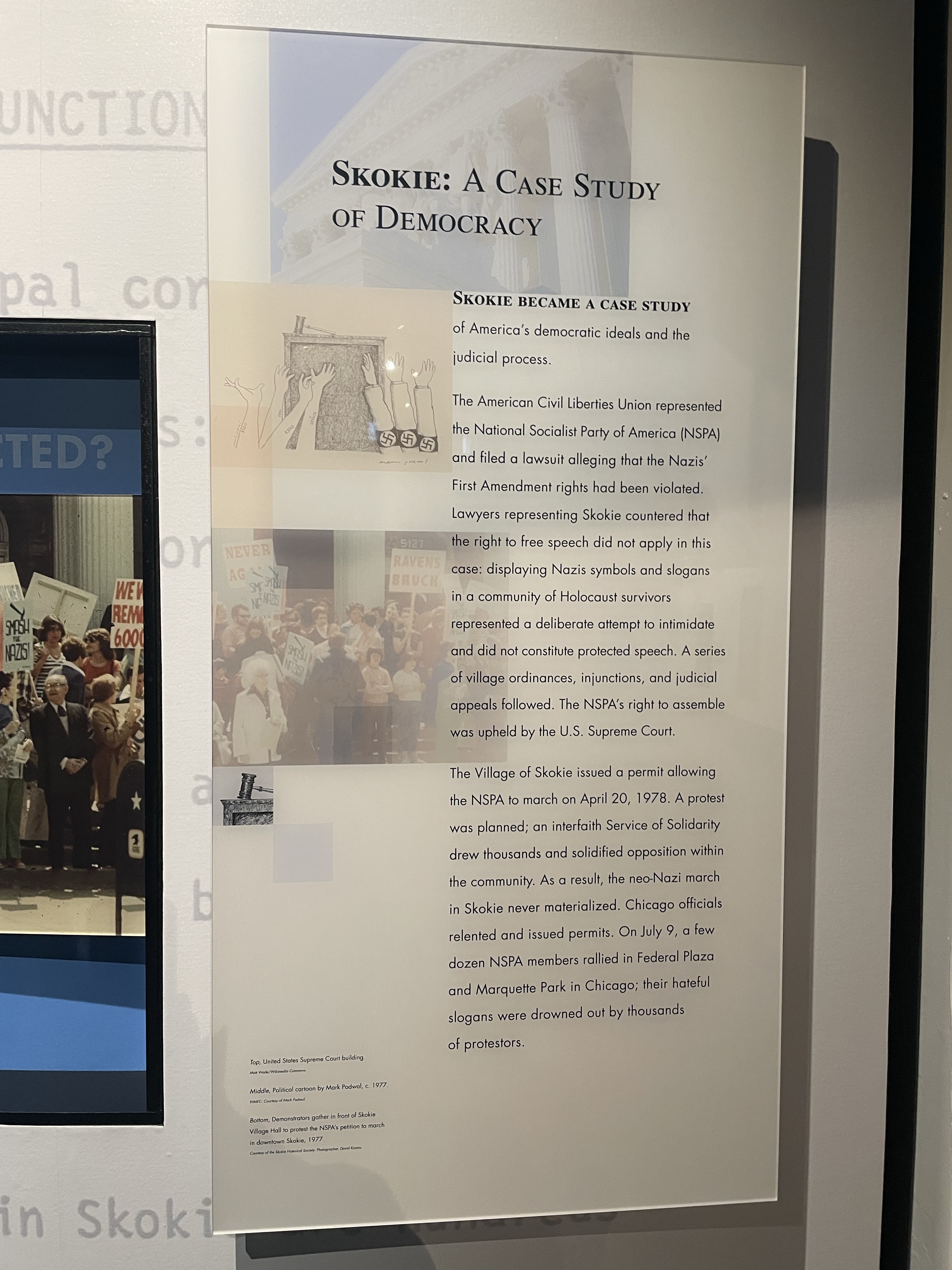
The museum opened in 2009.  It was a work in process for 40 years after the Skokie Jewish community was the object of a neo-Nazi group who decided to march through Skokie, a suburb of Chicago that is home to many Jewish residents.  The Jewish community started with a small space.  But their aim was to fight against anti-Semitism and hatred through education.  It looks like they are succeeding in their mission. 

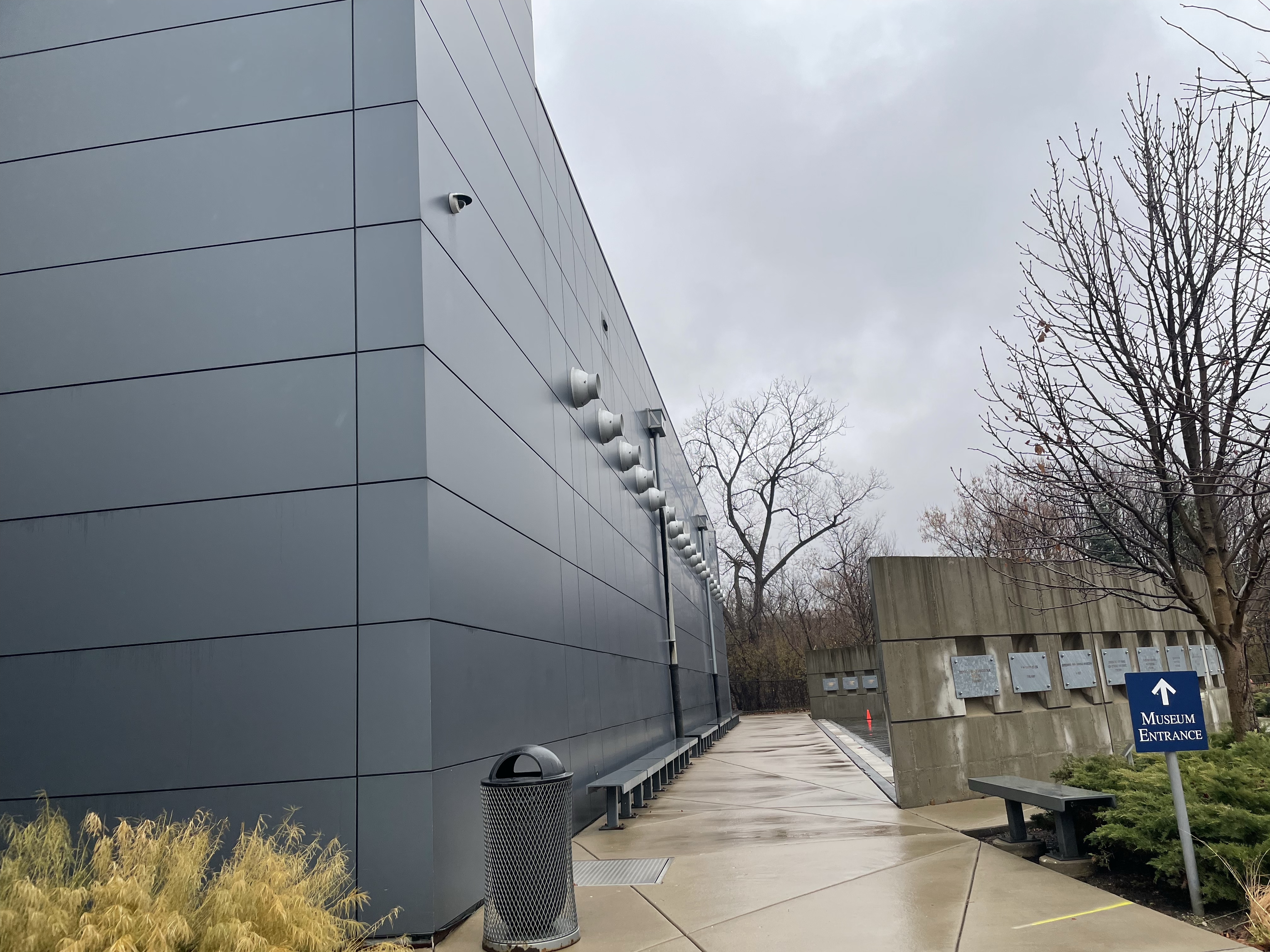
The Illinois Holocaust Museum is worth the visit. It was designed by architect Stanley Tigerman. The building is made is to bring the visitor through the darkness of the Shoah and then back out to the light. As we went through the exhibit we could see this change. The entrance to the exhibit is dark and moody with narrow halls lined with photos, videos and memorabilia. But by the end, when we learned about the resistance and the survivors, the light increased.

While we were there on a Friday morning, there were four different school groups also going through the museum with docents.  Every so often the group would fill the space available, so we would stop to hear the discussion.  In this time of great turmoil and rise of Jew Hatred, seeing these students and their teachers learning about and basically experiencing what happened was important. 

There are many short films/videos and photographs throughout the museum that were taken by the Nazis during their killing spree as well as films taken after the war by survivors and rescuers. 

The films are difficult to watch.   I saw several students holding their hands and sweaters over their faces as they tried to block the view. I did not want to see it either, even though I have seen these images or ones like them many times.

But this time, I imagined the children on October 7 trying to block the view as they saw the terrorist of Hamas reenacting the hatred of the Nazis and they saw their loved ones murdered and waited for their own deaths.  It created harrowing moments for me.  I envisioned being held hostage by Hamas underground as if in a camp barracks waiting without food and little hope.

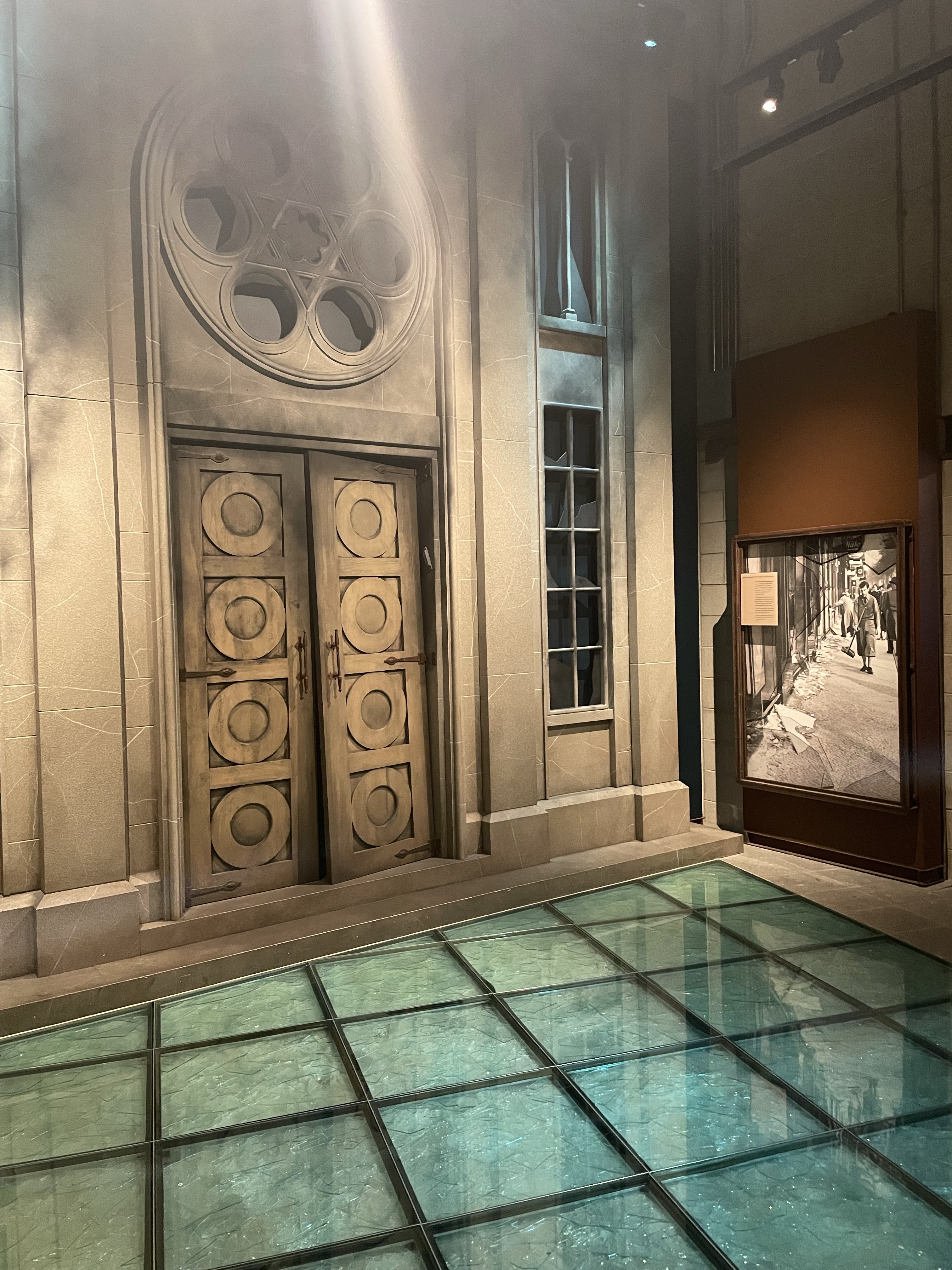
The Holocaust exhibit itself Is well thought out and takes you through all the stages of the Shoah.  The moment I saw the Krystal Nacht exhibit, which has a clear floor you walk over with shards of glass underneath, in front is the edifice of a synagogue with broken windows, I knew exactly what you will see next.  You can walk into a real cattle car from 1930s Europe.  It is an eerie feeling to be standing in that darkened wooden container and think about what it was like for those who were stuffed in and perished.  This is not a museum for someone who wants to avoid the past.  It puts it right into your vision.

After you weave your way through the seemingly endless horrors of the Shoah, you see a small exhibit about what happened when the Nazis came to Skokie.  It puts into ‘context’ what is happening now throughout the USA on college campuses and in some cities.  And I will say that calling for the annihilation and extermination of any people is always wrong. No matter what a college president says.

This is emphasized with the movie at the end that discusses both the genocide of the Jews and the continued times others have been targeted like the Tutsi people in Rwanda. We sat with two student groups as we watched the film.  It was not easy to watch as people testified about what happened to them during this more recent horror. Many of the students lowered their heads.  I think I spent as much time watching the students as I did watching the film.

After we finished the exhibit, we went to the Hologram theater where we spoke with the Hologram of Pinchas Gutter.  This is an excellent way to learn about the Shoah.  Those brave survivors who spent a week being interviewed and videoed while they told their story have created a way to keep the memory alive. 

The museum is not all gloom and depression.  There is the good of those who survived.  But also when we were there the special exhibit was about delis, “I’ll Have What She’s Having” The Jewish Deli.  It was a great way to wash away some of the somber emotions we were having after going through the Shoah. 

As a teenager and college student, I worked in a Jewish deli.  So for me this was especially joyful as I remember my time behind the counter making sandwiches, cutting lox, deboning white fish and making catering trays.  I would almost smell the corned beef, feel the texture of sable fish as I prepared some for a customer, and felt the smooth taste of a potato knish in my mouth.

It was good to end the visit on an upbeat note. But throughout it all I remembered that this museum was founded in response to Jew Hatred. Once again, we are experiencing a major rise Jew Hatred throughout the United States and the rest of the world. There are many who support us. However, when I look at college campuses, I know the work to end anti-semitism and Jew Hatred is far from done. What will be our response globally? In Skokie a museum was created. I am not sure it is enough.

We Couldn’t Go To Israel: Road Trip To Madison, Wisconsin

20 Nov

Since my husband had over two weeks off for our trip to Israel that got cancelled due to terrorism and war, we had to keep moving or the anxiety would get to us.  Our first Road Trip lasted only three nights.  The second trip took six nights.

We have driven to Madison, Wisconsin, several times.  Always doing it in just one day.  But this time, I decided we needed to stop every now and then and just relax; so we did.

Day one:  On the road to Altoona, Iowa.  Why Altoona?  It is on the eastern outskirts of Des Moines.  And there was something to do.   On our wat to Altoona, we stopped at the Amish Store that is just across the border from Missouri to Iowa.  I love this store.  Jams, spices, seasonings, candy and cookies. All home-made and delicious.  We stopped for lunch and stocked up on gifts for our Madison hosts and for us. 

Next stop the hotel in Altoona.  My planning was excellent because across the street was a wonderful discount mall.  If it hadn’t been so cold and windy, we would have walked there.  Instead, we drove over and walked around this outdoor mall for a while helping the economy of Altoona.  We also found an Italian restaurant halfway between our hotel and the mall and ate dinner there. Yum.

Day two: On the road to Madison with a planned stop in Dubuque, the last stop in Iowa before Wisconsin.  We have driven through this Mississippi River town several times and always said we wanted to stop.  This time we did.  Our aim was to visit the National Mississippi River Museum and Aquarium.  Even though it was cold, and we had to walk outside between the two buildings, it was a great experience.  But I am sure it is even more wonderful if you have children. There is just so many activities for them.

We did not go to the main movie, but we did see all the aquariums and visited the displays.  One building holds the aquariums for the part of the Mississippi, the Gulf of Mexico, that enters the ocean. There were jelly fish, seahorses, an octopus, stingrays and other ocean animals.  The other building held the aquariums for river life: sea otters, turtles, snakes, fish.  I had never seen real paddlefish before.  They really do have a paddle on their snouts!

Our favorite exhibits were the Riverways History Gallery and the Innovation Currents Gallery. We also ate lunch there in a restaurant that overlooks the Mississippi and the outdoor displays.  If it was warmer, we might have spent more time outside because there was a lot to see there as well.

Two hours later we were on our way to Madison.

Days Three-Five: Being in Madison with our friends was great. We had a good time visiting and seeing some of the sites.  Our highlights was a tour of the State Capitol and the Chazen Museum of Art.

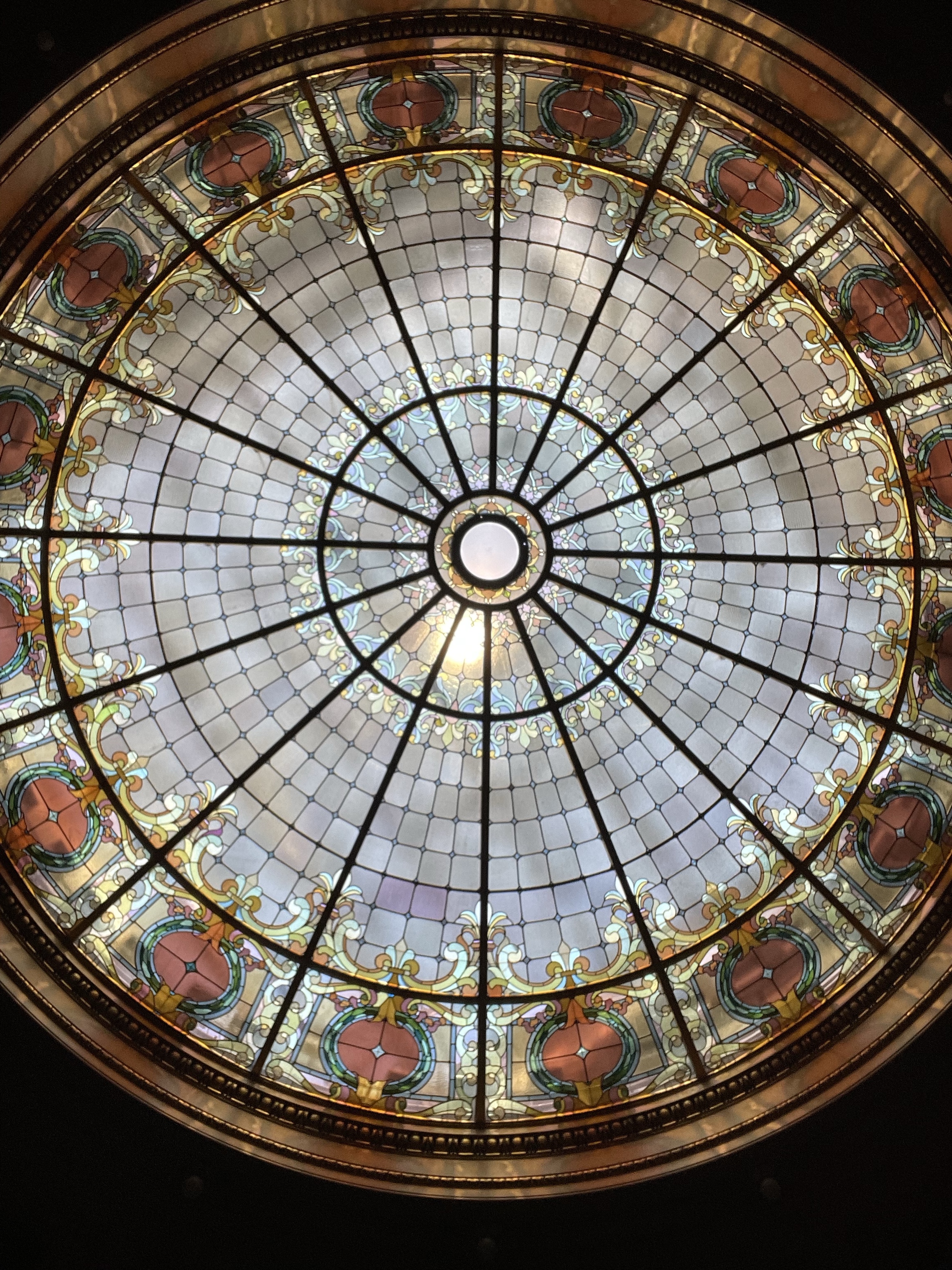
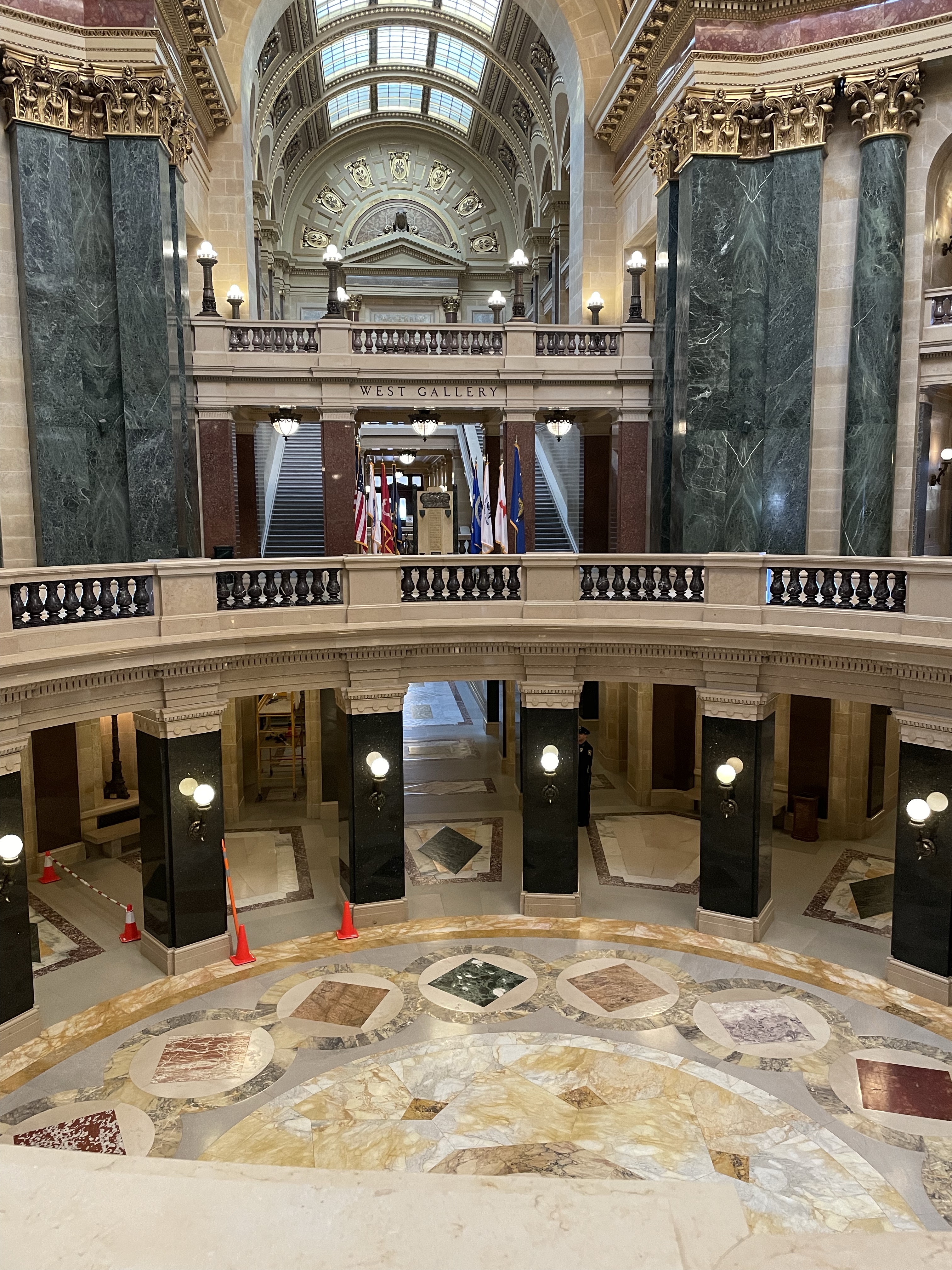
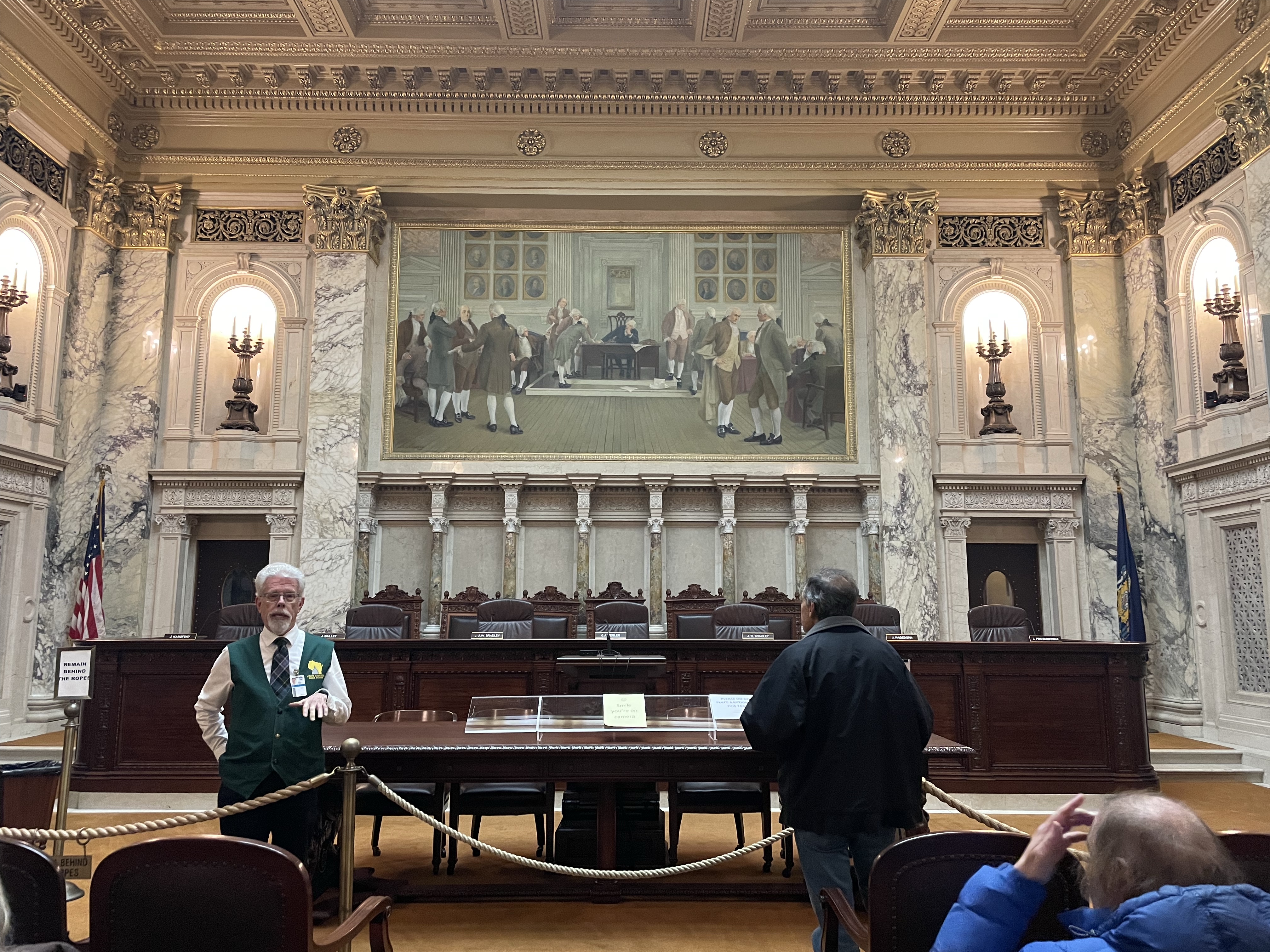
The Wisconsin state capitol building is really lovely. The building itself is over 100 years old. What makes it so amazing is that all branches of the state government still meet in the building. There are four magnificent rooms. One for the House of Representatives, one for the senate, one for the Supreme Court and one for hearings and meetings. Each room has a beautiful and large stain glass sky light that illuminates the room. Another lovely room is the senate’s private parlor.

There are free tours of the capitol each day. We were lucky in that we arrived at the capitol rotunda just a few minutes before the tour and we four were there only ones there allowing us to have the best private tour of the capitol that you would want.  Our tour guide, Mike, was excellent.  You could tell that he loved the building.  And there is so much to love.  Which you can see by the photos of the rooms.

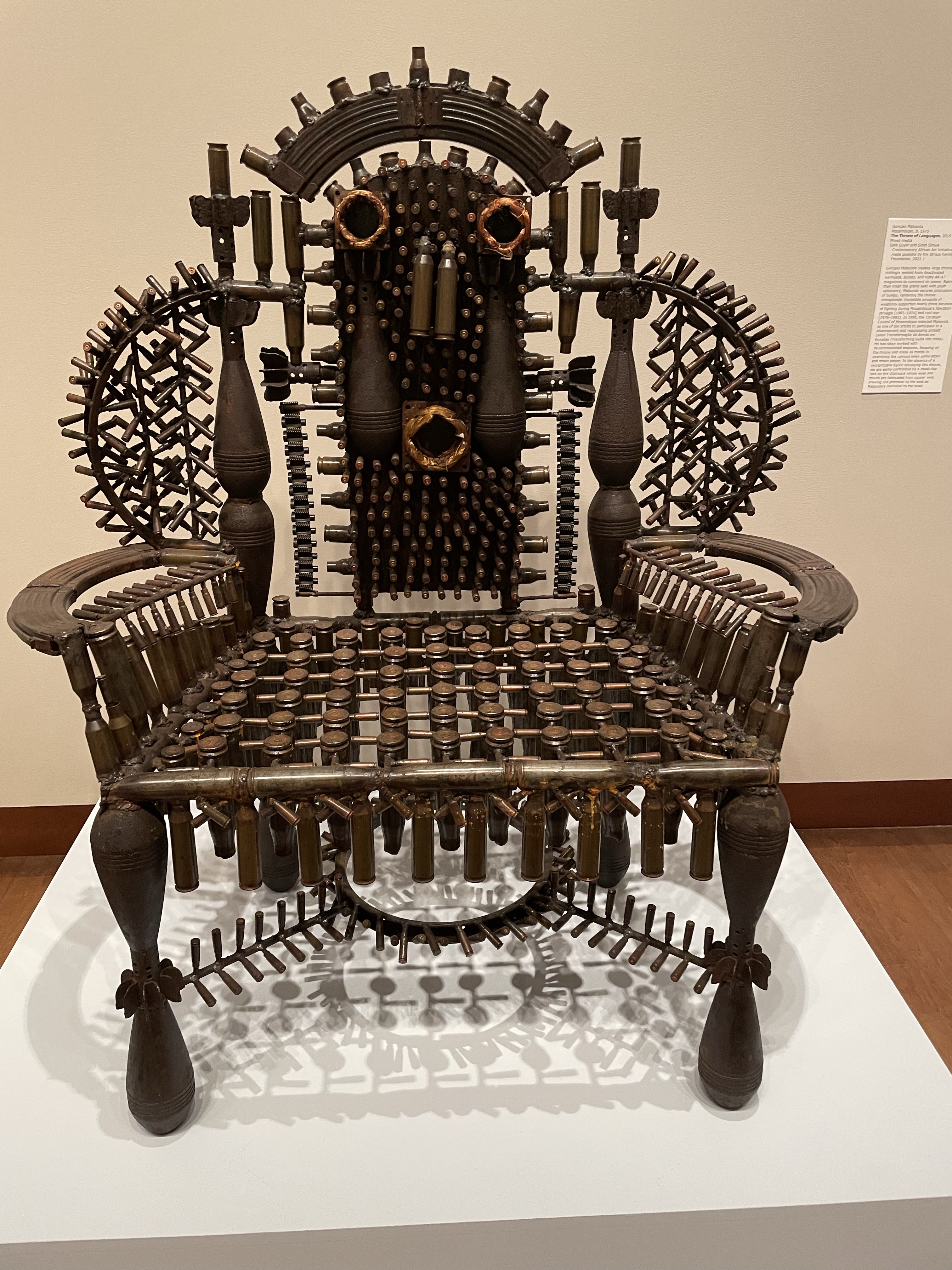
Another day we went to the Chazen Museum of Art, which is on the University of Wisconsin’s campus. Although not a large museum, it was filled with amazing art. We were fortunate to see a special exhibit: Insistent Presence: Contemporary African Art, had several pieces that caught our attention. Petro Beads, with was a giant set of prayer beads made from old metal petro containers. The Throne of Languages made from old military devices was an eye opener.

In other blogs I have written about my love of the glass art of Dale Chihuly.  I really enjoyed seeing some of his early art work. He studied at the University of Wisconsin earned his MFA from the School of Education’s Art Department under Harvey Littleton, who was a well-known glass artist.  We saw a few pieces of his work as well.  I am sad to say I did not get to see The Mendota Wall at the Kohl’s Center. That will have to wait for another trip.

Day 6 and home:

It was going to be a long drive on highway 39 and 90 to the State Capitol of Illinois, Springfield. We had no plans to visit the capitol building there. Instead, our destination was the Abraham Lincoln Presidential Library and Museum. Before I discuss our visit to the Library, I must tell you that I wish had more time in Springfield. We were only there for a few hours and were totally focused on the library. But it has many other sites to visit. We will go back.

I love how this library is set up. There is a central Plaza area that all the different exhibits lead off from. It was so fun to explore. After walking through a front yard, you enter a replica of the Lincoln log cabin. As you exit the cabin from the other side, you enter a wonderful exhibit all about slavery and the Emancipation Proclamation. As you leave that exhibit, you are right in front of the entrance to the White House replica. There you walk through a room and enter an exhibit about politics in the time of Lincoln. I could not believe the horrible nasty political cartoons that made a mockery of Lincoln. It made me realize that ugliness in politics has been around for a long time.

We watched one of the two shows and walked through the Treasures Gallery where you can see some items own by the Lincolns as well as some important documents. 

We love our visit there, but as I said earlier, wished we had more time to visit some of the other Lincoln sites and to see the capitol.

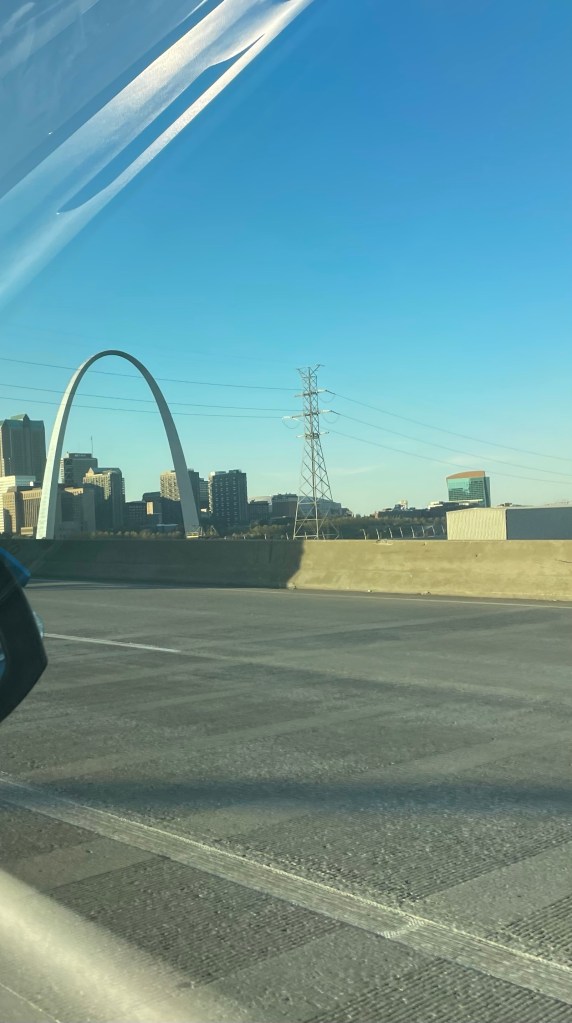
When we left Springfield, we knew that our trip was almost over. We spent the night in St. Louis, my husband’s hometown and visited with family. Then the next morning we headed home. We went through five state: Kansas, Missouri, Iowa, Wisconsin and Illinois.

My husband’s vacation is officially over. We have completed our road trips for the fall.  We look forward to the future when we can visit Israel in peace.

After A Trip Was Cancelled, We Went to Tulsa

7 Nov

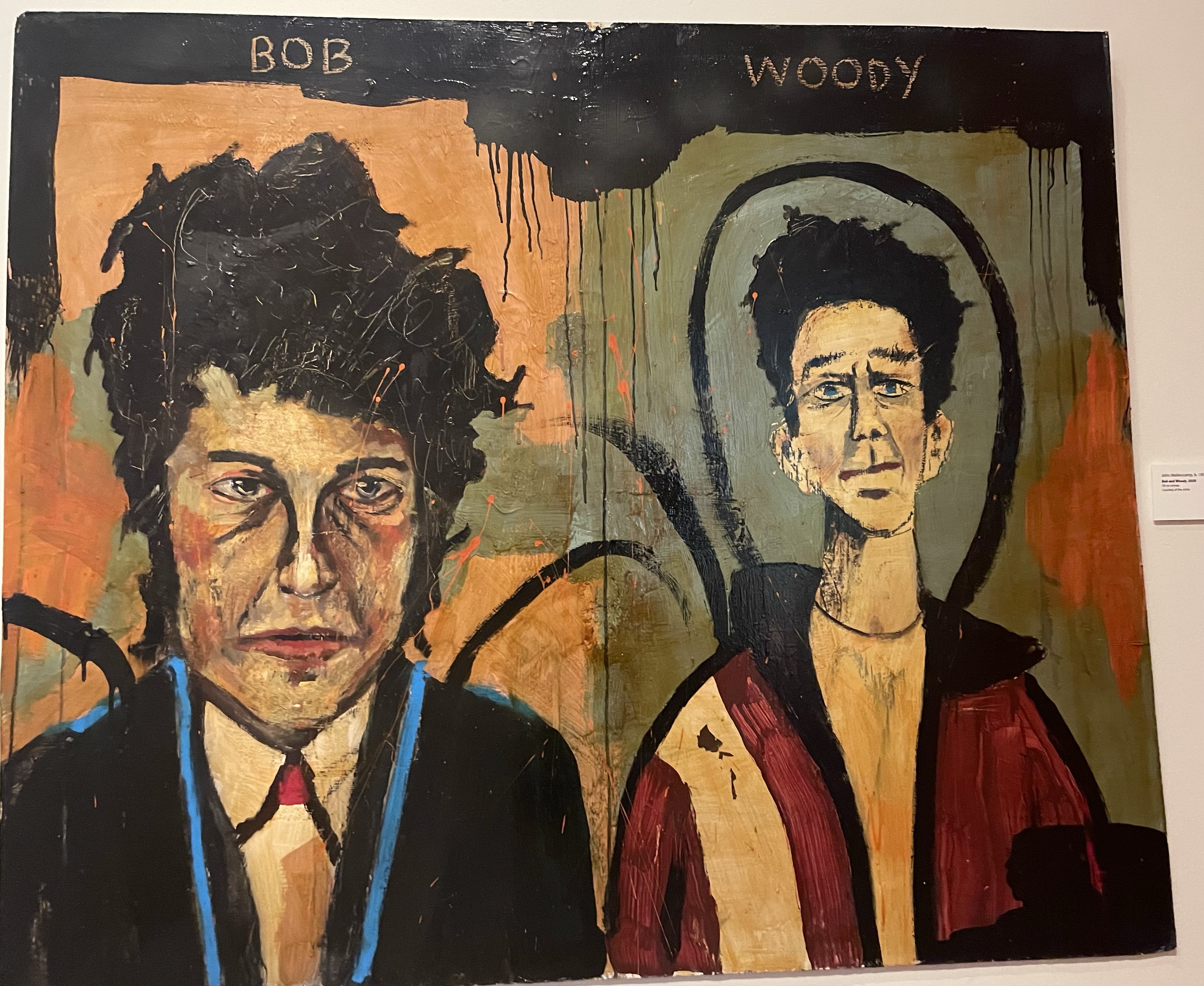
Since April, I have been telling my husband that I wanted to go to Tulsa, Oklahoma, and visit the Bob Dylan and Woody Guthrie museums.  I had the trip planned for the longest time.  Our first stop would be these two museums, then we would visit with friends of his and perhaps one of his cousins in Oklahoma.  On the way back I wanted to stop in Wichita, see more cousins, spend the night, then on the way home visit the Cosmosphere in Hutchinson, Kansas.

Though I kept talking about it, we never got around to do it this summer.  But this fall, our plans changed quickly and radically.  We were supposed to go to Israel where our daughter and her husband live.  The war changed our plans, but my husband still had two weeks of vacation.  I had to do something.  Just sitting home and moping and worrying was not an option. I am the type of person who can usually find the good in any situation.  And I was determined to find some small element of good.

Road Trip Number 1!

We reached out to our people; I made hotel reservations; and off we went.

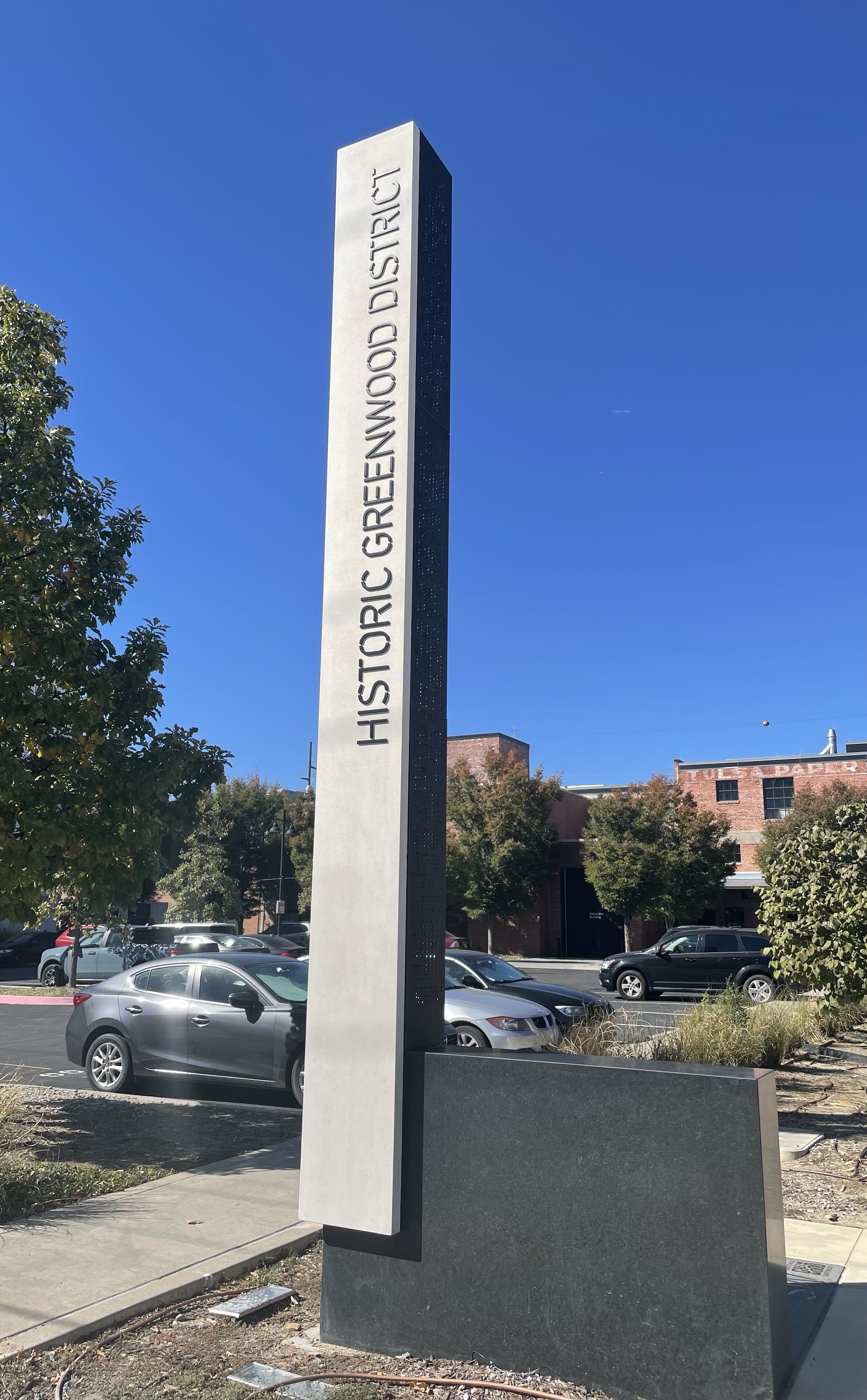
The hotel we stayed at in downtown Tulsa was in easy walking to the two archive/museums.  They are next door to each other.  On our walk towards the museums, we saw a large post indicating that we were entering the Historic Greenwood District. This is the area where once a thriving Black community settled before the 1921 Tulsa Race Massacre took place.  We thought it was extremely apropos that the museums dedicated to these two musical activists were in this area.  It just fit.

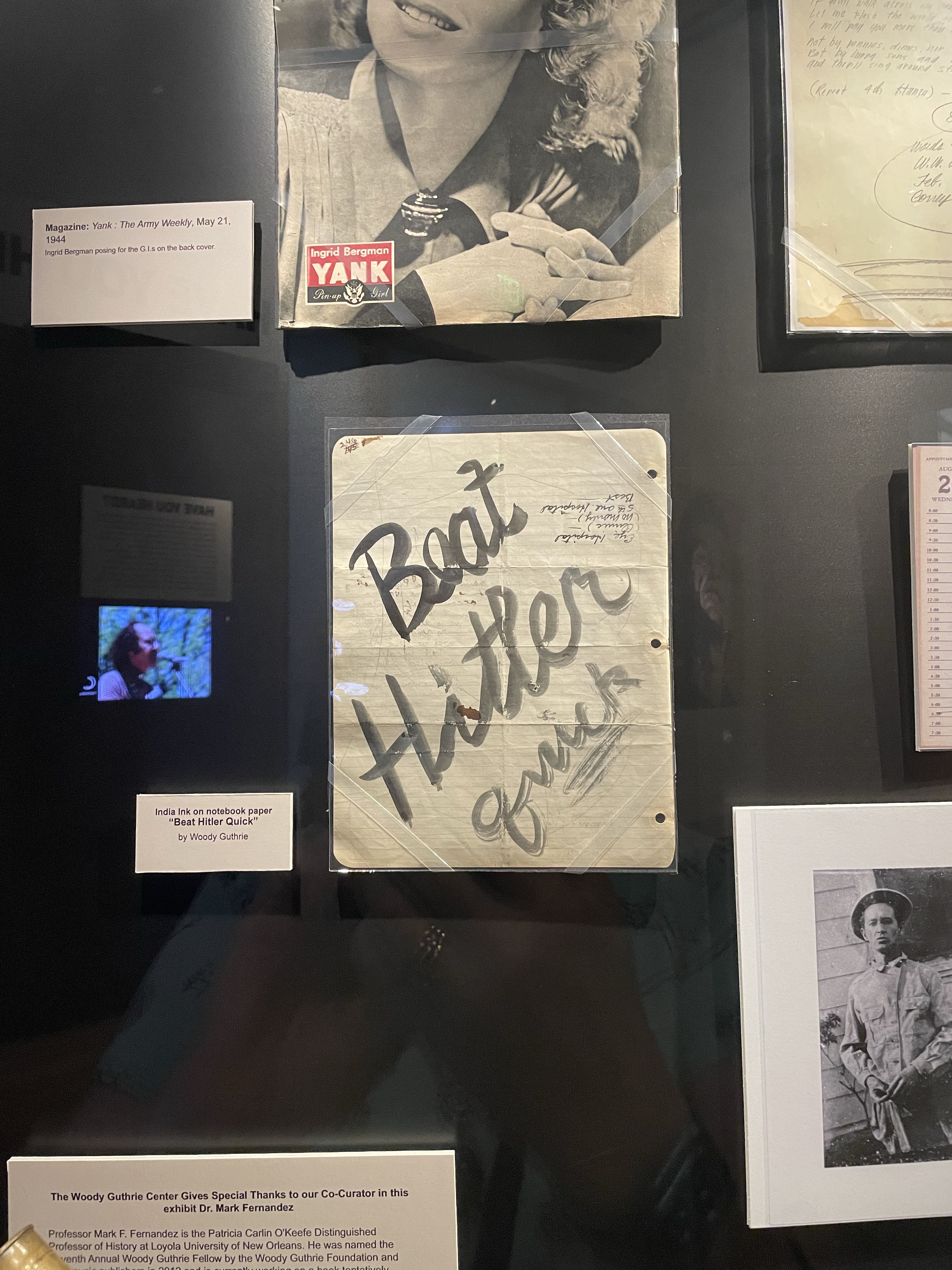
I loved both museums.  They each traced the lives of two of my musical heroes.  Even though their music was written decades apart, they actually knew each other.  One was born Jewish, the other was married to a Jewish woman and fought in WW2. Among Guthrie’s papers is one that reads, “Beat Hitler quick.” That resonated with me with all the Jew Hatred going on right now. The museums are both well worth the visit.  You can spend time watching the videos or just walk through.  I loved reading about them, listening to their music, and looking at their artifacts.  At the Guthrie Museum, you must try the virtual reality of the dust storms that devastated Oklahoma. WOW.

That evening we ate dinner with our friends. I asked about the two museums I wanted to see. The husband actually serves on the board of the Sherwin Miller Museum of Jewish Art.  At dinner he told us a bit about the museum, I realized it was much bigger than I anticipated.  For a community of about 1800 Jewish residents, it was really special. 

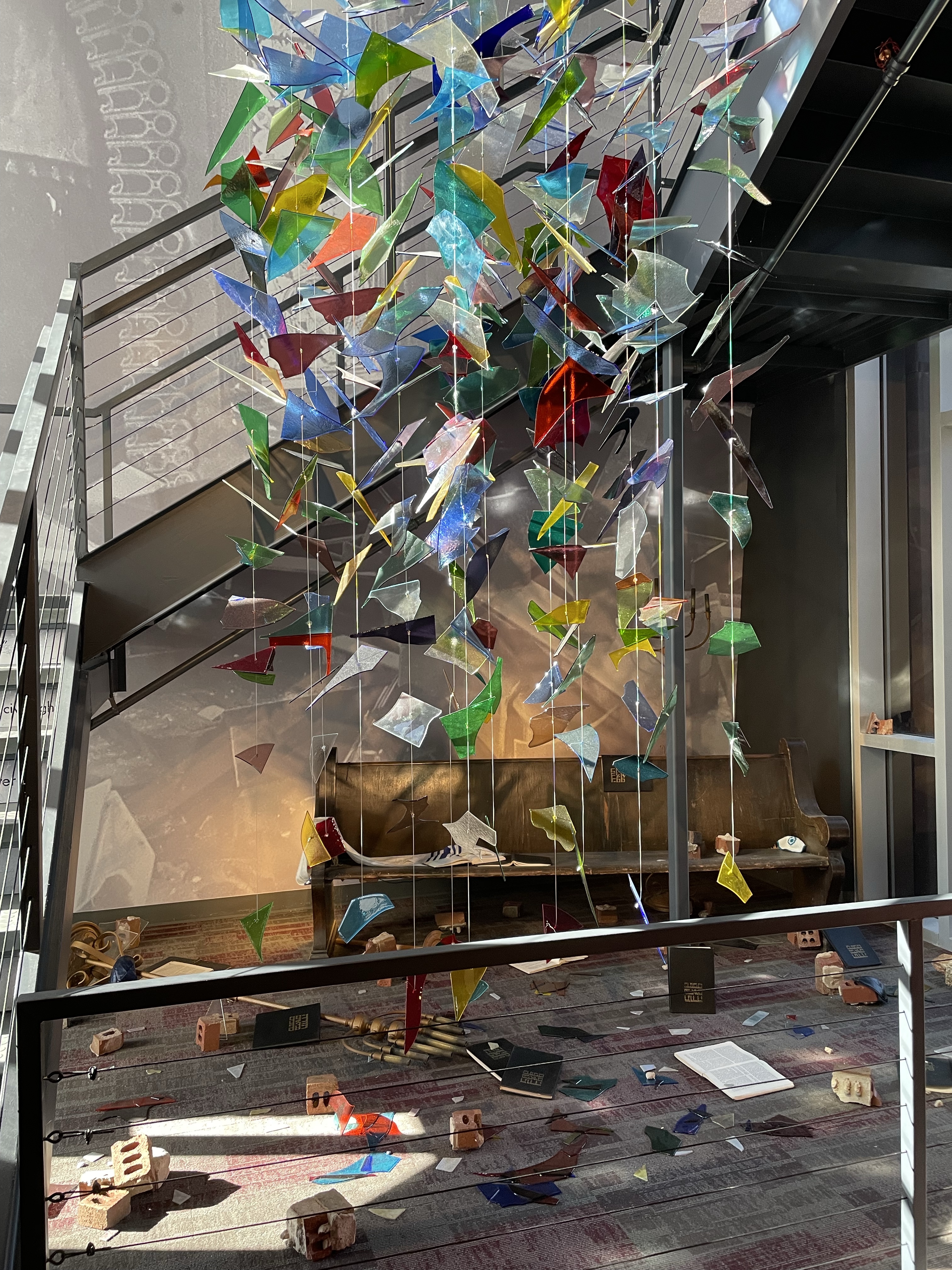
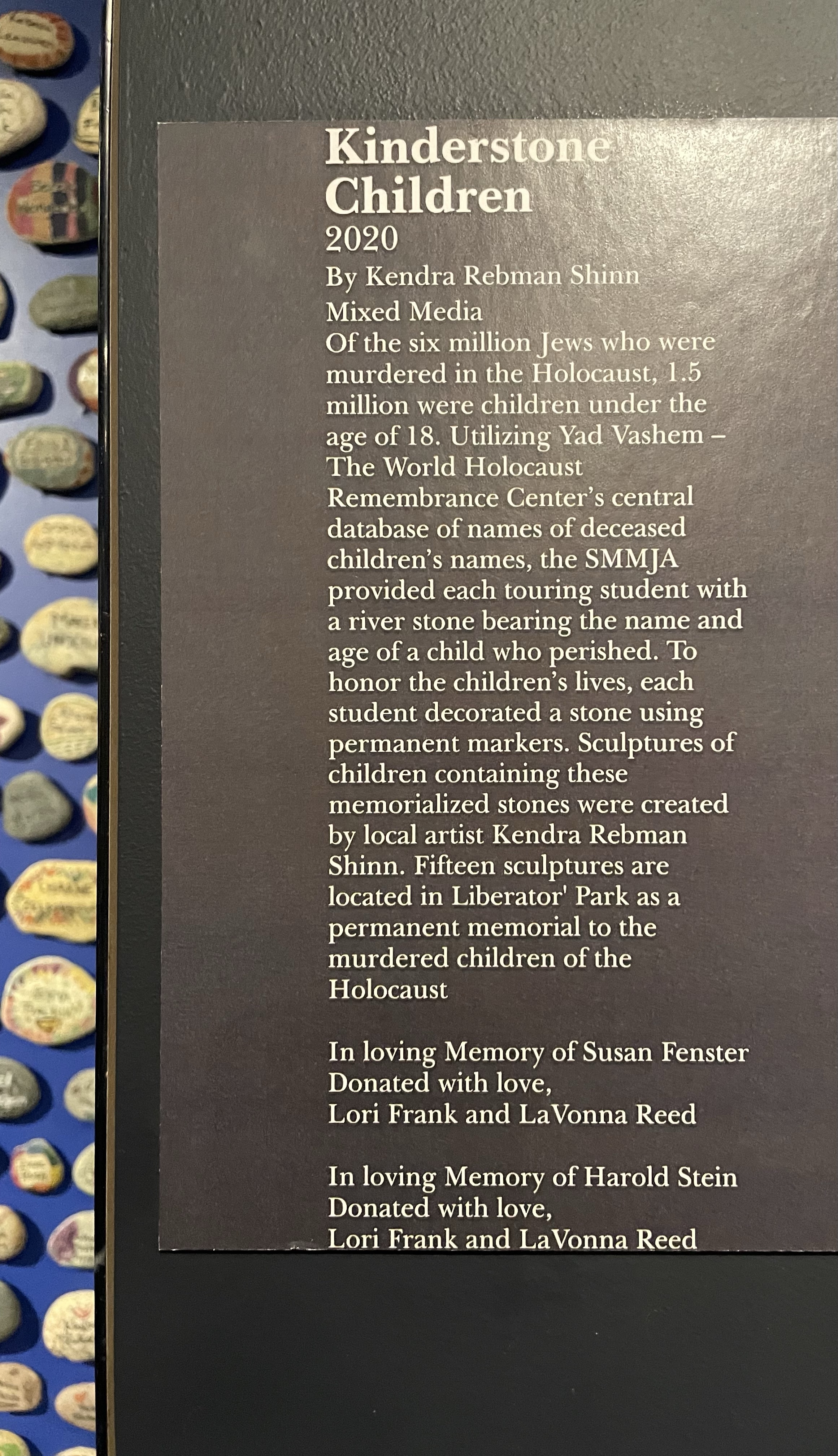
The section about the Holocaust was difficult as such museums always have to be.  But I loved how they imagined KrystalNacht.  I was so touched by the stone display that is a memorial to the 1.5 million Jewish children killed. I had tears in my eyes thinking about the children who were recently murdered by Hamas.  How could I not compare the two? The death of every child takes a toll on society.

Upstairs was dedicated to modern Jewish Life.  They had a sanctuary set up that must be wonderful to teach about Judaism to those who come to visit.  For me, personally, I loved the special exhibit of mezuzahs, the scrolls we put on our doorposts.

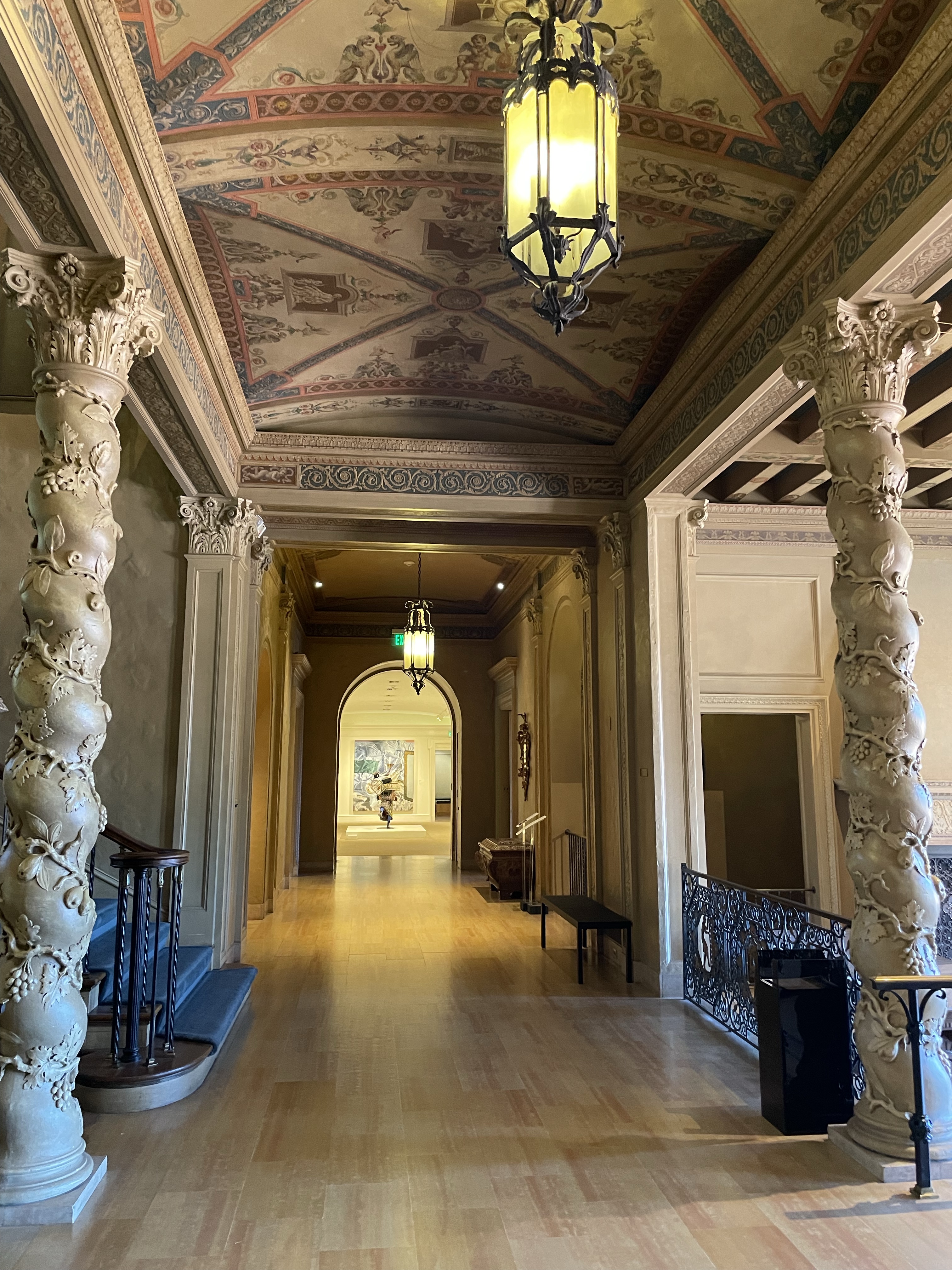
From there we went to the Philbrook Museum of Art. The house was built by Waite Phillips, who started a ‘little’ oil company. Phillips and his family lived there for only 11 years, and then they gifted the house and 23 acres of land to Tulsa for an art museum. Okay, I will be honest with you, the art in the house is great.  But the house itself is amazing.  I love old houses.  And this one does not disappoint.  The grounds are also stunning.  Well worth a couple of hours to walk through and visit.  It just cheered me up. I could see myself sitting outside for hours.  We especially loved all the wonderful milkweed and butterfly gardens. 

After we got back to our hotel, my husband’s cousin drove in from Oklahoma City to visit us.  She surprised me with a gift, her grandmother’s mah jong set.  She told me that no one in her family plays and she knew that I did, so she gave it to me.  Her grandmother and my husband’s mother were sisters.  I have to say having both of their mah jong sets gives me joy.  It was great catching up with her and seeing pictures of her family and sharing photos of our family.

The next morning it was on to Wichita.  One note about the drive from Texas to Kansas.  It is VERY flat and dusty.  There were no crops really, just fields and fields of red dirt.  However, and I am really sorry I could not get a photo of this, besides the oil well arms pumping away there were also giant windmills.  And at one spot there was a windmill farm circulating air and making e;ectricity above the same field where the oil well arms were pumping oil.  It would have been a great photo representing the changes coming to society as we switch to rely on renewable energy.

Of course I contacted our Wichita cousins as soon as we arrived and then spent the next seven hours with them.  It was great.  We had two meals with everyone. But also had time for us older adults to just visit.  We have not seen them for about six years, which is ridiculous.  Wichita is just three hours from home. I vowed that we would come back more often.  We need to see his first cousins and also visit some museums.  (My husband hates museums, but he loves me.)

Next morning on to Hutchinson and the Cosmosphere, one of my favorite museums in Kansas.  Honestly, we went several times when our children were younger.  In fact, our daughter attended two summers of Space Camp there and loved them.  Even though we have been members for about 28 years, we have not been there for about 20 years.  It was definitely time to go back and see the changes!

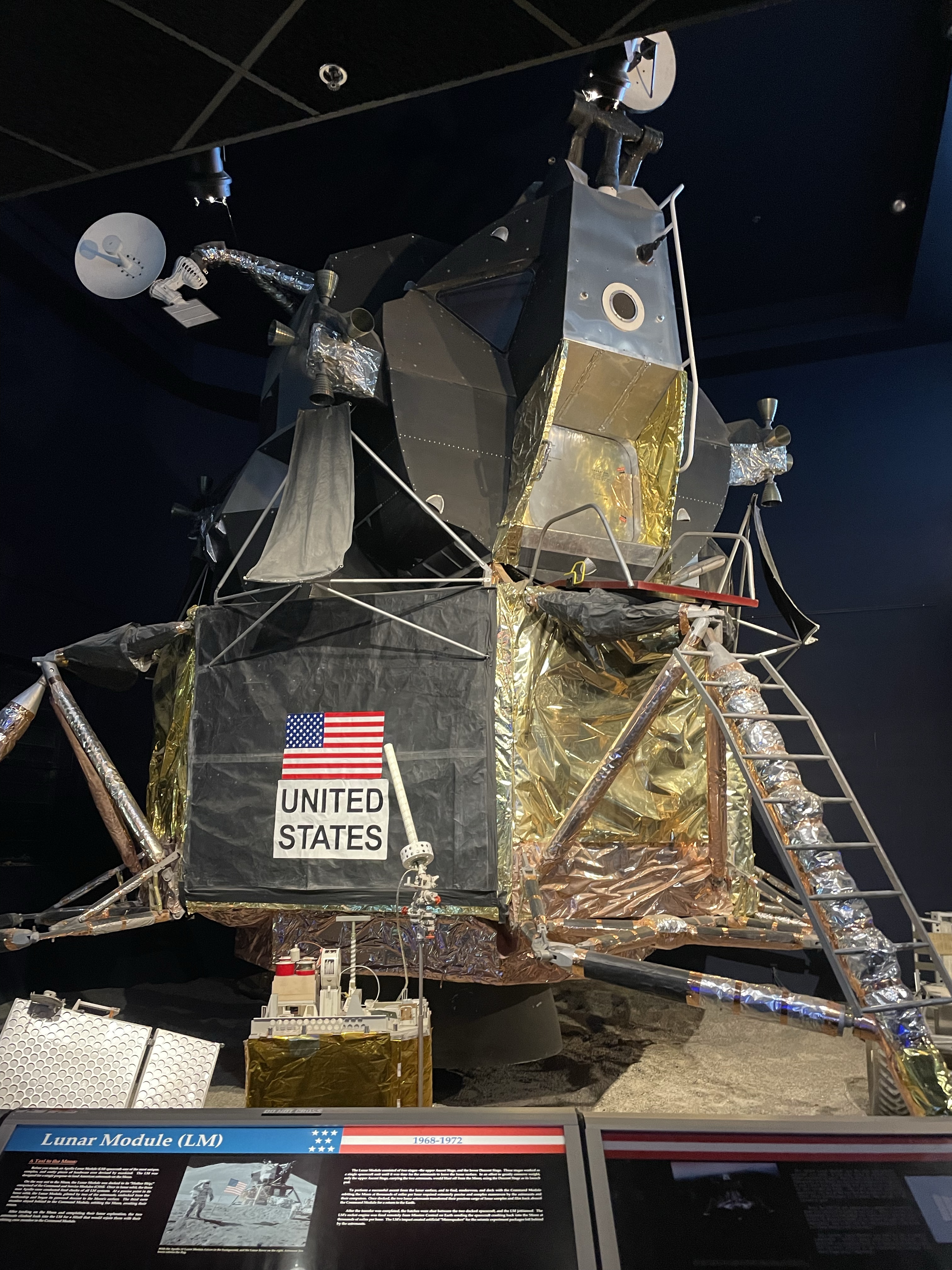
The museum exhibits are wonderful.  If you love space and NASA, you will love this museum. The real Apollo 13 space craft is there. All the exhibits have been redesigned since our last trip. Definitely for the better.  We watched one of the two movies, about the Blue Whales.  That cheered us up. We were pretty sure that this documentary would end on a sad note, but NO, the Blue whales are coming back and increasing in numbers.  Honestly, I think Star Trek’s movie has something to do with that. It was a good start to the visit. 

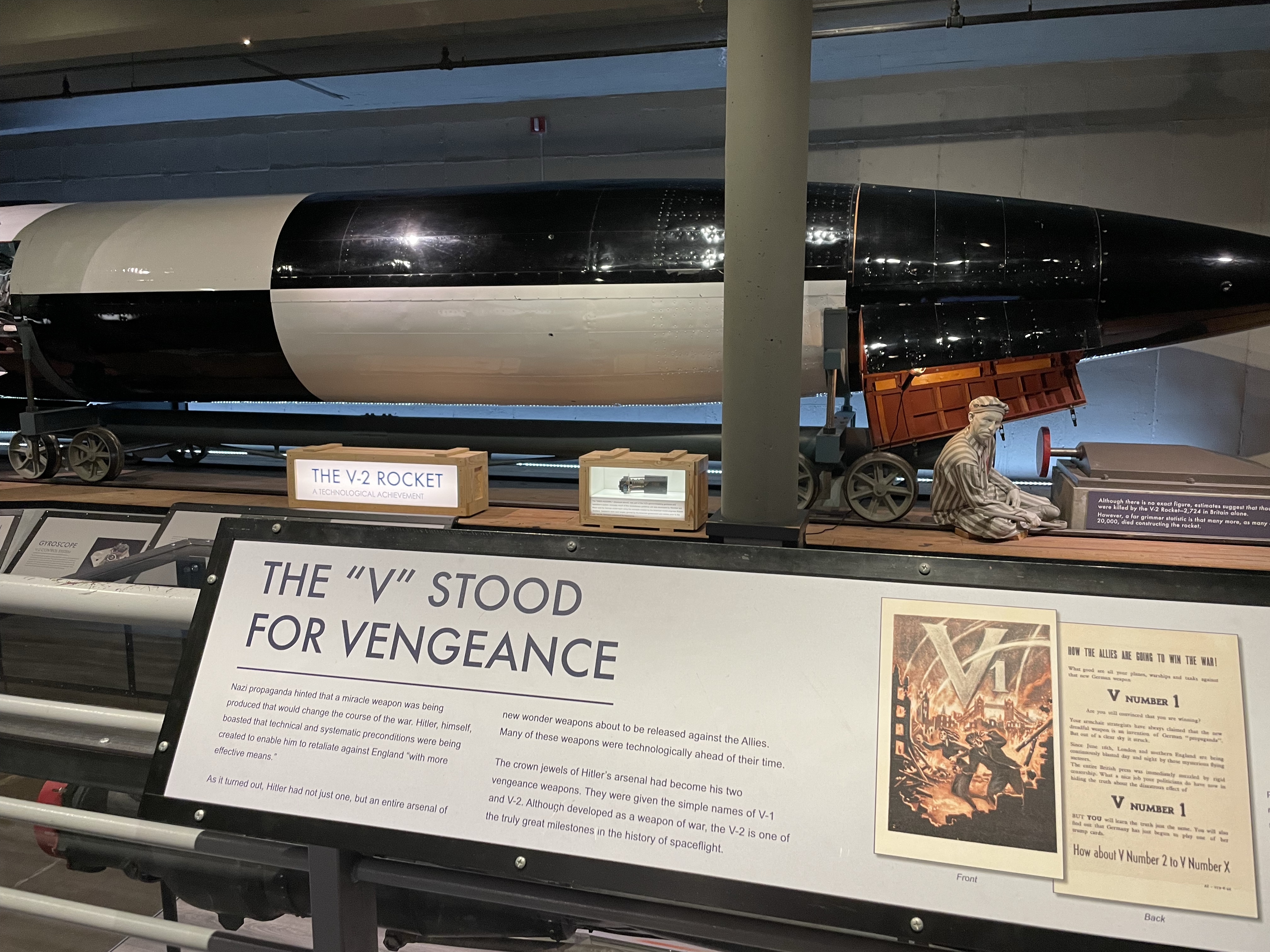
While we were walking around, I noticed a little exhibit off to the side, The V-2 Gallery, which was all about the V-1 and V-2 rockets that the Nazis used to bomb and terrorize London.  In the past the history of these rockets was sort of not mentioned.  Just as it was not always advertised that Wernher von Braun, who helped start the United States aerospace industry, was a member of the SS and helped Nazis build their death rockets.  This exhibit made it very clear.  It also made clear that the rockets were built by slave laborers in concentration camps.  And over 500 prisoners were killed when the Allies bombed the factory, as the prisoners were locked in and could not escape.  These rockets decimated London causing the deaths of over 20,000 people.  A sad start to the aerospace history. But one I think should not be forgotten.

Our first Fall Road Trip was a great adventure.  We loved seeing friends and family.  We loved visiting new museums and revisiting the Cosmosphere.  Personally, in this time of great stress for the Jewish community of the world and the horrors of war, I was glad to get away.  But at the same time, I am glad that we were able to visit places that show good in the world and how society can survive war and hatred. 

http://www.jewishmuseumtulsa.org

http://www.cosmo.org

http://www.Philbrook.org

http://www.bobdylancenter.com

http://www.woodyguthriecenter.org

Our Mayan Adventures Continue

14 Feb

After my husband and I visited the Pyramids of the Sun and the Moon about an hour from Mexico City, I became enamored about learning more about Mayan culture and its ruins. (See blog below.)

So in late 2022, when the “MAYA: The Exhibition” came to Union Station in Kansas City, I knew I had to go and learn more!  I was absolutely intrigued by the civilization and even more astounded that many people of Mayan descent still live in Central America and Mexico. The exhibit did a great job of expanding on what I learned in Mexico in the fall of 2021. 

It piqued my interest to learn more. Thus, it was not surprising to my husband that when we went on a cruise that went to Belize and Cozumel that I wanted us to go on excursions which continued the focus on this new found interest.

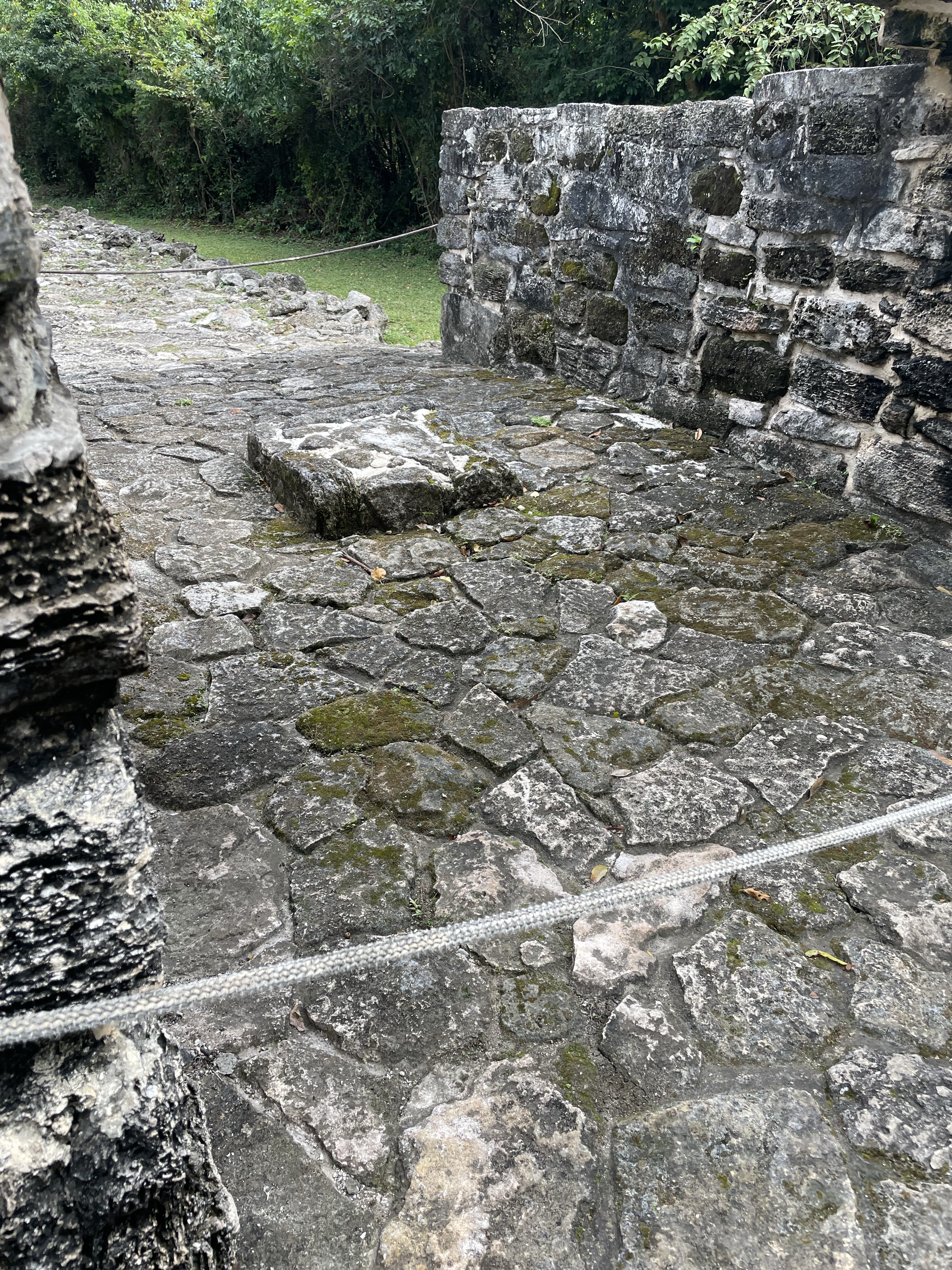
Our first excursion was to Altun Ha, a Mayan site that was probably established in the year 900 BCE. I found this site interesting for several reasons.  First many of the ruins are still covered by dirt and grass.  It has not been totally excavated.  It made it more obvious as to why people did not realize what these sites were at first.  Altun Ha has a large plaza area surrounded with pyramids and residential areas.  It is much smaller and not as interesting as the pyramid of the Sun and Moon in Mexico, but still worth visiting to see the changes that occurred over the centuries.

Our tour guide spent considerable time explaining why some of it was not excavated.  It seems that they only had a certain about of funds, so they decided not to excavate what would have been the residential area and focus on the temples.  Also interesting about this site is that it has no official name.  Usually the archeologists find some sort of glyph with the name.  Altun Ha does not have one, so it was named for the town that is nearby.  In fact, it was the towns people who discovered the site and reported it.

They found a large number of jade pieces at this site, including one of the largest jade heads ever found.  There is a reproduction of it in the small museum at the site.

The other interesting fact is that they let you walk/climb up on the pyramids here.  My husband and I did climb up one. But did not attempt the other one.  Going up was relatively fine, but going down was truly difficult.  There are no handrails and the steps are rather steep and uneven.  When we were in Mexico there were times that we sat to go down the steep steps between sections.  But this was rougher and more difficult.  It was an experience I am glad we did. But would not do it again.

I enjoyed our time there, even though the heat was almost oppressive.  And this was in mid-January.  Take lots of water and a hat if you go!

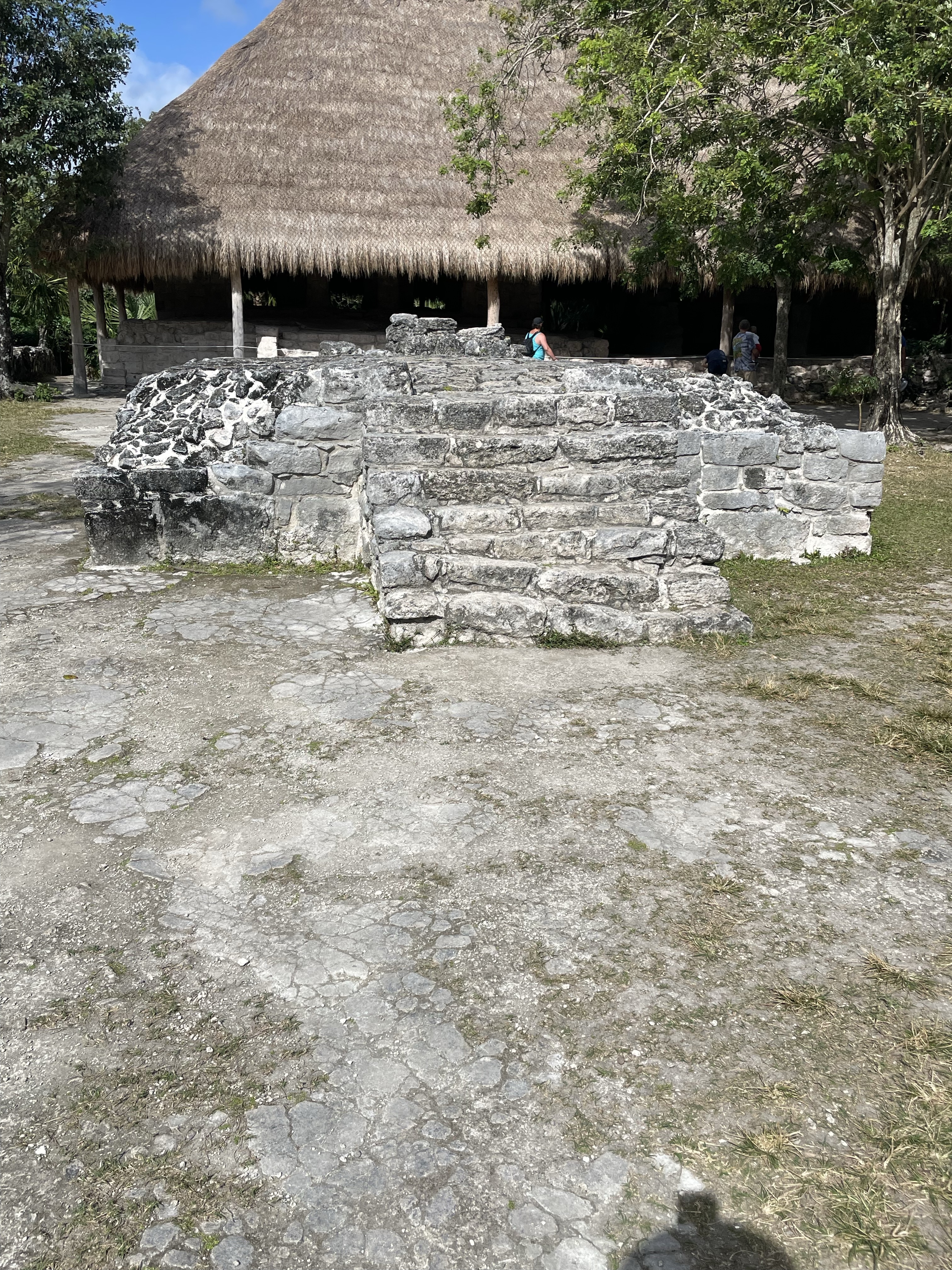
The next stop was in Cozumel and the San Gervasio Mayan Ruins.  This was a much more spectacular site than the one in Belize.  The property had been in private ownership for years, and the owners did not let people know about the ruins.  They actually destroyed some of the site’s buildings over the years.  Eventually the Mexican government took over the property.

It is one of the most popular and important Mayan ruins because of its relationship to fertility. It is the Sanctuary to the Goddess Ixchel, who was a fertility goddess.  In fact, young couples would come there to be married at the full moon, which was the best time for fertility.   You can walk on an ancient road to the site of the alter to Ixchel and see where the weddings took place.

Our guide told us that at one time there were four statues of pregnant women on the four corners of the alter, that have been stolen. 

There are only two known sites known to honor Ixchel, both are on islands.  Our guide told us that the island represented a womb surrounded by water.  Just as a fetus in the womb is surround by amniotic fluid.  I found that fascinating.

There was also another building that was used for astronomy and following the sun and the moon.  But mainly the moon as this was a site to the Ixchel, and the moon cycles were related to fertility.   This was my favorite site of my trip!

If you go to Cozumel, I would recommend seeing this over going shopping!

Holon Adventures

16 Dec

Holon is a town just south of Tel Aviv and is a great community for families and children with many museums and activities.  But even for those without children, there are places to visit and enjoy.

My daughter and I spent time exploring Holon in November.  Since she lives in Holon, we were able to walk to some places.  But there are parking areas for cars as well as buses that you can take.

Our first stop was to one of the Story Book Parks, specifically, Gan Sipur, the Park of Stories.  Holon has several parks designed especially for children that fall under the category of Story Book Park.  The one we visited has a large playground, sculptures and activities that focus on seven children’s books. Each of the sections focuses on a different book written by an Israeli author.  There is an explanation of each book.  Unfortunately, they are only in Hebrew.  For this trip, my son-in-law accompanied us and was our official translator.

An added attraction to this park is a wonderful restaurant that is also family friendly, Café Garden Story, Café Gan Sipur, that is situated within the park. Since it was a Friday, and most people are off, it was busy.  We had to wait for a while. So we put in our name and then we walked around the park while we waited to get a table.  When we got the message, we hurried back to the restaurant on Mota Gur Street 15.

We decided to sit outside to enjoy the beautiful weather.  But the inside is fun as well. The Café also caters to children with bookshelves inside and activities for the children to do while they waited for the food.  The food was worth waiting for.  Out selections were excellent.  We had a great time visiting the park and enjoying the atmosphere of the café.
Not far from the Story Park is the Holon Design Museum at Pinchas Ayalon 8.  It is a short 1.5 kilometers, or about a five minute walk. My daughter has been wanting to see it, so we decided to add that to our adventures.  There are timed tickets to enter the museum, but there was ample space to sit outside as we waited along with several groups of women.

The museum was opened in 2010.  The building is quite interesting and was designed by an Israeli architect Ron Arad.  When we visited, all of the museum’s display areas were dedicated to the work of Alber Elbaz, an Israeli designer who grew up in Holon. He died from COVID in 2021.  This exhibit, Alber Elbaz: The Dream Factory, will be at the museum until February 25, 2023.

To be honest, I am not a follower of high fashion.  But I found this exhibit that focused on his life, how he started in design, his time with famous high fashion designers, as well as the tribute pieces designed by others, interesting.  I understand the desire to tell the story of a Holon native and his rise to fame in fashion design.

Going through the exhibit took about 90 minutes for us.  In certain areas we had to follow a long line of people through a curved hallway display.  I enjoyed seeing some of his early designs and the movie showing his work at one fashion show.

I look forward to going back in the future to see other exhibits and to see how the display rooms are used when it is not devoted to one person.

In the past I have visited other spots in Holon. One I have not written about, but loved was Dialogue in the Dark at the Children’s Museum at Peres Park in Holon. It was the most amazing experience I have ever had.    The tour is entirely in the pitch black as you tour several spaces, including a marketplace, a street and a port, led by a blind person.

To be honest I was terrified.  Because I am so near sighted, I have always been afraid of becoming blind.  But our guide was wonderful, and the experience is one I will never forget.  If you are ever in Tel Aviv or Holon, this is a must do activity.  You need to make reservations in advance and must be over 9 years old to attend.

https://en.gansipur.co.il/Holon

https://www.childrensmuseum.org.il/eng/pages/childrens_activity/dialogue_in_the_dark.aspx