Archive | October, 2025

Entering Another World: The Gardens of Portland

25 Oct

Portland, Oregon, is home to three of the most beautiful gardens I have visited!

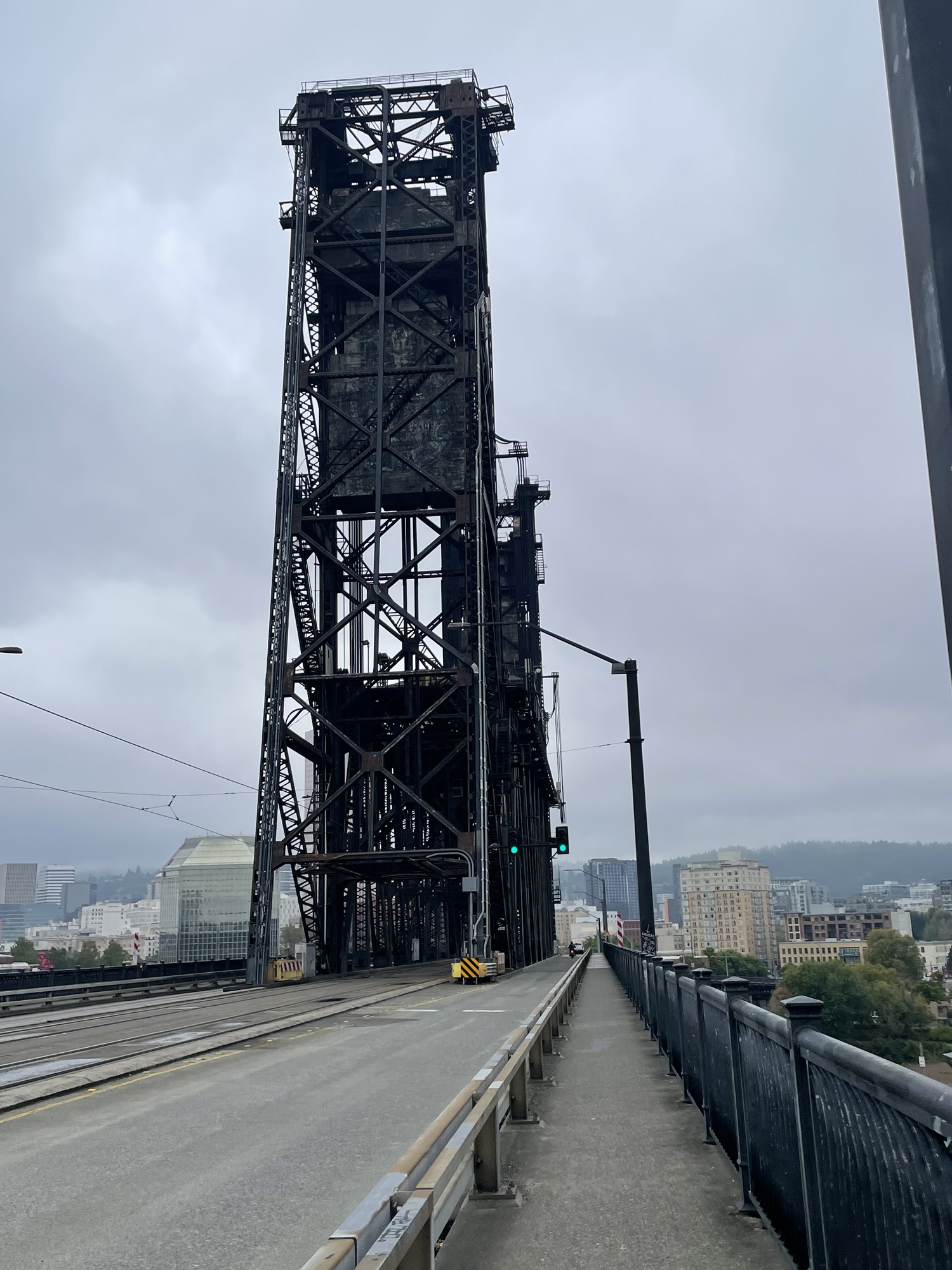
China Town and the Lan Su Chinese Garden is located just off the Willamette River near the Steel Bridge. It was a mile walk from our hotel.  So we decided to walk over the Steel Bridge in order to see it up close.

Opened for use in 1912, the Steel Bridge (yes, it is made of steel) has a central area that is a vertical lift, which moves the two-deck surface upwards so that high ships can sail under it. It is an amazing contraption to see.  Since the bridge has a Kansas City connection – Waddel & Harrington, who designed it were a Kansas City firm – I felt it was something we had to experience. Although the lower deck is built for pedestrians, we did not know that when we walked across, so we took the top deck.   At times, I noted that the railings along the deck were quite low, so I recommend the lower deck for walking.
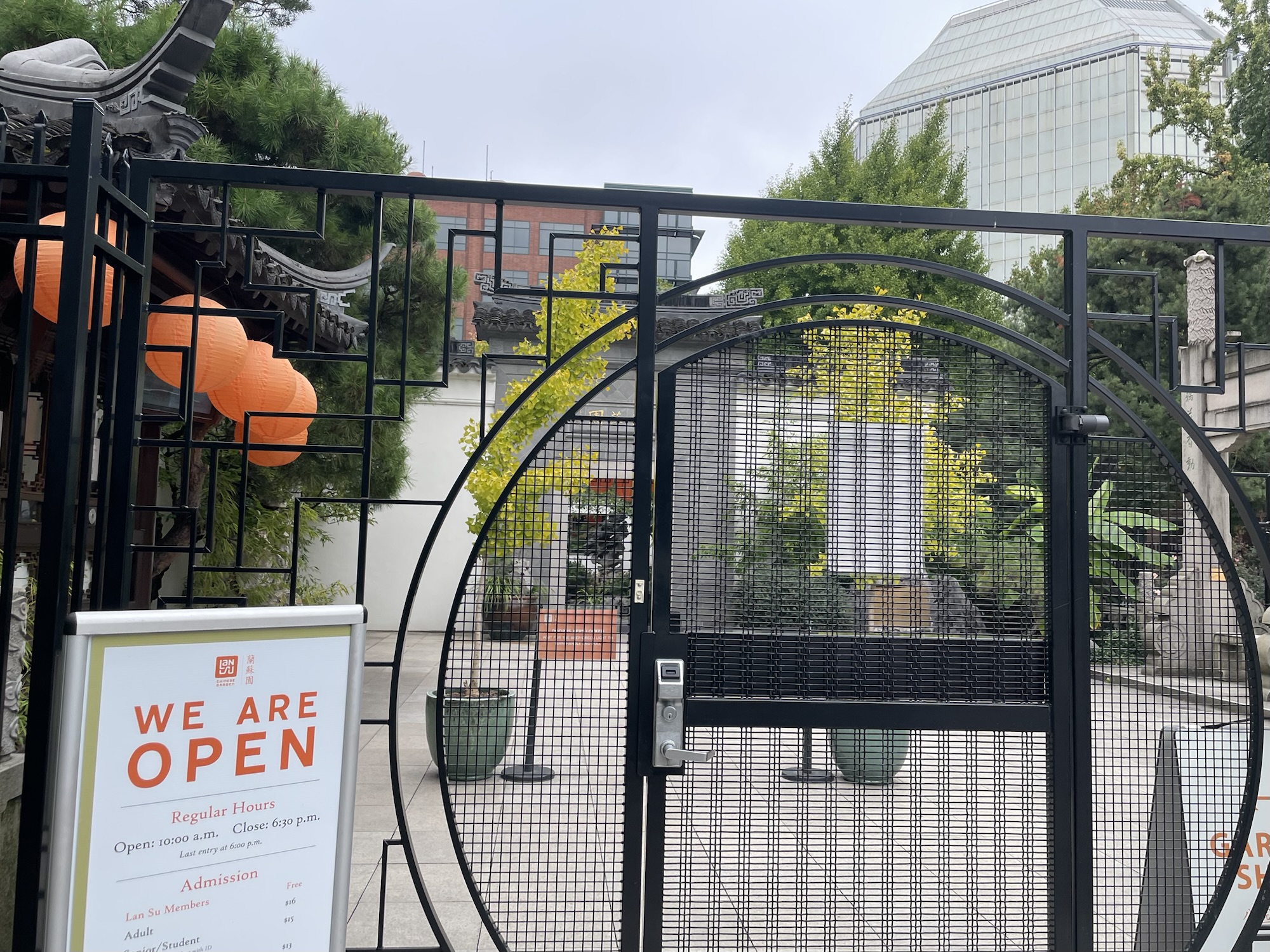
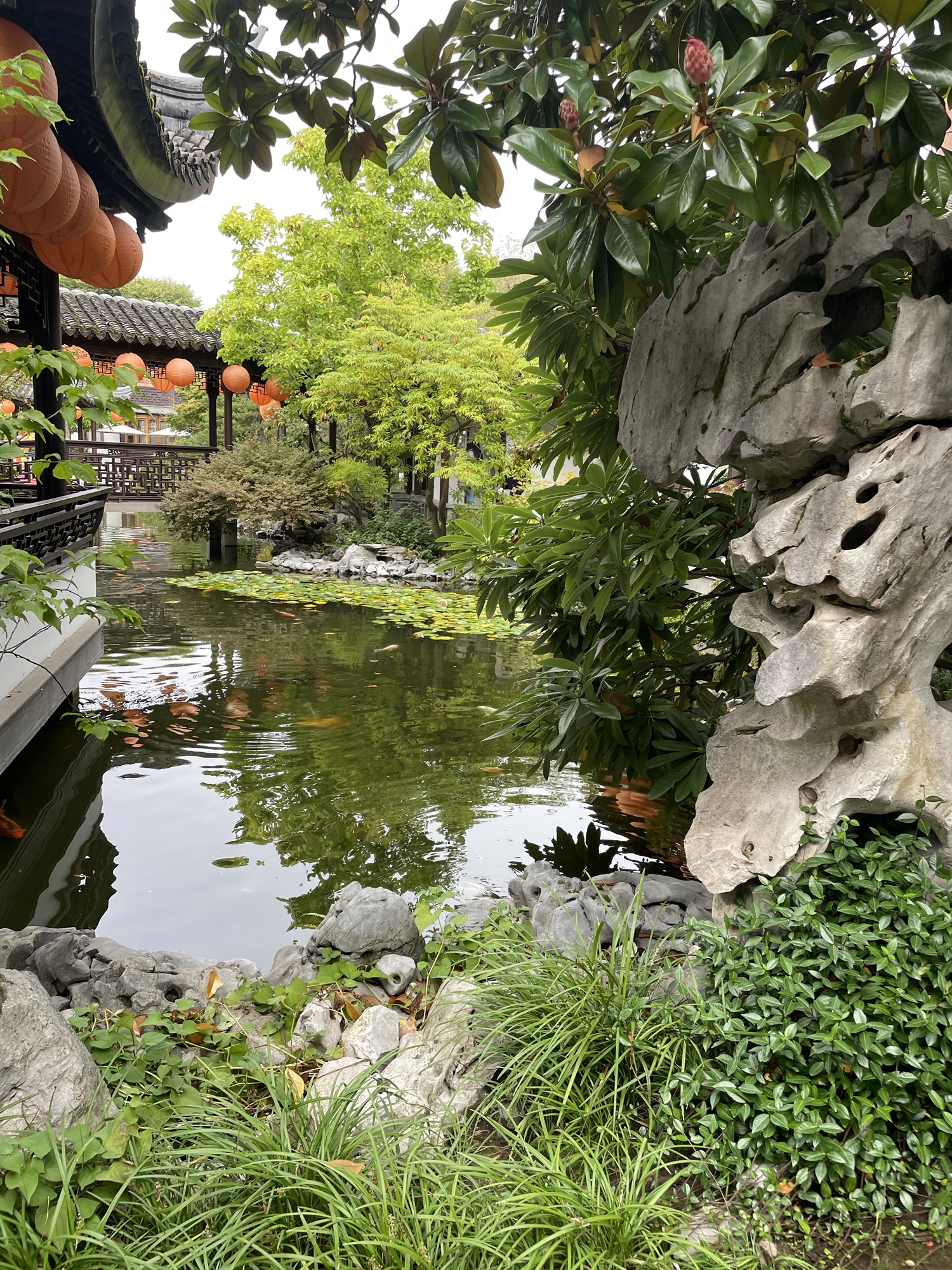
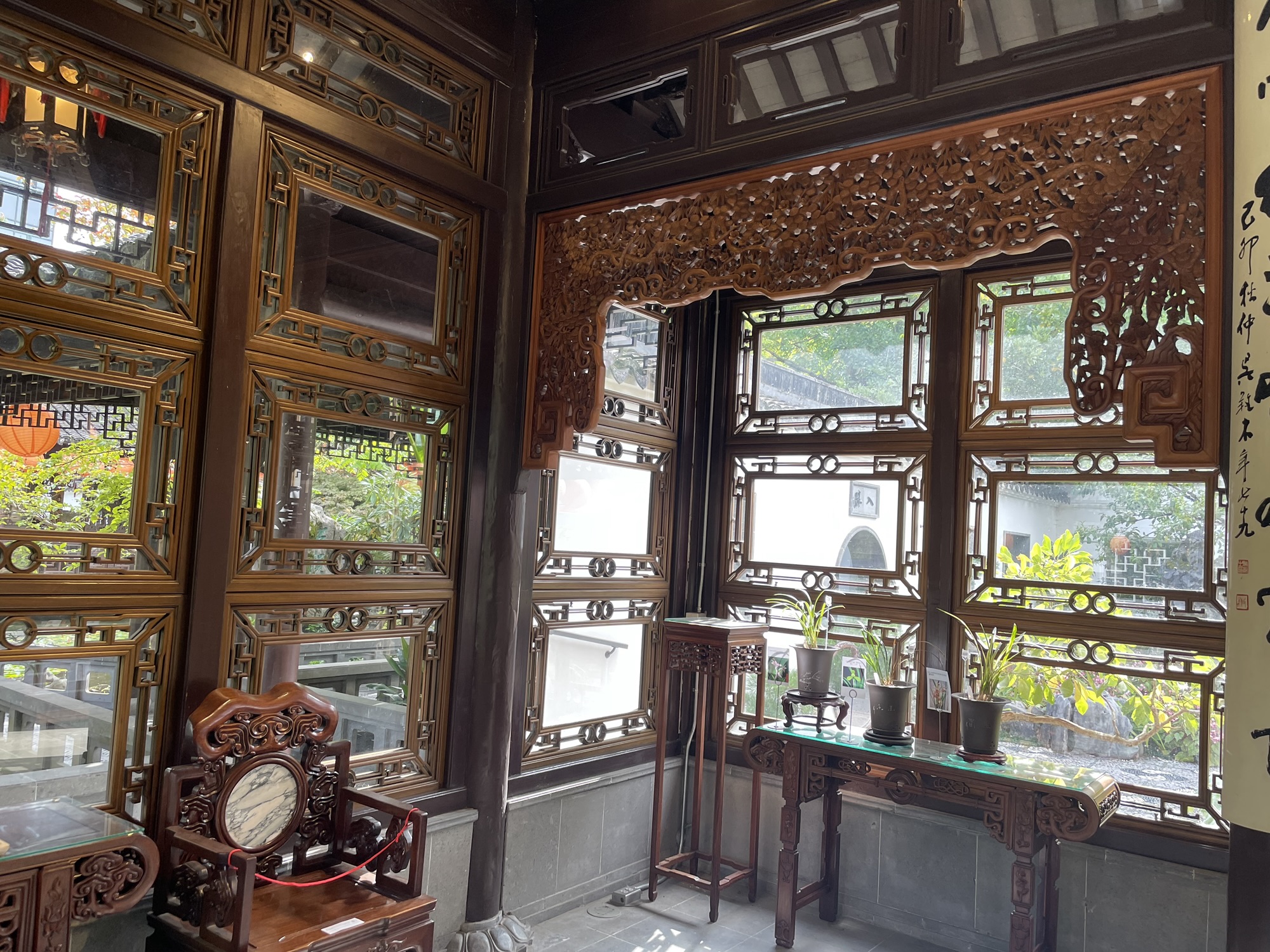
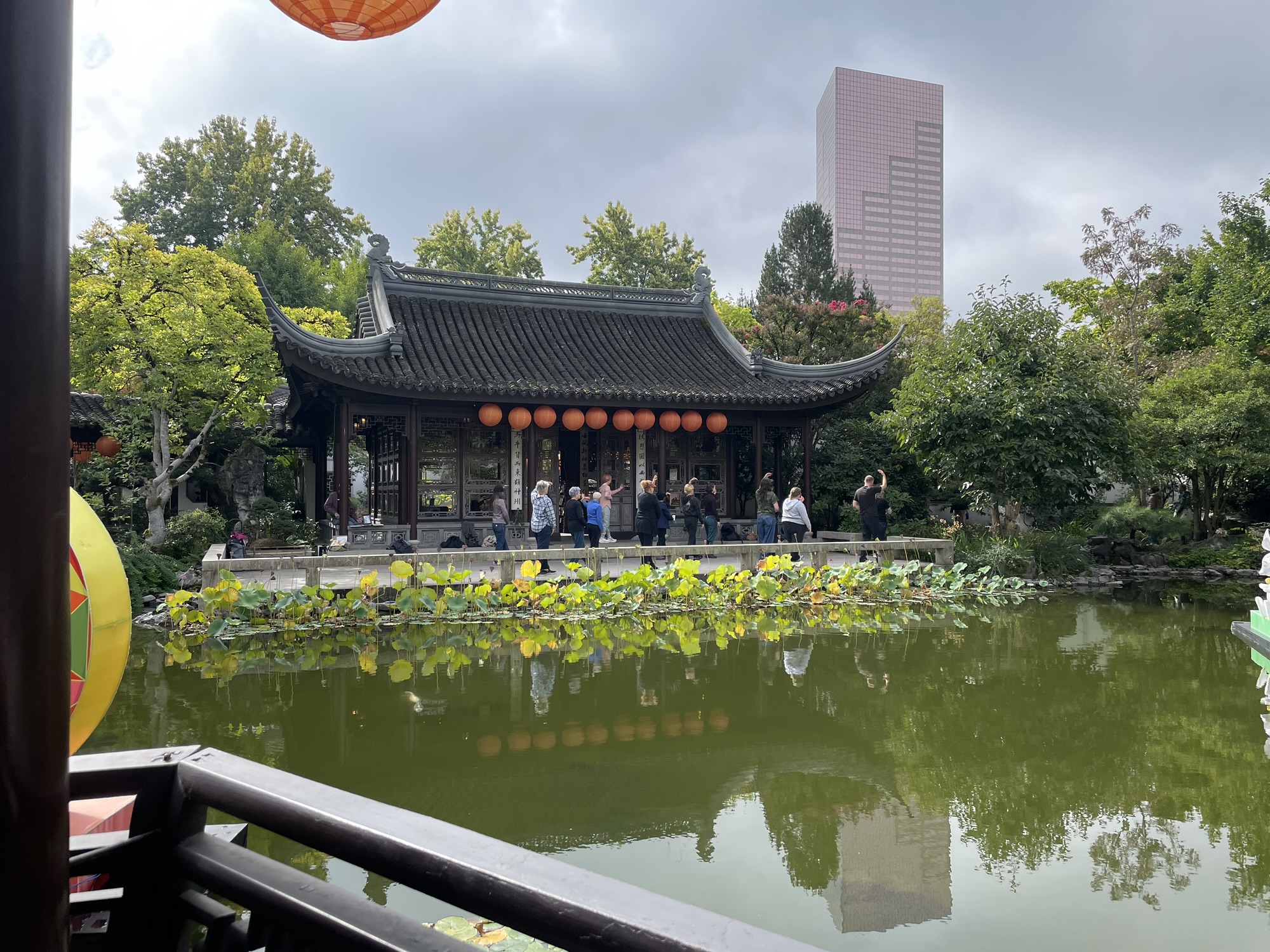
At the end of the bridge, it was a short walk to the Lan Su Chinese Garden. This delightful oasis was built in 1999 by 65 artisans who came from China and opened to the public in 2000.  There is a short movie that explains how it was built.  I was fascinated by the inlaid rock areas.  I even asked the guide if we were allowed to walk on it, it was so beautiful

The gardens and the lake create lovely view, but so is the wonderful craftmanship of the buildings and the woodwork.  You are able to walk into all the buildings and admire them.  The tea house serves a variety of teas and pastry. We had to stop in there for a snack and enjoyed to views of the gardens. 

When walking through the gardens, I did not think of the city around us, instead I felt like I was encapsulated in a hidden jewel.
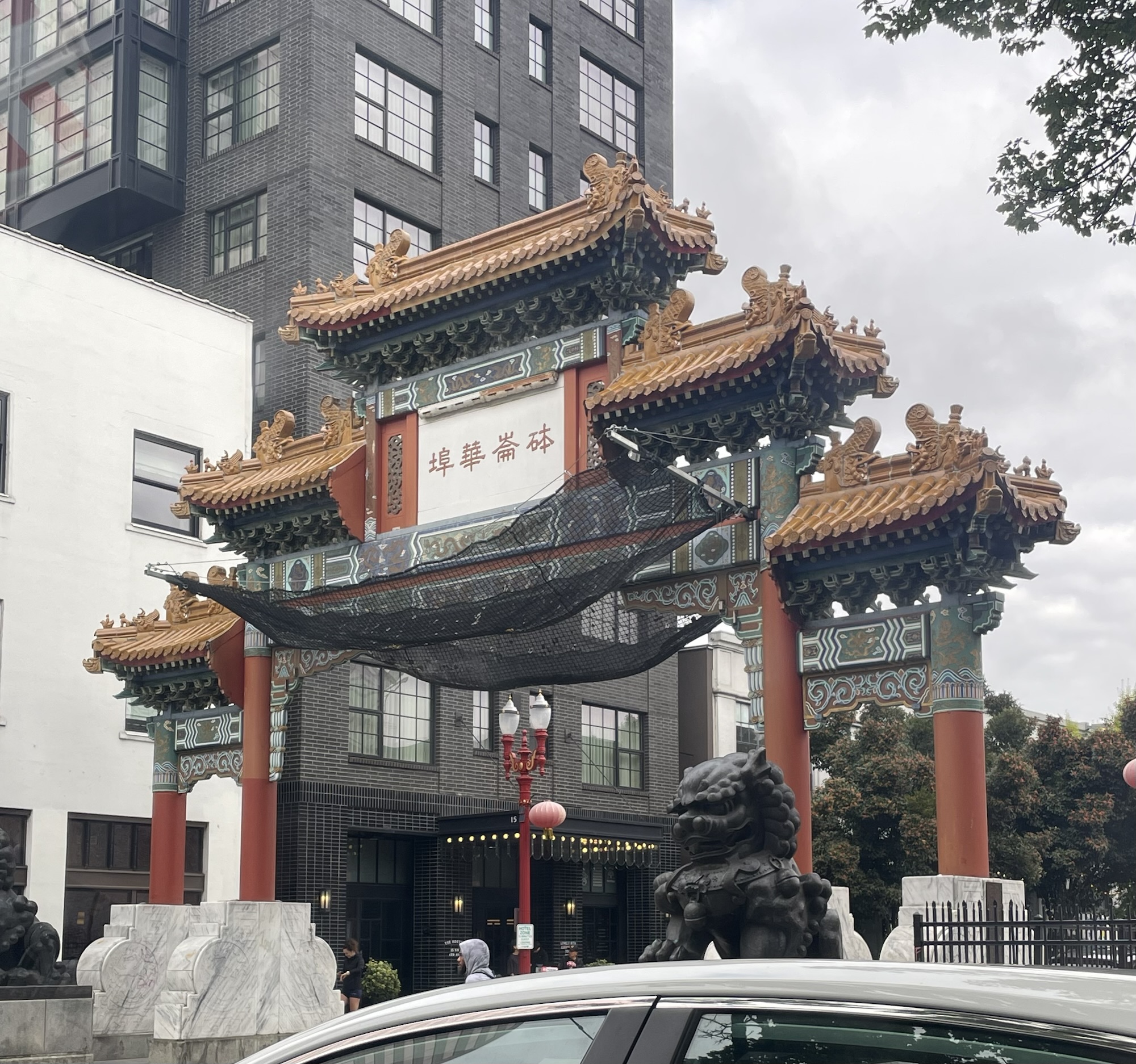
China Town Gate.

Afterwards we walked to the Golden Horse restaurant for a lunch.  It seemed right that we have Chinese food after visiting the garden. 
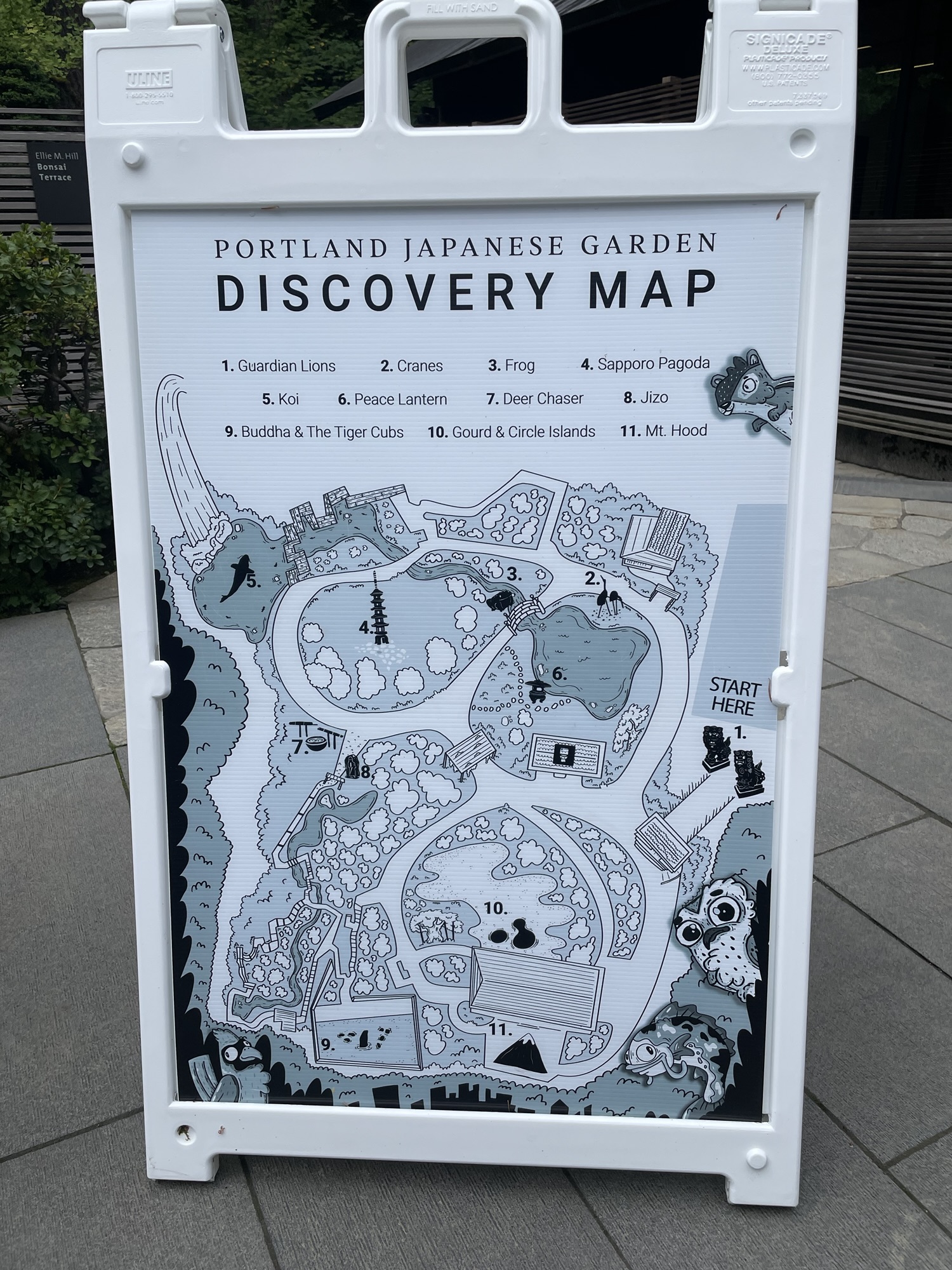
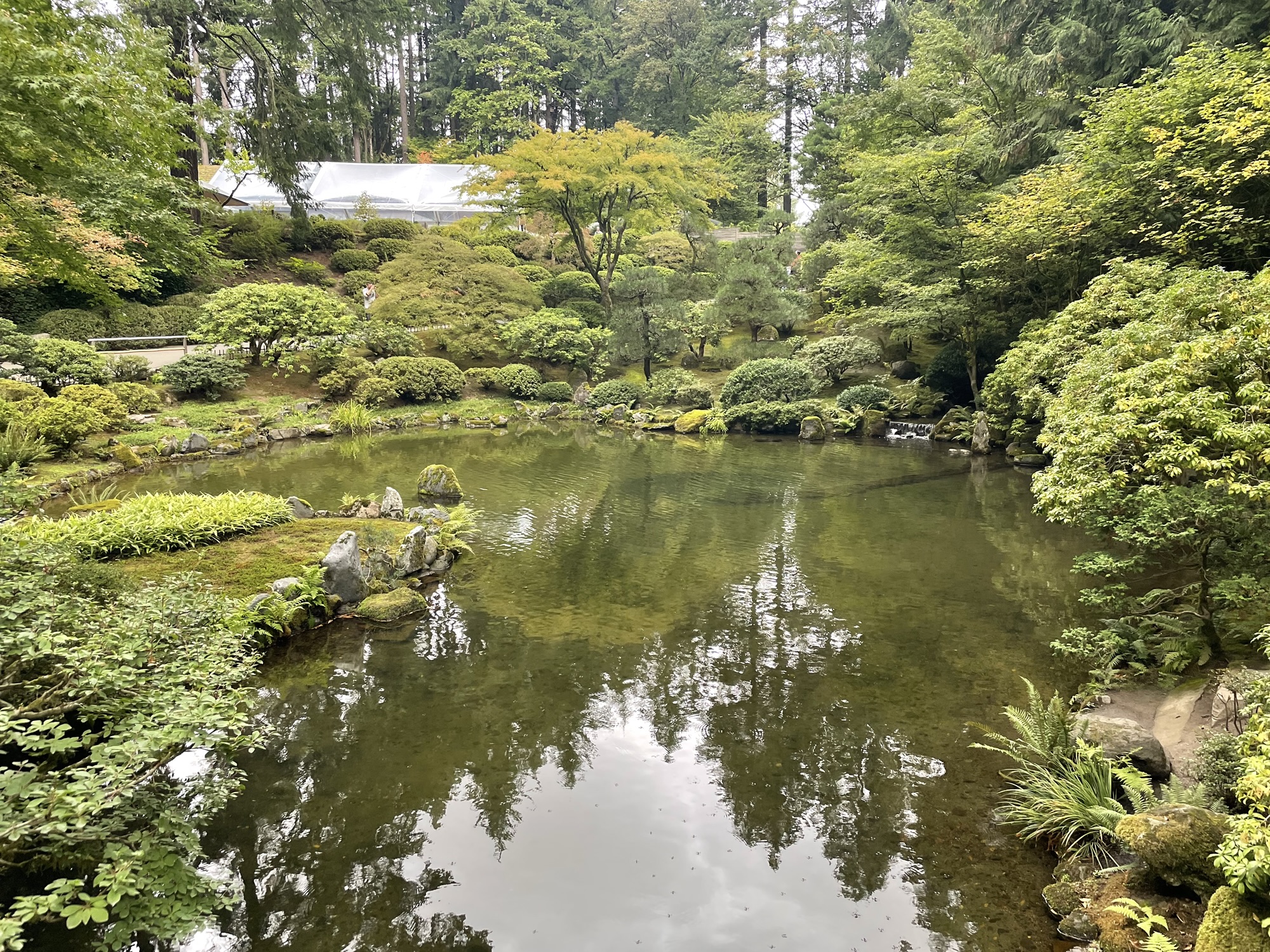
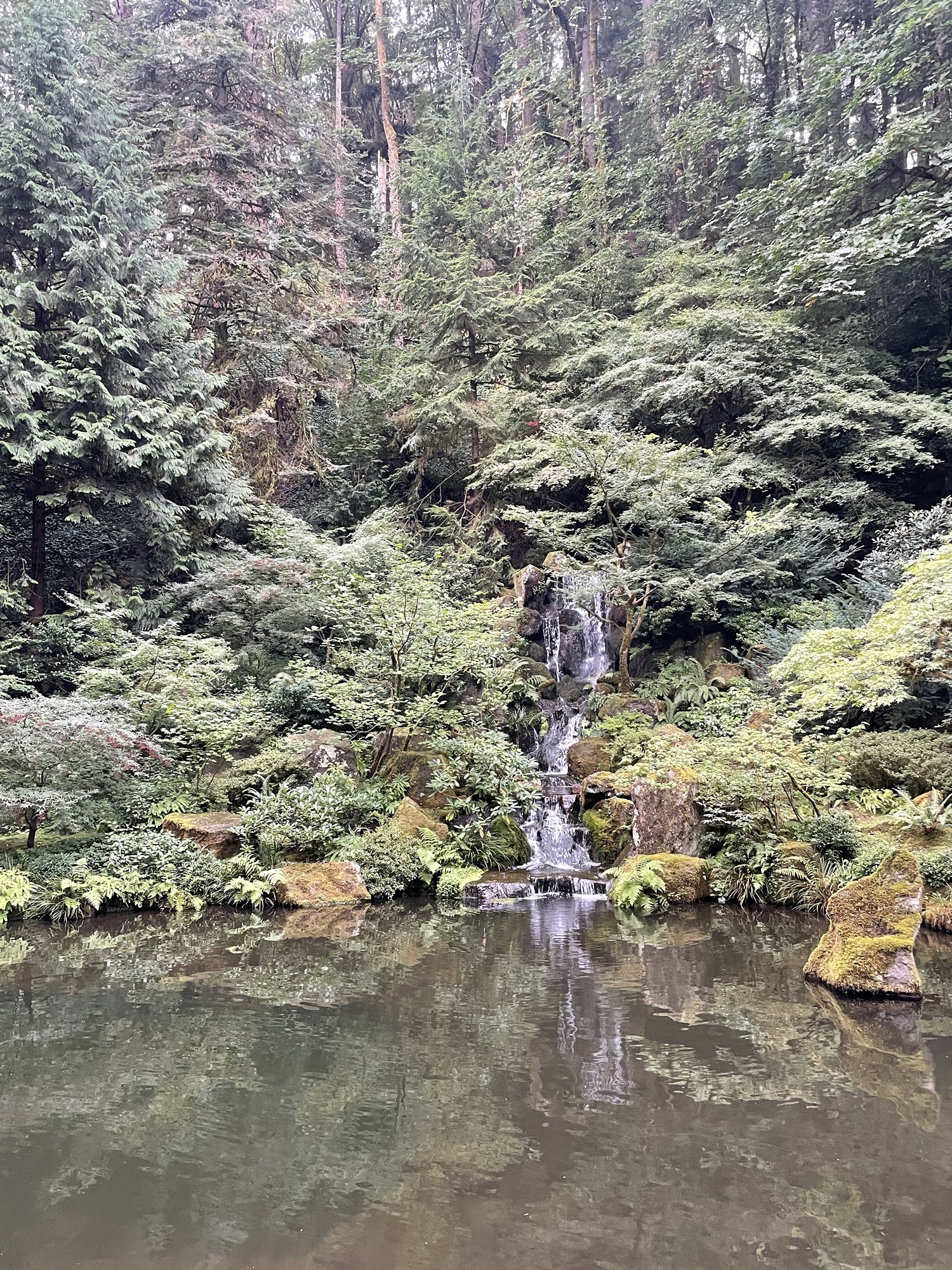
The next day we continued our Asian garden experiences with a visit to the Portland Japanese Gardens in Washington Park.  WOW! If Lan Su is an encapsulated oasis within the city, the 12-acre Japanese Gardens is a paradise!

A part of Washington Park since 1962, this peaceful setting was built to bring healing to the city after World War 2. I believe it did.  You cannot walk through these gardens and not appreciate the culture that produce it.

Like Lan Su, there are buildings on the grounds including a Japanese Tea House.  Since it is a much larger garden, there is a learning Center, a Café, a more.    But for me it was the gardens that drew my admiration. 

You start at the bottom of a hill after paying at the Welcome Center, meandering upwards to antique gate and continuing up. Looking back at the views of the city as you climb the foliage is really breathtaking.  At the top you enter the Nezu Gate by the Japanese Arts Learning Center, where you can visit the Bonsai Garden. From there, you take the paths around the garden settings with koi ponds, waterfalls, raked sands and more. Every garden has resting spots where you can sit quietly and enjoy the views and the peace and serenity.

I think if I lived in Portland I would go to the Japanese Gardens weekly to ease my anxieties.

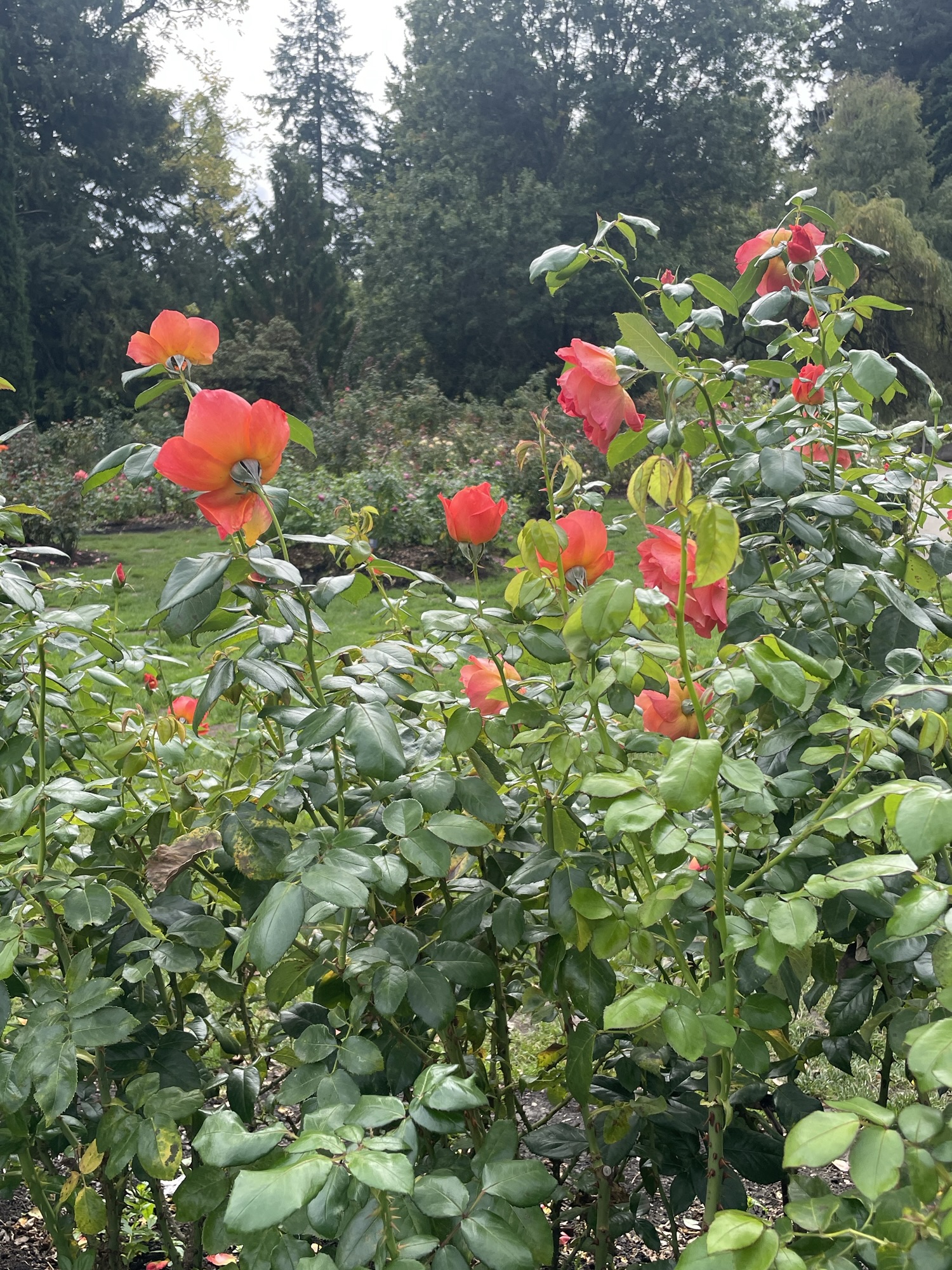
Because we were in Washington Park, after we finished our time at the Japanese Garden, we did walk over to the International Rose Test Garden.  Established in 1917, this garden has over 4 acres of magnificent roses.  I was here several years ago when I first visited Portland. But we had to stop in to see the beauty of this garden as well.  There are always amazing roses during the blooming season. One peach-colored rose caught my eye, its petals resembled crepe paper.

And a wonderous mansion too!

Since we were in Washington Park, we visited one more spot close to Washington Park, the exquisite Pittock Mansion. The home of the owner of the Portland Oregonian, the mansion took two years to build, with a move in date of 1914.  Overlooking the city and the river, it has magnificent views and lovely gardens as well. But it is the house that is the main attraction.
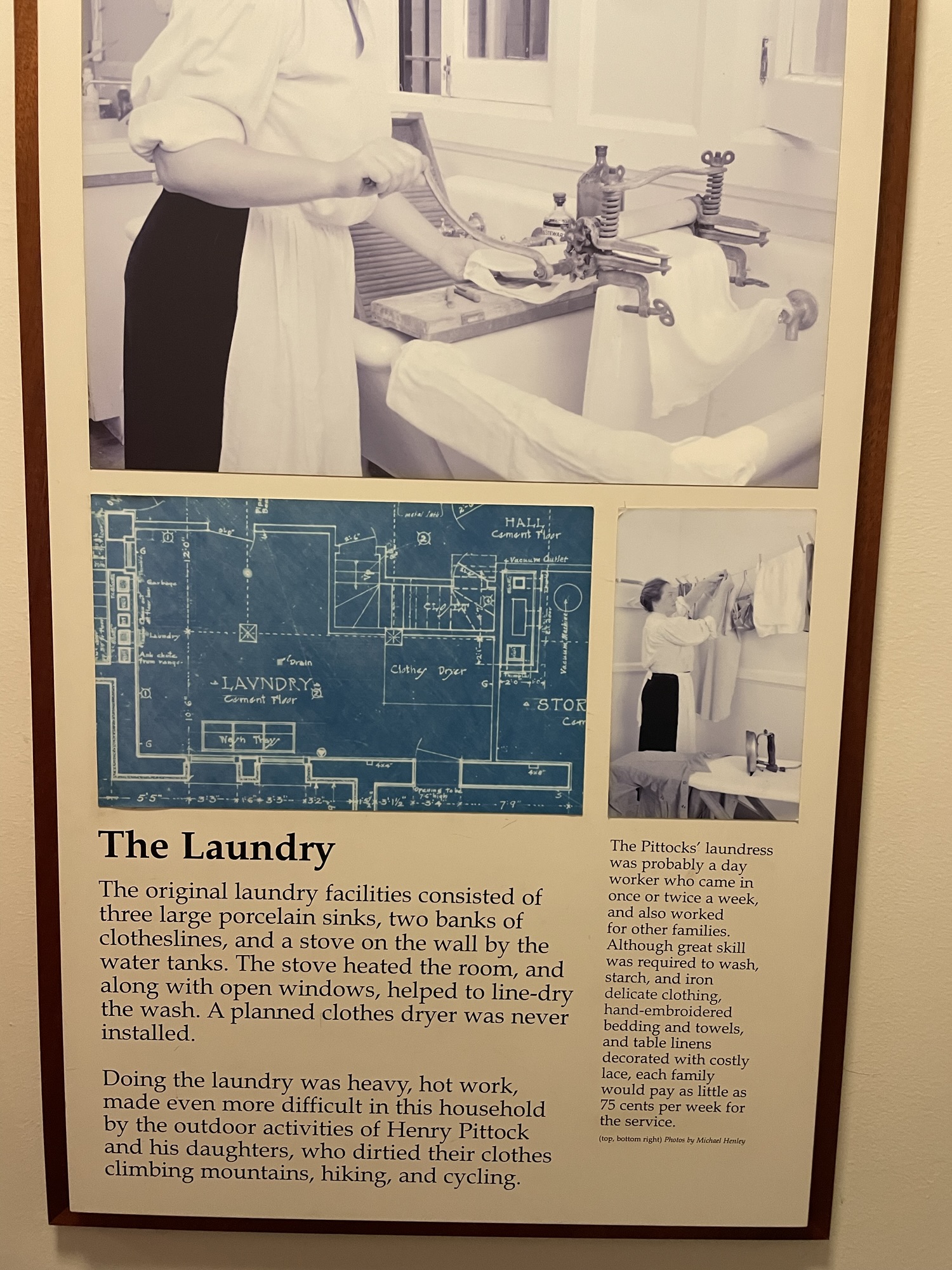
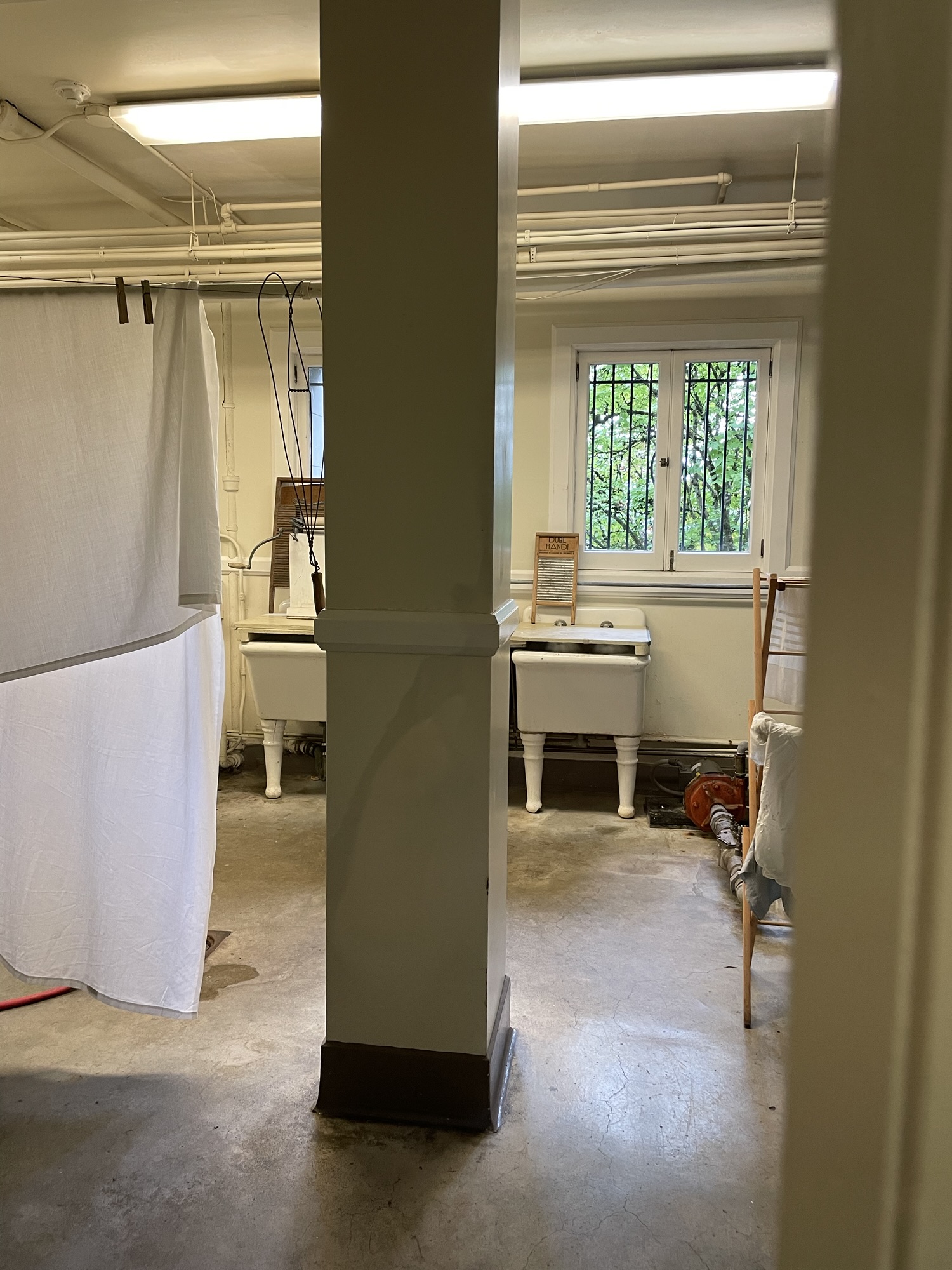
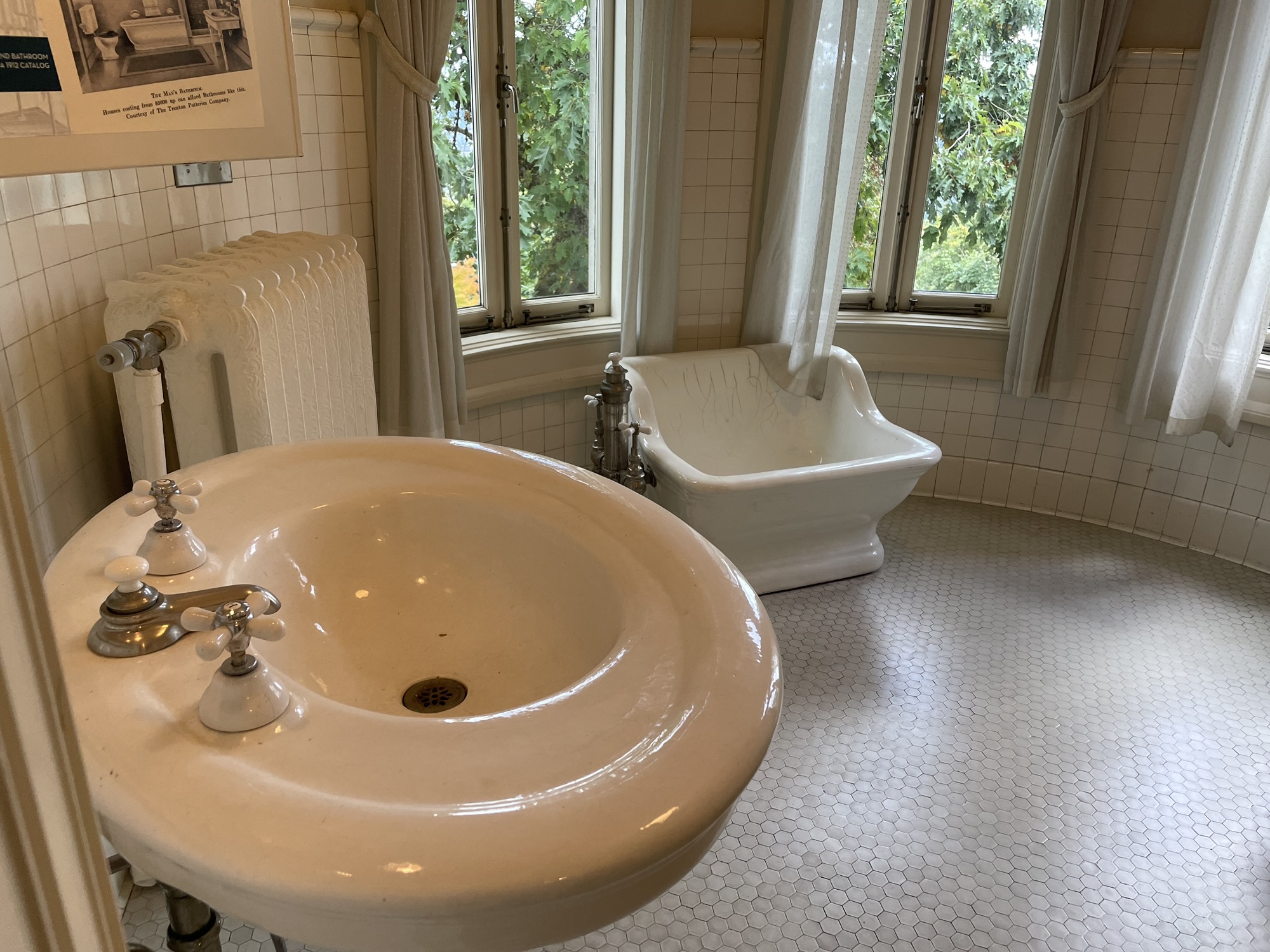
The Pittock Mansion has many innovations for a house of its time.  The abundant bathrooms had all the ‘modern conveniences” with both tubs and showers; an intercom system: extensive laundry room and an amazing cold room. The door was extra insulated and the room contained cold storage. Mr. Pittock wanted the best and the most up-to-date home.

After the family moved out in 1958, the house was abandoned. Eventually the city purchased it and  restored it and opened it to the public in 1965. I am sure the upkeep is still tremendous!

Today it is a great venue for weddings and other events. I had to pose on the grand staircase. It was a moment for me to imagine living there. Which I never could, but really some spots just call out for a photo.  The Pittock Mansion is another must see site in Portland.

https://japanesegarden.org/

https://www.portlandpf.org/rose-test-garden

ANU: The Story of My People

19 Oct

Visiting the Museum of the Jewish People in Tel Aviv

In August I visited ANU – The Museum of the Jewish People on the campus of Tel Aviv University.   There was much I saw at the museum that resonated in my heart. But honestly, I just could not write about my visit.  At that time, I was not in the right mind frame to discuss what we, the Jews, have been through in the past few years, as we were dealing with the worldwide Jew hatred and still praying for the hostages held by Hamas in Gaza.

But this week when the living hostages were finally released, and it felt possible that this seemingly endless war of survival is shifting, I revisited my time at ANU.  I remembered what stood in my mind then and still remains with me now.

I am a descendant of Jews who fled Spain and Portugal and ended up in Amsterdam before moving to Austria.   Although I know of one distant relative who was burned at the stake in Portugal for being a crypto Jew, most of my family kept their Judaism when they moved to the Netherlands.

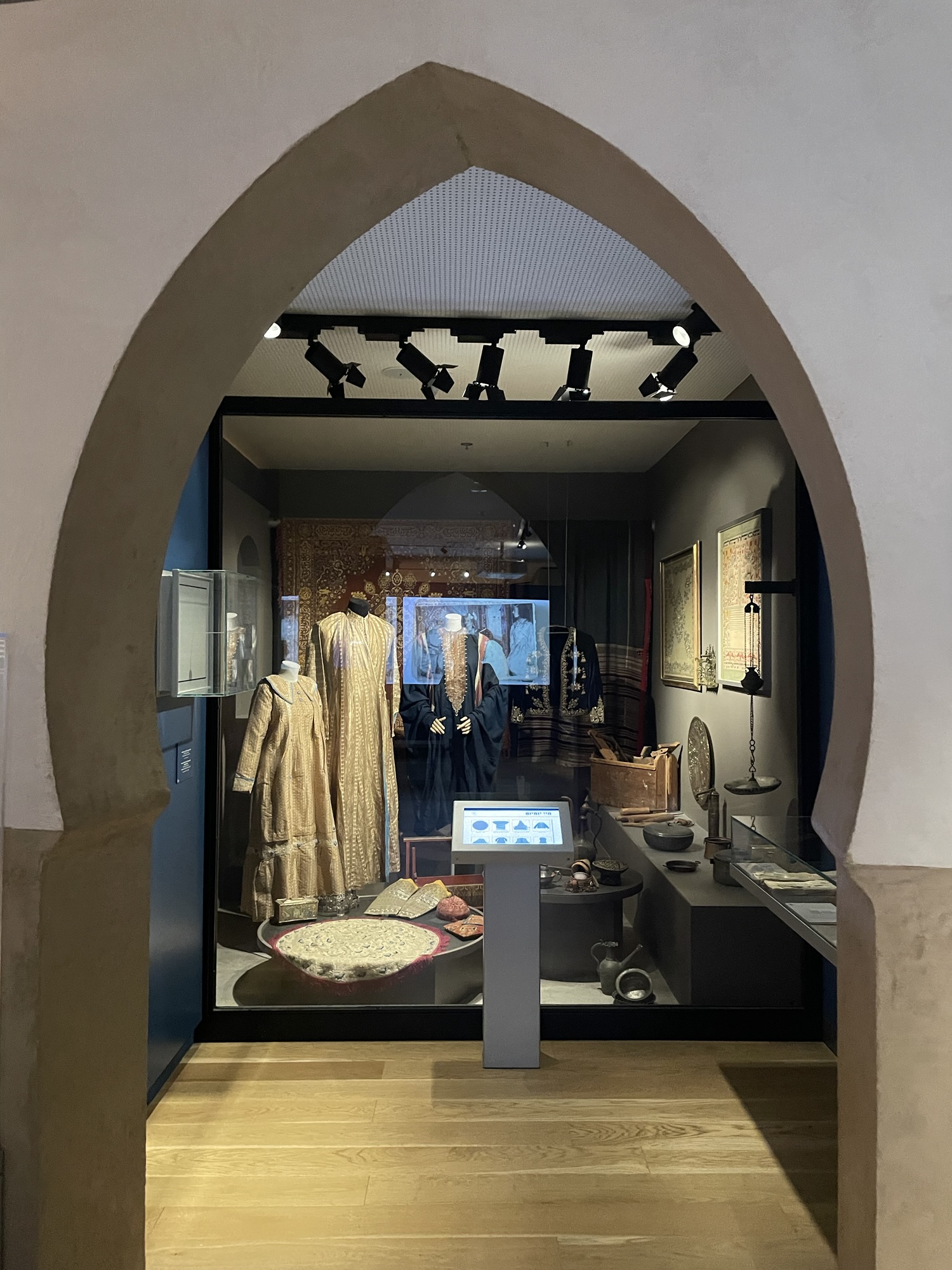
I found out that the Jews of Spain and Portugal were not the only Jews who had to practice their religion in secret. At ANU I learned of the hidden Jews of Iran. In the 1800s the Jewish people of Mashhad, Iran, were forced to convert to Islam or be killed. For over 100 years the hidden Jew of Mashad were outwardly following Islam, but on Shabbat they celebrated their Judaism.  Forced to live in a ghetto area for these “new Muslims,” called Jadid al-Islam,” they married within their community.  Finally, in the 20th century they reclaimed their Jewish identity. About 10,000 Jews still live in Iran.

My family story mirrors stories retold at ANU.  My family, who had settled in Amsterdam, made a life changing decision in the late 1700/early 1800s.  A branch of my family settled in Galicia, Austria, in a small town called Mielec and my immediate family settled nearby in Trzciana.  For decades they lived peacefully with their neighbors.  But with the rise of the Nazis, everything changed.  Of the 5000 Jews who lived in Mielec area, only a little over 100 survived the extermination of the Jews.  Two of them were my relatives. Everyone else who stayed were murdered.

My grandfather came to the USA in 1920.  He did not suffer as most of his family did in the 1940s.  His suffering was the not knowing what happened to his loved ones. 

My family have lived the American dream which up in till the last decade or so has been wonderful.  Yes there was antisemitism, but it was kept quiet. Most people treated each other with civility.  However, in recent years that quietness faded and people felt empowered to spew Jew Hatred. Social media has been a major source of spreading all types of Hatred.  With October 7, a war that Hamas started not just to kill the Israelis but to cause a fire storm of hatred toward Israel, social media has become a cesspool of hate.   Using social media to life stream the attack on Israel and then to spread its hate has been an outrageous attack on Jewish people. And that fact that the news media does not vet its information makes matters worse.  Social media and some news media have been complicit in the spread of hate.

This web of hatred seems impossible to deal with at times. But the other important information I learned by visiting ANU, is that we survive. We have the will to survive. We are innovative and positive. We as a people make contributions in science, medicine, math, literature, agriculture, film and more. Our identity and culture keep us strong. I believe that inner strength will define us.

At ANU is the Sasson Codex, one of the oldest complete Hebrew Bible.  It is currently in a protected spot due to the missiles that have been launched toward Tel Aviv.  But a replica is on display. It is a treasure of Judaism.  And it is the Jewish Torah that has influenced the Western world, even though at times it seems they have forgotten the words that are at the heart of religious life: Feed the hungry, clothe the naked, welcome the stranger, visit the sick, etc. We are said to be the people of the Book, and that book is Torah.

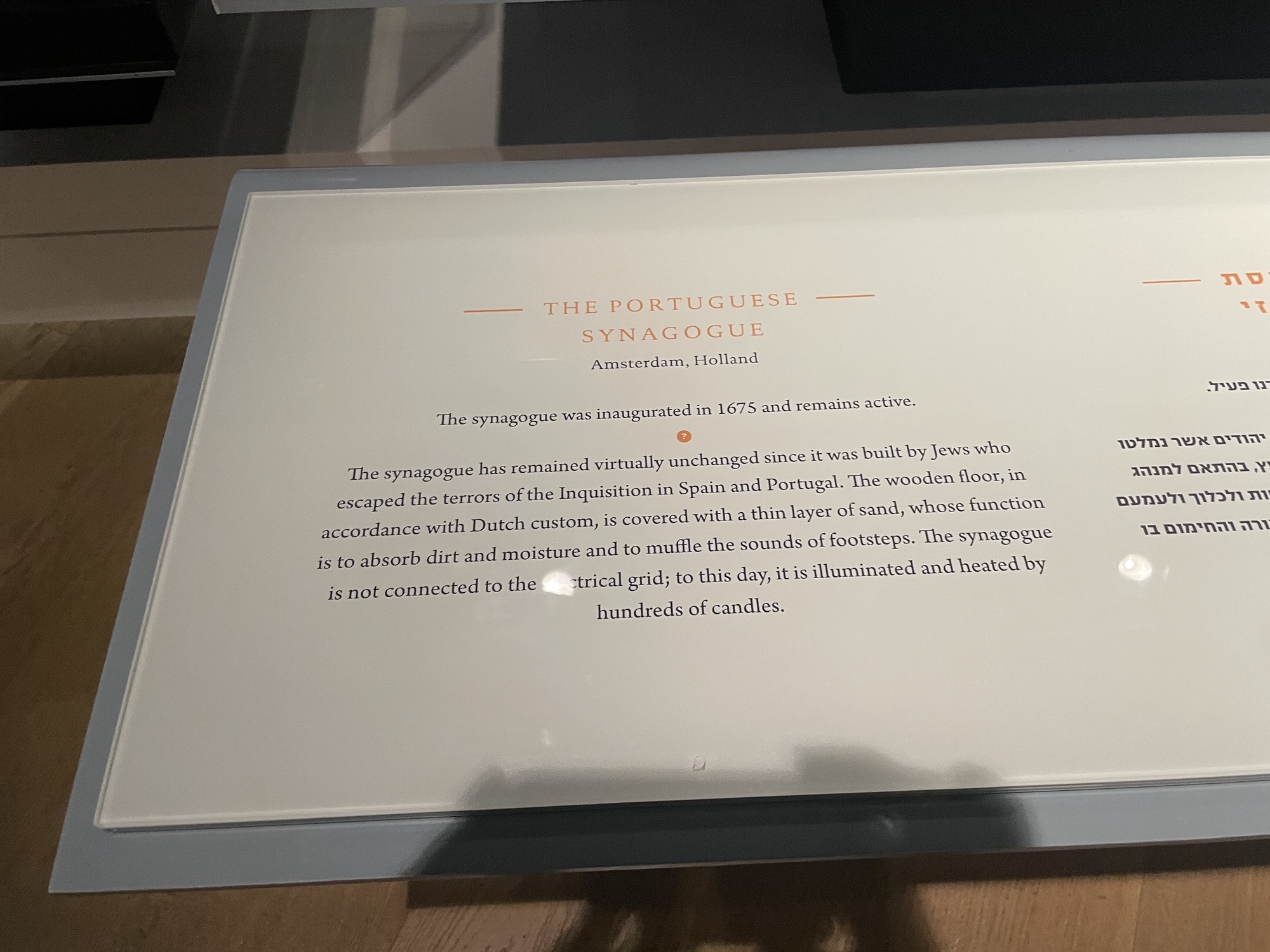
At ANU miniatures of the famous synagogues of the world are on display, including the Portuguese Synagogue in Amsterdam. A synagogue that has been present for 350 years, where my family might once had prayed. Throughout all the wars and waves of Jew Hatred this Synagogue has remained! It continues as a the place of prayer for the Jews of Amsterdam who survived the Shoah, while other synagogues now serve as museums.

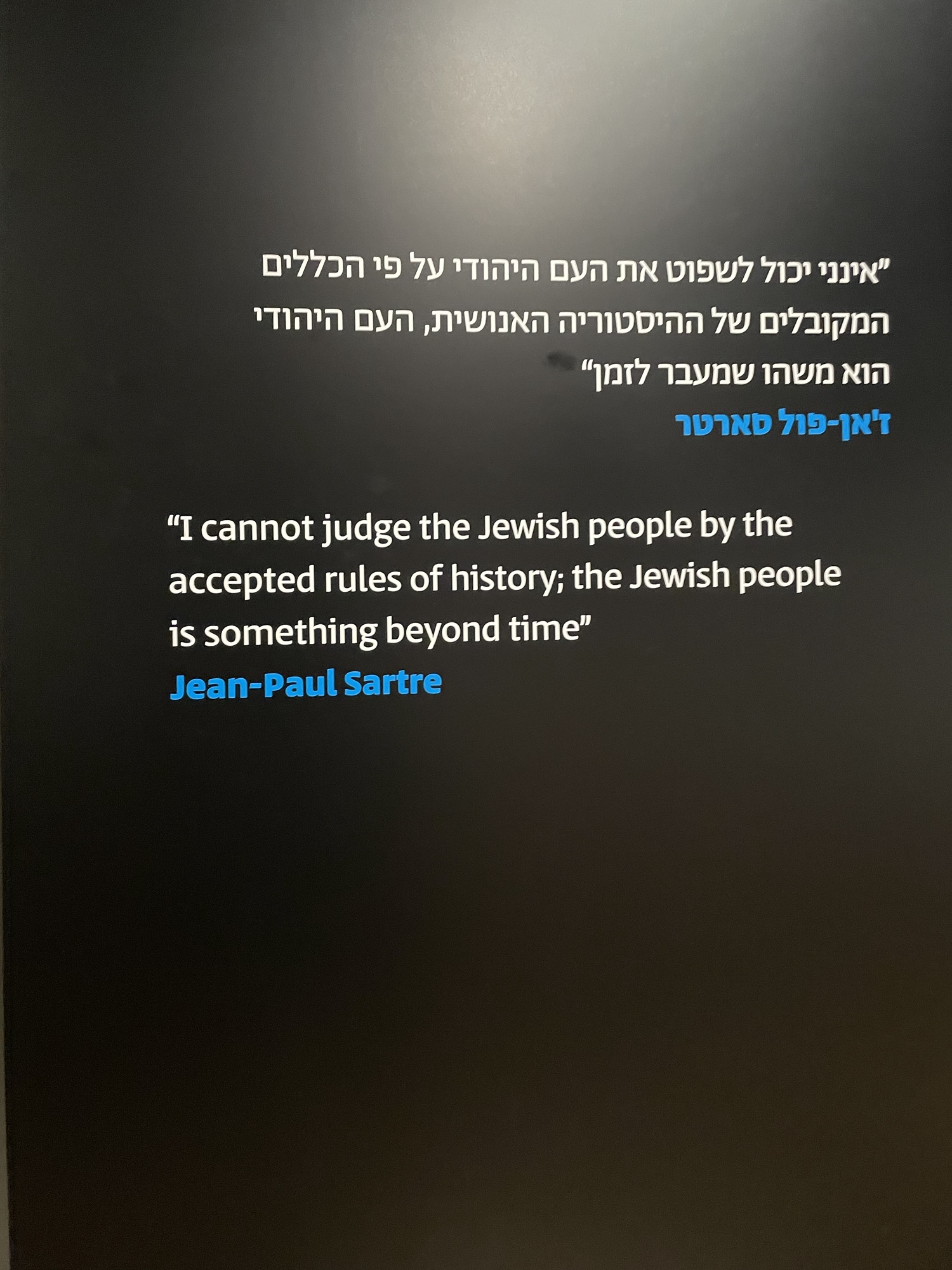
At ANU, I saw highlighted quotes by famous people about the Jewish people.   This one by Jean-Paul Satre, felt right to me: “I cannot judge the Jewish people by the accepted rules of history, the Jewish people is something beyond time.”

Let it be so.  Am Israel Chai.  The people of Israel, the Jewish people. They lived; they live; they will live.  Now and beyond time.  Amen Selah.

Danger! The Warning Signs of Yellowstone

13 Oct

My week in Yellowstone made me aware of the importance of signs.  Especially the cautionary ones along the paths, in front of some of the park’s wonders and when entering certain area of the Park.  People really need to pay attention to what is around them.  (See blog below.)

Every year people get injured, and many times it is because they do not pay attention to the signs.  Bison injuries are usually the fault of the visitor. Close encounters with wild animals is often a bad decision.  Getting a selfie with a bison is not a good idea.  Stay away from the bison. They do not want you wandering in their way.  A head nudge from a bison could send you flying, if not worse.

Often when we saw wild animals close to the road or nearby, there would be a park ranger also there directing traffic or blocking off the area close to the animals. At Mammoth Falls Terraces, a bull elk and his harem were hanging out on the terraces. So the walkway was closed for our safety and the animals. It might have been great to get better photos, which people with better cameras could. But in reality, we need to stay away from them and respect their space.

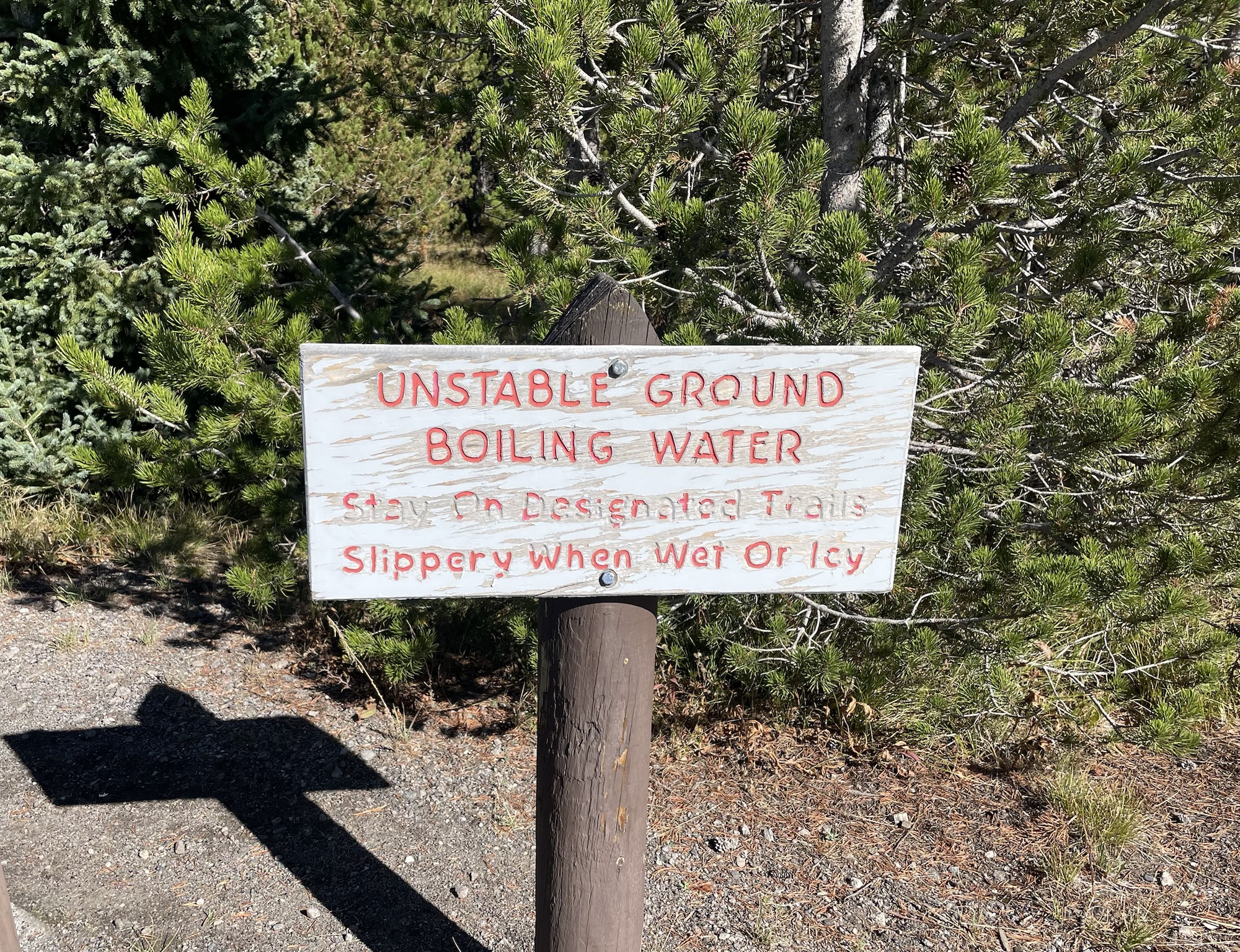
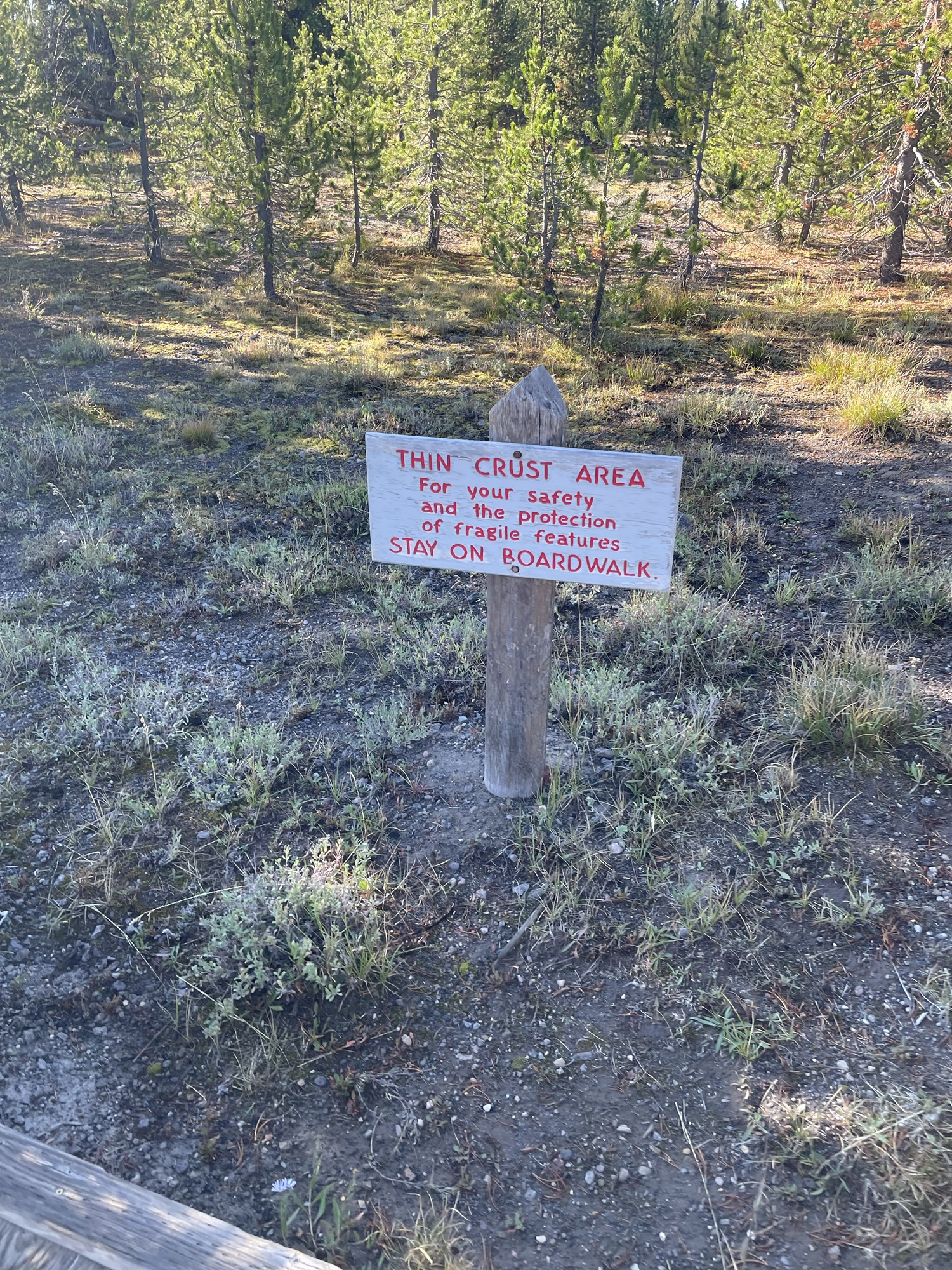
Hot Springs are very hot and the land around them is very fragile. Do not walk on areas that specifically say, “do not walk here.”  But every so often someone does.  And unfortunately, they pay the price. Geysers erupt, which is why they are surrounded by fences or barricades. Don’t climb over.

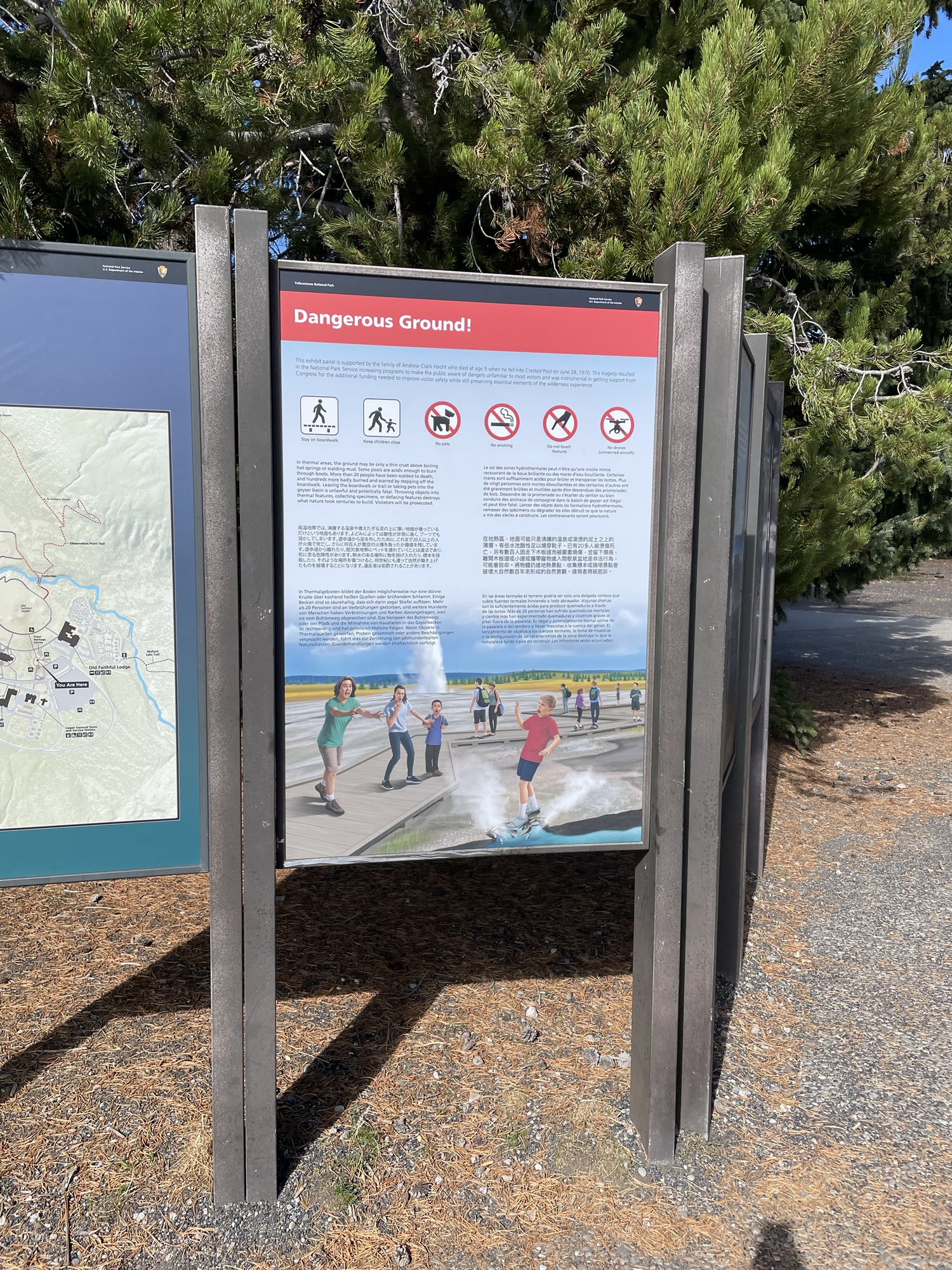
The warning signs are everywhere, and some are very specific!

Be careful when you bring young children and dogs into the park, especially around Old Faithful.  The sign above tells it all.  In 1970, a 9-year-old boy died after he fell into Crested Pool.  Horrifying.  Now there is a permanent sign warning people of the danger. Another sign warns guests specifically not to bring dogs into the basin.  If they get off their leash and run into the off-limits area, they could be killed. But since the sign is there, I think we can assume that some people just do not believe it. And their pet pays the price.

I am posting some of the many signs that we saw along our travels in Yellowstone so people realize that what they are seeing and enjoying must also be respected. I am happy to say that no one in our group took any risks or defied the signs and warnings.  Yellowstone is a beautiful, exciting and awe-inspiring adventure.  Seeing the sights and the animals and birds is exciting. But like any adventure, you have to pay attention to your surroundings and respect the animals and the warnings.

Yellowstone, Yellowstone, and More Yellowstone.

7 Oct

Eight years ago, my husband and I visited Yellowstone National Park for one day.  We, along with eight others, toured the park for about 12 hours. It was exhausting. But after that experienced I vowed to go back and spend at least two nights in the park. (See blog below.). I exceeded my desires, as we spent four nights and five days exploring Yellowstone National Park on a Road Scholar educational adventure.  Along with 21 others we learned so much more about the Park and its wonderous sights, sounds, smells, wildlife and natural beauty. 

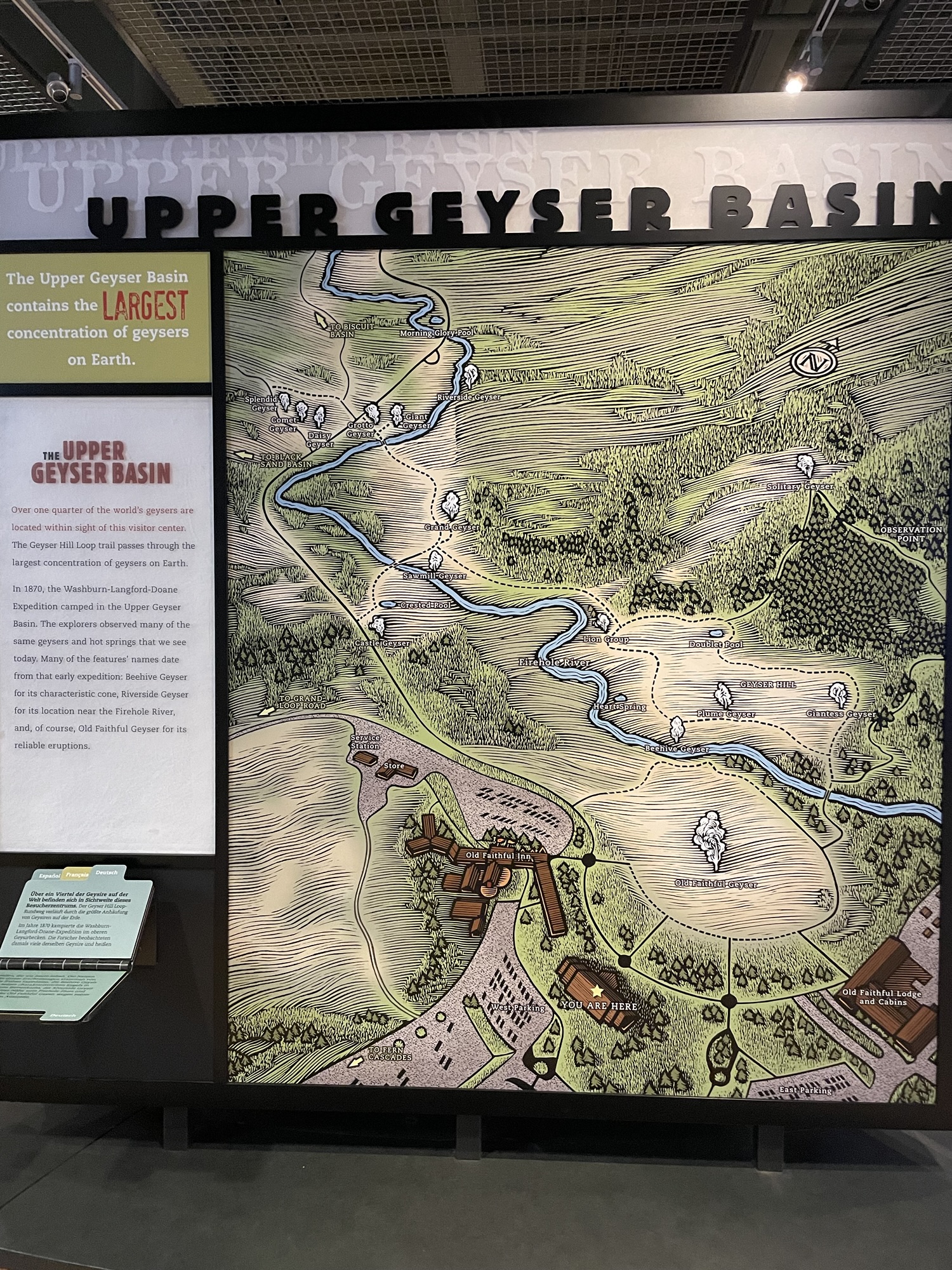
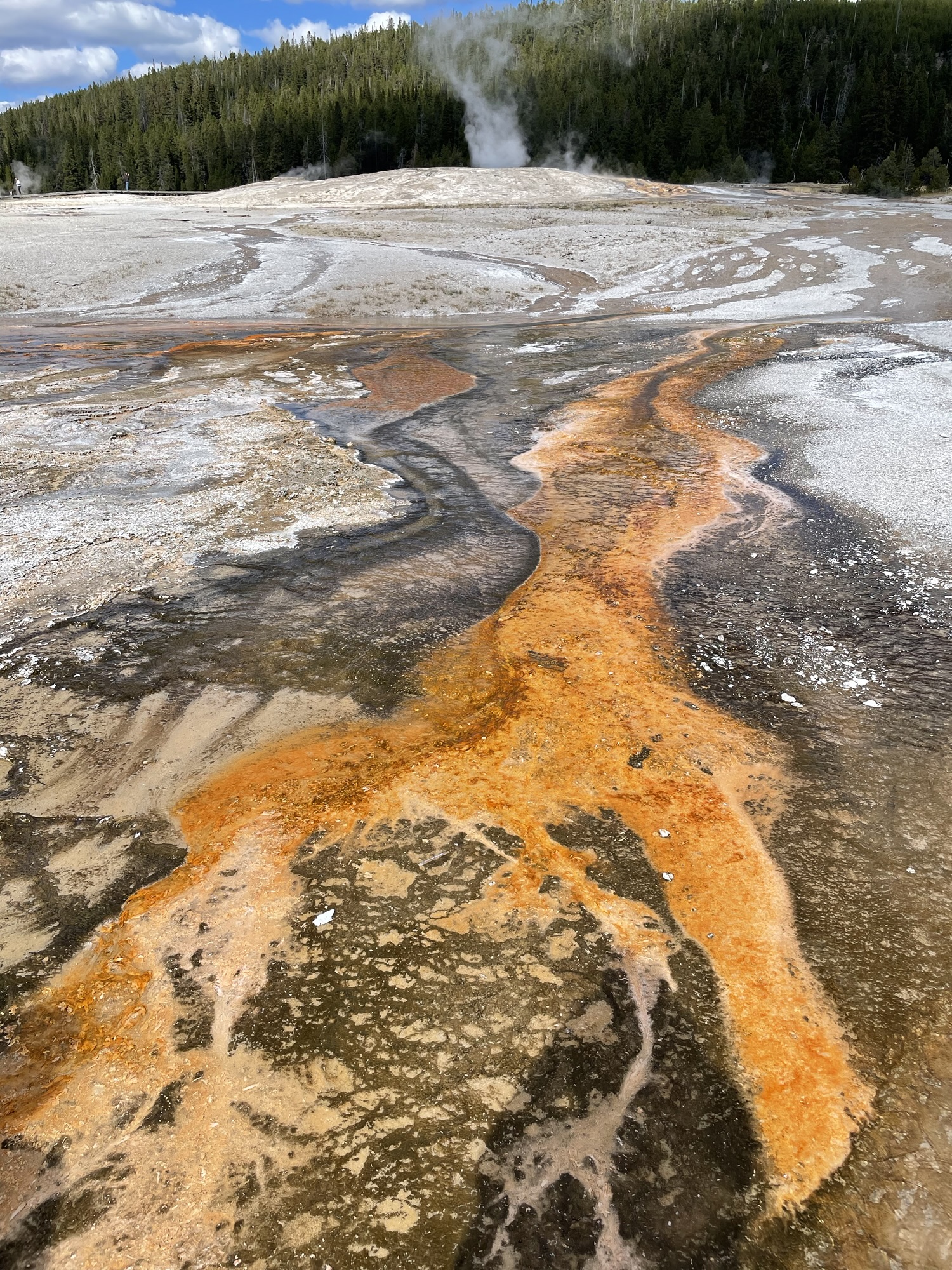
Everyone talks about the geysers of Yellowstone. The one most people see exploding upwards is Old Faithful, one of dozens of geysers that are part of the Geyser Basins, along with fumaroles (steam vents) and very hot springs and other hydrothermal features. The first time I saw this area we only had time to see Old Faithful expel its heated waters and steam and eat lunch at the Old Faithful Inn, an experience in itself. We could see other geysers in the distance erupting water and steam. But we did not have the time to walk around and explore.  This trip we had more than enough time.

We spent two nights at the Old Faithful Snow Lodge, one of three hotels that are in the geyser basin area.  The Snow Lodge is the only one that is open throughout the winter, as it has heat and is built for the cold weather.   The Old Faithful Inn and the Old Faithful Lodge, two historic buildings from the early days of the Park, are only open until late October.  The Visitor’s Center and the Tribal Culture Lodge, as well as the General Store were open when we visited.

Since we had lots of time to explore while at Old Faithful, I visited the Visitor Center and spent time reading the information and watching the two movies.  I also checked out the beautiful historic hotels, Old Faithful Inn and Old Faithful Lodge.  At the Tribal Culture Center I watched two native American artists work, one carving an arrowhead, while the other worked on beading.  There was lots of opportunity to shop in the general store, the Visitor Center and the Tribal Culture Center. We enjoyed that as well.  It was a wonderful day of sightseeing, learning and relaxing.

Over our 40 hours in the Old Faithful area, I saw Old Faithful explode about 8 times, from all different directions.  Each time its steam and water shot up in slightly different ways. It really is an amazing sight.  But what is also amazing was our guided walk around the lower basin and seeing all the other geysers and their eruptions.  In some places there are three geysers right next to each other, like the Lionesses.  When one goes off it can either trigger another one to erupt, or actually draw water away from one that is already erupting.  The Anemone Geyser doesn’t really erupt at all, instead it slowly fills a basin with hot steamy water then suddenly all the water flushes downward like a whirlpool or a flushing toilet.

There are lovely hot springs to look at, like the Heart Spring, that looks just like a heart. But the temperature in these springs often rise to over 160 degrees, enough to cook anything that falls in. 

The land around these features is often brittle and baked.  You see the silicon deposits around them and the bacteria growing in the warm moisture.  The geyser basins are just one of the impressive sights of Yellowstone. 

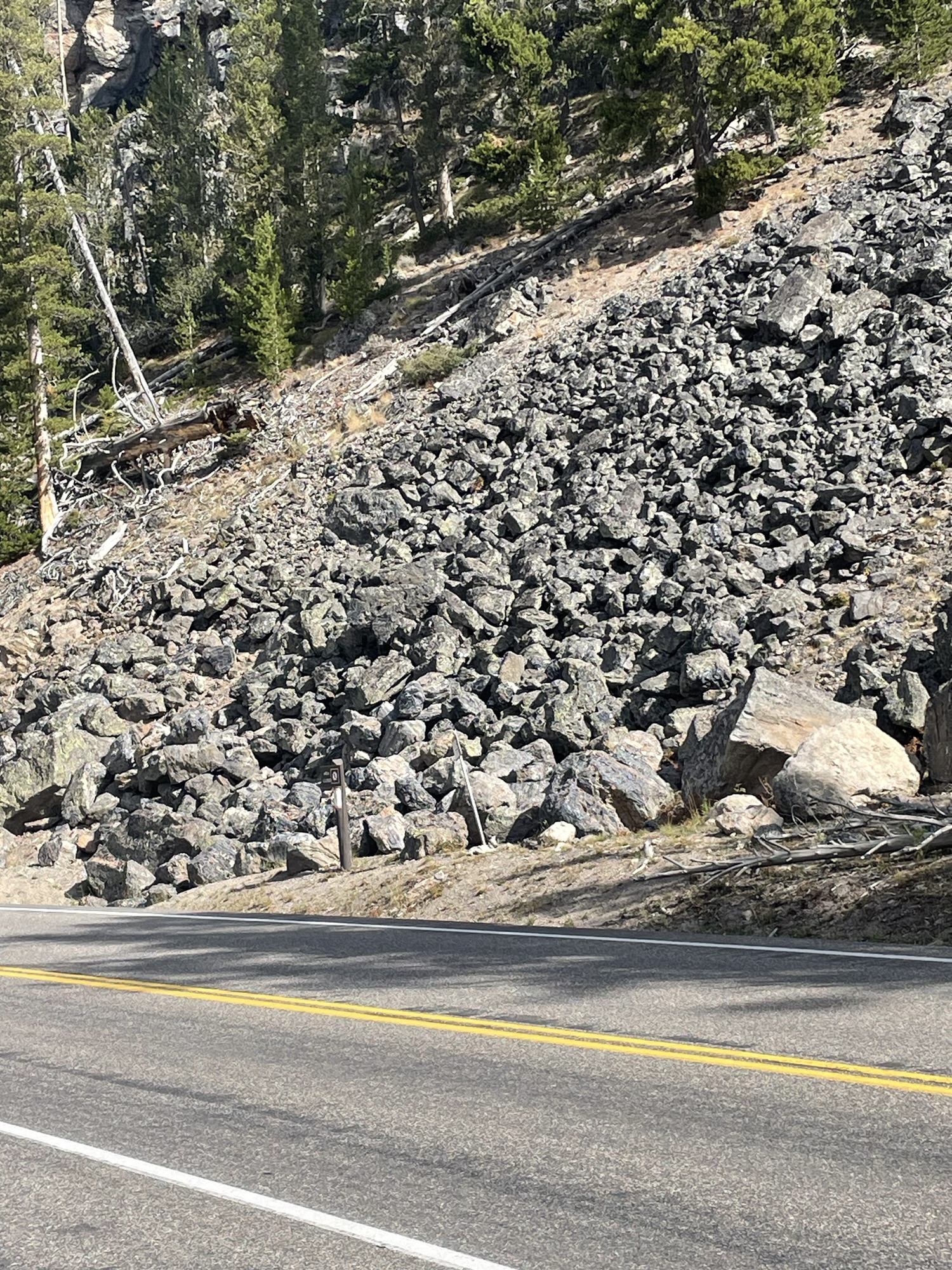
Once we left the geyser basins, there were so much more to see. We visited a mountain entirely composed of obsidian, the black glass made from an ancient volcanic eruption. This mountain is sacred to the native tribes that once inhabited the park.  They used it to make arrowheads and knives. You are not allowed to take any obsidian out of the park. But you can hold this cold, sharp glass.

Every day we ate a sack lunch in the park. The day we went to the hill of obsidian, we ate lunch at this lovely creek and picnic area. I did not want to leave!

Roaring Mountain, is unusual smoking mountain, where fumarole vents have killed off  the trees and caused the mountain to look like something out of a Lord of the Rings movie.

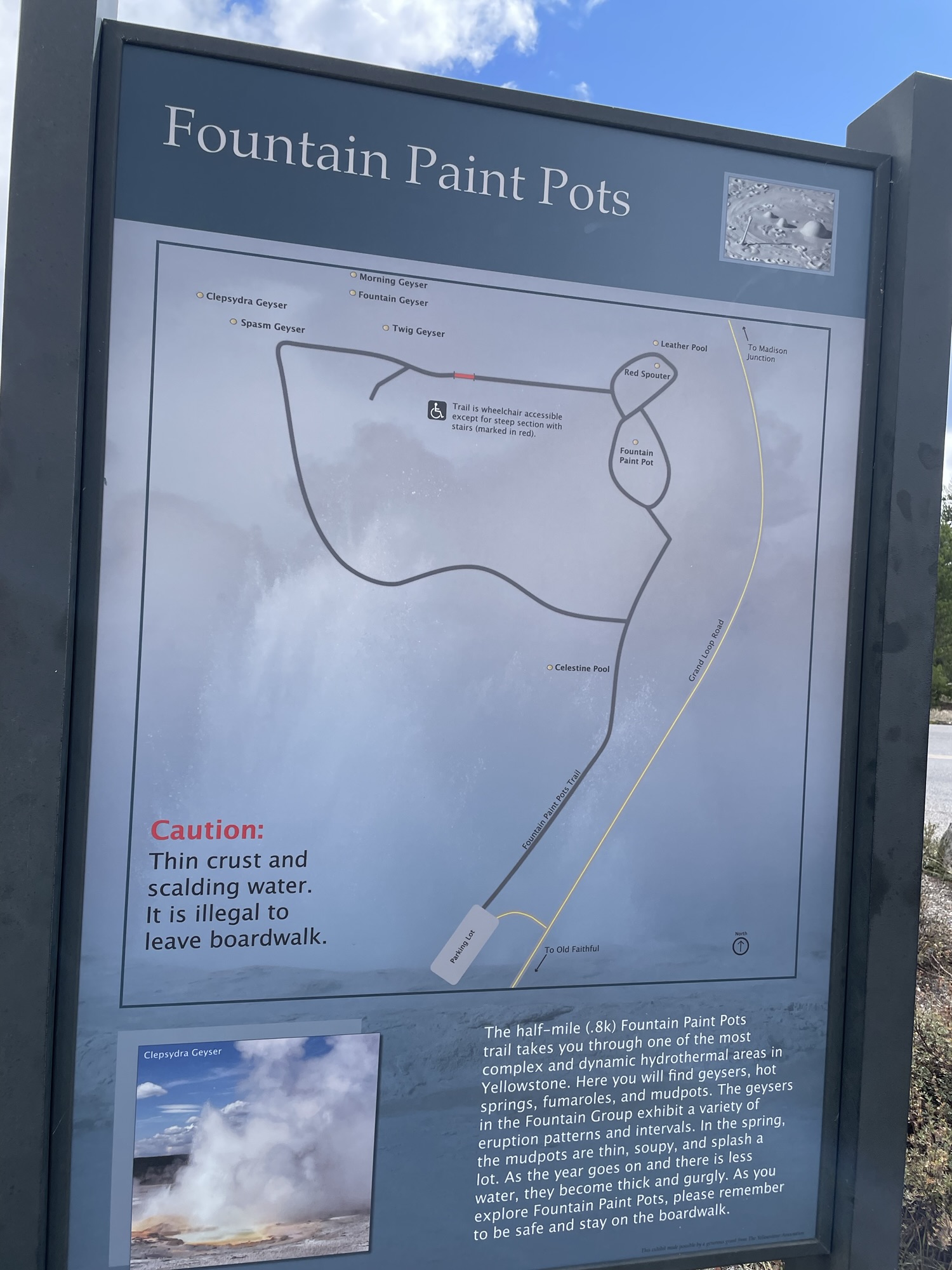
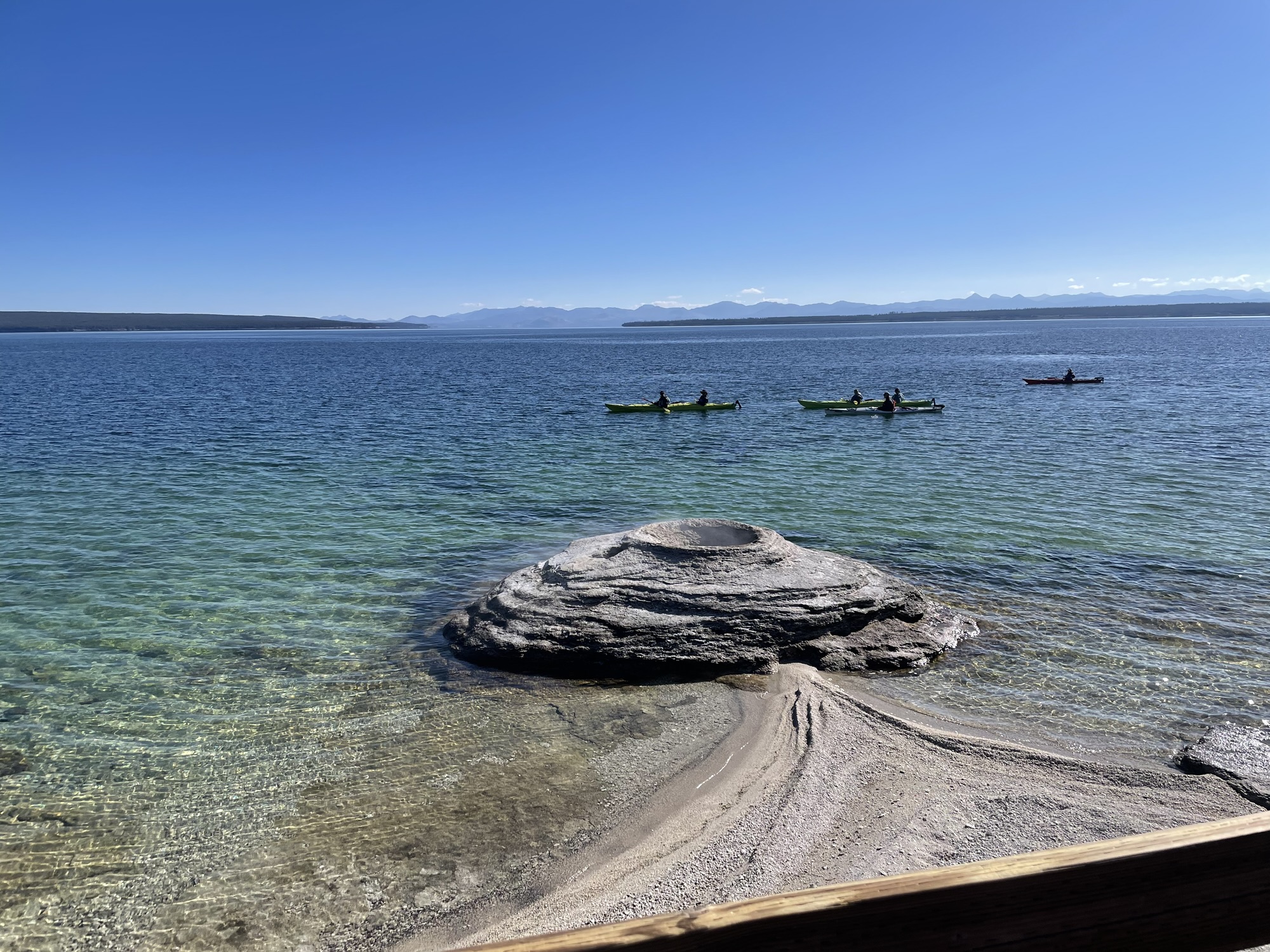
The West Thumb part of Yellowstone Lake, where geysers can be seen right on the edge of the lake and also bubbling up in the lake. And I cannot forget the bubbling mudpots where hots springs and bacteria cause the mud to actually boil.  Talking of mudpots, we also visited Fountain Paint Pots where you can see hot springs, geysers, mudpots and fumaroles all within a short circular walk.  While there we saw many small geysers erupt.  It was a good introduction to our later experience at the two geyser basins near Old Faithful.

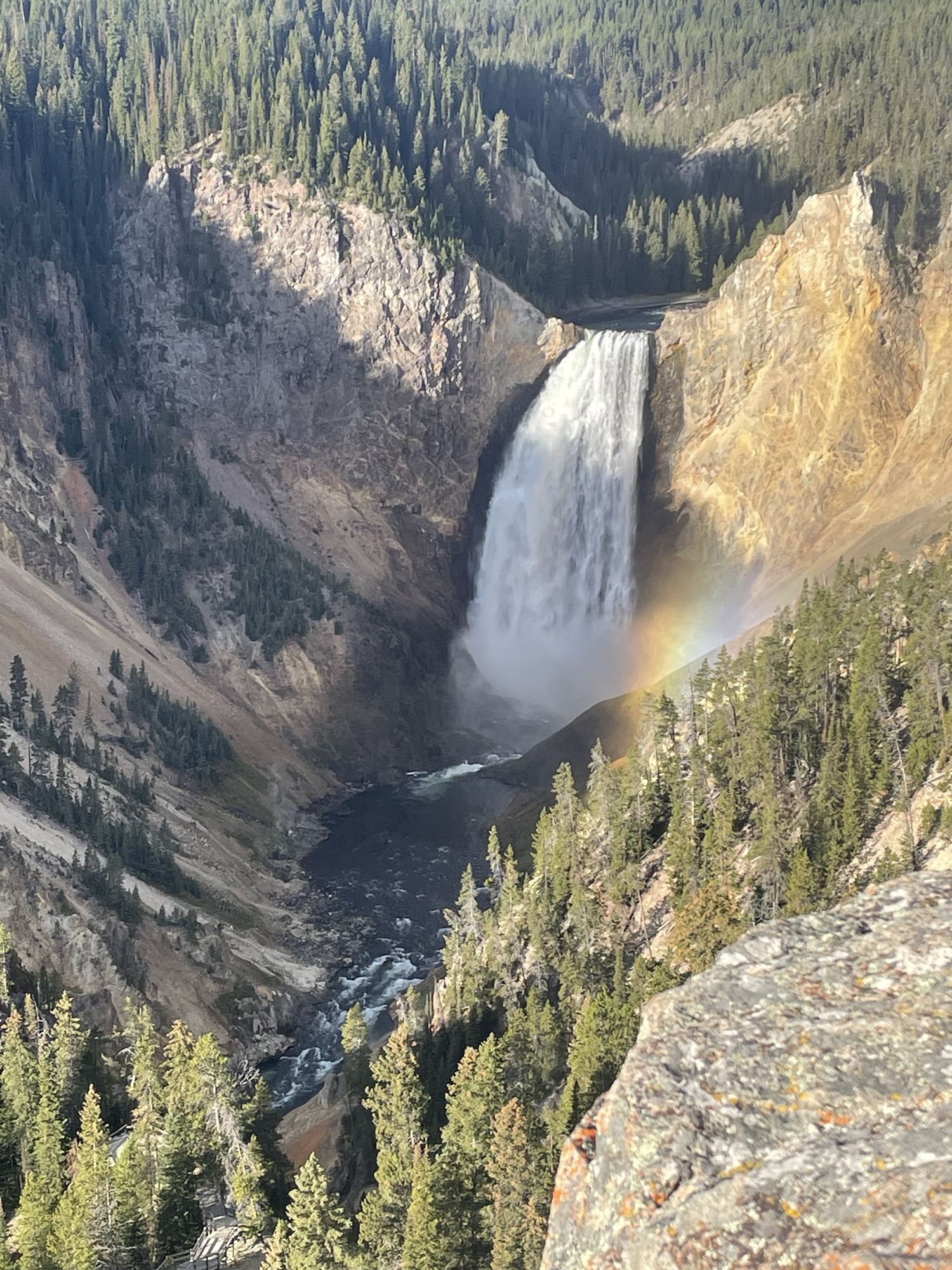
The Grand Canyon of the Yellowstone River with its canyon walls of many colors and its tremendous waterfalls, the Upper Falls and the Lower Falls, are thunderous and stunning. But also along the walls of the canyon you can see the steam from the vents rising as the heat bakes the canyon walls and helps to destroy them.

What surprised me is that the bison, elk and other animals will walk along the heated ground, and sometimes even lie down on it for warmth.  We saw this at Mammoth Falls where a bull elk and his harem decided to hang out on the day we were there.

Just mentioning Mammoth Falls Hot Springs brings back the vision of the water cascading down these travertine terraces that look manmade, but they are not. Photos cannot capture the sparkling essence of these terraces.

Of course I have not mentioned the wildlife.  Black bears, grizzly bears, Wolf packs, Trumpeter swans, Clark nutcrackers, elk, moose, mountain goats, pronghorn (which are not deer!), bison – lots of bison, and so much more to see and experience from a distance. In fact the bison are not buffalo, but people still refer to them that way.  And pronghorns are not antelope, but people still refer to them that way.  As our guide, Shauna, commented, it is impossible to change the song from “Where the buffalos roam, and the deer and the antelope play; to where the bison roam, and the deer and the pronghorn play.”

 Every spot we visited in Yellowstone is amazing. When you think that you are walking in the middle of a giant volcanic caldera, it really changes your view of the world.. These objects that nature has created here is inspiring. You realize that we, humans, are just tiny specks in the world, because in reality, nature is in control. I understand how the First Peoples of the Northern Hemisphere and the early explorers who walked these lands were stunned.  This was sacred land to the First People and should be sacred lands to us. 

I am so glad that in 1872 President Ulysess S. Grant declared it the first National Park.  Yellowstone is not only a national treasure. It is a world treasure.

I think everyone should come here to visit and learn. Having a guide lead us on this journey made it so much more meaningful. I have to thank Shauna, our guide; Bryan, our fearless bus driver; and Louis, our director of all (food, keys, directions, etc.); and Road Scholar. We will never forget this experience.