On our way to Yellowstone, we spent two nights in Bozeman, Montana, home to the Montana State University and the wonderful Museum of the Rockies. We never got to visit the campus of the University, but we did spend a couple of hours examining the exhibits at the museum.

The Museum basically has three parts: Dinosaurs, Yellowstone Park, and an outdoor farmstead. We did not tour the outside area because it was closed for the season, and it was cold and raining. But we definitely enjoyed our visit to the inside exhibits, even though two were closed as they were preparing new exhibits for the fall.
The Dinosaur Exhibit hall is spectacular. The museum has a relationship with the paleontology department of Montana State University. I believe that many of their dinosaur skeletons and the research and work on them are done by faculty and students from the university. And you can tell as you walk through the exhibits that they are meant to be interactive and educational. You do not just look at the dinosaur bones, you participate in activities that explain what you are seeing.

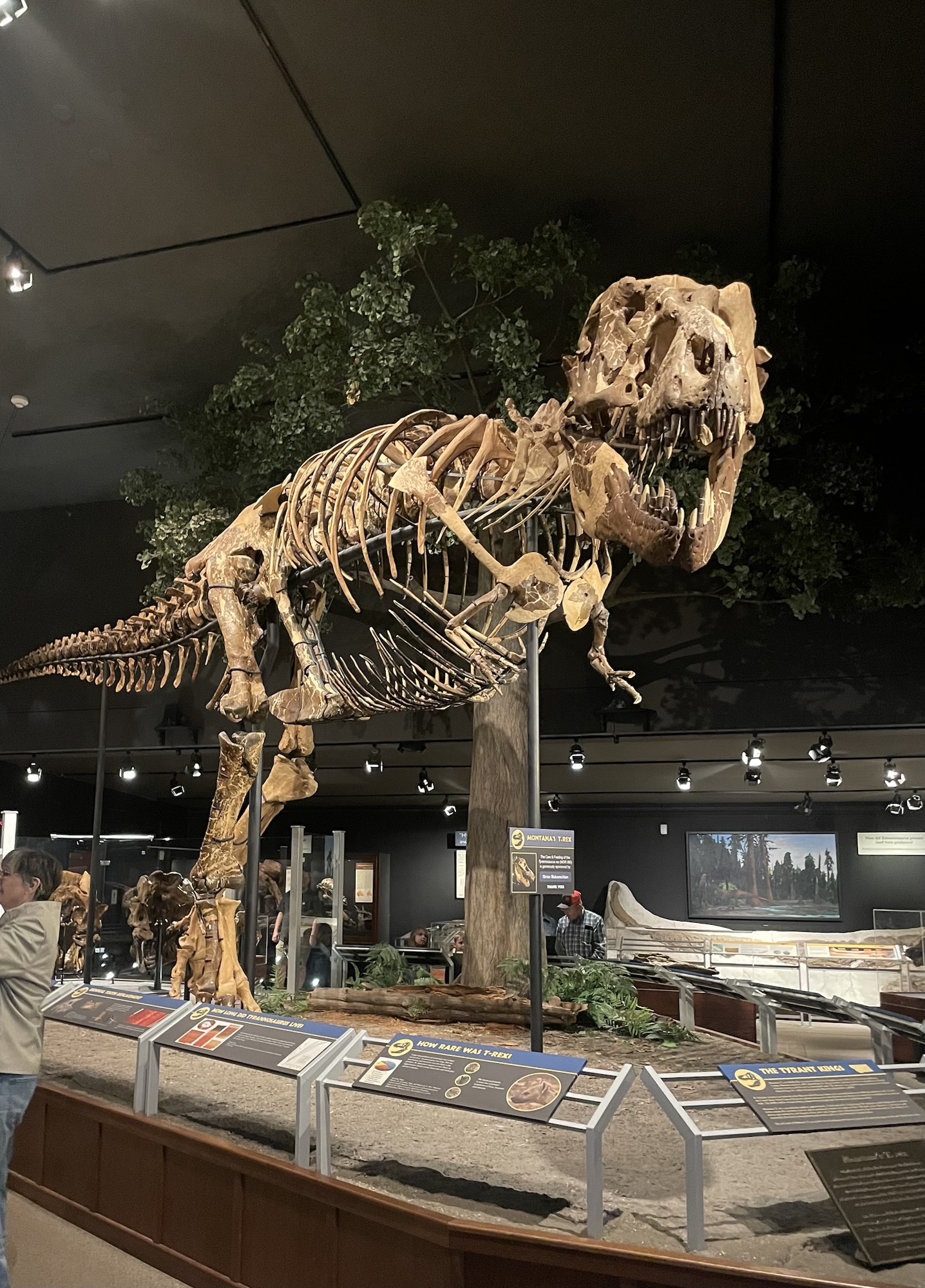


However, what you are seeing is so wonderful that sometimes you just have to look up in awe, especially at the Montana T-Rex that stares at you as you enter one of the rooms. The entire time I was there, I was thinking that I wished I had come here with my son when he was a child. He loved dinosaurs. The only books he wanted to read were about reptiles and dinosaurs. He would have just loved this museum.
Two of my favorite displays were the clutches of unopened dinosaur eggs and the sad display of a group of young diplodocus that got stuck in mud eons ago and died. A section of their tomb is now on display at the museum.
I loved how they displayed the underwater dinosaurs. The carpet color changed to blue as did the walls. It made me feel that I was underwater. My new bit of knowledge there, was that one water dinosaur, Plioplatecarpus peckensis had teeth on the roof of its mouth to clamp down on prey. Ouch. The outer teeth were scary enough, without the inner line of teeth ready to dig in.
Unfortunately, we got there just a week after the giant T-Rex, Sue, left. It had been on loan from the Field Museum in Chicago. But not to worry. I had visited several times with my family. However, I did feel sad that we just missed seeing it again.

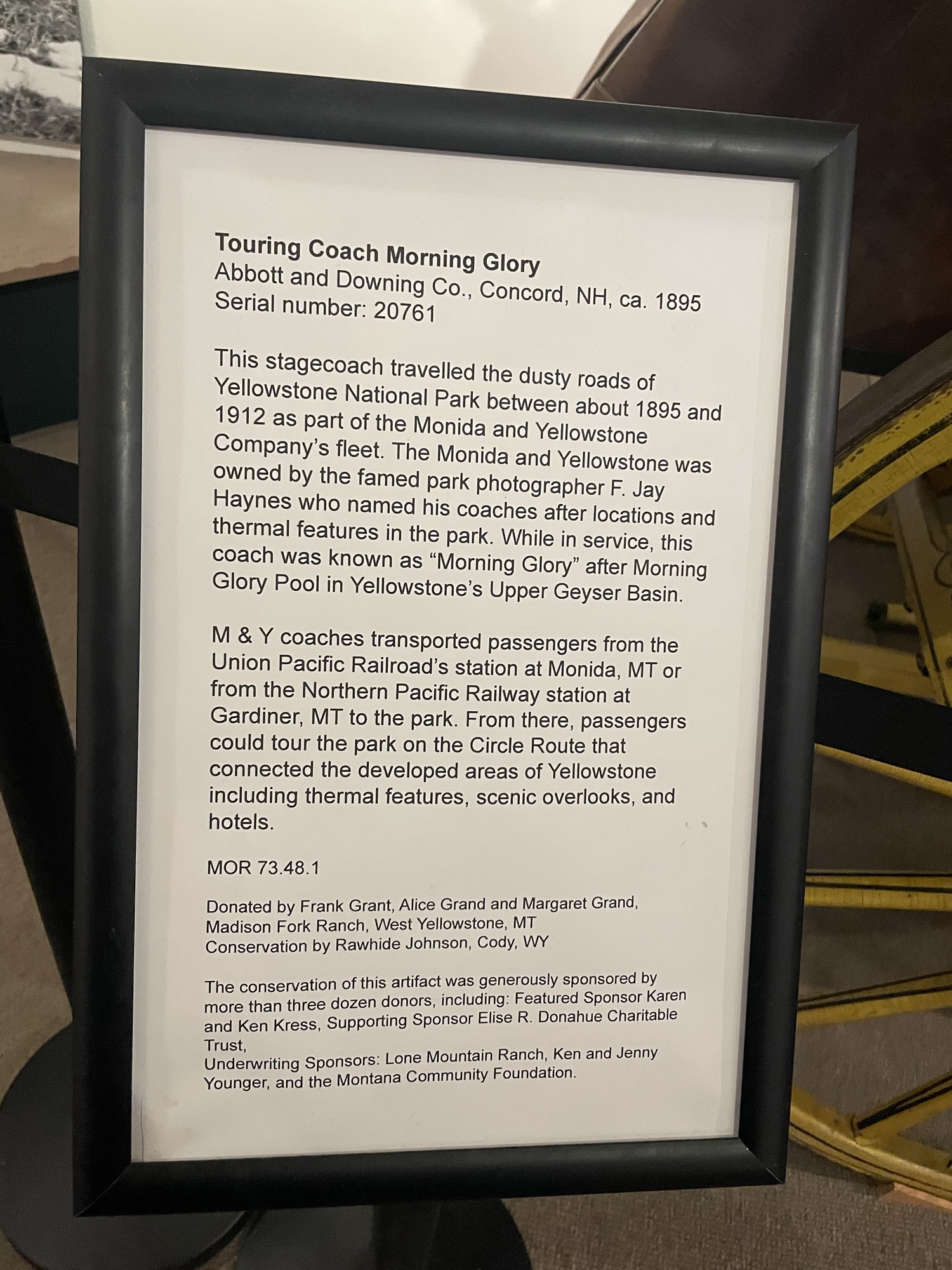
The next section of the museum also interested us because we were on our way to spend six days in Yellowstone National Park. Reading the displays in the museum and seeing the items from the Park’s early days was a wonderful introduction to what we would be experiencing. I enjoyed seeing an original park ranger uniform and the touring coach that transported people throughout the park during the early 1900s, before there were paved roads and cars.
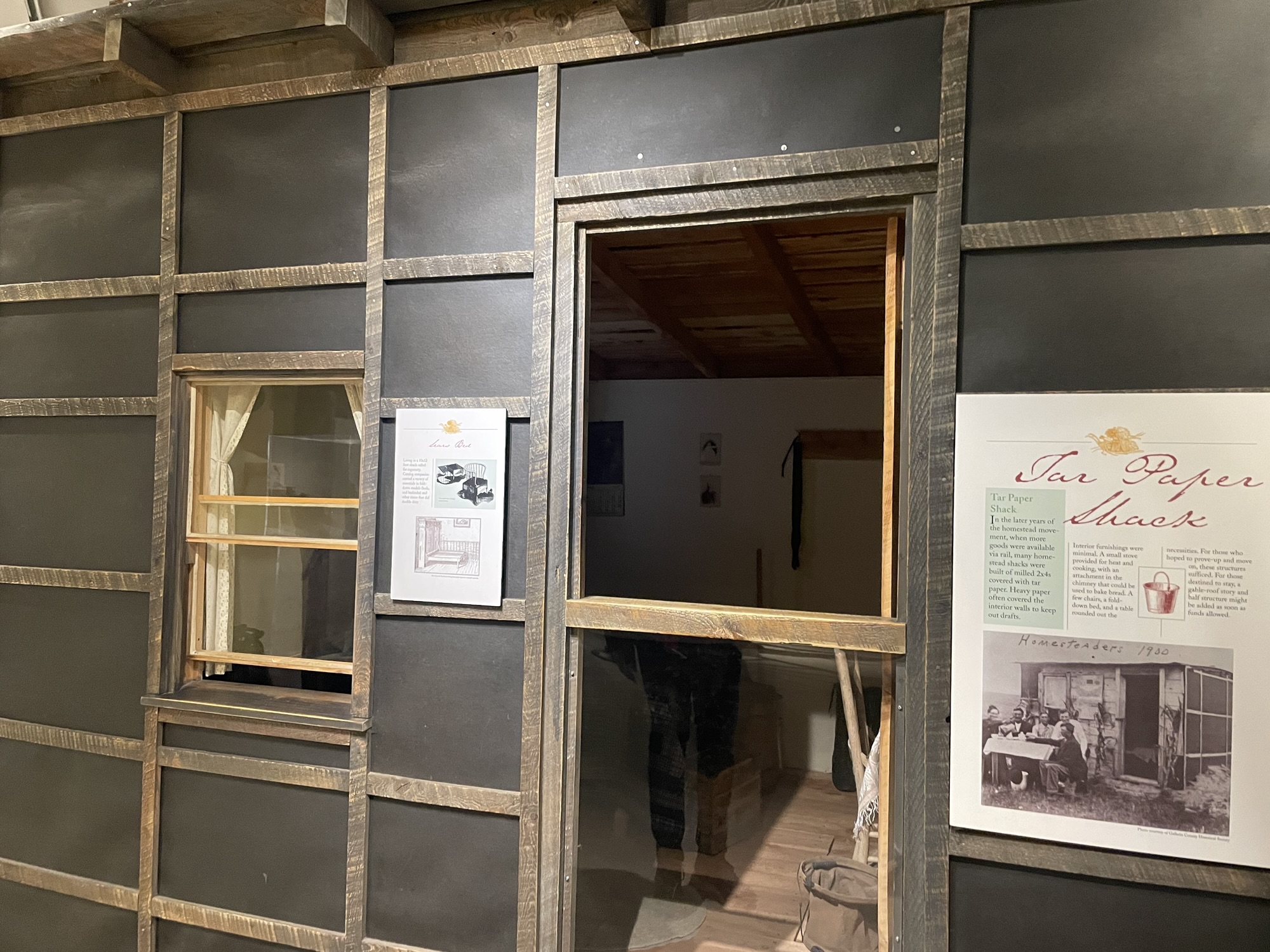
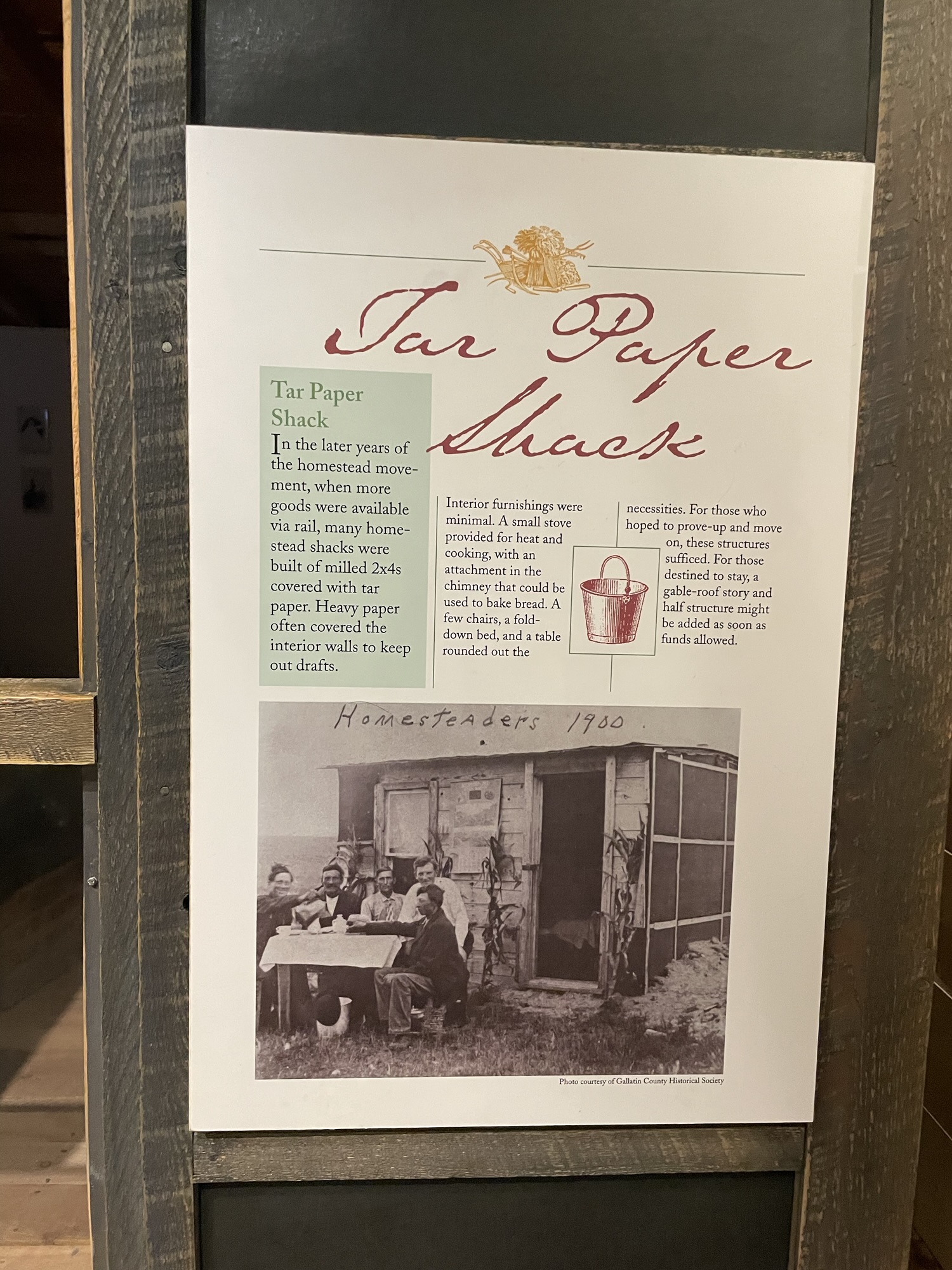
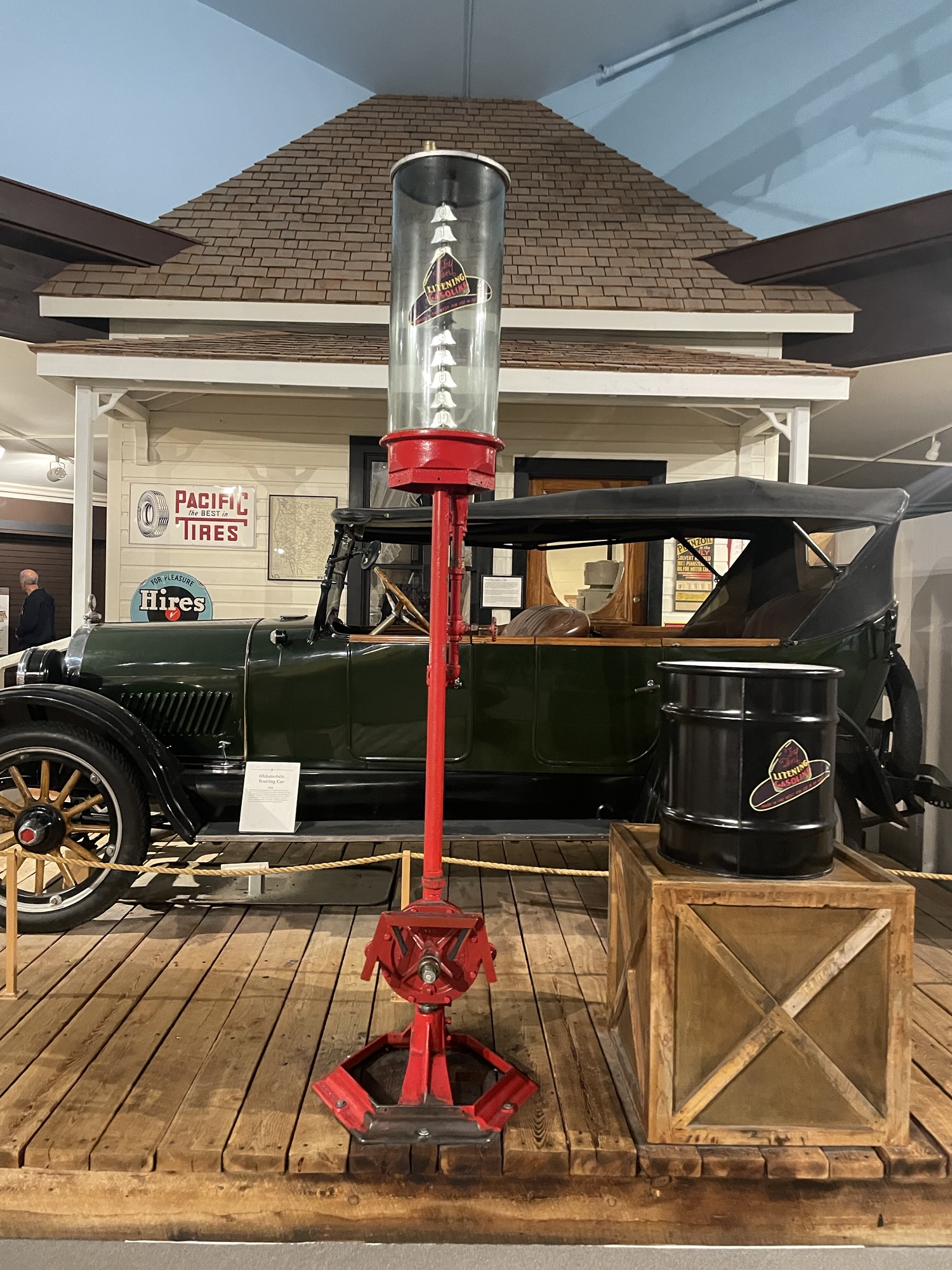
And because I love seeing old houses, seeing both a tar paper house and a small wooden house inside the museum, made me more aware of how difficult life was for early settlers in Montana. It is cold there. I cannot imagine living in these houses without insulation and the modern conveniences. But the other interesting point was that gasoline stations were also the homes of the settlers. It was important for the new automobiles to be able to refuel. It would have been quite a lonely life, but instead they met people traveling to Yellowstone!
This was a great way to start our week-long trip to Montana and Wyoming and the wonderfully weird Yellowstone National Park!



 zicharonot