Tag Archives: memories

A Strand of Pearls is Not Just Jewelry, It is a Circle of Love

6 Jul


To me wearing my pearls infuses them with love.

To me wearing my pearls infuses them with love.

I wear two strands of pearls to every family wedding. One strand, the longer one, belonged to my mother-in-law, Lee. She died when she was only 59, but I know that she would want to be at every wedding of her grandchildren and family members. The other strand, is slightly shorter, but has a lovely clasp. It belonged to my Mom, Fran. She also loved weddings and would want to be at every family wedding! Amazingly both strands of pearls have the same size pearls. And they look so good together.

Last night I wore the pearls to the latest family wedding, our niece. The pearls came up in conversation, and I told my brother-in-law, and another nephew and niece, why I wore two strands. My brother-in-law said, “I know they are here.” And my nephew and niece, who knew my Mom but not his own Grandma, said, “Your Mom would have loved the weddings.” And it is true.

It makes me feel as if these two wonderful women were there with us when I wear these necklaces. Pearls are so warm. And to me their glow sends off the warmth of love.

Pearls have much meaning in my family. My grandmother had opera length pearls. And my mother had them made into three necklaces, once for each of her granddaughters. As they turned 18, each girl was presented with the pearl necklace from my mother.

Unfortunately she passed away a few months before the youngest turned 18.   My Dad had us present the pearls to my niece in the hospital where my mother was soon to die. I know it was a difficult time for my niece. But I hope as time has passed she realizes how much her grandparents loved her and how important it was for my Dad, her Grandpa, that she get the pearls while Grandma was still alive.

My Great grandmother, for whom I am named, gave my Grandma a strand of pearls in Europe in 1932. They would have been mine. But another relative stole the pearls while she was in Europe. She always suspected who had taken them.

Over 40 years later he wrote her a letter. He had survived the Shoah, but his entire family had been killed, his wife and his children. He blamed himself. He believed that if he had not stolen the pearls, they would have lived.

I know this because I met him. I was living in Israel at the time. My Grandma Thelma wrote to me to meet up with “the goniff.” He was going to give me 400 lira…about $100 at the time. I was to take some of the money and buy myself something and give the rest of the money to my great uncle.

I met Zissel and he told me his story. He was a sad, sad man. He told me how his family had died and the horrible things that occurred to him. He told me how he had stolen the pearls.

“Your grandmother went into the bathroom to bath. When she came out the pearls were on the sink. I thought, she lives in America; she is rich. I can use these pearls more than she can. And I took them. Now everyone is dead, and it is my fault.” Zissel and I both cried as he told me the story. I was only 19 years old. The pain of that day lives with me. He believed if he paid my Grandma back, it would take away some of the guilt. I hope it did.

I began to visit him whenever I was in Tel Aviv. He worked in a bakery across from the giant shuk. I would meet him there, get a pastry and tea and talk to him Sometimes I would go back to his apartment.

When my parents came to visit me in Israel, I took them to see Zissel as well. His Yiddish was much better than his Hebrew. So when my parents came, he spoke mainly to them in Yiddish. He told more stories. And my mother and I cried along with him. I hope that his sad soul found peace.

The pearls were a bond between Zissel and me.

And so for me pearls, any pearls, have a story to tell. My mother-in-law’s
pearls and my mother’s pearls will be filled with joy as they experience only happy events. Every wedding will bring happiness to these pearls. And the sadness of the pearls that Zissel took will be wiped away.

The pearls my daughter and nieces have are also filled with love. And when I see them wearing my mother’s/grandmother’s pearls, their great-grandma, I know that the love of these two women are surrounding them.

A strand of pearls is not just a piece of jewelry, it is a circle of love.


How World War I Saved My Family or My Grandpa Was A Draft Dodger

25 Jun

World War I changed the world! One hundred years ago, Europe became a place of desolation and devastation. Young men from both sides were killed. Millions perished. From all I have read, it was horrible. The use of gases so horrific that laws were later passed banning the use of these and all future chemical weapons. We know that sometimes they are still used. But the world peoples are united against them.

For my family, World War I actually saved my branch of a family. My Grandpa Nat, you see, was a draft dodger.   As he would explain it to me, Jews in Galicia did not really have a chance in the military. They were often put in the worst positions, meant to die. And if they survived, they were conscripted for 25 years. So they never were able to live a Jewish life or return to their families again.

In 1918, when my Grandpa was about 18, his life changed; he received the dreaded notice that he was to report for military duty. It sent his family into action. Nissan, as he was known in Europe, had to be smuggled out of Galicia to save his life.

Thus began my Grandpa’s two-year journey to salvation and survival. He left his home in the middle of the night with just those things he could carry and wear. His intention was to get to British Mandate of Palestine and join the efforts to create a Jewish homeland. But his first goal was to get to his cousins in Belgium.

He wandered through Europe during the battles of 1918 and the aftermath of the war. Slowly making his way to Belgium. He had no real passport. Instead he was using the passport of a dead cousin.

Eventually he made it to Belgium and his cousins. Their reaction to his wish to travel to Palestine was, “Why go to Palestine? It is a desert! Go to the United States, to the Golden Medina. You have an Uncle there. He will help.”

So my Grandpa contacted his Uncle Julius, known as Uncle Yidel to us all, his mother’s brother. Uncle Yidel agreed to sponsor Grandpa to the United States.  But he had one problem, he had been robbed along the way and had to work to earn the money to pay for his trip to the United States.  But finally, after about nine months, the last leg of his journey began. Fortunately for him, his uncle did sponsor him, because when he arrived in the port of New York City, and the immigration site of Ellis Island, he had just a nickel. Without a sponsor he would have been sent back to Europe.

Grandpa often would tell us that we could be whatever we wanted to be. “Look at me,” he would say. “I came to this country with just a nickel in my pocket. And look at what I have.” So we learned early on not to complain to Grandpa and to never give up!

I tried finding my Grandpa’s immigration information from the Ellis Island sites, but could find nothing. My Grandma’s was easy to find. So I often wonder what that passport actually said. And how old he was supposed to be? But in 1920, immigration procedures were not as intense and documentation was not as precise as it is now.

Tanta Molly and Uncle Yidel

Tanta Molly and Uncle Yidel

Uncle Yidel and his wife, Tanta Molly (also known as Malchik)  welcomed Grandpa.

Growing up in Europe, my Grandpa had been a yeshiva brocha, a student of Torah. He had a beautiful singing voice, and perhaps might have been a cantor. But instead, somewhere along the way, he learned to be a baker. When he first came to New York, he worked two jobs. One as a butcher, the other as a baker.  But it is as a baker that he prospered in America. He and Uncle Yidel started a bakery eventually owning a building in New York City. (My Grandma told me that when Grandpa proposed he told her he had a place. She thought he rented an apartment. She did not realize he owned the building!)


Grandpa in his bakery in West New York, New Jersey, 1942.

Grandpa in his bakery in West New York, New Jersey, 1942.

They separated the business after my grandparents married, and Grandpa and Grandma opened a new bakery in Linden, New Jersey.  But in the early 1930s, when my grandmother took their children to Europe for six months, Grandpa sold the bakery in Linden and opened a new bakery in West New York, New Jersey.  He kept this bakery for over 35 years.

Grandpa had many cousins in the United States. His parents were first cousins. So he was double cousins to many of the family. They helped him settle in. But Uncle Yidel was the most important. Uncle Yidel and Tanta Molly were always a part of our lives. They had one son, Ezra.

Whenever we went to see them, we were welcomed in Yiddish. Tanta Molly would come running out to hug us. She would call out our Jewish names: “ Tovaleh, Fagaleh, Chavaleh!” I asked my Mom, “Why does she put an ‘aleh’ on all our names?”

“It means little,” my Mom replied. “Well that did not make sense, Tanta Molly is littler than us!” Was my response. “It means she loves us,” Mom laughed as she said that. Later I found out the ‘aleh’ did mean little, but really was an endearment.

My Grandpa always missed the hills of Galicia. He often told me that he bought his property in the Catskills because it made him think of his home and his childhood. Many years latter when I traveled to that part of Europe, I saw he was right. The rolling, low mountains and hills do look like the Catskills.

My Grandpa forever missed his family. World War I did save him. He came to the United States. But his parents, siblings, and many aunts/ uncles/cousins stayed in Galicia. They all perished in the Shoah.

My Grandpa Nat was a draft dodger, but he never stopped fighting for the right to practice his beliefs and to protect his family in the USA. He loved America. He never traveled outside of the United States. When asked, his reply was always:

“Why would I ever want to leave here? It is the best place in the world.”

A Ride Around The Park

22 Jun

“Please Daddy! Please! Please! Please! Take us for a ride around the Park!!!”

Hudson County Park in North Bergen was one of our favorite places to go. We lived on 78th Street just off Boulevard East, and would often walk to the playground and the lake.   But our favorite thing to do with our Dad was to drive ‘around ‘ the Park.

Whenever Dad was driving us home, we would plead for this ‘treat.’ It was not a real ride around the Park. Instead it was a ride around the traffic circle in front of the Police Station. Dad would enter it carefully and then drive around the circle. If we were lucky he would do it two or three times. That was our very exciting “ride around the Park.”   My Mom thought we were all crazy, but we loved it.

Living by the Park was an adventure. Going to the playground was a favorite activity. We still had seesaws then and the merry go round. My brother was relentless in his active motions. I loved to go on the seesaw with him, a sort of excited fear. Would he let me go all the way up and down? Or would he jump off when he was down and watch me go flying? I had to hold on tight and have my legs ready to bounce!

As for the merry-go-round, this was a yellow circular toy on a pole. While some children sat on it, others ran in a circle while holding on to get it going as fast as they could, before they jumped on. It was not a good ride unless you felt like throwing up when you go off. And swinging was great fun. How high could we go and then jump off without getting hurt!

Children now no longer have these great fun activities. And to be honest, I do not know how my Mom kept from screaming at times. Although she did stop my brother from jumping off the seesaw, as I think seeing my sister and I fly through the air eventually made her nervous.

My brother and I rowing on the Lake in Hudson County Park.

My brother and I rowing on the Lake in Hudson County Park.

Walking around the lake was also fun. We always wanted to get to the island in the middle. We loved renting a row boat with my Dad and rowing over there.   But the best fun were the paddle boats. At first my legs were too short and my brother would yell at me to try harder, but eventually I could keep up with him. My sister was younger and would go with my Dad.

My Dad is rowing my Sister and me.  I think my Brother is taking the picture.

My Dad is rowing my Sister and me. I think my Brother is taking the picture.

When I got older, I would sometimes meet my old friends from when I lived on Third Avenue at Nungessers Bowling Alley or the White Castle. My Mom had strict rules, “Do not walk through the Park. Go up 78 street and then across Bergenline Avenue. “ Ha!   I always walked up to Park Avenue, entered the Park there and walked across.

When I got older, the rules changed. Something bad had happened in the Park when I was about 12 or 13. Now when I went to see my best friend, who lived around the corner on 77 and Park, our Dads would walk us. We would meet with our Dads at the top of 78th and Park Avenue. Eventually they calmed down. We were allowed to walk ourselves. But our Dads stood outside our homes and waited till they saw that we were together at the top of 78th street and then we would walk to the house we planned to play at!

Another friend of mine lived in red garden apartments next to where Stonehedge was built. I was allowed to walk to her place, but had to call the moment I got there! At the time I did not know what happened. But many years later, I was told that a girl was molested in the park. Something that was uncommon in the 1960s.

When I was in college I used the tennis courts at the Park. I spent two summers working in New York City. I would go into work with my Dad. One summer I worked at his office. My Mom and sister were in the Catskills. I think my brother was as well. In any case, Dad and I would eat dinner and then go to the park to play tennis. I played on my college’s inter-mural tennis team. So the summer practice at the Park was wonderful. On the weekends we would drive up to the Catskills.

I remember when the Boy Scouts held their giant Jamboree in the Park. My brother was in the Boy Scouts and he got to sleep in a tent at the park with thousands of other boys. There were tents everywhere! I wish I could find the photos. We could hear them at night, the noise was so loud!!!

Hudson County Park was an important part of my life. I do not think that a week went by, or even a few days, that we were not doing something in the park. Walking the trails or around the Lake. Meeting up with friends. Having a picnic. It was the best place to be.

When I was growing up it was Hudson County Park. No one called it North Hudson County Park. James Braddock was still alive. In fact, he lived up the block from me. We often saw him outside. He passed away when I was away at college. He actually died on my brother’s birthday. I am not sure when the Park was named for him. It is a great honor.

But to me, it will always be Hudson County Park. My memories for going for a ride around the park, or the playground, or the boats with my family and friends will cheer me forever.

Watching Antiques Roadshow Inspired Me to Donate My Great-Grandmother’s Matzah Cover

12 Jun


Matzah cover made by my Great Grandmother Chava.

Matzah cover made by my Great Grandmother Chava.

Watching the Antiques Roadshow, a PBS show, is one of my favorite television experiences.   I started watching it with my parents years ago. Whenever they came to visit, this was one of their favorite shows. They got me hooked on it!

I love learning about different items of furniture, jewelry and knick knacks. It is a history lesson along with seeing the beautiful items. But every once in a while, someone brings in a special ephemeral item: photos, letters, a diary. In my opinion, these items should really be in a museum, some place where researchers and students and others can see the items and learn from them.

It drives me crazy. I even say it out loud. Occasionally we find out that the family did donate the item. Like when a family had the musical notations of the “Star Spangled Banner.” They donated it to a museum, and that made me feel good!

I often wondered: would I be able to do that. Would I be able to donate a family treasure to a museum? The answer is yes.

When my siblings and I were cleaning out our parents’ apartment we found two items that my brother, sister and I all wanted, but knew something special had to be done with them. One was a program from the 1930s for a benefit to help the Jews of Europe, the other was a cookbook in English and Yiddish to help immigrants learn to cook American meals.

My sister contacted the Museum of Jewish Heritage in Battery Park and asked if they would want these documents. The answer was a resounding yes. So we donated them. This way they will survive, and others who might be doing research or want to know about life for immigrant women would have these items. They will be protected. The curator told us that they had only seen one other program like ours, but it was from a Chicago event. Ours was from a New York City event.

The three of us were glad that we made this decision.

I recently made another decision to donate.

I am donating the matzah cover my great-grandmother Chava made in 1901 to the same museum. I have thought about this for several years, and decided it was the best choice for this family heirloom.

The matzah cover is made of beige linen and a teal silk. I think the silk was originally blue. On the matzah cover my great grandmother embroidered the date she made it in Hebrew letters and the words: “Seder shel Pesach” (Seder of Passover) in Hebrew. It has beautiful cut work embroidery made into a Jewish star (Mogan Dovid) with embroidered roses along the edge.

My mother gave it to me about 25 years ago for several reasons: first because I was named for my great grandmother; second, because I also do embroidery; third because my parents would come and spend the second night of Pesach with me; fourth because my daughter is the oldest grandchild. I think they thought I would pass it on to her.

But I will not.

The matzah cover was made in Galicia before the First World War. I think it was made for my grandfather’s first birthday, as he was born in 1900 on the first of Nissan. It came to the USA in 1932. My Grandmother took my mother, then age 2, and her brother, age 5, to Europe for six months. They stayed with my great grandparents. And my great grandmother gave the matzah cover and some other family items to my grandmother to bring back to the United States with her family.

At some point my grandmother gave the matzah cover to my mother. And then it became mine.

I used it every year for Passover. I would cover the matzah on the table before the meal. But as soon as the food and wine came out, I would switch to a matzah cover that I made. I did not want anything to happen to this cover because I was not sure how I could ever clean it without destroying it.

As the years have passed, it has become more and more fragile. I want it to survive. My great grandmother did not survive. She and most of my grandfather’s family perished in the Shoah. This is the only religious item she made that remains.

I also thought about donating my matzah cover because I had a mild infestation of fabric eating bugs. Ugh. They are gone now. And the matzah cover is safe. But part of me was worried. What if they had reached the cover? Perhaps there is something better I can do with this item?

First I asked my daughter how she felt about my donating this item. She thought it was a great idea.

So I contacted the museum and the woman who helped us with the other donations. She asked for photos.

And then she said yes, they would like the matzah cover for their collection. She told me that the matzah covers they had that were that old were all stained and in disrepair, while mine was in wonderful shape. Which is true.

I told her I wanted to use it for one more Passover before I donated it.

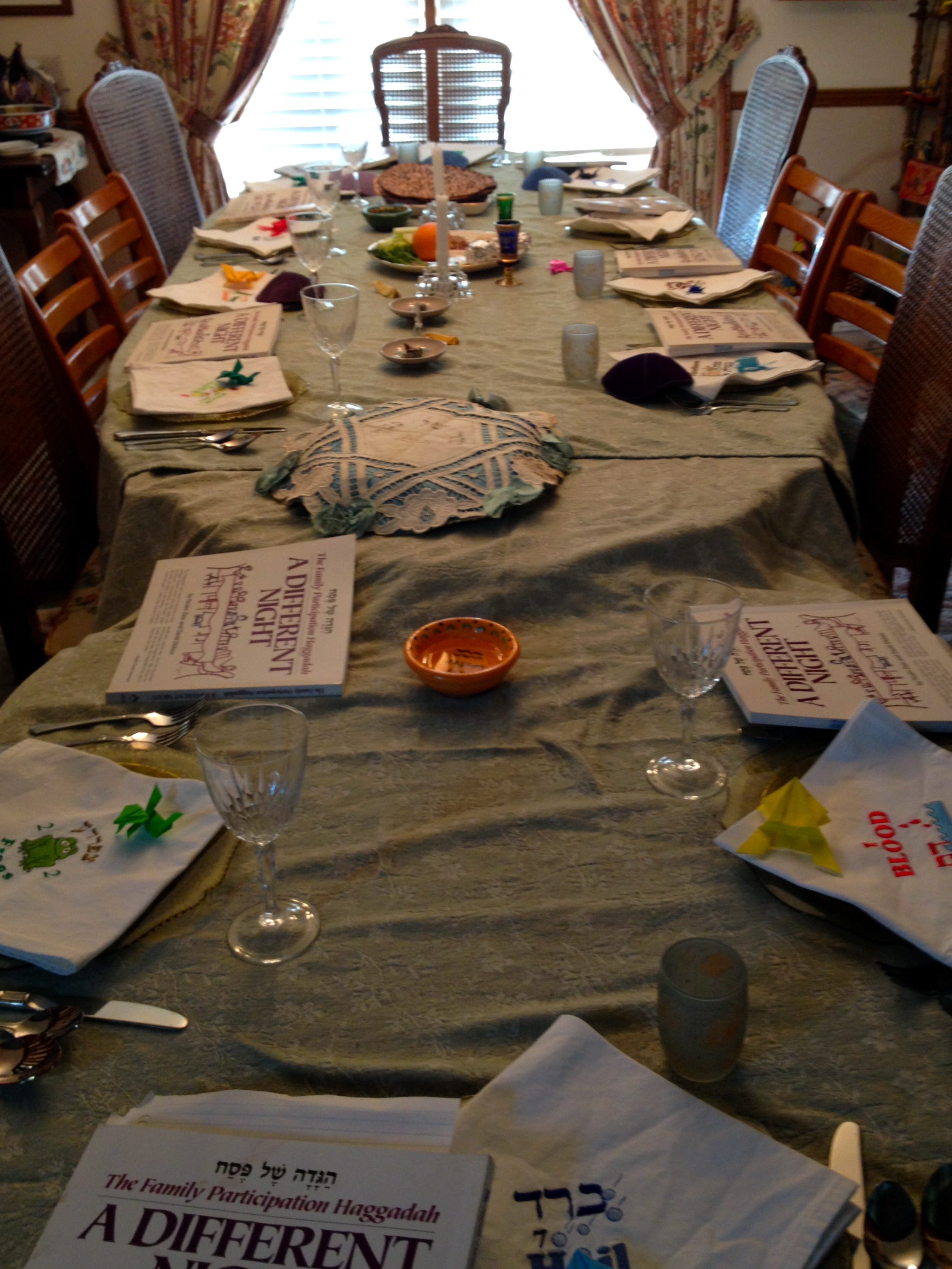
2014 Passover Seder.  Matzah cover in the middle of the table.

2014 Passover Seder. Matzah cover in the middle of the table.

She asked that I take photos of it in use. Which I did and you can see here.

She promised me that anyone in my family would always have the right to come and see it privately when it was not on display, although we would never be able to touch it again. (Probably a good thing as fabric decays.)

In August I will take my matzah cover from Kansas back to New Jersey, and then to its new home at the museum. I hope by sharing it with so many people, it will have continued life, and perhaps help people understand how extraordinary Jewish life was in Europe before the Shoah.

I donated the matzah cover on August 12, 2014.

As Spain Welcomes Back Jews Expelled in the 1400’s, I Share my Spanish Roots

9 Jun

“Grandpa’s family was originally from Spain,” my Grandma Thelma would begin her story with these words. “They left Spain because they did not want to convert. They were court Jews and could have stayed. But their Judaism was more important.”

I thought this was a ‘bubba meiser,’ just a myth and a bedtime story. And for many years, I did not believe the Spanish expulsion of Jews had anything to do with me. I thought it was enough that our family had been decimated by the Shoah. But it seems my grandmother was telling me the truth, and my family is both a survivor of the Spanish and German attempts to destroy the Jewish people.
Grandpa Nat portrait

My Grandpa Nat’s last name was Amsterdam. This is a somewhat unusual Jewish name. And, it seems, actually anyone named Amsterdam is related to me. The family started in Spain as wealthy Jewish merchants and financiers. Supposedly three brothers moved to Amsterdam in the early 1500s. And then a group of them moved to Denbitz and Mielec in Galicia, where they were given the last name Amsterdam.

I started to investigate the Spanish connection when I was in college. And then I got help from an unexpected source. The other story my grandmother told me had to do with the comedian Morey Amsterdam. I was told he was my grandfather’s cousin. He had to be, his name was Amsterdam. I was not sure how to contact him. But he actually contacted me. Morey’s son-in-law met my cousin, Gary, who was an Amsterdam. Since I had the family history, I was then put in touch with Morey Amsterdam. He was on a mission to find all the Amsterdams. He wanted learn all he could about our family. I am not sure he met all of us before his death. But he was relentless. He would send me information about other Amsterdams when he met them. He would give them my contact information as well. People called and contacted me from up and down the East coast telling me that Morey Amsterdam told them to call me. May his name be for a blessing.

In any case, he confirmed the story about our Spanish roots, and then told me more. But it was not Morey who really filled in the missing information. It was another cousin named Bob. His parents and my grandparents were first cousins who all came to the USA in the early 1900s. They stayed in touch in the USA. We have photos of them at family events. My grandparents attended Bob’s wedding.

Bob was a generation older than I, and as an engineer was meticulous about his research. He also got in touch with me through my cousin. That Amsterdam last name stands out. Bob was kind enough to send me his information. And I sent him mine. Since his last name is not Amsterdam, he did not have some of the contacts and information I had received. We filled in each others missing pieces.

The following is what we know and what we think. I have to thank him for all the help he gave me in investigating the family.

Our family has taken on other last names as well. Faya was the original name used in Spain. There are family members who have this name as part of their Hebrew name. This spelling was used up until about 1800. After 1800 the spelling became more Eastern European: Feuer. Other names in the family include Brenner and Asher. All have to do with fire, because they were Cohanim.   The families often intermarried. My grandfather had both a Feuer and an Amsterdam parent. They were first cousins. I have met others, including Bob, who also have parents from both lines. This is a tradition from the days that they were crypto Jews in Spain.

I actually can trace my grandfather’s family back to about 1795 with direct names. My Grandpa Nat’s parents were first cousins, Chava and Gimple. Chava’s parents were Hershel and Frieda; Gimple’s parents were Tzipporah (?) (Hershel’s sister) and Nissin (also a cousin of some sort). Siblings Hershel and Tziporrah parents were Tova and Nissin Amsterdam, and Nissan’s parents were Chava and Morris Amsterdam (My fourth great grandparents!) These names show up constantly in the family and continue today. I am a Chava, named for my great grandmother; my son is Nissan named for my grandfather, so the names continue.

There are many, many men named Nathan (Nissan) in the family. My Grandpa was given this name because he was born between Purim and Passover on the first day of Nissan, but also because it was an important family name.

After the expulsion, some of the family stayed in Spain and converted and became Catholic on the outside. However in their home they were still following the traditions of Judaism.  Through research by a cousin, we believe the family lived in Segovia, a city with a large Jewish population.

However a branch of the family left, we think they all moved to Portugal. We believed they lived in a port city called Oporto before they went to Amsterdam. But some stayed after the Portugal expulsion. The Spanish Inquisition impacted my family in other ways. One family member, Aaron Cohen Faya, was burned at the stake in Lisbon in May 1618. A poet, his secular name was Antonio d’Aguiar. We think d’Aguiar or Aguiar was the name of the entire crypto-Jewish branch of our family.

I have much more information about my Spanish roots. I could tell you about our coat of arms.   I could tell you about meanings of names and how names concerning birds, hawks and eagles are important in our family history.

But I think that as Spain welcomes back the Jewish families they sent forth during the great expulsion, it causes me to think of how it impacted my family. How my family had its own additional diaspora that caused them to travel from Spain to Portugal, to Amsterdam, then to Galicia.   I think about how some survived these moves, left Europe and moved to the United States or to Israel. But others stayed behind and perished in the Shoah. (See my blog, “Speaking Yiddish Always Brings Me Holocaust Memories.”)

My Spanish roots are noted. But more important, I look at what I can do because of my desire to learn about my Spanish ancestry. I found out so much about my family. Most Jewish families cannot tell you the names of ancestors back to the late 1700s. I can. Most cannot tell you that they are related to everyone with a similar last name. I can.

My daughter was at a party. I saw on Facebook that one young man had the last name Amsterdamer. I said, “He is your cousin.” She laughed. “Ask him,” I said. “Mom, I can’t do that. I hardly know him.”

But the next time she saw him she said, “My grandmother’s last name was Amsterdam.” He replied, “Then we are cousins.”

I am proud to have the Amsterdam/Faya/Feuer ancestry.

Finally Fixing and Focusing on my Succulents

5 Jun

Each May my Dad would begin to plan his summer plantings for my parent’s Catskills home. Over the years he had added gardens and flowers to the property that was once owned by my grandparents. Where my grandfather once had a large vegetable garden, something my Dad had helped with for years, my Dad decided to focus on flowers.

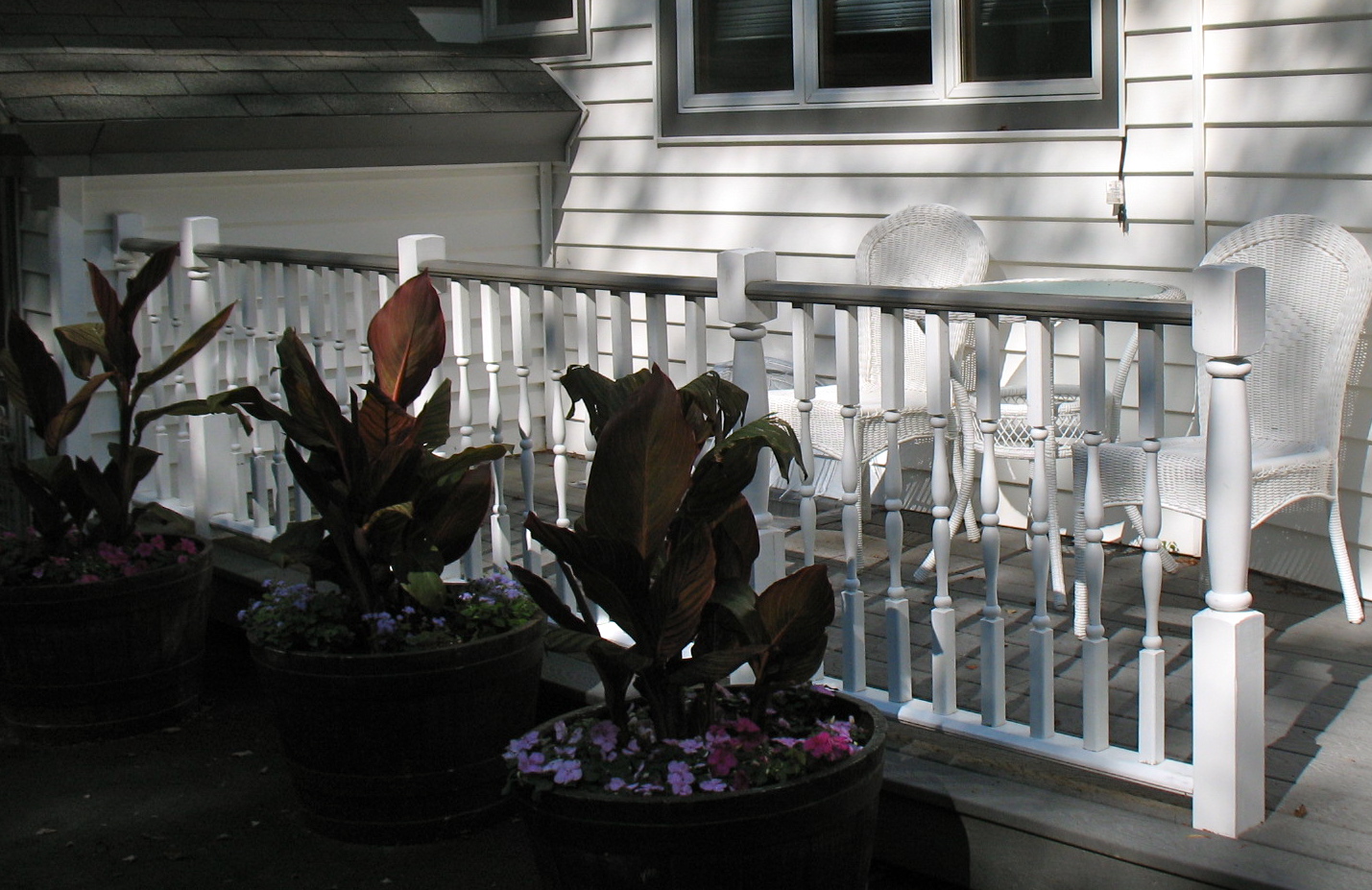
Some of my Dad's planters at the Catskills' house.

Some of my Dad’s planters at the Catskills’ house.

He loved to garden. In the spring and summer, it was at the Catskills property. My parents would drive into Monticello and go to a garden center and pick out the perfect annuals. These he would plant around the front of the house and in the now filled in koi pond. In the back of the house he always planted around the garden he put around the well. And all along the side of the house were more gardens. Of course he had plants on their screened-in porch as well.

He was always ‘puttering’ in the garden or with his plants. One year he was so upset with the deer eating his rhododendron, he went out and got hyena or coyote urine to keep them away.

When the summer was over, he would mulch his flowerbeds to be ready for the next year’s plantings.

My parent's large cactus plant!

My parent’s large cactus plant!

The rest of the year he focused on indoor plants. He had many succulents, including a beautiful flowering cactus and a large spiny cactus. He kept them in great shape. As well as many other plants that grew in their living room, kitchen and on their terrace.

My Mom and I had always joked about our winter ‘schlumbergera’ flowering cactuses (Also known as Christmas cactus). We fought over whose had more blooms. I will admit, my Mom and Dad won that battle.

His love of plants worked to my benefit, as twice a year my parents came to spend 10 to 14 days with my family in Kansas. They came every Passover and Thanksgiving, and since Dad needed to keep active, I kept a list of ‘chores’ for him to do. Which meant every spring, he and my husband worked on outside gardens. When we first bought our home, 29 years ago. It was brand new, with no gardens. Over the years we have put in massive gardens and plantings. My Dad helped to dig out the first gardens. And as the plants and gardens grew, Dad was in charge of mulching and weeding. He also helped in choosing the perfect new plantings each year.

A portion of my outside gardens.

A portion of my outside gardens.

When my Dad became unable to do heavy work, he would just do the mulching with my son. We hired a gardener for the other jobs.   And then when he could no longer even mulch, he would sit out on a chair and direct and chat with John the gardener. John and Dad had lots to talk about. Thanks to both of them I have wonderful outside gardens.

In autumn, Dad would focus on my inside garden. I had many succulents, both inside and outside. But it was my inside ones that Dad kept going. Every autumn he would repot those plants that needed the extra space. He would trim back dead areas, and keep my plants look wonderful.

When he was not here, I just watered and removed dead leaves. I waited for him for any repotting needs. I knew he loved to do it. When my children were little they always helped. It was a great bonding time for them.

It worked out just fine.

Then the unspeakable happened. My parents passed away nine months apart. It was a stressful time. My Dad did not come out in the autumn, as my Mom was ill. He did make it in the spring, but was unable to do his usual ‘chores’. When he fell truly ill, he ended up being in a hospital and then rehab for the last three months of his life.

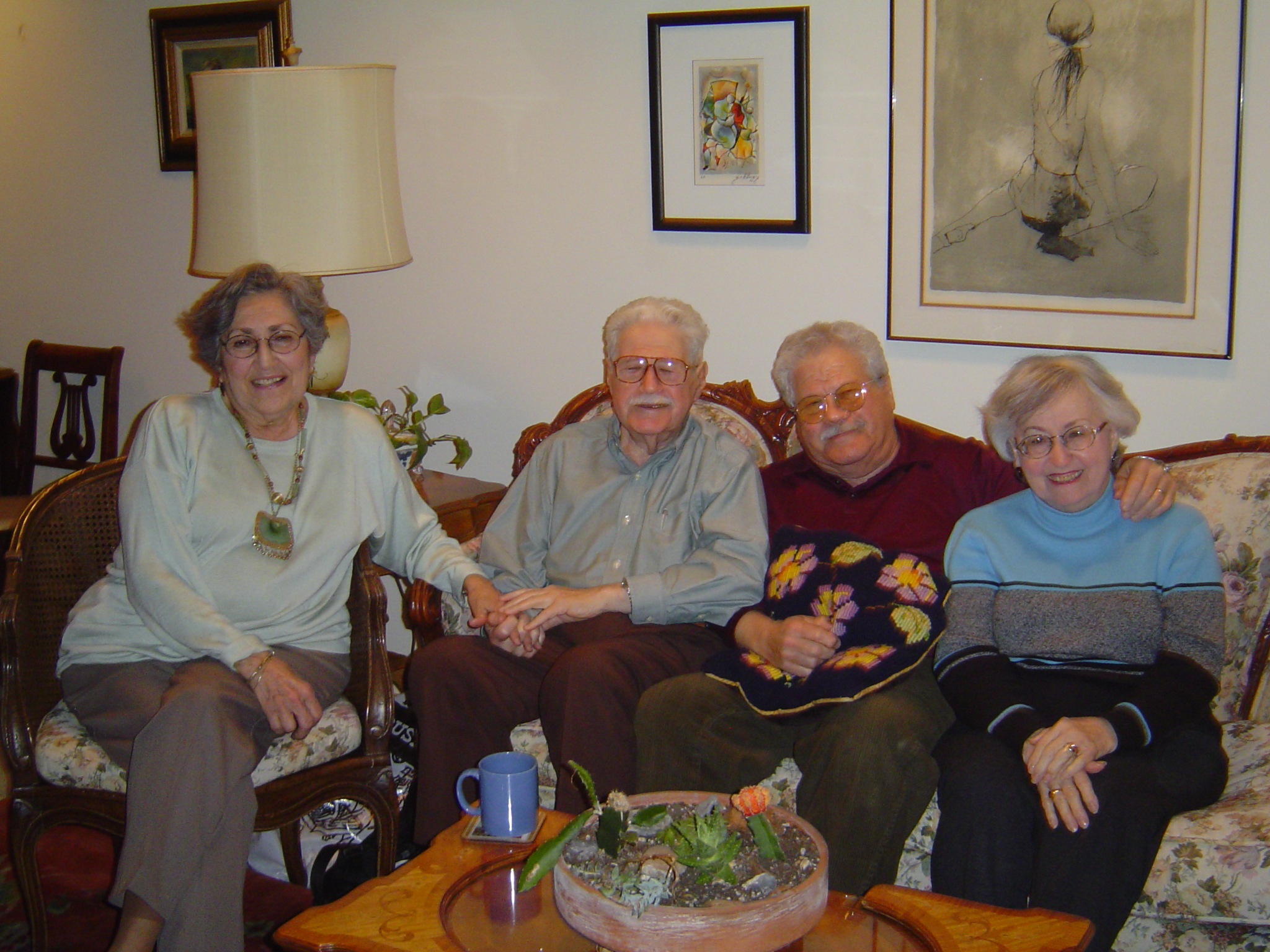
My Aunt and Uncle and parents with the cactus planter my Aunt now keeps.

My Aunt and Uncle and parents with the cactus planter my Aunt now keeps.

At his shiva, it was obvious his lovely plants needed help. My Aunt Mickey took the planter with succulents that was on the coffee table. My brother took the living ivy and small plants. My sister took the giant cactus. Since I lived in Kansas, I did not take a plant. Dad would have been happy to know his plants were in good hands.

Over the past few years, since my parent’s deaths, I have not touched my succulents, except to water them.   Included in my plants is an aloe plant that is over 50 years old. It had been my husband’s Mom’s. It became mine when she passed away 30 years ago. It, along with my other plants, began to suffer. A friend of mine would occasionally cut back the dead leaves. At times she watered them when she came. But even with her care, some succulents did not survive. I would take the empty pots and put them away.

Eventually she told me that I had to re-pot and care for my plants. She was right. My Dad would have been very unhappy with me. Even though I was caring for the outside plants, I had ignored the inside ones.

For some reason, this May I finally got the inspiration to fix my plants. I bought seven new succulents for inside. I bought several new ceramic pots. On Memorial Day, after I went to a veterans’ memorial service, I repotted my plants and I planted the new succulents.

Just as my Dad always did, I put old newspapers on my counter. I got the potting soil and the new pots and plants. And for a good hour, I worked on my plants. Placing some of them on my kitchen garden window, and others in my planter. I planted so many that I ran out of room. So I put two on my cookbook shelf.

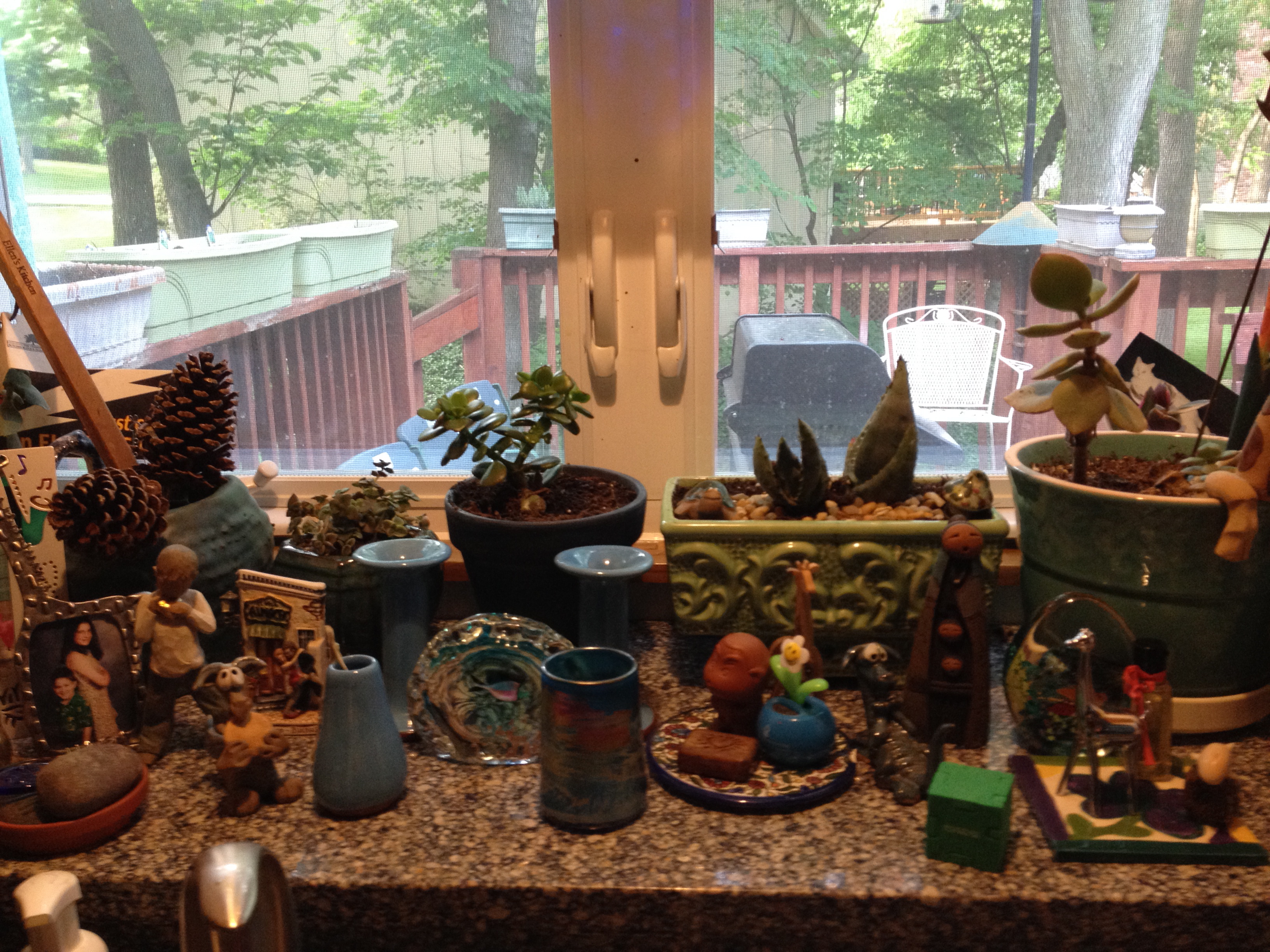
My kitchen window garden.

My kitchen window garden.

While I worked inside, my husband worked outside. He planted herbs and flowers in the flower boxes on our deck. He planted new yellow speckled lillies in one of our outside gardens. And we planted a beautiful new peach-colored rose bush, called ‘Cinco De Mayo,’ in our front gardens. I chose this rose bush in memory of my Mom. I plan to plant a blue hydrangea for my Dad. We have white ones, but he always wanted some colored ones in my yard.

As I finally fixed my indoor gardens and saw my planters filled with the life of new succulents, I felt a burden lift from my heart.


Uncle Stan And Garage Sales Filled Our Tool Needs

3 Jun

Every time my husband has to fix something around the house and uses a tool, I think of his Uncle Stan. He was a bundle of energy, with an ever-present unlit cigar hanging from his mouth.   But, he had one guilty pleasure, he loved garage sales. More important, he needed a reason to go. He wanted to go, but I think he knew he really did not need anything. So he searched for a reason to ‘investigate’ garages.

When my husband and I got engaged, we presented him with the perfect solution. My husband would need tools. Uncle Stan knew there was no way my husband’s Dad would supply tools or even know anything about tools. He was not capable of fixing things. In fact, whenever we came to their home for a visit, my husband’s Mom had a list of things for him to fix. We would definitely need someone to fill the tool void. And Uncle Stan was our man!

Uncle Stan believed it was unnecessary to spend lots of money on tools, when some people were basically giving them away at garage sales. He had a limit on spending. Most tools he bought were for under $5.00. Really most were for a dollar or two. And the best for my husband and I, we never paid a cent for any of these tools.   Uncle Stan did not pay for them either. He got all payments from my husband’s Mom.

After I was married, I was able to witness one transaction. We lived in a different city than my husband’s parents and Uncle Stan and his wife, Aunt Mat. Uncle Stan and his pals would go to garage sales early, early on Saturday mornings, when the sales were at their best, and before Aunt Mat awoke. When he was done, he would take his bag of goodies to my husband’s mother at the family travel agency.

Then the bickering would begin. The time I saw it, it went something like this.

“Hi Bubbles,” Uncle Stan said as he opened the door. ‘Bubbles’ was my mother-in-law’s family nickname.

“Not another bag of junk!” She said, as Uncle Stan entered the agency carrying a plastic bag that jingled.

“Bubbles, this isn’t junk,” Uncle Stan said. And then he saw me. “Hi Precious (everyone was precious to Uncle Stan) I got some more tools for your husband. Right here in this bag.”

Then he turned to my mother-in-law. “You owe me $20 this time,” he said.

“Twenty dollars! For that junk! Let me see it!” She exclaimed.

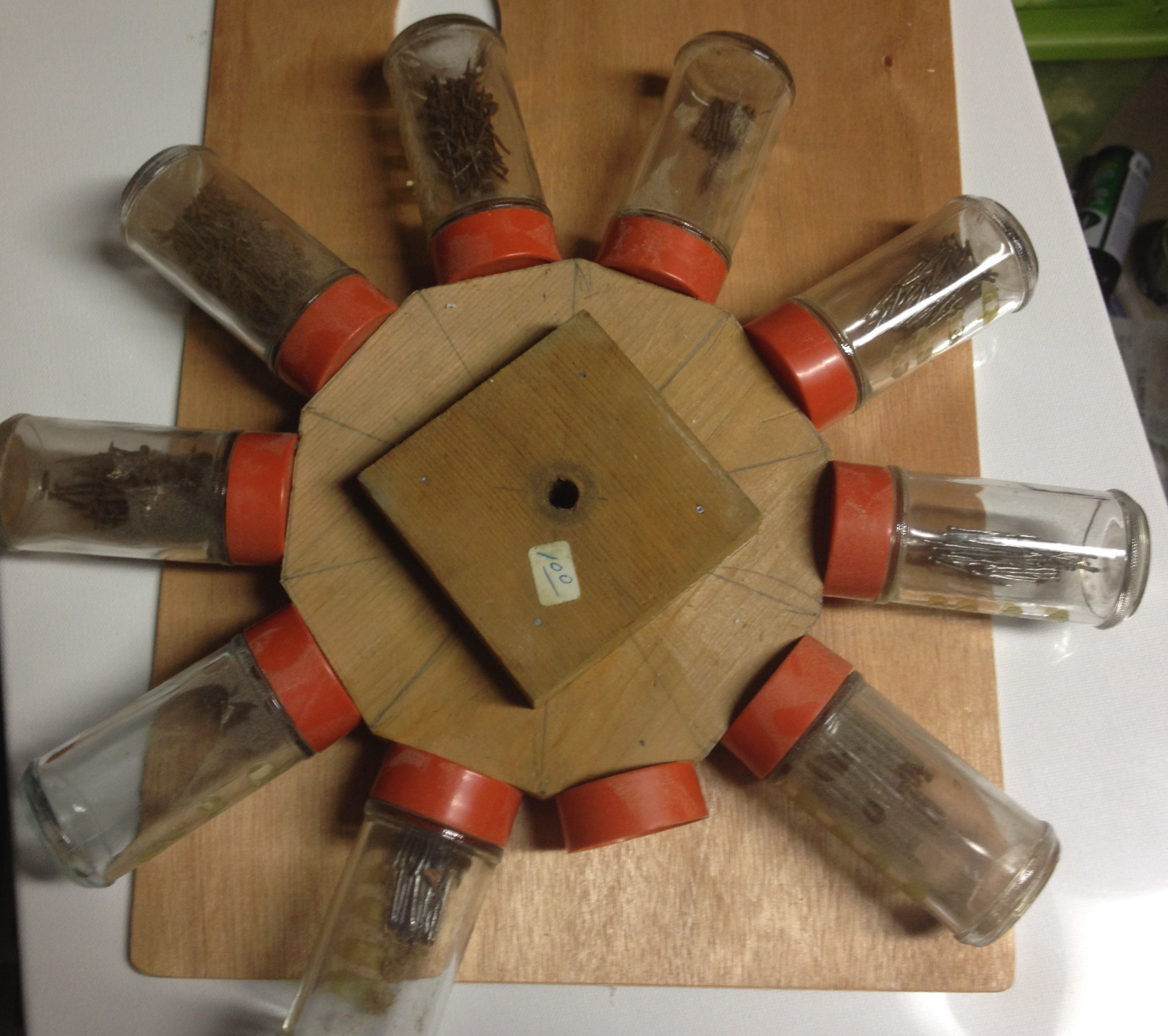
Price tag is still on this homemade nail and screw holder that Uncle Stan got for us for $1.00.

Price tag is still on this homemade nail and screw holder that Uncle Stan got for us for $1.00.

And out the stuff came. There was a screw driver; a really neat set of wrenches, all different sizes, in a pouch; a file; and some other stuff, including this very strange contraption that was somewhat circular and had tiny glass spice bottles attached by the lids and were filled with nails.

“This screw driver was a bargain, a bargain. I got for just $1.00,” He said. “It is a great one.”

“What’s this thing?” My mother in law asked, holding up the round spice jar thing. I wanted to know as well.

“It’s wonderful. You keep all your loose nails and screws in there. Someone actually made it. It is a great idea! It even hangs on the wall,” Uncle Stan announced. “He’ll love it.

“Well, I know where the loose screws are,” my mother-in-law answered. She was looking for her purse as she said it, but we know she meant Uncle Stan.

And we all laughed.   You see buying the tools at the garage sales was just the first part that he loved. The best part was haggling with my mother-in-law. She was a younger sister of his wife. Left an orphan when she was a teen, she came and lived with her sister and brother-in-law when she went to college at Washington University in St. Louis.

They had a most loving relationship, and buying the tools just gave them a reason to tease each other. Not that Uncle Stan ever really needed a reason to tease in the most friendly and loving way. He was always ready for teasing.

The tools were paid for, and Uncle Stan went on his way.
“See you next week,” he said as he walked out the door. My mother-in-law shook her head, “Not if I see you first!”

She turned to me. “I have lots of bags of tools and other stuff for you at home,” my mother-in-law told me. Maybe you can take a few with you.”

Not really. We were living in a small apartment.

But several years later, when we bought our home, and moved furniture there, the bags of tools came in the moving van. They filled an area of the basement. Besides tools, Uncle Stan got my husband containers, a toolbox, and even some power tools in carrying cases. All the power tools worked, Uncle Stan tested each one before he bought it. My husband set up a workshop in the basement with most of the tools, but some tools he put in the garage. Not to sell, but for easy access outside.

To be honest, there are some things that for the past 29 years, we still have no idea how to use or what they do. But we keep them, because Uncle Stan thought we might need them one day. And you truly never know.

I also have to admit there were some tools he could not find for us. But that turned out to be a blessing. It gave my Dad something to do. Once we bought our home, my parents would come to visit. It was my Dad’s great pleasure to go to an home improvement store with my husband. My Dad loved the Home Depot! He and my husband would spend hours walking up and down the aisles. And my Dad always found a tool or two that we needed to finish a project or start one, besides the items they really went to purchase.

Dad, Uncle Stan and my husband’s mom, Bubbles, are all gone. But their memories live in all the tools that help us keep our house in good shape. Most important, I cannot pass a garage sale without wonderful memories of Uncle Stan’s excursions to find us tools.

The Beautiful, Yet Horrible Blue Flowered Dress

1 Jun

I close my eyes and I can still see the four dresses next to each other on the bed in my Grandma Esther’s spare bedroom at the apartment in the Bronx. Four identical blue dresses, with Peter Pan collars, bright yellow and red rickrack and springs of tiny flowers printed all over the gingham dress. The dress had a built-in sash and dirndl skirt. Each dress was a slightly different size: one each for my two first cousins, also sisters, as well as one each for my sister and I. I must have been about seven, my sister three, my cousins were about eight and ten.

My grandmother had an urge to buy us matching dresses. I don’t know if it was a special occasion, or she just saw them while coming home from working and decided to get them. I think there is a photograph somewhere of us all wearing the dress at the same time. But I do not know where it is, or if it was really taken. I have searched in my albums looking for some photo of these dresses. But they do not exist. (If a photo did exist, my sister probably destroyed it.)

All I know is that this was a wonderful gift. And we all said, “Thank you!” to Grandma Esther, who was very excited about getting these dresses for us.

The dresses came home.   I wore mine for school, occasionally, after the initial ‘for special occasion only’ wearing. In the early 1960s, girls always wore dresses to school. I had both school clothes and play clothes that I changed into as soon as I got home. So it was fine to have another dress to wear. But really this was to be my dressy dress, for special occasions.

I loved the dress. Blue is my favorite color, and my Mom often dressed me in red or pink because of my black hair. I do not like those colors. So I was happy to finally have a blue dress. I liked the rows of rickrack running along the bottom and bodice. I liked that it had some three-dimensional treatments. I loved the pretty flowers.   I wore it happily. And when I was handed down my oldest cousin’s dress, I was happy to wear that one as well. To me it was just the best blue dress ever!

Notice the generous amounts of rickrack not only on her costume, but also braided to make the headpiece.

Notice the generous amounts of rickrack not only on her costume, but also braided to make the headpiece.

Because of this dress I developed a love of rickrack. I do not remember having it on a dress before this special dress. I fell in love with the feel and texture of rickrack. I also loved to say the word! When I had a daughter, I often made her dresses and costumes with rickrack on them, using all different colors.

As for my cousins, they do not have the same memories of this dress. In fact, they do not remember this dress at all. My sister and I were telling one of our cousins about the dress once, and there was a blank look in her eye.   I think because they only wore the dresses for a short time, and did not have the extra dresses to wear, they did not have as strong an impression.

However, my sister will tell you a different story about the dress. She learned to hate it, even though I think was a pretty dress. But she does have a relatively good reason.

You see, as stated earlier, there were four dresses. She was the youngest. My cousins only wore the dress one year or two. But as each cousin outgrew the dress, it was passed down to the next child. Because one cousin was only nine months older than I was, I did not really get that dress to wear. But my sister did. She wore the same dress for years, as each one was passed down to her.

I should add, that my sister wore the last of the same dress for an extra long time. My Mom saved that dress. She even said to my sister, “That dress still fits you. It has a nice big hem.”

My Mom realized she could buy matching rickrack and lower the hem, then sew the rickrack along the crease where the hem had been.

Because they were dresses for a special occasion, they were not worn out. I think my sister wore some version of that blue dress till she was about 11 or 12…so at least eight long years.

When we talk about the blue dress, my sister gets a sort of pained look on her face and tightens up her body.   It is almost as if she is trying to get the memory of even wearing it out of her mind.

Her daughter did have a similar navy blue dress made by her paternal grandmother. But instead of flowers, it had the alphabet printed on it and apple appliqués. My sister had a difficult time even putting the dress on her daughter. She had a visual and visceral pain seeing her daughter in the dress. After that, her mother-in-law always let my sister help pick the fabric for dresses.

Because of the blue dress, my sister was against matching clothes for our daughters. Whereas some families get matching clothes for family photos, we never did this. We might mention a color theme, but NO matching clothes.

And when I think about it, I cannot remember seeing my sister wear navy blue dresses even today. The impact and memory of the beautiful, yet horrible blue dress lives with her forever.

Grandma Thelma Knows What She Knows

29 May

We always wondered how old my Grandma Thelma was when she celebrated her birthday. She insisted that she was born in 1906 and arrived in the United States when she was 16. This is a debate that went on for years, as her passport had her as two years older.

Her explanation was that she was so desperate to get out of Poland, she made herself two years older to get out. In fact when she finally got her passport and papers in Poland, the official said to her, something like, “I hope you have a safe trip and return safely.” When she got to the door, she turned around and said, “I will never come back here, never.” And then ran for home. Her happiest day was the day she arrived into the New York City harbor.

I have her passenger records from Ellis Island. She arrived as Tauba (Tova), from Boleslawiec, Poland, on November 7, 1922. An 18 year-old, single female, she traveled by herself on the Gothland from Antwerp, Belgium.

Grandma reinvented herself to Thelma. She stopped using the name Tova except in synagogue.

She lived with relatives, her Aunt Gussie, her father’s sister, had agreed to sponsor Grandma. Aunt Gussie had four children, three boys and a girl. But the stories Grandma told always revolved around the cousin who was her age, Katie, who was treated as a queen. While my Grandma said she was treated as the “deinst,” the maid. She had to work all day, go to the school at night, and then when she was in the apartment clean and work for her board.

When Katie would have her friends over, they would tease my grandmother because she was a “greener.” My grandmother also had to ‘serve’ them, and was not allowed to really just sit and visit. It made my Grandma mad, as many of Katie’s friends were also once “greeners.” It also made her mad to be treated like that when she was family. However, she and Katie did become friends, because despite everything, they liked each other.

It was a difficult life made more difficult because her Aunt Gussie wanted her to marry an old widowed man with children. And Grandma did not want to marry him. She had met my grandfather, Nathan (Nissin) who was a baker and either four or six years older than her (depending on the birth year accepted). My sister and I think one reason Grandma and Katie became firm friends is that she helped my Grandma in her romance with Grandpa.

This became a battle with Aunt Gussie. My grandmother took matters into her own hands by writing her father, Avraham Shlomo, in Poland.   She told him about her love for Nathan and the pressure from Aunt Gussie to marry the other man. My great grandfather did what any good Jewish father would do for his daughter, he investigated Grandpa’s family; found out they were a good family of Cohen descent, and approved the marriage. When the letter arrived from Poland, my grandmother got her way, and married my grandfather.


Grandma Thelma and Grandpa Nat in their wedding finery. Grandma Thelma and Grandpa Nat in their wedding finery.

Grandma always kept in touch with Katie. Throughout their lives, they did not see each other, but they wrote many letters. We remember whenever a Katie letter arrived in the Catskills, Grandma sat down and read it. They were always in Yiddish. And then Grandma wrote her a many-paged response. Although Grandma loved her cousin, Katie, she never forgave Aunt Gussie for the harsh treatment. It was difficult because she was also always grateful that her aunt had sponsored her to come to the United States and gave her a place to live, however begrudgingly.

In the meantime, my Grandpa and his Uncle Yidel (Julius) had a bakery. Their business grew. At some point they decided to separate. Uncle Yidel stayed in New York, while Grandma and Grandpa moved to New Jersey and opened their own bakery.

My Grandma was a shrewd businesswoman. She enabled the business to survive through the 1929 stock market crash. She had two children to support, but during the Great Depression she gave out food on credit to those who needed it.   She invested in the Stock Market, but at the same time she had money spread out in lots of different banks. I remember going bank hopping with her in both New Jersey and New York City. She would bring all her bank passbooks at the end of each month, to have the interest entered.

My Grandma is 36 or 38 in this photo. My Grandma is 36 or 38 in this photo.

Over the years, my grandparents became financially and personally successful. They had the bakery and the building it was in; they owned a small bungalow colony in the Catskills, as well as a winter home about half mile from the bungalows. They had investments. They had two children and five grandchildren. All was happy and well.

The memories of Katie A and her parents, as well as their treatment of Grandma, had stayed within my Grandma’s memories and were not really discussed until one day in the Catskills. A day I will always remember, because it shows you how small the world can be, and how connections make changes.

Both my Dad’s parents and their siblings were born in the United States. His mom, my Grandma Esther, was one of five siblings, including her brother Sam. Uncle Sam was a little different from everyone else. He worked for the New York City Port Authority, and he was divorced and remarried. I loved my great Uncle Sam. He had a great sense of humor and was wonderful with us children. His second wife, Sylvia, had a little yappy dog, who scared us all. She carried that dog everywhere. Aunt Sylvia was always perfectly dressed, blonde hair in a French twist. She expected elegance wherever she went, thus she did not like to come to the Catskills because she felt it was too middle class.

Her feelings might have changed the day they decided to finally take a ride up to the Catskills and see everyone. My father’s parents and sister and her family stayed at the bungalow colony owned by my maternal grandparents. So first Uncle Sam went there to see his sister and visit. Later in the day, he and Aunt Sylvia drove up to the ‘big’ house where my maternal grandparents lived, and where we had our bungalow.

Of course there were introductions all around so that Grandma Thelma and Grandpa Nat could meet Uncle Sam’s wife Aunt Sylvia.

When my Grandma met Aunt Sylvia, she said, “I know you.”

“No,” Sylvia replied. “I never met you before.”

I started walking with Grandma back to the house. “I know her,” she said again. My Mom heard. “Mom,” she said. “She probably just reminds you of someone.”

I thought it was over. No big deal. But a short time later, Grandma came back to our bungalow, where we were sitting outside. She walked up to Aunt Sylvia and said, “Sadie, you are Sadie. You were a friend of my cousin, Katie. I remember you.”

Aunt Sylvia…now Sadie, looked at my Grandma and said, “Tova, is that you!?”

And it was. They hugged. They kissed. They spoke in Yiddish for hours.

When Uncle Sam and Aunt Sylvia left, my Grandma Thelma had a new ‘best’ friend. They had so many memories to share.

And then my Grandma turned to my Mom and said, “I told you I knew her.” We should have known that Grandma Thelma knows what she knows.

This incident impacted my Grandma Esther as well, once she heard what had happened. From then on, whenever her sister-in-law made her crazy, she would say, “Sylvia…she is so hoity toity, but she is really just Sadie from Brooklyn.”

Thanks to my sister for remembering with me.

Remembering My College During Graduation Season

12 May


Walking through the balloon arch at Drew University graduation. This was in 2008.

Walking through the balloon arch at Drew University graduation. This was in 2008.

With the May graduation season, I always think of my own graduation. I graduated from college 37 years ago… I find that a bit frightening to admit. But it is true. I still remember the green and yellow balloons (In 1982 the colors turned to blue and green) that we walked under on our way to our seats. I still remember my excitement at graduating magna cum laude. I still remember that my grandparents and parents came to my graduation!

I loved my time at Drew University. It was the best place for me. A small liberal arts school, Drew is situated on the most beautiful campus. Large trees, quiet paths, lovely buildings, great professors all in one place, with easy access to New York City and an easy train ride home. I learned; I made friends; I found my place in life at Drew.

As an English major I had two professors in particular that had a major influence on me. Professor Joan Steiner and Professor Robert Chapman were my inspirations and both added much to my love of words.

Not only did I take Professor Chapman’s classes on literature, I also took classes on semantics and I was his paid assistant one year. He was working on revising his Dictionary of American Slang, and I helped. Dr. Chapman was well known for his dictionaries and thesaurus. He loved words and language. His excitement about words encouraged my love of language and words!

For the second edition of the Dictionary of American Slang, we had to find three references for each new word for it to be included in the dictionary. Each word was put on an index card…. no computers in those days. If we found a new word in a printed reference, we started a card with the referenced article. I had to do a lot of reading of popular publications: newspapers and magazines.

My biggest achievement was the word “carpool.” I will never forget the moment I found my third reference in Newsweek magazine. I was visiting my parents for the weekend. While reading my Dad’s Newsweek, I found it. I was beyond excited.

“Dad,” I said. “Read this page now. I have to take it back to school with me.” He didn’t even argue when I ripped the page from the magazine.

I remember racing to Prof. Chapman’s office in the Browne Hall with the page from the magazine in my hand on Monday. That was it. The word could now be added to the files for the second edition of the dictionary.   I then helped with writing the official definition of the word. I walked on air for days after that. The two of us were so excited. Carpool was officially a new word!

I know it sounds strange now. Carpool is such a common word. People use it all the time. Mothers and fathers plan carpools with friends in order to take their children to school and sports and afterschool activities. Co-workers organize carpools to work. But in the early 1970s it was a new word. And I helped define it for the dictionary.

I cannot remember the other words I helped uncover that year. It is the word carpool that forever stays in my memory. I get a moment of joy whenever I see the word in print or hear it used. “Carpool” is my word! And yes, carpooling is also my word!

Most important for me, however, was that Professor Chapman encouraged my love of words and added to my interest in language. His discussions on the leveling of language and how languages change stayed with me throughout my time in college, graduate school and in life.

Besides Professor Chapman’s support, I had the support of my advisor and mentor, Professor Joan Steiner. It was her encouragement throughout college that led me to become an English major. I had started my college career focusing on studying psychology. But after my first few literature classes, I realized that my love of literature was more important.

Joan Steiner and me graduation

With Joan Steiner as my advisor, I was able to focus on English during my last two years at Drew. But more important, she help me find what I really wanted to be, which was a writer. And with her help, I focused on journalism as a career and went on to earn my master’s degree in journalism.   I kept in touch with Professor Steiner for many years. Since I live in Kansas, our contacts were usually holiday greeting letters. But once my daughter also went to Drew for her undergraduate years, Professor Steiner and I had a bit more contact.

I miss her wonderful letters. And I feel blessed that she was part of my college life and that we had contact later in my life.

I so loved my time at Drew that when my daughter was a sophomore in high school, I took her to see the campus during one of our annual visits to my parents in New Jersey.   She fell in love with the campus as well. But not only the campus, the focus on political science and religion was important to her. (A Methodist seminary school is also situated on the Drew Campus.) When it was time to make her college choice, she chose Drew.

I am proud that my daughter graduated Drew 31 years after I did. She received her double major in Political Science and Religion. She participated in the semester at the United Nations through Drew and participated in many activities, although she did not follow my major and goals in college. I worked on the newspaper, the yearbook and was a member of the OC (Orientation Committee). She focused on political science organizations, mediation and policy. She even interned at the County Courthouse working with domestic abuse victims. But she walked the steps I walked and loved the school as much as I did.

Her graduation also included the blue and green balloon archway that led to the outside graduation behind Mead Hall. And she, also, graduated magna cum laude, wearing the cords from two honor societies. We did not have those when I graduated from Drew.

My parents were once again there, as was my entire family: siblings and their spouses, and all the cousins. My daughter, as the oldest grandchild, was the first to graduate college. And since my entire family lived in New Jersey, it seemed important that all be at her graduation.   Afterwards we had lunch with her then boyfriend’s family and friends. It was a wonderful celebration.

I love graduation. I love the transition to another stage of life. But for my daughter and I, I am so glad that we were able to experience college life at Drew. And share a graduation experience 31 years apart.


To see the beautiful campus go to : http://www.drew.edu/