During Covid, I tried to do as many activities that I could from the confines of my home. I took online classes, I attended family life events, I even toured museums and their special exhibits. One of the best ones I toured was the Ruth Bader Ginsburg exhibit at the Illinois Holocaust Museum located in Skokie, Illinois. So when I knew my husband and I were going to Evanston, Illinois, for a wedding, I put visiting this museum in person at the top of my list. It did not disappoint.
The museum opened in 2009. It was a work in process for 40 years after the Skokie Jewish community was the object of a neo-Nazi group who decided to march through Skokie, a suburb of Chicago that is home to many Jewish residents. The Jewish community started with a small space. But their aim was to fight against anti-Semitism and hatred through education. It looks like they are succeeding in their mission.

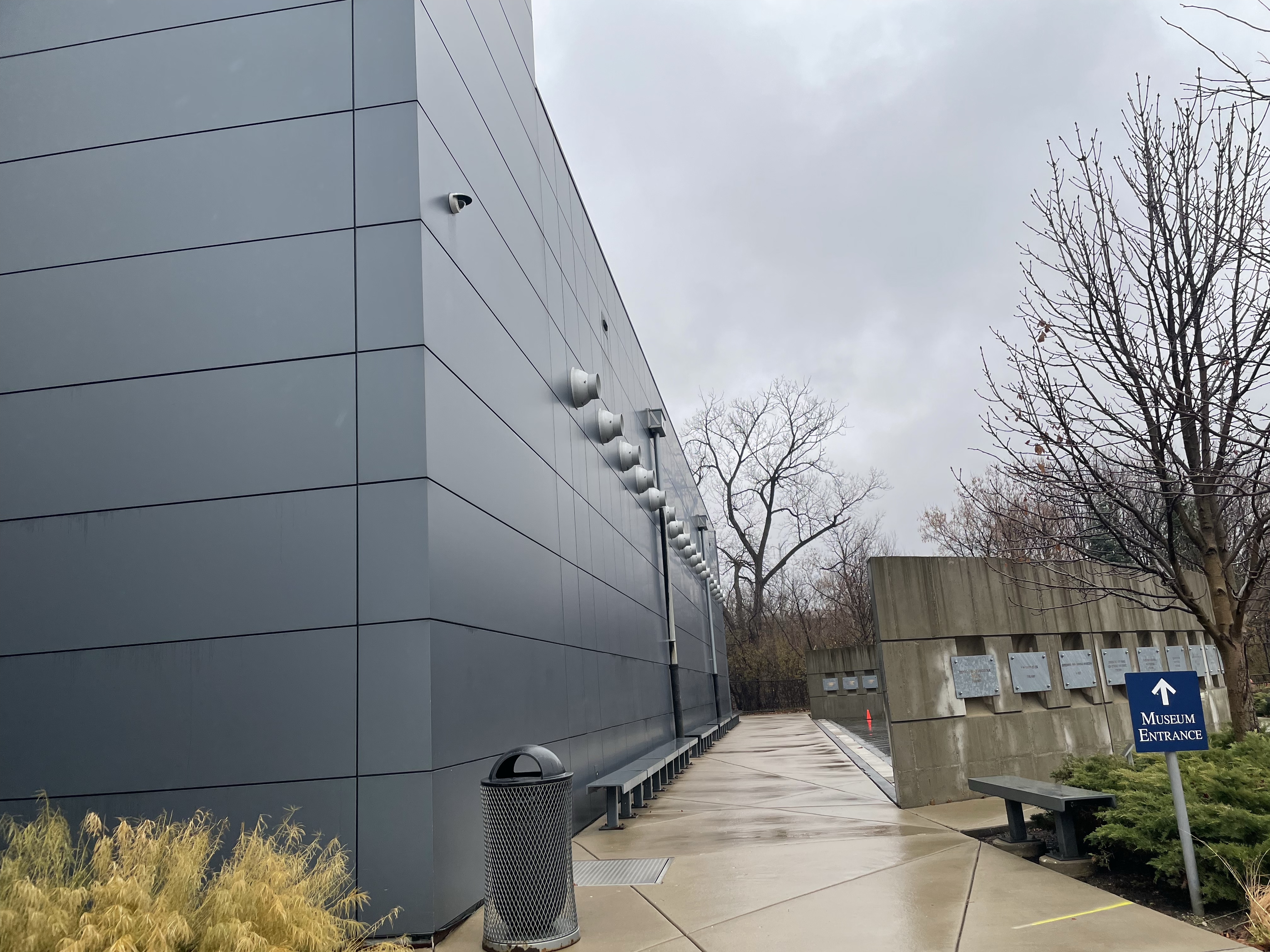

The Illinois Holocaust Museum is worth the visit. It was designed by architect Stanley Tigerman. The building is made is to bring the visitor through the darkness of the Shoah and then back out to the light. As we went through the exhibit we could see this change. The entrance to the exhibit is dark and moody with narrow halls lined with photos, videos and memorabilia. But by the end, when we learned about the resistance and the survivors, the light increased.
While we were there on a Friday morning, there were four different school groups also going through the museum with docents. Every so often the group would fill the space available, so we would stop to hear the discussion. In this time of great turmoil and rise of Jew Hatred, seeing these students and their teachers learning about and basically experiencing what happened was important.
There are many short films/videos and photographs throughout the museum that were taken by the Nazis during their killing spree as well as films taken after the war by survivors and rescuers.
The films are difficult to watch. I saw several students holding their hands and sweaters over their faces as they tried to block the view. I did not want to see it either, even though I have seen these images or ones like them many times.
But this time, I imagined the children on October 7 trying to block the view as they saw the terrorist of Hamas reenacting the hatred of the Nazis and they saw their loved ones murdered and waited for their own deaths. It created harrowing moments for me. I envisioned being held hostage by Hamas underground as if in a camp barracks waiting without food and little hope.
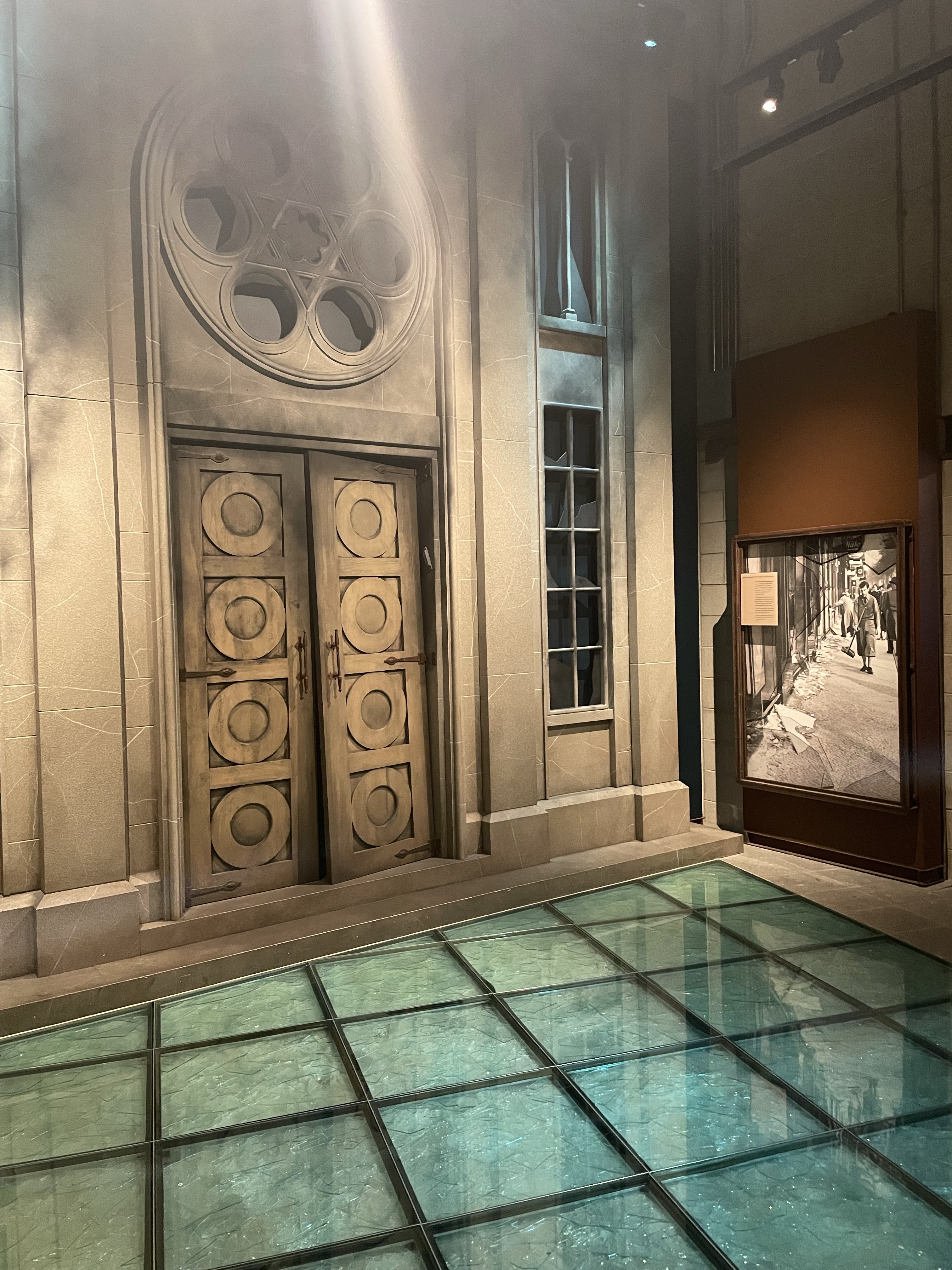


The Holocaust exhibit itself Is well thought out and takes you through all the stages of the Shoah. The moment I saw the Krystal Nacht exhibit, which has a clear floor you walk over with shards of glass underneath, in front is the edifice of a synagogue with broken windows, I knew exactly what you will see next. You can walk into a real cattle car from 1930s Europe. It is an eerie feeling to be standing in that darkened wooden container and think about what it was like for those who were stuffed in and perished. This is not a museum for someone who wants to avoid the past. It puts it right into your vision.
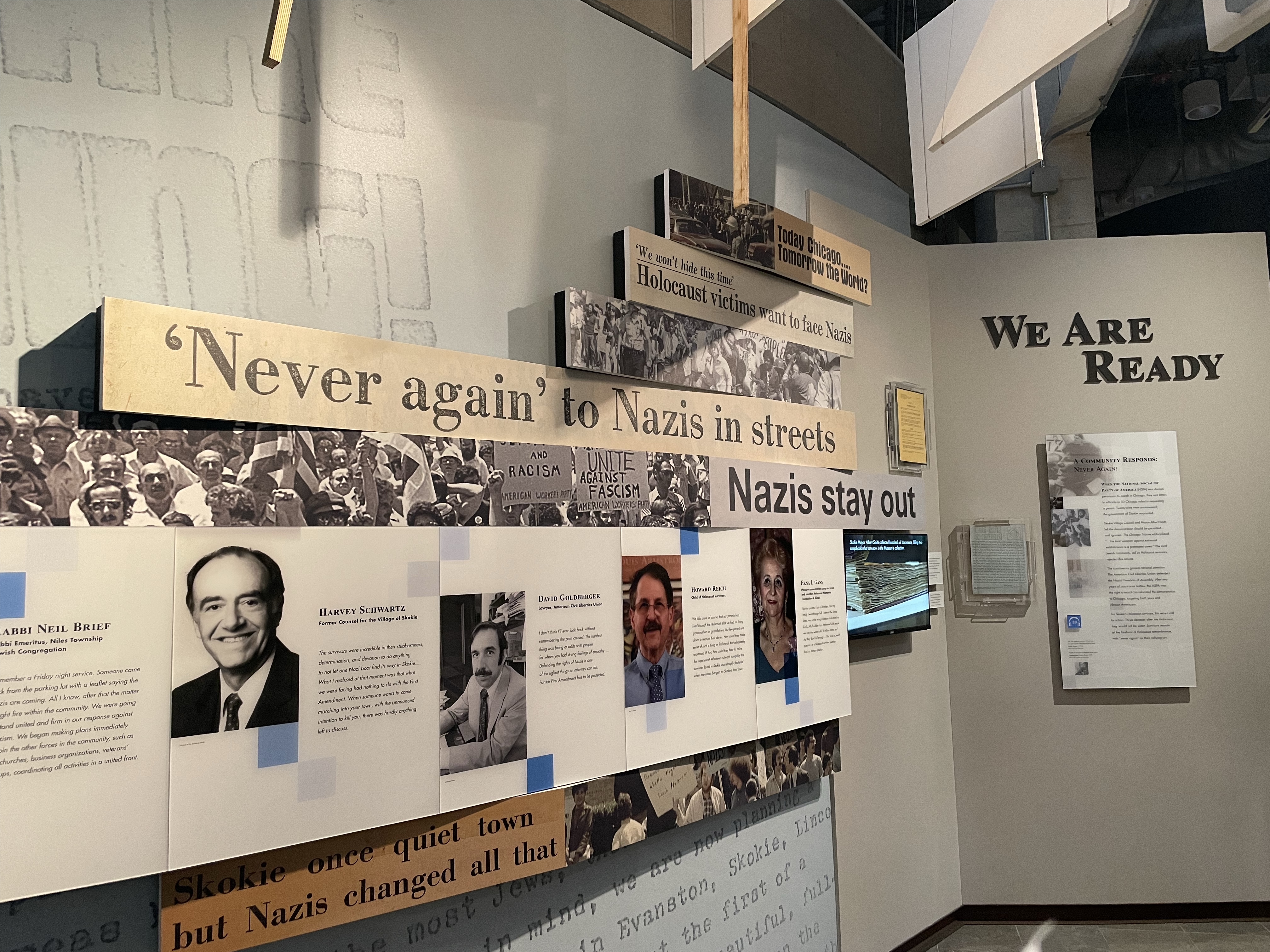
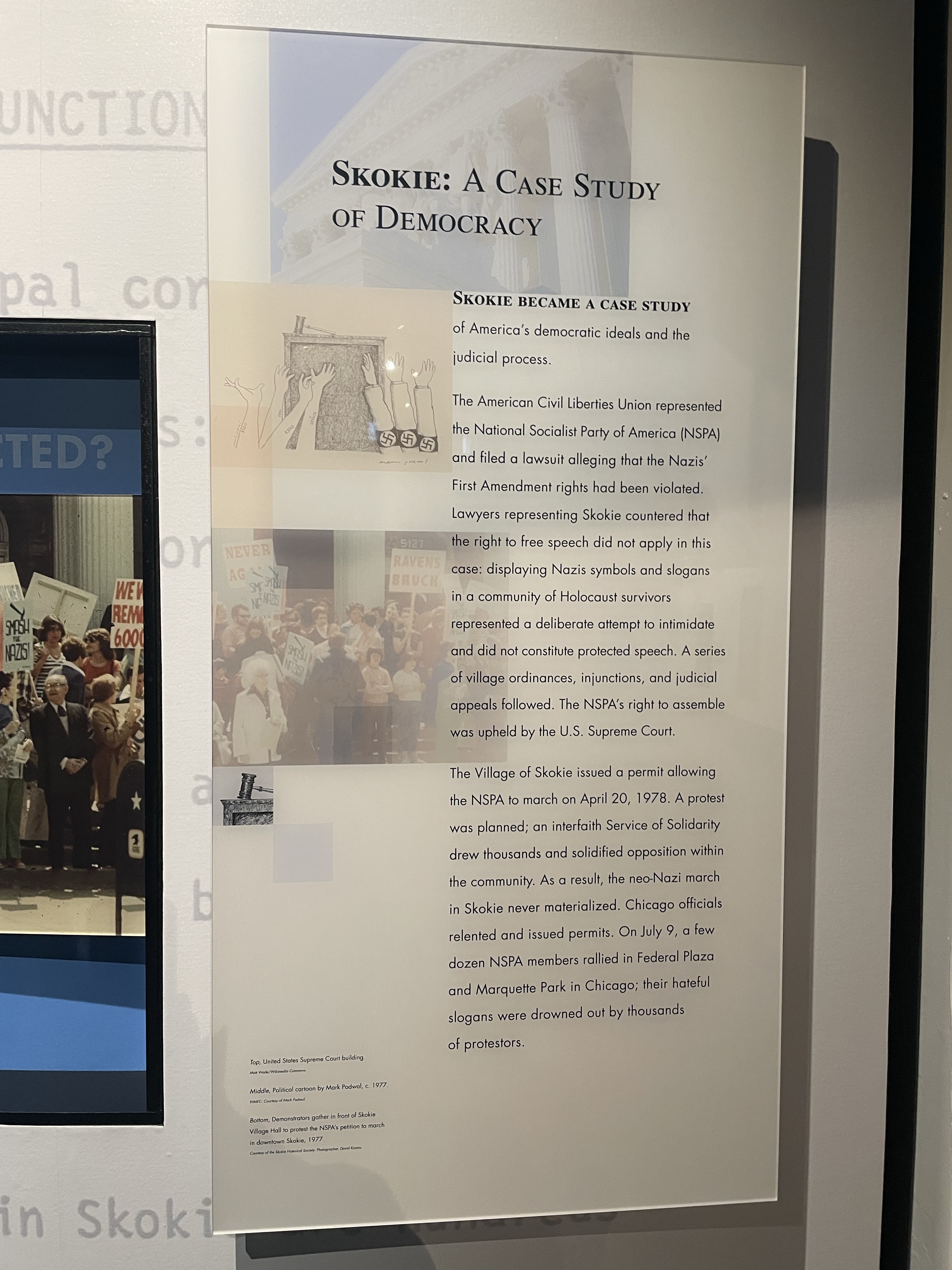
After you weave your way through the seemingly endless horrors of the Shoah, you see a small exhibit about what happened when the Nazis came to Skokie. It puts into ‘context’ what is happening now throughout the USA on college campuses and in some cities. And I will say that calling for the annihilation and extermination of any people is always wrong. No matter what a college president says.
This is emphasized with the movie at the end that discusses both the genocide of the Jews and the continued times others have been targeted like the Tutsi people in Rwanda. We sat with two student groups as we watched the film. It was not easy to watch as people testified about what happened to them during this more recent horror. Many of the students lowered their heads. I think I spent as much time watching the students as I did watching the film.
After we finished the exhibit, we went to the Hologram theater where we spoke with the Hologram of Pinchas Gutter. This is an excellent way to learn about the Shoah. Those brave survivors who spent a week being interviewed and videoed while they told their story have created a way to keep the memory alive.
The museum is not all gloom and depression. There is the good of those who survived. But also when we were there the special exhibit was about delis, “I’ll Have What She’s Having” The Jewish Deli. It was a great way to wash away some of the somber emotions we were having after going through the Shoah.


As a teenager and college student, I worked in a Jewish deli. So for me this was especially joyful as I remember my time behind the counter making sandwiches, cutting lox, deboning white fish and making catering trays. I would almost smell the corned beef, feel the texture of sable fish as I prepared some for a customer, and felt the smooth taste of a potato knish in my mouth.
It was good to end the visit on an upbeat note. But throughout it all I remembered that this museum was founded in response to Jew Hatred. Once again, we are experiencing a major rise Jew Hatred throughout the United States and the rest of the world. There are many who support us. However, when I look at college campuses, I know the work to end anti-semitism and Jew Hatred is far from done. What will be our response globally? In Skokie a museum was created. I am not sure it is enough.
 zicharonot